Unlocking Protein Stability: How DLS Analysis Revolutionizes Biopharmaceutical Formulation Development
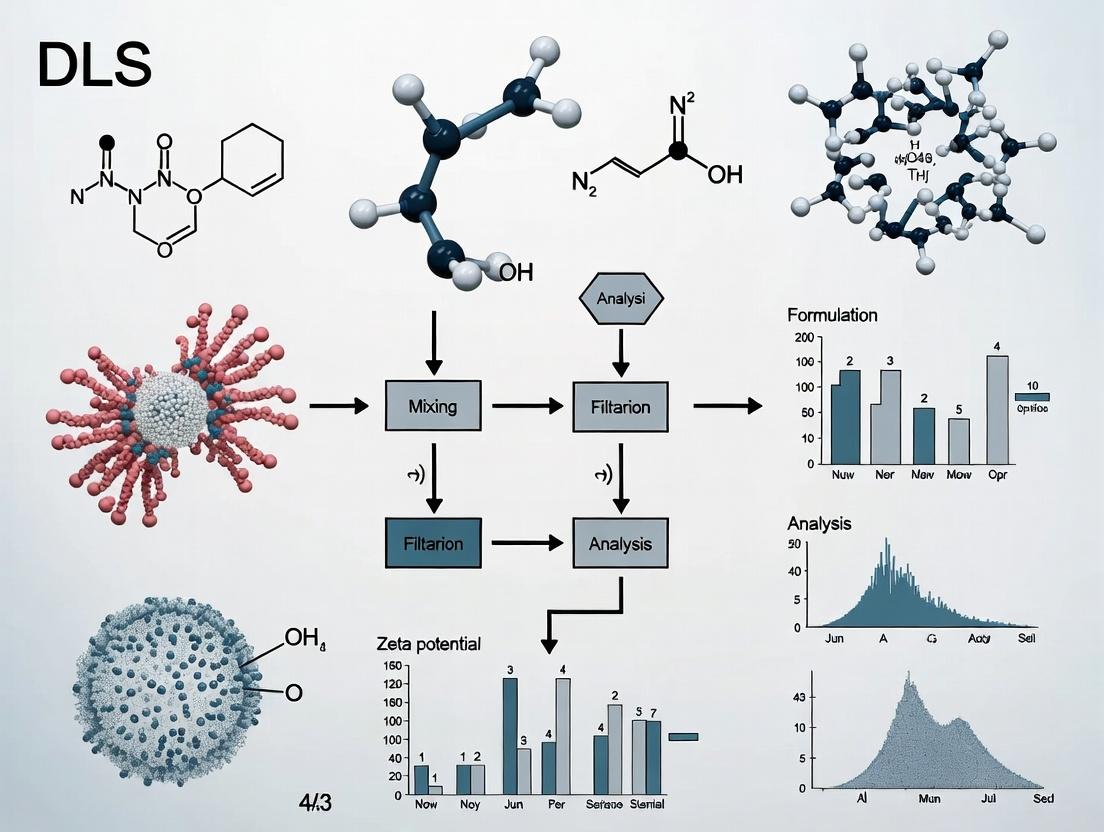
Dynamic Light Scattering (DLS) has become a cornerstone analytical technique in the development of stable, safe, and effective biopharmaceutical formulations.
Unlocking Protein Stability: How DLS Analysis Revolutionizes Biopharmaceutical Formulation Development
Abstract
Dynamic Light Scattering (DLS) has become a cornerstone analytical technique in the development of stable, safe, and effective biopharmaceutical formulations. This article provides a comprehensive guide for drug development professionals, covering the foundational principles of DLS, its critical methodologies for screening and monitoring protein size and aggregation, best practices for troubleshooting complex samples, and its role in method validation and comparative analysis against techniques like SEC and AUC. We synthesize how DLS data directly informs formulation strategy, accelerates development timelines, and ensures product quality from early-stage candidate selection to commercial product control.
What is DLS? Core Principles and Why It's Essential for Biopharmaceuticals
Dynamic Light Scattering (DLS) is a foundational analytical technique in biopharmaceutical development used to determine the hydrodynamic size and size distribution of proteins, viral vectors, lipid nanoparticles, and other colloidal systems in solution. The technique non-invasively probes the Brownian motion of particles, which is inversely related to their size via the Stokes-Einstein equation. In formulation development, DLS is critical for assessing aggregation, stability, batch-to-batch consistency, and the colloidal behavior of drug products under various stress conditions (thermal, mechanical, pH). It provides essential quality attributes for target molecules and complex formulations like monoclonal antibodies, mRNA-LNPs, and gene therapies.
Theoretical Foundation: From Brownian Motion to Hydrodynamic Radius
The core principle of DLS is the quantification of the random thermal motion (Brownian motion) of particles suspended in a liquid. Smaller particles move rapidly, while larger particles move more slowly. A laser beam is directed through the sample, and the intensity of the scattered light fluctuates over time due to this motion.
These intensity fluctuations are analyzed via an autocorrelation function, which decays at a rate dependent on the diffusion coefficient (D). The Stokes-Einstein equation relates D to the hydrodynamic diameter (dH):
dH = kBT / (3πηD)
Where:
- kB = Boltzmann constant (1.380649 × 10⁻²³ m² kg s-2 K-1)
- T = Absolute temperature (K)
- η = Solvent viscosity (mPa·s or cP)
- D = Translational diffusion coefficient (m²/s)
The measured dH represents the diameter of a sphere that diffuses at the same rate as the particle, incorporating any solvation layers or adsorbed molecules.
Key Data in Biopharmaceutical Analysis
Table 1: Typical Hydrodynamic Sizes of Common Biopharmaceutical Entities
| Molecule/Formulation | Typical dH Range (nm) | Key DLS Application in Development |
|---|---|---|
| Monoclonal Antibody (monomer) | 10-12 | Monitoring aggregation, fragmentation |
| mRNA-LNP (standard) | 70-100 | Formulation optimization, stability |
| Adenovirus Vector | 90-100 | Purity assessment, aggregation |
| PEGylated Protein | 15-30 | Confirming conjugation, size increase |
| Protein Aggregate (soluble) | 50-1000+ | Stress study quantitation |
| Exosome / EV | 30-150 | Characterization of complex modalities |
Table 2: Critical DLS Output Parameters and Their Formulation Significance
| Parameter | Description | Formulation Development Relevance |
|---|---|---|
| Z-Average Diameter | Intensity-weighted mean hydrodynamic size. | Primary stability indicator; tracks changes over time. |
| Polydispersity Index (PdI) | Width of the size distribution (0-1 scale). | Predicts sample monodispersity; low PdI (<0.1) desired for simple systems. |
| Size Distribution by Intensity | Primary raw distribution. | Identifies sub-populations (e.g., aggregates, fragments). |
| % Intensity by Size | Quantifies sub-population contribution. | Quantifies aggregate or fragment levels. |
Experimental Protocols
Protocol 1: Standard DLS Measurement for Protein Formulation Screening
Objective: Determine the hydrodynamic size and aggregation state of a monoclonal antibody (mAb) candidate under different formulation buffers.
Materials: (See Scientist's Toolkit) Method:
- Sample Preparation: Filter all buffers using a 0.02 μm syringe filter. Centrifuge protein samples at 10,000-15,000 x g for 10 minutes to remove dust and large aggregates.
- Instrument Setup: Turn on the DLS instrument and laser, allowing ≥30 min for thermal stabilization. Select appropriate measurement cell (e.g., disposable cuvette, microcuvette).
- Temperature Equilibration: Set the sample chamber to 25.0°C. Allow temperature to stabilize.
- Solvent Properties: Input the correct viscosity and refractive index for the formulation buffer (e.g., PBS, Histidine buffer).
- Sample Loading: Pipette 50-100 μL of clarified sample into a clean, low-volume cuvette. Avoid introducing air bubbles.
- Measurement Acquisition: Set measurement angle (commonly 173° backscatter for modern instruments). Run experiment with an automatic duration (typically 10-15 runs of 10 seconds each).
- Data Analysis: Review correlation function fit quality. Report Z-Average, PdI, and size distribution plot. Compare between formulation conditions.
- Cleaning: Rinse cuvette thoroughly with filtered, deionized water for reuse, or dispose of disposable cuvettes.
Protocol 2: DLS Stability Study Under Thermal Stress
Objective: Assess the thermal stability of a vaccine formulation by monitoring size changes over time at elevated temperature.
Method:
- Prepare the primary sample as in Protocol 1.
- Set the instrument's temperature controller to the stress condition (e.g., 40°C or 50°C).
- Load the sample and allow 5 minutes for thermal equilibration.
- Program a series of automated measurements (e.g., measure every 5 minutes for 2 hours).
- Plot Z-Average and PdI versus time. A sharp increase in dH and PdI indicates aggregation onset.
- The time-point of initial rise can be used as a comparative stability metric between formulations.
Visualization: DLS Workflow and Data Interpretation
DLS Measurement and Analysis Workflow
Interpreting DLS Size Distribution Profiles
The Scientist's Toolkit: Essential Research Reagents & Materials
Table 3: Key Materials for DLS in Formulation Development
| Item | Function & Importance |
|---|---|
| Disposable Micro Cuvettes | Low-volume, sterile, dust-free cells for sample containment. Minimizes contamination and sample volume requirement (12-100 µL). |
| Syringe Filters (0.02 µm or 0.1 µm) | Critical for filtering buffers and samples to remove particulate contaminants that can severely interfere with scattering data. |
| NIST-Traceable Size Standard | Latex nanospheres of known size (e.g., 60 nm, 100 nm). Used for routine instrument validation and performance qualification. |
| Viscosity Standard | A liquid of known viscosity (e.g., certified toluene) to calibrate or verify instrument temperature control and solvent parameter settings. |
| Ultra-Pure, Filtered Solvents | High-grade water and organic solvents (if used) for cleaning cuvettes and diluting samples. Essential for maintaining low background. |
| Formulation Buffers | Standardized, filtered buffers relevant to the development pipeline (e.g., PBS, Histidine, Succinate, Citrate) at various pH and ionic strength. |
Application Notes
Dynamic Light Scattering (DLS) is a core analytical technique in biopharmaceutical formulation development for characterizing the size and size distribution of nanoparticles, proteins, vesicles, and other sub-micron species in solution. The accurate interpretation of its primary outputs is critical for assessing colloidal stability, aggregation propensity, and overall product quality.
Core DLS Outputs and Their Significance
Z-Average (or Cumulants Mean) This is the intensity-weighted mean hydrodynamic diameter (size) of the population, derived from a Cumulants analysis of the correlation function. It is the primary and most stable value reported by DLS. It is sensitive to larger particles/aggregates due to the intensity-weighting.
Polydispersity Index (PDI or P.I.) Also from the Cumulants analysis, the PDI is a dimensionless measure of the breadth of the size distribution. It is calculated from the second-order term in the polynomial fit of the correlation function. A low PDI (<0.1) indicates a highly monodisperse sample, while a higher value (>0.3) suggests a broad or multimodal distribution.
Size Distributions: Intensity, Number, and Volume These are the result of applying an algorithm (e.g., NNLS, CONTIN) to the correlation function to resolve multiple populations.
- Intensity Distribution: The raw output. Scattering intensity is proportional to the sixth power of diameter (for spherical particles). Larger particles are heavily over-represented.
- Number Distribution: Derived mathematically from the intensity distribution. It represents the proportion of particles in each size class by count. Essential for understanding the actual population of primary particles.
- Volume Distribution: Also derived, representing the proportion of the total sample volume occupied by particles in each size class. Useful for understanding loading or mass distribution.
Table 1: Interpretation Guidelines for DLS Outputs in Biopharmaceutical Context
| Output Parameter | Typical Target Range (Monodisperse) | Caution Range | Critical Range / Action Required | Primary Influence |
|---|---|---|---|---|
| Z-Average (d.nm) | Consistent with expected monomer size (e.g., 5-15 nm for mAbs). Stable over time/stress. | >20% change from baseline; shift beyond monomer expectation. | Appearance of a second peak >100 nm; rapid increase over time. | Large aggregates/particles. |
| Polydispersity Index | PDI < 0.10 (Highly monodisperse) | 0.10 ≤ PDI ≤ 0.25 (Moderately polydisperse) | PDI > 0.30 (Very polydisperse, multimodal likely) | Heterogeneity, presence of aggregates, debris, or multiple species. |
| Distribution Peak Ratio (Intensity) | Primary peak >99% of intensity. | Minor peak 1-5% intensity. | Minor peak >10% intensity. | Presence of sub-populations (e.g., fragments, aggregates). |
Table 2: Comparison of Derived Size Distributions for a Theoretical Sample Containing 1% Aggregates by Number
| Distribution Type | Primary Peak (10 nm monomer) | Secondary Peak (100 nm aggregate) | Key Insight for Formulation Scientist |
|---|---|---|---|
| Intensity | ~65% of total intensity | ~35% of total intensity | Highly sensitive to aggregates. Can alarm for a tiny number of large particles. |
| Number | ~99% of total particles | ~1% of total particles | Reveals the true population: aggregates are a minor component by count. |
| Volume | ~85% of total volume | ~15% of total volume | Represents the volumetric/mass contribution; aggregates constitute significant mass. |
Experimental Protocols
Protocol for Standard DLS Analysis of a Biologic Formulation
Objective: To determine the hydrodynamic size, polydispersity, and size distribution of a protein therapeutic (e.g., monoclonal antibody) in its formulation buffer.
I. Materials and Preparation (The Scientist's Toolkit) Table 3: Essential Research Reagent Solutions and Materials
| Item | Function & Specification |
|---|---|
| DLS Instrument | e.g., Malvern Zetasizer Ultra, Wyatt DynaPro NanoStar. Measures fluctuations in scattered light. |
| High-Quality Cuvettes | Disposable or quartz cuvettes with minimal dust/scratch contribution. Low-volume (e.g., 12 µL) cuvettes for precious samples. |
| 0.02 µm or 0.1 µm Filtered Buffer | Identical to the sample's formulation buffer. Filtered to remove particulate background. For dilution if needed. |
| Protein Sample | Clarified solution. Centrifuge at 10,000-15,000 x g for 10 minutes prior to analysis to remove large dust/aggregates. |
| Pipettes and Tips | Accurate, low-volume pipettes. Use filtered tips to minimize dust introduction. |
| Lint-Free Wipes | For cleaning cuvette exteriors without generating fibers. |
II. Procedure
- Instrument Startup and Equilibration: Power on the DLS instrument and laser. Allow a minimum of 30 minutes for thermal and laser stability.
- Sample Preparation: Centrifuge the protein formulation at 10,000-15,000 x g for 10 minutes at the desired analysis temperature (e.g., 25°C). Carefully extract the middle portion of the supernatant, avoiding the pellet.
- Cuvette Loading: Pipette the recommended volume (typically 30-50 µL for standard cuvettes) of the clarified sample into a clean, dry cuvette. Seal with a cap. Wipe the external optical surfaces with a lint-free wipe.
- Measurement Setup:
- Place the cuvette in the instrument thermostatted chamber.
- Set the measurement temperature (e.g., 25.0°C) with an equilibration time of 120-180 seconds.
- Set the material properties: refractive index (typically 1.45 for proteins) and absorption (typically 0.001).
- Set the dispersant properties (e.g., water: RI 1.33, viscosity 0.887 cP at 25°C).
- Configure the measurement: automatic attenuation selection, duration of 10-15 runs of 10 seconds each.
- Data Acquisition: Perform the measurement in triplicate (load and measure three separate aliquots from the same sample vial).
- Data Analysis:
- The instrument software will report the Z-Average and PDI from the Cumulants analysis.
- Analyze the correlation function fit: residuals should be randomly distributed.
- View the Intensity size distribution. Apply the software's algorithms to derive the Number and Volume distributions.
- Record the mean and standard deviation of the Z-Average and PDI from the technical replicates.
- Buffer Control: Perform an identical measurement on a blank of filtered formulation buffer to confirm a clean background.
Protocol for DLS Stability and Stress Monitoring
Objective: To assess the colloidal stability of a formulation under thermal stress.
- Follow Protocol 2.1 for baseline (t=0) measurements at the storage temperature (e.g., 5°C or 25°C).
- Place the sample vial in a controlled stability chamber or thermal block at an elevated stress temperature (e.g., 40°C).
- At predetermined time points (e.g., 1, 2, 4, 7, 14 days), remove the vial, briefly centrifuge, and analyze an aliquot via DLS as per Protocol 2.1.
- Key Analysis: Plot Z-Average and PDI vs. time. Monitor the Intensity distribution for the emergence of a high-nanometer or micron-sized population, indicating aggregation.
Visualizations
Title: DLS Data Acquisition and Analysis Workflow
Title: Relationships Between DLS Size Distributions
Within the context of a broader thesis on Dynamic Light Scattering (DLS) in biopharmaceutical formulation development, understanding the relationship between a protein's native size, its propensity to form aggregates, and the resulting stability in a liquid formulation is paramount. Protein aggregation is a critical degradation pathway that can impact drug efficacy, safety, and shelf-life. This application note details how DLS serves as a primary, non-invasive tool to monitor protein size (hydrodynamic radius, RH) and detect sub-visible aggregates in real-time, enabling rational formulation design and stability assessment.
Key Data on Protein Aggregation and Stability
Table 1: Impact of Formulation Stressors on Protein Hydrodynamic Radius (RH) and Polydispersity Index (PDI)
| Protein (Therapeutic Class) | Stress Condition | Native RH (nm) | Stressed RH (nm) | % PDI Increase | Key Insight |
|---|---|---|---|---|---|
| Monoclonal Antibody (IgG1) | Thermal (50°C, 24h) | 5.4 ± 0.2 | 12.8 ± 3.1 (aggregates) | 45% | Significant aggregate growth detected. |
| Fusion Protein | Agitation (200 rpm, 2h) | 6.1 ± 0.3 | 7.5 ± 0.5 | 22% | Indicates onset of colloidal instability. |
| Enzyme | Low pH (pH 4.0, 1 week) | 4.8 ± 0.1 | 5.0 ± 0.2 | 8% | Minimal size change, stable under condition. |
| Monoclonal Antibody (IgG1) | High Concentration (100 mg/mL) | 5.4 ± 0.2 | 5.6 ± 0.3 | 15% | Slight increase due to reversible self-association. |
Table 2: DLS Formulation Screening for a Model mAb (Candidate: mAb-X)
| Formulation Buffer | Primary RH (nm) at T0 | PDI at T0 | RH after 4 weeks at 40°C | Key Aggregates Detected (Size Range) | Visual Clarity |
|---|---|---|---|---|---|
| 10 mM Histidine, pH 6.0 | 5.3 ± 0.1 | 0.05 | 5.5 ± 0.2 | None | Clear |
| 10 mM Citrate, pH 5.5 | 5.4 ± 0.1 | 0.06 | 14.2 ± 5.0 | >50 nm | Opalescent |
| 10 mM Phosphate, pH 7.4 | 5.4 ± 0.2 | 0.08 | 8.1 ± 1.2 | 10-20 nm | Slight haze |
| 10 mM Histidine, pH 6.0 + 150 mM Sucrose | 5.3 ± 0.1 | 0.04 | 5.3 ± 0.1 | None | Clear |
Experimental Protocols
Protocol 1: DLS-Based Formulation Screening for Aggregation Propensity
Objective: To rapidly screen multiple formulation conditions for their propensity to induce protein aggregation under accelerated stress.
Materials: (See The Scientist's Toolkit below) Procedure:
- Sample Preparation: Dialyze the protein candidate (e.g., mAb at 1 mg/mL) into each candidate formulation buffer (pH, salt, excipient variables). Filter all samples using a 0.1 µm or 0.22 µm syringe filter (non-protein binding) to remove dust.
- Instrument Setup: Turn on the DLS instrument (e.g., Malvern Zetasizer Ultra) and allow the laser to stabilize for 15 minutes. Set the measurement temperature to 25°C.
- Loading: Load 50-70 µL of filtered sample into a low-volume, disposable quartz cuvette. Avoid introducing bubbles.
- Measurement Parameters: Set the following in the software:
- Material: Protein (refractive index: 1.45, absorption: 0.001)
- Dispersant: Water (RI: 1.33, viscosity: 0.887 cP)
- Number of measurements: 10-15 runs per sample, duration auto-determined.
- Equilibration time: 120 seconds.
- Data Acquisition: Run the measurement. The software will present intensity-weighted size distribution and calculate the Z-average RH and Polydispersity Index (PDI).
- Quality Control: Inspect the correlation function. A smooth, single exponential decay indicates a monodisperse sample. A fit error > 5% or a correlation function with artifacts suggests poor data quality (dust/aggregates/bubbles). Re-measure if necessary.
- Stress Application: Subject the formulations to an accelerated stress condition (e.g., 40°C for 4 weeks, or 5 freeze-thaw cycles).
- Post-Stress Analysis: Repeat steps 3-6 on the stressed samples. Compare the Z-average, PDI, and size distribution plots to the T0 data.
- Data Interpretation: A significant increase in RH and/or PDI, or the appearance of a second population in the size distribution, indicates formulation instability and aggregate formation.
Protocol 2: High-Concentration Protein Self-Association Study via DLS
Objective: To assess reversible self-association and viscosity-related issues in high-concentration protein formulations.
Materials: As in Protocol 1, with capability for temperature-controlled viscosity measurement. Procedure:
- Concentration Series: Prepare the protein in the selected formulation buffer at a series of concentrations (e.g., 1, 25, 50, 100, 150 mg/mL). Use centrifugal concentrators for accurate high-concentration preparation.
- Viscosity Measurement: For each concentration, measure the dynamic viscosity of the solution using the instrument's built-in viscometer or a separate micro-viscometer. Record values.
- DLS Measurement: Perform DLS measurements as described in Protocol 1, steps 2-6, for each concentration. For very high concentrations (>50 mg/mL), use a backscatter detection angle (e.g., 173°) to minimize multiple scattering effects.
- Data Analysis: Plot the measured RH (Z-average) and the diffusion interaction parameter (kD, derived from the concentration dependence of the diffusion coefficient) against protein concentration.
- Interpretation: An increasing RH with concentration suggests reversible self-association. A strongly negative kD value is indicative of attractive protein-protein interactions, which correlate with high viscosity and aggregation risk.
Visualizations
Title: DLS Workflow for Formulation Stability Screening
Title: Protein Aggregation Pathway and DLS Detection
The Scientist's Toolkit
Table 3: Key Research Reagent Solutions for DLS-Based Formulation Studies
| Item | Function & Relevance |
|---|---|
| Dynamic Light Scattering Instrument (e.g., Zetasizer Ultra, DynaPro Plate Reader) | Core analytical device. Measures fluctuations in scattered light to determine the hydrodynamic size (RH) and size distribution of particles in solution. |
| Disposable Microcuvettes (Quartz or UVette) | Sample holders with precise path lengths, essential for eliminating cross-contamination and ensuring consistent scattering volume. |
| 0.1 µm or 0.22 µm Syringe Filters (PVDF or PES membrane) | Critical for clarifying protein samples by removing dust and pre-existing large aggregates that can artifactually dominate the DLS signal. |
| Formulation Buffer Components (Histidine, Citrate, Phosphate, Succinate salts) | Used to create buffers at various pH values to test protein stability across the physiologically relevant range. |
| Excipients (Sucrose, Trehalose, Sorbitol, Polysorbate 80) | Stabilizers and surfactants. Sugars act as osmolytes to stabilize native state; surfactants minimize surface-induced aggregation. |
| Concentrated Protein Standard (e.g., BSA Monomer) | Used for routine performance verification and quality control of the DLS instrument's size measurement accuracy. |
| Temperature-Controlled Incubator/Shaker | For applying controlled thermal and agitation stresses to formulations during stability studies. |
| Centrifugal Concentrators (e.g., Amicon Ultra) | For preparing high-concentration protein samples (>> 50 mg/mL) to study self-association and viscosity. |
Within the thesis on the application of Dynamic Light Scattering (DLS) in biopharmaceutical formulation development research, this application note details the core advantages that make DLS an indispensable orthogonal characterization tool. The technique’s unique combination of rapid analysis, minimal sample consumption, and ability to probe proteins in their native state directly informs critical development decisions, from candidate screening to stability assessment.
Core Advantages and Quantitative Data
Speed of Analysis
DLS measurements are inherently fast, enabling high-throughput screening of formulation conditions. A single measurement of hydrodynamic radius (Rh) and polydispersity index (PdI) can be completed in minutes, including sample loading, temperature equilibration, and data acquisition.
Table 1: Time Comparison for Hydrodynamic Size Analysis
| Technique | Typical Sample Preparation Time | Typical Measurement Time per Condition | Throughput Potential |
|---|---|---|---|
| Dynamic Light Scattering (DLS) | Minimal (centrifugation/filtration) | 2-5 minutes | Very High (96-well plates) |
| Size Exclusion Chromatography (SEC) | Moderate to High (column equilibration) | 15-30 minutes | Moderate |
| Analytical Ultracentrifugation (AUC) | High (precise loading) | Several hours to days | Low |
Minimal Sample Volume
Modern microcuvette and plate-based DLS systems require exceptionally small sample volumes, a critical advantage for early-stage development where material is scarce.
Table 2: Sample Volume Requirements for DLS Platforms
| DLS Platform/Format | Minimum Required Volume | Typical Working Volume | Key Application Context |
|---|---|---|---|
| Standard Low-Volume Cuvette | 12-20 µL | 30-50 µL | Standard formulation screening |
| 384-Well Plate | 2-5 µL | 5-10 µL | Ultra-high-throughput screening |
| 96-Well Plate | 10-20 µL | 20-40 µL | High-throughput formulation profiling |
| Microcuvette (Capillary) | 3-12 µL | 10-15 µL | Conserving precious material |
Native-State Analysis
DLS operates on particles in solution without the need for columns, membranes, or labels. This minimizes shear forces and surface interactions that can alter protein conformation or induce aggregation, providing a true snapshot of the native-state size distribution.
Table 3: Impact of DLS Native-State Analysis on Formulation Development
| Parameter Measured | Information Gained | Direct Formulation Decision Impact |
|---|---|---|
| Hydrodynamic Radius (Rh) | Confirmation of monomeric size, detection of subtle swelling/compaction. | Verifies proper folding post-purification. |
| Polydispersity Index (PdI) | Quantitative measure of sample homogeneity (PdI <0.1: monodisperse). | Identifies optimal buffer/pH conditions for stability. |
| % Intensity by Size | Detects low levels of subvisible aggregates and oligomers (<0.01%). | Guides selection of effective stabilizers and surfactants. |
Experimental Protocols
Protocol 1: High-Throughput Screening of Buffer Excipients using a Plate Reader DLS
Objective: To rapidly identify buffer conditions that minimize aggregation for a monoclonal antibody (mAb) candidate. Materials: See "The Scientist's Toolkit" below. Procedure:
- Sample Preparation:
- Prepare a 5 mg/mL stock solution of the mAb in a basic histidine buffer.
- Using a liquid handler, aliquot 40 µL of the mAb stock into wells of a 96-well half-area plate.
- Add 10 µL of 10x concentrated excipient solutions (e.g., sucrose, arginine, polysorbate 80) or buffers at varying pH to respective wells, creating final 50 µL samples. Include controls (buffer only).
- Centrifuge the plate at 2000 x g for 5 minutes to remove bubbles.
- DLS Measurement:
- Load the plate into a temperature-controlled plate reader DLS instrument equilibrated at 25°C.
- Configure the method: 3 measurements per well, 10-second acquisition each.
- Automatically measure Rh and PdI for all wells.
- Data Analysis:
- Export Rh and PdI data. Plot PdI vs. formulation condition.
- Identify conditions with PdI < 0.1 and Rh consistent with the monomeric mAb as lead candidates for further study.
Protocol 2: Native-State Stability Assessment via Temperature Ramp
Objective: To assess the thermal stability and aggregation onset temperature (Tagg) of a protein in its native formulation. Materials: See "The Scientist's Toolkit" below. Procedure:
- Sample Preparation:
- Filter or centrifuge the protein sample (0.5-2 mg/mL) using a 0.1 µm or 0.02 µm filter to remove dust.
- Load 30 µL of the clarified sample into a low-volume quartz cuvette.
- DLS Measurement:
- Place the cuvette in the instrument thermostatted at 20°C.
- Set a temperature ramp method from 20°C to 70°C at a rate of 0.5°C/min.
- At each 1°C interval, pause and perform a DLS measurement (5 acquisitions of 10 seconds each).
- The instrument records the intensity-weighted size distribution at each temperature.
- Data Analysis:
- Plot the mean Rh or the scattered light intensity from the aggregate population vs. temperature.
- Define Tagg as the temperature at which a sharp, sustained increase in Rh or aggregate intensity is observed. Compare Tagg across different formulations.
Visualizations
DLS High-Speed Analysis Workflow
Core DLS Advantages in Formulation Research
The Scientist's Toolkit: Essential Research Reagent Solutions
| Item | Function in DLS Experiments |
|---|---|
| Low-Protein Binding Filters (0.1 µm or 0.02 µm) | Clarifies samples by removing dust and large aggregates without adsorbing protein, critical for accurate measurement. |
| Low-Volume Disposable Cuvettes (e.g., 10-12 µL minimum) | Enables analysis of sample-limited candidates while minimizing cross-contamination. |
| Half-Area 96- or 384-Well Plates | Facilitates high-throughput, automated screening of hundreds of buffer/excipient conditions. |
| Quality Control Latex/Nanosphere Standards | Verifies instrument alignment and performance, ensuring data accuracy and reproducibility. |
| Formulation Buffer Components (e.g., Histidine, Succinate, Sucrose, Polysorbate 80) | Used to prepare screening matrices to identify optimal native-state stabilizing conditions. |
Application Notes
Dynamic Light Scattering (DLS) is a cornerstone analytical technique in biopharmaceutical formulation development, providing critical insights into protein size, aggregation, and solution behavior. Its non-destructive, rapid nature makes it indispensable across the entire development workflow.
1. Early-Stage Candidate Screening and Developability Assessment At this stage, DLS is used to rank candidate molecules based on colloidal stability. The Diffusion Interaction Parameter (kD), derived from measuring diffusion coefficients as a function of concentration, is a key predictor. A negative kD suggests attractive interactions and a higher propensity for aggregation, flagging potentially problematic candidates.
Table 1: DLS Metrics for Early Candidate Ranking
| Candidate | Z-Average (d.nm) | PdI | kD (mL/g) | Interpretation |
|---|---|---|---|---|
| mAb-A | 10.2 | 0.05 | +15.2 | Strong repulsion, favorable |
| mAb-B | 10.5 | 0.06 | -8.7 | Mild attraction, moderate risk |
| mAb-C | 11.1 | 0.08 | -25.4 | Strong attraction, high risk |
2. Formulation Screening and Excipient Selection DLS screens the impact of pH, ionic strength, and excipients on hydrodynamic size and aggregation. Formulations are stressed (e.g., heat shock) and monitored for changes in size distribution. Effective stabilizers (e.g., sucrose, polysorbate 80) will minimize size increase.
Table 2: DLS Data for Excipient Screening (Post Thermal Stress)
| Formulation Buffer | Initial Z-Avg (d.nm) | Z-Avg after 48h at 40°C | % High MW Species |
|---|---|---|---|
| Histidine, pH 6.0 | 10.5 | 42.3 | 18.5% |
| Histidine, pH 6.0 + 10% Sucrose | 10.7 | 12.1 | 1.2% |
| Histidine, pH 6.0 + 0.01% PS80 | 11.0* | 11.2* | <0.5% |
*Note: Micelle presence (~5 nm) may increase average size.
3. Process Development and Stress Studies DLS monitors aggregation after process-related stresses (e.g., freeze-thaw, shear, filtration). A complementary technique like Turbidity (OD350) is often used in parallel.
Protocol: Assessing Freeze-Thaw Induced Aggregation Objective: To quantify protein aggregation after repeated freeze-thaw cycles. Materials: Protein sample, formulation buffer, DLS instrument, microcentrifuge, 0.22 µm filter. Procedure:
- Filter formulation buffer using a 0.22 µm filter.
- Prepare protein sample at 5 mg/mL in filtered buffer; gently centrifuge to remove large particulates.
- Measure initial DLS size distribution (3 measurements, 60 sec each).
- Aliquot 200 µL into cryovials. Freeze at -80°C for 2 hours, then thaw at 25°C in a water bath until fully liquid. Repeat for 5 cycles.
- After cycles 1, 3, and 5, centrifuge samples at 2,000 x g for 5 min to sediment large aggregates if necessary. Analyze supernatant by DLS.
- Report Z-Average, PdI, and percentage intensity by size.
4. Stability and Comparability Studies For formal stability studies (ICH guidelines), DLS tracks subvisible particle formation and changes in oligomeric state alongside SEC and visual inspection. It is critical for demonstrating product consistency after process changes.
Protocol: Monitoring Size Distribution in Long-Term Stability Objective: To assess protein physical stability under recommended storage conditions. Materials: Stability study samples, DLS instrument, temperature-controlled autosampler (if available). Procedure:
- Equilibrate stability samples (e.g., 2-8°C, 25°C/60%RH) to room temperature without agitation.
- Invert each vial gently 3-5 times for homogenization.
- Load sample into a clean, disposable cuvette or microplate. For high-concentration samples, consider a 1:5 dilution in formulation buffer to avoid artifacts.
- Perform DLS measurement at relevant time points (e.g., 0, 1, 3, 6, 12, 24 months). Use at least 5 measurements of 30 seconds each.
- Analyze correlation function and size distribution. Pay attention to the appearance of a second peak >100 nm.
- Compare results to release specifications (e.g., Z-Avg change < 20%, PdI < 0.2, no significant secondary population).
Experimental Workflow Visualization
DLS Integration in Formulation Workflow
The Scientist's Toolkit: Key Research Reagent Solutions
Table 3: Essential Materials for DLS in Formulation Development
| Item | Function & Rationale |
|---|---|
| Disposable Micro Cuvettes | Low-volume, sealed cuettes prevent dust contamination and sample evaporation during measurement. |
| 0.22 µm Syringe Filters (PES or PVDF membrane) | For critical filtration of all buffers to remove particulate background before sample preparation. |
| National Institute of Standards and Technology (NIST) Traceable Latex Size Standards (e.g., 60nm, 100nm) | To validate instrument performance, alignment, and measurement accuracy. |
| Formulation Buffer Components (Histidine, Citrate, Succinate, Sucrose, Trehalose, Polysorbates) | For constructing buffer matrices to screen pH, ionic strength, and stabilizer effects. |
| Concentration Desalting Columns (e.g., Zeba Spin Desalting Columns) | For rapid buffer exchange into different formulation conditions with minimal sample loss. |
| Quartz or Glass Cuvettes | Required for measuring organic solvents or high-temperature studies where plastics are incompatible. |
| Temperature-Controlled Autosampler | Enables automated, high-throughput DLS screening of multiple formulation conditions. |
A Practical Guide: DLS Protocols for Formulation Screening and Characterization
Within biopharmaceutical formulation development, Dynamic Light Scattering (DLS) is a critical analytical tool for assessing the size, distribution, and stability of protein therapeutics, viral vectors, and lipid nanoparticles. The accuracy and reliability of DLS data are fundamentally dependent on sample preparation. Improper handling can introduce artifacts, aggregates, or particulate contamination, leading to misleading conclusions about formulation stability and product quality. This application note details best practices for filtration, concentration, and buffer considerations to ensure pristine, representative samples for DLS analysis, supporting robust formulation screening and stability studies.
Filtration: Removing Interfering Particulates
The primary goal of filtration is to remove dust, pre-existing aggregates, and foreign particulates that can dominate the scattering signal, obscuring the signal from the protein or nanoparticle of interest.
Protocol: Syringe Filtration for DLS Samples
- Pre-Rinse: Pre-rinse the syringe (1-5 mL) and a low-protein-binding, sterile syringe filter (e.g., 0.1 µm or 0.22 µm pore size PES membrane) with at least 1 mL of your sample buffer or formulation buffer. Discard the rinse.
- Sample Loading: Draw the sample into the rinsed syringe. Avoid introducing air bubbles.
- Filtration: Attach the filter and gently expel the sample into a clean, low-protein-binding microcentrifuge tube or vial. The first few drops may be discarded, though this is often unnecessary after a thorough pre-rinse.
- Direct Loading: Immediately load the filtered sample into a meticulously cleaned DLS cuvette, avoiding the introduction of new contaminants.
Key Considerations:
- Pore Size: A 0.22 µm filter is standard for most monoclonal antibodies and proteins. For smaller proteins or peptides, a 0.1 µm filter may be appropriate. For viral vectors or large LNPs, use caution as filtration may shear or retain the analyte; consider 0.45 µm or 0.8 µm filters.
- Membrane Material: Use low-protein-binding materials such as polyethersulfone (PES) or cellulose acetate.
Table 1: Filtration Membrane Selection Guide
| Membrane Type | Protein Binding | Chemical Compatibility | Recommended Use Case |
|---|---|---|---|
| Polyethersulfone (PES) | Very Low | Excellent (aqueous) | Most proteins, mAbs, formulations |
| Cellulose Acetate (CA) | Low | Good (aqueous) | Sensitive proteins, some vaccines |
| Nylon | Moderate | Excellent | Aggressive solvents (not recommended for most proteins) |
| PVDF | Low | Excellent | Samples requiring high throughput |
Concentration: Achieving Optimal Scattering Intensity
Sample concentration must be optimized to obtain a strong scattering signal without inducing inter-particle interactions or concentration-dependent aggregation.
Protocol: Optimizing Concentration via Ultrafiltration
- Device Selection: Choose an ultrafiltration device with an appropriate molecular weight cutoff (MWCO) – typically 10kDa or 30kDa for most antibodies – and low-binding regenerated cellulose membrane.
- Initial Preparation: Load the initial, filtered sample into the device. Do not exceed the maximum recommended volume.
- Centrifugation: Centrifuge per manufacturer's instructions (typically 2000-4000 x g at 4°C if sample is sensitive). Periodically check the retentate volume.
- Dilution & Measurement: Concentrate to ~2-5x the target concentration. Recover the retentate. Perform a final dilution with matched formulation buffer to the exact target concentration for DLS measurement. Never concentrate to dryness.
Key Data & Best Practices:
- Ideal Count Rate: Aim for a photon count rate between 200 and 1000 kcps on standard DLS instruments for optimal signal-to-noise.
- Concentration Series: For a new molecule, perform a preliminary concentration series (e.g., 0.1, 0.5, 1.0, 5.0 mg/mL) to identify the concentration where the hydrodynamic radius (Rh) becomes invariant with concentration, indicating the absence of significant inter-particle interactions.
Table 2: DLS Concentration Guidelines for Common Biologics
| Analyte Type | Typical Starting Concentration Range | Critical Consideration |
|---|---|---|
| Monoclonal Antibodies | 0.5 - 2.0 mg/mL | Measure at multiple concentrations to rule out reversible self-association. |
| Recombinant Proteins | 0.1 - 1.0 mg/mL | Lower concentrations may be needed for high-molecular-weight aggregates. |
| Adeno-Associated Viruses (AAV) | 1e12 - 1e13 vg/mL | Avoid over-concentration which can induce aggregation. |
| Lipid Nanoparticles (LNPs) | 0.01 - 0.1 mg/mL (lipid) | High concentrations lead to multiple scattering; requires dilution. |
Buffer Considerations: Mimicking Formulation & Stability
The buffer is the environment in which the particle is measured and must match the actual formulation buffer to prevent artifacts from mismatched ionic strength, pH, or excipients.
Protocol: Buffer Exchange and Matching for DLS
- Diafiltration: For samples in non-formulation buffers (e.g., from purification), use the ultrafiltration device (as in Protocol 2) to perform a buffer exchange. Concentrate the sample, then dilute with the target formulation buffer. Repeat this process 3-5 times.
- Equilibration: After the final dilution, allow the sample to equilibrate at the measurement temperature (commonly 20°C or 25°C) for 10-15 minutes before DLS analysis.
- Control Measurement: Always measure the filtered formulation buffer alone as a background control. The intensity autocorrelation function should decay rapidly to baseline, indicating a clean, particulate-free buffer.
Key Buffer Factors Affecting DLS:
- Viscosity & Refractive Index: These solvent properties are critical inputs for DLS software calculations. Use accurate, temperature-matched values for your specific buffer composition.
- Excipients: Surfactants (e.g., polysorbate 80) can form micelles (~5-10 nm) that will be detected by DLS. Always measure buffer blanks containing excipients.
- Salt Concentration: Affects electrostatic interactions and can influence apparent particle size.
Integrated DLS Sample Preparation Workflow
Diagram Title: Integrated DLS Sample Prep Workflow
The Scientist's Toolkit: Essential Research Reagent Solutions
Table 3: Key Materials for DLS Sample Preparation
| Item | Function & Importance |
|---|---|
| Low-Protein-Binding Syringe Filters (0.1/0.22 µm PES) | Removes dust and aggregates without adsorbing the analyte of interest. |
| Ultrafiltration Devices (e.g., 10kDa MWCO) | For gentle concentration and buffer exchange using spin columns or centrifugal devices. |
| High-Clarity, Disposable DLS Cuvettes | Pre-cleaned, sealed cuvettes prevent contamination versus reusable cells. |
| Particle-Free, Low-Particulate Buffers & Water | Essential for preparing formulation buffers and blanks. Use HPLC-grade or filtered water. |
| Low-Binding Microcentrifuge Tubes (e.g., PCR tubes) | Minimizes surface adsorption during sample handling and transfer. |
| Digital Viscometer/Refractometer | For accurately measuring buffer properties (viscosity, refractive index) for DLS analysis. |
| Precision Syringes (1-5 mL) | For accurate, bubble-free sample handling and filtration. |
Standard Operating Procedure (SOP) for Routine DLS Analysis of Protein Formulations
Within a broader thesis on the application of Dynamic Light Scattering (DLS) in biopharmaceutical formulation development, this SOP standardizes the routine assessment of protein size, aggregation state, and sample quality. DLS is a critical, non-invasive technique for monitoring formulation stability, screening excipients, and ensuring product consistency from early-stage research through development.
Scope
This SOP applies to the routine analysis of monoclonal antibodies, therapeutic proteins, and candidate biologics in liquid formulation buffers using a standard cuvette-based DLS instrument. It covers sample preparation, measurement, data acquisition, and basic interpretation.
Responsibilities
- Principal Investigator: Ensures protocol adherence and data review.
- Trained Analyst: Executes the SOP, maintains instrument logs, and documents results.
Safety
Wear appropriate personal protective equipment (PPE). Follow biosafety protocols for handling biological samples and chemical hygiene plans for solvents and buffers.
Materials & The Scientist's Toolkit
Research Reagent Solutions & Essential Materials
| Item | Function / Explanation |
|---|---|
| Protein Sample | Therapeutic protein in its formulation buffer (e.g., histidine, phosphate, citrate). Target concentration 0.1-5 mg/mL. |
| Formulation Buffer | Matching, particle-free buffer for control measurements and sample dilution. |
| Disposable Syringe (1-5 mL) | For sample handling and filtering. |
| 0.02 µm or 0.1 µm Anopore/Anotop Syringe Filter | Removes dust and large particulates to minimize scattering interference. |
| Disposable Cuvettes (e.g., UV-transparent, borosilicate) | High-quality, clean cuvettes specific to the instrument. |
| Lint-Free Wipes | For cleaning and drying cuvette exteriors without leaving fibers. |
| DLS Instrument | Calibrated system with temperature control (e.g., Malvern Zetasizer, Wyatt DynaPro). |
| Size Standard (e.g., Polystyrene Nanospheres) | For periodic validation of instrument performance. |
Experimental Protocol
Sample Preparation
- Clarification: Filter the formulation buffer through a 0.02 µm filter directly into a clean vial.
- Sample Handling: Gently invert the protein sample vial 5-10 times to mix. Do not vortex.
- Filtration: Using a syringe, draw ~0.5 mL of sample. Attach a 0.1 µm (or 0.02 µm for high-precision) filter and expel the first 3-4 drops to waste. Filter the required volume (~50-100 µL) directly into a clean cuvette or vial.
- Loading: Pipette the recommended volume (typically 50-70 µL) into a clean, dry DLS cuvette. Avoid introducing air bubbles.
- Capping & Cleaning: Securely cap the cuvette. Wipe the external optical surfaces with a lint-free wipe.
Instrument Setup & Measurement
- Power On & Initialize: Turn on instrument, computer, and software. Allow laser warm-up per manufacturer guidelines.
- Temperature Equilibration: Set the measurement temperature (typically 25.0°C). Allow sample chamber to equilibrate for 2 minutes after inserting the cuvette.
- Measurement Parameters:
- Equilibration Time: 120 seconds.
- Number of Measurements: Minimum of 3 runs per sample.
- Measurement Duration: Automatic.
- Angle: Backscatter (173°) or standard 90°, as per instrument.
- Execute Measurement:
- Place cuvette in holder.
- Perform an optical alignment (if required by instrument).
- Start measurement sequence.
- Record all data files with a unique, descriptive identifier.
Data Acquisition & Acceptance Criteria
- The correlation function should decay smoothly and approach zero.
- Acceptance Criteria: Count Rate stable (variation <10%). Baseline of correlation function between 0.95-1.05. Polydispersity Index (PdI) reported.
- If criteria fail, re-measure. If persistent, re-prepare sample.
Data Presentation & Interpretation
Table 1: Representative DLS Data for Model Protein Formulations
| Formulation | Z-Average (d.mm) | PdI | % Intensity by Size | Peak 1 (nm) | Peak 2 (nm) | Interpretation |
|---|---|---|---|---|---|---|
| mAb in Histidine Buffer | 10.2 ± 0.3 | 0.05 | 100 | 10.2 | - | Monodisperse, monomeric. |
| Stressed mAb Sample | 28.5 ± 5.1 | 0.35 | 75 / 25 | 11.5 | 120.3 | Presence of soluble aggregates. |
| Protein with Stabilizer | 9.8 ± 0.2 | 0.04 | 100 | 9.8 | - | Excipient prevents aggregation. |
| Buffer-Only Control | 0.8 ± 0.2 | 0.4 | 100 | 0.8 | - | Confirms lack of particulate contamination. |
Interpretation Workflow:
- Compare sample Z-Average to buffer control.
- Assess PdI: <0.1 is monodisperse; 0.1-0.2 is moderately polydisperse; >0.2 indicates significant heterogeneity.
- Examine size distribution plots (intensity-weighted) for peak number and size.
- Correlate DLS size with expected monomer size from sequence.
Quality Control
- Perform daily size standard check (e.g., 60 nm polystyrene beads). Result must be within ±2% of certified value.
- Log all samples, parameters, and results in the laboratory notebook/ELN.
- Clean sample chamber as per manufacturer SOP.
Troubleshooting
- High Count Rate/Spikes: Likely dust. Re-filter sample and buffer.
- Low Count Rate: Protein concentration may be too low. Confirm concentration.
- Poor Correlation Function: Sample may be scattering too weakly or too strongly. Adjust concentration or check instrument optics.
- Large Z-Average in Buffer: Buffer contamination. Prepare fresh, filtered buffer.
Visualization: DLS Workflow in Formulation Development
Diagram: DLS Workflow in Formulation Development
Diagram: Interpreting DLS Results for Proteins
Within the context of biopharmaceutical formulation development research, the primary thesis is that Dynamic Light Scattering (DLS) is a cornerstone analytical technique for characterizing the hydrodynamic size, aggregation state, and colloidal stability of biologic drug candidates. High-throughput screening (HTS) using DLS in microplate formats is a critical evolution, enabling rapid and material-efficient optimization of formulation conditions, which is essential for accelerating the development of stable, safe, and effective biotherapeutics.
Application Notes: Advantages and Data Outputs
High-throughput DLS (HT-DLS) plate readers enable the simultaneous measurement of dozens to hundreds of formulation conditions. Key outputs include Z-average diameter (d.nm), polydispersity index (PDI), and % intensity by mass in specific size bins. This data is used to rank-order formulations based on colloidal stability, identify conditions that minimize aggregation, and monitor degradation under stress.
Table 1: Typical HT-DLS Data Output for a Monoclonal Antibody Formulation Screen
| Well # | Buffer pH | Excipient | Z-Avg (d.nm) | PDI | % Intensity >100nm | Inference |
|---|---|---|---|---|---|---|
| A1 | 5.5 | Sucrose | 10.2 | 0.05 | 0.1 | Optimal, monodisperse |
| B2 | 5.5 | None | 11.5 | 0.08 | 1.5 | Acceptable |
| C3 | 7.4 | Sucrose | 10.8 | 0.25 | 15.0 | Polydisperse, sub-optimal |
| D4 | 7.4 | None | 235.0 | 0.45 | 85.0 | High aggregation |
Table 2: Comparison of 96- vs. 384-Well Plate DLS Screening
| Parameter | 96-Well Plate | 384-Well Plate |
|---|---|---|
| Sample Volume | 30 - 80 µL | 10 - 25 µL |
| Throughput | ~96 samples/run | ~384 samples/run |
| Material Savings | Baseline | ~3-4X higher |
| Measurement Time | ~1-2 min/well | ~30-60 sec/well |
| Key Challenge | Evaporation, meniscus effects | Lower signal-to-noise, precise dispensing |
Detailed Experimental Protocols
Protocol 1: Preparation of Excipient & pH Matrix in Microplates
Objective: To screen the colloidal stability of a biologic (e.g., mAb at 1 mg/mL) across a matrix of pH values and stabilizing excipients. Materials: See "The Scientist's Toolkit" below. Procedure:
- Plate Layout: Designate columns for pH values (e.g., 5.0, 5.5, 6.0, 7.0, 7.4, 8.0) and rows for excipients (e.g., sucrose, trehalose, arginine-HCl, polysorbate 20, control).
- Buffer/Excipient Dispensing: Using a non-contact dispenser, add 20 µL (384-well) or 60 µL (96-well) of the appropriate pre-filtered (0.1 µm) buffer/excipient stock solution to each well according to the layout.
- Protein Addition: Dilute the stock protein solution into each respective buffer to the target concentration. Use a contact dispenser or pipette to add 5 µL (384-well) or 20 µL (96-well) of protein stock to each well, achieving final desired volume and concentration.
- Mixing: Seal the plate with a low-evaporation, optically clear seal. Mix by inverting the plate 3-5 times or using a plate shaker for 1 minute at 500 rpm.
- Incubation: Centrifuge briefly (500 x g, 1 min) to remove bubbles. Incubate at the target temperature (e.g., 4°C or 25°C) for 1-24 hours before measurement.
Protocol 2: HT-DLS Measurement and Data Analysis Workflow
Objective: To acquire and analyze DLS data from a filled microplate. Procedure:
- Instrument Calibration: Perform a daily size standard check (e.g., 60 nm latex) in a designated control well or cuvette.
- Plate Loading and Thermal Equilibration: Load the sealed plate into the HT-DLS plate reader. Allow 15-30 minutes for temperature equilibration at the set point (e.g., 25°C).
- Measurement Parameter Setup:
- Set number of acquisitions per well to 3-10.
- Set acquisition duration to 3-10 seconds per run.
- Select the automatic attenuation setting.
- Define the well pattern to be measured.
- Data Acquisition: Initiate the automated run. The instrument autofocuses at each well and collects the correlation function.
- Primary Analysis: Software processes the correlation function to calculate Z-average, PDI, and size distribution for each well.
- Data Visualization & Ranking: Export data. Plot Z-average vs. PDI for all conditions. Rank formulations by minimal size and PDI (<0.2). Overlay intensity of large species (>100 nm) to identify aggregation-prone conditions.
Diagram 1: HT-DLS Formulation Screening Workflow
Diagram 2: DLS Evolution in Formulation Research
The Scientist's Toolkit: Essential Research Reagents & Materials
| Item | Function | Key Considerations |
|---|---|---|
| High-Quality Microplates | Sample holder for DLS measurement. | Must be optically clear, flat-bottomed (e.g., quartz, UV-transparent cyclic olefin copolymer). Low protein binding surfaces reduce adsorption. |
| Optically Clear Seals | Minimizes evaporation during measurement. | Adhesive or heat-seal films must not introduce bubbles or fluoresce. |
| Pre-Filtered Buffers | Provides formulation milieu. | Must be filtered through 0.1 µm filters to eliminate dust/particulates, a major confounder for DLS. |
| Excipient Library | Stabilizers, surfactants, salts. | Include sugars (sucrose), polyols (sorbitol), amino acids (arginine), surfactants (polysorbates). Prepare as concentrated stocks. |
| Precision Liquid Handler | Dispenses µL-nL volumes accurately. | Non-contact dispensers reduce cross-contamination for buffers; contact dispensers may be used for viscous proteins. |
| HT-DLS Plate Reader | Measures correlation function in each well. | Instruments with automated attenuation, temperature control, and plate mapping software are essential. |
| Size Standard Nanoparticles | Validates instrument performance. | Latex or gold standards (e.g., 30 nm, 60 nm) with known, stable size. |
Within the broader thesis on Dynamic Light Scattering (DLS) in biopharmaceutical formulation development, forced degradation studies are critical for identifying potential degradation pathways and establishing product stability. This document outlines application notes and protocols for monitoring the effects of heat, shear, and freeze-thaw stress on biologics using DLS and complementary techniques, providing essential data for formulation design and shelf-life prediction.
Table 1: Typical Stress Conditions and Expected DLS Output Changes for Monoclonal Antibodies
| Stress Type | Common Conditions | Potential Degradation Pathways | Expected DLS Size (Hydrodynamic Radius, Rh) Change | Expected PI Change |
|---|---|---|---|---|
| Heat Stress | 25-60°C for 1 day to 3 months | Aggregation, Fragmentation, Deamidation | Increase (Irreversible Aggregates), Potential Decrease (Fragments) | Increase |
| Shear Stress | 1,000-10,000 s⁻¹ for 15-120 min, Vortexing, Pumping | Surface-Induced Aggregation, Interface Denaturation (air-liquid) | Moderate Increase (Subvisible Particles) | Slight Increase |
| Freeze-Thaw Stress | -80°C to 25°C for 3-10 cycles | Cold Denaturation, Ice-Concentration, pH Shifts | Increase (Aggregates from Denatured Monomer) | Increase |
| Combined Stress (e.g., Shipping) | Repeated F/T with Agitation | Synergistic Aggregation | Significant Increase | Significant Increase |
Table 2: DLS and SLS Response Indicators for Degradation
| Measured Parameter | Normal Range (Stable mAb) | Indicative Value Under Stress | Primary Indication |
|---|---|---|---|
| Z-Average (d.mm) | 10-12 nm | >15 nm | Aggregation Dominant |
| <9 nm | Fragmentation Dominant | ||
| Polydispersity Index (PI) | <0.10 | >0.15 | Increased Size Heterogeneity |
| % Intensity by Mass (DLS) | Monomer >99% | Large Aggregates >0.1% | Significant Aggregation Risk |
| Static Light Scattering (SLS) Mw | Consistent over time | Increasing | Formation of Covalent/Stable Aggregates |
Detailed Experimental Protocols
Protocol 1: Controlled Thermal Stress Study with DLS Monitoring
Objective: To assess the temperature-dependent aggregation propensity of a protein formulation.
Materials:
- Protein sample (≥1 mg/mL, 0.5-2 mL).
- DLS instrument (e.g., Malvern Zetasizer, Wyatt DynaPro).
- Thermally controlled cuvette holder or microplate reader.
- Low-volume quartz cuvettes or 96-well plates.
- Positive control (known aggregating formulation).
Methodology:
- Sample Preparation: Filter samples using 0.1 µm or 0.22 µm filters to remove dust. Prepare aliquots in PCR tubes or microplate wells.
- DLS Baseline Measurement: Measure each sample in triplicate at 20°C or formulation storage temperature. Record Z-average, PI, and size distribution by intensity.
- Stress Application:
- Isothermal Hold: Place sample aliquots in controlled-temperature blocks/ovens set at 40°C, 50°C, and 60°C.
- Ramp Study: Use instrument temperature control to ramp from 20°C to 70°C at 0.5°C/min, measuring DLS every 3-5°C.
- Sampling: For isothermal studies, remove samples at t=1h, 6h, 24h, 48h, 1 week. Cool to 20°C before measurement.
- Post-Stress Analysis: Measure DLS at standard conditions. Centrifuge a portion (10,000 x g, 10 min) and re-measure supernatant to distinguish reversible vs. irreversible aggregates.
- Data Analysis: Plot Z-average/PI vs. time/temperature. Determine aggregation onset temperature (Tagg) from ramp data.
Protocol 2: Shear Stress Induction and Analysis
Objective: To evaluate the susceptibility of a biologic to mechanical agitation.
Materials:
- Protein sample in primary container (vial, syringe) or in a suitable vessel.
- Orbital shaker, vortex mixer, or controlled-stress rheometer.
- Syringe pump system with fine-gauge needles (e.g., 27-30G).
- DLS instrument.
Methodology:
- Baseline: Measure DLS and subvisible particle count (if available) on unstressed samples.
- Stress Application (Choose One):
- Vortex Stress: Vortex sample at maximum speed for 30s, 1min, 5min intervals. Allow bubbles to settle for 1 min before analysis.
- Orbital Shaking: Shake samples at 200-300 rpm for 1-24 hours.
- Pumping/Shearing: Pass sample through a syringe pump system with a fine-gauge needle for 10-100 cycles at a controlled flow rate (e.g., 1 mL/min).
- Post-Shear Analysis: Measure DLS immediately. Visually inspect for particles. Compare size distribution profiles to baseline. Analyze for the presence of submicron aggregates.
Protocol 3: Systematic Freeze-Thaw Cycling
Objective: To determine the robustness of a formulation to temperature fluctuations during storage and transport.
Materials:
- Protein sample aliquoted in intended primary container (e.g., 2R vial) or microcentrifuge tubes.
- -80°C freezer, -20°C freezer, and refrigerated thawing bath (2-8°C).
- DLS instrument.
Methodology:
- Baseline: Perform DLS and concentration assay (A280) on fresh samples.
- Cycling:
- Fast Freeze: Place samples in a -80°C freezer for a minimum of 4 hours.
- Controlled Thaw: Thaw samples in a refrigerated bath (2-8°C) until no ice is visible.
- Alternative Cycle: For some studies, a -20°C to 25°C cycle on a benchtop is used.
- Sampling: Remove sample sets after 1, 3, 5, and 10 cycles.
- Analysis: Visually inspect for precipitation or opalescence. Gently invert to mix. Measure DLS (Z-average, PI). Centrifuge if needed to assess reversibility. Measure protein concentration in supernatant to quantify loss.
Signaling Pathways and Workflows
Diagram 1: Forced Degradation DLS Workflow
Diagram 2: Stress Pathways to Aggregation
The Scientist's Toolkit: Research Reagent Solutions
Table 3: Essential Materials for Forced Degradation DLS Studies
| Item | Function & Rationale |
|---|---|
| Zetasizer Nano or DynaPro Plate Reader III | Core DLS instrument for measuring hydrodynamic size, size distribution, and polydispersity of species from 0.3 nm to 10 µm. |
| Disposable Micro Cuvettes (Quartz or UVette) | Minimize sample volume (12-50 µL), reduce cleaning artifacts, and prevent cross-contamination. Essential for precious biologics. |
| 0.1 µm or 0.22 µm Syringe Filters (PES or Anopore) | Critical for clarifying samples to remove dust and pre-existing particulates, ensuring DLS signal originates from the protein. |
| Formulation Buffers (Histidine, Succinate, Phosphate) | Systematic screening of pH (5.0-7.0) and buffer species is key to identifying conditions that mitigate stress-induced degradation. |
| Stabilizing Excipients (Sucrose, Trehalose, Polysorbate 80/20, Amino Acids) | Used to probe protection mechanisms. Sugars stabilize against thermal/F-T stress; surfactants protect against interfacial shear stress. |
| 96-Well Half-Area Plates (Optical Bottom) | Enable high-throughput DLS screening of multiple formulation conditions under stress in a single run. |
| Dynamic & Static Light Scattering (DLS/SLS) Software | Advanced algorithms for deconvoluting complex distributions, calculating molecular weight (SLS), and tracking changes over time. |
| Subvisible Particle Analyzer (e.g., MFI, FlowCAM) | Orthogonal technique to quantify and characterize particles >1 µm formed during aggressive stress, complementing DLS submicron data. |
Within the broader thesis on the application of Dynamic Light Scattering (DLS) in biopharmaceutical formulation development, this case study exemplifies its critical role in the early-stage screening of monoclonal antibody (mAb) formulations. The primary thesis posits that DLS, through its ability to characterize hydrodynamic size, size distribution, and colloidal interactions in a high-throughput, material-sparing manner, is an indispensable tool for rational formulation design. This case study demonstrates the practical application of DLS to systematically evaluate the impact of buffer composition, excipient type/concentration, and pH on the colloidal stability of a model IgG1 mAb, thereby identifying conditions that minimize aggregation propensity—a key determinant of therapeutic product shelf-life, efficacy, and safety.
Application Notes
Key Principles of DLS in Formulation Screening
DLS measures time-dependent fluctuations in scattered light caused by Brownian motion of particles in solution. The diffusion coefficient is derived from an autocorrelation function, which is used to calculate the hydrodynamic radius (Rh) via the Stokes-Einstein equation. For formulation screening, two primary metrics are used:
- Z-Average Diameter (d.nm): The intensity-weighted mean hydrodynamic size.
- Polydispersity Index (PdI): A dimensionless measure of the breadth of the size distribution (0-1). A PdI <0.1 is typically considered monodisperse for protein solutions.
Changes in d.nm and PdI upon stress (e.g., temperature) serve as indicators of protein self-interaction and aggregation propensity.
Interpreting DLS Data for Formulation Optimization
- Lower d.nm and PdI: Indicate a stable, monodisperse system with minimal soluble aggregates.
- Increase in d.nm with low PdI: May suggest reversible self-association or formation of small oligomers.
- Increase in d.nm with high PdI (>0.2): Suggests the presence of large, polydisperse aggregates, signaling instability.
- Diffusion Interaction Parameter (kD): Derived from DLS measurements at varying protein concentrations, kD quantifies colloidal protein-protein interactions. A positive kD indicates net repulsive forces (favorable), while a negative kD indicates net attractive forces (unfavorable, aggregation-prone).
Experimental Protocols
Protocol 1: Primary Screening of Buffer and pH
Objective: To identify the optimal pH and buffer system that minimize the initial aggregate content and apparent hydrodynamic size of the mAb.
Materials: See "The Scientist's Toolkit" (Section 5). Method:
- Dialyze the mAb stock solution (10 mg/mL) into the following buffer systems (all at 10 mM ionic strength) using 10kDa MWCO dialysis cassettes: Acetate (pH 5.0), Histidine (pH 6.0), Phosphate (pH 7.0), Tris (pH 8.0). Perform dialysis at 4°C for 18 hours with two buffer changes.
- Filter all dialyzed samples through a 0.22 µm syringe filter.
- Dilute each sample to 2 mg/mL using its respective dialysate buffer.
- Load 50 µL of each sample into a low-volume quartz cuvette or a 96-well microplate compatible with the DLS instrument.
- Equilibrate samples at 25°C for 300 seconds.
- Perform DLS measurements in triplicate per formulation. Use the following instrument settings:
- Measurement angle: 173° (backscatter)
- Number of runs: 15 per measurement
- Run duration: 10 seconds
- Automatic attenuation selection.
- Record the Z-Average diameter (d.nm) and Polydispersity Index (PdI) for each formulation.
- Data Analysis: Compare the mean d.nm and PdI across conditions. The condition(s) with the smallest size and lowest PdI are considered primary candidates for further excipient screening.
Protocol 2: Excipient Screening for Thermal Stability
Objective: To assess the protective effect of various excipients against temperature-induced aggregation.
Method:
- Prepare the lead buffer/pH condition identified in Protocol 1.
- Prepare a series of formulations containing the mAb at 5 mg/mL in the lead buffer, each supplemented with a different excipient class (see Table 2 for concentrations).
- Sugar: Sucrose (10% w/v)
- Polyol: Sorbitol (5% w/v)
- Amino Acid: L-Arginine HCl (100 mM)
- Surfactant: Polysorbate 80 (0.02% w/v)
- Control: No excipient.
- Filter all samples (0.22 µm).
- For each formulation, perform DLS measurements at incremental temperatures (25°C, 40°C, 50°C, 60°C). At each temperature:
- Equilibrate for 180 seconds.
- Perform measurements in triplicate (settings as in Protocol 1).
- Record d.nm and PdI at each temperature step.
- Data Analysis: Plot d.nm versus temperature for each formulation. The most effective excipient will show the smallest increase in d.nm and PdI at elevated temperatures, indicating inhibition of aggregation.
Protocol 3: Determining Colloidal Interaction Parameter (kD)
Objective: To quantify the net protein-protein interactions in the top candidate formulations.
Method:
- Prepare the top 2-3 formulations (including buffer/pH and excipients) from previous protocols.
- For each formulation, prepare a dilution series of the mAb: 1, 2.5, 5, 7.5, and 10 mg/mL.
- Filter each dilution (0.22 µm).
- Measure the diffusion coefficient (D) for each sample concentration at 25°C using DLS. Ensure consistent viscosity settings for each buffer/excipient system.
- Plot the measured D against protein concentration (c). Fit the data to the linear equation: D = D₀ (1 + kD * c), where D₀ is the diffusion coefficient at infinite dilution.
- Extract the kD value from the slope. A more positive kD signifies stronger net repulsive interactions and greater colloidal stability.
Data Presentation
Table 1: Primary Screen of Buffer and pH (mAb at 2 mg/mL, 25°C)
| Buffer System | pH | Z-Avg Diameter (d.nm) | Polydispersity Index (PdI) | Observation |
|---|---|---|---|---|
| Acetate | 5.0 | 10.8 ± 0.2 | 0.05 ± 0.01 | Monodisperse |
| Histidine | 6.0 | 9.9 ± 0.1 | 0.04 ± 0.01 | Monodisperse, minimal size |
| Phosphate | 7.0 | 11.5 ± 0.3 | 0.08 ± 0.02 | Monodisperse |
| Tris | 8.0 | 12.8 ± 0.5 | 0.12 ± 0.03 | Slight increase in size/PdI |
Table 2: Thermal Stability Screen in Lead Buffer (Histidine, pH 6.0) with Excipients (mAb at 5 mg/mL)
| Formulation | d.nm at 25°C | d.nm at 50°C | PdI at 50°C | d.nm at 60°C | PdI at 60°C |
|---|---|---|---|---|---|
| Control (No Excipient) | 10.1 ± 0.2 | 15.2 ± 0.8 | 0.15 ± 0.03 | >1000* | >0.5* |
| 10% Sucrose | 10.3 ± 0.2 | 11.0 ± 0.3 | 0.06 ± 0.02 | 14.5 ± 1.2 | 0.18 ± 0.04 |
| 5% Sorbitol | 10.2 ± 0.2 | 11.8 ± 0.4 | 0.08 ± 0.02 | 25.4 ± 3.1 | 0.25 ± 0.05 |
| 100 mM L-Arginine | 10.5 ± 0.3 | 10.8 ± 0.3 | 0.05 ± 0.01 | 12.1 ± 0.5 | 0.09 ± 0.02 |
| 0.02% PS80 | 10.0 ± 0.2 | 14.5 ± 0.7 | 0.13 ± 0.03 | >1000* | >0.5* |
*Indicates heavy aggregation, measurement is approximate.
Table 3: Colloidal Interaction Parameter (kD) for Lead Formulations
| Lead Formulation | kD (mL/g) | R² of Linear Fit | Interpretation |
|---|---|---|---|
| Histidine pH 6.0 + 100 mM L-Arginine | +12.5 ± 1.8 | 0.98 | Strong net repulsive interactions |
| Histidine pH 6.0 + 10% Sucrose | +5.2 ± 1.0 | 0.96 | Moderate net repulsive interactions |
| Histidine pH 6.0 (Control) | -2.1 ± 0.5 | 0.99 | Weak net attractive interactions |
The Scientist's Toolkit: Research Reagent Solutions
| Item | Function in DLS Formulation Screening |
|---|---|
| Model Monoclonal Antibody (IgG1) | The therapeutic protein product candidate whose stability is being optimized. |
| Buffer Salts (Histidine, Acetate, etc.) | Maintain pH in the optimal range for protein stability and minimize chemical degradation. |
| Excipients (Sucrose, L-Arginine) | Stabilizers that operate via different mechanisms (e.g., preferential exclusion, surface charge modification) to inhibit aggregation. |
| Polysorbate 80 | Surfactant used to prevent surface-induced aggregation at air-liquid and solid-liquid interfaces. |
| 0.22 µm PES Syringe Filters | Remove dust and pre-existing large aggregates from samples, which are critical artifacts in DLS. |
| Low-Volume Quartz Cuvettes or 96-Well Plates | Sample holders compatible with modern DLS instruments, enabling low-volume (≤50 µL) analysis. |
| Dialysis Cassettes (10kDa MWCO) | For exhaustive buffer exchange of the mAb stock into test formulations without dilution. |
| Dynamic Light Scattering Instrument | The core analytical tool for measuring hydrodynamic size, size distribution, and diffusion coefficients. |
Visualizations
Title: DLS Formulation Screening Workflow
Title: Determining kD from DLS Measurements
Solving the Puzzle: Troubleshooting Complex DLS Data and Optimizing Results
Application Notes
Within the biopharmaceutical formulation development thesis, Dynamic Light Scattering (DLS) is a cornerstone technique for assessing the hydrodynamic size and size distribution of protein therapeutics, liposomes, and viral vectors. However, data interpretation is not always straightforward. Challenging results such as a high Polydispersity Index (PDI), multiple peaks in the size distribution, and suspected artifacts necessitate a systematic investigative protocol to distinguish true sample heterogeneity from measurement error. Correct interpretation is critical for guiding formulation optimization, ensuring stability, and meeting regulatory expectations for particle characterization.
Key Challenges & Interpretive Framework
| Observed Result | Potential Sample Causes | Potential Artifact Causes | Impact on Formulation Thesis |
|---|---|---|---|
| High PDI (>0.2) | True sample polydispersity, aggregation onset, presence of large fragments or microgels, coexistence of monomer and stable oligomers. | Dust or foreign particulates, inadequate sample filtration, air bubbles, low signal-to-noise, incorrect optical alignment. | Mischaracterization of stability profile; may lead to unnecessary reformulation or overlooking critical degradation pathways. |
| Multiple Peaks | Presence of distinct populations (e.g., protein aggregate + monomer, empty vs. full capsids, protein-free micelles). | After-pulsing (electronic artifact), crosstalk (in multi-angle instruments), solvent/ buffer scattering (Raman/fluorescence), dust. | Incorrect quantification of key species ratios (e.g., aggregation index, % full capsids), leading to flawed process optimization. |
| Unstable/Shifting Size | Rapid aggregation or chemical degradation during measurement, temperature instability, sedimentation. | Temperature equilibration error, convection currents in cuvette, sample evaporation. | Precludes accurate determination of colloidal stability kinetics, a core thesis objective. |
Experimental Protocols for Diagnosis & Mitigation
Protocol 1: Systematic Troubleshooting of High PDI Results
- Sample Preparation (Cleanliness): Filter all buffers through a 0.02 µm (20 nm) anisotropic syringe filter. Filter the sample using a compatible 0.1 µm filter (e.g., low protein-binding PVDF) or centrifuge at 10,000-15,000 x g for 10 minutes. Perform this step in a laminar flow hood to minimize dust introduction.
- Cuvette Handling: Use high-quality, disposable or meticulously cleaned cuvettes. Inspect for scratches. After loading, cap the cuvette and wipe the external optical surfaces with lint-free tissue.
- Instrument Calibration & Settings: Validate instrument performance using a monodisperse standard (e.g., 60 nm or 100 nm polystyrene nanospheres). Ensure PDI of standard is <0.05.
- Measurement Parameters: Set temperature equilibration time to at least 300 seconds. Perform serial measurements (minimum 5-10 runs) to assess reproducibility. Increase measurement duration for low-concentration samples to improve statistics.
- Data Analysis: Use the intensity-weighted distribution as the primary view. Compare to volume- or number-weighted distributions with extreme caution, recognizing their high sensitivity to noise and model assumptions.
Protocol 2: Validating Multiple Peaks
- Peak Reproducibility Test: Conduct at least 10 consecutive measurements. Genuine sample populations will appear with consistent position and relative amplitude. Fluctuating or transient peaks suggest artifacts.
- Sample Dilution Series: Dilute the sample 2-fold, 5-fold, and 10-fold with filtered buffer. True particulate peaks will scale predictably in amplitude with concentration. Non-linear scaling or non-disappearing small peaks at high dilution indicate scattering artifacts (e.g., from the buffer).
- Vary Measurement Angle (if multi-angle DLS): Compare results from backscatter (e.g., 173°) and side-scatter (e.g., 90°) detection. True size populations are angle-invariant. Shifts in peak position with angle indicate the presence of large, potentially aggregating species or non-spherical particles.
- Orthogonal Corroboration: Analyze the sample via Size-Exclusion Chromatography coupled with Multi-Angle Light Scattering (SEC-MALS) to separate populations by hydrodynamic radius prior to light scattering analysis.
Protocol 3: Distinguishing Aggregates from Artifacts via Centrifugation
- Prepare a 1 mL sample aliquot.
- Centrifuge at 16,000 x g for 30 minutes at the formulation storage temperature.
- Carefully extract the top 80% of the supernatant without disturbing the pellet.
- Measure both the untreated sample and the supernatant via DLS using identical settings.
- Interpretation: A significant reduction in the intensity of a large-diameter peak in the supernatant confirms it was sedimentable aggregates. Persistent peaks are likely instrumental artifacts or very small, non-sedimenting species.
The Scientist's Toolkit: DLS Research Reagent Solutions
| Item | Function in DLS Analysis |
|---|---|
| Anisotropic Syringe Filters (0.02 µm) | Ultrafine filtration of buffers to eliminate scattering background from sub-micron contaminants. |
| Low-Protein-Binding Filters (0.1 µm PVDF) | Safe filtration of protein or nanoparticle samples to remove large aggregates and dust with minimal sample adsorption. |
| Monodisperse Polystyrene/Nanosphere Standards | Essential for daily instrument validation and performance qualification (size and PDI accuracy). |
| Disposable Micro Cuvettes (Optical Quality) | Eliminate cross-contamination and cleaning artifacts; ensure consistent path length. |
| Certified Dust-Free Vials & Caps | For sample storage and handling, minimizing introduction of particulates. |
| Inline Degasser | For SEC-MALS systems, removes microbubbles that cause spurious scattering signals. |
Visualization of the Diagnostic Workflow
Title: DLS Anomaly Diagnostic Decision Tree
Pathway for Formulation Development Decisions Based on DLS Interpretation
Title: From DLS Data to Formulation Action
Dealing with Viscous Samples, Polydisperse Systems, and Large Aggregates
Within the broader thesis on Dynamic Light Scattering (DLS) in biopharmaceutical formulation development, the characterization of complex samples presents significant challenges. Formulations often involve high-concentration monoclonal antibodies (mAbs), viscous excipient solutions, or polydisperse systems containing both monomers and large aggregates. Standard DLS analysis assumes dilute, monodisperse, non-interacting spheres, which fails for these real-world scenarios. This application note details protocols and advanced methodologies to extract meaningful size and stability data from such challenging samples, which is critical for ensuring drug product efficacy, stability, and safety.
Table 1: Impact of Sample Complexity on DLS Measurement Accuracy
| Sample Challenge | Typical Formulation Context | Effect on Apparent Hydrodynamic Radius (Rh) | Effect on Polydispersity Index (PDI) |
|---|---|---|---|
| High Viscosity (>2 cP) | High-concentration mAbs (>100 mg/mL), sucrose buffers | Underestimation if solvent viscosity is used | Artificial increase due to suppressed diffusion |
| Polydispersity (PDI >0.2) | Partially aggregated proteins, ADC mixtures | Intensity-weighted size biased towards larger species | High PDI masks population changes |
| Large Aggregates (>100 nm) | Sub-visible particles, protein clusters, micelles | Z-Average becomes meaningless; distribution essential | Very high PDI (>0.5) often obtained |
| Non-Ideal Interactions | Low ionic strength, attractive protein-protein interactions | Apparent size varies with concentration | Can lead to misleading stability assessments |
Table 2: Recommended Complementary Techniques for Complex Systems
| Primary Challenge | Complementary Technique | Key Parameter Measured | Typical Data Range for mAbs |
|---|---|---|---|
| Viscous Samples | Microfluidic Viscometry or Raman Spectroscopy | Sample-specific viscosity | 1.0 - 8.0 cP (for 10-150 mg/mL mAbs) |
| Polydisperse Systems | Analytical Ultracentrifugation (AUC) | Sedimentation coefficient distribution | 4-5 S (monomer); >10 S (aggregates) |
| Large Aggregates / Sub-visible Particles | Nanoparticle Tracking Analysis (NTA) | Particle concentration & size distribution | 106 - 109 particles/mL |
| Charge Interactions | Electrophoretic Light Scattering (ELS) | Zeta Potential | -5 mV to -25 mV (in histidine buffer) |
Experimental Protocols
Protocol 1: Accurate DLS Measurement of Viscous Protein Formulations
Objective: Determine the true hydrodynamic size of a protein in a viscous buffer (e.g., sucrose stabilizer). Materials: See "The Scientist's Toolkit" below. Method:
- Sample Preparation: Filter all buffers using a 0.02 µm Anotop syringe filter. Centrifuge the protein sample at 10,000-15,000 g for 10 minutes to remove dust and large aggregates.
- Viscosity Measurement:
- Use a micro-viscometer to measure the dynamic viscosity (η) of the exact formulation buffer at the experimental temperature (e.g., 25°C).
- Perform in triplicate. Record the average value.
- DLS Instrument Calibration: Use a polystyrene latex standard (e.g., 60 nm) in filtered, low-viscosity solvent (e.g., water) to verify instrument performance.
- DLS Measurement with Corrected Parameters:
- Load the protein sample into a low-volume, disposable quartz cuvette.
- In the DLS software, manually input the measured buffer viscosity (η) and the known buffer refractive index (n).
- Set the measurement temperature to 25°C ± 0.1°C.
- Perform a minimum of 10 consecutive measurements of 30 seconds each.
- Use the "Multiple Narrow Modes" or "Contin" analysis algorithm for data fitting.
- Data Analysis: Report the intensity-weighted mean Rh and PDI, explicitly stating the user-defined viscosity value. Compare results with those obtained using the default water viscosity to highlight the difference.
Protocol 2: Deconvoluting Polydisperse Systems Using a Multi-Method Approach
Objective: Quantify monomer and aggregate populations in a stressed antibody sample. Method:
- DLS Screening:
- Perform DLS measurement as in Protocol 1, using standard buffer parameters.
- Record the correlation function and note the quality of the fit (e.g., residual).
- A high PDI (>0.2) indicates a polydisperse system unsuitable for Z-Average analysis.
- Size Distribution Analysis:
- Use the DLS instrument's distribution algorithms (e.g., NNLS, CONTIN) to generate an intensity-size distribution plot.
- Identify peaks corresponding to putative monomer and aggregate populations.
- Validation via SEC-MALS/DLS:
- Inject the sample onto a Size-Exclusion Chromatography (SEC) column (e.g., TSKgel UP-SW3000).
- Connect the SEC outlet to a MALS detector followed by a DLS flow cell.
- The SEC separates populations, allowing the MALS and DLS to measure absolute size and Rh for each eluting peak independently.
- Data Integration: Correlate the offline DLS distribution peaks with the SEC elution times to assign identities (monomer, dimer, oligomer).
Visualizations
Title: Workflow for Analyzing Viscous & Polydisperse Samples
Title: Interpreting DLS Data from Complex Samples
The Scientist's Toolkit
Table 3: Essential Research Reagent Solutions for Challenging DLS Analysis
| Item / Reagent | Function in Protocol | Key Specification / Note |
|---|---|---|
| Disposable Quartz Cuvettes (Low Volume, 12 µL) | Holds sample for measurement in standard DLS instruments. | Minimizes sample volume; reduces cleaning artifacts. Essential for precious biologics. |
| 0.02 µm Anotop Syringe Filters | Filters buffers and samples to remove particulate contaminants that cause spurious scattering. | Inorganic membrane minimizes protein adsorption. |
| Polystyrene Latex Size Standards | Calibrates and verifies instrument performance and optical alignment. | Use NIST-traceable standards (e.g., 30 nm, 60 nm). |
| Micro-Viscometer (e.g., capillary-based) | Measures the exact dynamic viscosity of the formulation buffer. | Requires small sample volume (< 200 µL). Critical for accurate Rh calculation. |
| Size-Exclusion Chromatography (SEC) Columns (e.g., TSKgel) | Separates polydisperse populations prior to detection (in SEC-MALS/DLS). | Columns with small pore size for mAbs (e.g., 300-500 Å pore size). |
| Multi-Angle Light Scattering (MALS) Detector | Coupled with SEC for absolute molecular weight determination of eluting peaks. | Provides orthogonal confirmation of aggregate mass. |
| Nanoparticle Tracking Analysis (NTA) Instrument | Directly visualizes and counts particles in polydisperse mixtures with large aggregates. | Provides particle concentration, superior for >100nm species. |
1. Introduction Within the development of biopharmaceutical formulations, Dynamic Light Scattering (DLS) is a critical analytical technique for characterizing protein size, aggregation state, and stability. Accurate and reproducible DLS data is foundational for formulation screening, comparability studies, and stability-indicating assays. This application note, framed within a broader thesis on advancing DLS methodologies for biopharmaceuticals, details the systematic optimization of three fundamental measurement parameters: temperature equilibration time, run duration, and attenuator setting. Proper optimization minimizes artifacts, ensures measurement of true thermodynamic states, and enhances data quality for critical drug development decisions.
2. The Scientist's Toolkit: Essential Research Reagent Solutions
| Item | Function in DLS for Formulation Development |
|---|---|
| Monodisperse Nanosphere Standards (e.g., 60nm, 100nm) | Validation of instrument performance and accuracy of measured hydrodynamic diameter (Dh). Serves as a system suitability control. |
| NIST-Traceable Size Standards | Provides certified reference materials for rigorous calibration and measurement uncertainty estimation, crucial for regulatory filings. |
| Formulation Buffers (PBS, Histidine, Succinate, etc.) | Matches the solvent environment of the protein therapeutic. Filtered through 0.02µm or 0.1µm filters to eliminate particulate background. |
| Disposable Microcuvettes (e.g., Quartz, UVette) | High-quality, disposable cells minimize carryover contamination and ensure consistent light path and scattering volume. |
| Syringe Filters (0.02µm, 0.1µm Anotropic) | Essential for clarifying all buffers and protein solutions to remove dust and pre-existing aggregates that confound analysis. |
| Stable, Monodisperse Protein Control (e.g., BSA, mAb) | A well-characterized protein sample used to establish optimal instrument parameters and protocol reproducibility. |
3. Core Parameter Optimization: Protocols & Data
3.1. Temperature Equilibration Protocol Objective: To determine the minimum time required for a sample to reach a stable, uniform temperature post-loading, ensuring size measurements reflect the intended formulation condition.
Methodology:
- Prepare a filtered, stable protein formulation (e.g., 5 mg/mL monoclonal antibody in histidine buffer).
- Load sample into a pre-cleaned cuvette and place in the instrument sample chamber.
- Set the target temperature (e.g., 25°C) and a fixed, conservative measurement run (e.g., 10 runs of 10 seconds each).
- Initiate sequential, back-to-back measurement series immediately.
- Record the mean hydrodynamic diameter (Z-average) and polydispersity index (PdI) for each sequential measurement.
- Continue until three consecutive measurements show a deviation of less than 1% in Z-average and 0.01 in PdI.
Data Summary: Table 1: Temperature Equilibration Kinetics for a 5 mg/mL mAb Formulation
| Sample Volume (µL) | Target Temp (°C) | Time to Stabilization (min) | Final Z-Avg (nm) |
|---|---|---|---|
| 50 | 5 | 4.5 | 10.8 |
| 50 | 25 | 3.0 | 10.9 |
| 50 | 40 | 5.0 | 11.0 |
| 12 | 25 | 1.5 | 11.0 |
3.2. Run Duration & Measurement Count Protocol Objective: To balance statistical precision with practical analysis time and minimize the impact of sample evolution or settling during measurement.
Methodology:
- Using a temperature-equilibrated sample, set the attenuator to an optimal, non-saturated level.
- Perform a series of experiments varying the duration of each individual run (e.g., 5, 10, 30, 60 seconds) and the number of runs (e.g., 5, 10, 20, 50).
- For each combination, record the Z-average, PdI, and the derived count rate (kcps).
- Calculate the standard deviation of the Z-average across multiple repeat measurements for each condition.
Data Summary: Table 2: Effect of Run Configuration on Measurement Precision
| Run Duration (s) | # of Runs | Total Time (s) | Z-Avg ± SD (nm) | PdI | Derived Count Rate (kcps) |
|---|---|---|---|---|---|
| 5 | 20 | 100 | 10.9 ± 0.3 | 0.05 | 450 |
| 10 | 10 | 100 | 10.8 ± 0.1 | 0.04 | 455 |
| 20 | 5 | 100 | 10.9 ± 0.2 | 0.05 | 448 |
| 10 | 50 | 500 | 10.88 ± 0.05 | 0.042 | 452 |
3.3. Attenuator Selection Protocol Objective: To set the incident laser intensity such that the detected photon count rate is within the instrument's optimal linear range, avoiding signal saturation or poor signal-to-noise.
Methodology:
- Load a representative sample.
- Set a medium run duration (e.g., 10 seconds).
- Perform a series of measurements, systematically stepping through all available attenuator settings (e.g., from maximum to minimum laser attenuation).
- Record the measured count rate (or photon count per second) at each setting.
- Identify the attenuator setting where the count rate is 50-75% of the instrument's maximum recommended linear count rate (consult manufacturer specifications).
Data Summary: Table 3: Attenuator Setting Optimization for a 1 mg/mL Protein
| Attenuator Setting | Laser Power (%) | Measured Count Rate (kcps) | Z-Avg (nm) | PdI | Recommendation |
|---|---|---|---|---|---|
| 11 (Max Atten.) | 0.1 | 85 | 11.5 | 0.12 | Too Low (Noisy) |
| 9 | 0.5 | 450 | 10.9 | 0.05 | Optimal |
| 7 | 2.0 | 1850 | 10.9 | 0.04 | Optimal (High Concn.) |
| 5 | 10.0 | 9500 | 9.8 | 0.15 | Saturated (Artifact) |
4. Visualizing the Optimization Workflow & Impact
DLS Parameter Optimization Workflow
Parameter Effects on DLS Data Quality
5. Integrated Recommended Protocol for Biopharmaceuticals
- Sample Preparation: Clarify all buffers and protein solutions using 0.1µm (or 0.02µm for low-noise) filters.
- Temperature Equilibration: For a standard 50µL sample at 25°C, allow a minimum of 3-5 minutes after chamber insertion. Validate for each new formulation/temperature.
- Attenuator Setting: Perform an attenuator scan. Select the setting yielding a measured count rate approximately 50-75% of the instrument's maximum linear count rate.
- Run Configuration: For most formulation screening applications, a configuration of 10-15 runs of 10 seconds each provides an optimal balance of precision and throughput.
- Validation: Regularly include a monodisperse nanosphere standard and a stable protein control in measurement sequences to confirm system performance.
6. Conclusion The rigorous optimization of temperature equilibration, run duration, and attenuator settings is not a mere preliminary step but a core component of robust DLS practice in biopharmaceutical development. The protocols and data presented herein provide a framework for generating reliable, high-quality particle size data. This reliability is paramount for informing critical decisions throughout formulation development, from early candidate screening to the justification of commercial product specifications, thereby directly supporting the overall thesis on advancing analytical confidence in biopharmaceutical development.
Dynamic Light Scattering (DLS) is a cornerstone analytical technique in biopharmaceutical formulation development, used to determine the hydrodynamic size distribution and stability of proteins, viral vectors, liposomes, and other nanotherapeutics. The raw data from a DLS experiment is an autocorrelation function (ACF) of scattered light intensity. The primary analytical challenge is accurately inverting this ACF to a reliable size distribution, a mathematically ill-posed problem sensitive to noise and artifacts. This Application Note details advanced methodologies—Regularization Algorithms and the Method of Cumulants—to address this inversion, providing researchers with robust tools for critical quality attribute assessment.
Core Analytical Methodologies
Method of Cumulants Analysis
The Method of Cumulants provides a model-independent, low-resolution analysis of the ACF, yielding average properties without assuming a specific distribution shape.
2.1.1 Theoretical Basis
For a monomodal, moderately polydisperse sample, the logarithm of the normalized intensity ACF, g²(τ), can be expanded as a polynomial:
ln[g²(τ)] = A - Γτ + (μ₂/2!)τ² - (μ₃/3!)τ³ + ...
Where:
- Γ is the first cumulant (average decay rate), from which the Z-Average Diameter (d₂) is derived via the Stokes-Einstein equation.
- μ₂ is the second cumulant, related to the variance of the distribution.
- The Polydispersity Index (PĐI or PDI) is calculated as
PĐI = μ₂ / Γ².
2.1.2 Experimental Protocol: Cumulants Analysis
- Instrument: Standard DLS instrument (e.g., Malvern Zetasizer, Wyatt DynaPro).
- Sample Preparation: Filter formulation buffer (e.g., PBS, Histidine) through a 0.02 µm filter. Dialyze or buffer-exchange protein sample into filtered buffer. Clarify final sample via centrifugation (10,000 x g, 10 min) or 0.1 µm filtration.
- Data Acquisition: Equilibrate sample at measurement temperature (typically 25°C) for 300 s. Perform a minimum of 10-15 measurements per sample. Set attenuator and measurement position automatically for optimal signal.
- Cumulants Fitting: Software (e.g., Zetasizer Software) automatically fits the
ln[g²(τ)]vs.τcurve, typically using a quadratic (2nd order) or cubic (3rd order) polynomial fit. The fit range is automatically or manually truncated to exclude noise-dominated regions at long delay times. - Output: The algorithm returns the Z-Average Size (d.nm), the Polydispersity Index (PĐI), and the Intercept (quality of correlation fit).
Regularization (NNLS / CONTIN) Algorithms
For resolving multimodal or broad distributions, Regularization algorithms like Non-Negative Least Squares (NNLS) or CONTIN are employed. These algorithms invert the ACF to a size distribution by imposing constraints (e.g., non-negativity, smoothness) to stabilize the solution.
2.2.1 Theoretical Basis
The ACF is related to the size distribution by:
G(τ) = ∫₀^∞ A(D) exp(-q²D τ) dD
where A(D) is the intensity distribution of particles with diffusion coefficient D. Regularization solves for A(D) by minimizing:
Minimize: χ² + αR(A)
where χ² is the goodness-of-fit, R(A) is a regularization term (e.g., emphasizing smoothness), and α is the regularization parameter balancing detail against noise amplification.
2.2.2 Experimental Protocol: Regularization Analysis
- Sample & Acquisition: Follow the protocol in 2.1.2. Data quality is paramount for regularization.
- Algorithm Selection: In software, select "General Purpose" or "Multiple Narrow Modes" analysis mode (NNLS-based) or "CONTIN" analysis.
- Parameter Optimization: Key user-defined parameters include:
- Size Range: Set to a relevant range (e.g., 0.3 nm – 10,000 nm).
- Resolution: Select "Medium" or "High." High resolution can reveal fine structure but is more noise-sensitive.
- Regularization Parameter (α): Often set automatically via Bayesian or "F-test" approach. Manual adjustment may be needed: decrease α for sharper peaks (risk of artifact peaks); increase α for smoother, more stable solutions (risk of merging adjacent peaks).
- Validation: Always compare the Regularization-derived distribution's fit to the raw ACF data (check residual plot). Results should be corroborated with the Cumulants-derived PĐI (high PĐI >0.1 suggests a multimodal/broad distribution resolvable by regularization).
Data Presentation
Table 1: Comparative Output of Cumulants vs. Regularization Analysis for a Monoclonal Antibody Formulation
| Analysis Method | Reported Parameter | Value (Example) | Interpretation in Formulation Development |
|---|---|---|---|
| Cumulants | Z-Average Diameter (d.nm) | 10.8 ± 0.2 nm | Confirms native monomeric size. Low variability indicates formulation stability. |
| Polydispersity Index (PĐI) | 0.05 ± 0.01 | Low PĐI (<0.1) suggests a monodisperse, stable system. | |
| Regularization (NNLS) | Peak 1: Mean Diameter (nm) | 10.5 nm (Intensity: 99.5%) | Primary monomeric species. |
| Peak 2: Mean Diameter (nm) | 85.0 nm (Intensity: 0.5%) | Trace aggregates; critical for assessing product quality and immunogenicity risk. |
Table 2: Impact of Stress Conditions on Analysis Outputs
| Sample Condition | Cumulants Result | Regularization Result | Formulation Implication | ||
|---|---|---|---|---|---|
| Z-Avg (nm) | PĐI | Peak 1 (nm, %) | Peak 2 (nm, %) | ||
| Native (Control) | 10.8 | 0.05 | 10.5, 99.5% | Not Detected | Stable baseline. |
| Thermal Stress (48°C, 24h) | 15.3 | 0.32 | 11.0, 75% | 120, 25% | Cumulants PĐI signals polydispersity; Regularization quantifies significant aggregation. |
| Mechanical Stress (Vortexing) | 12.1 | 0.15 | 10.8, 95% | 50, 5% | Detects subvisible particles induced by shear, missed by cumulants average. |
Integrated Experimental Workflow
DLS Data Analysis Decision Workflow
The Scientist's Toolkit: Key Research Reagent Solutions
| Item / Reagent | Function in DLS Analysis |
|---|---|
| Disposable Filter Membranes (0.02 µm, Anotop) | Critical for ultrafine filtration of formulation buffers to eliminate dust/particulates, the primary source of measurement artifacts. |
| Standardized Latex Nanospheres (e.g., 60 nm, 100 nm NIST-traceable) | Used for instrument performance verification and quality control, ensuring sizing accuracy. |
| High-Purity, Low-Fluorescence Cuvettes (e.g., ZEN0040) | Minimize background signal and light scattering from the cell itself, improving signal-to-noise ratio. |
| Stable Protein Formulation Buffer Kits (e.g., Histidine, Succinate, Phosphate) | Pre-formulated, low-particulate buffers enable consistent sample environment for stability studies. |
| Size Exclusion Spin Columns | Rapid buffer exchange into optimal DLS measurement buffer, removing salts or excipients that interfere with scattering. |
| Concentration Measurement Kit (e.g., Nanodrop, BCA) | Accurate protein concentration is essential for interpreting scattering intensity and designing dilution series. |
Application Note AN-DLS-2024-001: Within the Context of DLS for Biopharmaceutical Formulation Development
1. Introduction
Dynamic Light Scattering (DLS) is a cornerstone technique in biopharmaceutical formulation development, providing critical data on hydrodynamic size, size distribution, and aggregation state of therapeutic proteins, viral vectors, and other nanomedicines. However, the sensitivity of DLS to scatterers in the 1 nm to 1 µm range makes it exceptionally vulnerable to artifacts from ubiquitous contaminants. This note details protocols to mitigate the three most common pitfalls—dust, air bubbles, and protein adsorption—ensuring data integrity for critical decisions in stability studies, excipient screening, and lot-release characterization.
2. Quantitative Impact of Pitfalls on DLS Data
The following table summarizes the measurable effects of these pitfalls on standard DLS output parameters.
Table 1: Impact of Common Pitfalls on DLS Metrics
| Pitfall | Apparent Hydrodynamic Diameter (dH) | Polydispersity Index (PDI) | Intensity Size Distribution | Correlation Function |
|---|---|---|---|---|
| Dust / Large Particles | Drastically increased; can dominate signal. | Artificially high (>0.5). | Secondary peak in micron range. | Fast decay; poor fit, baseline artifacts. |
| Air Bubbles | Highly variable, often >1 µm. | Very high, erratic. | Unreliable, spurious large peaks. | Unstable, noisy, non-reproducible. |
| Protein Adsorption | Gradual increase over time; batch variability. | Moderately increased. | Broadening of main peak. | Subtle changes in decay rate between replicates. |
3. Experimental Protocols for Mitigation
Protocol 3.1: Comprehensive Sample Clarification and Preparation Objective: To remove dust and aggregates prior to DLS analysis. Materials: See "Scientist's Toolkit" (Section 5). Procedure:
- Filter All Buffers: Pass formulation buffer through a 0.02 µm Anotop syringe filter directly into a cleaned sample vial.
- Protein Sample Handling: Centrifuge the protein formulation at 16,000 x g for 10 minutes at the study temperature (e.g., 4°C or 25°C) to pellet micron-sized aggregates and particles.
- Careful Sampling: Using a pipette, carefully extract the top 80% of the supernatant. Avoid disturbing the pellet.
- Vial Selection: Transfer the sample into a pre-cleaned (Protocol 3.3) low-volume, square glass cuvette or a disposable plastic cuvette certified for particle analysis.
- Cap Securely: Apply cap to minimize dust ingress and evaporation.
Protocol 3.2: Elimination of Air Bubbles Objective: To prevent introduction of bubbles during sample loading. Procedure:
- Pipetting Technique: Pre-rinse the pipette tip with filtered buffer. Slowly dispense the sample down the inner wall of the cuvette at a slight angle.
- Inspection: Visually inspect the cuvette, holding it against a dark background. The presence of bubbles is often visible as shiny spheres.
- Bubble Removal: For square cuvettes, gently tap the cuvette on a bench towel or use a low-speed bench-top centrifuge with a cuvette adapter for a 30-second "pulse" spin.
- Equilibration: Allow the sample to thermally equilibrate in the instrument for 2 minutes before measurement to minimize convection from temperature gradients.
Protocol 3.3: Cuvette Cleaning Protocol to Minimize Adsorption Objective: To achieve a reproducible, protein-free surface for reusable cuvettes. Procedure:
- Initial Rinse: Immediately after use, rinse 3x with purified water (e.g., Milli-Q).
- Detergent Wash: Fill with 2% (v/v) Hellmanex III solution. Soak for 15 minutes.
- Ultrasonication: Place in an ultrasonic bath filled with purified water for 5 minutes.
- Rinse Sequence: Rinse thoroughly 5x with purified water, then 3x with filtered ethanol, and finally 5x with filtered, particle-free buffer or water.
- Drying: Air-dry in a covered, dust-free environment (e.g., laminar flow hood) or use a vacuum desiccator. Store in a sealed container.
Protocol 3.4: Experimental Design to Monitor and Account for Adsorption Objective: To detect and control for time-dependent adsorption effects. Procedure:
- Control Measurement: First, run a clean, filtered buffer blank to establish a particle-free baseline.
- Kinetic Series: For the protein formulation, program sequential measurements (e.g., 5-10 runs every 5 minutes for 1 hour).
- Data Analysis: Plot mean dH and PDI vs. time. A stable profile indicates minimal adsorption. A rising trend indicates surface interaction.
- Excipient Inclusion: Include non-ionic surfactants (e.g., 0.01% Polysorbate 20/80) in the formulation buffer as a standard practice to competitively inhibit protein adsorption to surfaces.
4. Visualization of Workflows and Relationships
Title: DLS Sample Prep & Measurement Workflow
Title: Pitfalls, Their Impact, and Formulation Risks
5. The Scientist's Toolkit: Essential Research Reagent Solutions
Table 2: Key Materials for Robust DLS Analysis
| Item | Function & Rationale |
|---|---|
| 0.02 µm Anotop Syringe Filters | Gold-standard for final buffer clarification. Removes >99.9% of particles above rated size. |
| Ultracentrifuge Tubes (e.g., 0.5 mL) | For pre-measurement sample centrifugation to pellet aggregates and dust. |
| Low-Volume Square Glass Cuvettes (e.g., 10-12 µL path) | Reusable, optimal for scattering volume. Require stringent cleaning (Protocol 3.3). |
| Certified Disposable Cuvettes (Plastic) | Pre-cleaned, particle-free. Ideal for screening or when adsorption is a severe issue. |
| Hellmanex III or Contrad 70 Detergent | Specialized alkaline cleaning solutions for removing organic residues from glass. |
| Polysorbate 20 or 80 (Pharma Grade) | Standard surfactant excipient used at low concentration (0.005-0.05%) to prevent surface adsorption. |
| Particle-Free Water (e.g., Milli-Q) | Essential for all cleaning and buffer preparation steps to avoid introducing new contaminants. |
| Cuvette Ultrasonic Cleaner Bath | Aids in dislodging adhered nanoparticles from reusable cuvette surfaces. |
Beyond DLS: Validation Strategies and Complementary Techniques for a Complete Picture
Within the broader thesis on the role of Dynamic Light Scattering (DLS) in biopharmaceutical formulation development, this document addresses a critical, practical pillar: method validation. As DLS transitions from a research tool to a critical analytical method supporting formulation screening, stability studies, and quality control, establishing its reliability is paramount. This application note details protocols for validating the precision, robustness, and system suitability of DLS measurements, ensuring data integrity for regulatory submissions and critical development decisions.
Core Validation Parameters: Definitions & Acceptance Criteria
Precision: The closeness of agreement between a series of measurements obtained from multiple sampling of the same homogeneous sample under prescribed conditions.
- Repeatability (Intra-assay): Precision under the same operating conditions over a short interval of time.
- Intermediate Precision (Inter-assay): Precision within-laboratories (different days, different analysts, different instruments).
Robustness: A measure of the method's capacity to remain unaffected by small, deliberate variations in method parameters, indicating its reliability during normal usage.
System Suitability: Verification that the analytical system (instrument, software, samples) is performing appropriately at the time of analysis.
Table 1: Proposed Acceptance Criteria for DLS Method Validation
| Validation Parameter | Protocol | Key Metric | Proposed Acceptance Criteria |
|---|---|---|---|
| Repeatability | 10 consecutive measurements of a single preparation. | Z-Average Diameter (d.nm) | %RSD ≤ 10% for monomodal distributions. |
| Polydispersity Index (PDI) | %RSD ≤ 20%, absolute value per formulation limits. | ||
| Intermediate Precision | Measurements over 3 days, by 2 analysts, using 2 instruments (same model). | Z-Average Diameter (d.nm) | Overall %RSD ≤ 15%; No significant difference by ANOVA (p > 0.05). |
| Robustness | Deliberate variation of key parameters (e.g., temperature ±2°C, equilibration time ±50%). | Z-Average and PDI | Change within ±1 nm and ±0.02 from control, respectively, or within precision limits. |
| System Suitability | Daily measurement of a stable, characterized reference standard. | Z-Average and Count Rate | Must match historical mean ± 3 SD. Count rate must be stable (CV < 5%). |
Experimental Protocols
Protocol 3.1: Establishing Precision (Repeatability & Intermediate Precision)
Objective: To quantify the variability of DLS measurements under repeatable and intermediate precision conditions.
Materials: See Scientist's Toolkit, Table 2.
Procedure:
- Sample Preparation: Prepare a 1 mg/mL solution of the target biopharmaceutical (e.g., a monoclonal antibody) in its formulation buffer. Filter using a 0.1 µm or 0.22 µm syringe filter (non-protein binding) to remove dust.
- Initial Equilibration: Load 70 µL of filtered sample into a low-volume quartz cuvette. Place in instrument and equilibrate to 25.0°C for 300 seconds.
- Repeatability (Run 1):
- Perform 10 consecutive automatic measurements using the following fixed settings: Number of sub-runs: 15, Run duration: 10 seconds per sub-run, Attenuator: Automatic, Measurement angle: 173° (backscatter).
- Record the Z-Average (d.nm), PDI, and mean count rate (kcps) for each of the 10 measurements.
- Intermediate Precision:
- Day 2 & 3: Repeat Step 3 on two subsequent days using a fresh sample preparation each day (Analyst 1).
- Different Analyst: Analyst 2 repeats the full three-day protocol.
- Different Instrument: Repeat the protocol on a second, equivalent DLS instrument.
- Data Analysis:
- Calculate the mean, standard deviation (SD), and %RSD for Z-Average and PDI for the 10-repeat set (Repeatability).
- Pool all data from the multi-day, multi-analyst, multi-instrument study. Perform a one-way ANOVA on the Z-Average data grouped by "Run Condition" to identify significant variation sources.
Protocol 3.2: Assessing Method Robustness
Objective: To evaluate the impact of small, deliberate method parameter changes.
Procedure:
- Control Measurement: Using the sample from Protocol 3.1, perform a control measurement with standard parameters: Temperature 25.0°C, Equilibration time 300s, Sample volume 70 µL.
- Parameter Variation: Perform a series of measurements where one parameter is altered at a time:
- Temperature: 23.0°C and 27.0°C.
- Equilibration Time: 150 seconds and 450 seconds.
- Sample Volume: 60 µL and 80 µL (if instrument permits).
- Analysis: Compare the Z-Average and PDI from each varied condition to the control. The method is considered robust if changes are within the pre-defined limits (e.g., ±1 nm, ±0.02 PDI).
Protocol 3.3: System Suitability Test (SST)
Objective: To verify instrument performance is acceptable prior to sample analysis.
Materials: Latex or protein-based Nanosphere Size Standards (e.g., 30 nm, 100 nm). Procedure:
- Daily SST: Prior to sample analysis, prepare and measure the reference standard according to its specification sheet.
- Measurement: Perform 5 consecutive measurements.
- Acceptance: The mean Z-Average must fall within the certified range or within ± 2 nm of the established historical mean for the in-house control chart. The count rate CV across the 5 measurements must be < 5%, indicating sample stability and laser alignment.
Visualization: DLS Validation Workflow & Data Integrity Logic
Title: DLS Method Validation Workflow
Title: DLS Data Integrity Decision Logic
The Scientist's Toolkit
Table 2: Essential Research Reagent Solutions & Materials for DLS Validation
| Item | Function & Importance in DLS Validation |
|---|---|
| Nanoparticle Size Standards (e.g., NIST-traceable latex beads) | Provide an absolute reference for instrument calibration and accuracy verification. Critical for System Suitability Testing. |
| Protein/Particle Reference Material (e.g., stable, characterized mAb or VLPs) | Serves as an in-house system suitability control, mimicking sample matrix. Tracks long-term instrument and method performance. |
| High-Quality, Low-Volume Disposable Cuvettes (e.g., quartz, Uvette) | Minimizes sample volume, reduces scattering from cell walls, and ensures consistent path length. Essential for precision. |
| Ultrapure Water Filtration System (0.1 µm or 0.22 µm final filter) | Produces particle-free water for buffer preparation and instrument cleaning, crucial for minimizing background noise. |
| Syringe Filters (0.1 µm, non-protein binding, e.g., PES or PVDF) | Removes dust and aggregates from protein samples prior to measurement without adsorbing the analyte. Key for robust sample prep. |
| Formulation Buffers (PBS, Histidine, Succinate, etc.) | Must be meticulously filtered (0.1 µm). The solvent control establishes baseline for sample measurements and checks for buffer artifacts. |
| Temperature Calibration Standard (e.g., certified toluene) | Validates the accuracy of the instrument's temperature control system, a critical parameter for viscosity-dependent size calculations. |
Dynamic Light Scattering (DLS) and Size Exclusion Chromatography (SEC) are pivotal analytical tools in biopharmaceutical development. Within the thesis framework of DLS in formulation research, this note clarifies a critical, often misunderstood distinction: DLS reports the hydrodynamic diameter (Dh), a measure of a particle's effective size in solution, while SEC, coupled with static calibration, provides a stated size relative to globular protein standards. The mobile phase composition (buffer, pH, ionic strength) profoundly impacts both measurements, influencing protein conformation, aggregation state, and column interactions. Accurate interpretation of these complementary yet distinct datasets is essential for developing stable, efficacious biologic drug products.
Core Differences: Hydrodynamic vs. Stated Size
Theoretical Foundation
DLS measures the time-dependent fluctuations in scattered light intensity caused by Brownian motion. The diffusion coefficient (D) derived from this is used to calculate the hydrodynamic radius (Rh) via the Stokes-Einstein equation: Dh = 2Rh = kBT / 3πηD, where kB is Boltzmann's constant, T is temperature, and η is solvent viscosity. Dh represents the effective size of the solvated particle, including any hydration shell and contributions from molecular shape (e.g., an elongated protein will have a larger Dh than a compact globular protein of the same molecular weight).
SEC separates molecules based on their hydrodynamic volume in a specific mobile phase as they permeate a porous stationary phase. Traditional SEC analysis uses a calibration curve of elution volumes from known globular standards (e.g., thyroglobulin, BSA) to assign a "stated molecular weight" (MW). This stated MW is accurate only if the analyte has the same shape and solvent interaction as the standards.
Quantitative Comparison of Outputs
Table 1: Comparative Outputs of DLS and SEC for a Monoclonal Antibody (Theoretical Example)
| Parameter | Dynamic Light Scattering (DLS) | Size Exclusion Chromatography (SEC) |
|---|---|---|
| Primary Measurement | Diffusion Coefficient (D) | Elution Volume (Ve) |
| Primary Reported Size | Hydrodynamic Diameter (Dh, in nm) | Apparent/Stated Molecular Weight (in kDa or Da) |
| Size Definition | Effective solvated particle size in solution. | Size relative to globular protein standards. |
| Key Influencing Factor | Viscosity (η) of the solvent, Temperature. | Column chemistry, Mobile phase composition. |
| Shape Sensitivity | High. Directly influences Dh. | High. Non-globular shapes elute anomalously. |
| Resolution | Low. Populations must differ in size by ~2x. | High. Can resolve monomers, fragments, aggregates. |
| Sample State | Measured in native formulation buffer. | Often requires buffer exchange to mobile phase. |
Table 2: Impact of Mobile Phase on Measured Sizes
| Mobile Phase Alteration | Effect on DLS Dh | Effect on SEC Stated MW | Primary Reason |
|---|---|---|---|
| Increased Ionic Strength | May decrease Dh slightly. | May alter elution volume. | Shielding of charges, compaction; possible non-specific column interactions. |
| Change in pH | Can significantly increase/decrease Dh. | Can shift elution volume significantly. | Alters protein charge, conformation, and stability; modifies electrostatic column interactions. |
| Addition of Arginine | Often reduces Dh of aggregates. | Suppresses aggregate recovery, alters elution. | Suppresses protein-protein and protein-column interactions. |
| Increased Viscosity (e.g., Sucrose) | Dh remains constant (D adjusts). | Minimal direct effect on stated MW. | Viscosity is accounted for in Stokes-Einstein; affects back-pressure. |
Experimental Protocols
Protocol 3.1: Correlative DLS and SEC Analysis for Formulation Screening
Objective: To assess the size, aggregation state, and conformational stability of a protein therapeutic candidate across different formulation buffers using DLS and SEC, and to reconcile differences in data.
Materials:
- Purified protein sample (e.g., mAb, 1-5 mg/mL).
- Candidate formulation buffers (e.g., histidine, phosphate, varying pH, excipients).
- DLS instrument (e.g., Malvern Zetasizer, Wyatt DynaPro).
- SEC system with UV/RI detection (e.g., Agilent HPLC with TSKgel G3000SWxl column).
- SEC mobile phase (e.g., 100 mM sodium phosphate, 150 mM NaCl, pH 6.8, filtered and degassed).
- 0.22 μm centrifugal filters (for DLS) and syringe filters (for SEC).
- Microcentrifuge tubes, HPLC vials.
Procedure: Part A: DLS Measurement in Native Formulation Buffer
- Sample Preparation: Dialyze or dilute the protein into each candidate formulation buffer to a final concentration of 1 mg/mL. Centrifuge at 10,000-15,000 x g for 10 minutes to remove dust and large aggregates.
- DLS Setup: Load supernatant into a low-volume quartz cuvette. Set instrument temperature to 25°C (or relevant stability temperature). Allow 2 minutes for temperature equilibration.
- Data Acquisition: Perform a minimum of 10-15 measurement runs per sample. Set laser attenuation automatically or manually to achieve an optimal count rate.
- Data Analysis: Use the instrument software to calculate the intensity-weighted size distribution and the Z-average Dh. Record the polydispersity index (PdI). Analyze the correlation function for signs of multiple populations.
Part B: SEC Analysis in Standardized Mobile Phase
- Sample Preparation: Use the same formulated samples from Part A. For each, perform buffer exchange into the standard SEC mobile phase using centrifugal filters or dialysis. Centrifuge at 10,000-15,000 x g for 10 minutes. Transfer to HPLC vial.
- SEC System Equilibration: Equilibrate the SEC column with the mobile phase at the recommended flow rate (e.g., 0.5 mL/min for analytical columns) until a stable baseline is achieved (≥30 minutes).
- Sample Injection: Inject 10-50 μL of the filtered sample. Run the isocratic method for a time sufficient to elute all species (typically 2x the void volume time).
- Data Analysis: Integrate chromatogram peaks. Determine the elution volume (Ve) for the main monomer peak and any aggregate/fragment peaks. Use a pre-generated calibration curve to assign stated molecular weights. Calculate percent monomer/aggregate.
Part C: Data Reconciliation and Interpretation
- Compare Trends: Plot Dh (from DLS) and stated MW/elution volume (from SEC) for the monomer across different formulations.
- Identify Anomalies: Note formulations where the Dh and SEC-MW trends diverge. This may indicate changes in protein shape or column interaction.
- Assess Aggregation: Correlate the presence of large Dh populations (>100 nm) with the SEC aggregate percentage. Note that sub-micron aggregates may be visible in DLS but not resolved by SEC.
Protocol 3.2: Investigating Mobile Phase Effects on SEC Stated Size
Objective: To empirically demonstrate how mobile phase variations (pH, ionic strength, additives) alter the SEC elution profile and stated molecular weight of a non-globular protein.
Materials:
- Model non-globular protein (e.g., fibronectin domain, flexible linker mAb).
- Standard SEC column (e.g., TSKgel SuperSW2000).
- Mobile Phase A: 50 mM Sodium Phosphate, 100 mM Na2SO4, pH 7.0.
- Mobile Phase B: 50 mM Sodium Acetate, 100 mM Na2SO4, pH 5.0.
- Mobile Phase C: Mobile Phase A + 0.5 M L-Arginine, pH 7.0.
- SEC calibration standards (globular proteins).
Procedure:
- Calibration: Run the set of globular protein standards in Mobile Phase A. Plot log(MW) vs. elution volume (Ve) to create a calibration curve.
- Sample Run: Buffer exchange the model protein into each mobile phase (A, B, C). Inject equal masses onto the SEC column equilibrated in the corresponding mobile phase. Record chromatograms and Ve.
- Analysis: Use the calibration curve from Step 1 to assign a stated MW to the model protein peak in each mobile phase (A, B, C). Note: This is the standard practice error being demonstrated.
- Result Interpretation: The stated MW will vary significantly between runs A, B, and C despite the protein's true MW being constant. This highlights that SEC-stated MW is conditional on mobile phase and that a single calibration curve is invalid across conditions.
The Scientist's Toolkit: Key Reagents & Materials
Table 3: Essential Research Reagent Solutions for DLS/SEC Studies
| Item | Function/Application |
|---|---|
| Histidine Buffer (10-50 mM, pH 5.5-6.5) | Common mAb formulation buffer for DLS stability studies. |
| Phosphate-Buffered Saline (PBS) | Standard physiological buffer for initial DLS characterization. |
| SEC Mobile Phase (e.g., PBS + 200 mM NaCl) | Standardized, high-salt mobile phase to minimize protein-column interactions. |
| L-Arginine Hydrochloride (0.5-1.0 M) | Additive to SEC mobile phase to suppress protein adsorption and aggregate formation. |
| Globular Protein SEC Standards Kit | For generating calibration curves to determine stated molecular weight. |
| Nanopure Water (0.22 μm filtered) | For instrument cleaning, blank measurements, and buffer preparation. |
| Disposable, Ultraclean DLS Cuvettes | Minimizes dust contamination for accurate DLS measurement. |
| 0.1 μm Syringe Filters (PES or PVDF) | For final filtration of SEC samples and mobile phases. |
Visualizing Workflows and Relationships
Title: DLS and SEC Correlative Analysis Workflow
Title: Factors Determining Hydrodynamic Diameter
Title: Mobile Phase Effect on SEC & DLS Results
Within biopharmaceutical formulation development, comprehensive characterization of protein therapeutics is non-negotiable. Dynamic Light Scattering (DLS) and Analytical Ultracentrifugation (AUC) are two orthogonal techniques that provide complementary insights into molecular mass, size, shape, and oligomeric state. DLS offers rapid, low-sample-volume analysis of hydrodynamic size and size distribution in native conditions. In contrast, AUC provides absolute, label-free determination of molecular weight, sedimentation coefficients, and detailed information on complex shape and density, serving as a gold standard for assessing aggregation and conformation. This application note details their synergistic use in a formulation development workflow.
Core Principles & Complementary Data
Dynamic Light Scattering (DLS)
DLS measures the time-dependent fluctuation in scattered light intensity from particles undergoing Brownian motion. Analysis via an autocorrelation function yields the translational diffusion coefficient (Dt), which is converted to the hydrodynamic radius (Rh) via the Stokes-Einstein equation. Rh is the radius of a sphere that diffuses at the same rate as the sample molecule, making it sensitive to molecular conformation and hydration.
Key Outputs: Hydrodynamic radius (Rh), polydispersity index (PdI), size distribution profile, and qualitative assessment of aggregation.
Analytical Ultracentrifugation (AUC)
AUC subjects a sample to a high gravitational field, causing particles to sediment. Analysis of the sedimentation boundary over time allows for the determination of the sedimentation coefficient (s). Combining this with the diffusion coefficient (from sedimentation velocity, SV-AUC) or via equilibrium analysis (SE-AUC) yields absolute molecular weight without need for standards or assumptions about shape.
Key Outputs: Sedimentation coefficient (s), molecular weight (Mw), shape/frictional ratio (f/f0), detection of low-abundance species, and stoichiometry of complexes.
Quantitative Comparison Table
Table 1: Technical Comparison of DLS and AUC
| Parameter | Dynamic Light Scattering (DLS) | Analytical Ultracentrifugation (AUC) |
|---|---|---|
| Primary Measured Parameter | Diffusion Coefficient (Dt) | Sedimentation Coefficient (s) |
| Key Derived Parameter | Hydrodynamic Radius (Rh) | Molecular Weight (Mw) |
| Sample Throughput | High (minutes per sample) | Low (hours per sample) |
| Sample Consumption | Low (≈ 5-50 µL) | Moderate (≈ 100-400 µL) |
| Concentration Range | Typically 0.1 - 10 mg/mL (protein) | 0.01 - 10 mg/mL (protein) |
| Aggregate Detection | Excellent for large aggregates (>10 nm); limited for small oligomers. | Excellent resolution for monomers, dimers, and higher-order oligomers. |
| Shape Sensitivity | Indirect via Rh; cannot deconvolute mass & shape. | Direct via frictional ratio (f/f0); separates mass and shape contributions. |
| Absolute Measurement | No; requires spherical model and standard for size. | Yes; yields absolute Mw without standards. |
| Buffer Flexibility | High; minimal restrictions. | Moderate; must match density and viscosity for buffer blanks. |
| Key Advantage | Rapid sizing, stability screening, and aggregation trending. | Gold standard for Mw and oligomeric state quantification. |
Experimental Protocols
Protocol: DLS for Formulation Screening
Objective: To rapidly assess hydrodynamic size, polydispersity, and aggregation propensity of a monoclonal antibody (mAb) across different formulation buffers (e.g., varying pH and excipients).
Materials & Reagents (Research Toolkit):
- DLS Instrument: e.g., Malvern Zetasizer Ultra, Wyatt DynaPro Plate Reader.
- Disposable Microcuvettes: Low-volume, UV-transparent cuvettes (e.g., 45 µL, quartz).
- Syringe Filters: 0.02 µm or 0.1 µm Anotop filters for final sample clarification.
- Formulation Buffers: Pre-prepared 20 mM histidine buffers at pH 5.5, 6.0, and 6.5, with/without 100 mM arginine.
- Protein Sample: Purified mAb at 5 mg/mL stock in PBS.
Procedure:
- Sample Preparation: Dialyze or dilute the mAb stock into each target formulation buffer to a final concentration of 2 mg/mL. Filter each sample using a 0.1 µm syringe filter directly into a clean microcuvette. Cap the cuvette to prevent dust ingress and evaporation.
- Instrument Setup: Power on and equilibrate the instrument laser for at least 15 minutes. Select the appropriate material (protein) refractive index (≈1.45) and dispersant (buffer) parameters. Set measurement temperature to 25°C.
- Measurement: Place the cuvette in the holder. Set the number of runs to 10-15 with an automatic duration. Perform measurement.
- Data Analysis: Use instrument software to analyze the correlation function. Report the Z-average diameter (d.nm) derived from Rh, the Polydispersity Index (PdI), and the size distribution by intensity. A PdI < 0.1 indicates a monodisperse sample; >0.3 suggests significant polydispersity/aggregation.
- Interpretation: Compare Rh values across formulations. A stable formulation should show a consistent, minimal Rh and low PdI. An increase in Rh and/or PdI indicates potential aggregation or conformational change.
Protocol: AUC Sedimentation Velocity for Oligomer Quantification
Objective: To definitively quantify the monomer, dimer, and high molecular weight (HMW) aggregate content of a mAb in a lead formulation identified by DLS.
Materials & Reagents (Research Toolkit):
- AUC Instrument: e.g., Beckman Coulter Optima AUC with An-50 Ti rotor.
- AUC Cells: Double-sector or multi-hole centerpieces (e.g., charcoal-filled Epon, 12 mm) with quartz windows.
- Cell Assembly Tool: For proper assembly and sealing of cells.
- High-Precision Pipettes: For accurate loading of sample and reference.
- Buffer Reference: The exact formulation buffer, filtered (0.02 µm).
- Protein Sample: Formulated mAb at 1 mg/mL, dialyzed into the final buffer.
Procedure:
- Cell Assembly: Clean and assemble AUC cells according to manufacturer protocol. For each sample, a double-sector centerpiece is used: one sector for the sample (≈ 400 µL), the adjacent sector for the buffer reference.
- Sample Loading: Pre-cool the rotor to 20°C. Using a precision pipette, load 420 µL of filtered buffer reference into one sector. Load 400 µL of the filtered 1 mg/mL mAb sample into the adjacent sector. Assemble the cell housing carefully to avoid bubbles.
- Instrument Method: Create a sedimentation velocity method. Set temperature to 20°C, rotor speed to 40,000 rpm. Configure the radial scan detection system (UV absorbance at 280 nm or interference) to collect data continuously.
- Run & Data Collection: Place cells in the rotor, install rotor in the centrifuge, and start the run. Data collection typically lasts 6-8 hours.
- Data Analysis: Use specialized software (e.g., SEDFIT, UltraScan) to analyze the sedimentation boundary data with a c(s) size distribution analysis model. This model transforms the data into a continuous distribution of sedimentation coefficients.
- Interpretation: Identify peaks corresponding to monomer (~6-7 S for an IgG), dimer (~9-10 S), and HMW aggregates (>10 S). Integrate the area under each peak to obtain percent mass abundance. The frictional ratio (f/f0) derived from the fit provides shape information (a value >1.2 indicates an elongated molecule).
Visualization of Complementary Workflow
Diagram 1: Formulation Dev Workflow
The Scientist's Toolkit: Key Research Reagent Solutions
Table 2: Essential Materials for DLS & AUC Analysis
| Item | Function in DLS | Function in AUC |
|---|---|---|
| High-Purity Buffers | Provides dispersant for measurement; must be particle-free. | Serves as precise density and viscosity reference; critical for blank subtraction in interference optics. |
| Anotop / Ultrafine Filters | Critical. 0.02-0.1 µm filters to remove dust/particulates that dominate scattering. | Critical. 0.02 µm filtration of both sample and reference to eliminate signal noise. |
| Low-Binding Microtubes | For sample prep to minimize adsorption losses. | For sample prep and storage prior to cell loading. |
| Quartz Cuvettes (DLS) / Centerpieces (AUC) | High-quality, disposable cuvettes for low-volume measurements. | Precision-machined centerpieces define sample sector volume; material choice (Epon, aluminum) affects compatibility. |
| Density & Viscosity Meter | Used to accurately measure buffer properties for correct Dt to Rh conversion. | Essential for AUC data analysis. Measured values are direct inputs for SEDNTERP and data fitting software. |
| Standard Proteins (e.g., BSA) | Used for occasional instrument performance verification (size). | Used for calibration of radial position and verification of sedimentation coefficients. |
Within biopharmaceutical formulation development research, establishing comprehensive structure-function relationships is paramount. Dynamic Light Scattering (DLS) provides critical hydrodynamic size and particle size distribution data, serving as a key indicator of colloidal stability. However, a robust formulation thesis requires correlating DLS outputs with other Critical Quality Attributes (CQAs) to predict product stability, efficacy, and safety. This application note details protocols for systematically correlating DLS data with subvisible particle counts, biological activity, and spectroscopic signatures, enabling a multi-attribute stability assessment.
Data Correlation Tables
Table 1: Correlation Matrix of DLS Size (Z-Avg) with Subvisible Particle Counts (MFI) for a Monoclonal Antibody under Thermal Stress (40°C)
| Time Point (Days) | DLS Z-Average (d.nm) | DLS PDI | MFI (≥2µm particles / mL) | MFI (≥10µm particles / mL) | Aggregation Trend |
|---|---|---|---|---|---|
| 0 | 10.2 | 0.03 | 5,200 | 220 | Monomeric |
| 7 | 10.5 | 0.05 | 8,750 | 450 | Onset |
| 14 | 12.1 | 0.12 | 25,400 | 1,850 | Moderate |
| 21 | 18.7 | 0.23 | 98,500 | 8,920 | Significant |
Table 2: Correlation of DLS Data with Biological Activity (Cell-Based Assay) and Spectroscopic Changes
| Formulation Variant | DLS Z-Avg (nm) | % High MW Species (SEC) | Relative Bioactivity (%) | Trp Fluorescence λmax (nm) | Far-UV CD 218/208 nm ratio |
|---|---|---|---|---|---|
| Control (pH 6.0) | 10.2 | 0.5 | 100.0 ± 3.5 | 331.0 | 1.05 |
| Stressed (pH 4.0) | 14.8 | 8.7 | 85.4 ± 4.2 | 338.5 | 0.92 |
| Stressed (Agitated) | 25.3 | 15.2 (insoluble) | 92.1 ± 3.1* | 332.1 | 1.04 |
| *Surface activity loss may precede global unfolding. |
Experimental Protocols
Protocol 1: Integrated DLS, MFI, and Bioactivity Assessment for Forced Degradation Studies
Objective: To correlate early size changes (DLS) with subvisible particle formation (MFI) and functional loss. Materials: Protein formulation, DLS instrument (e.g., Malvern Zetasizer), Micro-Flow Imaging (MFI) system (e.g., ProteinSimple MFI 5200), cell-based bioassay kit, sterile vials, forced degradation incubator. Procedure:
- Sample Preparation: Aliquot the protein formulation (e.g., 1 mg/mL mAb) into 1 mL sterile vials. Subject aliquots to controlled stress conditions (e.g., 40°C, agitation, freeze-thaw).
- DLS Measurement:
- Equilibrate samples to 25°C.
- Load into disposable microcuvettes.
- Perform measurement with automatic attenuation selection, minimum 12 sub-runs.
- Record Z-average diameter, polydispersity index (PDI), and size distribution by intensity.
- MFI Measurement:
- Gently invert stressed samples 5 times.
- Load into appropriate syringe for MFI system.
- Analyze 0.8 mL of sample per time point.
- Report particle counts per mL for size bins (≥2µm, ≥5µm, ≥10µm) and morphological classifications.
- Bioactivity Assay:
- Use a relevant cell-based potency assay (e.g., antibody-dependent cellular cytotoxicity reporter assay for mAbs).
- Dilute stressed samples to working concentration in assay buffer.
- Run in triplicate alongside an unstressed reference standard.
- Express results as percentage relative potency compared to the reference.
- Correlation Analysis: Plot DLS Z-avg/PDI, MFI counts, and bioactivity vs. time. Use statistical software (e.g., JMP, Prism) to calculate Pearson correlation coefficients.
Protocol 2: Linking DLS Trends with Conformational Changes via Spectroscopy
Objective: To determine if DLS-measured aggregation correlates with changes in protein secondary/tertiary structure. Materials: Protein formulation, DLS instrument, fluorimeter, circular dichroism (CD) spectrophotometer, quartz cuvettes (fluorescence and far-UV CD compatible). Procedure:
- Parallel Sample Stressing: Create identical sample sets for DLS and spectroscopic analysis from the same stock. Apply identical stress.
- Intrinsic Tryptophan Fluorescence:
- Post-stress, dilute sample to an A280 ~0.1.
- Load into a quartz cuvette.
- Set excitation to 295 nm, scan emission from 310-400 nm.
- Record the emission wavelength maximum (λmax). A red shift (e.g., 331→338 nm) suggests solvent exposure of Trp residues due to unfolding.
- Far-UV Circular Dichroism:
- Dilute sample to ~0.1 mg/mL in low-absorbance buffer.
- Load into a far-UV CD cuvette (pathlength 0.1 cm).
- Scan from 260-200 nm, averaging 3 scans.
- Analyze spectral shape; calculate the ratio of minima at ~218 nm and ~208 nm as an indicator of secondary structure integrity.
- Data Integration: Compare DLS size/PDI increases with spectral shifts. Early conformational changes may precede detectable size increases.
Visualization Diagrams
Title: Integrated Workflow for Multi-Attribute Analysis
Title: Stress-Induced Degradation Pathway & CQA Links
The Scientist's Toolkit: Research Reagent Solutions
| Item/Reagent | Function in Correlation Studies |
|---|---|
| Stable Protein Formulation Buffer (e.g., Histidine-Sucrose) | Provides a controlled baseline matrix for forced degradation studies; minimizes confounding instability from formulation. |
| Disposable DLS Microcuvettes (ZEN0040) | Ensures contamination-free, reproducible DLS measurements with minimal sample volume (~50 µL). |
| MFI Calibration Beads (e.g., NIST-traceable 2µm, 10µm) | Validates instrument sizing accuracy and ensures cross-experiment data comparability for subvisible counts. |
| Cell-Based Bioassay Kit (e.g., ADCC Reporter Bioassay) | Provides a standardized, pharmacologically relevant measure of biological activity/potency for correlation. |
| High-Purity Denaturant (e.g., GdnHCl) | Used as a positive control for spectroscopic unfolding studies to benchmark spectral changes from stress. |
| Size-Exclusion Chromatography (SEC) Standards | Monomeric and aggregate protein standards for orthogonal verification of DLS and MFI size data. |
| Quartz Cuvettes (Fluorescence & Far-UV CD grade) | Allows accurate spectroscopic measurements in the UV range without signal interference. |
| Statistical Analysis Software (e.g., JMP, GraphPad Prism) | Essential for calculating correlation coefficients (Pearson/Spearman) and generating multi-parameter plots. |
Within biopharmaceutical formulation development research, Dynamic Light Scattering (DLS) is a critical analytical technique for characterizing protein therapeutics' hydrodynamic size and aggregation state. Data from DLS is increasingly pivotal in regulatory submissions (e.g., to FDA, EMA) to support the definition of critical quality attributes (CQAs), justify formulation composition, and establish control strategies for stability. This Application Note details protocols and data presentation strategies for incorporating DLS into regulatory filings, framed within the thesis that DLS provides indispensable, orthogonal characterization for ensuring product quality from development through commercialization.
Key Applications in Regulatory Contexts
Supporting Formulation and Stability Justification
DLS monitors subvisible particle formation and changes in monomeric size under stress conditions (thermal, mechanical, chemical). This data directly informs shelf-life definitions and storage condition justifications in filings.
Lot Release and Comparability Protocols
DLS serves as a key lot-to-lot consistency test, providing evidence of manufacturing process control. In comparability studies (e.g., post-process change), DLS data demonstrates equivalence in product attributes.
Table 1: DLS Stability Data for Hypothetical mAb DP (Formulation A vs. B)
| Stress Condition (40°C) | Time Point | Formulation | Z-Average (d.nm) | PDI | % Intensity >100 nm | Conclusion for Filing |
|---|---|---|---|---|---|---|
| Initial | 0 months | A | 10.2 ± 0.3 | 0.05 | < 0.1 | Both formulations meet release spec. |
| Initial | 0 months | B | 10.5 ± 0.4 | 0.05 | < 0.1 | Both formulations meet release spec. |
| Accelerated | 1 month | A | 10.8 ± 0.5 | 0.08 | 0.5 | Formulation A shows superior stability. |
| Accelerated | 1 month | B | 14.2 ± 1.2 | 0.25 | 5.8 | Formulation A shows superior stability. |
| Accelerated | 3 months | A | 11.5 ± 0.6 | 0.12 | 1.2 | Formulation A shows superior stability. |
| Accelerated | 3 months | B | 25.7 ± 3.5 | 0.42 | 15.3 | Formulation A shows superior stability. |
Specification for Release: Z-Avg < 12 nm; PDI < 0.1; % Intensity >100 nm < 1%.
Table 2: DLS Comparability Data for Pre- and Post-Process Change
| Product Lot | Process Description | Z-Average (d.nm) | PDI | % Main Peak (Intensity) | Conclusion for Filing |
|---|---|---|---|---|---|
| RCB | Reference Clinical Batch | 10.1 ± 0.2 | 0.04 | 99.8 | New process produces comparable particle size distribution. |
| PP-01 | New Cell Line, Scale-Up | 10.3 ± 0.3 | 0.05 | 99.7 | New process produces comparable particle size distribution. |
| PP-02 | New Cell Line, Scale-Up | 10.2 ± 0.2 | 0.05 | 99.6 | New process produces comparable particle size distribution. |
Detailed Experimental Protocols
Protocol 1: DLS Analysis for Long-Term Stability Studies
Objective: To monitor size and aggregation trends of drug product under recommended storage conditions.
Materials: See "The Scientist's Toolkit" below.
Methodology:
- Sample Preparation: Thaw/vial drug product samples according to defined stability pull points (e.g., 0, 3, 6, 9, 12, 18, 24 months). Allow to equilibrate to room temperature (20-25°C) for 60 minutes.
- Clarification: Centrifuge samples at 10,000 x g for 10 minutes to remove any large, sedimented particles or dust.
- Instrument Setup: Power on DLS instrument (e.g., Malvern Zetasizer Ultra) and allow laser to stabilize for 15 minutes. Set temperature to 25.0 ± 0.1°C.
- Loading: Pipette 50 µL of clarified supernatant into a low-volume, disposable quartz cuvette (ZEN2112). Avoid introducing bubbles.
- Measurement Parameters: Set number of runs to 15, run duration automatic. Set attenuator and measurement position automatically via software. Configure size range from 0.3 nm to 10 µm.
- Data Acquisition: Perform minimum of 5 independent measurements per sample. Include a buffer blank (formulation buffer) as a control in each measurement session.
- Data Analysis: Use instrument software to calculate Z-Average diameter (intensity-weighted mean) and Polydispersity Index (PDI) via cumulants analysis. Use the intensity size distribution to derive the % of scattered light intensity from populations >100 nm.
- Reporting: Report mean ± standard deviation of replicates. Include representative correlation function and intensity distribution plots in submission appendices.
Protocol 2: DLS Forced Degradation Study for Control Strategy
Objective: To assess product susceptibility to aggregation under stress and define degradation pathways.
Methodology:
- Stress Conditions: Aliquot drug substance/product and subject to:
- Thermal: Incubate at 40°C and 50°C for 1, 3, 7 days.
- Mechanical: Vortex at 3000 rpm for 30 minutes or perform 100 freeze-thaw cycles (-80°C to 25°C).
- pH: Dialyze into formulation buffers at pH 4.0, 5.0, 7.4, and 9.0; incubate 24h at 25°C.
- Analysis: Follow steps 2-8 from Protocol 1 for each stressed sample and relevant controls (unstressed, time-zero).
- Interpretation: Correlate DLS size increases with other analytical results (e.g., SE-HPLC, visual inspection) to build a comprehensive degradation profile for the control strategy.
Visualizations
Title: DLS Data Flow in Regulatory Submissions
Title: DLS as Part of Orthogonal CQA Assessment
The Scientist's Toolkit: Key Research Reagent Solutions
| Item | Function in DLS for Regulatory Studies |
|---|---|
| Disposable Quartz Cuvettes (e.g., ZEN2112) | High-quality, low-volume cells for sample containment, minimizing dust contamination and sample volume requirements. |
| Nanopure Water Filter (0.02 µm) | Provides ultrapure, particle-free water for instrument calibration and buffer preparation, essential for baseline measurements. |
| Formulation Buffer Components | Precisely defined excipients (e.g., histidine, sucrose, polysorbate 80) used to prepare control buffers matching drug product composition. |
| Size Standard (e.g., 100 nm Polystyrene) | Certified nanosphere used for routine performance qualification (PQ) of the DLS instrument, ensuring data validity. |
| Sterile, Low-Binding Filters (0.1 µm) | For clarifying buffers and samples immediately before analysis to remove artifacts, crucial for reproducibility. |
| Data Analysis Software (e.g., ZS Xplorer) | Validated software for processing autocorrelation functions, calculating size distributions, and generating GLP-compliant reports. |
Conclusion
Dynamic Light Scattering is far more than a simple size measurement tool; it is an indispensable, multi-faceted asset in the biopharmaceutical formulation toolkit. From providing rapid, early insights into protein behavior during candidate selection to enabling data-driven optimization of formulation conditions and supporting regulatory submissions with validated methods, DLS bridges fundamental research and practical development. The future of DLS lies in its tighter integration with high-throughput automation, machine learning for predictive stability modeling, and advanced multi-technique platforms. By mastering both its power and its limitations, formulation scientists can leverage DLS to develop more stable, manufacturable, and effective biologic drugs, ultimately accelerating their path to patients while ensuring the highest quality standards.