Ultimate Guide to Buffer Optimization: Stabilizing Membrane Proteins for Structural Biology and Drug Discovery
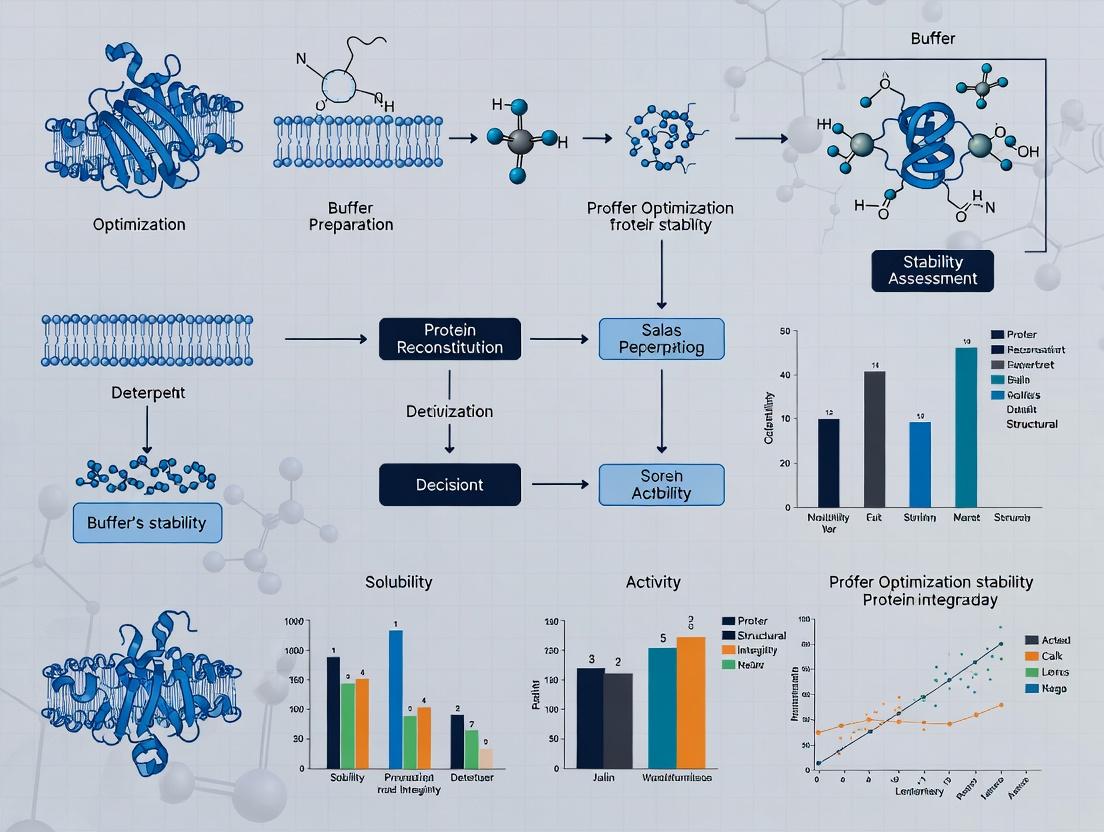
This comprehensive guide explores the critical role of buffer optimization in stabilizing membrane proteins, a key bottleneck in structural biology and drug development.
Ultimate Guide to Buffer Optimization: Stabilizing Membrane Proteins for Structural Biology and Drug Discovery
Abstract
This comprehensive guide explores the critical role of buffer optimization in stabilizing membrane proteins, a key bottleneck in structural biology and drug development. We cover foundational principles of membrane protein instability, systematic methodological approaches for buffer screening, practical troubleshooting strategies for common pitfalls, and advanced validation techniques. Aimed at researchers and industry professionals, this article synthesizes current best practices and emerging trends to enable the successful isolation and study of these challenging but therapeutically vital targets.
Why Membrane Proteins Unravel: The Science of Instability and Buffer Fundamentals
The Unique Challenges of Membrane Protein Solubilization and Stability
Membrane proteins represent over 60% of drug targets but constitute less than 2% of structurally characterized proteins due to their inherent instability outside native lipid bilayers. Buffer optimization is a critical pillar in the broader thesis of membrane protein stability research, as the aqueous environment must substitute for the stabilizing forces of the membrane. This document details application notes and protocols for navigating solubilization and stabilization.
Key Challenges & Buffer Considerations
The amphipathic nature of membrane proteins necessitates careful buffer design to maintain native conformation and function post-solubilization.
Table 1: Primary Challenges and Corresponding Buffer Optimization Strategies
| Challenge | Underlying Cause | Buffer Optimization Strategy | Key Additives |
|---|---|---|---|
| Aggregation | Exposure of hydrophobic surfaces | Introduce amphiphiles & mild detergents | DDM, LMNG, CHS |
| Denaturation | Loss of lipid packing support | Mimic membrane lateral pressure | Lipids, amphipols, nanodiscs |
| Dynamic Instability | Conformational flexibility in solution | Optimize osmotic & chemical chaperones | Glycerol, betaine, proline |
| Metal Ion Loss | Disruption of coordination sites | Maintain essential cofactors | Mg²⁺, Zn²⁺, Ca²⁺ (with chelators) |
| Oxidation | Reactive cysteine residues | Maintain reducing environment | DTT, TCEP, glutathione |
Protocols
Protocol 1: High-Throughput Detergent Screening for Solubilization
Objective: Identify optimal detergent for extracting target membrane protein while preserving function.
Materials:
- Membrane preparation (e.g., isolated vesicles)
- Detergent library (96-well format): 0.5-2% (w/v) solutions of DDM, OG, LDAO, CYMAL-6, Fos-Choline-12, etc.
- Base Buffer: 20 mM HEPES pH 7.5, 150 mM NaCl, 10% glycerol.
- Ultracentrifuge and compatible 96-well plates.
- Analytical method (e.g., SDS-PAGE, activity assay, SEC).
Procedure:
- Prepare Membrane Suspension: Suspend membrane preparation in Base Buffer to a final total protein concentration of 5 mg/mL.
- Detergent Addition: Aliquot 100 µL membrane suspension per well. Add 100 µL of each detergent solution. Incubate with gentle agitation for 2 hours at 4°C.
- Separation: Centrifuge at 100,000 x g for 45 min at 4°C.
- Analysis: Transfer supernatant (solubilized fraction) to a new plate. Analyze supernatant and pellet fractions by SDS-PAGE and/or target-specific activity assay.
- Selection Criteria: Choose detergent yielding highest soluble, functional protein with minimal aggregation.
Protocol 2: Stabilization Screening via Thermofluor (TSA) Assay
Objective: Identify buffer components that increase thermal stability (Tm) of solubilized membrane protein.
Materials:
- Solubilized membrane protein in initial buffer (e.g., 0.05% DDM, 20 mM HEPES pH 7.5).
- 96-well additive screen: lipids (e.g., POPC, POPG), salts, osmolytes, ligands, etc.
- SYPRO Orange protein gel stain (5X stock).
- Real-time PCR instrument.
Procedure:
- Sample Preparation: In a 96-well PCR plate, mix 18 µL of protein solution (0.5-1 mg/mL) with 2 µL of each additive from the screen. Include a no-additive control.
- Dye Addition: Add 5 µL of 5X SYPRO Orange to each well (final 1X).
- Thermal Ramp: Seal plate, centrifuge briefly. Run in RT-PCR instrument with a temperature ramp from 20°C to 95°C at 1°C/min, monitoring fluorescence (ex/em ~470/570 nm).
- Data Analysis: Plot fluorescence vs. temperature. Determine Tm as the inflection point of the unfolding curve. Identify additives that increase Tm by >5°C.
Table 2: Example TSA Screening Results for GPCR X
| Buffer Additive (Condition) | Observed Tm (°C) | ΔTm vs. Control | Interpretation |
|---|---|---|---|
| Control (20 mM HEPES, 0.1% DDM) | 42.3 ± 0.5 | - | Baseline |
| + 0.01% CHS | 51.7 ± 0.4 | +9.4 | Strong stabilizer |
| + 200 mM NaCl | 40.1 ± 0.6 | -2.2 | Destabilizing |
| + 10% Glycerol | 45.8 ± 0.3 | +3.5 | Mild stabilizer |
| + Specific Antagonist (10 µM) | 54.2 ± 0.5 | +11.9 | Strong stabilizer |
The Scientist's Toolkit: Research Reagent Solutions
Table 3: Essential Reagents for Membrane Protein Solubilization & Stability
| Reagent | Category | Primary Function & Rationale |
|---|---|---|
| n-Dodecyl-β-D-Maltoside (DDM) | Mild Detergent | High CMC, forms large micelles; minimizes protein denaturation during extraction. |
| Lauryl Maltose Neopentyl Glycol (LMNG) | Mild Detergent | "Designer" detergent with rigid core; enhances stability for cryo-EM and crystallization. |
| Cholesteryl Hemisuccinate (CHS) | Sterol Analog | Stabilizes GPCRs and other cholesterol-interacting proteins within detergent micelles. |
| Amphipol A8-35 | Amphipathic Polymer | Traps protein in a soluble, detergent-free belt, often improving stability long-term. |
| Poly(styrene-co-maleic acid) (SMA) | Copolymer | Directly fragments membranes into "SMALP" nanodiscs, providing a native-like lipid environment. |
| Tris(2-carboxyethyl)phosphine (TCEP) | Reducing Agent | Maintains cysteine residues in reduced state; more stable than DTT across pH ranges. |
| Bio-Beads SM-2 | Hydrophobic Beads | Used for detergent removal during reconstitution or for exchanging into alternative amphiphiles. |
Visualizations
Title: Membrane Protein Stabilization Workflow
Title: Stability Challenge & Buffer Strategy Logic
Within the critical research on buffer optimization for membrane protein stability, three interrelated factors pose significant challenges: detergent interactions, lipid depletion, and protein aggregation. These factors dictate the integrity, functionality, and crystallizability of membrane proteins, directly impacting downstream drug discovery and structural biology efforts. This application note details protocols and analytical methods to systematically investigate and mitigate these key instability factors.
Table 1: Common Detergents and Their Impact on Stability
| Detergent (Class) | CMC (mM) | Aggregation Number | Key Stability Pros | Key Stability Cons |
|---|---|---|---|---|
| DDM (Maltoside) | 0.17 | 110 | High stability, mild | Slow delipidation, large micelle |
| LMNG (Maltoside) | 0.0002 | ~100 | Exceptional stability, small micelle | Cost, difficult removal |
| OG (Glucoside) | 25 | 27 | Small micelle, inexpensive | Denaturing at high [ ] |
| CHAPS (Zwitterionic) | 8 | 10 | Low denaturation, preserves activity | Moderate stability, high CMC |
| Fos-Choline-12 (Phospholipid) | 1.6 | 50 | Phospholipid mimic | Can promote lipid depletion |
Table 2: Indicators of Instability from Common Assays
| Assay Method | Parameter Measured | Value Indicative of Instability |
|---|---|---|
| Size-Exclusion Chromatography (SEC) | Elution Volume / Peak Symmetry | Earlier elution, peak broadening/tailing |
| Static Light Scattering (SLS) | Aggregation Index | Value significantly > 1 |
| Fluorescence Spectroscopy (Tryptophan) | λ max shift | Blue shift > 5 nm (to hydrophobic env.) |
| Activity Assay | Specific Activity | Decline > 20% from baseline |
| Clear Native PAGE | Band Sharpness / Smearing | Diffuse bands, smearing, high MW aggregates |
Experimental Protocols
Protocol 1: Systematic Detergent Screen for Stability Assessment
Objective: To identify the optimal detergent and concentration that maintains monodispersity and activity while minimizing lipid depletion.
Materials:
- Purified membrane protein in starting detergent.
- Detergent screening kit (e.g., 10-12 different detergents: DDM, LMNG, OG, CYMAL-7, CHAPS, Fos-Cholines, HEGA-10).
- Size-exclusion chromatography (SEC) buffer (e.g., 20 mM Tris-HCl pH 7.5, 150 mM NaCl).
- Pre-equilibrated SEC column (e.g., Superdex 200 Increase 5/150).
- Microfluidic or standard spectrophotometer.
- Activity assay reagents.
Procedure:
- Detergent Exchange: Use dialysis or centrifugal concentrators to exchange the protein sample into a base SEC buffer containing each test detergent at 2x its CMC. Perform exchange at 4°C for 12-16 hours.
- Incubation: Incubate each sample for 1 hour and 24 hours at 4°C and 20°C (relevant to downstream steps).
- SEC Analysis: Inject equal protein amounts (e.g., 50 µg) for each condition. Monitor A280 and analyze elution profiles.
- Data Collection: Record retention volume, full width at half maximum (FWHM), and peak symmetry for each run.
- Activity Check: Pool peak fractions from the main monomeric peak and perform a functional/activity assay. Compare to a native standard if available.
- Selection: Prioritize detergents yielding a single, sharp, symmetric SEC peak with maximal retention volume (indicating compact monodisperse species) and highest retained activity.
Protocol 2: Monitoring Lipid Depletion via Mass Spectrometry
Objective: To quantify the bound lipid content of a membrane protein over time in different detergent buffers.
Materials:
- Purified membrane protein in DDM and LMNG.
- SEC system with in-line multi-angle light scattering (MALS).
- Organic solvents (chloroform, methanol).
- Internal lipid standards (e.g., deuterated lipids).
- LC-MS/MS system.
Procedure:
- Time-Course Sample Preparation: Purify protein in DDM and LMNG buffers via SEC-MALS. Immediately after purification (t=0), take an aliquot for lipid analysis. Aliquot remaining sample and store at 4°C and on ice.
- Sample Harvesting: At t=0, 24h, 48h, and 7 days, extract lipids from equal protein quantities. Add internal standards. Perform a modified Bligh & Dyer extraction (chloroform:methanol:water).
- Lipid Analysis: Dry organic phases under N₂ gas, reconstitute in MS-compatible solvent. Analyze via reverse-phase LC-MS/MS using MRM (Multiple Reaction Monitoring) for target lipids.
- Quantification: Normalize lipid peak areas to internal standards and protein concentration. Calculate moles lipid per mole protein.
- Correlation: Plot lipid:protein ratio over time against SEC-MALS data (aggregation onset) from parallel samples.
Protocol 3: Aggregation Kinetics Measured by Light Scattering
Objective: To quantify the rate of aggregation under thermal or chemical stress.
Materials:
- Membrane protein in candidate buffer(s).
- Real-time PCR machine with fluorescence detection or plate reader capable of static light scattering (ex/em ~360 nm).
- 96-well clear bottom plates.
- Negative control (buffer only).
Procedure:
- Plate Setup: In triplicate, load 20 µL of protein (0.5-1 mg/mL) and 80 µL of buffer per well. Include buffer-only wells.
- Thermal Ramp: Program a thermal ramp from 20°C to 80°C at 1°C/min. Read light scattering signal every 1°C.
- Data Processing: Subtract the average buffer-only scattering signal from sample signals.
- Analysis: Plot scattering intensity vs. temperature. The inflection point or temperature at which scattering increases by 10% (T˅agg) is a key stability metric. Lower T˅agg indicates lower stability.
- Comparison: Perform assay on protein in different detergent/buffer/additive conditions to rank stability.
Visualization Diagrams
The Scientist's Toolkit: Essential Research Reagent Solutions
Table 3: Key Reagents for Investigating Instability Factors
| Reagent / Material | Primary Function in Stability Research | Key Considerations |
|---|---|---|
| n-Dodecyl-β-D-Maltoside (DDM) | Gold-standard mild detergent for initial solubilization and purification. | High CMC, large micelle; can slowly deplete lipids. |
| Lauryl Maltose Neopentyl Glycol (LMNG) | High-stability detergent for crystallization and long-term storage. | Very low CMC; excellent for stability but costly and hard to remove. |
| CHAPS | Zwitterionic detergent useful for preserving protein activity and function. | Moderate stability; good for functional assays post-purification. |
| Synthetic Lipids (e.g., DOPC, POPC, POPG) | Used for reconstitution (Nanodiscs, proteoliposomes) to study lipid-specific effects and prevent depletion. | Define native-like environment; critical for functional studies. |
| MSP Nanodiscs | Membrane scaffold proteins to form lipid bilayers of defined size around protein. | Provides a stable, native-like lipid environment; eliminates free detergent. |
| Size-Exclusion Chromatography (SEC) Columns (e.g., Superdex 200 Increase) | Assess monodispersity, oligomeric state, and detect aggregates. | Use with compatible detergents in mobile phase. In-line MALS recommended. |
| Stabilizing Additives (e.g., Cholesterol Hemisuccinate, Glycerol, Histidine) | Co-solvents or ligands that enhance stability, reduce aggregation, or slow lipid loss. | Must be screened; can interfere with downstream applications. |
| Fluorescent Dyes (e.g., SYPRO Orange, ANS) | Used in thermal shift assays to monitor protein unfolding/aggregation. | High-throughput screening of buffer/detergent conditions. |
Within the critical research area of membrane protein structural biology and drug discovery, buffer optimization is a fundamental prerequisite for success. This Application Note details the core components of stabilizing buffers—pH, salts, additives, and reducing agents—framed within a thesis focused on systematic buffer optimization to enhance the stability, functionality, and yield of membrane proteins for downstream biophysical and structural analyses.
Core Buffer Components: Function & Rationale
pH Buffering Systems
The selection of an appropriate buffering agent is paramount to maintain the protein’s protonation state and solubility. Recent trends emphasize the use of Good's buffers due to their minimal interference with biological systems.
Table 1: Common Buffering Agents for Membrane Protein Research
| Buffering Agent | pKa (at 25°C) | Useful pH Range | Key Considerations for Membrane Proteins |
|---|---|---|---|
| HEPES | 7.48 | 6.8 - 8.2 | Low temperature sensitivity; minimal metal binding. |
| Tris | 8.06 | 7.5 - 9.0 | Significant temperature & concentration dependence. Avoid with aldehydes. |
| MES | 6.10 | 5.5 - 6.7 | Useful for acidic pH stabilization. |
| Phosphate | 2.14, 7.20, 12.67 | 6.0 - 8.0 | Can precipitate with divalent cations; promotes lipid vesicle fusion. |
| Bis-Tris | 6.46 | 5.8 - 7.2 | Effective in cryo-EM buffers. |
Salts and Ionic Strength
Salts modulate electrostatic interactions, shield charged protein surfaces, and influence protein-lipid interactions. Optimization is empirical.
Table 2: Common Salts and Their Effects
| Salt | Typical Concentration Range | Primary Function | Potential Drawbacks |
|---|---|---|---|
| NaCl | 50 - 500 mM | Provides ionic strength; screens charge-charge interactions. | High concentrations can promote aggregation. |
| KCl | 50 - 300 mM | Physiological salt; can be used in place of NaCl. | Similar to NaCl. |
| MgCl₂ | 1 - 10 mM | Stabilizes nucleotide-binding domains; essential cofactor. | Can precipitate phosphate buffers. |
| (NH₄)₂SO₄ | 0.1 - 1.0 M | Promotes hydrophobic interactions; can stabilize some proteins. | May denature proteins at high concentrations. |
Stabilizing Additives and Detergents
Additives are crucial for solubilizing membrane proteins and maintaining their native conformation post-extraction.
Table 3: Categories of Stabilizing Additives
| Category | Example Compounds | Typical Concentration | Mechanism of Action |
|---|---|---|---|
| Detergents | DDM, LMNG, OG, CHAPS | 0.01% - 2% (CMC-dependent) | Solubilize lipid bilayer; form micelles around protein. |
| Lipids/Amphipols | POPC, POPG, A8-35 | 0.01 - 0.1 mg/mL (lipids); 0.1 - 1 mg/mL (amphipols) | Provide a lipid-like environment; often used for NMR/cryo-EM. |
| Osmolytes | Glycerol, Trehalose, Sucrose | 5% - 30% (v/v or w/v) | Preferential exclusion stabilizes native fold; reduces aggregation. |
| Polyols | PEG 400, Ethylene Glycol | 5% - 20% (v/v) | Molecular crowding agent; can enhance stability. |
| Chaotropes (Low Conc.) | Urea, Guanidine HCl | 0 - 0.5 M | Can suppress aggregation by weak interaction with protein surface. |
Reducing Agents
Essential for maintaining cysteine residues in a reduced state, preventing aberrant disulfide bond formation.
Table 4: Common Reducing Agents
| Reducing Agent | Typical Concentration | Mechanism | Stability & Considerations |
|---|---|---|---|
| DTT (Cleland's Reagent) | 1 - 10 mM | Thiol-disulfide exchange; strong reducing agent. | Unstable in buffer; oxidizes in air. Prepare fresh. |
| TCEP | 0.5 - 5 mM | Phosphine reducer; reduces disulfides directly. | More stable than DTT; effective at lower pH. |
| β-Mercaptoethanol (BME) | 5 - 50 mM | Thiol-based exchange. | Volatile and less efficient than DTT/TCEP; often used in cell lysis. |
| Glutathione (Reduced) | 1 - 10 mM | Physiological redox buffer (GSH/GSSG). | Used to maintain a specific redox potential. |
Key Protocols for Buffer Optimization
Protocol 1: High-Throughput Thermostability Screening (Differential Scanning Fluorimetry - DSF)
Objective: To rapidly identify buffer conditions (pH, salts, additives) that maximize the thermal stability (Tm) of a purified membrane protein.
Materials:
- Purified membrane protein in a mild detergent (e.g., 0.05% DDM).
- SYPRO Orange dye (5000X stock in DMSO).
- 96-well or 384-well PCR plates, optically clear.
- Real-time PCR instrument with FRET channel.
- Library of buffer components (stocks of salts, additives, buffering agents).
Procedure:
- Buffer Condition Preparation: In a 96-well plate, prepare 50 µL of each test buffer condition by varying one component at a time (e.g., pH, salt type/concentration, additive).
- Sample Preparation: Add purified membrane protein to each well to a final concentration of 0.2 - 1 mg/mL. Maintain detergent concentration constant.
- Dye Addition: Add SYPRO Orange dye to a final 5X concentration (from 5000X stock).
- Run DSF: Seal the plate, centrifuge briefly. Load into RT-PCR instrument.
- Thermal Ramp: Set temperature ramp from 20°C to 95°C at a rate of 1°C/min, with fluorescence measurement in the ROX/Hex channel at each increment.
- Data Analysis: Plot fluorescence vs. temperature. Determine the melting temperature (Tm) as the inflection point of the sigmoidal curve. Compare Tm across conditions.
Protocol 2: Assessing Monodispersity by Size-Exclusion Chromatography (SEC)
Objective: To evaluate the aggregation state and homogeneity of a membrane protein under different buffer formulations.
Materials:
- ÄKTA or HPLC system with SEC column (e.g., Superdex 200 Increase).
- Test buffer conditions (filtered and degassed).
- Purified membrane protein sample (≥ 100 µg per run).
Procedure:
- Column Equilibration: Equilibrate the SEC column with at least 2 column volumes (CV) of the test buffer at a flow rate of 0.5 - 1 mL/min.
- Sample Preparation: Concentrate the protein in a base buffer, then dialyze or dilute into the specific test condition. Centrifuge at 100,000 x g for 10 min to remove aggregates.
- Injection & Run: Inject 50-100 µL of sample onto the column. Run isocratically with the test buffer. Monitor absorbance at 280 nm.
- Analysis: Compare chromatograms. A sharp, symmetrical peak indicates monodispersity. A leading shoulder suggests aggregation; a trailing shoulder suggests instability or interaction with the column.
Protocol 3: Long-Term Stability Assessment
Objective: To determine the optimal buffer for storing a membrane protein over days to weeks.
Materials:
- Purified protein in multiple candidate buffers.
- 4°C refrigerator, -80°C freezer.
- Materials for activity assay (e.g., ligand binding, enzymatic assay).
Procedure:
- Aliquot Protein: Divide purified protein into small aliquots in each candidate buffer. Include a standard reducing agent (e.g., 1 mM TCEP).
- Storage Conditions: Store aliquots at 4°C and at -80°C (with or without 10% glycerol as cryoprotectant).
- Time Points: At time = 0, 1, 3, 7, and 30 days, thaw one aliquot per condition (if frozen) and analyze.
- Analysis: Assess by:
- SEC (as in Protocol 2) for aggregation.
- Activity Assay to measure functional retention.
- SDS-PAGE to check for degradation.
- Selection: The condition that maintains >80% initial activity and monodispersity for the target duration is optimal.
The Scientist's Toolkit: Research Reagent Solutions
Table 5: Essential Materials for Membrane Protein Buffer Optimization
| Item | Function & Rationale |
|---|---|
| High-Purity Detergents (e.g., DDM, LMNG) | Critical for solubilizing and stabilizing membrane proteins without denaturation. Glyco-diosgenin (GDN) is increasingly popular for cryo-EM. |
| HTP DSF Kits & Plates | Enable rapid screening of hundreds of buffer/additive conditions for thermal stability. |
| SEC Columns (e.g., Superdex 200 Increase 10/300 GL) | Gold standard for assessing sample monodispersity and oligomeric state in solution. |
| 96-Well Dialysis Devices (e.g., Slide-A-Lyzer MINI) | Allow for parallel buffer exchange of multiple samples into different conditions for screening. |
| Phospholipid Mixtures (e.g., POPC:POPG 3:1) | Used for reconstitution assays or as stabilizing additives in amphipol/ nanodisc workflows. |
| TCEP-HCl (Tris(2-carboxyethyl)phosphine) | Preferred reducing agent for long-term stability in buffers due to its resistance to air oxidation. |
| Protease Inhibitor Cocktails (e.g., PMSF, Leupeptin, Pepstatin) | Essential during purification to prevent degradation, especially in lengthy optimization procedures. |
| Glycerol (Molecular Biology Grade) | Common cryoprotectant and stabilizing osmolyte for storage at -80°C. |
Visualizations
Diagram 1: Buffer Optimization Decision Workflow
Diagram 2: Components Contributing to Membrane Protein Stability
The Critical Role of Lipids and Lipid Mimetics (Nanodiscs, SMALPs)
Application Notes
Within the central thesis of buffer optimization for membrane protein (MP) stability research, the role of the native lipid environment is paramount. A protein's function, stability, and conformational landscape are intrinsically linked to its lipid matrix. Traditional detergent-based solubilization often strips away this essential environment, leading to loss of activity and accelerated denaturation. Lipids and lipid mimetics such as Nanodiscs and SMALPs (Styrene Maleic Acid Lipid Particles) provide a paradigm shift by maintaining MPs in a native-like bilayer environment during in vitro studies. The optimization of buffer components must therefore be considered in direct partnership with the choice of lipid mimetic system.
- Nanodiscs: These are discoidal lipid bilayers encircled by two amphipathic helical membrane scaffold proteins (MSPs) or synthetic polymers. They offer a tunable, monodisperse system. Buffer optimization here is critical for self-assembly (e.g., cholate removal via dialysis/adsorption), MSP-lipid-protein stoichiometry, and subsequent purification. Ionic strength and pH must be tailored to maintain Nanodisc integrity and prevent non-specific aggregation.
- SMALPs: SMALPs are formed by the direct solubilization of membranes by styrene maleic acid (SMA) co-polymers, which sequester lipid patches with embedded MPs into nanoparticles. This "native nanodisc" approach preserves the local lipid annulus. Buffer optimization for SMALPs is distinct: a pH >7.5 and the presence of divalent cations (e.g., 2-5 mM Mg²⁺ or Ca²⁺) are often detrimental, as they can precipitate SMA polymer. Optimal buffers are typically at physiological pH (7.0-7.5) with 100-150 mM NaCl, avoiding chelating agents like EDTA in the initial solubilization.
The choice between systems dictates buffer strategy. Nanodiscs allow for broader chemical flexibility but require reconstitution. SMALPs offer direct extraction but impose specific buffer constraints to maintain polymer solubility. The quantitative data below summarizes key operational parameters for each system in the context of buffer optimization.
Table 1: Comparative Operational Parameters for Lipid Mimetic Systems
| Parameter | Detergent-Solubilized MPs | MSP Nanodiscs | Polymer Nanodiscs | SMALPs |
|---|---|---|---|---|
| Typical Hydrodynamic Diameter | 5-10 nm (micelle) | 8-16 nm (tunable by MSP) | 8-30 nm (tunable by polymer) | 10-30 nm |
| Critical Buffer Component | CMC of detergent, stabilizing additives | Cholate/Na Cholate (for assembly), lipids | Lipids, optional cholate | No chelators, pH ~7.4, low divalent cations |
| Key Stability Advantage | Solubilization | Tunable, stable, monodisperse bilayer | Chemical stability, tunable | Preserves native lipid environment |
| Key Limitation | Denaturing, unstable | Complex assembly, size limit | Polymer purity, characterization | Buffer sensitivity, purification challenges |
| Ideal for | Initial purification, crystallization | Biophysical studies, structural biology (Cryo-EM) | Harsh conditions, drug delivery | Functional assays, studying lipid-specific interactions |
Experimental Protocols
Protocol 1: Reconstitution of a Membrane Protein into MSP Nanodiscs Objective: To incorporate a detergent-solubilized MP into a defined lipid bilayer disc for biophysical analysis. Materials: Purified MP in detergent, purified MSP, lipid mixture in cholate, Bio-Beads SM-2, SEC column (e.g., Superdex 200), Assay Buffer (20 mM Tris-HCl, pH 7.5, 100 mM NaCl, 0.5 mM EDTA).
- Form Lipid:MSP:MP Mixture: Combine lipids (e.g., POPC:POPG 3:1) solubilized in cholate, MSP at a molar ratio of ~80:1 lipid:MSP, and MP at a target MSP:MP ratio (e.g., 1:1 to 2:1). Maintain cholate at 15-20 mM. Incubate 1 hr on ice.
- Initiate Self-Assembly: Add washed, hydrated Bio-Beads SM-2 (0.5 g beads/mL mixture) to remove detergent. Incubate with gentle agitation for 3-4 hours at 4°C.
- Complete Assembly: Add a fresh batch of Bio-Beads and incubate overnight at 4°C with gentle agitation.
- Purification: Remove Bio-Beads and load the supernatant onto an SEC column pre-equilibrated with Assay Buffer. Collect the monodisperse peak corresponding to the Nanodisc-MP complex.
- Validation: Analyze fractions by SDS-PAGE and native PAGE. Measure MP activity via a functional assay.
Protocol 2: Direct Extraction of Membrane Proteins Using SMA Polymer (SMALP Formation) Objective: To directly extract MPs from a native membrane while preserving their native lipid annulus. Materials: Membrane preparation (e.g., cell pellets, isolated membranes), 2.5% (w/v) SMA 2000 polymer solution (in 1x PBS, pH 7.4), Solubilization Buffer (50 mM HEPES, pH 7.4, 150 mM NaCl, protease inhibitors), TALON or Ni-NTA resin (for His-tagged MP purification).
- Membrane Preparation: Resuspend membrane pellet in Solubilization Buffer to a protein concentration of ~5 mg/mL.
- Solubilization: Add SMA 2000 polymer solution dropwise to achieve a final concentration of 1-2% (w/v) SMA. Maintain a polymer:total protein ratio of ~3:1 (w/w).
- Incubation: Incubate the mixture with gentle rotation for 2-3 hours at 4°C.
- Clarification: Centrifuge the mixture at 100,000 x g for 45 minutes at 4°C to pellet insoluble material and polymer aggregates.
- Purification: Collect the supernatant containing SMALPs. For His-tagged MPs, incubate the supernatant with TALON resin pre-equilibrated in Solubilization Buffer. Wash with buffer containing 10-20 mM imidazole. Elute with buffer containing 300 mM imidazole.
- Buffer Exchange: Immediately desalt the eluate into a compatible assay buffer (e.g., 50 mM HEPES, pH 7.4, 150 mM NaCl) using a desalting column to remove imidazole and prevent long-term SMA precipitation.
Diagrams
Title: Nanodisc Reconstitution Workflow
Title: SMALP Direct Extraction Protocol
The Scientist's Toolkit: Key Research Reagent Solutions
| Item | Function in MP Stability Research |
|---|---|
| Amphipols (e.g., A8-35) | Synthetic amphipathic polymers that substitute for detergents to stabilize MPs in aqueous solution, useful for Cryo-EM. |
| Membrane Scaffold Proteins (MSPs) | Engineered variants of Apolipoprotein A-I that form the protein belt around Nanodisc bilayers; size is dictated by MSP variant. |
| SMA Co-polymers (e.g., SMA 2000, 3000) | Styrene Maleic Acid co-polymers that directly solubilize lipid bilayers to form SMALPs, preserving native lipids. |
| Bio-Beads SM-2 | Hydrophobic polystyrene beads used to remove detergent from mixed micelles, driving self-assembly of Nanodiscs. |
| Lipid Stocks (e.g., POPC, POPG, cholesterol) | Defined synthetic lipids used to create tailored bilayer environments for Nanodisc reconstitution. |
| Detergents (e.g., DDM, LMNG, OG) | Crucial for initial MP solubilization; choice and concentration are critical for downstream stability and reconstitution. |
| HIS-Select or TALON Resin | Affinity resins for rapid purification of His-tagged MPs or MSPs, and His-tagged MP-SMALP complexes. |
| Size Exclusion Chromatography Columns | Essential for separating monodisperse MP-mimetic complexes from aggregates and empty particles (e.g., Superdex 200 Increase). |
| Protease Inhibitor Cocktails | Vital for preventing proteolytic degradation of MPs and scaffold proteins during lengthy extraction/reconstitution procedures. |
Understanding Buffer-Protein-Detergent Ternary Complex Dynamics
Thesis Context: This Application Note is framed within a broader thesis on buffer optimization for membrane protein stability research. The dynamics of the buffer-protein-detergent ternary complex are foundational to obtaining stable, functional, and structurally intact membrane proteins for biophysical characterization and drug discovery.
Membrane protein research is pivotal for understanding cellular signaling and developing therapeutics. A persistent challenge is maintaining protein stability outside the native lipid bilayer. This is achieved by forming a ternary complex where the protein is solubilized and shielded by a belt of detergent molecules, all within a carefully optimized buffer milieu. The buffer is not a passive spectator; its components (salts, pH, additives) critically modulate detergent behavior, protein-detergent interactions, and ultimately, protein stability and function. Understanding these dynamics is essential for reproducible research and successful downstream applications.
Key Quantitative Parameters & Data
The stability of the ternary complex is governed by measurable physicochemical parameters.
Table 1: Key Quantitative Parameters Influencing Ternary Complex Dynamics
| Parameter | Typical Measurement Range | Impact on Complex Dynamics |
|---|---|---|
| Critical Micelle Concentration (CMC) | 0.001 mM - 20 mM | Defines free detergent concentration; below CMC, complex disintegrates. |
| Aggregation Number | 50 - 150 molecules/micelle | Determines micelle size and the curvature of the protein-surrounding belt. |
| pH | 6.0 - 8.5 (varies by protein) | Affects protein surface charge, detergent head group ionization, and interactions. |
| Ionic Strength | 0 - 500 mM NaCl | Screens electrostatic interactions; can promote or inhibit detergent aggregation. |
| Hydrophobic Effect | Measured via ΔG of transfer | Driven by buffer salts (e.g., (NH₄)₂SO₄, KCl); influences protein folding and detergent assembly. |
| Thermal Stability (Tm) | 30°C - 80°C | Indicator of overall complex stability; measured by DSF or CD. |
| Detergent:Protein Ratio (w/w) | 0.5 : 1 - 10 : 1 | Optimal ratio prevents aggregation without denaturing the protein. |
Table 2: Common Detergents and Their Properties
| Detergent Class | Example | CMC (mM) | Aggregation No. | Key Use Case |
|---|---|---|---|---|
| Non-ionic (Mild) | n-Dodecyl-β-D-maltoside (DDM) | 0.17 | 78 - 110 | First-choice for stabilization & crystallization. |
| Non-ionic (Fos-Choline) | Fos-Choline-12 (FC-12) | 1.4 - 1.6 | ~70 | Phospholipid-mimetic; often used in NMR. |
| Zwitterionic | Lauryl Dimethylamine-N-oxide (LDAO) | 1-2 | 76 | Promotes crystallization but can be denaturing. |
| Bile Salts | Sodium Cholate | 10-14 | 2-10 | Small, harsh; useful for solubilization. |
Experimental Protocols
Protocol 1: Systematic Screening of Ternary Complex Stability by Differential Scanning Fluorimetry (DSF)
Objective: To rapidly identify buffer and detergent conditions that maximize membrane protein thermal stability.
Materials:
- Purified membrane protein in a baseline buffer (e.g., 20 mM HEPES, pH 7.5, 100 mM NaCl, 0.05% DDM).
- Sypro Orange dye (5,000X concentrate).
- 96-well PCR plates.
- Real-time PCR instrument.
- Buffer stock solutions: varied pH (bis-tris, HEPES, Tris), salts (NaCl, KCl, MgCl₂, (NH₄)₂SO₄), additives (glycerol, lipids, ligands).
- Detergent stock solutions.
Method:
- Sample Preparation: In a 96-well PCR plate, mix 10 µL of purified protein (0.2-0.5 mg/mL) with 10 µL of a 2X condition containing the desired final buffer, salt, additive, and detergent. Include a no-protein control for each condition.
- Dye Addition: Add 1 µL of 50X Sypro Orange dye (diluted from stock) to each well. Final dye concentration is 2.5X.
- Centrifugation: Centrifuge the plate briefly to eliminate bubbles.
- Thermal Ramp: Seal the plate and run in the real-time PCR instrument. Use a temperature ramp from 20°C to 95°C at a rate of 1°C per minute, with fluorescence measurement (ROX/FAM filter) at each interval.
- Data Analysis: Plot fluorescence vs. temperature. Determine the melting temperature (Tm) as the inflection point of the sigmoidal curve. The condition yielding the highest Tm indicates the most stabilizing ternary complex.
Protocol 2: Determining Optimal Detergent:Protein Ratio by Size-Exclusion Chromatography (SEC) with Multi-Angle Light Scattering (MALS)
Objective: To ascertain the monodispersity and absolute molar mass of the protein-detergent complex, identifying conditions for a homogeneous sample.
Materials:
- Purified membrane protein sample.
- SEC column (e.g., Superdex 200 Increase 10/300 GL).
- MALS detector coupled with refractive index (RI) and UV detectors.
- Isocratic HPLC system.
- SEC buffer (pre-filtered and degassed): Optimized buffer from Protocol 1.
Method:
- Sample Preparation: Dialyze or dilute the purified protein into the final SEC buffer. Consider injecting samples at different total detergent concentrations (e.g., 0.5x, 1x, 2x CMC) while keeping protein concentration constant (~2-5 mg/mL).
- System Equilibration: Equilibrate the SEC-MALS system with at least 2 column volumes of SEC buffer until a stable baseline is achieved.
- Injection & Separation: Inject 50-100 µL of sample onto the column. Run isocratically at 0.5-0.75 mL/min.
- Data Collection: Collect data from UV (280 nm), RI, and MALS detectors simultaneously.
- Data Analysis: Use dedicated software (e.g., Astra) to analyze the peak of interest. The weight-average molar mass (Mw) is calculated from the combined MALS and RI data. A single, symmetric peak with a Mw consistent with the protein plus a defined detergent belt indicates an optimal, monodisperse ternary complex. A high Mw or asymmetric peak suggests aggregation; a broad peak suggests instability.
The Scientist's Toolkit: Essential Research Reagent Solutions
Table 3: Key Reagents for Studying Ternary Complex Dynamics
| Item | Function & Rationale |
|---|---|
| High-Purity Detergents (e.g., DDM, LMNG) | Form the protective belt around the hydrophobic transmembrane domain. Purity is critical for reproducibility and preventing degradation. |
| Detergent-Compatible Protein Assays | Modified Bradford or BCA assays that are not inhibited by the presence of detergents for accurate concentration measurement. |
| Membrane Scaffold Proteins (MSPs) | Used in Nanodisc technology to replace detergent with a controlled lipid bilayer environment for functional studies. |
| Stabilizing Additives (e.g., CHS, Lipids) | Cholesterol hemisuccinate (CHS) or specific lipids added to detergent micelles to enhance stability of eukaryotic membrane proteins. |
| Affinity Tags & Resins (His-tag, Streptavidin) | Enable purification in the presence of detergent. Cobalt/Nickel resins or streptavidin beads are compatible with most detergent systems. |
| Thermal Stability Dyes (Sypro Orange, CPM) | Environment-sensitive fluorophores for DSF that bind to hydrophobic patches exposed upon protein denaturation. |
Visualizations
Title: Ternary Complex Formation Dynamics
Title: Optimization Workflow for Stable Complexes
A Step-by-Step Buffer Screening Protocol for Maximum Protein Stability
Within the broader thesis on buffer optimization for membrane protein stability research, this application note addresses the critical need for systematic, high-throughput screening of buffer conditions. Membrane proteins are notoriously prone to denaturation and aggregation upon extraction from the lipid bilayer. Empirical optimization of the solubilizing buffer matrix is therefore a prerequisite for successful purification, biophysical characterization, and structure determination. This document details a comprehensive strategy for designing and executing a screen that concurrently varies pH, ionic strength, and additive composition to rapidly identify conditions that enhance protein stability, yield, and functionality.
The Scientist's Toolkit: Essential Research Reagent Solutions
| Reagent/Material | Function in Membrane Protein Buffer Screening |
|---|---|
| Detergents (e.g., DDM, LMNG, OG) | Amphiphilic molecules that mimic the lipid bilayer, solubilizing membrane proteins by replacing native lipids. Critical for stability. |
| Lipids (e.g., DOPC, CHS) | Added to buffers to provide lipid-like environment, often stabilizing proteins and preventing detergent-induced denaturation. |
| HIS-HEPES-MES Buffer System | A trio of Good's buffers allowing continuous pH screening from 5.5 to 8.5 with minimal ionic strength and salt effects. |
| Salts (NaCl, KCl) | Modulate ionic strength, affecting protein solubility, protein-protein interactions, and ligand binding. |
| Reducing Agents (DTT, TCEP) | Break disulfide bonds; prevent oxidative aggregation of cysteine-containing proteins. TCEP is more stable across pH ranges. |
| Glycerol | A kosmotropic molecule that increases solvent viscosity and stability, often used at 5-20% (v/v). |
| L-Arginine & L-Glutamate | Amino acid additives that suppress protein aggregation through weak, multi-site interactions. |
| Protease Inhibitor Cocktails | Essential to prevent proteolytic degradation during extraction and purification. |
| 96-Well or 384-Well Deep-Well Plates | Enable high-throughput formulation of buffer matrices with minimal reagent consumption. |
| Compatible HT Assay Plates | Plates suitable for downstream stability assays (e.g., UV-transparent for DSF, low-binding for aggregation). |
High-Throughput Buffer Matrix Design
The matrix is constructed as a full or fractional factorial design varying three primary parameters. The table below outlines a standard screening range.
Table 1: Standard Buffer Component Screening Ranges
| Parameter | Low Condition | Mid Condition | High Condition | Notes |
|---|---|---|---|---|
| pH | 6.0 | 7.0 | 8.0 | Use MES (pKa 6.1), HEPES (pKa 7.5), Tris (pKa 8.1) for broad coverage. |
| Ionic Strength (NaCl) | 0 mM | 150 mM | 500 mM | Represents low, physiological, and high salt. |
| Detergent | 0.5x CMC | 1.0x CMC | 2.0x CMC | CMC is critical micelle concentration of chosen detergent (e.g., DDM: 0.17mM). |
| Additive 1: Glycerol | 0% (v/v) | 10% (v/v) | 20% (v/v) | Common stabilizer. |
| Additive 2: L-Arginine | 0 mM | 250 mM | 500 mM | Anti-aggregation agent. |
A simplified 3-factor screen (pH, [NaCl], Glycerol) at 3 levels each yields 27 unique conditions. Including detergents and other additives expands the matrix, which can be managed using fractional designs.
Experimental Protocols
Protocol 1: High-Throughput Buffer Formulation (96-Well Format)
- Master Stock Preparation: Prepare 1M stocks of primary buffer (e.g., HEPES, MES, Tris), 4M NaCl, 50% (v/v) glycerol, and 1M L-Arginine (pH-adjusted). Prepare detergent at 10x final CMC.
- Plate Setup: Use a 96-deep well plate as the "buffer formulation plate." Program a liquid handler or manually dispense buffers, salts, and additives according to the design matrix.
- Dilution & Mixing: Bring all wells to 90% of final volume with purified water. Mix thoroughly on a plate shaker.
- pH Adjustment: Use a robotic liquid handler with a micro-pH electrode or pre-adjusted buffer ratios to achieve target pH. Final adjustment can be done with small volumes of 1M NaOH or HCl.
- Finalization: Add detergent stock and any protease inhibitors. Adjust to final volume with water. Mix thoroughly. This plate is the source of buffers for stability assays.
Protocol 2: Thermostability Assay via Differential Scanning Fluorimetry (nanoDSF) Objective: Measure protein melting temperature (Tm) as a function of buffer condition.
- Sample Preparation: In a 96-well PCR plate suitable for nanoDSF, mix 10 µL of purified membrane protein (0.5-2 mg/mL) with 10 µL of each buffer condition from Protocol 1.
- Loading: Cap the plate, centrifuge briefly to collect liquid.
- Measurement: Load plate into a nanoDSF instrument (e.g., Prometheus NT.48). Use a temperature ramp from 20°C to 95°C at a rate of 1°C/min.
- Data Analysis: Monitor intrinsic tryptophan fluorescence at 330 nm and 350 nm. The first derivative of the 350nm/330nm ratio identifies the Tm. Higher Tm indicates greater thermal stability.
Protocol 3: Aggregation Monitoring via Static Light Scattering (SLS) Objective: Quantify protein aggregation over time under different buffer conditions.
- Sample Preparation: In a 384-well low-binding plate, prepare identical samples as in Protocol 2.
- Measurement: Place plate in a plate reader equipped with light scattering detectors. Incubate at 4°C and 25°C.
- Kinetic Read: Measure scattered light at 600 nm (or similar non-absorbing wavelength) every 5 minutes for 24 hours.
- Data Analysis: The slope of the scattering intensity over time indicates aggregation propensity. Optimal buffers show minimal increase.
Data Presentation & Analysis
Table 2: Exemplar Screening Results for a GPCR (β1-Adrenergic Receptor)
| Condition | pH | [NaCl] (mM) | [Glycerol] (%) | DSF Tm (°C) | SLS Agg. Rate (%/hr) | Notes |
|---|---|---|---|---|---|---|
| 1 | 6.0 | 0 | 0 | 42.1 | 5.2 | Low stability, high aggregation |
| 2 | 7.0 | 150 | 10 | 52.4 | 1.1 | Moderate stability |
| 3 | 8.0 | 500 | 20 | 48.9 | 0.8 | High salt/glycerol stabilizes |
| 4 | 7.0 | 150 | 20 | 56.7 | 0.3 | Optimal Condition |
| 5 | 7.5 | 300 | 10 | 54.2 | 0.7 | Good alternative |
Visualizations
Title: HT Buffer Screening Workflow for Protein Stability
Title: How Buffer Components Stabilize Membrane Proteins
The stabilization of membrane proteins for biophysical and structural studies is a critical bottleneck. This document, part of a broader thesis on buffer optimization, addresses the use of key stabilizing additives—osmolytes—to maintain the native conformation and function of membrane proteins during extraction, purification, and storage. These compounds, including sugars, polyols, and amino acids, act as chemical chaperones, preferentially excluding themselves from the protein surface, thereby stabilizing the folded state and inhibiting aggregation.
Mechanism of Action: Preferential Exclusion and Water Structure
These additives stabilize proteins via the mechanism of preferential exclusion. They are repelled from the protein-solvent interface, increasing the free energy of the unfolded state. This creates a thermodynamic bias towards the native, compact conformation. The effect is entropically driven, involving changes in the solvent's hydrogen-bonding network and minimizing the solvent-accessible surface area of the protein.
Diagram Title: Osmolyte Stabilization via Preferential Exclusion
Application Notes and Quantitative Comparison of Additives
The choice and concentration of osmolyte are empirical and protein-specific. The following table summarizes key properties and effective concentration ranges for common additives.
Table 1: Key Stabilizing Additives: Properties and Applications
| Additive Class | Example Compounds | Common Working Range | Key Mechanism & Notes | Primary Use Case |
|---|---|---|---|---|
| Sugars | Sucrose, Trehalose, Glucose | 0.2 – 1.0 M | Preferential exclusion, vitrification. Trehalose is non-reducing and highly effective. | Long-term storage, freeze-thaw cycles, crystallization. |
| Polyols | Glycerol, Sorbitol, Inositol | 10 – 30% (v/v or w/v) | Preferential exclusion, reduces water activity. Glycerol lowers solution viscosity. | Purification buffers, dilution stabilizer, functional assays. |
| Amino Acids | Proline, Glycine, Glutamate | 0.1 – 1.0 M | Osmotic stress relief, direct side-chain interactions (varies). Proline is a versatile stabilizer. | Cell-free expression, refolding buffers, thermostabilization. |
| Methylamines (Osmolytes) | Betaine, Trimethylamine N-oxide (TMAO) | 0.1 – 1.0 M | Strong preferential exclusion, counteract urea denaturation. | Stabilization under harsh conditions (e.g., high urea). |
| Amino Acid Derivatives | Taurine, γ-Aminobutyric acid (GABA) | 50 – 500 mM | Osmotic balance, possible receptor-specific effects. | Specialized applications in neuronal protein studies. |
Detailed Experimental Protocols
Protocol 1: High-Throughput Additive Screening for Thermostability (DSF/Tm Shift)
Objective: Identify optimal stabilizing additives for a target membrane protein using differential scanning fluorimetry (DSF).
The Scientist's Toolkit:
- DSF-capable Real-time PCR Instrument: For monitoring fluorescence during thermal denaturation.
- Fluorescent Dye (e.g., SYPRO Orange): Binds hydrophobic patches exposed upon unfolding.
- 96- or 384-well PCR Plates: Low volume, clear for optical detection.
- Purified, Detergent-solubilized Membrane Protein: Target protein in a minimal buffer.
- Additive Stock Library: Concentrated stocks (e.g., 2M sugars, 5M betaine, 80% glycerol) in base buffer.
- Buffer Exchange System (e.g., spin columns): To standardize starting buffer conditions.
Procedure:
- Prepare the target membrane protein in a low-salt, additive-free base buffer (e.g., 20 mM HEPES, 100 mM NaCl, 0.05% DDM) via buffer exchange.
- In a PCR plate, mix 10 µL of protein (final conc. 1-5 µM) with 10 µL of additive stock solution to achieve desired final concentration (see Table 1). Include a no-additive control (base buffer only).
- Add 1 µL of 100x SYPRO Orange dye to each well. Centrifuge briefly to collect liquid.
- Seal the plate and run the DSF program: Ramp temperature from 20°C to 95°C at a rate of 1°C/min, with fluorescence measurements at each step.
- Analyze data to determine the melting temperature (Tm) for each condition. The additive yielding the highest ΔTm relative to the control is the strongest stabilizer.
Diagram Title: DSF Additive Screening Workflow
Protocol 2: Formulating a Stabilizing Buffer for Purification and Storage
Objective: Develop a working buffer for the purification and short-term storage of a detergent-solubilized GPCR.
The Scientist's Toolkit:
- Lysis/Binding Buffer: Base for initial extraction.
- Elution Buffer: For competitive elution from affinity resin.
- Size-Exclusion Chromatography (SEC) Buffer: Final formulation for purification and storage.
- Protease Inhibitor Cocktail: Prevents degradation during purification.
- Reducing Agent (e.g., TCEP): Maintains cysteine residues in reduced state.
- Detergent (CMC-appropriate): e.g., DDM, LMNG, to maintain solubilization.
- Selected Stabilizing Additives: Based on screening results (e.g., 0.5M Trehalose, 0.1M Glycine).
Procedure:
- Lysis/Binding Buffer: Prepare 50 mM Tris, 300 mM NaCl, 10% glycerol, 1% detergent, 2 mM MgCl2, protease inhibitors, pH 7.5. Glycerol aids initial stability.
- Elution Buffer: Use lysis buffer supplemented with 5-10 mM ligand (e.g., alprenolol for β2AR) or competitive tag eluent.
- SEC/Storage Buffer Formulation: Based on DSF results, prepare the final buffer: 20 mM HEPES, 100 mM NaCl, 0.05% DDM, 0.5 M Trehalose, 0.1 M Glycine, 0.5 mM TCEP, pH 7.4.
- Buffer Exchange: Immediately after elution, exchange the protein into the SEC/Storage buffer using a desalting column or spin concentrator with a cut-off appropriate for the additive molecular weight.
- Quality Control: Assess protein monodispersity via SEC profile and measure baseline thermostability via DSF in the new buffer. Aliquot and flash-freeze for storage at -80°C.
Research Reagent Solutions: Essential Materials
Table 2: Essential Reagents for Membrane Protein Stabilization Studies
| Reagent/Material | Function/Role | Example Product/Catalog |
|---|---|---|
| High-Purity Sugars (Trehalose dihydrate) | Non-reducing stabilizer for long-term storage and freeze-thaw. | MilliporeSigma T0167 (≥99%) |
| Molecular Biology Grade Glycerol | Polyol stabilizer, reduces water activity, cryoprotectant. | Invitrogen 15514-011 |
| Anhydrous Betaine | Methylamine osmolyte, counteracts denaturing stresses. | Thermo Scientific J60788.AK |
| SYPRO Orange Protein Gel Stain | Environment-sensitive dye for DSF thermostability assays. | Thermo Fisher Scientific S6650 |
| n-Dodecyl-β-D-Maltoside (DDM) | Mild, non-ionic detergent for membrane protein solubilization. | Anatrace D310S |
| HEPES Buffer (1M, pH 7.4) | Biological buffer for maintaining physiological pH. | Corning 25-060-Cl |
| Tris(2-carboxyethyl)phosphine (TCEP) | Stable reducing agent to prevent disulfide scrambling. | GoldBio TCEP20 |
| 96-Well Hard-Shell PCR Plates | Low-volume, optically clear plates for DSF assays. | Bio-Rad HSP9631 |
Optimizing Detergent Choice and Concentration (DDM, LMNG, CHS, etc.)
This document serves as a critical component of a comprehensive thesis on Buffer Optimization for Membrane Protein Stability Research. The solubilization, purification, and stabilization of membrane proteins are foundational to structural and functional studies. While buffer composition (pH, ionic strength, additives) is crucial, the choice and concentration of detergent are often the decisive factors between success and failure. These Application Notes provide a systematic framework for selecting and optimizing detergents like n-Dodecyl-β-D-maltoside (DDM), Lauryl Maltose Neopentyl Glycol (LMNG), and Cholesteryl Hemisuccinate (CHS) to preserve native protein conformation, prevent aggregation, and maintain functionality during downstream applications.
Detergent Classification and Key Properties
Detergents are amphipathic molecules classified by the nature of their hydrophilic head group: Ionic (anionic, cationic), Zwitterionic, and Non-ionic. For membrane protein research, mild non-ionic and zwitterionic detergents are typically favored for initial solubilization and stabilization to minimize protein denaturation.
Table 1: Key Detergents for Membrane Protein Research
| Detergent Name | Type | Aggregation Number | CMC (mM) | MW (Da) | Key Characteristics & Best Use |
|---|---|---|---|---|---|
| DDM | Non-ionic | 78-149 | 0.17 | 510.6 | Gold standard for initial solubilization & purification; excellent stability but high micelle size. |
| LMNG | Non-ionic | ~1-2 | 0.008 | 1006.2 | "Bola" amphiphile with very low CMC; excellent for stabilization, crystallography, and cryo-EM. |
| CHS | Anionic (steroid) | N/A | ~1-2 (with other det.) | 486.6 | Sterol analog; used as a stabilizing additive (0.1-0.5%) with primary detergents like DDM. |
| OG | Non-ionic | 27-100 | 25 | 292.4 | High CMC; useful for purification requiring easy detergent removal (e.g., reconstitution). |
| CYMAL-5 | Non-ionic | ~90 | 0.35 | 388.5 | Cyclic maltoside; often milder than DDM for sensitive proteins. |
| CHAPSO | Zwitterionic | 11 | 8 | 614.8 | Useful for solubilizing functionally sensitive proteins (e.g., GPCRs, ion channels). |
Systematic Optimization Protocol
Protocol 1: Initial Solubilization Screen for a Novel Membrane Protein
Objective: To identify the most effective detergent(s) for extracting the target membrane protein from the lipid bilayer while maintaining solubility and native state.
Materials (Research Reagent Solutions):
- Cell Pellet or Membrane Fraction: Containing overexpressed target protein.
- Lysis/Binding Buffer: 50 mM HEPES pH 7.5, 300 mM NaCl, 10% glycerol, 1 mM ligand/inhibitor (optional).
- Detergent Stock Solutions: 10-20% (w/v) stocks of DDM, LMNG, OG, CYMAL-5, CHAPSO in ultrapure water. Prepare fresh or store at -20°C.
- Protease Inhibitor Cocktail: EDTA-free.
- Benzonase Nuclease: To reduce viscosity from nucleic acids.
- Centrifugation Equipment: Ultracentrifuge and fixed-angle rotor (e.g., Ti70).
Procedure:
- Membrane Preparation: Resuspend cell pellet in Lysis Buffer with protease inhibitors. Lyse cells via homogenization or sonication. Remove cell debris by centrifugation at 10,000 x g for 30 min at 4°C. Isolate membranes by ultracentrifugation of the supernatant at 150,000 x g for 60 min at 4°C.
- Detergent Screening: Aliquot the membrane pellet into 1.5 mL tubes. Resuspend each aliquot in Lysis Buffer containing a different detergent at 1% (w/v) concentration. Use a buffer-only control.
- Solubilization: Incubate with gentle rotation for 2-3 hours at 4°C.
- Separation: Centrifuge samples at 150,000 x g for 30 min at 4°C to separate solubilized protein (supernatant) from insoluble material (pellet).
- Analysis: Analyze equal volumes of total (T), supernatant (S), and pellet (P) fractions by SDS-PAGE and Western Blot. The optimal detergent yields the target protein predominantly in the supernatant.
Protocol 2: Critical Micelle Concentration (CMC) and Working Concentration Optimization
Objective: To determine the minimal effective detergent concentration for stabilizing the purified protein, minimizing background for structural studies.
Principle: The CMC is detergent-specific, but the working concentration must be optimized for each protein-detergent complex (PDC). A common rule is to maintain detergent at 2-5x its CMC during purification.
Procedure:
- Purify Protein: Use the best detergent from Protocol 1 at a high concentration (e.g., 2x CMC) for initial affinity purification.
- Set Up Optimization: In a 96-well plate, prepare a dilution series of the purified protein in storage buffer, with the detergent concentration varying from 0.1x to 5x its CMC.
- Stability Assay: Incubate plates at 4°C and room temperature. Monitor stability over 7 days using:
- Size-Exclusion Chromatography (SEC): For aggregation assessment (PDC elution profile).
- Static Light Scattering (SLS): To determine PDC molar mass.
- Activity/Binding Assay: (e.g., SPR, fluorescence) to confirm functional integrity.
- Analysis: Identify the lowest detergent concentration that maintains monodispersity (sharp SEC peak), expected PDC mass, and full activity.
Table 2: Example Optimization Results for a GPCR in Different Detergents
| Detergent | Conc. Tested (xCMC) | Optimal Conc. (xCMC) | SEC Elution Volume (mL) | PDC Mass (kDa) by SLS | Ligand Binding (% of native) |
|---|---|---|---|---|---|
| DDM | 0.5 - 5 | 2.0 | 13.2 | 120 ± 10 | 95% |
| LMNG | 0.5 - 5 | 1.5 | 14.5 | 80 ± 5 | 100% |
| DDM + 0.1% CHS | 0.5 - 5 | 1.0 | 12.8 | 135 ± 12 | 105% |
Advanced Strategies and Additives
- Detergent Exchange: Use size-exclusion or immobilized affinity tags (e.g., MBP-His tag cleavage) to exchange the solubilization detergent for a more stabilizing one (e.g., DDM to LMNG) for structural studies.
- Additive Screening: Cholesterol analogs like CHS (0.01-0.1% w/v) can dramatically stabilize certain proteins (e.g., GPCRs). Screen lipids and stabilizing ligands in combination with detergents.
- Thermostability Assays: Use differential scanning fluorimetry (nanoDSF) or radioligand binding thermal shifts (TSA) to quantify the stabilizing effect of different detergent/additive combinations. The detergent yielding the highest melting temperature (Tm) is often optimal.
Visualization: Decision Workflow and Pathway Impact
The Scientist's Toolkit: Essential Reagents & Materials
Table 3: Key Research Reagent Solutions for Detergent Optimization
| Item | Function & Rationale |
|---|---|
| High-Purity Detergent Stocks (e.g., Anatrace) | Ensure batch-to-batch consistency, low UV absorbance, and defined chemical properties critical for reproducibility. |
| HEPES or Tris Buffer Systems | Provide effective pH buffering in the 7.0-8.5 range, commonly used to mimic physiological conditions. |
| NaCl or KCl | Modulate ionic strength to mimic physiology and influence electrostatic protein-detergent interactions. |
| Glycerol (10-20% v/v) | Common additive to increase protein stability and reduce aggregation during purification and storage. |
| Protease Inhibitor Cocktail (EDTA-free) | Prevents proteolytic degradation during lengthy solubilization and purification steps. |
| Benzonase Nuclease | Degrades nucleic acids that co-purify with membranes, reducing sample viscosity and non-specific binding. |
| CHS (Cholesteryl Hemisuccinate Tris Salt) | Water-soluble sterol analog used as a stabilizing additive for sensitive proteins like GPCRs. |
| Ligand or Inhibitor (Target-Specific) | Added during solubilization to stabilize a specific conformational state and increase stability. |
| Size-Exclusion Chromatography Column (e.g., Superose 6 Increase) | Gold-standard for assessing the monodispersity and apparent size of the Protein-Detergent Complex (PDC). |
| NanoDSF Capillaries & Instrument | For label-free thermal stability assays to rapidly compare detergent/additive effects on protein folding. |
Within the broader thesis of buffer optimization for membrane protein stability, selecting the appropriate biochemical formulation is the critical first step for structural biology. The divergent requirements of single-particle cryo-electron microscopy (cryo-EM) and X-ray crystallography demand specialized buffer and screen formulations. This application note details the composition, utility, and protocols for these advanced formulations, providing a direct comparison to guide researchers toward successful structure determination.
Core Composition & Functional Comparison
Table 1: Functional Comparison of Cryo-EM Buffers vs. Crystallization Screens
| Component / Property | Cryo-EM Buffers | Crystallization Screens |
|---|---|---|
| Primary Goal | Stabilize native conformation in thin, vitreous ice. | Drive protein to a thermodynamically ordered, packed lattice. |
| Typical pH Range | Narrow (e.g., 7.0-8.0), precisely matched to protein stability. | Extremely broad (e.g., 3.0-10.5) to sample many conditions. |
| Buffer Species | Common biological buffers (HEPES, Tris, MES). High purity. | Diverse, including malonate, citrate, acetate, and many others. |
| Salt Concentration | Generally low to moderate (<200 mM) to reduce background. | Highly variable (0 mM to >2 M) to modulate electrostatic interactions. |
| Detergent / Amphiphile | Critical, at or above CMC; often OGNG, DDM, LMNG. | Critical; identical or similar to cryo-EM, but concentration is key. |
| Precipitants | Absent (cause particle aggregation/denaturation). | Essential (PEGs, salts, organics like MPD, Jeffamine). |
| Additives | Reductants (TCEP), protease inhibitors, lipids/cholesteryl hemisuccinate. | Small molecules, divalent cations, ligands, substrate analogs. |
| Viscosity | Minimized for even blotting and thin ice. | Often increased by precipitants to slow diffusion. |
| Typical Volume | 50-500 µL for grid preparation. | 50-1000 nL per crystallization trial (vapor diffusion). |
Table 2: Quantitative Analysis of Common Commercial Formulations
| Product Name (Vendor) | Type | # Conditions | Key Characteristic | Membrane Protein Use Case |
|---|---|---|---|---|
| Amphipol A8-35 (Anatrace) | Cryo-EM Additive | N/A | Amphipathic polymer for detergent replacement. | Stabilization after purification, detergent-free grid prep. |
| Glycerol-Free Pre-Screening Kit (Hampton) | Cryo-EM Buffer Kit | 24 | Optimized for particle homogeneity and ice quality. | Initial stability assessment and grid condition screening. |
| MembFac (Hampton Research) | Crystallization Screen | 96 | Sparse matrix with diverse detergents & lipids. | Primary screen for membrane proteins. |
| JBScreen Membrane 1-3 (Jena Bioscience) | Crystallization Screen | 3x 96 conditions | Comprehensive detergents, precipitants, and additives. | High-throughput screening for challenging targets. |
| MemGold & MemGold2 (Molecular Dimensions) | Crystallization Screen | 2x 96 conditions | Sparse matrix tailored for membrane proteins. | Broad first-pass and optimization screens. |
| MemTrans (Molecular Dimensions) | Crystallization Screen | 96 | Targets transporter proteins specifically. | Transporters, symporters, antiporters. |
| MemStart+MemSys (MiTeGen) | Crystallization Screen | 1x 96 + 1x 48 | Kit combines initial screen & optimization reagents. | Streamlined workflow from screen to optimization. |
Detailed Experimental Protocols
Protocol 1: Cryo-EM Buffer Optimization and Grid Preparation
Objective: To identify a buffer condition that maximizes membrane protein stability, monodispersity, and substrate binding state for high-resolution single-particle analysis.
I. Materials: The Scientist's Toolkit
| Reagent / Solution | Function |
|---|---|
| Purified Membrane Protein (>0.5 mg/mL, in mild detergent e.g., LMNG). | The target macromolecular complex for structural study. |
| 10-24 Condition Glycerol-Free Screen (e.g., Hampton HR2-415). | Pre-formulated buffers for initial stability testing. |
| Grid Box (Gold or Copper, 300 mesh) with R1.2/1.3 Ultrafoil or Quantifoil. | Support film for the vitrified sample. |
| Liquid Ethane and Cryo Grid Plunger (Vitrobot or GP2). | Cryogen and apparatus for rapid vitrification. |
| Negative Stain Reagents (2% Uranyl Acetate or Nano-W). | For rapid initial assessment of particle distribution and quality. |
| Size Exclusion Chromatography (SEC) Buffer (e.g., 20 mM HEPES pH 7.5, 150 mM NaCl, 0.01% LMNG). | Standard buffer for final purification and homogeneity check. |
| Substrate/Ligand Stocks (in DMSO or water). | To trap the protein in a specific functional state. |
II. Procedure:
- Stability Assay: Dilute the purified protein 1:1 into each condition of the pre-screening kit (final volume 50 µL). Incubate on ice for 1 hour and at room temperature for 30 minutes.
- Negative Stain Validation: Apply 3 µL of each incubated sample to a glow-discharged carbon-coated Cu grid. After 30s, blot, wash with water, blot, and stain with 2% uranyl acetate for 30s. Blot dry and image via TEM. Score conditions for monodispersity and structural integrity.
- SEC-MALS/SEC-UV Validation: For top 2-3 conditions, inject 50 µL of the incubated sample onto an analytical SEC column (e.g., Superose 6 Increase) coupled to a multi-angle light scattering (MALS) and UV detector. The condition yielding a single, sharp peak with a molar mass consistent with the functional oligomer is optimal.
- Ligand Complex Formation: Incubate the protein in the optimal buffer with a 5x molar excess of substrate/ligand for 30 minutes on ice. Remove excess ligand via a centrifugal desalting column equilibrated with the optimal buffer.
- Cryo-Grid Preparation: a. Glow-discharge the cryo-EM grid (ultrafoil) for 30-60 seconds. b. Load 3 µL of the protein-ligand complex (~3-5 mg/mL) onto the grid inside the plunge freezer chamber at >95% humidity and 4°C. c. Blot for 3-6 seconds with force level 0, then immediately plunge into liquid ethane. Transfer to liquid nitrogen for storage.
Protocol 2: Crystallization Screening of a Membrane Protein via Vapor Diffusion
Objective: To identify initial crystallization hits for a detergent-solubilized membrane protein using commercially available sparse-matrix screens.
I. Materials: The Scientist's Toolkit
| Reagent / Solution | Function |
|---|---|
| Concentrated Membrane Protein (>10 mg/mL, in SEC buffer). | Highly concentrated, homogeneous sample for crystallization trials. |
| Sparse-Matrix Screen (e.g., MemGold2, MembFac). | Broad exploration of chemical space to induce nucleation. |
| Crystallization Plates (96- or 24-well sitting drop or hanging drop). | Platform for vapor diffusion experiment. |
| Microseed Stock (Optional, from native or cross-linked protein). | To promote nucleation in promising but non-nucleating conditions. |
| Lipid Supplement (e.g., Monoolein, cholesterol). | To mimic native membrane environment and facilitate crystal contacts. |
| Ligand/Substrate (for co-crystallization). | To stabilize a specific conformation and aid in packing. |
II. Procedure (Sitting Drop Vapor Diffusion):
- Plate Setup: Using an automated liquid handler or manually, dispense 50-100 µL of each reservoir solution from the screen into the wells of a 96-well crystallization plate.
- Drop Dispensing: For each condition, mix 150 nL of protein solution with 150 nL of reservoir solution on the sitting drop shelf (1:1 ratio). For co-crystallization, pre-mix protein with ligand.
- Seeding (Optional): For difficult samples, add 10-20 nL of microseed stock to the drop after mixing (seeding technique).
- Incubation: Seal the plate with clear tape. Incubate in a vibration-free, temperature-controlled environment (typically 4°C and 20°C, in parallel).
- Monitoring: Image drops daily for the first week, then weekly using a plate imaging microscope. Document potential "hits" (micro-crystals, phase separation, spherulites).
- Hit Optimization: For initial hits, set up a fine-screen grid around the hit condition, varying pH, precipitant concentration, and protein:reservoir ratio (e.g., 2:1, 1:1, 1:2).
Visualizing the Decision Pathway and Workflows
Title: Decision Pathway for Cryo-EM vs. Crystallization Buffer Strategies
Title: Parallel Experimental Workflows for Cryo-EM and Crystallization
Within the broader thesis on buffer optimization for membrane protein stability, this application note presents a case study focusing on the β2-Adrenergic Receptor (β2-AR), a prototypical Class A GPCR. Successful structural and functional studies of such targets are critically dependent on the identification of a stabilizing buffer composition that maintains native conformation, ligand-binding capability, and signaling competence. This document outlines a systematic approach to buffer optimization, providing protocols and data for researchers in drug development.
Key Research Reagent Solutions
The following table details essential materials for GPCR buffer optimization studies.
| Reagent / Solution | Function & Rationale |
|---|---|
| n-Dodecyl-β-D-Maltoside (DDM) | Mild, non-ionic detergent for initial membrane solubilization and protein extraction. |
| Cholesteryl Hemisuccinate (CHS) | Cholesterol analog often added to DDM to mimic the lipid environment and stabilize GPCRs. |
| HEPES Buffer (pH 7.5) | Biological pH buffer with excellent capacity in the physiological range, minimizing pH drift. |
| Sodium Chloride (NaCl) | Used to modulate ionic strength, which can influence protein solubility and complex stability. |
| Glycerol | Common cryoprotectant and stabilizing agent, added to reduce protein aggregation and denaturation. |
| Ligand (e.g., Alprenolol) | Inverse agonist used in stabilization experiments to lock the receptor in a specific conformational state. |
| Size-Exclusion Chromatography (SEC) Column (e.g., Superdex 200 Increase) | For assessing protein monodispersity and oligomeric state post-solubilization. |
| Fluorescent Dye (e.g., NBD-GTPγS) | Used in functional assays to monitor G protein activation via fluorescence polarization. |
Experimental Protocol: Systematic Buffer Screen
Objective
To identify a buffer condition that maximizes the stability, monodispersity, and functional activity of solubilized β2-AR.
Materials
- Purified β2-AR in initial buffer (20 mM HEPES pH 7.5, 100 mM NaCl, 0.1% DDM, 0.01% CHS).
- 96-well deep-well block for buffer preparation.
- Stock solutions: Buffers (Tris, HEPES, MES, pH 6.0-8.5), Salts (NaCl, KCl, MgCl₂), Detergents (DDM, LMNG, GDN), Additives (CHS, glycerol, TCEP).
- Liquid handling robot (optional for high-throughput).
- Analytical SEC column (e.g., Superdex 200 Increase 5/150 GL) coupled to HPLC or FPLC system.
- Dynamic Light Scattering (DLS) plate reader.
- Fluorescence Polarization (FP) assay kit for G protein activation.
Procedure
Step 1: Buffer Matrix Design
- Create a 96-condition matrix varying: Buffer Type & pH (Rows A-D: HEPES 7.0, HEPES 7.5, Tris 7.5, MES 6.5), Salt Concentration (Columns 1-3: 0, 150, 300 mM NaCl), Detergent (Columns 4-6: 0.1% DDM, 0.01% LMNG, 0.02% GDN), and Additives (Columns 7-12: combinations of 0.02% CHS, 10% Glycerol, 1 mM TCEP).
- Using a liquid handler or manually, prepare 500 µL of each buffer condition in the deep-well block.
Step 2: Receptor Incubation & Stability Challenge
- Dilute purified β2-AR into each buffer condition to a final concentration of 1 mg/mL in a 96-well PCR plate. Include 10 µM alprenolol in half the samples for each condition.
- Seal the plate and incubate at 4°C for 24 hours.
- Subject the plate to a thermal stability challenge by transferring to a thermocycler and incubating at 25°C for 30 minutes.
Step 3: High-Throughput Stability Assessment
- Analytical SEC: Inject 10 µL from each well onto the analytical SEC column. Monitor absorbance at 280 nm. Record the elution volume of the main peak and calculate the % monomeric area under the peak.
- Dynamic Light Scattering (DLS): Transfer 20 µL from each well to a 384-well low-volume DLS plate. Measure the hydrodynamic radius (Rh) and polydispersity index (%Pd) for each sample.
- Functional Activity (FP Assay): For select promising conditions, perform a functional assay. Mix 20 nM receptor with 100 nM Gαs protein and 10 nM NBD-GTPγS in the corresponding buffer. Measure fluorescence polarization (mP units) over 10 minutes. Calculate the initial rate of GDP/GTP exchange.
Step 4: Data Analysis
- Tabulate key metrics for each condition: SEC %Monomer, DLS Rh (nm) and %Pd, FP Initial Rate (mP/min).
- Identify conditions that simultaneously yield >90% monomer, low Pd (<20%), and high functional activity.
Data Presentation: Buffer Screen Results
Table 1: Top Performing Buffer Conditions for β2-AR Stabilization
| Condition ID | Buffer (pH) | Detergent | Additives | SEC %Monomer | DLS Rh (nm) | DLS %Pd | FP Rate (mP/min) | Notes |
|---|---|---|---|---|---|---|---|---|
| B5 | 20 mM HEPES, 7.5 | 0.01% LMNG | 0.02% CHS, 1 mM TCEP | 98.2 | 4.8 | 12.5 | 15.7 | Optimal for structure |
| A2 | 20 mM HEPES, 7.0 | 0.1% DDM | 0.02% CHS, 10% Glycerol | 95.1 | 5.1 | 18.3 | 12.4 | High stability for storage |
| D8 | 20 mM MES, 6.5 | 0.02% GDN | 1 mM TCEP | 92.4 | 4.9 | 15.7 | 18.9 | Best functional activity |
| C1 (Initial) | 20 mM HEPES, 7.5 | 0.1% DDM | 0.01% CHS | 78.5 | 6.8 | 35.2 | 8.1 | Baseline condition |
Table 2: Effect of Ligand on Thermal Stability (ΔTm)
| Buffer Condition | Tm without Ligand (°C) | Tm with Alprenolol (°C) | ΔTm (°C) |
|---|---|---|---|
| B5 (LMNG/CHS) | 41.2 | 48.7 | +7.5 |
| A2 (DDM/CHS/Gly) | 39.8 | 45.3 | +5.5 |
| D8 (GDN/TCEP) | 37.5 | 44.1 | +6.6 |
| C1 (Initial) | 35.1 | 40.5 | +5.4 |
Visualization: Workflow and Signaling
Buffer Optimization Workflow for Membrane Proteins
GPCR Signaling Pathway for Functional Assays
Solving Stability Issues: Troubleshooting Buffer Failures and Enhancing Longevity
Diagnosing Aggregation, Precipitation, and Loss of Function
Within the broader thesis on buffer optimization for membrane protein stability research, diagnosing physical instability—aggregation, precipitation, and loss of function—is a critical pillar. These interrelated phenomena are primary failure modes for membrane proteins, which are intrinsically unstable outside their native lipid bilayer. Buffer composition directly modulates the delicate balance of hydrophobic, ionic, and hydrogen-bonding interactions that maintain solubilized membrane proteins in a functional, monodisperse state. This application note details protocols and analytical techniques to systematically diagnose these issues, providing data to inform iterative buffer optimization strategies.
Key Diagnostic Assays & Quantitative Data
The following assays provide complementary data on protein stability and function. Quantitative thresholds for instability are project-specific but general benchmarks are provided.
Table 1: Core Diagnostic Assays for Membrane Protein Instability
| Assay | Parameter Measured | Indication of Instability | Typical Benchmarks for Concern | Key Buffer Influencers |
|---|---|---|---|---|
| Size-Exclusion Chromatography (SEC) | Hydrodynamic radius, oligomeric state. | Peak shoulder/tailing, high-molecular-weight (HMW) aggregates, loss of main peak. | >10% area in HMW aggregate peak; >20% decrease in main peak area over time. | Detergent type/concentration, salts, pH, glycerol. |
| Static Light Scattering (SLS) | Absolute molecular weight. | Molecular weight >120% of expected monodisperse mass. | Mw > 120% of theoretical. | Detergent, lipids (amphipols/nanodiscs), ionic strength. |
| Dynamic Light Scattering (DLS) | Hydrodynamic diameter (Dh) and polydispersity. | Increase in Dh, high polydispersity index (PdI). | PdI > 0.2; major population shift >10% from expected Dh. | All components; sensitive to particulates. |
| Spectroscopic Turbidity (A340 or A600) | Light scattering from large aggregates. | Increase in absorbance at non-absorbing wavelengths. | A340 > 0.05 (post-filtration) or a time-dependent increase. | Precipitation at low ionic strength, detergent cmc. |
| Activity/Binding Assay (e.g., SPR, ITC) | Ligand binding affinity (Kd), catalytic rate. | Reduction in specific activity, loss of binding signal, increased Kd. | >50% loss of specific activity; Kd shift >5-fold. | pH, redox agents, stabilizing ligands, lipids. |
| Fluorescence-Based Thermal Shift (FTS/TSA) | Apparent melting temperature (Tm). | Decrease in Tm relative to control. | ΔTm < -5°C. | pH, salts, osmolytes, ligands. |
Detailed Experimental Protocols
Protocol 1: Multi-Angle Light Scattering (MALS) Coupled with SEC
Objective: Determine the absolute molecular weight and quantify oligomeric/aggregated states of a membrane protein in solution.
Key Reagent Solutions:
- SEC-MALS Buffer: 20 mM HEPES pH 7.5, 150 mM NaCl, 0.02% (w/v) DDM (or relevant detergent). Always filter through 0.1 µm membrane.
- Protein Sample: Purified membrane protein at ≥0.5 mg/mL in a compatible buffer. Centrifuge at 16,000 x g for 10 minutes at 4°C before injection.
Methodology:
- System Equilibration: Connect the SEC column (e.g., Superdex 200 Increase 3.2/300) in-line with DAWN MALS and differential refractive index (dRI) detectors. Equilibrate with ≥1.5 column volumes (CV) of SEC-MALS buffer at 0.075 mL/min.
- Normalization & Calibration: Perform normalization of the MALS detector using a pure, monodisperse standard (e.g., Bovine Serum Albumin). Determine the inter-detector delay volume.
- Sample Analysis: Inject 50 µL of clarified protein sample. Monitor UV (280 nm), light scattering at multiple angles, and dRI.
- Data Analysis: Use dedicated software (e.g., ASTRA) to calculate the absolute molecular weight across the entire elution peak. Deconvolute the chromatogram to quantify the percentage of mass in the monomeric, oligomeric, and aggregated fractions.
Protocol 2: Fluorescence-Based Thermal Shift Assay
Objective: Determine the apparent thermal stability (Tm) of a membrane protein under different buffer conditions to identify stabilizing additives.
Key Reagent Solutions:
- Sypro Orange Dye: 5000X concentrate in DMSO. Dilute to 10X in assay buffer for a final 5X concentration.
- Test Buffer Plates: Prepare 96-well PCR plates with 45 µL of candidate buffers (varying pH, salts, detergents, ligands, osmolytes).
- Protein Master Mix: Dilute purified membrane protein to 1-2 µM in a base buffer. Add pre-diluted Sypro Orange to a final 5X concentration.
Methodology:
- Plate Setup: Add 45 µL of Protein Master Mix to each well of the test buffer plate, for a final volume of 90 µL. Seal plate with optical film.
- Run Thermal Ramp: Using a real-time PCR instrument, set a temperature ramp from 20°C to 95°C at a rate of 1°C per minute, with fluorescence measurements (ROX/FRET channel) taken at each interval.
- Data Analysis: Plot fluorescence intensity vs. temperature. Determine the Tm as the inflection point of the sigmoidal unfolding curve (first derivative maximum). Compare Tm shifts across buffer conditions.
Protocol 3: Functional Assay via Surface Plasmon Resonance (SPR)
Objective: Quantify ligand-binding function after exposure to different buffer conditions or over time to diagnose functional loss.
Key Reagent Solutions:
- Running Buffer: Optimized buffer (e.g., from FTS screen). Contains detergent to maintain solubility.
- Ligand Solution: Specific agonist/antagonist for the membrane protein target.
- Capture Surface: e.g., Anti-Fc antibody chip if using Fc-fused protein, or NTA chip for His-tagged proteins.
Methodology:
- Surface Preparation: Capture the membrane protein onto the sensor chip according to manufacturer's protocol.
- Binding Kinetics: Inject a dilution series of the ligand over the captured protein surface using the running buffer. Monitor association and dissociation in real-time.
- Regeneration: Gently regenerate the surface to remove bound ligand without denaturing the captured protein.
- Analysis: Fit sensorgrams to a suitable binding model (e.g., 1:1 Langmuir). The maximum binding response (Rmax) is proportional to active protein concentration. A decrease in Rmax under a given buffer condition indicates loss of functional protein, while changes in Kd indicate altered affinity.
Visualization of Diagnostic Workflows
Title: Integrated Workflow for Diagnosing Membrane Protein Instability
Title: How Buffer Components Influence Aggregation, Precipitation & Inactivation
The Scientist's Toolkit: Research Reagent Solutions
Table 2: Essential Materials for Stability Diagnostics
| Item | Function & Rationale |
|---|---|
| High-Purity Detergents (e.g., DDM, LMNG, OG) | Maintain membrane protein solubility by forming a protective micelle belt around the hydrophobic transmembrane domain. Choice and concentration are critical for stability and function. |
| Lipids & Amphiphiles (e.g., POPC, CHS, Amphipols, Nanodiscs) | Provide a more native-like lipid environment than detergents alone, often essential for long-term stability and functional activity. |
| SEC-MALS System (HPLC, DAWN, Optilab) | Gold-standard for assessing monodispersity and absolute molecular weight in solution, identifying small populations of aggregates. |
| Real-Time PCR Instrument with FRET Capability | Enables high-throughput thermal shift assays using dyes like Sypro Orange to measure thermal stability across many buffer conditions. |
| Surface Plasmon Resonance (SPR) Instrument (e.g., Biacore) | Measures real-time, label-free binding kinetics to quantify the fraction of active protein and ligand affinity under test conditions. |
| Stabilizing Additives (e.g., Glycerol, Trehalose, CHAPS, Reductants) | Osmolytes reduce conformational entropy loss; CHAPS can aid solubility; reductants (DTT, TCEP) prevent disulfide-mediated aggregation. |
| 0.1 µm Ultrafiltration Membranes | Essential for filtering all buffers to remove particulate matter that interferes with light-scattering and spectroscopic assays. |
| Fluorescent Dyes (Sypro Orange, ANS, DCVJ) | Report on protein unfolding (Sypro) or expose hydrophobic patches (ANS, DCVJ) as early markers of aggregation propensity. |
Optimizing Buffers for Long-Term Storage and Sample Shipping
This application note, framed within a broader thesis on buffer optimization for membrane protein stability research, details critical strategies for preserving the structural integrity and function of membrane proteins during long-term storage and shipping. For researchers, scientists, and drug development professionals, maintaining sample viability is paramount for reproducible biophysical, structural, and functional assays.
Core Principles of Buffer Optimization
Optimized storage buffers mitigate key degradation pathways: protein aggregation, denaturation, chemical degradation (deamidation, oxidation), and proteolytic cleavage. Key buffer components address these challenges synergistically.
Buffer System and pH
- Function: Maintains protein protonation state and solubility.
- Recommendation: Use buffers with pKa values within 0.5 units of desired pH (typically 7.0-8.0 for many membrane proteins). HEPES (20-50 mM) and Tris (20-50 mM) are common.
- Shipping Consideration: Tris is highly temperature-sensitive; HEPES or phosphate buffers are preferred for variable temperature conditions.
Detergents and Lipids
- Critical for membrane proteins: Maintains the protein in a soluble, monodisperse state and mimics the native lipid environment.
- Selection Criteria: Critical micelle concentration (CMC), aggregation number, and stability. Mild detergents (e.g., DDM, LMNG) are preferred for stability.
- Additives: Cholesterol hemisuccinate or specific lipids can be added to enhance stability.
Stabilizing Agents and Additives
- Osmolytes: Polyols (glycerol 10-30% v/v), sugars (sucrose, trehalose) reduce conformational flexibility and prevent aggregation.
- Reducing Agents: DTT (0.5-2 mM) or TCEP (0.1-1 mM) prevent disulfide scrambling and cysteine oxidation. TCEP is more stable and preferred for long-term storage.
- Protease Inhibitors: Essential for proteins prone to cleavage; use broad-spectrum cocktails or specific inhibitors (e.g., AEBSF, pepstatin A).
- Antioxidants: EDTA (0.5-1 mM) chelates metal ions to inhibit metal-catalyzed oxidation.
Cryoprotection and Shipping Conditions
- Flash-Freezing: Rapid freezing in liquid nitrogen minimizes ice crystal formation.
- Storage: -80°C or liquid nitrogen for long-term; avoid repeated freeze-thaw cycles by aliquoting.
- Shipping: Use dry ice (-78.5°C) or specialized cold packs. Ensure samples are in leak-proof, durable vials.
Table 1: Efficacy of Common Stabilizing Additives on Membrane Protein Half-Life at 4°C
| Additive | Typical Concentration | Target Degradation Pathway | Approximate Half-Life Extension (vs. Base Buffer) | Key Considerations |
|---|---|---|---|---|
| Glycerol | 20% (v/v) | Aggregation, Denaturation | 2-3 fold | High viscosity can hinder some assays. |
| Trehalose | 0.5 M | Aggregation, Denaturation | 3-5 fold | Excellent cryoprotectant; stabilizes hydration shell. |
| DDM (Detergent) | 0.05-0.1% (w/v) | Aggregation, Denaturation | >10 fold (essential) | Must be above CMC; purity is critical. |
| TCEP (Reducing Agent) | 1 mM | Oxidation, Disulfide Scrambling | 2-4 fold | More stable than DTT; acidic in solution. |
| EDTA (Chelator) | 0.5 mM | Metal-Catalyzed Oxidation | 1.5-2 fold | Can interfere with metal-cofactor proteins. |
| Protease Inhibitor Cocktail | 1X (as mfr.) | Proteolysis | Variable (2-10 fold) | Specific to protease susceptibility. |
Table 2: Recommended Buffer Compositions for Different Storage/Shipping Scenarios
| Scenario | Primary Goal | Example Buffer Composition | Storage/Shipment Method |
|---|---|---|---|
| Long-Term (-80°C) | Maximize shelf-life (>1 year) | 50 mM HEPES pH 7.5, 150 mM NaCl, 0.03% DDM, 20% Glycerol, 1 mM TCEP, 0.5 mM EDTA | Aliquot, flash-freeze in LN2, store at -80°C |
| Short-Term (4°C) | Maintain activity for weeks | 20 mM Tris pH 8.0, 100 mM NaCl, 0.05% LMNG, 0.5 mM TCEP | Store at 4°C in dark; add 0.02% azide if microbial growth is a risk |
| Cryo-EM Grid Prep | Prevent ice crystal formation | 20 mM HEPES pH 7.0, 150 mM KCl, 0.01% GDN, 5% Glycerol (or 0.5 mM CHS) | Flash-freeze in ethane/propane mix (not for storage >weeks) |
| Ambient Shipping | Stabilize against temp flux | 50 mM Phosphate pH 7.2, 200 mM NaCl, 0.02% DDM, 0.5 M Trehalose | Ship with robust temperature-buffering packaging |
Experimental Protocols
Protocol 1: Assessing Buffer Stability via Thermofluor (DSF) Assay
Objective: To rapidly screen multiple buffer conditions for their ability to stabilize a membrane protein by measuring its thermal denaturation midpoint (Tm). Materials: Purified membrane protein in a base buffer, SYPRO Orange dye (50X stock), 96-well PCR plate, real-time PCR instrument. Procedure:
- Prepare 50 µL sample mixtures containing 2-5 µg of protein, final 5X SYPRO Orange, and the test buffer/additive.
- Dispense mixtures into a 96-well PCR plate in triplicate. Seal plate with optical film.
- Run in real-time PCR machine with a gradient from 20°C to 95°C at a rate of 1°C/min, monitoring fluorescence (ROX or HEX channel).
- Analyze data by plotting the negative first derivative of fluorescence vs. temperature. The peak corresponds to the Tm.
- Interpretation: A higher Tm indicates greater thermal stability. Optimal storage buffers should yield the highest Tm.
Protocol 2: Long-Term Stability Monitoring by Size-Exclusion Chromatography (SEC)
Objective: To evaluate protein monodispersity and aggregation state after extended storage under different conditions. Materials: Aliquots of membrane protein stored in test buffers at -80°C, 4°C, and after simulated shipping cycles, SEC column (e.g., Superose 6 Increase), FPLC system, appropriate running buffer. Procedure:
- Thaw frozen aliquots on ice (if applicable). Centrifuge all samples at 20,000 x g for 10 min at 4°C to pellet aggregates.
- Equilibrate SEC column with running buffer (e.g., 20 mM HEPES pH 7.5, 150 mM NaCl, 0.03% DDM) at 0.5 mL/min.
- Load 50-100 µL of supernatant from each sample onto the column.
- Monitor elution at 280 nm. Compare chromatograms for the main monomeric peak height, retention volume, and presence of high-molecular-weight aggregate peaks at the void volume.
- Interpretation: A sharp, dominant monomeric peak with minimal aggregate peak indicates successful stabilization. A shift in retention volume may indicate conformational changes.
Mandatory Visualizations
Diagram Title: Buffer Strategy vs. Degradation Pathways
Diagram Title: Buffer Optimization & Validation Workflow
The Scientist's Toolkit
Table 3: Essential Research Reagent Solutions for Membrane Protein Storage
| Item | Function & Rationale | Key Considerations |
|---|---|---|
| High-Purity Detergents (DDM, LMNG, GDN) | Solubilize and maintain monodisperse state of membrane proteins. Low CMC detergents are ideal for storage. | Purchase from specialized suppliers (e.g., Anatrace). Prepare fresh stocks or store frozen aliquots. |
| TCEP-HCl (Tris(2-carboxyethyl)phosphine) | Reducing agent to break disulfide bonds and prevent oxidation. More stable than DTT across pH and temperature. | Slightly acidic; adjust buffer pH after addition. Use at 0.5-2 mM final concentration. |
| HEPES Buffer (1M, pH 7.5) | Biological buffer with minimal temperature sensitivity and metal chelation, ideal for storage and shipping. | Preferred over Tris for variable temperature conditions. |
| Glycerol (≥99%) | Osmolyte and cryoprotectant. Reduces ice crystal formation and stabilizes protein conformation. | High concentrations (>30%) increase viscosity drastically. Standard is 10-25% (v/v). |
| Trehalose (Dihydrate) | Non-reducing sugar that stabilizes proteins via water replacement and vitrification mechanisms. Excellent for lyophilization. | Use at 0.2-0.5 M. Can interfere with some colorimetric assays. |
| EDTA (0.5M, pH 8.0) | Chelating agent that binds divalent cations (Mg2+, Cu2+) to inhibit metal-catalyzed oxidation. | Avoid if protein requires a metal cofactor. |
| Protease Inhibitor Cocktail (Tablets/Liquid) | Broad-spectrum inhibition of serine, cysteine, metallo, and other proteases to prevent cleavage. | Add fresh from stock solutions. Some components are light-sensitive. |
| Cryogenic Vials (External Thread) | For safe long-term storage at -80°C or LN2. Leak-proof during shipping and temperature changes. | Use O-ring sealed vials. Avoid internal thread vials for liquid storage. |
Within the broader thesis on buffer optimization for membrane protein stability, the selection and fine-tuning of buffer components are critical for successful structural and biophysical analysis. Each major technique—Surface Plasmon Resonance (SPR), Isothermal Titration Calorimetry (ITC), Cryo-Electron Microscopy (Cryo-EM), and X-ray Crystallography—imposes unique constraints and requirements on the buffer system to maintain protein native state, facilitate complex formation, and ensure high-quality data acquisition.
Core Buffer Requirements by Technique
The table below summarizes the primary buffer considerations, challenges, and optimal components for each technique, derived from current literature and protocols.
Table 1: Comparative Buffer Requirements for Structural and Biophysical Techniques
| Technique | Primary Buffer Goal | Critical Considerations | Optimal pH Range | Ideal Salt (Conc.) | Key Additives | Detergents/Chemicals for Membrane Proteins |
|---|---|---|---|---|---|---|
| SPR | Minimal non-specific binding; maintain activity during immobilization & flow. | Low background signal; surface compatibility; prevent aggregation in flow cell. | 7.0 - 7.5 | 100-150 mM NaCl | 0.005-0.01% P20 (surfactant), 1-5 mM EDTA | Mild detergents (DDM, LMNG at CMC), no precipitation. |
| ITC | Minimize heat of dilution; match buffer ionization enthalpy between syringe and cell. | Matching exact buffer composition (including pH, salt, additives) is mandatory. | 7.0 - 8.0 | 50-200 mM NaCl | Low or matched ionization enthalpy (e.g., phosphate, acetate). | Critical micelle concentration (CMC) stable; match in both solutions. |
| Cryo-EM | Maximize particle stability, homogeneity, and contrast on grids. | Vitrification compatibility; minimal interference with blotting; preferred: low viscosity. | 6.5 - 7.5 | 50-300 mM NaCl | 0.1-1 mM reducing agents (DTT/TCEP), 0.01% fluorinated detergents (e.g., FC-12). | Small, well-defined micelle-forming detergents (e.g., GDN, DDM). |
| Crystallography | Promote ordered crystal lattice formation; compatible with cryoprotection. | Often requires screening; high purity; may need precipitants (PEG, salts). | Varies widely (4.0 - 9.0) | Varies (0-2 M) | Reducing agents, small organics (e.g., benzamidine), heavy atoms for phasing. | Bicelles, lipidic cubic phase (LCP), or short-chain detergents (e.g., OG, NG). |
Detailed Experimental Protocols
Protocol 3.1: SPR Buffer Preparation and Running Buffer Optimization
Aim: To establish a buffer for kinetic analysis of a membrane protein ligand interaction using a Biacore/Cytiva series SPR instrument.
- Base Buffer (HBS-EP+): 10 mM HEPES pH 7.4, 150 mM NaCl, 3 mM EDTA, 0.005% (v/v) Surfactant P20. Filter through 0.22 µm membrane.
- Detergent Supplement: For membrane protein analysis, add n-Dodecyl-β-D-maltoside (DDM) to a final concentration of 0.1x its CMC (e.g., ~0.008% for DDM) to both running and sample buffers to maintain protein solubility.
- Regeneration Scouting: Perform short injections (30-60 sec) of candidate regeneration solutions (e.g., 10 mM glycine pH 2.0-3.0, or 1-5 mM NaOH) over a captured protein surface to identify conditions that fully dissociate the ligand without damaging the immobilized protein.
- Reference Surface Subtraction: Use a control flow cell prepared identically but without protein ligand immobilization. All analyte injections are run over both protein and reference surfaces, and the reference sensorgram is subtracted in real time.
Protocol 3.2: ITC Buffer Matching for Membrane Protein-Lipid Interactions
Aim: To accurately measure the thermodynamics of a membrane protein binding to a lipid using a MicroCal PEAQ-ITC.
- Exhaustive Dialysis: Dialyze the protein sample (in syringe) against >500x volume of ITC buffer for >24 hours with two buffer changes. Use the final dialysis bath as the buffer for the lipid vesicle sample (in cell).
- Buffer Composition: Use 20 mM Tris pH 7.5, 100 mM NaCl, 0.05% DDM (below CMC). Degas all solutions under vacuum for 10 minutes before loading.
- Control Experiment: Perform a "ligand into buffer" titration by injecting the protein/detergent solution from the syringe into the cell filled with buffer only. This measures the heat of dilution and mixing.
- Data Analysis: Subtract the control titration data from the protein-into-lipid titration data. Fit the corrected isotherm using a one-site binding model in the instrument software, accounting for detergent present in both cell and syringe.
Protocol 3.3: Cryo-EM Grid Preparation Buffer Optimization
Aim: To prepare a homogeneous sample of a membrane protein complex for high-resolution single-particle Cryo-EM.
- Purification & Grid Buffer: Purify protein in 20 mM HEPES pH 7.0, 150 mM NaCl, 0.5 mM TCEP, 0.01% GDN (Glyco-diosgenin). Concentrate to ~5 mg/mL.
- Additive Screening: Immediately before grid freezing, add 0.1% n-Octyl-β-D-glucoside (OG) as a wetting agent to improve blotting and thin ice formation.
- Glow Discharge: Use a glow discharger with a -25 mA current for 30 seconds to make Quantifoil R1.2/1.3 Au 300-mesh grids hydrophilic.
- Vitrification: Apply 3 µL of sample to the grid, blot for 3-5 seconds with force 0 in a Vitrobot (100% humidity, 4°C), and plunge freeze into liquid ethane. Inspect grids for ice thickness and particle distribution using the TEM.
Protocol 3.4: Crystallization Screening Buffer for Membrane Proteins in LCP
Aim: To crystallize a G protein-coupled receptor (GPCR) using the lipidic cubic phase (LCP) method.
- Protein Preparation: Stabilize receptor in 20 mM HEPES pH 7.5, 100 mM NaCl, 0.01% MNG-3 (Maltose Neopentyl Glycol), 0.1% cholesterol hemisuccinate.
- LCP Mixture Preparation: At 20°C, mix protein solution with molten monoolein (9.9 MAG) at a 40:60 (v/v) ratio (protein:lipid) using two coupled syringes until a homogeneous, transparent gel is formed.
- Dispensing: Using an LCP robot or manual syringe setup, dispense 30 nL boluses of the LCP mixture onto a 96-well glass sandwich plate. Overlay each bolus with 800 nL of precipitant solution from a commercial sparse matrix screen (e.g., JCSG++, MemGold2).
- Incubation & Monitoring: Seal the plate and incubate at 20°C. Image drops regularly using a UV-compatible imager with cross-polarizers to detect birefringent crystals. Optimize hits by varying pH, salt, and precipitant concentration in additive screens.
Visualizations
Diagram Title: Buffer Optimization Workflow for Four Key Techniques
Diagram Title: Key Buffer Additives and Their Applications
The Scientist's Toolkit: Research Reagent Solutions
Table 2: Essential Reagents for Membrane Protein Buffer Optimization
| Reagent | Function & Technique Specificity | Example Product/Vendor |
|---|---|---|
| HEPES (pH 7.0-8.0) | Common biological buffer with low metal ion binding. Used in all four techniques for stable pH control. | Thermo Fisher Scientific, 15630080 |
| n-Dodecyl-β-D-Maltoside (DDM) | Mild, non-ionic detergent for membrane protein solubilization and stabilization below its CMC (~0.0087%). Used in SPR, ITC, Cryo-EM. | Anatrace, D310 |
| Monoolein (9.9 MAG) | Lipid for forming the Lipidic Cubic Phase (LCP) matrix for membrane protein crystallization. | Nu-Chek Prep, M-239 |
| Glyco-diosgenin (GDN) | Steroid-derived detergent excellent for stabilizing large membrane complexes for Cryo-EM. | Anatrace, GDN101 |
| TCEP-HCl | Reducing agent, more stable than DTT, used to prevent disulfide bridge formation in all techniques. | GoldBio, TCEP25 |
| Surfactant P20 | Non-ionic surfactant added to SPR running buffer to minimize non-specific binding to the biosensor chip. | Cytiva, BR-1000-54 |
| Polyethylene Glycol (PEG) Variants | Precipitating agents for crystallization screening (various molecular weights). | Hampton Research (PEGRx kits) |
| Cholesterol Hemisuccinate (CHS) | Cholesterol analog added to detergents to stabilize GPCRs and other cholesterol-sensitive proteins. | Anatrace, CH-210 |
The Impact of Temperature and Freeze-Thaw Cycles on Buffer Performance
Within the broader thesis on buffer optimization for membrane protein stability research, understanding the physicochemical resilience of buffer systems is paramount. Membrane proteins are notoriously sensitive to their solubilized environment. This application note details how temperature fluctuations and repeated freeze-thaw cycles—common during sample storage and handling—degrade buffer performance, leading to pH shifts, salt precipitation, additive degradation, and ultimately, loss of protein integrity and activity.
Key Degradation Mechanisms and Quantitative Data
Table 1: Impact of Temperature Extremes on Common Buffer Components
| Buffer Component | Typical pKa @ 25°C | ΔpKa/°C | Risk at 4°C (vs. 25°C) | Risk at 37°C (vs. 25°C) | Notes for Membrane Proteins |
|---|---|---|---|---|---|
| Tris | 8.06 | -0.028 | pH increases by ~0.6 units | pH decreases by ~0.3 units | Large shift can destabilize proteins; avoid for cold storage. |
| HEPES | 7.48 | -0.014 | pH increases by ~0.3 units | pH decreases by ~0.15 units | Moderate shift; better than Tris but monitor. |
| Phosphate | 7.20 | ~0.0 | Minimal pH shift | Minimal pH shift | Risk of Na/K salt precipitation at low temperatures. |
| CHES | 9.50 | -0.009 | pH increases by ~0.2 units | pH decreases by ~0.1 units | Alkaline buffers may promote lipid hydrolysis. |
| Glycerol (20% v/v) | N/A | N/A | Increased viscosity | Decreased viscosity | Cryoprotectant; viscosity affects purification kinetics. |
| DDM (0.1%) | N/A | N/A | Potential micelle size change | Critical micelle concentration (CMC) decreases | Altered detergent properties affect protein solubilization. |
Table 2: Effects of Successive Freeze-Thaw Cycles on Buffer Properties
| Cycle Number | Observed pH Drift (Tris, initial pH 8.0) | Observed pH Drift (Phosphate, initial pH 7.2) | DTT (5mM) Concentration Remaining (%) | EDTA (1mM) Efficacy Loss (%) | Notes on Physical Changes |
|---|---|---|---|---|---|
| 0 (Fresh) | 0.00 | 0.00 | 100 | 0 | Homogeneous solution. |
| 1 | +0.15 | +0.05 | 75 | 5 | Possible localized solute concentration. |
| 3 | +0.40 | +0.12 | 40 | 15 | Visible phase separation in some buffers. |
| 5 | +0.70 | +0.25 | 15 | 30 | Salt precipitation likely; gas dissolution. |
| 10 | >1.0 | >0.50 | <5 | >50 | Buffer capacity likely compromised. |
Experimental Protocols
Protocol 3.1: Systematic Assessment of Buffer Thermal Stability
Objective: To quantify the pH and conductivity changes of a candidate buffer formulation across a defined temperature gradient.
- Prepare Buffer: Formulate 100 mL of the target buffer (e.g., 20 mM HEPES, 150 mM NaCl, 10% glycerol, 0.03% DDM, pH 7.4). Split into two 50 mL aliquots.
- Temperature Ramp: Using a programmable water bath and a calibrated pH meter with automatic temperature compensation (ATC), subject one aliquot to a temperature ramp from 4°C to 40°C at 2°C increments.
- Measurement: At each increment, allow 5 minutes for equilibration. Record pH and conductivity. Ensure the pH electrode is calibrated at multiple temperatures.
- Isothermal Hold: Hold the second aliquot at 4°C and 25°C for 72 hours. Measure pH and conductivity at 0, 24, 48, and 72 hours.
- Analysis: Plot pH and conductivity vs. temperature/time. A stable buffer will show minimal change in conductivity and a predictable, reversible pH change aligned with its known ΔpKa/°C.
Protocol 3.2: Controlled Freeze-Thaw Cycling Assay
Objective: To evaluate the physical and chemical resilience of a buffer formulation to repeated freezing and thawing.
- Sample Preparation: Prepare 10 x 1.5 mL aliquots of the test buffer in cryovials. Include critical additives (DTT, protease inhibitors, detergents, lipids).
- Freezing Protocol: Flash-freeze aliquots in liquid nitrogen to ensure rapid, uniform freezing and minimize localized concentration effects.
- Thawing Protocol: Thaw aliquots rapidly in a 25°C water bath with gentle agitation until just ice-free.
- Cycling: Subject aliquots to 1, 3, 5, 7, and 10 cycles (in duplicate). After the target cycle count, analyze immediately.
- Post-Cycle Analysis:
- pH/Conductivity: Measure as in Protocol 3.1.
- Visual Inspection: Note precipitation, cloudiness, or phase separation.
- Additive Stability: Measure DTT concentration via Ellman's assay. Assess EDTA efficacy by its ability to chelate a standard Fe³⁺ solution.
- Functional Test: Use the cycled buffer in a model assay (e.g., SEC of a standard membrane protein) vs. fresh buffer.
Visualization of Experimental Workflow
Title: Freeze-Thaw Buffer Stability Test Workflow
Title: Buffer Degradation Pathways Impacting Protein Stability
The Scientist's Toolkit: Key Research Reagent Solutions
Table 3: Essential Materials for Buffer Stability Studies
| Item | Function & Relevance | Example Product/Note |
|---|---|---|
| Thermostable Buffers | Maintain stable pH over a range of temperatures; crucial for experiments involving temperature shifts. | PIPES, MOPS, phosphate (for non-freezing applications). |
| High-Purity Buffer Salts | Minimize undefined contaminants that can nucleate precipitation during freeze-thaw. | Molecular biology or USP-grade NaCl, KCl, etc. |
| Cryoprotectants | Reduce ice crystal formation and buffer component concentration during freezing. | Glycerol (5-20%), ethylene glycol, sucrose. |
| Non-Volatile Reducing Agents | More stable alternatives to DTT for long-term or freeze-thaw stability. | TCEP (Tris(2-carboxyethyl)phosphine). |
| Protease Inhibitor Cocktails (Lyophilized) | Added fresh to thawed buffer to maintain efficacy lost during cycling. | Tablets or aliquots stable at room temperature. |
| Detergents with Low Cloud Points | Resist precipitation or phase separation at low temperatures. | DDM, LMNG, CHS-based detergents. |
| Temperature-Calibrated pH Meter | Essential for accurate pH measurement at non-standard temperatures. | Meter with ATC and multi-point calibration at relevant temps. |
| Single-Use Buffer Aliquots | Prevents the need to subject the entire buffer stock to repeated freeze-thaw. | Sterile, DNAse/RNAse-free filtered vials. |
Incorporating Ligands, Antibodies, and Nanobodies for Stabilization
Within a comprehensive thesis on buffer optimization for membrane protein stability research, chemical and physical stabilization strategies are paramount. While buffer components (e.g., salts, detergents, lipids, pH) form the foundational milieu, the incorporation of specific binding partners—ligands, antibodies, and nanobodies—represents a powerful, targeted approach. These molecules stabilize membrane proteins by binding to specific conformational or functional states, reducing conformational entropy, and protecting fragile regions from denaturation. This application note details protocols and considerations for utilizing these tools to enhance stability for downstream structural and functional analyses.
Research Reagent Solutions
The following table lists essential reagents for these stabilization approaches.
| Reagent / Solution | Function in Stabilization |
|---|---|
| High-Affinity Agonist/Antagonist Ligands | Binds the active or inactive state, locking a specific conformation, reducing flexibility, and preventing denaturation. |
| Monoclonal Antibodies (mAbs) | Provides large, conformation-specific epitope engagement, often stabilizing multi-subunit interfaces or extracellular domains. |
| Single-Domain Nanobodies (VHHs) | Offers small, rigid, and deep epitope penetration, stabilizing intermediate or rare conformational states inaccessible to mAbs. |
| Anti-His Tag Fab Fragments | Binds purification tags, can dimerize proteins for crystallization or simply reduce tag flexibility that may cause instability. |
| Biotinylated Ligands with Streptavidin | Creates a cross-linked, stabilized complex, useful for cryo-EM sample preparation. |
| Positive Allosteric Modulators (PAMs) | Binds distal to orthosteric site, stabilizes protein without activating it, often enhancing thermostability significantly. |
| Fv Fragments | The antigen-binding fragment of an antibody, smaller than a Fab, useful for sterically sensitive targets. |
| CHAPS / DDM / LMNG Detergents | Common detergents used to solubilize and maintain membrane proteins in solution during complex formation. |
| Lipid Nanodiscs (MSP/Saposin) | Provides a native-like phospholipid bilayer environment, often used in conjunction with binders for optimal stability. |
| Size-Exclusion Chromatography (SEC) Buffer | Optimized buffer (e.g., HEPES pH 7.5, 150 mM NaCl, 0.01% LMNG) for purifying stabilized complexes. |
Application Notes & Quantitative Data
Ligand-Induced Stabilization
Orthosteric and allosteric ligands can significantly increase thermostability, measured by shift in melting temperature (ΔTm). Data from recent studies (2023-2024) on GPCRs and transporters are summarized.
Table 1: Representative Ligand-Induced Thermal Stabilization Data
| Membrane Protein | Ligand Type | Ligand Name | ΔTm (°C) | Method | Key Buffer Components |
|---|---|---|---|---|---|
| β2-Adrenergic Receptor (GPCR) | Inverse Agonist | ICI 118,551 | +12.5 | nanoDSF | 25 mM HEPES pH 7.5, 100 mM NaCl, 0.05% DDM |
| Serotonin Transporter | Substrate Inhibitor | S-Citalopram | +9.8 | TSA w/Sypro Orange | 50 mM Tris pH 8.0, 200 mM NaCl, 0.02% GDN |
| TRPV5 Ion Channel | Positive Modulator | 2-APB | +6.2 | nanoDSF | 20 mM HEPES pH 7.4, 150 mM KCl, 0.04% LMNG |
| P2X3 Receptor | Antagonist | Gefapixant | +14.1 | CPM Assay | 10 mM Tris pH 7.3, 0.1 mM EDTA, 0.01% LMNG/CHS |
Antibody and Nanobody Stabilization
Conformation-specific binders can surpass ligands in stabilization magnitude and are crucial for trapping transient states.
Table 2: Antibody/Nanobody Stabilization Performance
| Target Protein | Binder Type | Binder Name (if published) | ΔTm (°C) | Application (EM/X-ray) | Notable Effect |
|---|---|---|---|---|---|
| β1-Adrenergic Receptor | Nanobody | Nb6B9 | +15.0 | Cryo-EM | Stabilizes active Gs-coupled state |
| GABAA Receptor | Fab Fragment | Fab 8.3 | +8.5 | X-ray Crystallography | Binds α-β interface, locks resting state |
| TRPM8 Channel | Monoclonal Antibody | mAb 8C7 | +11.3 | Cryo-EM | Binds extracellular domain, enhances yield |
| Glucose Transporter 1 | Synthetic Nanobody | nB7 | +7.8 | Cryo-EM | Traps outward-open conformation |
Detailed Experimental Protocols
Protocol: Ligand Screening Using Differential Scanning Fluorimetry (nanoDSF)
Objective: Identify stabilizing ligands by measuring intrinsic protein fluorescence (Trp) during a thermal ramp.
Materials:
- Purified membrane protein in SEC buffer.
- Ligand library (10 mM stock in DMSO or buffer).
- Capillary chips for nanoDSF (NanoTemper).
- nanoDSF instrument (e.g., Prometheus NT.48).
- Optimized assay buffer (e.g., 20 mM HEPES pH 7.5, 150 mM NaCl, 0.01% LMNG).
Procedure:
- Sample Preparation: Dilute purified protein to 0.5 mg/mL in assay buffer. Mix protein with ligand at a final concentration of 100 µM (or 10x Kd if known) in a 1:1 ratio. Include a DMSO-only control.
- Loading: Load 10 µL of each protein-ligand mixture into a capillary chip.
- Measurement: Place chip in instrument. Set temperature ramp from 20°C to 95°C at a rate of 1°C/min. Monitor fluorescence at 330 nm and 350 nm.
- Data Analysis: Using instrument software, calculate the first derivative of the 350 nm/330 nm ratio. The inflection point is the Tm. Calculate ΔTm = Tm(ligand) - Tm(control).
Protocol: Forming and Purifying Membrane Protein-Nanobody Complexes for Cryo-EM
Objective: Generate a stable, homogeneous complex suitable for single-particle analysis.
Materials:
- Purified membrane protein in nanodiscs or detergent.
- Purified nanobody (with His-tag or Avi-tag).
- Anti-His tag Fab (optional, for fiducial marking).
- Streptavidin (if using biotinylated nanobody).
- Size-exclusion chromatography column (Superose 6 Increase 3.2/300).
- Cryo-EM grid preparation supplies.
Procedure:
- Complex Formation: Incubate membrane protein (1 µM) with a 1.5-2 molar excess of nanobody for 1 hour on ice. For Fab-assisted stabilization, add anti-His Fab at a 1:1 molar ratio with the nanobody.
- Complex Purification: Inject the mixture onto a pre-equilibrated SEC column using cryo-EM optimization buffer (e.g., 20 mM Tris pH 7.5, 150 mM NaCl, 0.00075% LMNG + 0.0002% GDN for nanodiscs). Collect the peak corresponding to the complex.
- Quality Control: Analyze peak fractions by SDS-PAGE and negative stain EM to confirm complex integrity and monodispersity.
- Grid Preparation: Concentrate the complex to 3-5 mg/mL. Apply 3 µL to a freshly glow-discharged cryo-EM grid (e.g., Quantifoil R1.2/1.3), blot, and plunge-freeze in liquid ethane.
Diagrams
Diagram Title: Binder-Mediated Stabilization Pathway
Diagram Title: Stabilized Complex Preparation Workflow
Validating Buffer Success: Comparative Assays and Stability Metrics
Application Notes
In the context of a thesis on buffer optimization for membrane protein stability, these quantitative assays provide complementary, high-throughput data on thermal and colloidal stability. Understanding these metrics is critical for identifying buffer conditions that maintain proteins in a functional, monodisperse state suitable for structural biology and drug discovery.
Differential Scanning Fluorimetry (DSF) and nanoDSF are thermal shift assays that measure protein unfolding as a function of temperature. The midpoint of the unfolding transition (Tm) serves as a key indicator of thermal stability. nanoDSF, which uses intrinsic tryptophan fluorescence without dyes, is particularly valuable for membrane proteins in detergents or amphipols, where dye binding can be problematic.
Size Exclusion Chromatography coupled with Multi-Angle Light Scattering (SEC-MALS) provides absolute molecular weight measurements directly in solution, independent of column calibration. This is essential for confirming monodispersity, detecting aggregates, and verifying the oligomeric state of membrane protein complexes in different buffer conditions.
Dynamic Light Scattering (DLS) and Static Light Scattering (SLS) analyze particle size distribution and colloidal stability. The polydispersity index (PDI) and hydrodynamic radius (Rh) indicate sample homogeneity and the presence of aggregates, which is crucial for assessing buffer suitability.
| Assay | Key Parameter(s) Measured | Typical Output for a Stable MP | Information on Buffer Optimization |
|---|---|---|---|
| DSF | Melting Temperature (Tm) | A single, high Tm transition (e.g., >45°C). | Higher Tm indicates improved thermal stability. Identifies optimal pH, salts, ligands, and additives. |
| nanoDSF | Tm, Ratio 350nm/330nm (F350/F330) | High Tm; F350/F330 ratio indicates conformational changes. | Provides label-free Tm and data on subtle conformational shifts upon buffer variation. |
| SEC-MALS | Absolute Molecular Weight (MW), Polydispersity | A single, symmetric peak with MW matching expected oligomer. | Identifies buffers that minimize aggregation (reduced high-MW peak) and maintain native oligomer. |
| DLS | Hydrodynamic Radius (Rh), Polydispersity Index (PDI) | Low PDI (<0.2), Rh consistent with monomer/oligomer. | Low PDI indicates monodisperse sample. Identifies buffers that prevent colloidal aggregation. |
Detailed Experimental Protocols
Protocol 1: nanoDSF for Membrane Protein Thermal Stability
Objective: Determine the thermal unfolding midpoint (Tm) of a membrane protein in different buffer conditions using intrinsic fluorescence. Materials: Purified membrane protein in detergent/amphipol; nanoDSF-capillary chips; nanoDSF instrument (e.g., Prometheus NT.48). Procedure:
- Sample Preparation: Dialyze or dilute the purified protein into the test buffers. Aim for an absorbance at 280 nm (A280) between 0.1 and 0.5. Include a buffer-only blank for each condition.
- Loading: Load 10 µL of each sample and blank into separate capillaries of the nanoDSF chip using a pipette.
- Instrument Setup: Place the chip in the instrument. Set the temperature ramp (e.g., 20°C to 95°C, with a ramp rate of 1°C/min).
- Data Acquisition: Monitor the intrinsic tryptophan fluorescence at 330 nm and 350 nm simultaneously throughout the ramp.
- Data Analysis: Using the instrument software, plot the F350/F330 ratio vs. temperature. The inflection point of the resulting sigmoidal curve is the Tm. Compare Tm values across buffer conditions.
Protocol 2: SEC-MALS Analysis of Membrane Protein Oligomeric State
Objective: Determine the absolute molecular weight and oligomeric state of a membrane protein in a specific buffer. Materials: HPLC system with SEC column (e.g., Superdex 200 Increase 3.2/300); MALS detector (e.g., Wyatt miniDAWN); refractive index (RI) detector; optimized buffer (e.g., 20 mM HEPES, 150 mM NaCl, 0.02% DDM, pH 7.5). Procedure:
- System Equilibration: Equilibrate the SEC column with the filtered (0.1 µm) running buffer at a constant flow rate (e.g., 0.075 mL/min for a 3.2 mm column). Ensure the MALS and RI detectors are stabilized.
- Calibration: Normalize the MALS detectors using a pure, monodisperse standard (e.g., Bovine Serum Albumin) according to the manufacturer's instructions.
- Sample Injection: Concentrate the purified membrane protein to >2 mg/mL. Centrifuge at high speed (e.g., 15,000 x g, 10 min, 4°C) to remove aggregates. Inject 10-20 µL of the supernatant.
- Data Collection: Collect light scattering (at multiple angles) and RI data throughout the elution.
- Data Analysis: Use software (e.g., Astra) to analyze the peak of interest. The absolute MW is calculated from the combined MALS and RI data using the Zimm equation. The calculated MW across the peak should be constant for a monodisperse species.
Protocol 3: Dynamic Light Scattering (DLS) for Colloidal Stability
Objective: Assess the hydrodynamic size distribution and polydispersity of a membrane protein sample. Materials: Purified membrane protein sample; DLS instrument (e.g., Malvern Zetasizer); appropriate cuvette (e.g., low-volume quartz). Procedure:
- Sample Preparation: Centrifuge the protein sample at high speed (e.g., 15,000 x g, 10 min, 4°C) to remove dust and large aggregates.
- Loading: Carefully pipette 20-50 µL of the supernatant into a clean DLS cuvette, avoiding bubbles.
- Measurement Setup: Set the instrument temperature (e.g., 20°C). Define the protein's refractive index and absorption properties in the software.
- Data Acquisition: Run 10-15 measurements per sample, with an automatic duration for each.
- Data Analysis: The software reports the intensity-based size distribution, the Z-average hydrodynamic diameter, and the Polydispersity Index (PDI). A PDI <0.2 is generally considered monodisperse. Compare Rh and PDI across buffer formulations.
Visualization
Title: Integrated Stability Assay Workflow for Buffer Optimization
Title: nanoDSF Data Analysis Steps
The Scientist's Toolkit: Research Reagent Solutions
| Item | Function in Stability Assays |
|---|---|
| Fluorescent Dyes (e.g., Sypro Orange) | Binds hydrophobic patches exposed upon protein unfolding in standard DSF. |
| nanoDSF Capillary Chips | Low-volume, substrate-free containers for label-free intrinsic fluorescence measurement. |
| MALS Detector (e.g., Wyatt miniDAWN) | Measures light scattering intensity at multiple angles to calculate absolute molecular weight. |
| Refractive Index (RI) Detector | Measures solute concentration; essential for accurate MALS calculations. |
| SEC Columns (e.g., Superdex Increase) | High-resolution size exclusion columns for separating monomers, oligomers, and aggregates. |
| Low-Protein Binding Filters (0.1 µm) | Removes dust and aggregates from buffers and samples for light scattering techniques. |
| DLS Cuvettes (Quartz, low-volume) | High-quality, clean containers with precise path lengths for accurate DLS measurements. |
| Membrane Mimetics (DDM, LMNG, Amphipols) | Maintain membrane proteins in a soluble, stable state during biophysical analysis. |
| Thermostable Plate Seals | Prevents evaporation during thermal ramps in plate-based DSF experiments. |
| Bovine Serum Albumin (BSA) Standard | Monodisperse protein used for normalization and calibration of MALS instruments. |
Comparing Commercial vs. Custom Buffer Formulations
Within the broader thesis on buffer optimization for membrane protein stability research, the choice between commercial and custom buffer formulations is a critical experimental design decision. Commercial buffers offer convenience and consistency, while custom formulations provide unparalleled flexibility for systematic optimization. This application note details the comparative advantages, quantitative performance data, and standardized protocols for evaluating both approaches in the context of stabilizing functional membrane proteins for structural and biophysical studies.
Quantitative Data Comparison
Table 1: Cost and Time Analysis per 10-Liter Preparation
| Parameter | Commercial Pre-Mixed Powder | Commercial Liquid Concentrate | Custom Lab-Mixed |
|---|---|---|---|
| Material Cost | $150 - $300 | $200 - $400 | $20 - $80 |
| Preparation Time | 15 min | 5 min | 45 - 90 min |
| QC/Validation Time | Minimal | Minimal | 60+ min |
| Shelf-Life (4°C) | 1 month (reconstituted) | 6-12 months | 1-4 weeks |
| Key Risk Factor | Lot-to-lot variability | Chemical degradation | Weighing/pH errors |
Table 2: Performance in Membrane Protein Stability Assays*
| Buffer Type | Mean Tm (°C) ± SD (GPCR) | Mean Activity Retention at 24h (%) ± SD (Ion Channel) | % of Samples Crystallized (Membrane Enzymes) |
|---|---|---|---|
| Commercial HEPES (pH 7.4) | 52.3 ± 1.1 | 78.5 ± 5.2 | 22% |
| Custom HEPES + 100mM NaCl + 0.05% DDM | 55.7 ± 0.8 | 85.2 ± 3.1 | 28% |
| Commercial "Stability" Screen Buffer J | 56.9 ± 2.3 | 82.7 ± 6.5 | 25% |
| Custom + Additive Cocktail (e.g., lipids, redox) | 59.4 ± 0.5 | 91.5 ± 2.8 | 35% |
*Representative aggregated data from recent literature and manufacturer specifications. SD = Standard Deviation.
Experimental Protocols
Protocol 1: Systematic Custom Buffer Optimization Screen
Objective: To identify optimal buffer components and pH for maximizing the thermal stability of a purified membrane protein.
Materials:
- Purified membrane protein in initial buffer.
- Stock solutions: Buffers (e.g., Tris, HEPES, MES, phosphate), salts (NaCl, KCl), detergents (DDM, LMNG, CHS), additives (glycerol, lipids, ligands).
- 96-well clear PCR plates.
- Real-time PCR instrument with fluorescence detection.
- Sypro Orange dye (5000X concentrate).
- Centrifuge with plate rotor.
Procedure:
- Formulation Design: Prepare a matrix of custom buffers varying primary buffer (50 mM, pH 6.0-8.5), salt (0-500 mM), detergent (CMC to 2x CMC), and key additives (e.g., 1-10% glycerol, 0.01-0.1% lipids).
- Sample Preparation: Use a centrifugal concentrator to exchange the purified protein into a low-salt base buffer. Dilute protein to 0.2-0.5 mg/mL in each test buffer condition in a PCR plate. Final sample volume: 20 µL.
- Dye Addition: Add Sypro Orange dye to a final 5X concentration. Mix gently by pipetting.
- Thermal Denaturation: Seal the plate. Centrifuge briefly. Run in real-time PCR machine with a temperature gradient from 20°C to 95°C at a rate of 1°C/min, measuring fluorescence continuously.
- Data Analysis: Plot fluorescence vs. temperature. Determine the melting temperature (Tm) as the inflection point of the sigmoidal curve. The condition yielding the highest Tm indicates greatest thermal stability.
Protocol 2: Direct Comparison of Commercial vs. Custom Buffer
Objective: To compare the functional stability of a membrane protein in a leading commercial stabilization buffer versus the best-performing custom formulation.
Materials:
- Purified, functionally active membrane protein (e.g., a transporter or GPCR).
- Selected commercial stabilization buffer (e.g., ThermoFisher Scientific MemPro, Generon MPST).
- Optimized custom buffer from Protocol 1.
- Functional assay reagents (e.g., radioactive ligand, fluorescent substrate, electrophysiology setup).
- 96-well filter plates (for binding assays) or appropriate assay plates.
Procedure:
- Buffer Exchange: Split the protein sample into three aliquots. Exchange one into the commercial buffer and one into the custom buffer using centrifugal concentrators (3x buffer exchange). Retain one aliquot in the original buffer as a control.
- Incubation & Time Points: Incubate all samples at 4°C and at a stress temperature (e.g., 25°C). At t=0, 6, 12, 24, and 48 hours, remove an aliquot for functional assay.
- Functional Assay: Perform a standardized functional assay (e.g., ligand binding saturation assay, transport activity assay). Run all assays in triplicate.
- Analysis: Plot specific activity or binding affinity (Bmax) versus incubation time for each buffer condition. Calculate the decay half-life. Compare the half-lives between commercial and custom buffers.
Visualizations
Diagram 1: Buffer Selection Decision Pathway
Diagram 2: Thermal Shift Assay Workflow
The Scientist's Toolkit: Key Reagents & Materials
Table 3: Essential Research Reagent Solutions
| Item | Function in Membrane Protein Buffer Optimization | Example Product/Brand |
|---|---|---|
| High-Purity Buffers | Maintain precise pH critical for protein charge and solubility. Must be low in UV absorbance. | Tris UltraPure, HEPES BioUltra (Sigma) |
| Critical Micelle Concentration (CMC) Detergents | Solubilize membrane proteins while maintaining native structure. Choice is protein-specific. | n-Dodecyl-β-D-Maltoside (DDM), Lauryl Maltose Neopentyl Glycol (LMNG) (Anatrace) |
| Cholesterol Derivatives | Added to detergents to mimic lipid environment, often crucial for stability of eukaryotic proteins. | Cholesterol Hemisuccinate (CHS) |
| Stabilizing Additive Cocktails | Pre-mixed blends of osmolytes, reductants, and chelators to empirically enhance stability. | MemPro Stabilizer Cocktail (Thermo), MemGuard (Generon) |
| Thermal Shift Dyes | Environment-sensitive fluorescent dyes used to monitor protein unfolding in thermal shift assays. | Sypro Orange, NanoDSF Grade Dyes (Prometheus) |
| Affinity Purification Tags & Resins | Enable gentle purification under chosen buffer conditions for downstream stability tests. | HisTrap FF crude, MBP-Trap HP (Cytiva) |
| Concentration Devices | For buffer exchange into test formulations without dilution. | Amicon Ultra Centrifugal Filters (Merck) |
| pH-Calibrated Meters & Electrodes | Essential for accurate custom buffer preparation. Requires regular calibration. | SevenExcellence pH Meter with InLab Expert Pro-ISM electrode (Mettler Toledo) |
Application Notes
Within a research thesis focused on buffer optimization for membrane protein stability, validating functional integrity is the critical step that links structural preservation to biological relevance. While buffer screens may identify conditions that maximize yield or solubility, only functional assays confirm that the purified protein retains its native conformational state and is suitable for downstream biophysical characterization or drug discovery.
Binding assays (e.g., Surface Plasmon Resonance, SPR; Radioligand Binding) directly measure the protein's capacity to interact with specific ligands, providing quantitative data on affinity (KD), kinetics (kon, koff), and binding site occupancy. Activity measurements (e.g., enzymatic turnover, GTPγS binding for GPCRs, transport assays) report on the protein's biochemical output. A well-optimized stabilization buffer should preserve both high-affinity ligand binding and robust specific activity. Discrepancies between binding capability and catalytic function can reveal subtle, buffer-induced perturbations to allosteric networks or active site geometry.
Key Insight for Buffer Optimization: A successful buffer not only prevents aggregation but also maintains the energetic landscape of the protein's functional cycle, including transitions between resting, active, and desensitized states. Functional assays are therefore the ultimate benchmark for comparing different buffer formulations (e.g., HEPES vs. Tris, effects of specific lipids, detergent exchange, or stabilizing additives like cholesterol hemisuccinate).
Protocols
Protocol 1: Radioligand Saturation Binding Assay for a GPCR
Objective: Determine the dissociation constant (KD) and density (Bmax) of a purified G Protein-Coupled Receptor (GPCR) reconstituted in proteoliposomes across different buffer conditions.
Materials:
- Purified GPCR in candidate stabilization buffers (Buffer A: HEPES/CHS/DDM, Buffer B: Tris/Lipid/NG).
- [³H]-labeled specific antagonist.
- Corresponding unlabeled antagonist (for non-specific binding determination).
- GF/B glass fiber filters (pre-soaked in 0.3% PEI for 1 hour).
- Cell harvester and scintillation counter.
- Wash Buffer: 50 mM Tris-HCl, pH 7.4, 100 mM NaCl.
Method:
- Incubation: In a 96-well plate, combine 50 µL of purified GPCR preparation (2 nM receptor) with 50 µL of increasing concentrations of [³H]-ligand (e.g., 0.1 nM to 20 nM). Set up duplicate tubes for total binding. For non-specific binding (NSB) tubes, include a 1000-fold excess of unlabeled ligand.
- Equilibrate: Incubate for 90 minutes at 4°C to reach binding equilibrium.
- Separation: Rapidly filter the reaction mixture using a cell harvester to trap proteoliposomes on PEI-treated GF/B filters.
- Wash: Immediately wash filters 3 times with 2 mL of ice-cold Wash Buffer.
- Quantification: Transfer filters to scintillation vials, add cocktail, and measure bound radioactivity (CPM) in a scintillation counter.
- Analysis: Subtract NSB from total binding at each concentration to calculate specific binding. Fit data to a one-site saturation binding model:
Y = (Bmax * X) / (Kd + X).
Protocol 2: GTPγS Binding Assay for GPCR Activity
Objective: Measure the functional activation of a purified GPCR via its coupling to a heterotrimeric G protein, comparing activity in different stabilization buffers.
Materials:
- Purified GPCR reconstituted with Gαi and Gβγ subunits in proteoliposomes.
- [³⁵S]GTPγS.
- GTPγS (unlabeled).
- Agonist ligand.
- GDP.
- Scintillation proximity assay (SPA) beads (Anti-GST coated, if Gα is GST-tagged) or filtration materials.
- Assay Buffer: 20 mM HEPES, pH 7.4, 100 mM NaCl, 5 mM MgCl2, 1 mM DTT, 0.1% BSA.
Method:
- Pre-incubation: Dilute GPCR-G protein proteoliposomes in Assay Buffer. Pre-incubate with 10 µM GDP for 15 minutes at 20°C.
- Stimulation: Transfer 50 µL of preparation to wells containing agonist at desired concentrations or vehicle control. Add [³⁵S]GTPγS to a final concentration of 1 nM.
- Incubation: Incubate for 60 minutes at 20°C with gentle shaking.
- Capture & Measurement:
- SPA Method: Add 20 µL of SPA beads in Bead Dilution Buffer. Incubate for 60 minutes in the dark, then centrifuged briefly. Measure luminescence in a plate reader.
- Filtration Method: Terminate reaction by rapid filtration through nitrocellulose membranes, followed by washing with ice-cold Wash Buffer (20 mM Tris-HCl, pH 7.4, 100 mM NaCl). Dry and measure by scintillation counting.
- Analysis: Calculate agonist-stimulated [³⁵S]GTPγS binding as fold-over-basal. Fit concentration-response data to a sigmoidal curve to determine EC50 and Emax.
Table 1: Functional Parameters of GPCR in Different Stabilization Buffers
| Buffer Formulation (Key Components) | Radioligand Binding KD (nM) | Bmax (pmol/mg) | GTPγS Agonist EC50 (nM) | Max. Stimulation (% over Basal) |
|---|---|---|---|---|
| HEPES, 0.025% DDM, 0.1% CHS | 1.2 ± 0.3 | 4.8 ± 0.5 | 5.1 ± 1.2 | 320 ± 25 |
| Tris, 0.1% LMNG, 0.01% POPC | 0.8 ± 0.2 | 5.1 ± 0.6 | 3.8 ± 0.9 | 380 ± 30 |
| Phosphate, 0.05% DDM, No Lipid | 5.5 ± 1.1 | 3.0 ± 0.4 | 45.0 ± 8.5 | 120 ± 15 |
Table 2: Key Reagent Solutions for Functional Assays
| Reagent / Material | Function & Role in Buffer Optimization Context |
|---|---|
| High-Affinity Radioligand (e.g., [³H]NMS) | Quantifies ligand-binding site integrity. Sensitive to buffer-induced conformational changes that alter affinity. |
| Cholesterol Hemisuccinate (CHS) | Common additive for stabilizing GPCRs; mimics native cholesterol's role in maintaining structural and functional state. |
| G Protein (Heterotrimeric) | Essential co-reconstitution component for activity assays. Buffer must preserve the GPCR-G protein interaction interface. |
| Detergents (DDM, LMNG, NG) | Critical micellar agents; choice and concentration directly impact protein stability, activity, and ligand access. |
| SPA Beads (Anti-tag coated) | Enable homogeneous, no-wash assay formats. Buffer components must not cause non-specific bead aggregation. |
| Proteoliposome Prep (e.g., POPC:POPG mix) | Provides a native-like lipid bilayer environment. Buffer exchange during reconstitution is a key optimization step. |
Visualization: Functional Validation Workflow
Functional Validation in Buffer Optimization Workflow
GPCR Pathway and Functional Assay Measurement Points
Application Notes
The stability and functionality of integral membrane proteins are critically dependent on the surrounding lipid and aqueous buffer environments. Alpha-helical (e.g., GPCRs, ion channels) and beta-barrel (e.g., outer membrane proteins in mitochondria/gram-negative bacteria) proteins present distinct structural features, lipid interactions, and hydrophobic surfaces, necessitating tailored buffer optimization strategies.
Alpha-Helical Proteins: These proteins are embedded in phospholipid bilayers via hydrophobic transmembrane helices. Buffer optimization focuses on mimicking the native cytosolic/extracellular milieus and stabilizing helix-helix packing. Key considerations include:
- pH & Ionic Strength: Often near physiological pH (7.0-7.5). Moderate ionic strength (e.g., 150 mM NaCl) can screen charges but high salt may weaken tertiary contacts.
- Detergents: Mild, non-ionic detergents (DDM, LMNG) are preferred to preserve native-like states.
- Additives: Glycerol (10-20%), cholesterol hemisuccinate (for GPCRs), and reducing agents (DTT/TCEP) are common. Divalent cations (Mg²⁺, Ca²⁺) are crucial for some transporters.
- Lipids: Addition of specific lipids (e.g., POPC, POPG) or lipid mimics (e.g., amphipols, nanodiscs) is often essential for long-term stability and activity.
Beta-Barrel Proteins: These proteins reside in the outer membrane, with a hydrophilic interior pore and an exterior interacting with lipopolysaccharides (LPS). Their stability is often more dependent on specific buffer components.
- pH & Ionic Strength: Can tolerate a wider pH range (4.0-10.0). Often require high ionic strength (≥200 mM NaCl, up to 1M) to shield charged residues on the outer barrel surface.
- Detergents: Ionic detergents (SDS, LDAO) are often used for initial solubilization but are replaced by milder ones (OG, DDM) for purification.
- Additives: Urea (2-4 M) is sometimes used to weaken aggregation during refolding. EDTA is common to chelate metals that destabilize the outer membrane.
- Lipids/LPS: For gram-negative bacterial barrels, trace LPS or specific phospholipids can be critical for correct folding and oligomerization.
Quantitative Data Summary
Table 1: Representative Buffer Conditions for Alpha-Helical Membrane Proteins
| Component | Typical Range | Common Example(s) | Primary Function |
|---|---|---|---|
| Buffer | 20-50 mM | HEPES pH 7.5, Tris pH 8.0 | pH maintenance |
| Salt | 0-300 mM | 150 mM NaCl | Ionic strength, mimics physiology |
| Detergent | 0.01-0.2% CMC | 0.05% DDM, 0.01% LMNG | Solubilizes, mimics lipid bilayer |
| Glycerol | 5-25% (v/v) | 10% (v/v) Glycerol | Cryoprotectant, stabilizer |
| Reducing Agent | 0.5-5 mM | 1 mM TCEP | Prevents disulfide aggregation |
| Lipid/Additive | Variable | 0.1 mg/mL POPC, 0.01% CHS | Stabilizes native conformation |
Table 2: Representative Buffer Conditions for Beta-Barrel Membrane Proteins
| Component | Typical Range | Common Example(s) | Primary Function |
|---|---|---|---|
| Buffer | 10-50 mM | Tris pH 8.0, NaPi pH 7.4 | pH maintenance |
| Salt | 100-1000 mM | 300 mM NaCl, 500 mM L-Arginine | Shields barrel exterior charges, inhibits aggregation |
| Detergent | 0.1-2% (w/v) | 1% OG, 0.05% LDAO | Solubilization, maintenance |
| Urea | 0-4 M | 2 M Urea | Weakens non-native interactions |
| Chelator | 0.1-10 mM | 1 mM EDTA | Removes destabilizing divalent cations |
| Lipid/LPS | Trace-0.1% | 0.005% LPS (E. coli) | Promotes native fold & oligomerization |
Experimental Protocols
Protocol 1: Thermal Stability Assay (Differential Scanning Fluorimetry - DSF) for Detergent Screen Objective: To identify optimal detergents for stabilizing alpha-helical or beta-barrel membrane proteins. Materials: Purified protein in candidate detergent, SYPRO Orange dye (5,000X stock), real-time PCR instrument. Procedure:
- Prepare protein samples at ~0.5 mg/mL in 20 µL buffer containing 20 mM HEPES pH 7.5, 150 mM NaCl, and a test detergent (e.g., 0.05% DDM, 0.1% OG, 0.02% LMNG).
- Add SYPRO Orange dye to a final dilution of 5X.
- Load samples into a 96-well PCR plate, seal with optical film.
- Run DSF program: equilibrate at 25°C for 2 min, then ramp from 25°C to 95°C at a rate of 1°C/min, with fluorescence measurement (excitation ~470-490 nm, emission ~560-580 nm) at each step.
- Analyze data: Determine the melting temperature (Tm) as the inflection point of the fluorescence vs. temperature curve. The highest Tm indicates the most stabilizing detergent.
Protocol 2: High-Salt Refolding & Stabilization for Beta-Barrel Proteins Objective: To refold and stabilize a beta-barrel protein from inclusion bodies. Materials: Purified inclusion bodies, Urea, Detergent (e.g., OG), Dialysis system. Procedure:
- Solubilize inclusion bodies in 20 mM Tris pH 8.0, 8 M Urea, 10 mM DTT. Incubate at room temperature for 1 hr.
- Rapidly dilute the denatured protein 50-fold into pre-chilled refolding buffer (20 mM Tris pH 8.0, 500 mM NaCl, 2% (w/v) OG, 2 mM EDTA, 0.1% LPS).
- Incubate the refolding mixture at 4°C for 48-72 hours with gentle stirring.
- Concentrate the sample and exchange into stabilization buffer (20 mM Tris pH 8.0, 300 mM NaCl, 1% OG, 1 mM EDTA) using size-exclusion chromatography or dialysis.
- Assess folding and oligomerization via size-exclusion chromatography coupled with multi-angle light scattering (SEC-MALS) or circular dichroism (CD) spectroscopy.
Visualization
Title: Membrane Protein Buffer Optimization Workflow
Title: Structural Basis for Detergent Selection
The Scientist's Toolkit: Research Reagent Solutions
Table 3: Essential Materials for Membrane Protein Buffer Optimization
| Reagent/Material | Category | Primary Function in Optimization |
|---|---|---|
| n-Dodecyl-β-D-Maltoside (DDM) | Mild Detergent (Non-ionic) | Gold-standard for solubilizing and stabilizing alpha-helical proteins, preserving native conformations. |
| Lauryl Maltose Neopentyl Glycol (LMNG) | Mild Detergent (Non-ionic) | "Branched-tail" detergent offering superior stability for sensitive proteins like GPCRs. |
| n-Octyl-β-D-Glucoside (OG) | Mild Detergent (Non-ionic) | Useful for both alpha-helical proteins and beta-barrel protein purification/refolding. |
| Lauroyl Sarcosine (LDAO) | Mild Detergent (Ionic) | Often effective for solubilizing and stabilizing beta-barrel membrane proteins. |
| SYPRO Orange Dye | Fluorescent Probe | Binds hydrophobic patches exposed upon thermal protein denaturation in DSF assays. |
| Cholesterol Hemisuccinate (CHS) | Lipid Additive | Mimics membrane cholesterol, critical for stabilizing many eukaryotic alpha-helical proteins (GPCRs). |
| E. coli Lipopolysaccharide (LPS) | Outer Membrane Lipid | Essential cofactor for the proper folding and oligomerization of many bacterial beta-barrel proteins. |
| Tris(2-carboxyethyl)phosphine (TCEP) | Reducing Agent | Prevents oxidation and disulfide-mediated aggregation; more stable than DTT. |
Application Notes: The Stability Triad in Membrane Protein Buffer Optimization
Within the context of buffer optimization for membrane protein stability research, benchmarking stability is a multi-factorial challenge. A robust stability profile is defined by three interdependent parameters: Monodispersity (structural homogeneity), Melting Temperature (Tm) (thermal resilience), and Shelf-Life (temporal stability under storage conditions). This document outlines application notes and protocols for quantifying these key metrics, enabling rational buffer design and formulation.
Quantitative Stability Metrics & Data Presentation
Table 1: Key Stability Metrics and Their Analytical Methods
| Stability Metric | Definition & Significance | Primary Analytical Method(s) | Target Value/Outcome |
|---|---|---|---|
| Monodispersity | The uniformity of protein particles in solution; indicates lack of aggregation or oligomeric heterogeneity. Critical for functional studies and crystallization. | Size-Exclusion Chromatography (SEC), Dynamic Light Scattering (DLS), Analytical Ultracentrifugation (AUC). | >90% monodisperse peak; Polydispersity Index (PDI) < 0.2. |
| Melting Temperature (Tm) | The temperature at which 50% of the protein is unfolded. A proxy for thermodynamic stability under given buffer conditions. | Differential Scanning Fluorimetry (DSF), Differential Scanning Calorimetry (DSC), Circular Dichroism (CD) thermal denaturation. | Higher Tm indicates greater thermal stability. Buffer optimization aims to maximize ΔTm. |
| Shelf-Life | The duration for which the protein retains acceptable levels of monodispersity and function under defined storage conditions (e.g., 4°C). | Periodic re-assessment of monodispersity (SEC, DLS), activity assays, and thermal stability (DSF) over time. | Minimum of 4-7 days for short-term use; weeks to months for long-term storage. |
Table 2: Example Buffer Optimization Impact on Stability Triad
| Buffer Condition (Variation) | Monodispersity (% Main Peak) | Tm (°C) | Shelf-Life (Days at 4°C to 50% Aggregation) |
|---|---|---|---|
| Reference: 20mM HEPES, 150mM NaCl, 0.05% DDM | 78% | 52.1 | 5 |
| + 10% Glycerol | 85% | 54.3 | 14 |
| + 0.1% CHS | 92% | 56.7 | 21 |
| + 200mM Arg-Glu | 88% | 53.8 | 30 |
| pH adjusted from 7.5 to 8.0 | 80% | 50.4 | 4 |
Experimental Protocols
Protocol 1: High-Throughput Melting Temperature Assay via Differential Scanning Fluorimetry (DSF)
Objective: To rapidly determine the thermal stability (Tm) of a membrane protein in various buffer formulations.
Materials:
- Purified membrane protein in detergent.
- Buffer screening plates (96-well or 384-well).
- Sypro Orange dye (5,000X concentrate in DMSO).
- Real-time PCR instrument with fluorescence detection.
- Centrifuge and multichannel pipettes.
Method:
- Sample Preparation: In a PCR plate, mix 18 µL of protein solution (0.1-0.5 mg/mL) with 2 µL of 50X Sypro Orange dye (final concentration 5X). Include buffer-only controls for background subtraction.
- Sealing: Seal the plate with optical adhesive film and centrifuge briefly.
- Run: Place plate in RT-PCR instrument. Set the temperature gradient from 20°C to 95°C with a ramp rate of 1°C/min. Monitor fluorescence using the ROX/FAM filters (excitation ~470-490 nm, emission ~550-580 nm).
- Analysis: Export raw fluorescence (F) vs. temperature (T) data. Normalize data: Fnorm = (F - Fmin) / (Fmax - Fmin). Fit normalized curve to a Boltzmann sigmoidal equation. The Tm is the inflection point of the fitted curve. Compare Tm values across buffer conditions.
Protocol 2: Assessing Monodispersity by Size-Exclusion Chromatography (SEC)
Objective: To evaluate the oligomeric state and aggregation level of the membrane protein sample.
Materials:
- Purified membrane protein sample.
- SEC column (e.g., Superose 6 Increase 10/300 GL).
- Compatible FPLC system.
- SEC buffer: Optimized buffer (e.g., 20mM HEPES pH 7.5, 150mM NaCl) containing critical micelle concentration (CMC) of detergent.
- Standard protein markers.
Method:
- Equilibration: Equilibrate the SEC column with at least 2 column volumes (CV) of filtered and degassed SEC buffer at 4°C.
- Sample Preparation: Centrifuge protein sample at high speed (e.g., 100,000 x g) for 10 minutes at 4°C to pellet any large aggregates.
- Injection & Run: Inject 50-500 µL of supernatant onto the column. Run isocratically at a flow rate of 0.5 mL/min, monitoring absorbance at 280 nm.
- Analysis: Integrate chromatogram peaks. The percentage monodispersity is calculated as (Area of main monodisperse peak / Total integrated area) * 100%. Assess symmetry and shoulder formation.
Protocol 3: Shelf-Life Stability Study
Objective: To determine the temporal stability of the membrane protein under storage conditions.
Materials:
- Aliquots of purified membrane protein in candidate buffer formulations.
- Controlled temperature storage (4°C, -80°C).
- Materials for DSF and SEC (Protocols 1 & 2).
Method:
- Aliquot: Divide the purified protein into multiple, identical aliquots in low-protein-binding tubes.
- Storage: Store aliquots at the target temperature (e.g., 4°C).
- Time-Points: At predetermined intervals (e.g., Day 0, 1, 3, 7, 14, 30), remove one aliquot per condition.
- Analysis: Subject each time-point sample to:
- SEC Analysis (Protocol 2) to track increase in aggregate/high-molecular-weight species.
- DSF Analysis (Protocol 1) to track any change in Tm.
- (Optional) Functional assay (e.g., ligand binding) to assess activity retention.
- Data Compilation: Plot % monodispersity and Tm vs. time. Shelf-life is defined as the time until a critical parameter falls below a predefined threshold (e.g., monodispersity < 70% or ΔTm > -2°C).
Mandatory Visualizations
Diagram Title: Integrated Workflow for Benchmarking Membrane Protein Stability
Diagram Title: Interplay of Stability Metrics in Buffer Optimization Cycle
The Scientist's Toolkit: Research Reagent Solutions
| Item | Category | Function & Rationale |
|---|---|---|
| High-Purity Detergents (e.g., DDM, LMNG) | Detergent | Solubilizes membrane proteins, forming protein-detergent complexes (PDCs). Critical for maintaining monodispersity. |
| Cholesteryl Hemisuccinate (CHS) | Stabilizing Additive | A sterol analog that often enhances stability and monodispersity of eukaryotic membrane proteins like GPCRs. |
| Sypro Orange Dye | Fluorescent Probe | Binds hydrophobic patches exposed upon protein unfolding, enabling high-throughput Tm determination via DSF. |
| Size-Exclusion Columns (e.g., Superose 6 Increase) | Chromatography | Resolves monodisperse PDCs from aggregates and empty detergent micelles, quantifying homogeneity. |
| Osmolytes (e.g., Glycerol, Betaine) | Excipient | Stabilizes native protein fold via preferential exclusion or direct interaction, increasing Tm and shelf-life. |
| Ionic & Non-Ionic Additives (e.g., Arg-Glu, NaCl) | Buffer Component | Modulates electrostatic interactions and colloidal stability, directly impacting monodispersity and aggregation propensity. |
| Phospholipids (e.g., POPC, POPG) | Lipid Supplement | Can reconstitute a lipidic environment in PDCs, often improving stability and function beyond detergents alone. |
| Protease Inhibitor Cocktails | Stability Additive | Prevents proteolytic degradation during long-term storage studies, ensuring shelf-life reflects conformational stability. |
Conclusion
Effective buffer optimization is not a one-size-fits-all recipe but a tailored, systematic process crucial for unlocking the structural and functional secrets of membrane proteins. By integrating foundational understanding of instability drivers with high-throughput methodological screening, informed troubleshooting, and rigorous validation, researchers can dramatically improve success rates. The future lies in integrating computational prediction of stabilizing conditions, developing novel synthetic detergents and polymers, and creating universal stabilization platforms for orphan membrane proteins. These advances will directly accelerate drug discovery pipelines targeting GPCRs, ion channels, and transporters, translating stable protein samples into high-resolution structures and, ultimately, new therapeutics.