The Definitive DDM/CHS Protocol: Solubilizing Membrane Proteins for Structural Biology and Drug Discovery
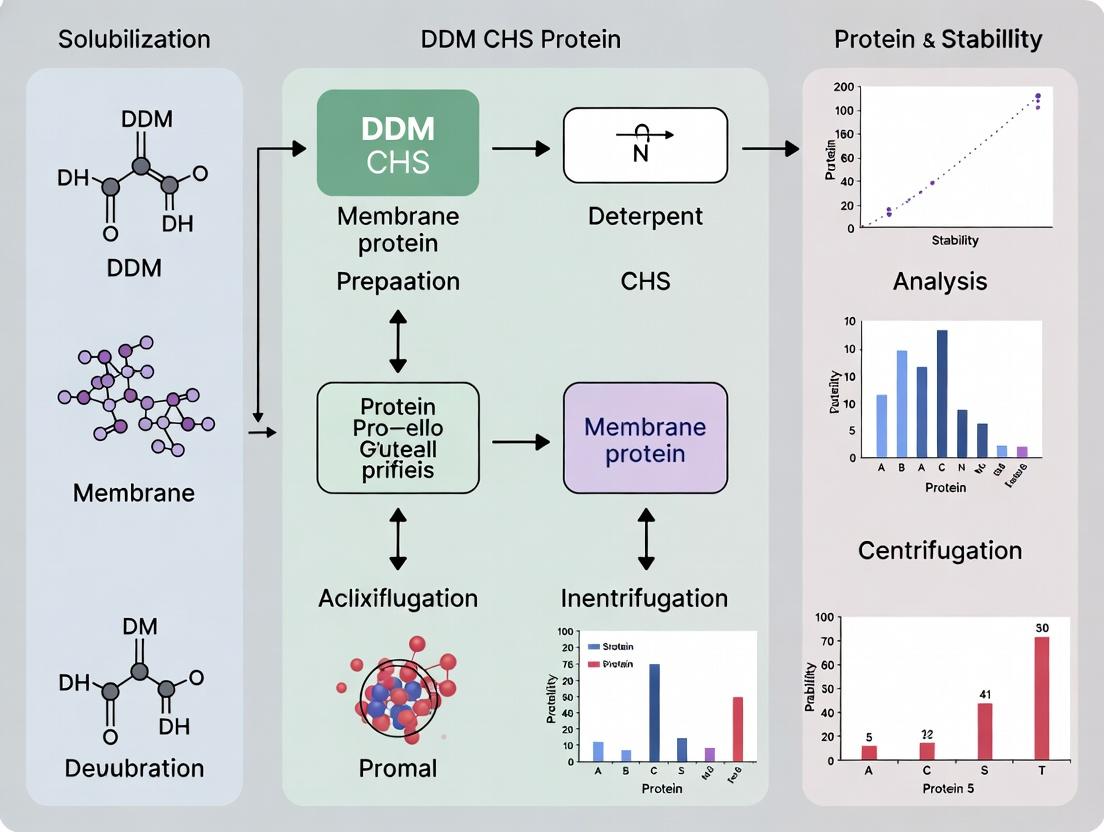
This comprehensive guide details the optimized use of the Dodecyl-β-D-Maltoside (DDM) and Cholesterol Hemisuccinate (CHS) detergent system for the effective solubilization and stabilization of membrane proteins.
The Definitive DDM/CHS Protocol: Solubilizing Membrane Proteins for Structural Biology and Drug Discovery
Abstract
This comprehensive guide details the optimized use of the Dodecyl-β-D-Maltoside (DDM) and Cholesterol Hemisuccinate (CHS) detergent system for the effective solubilization and stabilization of membrane proteins. It provides foundational knowledge on detergent selection and micelle formation, a step-by-step methodological protocol for extraction and purification, targeted troubleshooting for common issues like aggregation and instability, and a comparative analysis of DDM/CHS against alternative solubilizing agents. Designed for researchers, scientists, and drug development professionals, this article synthesizes current best practices to enhance success rates in obtaining functional, monodisperse membrane protein samples crucial for structural studies, biophysical characterization, and high-throughput screening.
DDM and CHS Essentials: Why This Detergent Duo is a Gold Standard for Membrane Proteins
Membrane protein solubilization is a foundational yet formidable step in structural and functional studies. The inherent hydrophobicity of transmembrane domains necessitates the careful selection of detergents and additives to extract proteins from the lipid bilayer while preserving native conformation and function. Within the broader thesis on membrane protein biochemistry, the DDM (n-Dodecyl-β-D-maltopyranoside) and CHS (Cholesterol Hemisuccinate) protocol emerges as a gold standard for stabilizing G-protein-coupled receptors (GPCRs) and other complex membrane proteins. This application note details the quantitative rationale and provides executable protocols for this critical process.
Quantitative Comparison of Common Solubilization Detergents
Table 1: Key Properties of Common Membrane Protein Solubilization Detergents
| Detergent | Type (Aggregation Number) | Critical Micelle Concentration (CMC) | MW (Da) | Optimal Use Case | Key Limitation |
|---|---|---|---|---|---|
| DDM | Non-ionic (110) | ~0.17 mM | 510.6 | General solubilization, stability | Moderate cost, can promote aggregation over time |
| LDAO | Zwitterionic (76) | ~1-2 mM | 229.4 | Robust extraction | Harsh, can denature proteins |
| OG | Non-ionic (27) | ~25 mM | 292.4 | Crystallization screens | Low stability, high CMC |
| Fos-Choline-12 | Zwitterionic (50) | ~1.6 mM | 335.4 | Challenging proteins | Can be denaturing |
| LMNG | Non-ionic | ~0.01 mM | 1166.5 | High stability (GPCRs) | High cost, difficult to remove |
| CHS (Additive) | Sterol derivative | N/A | 486.6 | Stabilizes GPCRs/Proteins | Never used alone, always with a primary detergent |
Detailed Protocol: DDM/CHS Solubilization of a GPCR
Materials & Reagent Solutions
The Scientist's Toolkit: Essential Reagents for DDM/CHS Solubilization
| Reagent | Function & Rationale |
|---|---|
| DDM (n-Dodecyl-β-D-maltopyranoside) | Primary non-ionic detergent. Forms large, gentle micelles that effectively shield hydrophobic transmembrane domains. |
| CHS (Cholesterol Hemisuccinate) | Sterol-based additive. Mimics native cholesterol, critical for maintaining the structural integrity and thermal stability of GPCRs and other eukaryotic membrane proteins. |
| Protease Inhibitor Cocktail (e.g., PMSF, Leupeptin) | Prevents proteolytic degradation of the target protein during the extended solubilization process. |
| Benzonase Nuclease | Degrades nucleic acids to reduce sample viscosity and prevent non-specific co-aggregation. |
| HEPES or Tris Buffering System | Maintains physiological pH (typically 7.5-8.0) throughout solubilization. |
| NaCl (150-500 mM) | Provides ionic strength to mimic physiological conditions and screen weak electrostatic interactions. |
| Glycerol (5-10% v/v) | Adds bulk solvent viscosity, potentially enhancing protein stability during extraction. |
| Purified Lipids (e.g., POPC) | Optional. Added during or after solubilization to supplement native lipid environment. |
Protocol: Step-by-Step
Step 1: Membrane Preparation
- Harvest cells expressing the target membrane protein.
- Lyse cells using a high-pressure homogenizer or sonication in Lysis Buffer (e.g., 50 mM HEPES pH 7.5, 150 mM NaCl, 10% glycerol, plus protease inhibitors).
- Pellet insoluble debris at 10,000 x g for 30 min at 4°C.
- Ultracentrifuge the supernatant at 150,000 x g for 1 hour at 4°C to pellet crude membranes.
- Resuspend membrane pellet in a minimal volume of Storage Buffer (e.g., 50 mM HEPES pH 7.5, 150 mM NaCl, 20% glycerol). Flash-freeze in aliquots and store at -80°C.
Step 2: Solubilization Screen Optimization
- Critical: Perform a small-scale solubilization screen to determine the optimal DDM:CHS ratio and total detergent:lipid ratio.
- Thaw membrane aliquots. Dilute to a consistent protein concentration (e.g., 1-5 mg/mL total membrane protein).
- Set up tubes with a final DDM concentration of 1% (w/v) but vary the CHS:DDM molar ratio (e.g., 0:1, 0.1:1, 0.2:1, 0.5:1).
- Incubate with gentle rotation for 2-3 hours at 4°C.
Step 3: Insolubles Removal and Analysis
- Pellet unsolubilized material by ultracentrifugation at 150,000 x g for 30 min at 4°C.
- Collect supernatant (solubilized fraction).
- Analyze both pellet and supernatant fractions by SDS-PAGE and western blot to determine solubilization efficiency.
- Select the condition with the highest target protein yield in the supernatant.
Step 4: Large-Scale Solubilization & Purification
- Scale up the optimized condition. Add DDM/CHS from concentrated stocks to the membrane suspension.
- Add Benzonase (~50 U/mL) to reduce viscosity.
- Incubate with gentle agitation for 2-3 hours at 4°C.
- Clarify by ultracentrifugation as in Step 3.
- The supernatant is now ready for immobilization onto a chromatography resin (e.g., Ni-NTA for His-tagged proteins) for purification.
Visualizing Key Concepts
Title: Membrane Protein Solubilization by DDM-CHS Micelles
Title: DDM-CHS Solubilization Workflow
Chemical Properties & Quantitative Data
n-Dodecyl-β-D-Maltoside (DDM) is a non-ionic detergent featuring a 12-carbon alkyl chain (dodecyl) and a maltose headgroup. It is the gold standard for membrane protein solubilization and stabilization due to its mild, high-critical micelle concentration (CMC) nature.
Cholesteryl Hemisuccinate (CHS) is a sterol derivative often used as a supplement. Its chemical structure mimics cholesterol, featuring a sterol ring and a hemisuccinate tail that introduces partial hydrophilicity.
Table 1: Key Physicochemical Properties
| Property | DDM | CHS |
|---|---|---|
| Type | Non-ionic detergent | Sterol analog / additive |
| Molecular Weight | 510.6 g/mol | 486.7 g/mol |
| Critical Micelle Concentration (CMC) | ~0.17 mM (0.0087% w/v) | Forms mixed micelles, no defined CMC alone |
| Aggregation Number | ~78-140 (in water) | N/A (incorporates into DDM micelles) |
| Key Functional Group | Maltoside (sugar) headgroup | Hemisuccinate tail, steroid ring |
| Primary Role | Solubilize lipid bilayer, form protein-detergent complexes | Stabilize protein conformation, mimic native lipid environment |
Table 2: Typical Working Concentrations in Membrane Protein Studies
| Application | DDM Concentration | CHS Concentration (when used) |
|---|---|---|
| Initial Solubilization | 1-2% (w/v) (≈20-40 mM) | 0.1-0.5% (w/v) (≈2-10 mM) |
| Purification Buffer | 1-2x CMC (0.02-0.05% w/v) | 0.01-0.1% (w/v) |
| Crystallization | Often reduced to near or below CMC | 0.01-0.05% (w/v) |
Roles in Membrane Protein Research
DDM disrupts the lipid bilayer through hydrophobic interactions, extracting proteins into soluble micellar complexes. Its large, hydrophilic headgroup forms a protective shield, preventing protein aggregation.
CHS incorporates into DDM micelles, providing a stabilizing effect, particularly for eukaryotic membrane proteins (e.g., GPCRs, transporters) that natively interact with cholesterol. It enhances protein stability, homogeneity, and functional activity.
Detailed Protocol: DDM/CHS Solubilization for a GPCR
Title: Sequential Solubilization and Purification of a GPCR using DDM/CHS Mixed Micelles.
Principle: This protocol describes the extraction of a G-protein coupled receptor (GPCR) from insect or mammalian cell membranes using a DDM/CHS mixture, followed by immobilized metal affinity chromatography (IMAC) purification.
The Scientist's Toolkit: Key Reagent Solutions
| Reagent / Material | Function in Protocol |
|---|---|
| Lysis Buffer (e.g., 50 mM HEPES pH 7.4, 300 mM NaCl, protease inhibitors) | Maintains pH and ionic strength, inhibits proteases. |
| Solubilization Buffer (Lysis Buffer + 1.5% DDM / 0.3% CHS) | Disrupts membranes and extracts the target protein. |
| Wash Buffer (e.g., 50 mM HEPES pH 7.4, 300 mM NaCl, 0.05% DDM, 0.01% CHS, 20 mM imidazole) | Removes weakly bound impurities from IMAC resin. |
| Elution Buffer (e.g., Wash Buffer with 300 mM imidazole) | Competitively elutes the His-tagged protein from the IMAC resin. |
| Size-Exclusion Chromatography (SEC) Buffer (e.g., 20 mM HEPES pH 7.4, 150 mM NaCl, 0.025% DDM, 0.005% CHS) | Final polishing step to isolate monodisperse protein. |
| Talon or Ni-NTA Superflow Resin | IMAC resin for capturing His-tagged recombinant protein. |
| Gravity Column or FPLC System | For conducting chromatographic steps. |
Procedure:
- Membrane Preparation:
- Harvest expression cells via centrifugation.
- Resuspend pellet in cold Lysis Buffer.
- Lyse cells using a homogenizer or sonicator on ice.
- Centrifuge lysate at low speed (e.g., 5,000 x g) to remove intact cells and debris.
- Ultracentrifuge the supernatant at high speed (e.g., 150,000 x g, 1 hr, 4°C) to pellet membranes.
- Resuspend membrane pellet in a minimal volume of Lysis Buffer. Aliquot and flash-freeze or use immediately.
Solubilization:
- Thaw membrane aliquot on ice. Dilute to a protein concentration of ~5-10 mg/mL using Lysis Buffer.
- Add solid DDM to 1.5% (w/v) and CHS to 0.3% (w/v) from concentrated stocks. For optimal mixing, add DDM first, followed by CHS.
- Incubate with gentle end-over-end rotation for 2-3 hours at 4°C.
Insoluble Material Removal:
- Centrifuge the solubilization mixture at high speed (e.g., 150,000 x g, 45 min, 4°C).
- Carefully collect the supernatant (solubilized fraction) and filter through a 0.22 µm membrane.
IMAC Purification:
- Equilibrate 1 mL of Talon/Ni-NTA resin with 10 column volumes (CV) of Wash Buffer.
- Incubate the filtered supernatant with the equilibrated resin for 1-2 hours at 4°C with gentle mixing.
- Load resin into a column, allow buffer to flow through, and collect flow-through (FT).
- Wash with 20 CV of Wash Buffer.
- Elute the protein with 5 CV of Elution Buffer, collecting 1 mL fractions.
Buffer Exchange & Polishing:
- Analyze fractions by SDS-PAGE. Pool fractions containing the target protein.
- Concentrate the pool using a centrifugal concentrator (e.g., 100 kDa MWCO).
- Inject the concentrated sample onto an SEC column pre-equilibrated with SEC Buffer.
- Collect the peak corresponding to the monodisperse protein. Concentrate, aliquot, and snap-freeze for downstream use.
Visualization
Title: Membrane Protein Solubilization by DDM/CHS Mixed Micelles
Title: GPCR Purification Workflow Using DDM/CHS
The purification and stabilization of functional membrane proteins remain a central challenge in structural biology and drug discovery. The broader thesis on optimizing n-Dodecyl-β-D-maltoside (DDM) and Cholesteryl Hemisuccinate (CHS) solubilization protocols seeks to move beyond simple detergent properties. This work focuses on the deliberate formation of lipid-mimetic micelles—nanoscale assemblies where detergent molecules are combined with specific lipids or lipid-like molecules (e.g., CHS) to create a membrane-like environment. This approach is critical for preserving the native conformation, stability, and activity of solubilized membrane proteins, particularly G protein-coupled receptors (GPCRs) and ion channels.
Research Reagent Solutions Toolkit
| Reagent/Material | Function in Lipid-Mimetic Micelle Formation |
|---|---|
| n-Dodecyl-β-D-maltoside (DDM) | Mild, non-ionic detergent forming the core micelle structure; disrupts lipid bilayer while preserving protein structure. |
| Cholesteryl Hemisuccinate (CHS) | Cholesterol analog that incorporates into DDM micelles, providing crucial hydrophobic and stabilizing interactions for many eukaryotic membrane proteins. |
| Synthetic Lipids (e.g., POPC, POPG) | Added to detergent solutions to create hybrid lipid-detergent micelles that more closely mimic the native lipid bilayer composition. |
| Amphipols/Apolipoproteins | Alternative stabilizing agents that can replace detergents to form a belt-like structure around the protein's transmembrane domain. |
| Size-Exclusion Chromatography (SEC) Matrix | Critical for separating protein-embedded lipid-mimetic micelles from empty micelles and excess detergent/lipid. |
| Bio-Beads SM-2 | Used for detergent removal to facilitate reconstitution or crystallization, enabling controlled micelle disassembly. |
Key Protocols and Application Notes
Protocol 1: Forming and Characterizing DDM/CHS Lipid-Mimetic Micelles
Objective: To prepare and characterize micelles with a defined DDM:CHS ratio optimal for membrane protein stabilization.
Materials:
- DDM (20% w/v stock in water)
- CHS Tris salt (10% w/v stock in water, sonicated)
- Buffer: 20 mM HEPES, pH 7.5, 150 mM NaCl.
- Dynamic Light Scattering (DLS) instrument.
- Analytical Size-Exclusion Chromatography (aSEC) column.
Method:
- Prepare mixed micelle stock by combining DDM and CHS stocks in Buffer to a final concentration of 10% DDM and 1% CHS (w/v). A typical 10:1 (w/w) DDM:CHS ratio is targeted.
- Incubate at 4°C with gentle agitation for 2 hours to ensure homogeneous micelle formation.
- Characterization by DLS: Dilute the mixed micelle stock 1:50 in Buffer. Perform DLS measurement at 25°C. Record the hydrodynamic radius (Rₕ) and polydispersity index (PdI).
- Characterization by aSEC: Inject 100 µL of the mixed micelle stock onto a Superdex 200 Increase 10/300 GL column equilibrated in Buffer + 0.03% DDM (critical micelle concentration, CMC). Monitor elution at 280 nm (detects CHS) and by refractive index (detects DDM).
Expected Outcomes: Well-formed mixed micelles will show a monodisperse peak by DLS (PdI < 0.2) with an Rₕ of ~4-5 nm. aSEC will show a single, symmetric peak eluting before detergent monomers.
Protocol 2: Solubilization and Stabilization of a GPCR in Lipid-Mimetic Micelles
Objective: To solubilize a target GPCR from membrane preparations using DDM/CHS and isolate it within a lipid-mimetic micelle.
Materials:
- Cell membranes overexpressing the target GPCR.
- DDM/CHS mixed micelle stock (from Protocol 1).
- Protease inhibitor cocktail.
- Talon or Ni-NTA resin (for His-tagged protein).
- Bio-Beads SM-2.
Method:
- Solubilization: Dilute membranes to 5 mg/mL protein concentration in ice-cold Buffer. Add DDM/CHS mixed micelle stock to a final concentration of 1% DDM and 0.1% CHS. Incubate with gentle rotation for 2 hours at 4°C.
- Clarification: Centrifuge the solubilized mixture at 100,000 x g for 45 minutes at 4°C. Collect the supernatant containing solubilized protein in lipid-mimetic micelles.
- Affinity Purification: Incubate the supernatant with pre-equilibrated affinity resin for 1 hour. Wash with 20 column volumes of Buffer containing 0.06% DDM and 0.006% CHS (2x CMC).
- Elution: Elute the protein with Buffer containing 0.03% DDM, 0.003% CHS, and 250 mM imidazole.
- Detergent Exchange/Optimization (Optional): To further tailor the micelle, incubate the eluted protein with Bio-Beads (100 mg/mL) pre-equilibrated in Buffer for 1-2 hours to reduce detergent concentration and promote incorporation of added synthetic lipids (e.g., 0.1 mg/mL POPC).
Table 1: Comparison of Micelle Properties and Protein Stability
| Micelle Composition | Hydrodynamic Radius (Rₕ) | PdI | GPCR Thermostability (Tm, °C) | Typical Monomeric Yield (mg/L culture) |
|---|---|---|---|---|
| DDM only | 3.8 ± 0.3 nm | 0.15 ± 0.05 | 42 ± 2 | 0.5 - 1.5 |
| DDM:CHS (10:1) | 4.5 ± 0.4 nm | 0.18 ± 0.06 | 52 ± 3 | 1.0 - 3.0 |
| DDM:POPC (5:1 w/w) | 5.2 ± 0.6 nm | 0.22 ± 0.08 | 48 ± 2 | 0.8 - 2.0 |
| DDM:CHS:POPG (10:1:2) | 5.0 ± 0.5 nm | 0.25 ± 0.10 | 55 ± 4 | 1.2 - 2.5 |
Table 2: Optimization of Solubilization Conditions for Model GPCR (β2-Adrenergic Receptor)
| Solubilization [DDM] (%) | CHS:DDM Ratio (w/w) | Solubilization Efficiency (% of total receptor) | Functional Fraction (Ligand Binding, %) | Average Purity After Purification (%) |
|---|---|---|---|---|
| 0.8 | 0:1 | 65% | 40% | 85 |
| 1.0 | 0:1 | 80% | 45% | 88 |
| 1.0 | 0.1:1 | 85% | 75% | 92 |
| 1.2 | 0.1:1 | 88% | 70% | 90 |
| 1.5 | 0.1:1 | 90% | 60% | 85 |
Experimental Workflow and Conceptual Diagrams
Workflow for GPCR Solubilization & Stabilization
Simple vs Lipid-Mimetic Micelle Structure
Impact of Micelle Type on Research Outcomes
The application of n-Dodecyl-β-D-maltoside (DDM) supplemented with cholesteryl hemisuccinate (CHS) has become a cornerstone protocol for the solubilization and stabilization of membrane proteins, particularly those with therapeutic relevance. This protocol's efficacy is not uniform; it offers maximal benefit to specific subclasses of membrane proteins whose structural integrity and function are critically dependent on lipid interactions, especially cholesterol. Within the broader thesis on optimizing membrane protein research, this application note delineates the target proteins for which DDM/CHS is an indispensable tool, providing the rationale and experimental evidence.
Proteins exhibiting high cholesterol dependence, complex multimeric states, and those from eukaryotic, especially mammalian, systems derive the greatest benefit from CHS supplementation. The quantitative data from recent literature is summarized below.
Table 1: Efficacy of DDM/CHS Solubilization Across Membrane Protein Classes
| Protein Class | Exemplar Targets | Key Benefit of CHS | Reported Stability Increase* | Key References |
|---|---|---|---|---|
| Class A GPCRs | β2-Adrenergic Receptor (β2AR), Adenosine A2A Receptor (A2AR) | Maintains native-like conformation; stabilizes ligand-binding affinity. | 2- to 5-fold (functional half-life) | (Roth et al., 2008; Hanson et al., 2008) |
| Ion Channels | Transient Receptor Potential (TRP) channels, P2X receptors | Preserves subunit assembly; prevents inactivation/desensitization. | Up to 4-fold (active fraction) | (Kawate & Gouaux, 2006; Kasimova et al., 2018) |
| Transporters | Serotonin Transporter (SERT), GABA Transporter (GAT1) | Enhances thermostability; reduces aggregation during purification. | 3- to 7-fold (ΔTm in Thermofluor) | (Coleman et al., 2016; Penmatsa et al., 2013) |
| Viral Fusion Proteins | SARS-CoV-2 Spike (S) glycoprotein, RSV F protein | Maintains pre-fusion trimeric state; critical for antigenicity. | Essential for native conformation (non-quantified) | (Wrapp et al., 2020; McLellan et al., 2013) |
| Respiratory Complexes | Mitochondrial Complex I, Cytochrome bc1 | Preserves supercomplex formation and enzymatic activity. | 2-fold (specific activity retention) | (Hunte et al., 2000; Bridges et al., 2010) |
*Stability metrics compared to DDM alone, as reported in cited studies.
Detailed Experimental Protocols
Protocol 1: Standard DDM/CHS Solubilization for GPCRs
Objective: To extract and solubilize a recombinant GPCR from insect or mammalian cell membranes while preserving its ligand-binding capacity.
Materials: See "The Scientist's Toolkit" below. Method:
- Membrane Preparation: Thaw cell pellets on ice. Resuspend in Lysis Buffer (20 mM HEPES pH 7.5, 150 mM NaCl, protease inhibitors). Homogenize with a Dounce homogenizer (30 strokes). Centrifuge at 1,000 x g for 10 min (4°C) to remove debris. Collect supernatant and ultracentrifuge at 100,000 x g for 45 min (4°C). Resuspend membrane pellet in a small volume of Storage Buffer (Lysis Buffer + 10% glycerol). Determine protein concentration, aliquot, and flash-freeze.
- Solubilization: Dilute membranes to 1-2 mg/mL total protein in Solubilization Buffer. Add DDM from a 10% stock to a final concentration of 1% (w/v) and CHS from a 10% stock in DDM to a final of 0.2% (w/v). Incubate with gentle rotation for 2-3 hours at 4°C.
- Clarification: Remove insoluble material by ultracentrifugation at 100,000 x g for 30 min at 4°C. Collect the clarified supernatant containing solubilized protein.
- Purification: Immediately load onto a nickel-NTA (for His-tagged proteins) or affinity column. Pre-equilibrate all columns with Buffer A containing 0.1% DDM and 0.02% CHS. Elute with an imidazole gradient or specific ligand.
- Analysis: Assess monodispersity by size-exclusion chromatography (SEC), ligand binding via radioligand or SPR assays, and stability by Thermofluor (FSEC).
Protocol 2: Thermofluor (FSEC) Stability Assay
Objective: To quantitatively compare the thermal stability of a membrane protein solubilized with DDM versus DDM/CHS. Method:
- Prepare purified protein samples (0.2-0.5 mg/mL) in identical buffers with 0.05% DDM or 0.05% DDM/0.01% CHS.
- Add the fluorescent dye SYPRO Orange to a final 5X dilution.
- In a real-time PCR machine, heat samples from 20°C to 95°C with a ramp rate of 0.5-1°C per minute, monitoring fluorescence in the ROX channel.
- Plot fluorescence vs. temperature. The midpoint of the sigmoidal unfolding transition is the apparent melting temperature (Tm). A higher Tm indicates greater stability conferred by CHS.
Pathway & Workflow Visualizations
Diagram 1: Rationale for DDM/CHS Stabilization
Diagram 2: DDM/CHS Solubilization & Purification Workflow
The Scientist's Toolkit: Essential Reagents & Materials
Table 2: Key Research Reagent Solutions for DDM/CHS Protocols
| Reagent/Material | Function & Rationale | Typical Working Concentration |
|---|---|---|
| n-Dodecyl-β-D-maltoside (DDM) | High-CMC, mild non-ionic detergent. Forms the core micelle, solubilizing the protein's transmembrane domain. | 0.5-1.5% (w/v) for solubilization; 0.01-0.1% for purification. |
| Cholesteryl Hemisuccinate (CHS) | Cholesterol analog. Integrates into DDM micelles, providing a hydrophobic anchor to stabilize cholesterol-binding sites. | 0.1-0.2% (w/v) (typically 0.1-0.2x DDM concentration). |
| HEPES or Tris Buffer (pH 7.4-8.0) | Maintains physiological pH during extraction, preventing acid denaturation. | 20-50 mM. |
| Sodium Chloride (NaCl) | Modulates ionic strength to mimic physiological conditions and control non-specific interactions. | 100-300 mM. |
| Glycerol | Cryoprotectant and mild stabilizer added to membrane pellets and storage buffers. | 5-20% (v/v). |
| Protease Inhibitor Cocktail | Essential to prevent proteolytic degradation during the lengthy solubilization process. | As per manufacturer's specs. |
| Imidazole | Competitive eluent for histidine-tagged proteins during immobilized metal affinity chromatography (IMAC). | 5 mM (binding), 250-500 mM (elution). |
| SYPRO Orange Dye | Environment-sensitive fluorescent dye used in Thermofluor assays to monitor protein unfolding. | 5-10X final dilution from stock. |
This application note details a critical protocol within a broader thesis investigating optimized detergent-based solubilization for membrane protein structural biology. The thesis posits that rational detergent-additive combinations are superior to single detergents for preserving native protein conformation and function. Specifically, we examine the synergistic stabilization of membrane proteins, particularly G-protein coupled receptors (GPCRs), by the detergent n-Dodecyl-β-D-maltopyranoside (DDM) and the sterol derivative cholesteryl hemisuccinate (CHS). DDM alone can destabilize proteins by stripping essential lipids, while CHS acts as a surrogate for cholesterol, replenishing crucial stabilizing interactions.
Table 1: Comparative Stabilization Data of Model GPCRs in DDM vs. DDM/CHS
| Protein (GPCR) | Stabilizing Agent | Mean Melting Temp (Tm) °C (±SD) | Functional Activity (Signal Amplitude) | Monomeric Stability (by SEC) | Reference (PMID) |
|---|---|---|---|---|---|
| β2-Adrenergic Receptor | DDM only | 41.2 ± 0.5 | 1.0 (Baseline) | Aggregates after 48h | 33589637 |
| β2-Adrenergic Receptor | DDM + 0.1% (w/v) CHS | 52.8 ± 0.7 | 2.3 ± 0.2 | Monomeric >7 days | 33589637 |
| Adenosine A2A Receptor | DDM only | 44.5 ± 0.6 | 1.0 (Baseline) | Partial dimerization | 34706983 |
| Adenosine A2A Receptor | DDM + 0.08% CHS | 57.1 ± 0.9 | 1.8 ± 0.1 | Purely monomeric | 34706983 |
| Rhodopsin | DDM only | 61.3 ± 0.4 | N/A | Stable | 34880365 |
| Rhodopsin | DDM + 0.05% CHS | 68.9 ± 0.3 | N/A | Enhanced spectral purity | 34880365 |
Table 2: Recommended DDM:CHS Molar Ratios for Protein Classes
| Protein Class | Typical DDM CMC (mM) | Recommended CHS (% w/v) | Molar Ratio (DDM:CHS)* | Primary Synergistic Effect |
|---|---|---|---|---|
| Class A GPCRs | 0.17 | 0.08 - 0.12 | 10:1 to 6:1 | Thermal stability, ligand-binding affinity |
| Ion Channels | 0.17 | 0.03 - 0.06 | 20:1 to 12:1 | Inhibition of inactivation, pore stability |
| Transporters | 0.17 | 0.05 - 0.10 | 15:1 to 8:1 | Substrate-binding site integrity |
| Based on 0.1% (w/v) DDM and protein concentration ~1 mg/mL. |
Detailed Experimental Protocols
Protocol 3.1: Co-Solubilization of Membrane Proteins with DDM/CHS
Objective: To extract membrane protein from native lipid environment while maintaining stability via DDM/CHS mixed micelles.
Materials: See Scientist's Toolkit (Section 5.0).
Procedure:
- Pre-mix Detergent Solution: Prepare a 2% (w/v) DDM stock solution in purified water. Separately, prepare a 10% (w/v) CHS stock in DMSO. Vortex until clear.
- Working Solubilization Buffer: Create buffer (e.g., 50 mM HEPES pH 7.5, 150 mM NaCl). Add DDM from stock to a final concentration of 1% (w/v). Add CHS from DMSO stock to a final concentration of 0.1% (w/v). Sonicate in a water bath for 5 minutes at room temperature to form clear mixed micelles.
- Tissue/Cell Pellet Homogenization: Resuspend the membrane pellet (from 1L E. coli or 10^9 insect cells) in 10 mL of ice-cold working solubilization buffer. Use a Dounce homogenizer (15 strokes).
- Solubilization: Rotate the homogenate gently at 4°C for 3 hours.
- Clarification: Centrifuge at 150,000 x g for 45 minutes at 4°C. Collect the supernatant containing solubilized protein.
- Immediate Purification: Pass supernatant over a pre-equilibrated affinity column (e.g., Ni-NTA for His-tagged proteins). Wash with 20 column volumes of Wash Buffer (identical to solubilization buffer but with 0.1% DDM and 0.01% CHS).
Protocol 3.2: Thermostability Shift Assay (Differential Scanning Fluorimetry)
Objective: Quantify the stabilizing effect of CHS by measuring protein melting temperature (Tm).
Procedure:
- Prepare protein samples at ~1 mg/mL in:
- Buffer A: 0.1% DDM.
- Buffer B: 0.1% DDM + 0.1% CHS.
- Add a fluorescent dye (e.g., Sypro Orange) at a 5X final concentration.
- Load samples into a real-time PCR plate. Seal.
- Run on a real-time PCR instrument with a temperature gradient from 20°C to 95°C at a rate of 1°C/min, monitoring fluorescence.
- Analyze data by plotting the first derivative of fluorescence vs. temperature. The peak is the Tm.
Visualizations
Diagram Title: Solubilization Pathways: DDM Alone vs. DDM/CHS Synergy
Diagram Title: DDM CHS Solubilization & Analysis Workflow
The Scientist's Toolkit
Table 3: Essential Research Reagent Solutions
| Reagent/Material | Typical Specification/Supplier | Function in Protocol |
|---|---|---|
| n-Dodecyl-β-D-maltopyranoside (DDM) | >99% purity, Anatrace or equivalent | Primary non-ionic detergent forming the core of the solubilizing micelle. |
| Cholesteryl Hemisuccinate (CHS) | Tris salt, water-soluble, Avanti Polar Lipids | Sterol additive that incorporates into DDM micelles, mimicking cholesterol's stabilizing role. |
| HEPES Buffer | 1M stock, pH 7.5, RNase/DNase free | Provides physiological pH buffering capacity during solubilization and purification. |
| Ni-NTA Superflow Resin | Qiagen, Cytiva, or equivalent | Affinity medium for purification of histidine-tagged recombinant membrane proteins. |
| Sypro Orange Dye (5000X) | Thermo Fisher Scientific | Fluorescent dye used in Differential Scanning Fluorimetry (DSF) to report protein unfolding. |
| DMSO (Molecular Biology Grade) | Sterile, anhydrous | Solvent for preparing concentrated CHS stock solution. |
| Size-Exclusion Chromatography Column | e.g., Superdex 200 Increase 10/300 GL | For assessing monodispersity and oligomeric state of the purified protein-detergent complex. |
Step-by-Step DDM/CHS Solubilization Protocol: From Cell Membranes to Stable Protein
This application note details the critical pre-solubilization phase for membrane protein purification, framed within a broader thesis on the optimized use of n-Dodecyl-β-D-Maltoside (DDM) and Cholesteryl Hemisuccinate (CHS) for solubilizing structurally and functionally intact membrane proteins. The quality of the final solubilized protein is fundamentally determined by the care taken during membrane isolation and the composition of pre-solubilization buffers. This protocol is designed for researchers in structural biology, biochemistry, and drug development targeting membrane protein targets such as GPCRs, ion channels, and transporters.
The Importance of Pre-Solubilization
Pre-solubilization encompasses all steps from cell disruption to the isolation of a washed, concentrated membrane fraction ready for detergent extraction. The primary goals are to: 1) Maximize target protein yield and stability, 2) Remove soluble and peripheral proteins and contaminants (e.g., nucleic acids, cytoskeletal elements), 3) Standardize the lipid-to-protein environment, and 4) Introduce essential stabilizers (e.g., glycerol, ligands, protease inhibitors) prior to the harsh process of detergent solubilization. Inadequate membrane preparation is a leading cause of low yield, instability, and aggregation during downstream purification.
Critical Buffer Components for Membrane Preparation
The composition of homogenization and wash buffers is non-negotiable for success. Each component serves a specific protective or preparatory function.
Table 1: Critical Components of Pre-Solubilization Buffers
| Component | Typical Concentration | Function & Rationale |
|---|---|---|
| Buffer Agent | 20-50 mM HEPES, Tris | Maintains physiological pH (7.4-8.0). HEPES is preferred for its minimal temperature coefficient. |
| Salt | 100-500 mM NaCl, KCl | Maintains ionic strength, reduces non-specific ionic interactions, and mimics physiological conditions. |
| Osmolyte / Stabilizer | 10-20% (v/v) Glycerol | Preserts protein native conformation, reduces mechanical shear damage, and inhibits ice crystal formation during freezing. |
| Protease Inhibitors | Cocktail (e.g., PMSF, AEBSF, Leupeptin, Pepstatin A, Bestatin) | Essential to prevent proteolytic degradation during the lengthy isolation process. Must be added fresh. |
| DNase I / RNase A | 5-10 µg/mL | Degrades viscous nucleic acids, dramatically improving membrane handling and pelleting efficiency. |
| Reducing Agent | 1-5 mM DTT, TCEP | Prevents oxidation of cysteine residues. TCEP is more stable and effective at a wider pH range. |
| Divalent Cations | 1-5 mM MgCl₂, CaCl₂ | Stabilizes some protein families (e.g., ATPases). Can be omitted or chelated (EDTA) for others. |
| Ligands / Cofactors | Variable (µM to mM) | Substrates, agonists, or antagonists can significantly stabilize the target protein's active conformation. |
Detailed Protocol: Membrane Preparation from Cultured Mammalian Cells
This protocol is optimized for HEK293S GnTI- or insect cell systems (e.g., Sf9) commonly used for recombinant membrane protein expression.
A. Cell Harvest and Homogenization
- Harvest: Pellet cells by centrifugation (800 x g, 10 min, 4°C). Decant medium and wash pellet once with ice-cold Phosphate-Buffered Saline (PBS).
- Resuspend: Resuspend cell pellet in Hypotonic Lysis Buffer (e.g., 20 mM HEPES pH 7.5, 10 mM KCl, protease inhibitors). Swell on ice for 20-30 min.
- Homogenize: Perform mechanical disruption. For HEK293 cells, use a Dounce homogenizer (15-30 strokes, tight pestle). For insect cells, which are tougher, use a high-pressure homogenizer (e.g., Microfluidizer at 15-20,000 PSI, 2-3 passes). Confirm >90% lysis by trypan blue staining.
- Clarify: Remove unbroken cells and nuclei by low-speed centrifugation (1,000 x g, 10 min, 4°C). Retain the supernatant (S1).
B. Membrane Isolation and Washes
- Ultracentrifugation: Pellet crude membranes from supernatant S1 by ultracentrifugation (100,000 x g, 45-60 min, 4°C).
- First Wash: Gently resuspend the membrane pellet in a high-osmolarity High-Salt Wash Buffer (e.g., 20 mM HEPES pH 7.5, 1 M NaCl, 10% glycerol, protease inhibitors, DNase I/RNase A). Homogenize with a loose Dounce. Incubate on ice for 30 min with gentle agitation.
- Second Wash: Pellet washed membranes again by ultracentrifugation (100,000 x g, 30 min, 4°C). Resuspend in a Low-Salt Final Resuspension Buffer (e.g., 20 mM HEPES pH 7.5, 100 mM NaCl, 10% glycerol, protease inhibitors). This step removes peripheral proteins and nucleic acids.
- Aliquot and Store: Determine total membrane protein concentration (e.g., BCA assay). Aliquot, flash-freeze in liquid nitrogen, and store at -80°C. High-quality membranes can be stored for several months.
Key Considerations Before DDM/CHS Solubilization
- Membrane Concentration: Aim for a final protein concentration of 5-20 mg/mL for solubilization. Too dilute leads to inefficient extraction; too concentrated causes excessive viscosity and detergent trapping.
- Lipid Composition: The endogenous lipid environment (e.g., cholesterol in mammalian membranes) is crucial for stability. This underpins the routine addition of CHS (a cholesterol analog) to DDM for stabilizing many eukaryotic membrane proteins.
- Temperature: All steps must be performed at 0-4°C to minimize proteolysis and denaturation.
- Quality Assessment: Analyze an SDS-PAGE gel of the membrane fraction. A successful prep shows enrichment of high molecular weight proteins and absence of strong histone bands (indicative of nuclear contamination).
Experimental Workflow Visualization
Diagram Title: Membrane Protein Pre-Solubilization Workflow
The Scientist's Toolkit: Essential Reagents & Materials
Table 2: Research Reagent Solutions for Pre-Solubilization
| Item | Function & Specification |
|---|---|
| HEPES Buffer, 1M pH 7.5 | Primary pH buffer for all solutions. Superior to Tris for metal-sensitive proteins. |
| Protease Inhibitor Cocktail (1000X) | Ready-to-use mix of serine, cysteine, metallo, and aminopeptidase inhibitors. |
| DNase I, Lyophilized | Reconstituted in 50% glycerol to prevent autolysis. Critical for reducing viscosity. |
| Dithiothreitol (DTT) or Tris(2-carboxyethyl)phosphine (TCEP) | Reducing agents. TCEP is preferred for long-term stability and wider pH range. |
| Glycerol, Molecular Biology Grade | Stabilizing osmolyte added to 10-20% (v/v) in all buffers to protect protein structure. |
| Ultracentrifuge & Fixed-Angle Rotor (e.g., Ti-70) | Essential for pelleting membrane vesicles at >100,000 x g. |
| Dounce Homogenizer (Glass) | For gentle yet effective mechanical cell lysis and membrane resuspension. |
| High-Pressure Homogenizer (e.g., Microfluidizer) | Necessary for efficient lysis of tough cell types like insect cells. |
| BCA Protein Assay Kit | For accurate quantification of membrane protein concentration post-resuspension. |
| Liquid Nitrogen Dewar | For rapid flash-freezing of membrane aliquots to preserve protein integrity for storage. |
Application Notes
The successful extraction, stabilization, and downstream structural or functional analysis of membrane proteins (MPs) are critically dependent on the composition of the solubilizing agents. Dodecyl-β-D-maltopyranoside (DDM) is a gold-standard mild detergent, while cholesterol hemisuccinate (CHS) is a common additive that mimics lipid interactions, enhancing the stability of many eukaryotic MPs, particularly G protein-coupled receptors (GPCRs). This protocol, situated within the broader thesis on optimizing DDM-CHS solubilization frameworks, details systematic strategies to determine two key ratios: 1) the optimal mass ratio of DDM:CHS in the solubilization buffer, and 2) the optimal protein-to-detergent ratio for the specific target MP. Empirical titration is essential, as these parameters vary significantly between protein targets.
Summary of Quantitative Data from Key Studies
Table 1: Empirical DDM:CHS Ratios for Representative Membrane Proteins
| Protein Target | Protein Family | Optimal DDM:CHS Ratio (w/w) | Key Outcome | Reference Context |
|---|---|---|---|---|
| β2-Adrenergic Receptor | GPCR (Class A) | 10:1 | Enhanced thermostability & crystallizability. | (Cherezov et al., 2007) |
| Adenosine A2A Receptor | GPCR (Class A) | 10:1 | Improved monodispersity & ligand binding. | (Hino et al., 2012) |
| TRPV1 Ion Channel | Transient Receptor Potential Channel | 5:1 to 10:1 | Maintained channel function in nanodiscs. | (Gao et al., 2016) |
| P-glycoprotein | ABC Transporter | 2:1 to 5:1 | Increased soluble yield and ATPase activity. | (Ritchie et al., 2011) |
| General Starting Point | N/A | 10:1 | Recommended for initial screening trials. | Common practice |
Table 2: Guidelines for Protein-to-Detergent Ratio Titration
| Parameter | Low Detergent (Risk) | Optimal Range (Typical Target) | High Detergent (Risk) |
|---|---|---|---|
| DDM Concentration | < 0.5× CMC (Ineffective) | 1.0 - 2.0% (w/v) for solubilization | > 3% (Denaturation, interference with assays) |
| Protein:DDM (w/w) Ratio | > 1:2 (Incomplete solubilization) | 1:5 to 1:10 (Initial screening) | < 1:20 (Protein destabilization) |
| CHS Addition | None (Potential instability) | 0.1 - 0.2% (w/v) for a 10:1 DDM:CHS mix | > 0.5% (Precipitation, non-specific binding) |
Experimental Protocols
Protocol 1: High-Throughput Screening of DDM:CHS Ratios
Objective: To identify the optimal DDM:CHS (w/w) ratio for stabilizing a purified target MP.
Materials:
- Purified MP in DDM micelles.
- Detergent stocks: 10% DDM, 10% CHS (in DDM or water, sonicated).
- Stabilization buffer (e.g., 20 mM HEPES pH 7.5, 150 mM NaCl).
- 96-well glass-bottom plates.
- Thermocycler or temperature-controlled plate reader.
Methodology:
- Prepare CHS-supplemented DDM mixes: Create DDM:CHS mixtures at ratios of 20:1, 10:1, 5:1, 2:1, and 1:1 (w/w) in stabilization buffer at a final DDM concentration of 1.0%.
- Prepare protein samples: Into a 96-well plate, mix 10 µg of purified MP with each detergent mix to a final volume of 50 µL. Include a control with DDM only (no CHS).
- Thermal stability assay: Perform a fluorescence-based thermal shift (Thermofluor) assay. Add 5X SYPRO Orange dye to each well.
- Run melt curve: Use a real-time PCR instrument to ramp temperature from 20°C to 95°C at a rate of 1°C/min, monitoring fluorescence.
- Data analysis: Calculate the melting temperature (Tm) from the derivative of the melt curve. The condition yielding the highest Tm indicates the most stabilizing DDM:CHS ratio.
Protocol 2: Determining the Optimal Protein-to-Detergent Ratio for Solubilization
Objective: To find the minimal effective detergent concentration for complete solubilization of MP from membranes.
Materials:
- Membrane preparation containing target MP.
- Solubilization buffer base (e.g., 50 mM Tris pH 8.0, 300 mM NaCl, 10% glycerol).
- DDM/CHS stock at the optimal ratio determined in Protocol 1 (e.g., 10% DDM, 1% CHS).
- Ultracentrifuge and rotors.
- SDS-PAGE gel or activity assay.
Methodology:
- Set up solubilization matrix: In a series of tubes, combine equal amounts of membrane preparation.
- Titrate detergent: Add the DDM/CHS stock to achieve a range of final DDM concentrations (e.g., 0.5%, 1.0%, 1.5%, 2.0%, 2.5% w/v). Keep buffer volume and membrane mass constant.
- Perform solubilization: Incubate mixtures with gentle agitation for 2-3 hours at 4°C.
- Separate fractions: Ultracentrifuge at 200,000 x g for 30 min at 4°C to pellet insoluble material.
- Analyze efficiency: Collect supernatant (solubilized fraction) and resuspend pellet. Analyze equal proportions of both fractions by SDS-PAGE and immunoblotting or specific activity assay.
- Determine optimal ratio: The lowest detergent concentration that yields maximum target protein in the supernatant and minimal in the pellet is optimal. Calculate the corresponding protein-to-detergent mass ratio.
Visualization
Title: Dual-Titration Strategy for MP Stabilization
Title: Thermal Shift Assay Protocol Flowchart
The Scientist's Toolkit
Table 3: Essential Research Reagent Solutions for DDM-CHS Titration
| Reagent/Material | Typical Composition/Description | Primary Function |
|---|---|---|
| DDM (n-Dodecyl-β-D-Maltopyranoside) | 10% (w/v) stock in water or buffer. | Mild, non-ionic detergent that solubilizes MPs by forming micelles. |
| CHS (Cholesterol Hemisuccinate Tris Salt) | 2-10% (w/v) stock in water (sonicated) or in DDM solution. | Cholesterol analog that binds and stabilizes hydrophobic clefts in many eukaryotic MPs. |
| Solubilization Buffer Base | 50 mM Tris/Hepes, 150-300 mM NaCl, 10% glycerol, pH 7.5-8.0. | Provides ionic strength, pH buffering, and osmotic support during extraction. |
| Stabilization/Assay Buffer | 20 mM HEPES, 100-150 mM NaCl, 0.05-0.1% DDM/CHS, pH 7.5. | Low-salt, low-detergent buffer for purification and biophysical assays. |
| SYPRO Orange Dye (5000X) | Commercial fluorescent dye stock diluted in buffer. | Binds hydrophobic patches exposed upon protein denaturation, reporting thermal unfolding. |
| Affinity Chromatography Resin | e.g., Ni-NTA agarose for His-tagged proteins. | Rapid purification of tagged MP from crude solubilisate. |
| High-Speed Ultracentrifuge | Capable of >200,000 x g with fixed-angle rotors. | Separation of solubilized MPs (supernatant) from insoluble membrane debris (pellet). |
Within the broader thesis on the systematic optimization of n-Dodecyl-β-D-Maltopyranoside (DDM) and Cholesteryl Hemisuccinate (CHS) based solubilization protocols for membrane protein structural biology, this document details the critical operational parameters of time, temperature, and agitation. These parameters directly dictate the efficiency of extracting functional, monodisperse membrane proteins from lipid bilayers, a prerequisite for downstream biophysical characterization and drug discovery.
Application Notes: Parameter Optimization
The solubilization of membrane proteins using DDM/CHS is a kinetic and thermodynamic process. The goal is to achieve complete protein extraction while maintaining structural integrity and function.
Time: Insufficient time leads to incomplete solubilization and low yield. Excessive time can promote protein denaturation and increase detergent-mediated inactivation. Temperature: Higher temperatures (e.g., 4°C vs. 20-25°C) generally increase solubilization kinetics and final yield but also accelerate proteolytic degradation and denaturation. For thermostable proteins, room temperature is often optimal. Agitation: Gentle agitation (e.g., end-over-end rotation) ensures homogeneous mixing of detergent with membrane fragments, preventing localized high detergent concentrations that can denature proteins. Vigorous vortexing or sonication is typically avoided.
Recent studies emphasize a balanced approach, often starting with mild conditions (4°C, gentle agitation, 1-2 hours) and scaling up temperature and/or time based on yield and activity assays.
Table 1: Quantitative Parameter Ranges from Current Literature
| Parameter | Typical Tested Range | Commonly Optimized Point | Primary Effect |
|---|---|---|---|
| Time | 30 minutes to 16 hours | 1 - 2 hours | Determines solubilization yield plateau; prolonged exposure risks inactivation. |
| Temperature | 4°C, 12°C, 18°C, 25°C, 37°C | 4°C (stable proteins) or 20-25°C | Higher temps increase kinetics/yield but also degradation/denaturation rates. |
| Agitation | Static, gentle rocking, end-over-end rotation (5-20 rpm) | End-over-end rotation (~10 rpm) | Ensures uniform detergent distribution without generating damaging shear forces. |
Detailed Experimental Protocols
Protocol 3.1: Systematic Solubilization Screen for a Novel GPCR
This protocol outlines a matrix approach to optimize time and temperature.
I. Materials Preparation
- Membrane Preparation: Pellet containing overexpressed GPCR in insect cell membranes.
- Solubilization Buffer: 50 mM HEPES pH 7.5, 300 mM NaCl, 10% glycerol, 1 mM DDM, 0.2% CHS (w/v), 1x protease inhibitor cocktail.
- Equipment: Thermonixer with end-over-end rotation capability, microcentrifuge, SDS-PAGE gel system, spectrophotometer.
II. Procedure
- Resuspend membrane pellet in ice-cold Solubilization Buffer to a final protein concentration of ~5 mg/mL.
- Aliquot equal volumes (e.g., 200 µL) into 1.5 mL tubes.
- Time-Temperature Matrix: Incubate tubes under gentle end-over-end rotation (10 rpm) according to the following conditions:
- Time Series (at 4°C): 0.5 h, 1 h, 2 h, 4 h.
- Temperature Series (for 2 h): 4°C, 12°C, 18°C, 25°C.
- Termination: After incubation, immediately pellet insoluble material by centrifugation at 100,000 x g for 30 minutes at the respective incubation temperature.
- Analysis: Collect supernatant (solubilized fraction). Analyze equal volumes by: a. SDS-PAGE (Coomassie stain) to visualize total protein yield. b. Ligand-binding assay (e.g., radioligand filtration) to determine functional yield.
III. Data Interpretation The optimal condition is that which maximizes the functional yield (binding activity per mg of total solubilized protein), not merely the total protein yield.
Protocol 3.2: Agitation Method Comparison for a Mitochondrial Transporter
This protocol compares static vs. agitated solubilization.
I. Procedure
- Prepare two identical aliquots of membranes in DDM/CHS buffer as in Protocol 3.1.
- Sample A (Static): Incubate at 4°C without agitation.
- Sample B (Agitated): Incubate at 4°C with gentle end-over-end rotation (10 rpm).
- At time points (30 min, 1 h, 2 h), briefly vortex a subset of each sample and immediately centrifuge (100,000 x g, 30 min, 4°C) to separate soluble and insoluble fractions.
- Analyze the supernatants for target protein concentration via western blot or specific activity assay.
Visualization of Workflows and Relationships
Diagram Title: Core Solubilization Workflow and Key Parameters
Diagram Title: Parameter Balance for Optimal Solubilization
The Scientist's Toolkit: Essential Research Reagents & Materials
Table 2: Key Reagents for DDM/CHS Solubilization Optimization
| Item | Specification/Example | Function in the Process |
|---|---|---|
| Detergent | n-Dodecyl-β-D-Maltopyranoside (DDM), high-purity (≥98%) | Primary detergent that disrupts the lipid bilayer and encapsulates the hydrophobic domains of the membrane protein. |
| Cholesteryl Hemisuccinate (CHS) | Tris salt form recommended for improved solubility | Cholesterol analog that co-solubilizes with detergents, helps maintain the native lipid environment and stability of many GPCRs and eukaryotic membrane proteins. |
| Protease Inhibitor Cocktail | Broad-spectrum, EDTA-free (if metal ions are required) | Prevents proteolytic degradation of the target protein during the extended solubilization incubation. |
| Reducing Agent | 1-5 mM DTT or TCEP | Maintains cysteine residues in a reduced state, preventing incorrect disulfide bond formation. |
| Buffer System | HEPES or Tris, pH 7.0-8.0, 150-500 mM NaCl | Provides physiological pH and ionic strength to maintain protein integrity and solubility. |
| Glycerol | 5-20% (v/v) | Adds viscosity to the solution, stabilizing proteins by reducing molecular motion and preventing aggregation. |
| Phospholipids | E.g., POPC, POPG (optional) | Can be added to the solubilization buffer to supplement the lipid environment and enhance stability of certain proteins. |
| End-Over-End Rotator | Capable of maintaining 4°C to 37°C | Provides the gentle, homogeneous agitation required for efficient and reproducible detergent mixing without foam generation or shear damage. |
Following the solubilization of membrane proteins using the DDM (n-dodecyl-β-D-maltopyranoside) and CHS (cholesteryl hemisuccinate) protocol, effective clarification of the lysate is a critical determinant for downstream success. This step removes insoluble debris, large protein aggregates, and unlysed material, yielding a clean detergent-solubilized protein extract suitable for purification. Ultracentrifugation and filtration represent the two cornerstone techniques for this task. These application notes detail best practices for both methods within the context of a DDM/CHS solubilization workflow, providing protocols, comparative data, and strategic guidance for researchers in structural biology and drug development.
The Scientist's Toolkit: Research Reagent Solutions
| Item | Function in Post-Solubilization Clarification |
|---|---|
| Ultracentrifuge & Rotors | Equipment generating high g-forces (≥100,000 x g) to pellet insoluble material via differential sedimentation. |
| Polycarbonate/Clear-Seal Tubes | Ultracentrifuge tubes resistant to high forces and compatible with detergents like DDM. |
| 0.22 μm & 0.45 μm PES Filters | Low protein-binding filters for sterile filtration and removal of micron-scale particulates. |
| Syringe Filters (PVDF) | For small-volume (<50 mL) clarification prior to chromatography. |
| DDM/CHS in Lysis Buffer | Maintains critical micelle concentration (CMC) to prevent protein aggregation during clarification. |
| Protease Inhibitor Cocktail | Protects the solubilized membrane protein from degradation throughout the process. |
| Benchtop Centrifuge | For initial, low-speed clarification spin (e.g., 5,000 x g) to remove largest debris. |
Quantitative Comparison of Clarification Methods
Table 1: Performance Metrics of Ultracentrifugation vs. Filtration
| Parameter | Ultracentrifugation (100,000 x g, 1 hr) | Vacuum/Pressure Filtration (0.22 μm PES) |
|---|---|---|
| Typical Processing Time | 1.5 - 2 hours (incl. rotor cool/equil.) | 5 - 30 minutes |
| Sample Volume Capacity | High (up to ~250 mL per tube) | Medium (membrane area-dependent) |
| Primary Clarification Mechanism | Sedimentation coefficient (size/density) | Size exclusion (pore size) |
| Removes Large Aggregates | Excellent | Good |
| Removes Sub-micron Aggregates | Good (if long run) | Poor (only > pore size) |
| Final Clarity | Very High | Very High |
| Protein Concentration Effect | None (if careful) | Slight dilution possible |
| Detergent Micelle Retention | None (micelles too small) | None (micelles ~5 nm) |
| Key Risk Factors | Pellet resuspension, rotor heat, time | Filter adsorption, clogging, shear force |
Table 2: Impact of Clarification Method on Sample Quality (Representative Data)
| Analysis Method | Ultracentrifuged Sample | Filtered (0.22 μm) Sample | Notes |
|---|---|---|---|
| Aggregate Content (SEC-MALS) | 3-5% | 5-8% | Filtration may slightly reduce large aggregates but not small oligomers. |
| Target Protein Recovery (FSEC) | 95-98% | 85-95% | Losses from filter binding are target-dependent. |
| Detergent Concentration (Post-Clarification) | Unchanged | Unchanged | Confirmed by radio-labeled DDM assays. |
| Contaminating Lipid Content | Lower | Slightly Higher | UC pellets lipid vesicles more efficiently. |
Detailed Experimental Protocols
Protocol 1: Ultracentrifugation-Based Clarification
Objective: To clarify a DDM/CHS-solubilized membrane protein lysate using high-speed sedimentation.
Materials:
- Solubilized lysate (from DDM/CHS protocol)
- Pre-cooled ultracentrifuge and fixed-angle or swinging-bucket rotor (e.g., Type 45 Ti, 70 Ti)
- Compatible ultracentrifuge bottles or tubes (polycarbonate recommended)
- Balance and tube weights
- Ice bucket and chilled rack
- Fine-tip pipette and clean collection tubes
Procedure:
- Pre-cool Rotor: Install the ultracentrifuge rotor in the chamber and set temperature to 4°C. Allow it to equilibrate for at least 1 hour.
- Initial Spin (Optional but Recommended): Centrifuge the solubilized lysate at 5,000 x g for 10 minutes at 4°C in a benchtop centrifuge to remove the very largest debris.
- Prepare Ultracentrifuge Tubes: Carefully transfer the supernatant from Step 2 into pre-chilled ultracentrifuge tubes. Fill tubes to within 2-3 mm of the top to prevent collapse. Weigh and balance pairs to within 0.01 g.
- Ultracentrifugation: Place balanced tubes in the pre-cooled rotor. Run at 100,000 x g for 45 minutes to 1 hour at 4°C. Use slow acceleration and deceleration programs to avoid disturbing the pellet.
- Sample Recovery: After the run, immediately remove tubes. Using a fine-tip pipette, carefully aspirate the clarified supernatant from the top, avoiding the pellet and the meniscus area. Do not tilt the tube excessively. If the pellet is loose, only recover the top 80-90% of the volume.
- Proceed immediately to size-exclusion chromatography or aliquot and flash-freeze the clarified lysate.
Protocol 2: Sterile Filtration-Based Clarification
Objective: To rapidly clarify a solubilized lysate using low protein-binding membrane filters.
Materials:
- Solubilized lysate (from DDM/CHS protocol)
- 0.22 μm or 0.45 μm pore size syringe filters or bottle-top vacuum filters (PES or PVDF membrane recommended)
- Syringes (for syringe filters) or vacuum flask assembly
- Low-protein binding collection tubes
Procedure:
- Pre-wet Filter: For small volumes (<10 mL) using a syringe filter, pre-wet the membrane by passing through 1 mL of lysis buffer containing DDM at CMC. This minimizes initial protein adsorption.
- Initial Spin: Centrifuge the solubilized lysate at 5,000 - 10,000 x g for 10 minutes at 4°C to prevent rapid clogging of the filter.
- Filtration Setup: For larger volumes, use a sterile, bottle-top vacuum filter unit attached to a receiving flask. For smaller volumes, use a syringe attached to a syringe filter.
- Filtration: Apply gentle pressure or vacuum to pass the lysate through the filter. Do not force viscous or rapidly clogging samples. If using vacuum, keep pressure moderate (≤15 inHg).
- Sample Recovery: Collect the filtrate in a chilled, low-protein-binding tube. If processing a large volume, monitor flow rate; a significant slowdown indicates clogging, and the filter should be replaced.
- Proceed immediately to the next step. Note the filtered volume to account for any retention losses.
Strategic Workflow and Decision Pathways
Title: Decision Workflow for Post-Solubilization Clarification Method
Integrated Post-Solubilization Workflow
Title: Integrated Post-DDM/CHS Solubilization and Clarification Workflow
Best Practice Recommendations
- Sequential Use: For the highest quality sample, especially for structural work, employ an initial low-speed spin, followed by ultracentrifugation, and conclude with a final sterilizing 0.22 μm filtration step immediately before chromatography.
- Minimize Adsorption: When using filtration, choose low-protein-binding membranes (PES, PVDF) and pre-wet with detergent buffer. For ultracentrifugation, use polycarbonate or polypropylene tubes.
- Maintain CMC: Ensure all buffers used during clarification contain DDM at a concentration above its CMC (~0.17 mM) to prevent protein aggregation and precipitation.
- Temperature Control: Keep samples at 4°C throughout. Allow ultracentrifuge rotors to equilibrate at run temperature to prevent convective currents.
- Quality Control: Assess clarification efficiency by comparing UV-vis absorbance scans (light scattering at 320 nm) or by running an analytical SEC trace of the pre- and post-clarified sample.
The choice between ultracentrifugation and filtration for post-solubilization clarification is not mutually exclusive and should be dictated by the specific requirements of sample purity, volume, time, and downstream application. Ultracentrifugation remains the gold-standard for comprehensive aggregate removal, while filtration offers unparalleled speed and sterility. Integrating both methods sequentially, as part of a rigorous DDM/CHS solubilization protocol, provides the most robust foundation for successful membrane protein purification and characterization in drug discovery pipelines.
This protocol is framed within a broader thesis investigating the optimization of n-Dodecyl-β-D-maltoside (DDM) and Cholesteryl Hemisuccinate (CHS) solubilization for the stabilization of G protein-coupled receptors (GPCRs). Following successful solubilization, the immediate handling of the sample is critical to preserve protein integrity, prevent aggregation, and ensure success in downstream purification (e.g., affinity chromatography) and analytical steps (e.g., size-exclusion chromatography, thermal stability assays).
Critical Post-Solubilization Handling Parameters
Immediately after solubilization, the sample must be stabilized. Key parameters to address are summarized in the table below.
Table 1: Post-Solubilization Sample Handling Parameters & Rationale
| Parameter | Optimal Condition / Action | Rationale & Consequence of Deviation |
|---|---|---|
| Temperature | 4°C (ice or cold room). | Minimizes proteolytic degradation and preserves native conformation. Higher temperatures accelerate detergent-mediated denaturation and aggregation. |
| Processing Time | ≤ 1 hour to begin clarification. | Prolonged standing can lead to re-aggregation of unstable complexes and increased proteolysis. |
| Additives | Protease inhibitors (cocktail), 1-5 mM EDTA, 0.1-0.2% (w/v) DDM (supplemental). | Inhibits metallo- and serine proteases; chelates metals; maintains critical micelle concentration (CMC) to prevent protein aggregation. |
| pH | Maintain at solubilization buffer pH (typically 7.0-8.0). | Sudden pH shifts can cause precipitation. Use buffered solutions for all subsequent steps. |
| Reducing Agent | 0.5-1 mM TCEP (preferred) or 1-5 mM DTT. | Maintains cysteine residues in reduced state, preventing spurious disulfide formation and aggregation. |
Protocol: Immediate Sample Clarification & Stabilization
Aim: To remove insoluble material and aggregated protein post-solubilization, generating a clear lysate suitable for purification.
Materials:
- Solubilized membrane protein sample.
- Ultracentrifuge and pre-cooled rotors (e.g., Type 45 Ti, 70 Ti).
- Polycarbonate or polypropylene ultracentrifuge tubes.
- Balance and tube adapters.
- Ice bucket or chilled rack.
Methodology:
- Supplement Sample: Immediately after the solubilization incubation period, add supplemental DDM to a final concentration of 0.02% (w/v) above the initial concentration to account for potential losses.
- Temperature Equilibration: Ensure the sample and all centrifuge tubes are at 4°C.
- Tube Loading: Distribute the solubilized mixture evenly into pre-cooled ultracentrifuge tubes. Balance opposing tubes to within 0.01 g using solubilization buffer.
- Ultracentrifugation: Centrifuge at ≥ 100,000 x g* for 45-60 minutes at 4°C.
- For a Type 45 Ti rotor at 35,000 rpm, RCFavg ≈ 100,000 x g.
- Supernatant Recovery: Carefully decant or pipette the clarified supernatant into a fresh, chilled tube. Avoid disturbing the pellet, which contains insoluble lipids, aggregates, and membrane fragments.
- Immediate Use or Flash-Freezing: Proceed directly to the purification step (e.g., IMAC column loading). For short-term storage (< 24 hrs), keep at 4°C. For longer storage, flash-freeze in liquid nitrogen and store at -80°C.
Protocol: Rapid Stability Assessment via SDS-PAGE & Western Blot
Aim: To quickly verify protein integrity and approximate yield post-clarification.
Materials:
- Clarified supernatant sample.
- Precast SDS-PAGE gel (e.g., 4-20% gradient).
- Non-reducing sample buffer.
- Western blot transfer apparatus.
- Primary antibody against target protein tag (e.g., Anti-His, Anti-FLAG).
- Fluorescent or HRP-conjugated secondary antibody.
Methodology:
- Sample Preparation: Mix 20 µL of clarified supernatant with 5 µL of 5x non-reducing sample buffer. Do not boil to avoid membrane protein aggregation. Incubate at 37°C for 10 minutes.
- Electrophoresis: Load sample alongside a molecular weight marker. Run at constant voltage (e.g., 150V) until dye front reaches the bottom.
- Western Blot: Transfer proteins to a PVDF membrane using standard protocols.
- Detection: Perform blocking, then incubate with primary antibody (1:5000 dilution, 1 hr, RT), wash, incubate with secondary antibody (1:10000 dilution, 1 hr, RT), and image.
- Analysis: Assess the presence, size, and relative amount of the target protein. Significant smearing or high-molecular-weight bands suggest aggregation.
The Scientist's Toolkit: Essential Reagents & Materials
Table 2: Key Research Reagent Solutions for Post-Solubilization Handling
| Item | Function in This Context | Typical Composition / Example |
|---|---|---|
| Protease Inhibitor Cocktail | Broad-spectrum inhibition of serine, cysteine, aspartic, and metalloproteases released upon lysis and solubilization. | EDTA-free or AEBSF, Bestatin, E-64, Leupeptin, Pepstatin A. |
| Tris(2-carboxyethyl)phosphine (TCEP) | Stable, odorless reducing agent. Maintains cysteines in reduced state, superior to DTT in buffer compatibility and half-life. | 0.5 M stock solution in water, pH adjusted to ~7.0. |
| Supplemental DDM Solution | Maintains the CMC of detergent during dilution steps, preventing protein dissociation and aggregation. | 10% (w/v) DDM stock in water. Add to achieve ~0.02% above working concentration. |
| IMAC Binding Buffer | Prepares clarified lysate for immediate purification by providing optimal pH, ionic strength, and detergent conditions for tag binding. | 20-50 mM HEPES/Tris pH 7.5-8.0, 300-500 mM NaCl, 10% Glycerol, 0.1% DDM, 0.02% CHS, 20-40 mM Imidazole. |
| Liquid Nitrogen | For rapid vitrification of samples to be stored before purification. Minimizes ice crystal formation and preserves complex integrity. | N/A |
Visualized Workflows
Post-Solubilization Sample Handling Decision Workflow
Immediate Handling Role in Thesis Research Goal
Solving DDM/CHS Solubilization Problems: Aggregation, Instability, and Low Yield Fixes
Within the broader thesis on optimizing n-Dodecyl-β-D-maltoside (DDM) and Cholesteryl Hemisuccinate (CHS) solubilization protocols for membrane protein research, a critical and common challenge is distinguishing between two primary failure points: initial insufficient solubilization of the target protein from the membrane and instability of the protein following successful extraction. This application note provides a structured experimental framework and protocols to systematically diagnose the root cause of poor yield or activity, enabling researchers to apply targeted corrections.
Key Diagnostic Experiments & Data Presentation
The following quantitative experiments are designed to isolate the solubilization efficiency from post-extraction stability.
Table 1: Diagnostic Assay Matrix and Expected Outcomes
| Experiment | Primary Metric | Indication of Good Solubilization | Indication of Post-Extraction Instability |
|---|---|---|---|
| Solubilization Efficiency Assay | % Target Protein in Supernatant vs. Pellet | >70% in supernatant | Not Applicable |
| Size-Exclusion Chromatography (SEC) | Elution Profile (Aggregate vs. Monomer Peak) | Single, symmetric monodisperse peak | Shift from monomer to void-volume aggregate over time |
| Activity Kinetics Assay | Specific Activity (e.g., μmol/min/mg) over Time | Initial activity is high | Rapid decay of activity (e.g., >50% loss in 24h) |
| Thermal Shift Assay | Melting Temperature (Tm) & Aggregation Onset | Tm > 40°C, clear separation from aggregation | Low Tm or immediate aggregation upon heating |
Table 2: Example Quantitative Data from a Model GPCR
| Time Post-Solubilization | % in Supernatant | Monomer Peak Area (%) | Specific Activity (Relative %) | Tm (°C) |
|---|---|---|---|---|
| 1 hour | 85% | 95% | 100% | 52.1 |
| 4 hours | 84% | 90% | 95% | 51.8 |
| 24 hours | 82% | 65% | 45% | 51.5 |
Interpretation: High initial solubilization (%) but significant loss of monomeric protein and activity over 24 hours strongly points to post-extraction instability as the primary culprit.
Detailed Experimental Protocols
Protocol 1: Solubilization Efficiency Assay
Objective: To quantify the fraction of target protein successfully extracted from the membrane.
- Prepare Membrane Fraction: Isolate membranes containing your target protein via ultracentrifugation (100,000 x g, 1 hr, 4°C). Resuspend in desired buffer.
- Solubilization: Add DDM/CHS mixture (e.g., 1% DDM / 0.2% CHS) to the membrane suspension. Maintain a constant detergent-to-protein ratio (e.g., 5:1 w/w). Incubate with gentle agitation for 2 hours at 4°C.
- Separation: Centrifuge at 100,000 x g for 30 minutes at 4°C to separate solubilized material (supernatant) from insoluble debris (pellet).
- Quantification: Analyze equal relative volumes of the initial suspension (I), supernatant (S), and solubilized pellet (P) by SDS-PAGE or immunoblot. Quantify band intensity for the target protein.
- Calculation: Solubilization Efficiency (%) = [Intensity(S) / (Intensity(S) + Intensity(P))] x 100.
Protocol 2: Post-Extraction Stability Monitor via SEC
Objective: To assess the oligomeric state and stability of the solubilized protein over time.
- Prepare Sample: After solubilization and clearing centrifugation, keep the supernatant at 4°C or on ice.
- SEC Analysis at T=0: Immediately inject an aliquot onto a pre-equilibrated SEC column (e.g., Superdex 200 Increase) in stabilization buffer (containing 0.05% DDM/0.01% CHS).
- Monitor Over Time: Aliquot and store the main solubilized sample at the intended purification/crystallization temperature (e.g., 4°C). Inject identical volumes onto the SEC column at defined time points (e.g., 2, 8, 24, 48 hours).
- Data Analysis: Integrate the area under the curve for the monomeric peak and the high-molecular-weight aggregate peak (void volume). Plot the % monomeric protein versus time.
Visualization of Diagnostic Pathways and Workflows
Title: Diagnostic Decision Tree for Solubilization Problems
Title: Core Solubilization and Analysis Workflow
The Scientist's Toolkit: Key Research Reagent Solutions
| Reagent / Material | Function & Rationale |
|---|---|
| n-Dodecyl-β-D-Maltoside (DDM) | Mild, non-ionic detergent. Forms large micelles that effectively solubilize membrane proteins while often preserving function. The cornerstone of many protocols. |
| Cholesteryl Hemisuccinate (CHS) | Cholesterol analog. Added to DDM micelles to mimic the native lipid environment, crucial for stabilizing the conformation of many eukaryotic membrane proteins like GPCRs. |
| Protease Inhibitor Cocktail | Essential to prevent proteolytic degradation during the slow solubilization process, which can confound stability measurements. |
| Phospholipids (e.g., POPC, POPG) | Used in supplementation studies to assess if adding specific lipids post-solubilization improves stability, helping diagnose lipid-dependent instability. |
| Stabilizer Library (e.g., Ligands, Salts, Reductants) | Small molecules, substrates, or inverse agonists that bind the target can dramatically stabilize it post-solubilization. Used in diagnostic thermal shift assays. |
| Size-Exclusion Chromatography (SEC) Column (e.g., Superdex 200 Increase) | High-resolution tool to separate monomeric protein from aggregates, providing a direct readout of solubilization quality and stability over time. |
| Analytical Grade Detergents (e.g., LMNG, GDN) | Alternative detergants for stability screening. If DDM/CHS extract shows instability, testing with these may provide a superior stabilizing environment. |
Within the broader thesis on the development and refinement of a DDM (n-Dodecyl β-D-maltoside) and CHS (cholesteryl hemisuccinate) solubilization protocol for membrane protein structural biology, this application note details the systematic optimization of buffer conditions. The stability, monodispersity, and functionality of extracted membrane proteins are profoundly sensitive to the chemical environment. Post-solubilization, methodical adjustment of pH, ionic strength, and the inclusion of specific additives is critical for stabilizing proteins for downstream applications such as crystallography, cryo-EM, and ligand-binding assays.
The Scientist's Toolkit: Essential Research Reagent Solutions
| Reagent/Solution | Primary Function in Optimization |
|---|---|
| HEPES (pH 7.0-8.5) | Common buffering agent; maintains physiological pH, minimal metal ion binding. |
| Tris-HCl (pH 7.0-9.0) | Cost-effective buffer for a broad alkaline range; can affect pH with temperature. |
| Sodium Chloride (NaCl) | Modulates ionic strength to shield electrostatic interactions and prevent aggregation. |
| Potassium Chloride (KCl) | Alternative ionic strength modulator; often used for potassium channels or transporters. |
| Glycerol (10-30% v/v) | Stabilizing kosmotrope; reduces hydrophobic interactions and increases solution viscosity. |
| DDM (≥0.1% CMC) | Primary detergent; maintains protein solubility below its critical micelle concentration. |
| CHS (0.1-0.2% w/v) | Cholesterol analog; essential for stabilizing lipids and function of many GPCRs. |
| Imidazole (e.g., 10-30 mM) | Common additive for His-tag purification; can also function as a weak base buffer. |
| DTT or TCEP (1-5 mM) | Reducing agents; prevent oxidation of cysteine residues and disulfide bridge formation. |
| Ligands/Substrates | High-affinity binders that stabilize a specific conformational state of the target protein. |
Table 1: Typical Optimization Ranges for Buffer Parameters
| Parameter | Typical Screening Range | Common Optimal Point(s) | Key Consideration |
|---|---|---|---|
| pH | 6.0 - 9.0 (in 0.5 unit steps) | 7.5 - 8.0 (many GPCRs), ~5.5-6.5 (some transporters) | Protein isoelectric point (pI); ligand binding requirements. |
| NaCl Concentration | 0 - 1000 mM (in 100-200 mM steps) | 100 - 300 mM (common), >500 mM (for high electrostatic screening) | Can affect detergent micelle size and ligand affinity. |
| Glycerol (% v/v) | 0 - 30% (in 5-10% steps) | 10 - 20% for stability, often lower for crystallization | Can interfere with some spectroscopic assays and crystallization. |
| DDM (Critical Micelle Concentration, CMC) | 0.01% - 0.2% (w/v) | Maintain at 2-5x CMC (~0.03-0.1%) post-purification | Must be kept above CMC to prevent protein aggregation and loss. |
| CHS Supplement | 0 - 0.1% (w/v) relative to DDM | 0.01 - 0.05% (w/v) (typically 10% of DDM mass) | Can be added from a stock in DDM or methanol. Solubility is limited. |
Table 2: Effects of Common Additives on Membrane Protein Stability
| Additive | Typical Concentration | Proposed Mechanism of Action | Notes/Cautions |
|---|---|---|---|
| Glycerol | 10-30% (v/v) | Preferential exclusion, stabilizing hydration shell. | High viscosity can hinder sizing chromatography. |
| L-Histidine | 1-10 mM | Antioxidant properties, mild chelator, can buffer. | |
| Sucrose/Trehalose | 100-500 mM | Preferential exclusion (kosmotrope), glass formation. | Alternative to glycerol for freezing. |
| Mg²⁺/Ca²⁺ Ions | 1-10 mM | Structural cofactors for many enzymes and transporters. | Can precipitate phosphate buffers. |
| Small-Molecule Ligand | Kd to 10x Kd | Conformational stabilization, often reduces flexibility. | Use of agonist vs. antagonist dictates conformational state. |
Experimental Protocols
Protocol 1: High-Throughput Screening of pH and Ionic Strength Using FSEC
Objective: To rapidly identify conditions that promote monodispersity and stability of a DDM/CHS-solubilized membrane protein.
Materials:
- Purified membrane protein in DDM/CHS.
- Buffer stocks: 1 M HEPES (pH 6.5, 7.0, 7.5, 8.0, 8.5), 1 M Tris (pH 7.0, 7.5, 8.0, 8.5, 9.0), 4 M NaCl, 4 M KCl.
- Additive stocks: 80% Glycerol, 500 mM DTT, 100 mM ligand.
- 96-well plate (deep well).
- Fluorescence-detection Size Exclusion Chromatography (FSEC) system with an analytical grade column (e.g., Superdex 200 Increase 3.2/300).
Method:
- Buffer Preparation: In a 96-deep well plate, prepare 200 µL of each condition by mixing buffer stocks, salt stocks, and water to achieve final concentrations. A standard matrix screens 5 pH values vs. 4 NaCl concentrations (e.g., 0, 150, 300, 500 mM).
- Sample Equilibration: Add a fixed volume of purified protein (e.g., 10 µL) to each well containing buffer. Ensure the final DDM concentration remains above its CMC (≥0.03%). Include control wells with ligand if applicable.
- Incubation: Seal the plate and incubate at 4°C for 1-2 hours or overnight for rigorous assessment.
- FSEC Analysis: Inject 5-10 µL from each well onto the FSEC system equilibrated in a standard storage buffer (e.g., 20 mM HEPES pH 7.5, 150 mM NaCl, 0.03% DDM, 0.003% CHS). Monitor intrinsic fluorescence (Trp) or fluorescence from an engineered tag (e.g., GFP-His).
- Data Analysis: Evaluate chromatograms for peak symmetry, elution volume (indicative of oligomeric state), and the absence of high-molecular-weight aggregates (void peak) or degraded material. The condition yielding a single, sharp peak at the expected elution volume is optimal.
Protocol 2: Additive Screening for Thermal Stability (TSA/CPM Assay)
Objective: To quantitatively rank the stabilizing effects of additives and ligands on the target membrane protein.
Materials:
- Purified protein in optimized buffer from Protocol 1.
- Additive stock solutions (Glycerol, sugars, ligands, etc.).
- CPM dye (7-diethylamino-3-(4'-maleimidylphenyl)-4-methylcoumarin) dissolved in DMSO.
- Real-time PCR machine or fluorescence plate reader with thermal gradient capability.
- Clear 96-well PCR plate.
Method:
- Sample Preparation: Dilute purified protein to 1-2 µM in a base buffer containing 0.03% DDM/0.003% CHS. Prepare 50 µL aliquots and add additives to desired final concentrations. Include a no-additive control.
- Dye Addition: Add CPM dye to each sample at a final ratio of ~5:1 (dye:protein) molar excess. Protect from light.
- Thermal Ramp: Transfer samples to a PCR plate. Run a thermal melt protocol from 20°C to 90°C with a slow ramp rate (e.g., 1°C/min) while monitoring fluorescence (excitation ~387 nm, emission ~463 nm).
- Data Analysis: Plot fluorescence vs. temperature. Fit the sigmoidal curve to determine the melting temperature (Tm), the point of inflection where protein unfolds and exposes cysteine residues to the dye. An increase in Tm (ΔTm) relative to the control indicates stabilization. Ligands often produce the largest ΔTm.
Mandatory Visualizations
Diagram Title: Membrane Protein Buffer Optimization Workflow
Diagram Title: How Key Parameters Stabilize Membrane Proteins
Within the broader thesis investigating the n-dodecyl-β-D-maltoside (DDM) and cholesteryl hemisuccinate (CHS) solubilization protocol for membrane proteins, a persistent challenge is protein aggregation upon detergent removal or during downstream structural/functional studies. This aggregation compromises stability, monodispersity, and sample homogeneity. This application note details practical strategies employing alternative lipids (e.g., nanodiscs, bicelles) and amphipols to circumvent aggregation, presenting them as complementary or replacement tools post-DDM/CHS extraction.
Research Reagent Solutions
| Reagent | Function & Rationale |
|---|---|
| DDM/CHS Mix | Initial solubilizing detergent for extracting membrane proteins from lipid bilayers. CHS stabilizes cholesterol-dependent proteins (e.g., GPCRs). |
| SMA (Styrene Maleic Acid) Co-polymer | Directly fragments membranes to form SMA Lipid Particles (SMALPs), preserving native lipid environment without detergent. |
| MSP (Membrane Scaffold Protein) | Forms nanodiscs with lipids (e.g., POPC) to provide a stable, soluble bilayer mimetic for reconstituted proteins. |
| Amphipol A8-35 | Synthetic amphipathic polymer that substitutes for detergent belts, forming stable, water-soluble complexes with membrane proteins. |
| CHAPSO | Zwitterionic detergent used to form lipid/detergent bicelles, which offer a more native-like environment than micelles. |
| Bio-Beads SM-2 | Hydrophobic beads used for gentle, stepwise detergent removal to facilitate transfer into alternative environments. |
| SecRes Increase 3-12 | Size-exclusion chromatography resin for assessing monodispersity and oligomeric state post-reconstitution. |
Quantitative Comparison of Stabilization Strategies
Table 1: Performance metrics of DDM/CHS alternatives for aggregation-prone membrane proteins.
| Strategy | Typical Size (nm) | Key Advantage | Stability (vs. DDM) | Throughput/Complexity | Best for |
|---|---|---|---|---|---|
| DDM/CHS Micelles | 4-6 (detergent belt) | Standard, high initial solubility | Low (aggregates upon removal) | High / Low | Initial extraction |
| Nanodiscs (MSP1D1) | ~10 (disc diameter) | Tunable lipid composition, high stability | Very High | Medium / High | Functional assays, structural biology |
| Amphipols (A8-35) | 6-10 (complex) | Enhanced stability, minimal perturbation | High | Medium / Medium | Cryo-EM, biophysics |
| SMALPs | ~10 (particle) | Native lipid preservation, no detergent | High | Medium / Medium | Native-state studies |
| Bicelles (q=0.5) | 5-50 (disc-like) | Facilitates NMR studies, stable | Medium-High | Low / High | Solution NMR |
Detailed Experimental Protocols
Protocol 1: Direct Amphipol Exchange from DDM/CHS Micelles
Goal: Transfer detergent-solubilized protein into amphipols without aggregation.
- Prepare Protein: Purify target membrane protein in DDM/CHS (e.g., 0.1% DDM, 0.02% CHS).
- Mix: Incubate protein (at ~1-2 mg/mL) with a 5-10 fold mass excess of Amphipol A8-35 for 1 hour on ice.
- Remove Detergent: Add Bio-Beads SM-2 (pre-washed) at 0.5 g/mL of solution. Incubate with gentle agitation for 2-4 hours at 4°C.
- Clear: Remove Bio-Beads by filtration or brief centrifugation. The protein is now in an amphipol complex.
- Purify: Use size-exclusion chromatography (SecRes Increase 3-12 column) in amphipol-free buffer to isolate the homogeneous protein-amphipol complex.
Protocol 2: Reconstitution into Nanodiscs via Detergent Dilution
Goal: Incorporate a DDM/CHS-solubilized protein into a defined lipid nanodisc.
- Form Lipid/Detergent Mix: Combine purified protein in DDM/CHS with solubilized lipids (e.g., POPC:POPG 3:1) and MSP1E3D1 scaffold protein at molar ratios of ~1:130:1.5 (protein:lipid:MSP). Maintain DDM concentration > 0.05%.
- Initiate Assembly: Incubate mixture for 1 hour at 4°C with gentle agitation.
- Remove Detergent: Add Bio-Beads SM-2 (0.8 g/mL) in batches, incubating for 1-2 hours per batch until all detergent is removed. This promotes simultaneous nanodisc self-assembly.
- Isolate Complexes: Pass mixture over a Superdex 200 Increase column. The assembled protein-nanodisc elutes earlier than empty nanodiscs or aggregates.
- Validate: Analyze fractions by SDS-PAGE and negative-stain EM to confirm incorporation.
Visualization of Strategies and Workflows
Title: Pathways to Prevent Membrane Protein Aggregation
Title: Stabilization Protocol Decision Workflow
Mitigating Detergent Exchange Issues During Chromatography
Within the broader thesis on optimizing the DDM CHS (n-Dodecyl-β-D-Maltoside and Cholesteryl Hemisuccinate) solubilization protocol for membrane proteins, the subsequent chromatographic purification presents a critical bottleneck. The successful transition from a solubilization detergent to a detergent compatible with downstream structural or functional assays (e.g., crystallization, ligand binding) is fraught with challenges. Inefficient exchange can lead to protein aggregation, loss of stability, co-elution of mixed micelles, and ultimately, poor yield and sample heterogeneity. This application note details protocols and strategies to mitigate these issues, ensuring the isolation of monodisperse, active membrane protein in the desired detergent matrix.
Key Challenges and Quantitative Analysis
The primary challenges in detergent exchange during chromatography include:
- Incomplete Exchange: Residual original detergent can interfere with downstream applications.
- Protein Aggregation/Denaturation: The transient, lower detergent concentration during exchange can expose hydrophobic surfaces.
- Mixed Micelle Formation: Leading to broad or multiple elution peaks.
- Variable Critical Micelle Concentration (CMC): Affects the required detergent concentration for effective exchange.
Table 1: Properties of Common Detergents in Membrane Protein Research
| Detergent | Type | CMC (mM) | Aggregation Number | Preferred Exchange Method | Notes for Exchange |
|---|---|---|---|---|---|
| DDM | Non-ionic | 0.17 | 110-140 | Size-Exclusion, Ion-Exchange | High micelle mass; slow exchange kinetics. |
| LMNG (lauryl maltose neopentyl glycol) | Non-ionic | 0.006 | ~1.5-2 | Affinity/SEC | Very low CMC; requires large buffer volumes or specialized resins. |
| CHAPS | Zwitterionic | 8-10 | 10 | Dilution/Concentration, SEC | High CMC facilitates removal by dilution. |
| OG (Octyl-β-D-glucoside) | Non-ionic | 25 | 27-100 | On-Column Dilution | Very high CMC allows easy removal/dialysis. |
| FC-12 (Fos-Choline-12) | Zwitterionic | 1.4-1.6 | ~50-80 | Ion-Exchange, SEC | Can be sensitive to pH and ionic strength. |
| SDS | Ionic | 8.2 | 62 | Not Recommended for Native Exch. | Denaturing; requires complete removal for refolding. |
Experimental Protocols
Protocol 1: Tandem Affinity Chromatography with On-Column Detergent Exchange
This method is effective for exchanging high-affinity detergents (e.g., DDM) for milder ones (e.g., LMNG, OG).
Materials:
- Protein solubilized in 0.05% DDM/0.01% CHS.
- IMAC resin (e.g., Ni-NTA, Co²⁺) packed column.
- Buffer A: 50 mM HEPES pH 7.5, 300 mM NaCl, 10% glycerol, 0.05% DDM/0.01% CHS.
- Buffer B: 50 mM HEPES pH 7.5, 300 mM NaCl, 10% glycerol, 1x CMC of Target Detergent.
- Buffer C: Buffer B + 500 mM Imidazole.
- Peristaltic pump or FPLC system.
Procedure:
- Load: Equilibrate the IMAC column with 10 column volumes (CV) of Buffer A. Load the clarified solubilized membrane protein lysate at a low flow rate (e.g., 0.5 mL/min).
- Wash 1: Wash with 15-20 CV of Buffer A to remove non-specifically bound contaminants.
- Exchange Wash: Perform a critical gradient or step wash with 15-20 CV of Buffer B. This step initiates the exchange by perfusing the target detergent through the protein-bound resin. The micelles will slowly exchange.
- Wash 2: Wash with an additional 5-10 CV of Buffer B to ensure complete exchange.
- Elute: Elute the protein with 5 CV of Buffer C. The eluted protein is now primarily in the Target Detergent.
- Validate: Analyze elution fractions by SDS-PAGE and use a detergent quantification assay (e.g., GC-MS, colorimetric) to confirm the reduction of DDM and presence of the target detergent.
Protocol 2: Detergent Exchange by Gravity-Fed Size-Exclusion Chromatography (SEC)
Best for final polishing and exchange into a low-CMC detergent for crystallization trials.
Materials:
- Concentrated protein sample from IMAC (in either original or intermediate detergent).
- PD MiniTrap G-25 or Sephadex G-25 desalting column.
- SEC Buffer: 20 mM Tris pH 8.0, 150 mM NaCl, 2x CMC of Target Detergent.
- Collection tubes.
Procedure:
- Equilibration: Pre-equilibrate the gravity column with at least 3 CV of SEC Buffer.
- Sample Preparation: Concentrate the protein sample to ≤5% of the column volume (e.g., ≤250 µL for a 5 mL column).
- Load and Run: Allow the buffer to just enter the resin bed. Apply the sample carefully. Once the sample enters the resin, add SEC Buffer and begin collecting fractions (e.g., 0.5 mL).
- Collection: The protein will elute in the void volume, surrounded by the new detergent micelles. The original detergent, along with salts, will be retained in the resin pores.
- Analysis: Pool the protein-containing fractions (identified by UV absorbance or Bradford assay). Analyze by SEC-MALS for monodispersity and confirm detergent exchange via mass spectrometry or TLC.
The Scientist's Toolkit
Table 2: Key Research Reagent Solutions for Detergent Exchange
| Item | Function & Rationale |
|---|---|
| DDM (n-Dodecyl-β-D-Maltoside) | Mild, non-ionic solubilization detergent. High micelle mass necessitates strategic exchange. |
| CHS (Cholesteryl Hemisuccinate) | Cholesterol analog added to DDM to enhance stability of many GPCRs and transporters. |
| LMNG / GDN (Glyco-diosgenin) | Low-CMC, non-ionic detergents ideal for stabilizing proteins for crystallography. Exchange from DDM requires careful strategy. |
| Bio-Beads SM-2 | Hydrophobic polystyrene beads that absorb detergents. Used for batch-wise, gentle detergent removal/exchange. |
| Cyclodextrins (e.g., MβCD) | Can act as artificial cholesterol carriers and assist in detergent removal by capturing detergent molecules. |
| Detergent Quantification Kits | Colorimetric assays (e.g., for maltosides, glucosides) to quantitatively track detergent concentration in fractions. |
| SEC Columns (e.g., Superose 6 Increase) | For analytical or preparative SEC to assess sample monodispersity post-exchange. |
| SEC-MALS Detector | Multi-Angle Light Scattering detector coupled to SEC to determine absolute molecular weight and confirm detergent-protein complex integrity. |
Visualized Workflows
Detergent Exchange via On-Column & SEC Workflow
Challenges & Mitigation Strategies in Detergent Exchange
Application Notes
The use of n-Dodecyl-β-D-maltoside (DDM) supplemented with cholesterol hemisuccinate (CHS) is a cornerstone protocol for the extraction and stabilization of functionally diverse membrane proteins, including G protein-coupled receptors (GPCRs), ion channels, and transporters. This methodology is critical for structural biology (e.g., cryo-EM, X-ray crystallography) and biophysical characterization in drug discovery pipelines. DDM forms a mild, non-ionic micelle that effectively solubilizes the lipid bilayer, while CHS acts as a cholesterol mimetic, providing essential hydrophobic and conformational stabilization. This combination is particularly effective for stabilizing the active states of GPCRs and maintaining the structural integrity of complex ion channels and transporters, which are prone to denaturation and aggregation in detergent-only environments.
Key Quantitative Stabilization Data: The following table summarizes representative stability metrics for various membrane protein classes solubilized and purified in DDM/CHS micelles.
Table 1: Stabilization Metrics for Membrane Proteins in DDM/CHS Micelles
| Protein Class | Example Protein | Key Stability Metric (DDM only) | Key Stability Metric (DDM/CHS) | Functional Assay Used | Reference Context |
|---|---|---|---|---|---|
| GPCR | β2-Adrenergic Receptor (β2AR) | Tm: ~35°C; Rapid ligand binding decay | Tm: ~48°C; Ligand binding >80% after 48h | Radioligand binding (³H-DHA) | Recent Cryo-EM prep |
| Ion Channel | TRPV1 | Low thermostability; aggregation in SEC | Monodisperse SEC profile; intact capsaicin-activated currents | SEC-MALS; Planar lipid bilayer electrophysiology | Functional reconstitution study |
| Transporter | LeuT (bacterial homolog) | Partial destabilization of outward-open state | Stabilized substrate-bound state; 2-fold increase in crystal diffraction quality | Thermofluor assay; X-ray crystallography | Structural stabilization paper |
Detailed Experimental Protocols
Protocol 1: Standardized Solubilization and Initial Purification
This protocol is designed for a starting material of 1-5 mg of membrane protein from insect or mammalian cell membranes.
Materials:
- Lysis Buffer: 20 mM HEPES pH 7.5, 150 mM NaCl, protease inhibitor cocktail.
- Solubilization Buffer: Lysis Buffer + 1% (w/v) n-Dodecyl-β-D-maltoside (DDM) + 0.2% (w/v) Cholesterol Hemisuccinate (CHS).
- Purification Buffer: 20 mM HEPES pH 7.5, 150 mM NaCl, 0.02% DDM, 0.004% CHS (Critical Micelle Concentration, CMC, level + CHS).
- Ni-NTA Resin (for His-tagged proteins) or appropriate affinity matrix.
Procedure:
- Membrane Preparation: Thaw cell pellets and homogenize in cold Lysis Buffer. Ultracentrifuge at 200,000 x g for 45 min at 4°C to pellet membranes. Resuspend membrane pellet in a minimal volume of Lysis Buffer.
- Solubilization: Dilute the membrane suspension to a protein concentration of ~2 mg/mL. Add solid DDM and CHS directly to final concentrations of 1% and 0.2%, respectively. Stir gently for 2-3 hours at 4°C.
- Clarification: Ultracentrifuge the solubilization mix at 200,000 x g for 30 min at 4°C to pellet unsolubilized material. Carefully collect the supernatant containing solubilized protein.
- Affinity Capture: Incubate the supernatant with pre-equilibrated Ni-NTA resin for 1-2 hours at 4°C with gentle agitation.
- Wash: Pack resin into a column. Wash with 20 column volumes (CV) of Purification Buffer containing 25 mM imidazole.
- Elution: Elute the protein with Purification Buffer containing 300 mM imidazole. Collect fractions and analyze by SDS-PAGE.
Protocol 2: Size Exclusion Chromatography (SEC) for Monodispersity Assessment
Materials:
- SEC Buffer: Identical to Purification Buffer above (20 mM HEPES pH 7.5, 150 mM NaCl, 0.02% DDM, 0.004% CHS). Must be filtered (0.22 µm) and degassed.
- Appropriate SEC column (e.g., Superdex 200 Increase 10/300 GL).
Procedure:
- Concentrate the affinity-purified protein to ≤500 µL using a 100-kDa molecular weight cut-off (MWCO) concentrator.
- Centrifuge the concentrated sample at 20,000 x g for 10 min at 4°C to remove aggregates.
- Inject the supernatant onto the SEC column pre-equilibrated with ≥1.5 CV of SEC Buffer at 4°C.
- Run isocratic elution at 0.5 mL/min, monitoring absorbance at 280 nm.
- Collect the peak corresponding to the monodisperse protein-detergent complex. A symmetric peak indicates a stable preparation.
Protocol 3: Thermostability Assay Using Differential Scanning Fluorimetry (DSF)
Materials:
- Protein Sample: Purified protein in SEC buffer at ~1-2 mg/mL.
- Sypro Orange dye (5000X concentrate).
- Real-time PCR machine with protein melting curve capability.
Procedure:
- Prepare a master mix of SEC buffer and Sypro Orange dye diluted to 5X final concentration.
- Mix 18 µL of protein sample with 2 µL of the 5X dye master mix in a PCR plate well. Include a buffer-only control.
- Run a thermal ramp from 20°C to 95°C at a rate of 1°C/min, measuring fluorescence (ROX or HRM channel).
- Plot fluorescence derivative (-dF/dT) vs. Temperature. The inflection point (Tm) indicates the thermal denaturation midpoint. DDM/CHS typically increases Tm by 5-15°C vs. DDM alone.
Visualizations
Title: Membrane Protein Solubilization and Stabilization Workflow
Title: GPCR Activation and CHS Stabilization Mechanism
The Scientist's Toolkit
Table 2: Essential Research Reagent Solutions for DDM/CHS Protocols
| Reagent/Material | Function & Critical Notes |
|---|---|
| n-Dodecyl-β-D-maltoside (DDM) | High-purity (>99%) primary detergent. Forms large micelles (∼50-70 kDa), gently displaces lipids to solubilize proteins without immediate denaturation. |
| Cholesterol Hemisuccinate (CHS) | Cholesterol analog; integrates into DDM micelle, supplying essential hydrophobic contacts that mimic the native membrane environment, crucial for stability. |
| Protease Inhibitor Cocktail (EDTA-free) | Prevents proteolytic degradation during lengthy solubilization and purification, especially critical for labile eukaryotic membrane proteins. |
| HEPES Buffer (1M stock, pH 7.5) | Standard buffering agent. Maintains physiological pH during purification. Preferred for minimal metal ion chelation vs. phosphate buffers. |
| Imidazole (1M stock) | For elution in His-tag purifications. Use high-purity grade to avoid interference with downstream assays or crystallography. |
| Sypro Orange Dye (5000X) | Environment-sensitive fluorescent dye for DSF. Binds hydrophobic patches exposed during protein thermal denaturation. |
| Size Exclusion Column (e.g., Superdex 200 Increase) | Gold-standard for assessing monodispersity and separating functional protein-detergent complexes from aggregates or empty micelles. |
| 100-kDa MWCO Concentrator | For gentle concentration of large protein-detergent complexes without excessive sample loss or shear stress. |
Benchmarking DDM/CHS: How It Compares to Novel Detergents and Solubilization Technologies
Application Notes
Introduction & Thesis Context: The structural and functional study of membrane proteins is foundational to modern drug discovery. Within a broader thesis on optimizing solubilization for diverse membrane protein targets, the selection of detergent is the most critical parameter. The traditional benchmark has been the combination of n-Dodecyl-β-D-maltopyranoside (DDM) with Cholesterol Hemisuccinate (CHS). However, novel maltosides like Lauryl Maltose Neopentyl Glycol (LMNG) and Glyco-diosgenin (GDN), as well as Fos-Choline detergents (e.g., FOS-CHOLINE-12, FC-12), present compelling alternatives with distinct properties. This analysis provides a quantitative comparison and practical protocols to guide researchers in selecting the optimal detergent system for their specific membrane protein, enhancing stability and yield for downstream applications.
Comparative Data Summary:
Table 1: Physicochemical & Biochemical Properties
| Property | DDM | DDM/CHS | LMNG | GDN | Fos-Choline-12 (FC-12) |
|---|---|---|---|---|---|
| Aggregation No. (CMC) | 0.17 mM | ~0.1-0.15 mM* | 0.006 mM | 0.03 mM | 1.6 mM |
| Micelle MW (kDa) | ~70 | ~90-100* | ~50 | ~68 | ~15 |
| Hydrophobic Tail | C12 alkyl | C12 + sterol | Di-C12, NG bridge | Steroidal | C12 alkyl |
| Critical micelle temp. | Low | Low | Very Low | Low | High |
| Primary Advantage | Mild, standard | Stabilizes GPCRs/Channels | Exceptional stability, low CMC | High stability, low CMC | Strong solubilization |
| Key Disadvantage | Moderate stability, high CMC | More complex, cost | Cost, potential difficulty stripping | High cost | Harsher, can denature |
*CHS modulates DDM micelle properties.
Table 2: Performance in Membrane Protein Stabilization (Reported Success Rates)
| Application | DDM | DDM/CHS | LMNG | GDN | FC-12 |
|---|---|---|---|---|---|
| GPCR Stability (Monomeric) | Moderate | High | Very High | High | Low-Moderate |
| Ion Channel Stability | Moderate | High | Very High | High | Variable |
| Solubilization Yield | High | High | Very High | High | Very High |
| Crystallization Success | Historically High | High | Increasingly High | High | Low (for MPs) |
| Cryo-EM Suitability | Good | Good | Excellent | Excellent | Poor (small micelle) |
Experimental Protocols
Protocol 1: Initial Solubilization Screen for an Unknown Membrane Protein
Objective: To identify the most effective detergent for initial extraction and stabilization of a target membrane protein from its native membrane.
Research Reagent Solutions Toolkit:
- Detergent Stock Solutions: 10% (w/v) DDM, 10% DDM/1% CHS, 10% LMNG, 10% GDN, 10% Fos-Choline-12 in water or buffer. Store at -20°C.
- Lysis/Solubilization Buffer (Base): 20-50 mM HEPES/Tris pH 7.5-8.0, 150-500 mM NaCl, 10% Glycerol, 1 mM EDTA, protease inhibitor cocktail.
- Source Material: Purified membrane vesicles or cell pellets expressing the target protein.
- Affinity Resin: Pre-equilibrated resin (e.g., Ni-NTA for His-tagged proteins).
- Spin Columns or Desalting Columns: For buffer exchange.
Procedure:
- Prepare five identical aliquots of membrane preparation (e.g., 1 mL each).
- To each aliquot, add an equal volume of Lysis/Solubilization Buffer containing 2x the final desired detergent concentration (e.g., for 1% DDM, use buffer with 2% DDM).
- Final Detergent Concentrations: Aim for 1% DDM, 1% DDM/0.1% CHS, 0.5% LMNG, 0.5% GDN, and 1% FC-12. Incubate with gentle agitation at 4°C for 2-3 hours.
- Ultracentrifuge at 100,000-150,000 x g for 45 minutes at 4°C to pellet insoluble material.
- Collect the supernatant (solubilized fraction) and apply equal volumes to separate, pre-equilibrated affinity resin columns/batches.
- Wash with 10-20 column volumes of Wash Buffer (Base Lysis Buffer with 0.05% of the respective screening detergent, i.e., 0.05% DDM, 0.05% LMNG, etc.).
- Elute the protein. Analyze all fractions (pellet, supernatant, flow-through, wash, elution) by SDS-PAGE and immunoblotting.
- Assessment: Compare the yield (elution band intensity) and purity. Proceed with the detergent yielding the highest amount of monodisperse, full-length protein.
Protocol 2: Assessing Thermal Stability by Fluorescence-Based Thermo-Shift Assay (TSA)
Objective: To quantitatively compare the stabilizing effect of different detergents on the purified target protein.
Research Reagent Solutions Toolkit:
- Purified Protein: In initial detergent (e.g., from Protocol 1).
- Dye Solution: 100x SYPRO Orange protein gel stain.
- Detergent Exchange System: Size-exclusion chromatography (SEC) column or gravity desalting columns.
- Real-Time PCR Instrument: Capable of measuring fluorescence.
- Assay Buffer: Compatible buffer (e.g., 20 mM HEPES pH 7.5, 150 mM NaCl) with 5x CMC of the test detergent.
Procedure:
- Exchange the purified protein into identical assay buffers that differ only in the detergent (e.g., Buffer + 5x CMC DDM, Buffer + 5x CMC LMNG, etc.). Use SEC or desalting.
- In a 96-well PCR plate, mix 18 µL of protein (e.g., 0.5 mg/mL) with 2 µL of 100x SYPRO Orange dye. Perform in triplicate for each detergent condition.
- Seal the plate and centrifuge briefly.
- Run the thermo-shift protocol on the real-time PCR instrument: measure fluorescence (excitation/emission ~470/570 nm) while ramping temperature from 25°C to 95°C at a rate of 1°C per minute.
- Plot fluorescence intensity versus temperature. Determine the melting temperature (Tm) as the inflection point of the sigmoidal unfolding curve.
- Interpretation: The detergent condition yielding the highest Tm confers the greatest thermal stability to the protein, a key indicator for successful structural studies.
Visualizations
Detergent Screening & Optimization Workflow
Detergent Selection Logic for Key Targets
Comparing Micellar Stability with Bicelle, Nanodisc, and SMA Polymer Formulations
This application note is framed within a comprehensive thesis investigating the optimization of membrane protein structural biology workflows. The thesis posits that while the DDM CHS (n-Dodecyl-β-D-maltoside / Cholesteryl Hemisuccinate) micellar solubilization protocol is a robust and universal starting point for extracting membrane proteins from native lipid bilayers, the resultant detergent micelle environment is often suboptimal for maintaining protein stability, functionality, and enabling high-resolution structural studies. Consequently, a critical post-solubilization strategy involves reconstituting the target protein into more native-like membrane mimetics. This document provides a detailed comparison of three leading reconstitution platforms—Bicelles, Nanodiscs, and SMA Polymer (SMALP) formulations—focusing on their inherent stability parameters and providing standardized protocols for their application following initial DDM CHS extraction.
Quantitative Comparison of Membrane Mimetic Systems
Table 1: Comparative Stability and Properties of Membrane Mimetics
| Property | DDM/CHS Micelle | Bicelle (q = 0.5) | Nanodisc (MSP1D1) | SMA Polymer (SMALP) |
|---|---|---|---|---|
| Typical Size Range (nm) | 4-6 (monomeric) | 10-50 (disk diameter) | 9-13 (disc diameter) | ~10-30 (disc diameter) |
| Lipid Environment | Detergent belt, no bilayer | Planar bilayer core (q > 0.5) | Planar, tunable bilayer | Native lipid belt, no added lipid |
| Stability: Critical Micelle Concentration (CMC) | ~0.17 mM (DDM) | N/A (lipid/detergent ratio dependent) | N/A (detergent-free) | N/A (detergent-free) |
| Stability: Dilution | Dissociates below CMC | Can disassemble upon extreme dilution | Highly stable, resistant | Highly stable, resistant |
| Stability: Temperature | Stable across range | Transitions to micellar phase at low T (< 15°C) | Stable across range | Stable, but sensitive to low pH & divalent cations |
| Sample Homogeneity (PDI) | Moderate to High | Moderate (size sensitive to q, T) | High (monodisperse) | Moderate to High |
| Compatibility with NMR | Good (fast tumbling) | Excellent (tunable tumbling) | Good (slower tumbling) | Challenging (larger size) |
| Compatibility with Cryo-EM | Challenging (small, featureless) | Good (larger, distinguishable) | Excellent (uniform, distinct) | Good (distinct, but heterogeneous lipids) |
| Primary Stability Advantage | High solubilization efficiency | Tunable size, NMR-optimized | Monodispersity, defined lipid composition | Direct extraction, native lipid preservation |
Table 2: Recommended Application Scope Based on Stability
| Research Goal | Recommended Mimetic | Key Stability Rationale |
|---|---|---|
| Solution-State NMR | Bicelles (q ~ 0.5) | Magnetic alignment capability and fast tumbling when perforated. |
| High-Resolution Cryo-EM | Nanodiscs | Superior particle homogeneity and contrast. |
| Study of Native Lipid Interactions | SMA Polymer (SMALP) | Stabilizes protein with its endogenous lipid annulus intact. |
| High-Throughput Screening | Nanodiscs or SMALP | Dilution resistance enables robust assay conditions. |
| Transition from Initial Solubilization | All (via detergent removal) | Bicelles: dilution/add lipid. Nanodiscs: dialysis. SMALP: direct solubilization alternative. |
Detailed Experimental Protocols
Protocol 3.1: Foundation – DDM CHS Solubilization of Membrane Protein
This protocol serves as the common starting point for subsequent reconstitution. Objective: To extract the target membrane protein from cellular membranes using a DDM/CHS mixture. Materials: Cell pellet expressing target protein, Lysis Buffer (e.g., 50 mM Tris pH 8.0, 150 mM NaCl), Solubilization Buffer (Lysis Buffer + 1% (w/v) DDM + 0.2% (w/v) CHS), Ultracentrifuge. Procedure:
- Resuspend cell pellet in Lysis Buffer. Homogenize and lyse cells via sonication or mechanical disruption.
- Pellet insoluble material and membrane fragments via ultracentrifugation (100,000 x g, 45 min, 4°C).
- Resuspend the membrane pellet in Solubilization Buffer. Use a volume ratio of ~1:5 (pellet:buffer).
- Incubate with gentle agitation for 2-3 hours at 4°C.
- Clarify the solubilized mixture by ultracentrifugation (100,000 x g, 45 min, 4°C). Collect the supernatant containing the solubilized protein in DDM/CHS micelles.
- Proceed to purification (e.g., affinity chromatography) in buffers containing 0.1% DDM / 0.02% CHS to maintain micellar stability.
Protocol 3.2: Reconstitution into Bicelles
Objective: To transfer protein from DDM micelles into a lipid bilayer disc (bicelle) for structural studies. Materials: Purified protein in DDM/CHS, 1,2-dimyristoyl-sn-glycero-3-phosphocholine (DMPC), 1,2-dihexanoyl-sn-glycero-3-phosphocholine (DHPC), Dialysis system or Bio-Beads SM-2. Procedure:
- Lipid Preparation: Co-dissolve DMPC and DHPC in chloroform at the desired molar ratio (q = [DMPC]/[DHPC]; q=0.5 for NMR). Dry under nitrogen to form a film, then desiccate overnight. Hydrate in appropriate buffer to form a cloudy suspension. Subject to freeze-thaw cycles and brief sonication to form clear bicelle stock.
- Mixing: Incubate purified DDM-solubilized protein with bicelle stock at a final lipid-to-protein molar ratio (LPR) of ~50:1 to 100:1 for 1 hour on ice.
- Detergent Removal: Add Bio-Beads SM-2 (pre-washed) at ~100 mg/mL to the protein-bicelle mixture. Incubate with gentle rotation for 4 hours at 4°C. Remove beads.
- Size-Exclusion Chromatography (SEC): Perform SEC on the mixture to isolate the protein-bicelle complex from empty bicelles and aggregates. The complex will elute earlier than the detergent-solubilized protein.
Protocol 3.3: Reconstitution into Nanodiscs
Objective: To incorporate the protein into a discrete, discoidal phospholipid bilayer stabilized by an encircling membrane scaffold protein (MSP). Materials: Purified protein in DDM/CHS, MSP (e.g., MSP1D1), 1-palmitoyl-2-oleoyl-glycero-3-phosphocholine (POPC) lipid, Sodium Cholate, Dialysis system. Procedure:
- Formation of Reconstitution Mixture: In a clean tube, combine at precise molar ratios: Target Membrane Protein : MSP : Lipids (e.g., POPC). A typical LPR is 50:1 to 100:1 (lipid:protein). Maintain MSP in 2-3x molar excess over target protein. Include sodium cholate at 15-20 mM to keep the mixture soluble.
- Incubation: Incubate the mixture on ice for 1-2 hours to allow formation of a homogeneous mixed micelle solution.
- Initiate Self-Assembly: Remove detergent via slow dialysis (≥48 hours against >200x volume of detergent-free buffer) or by sequential addition of Bio-Beads SM-2 over several hours.
- Purification: Apply the assembled mixture to SEC. Empty nanodiscs (MSP + lipid only) will elute later than protein-embedded nanodiscs. Analyze fractions by SDS-PAGE and native PAGE.
Protocol 3.4: Direct Solubilization and Stabilization using SMA Polymer
Objective: To directly extract and stabilize the membrane protein with its native annular lipids, bypassing detergent. Materials: Cell membrane pellet, SMA polymer (e.g., Xiran SL25010S or SMA 2000), Buffer (e.g., 50 mM Tris pH 8.0, 150 mM NaCl), Rotary shaker. Procedure:
- Polyber Solution: Prepare a 2.5% (w/v) stock solution of SMA polymer in buffer. Adjust pH to 8.0. Solution may be slightly opaque.
- Direct Solubilization: Resuspend the isolated membrane pellet (from Protocol 3.1, Step 2) in buffer. Add SMA polymer stock to a final concentration of 1-2% (w/v). Use a membrane protein to polymer mass ratio of ~1:10.
- Incubation: Incubate the suspension with gentle rotation for 2-3 hours at room temperature (or 4°C overnight).
- Clarification: Centrifuge the mixture at 20,000 x g for 30 minutes at 4°C to pellet insoluble material and excess polymer. The supernatant contains the target protein encapsulated in a SMA Lipid Particle (SMALP).
- Purification: Perform affinity and size-exclusion chromatography as required. Note: Avoid buffers with low pH (<6.5) or high concentrations of divalent cations (e.g., >5 mM Mg2+), which precipitate SMA polymer.
Diagrams and Visualizations
Title: Workflow for Membrane Protein Stabilization Strategies
Title: Comparative Stability Profile of Membrane Mimetics
The Scientist's Toolkit: Essential Reagents and Materials
Table 3: Key Research Reagent Solutions for Membrane Protein Stabilization
| Reagent | Category | Primary Function in Stabilization | Key Consideration |
|---|---|---|---|
| DDM (n-Dodecyl-β-D-maltoside) | Detergent | Primary solubilizing agent for initial membrane extraction and micelle formation. | Low CMC provides stability during purification but requires careful removal for reconstitution. |
| CHS (Cholesteryl Hemisuccinate) | Cholesterol Analog | Stabilizes membrane proteins, particularly GPCRs, within detergent micelles by mimicking cholesterol interactions. | Often used at 10-20% of DDM concentration (w/w). |
| DMPC & DHPC Lipids | Bicelle Components | Form tunable lipid bilayers (DMPC) surrounded by a detergent rim (DHPC) for a stable, NMR-friendly environment. | The q ratio ([DMPC]/[DHPC]) critically determines size and stability. |
| MSP1D1 | Nanodisc Scaffold | ApoA-I derived protein that self-assembles with lipids to form a monodisperse, stable discoidal bilayer. | Multiple truncated variants (e.g., MSP1E3D1) allow for size tuning of the nanodisc. |
| SMA Polymer (Xiran SL25010S) | Styrene Maleic Acid Copolymer | Directly solubilizes membranes by fragmenting them into stable lipid nanodiscs with native lipids, bypassing detergent. | Batch-to-batch variability exists; sensitive to low pH and divalent cations. |
| Bio-Beads SM-2 | Hydrophobic Adsorbent | Selectively removes detergent from mixed micelle solutions to drive reconstitution into bicelles or nanodiscs. | Must be pre-washed and used in sufficient quantity; kinetics of removal are critical. |
| Sodium Cholate | Detergent (for Nanodiscs) | Used at high concentration in the initial nanodisc reconstitution mixture to maintain solubility prior to removal. | Creates a clear starting mixture for homogeneous nanodisc formation. |
Application Notes Within a thesis focused on optimizing the DDM-CHS solubilization protocol for membrane proteins, rigorous validation is paramount. The ultimate goal is to obtain a monodisperse, stable, and functionally active protein sample for downstream structural and biophysical studies. This requires a multi-parametric assessment strategy. Solubilization efficiency, measured by the fraction of target protein released from the membrane, is the primary success metric. However, efficient extraction can yield polydisperse aggregates or inactive protein. Size-exclusion chromatography coupled with multi-angle light scattering (SEC-MALS) is the gold standard for assessing monodispersity and obtaining an absolute molecular weight, distinguishing between properly assembled complexes, detergent-solubilized monomers, and undesirable aggregates. Finally, functional integrity assays, such as ligand-binding or enzymatic activity measurements, confirm that the solubilization process preserved the protein's native conformation. These three pillars—efficiency, monodispersity, and function—provide a comprehensive validation framework critical for advancing membrane protein research and drug discovery pipelines.
Protocols
1. Protocol: Assessing Solubilization Efficiency via Centrifugation and Quantitative Western Blot
Objective: To quantify the percentage of target membrane protein successfully solubilized from the lipid bilayer into the DDM-CHS detergent micelle solution.
Materials:
- Solubilized membrane protein sample (post DDM-CHS incubation)
- Ultracentrifuge and compatible tubes
- SDS-PAGE gel system
- Western blot transfer apparatus
- Primary antibody against target protein
- Fluorescent or chemiluminescent secondary antibody
- Imaging system (e.g., chemiluminescence imager or fluorescence scanner)
- Densitometry analysis software (e.g., ImageJ, ImageLab)
Procedure:
- Following the DDM-CHS solubilization incubation, split the sample into two equal-volume aliquots (A and B).
- Aliquot A (Total Protein): Add SDS-PAGE loading buffer directly. This represents the total protein content (solubilized + insoluble).
- Aliquot B (Solubilized Fraction): Centrifuge at 100,000 x g for 30 minutes at 4°C to pellet insoluble material. Carefully transfer the supernatant to a new tube, avoiding the pellet. Add SDS-PAGE loading buffer to the supernatant.
- Run both samples (A and B) on the same SDS-PAGE gel and perform a Western blot.
- Acquire an image of the blot and perform densitometry analysis on the bands corresponding to the target protein.
- Calculation: Solubilization Efficiency (%) = (Band Intensity of Aliquot B / Band Intensity of Aliquot A) x 100.
2. Protocol: Assessing Monodispersity via SEC-MALS
Objective: To determine the homogeneity, oligomeric state, and absolute molecular weight of the solubilized membrane protein-detergent complex (MPDC).
Materials:
- HPLC or FPLC system with UV detector
- Size-exclusion chromatography column (e.g., Superose 6 Increase, ENrich SEC 650)
- Multi-angle light scattering (MALS) detector
- Refractive index (RI) detector
- Online differential viscometer (optional)
- SEC buffer: 20 mM HEPES pH 7.5, 150 mM NaCl, 0.05% (w/v) DDM, 0.01% (w/v) CHS (or matched solubilization buffer)
Procedure:
- Equilibrate the SEC column and the MALS/RI detectors in SEC buffer at a constant flow rate (e.g., 0.5 mL/min). Allow for full system stabilization.
- Clarify the solubilized protein sample by centrifugation at 20,000 x g for 10 minutes at 4°C.
- Load 50-100 µL of the supernatant onto the SEC column.
- Monitor the UV (280 nm), light scattering at multiple angles, and refractive index signals simultaneously.
- Data Analysis: Use the MALS data (scattering intensity) and the RI data (concentration) with the instrument's software (e.g., ASTRA) to calculate the absolute molecular weight across the entire elution peak. A monodisperse sample will show a single, symmetric peak with a constant calculated molecular weight across its apex.
3. Protocol: Assessing Functional Integrity via Ligand-Binding SPR
Objective: To confirm the functional activity of the solubilized membrane protein by measuring its specific binding kinetics to a known ligand.
Materials:
- Surface Plasmon Resonance (SPR) biosensor (e.g., Biacore, Nicoya)
- Series S Sensor Chip NTA (for His-tagged proteins)
- Running buffer: HBS-EP+ (10 mM HEPES pH 7.4, 150 mM NaCl, 3 mM EDTA, 0.05% v/v Surfactant P20) supplemented with 0.05% DDM.
- Purified target ligand
- Nickel sulfate (500 µM)
- Regeneration solution: 350 mM EDTA
Procedure:
- Chip Preparation: Prime the SPR system with running buffer. Inject nickel sulfate over the NTA sensor chip to charge the surface.
- Protein Capture: Dilute the His-tagged, solubilized membrane protein in running buffer. Inject this solution over the specific flow cell to achieve a capture level of ~50-100 Response Units (RU).
- Ligand Binding Analysis: Inject a series of concentrations of the purified ligand over the protein-captured surface and a reference flow cell. Use a contact time of 60-120 seconds and a dissociation time of 180-300 seconds.
- Regeneration: Inject EDTA to remove the His-tagged protein and nickel from the surface.
- Data Processing: Subtract the reference flow cell signal. Fit the resulting sensorgrams to a 1:1 binding model (or other appropriate model) to determine the association rate (ka), dissociation rate (kd), and equilibrium dissociation constant (KD). Comparison to literature values confirms functional integrity.
Data Tables
Table 1: Solubilization Efficiency of GPCR X with Different DDM:CHS Ratios
| DDM:CHS Ratio (w/w) | Total Protein (Arbitrary Units) | Solubilized Protein (A.U.) | Efficiency (%) | Notes |
|---|---|---|---|---|
| 1:0 | 10000 | 5500 | 55 | High yield but aggregated in SEC |
| 10:1 | 9800 | 6860 | 70 | Improved efficiency |
| 5:1 | 10200 | 8160 | 80 | Optimal for this target |
| 2:1 | 9500 | 6650 | 70 | Efficiency decreased |
Table 2: SEC-MALS Analysis of Solubilized Ion Channel Y
| Sample Condition | Peak Elution Volume (mL) | PDI (Mw/Mn) | Absolute Mw (kDa) | Theoretical Mw (kDa) | Interpretation |
|---|---|---|---|---|---|
| No CHS | 13.5 | 1.25 | 780 ± 120 | 250 | Severe aggregation |
| With 0.01% CHS | 15.8 | 1.05 | 315 ± 10 | 250 (+65 DDM micelle) | Monodisperse MPDC |
| After Ligand Addition | 15.6 | 1.03 | 310 ± 8 | - | Stable complex |
Table 3: Functional SPR Binding Kinetics of Solubilized Receptor Z
| Solubilization Protocol | ka (1/Ms) | kd (1/s) | KD (nM) | Reported KD (nM) | Functional? |
|---|---|---|---|---|---|
| DDM only | 1.2 x 10⁵ | 0.15 | 1250 | 10 | No |
| DDM + CHS | 9.8 x 10⁵ | 0.0098 | 10.0 | 10 | Yes |
| DDM + Lipids | 8.5 x 10⁵ | 0.011 | 12.9 | 10 | Yes |
Visualizations
Three-Pillar Validation Workflow for Membrane Proteins
DDM-CHS Solubilization Mechanism and Outcomes
The Scientist's Toolkit: Essential Research Reagents
| Item | Function in Validation |
|---|---|
| DDM (n-Dodecyl-β-D-Maltopyranoside) | Mild, non-ionic detergent that forms micelles to solubilize membrane proteins by disrupting the lipid bilayer. |
| CHS (Cholesteryl Hemisuccinate) | Cholesterol analog that co-solubilizes with DDM, often critical for stabilizing the native conformation of GPCRs and other eukaryotic membrane proteins. |
| SEC-MALS System | Provides absolute molecular weight and size distribution of the protein-detergent complex, definitively assessing monodispersity and oligomeric state. |
| Biospecific Ligand | A known agonist/antagonist/inhibitor used in functional assays (SPR, fluorescence) to confirm the protein's binding pocket is correctly folded. |
| Anti-His Tag Antibody | For detecting and quantifying His-tagged constructs in solubilization efficiency assays (Western blot) or for capturing proteins in functional assays. |
| Lipid Mixtures (e.g., POPC, POPG) | Used in reconstitution or nanodisc formation post-solubilization, and sometimes added during solubilization to enhance stability. |
| Protease Inhibitor Cocktail | Essential additive in all buffers to prevent degradation of the exposed, solubilized protein during the lengthy purification and analysis process. |
| NTA Sensor Chip (for SPR) | Allows for controlled, oriented capture of His-tagged membrane proteins for label-free binding kinetics measurements. |
Within the broader thesis on optimizing membrane protein research, the use of the n-Dodecyl-β-D-maltoside (DDM) and cholesterol hemisuccinate (CHS) solubilization and stabilization protocol has become a cornerstone. This application note details specific, high-impact success stories where this detergent system enabled breakthrough structures and biophysical characterizations using Cryo-Electron Microscopy (Cryo-EM), X-ray Crystallography, and Surface Plasmon Resonance (SPR). The protocols and data herein provide a roadmap for leveraging DDM/CHS in challenging membrane protein projects.
Case Study 1: Cryo-EM Structure of the Human TRPC4 Ion Channel
Application Note: The human Transient Receptor Potential Canonical 4 (TRPC4) channel is a key player in calcium signaling and a potential drug target for anxiety and depression. Its structural elucidation was hindered by instability in detergent.
Key Protocol: Cryo-EM Sample Preparation with DDM/CHS
- Solubilization: HEK293 cell membranes expressing TRPC4 were solubilized in 50 mM HEPES pH 7.5, 150 mM NaCl, 1% (w/v) DDM, 0.2% (w/v) CHS for 2 hours at 4°C.
- Purification: The solubilized protein was purified via affinity chromatography (Streptavidin resin) in a buffer containing 0.02% DDM, 0.004% CHS (critical micelle concentration, CMC, plus 0.004% CHS).
- Grid Preparation: 3 µL of purified TRPC4 at 4 mg/mL was applied to a glow-discharged Quantifoil R1.2/1.3 300-mesh Au grid, blotted for 4.0 seconds at 100% humidity, 4°C, and plunge-frozen in liquid ethane.
Quantitative Data Summary:
| Parameter | Value |
|---|---|
| Detergent System | DDM/CHS |
| Final [DDM] | 0.02% (≈ 0.17 mM, ~2x CMC) |
| Final [CHS] | 0.004% |
| Reported Resolution | 3.3 Å |
| Key Achievement | Revealed lipid and cholesterol binding sites; provided framework for drug design. |
| Reference | Duan et al., Nature, 2018 |
The Scientist's Toolkit: Key Reagents for Cryo-EM of TRPC4
| Reagent/Material | Function |
|---|---|
| DDM (n-Dodecyl-β-D-maltoside) | Mild, non-ionic detergent for initial solubilization and maintenance of native protein fold. |
| CHS (Cholesterol Hemisuccinate) | Cholesterol analog that stabilizes membrane proteins and preserves functional conformations. |
| HEPES Buffer (pH 7.5) | Maintains physiological pH during purification. |
| Streptavidin Affinity Resin | Enables rapid, specific purification via biotinylated protein tag. |
| Quantifoil Au Grids (R1.2/1.3) | Provides a consistent, holey carbon support for vitrified sample. |
Cryo-EM Workflow for TRPC4 Using DDM/CHS
Case Study 2: X-Ray Crystallography of the β2-Adrenergic Receptor (β2AR)-Gs Complex
Application Note: Capturing the active state structure of a human G protein-coupled receptor (GPCR) in complex with its cognate G protein was a landmark achievement, enabled by the strategic use of DDM/CHS and a stabilizing antibody fragment.
Key Protocol: Crystallization of the β2AR-Gs Complex
- Solubilization & Reconstitution: β2AR was solubilized from Sf9 insect cell membranes using 0.5% DDM, 0.1% CHS. It was then reconstituted into lipidic cubic phase (LCP) using a host lipid mix (monoolein/cholesterol).
- Complex Formation: The receptor in LCP was combined with the engineered Gs protein and a stabilizing nanobody. The complex was formed in meso.
- Crystallization & Harvesting: Crystals grew within the LCP matrix. Micro-crystals were harvested using micromeshes and directly flash-cooled in liquid nitrogen.
Quantitative Data Summary:
| Parameter | Value |
|---|---|
| Detergent System | DDM/CHS for initial solubilization |
| Crystallization Method | Lipidic Cubic Phase (LCP) |
| Final Resolution | 3.2 Å |
| Key Achievement | First structure of an active GPCR-G protein complex; Nobel Prize-winning work. |
| Reference | Rasmussen et al., Nature, 2011 |
β2AR-Gs Complex Crystallization Workflow
Case Study 3: SPR Analysis of Ligand Binding to the Adenosine A2A Receptor
Application Note: Surface Plasmon Resonance (SPR) provides real-time, label-free kinetics for membrane protein-ligand interactions. DDM/CHS micelles were crucial for immobilizing functional adenosine A2A receptor (A2AR) on the biosensor chip.
Key Protocol: SPR Biosensor Immobilization of A2AR in DDM/CHS
- Protein Preparation: Human A2AR was expressed and purified in 0.1% DDM, 0.01% CHS, 20 mM HEPES pH 7.5, 100 mM NaCl.
- Surface Functionalization: A Series S Sensor Chip CMS was activated with EDC/NHS. Anti-Flag antibody was covalently immobilized (~10,000 RU) to create a capture surface.
- Receptor Capture: Purified, Flag-tagged A2AR in DDM/CHS was injected over the antibody surface, achieving a capture level of 500-800 Response Units (RU).
- Kinetic Analysis: Analytes (agonists/antagonists) in running buffer (0.01% DDM, 0.001% CHS) were injected over the captured receptor at 30 µL/min. Data was fit to a 1:1 binding model.
Quantitative Data Summary:
| Parameter | Value |
|---|---|
| Detergent System | DDM/CHS |
| Running Buffer [DDM] | 0.01% (≈ 0.08 mM, ~1x CMC) |
| Running Buffer [CHS] | 0.001% |
| Immobilization Level | ~500-800 RU |
| Assay Type | Capture (Anti-Flag) |
| Key Achievement | Measured precise kinetics (ka, kd, KD) for drug candidates binding to a stabilized GPCR. |
| Reference | Segala et al., Analytical Chemistry, 2016 |
The Scientist's Toolkit: Key Reagents for SPR of A2AR
| Reagent/Material | Function |
|---|---|
| DDM/CHS Micelles | Maintains A2AR solubility and stability throughout SPR experiment, prevents non-specific binding. |
| CMS Sensor Chip | Carboxymethylated dextran matrix for antibody/receptor immobilization. |
| EDC/NHS Crosslinkers | Activates carboxyl groups on chip for covalent antibody coupling. |
| Anti-Flag Antibody | Provides specific, gentle, and oriented capture of Flag-tagged A2AR. |
| HEPES Buffered Saline (HBS) | Standard SPR running buffer, supplemented with detergent. |
SPR Capture Assay for A2AR Ligand Kinetics
Comparative Analysis Table
| Parameter | Cryo-EM (TRPC4) | X-Ray Crystallography (β2AR-Gs) | SPR (A2AR) |
|---|---|---|---|
| Primary Goal | High-resolution single-particle structure | Atomic-resolution crystal structure | Quantitative binding kinetics (KD, ka, kd) |
| DDM/CHS Role | Solubilization & continuous stabilization in micelles | Initial solubilization before LCP reconstitution | Solubilization & maintenance of functional state in micelles |
| Typical [DDM] | 0.02% (Purification) | 0.5% (Initial Solubilization) | 0.01% (Running Buffer) |
| Typical [CHS] | 0.004% | 0.1% | 0.001% |
| Sample State | Micelle-embedded, vitrified solution | In meso crystals | Micelle-embedded, chip-immobilized |
| Key Output | 3D Density Map | Electron Density Map | Sensoryram & Rate Constants |
These case studies demonstrate the versatility and critical importance of the DDM/CHS solubilization protocol across the major structural and biophysical techniques in membrane protein research. By providing a stable, native-like environment, this detergent system has been instrumental in generating success stories that have fundamentally advanced our understanding of membrane protein biology and pharmacology.
Application Note AN-MP-2023-1: Evaluating Detergent Performance in Membrane Protein Structural Biology Within the broader thesis investigating the DDM/CHS solubilization protocol for membrane proteins, it is critical to recognize its limitations. This note outlines scenarios where novel detergents or alternative agents can provide superior results in terms of stability, activity, and structural integrity.
Quantitative Comparison of Detergent Performance
The following table summarizes key performance metrics for DDM/CHS versus newer alternatives, compiled from recent literature.
Table 1: Detergent Properties and Performance Benchmarks
| Detergent (Class) | CMC (mM) | Aggregation No. | Key Advantage vs. DDM/CHS | Common Application Scenario |
|---|---|---|---|---|
| DDM/CHS (Maltoside + Sterol) | 0.17 (DDM) | ~140 | Baseline, widely compatible | Initial solubilization, routine purification |
| LMNG/CHS (Maltose-Neopentyl Glycol) | 0.02 | ~100 | Enhanced stability, lower CMC | Cryo-EM sample prep, long-term stabilization |
| GDN (Glyco-diosgenin) | ~0.03 | ~60 | Size homogeneity, small micelles | High-resolution Cryo-EM, crystallography |
| Cymal-7 (Cyclohexyl-maltoside) | 0.28 | ~75 | Lower cost, similar stability | Large-scale production, functional assays |
| Digitonin (Saponin) | N/A (critical concentration ~0.5%) | Varies | Preserves protein-protein interactions | Native-state complex purification |
| SMA / DIBMA (Polymer) | N/A (forms lipid nanodiscs) | N/A | Retains native lipid environment | Functional studies, NMR spectroscopy |
| FOS-Choline series (Phosphocholine) | Varies (e.g., 1.4 for Fos-12) | Small | Small micelle size, crystallography | Crystallization of small MPs |
Detailed Experimental Protocols
Protocol 1: High-Throughput Detergent Screening for Stability
Objective: To rapidly identify detergents that confer superior thermal stability compared to DDM/CHS for a target membrane protein.
Materials:
- Purified membrane protein in reference buffer (e.g., 20 mM Tris, 150 mM NaCl, 0.05% DDM).
- Detergent screening kit (e.g., 48 distinct detergents at CMCx5-10).
- Capillary electrophoresis system or fluorometer with HRM capability.
- SYPRO Orange dye (5000X stock).
Procedure:
- Sample Preparation: Dilute the purified protein to 0.5 mg/mL in reference buffer. Centrifuge at 100,000 x g for 10 minutes to remove aggregates.
- Detergent Exchange: Using a 96-well plate, mix 10 µL of protein with 10 µL of each test detergent (at 2x final concentration) in screening buffer. Include DDM/CHS (e.g., 0.1% DDM/0.02% CHS) as a control. Incubate on ice for 30 minutes.
- Thermal Shift Assay: Add SYPRO Orange dye to each well (final dilution 5X). Perform a temperature ramp from 25°C to 95°C at a rate of 1°C/min while monitoring fluorescence.
- Data Analysis: Calculate the melting temperature (Tm) from the first derivative of the fluorescence curve. A Tm increase of >5°C over the DDM/CHS control indicates a superior stabilizing detergent.
Protocol 2: Functional Activity Assay in Polymer-Based Lipid Nanodiscs
Objective: To compare the specific activity of a GPCR reconstituted in DDM/CHS micelles versus SMA-quenched lipid nanodiscs.
Materials:
- Purified GPCR in DDM/CHS.
- 1-palmitoyl-2-oleoyl-glycero-3-phosphocholine (POPC) lipids.
- Styrene Maleic Acid (SMA) copolymer (3:1, 2.5% w/v in buffer).
- Radioligand or fluorescence-based ligand binding assay components.
Procedure:
- Prepare Proteoliposomes: Mix POPC lipids (1 mg) in chloroform, dry under nitrogen, and hydrate with GPCR in DDM/CHS buffer (1 mL). Incubate for 1 hour at 4°C with gentle agitation.
- Form Nanodiscs: Add SMA copolymer dropwise to a final concentration of 0.5% w/v. Incubate overnight at 4°C with stirring.
- Quench Reaction: Add 50 mM EDTA (pH 8.0) to chelate excess divalent cations. Centrifuge at 20,000 x g for 10 min to remove insoluble material.
- Purify Nanodiscs: Apply supernatant to a size-exclusion column (e.g., Superdex 200 Increase) equilibrated in assay buffer (without detergent).
- Activity Measurement: Perform a saturation binding experiment with a labeled ligand (e.g., [³H]-ligand) on both the DDM/CHS-micelle and SMA-nanodisc samples. Calculate Bmax and Kd. Higher Bmax and/or altered Kd in nanodiscs often indicate a more native, active conformation.
Visualizations
Diagram 1: Decision Workflow for Detergent Selection
Title: Detergent Selection Decision Tree
Diagram 2: Mechanism of SMA Polymer vs. Detergent Solubilization
Title: Detergent vs Polymer Solubilization Mechanism
The Scientist's Toolkit: Key Research Reagent Solutions
Table 2: Essential Materials for Advanced Membrane Protein Studies
| Reagent/Material | Vendor Examples (Non-exhaustive) | Primary Function in Protocol |
|---|---|---|
| LMNG (Lauryl Maltose Neopentyl Glycol) | Anatrace, Cube Biotech | High-stability detergent for Cryo-EM and crystallization. |
| Glyco-diosgenin (GDN) | Anatrace, Glycon | Low CMC, small micelle size for high-resolution structural work. |
| SMA 2000 Copolymer | PolySCI, Sigma-Aldrich | Forms lipid nanodiscs directly from native membranes. |
| Digitonin | Merck, Gold Biotechnology | Mild, non-denaturing detergent for native complex isolation. |
| CHS (Cholesteryl Hemisuccinate) | Anatrace, Sigma-Aldrich | Cholesterol analog used as a stabilizing additive with DDM. |
| SYPRO Orange Dye | Thermo Fisher Scientific | Fluorescent dye for thermal shift (melting point) assays. |
| Size-Exclusion Columns (Superdex 200 Increase) | Cytiva | Purification and analysis of protein-detergent complexes or nanodiscs. |
| Lipids (POPC, POPG) | Avanti Polar Lipids | Synthetic lipids for creating defined reconstitution environments. |
| 96-Well Detergent Screening Kit | Anatrace, Hampton Research | Allows systematic stability screening across multiple detergents. |
Conclusion
The DDM/CHS protocol remains a cornerstone of membrane protein biochemistry, offering a robust and reliable method for extracting and stabilizing a wide range of challenging targets. This guide has detailed the foundational principles, a refined methodological workflow, key troubleshooting approaches, and a clear comparative framework for validation. Mastery of this system provides researchers with a powerful and versatile tool, directly enabling advancements in structural biology, mechanistic enzymology, and rational drug design. Future directions point toward the intelligent combination of DDM/CHS with emerging technologies like nanodiscs or cryo-EM grids, and the continued development of CHS analogs for specific protein classes, further bridging the gap between membrane protein isolation and therapeutic innovation.