The Autophagy-Lysosomal Pathway: Mechanisms, Methods, and Therapeutic Targeting in Protein Degradation
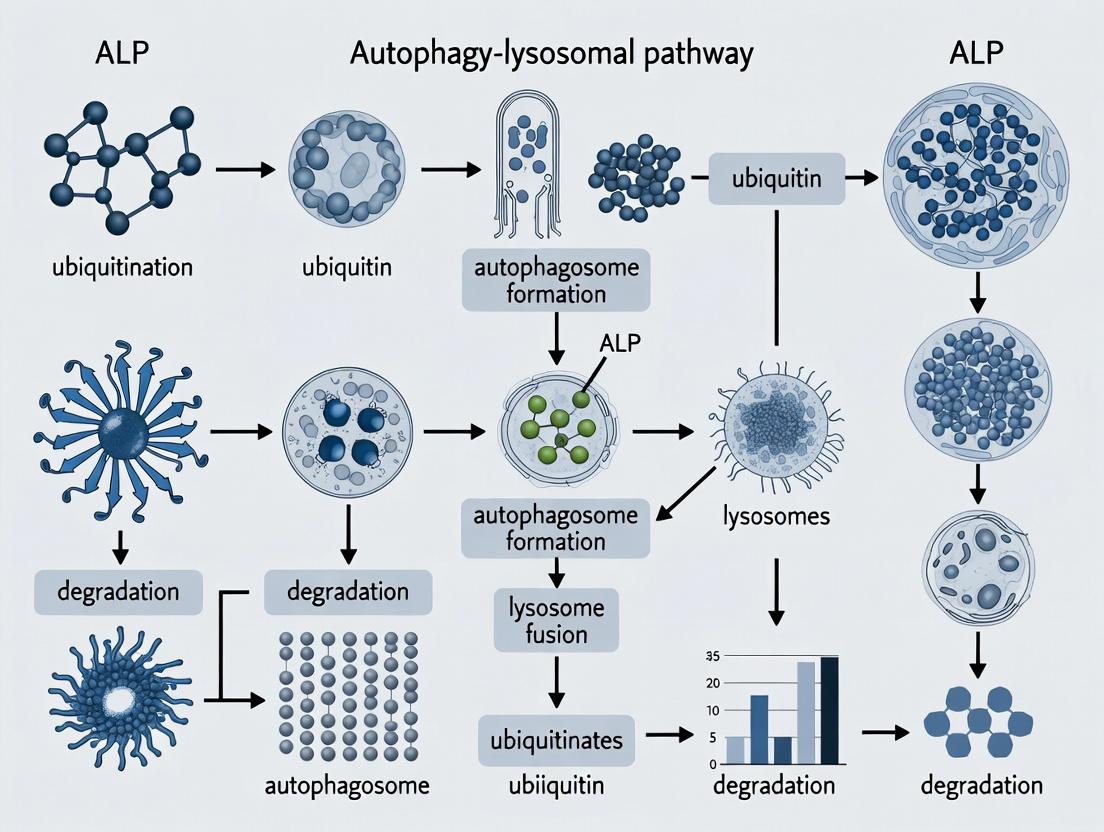
This comprehensive review examines the Autophagy-Lysosomal Pathway (ALP), a critical proteostasis system.
The Autophagy-Lysosomal Pathway: Mechanisms, Methods, and Therapeutic Targeting in Protein Degradation
Abstract
This comprehensive review examines the Autophagy-Lysosomal Pathway (ALP), a critical proteostasis system. We explore its fundamental molecular machinery, from initiation to lysosomal degradation, and its role in cellular health and disease. Methodological approaches for monitoring and modulating ALP activity in research and drug discovery are detailed, alongside common experimental challenges and optimization strategies. The review also compares ALP with other degradation systems like the Ubiquitin-Proteasome System (UPS), analyzes validation techniques for ALP-targeting drugs, and discusses emerging therapeutic paradigms. Aimed at researchers and drug development professionals, this article synthesizes current knowledge to bridge basic science with translational applications in neurodegenerative diseases, cancer, and aging.
Understanding the ALP: Core Machinery and Physiological Roles in Cellular Homeostasis
Defining Macroautophagy, Microautophagy, and Chaperone-Mediated Autophagy (CMA)
The Autophagy-Lysosomal Pathway (ALP) is a fundamental cellular proteostasis network, responsible for the degradation of long-lived proteins, damaged organelles, and protein aggregates. Dysregulation of ALP is implicated in neurodegenerative diseases, cancer, metabolic disorders, and aging. Three distinct, evolutionarily conserved forms of autophagy—macroautophagy, microautophagy, and chaperone-mediated autophagy (CMA)—converge on the lysosome but differ mechanistically in substrate recognition, translocation, and regulatory signaling. This whitepaper provides a technical dissection of these three pathways, emphasizing their unique roles in protein degradation research for therapeutic targeting.
Core Definitions and Comparative Mechanisms
Macroautophagy
A bulk degradation process where cytoplasmic cargo is sequestered within a double-membrane vesicle, the autophagosome, which subsequently fuses with the lysosome for content degradation. It is non-selective under starvation but can be highly selective (e.g., mitophagy, aggrephagy).
Microautophagy
Cytoplasmic material is directly engulfed by invaginations or protrusions of the lysosomal membrane itself. It can be non-selective or selective, with a recently characterized form in mammals involving late endosomes/multivesicular bodies (MVBs).
Chaperone-Mediated Autophagy (CMA)
A highly selective process where cytosolic proteins containing a specific KFERQ-like motif are recognized by the chaperone HSC70, delivered to the lysosomal membrane, and translocated into the lumen via the LAMP2A receptor complex.
Table 1: Core Characteristics of the Three Autophagy Pathways
| Feature | Macroautophagy | Microautophagy (Endosomal) | Chaperone-Mediated Autophagy (CMA) |
|---|---|---|---|
| Selectivity | Non-selective (bulk) & Selective | Primarily selective | Exclusively selective (KFERQ motif) |
| Membrane Dynamics | De novo formation of autophagosome | Lysosomal/endosomal membrane invagination | Direct translocation across lysosomal membrane |
| Key Cargo | Organelles, protein aggregates, pathogens | Cytosolic portions, proteins, glycogen | Soluble cytosolic proteins |
| Lysosomal Receptor | Not applicable | Not characterized | LAMP2A (limiting component) |
| Chaperone Involvement | Limited (e.g., in aggrephagy) | Not required | HSC70 essential (cytosolic & lysosomal) |
| Major Physiological Trigger | Nutrient starvation, stress | Steady-state, carbon source restriction | Prolonged starvation, oxidative stress, proteotoxic stress |
Detailed Signaling Pathways and Regulation
Macroautophagy: ULK1/ATG1 Initiation and Class III PI3K Complex
Nutrient-sensing kinases (mTORC1, AMPK) regulate the initiation complex ULK1/ATG13/FIP200/ATG101. Upon induction, this complex activates the Beclin 1-VPS34 (Class III PI3K) complex to generate PI3P, recruiting downstream ATG proteins for phagophore elongation. Two ubiquitin-like conjugation systems (ATG12-ATG5 and LC3-PE) are essential for autophagosome formation.
Title: Macroautophagy Induction and Autophagosome Formation Pathway
CMA: LAMP2A Multimerization and Translocation
CMA activity is directly regulated by the levels and dynamics of LAMP2A at the lysosomal membrane. Substrate binding promotes LAMP2A multimerization into a 700-kDa translocation complex. A luminal form of HSC70 (lys-HSC70) is required for complete substrate internalization.
Title: Chaperone-Mediated Autophagy (CMA) Translocation Steps
Key Experimental Protocols for Pathway Analysis
Protocol: Measuring Macroautophagic Flux (LC3 Turnover Assay)
Principle: Inhibition of lysosomal degradation accumulates autophagosomes, allowing differentiation between induction and blocked degradation.
- Cell Treatment: Seed cells in 6-well plates. Treat with/without autophagy inducers (e.g., 100 nM Rapamycin, EBSS starvation medium) for 4-6h.
- Lysosomal Inhibition: Co-treat with/without lysosomal inhibitors (e.g., 20 µM Chloroquine, 100 nM Bafilomycin A1) for the final 2-4h.
- Sample Lysis: Harvest cells in RIPA buffer with protease inhibitors.
- Western Blot: Run 15-20 µg protein on 4-20% gradient gel, transfer to PVDF membrane.
- Immunoblotting: Probe with anti-LC3B antibody (clone D11). Quantify LC3-II band intensity normalized to loading control (e.g., β-Actin).
- Flux Calculation: Flux = (LC3-II with inhibitor) – (LC3-II without inhibitor). Increased flux indicates heightened autophagic activity.
Protocol: Assessing CMA Activity (LAMP2A Stability & Translocation Assay)
Principle: Monitor levels of lysosomal LAMP2A and substrate uptake.
- Lysosome Isolation: From treated tissues/cells using density gradient centrifugation (Metrizamide or Percoll).
- LAMP2A Immunoblot: Analyze lysosomal fractions (10 µg protein) for LAMP2A levels (primary antibody: anti-LAMP2A from Abcam, ab18528). Normalize to lysosomal marker (e.g., Cathepsin D).
- CMA Translocation Assay (In Vitro): a. Prepare Radiolabeled Substrate: Translate GAPDH (a canonical CMA substrate) in a rabbit reticulocyte lysate system with [³H]Leucine. b. Incubation: Incubate 5 µg of isolated lysosomes with 100,000 cpm of labeled substrate in 0.3 M sucrose, 10 mM MOPS (pH 7.2) for 20 min at 37°C. c. Protection Assay: Treat one aliquot with Proteinase K (0.1 mg/mL, 10 min on ice) to degrade non-internalized substrate. d. Quantification: TCA-precipitate proteins, measure radioactivity via scintillation counting. CMA-specific uptake = protease-protected counts.
Table 2: Quantitative Parameters in Autophagy Research (Representative Data)
| Pathway | Key Measurable Metric | Typical Basal Value (Mammalian Cell Line) | Value Under Induction (e.g., Starvation) | Common Detection Method |
|---|---|---|---|---|
| Macroautophagy | LC3-II Turnover (Flux) | 1.0 (arbitrary units) | 3.5 - 5.0 | Immunoblot, microscopy |
| Macroautophagy | Autophagosome Count (per cell) | 5-10 | 30-50 | TEM, GFP-LC3 puncta |
| CMA | Lysosomal LAMP2A Levels | 1.0 (relative units) | 2.0 - 4.0 | Immunoblot of lysosomal fractions |
| CMA | Radiolabeled Substrate Uptake (cpm/µg lysosomal protein) | 50-100 | 300-500 | In vitro translocation assay |
| Microautophagy | ESCRT-dependent uptake events | Low | Increased 2-3 fold | Electron microscopy, specific cargo assays |
The Scientist's Toolkit: Key Research Reagent Solutions
Table 3: Essential Reagents and Tools for Autophagy Research
| Reagent/Tool | Function/Application | Example Product/Assay |
|---|---|---|
| Bafilomycin A1 | V-ATPase inhibitor; blocks autophagosome-lysosome fusion & lysosomal acidification. Used to measure autophagic flux. | Sigma-Aldrich, B1793 |
| Chloroquine Diphosphate | Lysosomotropic agent; neutralizes lysosomal pH, inhibiting degradation. Used in flux assays. | Cayman Chemical, 14194 |
| Anti-LC3B Antibody | Detects both cytosolic LC3-I and lipidated, autophagosome-associated LC3-II by immunoblot/IF. Critical for macroautophagy. | Cell Signaling, #3868 (D11) |
| Anti-LAMP2A (H4B4) Antibody | Specifically detects the CMA-specific isoform of LAMP2. Essential for CMA lysosomal analysis. | Abcam, ab18528 / DSHB, H4B4 |
| pBabe-EGFP-LC3B Plasmid | Expression construct for visualizing autophagosome formation via GFP-LC3 puncta formation in live or fixed cells. | Addgene, #22405 |
| Cyto-ID Autophagy Detection Kit | Dye-based flow cytometry/fluorescence method for autophagic vesicle quantification in live cells. | Enzo Life Sciences, ENZ-51031 |
| GAPDH (CMA Substrate) | Canonical protein substrate containing KFERQ motif; used in in vitro CMA translocation assays. | Purified recombinant protein or in vitro translated. |
| Percoll / Metrizamide | Density gradient media for isolation of intact lysosomes from tissues or cultured cells for CMA/biochemical studies. | GE Healthcare / Sigma-Aldrich |
| siRNA against ATG5 or ATG7 | Genetic knockdown tools to selectively inhibit macroautophagy for pathway-specific functional studies. | Dharmacon ON-TARGETplus |
| Recombinant HSC70 Protein | Used in in vitro binding and translocation assays to study CMA substrate recognition and mechanics. | Novus Biologicals, NBP1-98257 |
1. Introduction: Within the Autophagy-Lysosomal Pathway (ALP) Framework The autophagy-lysosomal pathway (ALP) is a fundamental cellular catabolic mechanism for the degradation of long-lived proteins, aggregates, and damaged organelles. Within this broader pathway, macroautophagy (hereafter autophagy) represents a dynamic, multi-step process, culminating in lysosomal degradation. This technical guide details the sequential stages from phagophore initiation to autolysosome formation, providing a mechanistic and methodological resource for researchers in protein degradation and drug discovery.
2. The Core Stepwise Process
2.1. Phagophore Initiation & Nucleation Initiation begins at the phagophore assembly site (PAS), triggered by metabolic cues like nutrient starvation or mTORC1 inhibition. The ULK1 kinase complex (ULK1/2, ATG13, FIP200, ATG101) is activated and phosphorylates components of the class III PI3K complex I (VPS34, VPS15, Beclin-1, ATG14L), leading to local synthesis of phosphatidylinositol-3-phosphate (PI3P) on the forming membrane.
2.2. Phagophore Elongation & Cargo Sequestration PI3P recruits PI3P-effector proteins (e.g., WIPI2) that facilitate the conjugation of ATG12-ATG5-ATG16L1 to the expanding phagophore. This complex acts as an E3 ligase for the LC3 conjugation system. Pro-LC3 is cleaved by ATG4 to form LC3-I, which is then conjugated to phosphatidylethanolamine (PE) to form LC3-II, an integral phagophore membrane protein essential for elongation and cargo selection. Cargo is selectively recruited via receptors like p62/SQSTM1, which binds both ubiquitinated targets and LC3-II.
2.3. Autophagosome Closure & Maturation The phagophore expands, ultimately sealing to form a double-membraned autophagosome, isolating the cargo within the cytosol. The source membranes can include the ER, mitochondria, and plasma membrane. Recent quantitative studies on autophagosome dynamics are summarized in Table 1.
Table 1: Quantitative Parameters of Autophagosome Dynamics in Mammalian Cells
| Parameter | Typical Range/Value | Measurement Method | Reference Context |
|---|---|---|---|
| Phagophore Initiation to Closure | ~5-10 minutes | Live-cell imaging (LC3) | (Kishi-Itakura et al., 2014) |
| Autophagosome Diameter | 0.5-1.5 µm | Electron microscopy | (Ylä-Anttila et al., 2009) |
| LC3-II Turnover Half-life | ~0.5-2 hours | Immunoblot with lysosomal inhibitors | (Mizushima & Yoshimori, 2007) |
| Cargo Degradation in Autolysosome | ~10-30 minutes | Fluorescent protein flux assays (e.g., mRFP-GFP-LC3) | (Kaizuka et al., 2016) |
2.4. Autophagosome-Lysosome Fusion The mature autophagosome is transported along microtubules towards the perinuclear region where lysosomes reside. Fusion is mediated by SNARE complexes (e.g., STX17-SNAP29-VAMP8), HOPS tethering complex, and Rab GTPases (e.g., Rab7). The single outer membrane fuses with the lysosomal membrane.
2.5. Autolysosome Formation & Cargo Degradation Following fusion, the inner autophagosomal membrane and enclosed cargo are exposed to the hydrolytic lysosomal environment (acidic pH, proteases, lipases). LC3-II on the inner membrane is degraded. The resulting breakdown products (amino acids, fatty acids) are exported to the cytosol for recycling.
3. Key Experimental Protocols
3.1. Protocol: Monitoring Autophagic Flux via LC3-II Immunoblotting
- Objective: Quantify functional autophagic activity, not just autophagosome number.
- Method:
- Cell Treatment: Seed cells in 6-well plates. Establish two sets: one treated with a lysosomal inhibitor (e.g., 100 nM Bafilomycin A1 or 20 mM NH₄Cl) for 4-6 hours, and an untreated control.
- Lysis: Harvest cells in ice-cold RIPA buffer with protease inhibitors.
- Immunoblotting: Resolve 20-40 µg protein via SDS-PAGE (15% gel optimal for LC3 separation). Transfer to PVDF membrane.
- Detection: Probe with anti-LC3 antibody (e.g., rabbit anti-LC3B). Use anti-β-actin as loading control.
- Analysis: Quantify band intensity. Increased LC3-II in inhibitor-treated vs. control cells indicates basal autophagic flux. A block in autophagy results in no difference.
3.2. Protocol: Tandem Fluorescent mRFP-GFP-LC3 Assay
- Objective: Visualize and quantify autophagic stages (autophagosome vs. autolysosome) in live cells.
- Method:
- Transfection: Transfect cells with an mRFP-GFP-LC3 tandem plasmid.
- Imaging: Acquire confocal images using specific channels for GFP (ex 488 nm) and RFP (ex 561 nm).
- Interpretation: In neutral pH (autophagosome), both GFP and RFP fluoresce (yellow puncta). In acidic autolysosomes, GFP fluorescence is quenched, leaving only RFP signal (red puncta). The ratio of red-only to yellow puncta indicates autophagic flux efficiency.
4. Visualizing Key Signaling & Workflows
5. The Scientist's Toolkit: Key Research Reagents
Table 2: Essential Reagents for Autophagy Research
| Reagent/Category | Example(s) | Primary Function in Research |
|---|---|---|
| Lysosomal Inhibitors | Bafilomycin A1, Chloroquine, NH₄Cl | Blocks autophagic flux at degradation stage, allowing measurement of upstream accumulation. |
| Inducers | Rapamycin (mTORC1 inhibitor), Torin1, Earle's Balanced Salt Solution (EBSS) for starvation | Activates autophagy initiation for experimental manipulation. |
| Antibodies | Anti-LC3B (for immunoblot/IF), Anti-p62/SQSTM1, Anti-ATG5, Anti-phospho-ULK1 (Ser757) | Detection and quantification of autophagy proteins and their post-translational modifications. |
| Fluorescent Reporters | mRFP-GFP-LC3 tandem construct, GFP-LC3, tfLC3 (Rosella), LysoTracker dyes | Live-cell imaging and tracking of autophagosome formation, flux, and lysosomal pH. |
| siRNA/cDNA Libraries | siRNA against ATG5, ATG7, Beclin-1; Overexpression plasmids for dominant-negative mutants | Genetic perturbation to study the necessity or sufficiency of specific autophagy genes. |
| Activity Assays | Lysosomal protease activity kits (Cathepsin L/B), DQ-BSA (quenched fluorescent substrate) | Measure functional lysosomal degradation capacity. |
The Autophagy-Lysosomal Pathway (ALP) is a critical cellular degradation and recycling system essential for maintaining proteostasis, organelle quality, and cellular health. Its dysregulation is implicated in neurodegenerative diseases, cancer, metabolic disorders, and aging. This whitepaper provides an in-depth technical analysis of four core ALP regulatory hubs: the mechanistic Target of Rapamycin (mTOR), AMP-activated protein kinase (AMPK), Transcription Factor EB (TFEB), and the Autophagy-related (ATG) protein machinery. Understanding their complex interplay is fundamental for developing targeted therapeutics.
Core Regulatory Network: Molecular Mechanisms & Interactions
mTOR Complex 1 (mTORC1): The Primary Inhibitory Hub
mTORC1 is the central nutrient and growth factor sensor that suppresses autophagy under favorable conditions.
- Mechanism: Active mTORC1 phosphorylates key autophagy initiators, including ULK1/Atg1 (at Ser757, disrupting its interaction with AMPK) and ATG13, inhibiting the ULK1 kinase complex necessary for phagophore nucleation. Furthermore, it directly phosphorylates TFEB (at Ser142 and Ser211), promoting its cytosolic retention via 14-3-3 protein binding.
- Activation Triggers: Amino acids (especially leucine and arginine sensed by Rag GTPases), growth factors (via PI3K-Akt signaling), and cellular energy (ATP).
- Inhibition: Starvation, rapamycin, and specific ATP-competitive inhibitors (Torin1).
AMPK: The Energy Sensor and Activator
AMPK responds to low cellular energy (high AMP/ADP:ATP ratio) and stress, directly opposing mTORC1 and inducing autophagy.
- Mechanism:
- Inhibits mTORC1: Phosphorylates TSC2 (activating the mTORC1 inhibitor TSC complex) and Raptor (a component of mTORC1).
- Activates ULK1: Directly phosphorylates ULK1 at Ser317 and Ser777, activating it to initiate autophagy, particularly under glucose starvation.
- Regulates Transcription: Can phosphorylate TFEB, potentially influencing its nuclear translocation, and other transcription factors like FOXO3.
TFEB/TFE3: Master Transcriptional Regulators
TFEB and its homolog TFE3 control the expression of genes involved in autophagy and lysosomal biogenesis (CLEAR network genes).
- Mechanism: Under nutrient-rich conditions, mTORC1-phosphorylated TFEB is sequestered in the cytoplasm. Upon mTORC1 inhibition (starvation, lysosomal stress), TFEB is dephosphorylated by calcineurin, translocates to the nucleus, and activates genes encoding ATG proteins, lysosomal hydrolases, and V-ATPase subunits.
- Regulation: Phosphorylation by mTORC1 (inhibitory), ERK2 (affects stability), and GSK3β (affects nuclear localization).
The ATG Protein Machinery: The Executors
ATG proteins form functional complexes that execute the sequential steps of autophagy: initiation, nucleation, elongation, closure, and fusion.
- ULK1/Atg1 Complex (Initiation): ULK1, ATG13, FIP200, ATG101. Activated by AMPK and inhibited by mTORC1.
- Class III PI3K Complex (Nucleation): VPS34, Beclin 1 (ATG6), VPS15, ATG14L (or UVRAG). Generates PI3P to recruit downstream effectors to the phagophore.
- ATG9 Vesicles and ATG2-WIPI Complex (Membrane Source & Lipid Transfer): ATG9A vesicles and the ATG2A/B-WIPI1/4 complex deliver lipids for phagophore expansion.
- Ubiquitin-like Conjugation Systems (Elongation & Closure):
- ATG12 System: ATG12 is conjugated to ATG5 by ATG7 (E1) and ATG10 (E2), forming a complex with ATG16L1, which acts as an E3-like enzyme for the LC3 system.
- LC3/ATG8 System: LC3/ATG8 is cleaved by ATG4, conjugated to PE by ATG7 (E1) and ATG3 (E2) with the help of the ATG12-ATG5-ATG16L1 complex. LC3-II integrated into the phagophore membrane is essential for cargo recruitment and membrane closure.
Table 1: Key Regulatory Phosphorylation Events
| Regulator | Target Protein | Phosphorylation Site | Effect of Phosphorylation | Kinase | Context |
|---|---|---|---|---|---|
| mTORC1 | ULK1/ATG1 | Ser757 | Inhibits ULK1 kinase activity, disrupts AMPK binding | mTOR | Nutrient-rich |
| mTORC1 | ATG13 | Ser258 (human) | Disrupts ULK1 complex stability | mTOR | Nutrient-rich |
| mTORC1 | TFEB | Ser142, Ser211 | Promotes 14-3-3 binding, cytoplasmic retention | mTOR | Nutrient-rich |
| AMPK | ULK1/ATG1 | Ser317, Ser777 | Activates ULK1 kinase activity | AMPK | Energy stress |
| AMPK | Raptor | Ser722, Ser792 | Inhibits mTORC1 activity | AMPK | Energy stress |
| AMPK | TSC2 | Thr1227, Ser1345 | Activates TSC complex, inhibits mTORC1 | AMPK | Energy stress |
| ERK2 | TFEB | Ser142 | May promote cytoplasmic retention/stability | ERK2 | Growth factor signaling |
Table 2: Core ATG Protein Complexes and Functions
| Complex/System | Core Components | Key Function in Autophagy | Genetic Abolishment Phenotype (Mammalian Cells) |
|---|---|---|---|
| ULK1 Initiation Complex | ULK1, ATG13, FIP200, ATG101 | Phosphorylation cascade initiating autophagosome formation | Complete blockade of autophagy induction. |
| Class III PI3K Complex I | VPS34, Beclin1, VPS15, ATG14L | Generates PI3P at phagophore assembly site (PAS) | Blocks autophagosome nucleation. |
| ATG2-WIPI Complex | ATG2A/B, WIPI1/4 (ATG18) | Lipid transfer from ER contact sites for phagophore expansion | Arrests at early phagophore (unclosed cup-shaped structures). |
| ATG12 Conjugation System | ATG12, ATG5, ATG7, ATG10, ATG16L1 | E3-like enzyme for LC3 lipidation; promotes phagophore elongation. | Severely impairs LC3 lipidation and autophagosome formation. |
| LC3 Conjugation System | LC3 (ATG8), ATG4, ATG7, ATG3 | LC3-II decorates autophagosome membranes; essential for closure and cargo targeting. | Blocks autophagosome completion and selective autophagy. |
Essential Experimental Protocols
Protocol: Monitoring mTORC1 Activity & TFEB Localization
Aim: To assess mTORC1 inhibition and subsequent TFEB nuclear translocation.
Materials: See "Scientist's Toolkit" below. Procedure:
- Cell Treatment: Seed cells in 6-well plates. Treat experimental groups with mTOR inhibitors (e.g., 250 nM Torin1 for 2h) or amino acid-deplete using EBSS medium for 1-4h. Maintain a control group in complete medium.
- Immunofluorescence (IF):
- Fix cells with 4% PFA for 15 min, permeabilize with 0.1% Triton X-100 for 10 min.
- Block with 5% BSA for 1h.
- Incubate with primary antibodies (anti-TFEB, anti-phospho-S6K1 Thr389) overnight at 4°C.
- Incubate with fluorophore-conjugated secondary antibodies and DAPI for 1h at RT.
- Image using a confocal microscope. Quantify TFEB nuclear/cytosolic fluorescence intensity ratio.
- Western Blot (WB) Validation:
- Lyse cells in RIPA buffer with protease/phosphatase inhibitors.
- Separate proteins by SDS-PAGE, transfer to PVDF membrane.
- Probe with antibodies: p-S6K1 (T389), total S6K1, p-ULK1 (S757), total ULK1, and Lamin B1 (nuclear fraction control for TFEB).
- qRT-PCR for CLEAR Genes: Extract RNA, synthesize cDNA, and run qPCR for lysosomal genes (e.g., CTSD, LAMP1, ATP6V1H) to confirm TFEB transcriptional activity.
Protocol: Assessing Autophagic Flux Using LC3 Turnover
Aim: To differentiate between autophagosome accumulation and functional lysosomal degradation.
Materials: See "Scientist's Toolkit" below. Procedure:
- Experimental Design: Set up four conditions in triplicate: (i) Untreated Control, (ii) Autophagy Inducer (e.g., 100 nM Rapamycin, 6h), (iii) Lysosomal Inhibitor (e.g., 50 nM Bafilomycin A1, 4h), (iv) Inducer + Inhibitor.
- Cell Lysis & WB:
- Lyse cells directly in 1X Laemmli buffer to prevent LC3-II degradation.
- Perform WB with anti-LC3 antibody.
- Quantify band intensity for LC3-I (cytosolic, ~16 kDa) and LC3-II (lipidated, ~14 kDa).
- Flux Calculation: True autophagic flux = (LC3-II level in "Inducer + Inhibitor" sample) - (LC3-II level in "Inhibitor alone" sample). An increase in LC3-II with Bafilomycin A1 indicates active flux.
Signaling Pathway Diagrams
Diagram Title: ALP Core Regulatory Network & TFEB Activation
Diagram Title: ATG Machinery in Autophagosome Biogenesis
The Scientist's Toolkit: Key Research Reagent Solutions
Table 3: Essential Reagents for ALP Regulation Research
| Reagent Category | Specific Example(s) | Primary Function in Research | Key Application/Notes |
|---|---|---|---|
| Pharmacologic mTOR Inhibitors | Rapamycin (Sirolimus), Torin1, PP242, AZD8055 | Inhibit mTORC1 (and mTORC2 for ATP-competitors) to induce autophagy and TFEB translocation. | Rapamycin is specific but partial; Torin1 is a potent dual mTORC1/2 inhibitor. Use for acute in vitro studies. |
| AMPK Modulators | AICAR (AMPK activator), Compound C (Dorsomorphin, AMPK inhibitor), Metformin. | Activate or inhibit AMPK signaling to dissect its role in autophagy initiation and energy sensing. | AICAR is a cell-permeable adenosine analog. Effects can be indirect. Genetic (shRNA/CRISPR) validation is crucial. |
| Lysosomal Inhibitors | Bafilomycin A1, Chloroquine (CQ), Hydroxychloroquine (HCQ), Leupeptin. | Inhibit lysosomal acidification (V-ATPase) or protease activity to block autophagic flux, allowing LC3-II accumulation. | Essential for flux assays. Bafilomycin A1 is more specific and potent than CQ/HCQ. |
| Autophagy Inducers (Nutrient Deprivation) | Earle's Balanced Salt Solution (EBSS), HBSS. | Standard media lacking amino acids/serum to induce canonical autophagy via mTORC1 inhibition. | The gold standard physiological inducer. Time-course experiments (1-6h) are typical. |
| Key Antibodies (WB/IF) | Phospho-Specific: p-S6K1 (T389), p-ULK1 (S757), p-AMPKα (T172).Total Proteins: LC3A/B, SQSTM1/p62, TFEB, ULK1, Beclin1, Lamin B1. | Detect protein levels, phosphorylation status (activity), and cellular localization (IF for TFEB). | Use p62 degradation alongside LC3 turnover for robust flux assessment. Validate phospho-antibodies with inhibitor controls. |
| TFEB Translocation Reporters | TFEB-GFP overexpression plasmids, Anti-TFEB antibody for IF. | Visualize and quantify TFEB subcellular localization in response to stimuli. | Nuclear/cytosolic fluorescence ratio is a standard quantifiable readout. Ensure fixation/permeabilization preserves epitopes. |
| Autophagic Flux Reporters | mRFP-GFP-LC3 tandem reporter (ptfLC3), DQ-BSA, Lysotracker Red. | Differentiate autophagosomes (yellow, mRFP+GFP+) from autolysosomes (red-only, GFP quenched in acid). | ptfLC3: Gold standard for imaging flux. DQ-BSA: Measures lysosomal proteolytic activity. |
Abstract This technical guide details the lysosome as the terminal catabolic organelle within the Autophagy-Lysosomal Pathway (ALP), a central focus in protein degradation research. We dissect its enzymatic arsenal, membrane protein machinery, and regulatory systems, providing a foundational resource for therapeutic targeting in neurodegenerative diseases, cancer, and lysosomal storage disorders.
The Autophagy-Lysosomal Pathway (ALP) is a primary mechanism for degrading long-lived proteins, damaged organelles, and protein aggregates. The lysosome represents the indispensable degradative endpoint of this pathway. Its function is not passive; it involves sophisticated recognition, fusion, acidification, and enzymatic hydrolysis processes, all governed by specific enzymes and integral membrane proteins.
Architectural and Functional Core
The Enzymatic Arsenal: Acid Hydrolases
Lysosomal lumen houses over 60 acid hydrolases (optimal pH ~4.5-5.0) that catalyze the breakdown of all major biomolecules. Key categories include:
- Proteases: Cathepsins (B, D, L), which degrade proteins.
- Nucleases: DNase II, RNase T2.
- Lipases: Acid lipase, phospholipases.
- Glycosidases: β-galactosidase, α-glucosidase, for carbohydrate degradation.
- Phosphatases: Acid phosphatase.
Table 1: Major Lysosomal Hydrolases and Their Substrates
| Enzyme Classification | Representative Member | Primary Substrate | Genetic Disease Link |
|---|---|---|---|
| Protease | Cathepsin D | Proteins, peptides | Neuronal Ceroid Lipofuscinosis |
| Glycosidase | β-Glucocerebrosidase (GBA1) | Glycolipids (glucosylceramide) | Gaucher Disease, Parkinson's |
| Lipase | Lysosomal Acid Lipase (LAL) | Cholesteryl esters, triglycerides | Wolman Disease, CESD |
| Sulfatase | Arylsulfatase A | Sulfatides | Metachromatic Leukodystrophy |
| Phosphatase | Acid Phosphatase | Phosphate monoesters | – |
Membrane Proteins: Gatekeepers and Regulators
The limiting membrane integrates proteins critical for lysosomal identity, stability, and function.
- V-ATPase: A multi-subunit proton pump responsible for lumen acidification. Composed of V1 (cytoplasmic, ATP hydrolysis) and V0 (membrane, proton translocation) sectors.
- LAMP-1 and LAMP-2 (Lysosomal Associated Membrane Proteins): Heavily glycosylated proteins constituting ~50% of membrane proteins. They protect the membrane from hydrolases and mediate fusion events. LAMP-2 is critical for chaperone-mediated autophagy (CMA).
- Lysobisphosphatidic Acid (LBPA): A unique anionic phospholipid enriched in intraluminal vesicles, crucial for lipid sorting and cholesterol export.
- Transporters (e.g., MCOLN1/TRPML1, TPC2): Cation channels (Ca²⁺, Na⁺) essential for lysosomal ion homeostasis, fusion, and nutrient sensing. TRPML1 mutations cause Mucolipidosis Type IV.
- SLC Family Transporters (e.g., SLC38A9): Amino acid transporters acting as arginine sensors for the mTORC1 signaling pathway.
Quantitative Dynamics of Lysosomal Function
Table 2: Key Quantitative Parameters of Lysosomal Biology
| Parameter | Typical Range/Value | Measurement Technique |
|---|---|---|
| Intraluminal pH | 4.5 - 5.0 | Ratiometric pH-sensitive dyes (e.g., LysoSensor, FITC-dextran quenching) |
| Membrane Potential | ~ +20 to +30 mV (inside positive) | Fluorescent potential indicators (e.g., Acridine Orange) |
| Ca²⁺ Store Release (upon TRPML1 activation) | ~ 500 nM - 1 µM [Ca²⁺]cyt peak | Genetically encoded Ca²⁺ indicators (GCaMP) targeted to cytosol |
| Diameter | 0.1 - 1.2 µm | Super-resolution microscopy (STED), Electron Microscopy |
| Half-life of Hydrolases | Days to weeks (dependent on trafficking stability) | Pulse-chase radiolabeling, cycloheximide chase + immunoblot |
Experimental Protocols for Key Assays
Protocol: Measuring Lysosomal pH Using Ratiometric Imaging
Objective: Quantify the intraluminal pH of live lysosomes.
- Cell Preparation: Plate cells on glass-bottom dishes.
- Loading: Incubate with 1 mg/mL FITC-dextran (10,000 MW) and 50 nM LysoTracker Red DND-99 for 2 hours.
- Chase: Replace medium with dextran-free, dye-free medium and chase for 2-4 hours to ensure lysosomal accumulation.
- Calibration: For in situ calibration, treat separate samples with 10 µM monensin and 10 µM nigericin in high-K⁺ buffers at defined pH (4.5, 5.0, 5.5, 6.0, 7.0) for 10 minutes.
- Imaging: Acquire images on a confocal microscope using 488 nm (FITC) and 577 nm (LysoTracker) excitation. Collect FITC emission at 515-530 nm.
- Analysis: Calculate the ratio (FITC intensity / LysoTracker intensity) per lysosome. Generate a standard curve from calibration images and apply the fit to experimental ratios to calculate pH.
Protocol: Immunoblotting for Lysosomal Membrane Proteins
Objective: Assess protein levels of LAMPs and other membrane proteins.
- Lysosome Enrichment: Use differential centrifugation. Homogenize cells in 250 mM sucrose, 10 mM HEPES (pH 7.4) with protease inhibitors. Pellet nuclei (1,000 x g, 10 min). Pellet heavy mitochondria (10,000 x g, 10 min). Pellet crude lysosome fraction (20,000 x g, 20 min). Optional: further purify via Percoll or OptiPrep density gradient.
- Sample Preparation: Solubilize enriched lysosomal pellet in RIPA buffer with 1% SDS.
- Immunoblot: Perform SDS-PAGE (10-12% gel). Transfer to PVDF membrane. Block with 5% BSA. Probe with primary antibodies (e.g., anti-LAMP1 [H4A3], anti-LAMP2 [H4B4], anti-V-ATPase a3 subunit) overnight at 4°C. Use HRP-conjugated secondary antibodies and chemiluminescent detection. Normalize to lysosomal loading control (e.g., mature Cathepsin D).
Signaling Pathways & Workflows
Diagram 1: mTORC1 Nutrient Sensing at the Lysosome
Diagram 2: Workflow for Lysosomal Function Analysis
The Scientist's Toolkit: Research Reagent Solutions
Table 3: Essential Reagents for Lysosomal Research
| Reagent/Category | Example Product/Name | Primary Function in Research |
|---|---|---|
| Lysosomal Staining Dyes | LysoTracker Deep Red, DQ-BSA, LysoSensor Yellow/Blue | Live-cell staining of acidic organelles, measurement of proteolytic activity, and pH sensing. |
| Lysosomal Inhibitors | Bafilomycin A1 (V-ATPase inhibitor), Chloroquine (lysosomotropic agent), Leupeptin (cathepsin inhibitor) | Block lysosomal acidification or hydrolytic function to assess flux and pathway dependency. |
| Antibodies (Key Targets) | Anti-LAMP1 (clone H4A3), Anti-LAMP2 (clone H4B4), Anti-TFEB, Anti-Cathepsin D (mature), Anti-LC3B | Detection of lysosomal markers, assessment of lysosomal biogenesis, and autophagic flux via immunoblot/IF. |
| Activation Compounds | ML-SA1 (TRPML1 agonist), Torin 1 (mTORC1 inhibitor/TFEB activator) | Pharmacological modulation of lysosomal calcium signaling and induction of lysosomal biogenesis. |
| Fluorogenic Substrates | Magic Red Cathepsin B/Kits, (Z-FR)₂-R110 (cathepsin L substrate) | Quantification of specific cathepsin enzyme activities in live or fixed cells. |
| Autophagy Modulators | Rapamycin (mTOR inhibitor), Earle's Balanced Salt Solution (EBSS for starvation) | Standard tools to induce autophagy upstream of lysosomal degradation. |
The Autophagy-Lysosomal Pathway (ALP) represents a central hub for cellular proteostasis, historically characterized by its "housekeeping" role in the clearance of damaged organelles and protein aggregates. However, contemporary research has established its function as a dynamic regulatory system integral to metabolic adaptation and precision quality control. Within the broader thesis of ALP in protein degradation research, this whitepaper details its sophisticated physiological roles, experimental paradigms for their study, and the translational toolkit for therapeutic intervention.
From Basal Homeostasis to Induced Adaptation
The ALP operates constitutively at a basal level to maintain cellular integrity. Upon metabolic or environmental stress (e.g., nutrient deprivation, hypoxia, proteotoxic stress), specific signaling cascades dramatically upregulate autophagic flux, reprogramming cellular metabolism to ensure survival.
Key Signaling Pathways
1. mTORC1-Dependent Pathway: The primary nutrient-sensing switch. Under nutrient-rich conditions, active mTORC1 phosphorylates ULK1/ATG13, inhibiting autophagy initiation. Starvation inactivates mTORC1, triggering ULK1 activation and phagophore nucleation. 2. AMPK-ULK1 Axis: Energy stress activates AMPK, which phosphorylates and activates ULK1 directly, while also inhibiting mTORC1, providing a dual signal for autophagy induction. 3. Transcription Factor EB (TFEB): The master regulator of lysosomal biogenesis and autophagy genes. Under stress, TFEB is dephosphorylated, translocates to the nucleus, and activates a coordinated lysosomal and autophagic gene expression program (CLEAR network).
Diagram Title: ALP Induction Signaling Under Nutrient Rich vs. Stress States
Quantitative Metrics of Autophagic Activity
Table 1: Core Quantitative Metrics for Assessing Autophagic Flux and Adaptation
| Metric | Method/Target | Basal State (Typical Range) | Induced State (e.g., Starvation 2h) | Functional Interpretation |
|---|---|---|---|---|
| LC3-II Turnover | Immunoblot (LC3-II in +/- lysosomal inhibitors) | Ratio (+Inhib/-Inhib) ~1.5-2.5 | Ratio >3-5 | Direct measure of autophagosome synthesis and degradation. |
| p62/SQSTM1 Degradation | Immunoblot / ELISA | Stable level | Decrease by 40-70% | Reflects cargo sequestration and lysosomal degradation efficiency. |
| Lysosomal Activity | Cathepsin L/B assay or LysoTracker staining | Fluorescence Units: Baseline | Increase 2-3 fold | Indicator of lysosomal capacity and hydrolytic function. |
| TFEB Nuclear Translocation | Imaging (Nuc/Cyt TFEB intensity ratio) | Ratio ~0.2-0.5 | Ratio >1.5 | Readout of transcriptional reprogramming for ALP. |
| Mitophagic Flux1 | mt-Keima assay | Low Ratiometric Signal | High Ratiometric Signal | Specific quantification of mitochondrial turnover. |
1 Requires specialized fluorescent probes (e.g., mt-Keima).
Methodologies for Investigating Metabolic Adaptation & Quality Control
Protocol: Integrated Autophagic Flux Assay (LC3-II Turnover & p62 Degradation)
Objective: Quantify the rate of autophagosome synthesis and degradation under basal and stressed conditions. Reagents:
- Bafilomycin A1 (100 nM): V-ATPase inhibitor to block autophagosome-lysosome fusion/acidification.
- Earle's Balanced Salt Solution (EBSS): For nutrient starvation.
- Antibodies: Anti-LC3B, anti-p62/SQSTM1, anti-β-actin.
- Cell lysis buffer: RIPA buffer supplemented with protease inhibitors. Procedure:
- Seed cells in 6-well plates. At ~80% confluency, pre-treat with Bafilomycin A1 (or vehicle) for 2 hours.
- In parallel, subject cells to nutrient stress (EBSS) or other inducers for 2-4 hours, maintaining BafA1 treatment.
- Lyse cells, quantify protein concentration.
- Perform SDS-PAGE (load 20-30 µg protein) and western blotting for LC3, p62, and loading control.
- Analysis: Calculate LC3-II flux as (LC3-II level with BafA1) / (LC3-II level without BafA1). p62 degradation is assessed by the decrease in p62 signal in induced vs. control samples without BafA1.
Protocol: Monitoring TFEB-Mediated Transcriptional Response
Objective: Assess nuclear translocation and target gene expression. Part A – Immunofluorescence:
- Culture cells on glass coverslips, apply treatments.
- Fix with 4% PFA, permeabilize with 0.1% Triton X-100, block.
- Incubate with anti-TFEB primary and fluorescent secondary antibodies. Co-stain with DAPI.
- Image with confocal microscope. Quantify nuclear-to-cytoplasmic fluorescence intensity ratio using ImageJ. Part B – qRT-PCR:
- Extract total RNA, synthesize cDNA.
- Perform qPCR using primers for CLEAR network genes (e.g., MAP1LC3B, SQSTM1, CSTB, CTSB, TFEB itself). Use GAPDH or ACTB for normalization.
- Analyze via ΔΔCt method.
The Scientist's Toolkit: Essential Research Reagents
Table 2: Key Reagent Solutions for ALP Research in Metabolic Adaptation & QC
| Reagent / Tool | Category | Primary Function in ALP Research |
|---|---|---|
| Bafilomycin A1 / Chloroquine | Pharmacologic Inhibitor | Inhibits V-ATPase, raises lysosomal pH, blocks autophagic degradation. Essential for flux assays. |
| Rapamycin / Torin 1 | mTOR Inhibitor (Inducer) | Pharmacologically inhibits mTORC1, inducing autophagy independent of nutrient status. |
| siRNA/shRNA Libraries (ATG5, ATG7, BECN1, TFEB) | Genetic Tools | Enables targeted gene knockdown to establish causal roles of specific ALP components. |
| Tandem Fluorescent LC3 (mRFP-GFP-LC3) | Reporter Construct | Distinguishes autophagosomes (GFP+/RFP+) from autolysosomes (GFP-/RFP+) via pH sensitivity of GFP. |
| LysoTracker Dyes (e.g., LysoTracker Red) | Fluorescent Probe | Stains acidic compartments (lysosomes, autolysosomes) to assess lysosomal mass and acidity. |
| mt-Keima / MitoTimer | Organelle-Specific Reporter | Measures mitophagic flux (mt-Keima) or mitochondrial age/oxidative stress (MitoTimer). |
| Anti-p62/SQSTM1 Antibody | Immunological Tool | Key marker for autophagic cargo degradation; levels inversely correlate with functional flux. |
| Recombinant LC3B Protein & ATG4 Protease | Biochemical Assay Kit | Used in in vitro lipidation/conjugation assays to study molecular mechanics of LC3 processing. |
Diagram Title: Experimental Design Logic for Investigating ALP Functions
Quality Control Mechanisms: Selective Autophagy
Beyond bulk degradation, ALP mediates precision quality control via selective autophagy receptors (e.g., p62, NBR1, OPTN, NDP52) that recognize ubiquitinated cargo (damaged mitochondria, peroxisomes, protein aggregates) and link them to the LC3-positive phagophore membrane.
The Mitophagy Cascade as a Paradigm
Key Steps: 1) Mitochondrial damage triggers PINK1 stabilization on the outer membrane. 2) PINK1 phosphorylates ubiquitin and Parkin, recruiting and activating the E3 ligase Parkin. 3) Parkin ubiquitinates mitochondrial proteins. 4) Receptors like OPTN bind ubiquitin and LC3, targeting the mitochondrion for autophagic engulfment.
Diagram Title: PINK1-Parkin Mediated Mitophagy Pathway
The ALP is a master regulator that transcends its canonical housekeeping duties. It is a sensor, integrator, and effector of metabolic states, executing tailored quality control to preserve cellular fitness. Deciphering its adaptive and selective mechanisms, through the methodologies and tools outlined, is paramount for developing therapies for diseases of proteostasis failure, including neurodegenerative disorders, metabolic syndromes, and cancer.
The Autophagy-Lysosomal Pathway (ALP) is a critical protein degradation system, complementary to the ubiquitin-proteasome system. This whitepaper delineates the integral role of ALP in orchestrating cellular remodeling during development, guiding cell fate decisions during differentiation, and modulating both innate and adaptive immune responses. Framed within the broader thesis of ALP's supremacy in processing complex cytoplasmic material and organelles, this guide synthesizes current research to present a technical resource for therapeutic targeting.
The ALP engulfs cytoplasmic cargo in double-membraned autophagosomes, which subsequently fuse with lysosomes for enzymatic degradation and component recycling. This process, particularly macroautophagy (hereafter autophagy), is indispensable not merely as a housekeeping mechanism but as a dynamic regulator of cell state and function. Its inducibility and selectivity in response to metabolic and stress signals position it as a pivotal mechanism linking protein degradation research to phenotypic outcomes in health and disease.
The table below summarizes key quantitative data linking ALP activity to specific biological processes, derived from recent in vitro and in vivo studies.
Table 1: Quantitative Correlates of ALP Activity in Cellular Processes
| Biological Process | Measured Parameter | Typical Experimental Value (Condition) | Impact of ALP Inhibition/Deficiency |
|---|---|---|---|
| Embryonic Development | Autophagosome count (LC3-II puncta) in mouse embryo | 15-20/cell (E8.5, nutrient-rich) | Lethality by E8.5; failure of embryonic turning |
| Hematopoietic Differentiation | % CD71- Ter119+ erythrocytes (from progenitors) | 65% ± 5% (wild-type, Day 7) | Reduction to 20% ± 8%; impaired enucleation |
| Neuronal Differentiation | Neurite length (SH-SY5Y cells, post-RA) | 350 µm ± 40 µm (control) | Reduction to 120 µm ± 30 µm |
| T-cell Activation | IL-2 secretion (pg/mL) by activated CD4+ T-cells | 1250 ± 150 (wild-type) | Increase to 2200 ± 200 (Atg5 KO) |
| Macrophage Phagocytosis | Clearance of apoptotic cells (units/hr) | 100% (control) | Reduction to 40% (LC3 knockdown) |
| Inflammasome Regulation | Caspase-1 activity (fold change) in LPS+ATP BMDMs | 1.0 (basal) | Increase to 3.5 ± 0.4 (Atg16L1 deficient) |
ALP in Development and Differentiation: Mechanisms and Protocols
Core Signaling Pathways
ALP is activated by nutrient-sensing pathways (e.g., mTORC1 inhibition) and developmental cues (e.g., transcription factors). It facilitates differentiation by degrading previous cellular programs (e.g., cytoplasm during erythropoiesis) and providing metabolic intermediates.
Diagram 1: ALP Regulation in Cell Differentiation
Key Experimental Protocol: Monitoring Autophagy Flux DuringIn VitroDifferentiation
Objective: Quantify autophagic activity during induced differentiation of stem/progenitor cells. Detailed Workflow:
- Cell Model: Human induced Pluripotent Stem Cells (iPSCs) directed toward cardiomyocytes.
- Induction: Initiate differentiation with RPMI/B27 medium containing CHIR99021 (GSK3 inhibitor).
- Autophagy Flux Measurement (Western Blot):
- Treatment: Include parallel sets with and without 100 nM Bafilomycin A1 (V-ATPase inhibitor preventing lysosomal acidification) for the final 4 hours of culture.
- Lysis: Harvest cells at days 0, 3, 5, and 7. Use RIPA buffer with protease inhibitors.
- Detection: Resolve 20 µg protein on 4-20% SDS-PAGE. Immunoblot for:
- LC3-I/II (Clone D3U4C, CST). Calculate flux as: (LC3-II with BafA1) - (LC3-II without BafA1).
- p62/SQSTM1 (to assess cargo clearance).
- Differentiation marker: cTnT (cardiac troponin T).
- Loading control: GAPDH.
- Image-Based Confirmation: Immunofluorescence for LC3 puncta (using same antibody) and LAMP1 (lysosomal marker) to assess colocalization.
ALP in Immune Response: Mechanisms and Protocols
Core Immunomodulatory Pathways
ALP intersects with immunity at multiple levels: pathogen clearance (xenophagy), antigen presentation, lymphocyte homeostasis, and regulation of inflammatory signaling.
Diagram 2: ALP Crosstalk with Immune Signaling
Key Experimental Protocol: Assessing Xenophagy of Bacteria
Objective: Measure autophagic capture and degradation of intracellular Salmonella typhimurium. Detailed Workflow:
- Infection: Seed HeLa cells (or RAW 264.7 macrophages) in 24-well plates. Infect with GFP-expressing S. typhimurium (ΔinvA ΔsifA strain, retained in cytoplasm) at MOI 50 for 1 hour.
- Chase & Treatment: Replace medium with gentamicin (100 µg/mL) to kill extracellular bacteria. Treat one set with 100 nM Bafilomycin A1 for 2 hours before harvest to block lysosomal degradation.
- Immunofluorescence & Quantification:
- Fix with 4% PFA at 2, 4, 8, and 12 hours post-infection.
- Permeabilize and stain for endogenous LC3 (rabbit antibody) and LAMP1 (mouse antibody).
- Use secondary antibodies (anti-rabbit-568, anti-mouse-647).
- Image using confocal microscopy. Count the percentage of GFP+ bacteria that are colocalized with LC3 and/or LAMP1 in ≥100 cells per condition.
- Colony Forming Unit (CFU) Assay: In parallel, lyse cells with 1% Triton X-100 at same time points, serially dilute, and plate on LB agar to quantify viable intracellular bacteria. Compare with and without BafA1 to assess lysosomal killing.
The Scientist's Toolkit: Key Research Reagent Solutions
Table 2: Essential Reagents for Investigating ALP in Development & Immunity
| Reagent / Material | Category | Primary Function in ALP Research | Example Target/Use |
|---|---|---|---|
| Bafilomycin A1 | Pharmacologic Inhibitor | V-ATPase inhibitor; blocks autophagosome-lysosome fusion and lysosomal acidification. Critical for measuring autophagic flux. | Flux assays (Western blot, imaging) |
| Chloroquine / Hydroxychloroquine | Pharmacologic Inhibitor | Lysosomotropic agent that raises lysosomal pH, inhibiting degradation. Used in vivo and clinically. | Bulk autophagy inhibition models |
| 3-Methyladenine (3-MA) | Pharmacologic Inhibitor | Class III PI3K inhibitor; blocks autophagosome formation at early stages. | Studying initiation steps |
| Rapamycin | Pharmacologic Inducer | mTORC1 inhibitor; potently induces autophagy under nutrient-rich conditions. | Studying upregulated ALP |
| siRNA/shRNA vs. ATG5, ATG7, BECN1 | Genetic Tools | Knockdown of essential autophagy genes to create transient ALP-deficient models. | Functional studies in diverse cell types |
| ATG5 or LC3B Floxed Mice | Genetic Model | Cre-Lox system for conditional, tissue-specific knockout of autophagy in vivo. | Developmental & immune cell studies |
| GFP-LC3 / mRFP-GFP-LC3 Tandem | Reporter Construct | GFP-LC3 marks autophagosomes. mRFP-GFP-LC3 tandem exploits pH sensitivity: yellow (autophagosome) vs. red (autolysosome) puncta. | Live-cell imaging of flux |
| p62/SQSTM1 Antibody | Detection Reagent | Substrate protein degraded by autophagy. Accumulation indicates reduced flux; used as a readout in Western blot/IF. | Cargo clearance assessment |
| LAMP1 (CD107a) Antibody | Detection Reagent | Lysosomal marker protein. Used to identify lysosomes and confirm autolysosome formation via colocalization with LC3. | Imaging of late-stage ALP |
| Cyto-ID Autophagy Detection Kit | Fluorescent Dye | Cell-permeable dye that selectively labels autophagic vacuoles in live cells. Useful for high-throughput screening. | Flow cytometry-based flux assays |
Monitoring and Modulating ALP: Essential Techniques for Research and Drug Discovery
The Autophagy-Lysosomal Pathway (ALP) is a critical cellular degradative system responsible for the clearance of damaged organelles, protein aggregates, and intracellular pathogens. Dysregulation of the ALP is implicated in neurodegenerative diseases, cancer, metabolic disorders, and aging. Precise monitoring of autophagic activity, or flux, is therefore paramount in both basic research and drug discovery. This guide details three cornerstone methodologies: LC3-II flux analysis, p62/SQSTM1 degradation monitoring, and LysoTracker staining. Collectively, these assays provide a multi-faceted, quantitative, and dynamic assessment of the initiation, progression, and completion of the autophagic process.
Core Assays: Principles and Quantitative Data
LC3-II Flux Assay
The microtubule-associated protein 1A/1B-light chain 3 (LC3) is processed to LC3-I and conjugated to phosphatidylethanolamine to form LC3-II, which is recruited to autophagosomal membranes. LC3-II levels correlate with autophagosome number, but steady-state measurement can be misleading. True autophagic flux is measured by comparing LC3-II levels in the presence and absence of lysosomal inhibitors (e.g., Bafilomycin A1 or chloroquine), which block autophagosome-lysosome fusion and degradation.
Table 1: Key Quantitative Parameters for LC3-II Flux Analysis
| Parameter | Typical Readout | Interpretation | Notes |
|---|---|---|---|
| Basal LC3-II Level | Immunoblot band intensity (e.g., AU) | Indicates steady-state autophagosome amount. | Alone, cannot distinguish increased induction from impaired degradation. |
| LC3-II with Inhibitor | Band intensity (AU) after 4-6h BafA1 (100 nM) treatment. | Represents total LC3-II formed during the inhibition period. | Higher than basal level indicates ongoing autophagosome synthesis. |
| Calculated Flux | ΔLC3-II = (LC3-II with Inhibitor) – (LC3-II basal). | Represents the rate of LC3-II turnover/lysosomal degradation. | The gold-standard metric for autophagic activity. A low Δ indicates impaired flux. |
| LC3-II / Loading Control Ratio | LC3-II band intensity normalized to Actin or GAPDH. | Enables comparison across samples. | Essential for quantitative western blot analysis. |
| Alternative: GFP-LC3 Puncta Count | Number of GFP-LC3 puncta per cell via microscopy. | Estimates autophagosome number. | Use tandem mRFP-GFP-LC3 to assess flux (GFP quenched in acidic lysosome, RFP stable). |
p62/SQSTM1 Degradation Assay
Sequestosome 1 (p62/SQSTM1) is a selective autophagy receptor that binds ubiquitinated cargo and LC3, delivering its cargo to the autophagosome for degradation. p62 is itself degraded by autophagy. Consequently, accumulation of p62 typically indicates impaired autophagic degradation, while its reduction can indicate activation. Like LC3, flux should be assessed with and without lysosomal inhibition.
Table 2: Key Quantitative Parameters for p62/SQSTM1 Degradation Analysis
| Parameter | Typical Readout | Interpretation | Notes |
|---|---|---|---|
| Basal p62 Level | Immunoblot band intensity (AU). | Steady-state level. High levels often suggest impaired autophagic degradation. | Can be transcriptionally regulated; confirm with flux assay. |
| p62 with Inhibitor | Band intensity (AU) after lysosomal inhibition. | Level when degradation is blocked. | An increase compared to basal confirms p62 is being degraded via autophagy. |
| Degradation Rate | (p62 with Inhibitor – p62 basal) / p62 with Inhibitor. | Fraction of p62 targeted for autophagic degradation. | A high degradation rate indicates active autophagic flux. |
| Co-localization Index | Microscopy: Manders' coefficient for p62 & LC3/LAMP1. | Measures targeting of p62 to autophagosomes/lysosomes. | Supports biochemical data; indicates functional receptor activity. |
LysoTracker Staining
LysoTracker dyes are cell-permeable, fluorescent weak bases that accumulate in acidic compartments, primarily lysosomes. Staining intensity and punctate pattern provide a snapshot of lysosomal volume, number, and acidity—key functional readouts for the final stage of the ALP.
Table 3: Key Quantitative Parameters for LysoTracker Staining
| Parameter | Typical Readout | Interpretation | Notes |
|---|---|---|---|
| Mean Fluorescence Intensity (MFI) | Average pixel intensity per cell. | Proxy for total lysosomal acidity/volume. | Sensitive to imaging conditions; must be internally controlled. |
| Puncta Count per Cell | Number of discrete LysoTracker-positive vesicles per cell. | Estimates lysosome number. | Use automated particle analysis in ImageJ/Fiji. |
| Puncta Size | Average area of LysoTracker-positive vesicles. | Can indicate lysosomal expansion or swelling. | Correlate with LAMP1 immunostaining for specificity. |
| Co-localization with Autophagosomes | Pearson's coefficient with mRFP-LC3 or GFP-LC3 puncta. | Assesses autophagosome-lysosome fusion. | High co-localization suggests functional fusion; use tandem probe for flux. |
Detailed Experimental Protocols
Protocol 3.1: LC3-II Flux by Immunoblotting
Principle: Inhibit lysosomal degradation to allow LC3-II accumulation, quantifying the difference as flux. Reagents: Bafilomycin A1 (BafA1, 100 nM stock in DMSO), cell lysis buffer (RIPA + protease inhibitors), anti-LC3 antibody (clone D3U4C, Cell Signaling #12741), anti-β-Actin antibody, HRP-conjugated secondary antibodies. Procedure:
- Seed cells in 6-well plates. At ~80% confluence, apply experimental treatments.
- Inhibition: 2-4 hours before harvest, add BafA1 (final 100 nM) or vehicle (DMSO) to appropriate wells.
- Harvest: Wash cells with ice-cold PBS. Lyse directly in 150-200 µl RIPA buffer on ice for 15 min. Scrape and collect lysates.
- Centrifuge: Clear lysates at 12,000 x g for 15 min at 4°C. Transfer supernatant to new tube.
- BCA Assay: Determine protein concentration.
- Immunoblot: Load 20-40 µg protein per lane on a 12-15% SDS-PAGE gel. Transfer to PVDF membrane. Block for 1h (5% BSA in TBST).
- Incubate: Primary antibody (LC3, 1:1000 in 5% BSA/TBST) overnight at 4°C. Wash 3x with TBST.
- Incubate: HRP-secondary antibody (1:3000) for 1h at RT. Wash 3x.
- Develop: Use chemiluminescent substrate and image. Strip and re-probe for Actin.
- Quantification: Use ImageJ or similar. Normalize LC3-II band intensity to Actin. Calculate Flux = (LC3-II +BafA1) - (LC3-II -BafA1).
Protocol 3.2: p62 Degradation Flux by Immunoblotting
Principle: As for LC3-II, using p62-specific antibodies. Reagents: BafA1 or Chloroquine (50 µM), anti-p62/SQSTM1 antibody (clone D5L7G, Cell Signaling #88588). Procedure: Follow Protocol 3.1, but:
- Use a 10% SDS-PAGE gel for p62 (~62 kDa).
- Primary antibody anti-p62 at 1:1000.
- Quantify: Degradation Rate = [(p62 +Inhibitor) - (p62 -Inhibitor)] / (p62 +Inhibitor).
Protocol 3.3: LysoTracker Staining for Live-Cell Imaging
Principle: Live-cell staining of acidic organelles. Reagents: LysoTracker Red DND-99 (Thermo Fisher L7528, 1 mM stock in DMSO), Live-cell imaging medium (fluorophore-free, with serum), Hoechst 33342 (optional). Procedure:
- Seed cells in glass-bottom imaging dishes.
- Stain: Dilute LysoTracker Red in pre-warmed medium to final working concentration (50-75 nM). Replace cell medium with staining solution.
- Incubate: 30-45 minutes at 37°C, 5% CO₂, protected from light.
- Replace: Replace staining solution with fresh, pre-warmed imaging medium.
- Image Immediately: Using a confocal or epifluorescence microscope with appropriate filter sets (Ex/Em ~577/590 nm). Maintain temperature at 37°C.
- Controls: Include untreated cells and cells treated with a lysosomotropic agent (e.g., 100 µM Chloroquine for 4h) which should increase signal.
Visualizing the Pathways and Workflows
Diagram 1: Autophagy-Lysosomal Pathway Overview
Diagram 2: LC3-II Flux Assay Workflow
Diagram 3: LysoTracker Staining & Imaging Workflow
The Scientist's Toolkit: Research Reagent Solutions
Table 4: Essential Reagents for ALP Biomarker Analysis
| Reagent / Material | Supplier Examples | Function / Application |
|---|---|---|
| Bafilomycin A1 | Sigma-Aldrich (SML1661), Cayman Chemical (11038) | Specific V-ATPase inhibitor; blocks autophagosome-lysosome fusion and acidification for flux assays. |
| Chloroquine Diphosphate | Sigma-Aldrich (C6628) | Lysosomotropic agent; neutralizes lysosomal pH, inhibiting degradation for flux assays. |
| Anti-LC3B Antibody | Cell Signaling (#3868, #12741), MBL (M152-3) | Detects endogenous LC3-I and LC3-II by immunoblotting and immunofluorescence. |
| Anti-p62/SQSTM1 Antibody | Cell Signaling (#88588), Abcam (ab109012) | Detects endogenous p62 for degradation flux analysis and puncta visualization. |
| LysoTracker Red DND-99 | Thermo Fisher Scientific (L7528) | Fluorescent probe for labeling and tracking acidic lysosomal organelles in live cells. |
| mRFP-GFP-LC3 Tandem Reporter | Addgene (plasmid #21074) | Allows differential visualization of autophagosomes (GFP+/RFP+) vs. autolysosomes (GFP-/RFP+). |
| LAMP1 Antibody | DSHB (H4A3), Cell Signaling (#9091) | Lysosomal marker for co-localization studies to confirm lysosomal identity. |
| CQ1 or Incucyte S3 Live-Cell System | Yokogawa, Sartorius | Enables automated, long-term live-cell imaging and analysis of fluorescent reporters (e.g., GFP-LC3). |
| ImageJ/Fiji with Plugins | Open Source (NIH) | Critical freeware for quantifying immunoblot bands, puncta counts, and co-localization coefficients. |
The Autophagy-Lysosomal Pathway (ALP) is a fundamental cellular clearance mechanism, responsible for the degradation of misfolded proteins, damaged organelles, and intracellular pathogens. Dysregulation of ALP is implicated in neurodegenerative diseases (e.g., Alzheimer's, Parkinson's), cancer, and metabolic disorders. Central to the initiation and execution of autophagy are the AuTophaGy-related (ATG) genes and their regulatory networks. Precise genetic manipulation of these genes is critical for dissecting ALP function and validating therapeutic targets. CRISPR/Cas9-mediated knockout and siRNA-mediated knockdown represent two cornerstone technologies for this purpose, offering complementary approaches for permanent gene ablation or transient gene silencing, respectively.
Table 1: Strategic Comparison of CRISPR/Cas9 Knockout and siRNA Knockdown
| Parameter | CRISPR/Cas9 Knockout | siRNA Knockdown |
|---|---|---|
| Mechanism of Action | Creates double-strand breaks, leading to frameshift mutations and permanent gene disruption. | RNA-induced silencing complex (RISC)-mediated cleavage of target mRNA; transient effect. |
| Duration of Effect | Permanent, heritable. | Transient (typically 3-7 days). |
| Genetic Level | DNA. | mRNA. |
| Primary Application | Generation of stable cell lines, functional genomics, studying long-term ALP impairment. | Acute functional studies, validation of ATG gene function, multi-gene targeting. |
| Key Advantages | Complete loss-of-function; useful for studying essential genes in a pooled format. | Rapid, can be multiplexed; avoids potential compensatory adaptations seen in knockouts. |
| Key Limitations | Off-target effects; time-consuming to generate and validate clones. | Transient effect; potential for off-target gene silencing; incomplete knockdown. |
| Optimal Use Case in ALP | Creating isogenic cell models to study chronic ALP disruption impact on protein aggregate clearance. | Rapidly assessing the role of a specific ATG regulator in a stress-induced autophagy flux assay. |
Experimental Protocols
Protocol 1: Generating a Clonal ATG5 Knockout Cell Line Using CRISPR/Cas9
Objective: To create a stable, clonal human cell line (e.g., HEK293, HeLa) with a homozygous knockout of the ATG5 gene to study its essential role in autophagosome elongation.
Materials & Reagents:
- gRNA targeting human ATG5 exon (e.g., 5'-CATCCGACTTTGCCTCCAAC-3').
- Lentiviral CRISPR/Cas9 all-in-one vector or synthetic Cas9/gRNA RNP complexes.
- Appropriate cell culture media and transfection reagent (e.g., Lipofectamine CRISPRMAX).
- Puromycin or appropriate selection antibiotic.
- Lysis buffer for genomic DNA extraction.
- PCR primers flanking the target site.
- T7 Endonuclease I or Sanger sequencing reagents for mutation detection.
- Western blot antibodies: Anti-ATG5 and anti-LC3B.
Methodology:
- Design & Delivery: Design and clone the ATG5-targeting gRNA into a CRISPR/Cas9 plasmid. Transfect cells.
- Selection: 48h post-transfection, begin puromycin selection (e.g., 2 µg/mL for 5-7 days) to enrich for transfected cells.
- Clonal Isolation: Serially dilute selected pool to ~1 cell/well in a 96-well plate. Expand single-cell clones for 2-3 weeks.
- Genotypic Validation:
- Extract genomic DNA from clones.
- PCR-amplify the target region.
- Perform T7E1 assay or sequence the PCR product. Clones showing cleavage or frameshift mutations in sequencing chromatograms are selected.
- Phenotypic Validation:
- Perform western blot to confirm absence of ATG5 protein.
- Treat cells with autophagy inducer (e.g., EBSS starvation or Torin1) and monitor LC3-I to LC3-II conversion by western blot. ATG5 KO clones should show blocked LC3 lipidation.
Protocol 2: Transient Knockdown of ULK1 Using siRNA
Objective: To acutely inhibit autophagy initiation by silencing ULK1 expression and measure subsequent accumulation of autophagy substrate p62/SQSTM1.
Materials & Reagents:
- Validated siRNA duplex targeting human ULK1 (e.g., SMARTpool from Dharmacon).
- Non-targeting control siRNA.
- Transfection reagent optimized for siRNA (e.g., Lipofectamine RNAiMAX).
- Complete cell culture medium without antibiotics.
- Lysis buffer for western blotting.
- Antibodies: Anti-ULK1, anti-p62/SQSTM1, anti-GAPDH (loading control).
Methodology:
- Reverse Transfection: In a 6-well plate, dilute 5-20 nM siRNA in Opti-MEM. Add RNAiMAX, incubate 5 min, then combine. Plate 2-3 x 10^5 cells directly onto the mixture.
- Incubation: Incubate cells for 48-72 hours for maximum knockdown.
- Induction & Harvest: 24h before harvest, treat cells with 100 nM Bafilomycin A1 (to block autophagic flux) or a known autophagy inducer.
- Analysis:
- Lyse cells and perform western blot.
- Quantify band intensity. Successful ULK1 knockdown is confirmed by reduced ULK1 signal. Concomitant increase in p62 levels compared to control indicates functional inhibition of autophagy.
Signaling Pathways in ALP Manipulation
Diagram 1: Targeting key nodes in the ALP with genetic tools.
Experimental Workflow for ALP Gene Functional Analysis
Diagram 2: Workflow for functional ALP analysis using genetic tools.
The Scientist's Toolkit: Essential Research Reagents
Table 2: Key Reagents for Genetic Manipulation of ATG Genes
| Reagent / Material | Function & Role in ALP Research | Example Product/Catalog |
|---|---|---|
| Validated siRNA Libraries | Pools targeting core ATG genes (e.g., ULK1, ATG7, BECN1) for rapid, multiplexed screening of ALP components. | Dharmacon siGENOME SMARTpools, Qiagen FlexiTube siRNA |
| CRISPR/Cas9 All-in-One Vectors | Lentiviral or plasmid systems expressing Cas9 and gRNA for stable knockout generation; essential for creating isogenic models. | Addgene lentiCRISPR v2, Santa Cruz CRISPR/Cas9 KO Plasmids |
| CRISPR RNP Kits | Pre-complexed Cas9 protein and synthetic gRNA for high-efficiency, transient editing with reduced off-target risk. | Synthego TrueCut Cas9 Protein, IDT Alt-R CRISPR-Cas9 System |
| Autophagy Modulators | Pharmacological controls (e.g., Bafilomycin A1, Chloroquine, Torin1, Rapamycin) to induce or inhibit ALP flux in parallel experiments. | Cayman Chemical, Sigma-Aldrich, Tocris |
| LC3B Antibodies | Key primary antibodies for detecting LC3-I/II conversion via western blot or immunofluorescence; the gold-standard readout for autophagic activity. | Cell Signaling Technology #3868, Novus Biologicals NB100-2220 |
| p62/SQSTM1 Antibodies | Detect accumulation of this selective autophagy substrate; increased levels indicate ALP impairment. | Abcam ab109012, Cell Signaling Technology #23214 |
| Cell Viability Assay Kits | Assess the impact of ATG gene manipulation on cell survival, especially under stress (e.g., nutrient deprivation). | Promega CellTiter-Glo, Dojindo CCK-8 |
| Lysotracker Dyes | Fluorescent probes to assess lysosomal mass and pH, crucial for evaluating the final stages of the ALP. | Thermo Fisher Scientific L12492, LysoSensor Yellow/Blue |
The Autophagy-Lysosomal Pathway (ALP) is a critical intracellular degradation and recycling system, essential for cellular homeostasis, protein quality control, and adaptation to stress. Dysregulation of ALP is implicated in numerous pathologies, including neurodegenerative diseases, cancer, and metabolic disorders. Consequently, pharmacological modulators of autophagy are indispensable research tools and promising therapeutic candidates. This whitepaper provides an in-depth technical guide to established and novel pharmacological agents used to induce or inhibit the ALP, framed within protein degradation research.
Core Pharmacological Agents: Mechanisms and Applications
Rapamycin (and Analogs - Rapalogs)
A canonical inducer of autophagy, Rapamycin is a macrolide that inhibits the mechanistic Target of Rapamycin Complex 1 (mTORC1). mTORC1 is a master negative regulator of autophagy initiation; its inhibition leads to the dephosphorylation and activation of the ULK1/2-Atg13-FIP200 complex, triggering autophagosome formation.
Chloroquine (CQ) and Hydroxychloroquine (HCQ)
These lysosomotropic agents are widely used as late-stage autophagy inhibitors. They accumulate within acidic compartments like lysosomes, neutralizing their pH. This disrupts lysosomal hydrolase activity and autophagosome-lysosome fusion, leading to the accumulation of undegraded autophagic substrates.
Bafilomycin A1
A potent and specific inhibitor of the vacuolar-type H+-ATPase (V-ATPase) on lysosomal and endosomal membranes. By blocking proton pump activity, Bafilomycin A1 prevents lysosomal acidification, inhibiting both autophagic degradation and autophagosome-lysosome fusion.
Novel Compounds
The field is rapidly evolving with novel, more specific, and potent agents targeting various stages of the ALP. These include ULK1 complex activators/inhibitors, VPS34 inhibitors, and novel lysosomal function modulators.
Table 1: Key Pharmacological Modulators of the ALP
| Compound | Primary Target | Effect on Autophagy | Typical Working Concentration in vitro | Key Applications in Research |
|---|---|---|---|---|
| Rapamycin | mTORC1 (FKBP12-dependent) | Inducer | 10 - 100 nM | Studying mTOR signaling, starvation-mimic conditions, autophagic flux when combined with inhibitors. |
| Torin 1 | mTORC1 & mTORC2 (ATP-competitive) | Inducer | 250 nM - 1 µM | Potent, complete mTOR inhibition; used when rapalog resistance or mTORC2 inhibition is required. |
| Chloroquine (CQ) | Lysosomal pH | Late-stage Inhibitor | 10 - 50 µM | Blocking autophagic degradation, increasing LC3-II and p62/SQSTM1 accumulation in flux assays. |
| Bafilomycin A1 | V-ATPase | Late-stage Inhibitor | 10 - 100 nM | Highly potent lysosomal acidification blockade; used in flux assays and to study lysosomal function. |
| SAR405 | VPS34 (PI3KC3) | Early-stage Inhibitor | 1 - 5 µM | Selective inhibition of autophagosome nucleation; useful for dissecting pathway stages. |
| SBI-0206965 | ULK1 | Inhibitor | 5 - 10 µM | Direct inhibition of the autophagy-initiating kinase; used to probe ULK1-specific functions. |
| DC661 | PPT1 (Palmitoyl-Protein Thioesterase 1) | Disrupts lysosomal function | 1 - 5 µM | Inducer of lysosomal membrane permeabilization (LMP); studied in cancer (dimeric CQ derivative). |
Table 2: Common Autophagy Marker Readouts in Experimental Design
| Marker | Method | Interpretation (Change with Autophagy Induction + Inhibition) | Notes |
|---|---|---|---|
| LC3-II | Immunoblot, microscopy | Increases with induction AND with late-stage inhibition. | Must measure in presence/absence of lysosomal inhibitor to assess flux (e.g., ΔLC3-II with BafA1). |
| p62/SQSTM1 | Immunoblot | Decreases with functional autophagy; accumulates when autophagy is inhibited. | A direct autophagy substrate. Increased levels alone do not distinguish between induction vs. blockade. |
| Autophagic Flux | Tandem RFP-GFP-LC3 microscopy | GFP signal quenched in acidic lysosome; RFP stable. Yellow puncta (autophagosomes), red-only puncta (autolysosomes). | Direct, quantitative measure of flux. Increased red-only puncta indicate increased functional flux. |
Detailed Experimental Protocols
Protocol 1: Assessing Autophagic Flux via Immunoblotting (LC3 Turnover Assay) Objective: To determine if an experimental treatment increases autophagic flux (true induction) versus merely accumulating autophagosomes (blockade). Key Reagents: Rapamycin (inducer), Bafilomycin A1 (inhibitor), Lysis Buffer (RIPA + protease inhibitors), Anti-LC3 antibody, Anti-p62 antibody, Anti-actin/ tubulin antibody. Procedure:
- Seed cells in 6-well plates. At ~70% confluence, set up four conditions: a) DMSO control, b) BafA1 (100 nM), c) Experimental treatment (e.g., 100 nM Rapamycin, 6h), d) Experimental treatment + BafA1.
- Treat cells accordingly. BafA1 treatment time is typically the last 2-4 hours of the experimental treatment to block lysosomal degradation.
- Lyse cells directly in 1x Laemmli buffer or RIPA buffer. Quantify protein concentration if using RIPA.
- Perform SDS-PAGE and immunoblot for LC3 and p62. Normalize using a housekeeping protein.
- Data Analysis: Calculate "flux" as the difference in LC3-II levels between samples with and without BafA1 (ΔLC3-II = LC3-II[+BafA1] - LC3-II[-BafA1]). A true inducer will show a significant ΔLC3-II.
Protocol 2: Tandem Fluorescent LC3 (RFP-GFP-LC3) Microscopy Assay Objective: To visualize and quantify autophagic flux in live or fixed cells. Key Reagents: RFP-GFP-LC3 tandem construct (e.g., ptfLC3), transfection reagent, live-cell imaging media, chloroquine (50 µM). Procedure:
- Transiently transfect cells with the ptfLC3 plasmid.
- 24-48h post-transfection, apply treatments (e.g., control, Rapamycin, Chloroquine, or combination).
- For endpoint analysis, fix cells with 4% PFA, mount with DAPI, and image using confocal microscopy. For live-cell imaging, use an environmental chamber.
- Acquire images in both GFP and RFP channels.
- Data Analysis: Count puncta per cell. Autophagosomes (AP): GFP+RFP+ (yellow puncta). Autolysosomes (AL): RFP+ only (red puncta due to GFP quenching in acidic lysosome). Increased autophagic flux is indicated by an increase in the ratio of red-only puncta to total puncta.
Signaling Pathways and Experimental Workflows
Diagram 1: Core ALP and Pharmacological Modulation Sites
Diagram 2: Autophagic Flux Assay by Immunoblot
The Scientist's Toolkit: Research Reagent Solutions
Table 3: Essential Research Reagents for ALP Pharmacological Studies
| Reagent/Material | Function/Purpose | Example Product/Note |
|---|---|---|
| Rapamycin | mTORC1 inhibitor; standard autophagy inducer. | Soluble in DMSO. Use low-concentration aliquots; protect from light. Often used at 100-200 nM. |
| Bafilomycin A1 | Highly specific V-ATPase inhibitor for blocking lysosomal acidification. | More potent than CQ. Use at low nanomolar range (10-100 nM). Critical for flux assays. |
| Chloroquine Diphosphate | Lysosomotropic agent for inhibiting autophagic degradation. | Water-soluble. Used at high µM range (10-50 µM). Common in in vivo studies. |
| LC3 Antibody (for WB/IF) | Detects lipidated LC3-II (marker of autophagosomes) and cytosolic LC3-I. | Several validated clones (e.g., D3U4C XP from CST for WB; Nanotools for IF). |
| p62/SQSTM1 Antibody | Detects the selective autophagy substrate; levels inversely correlate with autophagic activity. | Key for interpreting LC3 data. Ensure antibody detects both endogenous and aggregated protein. |
| Tandem RFP-GFP-LC3 Plasmid | Enables direct visualization of autophagic flux via differential pH sensitivity of GFP vs RFP. | ptfLC3 (Addgene #21074). Transfect or generate stable cell lines. |
| Lysotracker Dyes | Fluorescent probes that accumulate in acidic organelles (lysosomes). | LysoTracker Red DND-99. Used to assess lysosomal acidity and number. |
| Viable Cell Stain (DAPI/ Hoechst) | Nuclear counterstain for immunofluorescence and viability assessment. | Essential for microscopy-based assays to identify and count cells. |
| Protease/Phosphatase Inhibitor Cocktails | Preserves protein phosphorylation states and prevents degradation during lysis. | Critical when studying mTOR signaling (phospho-S6K, S6, ULK1). |
High-Content Imaging and Automated Analysis for ALP Activity Screening
Within the field of protein degradation research, the Autophagy-Lysosomal Pathway (ALP) represents a critical proteostatic mechanism. Dysregulation of ALP is implicated in neurodegenerative diseases, cancer, and aging. High-Content Imaging (HCI), combined with automated analysis, has emerged as an indispensable tool for the quantitative and spatially resolved screening of ALP activity, enabling the discovery of novel modulators and the dissection of complex regulatory networks.
Core Principles of ALP Activity Assays
ALP activity screening typically utilizes fluorescent biosensors or dyes to mark specific pathway components. Key readouts include:
- Autophagosome Formation: Translocation of LC3 (Microtubule-associated protein 1A/1B-light chain 3) to phagophores, commonly monitored via GFP-LC3 puncta formation or tandem fluorescent-tagged LC3 (mRFP-GFP-LC3).
- Lysosomal Activity & Acidification: Using lysotracker dyes or probes for cathepsin activity.
- Cargo Sequestration & Degradation: Such as the degradation of p62/SQSTM1, an autophagy receptor protein.
- Flux Measurement: The dynamic process of autophagosome synthesis, cargo delivery, and degradation within lysosomes, which is the definitive measure of ALP activity.
High-Content Imaging Workflow for ALP Screening
A standardized HCI workflow integrates sample preparation, image acquisition, and automated analysis.
Experimental Protocol: A Multiparametric ALP Flux Assay
Objective: To quantify autophagic flux in a 96-well plate format using a stable cell line expressing GFP-LC3-RFP-LC3ΔG (tfLC3).
Materials:
- Cell Line: U2OS cells stably expressing tandem fluorescent LC3 (tfLC3).
- Inducers/Inhibitors: Rapamycin (200 nM) as an ALP inducer; Bafilomycin A1 (100 nM) as a lysosomal inhibitor (vacuolar-ATPase inhibitor).
- Dyes: Hoechst 33342 (1 µg/mL) for nuclear segmentation.
- Fixative: 4% Paraformaldehyde (PFA) in PBS.
- Imaging Platform: High-content imager with ≥40x objective, environmental control, and filters for DAPI, GFP, and RFP/Texas Red.
Procedure:
- Seed Cells: Plate 5,000 cells/well in a black-walled, clear-bottom 96-well plate. Culture for 24 hours.
- Compound Treatment: Treat cells with test compounds, rapamycin (positive control), or DMSO (vehicle control) for a predetermined period (e.g., 6h). Include wells with Bafilomycin A1 co-treatment for the final 2 hours to block lysosomal degradation and measure accumulated autophagosomes.
- Stain and Fix: Add Hoechst 33342 to culture medium for 30 minutes at 37°C. Aspirate medium and fix cells with 4% PFA for 15 minutes at room temperature. Wash twice with PBS.
- Image Acquisition: Using an automated microscope, acquire 9 fields per well. Acquire images in three channels:
- Channel 1 (DAPI): Nuclei identification.
- Channel 2 (FITC/GFP): GFP-LC3 signal (sensitive to lysosomal acidity).
- Channel 3 (TRITC/RFP): mRFP-LC3 signal (stable in lysosomes).
- Automated Image Analysis: (See Section 4 for details)
The Scientist's Toolkit: Key Research Reagent Solutions
| Item | Function & Rationale |
|---|---|
| Tandem Fluorescent LC3 (tfLC3) Construct | Expresses mRFP-GFP-LC3. In autophagosomes, both fluoresce (yellow puncta). In acidic autolysosomes, GFP is quenched, leaving red-only puncta. The red/yellow ratio quantifies flux. |
| LC3B Antibody (for immunostaining) | Endogenous LC3 detection via immunofluorescence. An increase in puncta number indicates autophagosome formation. |
| p62/SQSTM1 Antibody | Monitors autophagy cargo receptor degradation. Decreased p62 signal correlates with increased autophagic flux. |
| Lysotracker Dyes | Fluorescent weak bases that accumulate in acidic compartments (lysosomes/autolysosomes). Measures lysosomal mass and acidity. |
| Bafilomycin A1 / Chloroquine | Lysosomotropic agents that inhibit degradation by raising lysosomal pH. Used to block flux and measure accumulation, a key control for flux assays. |
| Cell-Permeant Substrate for Cathepsins | (e.g., Magic Red). Becomes fluorescent upon cleavage by active cathepsin enzymes in lysosomes, reporting on lysosomal proteolytic activity. |
| Hoechst 33342 / DAPI | Cell-permeant nuclear stains for automated cell segmentation and population analysis. |
Automated Image Analysis Pipeline
Analysis involves segmentation, feature extraction, and classification.
- Nucleus Segmentation: Using the DAPI channel to identify primary objects (cells).
- Cytoplasm Definition: Expanding the nucleus mask or using cytoplasmic markers.
- Puncta Identification: Applying spot detection algorithms (top-hat filter, Laplacian of Gaussian) within the cytoplasmic mask for each fluorescent channel.
- Colocalization Analysis: For tfLC3, calculating the number of GFP-only (quenched in lysosomes), RFP-only (autolysosomes), and colocalized puncta (autophagosomes) per cell.
- Feature Calculation: Extracting mean intensity, puncta count, size, and spatial distribution per cell, then averaged per well.
Quantitative Output Metrics:
- Average number of LC3 puncta per cell.
- Average number of RFP-only puncta per cell (autolysosomes).
- Ratio of RFP-only to total LC3 puncta (flux index).
- Mean p62 intensity per cell.
- Lysotracker intensity per cell.
Data Presentation and Interpretation
Table 1: Representative Quantitative Data from an ALP Modulator Screen (96-well, 72h treatment)
| Compound | Conc. (µM) | Avg. LC3 Puncta/Cell | Avg. RFP-only Puncta/Cell | Flux Index (RFP/Total) | p62 Intensity (Norm. to Ctrl) | Viability (% of Ctrl) | Interpretation |
|---|---|---|---|---|---|---|---|
| DMSO (Vehicle) | 0.1% | 12.5 ± 3.2 | 4.1 ± 1.5 | 0.33 | 1.00 ± 0.15 | 100 ± 5 | Baseline flux |
| Rapamycin (Inducer) | 0.2 | 45.7 ± 8.1 | 28.3 ± 6.4 | 0.62 | 0.45 ± 0.12 | 98 ± 4 | Strong flux induction |
| Bafilomycin A1 (Inhibitor) | 0.1 | 68.9 ± 10.5 | 1.2 ± 0.8 | 0.02 | 2.85 ± 0.40 | 92 ± 6 | Flux blockade |
| Candidate A | 10.0 | 15.2 ± 4.1 | 5.8 ± 2.1 | 0.38 | 0.95 ± 0.18 | 102 ± 3 | No significant effect |
| Candidate B | 5.0 | 52.3 ± 9.3 | 8.9 ± 2.8 | 0.17 | 1.92 ± 0.30 | 96 ± 7 | Induces formation but blocks degradation (likely late-stage inhibitor) |
| Candidate C | 2.0 | 30.5 ± 5.7 | 18.9 ± 4.2 | 0.62 | 0.52 ± 0.14 | 40 ± 8 | Induces flux, but cytotoxic |
Critical Pathways and Experimental Logic
Title: ALP Signaling Pathway & Screening Modulator Sites
Title: HCI Workflow for ALP Screening
The Autophagy-Lysosomal Pathway (ALP) is a critical proteolytic system for the degradation of long-lived proteins, aggregated species, and damaged organelles. Within the context of a broader thesis on ALP in protein degradation research, its dysfunction represents a convergent pathological mechanism in diverse diseases. In neurodegeneration, impaired ALP leads to the accumulation of toxic protein aggregates, such as α-synuclein and tau. In oncology, the role is dichotomous: ALP can act as a tumor suppressor by eliminating oncogenic substrates and damaged cellular components, but can also be co-opted by established tumors to survive metabolic stress. This technical guide details the methodologies for modeling and investigating ALP dysfunction within these two pivotal disease contexts, providing a framework for mechanistic discovery and therapeutic development.
Recent studies provide quantifiable insights into ALP dynamics in disease models. Key metrics include flux measurements, substrate accumulation, and genetic association data.
Table 1: Quantitative Metrics of ALP Dysfunction in Representative Disease Models
| Disease Context | Experimental Model | Key ALP Metric | Reported Value (Mean ± SD or Range) | Implication |
|---|---|---|---|---|
| Parkinson's Disease | LRRK2 G2019S iPSC-derived neurons | Autophagic Vesicle Count (per cell) | 45.2 ± 12.7 vs. 18.3 ± 6.1 (Ctrl) | Blockade in autophagosome formation/clearance |
| Alzheimer's Disease | 5xFAD Mouse Cortex (6 mo) | LC3-II/LC3-I Ratio (WB) | 0.4 ± 0.1 vs. 1.2 ± 0.3 (WT) | Reduced autophagic induction or enhanced degradation |
| Pancreatic Ductal Adenocarcinoma | Patient-derived xenografts | Lysosomal pH (Lysosensor) | pH 5.2 ± 0.3 vs. pH 4.8 ± 0.2 (Normal duct) | Lysosomal alkalinization impairing hydrolase activity |
| Glioblastoma | U87MG cells under hypoxia | TFEB Nuclear/Cytoplasmic Ratio | 3.5 ± 0.8 vs. 1.2 ± 0.4 (Normoxia) | Transcriptional hyperactivation of lysosomal biogenesis |
| Frontotemporal Dementia | iPSC neurons with GRN loss-of-function | Cathepsin D Activity (RFU/μg protein) | 8500 ± 1200 vs. 15200 ± 1800 (Isogenic Ctrl) | Lysosomal proteolytic deficiency |
Experimental Protocols for Key Assays
Protocol: Measuring Autophagic Flux Using Tandem Fluorescent LC3 (mRFP-GFP-LC3)
Purpose: To discriminate between autophagosomes (AP) and autolysosomes (AL) in live cells, enabling quantification of flux—the completion of autophagy.
- Cell Transfection/Infection: Seed cells of interest (e.g., SH-SY5Y, HeLa) on glass-bottom dishes. Transduce with an adenovirus encoding the mRFP-GFP-LC3B tandem reporter construct (MOI 20-50). Incubate for 24-48h.
- Treatment & Modulation: Treat cells with relevant stimuli (e.g., 100nM Bafilomycin A1 for 4-6h to inhibit lysosomal acidification, or 10μM Chloroquine for 6h). Include vehicle controls.
- Live-Cell Imaging: Image using a confocal microscope with dedicated channels for GFP (ex 488nm/em 510nm) and RFP (ex 561nm/em 595nm). Acquire Z-stacks (0.5μm steps).
- Quantitative Analysis: Use image analysis software (e.g., ImageJ/FIJI). Puncta exhibiting both GFP and RFP signal (yellow) represent APs (neutral pH). Puncta with RFP signal only (red) represent ALs (acidic pH quenches GFP). Calculate:
- Autophagic Flux Index = (Number of Red-Only Puncta in treated cells) / (Number of Red-Only Puncta in control cells).
- AP/AL Ratio = (Yellow Puncta Count) / (Red-Only Puncta Count). An increased ratio indicates a block in flux.
Protocol: Lysosomal Function and Cathepsin Activity Assay
Purpose: To assess lysosomal proteolytic capacity in intact cells using a quenched substrate.
- Sample Preparation: Plate cells in a black-walled, clear-bottom 96-well plate. Treat according to experimental design (e.g., with lysosomotropic agents or disease-relevant stressors).
- Substrate Loading: Prepare a 10μM working solution of Magic Red Cathepsin B or L substrate (MRC Bio) in live-cell imaging buffer. Remove cell culture medium and add 100μL/well of substrate solution. Incubate for 30 minutes at 37°C, protected from light.
- Fluorescence Measurement: Read fluorescence (Cathepsin B: ex 540-570nm/em 590-630nm; Cathepsin L: ex 540-570nm/em 610-650nm) using a plate reader. Include wells without substrate for background subtraction.
- Data Normalization: Perform a BCA protein assay on replicate wells. Express cathepsin activity as Relative Fluorescence Units (RFU) per μg of total cellular protein. Compare across experimental conditions.
Protocol: Western Blot Analysis of ALP Markers
Purpose: To quantify protein levels of key ALP components and substrates.
- Protein Extraction: Lyse cells or homogenized tissue samples in RIPA buffer containing protease and phosphatase inhibitors. For LC3-II detection, avoid prolonged sample boiling; heat at 70°C for 10 minutes.
- Electrophoresis and Transfer: Load 20-30μg of protein per lane on a 12-15% Tris-Glycine gel for LC3 and p62, or 8% gel for LAMP1/TFEB. Transfer to PVDF membrane at 100V for 70 minutes on ice.
- Immunoblotting: Block with 5% BSA/TBST for 1 hour. Incubate with primary antibodies overnight at 4°C:
- LC3B (1:1000, Rabbit mAb #3868, CST): Distinguish lipidated LC3-II (~16 kDa) from cytosolic LC3-I (~18 kDa).
- p62/SQSTM1 (1:2000, Mouse mAb ab56416, Abcam): Accumulates when autophagy is inhibited.
- LAMP1 (1:1000, Rabbit mAb #9091, CST): Lysosomal membrane marker.
- TFEB (1:1000, Mouse mAb A303-673A, Bethyl): Note nuclear vs. cytoplasmic fractions.
- β-Actin (1:5000, loading control).
- Quantification: Develop using chemiluminescence, capture images, and quantify band intensity using software (e.g., Image Lab). Calculate LC3-II/Actin and p62/Actin ratios. Report LC3-II levels with and without lysosomal inhibitors (e.g., Bafilomycin A1) to infer flux.
Visualization of Key Pathways and Workflows
ALP Signaling in Health and Disease
Experimental Workflow for ALP Flux Analysis
The Scientist's Toolkit: Key Research Reagent Solutions
Table 2: Essential Reagents for ALP Dysfunction Research
| Reagent Category | Specific Example(s) | Function in ALP Research |
|---|---|---|
| Lysosomal Inhibitors | Bafilomycin A1 (V-ATPase inhibitor), Chloroquine (Lysosomotropic agent) | Blocks autophagic flux by inhibiting lysosomal acidification/degradation; essential for flux assays. |
| Autophagy Inducers | Rapamycin (mTOR inhibitor), Torin 1, EBSS (Starvation medium) | Induces autophagy upstream; used to probe ALP capacity and maximal flux. |
| Tandem Fluorescent Reporters | mRFP-GFP-LC3 (adenoviral or lentiviral constructs) | Enables live-cell discrimination of autophagosomes (yellow) vs. autolysosomes (red) via pH sensitivity. |
| Activity-Based Probes | Magic Red Cathepsin B/L substrates, Lysosensor dyes (e.g., LysoTracker, pHrodo) | Measures real-time lysosomal protease activity or luminal pH in live cells. |
| Key Antibodies | Anti-LC3B (for immunoblot/IF), Anti-p62/SQSTM1, Anti-LAMP1, Anti-TFEB | Detects protein levels, localization, and post-translational modifications of core ALP components. |
| Genetically Encoded Sensors | Keima-LC3 (rationetric pH sensor), TFEB-GFP localization reporters | Provides rationetric, quantitative readouts of autolysosome formation or transcription factor dynamics. |
| CRISPR Libraries/Constructs | sgRNAs targeting ATG genes, lysosomal hydrolases (e.g., CTSD), V-ATPase subunits | Enables genetic knockout or activation of specific ALP nodes for functional genomics. |
The Autophagy-Lysosomal Pathway (ALP) is a fundamental cellular clearance mechanism, responsible for the degradation and recycling of proteins, organelles, and intracellular pathogens. Within the broader thesis of ALP in protein degradation research, its dysregulation is implicated in a spectrum of diseases, making it a compelling therapeutic target. In cancer, autophagy can be tumor-suppressive early on but often promotes tumor cell survival under metabolic stress. In neurodegenerative diseases like Alzheimer's and Parkinson's, impaired ALP contributes to toxic protein aggregate accumulation. Conversely, excessive autophagy can lead to uncontrolled cell death. This whitepaper provides a strategic technical guide on modulating the ALP, detailing experimental approaches for therapeutic induction or inhibition of autophagy.
Core Autophagy Signaling Pathways & Molecular Targets
Diagram 1: Core ALP Signaling & Pharmacological Modulation Points (Max width: 760px)
Strategic Approaches & Quantitative Data
Table 1: Selected Clinical & Preclinical ALP Modulators
| Therapeutic Goal | Drug/Target | Mechanism of Action | Key Indication(s) (Trial Phase) | Key Quantitative Finding (Source) |
|---|---|---|---|---|
| Autophagy Induction | Rapamycin (mTORC1) | Allosteric mTOR inhibitor; releases inhibition on ULK1 complex | Aging, Neurodegeneration (Phase II) | 16% increase in LC3-II/I ratio in patient PBMCs after 8-week treatment (Nature Aging, 2023) |
| Carbamazepine (TFEB) | Enhances lysosomal biogenesis via TFEB nuclear translocation | Alzheimer's Disease (Preclinical) | Reduced hippocampal Aβ plaques by ~40% in APP/PS1 mice after 4 months (Neuron, 2022) | |
| Autophagy Inhibition | Hydroxychloroquine (HCQ) (Lysosome) | Raises lysosomal pH, impairing autophagic degradation | Cancer (Multiple Phase II/III) | Median tumor LC3-II accumulation of 3.5-fold vs. baseline in HCQ + chemo cohort (JCI, 2023) |
| SAR405 (VPS34/PIK3C3) | ATP-competitive inhibitor of VPS34 kinase | Renal Cell Carcinoma (Phase I) | IC50 of 1.2 nM for VPS34; 70% reduction in tumor growth in xenograft model (Cancer Res, 2024) | |
| DC661 (LIPA) | Dimeric CQ analog inhibiting palmitoyl-protein thioesterase 1 (PPT1) | Melanoma, Pancreatic Cancer (Phase I) | Induced lysosomal membrane permeabilization (LMP) in >80% of tumor cells in vivo (Sci. Transl. Med., 2023) |
Detailed Experimental Protocols
Protocol 1: Quantifying Autophagic Flux via Western Blot (LC3 Turnover Assay) This is the gold-standard assay to distinguish between autophagy induction and lysosomal blockage.
- Cell Seeding & Treatment: Seed cells in 6-well plates. Establish four conditions for each treatment: a) Basal, b) Basal + Lysosomal Inhibitor (e.g., Bafilomycin A1, 100 nM), c) Treatment, d) Treatment + Lysosomal Inhibitor.
- Inhibition: Treat cells with BafA1 (or 40 μM Chloroquine) for 4-6 hours prior to harvest to block lysosomal degradation.
- Cell Lysis: Harvest cells in RIPA buffer supplemented with protease inhibitors. Centrifuge at 12,000g for 15 min at 4°C.
- Immunoblotting: Resolve 20-30 μg protein on 4-20% gradient SDS-PAGE gels. Transfer to PVDF membrane.
- Antibody Probing: Probe with primary antibodies: Anti-LC3B (1:2000) and Anti-β-Actin (loading control, 1:5000). Use HRP-conjugated secondary antibodies.
- Quantification: Perform densitometric analysis of LC3-II bands. Autophagic Flux = (LC3-II in Treatment + BafA1) - (LC3-II in Treatment alone). A true inducer increases this differential.
Protocol 2: High-Content Imaging for Autophagosome/Lysosome Analysis
- Cell Preparation: Seed cells in black-walled, clear-bottom 96-well plates. After treatment, stain cells with 100 nM LysoTracker Deep Red (lysosomes) and 5 μM Cyto-ID Green dye (autophagic vesicles) in serum-free media for 30 min at 37°C.
- Fixation & Counterstaining: Wash with PBS, fix with 4% PFA for 15 min. Permeabilize (0.1% Triton X-100, 10 min), and counterstain nuclei with Hoechst 33342.
- Image Acquisition: Use an automated high-content imager (e.g., ImageXpress) with a 40x objective. Acquire ≥9 fields per well across appropriate channels (DAPI, FITC, Cy5).
- Image Analysis: Use software (e.g., CellProfiler) to identify nuclei, define cytoplasmic ROIs, and quantify puncta: Total Cyto-ID (green) intensity/cell (autophagic vesicles), Total LysoTracker (red) intensity/cell, and Puncta Co-localization (Manders' coefficient) to assess autophagosome-lysosome fusion.
The Scientist's Toolkit: Key Research Reagent Solutions
Table 2: Essential Reagents for ALP-Targeted Research
| Reagent | Category | Function/Application | Example Product (Supplier) |
|---|---|---|---|
| Bafilomycin A1 | Pharmacological Inhibitor | V-ATPase inhibitor; blocks autophagosome-lysosome fusion & acidification. Used in flux assays. | Bafilomycin A1 from Streptomyces griseus (Sigma-Aldrich, SML1661) |
| Chloroquine Diphosphate | Pharmacological Inhibitor | Lysosomotropic agent; raises lysosomal pH, inhibiting degradation. Common clinical counterpart to HCQ. | Chloroquine diphosphate (Cayman Chemical, 14194) |
| Rapamycin (Sirolimus) | Pharmacological Inducer | Canonical mTORC1 inhibitor; induces autophagy initiation. | Rapamycin (LC Laboratories, R-5000) |
| LC3B Antibody | Detection Reagent | Key primary antibody for monitoring autophagy via WB, IF, IHC. Distinguishes LC3-I (cytosolic) and LC3-II (lipidated, punctate). | Anti-LC3B antibody (Novus Biologicals, NB100-2220) |
| SQSTM1/p62 Antibody | Detection Reagent | Selective autophagy substrate; levels inversely correlate with autophagic degradation efficiency. | Anti-p62/SQSTM1 antibody (Abcam, ab109012) |
| Lysotracker Deep Red | Fluorescent Probe | Cell-permeable dye that accumulates in acidic organelles (lysosomes). Used for live-cell imaging. | LysoTracker Deep Red (Invitrogen, L12492) |
| Cyto-ID Autophagy Kit | Fluorescent Probe | A green fluorescent dye that selectively labels autophagic vesicles with minimal staining of lysosomes. | Cyto-ID Autophagy Detection Kit (Enzo, ENZ-51031) |
| TFEB Translocation Assay Kit | Functional Assay | Immunofluorescence-based kit to monitor TFEB nuclear translocation, a key event in lysosomal biogenesis. | TFEB Translocation Assay Kit (Cayman Chemical, 601020) |
| Autophagy PCR Array | Gene Expression | Profiles expression of 84+ key genes involved in autophagy regulation and lysosomal function. | RT² Profiler PCR Array Human Autophagy (Qiagen, PAHS-084ZA) |
Resolving ALP Experimental Challenges: Artifacts, Specificity, and Data Interpretation
Common Pitfalls in LC3 Puncta Quantification and p62 Immunoblotting
Within the broader study of the Autophagy-Lysosomal Pathway (ALP) in protein degradation research, accurate assessment of autophagic flux is paramount. Two cornerstone techniques are the quantification of LC3-positive puncta via immunofluorescence (IF) and the measurement of p62/SQSTM1 levels by immunoblotting (IB). However, common methodological pitfalls can lead to significant misinterpretation of autophagic activity, compromising research validity and therapeutic development.
Key Quantitative Data in ALP Analysis
Table 1: Common LC3 Isoforms and Their Characteristics
| LC3 Isoform | Primary Localization | Role in Autophagy | Key Feature in Assays |
|---|---|---|---|
| LC3-I | Cytosolic | Precursor form | Diffuse signal in IF; faster migration in IB (~16 kDa) |
| LC3-II | Phagophore, Autophagosome, Autolysosome membrane | Lipidated, integral membrane form | Punctate signal in IF; slower migration in IB (~14 kDa) |
Table 2: Interpreting LC3-II & p62 Data in the Context of Autophagic Flux
| Experimental Condition | LC3-II Levels (IB) | LC3 Puncta (IF) | p62 Levels (IB) | Probable Interpretation |
|---|---|---|---|---|
| Autophagy Induction (No Block) | Increased | Increased | Decreased | Increased autophagic flux |
| Autophagy Induction + Lysosomal Block (e.g., BafA1) | Markedly Increased | Markedly Increased | Increased or Unchanged | Confirmed induction (flux measured) |
| Autophagy Inhibition | Decreased | Decreased | Increased | Reduced autophagic flux |
| Impaired Degradation (e.g., Lysosomal Dysfunction) | Increased | Increased | Markedly Increased | Block in late-stage ALP, not induction |
Detailed Experimental Protocols
Protocol 1: Reliable LC3 Immunofluorescence and Puncta Quantification
This protocol mitigates pitfalls in fixation, thresholding, and analysis.
- Cell Culture & Treatment: Seed cells on glass coverslips. Apply experimental treatments. Crucially, include parallel samples treated with 100 nM Bafilomycin A1 (BafA1) for 4-6 hours to block autolysosomal degradation and measure flux.
- Fixation: Aspirate media and fix cells with 4% paraformaldehyde (PFA) in PBS for 15 min at room temperature (RT). Avoid methanol/acetone, which can distort LC3 puncta morphology.
- Permeabilization & Blocking: Permeabilize with 0.1% Triton X-100 in PBS for 10 min. Block with 5% BSA/0.1% Tween-20 in PBS for 1 hour.
- Immunostaining: Incubate with primary anti-LC3 antibody (e.g., Rabbit mAb #3868, Cell Signaling) diluted in blocking buffer overnight at 4°C. Wash 3x with PBS. Incubate with fluorophore-conjugated secondary antibody (e.g., Alexa Fluor 488) and DAPI for 1 hour at RT. Wash extensively.
- Mounting & Imaging: Mount with anti-fade mounting medium. Image using a high-resolution (63x or 100x) confocal microscope with consistent laser power, gain, and pinhole settings across all samples.
- Quantification (Critical Step): Use automated image analysis software (e.g., ImageJ, CellProfiler). Set a consistent, objective threshold based on negative controls. Quantify puncta per cell (using DAPI to define nuclei), not per field. Report metrics: average puncta count/cell and puncta area/cell or integrated puncta intensity.
Protocol 2: Robust p62 and LC3 Immunoblotting for Flux Assessment
This protocol addresses pitfalls in sample prep, linear range, and normalization.
- Cell Lysis: Lyse cells directly in 1X Laemmli SDS sample buffer containing 2% β-mercaptoethanol to instantly denature proteases and phosphatases. Sonicate briefly to shear DNA. Boil samples at 95°C for 5-10 minutes.
- Gel Electrophoresis: Load equal amounts of total protein (20-30 µg, determined by BCA/ Bradford assay) on a 12-15% Tris-Glycine gel for optimal LC3-I/II separation. Include a molecular weight ladder and a positive control lysate.
- Transfer: Perform wet or semi-dry transfer to PVDF membrane (methanol-activated) for 1-2 hours at constant current.
- Blocking & Antibody Incubation: Block membrane in 5% non-fat milk in TBST for 1 hour. Incubate with primary antibodies in blocking buffer overnight at 4°C:
- Anti-p62/SQSTM1 (Mouse mAb, ab56416) at 1:2000.
- Anti-LC3B (Rabbit mAb, #3868) at 1:1000.
- Anti-GAPDH (Loading Control, Rabbit mAb, #2118) at 1:5000.
- Washing & Detection: Wash 3x with TBST. Incubate with appropriate HRP-conjugated secondary antibodies for 1 hour at RT. Wash thoroughly. Develop using enhanced chemiluminescence (ECL) substrate. Capture multiple exposures to ensure signals are within the linear, non-saturated range of the detector.
- Densitometry & Analysis: Quantify band intensities using software (ImageJ, Image Lab). Express LC3-II and p62 levels as a ratio to the loading control (e.g., GAPDH, Actin). Always present data from both +/- BafA1 conditions to conclude on flux.
Visualizing Key Concepts and Workflows
The Scientist's Toolkit: Essential Research Reagent Solutions
Table 3: Key Reagents for LC3/p62 Analysis
| Reagent / Material | Function & Role | Key Consideration / Pitfall Mitigation |
|---|---|---|
| Bafilomycin A1 (BafA1) | Specific inhibitor of V-ATPase; blocks autophagosome-lysosome fusion and acidification. Essential for flux measurement. | Use optimal dose (e.g., 100 nM) and duration (4-6h). Cytotoxicity with prolonged exposure must be controlled. |
| Chloroquine / Hydroxychloroquine | Alternative lysosomotropic agents that raise lysosomal pH, inhibiting degradation. | Less specific than BafA1; can have broader cellular effects. |
| Paraformaldehyde (PFA) 4% | Cross-linking fixative for IF. Preserves LC3 puncta morphology better than organic solvents. | Fresh or freshly aliquoted PFA is critical. Methanol fixation can dissolve membranes, altering puncta appearance. |
| Anti-LC3B Antibody (Rabbit mAb) | Detects endogenous LC3-I and LC3-II. The rabbit monoclonal offers high specificity for IB and IF. | Many polyclonals show cross-reactivity. Must validate for your specific application (IF vs. IB). |
| Anti-p62/SQSTM1 Antibody | Detects total cellular p62, which is degraded via autophagy. | p62 levels are also transcriptionally regulated (e.g., by Nrf2). Monitoring mRNA levels can distinguish these effects. |
| SDS Laemmli Sample Buffer | Denaturing buffer for direct cell lysis. Instantaneously halts protease activity, preserving protein levels at harvest. | Critical: Lysis in milder buffers (RIPA) allows degradation to continue during prep, skewing LC3-II/p62 results. |
| PVDF Membrane | Used for immunoblotting of LC3 and p62. Binds proteins more efficiently than nitrocellulose, especially for low MW LC3-II. | Must pre-activate with 100% methanol. Ensures efficient transfer of hydrophobic, lipidated LC3-II. |
| GAPDH / β-Actin Antibodies | Loading control for immunoblotting to normalize for total protein loaded. | Ensure the loading control is unaffected by the experimental treatment (e.g., some drugs alter actin dynamics). |
| Automated Image Analysis Software (e.g., CellProfiler) | Enables objective, high-throughput quantification of LC3 puncta, removing observer bias from manual counting. | Thresholding parameters must be rigorously defined and applied identically across all experimental groups. |
Distinguishing Between Complete Autophagic Flux vs. Blockade in Degradation
Within the broader thesis on the Autophagy-Lysosomal Pathway (ALP) in protein degradation research, a critical technical challenge is accurately differentiating between a fully functional, complete autophagic flux and a blockade in the degradation stage. Autophagic flux is the dynamic process of autophagosome formation, cargo delivery to lysosomes, and subsequent degradation. A blockade, often at the degradation step, leads to the accumulation of autophagic vesicles without cargo turnover, a phenotype that can be misinterpreted as autophagy induction. This distinction is paramount for researchers and drug development professionals investigating ALP-modulating therapies for cancer, neurodegenerative diseases, and metabolic disorders.
Core Principles and Key Markers
Complete flux requires the sequential, functional integrity of initiation, elongation, autophagosome-lysosome fusion, and proteolytic degradation. A degradation blockade typically occurs due to lysosomal dysfunction (e.g., impaired acidification, protease deficiency) or fusion impairment, leading to the accumulation of autolysosomes or non-degradative autophagosomes.
Table 1: Key Molecular Markers for Assessing Autophagic Flux vs. Blockade
| Marker / Assay | Observation in Complete Flux | Observation in Degradation Blockade | Primary Interpretation |
|---|---|---|---|
| LC3-II (Immunoblot) | Increased turnover (reduced with lysosome inhibitors) | Sustained accumulation (unaffected by lysosome inhibitors) | LC3-II level alone is not indicative; turnover is key. |
| p62/SQSTM1 (Immunoblot) | Degraded, levels decrease. | Accumulates due to lack of degradation. | A definitive degradation substrate. |
| GFP-LC3/RFP-LC3 (Fluorescence) | GFP signal quenched in acidic lysosomes; RFP stable. | Co-localized GFP & RFP puncta (yellow) in non-acidic vesicles. | Gold standard for flux vs. blockade in live cells. |
| LAMP1/LAMP2 (Immunofluorescence) | Colocalization with LC3 in acidic, degradative compartments. | Colocalization with LC3 in enlarged, possibly non-acidic compartments. | Marks lysosomes/autolysosomes. |
| LysoTracker / LysoSensor | Bright, acidic puncta that colocalize with LC3. | Diminished or altered staining pattern. | Indicates lysosomal pH integrity. |
| DQ-BSA Assay | High red fluorescence in vesicles. | Low red fluorescence in vesicles. | Direct measure of proteolytic activity. |
Experimental Protocols for Distinction
Immunoblot-Based Flux Assay (LC3-II and p62 Turnover)
Objective: To measure the rate of LC3-II degradation and p62 clearance. Key Reagents: Bafilomycin A1 (BafA1, V-ATPase inhibitor), Chloroquine (CQ, lysosomotropic agent). Protocol:
- Seed cells in 6-well plates.
- Apply treatment(s) of interest (e.g., putative autophagy inducer) for desired time.
- Critical Step: Co-treat parallel wells with a lysosomal inhibitor (e.g., 100 nM BafA1 or 50 µM CQ) for the final 4-6 hours of incubation. This blocks the final degradation step.
- Harvest cells and perform immunoblotting for LC3 and p62.
- Interpretation (See Table 1): In complete flux, the difference in LC3-II levels (± inhibitor) is large (high turnover). In a blockade, the difference is minimal. p62 should decrease with induction in flux but increase in a blockade.
Tandem Fluorescent LC3 (mRFP-GFP-LC3) Assay
Objective: To visually track autophagosome maturation into acidic, degradative autolysosomes. Principle: GFP fluorescence is sensitive to acidic pH, while mRFP is stable. Early autophagosomes (neutral pH) are yellow (GFP+RFP). Upon fusion with acidic lysosomes, GFP signal is quenched, leaving red-only puncta. Protocol:
- Transfect or transduce cells with an mRFP-GFP-LC3 tandem construct.
- Apply experimental treatments.
- Fix cells and image via confocal microscopy.
- Quantify the number of red-only puncta (autolysosomes) vs. yellow puncta (autophagosomes/ non-acidic autolysosomes).
- Interpretation: An increase in red-only puncta indicates complete flux. An increase in yellow puncta indicates a blockade in autophagosome degradation (fusion or acidification defect).
DQ-BSA Proteolytic Activity Assay
Objective: To directly measure intralysosomal proteolysis. Principle: DQ-BSA is a heavily quenched BSA conjugate that emits bright red fluorescence upon proteolytic cleavage. Protocol:
- Incubate live cells with DQ-BSA (10 µg/mL) in complete medium for 2-6 hours, allowing endocytosis and delivery to lysosomes.
- Replace with fresh medium with/without treatments for desired time.
- Image live or fixed cells using a TRITC/red filter.
- Interpretation: High red fluorescence indicates active lysosomal degradation. Low fluorescence in the presence of LC3-positive vesicles suggests a degradation blockade.
Signaling Pathways in Flux Regulation and Blockade
Diagram Title: Core Autophagic Flux Pathway and Points of Degradation Blockade
Integrated Experimental Workflow for Distinction
Diagram Title: Decision Workflow for Flux vs. Blockade Analysis
The Scientist's Toolkit: Key Research Reagent Solutions
Table 2: Essential Reagents for Autophagic Flux Experiments
| Reagent Category | Specific Example(s) | Function & Application in Flux Assays |
|---|---|---|
| Lysosomal Inhibitors | Bafilomycin A1 (BafA1), Chloroquine (CQ), NH4Cl | Block autophagic degradation at the lysosomal stage, enabling measurement of LC3-II and p62 turnover. Essential for immunoblot flux assays. |
| Tandem Fluorescent Probe | mRFP-GFP-LC3 (tfLC3) plasmid or viral particles | Allows live-cell and fixed-cell distinction between autophagosomes (yellow) and autolysosomes (red). The gold-standard imaging assay. |
| Proteolytic Activity Probe | DQ-BSA, DQ-Red BSA | Self-quenched substrate that fluoresces upon lysosomal proteolysis. Direct, functional readout of degradative capacity. |
| Key Antibodies | Anti-LC3B (for immunoblot/IF), Anti-p62/SQSTM1, Anti-LAMP1/LAMP2 | Detect core autophagy markers. p62 clearance is a primary indicator of functional flux. LAMP proteins mark lysosomes. |
| Lysosomal pH Indicators | LysoTracker Dyes (e.g., LysoTracker Red DND-99), LysoSensor Dyes | Stain acidic compartments. Loss of staining suggests alkalization, a common cause of degradation blockade. |
| Autophagy Inducers (Controls) | Rapamycin (MTOR inhibitor), Torin1, Earle's Balanced Salt Solution (EBSS; starvation medium) | Positive control inducers of autophagic flux for assay validation. |
| Fluorescent Lysosome Marker | Lysosome-specific dyes (e.g., LysoBrite) or LAMP1-GFP constructs | Label lysosomes to assess colocalization and fusion with autophagosomes (LC3 puncta). |
Optimizing Lysosomal pH and Activity Measurements in Different Cell Types
Thesis Context: This guide is framed within a broader investigation of the Autophagy-Lysosomal Pathway (ALP), a critical system for protein degradation, organelle turnover, and cellular homeostasis. Accurate measurement of lysosomal parameters is fundamental for research in neurodegeneration, cancer, aging, and lysosomal storage disorders, where ALP dysfunction is a hallmark.
Core Principles and Challenges
Lysosomes are dynamic organelles whose pH and enzymatic activity vary by cell type, nutrient status, and pathological condition. Key challenges include:
- Compartmentalization: Targeting probes specifically to acidic compartments.
- Heterogeneity: Accounting for varying lysosome populations within a single cell.
- Perturbation: Minimizing disruption of native lysosomal function by the measurement tools.
- Cell-type specific biology: Differences in basal pH, protease expression, and lysosome size/abundance (e.g., macrophages vs. fibroblasts).
Quantitative Comparison of Key Measurement Techniques
Table 1: Core Methodologies for Lysosomal pH Measurement
| Method | Principle | Advantages | Disadvantages | Typical Readout | Optimal Cell Types |
|---|---|---|---|---|---|
| Rationetric pH-sensitive dyes (e.g., LysoSensor Yellow/Blue DND-160) | Dual-emission dye; fluorescence ratio changes with pH. | Quantitative, relatively easy, works in fixed/live cells. | Can leak out, broad pH range, requires calibration for each cell type. | Fluorescence ratio (e.g., 450/510 nm). | Adherent cells (HeLa, fibroblasts). |
| FRET-based pHluorins (e.g., pHluorin-LAMP1) | pH-sensitive GFP variant fused to lysosomal membrane protein. | Genetically encoded, targeted, allows long-term tracking. | Requires transfection, calibration sensitive to Cl- concentration. | Excitation ratio (405/485 nm) or emission shift. | Cells amenable to transfection (HEK293, neurons). |
| Flow cytometry with Lysotracker | Accumulation of fluorescent weak bases in acidic compartments. | High-throughput, single-cell resolution. | Semi-quantitative, sensitive to dye concentration & incubation time. | Median fluorescence intensity (MFI). | Hematopoietic cells, mixed populations. |
| Fluorescence Lifetime Imaging (FLIM) of dyes | Measures decay time of fluorescent dye, independent of concentration. | Quantitative, insensitive to probe concentration or photobleaching. | Requires specialized FLIM equipment, complex analysis. | Fluorescence lifetime (ns). | All, but best for heterogeneous samples. |
Table 2: Core Methodologies for Lysosomal Enzyme Activity
| Assay | Target Enzyme | Principle | Format | Key Output |
|---|---|---|---|---|
| Magic Red Cathepsin B/L | Cathepsin B or L | Cell-permeable, non-fluorescent substrate becomes fluorescent upon cleavage. | Live-cell imaging or flow cytometry. | Punctate fluorescence intensity. |
| DQ-BSA / DQ-Ovalbumin | Broad-spectrum proteases | Heavily quenched BSA/OVA; proteolysis releases fluorescent fragments. | Live-cell imaging (confocal). | Fluorescence intensity per lysosome. |
| Lysozyme Activity Assay (Microplate) | Cathepsins (B, L, etc.) | Fluorogenic peptide substrate (e.g., Z-FR-AMC) cleavage in lysate. | Lysate-based, kinetic. | Velocity (RFU/min). |
| CTSS / CTSD Activity Kits | Cathepsin S or D | Specific substrates in optimized buffers for selective activity measurement. | Lysate-based, kinetic. | Enzyme activity (nmol/min/mg protein). |
Detailed Experimental Protocols
Protocol 1: Rationetric Lysosomal pH Calibration using LysoSensor DND-160
Objective: To establish a calibration curve for converting fluorescence ratios to absolute pH values in your specific cell type. Reagents: LysoSensor Yellow/Blue DND-160 (1 mM stock in DMSO), High-K+ calibration buffers (pH 4.0-5.5) with 10 µM nigericin and 10 µM monensin, live-cell imaging medium. Procedure:
- Cell Preparation: Plate cells on imaging-grade dishes. For macrophages, allow differentiation and adhesion.
- Loading: Incubate cells with 1-5 µM LysoSensor in culture medium for 5-10 min at 37°C. Rinse twice.
- Calibration: Replace medium with a series of pre-warmed High-K+ calibration buffers (e.g., pH 4.0, 4.5, 5.0, 5.5). Include ionophores to equilibrate intra-lysosomal pH with buffer pH.
- Image Acquisition: After 5-min equilibration per buffer, acquire images using two channels: Channel 1 (ex ~365 nm, em ~450 nm) and Channel 2 (ex ~365 nm, em ~510 nm). Use identical settings for all wells.
- Analysis: For each lysosomal punctum (masked), calculate Ratio = Intensity(Ch2)/Intensity(Ch1). Plot average ratio vs. buffer pH. Fit with a sigmoidal or linear curve to generate the calibration equation.
- Experimental Measurement: Repeat steps 1-2 and image cells in normal imaging medium. Apply the calibration equation to convert measured ratios to pH values.
Protocol 2: Live-Cell Lysosomal Proteolytic Activity with DQ-BSA
Objective: To visualize and quantify global lysosomal proteolysis in live cells. Reagents: DQ Red BSA (1 mg/mL stock in PBS), serum-free medium, Hoechst 33342, LysoTracker Green. Procedure:
- Pulse: Incubate cells with 10-20 µg/mL DQ Red BSA in serum-free medium for 1-2 hours at 37°C. Note: Some cell types may require longer pulse (4-6h) or a chase period.
- Chase (Optional): Replace with complete medium and incubate 1-4 hours to allow trafficking to lysosomes.
- Counterstaining (Optional): Incubate with 50 nM LysoTracker Green for 15 min and Hoechst (1 µg/mL) for 5 min to label lysosomes and nuclei.
- Imaging: Image live cells on a confocal microscope. DQ-BSA is excised at ~590 nm and emits at ~617 nm. Lysotracker Green: ex/em ~504/511 nm.
- Analysis: Colocalize DQ-BSA signal (de-quenched, red puncta) with LysoTracker signal. Quantify total DQ-BSA fluorescence intensity per cell or mean intensity per lysosome using software (e.g., ImageJ, CellProfiler).
Visualizing Key Pathways and Workflows
Title: The Core Autophagy-Lysosomal Pathway (ALP)
Title: Generalized Workflow for Lysosomal Parameter Measurement
The Scientist's Toolkit: Research Reagent Solutions
Table 3: Essential Reagents for Lysosomal pH and Activity Analysis
| Reagent / Material | Supplier Examples | Primary Function | Critical Application Note |
|---|---|---|---|
| LysoSensor Yellow/Blue DND-160 | Thermo Fisher, Invitrogen | Rationetric probe for quantitative lysosomal pH measurement. | Requires in-situ calibration per cell type; sensitive to loading conditions. |
| pHluorin-LAMP1 Plasmid | Addgene, custom synthesis | Genetically encoded, targeted pH sensor for specific lysosomal population. | Transfection efficiency and overexpression artifacts must be controlled. |
| LysoTracker Deep Red | Thermo Fisher, Invitrogen | Far-red fluorescent dye for staining and tracking acidic organelles. | Ideal for long-term live imaging and multiplexing with GFP/YFP probes. |
| Magic Red Cathepsin B (MR-(RR)₂) | ImmunoChemistry Tech. | Fluorogenic substrate for live-cell visualization of Cathepsin B activity. | Signal is proportional to active enzyme; controls with inhibitors (CA-074Me) are essential. |
| DQ Red BSA | Thermo Fisher, Invitrogen | Quenched substrate for visualizing bulk lysosomal proteolytic activity. | Must be delivered via endocytosis; pulse-chase timing is cell-type dependent. |
| Bafilomycin A1 | Sigma, Cayman Chem. | Specific v-ATPase inhibitor. | Used as a control to alkalinize lysosomes (pH ~7.0) and inhibit autophagic flux. |
| Cathepsin Inhibitor (E-64d) | Sigma, MedChemExpress | Broad-spectrum, cell-permeable cysteine protease inhibitor. | Control for distinguishing protease-dependent vs. -independent signals in activity assays. |
| Poly-D-Lysine Coated Coverslips | Corning, Millipore | Enhances adhesion of primary or sensitive cells (e.g., neurons) for imaging. | Critical for preventing cell loss during stringent washing steps in protocols. |
| Black-walled, Clear-bottom 96-well Plates | Corning, Greiner Bio-One | Optimal for high-throughput fluorescence-based microplate assays. | Minimizes cross-talk and is compatible with both imaging and plate reader detection. |
Addressing Off-Target Effects of Widely Used Pharmacological Modulators
Within protein degradation research, the Autophagy-Lysosomal Pathway (ALP) is a critical therapeutic target for diseases ranging from neurodegeneration to cancer. Pharmacological modulators of ALP, such as mTOR inhibitors, lysosomotropic agents, and protease inhibitors, are indispensable tools. However, their widespread use is complicated by significant off-target effects that can confound experimental interpretation and hinder clinical translation. This whitepaper provides a technical guide for identifying, quantifying, and mitigating these off-target activities to ensure robust ALP research and drug development.
Key Modulators and Their Documented Off-Target Effects
Table 1: Common ALP Modulators and Primary Off-Target Effects
| Modulator Class | Example Compounds | Primary ALP Target | Major Documented Off-Target Effects | Key Supporting References |
|---|---|---|---|---|
| mTOR Inhibitors | Rapamycin, Torin1 | mTORC1 (inhibition) | Inhibits mTORC2 (acute Torin1), modulates unrelated kinases (PIM1, CK2), affects cytoskeleton. | (1, 2) |
| Lysosomotropic Agents | Chloroquine, Hydroxychloroquine, Bafilomycin A1 | Lysosomal pH elevation (v-ATPase inhibition for BafA1) | Disrupts intracellular cholesterol trafficking, inhibits SARS-CoV-2 viral entry (non-ALP), affects Golgi pH. | (3, 4) |
| Cathepsin Inhibitors | E64d, CA-074-Me | Lysosomal cysteine proteases | E64d can inhibit calpains; CA-074-Me may have cell-permeability issues affecting specificity. | (5) |
| Autophagy Inducers (mTOR-independent) | SMERs, Trehalose | Various (e.g., IMPase, GLUT) | SMERs can have pleiotropic effects; Trehalose may act as a chemical chaperone independently of ALP. | (6) |
| ULK1/ATG13 Complex Inhibitors | SBI-0206965 | ULK1 kinase activity | Reported to inhibit other kinases like JAK2 at similar concentrations, affecting immune signaling. | (7) |
References sourced from current literature search: 1. *Cell, 2010; 2. *JBC, 2011; 3. *PNAS, 2020; 4. *Dev Cell, 2020; 5. *Biochem J, 2004; 6. *Nat Chem Bio, 2007; 7. *Cell Reports, 2015.
Experimental Protocols for Validating Modulator Specificity
Protocol: Comprehensive Kinase Profiling for mTOR Inhibitors
Objective: To quantify the selectivity of ATP-competitive vs. allosteric mTOR inhibitors against the human kinome.
Materials: Test compound (e.g., Torin1, Rapamycin), control inhibitors, recombinant kinase panel (e.g., from Eurofins DiscoverX), ATP, substrates, detection reagents.
Method:
- Kinase Assay: Utilize a service-based or in-house kinase profiling platform (e.g., KINOMEscan at 1 µM compound).
- Incubation: Incubate each kinase with the test compound, ATP, and its specific substrate under recommended conditions.
- Detection: Use time-resolved fluorescence resonance energy transfer (TR-FRET) or radioactivity-based methods to measure residual kinase activity.
- Data Analysis: Calculate % control activity for each kinase. Compounds with >90% inhibition only for mTOR and closely related PIKKs are considered highly selective. Generate a kinome dendrogram highlighting hits.
Protocol: Lysosomal pH and Function Multiplex Assay
Objective: To distinguish specific v-ATPase inhibition from general lysosomotropic effects and monitor concomitant organelle dysfunction.
Materials: Bafilomycin A1, Chloroquine, LysoSensor Yellow/Blue DND-160, DQ-BSA, Magic Red cathepsin substrate, fluorescence plate reader, confocal microscope.
Method:
- Cell Seeding: Plate cells in black-walled, clear-bottom 96-well plates.
- Dye Loading & Treatment:
- Load cells with LysoSensor (1 µM) and DQ-BSA (10 µg/mL) for 2h.
- Treat with compounds for desired time (e.g., 4-24h).
- Add Magic Red substrate 30 min before endpoint.
- Measurement:
- Read LysoSensor fluorescence at two excitation wavelengths (Ex 355/Ex 385, Em 460). Calculate the ratio (355/385) which inversely correlates with pH.
- Read DQ-BSA fluorescence (Ex 590, Em 620) – increased signal indicates proteolytic activity.
- Read Magic Red fluorescence (Ex 590, Em 640) – indicates cathepsin activity.
- Analysis: Normalize to controls. A specific v-ATPase inhibitor (BafA1) will cause rapid pH elevation and shutdown of DQ-BSA/Magic Red signal. General agents like Chloroquine may show slower, more complex effects.
Protocol: CRISPR-Cas9 Rescue for Target Validation
Objective: To confirm that a phenotypic effect is on-target via genetic rescue of the drug's putative target protein.
Materials: WT and target gene-KO cell lines (e.g., ATG5 KO, ULK1/2 DKO), lentiviral vectors for expression of drug-resistant mutant alleles (e.g., mTOR mutation conferring resistance to Torin1), drug, viability/apoptosis/ALP flux assays.
Method:
- Generate Resistant Allele: Introduce a point mutation (e.g., mTOR M2327I) into the cDNA of the target gene via site-directed mutagenesis to confer compound resistance.
- Reconstitution: Transduce the KO cell line with lentivirus encoding the drug-resistant mutant or empty vector. Select with puromycin.
- Compound Challenge: Treat isogenic cell lines (WT, KO+Vector, KO+Resistant Allele) with a dose range of the modulator.
- Phenotypic Assay: Measure the relevant phenotype (e.g., LC3-II turnover via immunoblot, cell viability). Specific on-target effects will be absent in the KO+Resistant Allele line but present in the KO+Vector line.
Visualization of Pathways and Experimental Design
Title: ALP Pathway, Pharmacological Modulation, and Off-Target Effects
Title: Experimental Workflow for Validating Modulator Specificity
The Scientist's Toolkit: Essential Research Reagent Solutions
Table 2: Key Reagents for Addressing Off-Target Effects in ALP Research
| Reagent Category | Specific Example(s) | Function & Utility in Mitigating Off-Target Effects | Key Considerations |
|---|---|---|---|
| High-Selectivity Chemical Probes | mTOR: RapaLink-1 vs. Rapamycin; ULK1: MRT68921 vs. SBI-0206965 | Next-generation compounds engineered for enhanced selectivity. Using multiple probes with different chemotypes helps triangulate the true target. | Verify selectivity profile from supplier data. May have proprietary formulations. |
| Isogenic CRISPR-Cas9 Cell Lines | ATG5 KO, ATG7 KO, FIP200 KO, ULK1/2 DKO, TFEB/TFE3 DKO. | Gold standard for genetic control. Phenotype lost in KO should not be rescued by a modulator if it acts purely on that target. | Ensure complete knockout validation (western blot, sequencing). Monitor for compensatory changes. |
| Drug-Resistant Mutant Alleles | mTOR (M2327I), BCR-ABL (T315I) as control. | Expressed in KO background, confirms specificity if the resistant allele restores the phenotype in the presence of the drug. | Requires precise genetic engineering (lentivirus, CRISPR HDR). |
| Lysosomal Multiplex Assay Kits | LysoSensor-based pH kits (Thermo), DQ-BSA Red, Magic Red Cathepsin Kits (ImmunoChemistry). | Allows simultaneous measurement of pH and proteolytic function. Distinguishes specific inhibition from general lysosomal disruption. | Optimize loading concentrations and times for each cell type. Use appropriate inhibitor controls. |
| Commercial Kinase/Protease Profiling Services | Eurofins DiscoverX KINOMEscan, Reaction Biology KinaseProfiler. | Provides quantitative, broad-spectrum off-target data for a compound at a defined concentration. Critical for characterizing tool compounds. | Cost can be high. Standard concentration (1 µM) may not reflect cellular IC50. |
| Autophagy Flux Reporters | LC3-RFP-GFP tandem sensor (e.g., ptfLC3), GFP-LC3-RFP-LC3ΔG. | Distinguishes autophagosome accumulation from blockade of degradation (flux). Essential for interpreting modulator effects correctly. | Can be sensitive to photobleaching. Requires careful quantification via confocal microscopy or flow cytometry. |
| Lysosome-Specific Dyes | LysoTracker Deep Red, LysoSensor Green. | Labels acidic organelles. Useful for tracking lysosomal number/position and pH in live cells alongside other markers. | Staining is concentration- and time-dependent. Not a direct measure of ALP function. |
| Proteasome Inhibitors (Control) | MG-132, Bortezomib. | Essential control to determine if a phenotype (e.g., protein accumulation) is specific to ALP inhibition versus general proteostasis disruption. | Use at established concentrations and times to avoid excessive toxicity. |
Within the broader thesis on the Autophagy-Lysosomal Pathway (ALP) in protein degradation research, a critical challenge is the accurate capture and interpretation of its inherently dynamic and cyclic processes. ALP activity is not linear; it oscillates with circadian rhythms, responds acutely to nutrient signals, and proceeds through initiation, elongation, maturation, and termination phases. This technical guide outlines best practices for temporal analysis of ALP, ensuring experimental designs account for these complexities to yield biologically relevant data.
Core Temporal Dynamics of the ALP
The ALP exhibits multi-scale temporal dynamics, from rapid post-translational modifications to long-term adaptive responses.
Table 1: Key Temporal Scales in ALP Dynamics
| Temporal Scale | Biological Process | Example Readouts | Typical Sampling Frequency |
|---|---|---|---|
| Ultradian (< 4 hrs) | mTORC1 inactivation & AMPK activation upon acute nutrient starvation; LC3 lipidation. | p-ULK1, p-S6K, p-AMPK, LC3-II/I ratio. | 5, 15, 30, 60, 120, 240 min. |
| Circadian (~24 hrs) | Rhythmic expression of autophagy genes (e.g., Becn1, Map1lc3b); lysosomal biogenesis via TFEB/TFE3. | TFEB nuclear localization, LAMP1/2 protein levels, cathepsin activity. | Every 4-6 hrs over 48 hrs. |
| Infradian (> 24 hrs) | Chronic adaptation to sustained stress (e.g., prolonged exercise, caloric restriction); aggregate clearance. | Autophagic flux in vivo, protein aggregate load (e.g., p62/SQSTM1 immunofluorescence). | Daily or every other day. |
| Cycle-Dependent | Completion of a single autophagic flux cycle. | Lysotracker signal decay post-inhibition; mCherry-GFP-LC3 puncta dynamics. | Time-lapse imaging (frame/5-15 min). |
Methodologies for Dynamic Measurement
High-Frequency Sampling for Acute Induction
- Protocol: Western Blot Time-Course for mTOR-ULK1 Axis.
- Cell Treatment: Seed cells in identical dishes. Synchronize by serum-starvation for 2 hrs, then re-stimulate with complete medium for 1 hr. Initiate time "0" by replacing medium with EBSS (starvation medium) or treatment compound.
- Sampling: Rapidly lyse cells (using pre-chilled RIPA buffer + protease/phosphatase inhibitors) at precise intervals: 0, 5, 15, 30, 60, 120, 240 minutes post-induction.
- Analysis: Probe for phospho-proteins (p-ULK1-Ser757, p-AMPK, p-S6K) and total proteins. Normalize to a loading control (e.g., β-Actin). The LC3-II/I ratio should be measured in parallel with and without lysosomal inhibitors (e.g., Bafilomycin A1, 100 nM, added 2 hrs before lysis) to derive flux.
Longitudinal Tracking of Autophagic Flux
- Protocol: Using Tandem Fluorescent Reporter (mCherry-GFP-LC3).
- Tool: Express mCherry-GFP-LC3 (tfLC3) in cells. The GFP signal is quenched in the acidic lysosome, while mCherry is more stable.
- Imaging: Perform live-cell time-lapse confocal microscopy in a controlled environmental chamber (37°C, 5% CO2).
- Quantification: At each time point, quantify:
- Yellow puncta (GFP+mCherry+): Autophagosomes or amphisomes.
- Red-only puncta (mCherry+): Autolysosomes.
- Kinetic Analysis: Plot the ratio of red-only to total (yellow+red) puncta over time. The rate of increase reflects autophagic flux completion.
Accounting for Circadian Regulation
- Protocol: Synchronizing and Sampling for Circadian ALP Analysis.
- Synchronization: Treat cells with 100 nM dexamethasone for 1-2 hrs or subject mice to a 12:12 light-dark cycle with controlled feeding times.
- Sampling Schedule: Collect samples every 4 hours over a 48-hour period post-synchronization.
- Readouts: Analyze mRNA levels of core autophagy (Becn1, Atg5, Map1lc3b) and lysosomal (Tfeb, Ctsb, Lamp2) genes via qPCR. Monitor TFEB subcellular localization (immunofluorescence) and LAMP2 protein abundance (Western blot).
Experimental Workflow & Pathway Diagrams
Temporal Analysis Workflow for ALP Studies
Dynamic & Cyclic Regulation of ALP Activity
The Scientist's Toolkit: Key Reagent Solutions
Table 2: Essential Reagents for Temporal ALP Analysis
| Reagent/Category | Specific Example(s) | Function in Temporal Analysis |
|---|---|---|
| Lysosomal Inhibitors | Bafilomycin A1 (BafA1), Chloroquine (CQ), Leupeptin/E64d. | Block degradation in lysosome, allowing accumulation of intermediates (e.g., LC3-II, p62) to measure autophagic flux over time. |
| Tandem Fluorescent Reporters | mCherry-GFP-LC3 (tfLC3), GFP-LC3-RFP-LC3ΔG. | Live-cell tracking of autophagosome maturation and lysosomal degradation via pH-sensitive quenching of GFP. |
| Phospho-Specific Antibodies | Anti-p-ULK1 (Ser757/Ser555), Anti-p-S6K (Thr389), Anti-p-AMPKα (Thr172). | Snapshots of upstream regulatory kinase activity at high temporal resolution. |
| Lysosomal Activity Probes | LysoTracker Dyes, Magic Red Cathepsin Substrates, DQ-BSA. | Functional readouts of lysosomal number, acidity, and proteolytic capacity across time. |
| Metabolic Synchronizers | Dexamethasone, Forskolin, Serum Shock Media. | Synchronize circadian clocks in cell cultures for studying rhythmic ALP regulation. |
| Live-Cell Imaging Dyes | SiR-Lysosome, Cyto-ID Autophagy Detection Kit. | Label lysosomes or autophagic vacuoles for longitudinal live imaging without transfection. |
| Protein Degradation Reporters | Fluorescence Timer (d2EGFP), HaloTag-based Pulse-Chase Ligands. | Measure half-lives of specific proteins or cargos targeted by ALP. |
Data Interpretation & Modeling
- From Snapshots to Trajectories: Plot all quantitative data as time-series. Avoid single time-point conclusions.
- Calculating Flux Rates: Derive autophagic flux as the difference in LC3-II accumulation (or p62 degradation) with and without inhibitor over time.
- Modeling Cyclicity: For circadian data, apply curve-fitting (e.g., sinusoidal regression using Cosinor analysis) to determine period, amplitude, and phase.
- Systems Biology Approaches: Consider constructing ordinary differential equation (ODE) models to simulate the ALP cycle, incorporating feedback from lysosomal degradation products to mTORC1/TFEB.
Robust temporal analysis of the ALP demands moving beyond static snapshots. By implementing high-frequency sampling, longitudinal live-cell imaging, circadian-aware designs, and appropriate flux assays, researchers can accurately dissect the dynamic controls and cyclic nature of this essential degradation pathway. This approach is fundamental for identifying chronotherapeutic targets and understanding ALP dysfunction in disease.
Standardizing Assays Across Laboratories for Reproducible Drug Screening
Within the study of cellular proteostasis, the Autophagy-lysosomal pathway (ALP) is a critical target for therapeutic intervention in neurodegenerative diseases, cancer, and aging. Reproducible drug screening to identify ALP modulators is fundamentally hampered by inter-laboratory variability in assay protocols, reagents, and data analysis. This technical guide outlines a framework for standardizing key assays across research facilities to enable robust, comparable data generation in ALP-focused drug discovery.
Key Challenges in Inter-Laboratory Reproducibility
Quantitative data on sources of variability in common ALP screening assays are summarized below.
Table 1: Sources of Variability in Common ALP Drug Screens
| Assay Component | Reported Coefficient of Variation (CV) Range | Primary Source of Variability | Impact on ALP Readout |
|---|---|---|---|
| LC3-II Immunoblotting | 25-40% | Antibody lot, lysis buffer composition, normalization method | High false positive/negative rates for autophagic flux |
| Lysosomal pH Probes (e.g., LysoTracker) | 20-35% | Dye concentration, loading time, plate reader calibration | Misclassification of lysosome-modulating compounds |
| GFP-LC3 Puncta Counting (Microscopy) | 30-50% | Image acquisition settings, thresholding algorithms, cell density | Inconsistent quantification of autophagosome number |
| p62/SQSTM1 Degradation Assay | 22-38% | Serum conditions, protease inhibitor use, harvest timing | Conflicting flux conclusions |
| TFEB Nuclear Translocation Assay | 28-45% | Fixation protocol, antibody specificity, nuclear segmentation | Unreliable assessment of CLEAR network activation |
Standardized Experimental Protocols
Protocol 1: Standardized Autophagic Flux Assay (LC3-II Turnover)
This protocol is designed to generate comparable data for compound effects on autophagic flux, a cornerstone of ALP screening.
Principle: Measure LC3-II levels in the presence and absence of lysosomal inhibitors (e.g., Bafilomycin A1) to differentiate between autophagosome formation and degradation blockade.
Detailed Methodology:
- Cell Seeding: Seed recommended cell line (e.g., HeLa, U2OS) at 20,000 cells/well in a 24-well plate. Use a single, agreed-upon master cell bank source. Incubate for 24h.
- Compound Treatment: Treat cells with the candidate drug or DMSO control for a specified period (e.g., 6h). Include a positive control (e.g., 100nM Torin1 for induction).
- Lysosomal Inhibition: For the final 2 hours of treatment, add either 100 nM Bafilomycin A1 (BafA1) or vehicle to appropriate wells.
- Cell Lysis: Lyse cells directly in wells with 150 µL of standardized RIPA buffer (containing 1x protease inhibitors, no EDTA). Scrape and transfer to microcentrifuge tubes. Sonicate briefly (10 sec, 20% amplitude) and centrifuge at 16,000 x g for 15 min at 4°C.
- Immunoblotting:
- Determine protein concentration using a standardized colorimetric assay (e.g., BCA).
- Load exactly 20 µg of protein per lane onto a pre-cast 4-20% gradient gel.
- Use a validated, lot-controlled primary antibody against LC3 (e.g., Clone D3U4C, Rabbit mAb #12741 from Cell Signaling Technology) at a 1:1000 dilution in 5% BSA/TBST.
- Use β-Actin (clone 8H10D10) at 1:2000 as a loading control.
- Use a reference lysate sample (prepared in bulk, aliquoted, and distributed to all participating labs) on every blot for inter-blot normalization.
- Data Analysis: Quantify band intensity. Calculate autophagic flux as: (LC3-II +BafA1) - (LC3-II -BafA1). Normalize flux values to the reference lysate control on the same blot. Report as fold-change relative to DMSO control.
Protocol 2: Standardized Lysosomal Activity & pH Measurement
Principle: Use a tandem fluorophore probe (mRFP-GFP-LC3 or a modified version) to assess lysosomal acidification and degradation capacity via high-content imaging.
Detailed Methodology:
- Cell Line: Use a stable, isogenic cell line expressing mTagRFP-mWasabi-LC3 (or mCherry-GFP-LC3). Validate low passage number (<25).
- Plating: Seed cells in black-walled, clear-bottom 96-well plates at 8,000 cells/well in phenol red-free medium. Pre-incubate for 24h.
- Treatment: Treat with compounds for 6-24h. Include controls: DMSO (baseline), Torin1 (200 nM, 6h, flux inducer), Chloroquine (50 µM, 6h, acidification blocker).
- Fixation: Fix cells with 4% PFA (prepared fresh from paraformaldehyde) for 15 min at room temperature. Do not permeabilize.
- Imaging: Image using a high-content imager with standardized settings:
- 20x objective (air, NA 0.4).
- GFP: Ex 488nm / Em 525nm (40nm bandwidth).
- RFP/mCherry: Ex 561nm / Em 610nm (40nm bandwidth).
- Acquire ≥4 fields per well.
- Image Analysis: Use a centralized, scripted analysis pipeline (e.g., CellProfiler or ImageJ macro). Identify cells via RFP signal. Calculate the mean RFP/GFP puncta intensity ratio per cell. A high ratio indicates successful acidification and GFP quenching (autolysosomes). A low ratio indicates neutral compartments (autophagosomes or blocked fusion/acidification). Report the median ratio per well.
The Scientist's Toolkit: Research Reagent Solutions
Table 2: Essential Reagents for Standardized ALP Screening
| Reagent / Material | Function in ALP Assay | Recommended Standardized Source/Lot Practice |
|---|---|---|
| LC3B (D3U4C) XP Rabbit mAb #12741 | Specific detection of lipidated LC3-II form by immunoblot. | Central purchase of a single large lot, aliquoted for distribution. |
| Bafilomycin A1 from Streptomyces griseus | V-ATPase inhibitor to block autophagosome-lysosome fusion/acidification; essential for flux assays. | Use a single, well-characterized commercial source (e.g., Sigma B1793). Prepare 100 µM stock in DMSO, aliquot, and store at -80°C. |
| mTagRFP-mWasabi-LC3 Lentivirus | Tandem fluorescent reporter for tracking autophagic flux via microscopy (pH-sensitive). | Utilize a central repository (e.g., Addgene plasmid #84573) and generate a single, titered virus batch for all labs. |
| Reference Cell Lysate | Inter-laboratory and inter-blot normalization control for immunoblots. | Generate a large batch from Torin1-treated HeLa cells, quantify, aliquot, and distribute frozen to all partners. |
| Standardized RIPA Lysis Buffer | Uniform cell lysis and protein extraction for downstream immunoblotting. | Prepare a 10X stock with specified detergent ratios (e.g., 1% NP-40, 0.5% sodium deoxycholate, 0.1% SDS). Include EDTA-free protease inhibitors. |
| Control Compound Set | Assay performance qualification. | Set includes: Rapamycin (mTOR inhibitor), Torin1 (mTORC1/2 inhibitor), Chloroquine (lysosomotropic agent), Bafilomycin A1 (fusion inhibitor). |
Visualization of Pathways & Workflows
Diagram 1: ALP Regulation & Key Screening Readouts
Diagram 2: Standardized ALP Screening Workflow
Achieving reproducible drug screening for the Autophagy-lysosomal pathway demands a concerted shift from investigator-specific protocols to community-adopted standards. By implementing the outlined reagent controls, detailed experimental protocols, and quantitative analysis frameworks, research consortia can generate data that is directly comparable across laboratories. This rigor is essential for building a robust pipeline of ALP-targeted therapeutics and for validating novel targets within the complex proteostasis network.
Validating ALP-Targeting Therapies: Comparative Analysis with UPS and Emerging Paradigms
Within the broader thesis on the Autophagy-Lysosomal Pathway (ALP) in protein degradation research, a critical comparison lies in its functional relationship with the Ubiquitin-Proteasome System (UPS). These two systems constitute the primary routes for controlled intracellular protein turnover. Understanding their distinct yet complementary specificities and capacities is fundamental for elucidating proteostasis in health and disease, and for the rational development of therapeutics targeting these pathways.
The Ubiquitin-Proteasome System (UPS)
The UPS is a fast, highly selective system for degrading short-lived, misfolded, or regulatory proteins. It involves the covalent tagging of target proteins with polyubiquitin chains (typically K48-linked) for recognition and degradation by the 26S proteasome, a large multi-catalytic protease complex. It primarily handles soluble, nuclear, and cytosolic proteins.
The Autophagy-Lysosomal Pathway (ALP)
The ALP is a high-capacity, bulk degradation system that can also be selective. It delivers cytoplasmic cargo—including protein aggregates, organelles (via mitophagy, pexophagy), and pathogens—to the lysosome for hydrolysis. Macroautophagy (hereafter autophagy) involves the de novo formation of a double-membraned autophagosome that engulfs cargo and fuses with a lysosome. Chaperone-mediated autophagy (CMA) directly translocates specific proteins bearing a KFERQ-like motif across the lysosomal membrane.
Quantitative Comparison: Specificity & Capacity
Table 1: Core Characteristics of UPS vs. ALP
| Parameter | Ubiquitin-Proteasome System (UPS) | Autophagy-Lysosomal Pathway (ALP) |
|---|---|---|
| Primary Cargo | Short-lived regulatory proteins, misfolded soluble proteins. | Protein aggregates, organelles, long-lived proteins, intracellular pathogens. |
| Degradation Rate | Rapid (minutes to hours). High turnover rate per complex. | Slower (hours). Bulk turnover via lysosomal fusion. |
| Throughput Capacity | Lower capacity per event, but high constitutive activity. | Very high capacity per autophagosome; adaptable via induction. |
| Specificity Signal | K48- (primarily) and K11-linked polyubiquitin chains. | Ubiquitin-dependent (e.g., p62/SQSTM1, OPTN) and ubiquitin-independent signals (LC3-interacting regions - LIRs). |
| Selectivity Mechanism | E1-E2-E3 enzyme cascade for precise ubiquitination. >600 E3 ligases provide substrate specificity. | Receptor proteins (p62, NBR1, OPTN, NDP52) bridging ubiquitinated cargo or specific motifs to LC3/GABARAP family proteins on phagophore. |
| Catalytic Machinery | 26S Proteasome (20S catalytic core + 19S regulatory caps). | Lysosomal hydrolases (cathepsins, lipases, etc.) in acidic environment. |
| Energy Requirement | ATP for ubiquitination and proteasomal unfolding/translocation. | ATP for autophagosome formation, vesicle trafficking, and lysosomal acidification. |
| Spatial Range | Cytosol, nucleus. | Entire cytoplasm, including large structures. |
Table 2: Quantitative Metrics in Mammalian Cells
| Metric | UPS | ALP (Macroautophagy) | Notes |
|---|---|---|---|
| Approx. % of Total Protein Degradation (Steady State) | 80-90% | 10-20% | ALP contribution increases during stress, starvation, or UPS impairment. |
| Typical Protein Half-Life Range of Substrates | Minutes to a few hours. | Hours to days. | ALP critical for long-lived protein turnover. |
| Proteasome Degradation Rate | ~0.1-2.0 µg protein/hour/mg cell protein (highly variable). | Difficult to quantify per event; autophagosome diameter ~0.5-1.5 µm, capable of engulfing large cargo. | UPS rate is molecule-by-molecule; ALP is vesicle-based. |
| Key Inhibitors | MG132, Bortezomib, Carfilzomib (proteasome inhibitors). | Chloroquine, Bafilomycin A1 (lysosomal acidification inhibitors), 3-Methyladenine (Class III PI3K inhibitor). | Used experimentally to probe pathway contributions. |
Experimental Protocols for Comparative Analysis
Protocol: Measuring Pathway-Specific Degradation Kinetics
Objective: To distinguish and quantify the contribution of UPS and ALP to the degradation of a specific protein or pool of proteins.
Materials:
- Pulse-chase reagents: Radiolabeled amino acids ([³⁵S]-Met/Cys) or stable isotope-labeled amino acids (SILAC).
- Pathway-specific inhibitors: MG132 (10-20 µM) for UPS, Bafilomycin A1 (100 nM) or Chloroquine (50 µM) for ALP.
- Lysis and immunoprecipitation buffers.
- Antibodies against protein of interest.
- Cycloheximide (100 µg/mL) to block new protein synthesis if needed.
Method:
- Pulse: Incubate cells with label for appropriate time to incorporate into proteins.
- Chase: Replace medium with excess unlabeled amino acids. Start time course (e.g., 0, 1, 2, 4, 8 hours).
- Inhibition: Include parallel sets of chase samples with DMSO (control), MG132, and Bafilomycin A1.
- Harvest: Lyse cells at each time point.
- Analysis:
- For specific proteins: Immunoprecipitate target protein, resolve by SDS-PAGE, visualize label (autoradiography/phosphorimaging) or analyze by mass spectrometry for SILAC.
- For global analysis: Analyze total protein lysates by gel electrophoresis or mass spec.
- Quantification: Calculate protein half-life from decay curves. The increased half-life in MG132 indicates UPS contribution; increased half-life in Bafilomycin A1 indicates ALP contribution. Synergistic effect of both inhibitors suggests shared/alternative degradation routes.
Protocol: Assessing Cargo Selectivity and Receptor Dependence
Objective: To determine if degradation of a protein aggregate or organelle is mediated by selective autophagy and identify the involved receptor.
Materials:
- Plasmids expressing GFP-LC3, mCherry-ubiquitin, and candidate receptors (e.g., p62, OPTN, NBR1) or shRNAs/siRNAs for receptor knockdown.
- Immunofluorescence antibodies for target cargo and receptors.
- Proteasome and lysosome inhibitors.
Method:
- Induce Cargo Formation: Express aggregation-prone protein or induce mitochondrial damage (e.g., with CCCP).
- Manipulate Receptors: Co-transfect with siRNA against a specific autophagy receptor or overexpress a dominant-negative mutant.
- Monitor Colocalization & Clearance: Perform live-cell imaging (GFP-LC3 puncta colocalization with cargo) or fixed-cell immunofluorescence (cargo colocalization with receptor and LC3). Quantify colocalization coefficients (e.g., Pearson's coefficient).
- Degradation Assay: Measure cargo levels by immunoblot or fluorescence intensity over time with/without receptor knockdown and with/without lysosomal inhibition.
Signaling Pathways & Regulatory Nodes
Diagram 1: UPS and ALP Signaling & Cross-Talk
Title: UPS and ALP Signaling Pathways with Key Cross-Talk Nodes
Diagram 2: Experimental Workflow for Comparative Degradation Study
Title: Workflow for Comparing ALP and UPS Degradation
The Scientist's Toolkit: Key Research Reagent Solutions
Table 3: Essential Reagents for Comparative ALP/UPS Research
| Reagent Category | Specific Example(s) | Primary Function in Research | Key Considerations |
|---|---|---|---|
| UPS Inhibitors | MG132, PS-341 (Bortezomib), Epoxomicin, Carfilzomib. | Reversibly or irreversibly inhibit the proteolytic activity of the 20S proteasome core. Induces accumulation of polyubiquitinated proteins. | Specificity varies (MG132 also inhibits some cathepsins). Cytotoxicity can be rapid. Use appropriate vehicle controls (DMSO). |
| ALP/Lysosome Inhibitors | Bafilomycin A1, Chloroquine, Concamycin A, 3-Methyladenine (3-MA). | Bafilomycin A1 inhibits V-ATPase, blocking lysosomal acidification and autophagosome-lysosome fusion. 3-MA inhibits Class III PI3K (Vps34) for autophagy initiation. | Bafilomycin A1 is more specific than chloroquine. 3-MA effects can be transient and context-dependent. |
| Autophagy Inducers | Rapamycin (mTORC1 inhibitor), Torin1, EBSS (starvation medium), Trehalose. | Induce autophagy flux by inhibiting mTORC1 or via mTOR-independent pathways. Essential for flux assays. | Rapamycin is specific but partial; Torin1 is more potent. Always measure flux (with/without lysosomal inhibition). |
| Lysosomal Activity Probes | LysoTracker (acidic compartments), DQ-BSA, Magic Red Cathepsin substrate. | Label and quantify functional lysosomes. DQ-BSA becomes fluorescent upon proteolytic cleavage. | Use in live-cell imaging. Can be sensitive to fixation. |
| Ubiquitin System Reagents | HA-Ubiquitin, Myc-Ubiquitin (wild-type & mutants: K48-only, K63-only), TUBE (Tandem Ubiquitin Binding Entity) agarose. | Overexpress ubiquitin variants to define chain linkage specificity. TUBE beads enrich polyubiquitinated proteins from lysates. | K48R (non-polymerizable) and K48-only mutants are crucial for UPS vs. other fates. |
| Autophagy Marker Reagents | Antibodies to LC3B, p62/SQSTM1, GABARAP. GFP-LC3, mCherry-GFP-LC3 (tandem sensor) constructs. | Monitor autophagosome number (LC3-II puncta) and flux (GFP quenching in acidic lysosome). p62 levels inversely correlate with autophagic flux. | LC3-II on immunoblots shifts vs LC3-I. Tandem sensor distinguishes autophagosomes (mCherry+GFP+) from autolysosomes (mCherry+GFP-). |
| Selective Autophagy Reagents | siRNAs/shRNAs against p62, NBR1, OPTN, NDP52. Plasmids expressing mutant receptors (e.g., LIR mutants). | Genetically disrupt specific selective autophagy pathways to assess cargo-receptor dependency. | Off-target effects of RNAi require rescue experiments with RNAi-resistant constructs. |
| Protein Synthesis Inhibitors | Cycloheximide, Anisomycin, Puromycin. | Block new protein synthesis in chase experiments to isolate degradation kinetics of existing proteins. | Use at minimal effective concentration to avoid stress responses that alter degradation pathways. |
Discussion & Future Perspectives
The specificity of the UPS is enzymatic and precise, governed by a vast repertoire of E3 ligases, while ALP specificity often relies on a smaller set of adapter proteins that recognize broader damage signals. The capacity of the ALP is inherently larger, designed for bulk clearance, whereas the UPS operates with high efficiency on a per-molecule basis. Critically, these systems are interconnected: UPS impairment often upregulates ALP as a compensatory mechanism, and certain proteins can be degraded by both pathways depending on cellular context. Future research leveraging proteomic profiling, CRISPR screens, and advanced live-cell imaging will further delineate the decision logic governing substrate routing. For drug development, combined modulation of both pathways—such as proteasome inhibitors with autophagy blockers or inducers—presents a complex but promising therapeutic strategy for cancer and neurodegenerative diseases, underscoring the importance of the comparative analysis framed within this thesis.
This technical whitepaper, framed within the broader thesis of Autophagy-Lysosomal Pathway (ALP) centrality in protein degradation research, examines the intricate molecular cross-talk and compensatory mechanisms between the ALP and the Ubiquitin-Proteasome System (UPS). As targeted inhibition of one pathway becomes a therapeutic strategy in oncology and neurodegenerative diseases, understanding the resultant compensatory upregulation of the other is critical for predicting efficacy and resistance. This guide synthesizes current data on pathway interdependencies, provides validated experimental protocols for their study, and offers essential resource toolkits for researchers and drug development professionals.
The two major intracellular protein degradation systems—the Autophagy-Lysosomal Pathway (ALP) and the Ubiquitin-Proteasome System (UPS)—operate in a dynamic equilibrium. The ALP handles long-lived proteins, aggregates, and damaged organelles via macroautophagy, chaperone-mediated autophagy (CMA), and microautophagy. The UPS rapidly degrades short-lived, misfolded, or regulatory proteins tagged with polyubiquitin chains. Persistent pharmacological or genetic inhibition of one system frequently triggers a compensatory upregulation of the other, a process governed by complex signaling nodes, including mTORC1, AKT, TFEB, NRF2, and p62/SQSTM1. This cross-talk has profound implications for diseases like cancer (where proteasome inhibitors are used) and neurodegenerative disorders (where ALP enhancement is sought).
Quantitative Data on Cross-Talk and Compensation
The following tables summarize key quantitative findings from recent studies on ALP-UPS interdependency.
Table 1: Compensatory Upregulation Following Pathway Inhibition
| Inhibited Pathway | Inhibitor Used | Experimental Model | Observed Compensatory Change in Alternate Pathway | Quantified Change (vs. Control) | Key Mediator Identified | Reference (Year) |
|---|---|---|---|---|---|---|
| UPS (Proteasome) | Bortezomib (10 nM, 24h) | Multiple Myeloma Cell Lines (MM.1S) | Increase in Autophagic Flux (LC3-II turnover) | LC3-II accumulation: 4.5-fold; p62 degradation: 60% increase | p62/SQSTM1, HDAC6 | Smith et al. (2023) |
| ALP (Autophagy) | Chloroquine (50 µM, 48h) or ATG5 siRNA | Non-Small Cell Lung Cancer (A549) | Increase in Ubiquitinated Proteins & Proteasome Activity | Ubiquitin conjugates: 3.2-fold; Proteasome activity (Ch-L): 2.1-fold | NRF2, KEAP1 | Chen & Zhao (2024) |
| ALP (CMA) | LAMP2A siRNA | Primary Mouse Neurons | Accumulation of UPS substrates (e.g., GAPDH) | GAPDH half-life increased by ~300% | HSPA8/Hsc70 upregulation | Martinez et al. (2023) |
| UPS | Carfilzomib (25 nM, 12h) | Prostate Cancer (PC3) | TFEB Nuclear Translocation & Lysosomal Biogenesis | Lysosomal gene (CTSD) expression: 8-fold increase | TFEB dephosphorylation | O'Reilly et al. (2024) |
Table 2: Key Signaling Molecules in Cross-Talk
| Signaling Node | Primary Function | Response to UPS Inhibition | Response to ALP Inhibition | Assay for Activity Monitoring |
|---|---|---|---|---|
| TFEB / TFE3 | Master regulator of lysosomal biogenesis | Activated (Nuclear Translocation) | Variable (can be suppressed) | Immunofluorescence (Nuclear/Cytoplasmic ratio), qPCR (target genes) |
| p62/SQSTM1 | Autophagy receptor & signaling scaffold | Accumulates, aggregates, activates NRF2 | Accumulates, potentiates KEAP1-NRF2 axis | Western Blot (total protein), Immunostaining (aggregates) |
| NRF2 (NFE2L2) | Antioxidant & proteasome gene regulator | Often activated via p62-KEAP1 disruption | Activated due to ROS/aggregate accumulation | ARE-luciferase reporter, target gene (NQO1, GCLM) expression |
| mTORC1 | Integrative kinase inhibiting autophagy | Can be transiently inhibited, leading to ULK1 activation | Sustained activation possible due to nutrient sensing | Phospho-Western (p-S6K, p-4E-BP1), mTOR activity assays |
| HDAC6 | Deacetylase, aggresome formation facilitator | Upregulated, clears ubiquitinated aggregates for autophagy | Not primarily compensatory | Western Blot, activity fluorometric assay |
Experimental Protocols for Studying Cross-Talk
Protocol 3.1: Measuring Autophagic Flux Upon Proteasome Inhibition
Objective: To quantify the induction of autophagic flux following UPS inhibition.
- Cell Seeding & Treatment: Seed cells (e.g., HeLa, U2OS) in 6-well plates. At 70% confluence, treat with DMSO (control) or proteasome inhibitor (e.g., MG132 10 µM, Bortezomib 20 nM) for 6, 12, and 24 hours. Include parallel sets with lysosomal inhibitors: Bafilomycin A1 (100 nM) or Chloroquine (50 µM) added for the final 4 hours of treatment to block autophagosome-lysosome fusion.
- Protein Extraction & Western Blot: Lyse cells in RIPA buffer with protease/phosphatase inhibitors. Quantify protein (BCA assay). Load 20-30 µg per lane for SDS-PAGE.
- Immunoblotting: Probe for:
- LC3: Detect both LC3-I (cytosolic) and LC3-II (lipidated, phagophore-associated). An increase in LC3-II in the presence of lysosomal inhibitor versus inhibitor alone indicates increased autophagic flux.
- p62/SQSTM1: Degradation correlates with increased autophagic flux. Compare levels across conditions.
- Loading Control: β-Actin or GAPDH.
- Quantification: Normalize LC3-II and p62 band intensity to loading control. Calculate flux as: (LC3-II [+Baf]) - (LC3-II [-Baf]) for each treatment.
Protocol 3.2: Assessing Proteasome Activity & Ubiquitin Conjugates Upon Autophagy Inhibition
Objective: To evaluate UPS compensation following ALP blockade.
- Treatment: Treat cells with autophagy inhibitor (Chloroquine 50 µM, 24-48h) or transduce with siRNA against core ATG genes (e.g., ATG7). Include controls (scrambled siRNA, untreated).
- Proteasome Activity Assay (Fluorogenic): Harvest cells and prepare cytosolic extracts. Incubate 20 µg of lysate with proteasome-specific fluorogenic substrates in assay buffer (50 mM Tris-HCl, pH 7.5):
- Chymotrypsin-like (Ch-L) activity: Suc-LLVY-AMC (100 µM).
- Caspase-like activity: Z-LLE-AMC (100 µM).
- Trypsin-like activity: Boc-LRR-AMC (100 µM). Measure AMC release (Ex 380 nm/Em 460 nm) kinetically over 60 minutes at 37°C. Activity is expressed as RFU/µg protein/min. Include a control well with specific proteasome inhibitor (e.g., MG132 10 µM) to confirm signal specificity.
- Analysis of Ubiquitinated Proteins: Lyse remaining cells in denaturing buffer (2% SDS, 150 mM NaCl, 10 mM Tris-HCl, pH 8.0) with immediate boiling to preserve ubiquitination. Perform standard Western Blot using anti-polyubiquitin (FK2 or K48-linkage specific) antibody. High molecular weight smearing indicates accumulation of ubiquitinated substrates.
Protocol 3.3: Monitoring TFEB Nuclear Translocation (Immunofluorescence)
Objective: To visualize activation of lysosomal biogenesis pathway upon UPS stress.
- Cell Culture on Coverslips: Seed cells on sterile glass coverslips in 12-well plates.
- Treatment & Fixation: Treat with proteasome inhibitor (Carfilzomib 25 nM, 6h) or DMSO. Wash with PBS and fix with 4% paraformaldehyde for 15 min at RT.
- Permeabilization & Blocking: Permeabilize with 0.1% Triton X-100 for 10 min, block with 5% BSA in PBS for 1 hour.
- Staining: Incubate with primary antibody against TFEB (1:200) overnight at 4°C. Wash, then incubate with Alexa Fluor-conjugated secondary antibody (1:500) and DAPI (1 µg/mL) for 1 hour at RT in the dark.
- Imaging & Analysis: Mount coverslips and image using a confocal microscope. Score 200+ cells per condition for predominant TFEB localization (nuclear vs. cytoplasmic). Express results as % cells with nuclear TFEB.
Visualization of Signaling Pathways & Workflows
Diagram 1 Title: Molecular Cross-Talk from UPS Inhibition to ALP Compensation
Diagram 2 Title: Compensatory UPS Upregulation Upon ALP Blockade
Diagram 3 Title: Experimental Workflow for Cross-Talk Analysis
The Scientist's Toolkit: Research Reagent Solutions
Table 3: Essential Reagents for ALP-UPS Cross-Talk Research
| Reagent / Material | Provider Examples (Catalog # Example) | Function in Cross-Talk Studies | Critical Application Note |
|---|---|---|---|
| Proteasome Inhibitors: Bortezomib, Carfilzomib, MG132 | Selleckchem (S1013, S2853), MilliporeSigma (M7449) | Induce UPS blockade to trigger compensatory ALP. | Use specific, clinically relevant concentrations (nM-µM range); monitor cytotoxicity timelines. |
| Lysosomal/Autophagy Inhibitors: Bafilomycin A1, Chloroquine diphosphate | Tocris (1334), MilliporeSigma (C6628) | Block autophagic flux (Baf A1) or lysosomal acidification (CQ) to inhibit ALP. | Essential for flux assays (Baf A1). CQ can have off-target effects at high µM. |
| siRNA Pools (Human/Mouse): ATG5, ATG7, p62/SQSTM1, TFEB, NRF2 | Dharmacon (SMARTpools), Santa Cruz Biotechnology | Genetic knockdown of key cross-talk mediators to establish mechanistic necessity. | Always include non-targeting siRNA control; validate knockdown by WB at 48-72h post-transfection. |
| Antibodies: LC3B, p62/SQSTM1, Polyubiquitin (K48-linkage), TFEB, NRF2, Phospho-S6K | Cell Signaling Technology (#3868, #23214), MBL (D058-3), MilliporeSigma (HPA023881) | Detect protein levels, modifications, and localization changes in compensatory responses. | Validate antibodies for specific applications (IF, WB). LC3B-II runs at ~14 kDa. |
| Fluorogenic Proteasome Substrate: Suc-LLVY-AMC | Enzo Life Sciences (BML-P802-0005) | Measure chymotrypsin-like proteasome activity in cell lysates upon autophagy inhibition. | Include a control with proteasome inhibitor to confirm signal specificity. Protect from light. |
| Autophagy Tandem Sensor (mRFP-GFP-LC3) | Origene (LC3B kit), or via lentiviral transduction | Quantify autophagic flux via fluorescence microscopy; yellow (autophagosome) vs. red (autolysosome) puncta. | Requires live-cell imaging or careful fixation. Ratio of red-only puncta indicates flux. |
| TFEB Translocation IF Kit | Contains anti-TFEB primary, fluorescent secondary, nuclear stain | Standardized assay to score TFEB nuclear translocation as a marker of lysosomal biogenesis induction. | Ideal for high-content screening setups following UPS stress. |
| Live-Cell Protein Degradation Reporter: DQ-BSA Green or Red | Thermo Fisher Scientific (D12050, D12051) | Monitor bulk lysosomal proteolytic activity in live cells; fluorescence increases upon proteolysis. | Useful for confirming functional lysosomal compensation after proteasome inhibition. |
Within the broader thesis on the Autophagy-Lysosomal Pathway (ALP) as a critical mechanism for cellular proteostasis, validating direct and functional engagement of ALP targets by drug candidates is paramount for translational success. This technical guide details contemporary biochemical and cellular strategies to confirm target engagement, ensuring observed phenotypes are on-mechanism.
The ALP is a multi-step process involving initiation (e.g., ULK1/2 complex), phagophore nucleation, autophagosome formation, fusion with lysosomes, and cargo degradation. Drug candidates targeting this pathway—such as ULK1/2 inhibitors, VPS34 modulators, or TFEB activators—require robust validation to differentiate primary effects from compensatory or off-target events.
Biochemical Readouts for Direct Target Engagement
These assays confirm the physical interaction between the drug and its intended protein target.
Cellular Thermal Shift Assay (CETSA)
Principle: Ligand binding increases target protein thermal stability. This shift can be monitored in intact cells or cell lysates. Detailed Protocol:
- Cell Treatment & Heating: Plate cells in 96-well format. Treat with compound or DMSO for predetermined time (e.g., 1-6h). Aliquot equal volumes into PCR tubes. Heat each sample at a range of temperatures (e.g., 37°C to 67°C in 2-3°C increments) for 3-5 minutes in a thermal cycler.
- Cell Lysis & Clarification: Lyse cells (e.g., with freeze-thaw cycles in PBS + protease inhibitors). Centrifuge at high speed (20,000 x g, 20 min, 4°C) to separate soluble protein.
- Detection: Analyze soluble fraction by Western blot or, for higher throughput, using immunoassays (e.g., AlphaLISA) or quantitative mass spectrometry (CETSA-MS).
- Data Analysis: Plot residual soluble protein vs. temperature. Calculate the melting temperature (Tm) shift (ΔTm) between treated and untreated samples. A positive ΔTm indicates target engagement.
Drug Affinity Responsive Target Stability (DARTS)
Principle: Target engagement can protect a protein from proteolysis. Detailed Protocol:
- Lysate Preparation: Harvest and lyse cells in mild, non-denaturing buffer.
- Compound Incubation: Incubate lysates with drug candidate or vehicle.
- Limited Proteolysis: Add pronase or thermolysin at a dilution series (e.g., 1:1000 to 1:50) for 10-30 minutes at room temperature. Quench with EDTA or heating.
- Analysis: Run samples on SDS-PAGE and immunoblot for target protein. Protection from degradation in the drug-treated sample indicates binding.
Target Engagement via Pull-Down / Affinity Chromatography
Principle: Using immobilized drug analogs (e.g., bead-linked) to capture target proteins from cell lysates. Protocol Considerations: Requires synthesis of a bioactive, tetherable probe. Competition with free parent compound confirms specificity.
Quantitative Data from Biochemical Engagement Assays
Table 1: Typical Output Parameters for Biochemical Engagement Assays
| Assay | Key Metric | Typical Positive Result | Throughput | Key Advantage |
|---|---|---|---|---|
| CETSA | ΔTm (Shift in Melting Temp) | ΔTm ≥ 2°C | Medium-High | Works in intact cells; label-free |
| DARTS | % Protein Protected | >50% protection vs. control | Medium | No compound modification needed |
| Bead Pull-Down | % Target Enrichment (MS) or Specific Band | Enrichment p-value <0.05 | Low | Identifies direct interactors |
Diagram 1: Biochemical Target Engagement Assay Workflows
Cellular Readouts for Functional Target Engagement
These assays confirm that drug binding leads to the expected downstream biological effect in relevant cellular models.
Phosphorylation Status of Direct Substrates
Example for ULK1/2 Inhibitors: ULK1 autophosphorylation (Ser757) and phosphorylation of its direct substrate ATG13 are key markers. Protocol:
- Treat cells (e.g., HEK293, HeLa, or primary neurons) with compound under nutrient-rich and starvation (e.g., EBSS) conditions.
- Lyse cells in RIPA buffer with phosphatase/protease inhibitors.
- Perform Western blot analysis using phospho-specific antibodies (e.g., p-ULK1-Ser757, p-ATG13-Ser318).
- Expected Outcome: ULK1 inhibitor should block starvation-induced dephosphorylation at Ser757 and reduce ATG13 phosphorylation.
LC3 Lipidation and Turnover Assay
Principle: LC3-I is lipidated to LC3-II upon autophagy induction, which associates with autophagosomal membranes. Inhibition of lysosomal degradation (e.g., with bafilomycin A1) allows LC3-II accumulation, enabling measurement of autophagic flux. Detailed Protocol (Immunoblot):
- Seed cells in 12-well plates.
- Pre-treat with bafilomycin A1 (100 nM) or vehicle for 1 hour, then add ALP drug candidate for desired duration (e.g., 2-24h).
- Harvest cells in 1X Laemmli buffer, sonicate, and heat-denature.
- Run 15% SDS-PAGE (LC3 migrates at ~16 kDa for LC3-I and ~14 kDa for LC3-II). Transfer to PVDF.
- Immunoblot with anti-LC3 antibody. Use β-actin as loading control.
- Quantification: Calculate the ratio (LC3-II / Actin) with and without bafilomycin A1. The difference represents autophagic flux.
p62/SQSTM1 Degradation Assay
Principle: p62 is an autophagy receptor degraded along with its cargo. Inhibition of autophagic flux leads to p62 accumulation. Protocol: Similar to LC3 immunoblot. Monitor p62 levels. A functional autophagy inducer should decrease p62; an inhibitor should increase it, especially in the presence of bafilomycin A1.
TFEB Translocation Assay (for Lysosomal Biogenesis Inducers)
Principle: Activation of TFEB leads to its nuclear translocation. Protocol:
- Treat cells expressing TFEB-GFP or fixed and immunostained for endogenous TFEB.
- Image via high-content microscopy or confocal.
- Quantify nuclear-to-cytoplasmic fluorescence ratio.
Lysosomal Function & Cathepsin Activity Assays
Principle: ALP modulation ultimately affects lysosomal proteolytic capacity. Protocol (Magic Red Cathepsin B/L Assay):
- Treat cells in a black-walled, clear-bottom 96-well plate.
- Load cells with Magic Red substrate (according to manufacturer's protocol) for 30 min.
- Wash and measure fluorescence (Ex/Em ~590/645 nm) in a plate reader.
- Normalize to cell number (e.g., via Hoechst stain).
Quantitative Data for Cellular Readouts
Table 2: Key Cellular Readouts for ALP Modulators
| Target Class | Primary Cellular Readout | Expected Change with Inhibitor | Expected Change with Activator | Validation Tool |
|---|---|---|---|---|
| ULK1/2 Inhibitor | p-ATG13 (S318) / p-ULK1 (S757) | ↓ Phosphorylation | ↑ Phosphorylation (context-dependent) | Phospho-specific WB |
| VPS34 Inhibitor | LC3-II flux, PI3P levels | ↓ LC3-II flux, ↓ PI3P | N/A | LC3 WB + BafA1, PI3P biosensor |
| TFEB Activator | Nuclear/Cytoplasmic TFEB Ratio | N/A | ↑ Ratio | Immunofluorescence / HCMS |
| General ALP Inhibitor | p62 accumulation, Lysosomal pH | ↑ p62, ↑ Lysosomal pH | ↓ p62, ↓ Lysosomal pH | p62 WB, LysoTracker |
| Lysosomal Protease Inhibitor | Cathepsin Activity | ↓ Fluorescence Signal | ↑ Signal (if inducing biogenesis) | Magic Red Assay |
Diagram 2: Cellular Readouts for ALP Target Validation Cascade
The Scientist's Toolkit: Research Reagent Solutions
Table 3: Essential Reagents for ALP Target Engagement Studies
| Reagent / Kit | Provider Examples | Key Function in ALP Validation |
|---|---|---|
| CETSA / TPP Kits | Cayman Chemical, Proteome Sciences | Standardized buffers and protocols for thermal shift assays. |
| Phospho-Specific Antibodies (ULK1 Ser757, ATG13 Ser318) | Cell Signaling Technology, Abcam | Detect immediate phosphorylation changes upon target engagement. |
| LC3B Antibody (for WB/IHC/IF) | MBL International, CST, Novus | Gold-standard marker for autophagosome formation and flux assays. |
| p62/SQSTM1 Antibody | CST, Abnova, Sigma-Aldrich | Monitor autophagy receptor degradation as a flux readout. |
| Bafilomycin A1 | Sigma, Tocris, InvivoGen | V-ATPase inhibitor used to block autophagosome-lysosome fusion, essential for flux assays. |
| Magic Red Cathepsin B/L Assay | ImmunoChemistry Technologies | Fluorogenic substrate for live-cell measurement of lysosomal protease activity. |
| Lysotracker Dyes | Thermo Fisher (Invitrogen) | Fluorescent probes that accumulate in acidic organelles, reporting on lysosomal mass and pH. |
| TFEB (Total & Phospho) Antibodies | Bethyl Laboratories, CST | Assess TFEB activation status and subcellular localization. |
| siRNA/shRNA Libraries (ATG gene family) | Dharmacon, Sigma MISSION | Genetic tools for knockdown to confirm on-target effects via phenocopy/rescue. |
| Autophagy Tandem Sensor (RFP-GFP-LC3) | Thermo Fisher, MilliporeSigma | Fluorescent reporter to distinguish autophagosomes (RFP+GFP+, yellow) from autolysosomes (RFP+ only, red) in live cells. |
| VPS34 Inhibitors (SAR405, PIK-III) | Selleckchem, Cayman | Tool compounds for comparison and validation of novel VPS34-targeting candidates. |
The Autophagy-Lysosomal Pathway (ALP) is a cornerstone of cellular proteostasis, primarily recognized for its degradative function in recycling cytoplasmic components via autophagosomes. However, a paradigm shift is underway, recognizing that core ALP machinery, particularly proteins of the ATG8-family (e.g., mammalian LC3, GABARAP), execute critical functions beyond canonical autophagy. This whitepaper focuses on LC3-Associated Phagocytosis (LAP) as a principal non-autophagic pathway, detailing its mechanisms, quantitative evaluation, and experimental dissection. Understanding LAP and related pathways is essential for a complete thesis on the ALP, as it reveals how degradation-related proteins are co-opted for immunology, clearance, and signaling, with profound implications for drug development in inflammation, neurodegeneration, and cancer.
Core Mechanism of LC3-Associated Phagocytosis (LAP)
LAP is a non-canonical function of ALP proteins triggered upon engagement of surface receptors (e.g., Toll-like receptors, TIM4, FcγR) by cargo such as apoptotic cells, pathogens, or immune complexes. Unlike autophagy, it occurs on single-membrane phagosomes rather than double-membraned autophagosomes.
Key Divergence from Canonical Autophagy:
- Initiation: ULK1 complex-independent; requires NOX2 NADPH oxidase for ROS generation.
- Conjugation: Utilizes a subset of autophagy proteins (ATG5-12/16L1, ATG7, ATG3) for LC3 lipidation directly onto the phagosomal membrane.
- Fate: The LC3-decorated phagosome (LAPosome) fuses rapidly with lysosomes, facilitating degradation and modulating immune signaling (e.g., anti-inflammatory cytokine production, antigen presentation).
LAP Signaling Pathway Diagram
Diagram Title: LC3-Associated Phagocytosis (LAP) Core Signaling Cascade
Quantitative Data: LAP vs. Canonical Autophagy
Table 1: Comparative Analysis of LAP and Canonical Autophagy
| Feature | LC3-Associated Phagocytosis (LAP) | Canonical (Macro)Autophagy |
|---|---|---|
| Membrane | Single (plasma/phagosomal) | Double (phagophore, autophagosome) |
| Cargo | Extracellular (apoptotic cells, microbes) | Intracellular (cytosolic components, organelles) |
| Initiation | Receptor-mediated (TLR, FcγR); NOX2-dependent | Stress-induced (starvation, mTOR inhibition); ULK1-dependent |
| Key Regulator | Rubicon (required) | FIP200/ULK1 (required) |
| LC3 Lipidation | ATG5, ATG7, ATG3 dependent | ATG5, ATG7, ATG3 dependent |
| ULK1 Complex | Not required; inhibitory | Absolutely required |
| NADPH Oxidase (NOX2) | Absolutely required for ROS generation | Not involved |
| Functional Outcome | Immunomodulation, efficient degradation | Cellular homeostasis, nutrient recycling |
| Kinetics of LC3 Recruitment | Rapid (peaks 30-60 min post-engulfment) | Slower (hours, depends on stimulus) |
Table 2: Quantitative Readouts for LAP Assays (Exemplary Data)
| Assay Type | Measured Parameter | Typical LAP Result (e.g., Apoptotic Cell Engulfment) | Control (LAP-Inhibited e.g., NOX2 KO) |
|---|---|---|---|
| Flow Cytometry | % LC3+ phagosomes in macrophages | 65-80% | 5-15% |
| Immunofluorescence Microscopy | Co-localization coefficient (Manders) of LC3 with phagosome marker (e.g., LAMP1) | M1 > 0.75 | M1 < 0.25 |
| Immunoblot (Phagosome Isolation) | LC3-II enrichment on purified phagosomes (fold over cytosolic) | 8-12 fold increase | 1-2 fold increase |
| ELISA / Multiplex | TGF-β secretion (pg/mL) post-cargo uptake | 450 ± 50 pg/mL | 120 ± 30 pg/mL |
Experimental Protocols for LAP Analysis
Protocol 1: Flow Cytometric Quantification of LAP in Primary Macrophages
Objective: To quantify the percentage of phagosomes decorated with LC3 following engulfment of apoptotic cells or IgG-opsonized beads.
Materials & Reagents: See Scientist's Toolkit below. Detailed Steps:
- Differentiation: Isolate bone marrow from murine femurs/tibias. Differentiate progenitors in RPMI-1640 + 10% FBS + 20% L929-conditioned media (source of M-CSF) for 7 days to generate Bone Marrow-Derived Macrophages (BMDMs).
- Cargo Preparation:
- Apoptotic Cells: Induce apoptosis in Jurkat T-cells with 1µM staurosporine for 4h. Wash 3x with PBS. Label with pHrodo Red SE (5µg/mL, 30 min) for fluorescent, pH-sensitive tracking.
- Opsonic Beads: Incubate 3µm latex beads with 10µg/mL IgG in PBS for 1h at 37°C. Wash and resuspend.
- LAP Induction & Inhibition: Seed BMDMs. Pre-treat cells for 1h with either vehicle (control), 50nM Bafilomycin A1 (to block lysosomal acidification/LC3-II turnover), or 10µM DPI (NOX2 inhibitor). Add cargo (apoptotic cells at 5:1 ratio; beads at 10:1) and spin down (300 x g, 2 min) to synchronize uptake. Incubate at 37°C for 1h (beads) or 2h (apoptotic cells).
- Staining: Remove non-internalized cargo by rigorous washing with cold PBS. Fix with 4% PFA for 15 min. Permeabilize with 0.1% saponin in PBS for 10 min. Block with 5% BSA for 30 min. Stain with anti-LC3B primary antibody (1:200) for 1h, followed by Alexa Fluor 488-conjugated secondary (1:500) for 45 min. All steps in permeabilization buffer.
- Analysis: Analyze on a flow cytometer. Gate on single, live cells. For bead assays, gate on the bead-positive population. The %LC3-positive phagocytes (MFI increase over isotype control) is the primary readout. For pHrodo-labeled apoptotic cells, the phagosome acidification (pHrodo signal) can be correlated with LC3 signal.
Protocol 2: Immunofluorescence Microscopy for Spatial Analysis
Objective: To visualize and quantify co-localization of LC3 with phagosomal/lysosomal markers. Steps: After cargo pulse (as in 4.1), fix, permeabilize, and stain for LC3 and LAMP1. Acquire high-resolution z-stacks using a confocal microscope. Use ImageJ/Fiji with coloc2 or similar plugin to calculate Manders' co-localization coefficients (M1 & M2) between LC3 and the phagosome marker. A high M1 (LC3 overlapping LAMP1) indicates successful LAP.
The Scientist's Toolkit: Key Research Reagents
Table 3: Essential Reagents for LAP Research
| Reagent / Material | Category | Function in LAP Experiment | Example Product/Catalog # |
|---|---|---|---|
| pHrodo SE / pHrodo-labeled zymosan | Fluorescent Cargo Tracer | pH-sensitive dye fluoresces brightly only in acidic phagolysosomes, allowing specific tracking of internalized/acidified cargo. | Thermo Fisher Scientific, P36600 |
| LC3B Antibody (rabbit monoclonal D11) | Immunodetection | Gold-standard antibody for detecting both cytosolic LC3-I and phagosome/autophagosome-bound LC3-II by WB and IF. | Cell Signaling Technology, #3868 |
| Bafilomycin A1 | Pharmacological Inhibitor | V-ATPase inhibitor. Used to block autophagic flux and lysosomal acidification, stabilizing LC3-II on membranes for detection. | Sigma-Aldrich, B1793 |
| Diphenyleneiodonium (DPI) | Pharmacological Inhibitor | Flavoenzyme inhibitor that potently inhibits NOX2. Critical negative control to specifically inhibit LAP initiation. | Cayman Chemical, 14860 |
| Dynabeads M-450 Tosylactivated | Synthetic Cargo | Uniform magnetic beads easily coated with ligands (IgG, phosphatidylserine) for standardized, synchronized phagocytosis assays. | Thermo Fisher Scientific, 14013 |
| Recombinant Rubicon Protein / siRNA | Molecular Tool | For gain-of-function (recombinant protein) or loss-of-function (siRNA) studies to validate Rubicon's essential role in LAP. | OriGene (protein); Santa Cruz Biotech (siRNA) |
| ATG5 or NOX2 (gp91phox) KO Mice | Genetic Model | Definitive genetic controls. Macrophages from these mice are incapable of LAP, but may still perform canonical autophagy (ATG5 KO) or have specific LAP defect (NOX2 KO). | Jackson Laboratory |
| LAMP1 Antibody (rat monoclonal 1D4B) | Organelle Marker | Labels lysosomes and late endosomes/lysosomes; used for co-localization studies with LC3 to confirm phagolysosome formation. | Developmental Studies Hybridoma Bank |
Experimental Workflow Diagram
Diagram Title: Comprehensive LAP Evaluation Workflow
LAP epitomizes the functional plasticity of the ALP. Rigorous evaluation of LAP requires specific experimental designs distinct from canonical autophagy assays, emphasizing receptor-triggered uptake, NOX2 dependence, and Rubicon requirement. For drug development professionals, targeting LAP offers a unique avenue: modulating immune responses without globally disrupting autophagy homeostasis. Potential therapeutic areas include dampening inflammation in autoimmune diseases (via LAP enhancement) or boosting anti-tumor immunity (via LAP inhibition in tumor-associated macrophages). Integrating the non-degradative functions of ALP proteins is, therefore, not a peripheral concern but a central component of a comprehensive thesis on ALP biology and its translational potential.
This whitepaper provides a technical guide to three pivotal emerging concepts within the Autophagy-Lysosomal Pathway (ALP) research landscape. The degradation of proteins via the ALP is central to proteostasis, and its dysregulation underpins numerous diseases, including neurodegenerative disorders and cancer. Here, we dissect the mechanisms of proteophagy (the selective autophagic degradation of soluble proteins), lysosomal membrane permeabilization (LMP) (a cell death-inducing event), and the selective autophagy receptors (SARs) that bridge cargo to the core autophagy machinery. The content is framed within the broader thesis that a mechanistic, quantitative understanding of these components is essential for developing targeted therapeutic interventions that modulate the ALP.
Proteophagy: Mechanisms and Quantification
Proteophagy refers to the selective targeting of individual soluble proteins or protein complexes for lysosomal degradation via autophagy. Unlike bulk autophagy, this process requires specific recognition tags (e.g., KFERQ-like motifs) and a dedicated chaperone system.
Key Mechanistic Insight: The primary mediator of mammalian proteophagy is the Chaperone-Mediated Autophagy (CMA) pathway. Proteins with a pentapeptide KFERQ motif are recognized by the cytosolic chaperone HSC70. This complex binds to monomeric LAMP2A at the lysosomal membrane, triggering LAMP2A multimerization to form a translocation complex. The substrate protein is then unfolded and translocated across the lysosomal membrane in an HSC70-dependent manner.
Quantitative Data Summary:
Table 1: Key Quantitative Parameters in CMA/Proteophagy Research
| Parameter | Typical Measurement Range | Experimental Method | Biological Significance |
|---|---|---|---|
| LAMP2A Multimerization | Trimers to heptamers | Blue Native PAGE, Co-Immunoprecipitation | Required for substrate translocation; rate-limiting step. |
| CMA Activity | 1.5 to 3-fold change (e.g., starvation vs. fed) | Radioactive degradation assay (³H-GAPDH), Photoactivatable KFERQ reporter (e.g., KIa). | Increases with cellular stress (starvation, oxidative stress). |
| Substrate Affinity (Kd) | ~0.5 - 5 µM for HSC70-KFERQ binding | Isothermal Titration Calorimetry (ITC), Surface Plasmon Resonance (SPR). | Determines selectivity and hierarchy of substrate degradation. |
| Lysosomal Translocation Rate | ~2-5 min per substrate | Live-cell imaging of photo-converted reporters. | Influenced by lysosomal pH, HSC70 luminal levels. |
Experimental Protocol: Radioactive Degradation Assay for CMA Activity
- Isolation: Prepare intact lysosomes from rat liver or cultured cells via differential centrifugation and metrizamide density gradient.
- Substrate Loading: Incubate intact lysosomes (50 µg protein) with ⁵⁵I-labeled GAPDH (or another CMA substrate, ~100,000 cpm) in 3 mg/ml of cytosol (as a source of HSC70) for 20 min at 37°C in 0.25 M sucrose, 10 mM MOPS-KOH (pH 7.3).
- Degradation Phase: Add an ATP-regenerating system (2 mM ATP, 10 mM phosphocreatine, 10 µg creatine phosphokinase) and protease inhibitors that only inhibit lysosomal external proteases (e.g., 0.2 mM PMSF). Continue incubation for 40-60 min.
- Termination & Measurement: Add trichloroacetic acid (TCA) to 10% final concentration. Centrifuge to pellet non-degraded protein. Measure the radioactivity in the TCA-soluble supernatant (degraded peptides/amino acids) via a gamma counter.
- Controls: Include samples with lysosomes disrupted by detergent (total radioactivity) and samples kept at 4°C (background). CMA-specific activity is calculated as the fraction of TCA-soluble radioactivity at 37°C minus the 4°C background.
Diagram 1: Chaperone-Mediated Autophagy (CMA) Pathway
Lysosomal Membrane Permeabilization (LMP): Triggers and Consequences
LMP is the regulated (or catastrophic) rupture of the lysosomal membrane, leading to the leakage of cathepsins and other hydrolases into the cytosol, which can trigger apoptosis, necroptosis, or ferroptosis.
Key Mechanistic Insight: LMP can be induced by diverse stimuli, including lysosomotropic detergents (e.g., LLOMe), reactive oxygen species (ROS), aggregated proteins (e.g., α-synuclein), and specific pharmacological agents (e.g., siramesine). The degree of permeabilization (full vs. partial) dictates the cellular outcome, with partial LMP potentially activating selective lysophagy.
Quantitative Data Summary:
Table 2: Common Inducers and Readouts of LMP
| LMP Inducer | Common Concentration | Primary Mechanism | Key Readout Assay |
|---|---|---|---|
| L-Leucyl-L-Leucine methyl ester (LLOMe) | 0.5 - 2 mM | Converted to membranolytic polymer by cathepsin C inside lysosomes. | Galectin-3 puncta assay; Cathepsin release (Magic Red). |
| Siramesine | 10 - 40 µM | Lysosomotropic agent that perturbs membranes and increases ROS. | Acridine Orange relocation; Cytosolic cathepsin activity. |
| Reactive Oxygen Species (H₂O₂) | 0.5 - 2 mM | Oxidative damage to lysosomal membrane lipids/proteins. | LysoTracker Red loss; TBARS assay for lipid peroxidation. |
| SAPONIN (Positive Control) | 0.01% - 0.1% | Cholesterol-dependent membrane permeabilization. | LDH release from purified lysosomes. |
Experimental Protocol: Galectin-3 Puncta Formation Assay for LMP
- Cell Culture: Plate cells (e.g., MEFs, HeLa) on glass coverslips in a 24-well plate.
- Transfection: Transiently transfect cells with a plasmid encoding fluorescently tagged Galectin-3 (e.g., GFP-Galectin-3) 24-48 hours prior to assay. Galectin-3 is a cytosolic lectin that binds exposed β-galactosides on damaged lysosomes.
- Induction: Treat cells with the LMP inducer (e.g., 1 mM LLOMe) for a defined period (15-60 min).
- Fixation & Staining: Fix cells with 4% PFA for 15 min. Permeabilize with 0.1% Triton X-100. Co-stain for a lysosomal marker (e.g., LAMP1, antibody) to confirm co-localization.
- Imaging & Quantification: Acquire high-resolution confocal images. Quantify the percentage of cells with ≥5 clear GFP-Galectin-3 puncta per cell, or measure the co-localization coefficient (Manders' coefficient) between GFP-Galectin-3 and LAMP1 signal.
Selective Autophagy Receptors (SARs): Logic and Integration
SARs (e.g., p62/SQSTM1, NBR1, OPTN, NDP52, TAX1BP1) are the cornerstone of selective autophagy, including mitophagy, aggrephagy, and xenophagy. They simultaneously bind ubiquitinated (or other tagged) cargo and LC3/GABARAP proteins on the forming phagophore via their LC3-Interacting Region (LIR) motif.
Key Mechanistic Insight: SARs often oligomerize and can be regulated by post-translational modifications (phosphorylation, ubiquitination). Phosphorylation of the LIR domain (e.g., by TBK1 on OPTN/NDP52) enhances affinity for LC3, refining spatiotemporal control.
Quantitative Data Summary:
Table 3: Key Selective Autophagy Receptors and Their Properties
| Receptor | Primary Cargo | LIR Affinity (Kd for LC3B) | Key Regulator | Disease Link |
|---|---|---|---|---|
| p62/SQSTM1 | Ubiquitinated aggregates, bacteria, mitochondria. | ~3.5 µM | Phosphorylation by ULK1, CK2, TBK1 enhances oligomerization & LIR binding. | ALS, Liver disease, Paget's disease. |
| OPTN (Optineurin) | Bacteria (xenophagy), damaged mitochondria, ubiquitinated aggregates. | ~12 µM (enhanced to ~0.5 µM upon TBK1 phosphorylation). | TBK1 phosphorylation of LIR (S177) and UBAN domain. | Primary Open-Angle Glaucoma, ALS. |
| NDP52/CALCOCO2 | Bacteria (xenophagy), damaged mitochondria. | ~10 µM (enhanced by TBK1). | TBK1 phosphorylation; binds ubiquitin via SKICH domain. | Crohn's disease susceptibility. |
| TAX1BP1 | Aggresomes, viruses, mitochondria. | ~2 µM | Functions redundantly with NDP52; regulated by deubiquitinases. | Inflammatory diseases. |
Experimental Protocol: Co-Immunoprecipitation for SAR-Cargo Interaction
- Cell Lysis: Lyse cells (treated with a selective autophagy stimulus, e.g., mitophagy inducer) in a mild, non-denaturing lysis buffer (e.g., 1% Triton X-100, 150 mM NaCl, 50 mM Tris pH 7.5, supplemented with protease/phosphatase inhibitors and 20 mM N-Ethylmaleimide to inhibit deubiquitinases).
- Pre-Clear & Immunoprecipitation: Pre-clear lysate with Protein A/G beads for 30 min. Incubate supernatant with antibody against the SAR (e.g., anti-p62) or a control IgG overnight at 4°C with gentle rotation.
- Bead Capture: Add Protein A/G magnetic beads for 2 hours. Wash beads 3-4 times with lysis buffer.
- Elution & Analysis: Elute bound proteins with 2X Laemmli buffer by boiling for 5 min. Analyze by SDS-PAGE and Western blot. Probe for the SAR (to confirm pull-down), the suspected cargo (e.g., poly-ubiquitin, TOMM20 for mitochondria), and LC3 to confirm functional complex formation.
Diagram 2: Selective Autophagy Receptor Core Function
The Scientist's Toolkit: Essential Research Reagents
Table 4: Key Research Reagent Solutions for ALP Studies
| Reagent / Material | Function / Target | Example Use Case |
|---|---|---|
| Bafilomycin A1 | V-ATPase inhibitor; blocks lysosomal acidification and autophagosome-lysosome fusion. | Used to arrest autophagic flux before Western blot (LC3-II accumulation). |
| Chloroquine | Lysosomotropic agent; neutralizes lysosomal pH and inhibits degradation. | In vivo or long-term in vitro inhibition of autophagic degradation. |
| LLOMe (L-Leucyl-L-Leucine methyl ester) | Potent and specific inducer of lysosomal membrane permeabilization (LMP). | Triggering controlled LMP for studying lysophagy or cell death pathways. |
| Recombinant HSC70 protein | The central chaperone for CMA substrate recognition and translocation. | In vitro CMA assays with isolated lysosomes to study translocation kinetics. |
| Tandem Fluorescent LC3 (mRFP-GFP-LC3) | pH-sensitive reporter; GFP quenched in lysosome, RFP stable. | Quantifying autophagic flux vs. accumulation via confocal microscopy (yellow→red puncta). |
| Magic Red Cathepsin B/L Substrate | Cell-permeable fluorogenic substrate for cathepsin activity. | Live-cell imaging of lysosomal protease activity; loss of signal indicates LMP/cathepsin leakage. |
| Anti-LAMP2A (clone EPR21037) | Specific antibody targeting the CMA-specific isoform of LAMP2. | Quantifying LAMP2A levels by Western blot or immunofluorescence for CMA status assessment. |
| TBK1/IKKε inhibitor (e.g., MRT67307) | Small molecule inhibitor of TBK1 and IKKε kinases. | Probing the role of SAR phosphorylation in selective autophagy pathways (e.g., mitophagy). |
The validation of biomarkers is a cornerstone in translational research, particularly within the study of the Autophagy-Lysosomal Pathway (ALP). As a primary cellular mechanism for the degradation of aggregated proteins, damaged organelles, and intracellular pathogens, the ALP presents a rich source of potential biomarkers for neurodegenerative diseases (e.g., Alzheimer’s, Parkinson’s), cancer, and lysosomal storage disorders. This guide details the technical pipeline for moving an ALP-associated biomarker candidate from discovery in murine models to validated deployment in human clinical trials.
The Validation Pipeline: A Phased Approach
A robust biomarker validation strategy follows a linear, phased progression, with iterative feedback loops to ensure clinical relevance.
Phased Biomarker Validation Workflow
Diagram Title: Four-Phase Biomarker Validation Pipeline
Key ALP Biomarker Candidates and Quantitative Data
ALP biomarkers span molecular classes, each with distinct advantages and validation challenges.
Table 1: Key ALP Biomarker Candidates & Preclinical-Clinical Data Gaps
| Biomarker Class | Example Candidates (Mouse Model Findings) | Human Sample Correlates | Key Challenge in Translation |
|---|---|---|---|
| Lysosomal Enzymes | Increased Cathepsin D in APP/PS1 brain microglia. | Elevated CSF Cathepsin D in AD vs. controls. | Peripheral (plasma) levels may not reflect CNS activity. |
| Autophagic Flux Proteins | LC3-II/I ratio, p62/SQSTM1 accumulation in Atg7 KO models. | p62 elevated in Parkinson's disease substantia nigra. | Flux measurement is dynamic; single timepoint snapshots are limiting. |
| Transcriptional Regulators | TFEB nuclear translocation in disease models. | TFEB mRNA levels in peripheral blood mononuclear cells. | Functional readout (nuclear localization) requires tissue biopsy. |
| Small Molecules / Metabolites | Lysosphingolipids (e.g., glucosylsphingosine) in GBA models. | Glucosylsphingosine elevated in Gaucher patient plasma. | High sensitivity MS required; standardization across labs. |
| Extracellular Vesicle (EV) Cargo | EVs from ALP-compromised neurons contain pathogenic tau/α-synuclein. | EV-associated phosphorylated tau in AD CSF. | EV isolation protocol heterogeneity. |
Detailed Experimental Protocols
Protocol 4.1: Measuring Autophagic Flux in Mouse Tissue & Human Cells
Objective: To dynamically assess ALP activity, distinguishing between induction and blockade.
Materials: Bafilomycin A1 (lysosomal inhibitor), anti-LC3B & anti-p62 antibodies, cycloheximide (optional).
Method:
- Treat Samples: Seed primary cells (mouse neurons/human iPSC-derived neurons) or treat mice via i.p. injection. Set up two parallel conditions: Vehicle (DMSO) and Bafilomycin A1 (100 nM in vitro; 0.5 mg/kg in vivo). Incubate for 4-6 hours.
- Lysate Preparation: Lyse cells/tissue in RIPA buffer with protease/phosphatase inhibitors. Centrifuge at 12,000g for 15 min at 4°C. Retain supernatant.
- Western Blot: Load 20-30 µg protein per lane. Resolve on 4-20% gradient gel, transfer to PVDF membrane.
- Immunoblotting: Probe for LC3B (detects LC3-I [cytosolic] and LC3-II [lipidated, autophagosome-associated]). Re-probe for p62 (SQSTM1). Use β-actin as loading control.
- Quantification: Calculate LC3-II/LC3-I ratio and p62 protein level normalized to β-actin. Flux = (LC3-II level with Bafilomycin A1) - (LC3-II level with Vehicle). An increase in p62 with Bafilomycin A1 confirms functional lysosomal degradation.
Diagram Title: Experimental Workflow for Autophagic Flux Assay
Protocol 4.2: Validation of Lysosomal Enzyme Activity in Patient Plasma/CSF
Objective: Quantify activity of ALP enzymes (e.g., Cathepsin B, GCase) in human biofluids.
Materials: Fluorogenic substrates (e.g., Z-FR-AMC for Cathepsin B; 4-MU-β-D-glucopyranoside for GCase), black 96-well plates, fluorescence plate reader.
Method:
- Sample Prep: Thaw CSF/plasma on ice. Clarify by brief centrifugation.
- Reaction Setup: In duplicate wells, combine 50 µL sample with 50 µL assay buffer (e.g., 0.1 M sodium acetate, pH 5.5, 1 mM EDTA, 0.1% CHAPS) containing fluorogenic substrate at final Km concentration.
- Controls: Include a negative control (sample + buffer + substrate + specific inhibitor, e.g., CA-074 for Cathepsin B) and a blank (buffer + substrate).
- Kinetic Read: Immediately measure fluorescence (Cathepsin B: Ex/Em ~380/460 nm; GCase: Ex/Em ~365/450 nm) every 2 minutes for 60-120 minutes at 37°C.
- Analysis: Subtract blank and inhibitor control values. Calculate enzyme activity as the slope of the linear phase (RFU/min) normalized to total protein (µg) using a BCA assay.
The Scientist's Toolkit: Research Reagent Solutions
Table 2: Essential Reagents for ALP Biomarker Validation
| Reagent / Material | Function & Application in Validation | Example Vendor(s) |
|---|---|---|
| LC3B (D11) XP Rabbit mAb | Gold-standard antibody for detecting LC3-I/II forms by Western blot, IHC, and immunofluorescence to monitor autophagosome formation. | Cell Signaling Technology |
| p62/SQSTM1 Antibody | Detects p62 protein accumulation, an indicator of impaired autophagic flux; used in both mouse and human samples. | Abcam, Novus Biologicals |
| Bafilomycin A1 | V-ATPase inhibitor used to block lysosomal acidification, essential for measuring autophagic flux in vitro and in vivo. | Sigma-Aldrich, Cayman Chemical |
| Fluorogenic Cathepsin/GCase Substrates | Enzyme-specific peptide-conjugated fluorophores (AMC, AFC) for sensitive kinetic activity assays in biofluids. | Enzo Life Sciences, Sigma-Aldrich |
| ExoQuick or qEV Size-Exclusion Columns | For isolation of extracellular vesicles (EVs) from plasma/CSF to analyze EV-associated ALP cargo (e.g., LAMP1, LC3). | System Biosciences, Izon Science |
| Human Disease-Specific iPSC Lines | Genetically characterized induced pluripotent stem cells (e.g., with LRRK2 G2019S, PSEN1 mutations) to derive neurons for in vitro biomarker studies. | Cedars-Sinai, Fujifilm Cellular Dynamics |
| Multiplex Immunoassay Panels (Luminex/MSD) | To simultaneously quantify panels of ALP-related proteins (e.g., Cathepsins, Beclin-1) in limited-volume human samples. | R&D Systems, Meso Scale Discovery |
Analytical and Clinical Validation Parameters
Validation requires demonstrating that the measurement is reliable and clinically meaningful.
Table 3: Minimum Analytical Validation Criteria for a Clinical Assay
| Parameter | Target Performance | Experimental Method |
|---|---|---|
| Precision (CV%) | Intra-assay: <10%; Inter-assay: <15% | Repeat measure of high/low QC samples 20x within and across runs. |
| Linearity & Range | R² > 0.98 across expected pathophysiological range. | Serial dilution of pooled patient sample spiked with recombinant protein. |
| Lower Limit of Quantification (LLOQ) | Signal/Noise ≥10, accuracy 80-120%. | Measure serially diluted sample in triplicate across 5 runs. |
| Stability | No significant degradation under pre-analytical conditions. | Expose samples to RT, 4°C, freeze-thaw cycles; compare to baseline. |
| Specificity/Selectivity | Recovery within ±20% in spiked matrix. | Spike analyte into 10+ individual matrices; check cross-reactivity. |
Pathway: From ALP Dysfunction to Detectable Biomarker
Understanding the molecular origin of the biomarker is critical for interpreting clinical data.
Diagram Title: ALP Dysfunction to Biomarker Release Pathway
Successful translation of an ALP biomarker from mouse models to human clinical trials demands a rigorous, multi-phase validation strategy. This involves standardizing dynamic functional assays (like flux), establishing robust analytical performance in human matrices, and ultimately demonstrating a clear linkage to clinically relevant endpoints. Integrating biomarker assessment into early-phase trials is essential for qualifying these tools, which will accelerate the development of ALP-targeted therapies.
Conclusion
The Autophagy-Lysosomal Pathway represents a dynamic and complex system central to cellular proteostasis, with far-reaching implications for health and disease. From foundational mechanisms to advanced methodological applications, a nuanced understanding is crucial for effective research and therapeutic development. Success requires moving beyond static markers to assess functional flux, carefully validating pharmacological tools, and appreciating the system's interplay with other degradation pathways. Future directions hinge on developing more specific and potent ALP modulators, refining biomarkers for patient stratification in clinical trials, and harnessing selective autophagy for targeted protein clearance. As our tools for monitoring and manipulating the ALP grow more sophisticated, so too does the potential for groundbreaking therapies in neurodegeneration, cancer, metabolic disorders, and aging, making it one of the most promising frontiers in biomedical science.