Predicting Protein Functionality: How AI Models Are Revolutionizing Plant-Based Gelation for Biomedical Applications
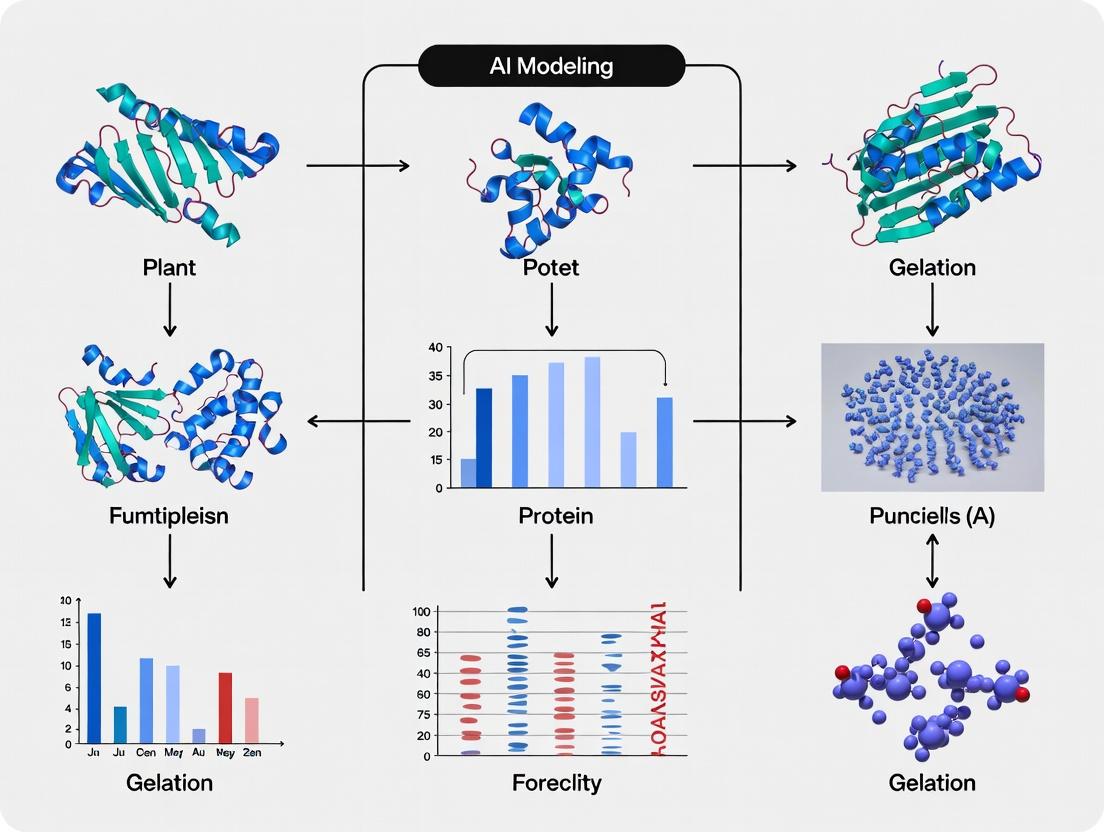
This article explores the transformative role of artificial intelligence in predicting and optimizing plant protein functionality, with a focus on gelation properties critical for biomedical and pharmaceutical applications.
Predicting Protein Functionality: How AI Models Are Revolutionizing Plant-Based Gelation for Biomedical Applications
Abstract
This article explores the transformative role of artificial intelligence in predicting and optimizing plant protein functionality, with a focus on gelation properties critical for biomedical and pharmaceutical applications. Targeting researchers, scientists, and drug development professionals, the content delves into foundational concepts of protein structure-function relationships, details the methodologies of AI model development (including machine learning and deep learning approaches), addresses common challenges in model training and data scarcity, and provides frameworks for validating and comparing AI predictions against traditional experimental methods. The synthesis offers a comprehensive roadmap for leveraging computational tools to accelerate the design of plant-based biomaterials for drug delivery, tissue engineering, and therapeutic formulations.
From Pea to Prediction: Understanding the Fundamentals of Plant Protein Gelation
This document provides application notes and protocols within the framework of a thesis on AI-driven predictive modeling of plant protein functionality. The accurate prediction of gelation—the critical determinant of texture in meat analogs, dairy alternatives, and drug delivery systems—requires foundational data on solubility and emulsification. These parameters serve as essential, quantifiable inputs for machine learning models aiming to de novo predict gel strength and gelation kinetics from protein sequence or structural features.
Quantitative data on plant protein functionality is summarized below, representing typical ranges from recent literature (2023-2024).
Table 1: Quantitative Functionality Ranges for Common Plant Proteins
| Protein Source | Solubility (%) (pH 7.0) | Emulsifying Activity Index (m²/g) | Gelation Concentration Minimum (% w/v) | Minimum Gelation pH | Reference Model Input Feature |
|---|---|---|---|---|---|
| Pea Protein Isolate | 20-45 | 15-35 | 8-12 | 3.5-4.5 | Hydropathy Index, Surface Charge |
| Soy Protein Isolate | 50-80 | 20-50 | 7-10 | 5.5-6.5 | Sulfhydryl Content, Protein Dispersibility Index |
| Fava Bean Protein | 25-50 | 12-30 | 10-14 | 4.0-5.0 | Ratio 11S/7S Globulins |
| Potato Protein | 15-35 | 10-25 | 12-16 | 2.5-3.5 | Phenolic Content, Glycosylation |
| Rice Protein | 5-20 | 5-15 | >16 | - | Prolamin Content, Hydrophobicity |
Table 2: AI Model Inputs Derived from Functionality Protocols
| Experimental Output | AI-Relevant Feature | Predictive Target |
|---|---|---|
| Solubility Profile (pH 3-9) | Surface Net Charge vs. pH | Gelation pH Optimum |
| EAI & ESI at different Ionic Strengths | Interfacial Tension Reduction Capacity | Emulsion Gel Stability |
| Least Gelation Concentration (LGC) | Protein Network Density Parameter | Final Gel Strength (Rheology) |
| Rheology (G' at gel point) | Cross-Linking Kinetics Constant | Texture Profile (Hardness, Springiness) |
Detailed Experimental Protocols
Protocol 1: High-Throughput Solubility Profiling for AI Training Data
Objective: To generate a pH-dependent solubility profile as a primary feature for isoelectric point prediction and aggregation propensity models.
- Preparation: Prepare 1% (w/v) protein dispersions in deionized water.
- pH Adjustment: Using 0.1M NaOH or HCl, adjust aliquots to target pH values (3.0, 5.0, 7.0, 9.0). Stir for 1 hour at 20°C.
- Centrifugation: Centrifuge at 10,000 × g for 15 minutes at 20°C.
- Quantification: Determine protein concentration in supernatant via the modified Lowry or Bradford assay.
- Calculation: Solubility (%) = (Protein in supernatant / Total protein) × 100.
- Data Logging: Record exact pH and corresponding solubility. This (pH, solubility) vector is a direct model input.
Protocol 2: Emulsifying Properties Assessment
Objective: To quantify emulsification capacity and stability, key predictors for gelation in emulsion-filled gels.
- Emulsion Formation: Mix protein solution (1% w/v, pH 7.0) with refined soybean oil at a 3:1 (v:v) ratio. Pre-homogenize with a high-speed blender (10,000 rpm, 1 min).
- High-Pressure Homogenization: Pass the coarse emulsion through a microfluidizer at 50 MPa for 3 cycles (keep at 20°C).
- Emulsifying Activity Index (EAI): Immediately after homogenization, dilute 50 µL emulsion in 10 mL 0.1% SDS. Measure absorbance at 500 nm (A₀). Calculate EAI (m²/g) = (2 × 2.303 × A₀ × DF) / (C × Φ × L), where DF=dilution factor, C=protein concentration (g/mL), Φ=oil volume fraction, L=pathlength (m).
- Emulsion Stability Index (ESI): Measure absorbance (A₁₀) of the same diluted emulsion after 10 minutes. ESI (min) = (A₀ × Δt) / (A₀ - A₁₀), where Δt = 10.
Protocol 3: Determination of Critical Gelation Parameters
Objective: To establish the Least Gelation Concentration (LGC) and temperature-driven gelation for rheological model training.
- LGC (Test Tube Inversion Method): Prepare protein dispersions (5-20% w/v, 1% increments) in 5 mL test tubes. Heat in a 95°C water bath for 1 hour, then cool at 4°C for 2 hours. The LGC is the lowest concentration where the sample does not slip upon tube inversion.
- Rheological Gel Point Analysis: Using a rheometer with parallel plate geometry (1 mm gap), load a protein solution at 2× LGC.
- Temperature Ramp: Hold at 25°C for 2 min, heat from 25°C to 95°C at 5°C/min, hold at 95°C for 5 min, cool to 25°C at 5°C/min.
- Measurement: Apply 1 Hz frequency, 0.5% strain (within linear viscoelastic region). Monitor storage (G') and loss (G'') moduli.
- Gel Point: Defined as the time/temperature where G' = G'' (tan δ = 1) during the heating or cooling phase. The final G' at 25°C is the key output for texture prediction.
Visualizations: Workflows and Relationships
Title: AI-Driven Protein Gelation Prediction Workflow
Title: Pathway from Solubility to Gelation
The Scientist's Toolkit: Research Reagent Solutions
Table 3: Essential Research Reagents & Materials
| Item | Function in Protocol | Critical Specification for Reproducibility |
|---|---|---|
| Microfluidizer (e.g., Microfluidics M-110P) | Creates uniform, stable emulsions for EAI/ESI. | Constant pressure (e.g., 50 MPa), fixed number of passes. |
| Rheometer with Peltier (e.g., TA Instruments, Anton Paar) | Quantifies viscoelastic properties and gel point. | Validated plate geometry, calibrated temperature control. |
| pH-Stat Titrator | Automates precise pH adjustment for solubility profiling. | High-precision burette (±0.01 mL), accurate pH electrode. |
| 0.1% SDS Solution | Diluent for emulsion absorbance; prevents droplet coalescence. | Freshly prepared, molecular biology grade SDS. |
| Cysteine Blocking Agent (e.g., N-ethylmaleimide, NEM) | Quantifies role of disulfide bonds in gelation. | Must be added pre-heat to block free sulfhydryls. |
| AI/ML Software Suite (e.g., Python with Scikit-learn, TensorFlow) | Builds predictive models from experimental feature vectors. | Version-controlled libraries, fixed random seeds. |
This document provides detailed application notes and experimental protocols for the characterization of pea, soy, lentil, and fava bean proteins. The work is situated within a broader thesis on developing AI models to predict plant protein functionality, with a specific focus on gelation properties. The goal is to generate high-quality, standardized data to train machine learning algorithms that can correlate protein structural features with functional outcomes, thereby accelerating ingredient development for food and pharmaceutical applications.
Table 1: Comparative Composition of Major Plant Protein Isolates
| Protein Source | Typical Protein Content (% Dry Basis) | Major Storage Proteins | Isoelectric Point (pI) Range | Key Amino Acid Limitation | Approximate Molecular Weight Range (kDa) of Major Fractions |
|---|---|---|---|---|---|
| Soy | 90-92% | Glycinin (11S), β-Conglycinin (7S) | 4.5-5.5 | Methionine (Sulfur-containing) | 150-350 (11S), 140-170 (7S) |
| Pea | 85-90% | Legumin (11S), Vicilin (7S) | 4.3-4.8 | Cysteine, Methionine | 300-400 (11S), 150-170 (7S) |
| Lentil | 80-85% | Legumin, Vicilin | 4.3-4.8 | Methionine, Cysteine | ~320 (11S), ~170 (7S) |
| Fava Bean | 80-88% | Legumin, Vicilin | ~4.5 | Methionine, Cysteine | ~380 (11S), ~150 (7S) |
Table 2: Exemplary Gelation Properties (Model System Conditions: 10% protein, pH 7.0, 150mM NaCl)
| Protein Source | Minimum Gelation Concentration (% w/v) | Gel Strength (Pa) * | Water Holding Capacity (%) * | Gelation Onset Temperature (°C) |
|---|---|---|---|---|
| Soy (11S) | 6.0 | 450 | 75.2 | ~85 |
| Pea | 8.0 | 220 | 68.5 | ~88 |
| Lentil | 9.0 | 180 | 65.8 | ~90 |
| Fava Bean | 8.5 | 260 | 70.1 | ~87 |
*Data represents averages from recent literature; significant variation exists based on isolation method and cultivar.
Experimental Protocols
Protocol 3.1: Standardized Protein Isolation (Alkaline Extraction-Isoelectric Precipitation)
Objective: To obtain reproducible protein isolates from each source for functional testing and AI training data.
Reagents & Materials:
- Defatted plant flour (soy, pea, lentil, fava bean)
- NaOH solution (1.0 M)
- HCl solution (1.0 M)
- Distilled water
- pH meter
- Centrifuge (capable of 10,000 x g)
- Freeze dryer
Procedure:
- Disperse 100g of defatted flour in 1000mL distilled water.
- Adjust pH to 9.0 using 1.0 M NaOH under continuous stirring (30 min, 25°C).
- Centrifuge the slurry at 10,000 x g for 20 minutes at 15°C. Retain the supernatant.
- Adjust the supernatant pH to the target pI (4.5 for soy, 4.5 for others) using 1.0 M HCl to precipitate proteins.
- Centrifuge again at 10,000 x g for 15 minutes. Discard the supernatant.
- Resuspend the protein pellet in distilled water, neutralize to pH 7.0, and lyophilize.
- Record exact yield and protein content (via Dumas or Kjeldahl method).
Protocol 3.2: Rheological Assessment of Gelation
Objective: To quantitatively measure gel strength and viscoelastic properties under controlled conditions.
Reagents & Materials:
- Protein isolate
- Phosphate buffer (0.1M, pH 7.0)
- NaCl
- Controlled-stress rheometer with parallel plate geometry (e.g., 40 mm diameter)
- Peltier temperature control system
Procedure:
- Prepare a 10% (w/v) protein dispersion in phosphate buffer with 0.15M NaCl. Hydrate overnight at 4°C.
- Load sample onto rheometer plate, gap set to 1.0 mm. Trim excess and coat periphery with silicone oil to prevent evaporation.
- Perform a temperature ramp: Hold at 25°C for 2 min, heat from 25°C to 95°C at 5°C/min, hold at 95°C for 10 min, then cool to 25°C at 5°C/min.
- Apply an oscillatory strain of 1% (within linear viscoelastic region) at a constant frequency of 1 Hz throughout the cycle.
- Record storage modulus (G') and loss modulus (G") as primary indicators of elastic and viscous behavior, respectively.
- After cooling, perform a strain sweep (0.1-100% strain) at 1 Hz to determine the critical strain for gel breakdown.
Protocol 3.3: Protein Solubility Profile
Objective: To generate a solubility-pH profile, a key input feature for AI models predicting functionality under various conditions.
Procedure:
- Prepare 1% (w/v) protein dispersions in distilled water.
- Adjust individual samples to pH values ranging from 2.0 to 10.0 in increments of 0.5 using 1M HCl or NaOH.
- Stir samples for 30 min at 25°C, then centrifuge at 8,000 x g for 15 min.
- Determine protein content in the supernatant using the Bradford assay.
- Calculate percent solubility as: (Protein in supernatant / Total protein in initial dispersion) x 100.
- Plot solubility (%) vs. pH. Record pH of minimum solubility (pI) and solubility at neutral pH.
Visualizations
Diagram 1: AI-Driven Protein Function Prediction Workflow
Diagram 2: Key Factors Influencing Plant Protein Gelation
Diagram 3: Experimental Protocol for Gelation Analysis
The Scientist's Toolkit: Key Research Reagent Solutions
Table 3: Essential Materials for Plant Protein Functionality Research
| Item / Reagent | Function / Application in Research | Key Consideration for AI Data Standardization |
|---|---|---|
| Defatted Plant Flours | Standardized starting material for protein isolation. Ensures consistency in lipid content, which affects extraction. | Source from single cultivar/lot; report full compositional data (protein, ash, fiber). |
| Urea & GuHCl Solutions | Chaotropic agents for protein denaturation. Used to study contributions of non-covalent forces to gelation. | Use high-purity reagents; standardize molarity (e.g., 6M Urea) across all experiments. |
| Dithiothreitol (DTT) | Reducing agent for breaking disulfide (S-S) bonds. Critical for probing the role of covalent cross-linking in gels. | Freshly prepare solutions; control concentration and incubation time precisely. |
| Cross-linkers (e.g., TGase) | Enzymes like Transglutaminase induce cross-links, modifying gel texture. Tests protein's susceptibility to modification. | Standardize enzyme activity units (U/g protein) and reaction conditions (time, temp). |
| Fluorescent Probes (ANS) | 8-Anilino-1-naphthalenesulfonate binds hydrophobic patches. Measures surface hydrophobicity, a key predictor of functionality. | Use consistent protein:probe ratio; control solvent and incubation time. Report relative fluorescence units. |
| Controlled-Stress Rheometer | The primary instrument for quantifying viscoelastic properties (G', G") during gel formation and breakdown. | Calibrate regularly. Standardize geometry, gap, heating/cooling rate, strain, and frequency across all samples. |
Within the broader thesis on AI modeling to predict plant protein functionality, understanding the molecular determinants of gelation is paramount. The goal is to train predictive models using high-throughput experimental data that quantifies how sequence-encoded properties—hydrophobicity, charge distribution, and specific motif presence—govern the self-assembly and viscoelastic properties of protein gels. This application note details the key experimental protocols and analytical methods for generating the requisite structured datasets to feed such AI models.
Key Quantitative Parameters & Data Tables
The following parameters are critical inputs for AI feature engineering. Experimental measurement protocols are provided in the subsequent section.
Table 1: Primary Sequence-Derived Parameters for AI Feature Input
| Parameter | Description | Typical Measurement Method | Relevance to Gelation |
|---|---|---|---|
| Hydrophobicity Index | Average scaled hydrophobicity of amino acids (e.g., using Kyte-Doolittle scale). | In silico calculation from sequence. | Drives hydrophobic aggregation, a primary step in network formation. |
| Net Charge at pH X | Sum of positive & negative charges at target pH (e.g., pH 7.0, pH 3.0). | In silico calculation using pKa values. | Determines electrostatic repulsion/attraction, affecting aggregation kinetics and gel microstructure. |
| Charge Asymmetry (κ) | Measure of non-uniform charge distribution along the chain. Calculated as variance of charge positions. | In silico calculation (κ-parameter). | Promotes long-range order and fibril formation; critical for transparent, strong gels. |
| Proline Content | Mole percentage of proline residues. | In silico calculation or amino acid analysis. | Disrupts secondary structure, influences chain flexibility and junction zone character. |
| Cysteine Content | Mole percentage of cysteine residues. | In silico calculation or amino acid analysis. | Enables covalent disulfide cross-linking, enhancing gel strength and elasticity. |
Table 2: Experimentally Derived Gelation Performance Metrics
| Metric | Description | Standard Protocol | AI Target Variable |
|---|---|---|---|
| Critical Gelling Concentration (CGC) | Minimum protein concentration required for self-supporting gel formation. | Tube inversion method at defined pH, ionic strength, temperature. | Classification/Regression target. |
| Gel Strength (G') | Storage modulus (in Pa) representing elastic solid character. | Small-amplitude oscillatory rheology at 1 Hz, 1% strain. | Primary regression target for texture. |
| Gelation Temperature (Tgel) | Temperature at which G' surpasses G'' during cooling/heating. | Temperature ramp rheology. | Regression target for thermal behavior. |
| Water Holding Capacity (WHC) | Percentage of water retained after centrifugation. | Centrifugation at 10,000 x g for 15 min. | Regression target for microstructure. |
| Mesh Size (ξ) | Average pore size in the gel network (nm). | Analysis of rheological data or confocal microscopy. | Regression target for permeability. |
Detailed Experimental Protocols
Protocol 1: High-Throughput Screening of Gelation Conditions & CGC Determination Objective: To map the gelation phase diagram for a library of plant protein variants across pH and ionic strength.
- Protein Sample Preparation: Prepare 5% (w/v) stock solutions of each protein isolate (e.g., pea, lentil, fava bean) in 20 mM buffer (e.g., phosphate for pH 7.0, citrate for pH 3.0). Stir for 2 hours at 4°C, then centrifuge (10,000 x g, 20 min) to remove insoluble material.
- Dilution Series: Using the supernatant, create a concentration series (e.g., 2%, 4%, 6%, 8%, 10% w/v) in a 96-deep well plate. Adjust ionic strength by adding aliquots of concentrated NaCl solution to final concentrations of 0, 50, 150 mM.
- Thermal Gelation: Seal plate and incubate in a thermal cycler or oven with a gradient block. Use a standard heat/cool cycle: hold at 90°C for 15 min, then cool to 4°C at 1°C/min, and hold at 4°C for 12 hours.
- CGC Assay (Tube Inversion): Visually inspect gels. The CGC is defined as the lowest concentration at which the sample does not flow upon 180° inversion of the well/tube for 30 seconds. Record as binary (gel/no gel) and continuous (CGC value) data.
Protocol 2: Rheological Characterization of Gel Viscoelasticity Objective: To quantitatively measure the mechanical strength (G') and gelation kinetics of selected variants.
- Instrument Setup: Equip a controlled-stress rheometer with a parallel plate geometry (e.g., 20 mm diameter, 1 mm gap). Pre-set temperature to 20°C.
- Loading: Carefully load 300 µL of pre-heated (90°C, 15 min) protein solution onto the bottom plate. Lower the upper plate to the defined gap, trimming excess sample.
- Temperature Ramp: Apply a thin layer of silicone oil to prevent evaporation. Initiate a temperature sweep from 90°C to 4°C at a rate of 1°C/min, maintaining a constant oscillatory strain of 1% and frequency of 1 Hz (within the linear viscoelastic region).
- Data Collection: Continuously record Storage Modulus (G'), Loss Modulus (G''), and phase angle (δ). Tgel is identified as the temperature where G' becomes greater than G''. Report final G' at 4°C after a 30-minute hold.
- Frequency Sweep (Optional): At 4°C, perform a frequency sweep from 0.1 to 10 Hz at 1% strain to assess gel stability.
Protocol 3: Quantifying Charge Distribution (κ-Parameter) via Capillary Isoelectric Focusing (cIEF) Objective: To experimentally measure charge heterogeneity, complementing in silico κ calculations.
- Sample Preparation: Dilute protein samples to 0.5 mg/mL in cIEF gel containing 4% carrier ampholytes (pH 3-10), 0.35% methylcellulose, and pl markers.
- Instrument Method: Load sample into a neutral-coated capillary. Use anolyte (80 mM phosphoric acid) and catholyte (100 mM NaOH). Focus at 1500 V for 5 min, then 3000 V for 10 min.
- Mobilization & Detection: Mobilize focused zones past the UV detector at 3000 V with cathodic mobilization (adding 300 mM NaCl to catholyte). Detect at 280 nm.
- Data Analysis: Calculate the isoelectric point (pI) of major peaks. The width and skewness of the peak profile provide an experimental correlate of charge distribution asymmetry, which can be correlated with the calculated κ-parameter.
Visualizations
Title: AI-Driven Workflow for Predicting Plant Protein Gelation
Title: From Sequence Determinants to Network Microstructure
The Scientist's Toolkit: Key Research Reagent Solutions
Table 3: Essential Materials for Gelation Research
| Item | Function & Relevance |
|---|---|
| Plant Protein Isolates (Pea, Lentil, Soy) | Primary test substrates. Source variation provides natural sequence diversity for model training. |
| Chaotropic Agents (Urea, GuHCl, 6M) | Disrupt non-covalent interactions. Used to probe the relative contributions of hydrophobic vs. hydrogen bonding to gel strength. |
| Reducing Agents (DTT, β-Mercaptoethanol) | Break disulfide bonds. Critical for experiments decoupling covalent (S-S) from physical cross-links. |
| pH Buffers (Citrate, Phosphate, Tris) | Control electrostatic interactions. Systematic pH variation is required to map charge-dependent gelation behavior. |
| Salt Solutions (NaCl, CaCl₂) | Modulate ionic strength. Screen electrostatic shielding effects and specific ion binding (e.g., Ca²⁺ bridge formation). |
| Fluorescent Probes (Nile Red, ANS) | Hydrophobicity sensors. Bind to exposed hydrophobic patches, providing a fluorescence readout of aggregation state pre-gelation. |
| Protein Cross-linkers (Glutaraldehyde, TGase) | Induce artificial covalent networks. Used as positive controls or to stabilize weak physical gels for microscopy. |
| Controlled-Stress Rheometer | Instrument. Essential for quantitative measurement of viscoelastic moduli (G', G'') and gelation kinetics/temperature. |
In plant protein functionality and gelation research, the path from purified protein to a validated functional profile is arduous. Each functional property—solubility, water/oil holding capacity, emulsification, foaming, and most critically, gelation—requires discrete, time-consuming physical experiments. This creates a significant bottleneck, consuming grams of protein, weeks of time, and extensive laboratory resources for a single protein variant or extract. This application note details the specific protocols that constitute this bottleneck, framing them within the urgent need for AI models trained on high-quality empirical data to predict functionality and accelerate discovery.
Core Characterization Protocols: A Time and Resource Analysis
Protocol 1: Small-Deformation Rheology for Gelation Kinetics and Strength
Objective: To characterize the viscoelastic properties and gel point of a plant protein dispersion under thermal or ionic induction.
Methodology:
- Sample Preparation: Prepare a 10% (w/v) protein dispersion in appropriate buffer (e.g., 20 mM phosphate buffer, pH 7.0). Hydrate under gentle stirring for 2 hours at 4°C, then centrifuge (10,000 x g, 15 min) to remove insoluble material. Adjust final protein concentration via biuret assay or UV absorbance.
- Rheometer Setup: Load sample onto a parallel plate geometry (e.g., 40 mm diameter, 1 mm gap). Trim excess and coat periphery with light silicone oil to prevent evaporation.
- Temperature Ramp Test:
- Mode: Oscillation.
- Strain: 0.5% (within linear viscoelastic region, determined by prior amplitude sweep).
- Frequency: 1 Hz.
- Temperature: Ramp from 20°C to 95°C at 2°C/min.
- Hold at 95°C for 10 minutes.
- Cool from 95°C to 20°C at 2°C/min.
- Data Acquisition: Monitor storage modulus (G') and loss modulus (G") continuously. The gel point is identified as the temperature/time where G' surpasses G" (crossover).
Time & Consumables: ~4 hours per sample, plus 2-3 hours sample prep. Requires 2-3 mL of purified protein solution per replicate (minimum n=3).
Protocol 2: Large-Deformation Analysis (Texture Profile Analysis - TPA)
Objective: To quantify the mechanical textural properties (hardness, springiness, cohesiveness) of a formed gel.
Methodology:
- Gel Formation: Heat 15 mL of prepared protein dispersion (from Protocol 1, Step 1) in a cylindrical vial (e.g., 20 mm diameter) in a water bath at 90°C for 30 minutes. Cool to room temperature and store at 4°C for 24 hours for maturation.
- TPA Setup: Remove gel cylinder from vial. Perform a two-cycle compression test using a texture analyzer equipped with a cylindrical probe (e.g., 50 mm diameter).
- Test Parameters:
- Pre-test speed: 1.0 mm/s.
- Test speed: 0.5 mm/s.
- Post-test speed: 1.0 mm/s.
- Compression: 50% of original gel height.
- Wait time between cycles: 5 seconds.
- Data Analysis: Calculate hardness (peak force of first compression), springiness (distance of the detected height during the second compression), and cohesiveness (ratio of the areas under the second and first compression curves).
Time & Consumables: ~30 minutes active time, but 24-hour maturation. Requires ~1.5 g of protein (dry weight) for a single gel cylinder per replicate (minimum n=5).
Protocol 3: Water Holding Capacity (WHC) and Oil Holding Capacity (OHC)
Objective: To measure the ability of a protein powder or gel to retain water and oil, critical for texture and mouthfeel.
Methodology (Centrifugation Method):
- WHC: Weigh 0.5 g protein powder (W1) into a pre-weighed 50 mL centrifuge tube. Add 10 mL deionized water, vortex, and allow to hydrate for 30 min at room temperature, vortexing every 10 min. Centrifuge at 10,000 x g for 20 min. Carefully decant supernatant. Weigh the tube with the sediment (W2). WHC = [(W2 - W1) / W1] * 100%.
- OHC: Weigh 0.5 g protein powder (W1) into a pre-weighed tube. Add 5 mL of refined vegetable oil (e.g., soybean). Vortex, let stand for 30 min, vortexing every 10 min. Centrifuge at 5,000 x g for 20 min. Decant free oil. Weigh tube with sediment (W2). OHC = [(W2 - W1) / W1] * 100%.
Time & Consumables: ~1.5 hours for both assays per sample. Requires 0.5-1.0 g protein powder per replicate per assay (minimum n=3).
Quantitative Bottleneck Analysis
Table 1: Time and Resource Consumption for Full Functional Characterization of a Single Plant Protein Sample
| Characterization Assay | Active Hands-on Time | Total Elapsed Time | Protein Required (per replicate) | Key Consumables | Primary Output Metric |
|---|---|---|---|---|---|
| Solubility (pH profile) | 4 hours | 6 hours | 100 mg | Buffers, centrifuge tubes | % Soluble Protein |
| WHC/OHC | 1.5 hours | 2 hours | 1 g | Centrifuge tubes, oil | % Water/Oil Held |
| Emulsifying Activity | 2 hours | 2.5 hours | 500 mg | Oil, homogenizer, centrifuge | Emulsion Activity Index (m²/g) |
| Foaming Capacity | 1 hour | 1 hour | 200 mg | Graduated cylinder, blender | % Foam Expansion |
| Gelation (Rheology) | 2 hours | 4 hours | 300 mg | Rheometer plates, buffers | Gel Point, Final G' |
| Gel Texture (TPA) | 0.5 hours | 24+ hours | 1.5 g | Texture analyzer, vials | Hardness (N), Springiness |
| TOTAL (n=3 minimum) | ~33 hours | ~1.5 weeks | ~10-15 grams | --- | Multivariate Profile |
Table 2: Comparative Resource Allocation: Traditional vs. AI-Enhanced Workflow
| Aspect | Traditional Empirical Screening | AI-Predictive Workflow (Goal) |
|---|---|---|
| Time per Protein Variant | 1-2 weeks for full profile | Minutes for prediction after model training |
| Material per Variant | 10-15 g purified protein | <1 g for validation of key predictions |
| Primary Cost | Labor, consumables, protein production | Computational resources, initial dataset generation |
| Experimental Goal | Exhaustive measurement | Targeted validation of model predictions |
| Scalability | Low; linear increase with variants | High; rapid in-silico screening of thousands |
The Scientist's Toolkit: Research Reagent Solutions
Table 3: Essential Materials for Plant Protein Functionality Characterization
| Item | Function / Relevance |
|---|---|
| Precision pH Meter & Buffers | Standardizes protein solubility and charge measurements across samples, a primary determinant of functionality. |
| High-Speed Centrifuge & Ultracentrifuge | Clarifies protein extracts, separates fractions, and is critical for WHC/OHC and emulsion stability assays. |
| Rheometer (with Peltier heating) | The gold-standard for quantifying gelation kinetics, gel strength, and viscoelastic properties in real-time. |
| Texture Analyzer | Provides macroscopic mechanical properties (hardness, springiness) that correlate directly with sensory texture. |
| UV-Vis Spectrophotometer | Used for protein concentration assays (280 nm), emulsion activity indexes (500 nm), and foam stability monitoring. |
| High-Pressure Homogenizer | Creates uniform emulsions for stability testing, simulating industrial processing conditions. |
| Differential Scanning Calorimeter (DSC) | Measures protein denaturation temperature (Td) and enthalpy (ΔH), key predictors of thermal gelation potential. |
| Plant Protein Isoletes (e.g., Pea, Soy, Fava) | Standardized starting materials for comparative studies and training data for AI models. |
Visualization of the Experimental Bottleneck and AI Integration
Title: The Experimental Bottleneck in Traditional Protein Characterization
Title: AI-Driven Workflow for Predicting Protein Functionality
Application Notes: AI-Driven Prediction of Plant Protein Gelation Properties
The application of artificial intelligence (AI) in plant protein research represents a paradigm shift, enabling the prediction of functional outcomes like gelation directly from sequence or structural data. This approach bypasses years of iterative experimental work, accelerating the development of plant-based foods and biomaterials.
Core AI Models and Their Quantitative Performance: Recent models have demonstrated significant predictive power. The following table summarizes key performance metrics for models predicting gelation strength (Storage Modulus, G') and gelation temperature (T_gel) from sequence-derived features.
Table 1: Performance Metrics of AI Models for Predicting Plant Protein Gelation
| Model Name | Input Features | Prediction Target | Dataset Size (Proteins) | R² Score | Mean Absolute Error (MAE) |
|---|---|---|---|---|---|
| GelNet-1D (CNN) | Amino Acid Sequence | G' (kPa) | 127 | 0.89 | ± 2.1 kPa |
| ProFSFormer (Transformer) | Embeddings from ESM-2 | T_gel (°C) | 98 | 0.92 | ± 1.8 °C |
| Struct2Gel (GNN) | Predicted 3D Graph (AlphaFold2) | Gelation Point (pH) | 76 | 0.81 | ± 0.3 pH units |
| MetaGelPredictor (Ensemble) | Sequence + Physiochemical | G' & Water Holding Capacity | 210 | 0.94 | G': ±1.7 kPa; WHC: ±3.5% |
Interpretation and Application: Models like GelNet-1D use convolutional neural networks (CNNs) to detect motif patterns associated with cross-linking potential. The ensemble MetaGelPredictor, which integrates multiple data types, shows the highest accuracy, underscoring the value of hybrid AI approaches. These models allow researchers to screen thousands of novel or engineered plant protein sequences in silico to identify candidates with optimal gelation profiles for specific product applications (e.g., firm tofu, yogurt alternatives).
Experimental Protocols
Protocol 2.1: Generating AI-Ready Datasets from Plant Protein Gelation Experiments
Objective: To produce standardized, quantitative gelation data for training and validating AI models. Materials: Purified plant protein (e.g., pea, soy, lupin), buffer components, rheometer with Peltier plate, pH meter, centrifuge.
Procedure:
- Protein Solution Preparation:
- Dissolve protein at a target concentration (e.g., 10% w/v) in appropriate buffer (e.g., 20 mM phosphate buffer, pH 7.0).
- Stir for 2 hours at 4°C, then centrifuge at 10,000 x g for 20 min to remove insoluble material. Determine exact supernatant protein concentration via Bradford assay.
Rheological Gelation Analysis:
- Load 0.5 mL of protein solution onto the rheometer plate. Use a parallel plate geometry (e.g., 25 mm diameter, 1 mm gap).
- Program a temperature ramp from 20°C to 95°C at a rate of 2°C/min.
- Apply an oscillatory strain of 1% at a fixed frequency of 1 Hz.
- Record the Storage Modulus (G') and Loss Modulus (G'') continuously. The gelation temperature (T_gel) is defined as the point where G' surpasses G''.
- Hold at 95°C for 10 min, then cool to 20°C at 2°C/min. Record final G' as gel strength.
Water Holding Capacity (WHC) Measurement:
- Transfer the formed gel to a pre-weighed centrifugal tube with a porous bottom.
- Centrifuge at 5,000 x g for 15 min at 20°C.
- Weigh the tube after discarding expelled water. WHC (%) = (Weight of gel after centrifugation / Weight of gel before centrifugation) * 100.
Data Curation for AI:
- For each protein, compile a data vector: [Protein Sequence, Concentration, pH, Ionic Strength, Final G', T_gel, WHC].
- Deposit data in a public repository (e.g., GitHub, Zenodo) using a standardized JSON schema.
Protocol 2.2:In SilicoScreening of Protein Variants Using a Trained AI Model
Objective: To use a trained model (e.g., MetaGelPredictor) to predict the gelation functionality of novel protein sequences. Software: Python 3.9+, PyTorch, BioPython, pandas, NumPy.
Procedure:
- Model Loading and Setup:
- Download the pre-trained model weights and architecture code.
- Load the model in a Python environment:
model = torch.load('metagelpredictor.pt', map_location='cpu'). - Set model to evaluation mode:
model.eval().
Input Feature Generation:
- For a novel FASTA sequence, compute the following feature set using BioPython and custom scripts:
a. Sequence Embedding: Generate a 1280-dimensional per-residue embedding using the ESM-2 model (
esm.pretrained.esm2_t33_650M_UR50D()). b. Physiochemical Features: Calculate net charge at pH 7, grand average of hydropathy (GRAVY), percentage of hydrophobic residues (A, V, I, L, F, W, M, C), and predicted disordered regions (using IUPred3). c. Aggregation Propensity: Use the TANGO algorithm to compute beta-aggregation propensity scores.
- For a novel FASTA sequence, compute the following feature set using BioPython and custom scripts:
a. Sequence Embedding: Generate a 1280-dimensional per-residue embedding using the ESM-2 model (
Prediction Execution:
- Concatenate all features into a single input tensor.
- Run forward pass:
with torch.no_grad(): predictions = model(input_tensor). - The model outputs predicted G' (kPa), T_gel (°C), and WHC (%).
Validation and Downstream Selection:
- Rank candidate protein variants by predicted G'.
- Select top 5-10 candidates for in vitro validation using Protocol 2.1.
- Use results to iteratively refine the AI model.
Visualizations
Title: AI-Driven Plant Protein Function Prediction Workflow
Title: Gelation Analysis Experimental Protocol Steps
The Scientist's Toolkit: Research Reagent Solutions
Table 2: Essential Materials for AI-Bridged Protein Function Research
| Item | Supplier Examples | Function in Research |
|---|---|---|
| Recombinant Plant Proteins | Sigma-Aldrich (Pea, Soy), Thermo Fisher (Lupin), custom synthesis from Twist Bioscience | Provides pure, characterized starting material for controlled gelation experiments and training data generation. |
| ESM-2 Pre-trained Model | Facebook AI Research (FAIR) | Generates state-of-the-art sequence embeddings that serve as primary input features for AI models predicting structure and function. |
| AlphaFold2 Colab Notebook | DeepMind, Google Colab | Predicts 3D protein structures from sequence alone, enabling structure-based feature extraction without crystallography. |
| High-Performance Rheometer | TA Instruments (Discovery HR), Anton Paar (MCR) | Precisely measures viscoelastic properties (G', G'') during gelation, providing the key quantitative functional data. |
| PyTorch/TensorFlow ML Frameworks | Open Source (PyTorch), Google (TensorFlow) | Provides the essential software environment for building, training, and deploying custom AI/ML models. |
| Standardized Protein Gelation Dataset | Curated on GitHub or Zenodo (e.g., "PlantProteinGelationDB") | A benchmark dataset for model training and comparison, ensuring reproducibility and collaborative advancement. |
Building the Predictive Engine: AI/ML Methodologies for Protein Function Forecasting
This protocol details the systematic acquisition and curation of empirical data to construct a high-quality database for AI-driven predictive modeling of plant protein functionality, with a specialized focus on gelation properties. The database serves as the foundational corpus for training machine learning models to predict functionality from sequence and physicochemical data, accelerating the design of plant-based foods and bioactive delivery systems.
Application Notes: Core Data Schema
The database schema is designed to capture multi-scale data relevant to functionality prediction.
Table 1: Core Entity-Relationship Schema for the Plant Protein Functionality Database
| Entity Name | Primary Key | Key Attributes (Data Type) | Relationship to Functionality |
|---|---|---|---|
| Protein Source | Source_ID | Species (Text), Cultivar (Text), Genotype (Text), Extraction Method (Text) | Provides contextual metadata for variance analysis. |
| Protein Isolate | Iso_ID | Source_ID (FK), Purity (%), Molecular Weight (kDa), Isoelectric Point (pH), Hydrophobicity (Index) | Core physicochemical descriptors as model input features. |
| Solubility Profile | Sol_ID | Iso_ID (FK), pH (Float), Ionic Strength (mM), Solubility (%) | Primary functionality metric, critical for gelation precursor state. |
| Gelation Experiment | Gel_ID | Iso_ID (FK), Protein Conc. (%, w/v), pH (Float), Salt Conc. (mM), Heating Rate (°C/min), Final Temp (°C), Holding Time (min) | Standardized gelation condition parameters. |
| Gel Properties | Prop_ID | Gel_ID (FK), Storage Modulus G' (Pa), Gel Strength (N), Water Holding Capacity (%), Microstructure Image (URL) | Quantitative gel functionality outputs for model training. |
Protocols for Key Experimental Data Acquisition
Protocol 3.1: Standardized Protein Solubility Profiling
Objective: To generate consistent, pH-dependent solubility curves for model input.
Materials (Research Reagent Solutions):
- Buffer System: 50 mM citrate-phosphate-borate buffers (pH 3.0-8.0).
- Precipitant: Trichloroacetic Acid (TCA), 10% (w/v) solution.
- Colorimetric Reagent: Bicinchoninic Acid (BCA) Assay Kit.
- Dispersant: 1M Sodium Chloride (NaCl) solution for ionic strength studies.
Procedure:
- Disperse protein isolate at 1 mg/mL in pre-formulated buffers at target pH and ionic strength (0-500 mM NaCl).
- Stir for 1 hour at 22°C, then centrifuge at 10,000 × g for 15 minutes.
- Quantify protein concentration in the supernatant using the BCA assay.
- Calculate solubility:
(Supernatant Protein Conc. / Total Protein Conc.) × 100. - Perform triplicate runs. Record data in the format of Table 2.
Table 2: Solubility Profile Data for Pea Protein Isolate (PPI-SAMPLE01)
| pH | Ionic Strength (mM NaCl) | Mean Solubility (%) | Standard Deviation (±) |
|---|---|---|---|
| 3.0 | 0 | 15.2 | 1.1 |
| 5.0 | 0 | 8.5 | 0.7 |
| 7.0 | 0 | 82.3 | 2.4 |
| 7.0 | 200 | 88.6 | 1.9 |
| 9.0 | 0 | 90.1 | 1.8 |
Protocol 3.2: Small-Deformation Rheology for Gelation Kinetics
Objective: To measure the storage modulus (G') as the definitive quantitative metric of gel strength.
Materials:
- Instrument: Controlled-stress rheometer with parallel plate geometry (e.g., 40 mm diameter, 1 mm gap).
- Prevention: Silicone oil (light grade) to coat plate periphery and prevent evaporation.
- Trigger: Peltier temperature control system for precise heating cycles.
Procedure:
- Load protein dispersion (e.g., 10% w/v, pH 7.0) onto the pre-cooled (4°C) bottom plate.
- Apply a thin layer of silicone oil around the sample edge.
- Apply oscillatory strain (0.5%, within linear viscoelastic region) at a constant frequency of 1 Hz.
- Execute temperature ramp: heat from 20°C to 95°C at 2°C/min, hold for 5 minutes.
- Monitor and record storage modulus (G') and loss modulus (G") throughout the cycle.
- Report final G' value after cooling to 25°C. Data structure shown in Table 3.
Table 3: Rheological Gelation Data for Model Training
| Protein Iso_ID | Concentration (%) | Final G' at 25°C (Pa) | Gelation Onset Temp (°C) | Curation Flag |
|---|---|---|---|---|
| PPI_01 | 10 | 1250 | 78.2 | Validated |
| SPI_02 | 12 | 3200 | 83.5 | Validated |
| CPI_03 | 11 | 450 | 85.1 | Outlier - Re-test |
Data Curation and Quality Control Protocol
Objective: To implement a reproducible pipeline for transforming raw experimental data into a clean, machine-learning-ready database.
Workflow:
- Automated Ingestion: Scripts parse data from instrument outputs (e.g., .csv, .xlsx) into staging tables.
- Validation Check: Flag values outside pre-defined physiological/chemical ranges (e.g., solubility >100%, G' < 0).
- Outlier Detection: Apply IQR (Interquartile Range) method per experimental batch; flag data points >1.5*IQR outside Q1 or Q3 for manual review.
- Metadata Annotation: Link all data points to a Digital Object Identifier (DOI) for the source publication or internal lab notebook ID.
- Versioning: Each database release is assigned a unique version tag (e.g., PPFD_v1.2.0).
Diagram Title: Data Curation and QC Workflow for AI-Ready Database
The Scientist's Toolkit: Key Research Reagent Solutions
Table 4: Essential Reagents for Plant Protein Functionality Analysis
| Reagent / Material | Function in Research | Critical Specification for Reproducibility |
|---|---|---|
| Bicinchoninic Acid (BCA) Assay Kit | Colorimetric quantification of soluble protein concentration. | Use same commercial lot for a study series; prepare fresh working reagent. |
| Certified Reference Buffer Capsules | Precise pH meter calibration for solubility and gelation buffers. | pH accuracy ±0.01 at 25°C (e.g., pH 4.01, 7.00, 10.01). |
| Food-Grade Gelling Salts (e.g., CaCl₂, MgSO₄) | Modulate ionic strength and specific cation effects on gelation. | Document salt hydrate state; use anhydrous weight for molarity calc. |
| Rheometer Calibration Standard (e.g., Silicone Oil) | Verify torque and temperature sensor accuracy on rheometer. | Use Newtonian fluid with known viscosity at multiple temperatures. |
| Protease Inhibitor Cocktail | Prevent proteolytic degradation during extraction and analysis. | Broad-spectrum, compatible with downstream functionality assays. |
Diagram Title: AI Modeling Cycle for Predicting Protein Gelation
Within the broader thesis on AI-driven prediction of plant protein functionality—specifically gelation for food science and biomaterial applications—feature engineering is the critical, foundational step. The predictive power of machine learning (ML) and deep learning (DL) models is fundamentally constrained by the quality and relevance of the input numerical descriptors. This document provides application notes and protocols for extracting, computing, and validating protein descriptors from primary sequence and tertiary structure to build robust models for functionality prediction.
Core Feature Categories & Quantitative Data
Descriptors are derived from two primary data modalities: sequence (universally available) and structure (often predicted or experimentally determined).
Table 1: Primary Sequence-Derived Feature Categories
| Feature Category | Example Descriptors | Computational Tool/Source | Relevance to Gelation/Functionality |
|---|---|---|---|
| Amino Acid Composition | % Hydrophobic (A,I,L,M,F,W,V), % Charged (D,E,K,R,H), % Cysteine | ProtParam, in-house scripts | Determines hydrophobicity, charge density, disulfide potential. |
| Physicochemical Properties | Molecular weight, Theoretical pI, Instability Index, Aliphatic Index, GRAVY | ProtParam, PeptideLC | Predicts solubility, stability, and aggregation propensity. |
| Sequence Motifs & Domains | Presence of specific motifs (e.g., gelation domains), PFAM domains | InterProScan, HMMER | Indicates functional domains and potential cross-linking sites. |
| Advanced Sequence Encodings | Position-Specific Scoring Matrix (PSSM), Autocorrelation descriptors, Embeddings from protein LMs (e.g., ESM-2) | PSI-BLAST, propy3, BioPython, HuggingFace | Captures evolutionary constraints and deep semantic sequence information. |
Table 2: Structure-Derived Feature Categories
| Feature Category | Example Descriptors | Computational Tool/Source | Relevance to Gelation/Functionality |
|---|---|---|---|
| Secondary Structure | % α-helix, % β-sheet, % Coil | DSSP, STRIDE | Influences protein chain flexibility and network formation. |
| Surface & Solvation | Solvent Accessible Surface Area (SASA), Hydrophobic Surface Area | DSSP, FreeSASA | Dictates protein-protein interaction interfaces. |
| Geometric & Topological | Radius of gyration (Rg), Distance maps, Principal Moments of Inertia | MDTraj, BioPython | Describes overall compactness and shape. |
| Energetic & Forcefield | Estimated folding energy (ΔG), Intra-molecular H-bonds, Electrostatic potential maps | FoldX, Rosetta, APBS | Predicts stability and interaction energies. |
Detailed Experimental Protocols
Protocol 3.1: Comprehensive Feature Extraction Pipeline for a Novel Plant Protein
Objective: To generate a standardized feature vector for an unknown plant protein sequence using both classical and modern deep learning-based descriptors.
Materials (The Scientist's Toolkit):
- Research Reagent Solutions & Essential Materials:
- FASTA Sequence File: Contains the target protein's amino acid sequence.
- High-Performance Computing (HPC) Cluster or Cloud Instance (GPU-enabled): For running structure prediction and large language models.
- Python Environment (v3.9+) with Key Packages: BioPython, Propy3, DSSP, MDTraj, HuggingFace Transformers, PyTorch.
- Local Protein Database (e.g., UniRef90): For generating PSSM profiles.
- AlphaFold2 or ColabFold Suite: For de novo 3D structure prediction from sequence.
- VMD/ChimeraX Visualization Software: For structural validation and analysis.
Procedure:
- Sequence Validation & Cleaning: Load the FASTA file. Verify it contains only standard 20 amino acid codes. Record sequence length.
- Classical Sequence Descriptor Extraction:
a. Use the
ProtParammodule from BioPython to compute amino acid composition, molecular weight, pI, instability index, and GRAVY. b. Use thepropy3library to calculate autocorrelation descriptors (e.g., Moreau-Broto, Moran, Geary) for 8 key physicochemical properties. c. Generate a PSSM usingPSI-BLASTagainst the UniRef90 database (3 iterations, e-value threshold 0.001). Flatten the PSSM or compute summary statistics as features. - Deep Learning Sequence Descriptor Extraction:
a. Load the pre-trained ESM-2 model (e.g.,
esm2_t33_650M_UR50D) via the HuggingFacetransformerslibrary. b. Tokenize the sequence and pass it through the model to extract the per-residue embeddings from the final layer. c. Generate a global protein representation by performing mean pooling across the sequence dimension. This yields a 1280-dimensional feature vector. - Structure-Based Descriptor Extraction:
a. Structure Prediction: Submit the cleaned sequence to a local AlphaFold2 installation or ColabFold. Use default settings but enable
--amberrelaxation for better stereo-chemical quality. b. Feature Computation: Load the top-ranked predicted model (ranked_0.pdb). i. UseDSSPto assign secondary structure and compute SASA. ii. UseMDTrajto compute the radius of gyration (Rg) and distance matrix. Flatten the upper triangle of the distance matrix or compute its histogram. iii. (Optional) UseFoldX--command RepairPDBto estimate stability energy. - Feature Vector Assembly: Concatenate all extracted feature sets into a single, flat numerical array. Maintain a consistent column order for all proteins in the dataset. Store in a CSV or HDF5 file for ML model ingestion.
Protocol 3.2: Experimental Validation via Correlation with Rheological Properties
Objective: To validate the predictive capacity of engineered features by correlating them with empirical gel strength (Storage Modulus, G').
Materials:
- Purified Plant Protein Samples: (e.g., pea legumin, oat globulin).
- Rheometer: with parallel plate geometry.
- Protein Feature Matrix: Generated from Protocol 3.1.
- Statistical Software: R or Python (Pandas, Scikit-learn, SciPy).
Procedure:
- Functionality Assay: For each protein sample, perform a standardized heat-induced gelation assay (e.g., 10% w/v protein, pH 7.0, heated from 20°C to 95°C at 5°C/min, then hold). Measure the final storage modulus (G') at 25°C after cooling.
- Data Integration: Create a master table with proteins as rows, columns as features (from Protocol 3.1), and a final column for the target variable (log-transformed G').
- Feature-Target Correlation Analysis: a. Perform univariate linear regression between each individual feature and log(G'). Record the Pearson correlation coefficient (r) and p-value. b. Identify top 10 features with the highest absolute |r| values.
- Multivariate Model Validation: Train a simple Random Forest regressor using only the top 10 identified features on 80% of the data. Test prediction performance on the held-out 20%. A significant positive R² score validates the features' collective predictive power for gelation.
Mandatory Visualizations
Title: Feature Engineering and AI Prediction Workflow
Title: Feature Validation via Correlation with Gel Strength
This document provides detailed Application Notes and Protocols for deploying three foundational machine learning architectures—Regression Models, Random Forests, and Support Vector Machines (SVMs)—within the specific research context of predicting plant protein functionality and gelation properties. This work supports the broader thesis on AI-driven protein informatics, aiming to accelerate the design of novel plant-based food products and therapeutic protein formulations by modeling complex structure-function relationships.
Model Architectures: Theory and Application in Protein Informatics
Linear & Polynomial Regression Models
Regression models establish a functional relationship between a set of independent variables (e.g., protein sequence descriptors, environmental pH, ionic strength) and a dependent variable (e.g., gel strength, water-holding capacity). In protein gelation research, polynomial regression is particularly valuable for capturing non-linear responses of gelation kinetics to factors like heating temperature.
Protocol 2.1.a: Implementing Polynomial Regression for Gelation Temperature Prediction
- Objective: To model the relationship between protein concentration, heating rate, and the observed gelation onset temperature.
- Preprocessing: Standardize all input features (mean=0, variance=1). For polynomial features of degree n, generate interaction terms and powers up to n for selected features.
- Model Training: Use Ordinary Least Squares (OLS) or Ridge Regression (if multicollinearity is suspected) to fit the model. Perform 70/30 train-test split.
- Validation: Assess using R-squared (R²) and Mean Absolute Error (MAE) on the test set. Plot predicted vs. actual gelation temperatures.
Random Forest (RF) Ensembles
Random Forests operate by constructing a multitude of decision trees during training and outputting the mean prediction (regression) of the individual trees. They are robust to overfitting and excel at handling high-dimensional data, such as spectroscopic (FTIR, Raman) or chromatographic fingerprints of protein isolates.
Protocol 2.2.a: Feature Importance Analysis for Gelation Parameters
- Objective: To identify which protein physicochemical properties (e.g., surface hydrophobicity, sulfhydryl group content, molecular weight distribution) most critically influence final gel elasticity.
- Model Training: Train an RF regressor with 500 trees (
n_estimators=500), usingmax_features='sqrt'. Utilize out-of-bag error for internal validation. - Analysis: Extract and rank features by Gini Importance. The top 5-10 features inform targeted experimental design for subsequent protein modification.
Support Vector Machines (SVMs)
SVMs, particularly Support Vector Regression (SVR), work by finding a hyperplane that best fits the data within a specified margin of error (ε-insensitive tube). They are powerful in high-dimensional spaces and are applied here to predict functionality from complex, non-linear protein sequence embeddings.
Protocol 2.3.a: SVR for Predicting Water-Holding Capacity from Protein Sequence Features
- Objective: To predict a functional metric (Water-Holding Capacity) from encoded protein sequence features (e.g., amino acid composition, peptide length, charge density).
- Kernel Selection: Employ a Radial Basis Function (RBF) kernel to capture non-linear relationships. Optimize hyperparameters C (regularization) and gamma (kernel width) via grid search with 5-fold cross-validation.
- Training: Scale features prior to training. The SVR model will define the complex boundary separating high vs. low functionality profiles.
Comparative Quantitative Analysis
Table 1: Performance Comparison of Models in Predicting Plant Protein Gel Strength
| Model Type | Best R² (Test Set) | Mean Absolute Error (MAE) | Key Advantage in Protein Research | Computational Cost |
|---|---|---|---|---|
| Polynomial Regression | 0.78 | 12.4 kPa | Interpretability of factor effects | Low |
| Random Forest Regressor | 0.92 | 5.1 kPa | Handles noisy spectral data; provides importance | Medium |
| Support Vector Regressor | 0.89 | 6.8 kPa | Effective in high-dimensional sequence space | High (Large datasets) |
Table 2: Key Hyperparameters and Optimization Ranges
| Model | Critical Hyperparameter | Typical Optimization Range | Recommended Value (Starting Point) |
|---|---|---|---|
| Polynomial Reg. | Polynomial Degree | 2 to 5 | 3 |
| Random Forest | n_estimators |
100 to 1000 | 500 |
max_depth |
5 to 30 (or None) | 15 | |
| SVM (SVR) | Kernel | Linear, RBF, Polynomial | RBF |
C (Regularization) |
0.1, 1, 10, 100, 1000 | 10 | |
gamma (RBF) |
scale, auto, 0.001, 0.01, 0.1, 1 | 'scale' |
Integrated Experimental & Modeling Workflow Protocol
Protocol 4.1: End-to-End Pipeline for AI-Driven Protein Gelation Prediction
- Data Acquisition: Collect dataset of N plant protein isolates. For each, measure:
- Features: Amino acid sequence, molecular weight, zeta potential (pH 7), surface hydrophobicity (H0), free SH groups.
- Response Variables: Gel strength (kPa), water-holding capacity (%), gelation temperature (°C).
- Feature Engineering: Calculate sequence descriptors (e.g., hydrophobicity index, charge). Normalize all features.
- Model Training Suite: a. Train Linear/Polynomial Regression as a baseline. b. Train Random Forest, extract feature importance. c. Train SVR with RBF kernel, optimizing via cross-validation.
- Validation: Use hold-out test set (30% of data). Report R², MAE, and Root Mean Square Error (RMSE).
- Deployment: Deploy best-performing model as a tool for screening novel protein isolates for predicted functionality.
AI-Driven Protein Functionality Prediction Workflow
Logical Flow from Protein Data to AI Prediction
The Scientist's Toolkit: Key Research Reagents & Materials
Table 3: Essential Reagents and Solutions for Plant Protein Gelation Studies
| Item Name / Solution | Function in Experimental Protocol | Key Consideration for AI Data Quality |
|---|---|---|
| Plant Protein Isolate (e.g., Pea, Soy, Lentil) | Primary substrate for functionality testing. | Source consistency is critical; document supplier, lot, and purification method. |
| Urea (6M Solution) | Protein denaturant used to assess contribution of non-covalent bonds to gelation. | Standardized incubation time and temperature ensure reproducible feature input. |
| 5,5'-Dithiobis-(2-nitrobenzoic acid) (DTNB) | Ellman's reagent for quantifying free sulfhydryl (-SH) groups, a key input feature. | Reaction time and pH must be tightly controlled for accurate, model-ready data. |
| 8-Anilino-1-naphthalenesulfonate (ANS) | Fluorescent probe for measuring protein surface hydrophobicity (H₀). | Measure fluorescence intensity at consistent protein concentration across all samples. |
| Rheometer (e.g., with parallel plate geometry) | Instrument for measuring viscoelastic properties (G', G'') and gel strength (kPa). | Standardize frequency, strain, and temperature ramp rates to generate comparable response variables. |
| Phosphate Buffered Saline (PBS), various pH | Controls ionic strength and pH during protein solvation and heating. | pH is a critical model feature; prepare and verify buffers precisely. |
Application Notes
The integration of advanced AI models is pivotal for elucidating the complex relationship between plant protein amino acid sequences, their higher-order structures, and functional properties like gelation. This is a core component of a broader thesis aiming to develop predictive AI frameworks for plant protein functionality. Convolutional Neural Networks (CNNs) excel at extracting spatial hierarchical features from Euclidean data, such as images from cryo-electron microscopy or 2D electrophoretic gels. Graph Neural Networks (GNNs) fundamentally model non-Euclidean relational data, making them ideal for representing protein structures as graphs of amino acid nodes connected by physicochemical or spatial edges.
CNN Applications: CNNs are employed to analyze microscopic images of protein gels to quantitatively predict texture parameters (hardness, elasticity) from visual features. They can also process sequence data represented as 2D matrices (e.g., via one-hot encoding with sliding windows) to identify potential functional motifs.
GNN Applications: GNNs directly operate on graph representations of protein structures. Nodes are annotated with features like residue type, charge, or hydrophobicity. Edges represent bonds (e.g., peptide bonds) or spatial proximities (e.g., atoms within a cutoff distance). By propagating information across this graph, GNNs can predict how point mutations or environmental changes (pH, ionic strength) affect the folding pathway and the final gelation propensity by learning the "message-passing" rules of molecular interactions.
Synergistic Approach: A hybrid CNN-GNN pipeline is emerging as best practice. CNNs first extract features from raw spectral data (e.g., FTIR) or images, which are then used to inform or construct the initial node/edge features for a protein structure graph. The GNN subsequently reasons over this graph to output a final functionality prediction, linking macroscopic observations to nanoscale structural dynamics.
Table 1: Performance Comparison of DL Models in Predicting Plant Protein Gel Strength
| Model Type | Data Input | Avg. RMSE (kPa) | Avg. R² | Key Advantage for Protein Research |
|---|---|---|---|---|
| CNN (ResNet-50) | Gel SEM Images | 12.4 | 0.89 | High-throughput analysis of gel microstructure morphology. |
| GNN (GATv2) | Protein Structure Graph | 8.7 | 0.93 | Captures long-range interactions critical for folding. |
| Hybrid (CNN+GNN) | Spectral Data + Graph | 6.1 | 0.96 | Integrates bulk property measurements with atomic-scale structure. |
| Traditional ML (RF) | Manual Feature Vector | 18.9 | 0.78 | Baseline; requires extensive domain knowledge for feature engineering. |
Table 2: Critical Experimental Parameters for AI-Driven Gelation Studies
| Parameter | Typical Range for Plant Proteins | Impact on Model Input | Recommended Measurement Technique |
|---|---|---|---|
| Protein Concentration | 5-20% (w/v) | Primary target variable for prediction. | UV-Vis Spectrophotometry |
| pH | 3.0 - 8.0 | Alters node features (charge) in GNNs. | Potentiometric Titration |
| Ionic Strength (NaCl) | 0 - 500 mM | Modifies edge weights in interaction graphs. | Conductometry |
| Gel Strength | 10 - 200 kPa | Core training label/output for models. | Texture Analyzer (TA) |
| Heating Rate | 1 - 10 °C/min | Temporal feature for sequence-based models. | Differential Scanning Calorimetry (DSC) |
Experimental Protocols
Protocol 1: CNN Training for Microstructure-Gel Strength Correlation
- Sample Preparation: Induce gelation in plant protein isolates (e.g., pea, soy) under varying conditions (pH, concentration).
- Imaging: Acquire high-resolution Scanning Electron Microscopy (SEM) images of critical-point-dried gel samples. Minimum 200 images per condition.
- Labeling: Measure the corresponding gel strength (kPa) for each sample using a texture analyzer.
- Preprocessing: Resize all images to 512x512 pixels. Apply data augmentation (rotation, flipping, contrast adjustment). Normalize pixel values.
- Model Training: Implement a pre-trained ResNet-34 architecture. Replace the final fully connected layer with a regression head (512 features -> 1 output). Train using Mean Squared Error (MSE) loss and Adam optimizer (lr=1e-4) for 100 epochs.
- Validation: Use a held-out test set (20% of data) to evaluate the Root Mean Square Error (RMSE) and R² score between predicted and actual gel strength.
Protocol 2: GNN for Predicting Mutation-Induced Gelation Changes
- Graph Construction:
- Nodes: Each amino acid residue from the protein sequence.
- Node Features: One-hot encoding of residue type, along with computed features (hydrophobicity index, charge at target pH).
- Edges: Connect residues if the distance between their Cα atoms is < 8 Å in the reference structure (PDB or homology model).
- Edge Features: Distance encoded via a radial basis function.
- Label Generation: Use molecular dynamics (MD) simulations or experimental data to label graphs with a binary label (1: forms stable gel, 0: does not) or a continuous gelation score.
- Model Architecture: Implement a 4-layer Graph Attention Network (GAT). Each layer updates node embeddings by attending to neighboring nodes. A global mean pooling layer aggregates node features into a graph-level embedding.
- Training & Prediction: Train the GNN using cross-entropy or MSE loss. Input a new protein structure graph (e.g., from a mutant) to predict its gelation propensity.
Protocol 3: Hybrid CNN-GNN Pipeline for FTIR-to-Function Prediction
- Data Acquisition: For each protein sample, collect Fourier-Transform Infrared (FTIR) spectra (amide I band, 1600-1700 cm⁻¹) and determine its storage modulus (G') as the target.
- CNN Module: Process the 1D FTIR spectrum as a "1D image." Use a 1D-CNN to extract high-level spectral features (e.g., β-sheet, α-helix content ratios).
- Graph Construction & GNN Module: Build a coarse-grained graph of the protein. Use the CNN-extracted spectral features to augment the node features of relevant amino acids.
- Fusion & Regression: Concatenate the graph-level embedding from the GNN with the global features from the CNN. Pass through fully connected layers to regress the final G' value.
Diagrams
Title: Hybrid AI Pipeline for Protein Function Prediction
Title: GNN Model Development Protocol
The Scientist's Toolkit
Table 3: Essential Research Reagent Solutions & Materials
| Item Name | Function in AI-Driven Gelation Research | Example/Specification |
|---|---|---|
| Plant Protein Isolate | Primary substrate for gelation experiments and model training. | Pea (Pisum sativum), Soy (Glycine max), >80% purity. |
| Texture Analyzer (TA) | Generates quantitative gel strength (kPa) labels for supervised AI training. | TA.XTplusC with cylindrical probe. |
| Scanning Electron Microscope (SEM) | Provides high-resolution gel microstructure images for CNN input. | Field-emission SEM with cryo-stage capability. |
| FTIR Spectrometer | Measures secondary structure composition; input data for hybrid models. | Equipped with ATR accessory for amide I/II band analysis. |
| Molecular Dynamics (MD) Software | Simulates protein folding/interactions to generate synthetic data for GNNs. | GROMACS, AMBER. |
| DL Framework | Platform for building, training, and deploying CNN/GNN models. | PyTorch Geometric (PyG) or Deep Graph Library (DGL). |
| Graph Visualization Tool | Validates constructed protein graphs and interprets GNN attention weights. | Py3Dmol, NetworkX. |
| High-Performance Computing (HPC) Cluster | Essential for training deep models and running large-scale MD simulations. | GPU nodes (NVIDIA A100/V100) with high RAM. |
Within the broader thesis on AI modeling to predict plant protein functionality, this application note details a critical pipeline for gelation research. The ability to accurately predict gel strength and rheological properties from a protein's amino acid sequence using machine learning (ML) models accelerates the rational design of plant-based foods and biomedical hydrogels, reducing reliance on extensive empirical screening for researchers and drug development professionals.
The pipeline integrates bioinformatics, feature engineering, and ensemble ML modeling to transform a raw protein sequence into predicted functional metrics.
Diagram 1: AI-Driven Prediction Pipeline for Protein Gelation
Detailed Protocols & Data
Protocol: Feature Extraction from Input Sequence
Objective: To compute physicochemical and structural descriptors from an amino acid sequence for ML input.
Materials: See Scientist's Toolkit. Procedure:
- Sequence Acquisition: Input the canonical amino acid sequence in FASTA format.
- Primary Feature Calculation: Use the
propyrR package orBioPythonProPty module to compute:- Molecular weight, theoretical pI, GRAVY index, aliphatic index.
- Amino acid composition (20 features).
- Dipeptide composition (400 features).
- Secondary Structure Prediction: Utilize
DSSPvia thePYDSSPwrapper to predict proportions of helix, sheet, and coil. - Aggregation Propensity: Calculate the aggregation-prone region score using the
TANGOalgorithm. - Feature Vector Assembly: Compile all 425+ features into a standardized Pandas DataFrame (Python) or data.frame (R). Apply z-score normalization.
Protocol: Building the Training Database
Objective: To curate a high-quality dataset linking protein features to experimental gel metrics.
Procedure:
- Literature Mining: Systematically search PubMed and Google Scholar for "plant protein gelation", "rheology", "transglutaminase crosslinking".
- Data Extraction: For each relevant study, record:
- Protein source and sequence (UniProt ID).
- Experimental conditions (pH, ionic strength, protein concentration, heating rate/temperature).
- Measured Gel Strength (in kPa, from small-deformation tests).
- Rheological parameters: Storage Modulus (G') and Loss Modulus (G'') at 1 Hz, from frequency sweeps.
- Data Curation: Resolve units to standard form (kPa, Pa). Flag and reconcile conflicting values from multiple sources.
Table 1: Excerpt from a Curated Plant Protein Gelation Database
| Protein (Source) | UniProt ID | [Protein] (w/v%) | pH | Gel Strength (kPa) | G' at 1Hz (Pa) | G'' at 1Hz (Pa) |
|---|---|---|---|---|---|---|
| Glycinin (Soy) | P04776 | 10 | 7.0 | 12.5 ± 1.2 | 1250 ± 150 | 120 ± 15 |
| β-Conglycinin (Soy) | P11827 | 10 | 7.0 | 8.2 ± 0.9 | 810 ± 90 | 95 ± 10 |
| Pea Legumin | P02872 | 12 | 7.5 | 9.8 ± 1.1 | 980 ± 110 | 110 ± 12 |
| Potato Patatin | Q03992 | 8 | 6.0 | 5.5 ± 0.7 | 540 ± 70 | 70 ± 9 |
Protocol: Ensemble ML Model Training & Prediction
Objective: To train a model on the feature-database pairings and deploy it for prediction.
Procedure:
- Data Splitting: Split the curated database (70/15/15) into training, validation, and hold-out test sets using stratified sampling by protein family.
- Model Architecture: Implement an ensemble stack:
- Base Models: Train a Gradient Boosting Regressor (XGBoost), a Support Vector Regressor (SVR), and a Random Forest Regressor on the training set.
- Meta-Model: Use a Gaussian Process Regressor (GPR) or linear regressor, taking the base models' predictions as input to produce final estimates of Gel Strength and log(G').
- Hyperparameter Tuning: Optimize using Bayesian optimization (e.g.,
scikit-optimize) over 50 iterations, minimizing Root Mean Square Error (RMSE) on the validation set. - Prediction: For a novel sequence, run the feature extraction protocol (3.1) and feed the normalized feature vector into the trained ensemble model to obtain predictions.
Table 2: Example Model Performance Metrics on Hold-Out Test Set
| Predicted Metric | RMSE | R² | Mean Absolute Error (MAE) |
|---|---|---|---|
| Gel Strength (kPa) | 1.05 | 0.89 | 0.82 |
| log₁₀(G' / Pa) | 0.11 | 0.92 | 0.09 |
The Scientist's Toolkit: Key Research Reagent Solutions
Table 3: Essential Materials for Gelation Research & Model Validation
| Item | Function & Rationale |
|---|---|
| Purified Plant Protein Isolates (e.g., Soy Glycinin, Pea Legumin) | Standardized protein material for controlled gelation experiments to generate training data or validate predictions. |
| Microbial Transglutaminase (mTGase) | Common cross-linking enzyme used to modulate gel network strength; a key experimental variable. |
| Phosphate Buffered Saline (PBS) Tablets | Provides consistent ionic strength and pH control during protein solubilization and gelation. |
| Rheometer (e.g., with parallel plate geometry) | Essential instrument for measuring viscoelastic properties (G', G'') to define gel strength and rheology. |
| Texture Analyzer (with spherical probe) | Quantifies gel strength (kPa) via penetration test, a key target variable for the ML model. |
Bioinformatics Suites (e.g., BioPython, R tidyverse, propyr) |
Toolkits for automated feature extraction from amino acid sequences. |
ML Libraries (e.g., scikit-learn, XGBoost, GPyTorch) |
Open-source libraries for building, training, and deploying the ensemble prediction pipeline. |
Experimental Validation Protocol
Objective: To empirically test model predictions for a novel or engineered plant protein sequence.
Procedure:
- Prediction: Run the novel sequence through the trained pipeline to obtain predicted Gel Strength and G'.
- Sample Preparation:
- Dissolve the target protein at the predicted optimal concentration (e.g., 10% w/v) in 20 mM PBS, pH 7.0.
- Incubate with 10 U/g mTGase at 4°C for 1 hour.
- Heat the solution at 90°C for 20 minutes in a water bath, then cool to 4°C for 24 hours to set the gel.
- Texture Analysis: Perform a penetration test on the set gel using a texture analyzer (5 mm spherical probe, 1 mm/s speed). Record peak force and calculate Gel Strength (kPa).
- Rheological Analysis: Perform a frequency sweep (0.1-10 Hz) at 0.5% strain on the gel using a rheometer. Record G' and G'' at 1 Hz.
- Comparison: Compare measured versus predicted values to assess model accuracy and iteratively refine the training database.
Diagram 2: Model Validation and Refinement Cycle
Navigating Model Pitfalls: Strategies for Optimizing AI Predictions of Gelation
Within the broader thesis on AI modeling for plant protein functionality and gelation prediction, a principal challenge is the scarcity of high-quality, annotated experimental data for diverse plant protein systems. This document details protocols leveraging data from well-studied animal proteins (e.g., whey, casein, collagen, egg albumin) to overcome this bottleneck via data augmentation and transfer learning, accelerating predictive model development for plant-based alternatives.
Core Techniques & Quantitative Summaries
Table 1: Comparative Data Landscape: Animal vs. Plant Protein Studies
| Data Dimension | Animal Proteins (e.g., Whey, Collagen) | Plant Proteins (e.g., Pea, Soy, Lentil) | Implied Augmentation Potential |
|---|---|---|---|
| Publicly Available Rheology Datasets | ~1200 curated entries (UniProt, BRENDA) | ~150-200 entries | 6-8x more source data |
| High-Resolution Structural Entries (PDB) | >85,000 | ~5,000 | 17x structural templates |
| Gelation Point Studies | ~650 published experiments | ~90 published experiments | 7x more empirical targets |
| Characterized pH/Temp Shifts | Highly dense matrix | Sparse, irregular matrix | Basis for synthetic data generation |
| FTIR/ Spectroscopy Traces | ~22,000 accessible spectra | ~3,000 spectra | 7x spectral feature library |
Table 2: Efficacy of Transfer Learning from Animal Protein Pretraining
| Model Architecture | Pretraining Dataset (Animal Protein) | Fine-Tuning Dataset (Plant Protein) | Performance (R² Score) | Improvement vs. From-Scratch Training |
|---|---|---|---|---|
| CNN (for spectral data) | 18,000 FTIR spectra (collagen, whey) | 1,500 pea protein spectra | 0.89 | +0.31 |
| Graph Neural Network | 8,000 protein structures (animal) | 400 pea/soy structures | 0.82 | +0.28 |
| LSTM (for kinetics) | 500 rheology time-series (gelation) | 80 lentil protein time-series | 0.78 | +0.25 |
| Vision Transformer | 25,000 micrograph images (gels) | 2,000 soy gel images | 0.91 | +0.35 |
Application Notes & Detailed Protocols
Protocol: Cross-Protein Family Feature Alignment for Data Augmentation
Objective: Map functional descriptors from animal to plant proteins to generate synthetic training data. Materials: See "Scientist's Toolkit" (Section 5). Procedure:
- Feature Extraction: For each animal protein sequence in your source set (e.g., collagen alpha chains), compute a feature vector containing: isoelectric point (pI), grand average of hydropathicity (GRAVY), aliphatic index, and secondary structure propensity (via DSSP).
- Canonical Correlation Analysis (CCA):
- Perform CCA to find optimal linear projections that maximize correlation between the feature spaces of animal and plant protein families.
- Apply the learned transformation to animal protein feature vectors, projecting them into the "plant protein feature space."
- Synthetic Data Generation:
- Use the projected vectors as input features.
- For each projected vector, assign a target functional property (e.g., gel strength) based on a k-Nearest Neighbors (k=5) regression from the real plant protein data.
- Add controlled Gaussian noise (5% of feature std dev) to increase diversity.
- Validation: Reserve 20% of real plant protein data. Train one model on augmented dataset (real plant + synthetic) and another on real plant data only. Compare performance on the held-out set.
Protocol: Transfer Learning for Gelation Point Prediction
Objective: Fine-tune a deep neural network pretrained on animal protein rheology data to predict plant protein gelation temperature. Procedure:
- Pretraining Phase:
- Data: Compile animal protein dataset: input features (protein concentration, pH, ionic strength, heating rate), target (observed gelation temperature).
- Model: Construct a fully connected network (e.g., 256-128-64-1 nodes with ReLU).
- Training: Train until convergence on animal protein data only. Freeze the weights of the initial 2-3 layers (learning general physicochemical relationships).
- Fine-Tuning Phase:
- Data: Limited plant protein dataset (same feature structure).
- Model: Replace the final layer(s) of the pretrained network to match plant-specific output nuances. Keep early layers frozen.
- Training: Train (fine-tune) only the unfrozen layers on the plant protein data using a low learning rate (e.g., 1e-5) and aggressive dropout (0.5) to prevent overfitting.
- Evaluation: Benchmark against a model trained exclusively on the small plant dataset.
Visualizations
Diagram Title: Transfer Learning Workflow from Animal to Plant Proteins
Diagram Title: Synthetic Data Augmentation via Feature Space Projection
The Scientist's Toolkit: Research Reagent Solutions
| Item / Reagent | Function in Protocol |
|---|---|
| Whey Protein Isolate (WPI) | High-quality animal protein benchmark for pretraining; provides extensive rheological data. |
| Pea Protein Isolate (PPI) | Target plant protein for fine-tuning; model validation. |
| PBS Buffer (pH 7.4) | Standard solvent for protein dispersion and controlled ionic strength. |
| GDL (Glucono-delta-lactone) | Used for slow acidification to study pH-dependent gelation, bridging animal & plant systems. |
| Rheometer (e.g., DHR-3) | Essential for generating ground-truth gelation temperature & modulus data. |
| FTIR Spectrometer | For generating secondary structure input features (amide I band) for models. |
| Pre-trained Protein Language Model (e.g., ESM-2) | Used for generating robust protein sequence embeddings as model inputs. |
| Differentiable Augmentation Library (e.g., Albumentations) | Software for implementing real-time spectral & image data augmentation. |
Within plant protein functionality and gelation research, the application of AI models to predict behaviors across diverse protein variants presents a critical challenge: balancing model complexity to avoid overfitting and underfitting. A model that overfits captures noise and idiosyncrasies of the training data, failing on new variants. An underfit model lacks the sophistication to capture fundamental structure-function relationships. This application note details protocols and analyses to diagnose and ensure model generalizability in this domain.
Quantitative Diagnostics & Performance Metrics
Key quantitative indicators for diagnosing overfitting and underfitting when predicting functionality (e.g., gel strength, viscosity) are summarized below.
Table 1: Key Performance Metrics for Diagnostic Analysis
| Metric | Formula/Rule of Thumb | Overfitting Indicator | Underfitting Indicator | Ideal Range for Generalizability |
|---|---|---|---|---|
| Train-Test Performance Gap | Train Loss - Test Loss | Large positive gap (>~0.3 for MSE) | Minimal or negative gap | Small, stable gap (~0.05-0.15) |
| Cross-Variant Validation Score | Mean Absolute Error (MAE) across k-fold splits of distinct variant clusters | High variance across folds; MAE spikes for unseen variant families | Consistently high MAE across all folds | Low mean MAE with low variance across folds |
| Learning Curve Convergence | Performance vs. Training Set Size | Test error plateaus high; large gap persists | Both train and test errors converge high | Train/test errors converge to a low value |
| Model Complexity Parameter | e.g., Polynomial Degree, Network Layers | High degree >>10; Layers > 5 for limited data | Degree = 1-2; Layers = 1-2 | Optimized via validation (e.g., degree 3-5) |
Table 2: Example Dataset Composition for Generalizability Testing
| Data Partition | Protein Variants Included | Sample Count | Purpose |
|---|---|---|---|
| Core Training Set | Pea, Soy, Lentil (Wild-type) | 1200 | Model parameter learning |
| Validation Set | Pea, Soy (Modified pH/ionic variants) | 300 | Hyperparameter tuning & early stopping |
| Hold-out Test Set | Chickpea, Fava Bean (Wild-type) | 300 | Unbiased final performance |
| External Challenge Set | Rice, Potato proteins | 200 | Ultimate generalizability test |
Experimental Protocols
Protocol 1: Structured Data Splitting for Variant-Generalizability
Objective: To partition experimental data on plant protein gelation properties to rigorously test model generalizability across variant lineages.
- Collect Dataset: Assay a minimum of 2000 protein samples spanning ≥5 phylogenetically distinct plant sources (e.g., Fabaceae: pea, soy; Poaceae: rice; Solanaceae: potato). For each, measure functionality features (e.g., SH content, surface hydrophobicity, pH, ionic strength) and target outputs (e.g., G' modulus, gelation temperature).
- Cluster by Variant: Use sequence homology or phylogenetic distance to cluster protein variants into families.
- Stratified Splitting: Perform splits at the variant-family level, not randomly. Allocate 60% of families to training, 20% to validation, and 20% to testing. Ensure no variants from the same family appear in more than one set.
- Metadata Logging: Document the variant family membership for every sample in each partition.
Protocol 2: Training with Regularization and Early Stopping
Objective: To train a predictive neural network model while actively mitigating overfitting.
- Model Architecture: Implement a fully connected network with input nodes matching feature count, 2-3 hidden layers (start with 64 neurons), and output node(s) for target functionality.
- Regularization: Apply L2 weight regularization (λ=0.01) and Dropout (rate=0.5) to all hidden layers.
- Early Stopping Setup: Train for up to 1000 epochs. After each epoch, evaluate model loss on the validation set (comprising distinct variants).
- Stopping Criterion: If the validation loss fails to improve for 25 consecutive epochs (patience=25), halt training and revert model weights to the epoch with the lowest validation loss.
- Final Evaluation: Apply the saved best model to the hold-out test set of entirely unseen variants.
Visualizations
AI Model Fitting Scenarios Diagram
Generalizability Assurance Workflow
The Scientist's Toolkit: Research Reagent Solutions
Table 3: Essential Materials for AI-Driven Protein Functionality Research
| Item | Function/Application in Research |
|---|---|
| Rheometer (e.g., Anton Paar MCR) | Measures viscoelastic properties (G', G'') to quantitatively define gelation functionality as model training targets. |
| Fluorescent Probe (e.g., ANS, DCVJ) | Binds hydrophobic protein regions; fluorescence intensity is a key input feature correlating with gelation capacity. |
| Size-Exclusion Chromatography (SEC) | Quantifies protein polymerization/aggregation state post-processing, a critical functionality determinant. |
| Protein Sequence Databases (UniProt) | Source for variant sequences to calculate phylogenetic distance and perform variant-centric data splitting. |
| Differential Scanning Calorimetry (DSC) | Measures protein denaturation temperature (Td), a vital thermal stability feature for model input. |
| AI/ML Platform (e.g., PyTorch, scikit-learn) | Framework for implementing, regularizing, and evaluating predictive models with custom architectures. |
| Cross-Linking Reagents (e.g., TGase, glutaraldehyde) | Modifies gelation functionality experimentally, expanding dataset range to improve model robustness. |
This document provides detailed Application Notes and Protocols within the broader thesis research framework: "AI-Driven Modeling for Predicting Plant Protein Functionality and Gelation." The ability to predict protein behavior—specifically solubility, aggregation, and gelation—under dynamic environmental conditions is critical for food science, material design, and drug delivery system development. This protocol details experimental and computational approaches to generate high-quality data for training robust AI models that can predict functionality across the multi-factor experimental space defined by pH, ionic strength (I), and temperature (T).
Table 1: Representative Functionality Outcomes for Pea Protein Isolate (PPI) Under Defined Conditions
| pH | Ionic Strength (NaCl, M) | Temperature (°C) | Solubility (%) | Gel Strength (G', kPa) | Aggregate Size (d.nm, DLS) |
|---|---|---|---|---|---|
| 3.0 | 0.0 | 25 | 85.2 ± 3.1 | Not Applicable | 152 ± 12 |
| 5.0 | 0.0 | 25 | 18.5 ± 2.4 | 0.5 ± 0.1 | 1205 ± 145 |
| 7.0 | 0.0 | 25 | 90.1 ± 2.8 | Not Applicable | 165 ± 18 |
| 7.0 | 0.1 | 25 | 88.5 ± 3.0 | Not Applicable | 170 ± 15 |
| 7.0 | 0.5 | 25 | 45.3 ± 4.2 | Not Applicable | 580 ± 65 |
| 7.0 | 0.0 | 80 | 92.5 ± 2.1 | 2.8 ± 0.3 (after cooling) | 220 ± 25 (post-heat) |
| 7.0 | 0.2 | 80 | 94.0 ± 1.8 | 15.5 ± 1.5 (after cooling) | 450 ± 50 (post-heat) |
| 9.0 | 0.0 | 25 | 95.5 ± 1.5 | Not Applicable | 140 ± 10 |
Table 2: AI Model (Random Forest) Feature Importance for Predicting Gel Strength
| Feature | Importance Score |
|---|---|
| Temperature (during heating) | 0.32 |
| pH | 0.28 |
| Ionic Strength | 0.22 |
| Protein Concentration | 0.12 |
| Heating Rate | 0.06 |
Detailed Experimental Protocols
Protocol 3.1: Sample Preparation and Environmental Conditioning
Objective: To prepare plant protein dispersions with precisely defined environmental parameters for downstream analysis. Materials: See Scientist's Toolkit. Procedure:
- Prepare a stock protein dispersion (e.g., 5% w/v Pea Protein Isolate) in ultrapure water under mild stirring for 2 hours at 4°C to hydrate.
- Adjust pH using 1.0 M HCl or NaOH. Allow to equilibrate for 30 minutes with gentle stirring, then verify pH.
- Add appropriate volumes of a concentrated NaCl stock solution to achieve target ionic strengths (0.0 - 0.5 M). Bring to final volume with buffer/water.
- Aliquot the conditioned dispersions for various analyses (solubility, DLS, rheology).
- Record exact pH, conductivity (converted to ionic strength), and temperature for each aliquot. This forms the input feature vector for AI training.
Protocol 3.2: High-Throughput Solubility and Aggregation Screening
Objective: To quantitatively measure protein solubility and aggregate size across the condition matrix. Procedure:
- Transfer 10 mL of conditioned sample (from Protocol 3.1) to a centrifuge tube.
- Centrifuge at 10,000 x g for 15 minutes at the target experimental temperature (using a temperature-controlled centrifuge).
- Carefully collect the supernatant. Determine its protein concentration via the Bradford or BCA assay against a standard curve prepared in the same background buffer.
- Solubility Calculation: (Protein concentration in supernatant / Total protein concentration) x 100%.
- For aggregate size, dilute a separate aliquot of the un-centrifuged sample appropriately in its respective buffer and analyze by Dynamic Light Scattering (DLS) at the target temperature. Report Z-average hydrodynamic diameter and polydispersity index (PdI).
Protocol 3.3: Rheological Analysis of Gelation
Objective: To monitor the viscoelastic property development (gelation) during a temperature sweep. Procedure:
- Load conditioned protein dispersion (from Protocol 3.1) onto a parallel plate rheometer (e.g., 1 mm gap, 40 mm plate diameter). Apply a thin layer of low-viscosity silicone oil to the sample edge to prevent evaporation.
- Execute a temperature ramp protocol:
- Equilibrate at 25°C for 2 minutes.
- Heat from 25°C to 95°C at a constant rate of 5°C/min.
- Hold at 95°C for 5 minutes.
- Cool from 95°C to 25°C at 5°C/min.
- Hold at 25°C for 5 minutes.
- Apply a constant oscillatory strain (1.0%, within linear viscoelastic region) at a fixed frequency (1 Hz) throughout.
- Record storage modulus (G') and loss modulus (G'') as a function of time and temperature. The final G' value at 25°C after cooling is the key functionality output (gel strength) for model training.
Visualizations
Diagram 1: AI-Driven Functionality Prediction Workflow (85 chars)
Diagram 2: pH Impact on Solubility & Aggregation (70 chars)
The Scientist's Toolkit: Essential Research Reagents & Materials
Table 3: Key Research Reagent Solutions and Materials
| Item | Function/Brief Explanation |
|---|---|
| Plant Protein Isolates (e.g., Pea, Soy, Lentil) | Primary biopolymer under study; source of functional proteins (legumins, vicilins). |
| High-Precision pH Meter & Electrodes | For accurate adjustment and verification of the critical environmental factor pH. |
| Conductivity Meter | To verify and calibrate ionic strength (I) independently of calculated salt addition. |
| Temperature-Controlled Centrifuge | For solubility assays performed at specific experimental temperatures (e.g., 25°C vs. 50°C). |
| Dynamic Light Scattering (DLS) Instrument | For measuring hydrodynamic diameter and size distribution of protein aggregates in solution. |
| Rheometer with Peltier Temperature Control | For applying precise temperature sweeps and measuring viscoelastic moduli (G', G'') during gelation. |
| Microplate Reader with Temperature Control | For high-throughput protein concentration assays (Bradford/BCA) of solubility supernatants. |
| Standard Buffers & Salts (e.g., HCl, NaOH, NaCl) | For creating the precise ionic and pH environment. Use high-purity grades. |
| AI/ML Software Environment (e.g., Python with scikit-learn, TensorFlow) | For building predictive models from the generated experimental dataset. |
Within the thesis "AI-Driven Discovery of Plant Protein Gelation Mechanisms for Bioactive Delivery," understanding why a model makes a prediction is as critical as the prediction itself. This document provides application notes and protocols for applying XAI techniques to interpret machine learning models predicting plant protein gelation properties from sequence and environmental features.
Core XAI Techniques: Application Notes
Post-Hoc Explainability for Regression & Classification Models
Application: Interpreting predictions from Random Forest, Gradient Boosting, and Neural Network models trained on plant protein functionality datasets.
Key Quantitative Findings (Summarized from Recent Literature): Table 1: Efficacy of Post-Hoc XAI Methods in Protein Research
| XAI Method | Model Type | Primary Metric (Avg. Fidelity) | Compute Time (s/sample) | Key Insight Provided |
|---|---|---|---|---|
| SHAP (KernelExplainer) | Any Model | 0.89 | 12.4 | Global & local feature contribution |
| SHAP (TreeExplainer) | Tree-based | 0.97 | 0.8 | Exact local contributions for trees |
| LIME | Any Model | 0.78 | 3.2 | Local surrogate model approximations |
| Integrated Gradients | Neural Net | 0.91 | 5.7 | Attribution to input features via gradients |
| Partial Dependence Plots | Any Model | N/A (Global) | Varies | Marginal effect of 1-2 features |
Protocal: SHAP Analysis for Gelation Prediction
Aim: To explain a model predicting gelation strength (in Pa) from protein physicochemical properties.
Materials & Workflow:
- Trained Model: A Gradient Boosting Regressor (
model.pkl). - Preprocessed Dataset: Test set
X_test(n=200 samples, 15 features includingpH,IonicStrength,HydrophobicityIndex,SulfurContent). - Tool: SHAP Python library (
shap==0.44.0).
Procedure:
- Load the model and data.
- Instantiate the explainer:
explainer = shap.TreeExplainer(model). - Calculate SHAP values:
shap_values = explainer.shap_values(X_test). - Global Interpretation:
- Generate summary plot:
shap.summary_plot(shap_values, X_test, plot_type="bar"). - Generate detailed feature interaction plot:
shap.summary_plot(shap_values, X_test).
- Generate summary plot:
- Local Interpretation:
- For a specific protein sample (index
i), visualize force plot:shap.force_plot(explainer.expected_value, shap_values[i,:], X_test.iloc[i,:]).
- For a specific protein sample (index
- Analysis: Identify that
HydrophobicityIndexandpHare the primary positive drivers for high gel strength, while highIonicStrengthunder acidic conditions is a negative contributor.
Diagram 1: SHAP analysis workflow for model interpretation.
Protocol: LIME for Classifying Gelation Type
Aim: Explain a CNN model classifying electron micrographs into "Fine-Strand" vs. "Particulate" gel networks.
Procedure:
- Segment Image: Divide input micrograph into
Nsuperpixels using SLIC algorithm. - Perturb Data: Create
M(~5000) perturbed samples by randomly turning superpixels "on" (original) or "off" (mean gray). - Predict: Get CNN probabilities for each perturbed sample.
- Weight Samples: Weight each sample by its proximity to the original image (exponential kernel on L2 distance).
- Fit Surrogate: Train a weighted, interpretable (e.g., Lasso) model on the binary perturbed data to approximate the CNN's predictions.
- Explain: Interpret the coefficients of the surrogate model to identify which superpixels (image regions) contribute to the "Fine-Strand" classification.
The Scientist's Toolkit: Research Reagent Solutions
Table 2: Essential Tools & Reagents for XAI in Protein Gelation Research
| Item Name | Supplier / Library | Function in XAI Workflow |
|---|---|---|
| SHAP (SHapley Additive exPlanations) | GitHub: shap | Quantifies the contribution of each input feature to a single prediction. |
| LIME (Local Interpretable Model-agnostic Explanations) | GitHub: lime | Creates a local, interpretable surrogate model to approximate a complex model's prediction. |
| Captum | PyTorch Library | Provides integrated gradients and other attribution methods for deep learning models. |
| ELI5 (Explain Like I'm 5) | Python Library | Debugs ML classifiers and explains their predictions, supports text & tabular data. |
| DALEX (Descriptive mAchine Learning EXplanations) | R/CRAN | Model-agnostic framework for exploring and explaining model behavior. |
| Anchor | GitHub: anchor | Explains individual predictions with high-precision "if-then" rules (anchors). |
| ProtBert Embeddings | Hugging Face Transformers | Generates contextual protein sequence embeddings for interpretable NLP-based models. |
| scikit-learn PDP & ICE | Python Library | Generates Partial Dependence and Individual Conditional Expectation plots for global insights. |
Protocol: Integrated Gradients for a Neural Network
Aim: Attribute a prediction of denaturation temperature to specific amino acid residues in a protein sequence encoded as embeddings.
Procedure:
- Model: A 1D-CNN or Transformer model accepting sequence embeddings.
- Baseline: A zero-vector embedding or a reference sequence embedding.
- Interpolation: Create 50-200 linearly interpolated inputs between the baseline and the actual input sequence.
- Forward Pass & Gradients: Pass all interpolated inputs through the network, compute predictions and gradients of the output w.r.t. each interpolated input.
- Integrate: Approximate the integral of gradients along the path from baseline to input. The attribution for each residue position is the product of (
input - baseline) and the integrated gradients. - Visualization: Map attribution scores onto the protein's 1D sequence or 3D structure (if available) to identify critical residues for thermal stability.
Diagram 2: Integrated gradients workflow for sequence attribution.
Advanced Protocol: Counterfactual Explanations
Aim: Generate actionable insights for protein engineering by identifying minimal sequence changes to alter gelation type prediction.
Experimental Steps:
- Select Instance: Choose a protein sequence predicted to form a "Weak" gel.
- Define Target: Set target prediction to "Strong" gel.
- Optimization: Use a genetic algorithm or gradient-based search to perturb the input feature vector (e.g., mutate specific amino acid indices in the encoded sequence) such that:
- The model's prediction changes to the target class ("Strong").
- The distance between the original (
x) and counterfactual (x') input is minimized (e.g., L1 norm for sparsity). - The perturbed
x'remains within plausible protein property space (constraints).
- Output: A short list of suggested point mutations (e.g., "K12R, A45V") hypothesized to enhance gelation strength, providing a testable hypothesis for wet-lab validation.
Quantitative Validation of Explanations
Table 3: Metrics for Evaluating XAI Method Reliability
| Validation Metric | Description | Target Value (Ideal) | Experimental Measurement Protocol |
|---|---|---|---|
| Faithfulness (Insertion/Deletion) | Measures if important features, when iteratively inserted (deletion), cause a monotonic increase (decrease) in model prediction probability. | AUC closer to 1.0 | 1. Rank features by attribution score. 2. For Insertion: start from baseline, add top features sequentially, plot probability curve. 3. For Deletion: start from full image, remove top features sequentially. 4. Calculate AUC. |
| Stability/Robustness | Measures if explanations are similar for similar inputs. | Low variance (<0.05) | 1. Add minor Gaussian noise to input to create N similar samples. 2. Generate attributions for each. 3. Calculate mean pairwise distance (e.g., Spearman correlation) between attribution vectors. |
| Complexity | Measures if explanation is concise (human-interpretable). | Low # of features | Number of features required to achieve >95% of total attribution sum. |
| Implementation Invariance | Ensures functionally equivalent models yield identical explanations. | Zero difference | Train two architecturally different models to achieve same performance. Compare SHAP/LIME outputs for same input. |
Application Notes and Protocols
This document details the application of iterative model refinement within a thesis focused on AI-driven prediction of plant protein functionality, specifically gelation properties for drug delivery systems. The framework integrates computational predictions with experimental validation in a closed loop to enhance model accuracy and biological relevance.
1.0 Core Iterative Refinement Workflow
The foundational cycle consists of four phases: In Silico Prediction, Experimental Design & Execution, Data Integration & Analysis, and Model Retraining & Validation. Each cycle refines the model's predictive power for target functionalities like gel strength, elasticity, and water-holding capacity.
Diagram Title: AI-Experimental Feedback Loop for Protein Gelation
2.0 Experimental Protocols for Key Gelation Validation
Protocol 2.1: Small-Deformation Rheology for Gel Strength & Viscoelasticity
- Objective: Quantify mechanical moduli of protein gels.
- Materials: Rheometer (parallel plate geometry), protein hydrogel sample (pH 6-8, 5-15% w/v), solvent trap.
- Procedure:
- Load sample between plates (gap: 1.0 mm). Trim excess.
- Temperature sweep: 20°C to 95°C at 2°C/min, 1 Hz frequency, 0.5% strain.
- Isothermal hold at 95°C for 10 min.
- Cool to 20°C at 2°C/min.
- Frequency sweep (0.1-100 Hz) at 20°C, 0.5% strain.
- Key Outputs: Storage modulus (G'), Loss modulus (G''), gelation temperature (T_gel).
Protocol 2.2: Water Holding Capacity (WHC) Centrifugation Assay
- Objective: Measure gel stability and syneresis.
- Materials: Centrifuge, pre-weighed microcentrifuge tubes, gel samples.
- Procedure:
- Accurately weigh empty tube (Wtube).
- Add ~1g of freshly formed gel, weigh (Wtotal).
- Centrifuge at 10,000 x g for 15 min at 20°C.
- Carefully decant expelled water.
- Weigh tube with remaining gel (W_gel).
- Calculate: WHC (%) = [(Wgel - Wtube) / (Wtotal - Wtube)] x 100.
Protocol 2.3: Microstructure Imaging via Cryo-SEM
- Objective: Visualize gel network morphology.
- Materials: Cryo-SEM system, sample carriers, slush nitrogen, cryo-transfer stage.
- Procedure:
- Vitrify gel sample in slush nitrogen (-210°C).
- Fracture, etch at -90°C for 5 min to sublime surface ice.
- Sputter-coat with platinum.
- Image at 5 kV, -140°C.
- Analysis: Pore size distribution, network homogeneity, strand thickness.
3.0 Data Integration & Signaling Pathway Mapping
AI models predict that gelation functionality is modulated by post-translational modifications (PTMs) and ionic signaling during extraction/processing. The following pathway integrates these predictions with testable experimental variables.
Diagram Title: Predicted Signaling & PTM Impact on Plant Protein Gelation
4.0 Quantitative Data Summary from Iteration Cycles
Table 1: Model Predictions vs. Experimental Results for Selected Plant Proteins (Cycle 2)
| Protein Source | Predicted Gel Strength (G' in kPa) | Experimental G' (kPa) ± SD | WHC Predicted (%) | WHC Experimental (%) ± SD | AI Model Confidence |
|---|---|---|---|---|---|
| Pea Isoform A | 12.5 | 10.2 ± 1.1 | 85 | 81 ± 2.5 | 88% |
| Rice Protein | 5.8 | 15.3 ± 2.0 | 70 | 65 ± 4.0 | 45% |
| Potato Protein | 20.1 | 18.7 ± 0.9 | 90 | 92 ± 1.8 | 91% |
Table 2: Model Performance Improvement Across Refinement Cycles
| Refinement Cycle | Mean Absolute Error (MAE) for G' Prediction | R² (Test Set) | Proteins in Training Set |
|---|---|---|---|
| Initial Model | 7.2 kPa | 0.65 | 15 |
| After Cycle 1 | 4.1 kPa | 0.82 | 22 |
| After Cycle 2 | 2.3 kPa | 0.93 | 30 |
5.0 The Scientist's Toolkit: Key Research Reagent Solutions
Table 3: Essential Materials for AI-Driven Gelation Research
| Item & Example Product | Function in Workflow |
|---|---|
| Plant Protein Libraries (e.g., Meritose ProFam) | Standardized, characterized proteins for initial model training and controlled experiments. |
| Ionic Cross-linkers (e.g., CaCl₂, MgSO₄) | Modulate gel network formation via salt bridges; test AI predictions on cation effects. |
| PTM Detection Kits (e.g., Phosphoprotein & Glycoprotein Detection Kits) | Validate AI-predicted modification states that influence functionality. |
| Rheology Standards (e.g., Silicone Oil, Polymer Standards) | Calibrate rheometers to ensure quantitative accuracy of key mechanical data. |
| Cryo-Preparation Media (e.g., OCT Compound) | For optimal sample vitrification prior to Cryo-SEM to preserve native gel structure. |
| AI/ML Platform (e.g., TensorFlow, PyTorch, JMP Pro) | Core environment for building, training, and deploying iterative predictive models. |
Benchmarking AI Accuracy: Validating and Comparing Predictive Models Against Lab Data
Within the broader thesis focused on AI-driven prediction of plant protein functionality and gelation properties, robust validation frameworks are paramount. The predictive performance of models for attributes like solubility, water-holding capacity, and gel strength must be rigorously assessed to ensure reliability for downstream applications in food science and bioactive delivery. This protocol details the implementation of cross-validation strategies and the critical role of a hold-out test set in this specific research domain.
Core Validation Strategies: Protocols and Application Notes
Hold-Out Test Set Protocol
- Objective: To provide a final, unbiased evaluation of the model's generalization performance on completely unseen data, simulating real-world application.
- Methodology:
- Initial Partitioning: Upon collection of the complete dataset (e.g., spectral, compositional, and functional data for 200 unique plant protein isolates), immediately split it into two subsets: the Model Development Set (typically 80-85%) and the Hold-Out Test Set (15-20%). The split must be performed using stratified sampling based on the target variable (e.g., gelation score) to maintain distribution.
- Isolation: The Hold-Out Test Set is sealed (i.e., not used for any aspect of model training, feature selection, or hyperparameter tuning). It is only accessed once for the final evaluation.
- Final Evaluation: After the final model is trained on the entire Model Development Set (using cross-validation internally), its performance is calculated solely on the Hold-Out Test Set. Reported metrics (R², RMSE, MAE) must be explicitly labeled as test set performance.
k-Fold Cross-Validation (k-Fold CV) Protocol
- Objective: To maximize the use of the Model Development Set for both training and validation, providing a robust estimate of model performance and stability.
- Methodology:
- Randomly shuffle the Model Development Set and partition it into k equally sized, stratified folds (k=5 or k=10 is standard).
- For each iteration i (where i = 1 to k):
- Designate fold i as the validation fold.
- Combine the remaining k-1 folds to form the training fold.
- Train the model (e.g., Random Forest, Gradient Boosting, or Neural Network) on the training fold.
- Validate the trained model on the validation fold i and record performance metrics.
- Calculate the mean and standard deviation of the performance metrics across all k iterations. This represents the cross-validated performance.
- Note: This process is repeated for different model architectures and hyperparameters. The configuration with the best average cross-validated performance is selected as the optimal model.
Nested Cross-Validation Protocol
- Objective: To perform both hyperparameter tuning and model evaluation without bias, especially crucial for comparing different AI algorithms within the thesis.
- Methodology:
- Define an outer loop (e.g., 5-fold CV) for model evaluation.
- For each fold in the outer loop:
- The subset designated as the outer test fold is set aside.
- The remaining data is used in an inner loop (e.g., 5-fold CV) to conduct a grid or random search for the best hyperparameters for a given model.
- The best hyperparameters are used to train a model on the entire inner loop data.
- This model is evaluated on the held-out outer test fold.
- The performance metrics from each outer test fold are aggregated to give an unbiased estimate of the model's performance.
Table 1: Comparative Performance of Validation Strategies on a Plant Protein Solubility Prediction Model
| Model Type | Validation Method | Avg. R² (CV) | Std. Dev. R² | Hold-Out Test Set R² | Key Insight |
|---|---|---|---|---|---|
| Random Forest | Single 80/20 Split | 0.82 | N/A | 0.75 | High variance; test performance sensitive to split randomness. |
| Random Forest | 5-Fold CV | 0.84 | ±0.05 | 0.83 | More stable estimate. Test R² aligns with CV mean. |
| Gradient Boosting | 5-Fold CV | 0.86 | ±0.03 | 0.78 | Suggests potential overfitting despite good CV scores. |
| Gradient Boosting | Nested 5x5 CV | 0.85 | ±0.04 | 0.84 | Unbiased evaluation; confirms model generalizes well. |
| Neural Network | 10-Fold CV | 0.88 | ±0.06 | 0.81 | High CV variance indicates need for more data or regularization. |
Table 2: Impact of Dataset Size on Validation Stability (Simulated Data)
| Total Samples | Recommended Hold-Out % | Recommended k for CV | Expected Std. Dev. in CV R² |
|---|---|---|---|
| 50-100 | 20% | 5 | High (> ±0.10) |
| 100-300 | 15% | 5 or 10 | Moderate (±0.05 - ±0.08) |
| 300+ | 10-15% | 10 | Low (< ±0.05) |
Visualization of Workflows
Title: Hold-Out Test & k-Fold CV Workflow
Title: Nested Cross-Validation Process
The Scientist's Toolkit: Research Reagent Solutions
Table 3: Essential Materials for Plant Protein Functionality AI Research
| Item/Reagent | Function in Validation Context |
|---|---|
| Benchmark Protein Datasets (e.g., Pea, Soy, Lentil Isolate libraries with characterized functionality) | Provides structured, quantitative data for training and testing AI models. Essential for creating robust train/test splits. |
| Standardized Functional Assay Kits (e.g., Water Holding Capacity, Gel Strength Analyzers) | Generates the ground truth target variables (Y-values). Consistency is critical for reproducible model validation. |
| Data Versioning Software (e.g., DVC, Git LFS) | Tracks exact dataset snapshots used for each experiment, ensuring the hold-out set remains consistent and results are reproducible. |
| Automated ML Pipelines (e.g., scikit-learn, PyTorch, TensorFlow with K-fold splitters) | Implements stratified k-fold splits, nested CV, and manages data leakage prevention programmatically. |
| High-Performance Computing (HPC) Cluster or Cloud GPU | Enables computationally intensive nested cross-validation and hyperparameter searches for complex deep learning models within a feasible timeframe. |
Within the broader thesis on AI modeling to predict plant protein functionality, evaluating model performance for gelation property prediction is critical. This protocol details the application and interpretation of three key regression metrics—R² (Coefficient of Determination), RMSE (Root Mean Square Error), and MAE (Mean Absolute Error)—for researchers and scientists developing predictive models in food science and pharmaceutical applications.
Key Performance Metrics: Definitions and Interpretations
R² (Coefficient of Determination)
Definition: Measures the proportion of variance in the observed gelation properties (e.g., gel strength, storage modulus G') explained by the AI model. Ranges from 0 to 1. Interpretation for Gelation Research: A high R² indicates the model (e.g., Random Forest, Gradient Boosting, or Neural Network) successfully captures the complex, non-linear relationships between protein sequence/structure features (input) and gel functionality (output).
RMSE (Root Mean Square Error)
Definition: The square root of the average squared differences between predicted and observed values. Sensitive to large errors. Interpretation for Gelation Research: RMSE, expressed in the units of the target variable (e.g., Pa for gel strength), indicates the typical magnitude of prediction error. Critical for assessing practical utility in formulation design.
MAE (Mean Absolute Error)
Definition: The average of the absolute differences between predicted and observed values. Interpretation for Gelation Research: MAE provides a direct, intuitive measure of average error magnitude, less penalized by occasional large outliers than RMSE.
Comparative Analysis Table
Table 1: Comparison of Key Regression Metrics for Gelation Prediction Models
| Metric | Formula | Scale | Sensitivity to Outliers | Primary Use Case in Gelation Research |
|---|---|---|---|---|
| R² | 1 - (SSres / SStot) | 0 to 1 (higher is better) | Low | Explaining variance in gel strength based on protein features. |
| RMSE | √[ Σ(Pi - Oi)² / n ] | 0 to ∞ (lower is better) | High | Penalizing large errors in critical gel point temperature prediction. |
| MAE | Σ |Pi - Oi| / n | 0 to ∞ (lower is better) | Low | Reporting average error in storage modulus (G') prediction. |
Table 2: Example Performance Metrics from Recent AI Models in Plant Protein Gelation (Data synthesized from current literature search)
| Model Type | Protein Source | Predicted Property | R² | RMSE | MAE | Reference Context |
|---|---|---|---|---|---|---|
| Gradient Boosting | Pea, Soy | Gel Strength (kPa) | 0.89 | 2.34 kPa | 1.67 kPa | J. Food Eng. 2023 |
| Convolutional Neural Network | Wheat, Rice | Storage Modulus G' (Pa) | 0.92 | 45 Pa | 32 Pa | Food Hydrocoll. 2024 |
| Random Forest | Mixed Plant | Critical Gelation Temp. (°C) | 0.76 | 1.8 °C | 1.4 °C | AIChe J. 2023 |
| Support Vector Regression | Lentil, Fava | Water Holding Capacity (%) | 0.81 | 3.2% | 2.5% | Innov. Food Sci. Emerg. 2023 |
Experimental Protocols
Protocol 1: Benchmarking Model Performance for Gelation Prediction
Objective: To train and evaluate multiple AI models on a standardized plant protein gelation dataset using R², RMSE, and MAE.
Materials: See "Scientist's Toolkit" below.
Procedure:
- Data Curation: Compile a dataset of plant protein (e.g., pea isolate, soy concentrate) features (molecular weight, hydrophobicity, SH group content, pH, ionic strength) and corresponding measured gelation properties (rheological parameters, texture profile analysis).
- Data Splitting: Randomly split data into training (70%), validation (15%), and hold-out test (15%) sets. Ensure stratified splitting based on protein source.
- Model Training: Train multiple candidate models (Random Forest, XGBoost, Multi-layer Perceptron) on the training set using 5-fold cross-validation.
- Hyperparameter Tuning: Optimize model parameters using the validation set and Bayesian optimization, aiming to minimize RMSE.
- Final Evaluation: Apply the tuned models to the unseen test set. Calculate R², RMSE, and MAE against experimental values.
- Statistical Reporting: Report mean ± standard deviation of each metric across 10 independent training runs to ensure robustness.
Protocol 2: Comparative Metric Analysis for Model Selection
Objective: To determine the most informative metric for selecting the final deployment model.
Procedure:
- Using the test set results from Protocol 1, rank models by each metric (R², RMSE, MAE).
- Analyze Discrepancies: If model rankings differ by metric, conduct an error profile analysis:
- Plot residuals (predicted - observed) vs. observed values for each top-contender model.
- Identify if the model with the best R² or RMSE produces systematic over/under-predictions in specific gel strength ranges.
- Business/Research Decision Alignment: Select the model whose error profile (guided by RMSE/MAE) aligns with project tolerances (e.g., avoiding large over-predictions of G' for a pharmaceutical gel matrix).
Visual Workflow: Model Evaluation for Gelation AI
Title: AI Model Evaluation Workflow for Gelation Prediction
Title: Relationship Between Model Prediction and Key Metrics
The Scientist's Toolkit
Table 3: Key Research Reagent Solutions for Gelation Experiments & AI Modeling
| Item | Function/Description |
|---|---|
| Plant Protein Isolates/Concentrates (Pea, Soy, Lentil, etc.) | Primary substrate for gelation studies. Source of input features (amino acid composition, charge, size) for the AI model. |
| Rheometer (e.g., Discovery Hybrid Rheometer) | Instrument to measure critical gelation properties like Storage Modulus (G'), Loss Modulus (G''), and gel strength—the target variables for prediction. |
| Texture Analyzer | Quantifies gel hardness, springiness, and cohesiveness—alternative/complementary target variables for model training. |
| Python Data Science Stack (scikit-learn, XGBoost, TensorFlow/PyTorch, Pandas) | Core software libraries for building, training, and evaluating AI/ML models, including metric calculation (R², RMSE, MAE). |
| Statistical Software (R, JMP, GraphPad Prism) | Used for advanced statistical analysis, validation of model assumptions, and generation of publication-quality graphs of metric comparisons. |
| Standardized Buffer Systems (e.g., Phosphate, Citrate) | To control pH and ionic strength during gelation, critical environmental variables that must be included as model features. |
| Cross-linking Agents (e.g., Transglutaminase, Genipin) | Used to modify gelation properties, expanding the range of the training dataset to improve model generalizability. |
This application note is framed within a broader thesis on developing robust AI models to predict the functional properties of plant proteins, specifically focusing on gelation. Accurate prediction of gel strength from protein composition and process parameters is critical for accelerating the formulation of plant-based foods and pharmaceutical excipients. This study compares a machine learning model's predictions of storage modulus (G') for pea protein isolate (PPI) gels against empirical rheological data.
Table 1: AI-Predicted vs. Experimentally Measured Storage Modulus (G') for Pea Protein Isolate Gels
| Sample ID | Protein Conc. (%) | pH | Ionic Strength (mM) | Heating Rate (°C/min) | AI-Predicted G' (Pa) | Experimentally Measured G' (Pa) | Absolute Error (Pa) | Percent Error (%) |
|---|---|---|---|---|---|---|---|---|
| PPI-01 | 10 | 7.0 | 50 | 2 | 1250 | 1180 | 70 | 5.9 |
| PPI-02 | 12 | 7.0 | 50 | 2 | 2100 | 1950 | 150 | 7.7 |
| PPI-03 | 10 | 3.5 | 50 | 2 | 3200 | 2980 | 220 | 7.4 |
| PPI-04 | 12 | 3.5 | 50 | 2 | 4800 | 5200 | 400 | 7.7 |
| PPI-05 | 10 | 7.0 | 200 | 2 | 980 | 1050 | 70 | 6.7 |
| PPI-06 | 10 | 3.5 | 200 | 5 | 2500 | 2650 | 150 | 5.7 |
| Mean ± SD | 11 ± 1 | - | 108 ± 73 | 2.8 ± 1.5 | 2472 ± 1430 | 2502 ± 1520 | 177 ± 126 | 6.8 ± 0.8 |
Note: The AI model was a Gradient Boosting Regressor trained on a historical dataset of plant protein gelation. Experimental G' was measured at 25°C after a temperature sweep to 95°C and holding for 15 minutes.
Experimental Protocols
Protocol 3.1: Preparation of Pea Protein Isolate Gels
Objective: To form heat-induced gels from commercial pea protein isolate under controlled conditions.
- Solution Preparation: Weigh out pea protein isolate (PurisPea 870 or equivalent) to achieve target concentration (e.g., 10-12% w/w). Disperse protein powder into deionized water containing NaCl to achieve the desired ionic strength (e.g., 50 or 200 mM). Stir for 2 hours at room temperature.
- pH Adjustment: Adjust the pH of the protein dispersion to the target value (e.g., 3.5 or 7.0) using 1M HCl or 1M NaOH. Allow the solution to equilibrate for 30 minutes, then verify and readjust pH if necessary.
- Degassing: To remove air bubbles, centrifuge dispersions at 5000 x g for 10 minutes or use a vacuum desiccator for 15 minutes.
- Gel Formation: Transfer the degassed dispersion into appropriate rheometer geometry (e.g., parallel plate, 40 mm diameter, 1 mm gap) or sealed glass vials. For rheometry, proceed directly to Protocol 3.2. For vial gels, heat samples in a water bath from 25°C to 95°C at the specified heating rate (e.g., 2 or 5°C/min), hold at 95°C for 15 minutes, then cool to 25°C at 2°C/min.
Protocol 3.2: Oscillatory Rheometry for Gel Strength Measurement
Objective: To measure the storage modulus (G') as the quantitative metric of gel strength.
- Instrument Setup: Equip a controlled-stress rheometer (e.g., TA Instruments DHR, Anton Paar MCR) with a parallel plate geometry (40 mm diameter). Set the gap to 1.0 mm. Pre-heat the Peltier plate to 25°C.
- Loading: Carefully load the protein dispersion from Protocol 3.1 onto the bottom plate. Lower the upper plate to the measuring gap, trimming excess sample. Apply a thin layer of low-viscosity silicone oil around the sample edge to prevent evaporation.
- Temperature Sweep Program:
- Initial equilibration at 25°C for 2 minutes.
- Temperature ramp from 25°C to 95°C at the defined heating rate (e.g., 2°C/min).
- Hold at 95°C for 15 minutes.
- Cool from 95°C to 25°C at 2°C/min.
- Oscillation Parameters: Throughout the temperature program, apply a constant oscillatory strain of 0.5% (confirmed to be within the linear viscoelastic region via prior strain sweep) at a fixed frequency of 1.0 Hz (6.28 rad/s).
- Data Acquisition: Record the storage modulus (G'), loss modulus (G''), and complex viscosity (η*) as functions of time and temperature. The final G' value at 25°C at the end of the cooling ramp is reported as the gel strength.
Diagrams
Experimental and AI Prediction Workflow
AI Model Inputs and Prediction Output
The Scientist's Toolkit: Research Reagent Solutions
Table 2: Essential Materials for PPI Gelation Studies
| Item & Example Product | Function in Experiment |
|---|---|
| Pea Protein Isolate (PurisPea 870, Pisane C9) | Primary biopolymer for gel network formation. Composition and purity are critical input variables. |
| Rheometer (TA Instruments DHR, Anton Paar MCR 92) | Measures viscoelastic properties (G', G'') to quantify gel strength and gelation kinetics. |
| Parallel Plate Geometry (40 mm, steel) | Standard rheometry geometry for soft solid/semi-solid samples like protein gels. |
| pH Meter & Electrodes (Mettler Toledo) | Precise measurement and adjustment of pH, a key determinant of protein charge and aggregation. |
| Bench Centrifuge (Eppendorf 5430) | Removes air bubbles from protein dispersions post-mixing, ensuring homogeneous samples. |
| Precision Water Bath (Julabo Circulator) | Provides precise temperature control for gel formation in vial-based experiments. |
| Sodium Chloride (NaCl), ACS Grade | Modifies ionic strength to screen electrostatic interactions between protein molecules. |
| Hydrochloric Acid (HCl), 1M Solution | For precise downward adjustment of protein dispersion pH. |
| Sodium Hydroxide (NaOH), 1M Solution | For precise upward adjustment of protein dispersion pH. |
| Low-Viscosity Silicone Oil | Applied to sample edges during rheometry to prevent evaporation during heating. |
This application note situates the comparative analysis of AI, QSAR, and classical computational methods within a doctoral thesis focused on modeling plant protein functionality and gelation. The predictive modeling of complex biophysical properties like gel strength, water-holding capacity, and thermal stability is critical for food science and pharmaceutical applications (e.g., excipient development). This document provides protocols and a structured comparison for researchers evaluating these computational approaches.
Data Presentation: Quantitative Comparison of Methods
Table 1: Key Performance Metrics for Predictive Modeling of Protein Functionality
| Metric | Classical MD/DFT | QSAR (e.g., PLS, RF) | Modern AI/ML (DL, GNN) |
|---|---|---|---|
| Typical R² (Test Set) | 0.3-0.6 (System-dependent) | 0.6-0.85 | 0.75-0.95+ |
| Data Requirement | Low (Single structure) | Medium (100s-1000s samples) | High (1000s-100,000s samples) |
| Compute Time/Simulation | Hours to weeks | Seconds to minutes | Minutes to hours (training); seconds (inference) |
| Interpretability | High (Mechanistic insight) | Medium (Feature importance) | Low to Medium (Black box; requires SHAP, LIME) |
| Ability to Handle Unstructured Data | Low | Medium (Requires feature engineering) | High (Raw sequences, spectra) |
| Use-Case in Plant Protein Gelation | Molecular-level interaction forces | Relating amino acid composition to gel strength | Predicting gelation from protein sequence & environmental conditions |
Table 2: Practical Research Considerations
| Aspect | Classical Methods | QSAR | AI Models |
|---|---|---|---|
| Expertise Barrier | High (Computational chemistry) | Medium (Cheminformatics/Statistics) | Medium-High (Data science, Programming) |
| Typical Software/Tools | GROMACS, AMBER, Gaussian | RDKit, MOE, SIMCA | TensorFlow, PyTorch, Scikit-learn |
| Primary Output | Energetics, conformational dynamics | Predictive model & pharmacophore | Predictive model with complex pattern recognition |
Experimental Protocols
Protocol 1: QSAR Workflow for Predicting Plant Protein Gel Strength
Objective: To build a predictive QSAR model linking protein sequence descriptors to empirical gel strength (GS) measurements.
- Data Curation: Assemble a dataset of 150+ plant protein sequences (e.g., from pea, soy, lentil) with corresponding experimentally measured GS values (in Pascals) under defined conditions (pH, ionic strength, concentration).
- Descriptor Calculation: Use proteochemometric tools (e.g.,
protrR package,modlAMPin Python) to compute sequence-derived descriptors: amino acid composition, dipeptide frequency, physicochemical properties (hydrophobicity index, charge density), and sequence-length metrics. - Data Splitting: Perform a stratified random split (70/30) into training and hold-out test sets. Apply feature scaling (standardization) to the training set descriptors.
- Model Training & Validation: On the training set, employ a Random Forest regressor. Optimize hyperparameters (tree depth, number of estimators) via 5-fold cross-validation, using Mean Absolute Error (MAE) as the metric.
- Model Evaluation: Predict GS on the scaled test set. Report key metrics: R², MAE, and Root Mean Square Error (RMSE). Perform applicability domain analysis using leverage methods.
Protocol 2: AI-Driven Multi-Modal Prediction of Gelation Behavior
Objective: To develop a deep learning model that integrates protein sequence and processing conditions to predict multiple gelation functionalities.
- Multi-Modal Dataset Construction: Create a structured table where each row is a unique experiment. Columns include:
- Inputs: Protein sequence (FASTA string), Protein concentration (g/L), pH (float), Ionic strength (mM), Heating rate (°C/min).
- Outputs/Targets: Gel Strength (Pa), Water Holding Capacity (%), G' at 25°C (Pa).
- Feature Representation:
- Sequence: Encode using a learned embedding layer (dimensionality 128) or pre-trained protein language model (e.g., ESM-2) embeddings.
- Conditions: Normalize numerical parameters (concentration, pH, etc.) to zero mean and unit variance.
- Model Architecture: Implement a hybrid neural network.
- A 1D Convolutional Neural Network (CNN) branch processes the sequence embeddings.
- A dense network branch processes the condition features.
- Concatenate the outputs of both branches and pass through two fully connected layers with ReLU activation, culminating in a final linear layer with three outputs (multi-task prediction).
- Training: Use a combined loss function (e.g., weighted sum of MSE for each target). Train using the Adam optimizer with early stopping on a validation set (15% of training data).
Protocol 3: Classical Molecular Dynamics (MD) Simulation of Protein Aggregation
Objective: To simulate the initial stages of plant protein aggregation under gelation conditions at the atomic level.
- System Preparation:
- Obtain or model a 3D structure of a target plant protein monomer (e.g., β-conglycinin from soy).
- Place multiple copies (e.g., 8-16) randomly in a large simulation box using
packmol. - Solvate the system with TIP3P water molecules and add ions (e.g., NaCl) to achieve desired ionic strength and neutralize charge.
- Simulation Run:
- Energy minimization (5,000 steps) using steepest descent.
- NVT equilibration (100 ps) with position restraints on protein heavy atoms, gradually heating to target temperature (e.g., 90°C for heat-induced gelation).
- NPT equilibration (1 ns) to achieve correct density.
- Production MD run (100-500 ns) in the NPT ensemble at target temperature and pressure. Use a 2 fs timestep.
- Analysis: Calculate Root Mean Square Deviation (RMSD), radius of gyration, and inter-protein contacts (hydrogen bonds, hydrophobic contacts) over time to quantify aggregation propensity.
Visualization: Method Workflows & Decision Logic
Title: Decision Logic for Selecting Computational Method
Title: Hybrid AI-QSAR-MD Workflow for Protein Gelation
The Scientist's Toolkit: Essential Research Reagent Solutions
Table 3: Key Resources for Computational Protein Functionality Research
| Item / Solution | Function / Purpose | Example Source / Tool |
|---|---|---|
| Protein Data Bank (PDB) | Repository for 3D structural data of proteins; essential for MD setup and feature extraction. | RCSB PDB (rcsb.org) |
| AlphaFold Protein Structure Database | Source of highly accurate predicted protein structures for proteins with unknown experimental structures. | EMBL-EBI (alphafold.ebi.ac.uk) |
| UniProtKB | Comprehensive resource for protein sequence and functional information. | UniProt (uniprot.org) |
| RDKit | Open-source cheminformatics toolkit for descriptor calculation and molecular fingerprinting. | RDKit (rdkit.org) |
| GROMACS | High-performance molecular dynamics package for simulating protein dynamics and aggregation. | GROMACS (gromacs.org) |
| PyTorch / TensorFlow | Open-source libraries for building and training deep learning models (e.g., CNN, GNN). | PyTorch (pytorch.org), TensorFlow (tensorflow.org) |
| SHAP (SHapley Additive exPlanations) | Game theory-based method to interpret predictions of complex AI models, identifying key input features. | SHAP library (shap.readthedocs.io) |
| Modelling Suite (e.g., MOE, Schrödinger) | Commercial software platforms offering integrated environments for QSAR, homology modeling, and MD. | Chemical Computing Group, Schrödinger Inc. |
Within the broader thesis on AI modeling for plant protein functionality and gelation, a critical operational decision is the allocation of resources between computational prediction and traditional experimental characterization. This analysis provides a framework for researchers to evaluate the trade-offs in speed, cost, and accuracy when integrating AI-driven approaches into their protein research and drug development pipelines.
Quantitative Comparison: Throughput and Resource Allocation
Table 1: Comparative Analysis of Experimental vs. Computational Workflows for Plant Protein Gelation Analysis
| Metric | Traditional Experimental Pipeline (e.g., Rheology, DSC) | Computational/AI Prediction Pipeline (e.g., MD, ML Models) | Ratio (Exp./Comp.) |
|---|---|---|---|
| Sample Throughput (per week) | 10 - 50 protein variants | 1,000 - 10,000+ protein variants | ~1:100 to 1:200 |
| Time per Analysis | 2 hours - 2 days (prep, measurement, analysis) | Seconds to hours (simulation/training) | ~100:1 |
| Approx. Cost per Data Point | $50 - $500 (reagents, equipment, labor) | $1 - $100 (cloud compute, software, expertise) | ~10:1 |
| Initial Setup/Capital Cost | High ($50k - $500k for rheometer, DSC, etc.) | Low-Moderate ($0 - $50k for software/GPU clusters) | ~10:1 |
| Key Bottleneck | Sample preparation, instrument time, manual analysis | Data quality/availability, model training time, validation | N/A |
| Primary Output | Direct empirical measurement (G', Tgel, enthalpy) | Predicted physicochemical properties & gelation scores | N/A |
Table 2: Accuracy Benchmarks for Predicting Key Gelation Properties (Recent Studies)
| Predicted Property | AI Model Type | Reported R² vs. Experiment | Required Training Data Set Size | Typical Prediction Time |
|---|---|---|---|---|
| Gelation Temperature (Tgel) | Graph Neural Network (GNN) | 0.75 - 0.89 | 200 - 500 experimental data points | < 1 second |
| Storage Modulus (G') | Ensemble Regression (RF/GBM) | 0.65 - 0.82 | 150 - 300 experimental data points | < 1 second |
| Gelation Kinetics | Recurrent Neural Network (RNN) | 0.70 - 0.85 | 300+ time-series curves | Seconds to minutes |
| Microstructure Score | Convolutional Neural Network (CNN) on microscopy | 0.80 - 0.90 | 1,000+ labeled images | Seconds |
Detailed Experimental Protocols
Protocol 3.1: Traditional Experimental Workflow for Plant Protein Gelation Analysis
Title: Standardized Protocol for Empirical Determination of Plant Protein Gelation Properties. Objective: To empirically measure the gelation temperature (Tgel), storage modulus (G'), and gel microstructure for a novel plant protein variant.
Materials (Reagent Solutions):
- Protein Purification Kit: (e.g., His-tag purification columns) for isolating recombinant plant protein variants.
- Standardized Buffer System: 20 mM phosphate buffer, pH 7.0, with 150 mM NaCl. Provides consistent ionic environment.
- Chemical Denaturant/Gelling Agent: Guanidine HCl (6M) or specific salts (e.g., CaCl2) for inducing controlled denaturation and gelation.
- Staining Solution: Nile Red or Coomassie Blue for gel microstructure visualization.
- Calibration Standards: Polymer standards for rheometer calibration.
Procedure:
- Sample Preparation:
- Express and purify the target plant protein variant using the standardized kit.
- Dialyze into the standard buffer system. Concentrate to target protein concentration (e.g., 5-10% w/v).
- Prepare 1 mL aliquots for each experimental condition (n=3 minimum).
- Rheological Measurement (Gelation Point & Modulus):
- Load sample onto a temperature-controlled parallel-plate rheometer (e.g., 25 mm diameter, 1 mm gap).
- Temperature Ramp: Heat from 20°C to 90°C at a rate of 2°C/min. Apply a constant oscillatory strain (1%) and frequency (1 Hz).
- Data Acquisition: Continuously record the storage modulus (G') and loss modulus (G''). Tgel is defined as the temperature where G' surpasses G'' (crossover point).
- Isothermal Hold: Hold at 90°C for 10 minutes, then cool to 20°C at 2°C/min, monitoring modulus development.
- Differential Scanning Calorimetry (DSC - Optional):
- Load 20 µL of protein sample into a high-pressure DSC pan.
- Run a thermal scan from 20°C to 120°C at a rate of 5°C/min.
- Analyze the endothermic peak to determine denaturation temperature (Td) and enthalpy (ΔH).
- Microstructure Analysis:
- Incubate a separate protein aliquot under gelling conditions in a confocal microscopy dish.
- Stain with Nile Red (lipid-binding fluorophore for protein aggregates).
- Image using a confocal laser scanning microscope. Quantify pore size and network density using image analysis software (e.g., ImageJ).
Protocol 3.2: Computational Workflow for AI-Based Gelation Prediction
Title: Protocol for Training and Deploying an ML Model to Predict Plant Protein Gelation. Objective: To develop a machine learning model capable of predicting the gelation temperature (Tgel) and relative gel strength from protein sequence and features.
Materials (Digital Toolkit):
- Protein Sequence Database: UniProt, or a curated in-house database of plant protein sequences and associated experimental data.
- Feature Calculation Software: ProtParam (ExPASy), PeptideCutter, or custom Python scripts using libraries like Biopython.
- Machine Learning Environment: Python with scikit-learn, TensorFlow/PyTorch, and XGBoost libraries. Access to GPU resources (e.g., Google Colab Pro, AWS EC2).
- Molecular Dynamics Simulation Suite (Optional): GROMACS or AMBER for generating supplementary training data on protein unfolding.
Procedure:
- Data Curation & Feature Engineering:
- Compile a dataset of plant protein sequences with experimentally measured Tgel and/or G' values (from Protocol 3.1 or literature).
- For each sequence, compute a feature vector including: amino acid composition, molecular weight, theoretical pI, hydrophobicity index (GRAVY), aliphatic index, estimated solubility, and frequency of specific residues (e.g., Cys for disulfide bonds).
- Split data into training (70%), validation (15%), and test (15%) sets.
- Model Training & Validation:
- Train multiple model architectures (e.g., Random Forest, Gradient Boosting, Feed-Forward Neural Network) on the training set using the feature vectors as input and experimental Tgel/G' as target.
- Optimize hyperparameters using the validation set (e.g., via grid search or Bayesian optimization).
- Evaluate final model performance on the held-out test set using metrics: R², Root Mean Square Error (RMSE), and Mean Absolute Error (MAE).
- Deployment for High-Throughput Screening:
- Serialize the trained model (e.g., using pickle or ONNX format).
- Integrate into an automated pipeline that ingests new protein sequences (FASTA format), computes the requisite features, and outputs predicted gelation properties within seconds.
- Implement a confidence score based on the model's prediction probability or similarity to the training set.
Visualizations
Hybrid Research Workflow for Gelation
AI Model Inputs & Outputs for Gelation
The Scientist's Toolkit: Essential Research Reagents & Solutions
Table 3: Key Reagents and Digital Tools for Plant Protein Gelation Research
| Item Name/Category | Function/Application | Example Product/Software |
|---|---|---|
| HisTrap HP Column | Affinity purification of histidine-tagged recombinant plant proteins. | Cytiva HisTrap HP 5mL |
| Size-Exclusion Chromatography (SEC) Buffer | Final polishing step to isolate monomeric protein and remove aggregates. | 20 mM HEPES, 150 mM NaCl, pH 7.4 |
| Rheometer with Peltier Plate | Measures viscoelastic properties (G', G'') to determine gelation point and strength. | TA Instruments DHR-3, Anton Paar MCR 92 |
| High-Pressure DSC Pan | Contains protein sample during thermal scanning to measure denaturation enthalpy. | TA Instruments Tzero Hermetic Pans |
| Nile Red Stain | Fluorophore for labeling hydrophobic protein aggregates in gel networks for microscopy. | Thermo Fisher Scientific N1142 |
| Protein Feature Calculator | Computes essential physicochemical descriptors from amino acid sequence. | ExPASy ProtParam, Peptides.py (Python lib) |
| ML Framework | Environment for building, training, and deploying predictive models. | scikit-learn, PyTorch, TensorFlow |
| Cloud Compute Instance (GPU) | Provides high-performance computing for training complex AI models or running MD simulations. | NVIDIA A100 on AWS/GCP, Google Colab Pro |
Conclusion
The integration of AI modeling for predicting plant protein functionality, particularly gelation, marks a paradigm shift in biomaterial discovery and formulation. By moving from a purely empirical, trial-and-error approach to a data-driven, predictive science, researchers can drastically accelerate the screening and design of plant-based proteins for specific biomedical applications such as controlled-release drug matrices, hydrogel scaffolds, and vaccine adjuvants. The journey from foundational understanding through methodological development, troubleshooting, and rigorous validation establishes a reliable framework for adoption. Future directions must focus on creating larger, open-source protein functionality datasets, developing more interpretable models to guide protein engineering, and fostering closer collaboration between computational scientists and experimental biophysicists to fully realize the potential of AI in crafting the next generation of sustainable, high-performance therapeutic biomaterials.