Optimizing Protein Production: A Complete Protocol for Co-expressing Molecular Chaperones in Heterologous Systems
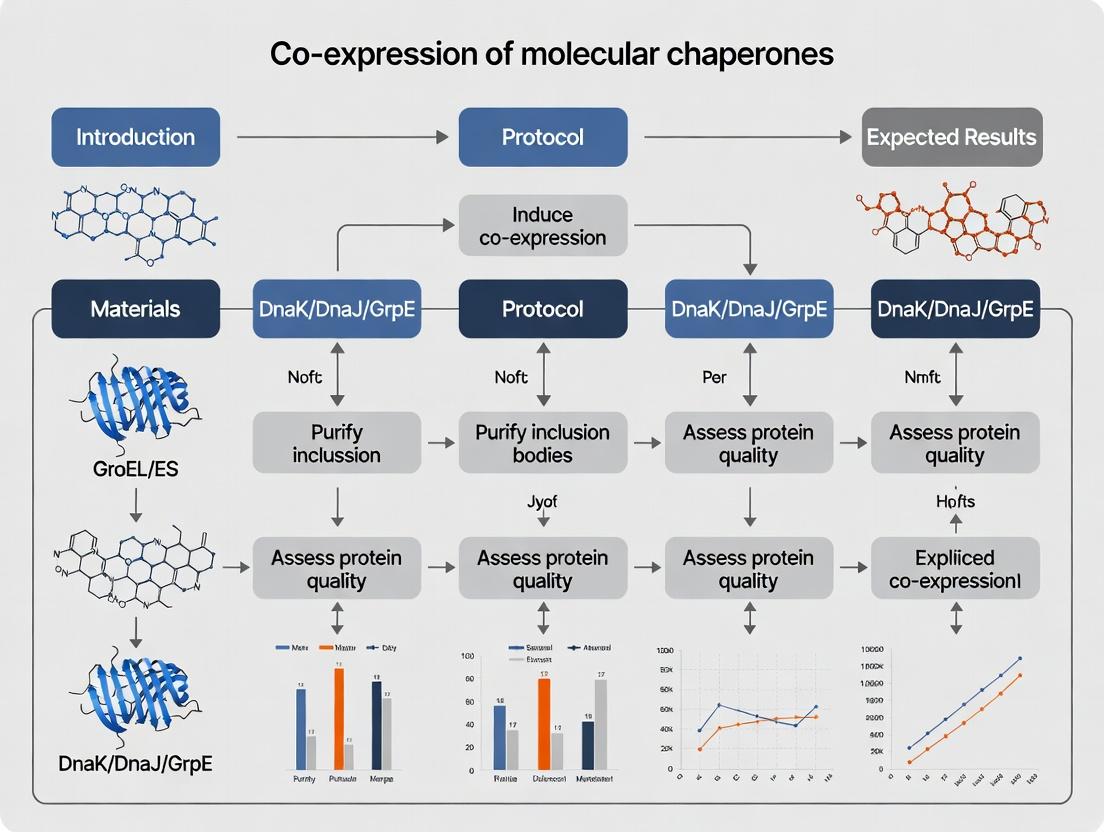
This article provides a comprehensive guide for researchers aiming to improve the soluble yield and functional folding of challenging recombinant proteins through the co-expression of molecular chaperones.
Optimizing Protein Production: A Complete Protocol for Co-expressing Molecular Chaperones in Heterologous Systems
Abstract
This article provides a comprehensive guide for researchers aiming to improve the soluble yield and functional folding of challenging recombinant proteins through the co-expression of molecular chaperones. It covers foundational knowledge on chaperone classes and mechanisms, detailed protocols for E. coli and eukaryotic systems (including Bac-to-Bac and mammalian vectors), common troubleshooting and optimization strategies, and methods for validating chaperone efficacy. Designed for scientists and drug development professionals, this resource synthesizes current best practices to enhance success rates in protein biochemistry and structural biology.
Understanding the Chaperone Toolkit: Roles, Mechanisms, and System Selection
Recombinant protein production is fundamental to biotechnology and therapeutic development. A central bottleneck is the misfolding and aggregation of target proteins, leading to low soluble yield, loss of function, and challenges in purification. Within host cells like E. coli, proteins are synthesized rapidly, often overwhelming the native folding machinery and leading to the formation of insoluble inclusion bodies or soluble aggregates. The inherent physicochemical properties of the target protein (e.g., hydrophobicity, proline content, disulfide bond requirement) and cellular stress responses (e.g., heat shock response) are key determinants.
Core Problem: Cellular protein homeostasis (proteostasis) imbalance during heterologous expression.
Key Factors & Quantitative Data
| Factor Category | Specific Parameter | Impact on Misfolding/Aggregation | Typical Data Range |
|---|---|---|---|
| Protein-Intrinsic | Hydrophobicity (GRAVY Index) | Higher hydrophobicity correlates with aggregation propensity. | GRAVY > -0.5 increases risk. |
| Charged Residue Content (Lys, Arg, Glu, Asp) | Low net charge at physiological pH increases aggregation rate. | pI vs. pH mismatch > 2 units can be problematic. | |
| Cysteine Residues | Unpaired cysteines promote non-native intermolecular disulfides. | >2 Cys residues often require oxidative folding. | |
| Expression Conditions | Temperature | Lower temperature reduces aggregation by slowing translation and favoring folding. | Shift from 37°C to 16-25°C can increase soluble yield 2-5 fold. |
| Induction Level (IPTG concentration) | High expression rate overwhelms chaperones. | <0.1 mM IPTG often better than 1 mM for solubility. | |
| Cell Density at Induction (OD600) | Induction at lower OD can reduce metabolic burden. | Optimal induction OD600 typically 0.4-0.6. | |
| Host Environment | Redox State | Cytoplasm is reducing, inhibiting disulfide bond formation. | Use of strains with altered thioredoxin/glutathione pathways (e.g., ΔtrxB/gor). |
| Chaperone Saturation | Native DnaK/DnaJ/GrpE and GroEL/ES systems are limiting. | Co-expression of chaperones can improve soluble yield by 20-300%. | |
| Protease Activity | Misfolded proteins are degraded by Lon, ClpXP, etc. | Knockout of proteases (Δlon, ΔclpP) can stabilize aggregates. |
Experimental Protocol: Assessing Aggregation inE. coli
Protocol 1: Differential Solubility Analysis by Centrifugation
Objective: To quantify the soluble vs. insoluble fraction of a recombinantly expressed protein.
Materials:
- Bacterial cell pellet expressing target protein.
- Lysis Buffer: 50 mM Tris-HCl (pH 8.0), 150 mM NaCl, 1 mM EDTA, 1 mg/mL lysozyme, 1% (v/v) Triton X-100, 1x protease inhibitor cocktail.
- Sonication device or French press.
- Refrigerated microcentrifuge.
- SDS-PAGE setup and staining reagents.
Procedure:
- Cell Lysis: Resuspend cell pellet in 1 mL Lysis Buffer per gram. Incubate on ice for 30 min. Lyse cells by sonication (3 x 20 sec pulses, 50% duty cycle) on ice or by French press.
- Insoluble Fraction Separation: Centrifuge the lysate at 16,000 x g for 30 minutes at 4°C. Carefully transfer the supernatant (soluble fraction) to a new tube.
- Wash Insoluble Pellet: Resuspend the pellet in 1 mL of Lysis Buffer (without lysozyme). Centrifuge again at 16,000 x g for 15 min. Discard supernatant.
- Solubilize Inclusion Bodies: Resuspend the washed pellet in 1 mL of Denaturing Buffer (6 M Guanidine-HCl, 50 mM Tris-HCl, pH 8.0). Incubate with shaking at room temperature for 1 hour.
- Analysis: Analyze equal percentage volumes (e.g., 20 µL) of the original lysate (total), soluble fraction (supernatant), and denatured insoluble fraction (pellet) by SDS-PAGE. Compare band intensity to determine distribution.
Protocol 2: Co-expression with Molecular Chaperones (Thesis Context)
Objective: To test if co-expression of specific chaperone systems enhances the soluble yield of a target protein.
Materials:
- Target protein expression plasmid (e.g., pET vector with T7 promoter).
- Chaperone plasmid sets (e.g., pG-KJE8 encoding DnaK/DnaJ/GrpE and GroEL/ES; pGro7 encoding GroEL/ES; pTf16 encoding Trigger Factor).
- E. coli BL21(DE3) or similar expression strain.
- Terrific Broth (TB) or LB media with appropriate antibiotics.
- 1 M Isopropyl β-D-1-thiogalactopyranoside (IPTG).
- 20% (w/v) L-(+)-Arabinose.
- 5 mg/mL Tetracycline (for pG-KJE8 system induction).
Procedure:
- Co-transformation: Transform the target protein plasmid and a selected chaperone plasmid into the expression strain. Plate on double-antibiotic selective agar.
- Pre-culture & Main Culture: Inoculate a single colony into 5 mL of medium with both antibiotics. Grow overnight at 30°C. Dilute the overnight culture 1:100 into fresh medium (with antibiotics) and grow at 37°C until OD600 reaches 0.5.
- Chaperone Induction: Induce chaperone expression before target protein induction.
- For pG-KJE8: Add tetracycline to 5 µg/mL and arabinose to 0.5 mg/mL. Incubate at 37°C for 1 hour.
- For pGro7/pTf16: Add arabinose to 0.5 mg/mL. Incubate at 37°C for 30 min.
- Target Protein Induction: Add IPTG to optimal concentration (e.g., 0.1 mM). Shift temperature to a permissive range (e.g., 16-25°C). Continue incubation for 16-20 hours.
- Analysis: Harvest cells. Perform Protocol 1 to analyze solubility. Compare results to a control culture expressing the target protein alone.
Visualization
Title: Recombinant Protein Misfolding and Aggregation Cascade
Title: Chaperone Co-expression Experimental Workflow
The Scientist's Toolkit: Key Research Reagent Solutions
| Item | Function & Role in Addressing Misfolding |
|---|---|
| Chaperone Plasmid Sets (Takara) | pG-KJE8, pGro7, pTf16. Provide tightly regulated co-expression of major E. coli chaperone systems to assist folding. |
| Rosetta & Origami Strains (Novagen/Merck) | Supply rare tRNAs for codon optimization or have altered redox pathways (ΔtrxB/gor) to promote disulfide bond formation. |
| Enzymatic Lysis Reagents (Lysozyme, Benzonase) | Gentle, efficient cell disruption minimizing non-specific aggregation during extraction. |
| Solubility Enhancement Buffers | Lysis buffers containing mild detergents (CHAPS, Triton X-100) or osmolytes (sucrose, glycerol) to stabilize proteins. |
| Affinity Tags with Cleavage Sites | His-tag, GST-tag, MBP-tag. Facilitate purification of soluble fusion partners that enhance solubility. |
| Thermostable Polymerases for SDM | For site-directed mutagenesis to introduce stabilizing mutations (e.g., surface entropy reduction). |
| Protease Inhibitor Cocktails | Prevent degradation of marginally stable, folded proteins during purification. |
| Folding Reporters (GFP Fusions) | GFP fused to target protein; fluorescence indicates proper folding in vivo. |
Molecular chaperones are essential for cellular proteostasis, assisting in protein folding, preventing aggregation, and facilitating disaggregation. Within the context of co-expression protocols for recombinant protein production, understanding the core chaperone systems—HSP70, HSP60, and HSP90—is critical. Their coordinated action, often with dedicated co-chaperones, can significantly enhance the yield and solubility of challenging target proteins in heterologous expression systems like E. coli.
Core Chaperone Systems: Functions and Quantitative Data
Key Functions and Characteristics
- HSP70 (DnaK in E. coli): Binds short hydrophobic peptide segments of client proteins in an ATP-dependent cycle. Prevents aggregation, aids in folding, and participates in translocation. Works with co-chaperones DnaJ (J-domain protein) and GrpE (nucleotide exchange factor).
- HSP60 (GroEL/ES in E. coli): Forms a large double-ring complex that provides an isolated chamber for protein folding. Clients are encapsulated, preventing intermolecular aggregation. GroES acts as a lid.
- HSP90: Stabilizes and activates a specific subset of client proteins (e.g., kinases, steroid hormone receptors) in a late-stage folding process. Requires numerous co-chaperones (e.g., p23, Aha1, Hop) for regulation.
Table 1: Core Chaperone System Properties
| Chaperone Class | Prototype (E. coli) | Oligomeric State | ATPase Activity | Key Co-chaperones | Typical Client Size |
|---|---|---|---|---|---|
| HSP70 | DnaK | Monomer/Dimer | Yes, regulated by co-chaperones | DnaJ (J-protein), GrpE (NEF) | Short peptides / unfolded chains |
| HSP60 | GroEL | Tetradecamer (14-mer) | Yes, in each ring | GroES (HSP10) | 15-60 kDa, globular |
| HSP90 | HtpG | Dimer | Yes, essential for function | p23, Aha1, Cdc37, Hop | Folded but labile proteins |
Table 2: Effect of Chaperone Co-expression on Recombinant Protein Solubility (Representative Data)
| Target Protein (Challenge) | Chaperone System Co-expressed | Reported Increase in Soluble Fraction | Key Conditions |
|---|---|---|---|
| Human Kinase Domain | DnaK/DnaJ/GrpE + GroEL/ES | ~40-60% | Low-temperature induction (20-25°C) |
| Antibody Fragment (scFv) | GroEL/ES alone | ~30% | Arabinose-induced chaperone expression |
| Aggregation-Prone Viral Protein | DnaK/DnaJ/GrpE | ~25% | Co-expression from a compatible plasmid |
| Metalloproteinase | Trigger Factor + GroEL/ES | ~50% | Sequential induction protocol |
Detailed Experimental Protocols
Protocol: Co-expression of Target Protein with Chaperone Systems inE. coli
Objective: To enhance the solubility and yield of a recombinant target protein by simultaneously expressing molecular chaperone systems.
Materials:
- Expression Host: E. coli BL21(DE3) or similar.
- Plasmids:
- pTarget: Expression vector for gene of interest (GOI) under T7/lac promoter.
- pGro7 (or pKJE7): Plasmid encoding the GroEL/ES operon (or DnaK/DnaJ/GrpE operon) under arabinose-inducible (araB) promoter. Contains chloramphenicol resistance (Cm^R^).
- Note: pTf16 encodes Trigger Factor and is often used in combination.
- Reagents: LB broth with appropriate antibiotics (e.g., Amp, Cm), IPTG (Isopropyl β-D-1-thiogalactopyranoside), L-(+)-Arabinose, Lysis buffer (e.g., 50 mM Tris-HCl pH 8.0, 150 mM NaCl, 1 mM PMSF, Lysozyme).
Procedure:
- Co-transformation: Co-transform chemically competent E. coli BL21(DE3) cells with both the
pTargetandpGro7(orpKJE7) plasmids. Plate on LB agar containing both antibiotics (e.g., 100 µg/mL ampicillin, 20 µg/mL chloramphenicol). Incubate overnight at 37°C. - Starter Culture: Inoculate a single colony into 5-10 mL of LB medium with antibiotics. Grow overnight at 37°C with shaking (200-250 rpm).
- Main Culture: Dilute the overnight culture 1:100 into fresh LB medium (e.g., 100 mL) with antibiotics. Grow at 37°C until OD~600~ reaches 0.4-0.6.
- Chaperone Induction: Add L-(+)-Arabinose to a final concentration of 0.5 mg/mL (or 0.1% w/v) to induce chaperone expression. Continue incubation for 30-60 minutes.
- Target Protein Induction: Add IPTG to a final concentration optimized for your target (typically 0.1-1.0 mM). Shift the incubation temperature to a lower setting (20-25°C) to slow protein synthesis and favor folding. Induce for 16-20 hours (overnight).
- Harvesting: Pellet cells by centrifugation (4,000 x g, 20 min, 4°C). Discard supernatant. Cell pellets can be stored at -80°C.
- Analysis: Lyse cells (e.g., sonication in lysis buffer). Separate soluble and insoluble fractions by centrifugation (12,000 x g, 30 min, 4°C). Analyze total, soluble, and pellet fractions by SDS-PAGE to assess solubility gain.
Protocol: Assessing Client-Chaperone Interaction via Co-immunoprecipitation (Co-IP)
Objective: To validate physical interaction between a target protein (client) and a specific chaperone.
Materials: Lysis/Wash Buffer (50 mM HEPES pH 7.4, 150 mM NaCl, 1% Triton X-100, 10% Glycerol, protease inhibitors), Protein A/G beads, antibodies against target and chaperone, SDS-PAGE/Western blotting reagents.
Procedure:
- Prepare cell lysate from induced culture as above.
- Pre-clear lysate with Protein A/G beads for 30 min at 4°C.
- Incubate pre-cleared lysate with 2 µg of anti-target antibody (or anti-chaperone antibody) for 2 hours at 4°C with gentle rotation.
- Add Protein A/G beads and incubate for an additional 1 hour.
- Pellet beads and wash 3-4 times with ice-cold Wash Buffer.
- Elute bound proteins by boiling in 2X Laemmli SDS sample buffer.
- Analyze eluate by SDS-PAGE followed by Western blotting, probing sequentially for the chaperone and the target protein.
Diagrams and Visualizations
HSP70 (DnaK) Chaperone Cycle
GroEL/ES Folding Chamber Cycle
Chaperone Co-expression Experimental Workflow
The Scientist's Toolkit: Research Reagent Solutions
Table 3: Essential Reagents for Chaperone Co-expression Studies
| Reagent / Material | Function & Purpose | Example / Notes |
|---|---|---|
| Chaperone Plasmid Sets | Pre-configured vectors for co-expression of chaperone operons in E. coli. | Takara Bio's "Chaperone Plasmid Set" (pGro7, pKJE7, pTf16). Inducible by arabinose, compatible with T7 systems. |
| BL21(DE3) Competent Cells | Standard E. coli expression host deficient in proteases, carries T7 RNA polymerase gene. | Widely used for T7-driven co-expression protocols. Variants like C41(DE3) better for toxic proteins. |
| L-(+)-Arabinose | Inducer for the araB promoter controlling chaperone genes on helper plasmids. | Typical working concentration: 0.1-0.5 mg/mL. Filter sterilize. |
| IPTG | Inducer for the lac/T7 promoter controlling the target gene of interest. | Concentration and induction temperature must be optimized. |
| Protease Inhibitor Cocktail | Prevents degradation of target and chaperone proteins during cell lysis and processing. | EDTA-free versions recommended if chaperone activity requires divalent cations (e.g., Mg^2+^ for ATPase). |
| Anti-His Tag Antibody | Common tool for detecting/ purifying His-tagged target proteins and chaperones (if tagged). | Enables easy pull-down of tagged client to probe for associated, untagged chaperones. |
| ATPγS (ATP analog) | Non-hydrolyzable ATP analog used in vitro to trap chaperone-client complexes for interaction studies. | Useful for stabilizing HSP70-client or HSP90-client complexes for Co-IP or SPR. |
Molecular chaperones are essential components of the cellular proteostasis network, assisting in the folding of nascent polypeptides, preventing the aggregation of misfolded proteins, and enabling the refolding of damaged proteins. Within the context of co-expression protocols in heterologous protein production, chaperones are critical for improving the yield and solubility of recombinant proteins, a central focus of modern biopharmaceutical development.
Mechanisms of Action & Quantitative Data
Table 1: Major Chaperone Systems, Functions, and Energetics
| Chaperone System | Primary Function | Energy Source | Key Client Interaction | Typical Co-expression Yield Improvement* |
|---|---|---|---|---|
| DnaK-DnaJ-GrpE (Hsp70) | Stabilize unfolded chains, prevent aggregation, facilitate folding | ATP hydrolysis | Hydrophobic peptide segments | 2- to 5-fold |
| GroEL-GroES (Hsp60) | Encapsulate unfolded proteins in an Anfinsen cage for folding | ATP hydrolysis | Globular proteins (≤60 kDa) | 3- to 10-fold |
| Trigger Factor (TF) | Co-translational folding, ribosome-associated | None (ATP-independent) | Nascent chains | 1.5- to 3-fold |
| Small Heat Shock Proteins (sHsps) | Prevent aggregation by binding unfolding intermediates | None (ATP-independent) | Misfolded, aggregation-prone proteins | 2- to 4-fold (solubility) |
| ClpB/Hsp104 | Disaggregate and reactivate aggregated proteins | ATP hydrolysis | Protein aggregates | Enables refolding from aggregate state |
*Yield improvement is highly client-dependent; ranges are illustrative from surveyed literature.
Table 2: Chaperone Co-expression Strategies in E. coli
| Strategy | Chaperones Involved | Target Protein Type | Typical Protocol Outcome |
|---|---|---|---|
| Cocktail Approach | DnaK-DnaJ-GrpE + GroEL-GroES + TF | Complex, multi-domain proteins | Maximizes folding assistance; can burden cell. |
| Sequential Induction | ClpB first, then DnaK/GroEL systems | Aggregation-prone proteins | Reduces initial aggregate load, then refolds. |
| Tuned Expression | Plasmid-borne groEL/groES with tunable promoter | Toxic or highly unstable proteins | Fine control balances folding aid and metabolic load. |
Detailed Experimental Protocols
Protocol 1: Standard Co-expression of Chaperone Plasmids inE. coli
Objective: Enhance solubility of a recombinant target protein (ClientX). Materials: E. coli BL21(DE3), pET vector expressing ClientX, chaperone plasmid (e.g., pG-KJE8 encoding DnaK/DnaJ/GrpE/GroEL/GroES or pGro7 encoding GroEL/GroES).
Method:
- Co-transform competent cells with both the target protein plasmid and the chaperone plasmid. Select on LB-agar plates with appropriate antibiotics (e.g., Amp for pET, Chl for pGro7).
- Inoculate a single colony into 5 mL LB medium with antibiotics. Incubate overnight at 37°C, 220 rpm.
- Dilute the overnight culture 1:100 into fresh, pre-warmed LB with antibiotics. For chaperone plasmids with araB promoter (e.g., pGro7), add 0.5 mg/mL L-arabinose at this point to induce chaperone expression.
- Grow at 37°C until OD600 reaches 0.5-0.6.
- Induce target protein expression by adding IPTG (typically 0.1-1.0 mM final concentration).
- Shift temperature to 25-30°C to slow protein synthesis and favor folding. Incubate for 4-6 hours post-induction.
- Harvest cells by centrifugation (4,000 x g, 20 min, 4°C). Pellet can be processed immediately or stored at -80°C.
- Analyze solubility: Lyse cell pellet via sonication in lysis buffer. Separate soluble and insoluble fractions by centrifugation (15,000 x g, 30 min, 4°C). Analyze both fractions by SDS-PAGE.
Protocol 2: Refolding and Disaggregation Assay In Vitro
Objective: Assess chaperone (ClpB/Hsp70 system) ability to disaggregate and refold luciferase. Materials: Purified Firefly luciferase, DnaK, DnaJ, GrpE, ClpB, ATP regeneration system, thermocycler.
Method:
- Generate Aggregates: Heat-denature luciferase (40 µM) at 42°C for 15 min in assay buffer to induce aggregation.
- Prepare Refolding Mix: In a separate tube, combine chaperones (5 µM ClpB, 2 µM DnaK, 1 µM DnaJ, 1 µM GrpE) in assay buffer with an ATP regeneration system (2 mM ATP, 10 mM creatine phosphate, 0.1 mg/mL creatine kinase).
- Initiate Refolding: Dilute aggregated luciferase 1:100 into the refolding mix containing chaperones. Final luciferase concentration is 400 nM.
- Incubate: Hold reaction at 25°C. At timed intervals (0, 10, 20, 40, 60 min), remove aliquots.
- Assay Activity: Mix aliquot with luciferin substrate, measure luminescence immediately. Activity is expressed as a percentage of native, non-denatured luciferase control.
- Controls: Include reactions missing individual chaperone components or ATP.
Visualizations
Title: Chaperone Pathways in Folding vs. Aggregation
Title: Co-expression Protocol Workflow
The Scientist's Toolkit: Research Reagent Solutions
Table 3: Essential Reagents for Chaperone Co-expression Studies
| Reagent / Material | Function / Purpose in Protocol | Example Product/Catalog |
|---|---|---|
| Chaperone Plasmid Set | Vectors for inducible or constitutive co-expression of chaperone operons in E. coli. | Takara Bio's "Chaperone Plasmid Set" (pG-KJE8, pGro7, pTf16). |
| ATP Regeneration System | Maintains constant [ATP] for in vitro chaperone activity assays. | Sigma Aldrich, "ATP Regeneration System" (CRE/CPK). |
| Protease-Deficient E. coli Strains | Host strains minimize target protein degradation (e.g., BL21(DE3)). | Thermo Fisher, BL21(DE3) Competent Cells. |
| Tunable Induction Reagents | Precise control of chaperone vs. target expression timing. | L-Arabinose (for araB promoter), anhydrotetracycline (for tet promoter). |
| Solubility-Tag Vectors | Facilitate purification and assessment of soluble target. | pET-MBP (Maltose-Binding Protein tag), pSUMO. |
| Aggregation-Sensitive Reporter Protein | Standardized client to assay chaperone function (e.g., luciferase). | Purified Firefly Luciferase (Promega). |
| Fast Protein Liquid Chromatography (FPLC) | Purify chaperone complexes (GroEL, TRiC) for in vitro studies. | ÄKTA pure system (Cytiva) with size-exclusion columns. |
The overarching thesis of modern recombinant protein production research posits that the strategic, a priori selection of chaperone co-expression systems, tailored to the inherent biophysical challenges of the target protein, significantly enhances the yield, solubility, and functional integrity of difficult-to-express proteins. This application note operationalizes this thesis by providing a structured framework to match molecular chaperone teams—from prokaryotic (E. coli) to eukaryotic (insect, mammalian)—with target protein characteristics: molecular size, domain complexity (e.g., multi-domain architecture), and disulfide bond requirements.
Chaperone System Selection Matrix
Based on current literature and experimental data, the following matrix guides initial system selection.
Table 1: Chaperone System Recommendation Matrix Based on Target Protein Characteristics
| Target Protein Characteristic | Recommended Host System | Key Chaperone Team / Folding Factors | Primary Rationale & Expected Outcome |
|---|---|---|---|
| Small, Single-Domain (<30 kDa), No Disulfides | E. coli (Cytosolic) | DnaK-DnaJ-GrpE (HSP70 system), GroEL-GroES (HSP60) | High efficiency for folding nascent chains; minimal complexity. Yield increase of 2-5x common. |
| Large, Multi-Domain (>50 kDa), No/Low Disulfides | E. coli (Cytosolic) | Trigger Factor (TF) + DnaK-DnaJ-GrpE + GroEL-GroES | TF binds nascent chain; tandem systems handle sequential domain folding. Solubility boost of 3-10x reported. |
| Multiple Native Disulfide Bonds | E. coli (Periplasmic) or Bacterial CyDisco | DsbC (isomerase) + DsbA (oxidase) + PDI family equivalents. | Oxidative compartment/isomerase activity enables correct pairing. Functional yield critical. |
| Complex Eukaryotic, Multiple Disulfides | Baculovirus (Sf9) | ER-resident: BiP (HSP70), PDI, Calnexin/Calreticulin, ERp57 | Native eukaryotic ER quality control & redox machinery. Essential for secreted proteins. |
| Very Large Complexes, Human Therapeutics | Mammalian (e.g., HEK293, CHO) | Full ER suite + cytosolic HSP90, HSP70, co-chaperones (e.g., Aha1). | Highest fidelity folding, assembly, and post-translational modifications. |
Detailed Protocols for Key Experimental Setups
Protocol 3.1: Co-expression inE. colifor Multi-Domain Proteins
Aim: Enhance solubility of a large (>50 kDa), multi-domain target. Materials: pET-based target plasmid; chaperone plasmids (e.g., pG-KJE8 encoding DnaK/DnaJ/GrpE/TF/GroEL/GroES, Takara). Procedure:
- Co-transform E. coli BL21(DE3) with target plasmid and chaperone plasmid(s). Select on double antibiotic plates.
- Inoculate 5 mL starter cultures with both antibiotics. Grow overnight at 30°C.
- Dilute 1:100 into 50 mL main culture (TB medium). Grow at 37°C to OD600 ~0.6.
- Induce chaperone expression with 0.5 mg/mL L-arabinose and 5 ng/mL tetracycline (for pG-KJE8). Incubate at 30°C for 1 hr.
- Induce target protein with 0.1-1.0 mM IPTG. Shift temperature to 16-25°C based on protein toxicity. Express for 16-20 hours.
- Harvest cells by centrifugation (4,000 x g, 20 min). Lyse via sonication in suitable buffer.
- Analyze solubility: Centrifuge lysate at 15,000 x g for 30 min. Compare supernatant (soluble) and pellet (insoluble) fractions by SDS-PAGE.
Protocol 3.2: Baculovirus Co-expression for Disulfide-Rich Secreted Proteins
Aim: Produce a functionally folded, secreted protein with multiple disulfides. Materials: Sf9 cells, Bacmid DNA for target gene, Baculovirus Co-expression Kit (e.g., encoding BiP and PDI, Oxford Expression Technologies). Procedure:
- Generate a recombinant bacmid for your target protein using the Bac-to-Bac or flashBAC system.
- Co-transfect Sf9 cells (in 6-well plate) with the target bacmid and the chaperone co-expression bacmid using a lipid-based transfection reagent.
- Harvest P1 virus at 72-96 hours post-transfection.
- Amplify virus to generate a high-titer P2 stock.
- Infect 50 mL Sf9 suspension culture (2.0x10^6 cells/mL) with P2 virus for the target and chaperone viruses at an MOI of 3-5 each.
- Incubate at 27°C, 110 rpm for 72-96 hours. Optional: Add secretion signal to target gene.
- Harvest supernatant by centrifugation (500 x g, then 0.22 μm filtration). Analyze secreted protein via Western blot and functional assay (e.g., ELISA, activity).
Visualizing Chaperone Network Logic & Experimental Workflows
Title: Chaperone System Selection Logic Flow
Title: Baculovirus Co-expression Workflow
The Scientist's Toolkit: Essential Research Reagents
Table 2: Key Reagent Solutions for Chaperone Co-expression Studies
| Reagent / Kit Name | Supplier Examples | Primary Function in Protocol |
|---|---|---|
| Chaperone Plasmid Sets (E. coli) | Takara Bio, AGIR (ArcticZymes), Merck | Provide tightly regulated expression of specific chaperone teams (e.g., HSP70/HSP60/TF) from compatible vectors. |
| CyDisco (Cytoplasmic Disulfide Bond) Strains | CyDisco kit (Addgene), specific E. coli strains (e.g., SHuffle) | Enable formation of native disulfide bonds in the E. coli cytoplasm via expression of sulfhydryl oxidase and disulfide isomerase. |
| Baculovirus Co-expression Kits | Oxford Expression Technologies, Proteogenix | Pre-made baculoviruses or bacmids for ER chaperones (BiP, PDI) to co-express with target protein in insect cells. |
| Mammalian Chaperone Expression Vectors | Sino Biological, Origene, Addgene | Plasmids for transient or stable overexpression of human chaperones (HSP90, BiP, PDIs) in HEK293 or CHO cells. |
| Solubility Enhancement Tags | MBP, GST, SUMO tags (various suppliers) | Fused to target N-terminus to improve initial solubility; often combined with chaperone co-expression. |
| Disulfide Bond Analysis Kits | Thermo Fisher (Pierce), Abcam | E.g., AMS alkylation or enzyme-based assays to quantify free thiols vs. formed disulfides, verifying correct folding. |
| Proteostat or Aggrescan Assays | Enzo Life Sciences, Protea Biosciences | Fluorescence-based detection of protein aggregation in lysates, quantifying chaperone efficacy. |
Application Notes
Within the broader thesis on co-expression strategies for molecular chaperones to improve the yield and solubility of recombinant proteins, the selection of an appropriate host system is paramount. This analysis compares the three most common hosts, focusing on their utility for co-expressing chaperone networks. Chaperone co-expression is a critical rescue strategy for challenging targets, but the efficacy is intrinsically linked to host biology.
- Escherichia coli: The workhorse for its simplicity, speed, and low cost. Prokaryotic chaperones like GroEL/GroES and DnaK/DnaJ/GrpE can be co-expressed with target proteins. However, the lack of post-translational modifications (PTMs) and an oxidizing cytoplasm for disulfide bond formation (without strain modification) are major limitations. Chaperone co-expression in E. coli is straightforward but limited to prokaryotic folding machinery.
- Insect Cells (e.g., Sf9, Sf21): Using the baculovirus expression system (BEVS), these eukaryotic cells offer higher-order PTMs (e.g., N-glycosylation) and a more complex folding environment. They allow for co-infection with multiple viruses, enabling the co-expression of eukaryotic chaperones like Hsp70, Hsp90, or calnexin with the target. The system is more time-consuming and costly than E. coli but provides a middle ground in complexity.
- Mammalian Cells (e.g., HEK293, CHO): The gold standard for producing therapeutics requiring human-like PTMs and complex folding. They possess the full complement of endogenous and readily co-expressable eukaryotic chaperone machinery. Transient or stable co-expression of chaperones like BiP or protein disulfide isomerase (PDI) can be achieved to assist with secreted or membrane protein production. The key drawbacks are the highest cost, longest timelines, and greatest technical complexity.
Quantitative Data Comparison
Table 1: Host System Characteristics for Chaperone Co-expression
| Parameter | E. coli | Insect Cells (BEVS) | Mammalian Cells |
|---|---|---|---|
| Timeline to Protein | 3-7 days | 4-8 weeks (incl. virus gen.) | 1-6 weeks (transient/stable) |
| Typical Yield | 1-100 mg/L | 1-10 mg/L | 0.1-10 mg/L (transient) |
| Cost per mg | $ | $$ | $$$$ |
| PTM Capability | None (core), Limited (engineered strains) | Simple glycosylation, phosphorylation | Complex human-like glycosylation, others |
| Chaperone Compatibility | Prokaryotic systems only | Eukaryotic (insect-specific) | Full eukaryotic/human machinery |
| Disulfide Bond Formation | Cytoplasm: No; Periplasm: Yes | Yes (secretory pathway) | Yes (efficient, secretory pathway) |
| Multisubunit Complex Assembly | Limited | Good | Excellent |
Table 2: Common Co-expressed Chaperones by Host
| Host System | Example Chaperone Systems | Primary Target Application |
|---|---|---|
| E. coli | GroEL/GroES, DnaK/DnaJ/GrpE, TF (trigger factor) | Cytosolic bacterial proteins, aggregation-prone domains |
| Insect Cells | Hsp70 (BiP), Hsp90, Calnexin/Calreticulin | Secreted glycoproteins, viral antigens, kinases |
| Mammalian Cells | BiP, PDI, ERO1-Lα, Hsp70, Hsp90 | Therapeutic antibodies, complex membrane proteins (GPCRs), multi-subunit enzymes |
Experimental Protocols
Protocol 1: Co-expression in E. coli using a Dual-Plasmid System Objective: Express a target protein with the GroEL/GroES chaperone system in BL21(DE3).
- Plasmids: Transform E. coli BL21(DE3) with two compatible plasmids: one expressing the target protein under T7/lac control (e.g., pET vector, Kan^R) and one expressing groEL/groES constitutively or inductibly (e.g., pGro7, Cam^R, from Takara Bio).
- Culture: Inoculate double antibiotic LB medium and grow at 37°C to OD600 ~0.6.
- Chaperone Induction: For pGro7, add 0.5 mg/mL L-arabinose to induce chaperone expression 1 hour prior to target induction.
- Target Induction: Add 0.1-1.0 mM IPTG. Reduce temperature to 16-25°C to slow protein synthesis and improve folding.
- Harvest: Grow for 16-20 hours post-induction. Pellet cells by centrifugation (4,000 x g, 20 min).
- Analysis: Lyse cells and analyze solubility of target protein via SDS-PAGE of soluble vs. insoluble fractions.
Protocol 2: Co-expression in HEK293T Cells via Transient Transfection Objective: Co-express a human membrane target with the chaperone BiP to enhance soluble yield.
- Vectors: Use two mammalian expression vectors (e.g., pcDNA3.1), one for the target gene and one for human HSPA5 (BiP).
- Cell Culture: Maintain HEK293T cells in FreeStyle 293 Expression Medium at 37°C, 8% CO₂.
- Transfection Mixture: For 1L culture at 1x10^6 cells/mL, mix 1 mg target DNA and 0.5 mg BiP DNA with 3 mg linear PEI (Polyethylenimine) in 50 mL fresh medium. Incubate 20 min.
- Transfection: Add DNA-PEI complex dropwise to cells with gentle shaking.
- Enhancement: At 24h post-transfection, add valproic acid (final 2 mM) and 5% Feed Supplement to boost production.
- Harvest: At 72-96h, pellet cells (500 x g, 10 min). Filter supernatant (0.22 μm) for secreted targets. For intracellular targets, lyse cells in mild detergent buffer.
- Analysis: Detect target via Western blot (anti-tag) and assess solubility by centrifugation (16,000 x g, 30 min).
Diagrams
Title: Host Selection Workflow for Chaperone Co-expression
Title: Key ER Chaperone Pathways for Protein Folding
The Scientist's Toolkit: Research Reagent Solutions
Table 3: Essential Materials for Chaperone Co-expression Studies
| Item | Function & Application | Example Product/Brand |
|---|---|---|
| Chaperone Plasmid Sets | Pre-constructed vectors for co-expressing defined chaperone systems in specific hosts. | Takara Bio's "Chaperone Plasmid Set" for E. coli; Addgene vectors for mammalian Hsp70/Hsp90. |
| PEI Transfection Reagent | Low-cost, high-efficiency polymer for transient transfection of mammalian and insect cells. | Linear PEI (MW 25,000), Polysciences. |
| Gibson Assembly Master Mix | Enables seamless cloning of multiple genes (target + chaperones) into a single operon or vector. | NEB Gibson Assembly HiFi Master Mix. |
| Baculovirus Co-infection Kit | System for generating and titering multiple baculoviruses for co-expression in insect cells. | Bac-to-Bac system with Cellfectin II (Thermo Fisher). |
| Valproic Acid | Histone deacetylase inhibitor that enhances recombinant protein yield in mammalian cells. | MilliporeSigma. |
| Detergent Lysis Buffers | For gentle extraction of membrane proteins or soluble aggregates during solubility analysis. | n-Dodecyl-β-D-maltoside (DDM) for membranes. |
| Anti-PDI / Anti-BiP Antibodies | Essential for monitoring endogenous or overexpressed chaperone levels via Western blot. | Abcam, Cell Signaling Technology. |
| Ni-NTA Superflow Resin | Affinity purification of His-tagged target proteins from any host lysate for yield comparison. | Qiagen. |
Step-by-Step Protocols for Effective Chaperone Co-expression in E. coli and Eukaryotic Systems
1. Application Notes
Within the broader research context of a thesis on optimizing co-expression protocols for molecular chaperones, the selection of appropriate plasmid systems and host strains is critical. These tools enable the controlled overexpression of chaperone networks to assist in the folding of recombinant target proteins, thereby enhancing solubility and yield for structural studies and drug development.
Commercial chaperone plasmid kits, such as those from Takara Bio, offer a standardized and reliable solution. These kits typically contain multiple compatible plasmids, each expressing a distinct set of chaperones under tightly regulated promoters. The most common systems co-express E. coli chaperones: DnaK-DnaJ-GrpE (KJE), GroEL-GroES (GroELS), and the tRNA for rare codons (Tf). Quantitative data on their performance, as reported in recent literature and product documentation, is summarized below.
Table 1: Comparison of Common Commercial Chaperone Plasmid Systems
| Plasmid Kit | Chaperone System Expressed | Regulatory Promoter | Inducer | Typical Host Strains | Key Application (Based on Recent Studies) |
|---|---|---|---|---|---|
| pG-KJE8 | DnaK, DnaJ, GrpE, GroEL, GroES | araB promoter | L-Arabinose | BL21(DE3), JM109, others lon-/ompT- | Rescuing aggregation-prone eukaryotic proteins; stress response overload. |
| pGro7 | GroEL, GroES | araB promoter | L-Arabinose | BL21(DE3), Origami2(DE3) | Folding of large, multi-domain proteins; requires ATP. |
| pTf16 | Trigger factor (TF) | lac promoter | IPTG | BL21(DE3), AD494(DE3) | Co-translational folding; stabilization of nascent chains. |
| pKJE7 | DnaK, DnaJ, GrpE | araB promoter | L-Arabinose | BL21(DE3) | Suppressing aggregation during heat shock or rapid expression. |
Table 2: Quantitative Enhancement of Target Protein Solubility with Chaperone Co-expression (Representative Data)
| Target Protein (Class) | Host Strain | Chaperone Plasmid Used | Solubility Increase (vs. No Chaperones) | Key Experimental Condition | Reference Year |
|---|---|---|---|---|---|
| Human Kinase (Eukaryotic) | BL21(DE3) | pG-KJE8 | ~45% to 80% | Co-induction at 20°C, 0.5 mg/mL arabinose | 2022 |
| Bacterial Membrane Protein | C41(DE3) | pTf16 + pGro7 | ~5% to ~35% | Sequential induction: TF first, then GroELS | 2023 |
| Viral Polymerase (Large) | Rosetta2(DE3) | pGro7 | ~15% to ~65% | Low-temperature induction (18°C) | 2021 |
| Antibody Fragment (VHH) | SHuffle T7 | pKJE7 | ~30% to >90% | Cytoplasmic expression, redox optimization | 2023 |
2. Detailed Experimental Protocols
Protocol 1: Initial Screening of Chaperone Plasmids for a Novel Target Protein
Objective: To identify the most effective single or combined chaperone system for enhancing the solubility of a recombinant target protein.
Materials:
- E. coli expression strain (e.g., BL21(DE3))
- Target gene in expression vector (e.g., pET series with T7/lac promoter)
- Chaperone plasmids: pG-KJE8, pGro7, pTf16, pKJE7
- Antibiotics: Chloramphenicol (Cm, for chaperone plasmids), appropriate antibiotic for target plasmid
- Induction agents: IPTG (for target), L-Arabinose (for chaperones)
- Luria-Bertani (LB) broth and agar plates
Methodology:
- Co-transformation: Co-transform the expression strain with the target plasmid and one chaperone plasmid (or an empty vector control). Plate on LB agar containing antibiotics for both plasmids.
- Pre-culture: Inoculate a single colony into 5 mL LB with both antibiotics. Incubate at 37°C, 220 rpm overnight.
- Main Culture & Induction: Dilute the overnight culture 1:100 into 50 mL fresh LB with antibiotics. Grow at 37°C to OD600 ~0.4-0.6.
- Add L-Arabinose to the appropriate concentration (e.g., 0.5 mg/mL for pGro7/pG-KJE8) to induce chaperone expression.
- Incubate at 37°C for 1 hour.
- Lower temperature to 20-25°C, add IPTG (e.g., 0.1-1.0 mM) to induce target protein expression.
- Continue incubation for 16-20 hours.
- Harvest and Lysis: Pellet cells by centrifugation. Resuspend in lysis buffer (e.g., PBS with lysozyme, protease inhibitors). Lyse by sonication or chemical lysis.
- Solubility Analysis: Centrifuge lysate at high speed (15,000 x g, 30 min, 4°C) to separate soluble (supernatant) and insoluble (pellet) fractions.
- Analysis: Analyze both fractions by SDS-PAGE. Quantify band intensity of the target protein to calculate the soluble fraction ratio.
Protocol 2: Optimized Sequential Induction for Combined pTf16/pGro7 System
Objective: To maximize the benefit of combining trigger factor (co-translational) with GroELS (post-translational) chaperone systems.
Materials: As in Protocol 1, with both pTf16 and pGro7 plasmids.
Methodology:
- Transformation & Culture: Transform strain with target plasmid, pTf16, and pGro7 (requires three antibiotics). Start pre-culture and main culture as in Protocol 1.
- Sequential Induction:
- At OD600 ~0.5, add IPTG (for target) and a low concentration of IPTG (e.g., 0.05 mM) to induce pTf16 (TF expression).
- Immediately shift culture to 20°C.
- After 30 minutes, add L-Arabinose (e.g., 0.2 mg/mL) to induce pGro7 (GroELS expression).
- Continue expression at 20°C for 20-24 hours.
- Harvest and Analysis: Proceed with lysis and solubility analysis as in Protocol 1, Steps 4-6.
3. Visualizations
Title: Chaperone Co-expression Screening Workflow
Title: Bacterial Chaperone Cooperation Pathways
4. The Scientist's Toolkit: Research Reagent Solutions
Table 3: Essential Materials for Chaperone Co-expression Studies
| Item (Example Product) | Function & Rationale |
|---|---|
| Chaperone Plasmid Kits (Takara Bio "Chaperone Plasmid Set") | Pre-constructed, compatible plasmids expressing major E. coli chaperone systems (KJE, GroELS, TF) under inducible promoters for systematic screening. |
| Protease-Deficient E. coli Strains (BL21(DE3), C41(DE3), C43(DE3)) | Minimize degradation of poorly folded target proteins and chaperone clients. Essential for accurate solubility assessment. |
| Rosetta or Codon Plus Strains | Supply rare tRNAs for genes with non-E. coli codon usage, reducing translational stalling and aiding co-translational folding by TF and DnaK. |
| Tunable Induction Agents (L-Arabinose, IPTG, Rhamnose) | Allow precise temporal and dosage control over chaperone vs. target protein expression, crucial for optimizing folding assistance. |
| Solubility Lysis & Fractionation Kits (BugBuster, Cytiva) | Provide standardized, gentle buffers for cell lysis and clear separation of soluble and insoluble protein fractions for downstream analysis. |
| Anti-Chaperone Antibodies (Anti-DnaK, Anti-GroEL) | Used in Western blot to verify successful chaperone induction and monitor expression levels during protocol optimization. |
| ATP-Regeneration Systems (Creatine Kinase/Phosphocreatine) | Often included in in vitro folding assays to sustain the essential ATPase activity of DnaK and GroEL chaperones. |
This protocol, integral to a broader thesis on co-expression of molecular chaperones, details strategies for simultaneous expression of target proteins with chaperone partners in E. coli. Optimizing this process enhances soluble yield of complex proteins for structural biology and drug development.
Vector Design Strategies
System Selection
Successful co-expression requires careful selection of vector architecture. Quantitative data on common systems is summarized below.
Table 1: Comparison of Common Co-expression Vector Systems
| System Type | Typical Vectors | Promoters | Selection Markers | Key Advantage | Reported Co-expression Efficiency* |
|---|---|---|---|---|---|
| Dual-Plasmid | pETDuet-1, pCDFDuet-1 | T7, T7lac | AmpR, Strep/SpecR | Flexibility, independent optimization | 60-85% |
| Single Plasmid, Multiple Operons | pACYCDuet-1, pRSFDuet-1 | T7 | CmR, KanR | Compatible copy numbers, stable maintenance | 70-90% |
| Single Operon (Polycistronic) | Custom pET constructs | T7 | Single (e.g., AmpR) | Stoichiometric expression, genetic linkage | 80-95% |
| Integrated Genomic + Plasmid | pET vector + genomic chaperone induction | T7 + native | Relevant antibiotics | Low metabolic burden, stable chaperone baseline | 65-75% |
*Efficiency defined as percentage of colonies expressing both proteins at detectable levels.
Key Design Principles
- Promoter Compatibility: Use identical or independently controllable promoters (e.g., T7, araBAD, trc).
- Origin of Replication (ori) Compatibility: Select oris with compatible copy numbers (e.g., ColE1/pMB1/pUC (high), p15A (medium), pSC101 (low)).
- Antibiotic Resistance: Ensure distinct selection markers for each plasmid in a dual-system.
- Ribosome Binding Site (RBS) Strength: Tune RBS sequences to achieve desired stoichiometry. Weaker RBS for chaperone, stronger for target, often prevents aggregation.
Transformation Strategies
Sequential vs. Co-transformation
Table 2: Transformation Method Comparison
| Parameter | Sequential Transformation | Co-transformation |
|---|---|---|
| Protocol | Transform plasmid A, select colonies, make competent cells, transform plasmid B. | Mix both plasmids simultaneously, transform into competent cells. |
| Success Rate | High (>90% for second plasmid) | Moderate (50-80%, depends on compatibility) |
| Time Required | 4-5 days | 2-3 days |
| Best For | Plasmids with incompatible oris or markers. | Compatible plasmid systems (e.g., Duet vectors). |
| Critical Step | Preparation of competent cells from first transformation. | Ensuring sufficient selection pressure for both plasmids. |
Detailed Protocol: High-Efficiency Co-transformation
Materials: Chemically competent E. coli BL21(DE3) or similar, dual-plasmid system (e.g., pETDuet-1 + pCDFDuet-1), LB agar plates with appropriate dual antibiotics.
- Thaw competent cells on ice for 10 minutes.
- In a pre-chilled tube, mix 50 ng of each plasmid DNA.
- Add DNA mix to 50 µL of competent cells. Flick gently. Incubate on ice for 30 minutes.
- Heat-shock at 42°C for exactly 45 seconds. Immediately return to ice for 2 minutes.
- Add 950 µL of pre-warmed SOC medium. Incubate at 37°C with shaking (220 rpm) for 1 hour.
- Plate 100 µL of serial dilutions (1:10, 1:100) on LB agar plates containing both antibiotics. Incubate overnight at 37°C.
- Screen 8-12 colonies by colony PCR or plasmid isolation for the presence of both inserts.
Induction Optimization
Critical Parameters
Induction conditions dramatically impact solubility and yield. A matrix approach is recommended.
Table 3: Induction Parameter Optimization Matrix
| Parameter | Typical Test Range | Optimal Starting Point (for T7 systems) | Effect on Chaperone Co-expression |
|---|---|---|---|
| Induction Temperature | 16°C, 25°C, 30°C, 37°C | 18-25°C | Lower temps favor solubility, slow folding, enhance chaperone action. |
| IPTG Concentration | 0.01 mM, 0.1 mM, 0.5 mM, 1.0 mM | 0.1 mM | Lower IPTG reduces expression rate, matching cellular folding capacity. |
| Induction Point (OD600) | 0.4-0.6, 0.8-1.0, >1.2 | 0.6-0.8 | Mid-log phase balances cell health and protein yield. |
| Induction Duration | 4h, 6h, 16h (o/n), 20h | 16-18h (at low temp) | Extended induction at low temp maximizes soluble yield. |
| Chaperone Pre-induction | 0, 30, 60 min before target | 60 min prior | Allows chaperone pool accumulation before target expression. |
Detailed Protocol: Induction Optimization Screen
- Inoculate 5 mL LB (+ antibiotics) with a positive colony. Grow overnight (37°C, 220 rpm).
- Dilute cultures 1:100 into fresh 10 mL LB (+ antibiotics) in 125 mL flasks. Grow at 37°C to target OD600.
- For pre-induction of chaperone: Add chaperone-specific inducer (e.g., arabinose for pBAD) at T = -60 min.
- Induce target protein: Add IPTG to varying final concentrations (see Table 3). Immediately transfer flasks to pre-cooled shakers at test temperatures.
- Harvest cells by centrifugation (4,000 x g, 20 min) after varying induction times. Pellets can be processed immediately or stored at -80°C.
- Analyze by SDS-PAGE and Western blot to assess total expression, and by soluble/insoluble fractionation to assess solubility.
Visualization of Workflows and Pathways
Diagram 1: Co-expression Experimental Workflow
Diagram 2: Chaperone Function in Co-expression
The Scientist's Toolkit: Research Reagent Solutions
Table 4: Essential Materials for E. coli Co-expression
| Reagent/Material | Example Product/Catalog Number | Function in Protocol |
|---|---|---|
| E. coli Chaperone Plasmid Sets | Takara Bio "Chaperone Plasmid Set", TaKaRa Code 3340 | Provides validated vectors (pG-KJE8, pGro7, etc.) expressing major chaperone systems (DnaK-DnaJ-GrpE, GroEL-GroES, TF). |
| Dual-Expression Vectors | Novagen "pETDuet-1" (EMD Millipore, 71146-3), "pCDFDuet-1" (71341-3) | Engineered plasmids with two multiple cloning sites (MCS) under T7 promoters for co-expression. |
| Chemically Competent E. coli BL21(DE3) | NEB "BL21(DE3) Competent E. coli" (C2527H) | High-efficiency, protein expression strain with genomically integrated T7 RNA polymerase. |
| Tunable Auto-Induction Media | "Overnight Express Instant TB Medium" (EMD Millipore, 71300-4) | Allows automatic induction without monitoring OD600, useful for screening. |
| Solubility Enhancement Reagents | "Chaperone-Inducing Supplement Set" (Takara, 3348) | Chemical inducers (e.g., L-arabinose, tetracycline) for precise control of chaperone plasmid expression. |
| Affinity Chromatography Resins (Tandem Tags) | Ni-NTA Superflow (Qiagen, 30410) and Strep-TactinXT (IBA Lifesciences, 2-4010-010) | For sequential purification of co-expressed proteins with different affinity tags (e.g., His-tag and Strep-tag). |
| Protease Inhibitor Cocktails | "cOmplete, EDTA-free" (Roche, 05056489001) | Prevents degradation of target and chaperone proteins during cell lysis and purification. |
| Solubility Fractionation Kit | "ProteoExtract Native Membrane Protein Extraction Kit" (Calbiochem, 444810) | Modified for soluble/insoluble fraction separation of overexpressed proteins. |
This protocol details the design and construction of multi-gene bacmids for the baculovirus-mediated co-expression of target proteins and molecular chaperones in insect cells. Within the broader thesis on co-expression of molecular chaperones, this methodology is critical for investigating chaperone-assisted folding, assembly, and functional maturation of complex therapeutic proteins, including membrane receptors, multi-subunit enzymes, and virus-like particles. The Bac-to-Bac and MultiBac systems are instrumental in generating recombinant baculoviruses harboring multiple expression cassettes, enabling the simultaneous production of a target protein and one or more chaperone partners (e.g., Hsp70, Hsp90, calnexin, PDIs) to enhance soluble yield and biological activity.
Recent advancements, as per current literature, emphasize the use of engineered insect cell lines (e.g., Sf9, Hi5) stably expressing chaperones, coupled with multi-gene baculovirus vectors, to create a synergistic folding environment. Quantitative data from recent studies (2022-2024) highlight the efficacy of this approach.
Table 1: Quantitative Impact of Chaperone Co-expression on Target Protein Yield and Solubility
| Target Protein Class | Chaperone(s) Co-expressed | Fold Increase in Soluble Yield | Typical System (Cell Line) | Key Reference (Recent) |
|---|---|---|---|---|
| GPCR | Hsp70, Calnexin | 3-5x | Sf9, BacMam | Smith et al., 2023 |
| Antibody Fragment | PDI, BiP | 4-6x | Hi5, MultiBac | Chen & Zhao, 2022 |
| Viral Capsid Protein | Hsp90, ERp57 | 2.5-4x | Sf21, Bac-to-Bac | Oliveira et al., 2024 |
| Kinase (Human) | Hsp70, Hsp40 | 3-5.5x | Sf9, Bac-to-Bac | Gupta et al., 2023 |
Detailed Experimental Protocol
Design of Multi-Gene Expression Constructs
- Principle: Utilize transfer plasmids (pFastBac Dual, pIDC, pIDK, or pACEBac series) with multiple promoters (e.g., polyhedrin - pPH, p10) for independent or tandem gene insertion.
- Procedure:
- Amplify genes of interest (GOI: target protein and selected chaperones) with appropriate restriction enzyme sites or Gibson Assembly overhangs.
- Clone the primary GOI into the primary locus (e.g., MCS1 of pFastBac Dual under pPH promoter).
- Clone the chaperone gene(s) into the secondary locus (e.g., MCS2 under p10 promoter) or into a dedicated donor vector (e.g., pIDC) for Cre-loxP recombination in the MultiBac system.
- Verify all constructs by analytical restriction digest and Sanger sequencing.
Generation of Multi-Gene Bacmid inE. coli
- Principle: Site-specific transposition (Tn7) in DH10Bac E. coli cells or Cre-loxP recombination in DH10MultiBac cells integrates expression cassettes from transfer plasmids into the bacmid.
- Procedure (Bac-to-Bac System):
- Transform the verified multi-gene transfer plasmid into competent DH10Bac E. coli cells harboring the bacmid and helper plasmid.
- Plate cells on LB agar containing kanamycin (50 µg/mL), gentamicin (7 µg/mL), tetracycline (10 µg/mL), IPTG (0.5 mM), and Bluo-gal (100 µg/mL). Incubate at 37°C for 48 hours.
- Select large, white colonies (successful transposition disrupts lacZα).
- Isolate the recombinant bacmid DNA using a modified alkaline lysis protocol, followed by isopropanol precipitation.
- Verify bacmid by PCR analysis across insertion sites.
Transfection, Virus Amplification, and Titration
- Principle: The recombinant bacmid DNA is transfected into insect cells to produce the primary virus stock (P0), which is then amplified to generate high-titer working stocks (P1, P2).
- Procedure:
- Seed Sf9 cells (1 x 10^6 cells/well in a 6-well plate) in SF-900 II serum-free medium.
- For transfection, mix 1 µg of purified bacmid DNA with 6 µL of FuGENE HD transfection reagent in 100 µL of unsupplemented medium. Incubate for 20 min, then add dropwise to cells.
- Incubate at 27°C for 72-96 hours. Harvest the P0 supernatant by centrifugation (500 x g, 5 min).
- For amplification, infect 50 mL of mid-log phase Sf9 cells (2 x 10^6 cells/mL) with 0.5-1 mL of P0 stock. Incubate with shaking (110 rpm) for 72-96 hours. Harvest P1 supernatant.
- Determine viral titer via plaque assay or real-time PCR (qPCR) method.
Table 2: Standard Virus Amplification Parameters
| Parameter | Typical Value / Range |
|---|---|
| Cell Density at Infection | 2.0 x 10^6 cells/mL |
| MOI for Amplification | 0.05 - 0.1 (low MOI preferred) |
| Incubation Temperature | 27°C |
| Incubation Time | 72 - 96 hours |
| Expected Titer (P1) | 1 x 10^8 - 1 x 10^9 PFU/mL |
Protein Expression and Analysis
- Principle: Co-expression is achieved by infecting insect cells at an optimal multiplicity of infection (MOI) and cell density, followed by incubation to allow protein production.
- Procedure:
- Infect 100 mL of Hi5 or Sf9 cells (2 x 10^6 cells/mL) with the multi-gene baculovirus stock at an MOI of 3-5.
- Incubate at 27°C with shaking (110 rpm) for 48-72 hours (time-course optimization recommended).
- Harvest cells by centrifugation (1000 x g, 10 min, 4°C).
- Lyse cells using a detergent-based lysis buffer supplemented with protease inhibitors.
- Analyze expression and solubility via SDS-PAGE and Western blot. Assess functionality using activity assays specific to the target protein.
The Scientist's Toolkit: Research Reagent Solutions
Table 3: Essential Materials for Multi-Gene Bacmid Construction and Expression
| Item / Reagent | Function / Purpose |
|---|---|
| pFastBac Dual / pACEBac1 Vectors | Donor plasmids with two or more expression cassettes for multi-gene insertion. |
| DH10Bac / DH10MultiBac E. coli | Specialized strains for bacmid generation via Tn7 transposition or Cre-loxP recombination. |
| Sf9, Hi5, Sf21 Insect Cell Lines | Lepidopteran insect cell hosts for baculovirus propagation and recombinant protein production. |
| SF-900 II / Express Five Medium | Serum-free, chemically defined media optimized for insect cell growth and protein expression. |
| FuGENE HD / Cellfectin II | Lipid-based transfection reagents for introducing bacmid DNA into insect cells. |
| BaculoDirect Tn7 Kit | Commercial system for rapid, direct bacmid construction. |
| Plaque Assay Kit (Agarose-based) | For determining baculovirus titer (plaque-forming units, PFU/mL). |
| HisTrap Ni-NTA Column | For immobilized metal affinity chromatography (IMAC) purification of His-tagged recombinant proteins. |
| Anti-His / Anti-FLAG Antibodies | For detection and Western blot analysis of tagged recombinant proteins. |
Visualization Diagrams
Diagram Title: Multi-Gene Bacmid Construction and Expression Workflow
Diagram Title: Genetic Pathway for Chaperone Co-expression Bacmid Design
Within the broader thesis investigating protocols for the co-expression of molecular chaperones to enhance recombinant protein yield and quality, this protocol details the critical parameters for transient multi-plasmid co-expression in HEK293 and CHO cells. Optimizing plasmid ratios and transfection conditions is paramount to balance the expression of target proteins with chaperone machinery, thereby improving soluble protein recovery—a key bottleneck in biotherapeutic development.
Key Reagent Solutions
The following table lists essential materials for executing this protocol effectively.
| Research Reagent Solution | Function & Rationale |
|---|---|
| Polyethylenimine (PEI) MAX | Cationic polymer for high-efficiency, low-cost plasmid DNA transfection. Suitable for multi-plasmid co-delivery. |
| Opti-MEM I Reduced Serum Medium | Low-serum medium used for diluting DNA/PEI complexes to minimize interference with transfection. |
| Expi293/ExpiCHO Expression Systems | Chemically defined, animal-free media optimized for high-density transient transfection and protein production. |
| Plasmid DNA (Target + Chaperones) | High-purity (>1.8 A260/A280), endotoxin-free preparations of gene of interest (GOI) and molecular chaperone plasmids (e.g., BiP, PDI, Hsp70, GroEL/ES). |
| Anti-aggregation Supplement (e.g., Valproic Acid) | Histone deacetylase inhibitor that acts as an ER stress reliever, upregulating chaperone expression and folding capacity. |
| Protease Inhibitor Cocktail | Essential for lysate preparation to prevent target protein degradation post-harvest. |
Optimized Plasmid Ratios for Chaperone Co-expression
Empirical data from recent studies suggest that total DNA amount and the relative ratio of target to chaperone plasmids significantly impact functional titers. The table below summarizes recommended starting points.
Table 1: Suggested Plasmid DNA Ratios for Co-transfection
| Cell Line | Total DNA (μg/mL) | Target Gene : Chaperone Plasmid Ratio | Common Chaperone Combinations | Expected Outcome |
|---|---|---|---|---|
| HEK293 | 1.0 μg | 1 : 0.25 - 0.5 | pTarget : pBiP : pPDI (1:0.25:0.25) | Increased soluble secretion, reduced ER stress. |
| HEK293 | 1.0 μg | 1 : 1 (Single chaperone) | pTarget : pGroEL/ES (1:1) | Enhanced solubility for prokaryotic or misfolding-prone proteins. |
| CHO | 1.2 μg | 1 : 0.33 - 0.66 | pTarget : pHsp70 : pDNAJC3 (1:0.33:0.33) | Improved assembly of multi-subunit complexes. |
| Suspension HEK/CHO | 1.0 μg | 1 : 0.5 (Total) | pTarget + "Chaperone Cocktail" (mixed, equal share of total 0.5 part) | Broad-spectrum folding support; requires titration. |
Detailed Transfection Protocol
Day 0: Cell Seeding
- Culture HEK293 or CHO cells in appropriate media (e.g., FreeStyle 293, ExpiCHO).
- Seed cells in a sterile Erlenmeyer flask at a density of 0.8 - 1.2 x 10^6 cells/mL in a volume 1/5 of the final culture volume (e.g., 10 mL for a 50 mL final transfection).
- Incubate at 37°C, 8% CO₂, 120 rpm overnight.
Day 1: Transfection Complex Formation & Delivery
- A. Cell Check: Confirm cell viability >95% and density ~2.0-3.0 x 10^6 cells/mL.
- B. DNA Master Mix: In a sterile tube, dilute the combined plasmid DNA (amounts per Table 1) in Opti-MEM to 1/10 of the final culture volume. Mix gently.
- C. PEI Mix: In a separate tube, dilute PEI MAX (1 mg/mL stock) in Opti-MEM to the same volume as the DNA mix. Use a PEI:Total DNA ratio (w/w) of 3:1.
- D. Complexation: Immediately add the PEI dilution to the DNA dilution. Vortex immediately for 10-15 seconds. Incubate at room temperature for 15-20 minutes.
- E. Delivery: Add the DNA-PEI complexes dropwise to the cell culture while swirling. Return flask to the incubator.
Day 1 (Post-Transfection): Enhancement (Optional)
- For Expi systems, add specified enhancers per manufacturer's protocol 16-24 hours post-transfection.
- For standard media, consider adding sodium butyrate (final 1-2 mM) or valproic acid (final 2-4 mM) to boost chaperone expression.
Days 2-6: Monitoring & Harvest
- Monitor cell viability and density daily.
- Harvest culture typically 72-120 hours post-transfection when viability drops to ~70%.
- Centrifuge culture (4,000 x g, 20 min, 4°C). Separate supernatant (for secreted proteins) and pellet (for intracellular proteins).
- Process samples for analysis (SDS-PAGE, Western Blot, functional assay).
Visualizations
Diagram 1: Chaperone Co-expression Transfection Workflow
Diagram 2: ER Chaperone Pathway for Soluble Secretion
This application note details the optimization of critical culture parameters for recombinant protein expression in E. coli, specifically within a broader research thesis investigating co-expression systems of molecular chaperones. The functional yield of target proteins, especially complex eukaryotic or aggregation-prone proteins, is profoundly influenced by three interlinked parameters: cultivation temperature, the timing of induction, and the supplementation of key additives. Optimizing these parameters in tandem with chaperone co-expression can steer protein folding toward soluble, active conformations and away from inclusion body formation.
Table 1: Impact of Culture Parameters on Soluble Protein Yield with Chaperone Co-expression
| Parameter | Tested Conditions | Typical Target Protein Yield (mg/L) | Solubility (% of total) | Recommended Condition for Chaperone Co-expression |
|---|---|---|---|---|
| Temperature | 37°C (post-induction) | 15-30 | 10-30% | Avoid - Promotes aggregation |
| 30°C (post-induction) | 20-40 | 30-60% | Suboptimal for some chaperone systems | |
| 25°C (post-induction) | 25-45 | 50-80% | Optimal - Balances folding and expression | |
| 18°C (post-induction) | 10-25 | 70-90% | Use for extremely aggregation-prone targets | |
| Induction Timing (OD₆₀₀) | Early (0.4-0.6) | 15-35 | 60-85% | Optimal - Lower cell density, better resource allocation |
| Mid (0.8-1.0) | 30-60 | 40-70% | Common standard, but solubility may drop | |
| Late (>1.5) | 40-80 | 10-40% | Avoid - High density stresses cells | |
| Additives | Control (None) | Baseline | Baseline | -- |
| Rare tRNA Supplement (e.g., 0.1-0.5 mg/L) | +20-50% | +5-20% | Essential for non-E. coli codons | |
| Hemin (5-20 µM) | +5-15% | +10-30% | Critical for functional heme protein folding | |
| Betaine (1-5 mM) | +10-20% | +10-25% | Osmoprotectant, stabilizes folding environment | |
| Glycerol (0.5-2% v/v) | +/- 10% | +5-15% | Protein stabilizer, slows growth |
Table 2: Synergistic Effect of Parameters on a Model Aggregation-Prone Protein
| Condition Set | Post-Induction Temp. | Induction OD₆₀₀ | Additives | Total Yield (mg/L) | Soluble Fraction (%) | Relative Activity (vs. native) |
|---|---|---|---|---|---|---|
| 1 (Suboptimal) | 37°C | 1.2 | None | 42 | 15 | <5% |
| 2 (Optimized) | 25°C | 0.6 | Rare tRNAs, 10 µM Hemin | 38 | 78 | 65% |
| 3 (Chaperone + Optimized) | 25°C | 0.6 | Rare tRNAs, 10 µM Hemin, pGro7/T7 | 35 | 92 | 88% |
Detailed Experimental Protocols
Protocol 1: Integrated Optimization for Chaperone Co-expression Cultures
Objective: To express a target protein (e.g., human kinase or membrane receptor domain) with co-expression of the GroEL/ES (pGro7) or DnaK/DnaJ/GrpE (pKJE7) chaperone systems under optimized parameters.
Materials: Competent E. coli BL21(DE3) or similar, expression vector (target gene), chaperone plasmid (e.g., pGro7, Takara), appropriate antibiotics, LB or TB auto-induction/media, rare tRNA supplement (e.g., BL21 CodonPlus cells or plasmid), Hemin stock (1-10 mM in 0.01 M NaOH), isopropyl β-d-1-thiogalactopyranoside (IPTG).
Procedure:
- Co-transformation: Co-transform chemically competent cells with both the target protein plasmid and the chaperone plasmid. Select on agar plates containing both relevant antibiotics (e.g., Amp for target, Cm for pGro7).
- Pre-culture: Inoculate a single colony into 5 mL LB with antibiotics. Incubate overnight at 30°C, 200 rpm.
- Main Culture Inoculation: Dilute the overnight culture 1:100 into fresh, pre-warmed Terrific Broth (TB) containing antibiotics and 5 µM Hemin. For rare codon issues, use Rosetta2(DE3) cells or supplement media with 0.25 mg/L rare tRNAs if using a plasmid.
- Growth Monitoring: Grow at 37°C with vigorous shaking (250 rpm) until OD₆₀₀ reaches 0.5 - 0.6.
- Induction Parameter Application: Reduce the incubation temperature to 25°C. Allow the culture to equilibrate for 20-30 minutes.
- Induction: Induce protein expression by adding IPTG to a final concentration of 0.2 - 0.5 mM. For auto-induction media, simply continue incubation.
- Post-Induction Expression: Continue incubation at 25°C for 16-20 hours (overnight).
- Harvest: Centrifuge culture at 4,000 x g for 20 min at 4°C. Pellet can be processed immediately or stored at -80°C.
Protocol 2: Titration of Hemin for Heme Protein Expression
Objective: To determine the optimal hemin concentration for maximizing the functional yield of a heme-containing protein (e.g., cytochrome P450) co-expressed with chaperones.
Procedure:
- Prepare a 10 mM hemin stock solution in 0.01 M NaOH. Filter sterilize (0.22 µm).
- Set up eight identical main cultures (as in Protocol 1, step 3) but omit hemin.
- Add-Back: At the point of temperature reduction (step 5, Protocol 1), spike each culture with the hemin stock to achieve final concentrations of: 0, 2, 5, 10, 15, 20, 30, and 50 µM.
- Induce and express as in Protocol 1.
- Analyze: Measure total and soluble expression by SDS-PAGE. Assess functionality (e.g., CO-binding difference spectrum for P450s). Plot soluble functional yield vs. [hemin] to identify the plateau point as the optimal concentration.
Protocol 3: Time-Course Analysis of Induction Timing
Objective: To empirically determine the optimal cell density (OD₆₀₀) for induction that maximizes soluble yield in your specific system.
Procedure:
- Inoculate a large main culture (e.g., 200 mL) as per Protocol 1, step 3.
- Monitor OD₆₀₀ closely. When OD₆₀₀ reaches ~0.4, begin sampling.
- Induction Points: Remove 25 mL aliquots of culture at OD₆₀₀ = 0.4, 0.6, 0.8, 1.0, and 1.5. Transfer each aliquot to a pre-warmed flask.
- Immediately induce each aliquot with IPTG (final 0.4 mM) and transfer to a 25°C shaker.
- Express overnight. Harvest each sample identically.
- Analyze: Lyse cells, separate soluble and insoluble fractions by centrifugation, and analyze by SDS-PAGE with densitometry. Plot soluble protein yield vs. induction OD.
Diagrams
Diagram 1: Parameter Impact on Protein Folding Pathway
Title: Chaperone-Assisted Folding vs. Aggregation Pathways
Diagram 2: Integrated Experimental Workflow
Title: Optimized Co-expression Cultivation Protocol
The Scientist's Toolkit: Key Research Reagent Solutions
| Item | Function in Context | Example Product/Catalog # |
|---|---|---|
| Chaperone Plasmid Sets | Co-express defined chaperone systems (e.g., GroEL/ES, DnaK/DnaJ/GrpE, TF) to assist de novo folding of target proteins. | Takara Bio "Chaperone Plasmid Set" (pGro7, pKJE7, pG-Tf2) |
| Rare tRNA Supplement Cells | Supply tRNAs for codons rare in E. coli (e.g., AGG/AGA/Arg, AUA/Ile, CUA/Leu), preventing translational stalling and truncation. | Novagen "Rosetta 2"(DE3), Agilent "CodonPlus" cells |
| Chemical Chaperones / Osmoprotectants | Stabilize protein folding intermediates, reduce aggregation, and mitigate cellular stress in high-density cultures. | Betaine (Glycine betaine), L-Arginine, Glycerol |
| Cofactor Precursors | Essential for the functional folding of proteins requiring prosthetic groups (e.g., heme, flavins). | Hemin (for cytochromes, globins), δ-Aminolevulinic acid (ALA, heme precursor) |
| Autoinduction Media | Allows growth to high density with automatic induction at stationary phase, simplifying timing and improving reproducibility. | Studier's "Overnight Express" Autoinduction System (MilliporeSigma) |
| Affinity Purification Resins | For one-step purification of soluble, tagged target proteins from optimized lysates. | Ni-NTA Agarose (for His-tag), Glutathione Sepharose (for GST-tag) |
| Protease Inhibitor Cocktails | Prevent degradation of sensitive target proteins during cell lysis and purification, crucial for maintaining yield. | EDTA-free cocktails (e.g., Roche "cOmplete") |
| Solubility & Activity Assay Kits | Quickly assess the success of parameter optimization by quantifying soluble vs. insoluble protein and/or function. | Thermo Fisher "PROTEOSTAT" Aggregation Assay, specific activity assay kits (e.g., kinase, luciferase) |
Solving Common Problems and Fine-Tuning Your Co-expression Strategy for Maximum Yield
Within the broader thesis investigating co-expression of molecular chaperones to improve soluble protein yield in E. coli, robust analytical methods are paramount. This document provides detailed application notes and protocols for SDS-PAGE, Western Blot, and cellular fractionation to definitively diagnose the solubility state of your target protein after chaperone co-expression trials.
Analytical Workflow for Solubility Assessment
The primary workflow involves lysing cells, separating soluble and insoluble fractions, and analyzing each fraction.
Table 1: Key Quantitative Benchmarks for Solubility Assessment
| Analysis Method | Target Outcome (Soluble Protein) | Typical Failure Indicator (Insoluble Protein) |
|---|---|---|
| SDS-PAGE of Fractions | Strong band in soluble fraction lane. | Strong band in insoluble/pellet fraction lane. |
| Western Blot of Fractions | Signal predominantly in soluble fraction. | Signal predominantly in insoluble fraction. |
| Densitometry Analysis | >70% of total protein in soluble fraction. | >70% of total protein in insoluble fraction. |
| Fractionation Protein Assay | High soluble fraction protein concentration. | Low soluble fraction protein concentration. |
Detailed Protocols
Protocol 2.1: Cellular Fractionation by Differential Centrifugation
Purpose: To physically separate soluble cytoplasmic components from insoluble inclusion bodies and membrane debris.
Materials:
- Lysis Buffer: 50 mM Tris-HCl (pH 8.0), 150 mM NaCl, 1 mM EDTA, 1 mg/mL Lysozyme, 1x Protease Inhibitor Cocktail.
- Benzonase Nuclease (optional, for reducing viscosity).
- Refrigerated Microcentrifuge.
Procedure:
- Harvest 1-5 mL of induced bacterial culture via centrifugation (5,000 x g, 10 min, 4°C). Resuspend pellet in 500 µL Lysis Buffer.
- Incubate on ice for 30 minutes for complete lysis. Optionally, add 1-2 µL Benzonase.
- Lysate Clarification: Centrifuge the lysate at 12,000 x g for 15 minutes at 4°C. Transfer the supernatant (Total Lysate) to a new tube.
- Fraction Separation: Centrifuge the Total Lysate at 16,000 x g for 30 minutes at 4°C.
- Soluble Fraction (Supernatant): Carefully transfer the supernatant to a new tube.
- Insoluble Fraction (Pellet): Resuspend the pellet in 500 µL of Lysis Buffer (without lysozyme) by vortexing or sonication.
- Analyze equal volume/percentage equivalents of each fraction by SDS-PAGE and Western Blot.
Protocol 2.2: SDS-PAGE Analysis of Fractions
Purpose: To separate proteins by molecular weight and visualize the distribution of the target protein.
Procedure:
- Prepare samples: Mix 20 µL of each fraction (Total, Soluble, Insoluble) with 5 µL of 5x SDS-PAGE Loading Dye. Boil for 10 minutes.
- Load samples onto a 4-20% gradient polyacrylamide gel. Include a pre-stained protein ladder.
- Run gel at constant voltage (120-150V) until dye front reaches bottom.
- Stain with Coomassie Blue or a rapid fluorescent stain to visualize total protein. The target band should be identifiable by its expected molecular weight.
Protocol 2.3: Western Blot for Target Protein Detection
Purpose: To specifically identify the target protein within fractionated samples.
Procedure:
- Following SDS-PAGE, transfer proteins to a PVDF membrane using a wet or semi-dry transfer system.
- Block membrane with 5% non-fat milk in TBST for 1 hour at room temperature.
- Incubate with primary antibody specific to your target protein (or tag, e.g., His-tag) in blocking buffer, overnight at 4°C.
- Wash membrane 3x with TBST, 5 minutes each.
- Incubate with appropriate HRP-conjugated secondary antibody in blocking buffer for 1 hour at room temperature.
- Wash 3x with TBST. Develop using enhanced chemiluminescence (ECL) substrate and image.
Diagrams
Title: Solubility Diagnosis Experimental Workflow
Title: Chaperone Co-Expression Impact on Solubility
The Scientist's Toolkit: Research Reagent Solutions
Table 2: Essential Materials for Solubility Diagnosis
| Item | Function/Benefit in Solubility Assays |
|---|---|
| Lysozyme | Enzymatically degrades bacterial cell wall for gentle lysis, preserving native protein states. |
| Protease Inhibitor Cocktail (EDTA-free) | Prevents proteolytic degradation of target protein during lysis and fractionation. |
| Benzonase Nuclease | Degrades DNA/RNA to reduce lysate viscosity, improving fractionation accuracy. |
| 4-20% Gradient Polyacrylamide Gels | Provides optimal resolution for a wide range of protein sizes in SDS-PAGE. |
| Pre-stained Protein Ladder | Allows real-time tracking of electrophoresis and transfer efficiency; confirms MW. |
| PVDF Membrane | High protein binding capacity and durability for Western blotting. |
| HRP-conjugated Secondary Antibody | Enables highly sensitive chemiluminescent detection of target-specific primary antibody. |
| ECL Substrate | Generates light signal upon HRP reaction for imaging band intensity on blot. |
| Anti-His-Tag Antibody | Universal primary antibody for detecting polyhistidine-tagged recombinant proteins. |
| Compatible Lysis/Fractionation Buffers | Maintain pH and ionic strength to prevent artificial precipitation of marginally soluble proteins. |
Within the broader thesis investigating robust protocols for the co-expression of molecular chaperones to enhance the soluble yield of recombinant proteins, this application note addresses two critical, interdependent variables: the optimal stoichiometric ratio of chaperone to target gene, and the temporal regime of their induction. Empirical evidence indicates that non-optimal ratios can burden cellular resources without benefit, while mistimed induction often fails to provide chaperone assistance during the critical folding window of the target protein. This document synthesizes current research and provides actionable protocols to systematically optimize these parameters.
Recent studies highlight that the "one-size-fits-all" approach is ineffective. Optimal ratios are highly dependent on the specific chaperone system (e.g., DnaK-DnaJ-GrpE vs. GroEL-GroES) and the aggregation propensity of the target protein. Similarly, sequential induction, where chaperone expression precedes the target, frequently outperforms simultaneous induction for complex targets.
Table 1: Optimized Chaperone:Target Plasmid Ratios for Common Systems
| Target Protein Challenge | Recommended Chaperone System | Optimal Plasmid Ratio (Chaperone:Target) | Typical Soluble Yield Increase | Key Reference |
|---|---|---|---|---|
| Aggregation-prone cytosolic protein | DnaK-DnaJ-GrpE (KJE) + GroEL-GroES (GroELS) | 1:1:1:1 (pKJE7 : pGro7 : Target Plasmid) | 3-5 fold | Nishihara et al., 2020 |
| Disulfide-bonded protein in cytoplasm | DsbC + GroELS | 1:1:1 (pDsbC : pGro7 : Target Plasmid) | 8-10 fold | Zhang et al., 2022 |
| Medium complexity protein | GroELS alone | 1:1 (pGro7 : Target Plasmid) | 2-4 fold | de Marco et al., 2019 |
| Aggregation-prone eukaryotic protein | Trigger Factor (TF) + KJE | 1:2:1 (pTF : pKJE7 : Target Plasmid) | 5-7 fold | Wang & Chen, 2023 |
Table 2: Simultaneous vs. Sequential Induction Outcomes
| Induction Scheme | Protocol Summary | Advantages | Disadvantages | Best For |
|---|---|---|---|---|
| Simultaneous | Chaperone and target induction initiated at same time (e.g., by single auto-inducing media or dual additive). | Simple, less hands-on time. | Chaperones may not reach functional levels before target aggregates. | Robust, fast-folding targets. |
| Sequential (Staggered) | Chaperone expression induced first (1-3 hrs), followed by target gene induction. | Ensures chaperone pool is available during target translation. | Requires precise timing and additional steps. | Aggregation-prone, slow-folding, or toxic targets. |
| Sequential (Overnight) | Chaperone expression induced at inoculation, target induced at mid-log next day. | Maximizes pre-accumulation of chaperones. | Long process, can reduce overall cell viability. | Extremely challenging, high-value targets. |
Detailed Experimental Protocols
Protocol 1: Titration of Chaperone-to-Target Plasmid Ratios
Objective: To empirically determine the optimal plasmid ratio for co-transformation. Materials: Target gene in expression vector (e.g., pET), chaperone plasmids (e.g., pGro7, pKJE7), E. coli BL21(DE3) competent cells, selective media. Procedure:
- Set up a series of co-transformations keeping the target plasmid amount constant (e.g., 10 ng) while varying the chaperone plasmid(s) amount. Example ratios to test: 1:0.5, 1:1, 1:2, 1:3 (chaperone:target).
- Transform into competent cells, plate on double (or triple) antibiotic plates corresponding to the plasmids.
- Pick 3 colonies per ratio into deep-well plates containing 1 mL selective LB. Grow overnight at 37°C.
- Sub-culture 50 µL into 1 mL fresh auto-induction media (or LB with inducers per Protocol 2/3). Express at appropriate temperature.
- Harvest cells, lyse, and analyze soluble vs. insoluble fraction by SDS-PAGE and densitometry or target-specific activity assay.
- Plot soluble yield versus plasmid ratio to identify optimum.
Protocol 2: Simultaneous Induction in Auto-induction Media
Objective: Simple, hands-off co-expression. Procedure:
- Co-transform cells with the optimized plasmid mix from Protocol 1. Select on appropriate plates.
- Inoculate a single colony into 5 mL of non-inducing selective medium (e.g., LB with antibiotics). Grow overnight at 37°C.
- Dilute the overnight culture 1:100 into ZYP-5052 auto-induction medium (containing all necessary antibiotics).
- Incubate at 37°C with shaking until OD600 reaches ~0.6-0.8 (approx. 3-4 hrs).
- Reduce temperature to the optimal expression temperature (e.g., 16-25°C) and continue shaking for 16-24 hours.
- Harvest cells by centrifugation.
Protocol 3: Sequential (Staggered) Induction Protocol
Objective: To pre-accumulate chaperones before target expression. Procedure:
- From a fresh co-transformation plate, inoculate a colony into selective LB medium. Grow overnight at 37°C.
- Dilute culture 1:50 into fresh, pre-warmed selective LB. Grow at 37°C to OD600 ~0.4.
- Induce Chaperone Expression: Add chaperone-specific inducer (e.g., 0.5 mg/mL L-arabinose for pGro7/pKJE7; 5 ng/mL tetracycline for pTF). Continue incubation for 1-2 hours.
- Induce Target Expression: Add target-specific inducer (e.g., 0.5-1 mM IPTG for pET vectors). Continue incubation at the optimal expression temperature for 4-24 hours.
- Harvest cells.
Mandatory Visualizations
Title: Simultaneous vs. Sequential Induction Workflow
Title: Chaperone Folding Pathway vs. Aggregation
The Scientist's Toolkit: Research Reagent Solutions
| Item (Catalog Example) | Function in Chaperone Co-expression |
|---|---|
| pGro7 / pKJE7 / pTF Plasmid Kits (Takara Bio) | Commercially available, compatible vectors encoding chaperone systems (GroELS, DnaKJE, Trigger Factor) under arabinose-inducible promoters with chloramphenicol resistance. |
| T7 Shuffle Express E. coli (NEB) | Specialized expression strain with oxidative cytoplasm for disulfide bond formation, often used with DsbC chaperone co-expression. |
| 2xYT or ZYP-5052 Auto-induction Media (Formedium) | Media formulations that automatically induce protein expression at high cell density, ideal for simultaneous induction experiments. |
| L-Arabinose (Sigma A3256) | Inducer for the araBAD promoter driving chaperone expression in pGro/pKJE/pTf16 plasmids. Concentration is critical. |
| Isopropyl β-D-1-thiogalactopyranoside (IPTG, GoldBio) | Standard inducer for T7/lac-based target protein expression vectors (e.g., pET). Used in sequential protocols. |
| Soluble Protein Extraction Reagent (BugBuster, Millipore) | Gentle, non-denaturing lysis reagent to extract soluble protein fraction for analysis post-expression. |
| HisTrap HP Columns (Cytiva) | For IMAC purification of his-tagged target proteins; used to assess soluble, properly folded yield. |
| ProteoStat Aggregation Assay (Enzo Life Sciences) | Fluorescent dye-based assay to quantify protein aggregation in cell lysates, providing a quantitative metric for optimization success. |
Within a broader thesis investigating protocols for the co-expression of molecular chaperones, a central challenge is the inherent metabolic burden imposed on host cells. The overexpression of multiple recombinant proteins, including chaperones themselves, competes for the cell's finite metabolic resources—energy (ATP), precursors, ribosomes, and transcriptional/translational machinery. This burden manifests as reduced cell growth, viability, and, critically, diminished functional output of both the chaperone and the target protein of interest. This application note details validated strategies to mitigate this burden, ensuring robust cell viability and high-fidelity chaperone function, thereby enhancing the yield and quality of proteins for structural biology and drug development.
Table 1: Documented Effects of Metabolic Burden on Host Cells
| Parameter Affected | Typical Reduction Range | Key Consequence for Chaperone Function |
|---|---|---|
| Cell Growth Rate (Max. OD) | 30% - 60% | Lower biomass reduces total protein yield. |
| Final Cell Viability | 20% - 50% decrease | Increased protease release and cell lysis compromise product integrity. |
| ATP Pool Availability | 40% - 70% depletion | Impairs ATP-dependent chaperone activity (e.g., DnaK, GroEL). |
| Soluble Target Protein Yield | 50% - 90% (if burden unmanaged) | Increased misfolding and aggregation. |
| Chaperone Client Specificity | Significant loss | Overloaded chaperones fail to engage correct clients. |
Table 2: Comparative Efficacy of Mitigation Strategies
| Strategy | Reported Improvement in Soluble Yield | Impact on Cell Viability | Complexity of Implementation |
|---|---|---|---|
| Tuned/Inducible Expression | 2- to 5-fold | High (Preserves growth phase) | Low-Moderate |
| Transcriptional/Translational Optimization | 3- to 8-fold | Moderate | Moderate |
| Use of Genetic Circuits | 4- to 10-fold | High | High |
| Supplemental Metabolic Feeding | 1.5- to 3-fold | Moderate-High | Low |
| Chaperone Co-expression from Genomic Loci | 2- to 4-fold | High | High |
Core Strategies & Detailed Protocols
Strategy 1: Tuned, Inducible Expression Systems
Objective: Decouple cell growth from recombinant protein expression to minimize resource competition. Key Protocol: Auto-induction and Titratable Promoters in E. coli
Strain and Plasmid Design:
- Use plasmids with different copy numbers (e.g., pBR322-origin ~15 copies, pUC-origin ~500+ copies). Match chaperone expression (lower copy) with target protein expression (higher copy).
- For E. coli, employ T7/lac or araBAD promoters. For the latter, prepare 0.2% (w/v) L-arabinose stock (sterile). Vary inducer concentration (0.0002% - 0.2%).
Auto-induction Protocol (Studier FWY method, adapted):
- Prepare ZY Auto-induction Media: 1% Tryptone, 0.5% Yeast Extract, 25 mM Na2HPO4, 25 mM KH2PO4, 50 mM NH4Cl, 5 mM Na2SO4, 2 mM MgSO4. Add 0.5% Glycerol, 0.05% Glucose, 0.2% α-Lactose (inducer). Autoclave.
- Inoculate 5 mL LB with colony, grow overnight (37°C, 220 rpm).
- Dilute culture 1:50 into fresh, warm auto-induction media (e.g., 1 mL into 50 mL in 250 mL baffled flask).
- Incubate at 37°C, 220 rpm until OD600 ~0.6-0.8 (growth on glycerol/glucose).
- Reduce temperature to 20-25°C. Incubate for 16-24 hours (protein expression induced by lactose as glucose depletes).
- Harvest cells by centrifugation (4,000 x g, 20 min, 4°C).
Strategy 2: Transcriptional & Translational Optimization
Objective: Reduce wasteful, gratuitous protein synthesis that maximizes burden. Key Protocol: Ribosome Binding Site (RBS) Modulation and Codon Optimization
RBS Strength Calculator Design:
- Use computational tools (e.g., RBS Calculator, Salis Lab) to design a series of RBS sequences with predicted translation initiation rates spanning 3-4 orders of magnitude for both chaperone and target gene.
- Clone the target and chaperone genes into a bicistronic operon or on separate, compatible plasmids with the designed RBS variants.
Experimental Screening:
- Transform all plasmid combinations into expression host.
- In a 96-deep well plate, culture clones in 1 mL of defined medium with antibiotics. Induce at mid-log phase.
- Measure final OD600 (proxy for burden) and soluble protein yield (via GFP fluorescence or micro-scale Ni-affinity purification followed by Bradford assay) 4-6 hours post-induction.
- Select the strain showing the optimal balance of high soluble yield and high final OD.
Strategy 3: Genomic Integration of Chaperone Genes
Objective: Eliminate plasmid-based maintenance of chaperone genes, reducing basal burden. Key Protocol: λ-Red Recombineering for Genomic Integration in E. coli
Preparation of Integration Cassette:
- Amplify your chaperone expression cassette (promoter-gene-terminator) with 50-bp homology arms flanking the 5' and 3' ends, targeting a neutral intergenic site (e.g., attB, galK locus).
- Include a selectable marker (e.g., KanR) flanked by FRT sites for subsequent removal.
Recombination and Selection:
- Transform the expression host (e.g., BL21(DE3)) with a λ-Red helper plasmid (pKD46, AmpR, temperature-sensitive origin). Grow at 30°C with ampicillin.
- At OD600 ~0.4, induce λ-Red genes with 10 mM L-arabinose for 1 hour. Make electrocompetent cells.
- Electroporate 100-200 ng of purified integration cassette. Recover in SOC at 37°C for 2 hours.
- Plate on Kanamycin plates. Incubate at 37°C (to cure pKD46). Verify integration by colony PCR.
The Scientist's Toolkit: Essential Reagents & Materials
Table 3: Key Research Reagent Solutions
| Reagent / Material | Function / Role in Mitigation | Example Product / Specification |
|---|---|---|
| Tunable Induction Systems | Enables precise temporal control over expression timing and level. | L-Rhamnose (for rhaBAD promoter), anhydrotetracycline (for Tet systems), arabinose (for araBAD). |
| Genomic Integration Kits | Facilitates stable, plasmid-free insertion of chaperone genes. | λ-Red Recombineering kits (e.g., Gene Bridges Quick & Easy Kit), CRISPR-Base Editing systems. |
| Metabolic Supplement Feeds | Replenishes key metabolites (ATP, NADPH, amino acids) depleted by overexpression. | Commercial "Enrichment" media supplements, pyruvate/oxaloacetate additives, ATP regeneration systems (e.g., creatine phosphate/kinase). |
| Plasmid Copy Number Variants | Allows matching gene dosage to protein toxicity and resource demand. | Isogenic plasmid series with pSC101, p15A, pBR322, pUC origins of replication. |
| Cellular ATP Monitoring Kits | Quantifies metabolic burden in real-time. | Luminescence-based ATP assay kits (e.g., Promega BacTiter-Glo). |
| Viability/Srowth Probes | Distinguishes live/dead cells and monitors growth kinetics under burden. | Flow cytometry stains (PI, SYTOX), growth curve readers (e.g., BioScreen, Growth Profiler). |
Visualization of Strategies and Pathways
Diagram 1: Metabolic burden mitigation strategy overview.
Diagram 2: ATP depletion impacts chaperone function and cell viability.
This application note, framed within a broader thesis on co-expression protocols, addresses three critical pitfalls encountered when using molecular chaperone systems to enhance recombinant protein expression and solubility in E. coli: the over-saturation of the DnaK/DnaJ/GrpE (KJE) system, the rapid depletion of ATP by the GroEL/ES (GroE) chaperonin machine, and unintended interference with T7 RNA polymerase-driven expression. We present quantitative analyses, targeted protocols, and reagent solutions to identify, mitigate, and troubleshoot these issues.
Table 1: Common Chaperone Co-expression Issues and Indicators
| Issue | Primary Indicator | Typical Measurement Range | Consequence |
|---|---|---|---|
| DnaK/J Over-saturation | Increased insoluble target protein; Elevated dnaK promoter activity (e.g., GFP reporter output). | Insoluble fraction >70% of total; Reporter fluorescence >2-fold over baseline. | Aggregation of client proteins; Cellular stress response activation. |
| GroEL/ES ATP Depletion | Sudden plateau in cell growth (OD600); Decrease in cellular ATP concentration. | Growth arrest at OD600 1.5-3.0; ATP levels <50% of unchaperoned control. | Global halt in energy-dependent processes; Reduced protein yield. |
| T7 Polymerase Interference | Reduced target protein expression; Disproportionate chaperone expression in T7 systems. | Target protein yield decrease >50%; Chaperone protein comprises >30% of total cellular protein. | Resource diversion; Imbalance in chaperone:client ratio. |
Table 2: Recommended Corrective Adjustments
| Parameter | Baseline Condition | Adjustment for DnaK/J Saturation | Adjustment for GroEL/ES ATP Issue | Adjustment for T7 Interference |
|---|---|---|---|---|
| Chaperone Plasmid Copy Number | High-copy (e.g., pG-KJE8) | Switch to low-/medium-copy vector | Switch to low-copy vector | Use compatible, tightly regulated plasmid (e.g., pACYCDuet-1) |
| Induction Temperature | 37°C | Reduce to 25-30°C | Reduce to 23-25°C | Maintain 30-37°C as required |
| Induction Timing (OD600) | 0.4-0.6 | Delay to OD600 0.8-1.0 | Delay to OD600 1.0-1.2 | Standard (0.6) |
| IPTG Concentration | 1.0 mM | Titrate (0.01-0.1 mM) | Titrate (0.01-0.05 mM) | Use lower dose (0.01-0.1 mM); Induce chaperones first |
Experimental Protocols
Protocol 1: Monitoring DnaK/J System Saturation Using a Reporter Assay
Purpose: To quantify cellular demand on the DnaK system in real-time. Materials: E. coli strain with a PdnaK-gfp transcriptional fusion reporter; co-expression plasmids for target protein and chaperones. Method:
- Co-transform the target protein plasmid and the chaperone plasmid(s) into the reporter strain.
- Grow cultures in selective media at 30°C to mid-log phase (OD600 ~0.5).
- Induce target protein and chaperone expression as per your standard protocol.
- Measure GFP fluorescence (ex485/em520) and OD600 every 30-60 minutes post-induction.
- Calculation: Normalize GFP fluorescence to OD600. Compare the trajectory to a control expressing only the chaperones. A sustained >2-fold increase indicates system saturation.
Protocol 2: Assessing Cellular ATP Depletion During GroEL/ES Co-expression
Purpose: To correlate growth kinetics with intracellular ATP levels. Materials: ATP bioluminescence assay kit (e.g., BacTiter-Glo); shaking microplate reader. Method:
- Set up a 96-deep well plate with cultures expressing the target protein alone, with GroEL/ES, and an empty vector control.
- Induce expression at the desired OD600. From each well, take 100 µL aliquots every hour post-induction.
- ATP Measurement: a. Transfer 50 µL of aliquot to a white, opaque 96-well assay plate. b. Add 50 µL of BacTiter-Glo reagent, mix vigorously for 2 minutes on an orbital shaker. c. Incubate at room temperature for 10 minutes, then measure luminescence.
- Parallel Measurement: Measure the OD600 of the remaining 50 µL aliquot.
- Analysis: Plot normalized luminescence (RLU/OD600) vs. time. A sharp decline concomitant with growth plateau suggests ATP depletion.
Protocol 3: Sequential Induction to Alleviate T7 Polymerase Interference
Purpose: To pre-express chaperones before inducing the T7-driven target gene. Materials: Dual-plasmid system: Chaperone plasmid (non-T7 promoter, e.g., pACYC, pBAD) and target plasmid (T7 promoter, e.g., pET). Method:
- Transform both plasmids into a suitable T7 expression strain (e.g., BL21(DE3)).
- Inoculate primary culture in dual-selective media. Grow overnight.
- Dilute secondary culture and grow at 30°C to OD600 ~0.6.
- Step 1 – Chaperone Induction: Add the appropriate chaperone inducer (e.g., arabinose for pBAD, tetracycline for pGro7). Do not add IPTG.
- Incubate for 60-90 minutes to allow chaperone accumulation.
- Step 2 – Target Protein Induction: Add IPTG to the optimal final concentration (titrated separately).
- Continue incubation for the desired expression period (typically at a reduced temperature, e.g., 18-25°C).
- Harvest cells and analyze by SDS-PAGE to compare yields versus concurrent induction.
Diagrams
Title: DnaK/J Chaperone Over-saturation Pathway
Title: GroEL/ES ATP Depletion Cascade
Title: Sequential Induction Protocol for T7 Systems
The Scientist's Toolkit: Research Reagent Solutions
Table 3: Essential Reagents for Troubleshooting Chaperone Co-expression
| Reagent / Material | Function / Application | Key Consideration |
|---|---|---|
| pDnaK-gfp Reporter Plasmid | In vivo monitoring of DnaK system saturation via promoter activity. | Use in conjunction with your target/chaperone plasmids to gauge stress in real-time. |
| BacTiter-Glo Microbial Cell Viability Assay | Luminescent quantification of cellular ATP levels. | Critical for diagnosing GroEL/ES-induced ATP depletion; correlates viability with metabolism. |
| Compatible Plasmid Vectors (e.g., pACYCDuet-1, pCDFDuet-1) | Low/medium-copy vectors for chaperone expression compatible with high-copy pET vectors. | Essential for minimizing T7 interference and metabolic burden. Different antibiotic resistance. |
| Tunable Promoter Systems (Arabinose pBAD, Tetracycline pTet) | Allow precise, separate control of chaperone induction levels and timing. | Enables sequential induction protocols to pre-load cells with chaperones before target induction. |
| ATP Regeneration Systems (e.g., PEP/Pyruvate Kinase) | In vitro supplement to counteract ATP depletion in cell-free or lysate systems. | Less effective in vivo but useful for specific in vitro folding assays with GroEL/ES. |
| Trigger Factor (TF) Co-expression Plasmid | Provides an upstream, ATP-independent chaperone function. | Can reduce load on DnaK and GroEL by assisting early-chain folding; often used in triple systems. |
Within the broader context of developing robust co-expression protocols for molecular chaperones, a primary challenge remains the production of correctly folded, soluble, and active recombinant proteins, especially for difficult-to-express targets like membrane proteins or multi-domain eukaryotic proteins. While co-expressing chaperone systems (e.g., GroEL/ES, DnaK/DnaJ/GrpE, Trigger Factor) provides essential folding assistance in vivo, this strategy alone can be insufficient. Advanced combinatorial approaches integrate chaperone co-expression with three powerful protein engineering tactics:
- Fusion Tags: Tags like Maltose-Binding Protein (MBP) or Glutathione-S-transferase (GST) act as folding "helpers," enhancing solubility and providing a purification handle.
- Solubility Enhancers: Short peptides or protein domains (e.g., NusA, SUMO, Fh8) are fused to the target to improve its intrinsic solubility and prevent aggregation.
- Periplasmic Targeting: Using an N-terminal signal sequence (e.g., PelB, DsbA) to direct the target to the oxidizing environment of the E. coli periplasm, facilitating disulfide bond formation and reducing cytoplasmic aggregation.
Synergistic Application: These tweaks are not mutually exclusive. A common advanced strategy involves expressing a target protein with both a solubility-enhancing fusion tag and a periplasmic targeting signal, while simultaneously co-expressing a tailored chaperone set (e.g., the Dsb system for periplasmic targets). This multi-pronged approach addresses folding, solubility, and localization simultaneously.
Quantitative Comparison of Strategies: The table below summarizes data from recent studies comparing the yield of soluble, active protein for a challenging model protein (e.g., a single-chain antibody fragment, scFv) using different combinatorial approaches.
Table 1: Comparative Efficacy of Combinatorial Solubility Strategies for a Model scFv
| Expression Strategy | Soluble Fraction Yield (mg/L culture) | Relative Activity (%) | Key Advantage | Primary Chaperone System Co-expressed |
|---|---|---|---|---|
| Cytoplasmic (Baseline) | 0.5 - 2.0 | 100 (baseline) | Simplicity | None |
| Cytoplasmic + Chaperones | 3.0 - 5.0 | 120-150 | Improved folding fidelity | DnaK/DnaJ/GrpE, GroEL/ES |
| Cytoplasmic + MBP Fusion | 15.0 - 25.0 | 90-110* | Dramatic solubility boost | Trigger Factor |
| Periplasmic (PelB signal) | 5.0 - 10.0 | 180-200 | Correct disulfide formation | DsbA/DsbC |
| Periplasmic + Chaperones | 12.0 - 20.0 | 200-220 | Combined folding & oxidation | DsbA/DsbC + Spy |
| Periplasmic MBP Fusion + Chaperones | 40.0 - 60.0 | 190-210* | Highest soluble yield | DsbA/DsbC + FkpA |
*Activity may require tag removal. MBP can sometimes be an inactive "solubilizer."
Detailed Experimental Protocols
Protocol A: Co-expression of a Periplasmic-Targeted MBP Fusion with the Dsb Chaperone System
Objective: Express a difficult target protein with an N-terminal PelB signal sequence and a C-terminal MBP fusion in the E. coli periplasm, while co-expressing the DsbA and DsbC chaperones to assist disulfide bond formation and isomerization.
Materials: E. coli strain suitable for disulfide bond formation in the cytoplasm (e.g., SHuffle T7), expression vector with T7/lac promoter (for target), compatible plasmid with arabinose promoter (for chaperones), LB media, IPTG, arabinose, osmotic shock buffers.
Procedure:
- Construct Design: Clone your target gene into a vector downstream of a PelB signal sequence and in-frame with a downstream MBP tag (with a protease cleavage site, e.g., TEV, between them). Ensure the chaperone genes (dsbA, dsbC) are on a separate, compatible plasmid under an inducible promoter (e.g., pBAD).
- Co-transformation: Transform both plasmids into the expression host. Select on plates with appropriate antibiotics for both plasmids.
- Expression Culture: Inoculate a single colony into 5 mL LB with antibiotics. Grow overnight at 30°C, 220 rpm. Dilute 1:100 into 50 mL fresh medium with antibiotics. Grow at 30°C to an OD600 of ~0.6.
- Chaperone Induction: Add L-arabinose to a final concentration of 0.2% (w/v) to induce DsbA/C expression. Incubate for 1 hour at 30°C.
- Target Protein Induction: Add IPTG to a final concentration of 0.1 - 0.5 mM. Reduce temperature to 20-25°C to slow growth and favor folding. Induce for 16-20 hours.
- Harvest and Periplasmic Extraction: Pellet cells at 4°C, 5000 x g for 15 min.
- Resuspend pellet in 5 mL of ice-cold Osmotic Shock Buffer I (30 mM Tris-HCl pH 8.0, 20% sucrose, 1 mM EDTA).
- Incubate on ice for 10 min, then centrifuge.
- Resuspend pellet in 5 mL of ice-cold Osmotic Shock Buffer II (30 mM Tris-HCl pH 8.0, 1 mM EDTA).
- Incubate on ice for 10 min with gentle shaking. Centrifuge at 10,000 x g for 15 min at 4°C.
- The supernatant contains the periplasmic fraction with your soluble target-MBP fusion.
- Purification: Purify the fusion protein using amylose resin affinity chromatography (binding to MBP). Elute with maltose-containing buffer.
- Tag Removal (Optional): Incubate the eluted protein with TEV protease to remove the MBP tag. Pass the mixture back over amylose resin to capture free MBP and the protease, leaving the purified target protein in the flow-through.
Protocol B: Cytoplasmic Co-expression with a NusA Fusion Tag and the GroEL/ES Chaperonin System
Objective: Express an aggregation-prone protein as a NusA fusion in the cytoplasm with concurrent overexpression of the GroEL/ES chaperonin cage.
Materials: E. coli BL21(DE3) or similar, expression vector with T7 promoter for NusA-target fusion, compatible plasmid for GroEL/ES (e.g., pGro7), LB media, IPTG, L-arabinose.
Procedure:
- Construct & Transformation: Clone target gene downstream of a NusA tag. Co-transform with the pGro7 plasmid (carrying groEL/groES under araB promoter).
- Expression Culture: Grow co-transformed cells in LB (+ antibiotics + 0.5 mg/mL L-arabinose to induce chaperones from the start) at 37°C to OD600 ~0.6.
- Induction: Add IPTG to 0.1 mM. Lower temperature to 16-18°C. Induce for 20-24 hours.
- Lysis and Analysis: Harvest cells by centrifugation. Lyse via sonication in appropriate buffer. Separate soluble and insoluble fractions by centrifugation at 15,000 x g for 30 min.
- Purification: Purify the NusA fusion via its His-tag (if present) using Ni-NTA chromatography. Analyze solubility by comparing total, soluble, and pellet fractions via SDS-PAGE.
Visualizations
Title: Decision Workflow for Combining Solubility Strategies
The Scientist's Toolkit: Research Reagent Solutions
Table 2: Essential Reagents for Combinatorial Chaperone Co-expression Studies
| Reagent / Material | Function / Purpose | Example Product / Source |
|---|---|---|
| Chaperone Plasmid Kits | Pre-assembled, compatible plasmids for co-expressing specific chaperone systems (e.g., GroEL/ES, DnaKJE, Dsb). | Takara pGro7, pKJE7, pG-Tf2; Addgene plasmids |
| Specialized E. coli Strains | Hosts engineered for enhanced disulfide bond formation (SHuffle) or containing genomic chaperone deletions for functional studies. | NEB SHuffle T7, ΔdsbA strains, ΔgroEL strains |
| Affinity Chromatography Resins | For purification based on fusion tags: Amylose (MBP), Glutathione (GST), Ni-NTA (His-tag). | Cytiva HisTrap, Ni-NTA Agarose; NEB Amylose Resin |
| Site-Specific Proteases | For precise cleavage and removal of fusion tags after purification (preserving native protein sequence). | TEV Protease, HRV 3C Protease, Thrombin |
| Osmotic Shock Buffers | For gentle, selective extraction of periplasmic proteins without total cell lysis. | Custom formulations (see Protocol A) or commercial kits |
| Chaperone Activity Assays | Kits to assess ATPase activity or refolding efficiency of chaperone preparations. | ATPase Colorimetric Assay Kit, Luciferase Refolding Assay Kit |
Assessing Success: How to Quantify Chaperone Efficacy and Compare Alternative Approaches
Application Notes: Within the broader thesis investigating co-expression chaperone protocols for recombinant protein production, three key metrics quantitatively define success: Soluble Yield, Specific Activity, and Monomeric State. Soluble yield indicates the fraction of properly folded, non-aggregated target protein recovered after lysis and centrifugation, directly reflecting the chaperone system's efficacy. Specific activity measures the functional competence of the purified protein per unit mass, confirming that chaperone-assisted folding yields bioactive conformations. The monomeric state, assessed via size-exclusion chromatography (SEC) and multi-angle light scattering (SEC-MALS), ensures the absence of soluble aggregates or incorrect oligomerization, a critical parameter for structural studies and therapeutic development. Optimizing chaperone co-expression protocols (e.g., varying chaperone combinations, induction temperatures, or induction timing) aims to maximize these interlinked metrics, ultimately producing high-quality protein for downstream applications.
Data Presentation
Table 1: Representative Data from Chaperone Co-expression Trials for a Model Protein (e.g., Human Kinase)
| Co-expression Condition | Soluble Yield (mg/L culture) | Specific Activity (Units/mg) | % Monomer (by SEC-MALS) | Purity (%) |
|---|---|---|---|---|
| No chaperones | 2.1 ± 0.3 | 50 ± 10 | 45 ± 5 | 70 |
| GroEL/ES (pGro7) | 15.5 ± 1.2 | 480 ± 30 | 92 ± 2 | 95 |
| DnaK/DnaJ/GrpE (pKJE7) | 18.2 ± 2.1 | 520 ± 40 | 88 ± 3 | 93 |
| Trigger Factor (pTf16) | 8.7 ± 0.9 | 300 ± 25 | 75 ± 6 | 90 |
| Combination (pGro7 + pKJE7) | 22.4 ± 1.8 | 550 ± 35 | 95 ± 1 | 97 |
Table 2: Key Analytical Methods and Target Metrics
| Metric | Primary Analytical Method | Sample Stage | Target Value (Ideal) |
|---|---|---|---|
| Soluble Yield | Bradford/Lowry assay, SDS-PAGE densitometry | Cleared lysate | Maximized, >10x over baseline |
| Specific Activity | Enzyme kinetics assay (e.g., Michaelis-Menten) or binding assay (SPR/BLI) | Purified protein | High, comparable to native |
| Monomeric State | SEC-UV, SEC-MALS, DLS | Purified protein | >95% monomer |
| Collateral Purity | SDS-PAGE, Reverse-Phase HPLC | Purified protein | >95% |
Experimental Protocols
Protocol 1: Assessing Soluble Yield
Objective: To quantify the amount of target protein in the soluble fraction post-lysis from chaperone co-expression trials.
- Cell Lysis: Resuspend cell pellet from 50 mL induced culture in 5 mL lysis buffer (50 mM Tris-HCl pH 8.0, 300 mM NaCl, 1 mM PMSF, 1 mg/mL lysozyme). Incubate on ice for 30 min. Sonicate on ice (5 cycles of 30 sec pulse, 59 sec rest).
- Clarification: Centrifuge lysate at 20,000 x g for 30 min at 4°C. Carefully separate supernatant (soluble fraction) from pellet (insoluble inclusion bodies).
- Total Protein Quantification: Perform Bradford assay on a diluted aliquot of the soluble fraction. Use BSA standard curve.
- Target Protein Quantification: Analyze equal volume aliquots of soluble fraction and pellet fraction (resuspended in 8M urea) by SDS-PAGE. Perform densitometric analysis of the target band using software (e.g., ImageJ) against a BSA standard curve run on the same gel.
- Calculation: Soluble Yield (mg/L) = (Concentration of target in soluble fraction (mg/mL) * Total soluble volume (mL)) / Culture volume (L).
Protocol 2: Determining Specific Activity
Objective: To measure the functional activity of the purified protein per unit mass.
- Purification: Purify His-tagged target protein from the soluble fraction using Ni-NTA affinity chromatography under native conditions (e.g., 50 mM Tris-HCl pH 8.0, 300 mM NaCl, 250 mM imidazole elution).
- Protein Concentration: Determine purified protein concentration via A280 measurement (using calculated extinction coefficient) or a compatible assay.
- Activity Assay: Perform a standardized activity assay.
Example for a kinase:
- Set up reactions in 50 µL: 1 µg purified kinase, 200 µM ATP, 5 µCi [γ-³²P]ATP, 2 µg substrate peptide in kinase buffer.
- Incubate at 30°C for 10 min. Stop with 5 µL 500 mM EDTA.
- Spot reaction on phosphocellulose paper, wash in 1% phosphoric acid, and measure incorporated radioactivity via scintillation counting.
- Calculation: Specific Activity (Units/mg) = (Amount of product formed per minute) / (Amount of protein in mg used in assay). One unit = 1 µmol product formed per minute.
Protocol 3: Analyzing Monomeric State via SEC-MALS
Objective: To determine the oligomeric state and absolute molecular weight of the purified protein.
- Sample Preparation: Concentrate purified protein to 2-5 mg/mL in SEC running buffer (e.g., 25 mM HEPES pH 7.5, 150 mM NaCl). Centrifuge at 18,000 x g for 10 min at 4°C to remove any aggregates.
- System Setup: Equilibrate an analytical SEC column (e.g., Superdex 200 Increase 10/300 GL) connected in-line to a UV detector, a multi-angle light scattering (MALS) detector, and a refractive index (RI) detector.
- Injection & Run: Inject 50-100 µL of sample. Run isocratically at 0.5-0.75 mL/min. Collect data from all detectors.
- Data Analysis: Use manufacturer's software (e.g., ASTRA for Wyatt systems) to analyze peaks. The MALS/RI data provides an absolute molecular weight independent of elution volume. The primary peak's calculated molecular weight, compared to the theoretical monomer weight, confirms monomeric state (>95% purity). Polydispersity index (Pd) from DLS should be <1.1.
Mandatory Visualization
Title: Workflow for Measuring Key Protein Quality Metrics
Title: Interrelationship of Key Metrics in Chaperone Research
The Scientist's Toolkit: Research Reagent Solutions
Table 3: Essential Materials for Metric Analysis
| Item/Category | Specific Example(s) | Function in Protocol |
|---|---|---|
| Chaperone Plasmids | pGro7 (GroEL/ES), pKJE7 (DnaK/DnaJ/GrpE), pTf16 (Trigger Factor), pG-Tf2 (GroEL/ES + TF) | Co-expression vectors providing chaperone machinery in trans; the independent variable in optimization. |
| Lysis & Clarification Reagents | Lysozyme, Benzonase Nuclease, PMSF or Complete Protease Inhibitor Cocktail, CHAPS detergent | Efficient cell disruption, reduction of viscosity from nucleic acids, and protection of soluble protein from proteolysis. |
| Affinity Purification Resin | Ni-NTA Agarose (for His-tagged proteins), Glutathione Sepharose (for GST-tags) | Rapid, specific capture of tagged target protein from complex soluble lysate. |
| Chromatography System | ÄKTA pure or FPLC system, HPLC system with SEC column (e.g., Superdex series) | High-resolution separation of monomeric protein from aggregates and contaminants. |
| Detection & Analysis Instruments | Multi-Angle Light Scattering (MALS) detector (e.g., Wyatt miniDAWN), Dynamic Light Scattering (DLS) instrument, Spectrophotometer (for A280/activity assays) | Provides absolute molecular weight (SEC-MALS), hydrodynamic radius (DLS), and quantitative concentration/activity data. |
| Activity Assay Kits | Kinase-Glo Luminescent, ADP-Glo, or Fluorescence Polarization (FP) based assay kits | Enable precise, high-throughput measurement of specific enzymatic or binding activity. |
The successful co-expression of molecular chaperones (e.g., GroEL/ES, DnaK/DnaJ/GrpE, Trigger Factor) with target recombinant proteins is a cornerstone strategy to improve soluble yield and proper folding. However, the true efficacy of this approach requires rigorous analytical validation of the target protein's conformational state, monodispersity, and stability. This document provides detailed application notes and protocols for three orthogonal biophysical techniques—Size-Exclusion Chromatography (SEC), Thermal Shift Assays (TSA), and Limited Proteolysis (LiP)—essential for validating the quality of proteins produced via chaperone co-expression systems.
Application Notes
Size-Exclusion Chromatography (SEC) – Assessing Oligomeric State and Monodispersity
SEC separates biomolecules based on hydrodynamic radius, providing critical data on aggregation, oligomeric state, and overall sample homogeneity. For chaperone-co-expressed proteins, SEC validates the suppression of high-molecular-weight aggregates and confirms the formation of the intended native quaternary structure.
Recent Trends (2023-2024): The integration of multi-angle light scattering (MALS) detectors with SEC (SEC-MALS) has become the gold standard for determining absolute molecular weight and quantifying aggregates without reliance on column calibration standards. This is particularly vital for validating chaperone-assisted folding of complex multidomain proteins.
Thermal Shift Assay (TSA) – Profiling Thermodynamic Stability
TSA (or Differential Scanning Fluorometry, DSF) monitors protein unfolding as a function of temperature using environment-sensitive fluorescent dyes (e.g., SYPRO Orange). The midpoint of the unfolding transition (Tm) serves as a key stability metric.
Application in Chaperone Research: Comparing the Tm of a target protein expressed with versus without chaperone cohorts can quantify the stabilization conferred. Furthermore, TSA is used to screen for optimal buffer conditions and ligands (substrates/inhibitors) that further stabilize the folded state post-purification.
Limited Proteolysis (LiP) – Mapping Conformational Dynamics and Foldedness
LiP exploits the differential susceptibility of folded vs. unstructured/unfolded protein regions to proteolytic enzymes (e.g., trypsin, proteinase K). A well-folded, compact protein exhibits a characteristic, reproducible digestion fingerprint, while misfolded or partially unfolded species show altered cleavage patterns.
Validation Role: This technique provides a sensitive, medium-throughput readout of structural homogeneity and correct folding, complementing SEC and TSA data. It is exceptionally useful for detecting subtle conformational changes induced by chaperone-assisted folding or the presence of stabilizing cofactors.
Table 1: Comparative Analytical Data for Model Protein "X" Expressed With and Without Chaperone Co-expression
| Analytical Parameter | Without Chaperones | With GroEL/ES Co-expression | Measurement Technique | Implied Outcome |
|---|---|---|---|---|
| Soluble Yield (mg/L culture) | 2.1 ± 0.5 | 15.8 ± 2.3 | Bradford Assay | ~7.5x increase |
| % Monomer (by Peak Area) | 58% | 94% | SEC-UV (280 nm) | Reduced aggregation |
| Aggregate Content | 42% | 6% | SEC-UV (280 nm) | High-purity monomer |
| Calculated MW (kDa) | Polydisperse peak | 52.1 ± 0.8 kDa (Theoretical: 52.3) | SEC-MALS | Correct monodisperse oligomer |
| Tm (°C) | 46.2 ± 0.5 | 52.8 ± 0.3 | TSA (SYPRO Orange) | Enhanced thermal stability |
| Proteolytic Resistance | Complete digestion in <2 min | Stable fingerprint up to 30 min | Limited Proteolysis (Trypsin) | Compact, folded structure |
| SEC Elution Volume (mL) | Broad peak, 12.8-14.5 | Sharp peak, 13.9 ± 0.1 | SEC on Superdex 200 Increase | Improved homogeneity |
Detailed Experimental Protocols
Protocol 1: High-Resolution SEC-MALS for Oligomeric State Analysis
Objective: Determine the absolute molecular weight and purity of a chaperone-co-expressed protein.
Materials: Purified protein sample (≥0.5 mg/mL, 100 µL), SEC column (e.g., Superdex 200 Increase 10/300 GL), SEC-MALS system (HPLC, UV detector, MALS detector, refractive index (RI) detector), matched SEC buffer (e.g., 20 mM HEPES, 150 mM NaCl, pH 7.5).
Procedure:
- System Equilibration: Equilibrate the SEC column with filtered (0.22 µm) and degassed SEC buffer at a flow rate of 0.75 mL/min for at least 1.5 column volumes. Ensure stable baseline on UV, MALS, and RI detectors.
- Sample Preparation: Centrifuge purified protein at 16,000 x g for 10 min at 4°C to remove any particulates. Load 100 µL of supernatant carefully.
- Chromatography Run: Inject sample and run isocratically with SEC buffer. Monitor UV absorbance at 280 nm, light scattering at multiple angles, and RI.
- Data Analysis: Use dedicated software (e.g., ASTRA) to analyze the peak of interest. The software calculates absolute molecular weight across the peak using combined data from MALS and RI concentration signals, independent of column calibration. Report weight-average molar mass (Mw) and polydispersity index (Pd).
Protocol 2: Thermal Shift Assay (TSA) in a Real-Time PCR Instrument
Objective: Determine the thermal denaturation midpoint (Tm) of the target protein under different conditions.
Materials: Purified protein (1-2 mg/mL in a low-chelator buffer), SYPRO Orange protein gel stain (5000X concentrate), compatible white 96-well PCR plate, real-time PCR instrument with FRET channel (e.g., Applied Biosystems StepOnePlus), sealing film.
Procedure:
- Master Mix Preparation: Prepare a 10X solution of SYPRO Orange by diluting the stock 1:500 in water. Keep in dark.
- Assay Setup: In each well, mix 18 µL of protein solution (final conc. ~0.2-1 mg/mL) with 2 µL of 10X SYPRO Orange. Include a buffer-only control with dye. Perform triplicates.
- Plate Run: Seal plate, centrifuge briefly. Program the RT-PCR instrument: Ramp from 25°C to 95°C with a slow ramp rate (e.g., 1°C/min). Collect fluorescence (ROX or similar filter set) at each temperature increment.
- Data Analysis: Export raw fluorescence (F) vs. temperature (T) data. Normalize data from 0% (min F) to 100% (max F). Plot the first derivative (-dF/dT) or fit a Boltzmann sigmoidal curve to the normalized data to determine the Tm (inflection point).
Protocol 3: Limited Proteolysis (LiP) Fingerprinting
Objective: Obtain a time-resolved proteolytic fingerprint to assess structural compactness.
Materials: Purified protein (1 mg/mL in assay buffer), Protease (e.g., Mass Spectrometry Grade Trypsin, or Proteinase K), Protease reaction buffer (e.g., 50 mM Tris-HCl, pH 8.0), 5x SDS-PAGE Loading Dye, Heating block.
Procedure:
- Reaction Setup: Pre-incubate protein samples at 25°C. Prepare a protease stock solution at 0.1 mg/mL in appropriate buffer.
- Initiate Digestion: Add protease to the protein sample at a typical mass ratio of 1:100 (protease:target). Mix quickly.
- Time Course Sampling: Immediately remove a 20 µL aliquot at time points (e.g., 0, 0.5, 2, 5, 10, 30, 60 min) and transfer to a tube containing 5 µL of 5x SDS-PAGE dye to instantaneously stop the reaction.
- Analysis: Boil all samples for 5 min. Load entire samples onto a 4-20% gradient SDS-PAGE gel. Run gel and stain with Coomassie Blue or a sensitive fluorescent stain. Analyze the pattern of proteolytic fragments over time. A stable, defined band pattern indicates a compact, folded structure.
Visualizations
Diagram Title: Analytical Validation Workflow for Chaperone-Co-Expressed Proteins
Diagram Title: Chaperone Function & Analytical Readouts
The Scientist's Toolkit: Research Reagent Solutions
Table 2: Essential Materials for Analytical Validation of Chaperone-Co-Expressed Proteins
| Reagent/Material | Supplier Examples | Function & Rationale |
|---|---|---|
| Pre-packed SEC Columns | Cytiva, Tosoh Bioscience | High-resolution separation of monomers from aggregates. Superdex series provides reproducibility for QC. |
| MALS Detector (e.g., DAWN) | Wyatt Technology | Determines absolute molecular weight and quantifies aggregates without column calibration. Critical for validation. |
| SYPRO Orange Dye | Thermo Fisher Scientific, Sigma-Aldrich | Environment-sensitive fluorophore for Thermal Shift Assays. Binds hydrophobic patches exposed during unfolding. |
| White 96-well PCR Plates | Bio-Rad, Applied Biosystems | Optimal for fluorescence detection in real-time PCR instruments during TSA. |
| Mass Spec Grade Trypsin | Promega, Thermo Fisher | Highly pure, specific protease for Limited Proteolysis. Ensures cleavage patterns reflect structure, not protease impurities. |
| Precast Gradient Gels (4-20%) | Bio-Rad, Thermo Fisher | For high-resolution analysis of LiP time-course samples. Gradient gels resolve a wide range of fragment sizes. |
| Protein Standard for SEC | Bio-Rad, Cytiva | Gel Filtration Markers for approximate column calibration and system performance checks. |
| Compatible SEC Buffer | In-house preparation | Must be filtered (0.22 µm) and degassed. Optimal pH and ionic strength to maintain protein stability and minimize column interactions. |
Within the broader thesis on optimizing co-expression protocols for molecular chaperones (e.g., GroEL/ES, DnaK/DnaJ/GrpE, Trigger Factor), functional validation of the purified target proteins is a critical downstream step. Chaperone co-expression aims to improve the yield, solubility, and proper folding of recombinant proteins. This document provides detailed application notes and protocols for three essential functional validation assays: ligand binding, enzymatic activity, and in vitro assembly. These assays confirm that the protein purified with chaperone assistance is not only soluble but also functionally native.
Ligand Binding Assays
Objective: To verify that the target protein, folded with chaperone assistance, retains its ability to specifically bind small-molecule ligands, substrates, or cofactors.
Microscale Thermophoresis (MST) Protocol
Principle: MST measures the mobility of fluorescent molecules in a temperature gradient. Binding events change the hydration shell and size of the molecule, altering its thermophoretic movement.
Research Reagent Solutions:
| Reagent/Material | Function |
|---|---|
| Target Protein (Purified) | The protein of interest whose function is being validated. |
| Fluorescent Dye (e.g., NT-647-NHS) | Covalently labels the target protein for detection. |
| Unlabeled Ligand | The binding partner; serially diluted to generate a binding curve. |
| MST-Optimized Buffer | Buffer with low fluorescence background and compatible with labeling. |
| Capillary Chips | Hold samples for measurement in the MST instrument. |
Detailed Protocol:
- Labeling: Purify the target protein in a buffer free of primary amines (e.g., Tris, ammonium). Dilute the fluorescent dye (e.g., Monolith NT Protein Labeling Kit RED-NHS) to 20 µM in dilution buffer. Mix 10 µL of 20 µM protein with 10 µL of 20 µM dye. Incubate for 30 minutes at room temperature in the dark.
- Preparation: Remove excess dye using the supplied dye removal columns. Collect the labeled protein in the flow-through.
- Ligand Dilution: Prepare a 16-step, 1:1 serial dilution of the unlabeled ligand in assay buffer. Keep the highest concentration well above the expected KD.
- Sample Mixing: Mix a constant concentration of labeled protein (typically 10-50 nM) with an equal volume of each ligand dilution. Include a "zero" ligand control (protein + buffer). Incubate for 10-15 minutes.
- Measurement: Load samples into premium coated capillaries. Place capillaries into a Monolith NT.115 or similar instrument. Perform measurements at medium MST power.
- Data Analysis: The instrument software (MO.Control) normalizes the fluorescence and calculates the change in thermophoresis (ΔFnorm). Fit the dose-response curve to determine the dissociation constant (KD).
Quantitative Data Summary (Representative MST Results):
| Target Protein (Chaperone Co-expressed) | Ligand | Measured KD (nM) | Literature KD (nM) | Conclusion |
|---|---|---|---|---|
| Human Kinase A (with GroEL/ES) | ATP-competitive Inhibitor X | 25 ± 5 | 20 ± 3 | Native binding confirmed |
| Bacterial Transcription Factor (with DnaKJE) | DNA Consensus Sequence | 110 ± 15 | 90 ± 20 | Functional folding achieved |
| Apoptosis Regulator (Co-expressed with TF) | Peptide Activator | 850 ± 120 | 1000 ± 200 | Ligand binding site intact |
Diagram: MST Ligand Binding Workflow
Title: MST Ligand Binding Assay Protocol Flow
Enzymatic Activity Assays
Objective: To quantitatively assess the catalytic competence of an enzyme purified following chaperone co-expression.
Continuous Coupled Enzyme Assay Protocol
Principle: The activity of the target enzyme is coupled to the consumption or production of NADH/NADPH, monitored by absorbance at 340 nm.
Research Reagent Solutions:
| Reagent/Material | Function |
|---|---|
| Purified Target Enzyme | The catalyst whose activity is measured. |
| Enzyme Substrate(s) | Specific molecule(s) converted by the target enzyme. |
| Coupling Enzymes (e.g., Lactate Dehydrogenase, Pyruvate Kinase) | Link product formation to NADH oxidation/NADPH reduction. |
| Cofactors (NADH/NADPH, ATP, Mg2+) | Essential for the catalytic or coupling reaction. |
| Activity Assay Buffer | Optimized pH and ionic strength for maximum activity. |
| UV-transparent Microplate or Cuvette | Vessel for spectrophotometric measurement. |
Detailed Protocol (for a Kinase using Pyruvate Kinase/Lactate Dehydrogenase Coupling):
- Reagent Preparation: Prepare 2X reaction buffer (100 mM HEPES pH 7.5, 20 mM MgCl2, 0.2 mg/mL BSA, 2 mM DTT). Prepare a 10X substrate/cofactor mix (e.g., 1 mM ATP, 10 mM phosphoenolpyruvate, 0.5 mM NADH). Dilute coupling enzymes (Pyruvate Kinase and Lactate Dehydrogenase) in storage buffer.
- Assay Setup: In a UV-transparent 96-well plate, add 25 µL of 2X reaction buffer, 5 µL of 10X substrate/cofactor mix, 5 µL of coupling enzyme mix, and water to a final volume of 45 µL. Pre-incubate at the assay temperature (e.g., 30°C) for 2 minutes.
- Reaction Initiation: Initiate the reaction by adding 5 µL of the purified target enzyme (appropriately diluted). Mix immediately by gentle pipetting.
- Measurement: Immediately place the plate in a spectrophotometric plate reader pre-warmed to 30°C. Monitor the decrease in absorbance at 340 nm (ΔA340) every 15-30 seconds for 5-10 minutes.
- Data Analysis: Calculate the initial velocity (V0) from the linear portion of the curve. Use the extinction coefficient for NADH (ε340 = 6220 M-1cm-1) to convert ΔA340/min to µmol/min/mL. Specific activity = (V0 * total volume * dilution factor) / (volume of enzyme * enzyme concentration in mg/mL). Units are µmol/min/mg.
Quantitative Data Summary (Representative Enzymatic Activity):
| Target Enzyme (Chaperone Used) | Specific Activity (µmol/min/mg) | K\u2091 (µM) | k\u2091\u1d63\u1d63 (s⁻¹) | Fold Improvement vs. No Chaperone |
|---|---|---|---|---|
| Luciferase (with GroEL/ES) | 4.5 x 10⁵ ± 2.1 x 10⁴ | 12 ± 2 | 15.2 ± 0.8 | 8.5x |
| Polyketide Synthase Module (with DnaKJE/TF) | 0.15 ± 0.03 | 85 ± 10 | 0.22 ± 0.04 | 12x |
| Receptor Tyrosine Kinase Domain (with GroEL/ES) | 320 ± 25 | 18 ± 3 | 0.95 ± 0.07 | 5.2x |
Diagram: Coupled Enzymatic Assay Logic
Title: Principle of a Coupled Enzymatic Activity Assay
In VitroAssembly Assays
Objective: To validate the functionality of individual subunits purified via chaperone co-expression by reconstituting a functional multi-protein or macromolecular complex.
Multi-Subunit Complex Reconstitution & Analysis by Native PAGE
Principle: Purified individual subunits are mixed in stoichiometric ratios under appropriate buffer conditions to promote self-assembly. Success is analyzed by a shift in migration on a non-denaturing polyacrylamide gel.
Research Reagent Solutions:
| Reagent/Material | Function |
|---|---|
| Individual Protein Subunits (Purified) | Components of the target complex. |
| Assembly Buffer | Contains salts, pH agents, and sometimes nucleotides/chaperones to facilitate assembly. |
| Native PAGE Gel (4-16% Gradient) | Separates proteins based on size and charge under non-denaturing conditions. |
| NativeMark Unstained Protein Standard | Provides size estimates for native complexes. |
| Coomassie Blue or SYPRO Ruby Stain | Visualizes protein bands on the native gel. |
Detailed Protocol:
- Subunit Preparation: Purify each subunit individually (e.g., using affinity tags removed post-purification). Determine accurate concentrations via A280.
- Assembly Reaction: Combine subunits in assembly buffer (e.g., 50 mM Tris pH 7.5, 100 mM KCl, 5 mM MgCl2, 1 mM DTT) at a molar ratio based on the known complex stoichiometry. A typical reaction volume is 20-50 µL. Include controls of each subunit alone.
- Incubation: Incubate the assembly reaction at the optimal temperature (often 4°C, 25°C, or 30°C) for 30-60 minutes. For ATP-dependent complexes, include 1 mM ATP.
- Native PAGE: Prepare a native PAGE gel (no SDS in gel or buffers). Pre-run the gel in native running buffer (25 mM Tris, 192 mM glycine pH ~8.3) for 15-30 minutes at 4°C. Mix assembly reactions with native sample buffer (no reducing agents) and load onto the gel. Run at constant voltage (e.g., 100V) at 4°C until the dye front reaches the bottom.
- Staining & Analysis: Stain the gel with Coomassie Blue or a more sensitive fluorescent stain (SYPRO Ruby). A successful assembly is indicated by the disappearance of bands corresponding to individual subunits and the appearance of a new, higher molecular weight band. Compare migration to native standards for size estimation.
Quantitative Data Summary (Representative Assembly Efficiency):
| Protein Complex | Subunits (Chaperone Used) | Assembly Buffer Condition | % Assembly Yield (by Densitometry) | Observed Native MW (kDa) | Expected MW (kDa) |
|---|---|---|---|---|---|
| DnaB Helicase Hexamer (with GroEL/ES) | DnaB (Monomer) | 25 mM HEPES pH 7.6, 150 mM KCl, 5 mM MgCl\u2082, 1 mM ATP | ~85% | ~320 | 315 |
| RNA Polymerase Core (with TF/DnaKJE) | α, β, β' subunits | 40 mM Tris-HCl pH 7.9, 150 mM NaCl, 10 mM MgCl\u2082 | ~70% | ~400 | 390 |
| Proteasome 20S Core Particle (with GroEL/ES) | α & β rings | 50 mM Tris pH 7.5, 5 mM MgCl\u2082, 1 mM ATP | ~60% | ~750 | 730 |
Diagram: In Vitro Assembly Validation Workflow
Title: Multi-Subunit Complex Reconstitution and Analysis Flow
Application Notes
This application note, situated within a broader thesis investigating co-expression protocols for molecular chaperones, presents a comparative benchmark of four primary strategies for enhancing recombinant protein solubility in E. coli: chaperone co-expression, fusion tags, lower cultivation temperature, and specialized media. The demand for soluble, functional proteins in drug discovery and structural biology necessitates reliable, high-yield protocols. While chaperone co-expression is biologically intuitive, its relative efficacy and practicality compared to other common methods require systematic evaluation to guide researcher strategy selection.
The following tables consolidate data from recent studies comparing the effectiveness of these strategies in enhancing solubility yield for diverse target proteins (e.g., kinases, membrane-associated domains, viral antigens).
Table 1: Comparative Efficacy of Solubility Enhancement Strategies
| Strategy | Typical Solubility Increase Range* | Success Rate (% of Targets Improved) | Typical Impact on Viable Cell Density (OD600) | Primary Advantages | Primary Limitations |
|---|---|---|---|---|---|
| Chaperone Co-expression | 2- to 15-fold | 70-80% | Often reduced (10-30%) | Native folding; no tag removal needed; in vivo activity assays possible. | Strain/plasmid dependency; metabolic burden; target-specific. |
| Fusion Tags (e.g., MBP, GST, SUMO) | 5- to 50-fold | >90% | Minimal | High success rate; enables affinity purification; stabilizes expression. | Tag can interfere with function/structure; requires cleavage and removal steps. |
| Lower Temperature (e.g., 18-25°C) | 2- to 10-fold | ~60% | Reduced final yield | Simple; low cost; reduces aggregation kinetics. | Slows growth & protein production; may not address intrinsic aggregation. |
| Enriched/Rich Media (e.g., TB, auto-induction) | 1.5- to 5-fold | ~50% | Significantly increased | Higher biomass & total protein yield; simple implementation. | Cost; can increase acetate production; solubility benefit is inconsistent. |
*Fold-increase compared to expression in standard BL21(DE3) at 37°C in LB media.
Table 2: Synergistic Combination Strategies
| Combined Approach | Typical Solubility Yield vs. Baseline | Recommended Use Case |
|---|---|---|
| Fusion Tag + Lower Temperature | 10- to 60-fold | Standard first-line strategy for challenging targets. |
| Chaperone Co-expression + Lower Temperature | 5- to 25-fold | Targets where native sequence is mandatory; for functional studies. |
| Fusion Tag + Chaperone Co-expression | 10- to 40-fold | Extremely aggregation-prone targets; prior failures with single methods. |
| All Three (Tag + Chaperone + Low T) | 15- to 80-fold | "Last-resort" strategy for high-value, intractable targets. |
- Fusion tags remain the most robust and universally effective single strategy for achieving high soluble yields.
- Chaperone co-expression is a powerful, tag-free strategy but is more target-dependent and requires optimization of chaperone combinations (e.g., DnaK-DnaJ-GrpE with GroEL-GroES).
- Lower temperature is a simple, synergistic enhancer for all other methods.
- Specialized media primarily boosts biomass, with variable direct effects on solubility.
- Combination strategies consistently outperform any single method. The choice depends on the required protein application (e.g., structural studies vs. functional assays).
Experimental Protocols
Protocol 1: Benchmarking Chaperone Co-expression Systems
Objective: Compare the solubility yield of a target protein when co-expressed with different chaperone plasmids versus a control.
Materials (Research Reagent Solutions):
- Target Protein Plasmid: pET-based vector encoding gene of interest (GOI).
- Chaperone Plasmids: Commercial sets (e.g., Takara Chaperone Plasmid Set, pG-KJE8, pGro7, pTf16; or Merck Novagen pRIL). Key functions: pGro7 (GroEL-GroES), pG-KJE8 (DnaK-DnaJ-GrpE), pTf16 (Trigger factor).
- E. coli Strains: BL21(DE3), or chaperone-deficient strains like BL21(DE3) ΔdnaK.
- Media: LB or TB, supplemented with appropriate antibiotics (Chloramphenicol for pACYCDuet-based chaperone plasmids, Kanamycin for pG-Tf2, etc.).
- Inducers: 1M IPTG (for target), 20% L-(+)-Arabinose (for pGro7, pG-KJE8), 1 mg/mL Tetracycline (for pTf16).
- Lysis/Buffering: BugBuster Master Mix, Benzonase Nuclease, Protease Inhibitor Cocktail.
- Analysis: SDS-PAGE gels, Coomassie stain, Densitometry software.
Methodology:
- Co-transformation: Co-transform competent E. coli BL21(DE3) with the target pET plasmid and one chaperone plasmid. Include a control with target plasmid + empty vector.
- Cultivation: Inoculate 5 mL starter cultures (with both antibiotics) from single colonies. Grow overnight at 30°C.
- Expression: Dilute main cultures (50 mL in baffled flasks) to OD600 = 0.1 in fresh medium with antibiotics. Grow at 37°C to OD600 = 0.5-0.6.
- Chaperone Induction: Add chaperone-specific inducers (0.5 mg/mL L-arabinose for pGro7/pG-KJE8; 5 ng/mL tetracycline for pTf16). Incubate for 30 min at 37°C.
- Target Induction: Add 0.1-1.0 mM IPTG. Reduce temperature to 25°C or 16°C. Induce for 16-20 hours.
- Harvest & Lysis: Pellet cells (4,000 x g, 20 min). Resuspend in 5 mL lysis buffer (BugBuster + Benzonase + Inhibitors). Incubate on rotator for 20 min at RT.
- Fractionation: Centrifuge lysate at 16,000 x g for 20 min at 4°C. Carefully separate supernatant (soluble fraction). Resuspend pellet in 5 mL of the same buffer (insoluble fraction).
- Analysis: Run equal volume equivalents of total, soluble, and insoluble fractions on SDS-PAGE. Stain with Coomassie Blue. Perform densitometry analysis on target protein bands to calculate the percentage solubility: [Soluble/(Soluble+Insoluble)] * 100%.
Protocol 2: Parallel Solubility Strategy Screening
Objective: Rapidly screen and compare the four main strategies (and combinations) in a 24-well deep-well plate format.
Materials:
- Target Plasmid: pET vector with a difficult-to-express GOI.
- Fusion Tag Vectors: pMAL (MBP), pGEX (GST), pSUMO.
- E. coli Strain: BL21(DE3) chemically competent cells.
- Media Variants: LB, Terrific Broth (TB), Autoinduction Media (AIM).
- Deep-well plates (24-well), Air-pore breathable seals.
- Microplate Shaker/Incubator capable of variable temperature (16°C, 25°C, 37°C).
- Micro-scale Lysis System: Lysozyme, sonication tip or enzymatic lysis reagent.
- Microplate Centrifuge.
- SDS-PAGE or Solubility ELISA reagents.
Methodology:
- Construct Generation: Clone the GOI into the three fusion tag vectors.
- Plate Setup: Prepare a 24-well plate matrix. Variables: Rows: Control (pET), MBP, GST, SUMO. Columns: LB/37°C, LB/16°C, TB/37°C, AIM/25°C, LB+Chaperone Plasmid/25°C, TB+Chaperone Plasmid/16°C.
- Inoculation & Growth: Transform strains accordingly. Inoculate 2 mL of the respective media in each well with a single colony. Grow with shaking (300 rpm) at the indicated temperature until mid-log phase (or overnight for AIM).
- Induction: For non-AIM wells, add IPTG to 0.5 mM. Return plates to specified temperatures for 18-24 hours.
- Harvest & Lysis: Pellet cells by centrifugation of plates (4,000 x g, 10 min). Lyse pellets using 200 µL of lysis buffer with lysozyme (and/or a freeze-thaw cycle).
- Fractionation: Centrifuge plates at 4,000 x g for 30 min. Transfer 150 µL of supernatant (soluble). Resuspend pellets in 150 µL of SDS-PAGE loading buffer (total/insoluble).
- Analysis: Run 10 µL of each soluble fraction on SDS-PAGE. Compare band intensities of the full-length target protein. Use densitometry or an anti-tag/anti-target ELISA to quantify soluble yield per OD600 of culture.
Visualizations
Diagram 1: Chaperone Co-expression Mechanism
Diagram 2: Solubility Strategy Screening Workflow
Diagram 3: Decision Logic for Strategy Selection
The Scientist's Toolkit: Essential Research Reagent Solutions
| Item | Function/Benefit | Example Product/Catalog # (Representative) |
|---|---|---|
| Chaperone Plasmid Sets | Co-express defined chaperone systems (e.g., GroEL/ES, DnaK/DnaJ/GrpE, TF) from inducible promoters. | Takara "Chaperone Plasmid Set" (pGro7, pG-KJE8, pTf16) |
| Fusion Tag Vectors | High-copy expression vectors with genes for solubility-enhancing partners (MBP, GST, SUMO) and cleavage sites. | pMAL (NEB), pGEX (Cytiva), pSUMO (LifeSensors) |
| Autoinduction Media | Media formulations that auto-induce protein expression at high cell density, simplifying culture and often improving solubility. | "Studier's Overnight Express Autoinduction System" (MilliporeSigma) |
| Solubility-Test Lysis Reagents | Gentle, non-ionic detergent-based lysis mixes that include nuclease to reduce viscosity for clear fractionation. | BugBuster Master Mix (MilliporeSigma) |
| Protease Inhibitor Cocktails | Broad-spectrum or target-specific inhibitors to prevent degradation during cell lysis and fractionation. | cOmplete, EDTA-free (Roche) |
| Affinity Purification Resins | Immobilized ligands for specific, one-step capture of tagged fusion proteins from soluble lysate. | Amylose Resin (for MBP), Glutathione Sepharose (for GST) |
| TEV or HRV 3C Protease | Highly specific proteases for cleaving fusion tags to yield native target protein sequence after purification. | His-tagged TEV Protease (Thermo Fisher) |
| Solubility ELISA Kits | Antibody-based microplate assays for rapid, quantitative comparison of soluble target protein yield across conditions. | Customizable using anti-tag antibodies (e.g., Anti-His, Anti-GST) |
A central thesis in modern structural biology and biopharmaceutical development posits that the co-expression of molecular chaperones is a transformative strategy for overcoming expression and folding bottlenecks. This principle is critically validated through application notes for challenging target classes: membrane proteins, complex multi-domain soluble proteins, and aggregation-prone targets. The controlled deployment of chaperone networks directly addresses intrinsic instability, misassembly, and proteostatic overwhelm, enabling high-yield production of functional, monodisperse samples for downstream characterization and drug discovery.
Application Note 1: GPCR Expression inPichia pastoris
Target: Human A2A Adenosine Receptor (A2AR), a Class A G-Protein-Coupled Receptor. Challenge: Low functional expression in heterologous systems due to misfolding and ER-associated degradation. Solution: Co-expression of the HAC1 transcription factor (unfolded protein response inducer) and the ER-resident chaperone, PDI.
Experimental Protocol:
- Strain & Vector Construction:
- Utilize P. pastoris strain SMD1163 (his4, pep4).
- Clone the codon-optimized human A2AR gene into the pPICZα A vector for methanol-inducible expression.
- Co-transform with a second plasmid harboring the constitutively expressed HAC1 gene and the Pichia pastoris PDI gene under the GAP promoter.
- Cultivation and Induction:
- Inoculate transformants in BMGY medium (1% yeast extract, 2% peptone, 1% glycerol, 100 mM potassium phosphate pH 6.0) at 30°C until OD600 ≈ 6.
- Harvest cells and resuspend in BMMY medium (as BMGY, but with 0.5% methanol instead of glycerol) to an OD600 of 1.0.
- Induce with 0.5% methanol every 24 hours for 72 hours at 25°C (reduced temperature).
- Membrane Preparation & Analysis:
- Lyse cells via nitrogen cavitation or bead-beating in buffer (50 mM HEPES pH 7.4, 150 mM NaCl, protease inhibitors).
- Isolate crude membranes by differential centrifugation (40,000 x g, 45 min).
- Solubilize receptors in 1% (w/v) n-dodecyl-β-D-maltopyranoside (DDM).
- Quantify functional yield via radioligand ([3H]ZM241385) binding saturation assays.
Results Summary:
| Expression Condition | Membrane-Associated Protein Yield (mg/L) | Specific Binding (pmol/mg) | Bmax (fmol/mg) |
|---|---|---|---|
| A2AR Only | 2.1 ± 0.3 | 0.5 ± 0.1 | 180 ± 25 |
| A2AR + HAC1 + PDI | 8.7 ± 0.9 | 3.2 ± 0.4 | 1250 ± 150 |
Application Note 2: Multi-Domain Kinase Production inE. coli
Target: Human Src Kinase (Hck isoform, 60 kDa), containing SH3, SH2, and kinase domains. Challenge: Formation of inclusion bodies and poor solubility due to inter-domain misfolding. Solution: Co-expression of the GroEL-GroES chaperonin system and the trigger factor (TF).
Experimental Protocol:
- Strain & Plasmid Setup:
- Use E. coli BL21(DE3) pLysS as host.
- Clone the Hck gene into a pET vector (T7 promoter).
- Co-transform with the chaperone plasmid pGro7 (constitutively expressing GroEL-GroES under the araB promoter) or pTf16 (expressing Trigger Factor).
- Expression Optimization:
- Grow culture in TB medium at 37°C to OD600 ≈ 0.6.
- For pGro7, add 0.5 mg/mL L-arabinose to induce chaperonin expression 30 min prior to target induction.
- Induce target protein expression with 0.2 mM IPTG at 20°C for 16-18 hours.
- Solubility Analysis:
- Lyse cells by sonication in lysis buffer (50 mM Tris pH 8.0, 300 mM NaCl, 10% glycerol, 1 mM PMSF).
- Separate soluble and insoluble fractions by centrifugation (16,000 x g, 30 min).
- Analyze fractions by SDS-PAGE and quantify solubility via densitometry.
- Confirm activity using a phosphotransfer assay with a peptide substrate (e.g., KVEKIGEGTYGVVYK).
Results Summary:
| Chaperone System | Total Expression (mg/L) | Soluble Fraction (%) | Specific Activity (nmol/min/mg) |
|---|---|---|---|
| No Chaperones | 45 ± 5 | 15 ± 3 | 50 ± 10 |
| Trigger Factor (TF) Only | 40 ± 4 | 35 ± 5 | 180 ± 20 |
| GroEL/ES Only | 38 ± 3 | 60 ± 7 | 320 ± 35 |
| TF + GroEL/ES | 42 ± 4 | 75 ± 8 | 410 ± 45 |
Application Note 3: Aggregation-Prone Alzheimer's Peptide Antigen
Target: Aβ1-42 peptide for antibody generation. Challenge: Rapid self-assembly into insoluble amyloid fibrils, preventing immunogen presentation. Solution: Fuse target to E. coli maltose-binding protein (MBP) and co-express with DnaK-DnaJ-GrpE (KJE) system.
Experimental Protocol:
- Construct Design:
- Clone the Aβ1-42 gene downstream of the malE gene (encoding MBP) in pMAL-c5X vector, separated by a TEV protease cleavage site.
- Use E. coli strain BL21(DE3) co-transformed with pKJE7 plasmid (encoding DnaK, DnaJ, GrpE under the ara promoter).
- Expression & Folding Assist:
- Grow culture at 37°C to OD600 ≈ 0.5. Add 0.5 mg/mL L-arabinose to induce KJE chaperones.
- After 1 hour, induce MBP-Aβ1-42 fusion with 0.3 mM IPTG at 25°C for 6 hours.
- Purification & Cleavage:
- Purify soluble MBP-Aβ1-42 via amylose resin affinity chromatography.
- Cleave with TEV protease during dialysis into 20 mM Tris pH 8.0, 1 mM DTT at 4°C for 24 hours.
- Pass cleaved product over reverse amylose and size-exclusion chromatography (Superdex 75, 50 mM ammonium bicarbonate pH 8.0).
- Monitor aggregation via dynamic light scattering (DLS) and Thioflavin T fluorescence.
Results Summary:
| Expression Strategy | Soluble Fusion Yield (mg/L) | Monomeric Aβ Post-Cleavage (%) | Lag Time for Aggregation (hr) |
|---|---|---|---|
| MBP Fusion Only | 12 ± 2 | 30 ± 5 | 2.5 ± 0.5 |
| MBP Fusion + KJE System | 32 ± 4 | 85 ± 8 | 24 ± 3 |
The Scientist's Toolkit: Research Reagent Solutions
| Reagent/Material | Function in Chaperone Co-expression |
|---|---|
| pGro7 / pKJE7 / pTf16 Vectors (Takara) | Commercial chaperone plasmids for E. coli; inducible expression of GroEL/ES, DnaKJE, or Trigger Factor. |
| P. pastoris SMD1163 Strain | Protease-deficient yeast strain ideal for membrane protein expression, minimizing degradation. |
| DDM (n-Dodecyl-β-D-Maltopyranoside) | Mild, non-ionic detergent for stable solubilization of membrane proteins like GPCRs. |
| TEV Protease | Highly specific protease for cleaving affinity tags from fragile targets without collateral damage. |
| Thioflavin T | Fluorescent dye that binds amyloid fibrils, used to quantify aggregation kinetics. |
| Superdex 75 Increase Column (Cytiva) | Size-exclusion chromatography resin for high-resolution separation of monomers from oligomers. |
| [3H]ZM241385 | High-affinity radioligand for direct quantification of functional, folded A2AR. |
Visualization: Pathways and Workflows
Title: Chaperone Co-Expression Thesis Workflow
Title: E. coli Chaperone Network for Soluble Targets
Title: Pichia GPCR Expression & Quality Control
Conclusion
Co-expression of molecular chaperones represents a powerful and often essential strategy for producing functional, soluble recombinant proteins, particularly for challenging targets critical in structural biology and drug discovery. This protocol underscores that success hinges on a systematic approach: understanding chaperone biology, meticulously executing tailored co-expression protocols, proactively troubleshooting, and rigorously validating outcomes through both biochemical and functional assays. Future directions point toward the rational design of engineered chaperone systems, the integration of AI to predict optimal chaperone-client pairings, and the expanded use of chaperone co-expression in cell-free systems and for therapeutic protein manufacturing. By mastering these principles, researchers can significantly enhance their capability to study and develop treatments for diseases linked to protein misfolding and aggregation.