Monitoring Protein Aggregation Kinetics: A Comprehensive DLS Protocol for Stability Studies and Drug Development
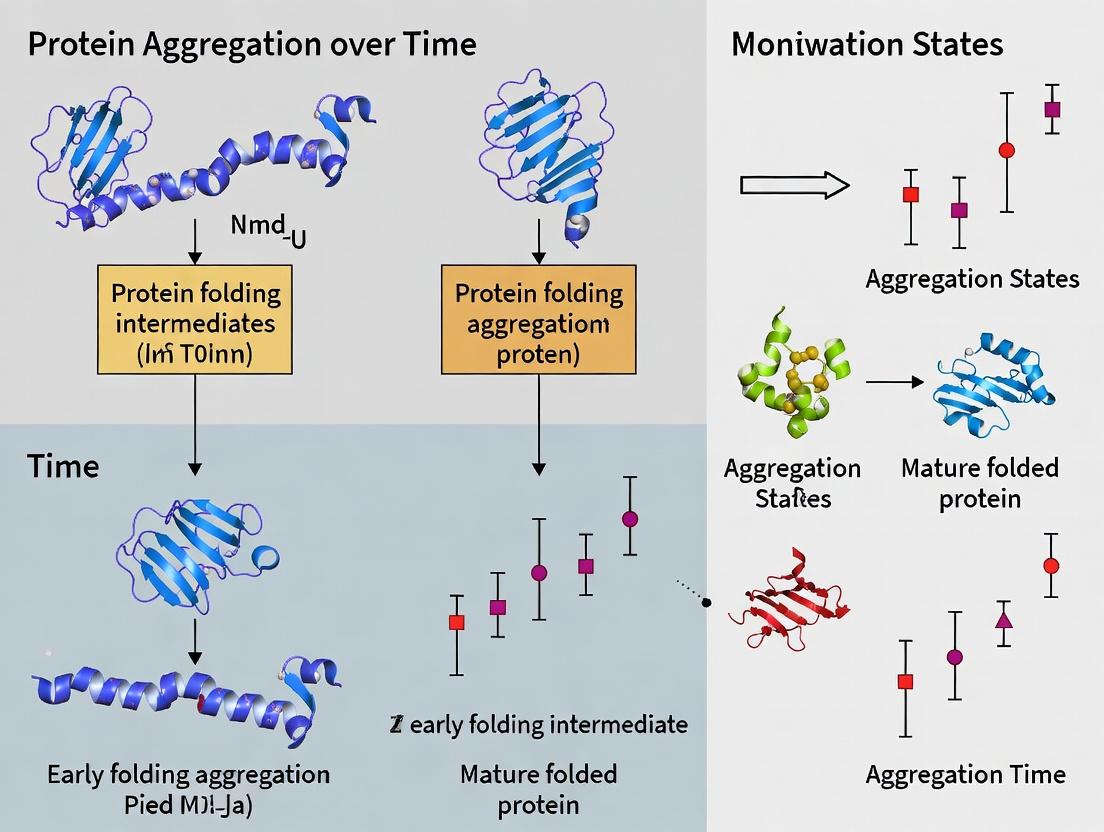
This article provides a complete guide to using Dynamic Light Scattering (DLS) for time-resolved monitoring of protein aggregation.
Monitoring Protein Aggregation Kinetics: A Comprehensive DLS Protocol for Stability Studies and Drug Development
Abstract
This article provides a complete guide to using Dynamic Light Scattering (DLS) for time-resolved monitoring of protein aggregation. Tailored for researchers and biopharmaceutical professionals, it covers foundational principles, step-by-step methodological protocols, advanced troubleshooting strategies, and comparative validation against complementary techniques. The content aims to equip scientists with the knowledge to implement robust, high-throughput DLS workflows for assessing protein stability, formulation screening, and mitigating aggregation-related risks in therapeutic development.
Understanding Protein Aggregation and the Core Principles of DLS Analysis
Why Monitor Protein Aggregation? Implications for Therapeutics and Disease.
Protein aggregation is a critical quality attribute (CQA) for biotherapeutics and a central pathological hallmark in neurodegenerative diseases. Monitoring aggregation kinetics, size distribution, and morphology is essential for ensuring drug product stability, safety, and efficacy, as well as for understanding disease mechanisms. Dynamic Light Scattering (DLS) is a cornerstone technique for real-time, non-invasive analysis of protein size and aggregation in solution, providing vital data from early research through formulation development and quality control.
Application Notes
1. Biotherapeutic Formulation and Stability Studies: Protein aggregation can compromise drug activity, increase immunogenicity risk, and reduce shelf life. DLS provides a rapid assessment of hydrodynamic size and polydispersity, enabling the screening of formulation conditions (pH, ionic strength, excipients) to minimize aggregation propensity.
2. Forced Degradation Studies: DLS is used to monitor aggregates formed under stress conditions (thermal, mechanical, chemical). This accelerates the identification of degradation pathways and informs robust formulation design.
3. Process Development: DLS monitors aggregation during upstream (fermentation) and downstream (purification, filtration, concentration) unit operations, helping to optimize conditions that minimize aggregate formation.
4. Disease Mechanism Research: In diseases like Alzheimer's (Aβ, tau) and Parkinson's (α-synuclein), DLS tracks the oligomerization and fibrillation kinetics of pathogenic proteins, correlating specific aggregate sizes/species with cellular toxicity.
Quantitative Data on Aggregate Impact
Table 1: Correlation between Aggregation Propensity and Therapeutic Product Quality
| Protein Therapeutic | Critical Aggregation Size Range | Typical DLS Polydispersity Index (PDI) Spec | Potential Impact |
|---|---|---|---|
| Monoclonal Antibodies | Dimers to sub-visible particles (>1µm) | <0.1 for monodisperse main peak | Reduced efficacy; increased immunogenicity risk |
| Recombinant Cytokines | Small soluble oligomers | <0.2 | Altered receptor binding & signaling |
| Enzyme Replacement Therapies | Large insoluble aggregates | <0.1 for native form | Loss of activity; enhanced immune response |
Table 2: DLS Characterization of Pathogenic Protein Aggregates in Disease Research
| Disease Protein | Native Size (nm) | Toxic Oligomer Size Range (nm) | Mature Fibril Size (nm) |
|---|---|---|---|
| Amyloid-β (Aβ1-42) | ~1-2 | 5-20 (soluble oligomers) | >1000 (filaments) |
| α-Synuclein | ~3-4 | 10-50 (soluble oligomers) | >1000 (Lewy body fibrils) |
| Huntingtin (Exon1) | ~4-5 | 10-100 (oligomers/protofibrils) | >1000 (inclusions) |
Experimental Protocols
Protocol 1: DLS for High-Throughput Formulation Screening
Objective: To identify formulation buffers that minimize protein aggregation for a monoclonal antibody (mAb) candidate.
Materials (Research Reagent Solutions):
- Protein Sample: Purified mAb at 5 mg/mL in a reference buffer.
- Formulation Buffers: 96-well plate with varying pH (5.0-7.4), ionic strength (0-150 mM NaCl), and excipients (sucrose, arginine, polysorbate 80).
- DLS Instrument: Plate-reader compatible DLS or automated cuvette-based system.
- Consumables: 96-well UV-transparent microplate or low-volume disposable cuvettes.
Methodology:
- Sample Preparation: Dilute the stock mAb into each formulation buffer in the 96-well plate to a final concentration of 1 mg/mL. Final volume: 100 µL. Centrifuge plate at 3000 x g for 10 minutes to remove dust/large particulates.
- Instrument Setup: Equilibrate instrument temperature to 25°C. Set acquisition parameters: 10 measurements per well, 10 seconds per measurement.
- Data Acquisition: Position plate and run automated measurement for all wells.
- Data Analysis: For each well, analyze the intensity-based size distribution. Record the Z-average hydrodynamic diameter (d.nm) and the Polydispersity Index (PDI). Identify formulations yielding the smallest d.nm and PDI < 0.1.
- Validation: Select top 3-5 formulations for further analysis via Size-Exclusion Chromatography (SEC) and long-term stability studies.
Protocol 2: DLS Kinetics of Amyloid-β (Aβ1-42) Fibrillation
Objective: To monitor the time-dependent aggregation of Aβ1-42 into oligomers and fibrils.
Materials (Research Reagent Solutions):
- Protein: Lyophilized Aβ1-42 peptide.
- Buffer: 20 mM sodium phosphate, 200 µM EDTA, pH 7.4.
- Solvent: Hexafluoroisopropanol (HFIP) for monomer preparation.
- DLS Instrument: Cuvette-based DLS with precise temperature control.
- Consumables: Low-binding microcentrifuge tubes, 1 cm pathlength quartz or disposable microcuvettes.
Methodology:
- Monomer Preparation: Dissolve Aβ1-42 in cold HFIP to 1 mM. Aliquot, evaporate HFIP under a gentle stream of argon, and store dry peptide films at -80°C.
- Aggregation Initiation: Resuspend a peptide film in cold dimethyl sulfoxide (DMSO) to 5 mM. Immediately dilute into pre-chilled assay buffer to a final concentration of 50 µM. Vortex vigorously for 30 seconds. This is time t = 0.
- DLS Kinetic Measurement: Transfer 60 µL of sample to a microcuvette. Place in DLS instrument thermostatted at 37°C.
- Data Acquisition: Set measurements to run automatically every 15 minutes for 24-48 hours. Each measurement cycle: 5 runs of 30 seconds each.
- Data Analysis: Plot Z-average diameter and scattering intensity vs. time. The lag phase (little change), growth phase (rapid increase in size/intensity), and plateau phase (mature fibrils) are identified. Correlate timepoints with Thioflavin T fluorescence assays.
Visualization
Diagram 1: DLS Workflow for Protein Stability Assessment
Diagram 2: Protein Aggregation Pathways in Disease & Biologics
The Scientist's Toolkit: Research Reagent Solutions
Table 3: Essential Materials for Protein Aggregation Studies via DLS
| Item | Function & Relevance |
|---|---|
| High-Purity Recombinant Proteins/Peptides | Essential for disease aggregation studies (e.g., Aβ, α-synuclein). Lot-to-lot consistency minimizes experimental variability. |
| Low-Binding Tubes & Microplates | Minimizes surface-induced aggregation and protein loss, critical for low-concentration and sticky amyloid samples. |
| Formulation Buffer Kits | Pre-mixed buffers spanning a range of pH and ionic strength for high-throughput screening of therapeutic protein stability. |
| Chemical Chaperones & Excipients | Agents like arginine HCl, sucrose, and polysorbate 80 used to probe and suppress aggregation pathways in formulation. |
| Standardized Aggregate Size Standards | Nanosphere size standards (e.g., 10nm, 100nm) for regular instrument calibration and validation of DLS measurements. |
| Specialized Solvents (e.g., HFIP) | Used to pre-treat amyloidogenic peptides to ensure a monomeric starting state for kinetic aggregation experiments. |
Application Notes
Dynamic Light Scattering (DLS) is a non-invasive, high-throughput analytical technique used to determine the size and size distribution of particles in suspension, typically in the sub-nanometer to several micron range. Within the context of monitoring protein aggregation—a critical concern in biopharmaceutical development—DLS provides essential insights into hydrodynamic radius, polydispersity, and aggregation kinetics in real-time.
The core physics principle is based on Brownian motion. Smaller particles diffuse more rapidly than larger ones. A laser beam illuminates the sample, and the intensity of the scattered light fluctuates over time due to the constructive and destructive interference of light waves scattered by moving particles. An autocorrelation function analyzes these intensity fluctuations, decaying more rapidly for fast-moving (small) particles and slowly for slow-moving (large) particles or aggregates. This decay rate is used to calculate the diffusion coefficient (D), which is then transformed into hydrodynamic radius (Rh) via the Stokes-Einstein equation.
For aggregation studies, DLS is exceptionally sensitive to the presence of large, aggregate species, even at low concentrations, making it a frontline tool for assessing protein therapeutic stability.
Key Quantitative Parameters in Protein Aggregation Studies
Table 1: Core DLS Output Parameters and Their Significance in Aggregation Monitoring
| Parameter | Symbol/Unit | Typical Range for Monomeric Proteins | Significance in Aggregation Context |
|---|---|---|---|
| Hydrodynamic Radius | Rh (nm) | 1-10 nm (size-dependent) | Baseline monomer size. Increase indicates growth of particles. |
| Polydispersity Index | PDI (Unitless) | <0.1 (Monodisperse) 0.1-0.4 (Moderate) >0.4 (Broad) | Heterogeneity of sizes. Rising PDI suggests onset of aggregation. |
| % Intensity by Size | % (Distributions) | Monomer peak >95% | Shifting intensity to larger size channels quantifies aggregate load. |
| Z-Average Diameter | dz (nm) | Derived from Rh | Intensity-weighted mean size. Sensitive to large aggregate skew. |
Table 2: Correlation of DLS Signals with Aggregate Types
| Aggregate Species | Approximate Rh Range | DLS Signature |
|---|---|---|
| Native Monomer | Baseline (e.g., 3-5 nm) | Dominant, narrow peak in intensity distribution. |
| Oligomers/Small Aggregates | 2-10x Rh (monomer) | Appearance of a second peak or shoulder; PDI increase. |
| Sub-micron Particles | 100 nm - 1 µm | Significant intensity shifts to larger channels. |
| Micron+ Particles/Precipitates | >1 µm | Possible sedimentation; scattering may become unstable. |
Experimental Protocols
Protocol 1: Standard DLS Measurement for Protein Sample Assessment
Objective: To determine the hydrodynamic size distribution and polydispersity of a protein sample prior to stability studies.
Materials: See "The Scientist's Toolkit" below.
Procedure:
- Sample Preparation:
- Filter all buffers using a 0.02 µm or 0.1 µm syringe filter to remove dust.
- Centrifuge the protein sample at 10,000-15,000 x g for 10-15 minutes at the study temperature to pellet any large, pre-existing aggregates or dust.
- Carefully pipette the supernatant for analysis. Do not disturb the pellet.
- Instrument Setup:
- Turn on the DLS instrument and laser, allowing adequate warm-up time (typically 30 min).
- Set the measurement temperature to the desired value (e.g., 25°C). Equilibrate the sample chamber.
- Select the appropriate laser wavelength (commonly 633 nm) and scattering angle (typically 173° for backscatter or 90°).
- Measurement:
- Load the filtered buffer into a clean, disposable cuvette as a blank. Perform a measurement to confirm the absence of scattering particles.
- Load the prepared protein sample (minimum volume ~50-100 µL) into a clean cuvette. Avoid introducing air bubbles.
- Set the measurement duration to 10-15 acquisitions of 10 seconds each.
- Initiate the measurement. The software will automatically compute the intensity autocorrelation function.
- Data Analysis:
- The software fits the correlation function using algorithms (e.g., Cumulants analysis for PDI and Z-average, NNLS or CONTIN for size distribution).
- Record the Z-average diameter (dz), PDI, and the intensity-size distribution plot.
- For a monodisperse sample, the PDI should be low (<0.1). A higher PDI suggests sample polydispersity/aggregation.
Protocol 2: Time-Resolved DLS for Monitoring Aggregation Kinetics
Objective: To monitor changes in protein size distribution over time under stress conditions (e.g., elevated temperature).
Materials: As in Protocol 1, plus a temperature-controlled sample holder.
Procedure:
- Initial Measurement:
- Prepare the protein sample as in Protocol 1, steps 1-2.
- Perform an initial measurement at the baseline temperature (e.g., 20°C) to characterize the starting state.
- Kinetic Experiment Setup:
- Program the instrument's temperature controller to shift to and maintain the stress condition (e.g., 40°C or 45°C).
- Set up an automated measurement sequence (e.g., measure every 2-5 minutes for 12-24 hours).
- Data Collection & Analysis:
- Initiate the temperature jump and start the automated sequence.
- Export time-series data for dz, PDI, and the intensity at a channel corresponding to large sizes (e.g., >100 nm).
- Plot these parameters vs. time to identify lag phase, growth phase, and plateau in the aggregation process.
Visualizations
DLS Principle from Scattering to Size
DLS Workflow for Monitoring Aggregation Kinetics
The Scientist's Toolkit
Table 3: Essential Research Reagent Solutions & Materials for DLS in Protein Studies
| Item | Function & Importance |
|---|---|
| High-Purity, Low-Dust Buffers (e.g., filtered PBS, acetate, histidine) | Provides stable scattering background. Filtration removes particulates that cause spurious signals. |
| Disposable Micro Cuvettes (Quartz or UV-transparent plastic) | Holds sample for measurement. Disposable type minimizes cross-contamination and sample loss. |
| Syringe Filters (0.02 µm or 0.1 µm pore size, ANOTOP or similar) | Critical for filtering buffers and sometimes samples to eliminate dust. |
| Low-Protein Binding Microcentrifuge Tubes & Pipette Tips | Prevents surface-induced aggregation and sample loss during preparation. |
| NIST-Traceable Size Standard Nanospheres (e.g., 60nm, 100nm) | Validates instrument performance and accuracy of size measurements. |
| Stable, Monodisperse Control Protein (e.g., BSA) | Serves as a system suitability check for sample prep and measurement protocol. |
| Temperature-Controlled Sample Chamber | Enables precise kinetic studies of temperature-induced aggregation. |
Application Notes
Within the thesis investigating Dynamic Light Scattering (DLS) for monitoring time-dependent protein aggregation, the parameters of Hydrodynamic Diameter (Dh), Polydispersity Index (PDI), and Intensity Distribution are critical for assessing sample stability, aggregation kinetics, and the presence of subvisible particles. These parameters provide a foundational characterization that informs downstream decisions in biotherapeutic development.
Hydrodynamic Diameter (Dh) is the apparent size of a particle (or protein) as it diffuses in solution. In aggregation studies, an increase in mean Dh over time indicates the formation of larger aggregates. Monitoring the shift from a native monomeric peak (~1-10 nm) to oligomeric or larger aggregates (>100 nm) is a primary output.
Polydispersity Index (PDI) is a dimensionless measure of the breadth of the size distribution, calculated from the cumulants analysis of the autocorrelation function. A PDI <0.1 is typically considered monodisperse (e.g., a pure, stable monomer). A PDI >0.3 indicates a highly polydisperse system, such as a mixture of monomers, oligomers, and larger aggregates, which is a common endpoint in stressed aggregation studies.
Intensity Distribution plots show the relative scattering intensity contributed by particles of different sizes. Since scattering intensity is proportional to the sixth power of the diameter (≈d⁶), this distribution is heavily weighted toward larger particles. A small population of large aggregates can dominate the signal, masking a majority population of monomers. Therefore, intensity-weighted distributions are sensitive early indicators of aggregation, while volume- or number-weighted distributions (derived mathematically) are used to estimate the actual population distribution.
| Parameter | Typical Range for Stable Protein | Indicative Range for Aggregation | Primary Significance in Time Study |
|---|---|---|---|
| Mean Dh (nm) | 3-10 nm (monomer) | Increases to >50 nm | Tracks growth of aggregate species. |
| PDI | 0.01 - 0.1 | 0.2 - 0.5+ | Quantifies heterogeneity; rising PDI indicates polydisperse mixture. |
| Peak Ratio in Intensity Distribution | Single peak at monomer size. | Appearance of 2nd peak >100 nm. | Identifies sub-populations; tracks shift in intensity from small to large particles. |
Experimental Protocols
Protocol 1: Basic DLS Time-Course Monitoring of Protein Aggregation
Objective: To monitor the kinetics of heat-induced protein aggregation by measuring Dh, PDI, and intensity distribution over time.
Materials:
- Purified protein sample (e.g., monoclonal antibody at 1 mg/mL in a suitable buffer).
- DLS instrument (e.g., Malvern Zetasizer Nano, Wyatt DynaPro).
- Low-volume quartz cuvettes or disposable microcuvettes.
- Bench-top centrifuge (for sample clarification).
- Thermostatted sample chamber or external incubator.
Procedure:
- Sample Preparation: Clarify the protein solution by centrifugation at 10,000-15,000 x g for 10 minutes to remove dust and pre-existing large aggregates.
- Initial Measurement: Load ~50 µL of supernatant into a clean cuvette. Place in the instrument equilibrated at the starting temperature (e.g., 25°C). Allow 2 minutes for temperature equilibration.
- Data Acquisition Settings: Set measurement angle to 173° (backscatter, NIBS configuration). Configure software to perform a minimum of 10-15 sub-runs per measurement. Set automatic attenuation selection.
- Baseline Measurement: Perform triplicate measurements at the starting condition. Record the mean Dh, PDI, and intensity distribution.
- Induce Aggregation: Transfer the cuvette to a thermostatted holder at the stress condition (e.g., 45°C). Alternatively, use the instrument's temperature control if precise.
- Time-Course Monitoring: At defined intervals (e.g., t = 0, 15, 30, 60, 120, 240, 480 minutes), briefly remove the sample, gently invert twice to mix, and perform a DLS measurement as in step 4.
- Data Analysis: Plot mean Dh and PDI versus time. Overlay intensity distribution plots at key time points to visualize the emergence of aggregate peaks.
Protocol 2: Advanced Analysis of Intensity Distributions for Early Detection
Objective: To deconvolute the intensity distribution data to identify low-abundance, large aggregates that signal early-stage instability.
Materials: As in Protocol 1, with DLS software capable of multiple narrow mode analysis or regularization algorithms.
Procedure:
- High-Sensitivity Measurement: For samples at early time points, increase the number of sub-runs to 20-30 and extend the measurement duration to improve signal-to-noise.
- Multiple Peak Analysis: Use the "Multiple Narrow Modes" or "Non-Negatively Constrained Least Squares (NNLS)" analysis function in the DLS software on the intensity distribution data.
- Baseline Subtraction: Visually or mathematically define a baseline for the distribution to isolate small peaks from the tail of the main monomer peak.
- Track Aggregate Peak Parameters: For any secondary peak identified above ~50 nm, record its mean diameter and its relative intensity (% of total scattering). Plot the relative intensity of this aggregate peak versus time. This is often a more sensitive metric than the z-average Dh for early aggregation.
- Correlate with PDI: Note the correlation between the emergence of a secondary peak in the intensity distribution and a rise in the overall PDI value.
Diagrams
Title: Protein Aggregation Time-Course DLS Protocol
Title: DLS Data Flow from Measurement to Key Parameters
The Scientist's Toolkit: Research Reagent Solutions
| Item | Function & Relevance to DLS Aggregation Studies |
|---|---|
| Disposable Micro Cuvettes | Minimize sample volume (12-50 µL), reduce cleaning artifacts, and prevent cross-contamination between time points. Essential for high-throughput or multiple condition screening. |
| Zirconia Beads (for SEC-DLS) | Used in-line with Size Exclusion Chromatography (SEC) to separate species prior to DLS detection. Provides Dh and PDI for isolated monomer, dimer, or aggregate peaks, deconvoluting complex mixtures. |
| Standardized Latex Nanospheres | (e.g., 60 nm, 100 nm) Used for routine instrument performance validation. Confirms laser alignment, detector sensitivity, and size accuracy before critical aggregation studies. |
| In-line Degasser & 0.02 µm Filter | Ensures buffer used for sample preparation is free of air bubbles and particulate contaminants, which are major sources of artifact signals in DLS. |
| Chemical Stressors (e.g., GdnHCl, NaCl) | Used to induce controlled chemical denaturation or salting-out aggregation, allowing study of different aggregation pathways (e.g., unfolded vs. native aggregation). |
| 96-Well Plate DLS Compatible Plates | Enable automated, high-throughput DLS measurements for formulation screening or stability assessment under various stress conditions. |
Within the broader thesis on Dynamic Light Scattering (DLS) for monitoring protein aggregation over time, understanding the distinct stages of the aggregation timeline is fundamental. This application note details the nucleation, growth, and precipitation phases, providing protocols for their experimental observation and quantification using DLS and complementary techniques. Accurate monitoring of this timeline is critical in biopharmaceutical development to ensure drug stability and safety.
The Aggregation Mechanism: A Phase Diagram Perspective
Protein aggregation is a kinetic and thermodynamic process often described by a phase diagram. The timeline initiates with the formation of a critical nucleus (nucleation), proceeds via the addition of monomers or oligomers (growth), and culminates in the separation of a dense protein phase (precipitation).
Diagram 1: Protein Aggregation Pathway Timeline
Key Research Reagent Solutions & Materials
The following tools are essential for studying the aggregation timeline.
| Reagent/Material | Function in Aggregation Studies |
|---|---|
| Recombinant, Purified Protein | The primary subject of study; high purity is required to isolate intrinsic aggregation behavior. |
| Formulation Buffers (e.g., PBS, citrate) | To maintain specific pH and ionic strength conditions that can accelerate or inhibit aggregation. |
| Chemical Denaturants (e.g., GdnHCl, Urea) | To destabilize the native state and initiate aggregation from unfolded/partially unfolded states. |
| Aggregation Inducers (e.g., SDS, Heating Block) | To apply controlled stress (chemical or thermal) and synchronize the start of nucleation. |
| Thioflavin T (ThT) Fluorescent Dye | Binds to cross-β-sheet structures, allowing quantification of fibrillar growth phase. |
| Static Light Scattering (SLS) Plate Reader | Monitors the increase in aggregate mass over time, complementary to DLS size data. |
| Size-Exclusion Chromatography (SEC) Columns | For offline sampling and separation of monomers from oligomers/nuclei during lag phase. |
| Micro-Filter Membranes (e.g., 0.1 µm) | To separate soluble aggregates from precipitated material for fraction analysis. |
Quantitative Signatures of Aggregation Stages
DLS and complementary techniques provide distinct quantitative readouts for each phase of the timeline.
Table 1: Experimental Signatures Across the Aggregation Timeline
| Aggregation Phase | Key DLS Metrics | Complementary Assay Data | Typical Duration |
|---|---|---|---|
| Nucleation (Lag) | Polydispersity Index (PdI) increases slightly. Mean size (Z-avg) stable. | SEC shows loss of monomer. SLS signal minimal increase. ThT flat. | Hours to days. |
| Growth | Z-avg increases exponentially. PdI often high. Intensity distribution shifts. | ThT fluorescence rises sharply. SLS intensity increases. | Minutes to hours. |
| Precipitation/Plateau | Correlation decay may become multimodal. Scattering intensity may fluctuate/drop. | Visible turbidity. ThT may plateau or quench. Filterable mass increases. | Indefinite steady state. |
Experimental Protocols
Protocol 1: Initiating and Monitoring Aggregation via Thermal Stress
Objective: To induce and track the full aggregation timeline using temperature as a stressor.
- Sample Preparation: Buffer-exchange your protein (e.g., 1 mg/mL monoclonal antibody) into a formulation buffer (e.g., 20 mM Histidine, pH 6.0) using centrifugal filters. Clarify through a 0.1 µm filter.
- DLS Instrument Setup: Equilibrate a high-sensitivity DLS instrument (e.g., Malvern Zetasizer) at the desired stress temperature (e.g., 40°C, 45°C, 50°C). Allow cell holder to stabilize for 30 min.
- Baseline Measurement: Load the filtered sample into a low-volume quartz cuvette. Perform 5 measurement runs at 25°C to establish the native size (Z-avg) and PdI baseline.
- Initiation & Time-Course: Immediately transfer the cuvette to the pre-heated cell holder. Start an automated time-course measurement: 3 runs per measurement, repeated every 10 minutes for 24-48 hours. Save the Z-avg, PdI, and scattering intensity for each time point.
- Parallel Sampling: For selected time points, extract a sample aliquot for complementary SEC or ThT analysis to correlate with DLS data.
Protocol 2: Seeding Experiments to Bypass Nucleation
Objective: To study the growth phase in isolation by adding pre-formed aggregates (seeds) to native protein solution.
- Seed Preparation: Generate seeds by stressing a separate aliquot of the protein (at high concentration) under vigorous aggregation conditions (e.g., 65°C for 1 hr). Sonicate the resulting aggregate suspension briefly (10 sec pulses, 50% amplitude) to fragment large structures.
- Characterize Seeds: Dilute seeds 100-fold in buffer and measure by DLS to determine their mean size (target: 50-200 nm).
- Growth Reaction: Mix native protein (1 mg/mL) with a low percentage (e.g., 1-5% w/w) of the characterized seed solution in a cuvette.
- DLS Monitoring: Immediately place the cuvette in a DLS instrument at a permissive temperature (e.g., 37°C). Perform continuous measurements (every 2-5 minutes) for 2-8 hours. The lag phase should be minimal or absent, with an immediate exponential increase in Z-avg observed.
Protocol 3: Quantifying Precipitate Formation
Objective: To distinguish soluble aggregates from precipitated material.
- Aggregation Reaction: Run a standard thermal stress aggregation time-course (as in Protocol 1) in a microcentrifuge tube scale.
- Fractionation: At defined time points (e.g., 0, 2, 8, 24 hrs), remove a tube and centrifuge at 16,000 x g for 10 minutes.
- Analysis of Fractions:
- Supernatant (Soluble): Carefully pipette the supernatant. Analyze by DLS for size distribution and by absorbance at 280 nm or a colorimetric assay (e.g., BCA) for soluble protein concentration.
- Pellet (Precipitate): Resuspend the pellet in an equal volume of buffer with 2% SDS. Measure protein concentration. The pellet mass over time quantifies precipitation.
- Data Integration: Plot soluble protein concentration and pellet mass versus time. The inflection point where pellet mass rapidly increases marks the precipitation phase.
Diagram 2: DLS Workflow for Aggregation Time-Course
Data Interpretation and Integration
Correlating DLS data with orthogonal techniques is key to mapping events onto the timeline. A rising Z-avg with a concurrent increase in ThT fluorescence confirms the growth of amyloid-like fibrils. A subsequent drop in the DLS-derived scattering intensity coinciding with visible turbidity signals precipitation. This multi-parametric approach, central to the thesis, transforms DLS from a simple sizing tool into a powerful monitor of the dynamic aggregation landscape, providing critical insights for stabilizing therapeutic proteins.
Advantages of DLS for Real-Time, Non-Destructive Aggregation Monitoring
Within the context of a thesis investigating Dynamic Light Scattering (DLS) for monitoring protein aggregation kinetics and stability, these application notes detail its core advantages. DLS provides a critical methodology for real-time, label-free analysis of hydrodynamic size distribution, enabling continuous assessment of aggregation in native formulations.
Key Advantages Summary
Table 1: Quantitative Comparison of DLS with Common Aggregation Monitoring Techniques
| Technique | Size Range | Sample Concentration | Measurement Time | Sample Preparation | Primary Output |
|---|---|---|---|---|---|
| Dynamic Light Scattering (DLS) | ~0.3 nm - 10 μm | 0.1 mg/mL - 100 mg/mL | 1 - 5 minutes | Minimal, non-destructive | Hydrodynamic diameter (Z-average), PDI, size distribution |
| Size Exclusion Chromatography (SEC) | ~1 nm - 30 nm | 0.1 mg/mL - 5 mg/mL | 10 - 30 minutes | Dilution, filtration, destructive | Separated populations by size, quantification of monomers/aggregates |
| Analytical Ultracentrifugation (AUC) | ~0.1 nm - 10 μm | 0.1 mg/mL - 20 mg/mL | 4 - 12 hours | Minimal, but lengthy setup | Sedimentation coefficient, mass distribution, shape insights |
| Micro-Flow Imaging (MFI) | ~1 μm - 100 μm | > 0.1 mg/mL (particle-dependent) | 1 - 10 minutes | Minimal, non-destructive | Particle count, size, and visual morphology |
Table 2: Representative DLS Data from a Thermal Stress Study of a Monoclonal Antibody (5 mg/mL)
| Time (Day) | Temperature | Z-Average (d.mm) | Polydispersity Index (PDI) | % Intensity > 100 nm | Observable State |
|---|---|---|---|---|---|
| 0 | 4°C (Control) | 10.2 ± 0.3 | 0.05 ± 0.02 | 0.5 | Native, monodisperse |
| 7 | 40°C | 11.5 ± 0.5 | 0.08 ± 0.03 | 2.1 | Onset of aggregation |
| 14 | 40°C | 15.8 ± 1.2 | 0.22 ± 0.05 | 15.7 | Significant aggregation |
| 7 | 25°C | 10.5 ± 0.4 | 0.06 ± 0.02 | 1.0 | Stable |
| 14 | 25°C | 10.8 ± 0.5 | 0.07 ± 0.03 | 1.8 | Stable |
Experimental Protocols
Protocol 1: Real-Time Stability and Kinetic Profiling
Objective: To monitor the aggregation kinetics of a protein therapeutic under accelerated storage conditions in real-time.
Materials: See "Scientist's Toolkit" below. Method:
- Sample Preparation: Filter the protein formulation (e.g., 5 mg/mL mAb in histidine buffer) using a 0.1 μm or 0.22 μm syringe filter directly into a clean, low-volume, disposable DLS cuvette. Perform in triplicate.
- Instrument Setup: Equilibrate the DLS instrument's temperature control to the first stress condition (e.g., 25°C). Set measurement angle to 173° (backscatter) for high concentration samples.
- Baseline Measurement: Measure each sample at t=0. Perform a minimum of 10-15 runs per measurement, with an automatic run duration. Record the Z-average diameter, PDI, and correlation function.
- Real-Time Incubation & Monitoring: Place the cuvettes in the instrument's temperature-controlled sample holder or in an external incubator set to the stress temperature (e.g., 40°C). For automated monitoring, use an instrument with an in-situ incubator.
- Scheduled Measurements: Program the DLS software to take measurements at defined intervals (e.g., every 2 hours for the first day, then daily). Each measurement point should consist of averaged data from the repeated runs.
- Data Analysis: Plot Z-average and PDI vs. time. Use the correlation function data and intensity size distribution plots to identify the appearance of oligomeric or subvisible particle populations.
Protocol 2: High-Throughput Formulation Screening
Objective: To rapidly assess the aggregation propensity of a lead protein across multiple buffer and excipient conditions.
Materials: 96-well plate compatible with DLS plate readers, formulation screening library. Method:
- Plate Preparation: Pipette 100-200 μL of each unique protein formulation (constant protein concentration) into individual wells of a 96-well plate. Include controls. Centrifuge the plate briefly to remove air bubbles.
- Instrument Calibration: Calibrate the plate-reading DLS instrument using a standard latex nanosphere according to manufacturer instructions.
- Automated Measurement: Load the plate into the instrument. Define the measurement map. Set the measurement parameters: 3-5 measurements per well, 5-10 seconds per measurement.
- Data Collection: The instrument automatically measures each well, generating a Z-average and PDI value for each formulation.
- Hit Identification: Rank formulations based on lowest initial PDI and smallest Z-average relative to the control. Select top candidates for further long-term stability studies (Protocol 1).
Visualizations
Real-Time Aggregation Monitoring Workflow
DLS Advantages Drive Key Applications
The Scientist's Toolkit: Research Reagent Solutions
Table 3: Essential Materials for DLS-Based Aggregation Studies
| Item | Function & Importance |
|---|---|
| Disposable Micro Cuvettes (e.g., ZEN0040) | Low-volume, disposable cells to prevent cross-contamination and eliminate cleaning artifacts, crucial for sensitive size measurements. |
| Syringe Filters (0.1 μm, Anotop or similar) | For critical sample clarification to remove dust and pre-existing aggregates that cause signal interference. |
| Nanoparticle Size Standards (e.g., NIST-traceable latex beads) | Essential for routine validation and calibration of instrument performance and accuracy. |
| Stable Reference Protein (e.g., BSA, Lysozyme) | Used as a system suitability control to ensure the DLS setup is functioning correctly for biological samples. |
| High-Purity Water (Filtered, 0.1 μm) | For dilutions and as a blank control to assess buffer and cuvette cleanliness. |
| Temperature-Controlled Sample Holder/Incubator | Enables precise thermal stress studies and real-time kinetic measurements in situ. |
| 96-Well Plates for DLS Plate Readers | Enables high-throughput screening of multiple formulations or conditions with minimal sample consumption. |
Step-by-Step DLS Protocol for Time-Course Aggregation Studies
Within the context of a thesis on using Dynamic Light Scattering (DLS) to monitor protein aggregation over time, rigorous sample preparation is paramount. The quality and consistency of the data directly depend on the initial handling of the protein solution. This document details best practices for buffer exchange, concentration, and filtration to ensure reliable and reproducible DLS measurements.
Buffer Considerations for DLS Studies
The choice of buffer directly influences protein stability and aggregation propensity.
Key Buffer Parameters:
- pH: Must be optimal for protein stability, typically away from the isoelectric point (pI) to minimize aggregation.
- Ionic Strength: High salt concentrations can shield charges and promote aggregation (salting-out).
- Excipients: Additives like sugars, amino acids, or surfactants can stabilize proteins.
- Chelating Agents: EDTA can be crucial for metal-sensitive proteins.
- Filtering: All buffers must be filtered through a 0.22 µm or 0.1 µm filter before use to remove particulate background.
Table 1: Common Buffer Components and Their Impact on DLS
| Component | Typical Concentration | Function in Aggregation Studies | Potential DLS Interference |
|---|---|---|---|
| Histidine-HCl | 10-20 mM | Provides buffering capacity near physiological pH. | Low. Must be filtered. |
| NaCl | 50-150 mM | Modulates ionic strength, can affect colloidal stability. | Can contribute to scattering if not matched in dialysate. |
| Sucrose/Trehalose | 5-10% (w/v) | Stabilizer, reduces aggregation via preferential exclusion. | Increases solution viscosity; must be accounted for in data analysis. |
| Polysorbate 80 | 0.01-0.05% (w/v) | Surfactant, prevents surface-induced aggregation. | Can form micelles (~10 nm). Critical to use batch-matched buffer blanks. |
| EDTA | 0.5-1 mM | Chelates divalent cations, inhibits metalloprotease activity. | Negligible. |
Sample Concentration Protocols
For DLS, an optimal concentration range is required to balance signal strength and interparticle effects.
Recommended Protocol: Concentration via Centrifugal Filters
- Equipment: Select an appropriate molecular weight cut-off (MWCO) centrifugal filter (typically 10kDa or 30kDa MWCO for monoclonal antibodies).
- Pre-rinse: To reduce adsorptive losses, pre-wet the filter membrane by adding 500 µL of sample buffer and centrifuging at the manufacturer's recommended g-force for 2 minutes. Discard the flow-through.
- Loading: Load the initial protein sample (≤500 µL recommended). Do not exceed the maximum fill line.
- Concentration: Centrifuge at the recommended g-force (typically 3,000-4,000 x g) at 4°C or room temperature (per protein stability). Use short spin intervals (e.g., 5-10 mins) to avoid over-concentration and excessive polarization at the membrane.
- Recovery: Invert the device into a fresh collection tube. Centrifuge at 1,000 x g for 2 minutes to recover the concentrated protein.
- Dilution/Reconstitution: For buffer exchange, add desired buffer to the concentrated sample and repeat concentration. For dilution to target concentration, use filtered buffer.
Table 2: Target Concentration Ranges for DLS Measurement
| Protein Type | Typical Ideal DLS Concentration Range | Justification |
|---|---|---|
| Monoclonal Antibody | 0.5 - 2 mg/mL | Sufficient signal while minimizing viscosity and repulsive/attractive interactions. |
| Enzyme | 0.2 - 1 mg/mL | Often more prone to self-association; lower concentrations mitigate interparticle effects. |
| Recombinant Protein | 0.5 - 2 mg/mL | Start at 1 mg/mL and perform a concentration series to check for concentration-dependent aggregation. |
Critical Filtration Protocol
Final filtration before DLS measurement is essential to remove dust, aggregates from handling, and other large particulates that can dominate the scattering signal.
Protocol: Syringe Filtration for DLS Samples
- Materials: 1 mL or 2 mL sterile syringe, 0.22 µm or 0.1 µm low protein-binding hydrophilic membrane filter (e.g., PES, PVDF).
- Preparation: Draw the concentrated and buffer-exchanged protein sample into the syringe. Avoid introducing air bubbles.
- Filtration: Attach the filter unit securely. Gently and slowly depress the plunger to pass the sample through the filter into a clean, low-protein-binding microcentrifuge tube.
- Discard: The first 20-50 µL of filtrate may contain residual wetting agent from the filter membrane. It is good practice to discard this volume to avoid interference.
- Direct Loading: The filtered sample should be loaded directly into a meticulously cleaned DLS cuvette without delay.
Workflow and Relationship Diagrams
Title: DLS Sample Preparation Core Workflow
Title: Parameter Decision Tree for Sample Prep
The Scientist's Toolkit: Research Reagent Solutions
Table 3: Essential Materials for DLS Sample Preparation
| Item | Function & Relevance to DLS Aggregation Studies |
|---|---|
| Low-Protein-Binding Microcentrifuge Tubes | Minimizes loss of protein, especially aggregates, via surface adsorption, preserving sample representativeness. |
| Amicon Ultra/Microcon Centrifugal Filters | For gentle concentration and buffer exchange. A 10kDa MWCO is standard for mAbs. Enables precise targeting of DLS concentration. |
| 0.1 µm PES Syringe Filters | For final sample clarification. Removes submicron particulates and pre-existing large aggregates that could skew initial time-point measurements. |
| Disposable Size Exclusion Columns | Alternative for rapid buffer exchange into a final formulation without concentration steps, minimizing shear stress. |
| Certified Clean DLS Cuvettes | Specifically designed for light scattering with clear, dust-free optical pathways. Essential for low-noise baselines. |
| Particle-Free Buffer Solutions | Commercially available or prepared in-house and rigorously filtered. Used for instrument blank subtraction, critical for data accuracy. |
| Precision Digital Pipettes | For accurate and reproducible sample handling, especially when preparing serial dilutions for concentration-dependent studies. |
Instrument Setup and Measurement Configuration for Kinetic Experiments
Within the broader thesis investigating Dynamic Light Scattering (DLS) for monitoring time-dependent protein aggregation, precise instrument setup and measurement configuration are critical. This protocol details the steps to establish a robust kinetic DLS experiment, ensuring high-quality, reproducible data for tracking aggregate formation and growth.
Pre-Experimental Instrument Calibration
Prior to sample measurement, perform these calibration steps.
Protocol 2.1: System Validation Using a Reference Standard
- Material: Toluene (for refractive index verification) or a certified polystyrene/nanosphere size standard (e.g., 60 nm or 100 nm).
- Procedure:
- Ensure the instrument and sample chamber are thermally equilibrated (typically 25°C).
- Filter toluene (0.02 µm filter) into a clean, dust-free cuvette.
- Insert the cuvette into the instrument.
- Run a measurement at a standard angle (e.g., 173° for backscatter instruments, 90° for others).
- Verify the recorded refractive index and viscosity match known literature values for toluene at the set temperature.
- For size standards, measure and confirm the reported Z-Average diameter and polydispersity index (PdI) are within the manufacturer's certificate range.
Critical Measurement Configuration Parameters
Optimal configuration is a balance between data quality, sample stability, and temporal resolution. The following table summarizes key parameters.
Table 1: Core Configuration Parameters for Kinetic DLS Experiments
| Parameter | Recommended Setting for Kinetics | Rationale |
|---|---|---|
| Temperature | Controlled ±0.1°C (e.g., 25°C or 37°C) | Critical for reproducible aggregation kinetics. |
| Equilibration Time | 300-600 seconds before first measurement | Ensures thermal homogeneity and removes convection. |
| Measurement Angle | Backscatter (173°) or 90° | Minimizes multiple scattering from aggregates. |
| Number of Runs | 10-20 per measurement point | Balances statistical accuracy with time resolution. |
| Run Duration | 10-15 seconds per run | Sufficient for correlator accumulation; shorter for fast kinetics. |
| Measurement Interval | 30-600 seconds (project-dependent) | Determines temporal resolution of the aggregation profile. |
| Attenuator / Laser Power | Auto or adjusted to avoid saturation | Optimizes signal intensity without detector overflow. |
| Correlator Settings | Default or logarithmic spacing | Captures decay rates for monomers and large aggregates. |
Detailed Protocol for a Kinetic Aggregation Experiment
Protocol 4.1: Initiating and Monitoring Time-Dependent Aggregation This protocol assumes a purified protein sample is prepared in a suitable, filtered buffer.
Sample Preparation:
- Centrifuge all protein and buffer solutions at ≥15,000 x g for 10 minutes at 4°C to remove pre-existing particulates.
- Filter the final buffer through a 0.02 µm or 0.1 µm syringe filter.
- Prepare the protein sample at the desired concentration (e.g., 1 mg/mL) in filtered buffer. Gently mix by inversion.
- Load the sample into a clean, low-volume, disposable cuvette (e.g., 12 µL micro-cuvette) or a quartz cuvette. Avoid introducing bubbles.
Instrument Setup:
- Power on the DLS instrument and laser, allowing stabilization (≥30 min).
- Set the temperature control to the desired value (e.g., 37°C to accelerate aggregation).
- Load the calibration and material optical properties (RI, absorption) for your protein-buffer system.
- Configure the kinetic measurement suite. Input parameters from Table 1 appropriate for your expected aggregation rate.
Measurement Execution:
- Place the loaded cuvette into the thermally controlled sample chamber.
- Initiate the pre-configured kinetic experiment. The software will automatically:
- Equilibrate the sample to the set temperature.
- Perform sequential DLS measurements at the defined intervals.
- Record the intensity correlation function, derived size (Z-Average), and PdI at each time point.
- Monitor the count rate trace for signs of settling or bubble formation.
Data Collection Endpoint:
- Continue the experiment until a clear plateau in the Z-Average or intensity-weighted size distribution is observed, or until the sample precipitates (indicated by a sudden drop in count rate).
Data Interpretation and Quality Control Metrics
Table 2: Key Output Parameters and Their Significance in Aggregation Kinetics
| Output Parameter | Definition | Significance in Aggregation Monitoring |
|---|---|---|
| Z-Average Diameter (d.nm) | Intensity-weighted mean hydrodynamic size. | Primary indicator of aggregate growth over time. |
| Polydispersity Index (PdI) | Width of the size distribution (0-1). | Low PdI (<0.1): monodisperse. Increasing PdI indicates a broadening distribution of aggregate sizes. |
| Count Rate (kcps) | Scattered photon arrival rate. | A sudden increase suggests nucleation/rapid growth. A decrease may indicate sedimentation. |
| Correlation Function Fit | Quality of the exponential decay fit. | A stable, smooth decay indicates good data quality. Multi-exponential fits suggest multiple populations. |
Kinetic DLS Workflow for Aggregation
The Scientist's Toolkit: Research Reagent Solutions
Table 3: Essential Materials for Kinetic DLS Aggregation Studies
| Item | Function & Importance |
|---|---|
| High-Purity, Lyophilized Protein | Starting material with minimal initial aggregates is crucial for clean baseline measurements. |
| Ultra-Pure Water (e.g., Milli-Q) | Prevents interference from particulates and ions present in deionized or distilled water. |
| Low-Protein Binding Filters (0.02/0.1 µm) | For clarifying buffers and samples without significant protein loss or introduction of leachates. |
| Disposable, Low-Volume Cuvettes (e.g., 12 µL) | Minimizes sample volume, reduces cost, and lowers contamination risk between runs. |
| Certified Nanosphere Size Standards | Validates instrument performance and ensures data accuracy before and during a study. |
| Stable, Inert Buffer Salts (e.g., USP-grade) | Provides a consistent chemical environment; impurities can nucleate aggregation. |
| Chemical Stressors (e.g., GdnHCl, NaCl) | Used to induce controlled, time-dependent aggregation for mechanistic studies. |
| Data Analysis Software (e.g., NNLS, CONTIN) | Deconvolutes correlation functions to generate intensity- or volume-weighted size distributions over time. |
This application note details the design of a time-course experiment to monitor protein aggregation kinetics using Dynamic Light Scattering (DLS). This protocol is framed within a thesis investigating the early-stage aggregation of therapeutic monoclonal antibodies (mAbs) under thermal stress. Proper design of sampling intervals, experiment duration, and precise temperature control is critical for capturing the nucleation, growth, and plateau phases of aggregation.
The following table summarizes optimized parameters based on current literature for a model mAb (IgG1) at 1 mg/mL in a standard phosphate-buffered saline formulation.
Table 1: Optimized Time-Course Parameters for DLS-Based Aggregation Monitoring
| Parameter | Recommended Setting | Rationale & Notes |
|---|---|---|
| Temperature | 40°C, 45°C, 50°C | Common stress temperatures. Below 40°C, aggregation may be too slow for practical study. Above 50°C, denaturation may dominate. |
| Experiment Duration | 0 - 168 hours (7 days) | Captures lag, growth, and plateau phases for most mAbs under moderate stress. |
| Sampling Intervals | 0, 2, 4, 8, 24, 48, 72, 96, 168 hours | High frequency early on (captures nucleation), increasing intervals later. |
| DLS Measurement per Time Point | 10-15 consecutive reads | Ensures statistical reliability for hydrodynamic radius (Rh) and polydispersity index (PDI). |
| Sample Volume | 12-20 µL (low volume cuvette) | Minimizes protein consumption; ensure no evaporation during long-term studies. |
| Replicates | n=3 (minimum) independent samples | Accounts for variability in nucleation stochasticity. |
Detailed Protocol: DLS Time-Course for Protein Aggregation
Materials & Reagent Solutions
Table 2: Research Reagent Solutions & Essential Materials
| Item | Function | Example/Specification |
|---|---|---|
| Monoclonal Antibody | Model protein for aggregation study. | IgG1, >95% purity, 1 mg/mL in formulation buffer. |
| Formulation Buffer | Provides stable, controlled ionic environment. | 20 mM Histidine-HCl, 150 mM NaCl, pH 6.0. Filtered (0.1 µm). |
| Sterile Syringe Filters | Removes pre-existing particulates and aggregates. | 0.1 µm PVDF or ANTOP size exclusion filter. |
| Low-Volume Disposable Cuvettes | Holds sample for DLS measurement. | Quartz or UV-transparent plastic, 12 µL path. |
| Dynamic Light Scattering Instrument | Measures hydrodynamic size and size distribution. | Malvern Zetasizer Ultra, Wyatt DynaPro Plate Reader, etc. |
| Precision Temperature-Controlled Incubator | Provides stable, long-term thermal stress. | Stability ±0.1°C, with humidity control to prevent evaporation. |
| Microcentrifuge Tubes, Protein LoBind | Sample storage during time-course. | Minimizes surface adsorption. |
Protocol Steps
Part A: Pre-Experiment Sample Preparation
- Buffer Exchange/Preparation: Dialyze or dilute the stock mAb into the desired formulation buffer. Confirm final pH and conductivity.
- Clarification: Filter the prepared protein solution through a 0.1 µm syringe filter directly into a low-binding microcentrifuge tube. This is the T=0 sample.
- Aliquoting: Aseptically aliquot 50 µL of filtered solution into multiple low-binding PCR tubes or microcentrifuge tubes (one per time point per replicate).
Part B: Initiating the Time-Course Experiment
- Baseline Measurement (T=0): Load 12-20 µL of a T=0 aliquot into a clean DLS cuvette. Equilibrate in the DLS instrument at the analysis temperature (typically 25°C) for 2 minutes. Perform a minimum of 10 consecutive size measurements. Record the intensity-weighted mean hydrodynamic radius (Rh), Polydispersity Index (PDI), and scattering intensity.
- Incubation Setup: Place all remaining aliquoted samples (for T=2h onward) into a precision incubator set to the target stress temperature (e.g., 45°C). Ensure the tubes are sealed to prevent evaporation.
- Time-Point Sampling: At each predetermined interval, remove one tube from the incubator. Allow it to cool to room temperature for 1 minute.
- Critical: Do not agitate or vortex the sample. Gently invert the tube 3 times to mix.
- DLS Measurement at Time Point: Load the sample into a DLS cuvette and measure as in Step B.1. Use a fresh cuvette or rigorously clean the cuvette between samples to avoid carryover.
- Data Recording: For each time point, record Rh, PDI, scattering intensity, and the derived size distribution profile.
- Termination: Continue until the final time point (e.g., 168h) or until the aggregation profile reaches a plateau (no significant change in Rh or intensity over 3 consecutive points).
Data Analysis Guidelines
- Plot mean Rh vs. time and scattering intensity vs. time.
- Identify the lag phase (minimal change in Rh/intensity), growth phase (exponential increase), and plateau phase.
- Calculate apparent aggregation rates from the growth phase slope.
- Compare plateau phase Rh values and PDI to infer aggregate size and heterogeneity.
Experimental Workflow & Logical Relationships
Title: Time-Course DLS Aggregation Study Protocol Workflow
Title: Aggregation Phases and Key Experimental Design Parameters
Application Notes
Within a thesis investigating protein aggregation kinetics using Dynamic Light Scattering (DLS), tracking the hydrodynamic radius (Rh) and polydispersity index (PDI) over time is fundamental. Rh provides a measure of particle size, while PDI indicates the breadth of the size distribution. Monitoring these parameters enables researchers to detect early oligomer formation, follow aggregate growth, and distinguish between different aggregation pathways (e.g., nucleation-dependent vs. condensation). This is critical in biopharmaceutical development for assessing protein therapeutic stability, shelf-life, and potential immunogenicity.
Table 1: Representative Time-Course DLS Data for Model Protein (Lysozyme) under Stress (pH 3.0, 45°C)
| Time (hour) | Z-Average (d.nm) | Hydrodynamic Radius, Rh (nm) | Polydispersity Index (PDI) | Dominant Peak by Intensity (%) | Inferred State |
|---|---|---|---|---|---|
| 0 | 2.1 ± 0.1 | 2.1 ± 0.1 | 0.05 ± 0.01 | 100 (2.1 nm) | Native Monomer |
| 2 | 2.3 ± 0.2 | 2.3 ± 0.2 | 0.12 ± 0.03 | 95 (2.3 nm), 5 (8 nm) | Early Oligomers |
| 6 | 15.5 ± 2.1 | 15.5 ± 2.1 | 0.28 ± 0.05 | 70 (15 nm), 30 (2.5 nm) | Mixed Population |
| 24 | 152.0 ± 25.3 | 152.0 ± 25.3 | 0.41 ± 0.08 | 85 (150 nm), 15 (20 nm) | Large Aggregates |
Table 2: Key Instrument Parameters for Time-Course DLS Monitoring
| Parameter | Recommended Setting | Purpose/Rationale |
|---|---|---|
| Temperature | Controlled (±0.1°C) | Essential for reproducible kinetic studies. |
| Equilibration Time | ≥ 300 s | Ensures thermal stability before measurement. |
| Measurement Angle | 173° (Backscatter) | Minimizes sample interactions, ideal for concentrated or absorbing samples. |
| Number of Runs | 10-15 per measurement | Provides statistical robustness for average values. |
| Run Duration | 10 seconds each | Balances data quality and temporal resolution for kinetics. |
| Attenuator | Automatic | Optimizes signal intensity and protects detector. |
| Viscosity | Input accurately | Critical for correct Rh calculation from diffusion coefficient. |
Experimental Protocols
Protocol 1: Basic Time-Course Monitoring of Protein Aggregation by DLS
Objective: To monitor changes in Rh and PDI of a protein sample under controlled stress conditions over time.
Materials:
- Purified protein sample (e.g., monoclonal antibody, lysozyme).
- Appropriate formulation buffer (e.g., PBS, histidine buffer).
- DLS instrument with temperature control and automatic attenuator.
- Low-volume disposable cuvettes (e.g., 12 µL microcuvettes) or quartz cuvettes.
- 0.02 µm or 0.1 µm syringe filters.
- Centrifugal filters for buffer exchange/concentration (if needed).
- Pipettes and tips.
Procedure:
- Sample Preparation: Filter the formulation buffer using a 0.02 µm filter. Prepare the protein sample at the target concentration (e.g., 1 mg/mL) in filtered buffer. For kinetic studies, ensure the sample is homogenous using gentle inversion or low-speed pipetting. Avoid vortexing.
- Instrument Setup: Power on the DLS instrument and laser. Allow for warm-up per manufacturer guidelines. Set the temperature to the desired study condition (e.g., 25°C for stability, 40-45°C for accelerated stress). Input the correct solvent viscosity and refractive index parameters.
- Baseline Measurement: Load the filtered buffer into a clean cuvette as a blank. Perform a measurement to confirm the absence of particulate contaminants. The intensity count rate should be low and stable.
- Time-Zero Measurement: Load the prepared protein sample into a clean cuvette, ensuring no bubbles are introduced. Place it in the instrument chamber and allow for temperature equilibration (≥ 5 minutes). Perform the first DLS measurement using the parameters in Table 2. Record the Z-average, Rh, PDI, and correlogram.
- Initiating Time-Course: For stress studies, change the instrument temperature to the stress condition (e.g., 45°C). Allow the sample to equilibrate to the new temperature.
- Automated or Manual Tracking: Program the instrument's internal scheduler for repeated measurements at defined intervals (e.g., every 30 minutes for 24-48 hours) or manually measure at set time points. For manual tracking, maintain the sample in the instrument at constant temperature between measurements.
- Data Analysis: Export Rh and PDI values versus time. Use instrument software or third-party tools to analyze size distribution profiles at critical time points. Plot Rh and PDI trends to identify lag phases, growth phases, and plateau regions.
Protocol 2: High-Throughput Screening of Formulation Stability using DLS in a Multi-Well Plate
Objective: To rapidly assess the initial stability and aggregation propensity of multiple protein formulations in parallel.
Materials: As in Protocol 1, but with a DLS instrument equipped with a plate reader adapter and appropriate 96- or 384-well plates (clear bottom, low bind).
Procedure:
- Plate Preparation: In a low-binding 96-well plate, prepare 50-100 µL of each formulation condition (e.g., varying pH, excipients, protein concentration) in triplicate.
- Instrument Setup: Configure the plate reader module. Define the measurement position for each well and set the temperature.
- Initial Scan: Perform a DLS measurement across all wells at time zero (T0). The instrument will typically perform 3-5 short measurements per well.
- Incubation and Monitoring: Seal the plate to prevent evaporation. Incubate it either within the instrument (if equipped with an incubator) or in an external thermal chamber. Return the plate to the DLS instrument for measurements at predefined endpoints (e.g., T24h, T1week).
- Data Analysis: Review the Rh and PDI maps of the plate. Identify formulations showing the smallest change in Rh and lowest final PDI as the most stable candidates for further study.
Visualizations
Title: DLS Monitors Protein Aggregation Pathways Over Time
Title: DLS Time-Course Experimental Protocol Steps
The Scientist's Toolkit: Essential Research Reagent Solutions
Table 3: Key Materials for DLS-based Aggregation Studies
| Item | Function & Importance |
|---|---|
| High-Purity, Low-Bind Filters (0.02/0.1 µm) | Removes dust and particulates from buffers and samples that would create spurious scattering signals, critical for accurate baseline measurements. |
| Low-Binding Microcuvettes (Disposable) | Minimizes protein adhesion to surfaces, preventing sample loss and ensuring the measured population is representative of the bulk solution. |
| Formulation Buffers (PBS, Histidine, Citrate) | Provide controlled ionic strength and pH environments to study specific stress conditions (e.g., low pH) or excipient effects. |
| Chemical Stressors (e.g., GdnHCl, Urea) | Used to induce controlled protein denaturation, allowing study of aggregation pathways from partially unfolded states. |
| Stabilizing Excipients (e.g., Sucrose, Arg-HCl, Polysorbate 80) | Serve as positive controls to inhibit aggregation; their effectiveness is quantitatively tracked via reduced Rh/PDI changes over time. |
| NIST-Traceable Latex Nanosphere Standards | Essential for routine validation of instrument performance, accuracy, and alignment. |
| Low-Binding 96/384-Well Plates | Enable high-throughput screening of multiple formulations or conditions when using plate-based DLS systems. |
| Precision Temperature Controller | Integral to the DLS instrument. Precise thermal control (<±0.1°C) is non-negotiable for reproducible kinetic studies. |
Within the broader thesis investigating Dynamic Light Scattering (DLS) for monitoring protein aggregation kinetics, the transition from raw autocorrelation functions to interpretable size distributions and growth curves is critical. This application note details the protocols for acquiring, processing, and analyzing time-resolved DLS data to extract meaningful insights into nucleation, growth, and maturation phases of protein aggregates, essential for biopharmaceutical stability assessment.
Core Data Tables
Table 1: Key DLS Output Parameters for Aggregation Monitoring
| Parameter | Symbol | Unit | Interpretation in Aggregation Context |
|---|---|---|---|
| Hydrodynamic Radius (Peak) | Rh | nm | Mean size of dominant species in solution. |
| Polydispersity Index (PdI) | - | - | Width of size distribution (0-1). High PdI (>0.2) indicates polydisperse, aggregating samples. |
| Intensity-Weighted Size Distribution | %Int | % | Proportion of scattered light from each size population. |
| Volume- or Number-Weighted Distribution | %Vol, %Num | % | Derived distributions; number weighting de-emphasizes large aggregates. |
| Z-Average Size | Z-avg | d.nm | Intensity-weighted mean harmonic size, stable for monomodal distributions. |
Table 2: Interpretation of Size Distribution Shift Patterns
| Observed Pattern | Probable Aggregation Phase | Typical PdI Trend | Implication for Stability |
|---|---|---|---|
| Single, stable peak | Native, monodisperse state | Low (<0.05) | High stability. |
| Main peak broadening | Early-stage oligomerization | Increasing (0.05 -> 0.2) | Onset of aggregation. |
| Appearance of second, larger peak | Bimodal growth phase | High (>0.3) | Active growth of soluble aggregates. |
| Shift of main peak to larger sizes | Coalescent growth | High & variable | Aggregates are fusing. |
| Disappearance of monomer peak | Terminal maturation | May decrease as distribution re-stabilizes | Near-complete conversion to aggregates. |
Experimental Protocols
Protocol 1: Time-Resolved DLS for Aggregation Kinetics
Objective: To monitor the evolution of protein aggregate size distribution under stressed conditions (e.g., elevated temperature).
Materials: See "Scientist's Toolkit" below.
Procedure:
- Sample Preparation: Filter all buffers (0.02 µm) and protein stock solution (0.1 µm syringe filter). Centrifuge protein stock at 15,000 x g for 10 minutes to remove pre-existing aggregates.
- Instrument Setup: Power on DLS instrument and laser, allowing 30 min warm-up. Set controlled temperature stage to desired stress temperature (e.g., 40°C or 55°C).
- Loading: Pipette 40-70 µL of purified protein sample into a low-volume, disposable quartz cuvette. Place cuvette in instrument chamber, ensuring no bubbles.
- Measurement Parameter Definition:
- Set equilibration time: 120 s.
- Number of measurements: 50-200 consecutive runs.
- Duration per run: 30-120 s (adjust based on aggregation rate).
- Set automatic correlation function analysis and size distribution calculation.
- Data Acquisition: Start the automated sequence. The software collects autocorrelation functions at defined intervals.
- Post-Processing:
- Apply the Cumulants analysis to derive Z-average and PdI for each time point.
- Apply a non-negative least squares (NNLS) or CONTIN algorithm to each correlation function to generate intensity-weighted size distributions.
- Export the Rh (peak), %Intensity, and PdI for each time point into a spreadsheet.
Protocol 2: Constructing and Fitting Growth Curves
Objective: To model the kinetic progression of aggregation from time-resolved DLS data.
Procedure:
- Data Collation: From Protocol 1, extract the mean Rh of the dominant aggregate population or the %Intensity of aggregates >100 nm over time.
- Plotting: Generate a scatter plot (Time on X-axis, Aggregate Size or %Intensity on Y-axis).
- Curve Fitting (Simplified Sigmoidal Model):
- Fit data to a modified logistic growth equation: S(t) = S₀ + (Smax - S₀) / (1 + exp(-k(t - t{1/2})))*
- Where S(t) is size (or signal) at time t, S₀ is initial value, Smax is plateau value, k is apparent growth rate constant, and t{1/2} is the inflection point (half-time).
- Perform fitting using scientific software (e.g., Prism, Origin, Python SciPy).
- Interpretation: The parameters k and t_{1/2} provide quantitative metrics to compare aggregation propensity under different formulations or stress conditions.
Visualization of Workflow and Analysis
Diagram 1: DLS Data Analysis Workflow (91 chars)
Diagram 2: Protein Aggregation Kinetic Pathway (90 chars)
The Scientist's Toolkit
Table 3: Essential Research Reagent Solutions for DLS Aggregation Studies
| Item | Function & Importance |
|---|---|
| Ultra-Pure, Low-Particulate Buffers (e.g., filtered PBS, Histidine) | Minimizes background scattering from buffer particles, ensuring signal is protein-specific. |
| Disposable, Low-Volume Quartz Cuvettes | Provides optimal optical clarity, reduces sample volume requirement, and prevents cross-contamination. |
| 0.02 µm and 0.1 µm Anotop/Syringe Filters | Critical for removing dust and particulates from buffers and protein samples, respectively. |
| Stable, Monodisperse Protein Standard (e.g., BSA) | Used for regular instrument performance validation and size calibration. |
| Formulation Excipients (e.g., Sucrose, Polysorbate 20) | To study their inhibitory or acceleratory effects on aggregation kinetics. |
| Chemical Stressors (e.g., GdnHCl at low concentration) | To induce controlled, reproducible aggregation for mechanistic studies. |
1. Introduction Within the broader thesis investigating Dynamic Light Scattering (DLS) for monitoring protein aggregation kinetics, this document details its application in two critical pre-formulation phases: screening of candidate formulations and accelerated stability studies. DLS provides rapid, quantitative assessment of colloidal stability (hydrodynamic radius, Rh, and polydispersity index, PDI) which serves as a key indicator of aggregation propensity under stress.
2. Application Note: High-Throughput Formulation Screening
Objective: To identify formulation conditions that minimize protein aggregation during early development. Rationale: A primary use of DLS is the rapid screening of buffers, pH, excipients, and ionic strength to find conditions that maintain the protein in a monodisperse state.
2.1 Quantitative Data Summary Table 1: DLS Results for a Monoclonal Antibody in Various Buffers (0.5 mg/mL, 25°C, initial measurement)
| Formulation Condition | Z-Average (d.nm) | PDI | % Intensity >100nm | Inference |
|---|---|---|---|---|
| Histidine, pH 5.5 | 10.2 | 0.05 | <1 | Monodisperse, optimal |
| Phosphate, pH 7.0 | 10.8 | 0.08 | 3 | Near-monodisperse |
| Citrate, pH 6.0 | 11.5 | 0.15 | 8 | Moderate polydispersity |
| Acetate, pH 4.5 | 12.1 | 0.25 | 15 | High polydispersity, aggregates |
2.2 Detailed Protocol: Excipient Screening via DLS
Protocol Title: High-Throughput DLS Screening of Stabilizing Excipients. Materials: See "Research Reagent Solutions" below. Method:
- Sample Preparation: Prepare the protein (e.g., mAb) at a target concentration (e.g., 1 mg/mL) in a base buffer. Dialyze or dilute into a 96-well plate containing various excipient conditions (e.g., 0-250 mM sucrose, trehalose, arginine; 0-0.05% polysorbate 20/80).
- Instrument Calibration: Perform daily calibration using a standard latex sphere of known size (e.g., 60 nm ± 2 nm).
- DLS Measurement: Transfer 50-100 µL of each sample to a low-volume quartz cuvette or a 384-well microplate compatible with a plate-based DLS reader. For each well:
- Equilibrate to measurement temperature (typically 25°C) for 5 minutes.
- Perform 3-12 measurements per sample, duration 5-10 seconds each.
- Record the Z-Average Rh and PDI. Use intensity-based size distribution to identify sub-populations.
- Data Analysis: Plot Z-Average and PDI against excipient concentration. Identify conditions yielding the lowest Rh and PDI (<0.1). Use statistical analysis (e.g., ANOVA) to confirm significant stabilization.
3. Application Note: Accelerated Stability Studies
Objective: To predict long-term storage stability by monitoring aggregation under stressed conditions. Rationale: DLS tracks the time-dependent increase in particle size, providing an early and sensitive measure of degradation compared to SEC.
3.1 Quantitative Data Summary Table 2: DLS Monitoring of mAb Under Accelerated Stability Conditions (40°C)
| Time Point (Weeks) | Formulation A (no stabilizer) | Formulation B (with 0.02% PS80) | ||||
|---|---|---|---|---|---|---|
| Z-Avg (d.nm) | PDI | % >100nm | Z-Avg (d.nm) | PDI | % >100nm | |
| 0 | 10.5 | 0.06 | 1 | 10.3 | 0.05 | <1 |
| 1 | 12.8 | 0.12 | 5 | 10.5 | 0.06 | 1 |
| 2 | 18.5 | 0.23 | 15 | 10.6 | 0.07 | 2 |
| 4 | 45.2 | 0.41 | 40 | 10.9 | 0.09 | 3 |
3.2 Detailed Protocol: DLS for Stability Point Monitoring
Protocol Title: Time-Point DLS Analysis in Accelerated Stability Studies. Materials: As per screening, plus stability chambers. Method:
- Study Design: Place formulations in stability chambers at recommended ICH conditions (e.g., 25°C/60%RH, 40°C/75%RH). Include refrigerated (2-8°C) control.
- Sample Withdrawal: At predetermined time points (t=0, 1, 2, 4 weeks, etc.), withdraw vials in triplicate. Centrifuge briefly to settle large, insoluble aggregates if present.
- DLS Measurement & Analysis:
- Analyze samples immediately after withdrawal. Do not freeze-thaw if assessing particulates.
- Perform measurements as in Section 2.2.
- Plot the evolution of Rh and PDI over time. Calculate the apparent aggregation rate constant from the initial slope of the aggregate peak intensity growth.
- Correlate DLS data with complementary techniques (e.g., SEC for soluble aggregates, MFI for sub-visible particles) from the same time points.
4. The Scientist's Toolkit: Research Reagent Solutions
Table 3: Essential Materials for DLS-Based Formulation Studies
| Item | Function/Justification |
|---|---|
| Monoclonal Antibody (mAb) Reference Standard | High-purity, well-characterized protein is essential for meaningful formulation comparison. |
| Histidine, Acetate, Phosphate Buffer Salts | Common buffers for exploring pH stability, prepared at high purity to avoid artifacts. |
| Sucrose & Trehalose (Cryo-/Lyoprotectants) | Stabilize proteins via preferential exclusion, reducing aggregation. |
| L-Arginine Hydrochloride | Suppresses protein-protein interactions and aggregation via complex mechanisms. |
| Polysorbate 20 & 80 (Surfactants) | Minimize surface-induced aggregation at air-liquid and solid-liquid interfaces. |
| Size Calibration Standards (Latex Nanospheres) | 60 nm and 100 nm standards for daily instrument validation and performance checks. |
| Low-Volume, Disposable Microcuvettes | Minimize sample consumption (as low as 3 µL) for high-throughput screening. |
| 96- or 384-Well Plates (DLS-compatible) | Enable automated, parallel measurement of large formulation matrices. |
5. Visualizations
DLS in Formulation Development Workflow
Protein Aggregation Pathways Under Stress
Solving Common DLS Challenges: Noise, Artifacts, and Data Interpretation Pitfalls
Identifying and Mitigating Dust, Bubbles, and Contaminant Signals
Thesis Context: Within a longitudinal study monitoring protein aggregation kinetics using Dynamic Light Scattering (DLS), the presence of spurious signals from dust, bubbles, and other contaminants is a primary source of data corruption. This application note details protocols for identifying, preventing, and mitigating these artifacts to ensure the fidelity of time-resolved aggregation data critical to biopharmaceutical development.
Identification of Common Artifacts in DLS Data
Accurate interpretation of DLS data requires distinguishing between signals from protein aggregates and those from contaminants. The following table summarizes key diagnostic signatures.
Table 1: Characteristic Signatures of Common Contaminants in DLS Measurements
| Contaminant | Size Distribution Profile | Correlation Function Signature | Intensity Spike | Polydispersity Index (PdI) Impact |
|---|---|---|---|---|
| Dust / Foreign Particles | One or more sharp, discrete peaks >1 µm. Often appears at identical sizes across samples. | Multi-exponential decay; can show a very slow decaying component. | Very high, sporadic static scattering intensity. | Drastically increased (>0.5). |
| Gas Bubbles | Very large, erratic size peaks (>100 nm to several µm). Highly variable between measurements. | Abnormal, poorly fitting correlation function. | Extremely high and fluctuating. | Unreliable, often very high. |
| Proteinaceous Contaminants | Broad distribution or secondary peak in low nm range (e.g., 2-10 nm). | May alter the baseline or initial decay rate. | Moderately increased baseline intensity. | Moderately increased. |
| Filter Debris | Monodisperse peak at a size related to filter pore size. | Can introduce a second decay regime. | Consistent elevated baseline across filtered samples. | Increased. |
Experimental Protocols for Mitigation and Control
Protocol 2.1: Comprehensive Sample Preparation and Cleaning
Objective: To prepare protein samples and all contact surfaces free of particulates and bubble nuclei.
- Solution Filtration: Filter all buffers (not the protein stock) using a 0.02 µm or 0.1 µm Anopore (aluminum oxide) or ultrafiltration syringe filter. Do not use cellulose-based filters for proteins.
- Vial Cleaning: Rinse all sample vials (cuvettes) thoroughly with filtered 70% ethanol, followed by ≥5 rinses with filtered buffer or water. Dry in a particle-free environment (laminar flow hood).
- Sample Filtration/Centrifugation: For robust proteins, consider direct filtration of the final sample using a 0.1 µm Anopore filter. For sensitive or large complexes, use ultracentrifugation (e.g., 2°C, 14,000 RPM for 10-30 minutes) and carefully extract the top ~80% of supernatant.
- Bubble Avoidance: Avoid vortexing; mix gently by pipetting or inversion. Allow sample to temperature-equilibrate in the instrument for 2 minutes before measurement.
Protocol 2.2: In-Run Identification and Validation
Objective: To implement measurement routines that flag and exclude contaminated data sets.
- Run Design: Perform a minimum of 10-15 consecutive measurements per sample.
- Intensity Monitoring: Scrutinize the measured count rate (kilo counts per second, kcps) for each run. Exclude any measurement where the intensity deviates by >15% from the stable median.
- Size Distribution Overlay: Visually inspect the overlaid size distributions for outlier runs with discrete large peaks.
- Correlation Function Fit: Examine the quality of the fit residual. A systematic deviation or noisy tail often indicates contamination.
- Data Selection: Use the instrument's "select and combine" function to aggregate only the validated, reproducible measurements into the final result.
Protocol 2.3: Systematic Cleaning and Validation of the DLS Instrument Cuvette
Objective: To confirm and maintain optical path cleanliness.
- Blank Measurement: Perform a measurement with filtered buffer only. The intensity should be very low (<20 kcps for water).
- Diagnostic Cleaning: If the blank fails:
- Rinse with 5% Hellmanex III or Contrad 70 detergent solution.
- Rinse extensively with filtered DI water (>10 rinses).
- Perform a final rinse with filtered ethanol and allow to dry.
- Re-validation: Repeat blank measurement until it passes the low-intensity criterion.
Visualization of Decision Workflow
DLS Run Validation Workflow
The Scientist's Toolkit: Key Research Reagent Solutions
Table 2: Essential Materials for Contaminant-Free DLS Studies
| Item | Function & Rationale |
|---|---|
| Anopore (Al oxide) 0.02/0.1 µm Syringe Filters | Gold-standard for particle-free filtration of buffers. Inert, low protein binding, and do not shed fibers. |
| Ultrafiltration Devices (e.g., 100 kDa MWCO) | For gentle concentration and buffer exchange of proteins while removing pre-aggregates. |
| Particle-Free, Low-Binding Microcentrifuge Tubes | Minimizes sample loss and introduction of leachates or particulates during preparation. |
| Hellmanex III or Contrad 70 Detergent | Specialized cuvette cleaning solutions for removing organic films and particles from optical surfaces. |
| Certified Particle-Free Water/Buffer Vials | Pre-cleaned and certified vials for storing blanks and standards to maintain baseline cleanliness. |
| Disposable, Filtered Pipette Tips with Aerosol Barriers | Prevents cross-contamination and introduction of particles or bubbles during liquid handling. |
| Pre-cleaned, Quartz or Glass Batch Cuvettes | Superior cleanliness and optical clarity over disposable plastic cuvettes for sensitive measurements. |
| Tabletop Ultracentrifuge | For a definitive "soft" clarification of sensitive protein samples prior to measurement. |
Managing Multiple Scattering in Concentrated or Highly Aggregating Samples
Dynamic Light Scattering (DLS) is a cornerstone technique for monitoring protein aggregation kinetics, a critical parameter in biopharmaceutical development. However, the analysis of concentrated or highly aggregating samples is fundamentally complicated by the phenomenon of multiple scattering, where photons are scattered by more than one particle before reaching the detector. This leads to an underestimation of hydrodynamic size and distorts the autocorrelation function, compromising data integrity for time-dependent studies. This application note details practical strategies and advanced methodologies to manage and mitigate multiple scattering, ensuring robust, quantitative aggregation monitoring.
Strategies for Managing Multiple Scattering
Sample Dilution and Path Length Reduction
The primary strategy is to minimize the probability of multiple scattering events.
- Protocol for Optimal Path Length and Concentration Determination:
- Prepare a series of dilutions of the protein sample in its formulation buffer.
- Using a cuvette with a short path length (e.g., 1 mm, 3 mm), measure the apparent hydrodynamic radius (Rh) at each concentration.
- Plot Rh vs. protein concentration. Identify the concentration region where Rh remains constant.
- The highest concentration within this plateau region is the maximum suitable concentration for that path length. For higher concentrations, switch to a shorter path length cuvette (e.g., 0.1 mm) and repeat the validation.
Advanced DLS Techniques
When dilution is not permissible (e.g., for studying aggregation at formulation-relevant concentrations), advanced optical techniques are required.
a) Backscattering Detection (NIBS)
- Protocol: Standard protocol for Non-Invasive Back-Scatter (NIBS) measurements.
- Set the detector angle to 173°.
- The shorter effective path length at this backscatter angle reduces the scattering volume and the probability of multiple scattering.
- This allows for measurement of samples with an attenuation coefficient (related to turbidity) approximately 10x higher than traditional 90° DLS.
b) Dual-Detector Cross-Correlation (DDC)
- Principle: Two detectors observe the same scattering volume. Multiple scattered light, having a random path, is decorrelated and rejected, while single-scattered light remains correlated.
- Experimental Protocol for DDC-DLS:
- Align the instrument with a standard (e.g., monodisperse latex beads) to ensure detector coherence.
- Load the concentrated protein sample.
- Collect the cross-correlation function between the two detectors instead of the standard autocorrelation function.
- Analyze the cross-correlation function using the same cumulants or regularization algorithms to extract the true diffusion coefficient and size distribution.
c) Transmission DLS (tDLS)
- Principle: Measures the fluctuation of transmitted laser light rather than scattered light. It is uniquely sensitive to large aggregates in highly concentrated, turbid solutions.
- Protocol for tDLS in Formulation Screening:
- Use an instrument equipped with a transmission mode.
- Place the undiluted, turbid protein formulation (e.g., 50-100 mg/mL) in the appropriate cell.
- Measure the autocorrelation of the transmitted beam intensity.
- The decay rate is related to the diffusion of large particles. tDLS data is often reported as a "Turbidity Stability Index" for qualitative or comparative stability ranking between formulations.
Data Analysis Corrections
- Mie Correction: For particles larger than approximately λ/10, the scattering intensity is no longer described by the Rayleigh approximation. Using Mie theory in the analysis software corrects the intensity-weighted distribution to a more accurate volume or number distribution, which is less biased by a few large aggregates in a concentrated solution of monomers.
Quantitative Comparison of Techniques
Table 1: Comparison of DLS Techniques for Concentrated/Aggregating Samples
| Technique | Principle | Effective Concentration Range | Key Advantage | Primary Limitation |
|---|---|---|---|---|
| Standard 90° DLS | Autocorrelation of scattered light | Low (< a few mg/mL for mAbs) | Widely available, standard protocol | Severely biased by multiple scattering |
| Backscatter (NIBS) DLS | Detection at 173° | Moderate (up to ~10-30 mg/mL for mAbs) | Easy to implement, no special sample prep | Partial mitigation only |
| Dual-Detector Cross-Correlation (DDC) | Cross-correlation of two detectors | High (up to ~100 mg/mL for mAbs) | Directly rejects multiple scattering signal | Requires precise alignment, lower signal intensity |
| Transmission DLS (tDLS) | Autocorrelation of transmitted light | Very High (undiluted formulations) | Insensitive to multiple scattering, ideal for turbid samples | Primarily sensitive to large aggregates (>~100 nm), less quantitative for polydisperse systems |
Table 2: Example Data: Apparent Rh of a Monoclonal Antibody Under Different Conditions
| Sample Condition | Concentration (mg/mL) | Technique | Apparent Rh (nm) | Polydispersity Index (PDI) | Notes | |
|---|---|---|---|---|---|---|
| Native State | 1 | 90° DLS | 5.4 ± 0.2 | 0.05 | Benchmark value | |
| Stressed (Heat) | 1 | 90° DLS | 12.8 ± 3.1 | 0.35 | Detects aggregates | |
| Native State | 50 | 90° DLS | 3.1 ± 0.5 | 0.01 | Artifactual size reduction due to multiple scattering | |
| Native State | 50 | DDC-DLS | 5.5 ± 0.3 | 0.06 | Accurate size recovered | |
| Stressed (Heat) | 50 | tDLS | N/A | N/A | Turbidity Index increased by 450% | Sensitive to large aggregates despite high concentration |
Integrated Workflow for Aggregation Monitoring
Workflow for Managing Multiple Scattering in DLS
The Scientist's Toolkit: Essential Research Reagents & Materials
Table 3: Key Reagents and Materials for Advanced DLS Studies
| Item | Function/Benefit | Example & Notes |
|---|---|---|
| Short Path Length Cuvettes | Reduces scattering events, enabling higher concentration measurement. | Disposable 1 mm, 3 mm, or 0.1 mm microcuvettes (e.g., ZEN0040, ZEN2112). |
| High-Quality Buffer Components | Minimizes particulate noise from salts and excipients. | Use ultrapure, filtered (0.1 µm) buffers. HPLC-grade water. |
| Size Standard Kits | Essential for instrument validation and alignment, especially for DDC. | Monodisperse latex nanospheres (e.g., 60 nm, 100 nm NIST-traceable). |
| In-line Syringe Filters | For final sample clarification without dilution or transfer loss. | Low protein-binding 0.1 µm or 0.22 µm PES or PVDF filters. |
| Chemical Stress Agents | To induce controlled aggregation for method validation. | Agents like GdnHCl (denaturant), NaCl (ionic stress), or H2O2 (oxidative stress). |
| Stabilizing Excipients | Used in formulation buffers to study aggregation kinetics under relevant conditions. | Sucrose, trehalose, polysorbate 80, various amino acids (e.g., Histidine). |
| Temperature-Controlled Autosampler | Enables automated, long-term kinetic studies with precise temperature control. | Critical for monitoring aggregation over hours to days. |
Optimizing Measurement Duration and Number of Runs for Reliable Kinetics
Within the broader thesis on using Dynamic Light Scattering (DLS) for monitoring protein aggregation kinetics, a critical methodological challenge is defining the optimal measurement parameters. The reliability of kinetic models—whether for nucleation, fibril elongation, or secondary nucleation—depends fundamentally on the temporal resolution and statistical robustness of the data. This application note provides protocols and data-driven recommendations for optimizing measurement duration and the number of repeated runs to achieve reliable kinetic parameters from time-dependent DLS data, specifically for aggregating protein systems.
Key Concepts in DLS Kinetics
DLS measures fluctuations in scattered light intensity to determine the hydrodynamic radius (R~h~) of particles in solution. For aggregation kinetics, the key parameter is the intensity-weighted mean R~h~ (Z-average) or the size distribution profile over time. The precision of these time-point measurements dictates the quality of the derived rate constants.
Quantitative Framework for Optimization
The optimization balances two factors: Measurement Duration per Run (t~m~) and Number of Repeated Runs (N). Longer t~m~ improves the signal-to-noise ratio (SNR) for a single size measurement but reduces temporal resolution. Increasing N improves the statistical confidence but increases total experiment time and sample consumption.
The following table synthesizes findings from recent studies on measuring aggregation kinetics for proteins like lysozyme, insulin, and monoclonal antibodies using DLS.
Table 1: Optimized DLS Parameters for Aggregation Kinetic Studies
| Protein System (Condition) | Recommended Measurement Duration per Run (t~m~) | Recommended Number of Repeat Runs (N) per Time Point | Key Kinetic Parameter Monitored | Resulting Coefficient of Variation (CV) in R~h~ | Rationale & Citation Context |
|---|---|---|---|---|---|
| Lysozyme (pH 2.0, 60°C) | 10-15 seconds | 5-10 (automated) | Lag time & growth rate | < 2% | Short t~m~ allows high temporal resolution to capture rapid nucleation onset. Multiple runs average out early stochastic fluctuations. |
| mAb (near-native, stressed) | 30-60 seconds | 3-5 | Initial aggregate growth rate | 1-3% | Longer t~m~ needed for larger, polydisperse samples to obtain stable correlation function. Fewer repeats due to sample stability constraints. |
| Insulin (Agitation, 37°C) | 20 seconds | 10-15 | Apparent aggregation rate constant | < 1.5% | High number of repeats crucial to distinguish subtle size changes in early stages under shear force. |
| Alpha-synuclein (37°C) | 15-20 seconds | 8-12 | Elongation rate & secondary nucleation | ~2% | Balances need to monitor rapid fibril growth with sufficient SNR for detecting small oligomers. |
Experimental Protocols
Protocol A: Determining Optimal Single Measurement Duration (t~m~)
Objective: Establish the shortest measurement duration that yields a reproducible Z-average radius for your specific aggregating sample at a given time point.
Materials: See "The Scientist's Toolkit" below.
Procedure:
- Prepare a sample of your protein at the desired condition (temperature, pH, stirring) known to induce aggregation over several hours.
- At a fixed time point after initiation (e.g., during the lag phase), begin a series of consecutive DLS measurements.
- Variable t~m~ Test: Perform measurement sets with durations of 5, 10, 15, 20, 30, 45, and 60 seconds. For each t~m~, perform 10 repeat measurements without moving the cuvette.
- For each t~m~ set, calculate the mean and standard deviation (SD) of the Z-average radius.
- Plot the Coefficient of Variation (CV = SD/Mean * 100%) against t~m~.
- Optimal t~m~ Selection: Identify the point where the CV curve plateaus (e.g., CV < 2%). This is the minimum duration required for a precise single measurement. Using a longer t~m~ provides diminishing returns.
Protocol B: Determining the Required Number of Repeat Runs (N)
Objective: Determine how many independent measurements (with repositioning) are needed to achieve a statistically robust mean size value at a single kinetic time point.
Procedure:
- Using the t~m~ determined in Protocol A, perform a large number (e.g., N=20) of independent measurements at a single kinetic time point. This involves carefully removing and repositioning the cuvette in the instrument between each run to account for positional variability.
- Calculate the cumulative mean and standard error of the mean (SEM) as each additional measurement is added to the dataset (i.e., mean/SEM for N=1, N=2, ... N=20).
- Plot SEM against the number of cumulative measurements (N).
- Optimal N Selection: Choose N where the SEM falls below your desired threshold (e.g., < 0.5 nm). Often, N between 3 and 10 is sufficient. This N represents the required repeats for each time point in your kinetic experiment.
Protocol C: Integrated Kinetic Monitoring Experiment
Objective: Execute a full time-course kinetic experiment using optimized parameters.
Procedure:
- Prepare sample and load into temperature-controlled DLS cuvette.
- Program the DLS software to measure at regular intervals (e.g., every 2-5 minutes).
- At each interval, perform N repeat measurements (determined in Protocol B), each of duration t~m~ (determined in Protocol A).
- The software should record and average the N results to output one mean Z-average radius and polydispersity index (PdI) per time point.
- Plot Mean R~h~ vs. Time. Fit the resulting kinetic curve with appropriate models (e.g., sigmoidal for nucleated aggregation).
Visualization of Workflow and Relationships
Title: DLS Kinetics Optimization & Experimental Workflow
Title: Trade-offs in Optimizing DLS Kinetics Measurements
The Scientist's Toolkit: Research Reagent Solutions
Table 2: Essential Materials for DLS-Based Aggregation Kinetics
| Item | Function & Relevance to Kinetics Optimization |
|---|---|
| High-Purity Recombinant Protein | Minimizes interference from pre-existing aggregates, ensuring the kinetic trace reflects de novo aggregation. Essential for reproducible lag time measurement. |
| Disposable or Ultra-Cleanable Quartz/Spectrosil Cuvettes | Eliminates dust contamination, which is a major source of noise in DLS. Critical for achieving low CV in repeated runs (N). |
| In-Line or On-Board Degassing System | Prevents formation of micro-bubbles during temperature changes, which can cause catastrophic spikes in DLS size readings and ruin kinetic data. |
| Precision Temperature Controller (±0.1°C) | Aggregation rates are highly temperature-sensitive. Precise control is mandatory for reproducible kinetic studies between experiments. |
| Automated Liquid Handling or Syringe Pump | Allows for precise, hands-off initiation of aggregation (e.g., by adding salt or denaturant) directly within the DLS cuvette, improving time-zero accuracy. |
| Software with Batch & Kinetics Mode | Enables automated, sequential data collection (Protocol C) using pre-defined t~m~ and N, ensuring consistent data acquisition over long periods. |
| Size Standard (e.g., 100nm Latex Beads) | Used for daily instrument validation to confirm the accuracy and precision of the R~h~ measurement before collecting kinetic data. |
Thesis Context: Within broader research utilizing Dynamic Light Scattering (DLS) for monitoring protein aggregation kinetics, a critical challenge is the accurate interpretation of hydrodynamic radius (Rₕ) shifts. Apparent increases in Rₕ can stem from three distinct phenomena: irreversible aggregation, reversible self-association (RSA), or increased solvent viscosity. Misidentification leads to erroneous conclusions about protein stability and formulation. This document provides application notes and protocols to deconvolute these effects.
Experimental Protocols & Data Interpretation
Protocol 1: The Concentration-Dependence Test for Reversible Self-Association
Objective: To determine if an increase in apparent Rₕ is due to concentration-dependent, reversible equilibria. Principle: RSA shows a strong concentration dependence, while true aggregation may appear less dependent at concentrations above a nucleation threshold. Method:
- Prepare a series of dilutions of the protein stock in the formulation buffer (e.g., from 1 mg/mL to 0.1 mg/mL).
- Filter all samples using a 0.1 µm or 0.22 µm syringe filter (non-adsorbing material like PVDF).
- Equilibrate samples at the measurement temperature (e.g., 25°C) for 15 minutes.
- Measure each sample in triplicate using DLS. Record the intensity-weighted mean Rₕ (Z-average) and the % Polydispersity Index (%PdI).
- Plot Z-average Rₕ versus protein concentration. Interpretation: A linear or monotonic decrease in Rₕ with decreasing concentration strongly suggests RSA. True aggregation often shows a less predictable or threshold-based concentration dependence.
Protocol 2: The Stress-and-Dilution Assay for Irreversibility
Objective: To assess the reversibility of larger species formation. Principle: If large species disappear upon dilution, they are likely reversible complexes. Method:
- Stress a protein sample (e.g., 5 mg/mL) using a relevant condition (e.g., thermal stress at 40°C for 2 hours or multiple freeze-thaw cycles).
- Analyze the stressed sample directly via DLS to record the Rₕ profile.
- Dilute an aliquot of the stressed sample directly into the measurement cuvette with the same formulation buffer to achieve a final concentration 5-10x lower than the original.
- Measure immediately after dilution (within 2 minutes).
- Compare the Rₕ distributions pre- and post-dilution. Interpretation: If the signal for large species diminishes significantly post-dilution, the association is reversible. Persistent large species indicate irreversible aggregation.
Protocol 3: Viscosity Correction and Control Experiment
Objective: To isolate the contribution of solvent viscosity to apparent Rₕ measurements. Principle: The Stokes-Einstein equation (Rₕ = kT/6πηD) shows Rₕ is inversely proportional to solvent viscosity (η). Excipients like sucrose increase viscosity. Method:
- Prepare two samples: Sample A: Protein in standard buffer. Sample B: Protein in buffer containing a viscosity-enhancing excipient (e.g., 10% sucrose).
- Measure the absolute viscosity of both formulation buffers using a micro-viscometer at the DLS measurement temperature.
- Perform DLS measurements on both samples.
- Calculate the viscosity-corrected Rₕ for Sample B: Corrected Rₕ = (Measured Rₕ * ηbufferB) / ηbufferA.
- Compare the corrected Rₕ of Sample B to the measured Rₕ of Sample A. Interpretation: If the corrected Rₕ values are statistically identical, the initial Rₕ shift was due to viscosity. A remaining difference indicates a structural change (association or aggregation).
Data Presentation
Table 1: Diagnostic Signatures for Interpreting DLS Rₕ Shifts
| Observation | Concentration Dependence | Stress & Dilution Reversibility | Viscosity Correction | Likely Diagnosis |
|---|---|---|---|---|
| Rₕ increases with [Protein] | Strong, linear correlation | Large species disappear on dilution | Corrected Rₕ matches control | Reversible Self-Association |
| Rₕ increases after stress | Weak or threshold-based | Large species persist after dilution | Not applicable | Irreversible Aggregation |
| Rₕ increases in excipient buffer | None | Not applicable | Corrected Rₕ matches control | Viscosity Effect Only |
| Rₕ increases in excipient buffer | Present | Partial reversibility | Corrected Rₕ still elevated | Combined Viscosity & Association Effect |
Table 2: Key DLS Parameters and Their Diagnostic Value
| Parameter | Typical Range for Monomers | Change in RSA | Change in Aggregation | Note |
|---|---|---|---|---|
| Z-Average (Rₕ) | 1-10 nm (protein-dependent) | Increases linearly with [Protein] | Increases, often exponentially with time | Most reported value; interpret with PdI. |
| % Polydispersity | < 20% | Moderately increases | Significantly increases (>30%) | Indicator of sample heterogeneity. |
| Peak Analysis (Size Distribution) | Single, narrow peak | Additional peak for oligomer | Broad peak or multiple peaks >100 nm | Intensity-weighted can mask small populations. Use volume-weighted with caution. |
Visualization: Experimental Decision Workflow
Title: DLS Data Interpretation Workflow
The Scientist's Toolkit: Research Reagent Solutions
Table 3: Essential Materials for Deconvoluting DLS Signals
| Item | Function & Rationale |
|---|---|
| PVDF Syringe Filters (0.1 µm) | Removes dust and pre-existing large aggregates from samples prior to DLS analysis without adsorbing protein. Critical for clean baselines. |
| Certified DLS Quartz Cuvettes (Low Volume) | Provides optimal, reproducible light scattering geometry. Disposable or properly cleaned cuvettes prevent cross-contamination. |
| Monodisperse Latex Nanosphere Standards (e.g., 50 nm, 100 nm) | Validates instrument performance, aligns to factory specifications, and confirms viscosity assumptions. |
| High-Purity Sucrose or Glycerol | Used to prepare buffers of known, increasing viscosity for Protocol 3. Allows precise calibration of viscosity effects. |
| Stable, Monomeric Protein Control (e.g., BSA) | Provides a system-specific reference Rₕ and behavior under dilution/viscosity changes for comparison. |
| Micro Viscometer | Measures absolute viscosity of protein formulations at the DLS measurement temperature. Essential for accurate viscosity correction. |
| Temperature-Controlled Sample Chamber | Maintains precise temperature during DLS measurement. Critical as Rₕ, viscosity, and protein interactions are temperature-sensitive. |
Application Notes
Within the broader thesis research on Dynamic Light Scattering (DLS) for monitoring protein aggregation over time, the analysis of the autocorrelation function (ACF) decay provides a critical, non-invasive method for detecting early oligomeric species. These low-n oligomers are often transient and present at low concentrations, making them elusive to bulk measurement techniques. Advanced analysis of the ACF decay curve, particularly through the method of cumulants and multi-exponential fitting, can resolve populations of small oligomers (dimers, trimers, tetramers) amidst a dominant monomeric signal, enabling early-stage aggregation kinetics studies crucial for drug development in neurodegenerative diseases and biotherapeutics formulation.
Table 1: Quantitative Signatures of Early Oligomers in DLS ACF Analysis
| Parameter | Monomer (Theoretical) | Early Oligomers (Dimer/Tetramer) | Detection Method & Notes |
|---|---|---|---|
| Hydrodynamic Radius (Rh) | ~2-4 nm (typical IgG) | Increase of ~1.26x (dimer) to ~1.59x (tetramer) vs. monomer | Derived from Translational Diffusion Coefficient (Dt) via Stokes-Einstein. Small changes require high-resolution analysis. |
| Diffusion Coefficient (Dt) | ~4-5 x 10⁻⁷ cm²/s | Decreases proportionally to 1/Rh. | Primary parameter extracted from ACF decay rate. |
| Decay Rate (Γ) | ~1-2 x 10⁴ Hz (at 90°, 633 nm) | Decreases slightly with increasing Rh (Γ = q²Dt). | Γ is directly proportional to Dt. q is scattering vector. |
| Polydispersity Index (PdI) | < 0.05 (Monodisperse) | 0.05 - 0.2 (Paucidisperse) | From Cumulants Analysis. A rise >0.05 indicates population heterogeneity, hinting at oligomers. |
| ACF Fit Residuals | Randomly distributed | Show systematic deviations for single-exponential fits. | Multi-exponential or CONTIN analysis required to resolve distinct decay components. |
| % Intensity by Mass | >95% (for pure monomer) | <5% (early stages) can contribute >20% of scattered intensity. | Scattering intensity ∝ (Mass)2. Oligomers are over-represented in intensity distribution. |
Experimental Protocols
Protocol 1: High-Resolution DLS Measurement for Oligomer Detection
Objective: To acquire ACF data of sufficient quality and duration for advanced decay analysis to resolve monomer and early oligomer populations.
Materials:
- Purified protein sample (≥0.5 mg/mL in formulation buffer).
- High-quality DLS instrument with correlator (e.g., Malvern Zetasizer, Wyatt DynaPro).
- Disposable microcuvettes (low volume, UV-transparent).
- 0.02 µm or 0.1 µm syringe filters (non-adsorptive, e.g., Anopore).
- Bench-top centrifuge for sample clarification.
Procedure:
- Sample Preparation: Filter the protein buffer using a 0.02 µm filter. Prepare protein solution by gentle pipetting or inversion. Do not vortex.
- Clarification: Centrifuge the protein sample at 10,000-15,000 x g for 10 minutes at the measurement temperature to remove dust and pre-existing large aggregates.
- Loading: Carefully pipette 30-50 µL of the supernatant into a clean, disposable microcuvette, avoiding bubbles.
- Instrument Setup: Equilibrate the sample chamber to the desired temperature (typically 25°C) for 5 minutes. Set the laser wavelength (e.g., 633 nm) and detector angle (commonly 90° and/or 173° backscatter).
- ACF Acquisition: Configure the correlator for a long measurement duration. Run for 10-15 acquisitions, each 10-30 seconds. Critical: Set the correlator to record the full, unprocessed ACF curve for export.
- Quality Control: Inspect the baseline of the ACF. It should plateau smoothly to 1.0. Visually inspect the decay region; it should be smooth, free from sharp spikes indicative of dust.
- Data Export: Export the raw, averaged ACF data (τ vs. G(τ)) for external analysis.
Protocol 2: Multi-Exponential Analysis of ACF Decay
Objective: To deconvolute the measured ACF into discrete decay components corresponding to monomer and oligomer populations.
Procedure:
- Model Selection: The measured ACF, G(τ), is modeled as:
G(τ) = A + B * [Σ (w_i * exp(-Γ_i * τ))]²where A is the baseline, B is the amplitude, wi is the intensity-weighted fraction of species i, and Γi is its decay rate. - Data Import: Import the raw ACF data into analysis software (e.g., MATLAB, Python with SciPy, or instrument-specific advanced analysis tools).
- Baseline Correction: Normalize the ACF so the long-time baseline equals 1.
- Fitting Routine: a. Perform an initial Cumulants Fit (2nd order) to obtain the mean decay rate (Γ) and a Polydispersity Index (PdI). A PdI > 0.05 suggests a multi-component system. b. For multi-exponential analysis, use a Non-Negative Least Squares (NNLS) or CONTIN algorithm to fit the decay without assuming a predefined number of components. c. Alternatively, perform a bi- or tri-exponential fit, fixing the decay rate of the monomer component if known from a control measurement.
- Interpretation: Convert the resolved decay rates (Γ_i) to hydrodynamic radii (Rh,i) using the Stokes-Einstein equation:
R_h = kT / (6πηD_t), whereD_t = Γ / q². - Report: Tabulate the intensity-weighted fractions and corresponding Rh values for each resolved species.
Diagrams
The Scientist's Toolkit: Key Research Reagent Solutions
| Item | Function & Relevance to Experiment |
|---|---|
| High-Purity, Low-Binding Filters (0.02 µm Anopore) | Critical for removing particulate interference (dust) without adsorbing precious protein or oligomeric species, ensuring a clean ACF signal. |
| Disposable Micro UV Cuvettes | Minimizes cross-contamination and sample loss. Essential for high-throughput screening of multiple formulations or time points in aggregation studies. |
| Stable, Characterized Monomer Reference Standard | Provides a known Rh and ACF decay profile for calibration and as a control to validate instrument performance and data analysis models. |
| Formulation Buffers with Excipients | Excipients (e.g., sucrose, arginine, surfactants) are used to modulate protein stability. DLS monitors their efficacy in suppressing early oligomer formation. |
| Advanced DLS Software with NNLS/CONTIN | Proprietary or third-party analysis packages capable of multi-exponential or distribution analysis are mandatory for deconvoluting polydisperse ACF data. |
| Size Exclusion Chromatography (SEC) Columns | Used orthogonal to DLS. SEC can separate oligomers for collection and subsequent DLS analysis, validating the size resolution of the ACF decay method. |
Validating DLS Data: Cross-Platform Comparison and Complementary Techniques
1. Introduction & Thesis Context Within a broader thesis investigating Dynamic Light Scattering (DLS) for monitoring time-dependent protein aggregation, absolute validation of size and mass parameters is critical. DLS provides rapid, ensemble-averaged hydrodynamic diameter (Dh) and polydispersity index (PDI) but lacks separation capability. Size-Exclusion Chromatography coupled with Multi-Angle Light Scattering (SEC-MALS) provides absolute molecular weight (Mw) and root-mean-square radius (Rg) on a fractionated sample. Correlating these orthogonal techniques establishes a robust validation framework for aggregation kinetics, distinguishing monomers, oligomers, and irreversible aggregates with high confidence.
2. Experimental Protocols
Protocol 2.1: Complementary Sample Analysis Workflow Objective: To characterize a stressed monoclonal antibody (mAb) sample for aggregate content using DLS and SEC-MALS. Materials: Stressed mAb sample (e.g., heat-stressed at 45°C for 48 hours), formulation buffer, 0.22 µm syringe filters. DLS Protocol:
- Equilibrate the DLS instrument (e.g., Malvern Zetasizer) at 25°C.
- Filter buffer using a 0.22 µm filter, use as diluent and optical background.
- Dilute stressed mAb to 1 mg/mL in filtered buffer.
- Load 50 µL into a low-volume quartz cuvette.
- Set measurement parameters: 173° backscatter angle, automatic attenuation, 3 consecutive measurements of 10-15 seconds each.
- Perform intensity-based size distribution analysis using cumulants method for Dh and PDI, and NNLS analysis for distribution plots. SEC-MALS Protocol:
- Equilibrate SEC system (e.g., Agilent 1260 Infinity II) with MALS (e.g., Wyatt DAWN) and differential refractometer (dRI) in series.
- Use a size-exclusion column (e.g., Tosoh TSKgel G3000SWxl) with mobile phase: 100 mM sodium phosphate, 200 mM sodium chloride, pH 6.8, 0.22 µm filtered.
- Isocratic flow: 0.5 mL/min, column temperature: 25°C.
- Filter sample (1 mg/mL) through a 0.1 µm spin filter, load 50 µL.
- Collect data from UV (280 nm), MALS (18 angles), and dRI detectors.
- Analyze using Astra or similar software to compute absolute Mw and Rg for each eluting slice via Zimm plot.
Protocol 2.2: Cross-Validation Data Correlation Analysis
- From DLS, record the Z-average Dh and % intensity of major peaks.
- From SEC-MALS, for each resolved peak, record the weight-averaged molecular weight (Mw) and Rg.
- For spherical proteins, correlate Dh (from DLS) with Rg (from MALS). Theoretical relationship: Dh ≈ (Rg / 0.775) for a solid sphere.
- Compare the mass-derived size (from Mw assuming density) with Dh.
- Tabulate data (see Table 1) to identify discrepancies indicating non-spherical or loosely packed aggregates.
3. Data Presentation
Table 1: Comparative Analysis of a Stressed mAb Sample
| Analytic Peak (by SEC) | SEC-MALS Data | DLS Correlative Data | Interpretation | |||
|---|---|---|---|---|---|---|
| Mw (kDa) | Rg (nm) | % Mass | Dh (nm) | % Intensity | ||
| Monomer | 148.2 ± 1.5 | 5.2 ± 0.2 | 89.5% | 10.8 ± 0.3 | 82.1% | Native monomer. Dh > 2*Rg confirms hydration/solvation. |
| Dimer | 296.8 ± 3.1 | 7.1 ± 0.3 | 6.8% | 16.5 ± 1.2 | 12.5% | Compact, near-spherical dimer. |
| High-Order Aggregate | 1,250 ± 45 | 25.8 ± 1.5 | 3.7% | 42.3 ± 5.8 | 5.4% | Large, diffuse aggregate. Significant size by both methods. |
Note: DLS data represents the Z-average (10.8 nm, PDI 0.12) for the whole ensemble, with NNLS deconvolution providing peak-specific Dh and % Intensity.
4. Visualization
Title: Workflow for Orthogonal Size & Mass Validation
Title: Complementary Information from DLS & SEC-MALS
5. The Scientist's Toolkit: Research Reagent Solutions
| Item | Function in Correlative Analysis |
|---|---|
| Quartz Microcuvette (Low Volume, 45 µL) | High-quality, disposable cell for DLS measurement, minimizing sample requirement and eliminating cleaning artifacts. |
| ANSTO Spin Filters (0.1 µm, PES membrane) | For critical SEC-MALS sample preparation. Removes particulates >100 nm that could block SEC columns, without adsorbing proteins. |
| SEC Columns (e.g., Tosoh TSKgel SWxl series) | High-resolution size-exclusion columns optimized for biomolecules. Provide reproducible separation of monomers, dimers, and aggregates. |
| MALS Instrument Calibration Standard (BSA or IgM) | Monodisperse protein with known Mw and Rg for daily validation of SEC-MALS system performance and normalization. |
| Latex Nanosphere Size Standards (e.g., 20 nm, 100 nm) | For daily verification of DLS instrument sizing accuracy and laser alignment across the expected size range. |
| Stable Protein Formulation Buffer (e.g., Histidine-Sucrose) | Consistent, filtered buffer for sample dilution and SEC mobile phase matching to prevent stress from buffer mismatch. |
Application Notes
Within the context of a thesis investigating Dynamic Light Scattering (DLS) for monitoring time-dependent protein aggregation, selecting the appropriate technique for sub-micron particle analysis is critical. Both DLS and Nanoparticle Tracking Analysis (NTA) are widely used but offer distinct advantages and limitations. This document compares their core principles and applicability for protein aggregation studies.
Key Comparative Insights:
- DLS excels in providing rapid, high-throughput size distribution (hydrodynamic diameter) and average size trends (Z-average) for monomodal or mildly polydisperse samples. It is ideal for initial screening and stability assessments of proteins under various stress conditions (e.g., temperature, pH). However, it struggles with highly polydisperse mixtures (e.g., monomers coexisting with large aggregates), where it may overlook minority populations.
- NTA directly visualizes and tracks individual particles in solution. It provides a particle-by-particle size distribution and, crucially, a concentration measurement (particles per mL). This is invaluable for quantifying the emergence of trace, high-molecular-weight aggregates against a background of native protein, a common scenario in early aggregation stages.
Quantitative Comparison Data:
Table 1: Technical Comparison of DLS and NTA
| Parameter | Dynamic Light Scattering (DLS) | Nanoparticle Tracking Analysis (NTA) |
|---|---|---|
| Size Range | ~0.3 nm to 10 µm | ~30 nm to 1 µm (standard mode) |
| Concentration Range | ~0.1 mg/mL to 40 mg/mL (protein-dependent) | ~10^6 to 10^9 particles/mL (ideal) |
| Measured Outputs | Z-average (d.nm), PDI, Intensity-based size distribution | Number-based size distribution, Concentration (particles/mL), Visual sample recording |
| Sample Throughput | High (seconds to minutes per measurement) | Low to Moderate (2-10 minutes per recording, plus analysis) |
| Sample Volume | Low (~12 µL to 3 mL) | Moderate (~300 µL to 1 mL) |
| Key Advantage for Aggregation | Fast, sensitive to large aggregates via intensity weighting; robust for kinetics of uniform growth. | Resolves polydispersity; quantifies sub-populations; provides direct concentration of aggregates. |
| Primary Limitation | Low resolution for polydisperse samples; intensity bias can mask small particles. | Lower size limit excludes small proteins/oligomers; higher operator dependency for analysis. |
Table 2: Representative Data from a Forced Aggregation Study of a Monoclonal Antibody (Incubated at 45°C)
| Time Point | DLS Results | NTA Results | ||
|---|---|---|---|---|
| (Hours) | Z-Ave (d.nm) | PDI | Mode Size (nm) | Aggregate Concentration (×10^7 particles/mL) |
| 0 | 10.8 | 0.05 | 11 | 0.5 |
| 24 | 12.1 | 0.12 | 12 / 120 | 5.2 |
| 72 | 35.4 | 0.31 | 15 / 250 | 48.6 |
| 144 | 420.5 | 0.48 | Not measurable* | Not measurable* |
*Sample contains large, sub-visible particles beyond optimal NTA range.
Experimental Protocols
Protocol 1: DLS Time-Course Monitoring of Protein Aggregation Under Thermal Stress
Objective: To monitor the increase in hydrodynamic size of a protein formulation over time under accelerated stress conditions.
Materials (Research Reagent Solutions):
- Protein Sample: Monoclonal antibody (mAb) at 5 mg/mL in histidine buffer, pH 6.0.
- Filtration Unit: 0.1 µm or 0.22 µm syringe filter (e.g., PVDF or nylon).
- DLS Instrument: Zetasizer Ultra or equivalent.
- Disposable Cuvettes: Low-volume (e.g., 45 µL) quartz or disposable plastic cuvettes.
- Temperature Control Unit: Incubator or thermal block set to 45°C.
Procedure:
- Sample Preparation: Filter the protein stock solution using a 0.1 µm syringe filter to remove dust and initial large particulates.
- Initial Measurement (t=0): Pipette ~40 µL of filtered sample into a clean cuvette. Load into the DLS instrument pre-equilibrated to 20°C. Set measurement parameters: 3 runs of 10-30 seconds each, automatic attenuation selection. Record the Z-average diameter and Polydispersity Index (PDI).
- Stress Induction: Transfer the remaining filtered sample to a low-protein-binding microcentrifuge tube. Place the tube in a temperature-controlled incubator set to 45°C (±0.5°C).
- Time-Point Sampling: At predetermined intervals (e.g., 1, 2, 4, 8, 24, 72, 168 hours), remove a 40 µL aliquot from the stressed sample. Allow it to cool to room temperature for 2 minutes.
- Measurement of Stressed Samples: Load the aliquot into a clean cuvette and perform the DLS measurement as in Step 2. Use a fresh cuvette or thoroughly clean with filtered buffer between samples to prevent carryover.
- Data Analysis: Plot Z-average and PDI versus time to visualize aggregation kinetics.
Protocol 2: NTA for Quantifying Sub-Micron Aggregate Populations
Objective: To obtain a number-based size distribution and concentration of sub-micron aggregates in a stressed protein sample.
Materials (Research Reagent Solutions):
- Protein Sample: Stressed mAb sample from Protocol 1, time point 72 hours.
- Dilution Buffer: Identical, filtered (0.02 µm) formulation buffer (histidine buffer, pH 6.0).
- Syringes: 1 mL disposable.
- Syringe Filters: 0.02 µm Anotop or equivalent inorganic membrane filter.
- NTA Instrument: NanoSight NS300 or equivalent equipped with a 405 nm laser.
- Siliconized/ Low-Bind Tubes: For sample dilution.
Procedure:
- Sample Dilution: Perform a serial dilution of the stressed protein sample using filtered (0.02 µm) dilution buffer. The target concentration for NTA is typically 10^7-10^9 particles/mL. A starting dilution of 1:100 to 1:1000 is often necessary.
- Final Filtration: Filter the diluted sample directly into a clean vial using a 1 mL syringe and a 0.02 µm syringe filter to remove any remaining contaminants.
- Instrument Priming and Calibration: Prime the fluidics system with filtered buffer. Perform a size calibration using 100 nm polystyrene beads.
- Sample Loading: Inject the filtered, diluted sample into the sample chamber using a syringe. Ensure no air bubbles are introduced.
- Capture Settings: Set the camera level to a value where particles are clearly visible but not over-saturated (typically 13-16). Set detection threshold to 5. Adjust the slider shutter and gain as needed. Maintain temperature control at 25°C.
- Video Recording: Record five sequential 60-second videos of the sample, with a 5-second delay between recordings. Ensure the particle count is roughly 20-100 particles per frame for optimal statistics.
- Data Analysis: Process all videos using the instrument's software (e.g., NTA 3.4) with consistent detection settings. Generate a report showing the mean/median/mode size, estimated concentration, and a particle size distribution histogram.
Visualizations
Diagram 1: Technique Selection Workflow for Aggregation Analysis
Diagram 2: Complementary Data from DLS & NTA in Aggregation
The Scientist's Toolkit: Essential Research Reagent Solutions
| Item | Function in Protein Aggregation Analysis |
|---|---|
| Filtered Formulation Buffer | Used for sample dilution and blanks. Filtered through a 0.02 µm membrane to eliminate background particles that interfere with both DLS and NTA measurements. |
| Low-Protein-Binding Microcentrifuge Tubes | Minimizes protein adsorption to tube walls during stress incubation, ensuring the measured aggregation reflects solution-state processes, not surface-induced effects. |
| 0.1 µm Syringe Filters (PVDF/Nylon) | For initial clarification of protein stock solutions prior to DLS, removing dust and pre-existing large aggregates to obtain a clean baseline measurement. |
| 0.02 µm Anopore Syringe Filters | Essential for preparing samples and diluents for NTA. This ultra-filtration removes nearly all background particles, which is critical for accurate particle counting. |
| Size Calibration Beads (e.g., 100 nm Polystyrene) | Used to verify the accuracy and performance of both DLS and NTA instruments, ensuring reported size data is reliable. |
| Quartz or Disposable Cuvettes (DLS) | High-quality, clean cuvettes are necessary for DLS to avoid scattering from the container itself. Disposable types prevent cross-contamination between time points. |
| Siliconized/Low-Bind Sample Vials (NTA) | Used for storing and handling diluted NTA samples to minimize particle loss through adhesion to vial surfaces, preserving accurate concentration measurements. |
Linking DLS Trends to Spectroscopic Data (Intrinsic Fluorescence, FTIR)
Application Notes
Dynamic Light Scattering (DLS) is a cornerstone technique for monitoring protein aggregation kinetics, providing real-time insights into hydrodynamic size distributions. However, to derive mechanistic understanding—such as distinguishing amorphous aggregation from fibrillation or identifying specific structural transitions—correlation with spectroscopic data is essential. These Application Notes detail how trends in DLS size (Z-average, PDI) and intensity can be quantitatively linked to spectroscopic markers from Intrinsic Fluorescence (IF) and Fourier-Transform Infrared (FTIR) Spectroscopy.
The core premise is that DLS provides early warning of assembly, while IF and FTIR offer structural resolution. A simultaneous increase in DLS hydrodynamic radius (Rh) and a redshift in Trp fluorescence emission wavelength (λmax) strongly suggests partial protein unfolding and subsequent aggregation. Conversely, a marked increase in DLS size coupled with a transition in the FTIR Amide I band from α-helix (~1655 cm-1) to β-sheet (~1625 cm-1) is indicative of fibril formation.
Table 1: Correlation of DLS Trends with Spectroscopic Signatures
| DLS Trend | Intrinsic Fluorescence Trend | FTIR Amide I Band Shift | Probable Structural Interpretation |
|---|---|---|---|
| Rh↑, PDI↑ | λmax ↑ (5-20 nm Redshift) | Broadening, minor shift to ~1615-1620 cm-1 | Protein unfolding & formation of soluble, amorphous aggregates. |
| Rh↑↑, Intensity↑↑ | λmax ↑, often with increased intensity | Clear shift from ~1655 cm-1 to ~1625-1630 cm-1 | Nucleation and growth of β-sheet-rich fibrillar structures. |
| Multimodal Size Distribution | Possible quenching or complex λmax changes | Multiple component bands (e.g., 1625 & 1685 cm-1) | Population heterogeneity: mixture of oligomers, protofibrils, and mature fibrils. |
| Rh Stable, Intensity Fluctuates | Minimal λmax change | No significant shift | Reversible self-association or colloidal instability without major unfolding. |
Protocols
Protocol 1: Parallel Monitoring of Aggregation Kinetics via DLS and Intrinsic Fluorescence
Objective: To correlate the time-dependent increase in aggregate size with changes in tertiary structure/local environment of tryptophan residues.
Materials: Purified protein sample, formulation buffer, sterile filters (0.1 µm for proteins, 0.02 µm for buffers), quartz cuvette (fluorescence), disposable microcuvette or quartz cuvette (DLS), thermal agitator.
Procedure:
- Sample Preparation: Prepare a 1-2 mL protein solution at required concentration (e.g., 1 mg/mL). Filter buffer (0.02 µm) and protein solution (if >0.1 µm, use 0.1 µm filter compatible with protein). Centrifuge sample at 15,000 x g for 10 minutes at 4°C to remove pre-existing particulates.
- Stress Induction: Aliquot equal volumes into two vials. Induce aggregation stress (e.g., heat at 50°C, agitate at 400 rpm, or adjust to destabilizing pH).
- Time-Course Sampling: At predetermined time points (t=0, 15, 30, 60, 120 min...), withdraw ~50 µL for DLS and ~500 µL for fluorescence.
- DLS Measurement:
- Load sample into a low-volume, disposable microcuvette.
- Equilibrate to instrument temperature (e.g., 25°C) for 2 min.
- Perform measurement with appropriate number of runs (e.g., 10-15 runs of 10 seconds each).
- Record Z-Average (d.mm), PDI, and intensity-based size distribution.
- Intrinsic Fluorescence Measurement:
- Load sample into a quartz fluorescence cuvette.
- Set excitation to 295 nm (to select for Trp). Use slit widths of 2.5-5 nm.
- Scan emission from 310 nm to 400 nm.
- Plot spectra. Determine the emission wavelength maximum (λmax) by finding the peak of the spectrum or calculating the center of spectral mass.
- Data Correlation: Plot Rh and λmax versus time on a dual-axis graph to visualize correlation.
Protocol 2: Linking DLS Size Distributions to Secondary Structure by FTIR
Objective: To correlate populations of aggregates identified by DLS with specific secondary structural changes, notably β-sheet formation.
Materials: Protein sample, FTIR-compatible buffer (e.g., deuterated phosphate buffer, or buffer with low IR absorbance), calcium fluoride (CaF2) or diamond ATR cell, concentration device (if needed).
Procedure:
- Sample Preparation for FTIR: For transmission mode, protein should be in D2O-based buffer to avoid H2O overlap. Exchange buffer using centrifugal filters or dialysis. Concentrate to ~10 mg/mL. For ATR mode, lower concentrations may suffice.
- Baseline Collection: Place buffer (identical to sample buffer) in the cell and collect a background spectrum (256-512 scans, 4 cm-1 resolution).
- Time-Course Sampling from Aggregation Reaction: From the same aggregation reaction monitored by DLS (Protocol 1), withdraw a larger aliquot (e.g., 20-50 µL) at key DLS time points (e.g., before stress, at first size increase, at plateau).
- FTIR Measurement:
- For liquid samples, place a small volume (~2 µL for ATR, ~10 µL between CaF2 plates) on the crystal.
- Dry slightly under a nitrogen stream if using ATR to minimize water interference, ensuring a uniform film.
- Collect sample spectrum (256-512 scans, 4 cm-1 resolution).
- Subtract the buffer spectrum from the sample spectrum.
- Amide I Band Analysis:
- Focus on the Amide I region (1600-1700 cm-1).
- Perform second derivative and/or deconvolution/curve fitting to identify component bands.
- Assign bands: α-helix (~1655 cm-1), β-sheet (~1625-1635 cm-1, also ~1685 cm-1 for antiparallel), random coil (~1645 cm-1).
- Data Correlation: Create a table linking DLS Rh and PDI at each time point with the relative area% of the FTIR β-sheet component band.
Title: Workflow for Correlating DLS, Fluorescence & FTIR Data
The Scientist's Toolkit: Research Reagent Solutions
Table 2: Essential Materials for Correlated Aggregation Studies
| Item | Function & Importance |
|---|---|
| High-Purity, Low-fluorescence Buffers | Essential for intrinsic fluorescence to minimize background signal. Preserves protein stability. |
| Sterile, Ultrafine Filters (0.02 µm & 0.1 µm) | Critical for DLS sample preparation to remove dust and pre-existing aggregates, ensuring accurate baseline measurements. |
| Quartz Microcuvettes (Low Volume, ~50 µL) | Enables repeated DLS measurements from small-volume aggregation reactions with minimal sample loss. |
| Quartz Fluorimeter Cuvettes (Path Length 1 cm) | Required for high-sensitivity intrinsic fluorescence measurements in the UV range (295 nm excitation). |
| Calcium Fluoride (CaF₂) Plates or Diamond ATR Cell | FTIR-compatible cells. CaF₂ plates are for transmission mode of liquid samples; ATR cells allow rapid analysis of thin films with minimal prep. |
| Deuterated Buffers (e.g., D₂O-based Phosphate) | Shifts the strong H₂O absorption band away from the Amide I region in FTIR, enabling accurate analysis of protein secondary structure. |
| Temperature-Controlled Agitator/Incubator | Provides reproducible and controlled stress conditions (thermal & agitation) to induce aggregation for kinetic studies. |
| Data Analysis Software (e.g., for FTIR deconvolution, DLS distribution analysis) | Enables quantitative extraction of parameters (λmax, β-sheet %, R_h) necessary for robust correlation. |
Thesis Context: This work contributes to the thesis "Advancements in Dynamic Light Scattering (DLS) for Monitoring Time-Resolved Protein Aggregation Kinetics" by establishing a method for parallelized, low-volume stress testing. Traditional cuvette-based DLS is limited in throughput for screening multiple stress conditions. Integrating DLS detection with microfluidic platforms enables automated, high-throughput studies of protein aggregation under controlled shear, interfacial, and concentration stresses.
1. Introduction & Rationale Microfluidics provides precise control over flow, mixing, and sample environment, allowing for the application of reproducible shear and interfacial stress—key drivers of protein aggregation in bioprocessing and therapeutic formulation. Coupling this with DLS as an inline or at-line detection method allows real-time monitoring of hydrodynamic radius (Rh) changes with high temporal resolution across dozens of conditions simultaneously, accelerating kinetic studies and stability screening.
2. Key Quantitative Data Summary
Table 1: Comparative Performance of DLS Detection Modalities
| Detection Mode | Sample Volume/Well | Throughput (Conditions/hr) | Minimum Detectable Size Increase | Key Limitation |
|---|---|---|---|---|
| Conventional Cuvette DLS | 50-100 µL | 2-4 | ~1 nm | Low throughput, manual handling |
| Microplate-Based DLS | 2-10 µL | 12-24 | ~2-3 nm | Evaporation, limited stress application |
| Microfluidic-DLS (Flow-Through) | 0.5-5 µL (in flow) | 50-100 | ~1-2 nm | Chip fouling, complex setup |
| Microfluidic-DLS (Droplet) | 100 pL - 1 nL (per droplet) | 100+ | ~5 nm | Signal-to-noise for small particles |
Table 2: Typical Stress Conditions Applied in Microfluidic-DLS Platforms
| Stress Type | Microfluidic Implementation | Typical Range | Measurable DLS Output |
|---|---|---|---|
| Laminar Shear | Controlled channel geometry & flow rate | Shear rate: 10 - 10,000 s⁻¹ | Time to Rh increase, aggregation rate |
| Air-Liquid Interface | Segmented flow (plug flow) or exposed channel | Interfacial area: Variable | Aggregation onset time, particle size distribution |
| Concentration | On-chip dilution or dialysis | 0.1 - 50 mg/mL | Concentration dependence of Rh |
| Temperature | Integrated thin-film heater | 25 - 80 °C | Rh vs. T, melting temperature (Tₘ) |
3. Experimental Protocols
Protocol 1: Inline DLS Monitoring of Shear-Induced Aggregation Objective: To measure the onset and kinetics of aggregation for a monoclonal antibody (mAb) under defined laminar shear stress. Materials: See "Scientist's Toolkit" below. Procedure:
- Chip Priming: Mount the PDMS/glass microfluidic chip (with a 100 µm x 50 µm channel cross-section). Flush the system with 0.2 µm filtered PBS buffer at 100 µL/hr for 10 minutes to remove air bubbles and particles.
- Sample Loading: Load the purified mAb sample (5 mg/mL in PBS) into a clean syringe. Connect to chip via PEEK tubing.
- DLS Alignment: Position the fiber optic DLS probe (λ=830 nm) securely against the outlet reservoir or a dedicated detection cell on the chip. Optimize alignment using a standard 50 nm polystyrene nanosphere solution to maximize count rate.
- Shear Stress Application: Set the syringe pump to generate the target wall shear stress (τ). Calculate flow rate (Q) using: τ = (6μQ)/(w h²), where μ is viscosity, w is width, h is height. Begin flow. Allow 5 min for stabilization.
- Data Acquisition: Start continuous DLS measurement with 30-second acquisition intervals. Correlator settings: 15 runs per measurement, 10-second run duration. Monitor the intensity autocorrelation function and derived Rh in real-time.
- Termination: Stop flow after a predefined time (e.g., 2 hours) or when the polydispersity index (PdI) exceeds 0.3. Flush chip with 1% (v/v) Hellmanex III solution followed by Milli-Q water to clean.
- Data Analysis: Plot Rh vs. time. Define aggregation onset time as the point where Rh exceeds the initial value by >10%. Calculate apparent aggregation rate from the initial slope of the Rh increase.
Protocol 2: High-Throughput Screening of Formulation Stability Using Droplet Microfluidics Objective: To screen 96 different formulation excipients for their ability to suppress aggregation under interfacial stress. Materials: See "Scientist's Toolkit." Procedure:
- Droplet Generation: Use a flow-focusing droplet generator chip. The aqueous phase contains the protein (2 mg/mL) plus one unique excipient per syringe/reservoir. The oil phase is fluorinated oil with 2% (w/w) biocompatible surfactant.
- Generation & Incubation: Generate monodisperse droplets (~100 µm diameter, ~500 pL volume) at 500 Hz. Collect droplets in a downstream incubation chamber on-chip or in a PTFE capillary coil held at 40°C for accelerated stability testing.
- At-line DLS Analysis: At defined time points (e.g., 0, 24, 48 hrs), flow droplets from the incubation coil past the DLS detection point. Use a droplet spacing oil phase to ensure single-droplet interrogation.
- Signal Deconvolution: Use the scattered light intensity trace to identify droplet boundaries. Process only the signal from within individual droplets to compute Rh for each formulation.
- Hit Identification: Rank formulations by the minimal change in Rh over the incubation period. Select top performers for further validation.
4. Visualizations
Title: Microfluidic-DLS High-Throughput Workflow
Title: Inline Shear Stress DLS Setup
5. The Scientist's Toolkit: Essential Materials & Reagents
Table 3: Key Research Reagent Solutions & Materials
| Item | Function & Specification | Example Product/Note |
|---|---|---|
| Microfluidic Chip | Provides fluidic networks for stress application. Material: PDMS/glass, COP, or quartz. | Dolomite Part# 3000156 (Glass); Microfluidic ChipShop microfluidic chips. |
| Fiber-Optic DLS Probe | Enables inline/at-line measurement. Minimizes optical alignment issues. | Wyatt Technology μDLS; Cordouan Technologies Vasco Flex. |
| Precision Syringe Pump | Generates highly stable, pulseless flow for controlled shear rates. | Cetoni neMESYS; Chemyx Fusion 6000. |
| Fluorinated Oil & Surfactant | Creates inert, biocompatible environment for droplet generation and incubation. | RAN Biotechnologies 008-FluoroSurfactant; Dolomite Microfluidic Droplet Oil. |
| Protein Standard (e.g., BSA, mAb) | System calibration and control experiment. | NISTmAb (RM 8671) for biopharma relevance. |
| Nanoparticle Size Standards | Validation of DLS alignment and sizing accuracy on-chip. | Thermo Fisher Scientific Latex Beads (50nm, 100nm). |
| Low-Protein Binding Tubing | Minimizes sample loss and adventitious aggregation before the chip. | PEEK tubing (ID 100µm); PTFE capillary. |
| Chip Cleaning Solution | Removes aggregated protein to prevent carryover between runs. | 1% (v/v) Hellmanex III or 1M NaOH solution. |
Introduction Within a broader thesis investigating dynamic light scattering (DLS) for monitoring time-dependent protein aggregation, a critical challenge is the technique's limitation as an ensemble, intensity-weighted method. DLS provides excellent hydrodynamic size distribution profiles over time but lacks direct morphological insight. This case study details the application of correlative DLS with Atomic Force Microscopy (AFM) or Transmission Electron Microscopy (TEM) to link aggregation kinetics (from DLS) with definitive structural characterization, validating DLS data and enabling robust interpretation of aggregation pathways.
Application Notes Correlative analysis mitigates the inherent blind spots of each individual technique. DLS is used as a high-throughput, in-solution monitoring tool to identify critical time points (e.g., nucleation onset, growth phase, plateau) during aggregation. Aliquot samples are then withdrawn at these pre-defined points for immediate AFM or TEM analysis. AFM provides three-dimensional topological data in near-native conditions, while TEM offers high-resolution two-dimensional projection images, often with staining for contrast. The correlation validates DLS size distributions, distinguishes between spherical oligomers, fibrillar structures, and amorphous aggregates, and provides essential context for interpreting shifts in DLS-derived hydrodynamic radius (Rh).
Data Presentation
Table 1: Comparison of DLS, AFM, and TEM for Protein Aggregation Analysis
| Parameter | Dynamic Light Scattering (DLS) | Atomic Force Microscopy (AFM) | Transmission Electron Microscopy (TEM) |
|---|---|---|---|
| Measured Quantity | Hydrodynamic radius (Rh) distribution | Topographical height, sample rigidity | Electron density projection, detailed morphology |
| Resolution | ~1 nm (size), ensemble average | ~0.5-1 nm (vertical), ~1-5 nm (lateral) | ~0.2-0.5 nm (lateral) |
| Sample State | In solution, native conditions | Typically dry or in fluid (tapping mode) | Dry, vacuum (requires staining/cryo-fixation) |
| Key Output | Polydispersity index (PDI), intensity% vs. size | 3D height images, particle dimensions | 2D high-magnification images, structural detail |
| Throughput | High (kinetic monitoring) | Low (single images, few particles) | Low (grid preparation, imaging) |
| Primary Role in Correlation | Identify kinetic transition points via Rh/PDI shifts | Morphological validation & 3D sizing of aggregates from specific time points | High-resolution validation of aggregate ultrastructure (e.g., fibril periodicity) |
Table 2: Example Correlative Data from a Model Aggregation Experiment (Incubated Lysozyme, pH 2.0, 65°C)
| Time Point (hr) | DLS: Z-Avg Rh (nm) ± SD | DLS: PDI | AFM/TEM: Predominant Morphology | AFM: Mean Particle Height (nm) ± SD |
|---|---|---|---|---|
| 0 | 3.8 ± 0.2 | 0.05 | Monomeric/ small oligomers (TEM) | 1.5 ± 0.3 |
| 2 | 12.5 ± 1.5 | 0.25 | Spherical oligomers, 10-20nm (AFM) | 8.2 ± 2.1 |
| 8 | 52.3 ± 10.2 | 0.42 | Protofibrils & small fibrils (TEM negative stain) | 15.5 ± 5.3 (on fibrils) |
| 24 | >1000 (multimodal) | >0.7 | Mature fibril networks & large clusters (AFM) | N/A (network) |
Experimental Protocols
Protocol 1: DLS Kinetic Monitoring for Sample Point Identification
- Sample Preparation: Prepare protein solution in desired buffer. Centrifuge at 14,000 x g for 10 minutes at 4°C to remove pre-existing large particulates. Filter supernatant using a 0.1 µm syringe filter (non-adsorptive, e.g., PVDF).
- DLS Instrument Setup: Equilibrate DLS instrument (e.g., Malvern Zetasizer) at the experimental temperature (e.g., 37°C). Use a disposable microcuvette (low volume, ~50 µL).
- Kinetic Measurement: Load the filtered sample into the cuvette, insert into the instrument. Configure the software for automated, sequential measurements. A standard protocol: 5-10 measurement runs per cycle, cycle repeated every 10-30 minutes for 24-48 hours. Save the intensity-weighted size distribution and PDI from each cycle.
- Data Analysis: Plot Z-Average Rh and PDI versus time. Identify critical time points (T0, Tnucleation, Tgrowth, Tplateau) based on significant increases in Rh and/or PDI.
Protocol 2: Correlative AFM Sample Preparation from DLS Time Points
- Aliquot Withdrawal: At each pre-identified critical time point, gently withdraw a 10-20 µL aliquot from the DLS sample or a parallel incubation vial.
- Substrate Preparation: Use freshly cleaved mica discs. Treat with (3-aminopropyl)triethoxysilane (APTES) for 1 minute, rinse with Milli-Q water, and dry under gentle nitrogen stream to promote electrostatic adhesion of protein.
- Sample Adsorption: Dilute the aliquot 10-50x in the same incubation buffer (or a volatile buffer like ammonium acetate) to minimize overcrowding. Apply 20 µL onto the mica surface. Incubate for 2-5 minutes.
- Rinsing and Drying: Rinse surface gently but thoroughly with 2-3 mL of filtered Milli-Q water to remove salts and unbound protein. Dry under a stream of filtered nitrogen or dry air.
- Imaging: Mount the sample on the AFM stage. Use tapping mode in air with a sharp silicon tip (resonant frequency ~300 kHz). Scan multiple 5x5 µm and 1x1 µm areas to obtain representative images.
Protocol 3: Correlative TEM Sample Preparation (Negative Stain)
- Aliquot Withdrawal: Withdraw a 10 µL aliquot at the DLS time point.
- Grid Preparation: Apply aliquot directly to a glow-discharged carbon-coated Formvar grid for 60 seconds.
- Staining: Blot excess liquid with filter paper. Immediately apply 20 µL of 2% (w/v) uranyl acetate solution for 45 seconds. Blot to dryness.
- Imaging: Air-dry the grid completely. Image using TEM (e.g., 80-100 kV) at various magnifications to capture aggregate morphology.
Mandatory Visualization
Title: Workflow for Correlative DLS-AFM/TEM Analysis of Protein Aggregation
Title: Relating DLS Metrics to Morphological Aggregation Pathways
The Scientist's Toolkit
Table 3: Key Research Reagent Solutions & Materials
| Item | Function/Justification |
|---|---|
| DLS Instrument (e.g., Malvern Zetasizer Nano S) | Measures hydrodynamic size distribution and PDI via intensity fluctuations of scattered light. Essential for non-invasive kinetic profiling. |
| Low-Volume Disposable Cuvettes (e.g., ZEN0040) | Minimizes sample volume requirement (≤ 50 µL) and eliminates cross-contamination between time points. |
| 0.1 µm PVDF Syringe Filter | Removes dust and pre-existing aggregates prior to DLS measurement, crucial for accurate baseline data. |
| Atomic Force Microscope (e.g., Bruker Dimension Icon) | Provides nanoscale 3D topography of adsorbed aggregates. Tapping mode in air is standard for protein samples. |
| Freshly Cleaved Mica Discs | An atomically flat, negatively charged substrate ideal for adsorbing protein aggregates for AFM. |
| (3-Aminopropyl)triethoxysilane (APTES) | Positively charges the mica surface, enhancing electrostatic adsorption of protein aggregates for stable AFM imaging. |
| Transmission Electron Microscope (e.g., JEOL JEM-1400) | Provides high-resolution 2D images of stained aggregates, revealing ultrastructural details (e.g., fibril twisting). |
| Carbon-Coated Formvar Grids | TEM sample support film. Glow discharging renders the surface hydrophilic, improving sample adhesion and spreading. |
| Uranyl Acetate (2% w/v) | Common negative stain for TEM; surrounds aggregates, providing high-contrast background in electron micrographs. |
| Temperature-Controlled Incubator/Shaker | Provides controlled, stable environment for inducing and maintaining protein aggregation over extended periods. |
Conclusion
Dynamic Light Scattering emerges as an indispensable, non-invasive tool for capturing the dynamic process of protein aggregation over time. By mastering foundational principles, implementing robust kinetic protocols, expertly troubleshooting data, and validating findings with orthogonal methods, researchers can transform DLS from a simple size check into a powerful analytical engine for stability prediction. The future of DLS in biomedical research points toward automated high-throughput systems, integration with AI for predictive modeling, and its critical role in developing stable biologics and understanding the mechanistic underpinnings of aggregation-related diseases. Embracing this comprehensive approach ensures reliable data that directly informs critical decisions in biopharmaceutical development and basic research.