Membrane Protein Stabilization: A Comprehensive Guide to Detergent Screening for Structural Biology & Drug Discovery
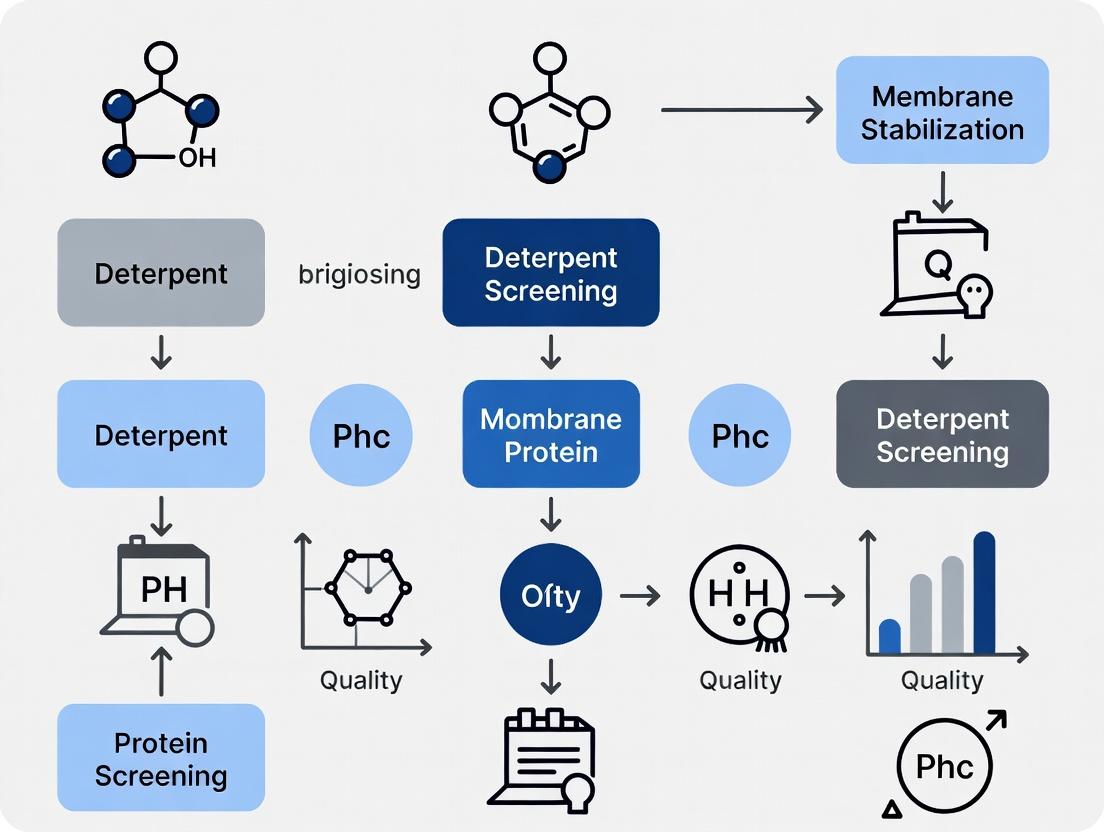
This article provides a systematic framework for the detergent screening process essential for membrane protein stabilization, a critical bottleneck in structural biology and drug development.
Membrane Protein Stabilization: A Comprehensive Guide to Detergent Screening for Structural Biology & Drug Discovery
Abstract
This article provides a systematic framework for the detergent screening process essential for membrane protein stabilization, a critical bottleneck in structural biology and drug development. We explore foundational concepts of detergent-protein interactions, detail current high-throughput methodological workflows, address common troubleshooting challenges, and present validation and comparative analysis strategies. Aimed at researchers and scientists, this guide synthesizes best practices to enhance success rates in obtaining stable, functional membrane protein samples for downstream applications like cryo-EM and X-ray crystallography.
Understanding the Detergent Landscape: Why Membrane Proteins Need Specialized Stabilization
Introduction Within the context of detergent screening for membrane protein stabilization research, understanding the biophysical basis of membrane protein denaturation is paramount. Membrane proteins, integral to cellular signaling, transport, and energy transduction, have evolved to function within the complex, anisotropic environment of the lipid bilayer. Extraction from this native environment, a necessary step for in vitro study and drug discovery, exposes them to catastrophic destabilizing forces. This application note details the core principles behind this instability and provides standardized protocols for systematic detergent screening to mitigate denaturation.
The Biophysical Basis of Instability The lipid bilayer provides three critical stabilizing factors: 1) a hydrophobic shield for transmembrane domains, 2) lateral lipid pressure and specific lipid interactions, and 3) a defined dielectric constant gradient. Removal into an aqueous solution, even with detergents, disrupts this balance. Key quantitative drivers of instability include:
- Loss of Hydrophobic Effect: The effective concentration of detergent micelles (typically 0.01-1.0% w/v, or ~0.1-10 mM CMC) is orders of magnitude lower than the effective "concentration" of lipids in a bilayer, leading to suboptimal shielding of hydrophobic surfaces.
- Energetic Penalty of Exposed Hydrophobicity: The free energy cost of exposing a hydrophobic amino acid to water is ~1-2 kcal/mol. A typical α-helical transmembrane domain of 20 residues can thus incur an untenable 20-40 kcal/mol destabilization upon inadequate solvation.
- Critical Micelle Concentration (CMC) Dynamics: Detergents with high CMC (e.g., CHAPS, ~8 mM) rapidly exchange, creating transient protein exposure, while low-CMC detergents (e.g., DDM, ~0.17 mM) form stable but often inactivating micelles.
Table 1: Quantitative Comparison of Destabilizing Factors in Aqueous vs. Bilayer Environments
| Factor | Native Lipid Bilayer Environment | Detergent-Solubilized Environment | Consequence for Protein |
|---|---|---|---|
| Hydrophobic Shield | Continuous hydrocarbon core (~30 Å thick) | Discontinuous, dynamic micelle (Aggregation Number: 50-150 molecules) | Incomplete coverage, hydrophobic patches exposed. |
| Lateral Pressure | High, complex profile (~250-300 mN/m) | Negligible in isotropic micelle | Loss of structural constraints on TM domain packing. |
| Dielectric Constant (ε) | Gradient (ε~2 in core to ~80 in aqueous phase) | Uniformly high (ε~80) in bulk water | Disruption of electrostatic interactions & protonation states. |
| Lipid/Detergent Exchange Rate | Very slow (specific lipids often bound) | Fast (for high CMC detergents) | Loss of essential lipid co-factors, conformational lability. |
Core Experimental Protocol: High-Throughput Detergent Stability Screening This protocol uses fluorescence-based thermal shift (FTS) to assess membrane protein stability across a detergent matrix.
Protocol 1: Detergent Screen via Fluorescence Thermal Shift Objective: To identify detergents that maximize the thermal stability (Tm) of a solubilized membrane protein. Materials: Purified membrane protein in initial detergent (e.g., DDM), 96- or 384-well PCR plates, compatible real-time PCR instrument, SYPRO Orange dye (5000X stock), detergent library (see Toolkit). Procedure:
- Dilution Plate Setup: Prepare a master plate containing 10-20 different detergents at 2x their final desired concentration (typically 2x CMC) in assay buffer. Include a buffer-only control.
- Sample Preparation: Dilute the purified protein to 0.2-0.5 mg/mL in its native buffer. Add SYPRO Orange dye to a final 5X concentration.
- Plate Assembly: Combine 10 µL of 2x detergent solution with 10 µL of protein-dye mix in each well of the PCR plate. Seal tightly.
- Thermal Ramp: Run the melt curve protocol on the real-time PCR instrument. Standard ramp: 25°C to 95°C at 1°C/min, with fluorescence measurement (ROX or SYBR Green channel) at each interval.
- Data Analysis: Plot fluorescence intensity vs. temperature. Determine the melting temperature (Tm) as the inflection point of the sigmoidal curve (first derivative peak). Compare Tm values across detergents.
Diagram 1: Detergent Screening & Stability Assessment Workflow
Protocol 2: Assessing Oligomeric State by Size-Exclusion Chromatography (SEC) Objective: To correlate detergent-induced stability with the correct oligomeric state and monodispersity. Materials: FPLC system, SEC column (e.g., Superdex 200 Increase), purified protein in test detergents, running buffer matched with detergent at 1x CMC. Procedure:
- Equilibration: Equilibrate the SEC column with at least 2 column volumes of running buffer containing the detergent to be tested.
- Sample Preparation: Centrifuge the protein sample (100 µL at 100,000 x g, 10 min, 4°C) to remove aggregates. Load 50-100 µL of supernatant.
- Chromatography: Run isocratic elution at 0.5 mL/min. Monitor absorbance at 280 nm.
- Analysis: Compare elution volumes to protein standards. A sharp, symmetric peak indicates monodisperse protein. Aggregates elute in the void volume; degraded protein elutes later.
The Scientist's Toolkit: Key Reagent Solutions Table 2: Essential Reagents for Membrane Protein Stabilization Studies
| Reagent | Category | Function & Rationale |
|---|---|---|
| n-Dodecyl-β-D-Maltoside (DDM) | Mild Non-Ionic Detergent | Gold-standard primary detergent; low CMC provides stable micelles but can be over-stabilizing. |
| Lauryl Maltose Neopentyl Glycol (LMNG) | Non-Ionic, Bola-Amphiphile | Often superior to DDM; rigid, low-CMC micelles that better mimic bilayer constraints. |
| Cholesteryl Hemisuccinate (CHS) | Cholesterol Analog | Additive used with detergents to stabilize proteins requiring lipid-like rigidity. |
| Glyco-Diosgenin (GDN) | Steroid-Based Detergent | Popular for stabilizing complex proteins like GPCRs and channels; very low CMC. |
| Cyclofos-4 (Cyclofoscholate) | Cyclic Phosphatidylcholine | Synthetic, tunable detergent for challenging proteins like transporters. |
| SYPRO Orange Dye | Fluorescent Probe | Binds exposed hydrophobic patches upon protein denaturation; used in FTS assays. |
| Amphipol A8-35 | Amphipathic Polymer | Used for detergent exchange to create a more native-like, water-soluble particle. |
| Lipid Nanodiscs (MSP/Styrene Maleic Acid) | Membrane Mimetic System | Provides a native-like lipid bilayer environment for long-term stabilization. |
Diagram 2: Membrane Protein Destabilization Pathways Outside Bilayer
Conclusion and Strategic Outlook Systematic detergent screening is not merely an empirical exercise but a direct interrogation of the forces governing membrane protein stability. The protocols and frameworks outlined here provide a roadmap for researchers to navigate the critical challenge of denaturation. The ultimate goal within the broader thesis is to move beyond simple detergent lists to predictive models based on protein class, oligomeric state, and lipid requirements, enabling rational design of stabilization strategies for structural biology and drug discovery.
The successful isolation and functional study of integral membrane proteins (IMPs) hinge on their extraction from the native lipid bilayer and subsequent stabilization in an aqueous environment. This process is universally mediated by detergents, which form soluble micellar complexes with hydrophobic protein surfaces. The core biophysical properties of a detergent—its Critical Micelle Concentration (CMC), micelle structure, and Aggregation Number—directly dictate its efficacy in maintaining protein stability, monodispersity, and activity. This application note provides a foundational overview of these key concepts and outlines practical protocols for detergent characterization within the context of a systematic detergent screening thesis for membrane protein structural biology and drug discovery.
Core Concepts and Quantitative Data
Micelle Formation and Critical Micelle Concentration (CMC)
In aqueous solution, detergent molecules exist in a monomeric state at low concentrations. As the total detergent concentration increases, a point is reached where the monomer concentration saturates and any additional detergent molecules spontaneously associate into supramolecular aggregates called micelles. The concentration at which this occurs is the Critical Micelle Concentration (CMC). This transition is marked by abrupt changes in solution properties such as surface tension, conductivity, and turbidity.
Aggregation Number
The Aggregation Number (Nagg) is the average number of detergent monomers that constitute a single micelle. This parameter influences micelle size, shape (spherical, elliptical, rod-like), and the capacity to accommodate membrane protein domains.
Quantitative Parameters of Common Detergents
Table 1: Key Physicochemical Parameters of Detergents Commonly Used in Membrane Protein Research.
| Detergent (Class) | Typical CMC (mM) | CMC (w/v %) | Aggregation Number (Nagg) | Micelle MW (kDa) | Comments for Protein Stabilization |
|---|---|---|---|---|---|
| DDM (Non-ionic, Maltoside) | 0.17 | ~0.0087% | 110-140 | ~90 | "Gold standard" for stability; mild, large micelle. |
| LMNG (Non-ionic, Maltoside) | 0.0002 | ~0.00002% | ~110 | ~90 | Ultra-low CMC, excellent stability, difficult to remove. |
| OG (Non-ionic, Glucoside) | ~25 | ~0.73% | 70-100 | ~25 | High CMC, easy to remove, but often destabilizing long-term. |
| LDAO (Zwitterionic) | 1-2 | ~0.023% | 76-80 | ~20 | Mildly denaturing; useful for some bacterial proteins. |
| CHAPS (Zwitterionic) | 6-10 | ~0.49% | 4-14 | ~6.2 | Mild, small micelle; good for solubilization. |
| SDS (Anionic) | 7-10 | ~0.23% | 62-101 | ~18 | Strongly denaturing; used for denaturing gels. |
| Fos-Choline-12 (Zwitterionic) | 1.4-1.6 | ~0.042% | ~50-70 | ~12 | Often used for solubilization and crystallization. |
| Cymal-5 (Non-ionic, Maltoside) | ~0.35 | ~0.014% | ~78 | ~44 | Lower cost alternative to DDM. |
Data compiled from manufacturer specifications (Anatrace, Thermo Fisher) and recent literature reviews (2020-2023).
Experimental Protocols
Protocol 1: Determining CMC via Surface Tension Measurement
This classic method exploits the cessation of surface tension decrease upon micelle formation.
I. Materials & Reagents
- Detergent stock solution (e.g., 10% w/v in water/buffer)
- High-purity water or target buffer (e.g., 20 mM Tris, 150 mM NaCl, pH 8.0)
- Du Noüy ring or Wilhelmy plate Tensiometer
- Thermostatted vessel
II. Procedure
- Prepare a series of detergent solutions (e.g., 15-20) across a broad concentration range (e.g., 0.001% to 0.5%), ensuring coverage below and above the suspected CMC.
- Equilibrate the tensiometer and temperature (typically 20-25°C).
- Measure the surface tension (γ) for each solution in order of increasing concentration.
- Plot γ (mN/m) vs. log[Detergent].
- Identify the CMC as the point of intersection between two linear fits: the steep decline in γ (monomer regime) and the nearly constant plateau (micelle regime).
Protocol 2: Determining CMC and Aggregation Number via Fluorescence Probe (Pyrene) Assay
This sensitive spectroscopic method utilizes the polarity-dependent fluorescence of pyrene.
I. Materials & Reagents
- Detergent stock solutions
- Pyrene stock solution (e.g., 1 mM in acetone or ethanol)
- Assay buffer
- Fluorometer with cuvette
II. Procedure for CMC
- Add a fixed, tiny amount of pyrene stock to vials (final ~1 µM) and evaporate solvent.
- Add detergent solutions of varying concentration to the vials. Sonicate to equilibrate.
- Measure fluorescence emission spectrum for each sample (excitation ~339 nm).
- Plot the intensity ratio of the first (I1, ~373 nm) and third (I3, ~384 nm) vibrational peaks vs. detergent concentration. The sharp change in slope indicates the CMC.
III. Procedure for Aggregation Number (Nagg) via Fluorescence Quenching
- Prepare a detergent solution at a concentration well above the CMC (e.g., 5-10x CMC).
- Add pyrene (at a concentration [P] << [Detergentmicelle]) and a hydrophobic quencher (e.g., cetylpyridinium chloride, CPC).
- Measure fluorescence intensity (I) at varying quencher concentrations [Q].
- Apply the Poisson distribution model: ln(I0/I) = [Q] / ([Detergenttotal] - CMC)/Nagg, where I0 is intensity without quencher.
- Plot ln(I0/I) vs. [Q]. The slope yields Nagg = 1 / (slope * ([Detergenttotal] - CMC)).
Visualizations
Title: Detergent Micellization Process with CMC
Title: Detergent Screening Workflow for Membrane Proteins
The Scientist's Toolkit: Key Reagent Solutions
Table 2: Essential Materials for Detergent-Based Membrane Protein Work.
| Reagent / Material | Function & Importance |
|---|---|
| High-Purity Detergents (e.g., Anatrace, Glycon) | Ensure reproducibility and avoid contaminants that degrade protein stability. |
| Detergent-Compatible Desalting/SEC Columns (e.g., Cytiva PD-10, Superose 6 Increase) | For buffer exchange and size-exclusion chromatography in detergent-containing buffers. |
| Fluorescent Probes (Pyrene, ANS, Nile Red) | For CMC determination and monitoring protein folding/hydrophobic exposure. |
| Surface Tensiometer | For direct, label-free measurement of CMC. |
| Static Light Scattering (SLS) Detector | Coupled with SEC (SEC-MALS) to determine absolute molar mass of protein-detergent complexes. |
| Size-Exclusion Chromatography with Multi-Angle Light Scattering (SEC-MALS) | Gold standard for assessing monodispersity, complex size, and aggregation state. |
| Bio-Beads SM-2 (Hydrophobic Resin) | For selective removal of detergent from samples (e.g., for crystallization or reconstitution). |
| Stability Assay Reagents (e.g., Thiol-reactive dyes, Activity Substrates) | To quantify functional stability over time in different detergents. |
| Fos-Choline & Maltoside Detergent Libraries | Pre-selected sets for systematic primary screening of solubilization and stability. |
The structural and functional characterization of integral membrane proteins (IMPs) is a cornerstone of modern pharmacology and structural biology. A critical, often rate-limiting step in this process is the extraction and stabilization of IMPs from their native lipid bilayer using detergents. This article, framed within a thesis on detergent screening for membrane protein stabilization, provides detailed application notes and protocols for working with major detergent classes. The choice of detergent profoundly impacts protein stability, monodispersity, activity, and crystallization success, making systematic classification and evaluation essential.
Detergent Classes: Properties & Applications
Detergents are amphipathic molecules with a hydrophilic head group and a hydrophobic tail. Their classification is based on the nature of the head group, which dictates their physicochemical behavior and interactions with proteins.
Table 1: Classification and Properties of Key Detergent Families
| Class | Head Group Charge | Typical Examples | Critical Micelle Concentration (CMC) Range (mM) | Aggregation Number Range | Key Strengths | Primary Risks for IMPs |
|---|---|---|---|---|---|---|
| Ionic | Anionic or Cationic | SDS (anionic), CTAB (cationic) | 1-10 (SDS: ~8.2) | 50-100 | Strong solubilizing power; low cost. | High denaturation risk; disrupts protein-protein interactions; interferes with IEX. |
| Non-Ionic | Neutral | DDM, OG, Triton X-100, CYMAL series | 0.1-2.0 (DDM: ~0.17) | 70-150 (DDM: ~110) | Mild; generally preserves protein activity; most common for initial screening. | Variable stability; can be insufficient for difficult extracts. |
| Zwitterionic | Both + & - charges (net neutral) | CHAPS, CHAPSO, Fos-Choline series | 4-14 (CHAPS: ~8) | 4-20 (CHAPS oligomers) | Intermediate mildness; good for IEX compatibility; CHAPSO offers H-bond donation. | Can be harsher than non-ionics; higher CMC may lead to destabilization during purification. |
| Bolaamphiphiles | Variable (head at both ends) | Bolaphes (e.g., 10,10), TED compounds | ~0.03-0.3 (Bolaphes-10) | ~20-80 | Form small, rigid micelles; excellent for stabilizing small IMP domains. | Complex synthesis; limited commercial availability; may not fit large proteins. |
| Novel Alternatives | Variable | MSPs/Nanodiscs, SMALPs, Glyco-Diosgenin (GDN), Tripod Amphiphiles | N/A (MSP, SMALPs) / Very low (GDN: ~0.01) | N/A / ~50-100 | MSP/SMALPs: Provide lipid bilayer environment. GDN: Exceptional stability for complexes. | MSP/SMALPs: Added complexity, size heterogeneity. Novel synthetics: cost, availability. |
Experimental Protocols for Detergent Screening
A systematic, tiered screening approach is recommended to identify the optimal detergent for a given IMP.
Protocol 1: Tiered Screening for Initial Solubilization and Stability
Objective: To identify detergents capable of solubilizing the target IMP while maintaining its native state.
Research Reagent Toolkit:
- Detergent Library: Stocks (e.g., 10% w/v or 10x CMC) of representatives from each class: DDM, LMNG, OG, CHAPS, Fos-Choline-12, SDS, GDN.
- Membrane Preparation Buffer: 50 mM HEPES pH 7.5, 300 mM NaCl, 10% glycerol, protease inhibitors.
- Solubilization Buffer: As above, with varying detergents (typically 1-2% for initial test).
- Analysis: SDS-PAGE setup, Native PAGE or Clear Native PAGE (CN-PAGE) supplies, SEC column (e.g., Superose 6 Increase), compatible with detergents.
Procedure:
- Membrane Preparation: Isolate crude membranes containing the overexpressed IMP via cell lysis and differential centrifugation.
- Small-Scale Solubilization: Aliquot membrane pellets (~1 mg protein each). Add 100 µL of solubilization buffers, each containing a different detergent (1% w/v). Incubate with gentle agitation at 4°C for 2 hours.
- Separation: Centrifuge at 100,000 x g for 30 min at 4°C to separate solubilized material (supernatant) from insoluble debris (pellet).
- Analysis:
- Efficiency: Analyze supernatant and pellet fractions by SDS-PAGE. The detergent yielding the strongest target band in the supernatant is the most efficient.
- Monodispersity: Analyze the supernatant by CN-PAGE or size-exclusion chromatography (SEC). A single, sharp peak/band indicates a monodisperse, stable protein-detergent complex. Broad or multiple peaks suggest aggregation or instability.
Protocol 2: Assessing Long-Term Stability via Thermofluor Assay (FSEC)
Objective: To rank promising detergents based on their ability to maintain IMP thermal stability over time.
Research Reagent Toolkit:
- Protein: IMP solubilized and partially purified in candidate detergents.
- Dye: Sypro Orange (5000x stock in DMSO).
- qPCR Instrument with protein melt curve capability.
- Buffer Exchange Columns: For transferring protein into different detergents without denaturation.
Procedure:
- Sample Prep: Dilute the IMP in various detergent buffers to ~0.5 mg/mL in a final volume of 25 µL. Include Sypro Orange dye at a final 5x concentration.
- Run Assay: In a qPCR instrument, heat samples from 20°C to 95°C with a gradual ramp (e.g., 1°C/min). Monitor fluorescence (excitation ~470 nm, emission ~570 nm).
- Data Analysis: The midpoint of the unfolding transition curve is the apparent melting temperature (Tm). Detergents yielding a higher Tm and a sharper, cooperative transition indicate superior stabilization of the folded state. A low, broad curve suggests denaturation or aggregation.
Visualizing the Screening Workflow & Detergent Action
Detergent Screening Decision Workflow
Mechanism of Membrane Protein Solubilization by Detergents
The Scientist's Toolkit: Key Reagents & Materials
Table 2: Essential Research Reagents for Detergent Screening
| Reagent/Material | Function & Rationale |
|---|---|
| n-Dodecyl-β-D-Maltoside (DDM) | Gold-standard non-ionic detergent for initial solubilization and stability trials. High micelle size, mild. |
| Lauryl Maltose Neopentyl Glycol (LMNG) | "Next-gen" non-ionic with rigid, bivalent structure. Often provides superior stability over DDM with lower micelle size. |
| Glyco-Diosgenin (GDN) | Novel, mild steroidal detergent. Exceptional for stabilizing large, complex IMPs like receptors and channels. |
| Fos-Choline-12 | Representative zwitterionic detergent. Useful when charge interactions are needed without net charge. |
| Polystyrene Divinylbenzene SEC Columns (e.g., Superose 6 Increase) | SEC columns compatible with a wide range of detergents, essential for assessing monodispersity of PDCs. |
| Sypro Orange Dye | Environment-sensitive fluorescent dye used in thermofluor assays to monitor protein unfolding. |
| Membrane Scaffold Proteins (MSPs) | For forming Nanodiscs, providing a native-like lipid bilayer environment for long-term stability and functional studies. |
| Styrene Maleic Acid (SMA) Copolymer | For forming SMA Lipid Particles (SMALPs), which directly "cut out" IMPs with their native annular lipids. |
| High-Speed Ultracentrifuge (100,000 x g+) | Critical for separating solubilized IMPs from insoluble membrane debris after extraction. |
1. Introduction & Thesis Context Within the broader thesis on detergent screening for membrane protein (MP) stabilization, identifying optimal detergents is a critical bottleneck. The efficacy of a detergent is not defined by a single parameter but by a triad of interdependent properties: its ability to maintain the protein's long-term stability, preserve it in a monodisperse state, and not compromise its functional activity. This application note outlines standardized protocols and quantitative metrics for assessing these key parameters, enabling rational detergent selection for downstream structural and drug discovery applications.
2. The Scientist's Toolkit: Research Reagent Solutions
| Reagent / Material | Function in Assessment |
|---|---|
| High-Purity Detergents (e.g., DDM, LMNG, OG, CHS) | The screening library. Varied in structure (ionic/non-ionic, head/tail) to probe MP interactions. |
| Size Exclusion Chromatography (SEC) Column | The gold standard for evaluating monodispersity and oligomeric state. A sharp, symmetric peak indicates homogeneity. |
| Static Light Scattering (SLS) Detector | Coupled with SEC to determine absolute molar mass, confirming monodispersity and complex integrity. |
| Fluorescent Dye (e.g., SYPRO Orange) | Used in thermal shift assays (TSA) to monitor protein unfolding and determine melting temperature (Tm). |
| Bio-Beads SM-2 | Used for detergent exchange or removal in activity assays where the test detergent inhibits function. |
| Lipid or Nanodisc Scaffold (e.g., MSP) | For transferring the MP into a more native-like bilayer environment after initial detergent stabilization. |
| Activity-Specific Substrate/ Ligand | Essential for functional assays (e.g., GTPγS for GPCRs, NADH for transporters) to verify protein is not denatured. |
3. Experimental Protocols
Protocol 3.1: Assessing Monodispersity via SEC-MALS Objective: Quantify the homogeneity and absolute molar mass of the detergent-solubilized MP complex. Materials: Purified MP in candidate detergent, SEC column (e.g., Superose 6 Increase), HPLC or FPLC system, inline Multi-Angle Light Scattering (MALS) and Refractive Index (RI) detectors. Steps:
- Equilibrate the SEC column with at least 2 column volumes of buffer containing the detergent at its critical micelle concentration (CMC).
- Concentrate the purified MP sample to ≥ 5 mg/mL.
- Centrifuge sample at 21,000 x g for 10 minutes at 4°C to remove aggregates.
- Inject 50-100 µL of supernatant onto the column.
- Run isocratic elution with detergent-containing buffer at 0.5 mL/min.
- Collect data from UV (280 nm), MALS, and RI detectors.
- Analyze data using ASTRA or equivalent software. The calculated molar mass across the peak should be constant (±5%) for a monodisperse sample.
Protocol 3.2: Assessing Stability via Thermal Shift Assay (TSA) Objective: Determine the thermal melting temperature (Tm) as a proxy for conformational stability. Materials: MP in detergent (≥ 0.2 mg/mL), SYPRO Orange dye (5000X stock), real-time PCR instrument, 96-well PCR plate. Steps:
- Prepare a master mix of protein solution and SYPRO Orange dye at a final 1X dye concentration.
- Aliquot 20 µL of the master mix into three replicate wells of a PCR plate. Include a well with buffer + dye as background control.
- Seal the plate and centrifuge briefly.
- Run in a real-time PCR instrument with a temperature gradient from 20°C to 95°C at a rate of 1°C/min, measuring fluorescence (ROX or FAM channel).
- Plot fluorescence vs. temperature. The Tm is the inflection point of the sigmoidal curve, determined by the first derivative.
- Higher Tm indicates greater thermal stability.
Protocol 3.3: Assessing Functional Activity via Ligand Binding (SPR/Biolayer Interferometry) Objective: Confirm the MP retains native ligand-binding capability. Materials: Biotinylated MP (via AviTag or specific biotinylation), streptavidin biosensor tips/chip, assay buffer, ligand solutions. Steps:
- Immobilize the biotinylated MP onto a streptavidin biosensor.
- Quench with biotin solution.
- Dilute detergent to below its CMC in the assay buffer to prevent interference, or use Bio-Beads for partial removal.
- Perform association/dissociation kinetics by dipping the sensor into ligand solutions at varying concentrations.
- Fit binding sensorgrams to a 1:1 binding model to derive the association (kon) and dissociation (koff) rates, and the equilibrium dissociation constant (KD).
- Compare KD values to literature values from native membranes or benchmark detergents.
4. Quantitative Data Presentation
Table 1: Comparative Assessment of Detergent Efficacy for a Model GPCR (e.g., β2-Adrenergic Receptor)
| Detergent | SEC Peak Symmetry Index | MALS Polydispersity (%) | TSA Tm (°C) | Functional KD for Antagonist (nM) | Aggregation After 7 Days (%) |
|---|---|---|---|---|---|
| DDM | 0.95 | 8.2 | 52.1 ± 0.3 | 1.05 ± 0.2 | 15 |
| LMNG | 0.99 | 3.1 | 58.4 ± 0.5 | 0.92 ± 0.1 | 5 |
| OG | 0.75 | 25.7 | 41.3 ± 1.2 | 15.4 ± 3.1 | 65 |
| CHS/DDM | 0.98 | 5.5 | 61.7 ± 0.4 | 0.88 ± 0.1 | 8 |
Symmetry Index: 1.0 is perfectly symmetric; <0.9 indicates significant tailing.
5. Visualized Workflows & Relationships
Detergent Screening & Assessment Workflow
Triad Links to Downstream Applications
Thesis Context: Within detergent screening for membrane protein (MP) stabilization, a key limitation is the removal of the native lipid bilayer, often leading to loss of stability, function, and structural integrity. Lipids and lipid mimetic systems provide complementary, detergent-free, or detergent-alternative strategies to reconstitute MPs into a more native-like lipid environment, crucial for downstream biophysical and structural analyses.
Data Presentation: Comparison of Stabilization Platforms
Table 1: Quantitative Comparison of MP Stabilization Strategies
| Parameter | Detergent Micelles | Lipid/Proteoliposomes | MSP Nanodiscs | SMA/SMALP Polymers |
|---|---|---|---|---|
| Lipid Environment | None (delipidated) | Bilayer (often asymmetric) | Controlled planar bilayer | Native-like lipid patch |
| Size Range (nm) | 4-10 (micelle diameter) | 50-1000 (vesicle diameter) | 8-16 (disc diameter, tunable) | ~10-30 (disc diameter) |
| Stability (Typical) | Moderate to Low (denaturation/aggregation over time) | High (but polydisperse) | High (monodisperse) | Very High (direct from membrane) |
| Functional Yield (%) | Variable (10-60%) | High (60-90%) | High (50-80%) | High (70-95% of native activity) |
| Sample Monodispersity | Good | Poor (polydisperse) | Excellent | Good |
| Key Advantage | Solubilization, crystallization | Functional assays | Biophysical studies, cryo-EM | Native lipid retention |
| Key Disadvantage | Non-native environment | Size heterogeneity | Requires purified lipids/MP | Polymer may interfere with some assays |
Table 2: Recent Published Efficacy Data (Representative)
| Membrane Protein | System | Reported Stability (Half-life) | Function Preservation | Citation (Year) |
|---|---|---|---|---|
| GPCR (β2-adrenergic) | DDM micelles | ~48 hours at 4°C | ~40% of native | Lomize et al. (2022) |
| GPCR (β2-adrenergic) | MSP1E3D1 Nanodisc | >7 days at 4°C | ~85% of native | Gatsogiannis et al. (2023) |
| Respiratory Complex I | SMA (2:1) | >30 days at 4°C | Full enzymatic activity | Smits et al. (2024) |
| Bacterial transporter | Proteoliposomes | >14 days at 4°C | >90% transport activity | Jurkowitz et al. (2023) |
Experimental Protocols
Protocol 1: Reconstitution of a Detergent-Solubilized MP into MSP Nanodiscs Objective: Incorporate a purified MP into a defined lipid bilayer disc for structural studies. Materials: Purified MP in detergent (e.g., 0.05% DDM), MSP1E3D1 protein, lipids (e.g., POPC:POPG 3:1), Bio-Beads SM-2, size-exclusion chromatography (SEC) column. Procedure: 1. Lipid Preparation: Mix chloroform-solubilized lipids, dry under N₂ gas, and vacuum desiccate. Rehydrate in reconstitution buffer (e.g., 20 mM Tris, 150 mM NaCl, pH 7.5) with critical micelle concentration (CMC) of detergent to form liposomes. Sonicate to clarity. 2. Complex Formation: Combine MP, MSP, and lipids at molar ratios (optimize: e.g., 1:10:100 MP:MSP:lipid) in a final detergent concentration just above CMC. Incubate 1 hour at 4°C with gentle agitation. 3. Detergent Removal: Add pre-washed Bio-Beads (100 mg/mL) to adsorb detergent. Incubate with slow rotation for 3-4 hours at 4°C. Add fresh Bio-Beads and incubate overnight. 4. Purification: Remove Bio-Beads. Centrifuge to clear aggregates. Subject supernatant to SEC. Collect the monodisperse peak corresponding to formed nanodiscs (typically eluting before free MSP). 5. Validation: Analyze by SDS-PAGE, native-PAGE, and measure MP activity.
Protocol 2: Direct Extraction and Stabilization of MPs using SMA Polymer Objective: Bypass detergent extraction by directly isolating MPs within a native lipid bilayer fragment. Materials: Cell membranes, SMA polymer (e.g., Xiran SL30010 or SMA 2000), 1 M NaOH, 500 mM Tris-HCl pH 8.0, Benzonase nuclease, SEC column. Procedure: 1. Membrane Preparation: Isolate membranes via centrifugation. Resuspend in extraction buffer (e.g., 50 mM Tris, 150 mM NaCl, pH 8.0) to ~5 mg/mL total protein. Add Benzonase to degrade nucleic acids. 2. Polymer Addition: Add SMA polymer from a 10% (w/v) stock in water to a final concentration of 2% (w/v). Incubate with gentle stirring for 2-3 hours at 4°C. 3. Clarification: Centrifuge at 100,000 x g for 45 min to pellet insoluble material and excess polymer. 4. Isolation: Apply supernatant to SEC. The SMA Lipid Particles (SMALPs) containing the MP will elute in the void volume or soon after. Pool relevant fractions. 5. pH Adjustment (if needed): For downstream applications sensitive to low pH (from polymer hydrolysis), adjust with Tris buffer.
Mandatory Visualization
Title: Complementary Stabilization Pathways for Membrane Proteins
Title: Integrated Workflow for MP Stabilization
The Scientist's Toolkit: Key Research Reagent Solutions
| Reagent/Material | Function & Rationale |
|---|---|
| MSP (Membrane Scaffold Protein) | Engineered variants of apolipoprotein A-I; forms a belt around a lipid bilayer to create tunable, monodisperse Nanodiscs. |
| SMA (Styrene Maleic Anhydride) Copolymer | Amphipathic polymer that directly solubilizes membrane patches, forming SMALPs while preserving native lipid environment. |
| Bio-Beads SM-2 | Hydrophobic polystyrene beads used for gentle, step-wise detergent removal during reconstitution protocols. |
| DDM (n-Dodecyl-β-D-Maltoside) | Non-ionic detergent; a gold standard for initial MP solubilization due to its mild denaturing properties. |
| Lipid Mixtures (e.g., POPC, POPG) | Synthetic lipids allowing the creation of defined bilayer compositions tailored to specific MP requirements. |
| Size-Exclusion Chromatography (SEC) Columns (e.g., Superdex 200 Increase) | Critical for separating monodisperse lipid-mimetic complexes from aggregates or empty particles. |
| Amphipols (e.g., A8-35) | Amphipathic polymers used as alternative to detergents for MP stabilization in aqueous solution post-solubilization. |
A Step-by-Step Screening Pipeline: From Initial Selection to High-Throughput Analysis
Within the broader thesis on detergent screening for membrane protein stabilization, the construction of a strategically curated detergent library is a critical first step. This library must balance well-characterized, high-probability detergents with novel agents that offer unique properties for challenging targets. Effective initial screening enables the identification of conditions that preserve protein stability, monodispersity, and functionality—prerequisites for structural and biophysical studies in drug development.
The Core Detergent Library: Essential Scaffolds
A foundational library should encompass diverse chemical classes with proven histories in stabilizing membrane proteins for crystallography and cryo-EM.
Table 1: Essential Detergent Scaffolds for Initial Library
| Chemical Class | Example Detergents (Abbreviation) | Aggregation Number | CMC (mM) | Key Properties & Typical Use |
|---|---|---|---|---|
| Alkyl Maltosides | n-Dodecyl-β-D-maltoside (DDM) | 78-140 | 0.17 | Mild, gold standard for stability; first-line for GPCRs, transporters. |
| n-Decyl-β-D-maltoside (DM) | 69 | 1.8 | Higher CMC than DDM, useful for purification requiring easy removal. | |
| Alkyl Glucosides | n-Octyl-β-D-glucoside (OG) | 27 | 18-25 | High CMC, useful for crystallization; can be denaturing over time. |
| Lysolipids | 1-Myristoyl-2-hydroxy-sn-glycero-3-phosphocholine (LMPG) | ~100 | 0.005 | Phospholipid-like, often stabilizes complex membrane proteins. |
| Polyoxyethylene | Lauryl Maltose Neopentyl Glycol (LMNG) / GDN | ~55 (LMNG) | ~0.01 (LMNG) | "Branched" tail, excellent stability, very low CMC, for sensitive targets. |
| Fos-Cholines | n-Dodecylphosphocholine (FC-12, DPC) | 50-70 | 1.1-1.4 | Phosphocholine headgroup, popular in NMR studies. |
| Bile Salts | Sodium Cholate / CHAPS | 2-10 (Cholate) | 4-8 (Cholate) | Rigid steroid ring; useful for solubilization but can be denaturing. |
Novel and Specialized Detergents for Challenging Targets
Recent developments have yielded novel detergents with enhanced capabilities, which should be included to address difficult proteins.
Table 2: Novel Detergents for Extended Screening
| Detergent Class | Example Compounds | Key Structural Feature | Proposed Advantage |
|---|---|---|---|
| Glyco-Diosgenin (GDN) analogs | GDN, TDM | Rigid diosgenin steroid group | Superior stability for large complexes (e.g., ATP synthases, viral spike proteins). |
| Malonate-derived Neopentyl Glycols | LMNG, DMNG | Branched hydrophobic tail & malonate linkers | Reduced alkyl chain flexibility, enhancing protein stability. |
| Tripodant Detergents | Tripodant-PEGs | Three hydrophobic chains on a central core | Mimics lipid bilayer environment, ideal for multi-subunit proteins. |
| "Rigid" Hydrophobe Detergents | Chobimalt, Cymal | Aromatically or cyclohexyl-modified tails | Reduced detergent flexibility, promotes crystal contacts. |
| Poly-Styrene Maleic Acid (SMA) Copolymers | SMA(2:1), SMA(3:1) | Amphipathic polymer | Forms "SMALPs" – extracts proteins with native lipid belt. |
| Amphipols | A8-35, PMAL-C8 | Amphipathic polymers | Stabilizes proteins after solubilization, replaces detergent. |
Experimental Protocol: Initial Detergent Screening for Solubilization & Stability
This protocol outlines a systematic approach for evaluating detergents from your library using fluorescence-based size exclusion chromatography (FSEC).
A. Materials & Reagent Preparation
- Membrane Preparation Buffer: 20 mM HEPES pH 7.5, 150 mM NaCl, 10% glycerol, protease inhibitor cocktail.
- Library Detergent Stocks: Prepare 10% (w/v) or 10x CMC stock solutions in ultrapure water or buffer. Filter through 0.22 µm.
- Solubilization Buffer: Membrane Prep Buffer supplemented with individual detergents at 1-2x their CMC (e.g., 1x CMC for mild, 2x for harsh).
- FSEC Sample Buffer: 20 mM HEPES pH 7.5, 150 mM NaCl, 0.05% DDM (or matching screening detergent), 5% glycerol.
- Construct: Target membrane protein with a C-terminal GFP or other fluorescent tag.
- Equipment: Homogenizer, ultracentrifuge, FSEC system (HPLC with fluorescence detector and size exclusion column, e.g., Shodex KW-803).
B. Step-by-Step Methodology
- Membrane Isolation: Express fluorescently tagged protein in your chosen system (e.g., insect cells). Harvest cells, lyse via homogenization in Membrane Prep Buffer. Clear lysate via low-speed centrifugation (5,000 x g, 10 min). Pellet membranes via ultracentrifugation (100,000 x g, 45 min, 4°C).
- Parallel Solubilization: Resuspend membrane pellet in Solubilization Buffer to a consistent protein concentration. Aliquot equal volumes into tubes, each containing a different detergent from your library at the predetermined concentration.
- Incubation: Gently rotate mixtures for 2-3 hours at 4°C.
- Insolubility Removal: Ultracentrifuge samples (100,000 x g, 30 min, 4°C) to pellet insoluble material.
- FSEC Analysis: Carefully load equivalent volumes of supernatant (solubilized fraction) onto the pre-equilibrated SEC column running in FSEC Sample Buffer. Monitor fluorescence (ex/cm: ~488/510 nm for GFP).
- Data Interpretation:
- High, Symmetric Peak at High Elution Volume: Monodisperse, stable protein.
- Peak Broadening or Smearing: Protein aggregation or instability.
- Low or No Fluorescence Signal: Poor solubilization or protein denaturation/inactivation.
- Multiple Sharp Peaks: May indicate oligomeric states or partial degradation.
C. Secondary Stability Assay (Thermal Shift) For hits showing monodisperse FSEC profiles, conduct a thermal stability assay.
- Prepare Samples: Mix purified protein in hit detergent with a fluorescent dye (e.g., SYPRO Orange).
- Run Gradient: Use a real-time PCR instrument to raise temperature from 20°C to 80°C at 1°C/min, monitoring fluorescence.
- Analyze: Determine the melting temperature (Tm). A higher Tm indicates greater thermal stability conferred by that detergent.
The Scientist's Toolkit: Key Research Reagent Solutions
| Reagent / Material | Function & Rationale |
|---|---|
| n-Dodecyl-β-D-maltoside (DDM) | Benchmark mild detergent; essential positive control for solubilization and stability screening. |
| Lauryl Maltose Neopentyl Glycol (LMNG) | High-stability, low-CMC detergent; crucial for stabilizing dynamic or fragile membrane protein complexes. |
| Glyco-Diosgenin (GDN) | Novel detergent with rigid steroid group; first-choice for large, multi-subunit complexes resistant to maltosides. |
| SMA(2:1) Copolymer | For native nanodisc formation; allows screening of proteins surrounded by a native lipid environment. |
| Fluorescent Tag (e.g., GFP) | Enables rapid, sensitive detection via FSEC without the need for protein-specific antibodies or assays. |
| SYPRO Orange Dye | Environment-sensitive dye for thermal shift assays; quantifies detergent's effect on protein thermal stability. |
| High-Res SEC Column (e.g., Shodex KW-803) | Separates monomeric protein from aggregates; essential for assessing monodispersity from FSEC screens. |
Visualizations
Detergent Screening & Stability Assessment Workflow
Detergent Interaction with Membrane Proteins
Within the critical research on detergent screening for membrane protein stabilization, the development of a robust, reproducible workflow is paramount. This application note details a gold-standard, integrated pipeline for solubilizing, purifying, and functionally assessing membrane proteins. The protocols are designed to identify optimal detergent conditions that maintain protein native conformation, stability, and activity, directly supporting structural biology and drug discovery efforts.
Research Reagent Solutions Toolkit
The following table lists essential reagents and materials required to execute the described protocols.
| Reagent/Material | Function & Rationale |
|---|---|
| DDM (n-Dodecyl-β-D-maltopyranoside) | Mild, non-ionic detergent; first-line choice for initial solubilization and stabilization of many membrane proteins. |
| LMNG (Lauryl Maltose Neopentyl Glycol) | Next-generation neopentyl glycol detergent with high critical micelle concentration (CMC); offers superior stability for many proteins. |
| SMALPs (Styrene Maleic Acid Copolymers) | Amphipathic polymers that extract proteins within a native nanodisc, preserving the local lipid environment. |
| CHS (Cholesteryl Hemisuccinate) | Cholesterol analog often added to detergents to enhance stability of eukaryotic proteins requiring lipid cofactors. |
| Affinity Chromatography Resin (e.g., Ni-NTA, Strep-Tactin) | For immobilized metal affinity chromatography (IMAC) or streptavidin-based capture of tagged proteins. |
| Size Exclusion Chromatography (SEC) Column (e.g., Superose 6 Increase) | For final polishing step, removing aggregates, and assessing monodispersity in the chosen detergent buffer. |
| Fluorescent Dye (e.g., SYPRO Orange) | Environment-sensitive dye used in thermal shift assays to monitor protein unfolding. |
| Lipid Mixture (e.g., E. coli polar lipids, brain lipids) | For reconstitution assays or supplementing buffers to mimic native environment. |
| Protease Inhibitor Cocktail (without EDTA) | Prevents proteolytic degradation during extraction and purification. |
| Phosphatase Inhibitors | Essential for preserving phosphorylation states of signaling proteins. |
Core Experimental Protocols
High-Throughput Solubilization Screening Protocol
Objective: To empirically identify the most effective detergent(s) for extracting a target membrane protein from its native membrane while preserving functionality.
Materials:
- Membrane preparation (e.g., isolated cell membranes)
- 96-well deep-well block
- Detergent library (e.g., 1% stocks of DDM, LMNG, OG, CYMAL-7, Fos-Choline-12, etc.)
- Solubilization Buffer Base: 50 mM HEPES pH 7.5, 150 mM NaCl, 10% glycerol, protease inhibitors.
- Ultracentrifuge and compatible 96-well rotor.
Method:
- Dispense: Aliquot 200 µL of membrane preparation (5-10 mg/mL total protein) into each well of the deep-well block.
- Add Detergent: Add 22 µL of each 1% detergent stock to respective wells for a final concentration of 0.1% (w/v). Include a no-detergent control.
- Solubilize: Mix gently and incubate with end-over-end rotation for 2-3 hours at 4°C.
- Separate: Centrifuge at 100,000 x g for 45 minutes at 4°C to pellet insoluble material.
- Analyze: Carefully transfer 150 µL of supernatant (solubilized fraction) to a new plate. Analyze target protein yield and oligomeric state by SDS-PAGE, western blot, and/or FSEC.
Affinity Purification in Screening Detergents
Objective: To purify the target protein in candidate detergents identified from solubilization screening.
Materials:
- Cleared solubilizate
- Affinity resin (e.g., Ni-NTA agarose)
- Wash Buffer: 50 mM HEPES pH 7.5, 150 mM NaCl, 10% glycerol, 20 mM imidazole, plus selected detergent at 2x CMC.
- Elution Buffer: As Wash Buffer but with 300 mM imidazole.
Method:
- Batch Bind: Incubate cleared solubilizate with pre-equilibrated affinity resin for 1 hour at 4°C.
- Wash: Pellet resin, discard supernatant. Wash resin 3x with 10 column volumes of Wash Buffer.
- Elute: Elute protein with 2-3 column volumes of Elution Buffer.
- Buffer Exchange: Immediately pass eluate over a desalting column pre-equilibrated in SEC Buffer (50 mM HEPES pH 7.5, 150 mM NaCl, plus selected detergent at 1x CMC) to remove imidazole and glycerol.
Thermal Shift Stability Assay (TSA) Protocol
Objective: To quantify the thermal stability (Tm) of the purified protein in different detergent environments.
Materials:
- Purified protein in various detergent buffers (≥ 0.5 mg/mL)
- SYPRO Orange dye (5000X stock in DMSO)
- Real-time PCR instrument capable of measuring fluorescence
- 96-well PCR plates
Method:
- Prepare Master Mix: Dilute SYPRO Orange to 50X in SEC Buffer (without protein).
- Mix Sample: Combine 18 µL of purified protein with 2 µL of 50X SYPRO Orange dye in a PCR well (final dye concentration is 5X). Perform in triplicate for each condition.
- Run Assay: Seal plate, centrifuge briefly. Program PCR machine with a gradient from 20°C to 95°C with a ramp rate of 1°C/min, measuring fluorescence (ROX or FITC channel) at each step.
- Analyze Data: Plot fluorescence vs. temperature. Determine Tm as the inflection point of the sigmoidal curve (first derivative maximum). Compare Tm across detergents.
Table 1: Representative Solubilization Efficiency of Common Detergents
| Detergent | Class | Final Conc. (% w/v) | Solubilization Yield (%)* | Monomeric Ratio by FSEC (%)* |
|---|---|---|---|---|
| DDM | Non-ionic | 0.1 | 65 ± 12 | 80 ± 8 |
| LMNG | Non-ionic (NG) | 0.01 | 70 ± 10 | 90 ± 5 |
| OG | Non-ionic | 1.0 | 50 ± 15 | 45 ± 15 |
| Fos-Choline-12 | Zwitterionic | 0.1 | 40 ± 10 | 60 ± 12 |
| Sodium Cholate | Ionic | 0.5 | 75 ± 8 | 30 ± 10 |
*Hypothetical data for a model GPCR; values are mean ± SD (n=3).
Table 2: Thermal Stability (Tm) in Selected Detergents with Additives
| Condition | Base Tm (°C) | Tm with 0.1% CHS (°C) | ΔTm (°C) |
|---|---|---|---|
| 0.1% DDM | 42.5 ± 0.5 | 48.2 ± 0.4 | +5.7 |
| 0.01% LMNG | 45.1 ± 0.3 | 46.0 ± 0.5 | +0.9 |
| 0.03% GDN | 52.3 ± 0.6 | 52.5 ± 0.4 | +0.2 |
| SMALP | 55.8 ± 0.7 | N/A | N/A |
Workflow and Pathway Visualizations
Diagram Title: Membrane Protein Stabilization Workflow
Diagram Title: Detergent-Mediated Membrane Protein Stabilization
Application Notes Within detergent screening for membrane protein stabilization research, the core challenge is identifying detergent conditions that preserve protein structure and function from a vast combinatorial space. High-Throughput Screening (HTS) using 96-well plates and automated liquid handlers enables the rapid, parallel assessment of hundreds of detergent conditions. Key applications include:
- Primary Detergent Solubilization Screen: Testing a library of diverse detergents (e.g., maltosides, glucosides, fos-cholines) on crude membrane fractions to identify leads that yield maximal soluble, monodispersed target protein.
- Stability Assessment under Stress: Evaluating the stabilizing efficacy of lead detergents and detergent/lipid mixtures by measuring protein aggregation or activity loss over time under thermal or chemical stress.
- Crystallization Condition Screening: Using detergent-solubilized protein to screen for crystallization hits in vapor diffusion or lipidic cubic phase (LCP) setups. The automated, miniaturized format drastically reduces sample consumption—a critical advantage when working with precious membrane protein samples—and generates quantitative, comparable data essential for informed decision-making in downstream purification and characterization.
Protocol 1: Primary Solubilization and Stability Screen
Objective: To identify detergents that effectively solubilize a target membrane protein while maintaining its stability in a 96-well format.
Materials:
- Research Reagent Solutions:
- Detergent Library: Pre-dispensed stock solutions (e.g., 10% w/v or 10x CMC) of 96 distinct detergents or mixtures in a 96-well "master" plate.
- Membrane Preparation: Isolated membranes containing the overexpressed target protein (e.g., in E. coli or insect cell membranes).
- Solubilization Buffer: 50 mM HEPES pH 7.5, 150 mM NaCl, 10% glycerol, 1 mM protease inhibitor cocktail.
- Detection Reagent: Fluorescent dye sensitive to hydrophobicity or protein conformation (e.g., SYPRO Orange, 1-Anilinonaphthalene-8-sulfonic acid (ANS)).
- Spin Filters: 96-well format, 0.22 µm pore size, hydrophilic low-protein-binding membrane.
- Sealing Foils: Thermally conductive and pierceable for automated liquid handling.
Procedure:
- Plate Setup: Using an automated liquid handler, dispense 90 µL of solubilization buffer into each well of a 96-well assay plate.
- Detergent Transfer: Transfer 10 µL of each detergent stock from the master plate to the corresponding well of the assay plate, creating a 1x working solution.
- Membrane Addition: Add 100 µL of membrane preparation (normalized to total protein concentration) to each well. Seal and mix via orbital shaking for 1 hour at 4°C.
- Solubilization: Incubate the plate with shaking for 2 hours at the appropriate temperature (e.g., 4°C or room temperature).
- Insoluble Removal: Centrifuge the assay plate at 15,000 x g for 30 minutes at 4°C. Alternatively, filter the solubilized fraction through a 96-well spin filter plate by centrifugation (2,000 x g, 10 min).
- Stability Assessment (Thermal Shift): Transfer 45 µL of the clarified supernatant to a new 96-well PCR plate. Add 5 µL of 50X SYPRO Orange dye to each well. Seal the plate.
- Run Thermal Ramp: Perform a thermal denaturation gradient from 20°C to 95°C at a rate of 1°C/min in a real-time PCR instrument, monitoring fluorescence (ROX or FAM channel).
- Data Analysis: Calculate the melting temperature (Tm) for each condition from the fluorescence inflection point. Use the Tm and total fluorescence change as indicators of protein stability and amount solubilized.
Protocol 2: High-Throughput Size-Exclusion Chromatography (SEC) Analysis
Objective: To rapidly assess the monodispersity and oligomeric state of membrane protein solubilized in hit detergent conditions from Protocol 1.
Materials:
- Research Reagent Solutions:
- SEC Buffer: 20 mM HEPES pH 7.5, 150 mM NaCl, 0.03% (w/v) detergent (from identified hit).
- SEC Plate: Pre-packed 96-well plate containing size-exclusion media (e.g., S200 resin).
- Elution Collection Plate: 96-well deep-well plate.
- In-Line Detector: Compatible with UV/Vis absorbance (280 nm for protein) and/or multi-angle light scattering (MALS).
Procedure:
- Sample Preparation: Concentrate the solubilized protein from hit conditions using 96-well format spin concentrators to a minimal volume (e.g., 50 µL).
- Plate Loading: Load 20 µL of each concentrated sample into designated wells of the SEC plate.
- Automated SEC Run: Using an automated HTS-SEC system, run isocratic elution with SEC buffer. The flow rate and fraction collection are robotically controlled.
- Detection: Monitor elution with an in-line UV detector. For advanced analysis, connect to a MALS detector to determine absolute molecular weight.
- Data Collection: The system software generates chromatograms for each well. Key parameters are elution volume (Ve), peak symmetry, and polydispersity index.
Data Presentation
Table 1: Results from Primary HTS Solubilization & Stability Screen (Representative Data)
| Detergent Condition | Class | Solubilization Yield (A280) | Apparent Tm (°C) | ΔFluorescence (RFU) | HTS-SEC Result |
|---|---|---|---|---|---|
| DDM | Maltoside | 1.25 | 52.4 | 850,000 | Monodisperse |
| LMNG | Maltoside-Neopentyl | 1.45 | 58.1 | 1,200,000 | Monodisperse |
| OG | Glucoside | 0.95 | 41.2 | 600,000 | Aggregated |
| FC-12 | Fos-Choline | 1.10 | 49.8 | 780,000 | Partly Monodisperse |
| Cymal-7 | Maltoside | 0.70 | 38.5 | 400,000 | Aggregated |
| Buffer Control | N/A | 0.05 | N/A | 50,000 | N/A |
Table 2: HTS-SEC-MALS Analysis of Lead Conditions
| Detergent Condition | Elution Volume (mL) | Calculated MW (kDa) | Theoretical MW (kDa) | Polydispersity Index |
|---|---|---|---|---|
| DDM | 8.2 | 125 | 112 | 1.02 |
| LMNG | 8.0 | 118 | 112 | 1.01 |
| FC-12 | 7.8 | 135 | 112 | 1.15 |
Visualizations
Title: HTS Workflow for Detergent Screening
Title: Decision Funnel in HTS Detergent Screening
Within a broader thesis on detergent screening for membrane protein stabilization, the selection of an optimal detergent is critical for maintaining native conformation, oligomeric state, and function. Key analytical techniques, including Size-Exclusion Chromatography with Multi-Angle Light Scattering (SEC-MALS), Differential Scanning Fluorimetry (DSF), and Native Mass Spectrometry (Native MS), provide complementary, high-resolution data on protein stability, size, oligomerization, and ligand binding. This application note details protocols and data interpretation for integrating these techniques into a coherent detergent screening pipeline.
Application Notes
SEC-MALS for Oligomeric State and Aggregation Analysis
SEC-MALS provides absolute molar mass determination independent of elution volume, crucial for distinguishing between monodisperse detergent-protein complexes, non-specific aggregates, and defined oligomeric states in various detergents.
Key Data Table: SEC-MALS Output for a Model Membrane Protein (GPCR) in Different Detergents
| Detergent | Molar Mass (kDa) | Polydispersity Index (PdI) | % Main Peak | Inferred Oligomeric State |
|---|---|---|---|---|
| DDM | 112 ± 3 | 1.02 | 92% | Monomer |
| LMNG | 118 ± 2 | 1.01 | 95% | Monomer |
| OG | 265 ± 15 | 1.25 | 65% | Mixture (Aggregates) |
| Fos-Choline-12 | 110 ± 4 | 1.03 | 90% | Monomer |
DSF for Thermal Stability Assessment
DSF (or Thermofluor) monitors thermal denaturation by tracking fluorescence of a hydrophobic dye (e.g., SYPRO Orange). It is a high-throughput method to rank detergents based on the midpoint denaturation temperature (Tm).
Key Data Table: DSF Results for a Transporter Protein
| Detergent | Tm (°C) | ΔTm vs. Control | Signal Intensity (RFU at 25°C) |
|---|---|---|---|
| Control (DDM) | 48.2 ± 0.5 | 0.0 | 550 |
| LMNG | 52.1 ± 0.3 | +3.9 | 480 |
| GDN | 56.7 ± 0.4 | +8.5 | 510 |
| OTG | 41.5 ± 0.6 | -6.7 | 850 (promotes unfolding) |
Native MS for Direct Mass and Ligand Binding
Native MS preserves non-covalent interactions, allowing direct measurement of the mass of the protein-detergent complex, the amount of bound detergent, and the assessment of bound lipids or small molecule ligands.
Key Data Table: Native MS Data for a Ion Channel Complex
| Condition | Measured Mass (kDa) | Detergent Belt Mass (kDa) | # Bound Phospholipids | Ligand Occupancy |
|---|---|---|---|---|
| Protein in DDM | 145.8 | ~60 | 4 | 0% |
| Protein + Inhibitor (DDM) | 146.1 | ~60 | 4 | >95% |
| Protein in GDN | 144.2 | ~45 | 6 | 0% |
Detailed Experimental Protocols
Protocol 1: SEC-MALS Analysis for Detergent-Solubilized Proteins
Materials: Purified membrane protein in detergent, SEC column (e.g., AdvanceBio SEC 300Å, 2.7µm), MALS detector (e.g., Wyatt miniDAWN), RI detector, HPLC system. Procedure:
- Equilibration: Equilibrate the SEC column with at least 2 column volumes of buffer (e.g., 20 mM Tris, 150 mM NaCl, 0.03% w/v detergent) at 0.5 mL/min.
- System Calibration: Normalize MALS detectors using pure toluene. Determine inter-detector delays and volume corrections using a monodisperse protein standard (e.g., BSA).
- Sample Preparation: Centrifuge protein sample (100 µL, ≥0.5 mg/mL) at 16,000 x g for 10 min at 4°C to remove aggregates. Load clarified supernatant.
- Run and Analysis: Inject 50-100 µL. Analyze data using dedicated software (e.g., ASTRA). The absolute mass is calculated from the simultaneous measurement of light scattering (proportional to mass x concentration) and refractive index (proportional to concentration).
Protocol 2: DSF for High-Throughput Detergent Screening
Materials: Membrane protein in detergent, SYPRO Orange dye (5000X stock), real-time PCR instrument, 96-well PCR plates. Procedure:
- Master Mix: Prepare a solution of protein (final conc. 1-5 µM) in buffer with detergent. Centrifuge briefly.
- Plate Setup: In each well, mix 18 µL protein solution with 2 µL 50X SYPRO Orange (final 5X). Include a buffer-only control. Seal plate.
- Run Thermal Ramp: Set instrument to measure fluorescence (excitation 470-490 nm, emission 560-580 nm) while ramping temperature from 20°C to 95°C at a rate of 1°C/min.
- Data Analysis: Plot fluorescence vs. temperature. Fit data to a Boltzmann sigmoidal curve to determine Tm. ΔTm values > ±2°C are typically significant.
Protocol 3: Native MS Sample Preparation and Data Acquisition
Materials: Desalted protein sample in volatile buffer (e.g., ammonium acetate), nano-electrospray gold-coated capillaries, Q-TOF mass spectrometer with extended mass range. Procedure:
- Buffer Exchange: Perform three rounds of buffer exchange into 200 mM ammonium acetate (pH 7.0) with 0.03% detergent using 100 kDa MWCO centrifugal filters at 4°C.
- Sample Loading: Load 2-3 µL of sample (5-10 µM) into a nano-ESI capillary.
- Instrument Tuning: Optimize instrument parameters (capillary voltage, cone voltage, source pressure) for transmission of high-mass species while minimizing activation and dissociation. Use pressure-based source activation (e.g., 6-10 mbar) to remove bulk detergent micelles.
- Data Acquisition & Analysis: Acquire spectra in positive ion mode over m/z 2000-12000. Deconvolute spectra using maximum entropy algorithms to obtain zero-charge mass distributions.
The Scientist's Toolkit: Research Reagent Solutions
| Item | Function in Experiments |
|---|---|
| Glyco-diosgenin (GDN) | A maltose-neopentyl glycol detergent excellent for stabilizing complex membrane proteins for structural studies. |
| LMNG (Lauryl Maltose Neopentyl Glycol) | A popular, mild detergent for stabilizing GPCRs and other proteins, often superior to DDM. |
| SYPRO Orange Dye | A fluorescent dye that binds hydrophobic patches exposed upon protein thermal denaturation in DSF. |
| Ammonium Acetate (MS Grade) | A volatile salt used to prepare samples for Native MS, allowing for gentle desolvation in the mass spectrometer. |
| AdvanceBio SEC 300Å Column | A size-exclusion chromatography column with optimized pore size for separating protein complexes in the 10-450 kDa range. |
| Protein Standard (BSA or Thyroglobulin) | Used for calibrating SEC-MALS systems for accurate molar mass determination. |
Diagrams
Title: SEC-MALS Experimental Data Flow
Title: DSF Data Processing Steps
Title: Integrated Detergent Screening Decision Tree
Within the broader thesis on Detergent screening for membrane protein stabilization research, this application note serves as a critical case study. The central hypothesis posits that systematic detergent screening is the foundational step determining the success of downstream structural and functional characterization of GPCRs. The instability of GPCRs extracted from the native lipid bilayer necessitates the identification of optimal detergent systems that mimic the lipid environment, preserving native conformation and ligand-binding functionality for high-throughput screening (HTS) campaigns.
Key Research Reagent Solutions (The Scientist's Toolkit)
The following table details essential materials for GPCR detergent screening and stabilization.
| Reagent / Material | Function & Rationale |
|---|---|
| Maltoside Neopentyl Glycol (MNG) / Lauryl Maltose Neopentyl Glycol (LMNG) | "Gold-standard" amphiphiles for GPCR stabilization. Their branched, rigid structure forms small micelles, enhancing stability and reducing detergent-protein interference. |
| Digitonin | Plant-derived, mild detergent often used in functional assays (e.g., GTPγS binding) due to its ability to maintain G-protein coupling efficiency. |
| Cholesteryl Hemisuccinate (CHS) | Cholesterol analog added as a stabilizing supplement to detergent micelles to mimic the native lipid environment and bolster receptor stability. |
| Dodecyl-β-D-Maltoside (DDM) | Workhorse mild detergent for initial extraction and purification; often used as a baseline for stability comparisons. |
| Fluorescent Probe-Labeled Ligand | High-affinity ligand conjugated to a fluorophore (e.g., TAMRA, BODIPY) for use in fluorescence polarization (FP) or time-resolved FRET (TR-FRET) binding assays. |
| Tag-Specific Affinity Resin | For purification (e.g., Ni-NTA for His-tag, Streptavidin for biotin tag). Critical for obtaining pure protein after detergent extraction. |
| Lipidic Cubic Phase (LCP) Materials | Monoolein and cholesterol for crystallography of stabilized GPCR-detergent complexes. |
| Protease Inhibitor Cocktail | Essential to prevent proteolytic degradation of the receptor during the lengthy extraction and purification process. |
The following table summarizes typical quantitative metrics from a model GPCR (e.g., Adenosine A2A receptor) stabilization screen.
Table 1: Comparative Analysis of Detergent Efficacy in GPCR Stabilization
| Detergent Condition | Monodispersity Index (SEC-MALS) | Melting Temp (Tm) °C (DSF) | Specific Binding Activity (RLU/µg) | Crystallization Success Rate |
|---|---|---|---|---|
| DDM + 0.1% CHS | 1.02 ± 0.05 | 42.5 ± 1.2 | 1.0 x 10⁵ | Low (<10%) |
| LMNG + 0.01% CHS | 1.01 ± 0.02 | 51.8 ± 0.8 | 3.5 x 10⁵ | High (~65%) |
| Digitonin | 1.10 ± 0.10 | 38.2 ± 2.0 | 2.8 x 10⁵ | Very Low |
| MNG-3 | 1.03 ± 0.03 | 48.9 ± 1.0 | 3.1 x 10⁵ | Moderate (~40%) |
| DDM/CHS/GDN Mix | 1.00 ± 0.01 | 53.5 ± 0.5 | 3.8 x 10⁵ | Very High (~80%) |
SEC-MALS: Size-Exclusion Chromatography with Multi-Angle Light Scattering; DSF: Differential Scanning Fluorimetry; RLU: Relative Light Units; GDN: Glyco-diosgenin.
Detailed Experimental Protocols
Protocol 4.1: Multi-Step Detergent Screening for GPCR Stability & Function Objective: To systematically identify the optimal detergent condition that maximizes GPCR stability, monodispersity, and ligand-binding function.
A. Detergent Screening via Differential Scanning Fluorimetry (DSF)
- Prepare Receptor Samples: Purify target GPCR in a mild detergent (e.g., DDM). Use a 96-well PCR plate.
- Set Up Screen: In each well, mix 10 µL of purified GPCR (1-2 mg/mL) with 10 µL of detergent screen buffer (150 mM NaCl, 20 mM HEPES pH 7.5) containing a final 2x concentration of the test detergent (e.g., 2x CMC of LMNG, MNG, Digitonin, etc.) and 5X SYPRO Orange dye.
- Run Thermal Ramp: Seal plate, centrifuge. Perform a thermal ramp from 20°C to 95°C at a rate of 1°C/min in a real-time PCR machine, monitoring fluorescence (ex: 470 nm, em: 570 nm).
- Analyze Data: Plot fluorescence derivative vs. temperature. The inflection point is the apparent Tm. Higher Tm indicates greater thermal stability in that detergent.
B. Size-Exclusion Chromatography Multi-Angle Light Scattering (SEC-MALS)
- Buffer Exchange: Dialyze or use desalting columns to exchange the DSF-identified top hits into SEC buffer (20 mM HEPES pH 7.5, 150 mM NaCl, 0.05% w/v selected detergent, 0.01% CHS).
- Chromatography: Inject 100 µL of sample (2-4 mg/mL) onto a pre-equilibrated SEC column (e.g., Superdex 200 Increase 3.2/300) coupled to MALS and refractive index (RI) detectors.
- Data Analysis: Use Astra or similar software to calculate absolute molecular weight and polydispersity index. A monodispersity index ~1.0 indicates a homogeneous, well-behaved sample.
Protocol 4.2: Functional Validation via Fluorescence Polarization (FP) Binding Assay Objective: To confirm that the stabilized GPCR retains high-affinity ligand-binding capability.
- Prepare Assay Plate: In a black, low-volume 384-well plate, add 20 nL of test compound (or DMSO control) via acoustic dispensing.
- Add Receptor & Ligand: Add 10 µL of GPCR (final conc. 5 nM in optimal detergent buffer) followed by 10 µL of fluorescent tracer ligand (final conc. 2 nM, Kd ≤ 10 nM).
- Incubate & Read: Seal plate, incubate in the dark for 1-2 hours at room temperature. Measure fluorescence polarization (mP) on a plate reader (ex: 485 nm, em: 530 nm).
- Data Analysis: Calculate % inhibition. Fit data to a four-parameter logistic equation to determine IC50 values for competitors. A strong, displaceable signal confirms functional integrity.
Visualizations
Title: GPCR Canonical Signaling Pathway
Title: GPCR Detergent Screening Workflow
Title: Logical Flow of GPCR Case Study
Solving Common Pitfalls: Optimization Strategies for Problematic Proteins
Within the broader thesis on detergent screening for membrane protein stabilization, this application note details the systematic diagnosis of protein aggregation and precipitation—primary failure modes in structural biology and drug discovery. Correct identification of the cause enables the rational selection of corrective detergent additives to restore monodispersity and functionality.
Causes of Aggregation & Precipitation
The following table categorizes common causes and their indicative signatures.
Table 1: Primary Causes and Diagnostic Signatures of Aggregation/Precipitation
| Cause Category | Specific Cause | Key Diagnostic Signature(s) | Common for Membrane Protein Types |
|---|---|---|---|
| Detergent Insufficiency | Critical Micelle Concentration (CMC) not maintained | Aggregation upon dilution; rescued by adding more detergent. | All, especially low-stability mutants. |
| Micelle size/type mismatch | Aggregation despite above CMC; changes in light scatter. | Large complexes (e.g., GPCRs, transporters). | |
| Lipid/Environment | Residual bound lipids | Non-uniform aggregation; improved by adding lipid analogs. | Ion channels, lipid-dependent enzymes. |
| Incorrect solution pH/buffer | Precipitation at specific pH; altered zeta potential. | Proteins with large soluble domains. | |
| Protein Instability | Exposed hydrophobic surfaces | Time- and temperature-dependent aggregation. | Delipidated proteins, engineered constructs. |
| Free cysteine oxidation | Disulfide-mediated aggregation; rescued by reductants. | Proteins with extracellular cysteines. | |
| Detergent-Protein Conflict | Denaturing detergent properties | Loss of activity concurrent with aggregation. | Sensitive proteins (e.g., some mitochondrial). |
| Stripping of essential lipids | Irreversible precipitation upon detergent exchange. | Lipid-dependent transporters. |
Corrective Detergent Additives
Corrective additives are co-agents used alongside the primary detergent to mitigate specific instability pathways.
Table 2: Corrective Detergent Additives and Their Applications
| Additive Class | Example Compounds | Primary Mechanism of Action | Target Cause (from Table 1) | Typical Working Concentration |
|---|---|---|---|---|
| Supplementary Detergents | CHAPS, Lauryl Maltose Neopentyl Glycol (LMNG) | Fill micelle gaps, improve packing. | Detergent insufficiency, mismatch. | 0.1-0.5 x CMC of additive |
| Phospholipids & Analogs | POPC, POPG, DMPC | Provide lipid bilayer-like environment. | Residual bound lipids, stripping. | 0.01-0.1 % (w/v) |
| Amphipols | A8-35, SMA copolymer | Polymer belt stabilizes exposed surfaces. | Exposed hydrophobic surfaces. | 0.1-1 mg/mL |
| Cholesterol Derivatives | Cholesterol hemisuccinate (CHS) | Modulates micelle properties, mimics native environment. | Lipid/Environment, Protein Instability. | 0.01-0.1 % (w/v) |
| Reducing Agents | TCEP, DTT | Maintains cysteine thiols in reduced state. | Free cysteine oxidation. | 0.1-5 mM |
| Histidine Tags | Imidazole, Ni²⁺ | Minimizes non-specific metal-mediated clustering. | Non-specific surface interactions. | 1-20 mM (Imidazole) |
Experimental Protocols for Diagnosis & Correction
Protocol 1: High-Throughput Static Light Scattering (SLS) Screen
Objective: Quantitatively identify aggregation onset conditions (e.g., detergent concentration, pH). Materials: Purified membrane protein in initial buffer, 96-well plate, plate reader capable of 350 nm light scatter. Procedure:
- Prepare a 2x dilution series of the primary detergent (e.g., DDM) in assay buffer across a 96-well plate. Range: 0.1x to 5x the standard working concentration.
- Add an equal volume of protein solution to each well. Final protein concentration should be constant (e.g., 1 mg/mL).
- Seal plate, incubate at target temperature (e.g., 4°C) for 1 hour.
- Measure light scatter at 350 nm (excitation and emission).
- Data Analysis: Plot scatter intensity vs. detergent concentration. A minimum indicates the optimal detergent concentration for monodispersity. A persistent high scatter suggests a mismatch requiring corrective additives.
Protocol 2: Additive Rescue via Size-Exclusion Chromatography (SEC)
Objective: Evaluate the efficacy of corrective additives in resolving aggregation. Materials: Aggregated protein sample, SEC column (e.g., Superose 6 Increase), candidate additives from Table 2. Procedure:
- Incubate aggregated protein sample (≥ 100 µL) with a candidate additive for 1 hour on ice. Run a control without additive.
- Centrifuge at 20,000 x g for 10 min to pellet insoluble material.
- Load supernatant onto pre-equilibrated SEC column. The mobile phase should contain the primary detergent at its optimized concentration and the tested additive.
- Monitor elution at 280 nm. Compare chromatograms.
- Success Criteria: A shift from a void peak (aggregates) to a later-eluting, symmetric peak (monodisperse protein) indicates successful rescue. Collect peaks for further analysis (activity assay, SDS-PAGE).
Protocol 3: Thermostability Shift Assay with Additives
Objective: Determine if a corrective additive improves protein thermal stability. Materials: Protein sample, fluorescent dye (e.g., SYPRO Orange), real-time PCR instrument, additive stocks. Procedure:
- Prepare protein samples (0.1-0.5 mg/mL) in buffer containing primary detergent +/- corrective additive.
- Mix protein with SYPRO Orange dye (final dilution ~5x from stock).
- Aliquot into PCR strip tubes. Perform a thermal ramp from 20°C to 95°C at ~1°C/min while monitoring fluorescence.
- Data Analysis: Determine the melting temperature (Tm) as the inflection point of the fluorescence curve. A positive ΔTm (with additive vs. control) indicates enhanced stability.
Diagrams
Flow for Diagnosing Aggregation and Applying Corrective Additives
The Scientist's Toolkit: Research Reagent Solutions
Table 3: Essential Materials for Aggregation Diagnosis and Correction
| Item | Function & Relevance |
|---|---|
| Maltose-Based Detergents (DDM, LMNG) | Mild, non-ionic primary detergents forming large micelles; standard for initial extraction and stabilization. |
| CHAPS Detergent | Zwitterionic detergent; useful as a supplementary additive to modulate micelle charge and properties. |
| Cholesterol Hemisuccinate (CHS) | Cholesterol analog; critical additive for stabilizing GPCRs and other cholesterol-sensitive proteins. |
| Synthetic Amphipols (A8-35) | Amphipathic polymers that trap proteins in a soluble belt; used as a stabilizing corrective agent. |
| SYPRO Orange Dye | Environment-sensitive fluorescent dye; used in thermostability shift assays (Protocol 3) to measure unfolding. |
| Size-Exclusion Columns (Superose 6 Increase) | High-resolution SEC columns for separating monodisperse protein from aggregates (Protocol 2). |
| Tris(2-carboxyethyl)phosphine (TCEP) | Thiol-free reducing agent; prevents disulfide-mediated aggregation, more stable than DTT. |
| Phospholipid Mixtures (e.g., POPC:POPG) | Synthetic lipids used to create lipid:detergent mixed micelles, restoring a more native-like environment. |
| 96-Well Filter Plates (0.22 µm) | For rapid clarification of small-volume samples prior to light scattering or SEC analysis. |
| Microfluidic Calorimetry Chips (nanoDSF) | Enables label-free assessment of protein stability and aggregation in the presence of additives. |
Within the broader thesis on detergent screening for membrane protein stabilization, a central and recurrent challenge is the management of low yield and poor solubility during initial extraction and purification. These issues often stem from non-optimal detergent, protein, and lipid (D:P:L) ratios during solubilization. This application note provides a detailed protocol and framework for systematically optimizing these ratios to maximize functional yield and stability of target membrane proteins for structural and biophysical studies.
Core Principles of Ratio Optimization
The detergent-to-protein ratio (w/w) and detergent-to-lipid ratio (w/w) are critical parameters. Insufficient detergent leads to incomplete solubilization and aggregation, while excess detergent can denature the protein, strip essential lipids, and impede downstream crystallization or functional assays. The goal is to identify a "sweet spot" that maintains the protein in a monodisperse, native-like state.
Table 1: Common Detergents and Their Effective Concentration Ranges for Solubilization
| Detergent Class | Example Detergents | Typical CMC (mM) | Recommended D:L Ratio (w/w) Range | Recommended D:P Ratio (w/w) Range | Primary Use Case |
|---|---|---|---|---|---|
| Alkyl Glycosides | DDM, LMNG | 0.17 (DDM), ~0.0002 (LMNG) | 2:1 - 10:1 | 1:1 - 5:1 | General solubilization & stabilization |
| Fos-Choline Series | DPC, FC-12 | 1.1 (FC-12) | 1:1 - 5:1 | 2:1 - 10:1 | NMR studies, milder denaturant |
| Polyoxyethylene | CYMAL series, OG | 0.9 (CYMAL-6) | 2:1 - 8:1 | 2:1 - 8:1 | Crystallization screens |
| Bile Salts | CHAPS, CHAPSO | 8 (CHAPS) | 3:1 - 15:1 | 3:1 - 15:1 | Solubilizing complexes |
| Steroid-Based | Digitonin | ~0.5 | 5:1 - 20:1 | 1:1 - 4:1 | Stabilizing large complexes |
Table 2: Impact of D:P:L Ratios on Yield and Monodispersity
| Condition | D:L Ratio | D:P Ratio | Solubilization Yield (%) | Monodispersity (SEC Polydispersity Index) | Likelihood of Functional Activity |
|---|---|---|---|---|---|
| A (Low Detergent) | 0.5:1 | 0.5:1 | 10-30% | >0.4 (Highly polydisperse) | Low |
| B (Optimal) | 5:1 | 3:1 | 70-90% | 0.1-0.2 (Monodisperse) | High |
| C (High Detergent) | 20:1 | 15:1 | 60-80% | 0.15-0.25 (Mixed micelles) | Moderate to Low (Lipid stripping) |
Detailed Experimental Protocols
Protocol 1: High-Throughput Micro-Scale Solubilization Screen
Objective: To rapidly identify promising D:P:L ratio ranges with minimal protein consumption.
Materials: See "The Scientist's Toolkit" below. Procedure:
- Membrane Preparation: Isolate membranes containing your target protein via ultracentrifugation. Determine total protein and phospholipid content (e.g., via BCA and phosphate assays).
- Detergent Stock Preparation: Prepare 10x stock solutions of candidate detergents in purification buffer. Filter (0.22 µm).
- Plate Setup: In a 96-well deep-well plate, aliquot membrane suspension containing a fixed amount of protein (e.g., 50 µg per well).
- Ratio Variation:
- Row-wise: Vary the detergent concentration to achieve D:L ratios from 0.5:1 to 20:1 (w/w).
- Column-wise: For each D:L, vary the total detergent volume to also alter the effective D:P ratio.
- Solubilization: Incubate plate with gentle agitation at 4°C for 2 hours.
- Clarification: Centrifuge plate at 100,000 x g for 30 min (using a plate rotor). Transfer supernatants (solubilized fraction) to a new plate.
- Analysis:
- Yield: Perform target-specific assay (e.g., ELISA, activity assay) on supernatant vs. pellet fractions.
- Solubility: Measure total protein in supernatant (compatible detergent-resistant assay).
- Data Analysis: Plot yield and solubility as a 3D surface against D:L and D:P ratios.
Protocol 2: Size-Exclusion Chromatography (SEC) Analysis of Monodispersity
Objective: Assess the homogeneity and oligomeric state of the solubilized protein from promising conditions.
Procedure:
- Scale-Up: Scale up 2-3 best conditions from Protocol 1 to 1-2 mL volume.
- Affinity Purification: Pass the solubilized fraction over an affinity column (e.g., HisTrap) to isolate the target protein. Use wash and elution buffers containing the screening detergent at its CMC.
- SEC Injection: Concentrate the eluate and inject onto a pre-equilibrated SEC column (e.g., Superose 6 Increase 3.2/300). Isocratic elution with buffer containing CMC detergent.
- Analysis: Monitor UV 280 nm trace. A sharp, symmetrical peak indicates monodispersity. Calculate polydispersity index from multi-angle light scattering (MALS) if available.
- Lipid Analysis: Collect the main peak and analyze for bound phospholipids via mass spectrometry to determine lipid retention.
Visualization of Workflows and Relationships
Diagram Title: D:P:L Ratio Optimization Decision Workflow
Diagram Title: Impact of Detergent Ratios on Solubilization Outcome
The Scientist's Toolkit
Table 3: Essential Research Reagent Solutions
| Item | Function & Rationale |
|---|---|
| Detergent Library (e.g., DDM, LMNG, CHAPS, OG, FC-12) | Diverse set of detergents with varying CMCs, chain lengths, and head groups to empirically find the best stabilizer. |
| Phospholipid Assay Kit (e.g., Malachite Green-based) | Quantifies total phospholipid content in membranes, critical for calculating the initial D:L ratio. |
| Detergent-Compatible Protein Assay (e.g., Pierce Detergent-Compatible Bradford) | Accurately measures protein concentration in the presence of solubilizing detergents. |
| Affinity Purification Resin (e.g., Ni-NTA Agarose for His-tagged proteins) | Isolates target protein from solubilized mixture under gentle, detergent-containing conditions. |
| SEC Column (e.g., Superose 6 Increase 10/300 GL) | Separates protein-detergent complexes based on size, assessing monodispersity and oligomeric state. |
| Multi-Angle Light Scattering (MALS) Detector | Coupled with SEC to determine absolute molecular weight and polydispersity index of the complex. |
| 96-Deep Well Plates & Sealing Films | Enables high-throughput, parallel solubilization screens with small sample volumes. |
| Ultracentrifugation Plate Rotor | Allows high-speed clarification of multiple small-volume solubilization reactions simultaneously. |
1. Introduction & Application Notes
Within detergent screening for membrane protein (MP) stabilization, the primary goal extends beyond mere solubility. The ultimate objective is to preserve the native, functionally active conformation of the MP for downstream applications like high-throughput screening (HTS), structural biology, and biophysical characterization. Inactivation during screening often arises from loss of essential lipids, detergent-induced denaturation, oxidative damage, or prolonged exposure to suboptimal conditions. These application notes outline a strategic framework and validated protocols to mitigate these risks.
2. Core Strategies for Functional Preservation
| Strategy | Rationale | Key Metrics for Success |
|---|---|---|
| Mild Detergent Screening | Use mild, non-denaturing detergents (e.g., glyco-diosgenin (GDN), maltoside derivatives) initially to minimize unfolding. | ≥ 80% initial specific activity retention post-solubilization. |
| Lipid/Additive Supplementation | Add native lipids, cholesterol analogs, or synthetic amphiphiles (e.g., styrene maleic acid copolymers, nanodiscs) to mimic the native bilayer. | Increased thermostability (ΔTm ≥ 5°C by DSF), enhanced binding affinity. |
| Rapid Assessment Workflows | Implement quick activity assays (e.g., fluorescence-based, SPR initial screens) to identify leads before significant decay. | Activity assay completed within < 60 mins post-purification. |
| Redox & Protease Management | Include reducing agents (TCEP) and protease inhibitor cocktails tailored to the MP. | Maintained monomeric state on SEC, no cleavage on SDS-PAGE. |
| Stabilized Buffer Formulation | Optimize pH, ionic strength, and osmolytes (e.g., glycerol, sucrose) specific to the MP family. | Long-term (>1 week) stability at 4°C. |
3. Detailed Experimental Protocols
Protocol 1: High-Throughput Thermostability Screening (Differential Scanning Fluorimetry - DSF) Objective: Rapidly identify detergent conditions that stabilize the MP's folded state. Materials: Purified MP in a candidate detergent, SYPRO Orange dye, real-time PCR machine. Procedure:
- Dilute the purified MP to 0.1-0.5 mg/mL in a final volume of 25 µL per well in a 96-well PCR plate.
- Add SYPRO Orange dye to a final 5X concentration.
- Seal the plate and centrifuge briefly.
- Run the DSF melt curve from 20°C to 95°C with a ramp rate of 1°C/min, monitoring fluorescence.
- Calculate the melting temperature (Tm) as the inflection point of the fluorescence curve. Conditions yielding the highest Tm indicate greatest stabilization.
Protocol 2: Functional Activity Rescue via Lipid Titration Objective: Restore lost function in a solubilized MP by systematic lipid addition. Materials: Functionally impaired MP in detergent, lipid stocks (e.g., POPC, POPG, cholesterol), activity assay reagents. Procedure:
- Prepare small unilamellar vesicles (SUVs) of desired lipid compositions via sonication or extrusion.
- Set up a titration series of MP (constant concentration) with increasing molar ratios of lipid:MP (e.g., 0:1 to 100:1).
- Incubate the mixtures on ice for 30-60 minutes.
- Perform the functional assay (e.g., ligand binding via fluorescence polarization, enzymatic turnover).
- Plot activity vs. lipid ratio. The optimal ratio shows maximal recovered activity.
4. Visualizations of Workflows & Strategies
Title: Strategy to Preserve MP Function During Screening
Title: Lipid Supplementation Preserves Native MP Conformation
5. The Scientist's Toolkit: Research Reagent Solutions
| Item | Function & Rationale |
|---|---|
| Glyco-Diosgenin (GDN) | A mild, rigid steroidal detergent excellent for stabilizing complex MPs for cryo-EM with low denaturation potential. |
| Cyclofos-4 (Cymal-4) | A cyclohexyl maltoside derivative; milder than DDM, often used in initial screening for balance of stability and activity. |
| Synthetic Amphiphiles (e.g., SMA Copolymer) | Forms lipid-nanodiscs (SMALPs), solubilizing MPs with a belt of native lipids, preserving functional state. |
| Tris(2-carboxyethyl)phosphine (TCEP) | A stable, water-soluble reducing agent that prevents oxidation of cysteine residues critical for activity. |
| CHS (Cholesteryl Hemisuccinate) | A cholesterol analog often added to detergents to stabilize GPCRs and other cholesterol-dependent MPs. |
| SYPRO Orange Dye | Environment-sensitive fluorescent dye used in DSF to monitor protein unfolding as a function of temperature. |
| Bio-Beads SM-2 | Hydrophobic resin used to remove excess detergent or for rapid detergent exchange, minimizing passive denaturation time. |
| Phospholipid Mixtures (e.g., Brain Lipid Extracts) | Native lipid sources used in supplementation experiments to provide a more physiologically relevant environment. |
Application Notes
Within a thesis on detergent screening for membrane protein (MP) stabilization, this document details advanced strategies moving beyond single-detergent systems. The core hypothesis is that rationally designed detergent mixtures and specific additives can mimic the native lipid bilayer more effectively, leading to superior MP stability, monodispersity, and functional integrity for structural and biophysical studies.
1. Rationale for Detergent Mixtures: Homogeneous detergents often fail to provide a stabilizing environment for all domains of complex MPs. Mixtures combine the strengths of individual detergents: a mild, stabilizing detergent (e.g., DDM) can be combined with a shorter-chain or harsher detergent (e.g., LMNG, OG) to modulate micelle size, dynamics, and protein-protein interactions, potentially preventing aggregation during purification or crystallization.
2. Role of Additives:
- Cholesterol and Cholesterol Analogues: Integral to many eukaryotic MPs, cholesterol is added to solubilization or purification buffers to enhance thermal stability, maintain conformational flexibility, and slow inactivation kinetics. It is particularly critical for GPCRs and ion channels.
- Specific Ligands (Agonists/Antagonists/Allosteric Modulators): The addition of high-affinity ligands during extraction and purification stabilizes a specific, often functional, conformational state. This "conformational locking" reduces structural heterogeneity and increases the likelihood of obtaining well-ordered crystals or particles for cryo-EM.
3. Key Performance Metrics: Success is measured by increased thermostability (via differential scanning fluorimetry, DSF), improved size-exclusion chromatography (SEC) profile, enhanced activity (e.g., ligand-binding assays), and successful structural determination.
Table 1: Impact of Additives on Model GPCR Thermostability (Tm, °C)
| Detergent System (1% w/v) | No Additive | + 0.1% Cholesterol Hemisuccinate (CHS) | + 10 µM High-Affinity Antagonist |
|---|---|---|---|
| DDM | 41.5 ± 0.5 | 48.2 ± 0.7 | 52.8 ± 0.4 |
| LMNG | 45.1 ± 0.4 | 51.3 ± 0.6 | 56.0 ± 0.5 |
| DDM:LMNG (3:1, w/w) | 44.0 ± 0.6 | 53.5 ± 0.8 | 58.9 ± 0.6 |
Table 2: SEC Monodispersity Index (Peak Symmetry Ratio)
| Purification Condition | Peak Symmetry (As10/As90) | Oligomeric State Inference |
|---|---|---|
| DDM Only | 1.85 | Aggregated + Monomer |
| DDM + 0.05% CHS | 1.25 | Monomer + Dimer |
| DDM:LMNG (3:1) + 0.05% CHS + Ligand | 1.05 | Homogeneous Monomer |
Experimental Protocols
Protocol 1: Thermostability Assay (DSF) for Detergent Mixture Screening
Objective: To determine the melting temperature (Tm) of a target MP in various detergent mixtures with/without additives.
Materials: Purified MP in a base detergent (e.g., DDM), 10% stock solutions of test detergents (LMNG, OG), 10 mg/ml CHS in DMSO, 1 mM ligand stock in appropriate solvent, 100x SYPRO Orange dye, real-time PCR instrument.
Procedure:
- Prepare detergent/additive master mixes: Create 2x solutions of each test condition (e.g., 2% final detergent mix, 0.2% CHS, 20 µM ligand) in assay buffer.
- Setup reactions: In a 96-well PCR plate, mix 25 µL of purified MP (0.2-0.5 mg/mL) with 25 µL of the 2x master mix. Include a no-protein control for each condition.
- Add dye: Add 1 µL of 100x SYPRO Orange dye to each well.
- Run DSF: Seal plate, centrifuge briefly. Perform melt curve from 20°C to 95°C with a ramp rate of 1°C/min, monitoring fluorescence.
- Analysis: Derive Tm from the first derivative of the fluorescence vs. temperature curve. Plot TMs for comparison.
Protocol 2: Functional Reconstitution & Purification with Additives
Objective: To purify a functional MP using a cholesterol-supplemented detergent mixture.
Materials: Cell membrane fraction, solubilization buffer (50 mM HEPES pH 7.5, 300 mM NaCl), 10% DDM, 10% LMNG, 10 mg/ml CHS, affinity resin, SEC buffer.
Procedure:
- Solubilization: Resuspend membrane pellet in solubilization buffer. Add DDM to 1% and CHS to 0.1% (w/v). Gently rotate for 2 hours at 4°C.
- Clarification: Centrifuge at 100,000 x g for 45 min. Retain supernatant.
- Affinity Capture: Incubate supernatant with pre-equilibrated affinity resin for 1-2 hours. Wash with 10 column volumes of wash buffer (0.05% DDM, 0.01% CHS).
- Elution: Elute protein with elution buffer containing 0.02% DDM:LMNG (3:1 ratio) and 0.005% CHS.
- Size-Exclusion Chromatography (SEC): Inject concentrate onto SEC column pre-equilibrated in SEC buffer (0.02% DDM:LMNG (3:1), 0.005% CHS). Collect the monodisperse peak.
Diagrams
Title: Workflow for MP Stabilization with Mixtures & Additives
Title: Synergistic Stabilization Mechanisms
The Scientist's Toolkit: Research Reagent Solutions
| Reagent / Material | Primary Function in Optimization |
|---|---|
| DDM (n-Dodecyl-β-D-Maltopyranoside) | Mild, non-ionic workhorse detergent; forms large micelles; ideal base for mixtures. |
| LMNG (Lauryl Maltose Neopentyl Glycol) | "Designer" detergent with rigid core; enhances stability and reduces aggregation. |
| CHS (Cholesterol Hemisuccinate) | Water-soluble cholesterol analog; mimics native lipid environment for eukaryotic MPs. |
| High-Affinity Ligand | Stabilizes a specific protein conformational state during purification. |
| SYPRO Orange Dye | Environment-sensitive dye for DSF; reports protein unfolding. |
| SEC Matrix (e.g., Superdex 200 Increase) | High-resolution size-exclusion chromatography for assessing monodispersity. |
| Affinity Resin (Ni-NTA, Strep-Tactin) | For rapid, specific capture of tagged MPs from complex solubilized mixtures. |
| HPLC/SEC-Compatible Detergents | Low-UV absorbance detergents (e.g., GDN, OG) for downstream characterization. |
Within membrane protein stabilization research, the failure of standard detergents (e.g., DDM, OG) to maintain protein stability or function necessitates a strategic shift to novel or harsh detergent classes. This protocol provides a systematic framework for this transition, integral to a comprehensive detergent screening thesis. It outlines decision matrices, quantitative benchmarks, and step-by-step experimental workflows for researchers and drug development professionals.
Decision Framework and Quantitative Benchmarks
The decision to switch detergents is based on specific experimental failures. Key metrics and their thresholds are summarized below.
Table 1: Diagnostic Failures of Standard Detergents and Corresponding Novel/Harsh Alternatives
| Failure Mode | Quantitative Metric (Threshold) | Suggested Detergent Class | Example Molecules (Trade Name) | Primary Rationale |
|---|---|---|---|---|
| Low Stability | Tm ≤ 30°C (DSF/TSA) | Branched Alkyl Maltosides | LMNG, GDN (MNG-3, Glyco-diosgenin) | Enhanced hydrophobic packing, lower CMC. |
| Rapid Aggregation | SEC Agg. Peak ≥ 20% | Neopentyl Glycol (NG) Classes | DNG, TNG (e.g., Anapoe-C12E9) | Rigid structure reduces protein denaturation. |
| Loss of Activity | Specific Activity < 50% of native | Steroid-Based | CHS, CHOBIMALT | Mimics lipid environment, preserves folds. |
| Poor Solubilization | Solubilization Yield < 40% | Harsh/Denaturing | SDS, Fos-Choline-12 | Strong delipidation, useful for initial extraction. |
| Crystallization Failure | No crystals in > 500 trials | Bolaamphiphiles | C8E4, AMPA-8 | Small micelles promote crystal contacts. |
Table 2: Critical Property Comparison of Standard vs. Harsh Detergents
| Detergent | Type | CMC (mM) | Aggregation No. | MW (Da) | Recommended Use Case |
|---|---|---|---|---|---|
| DDM | Standard Mild | 0.17 | 110 | 510.6 | Baseline, first-pass stabilization. |
| LMNG | Novel Mild | 0.0006 | ~110 | 1008.9 | Long-term stability for sensitive targets. |
| OG | Standard Mild | 25 | 100 | 292.4 | Purification of robust proteins. |
| SDS | Harsh Denaturing | 8.2 | 62 | 288.4 | Initial solubilization of insoluble pellets. |
| Fos-Choline-12 | Harsh Semi-Denaturing | 1.6 | 55 | 335.4 | Refolding studies, intermediate harshness. |
| Cymal-6 | Novel Mild (Cyclohexyl) | 0.45 | 70 | 378.5 | Alternative when maltosides fail. |
Experimental Protocols
Protocol 1: Systematic Detergent Transition for Stability Rescue
Objective: Replace a failing standard detergent with a novel mild detergent to improve thermostability. Materials: Unstable protein in DDM, 20% stock solutions of LMNG, GDN, Cymal-6, SEC buffer, 96-well plates, real-time PCR machine for DSF.
- Rapid Screening:
- Set up 50 µL samples containing 5 µM protein in 0.1% DDM buffer.
- Add novel detergents to 2x CMC in duplicate.
- Incubate on ice for 30 min, then at 4°C for 2 hours.
- Thermostability Assay (DSF):
- Add 5X SYPRO Orange dye to each sample.
- Run DSF gradient from 20°C to 95°C at 1°C/min.
- Analyze data to determine Tm. A successful candidate increases Tm by ≥5°C.
- Secondary Validation:
- Dilute the successful sample 10-fold into SEC buffer containing the novel detergent at 2x CMC.
- Inject onto SEC column pre-equilibrated with the same buffer.
- Success criterion: Monomeric peak >90%, increased from baseline.
Protocol 2: Harsh Detergent Solubilization and Refolding
Objective: Extract and preliminarily refactor a protein completely insoluble in mild detergents. Materials: Membrane fraction pellet, 10% SDS, 20% Fos-Choline-12, DDM resin, size-exclusion column, refolding buffer (DDM/LMNG).
- Harsh Solubilization:
- Resuspend membrane pellet in 20mM Tris pH 8.0, 300mM NaCl, 5% glycerol.
- Add SDS to 1% (w/v). Incubate with stirring at 4°C for 1 hour.
- Ultracentrifuge at 100,000 x g for 45 min. Retain supernatant.
- Detergent Exchange via Affinity Chromatography:
- Load supernatant onto a Ni-NTA column.
- Wash with 10 CV of buffer containing 0.05% SDS.
- Perform stepwise wash with 2 CV each of buffer containing 0.1% Fos-Choline-12, then 0.2% DDM.
- Elution and Analysis:
- Elute protein in buffer with 0.02% DDM or target novel detergent.
- Analyze by SEC and activity assay. Expect lower yields but functional protein.
Diagrams
Title: Decision Flowchart for Switching Detergents
Title: Harsh Detergent Solubilization & Exchange Workflow
The Scientist's Toolkit: Research Reagent Solutions
Table 3: Essential Materials for Novel/Harsh Detergent Screening
| Reagent/Material | Example Product/Brand | Function in Protocol |
|---|---|---|
| Branched Alkyl Maltoside | LMNG (Anatrace, MNG-3) | High-stability detergent for sensitive proteins, very low CMC. |
| Neopentyl Glycol Detergent | DNG (Anatrace) | Rigid hydrophobic group minimizes protein denaturation. |
| Steroid-Based Detergent | CHOBIMALT (Anatrace) | Maintains activity for complex enzymes and receptors. |
| Harsh Ionic Detergent | SDS (Sigma-Aldrich) | Powerful initial solubilizer for intractable aggregates. |
| Semi-Denaturing Zwitterionic | Fos-Choline-12 (Anatrace) | Intermediate for refolding, milder than SDS. |
| Fluorescent Dye (DSF) | SYPRO Orange (Thermo Fisher) | Reports protein thermal unfolding in high-throughput format. |
| Affinity Chromatography Resin | Ni-Sepharose High Performance (Cytiva) | Captures His-tagged protein for detergent exchange. |
| Size-Exclusion Column | Superdex 200 Increase (Cytiva) | Assesses monodispersity and aggregation state post-switch. |
| Detergent-Compatible SEC Buffer | Tris/Saline w/ Glycerol | Maintains stability during size-exclusion chromatography. |
Beyond Stability: Validating Performance for Structural and Functional Studies
Application Notes
Within detergent screening for membrane protein (MP) stabilization research, selecting the optimal detergent requires a multi-parametric quantitative comparison. This document outlines the core metrics and protocols for a robust comparative analysis.
Table 1: Core Comparative Analysis Metrics and Target Values
| Metric Category | Specific Assay | Optimal Range / Target | Key Interpretation |
|---|---|---|---|
| Stability | Thermostability (Tm via DSF/CPM) | >45°C; ΔTm > +5°C vs. control | Higher Tm indicates greater thermal resistance. |
| Long-Term Stability (Size-Exclusion Chromatography - SEC) | >80% monomeric protein after 7-14 days at 4°C | Reflects shelf-life and resistance to aggregation. | |
| Chemical Stability (Dilution/Challenge Assay) | <20% loss of signal after challenge | Assesses resilience to buffer exchange or additives. | |
| Monodispersity | SEC Multi-Angle Light Scattering (SEC-MALS) | Polydispersity (Pd) < 1.1; Mass within ±5% of expected | Confirms homogeneous, correctly assembled complexes. |
| Dynamic Light Scattering (DLS) | Polydispersity Index (%PDI) < 20% | Measures homogeneity of the sample solution. | |
| Negative Stain Electron Microscopy (nsEM) | Homogeneous, single-particle views | Visual confirmation of monodisperse preparation. | |
| Activity Recovery | Specific Activity (e.g., Turnover Number - kcat) | ≥70% of native (in vivo) or benchmark activity | Direct measure of functional integrity. |
| Ligand Binding (SPR/ITC) | KD within 2-fold of reference; high signal-to-noise | Confirms proper folding of binding sites. | |
| Functional Assays (e.g., fluorescence, enzymatic) | High Z'-factor (>0.5) in HTS format | Indicates suitability for downstream screening. |
Experimental Protocols
Protocol 1: Differential Scanning Fluorimetry (DSF) for Thermostability
- Objective: Determine the melting temperature (Tm) of the MP in different detergents.
- Reagents: Purified MP in detergent, fluorescent dye (e.g., Sypro Orange, CPM), sealing foil.
- Procedure:
- Dilute MP to 0.2-0.5 mg/mL in desired detergent buffer.
- Mix 18 µL of protein with 2 µL of 50x Sypro Orange dye in a 96-well PCR plate.
- Seal plate, centrifuge briefly.
- Run in a real-time PCR instrument: 20-95°C ramp at 1°C/min, with fluorescence acquisition.
- Analyze data: Plot derivative (-d(RFU)/dT) vs. Temperature. The minima is the Tm.
Protocol 2: SEC-MALS for Monodispersity and Absolute Mass
- Objective: Quantify sample homogeneity and determine absolute molecular weight.
- Reagents: Purified MP sample, SEC buffer (with matched detergent), MALS instrument.
- Procedure:
- Equilibrate SEC column (e.g., Superose 6 Increase) at 0.5 mL/min with filtered/degassed buffer.
- Calibrate the MALS detector using Bovine Serum Albumin (BSA) as standard.
- Inject 50-100 µL of purified MP sample (A280 ~ 0.5-1).
- Simultaneously monitor UV (280 nm), light scattering (LS), and refractive index (RI).
- Use ASTRA or equivalent software to calculate absolute molar mass and polydispersity across the elution peak.
Protocol 3: Functional Activity Recovery via Kinetic Assay
- Objective: Measure the specific activity of the reconstituted MP.
- Reagents: Purified MP, substrate, co-factors, detection reagents (e.g., fluorescent/colorimetric product).
- Procedure:
- Dilute MP to a linear reaction range in activity assay buffer (containing critical detergent below CMC).
- In a plate reader, mix 50 µL of MP with 50 µL of substrate/co-factor mix.
- Immediately measure product formation over time (e.g., absorbance/fluorescence every 30s for 10min).
- Calculate initial velocity (V0). Determine kcat or specific activity (V0/[enzyme]).
- Normalize activity to a reference standard (e.g., protein in DDM) or theoretical maximum.
Visualizations
Detergent Screening & Analysis Workflow
Three Pillars of MP Detergent Assessment
The Scientist's Toolkit: Essential Reagent Solutions
| Reagent / Material | Function in Analysis | Example Product/Brand |
|---|---|---|
| Mild Detergents (DDM, LMNG) | Benchmark detergents for comparison; known stability profiles. | n-Dodecyl-β-D-maltoside (DDM), Lauryl Maltose Neopentyl Glycol (LMNG). |
| Fluorescent Dye (CPM, Sypro Orange) | Binds hydrophobic patches exposed upon protein unfolding in DSF. | CPM (7-diethylamino-3-(4'-maleimidylphenyl)-4-methylcoumarin). |
| SEC-MALS System | Integrates size-exclusion chromatography with multi-angle light scattering for absolute mass and purity. | Wyatt miniDAWN TREOS + Optilab T-rEX with HPLC. |
| Calibrated Activity Substrate | Enzyme-specific chromogenic/fluorogenic substrate for precise kinetic measurements. | e.g., Para-nitrophenyl phosphate (pNPP) for phosphatases. |
| High-Quality Ligand | Known high-affinity binder for the target MP to validate functional reconstitution. | e.g., Biotinylated agonist/antagonist for SPR. |
| Stabilization Additive Screen | Library of additives (lipids, cholesterol, etc.) to further optimize leading detergents. | Commercial membrane protein stabilizer kits. |
Application Notes
Within a thesis focused on detergent screening for membrane protein stabilization, the subsequent validation of sample quality for structural determination is a critical bridge. Successful detergent screening yields monodisperse, stable protein; however, the optimal path for high-resolution structure determination—either by single-particle cryo-electron microscopy (cryo-EM) or X-ray crystallography—requires specific and distinct biochemical and biophysical assessments.
Cryo-EM favors samples with conformational and compositional homogeneity, tolerating a degree of conformational flexibility but requiring particle integrity under thin ice. Crystallography demands extreme rigidity and the capacity to form highly ordered, repeating lattices. The validation workflow must therefore evaluate key parameters predictive of success for each modality to guide resource-intensive structural attempts.
The following protocols and data tables outline the essential validation steps post-detergent screening.
Protocol 1: Comprehensive Sample Quality Assessment for Structural Biology
Objective: To quantitatively assess the monodispersity, stability, and conformational homogeneity of a detergent-solubilized membrane protein sample to determine its suitability for cryo-EM or crystallography.
Materials & Reagents:
- Purified membrane protein in final detergent/buffer.
- Size Exclusion Chromatography (SEC) system (e.g., ÄKTA micro or FPLC) with appropriate column (e.g., Superdex 200 Increase 3.2/300).
- Dynamic Light Scattering (DLS) instrument (e.g., Malvern Zetasizer).
- Negative Stain Transmission Electron Microscopy (nsTEM) setup: Glow discharger, UV-treated carbon grids, 2% uranyl acetate stain, TEM.
- Static Light Scattering (SLS) detector in-line with SEC (optional but recommended).
- Thermofluor assay capable plate reader (e.g., QuantStudio 5 Real-Time PCR System with protein thermal shift dyes) or Differential Scanning Fluorimetry (DSF) instrument.
Procedure:
- SEC-MALS/DLS Analysis:
- Equilibrate SEC column with running buffer (containing critical micelle concentration of detergent).
- Inject 50 µL of concentrated protein sample (≥ 2 mg/mL).
- Monitor elution via UV (280 nm), static light scattering (SLS), and differential refractive index (dRI). In-line DLS can be performed post-column.
- Calculate absolute molecular weight from SLS/dRI data. Analyze peak symmetry and polydispersity from DLS correlation function.
Thermal Stability Assay (Thermofluor/DSF):
- Prepare a dilution series of the protein sample (0.5 mg/mL) in assay buffer.
- Mix with a fluorescent dye (e.g., SYPRO Orange) that binds hydrophobic patches exposed upon denaturation.
- Perform a thermal ramp from 25°C to 95°C at a rate of 1°C/min while monitoring fluorescence.
- Determine the melting temperature (Tm) as the inflection point of the unfolding curve.
Negative Stain TEM (nsTEM) Quality Control:
- Apply 3 µL of SEC-peak fraction to a freshly glow-discharged carbon grid. Blot after 30-60 seconds.
- Stain immediately with 2% uranyl acetate for 30 seconds. Blot dry.
- Image at 50,000-80,000x magnification on a TEM. Assess particle density, uniformity, and the presence of aggregates or broken particles.
Data Interpretation & Decision Table:
Table 1: Quantitative Metrics for Structural Method Suitability
| Assay | Metric | Ideal for Cryo-EM | Ideal for Crystallography | Decision Guidance |
|---|---|---|---|---|
| SEC Profile | Peak Symmetry | Symmetric, Gaussian | Sharp, Symmetric | Asymmetry (leading/tailing edge) suggests heterogeneity. |
| SEC-MALS | Calculated MW vs. Expected | Within 10% | Within 5% | Significant deviation indicates incorrect oligomeric state or detergent interaction. |
| In-line DLS | Polydispersity Index (PdI) | < 0.2 | < 0.1 | Lower PdI indicates superior monodispersity. >0.3 is problematic for both. |
| Thermofluor/DSF | Melting Temp (Tm) | > 40°C | > 50°C | Higher Tm indicates greater stability. A single transition is key. |
| nsTEM | Particle Homogeneity | > 70% uniform particles | (Less diagnostic) | Reveals 2D class averages, aggregation, or preferred orientations. |
Table 2: The Scientist's Toolkit - Key Research Reagent Solutions
| Item | Function in Validation | Key Considerations |
|---|---|---|
| Size Exclusion Columns (e.g., Superdex Increase) | Separates species by hydrodynamic radius, assessing oligomeric state & purity. | Choose resin with optimal separation range; use detergent-compatible columns. |
| MALS Detector (e.g., Wyatt miniDAWN) | Provides absolute molecular weight independent of shape. | Essential for confirming oligomeric state in complex detergent micelles. |
| Protein Thermal Shift Dye (e.g., SYPRO Orange) | Binds hydrophobic regions exposed during thermal denaturation. | Must be compatible with detergent; some detergents cause high background. |
| Uranyl Acetate (2%) | Heavy metal stain for negative stain EM, providing contrast. | Light-sensitive; prepare fresh or filter before use. Hazardous material. |
| Grid Box (for cryo-EM) | Stores frozen cryo-EM grids under liquid nitrogen. | Critical for maintaining vitreous ice and sample integrity post-plunging. |
Workflow Diagram:
Validation Workflow for Structural Method Selection
Protocol 2: Rapid Cryo-EM Suitability Check via nsTEM and 2D Classification
Objective: To quickly ascertain if a sample has the particle integrity, distribution, and homogeneity required for single-particle cryo-EM analysis without committing to full cryo-grid screening.
Procedure:
- Prepare negative stain grid as in Protocol 1, Step 3.
- Collect ~50-100 micrographs at a defocus of -1.5 to -2.0 µm.
- Use quick, reference-free 2D classification (e.g., in RELION or cryoSPARC live processing).
- Assess the resulting class averages for defined structural features and similarity.
Diagram: Logical Decision from 2D Classes
Decision Logic from nsTEM 2D Classification
Application Notes
Recent advances in membrane protein structural biology and drug discovery hinge on the identification of optimal detergent systems for protein solubilization, purification, and stabilization. This note provides a comparative analysis of three leading detergents: n-Dodecyl-β-D-maltoside (DDM), Lauryl Maltose Neopentyl Glycol (LMNG), and Glyco-diosgenin (GDN), within the context of detergent screening for membrane protein stabilization.
DDM, a classical maltoside detergent, remains the gold standard for initial solubilization but is often suboptimal for long-term stability due to its high critical micelle concentration (CMC) and rapid dissociation. LMNG, a "star" amphiphile, features a rigid bicylcic neopentyl core and twin hydrophilic heads, conferring exceptionally low CMC and superior stabilization for many challenging targets, notably G protein-coupled receptors (GPCRs). GDN, a steroidal glycoside, offers a distinct hydrophobic scaffold akin to cholesterol, providing a stabilizing environment for complex proteins like ion channels and eukaryotic membrane protein complexes.
Quantitative data from recent publications (2022-2024) are summarized below:
Table 1: Physicochemical & Functional Properties
| Property | DDM | LMNG | GDN |
|---|---|---|---|
| Type | Maltoside | Maltose-neopentyl glycol | Steroidal glycoside |
| Aggregation Number | ~110 | ~1 (Monomeric in solution) | ~80 |
| CMC (mM) | 0.17 | 0.0006 | 0.029 |
| Key Stabilization Mechanism | General solubilization | High-affinity, slow off-rate binding | Cholesterol-mimetic bilayer-like environment |
| Typical Working Conc. (% w/v) | 0.02-0.1 | 0.005-0.02 | 0.02-0.1 |
| Primary Application Phase | Initial solubilization, standard purification | Long-term stabilization, crystallization, Cryo-EM | Stabilization of eukaryotic complexes, ion channels, Cryo-EM |
| Reported Monodispersity Improvement vs DDM | Baseline | 70-90% for Class A GPCRs | 40-60% for TRP channels/Respiratory complexes |
Table 2: Recent Performance Metrics in Key Protein Families (2022-2024)
| Protein Family & Example | Optimal Detergent (from screening) | Key Metric Outcome | Reference Context |
|---|---|---|---|
| Class A GPCR (e.g., Adenosine A2A receptor) | LMNG (+ CHS) | >80% homogeneity after 48h; Successful Cryo-EM at 2.8 Å | DDM yielded <30% homogeneity at 48h. |
| Ion Channel (e.g, TRPV1) | GDN (+ lipids) | 4.2 Å Cryo-EM structure with intact gate | LMNG caused partial denaturation; DDM led to aggregation. |
| Mitochondrial Complex (e.g., Complex I) | GDN | Retention of all accessory subunits; high enzymatic activity | DDM and LMNG resulted in subunit loss. |
| Bacterial Transporter (e.g., LeuT-fold protein) | LMNG | High thermostability (Tm +12°C vs DDM) | GDN showed minimal solubilization efficacy. |
Experimental Protocols
Protocol 1: Differential Scanning Fluorimetry (DSF) for Detergent Screening Objective: To determine the thermostability (Tm) of a target membrane protein in different detergents.
- Solubilize & Purify: Purify the target protein in a standard detergent (e.g., DDM).
- Detergent Exchange: Using size-exclusion chromatography (SEC) or dialysis, exchange the protein into three separate buffers containing 2x CMC of DDM, LMNG, and GDN, respectively. Include 0.01% (w/v) CHS for LMNG/DDM samples if applicable.
- DSF Setup: Prepare a 96-well PCR plate. For each detergent condition, mix 10 µL of protein (0.5 mg/mL) with 10 µL of 10X SYPRO Orange dye. Perform triplicates.
- Run Experiment: Use a real-time PCR instrument. Ramp temperature from 20°C to 95°C at a rate of 1°C/min, with fluorescence monitoring (excitation/emission ~470/570 nm).
- Data Analysis: Plot fluorescence derivative vs. temperature. The inflection point is the Tm. Higher Tm indicates greater stabilization.
Protocol 2: Size-Exclusion Chromatography Multi-Angle Light Scattering (SEC-MALS) for Monodispersity Assessment Objective: To evaluate the oligomeric state and aggregation level of the protein-detergent complex.
- Sample Preparation: Prepare protein samples (2-4 mg/mL) in SEC buffer containing the respective detergent (DDM, LMNG, GDN) at 1-2x CMC.
- Column Equilibration: Equilibrate an SEC column (e.g., Superose 6 Increase) with at least 2 column volumes of filtered, degassed buffer containing the matching detergent.
- SEC-MALS Run: Inject 50-100 µL of sample. The system should be equipped with UV, MALS, and differential refractive index (dRI) detectors.
- Data Analysis: Use the MALS and dRI data to calculate the absolute molecular weight of the protein-detergent complex. A sharp, symmetric peak with a molecular weight consistent with the expected complex indicates high monodispersity.
Visualizations
Detergent Screening Workflow for Membrane Protein Stabilization
Detergent Properties Impact on Protein Stability
The Scientist's Toolkit: Key Research Reagent Solutions
| Item | Function & Rationale |
|---|---|
| DDM (n-Dodecyl-β-D-maltoside) | Benchmark detergent for initial solubilization; high CMC facilitates later exchange. |
| LMNG (Lauryl Maltose Neopentyl Glycol) | "Gold-standard" for stabilizing dynamic proteins (GPCRs); ultra-low CMC maintains complex integrity. |
| GDN (Glyco-diosgenin) | Steroid-based detergent ideal for sensitive eukaryotic complexes and ion channels. |
| CHS (Cholesteryl Hemisuccinate) | Cholesterol analog added to detergent micelles to enhance stability of cholesterol-sensitive proteins. |
| SYPRO Orange Dye | Environment-sensitive fluorophore used in DSF to monitor protein unfolding as a function of temperature. |
| MALS Detector | Absolute measurement of molar mass and size in solution, critical for assessing monodispersity post-solubilization. |
| SEC Columns (e.g., Superose 6 Increase) | High-resolution size-exclusion columns for separating monodisperse protein-detergent complexes from aggregates. |
| Lipids (e.g., POPC, POPG) | Added during purification/reconstitution to provide a native-like lipid environment for enhanced stability. |
Within the broader thesis on "Detergent screening for membrane protein stabilization research," assessing long-term stability is the critical endpoint. The successful identification of optimal detergents or detergent-lipid mixtures hinges on demonstrating that they not only solubilize and purify a membrane protein but also preserve its structural integrity and functional activity over extended periods. These application notes detail standardized protocols to quantify sample degradation, providing the empirical data necessary to rank detergent efficacy and advance lead candidates toward structural studies or drug discovery pipelines.
Core Stability Metrics and Quantitative Assessment Framework
Long-term stability is assessed through a combination of biophysical and functional assays. Key metrics are summarized below.
Table 1: Core Stability Metrics and Assessment Methods
| Metric | Assessment Method | Measurement Frequency | Key Indicator of Degradation |
|---|---|---|---|
| Structural Integrity | Size-Exclusion Chromatography (SEC) | T=0, 1, 2, 4, 8, 12 weeks | Increase in aggregated peak area or shift in oligomeric state. |
| Thermal Stability | Differential Scanning Fluorimetry (DSF) | T=0, 4, 12 weeks | Decrease in melting temperature (ΔTm ≥ 2°C). |
| Functional Activity | Enzymatic/Radioligand Binding Assay | T=0, 2, 8, 12 weeks | Reduction in specific activity or binding affinity (≥20%). |
| Particle Formation | Dynamic Light Scattering (DLS) | T=0, every 2 weeks | Increase in polydispersity index (PDI >0.2) or hydrodynamic radius. |
| Chemical Degradation | Mass Spectrometry (LC-MS) | T=0, 12, 24 weeks | Increase in deamidation, oxidation, or fragmentation peaks. |
Table 2: Example Stability Data for a GPCR in Different Detergents
| Detergent Condition | Initial Tm (°C) | Tm at 12 Weeks (°C) | ΔTm | Activity Retention at 12 Weeks | SEC Monomer Peak (%) at 12 Weeks |
|---|---|---|---|---|---|
| DDM | 52.1 | 50.3 | -1.8 | 85% | 92% |
| LMNG | 58.7 | 58.5 | -0.2 | 98% | 99% |
| OG | 45.2 | 41.1 | -4.1 | 40% | 65% |
| Detergent-Free Nanodisc | 61.3 | 61.0 | -0.3 | 95% | 98% |
Detailed Experimental Protocols
Protocol 1: Long-Term Storage and Sampling
- Objective: To establish standardized conditions for sample aging and retrieval.
- Materials: Purified membrane protein in candidate detergents, appropriate storage buffer (e.g., HEPES, Tris, with 150 mM NaCl), low-protein-binding microtubes.
- Procedure:
- Prepare a homogeneous master sample for each detergent condition.
- Aliquot into multiple, identical low-binding tubes to avoid freeze-thaw cycles.
- Store aliquots under two conditions: 4°C (for short/medium term) and -80°C (with or without 10% glycerol, as cryoprotectant).
- For each time point (see Table 1), remove one aliquot from each storage condition. Thaw -80°C samples rapidly and keep on ice.
- Centrifuge at 100,000 x g for 10 min at 4°C to pellet any large aggregates.
- Proceed immediately with downstream assays using the supernatant.
Protocol 2: Stability Assessment via Differential Scanning Fluorimetry (DSF)
- Objective: To monitor changes in protein thermal stability over time.
- Materials: Purified protein sample, SYPRO Orange dye (5000X concentrate), real-time PCR instrument compatible with HRM dyes, optical PCR plates.
- Procedure:
- Dilute SYPRO Orange to 50X in assay buffer.
- In a PCR plate, mix 18 µL of protein sample (0.2-0.5 mg/mL) with 2 µL of 50X SYPRO Orange. Include a buffer-only control.
- Centrifuge plate briefly.
- Run the thermal ramp program: from 20°C to 95°C with a ramp rate of 1°C/min, measuring fluorescence continuously (ROX/FAM channel).
- Analyze data to determine the inflection point (Tm) of the fluorescence curve. Plot Tm versus storage time for each detergent condition.
Protocol 3: Functional Integrity via Radioligand Binding Assay
- Objective: To quantify the retention of specific ligand-binding capacity.
- Materials: Membrane protein sample, radioactive ligand (e.g., [³H]-labeled), appropriate unlabeled competitor, GF/B filter plates, cell harvester, scintillation fluid, counter.
- Procedure:
- For each time-point sample, set up total binding (TB) and non-specific binding (NSB) reactions in triplicate. NSB includes a 1000-fold excess of unlabeled competitor.
- Incubate protein with ligand at the established Kd concentration for 1 hour on ice.
- Rapidly filter the reaction through a GF/B plate to separate bound from free ligand.
- Wash filters 3x with ice-cold assay buffer.
- Dry plates, add scintillation fluid, and count.
- Calculate Specific Binding (SB = TB - NSB) for each sample. Express activity as a percentage of the T=0 specific binding for that detergent condition.
Visualizations
Diagram Title: Membrane Protein Stability Assessment Workflow
Diagram Title: Primary Pathways of Membrane Protein Degradation
The Scientist's Toolkit: Research Reagent Solutions
Table 3: Essential Materials for Long-Term Stability Studies
| Item | Function & Rationale |
|---|---|
| Mild Detergents (e.g., DDM, LMNG, GDN) | Primary stabilization agent. Form a protective belt around the membrane protein's hydrophobic surface, mimicking the lipid bilayer. Choice is the central variable in screening. |
| Lipids (e.g., POPC, Cholesterol) | Additives for co-solubilization. Often added with detergent to enhance stability by providing a more native-like lipid environment. |
| HEPES or Tris Buffer Systems | Maintain constant pH. Buffering capacity prevents acidification, which can accelerate degradation. HEPES is often preferred for metal-binding studies. |
| Protease Inhibitor Cocktails | Prevent proteolytic cleavage. Essential for long-term studies, especially for sensitive proteins, to distinguish detergent instability from enzymatic digestion. |
| Reducing Agents (e.g., TCEP) | Control redox environment. Prevents irreversible oxidation of cysteine residues, a common degradation pathway. More stable than DTT. |
| SYPRO Orange Dye | Fluorescent probe for DSF. Binds to hydrophobic patches exposed upon protein denaturation, allowing high-throughput thermal stability measurement. |
| Size-Exclusion Chromatography Column (e.g., Superdex 200 Increase) | Assess oligomeric state & aggregation. The gold standard for monitoring changes in size and homogeneity over time. |
| Low-Protein-Binding Microtubes (e.g., LoBind) | Minimize surface adsorption. Critical for preserving concentration, especially for scarce membrane protein samples, during storage. |
Application Notes
Within the context of detergent screening for membrane protein stabilization, analyzing historical data from the Protein Data Bank (PDB) provides crucial insights. Systematic correlation of the conditions used in initial stability assays (e.g., size-exclusion chromatography, thermal shift) with the final resolution and quality metrics of deposited structures reveals patterns that can guide efficient screening strategies.
Key lessons from PDB analysis include:
- Success Rate Disparities: Certain detergent classes (e.g., maltoside neopentyl glycols, glyco-diosgenin) are disproportionately represented in high-resolution (<3.0 Å) structures of challenging targets like G protein-coupled receptors (GPCRs) and ion channels.
- Beyond Monodispersity: While a monodisperse SEC profile is a strong positive indicator, it does not guarantee high crystallographic resolution. Data suggests supplementing SEC with measures of thermal stability (Tm) and colloidal stability (as inferred from light scattering) improves prediction of structural success.
- Additive Synergy: The PDB reveals frequent use of specific lipids (e.g., cholesterol analogs) and small molecule additives (e.g., histamine, heme) in conjunction with detergents in final crystallization conditions. Early incorporation of these components in stabilization screens improves the relevance of screening outcomes.
Table 1: Correlation of Detergent Class with High-Resolution Membrane Protein Structures (PDB Analysis)
| Detergent Class | Example Detergents | % Representation in All MP Structures* | % Representation in MP Structures <3.0 Å* | Common Protein Targets |
|---|---|---|---|---|
| Glyco-diosgenin (GDN) | GDN, LMNG | ~8% | ~18% | GPCRs, Symporters |
| Maltoside Neopentyl Glycol (MNG) | MNG-3, DMNG | ~22% | ~31% | GPCRs, Ion Channels |
| Fos-Choline | DDM, Fos-Choline-12 | ~35% | ~21% | Bacterial transporters, Rhodopsins |
| Lysophospholipids | LPPG, LDAO | ~12% | ~9% | Mitochondrial carriers, Bacterial enzymes |
*Representative approximate percentages based on recent PDB mining. MP = Membrane Protein.
Table 2: Predictive Value of Screening Assays for Final Resolution
| Screening Assay | Metric | Strong Positive Predictive Value (PPV) Threshold | Correlation Strength with Final Resolution (R² range) |
|---|---|---|---|
| Size-Exclusion Chromatography | Symmetric, monodisperse peak | Polydispersity Index < 1.2 | 0.4 - 0.6 |
| Thermal Shift Assay | Melting Temperature (Tm) | ΔTm > +10°C vs. reference | 0.5 - 0.7 |
| Static Light Scattering | Oligomeric State | Consistent monodimer | 0.3 - 0.5 |
| Combined (SEC + TS) | Composite Score | SEC score > 0.8 & ΔTm > +8°C | 0.7 - 0.8 |
Correlation strength varies by protein family. Composite scoring shows highest predictive value.
Experimental Protocols
Protocol 1: Integrated Detergent Stability Screening Workflow
Objective: To systematically evaluate detergents and correlate in vitro stability metrics with suitability for structural studies.
Materials: See "Scientist's Toolkit" below.
Procedure:
- Membrane Protein Purification: Purify target protein in a mild detergent (e.g., DDM). Use immobilized metal affinity chromatography (IMAC) followed by tag cleavage and subtractive IMAC.
- Detergent Exchange: Dialyze purified protein into a low-salt, HEPES-based buffer (e.g., 20 mM HEPES pH 7.5, 100 mM NaCl). Concentrate to ~5 mg/mL.
- High-Throughput Screening Setup:
- Prepare 96-well detergent screening plates using a liquid handler. Each well contains a unique detergent at 2x its critical micelle concentration (CMC) in dialysis buffer.
- Add an equal volume of purified protein to each well. Final protein concentration should be ~2 mg/mL.
- Incubate on ice for 1 hour, then at 4°C for 12-16 hours.
- Parallel Assay Execution:
- Thermal Shift Assay: Transfer 20 µL from each well to a PCR plate containing 5 µL of 10X SYPRO Orange dye. Run a thermal ramp from 25°C to 95°C at 1°C/min in a real-time PCR machine. Record Tm using the first derivative of the fluorescence curve.
- Size-Exclusion Chromatography: Load 50 µL from each well onto a calibrated analytical SEC column (e.g., Superdex 200 Increase 3.2/300) pre-equilibrated with screening buffer + detergent at 1x CMC. Monitor absorbance at 280 nm and multi-angle light scattering (MALS). Record elution volume, peak symmetry, and polydispersity.
- Data Integration: Normalize SEC (peak symmetry, oligomeric state) and TS (Tm) scores from 0 to 1. Calculate a composite stability score (e.g., average of normalized scores). Rank detergents accordingly.
- Validation & Crystallization Trials: Proceed with the top 3-5 detergents for large-scale purification and crystallization trials (e.g., via lipidic cubic phase or vapor diffusion methods).
Protocol 2: PDB Retrospective Analysis for Detergent Selection
Objective: To inform initial detergent selection by mining the PDB for homologous structures.
Procedure:
- Identify Homologs: Perform a BLAST search of your target's sequence against the PDB.
- Data Extraction: For each identified structure, extract experimental details from the PDB file header (
REMARK 200series for crystallization conditions) and theSOURCEfield. - Detergent/Lipid Annotation: Manually parse
REMARK 200and ligand (HETATM) records to list all detergents, lipids, and cholesterol analogs present in the crystallization buffer and protein structure. - Correlation with Quality: Record the resolution, R-free, and overall B-factors for each structure. Correlate the presence of specific detergents/additives with superior quality metrics.
- Generate a Prioritized List: Create a ranked list of detergents and additive combinations to test based on their frequency and association with high-resolution structures in your target's family.
Visualizations
Title: Membrane Protein Structure Determination Workflow
Title: Screening Data Integration for Structure Prediction
The Scientist's Toolkit: Research Reagent Solutions
| Item | Function in Screening | Example Product/Buffer |
|---|---|---|
| Maltoside Neopentyl Glycol (MNG) Detergents | Provide exceptional stability for eukaryotic membrane proteins, particularly GPCRs. Lower CMC aids crystallization. | MNG-3, LMNG (Anatrace) |
| Glyco-Diosgenin (GDN) | Gentle, high molecular weight detergent ideal for stabilizing large, complex membrane proteins like transporters. | GDN (Anatrace) |
| Fos-Choline Detergents | Workhorse detergents for initial solubilization and purification of a wide range of proteins. | DDM, Fos-Choline-12 (Anatrace) |
| SYPRO Orange Dye | Environment-sensitive fluorescent dye used in thermal shift assays to measure protein unfolding. | SYPRO Orange (Thermo Fisher) |
| Analytical SEC Column | For high-resolution separation and assessment of monodispersity and oligomeric state. | Superdex 200 Increase 3.2/300 (Cytiva) |
| Multi-Angle Light Scattering (MALS) Detector | Coupled with SEC to determine absolute molecular weight and assess protein-detergent complex stability. | miniDAWN (Wyatt Technology) |
| Lipid/Additive Screening Kit | Pre-formatted libraries of cholesterol analogs, lipids, and small molecules to test as crystallization additives. | MemGold2 Suite (Molecular Dimensions) |
| Crystallization Matrix Screens | Sparse-matrix screens optimized for membrane proteins, often containing lipidic cubic phase precursors. | MemMeso Suite, MemGold (Molecular Dimensions) |
Conclusion
Effective detergent screening is not a one-size-fits-all process but a tailored, iterative investigation central to membrane protein research. A successful strategy combines a foundational understanding of detergent chemistry with a robust methodological pipeline, proactive troubleshooting, and rigorous validation against the intended downstream application. The integration of novel amphiphiles, high-throughput automation, and complementary lipid-based systems continues to push the boundaries of what is possible. As we move forward, these refined screening approaches will be instrumental in elucidating the structures of challenging drug targets, thereby accelerating the discovery of novel therapeutics in areas from oncology to neurology. Future directions point towards more predictive computational modeling of detergent-protein interactions and the intelligent design of next-generation stabilizing agents.