Mastering Protein Dispersity Analysis: A Comprehensive DLS Protocol for Biopharmaceutical Research
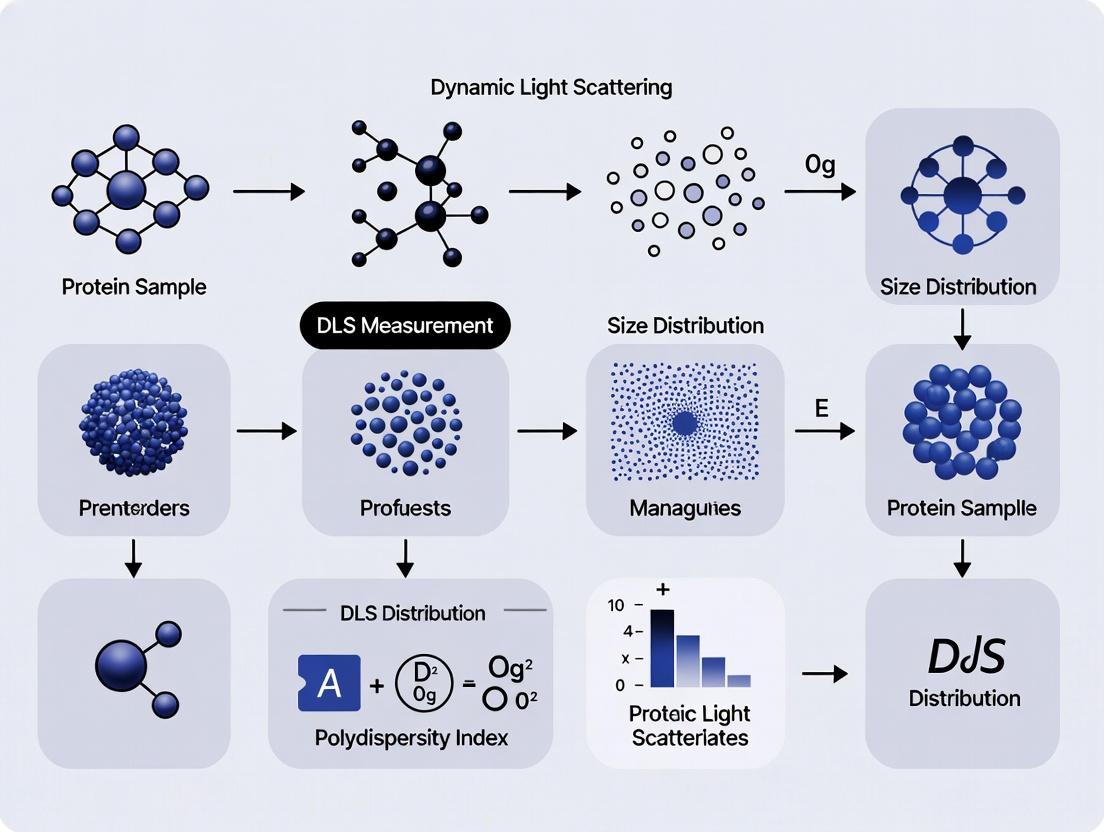
This article provides a complete, modern guide to Dynamic Light Scattering (DLS) for protein dispersity analysis, tailored for researchers, scientists, and drug development professionals.
Mastering Protein Dispersity Analysis: A Comprehensive DLS Protocol for Biopharmaceutical Research
Abstract
This article provides a complete, modern guide to Dynamic Light Scattering (DLS) for protein dispersity analysis, tailored for researchers, scientists, and drug development professionals. It begins by establishing the critical importance of protein size and aggregation in determining function, stability, and therapeutic efficacy. A detailed, step-by-step protocol for sample preparation, instrument calibration, and data acquisition follows, designed to ensure reproducibility in biopharmaceutical workflows. Common pitfalls such as polydisperse samples, buffer effects, and concentration artifacts are addressed with practical troubleshooting strategies. Finally, the article explores how to validate DLS data through complementary techniques like SEC-MALS and NTA, and discusses the evolving role of high-throughput and automated DLS in accelerating drug discovery and formulation development.
Why Protein Size and Aggregation Matter: The Science Behind DLS for Biotherapeutics
Protein dispersity refers to the uniformity of molecular mass and size within a protein sample. In biophysical characterization, it is a critical quality attribute that directly correlates with stability, activity, and efficacy. Monodispersity indicates a homogeneous population of identical molecules, while polydispersity signifies a heterogeneous mixture of aggregates, fragments, or conformers. For therapeutic proteins, high monodispersity is typically essential for predictable pharmacokinetics and minimal immunogenicity. This application note, framed within a broader thesis on Dynamic Light Scattering (DLS) protocol for protein dispersity analysis, details the definitions, impacts, and protocols for rigorous dispersity assessment.
Core Definitions and Quantitative Impact
Defining Key Metrics
- Monodisperse: A system where all particles/proteins are identical in size and mass. In DLS, this is indicated by a low polydispersity index (PDI) and a single, narrow peak in the size distribution.
- Polydisperse: A system containing a distribution of particle/protein sizes. This is indicated by a high PDI and multiple or broad peaks.
- Polydispersity Index (PDI): A dimensionless number derived from DLS that quantifies the breadth of the size distribution. It is calculated from the cumulants analysis of the autocorrelation function.
Table 1: Impact of Dispersity on Functional and Developability Attributes of Proteins
| Protein Attribute | Monodisperse System Impact | Polydisperse System Impact | Supporting Evidence (Typical Range/Effect) |
|---|---|---|---|
| Catalytic Activity (Enzymes) | High, reproducible specific activity. | Reduced, variable activity; potential for inhibition by aggregates. | Specific activity can drop by >50% with >10% aggregate content. |
| Binding Affinity | Consistent, high-affinity interactions. | Averaged affinity; sub-populations may have poor or non-specific binding. | KD variability can increase by >100% in polydisperse mAb samples. |
| Thermal Stability | Sharp, cooperative unfolding transition (high Tm). | Broad unfolding transition; lower observed Tm. | Tm can decrease by 5-15°C with significant aggregation. |
| Solution Viscosity | Predictable, typically lower viscosity at high concentrations. | Often elevated viscosity, leading to challenges in formulation and delivery. | Viscosity >20 cP at 150 mg/mL linked to high-molecular-weight species. |
| Immunogenic Potential | Low risk of anti-drug antibody (ADA) response. | High risk; aggregates are a key driver of unwanted immunogenicity. | Studies show a >10x increase in ADA response with certain aggregate types. |
| Pharmacokinetics | Consistent clearance rate and half-life. | Altered clearance; rapid removal of aggregates by immune system. | Half-life can be reduced by over 50% for highly aggregated fractions. |
Experimental Protocols for Dispersity Analysis
Protocol: Dynamic Light Scattering (DLS) for Polydispersity Index Determination
Purpose: To measure the hydrodynamic size distribution and calculate the PDI of a protein sample.
I. Materials and Reagent Preparation
- Protein Sample: Purified protein at >0.5 mg/mL in a compatible buffer.
- Filtration: 0.02 µm or 0.1 µm syringe filter (non-protein binding, e.g., PES).
- Buffer: Clarified and filtered (0.1 µm) formulation buffer for background/dilution.
- Consumables: Low-volume, disposable cuvettes (e.g., 12 µL microcuvettes) or quartz cuvettes.
II. Instrument Setup and Measurement
- Equilibration: Turn on the DLS instrument and laser, allowing at least 15 minutes for thermal stabilization.
- Background Measurement: Load filtered buffer into a clean cuvette. Acquire a measurement to ensure counts per second (CPS) are low (<10% of sample signal) and free of particle artifacts.
- Sample Preparation: Centrifuge protein sample at 10,000-15,000 x g for 10 minutes at 4°C to remove large particulates. Alternatively, filter sample directly (caution for large proteins >200 kDa).
- Loading: Pipette 10-50 µL of prepared sample into a clean cuvette, avoiding introduction of air bubbles.
- Data Acquisition:
- Set instrument temperature to desired experimental condition (e.g., 25°C).
- Set number of acquisitions to 10-15 runs of 10 seconds each.
- Start measurement. Ensure the measured CPS is within the instrument's optimal range.
- Analysis:
- Use the cumulants analysis fit provided by the software. Record the Z-average hydrodynamic diameter (d.nm) and the Polydispersity Index (PDI).
- Evaluate the size distribution plot (intensity-based). A monodisperse sample shows a single, symmetrical peak.
- Interpretation: PDI < 0.1 is highly monodisperse; 0.1-0.2 is near-monodisperse; >0.2 indicates significant polydispersity. These thresholds are protein-specific.
Protocol: Size-Exclusion Chromatography coupled with Multi-Angle Light Scattering (SEC-MALS)
Purpose: To obtain an absolute measurement of molar mass and quantify sub-populations (monomer, aggregates, fragments).
I. Materials and Setup
- SEC Column: Suitable for protein's size range (e.g., Superdex 200 Increase for 10-600 kDa).
- HPLC/MALS System: Equipped with UV, refractive index (RI), and MALS detectors.
- Mobile Phase: Filtered (0.1 µm) and degassed buffer (e.g., PBS + 150 mM NaCl).
- Protein Sample: 50-100 µL at 1-5 mg/mL, filtered (0.1 µm).
II. Procedure
- Equilibrate the SEC column in mobile phase at a constant flow rate (e.g., 0.5 mL/min) until a stable baseline is achieved.
- Calibrate the MALS detector according to manufacturer guidelines using a known standard (e.g., bovine serum albumin).
- Inject the prepared protein sample.
- Collect data from UV, RI, and MALS detectors simultaneously.
III. Data Analysis
- Use specialized software (e.g., ASTRA) to analyze the combined data.
- The MALS data provides absolute molar mass across the elution peak, independent of elution time.
- Integrate peaks to quantify percentage of monomer, dimer, aggregate, and fragment based on their calculated molar mass and elution volume.
Visualizing the Workflow and Impact
Diagram Title: DLS Protocol for Protein Dispersity Analysis Workflow
Diagram Title: Functional Consequences of Protein Dispersity
The Scientist's Toolkit: Research Reagent Solutions
Table 2: Essential Materials for Protein Dispersity Analysis
| Item Category | Specific Example/Product Type | Function in Dispersity Analysis |
|---|---|---|
| Filtration Devices | 0.1 µm PES (Polyethersulfone) syringe filters; 0.02 µm Anopore filters. | Removes dust and large particulates from buffers and samples that cause spurious scattering in DLS. |
| Specialized Cuvettes | Disposable microcuvettes (12 µL); Ultra-micro quartz cuvettes. | Minimizes sample volume requirement and reduces potential for contamination between runs. |
| SEC Columns | Silica-based (e.g., TSKgel) or polymer-based (e.g., Superdex, Acquity) columns. | Separates protein species by hydrodynamic size for offline analysis or online connection to MALS. |
| MALS Detectors | DAWN (Wyatt) or µDAWN (Wyatt), miniDAWN (Wyatt). | Measures absolute molar mass and size of proteins eluting from an SEC column without reliance on standards. |
| Stabilizing Agents | Trehalose, Sucrose, Polysorbate 80/20, L-Arginine. | Added to formulation buffers to suppress protein aggregation and maintain monodispersity during storage and handling. |
| Size Standards | Monodisperse latex/nanosphere kits; Protein standards (e.g., BSA, thyroglobulin). | Validates instrument performance and calibration for both DLS and SEC-MALS systems. |
The Critical Link Between Protein Aggregation, Stability, and Therapeutic Efficacy
The therapeutic efficacy and safety of protein-based biopharmaceuticals are critically dependent on their conformational stability and resistance to aggregation. Within the context of research utilizing Dynamic Light Scattering (DLS) for protein dispersity analysis, understanding this link is paramount. Aggregation not only diminishes bioactivity but also increases immunogenicity risk. DLS provides a key, non-invasive method to quantify protein hydrodynamic size and size distribution (polydispersity index, PDI), serving as an early indicator of aggregation propensity and formulation stability. This application note details protocols and analyses central to this thesis.
Table 1: Correlation Between DLS Metrics, Stability, and Biological Activity
| Protein Therapeutic Format | Polydispersity Index (PDI) | Mean Hydrodynamic Radius (nm) | % High-Molecular-Weight Species (%HMW) | Relative Bioactivity (%) | Shelf-Life Stability at 4°C |
|---|---|---|---|---|---|
| Monoclonal Antibody (Formulation A) | 0.05 ± 0.01 | 5.2 ± 0.3 | <1.0 | 100 ± 3 | >24 months |
| Monoclonal Antibody (Stressed) | 0.42 ± 0.08 | 28.5 ± 5.1 | 18.5 ± 2.1 | 62 ± 8 | <1 month |
| Enzyme Replacement Therapy | 0.08 ± 0.02 | 4.8 ± 0.4 | 2.5 ± 0.5 | 95 ± 4 | 18 months |
| Aggregation-Prone Cytokine | 0.35 ± 0.10 | 15.7 ± 3.2 | 12.3 ± 1.8 | 45 ± 10 | <2 weeks |
Table 2: Effect of Formulation Excipients on DLS Parameters
| Excipient (0.1% w/v) | Mean Size (nm) | PDI | % Aggregates after 40°C/7 days |
|---|---|---|---|
| Sucrose | 5.1 | 0.06 | 3.2% |
| Sorbitol | 5.3 | 0.07 | 4.1% |
| Polysorbate 20 | 5.0 | 0.05 | 2.8% |
| No Excipient (Control) | 5.5 | 0.12 | 15.7% |
Experimental Protocols
Protocol 1: DLS for Routine Protein Dispersity and Stability Screening
Objective: To determine the hydrodynamic size distribution and polydispersity of a protein sample as a stability indicator. Materials: Purified protein sample, formulation buffer, 0.02 µm filtered, DLS instrument (e.g., Malvern Zetasizer Nano), low-volume quartz cuvettes, microcentrifuge tubes. Procedure:
- Sample Preparation: Clarify protein solution by centrifugation at 10,000-15,000 x g for 10 minutes at 4°C.
- Instrument Setup: Power on DLS instrument and laser, allowing 15 minutes for warm-up. Set temperature to 25°C (or desired study temperature).
- Cuvette Loading: Pipette 50-80 µL of clarified supernatant into a clean, low-volume quartz cuvette. Avoid introducing bubbles.
- Measurement Parameters: Set measurement angle to 173° (backscatter). Define automatic attenuation selection. Set number of runs to 10-15 per measurement.
- Data Acquisition: Perform minimum of 3 consecutive measurements per sample. Software calculates intensity-based size distribution and derives the PDI.
- Data Analysis: Report Z-average diameter (d.nm) and PDI. A PDI <0.1 indicates a monodisperse sample; PDI >0.2 suggests significant polydispersity/aggregation.
Protocol 2: Accelerated Stability Study with DLS Monitoring
Objective: To assess protein aggregation propensity under thermal stress. Materials: Protein samples in candidate formulations, thermal incubator, DLS instrument. Procedure:
- Aliquot 200 µL of each formulated protein sample into sterile PCR tubes.
- Place aliquots in a thermal incubator at 40°C (or other stress temperature, e.g., 25°C, 37°C). Maintain control at 4°C.
- At predetermined time points (e.g., 0, 1, 3, 7, 14 days), remove a sample and control. Centrifuge briefly.
- Immediately analyze using Protocol 1.
- Plot Z-average size and PDI vs. time to compare formulation stability.
Protocol 3: Correlating DLS Data with Bioactivity Assay (Cell-Based)
Objective: To link physical aggregation (per DLS) to loss of therapeutic function. Materials: Stressed/aggregated protein samples, relevant cell line, assay reagents (e.g., luciferase, MTT), plate reader. Procedure:
- Generate samples with varying degrees of aggregation via stress (e.g., thermal, agitation) and measure size/PDI via DLS (Protocol 1).
- Normalize all samples to the same total protein concentration (e.g., via BCA assay).
- Apply samples to a cell-based bioassay (e.g., proliferation, signaling reporter assay) specific to the protein's mechanism.
- Measure dose-response and calculate IC50 or EC50 relative to an un-stressed reference standard.
- Correlate bioactivity (e.g., % of control) with DLS metrics (%HMW, PDI) using linear regression.
Visualizations
Diagram Title: Pathway from Protein Stress to Aggregation & Detrimental Outcomes
Diagram Title: DLS Workflow for Protein Dispersity Analysis
The Scientist's Toolkit: Research Reagent Solutions
Table 3: Essential Materials for DLS-Based Protein Stability Research
| Item | Function in Protocol | Key Consideration |
|---|---|---|
| DLS Instrument (e.g., Zetasizer Nano, DynaPro Plate Reader) | Measures fluctuations in scattered light to determine hydrodynamic size and PDI. | Backscatter detection (173°) is optimal for protein samples to minimize multiple scattering. |
| Low-Volume Quartz Cuvettes (e.g., ZEN0040) | Holds minimal sample volume (12-50 µL) for measurement, reducing material usage. | Must be impeccably clean and dust-free; use filtered solvent rinses. |
| 0.02 µm Anotop Syringe Filters | Removes particulates and dust from buffers and samples prior to analysis. | Essential for obtaining baseline measurements; use low protein-binding filters for samples. |
| Formulation Buffer Excipients (Sucrose, Trehalose, Polysorbate 20/80) | Stabilize native protein conformation, reduce surface adsorption, and inhibit aggregation. | Screening required; concentration optimization is critical to balance stability and manufacturability. |
| NIST-Traceable Latex Nanosphere Standards (e.g., 60 nm standard) | Validates instrument performance, alignment, and measurement accuracy. | Regular verification (monthly) is required for quality-controlled environments. |
| Microcentrifuge with Temperature Control | Clarifies protein samples by pelleting pre-existing large aggregates before DLS analysis. | Gentle spin (10,000-15,000 x g) is recommended to avoid shear-induced aggregation. |
| High-Purity, Low-Fluorescence Water/Buffer | Used for sample dilution, cuvette cleaning, and instrument calibration. | Contaminants can cause spurious scattering peaks and invalidate data. |
Dynamic Light Scattering (DLS) is a cornerstone analytical technique in biophysics and pharmaceutical development for assessing the size and dispersity of proteins and nanoparticles in solution. Within a thesis focused on protein dispersity analysis, DLS provides a critical, non-invasive method to monitor aggregation, oligomeric state, and conformational changes—key factors influencing drug stability, efficacy, and safety. This application note details the core principles and provides a standardized protocol for robust data acquisition and analysis.
Theoretical Principles: Brownian Motion and Hydrodynamic Radius
The operation of DLS is grounded in the physics of Brownian Motion—the random, thermally-driven movement of particles suspended in a fluid. In a DLS instrument, a monochromatic laser beam illuminates the sample. The scattered light from the moving particles undergoes constructive and destructive interference, resulting in intensity fluctuations at the detector. Smaller particles move faster (exhibit higher diffusion coefficients), causing rapid intensity fluctuations, while larger particles move slower, causing slower fluctuations.
These temporal intensity fluctuations are analyzed using an autocorrelation function. The decay rate of this autocorrelation function is directly related to the diffusion coefficient (D) of the particles via the Stokes-Einstein equation:
[ D = \frac{kB T}{6 \pi \eta Rh} ]
Where:
- ( k_B ) = Boltzmann constant
- ( T ) = Absolute temperature (Kelvin)
- ( \eta ) = Solvent viscosity
- ( R_h ) = Hydrodynamic Radius
The Hydrodynamic Radius ((Rh)) is the radius of a hard sphere that diffuses at the same rate as the particle being measured. It includes the protein core, along with any solvation shell, adsorbates, or conformational protrusions. (Rh) is the primary size parameter reported by DLS and is exquisitely sensitive to aggregation and changes in molecular conformation.
Key Quantitative Parameters in DLS Analysis
Table 1: Core DLS Output Parameters for Protein Dispersity Assessment
| Parameter | Symbol/Unit | Description | Ideal Range for Monodisperse Protein |
|---|---|---|---|
| Z-Average Size | (d_z) (nm) | Intensity-weighted mean hydrodynamic diameter. Primary size indicator. | Sample-dependent (e.g., 5 nm for BSA). |
| Polydispersity Index | PDI (unitless) | Measure of the breadth of the size distribution. Critical for dispersity. | < 0.1: Monodisperse. 0.1-0.2: Moderately polydisperse. >0.2: Broad distribution. |
| Peak Size(s) | d (nm) | Hydrodynamic diameter of individual populations in a multi-modal distribution. | Single, sharp peak for pure sample. |
| % Intensity by Peak | % | Relative scattering intensity contribution of each population. | 100% for main peak. Small aggregates (<1%) can be significant. |
| Count Rate | kcps | Scattered light intensity. Indicator of sample concentration and quality. | Stable and appropriate for instrument sensitivity. |
Table 2: Impact of Sample Conditions on Measured (R_h) and PDI
| Condition | Effect on Hydrodynamic Radius ((R_h)) | Effect on PDI | Practical Implication |
|---|---|---|---|
| Protein Aggregation | Increase (appearance of larger size population). | Significant increase. | Indicates instability, requires buffer optimization. |
| Change in Buffer Ionic Strength | Can increase or decrease due to changes in solvation shell. | May increase. | Highlights importance of matching measurement buffer to storage buffer. |
| Presence of Denaturants | Typically increases (unfolding). | Increases. | Can be used to study unfolding transitions. |
| Contamination (Dust, Debris) | Large, sporadic spikes in size. | Drastic increase; poor measurement reproducibility. | Mandatory sample filtration/centrifugation. |
Detailed DLS Protocol for Protein Dispersity Analysis
Protocol 1: Sample Preparation and Measurement
- Objective: To obtain a clean, dust-free protein sample for accurate DLS measurement.
- Materials: Purified protein solution, appropriate buffer (pre-filtered), 0.02 µm or 0.1 µm syringe filters, low-protein-binding microcentrifuge tubes, 1.5 mL quartz or disposable plastic cuvettes (as appropriate for instrument).
- Procedure:
- Buffer Preparation: Filter all buffers through a 0.02 µm or 0.1 µm filter into a clean container to remove particulate matter.
- Sample Clarification: Centrifuge the protein solution at >15,000 × g for 10-15 minutes at the recommended storage temperature (typically 4°C). Alternatively, filter the protein solution directly through a 0.02 µm or 0.1 µm filter Note: Filtration may shear large aggregates or complexes.
- Cuvette Handling: Using clean, dust-free gloves, transfer the clarified supernatant to a clean DLS cuvette. Avoid introducing bubbles. Cap the cuvette.
- Instrument Equilibration: Place the cuvette in the sample chamber of the DLS instrument, pre-equilibrated to the desired measurement temperature (typically 20°C or 25°C). Allow 2-5 minutes for temperature equilibration.
- Measurement Setup: Set measurement parameters: laser wavelength, detector angle (commonly 173° for backscatter), duration of each run (typically 10-15 runs of 10 seconds each), and temperature stability tolerance (usually ± 0.1°C).
- Data Acquisition: Initiate measurement. Monitor the count rate and correlation function trace for stability. Reject measurements with significant spikes indicative of dust or bubbles.
Protocol 2: Data Analysis and Dispersity Assessment
- Objective: To derive the hydrodynamic size distribution and polydispersity index from the autocorrelation function.
- Software: Instrument manufacturer's analysis suite (e.g., Zetasizer Software, DYNAMICS).
- Procedure:
- Correlation Function Inspection: Load the measured data. Visually inspect the autocorrelation function for a smooth, single decay. Noisy or multi-phasic decays suggest a polydisperse sample or poor measurement.
- Fit Model Selection: For a preliminary assessment, use the Cumulants analysis (ISO Standard) to obtain the Z-Average diameter and the Polydispersity Index (PDI).
- Size Distribution Analysis: For more detailed resolution of multiple populations, apply an algorithm (e.g., CONTIN, NNLS) to the correlation data to generate an intensity-size distribution plot.
- Interpretation: Refer to Table 1. A monodisperse protein sample will show a single peak with a PDI < 0.1. The presence of a shoulder or a separate peak at larger sizes indicates oligomers or aggregates. The relative intensity weighting (Table 1) must be considered, as larger particles scatter light much more intensely.
- Reporting: Report the Z-average, PDI, and the peak sizes with their percentage intensities. Always include key measurement conditions: temperature, buffer composition, and protein concentration.
DLS Experimental Workflow Diagram
DLS Data Acquisition and Analysis Pipeline
The Scientist's Toolkit: Essential DLS Research Reagents & Materials
Table 3: Key Reagents and Materials for Robust DLS Measurements
| Item | Function/Benefit | Critical Consideration |
|---|---|---|
| High-Purity, Pre-Filtered Buffers (e.g., PBS, Tris, Histidine) | Provides consistent solvent background with minimal particulate noise. | Always filter through 0.02-0.1 µm filter before use. Match storage buffer exactly. |
| Anaerobic Disposable Cuvettes (Low Volume, ~ 50 µL) | Minimizes sample requirement and reduces dust contamination risk. Disposable. | Ensure material is compatible with your protein and instrument (quartz vs. plastic). |
| Syringe Filters (0.02 µm or 0.1 µm pore size, low protein binding) | Critical for removing dust and pre-existing aggregates from sample and buffer. | Use cellulose acetate or PES membranes for low protein adsorption. |
| Standard Reference Materials (e.g., Polystyrene Nanospheres of known size) | Validates instrument performance, alignment, and data processing protocols. | Use NIST-traceable standards with low PDI (< 0.05). |
| Protein Stabilizers/Carriers (e.g., BSA at 0.1 mg/mL) | Can be added to dilute protein samples to prevent adsorption to cuvette walls. | Must be included in buffer blank control and should not interact with analyte. |
| Low-Protein-Binding Microcentrifuge Tubes & Pipette Tips | Prevents loss of protein, especially at low concentrations, due to surface adsorption. | Essential for handling sensitive or dilute therapeutic proteins and antibodies. |
Dynamic Light Scattering (DLS) is a non-invasive, rapid analytical technique critical for characterizing the size and size distribution (polydispersity) of proteins and nanoparticles in solution. Within biopharmaceutical development, understanding and controlling protein dispersity—from early-stage research through quality assurance and control (QA/QC)—is paramount for ensuring drug product stability, efficacy, and safety. This Application Note provides detailed protocols and data frameworks for applying DLS within a thesis focused on protein dispersity analysis, catering to the needs of researchers and development professionals.
Application Note 1: Basic Research – Characterization of Monoclonal Antibody (mAb) Conformational Stability
Objective: To assess the thermal stability and aggregation propensity of a candidate therapeutic monoclonal antibody (mAb) under varying pH conditions.
Experimental Protocol
Sample Preparation:
- Dialyze the mAb (at 1 mg/mL) into three separate buffers: 50 mM acetate (pH 5.0), 50 mM phosphate (pH 7.0), and 50 mM Tris (pH 8.5). All buffers should contain 150 mM NaCl.
- Filter all samples using a 0.1 μm syringe filter (non-protein binding, e.g., PVDF) directly into a ultra-clean, low-volume disposable sizing cuvette.
- Centrifuge filtered samples at 10,000 x g for 5 minutes to remove any air bubbles.
DLS Instrument Setup:
- Equilibrate the DLS instrument (e.g., Malvern Zetasizer Ultra, Wyatt DynaPro Plate Reader) at 25°C for 15 minutes.
- Set the detector angle to 173° (backscatter) for high concentration samples.
- Configure the software for a "Size vs. Temperature" stability assay.
Measurement Procedure:
- Place the cuvette in the instrument and allow temperature equilibration for 2 minutes.
- Set the measurement duration to 10 runs per measurement, with automatic optimization of attenuator and position.
- For the stability assay: Set a temperature ramp from 25°C to 80°C, with 5°C increments. Hold at each temperature for a 2-minute equilibration period followed by a DLS measurement.
- Perform a minimum of three replicates per pH condition.
Data Analysis:
- Analyze the correlation function using the instrument's software (e.g., ZS Xplorer, DYNAMICS) to obtain the intensity-weighted size distribution (Z-average diameter and Polydispersity Index, PDI).
- Plot the Z-average diameter and PDI as a function of temperature. The onset temperature of a significant increase in hydrodynamic radius (Rh) and PDI indicates the beginning of thermal unfolding and aggregation.
- Use the "Derived Size Distribution" or "Regularization" algorithms to deconvolute the contributions of monomers, oligomers, and aggregates.
Table 1: Thermal Stability of mAb at Different pH Values
| pH Condition | Z-Avg at 25°C (d.nm) | PDI at 25°C | Onset Temp. (°C) | Agg. Size at 80°C (d.nm) |
|---|---|---|---|---|
| 5.0 | 10.2 ± 0.3 | 0.05 ± 0.01 | 62.5 ± 1.0 | 125.4 ± 15.2 |
| 7.0 | 9.8 ± 0.2 | 0.04 ± 0.01 | 68.2 ± 0.8 | 98.7 ± 10.5 |
| 8.5 | 10.5 ± 0.4 | 0.08 ± 0.02 | 58.1 ± 1.5 | 250.1 ± 30.7 |
Interpretation: The mAb shows optimal conformational stability (highest onset temperature and smallest aggregates at high temperature) at neutral pH (7.0). The elevated PDI and larger aggregates at pH 8.5 suggest instability under basic conditions.
Application Note 2: Process Development – Monitoring Aggregation During Viral Inactivation
Objective: To monitor protein aggregation in real-time during low-pH viral inactivation, a critical unit operation in mAb downstream processing.
Experimental Protocol
In-situ Setup:
- Utilize a DLS instrument with a flow cell or a temperature-controlled cuvette holder capable for rapid titration.
- Load the protein A-purified mAb (at ~5 mg/mL in neutral buffer) into the cuvette.
Kinetic Measurement:
- Start a continuous, sequential measurement mode with 30-second intervals.
- After collecting 5 baseline measurements, rapidly add a pre-calculated volume of 1.0 M acetic acid directly to the cuvette via micropipette and mix gently with the pipette tip to achieve a target pH of 3.6 ± 0.1.
- Continue uninterrupted DLS measurements for 60 minutes.
Data Processing:
- Export the time-series data for Z-average and PDI.
- Model the growth of aggregate radius over time using a kinetic aggregation model (e.g., a sigmoidal fit) to determine the lag time and rate of aggregation.
Table 2: Aggregation Kinetics During Low-pH Hold (pH 3.6)
| Time (min) | Z-Avg Diameter (d.nm) | PDI | % Intensity >100 nm |
|---|---|---|---|
| 0 (pre-acid) | 10.1 | 0.05 | <0.1 |
| 5 | 11.5 | 0.12 | 2.5 |
| 15 | 15.8 | 0.28 | 15.7 |
| 30 | 45.3 | 0.42 | 68.2 |
| 60 | 210.5 | 0.55 | 95.5 |
Interpretation: DLS provides a sensitive, real-time readout of aggregation onset and progression. The data informs the optimal hold time for viral inactivation before neutralization, balancing viral safety against product loss due to aggregation.
Application Note 3: QA/QC – Routine Release Testing of Final Drug Product
Objective: To perform high-throughput size distribution analysis as a part of final drug product lot release specification testing.
Experimental Protocol
Standard Operating Procedure (SOP):
- Allow the drug product vials (e.g., 50 mg/mL mAb in histidine buffer) to equilibrate to room temperature for 60 minutes.
- Gently invert the vial 10 times for mixing. Do not vortex.
- Using a calibrated pipette, transfer 35 μL of sample directly into a pre-cleaned, disposable microcuvette. Avoid creating air bubbles.
- Place the cuvette in the auto-sampler tray of a high-throughput DLS instrument (e.g., plate-based system).
Automated Measurement:
- The software method should include: (1) A 2-minute temperature equilibration at 20°C. (2) Five measurements of 10 seconds each per sample. (3) Automatic rejection of measurements if the baseline count rate is outside validated limits.
- Run three replicates per lot alongside system suitability standards (e.g., a monodisperse BSA control and a polydisperse aggregate standard).
Acceptance Criteria:
- The Z-average diameter must be within 9.5 – 10.5 nm.
- The Polydispersity Index (PDI) must be ≤ 0.10.
- The % Intensity in the oligomer peak (2-20 nm) must be >95%.
Table 3: QA/QC Release Data for Three Consecutive Drug Substance Lots
| Lot Number | Z-Avg (d.nm) | PDI | % Intensity Main Peak | Result |
|---|---|---|---|---|
| DS-230501 | 9.9 | 0.06 | 99.8 | PASS |
| DS-230502 | 10.2 | 0.08 | 98.5 | PASS |
| DS-230503 | 9.7 | 0.04 | 99.9 | PASS |
Interpretation: Consistent DLS profiles across manufacturing lots confirm process robustness and product consistency, meeting pre-defined quality specifications for particle size distribution.
The Scientist's Toolkit: Research Reagent Solutions
| Item / Reagent | Function in DLS Protein Analysis |
|---|---|
| Disposable, Ultra-Clean Cuvettes | Minimizes dust contamination and eliminates cross-contamination between samples. Essential for accurate measurements. |
| 0.1 μm PVDF Syringe Filters | Removes particulate matter and dust from protein samples prior to measurement, reducing scattering artifacts. |
| NIST-Traceable Latex Size Standards | (e.g., 60 nm polystyrene) Used for routine validation and performance qualification of the DLS instrument. |
| Monodisperse Protein Standard | (e.g., Bovine Serum Albumin) Serves as a system suitability control to confirm instrument and protocol performance for biological samples. |
| Formulation Buffers | (e.g., Histidine, Phosphate, Acetate) Used for sample dialysis/exchange to ensure consistent ionic strength and pH, which critically influence protein stability and measurement. |
| Stable Aggregate Control | A purposely stressed protein sample with known aggregate content. Used as a control when developing or validating methods for sub-visible particle detection. |
Diagrams
DLS Applications in Biopharma Pipeline
General DLS Protocol Workflow for Proteins
Step-by-Step DLS Protocol: From Sample Prep to Data Acquisition for Reliable Results
Application Notes
Accurate Dynamic Light Scattering (DLS) analysis of protein dispersity is fundamentally dependent on sample preparation. Contaminants, aggregates, bubbles, or inappropriate buffer conditions will generate spurious signals, rendering hydrodynamic diameter and polydispersity index (PDI) measurements invalid. This protocol, framed within a thesis on DLS for protein dispersity analysis, details the essential pre-measurement checklist to ensure data integrity. The core triumvirate—buffer compatibility, filtration, and degassing—addresses the most common sources of error in nanoparticle tracking analysis.
Buffer Compatibility: The buffer must match the protein's requirements for stability (pH, ionic strength) and must not itself contribute significant scattering signals. A mismatch can lead to protein aggregation, adsorption to cuvette walls, or anomalous diffusion.
Filtration: This critical step removes dust, pre-existing protein aggregates, and other particulate contaminants that are often larger than the protein of interest and will dominate the scattering signal, leading to inflated size readings and high PDI values.
Degassing: Dissolved gases in buffers can nucleate to form nanobubbles during measurement, especially under laser heating. These bubbles act as large, transient scatterers, creating severe spikes and noise in the correlation function, compromising the accuracy of the diffusion coefficient calculation.
Protocols
Protocol 1: Buffer Compatibility Assessment
Objective: To verify that the chosen buffer does not induce protein aggregation and has minimal scattering background.
- Prepare the final protein buffer without the protein.
- Perform DLS measurement on the blank buffer in the intended measurement cuvette.
- Acceptance Criterion: The measured intensity (in kcps) should be < 5% of the expected protein sample intensity. The size distribution report should show no significant peaks (>5% intensity) in the protein size range of interest (e.g., 1-10 nm for a monomer).
- Incubate the protein in the buffer at the measurement temperature (e.g., 25°C) for 30 minutes.
- Perform a visual inspection for cloudiness or precipitate. If present, buffer conditions are incompatible.
Protocol 2: Sequential Membrane Filtration
Objective: To remove particulate contaminants from the buffer and protein sample without introducing aggregates or losing protein due to adsorption.
- Buffer Filtration: Filter all buffers through a 0.1 µm or 0.22 µm hydrophilic, low-protein-binding syringe filter (e.g., PVDF or cellulose acetate) into a clean, dust-free container.
- Sample Filtration: For the final protein sample, use a size-appropriate filter. A general guideline:
- For proteins > 100 kDa or delicate complexes: Use a 0.22 µm filter.
- For smaller, robust proteins: A 0.1 µm filter can be used for extra cleanliness.
- Note: Always pre-wet the filter with a small amount of filtered buffer to minimize adsorption losses.
- Discard the first 3-4 drops of filtrate before collecting the sample for DLS.
Protocol 3: Buffer Degassing
Objective: To remove dissolved gases to prevent nanobubble formation during DLS measurement.
- Place the filtered buffer in a sealable vessel (e.g., a Schott bottle).
- Apply a mild vacuum (e.g., using a vacuum desiccator or a membrane vacuum pump) for 15-20 minutes while gently stirring on a magnetic stirrer.
- Alternatively, sonicate the buffer in an ultrasonic bath for 10-15 minutes. Caution: Do not use this method for buffers containing detergents, as sonication can cause foaming.
- Allow the degassed buffer to equilibrate to measurement temperature in a closed container before preparing the final protein sample.
Data Presentation
Table 1: Impact of Pre-Measurement Steps on DLS Results for a 150 kDa Monoclonal Antibody
| Preperation Step | Z-Average (d.nm) | PDI | Peak 1 (d.nm) | % Intensity | Resultant Quality |
|---|---|---|---|---|---|
| Unfiltered, Gassed Buffer | 45.2 ± 18.5 | 0.45 | 12.1 / 125.5 / >1000 | 45 / 30 / 25 | Unacceptable. High PDI, multiple peaks from aggregates & bubbles. |
| Buffer Filtered (0.22µm), Sample Unfiltered | 28.5 ± 10.1 | 0.32 | 10.8 / 85.2 | 70 / 30 | Poor. Residual aggregates from sample handling dominate. |
| Buffer & Sample Filtered (0.22µm) | 11.8 ± 3.2 | 0.08 | 11.2 | 100 | Good. Monomer peak clear, low PDI. |
| Buffer & Sample Filtered (0.22µm) + Degassed | 11.5 ± 2.5 | 0.05 | 11.1 | 100 | Optimal. Minimal noise, lowest PDI, most accurate representation. |
Table 2: Recommended Filter Pore Sizes for Common Protein Samples
| Protein Type / Size Range | Recommended Filter Pore Size | Rationale |
|---|---|---|
| Small Globular Proteins (< 50 kDa) | 0.1 µm | Maximizes removal of contaminants without significant sample loss. |
| Monoclonal Antibodies (~150 kDa) | 0.22 µm | Standard for most biologics; balances cleanliness with flow rate. |
| Large Complexes / Viruses ( > 500 kDa) | 0.45 µm | Prevents shear-induced disruption or clogging while removing larger dust. |
| Membrane Proteins in Detergent | 0.22 µm (Low-binding) | Minimizes adsorptive losses of protein and critical detergent. |
Mandatory Visualization
Title: DLS Pre-Measurement Quality Control Workflow
Title: DLS Artifacts: Causes and Pre-Measurement Solutions
The Scientist's Toolkit
Table 3: Essential Research Reagent Solutions for DLS Sample Preparation
| Item | Function & Rationale | Key Consideration |
|---|---|---|
| Hydrophilic, Low-Protein-Binding Syringe Filters (0.1 µm & 0.22 µm) | Removes particulates and aggregates. Low-binding material (e.g., PVDF, cellulose acetate) minimizes sample loss via adsorption. | Always pre-wet with buffer. Select pore size based on protein size. |
| Disposable, Pre-Cleaned Cuvettes (e.g., Quartz, glass) | Provides a clean, consistent scattering geometry. Disposable nature eliminates cross-contamination risks from cleaning. | Ensure material is compatible with your solvent and has the correct path length (e.g., 10 mm). |
| Degassing Station (Vacuum Pump/Desiccator) | Removes dissolved gases to prevent nanobubble formation, a major source of noise in the correlation function. | Mild vacuum with gentle stirring is preferred over vigorous methods. |
| Certified Particle-Free Water/Buffer Vials | For final sample dilution and preparation. Certified "particle-free" ensures ultralow background scattering. | Never use water or buffers from open containers. |
| pH/Ion-Selective Electrodes | For precise buffer preparation. Small pH/ionic strength changes can dramatically affect protein colloidal stability. | Calibrate immediately before use. |
| Non-ionic Surfactant (e.g., Polysorbate 20/80) | Additive (typically 0.005-0.01% v/v) to minimize protein adsorption to cuvette walls and filter membranes. | Use at the minimum effective concentration to avoid forming micelles, which are detectable by DLS. |
| Size Standard (e.g., Polystyrene Nanospheres) | A control sample of known, monodisperse size (e.g., 100 nm) to verify instrument performance and sample preparation protocol. | Use a standard with a refractive index similar to your protein/buffer system. |
Within a broader thesis on establishing a robust Dynamic Light Scattering (DLS) protocol for protein dispersity analysis, optimal sample preparation is the critical foundation. The accuracy of DLS in measuring hydrodynamic radius and polydispersity index (PDI) is intrinsically dependent on sample quality. This document provides detailed application notes and protocols focused on protein concentration guidelines and handling procedures for sensitive proteins to ensure reliable and reproducible DLS data.
Quantitative Concentration Guidelines for DLS Analysis
Optimal protein concentration for DLS balances sufficient signal-to-noise ratio with minimizing intermolecular interactions (e.g., attraction, repulsion) that can skew size distributions. Current best practices, supported by recent literature and instrument manufacturer guidelines, are summarized below.
Table 1: Recommended Protein Concentration Ranges for DLS
| Protein Type / Molecular Weight | Recommended Concentration Range | Rationale & Key Considerations |
|---|---|---|
| Monomeric, Stable Proteins (e.g., BSA, 66 kDa) | 0.5 – 1.0 mg/mL | Provides strong signal while typically remaining below the onset of concentration-dependent aggregation for many standards. |
| Low MW Proteins (< 30 kDa) | 1.0 – 2.0 mg/mL | Higher concentrations often needed for adequate scattering intensity from smaller particles. |
| Large Complexes / mAbs (~150 kDa) | 0.1 – 0.5 mg/mL | Larger particles scatter more light; lower concentrations prevent artifact from intermolecular interactions. |
| Sensitive/Prone-to-Aggregate Proteins | 0.05 – 0.2 mg/mL | Minimizes propensity for aggregation during measurement; requires high-sensitivity instrumentation. |
| General Screening Starting Point | 0.5 mg/mL | A pragmatic initial concentration for an unknown sample, to be adjusted based on resultant count rate and PDI. |
Key Notes:
- Count Rate Monitor: The primary indicator during measurement. It should be stable and within the instrument's optimal linear range.
- PDI Threshold: A PDI < 0.2 is generally indicative of a monodisperse preparation. A high initial PDI may signal the need for further purification or a lower analysis concentration.
- Concentration Series: For critical characterization, performing a dilution series (e.g., from 1.0 to 0.1 mg/mL) is essential to identify and control for concentration-dependent effects.
Protocols for Handling Sensitive Proteins
Sensitive proteins (e.g., enzymes, membrane proteins, cytokines) require meticulous handling to maintain native state and prevent aggregation prior to and during DLS analysis.
Protocol 3.1: General Pre-DLS Sample Preparation Workflow
- Objective: To prepare a clarified, homogeneous protein sample suitable for DLS.
- Materials: See "The Scientist's Toolkit" (Section 6).
- Procedure:
- Thawing: Rapidly thaw frozen protein aliquots on ice or using a controlled thawing device. Avoid repeated freeze-thaw cycles.
- Clarification: Centrifuge the protein sample at > 14,000 x g for 10-15 minutes at 4°C immediately prior to loading into the DLS cuvette.
- Filtration (Optional but Recommended): For sub-micron clarification, gently filter the supernatant using a 0.1 μm or 0.22 μm low-protein-binding syringe filter.
- Cuvette Loading: Pipette the clarified supernatant into a clean, low-fluorescence, disposable or quartz cuvette. Avoid introducing bubbles.
- Equilibration: Allow the loaded cuvette to acclimate to the measurement temperature within the instrument for 2-5 minutes to eliminate thermal convection currents.
Protocol 3.2: Buffer Preparation and Exchange for Aggregation-Prone Proteins
- Objective: To formulate an optimal buffer minimizing protein aggregation.
- Procedure:
- Use high-purity reagents and ultrapure, filtered (0.1 μm) water.
- Include stabilizing agents: 50-200 mM NaCl (to shield electrostatic interactions), 1-5% glycerol or sucrose (as a crowding/stabilizing agent).
- Consider adding 0.5-1.0 mM TCEP (Tris(2-carboxyethyl)phosphine) as a reducing agent for cysteine-containing proteins, replacing DTT (which can scatter light).
- For buffer exchange, use size-exclusion chromatography (SEC) columns (e.g., Zeba Spin, PD-10) or dialysis over centrifugal concentrators, rather than dialysis bags, for speed and minimal loss.
- Critical: Filter all final buffer solutions through a 0.1 μm filter and degas under vacuum if necessary to remove dust and micro-bubbles.
Experimental DLS Measurement Protocol
Protocol 4.1: Standard DLS Measurement for Dispersity Analysis
- Objective: To acquire statistically valid size and PDI data.
- Procedure:
- Set instrument temperature (typically 20°C or 25°C; sensitive proteins at 4°C if instrument allows).
- Set measurement duration: 10-15 runs of 10 seconds each is standard for a stable sample.
- Perform automatic or manual attenuator selection to achieve an optimal count rate.
- Execute measurement in triplicate on independently prepared samples.
- Data Analysis: Use intensity-weighted distribution for primary analysis. Examine the volume-weighted or number-weighted distributions for context. Report Z-average diameter (or hydrodynamic radius, Rh) and PDI as mean ± standard deviation from replicates.
Visualization of Workflows and Relationships
Title: Optimal Protein Sample Prep Workflow for DLS
Title: DLS Concentration and Quality Decision Tree
The Scientist's Toolkit: Essential Research Reagent Solutions
Table 2: Key Reagents and Materials for Optimal DLS Sample Prep
| Item | Function & Importance | Recommended Examples/Notes |
|---|---|---|
| Ultrapure Water | Solvent for all buffers; minimizes particulate and ionic contaminants. | 18.2 MΩ·cm, filtered through 0.1 μm membrane. |
| Low-Protein-Binding Filters | Removes dust/aggregates >0.1 μm without adsorbing sample. | PVDF or cellulose acetate membrane syringe filters. |
| Low-Fluorescence Cuvettes | Holds sample; minimizes background scattering from vessel. | Disposable polystyrene or quartz cuvettes. |
| Stabilizing Agents | Maintains protein native state, reduces surface adsorption & aggregation. | Glycerol, sucrose, trehalose, poloxamers (e.g., Pluronic F-127). |
| Reducing Agents | Maintains cysteine residues in reduced state, prevents disulfide scrambling. | TCEP-HCl (preferred over DTT for DLS). |
| Size-Exclusion Spin Columns | Rapid buffer exchange into optimized, aggregate-free buffer. | Zeba Spin Desalting Columns, Bio-Spin P-6 columns. |
| Concentrated Buffer Stocks | Ensures pH and ionic strength consistency; filtered and stored sterile. | 1M Tris-HCl pH 7.5, 2-5M NaCl, filtered (0.1μm). |
| Protease Inhibitor Cocktails | Essential for sensitive proteins, prevents degradation during handling. | EDTA-free cocktails if measuring in divalent cation-containing buffers. |
Within the broader thesis on Dynamic Light Scattering (DLS) protocols for protein dispersity analysis, the calibration of the instrument and the selection of appropriate consumables and settings are foundational. Proper cuvette selection and laser optimization are critical for obtaining accurate, reproducible measurements of hydrodynamic radius (Rh) and polydispersity index (PDI). This document provides detailed application notes and protocols to guide researchers in these crucial preparatory steps.
Cuvette Selection and Handling Protocol
The cuvette is the sample chamber and an integral optical component. Its quality and type directly influence scattering volume, signal-to-noise ratio, and measurement integrity.
Cuvette Types: Comparison and Selection Criteria
Selection depends on sample volume, required sensitivity, sample corrosiveness, and cleanliness needs.
Table 1: Cuvette Types for DLS Protein Analysis
| Cuvette Type | Material | Typical Volume (µL) | Optimal For | Key Advantages | Key Limitations |
|---|---|---|---|---|---|
| Standard Square Spectrophotometer Cell | Optical Glass | 1000 - 3000 | High-concentration samples (>0.5 mg/mL), screening. | Low cost, reusable, robust. | Large volume, difficult cleaning, high stray light risk. |
| Disposable Micro Cuvette | UV-Transparent Polystyrene | 50 - 100 | Low-abundance proteins, rapid screening, corrosive buffers. | No cross-contamination, low sample volume. | Can scatter light, may not withstand organic solvents. |
| Precision Quartz Cuvette (e.g., 10 mm path) | Fused Quartz (Suprasil) | 1000 - 3000 | High-precision, UV-absorbing samples, broad wavelength range. | Excellent optical clarity, low fluorescence, chemical resistance. | Expensive, fragile, requires meticulous cleaning. |
| Ultra-Micro Volume Cell (e.g., capillary cell) | Quartz or Special Glass | 10 - 40 | Very precious or low-yield protein samples (<0.1 mg/mL). | Minimal sample requirement, reduced multiple scattering. | Sensitive to dust/air bubbles, precise filling needed. |
| Semi-Micro Cell | Quartz or Glass | 300 - 700 | Balance between sample conservation and signal quality. | Good signal with moderate volume. | Less common footprint. |
Protocol: Cuvette Cleaning and Preparation for Protein Studies
Objective: To ensure a dust- and residue-free cuvette, preventing spurious scattering signals. Materials: Cuvette, lens tissue, filtered (0.02 or 0.1 µm) solvents (ethanol, acetone, water), filtered air duster, low-lint gloves. Method:
- Initial Rinse: If reusing a cuvette, immediately after measurement, rinse 3x with filtered, deionized water to remove protein.
- Solvent Cleaning: Rinse 3x with filtered ethanol, then 3x with filtered acetone to remove organic residues.
- Final Rinse: Rinse thoroughly (5-7x) with filtered, deionized water. For quartz cells, a final rinse with filtered, weak acid (e.g., 1% HCl) can be used for stubborn residues, followed by exhaustive water rinsing.
- Drying: Air-dry in a covered, dust-free environment or use a filtered air stream. Do not wipe internal surfaces with tissue unless absolutely necessary; if required, use high-quality lens tissue.
- Validation: Before sample loading, perform a solvent blank measurement in the DLS instrument. The count rate should be low and stable (<20 kcps for most benchtop instruments in clean solvent).
- Sample Loading: Use filtered (0.1 µm, protein-compatible) syringes or pipettes. Gently inject sample to avoid bubble formation. Cap the cell if available.
Laser and Detector Settings Optimization Protocol
Optimal laser power and detector settings are essential to balance signal intensity against sample damage or multiple scattering.
Key Parameters and Quantitative Guidelines
Table 2: Laser and Detector Optimization Parameters
| Parameter | Typical Range for Proteins | Objective | Consequence of Improper Setting |
|---|---|---|---|
| Laser Power | 0.1 - 4.0 mW (adjustable) | Maximize signal-to-noise while avoiding photodamage/ heating. | Too High: Multiple scattering, sample heating, protein denaturation. Too Low: Poor correlation function, noisy data. |
| Attenuator / ND Filter | 1% to 100% transmission | Fine-tune incident light intensity. | Critical for adjusting count rate into optimal range. |
| Detector (APD/PMT) Setting | Automatic or Manual Gain | Operate detector in linear response range. | Saturation leads to non-linear correlation; low gain yields poor signal. |
| Target Count Rate | 100 - 500 kcps (for standard cells) | Ensure sufficient scattered photons for correlation. | <50 kcps: noisy correlation function. >1000 kcps: risk of multiple scattering. |
| Measurement Position (Z-axis) | Typically 4.65 mm from cuvette wall | Place laser focus in the center of the sample. | Off-center position reduces signal and increases wall artifacts. |
| Temperature Equilibration | Set point ± 0.1°C, equilibrate for 120-300 s | Ensure stable, uniform sample temperature. | Thermal gradients cause convection, corrupting the correlation function. |
Protocol: Systematic Optimization of Laser Settings
Objective: To determine the optimal laser power for a given protein sample to achieve a high-quality correlation function. Materials: DLS instrument, purified protein sample (filtered), appropriate clean cuvette, instrument software. Method:
- Initial Setup: Load sample into validated cuvette. Set instrument temperature (typically 20°C or 25°C for proteins). Set measurement angle to 173° (backscatter) or 90°, as per instrument design.
- Low-Power Reconnaissance: Set laser power to its minimum (e.g., 0.1 mW). Perform a short measurement (10-30 seconds). Record the mean count rate.
- Iterative Increase: Increase laser power incrementally (e.g., 0.5 mW steps). After each increase, allow 30 seconds for thermal stabilization, then record the count rate over a 15-second measurement.
- Identify Linear Range: Plot count rate vs. laser power. Identify the range where the relationship is linear. The optimal operating point is typically in the upper half of this linear range, but below 500 kcps for a standard cell to avoid multiple scattering.
- Quality Assessment: At the chosen power, run a full measurement (10-15 runs, 10 seconds each). Examine the correlation function decay and the fitted data.
- Good Data: Smooth, mono-exponential decay (for monodisperse samples). Residuals (difference between fit and data) are randomly distributed.
- Poor Data (Too High Power): Correlation function may show a "dip" or non-smooth decay. Residuals show systematic deviation.
- Final Validation: Perform a final measurement at the optimized setting. Report laser power, mean count rate, and instrument model in all results.
Integrated Workflow for Instrument Preparation
The following diagram illustrates the logical decision pathway for preparing the DLS instrument for a protein dispersity measurement.
Title: DLS Instrument Preparation and Optimization Workflow
The Scientist's Toolkit: Essential Research Reagent Solutions
Table 3: Key Materials for DLS Sample and Instrument Preparation
| Item | Function & Rationale | Recommended Specification / Example |
|---|---|---|
| Anaerobic Syringe Filter | For sterile, dust-free filtration of protein samples directly into the cuvette. Removes aggregates and dust. | 0.1 µm pore size, low protein binding material (e.g., PES, PVDF). 4 mm or 13 mm diameter. |
| Ultrapure Water Filter | For final rinsing of cuvettes and preparation of buffers. Removes nanoparticles and ions. | 0.02 µm or 0.1 µm syringe filter or in-line filter on purification system. |
| Certified DLS Size Standards | For instrument validation and performance checks. | Polystyrene or silica nanospheres, e.g., 30 nm, 100 nm. Monodisperse (PDI < 0.05). |
| Low-Lint, Powder-Free Gloves | To prevent contamination of cuvettes and samples with particulates from skin. | Nitrile gloves, ISO Class 5 cleanroom compatible. |
| Optical Lens Tissue | For safe, non-abrasive cleaning of external cuvette surfaces if contaminated. | High-quality, solvent-resistant tissue. |
| Filtered, HPLC-Grade Solvents | For cuvette cleaning. Low particulate content. | Ethanol, acetone, filtered through 0.1 µm. |
| Protein-Stabilizing Buffer | To maintain protein native state and prevent non-specific aggregation during measurement. | e.g., PBS, Tris-HCl, HEPES. Always filter (0.1 µm) and degas. |
| Quartz Cuvette Cleaning Solution | For removing stubborn protein films from high-value quartz cells. | e.g., 1% Hellmanex III or Contrad 70 in water, followed by exhaustive rinsing. |
Within a thesis on Dynamic Light Scattering (DLS) for protein dispersity analysis, the execution phase is critical for obtaining statistically valid and reproducible data. This application note details the protocols for determining the optimal number of runs, measurement duration, and temperature control—parameters that directly influence the accuracy of hydrodynamic size and polydispersity index (PDI) measurements. Proper execution minimizes artifacts and ensures data reliability for biopharmaceutical development.
The following tables summarize key quantitative guidelines for DLS measurement execution based on current best practices and instrument manufacturer recommendations.
Table 1: Recommended Number of Runs and Duration per Sample
| Parameter | Typical Range | Recommended Default | Rationale & Notes |
|---|---|---|---|
| Number of Consecutive Runs | 3 - 15 | 5 - 10 | Provides a statistical basis for mean and standard deviation calculation. Minimum of 3 for ASTM standard E2490. |
| Duration per Run | 10 - 300 seconds | 60 - 180 seconds | Shorter times for stable, monodisperse samples; longer for noisy, low-concentration, or polydisperse samples. |
| Inter-Run Delay | 0 - 60 seconds | 10 - 30 seconds | Allows sample to settle, mitigates artifacts from dust or bubbles. |
| Total Measurement Time | 1 - 15 minutes | ~5-10 minutes | Balance between statistical power and sample stability/throughput. |
Table 2: Temperature Control Specifications
| Parameter | Typical Setting | Tolerance | Impact on Measurement |
|---|---|---|---|
| Equilibration Time | 60 - 900 seconds | - | Essential for thermal uniformity. Minimum 2 minutes for low volume; up to 15 min for high viscosity. |
| Temperature Stability | Set Point ± 0.1°C | ± 0.01°C to ± 0.1°C | Critical for accurate solvent viscosity correction and protein stability studies. |
| Common Assay Temperatures | 4°C, 20°C, 25°C, 37°C | - | 20°C/25°C for standard characterization; 4°C for unstable proteins; 37°C for physiological studies. |
Detailed Experimental Protocols
Protocol 3.1: Determining Optimal Number of Runs and Duration
Objective: To establish a measurement protocol that yields a statistically robust intensity-size distribution with a stable PDI. Materials: Purified protein sample, appropriate buffer (pre-filtered through 0.02 µm or 0.1 µm filter), DLS instrument with temperature control, low-volume disposable cuvettes or microcuvettes. Procedure:
- Sample Preparation: Centrifuge protein solution at ≥10,000 x g for 10 minutes at the measurement temperature to remove large aggregates. Pipette the supernatant carefully, avoiding the pellet.
- Instrument Setup: Power on laser and allow warm-up (≥30 min). Set detection angle (commonly 173° for backscatter, NIBS). Select appropriate viscosity and refractive index parameters for the buffer.
- Initial Scoping Measurement: a. Set temperature (e.g., 25°C) and equilibrate sample for 5 minutes. b. Perform a single, long measurement run of 300 seconds. c. Analyze the correlation curve decay and the intensity trace. Note the count rate (kcps) and the stability of the intensity trace.
- Run Number Optimization: a. Program the instrument to perform n consecutive runs (start with n=10) of a moderate duration (e.g., 60 seconds each). b. Execute the measurement series. c. Export the hydrodynamic radius (Rh) and PDI for each run. d. Calculate the cumulative mean and standard deviation of Rh and PDI as a function of run number. e. Acceptance Criterion: The optimal minimum number of runs is reached when the cumulative mean varies by less than 1% over the last three runs, and the standard deviation stabilizes.
- Duration Optimization: a. Using the determined run number, perform measurement series with different per-run durations (e.g., 30s, 60s, 120s, 180s). b. Compare the derived PDI and intensity size distribution quality (e.g., peak width, baseline stability). c. Acceptance Criterion: Select the shortest duration that yields a stable correlation function fit and a PDI value consistent with longer measurements (within ±0.02).
Protocol 3.2: Temperature-Controlled Aggregation Study
Objective: To assess protein thermal stability or cold-induced aggregation by monitoring size and dispersity as a function of temperature. Materials: As in Protocol 3.1, plus Peltier-controlled multi-cell holder or automated thermostat. Procedure:
- Initial Characterization: Measure sample at 20°C using the optimized protocol from 3.1. Record mean Rh and PDI as baseline.
- Ramped Temperature Study: a. Set starting temperature (e.g., 10°C) and equilibrate for 10 minutes. b. Perform measurement (using optimal runs/duration). c. Increase temperature by a step (e.g., 2°C or 5°C). d. Equilibrate for a minimum of 5 minutes per °C of change (e.g., 10 min for a 2°C step). e. Repeat steps b-d until the target temperature (e.g., 70°C) is reached.
- Isothermal Aggregation Kinetics: a. Set instrument to a stress temperature (e.g., 45°C). b. Load sample and start immediate, repeated measurement cycles (e.g., 3 runs of 30s, repeated every 5 minutes for 1-2 hours). c. Plot mean Rh and PDI vs. time to derive aggregation kinetics.
- Data Analysis: Identify the onset temperature of aggregation (significant increase in Rh and/or PDI). Determine the temperature of midpoint transition (Tm) if applicable.
Visualizations
DLS Measurement Execution Workflow
Temperature Impact on DLS Analysis
The Scientist's Toolkit: Research Reagent Solutions
Table 3: Essential Materials for DLS Measurement Execution
| Item | Function & Rationale |
|---|---|
| Pre-filtered Buffers (0.02-0.1 µm) | Removes particulate dust which creates scattering artifacts, essential for accurate baseline. |
| Low-Protein Binding Filters (e.g., 100 kDa MWCO spin filters) | For gentle clarification of protein samples without significant adsorption. |
| Disposable Micro Cuvettes (e.g., UV-transparent, low-volume) | Minimizes sample requirement (12-70 µL) and eliminates cross-contamination and cleaning artifacts. |
| High-Quality Quartz or Glass Cuvettes | For larger sample volumes or specialized setups; require rigorous cleaning protocols (e.g., Hellmanex III, filtered water). |
| Certified Size Standards (e.g., 60 nm/100 nm polystyrene nanoparticles) | Validates instrument performance, laser alignment, and temperature accuracy. |
| Stable Protein Control (e.g., BSA or IgG in known buffer) | Serves as a system suitability standard to verify the full protocol from sample prep to analysis. |
| Temperature Calibration Standard | High-accuracy probe (traceable to NIST) to verify Peltier performance, especially critical for ramped studies. |
| Viscosity Reference Fluids | Used to verify instrument-calculated viscosity values at different temperatures for the Stokes-Einstein equation. |
This document serves as a critical technical module within a broader thesis investigating the development and standardization of a Dynamic Light Scattering (DLS) protocol for assessing protein dispersity in biopharmaceutical research. Accurate interpretation of the intensity autocorrelation function, ( G^{(2)}(\tau) ), through cumulant analysis, is foundational for transforming raw photon count data into reliable estimates of hydrodynamic size and polydispersity index (PdI).
Core Theory: From Correlation Function to Cumulants
In DLS, scattered light intensity fluctuations are analyzed via the intensity autocorrelation function: [ G^{(2)}(\tau) = \langle I(t)I(t+\tau) \rangle ] Where ( I ) is the intensity and ( \tau ) is the delay time. For monodisperse, non-interacting spheres in Brownian motion, this decays exponentially with the decay rate ( \Gamma = Dq^2 ), where ( D ) is the translational diffusion coefficient and ( q ) is the scattering vector.
The normalized field autocorrelation function, ( g^{(1)}(\tau) ), is derived via the Siegert relation: [ G^{(2)}(\tau) = A[1 + \beta |g^{(1)}(\tau)|^2] ] Here, ( A ) is the baseline and ( \beta ) is an instrumental coherence factor.
For polydisperse samples, ( g^{(1)}(\tau) ) is a weighted sum of exponentials: [ g^{(1)}(\tau) = \int_0^\infty G(\Gamma) \exp(-\Gamma \tau) d\Gamma ]
Cumulant Analysis provides a model-independent method to analyze this distribution by expanding the logarithm of ( g^{(1)}(\tau) ) around a mean decay rate: [ \ln[g^{(1)}(\tau)] = -\bar{\Gamma}\tau + \frac{\mu2}{2!}\tau^2 - \frac{\mu3}{3!}\tau^3 + \cdots ] Where:
- First Cumulant (( \bar{\Gamma} )): The average decay rate. Used to calculate the z-average diffusion coefficient ( Dz = \bar{\Gamma}/q^2 ) and the z-average hydrodynamic radius ( Rh ) via the Stokes-Einstein equation.
- Second Cumulant (( \mu2 )): The variance of the distribution. Defines the Polydispersity Index (PdI) as ( \mu2 / \bar{\Gamma}^2 ).
- Higher-Order Cumulants (( \mu3, \mu4 )): Describe skewness and kurtosis of the distribution, but are increasingly sensitive to noise.
Key Data Acquisition Parameters for Reliable Cumulant Fits:
| Parameter | Typical Value/Range | Impact on Cumulant Analysis |
|---|---|---|
| Measurement Duration | 60-300 s | Longer times improve signal-to-noise, essential for accurate higher cumulants. |
| Number of Runs | 3-12 replicates | Provides statistical basis for mean and standard deviation of ( R_h ) and PdI. |
| Angle of Detection | 90°, 173° (backscatter) | Lower angles for larger particles. Backscatter reduces multiple scattering. |
| Temperature | Controlled ±0.1 °C | Critical as ( D ) is temperature-dependent via solvent viscosity. |
| Concentration | 0.1-1 mg/mL for proteins | Must be low to avoid inter-particle interactions (concentration-dependent diffusion). |
| Correlator Channels | ~500, quasi-logarithmic spacing | Adequate sampling of ( g^{(1)}(\tau) ) decay is required for stable fit. |
Experimental Protocol: DLS Measurement & Cumulant Analysis for Protein Dispersity
A. Sample Preparation
- Filtration/Buffer Clarification: Filter all buffers (e.g., PBS, Tris) through a 0.02 µm or 0.1 µm syringe filter into a scrupulously cleaned glass vial.
- Protein Preparation: Centrifuge protein stock at 10,000-20,000 x g for 10-15 minutes at 4°C to remove large aggregates.
- Dilution: Dilute the supernatant into filtered buffer to the target concentration (e.g., 0.5 mg/mL) in a low-volume cuvette. Avoid introducing bubbles.
- Equilibration: Place the cuvette in the instrument and allow 5-10 minutes for temperature equilibration.
B. Instrument Setup & Data Acquisition
- Parameter Initialization: Set temperature (e.g., 25.0 °C), measurement angle (e.g., 173°), and duration (e.g., 120 s per run).
- Baseline Verification: Perform a short measurement to ensure the detected intensity baseline is stable and the measured intercept (β) is within manufacturer specifications.
- Replicate Measurement: Program the instrument to perform a minimum of 5-10 consecutive runs from the same sample position.
- Data Export: Export the intensity autocorrelation function ( G^{(2)}(\tau) ) data (time delay vs. correlation) for all replicates.
C. Data Processing & Cumulant Fitting Protocol
- Normalization: For each run, normalize ( G^{(2)}(\tau) ) to the baseline ( A ) and apply the Siegert relation to obtain ( |g^{(1)}(\tau)| ).
- Fitting Range Selection: Truncate the data at very short (( \tau )) where afterpulsing effects may occur and at long ( \tau ) where the signal is dominated by noise.
- Second-Order Cumulant Fit:
- Fit the equation ( \ln[g^{(1)}(\tau)] = -\bar{\Gamma}\tau + (1/2!)\mu2\tau^2 + C ) to the data.
- Record the fitted parameters: ( \bar{\Gamma} ), ( \mu2 ), and the quality-of-fit metric (e.g., residual sum of squares).
- Calculate: ( PdI = \mu2 / \bar{\Gamma}^2 ), ( Dz = \bar{\Gamma}/q^2 ), and ( Rh = kBT / (6\pi\eta D_z) ).
- Statistical Reporting: Calculate the mean and standard deviation of ( Rh ) and PdI across all replicate measurements. Report as Mean ( Rh ) ± SD (nm) and Mean PdI ± SD.
Visualization: DLS Data Analysis Workflow
Title: DLS Data Analysis Workflow from Sample to Result
Title: Cumulant Expansion Terms and Their Physical Meaning
The Scientist's Toolkit: Research Reagent Solutions & Essential Materials
| Item | Function in DLS for Protein Analysis |
|---|---|
| ANION-FREE BUFFER FILTERS (0.02/0.1 µm) | Removes particulate dust from buffers, the most common source of spurious scattering signals. |
| ULTRA-PURE, LOW-PROTEIN-BINDING MICROCENTRIFUGE TUBES | Prevents protein loss via adsorption during centrifugation and storage steps. |
| DISPOSABLE, OPTICAL-GRADE PLASTIC OR QUARTZ CUVETTES | Provides clean, scratch-free optical pathways. Low-volume (e.g., 12 µL) cuvettes conserve precious protein samples. |
| SYRINGE FILTERS (FOR PROTEIN PRE-FILTRATION) | Optional step for physically removing large aggregates from protein stocks prior to dilution and measurement. |
| CERTIFIED SIZE STANDARDS (E.g., Polystyrene Nanospheres) | Used for instrument performance validation and verification of measured hydrodynamic radii. |
| STABLE, MONODISPERSE PROTEIN STANDARD (E.g., BSA) | Provides a benchmark for protocol optimization and inter-day performance checks. |
Solving Common DLS Problems: A Troubleshooting Guide for Polydisperse and Noisy Data
Within the broader thesis on the standardization of Dynamic Light Scattering (DLS) protocols for protein dispersity analysis, interpreting the Polydispersity Index (PdI) is paramount. This Application Note details the accepted thresholds for PdI, the biological and experimental implications of high values, and standardized protocols to ensure reproducible, high-quality data essential for drug development.
Table 1: Standard PdI Interpretation Thresholds for Protein Solutions
| PdI Range | Interpretation | Sample Monodispersity | Suitability for Further Structural Biology (e.g., Crystallography) |
|---|---|---|---|
| 0.00 – 0.05 | Highly monodisperse, near-uniform particle size. | Excellent | Ideal |
| 0.05 – 0.10 | Moderately monodisperse, narrow size distribution. | Good | Generally suitable |
| 0.10 – 0.20 | Moderately polydisperse, some sample heterogeneity. | Moderate | May require further purification; assess on a case-by-case basis. |
| > 0.20 | Broad size distribution; sample is polydisperse. Significant heterogeneity exists. | Poor | Unsuitable without significant optimization or purification. |
Note: These thresholds are general guidelines; the acceptable PdI can vary based on protein class and application (e.g., monoclonal antibodies vs. multi-subunit complexes).
Table 2: Common Causes and Implications of High PdI Values (>0.2)
| Category | Specific Cause | What a High PdI Indicates |
|---|---|---|
| Sample Quality | Protein aggregation (oligomers, higher-order species) | Sample instability, potential misfolding, or formulation incompatibility. |
| Presence of degraded protein fragments | Proteolysis or chemical degradation during storage/handling. | |
| Contaminants (e.g., dust, large aggregates) | Inadequate filtration or contaminated buffers/sample preparation environment. | |
| Experimental Conditions | Improper buffer choice (non-optimal pH, ionic strength) | Protein is at or near its isoelectric point (pI) or in a destabilizing buffer, promoting self-association. |
| Incorrect temperature control during measurement | Temperature-induced denaturation or aggregation. | |
| Instrument/Data Quality | Low signal-to-noise ratio (e.g., from low concentration) | Results are unreliable; measured PdI may be artifactually high. |
| Presence of air bubbles or scattering artifacts | Poor sample handling or cell loading technique. |
Experimental Protocols
Protocol 1: Standard DLS Measurement for Protein PdI Assessment
Objective: To obtain a reliable PdI value for a purified protein sample. Materials: See "The Scientist's Toolkit" below. Procedure:
- Sample Preparation:
- Centrifuge the protein solution at 10,000 – 20,000 x g for 10-15 minutes at 4°C to remove large aggregates and dust.
- Filter the supernatant using a 0.1 µm or 0.22 µm syringe filter (non-adsorptive, e.g., PVDF or cellulose acetate) directly into a pristine DLS cuvette.
- Recommended protein concentration: 0.1 – 1 mg/mL (must be within instrument's optimal sensitivity range).
- Instrument Setup:
- Equilibrate the DLS instrument to the desired measurement temperature (typically 20°C or 25°C) for at least 30 minutes.
- Set the laser wavelength and detector angle as per manufacturer specifications (commonly 173° backscatter).
- Define the material's refractive index (RI) and viscosity based on the buffer composition. Use accurate values from literature or a viscometer.
- Measurement:
- Load the cuvette, ensuring no air bubbles are present.
- Run an initial scan to check count rate (scattering intensity). Adjust concentration if count rate is outside the optimal range.
- Perform a minimum of 10-15 consecutive measurements (runs) of 10 seconds each.
- Repeat the entire process for at least three independent sample preparations (biological/technical replicates).
- Data Analysis:
- Use the instrument software to calculate the intensity-weighted size distribution and the PdI (often derived from the Cumulants analysis).
- Report the Z-Average hydrodynamic diameter (d.nm), the PdI, and the standard deviation across replicates.
- Examine the correlation function decay and size distribution plots for signs of multimodal distributions or poor data quality (see Diagram 1).
Protocol 2: Troubleshooting High PdI – Systematic Diagnosis
Objective: To identify the root cause of a high PdI value. Procedure:
- Verify Sample: Check for visible turbidity. Centrifuge and filter again as in Protocol 1, Step 1.
- Check Buffer: Ensure the buffer pH is at least 1 unit away from the protein's predicted pI. Confirm no precipitating agents are present.
- Vary Concentration: Perform DLS at 2-3 different protein concentrations. If PdI decreases with lower concentration, it suggests concentration-dependent aggregation.
- Temperature Stability Test: Perform DLS measurements at incremental temperatures (e.g., 10°C to 40°C). A sudden increase in PdI at a specific temperature indicates thermal unfolding/aggregation.
- Cross-validate with SEC-MALS: If high PdI persists, analyze the sample by Size-Exclusion Chromatography coupled to Multi-Angle Light Scattering (SEC-MALS) for an independent, fractionated assessment of molecular weight and dispersity.
Visualizations
Diagram 1: DLS Data Quality Assessment Workflow
Title: DLS Data Quality and PdI Assessment Workflow
Diagram 2: Primary Causes of High PdI in Protein Samples
Title: Root Causes of High Polydispersity Index in DLS
The Scientist's Toolkit: Research Reagent Solutions
Table 3: Essential Materials for Reliable DLS Protein Analysis
| Item | Function & Importance | Example/Brand Considerations |
|---|---|---|
| Ultra-pure Buffers | Minimizes scattering from salt crystals or particulates. Use filtered (0.1 µm) buffers for all sample preparation. | Phosphate, Tris, HEPES buffers prepared with Milli-Q water. |
| Low-Protein Binding Filters | Removes large aggregates and dust without adsorbing the protein of interest, preventing false high PdI. | 0.1 µm PVDF or cellulose acetate syringe filters. |
| High-Quality DLS Cuvettes | Precision cells with clear, scratch-free optical pathways to reduce scattering artifacts. | Disposable or quartz microcuvettes; ensure chemical compatibility. |
| Bench-top Microcentrifuge | Essential for pre-clearing samples to sediment large, unwanted aggregates prior to filtration and measurement. | Capable of 14,000-20,000 x g. |
| Precision Pipettes & Tips | Accurate sample handling and transfer to avoid contamination and ensure consistent concentration. | Calibrated pipettes with low-retention tips. |
| DLS Instrument Calibration Standard | Verifies instrument performance and sizing accuracy. Use a monodisperse standard with known size and low PdI. | Polyystyrene or silica nanospheres (e.g., 60 nm, 100 nm). |
Application Note: In the context of a broader thesis on Dynamic Light Scattering (DLS) protocols for protein dispersity analysis, the accurate assessment of the hydrodynamic radius and size distribution is paramount. The presence of artifacts such as dust, microbubbles, and non-specific protein adhesion can severely skew DLS results, leading to incorrect conclusions about protein monodispersity, aggregation state, and stability. This note details the identification, impact, and mitigation strategies for these common artifacts, ensuring data integrity in biophysical characterization for drug development.
1. Impact of Artifacts on DLS Data Artifacts introduce erroneous large-size signals that can obscure the true particle size distribution.
Table 1: Quantitative Impact of Common Artifacts on DLS Measurements of a Monodisperse 10 nm Protein Sample
| Artifact Type | Apparent Size Peak(s) | Effect on Polydispersity Index (PDI) | Effect on Correlation Function |
|---|---|---|---|
| Dust / Foreign Particles | > 1000 nm (major peak) | Increase to > 0.5 | Prominent secondary decay, poor fit |
| Microbubbles | 300 - 1000 nm (fluctuating) | Highly variable (0.1 - 0.7) | Unstable, noisy baseline |
| Protein Adhesion | 50 - 200 nm (broad peak) | Increase to 0.3 - 0.4 | Broader decay, multi-exponential fit |
| Clean Sample (Control) | 10 nm (single peak) | < 0.08 | Smooth, mono-exponential decay |
2. The Scientist's Toolkit: Essential Reagent Solutions Table 2: Key Research Reagent Solutions for Artifact Mitigation
| Reagent / Material | Primary Function | Application Note |
|---|---|---|
| Anotop 0.02 µm Syringe Filter | Removal of sub-micron dust and aggregates. | Use cellulose acetate membranes. Pre-wet with buffer to minimize protein loss. |
| Ultrapure Water (Type I) | Sample and buffer preparation. | Prevents ionic contaminants that promote bubble formation and protein adhesion. |
| Non-ionic Surfactant (e.g., Polysorbate 20) | Reduces surface tension and non-specific adhesion. | Use at low concentration (0.005-0.01% w/v) to prevent bubble formation and coating of cuvettes. |
| BSA (Bovine Serum Albumin) Pasivation Solution | Blocks active sites on plastic/glass surfaces. | Incubate cuvettes/capillaries with 1% BSA for 10 min, then rinse to prevent protein adhesion. |
| Zirconia Bead-Stirred Ultrafiltration Unit | Gentle sample concentration and buffer exchange. | Prefer over centrifugation to minimize shear-induced aggregation and dust introduction. |
| In-line Degasser | Removal of dissolved gases from buffers. | Prevents nucleation of microbubbles during sample handling and measurement. |
3. Detailed Experimental Protocols
Protocol 3.1: Comprehensive Sample and Cuvette Preparation for DLS Objective: To prepare a protein sample and measurement cell free from dust, bubbles, and adhesion artifacts. Materials: Protein sample, filtration buffer, Anotop 0.02 µm filter, low-volume quartz cuvette (e.g., 12 µL), BSA pasivation solution, compressed air duster.
- Buffer Preparation: Prepare all buffers using ultrapure water. Filter buffer through a 0.02 µm filter into a clean flask. Degas buffer using an in-line degasser or by gently stirring under vacuum for 15 minutes.
- Cuvette Cleaning: Disassemble the cuvette. Rinse all components with copious amounts of filtered, degassed water. Rinse with filtered ethanol (HPLC grade). Dry using a stream of filtered, oil-free compressed air or nitrogen. Do not use lab wipe tissue.
- *Surface Pasivation (Optional but Recommended): For sticky proteins, incubate the assembled, dry cuvette with 1% BSA solution for 10 minutes. Aspirate and rinse thoroughly with filtered, degassed buffer.
- Sample Preparation: Centrifuge the protein stock solution at 10,000-15,000 x g for 5 minutes at 4°C to pellet any large aggregates. Carefully extract the top 80% of the supernatant.
- Sample Filtration: Using a low-protein-binding syringe, pass the supernatant through a 0.02 µm Anotop syringe filter directly into the prepared cuvette. Avoid introducing air bubbles.
- Cuvette Loading: Cap the cuvette securely, ensuring no air bubble is trapped. Invert gently twice to mix.
Protocol 3.2: DLS Measurement Protocol with Artifact Screening Objective: To acquire DLS data with steps to identify and reject artifact-contaminated measurements. Materials: Prepared DLS instrument, cuvette from Protocol 3.1.
- Equilibration: Place the cuvette in the instrument pre-equilibrated to the measurement temperature (typically 20°C or 25°C). Allow 5 minutes for temperature equilibration.
- Correlation Function Inspection: Perform a short measurement (3 runs of 10 seconds). Visually inspect the correlation function plot. A clean sample shows a smooth, mono-exponential decay. A "bumpy" or multi-phasic decay indicates dust or aggregates.
- Size Distribution Analysis: Analyze the data using a Cumulants model for PDI and an NNLS or CONTIN algorithm for size distribution. Check for a dominant, narrow peak corresponding to the expected protein size and any minor large-diameter peaks.
- Repeat Measurement & Averaging: If the first measurement is clean, perform a minimum of 10 consecutive measurements (e.g., 5 runs of 20 seconds each). Calculate the average and standard deviation of the Z-average diameter and PDI.
- Acceptance Criteria: Discard the entire dataset if: a) PDI > 0.1 for a known monodisperse standard, b) A significant population (> 1% by intensity) appears above 200 nm, c) The correlation function is irreproducible between consecutive runs.
- Post-Measurement Verification: Visually inspect the cuvette for bubbles or condensation. If present, note and exclude data.
4. Visualization of Workflows and Relationships
Title: DLS Artifact Identification and Mitigation Decision Workflow
Title: Causal Pathway of DLS Artifacts Impacting Research
Application Notes & Protocols for Protein Dispersity Analysis Research
Within the context of a broader thesis on developing robust Dynamic Light Scattering (DLS) protocols for protein dispersity analysis, optimizing formulation buffer conditions is a critical first step to ensure accurate size and aggregation measurements. This document provides current protocols and data for screening conditions to minimize protein aggregation.
Quantitative Data on Buffer Optimization
The following tables summarize key findings from recent literature on the effects of buffer components on protein aggregation.
Table 1: Effect of pH on Monomer Stability and Aggregation Propensity of a Model IgG1 Antibody
| pH Condition | Z-Average (d.mm, DLS) | PDI (DLS) | % Monomer (SEC) | Notes |
|---|---|---|---|---|
| pH 5.0 | 10.2 nm | 0.05 | 99.8% | Near pI, risk of precipitation long-term. |
| pH 5.5 | 10.1 nm | 0.04 | 99.9% | Often optimal for mAb stability. |
| pH 6.0 | 10.3 nm | 0.05 | 99.7% | Good stability. |
| pH 7.4 (PBS) | 10.5 nm | 0.08 | 98.5% | Increased high-molecular-weight species. |
| pH 8.5 | 11.2 nm | 0.15 | 95.2% | Significant aggregation onset. |
Table 2: Impact of Ionic Strength (NaCl) on Protein Aggregation at pH 6.0
| [NaCl] (mM) | Z-Average (d.mm) | PDI | % Monomer | Proposed Mechanism |
|---|---|---|---|---|
| 0 | 10.5 nm | 0.12 | 97.0% | Possible charge repulsion but also instability. |
| 50 | 10.1 nm | 0.04 | 99.8% | Shielding of attractive charges, optimal. |
| 150 | 10.2 nm | 0.05 | 99.6% | Physiological salt, stable. |
| 300 | 10.8 nm | 0.10 | 98.0% | Onset of "salting-out" effect. |
| 500 | 12.5 nm | 0.25 | 92.5% | Significant aggregation due to salting-out. |
Table 3: Efficacy of Common Additives in Suppressing Aggregation
| Additive | Typical Concentration | % Aggregation Reduction* | Primary Mode of Action |
|---|---|---|---|
| Sucrose | 5-10% w/v | 60-80% | Preferential Exclusion, Stabilizes Native State |
| L-Arginine HCl | 100-250 mM | 40-70% | Suppresses Protein-Protein Interactions |
| Polysorbate 80 | 0.01-0.1% w/v | 50-90% | Surfactant, Interfaces Stabilization |
| EDTA | 1-5 mM | 30-60% | Chelates Metal Ions, Reduces Oxidation |
| Glycerol | 5-10% v/v | 50-75% | Preferential Exclusion, Viscogen |
Relative to unstabilized control under stress conditions (e.g., agitation, heat). *Highly condition-dependent.
Experimental Protocols
Protocol 1: High-Throughput Buffer Screening Using DLS
Objective: To rapidly screen pH, salt, and additive conditions for minimal initial aggregation and stability under thermal stress.
Materials:
- Protein stock solution (> 2 mg/mL).
- 96-well PCR plates or microcuvettes compatible with plate-reader DLS instruments.
- Buffer stock solutions at varying pH (e.g., citrate pH 5.0, histidine pH 6.0, phosphate pH 7.4, Tris pH 8.5).
- Salt stock solution (e.g., 1M NaCl).
- Additive stock solutions (e.g., 50% sucrose, 1M L-Arg, 10% Polysorbate 80).
- Thermostable plate sealer.
- DLS instrument with multi-well plate capability and temperature control.
Methodology:
- Buffer Preparation: In a 96-deep well block, prepare 1 mL of each test buffer condition by mixing stock solutions. Include varying pH, ionic strength (0-500 mM NaCl), and additives singly or in combination.
- Sample Preparation: Dilute the protein stock into each buffer condition to a final concentration of 1 mg/mL in a total volume of 100 µL. Mix gently by pipetting. Transfer to a DLS-compatible 96-well plate.
- Initial Measurement: Seal the plate. Centrifuge briefly at 1000 x g to remove bubbles. Load plate into DLS instrument equilibrated at 25°C. Measure Z-average diameter and PDI for each well. Use 3-5 measurement cycles per well.
- Stress Test: Program the instrument or a separate thermocycler to apply a controlled thermal stress (e.g., 40°C for 30 minutes or 45°C for 10 minutes).
- Post-Stress Measurement: Cool the plate to 25°C, centrifuge briefly, and re-measure Z-average and PDI.
- Data Analysis: Identify conditions showing the smallest Z-average (near expected monomer size), lowest PDI (<0.1 ideal), and least change after thermal stress.
Protocol 2: Detailed DLS Dispersity Analysis of Optimized Candidates
Objective: To perform a rigorous DLS analysis on top candidate formulations from Protocol 1.
Materials:
- Protein in candidate buffer formulations.
- Disposable microcuvettes or quartz cuvettes.
- DLS instrument with high-sensitivity detector (e.g., backscatter detection).
- 0.02 µm or 0.1 µm syringe filter.
Methodology:
- Sample Preparation: Filter buffers using a 0.02 µm filter. Gently filter or centrifuge protein samples (at 10,000-15,000 x g for 10 minutes) to remove large dust/particulates.
- Instrument Calibration: Perform calibration using a standard (e.g., 100 nm polystyrene beads) according to manufacturer instructions.
- Measurement: Load 50-100 µL of sample into a clean cuvette. Place in instrument at 25°C. Allow temperature equilibration for 2 minutes.
- Data Acquisition: Set acquisition parameters: measurement angle (173° backscatter is common), duration (typically 10-15 runs of 10 seconds each), and attenuator setting (automatic or manual for optimal count rate).
- Analysis: Use instrument software to analyze the intensity autocorrelation function. Report:
- Z-Average Diameter (d.mm): The intensity-weighted mean hydrodynamic diameter.
- Polydispersity Index (PDI): A dimensionless measure of breadth of the size distribution (0-0.05 monodisperse, 0.05-0.7 mid-range, >0.7 very broad).
- Size Distribution by Intensity: Visual graph showing peaks for monomer, oligomer, and aggregate populations.
- Repeatability: Perform minimum n=3 measurements per formulation.
Mandatory Visualization
Title: Buffer Optimization and Stability Screening Workflow
Title: Protein Aggregation Pathways and Modulation
The Scientist's Toolkit: Research Reagent Solutions
| Item | Function in Aggregation Minimization Studies |
|---|---|
| Histidine-HCl Buffer (20-50 mM, pH 6.0) | A common, low-UV absorbance buffer providing excellent buffering capacity near the optimal pH for many antibodies and proteins. |
| L-Arginine Hydrochloride | A versatile additive that suppresses protein-protein interactions (PPIs) by weak, multi-site binding, reducing aggregation during storage and refolding. |
| Polysorbate 80 (or 20) | Non-ionic surfactant that absorbs to interfaces (air-liquid, solid-liquid), preventing surface-induced aggregation and shear damage. |
| Sucrose / Trehalose | Preferential excluders that stabilize the native protein conformation by increasing the free energy of the unfolded state, thus inhibiting aggregation nucleation. |
| Ethylenediaminetetraacetic Acid (EDTA) | Chelating agent that binds trace metal ions (e.g., Fe²⁺, Cu²⁺), catalyzing oxidation reactions that can lead to covalent aggregation. |
| Size-Exclusion Chromatography (SEC) Columns | Used orthogonal to DLS to quantitatively separate and quantify monomer, fragment, and aggregate populations by hydrodynamic volume. |
| Disposable Zirconium Oxide Microcuvettes | Low-volume, low-adhesion cuvettes for DLS, minimizing protein loss and sample-to-sample carryover, crucial for high-concentration or scarce samples. |
| 0.02 μm Anotop Syringe Filters | For critical filtration of buffers to remove particulate contaminants that can interfere with DLS measurements, providing a clean baseline. |
| DLS Instrument with Backscatter Detection | Enables accurate measurement of high-concentration or turbid samples by detecting scattered light at 173°, minimizing multiple scattering effects. |
Within the broader research on Dynamic Light Scattering (DLS) protocols for protein dispersity analysis, managing sample concentration is a critical, yet often overlooked, factor. High concentrations can lead to interparticle interference—including multiple scattering and concentrated diffusion effects—that distort hydrodynamic radius (Rh) measurements and artificially skew polydispersity index (PDI) values. This application note establishes that "less is more," providing protocols to identify the optimal, interference-free concentration window for accurate protein characterization in drug development.
The following table compiles recent experimental data illustrating the impact of concentration on key DLS parameters for model proteins.
Table 1: Effect of Protein Concentration on DLS Measurements (Buffer: PBS, pH 7.4, 25°C)
| Protein (Monomeric Rh ~nm) | Concentration Range Tested (mg/mL) | Optimal Conc. for Reliable Rh (mg/mL) | Rh Apparent Increase at High Conc. (%) | PDI Shift at High Conc. (ΔPDI) | Primary Interference Mechanism Observed |
|---|---|---|---|---|---|
| Bovine Serum Albumin (BSA) (~3.5 nm) | 0.1 – 100 | 0.5 – 2.0 | +40% at 50 mg/mL | +0.25 at 50 mg/mL | Multiple Scattering, Viscosity Effects |
| Monoclonal Antibody (IgG1) (~5.2 nm) | 0.5 – 150 | 1.0 – 10.0 | +35% at 100 mg/mL | +0.18 at 100 mg/mL | Static Structure Factor, Repulsive Interactions |
| Lysozyme (~2.0 nm) | 0.2 – 80 | 0.5 – 5.0 | +55% at 60 mg/mL | +0.30 at 60 mg/mL | Attractive Interactions leading to Transient Clusters |
| RNAse A (~1.8 nm) | 0.1 – 50 | 0.2 – 2.5 | +25% at 40 mg/mL | +0.15 at 40 mg/mL | Concentration-Dependent Diffusion |
Experimental Protocols
Protocol 1: Determining the Optimal Concentration Window for DLS
Objective: To identify the maximum concentration that does not induce interparticle interference for a given protein-solvent system.
Materials: See "Scientist's Toolkit" below. Procedure:
- Sample Preparation: Prepare a concentrated stock solution of the purified protein in the desired formulation buffer. Clarify using a 0.02 µm or 0.1 µm syringe filter (non-adsorbing material, e.g., PVDF).
- Serial Dilution: Create a dilution series spanning at least two orders of magnitude (e.g., from 50 mg/mL down to 0.1 mg/mL). Use the same filtered buffer for dilution to maintain constant solvent conditions.
- DLS Measurement: Equilibrate DLS instrument at 25.0°C ± 0.1°C. For each concentration:
- Load a minimum of 50 µL into a low-volume, disposable quartz cuvette (or high-quality disposable plastic cuvette).
- Allow 300 seconds for temperature equilibration.
- Perform a minimum of 15 measurements per sample, each with a duration of 10-30 seconds.
- Record the intensity-weighted mean Rh (Z-average), the PDI, and the correlation function decay.
- Data Analysis:
- Plot Z-average Rh and PDI versus log(concentration).
- Identify the plateau region where both Rh and PDI remain constant.
- The highest concentration within this plateau is the Upper Limit of the Optimal Window.
- Confirm by examining the correlation function; a clean, single exponential decay (monomodal) at optimal concentration versus a compressed, noisy decay at high concentration indicates interference.
Protocol 2: Verification via Attenuation/Neutral Density Filter Test
Objective: To diagnostically confirm the presence of multiple scattering. Procedure:
- Measure a high-concentration sample (suspected of interference) using the standard protocol.
- Repeat the measurement by placing an optical attenuator (e.g., a neutral density filter of OD 0.3 to 1.0) between the cuvette and the detector.
- Interpretation: If the measured Rh decreases significantly (e.g., by >10%) and the PDI improves with attenuation, multiple scattering is confirmed. The "true" result is the one obtained with attenuation or, preferably, from a diluted sample within the optimal window.
Visualized Workflows & Relationships
Diagram 1: Workflow to Find Optimal DLS Concentration
Diagram 2: Interparticle Interference Pathways
The Scientist's Toolkit: Key Research Reagent Solutions
Table 2: Essential Materials for DLS Concentration Optimization Studies
| Item | Function & Importance in Protocol |
|---|---|
| High-Purity, Low-Protein Binding Filters (e.g., 0.02 µm PVDF) | Critical for removing dust/aggregates from samples and buffers without adsorbing protein, ensuring measurements reflect true protein size. |
| Optically Clear, Disposable Micro Cuvettes (Quartz or UV-plastic) | Minimizes sample volume (50-100 µL), reduces cleaning artifacts, and ensures consistent light path. Disposable nature prevents cross-contamination. |
| Precision Buffer Preparation Kit (pH meter, 0.1 µm filter, degassing device) | Buffer must be particle-free and degassed to prevent air bubbles from scattering light and confounding results. |
| Certified Size Standards (e.g., 2 nm, 5 nm, 100 nm polystyrene nanospheres) | Used to validate instrument performance and alignment before measuring protein samples. |
| Optical Attenuators / Neutral Density Filters (OD 0.3, 0.5, 1.0) | Diagnostic tool placed in the detector path to confirm the presence of multiple scattering in concentrated samples. |
| High-Quality, Concentration-Traceable Protein Standard (e.g., NISTmAb) | Provides a benchmark material for validating the entire protocol and the determined optimal concentration window. |
Within the broader thesis on establishing a robust Dynamic Light Scattering (DLS) protocol for protein dispersity analysis in biopharmaceutical research, a critical challenge is the accurate deconvolution of the autocorrelation function for complex, polydisperse, or aggregated samples. This document provides detailed application notes and protocols for employing two advanced size distribution algorithms—Non-Negative Least Squares (NNLS) and CONTIN—to extract meaningful hydrodynamic size distributions from such systems.
Algorithm Principles and Selection Criteria
| Algorithm | Acronym Expansion | Core Principle | Best For | Key Assumption/Limitation |
|---|---|---|---|---|
| NNLS | Non-Negative Least Squares | Seeks a size distribution where all points are ≥0 that fits the data with minimal least-squares error. Simple regularization. | Moderately polydisperse samples, quick initial assessment. | Can produce "bumpy" or spurious peaks; sensitive to noise. |
| CONTIN | Constrained Regularization | Uses a sophisticated regularization parameter to find the smoothest, most probable distribution that fits the data. | Complex mixtures, highly polydisperse systems, differentiating closely spaced peaks. | Requires user judgment on regularization selection; computationally intensive. |
Protocol: DLS Measurement and Analysis for Complex Protein Samples
Objective: To obtain a reliable hydrodynamic size distribution for a protein sample suspected of aggregation or heterogeneity using NNLS and CONTIN algorithms.
I. Sample Preparation (Critical Step)
- Buffer Clarification: Filter the sample buffer (e.g., PBS) through a 0.02 µm or 0.1 µm syringe filter directly into cleaned scintillation vials.
- Protein Handling: Centrifuge protein stock solution at 10,000-20,000 x g for 10-15 minutes at 4°C to pellet large aggregates.
- Dilution: Carefully pipette the supernatant into the clarified buffer to achieve the target concentration (typically 0.1-1 mg/mL for proteins). Avoid vortexing; gently invert.
- Loading: Transfer sample to a clean, low-volume, optical-grade quartz cuvette, avoiding bubbles.
II. DLS Instrument Setup & Measurement
- Equilibration: Allow the sample in the instrument to thermally equilibrate for 2-5 minutes at the set temperature (e.g., 25°C).
- Measurement Parameters:
- Wavelength: 633 nm (He-Ne laser standard).
- Detection Angle: 173° (backscatter, NIBS layout) to minimize dust interference.
- Measurement Duration: 10-15 acquisitions of 10 seconds each.
- Attenuator: Set automatically or manually to achieve an optimal photon count rate.
- Data Quality Check: Inspect the correlation function. The decay should start near 1.0 and plateau smoothly. Reject runs with spikes or non-exponential decays.
III. Advanced Analysis Protocol
- Primary Cumulants Analysis: First, perform the standard cumulants analysis to obtain the Z-Average (d.nm) and Polydispersity Index (PdI). A PdI > 0.1 suggests significant polydispersity warranting distribution analysis.
- NNLS Analysis:
- Select the "Size Distribution" or "NNLS" analysis module.
- Set the size range to span expected species (e.g., 0.3 nm to 10,000 nm).
- Use the default regularization settings initially.
- Execute. The output is an intensity-weighted distribution plot and table.
- CONTIN Analysis:
- Select the "CONTIN" or "Advanced Regularization" module.
- Input the same size range as for NNLS.
- Key Step - Regularization Tuning: The software will prompt for or use a default regularization parameter. Protocol: Run CONTIN at multiple regularization levels (e.g., Low, Medium, High). The "correct" setting yields a distribution that is smooth but still captures the main peaks present in the NNLS output. Over-regularization oversmooths and hides real populations.
- Compare the distributions from all algorithm outputs.
Data Interpretation and Reporting
| Sample Description | Z-Avg (d.nm) | PdI | NNLS Peak 1 (d.nm) | NNLS % Intensity | CONTIN Peak 1 (d.nm) | CONTIN % Intensity | Interpretation & Algorithm Note |
|---|---|---|---|---|---|---|---|
| Monoclonal Antibody (Stressed) | 12.1 | 0.320 | 10.8 | 85% | 10.9 | 87% | CONTIN confirms monomer. NNLS shows small false peaks; CONTIN's smoother output is more reliable for main peak. |
| 120.5 | 15% | 115.2 | 13% | Low-level aggregate confirmed by both algorithms. CONTIN provides more consistent aggregate sizing. | |||
| Protein Nanocluster Formulation | 45.2 | 0.450 | 8.2, 41.5, 205.0 | 30%, 55%, 15% | 9.1, 44.8 | 35%, 65% | CONTIN's regularization merges closely spaced peaks. NNLS suggests a trimodal distribution; CONTIN simplifies to a bimodal (monomer + nanocluster), which may be more physically plausible. |
The Scientist's Toolkit: Research Reagent Solutions
| Item | Function & Importance |
|---|---|
| Optical Grade Quartz Cuvettes (Low Volume, ~12-70 µL) | Minimizes sample volume, reduces scattering from the cuvette itself, and ensures optimal light transmission for sensitive measurements. |
| 0.02 µm or 0.1 µm Anopore/Syringe Filters | Essential for ultrafiltration of buffers to remove nano-dust and particulates that cause spurious scattering signals. |
| Precision Gas-Tight Syringes | Allows for accurate, bubble-free transfer of filtered buffer and samples, critical for reproducibility. |
| High-Speed Microcentrifuge | Used to pre-clear protein samples of large, sedimentable aggregates before DLS analysis, preventing sample artifact. |
| Certified Size Standard Nanoparticles (e.g., 60 nm Polystyrene) | Validates instrument performance, alignment, and analysis protocol before measuring precious protein samples. |
Visualizations
Diagram 1: DLS Data Analysis Workflow for Complex Samples
Diagram 2: Algorithm Logic: NNLS vs. CONTIN
Beyond DLS: Validating Size Data with Complementary Techniques and Future Trends
Within the broader thesis on Dynamic Light Scattering (DLS) protocol for protein dispersity analysis research, the correlation of DLS with Size Exclusion Chromatography coupled with Multi-Angle Light Scattering (SEC-MALS) establishes a gold standard for absolute biophysical characterization. DLS provides a rapid, batch-mode measurement of hydrodynamic radius (Rh) and an estimate of sample polydispersity. However, for complex or polydisperse samples, DLS results can be ambiguous. SEC-MALS provides an orthogonal, separation-based method that yields the absolute molecular weight (Mw) and the root-mean-square radius (Rg) for each eluting species. Correlating data from these two techniques allows researchers to confirm molecular weight, definitively assign oligomeric states, identify aggregates, and validate the monodispersity of protein therapeutics, a critical step in drug development.
Comparative Data from DLS and SEC-MALS
The table below summarizes typical output parameters from each technique and their significance when correlated.
Table 1: Key Parameters from DLS and SEC-MALS Correlation
| Parameter | DLS Output | SEC-MALS Output | Correlative Significance |
|---|---|---|---|
| Size | Hydrodynamic Radius (Rh, nm) | Radius of Gyration (Rg, nm) | Rg/Rh ratio indicates molecular conformation (e.g., ~0.77 for solid sphere, ~1.5 for random coil). |
| Molecular Weight | Estimated from Rh via calibration | Absolute Mw (kDa or g/mol) | MALS Mw validates/calibrates DLS size estimates; confirms oligomeric state. |
| Dispersity | Polydispersity Index (PDI) / % Intensity | Peak Polydispersity (Mw/Mn) | SEC separation reveals if high DLS PDI is due to aggregates or inherent sample heterogeneity. |
| Aggregate Detection | % Intensity of large species | Separated Aggregate Peak (Mw & % Mass) | SEC-MALS quantifies aggregate mass fraction, while DLS indicates its presence and relative intensity. |
| Sample Requirement | ~50-100 µL, 0.1-1 mg/mL | ~50-100 µL, 0.5-2 mg/mL | Complementary data from similar sample amounts. |
| Analysis Time | Minutes per sample | ~20-40 minutes per chromatogram | DLS for rapid screening, SEC-MALS for definitive characterization. |
Experimental Protocols
Protocol 3.1: Dynamic Light Scattering (DLS) for Pre-SEC Screening
Objective: To determine the hydrodynamic size distribution and polydispersity of a protein sample prior to SEC-MALS analysis.
Materials: See "The Scientist's Toolkit" below. Procedure:
- Sample Preparation: Centrifuge the protein solution at 10,000-15,000 x g for 10 minutes at 4°C to remove dust and large aggregates. Use the supernatant.
- Instrument Setup: Equilibrate the DLS instrument at the desired temperature (typically 20-25°C). Use a disposable microcuvette or a 384-well plate.
- Measurement: Pipette 50 µL of sample into the clean cuvette. Load into the instrument.
- Data Acquisition: Set number of accumulations to 10-15, with each run lasting 10 seconds. Perform at least three independent measurements per sample.
- Data Analysis: Use the instrument software to calculate the intensity-weighted size distribution, Z-average Rh, and the Polydispersity Index (PDI). Report the mean and standard deviation of replicates.
Protocol 3.2: SEC-MALS for Absolute Molecular Weight and Size
Objective: To separate sample components and determine the absolute molecular weight and Rg of each eluting species.
Materials: See "The Scientist's Toolkit" below. Procedure:
- System Preparation: Equilibrate the SEC column (e.g., Superdex 200 Increase) with filtered (0.1 µm) and degassed running buffer (e.g., PBS, pH 7.4) at a flow rate of 0.5-0.75 mL/min until a stable UV and light scattering baseline is achieved.
- Detector Calibration: Normalize the MALS detectors using a monodisperse protein standard (e.g., BSA). Determine the inter-detector delay volume and band broadening coefficients using a narrow Mw standard.
- Sample Injection: Inject 50-100 µL of the centrifuged sample (from Protocol 3.1, Step 1) at a concentration of 0.5-2 mg/mL using an autosampler or manual injection loop.
- Data Collection: Collect data from the UV/Vis detector (280 nm), MALS detector (multiple angles), and refractive index (RI) detector simultaneously throughout the elution.
- Data Analysis: Use SEC-MALS software (e.g., Astra, OMNISEC) to analyze the data. The software uses the light scattering and RI signals (via dn/dc) to calculate absolute Mw and Rg across the peak. The Mw is calculated using the Debye plot: (K*c)/Rθ vs. sin2(θ/2).
Visualizing the Correlative Workflow and Analysis
Title: DLS and SEC-MALS Correlative Analysis Workflow
The Scientist's Toolkit
Table 2: Essential Research Reagent Solutions and Materials
| Item | Function in Experiment |
|---|---|
| SEC Column (e.g., Superdex 200 Increase 5/150 GL) | Separates protein monomers, oligomers, and aggregates by hydrodynamic size in solution. |
| Filtered & Degassed Buffer (e.g., PBS, 0.1 µm filtered) | Provides the mobile phase for SEC; filtering removes particulates that interfere with light scattering. |
| Protein Standard (e.g., BSA for MALS normalization) | Used to calibrate and normalize the MALS detector angles for accurate Mw calculation. |
| Narrow Mw Standard (e.g., Thyroglobulin) | Used to calibrate inter-detector delays and band broadening in the SEC-MALS system. |
| Disposable DLS Cuvettes (e.g., UV-transparent micro cuvettes) | Holds sample for DLS measurement, minimizing dust contamination from reusable cells. |
| dn/dc Value (e.g., 0.185 mL/g for most proteins) | The refractive index increment; a critical constant relating RI signal to concentration for Mw calculation in MALS. |
| Sample Filtration Spin Columns (0.1 µm or 0.22 µm) | Essential for final sample clarification to remove dust and large aggregates before either DLS or SEC-MALS. |
| Data Analysis Software (e.g., Astra for MALS, ZS Xplorer for DLS) | Specialized software to process raw light scattering and chromatographic data into size and Mw distributions. |
Comparing DLS to Nanoparticle Tracking Analysis (NTA) for Heterogeneous Samples
Within a thesis focusing on Dynamic Light Scattering (DLS) protocols for protein dispersity analysis, comparing DLS with Nanoparticle Tracking Analysis (NTA) is critical for researchers characterizing polydisperse, heterogeneous samples common in drug development. DLS provides a rapid, ensemble measurement of hydrodynamic size distribution, while NTA offers particle-by-particle visualization and counting, revealing subpopulations often masked in DLS.
Principle of Operation Comparison
Dynamic Light Scattering (DLS): An ensemble technique that analyzes temporal fluctuations in scattered light intensity from a population of Brownian particles to derive an intensity-weighted size distribution (hydrodynamic diameter, dH). It is highly sensitive to aggregates and large particles due to the intensity dependence on diameter to the sixth power (~d⁶).
Nanoparticle Tracking Analysis (NTA): A single-particle technique that tracks the Brownian motion of individual particles visualized by laser light scattering microscopy. A camera records particle movements, and the diffusion coefficient is calculated per particle, generating a number-weighted size distribution and concentration measurement.
Quantitative Comparison Table
Table 1: Core Technical Comparison of DLS and NTA for Heterogeneous Samples
| Parameter | Dynamic Light Scattering (DLS) | Nanoparticle Tracking Analysis (NTA) |
|---|---|---|
| Measurement Principle | Ensemble fluctuation analysis (Autocorrelation) | Single-particle tracking & counting |
| Size Weighting | Intensity-weighted (biased towards larger particles) | Number-weighted (direct count) |
| Size Range | ~0.3 nm to 10 μm (instrument dependent) | ~30 nm to 1 μm (lower limit sample/material dependent) |
| Sample Concentration | 0.1 – 40 mg/mL for proteins (must avoid multiple scattering) | ~10⁷ – 10⁹ particles/mL (optimal for visualization) |
| Key Outputs | Hydrodynamic diameter (Z-average), PDI, Intensity size distribution | Number-weighted size distribution, Particle concentration (particles/mL) |
| Sample Throughput | High (seconds to minutes per measurement) | Low to Moderate (minutes per measurement, plus analysis) |
| Resolution of Mixtures | Poor for resolving monomodal mixtures with size ratios < 3:1 | Superior for resolving and quantifying subpopulations in polydisperse mixtures |
| Sensitivity to Aggregates | Extremely sensitive to trace large aggregates | Can visualize and quantify distinct aggregate populations |
| Required Sample Volume | Low (~ 3 μL to 1 mL, cuvette dependent) | Moderate (~ 300 μL to 1 mL per measurement) |
Table 2: Comparative Performance on a Model Heterogeneous Protein Sample (Theoretical Data) Sample: 90% monomer (10 nm), 10% aggregate (100 nm) by number.
| Output Metric | DLS Result (Interpretation) | NTA Result (Interpretation) |
|---|---|---|
| Primary Size Peak | ~70-90 nm (Intensity-weighted, dominated by large scatterers) | ~10 nm (Number-weighted, represents majority population) |
| Polydispersity Index (PDI) | >0.7 (Indicates "polydisperse" sample) | Not applicable (direct distribution provided) |
| Aggregate Detection | High PDI indicates presence; cannot quantify % mass/number. | Second peak at ~100 nm visible; can quantify % by number. |
| Estimated Concentration | Not provided | ~1.8 x 10⁸ particles/mL monomer; ~2.0 x 10⁷ particles/mL aggregate |
Detailed Experimental Protocols
Protocol 4.1: DLS Analysis of a Heterogeneous Protein Formulation
Objective: To determine the Z-average hydrodynamic diameter and Polydispersity Index (PDI) of a therapeutic antibody formulation.
Research Reagent Solutions & Materials:
- Protein Sample: Purified monoclonal antibody at 5 mg/mL in PBS.
- Filtration Units: 0.1 μm or 0.02 μm syringe filters (non-protein binding).
- Dilution Buffer: Filtered (0.1 μm) formulation buffer (e.g., PBS, Histidine).
- Disposable Cuvettes: Low-volume, UV-transparent microcuvettes (e.g., 45 μL).
- DLS Instrument: Equipped with temperature control (e.g., Malvern Zetasizer Nano series, Wyatt DynaPro).
Methodology:
- Sample Preparation: Centrifuge the protein sample at 10,000-15,000 × g for 10 minutes to remove large dust/aggregates. If necessary, dilute sample with filtered buffer to an appropriate concentration range (typically 0.1-1 mg/mL for DLS to avoid intermolecular effects). Filter the diluted sample through a 0.1 μm filter directly into the cuvette.
- Instrument Setup: Equilibrate instrument to 25°C (or desired temperature) for at least 15 minutes. Select the correct material refractive index (e.g., 1.45 for protein) and dispersant viscosity/RI (e.g., water at 25°C).
- Measurement: Load the cuvette, ensuring it is clean and free of bubbles. Set measurement angle to 173° (backscatter) for optimum sensitivity and reduced sample preparation. Perform a minimum of 3-12 sequential runs (duration auto-determined).
- Data Analysis: Use the instrument software to compute the intensity autocorrelation function. Apply the Cumulants analysis to obtain the Z-average diameter and PDI. For polydisperse samples, use Non-Negative Least Squares (NNLS) or CONTIN algorithms to view the intensity-based size distribution. Report Z-avg ± SD and PDI ± SD from triplicate measurements.
Protocol 4.2: NTA Analysis of a Heterogeneous Protein Formulation
Objective: To obtain a number-weighted size distribution and particle concentration of subpopulations in a polydisperse protein sample.
Research Reagent Solutions & Materials:
- Protein Sample: As in Protocol 4.1.
- Syringes: 1 mL disposable.
- Filtration Units: 0.1 μm syringe filters.
- PBS or Buffer: For dilution, filtered through 0.02 μm filter.
- NTA Instrument: Equipped with laser and sCMOS camera (e.g., Malvern NanoSight NS300, Particle Metrix ZetaView).
Methodology:
- Sample Preparation & Dilution: Centrifuge sample as in 4.1. Critically, dilute the sample with filtered buffer to a concentration within the instrument's optimal range (typically 10⁷-10⁹ particles/mL). This often requires a 1:1000 to 1:100,000 dilution for a 1 mg/mL protein solution. The ideal concentration yields 20-100 particles per frame.
- Instrument Setup & Calibration: Prime the fluidics system with filtered buffer. Inject diluted sample. Set the measurement temperature (e.g., 25°C). Adjust camera level to clearly visualize particles as sharp, distinct dots. Set detection threshold to minimize background noise. Perform a size calibration using monodisperse nanoparticles of known size (e.g., 100 nm polystyrene beads).
- Measurement: Capture multiple 30-60 second videos (minimum 3 videos) from different positions in the sample chamber. Ensure particle tracks are sufficient for statistical analysis (>1000 tracks per video is robust).
- Data Analysis: Use the instrument software to analyze Brownian motion (Mean Squared Displacement) of each tracked particle to calculate its hydrodynamic diameter. All particles are compiled into a number-weighted size distribution histogram. Particle concentration is calculated based on the number of tracks and the observed volume. Report the mode and mean of the distribution, concentration for identified peaks, and standard deviations between replicates.
Visualization of Decision Workflow
Diagram Title: Decision Workflow: Choosing DLS or NTA for Protein Samples
Diagram Title: Comparative Schematic of DLS vs NTA Measurement Principles
The Scientist's Toolkit: Essential Research Reagent Solutions
Table 3: Key Materials for DLS and NTA Experiments
| Item | Function in Analysis | Critical Specification/Note |
|---|---|---|
| Low-Binding Filters | To remove environmental dust and pre-existing large aggregates from samples and buffers. | Pore size: 0.1 μm for buffers, 0.02 μm for high-resolution work. Material: PVDF or cellulose acetate. |
| Protein-Stable Buffer | To provide a stable, non-interfering dispersant medium for dilution and measurement. | Must be filtered (0.1 μm). Common: PBS, Histidine, Succinate. Avoid high salt if measuring zeta potential. |
| Disposable Microcuvettes | To hold small-volume samples for DLS measurement, minimizing dust introduction. | Material: Quartz or UV-transparent plastic. Volume: 12 μL to 1 mL. Must be scrupulously clean. |
| Size Standard Nanoparticles | To validate and calibrate instrument performance (size and concentration). | Monodisperse polystyrene or silica beads. Common sizes: 60 nm, 100 nm, 200 nm. |
| Precision Syringes | To introduce and handle samples, especially for NTA fluidic systems. | Volume: 1 mL. Material: Plastic, disposable. |
| Particle-Free Water | For instrument cleaning, buffer preparation, and dilution. | Type: HPLC-grade or Milli-Q filtered through 0.02 μm. |
| Data Analysis Software | To process autocorrelation functions (DLS) or video tracks (NTA) into size distributions. | Instrument-specific (e.g., ZS Xplorer, NTA Software). |
The Role of DLS in High-Throughput Formulation Screening and Stability Studies
Within the broader thesis on "Dynamic Light Scattering Protocol for Protein Dispersity Analysis Research," this application note details the critical role of DLS as a primary, non-invasive analytical tool in high-throughput (HT) formulation development. The imperative for rapid screening of excipient conditions and assessment of colloidal stability necessitates techniques that are fast, require minimal sample volume, and provide key hydrodynamic size and dispersity (polydispersity index, PDI) metrics. DLS meets these requirements, enabling researchers to efficiently identify optimal formulation parameters that minimize protein aggregation and ensure long-term stability.
Key Applications and Quantitative Data
1. HT Excipient Screening: DLS is used to screen hundreds of buffer conditions, pH levels, and excipient types (sugars, surfactants, salts) to identify those that minimize hydrodynamic radius (Rh) and maintain a low PDI, indicative of a monodisperse, stable population.
2. Forced Degradation & Stability Indication: DLS provides early indications of instability by monitoring changes in Rh and the appearance of large-sized species under stress conditions (e.g., thermal stress, agitation).
Table 1: Representative DLS Data from a High-Throughput Formulation Screen of a Monoclonal Antibody
| Formulation Condition | Mean Hydrodynamic Radius (Rh, nm) | Polydispersity Index (PDI) | % Intensity >100 nm | Interpretation |
|---|---|---|---|---|
| Reference (pH 6.0, Sucrose) | 5.4 | 0.05 | <1 | Optimal, monodisperse. |
| High Salt (250 mM NaCl) | 5.8 | 0.25 | 15 | Onset of aggregation. |
| Low pH (pH 4.5) | 6.2 | 0.40 | 45 | Significant aggregation. |
| With Polysorbate 20 | 5.3 | 0.03 | <1 | Excellent stability. |
| After Thermal Stress (40°C, 1 week) | 5.5 | 0.12 | 5 | Good stability. |
3. Concentration-Dependent Aggregation: HT-DLS can quickly assess apparent Rh as a function of protein concentration to identify the onset of reversible self-association, informing optimal dosing concentrations.
Detailed Protocols
Protocol 1: High-Throughput Excipient Screening via DLS
Objective: To rapidly identify formulation conditions that minimize protein aggregation using a 96-well plate format.
Materials: See "The Scientist's Toolkit" below. Method:
- Sample Preparation: Prepare the protein stock solution at a target concentration (e.g., 2 mg/mL) in a baseline buffer. Using a liquid handler, dispense 50 µL aliquots into a 96-well half-area microplate.
- Excipient Addition: Add 50 µL of 2x concentrated excipient/buffer solutions to each well using the liquid handler, creating final 1 mg/mL samples in unique conditions (e.g., various pH, sugars, surfactants). Seal the plate and centrifuge briefly to remove bubbles.
- DLS Measurement: Place the microplate in a plate-reading DLS instrument. Set the instrument method: 3 measurements per well, 10 seconds per measurement, automated temperature control (20°C or 25°C).
- Data Analysis: The software automatically calculates the Z-average diameter (or Rh), PDI, and size distribution for each well. Results are visualized in a heat map format (e.g., color-coded by PDI value).
- Hit Selection: Prioritize conditions with the smallest Rh, lowest PDI (<0.1), and minimal signal from large-size populations.
Protocol 2: DLS-Based Stability Study Under Thermal Stress
Objective: To use DLS as a stability-indicating tool to predict long-term storage stability.
Method:
- Baseline Measurement: Prepare the protein formulation in candidate buffers identified from Protocol 1. Perform detailed DLS analysis in a cuvette-based instrument for higher sensitivity: record 10-15 measurements of 30 seconds each at 25°C.
- Stress Induction: Aliquot 200 µL of each formulation into low-volume cuvettes. Place samples in a controlled stability chamber or thermal block at 40°C (accelerated stress) for 1-4 weeks.
- Time-Point Sampling: At predetermined intervals (e.g., 0, 1, 2, 4 weeks), remove samples, cool to 25°C, and centrifuge briefly if needed.
- Stability Measurement: Analyze each sample by DLS using identical instrument settings as the baseline. Note any increase in mean size, PDI, or the appearance of a second peak in the size distribution.
- Kinetic Analysis: Plot Rh and % polydispersity versus time. Formulations showing the smallest change in these parameters are deemed most stable.
Visualizations
HT Formulation Screening & Stability Workflow
DLS Data Decision Tree for Formulation Ranking
The Scientist's Toolkit: Research Reagent Solutions
| Item | Function in DLS Formulation Studies |
|---|---|
| Plate-Reading DLS Instrument | Enables automated, high-throughput size measurements directly from 96-well or 384-well microplates. |
| Low-Volume Disposable Cuvettes | For higher-sensitivity, cuvette-based DLS measurements, minimizing sample requirement (as low as 3 µL). |
| Liquid Handling Robot | Essential for accurate, reproducible dispensing of protein and excipient solutions in HT screens. |
| 96-Well Half-Area Microplates | Specialized plates with minimal well volume to reduce sample consumption for screening. |
| Polysorbate 20 or 80 | Common surfactant excipient used to mitigate protein aggregation at interfaces. |
| Trehalose / Sucrose | Bulking agents and stabilizers that exert preferential exclusion, protecting native protein structure. |
| Histidine / Succinate Buffers | Common buffering systems for biologics formulations, offering good stability across target pH ranges. |
| 0.22 µm Syringe Filters | For critical sample clarification prior to DLS to remove dust/particulates, a key step for accuracy. |
| Stability Chambers | Provide controlled temperature (and humidity) environments for forced degradation studies. |
Application Notes
The integration of automated Dynamic Light Scattering (DLS), microfluidic platforms, and real-time aggregation monitoring represents a paradigm shift in protein characterization during biopharmaceutical development. These trends address critical needs for high-throughput analysis, minimal sample consumption, and continuous monitoring of protein stability under stress conditions.
Automated DLS systems enable unattended, high-throughput measurement of hydrodynamic size and polydispersity index (PDI) for hundreds of protein samples. This is crucial for formulation screening and stability studies. Recent systems integrate temperature-controlled plate handlers, automated sampling, and advanced data analysis software, reducing operator variability and increasing reproducibility.
Microfluidic DLS Platforms leverage lab-on-a-chip technology to perform DLS analysis with sample volumes as low as 2-10 µL. This is transformative for early-stage development where material is limited. These platforms often incorporate on-chip dilution, mixing, and precise temperature control, enabling the study of aggregation kinetics under varying conditions within a single device.
Real-Time Aggregation Monitoring combines DLS with other techniques (e.g., spectroscopy) in flow cells to observe the onset and progression of protein aggregation under applied stress (e.g., temperature ramp, shear). This provides kinetic parameters for aggregation models, informing shelf-life predictions and critical process parameter identification.
Table 1: Quantitative Comparison of Emerging DLS Platform Capabilities
| Platform Feature | Traditional Benchtop DLS | Automated Plate-Based DLS | Microfluidic DLS | Integrated Real-Time Monitor |
|---|---|---|---|---|
| Typical Sample Volume | 50-100 µL | 10-50 µL | 2-10 µL | 100-200 µL (flow cell) |
| Throughput (Samples/Day) | 10-20 | 96-384 | 12-48 (serial) | 1-2 (continuous kinetics) |
| Key Measurement Output | Size, PDI at one condition | Size, PDI across plate map | Size, PDI with on-chip mixing | Size & count rate vs. time/temp |
| Primary Application | Formulation QA/QC | High-throughput screening | Early-stage, material-sparse | Kinetic stability profiling |
| Approx. PDI Reproducibility (σ) | ±0.02 | ±0.01 | ±0.015 | ±0.03 (kinetic) |
Table 2: Aggregation Kinetic Parameters Derived from Real-Time Monitoring
| Stress Condition | Monomer Loss Rate Constant (k, min⁻¹) | Aggregation Onset Time (tₒ, min) | Dominant Aggregate Size (Initial, nm) | Activation Energy (Eₐ, kJ/mol) |
|---|---|---|---|---|
| Thermal Ramp (1°C/min) | 0.015 - 0.05 | 25 - 40 | 150 - 300 | 80 - 120 |
| Constant Shear (500 s⁻¹) | 0.002 - 0.01 | 100 - 200 | 500 - 1000 | N/A |
| Interface Cycling | 0.02 - 0.08 | 10 - 20 | 200 - 500 | N/A |
Experimental Protocols
Protocol 1: High-Throughput Formulation Screening Using Automated DLS
Objective: To determine the hydrodynamic diameter and polydispersity index (PDI) of a monoclonal antibody (mAb) across 96 different formulation conditions.
Materials: See "The Scientist's Toolkit" below.
Methodology:
- Plate Preparation: Prepare a 96-well microplate with formulation buffers varying in pH (4.0-8.0), ionic strength (0-150 mM NaCl), and excipient type (sucrose, arginine, polysorbate 80). Use a liquid handler for reproducibility.
- Sample Loading: Transfer 40 µL of mAb solution (2 mg/mL) into each well using a non-contact dispenser. Seal the plate to prevent evaporation.
- Automated DLS Run: Load plate into the automated DLS instrument. The method is programmed to:
- Equilibrate at 20°C for 5 minutes per well.
- Perform 5 measurements per well, each of 10 seconds duration.
- Automatically clean the optical cuvette between wells with a validated wash protocol.
- Data Analysis: Software automatically calculates Z-average diameter and PDI for each well, flagging outliers based on correlation function fit quality. Data is exported into a plate map for visualization.
Protocol 2: Aggregation Kinetics via Microfluidic DLS with In-Line Stress
Objective: To monitor the initial stages of protein aggregation induced by a denaturant using a microfluidic platform.
Materials: Protein solution, denaturant stock (e.g., GdnHCl), microfluidic DLS chip, syringe pumps.
Methodology:
- Chip Priming: Prime both protein and denaturant channels of the microfluidic chip with respective buffers.
- Experiment Setup: Load protein (5 µL at 1 mg/mL) and denaturant into separate syringes. Program syringe pumps for a specific mixing ratio to achieve a final denaturant concentration.
- Real-Time Measurement: Initiate flow, combining streams in the chip's mixing junction. The flow is stopped at the measurement cell. DLS data is collected continuously (1 measurement/30 seconds) for 30 minutes at 25°C.
- Analysis: Plot hydrodynamic radius (Rₕ) and scattering intensity over time. The initial slope of intensity increase provides a rate for nucleation.
Protocol 3: Real-Time Aggregation Monitoring Under Thermal Stress
Objective: To characterize the temperature-induced aggregation pathway of a protein solution in real-time.
Materials: Protein sample, DLS instrument with programmable Peltier-controlled cuvette, or coupled DLS/UV/FL flow cell.
Methodology:
- Instrument Calibration: Perform a temperature calibration on the measurement cell using a standard.
- Sample Loading: Introduce 150 µL of filtered protein solution into the stoppered or flow-through cuvette.
- Temperature Ramp Program: Set a linear temperature ramp from 25°C to 70°C at a rate of 1°C/min.
- Continuous Acquisition: Configure DLS software to collect size distributions and total scattering intensity every 60 seconds.
- Data Processing: Identify the aggregation onset temperature (Tₒₙₛₑₜ) as the point where a sustained increase in scattering intensity is observed. Model the growth of aggregate size versus temperature.
Visualizations
Title: Automated DLS Workflow for Formulation Screening
Title: Microfluidic DLS Platform for Aggregation Kinetics
Title: Protein Aggregation Pathways Monitored by DLS
The Scientist's Toolkit
Table 3: Essential Research Reagent Solutions for Advanced DLS Experiments
| Item | Function in Protocol | Key Considerations |
|---|---|---|
| High-Purity, Low-Viscosity Buffer | Standard dispersion medium for DLS. Minimizes scattering background and viscosity errors. | Filter through 0.02 µm filter. Avoid high salt if studying electrostatics. |
| Size Standard (e.g., 100 nm Polystyrene) | Validates instrument performance and alignment before/after experiments. | Use a certified, monodisperse standard. Do not reuse. |
| Non-adsorbing Microplate (UV-transparent) | Holds samples for automated DLS; minimizes protein loss to walls. | Black plates reduce cross-talk. Ensure material compatibility. |
| Syringe-Driven Microfluidic Chip | Provides precise, nano-volume sample handling and mixing for kinetic studies. | Choose chip material (glass, polymer) compatible with protein and solvents. |
| Temperature Calibration Standard | Verifies accuracy of Peltier or cell temperature during thermal ramp studies. | Use a standard with a known melting point or size vs. temp profile. |
| In-Line 0.1 µm Sterile Filter | Removes dust and pre-existing aggregates immediately prior to measurement. | Use low-protein-binding membrane (e.g., PVDF). Pre-rinse with buffer. |
| Stabilizing Excipients (e.g., Sucrose, PS80) | Modulate protein stability in formulation screens to assess protection against aggregation. | Screen a wide range of concentrations to identify optimal conditions. |
| Chemical Denaturant (e.g., GdnHCl) | Induces controlled unfolding in microfluidic mixing experiments to study early aggregation. | Prepare fresh, high-purity stock solutions for accurate concentration. |
Conclusion
Dynamic Light Scattering remains an indispensable, first-line tool for rapid, non-invasive assessment of protein size and dispersity. A robust DLS protocol, grounded in sound sample preparation and an understanding of its limitations, provides critical insights into protein aggregation and solution behavior essential for therapeutic development. Mastering both the methodology and troubleshooting empowers researchers to generate reliable data that informs formulation stability and downstream efficacy. Looking ahead, the integration of DLS with orthogonal techniques like SEC-MALS and its evolution into automated, high-throughput platforms will further solidify its role in accelerating the development of stable, effective biopharmaceuticals, from early-stage discovery through rigorous quality control.