Mastering Bioreactor Optimization: A Comprehensive Guide to Fine-Tuning Parameters for Peak Efficiency in Drug Development
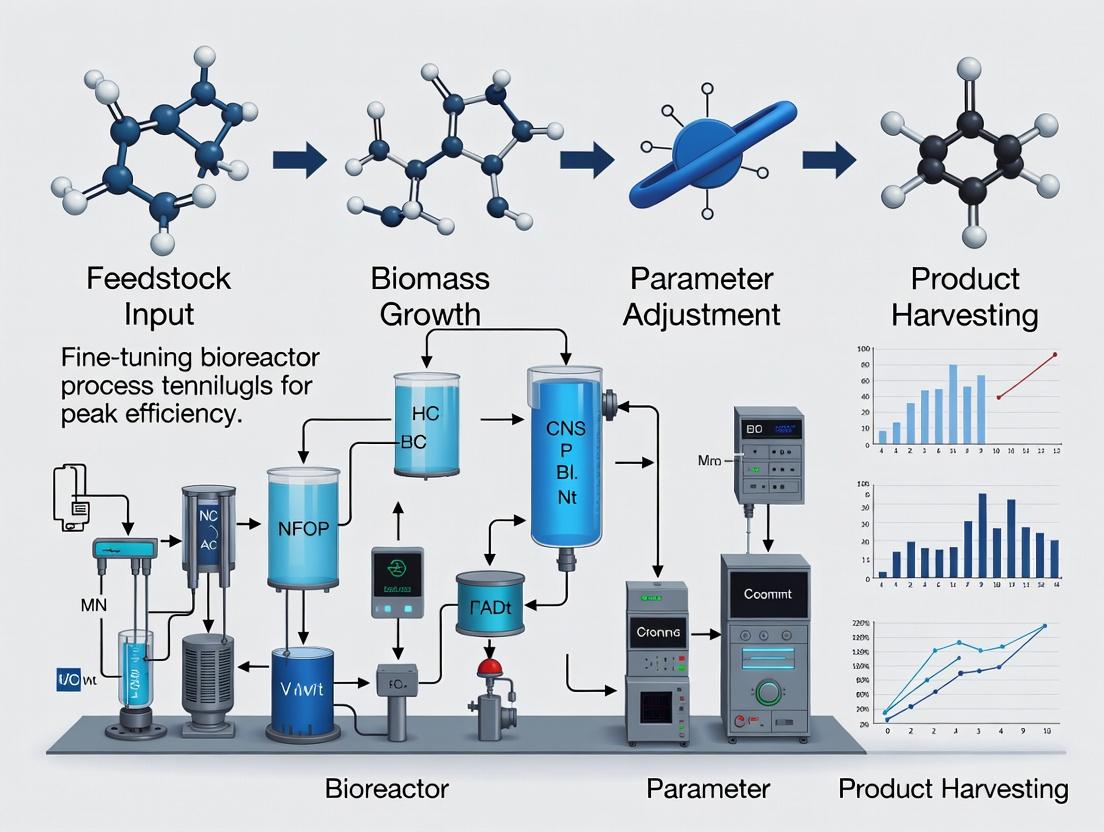
This article provides researchers, scientists, and drug development professionals with a systematic framework for optimizing bioreactor performance.
Mastering Bioreactor Optimization: A Comprehensive Guide to Fine-Tuning Parameters for Peak Efficiency in Drug Development
Abstract
This article provides researchers, scientists, and drug development professionals with a systematic framework for optimizing bioreactor performance. Beginning with foundational principles of critical process parameters (CPPs), we explore methodologies for their precise application and control. We then detail advanced troubleshooting strategies to overcome common efficiency bottlenecks and provide a robust protocol for validating optimized conditions through comparative analysis. The goal is to equip professionals with the knowledge to maximize yield, quality, and reproducibility in upstream bioprocessing, directly impacting the efficiency and success of therapeutic development pipelines.
Understanding the Core Bioreactor Parameters: The Essential Foundation for Optimization
Within the thesis framework of Fine-tuning bioreactor parameters for peak efficiency research, identifying and controlling Critical Process Parameters (CPPs) is fundamental. CPPs are variables with a direct impact on Critical Quality Attributes (CQAs) of the product, such as potency, purity, and stability. This technical support center provides troubleshooting guidance for common experimental challenges encountered when defining CPPs in bioreactor processes.
Troubleshooting Guides & FAQs
Q1: Our cell-specific productivity declines consistently after day 5 in a fed-batch process, despite stable viability. What CPPs should we investigate?
A: This points to a shift in the cellular metabolic state or environment. Focus on these parameters:
- Chemical/Biological: Nutrient Gradient. Accumulation of inhibitory metabolites (e.g., lactate, ammonium) or depletion of a critical trace element (e.g., copper, selenium) can impair protein synthesis. Troubleshooting Step: Sample and analyze spent media daily for metabolite profiles and osmolality. Correlate shifts with productivity data.
- Physical: Dissolved Oxygen (DO) Dynamics. As cell density increases, oxygen uptake rate (OUR) rises. The DO probe calibration may drift, or the control loop (gas blending, agitation) may be insufficient, leading to sub-optimal oxygen levels. Troubleshooting Step: Validate DO probe calibration against a zero solution (sodium sulfite) and air-saturated media. Calculate the volumetric oxygen transfer coefficient (kLa) at different days to assess bioreactor oxygen transfer capability.
Q2: We observe high batch-to-batch variability in glycosylation patterns. Which biological and chemical CPPs are most likely responsible?
A: Glycosylation is highly sensitive to culture conditions. Key CPPs to control include:
- Chemical: Culture pH and Ammonium Ion Concentration. pH influences glycosyltransferase enzyme activities. Ammonium (>2 mM) can alter intracellular pH and UDP-sugar donor pools. Troubleshooting Step: Implement tight pH control (±0.1 pH units) and consider media formulations with lower glutamine content or use enzymatic feeds to minimize ammonia generation.
- Biological: Specific Growth Rate (μ). A rapid growth rate can outstrip the capacity of the glycosylation machinery. Troubleshooting Step: Control growth rate via temperature shift or strategic feeding. Maintain a consistent μ during the production phase across batches.
Q3: Aggressive agitation is needed to meet oxygen demand, but it increases cell shear stress. How do we balance this physical CPP?
A: This is a classic trade-off between mass transfer (kLa) and shear force.
- Troubleshooting Step: Evaluate alternative impeller designs (e.g., pitched-blade vs. Rushton) which can provide better mixing with lower shear. Introduce a non-ionic surfactant (e.g., Pluronic F-68) at 0.1-0.3% w/v to protect cells from bubble-associated shear.
- Protocol: Shear Stress Assessment Experiment:
- Set up parallel bioreactor runs with identical parameters except agitation speed (e.g., 150, 200, 250 rpm).
- Measure viable cell density (VCD) and viability daily.
- Calculate cell doubling time and assess the percentage of cells with membrane damage using a dye exclusion assay (e.g., Trypan Blue).
- Measure the product titer and a key CQA (e.g., aggregation level via SEC-HPLC).
- The optimal speed is where kLa is sufficient, growth is unaffected, and CQAs are maintained.
Table 1: Typical Operating Ranges for Key Bioreactor CPPs
| Parameter Category | CPP | Typical Target Range | Impact on CQAs |
|---|---|---|---|
| Physical | Temperature | 36.5 - 37.0°C (growth), 32.0 - 35.0°C (production) | Growth rate, productivity, glycosylation |
| Dissolved Oxygen (DO) | 20 - 50% air saturation | Cell viability, metabolism, product titer | |
| Agitation Speed | 100 - 250 rpm (scale-dependent) | Oxygen transfer, mixing, shear stress | |
| pH | 6.8 - 7.4 (process-dependent) | Cell growth, metabolic waste, product quality | |
| Chemical | pCO₂ | < 150 mmHg | pH control, cell growth, product degradation |
| Osmolality | 280 - 380 mOsm/kg | Cell volume, specific productivity | |
| Nutrient/Feed Concentration | Process-specific (e.g., Glucose ~4-6 g/L) | Cell growth, metabolism, titer | |
| Biological | Specific Growth Rate (μ) | 0.3 - 0.6 day⁻¹ (production phase) | Productivity, nutrient consumption, glycosylation |
| Viable Cell Density (VCD) | Process-specific peak (e.g., 10-30 x 10⁶ cells/mL) | Product titer, nutrient demand, waste accumulation |
Detailed Experimental Protocol: Determining the Criticality of pCO₂
Objective: To assess if pCO₂ is a CPP for a specific monoclonal antibody (mAb) producing CHO cell process by evaluating its impact on cell growth, titer, and critical quality attribute (aggregation).
Methodology:
- Setup: Use four identical bench-scale bioreactors (e.g., 5L working volume).
- Control: Maintain all CPPs (pH, DO, temperature) as per standard protocol. Allow pCO₂ to follow baseline profile (typically 80-120 mmHg).
- Intervention: For three test bioreactors, manipulate the sparging strategy (CO₂ in airflow) to maintain pCO₂ at constant setpoints: Low (~40 mmHg), Medium (~120 mmHg), High (~200 mmHg) from the exponential growth phase onwards.
- Monitoring: Sample daily for:
- Process Parameters: pCO₂, pH, DO, VCD, viability.
- Metabolites: Glucose, lactate, glutamine, ammonium.
- Product: Harvest and quantify titer via Protein A HPLC.
- CQA Analysis: Measure percent high-molecular-weight aggregates using Size-Exclusion Ultra-Performance Liquid Chromatography (SE-UPLC).
- Analysis: Plot growth, titer, and aggregate % against pCO₂. Perform statistical analysis (e.g., ANOVA) to determine if changes in pCO₂ cause significant (p < 0.05) changes in CQAs.
Mandatory Visualizations
Title: CPP Categories Influencing Critical Quality Attributes
Title: Troubleshooting Workflow for Agitation vs. Shear Stress
The Scientist's Toolkit: Research Reagent Solutions
Table 2: Essential Materials for Bioreactor CPP Definition Studies
| Item | Function in CPP Studies |
|---|---|
| Multi-Parameter Bioreactor Probes (pH, DO, pCO₂) | Provide real-time, in-line data for key chemical CPPs. Essential for process control and understanding variability. |
| Cell Counter & Viability Analyzer | Measures Viable Cell Density (VCD) and viability, the core biological parameters for calculating growth rate and assessing culture health. |
| Metabolite Analyzer (e.g., BioProfile/Biochemistry Analyzer) | Quantifies concentrations of glucose, lactate, glutamine, ammonium, and other metabolites to define nutrient and waste CPP ranges. |
| Pluronic F-68 | Non-ionic surfactant used to protect cells from shear stress caused by agitation and sparging, allowing study of physical CPP limits. |
| Specific Assay Kits (e.g., Apoptosis, ATP, UDP-sugars) | Enable investigation of the biological mechanism behind CPP impacts (e.g., why high ammonia causes glycosylation shifts). |
| Product Quality Analytics (SEC-HPLC, CE, LC-MS) | Used to measure CQAs (aggregation, charge variants, glycosylation) as the ultimate readout for determining if a process parameter is critical. |
Technical Support Center
Troubleshooting Guides & FAQs
Q1: Our CHO cell culture in the bioreactor is showing a rapid drop in pH, followed by a plateau in cell growth and a spike in lactate production. What is the likely cause and how can we correct it? A: This is a classic sign of metabolic shift to lactate fermentation (Warburg effect) due to insufficient dissolved oxygen (DO) or poor oxygen transfer. The low pH is caused by lactate and CO₂ accumulation.
- Actionable Steps:
- Immediately increase the agitation rate and/or sparging with O₂ (pure or mixed with air) to raise DO to the setpoint (typically 30-40% of air saturation for many mammalian lines).
- Verify DO probe calibration using the zero-point (sodium sulfite solution) and 100% point (air-saturated media).
- Check for clumping or high cell density exceeding the bioreactor's O₂ transfer capacity (kLa). Consider a perfusion or fed-batch strategy to control growth.
- Implement a controlled base addition (e.g., 0.5M Na₂CO₃) to maintain pH at 7.0-7.2, but only after addressing the O₂ issue.
Q2: We observe high cell viability but low specific productivity (qp) of our monoclonal antibody in a PER.C6 bioreactor run. Temperature and pH are at standard setpoints. What parameters should we investigate? A: Low qp at high viability often points to a suboptimal metabolic state for protein synthesis. Dissolved oxygen (DO) and its interplay with pH are critical.
- Actionable Steps:
- Perform a DO shift experiment. While maintaining pH at 7.1, run parallel cultures at DO setpoints of 20%, 40%, and 60%. Monitor qp and metabolic quotients (e.g., glucose consumption rate, lactate production rate).
- Investigate a mild hypothermic shift. After the growth phase, try lowering the temperature from 37°C to 33-34°C. This can slow growth and redirect energy towards protein folding and secretion.
- Analyze the osmolality. Gradual increase from ~300 mOsm/kg to ~350 mOsm/kg via fed-batch can sometimes enhance productivity.
Q3: Our yeast (P. pastoris) fermentation for recombinant protein is producing excessive heat and oxygen demand, causing the DO to crash despite maximum sparging. How can we regain control? A: This indicates an overly vigorous metabolic burst, often due to uncontrolled substrate (e.g., methanol for induction) feeding or temperature.
- Actionable Steps:
- Temporarily reduce the feed rate of carbon source (methanol/glycerol) by 50% until DO recovers above 20%.
- Lower the temperature by 2-3°C from the induction setpoint (e.g., from 28°C to 25°C) to slow metabolism and reduce heat/oxygen demand.
- Enrich the sparge gas with pure oxygen to increase the driving force for O₂ transfer. Ensure your gas mix system and probes are calibrated.
- Consider an adaptive feeding strategy where the substrate feed rate is dynamically controlled by the DO signal (DO-stat method).
Q4: During a critical HEK293 run, the temperature control failed, and the culture spent 2 hours at 39.5°C instead of 37.0°C. What are the likely metabolic impacts, and can the run be salvaged? A: Hyperthermia accelerates enzymatic rates but can denature proteins and induce heat shock response, halting cell cycle and productivity.
- Actionable Steps:
- Immediately restore temperature to 36.5°C (slightly lower to counteract residual stress).
- Sample for: a) Viability (trypan blue), b) Cell cycle analysis (flow cytometry), c) Metabolites (lactate, ammonia).
- Expect a temporary growth arrest and potential increase in apoptosis. If viability remains >85%, the culture may recover.
- Consider extending the culture duration to allow recovery before harvest or induction. Monitor productivity markers closely.
Experimental Protocols & Data
Protocol 1: Determining the Critical Dissolved Oxygen (DOₑᵣᵢₜ) for a Cell Line
Objective: Identify the minimum DO level below which metabolism becomes oxygen-limited. Method:
- Inoculate a bench-top bioreactor with standard parameters (pH 7.1, 37°C).
- Set DO to 80% via agitation/O₂ mixing. Allow mid-exponential growth.
- Sequentially step-down the DO setpoint (e.g., 50%, 30%, 20%, 15%, 10%, 5%). Maintain each step for 2-3 residence times.
- At each steady-state, sample for: Cell density, viability, glucose consumption rate, lactate production rate, and product titer (if applicable).
- Plot specific consumption/production rates against DO. The DOₑᵣᵢₜ is the point where these rates begin to decline sharply.
Protocol 2: Characterizing the Interaction of pH and Temperature on Specific Productivity
Objective: Systematically map the optimal pH-Temp window for protein yield. Method:
- Employ a multi-bioreactor array (e.g., ambr system) or staggered runs in a single reactor.
- Use a factorial design: Test pH values (6.8, 7.0, 7.2, 7.4) crossed with temperatures (33°C, 35°C, 37°C, 39°C). Hold DO constant at 40%.
- Induce expression at a fixed cell density.
- Harvest cultures 72 hours post-induction. Analyze for: Viable Cell Concentration (VCC), Titer (via HPLC or ELISA), and Metabolite Profile.
- Calculate Specific Productivity (qp) = Titer / (Integral of VCC over time).
Table 1: Example Data from a pH-Temperature Factorial Experiment (HEK293)
| pH | Temp (°C) | Peak VCC (10⁶ cells/mL) | Final Titer (mg/L) | qp (pg/cell/day) | Lactate Peak (mM) |
|---|---|---|---|---|---|
| 6.8 | 33 | 3.5 | 450 | 4.1 | 12 |
| 6.8 | 37 | 5.8 | 620 | 3.5 | 35 |
| 7.2 | 33 | 4.1 | 850 | 6.8 | 15 |
| 7.2 | 37 | 6.2 | 780 | 4.0 | 40 |
| 7.4 | 37 | 5.9 | 700 | 3.8 | 38 |
Table 2: Metabolic Quotients at Different DO Setpoints (CHO Cell Example)
| DO Setpoint (%) | Specific Growth Rate, μ (h⁻¹) | qGluc (pmol/cell/day) | qLac (pmol/cell/day) | Lactate Yield (mol/mol Gluc) |
|---|---|---|---|---|
| 10 | 0.025 | 0.35 | 0.68 | 1.94 |
| 20 | 0.028 | 0.38 | 0.55 | 1.45 |
| 40 | 0.030 | 0.40 | 0.20 | 0.50 |
| 60 | 0.030 | 0.41 | 0.18 | 0.44 |
Signaling Pathway & Experimental Workflow
Diagram 1: Key Metabolic Pathways Influenced by Bioreactor Parameters
Diagram 2: Workflow for Bioreactor Parameter Optimization
The Scientist's Toolkit: Key Research Reagent Solutions
| Item | Function in Metabolism/Bioreactor Research |
|---|---|
| DO & pH Probes (Sterilizable) | Real-time, in-situ monitoring of critical process variables (CPVs). Require regular calibration. |
| Portable Metabolite Analyzer (e.g., BioProfile/Biovision) | Rapid, automated measurement of glucose, lactate, glutamate, ammonia, etc., from small samples. |
| kLa Measurement Kit (Sodium Sulfite) | Determines the oxygen mass transfer coefficient of the bioreactor, defining its scale-up capacity. |
| Chemical Inducers/Inhibitors (e.g., Dichloroacetate (DCA)) | Used to modulate metabolism (e.g., DCA inhibits PDK, forcing oxidative metabolism). |
| Apoptosis/Necrosis Detection Kits (Annexin V/PI via flow cytometry) | Quantifies cell death mechanisms triggered by stress (hypoxia, pH, temp). |
| RNA-seq/Live-Cell Metabolic Flux Assays (Seahorse) | For deep mechanistic studies: Transcriptomic response to stress or real-time measurement of glycolysis and OXPHOS rates. |
| Process Control Software (PID Tuning Suites) | Essential for implementing advanced control strategies (cascade, feedforward) to maintain parameter stability. |
Technical Support & Troubleshooting Center
Frequently Asked Questions (FAQs)
Q1: My sensitive CHO cell line shows a sharp decline in viability after 48 hours in the bioreactor, despite good initial growth. What could be the cause? A: This is a classic symptom of shear stress damage. For sensitive lines (e.g., certain CHO, HEK293, stem cells), even moderate agitation can generate detrimental hydrodynamic forces. First, measure the time-averaged shear stress (τ). For a stirred-tank bioreactor, τ is proportional to the impeller tip speed (τ ∝ N*D). A tip speed >1.5 m/s is often problematic. Immediate actions include: 1) Reducing the agitation rate (RPM) to the minimum required for homogenization (just before vortexing), 2) Implementing a Rushton or pitched-blade impeller instead of a marine impeller if available, as they provide better mixing at lower RPM, and 3) Adding a shear-protectant like Pluronic F-68 (0.1-0.3% w/v).
Q2: How do I quantify the trade-off between mixing time and shear stress? A: You must experimentally determine two key parameters: Mixing Time (θm) and the Kolmogorov Scale (λk). See the protocol below.
Q3: My cells are clumping, leading to poor homogeneity and sampling errors. Agitation isn't resolving it. What should I do? A: Cell clumping in sensitive lines is often a stress response. Increasing agitation to break clumps will increase shear. Instead, consider: 1) Reviewing your medium composition; calcium concentration can promote clumping. 2) Using a validated, gentle enzymatic passaging method pre-bioreactor. 3) Adding a defined anti-clumping agent (e.g., recombinant trypsin inhibitors at low concentration) specifically formulated for your cell type. Do not use DNAse unless confirmed non-toxic for your line.
Q4: What are the key indicators of optimal homogeneity without excessive shear in real-time? A: Rely on dissolved oxygen (pO₂) and pH probe response dynamics. After a step change in gas flow or addition of base, the time for the probes to reach a new stable reading indicates mixing efficiency. A consistently uniform pO₂ (fluctuations <2%) at a low agitation setpoint is ideal. Sudden, persistent gradients indicate poor mixing.
Key Experimental Protocols
Protocol 1: Determining the Critical Agitation Rate for Shear Sensitivity
- Objective: Establish the maximum impeller tip speed before viability loss for your specific cell line.
- Materials: 3L bench-top bioreactor, sensitive cell line, viability assay (e.g., Trypan Blue with automated counter), Pluronic F-68 stock.
- Method:
- Inoculate multiple bioreactors at standard seeding density. Maintain all parameters constant (pH, DO, temperature) except agitation.
- Set agitation rates to create a range of impeller tip speeds (e.g., 0.8, 1.2, 1.5, 1.8 m/s). Calculate tip speed as: Tip Speed (m/s) = π * D (impeller diameter in m) * N (agitation rate in rps).
- Sample every 12 hours for 72-96 hours. Perform cell count and viability assessment.
- Plot viability vs. time for each tip speed. The point where the viability curve significantly diverges from the control (lowest speed) indicates the critical threshold.
Protocol 2: Quantifying Mixing Time (θ_m) via Decolorization Method
- Objective: Measure the time required to achieve homogeneity after a tracer addition.
- Materials: Bioreactor with clear viewport, tracer (1M NaOH with pH indicator or a pulse of saline), pH probe, data acquisition system.
- Method:
- Operate the bioreactor at the desired agitation and aeration rate with water or medium.
- Rapidly inject a small, known volume of tracer (e.g., 1M NaOH) at the liquid surface.
- Monitor the pH probe response in real-time at a high sampling rate (≥1 Hz).
- The mixing time (θ_m) is defined as the time elapsed from the tracer addition until the pH signal reaches and remains within ±5% of its final steady-state value. Repeat in triplicate.
Table 1: Shear Stress Impact on Common Sensitive Cell Lines
| Cell Line | Recommended Max Tip Speed (m/s) | Recommended Max Power/Volume (W/m³) | Viability Drop Threshold (kLa 1/hr)* | Common Protectant |
|---|---|---|---|---|
| CHO-DG44 (Suspension) | 1.2 - 1.5 | 50 - 100 | >150 | Pluronic F-68 (0.1%) |
| HEK293 (Suspension) | 1.0 - 1.3 | 30 - 80 | >120 | Recombinant Albumin |
| Mesenchymal Stem Cell (MSC) | 0.5 - 0.8 | 10 - 30 | >50 | Methylcellulose |
| CAR-T Cell (Expansion) | 0.8 - 1.2 | 20 - 60 | >80 | Dextran Sulfate |
*kLa (volumetric oxygen transfer coefficient) is used here as a proxy for overall hydrodynamic stress.
Table 2: Troubleshooting Guide: Symptoms & Solutions
| Symptom | Potential Cause | Diagnostic Check | Recommended Action |
|---|---|---|---|
| Low viability, high LDH release | Excessive shear stress | Calculate impeller tip speed; Check for vortexing | Reduce RPM; Add baffles; Add shear protectant (Pluronic F-68) |
| Poor homogeneity, gradient in DO/pH | Insufficient mixing | Measure mixing time (θ_m); Dye test | Increase RPM incrementally; Optimize impeller type/placement; Check baffle configuration |
| Cell clumping & aggregation | Biochemical stress, High Ca²⁺ | Microscopic inspection; Analyze medium | Review medium composition; Use anti-clumping agents; Ensure single-cell inoculum |
| Reduced growth but high viability | Sub-lethal shear stress | Analyze cell diameter (size) over time; Metabolomics | Slightly reduce agitation; Ensure feed addition point is well-mixed |
The Scientist's Toolkit: Research Reagent Solutions
| Item | Function & Rationale |
|---|---|
| Pluronic F-68 | Non-ionic surfactant that integrates into cell membranes, increasing resilience against hydrodynamic shear forces. |
| Recombinant Human Albumin | Protein-based shear protectant and carrier, provides lipid supplementation, superior to animal-sourced albumin for consistency. |
| Methylcellulose | Increases medium viscosity, dampening turbulent eddies (increases Kolmogorov scale) to protect large, fragile cells like stem cells. |
| Antifoam C (Emulsion) | Silicone-based antifoam to control foam from proteins/surfactants, preventing cell entrapment and denaturation at the air-liquid interface. |
| Recombinant Trypsin Inhibitors | Controls clumping by inhibiting low-level trypsin activity from serum-free media components, gentler than mechanical separation. |
Visualizations
Diagram Title: Bioreactor Agitation Optimization Workflow
Diagram Title: Shear Stress Cellular Signaling Pathways
This technical support center is designed to assist researchers in troubleshooting common issues encountered while fine-tuning bioreactor parameters for peak efficiency. The content focuses on nutrient feeding strategies within a broader thesis context of optimizing cell culture processes for biopharmaceutical production.
Troubleshooting Guides & FAQs
Q1: During fed-batch experiments, we observe a sudden drop in dissolved oxygen (DO) and a rise in lactate, despite glucose being within setpoint. What is the cause and solution?
A: This is a classic sign of nutrient imbalance, often "glucose starvation" paradoxically caused by overfeeding.
- Cause: Excess glucose can lead to overflow metabolism, shifting cells to inefficient glycolytic pathways and causing the "Crabtree Effect" in mammalian cells. The sudden oxygen demand for metabolizing by-products and the lactate spike are consequences.
- Troubleshooting Protocol:
- Immediate Action: Reduce or pause the glucose feed. Increase agitation and aeration rates to combat low DO.
- Analysis: Take a sample for off-line metabolite analysis (glucose, lactate, amino acids).
- Adjustment: Implement or recalibrate a dynamic feeding strategy based on metabolic consumption rates (qS), not fixed schedules. Consider switching to a balanced feed with lower glucose-to-amino acid ratios.
Q2: In perfusion systems, how do we troubleshoot declining cell viability and increasing cell bleed rate to maintain a stable viable cell density (VCD)?
A: Declining viability under constant perfusion often points to retention device issues or by-product accumulation.
- Cause:
- Clogged Filters/ATFs: Leading to increased shear stress and cell damage.
- Toxin Accumulation: Ammonia or other inhibitory metabolites not being washed out effectively.
- Nutrient Limitation: Perfusion rate is insufficient for the high cell density.
- Troubleshooting Protocol:
- Check pressure differentials across the cell retention device. A steady increase indicates clogging.
- Measure metabolites (ammonia, lactate) in the harvest. Compare accumulation rates to theoretical washout.
- Gradually increase the perfusion rate by 0.5-1 vessel volumes per day (VVD) while monitoring osmolality and nutrient levels (e.g., glucose) to ensure they remain stable.
- Implement a scheduled back-flush or cleaning cycle for the acoustic wave filter or ATF if data indicates fouling.
Q3: Batch cultures consistently yield lower final titers than expected. What parameters should we investigate first?
A: Batch processes are limited by initial nutrient load and inhibitor accumulation. Focus on the initial conditions.
- Cause: Initial nutrient concentrations (especially glucose and glutamine) may be suboptimal or supra-optimal, leading to early depletion or inhibitor accumulation (lactate/ammonia).
- Troubleshooting Protocol:
- Perform a seed train optimization: Ensure inoculum viability is >95% and is in mid-exponential phase.
- Profile the batch: Sample every 12 hours and measure VCD, viability, glucose, lactate, ammonium, and product titer. The data will identify the limiting factor (nutrient depletion vs. toxin threshold).
- Based on the profile, adjust the initial media formulation. If lactate/ammonia is the limit, consider using alternative nutrients (e.g., galactose instead of glucose, feed-on-demand glutamine substitutes).
Quantitative Comparison of Feeding Strategies
Table 1: Key Performance Indicators Across Feeding Modes
| Parameter | Batch | Fed-Batch | Perfusion |
|---|---|---|---|
| Max Viable Cell Density (cells/mL) | 2-6 x 10⁶ | 10-40 x 10⁶ | 20-100 x 10⁶ |
| Process Duration (Days) | 7-10 | 10-21 | 30-60+ |
| Volumetric Productivity (g/L) | 0.1-0.5 | 1-5 | 0.5-2 (per day) |
| Product Quality Impact | High variability | More consistent | Highly consistent, low aggregates |
| Media Utilization Efficiency | Low | Moderate | High |
| Operational Complexity | Low | Moderate | High |
Table 2: Common Tunable Parameters & Optimization Targets
| Strategy | Key Tunable Parameters | Typical Optimization Goal |
|---|---|---|
| Batch | Inoculum density, initial media composition | Maximize initial growth phase, delay death phase |
| Fed-Batch | Feed start time, feed rate profile, feed composition | Maintain specific growth rate (µ) in a pre-defined range, minimize inhibitors |
| Perfusion | Perfusion rate (VVD), cell bleed rate, retention device settings | Achieve steady-state VCD and productivity, control product residence time |
Experimental Protocols
Protocol 1: Determining Metabolic Consumption Rates (qS) for Fed-Batch Feed Design Objective: Calculate the specific consumption rate of glucose (qₛ) to establish a stoichiometric feeding regime. Materials: Bioreactor, cell culture samples, metabolite analyzer. Method:
- Inoculate a batch culture at a standard density (e.g., 0.5 x 10⁶ cells/mL).
- Sample every 12 hours. Measure VCD and glucose concentration.
- Calculate qₛ using the formula: qₛ = (ΔS / Δt) / (X̄).
- ΔS/Δt = Slope of the substrate depletion curve (g/L/day).
- X̄ = Average cell concentration over the interval (cells/L).
- Use the calculated qₛ to design a feed rate (F) formula: F = (qₛ * X * V) / Cₚ, where X is current VCD, V is culture volume, and Cₚ is glucose concentration in the feed stock.
Protocol 2: Steady-State Optimization in Perfusion Culture Objective: Establish a stable, high-VCD steady state. Materials: Perfusion bioreactor with cell retention device, on-line or at-line cell counter. Method:
- Start in batch mode until VCD reaches ~2 x 10⁶ cells/mL.
- Initiate perfusion at 1 VVD. Begin a controlled cell bleed when VCD reaches 50% of target.
- Adjust bleed rate daily to drive VCD toward target (e.g., 60 x 10⁶ cells/mL).
- Monitor key metabolites. Adjust perfusion rate in 0.2 VVD increments if nutrients are limiting or toxins are > critical threshold (e.g., ammonia >2 mM).
- Steady-state is achieved when VCD and metabolite levels vary <10% over 5 consecutive days.
Visualizations
Nutrient Balance Determines Metabolic Fate
Perfusion Steady-State Establishment Workflow
The Scientist's Toolkit: Research Reagent Solutions
Table 3: Essential Materials for Feeding Strategy Experiments
| Item | Function in Optimization |
|---|---|
| Chemically Defined (CD) Media Basal | Provides consistent, animal-component-free base nutrients; essential for identifying specific limitations. |
| Concentrated Nutrient Feed (Biofeed) | High-nutrient concentrate for fed-batch addition; allows high cell densities without diluting product. |
| Metabolite Analysis Kits (e.g., Cedex Bio, Nova) | For rapid, precise measurement of glucose, lactate, glutamine, ammonia, etc.; critical for qS calculation. |
| Cell Retention Device (ATF/TFF/Acoustic Filter) | Enables perfusion culture by separating cells from spent media while retaining viability. |
| On-line/At-line Cell Counter (e.g., Vi-CELL, NucleoCounter) | Provides frequent VCD/viability data for real-time control of feed and bleed rates. |
| Alternative Energy Sources (e.g., Galactose) | Used in experiments to reduce lactate production via metabolic shift (MDH pathway). |
| Osmolality Adjustment Solution (NaCl) | To control osmolality spikes caused by concentrated feed additions in fed-batch. |
The Impact of Gas Flow Rates (O2, CO2, N2) on Culture Health and Product Formation
Troubleshooting Guides & FAQs
Q1: Our CHO cell culture shows a rapid drop in viability post-inoculation, accompanied by lactate accumulation. We are maintaining 40% dissolved oxygen (DO) via O2 gas blending. What could be the issue? A: This is a classic sign of oxidative stress from excessive oxygen sparging. While 40% DO is within range, the rate of O2 gas addition to maintain it can be detrimental. High O2 flow rates, especially via direct sparging, generate reactive oxygen species (ROS) and shear stress.
- Troubleshooting Protocol: 1) Immediately switch to controlling DO via agitation speed first, using gas flow for fine adjustment. 2) Implement a cascade control: prioritize O2 enrichment in the headspace (N2/O2/CO2 mix) before resorting to pure O2 sparging. 3) Consider adding anti-oxidants (e.g., sodium selenite) to the medium. 4) Reduce the pure O2 sparging rate and monitor viability and lactate for 24 hours.
Q2: Despite adding 5% CO2 to the inlet gas, our bioreactor pH remains unstable and drifts upwards during the exponential growth phase. Why? A: Upward pH drift indicates insufficient dissolved CO2 relative to metabolic base (e.g., ammonia) production. The 5% CO2 setpoint may be incorrect for your current cell density and metabolic rate. The flow rate of the total gas mixture determines how much CO2 is delivered.
- Troubleshooting Protocol: 1) Verify your pH and CO2 probe calibrations. 2) Increase the total gas flow rate while keeping the CO2 percentage constant (e.g., from 0.1 L/min to 0.15 L/min of a 5% CO2 mix). This increases CO2 mass transfer. 3) If instability persists, incrementally increase the CO2 percentage in the mix (e.g., to 6-7%) while monitoring pH stability. Refer to Table 1 for guidelines.
Q3: We observe excessive foaming when using N2 for DO stripping. How can we control foam without harming the culture? A: High N2 flow rates, used to lower DO, cause vigorous bubble formation and protein denaturation at the air-liquid interface, leading to foam.
- Troubleshooting Protocol: 1) First, reduce the N2 flow rate and complement DO control by decreasing agitation. 2) Use a mechanical foam breaker (if available) as a primary control. 3) If an antifoam agent is necessary, use a sterile, cell culture-grade solution (e.g., Sigma 204) and add it manually drop-wise to the foam layer—not the bulk liquid—to minimize negative impacts on product purification and downstream processing.
Q4: How do gas flow rates specifically impact the yield of a monoclonal antibody (mAb) in a fed-batch process? A: Gas flows indirectly control mAb yield by influencing critical process parameters (CPPs). Suboptimal flows can shift metabolism, induce stress, and alter glycosylation.
- Impact Pathway: Low O2 transfer → Hypoxia → Reduced cell growth & increased lactate → Lower integrated viable cell density (IVCD) → Lower mAb titer. High O2 transfer → Oxidative stress & ROS → Apoptosis & fragmented antibodies → Reduced titer & quality. Unstable CO2/pH → Altered enzyme kinetics & metabolism → Suboptimal nutrient utilization & potential aggregation → Reduced titer & incorrect critical quality attributes (CQAs). See Diagram 1.
Q5: What is a standard protocol for optimizing gas flow rates in a new mammalian cell line? A: Experimental Protocol for Gas Flow Rate Optimization
- Setup: Install calibrated DO, pH, and CO2 probes. Use a bioreactor with gas mixing capabilities for O2, N2, and CO2.
- Baseline: Start with standard flow rates (e.g., 0.1 vvm of air with 5% CO2). Maintain DO at 40% via cascade (agitation first, then O2 enrichment).
- DO Response: Once in exponential phase, switch DO control to pure O2 sparging at a fixed, low flow rate (e.g., 10 sccm). Record the maximum viable cell density and lactate profile.
- CO2 Response: At high cell density, fix the total gas flow and vary CO2 percentage (e.g., 4%, 6%, 8%). Monitor pH stability and pCO2 levels. Target a pCO2 of 40-120 mmHg for most mammalian cells.
- N2 Response: During base feeding (which can raise pH), introduce a low N2 flow (e.g., 5-10 sccm) to assess its effectiveness in pH control via CO2 stripping.
- Analysis: Correlate specific gas flow rates with key performance indicators (KPIs): peak VCD, viability, lactate/ammonia profiles, titer, and product quality (e.g., glycosylation, aggregation). See Table 1 and Diagram 2.
Data Presentation
Table 1: Impact of Gas Flow Strategies on Bioreactor Performance Parameters
| Gas Parameter & Condition | Peak Viable Cell Density (x10^6 cells/mL) | Lactate Peak (mM) | Final mAb Titer (g/L) | % Aggregates | Notes |
|---|---|---|---|---|---|
| O2 Control: Aggration-Primary Cascade | 12.5 ± 0.8 | 15 ± 2 | 3.8 ± 0.2 | 1.2 ± 0.3 | Stable metabolism, low ROS. |
| O2 Control: High Pure O2 Sparging | 9.0 ± 1.2 | 35 ± 5 | 2.5 ± 0.3 | 3.5 ± 0.8 | High lactate, oxidative stress. |
| CO2: 5% at 0.1 vvm | 11.0 ± 1.0 | 18 ± 3 | 3.5 ± 0.2 | 1.5 ± 0.4 | pH drift >7.3 at high density. |
| CO2: 7% at 0.1 vvm | 12.2 ± 0.7 | 16 ± 2 | 3.7 ± 0.2 | 1.3 ± 0.3 | Stable pH (7.1-7.2). |
| N2: Used for pH control (5 sccm) | 12.0 ± 0.9 | 17 ± 2 | 3.6 ± 0.2 | 1.4 ± 0.3 | Reduced base usage, mild foaming. |
| N2: High flow for DO control | 10.5 ± 1.1 | 20 ± 4 | 3.2 ± 0.3 | 1.8 ± 0.5 | Significant foaming, shear stress. |
Diagrams
Diagram 1: How Gas Flow Rates Impact Bioprocess Outcomes
Diagram 2: Gas Flow Rate Optimization Protocol Workflow
The Scientist's Toolkit: Key Research Reagent Solutions
| Item | Function in Gas Flow/Culture Studies |
|---|---|
| Dissolved Oxygen (DO) Probe (Polarographic) | Measures real-time O2 tension in the broth. Essential for feedback control of O2/N2 gas flows. Requires frequent calibration. |
| pCO2 Probe (Sterilizable) | Measures dissolved carbon dioxide partial pressure. Critical for understanding CO2 mass transfer and its relationship to pH and gas flow rate. |
| pH Probe (Sterilizable, Gel-filled) | Monitors culture acidity. Drifts indicate imbalance between metabolic CO2 production and CO2 stripping/addition via gas flows. |
| Anti-Foam Agent (Cell Culture Grade) | Silicone or organic emulsion. Used to control foam generated by high gas flow rates (especially N2). Must be used sparingly. |
| Sodium Selenite Solution | Anti-oxidant supplement. Mitigates oxidative stress induced by high O2 sparging rates, protecting cell health. |
| Gas Mass Flow Controllers (MFCs) | Precision instruments for each gas line (O2, N2, CO2, Air). Enable accurate and reproducible setting of individual gas flow rates. |
| Blood Gas Analyzer | Offline instrument to validate bioreactor pCO2, pO2, and pH readings from probes, ensuring data accuracy for optimization. |
Systematic Optimization Strategies: Methodologies for Precise Parameter Control
Technical Support Center: Troubleshooting Guides & FAQs
Frequently Asked Questions (FAQs)
Q1: My Plackett-Burman screening design shows several significant factors, but the model's R-squared is low (<0.7). What does this mean and how should I proceed? A: A low R-squared in an initial screening design like Plackett-Burman is common. It indicates that while you have identified active factors, the linear model explains only a portion of the response variance. This is often due to inherent biological noise or the presence of strong curvature or interactions not captured by a main-effects-only screening design. Proceed by taking the significant factors into a more detailed Response Surface Methodology (RSM) design, such as a Central Composite Design (CCD), which will model curvature and interactions and likely yield a higher R-squared.
Q2: During a Central Composite Design (CCD) for bioreactor optimization, I encountered a failed run due to contamination. How should I handle this missing data point? A: A single missing point in a well-structured CCD is manageable. First, do not simply repeat the run and insert the value, as this destroys the design's randomness. Options include: 1) Use estimation: Most DoE software (JMP, Design-Expert, Minitab) can estimate the missing value using the model's expected value at that coordinate to preserve orthogonality. 2) Proceed with analysis: Analyze the design with one missing point; the software will adjust degrees of freedom. The model's predictive power will be slightly reduced but often remains valid. Always document the incident and the method used.
Q3: How do I choose between a Full Factorial and a Fractional Factorial design for my initial bioreactor parameter screen? A: The choice balances comprehensiveness against experimental effort. Use the table below to decide.
| Design Type | Key Characteristic | When to Use | Number of Runs for 6 Factors (2 levels each) |
|---|---|---|---|
| Full Factorial | Tests all possible factor combinations. Can estimate all main effects and interactions. | When you have <5 factors and resources permit. Essential when high-order interactions are suspected. | 64 runs (2^6) |
| Fractional Factorial (e.g., ⅛ replicate) | Tests a carefully chosen fraction of combinations. Main effects are clear, but some interactions are "aliased" (confounded). | For screening >4-5 factors where main effects are of primary interest. Prioritizes efficiency. | 8 runs (2^(6-3)) |
Q4: The contour plot from my DoE optimization shows a "ridge" or elongated ellipse, not a clear peak. What does this indicate? A: An elongated ridge in a contour plot indicates a factor interaction and suggests the existence of a ridge system. It means that a specific ratio or combination of two (or more) factors produces a similar optimal response, rather than a single unique point. For a bioreactor, this could mean that a higher temperature with a lower pH yields the same cell density as a lower temperature with a higher pH. This is valuable process knowledge, as it offers flexibility in setting operating conditions.
Q5: My DoE model is statistically significant, but verification runs at the predicted optimum yield results outside the prediction interval. What are the likely causes? A: This points to a problem with model validation. Common causes include:
- Factor Ranges Too Narrow: The model fits well within the experimental range but extrapolates poorly. The "optimum" may lie on or beyond the boundary of your explored region.
- Uncontrolled Noise Factor: A critical environmental variable (e.g., raw material lot variation, operator shift, seed train health) was not held constant or blocked during verification.
- Missing Critical Factor: A key process parameter was omitted from the original DoE.
- Model Overfitting: Using an overly complex model (e.g., full cubic) for limited data.
Troubleshooting Guides
Issue: High Pure Error in ANOVA Table Symptom: The "Pure Error" sum of squares in your Analysis of Variance (ANOVA) is large, leading to a low Model F-value and lack of fit. Diagnosis & Action:
- Check for Replication Consistency: Did your center point or replicate runs show high variability? This indicates unstable process or measurement error.
- Protocol Review:
- Bioreactor Protocol: Ensure standardized sampling times (within same growth phase), consistent analytical methods (e.g., pipetting, cell counter calibration), and uniform nutrient feed bottle preparation.
- Example Protocol for Replicate Sampling: 1) Pre-warm sample tube. 2) Take sample from same designated port. 3) Discard first 2mL to clear line. 4) Collect 10mL sample. 5) Immediately place on ice. 6) Perform cell count within 20 minutes using a validated hemocytometer with trypan blue, counting all four quadrates.
- Increase Replication: Add more center points to better estimate pure error and stabilize the model.
Issue: Aliasing of Critical Effects Symptom: You suspect an important interaction between factors (e.g., between temperature and dissolved oxygen), but your Fractional Factorial design aliased it with a main effect. Diagnosis & Action:
- Design Resolution: Check your design's Resolution (e.g., Resolution III, IV, V). Resolution IV designs alias two-factor interactions with each other, not with main effects.
- De-alias Sequentially: Perform a follow-up "fold-over" design. By running a second set of experiments with the signs of one or all factors reversed, you can combine the data with the original to break specific aliases and separate confounded interactions.
- Future Planning: For critical screens where interactions are likely, use a Resolution V design or a Definitive Screening Design (DSD) from the start.
Table 1: Comparison of Common Screening Designs for Bioreactor Parameters
| Design | Primary Goal | Factors Handled | Model Estimates | Typical Run Count | Pros | Cons |
|---|---|---|---|---|---|---|
| Plackett-Burman | Main Effects Screening | 7 to 11+ | Main Effects only (linear). | N (multiple of 4) | Very efficient for many factors. | Aliases all interactions. |
| Fractional Factorial (Res IV) | Screening + some interaction | 5 to 8 | Main Effects + some 2FI aliasing. | 2^(k-p) | Good balance. Can de-alias. | Run count grows quickly. |
| Definitive Screening Design | Screening with curvature | 6 to 12+ | Main Effects, clear 2FI, curvature. | ~2k+1 | Excellent modern option. Robust to active interactions. | Limited to ~12 factors. |
Table 2: Example DoE Factors & Ranges for Mammalian Cell Culture Bioreactor
| Factor | Symbol | Low Level (-1) | High Level (+1) | Unit | Expected Impact |
|---|---|---|---|---|---|
| pH | A | 6.8 | 7.2 | - | High impact on metabolism & viability. |
| Temperature | B | 35.5 | 37.0 | °C | Affects growth rate and protein quality. |
| Dissolved Oxygen | C | 30 | 70 | % air sat. | Critical for cell respiration. |
| Agitation Rate | D | 150 | 250 | rpm | Impacts oxygen transfer & shear stress. |
| Feed Start Day | E | Day 2 | Day 4 | day | Influences nutrient availability and waste. |
Experimental Protocol: Central Composite Design for Bioreactor Optimization
Objective: To model curvature and interactions between three critical parameters (pH, Temperature, Dissolved Oxygen) to maximize final viable cell density (VCD) in a CHO cell process.
Methodology:
- Design Structure: A face-centered Central Composite Design (CCD) with 3 factors, 6 axial points (α=1), and 6 center point replicates (total 20 runs).
- Bioreactor Setup:
- Use 3L bench-top bioreactors with identical geometry and probes.
- Inoculate each bioreactor with a standardized seed train to achieve an initial VCD of 0.5 x 10^6 cells/mL.
- Use a chemically defined basal and feed medium from a single lot.
- Factor Implementation:
- Set pH, Temperature, and DO according to the randomized run order provided by the DoE software. Use PID controllers to maintain setpoints.
- Keep all other parameters (agitation, pressure, feed volume) constant across all runs.
- Monitoring & Data Collection:
- Take daily samples for offline analysis: VCD and viability (via automated cell counter), metabolites (Glucose, Lactate, Glutamine, Ammonia via bioanalyzer).
- Record online data (pH, DO, temperature, base addition) hourly via the bioreactor control system.
- Response Measurement: The primary response is Peak Viable Cell Density (PVCD), calculated as the highest recorded VCD during the 14-day batch.
- Statistical Analysis:
- Fit a second-order polynomial model (Quadratic) to the PVCD response.
- Perform ANOVA to assess model significance (p-value < 0.05), lack of fit, and R-squared.
- Generate contour and 3D surface plots to visualize the optimum region.
- Perform a numerical optimization to find factor settings that maximize PVCD.
- Verification: Conduct 3 confirmation runs at the predicted optimum conditions to validate the model.
The Scientist's Toolkit: Key Research Reagent Solutions
| Item | Function in Bioreactor DoE |
|---|---|
| Chemically Defined Media & Feed | Provides a consistent, animal-component-free nutrient base, eliminating lot-to-lot variability that could confound experimental results. |
| Single-Use Bioreactor Vessels | Eliminates cleaning validation and cross-contamination risk, crucial for the sequential runs of a DoE where carryover would invalidate data. |
| Pre-calibrated pH & DO Probes | Ensures accurate measurement and control of critical process parameters (CPPs), the factors in your DoE. |
| Automated Cell Counter with Viability Stain | Provides rapid, reproducible measurement of key responses (VCD, viability), reducing analytical noise. |
| Metabolite Analysis Cartridges/Bioanalyzer | Enables high-throughput, precise quantification of metabolites (e.g., glucose, lactate), which can be secondary responses or used to calculate specific rates. |
| DoE Software (JMP, Design-Expert, etc.) | Essential for designing the experiment matrix (with randomization), analyzing results via ANOVA, and generating optimization models and plots. |
Visualizations
Title: DoE Strategic Workflow for Bioreactor Optimization
Title: Bioreactor Parameter Interaction Pathway
APC Technical Support Center
This support center addresses common issues encountered when implementing advanced process control strategies for fine-tuning bioreactor parameters for peak efficiency research. The guidance is framed within a bioprocessing context, focusing on challenges specific to mammalian or microbial cell cultures.
Troubleshooting Guides
Guide 1: PID Loop Oscillations and Instability in Bioreactor Control
- Issue: Critical parameters like pH or Dissolved Oxygen (DO) exhibit sustained oscillations or instability under PID control, causing suboptimal growth conditions and metabolic stress.
- Symptoms: Regular, repeating cycles in sensor readings; actuator (e.g., acid/base pump, oxygen valve) constantly hunting; increased variability in key performance indicators (KPIs) like growth rate.
- Diagnostic Steps:
- Check for Sensor/Actuator Lag: Introduce a step change and measure the time delay before the sensor responds and the controller reacts. Bioreactor mixing times can cause significant lags.
- Review Tuning Parameters: Aggressive tuning (high gain, low integral time) is a common cause in nonlinear bioreactor systems.
- Identify Process Nonlinearities: A DO controller tuned for low cell density may become unstable at high cell density due to increased oxygen uptake rate (OUR).
- Resolution Protocol:
- Perform a bump test (e.g., a small step change in base addition rate) to observe open-loop process dynamics.
- Re-tune using the Cohen-Coon or Lambda tuning method to achieve a more conservative, robust response.
- Implement gain scheduling, where PID tuning parameters are adjusted based on a scheduling variable like viable cell density (VCD). See Table 1 for tuning comparisons.
Guide 2: MPC Controller Failure to Improve Performance Over PID
- Issue: After implementation, an MPC controller shows no significant improvement in reducing variability or fails to handle constraints effectively during a fed-batch process.
- Symptoms: MPC-controlled variables show similar variance to PID; constraint violations (e.g., glucose spikes) still occur; the optimizer reports infeasible solutions.
- Diagnostic Steps:
- Validate the Process Model: The core of MPC is its dynamic model. A model-plant mismatch is the most likely culprit.
- Audit Constraint Definitions: Overly tight constraints on inputs (e.g., nutrient feed rate) or outputs can render the optimization problem infeasible.
- Check Disturbance Measurement: Unmeasured disturbances (e.g., change in metabolite inhibitor levels) not included in the model will degrade performance.
- Resolution Protocol:
- Perform a model identification experiment using a designed input sequence (e.g., Pseudo-Random Binary Sequence) on key MVs like feed and base rates.
- Compare predicted vs. actual outputs (e.g., glucose, lactate concentration) from the old and new models. A good model should capture >85% of variance.
- Relax hard constraints to soft constraints with penalty weights and ensure all critical disturbances (e.g., OUR) are estimated or measured.
Frequently Asked Questions (FAQs)
Q1: When should we transition from PID to MPC for bioreactor control? A: Consider MPC when:
- You have multiple interacting variables (e.g., controlling DO and temperature simultaneously affects growth and metabolism).
- You need to actively manage constraints on inputs (valve limits) and outputs (metabolite concentrations).
- The process has significant time delays or long settling times (common in substrate and metabolite dynamics).
- The economic optimization of feed trajectories in fed-batch processes is a research goal.
Q2: How do we validate an APC system for GMP-compliant drug development? A: Follow a risk-based validation framework:
- Installation Qualification (IQ): Document hardware/software installation.
- Operational Qualification (OQ): Test controller functions (e.g., does the MPC calculation execute correctly? Does it respect alarms?).
- Performance Qualification (PQ): Execute pre-defined batch protocols using the APC system and demonstrate it maintains CPPs within proven acceptable ranges. Meticulous documentation of all models and tuning parameters is essential.
Q3: What are common pitfalls in developing a dynamic model for bioreactor MPC? A:
- Overfitting: Creating an overly complex model that fits training data noise rather than the true process dynamics. Use cross-validation with a separate data set.
- Ignoring Time-Variance: Bioreactors are non-stationary. The model identified from an early exponential phase may not hold for the late production phase. Use adaptive or multiple models.
- Insufficient Excitation: Input signals during data collection must be persistently exciting to capture all relevant dynamics. Small perturbations may not reveal true process gains.
Data Presentation: PID vs. MPC Performance Metrics
Table 1: Simulated Comparative Performance in a Fed-Batch Monoclonal Antibody Production Process (Data from recent literature simulations).
| Control Metric | PID Control (Baseline) | Advanced MPC | Improvement |
|---|---|---|---|
| Glucose Concentration Variability (Std Dev, mM) | 2.5 | 0.8 | 68% reduction |
| Dissolved Oxygen (DO) Setpoint Tracking (IAE*) | 15.2 | 5.1 | 66% reduction |
| Final Product Titer (g/L) | 4.7 | 5.3 | ~13% increase |
| Batch-to-Batch Consistency (Cpk of Titer) | 1.2 | 1.8 | 50% increase |
| Nutrient Feed Efficiency (Yield, g/g) | 0.42 | 0.48 | ~14% increase |
*IAE: Integral of Absolute Error, a measure of total deviation from setpoint.
Experimental Protocol: Step Test for Bioreactor Model Identification
Objective: To generate dynamic data for identifying a Multi-Input Multi-Output (MIMO) model between key Manipulated Variables (MVs) and Controlled Variables (CVs).
Materials: See "The Scientist's Toolkit" below. Method:
- Pre-condition: Run the bioreactor to a steady-state operating point (e.g., mid-exponential phase at a specific VCD).
- Design Input Sequence: For each MV (e.g., Glucose Feed Rate, Base Pump Rate), design a Pseudo-Random Binary Sequence (PRBS) or series of step changes. The steps should be of significant amplitude (e.g., ±10-20% of nominal rate) to overcome noise but not harm the culture.
- Execution: Implement the input sequence, ensuring steps for different MVs are uncorrelated. Maintain all other environmental parameters (temperature, pressure) constant.
- Data Collection: Sample at a high frequency (e.g., every 30 seconds for DO/pH probes, every 5-15 minutes for at-line analyzers for glucose/lactate/ammonia) throughout the experiment.
- Model Identification: Use system identification tools (e.g., MATLAB System Identification Toolbox, Python SciKit-learn) to fit a state-space or transfer function model (CVs = f(MVs, Disturbances)).
Visualization: APC Implementation Workflow
Title: APC Implementation Workflow for Bioreactors
Title: Key Variables in a Bioreactor MPC Structure
The Scientist's Toolkit: Essential Research Reagent Solutions
Table 2: Key Materials for APC Implementation Experiments in Bioreactors.
| Item | Function in APC Research | Example / Specification |
|---|---|---|
| Multi-Parameter Bioreactor Probes | Provide real-time measurements of CVs (pH, DO, temperature, pressure) for feedback control. | Amperometric DO probe, pH electrode with temperature compensation. |
| At-line / In-line Analyzer | Measure critical quality attributes (CQAs) and CVs like glucose, lactate, ammonium, and VCD for state estimation. | HPLC systems, BioProfile analyzers, in-line Raman spectrophotometers. |
| Precision Peristaltic Pumps | Act as actuators for MVs such as nutrient feed, acid/base addition, and inducer streams. | Calibrated pumps with <1% variability, capable of low flow rates. |
| Process Modeling Software | Used for system identification, MPC design, and offline simulation. | MATLAB/Simulink, Python (SciPy, DO-MPC), gPROMS. |
| Process Control & Data Acquisition (PCDA) System | Hardware/software platform to implement control algorithms and log high-frequency data. | LabView, Siemens PCS 7, Emerson DeltaV, or open-source platforms. |
| Defined Cell Culture Media | Essential for reproducible process dynamics and model identification; undefined components act as unmeasured disturbances. | Chemically defined media for mammalian cells or minimal media for microbial systems. |
Technical Support Center: Troubleshooting & FAQs
This support center addresses common issues encountered when implementing PAT and real-time monitoring systems for fine-tuning bioreactor parameters in biopharmaceutical research.
FAQ & Troubleshooting Guide
Q1: Our in-line pH sensor shows constant drift during a fed-batch mammalian cell culture run. What are the primary causes and corrective actions?
A: Drift in pH readings is commonly caused by:
- Reference Electrode Fouling: Proteins or lipids can coat the junction. Implement more frequent automated in-situ calibrations if the sensor supports it.
- Clogged Micro-Junction: In cell cultures, cells or debris can physically block the sensor. Ensure proper placement away from direct agitator flow or use a sensor with a pressurized reference system.
- Electrolyte Depletion: For refillable electrodes, check and replenish the electrolyte solution weekly.
- Corrective Protocol:
- Perform an in-situ two-point calibration against sterile buffer standards pre-warmed to bioreactor temperature.
- If drift persists, initiate a cleaning cycle using a protease solution (e.g., 0.1% pepsin in 0.1M HCl) circulated for 30-60 minutes.
- Re-calibrate. If the issue continues, the sensor may require replacement.
Q2: Dissolved Oxygen (DO) readings are noisy and unstable, making PID control of airflow ineffective. How can we stabilize the signal?
A: Noisy DO signals often stem from environmental interference or probe issues.
- Check Probe Placement: Ensure the probe is not in a direct vortex or in a stagnant zone. Reposition if necessary.
- Inspect Probe Membrane: Tiny bubbles under the membrane cause instability. Gently tap the probe head to dislodge them. Check for membrane integrity and replace if torn or wrinkled.
- Electrical Grounding Loop: Ensure the bioreactor, probe transmitter, and control system share a common ground. Use shielded cables.
- Signal Damping: Increase the damping time constant on the transmitter or SCADA software from 1-2 seconds to 5-10 seconds to smooth out high-frequency noise without losing relevant trend information.
Q3: Our in-line optical density (OD) sensor pathlength gets obscured within 48 hours in a high-cell-density microbial fermentation. How can we maintain data integrity?
A: This is a common challenge with E. coli or yeast fermentations. A multi-pronged approach is required.
- Implement an Automated Cleaning Cycle: Program the skid to flush the sensor chamber with a caustic solution (e.g., 0.5M NaOH) for 10 minutes every 12 hours.
- Use a Retractable Probe Holder: Install the probe on a retractable housing that allows it to be withdrawn into a clean chamber for offline cleaning.
- Apply Data Reconciliation: Correlate the in-line OD with at-line measurements (e.g., from a spectrophotometer) and use a correction algorithm. The table below summarizes a typical data reconciliation approach.
Table 1: Data Reconciliation for Obscured In-line OD Sensor
| Time (h) | In-line OD (Raw) | At-line OD (Benchmark) | Correction Factor | Corrected In-line OD |
|---|---|---|---|---|
| 24 | 45.2 | 48.1 | 1.064 | 48.1 |
| 36 | 58.7 | 65.0 | 1.107 | 65.0 |
| 48 | 65.1 | 75.8 | 1.164 | 75.8 |
| 60 | Apply Factor (1.164) | - | - | (Predicted: 82.5) |
Q4: When integrating multiple sensor streams (pH, DO, OD, metabolites) for a PAT model, what is the best method to synchronize time-series data from different sources?
A: Data asynchrony is a critical technical hurdle. Follow this protocol:
- Centralize Clock Source: Use a Network Time Protocol (NTP) server to synchronize the clocks of all instruments (bioreactor controller, HPLC, metabolite analyzer).
- Establish a Tagging Protocol: Each data point must be tagged with the instrument's timestamp and the central NTP timestamp upon acquisition.
- Use Data Processing Software: Employ a platform (e.g., Python Pandas, MATLAB, or specialized PAT software) to resample all data streams onto a common time vector using interpolation methods (linear for frequent data, nearest for events).
- Store Raw and Aligned Data: Always archive the original, unsynchronized data for audit trails.
Experimental Protocol: Calibrating a Raman Spectroscopy System for Glucose and Lactate Prediction in a CHO Cell Bioreactor
Objective: To establish a Partial Least Squares (PLS) regression model for real-time prediction of glucose and lactate concentrations using in-line Raman spectroscopy.
Materials & Reagents:
- Bioreactor with Raman probe port (immersion or flow-through).
- PAT-enabled Raman spectrometer with 785 nm laser.
- CHO cell line and proprietary culture medium.
- Stock solutions: 1M Glucose, 1M Lactate, 1M Sodium Bicarbonate.
- Bench-scale analyzer (e.g., BioProfile or Cedex) for reference measurements.
Methodology:
- System Setup: Install the Raman probe according to manufacturer specifications. Perform instrument pre-alignment and wavelength calibration using a neon-argon lamp.
- Design of Experiments (DoE): Execute a calibration batch where glucose and lactate concentrations are varied over a range covering expected process values (e.g., 0-25 mM for glucose, 0-50 mM for lactate) via manual spikes and controlled metabolism.
- Spectral Acquisition: Collect Raman spectra (e.g., 5 accumulations of 30s each) every 30 minutes throughout the calibration batch.
- Reference Analytics: Simultaneously, draw 2 mL samples every 30 minutes. Analyze immediately for glucose and lactate concentration using the bench-scale analyzer. Record values.
- Data Preprocessing: Process raw spectra: subtract dark current, apply vector normalization, remove cosmic rays, and perform baseline correction (e.g., asymmetric least squares).
- Model Development: Using chemometric software, align preprocessed spectra with reference analyte data. Develop a PLS model. Use 70% of data for training and 30% for internal validation.
- Model Validation: Run a new, independent bioreactor batch. Predict glucose/lactate in real-time using the model. Take offline samples every 4 hours for external validation.
Table 2: Example PLS Model Performance Metrics for PAT Raman
| Analyte | Concentration Range (mM) | PLS Factors | R² (Validation) | RMSEP (mM) |
|---|---|---|---|---|
| Glucose | 2.5 - 24.8 | 8 | 0.98 | 0.52 |
| Lactate | 0.8 - 42.5 | 10 | 0.97 | 0.89 |
Visualizations
Diagram 1: PAT Control Loop for Bioreactor Optimization
Diagram 2: PAT Sensor Troubleshooting Workflow
The Scientist's Toolkit: Key Research Reagent Solutions
Table 3: Essential Materials for PAT-Enabled Bioreactor Experiments
| Item | Function in PAT Context | Example/Notes |
|---|---|---|
| NIST-Traceable Buffer Standards | For accurate in-situ calibration of pH and conductivity sensors. | pH 4.01, 7.00, 10.01 buffers, pre-warmed to process temperature. |
| Sterilizable Fluorophilic DO Sensor Capsules | Provide stable oxygen permeability for DO probes; critical for long runs. | Pre-sterilized, ready-to-install membranes for specific probe models. |
| Cleaning & Sanitizing Solutions | Maintain sensor integrity and prevent biofilm. | Pepsin/HCl for probes, 0.5M NaOH for flow cells, 70% ethanol for ports. |
| Spectral Calibration Standards | Validate and calibrate spectroscopic probes (Raman, NIR). | Polystyrene beads (Raman), rare earth oxides (NIR wavelength standard). |
| Chemometric Software License | Develop and deploy multivariate prediction models from sensor data. | SOLO (Eigenvector), SIMCA, Unscrambler, or Python/R libraries (scikit-learn). |
| Single-Use, Pre-sterilized Flow Cells | Enable safe, aseptic in-line connection of optical sensors (OD, fluorescence). | Eliminates cross-contamination risk between batches. |
| High-Purity Analyte Stocks | For spiking calibration experiments to build robust models. | 1M Glucose, Lactate, Glutamine, Ammonia in sterile, pyrogen-free water. |
Troubleshooting Guides & FAQs
Q1: During scale-up from a 5L benchtop to a 200L pilot bioreactor, our target protein titer dropped by 40% despite maintaining the same pH, temperature, and DO setpoints. What are the most likely causes?
A: This is a classic scale-up challenge. The primary culprits are often related to heterogeneity and mixing time. While setpoints are identical, the physical environment changes. Key factors to investigate:
- Power Input per Unit Volume (P/V): This frequently decreases upon scale-up, altering shear stress and mixing efficiency.
- Oxygen Mass Transfer Coefficient (kLa): The kLa can drop significantly in larger tanks if agitation/sparging isn't properly scaled.
- Gradient Formation: Zones of differing pH, substrate, or oxygen concentration can develop in large tanks.
Protocol: Assessing kLa at Different Scales
- Method: Dynamic Gassing-Out Method.
- Procedure:
a. Deoxygenate the vessel by sparging N₂ until dissolved oxygen (DO) drops to 0%.
b. Switch to air sparging at the defined operational rate and agitation speed.
c. Record the time course of DO increase from 0% to 80% saturation.
d. The slope of the plot
ln(1-DO)versus time is the kLa. - Analysis: Compare kLa values between scales. A >20% drop at pilot scale often explains performance losses.
Q2: We observe increased lactate accumulation and slower growth in our mammalian cell culture at the 500L production scale. Benchtop data predicted a different metabolic profile. How do we troubleshoot?
A: This suggests a shift in cellular metabolism due to the scale-up environment. Focus on gradients and feeding strategy.
Protocol: Gradient Simulation at Benchtop Scale
- Objective: Mimic potential nutrient/toxin gradients of large-scale in a small bioreactor.
- Method: Use a stirred tank reactor with controlled, pulsed substrate additions or localized zones of low oxygen (via nitrogen sparging in one area of the vessel).
- Procedure: a. Operate a 5L bioreactor at your standard parameters. b. Instead of continuous feeding, implement large, bolus feeds to create temporary high-concentration zones. c. Use a second, slower impeller to create a deliberately poorly mixed zone. d. Monitor cell viability, metabolites (glucose, lactate, ammonia), and product quality.
- Outcome: If this replicates the production-scale issue, it confirms gradient problems. The solution is to optimize feed addition location and rate, or increase mixing.
Q3: Our microbial fermentation shows inconsistent batch yields at production scale (5000L), but benchtop (10L) is highly reproducible. Where should we start?
A: Inconsistency at large scale often points to raw material variability or sterilization effects that are negligible at small scale.
FAQ & Troubleshooting Steps:
- Check Inoculum Train: Ensure consistency in seed bioreactor expansion timing and physiology.
- Analyze Bulk Raw Materials: Test different lots of complex media components (e.g., yeast extract, peptones) for variability in growth-promoting factors.
- Assess Sterilization Impact: Large-scale batch sterilization (heating cycles) can degrade heat-sensitive nutrients (e.g., vitamins) or cause Maillard reactions. Compare media pre- and post-sterilization at both scales analytically.
Data Presentation
Table 1: Key Bioreactor Parameter Changes During Scale-Up
| Parameter | Benchtop (5L) | Pilot (200L) | Production (5000L) | Scaling Consideration |
|---|---|---|---|---|
| Working Volume (L) | 3.5 | 140 | 3500 | N/A |
| Impeller Type | 2 Rushton | 3 Hydrofoils | 3 Hydrofoils | Shift to axial flow for better blending |
| Tip Speed (m/s) | 2.1 | 4.5 | 5.8 | Keep <7.5 m/s to avoid cell damage |
| P/V (W/m³) | 1500 | 800 | 600 | Often decreases; impacts mixing & shear |
| Mixing Time (s) | 8 | 25 | 65 | Increases significantly; risk of gradients |
| kLa (h⁻¹) | 45 | 25 | 18 | Critical for oxygen-demanding processes |
| Sterilization | In-situ (SIP) | SIP | Batch (kill tank) | Different heat histories affect media |
Table 2: Troubleshooting Common Scale-Up Issues
| Observed Problem | Potential Root Cause | Diagnostic Experiment | Potential Solution |
|---|---|---|---|
| Reduced Titer/Yield | Lower kLa, nutrient gradients | Measure kLa, simulate gradients | Increase air flow, modify impeller, optimize feed strategy |
| Altered Metabolite Profile | Changed shear, mixing time | Analyze at different P/V, mixing times | Adjust agitation, use shear-protective additives |
| Increased Foaming | Different sparging, antifoam distribution | Test antifoam addition points/rates | Use mechanical foam breaker, optimize antifoam pump |
| Batch-to-Batch Variability | Raw material lots, sterilization | Analyze media pre/post sterilization | Tighten raw material specs, use continuous sterilization |
Experimental Protocols
Protocol: Systematic Scale-Down Model Validation Purpose: To create a benchtop model that accurately predicts production-scale performance.
- Equipment: 5L bioreactor equipped with advanced controllers for DO and pH.
- Design of Experiment (DoE): Identify key scale-dependent variables (e.g., P/V, kLa, mixing time).
- Simulation: Program the bioreactor controller to replicate the dynamic conditions of the large scale (e.g., oscillating DO levels to mimic poor mixing, controlled nutrient spikes).
- Culture: Run the model with the production cell line.
- Validation: Compare growth, metabolism, and product quality (e.g., glycosylation) between the scale-down model and actual production batches. A valid model should reproduce the production-scale issues >80% of the time.
Mandatory Visualization
Title: Bioreactor Scale-Up Development Workflow
Title: Impact of Mixing Time on Cell Physiology
The Scientist's Toolkit
Table 3: Key Research Reagent Solutions for Scale-Up Studies
| Item | Function in Scale-Up Context |
|---|---|
| Dissolved Oxygen (DO) Probes (Rapid Response) | Essential for accurate kLa measurements and detecting dynamic DO fluctuations at scale. |
| Sterilizable In-Line Metabolite Analyzers (e.g., for Glucose/Lactate) | Enables real-time monitoring of gradient formation and feeding strategy optimization. |
| Computational Fluid Dynamics (CFD) Software | Models fluid flow, shear stress, and mixing in large tanks to predict problem areas before physical runs. |
| Scale-Down Bioreactor Systems | Specialized multi-vessel systems designed to physically mimic large-scale heterogeneity in a lab setting. |
| Shear-Protective Agents (e.g., Pluronic F-68) | Used to mitigate potential damage from increased hydrodynamic forces at scale. |
| Robust, Defined Cell Culture Media | Reduces batch variability stemming from complex raw materials during scale-up. |
Technical Support Center
Troubleshooting Guides & FAQs
Q1: Our CHO cell culture shows a rapid decline in viability post-Day 10, accompanied by a high lactate concentration. What could be the cause and how can we address this? A: High lactate accumulation is a common sign of metabolic shift towards glycolysis, often driven by dissolved oxygen (DO) spikes or suboptimal pH control. To mitigate:
- Implement a DO control strategy using cascades with agitation and air/O₂/CO₂/N₂ gas blending to prevent oscillations above 30%. Stable DO below 30% promotes oxidative phosphorylation.
- Fine-tune the pH setpoint. For many CHO processes, a shift from pH 7.00 in growth phase to 6.80 in production phase can reduce lactate production. Use CO₂ sparging and base addition (e.g., Na₂CO₃) with tight deadbands (±0.05).
- Consider a fed-batch strategy with balanced feeds to avoid nutrient overload. Use the Lactate Control Protocol below.
Experimental Protocol: Lactate Control via pH & DO Shift
- Objective: Reduce lactate accumulation by fine-tuning bioreactor parameters.
- Method:
- Inoculate a 5L bioreactor with CHO cells at 0.5e6 cells/mL in basal media.
- Maintain at pH 7.00 (±0.05), DO 40% (via air/O₂ blend) until cell density reaches 10e6 cells/mL (Day 5).
- Initiate production phase: Shift pH setpoint to 6.80 and DO to 25%.
- Implement a concentrated feed medium addition starting Day 3, but reduce glucose feed component by 20% if lactate rises above 15 mM.
- Sample daily for cell count, viability, and metabolite analysis (Nova-type analyzer).
- Expected Outcome: Lower peak lactate (< 10 mM), extended culture viability (>85% to Day 14).
Q2: We are experiencing low final monoclonal antibody (mAb) titer despite high peak cell density. What bioreactor parameters should we investigate to improve specific productivity (Qp)? A: Low Qp often relates to stress from inadequate nutrient feeding or environmental parameters. Focus on:
- Osmolality Control: High osmolality (>400 mOsm/kg) from base addition can stress cells. Use a less concentrated base (e.g., 0.5M Na₂CO₃) and supplement with amino acids to balance.
- Temperature Shift: A downward shift triggers a G1 cell cycle arrest, redirecting energy to protein production.
- Feed Strategy: Ensure fed-batch media contains sufficient precursors (tyrosine, tryptophan, phenylalanine) and energy sources (galactose, glutamate). See Research Reagent Solutions table.
Experimental Protocol: Temperature Shift for Enhanced Qp
- Objective: Increase mAb specific productivity through a targeted temperature shift.
- Method:
- Run parallel 3L bioreactor cultures (Control: 37°C constant; Test: Shift from 37°C to 33°C).
- Initiate temperature shift when viable cell density (VCD) reaches 15e6 cells/mL (typically late exponential phase).
- Maintain all other parameters constant (pH 6.90, DO 30%, same feeding regimen).
- Sample daily for VCD, viability, and titer (Protein A HPLC). Calculate Qp (pg/cell/day).
- Expected Outcome: Test bioreactor shows 1.5-2x higher Qp in the production phase, leading to 20-40% higher final titer.
Q3: Our process suffers from high aggregate formation in the harvested cell culture fluid (HCCF). Can bioreactor conditions influence this? A: Yes, aggregate formation can be driven by cell stress and lysis. Key parameters to optimize:
- Reduced Shear Stress: Lower agitation speed once high cell density is achieved, using impeller designs (e.g., pitched blade) that maintain mixing at lower RPM. Avoid DO control via pure O₂ sparging with high bubble rupture energy.
- Controlled Harvest Timing: Harvest during the late production phase when viability is >80% to minimize release of host cell proteins (HCPs) and DNA.
- Chemical Supplements: Add chaperone-inducing molecules like valproic acid (see table) or lower culture temperature to improve folding.
Summarized Quantitative Data
Table 1: Impact of Key Bioreactor Parameters on CHO Culture Performance
| Parameter | Standard Condition | Optimized Condition | Effect on Viability (Day 14) | Effect on Final Titer (g/L) | Effect on Lactate (Peak mM) |
|---|---|---|---|---|---|
| pH Strategy | Constant 7.00 | Shift: 7.00→6.80 (Day 5) | Increases from 75% to 88% | Increases from 3.5 to 4.2 | Decreases from 25 to 8 |
| DO Strategy | Constant 40% | Shift: 40%→25% (Day 5) | Increases from 78% to 86% | Increases from 3.7 to 4.0 | Decreases from 20 to 12 |
| Temp Strategy | Constant 37°C | Shift: 37°C→33°C (VCD=15e6) | Increases from 82% to 90% | Increases from 3.8 to 5.1 | Minimal Change |
| Agitation | Constant 200 rpm | Reduced: 200→150 rpm (Day 7) | Increases from 80% to 92% | Slight decrease from 4.0 to 3.9 | Minimal Change |
Table 2: Metabolite Profile Comparison (Day 10 Samples)
| Condition | Glucose (mM) | Lactate (mM) | Ammonia (mM) | Osmolality (mOsm/kg) | Viability (%) |
|---|---|---|---|---|---|
| Suboptimal | 5.2 | 28.5 | 8.1 | 410 | 78 |
| Optimized | 10.5 | 9.8 | 4.5 | 350 | 94 |
Visualizations
Troubleshooting High Lactate & Low Viability
Temperature Shift Mechanism for Higher mAb Qp
Optimized CHO Fed-Batch Experimental Workflow
The Scientist's Toolkit: Research Reagent Solutions
| Item | Function in CHO Cell Culture Optimization |
|---|---|
| Chemically Defined (CD) Basal Medium | Serum-free medium providing consistent base nutrients, hormones, and trace elements for growth and production. |
| Concentrated Feed Medium | Nutrient supplement added during fed-batch to replenish amino acids, vitamins, and energy sources without excessive volume increase. |
| Anti-Clumping Agents (e.g., Pluronic F-68) | Non-ionic surfactant that protects cells from shear stress and bubble-induced lysis in stirred-tank bioreactors. |
| Gas Blending System (Air, O₂, CO₂, N₂) | Allows precise control of dissolved oxygen (via O₂) and pH (via CO₂) levels, crucial for metabolic steering. |
| Nova Bioprofile Analyzer or Equivalent | Automated analyzer for rapid measurement of key metabolites (glucose, lactate, glutamine, glutamate, ammonium) and gases. |
| Valproic Acid (Sodium Salt) | Histone deacetylase (HDAC) inhibitor used as a chemical chaperone to reduce protein aggregation and enhance mAb secretion. |
| Recombinant Insulin or Insulin-like Growth Factor (IGF) | Promotes cell growth and viability, often included in feeds to extend culture longevity. |
| Tyrosine, Tryptophan, Phenylalanine Supplement | Aromatic amino acid precursors essential for antibody synthesis; their depletion can limit titer. |
| Galactose Supplement | Alternative energy source that can be used to modulate metabolism towards the TCA cycle, reducing lactate. |
| Cell Counting Instrument (e.g., Vi-Cell) | Automates trypan blue exclusion assays for accurate viable cell density and viability monitoring. |
Diagnosing and Solving Efficiency Bottlenecks: Advanced Troubleshooting Protocols
Technical Support Center & Troubleshooting Guides
Foaming
FAQ 1: Why does severe foaming occur upon scaling up my mammalian cell culture, and how can I control it without harming cells? Answer: Foaming escalates at scale due to increased gas sparging and agitation, higher protein/cell density, and design differences in spargers. Control requires a multi-pronged approach:
- Antifoam Selection: Use structured silicone or polyether-based antifoams. Critical: Conduct a dose-response test at small scale to determine the minimum effective concentration, as excess antifoams can reduce oxygen transfer (kLa) and inhibit cell growth.
- Sparger Optimization: Shift from a single-point sparger to a microporous ring sparger for finer bubbles, reducing foam generation.
- Parameter Tuning: Implement a controlled dissolve oxygen (DO) cascade, initially increasing agitation rate before aggressively increasing air flow.
Table 1: Antifoam Efficacy and Impact on kLa
| Antifoam Type | Recommended Concentration | Efficacy (Foam Reduction %) | kLa Reduction (%) | Cell Viability Impact |
|---|---|---|---|---|
| Silicone Emulsion | 10-50 ppm | High (>80%) | 15-25% | Moderate at >50 ppm |
| Polyether Polymer | 50-200 ppm | Medium-High (60-80%) | 5-15% | Low |
| Silicone Glycol | 10-100 ppm | High (>80%) | 10-20% | Low-Moderate |
Protocol 1: Antifoam Dose-Response and kLa Impact Test
- Set up parallel 1L bench-scale bioreactors with standard culture conditions.
- Add sterile antifoam to achieve final concentrations of 0 (control), 10, 25, 50, 100, and 200 ppm.
- Sparge with air at a constant rate (e.g., 0.1 vvm). Measure foam column height every hour for 72h.
- For kLa measurement, perform the gassing-out method with nitrogen and aeration in each condition.
- Correlate foam reduction with kLa and subsequent small-scale cell culture performance.
Aggregation
FAQ 2: My protein product forms unacceptable levels of aggregates during large-scale purification. What are the primary scale-up culprits and mitigation strategies? Answer: Aggregation at scale is often driven by interfacial shear stress, longer processing times, and gradient-induced pH/salt excursions.
- Shear Stress: Pump choices and valve designs are critical. Peristaltic pumps are gentler than centrifugal pumps. Avoid sharp pipe bends and restrictive valves.
- Hold Times: Extended hold times during clarification or between chromatography steps allow for aggregation. Maintain cold chain and optimize process scheduling.
- Solution Mixing: In large tanks, poor mixing during pH adjustment or dilution creates local zones of extreme conditions that precipitate product.
Protocol 2: Assessing Shear Sensitivity and Stabilizing Formulations
- Shear Test: Recirculate product solution through a scaled-down model of your harvest and purification tubing/pump system. Sample at 0, 1, 2, 4, and 8 hours. Analyze for soluble aggregates via SEC-HPLC.
- Excipient Screen: In a 96-well plate, mix the purified protein with buffers containing various stabilizers (see Table 2). Subject plates to stressed conditions (agitation, repeated freeze-thaw). Measure aggregation by turbidity (A340) and SEC.
Table 2: Research Reagent Solutions for Aggregation Mitigation
| Reagent | Function | Typical Working Concentration |
|---|---|---|
| L-Arginine HCl | Suppresses protein-protein interaction, reduces aggregation | 0.1 - 0.5 M |
| Sucrose/Trehalose | Stabilizes native protein conformation, preferential exclusion | 5-10% (w/v) |
| Polysorbate 80/20 | Surfactant that minimizes interfacial shear at air-liquid/solid-liquid interfaces | 0.01 - 0.1% (w/v) |
| Methionine/Ascorbic Acid | Antioxidant to prevent aggregate-inducing oxidation | 0.1 - 10 mM |
| Histidine Buffer | Provides effective buffering in pH 6.0-7.0 range for many mAbs, low ionic strength | 10 - 50 mM |
Gradient Formation
FAQ 3: How do I diagnose and correct nutrient (e.g., glucose) or pH gradients in a large-scale bioreactor? Answer: Gradients form due to inadequate mixing, especially with high-density cultures. Diagnosis relies on multiple-point sampling or in-situ sensor arrays. Correction involves optimizing agitation and feed strategies.
- Diagnosis: Use a multiple-port sampler to take simultaneous samples from the top, middle, and bottom of the reactor during peak feeding. Compare glucose, pH, and cell viability.
- Mitigation: Increase agitation speed within cell shear tolerance. Switch from bolus feeding to continuous or pulsed feeding. For pH, ensure base addition points are near the impeller for rapid dispersal.
Protocol 3: Mapping a Bioreactor Gradient
- Equip a pilot-scale bioreactor (e.g., 50L) with standard sensors and a multi-point sampling device.
- During the exponential growth phase, simultaneously draw 10mL samples from the top, mid, and bottom ports.
- Immediately measure pH, dissolved CO2 (via blood gas analyzer), and glucose concentration for each sample.
- Correlate gradients with the location of feed/additive input points and the prevailing agitation speed.
Diagram 1: Causes & Mitigation of Bioreactor Gradients
Diagram 2: Systematic Troubleshooting Workflow
Technical Support Center: Troubleshooting Guides & FAQs
Stem Cell Culture Systems
Q1: My pluripotent stem cells (PSCs) are spontaneously differentiating in the bioreactor. What are the critical parameters to check? A: Spontaneous differentiation often stems from suboptimal microenvironment control. Key parameters to fine-tune are:
- Oxygen Tension: Maintain at hypoxic conditions (1-5% O₂) for pluripotency. Higher levels induce differentiation.
- Shear Stress: Aggressive agitation or sparging can damage cells. Use low-shear impellers (e.g., paddle) and consider shear-protective additives like Pluronic F-68.
- pH Fluctuations: Tightly control pH between 7.2-7.4. Drifts >0.3 units/day can trigger differentiation. Use CO₂ and sodium bicarbonate buffer systems precisely.
- Nutrient Depletion: Glucose and glutamine levels must be maintained. See Table 1 for optimal ranges.
Detailed Protocol: Assessing Shear Stress Impact on PSC Viability
- Set-up: Inoculate three parallel 1L bioreactors with iPSCs at 2x10⁵ cells/mL in mTeSR3D medium.
- Parameter Variation: Operate all at 37°C, pH 7.2, 3% O₂. Vary agitation: Bioreactor A (40 rpm), B (60 rpm), C (80 rpm). Use paddle impellers.
- Monitoring: Sample daily for 5 days. Count total and viable cells (Trypan Blue). Measure lactate dehydrogenase (LDH) release as a shear damage marker.
- Analysis: Plot viable cell density (VCD) and % LDH release against time/agitation rate. Optimal is the highest VCD with <15% LDH increase over baseline.
Q2: How do I scale up human mesenchymal stem cell (hMSC) production while maintaining trilineage differentiation potential? A: Scaling hMSCs requires a shift from 2D to 3D microcarrier-based culture. The primary challenge is achieving homogeneous cell distribution without differentiation.
- Microcarrier Selection: Use collagen-coated, macroporous carriers (e.g., Cytodex 3) at 15-20 g/L for optimal attachment and expansion.
- Feeding Strategy: Employ a continuous or frequent bolus feeding strategy to avoid nutrient limitation (Glucose < 2 g/L) and waste accumulation (Lactate > 2 g/L).
- Harvesting: Use a two-step enzymatic protocol: 1) Rinse with EDTA/PBS, 2) Treat with Trypsin/Accutase for 20-30 mins with low agitation. Confirm potency post-harvest with flow cytometry for CD73⁺, CD90⁺, CD105⁺ and absence of CD34⁻, CD45⁻.
Insect Cell-Baculovirus Expression Vector System (BEVS)
Q3: Recombinant protein titer drops significantly after scale-up to bioreactor. What could be causing this? A: Titer drop is frequently linked to improper infection dynamics and cell health.
- Multiplicity of Infection (MOI): Use a low MOI (0.1-0.01) in bioreactors to allow for at least one cell cycle post-inoculation, generating more virus and ultimately higher protein yield. High MOI leads to premature metabolic shutdown.
- Time of Infection (TOI): Infect cells in mid-log phase (approx. 2-3x10⁶ cells/mL for Sf9). Monitor cell diameter; infect when mean diameter increases by ~15% (indicates optimal metabolic activity).
- Cell-Specific Virus Yield (CSVY): Measure this routinely. A decline indicates poor cell health or virus stock issues. Maintain CSVY > 1x10⁴ virus particles/cell.
Detailed Protocol: Determining Optimal TOI in a 5L Bioreactor
- Culture: Grow Sf9 cells in serum-free medium (e.g., SF-900 III) in a 5L bioreactor. Control at 27°C, pH 6.2, 50% dissolved oxygen.
- Monitoring: Sample every 12 hours. Measure VCD, viability, cell diameter (using Coulter Counter), and nutrient (glucose) levels.
- Infection: Prepare separate culture vessels infected at different VCDs: 1.5, 2.0, 2.5, and 3.0 x10⁶ cells/mL using the same P2 virus stock at MOI=0.05.
- Analysis: Harvest all at 72 hours post-infection. Measure recombinant protein concentration via ELISA. Correlate titer with the VCD/ cell diameter at infection.
Q4: How do I control proteolysis and glycosylation of my recombinant protein in BEVS? A: Proteolysis is controlled by harvest timing and protease inhibitors. Glycosylation is controlled by host cell line and culture conditions.
- Proteolysis: Harvest at 48-72 hours post-infection, before significant cell lysis. Add leupeptin (1-10 µM) or aprotinin (1-5 µg/mL) to the culture at time of infection.
- Glycosylation: Use the Mimic Sf9 cell line for sialylated, mammalian-type N-glycans. Key parameters: Maintain pH >6.1, supplement with 0.1-1 mM manganese chloride (MnCl₂), which is a cofactor for glycosyltransferases.
Microbial Systems (E. coli & Yeast)
Q5: My fed-batch E. coli fermentation shows high acetate accumulation, inhibiting growth. How can I mitigate this? A: Acetate (acetic acid) is a byproduct of overflow metabolism when glucose is in excess. Control via feeding strategy.
- Dynamic Feeding: Implement an exponential feeding profile matching the maximum specific growth rate (µₘₐₓ) of the strain (typically 0.15-0.2 h⁻¹ for recombinant production).
- DO-Stat or pH-Stat: Use a closed-loop control where the feed pump is triggered by a rise in dissolved oxygen (DO) or pH, indicating substrate depletion.
- Alternative Carbon Sources: Use glycerol or glucose-methanol mixtures to reduce overflow metabolism. See Table 2 for comparative data.
Detailed Protocol: Implementing a DO-Stat Fed-Batch for Acetate Reduction
- Batch Phase: Begin fermentation with 20 g/L glycerol in defined medium. Allow cells to consume until DO spikes sharply.
- Fed-Batch Initiation: Start concentrated feed medium (500 g/L glycerol, 20 g/L MgSO₄). Set DO controller to 30%. When DO rises above setpoint, the feed pump turns on until DO is reduced.
- Monitoring: Sample hourly. Measure OD₆₀₀, acetate concentration (enzyme-based assay or HPLC), and glycerol concentration.
- Induction: At target cell density (OD₆₀₀ ~50), induce protein expression (e.g., with IPTG). Continue DO-stat feeding for 4-6 hours post-induction.
Q6: What are key strategies to improve secretory protein yield in Pichia pastoris? A: Maximizing secretion involves optimizing the expression cassette and fermentation conditions.
- Fermentation Phases: Utilize a three-phase protocol: 1) Glycerol batch for biomass, 2) Glycerol fed-batch for further growth, 3) Methanol fed-batch for induction. A gradual methanol ramp-up (e.g., over 6 hours) is critical to adapt cells.
- Temperature Reduction: Lower temperature post-induction to 20-25°C to reduce protease activity and improve folding.
- pH Control: Maintain pH at 5.0-6.0 for most proteins to minimize proteolysis and optimize secretion pathway function.
Data Presentation
Table 1: Key Bioreactor Parameters for Stem Cell Types
| Parameter | Human iPSCs/ESCs | Human MSCs (Microcarrier) | Insect Cells (Sf9) | E. coli (Fed-Batch) | P. pastoris (Methanol Fed-Batch) |
|---|---|---|---|---|---|
| Temperature | 37°C | 37°C | 27-28°C | 30-37°C* | 28-30°C (Growth), 20-25°C (Induction) |
| pH | 7.2-7.4 | 7.2-7.4 | 6.1-6.3 | 6.8-7.2 | 5.0-6.0 |
| Dissolved O₂ | 1-5% (Hypoxic) | 20-50% | 40-60% | 20-40% | 20-30% |
| Agitation | Low-shear, 40-80 rpm | 50-100 rpm | 80-150 rpm | 300-1000 rpm | 500-1000 rpm |
| Critical Metabolite | Glucose > 3 mM | Glucose > 2 g/L | Glucose > 5 g/L | Acetate < 3 g/L | Methanol concentration |
| Key Stressor | Shear, pH shift | Microcarrier collision, Trypsin | Osmolality, Infection kinetics | Acetate, Heat Shock | Methanol toxicity, Proteases |
Lower temp (30°C) often used for recombinant protein solubility. *Must be maintained dynamically, typically 1-3 g/L.
Table 2: Impact of Carbon Source on E. coli BL21(DE3) Acetate Production & Yield
| Carbon Source Strategy | Specific Growth Rate (µ, h⁻¹) | Max OD₆₀₀ | Final Acetate Conc. (g/L) | Recombinant Protein Titer (mg/L) |
|---|---|---|---|---|
| Glucose Batch | 0.45 | 8.5 | 4.8 ± 0.5 | 120 |
| Glucose Exponential Feed | 0.15 | 85.0 | 1.2 ± 0.3 | 850 |
| Glycerol Exponential Feed | 0.12 | 92.0 | 0.8 ± 0.2 | 920 |
| Mixed Glucose/Methanol Feed | 0.13 | 88.0 | 0.5 ± 0.1 | 1100 |
The Scientist's Toolkit: Research Reagent Solutions
| Item | Function in Optimization Context |
|---|---|
| Pluronic F-68 | Non-ionic surfactant used to protect cells (especially stem and insect cells) from shear stress in bioreactors. |
| Microcarriers (Cytodex 3) | Collagen-coated beads providing 3D surface for adherent cell (e.g., MSC) scale-up in stirred-tank reactors. |
| Cell Dissociation Reagents (Accutase) | Enzyme blend for gentle detachment of sensitive cells like PSCs or MSCs from microcarriers. |
| Lactate Dehydrogenase (LDH) Assay Kit | Colorimetric assay to quantify cell membrane damage and shear stress in culture. |
| Bac-to-Bac or FlashBAC System | Efficient BEVS platforms for generating recombinant baculovirus in insect cells. |
| Sf9 and Mimic Sf9 Cell Lines | Insect cell hosts for BEVS; the latter engineered for complex mammalian-type glycosylation. |
| Protease Inhibitor Cocktails (e.g., for BEVS) | Added at harvest to minimize degradation of recombinant proteins. |
| Methanol HPLC Grade | Inducer and carbon source for P. pastoris AOX1 promoter; purity is critical for consistent fermentation. |
| DO and pH Probes (Sterilizable) | Essential sensors for real-time monitoring and control of key bioreactor parameters. |
| Exponential Feeding Controller | Software/hardware module to implement precise nutrient feed rates in fed-batch microbial cultures. |
Visualizations
Diagram 1: Stem cell fate control by bioreactor parameters
Diagram 2: BEVS optimization workflow for high titer
Diagram 3: Microbial fed-batch strategy for metabolite control
Strategies for Overcoming Nutrient Limitation and Inhibitory Metabolite Accumulation (e.g., Lactate, Ammonia)
Troubleshooting Guides & FAQs
Q1: My CHO cell culture shows a rapid drop in viability post-peak cell density, accompanied by high lactate. What is the primary cause and immediate corrective action?
A: This is a classic sign of inhibitory metabolite accumulation, often due to a metabolic shift to high lactate production (Crabtree effect) under excess glucose. Immediate action is to implement a dynamic feeding strategy that limits initial glucose concentration to 4-6 mM and uses real-time monitoring to add feeds based on consumption rate, not a fixed schedule. This prevents overflow metabolism.
Q2: Ammonia is accumulating beyond 4 mM in my bioreactor, inhibiting cell growth. What process parameters can I adjust to mitigate this?
A: Ammonia arises from glutamine metabolism and amino acid degradation. Key adjustments:
- Replace or reduce glutamine: Use glutamate or dipeptides (e.g., L-alanyl-L-glutamine) which are metabolized more cleanly.
- Lower culture pH: Operating at pH 6.9-7.0 (instead of 7.1-7.2) can reduce ammonia toxicity, though cell-specific optimization is needed.
- Media optimization: Reformulate basal media to balance amino acid groups and avoid accumulation of ammonia-generating precursors.
Q3: How can I distinguish between nutrient limitation (e.g., amino acid depletion) and inhibitor accumulation as the cause of stalled productivity?
A: Perform a spike-in experiment. Take a culture sample at the point of stall, split it, and:
- Spike one with concentrated nutrient feed.
- Spike another with a fresh batch of base media.
- Incubate for 24-48 hours and monitor viable cell density (VCD) and titer. A recovery in the spiked samples indicates limitation. No recovery, especially with media refresh, suggests inhibition. See Table 1 for diagnostic data.
Q4: What are the most effective in-situ methods for removing lactate or ammonia during a perfusion run?
A:
- For Lactate: Utilize media dilution or continuous centrifugation with fresh media replacement. In controlled systems, on-line electrodialysis can selectively remove lactate anions.
- For Ammonia: Implement an ion-exchange cartridge in the perfusion loop. Gas stripping (sparging with humidified air/CO₂) can also volatilize ammonia, but requires careful pH control.
Key Experimental Protocols
Protocol 1: Dynamic Nutrient Feeding Setup for Bioreactors
- Calibration: Establish baseline consumption rates for glucose, glutamine, and key amino acids (e.g., asparagine, serine) in a batch culture via daily metabolite analysis (e.g., Nova Bioprofile).
- Algorithm: Program your bioreactor controller with a feed algorithm. Example:
IF [Glucose] < 3 mM, THEN add X mL of concentrated feed to target 6 mM. - Execution: Initiate fed-batch or perfusion mode. Use at-line or in-line analyzers to measure metabolites every 6-12 hours and adjust the feed rate dynamically.
- Monitoring: Correlate nutrient levels with lactate/ammonia generation and specific productivity (qp).
Protocol 2: Metabolic Shift Analysis via Extracellular Flux (Seahorse) Assay
- Sample Prep: Harvest cells from the bioreactor at exponential and stationary phases. Wash and seed into a Seahorse XF microplate at a standardized density.
- Assay Run: Use the XF Glycolysis Stress Test Kit. Sequentially inject glucose, oligomycin, and 2-DG while measuring the extracellular acidification rate (ECAR) and oxygen consumption rate (OCR).
- Analysis: Calculate glycolytic capacity and reserve. A high glycolytic capacity early in culture correlates with a propensity for lactate accumulation, guiding pre-emptive feeding strategies.
Protocol 3: Ammonia Toxicity Mitigation via Media Reformulation Screening
- Design: Prepare media variants: (A) Standard (with Gln), (B) Gln-free + Glu, (C) Reduced total amino acids, (D) Enhanced TCA cycle intermediates (e.g., supplementation with oxaloacetate precursor).
- Experiment: Seed parallel shake flasks or ambr15 micro-bioreactors with each media variant.
- Measure: Track VCD, viability, titer, and daily ammonia accumulation via a blood gas analyzer or biosensor.
- Select: Identify the formulation yielding >80% of control titer with the lowest peak ammonia concentration.
Data Presentation
Table 1: Diagnostic Spike-in Experiment Results for Stalled Culture
| Condition | VCD Increase (%) | Titer Increase (%) | Interpretation |
|---|---|---|---|
| Control (No Spike) | 0 | 0 | Baseline stall |
| Spike with Glucose | +15 | +5 | Mild glucose limitation |
| Spike with Amino Acids | +45 | +25 | Amino acid limitation |
| Fresh Media Exchange | +85 | +60 | Strong inhibitor presence |
Table 2: Impact of Glutamine Replacement on Ammonia Accumulation
| Media Formulation | Peak Viable Cell Density (x10^6 cells/mL) | Peak Ammonia (mM) | Integrated Titer (g/L) |
|---|---|---|---|
| Standard (8 mM Glutamine) | 18.5 | 4.8 | 3.1 |
| Glutamate (8 mM) | 17.1 | 2.1 | 3.4 |
| L-alanyl-L-glutamine (4 mM) | 19.2 | 1.7 | 3.8 |
Mandatory Visualization
Diagram Title: Pathway of Lactate Accumulation and Inhibition
Diagram Title: Integrated Strategies for Bioreactor Efficiency
The Scientist's Toolkit: Research Reagent Solutions
| Item/Category | Function & Rationale |
|---|---|
| L-alanyl-L-glutamine (e.g., GlutaMAX) | Stable dipeptide that slowly hydrolyzes to release glutamine, reducing ammonia spike from glutamine degradation. |
| Nova Bioprofile Analyzer | Automated blood gas/metabolite analyzer for rapid, at-line measurement of glucose, lactate, glutamate, ammonia, and other ions. |
| Seahorse XF Glycolysis Stress Test Kit | Measures extracellular acidification rate (ECAR) to quantify glycolytic flux and capacity of cells ex-situ. |
| On-line HPLC/Biosensors (e.g., YSI) | Provides real-time data on glucose and lactate for closed-loop feedback control of feeding pumps. |
| Recombinant Insulin/IGF-1 | Used in feeds to promote anabolic growth and reduce metabolic waste by improving nutrient uptake efficiency. |
| TCA Cycle Precursors (e.g., Sodium Pyruvate, Aspartate) | Supplementation can pull metabolism towards oxidative phosphorylation, reducing glycolytic overflow and lactate. |
| Ion-Exchange Resin Cartridges | Integrated into a perfusion loop for continuous removal of ammonia or other ionic inhibitors. |
| Chemically Defined Feed Media (Low Glutamine) | Pre-optimized basal and feed media formulations designed to minimize inhibitory byproduct formation. |
Technical Support Center
Troubleshooting Guides & FAQs
Q1: During a fine-tuning run for glycosylation, we observe a shift towards high-mannose glycan structures instead of the desired complex, sialylated forms. What are the primary bioreactor parameters to investigate?
A: A shift towards high-mannose glycans often indicates limitations in the glycosylation processing machinery within the cells. Focus on these parameters:
- Feed Strategy & Nutrients: Ensure adequate and timely delivery of nucleotide sugar precursors (e.g., UDP-GlcNAc, CMP-sialic acid). Check for manganese (Mn2+) deficiency, a critical cofactor for galactosyltransferases.
- Culture pH: Suboptimal pH (typically low pH <6.9) can impair the activity of Golgi-resident enzymes like sialyltransferases and galactosyltransferases. Target a controlled pH between 7.0 and 7.2.
- Dissolved Oxygen (DO): Both excessively high and low DO can stress cells and alter glycosylation. Maintain DO within your cell line's specified range (often 30-60% air saturation).
- Ammonia Accumulation: High ammonia levels (>2-3 mM) can raise Golgi pH and inhibit enzyme activity. Fine-tune feeding and perfusion rates to minimize accumulation.
Experimental Protocol: Investigating Manganese & pH Impact on Glycan Profile
- Setup: Run parallel 3L bioreactor experiments with your CHO cell line producing the target mAb.
- Variable: Control (Standard Process), Condition A (Supplement with 1 µM Manganese from day 3), Condition B (Maintain pH at 7.15 ± 0.05, tighter than standard 7.0 ± 0.1).
- Monitoring: Sample daily for metabolites (including ammonia), cell viability, and titer.
- Analysis: Harvest product at day 14. Purify via Protein A. Analyze glycosylation using HILIC-UPLC or LC-MS. Compare the percentage of complex, sialylated glycans vs. high-mannose.
Q2: We are experiencing a sudden increase in high molecular weight (HMW) aggregates in the late stages of our bioreactor process. What are the most likely causes and corrective actions?
A: Late-stage aggregate formation is frequently linked to cell stress and product degradation. Troubleshoot the following:
- Shear Stress & Sparging: Excessive shear from impellers or micro-bubbles from sparging can damage proteins. Review gas flow rates and consider adding a surfactant like Pluronic F-68.
- Harvest Timing: Extended culture duration under declining viability leads to release of proteases and host cell proteins (HCPs) that can promote aggregation. Optimize the harvest time based on a viability threshold (e.g., >70%).
- Oxidative Stress: Accumulation of reactive oxygen species can modify proteins. Evaluate the redox state by measuring dissolved CO2 and supplementing with antioxidants (e.g., sodium selenite, cystine/cysteine ratio adjustment).
- Temperature Shift: A mild hypothermic shift (e.g., to 33-34°C) in production phase can reduce aggregate formation by slowing metabolism and product secretion rate, allowing for better folding.
Experimental Protocol: Assessing Harvest Time & Temperature Shift on Aggregates
- Setup: Use identical 5L bioreactor seeds.
- Variable: Control (Standard temperature, harvest at day 14), Condition C (Standard temperature, harvest at day 12 based on viability >80%), Condition D (Shift temperature to 33.5°C on day 5, harvest at day 14).
- Monitoring: Track viability, titer, and offline osmolality/metabolites.
- Analysis: Purify harvests via Protein A. Quantify aggregates using analytical Size-Exclusion Chromatography (SEC-HPLC). Measure HCP and residual DNA levels.
Q3: How do we balance the optimization for glycosylation and aggregate reduction simultaneously, as some parameters may have opposing effects?
A: This is a core challenge in fine-tuning. The key is a systematic, multivariate approach. Parameters like pH and temperature have broad effects.
- Strategy: Employ Design of Experiments (DoE) to map the design space. For example, a DoE varying pH (7.0 vs. 7.2), temperature (34°C vs. 36°C), and feed composition (low vs. high precursor supplementation) can identify conditions that optimally balance multiple quality attributes.
- Prioritization: Define your Critical Quality Attributes (CQAs) and their acceptable ranges. Some processes may prioritize low aggregates over highly sialylated glycans, or vice-versa.
- Control Strategy: Implement a fed-batch or perfusion strategy with dynamic feeding based on metabolite sensors (e.g., glucose, glutamine) to maintain a more consistent environment, benefiting both attributes.
Table 1: Impact of Key Bioreactor Parameters on Product Quality Attributes
| Parameter | Target Range for Complex Glycosylation | Target Range for Low Aggregates | Potential Conflict |
|---|---|---|---|
| pH | 7.1 - 7.3 | 7.0 - 7.2 | Higher pH favors glycosylation but may increase base-induced fragmentation. |
| Temperature | Standard (e.g., 36.5°C) | Mild Hypothermia (e.g., 33.5-34°C) | Lower temp reduces aggregates but can also slow glycosylation enzyme kinetics. |
| DO | 40-60% | 30-50% | Generally aligned; extremes are detrimental to both. |
| Ammonia | < 2 mM | < 3 mM | Aligned. Low ammonia benefits both. |
| Feed Rate/Strategy | High precursor availability | Controlled, to limit late-stage stress | Overfeeding can cause osmotic stress and aggregation; underfeeding limits precursors. |
Table 2: Example DoE Results (Hypothetical Data) for Simultaneous Optimization
| Run | pH | Temp (°C) | Mn2+ Suppl. | % Complex Glycans | % HMW Aggregates | Titer (g/L) |
|---|---|---|---|---|---|---|
| 1 | 7.0 | 36.0 | No | 72% | 2.1% | 4.5 |
| 2 | 7.2 | 36.0 | No | 78% | 2.4% | 4.3 |
| 3 | 7.0 | 34.0 | No | 70% | 1.5% | 5.1 |
| 4 | 7.2 | 34.0 | No | 75% | 1.7% | 4.9 |
| 5 | 7.1 | 35.0 | Yes | 82% | 1.4% | 5.2 |
Visualizations
The Scientist's Toolkit: Research Reagent Solutions
| Reagent/Material | Function in Fine-Tuning Experiments |
|---|---|
| Nucleotide Sugar Precursors (e.g., UDP-Gal, CMP-Neu5Ac) | Direct supplementation into feed to enhance galactosylation and sialylation by bypassing intracellular synthesis limitations. |
| Metal Ion Solutions (e.g., Manganese Chloride) | Co-factor for glycosyltransferases. Critical parameter to test for improving glycan maturity and consistency. |
| Pluronic F-68 | Non-ionic surfactant used to protect cells from shear stress and bubble-induced aggregation, reducing protein aggregation. |
| Controlled Feed Media | Specialty fed-batch or perfusion media with optimized ratios of amino acids, sugars, and precursors to direct metabolism towards quality and yield. |
| Protease Inhibitor Cocktails | Added to harvest clarification steps to mitigate post-production protein degradation and aggregation from released proteases. |
| HILIC/UPLC Columns (e.g., BEH Glycan) | Essential analytical tool for high-resolution separation and profiling of released fluorescently-labeled N-glycans. |
| SEC-HPLC Columns (e.g., TSKgel) | Used for quantitation of monomers, aggregates, and fragments of the therapeutic protein product. |
Leveraging Multivariate Data Analysis (MVDA) to Uncover Hidden Correlations and Optimization Levers
Technical Support Center: Troubleshooting MVDA in Bioreactor Optimization
FAQs & Troubleshooting Guides
Q1: After collecting data from my fed-batch bioreactor runs, my Principal Component Analysis (PCA) model shows poor explained variance (e.g., <70% with 3 PCs). What could be the cause and how do I fix it?
A: Low explained variance often indicates excessive, uncorrelated noise or missing important variables.
- Check 1: Ensure proper data pre-processing. Scale your data (e.g., Unit Variance scaling) to prevent high-magnitude variables (like volume) from dominating.
- Check 2: Perform missing data imputation. Use k-nearest neighbors (k-NN) or iterative imputation methods suitable for time-series.
- Check 3: Review your variable selection. Include derived variables like specific growth rate (µ), specific substrate uptake rate (qs), and cumulative oxygen uptake.
- Protocol: To improve your PCA model:
- Pre-process: Autoscale all process variables (mean-center, divide by standard deviation).
- Derive Rates: Calculate critical physiological rates offline (e.g., µ = d(ln(X))/dt, where X is cell density).
- Re-run PCA: Include both raw (pH, DO, temp) and derived (µ, qs) variables. The variance explained for the first 3 PCs should now exceed 85% for a well-instrumented bioreactor.
Q2: My Partial Least Squares (PLS) model to predict final titer from early process data has high error in cross-validation. What steps should I take?
A: High prediction error suggests model overfitting or non-linear relationships.
- Check 1: Validate variable selection for the PLS model. Use Variable Importance in Projection (VIP) scores. Retain variables with VIP > 1.0.
- Check 2: Check for non-linear trends. Plot scores and loadings. If relationships are curved, consider a non-linear method like Support Vector Regression (SVR).
- Check 3: Ensure your training dataset encompasses the full operational design space (e.g., different feed start times, temperature shifts).
- Protocol: Building a robust PLS model:
- Split Data: Divide data into calibration (70%) and test (30%) sets, ensuring all process conditions are represented.
- VIP Filtering: Run initial PLS, calculate VIP scores, remove low-VIP variables.
- Determine Optimal LVs: Use k-fold cross-validation (k=7) and choose the number of Latent Variables (LVs) where the predicted residual error sum of squares (PRESS) is minimized.
- Validate: Apply the final model to the untouched test set. A good model for titer prediction in mammalian cell culture should have an R² > 0.8 on the test set.
Q3: How can I use MVDA to identify the root cause of batch-to-batch variation in final product quality (e.g., glycosylation profile)?
A: Use Orthogonal Partial Least Squares Discriminant Analysis (OPLS-DA) to separate batches based on quality attributes and identify process drivers.
- Check 1: Define your Y matrix as a classification (e.g., "High Mannose" vs "Normal" glycoform batches).
- Check 2: Interpret the S-plot from the OPLS-DA model, which shows correlation (p) vs reliability (p(corr)) for each X-variable.
- Check 3: Variables in the far corners of the S-plot are most strongly correlated with the class difference.
- Protocol: OPLS-DA for root cause analysis:
- Create Classes: Label batches in your historical dataset by critical quality attribute (CQA) outcome.
- Build OPLS-DA Model: Use one predictive component and one orthogonal component.
- Generate S-plot: Identify process variables (e.g., peak lactate concentration, duration of low pH, integral of specific productivity) with high |p| and |p(corr)| values.
- Investigate: Variables with high positive p(corr) in the "Normal" class quadrant are likely key to maintaining quality. Design a Design of Experiment (DoE) to confirm these as critical process parameters (CPPs).
Experimental Protocol: MVDA Workflow for Bioreactor Parameter Optimization
Title: Integrated MVDA Protocol for Bioreactor Optimization
Objective: To systematically identify hidden correlations between process parameters, cell physiology, and product titer/quality, defining optimization levers.
Materials & Data Sources:
- Bioreactor time-series data (pH, DO, temperature, volume, base addition, etc.).
- Offline analytics: Cell density (VCD), viability, metabolite (glucose, lactate, ammonia), and product titer.
- Product quality data (e.g., SEC-HPLC, glycan analysis).
- MVDA Software (e.g., SIMCA, JMP, R with
roplspackage, Python withscikit-learn&plotly).
Methodology:
- Data Unification & Cleaning:
- Synchronize all data to a common time stamp (e.g., hours post-inoculation).
- Handle missing data using multivariate imputation (e.g.,
IterativeImputerin sklearn). - Calculate derived physiological variables (µ, qGluc, qLac, qAmm, specific productivity qP).
Exploratory Analysis (PCA):
- Construct a data matrix X with variables: process parameters, raw metabolites, and derived rates.
- Autoscale the data.
- Perform PCA. Use the score plot (t[1] vs t[2]) to identify outlier batches and clustering trends. Use the loading plot to understand variable relationships.
Predictive Modeling (PLS):
- Define Y matrix as critical outcomes (e.g., final titer, % main glycoform).
- Split data into training/validation sets.
- Build PLS regression model. Determine optimal LVs via cross-validation.
- Use VIP > 1.0 and coefficient plots to identify key influencing X-variables.
Classification & Root Cause (OPLS-DA):
- For discrete quality outcomes, build an OPLS-DA model.
- Generate an S-plot to pinpoint process variables most responsible for class separation.
Validation & Implementation:
- Confirm identified "optimization levers" (e.g., controlling lactate < 35 mM, maintaining µ > 0.025 h⁻¹ during production phase) in a new DoE study.
- Monitor these levers via Process Analytical Technology (PAT) and control strategies.
Data Presentation
Table 1: Example PCA Model Performance Metrics from a Historical Data Set (N=50 batches)
| Principal Component | Explained Variance (R²X) [%] | Cumulative Variance [%] | Key Variables with High Loadings (> | 0.3 | ) |
|---|---|---|---|---|---|
| PC1 | 48.2 | 48.2 | Integral of VCD, Final Titer, Cumulative Feed Volume | ||
| PC2 | 22.1 | 70.3 | Peak Lactate Concentration, qLac, Ammonia at Day 5 | ||
| PC3 | 15.7 | 86.0 | Duration of pH > 7.10, Base Addition Profile, qP (early phase) |
Table 2: VIP Scores from PLS Model Predicting Final Titer (Y)
| Process Variable | VIP Score | Interpretation |
|---|---|---|
| Specific Growth Rate (µ) Day 3-5 | 1.45 | Critical. High positive impact on titer. |
| Lactate Level at Day 4 | 1.32 | Critical. High negative impact. Optimization lever. |
| Glucose Concentration Day 2 | 0.98 | Important. Maintain within optimal range. |
| pCO₂ at Day 6 | 0.87 | Monitor, may indicate metabolic shift. |
| Dissolved Oxygen Setpoint | 0.45 | Less significant within tested range. |
Diagrams
The Scientist's Toolkit: Essential Research Reagent & Software Solutions
| Item/Category | Function in MVDA for Bioreactor Optimization |
|---|---|
| Process Data Historian | Centralized database for time-series bioreactor data (pH, DO, temp, feeds, gases). Essential for building the X-matrix. |
| Metabolite Analyzer (e.g., BioProfile) | Provides accurate, frequent measurements of glucose, lactate, ammonia, etc., for calculating critical metabolic rates (qS). |
| MVDA Software (SIMCA, JMP) | Industry-standard platforms offering robust PCA, PLS, OPLS-DA algorithms, VIP scores, and intuitive visualization tools. |
| Programming Environment (R/Python) | For custom analysis scripts, advanced imputation, and automated reporting using packages like ropls, mixOmics, scikit-learn. |
| Design of Experiment (DoE) Software | Used after MVDA to design confirmation experiments that validate identified optimization levers (CPPs). |
| Cell Counting & Viability System | Provides accurate viable cell density (VCD) data, the basis for calculating the specific growth rate (µ), a key MVDA variable. |
Proving Process Superiority: Robust Validation and Comparative Analysis Frameworks
Troubleshooting Guides & FAQs
Q1: Why is my cell viability dropping sharply despite maintaining a constant temperature and pH? A: A sharp decline in viability often stems from undetected dissolved oxygen (DO) excursions or metabolite accumulation. First, immediately calibrate your DO probe. Second, analyze samples for glucose, lactate, and ammonia levels. The PAR for DO is typically 20-60% air saturation for mammalian cells, but a transient spike to >80% or drop to <10% can be cytotoxic. Lactate concentration above 20 mM can also inhibit growth. Implement tighter DO control loops and consider a fed-batch strategy to mitigate metabolite buildup.
Q2: How do I determine if my observed drop in protein titer is due to a process parameter shift or a cell line issue? A: Conduct a controlled parallel experiment. Using the same cell seed train, run one bioreactor with your current (problem) parameters and one with the previously successful parameters (within the established PARs). If the titer drops only in the current parameter set, the issue is process-related. If both show a drop, the issue likely originates from the cell seed (e.g., low viability, mycoplasma contamination). Always bank cells and document passage numbers meticulously.
Q3: What are the first parameters to check when scale-up from a 5L to a 200L bioreactor fails? A: Focus on parameters that don't scale linearly. The primary suspects are:
- Volumetric Power Input (P/V): This affects shear stress and mixing. A significant deviation can alter cell growth. Calculate and compare P/V between scales.
- Mixing Time: Larger vessels have longer mixing times, potentially creating gradients in pH, nutrients, and dissolved oxygen. Use tracer studies to characterize.
- Gas Transfer Coefficient (kLa): Oxygen transfer capability changes with scale. Ensure your sparger design and agitation maintain the kLa within the PAR defined at small scale (e.g., 2-20 h⁻¹).
- CO₂ Stripping: Increased surface area-to-volume ratio at small scale allows easier CO₂ removal. High pCO₂ (>150 mmHg) in large scale can inhibit growth and alter product quality.
Q4: My pH constantly drifts outside the PAR despite controller efforts. What could be wrong? A: This indicates an imbalance between acid/base addition and the underlying metabolic activity.
- Check 1: Calibrate pH probes using a two-point calibration traceable to standard buffers.
- Check 2: Review your feed strategy. A sudden increase in feed rate can alter metabolic acid production.
- Check 3: Examine gas flow rates. Excessive CO₂ sparging can lower pH, while excessive stripping can raise it.
- Check 4: Assess bioreactor integrity. A leaking valve on the acid/base addition line can cause constant drift.
Q5: How do I establish a Proven Acceptable Range (PAR) for a new critical process parameter (CPP) like agitation rate? A: Follow a design of experiments (DoE) approach.
- Define Range: Based on literature and prior knowledge, select a wide, safe range (e.g., 80-200 rpm).
- Design Experiment: Use a DoE (e.g., factorial design) to test multiple CPPs (agitation, DO, pH) simultaneously at different set points within their ranges.
- Monitor Critical Quality Attributes (CQAs): Measure titer, product quality (e.g., glycosylation), viability, and metabolite profiles at each condition.
- Analyze & Define: Use statistical analysis to identify the agitation range where all CQAs meet specifications. This becomes the PAR. For example, you may find 100-160 rpm yields acceptable product quality without shear damage.
Table 1: Typical Proven Acceptable Ranges for Mammalian Cell Bioreactor Processes
| Critical Process Parameter (CPP) | Typical PAR | Unit | Impact if Outside PAR |
|---|---|---|---|
| pH | 6.80 - 7.20 | - | Alters enzyme activity, cell growth, product quality. |
| Temperature | 36.0 - 37.0 | °C | Affects metabolism, growth rate, protein folding. |
| Dissolved Oxygen (DO) | 20 - 60 | % air sat. | Hypoxia or toxicity; changes metabolism and productivity. |
| Agitation Rate | Scale-dependent (e.g., 100-160) | rpm | Affects mixing, oxygen transfer, and shear stress. |
| pCO₂ | 30 - 150 | mmHg | High levels inhibit growth and can alter glycosylation. |
| Viability at Harvest | ≥ 70 | % | Lower viability complicates purification, increases contaminants. |
Table 2: Key Metabolite Levels and Implications
| Metabolite | Target Range | Elevated Impact (>PAR) | Analytical Method | |
|---|---|---|---|---|
| Glucose | 2 - 8 | g/L | Osmotic stress, high lactate production. | Bioanalyzer / HPLC |
| Lactate | 0 - 20 | mM | Inhibits growth, lowers pH. | Bioanalyzer / HPLC |
| Ammonia | 0 - 5 | mM | Toxic to cells, can alter product glycosylation. | Enzymatic assay / kit |
| Glutamine | 0 - 4 | mM | Depletion stalls growth; excess generates ammonia. | Bioanalyzer / HPLC |
Experimental Protocols
Protocol 1: Determining PAR for Agitation Rate Using a DoE
Objective: To establish the Proven Acceptable Range for agitation rate that maintains critical quality attributes. Method:
- Setup: Inoculate multiple identical bioreactors with the same cell seed at standard density.
- DoE Matrix: Set agitation rates according to a predefined matrix (e.g., 80, 120, 160, 200 rpm). Hold other parameters (pH, DO, temp) at their central set points.
- Monitoring: Sample daily for:
- CQAs: Titer (by Protein A HPLC), product quality (e.g., charge variant analysis by CE, glycosylation by LC-MS).
- Cell Metrics: Viability (trypan blue), total cell density, diameter.
- Metabolites: Glucose, lactate, ammonia (see Table 2 methods).
- Analysis: Plot all CQAs against agitation rate. Use statistical process control (SPC) limits from historical data to define the "acceptable" band for each CQA.
- PAR Definition: The PAR for agitation is the range where all CQAs simultaneously fall within their acceptable bands.
Protocol 2: Troubleshooting Dissolved Oxygen Excursions
Objective: To identify root cause of erratic DO control. Method:
- Probe Calibration: Perform an in-situ two-point calibration (0% using N₂ sparge/ sodium sulfite, 100% using air saturation) at process temperature.
- Response Test: In a cell-free vessel, set agitation and gas flows to process conditions. Step the DO set point and log the controller response time and stability.
- Mass Transfer Test: Measure the kLa using the gassing-out method. Compare to historical values. A low kLa indicates poor gas transfer (e.g., faulty sparger, incorrect impeller).
- Cross-Check: If probe and system respond correctly, correlate DO dips/spikes with feed additions or sampling events to identify metabolic triggers.
The Scientist's Toolkit: Key Research Reagent Solutions
| Item | Function in Bioprocess Development |
|---|---|
| Chemically Defined (CD) Media | Provides consistent, animal-component-free nutrients for cell growth and production, reducing variability. |
| Feed Solutions (Concentrated) | Supplies nutrients (e.g., glucose, amino acids, vitamins) in a fed-batch strategy to maintain optimal levels and extend culture longevity. |
| pH Adjustment Solutions | Sterile, concentrated solutions of CO₂, Na₂CO₃, NaOH, or HCl used to maintain culture pH within the PAR. |
| Anti-Foam Agents | Emulsions (e.g., simethicone) used to control foam formation caused by sparging and agitation, preventing probe fouling and vessel overflow. |
| Cell Viability Dyes (e.g., Trypan Blue) | Distinguishes live from dead cells for accurate counting and assessment of culture health. |
| Metabolite Analysis Kits (Bioanalyzer) | Reagent kits for rapid, automated quantification of key metabolites like glucose, lactate, and glutamine. |
| Protein A Chromatography Resin | Gold-standard affinity resin for capturing monoclonal antibodies from harvested cell culture fluid during titer analysis and purification. |
Visualizations
Title: Workflow for Defining a Proven Acceptable Range
Title: Key Parameter Challenges in Bioreactor Scale-Up
Title: Dissolved Oxygen Excursion Troubleshooting Logic
Technical Support Center: Troubleshooting Guides & FAQs
This support center addresses common challenges encountered when analyzing and optimizing the key performance metrics—titer, viability, specific productivity (Qp), and COGs—within the context of fine-tuning bioreactor parameters for peak efficiency research.
FAQ 1: Low Final Titer Despite High Initial Cell Viability
Q: My experiment shows high peak viability (>95%) but the final product titer is significantly lower than expected. What could be causing this disconnect?
A: This is a classic sign of suboptimal bioreactor parameter tuning leading to poor specific productivity (Qp) or premature culture decline.
- Primary Causes:
- Inadequate Nutrient Feeding: High viability requires sustained nutrients. A low or imbalanced feed (e.g., lacking key amino acids) can force cells into a non-productive, maintenance-only state.
- Incorrect pH or Dissolved Oxygen (DO): Even minor, sustained shifts outside the optimal range (typically pH 6.8-7.4, DO >30%) can drastically inhibit protein synthesis and secretion pathways.
- Byproduct Accumulation (Lactate/Ammonia): High viability with prolonged metabolism can lead to accumulation of inhibitory metabolites if not controlled via feed strategy or temperature shifts.
- Unoptimized Induction Parameters (for stable pools): Timing, temperature, and inducer concentration are critical for maximizing Qp.
Troubleshooting Protocol:
- Analyze metabolic data: Plot glucose/lactate and ammonium profiles. A persistent lactate shift or rising ammonia indicates metabolic stress.
- Review feeding logs: Calculate specific consumption rates (e.g., qGluc). Compare to established high-performance runs.
- Check process setpoints: Audit the bioreactor controller logs for any pH or DO excursions.
- Experiment: In your next run, implement a design of experiment (DoE) varying feed start time, feed rate, and post-induction temperature. Measure titer and Qp daily.
FAQ 2: Rapid Viability Drop Post-Peak, Impacting Integrated Viable Cell Density (IVCD) and Titer
Q: My culture experiences a sharp decline in viability shortly after reaching peak cell density, reducing the production window. How can I extend the production phase?
A: A rapid viability crash is often due to apoptosis triggered by environmental stress or nutrient exhaustion.
Troubleshooting Protocol:
- Measure Metabolic Byproducts: A sharp spike in lactate or ammonia immediately before the crash is a key indicator.
- Analyze Osmolality: Overly aggressive feeding can cause osmolality to rise above 400 mOsm/kg, triggering osmotic stress and cell death.
- Implement Controlled Nutrient Delivery: Shift from a fixed bolus feed to a dynamic feeding strategy based on the specific consumption rate (qS). This prevents feast-or-famine conditions.
- Consider Chemical Modulators: Add apoptosis inhibitors (e.g., Caspase inhibitors) at mid-production phase in a test run to confirm apoptotic death.
- Lower Temperature: A small downward shift (e.g., from 37°C to 33-34°C) post-induction can slow metabolism, reduce byproduct generation, and delay apoptosis.
FAQ 3: High Titer but Unacceptable COGs Due to High Raw Material Costs
Q: I've achieved a high titer, but the cost of the media and feed used is prohibitive for scale-up. How can I reduce COGs without sacrificing performance?
A: Optimizing for COGs requires a balance between raw material cost and process efficiency.
Troubleshooting Protocol:
- Component Rationalization: Perform a spent media analysis (e.g., HPLC, mass spec) to identify which media components are fully depleted, partially used, or not used at all.
- Run a Cost vs. Performance DoE: Test less expensive, chemically defined media/feed alternatives. Use the table below to compare key metrics.
- Increase Inoculum Density: If supported by cell line health, a higher seed density can reduce the expansion time in the production bioreactor, shortening the production cycle and reducing total media consumption.
- Optimize Harvest Timing: Use a declining specific productivity (Qp) threshold (e.g., when Qp falls below 50% of peak) as a harvest trigger, rather than a fixed day. This maximizes the efficient production period.
Data Presentation: Comparative Metrics Table
Table 1: Comparison of Performance Metrics Across Different Feed Strategies in a CHO Cell Process (Hypothetical Data from Recent Studies)
| Feed Strategy | Peak VCC (10^6 cells/mL) | Final Viability (%) | Final Titer (g/L) | Peak Qp (pg/cell/day) | IVCD (10^6 cell-days/mL) | Normalized COGs Score* |
|---|---|---|---|---|---|---|
| Bolus Feed (Day 3, 7) | 12.5 | 65 | 3.2 | 25 | 55 | 100 (Baseline) |
| Continuous Perfusion | 30.0 | >95 | 5.8 | 22 | 210 | 185 |
| Dynamic qS-Based Feed | 18.0 | 85 | 5.0 | 35 | 90 | 92 |
| Concentrated Feed Lite | 15.5 | 80 | 4.5 | 30 | 75 | 75 |
Normalized COGs Score: A composite score factoring in raw material cost, titers, and process duration. Lower is better.
Experimental Protocol: Determining Specific Productivity (Qp)
Objective: To accurately calculate the specific productivity (Qp), a critical metric linking cell health to output.
Methodology:
- Sample Collection: Take daily samples from the bioreactor. Perform cell count and viability assessment (e.g., via Trypan Blue exclusion on an automated cell counter).
- Titer Measurement: Quantify product concentration in the supernatant using a validated method (e.g., Protein A HPLC, SoloVPE).
- Data Calculation:
- Calculate Integrated Viable Cell Density (IVCD) between time points t1 and t2:
IVCD = Σ [ (VCC1 + VCC2)/2 * (t2 - t1) ]where VCC is viable cell concentration. - Calculate Qp for the interval:
Qp (pg/cell/day) = (Titer2 - Titer1) / IVCD_intervalWhere titer is in pg/mL, IVCD is in cell-days/mL.
- Calculate Integrated Viable Cell Density (IVCD) between time points t1 and t2:
Note: For precise Qp, use frequent sampling (daily) during the production phase.
Visualizations
The Scientist's Toolkit: Research Reagent Solutions
Table 2: Essential Materials for Performance Metric Analysis
| Item | Function in Analysis |
|---|---|
| Automated Cell Counter (e.g., Vi-Cell, NucleoCounter) | Provides accurate and reproducible viable cell concentration (VCC) and viability, essential for calculating IVCD and growth rates. |
| Metabolite Analyzer (e.g., Bioprofile, Cedex Bio) | Measures key metabolites (glucose, lactate, glutamine, ammonium) in near-real-time to assess metabolic health and guide feeding strategies. |
| Product Quantitation Assay (e.g., Protein A HPLC, Octet) | Precisely measures product titer in the culture supernatant, the primary output metric. |
| Osmometer | Measures osmolality of the culture broth, a critical quality attribute that can impact cell health and Qp if too high. |
| Spent Media Analysis Kit (e.g., HPLC/MS kits) | Identifies depletion/accumulation of amino acids, vitamins, and other media components to rationalize feed formulations and reduce COGs. |
| Apoptosis Detection Kit (e.g., Annexin V, Caspase assays) | Diagnoses the mode of cell death (apoptosis vs. necrosis), informing strategies to extend culture longevity. |
| Design of Experiment (DoE) Software | Statistically plans efficient experiments to optimize multiple bioreactor parameters (e.g., pH, temp, feed) simultaneously for peak performance. |
Technical Support Center
Troubleshooting Guides & FAQs
Q1: After implementing optimized bioreactor parameters (e.g., pH, DO, temperature), my cell growth metrics show high variability between replicate runs. What statistical validation steps should I take? A: This indicates potential insufficient process robustness. Follow this protocol:
- Design of Experiments (DoE) Re-check: Verify you used an appropriate DoE (e.g., Central Composite Design) with adequate replication at center points. A minimum of 3-5 center point replicates is standard for estimating pure error.
- Control Chart Analysis: Implement an Individual Moving Range (I-X MR) chart for your key performance indicator (e.g., Viable Cell Density at day 7).
- Calculation: Establish control limits from initial validation runs. Any point outside the ±3σ limits, or 2 of 3 consecutive points between 2σ and 3σ, signals a special cause variation.
- Action: Investigate raw material lot changes, inoculum passage number, or sensor calibration drift.
Q2: My model predicted an optimal temperature of 36.8°C, but confirmation runs at this setpoint yield lower titer than expected. How do I diagnose the prediction error? A: This suggests model overfitting or a missing critical interaction.
- Lack-of-Fit Test: Statistically compare the residual error of your model to the pure error from your replicated center points. A significant p-value (<0.05) indicates a missing model term.
- Protocol: Perform ANOVA for your response surface model. Calculate the mean square for lack-of-fit and pure error. The F-statistic is MSLOF / MSPE.
- Residual Analysis: Plot studentized residuals versus predicted values and each factor. Patterns (e.g., funnel shape, curves) violate constant variance or linearity assumptions.
- Solution: You may need a data transformation (e.g., log) or to expand the DoE to include a quadratic term for a previously linear factor.
Q3: How do I determine if my optimized process is statistically more robust than the baseline process? A: Compare the capability indices (Cpk) for the critical quality attribute (CQA), such as final product titer.
- Protocol:
- Run n≥10 batches for the optimized process and the baseline process.
- For each set, calculate the mean (μ), standard deviation (σ), and ensure normality (Anderson-Darling test, p>0.05).
- Define your specification limits (e.g., Lower Spec Limit = 2.0 g/L, Upper Spec Limit = 3.5 g/L for titer).
- Calculate Cpk = min[(USL - μ)/3σ, (μ - LSL)/3σ].
- Statistical Comparison: Perform an F-test on the variances and an appropriate t-test on the Cpk values or means. A significant increase in Cpk (p<0.05) demonstrates superior robustness.
Q4: My DOE for media components shows a significant interaction, but the contour plot is unclear. How should I visualize and interpret this? A: Use a 3D Response Surface Plot and a detailed Interaction Plot.
- Interpretation: A significant "Glucose x Glutamine" interaction means the effect of glucose concentration on yield depends on the level of glutamine. Parallel lines in an interaction plot indicate no interaction; crossing lines indicate interaction.
Data Presentation
Table 1: Comparison of Process Capability (Cpk) for Baseline vs. Optimized Bioreactor Process
| Critical Quality Attribute (CQA) | Specification Limits | Baseline Process (n=12) | Optimized Process (n=12) | Statistical Significance (p-value) |
|---|---|---|---|---|
| Final Titer (g/L) | LSL: 2.0, USL: 3.5 | Mean: 2.5, σ: 0.32, Cpk: 0.52 | Mean: 2.9, σ: 0.18, Cpk: 1.11 | p < 0.01 (t-test on means) |
| % Viability at Harvest | LSL: 85, USL: 100 | Mean: 88.2, σ: 2.1, Cpk: 0.51 | Mean: 92.5, σ: 1.4, Cpk: 1.19 | p < 0.005 |
| Critical Impurity (%) | USL: 1.0 | Mean: 0.65, σ: 0.15, Cpk: 0.78 | Mean: 0.45, σ: 0.08, Cpk: 2.29 | p < 0.001 |
Table 2: Summary of ANOVA for Response Surface Model (Final Titer)
| Source | Sum of Squares | df | Mean Square | F-value | p-value (Prob > F) |
|---|---|---|---|---|---|
| Model | 12.45 | 5 | 2.49 | 25.6 | < 0.0001 |
| A-pH | 4.32 | 1 | 4.32 | 44.4 | < 0.0001 |
| B-Temp | 2.11 | 1 | 2.11 | 21.7 | 0.0003 |
| AB | 1.87 | 1 | 1.87 | 19.2 | 0.0005 |
| A² | 0.98 | 1 | 0.98 | 10.1 | 0.0058 |
| B² | 2.05 | 1 | 2.05 | 21.1 | 0.0003 |
| Residual | 1.36 | 14 | 0.097 | ||
| Lack of Fit | 0.89 | 9 | 0.099 | 1.05 | 0.4871 (not significant) |
| Pure Error | 0.47 | 5 | 0.094 | ||
| R² = 0.901, Adjusted R² = 0.866, Predicted R² = 0.801 |
Experimental Protocols
Protocol: Power Analysis for Determining Required Replication in DoE
- Define Effect Size: Specify the minimum change in a response (e.g., titer) you need to detect (e.g., Δ=0.5 g/L). Estimate the expected standard deviation (σ) from prior data (e.g., σ=0.2 g/L).
- Set Statistical Thresholds: Alpha (α) = 0.05, Power (1-β) = 0.80 or 0.90.
- Calculate: Use formula or software (e.g., GPower, Minitab). For a two-level factorial, the required sample size per group is approximately: n = 16(σ/Δ)² for 80% power. For Δ=0.5 and σ=0.2, n ≈ 2.56 → round up to 3 replicates per run.
Protocol: Cross-Validation of a Predictive Model for Bioreactor Optimization
- Split Data: Divide your experimental dataset into k folds (e.g., k=5 or 10).
- Iterative Training/Testing: Hold out one fold as the test set. Train your model (e.g., polynomial RSM) on the remaining k-1 folds.
- Predict & Compare: Use the trained model to predict the responses for the test set. Calculate the prediction error (e.g., Root Mean Square Error of Prediction - RMSEP).
- Repeat & Average: Repeat steps 2-3 for all k folds. The average RMSEP provides a robust estimate of your model's real-world prediction accuracy, guarding against overfitting.
Visualizations
Title: Statistical Validation Workflow for Bioreactor Optimization
Title: Key Parameter-to-Response Pathway in Bioreactor
The Scientist's Toolkit: Research Reagent Solutions
| Item | Function in Statistical Validation | Example Product/Category |
|---|---|---|
| Design of Experiments (DoE) Software | Enables efficient design of factorial, RSM, or mixture experiments and performs subsequent complex ANOVA and regression analysis. | JMP, Minitab, Design-Expert. |
| Process Capability Analysis Tool | Calculates Cp, Cpk, Ppk indices and generates control charts (I-MR, Xbar-R) to monitor process stability and robustness. | Integrated in JMP/Minitab, SigmaXL. |
| Statistical Reference Standards | Certified reference materials or stable cell lines used as internal controls across validation batches to isolate process variation from material variation. | NISTmAb (for analytics), Master Cell Bank vial. |
| Calibration Standards for Sensors | Solutions with known pH, dissolved oxygen, or metabolite concentrations to ensure raw data inputs for optimization models are accurate. | pH buffer standards, DO zero solution (Na₂SO₃). |
| Automated Data Logging & Integration System | Captures high-frequency, time-series data from bioreactor sensors (pH, DO, temp, etc.) for traceability and advanced time-series analysis. | Distributed Control System (DCS), PI System. |
Benchmarking Against Industry Standards and Legacy Processes
FAQs and Troubleshooting Guides for Bioreactor Fine-Tuning
Q1: Our cell viability drops sharply after 72 hours in a fed-batch process, despite following a legacy protocol. What parameters should we benchmark against current industry standards? A: Legacy protocols often use fixed feeding schedules. Modern standards employ dynamic control based on metabolic demand. Benchmark your process against these key parameters:
- Glucose Concentration: Maintain between 0.5-2.0 g/L (vs. legacy range of 1-5 g/L) to avoid overflow metabolism.
- Dissolved Oxygen (DO): Use a cascade control (agitation → pure O₂) to maintain 30-40% saturation, not a fixed agitation speed.
- pH: Implement tighter control (±0.05 pH units) using CO₂ sparging and base addition, rather than intermittent manual adjustment.
Table 1: Benchmarking Key Bioreactor Parameters
| Parameter | Legacy Process Typical Range | Current Industry Standard | Recommended Action for Troubleshooting |
|---|---|---|---|
| Glucose Control | Bolus feed to 5 g/L | Continuous feed to maintain 0.5-2.0 g/L | Implement online or at-line glucose analyzer. |
| DO Control | Fixed agitation rate | Cascade control (Agitation → O₂) to 30-40% | Calibrate DO probe; verify O₂ mass transfer coefficient (kLa). |
| pH Control | Manual base addition | Automated, tight control (±0.05) via CO₂/base | Calibrate pH probe; check integrity of gas lines for CO₂. |
| Temperature | Setpoint ±0.5°C | Setpoint ±0.1°C | Validate probe calibration; check heater/cooling jacket function. |
Q2: When fine-tuning for a new monoclonal antibody (mAb) cell line, we observe low titer but high lactate production. What is the experimental protocol to identify and correct this metabolic shift? A: This indicates a metabolic shift to inefficient glycolysis. Follow this protocol to benchmark against efficient processes.
Experimental Protocol: Metabolic Shift Analysis and Correction
- Set-up: Run duplicate 3L bioreactors with your cell line.
- Control: Use the legacy feeding strategy (Boluses to high glucose).
- Test: Implement a dynamic feeding strategy.
- Measure glucose and lactate concentrations every 12 hours using a bioanalyzer.
- Program the bioreactor controller to add feed only when glucose falls below 1.0 g/L.
- If lactate rises above 1.5 g/L, reduce feed rate by 20%.
- Monitor: Track viable cell density (VCD), viability, titer (via HPLC), and metabolites for 10 days.
- Analysis: Compare peak VCD, integral of viable cells (IVC), specific productivity (qP), and lactate yield from glucose (Y Lac/Glc) between runs. Efficient processes typically show Y Lac/Glc < 0.5 mol/mol post-exponential phase.
Q3: How do we benchmark our experimental data against published industry data for process efficiency? A: Normalize your data to standard key performance indicators (KPIs) and compare.
Table 2: Key Performance Indicators for Benchmarking
| KPI | Formula | Industry Benchmark (Mammalian Cell Culture) | Legacy Process Typical Value |
|---|---|---|---|
| Peak Viable Cell Density | Cells/mL (measured by trypan blue) | 15-30 x 10^6 cells/mL | 8-15 x 10^6 cells/mL |
| Total Titer | mg/L (measured by Protein A HPLC) | 3-8 g/L for mAbs | 1-3 g/L |
| Specific Productivity (qP) | (Titer / IVC) pg/cell/day | 20-60 pg/cell/day | 10-30 pg/cell/day |
| Lactate Yield | (ΔLactate / ΔGlucose) mol/mol | <0.5 mol/mol in production phase | Often >1.0 mol/mol |
Q4: Our legacy scale-up process from 5L to 200L bioreactor fails to maintain performance. What is a systematic workflow for scaling up based on constant parameters? A: Do not scale up based on volume or agitation speed alone. Use a constant power input per volume (P/V) or oxygen mass transfer coefficient (kLa).
Experimental Protocol: Scale-Up Based on Constant kLa
- Define Target kLa: Determine the kLa that achieved optimal growth in your 5L bench-scale bioreactor (e.g., 10 h⁻¹).
- Calculate Scale-Dependent Parameters:
- Agitation Speed (N): Use the correlation kLa ∝ (N)^(a) * (Vs)^(b), where Vs is superficial gas velocity. 'a' and 'b' are system-specific constants.
- Aeration Rate: Maintain the same Vs (volume of gas per volume of liquid per minute, vvm) as the small scale.
- Test in Pilot Scale: Perform a cell culture run in the 200L bioreactor using the calculated N and vvm to hit the target kLa.
- Benchmark: Compare growth, metabolism, and titer profiles between scales. Profiles should overlap when plotted against time or culture phase, not calendar day.
The Scientist's Toolkit: Research Reagent Solutions
Table 3: Essential Materials for Bioreactor Fine-Tuning Experiments
| Item | Function in Fine-Tuning Research |
|---|---|
| Bioanalyzer / Metabolite Analyzer | For at-line measurement of key metabolites (glucose, lactate, glutamine, ammonia) to inform dynamic feeding strategies. |
| DO and pH Probes (Steam-sterilizable) | Critical sensors for process control. Require frequent calibration and validation. |
| Cell Counter (with viability dye) | For daily monitoring of Viable Cell Density (VCD) and viability. Essential for calculating growth rates and IVC. |
| Protein A HPLC System | Gold-standard for accurate and quantitative measurement of monoclonal antibody titer. |
| Single-Use Bioreactors (SUBs) | Enable rapid prototyping of experiments without cross-contamination risks, aligning with modern benchmarking practices. |
| Process Control Software | Allows for the programming of advanced control loops (e.g., dynamic feeding, cascade DO control) versus manual legacy operation. |
Visualizations
Title: Workflow for Benchmarking & Optimizing Bioreactor Processes
Title: Metabolic Pathways Impacted by Glucose Control Strategy
Integrating QbD (Quality by Design) Principles for Regulatory Submission and Lifecycle Management
This technical support center provides troubleshooting guides and FAQs for researchers fine-tuning bioreactor parameters within a QbD framework for regulatory submission and lifecycle management.
FAQs & Troubleshooting Guides
Q1: During a QbD-based Design of Experiments (DoE) for bioreactor optimization, my cell viability drops precipitously after adjusting multiple parameters simultaneously. How do I isolate the critical process parameter (CPP)? A: This indicates a potential interaction effect. Immediately revert to your baseline proven acceptable range (PAR) conditions to recover the culture. Isolate the CPP by analyzing your risk assessment (e.g., Ishikawa diagram) and executing a univariate study. Hold all but one parameter at the baseline while varying the suspected CPP across your defined range. Monitor viability, growth rate, and critical quality attribute (CQA) profiles (e.g., product titer, glycosylation). Use statistical analysis (e.g., p-value < 0.05) from the univariate data to confirm the CPP's significance before reintroducing it into a multivariate DoE.
Q2: My design space model, developed at lab-scale (10L bioreactor), fails to predict process performance at pilot scale (200L). What are the key scale-up factors not captured by the model? A: This is a common scale-up challenge in QbD. Your model likely lacks parameters for mixing time (θm) and power input per unit volume (P/V). At constant tip speed for shear, these parameters change with scale.
- Troubleshooting Steps:
- Characterize both scales by measuring kLa (volumetric mass transfer coefficient) under identical gassing conditions.
- Calculate the P/V and Reynolds Number (Re) for both bioreactors.
- Incorporate these dimensionless numbers into your design space model as scaling factors. A mismatch here often explains metabolic shift or oxygen limitation.
Q3: How do I justify to regulators that a deviation within my defined QbD design space does not require a regulatory filing? A: The foundation of your justification is the "demonstration of process understanding." Your submission must include:
- The multivariate model showing the relationship between CPPs and CQAs.
- Data from edge-of-failure experiments proving that operating within the design space consistently produces material meeting CQA specifications.
- A control strategy that includes real-time monitoring (e.g., PAT tools like Raman spectroscopy) to verify the process is operating within the design space. Reference ICH Q8(R2), Q10, and Q12 guidelines in your justification, emphasizing the enhanced approach.
Q4: When implementing a process analytical technology (PAT) for pH control as part of lifecycle management, the probe calibration drifts, causing lot-to-lot variability. What is the QbD-compliant resolution? A: This is a failure in the control strategy's robustness.
- Immediate Action: Recalibrate using standardized buffers traceable to national standards. Review your calibration frequency; it may need increase.
- Lifecycle Management Update: Initiate a change management procedure. Revise your control strategy to include:
- An Enhanced Calibration Schedule (e.g., pre- and post-campaign).
- A Redundant Probe System for real-time comparison.
- A PAT Probe Performance Qualification Protocol to be executed at defined intervals. Document this as a continual improvement under your Pharmaceutical Quality System (PQS) per ICH Q10.
Experimental Protocols for Key QbD Experiments
Protocol 1: Defining the Proven Acceptable Range (PAR) for a Critical Process Parameter (Temperature)
Objective: To empirically determine the temperature range that ensures all CQAs remain within specifications. Method:
- Using a qualified bench-top bioreactor system, establish baseline conditions (e.g., 37°C, pH 7.2, 30% DO).
- While holding all other parameters constant, run parallel batch cultures varying temperature: 35.0°C, 35.5°C, 36.0°C, 36.5°C, 37.0°C (center point), 37.5°C, 38.0°C, 38.5°C.
- Monitor cell growth (VCD, viability), metabolism (glucose/lactate), and harvest CQAs (e.g., titer by HPLC, aggregation by SEC-HPLC, charge variants by CE-SDS).
- Perform statistical analysis (e.g., ANOVA). The PAR is the range where all CQAs are within pre-set limits (e.g., titer ≥ 2 g/L, aggregation ≤ 1.5%).
Protocol 2: Executing a Design of Experiments (DoE) for Interaction Effects
Objective: To model the interaction between dissolved oxygen (DO) and agitation rate and their combined effect on titer and product quality. Method:
- Risk Assessment: Identify DO and agitation as potential CPPs via prior knowledge.
- Design: Select a Central Composite Design (CCD) or a 2-factor Full Factorial Design with center points.
- Execution: Run bioreactor experiments at the defined combinations (e.g., 4 corners: [Low DO, Low Agit], [Low DO, High Agit], [High DO, Low Agit], [High DO, High Agit] plus center points).
- Analysis: Fit data to a quadratic model. A significant interaction term (p<0.05) in the model indicates that the effect of one CPP depends on the level of the other. This defines the design space boundary.
Data Presentation
Table 1: DoE Results for Bioreactor CPPs Impact on CQAs
| Run | Temperature (°C) | pH | Agitation (rpm) | VCD (x10^6 cells/mL) | Titer (g/L) | Aggregation (%) |
|---|---|---|---|---|---|---|
| 1 | 36.0 | 7.0 | 150 | 4.2 | 1.8 | 1.7 |
| 2 | 36.0 | 7.4 | 250 | 5.1 | 2.3 | 1.2 |
| 3 | 38.0 | 7.0 | 250 | 3.8 | 1.5 | 2.5* |
| 4 | 38.0 | 7.4 | 150 | 4.0 | 1.7 | 2.1* |
| CP | 37.0 | 7.2 | 200 | 5.0 | 2.5 | 1.0 |
*Values exceed specification limit (≤2.0%), highlighting failure edge.
Table 2: Scale-Up Parameters for Bioreactor Modeling
| Parameter | Lab-Scale (10L) | Pilot-Scale (200L) | Scaling Principle |
|---|---|---|---|
| Working Volume (L) | 7 | 140 | Geometric (Height/Dia) |
| Impeller Tip Speed (m/s) | 1.5 | 1.5 | Constant Shear |
| P/V (W/m³) | 80 | 60 | Varies (often lower) |
| kLa (h⁻¹) | 25 | 18 | Measured/Modeled |
| Mixing Time (s) | 15 | 45 | Increases with scale |
Visualizations
The Scientist's Toolkit: Research Reagent Solutions
| Item/Reagent | Function in QbD Bioreactor Optimization |
|---|---|
| Chemically Defined Media | Provides a consistent, animal-component-free base for cell culture, essential for robust DoE by eliminating lot-to-lot variability of complex hydrolysates. |
| Process Mass Spectrometry (PAT) | Real-time, in-line monitoring of gases (O2, CO2) and volatiles for metabolic flux analysis, critical for building dynamic models within the design space. |
| Raman Spectroscopy Probe (PAT) | Enables real-time monitoring of key substrates (glucose, glutamate), metabolites (lactate, ammonia), and product titer, forming the core of a real-time release testing control strategy. |
| High-Performance Liquid Chromatography (HPLC) Systems | Gold-standard for quantifying CQAs: titer (Protein A), charge variants (CEX), aggregates (SEC), and glycosylation (HILIC). Provides definitive data for DoE models. |
| Metabolite Assay Kits (e.g., Glucose/Lactate) | For rapid, at-line measurement of metabolic rates, used to calculate specific consumption/production rates which are sensitive CPP indicators. |
| Viability & Cell Count Analyzer | Provides precise viable cell density and viability data, the primary responses for growth-related CPPs (temperature, pH, osmolality). |
| Scale-Down Model (SDM) Bioreactors | Miniaturized (e.g., 50-250 mL) bioreactor systems that accurately mimic large-scale hydrodynamics, allowing high-throughput DoE and edge-of-failure testing. |
| Statistical Analysis Software (e.g., JMP, Design-Expert) | Essential for designing efficient DoEs, analyzing multivariate data, and generating predictive models and contour plots that define the design space. |
Conclusion
Fine-tuning bioreactor parameters is not a one-time task but an iterative, data-driven discipline central to modern bioprocessing. By mastering the foundational CPPs, applying systematic methodologies like DoE and APC, proactively troubleshooting bottlenecks, and rigorously validating outcomes, researchers can unlock significant gains in process efficiency, product quality, and economic viability. The convergence of advanced sensors, real-time analytics, and AI-driven modeling promises a future of autonomous, adaptive bioprocessing. Embracing these optimization principles is essential for accelerating the development of next-generation biologics, cell therapies, and vaccines, ensuring they reach patients faster and more reliably.