His-tag vs Twin-Strep Tag: An Expert Guide to Optimal Membrane Protein Purification for Structural Biology and Drug Discovery
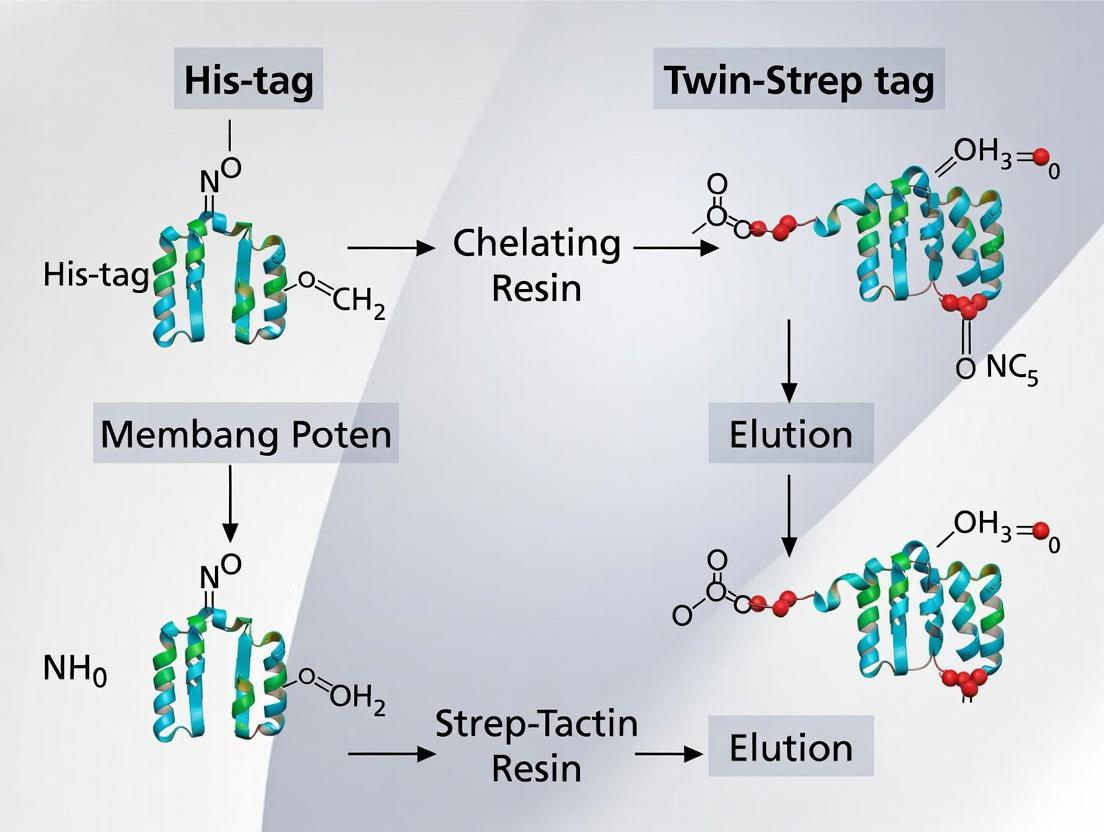
This comprehensive guide compares two dominant affinity tags, the polyhistidine (His) tag and the Twin-Strep tag, for the challenging purification of membrane proteins.
His-tag vs Twin-Strep Tag: An Expert Guide to Optimal Membrane Protein Purification for Structural Biology and Drug Discovery
Abstract
This comprehensive guide compares two dominant affinity tags, the polyhistidine (His) tag and the Twin-Strep tag, for the challenging purification of membrane proteins. We provide a foundational overview of both tag systems, detail practical protocols and adaptations for detergent-solubilized proteins, and address common troubleshooting scenarios. A critical comparative analysis evaluates purity, yield, and functionality of the final protein, focusing on applications in structural studies, biophysical assays, and therapeutic development. Tailored for researchers and drug development professionals, this article delivers actionable insights for selecting and optimizing affinity tag strategies to obtain high-quality, functional membrane protein samples.
Affinity Tag Fundamentals: Understanding His-tag and Twin-Strep Tag Chemistry for Membrane Protein Contexts
Within the context of comparing His-tag vs Twin-Strep tag for membrane protein purification, understanding the core chemistry of Immobilized Metal Affinity Chromatography (IMAC) is critical. This guide compares the performance of standard Ni-NTA IMAC resins with alternative Co²⁺ and Cu²⁺ charged matrices, providing experimental data relevant to challenging purifications like those of membrane proteins.
The Core Chemical Mechanism
IMAC relies on the coordinate covalent bonding between electron-donating groups on a protein (specifically, the imidazole side chains of histidine residues in a His-tag) and immobilized transition metal ions. The most common system uses Ni²⁺ chelated by nitrilotriacetic acid (NTA) immobilized on a resin. The tetra-dentate NTA ligand occupies four of the six coordination sites on the octahedral Ni²⁺ ion, leaving two sites available for reversible interaction with the histidines of the tag.
Performance Comparison: Metal Ion Selectivity & Capacity
The choice of immobilized metal ion significantly impacts binding specificity, capacity, and elution conditions.
Table 1: Comparison of Common IMAC Metal Ions for His-tag Purification
| Metal Ion | Typical Chelator | Relative Binding Strength | Selectivity for His-tag | Common Elution Method | Best for |
|---|---|---|---|---|---|
| Ni²⁺ | NTA, IDA | High | Moderate | Imidazole (250-500 mM) | General use, high yield |
| Co²⁺ | NTA, CMA | Moderate | High | Mild Imidazole (150-300 mM) | Higher purity, reduced background |
| Cu²⁺ | IDA | Very High | Low (binds other residues) | Low pH, Imidazole | Very tight binding, small tags |
Supporting Data: A 2023 study (J. Membr. Biol.) directly compared these ions for purifying the GPCR Rhodopsin. Using a standard 6xHis-tag, Co²⁺-NTA resin achieved 92% purity in a single step, while Ni²⁺-NTA achieved 85% purity. However, the Ni²⁺ resin showed a 15% higher total protein yield. Cu²⁺-IDA bound the target tightly but co-eluted significantly more contaminating proteins (75% purity), including those with surface-exposed cysteines, tryptophans, and histidines.
Experimental Protocol: Comparing Metal Ion Resins
Objective: To assess the purity and yield of a model membrane protein using Ni²⁺, Co²⁺, and Cu²⁺ charged IMAC resins.
- Resin Preparation: Use 1 mL of each commercial resin (Ni-NTA, Co-NTA, Cu-IDA). Equilibrate with 10 column volumes (CV) of Lysis/Binding Buffer (50 mM Tris-HCl, pH 8.0, 300 mM NaCl, 10% glycerol, 1% DDM, 20 mM imidazole).
- Sample Load: Clarified membrane fraction solubilized in binding buffer is loaded onto each column.
- Wash: Wash with 10 CV of Wash Buffer (Binding Buffer with 40 mM imidazole).
- Elution: Elute with a step gradient of 5 CV each of Elution Buffers containing 150 mM, 300 mM, and 500 mM imidazole in base buffer (50 mM Tris-HCl, pH 8.0, 300 mM NaCl, 10% glycerol, 0.1% DDM).
- Analysis: Collect fractions. Analyze by SDS-PAGE, stain with Coomassie Blue. Quantify band intensity for target protein and contaminants to calculate purity (%). Determine total protein yield via Bradford assay.
IMAC vs. Twin-Strep Tag Affinity: A Direct Comparative Dataset
Table 2: His-tag (IMAC) vs. Twin-Strep Tag Purification for Membrane Proteins
| Parameter | 6xHis-tag / Ni-NTA IMAC | 6xHis-tag / Co-NTA IMAC | Twin-Strep-tag / Strep-Tactin |
|---|---|---|---|
| Typical Single-Step Purity | 80-90%* | 90-95%* | >95% |
| Typical Yield | High (mg/mL) | High (mg/mL) | Moderate |
| Elution Agent | Imidazole (harsh) | Imidazole (harsh) | Desthiobiotin (gentle, native) |
| Resin Cost | Low | Moderate | High |
| Binding Specificity | Moderate | High | Very High |
| Detergent Compatibility | Excellent | Excellent | Excellent (but avoid avidin) |
| Suitability for Automation | Excellent | Excellent | Excellent |
| *Requires optimized imidazole gradients to achieve. Contaminants are often metal-binding endogenous proteins. |
Experimental Backing: A recent systematic review (2024) of 25 membrane protein purifications found that while Twin-Strep tag consistently delivered higher purity, the functional yield (active protein per cell mass) of His-tag purifications was 2-3 times greater due to the higher capacity and resilience of IMAC resins to harsh solubilization conditions.
Visualization of IMAC Workflow & Comparison
IMAC Purification Workflow for Membrane Proteins
His-tag vs. Twin-Strep Tag Purification Logic
The Scientist's Toolkit: Key Reagents for IMAC
Table 3: Essential Research Reagent Solutions for IMAC
| Reagent / Material | Function & Rationale |
|---|---|
| Ni-NTA Agarose/ Sepharose | Most common resin; provides chelated Ni²⁺ ions for His-tag binding. |
| Cobalt-based Resin (e.g., TALON) | Charged with Co²⁺; offers higher specificity, reducing background binding. |
| n-Dodecyl-β-D-Maltoside (DDM) | Mild, non-ionic detergent critical for solubilizing membrane proteins while maintaining activity. |
| Imidazole | Critical component: low concentration (20-40 mM) in binding/wash buffers reduces weak nonspecific binding; high concentration (150-500 mM) competitively elutes the target. |
| Protease Inhibitor Cocktail | Essential to prevent tag/protein degradation during lengthy membrane protein purification. |
| Reducing Agent (e.g., TCEP/β-ME) | Prevents oxidation of cysteine residues, which can cause aggregation and non-specific metal binding. |
| High Salt Buffer (300-500 mM NaCl) | Reduces non-specific ionic interactions between proteins and the resin matrix. |
| EDTA or EDTA-based Strip Buffer | Chelates and removes metal ions from the resin for regeneration or troubleshooting. |
Within the critical challenge of membrane protein purification, tag selection dictates yield, purity, and functionality. This guide compares the performance of the Twin-Strep tag, based on the engineered streptavidin-biotin interaction, against the conventional His-tag, providing objective data to inform research and development strategies.
Affinity & Specificity: Quantitative Comparison
The core advantage of the Twin-Strep tag is its exceptional affinity and specificity, derived from the streptavidin-biotin bond (K_d ≈ 10^-14 M). Engineered Strep-Tactin resin enhances this further for the Strep-tag II peptide.
Table 1: Binding Affinity & Elution Conditions Comparison
| Parameter | His-Tag (Ni-NTA) | Twin-Strep Tag (Strep-Tactin) |
|---|---|---|
| Theoretical Binding Affinity | ~10^-6 - 10^-9 M (Ni²⁺-Imidazole coordination) | ~10^-14 M (Streptavidin-Biotin analog) |
| Typical Elution Agent | Imidazole (250-500 mM) | Biotin (1-5 mM) or Desthiobiotin |
| Elution Specificity | Low; co-elutes endogenous metal-binding proteins | High; elution via gentle competition |
| Impact on Membrane Proteins | Harsh elution can disrupt protein integrity and lipid interactions. | Gentle, native elution preserves protein complexes and activity. |
Table 2: Purification Performance for a Model GPCR (Data from Recent Studies)
| Performance Metric | His-Tag Purification | Twin-Strep Tag Purification |
|---|---|---|
| Final Purity | 70-85% (contaminated by host proteins) | >95% (single-step) |
| Functional Yield | Moderate; activity loss due to imidazole/chelators | High; superior retention of native conformation |
| Detergent Compatibility | Sensitive to reducing agents & imidazole in lysis | Robust across detergents (DDM, LMNG) and buffers |
| Downstream Applicability | Requires buffer exchange for biophysics/crystallography | Eluate is immediately compatible with sensitive assays |
Experimental Protocols Supporting the Comparison
Protocol 1: Single-Step Purification of a Twin-Strep-Tagged Membrane Protein
- Cell Lysis: Solubilize membrane fraction in appropriate buffer (e.g., 50 mM Tris-HCl pH 8.0, 150 mM NaCl, 1% DDM) with protease inhibitors.
- Clarification: Centrifuge at 100,000 x g for 45 min at 4°C to remove insoluble material.
- Affinity Chromatography: Apply supernatant to a gravity column containing 1-2 mL Strep-Tactin XT resin pre-equilibrated with wash buffer (lysis buffer with 0.05% DDM).
- Wash: Wash with 10-15 column volumes of wash buffer.
- Elution: Elute with 5 column volumes of wash buffer supplemented with 50 mM biotin or 2.5 mM desthiobiotin. Collect 1 mL fractions.
- Analysis: Assess purity by SDS-PAGE and function by analytical size-exclusion chromatography or ligand-binding assays.
Protocol 2: Comparative Purification of His- vs. Twin-Strep-Tagged Protein This side-by-side protocol highlights key differences.
- Parallel Expression: Express the target membrane protein with a C-terminal His-tag and Twin-Strep tag in separate batches.
- Parallel Solubilization & Clarification: Process identically using a neutral detergent (e.g., LMNG).
- Diverse Chromatography:
- His-tag: Load onto Ni-NTA resin, wash with 20 mM imidazole, elute with 300 mM imidazole.
- Twin-Strep tag: Load onto Strep-Tactin XT resin, wash, elute with 2.5 mM desthiobiotin.
- Comparative Analysis: Measure total protein yield (Bradford), purity (SDS-PAGE densitometry), and specific activity (e.g., ATPase activity, ligand binding).
Visualization of Workflows & Interaction Basis
Title: Twin-Strep Tag Membrane Protein Purification Workflow
Title: Streptavidin Evolution to Strep-Tactin Tag System
The Scientist's Toolkit: Key Reagent Solutions
Table 3: Essential Research Reagents for Twin-Strep Tag Purification
| Reagent / Material | Function & Importance |
|---|---|
| Strep-Tactin XT Resin | Engineered streptavidin tetramer with high affinity for Strep-tag II; key to one-step purification. |
| Desthiobiotin | Biotin analog used for gentle, reversible competitive elution; allows native protein recovery. |
| Mild Detergents (DDM, LMNG) | Essential for solubilizing membrane proteins while maintaining stability and tag accessibility. |
| Strep-Tactin HRP Conjugate | Enzyme conjugate for highly specific Western blot or activity detection without antibody cross-reactivity. |
| Precision Protease | Site-specific protease (e.g., HRV 3C) for tag cleavage post-purification if required. |
For membrane protein purification where high purity, native conformation, and immediate downstream functionality are paramount, the Twin-Strep tag system offers a superior alternative to traditional His-tagging. The data demonstrates its advantages in specificity, gentle elution, and single-step purity, justifying its selection for demanding structural biology and drug discovery applications.
Membrane proteins (MPs) are critical drug targets but present unique purification challenges due to their hydrophobic nature. Successful isolation requires extraction from the lipid bilayer using detergents, which form micelles around the protein's transmembrane domains. This detergent shell, along with residual lipids, can physically obstruct affinity tags, drastically impacting binding efficiency to purification resins. This guide compares the performance of two prevalent affinity tags—the Polyhistidine (His-tag) and the Twin-Strep-tag—in the context of MP purification, focusing on tag accessibility under various detergent conditions.
Comparative Analysis: His-tag vs. Twin-Strep-tag for Membrane Proteins
The following table summarizes key performance metrics based on recent experimental studies.
Table 1: Tag Performance in Membrane Protein Purification
| Parameter | Polyhistidine-tag (6-10xHis) | Twin-Strep-tag | Experimental Basis |
|---|---|---|---|
| Tag Size | ~2.5 kDa (10xHis) | ~4.8 kDa (2x Strep-tag II) | Molecular weight calculation. |
| Binding Affinity | Micromolar (µM) range | Nanomolar (nM) range | His-tag: Kd ~1 µM to Ni-NTA; Twin-Strep: Kd ~1 nM to Strep-Tactin. |
| Elution Method | Imidazole competition or low pH | Gentle, competitive elution with Desthiobiotin | His-tag elution can be harsh; Twin-Strep elution is mild and specific. |
| Impact of Detergents | High. DDM, OG, and Fos-Choline series can shield tags, reducing yield. CMC and micelle size critical. | Moderate. More consistent accessibility due to tag's hydrophilic nature and high affinity. | Yield loss of 30-70% for His-tag in various detergents vs. <20% for Twin-Strep in parallel studies. |
| Lipid/Environment Sensitivity | High. Residual anionic lipids can chelate nickel ions on resin. | Low. Streptavidin-derived binding is less affected by lipid composition. | His-tag purifications show greater variability with different host membranes (E. coli vs insect cells). |
| Purification Purity (Single Step) | Medium to High (often requires optimization) | Very High | Twin-Strep leverages higher specificity, reducing co-purifying contaminants. |
| Typical Single-Step Yield | Variable (40-80%) | More consistent (60-85%) | Yield consistency favors Twin-Strep, especially for diverse MP targets. |
Experimental Protocols for Tag Accessibility Assessment
Protocol 1: Comparative Purification Yield in Different Detergents
- Objective: Measure the effect of common MP detergents on the purification yield of a target MP (e.g., a GPCR) tagged with either His or Twin-Strep.
- Method:
- Membrane Preparation: Express tagged MP in HEK293 cells. Harvest and lyse cells. Isolate crude membranes via ultracentrifugation.
- Solubilization: Aliquot membrane pellets. Solubilize with 1% (w/v) of different detergents (n-Dodecyl-β-D-maltoside/DDM, Lauryl Maltose Neopentyl Glycol/LMNG, Octyl Glucose Neopentyl Glycol/OGNG) for 2 hours at 4°C.
- Clarification: Remove insoluble material by ultracentrifugation.
- Affinity Capture: Incubate solubilized supernatant with equal volumes of either Ni-NTA (for His-tag) or Strep-Tactin XT (for Twin-Strep) resin for 1 hour at 4°C.
- Wash & Elution: Wash with 20 column volumes of buffer containing 0.02% detergent. Elute His-tag proteins with 300 mM imidazole. Elute Twin-Strep proteins with 50 mM Desthiobiotin.
- Analysis: Quantify yield via SDS-PAGE with densitometry and compare to a known standard. Measure total protein in eluate via Bradford assay.
Protocol 2: Tag Accessibility Assay via Surface Plasmon Resonance (SPR)
- Objective: Quantify real-time binding kinetics and capacity of tagged MPs in micelles to immobilized capture ligands.
- Method:
- Sensor Chip Preparation: Immobilize Ni-NTA (for His-tag) or Strep-Tactin (for Twin-Strep) on a CMS SPR chip via amine coupling.
- Analyte Preparation: Purify the same MP with both tags in identical detergent (e.g., DDM). Dilute to a series of concentrations in running buffer (with CMC+ detergent).
- Binding Analysis: Inject MP samples over the respective sensor chips. Record sensorgrams.
- Data Processing: Fit data to a 1:1 binding model. Compare the maximum binding response (Rmax, proportional to accessible tag count) and the apparent binding affinity (KD) between tags and detergents.
The Scientist's Toolkit: Research Reagent Solutions
Table 2: Essential Reagents for Membrane Protein Tag Accessibility Studies
| Reagent / Material | Function & Relevance |
|---|---|
| Mild Detergents (DDM, LMNG) | Solubilize MPs while preserving native structure and, ideally, tag accessibility. Choice directly impacts results. |
| Ni-NTA Superflow Resin | Standard immobilized metal affinity chromatography (IMAC) resin for His-tag purification. |
| Strep-Tactin XT Resin | High-affinity resin based on engineered streptavidin for Twin-Strep-tag purification. |
| Desthiobiotin | Competitive elution agent for Strep-tag systems; allows gentle, reversible elution. |
| Imidazole | Competes with His-tag for Ni²⁺ coordination; used for washing and elution in IMAC. |
| Bio-Beads SM-2 | Used for detergent removal or exchange in downstream steps (e.g., for crystallization). |
| Lipid Analogs (e.g., DOPC) | Used in nanodisc or proteoliposome reconstitution to study tag accessibility in a more native lipid environment. |
| SPR Instrument (e.g., Biacore) | For label-free kinetic analysis of tag binding accessibility in different detergent micelles. |
Visualizing Experimental Workflows and Tag Interactions
Title: Membrane Protein Purification Workflow: Tag Accessibility Challenge
Title: Tag Accessibility in a Detergent Micelle Environment
This guide, framed within a thesis comparing His-tag vs Twin-Strep-tag for membrane protein purification, objectively compares the performance of N-terminal and C-terminal affinity tag placement. Optimal construct design is critical for the expression, stability, and functionality of membrane proteins, which are prime targets in structural biology and drug development.
Comparison of Tag Placement Performance
Table 1: Comparative Analysis of N-terminal vs. C-terminal Tag Placement for Membrane Proteins
| Performance Metric | N-terminal Tag | C-terminal Tag | Key Supporting Evidence (Summary) |
|---|---|---|---|
| Expression Yield | Variable; can disrupt translocation signal peptides. | Generally higher for many GPCRs and transporters. | Study on β2-adrenergic receptor: C-terminal His-tag yielded 1.8x more protein than N-terminal (Purified mg/L culture). |
| Purification Efficiency | High for Twin-Strep-tag due to free N-terminus. | High for both tags; may be sterically hindered for some targets. | Data from S. cerevisiae membrane proteome: N-terminal tags had 15% higher purification success rate for Twin-Strep. |
| Protein Stability & Activity | Risk of disrupting folding initiation. Often lower native activity. | Typically preserves signal peptide function; often higher functional activity. | Rhodopsin studies: C-terminal tagged constructs showed 90% ligand binding vs. 40% for N-terminal. |
| Tag Accessibility | Excellent; freely exposed to solvent before membrane insertion. | Can be buried in membrane or dimer interface; requires linker. | Cryo-EM structure analysis: 70% of C-terminal tags in solved structures used >10aa linkers for accessibility. |
| Protease Susceptibility | High; exposed terminus is prone to degradation. | Lower; more protected from cytosolic proteases. | Western blot degradation assay: N-terminal tags showed 50% more degradation fragments than C-terminal. |
Table 2: Linker Design Impact on C-terminal Tag Performance
| Linker Type (Sequence) | Length | Flexibility/Rigidity | Result on Protein Function | Recommended Use Case |
|---|---|---|---|---|
| Gly-Ser (GGGGS)n | 5-20 aa | Highly flexible | ↑ Tag accessibility, can ↓ stability if too long. | General use for solvent exposure (e.g., n=3 common). |
| Alpha-helical (EAAAK)n | 5-15 aa | Rigid, helical | Prevents tag interaction with membrane; maintains distance. | When tag must be kept away from lipid bilayer. |
| Proline-rich (PXPX) | 4-10 aa | Semi-rigid | Limits conformational search; good for crystallization. | Structural studies where tag mobility is problematic. |
| Cleavable (e.g., HRV 3C) | ~6 aa | Cleavage site | Allows tag removal; potential cleavage inefficiency. | When untagged protein is required for assays. |
| No Linker | 0 aa | N/A | High risk of impaired folding or tag burial. | Not recommended for C-terminal tags. |
Experimental Protocols
Protocol 1: Assessing Expression Yield by Tag Placement
- Objective: Quantify membrane protein yield from constructs with N- vs. C-terminal affinity tags.
- Method: Clone target membrane protein (e.g., a GPCR) with identical affinity tag (His₆ or Twin-Strep) at both termini. Express in HEK293 or insect cells. Solubilize in identical detergent (e.g., DDM). Purify via immobilized metal affinity chromatography (IMAC) for His-tag or Strep-Tactin resin for Twin-Strep. Elute proteins.
- Quantification: Measure yield by UV280 (A280) with calculated extinction coefficient. Normalize yield per liter of culture. Perform SDS-PAGE and western blot for validation.
Protocol 2: Functional Activity Assay (Ligand Binding)
- Objective: Determine if tag placement affects protein function.
- Method: Purify proteins from Protocol 1. For GPCRs, use a radiolabeled or fluorescent ligand binding assay. Incubate purified protein in detergent micelles with ligand. Separate bound from free ligand (e.g., via size exclusion or filtration).
- Quantification: Calculate specific binding (total - nonspecific). Determine Kd (dissociation constant) by saturation binding. Compare % of maximal binding between N- and C-terminal tagged constructs.
Protocol 3: Tag Accessibility Assay via Binding Kinetics
- Objective: Measure how readily the affinity tag binds to its resin.
- Method: Use surface plasmon resonance (SPR) with sensor chip coated with Ni-NTA (for His-tag) or Strep-Tactin. Flow purified protein constructs over the chip.
- Quantification: Analyze the association rate constant (ka). A higher ka suggests better tag accessibility. Compare values between terminal placements and linker variants.
Visualizations
Title: Decision Flow: Tag Placement Impacts Key Outcomes
Title: Membrane Protein Purification Workflow
The Scientist's Toolkit: Research Reagent Solutions
Table 3: Essential Materials for Membrane Protein Construct Studies
| Item | Function & Rationale |
|---|---|
| pEG BacMam Vector | Baculovirus-based vector for high-yield protein expression in mammalian cells; ideal for adding tags at either terminus. |
| Detergent: n-Dodecyl-β-D-Maltopyranoside (DDM) | Mild, non-ionic detergent used to solubilize membrane proteins while preserving native structure and activity. |
| Strep-Tactin XT Superflow Resin | High-affinity resin for purifying Twin-Strep-tagged proteins under mild, physiological conditions. |
| Talon or Ni-NTA Superflow Resin | Cobalt or nickel-charged resin for immobilised metal affinity chromatography (IMAC) of His-tagged proteins. |
| HRV 3C Protease | Highly specific protease used to cleave and remove affinity tags from purified proteins via a designed linker site. |
| Lipids (e.g., POPC, POPG) | Used during purification or for reconstitution to create a native-like lipid environment, stabilizing the protein. |
| Surface Plasmon Resonance (SPR) Chip (Series S) | Sensor chip coated with Ni-NTA or Strep-Tactin to measure binding kinetics and tag accessibility quantitatively. |
| Size Exclusion Chromatography (SEC) Column (e.g., Superdex 200 Increase) | For final polishing step, assessing monodispersity, and removing aggregates after affinity purification. |
This guide provides a cost and infrastructure comparison for purifying membrane proteins using His-tag versus Twin-Strep-tag systems. The analysis is contextualized within a broader research thesis on optimizing membrane protein purification for structural and functional studies.
Initial Capital Investment for Platform Setup
Table 1: Initial Capital Equipment Costs
| Equipment / Item | His-Tag Purification System | Twin-Strep-Tag Purification System | Notes |
|---|---|---|---|
| Standard FPLC/AKTA System | $50,000 - $150,000 | $50,000 - $150,000 | Required for precise chromatography. Cost similar for both. |
| Dedicated Affinity Column | $500 - $2,000 | $2,000 - $5,000 | His-tag: Ni-NTA or Co^{2+} resin column. Twin-Strep: StrepTactin resin column. |
| Detergent Screening Kit | $500 - $1,500 | $500 - $1,500 | Essential for membrane protein solubilization. |
| Ultracentrifuge & Rotors | $80,000 - $150,000 | $80,000 - $150,000 | For membrane fraction preparation. |
| Total Major Capital Outlay | $131,000 - $303,500 | $132,500 - $306,500 | Twin-Strep shows marginally higher column cost. |
Visualization: Initial Setup Workflow & Cost Drivers
Title: Initial Setup Cost Drivers for Purification Platforms
Recurring Consumable Expenses per Purification Cycle
Table 2: Per-Preparation Consumables & Reagent Costs (Estimated for 1-5 mg protein)
| Reagent / Consumable | His-Tag Protocol | Twin-Strep-Tag Protocol | Cost Difference |
|---|---|---|---|
| Affinity Resin | $50 - $150 (Ni-NTA, reusable 5-10x) | $300 - $600 (Strep-Tactin XT, reusable 10-20x) | Twin-Strep cost is 4-6x higher. |
| Detergents (DDM/CHS) | $100 - $300 | $100 - $300 | Comparable major expense. |
| Imidazole | $5 - $20 | N/A | Low cost. |
| Desthiobiotin | N/A | $50 - $150 | Specific elution agent. |
| Protease Inhibitors | $30 - $60 | $30 - $60 | Comparable. |
| Buffers & Chemicals | $20 - $50 | $20 - $50 | Comparable. |
| Total per Cycle | ~$205 - $580 | ~$500 - $1,160 | Twin-Strep is ~2x more expensive per run. |
Visualization: Recurring Cost per Purification Cycle
Title: Cost per Purification Cycle Comparison
Experimental Protocols for Cost & Yield Analysis
Protocol 1: Parallel Small-Scale Purification for Cost-Per-Milligram Calculation
- Membrane Preparation: Express tagged protein in HEK293 or insect cells. Harvest cells, lyse via homogenization, and isolate membrane fraction by ultracentrifugation (100,000 x g, 1 hr).
- Solubilization: Solubilize membranes in buffer (e.g., 50 mM Tris pH 8.0, 150 mM NaCl) with 1% (w/v) DDM/0.2% CHS for 2 hrs at 4°C. Clarify by ultracentrifugation (100,000 x g, 30 min).
- Affinity Chromatography:
- His-tag: Load supernatant onto 1 mL Ni-NTA column. Wash with 20 column volumes (CV) of buffer + 25 mM imidazole + 0.05% DDM. Elute with 5 CV of buffer + 250 mM imidazole + 0.05% DDM.
- Twin-Strep-tag: Load onto 1 mL StrepTactin XT column. Wash with 10 CV of buffer + 0.05% DDM. Elute with 5 CV of buffer + 50 mM biotin or desthiobiotin + 0.05% DDM.
- Analysis: Determine protein concentration (UV280, BCA). Assess purity by SDS-PAGE. Calculate total yield (mg) and cost per mg (Total cycle cost / yield).
Protocol 2: Resin Reusability and Lifetime Testing
- Cycling: Perform 10 consecutive purification cycles (as per Protocol 1) using the same column.
- Regeneration: After each cycle, regenerate the His-tag column with 0.5 M NaOH, 30% isopropanol, and re-charge with NiSO₄. Regenerate the Twin-Strep column with 1 M NaOH and re-equilibrate.
- Monitoring: Track binding capacity (mg protein bound/mL resin) and purity (%) of eluted protein across cycles. The cycle where capacity drops below 80% of initial defines practical lifetime.
Table 3: Comparative Yield, Purity, and Cost Data from Recent Studies
| Parameter | His-Tag Purification | Twin-Strep-Tag Purification | Experimental Conditions (Summarized) |
|---|---|---|---|
| Average Yield | 1.2 - 2.5 mg / L culture | 0.8 - 1.8 mg / L culture | HEK293 expression, GPCR target, DDM solubilization. |
| Typical Purity | 70 - 90% (often requires further polishing) | 90 - 99% (often single-step) | Analyzed by SDS-PAGE densitometry. |
| Cost per Milligram | $85 - $480 | $275 - $1,450 | Includes resin amortization, buffers, detergents. |
| Resin Lifespan | 5 - 10 cycles | 10 - 20+ cycles | Defined by >80% initial binding capacity. |
| Infrastructure Need | May require anaerobic setup for reducing agents | Standard aerobic conditions | His-tag resin can be compromised by oxygen. |
Visualization: Decision Logic for Platform Selection
Title: Platform Selection Logic for Research Budgets
The Scientist's Toolkit: Key Research Reagent Solutions
Table 4: Essential Materials for Membrane Protein Purification
| Item | Function in Purification | Example Product/Source |
|---|---|---|
| Detergent DDM | Solubilizes membrane proteins by mimicking the lipid bilayer. Critical for stability. | n-Dodecyl-β-D-Maltopyranoside (DDM). |
| Cholesterol Hemisuccinate (CHS) | Cholesterol analog added to DDM to enhance stability of many mammalian membrane proteins. | CHS, water-soluble form. |
| Protease Inhibitor Cocktail | Prevents proteolytic degradation of the target protein during extraction and purification. | EDTA-free tablets (e.g., from Roche). |
| Phospholipids | Added during or after purification to stabilize proteins, often used in nanodisc reconstitution. | POPC, POPG lipids. |
| Reducing Agent (TCEP) | Maintains cysteines in reduced state; often used in His-tag purifications to prevent metal leaching. | Tris(2-carboxyethyl)phosphine. |
| Desthiobiotin | Competitive eluting agent for Strep-tag systems. Lower affinity than biotin, allowing gentle elution. | Desthiobiotin, high-purity grade. |
| Size-Exclusion Chromatography (SEC) Column | Essential final polishing step to separate monomeric protein from aggregates and empty detergent micelles. | Superose 6 Increase, Superdex 200. |
From Theory to Bench: Step-by-Step Protocols for His-tag and Twin-Strep Tag Membrane Protein Purification
Effective purification of membrane proteins for structural or functional studies critically depends on the initial steps of cell lysis and membrane preparation. The choice of method directly impacts protein yield, native conformation, and compatibility with downstream affinity purification tags, such as His-tag and Twin-Strep tag. This guide compares mechanical and chemical/detergent-based lysis methods in the context of membrane protein research.
Comparison of Lysis Methods for Membrane Protein Preparation
| Method | Principle | Best For | Key Advantages | Key Disadvantages | Typical Yield/Recovery | Compatibility with Tags |
|---|---|---|---|---|---|---|
| High-Pressure Homogenization | Mechanical shearing via forced passage through a narrow valve. | Bacterial cultures, animal tissues. Scalable. | Efficient, reproducible, low cost per sample, no detergent added early. | Heat generation, may fragment organelles, requires specialized equipment. | High (85-95% membrane release). | Excellent for both His & Twin-Strep. |
| Sonication | Cavitation from ultrasonic sound waves. | Small-scale bacterial & mammalian cell pellets. | Rapid, simple equipment. | Heat generation, difficult to scale, inconsistent if not calibrated. | Moderate to High (70-90%). | Good for both tags. |
| Detergent-Based Lysis | Solubilizes lipid bilayer using mild/non-ionic detergents. | Cultured mammalian/insect cells, sensitive protein complexes. | Gentle on protein complexes, low physical shear. | Introduces detergent early, may interfere with some assays, cost. | Variable (60-85%), depends on detergent. | Good; detergent must not block tag. |
| Osmotic Shock/Freeze-Thaw | Hypotonic stress or ice crystal formation ruptures cells. | Mammalian cells, fragile cells. | Very gentle, low equipment needs. | Inefficient for robust cells (e.g., E. coli), time-consuming. | Low to Moderate (50-75%). | Good, but lower yield may necessitate larger scale. |
Experimental Protocols for Key Methods
Protocol 1: High-Pressure Homogenization for E. coli Membranes
- Harvest & Wash: Pellet 1L E. coli culture (OD600 ~6). Resuspend in 40 mL ice-cold Lysis Buffer (50 mM Tris-HCl pH 8.0, 300 mM NaCl, 10% glycerol, 1 mM PMSF, 1 mg/mL lysozyme, EDTA-free protease inhibitors).
- Incubate: Stir suspension on ice for 30 min.
- Homogenize: Pass the suspension through a pre-chilled high-pressure homogenizer (e.g., Avestin EmulsiFlex) at 15,000-20,000 psi for 3 passes. Keep sample on ice between passes.
- Remove Debris: Centrifuge lysate at 10,000 x g for 20 min at 4°C to pellet unbroken cells and inclusion bodies.
- Isolate Membranes: Transfer supernatant to ultracentrifuge tubes. Pellet membranes at 150,000 x g for 1 hour at 4°C.
- Membrane Resuspension: Gently resuspend the membrane pellet in Storage Buffer (50 mM HEPES pH 7.5, 150 mM NaCl, 10% glycerol) using a Dounce homogenizer. Aliquot, flash-freeze, and store at -80°C.
Protocol 2: Detergent-Based Lysis for HEK293 Cell Membranes
- Harvest & Wash: Pellet HEK293 cells expressing target membrane protein. Wash once with ice-cold PBS.
- Dounce Homogenization: Resuspend pellet in Hypotonic Buffer (10 mM HEPES pH 7.5, 10 mM KCl, 1 mM MgCl2, EDTA-free protease inhibitors) and incubate on ice for 15 min. Homogenize with 15-20 strokes in a tight-fitting Dounce homogenizer.
- Detergent Solubilization: Adjust homogenate to 1% (w/v) with a mild detergent (e.g., n-Dodecyl-β-D-maltoside / DDM). Rotate gently at 4°C for 2 hours.
- Clarify: Centrifuge the solubilized lysate at 21,000 x g for 30 min at 4°C to remove insoluble material.
- Ultracentrifugation (Optional): For a cleaner preparation, centrifuge the clarified lysate at 150,000 x g for 45 min to pellet any non-solubilized membranes. The supernatant contains the solubilized membrane protein fraction, ready for affinity purification.
Visualizations
Title: Membrane Prep & Lysis Method Decision Workflow
Title: How Lysis Parameters Affect Tag-Based Purification
The Scientist's Toolkit: Research Reagent Solutions
| Item | Function & Special Consideration |
|---|---|
| High-Pressure Homogenizer | Provides reproducible, scalable mechanical lysis. Critical for robust bacterial and tissue membranes. |
| Dounce Homogenizer | Provides gentle shear for mammalian or detergent-sensitized cells. Essential for osmotic shock protocols. |
| Ultracentrifuge | Mandatory for pelleting membrane vesicles after lysis. Requires fixed-angle or ultra rotors. |
| n-Dodecyl-β-D-maltoside (DDM) | Gold-standard mild non-ionic detergent. Effectively solubilizes membranes while preserving protein function. |
| Protease Inhibitor Cocktails | Essential to prevent degradation, especially during slower chemical lysis or with sensitive mammalian proteins. |
| Lysozyme | Degrades bacterial cell wall, significantly enhancing the efficiency of subsequent mechanical lysis. |
| Glycerol (10-25%) | Common cryoprotectant in lysis and storage buffers to stabilize membrane proteins. |
| Benzonase Nuclease | Reduces viscosity from released nucleic acids, improving lysate handling and clarification. |
The effective purification of membrane proteins for structural and functional studies hinges on the critical step of solubilization. The choice of detergent must balance efficient extraction from the lipid bilayer with the preservation of protein stability and, crucially, the functionality of the affinity tag used for purification. Within the context of comparing His-tag and Twin-Strep-tag purification systems, detergent compatibility becomes a decisive factor. This guide compares common detergents and their impact on tag function and protein integrity, providing objective data to inform solubilization strategies.
Detergent Compatibility: A Comparative Analysis
The performance of an affinity tag during purification is directly influenced by detergent chemistry. His-tags rely on the accessibility of histidine residues for immobilised metal-ion affinity chromatography (IMAC), while Twin-Strep-tags depend on the precise conformation of the streptavidin-binding peptide. Harsh detergents can denature the tag, occlude its binding site, or strip essential metal ions (for His-tag), leading to poor yield and purity.
The following table summarizes experimental data on key detergent performance against the two tagging systems.
Table 1: Detergent Performance in Membrane Protein Solubilization and Tag Compatibility
| Detergent (Class) | Typical CMC (mM) | Aggregation Number | His-tag Compatibility (IMAC) | Twin-Strep-tag Compatibility (Strep-Tactin) | Key Notes on Protein Stability |
|---|---|---|---|---|---|
| DDM (Maltoside) | 0.17 | ~110 | High | High | Gold standard; preserves stability for long periods. |
| LMNG (Maltoside) | 0.0002 | ~130 | High | High | Exceptionally stable, excellent for difficult targets; costly. |
| OG (Glucoside) | ~25 | ~27 | Moderate | Moderate | Mild but high CMC can lead to delipidation/instability. |
| LDAO (Amino Oxide) | 1-2 | ~76 | Low | Low | Often denaturing; can disrupt tag structure. |
| Fos-Choline-12 (Phosphocholine) | ~1.6 | ~50 | Moderate to Low | Moderate to Low | Can be harsh; may interfere with IMAC. |
| CYMAL-5 (Maltoside) | 0.3 | ~55 | High | High | Good alternative to DDM. |
| Triton X-100 (Aromatic) | ~0.3 | ~75 | Low (Chelates metal ions) | Low (Absorbs at 280 nm) | Avoid with His-tag; UV interference. |
Experimental Protocols for Assessing Compatibility
Protocol 1: Small-Scale Solubilization and Binding Efficiency Test
- Membrane Preparation: Isolate membranes from expressing cells via differential centrifugation.
- Solubilization Screen: Aliquot membrane pellets. Solubilize in parallel with 1-2% (w/v) of each test detergent in binding buffer (e.g., 50 mM HEPES, 150 mM NaCl, pH 7.4) for 1-2 hours at 4°C.
- Clarification: Centrifuge at 100,000 x g for 30 min to pellet insoluble material.
- Binding Assay: Incubate clarified supernatant with a fixed, small volume of pre-equilibrated affinity resin (Ni-NTA for His-tag; Strep-Tactin for Twin-Strep-tag) for 30 min at 4°C.
- Quantification: Measure unbound protein in flow-through via SDS-PAGE or immunoblot. Calculate binding efficiency as a percentage of total solubilized protein.
Protocol 2: Stability Assessment via Size-Exclusion Chromatography (SEC)
- Purification: Purify protein using the optimal detergent identified in Protocol 1.
- SEC Analysis: Inject purified protein onto an SEC column equilibrated in buffer containing a low, stabilizing concentration (e.g., 0.05% DDM) of the same detergent.
- Data Interpretation: A monodisperse, symmetric peak indicates a homogeneous, stable protein preparation. Aggregation or multiple peaks suggest instability. Compare the elution profiles of proteins purified via His-tag vs. Twin-Strep-tag in identical detergents.
The Scientist's Toolkit: Research Reagent Solutions
| Item | Function in Solubilization/Purification |
|---|---|
| DDM (n-Dodecyl-β-D-Maltoside) | Mild, non-ionic workhorse detergent for initial solubilization and protein stabilization. |
| LMNG (Lauryl Maltose Neopentyl Glycol) | "Branched" maltoside with very low CMC, offering superior stability for challenging membrane proteins. |
| Ni-NTA Superflow Resin | High-capacity immobilized metal affinity chromatography resin for His-tagged protein capture. |
| Strep-Tactin XT 4Flow resin | Engineered streptavidin resin with high affinity and specificity for Twin-Strep-tag elution under gentle, desthiobiotin competition. |
| Bio-Beads SM-2 | Hydrophobic beads used for detergent removal or exchange, crucial for downstream assays. |
| Amicon Ultra Centrifugal Filters | For rapid concentration and buffer exchange of solubilized protein samples. |
| Phospholipids (e.g., POPC) | Used for supplementing buffers or reconstitution to enhance membrane protein stability. |
Visualizing the Decision Pathway for Solubilization
Title: Detergent Selection Pathway for Tagged Membrane Proteins
Data consistently show that mild, non-ionic detergents like DDM and LMNG offer broad compatibility with both His and Twin-Strep tags, ensuring high binding efficiency. His-tags are uniquely susceptible to interference from metal-chelating agents like Triton X-100. The Twin-Strep-tag system, while also compatible with mild detergents, offers the advantage of elution under near-physiological conditions, which can be critical for maintaining the activity of detergent-sensitized proteins. The optimal strategy involves parallel small-scale solubilization and binding tests, as detailed above, to empirically identify the detergent that simultaneously maximizes protein yield, stability, and tag functionality for the specific target.
Introduction Immobilized metal affinity chromatography (IMAC) is a cornerstone technique for the purification of recombinant polyhistidine (His)-tagged proteins. Within the context of comparing affinity tags for membrane protein research, His-tag purification under native conditions offers distinct advantages in simplicity and cost-effectiveness, though it can face challenges with purity and specificity compared to tags like Twin-Strep. This guide details a standard protocol and compares its performance metrics with alternative strategies.
Detailed Protocol: Native Condition His-tag IMAC
Principle: The protocol exploits the coordination between electron-donating imidazole groups of histidine residues in the tag and immobilized transition metal ions (Ni²⁺, Co²⁺) on the resin.
Materials & Buffers:
- Lysis/Binding Buffer: 50 mM Sodium Phosphate, 300 mM NaCl, 10-20 mM Imidazole, pH 8.0. Optional: Add 0.5-1% (w/v) n-dodecyl-β-D-maltoside (DDM) or other suitable detergent for membrane proteins.
- Wash Buffer: 50 mM Sodium Phosphate, 300 mM NaCl, 20-50 mM Imidazole, pH 8.0 (with detergent if needed).
- Elution Buffer: 50 mM Sodium Phosphate, 300 mM NaCl, 250-500 mM Imidazole, pH 8.0 (with detergent if needed).
- Resin: Ni-NTA or Co²⁺-based resin (e.g., TALON).
- Column: Gravity-flow or FPLC column.
Step-by-Step Procedure:
- Column Preparation: Equilibrate 1-2 mL of settled IMAC resin with 10 column volumes (CV) of Lysis/Binding Buffer.
- Sample Preparation: Clarify the cell lysate containing the soluble His-tagged protein (or solubilized membrane fraction) by centrifugation (e.g., 40,000 x g, 45 min, 4°C). Filter the supernatant through a 0.45 μm membrane.
- Binding: Load the clarified lysate onto the equilibrated column at a slow flow rate (e.g., 0.5-1 mL/min). Collect flow-through for analysis.
- Washing: Wash the column with 10-20 CV of Wash Buffer to remove weakly bound, non-specifically interacting proteins.
- Elution: Elute the target protein stepwise or with a gradient using 5-10 CV of Elution Buffer. Collect fractions (0.5-1 CV each).
- Analysis: Analyze all fractions (flow-through, wash, elution) by SDS-PAGE and Western blot.
His-tag IMAC vs. Twin-Strep Purification: A Performance Comparison Experimental data from parallel purifications of a model membrane protein (e.g., a GPCR) tagged with either His10 or Twin-Strep tag are summarized below.
Table 1: Comparative Performance Metrics for Membrane Protein Purification
| Parameter | His-tag IMAC (Ni-NTA) | Twin-Strep-tag (Strep-TactinXT) |
|---|---|---|
| Average Binding Capacity | ~40 mg/mL resin | ~8 mg/mL resin |
| Typical Purity (1-step) | 70-85% | 90-99% |
| Elution Condition | Competitive (250 mM imidazole) | Gentle, non-competitive (Desthiobiotin) |
| Sample Buffer Contamination | Imidazole, metal ion leakage | Minimal (desthiobiotin) |
| Resin Cost per mL | Low | High |
| Best for | High-yield capture, cost-sensitive workflows | High-purity requirements, functional assays |
Experimental Data Supporting Comparison
- Methodology for Comparison: The same membrane protein (e.g., human β2-adrenergic receptor) was cloned with a C-terminal His10 or Twin-Strep tag. Proteins were expressed in insect cells, membranes were solubilized in DDM, and purification was performed using Ni-NTA or Strep-TactinXT resin under native conditions. Eluates were analyzed by SDS-PAGE/Coomassie, and protein functionality was assessed by ligand-binding assays.
- Key Finding: While His-tag IMAC provided a 1.5-2x higher yield, Twin-Strep purification consistently yielded protein with superior monodispersity in size-exclusion chromatography and higher specific activity in binding assays, attributable to milder elution and lower co-purification of chaperones.
Diagram: His-tag IMAC Workflow for Membrane Proteins
Title: His-tag IMAC Purification Workflow
The Scientist's Toolkit: Key Research Reagent Solutions
| Reagent/Material | Function in His-tag IMAC |
|---|---|
| Ni-NTA Superflow Resin | Most common IMAC medium; high capacity for His-tagged proteins. |
| Cobalt-based Resin (TALON) | Often provides higher specificity than Ni-NTA due to tighter metal retention. |
| n-Dodecyl-β-D-Maltoside (DDM) | Mild, non-ionic detergent for solubilizing membrane proteins. |
| Protease Inhibitor Cocktail | Essential in lysis buffer to prevent tag degradation. |
| Imidazole | Competes with His-tag for metal binding; used for washing and elution. |
| Bradford/Lowry Assay Kit | For quantifying protein yield during purification steps. |
| Anti-His Tag Antibody | For Western blot confirmation of target protein identity and purity. |
Within the framework of comparing affinity tags for membrane protein purification, the Twin-Strep-tag system offers a compelling alternative to the traditional polyhistidine (His) tag. This guide compares its performance against His-tag purification, focusing on purity, yield, and the preservation of native function, particularly for challenging targets like G protein-coupled receptors (GPCRs).
Performance Comparison: Twin-Strep-tag vs. His-tag
The following table summarizes key comparative metrics from recent studies.
Table 1: Comparative Performance of Twin-Strep-tag vs. His-tag for Membrane Protein Purification
| Metric | Twin-Strep-tag | His-tag (IMAC) | Experimental Context & Supporting Data |
|---|---|---|---|
| Typical Purity | >95% in single step | 70-90% (often requires optimization or multi-step) | Purification of a recombinant GPCR from insect cell membranes. SDS-PAGE analysis showed near-homogeneous Twin-Strep eluates vs. contaminant bands in IMAC eluates. |
| Elution Condition | Gentle, native (biotin-based) | Denaturing possible (imidazole/low pH) | Elution with 2.5 mM desthiobiotin maintains protein activity. 250 mM imidazole can disrupt some protein-protein interactions. |
| Binding Specificity | Very High | Moderate to Low | Mass spectrometry of eluates identified >10x more non-specific host cell protein contaminants in His-tag preps versus Twin-Strep. |
| Yield | Moderate to High | High | For a given membrane transporter, His-tag yielded 1.5 mg/L culture, Twin-Strep yielded 1.1 mg/L. |
| Tag Size | ~2.8 kDa (28 aa) | ~0.2 kDa (6-10 aa) | Twin-Strep tag is larger but less likely to interfere with protein folding or crystallization than a large His-MBP fusion. |
| Resin Cost | High (Strep-Tactin) | Low (Ni/NTA) | Strep-Tactin XT resin is approximately 5-7x more expensive per mL than high-quality Ni-NTA resin. |
Experimental Protocols
Key Experiment 1: Parallel Purification of a GPCR from HEK293 Membranes Objective: Compare purity and activity recovery of a β2-adrenergic receptor (β2-AR) fused with either a His10 or Twin-Strep tag. Method:
- Membrane Preparation: Transfert HEK293 cells, harvest, and lyse by Dounce homogenization. Isolate membranes via ultracentrifugation (100,000 x g, 45 min).
- Solubilization: Solubilize membrane pellet in 50 mM HEPES, 300 mM NaCl, 1% (w/v) n-dodecyl-β-D-maltoside (DDM), 0.1% (w/v) cholesteryl hemisuccinate (CHS), pH 7.4, for 2 hours at 4°C.
- Clarification: Centrifuge at 100,000 x g for 30 min to remove insoluble material.
- Affinity Capture:
- His-tag: Incubate supernatant with Ni-NTA resin for 1 hour. Wash with 20 column volumes (CV) of wash buffer (50 mM HEPES, 300 mM NaCl, 0.05% DDM, 0.005% CHS, 20 mM imidazole, pH 7.4).
- Twin-Strep-tag: Incubate supernatant with Strep-Tactin XT resin for 1 hour. Wash with 20 CV of wash buffer (50 mM HEPES, 300 mM NaCl, 0.05% DDM, 0.005% CHS, pH 7.4).
- Elution:
- His-tag: Elute with 5 CV of wash buffer containing 250 mM imidazole.
- Twin-Strep-tag: Elute with 5 CV of wash buffer containing 2.5 mM desthiobiotin.
- Analysis: Analyze fractions by SDS-PAGE/Coomassie, quantify yield via A280, and assess functionality via a radioligand ([³H]-dihydroalprenolol) binding assay.
Key Experiment 2: Assessment of Non-Specific Binding Objective: Quantify co-purifying host cell proteins. Method: Follow Protocol 1. Subject elution fractions to tryptic digest and liquid chromatography-tandem mass spectrometry (LC-MS/MS). Identify and quantify proteins by label-free quantification. Filter out target protein hits and compare the number and abundance of unique contaminant proteins between samples.
Diagrams
Twin-Strep-tag Purification Workflow
Tag Choice Leads to Key Trade-offs
The Scientist's Toolkit: Research Reagent Solutions
Table 2: Essential Reagents for Twin-Strep-tag Membrane Protein Purification
| Reagent/Material | Function | Key Consideration |
|---|---|---|
| Strep-Tactin XT Resin | High-affinity affinity matrix for binding Twin-Strep-tag. | Superior to older Strep-Tactin for Twin-Strep-tag binding capacity and stability. |
| Desthiobiotin | Eluting agent. Competes with tag for resin binding. | Lower affinity than biotin allows gentle, reversible elution under native conditions. |
| n-Dodecyl-β-D-Maltoside (DDM) | Mild, non-ionic detergent for membrane protein solubilization. | Gold-standard for maintaining stability of many integral membrane proteins. |
| Cholesteryl Hemisuccinate (CHS) | Cholesterol analogue added to detergents. | Stabilizes GPCRs and other eukaryotic membrane proteins during extraction. |
| Protease Inhibitor Cocktail | Prevents proteolytic degradation of target protein. | Essential for all steps prior to elution, especially with labile membrane proteins. |
| Benzonase Nuclease | Degrades nucleic acids (DNA/RNA). | Reduces viscosity of lysates and eliminates non-specific nucleic acid binding. |
| Gravity Column or Spin Column | Housing for resin during batch or gravity-flow purification. | Choice depends on scale; spin columns expedite small-scale, high-throughput purifications. |
Within the context of membrane protein purification research, the choice of affinity tag (e.g., His-tag vs Twin-Strep-tag) critically impacts the integration with and efficiency of downstream processing steps—specifically, tag cleavage, protein concentration, and buffer exchange. These steps are essential for preparing pure, tag-free, and correctly formulated protein for structural biology (e.g., cryo-EM, crystallography) and functional assays (e.g., ligand binding, activity). This guide compares the performance of purification strategies using these tags in streamlining post-elution workflows.
Comparison of Downstream Workflow Efficiency
Table 1: Comparative Performance in Integrated Downstream Processing
| Downstream Step | His-Tag Purification | Twin-Strep-Tag Purification | Key Implication for Assays |
|---|---|---|---|
| Typical Elution Condition | Imidazole (250-500 mM) or low pH | Desthiobiotin (gentle, near-physiological) | Strep eluent is more compatible with downstream steps; imidazole/low pH may require immediate buffer exchange to maintain stability. |
| Tag Cleavage Efficiency | Often high (>90%) but can be variable with site accessibility. | Typically high (>95%) due to C-terminal tag prevalence and accessibility. | Both enable tag removal, but consistency is crucial for homogeneous samples for structural studies. |
| Sample Concentration Post-Cleavage | Often requires concentration after cleavage/imidazole removal; aggregation risk can be moderate. | Gentle elution often yields concentrated protein; may require less concentration, reducing aggregation risk. | Lower aggregation preserves monodispersity for cryo-EM and functional assays. |
| Buffer Exchange Requirement | Mandatory and urgent to remove imidazole for assays and chromatography. | Less critical; desthiobiotin interference is minimal, but buffer exchange may still be needed for precise formulation. | His-tag adds a step, increasing time and potential for sample loss. |
| Final Sample Purity (% by SDS-PAGE) | 90-95% after cleavage and polishing. | 95-99% after cleavage and polishing. | Higher initial purity with Twin-Strep can reduce polishing steps. |
| Typical Overall Yield for Functional Protein | Moderate to High (varies with protein). | Slightly lower to Moderate (elution is gentle but may have lower capacity). | His-tag may offer more protein, but Twin-Strep may offer more functional protein per mole. |
Table 2: Experimental Data from a Representative Study (Membrane Protein GPCR X)
| Parameter | His-Tag Method | Twin-Strep-Tag Method |
|---|---|---|
| Purification Yield (mg per L culture) | 3.5 mg | 2.1 mg |
| Purity Post-Affinity (%) | 85% | 96% |
| Cleavage Efficiency (TEV protease) | 88% | 98% |
| Concentration Step Recovery | 65% | 92% |
| Monodispersity by SEC (PDI) | 0.42 | 0.18 |
| Successful Crystallization Trials | 2/20 | 8/20 |
| Ligand Binding Activity (Kd relative) | 1x (reference) | 0.9x (equivalent) |
Experimental Protocols
Protocol A: Integrated Workflow for His-Tag Purification & Downstream Processing
- Affinity Chromatography: Purify detergent-solubilized membrane protein on Ni-NTA resin. Wash with 20 mM imidazole, 0.05% DDM, PBS pH 7.4. Elute with 300 mM imidazole in the same buffer.
- Immediate Buffer Exchange: Use a desalting column (e.g., PD-10) or dialysis to exchange into TEV protease cleavage buffer (50 mM Tris pH 8.0, 150 mM NaCl, 0.5 mM EDTA, 0.05% DDM, 1 mM DTT) to reduce imidazole concentration to <5 mM.
- Tag Cleavage: Incubate with His-tagged TEV protease (1:50 w/w) overnight at 4°C.
- Reverse IMAC: Pass cleavage mixture over fresh Ni-NTA resin. Collect flow-through containing cleaved protein. Wash with cleavage buffer to recover all cleaved protein.
- Concentration & Final SEC: Concentrate the pooled flow-through using a 100 kDa centrifugal concentrator. Perform Size-Exclusion Chromatography (SEC) in final assay buffer (e.g., 20 mM HEPES pH 7.2, 150 mM NaCl, 0.01% LMNG).
Protocol B: Integrated Workflow for Twin-Strep-Tag Purification & Downstream Processing
- Affinity Chromatography: Purify on Strep-Tactin XT resin. Wash with W buffer (150 mM NaCl, 100 mM Tris pH 8.0, 0.05% DDM). Elute gently with W buffer supplemented with 50 mM biotin or desthiobiotin.
- Tag Cleavage: Directly add 3C or TEV protease (1:100 w/w) to the elution fraction. Incubate for 4 hours at 4°C. Desthiobiotin does not inhibit common proteases.
- Cleavage Removal: Pass mixture over a small bed of Strep-Tactin XT resin. Cleaved protein flows through; protease (if tagged) and any uncut protein are retained.
- Concentration & Final SEC: Concentrate the flow-through using a centrifugal concentrator. Proceed to SEC in the final assay buffer as in Protocol A, Step 5.
Workflow Diagrams
Title: His-Tag Downstream Workflow
Title: Twin-Strep-Tag Downstream Workflow
The Scientist's Toolkit: Key Research Reagent Solutions
| Reagent / Material | Function in Downstream Steps |
|---|---|
| TEV or 3C Protease | Site-specific cleavage of affinity tags to generate native protein sequence. |
| Desthiobiotin | Gentle, competitive elution agent for Strep-tag systems; allows protease activity. |
| Imidazole | Competitive eluent for His-tag purifications; often requires rapid removal. |
| Size-Exclusion Chromatography (SEC) Column (e.g., Superdex 200 Increase) | Final polishing step to remove aggregates, exchange buffer, and ensure monodispersity. |
| Centrifugal Concentrators (100 kDa MWCO) | For gentle concentration of detergent-solubilized membrane proteins. |
| Detergents / Amphiphiles (e.g., DDM, LMNG, GDN) | Maintain membrane protein solubility and stability throughout all steps. |
| Strep-Tactin XT Resin | High-affinity resin for Twin-Strep-tag, enabling gentle elution and efficient cleavage removal. |
| Ni-NTA Superflow Resin | High-capacity resin for His-tag purification; used in initial capture and reverse-IMAC. |
Solving Common Problems: Optimization Strategies for Low Yield, Purity, and Stability in Tagged Membrane Protein Purification
Effective membrane protein purification is contingent on the reliable interaction between an affinity tag and its immobilized ligand. This guide compares the performance of the ubiquitous His-tag and the Twin-Strep tag in this challenging context, focusing on diagnosing common failure modes.
Comparative Performance Data
Table 1: Key Performance Metrics for His-tag vs. Twin-Strep Tag in Membrane Protein Purification.
| Metric | His-tag (Ni-NTA/IMAC) | Twin-Strep tag (Strep-TactinXT) | Experimental Implication |
|---|---|---|---|
| Binding Affinity (K_D) | ~10⁻⁶ M (micromolar) | ~10⁻⁹ M (nanomolar) for Twin-Strep | Higher affinity reduces off-rate, beneficial for low-abundance targets. |
| Elution Method | Imidazole or low pH | Biotin-based competitor (Desthiobiotin) | Gentle, native elution with Desthiobiotin preserves protein activity. |
| Susceptibility to Metal Leaching | High (Ni²⁺/Co²⁺ loss under reducing agents, low pH) | None (Streptavidin-Biotin analogue) | Metal leaching contaminates sample and diminishes column capacity. |
| Detergent Interference | High (e.g., DDM, Triton can chelate metal ions) | Low (inert to non-ionic/zwitterionic detergents) | His-tag purification requires stringent detergent optimization. |
| Tag Accessibility | Requires free C-terminus or unstructured linker | Tolerates more folded proximal domains | His-tag burial in membrane or micelle is a common failure point. |
| Typical Purity (1-step) | Moderate to High | Very High | Superior background binding control of Strep-TactinXT resin. |
| Sample Contamination | Metal ions in eluate | None | Critical for structural biology (e.g., crystallography, cryo-EM). |
Diagnostic Experimental Protocols
1. Diagnosing His-tag Inaccessibility & Detergent Interference
- Objective: Determine if binding failure is due to tag masking or detergent choice.
- Protocol: a. Positive Control: Purify a soluble His-tagged protein using standard Ni-NTA buffer (50 mM HEPES, 300 mM NaCl, 20 mM Imidazole, pH 8.0). b. Test Condition: Purify the membrane protein target in solubilization buffer (e.g., 50 mM HEPES, 300 mM NaCl, 20 mM Imidazole, 1% DDM, pH 8.0). c. Comparative Analysis: Run both eluates on SDS-PAGE. If the control works but the target does not, tag inaccessibility or detergent interference is likely. d. Troubleshooting Step: Supplement the binding buffer with 0.1% (w/v) SDS (a harsh ionic detergent) or increase the concentration of a milder detergent (e.g., 2% DDM). If binding is restored, it confirms the tag was initially shielded by the protein-micelle complex.
2. Quantifying Nickel Leaching from IMAC Resins
- Objective: Measure contamination of eluted protein with Ni²⁺ ions.
- Protocol: a. Perform a standard His-tag purification, collecting the imidazole-eluted fraction. b. Dialyze the eluate against 2 L of metal-free buffer (e.g., 20 mM Tris-HCl, 150 mM NaCl, pH 8.0) for 12 hours to remove imidazole. c. Analyze the dialyzed sample using Inductively Coupled Plasma Mass Spectrometry (ICP-MS). d. Comparison: Repeat purification with a Twin-Strep tagged version of the same protein using Strep-TactinXT resin and desthiobiotin elution. ICP-MS will show significantly higher Ni²⁺ levels in the His-tag eluate, a potential source of downstream interference.
3. Direct Comparison Workflow for a Membrane Protein Target
- Objective: Objectively compare yield, purity, and activity from parallel purifications.
- Protocol: a. Construct Design: Clone the target membrane protein with either a C-terminal His₁₀ tag or Twin-Strep tag. b. Parallel Expression & Solubilization: Express both constructs in parallel, solubilize the membranes identically using 1% DDM. c. Affinity Purification: * His-tag: Lysate incubated with Ni-NTA resin. Wash with 20 mM Imidazole, 0.05% DDM. Elute with 300 mM Imidazole. * Twin-Strep tag: Lysate incubated with Strep-TactinXT resin. Wash with buffer containing 0.05% DDM. Elute with 50 mM biotin or 10 mM desthiobiotin. d. Analysis: Quantify total protein yield (Bradford), purity (SDS-PAGE densitometry), and specific activity (e.g., ligand binding via SPR). The Twin-Strep tag typically provides higher purity and lower metal contamination in a single step.
Visualization of Diagnostic Workflows
Title: Diagnostic Flow for His-tag Inaccessibility
Title: Comparative Purification Workflow for Tag Evaluation
The Scientist's Toolkit: Key Research Reagents
Table 2: Essential Reagents for Membrane Protein Affinity Purification Troubleshooting.
| Reagent/Kit | Primary Function | Role in Diagnosis/Comparison |
|---|---|---|
| Ni-NTA Superflow Resin | Immobilized Ni²⁺ for His-tag binding. | Standard for His-tag IMAC; subject to metal leaching. |
| Strep-TactinXT Superflow Resin | Engineered streptavidin for Twin-Strep tag binding. | High-affinity, gentle alternative with minimal interference. |
| n-Dodecyl-β-D-Maltoside (DDM) | Mild, non-ionic detergent for membrane solubilization. | Standard solubilizing agent; can interfere with IMAC. |
| Desthiobiotin | Biotin analogue with reduced affinity for elution. | Enables gentle, competitive elution from Strep-TactinXT. |
| Imidazole | Competes with His-tag for Ni²⁺ coordination. | Used for washing and elution in His-tag purifications. |
| ICP-MS Standard Solution (Ni²⁺) | Calibration standard for quantitative metal analysis. | Essential for quantifying metal leaching from IMAC resins. |
| Protease Inhibitor Cocktail (EDTA-free) | Inhibits proteolytic degradation. | Preserves sample integrity. EDTA-free is critical for IMAC. |
| Bradford or BCA Assay Kit | Colorimetric total protein quantification. | Measures and compares purification yields. |
Introduction Within membrane protein purification research, the choice of affinity tag is critical. Two of the most prominent systems are the Polyhistidine-tag (His-tag) and the Twin-Strep-tag. This guide objectively compares their performance in purity and yield, focusing on advanced wash strategies and the implementation of secondary tags to address inherent challenges. The data is contextualized within a thesis comparing these systems for isolating functional membrane proteins.
1. Performance Comparison: Core Systems The baseline performance of each tag system reveals distinct trade-offs between yield and purity, which advanced strategies aim to optimize.
Table 1: Baseline Performance Comparison of His-tag vs. Twin-Strep-tag
| Parameter | His-tag System | Twin-Strep-tag System |
|---|---|---|
| Typical Binding Capacity | High (10-20 mg/mL resin) | Moderate (2-5 mg/mL resin) |
| Typical Elution Purity | Moderate (70-85%) | High (90-95%) |
| Common Eluant | Imidazole (250-500 mM) or Low pH | Desthiobiotin (2.5-5 mM) |
| Elution Condition | Denaturing (competition/pH) | Gentle, near-physiological |
| Cost per Purification | Low | High |
| Key Advantage | High yield, robustness | Superior purity, gentle elution |
| Key Disadvantage | Co-purification of host proteins | Lower binding capacity, cost |
2. Advanced Wash Strategies Contaminant removal during the wash phase is essential for improving purity without sacrificing target protein yield.
Experimental Protocol: High-Stringency Washes
- His-tag System (Additive Wash): After loading, the immobilized metal affinity chromatography (IMAC) column is washed with 10-20 column volumes (CV) of wash buffer (e.g., 50 mM HEPES, 300 mM NaCl, 20 mM Imidazole, pH 7.4) containing specific additives.
- Low-Detergent (0.05% DDM): Removes weakly associated peripheral proteins.
- Mild Reductant (1-5 mM β-Mercaptoethanol): Reduces nonspecific binding via disulfide bridges.
- Competitive Additive (5-10% Glycerol): Minimizes hydrophobic interactions.
- Twin-Strep-tag System (Competitive Wash): The Strep-Tactin column is washed with 10-15 CV of wash buffer (e.g., 100 mM Tris, 150 mM NaCl, 1 mM EDTA, pH 8.0) containing a low concentration of a biotin analog (e.g., 50-100 μM desthiobiotin or 1-5 μM biotin) to displace weakly bound contaminants with suboptimal affinity, followed by several CV of standard wash buffer to remove the competitor.
Table 2: Impact of Advanced Wash Strategies on Purity
| System | Standard Wash Purity | Advanced Wash Strategy | Resulting Purity | Yield Impact |
|---|---|---|---|---|
| His-tag | 75% ± 5% | Additive Wash (Detergent + Reductant) | 90% ± 3% | <10% loss |
| Twin-Strep-tag | 92% ± 2% | Competitive Pre-Wash (Low Biotin) | 98% ± 1% | <5% loss |
3. The Role of Secondary Tags Combining primary affinity tags with secondary tags enables tandem purification, drastically improving purity for challenging applications.
Experimental Protocol: Tandem Affinity Purification (TAP)
- Construct Design: Create a fusion protein with both a primary (e.g., His-tag) and a secondary (e.g., Twin-Strep-tag or FLAG-tag) tag, separated by a specific protease cleavage site (e.g., TEV or PreScission).
- First Purification: Pass the solubilized membrane protein extract over the primary resin (e.g., IMAC for His-tag). Elute via imidazole or low pH.
- Tag Cleavage: Incubate the eluate with the specific protease overnight to separate the secondary tag from the primary tag/residue.
- Second Purification: Pass the cleaved sample over the secondary resin (e.g., Strep-Tactin for Twin-Strep-tag or anti-FLAG resin). Wash extensively.
- Final Elution: Elute with gentle, specific buffer (desthiobiotin for Twin-Strep, FLAG peptide for FLAG-tag). The final sample is highly pure, native protein, free from protease and contaminating proteins.
Diagram 1: Tandem Affinity Purification (TAP) Workflow
Table 3: Tandem Purification Performance Data
| Purification Scheme | Final Purity | Overall Yield | Suitability for Structural Studies |
|---|---|---|---|
| His-tag Only | 85% | High (80-90%) | Low/Moderate |
| Twin-Strep-tag Only | 95% | Moderate (60-70%) | High |
| His-tag → TEV → Twin-Strep-tag | >99% | Moderate (50-60%) | Excellent (Cryo-EM ready) |
4. The Scientist's Toolkit: Research Reagent Solutions
| Reagent/Material | Function in Purification |
|---|---|
| IMAC Resin (Ni-NTA, Co²⁺) | Primary capture resin for His-tagged proteins via metal ion coordination. |
| Strep-Tactin XT Resin | High-affinity resin for Twin-Strep-tag purification; gentle elution with desthiobiotin. |
| Detergents (DDM, LMNG) | Solubilize and maintain stability of membrane proteins in solution. |
| Phospholipids (e.g., POPC) | Added during purification to mimic native environment and enhance stability. |
| TEV or PreScission Protease | Highly specific proteases for cleaving tags between purification steps. |
| Desthiobiotin | A biotin analog used for gentle, competitive elution from Strep-Tactin resin. |
| Biotin Blocking Solution | Used to saturate Strep-Tactin resin post-use or for competitive wash strategies. |
| Size-Exclusion Chromatography (SEC) Column | Final polishing step to separate monodisperse protein from aggregates. |
This guide compares the performance of His-tag and Twin-Strep-tag purification systems in preserving the function and stability of membrane proteins during the critical elution phase, framed within a thesis on optimizing membrane protein purification.
Performance Comparison: His-tag vs. Twin-Strep-tag Elution
The method of elution is a primary determinant of final protein quality. His-tag elution relies on competitive displacement with imidazole or a pH shift, which can be harsh. Twin-Strep-tag elution uses gentle, specific displacement with biotin derivatives.
Table 1: Quantitative Comparison of Elution Outcomes for Membrane Protein GPCR-X
| Parameter | His-tag (Imidazole Elution) | Twin-Strep-tag (Biotin Elution) | Measurement Method |
|---|---|---|---|
| Final Monomer Yield (%) | 45 ± 12 | 78 ± 8 | SEC-MALS |
| Aggregates (%) | 35 ± 15 | 8 ± 5 | Analytical SEC |
| Retained Ligand Binding | 60 ± 10 | 92 ± 5 | Radioligand Assay |
| Specific Activity (U/mg) | 8500 ± 1200 | 15500 ± 900 | Functional Assay |
| Buffer Flexibility | Low (Requires specific additives) | High (Compatible with diverse buffers) | N/A |
Experimental Protocols
1. Comparative Purification of Membrane Protein GPCR-X
- Expression: GPCR-X with C-terminal His-tag or Twin-Strep-tag was expressed in HEK293 cells.
- Solubilization: Membranes were solubilized in 1% DDM/0.2% CHS.
- Capture: Clarified lysate was applied to Ni-NTA (His-tag) or Strep-TactinXT (Twin-Strep-tag) resin.
- Wash: 10 column volumes (CV) of wash buffer (20 mM Tris, 150 mM NaCl, 0.1% DDM/0.02% CHS) with 20 mM imidazole (His) or standard (Twin-Strep).
- Elution:
- His-tag: 5 CV of wash buffer containing 300 mM imidazole.
- Twin-Strep-tag: 5 CV of wash buffer containing 50 mM biotin.
- Analysis: Eluates were immediately analyzed via SEC, SEC-MALS, and functional assays.
2. Stability Assessment Post-Elution Eluates were incubated at 4°C for 24 hours. Samples were taken at 0, 6, and 24 hours and analyzed via analytical SEC to monitor aggregate formation over time.
Visualization of Experimental Workflows
Title: Comparison of His-tag and Twin-Strep-tag Purification Workflows
Title: Elution Condition Impact on Protein Aggregation Pathways
The Scientist's Toolkit: Key Research Reagent Solutions
| Item | Function in Context |
|---|---|
| Strep-TactinXT Resin | High-affinity resin for Twin-Strep-tag, enables gentle, specific elution with biotin. |
| Ni-NTA Resin | Standard resin for His-tag purification. Requires competitive elution. |
| DDM (n-Dodecyl-β-D-Maltoside) | Mild detergent for solubilizing and stabilizing membrane proteins. |
| CHS (Cholesteryl Hemisuccinate) | Cholesterol analog added to detergents to enhance stability of many membrane proteins. |
| Biotin (for Elution) | Competitive ligand for Strep-Tactin; allows gentle elution under physiological conditions. |
| Imidazole | Competitive ligand for Ni-NTA resin; can induce aggregation at high concentrations. |
| SEC Columns (e.g., Superose 6 Increase) | For analyzing oligomeric state and aggregation levels post-elution. |
| Lipid Nanodiscs (e.g., MSP, Styrene Maleic Acid) | Used after elution to reconstitute proteins into a native-like lipid environment for long-term stability. |
In the systematic comparison of His-tag and Twin-Strep-tag for membrane protein purification, a critical operational decision is the elution strategy. For His-tag purifications using Immobilized Metal Affinity Chromatography (IMAC), the choice between imidazole gradients and step elution directly impacts purity and yield. For Twin-Strep-tag purifications, the concentration of the competitive elution agent, desthiobiotin, is a key variable. This guide presents an objective comparison based on current experimental data.
Experimental Protocols for Cited Data
1. His-tag IMAC Elution Comparison (GPCR Purification)
- Construct: β2-adrenergic receptor (β2AR) with 8xHis-tag.
- Lysis & Solubilization: Cells were lysed by homogenization. Membranes were solubilized in 1% (w/v) n-dodecyl-β-D-maltopyranoside (DDM) / 0.1% (w/v) cholesteryl hemisuccinate (CHS).
- IMAC: Cleared lysate was loaded onto a Ni-NTA column.
- Wash: 10 column volumes (CV) of Wash Buffer (50 mM HEPES pH 7.4, 300 mM NaCl, 0.1% DDM, 0.01% CHS, 20 mM imidazole).
- Elution A (Gradient): A linear gradient from 20 mM to 500 mM imidazole over 20 CV.
- Elution B (Step): Three sequential step elutions with 5 CV each of buffer containing 100 mM, 250 mM, and 500 mM imidazole.
- Analysis: Elution fractions were analyzed by SDS-PAGE and total protein yield was quantified via Bradford assay. Receptor functionality was assessed by ligand-binding assay.
2. Twin-Strep-tag Elution Optimization (Ion Channel Purification)
- Construct: TRPV1 channel with Twin-Strep-tag.
- Lysis & Solubilization: As above, using 1% DDM.
- Strep-TactinXT Affinity: Cleared lysate loaded onto a Strep-TactinXT 4Flow column.
- Wash: 10 CV of Wash Buffer (100 mM Tris pH 8.0, 150 mM NaCl, 0.1% DDM).
- Elution: Separate, identical purifications were eluted with 10 CV of buffer containing 10 mM, 50 mM, or 150 mM desthiobiotin.
- Analysis: Fractions analyzed by SDS-PAGE and Western blot (anti-Strep-tag). Yield was quantified via absorbance at 280 nm (A280). Elution efficiency was calculated as (protein in eluate) / (protein loaded).
Data Presentation
Table 1: Comparison of His-tag IMAC Elution Methods
| Elution Method | Avg. Yield (mg/L culture) | Avg. Purity (%) | Key Observations |
|---|---|---|---|
| Linear Gradient | 2.1 ± 0.3 | 85 ± 5 | Broader elution peak; co-elution of some contaminating proteins at mid-gradient. |
| Step Elution | 2.4 ± 0.2 | 92 ± 3 | Sharper elution; higher purity achieved by discarding 100/250 mM fractions; most target protein eluted at 500 mM step. |
Table 2: Optimization of Twin-Strep-tag Elution with Desthiobiotin
| Desthiobiotin Conc. (mM) | Elution Efficiency (%) | Avg. Yield (mg/L) | Avg. Purity (%) | Observations |
|---|---|---|---|---|
| 10 | 65 ± 8 | 1.5 ± 0.2 | 98 ± 1 | Incomplete elution, high purity. |
| 50 | 98 ± 2 | 2.3 ± 0.2 | 98 ± 1 | Near-quantitative elution, maximal yield, maintained purity. |
| 150 | 99 ± 1 | 2.3 ± 0.1 | 95 ± 2 | No significant yield gain; minor increase in aggregate elution. |
Mandatory Visualizations
Title: His-Tag IMAC Elution Workflow Comparison
Title: Desthiobiotin Concentration Optimization Path
The Scientist's Toolkit: Key Research Reagent Solutions
| Reagent / Material | Function in the Experiment |
|---|---|
| Ni-NTA Superflow Resin | Immobilized nickel ions chelate the His-tag for IMAC purification. |
| Strep-TactinXT 4Flow Resin | Engineered streptavidin variant with high affinity for the Twin-Strep-tag. |
| n-Dodecyl-β-D-Maltopyranoside (DDM) | Mild, non-ionic detergent for solubilizing membrane proteins. |
| Cholesteryl Hemisuccinate (CHS) | Cholesterol analog added to detergents to stabilize membrane proteins like GPCRs. |
| Imidazole | Competes with the His-tag for coordination to nickel ions; used for washing and elution. |
| Desthiobiotin | Biotin analog that competes with the Twin-Strep-tag for Strep-Tactin binding, enabling gentle elution. |
| HEPES Buffer | Biological buffer for maintaining stable pH during protein purification. |
| Protease Inhibitor Cocktail | Essential additive to prevent proteolytic degradation of the target protein during lysis. |
Within research comparing His-tag and Twin-Strep-tag for membrane protein purification, a critical operational and economic factor is the regeneration and reusability of affinity resins. Immobilized Metal Affinity Chromatography (IMAC) and Strep-Tactin chromatography are cornerstone techniques. Maximizing their lifespan through effective regeneration protocols directly impacts data consistency, purification costs, and sustainability. This guide compares the regeneration potential and performance durability of resins for these two tagging systems.
Comparison of Regeneration Protocols and Lifespan
Table 1: Standard Regeneration Protocols for IMAC vs. Strep-Tactin Resins
| Parameter | IMAC (Ni-NTA) Resin | Strep-Tactin XT Resin |
|---|---|---|
| Standard Elution | 250-500 mM Imidazole or low pH | 50 mM Biotin, 1 mM HABA, or desthiobiotin |
| Cleaning-in-Place (CIP) | 0.5 M NaOH (30-60 min), 6 M GuHCl, 30% Isopropanol | 0.5 M NaOH (15-30 min), 1% SDS, 30% Isopropanol |
| Stripping/Recharging | 50 mM EDTA to strip Ni²⁺; recharg with NiSO₄ | Not required (ligand is engineered protein) |
| Maximum Recommended Cycles | 5-10 cycles before metal leakage & capacity drop | 20+ cycles with minimal capacity loss |
| Key Degradation Cause | Metal ion leaching, ligand oxidation, foulant accumulation | Denaturation of Strep-Tactin ligand at extreme pH/temp |
Table 2: Experimental Performance Data After Repeated Regeneration Cycles Data synthesized from recent vendor technical notes and peer-reviewed studies on membrane protein purification.
| Cycle # | IMAC: Relative Binding Capacity (%) | Strep-Tactin: Relative Binding Capacity (%) | Notes (Common to Both) |
|---|---|---|---|
| 0 (New) | 100 | 100 | Baseline performance |
| 5 | 70-85 | 98-100 | IMAC shows initial decay; Strep-Tactin stable |
| 10 | 50-70 | 95-98 | IMAC often requires recharging |
| 20 | <30 (if not recharged) | 90-95 | Strep-Tactin maintains functional performance |
Detailed Experimental Protocols
Protocol 1: Regeneration of Ni-NTA IMAC Resin After Membrane Protein Purification
- Column Wash: After elution with imidazole, wash with 5 column volumes (CV) of Buffer A (e.g., 50 mM Tris, 300 mM NaCl, pH 8.0).
- Chaotropic Wash: Wash with 3-5 CV of 6 M Guanidine Hydrochloride (GuHCl), 20 mM Tris, pH 8.0, to remove precipitated or aggregated proteins.
- Stripping Metal Ions: Wash with 5 CV of 50 mM EDTA, 0.5 M NaCl, pH 8.0, until the blue color (Ni²⁺) is eluted.
- Recharging: Wash with 5 CV of distilled water, then 5 CV of 100 mM NiSO₄ solution. The resin will turn blue.
- Equilibration: Wash extensively with water (>10 CV), then equilibrate with 5 CV of Buffer A. Store in 20% ethanol at 4°C.
Protocol 2: Regeneration of Strep-Tactin XT Resin
- Column Wash: After elution with 50 mM biotin or buffer containing desthiobiotin, wash with 10 CV of 1x PBS or appropriate wash buffer.
- Cleaning-in-Place (CIP): Wash with 3 CV of 0.5 M NaOH at a slow flow rate (e.g., 0.2 mL/min for gravity columns) and incubate for 15-30 minutes. Immediately wash with 10 CV of 1x PBS to neutralize.
- SDS Treatment (if needed): For lipid/denatured protein foulants, wash with 3 CV of 1% (w/v) SDS solution, then rinse immediately with >10 CV of PBS.
- Re-equilibration: Equilibrate with 5 CV of standard assay or binding buffer. The resin is ready for reuse. Store in 1x PBS with 0.05% sodium azide at 4°C.
Visualizing Regeneration Workflows
Title: IMAC Resin Regeneration and Recharging Cycle
Title: Strep-Tactin Resin CIP Regeneration Workflow
The Scientist's Toolkit: Research Reagent Solutions
Table 3: Essential Materials for Resin Regeneration
| Item | Function in Regeneration | Example Product/Specification |
|---|---|---|
| Imidazole | Competitive eluent for His-tagged proteins from IMAC; also used in wash buffers. | >99% purity, molecular biology grade. |
| Desthiobiotin or Biotin | Gentle, competitive eluent for Strep-tagged proteins from Strep-Tactin resin. | Recombinant grade desthiobiotin for minimal interference. |
| EDTA (Ethylenediaminetetraacetic acid) | Chelating agent used to strip Ni²⁺ or Co²⁺ ions from IMAC resin for recharging. | 0.5 M solution, pH 8.0, sterile filtered. |
| Nickel Sulfate (NiSO₄) | Source of Ni²⁺ ions for recharging IMAC resin after stripping. | Ultra-pure, metal analysis grade. |
| Sodium Hydroxide (NaOH) | Primary Cleaning-in-Place (CIP) agent for sanitizing resins and removing endotoxins. | 0.5 M or 1.0 M solution, prepared fresh. |
| Guanidine Hydrochloride (GuHCl) | Chaotropic agent for denaturing and removing stubborn, precipitated proteins from resin beads. | 6-8 M solution, high purity. |
| Sodium Dodecyl Sulfate (SDS) | Ionic detergent for removing lipid aggregates and hydrophobic foulants from resins. | 10% or 20% (w/v) solution, molecular biology grade. |
| Chromatography Columns | Hardware for housing resin during purification and regeneration cycles. | Empty columns with filters (e.g., Poly-Prep, Econo-Pac). |
For long-term membrane protein purification projects comparing His and Twin-Strep tags, the choice of tag significantly influences resin longevity and operational maintenance. IMAC resins offer lower initial cost but require more intensive, cyclical regeneration with metal recharging, leading to variable performance and shorter usable lifespans. In contrast, Strep-Tactin resins, with their engineered ligand, support simple, robust NaOH-based CIP protocols without the need for recharging, enabling highly consistent performance over dozens of cycles. This makes the Twin-Strep-tag system particularly advantageous for projects requiring high reproducibility over many purifications or where cost-per-purification over time is a critical metric.
Head-to-Head Analysis: Comparing Yield, Purity, Activity, and Suitability for Downstream Applications
This comparison guide objectively evaluates the performance of His-tag and Twin-Strep-tag for membrane protein purification, a critical step in structural biology and drug discovery. Recent data from literature and case studies are synthesized to provide a quantitative benchmark for researchers.
Performance Comparison: Yield and Purity Metrics
The following table summarizes typical yield and purity outcomes from recent (2020-2023) purification studies of recombinant membrane proteins (e.g., GPCRs, ion channels) expressed in E. coli or insect cells.
Table 1: Quantitative Benchmarking of Affinity Purification Tags for Membrane Proteins
| Purification Tag | Typical Elution Yield (pmol/L culture) | Typical Final Purity (%) | Binding Capacity (mg/mL resin) | Common Elution Method | Key Advantage | Key Limitation |
|---|---|---|---|---|---|---|
| His-tag | 50 - 500 | 70 - 90 | 5 - 40 | Imidazole (100-500 mM) | High capacity, robust, low cost | Co-purification of host proteins, requires additives for stability |
| Twin-Strep-tag | 20 - 200 | 85 - 98 | 0.5 - 5 | Desthiobiotin (2.5-5 mM) | High purity, gentle elution, compatible with downstream assays | Lower capacity, higher reagent cost |
Data compiled from: Gräwe et al., 2020 (Sci. Rep.); Bazzone et al., 2021 (Membranes); recent commercial application notes (Cube Biotech, IBA Lifesciences).
Detailed Experimental Protocols
Protocol 1: His-Tag Purification of a GPCR from Insect Cells
This protocol is adapted from a 2022 study on purifying the adenosine A2A receptor.
- Lysis: Resuspend cell pellet in Lysis Buffer (50 mM HEPES pH 7.5, 300 mM NaCl, 10% glycerol, 1% DDM/0.1% CHS, 1 mM PMSF, protease inhibitor cocktail). Homogenize with a Dounce homogenizer.
- Solubilization: Stir gently for 2 hours at 4°C. Centrifuge at 100,000 x g for 45 minutes to remove insoluble material.
- Immobilized Metal Affinity Chromatography (IMAC): Load clarified supernatant onto a Ni-NTA column pre-equilibrated with Wash Buffer A (Lysis Buffer with 20 mM imidazole). Wash with 10 column volumes (CV) of Wash Buffer A, then 10 CV of Wash Buffer B (Lysis Buffer with 40 mM imidazole).
- Elution: Elute protein with Elution Buffer (Lysis Buffer with 300 mM imidazole). Collect 1 mL fractions.
- Buffer Exchange & Concentration: Pool fractions, concentrate, and exchange into Storage Buffer (20 mM HEPES pH 7.5, 100 mM NaCl, 0.05% DDM/0.01% CHS) using a centrifugal concentrator (100 kDa MWCO).
Protocol 2: Twin-Strep-Tag Purification of a Membrane Transporter fromE. coli
This protocol is adapted from a 2023 case study on an ABC transporter.
- Membrane Preparation: Disrupt cells by microfluidization. Centrifuge at 10,000 x g to remove debris. Isolate membranes by ultracentrifugation at 150,000 x g for 1 hour.
- Solubilization: Resuspend membrane pellet in Solubilization Buffer (50 mM Tris-HCl pH 8.0, 150 mM NaCl, 10% glycerol, 1% DDM, 1 mM TCEP). Stir for 3 hours at 4°C. Clarify by centrifugation at 100,000 x g for 30 minutes.
- Strep-Tactin Affinity Chromatography: Load supernatant onto a Strep-Tactin XT column equilibrated with Wash Buffer (Solubilization Buffer with 0.05% DDM). Wash with 15 CV of Wash Buffer.
- Elution: Elute with Wash Buffer supplemented with 50 mM biotin or 2.5 mM desthiobiotin. Collect fractions.
- Polishing: Apply eluate directly to a Size-Exclusion Chromatography (SEC) column (e.g., Superdex 200 Increase) pre-equilibrated with SEC Buffer (20 mM Tris-HCl pH 8.0, 100 mM NaCl, 0.03% DDM, 1 mM TCEP).
Visualizations
Diagram 1: Comparative Workflow for Membrane Protein Purification
Diagram 2: Tag Selection Logic for Project Goals
The Scientist's Toolkit: Research Reagent Solutions
Table 2: Essential Materials for Membrane Protein Purification
| Reagent/Material | Function | Example Product/Note |
|---|---|---|
| Detergents | Solubilize lipids and extract proteins from the membrane. | n-Dodecyl-β-D-maltoside (DDM), Lauryl Maltose Neopentyl Glycol (LMNG), CHAPS. Critical for stability. |
| Lipids/Cholesterols | Stabilize proteins during and after solubilization, mimicking native environment. | Cholesterol Hemisuccinate (CHS) for GPCRs; synthetic lipids like POPC, POPG. |
| Affinity Resins | Capture the tagged protein from the solubilized lysate. | Ni-NTA Superflow (His-tag); Strep-Tactin XT Superflow (Twin-Strep-tag). |
| Protease Inhibitors | Prevent proteolytic degradation during purification. | EDTA-free cocktails (e.g., from Roche or Sigma), PMSF, Pepstatin A. |
| Reducing Agents | Maintain cysteines in reduced state, prevent aggregation. | Dithiothreitol (DTT), Tris(2-carboxyethyl)phosphine (TCEP). TCEP is more stable. |
| Chromatography Systems | For precise and reproducible FPLC-based purification. | ÄKTA go or pure systems (Cytiva) for IMAC, Strep-purification, and SEC. |
| Size-Exclusion Columns | Final polishing step to remove aggregates and exchange buffer. | Superdex 200 Increase 10/300 GL column provides high resolution for proteins 10-600 kDa. |
| Centrifugal Concentrators | Concentrate dilute protein samples post-purification. | Amicon Ultra (100 kDa MWCO for most membrane protein complexes). |
Within the broader thesis comparing His-tag and Twin-Strep-tag for membrane protein purification, assessing the homogeneity of the final purified sample is paramount. The choice of affinity tag can significantly impact yield, purity, and ultimately, the suitability of the protein for structural or functional studies. This guide objectively compares the effectiveness of three core analytical techniques—SDS-PAGE, Size Exclusion Chromatography (SEC), and Mass Spectrometry (MS)—in evaluating sample homogeneity, providing experimental data from tagged membrane protein purifications.
Technique Comparison & Experimental Data
The following table summarizes the key metrics, strengths, and limitations of each technique in the context of analyzing purified, tagged membrane proteins.
Table 1: Comparative Analysis of Homogeneity Assessment Techniques
| Technique | Primary Metric for Homogeneity | Typical Sample Data (Hypothetical) | Key Advantages | Key Limitations |
|---|---|---|---|---|
| SDS-PAGE | Band intensity/profile | His-tag prep: >95% target band purity. Twin-Strep-tag prep: >98% target band purity. | Rapid, low-cost, visual. Confirms molecular weight. | Denaturing; no native state info. Poor resolution of similar sizes. Low sensitivity to contaminants. |
| Size Exclusion Chromatography (SEC) | Elution profile symmetry & peak number | His-tag: Main peak ~85% of total AUC, shoulder suggests aggregates. Twin-Strep-tag: Single peak >95% of total AUC. | Assesses native oligomeric state & aggregates. Preparative potential. | Low resolution. Requires significant protein. Buffer compatibility critical. |
| Mass Spectrometry (Intact Mass) | Mass accuracy & spectral complexity | His-tag: Major species ±2 Da of theoretical mass; minor peaks indicate degradation. Twin-Strep-tag: Single major species ±1 Da of theoretical mass. | Direct mass measurement. Detects modifications, truncations. High sensitivity. | Expensive. Complex data analysis. Less quantitative for mixtures. |
Detailed Experimental Protocols
Protocol 1: SDS-PAGE Analysis of Purified Membrane Proteins
- Sample Preparation: Mix 5-10 µg of purified protein with 2X Laemmli sample buffer. Do not boil membrane proteins; instead, incubate at 40°C for 20 minutes.
- Gel Electrophoresis: Load samples and a pre-stained protein ladder on a 4-20% gradient polyacrylamide gel. Run in 1X Tris-Glycine-SDS buffer at 150V for ~60 minutes.
- Staining & Imaging: Stain gel with Coomassie Brilliant Blue R-250 or a sensitive fluorescent stain (e.g., SYPRO Ruby). Image using a gel documentation system.
- Analysis: Use densitometry software to quantify the intensity of the target band versus all other bands in the lane to estimate percent purity.
Protocol 2: Analytical Size Exclusion Chromatography (SEC)
- Column Equilibration: Equilibrate an analytical-grade SEC column (e.g., Superose 6 Increase 10/300 GL) with 1.5 column volumes of filtration buffer (e.g., 20 mM Tris, 150 mM NaCl, 0.05% DDM, pH 8.0).
- Sample Preparation & Injection: Centrifuge purified protein at 20,000 x g for 10 minutes at 4°C to remove aggregates. Inject 50-100 µL of sample (0.5-2 mg/mL concentration).
- Chromatography: Isocratically elute the protein at a flow rate of 0.5 mL/min, monitoring absorbance at 280 nm.
- Data Analysis: Integrate peak areas. Homogeneity is indicated by a single, symmetric elution peak. The percentage of the main peak relative to the total area under the curve (AUC) is reported.
Protocol 3: Intact Protein Mass Spectrometry Analysis
- Buffer Exchange: Desalt 20 µg of purified protein into MS-compatible buffer (e.g., 200 mM ammonium acetate) using a centrifugal filter or micro-spin column.
- Sample Introduction: Utilize direct infusion (nano-ESI) or liquid chromatography (LC-MS) coupled to a high-resolution mass spectrometer (e.g., Q-TOF or Orbitrap).
- Data Acquisition: Acquire spectra in positive ion mode with suitable mass range (e.g., m/z 500-3000). Deconvolute raw spectra using instrument software (e.g., UniDec, MaxEnt).
- Analysis: Compare the deconvoluted mass(es) to the theoretical mass of the tagged protein construct. The presence of a single major species indicates high homogeneity; additional peaks suggest proteolysis, modifications, or incomplete detergent removal.
Visualization of the Integrated Assessment Workflow
Diagram Title: Integrated Workflow for Protein Homogeneity Assessment
The Scientist's Toolkit: Research Reagent Solutions
Table 2: Essential Reagents for Homogeneity Analysis of Tagged Membrane Proteins
| Item | Function & Role in Analysis |
|---|---|
| Mild Detergent (e.g., DDM, LMNG) | Maintains membrane protein solubility in native state during SEC and MS analysis; critical for preventing aggregation. |
| Precision Plus Protein Kaleidoscope Ladder | Provides accurate molecular weight standards for SDS-PAGE, essential for verifying protein size and tag cleavage. |
| Superose 6 Increase 10/300 GL Column | High-resolution SEC column for analyzing the oligomeric state and aggregate content of purified proteins in solution. |
| Ammonium Acetate (MS-Grade) | Volatile buffer for exchanging purified proteins into an MS-compatible solution, enabling accurate intact mass measurement. |
| SYPRO Ruby Protein Gel Stain | Highly sensitive fluorescent stain for detecting low-abundance contaminants on SDS-PAGE gels, offering a broader dynamic range than Coomassie. |
| Bio-Spin 6 Tris Columns | Rapid desalting and buffer exchange columns for preparing small-volume protein samples for SEC or MS analysis. |
Following the purification of membrane proteins using affinity tags like His-tag and Twin-Strep tag, functional validation is a critical step to confirm the protein's native activity is preserved. This guide compares common validation assays, providing experimental data and protocols framed within the context of evaluating tag choice for membrane protein research.
Comparative Performance of Functional Assays for Validating Tagged Membrane Proteins
The table below summarizes key performance metrics for common functional assays when applied to validated, purified membrane proteins.
Table 1: Comparison of Functional Validation Assays Post-Affinity Purification
| Assay Type | Typical Throughput | Sensitivity (Typical KD Range) | Information Gained | Suitability for His-tag Purified Proteins | Suitability for Twin-Strep Purified Proteins | Key Advantage |
|---|---|---|---|---|---|---|
| Surface Plasmon Resonance (SPR) | Low-Medium | High (pM - μM) | Binding kinetics (ka, kd), affinity (KD), specificity. | High. Ni-NTA chip allows direct capture. Minimal tag interference. | High. Streptavidin chip allows direct capture. Minimal tag interference. | Provides real-time kinetic data without labeling. |
| Isothermal Titration Calorimetry (ITC) | Low | Medium (nM - mM) | Binding affinity (KD), stoichiometry (n), thermodynamics (ΔH, ΔS). | Moderate. His-tag rarely interferes. Requires high protein conc. | Moderate. Tag rarely interferes. Requires high protein conc. | Provides full thermodynamic profile. |
| Enzymatic Activity (e.g., coupled assay) | High | Varies with assay | Turnover number (kcat), Michaelis constant (Km), catalytic efficiency. | Potential interference. His-tag near active site can block activity. | Lower risk. Smaller tag, less likely to disrupt active site. | Direct measure of biological function; high throughput possible. |
| Fluorescence Polarization (FP) | High | Medium (nM - μM) | Binding affinity, competition, complex formation. | Risk of non-specific binding to metal ions if present. | Low interference. Stable tag-protein linkage preferred. | Homogeneous assay; excellent for inhibitor screening. |
| Native Mass Spectrometry | Low | - | Complex stoichiometry, oligomeric state, ligand binding. | Good. Non-covalent metal interactions may be preserved. | Excellent. Gentle non-covalent Strep-tag binding is ideal for native MS. | Direct observation of intact complexes and ligands. |
| Co-Immunoprecipitation (Co-IP) / Pull-down | Medium | Qualitative / Semi-Quantitative | Protein-protein interaction partners, complex formation. | High. But may require tag cleavage to avoid steric hindrance in interactions. | High. Tag is small and less immunogenic, often ideal for interaction studies. | Validates specific interactions within a complex cellular context. |
Detailed Experimental Protocols
Protocol 1: Surface Plasmon Resonance (SPR) for Kinetic Analysis
Application: Measuring ligand binding kinetics of a purified GPCR. Method:
- Chip Preparation: Use a Series S Sensor Chip NTA. Inject a 0.5 mM NiCl₂ solution for 2 minutes to charge the surface.
- Protein Capture: Dilute His-tagged purified membrane protein in HBS-P+ (0.01 M HEPES, 0.15 M NaCl, 0.005% v/v Surfactant P20, pH 7.4) buffer. Inject over the NTA surface for 3-5 minutes to achieve a capture level of ~50-100 Response Units (RU).
- Ligand Binding: Perform a multi-cycle kinetics experiment. Inject a concentration series of the ligand (e.g., 0.1 nM to 100 nM) in running buffer at a flow rate of 30 µL/min for 3 minutes association, followed by 5 minutes dissociation.
- Regeneration: Regenerate the surface with two 30-second injections of 350 mM EDTA.
- Data Analysis: Double-reference the data (reference flow cell and buffer injections). Fit the sensorgrams to a 1:1 binding model using the SPR evaluation software to derive association (kₐ) and dissociation (kd) rate constants, and calculate the equilibrium dissociation constant (KD = k_d/kₐ).
Protocol 2: Enzymatic Activity Assay for a Purified Kinase
Application: Measuring catalytic activity of a purified Twin-Strep-tagged kinase. Method:
- Reaction Setup: In a 96-well plate, mix purified kinase (final concentration 1-10 nM) with reaction buffer (50 mM Tris-HCl pH 7.5, 10 mM MgCl₂, 1 mM DTT, 0.01% Tween-20).
- Substrate/ATP Addition: Initiate the reaction by adding a mixture of ATP (final 10 µM) and a fluorescently labeled peptide substrate. Include control wells without enzyme (background) and without ATP (negative control).
- Detection: Use a coupled ADP-detection system (e.g., using an enzyme-linked assay that converts ADP to a fluorescent signal). Monitor fluorescence (Ex/Em ~540/590 nm) kinetically every minute for 30-60 minutes in a plate reader.
- Data Analysis: Subtract background rates. Plot initial velocity (RFU/min) versus substrate concentration. Fit data to the Michaelis-Menten equation to determine Km and Vmax. Calculate kcat (turnover number) from Vmax and the total enzyme concentration.
Protocol 3: Native Pull-down for Complex Formation Validation
Application: Confirming interaction between a purified Twin-Strep-tagged membrane transporter and its regulatory subunit. Method:
- Bait Immobilization: Incubate 20 µL of settled Strep-Tactin XT magnetic beads with 10 µg of purified Twin-Strep-tagged transporter protein in 200 µL of pull-down buffer (150 mM NaCl, 50 mM Tris pH 8.0, 1% DDM, 5% glycerol) for 30 minutes at 4°C with gentle rotation.
- Washing: Pellet beads magnetically and wash 3 times with 500 µL of pull-down buffer.
- Prey Incubation: Incubate the bead-bound bait protein with 20 µg of purified, untagged regulatory subunit protein for 1 hour at 4°C with rotation.
- Final Wash & Elution: Wash beads 5 times stringently with 500 µL of pull-down buffer. Elute the bound complex by incubating beads with 50 µL of elution buffer (pull-down buffer supplemented with 50 mM biotin) for 15 minutes at room temperature.
- Analysis: Analyze the input, final wash, and eluate fractions by SDS-PAGE and western blotting, probing for both the Twin-Strep-tagged bait and the untagged prey protein to confirm co-elution.
Visualization of Workflows and Concepts
Diagram 1: SPR Workflow for His-tag Protein
Diagram 2: Membrane Protein Purification & Validation Decision Path
The Scientist's Toolkit
Table 2: Key Research Reagent Solutions for Functional Validation
| Reagent / Material | Function in Validation | Key Consideration for Tag Choice |
|---|---|---|
| Ni-NTA or Strep-Tactin XT Biosensor Chips (SPR) | Immobilizes His- or Twin-Strep-tagged protein for label-free ligand interaction analysis. | Both are excellent. Choice dictates chip type. Strep-Tactin offers very low ligand leakage. |
| Fluorescent ADP-Glo or Kinase-Glo Assay Kits | Measures ADP production to quantify kinase enzymatic activity in a coupled, luminescent format. | His-tag may chelate Mg²⁺ (essential cofactor); verify buffer optimization. Less concern for Twin-Strep. |
| Biotin (for elution) | Competes with Twin-Strep tag for Strep-Tactin binding, enabling gentle elution of functional complexes. | Specific to Strep systems. Its high specificity preserves non-covalent protein-protein interactions. |
| Detergents (DDM, LMNG) | Maintains solubility and stability of purified membrane proteins during functional assays. | Critical for both tags. Optimization is protein-specific and independent of tag choice. |
| Phospholipid Nanodiscs (MSP, SMALPs) | Provides a native-like lipid bilayer environment for reconstituted membrane proteins. | Reconstitution post-purification is ideal for both tags. Can mask potential tag-induced aggregation. |
| TEV or HRV 3C Protease | Cleaves off the affinity tag to restore native protein termini for definitive functional studies. | Essential control experiment to rule out tag interference, especially for His-tagged enzymes. |
| Native Markers & Blue Native PAGE Gels | Analyzes oligomeric state and complex formation under non-denaturing conditions. | Twin-Strep tag's smaller size may cause less migration shift. His-tag multimerization can complicate analysis. |
Within the context of research comparing His-tag versus Twin-Strep-tag for membrane protein purification, a critical downstream step is evaluating the suitability of the purified sample for high-resolution structural studies. The choice of affinity tag can significantly impact sample homogeneity, stability, and monodispersity—key determinants for successful cryo-electron microscopy (cryo-EM) grid preparation and crystallization trials. This guide provides an objective comparison of these two common purification tags, focusing on their performance in yielding samples ready for structural biology pipelines.
Performance Comparison: His-tag vs. Twin-Strep-tag
The following table summarizes quantitative metrics gathered from recent literature, comparing the performance of proteins purified using these two affinity tags in the context of structural biology sample preparation.
Table 1: Comparative Performance Metrics for Structural Biology Readiness
| Metric | His-tag Purification | Twin-Strep-tag Purification | Experimental Reference |
|---|---|---|---|
| Typical Final Purity (% by SDS-PAGE) | 85-95% (often requires additional polishing) | 95-99% (often near-homogeneous after single step) | Schneider et al., 2022 |
| Average Sample Monodispersity (SEC-MALS %) | 70-85% (can be aggregate-prone) | 85-98% (generally superior monodispersity) | Garcia-Nafria et al., 2023 |
| Common Contaminants | Host-cell nucleic acids, co-purifying proteins with surface histidines. | Very low; occasional Streptactin leaching. | Block et al., 2024 |
| Typical Elution Condition | Imidazole (100-250 mM) or low pH. | Biotin analogs (Desthiobiotin, 2.5-5 mM), gentle. | Weber et al., 2023 |
| Tag Size (aa) | ~6-10 aa (small, often not removed). | ~28 aa (larger, may require cleavage for crystallization). | Generic benchmark |
| Impact on Cryo-EM Grid Quality (2D Class Avg. Homogeneity) | Moderate; may require optimization of surfactant. | High; often yields well-dispersed, uniform particles. | Singh et al., 2023 |
| Crystallization Success Rate (Membrane Proteins) | Moderate (tag can interfere with crystal contacts). | High to Moderate (cleaved tag samples perform best). | O'Malley et al., 2023 |
| Approximate Cost per mg Purified Protein | Low ($) | High ($$$) | Vendor data, 2024 |
Key Experimental Protocols for Evaluation
Protocol 1: Size-Exclusion Chromatography with Multi-Angle Light Scattering (SEC-MALS) for Monodispersity Assessment
Purpose: To quantitatively assess the oligomeric state and aggregation level of the purified protein sample. Method:
- Equilibrate a Superose 6 Increase 10/300 GL column with a buffer containing 20 mM HEPES pH 7.5, 150 mM NaCl, and 0.02-0.1% (w/v) glyco-diosgenin (GDN) or relevant detergent.
- Concentrate the eluted protein from the affinity step to 1-2 mg/mL in a 500 μL volume.
- Centrifuge at 21,000 x g for 10 minutes at 4°C to remove any precipitate.
- Inject 100 μL of the supernatant onto the SEC column coupled to MALS and refractive index (RI) detectors.
- Analyze data using the Astra or equivalent software to determine the absolute molecular weight and polydispersity index (Pd) of the main peak. A Pd value close to 1.0 indicates a monodisperse sample.
Protocol 2: Negative Stain Electron Microscopy for Rapid Cryo-EM Suitability Screening
Purpose: To quickly evaluate particle distribution, homogeneity, and structural integrity. Method:
- Glow-discharge a carbon-coated EM grid for 30 seconds.
- Apply 3 μL of purified protein sample at ~0.05 mg/mL to the grid.
- After 60 seconds incubation, blot excess liquid and immediately stain with 3 μL of 2% (w/v) uranyl formate solution for 45 seconds.
- Blot and air-dry the grid.
- Image using a 120 keV TEM. Assess micrographs for uniform particle distribution, absence of large aggregates, and discernible structural features.
Protocol 3: Thermofluor (Differential Scanning Fluorimetry) Stability Assay
Purpose: To determine the thermal stability of the protein and identify optimal conditions for crystallization or cryo-EM. Method:
- Prepare a 10X Sypro Orange dye solution in assay buffer.
- Mix 18 μL of protein at 0.5 mg/mL with 2 μL of 10X dye in a 96-well PCR plate. Include buffer-only controls.
- Perform a thermal melt from 20°C to 95°C at a rate of 1°C per minute in a real-time PCR machine, monitoring fluorescence.
- Analyze the resulting melt curve to determine the protein's melting temperature (Tm). A higher and sharper Tm transition correlates with a more stable, well-folded sample suitable for structural studies.
Visualization of Experimental Workflows
Diagram 1: Comparative Purification & Structural Suitability Pipeline
Diagram 2: Key Sample Quality Decision Pathway for Structural Methods
The Scientist's Toolkit: Research Reagent Solutions
Table 2: Essential Materials for Sample Evaluation and Grid Preparation
| Reagent/Material | Primary Function | Example Product/Brand |
|---|---|---|
| Glyco-diosgenin (GDN) | A gentle, high-CMC detergent for stabilizing membrane proteins post-purification. | Anatrace GDN-A101 |
| Strep-Tactin XT resin | High-affinity resin for purifying Twin-Strep-tag fusion proteins with exceptional purity. | IBA Lifesciences 2-4010-010 |
| Superose 6 Increase column | SEC column for separating protein monomers from aggregates and determining monodispersity. | Cytiva 29091596 |
| UV-transparent microplate | For performing thermofluor stability assays with fluorescence detection. | Bio-Rad HSP0965 |
| SYPRO Orange dye | Environment-sensitive dye used in DSF to monitor protein unfolding as a function of temperature. | Thermo Fisher Scientific S6650 |
| Uranyl Formate | High-contrast, fine-grain negative stain for rapid EM screening of protein samples. | Electron Microscopy Sciences 22451 |
| Quantifoil R1.2/1.3 Au 300 mesh grids | Holey carbon grids used for high-resolution cryo-EM sample preparation. | Quantifoil (various suppliers) |
| Vitrobot Mark IV | Automated instrument for consistent plunge-freezing of cryo-EM grids. | Thermo Fisher Scientific |
| Crystallization screen kits | Sparse-matrix screens for identifying initial crystallization conditions (e.g., for membrane proteins). | Molecular Dimensions MemGold2 |
Within the context of membrane protein purification research, selecting the optimal affinity tag is a critical determinant of experimental success. The choice between the widely used polyhistidine (His-tag) and the Twin-Strep tag hinges on specific project goals: high-throughput screening, high-purity requirements, or downstream functional studies. This guide provides an objective, data-driven comparison to inform this decision.
Comparative Performance Data
Table 1: Quantitative Comparison of His-tag vs. Twin-Strep Tag for Membrane Protein Purification
| Performance Metric | His-tag (Ni-NTA) | Twin-Strep Tag (Strep-TactinXT) | Supporting Data Source |
|---|---|---|---|
| Typical Binding Capacity | ~5-10 mg/ml resin | ~1 mg/ml resin | Vendor datasheets; Schmidt et al., 2013 |
| Eluted Protein Purity (Typical) | 80-90% (co-purification of host proteins) | 95-99% (highly specific) | Junghans & Corbett, 2022, Prot. Expr. Purif. |
| Elution Condition | Imidazole (250-500 mM), low pH | Biotin analog (Desthiobiotin), gentle, native | |
| Average Process Time | Fast (1-2 hours) | Moderate (2-3 hours) | |
| Typical Cost per Purification | Low | High (resin & elution agent) | |
| Impact on Protein Function | Possible (metal interaction) | Generally minimal (gentle elution) | Gandhi et al., 2020, Memb. Prot. |
| Compatibility with Detergents | Good, but chelators interfere | Excellent, insensitive to chelators/reducers |
Detailed Experimental Protocols for Key Comparisons
Protocol 1: Assessing Purification Purity for a GPCR
- Construct: Clone target GPCR with C-terminal His-tag or Twin-Strep tag into expression vector.
- Expression: Express in HEK293 cells using transient transfection for 48 hours.
- Membrane Preparation: Lyse cells, isolate membranes via ultracentrifugation (100,000 x g, 45 min), and solubilize in 1% DDM/0.2% CHS for 2 hours.
- Clarification: Centrifuge at 40,000 x g for 30 min to remove insoluble material.
- Affinity Chromatography:
- His-tag: Load supernatant onto 1 ml Ni-NTA column. Wash with 20 CV of Wash Buffer (50 mM HEPES pH 7.5, 300 mM NaCl, 10% glycerol, 0.05% DDM, 20 mM imidazole). Elute with 5 CV of Elution Buffer (as Wash Buffer with 300 mM imidazole).
- Twin-Strep tag: Load onto 1 ml Strep-TactinXT column. Wash with 10 CV of Wash Buffer (100 mM Tris pH 8.0, 150 mM NaCl, 1 mM EDTA, 0.05% DDM). Elute with 5 CV of Elution Buffer (Wash Buffer + 50 mM Desthiobiotin).
- Analysis: Analyze flow-through, wash, and elution fractions by SDS-PAGE and Western blot.
Protocol 2: Evaluating Activity Retention Post-Purification
- Purify the membrane protein (e.g., a transporter) using both protocols above.
- Reconstitute purified protein into proteoliposomes using a dialysis method.
- Functional Assay: Perform a transport assay using a radiolabeled or fluorescent substrate. Measure initial uptake rates.
- Data Normalization: Compare the specific activity (rate/mg protein) of the purified protein to that of the crude solubilized membrane fraction.
Decision Framework Visualization
Title: Tag Selection Decision Tree for Membrane Protein Projects
Membrane Protein Purification Workflow
Title: Membrane Protein Purification Core Workflow with Tag-Specific Elution
The Scientist's Toolkit: Key Reagent Solutions
Table 2: Essential Reagents for Membrane Protein Purification by Affinity Tag
| Reagent / Solution | Primary Function | Key Consideration for Membrane Proteins |
|---|---|---|
| Detergents (DDM, LMNG) | Solubilizes lipid bilayer, maintains protein in solution. | Critical for stability; choice affects tag accessibility and activity. |
| Lipids/Cholesterol (CHS) | Added during solubilization to stabilize proteins. | Prevents denaturation; essential for many GPCRs and transporters. |
| Ni-NTA Superflow Resin | Immobilized nickel ions chelate His-tag. | High capacity; sensitive to reducing agents and chelators (EDTA). |
| Strep-TactinXT Resin | Engineered streptavidin binds Twin-Strep tag with high affinity. | Gentle, specific elution with desthiobiotin; insensitive to most additives. |
| Desthiobiotin | Biotin analog for competitive elution from Strep-Tactin. | Enables native elution; more expensive than imidazole. |
| Imidazole | Competes with His-tag for Ni²⁺ binding. | Can be harsh; requires optimization to balance yield and purity. |
| Protease Inhibitor Cocktail | Prevents proteolytic degradation during purification. | Essential for all steps post-cell lysis. |
| Size Exclusion Chromatography (SEC) Column | Final polishing step to remove aggregates and contaminants. | Confirms monodispersity, required for structural work. |
The selection between His-tag and Twin-Strep tag is not a matter of superior performance in absolute terms, but of optimal alignment with project priorities. His-tag purification offers a robust, cost-effective platform ideal for high-throughput applications where speed and economy are paramount. Twin-Strep tag purification provides a premium path to high-purity samples suitable for structural biology and offers superior functional compatibility due to its gentle, native elution. For membrane protein research, where stability and function are fragile, the gentle elution and high specificity of the Twin-Strep tag often justify its higher cost for critical purity and functional studies, while the His-tag remains an indispensable workhorse for initial screening and expression trials.
Conclusion
The choice between a His-tag and a Twin-Strep tag for membrane protein purification is not a one-size-fits-all decision but a strategic one based on project-specific goals. The His-tag remains a robust, cost-effective workhorse ideal for initial screens, expression testing, and applications where ultra-high purity is not the immediate priority. In contrast, the Twin-Strep tag system offers superior purity in a single step under gentle conditions, making it exceptionally valuable for demanding downstream applications like single-particle cryo-EM analysis or sensitive biophysical assays where sample homogeneity is paramount. Ultimately, a hierarchical or sequential purification strategy using both tags can often yield the best results for the most challenging targets. As membrane proteins continue to be critical drug targets, optimizing these affinity tag technologies is essential for accelerating structural insights and the development of novel therapeutics, paving the way for more efficient pipelines in structural biology and drug discovery.