Harnessing Protein Quality Control: From Mechanistic Insights to Clinical Degradation Therapies
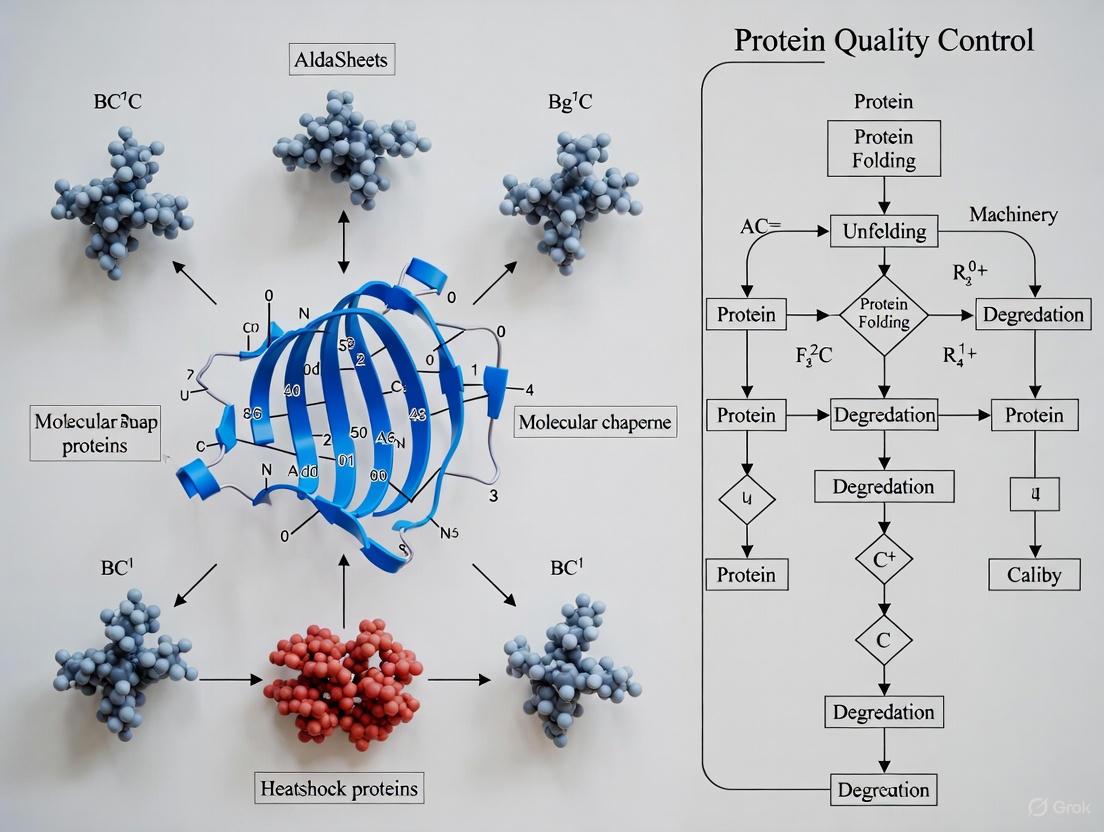
This article explores the paradigm of targeting the cell's intrinsic protein quality control (PQC) machinery for therapeutic purposes, a strategy that is reshaping drug discovery.
Harnessing Protein Quality Control: From Mechanistic Insights to Clinical Degradation Therapies
Abstract
This article explores the paradigm of targeting the cell's intrinsic protein quality control (PQC) machinery for therapeutic purposes, a strategy that is reshaping drug discovery. We examine the foundational science of the ubiquitin-proteasome system and autophagy, and how their manipulation through innovative modalities like PROTACs and molecular glues enables targeted protein degradation. The content delves into the application of these technologies across diseases, including cancer and neurodegeneration, addresses key challenges in optimization and delivery, and provides a comparative analysis of their clinical progress and advantages over traditional therapeutics. Aimed at researchers and drug development professionals, this review synthesizes current innovations with a forward-looking perspective on transforming disease treatment.
The Cellular Gatekeepers: Deconstructing the Ubiquitin-Proteasome System and Autophagy
Proteostasis, or protein homeostasis, is an essential and complex cellular process that ensures a functional and healthy proteome by regulating the synthesis, folding, trafficking, and degradation of proteins [1] [2]. This balance is maintained by an exquisitely coordinated system known as the proteostasis network (PN) or protein quality control (PQC) network [1]. The PN encompasses approximately 3,000 genes, including molecular chaperones, folding enzymes, and degradation machinery, which function cooperatively to surveil proteome integrity and limit the accumulation of toxic, misfolded proteins [1].
The critical importance of a robust PN is particularly evident in post-mitotic cells like neurons. Due to their high metabolic demands, polarized structure, and inability to dilute cellular damage through division, neurons are exceptionally vulnerable to disruptions in proteostasis [1]. Furthermore, aging is the most significant risk factor for the decline of PN capacity. This decline, combined with genetic mutations, leads to the accumulation of misfolded protein aggregates, which is a hallmark of a class of disorders collectively known as proteinopathies [1] [3]. These include Alzheimer's disease, Parkinson's disease, amyotrophic lateral sclerosis, and various other neurodegenerative diseases [1]. Consequently, the PN represents a promising global therapeutic target for interventions aimed at extending brain and overall organismal health [2].
Core Components of the Proteostasis Network
The proteostasis network is composed of three highly interconnected functional arms that collaboratively maintain the health of the proteome.
Protein Synthesis and Folding
The journey of a protein begins with its synthesis, followed by folding into its precise three-dimensional structure. Molecular chaperones are pivotal players in this process. They assist in the folding of nascent polypeptides, prevent inappropriate interactions, and can also aid in the disaggregation or refolding of misfolded proteins [4] [5]. Key chaperones include the Hsp70 and Hsp90 families. For instance, the Hsp70 system, often with the assistance of J-domain proteins (JDPs), engages with newly synthesized or misfolded proteins. Substrates can then be transferred to Hsp90 for further maturation, a process facilitated by transfer factors like the co-chaperone NudC [4]. Within the endoplasmic reticulum (ER), the Hsp70 family chaperone BiP (HSPA5) is critical for managing misfolded proteins and activating the unfolded protein response (UPR) [5].
Protein Degradation Pathways
When proteins are irreversibly misfolded, damaged, or excess to requirements, the PN employs two primary degradation systems:
- The Ubiquitin-Proteasome System (UPS): This is the major pathway for the controlled degradation of intracellular proteins, handling up to 80% of all cellular proteins [2]. Proteins designated for degradation are tagged with polyubiquitin chains by a cascade of E1, E2, and E3 enzymes. The 26S proteasome then recognizes and degrades the ubiquitinated protein into small peptides [1] [2]. A specialized branch of the UPS, known as ER-associated degradation (ERAD), is responsible for identifying, retro-translocating, and degrading misfolded proteins from the ER lumen [2].
- The Autophagy-Lysosome Pathway (ALP): This system is responsible for degrading larger cellular components, such as damaged organelles, and for clearing protein aggregates that are too large for the proteasome. The process involves the engulfment of cargo into a double-membraned vesicle (autophagosome) that subsequently fuses with the lysosome for content degradation [1].
Stress Response Pathways
The PN is equipped with sophisticated stress sensors that activate adaptive signaling pathways to restore balance during proteostatic challenges:
- The Unfolded Protein Response (UPR): Activated by an accumulation of misfolded proteins in the ER, the UPR transiently halts protein translation and upregulates the expression of chaperones and degradation factors to alleviate ER stress [1] [2].
- The Heat Shock Response (HSR): This pathway is triggered by proteotoxic stress in the cytosol and nucleus, leading to the increased expression of cytosolic chaperones like Hsp70 [2].
- The Integrated Stress Response (ISR): This pathway integrates signals from various cellular stresses and can modulate translation to allow the cell to cope with the stressor [2].
Table 1: Core Components and Functions of the Proteostasis Network
| PN Component | Key Elements | Primary Function |
|---|---|---|
| Synthesis & Folding | Ribosomes, Hsp70, Hsp90, BiP, Trigger Factor | Facilitates correct folding of nascent polypeptides and refolding of misfolded proteins. |
| Degradation Machinery | 26S Proteasome, Ubiquitin Ligases (E3s), Autophagosomes, Lysosomes | Targets and degrades damaged, misfolded, or excess proteins. |
| Stress Responses | UPR, HSR, ISR | Sense proteostatic imbalance and activate transcriptional programs to restore homeostasis. |
| Spatial Organization | IPOD, INQ, CytoQ, Aggresomes | Confines protein aggregates to specific cellular deposition sites to minimize toxicity. |
Proteostasis in Health and Disease
The failure of PQC systems is intimately linked to human disease, particularly neurodegenerative disorders and age-related conditions.
Proteinopathies and Neurodegeneration
Proteinopathies are a class of neurodegenerative diseases defined by the accumulation of specific, misfolded protein aggregates that lead to synaptic dysfunction and neuronal loss [1]. A common feature across these diseases is the disruption of proteostasis. Key pathogenic proteins include:
- Amyloid-β (Aβ) and hyperphosphorylated Tau in Alzheimer's disease
- α-Synuclein in Parkinson's disease
- TDP-43 in Amyotrophic Lateral Sclerosis (ALS) and Frontotemporal Lobar Degeneration (FTLD)
- Huntingtin with expanded polyglutamine tracts in Huntington's disease [1]
These aggregation-prone proteins can form soluble oligomers and insoluble fibrils that are toxic to neurons. The toxicity arises through multiple mechanisms, including the sequestration of essential PN components like chaperones and proteasomes, disruption of organelle integrity, and impairment of critical processes like axonal transport [1]. The early and pervasive loss of synaptic plasticity observed in these diseases is a direct consequence of the neuron's inability to maintain a dynamic and healthy proteome at the synapse [1].
Proteostasis in Non-Neuronal Tissues
The role of proteostasis extends beyond the nervous system. For example, in cardiac health, age-related disruption of PQC contributes to the pathogenesis of heart failure with preserved ejection fraction (HFpEF) [3]. In a murine model, old mice subjected to metabolic and hypertensive stress developed a more severe HFpEF phenotype. This was driven by a proteostatic imbalance, where increased protein synthesis combined with an age-related impairment in protein degradation led to the accumulation of protein aggregates. Mechanistically, mTORC1, a central regulator of protein synthesis and autophagy, was activated by both aging and stress. Importantly, cardiac-specific inhibition of mTORC1 was shown to be protective, highlighting the therapeutic potential of targeting the PN in non-neuronal contexts [3].
The Proteostasis Network as a Therapeutic Target
Given its central role in disease, the PN presents a compelling target for therapeutic intervention. Strategies are evolving from enhancing general PN function to developing precision tools that hijack specific PN components.
Targeted Protein Degradation (TPD)
TPD is a revolutionary therapeutic modality that uses small molecules to recruit specific disease-causing proteins to the cell's natural degradation machinery [6]. This approach can target proteins previously considered "undruggable." Key degrader types include:
- Heterobifunctional PROTACs: These molecules consist of a ligand for a protein of interest (POI) and a ligand for an E3 ubiquitin ligase, connected by a linker. They bring the POI and the E3 ligase into proximity, leading to the ubiquitination and degradation of the POI by the proteasome.
- Molecular Glue Degraders (MGDs): These are typically monovalent molecules that induce or enhance a interaction between an E3 ligase and a neosubstrate protein, leading to its degradation. Well-known examples are the immunomodulatory imide drugs (IMiDs) like thalidomide, which recruit novel substrates to the CRL4CRBN E3 ligase [6].
Recent unbiased cellular screens have identified novel MGDs, such as (S)-ACE-OH and HGC652, which promote the degradation of nuclear pore proteins by recruiting the E3 ligase TRIM21 [6]. Another emerging class includes allosteric degraders, like VVD-065, which bind to the E3 ligase KEAP1 and induce a conformational change that enhances its ability to degrade its natural substrate, NRF2 [6].
Enhancing Endogenous PQC
An alternative strategy is to bolster the cell's intrinsic defense systems. This could involve:
- Pharmacological activation of stress pathways like the HSR or UPR to increase the expression of chaperones.
- Modulating autophagy to enhance the clearance of protein aggregates.
- Developing chaperone-specific therapies to assist in the refolding of misfolded proteins or inhibit the progression of aggregation cascades.
Key Experimental Methods and Workflows
Research in proteostasis relies on a variety of sophisticated techniques to monitor protein synthesis, folding, aggregation, and degradation.
Monitoring Protein Aggregation and Clearance
Live-cell imaging with proteostasis reporters is a powerful method for visualizing the formation and fate of protein aggregates. A common reporter is a fusion of a misfolding-prone protein (e.g., a mutant firefly luciferase, FlucDM) with a fluorescent protein (e.g., eGFP) [5]. Key steps include:
- Stable Expression: Lentiviral transduction is used to stably express the ER-targeted reporter (ER-FlucDM-eGFP) in cell lines (e.g., MCF10A, U2OS).
- Aggregate Induction: The misfolding-prone reporter spontaneously forms visible, solid-like aggregates over time without the need for external stress inducers.
- Visualization and Validation: Aggregates can be visualized by fluorescence microscopy. Their misfolded nature can be confirmed by:
This approach was used to discover a novel clearance mechanism for ER-derived aggregates during mitosis, dependent on the chaperone BiP and proteasomal activity [5].
Measuring Protein Synthesis and Degradation Dynamics
Deuterium oxide (D₂O) labeling is a robust method for measuring the kinetics of protein synthesis and degradation in vivo [3]. The workflow is as follows:
- In Vivo Labeling: Mice are administered a bolus of D₂O, followed by access to 8% D₂O-enriched drinking water for a defined period (e.g., 4 to 60 days).
- Sample Collection and Processing: Tissues (e.g., heart) are homogenized and proteins are hydrolyzed to amino acids.
- Gas Chromatography-Mass Spectrometry (GC-MS): The deuterium enrichment in amino acids (e.g., alanine) derived from proteins is measured. This enrichment reflects the rate of protein synthesis during the labeling period.
- Data Analysis: Protein synthesis rates are calculated based on the rate of incorporation of deuterium-labeled amino acids into proteins [3].
This method was critical in demonstrating that HFpEF stress induces higher protein synthesis in old mice, contributing to proteostatic overload [3].
Discovery of Novel Degraders
Cell-based high-throughput screening (HTS) is a ligand-agnostic approach to discover novel monovalent degraders from diverse compound libraries [6]. The process involves:
- Assay Development: Implementing a HTS-compatible assay, often a cell viability readout or a direct protein stability assay (e.g., NanoLuciferase-tagged POI).
- Primary Screening: Screening thousands of compounds for those that reduce the levels or activity of the target protein.
- Hit Validation: Confirming degradation using orthogonal methods like immunofluorescence or quantitative proteomics.
- Mechanistic Deconvolution: Using techniques like CRISPR-based genetic screens and quantitative proteomics to identify the E3 ligase and pathway involved in the compound-induced degradation [6].
Table 2: Key Experimental Methodologies in Proteostasis Research
| Method | Application | Key Readout |
|---|---|---|
| Live-Cell Imaging with Reporters (e.g., ER-FlucDM-eGFP) | Visualize spatial organization and dynamics of protein aggregation/clearance. | Fluorescent aggregate formation, co-localization with organelle markers, response to perturbations. |
| Deuterium Oxide (D₂O) Labeling | Measure in vivo protein synthesis and degradation rates. | Deuterium enrichment in protein-derived amino acids, measured via GC-MS. |
| Cell-Based High-Throughput Screening (HTS) | Identify novel compounds that induce target protein degradation. | Reduction in target protein levels (e.g., via luminescence) or cell viability in a target-dependent manner. |
| Quantitative Proteomics (e.g., TMT/LFQ) | System-wide profiling of protein abundance changes. | Global identification and quantification of proteins that are upregulated or degraded under specific conditions. |
| CRISPR Screening | Identify genetic modifiers and essential components of degradation pathways. | Gene essentiality scores for survival or degradation efficiency under treatment with a degrader compound. |
Visualization of Key Concepts and Pathways
The Proteostasis Network Signaling Pathways
The following diagram summarizes the major signaling pathways that constitute the cellular response to proteostatic stress.
Experimental Workflow for Degrader Discovery
This diagram outlines a typical cell-based screening pipeline for identifying and validating novel molecular glue degraders.
The Scientist's Toolkit: Key Research Reagents
Table 3: Essential Research Reagents for Proteostasis and TPD Research
| Reagent / Tool | Function / Application | Example(s) |
|---|---|---|
| Misfolding Reporters | Induce and track protein aggregation in live cells. | ER-FlucDM-eGFP, ER-HaloDM [5] |
| Chaperone Inhibitors/Activators | Modulate specific arms of the PN to study function and as therapeutic leads. | Hsp90 inhibitors (e.g., Geldanamycin), BiP inducers. |
| Proteasome Inhibitors | Block protein degradation via UPS to study substrate accumulation and pathway dependency. | Bortezomib, MG132 [5] |
| Autophagy Modulators | Activate or inhibit the ALP to study its role in aggregate clearance. | Rapamycin (inducer), Bafilomycin A1 (inhibitor). |
| E3 Ligase Ligands | Serve as recruiting elements for bifunctional degraders (PROTACs) or for studying MGDs. | Thalidomide (for CRBN), VHL ligands [6] [7] |
| Stable Cell Lines | Provide consistent expression of a protein of interest for degradation and toxicity assays. | Cell lines expressing tagged POIs (e.g., NanoLuc-TPPOIs) [6] |
| Deuterium Oxide (D₂O) | Metabolic label for measuring dynamic protein synthesis and degradation rates in vivo. | Used in kinetic studies of proteostasis [3] |
The ubiquitin-proteasome system (UPS) represents a highly regulated mechanism of intracellular protein degradation that maintains cellular protein homeostasis through a precise enzymatic cascade. This hierarchical system employs a three-enzyme sequential process (E1-E2-E3) to conjugate ubiquitin polymers onto protein substrates, marking them for degradation by the 26S proteasome. The specificity of substrate recognition, governed primarily by E3 ubiquitin ligases, enables the UPS to selectively regulate countless cellular processes including immune response, cell cycle progression, and transcription factor activation. Growing understanding of UPS mechanisms has revealed its critical implications in neurodegenerative diseases, cancer, and immune disorders, positioning this system as a prime therapeutic target. Recent advances in bifunctional moieties such as PROTACs demonstrate the clinical potential of repurposing UPS components for targeted protein degradation, offering new avenues for therapeutic intervention in protein quality control-related pathologies.
The ubiquitin-proteasome system (UPS) is a sophisticated proteolytic machinery responsible for the selective degradation of short-lived, misfolded, oxidized, or otherwise damaged proteins in eukaryotic cells [8] [9]. Through the concerted action of enzymatic cascades, proteins are post-translationally marked with ubiquitin polymers and directed to the 26S proteasome for processive proteolysis [8]. This system represents a fundamental component of cellular protein quality control, regulating a diverse array of biological functions including antigen presentation, cell cycle control, gene transcription, NF-κB activation, and immune responses [8] [10]. The UPS operates with remarkable precision in its substrate targeting, achieved through a hierarchical cascade where E3 ubiquitin ligases provide specificity by recruiting particular protein substrates for ubiquitylation [8]. The critical importance of the UPS is underscored by the severe consequences of its dysregulation, which is implicated in neurological disorders, cancers, atherosclerosis, and various other pathological conditions [10] [9].
The Core Enzymatic Cascade
The ubiquitination process follows a strict three-step enzymatic sequence that ensures precise control over substrate selection and degradation timing. This cascade involves the sequential action of E1 (ubiquitin-activating), E2 (ubiquitin-conjugating), and E3 (ubiquitin-ligase) enzymes [8] [10].
E1 Ubiquitin-Activating Enzyme
The process initiates with the ATP-dependent activation of ubiquitin by E1 enzymes. During this crucial first step, the C-terminal glycine of ubiquitin forms a high-energy thioester bond with the E1 active site cysteine, rendering the ubiquitin molecule competent for subsequent transfer [9]. This energy-consuming reaction primes the ubiquitin molecule for conjugation and represents a commitment step in the degradation pathway.
E2 Ubiquitin-Conjugating Enzyme
The activated ubiquitin is then transferred to an E2 enzyme, which functions as a ubiquitin-carrier protein [9]. E2 enzymes determine the type of ubiquitin chain topology that will be assembled on the substrate, influencing whether the modified protein will be directed toward proteasomal degradation or alternative fates such as endocytosis or DNA repair [8] [10].
E3 Ubiquitin Ligase
The final and most specificity-determining step involves the E3 ubiquitin ligase, which recruits both the E2-ubiquitin complex and the target protein substrate, facilitating the transfer of ubiquitin to lysine residues on the substrate [8]. E3 ligases fall into two main classes: RING E3s that catalyze direct ubiquitin transfer from E2 to the substrate, and HECT E3s that first form a thioester intermediate with ubiquitin before conjugating it to the substrate [9]. The human genome encodes hundreds of E3 ligases, enabling the recognition of vast arrays of specific substrates under different cellular conditions [8].
Table: Core Enzymatic Components of the Ubiquitin-Proteasome System
| Component | Number of Genes in Humans | Primary Function | Key Features |
|---|---|---|---|
| E1 Ubiquitin-Activating Enzyme | 2 | ATP-dependent ubiquitin activation | Commits ubiquitin to conjugation; forms thioester bond with ubiquitin |
| E2 Ubiquitin-Conjugating Enzyme | ~40 | Ubiquitin chain formation | Determines ubiquitin chain topology; carries activated ubiquitin |
| E3 Ubiquitin Ligase | >600 | Substrate recognition and recruitment | Provides specificity; largest class of UPS components; includes RING and HECT types |
| 26S Proteasome | Multiple subunits | Protein degradation | ATP-dependent proteolysis; releases reusable ubiquitin |
Diagram 1: The Ubiquitin-Proteasome System Cascade. This diagram illustrates the sequential enzymatic steps from ubiquitin activation to substrate degradation, highlighting the hierarchical nature of the UPS.
Ubiquitin Chain Topologies and Their Functions
Ubiquitin contains seven lysine residues (K6, K11, K27, K29, K33, K48, and K63) that serve as acceptor sites for polyubiquitin chain formation, creating polymers of diverse topologies with distinct functional consequences [8]. The structural configuration of these chains determines the fate of the modified protein, directing substrates toward different cellular pathways.
Proteasomal Degradation Signals
K48-linked polyubiquitin chains represent the primary degradation signal for proteasomal targeting, modulating the half-lives of thousands of short-lived proteins [8]. These chains are typically recognized by proteasomal adaptors that facilitate substrate delivery to the 26S proteasome. Additionally, K11-linked chains have emerged as important signals for proteasomal degradation, particularly for substrates associated with endoplasmic reticulum-associated degradation (ERAD) and the innate immune response to viral infection through STING (stimulator of interferon genes) regulation [8].
Non-degradative Ubiquitin Signals
K63-linked polyubiquitin chains typically function in non-proteolytic signaling pathways, regulating processes such as kinase activation, DNA repair, and protein-protein interactions [8]. In autophagy, K63 linkages often target damaged organelles and protein aggregates for lysosomal clearance through recognition by autophagic adaptors like p62 [8]. Monoubiquitination (single ubiquitin attachment) also serves non-degradative functions, including endocytosis, protein sorting, nuclear export, DNA repair, and transcription regulation [10].
Table: Ubiquitin Chain Topologies and Biological Functions
| Chain Type | Primary Function | Cellular Processes | Representative E3 Ligases |
|---|---|---|---|
| K48-linked | Proteasomal degradation | Cell cycle control, transcription factor regulation, ERAD | UBR1, UBR2, CHIP, Hrd1 complex |
| K11-linked | Proteasomal degradation | ERAD, STING-mediated innate immunity | Not specified in sources |
| K63-linked | Non-proteolytic signaling | Kinase activation, DNA repair, autophagy, inflammation | TRAF6, Parkin, CHIP, ITCH |
| K6/K29-linked | Atypical degradation | Misfolded protein clearance, specific autophagic signals | Parkin, CHIP |
| Monoubiquitination | Signaling/ trafficking | Endocytosis, protein sorting, DNA repair, transcription | Various E3 ligases |
Methodologies for Studying the UPS
Experimental Protocols for UPS Analysis
Research into UPS function employs diverse methodological approaches to investigate various aspects of the system, from enzymatic activities to substrate degradation kinetics. Below are key experimental protocols used in the field.
In Vitro Ubiquitination Assay
Purpose: To reconstitute the ubiquitination cascade using purified components and identify specific E3 ligase substrates. Procedure:
- Prepare reaction buffer (50 mM Tris-HCl pH 7.5, 5 mM MgCl₂, 2 mM ATP, 0.6 mM DTT)
- Combine purified E1 enzyme (50 nM), E2 enzyme (200 nM), E3 ligase (200 nM), ubiquitin (50 μM), and substrate protein (500 nM)
- Incubate at 30°C for 1-2 hours
- Terminate reaction with SDS-PAGE loading buffer
- Analyze by Western blotting using ubiquitin-specific and substrate-specific antibodies Applications: Validation of E3-substrate relationships, screening for E3 inhibitors, characterization of ubiquitin chain topology
Proteasome Activity Assay
Purpose: To measure chymotrypsin-like, trypsin-like, and caspase-like proteasomal activities in cell lysates or purified proteasomes. Procedure:
- Prepare cell lysate in hypotonic buffer (50 mM HEPES, 5 mM EDTA, 150 mM NaCl, 1% Triton X-100)
- Incubate lysate (10-20 μg protein) with fluorogenic substrates (e.g., Suc-LLVY-AMC for chymotrypsin-like activity)
- Measure fluorescence emission (380 nm excitation/460 nm emission for AMC) over 30-60 minutes
- Calculate velocity from linear phase of reaction
- Normalize to protein concentration and control samples Applications: Assessment of proteasome function under physiological and pathological conditions, screening of proteasome inhibitors
Cycloheximide Chase Assay
Purpose: To measure protein half-life and degradation kinetics in living cells. Procedure:
- Treat cells with cycloheximide (100 μg/mL) to inhibit new protein synthesis
- Harvest cells at various time points (0, 15, 30, 60, 120 minutes)
- Prepare cell lysates and quantify protein concentration
- Analyze target protein levels by Western blotting
- Quantify band intensity and plot against time to determine half-life Applications: Determination of protein stability, validation of UPS substrates, analysis of disease-associated protein turnover
Diagram 2: Experimental Workflows for UPS Analysis. Key methodologies include protein degradation tracking (top), in vitro ubiquitination assays (middle), and proteasome activity measurements (bottom).
The Scientist's Toolkit: Research Reagent Solutions
Table: Essential Research Reagents for UPS Investigations
| Reagent Category | Specific Examples | Research Applications | Key Functions |
|---|---|---|---|
| Proteasome Inhibitors | MG132, Bortezomib, Carfilzomib | Study proteasome function, protein turnover | Block proteolytic activity of 20S proteasome core |
| E1 Inhibitors | PYR-41, TAK-243 | Investigate global ubiquitination | Inhibit ubiquitin activation, halt entire UPS cascade |
| Ubiquitin-Activating Kits | E1/E2/E3 enzyme sets, Ubiquitin | In vitro ubiquitination assays | Reconstitute ubiquitination cascade with purified components |
| DUB Inhibitors | PR-619, P2201 | Study deubiquitination processes | Block ubiquitin removal, stabilize ubiquitin signals |
| Ubiquitin Binding Probes | Tandem Ubiquitin Binding Entities (TUBEs) | Isolate/purify ubiquitinated proteins | High-affinity capture of polyubiquitinated substrates |
| Antibody Panels | Anti-ubiquitin, Anti-K48/K63-linkage specific | Detect ubiquitination, chain topology | Western blot, immunofluorescence, immunoprecipitation |
| Fluorogenic Proteasome Substrates | Suc-LLVY-AMC, Z-ARR-AMC | Measure proteasome activity | Report chymotrypsin-like/trypsin-like proteasome activities |
UPS in Protein Quality Control and Therapeutic Targeting
Role in Cellular Proteostasis
The UPS serves as a critical component of the cellular protein quality control network, working in concert with autophagy, chaperones, and other proteostatic mechanisms to maintain protein homeostasis [11] [9]. This system is particularly important for the removal of abnormal proteins including mutated, denatured, oxidized, or aggregated species that could otherwise accumulate and cause cellular damage [9]. The UPS also performs timely elimination of native regulatory proteins that have completed their functions, such as cell cycle regulators and transcription factors, ensuring directionality in essential biological processes [9].
UPS-Targeting Therapeutic Approaches
The therapeutic targeting of UPS components has emerged as a promising strategy for various diseases, particularly cancer and neurodegenerative disorders [8] [12].
Proteasome Inhibitors
Drugs such as bortezomib and carfilzomib directly inhibit the 20S proteolytic core of the proteasome, leading to accumulation of polyubiquitinated proteins and apoptosis in rapidly dividing cells [8]. These agents have demonstrated clinical efficacy in multiple myeloma and other hematological malignancies.
PROTACs and Molecular Glues
Bifunctional moieties such as PROTACs (Proteolysis-Targeting Chimeras) and molecular glues represent a revolutionary approach that repurposes E3 ligases for targeted degradation of disease-causing proteins [8]. These molecules simultaneously bind to an E3 ubiquitin ligase and a target protein of interest, facilitating ubiquitination and degradation of the target [8]. This strategy offers advantages over traditional inhibitors by catalytically eliminating the target protein rather than merely inhibiting its activity.
Emerging Natural Compound Approaches
Recent research has identified circulating polyphenol-derived metabolites, including valerolactones (from flavan-3-ols), urolithins (from ellagitannins), and hydroxycinnamic acids, as modulators of UPS activity [12]. These compounds affect proteasome function through diverse mechanisms including autophagy induction, modulation of ubiquitination-related enzymes, and attenuation of oxidative or inflammatory signals [12].
Diagram 3: Therapeutic Targeting Strategies for the UPS. Approaches include bifunctional molecules like PROTACs (top) that redirect E3 ligases to disease targets, and natural metabolites (bottom) that modulate UPS function through multiple mechanisms.
The ubiquitin-proteasome system represents a sophisticated cascade of specificity that maintains cellular proteostasis through precisely regulated protein degradation. The hierarchical organization of E1-E2-E3 enzymes ensures accurate substrate selection, while diverse ubiquitin chain topologies direct proteins toward proteasomal degradation or alternative fates. The critical involvement of UPS components in immune regulation, cell cycle control, and neurological function underscores its physiological importance, while dysregulation of this system contributes to numerous pathological conditions. Ongoing research continues to elucidate the complex mechanisms of UPS function and regulation, enabling the development of innovative therapeutic strategies that target specific components of this system. The emergence of technologies such as PROTACs demonstrates the potential of harnessing the UPS for targeted protein degradation, opening new avenues for therapeutic intervention in cancer, neurodegenerative diseases, and other disorders characterized by proteostatic dysfunction.
The autophagy-lysosome pathway (ALP) is an essential proteostasis system responsible for the degradation of damaged organelles, protein aggregates, and long-lived proteins. As a core component of the cellular quality control machinery, the ALP represents a promising therapeutic target for numerous diseases, including cancer and neurodegenerative disorders [13] [14] [15]. Cancer cells, with their rapid growth and genetic instability, exhibit heightened dependence on proteostasis networks to manage internal stress, making them vulnerable to ALP disruption [13]. Conversely, in neurodegenerative diseases, impaired ALP function leads to toxic accumulation of aggregate-prone proteins like α-synuclein and amyloid-β, driving disease pathology [14] [16] [15]. This whitepaper provides an in-depth technical analysis of the ALP's molecular machinery, experimental methodologies for its investigation, and its emerging validation as a therapeutic target across disease contexts, framing this discussion within the broader landscape of protein quality control research.
Molecular Machinery of the Autophagy-Lysosome Pathway
The ALP encompasses several distinct but interconnected degradation processes, primarily macroautophagy, chaperone-mediated autophagy (CMA), and microautophagy, each with unique mechanisms and substrate specificities.
Core Autophagy Mechanisms
Macroautophagy initiates with the formation of a double-membraned phagophore that expands to engulf cytoplasmic cargo, forming a sealed autophagosome. This structure then traffics along microtubules to fuse with lysosomes, creating autolysosomes where hydrolytic enzymes degrade the encapsulated contents [14] [16]. The process involves conserved autophagy-related (ATG) proteins that coordinate membrane nucleation, elongation, and closure.
Chaperone-Mediated Autophagy (CMA) represents a more selective pathway wherein substrate proteins containing a KFERQ-like pentapeptide motif are recognized by the cytosolic chaperone Hsc70 and its co-chaperones. This complex then binds to lysosome-associated membrane protein type 2A (LAMP2A), triggering receptor multimerization and substrate translocation into the lysosomal lumen for degradation [14].
Microautophagy involves direct engulfment of cytoplasmic cargo through lysosomal membrane invagination. A related process, endosomal microautophagy (eMI), operates in late endosomes/multivesicular bodies and contributes to bulk degradation of cytosolic proteins [14].
Regulatory Networks and Signaling Pathways
The ALP is intricately regulated through multiple signaling hubs and transcriptional networks. Transcriptional regulatory analysis has identified common transcription factor binding sites among autophagy and lysosomal genes, with SREBP1, USF, AP-1, and NFE2 emerging as key regulators [17]. At the post-transcriptional level, microRNAs including miR-130, 98, 124, 204, and 142 serve as putative regulators of the autophagy-lysosomal pathway genes [17].
Pathway enrichment analyses confirm the central importance of mTOR and insulin signaling pathways in ALP regulation, while also revealing contributions from glycosaminoglycan and glycosphingolipid pathways to lysosomal gene regulation [17]. The recently elucidated JIP4-TRPML1 pathway plays a critical role in regulating lysosomal positioning, whereby clustered perinuclear lysosomes near the microtubule-organizing center (MTOC) demonstrate enhanced fusion capability with autophagosomes [16].
Table 1: Core Components of the Autophagy-Lysosome Pathway
| Pathway Component | Molecular Elements | Primary Function |
|---|---|---|
| Macroautophagy | ATG proteins, LC3, Phagophore, Autophagosome | Bulk degradation of organelles & aggregates |
| Chaperone-Mediated Autophagy (CMA) | Hsc70, LAMP2A, KFERQ motif | Selective degradation of soluble proteins |
| Microautophagy | Late endosomes, Multivesicular bodies | Cytoplasmic material engulfment |
| Lysosomal Positioning | JIP4, TRPML1, Dynein, Microtubules | Regulates autophagosome-lysosome fusion |
| Transcriptional Regulation | TFEB, SREBP1, USF, AP-1 | Coordinates lysosomal biogenesis |
Experimental Approaches and Methodologies
High-Content Screening for Lysosomal Modulators
Recent advances in screening technologies have enabled systematic identification of ALP-modulating compounds. A representative high-content image screening workflow for identifying lysosomal clustering compounds proceeds as follows [16]:
Cell Line Engineering: Establish stable cell lines (e.g., SH-SY5Y) co-expressing lysosomal markers (LGP120-mCherry) and MTOC markers (GFP-γ-tubulin).
Automated Imaging and Analysis: Using systems such as the INCell Analyzer 2200, capture fluorescence images and quantify lysosomal distribution by measuring LGP120-mCherry signal intensity within a 7μm diameter circle around the MTOC relative to total cellular signal.
Validation: Confirm lysosomal clustering under positive control conditions (e.g., nutrient starvation) which typically increases the clustering value.
Secondary Screening: Evaluate autophagic flux using RFP-GFP tandem fluorescent-tagged LC3 (R-G-LC3) via flow cytometry. The pH-sensitive GFP is quenched in autolysosomes while RFP remains stable, enabling quantification of autophagic activity through the RFP/GFP fluorescence ratio.
Mechanistic Validation: Confirm effects on endogenous lysosomal clustering and perform autophagy flux assays via western blot for LC3B lipidation with and without lysosomal inhibitors (e.g., bafilomycin A1).
Diagram 1: Screening workflow for ALP modulators
Targeting Proteostasis in Cancer Models
Preclinical evaluation of proteostasis inhibition in cancer models involves specific methodological approaches [13]:
Compound Screening: Initial screening using proteostasis inhibitors (e.g., MAL3-101) to identify vulnerable pathways in cancer cells (e.g., rhabdomyosarcoma).
Pathway Targeting: Employ targeted inhibitors against key proteostasis nodes such as p97 (using CB-5083) to trigger unfolded protein response and apoptosis.
In Vivo Validation: Implement mouse xenograft models with human tumors to assess tumor growth inhibition and pathway modulation.
Resistance Mechanism Analysis: Evaluate compensatory pathways (e.g., autophagy upregulation) through comparative analysis of responding versus non-responding tumors.
Table 2: Quantitative Outcomes of Proteostasis Inhibition in Rhabdomyosarcoma Models [13]
| Experimental Approach | Model System | Key Findings | Therapeutic Outcome |
|---|---|---|---|
| MAL3-101 treatment | RMS cells | Disrupted protein homeostasis | Slowed cancer cell proliferation |
| p97 inhibition (CB-5083) | In vitro & in vivo models | Triggered UPR, impaired stress management | Cancer cell apoptosis induced |
| Combination therapy | Mouse xenografts | Identified autophagy as resistance mechanism | Potential for synergistic treatment approaches |
The Scientist's Toolkit: Essential Research Reagents
Table 3: Key Research Reagents for Autophagy-Lysosome Pathway Investigation
| Reagent / Tool | Category | Research Application | Example Use |
|---|---|---|---|
| RFP-GFP-LC3 tandem reporter | Fluorescent biosensor | Autophagic flux measurement | Differentiate autophagosomes (RFP+GFP+) from autolysosomes (RFP+ only) [16] |
| LGP120-mCherry / GFP-γ-tubulin | Localization markers | Lysosomal positioning analysis | Quantify perinuclear lysosomal clustering [16] |
| Bafilomycin A1 | Lysosomal inhibitor | Autophagy flux inhibition | Block autolysosomal degradation to measure LC3-II accumulation [16] |
| CB-5083 | p97/VCP inhibitor | Proteostasis disruption | Induce ER stress and unfolded protein response [13] |
| Albendazole | Benzimidazole anthelmintic | Lysosomal clustering inducer | Enhance autophagosome-lysosome fusion via JIP4-TRPML1 pathway [16] |
Therapeutic Targeting of the ALP
Cancer Therapeutics
Targeting the ALP in cancer leverages the heightened dependence of malignant cells on proteostasis networks. Key approaches include [13]:
p97 Inhibition: The AAA+ ATPase p97 plays a critical role in endoplasmic reticulum-associated degradation (ERAD). Inhibition with compounds like CB-5083 disrupts this pathway, triggering unresolvable proteotoxic stress and apoptosis in cancer cells.
Combination Strategies: Tumors frequently develop resistance to proteostasis inhibition through compensatory autophagy upregulation. Combining p97 inhibition with autophagy blockers presents a promising synergistic approach.
PROTAC Technology: Proteolysis-Targeting Chimeras (PROTACs) represent an innovative strategy to direct specific oncoproteins for degradation. For instance, the PROTAC molecule MA203 promotes degradation of checkpoint kinase 1 (CHK1), creating a cascade effect that compromises multiple tumor survival pathways [18].
Neurodegenerative Disease Interventions
Therapeutic enhancement of ALP function addresses the pathological protein accumulation characteristic of neurodegenerative diseases [14] [16] [15]:
Lysosomal Clustering Compounds: Drugs like albendazole induce perinuclear lysosomal clustering via the JIP4-TRPML1 pathway, facilitating autophagosome-lysosome fusion and enhancing clearance of proteasome inhibitor-induced aggregates and α-synuclein in Parkinson's disease models [16].
Transcription Factor Activation: Targeting master regulators of lysosomal biogenesis like TFEB offers a comprehensive approach to enhance cellular clearance capacity.
Enzyme Enhancement Strategies: In Multiple System Atrophy (MSA), boosting enzymes like neurosin (kallikrein-6) that cleave α-synuclein represents a promising intervention to reduce pathological aggregate burden [14].
Gut-Brain Axis Modulation: Emerging evidence indicates that ALP function in the gut epithelium significantly influences neurodegeneration through the gut-brain axis. Strategies targeting gut microbiota and restoring intestinal barrier function via ALP modulation show potential in delaying disease progression [19] [20].
Diagram 2: ALP therapeutic targeting strategies
The autophagy-lysosome pathway represents a central proteostasis mechanism with broad therapeutic implications across disease contexts. For cancer, targeted disruption of specific ALP components creates lethal proteotoxic stress in malignant cells, while for neurodegenerative diseases, enhancement of ALP function promotes clearance of pathological protein aggregates. Emerging technologies—including high-content screening, PROTACs, lysosomal positioning modulators, and gut-brain axis interventions—are expanding our ability to precisely manipulate this pathway. Continued research into the molecular regulation of autophagy and lysosomal function will yield increasingly sophisticated therapeutic strategies that leverage this essential quality control system for disease modification. The integration of ALP-targeting approaches with other proteostasis modalities holds particular promise for addressing complex multifactorial diseases characterized by proteostasis collapse.
Molecular chaperones constitute a complex network of proteins that are fundamental to maintaining cellular proteostasis by facilitating the correct folding, assembly, and localization of client proteins. As essential components of the protein quality control (PQC) machinery, they prevent aberrant protein aggregation and assist in the degradation of irreversibly damaged proteins. Disruptions in chaperone function are intimately linked to the pathogenesis of numerous diseases, including neurodegenerative disorders, cancer, and inflammatory conditions. This whitepaper delineates the structural and mechanistic principles of major chaperone families, analyzes their roles in disease pathophysiology, and evaluates emerging therapeutic strategies that target chaperone networks. Given the central role of proteostasis collapse in human disease, molecular chaperones represent a promising class of therapeutic targets for drug development, with several candidates currently undergoing clinical investigation.
Cellular protein homeostasis, or proteostasis, represents a delicate equilibrium between protein synthesis, folding, trafficking, and degradation [21]. Molecular chaperones are highly conserved proteins that interact with, stabilize, and assist other proteins in acquiring their functionally active conformations, thereby serving as the first line of defense against proteotoxic stress [22] [21]. Initially identified as heat shock proteins (HSPs) induced by thermal stress, chaperones are now recognized as constitutive components of the cellular proteostasis network that prevent protein misfolding and aggregation under both normal and stress conditions [21]. The chaperone system operates in concert with degradation pathways—the ubiquitin-proteasome system (UPS) and autophagy-lysosomal pathway—to ensure the effective removal of irreversibly misfolded and potentially pathogenic proteins [23] [9]. The critical importance of chaperone function is underscored by their implication in a growing spectrum of human diseases characterized by dysproteostasis, positioning them as compelling therapeutic targets in pharmaceutical development.
Structural Classification of Major Chaperone Families
Molecular chaperones are classified into distinct families based on their molecular weights, structural features, and mechanisms of action. The table below summarizes the key characteristics of major chaperone families.
Table 1: Structural and Functional Classification of Major Chaperone Families
| Chaperone Family | Representative Members | Molecular Weight | ATP-Dependent | Cellular Localization | Primary Functions |
|---|---|---|---|---|---|
| HSP90 | HSP90α, HSP90β, GRP94, TRAP1 | ~90 kDa | Yes | Cytosol, ER, Mitochondria | Stabilizes signaling proteins, regulates HSF1 activation |
| HSP70 | HSC70, HSP70, GRP78 | ~70 kDa | Yes | Cytosol, Nucleus, ER | De novo folding, refolding, translocation, disaggregation |
| HSP60 | HSP60, TCP1 | ~60 kDa | Yes | Mitochondria, Cytosol | Facilitates folding in enclosed chambers |
| HSP40 | DNAJA, DNAJB, DNAJC | ~40 kDa | No | Various compartments | Co-chaperone for HSP70, stimulates ATPase activity |
| Small HSPs | HSP27 (HSPB1), αB-crystallin (HSPB5) | 12-43 kDa | No | Cytosol, Nucleus | First responders, prevent aggregation, hold unfolded proteins |
| HSP100 | HSP104, ClpB | ~100 kDa | Yes | Cytosol, Organelles | Disaggregation, reactivation of aggregated proteins |
The structural organization of these chaperone families enables their specialized functions. Small heat shock proteins (sHSPs) serve as the first line of defense in protein homeostasis, forming large oligomeric structures that prevent the aggregation of misfolded proteins [22]. They contain a conserved α-crystallin domain flanked by variable N-terminal and C-terminal regions that facilitate oligomerization and substrate binding [22]. HSP70 and HSP90 function as ATP-dependent chaperones with complex allosteric regulation. HSP70 possesses an N-terminal nucleotide-binding domain (NBD) that hydrolyzes ATP and a C-terminal substrate-binding domain (SBD) that interacts with client proteins [22]. HSP90 operates as a flexible homodimer with three structured domains: N-terminal domain (NTD) responsible for ATP binding, middle domain (MD) that contributes to client binding and ATPase activity, and C-terminal domain (CTD) that mediates dimerization and co-chaperone interactions [22] [24].
Molecular Mechanisms of Chaperone Function
The Chaperone Cycle and Co-chaperone Networks
Molecular chaperones do not function in isolation but operate through sophisticated cycles assisted by co-chaperones that regulate their activity and substrate specificity. The HSP70 chaperone cycle begins with HSP40 co-chaperones recognizing and binding exposed hydrophobic segments of nascent or misfolded proteins, subsequently recruiting HSP70 and stimulating its ATPase activity [22]. ATP hydrolysis induces a conformational change in HSP70 that stabilizes its interaction with the client protein. Nucleotide exchange factors (NEFs) then promote ADP release and ATP rebinding, resulting in client protein release. The fate of the released client depends on its folding state—it may achieve native conformation, be transferred to another chaperone system like HSP90, or be targeted for degradation if irreversibly misfolded [23].
The HSP90 chaperone cycle involves even more complex coordination with co-chaperones and represents a key regulatory nexus for proteostasis. In the cytosolic HSP90 system, client proteins are initially recognized and bound by HSP70-HSP40, then transferred to HSP90 through the bridging co-chaperone HOP (HSP70-HSP90 organizing protein) [22]. HSP90 then progresses through a series of conformational states regulated by ATP binding and hydrolysis, with distinct co-chaperones such as Aha1, p23, Cdc37, and immunophilins associating at specific stages to facilitate client maturation [22]. The recent elucidation of tetrameric complex structures, including HSP90-HSP70-HOP-GR and HSP90-CDC37-BRAF/CRAF-PP5, has provided unprecedented insight into the molecular mechanisms of chaperone-dependent client protein regulation [22].
Diagram 1: HSP70/HSP90 Chaperone Cycle and Client Protein Fate
Post-Translational Modifications: The "Chaperone Code"
The functional versatility of molecular chaperones is greatly expanded through post-translational modifications (PTMs) that collectively constitute a "chaperone code" [25]. HSP70 and HSP90 undergo dynamic modifications including phosphorylation, acetylation, methylation, ubiquitination, and glycosylation, which fine-tune their ATPase activity, subcellular localization, co-chaperone interactions, and client protein specificity [25]. This PTM-based regulation introduces remarkable combinatorial complexity, enabling chaperones to integrate diverse cellular signals and adapt their functions to specific physiological contexts. For instance, phosphorylation of specific residues in the N-terminal domain of HSP90 can modulate its affinity for particular co-chaperones and clients, thereby influencing signaling pathways relevant to cancer and neurodegeneration [25]. The therapeutic potential of manipulating the chaperone code is emerging as a promising strategy for disease intervention.
Integration with Protein Degradation Pathways
When refolding attempts fail, molecular chaperones participate in the selective targeting of irreversibly damaged proteins for degradation. Chaperone-mediated autophagy (CMA) represents a highly selective degradation pathway wherein cytosolic proteins containing a KFERQ-like motif are recognized by the constitutive HSP70 family member HSC70, which facilitates their translocation into the lysosome through the LAMP-2A receptor [23]. Molecular chaperones also interact with the ubiquitin-proteasome system (UPS) through co-chaperones such as CHIP (C-terminus of HSC70-interacting protein), which possesses E3 ubiquitin ligase activity and can ubiquitylate chaperone-bound clients, marking them for proteasomal degradation [23] [9]. Additionally, chaperones assist in the recognition and processing of protein aggregates for clearance via macroautophagy [11] [9].
Chaperones in Cellular Stress Responses
Molecular chaperones demonstrate remarkable functional plasticity during cellular stress. Under basal conditions, constitutively expressed heat shock cognate (HSC) proteins maintain routine proteostasis. However, proteotoxic stresses—including heat shock, oxidative stress, and toxin exposure—trigger the accumulation of unfolded proteins that activate heat shock factor 1 (HSF1), the master regulator of the heat shock response [23]. In unstressed cells, HSF1 is maintained in an inactive monomeric state through interaction with HSP90 [23]. Upon stress, misfolded proteins compete for HSP90 binding, liberating HSF1 to trimerize, translocate to the nucleus, and activate the transcription of genes encoding inducible chaperones like HSP70 [23]. This creates a dynamic feedback loop wherein increased chaperone expression eventually leads to HSF1 re-inhibition, allowing the system to reset once proteostasis is restored [23].
Experimental Approaches for Chaperone Research
Research Reagent Solutions
Table 2: Essential Research Reagents for Chaperone and Proteostasis Studies
| Reagent Category | Specific Examples | Research Applications | Key Functions |
|---|---|---|---|
| HSP90 Inhibitors | Geldanamycin, 17-AAG, Radicicol | Cancer research, inflammation models | Block ATP binding, promote client degradation |
| HSP70 Inhibitors | VER-155008, MAL3-101 | Neurodegeneration models, cancer studies | Inhibit ATPase activity, disrupt client binding |
| PROTAC Molecules | MA203 (targeting CHK1) | Targeted protein degradation studies | Induce selective ubiquitination and degradation |
| HSF1 Activators | Celastrol, HSF1A | Enhance proteostasis capacity | Activate heat shock response pathway |
| Chemical Chaperones | TMAO, 4-PBA | Reduce protein aggregation | Stabilize native protein conformations |
| Ubiquitin-Proteasome System Inhibitors | MG132, Bortezomib | Study protein degradation pathways | Block proteasomal activity |
| Autophagy Modulators | Rapamycin, Chloroquine | Investigate lysosomal clearance | Induce or inhibit autophagic flux |
Structural Biology Techniques
Our understanding of chaperone mechanisms has been revolutionized by advances in structural biology. The first crystal structures of chaperone domains—HSC70 (1993), the J domain of HSP40 (1996), and the N-terminal domain of HSP90 (1997)—provided initial insights into chaperone architecture [22]. Recent breakthroughs in cryo-electron microscopy (cryo-EM) and X-ray crystallography have enabled the determination of increasingly complex chaperone-co-chaperone-client structures, including binary, ternary, and even tetrameric complexes such as the HSP90-CDC37-BRAF/CRAF-PP5 complex [22]. These structural insights have revealed the molecular basis of client recognition, the allosteric regulation of ATPase cycles, and the coordinated handover of clients between chaperone systems.
Methodologies for Assessing Chaperone Function
Experimental assessment of chaperone function employs multiple complementary approaches:
- ATPase Activity Assays: Measure the rate of ATP hydrolysis by HSP70 and HSP90 using colorimetric or fluorometric methods.
- Client Protein Stability Assays: Monitor the folding, activation, or degradation of specific client proteins under conditions of chaperone inhibition or overexpression.
- Protein-Protein Interaction Studies: Utilize co-immunoprecipitation, surface plasmon resonance, or fluorescence resonance energy transfer (FRET) to characterize chaperone-co-chaperone and chaperone-client interactions.
- Aggregation Prevention Assays: Evaluate the ability of chaperones to suppress the aggregation of model substrates under stress conditions.
- Cellular Stress Response Monitoring: Measure HSF1 activation and chaperone induction following proteotoxic insults using reporter gene assays or quantitative PCR.
Chaperone Dysfunction in Human Disease
The critical role of molecular chaperones in proteostasis maintenance is underscored by their involvement in numerous pathological conditions. The table below summarizes key disease associations and underlying mechanisms.
Table 3: Molecular Chaperones in Human Disease Pathogenesis and Treatment
| Disease Category | Specific Disorders | Chaperone Involvement | Therapeutic Implications |
|---|---|---|---|
| Neurodegenerative Diseases | Parkinson's disease, Alzheimer's disease, ALS | Impaired clearance of α-synuclein, tau, TDP-43; defective CMA | HSP90 inhibitors, HSF1 activators to boost proteostasis |
| Cancer | Various solid tumors and hematologic malignancies | Stabilization of oncogenic clients (mutant p53, BCR-ABL, HER2) | HSP90 inhibitors in clinical trials, chaperone-based combos |
| Inflammatory Skin Disorders | Atopic dermatitis, psoriasis, autoimmune bullous diseases | Elevated extracellular HSP90; dysregulated NF-κB, JAK-STAT signaling | Topical HSP90 inhibitors show preclinical efficacy |
| Metabolic Disorders | Type 2 diabetes, metabolic syndrome | ER stress; impaired folding of insulin signaling components | Chemical chaperones to alleviate ER stress |
| Cardiovascular Diseases | Cardiac hypertrophy, ischemia-reperfusion injury | Stress-induced chaperone expression; cytoprotective roles | Enhancing chaperone function as cytoprotective strategy |
In neurodegenerative diseases such as Parkinson's disease (PD), chaperones are intimately involved in the management of α-synuclein, a presynaptic protein that misfolds and aggregates in PD and related synucleinopathies [23]. Disease-associated mutations and post-translational modifications enhance α-synuclein's aggregation propensity, leading to the formation of toxic oligomers and ultimately Lewy bodies [23]. Molecular chaperones, particularly members of the HSP70 and HSP90 families, interact with α-synuclein, modulate its aggregation, and facilitate its clearance via proteasomal and autophagic pathways [23]. Similarly, in Alzheimer's disease, chaperones interact with both Aβ and tau, influencing their misfolding, aggregation, and clearance [26].
In cancer, malignant cells exploit the chaperone system to support oncogenic signaling, maintain uncontrolled proliferation, and survive under proteotoxic stress. HSP90 stabilizes numerous oncogenic clients, including mutated p53, BCR-ABL, HER2, and various kinases, making it a compelling therapeutic target [22] [24]. Elevated intracellular HSP90 activity has been documented in various cancers, and extracellular HSP90 may promote tumor cell invasion and metastasis [24]. The non-oncogene addiction of cancer cells to HSP90 function provides a therapeutic window that is being exploited in clinical development programs.
Recent research has also revealed chaperone involvement in inflammatory conditions such as atopic dermatitis (AD), where elevated intracellular HSP90 activity in peripheral blood leukocytes, increased extracellular HSP90, and anti-HSP90 IgE antibodies have been documented [24]. Preclinical models demonstrate that HSP90 inhibition ameliorates disease severity by reducing epidermal hyperplasia, suppressing pro-inflammatory cytokines, and modulating immune cell infiltration through downregulation of NF-κB and JAK-STAT signaling pathways [24].
Therapeutic Targeting of Molecular Chaperones
Strategic Approaches to Chaperone Modulation
Therapeutic targeting of molecular chaperones has evolved through several strategic phases:
- Stage 1: Pan-Isoform Inhibitors (1990s): First-generation compounds that target all isoforms of a chaperone family, such as the natural product geldanamycin and its derivatives for HSP90.
- Stage 2: Isoform-Selective Inhibitors (2000s): Compounds designed to selectively target specific chaperone isoforms to improve therapeutic index and reduce off-target effects.
- Stage 3: Protein-Protein Interaction Inhibitors (2010s): Molecules that disrupt specific interactions between chaperones and co-chaperones or clients, offering enhanced selectivity.
- Stage 4: Multi-Specific Molecules (2020s): Advanced therapeutic modalities including PROTACs that harness chaperone functions for targeted protein degradation, and chaperone-based multi-specific engagers [22].
Innovative Therapeutic Modalities
PROTAC (Proteolysis-Targeting Chimera) technology represents a paradigm shift in chaperone-targeted therapeutics. These bifunctional molecules consist of one ligand that binds to a target protein of interest, another ligand that recruits an E3 ubiquitin ligase, and a linker connecting both moieties. This facilitates ubiquitination and subsequent proteasomal degradation of the target protein [18]. For instance, the PROTAC molecule MA203 specifically targets checkpoint kinase 1 (CHK1) for degradation, demonstrating potent anti-tumor effects in preclinical models [18]. Interestingly, CHK1 degradation triggered a domino effect leading to the collateral degradation of other tumor-promoting proteins, suggesting a potential advantage over simple inhibition [18].
Other innovative approaches include:
- Allosteric Modulators: Compounds that target regulatory sites distinct from the ATP-binding pocket to fine-tune chaperone function.
- Chaperone Expression Enhancers: Small molecules that activate HSF1 to boost the cellular chaperone network.
- Combination Therapies: Rational combinations of chaperone inhibitors with other targeted agents to overcome resistance mechanisms.
Diagram 2: Therapeutic Strategies Targeting Proteostasis Networks
Molecular chaperones stand as sentinels of cellular proteostasis, integrating stress signals and mounting adaptive responses to preserve protein functionality. Their dual roles as folding catalysts and gatekeepers of protein degradation pathways position them as critical determinants of cell fate under proteotoxic challenge. The structural and mechanistic insights gleaned from decades of chaperone research have unveiled remarkable complexity in their regulation, including the "chaperone code" of post-translational modifications and their coordination with biomolecular condensates in protein quality control [11] [25].
The therapeutic targeting of chaperone networks presents both exceptional opportunities and significant challenges. While HSP90 inhibitors have demonstrated preclinical efficacy across diverse disease models, their clinical translation has been hampered by toxicity, compensatory mechanisms, and insufficient patient stratification [22] [24]. Future success will likely require more sophisticated approaches, including isoform-selective inhibitors, tissue-specific delivery systems, and rational combination therapies. The emergence of PROTAC technology and other targeted degradation strategies represents a promising frontier that leverages chaperone functions for therapeutic purposes [18].
As our understanding of chaperone biology continues to evolve, several key areas warrant focused investigation: the role of chaperones in regulating biomolecular condensates and phase separation [11], the systemic coordination of proteostasis networks across tissues, and the development of biomarkers to identify patients most likely to benefit from chaperone-targeted therapies. The ongoing integration of structural biology, chemical proteomics, and systems biology approaches will undoubtedly yield new insights into chaperone function and uncover novel therapeutic opportunities for the growing spectrum of diseases characterized by proteostasis collapse.
Protein Quality Control Systems in Neurodegeneration - Culprits, Mitigators, and Solutions?
A key hallmark of neurodegenerative diseases (NDDs) is the formation of neurotoxic protein aggregates, which are considered to reflect inadequate protein quality control (PQC) [27] [28]. The two main cellular systems responsible for cellular protein removal—the ubiquitin-proteasome system (UPS) and autophagy—are heavily intertwined with NDD, either as part of the problem or as mitigating factors [27] [28]. This whitepaper dissects NDDs from the perspective of protein turnover pathways, tracking both common and unique patterns of PQC failure. We review mechanistic insights into protein aggregation in NDDs, describe the interactions of aggregated proteins with the UPS and autophagy, and discuss implications for developing therapeutic strategies, framing this within the broader context of PQC machinery as a therapeutic target.
Protein homeostasis (proteostasis) is essential for preserving normal cellular metabolism and safeguarding physiological function through the proper biosynthesis, folding, trafficking, and degradation of proteins [29]. Cells have evolved sophisticated PQC mechanisms, primarily consisting of molecular chaperones, the ubiquitin-proteasome system, and the autophagy-lysosomal system, to promote successful protein folding and eliminate abnormal or misfolded proteins [29]. The failure of the PQC system is often associated with neurodegenerative processes and depends on several factors that include aging, gene variability, and excessive production of misfolded proteins [30]. Below, we detail the core components of the PQC machinery.
The Ubiquitin-Proteasome System (UPS): A Selective Protein Predator
The UPS is one of the two major proteolytic systems in eukaryotes and is responsible for the majority of selective protein removal [27]. The process leading to degradation of a protein substrate by the UPS can be largely divided into two sequential steps: (i) recognition of the substrate and its covalent marking by ubiquitin, mediated by a specific ubiquitin ligase (E3); and (ii) degradation of the tagged protein by the 26S proteasome with release of reusable ubiquitin [27]. The ubiquitination process is reversible, and recycling of ubiquitin molecules occurs via its removal from ubiquitinated substrates, i.e., deubiquitination, by deubiquitinating enzymes (DUBs) [27]. The UPS mediates the degradation of more than 80% of normal and abnormal intracellular proteins and plays a pivotal role in proteostasis during neurodegeneration [31].
Autophagy-Lysosomal System: Massive and Bulky Protein Removal
Autophagy refers to the degradation of proteins in the lysosome, with substrates reaching the acidic organelle via several different pathways [27] [29]. In the classic autophagic pathway, macroautophagy, a membrane-bound autophagosome engulfs cytosolic contents and subsequently fuses with the lysosome [29]. Chaperone-mediated autophagy (CMA) is a selective process where substrate proteins carrying a KFERQ motif are recognized by the chaperone Hsc70 and directly translocated across the lysosomal membrane for degradation [29] [31]. Autophagy plays a crucial role in the removal of misfolded proteins that cannot be readily degraded by the UPS, such as aggregation-prone proteins common in neurodegenerative diseases [31].
Molecular Chaperones
Molecular chaperones, or heat shock proteins (HSPs), are structurally diverse and highly conserved proteins that function to maintain protein homeostasis in cells [29]. They account for 5%–10% of total proteins in most normal cells and play important roles in de novo protein folding and refolding, protein-complex assembly, and protein degradation [29]. In addition to refolding, chaperones can facilitate the degradation of terminally misfolded proteins in collaboration with proteolytic machinery and can directly disaggregate pre-formed aggregates as a last defense mechanism [31].
PQC Failure in Neurodegenerative Diseases
Neurodegenerative diseases (NDDs) share the common trait of abnormal protein accumulation, indicative of PQC failure [27] [28] [30]. The following table summarizes the key pathogenic proteins, affected PQC components, and genetic evidence linking PQC dysfunction to major NDDs.
Table 1: PQC Failure in Major Neurodegenerative Diseases
| Disease | Key Aggregated Protein(s) | Affected PQC Pathways | Genetic Evidence of PQC Involvement |
|---|---|---|---|
| Alzheimer's Disease (AD) | Amyloid-β, Tau | UPS, Autophagy | Rare cases linked to mutations in genes encoding ubiquitin itself [27] [28]. |
| Parkinson's Disease (PD) | α-Synuclein | UPS, Chaperone-Mediated Autophagy (CMA) | Mutations in Parkin (E3 ubiquitin ligase) and LRRK2 (kinase linked to CMA) [27] [28]. |
| Amyotrophic Lateral Sclerosis (ALS) / Frontotemporal Lobar Degeneration (FTLD) | TDP-43 | UPS, Autophagy | Defects in PQC-related proteins like Optineurin (shuttle protein) and VCP (E3 ubiquitin ligase) [27] [28]. |
| Huntington's Disease (HD) | Huntingtin (with polyQ expansion) | UPS, Macroautophagy | Mutant huntingtin impairs proteasome function and disrupts selective autophagy [31]. |
The involvement of proteolytic machineries in NDDs has been interpreted in different ways—some studies point to them as dysfunctional systems that may underlie pathogenesis, while others suggest they fulfill protective roles that delay clinical presentation [27] [28]. The growing body of knowledge portrays a complex picture where no distinct generalization can be made regarding the contribution of either the neurotoxic protein substrate(s) or proteolytic system(s) to the development of NDD [27] [28]. For instance, in Parkinson’s disease, the toxic aggregation of α-synuclein can stem from seemingly unrelated events, including alterations in α-synuclein itself, a mutation in Parkin, or a mutation in LRRK2 [27] [28].
Methodologies for Investigating PQC Failure
Studying PQC requires a multifaceted experimental approach to interrogate the different components of the proteostasis network. Below are detailed protocols for key methodologies cited in PQC research.
Experimental Protocol: Assessing Proteasome Activity
Objective: To measure the chymotrypsin-like activity of the proteasome in cell lysates, a common indicator of UPS functionality [31].
- Cell Lysis: Harvest cells and lyse in a non-denaturing buffer (e.g., 50 mM Tris-HCl, pH 7.5, 250 mM sucrose, 5 mM MgCl₂, 1 mM DTT, 2 mM ATP). ATP is crucial for maintaining 26S proteasome integrity.
- Protein Quantification: Determine the protein concentration of the lysate using a standard assay like BCA.
- Reaction Setup: In a microplate, mix equal amounts of protein lysate with a fluorogenic proteasome substrate (e.g., Suc-LLVY-AMC for chymotrypsin-like activity). The final concentration of Suc-LLVY-AMC is typically 50-100 µM.
- Control Setup: Include replicate reactions supplemented with a specific proteasome inhibitor (e.g., 20 µM MG-132) to confirm that the observed activity is proteasome-specific.
- Incubation and Measurement: Incubate the reaction mixture at 37°C for 1-2 hours. Monitor the release of the fluorescent AMC group (excitation: 380 nm, emission: 460 nm) kinetically using a fluorescence microplate reader.
- Data Analysis: Calculate the rate of AMC release (Relative Fluorescence Units per minute, RFU/min). Specific proteasome activity is determined by subtracting the rate observed in the inhibitor-treated control from the rate in the experimental sample. Normalize data to total protein content.
Experimental Protocol: Monitoring Autophagic Flux
Objective: To quantify the rate of autophagosome synthesis and degradation (autophagic flux) in live cells, providing a dynamic measure of autophagic activity [31].
- Cell Transfection/Infection: Introduce a plasmid encoding the microtubule-associated protein 1A/1B-light chain 3 (LC3) fused to a pH-sensitive fluorescent tag (e.g., mCherry-GFP-LC3) into the target cells.
- Principle: The GFP signal is quenched in the acidic environment of the lysosome, while mCherry is more stable. Therefore, neutral autophagosomes appear yellow (mCherry+GFP+), while acidified autolysosomes appear red (mCherry+GFP-).
- Microscopy and Analysis: Image live cells using a confocal microscope 24-48 hours post-transfection. Treat cells with an autophagy inhibitor like Bafilomycin A1 (100 nM for 4-6 hours) to block lysosomal degradation; this causes an accumulation of autophagosomes and serves as a positive control for flux measurement.
- Quantification: Count the number of yellow and red puncta per cell in at least 50 cells per condition. A decrease in the red puncta or a low red-to-yellow puncta ratio indicates impaired autophagic flux.
Experimental Protocol: Analyzing Protein Aggregation via Filter Retardation Assay
Objective: To detect and quantify insoluble protein aggregates from cell or tissue lysates [31] [32].
- Sample Preparation: Solubilize cell pellets or tissue homogenates in a buffer containing 2% SDS.
- Filtration: Dilute the lysates in a cellulose acetate-based buffer (e.g., 0.2% SDS, 50 mM Tris, pH 8.0). Apply the diluted samples to a cellulose acetate membrane mounted in a dot-blot apparatus under mild vacuum. SDS-insoluble aggregates are retained on the membrane, while monomeric proteins pass through.
- Washing: Wash the membrane with a 0.1% SDS-containing buffer to remove non-specifically bound material.
- Immunodetection: Block the membrane and probe with a primary antibody specific for the protein of interest (e.g., anti-polyglutamine for Huntington's disease, anti-α-synuclein for Parkinson's disease). Detect the bound antibody using a standard chemiluminescence or fluorescence method.
- Quantification: The signal intensity of the retained aggregates can be quantified using densitometry.
Visualizing PQC Pathways and Dysfunction
The following diagrams, generated using Graphviz DOT language, illustrate the core PQC pathways and their disruption in disease.
Diagram 1: Core Protein Quality Control Pathways
Diagram 2: PQC Failure in Neurodegeneration
The Scientist's Toolkit: Research Reagent Solutions
Table 2: Essential Research Reagents for PQC Investigation
| Reagent Category | Specific Examples | Key Function in PQC Research |
|---|---|---|
| Proteasome Inhibitors | MG-132, Bortezomib, Epoxomicin | Chemically block proteasome activity; used to induce UPS stress, model PQC failure, and validate UPS-dependent processes [31]. |
| Lysosomal Inhibitors | Bafilomycin A1, Chloroquine | Inhibit lysosomal acidification and degradation; crucial for measuring autophagic flux by blocking the final step of autophagy [31]. |
| Fluorogenic Proteasome Substrates | Suc-LLVY-AMC, Z-LLE-AMC | Peptide substrates that release fluorescent AMC upon proteasomal cleavage; used for direct, quantitative measurement of proteasome enzymatic activities in lysates [31]. |
| Autophagy Reporter Constructs | GFP-LC3, mCherry-GFP-LC3 | Fluorescently tagged markers of autophagosomes; allow visualization and quantification of autophagic structures in live cells (mCherry-GFP-LC3 distinguishes autophagosomes from autolysosomes) [31]. |
| Aggregation-Specific Antibodies | Anti-polyQ, Anti-oligomer A11 | Detect specific pathological protein species (e.g., insoluble huntingtin aggregates or toxic soluble oligomers) in techniques like filter retardation assay or immunohistochemistry [31] [32]. |
| Molecular Chaperone Modulators | Geldanamycin (Hsp90 inhibitor), YM-1 (Hsp70 activator) | Perturb chaperone function to investigate their role in protein refolding, disaggregation, and triage to degradation pathways [31]. |
Therapeutic Implications and Future Directions
The UPS and autophagy are not only part of the problem in NDDs but also represent mitigating factors and, hopefully, platforms for future therapeutics [27] [28]. Therapeutic strategies aimed at potentiating the PQC system response in neurodegenerative diseases are considered a valuable approach to counteract disease progression, ameliorate quality of life, and extend the survival of affected patients [30]. This can include pharmacological approaches to enhance proteasome activity, induce autophagy, or boost chaperone expression and function [31]. However, the interconnected and compensatory nature of PQC pathways presents a challenge, as inhibition of one system (e.g., UPS) can lead to upregulation of another (e.g., autophagy) [27]. A comprehensive understanding of the proteostasis system and its roles in aging and cancer will shed new light on how we can improve health and quality of life for older individuals [29].
Rewiring Cellular Destruction: PROTACs, Molecular Glues, and Emerging TPD Strategies
Targeted Protein Degradation (TPD) represents a groundbreaking paradigm shift in modern drug discovery, moving beyond the conventional occupancy-driven model of small-molecule inhibitors toward an event-driven catalytic model [33] [34]. Proteolysis-Targeting Chimeras (PROTACs) stand at the forefront of this revolution as heterobifunctional molecules that hijack the cell's intrinsic ubiquitin-proteasome system (UPS) to achieve complete and selective removal of disease-causing proteins [33] [35]. This approach has unlocked therapeutic possibilities for previously "undruggable" targets—including transcription factors, scaffolding proteins, and non-enzymatic regulators—that constitute an estimated 85-90% of the human proteome inaccessible to conventional therapeutics [33] [36]. The clinical validation of PROTAC technology has accelerated remarkably, with the first molecule entering trials in 2019 and the first Phase III completion reported by 2024, demonstrating the transformative potential of harnessing protein quality control machinery for therapeutic intervention [33].
The Ubiquitin-Proteasome System: Native Protein Quality Control
The ubiquitin-proteasome system (UPS) serves as a critical cellular pathway responsible for maintaining protein homeostasis through a highly regulated enzymatic cascade [34]. The process initiates with the ATP-dependent activation of ubiquitin by an E1 activating enzyme, followed by transfer to an E2 conjugating enzyme, and finally to the target protein via an E3 ubiquitin ligase, which provides substrate specificity [37]. Proteins tagged with K48-linked polyubiquitin chains are recognized and degraded by the 26S proteasome into small peptides, thereby completing the protein quality control cycle [37]. PROTACs strategically co-opt this natural surveillance machinery, redirecting E3 ligase activity toward specific pathological proteins that evade normal regulatory mechanisms [34].
PROTAC Design Principles and Core Components
A canonical PROTAC molecule comprises three covalently linked structural components that function in concert to induce targeted protein degradation [33] [35]:
- POI-binding ligand: A chemical moiety that selectively binds to the target protein intended for degradation.
- E3 ligase-recruiting ligand: A chemical moiety that binds to a specific E3 ubiquitin ligase.
- Chemical linker: A flexible chain that connects the two ligands, optimizing spatial arrangement for ternary complex formation.
Table 1: Core Components of PROTAC Design
| Component | Function | Design Considerations | Common Examples |
|---|---|---|---|
| POI Ligand (Warhead) | Binds target protein with high specificity and affinity | Binding affinity, exit vector availability, selectivity over related proteins | Kinase inhibitors, hormone receptor ligands, epigenetic modulators |
| E3 Ligand | Recruits specific E3 ubiquitin ligase | Expression profile in target tissue, cooperativity with POI, synthetic accessibility | VHL ligands, CRBN binders (thalidomide analogs), MDM2 ligands |
| Linker | Connects warhead and E3 ligand, optimizing ternary complex geometry | Length (5-20 atoms), flexibility, composition (PEG, alkyl, aryl), hydrophobicity | Alkyl chains, PEG chains, aromatic rings |
The degradation efficiency of PROTACs is influenced by several interdependent factors. While high-affinity binding of both the POI ligand and E3 ligand is important, the stability and cooperativity of the ternary complex are often more critical determinants of degradation potency [33] [38]. Linker properties—including length, flexibility, polarity, and spatial orientation—directly affect the protein-protein interface and determine whether the ternary complex adopts a ubiquitination-competent conformation [33] [39]. Notably, PROTACs operate catalytically; a single PROTAC molecule can facilitate the degradation of multiple target protein molecules through successive ubiquitination cycles, enabling potent and sustained effects at sub-stoichiometric concentrations [33] [34].
The Ternary Complex: Structural Dynamics and Cooperativity
The formation of a productive POI-PROTAC-E3 ternary complex represents the central molecular event in PROTAC-mediated degradation [33] [38]. Unlike conventional inhibitors that rely solely on target binding, PROTAC function depends on inducing spatial proximity between two proteins that may not naturally interact [38].
Figure 1: PROTAC Mechanism of Action. The PROTAC molecule forms a ternary complex, enabling ubiquitin transfer and subsequent proteasomal degradation.
Cooperativity and Molecular Frustration
The tendency of a PROTAC to stabilize the ternary complex is quantified by its cooperativity value (α), defined as the ratio of binary to ternary binding affinity (α = IC₅₀(binary)/IC₅₀(ternary)) [38]. Positive cooperativity (α > 1) occurs when ternary complex formation enhances PROTAC binding affinity, while negative cooperativity (α < 1) indicates destabilization of the complex [38]. Recent structural analyses reveal that protein-protein interface frustration—where interfacial residues adopt energetically suboptimal configurations—correlates with cooperativity measurements [38]. This frustration arises from the forced interaction between proteins without co-evolutionary optimization and may facilitate the transient interactions necessary for efficient ubiquitin transfer [38].
Computational Modeling of Ternary Complexes
Accurate prediction of ternary complex structures remains a critical challenge in rational PROTAC design. Recent benchmarking studies compare computational tools like AlphaFold-3 and PRosettaC against crystallographically resolved ternary complexes [40]. PRosettaC, which leverages chemically defined anchor points, often yields more geometrically accurate models for PROTAC-specific applications compared to the more general AlphaFold-3 approach [40]. Molecular dynamics simulations further reveal that several PRosettaC models, while poorly aligned to static crystal structures, transiently achieve high alignment with specific frames along the dynamic trajectory, underscoring the importance of incorporating protein flexibility into PROTAC design workflows [40] [38].
Table 2: Computational Tools for Ternary Complex Modeling
| Tool | Methodology | Advantages | Limitations |
|---|---|---|---|
| PRosettaC | Rosetta-based protocol with geometric constraints | Chemically defined anchor points, optimized for PROTAC interfaces | Requires extensive sampling, linker misalignment issues |
| AlphaFold-3 | Deep learning-based structure prediction | High overall accuracy, minimal user input | Performance inflated by accessory proteins, server limitations |
| Molecular Dynamics | Simulation of physical movements | Captures complex flexibility, transient states | Computationally intensive, requires specialized expertise |
Experimental Methodologies for Ternary Complex Analysis
TR-FRET Cooperativity Assay
Principle: Time-Resolved Fluorescence Resonance Energy Transfer (TR-FRET) competition assays quantitatively measure PROTAC cooperativity by detecting proximity changes between labeled proteins [38].
Protocol:
- Incubate biotinylated POI probe with His-tagged POI protein.
- Add FRET donor (streptavidin-conjugated) and acceptor (anti-His antibody-conjugated).
- Treat with PROTAC concentration series in presence (ternary) or absence (binary) of saturated E3 ligase complex.
- Measure FRET signal decay; calculate IC₅₀ values from signal reduction curves.
- Determine cooperativity: α = IC₅₀(binary) / IC₅₀(ternary) [38].
Crystallographic Structure Determination
Principle: X-ray crystallography provides atomic-resolution structures of PROTAC-mediated ternary complexes, revealing precise molecular interactions and conformational arrangements [38].
Protocol:
- Express and purify individual components: POI domain, E3 ligase complex (e.g., VCB: VHL-ElonginC-ElonginB).
- Form ternary complex by incubating POI, PROTAC, and E3 ligase in stoichiometric ratios.
- Screen crystallization conditions using vapor diffusion methods.
- Optimize crystal growth, harvest, and flash-cool in liquid nitrogen.
- Collect diffraction data at synchrotron facilities, solve structure by molecular replacement [38].
Molecular Dynamics Simulations for Interface Analysis
Principle: All-atom molecular dynamics simulations characterize conformational flexibility and calculate residue-level frustration at protein-protein interfaces [38].
Protocol:
- Prepare simulation systems from crystal structures with explicit solvent and ions.
- Energy minimization and equilibration under physiological conditions.
- Production runs (100ns-1μs) capturing complex dynamics.
- Trajectory analysis: interface stability, contact persistence, conformational sampling.
- Calculate local frustration indices for residue pairs using frustratometer algorithms [38].
E3 Ligase Recruitment and Expanding the Toolkit
While early PROTAC development focused predominantly on cereblon (CRBN) and von Hippel-Lindau (VHL) E3 ligases, recent efforts have significantly expanded the E3 ligase repertoire [37]. MDM2 has emerged as a therapeutically pivotal candidate due to its dual functionality—serving both as an intrinsic E3 ligase for PROTAC recruitment and as a direct target for degradation in oncology applications [37]. This expansion addresses critical limitations including drug resistance due to CRBN mutations and treatment failure from VHL dysfunction in certain cancers [37]. Alternative E3 ligases such as IAPs, DCAF family members, and novel tissue-specific ligases are increasingly being explored to enhance selectivity, reduce off-target effects, and broaden the therapeutic scope of TPD [33] [37].
The Scientist's Toolkit: Essential Research Reagents
Table 3: Key Research Reagents for PROTAC Development
| Reagent/Category | Function | Specific Examples |
|---|---|---|
| E3 Ligase Ligands | Recruit specific E3 ubiquitin ligases to ternary complex | VH101 (VHL), Pomalidomide (CRBN), Nutlin-3 (MDM2) |
| Warhead Libraries | Provide starting points for POI-targeting moieties | Kinase inhibitors, BET bromodomain inhibitors, epigenetic probes |
| Structured POI Domains | Enable crystallographic studies of ternary complexes | SMARCA2 bromodomain, BRD4 bromodomains, kinase catalytic domains |
| TR-FRET Detection Systems | Quantify cooperativity in high-throughput screens | LanthaScreen systems, HTRF compatibility assay kits |
| Proteomics Platforms | Assess degradation efficiency and selectivity | Next-generation DIA mass spectrometry, global proteomic profiling |
| Computational Tools | Predict ternary complex structures and properties | PRosettaC, AlphaFold-3, molecular dynamics suites |
Challenges and Future Perspectives
Despite remarkable progress, PROTAC technology faces several translational challenges. The relatively high molecular weight (typically 700-1200 Da) can limit cell permeability and oral bioavailability, often necessitating alternative administration routes [33] [34]. The "hook effect"—where high PROTAC concentrations saturate binding to either POI or E3 ligase alone, paradoxically reducing ternary complex formation—complicates dose optimization strategies [33] [34]. Resistance mechanisms, including E3 ligase downregulation and mutations in binding interfaces, are emerging as clinical experience accumulates [33] [37].
Innovative approaches are addressing these limitations. Pro-PROTACs (prodrugs) with labile protecting groups enable controlled activation and improved tissue targeting [35]. Photocaged "opto-PROTACs" offer spatiotemporal control through light-activated deployment [35]. Multitargeted degraders and nano-PROTAC delivery systems represent promising frontiers for enhancing efficacy and overcoming biological barriers [41]. As computational prediction methods advance and our understanding of ternary complex dynamics deepens, the rational design of degraders will continue to evolve, further establishing targeted protein degradation as a cornerstone of therapeutic intervention across oncology, neurodegenerative disorders, inflammatory diseases, and beyond [33] [40] [36].
Targeted Protein Degradation (TPD) represents a paradigm shift in modern drug discovery, moving beyond the traditional occupancy-based model of inhibition to an event-driven model that harnesses the cell's own protein quality control machinery for therapeutic purposes [34]. Within this innovative landscape, molecular glues have emerged as a particularly elegant and powerful class of small molecules that induce novel protein-protein interactions (PPIs) to redirect cellular systems toward therapeutic goals [42]. These compounds typically function by reprogramming E3 ubiquitin ligases—key components of the ubiquitin-proteasome system (UPS)—to recognize and ubiquitinate non-native substrate proteins, thereby marking them for proteasomal degradation [43] [44].
The fundamental significance of molecular glues lies in their ability to address previously "undruggable" targets, including proteins lacking defined binding pockets or those functioning primarily through scaffold mechanisms [45] [34]. By operating through induced proximity rather than direct inhibition, molecular glues expand the druggable proteome while exhibiting favorable pharmacological properties due to their typically smaller molecular size compared to alternative TPD modalities like PROTACs [44]. This technical review examines the mechanisms, applications, and methodologies underlying molecular glue research, with particular emphasis on their role in exploiting protein quality control systems for therapeutic intervention.
Molecular Mechanisms: Orchestrating Protein Destruction
The Ubiquitin-Proteasome System and Induced Proximity
The ubiquitin-proteasome system serves as the primary cellular machinery for controlled protein degradation, comprising a cascade of E1 (activating), E2 (conjugating), and E3 (ligating) enzymes that coordinate to tag specific proteins with ubiquitin chains for recognition and destruction by the 26S proteasome [43]. Molecular glues exploit this natural quality control system through a mechanism of induced proximity, wherein a small molecule facilitates interaction between an E3 ubiquitin ligase and a target protein that would not normally associate [42] [44].
The molecular glue mechanism typically begins with the compound binding to a specific recognition site on an E3 ubiquitin ligase, such as cereblon (CRBN) or DCAF15 [42]. This binding event induces conformational changes or creates novel surface features ("neosurfaces") on the ligase that now complement a specific region on the target protein [44] [34]. The resulting stable ternary complex (E3 ligase-molecular glue-target protein) enables the ubiquitination machinery to transfer polyubiquitin chains to the target protein [43]. Once sufficiently ubiquitinated, particularly with K48-linked chains, the target is recognized by the proteasome and processively degraded into small peptides [43].
Figure 1: Molecular Mechanism of Molecular Glue-Induced Protein Degradation. Molecular glues bind to E3 ubiquitin ligases, inducing conformational changes that create novel binding interfaces for target proteins. The resulting ternary complex facilitates ubiquitin transfer and subsequent proteasomal degradation.
Distinctive Properties Compared to PROTACs
While both molecular glues and PROTACs (PROteolysis Targeting Chimeras) achieve targeted protein degradation through the UPS, they differ fundamentally in structure and mechanism [43] [34]. PROTACs are bifunctional molecules comprising separate target-binding and E3 ligase-recruiting ligands connected by a chemical linker, effectively bridging two proteins through pre-existing binding sites [43]. In contrast, molecular glues are typically monovalent compounds that operate through a more subtle mechanism of surface remodeling, usually binding to one protein (most commonly the E3 ligase) and inducing novel protein-protein interactions without requiring a linker [44].
This fundamental distinction translates into significant pharmacological differences. Molecular glues generally have lower molecular weights (typically <500 Da) compared to PROTACs (typically 700-1200 Da), resulting in improved cellular permeability, enhanced oral bioavailability, and greater potential for blood-brain barrier penetration—a particular advantage for targeting central nervous system disorders [44] [34]. However, the rational design of molecular glues presents greater challenges due to the complex nature of inducing novel PPIs, whereas PROTACs benefit from a more modular design approach [43] [44].
Table 1: Comparative Analysis of Molecular Glues and PROTACs
| Feature | Molecular Glues | PROTACs |
|---|---|---|
| Molecular Structure | Monovalent (single molecule) | Bifunctional (two ligands + linker) |
| Molecular Weight | Lower (typically <500 Da) | Higher (typically 700-1200 Da) |
| Linker Requirement | Linker-less | Required for connecting ligands |
| Oral Bioavailability | Generally favorable | Often challenging |
| BBB Penetration | Generally better for CNS targets | More challenging |
| Discovery Approach | Historically serendipitous; increasingly rational | More rational design framework |
| Mechanistic Basis | Induces novel protein-protein interface | Bridges pre-existing binding sites |
Therapeutic Applications: From Serendipitous Discoveries to Rational Design
Clinical Successes in Hematologic Malignancies
The therapeutic potential of molecular glues is most established in hematologic cancers, with the immunomodulatory imide drugs (IMiDs) thalidomide, lenalidomide, and pomalidomide representing foundational examples [43] [44]. These compounds, approved by the FDA for multiple myeloma and other hematologic malignancies, function by binding to the E3 ligase CRBN and reprogramming it to target key transcription factors IKZF1 and IKZF3 for degradation [42] [44]. This degradation disrupts critical survival pathways in malignant plasma cells while simultaneously modulating immune responses through effects on T-cell function and cytokine production [44].
The clinical impact of these first-generation molecular glues has been substantial. Lenalidomide has become a cornerstone therapy in multiple myeloma, known for both direct anti-tumor effects and immune modulation [44]. Pomalidomide, a third-generation derivative, provides enhanced potency at lower doses with reduced side effects, particularly benefiting patients with relapsed or refractory disease [44]. Importantly, these clinical successes were achieved before their mechanisms of action were fully elucidated, highlighting the potential of phenotypic screening approaches in molecular glue discovery [42].
Expanding Therapeutic Horizons
Beyond the established IMiDs, a robust pipeline of novel molecular glue candidates is advancing through clinical development, targeting an expanding range of disease-relevant proteins [44]. These investigational compounds include mezigdomide (CC-92480) and iberdomide (CC-220), which target IKZF1/3 with enhanced potency for relapsed or refractory multiple myeloma; golcadomide (CC-99282) for non-Hodgkin lymphoma; and MRT-2359, which targets GSPT1 for solid tumors including small cell lung cancer [44].
Emerging research also demonstrates the potential of molecular glues against challenging targets beyond oncology. The UM171 compound represents a significant advance, functioning as a molecular glue that triggers degradation of the CoREST complex by promoting interaction between HDAC1/2 and the CRL3 ubiquitin ligase adapter KBTBD4 [46]. This mechanism offers novel approaches for targeting epigenetic regulators previously considered undruggable [46]. Additionally, the favorable physicochemical properties of molecular glues relative to PROTACs make them particularly attractive for neurodegenerative disorders, where blood-brain barrier penetration is essential for addressing proteinopathies like tau and α-synuclein aggregation [47] [34].
Table 2: Selected Molecular Glue Degraders in Clinical Development
| Compound | E3 Ligase | Target Protein | Indications | Development Phase |
|---|---|---|---|---|
| Mezigdomide (CC-92480) | CRBN | IKZF1/3 | Relapsed/Refractory Multiple Myeloma | Phase III |
| Iberdomide (CC-220) | CRBN | IKZF1/3 | Multiple Myeloma | Phase III |
| Golcadomide (CC-99282) | CRBN | IKZF1/3 | Relapsed/Refractory Non-Hodgkin Lymphoma | Phase III |
| MRT-2359 | CRBN | GSPT1 | Small Cell Lung Cancer, DLBCL | Phase II |
| E7820 | DCAF15 | RBM39 | Acute Myeloid Leukemia, Myelodysplastic Syndromes | Phase II |
| GT-919 | CRBN | IKZF1/3 | Relapsed/Refractory Multiple Myyloma | Phase I |
| RMC-9805 | Cyclophilin A | KRASG12D | KRAS-mutated Solid Tumors | Phase I |
Experimental Methodologies: Systematic Approaches for Molecular Glue Discovery
High-Throughput Screening Platforms
The discovery of molecular glues has historically been largely serendipitous, but systematic screening approaches are increasingly enabling targeted identification of these compounds [45]. The DEFUSE (Degron-based Functional Ubiquitin-mediated Screening Engine) platform represents a significant technological advance, transforming target protein degradation events into direct "cell death" or "cell survival" phenotypic readouts [45]. This system enables high-throughput screening of thousands of compounds against multiple targets within a week, dramatically accelerating degrader discovery.
The DEFUSE methodology involves engineering cellular systems where survival is directly linked to degradation of a specific protein of interest [45]. In practice, researchers first design and synthesize diverse small molecule libraries, then apply these compounds to engineered cell lines where degradation of the target protein produces a measurable phenotypic change (e.g., fluorescence, cell survival/death) [45]. Positive hits are validated through secondary assays measuring target protein levels via immunoblotting or flow cytometry, followed by mechanistic studies to confirm ternary complex formation and ubiquitin-proteasome dependence [45]. This approach successfully identified SKPer1, a potent molecular glue degrader of the oncoprotein SKP2, demonstrating the platform's utility for challenging targets [45].
Figure 2: DEFUSE High-Throughput Screening Workflow for Molecular Glue Discovery. This platform connects protein degradation events to measurable phenotypic outputs, enabling rapid screening of compound libraries for degradation activity.
Structure-Based Design and Characterization
Structural biology techniques provide critical insights for rational molecular glue development once initial hits are identified. X-ray crystallography and cryo-electron microscopy (cryo-EM) enable atomic-level visualization of ternary complexes, revealing how molecular glues reshape protein interfaces to induce novel interactions [46]. For example, structural analysis of the UM171-induced complex revealed how this small molecule "glues" together HDAC1/2 and KBTBD4, explaining its mechanism in promoting CoREST degradation [46].
The characterization of molecular glue activity increasingly incorporates quantitative biophysical parameters, particularly cooperativity—defined as the ratio of dissociation constants for ligand-protein interactions in the absence and presence of binding partners [42]. High cooperativity indicates strong molecular glue activity, where binding to one protein dramatically enhances affinity for the partner protein [42]. This parameter can be determined through techniques like surface plasmon resonance (SPR) and isothermal titration calorimetry (ITC), providing crucial structure-activity relationship data to guide compound optimization [42].
Research Reagents and Methodological Toolkit
Table 3: Essential Research Reagents for Molecular Glue Investigations
| Reagent/Category | Specific Examples | Research Application |
|---|---|---|
| E3 Ligase Ligands | Thalidomide analogs (for CRBN), VHL ligands | Recruiting specific E3 ubiquitin ligases |
| Engineered Cell Lines | DEFUSE reporter systems, auxin-inducible degrons (AID) | Phenotypic screening and degradation validation |
| Proteomic Analysis | Ubiquitin remnant profiling, global protein abundance mass spectrometry | Target engagement confirmation and off-target profiling |
| Structural Biology | X-ray crystallography, Cryo-EM | Ternary complex structure determination |
| Biophysical Assays | Surface plasmon resonance (SPR), Isothermal titration calorimetry (ITC) | Binding affinity and cooperativity measurements |
| Protein Degradation Assays | Immunoblotting, flow cytometry with degradation reporters | Quantifying degradation efficiency and kinetics |
| Genetic Tools | CRISPR-based E3 ligase knockout, siRNA screens | Target validation and mechanism confirmation |
Emerging Frontiers and Future Directions
Expanding the E3 Ligase Landscape
A significant challenge in molecular glue development is the limited repertoire of exploitable E3 ligases, with current approaches predominantly focused on CRBN, VHL, and a handful of others [42] [34]. Future directions include systematic profiling of the approximately 600 human E3 ligases to identify additional ligases amenable to molecular glue recruitment [42]. Innovative screening approaches combining DNA-encoded libraries (DEL) with functional readouts offer promising pathways to discover ligands for novel E3 ligases, potentially expanding the targetable degradome [48].
Non-Degrading Molecular Glues
Beyond degradation-inducing compounds, emerging research explores "non-degrading molecular glues" that stabilize protein complexes without triggering ubiquitination [48]. These compounds modulate protein function, localization, or complex assembly rather than inducing destruction, offering alternative approaches for therapeutic intervention [48]. Examples include compounds that stabilize interactions between mutant KRAS and Cyclophilin A (e.g., RMC-9805), or those that enhance endogenous interactions through adaptor proteins like 14-3-3 [44] [48]. This expanding class of molecular glues demonstrates the versatility of induced proximity strategies beyond degradation.
Integration of Computational Methods
The discovery and optimization of molecular glues is increasingly benefiting from advanced computational approaches, including artificial intelligence and machine learning platforms [34]. Tools like AlphaFold Multimer and MaSIF enable improved prediction of protein-protein interactions and potential molecular glue interfaces [34]. These computational methods, combined with structure-based design and high-throughput experimental validation, are gradually transforming molecular glue discovery from a serendipitous process to a more rational and predictable endeavor [48].
Molecular glues represent a transformative therapeutic modality that leverages the cell's intrinsic protein quality control systems through elegant mechanisms of induced proximity. Their ability to target previously undruggable proteins, combined with favorable pharmacological properties, positions them as powerful tools in the therapeutic arsenal, particularly for challenging disease targets. As discovery methodologies evolve from serendipitous observation to rational design, and as our understanding of E3 ligase biology expands, molecular glues are poised to address an increasingly broad spectrum of human diseases, from oncology to neurodegenerative disorders. The continued integration of structural biology, computational prediction, and high-throughput screening will undoubtedly accelerate the development of these remarkable molecules, fulfilling their potential to revolutionize therapeutic targeting.
1. Introduction
Targeted protein degradation (TPD), particularly through Proteolysis-Targeting Chimeras (PROTACs), represents a paradigm shift in therapeutic intervention, moving beyond traditional occupancy-based inhibition to event-driven catalysis that eliminates disease-causing proteins [33]. This approach harnesses the cell's intrinsic protein quality control (PQC) machinery—specifically the ubiquitin-proteasome system (UPS)—to achieve unprecedented targeting of previously "undruggable" targets [33]. The UPS is a sophisticated PQC network where E3 ubiquitin ligases perform the crucial function of conferring specificity by recognizing and ubiquitinating substrate proteins, marking them for proteasomal degradation [49] [9]. However, the current TPD landscape relies heavily on a minimal fraction of the human E3 ligome, predominantly Cereblon (CRBN) and Von Hippel-Lindau (VHL) [50]. This reliance poses risks of acquired resistance and limits the scope of actionable targets [50]. This review provides a technical guide for expanding the E3 ligase toolbox, detailing systematic characterization methods, profiling promising candidates, and presenting advanced experimental protocols for their validation, thereby empowering the development of next-generation TPD therapeutics.
2. The Imperative for E3 Ligase Expansion
The human genome encodes over 600 E3 ubiquitin ligases, which are master regulators of cellular proteostasis [49] [50]. These enzymes are traditionally classified by their structure and mechanism into RING, HECT, and RBR families [49] [51]. Despite this diversity, less than 2% of known E3s have been utilized in PROTAC design, with clinical-stage programs almost exclusively dependent on CRBN and VHL [50]. This narrow focus presents several critical limitations:
- On-Target Toxicity: The expression profiles of VHL and CRBN are often ubiquitous. leveraging E3 ligases with tissue-restricted expression can minimize on-target, off-tissue toxicities. For instance, the PROTAC DT2216 exploits low VHL expression in platelets to mitigate the thrombocytopenia associated with BCL-XL inhibition [50].
- Acquired Resistance: Tumors can develop resistance to CRBN-based degraders through genomic alterations in the CRBN gene itself, a phenomenon observed in myeloma patients [50].
- Limited Target Space: Large-scale degradation screens reveal that the "degradability" of a target is influenced by the recruited E3 ligase. Different E3s exhibit unique ternary complex dynamics and subcellular localizations, meaning a target refractory to degradation via VHL or CRBN may be susceptible to an alternative E3 [50] [33].
Systematic expansion beyond VHL and CRBN is therefore not merely an academic exercise but a necessity to overcome clinical resistance, improve safety profiles, and unlock new therapeutic target classes.
3. A Framework for Systematic E3 Ligase Characterization
Selecting a novel E3 ligase for TPD application requires a multi-parametric assessment. A confidence score-based framework, integrating large-scale datasets and AI tools, can effectively prioritize candidates [50]. The table below summarizes the key dimensions for evaluation.
Table 1: Key Dimensions for Characterizing and Prioritizing Novel E3 Ligases
| Dimension | Description | Assessment Method | Significance for TPD |
|---|---|---|---|
| Confidence Score | Level of evidence supporting role in UPS [50]. | Integration of curated databases (UbiHub, UbiBrowser); scores 1 (low) to 6 (high) [50]. | High-confidence E3s (score 5-6) are lower-risk starting points; 275 such E3s exist beyond VHL/CRBN [50]. |
| Chemical Ligandability | Availability of small-molecule binders [50]. | Analysis of drug databases (DrugBank), small-molecule libraries (ChEMBL), and covalent binder datasets [50]. | Prerequisite for PROTAC design; 64% of E3s have some ligandability data [50]. |
| Expression Pattern | E3 expression across tissues and cell types [50]. | Bulk and single-cell RNA sequencing data analysis from tumor and normal samples [50]. | Enables tissue-selective targeting and helps avoid on-target toxicity in healthy tissues [50]. |
| Protein-Protein Interaction (PPI) | Known endogenous substrate spectrum [50]. | Mining PPI networks and E3-substrate interaction databases [50]. | Informs on potential on-target degradation scope and off-target risks [50]. |
| Ternary Complex Compatibility | Structural feasibility of productive POI-PROTAC-E3 complex [33]. | Structural biology (X-ray, Cryo-EM) and computational modeling of PPI interfaces [50]. | Determines degradation efficiency; driven by cooperative binding and linker geometry [33]. |
| Subcellular Localization | Compartmentalization within the cell [50]. | Immunofluorescence, proteomics, and predictive algorithms [50]. | Ensures spatial co-localization with the intended target protein [50]. |
This systematic analysis has identified 76 E3 ligases as promising candidates for PROTAC engagement based on high confidence scores, ligandability, and favorable expression patterns [50].
Diagram 1: A systematic workflow for prioritizing novel E3 ligases for TPD, based on a multi-parameter framework [50].
4. Profiling Promising Novel E3 Ligase Candidates
Beyond VHL and CRBN, several E3 ligase families show high potential for TPD development. The following table profiles key candidates based on recent systematic analyses and experimental evidence.
Table 2: Promising E3 Ligase Candidates for Expanded PROTAC Toolbox
| E3 Ligase | Family | Confidence Score [50] | Rationale & Evidence | Therapeutic Potential |
|---|---|---|---|---|
| MDM2 | RING [51] | 6 [50] | Well-established oncogene; multiple high-affinity ligands (e.g., nutlins) available; validated in PROTACs [50]. | Oncology (p53-dependent cancers) [50]. |
| DCAF16 | RING (CRL4) [51] | 5 [50] | Covalent ligand discovered via activity-based profiling; used in functional PROTACs [50]. | Broad, for targets amenable to CRL4 recruitment. |
| KEAP1 | RBR [49] | 6 [50] | Central regulator of NRF2 pathway; known endogenous mechanism; natural product and synthetic ligands exist [50]. | Oxidative stress-related diseases, cancer. |
| RNF4 | RING [51] | 5 [50] | 12 documented E3-substrate interactions; scored similarly to co-opted E3s [50]. | Oncology, virology. |
| HUWE1 | HECT [49] | 5 [50] | Large HECT ligase; endogenously degrades MCL1; high confidence score suggests tractability [50]. | Oncology (e.g., targeting anti-apoptotic proteins). |
| FBXO7 | RING (CRL1) [51] | 5 [50] | Substrate receptor for SCF complex; regulates mitofusin MFN1 ubiquitination [50]. | Neurodegeneration, mitochondrial diseases. |
5. Advanced Experimental Protocols for E3 Ligase Validation
Transitioning from a bioinformatically prioritized E3 ligase to a validated component of a degrader requires rigorous experimental testing. The following sections detail key methodologies.
5.1. High-Throughput Screening (HTS) for E3 Ligase Inhibitors The lack of HTS-compliant assays has historically been a bottleneck for discovering E3-targeting molecules. A novel, universal assay platform leverages the affinity of a ubiquitin-binding domain (UBD) for polyubiquitin chains.
- Workflow:
- Reaction Setup: In a plate-based format, incubate the target E3 ligase with its cognate E1, E2, ubiquitin, and ATP.
- Ligand Incubation: Introduce small-molecule compounds from a library.
- Signal Generation: Use a labeled UBD (e.g., via fluorescence or luminescence) to detect the formation of polyubiquitin chains.
- Detection: A signal decrease in the presence of a compound indicates inhibition of E3 ligase activity [52].
- Utility: This platform is broadly applicable to both RING and HECT family E3s and has been successfully used to identify inhibitors of the E3 ligase CARP2 [52].
5.2. In-Cell Proximity Target Validation Using AirID Validating the formation of a productive ternary complex inside living cells is crucial. Proximity biotinylation techniques, such as those using the engineered ligase AirID, offer a powerful solution.
- Principle: AirID is fused to the E3 ligase (or its binder domain). Upon treatment with a heterobifunctional molecule, the E3 is brought near the target protein, leading to biotinylation of the target and its associated proteins. Biotinylated proteins are then purified and identified via mass spectrometry [53].
- Protocol:
- Construct Design: Generate cell lines stably expressing fusion proteins. For CRBN binders, fuse AirID to the thalidomide-binding domain (ThBD-AirID). For VHL binders, fuse AirID to the full-length VHL (VHL-AirID) [53].
- Compound Treatment: Treat cells with the heterobifunctional molecule (PROTAC), a negative control (DMSO), or the E3 binder alone (e.g., VH032 for VHL) [53].
- Streptavidin Pull-Down (STA-PDA): Lyse cells and incubate with streptavidin beads to capture biotinylated proteins [53].
- Analysis:
- Western Blot: Confirm specific biotinylation of the target protein.
- Liquid Chromatography-Tandem Mass Spectrometry (LC-MS/MS): For unbiased identification of the entire interactome, revealing both on-target engagement and potential off-target effects [53].
- Application: This method has been used to compare the interactomes of BET degraders ARV-825 (CRBN-based) and MZ1 (VHL-based), revealing differential biotinylation patterns and confirming target engagement in a cellular context [53].
Diagram 2: Experimental workflow for in-cell proximity validation of E3 ligase engagement using AirID-based biotinylation [53].
6. The Scientist's Toolkit: Essential Research Reagents
The following table lists key reagents and tools required for the experimental validation of novel E3 ligases.
Table 3: Essential Research Reagent Solutions for E3 Ligase Characterization
| Reagent / Tool | Function / Description | Example / Source |
|---|---|---|
| E3 Ligase Assay Platform | HTS-compliant assay to quantify E3 activity and screen for inhibitors/modulators. | Ubiquitin Binding Domain (UBD)-based assay for polyubiquitin chain detection [52]. |
| AirID Proximity Labeling System | Engineered biotin ligase for proximity-dependent biotinylation in live cells. | ThBD-AirID (for CRBN-binders) or VHL-AirID (for VHL-binders) fusion constructs [53]. |
| Stable Cell Lines | Cell lines engineered to consistently express E3-AirID fusion proteins or candidate E3 ligases. | MM1.S cells stably expressing VHL-AirID [53]. |
| Streptavidin Magnetic Beads | For the pull-down and purification of biotinylated proteins from cell lysates. | Commercial kits (e.g., from Thermo Fisher, Pierce). |
| LC-MS/MS Platform | For the unbiased, high-sensitivity identification and quantification of biotinylated peptides. | Orbitrap-based mass spectrometers [53]. |
| E3 Ligase Ligand Libraries | Curated collections of known and potential small-molecule binders for E3 ligases. | Sourced from DrugBank, ChEMBL, and covalent binder datasets (SLCABPP) [50]. |
7. Conclusion
The strategic expansion of the E3 ligase toolbox is a critical frontier in advancing targeted protein degradation. Moving beyond the established confines of VHL and CRBN requires a disciplined, data-driven approach that integrates bioinformatic prioritization with robust experimental validation. By leveraging systematic characterization frameworks, profiling high-potential candidates like MDM2, KEAP1, and RNF4, and employing advanced techniques such as HTS-compliant assays and in-cell proximity labeling, researchers can systematically unlock the vast therapeutic potential of the human E3 ligase family. This expansion will not only mitigate current clinical challenges like resistance and toxicity but will also fundamentally broaden the spectrum of druggable targets, accelerating the development of transformative therapies across oncology, neurodegenerative diseases, and beyond.
Eukaryotic cells maintain protein homeostasis through an elaborate network of molecular chaperones and degradation systems that continuously monitor and preserve proteome integrity [54]. This protein quality control machinery performs a constant triage of misfolded proteins, determining whether they will be refolded, sequestered, or eliminated [54]. While the ubiquitin-proteasome system (UPS) has long been recognized as the primary pathway for controlled intracellular protein degradation, recent therapeutic advances have focused on harnessing the cell's lysosomal degradation machinery—a parallel proteostatic pathway with distinct substrate capabilities [55] [56].
Targeted protein degradation technologies represent a revolutionary therapeutic paradigm that hijacks these endogenous quality control systems to eliminate disease-causing proteins [55] [57]. The emergence of lysosome-targeting strategies marks a significant expansion of the degradable proteome, enabling access to extracellular, membrane-bound, and aggregated proteins that have traditionally eluded proteasome-based approaches [58] [56]. This whitepaper examines the mechanisms, applications, and experimental methodologies of lysosome-targeting TPD strategies, framing them within the broader context of protein quality control machinery as therapeutic targets.
Lysosomal Protein Quality Control: Mechanisms and Therapeutic Harnessing
Endogenous Lysosomal Degradation Pathways
The lysosome serves as the primary catabolic compartment of the eukaryotic cell, degrading proteins through multiple pathways including endocytosis, phagocytosis, and autophagy [56]. Unlike the proteasome, which primarily degrades soluble intracellular proteins, lysosomes can process membrane proteins, protein aggregates, and even entire organelles [54]. This degradative versatility stems from the lysosome's acidic interior containing numerous hydrolases that can process diverse biomolecules [54].
Cellular quality control systems must constantly manage misfolded proteins that arise from stochastic fluctuations, destabilizing mutations, or environmental stresses [54]. When chaperone-mediated refolding fails, the cell directs damaged proteins toward degradation, with the lysosome serving as the endpoint for many aggregation-prone species that would otherwise compromise cellular viability [54]. The spatial compartmentalization of quality control allows cells to sequester potentially toxic misfolded proteins into specialized compartments, preventing inappropriate interactions with other cellular components [54].
Engineering Lysosomal Targeting Strategies
Lysosome-targeting TPD strategies creatively exploit the natural endocytic trafficking of cell surface receptors to shuttle target proteins to lysosomes [59] [58]. These engineered molecules typically employ a bispecific design with one moiety binding a protein of interest and another engaging a lysosome-targeting receptor on the cell surface [59] [60]. This binding facilitates internalization via endocytosis and subsequent trafficking to lysosomes for degradation [58].
The transferrin receptor has emerged as a particularly promising lysosomal shuttle due to its high recycling efficiency, environmental stability, and overexpression in various tumors [59]. Unlike other lysosome-targeting receptors whose expression is susceptible to influence by surrounding ligands, TFRC remains relatively stable regardless of environmental ligand abundance, making it ideal for achieving efficient and prolonged degradation of membrane proteins [59].
Table 1: Key Lysosome-Targeting Receptors for TPD Design
| Receptor | Expression Profile | Ligand Type | Recycling Efficiency | Key Considerations |
|---|---|---|---|---|
| TFRC | Highly expressed in various tumors | Peptides, antibodies | High | Stable expression, minimal ligand interference |
| M6PR | Ubiquitous | Glycan-antibody conjugates | Moderate | Occupied by endogenous ligands |
| ASGPR | Liver-specific | GalNAc conjugates | Moderate | Tissue-specific application |
| LDLR | Ubiquitous | Antibodies, peptides | Variable | Expression influenced by environment |
Lysosome-Targeting Chimera Platforms: Mechanisms and Applications
LYTAC Platform Technology
Lysosome-Targeting Chimeras represent the foundational approach for extracellular protein degradation [59] [58]. These bispecific molecules simultaneously engage a target protein and a lysosome-targeting receptor, facilitating endocytosis and lysosomal degradation [58]. The original LYTAC design utilized antibody-glycan conjugates that bound both a protein of interest and the cation-independent mannose-6-phosphate receptor [59].
Recent innovations have addressed limitations of early LYTAC technologies, particularly synthesis challenges and poor tumor penetration [59]. Emerging solutions include tissue-specific GalNAc-LYTACs, cytokine-mediated KineTACs, covalent GlueTACs based on cell-penetrating peptides with lysosomal sorting sequences, and oligonucleotide-based Apt-TACs [59]. Each platform offers distinct advantages for specific therapeutic contexts, expanding the toolbox available for degrading extracellular and membrane proteins.
Peptide-Based TPD Platforms
Peptide-based degraders represent an innovative approach that addresses the pharmacokinetic limitations of larger antibody-based LYTACs [59]. These platforms utilize stable D-configuration peptides with high affinity for lysosome-targeting receptors, conjugated to target-binding peptides via optimized linkers [59].
A recent covalent peptide-based degradation platform introduced a flexible aryl sulfonyl fluoride group that enables proximity-enabled cross-linking upon binding with the protein of interest [59]. This design significantly improves binding durability and stability, enhancing degradation efficiency. In proof-of-concept applications targeting PD-L1, these covalent Pep-TACs achieved remarkable degradation rates of up to 91% by leveraging the TFRC-mediated lysosomal targeted endocytosis pathway [59].
Table 2: Performance Comparison of Lysosome-Targeting Modalities
| Platform | Target | Degradation Efficiency | Duration | Key Features |
|---|---|---|---|---|
| Antibody-based LYTAC | Membrane proteins | Variable (dependent on receptor) | Transient | Synthesis challenges, poor tumor penetration |
| Covalent Pep-TAC | PD-L1 | Up to 91% | Sustained (48+ hours) | Flexible k-ASF linker, TFRC-mediated |
| BsADC | SLC3A2/PD-L1 | Superior in PD-L1 low cells | Not specified | Bispecific, enhances internalization |
| AbTAC | Membrane proteins | High | Not specified | Targets transmembrane E3 ligase |
Bispecific Antibody-Drug Conjugates
The fusion of bispecific antibody technology with lysosomal targeting has yielded innovative Bispecific Antibody-Drug Conjugates that enhance tumor cell targeting and internalization [61]. Recent research has identified solute carrier family 3 member 2 as a highly expressed protein in various solid tumors, making it a promising therapeutic target [61].
Engineered SLC3A2/PD-L1 BsADCs demonstrate superior antitumor efficacy in PD-L1 low-expressing tumor cells compared to single-target ADCs [61]. These bispecific molecules not only block PD-1/PD-L1 interaction but also facilitate lysosomal targeting and degradation of poorly internalized PD-L1 antibodies [61]. The dual mechanism provides enhanced therapeutic efficacy across multiple xenograft and immunocompetent mouse models, highlighting the potential of lysosome-targeting bispecific antibodies in advancing ADC therapeutic strategies for solid tumors [61].
Experimental Protocols and Methodologies
Degron Discovery and Validation
Understanding degron characteristics is fundamental to TPD development. Recent research has employed sophisticated peptidome stability screens coupled with machine learning algorithms to identify degron sequences and establish constraints governing degron potency [62]. The experimental workflow involves:
- Library Construction: Generating a peptide library fused to fluorescent reporters (e.g., yGPS-P system with yeast-enhanced Cherry and GFP) [62]
- Transformation & Expression: Introducing the plasmid library into yeast cells and measuring fluorescence ratios to determine protein stability indices [62]
- FACS Sorting: Separating cells based on fluorescence ratios into distinct gates with equal cell numbers [62]
- Next-Generation Sequencing: Identifying peptide DNA in different gates to calculate Protein Stability Index scores [62]
- Machine Learning Analysis: Applying algorithms like QCDPred to identify sequence patterns and degron features [62]
This approach has revealed that transmembrane domain-like degron features with high hydrophobicity are the most probable sequences to act as degrons, and these quality control degrons are conserved in viral and human proteins [62].
Covalent Peptide-TAC Development Protocol
The development of covalent Pep-TACs involves a systematic design and validation process [59]:
- Peptide Design: Conjugating TFRC-targeting peptide DT7 with PD-L1-targeting peptide OPBP1 via linkers of varying lengths [59]
- Covalent Modification: Introducing flexible unnatural amino acids with SuFEx reaction properties to improve binding stability [59]
- Binding Affinity Assessment: Using flow cytometry and confocal imaging to evaluate target engagement and cellular uptake [59]
- Degradation Efficiency Measurement: Treating cells and quantifying target protein levels via flow cytometry at multiple timepoints [59]
- Functional Validation: Assessing downstream physiological effects such as T-cell activation and tumor phagocytosis [59]
Critical optimization points include linker length selection and strategic placement of reactive groups to maximize lysosomal delivery while maintaining target specificity.
In Vivo Efficacy Evaluation
The therapeutic potential of lysosome-targeting strategies is validated through comprehensive animal studies [61] [59]:
- Tumor Model Establishment: Implanting responsive and resistant tumor models in immunocompetent mice [61] [59]
- Treatment Administration: Systemically delivering degraders and monitoring biodistribution [59]
- Efficacy Assessment: Measuring tumor regression and survival prolongation [61] [59]
- Blood-Brain Barrier Penetration: Evaluating brain tumor treatment in situ [59]
These studies have demonstrated that TFRC-based covalent Pep-TACs can cross the blood-brain barrier and significantly prolong survival in mouse models of brain tumors, highlighting their potential for treating neurological malignancies [59].
Visualization of Lysosome-Targeting Mechanisms
Diagram 1: LYTAC Mechanism of Action. LYTAC molecules simultaneously bind extracellular proteins and lysosome-targeting receptors, initiating endocytosis and lysosomal degradation.
Diagram 2: Degron Discovery Workflow. Integrated experimental and computational pipeline for identifying and validating quality control degrons for TPD development.
Research Reagent Solutions Toolkit
Table 3: Essential Research Reagents for Lysosome-Targeting TPD Development
| Reagent/Category | Specific Examples | Function/Application | Key Characteristics |
|---|---|---|---|
| Lysosome-Targeting Receptors | TFRC, M6PR, ASGPR, LDLR | Lysosomal shuttle components | High recycling efficiency, tumor expression |
| Targeting Moieties | DT7 peptide, OPBP1 peptide, antibodies | POI engagement and binding | High affinity, specificity |
| Covalent Linkage Chemistry | Aryl sulfonyl fluoride (k-ASF) | Proximity-enabled cross-linking | Flexible side chain, fast SuFEx reaction rate |
| Reporter Systems | yGPS-P (yeG/yeC) | Degron stability assessment | Bicistronic, ratiometric fluorescence |
| Stability Screening Platforms | yGPS-Plib, FACS, NGS | High-throughput degron discovery | PSI scoring, machine learning compatibility |
| Validation Tools | Proteasome inhibitors (Bortezomib) | Pathway mechanism confirmation | UPS inhibition, degradation rescue |
| Animal Models | Xenograft, immunocompetent, brain tumor | In vivo efficacy evaluation | BBB penetration assessment, tumor regression |
Lysosome-targeting TPD strategies represent a transformative advancement in the therapeutic application of protein quality control machinery. By creatively hijacking endogenous lysosomal degradation pathways, these technologies have dramatically expanded the degradable proteome to include extracellular, membrane-bound, and aggregated proteins that were previously inaccessible to proteasome-based approaches [58] [56].
The integration of nanotechnology with TPD offers promising solutions to current challenges of poor solubility, limited bioavailability, and inefficient delivery [63]. Nano-based TPD technologies can enhance precision, safety, and multifunctionality, potentially accelerating clinical translation for complex diseases [63]. Furthermore, the emerging convergence of nanozymes with TPD, where catalytic generation of reactive oxygen species regulates ubiquitination-deubiquitination balance, presents exciting opportunities for enhanced therapeutic efficacy [63].
As lysosome-targeting strategies continue to evolve, their integration with other therapeutic modalities and targeting approaches will likely yield increasingly sophisticated solutions for degrading pathological proteins. The continued deciphering of degron features and lysosomal trafficking mechanisms will further enable rational design of degraders with enhanced potency and specificity [62]. By bridging mechanistic innovation with advanced delivery platforms, lysosome-targeting TPD technologies are poised to reshape therapeutic strategies for a wide range of intractable diseases.
The cellular proteome is maintained by a sophisticated network of protein quality control (PQC) systems, collectively known as proteostasis, which ensures the proper synthesis, folding, and degradation of proteins [64]. This network is crucial for disposing of misfolded, damaged, or otherwise harmful proteins that can accumulate and drive disease pathogenesis [9] [27]. In neurodegenerative diseases (NDDs), inadequate PQC leads to the formation of neurotoxic protein aggregates, a hallmark of conditions such as Alzheimer's disease (AD), Parkinson's disease (PD), and amyotrophic lateral sclerosis (ALS) [9] [27]. Conversely, cancer cells co-opt and rely heavily on the same PQC machinery to manage the proteotoxic stress inherent to their rapid proliferation and genetic instability, enabling tumor progression and resistance to therapy [13] [64]. This dichotomy positions the core components of the PQC network—particularly the ubiquitin-proteasome system (UPS) and the autophagy-lysosome pathway (ALP)—as promising therapeutic targets across a spectrum of diseases [9] [64]. This whitepaper explores the clinical applications of targeting these systems, from inducing proteotoxic cell death in tumors to mitigating toxic protein aggregation in the brain.
Core Components of the Protein Quality Control Machinery
The PQC machinery primarily consists of two major proteolytic systems: the Ubiquitin-Proteasome System (UPS) for selective protein removal and the Autophagy-Lysosome Pathway (ALP) for bulk degradation [9] [27] [64].
The Ubiquitin-Proteasome System (UPS)
The UPS is a highly selective, multi-step pathway for tagging and degrading proteins [9] [27]:
- Ubiquitination: A target protein is marked for degradation through the covalent attachment of a ubiquitin chain. This process involves a cascade of enzymes:
- E1 (ubiquitin-activating enzyme): Activates ubiquitin in an ATP-dependent manner.
- E2 (ubiquitin-carrier enzyme): Accepts the activated ubiquitin from E1.
- E3 (ubiquitin ligase): Confers substrate specificity by recognizing the target protein and facilitating the transfer of ubiquitin from E2 to the substrate. Notable E3 ligases include Parkin, implicated in Parkinson's disease, and VCP, linked to ALS/FTLD [9] [27].
- Degradation: The polyubiquitinated protein is recognized and unfolded by the 26S proteasome, a complex comprising a 20S core particle (CP) that carries out proteolysis and a 19S regulatory particle (RP) that recognizes ubiquitin tags [64]. Some proteins with intrinsically disordered regions can be degraded by the 20S core in a ubiquitin-independent manner, particularly under oxidative stress [64].
- Deubiquitination: Deubiquitinating enzymes (DUBs) recycle ubiquitin molecules, providing a regulatory layer that can rescue proteins from degradation [9] [27].
The Autophagy-Lysosome Pathway (ALP)
Autophagy encompasses several mechanisms for delivering cytoplasmic cargo to the lysosome for degradation [9] [64]:
- Macroautophagy: Cytoplasmic contents, including protein aggregates and organelles, are engulfed by a double-membraned autophagosome, which then fuses with a lysosome to form an autolysosome where degradation occurs. This process can be selective, mediated by shuttle proteins like p62/SQSTM1 and Optineurin, which bind both ubiquitin on the cargo and LC3 on the forming autophagosome [9] [64].
- Chaperone-Mediated Autophagy (CMA): A highly selective process where proteins containing a KFERQ-like motif are recognized by chaperones (e.g., HSC70) and translocated directly across the lysosomal membrane via the LAMP2A receptor for degradation [64]. Mutations in LRRK2, linked to Parkinson's, are postulated to affect this pathway [9].
- Microautophagy: The lysosomal membrane itself invaginates to pinch off small volumes of cytoplasm for degradation, a process largely considered non-selective [9].
The following diagram illustrates the logical relationships and key components of these two major degradation pathways.
Clinical Application in Oncology
Cancer cells experience high levels of proteotoxic stress due to accelerated protein synthesis, genetic mutations producing misfolded proteins, and a hostile microenvironment characterized by hypoxia and nutrient deprivation [64]. To survive, they hyperactivate the PQC network, creating a therapeutic vulnerability that can be exploited to induce catastrophic proteotoxicity and cell death [13] [64].
Targeted Protein Degradation with PROTACs
A revolutionary approach in oncology is the use of Proteolysis-Targeting Chimeras (PROTACs). These heterobifunctional molecules recruit an E3 ubiquitin ligase to a specific target protein, leading to its ubiquitination and degradation by the proteasome [18].
- Case Study: MA203 in Oncology: Researchers developed a PROTAC molecule, MA203, which specifically targets the checkpoint kinase 1 (CHK1) protein, a key player in DNA damage repair that protects tumor cells [18]. MA203 binds to CHK1 and tags it for degradation by the proteasome. In cell experiments, this led to the complete degradation of CHK1, causing cancer cells to lose their protection and die. Notably, the degradation of CHK1 triggered a domino effect, leading to the subsequent destruction of other tumor-propagating proteins [18]. This approach was more effective than simply inhibiting CHK1's activity and showed efficacy in both solid tumor and leukemia cells while leaving several types of healthy cells unaffected [18].
Inhibiting Compensatory Networks
Tumors can develop resistance by activating compensatory degradation pathways. For instance, blocking the UPS can induce a reliance on autophagy, and vice versa.
- Case Study: p97 Inhibition in Rhabdomyosarcoma: In a study on rhabdomyosarcoma (RMS), a pediatric soft tissue cancer, researchers used a drug called CB-5083 to inhibit p97, a critical protein in the UPS that helps process damaged proteins for degradation [13]. Blocking p97 triggered the unfolded protein response (UPR) and led to significant tumor growth inhibition in mice. However, some resistant tumors activated autophagy as a compensatory survival mechanism. This finding suggests that combining p97 inhibition with autophagy blockers could be a synergistic therapeutic strategy for high-risk RMS [13].
Table 1: Selected Proteostasis-Targeting Strategies in Preclinical and Clinical Oncology Development
| Therapeutic Agent / Modality | Molecular Target | Mechanism of Action | Cancer Context | Development Stage |
|---|---|---|---|---|
| MA203 (PROTAC) [18] | Checkpoint Kinase 1 (CHK1) | Induces targeted ubiquitination and proteasomal degradation of CHK1 | Solid tumours, Leukaemia | Cell culture |
| CB-5083 (p97 inhibitor) [13] | VCP (p97) ATPase | Inhibits key UPS regulator, disrupting protein processing and inducing UPR | Rhabdomyosarcoma (RMS) | Preclinical (mice) |
| MAL3-101 (HSF1 pathway inhibitor) [13] | Heat Shock Factor 1 (HSF1) pathway | Disrupts the heat shock response, reducing chaperone production | Rhabdomyosarcoma (RMS) | Preclinical |
| Proteasome Inhibitors (e.g., Bortezomib) [64] | 20S/26S Proteasome | Directly inhibits proteolytic activity of the proteasome | Multiple Myeloma | Approved Clinical Use |
Experimental Protocols in Oncology Research
Protocol 1: Assessing PROTAC Efficacy in Cell Cultures
- Cell Seeding: Plate cancer cells of interest (e.g., leukemia cell lines) in multi-well plates.
- Treatment: Expose cells to the PROTAC molecule (e.g., MA203) across a range of concentrations. Include controls (e.g., DMSO vehicle) and a CHK1 inhibitor for comparison [18].
- Viability Assay: After 72-96 hours, measure cell viability using assays like ATP-based luminescence (CellTiter-Glo) [18].
- Protein Degradation Analysis: Harvest cells after 24 hours of treatment. Lyse cells and analyze CHK1 protein levels via Western blotting using anti-CHK1 antibodies. Assess downstream "domino effect" proteins similarly [18].
- Combination Therapy: Co-treat cells with PROTAC and a chemotherapeutic agent (e.g., DNA damaging drug) to evaluate synergistic cell death [18].
Protocol 2: In Vivo Tumor Growth Inhibition Study
- Model Generation: Implant human RMS cells subcutaneously into immunodeficient mice [13].
- Drug Administration: Once tumors are palpable, randomize mice into groups. Treat with either vehicle, CB-5083 (p97 inhibitor) orally, and/or an autophagy inhibitor (e.g., chloroquine) via intraperitoneal injection [13].
- Monitoring: Measure tumor volumes with calipers 2-3 times weekly. Monitor mouse body weight for toxicity.
- Endpoint Analysis: Harvest tumors at study endpoint. Analyze biomarkers like ubiquitinated protein aggregates (immunohistochemistry) and LC3-II levels (Western blot) to confirm target engagement and assess compensatory autophagy [13].
Clinical Application in Neurodegenerative Diseases
In neurodegenerative diseases (NDDs), the PQC systems are often impaired, leading to the accumulation of specific toxic protein aggregates, such as α-synuclein in Parkinson's disease, TDP-43 in ALS/FTLD, and amyloid-β and tau in Alzheimer's disease [9] [27]. The therapeutic goal is therefore to bolster the faltering PQC systems to clear these toxic species.
Boosting UPS and ALP Function
The relationship between PQC failure and NDDs is complex. PQC components can be part of the problem, as with mutations in the E3 ligase Parkin that cause early-onset Parkinson's, or they can act as mitigating factors that delay disease onset [9] [27]. Therapeutic strategies aim to enhance the clearance mechanisms.
- Parkinson's Disease: Toxic aggregation of α-synuclein can result from defects in the protein itself, mutations in Parkin, or mutations in LRRK2, which is linked to chaperone-mediated autophagy. Enhancing either UPS or CMA activity represents a potential therapeutic avenue [9].
- ALS and FTLD: The toxic aggregation of TDP-43 can be caused by defects in PQC-related proteins like the shuttle protein Optineurin and the E3 ubiquitin ligase VCP. Strategies to support the function of these components could prevent aggregation [9] [27].
- Alzheimer's Disease: While most cases are not directly linked to PQC components, rare familial forms are caused by mutations in the ubiquitin gene itself, directly implicating the UPS in pathogenesis [9] [27].
The following diagram summarizes the interconnected PQC failures in major neurodegenerative diseases.
Experimental Protocols in Neurodegeneration Research
Protocol 1: Analyzing Protein Aggregation and Clearance in Cell Models
- Model Generation: Overexpress wild-type or mutant aggregation-prone proteins (e.g., α-synuclein, TDP-43) in neuronal cell lines or iPSC-derived neurons.
- Treatment: Apply compounds designed to enhance UPS (e.g., gene therapy to overexpress Parkin) or ALP (e.g., mTOR inhibitors to induce autophagy) activity [9] [27].
- Aggregate Quantification: Fix cells and immunostain for the target protein and aggregation markers (e.g., anti-p62). Quantify the number and size of inclusions using high-content imaging analysis.
- Degradation Pathway Analysis: Perform Western blotting to monitor levels of LC3-II (autophagy flux marker) and ubiquitinated proteins. Use siRNA to knock down key components (e.g., p62, ATG5) to confirm the pathway responsible for clearance [9] [27].
Protocol 2: Characterizing Protein-Protein Interactions (PPIs) in PQC Understanding how disease proteins interact with the PQC machinery is vital. Fluorescence Polarization (FP) is a common biophysical method for this [65].
- Sample Preparation: Label a short peptide containing a binding motif (e.g., a ubiquitin-interacting motif, UIM) with a fluorophore.
- Binding Reaction: Incubate the fluorescent peptide with increasing concentrations of the purified binding partner (e.g., the E3 ligase domain).
- Measurement: Excite the sample with polarized light and measure the polarization of the emitted light. As the small peptide binds to the larger protein, its rotation slows, increasing the polarization (mP value).
- Data Analysis: Plot mP values against protein concentration to generate a binding curve and calculate the dissociation constant (Kd), quantifying the interaction strength. This assay can also be used to screen for inhibitors of the PPI [65].
Table 2: Protein Quality Control System Failures in Neurodegenerative Diseases
| Disease | Key Aggregated Protein(s) | PQC Components Implicated | Nature of PQC Failure |
|---|---|---|---|
| Parkinson's Disease (PD) [9] [27] | α-Synuclein | Parkin (E3 Ubiquitin Ligase), LRRK2 (CMA-linked) | Loss-of-function mutations in E3 ligase; disrupted chaperone-mediated autophagy. |
| Alzheimer's Disease (AD) [9] [27] | Amyloid-β, Tau | Ubiquitin (UBB gene) | Rare mutations in ubiquitin itself directly impair the UPS tagging system. |
| Amyotrophic Lateral Sclerosis (ALS) / Frontotemporal Lobar Degeneration (FTLD) [9] [27] | TDP-43 | Optineurin (Shuttle Protein), VCP (E3 Ubiquitin Ligase) | Mutations in shuttle proteins and E3 ligases disrupt targeting to autophagy and proteasome. |
The Scientist's Toolkit: Key Research Reagent Solutions
The following table details essential reagents and tools used in PQC research, as featured in the cited studies.
Table 3: Key Research Reagents for Investigating Protein Quality Control Pathways
| Research Reagent / Tool | Category | Function / Application | Example Use Case |
|---|---|---|---|
| MA203 [18] | PROTAC Molecule | Induces targeted degradation of CHK1 via the UPS. | Studying the effects of CHK1 loss in cancer models [18]. |
| CB-5083 [13] | p97/VCP ATPase Inhibitor | Inhibits a central regulator of the UPS, inducing proteotoxic stress. | Probing UPS function and combinatorial therapy with autophagy inhibitors [13]. |
| MAL3-101 [13] | Proteostasis Network Inhibitor | Disrupts the HSF1-mediated heat shock response pathway. | Identifying tumors dependent on chaperone systems [13]. |
| Bafilomycin A1 | Autophagy Inhibitor | Blocks autophagosome-lysosome fusion, inhibiting autophagic flux. | Measuring autophagy flux in cells; testing combinatorial toxicity with UPS inhibitors [13]. |
| siRNA/shRNA against p62/SQSTM1 [9] | Genetic Tool | Knocks down a key shuttle protein for selective autophagy. | Determining the role of selective autophagy in clearing protein aggregates [9]. |
| Fluorescently-labeled Ubiquitin Probes | Biophysical Probe | Used in FP or SPR assays to study ubiquitin-binding interactions. | Characterizing binding affinity of UBA domains in shuttle proteins like p62 and Optineurin [65]. |
| Anti-LC3 Antibody [64] | Immunological Reagent | Detects LC3-I/II conversion, a key marker of autophagosome formation. | Monitoring autophagy induction and flux via Western blot or immunofluorescence. |
| Anti-Ubiquitin Antibody [9] | Immunological Reagent | Detects ubiquitinated proteins in total lysates or inclusions. | Confirming protein ubiquitination and assessing global UPS functionality. |
Targeting the protein quality control machinery presents a powerful and dual-purpose strategy for therapeutic intervention. In oncology, the goal is to induce proteotoxic catastrophe by inhibiting the hyperactive PQC networks that cancers depend on for survival, using novel agents like PROTACs and p97 inhibitors [18] [13] [64]. In contrast, the therapeutic objective for neurodegenerative diseases is to augment the failing PQC systems to clear neurotoxic aggregates, potentially by enhancing the activity of the UPS or autophagy [9] [27]. Despite the promise, significant challenges remain, including drug resistance via compensatory pathways in cancer and the difficulty of safely and effectively modulating PQC in the brain for NDDs. Future research will focus on developing more specific and potent PQC modulators, identifying predictive biomarkers for patient stratification, and designing intelligent combination therapies that simultaneously target multiple nodes of the proteostasis network. The continued dissection of the PQC machinery will undoubtedly yield transformative therapies across the disease spectrum.
Navigating the Hurdles: Overcoming Challenges in Degradation Therapeutics
The Hook Effect and Other Pharmacological Quirks of Event-Driven Drugs
Event-driven drugs represent a paradigm shift in pharmacology, moving beyond traditional occupancy-based models to therapies that initiate a specific biological event, such as protein degradation. This whitepaper examines the unique pharmacological characteristics of these therapeutics, with particular focus on the hook effect—a concentration-dependent loss of efficacy that presents distinctive challenges for their clinical development. Framed within the broader context of targeting cellular protein quality control machinery, this analysis provides drug development professionals with strategic considerations for navigating the complex behavior of event-driven therapeutics, including PROTACs (PROteolysis TArgeting Chimeras), molecular glues, and other emerging modalities.
Beyond Occupancy: Redefining Therapeutic Action
Traditional small-molecule drugs typically operate through an occupancy-driven model, where therapeutic effects correlate with the continuous occupation of a binding site to directly inhibit or activate protein function. This approach requires maintaining high systemic drug concentrations to ensure sufficient target coverage, often leading to elevated risks of off-target effects and necessitating frequent dosing regimens to sustain therapeutic activity [66].
In contrast, event-driven pharmacology represents a fundamental shift in therapeutic strategy. Rather than merely occupying a target, these compounds catalyze a specific biological event—most notably, the targeted degradation of pathogenic proteins. This approach is catalytic in nature, with a single molecule capable of initiating multiple rounds of the therapeutic event, potentially enabling lower systemic exposures while maintaining robust efficacy [66]. The event-driven model particularly excels at targeting proteins traditionally considered "undruggable," including transcription factors, scaffolding proteins, and other non-enzymatic regulators that lack conventional binding pockets for inhibitor development [66] [67].
Protein Quality Control Machinery as a Therapeutic Platform
The therapeutic potential of event-driven drugs is intrinsically linked to harnessing the body's innate protein quality control systems. These sophisticated cellular mechanisms normally maintain proteostasis through regulated protein synthesis, folding, and degradation. Event-driven therapeutics strategically co-opt these pathways, particularly the ubiquitin-proteasome system (UPS), to achieve targeted protein removal [66].
The UPS represents a highly specific protein degradation pathway wherein proteins tagged with ubiquitin chains are recognized and degraded by the proteasome. Key to this system are E3 ubiquitin ligases, which confer substrate specificity by recognizing target proteins and facilitating their ubiquitination. The human genome encodes approximately 600 E3 ligases, each with potential selectivity for different substrates, providing a rich therapeutic landscape for engineering targeted degradation [68]. This targeted approach to protein degradation represents a strategic evolution in drug discovery, moving from inhibition to elimination of disease-causing proteins.
PROTACs and the Event-Driven Framework
Molecular Architecture and Mechanism
PROTACs (PROteolysis TArgeting Chimeras) exemplify the event-driven paradigm through their unique heterobifunctional design. These molecules consist of three essential components:
- A target protein ligand that binds the protein of interest (POI)
- An E3 ubiquitin ligase ligand that recruits the cellular degradation machinery
- A linker that spatially optimizes the interaction between these two elements [66]
The mechanistic action of PROTACs occurs through a catalytic cycle: the molecule simultaneously binds both the POI and an E3 ligase, forming a productive ternary complex that facilitates the transfer of ubiquitin chains to the POI. The ubiquitinated POI is then recognized and degraded by the proteasome, while the PROTAC molecule is released intact to catalyze additional rounds of degradation [66]. This sub-stoichiometric activity enables efficient target depletion even at low nanomolar or picomolar concentrations, distinguishing it fundamentally from occupancy-driven pharmacology.
Specificity and Selectivity Advantages
Unlike traditional inhibitors that must bind to functionally critical sites, PROTACs require only binding affinity to any accessible surface epitope on the target protein, significantly expanding the druggable proteome [66]. Furthermore, PROTACs demonstrate an intriguing kinetic selectivity property: while a PROTAC might initially bind to off-target proteins, it typically only induces degradation of proteins that form productive ternary complexes with the recruited E3 ligase, adding an additional layer of specificity beyond the inherent selectivity of the target-binding moiety [66].
Research indicates that degradation selectivity can exceed the binding selectivity of the protein ligand itself. This enhanced specificity stems from the requirement for compatible protein-protein interactions within the ternary complex, where slight structural mismatches can prevent off-target degradation while maintaining on-target efficacy [66] [67].
The Hook Effect: A Defining Pharmacological Quirk
Mechanistic Basis
The hook effect (also termed the bell-shaped dose-response curve) represents a critical pharmacological phenomenon unique to heterobifunctional event-driven drugs. At excessively high concentrations, PROTACs lose their degradation efficacy due to unproductive binary complex formation. Specifically, high concentrations saturate the cellular environment with PROTAC molecules that bind either the target protein OR the E3 ligase, but fail to form the ternary complex necessary for ubiquitination and degradation [66].
This stoichiometric imbalance prevents the formation of the productive POI-PROTAC-E3 ligase ternary complex, effectively halting the catalytic degradation cycle. The hook effect therefore represents a fundamental departure from traditional dose-response relationships, where efficacy typically plateaus at high concentrations rather than declining.
Experimental Observation and Characterization
The hook effect is readily observable in in vitro degradation assays, where increasing PROTAC concentrations beyond an optimal range paradoxically reduces target protein degradation. This phenomenon follows a characteristic pattern:
- Low concentrations: Sub-optimal ternary complex formation, limited degradation
- Optimal concentrations: Efficient ternary complex formation, maximal degradation
- Supra-optimal concentrations: Binary complex predominance, minimal degradation
Clinical Development Implications
The hook effect presents substantial challenges for clinical development, particularly in dose selection and escalation strategies. Traditional dose-ranging studies that seek maximum tolerated exposure may inadvertently push PROTAC concentrations into the hook effect zone, compromising efficacy and potentially leading to misinterpretation of clinical results.
Furthermore, the hook effect complicates tissue distribution predictions, as PROTACs may exhibit different effective concentration ranges across tissues with varying expression levels of target proteins and E3 ligases. This tissue-specific variability necessitates sophisticated pharmacokinetic/pharmacodynamic (PK/PD) modeling to ensure therapeutic concentrations remain within the effective range across all relevant compartments.
Additional Pharmacological Challenges in Event-Driven Therapeutics
Ternary Complex Kinetics and Optimization
The efficiency of event-driven drugs depends critically on the formation and stability of the ternary complex. This complex must meet precise spatial and orientation constraints to enable productive ubiquitin transfer. Key challenges include:
- Cooperativity: The binding of one protein can either enhance or inhibit the binding of the second protein
- Linker optimization: Linker length and composition significantly impact ternary complex formation and degradation efficiency
- Protein-protein interactions: The recruited E3 ligase and target protein may have inherent affinity or repulsion that modulates degradation efficiency [66] [67]
Optimizing these parameters requires sophisticated structural biology approaches and complex kinetic modeling beyond traditional drug optimization paradigms.
E3 Ligase Availability and Tissue Distribution
The catalytic efficiency of event-driven degraders depends on the expression and availability of their recruited E3 ligases. This dependency introduces several considerations:
- Tissue-specific expression: E3 ligases exhibit varying expression patterns across tissues, creating potential efficacy limitations in tissues with low expression
- Ligase competition: Multiple degraders recruiting the same E3 ligase may compete for limited cellular machinery
- Ligase toolbox limitations: Current PROTACs primarily utilize only four E3 ligases (cereblon, VHL, MDM2, IAP), despite hundreds being available [68]
Expanding the E3 ligase toolbox represents an active area of research, with emerging ligases like DCAF16, DCAF15, DCAF11, KEAP1, and FEM1B offering potential for improved tissue targeting and reduced competition effects [68].
Resistance Mechanisms
Resistance to event-driven therapeutics can emerge through multiple mechanisms:
- Target mutations: Mutations in the target protein that disrupt PROTAC binding while maintaining protein function
- E3 ligase downregulation: Reduced expression of the recruited E3 ligase
- Ubiquitin-proteasome system impairment: Mutations or adaptations in the downstream degradation machinery
- Ternary complex interface mutations: Alterations that specifically disrupt ternary complex formation while preserving binary interactions
These resistance mechanisms highlight the need for combination approaches and degraders with alternative E3 ligase preferences.
Experimental Approaches and Methodologies
Assessing Ternary Complex Formation
Surface Plasmon Resonance (SPP) with ternary-capable instruments
- Function: Measures real-time kinetics of ternary complex formation
- Protocol: Immobilize one protein (POI or E3), inject PROTAC, then introduce the second partner protein to assess cooperative binding
- Key parameters: Cooperativity factor (α), on/off rates for ternary complex
Cellular Thermal Shift Assay (CETSA)
- Function: Evaluates target engagement and stabilization in cells
- Protocol: Treat cells with PROTAC, heat denature, quantify remaining soluble protein via Western blot or MS
- Application: Confirms ternary complex formation in physiological cellular environment
Crystallography and Cryo-EM of ternary complexes
- Function: Structural characterization of productive complexes
- Protocol: Form purified ternary complex, determine high-resolution structure
- Application: Guides rational design of PROTACs with optimized ternary complex geometry
Measuring Degradation Efficiency
Time-resolved Western blotting
- Function: Quantifies target protein depletion over time
- Protocol: Treat cells with PROTAC across concentration gradient, harvest at multiple time points, immunoblot for target protein
- Key parameters: DC₅₀ (concentration for 50% degradation), Dmax (maximum degradation)
Cellular viability and functional assays
- Function: Correlates degradation with functional consequences
- Protocol: Measure downstream phenotypic responses (viability, signaling, differentiation)
- Application: Confirms functional relevance of degradation
Pulse-chase assays
- Function: Measures protein half-life and degradation kinetics
- Protocol: Metabolic labeling with ³⁵S-methionine/cysteine, chase with cold amino acids, immunoprecipitate target protein
- Key parameters: Protein half-life with and without PROTAC treatment
Evaluating the Hook Effect
Dose-response degradation curves
- Function: Characterizes hook effect profile
- Protocol: Treat cells with PROTAC across broad concentration range (e.g., 0.1 nM - 100 µM), measure residual target protein
- Key parameters: Optimal concentration, hook effect onset concentration
Competition assays with binary complex components
- Function: Confirms mechanism of hook effect
- Protocol: Pre-saturate with E3 ligase ligand or target ligand before adding PROTAC
- Application: Validates that binary complex formation drives efficacy reduction
Research Reagent Solutions
The table below outlines essential research tools for studying event-driven drugs and their pharmacological properties:
| Research Reagent | Function & Application |
|---|---|
| Heterobifunctional PROTAC molecules | Experimental degraders with varying linkers and warheads for mechanistic studies [66] |
| E3 ligase recruitment ligands | Selective binders for diverse E3 ligases (CRBN, VHL, MDM2, IAP, etc.) to expand degradable targets [68] |
| Ubiquitin-proteasome system inhibitors | Tools to validate degradation mechanism (e.g., MG132, MLN4924, bortezomib) [66] |
| Ternary complex assay systems | SPR chips, FRET pairs, and other platforms for measuring cooperative binding [67] |
| Target protein-specific antibodies | Reagents for quantifying degradation efficiency via Western blot, immunofluorescence [66] |
| Proteasome activity reporters | Fluorescent or luminescent substrates to monitor proteasome function during treatment [66] |
| E3 ligase expression plasmids | Vectors for modulating E3 ligase levels to study availability effects [68] |
| CRISPR/Cas9 screening libraries | Tools for identifying resistance mechanisms and essential pathway components [68] |
Strategic Development Considerations
Clinical Trial Design for Event-Driven Drugs
Event-driven drugs necessitate adaptations in clinical development strategies:
Dose-finding studies must specifically test for the hook effect by including sufficiently high dose levels to observe potential efficacy reduction. Traditional 3+3 dose escalation may miss this phenomenon, favoring adaptive designs with broader dose ranges and intensive PK/PD sampling.
Biomarker strategies should include direct measurement of target engagement and degradation in accessible tissues, alongside functional downstream markers. For protein degradation approaches, this may involve monitoring neosubstrate production or pathway modulation.
Patient selection may benefit from stratification based on E3 ligase expression patterns in target tissues, particularly when expanding beyond the best-characterized E3 ligases.
Combination Therapy Opportunities
Event-driven drugs present unique combination opportunities:
- Occupancy-driven + event-driven: Traditional inhibitors combined with degraders for enhanced pathway suppression
- Dual-event approaches: Simultaneous degradation of multiple pathway components
- E3 ligase priming: Upregulation of specific E3 ligases to enhance degrader efficacy
- Immune combination: Protein degradation with immunotherapy to enhance antitumor immune responses
Event-driven drugs represent a transformative advance in therapeutic modalities, with PROTACs leading the translation of protein quality control targeting into clinical development. The hook effect exemplifies the unique pharmacological behaviors that distinguish these agents from traditional therapeutics, necessitating specialized approaches throughout the drug development pipeline. As the field advances through E3 ligase toolbox expansion, improved ternary complex design, and sophisticated clinical trial strategies, event-driven drugs are poised to substantially expand the reach of therapeutic intervention against previously intractable targets. Success will require deep understanding of their distinctive kinetics, concentration-dependent behaviors, and complex cellular interactions—fundamentally reimagining pharmacological principles for this next generation of therapeutics.
Visualizations
Diagram 1: Event-Driven Drug Mechanism vs. Hook Effect
Diagram 2: Protein Quality Control Machinery & Therapeutic Targeting
Diagram 3: Experimental Workflow for Characterizing Event-Driven Drugs
The advent of targeted protein degradation (TPD), a strategy that harnesses the cell's own quality-control machinery to eliminate disease-causing proteins, represents a paradigm shift in therapeutic development [69]. Unlike traditional inhibitors, which merely block protein activity, proteolysis-targeting chimeras (PROTACs) and other degrader molecules catalytically destroy target proteins, offering the potential for enhanced efficacy and durability of response [18] [69]. However, the translation of these sophisticated molecules into viable oral therapeutics is fraught with challenges, primarily due to their inherently large molecular sizes and complex structures. These properties often lead to poor membrane permeability and low oral bioavailability, placing them outside the conventional chemical space occupied by successful oral drugs [70]. This whitepaper provides an in-depth technical guide to the experimental strategies and advanced formulations being deployed to optimize the molecular properties of TPD-based therapeutics, thereby unlocking their full clinical potential.
Molecular Property Optimization Strategies
The Biopharmaceutical Classification System (BCS) and TPD Therapeutics
The Biopharmaceutical Classification System (BCS) is a critical framework for predicting a drug's intestinal absorption based on its solubility and permeability. Most PROTACs and similar large molecules face significant hurdles in both domains.
Table 1: Biopharmaceutical Classification System (BCS) and Drug Properties
| Class | Solubility | Permeability | Examples of Drugs |
|---|---|---|---|
| I | High | High | Acyclovir, Captopril, Abacavir |
| II | Low | High | Atorvastatin, Diclofenac, Ciprofloxacin |
| III | High | Low | Cimetidine, Atenolol, Amoxicillin |
| IV | Low | Low | Furosemide, Chlorthalidone, Methotrexate |
Adapted from [70]. A compound is classified as highly soluble when its therapeutic dose fully dissolves in 250 mL of an aqueous medium. It is highly permeable if bioavailability is ≥85%.
The combinatorial nature of PROTACs, which link a target-binding warhead to an E3 ligase-recruiting ligand, typically results in high molecular weights (often >1,000 Da), pushing them into BCS Class IV. This classification is characterized by low solubility and low permeability, the most challenging combination for oral delivery [70]. Key physicochemical properties such as lipophilicity (logP), polar surface area, and hydrogen bonding capacity are primary determinants of passive permeability and must be carefully balanced during optimization.
Strategic Approaches to Enhance Permeability and Bioavailability
The Prodrug Approach
A prodrug is a biologically inactive derivative of an active drug that undergoes enzymatic or chemical transformation in vivo to release the active parent compound. This strategy is highly effective for optimizing biopharmaceutical and pharmacokinetic parameters, including permeability [70]. Approximately 13% of drugs approved by the U.S. FDA between 2012 and 2022 were prodrugs, underscoring the utility of this approach [70].
Mechanism: Prodrugs are designed to temporarily mask polar functional groups (e.g., carboxylic acids, alcohols, amines) with lipophilic promoieties. This chemical modification increases the molecule's overall lipophilicity, enhancing its ability to passively diffuse across gastrointestinal epithelial cell membranes via the transcellular pathway. Once absorbed, the promoiety is cleaved by systemic esterases, amidases, or other enzymes, regenerating the active drug.
Application to TPD: The prodrug approach is being actively investigated to overcome the permeability limitations of PROTACs. By conjugating the PROTAC molecule to a lipophilic carrier, researchers can create a prodrug with improved intestinal absorption. Subsequent enzymatic cleavage within the systemic circulation or target tissues then releases the active degrader [70].
Advanced Nanocarrier Delivery Systems
For molecules where chemical modification is insufficient or impractical, advanced formulation strategies offer an alternative path. Lipid-based nanocarriers have proven successful in enhancing the oral bioavailability of challenging compounds like Cannabidiol (CBD), a BCS Class II drug, providing a blueprint for TPD therapeutics [71].
- Nanoemulsions/Self-Nanoemulsifying Drug Delivery Systems (SNEDDS): These isotropic mixtures of oil, surfactant, and co-surfactant form fine oil-in-water nanoemulsions (droplet size 10-1000 nm) upon gentle agitation in the gastrointestinal fluids. The large surface area of the droplets facilitates rapid release and absorption of the encapsulated lipophilic drug. For instance, a CBD nanoemulsion demonstrated a 1.65-fold higher bioavailability and a 3.3-fold faster time to peak concentration (T~max~) compared to conventional CBD oil in preclinical models [71].
- Liposomes and Polymeric Nanoparticles: These vesicles can protect their payload from degradation and enhance absorption via various mechanisms, including endocytosis by intestinal epithelial cells [72].
- Lymphatic Transport: Lipid-based nanocarriers can also promote uptake via the intestinal lymphatic system, which bypasses first-pass hepatic metabolism and can significantly increase systemic bioavailability for highly lipophilic drugs [72] [71].
Experimental Protocols for Assessing Molecular Properties
A rigorous, multi-faceted experimental approach is essential for characterizing and optimizing the properties of TPD candidates.
Permeability Determination Methods
Table 2: Methods for Determining Drug Permeability
| Method Type | Description | Advantages | Limitations |
|---|---|---|---|
| In Silico | Computational prediction using rules (e.g., Rule of 5) and models based on logP, molecular dynamics, and machine learning. [70] | High-throughput, low cost, useful for early-stage screening. | Predictive accuracy limited by training data; may not capture all complexities. |
| In Vitro (Cell Models) | Uses cell monolayers (e.g., Caco-2, MDCK) grown on transwell inserts to model the intestinal barrier. [70] [72] | Low cost, standardized, enables mechanistic studies (e.g., transport pathways). | Lacks key physiological elements (mucus, microbiota). Caco-2 cells can overestimate permeability. [72] |
| Ex Vivo/In Situ | Uses isolated intestinal tissue segments (e.g., Using Chambers, gut sacs, perfused intestinal models). [72] | Retains native tissue structure, including transporters and metabolic enzymes. | Tissue viability is limited; lacks systemic influences; requires specialized skills. [72] |
| In Vivo (Animal Models) | Administration to live animals (e.g., rats) with serial blood collection to measure plasma concentration over time. | Most physiologically relevant; provides full pharmacokinetic profile (AUC, C~max~, T~max~, F%). | High cost, long cycles, ethical concerns, inter-individual variability. [72] |
Detailed Protocol: Caco-2 Permeability Assay
- Cell Culture: Maintain Caco-2 cells under standard conditions (37°C, 5% CO~2~) in appropriate media. Seed cells onto collagen-coated transwell inserts at a high density (~100,000 cells/cm²).
- Monolayer Formation and Integrity Check: Allow 21 days for cell differentiation and formation of a tight monolayer. Before the experiment, confirm monolayer integrity by measuring the Transepithelial Electrical Resistance (TEER) using a voltohmmeter. Accept only inserts with TEER values > 500 Ω·cm². Alternatively, use a fluorescent paracellular marker like Lucifer Yellow to verify tight junction integrity.
- Experiment Setup: Prepare a working solution of the test compound (e.g., PROTAC or prodrug) in a transport buffer (e.g., HBSS). Add this solution to the donor compartment (apical for A→B transport, basolateral for B→A transport). Fill the receiver compartment with transport buffer.
- Incubation and Sampling: Incigate the plates at 37°C. At predetermined time points (e.g., 30, 60, 90, 120 minutes), sample a small volume from the receiver compartment and replace with fresh buffer.
- Analysis: Quantify the concentration of the test compound in the receiver samples using a sensitive analytical method (e.g., LC-MS/MS). Calculate the apparent permeability coefficient (P~app~) using the formula: P~app~ = (dQ/dt) / (A × C~0~) where dQ/dt is the transport rate, A is the membrane surface area, and C~0~ is the initial donor concentration.
Assessing Oral Bioavailability
The definitive assessment of oral bioavailability requires in vivo pharmacokinetic studies.
Detailed Protocol: Rat Pharmacokinetic Study
- Formulation: Formulate the TPD candidate appropriately for oral (PO) administration (e.g., via gavage) and intravenous (IV) administration (e.g., solution in saline/PEG for absolute bioavailability calculation).
- Dosing and Sampling: Administer the PO and IV formulations to separate groups of fasted rats (n=3-6). Collect serial blood samples from the jugular vein or tail vein at specific time points post-dose (e.g., 5, 15, 30 min, 1, 2, 4, 8, 12, 24 h).
- Bioanalysis: Process blood samples to plasma. Extract the analyte from plasma and quantify concentrations using a validated LC-MS/MS method.
- Pharmacokinetic Analysis: Use a non-compartmental analysis (NCA) model to calculate key PK parameters from the plasma concentration-time profile:
- AUC~0-t~: Area under the curve from zero to the last measurable time point, calculated using the linear trapezoidal rule.
- AUC~0-∞~: AUC from zero to infinity (AUC~0-t~ + C~last~/λ~z~).
- C~max~: Maximum observed plasma concentration.
- T~max~: Time to reach C~max~.
- F (Absolute Bioavailability): Calculate as F = (AUC~PO~ × Dose~IV~) / (AUC~IV~ × Dose~PO~) × 100%.
Case Study: Optimizing a PROTAC Degrader
The development of MA203, a PROTAC targeting Checkpoint Kinase 1 (CHK1), illustrates the application of TPD principles. CHK1 is a vital protein that protects cells, including tumor cells, from DNA damage by halting the cell cycle for repair [18]. Traditional inhibitors aim to block CHK1's activity, but the PROTAC MA203 induces its complete degradation, triggering a cascade that leads to the destruction of other tumor proteins and ultimately, cancer cell death [18].
Cell experiments demonstrated that MA203, in combination with chemotherapy, led to increased cell death in solid tumour and leukaemia cells. Critically, the molecule left several types of healthy cells unaffected, suggesting a potential therapeutic window [18]. This case highlights the dual challenge and opportunity with such molecules: their size and complexity complicate delivery, but their catalytic mechanism and potent efficacy make the delivery effort worthwhile.
Diagram 1: PROTAC mechanism of action.
The Scientist's Toolkit: Essential Research Reagents and Materials
Table 3: Key Research Reagent Solutions for TPD Optimization
| Reagent/Material | Function/Application | Key Characteristics |
|---|---|---|
| Caco-2 Cells | In vitro model of human intestinal permeability. [72] | Human colon adenocarcinoma line that differentiates into enterocyte-like monolayer. |
| Transwell Inserts | Physical support for growing cell monolayers for permeability assays. [72] | Permeable membrane (e.g., polycarbonate, polyester) in a multi-well plate format. |
| E3 Ligase Ligands | Key components for constructing PROTAC molecules (e.g., for VHL, CRBN, DCAF2). [69] | High-affinity binders to specific E3 ligases (e.g., thalidomide derivatives for CRBN). |
| PROTAC Prodrug Components | Lipophilic promoieties (e.g., pivaloyloxymethyl) for masking polar groups. [70] | Designed for enzymatic cleavage (e.g., by esterases) post-absorption. |
| Lipid Excipients | Components for nanocarrier formulations (e.g., SNEDDS). [71] | Oils (e.g., Capryol), surfactants (e.g., Kolliphor HS 15), co-surfactants (e.g., Transcutol HP). |
| LC-MS/MS System | Bioanalysis for quantifying drug concentrations in permeability and PK studies. | High sensitivity and specificity for complex biological matrices. |
Diagram 2: Molecular property optimization workflow.
The journey of optimizing TPD therapeutics for oral bioavailability is a multifaceted endeavor, requiring a strategic blend of molecular design, prodrug chemistry, and advanced formulation technologies. By systematically addressing the challenges of size and permeability through integrated experimental protocols—from in silico predictions and in vitro models to definitive in vivo PK studies—researchers can successfully navigate the complex biopharmaceutical landscape. As the field continues to mature, with the exploration of novel E3 ligases like DCAF2 and increasingly sophisticated delivery systems, the promise of delivering these revolutionary agents orally to patients moves closer to reality, paving the way for a new era in precision medicine [18] [69].
Linker Design and Ternary Complex Cooperativity for Enhanced Efficacy and Selectivity
The cellular protein quality control machinery, particularly the ubiquitin-proteasome system (UPS), has emerged as a powerful therapeutic target in modern drug discovery. Targeted protein degradation (TPD) technologies, such as proteolysis-targeting chimeras (PROTACs), represent a paradigm shift from traditional occupancy-based inhibition to event-driven pharmacology, enabling the elimination of disease-causing proteins rather than merely inhibiting their function [33]. This approach has unlocked therapeutic possibilities for previously "undruggable" targets, including transcription factors, mutant oncoproteins, and scaffolding molecules that lack conventional binding pockets [33]. The design of PROTACs presents unique challenges, with linker optimization and ternary complex cooperativity standing as critical determinants of degrader efficacy and selectivity. As the TPD field advances from exploratory research to clinical application, understanding and optimizing these elements has become essential for developing next-generation degraders with enhanced therapeutic potential [73] [74].
Foundational Principles of PROTAC Technology
The PROTAC Mechanism: From Ternary Complex Formation to Protein Degradation
PROTACs are heterobifunctional molecules consisting of three key components: a ligand that binds the protein of interest (POI), a ligand that recruits an E3 ubiquitin ligase, and a linker that connects these two elements [33]. The molecular mechanism proceeds through several critical steps: (1) formation of a POI-PROTAC-E3 ligase ternary complex, (2) ubiquitin transfer to lysine residues on the target protein, and (3) proteasomal recognition and degradation of the ubiquitin-tagged protein [33]. Unlike traditional small-molecule inhibitors that require sustained target occupancy, PROTACs operate catalytically, with a single molecule potentially mediating multiple degradation events [33]. This sub-stoichiometric mode of action represents a significant pharmacological advantage, potentially reducing systemic exposure requirements while enabling more robust activity against proteins harboring resistance mutations [33].
Critical Role of Ternary Complex Cooperativity
Cooperativity refers to the thermodynamic phenomenon whereby the stability of the ternary complex differs from what would be expected based solely on the binary protein-ligand interactions [75]. Positive cooperativity (α > 1) occurs when ternary complex formation enhances the binding affinity between the PROTAC and its protein partners, typically through favorable protein-protein interactions at the interface [75]. Conversely, negative cooperativity (α < 1) results from unfavorable interactions that destabilize the ternary complex [75]. The degree of cooperativity directly influences degradation efficiency, with positively cooperative systems typically demonstrating enhanced degradation potency and maximal efficacy (Dmax) [75].
Figure 1: PROTAC Mechanism and Cooperativity Role. This diagram illustrates the sequential process from binary binding through ternary complex formation to target protein degradation, highlighting the central role of cooperativity.
Linker Design Strategies for Optimal Ternary Complex Formation
Structural and Chemical Considerations in Linker Design
The linker component of PROTACs serves as more than a mere spacer; it directly influences the geometry, stability, and dynamics of the ternary complex [33]. Optimal linker design must balance multiple structural and chemical parameters to ensure productive orientation of the E3 ligase and POI for efficient ubiquitin transfer [74]. While early PROTAC designs often employed flexible polyethylene glycol (PEG) chains, recent advances have introduced diverse linker chemistries with tailored properties [74].
Table 1: Linker Design Parameters and Their Impact on PROTAC Efficacy
| Design Parameter | Structural Implications | Functional Consequences | Experimental Optimization Approaches |
|---|---|---|---|
| Length | Influences distance between E3 ligase and POI binding surfaces | Optimal length enables productive ubiquitination geometry; too short or long linkers impair degradation | Systematic synthesis of analogs with incremental atom count (2-20 atoms) [74] |
| Flexibility | Determines conformational freedom and complex stability | Balanced flexibility allows adaptation to protein surfaces; excessive rigidity may prevent optimal orientation | Mixed rigid/flexible segments (e.g., PEG/aliphatic/aryl hybrids) [74] |
| Polarity | Affects solvation, membrane permeability, and intracellular distribution | Hydrophilic linkers improve solubility but may reduce cellular penetration | Introduction of heteroatoms, charged groups, or hydrogen bond donors/acceptors [74] |
| Attachment Point | Defines vectorial orientation of binding motifs | Critical for proper protein-protein interface formation; suboptimal placement causes steric clashes | Structure-guided vector analysis of both POI and E3 ligase ligands [33] |
| Chemical Stability | Determines metabolic resistance and half-life | Labile linkers may undergo premature cleavage; overly stable linkers persist beyond therapeutic window | Incorporation of enzymatically stable linkages (e.g., triazoles, amides) [74] |
Emerging Paradigms: Linker-Free PROTAC Designs
Recent research has challenged the conventional requirement for explicit linker structures in PROTAC design. Studies published in 2025 demonstrate that linker-free PROTACs, created by directly conjugating N-degron signals to target protein ligands, can exhibit superior degradation efficacy compared to their linker-bearing counterparts [76]. For example, Pro-BA, a linker-free PROTAC targeting EML4-ALK, demonstrated a DC50 of 74 nM, significantly outperforming the linker-bearing equivalent Pro-PEG3-BA (DC50: 416 nM) in lung cancer models [76]. This minimalist design approach reduces molecular weight and improves drug-like properties while maintaining, and in some cases enhancing, degradation efficiency [76]. The mechanism appears to involve inducing stronger interactions between the target and E3 ubiquitin ligase, though the structural basis for this enhancement requires further investigation [76].
Quantitative Assessment of Ternary Complex Properties
Experimental Methodologies for Cooperativity Measurement
Accurate quantification of ternary complex formation and cooperativity is essential for rational PROTAC optimization. Several biophysical and biochemical techniques have been established to characterize these parameters under controlled conditions.
Surface Plasmon Resonance (SPR) Protocol:
- Sample Preparation: Immobilize E3 ligase on SPR chip surface via standard amine coupling chemistry [75].
- Binary Complex Formation: Pre-incubate PROTAC with excess POI (approximately 25× KTP) to ensure >95% formation of POI-PROTAC binary complex [75].
- Ternary Complex Measurement: Inject binary complex mixture over E3-functionalized surface at varying PROTAC concentrations [75].
- Data Analysis: Fit response data to binding model to determine KLPT (ternary complex dissociation constant) using the equation: [ \frac{[LPT]}{[L]t} = \frac{[P]t}{[P]t + K{LPT}} ] where [LPT] is ternary complex concentration, [L]t is total ligase, and [P]t is total PROTAC concentration [75].
- Cooperativity Calculation: Determine cooperativity (α) using the relationship α = KLP/KLPT, where KLP is the ligase-PROTAC binary dissociation constant [75].
Alternative Methodologies:
- Isothermal Titration Calorimetry (ITC): Directly measures thermodynamic parameters of ternary complex formation, including enthalpy (ΔH) and entropy (ΔS) changes [75].
- TR-FRET/AlphaScreen: Proximity-based assays suitable for higher-throughput screening of ternary complex formation [75].
- Analytical Ultracentrifugation: Provides information on complex stoichiometry and hydrodynamic properties in solution [74].
Correlation Between Ternary Complex Parameters and Degradation Efficacy
Comprehensive studies have established quantitative relationships between ternary complex properties and cellular degradation activity. Research examining VHL-recruiting PROTACs for SMARCA2 and BRD4 demonstrated that ternary complex binding affinity and cooperativity correlate strongly with degradation potency and initial degradation rates [75]. These findings support a predictive framework wherein optimizing ternary complex thermodynamics directly enhances degradation outcomes.
Table 2: Quantitative Relationships Between Ternary Complex Parameters and Degradation Activity
| Ternary Complex Parameter | Measurement Technique | Correlation with Degradation Activity | Typical Range in Effective Degraders |
|---|---|---|---|
| Ternary Kd (KLPT) | SPR, ITC | Strong inverse correlation with degradation potency (DC50) | Low nM range (1-100 nM) [75] |
| Cooperativity (α) | SPR (calculated from KLP/KLPT ratio) | Positive correlation with degradation efficiency and Dmax | >1 (positive cooperativity) [75] |
| Ternary Complex T1/2 | SPR (kinetic measurements) | Correlates with degradation duration and resynthesis kinetics | Minutes to hours [75] |
| Buried Surface Area (BSA) | Computational modeling | Positive correlation with ternary complex stability | >500 Ų [75] |
| Maximal Ternary Formation ([LPT]max/[L]t) | SPR response normalization | Predicts degradation efficiency at saturation | >0.7 (70% of E3 engaged) [75] |
Computational Approaches for Rational Design
In Silico Modeling of Ternary Complexes
Advanced computational methods have become indispensable tools for predicting and optimizing ternary complex formation prior to synthetic efforts. Molecular dynamics simulations enable the assessment of complex stability and flexibility under physiological conditions, providing insights into the dynamic behavior of PROTAC-induced complexes [74]. Docking algorithms specifically adapted for ternary systems can predict favorable binding modes and estimate interaction energies, while molecular mechanics/Poisson-Boltzmann surface area (MM/PBSA) calculations provide quantitative binding free energy estimates [74]. These approaches allow researchers to virtually screen linker designs and attachment points, significantly reducing the experimental trial-and-error typically required in PROTAC development [74].
AI-Guided Design Platforms
The field has witnessed rapid adoption of artificial intelligence and machine learning tools for PROTAC optimization. Platforms such as DeepTernary, ET-PROTAC, and DegradeMaster simulate ternary complex formation, optimize linker parameters, and rank degrader candidates, potentially saving months in development time [73]. These systems leverage large datasets of known degraders to establish structure-activity relationships and predict novel effective configurations [73]. AI tools are particularly valuable for navigating the multi-parameter optimization space of PROTAC design, where traditional quantitative structure-activity relationship (QSAR) approaches often fall short due to complex, non-linear relationships between structure and degradation efficacy [73].
Figure 2: Integrated Workflow for Rational PROTAC Design. This diagram outlines a systematic approach to PROTAC development, emphasizing the iterative refinement based on experimental validation.
The Scientist's Toolkit: Essential Research Reagents and Methodologies
Table 3: Key Research Reagent Solutions for Ternary Complex and Degradation Studies
| Reagent/Category | Specific Examples | Primary Function | Application Context |
|---|---|---|---|
| E3 Ligase Ligands | VHL ligands (VH032 derivatives), CRBN ligands (lenalidomide/pomalidomide derivatives), MDM2 ligands (nutlin analogs) | Recruit specific E3 ubiquitin ligases to form ternary complexes | PROTAC assembly; ligase selectivity studies [33] [37] |
| Target Protein Binders | Kinase inhibitors, BRD4 inhibitors (JQ1, dBET1), AR/ER antagonists | Bind protein of interest and position it for ubiquitination | Warhead selection based on POI pharmacology [33] |
| Linker Libraries | PEG-based chains, alkyl spacers, piperazine derivatives, triazoles | Connect E3 and POI ligands with optimized length and flexibility | Systematic linker optimization screens [74] |
| Ternary Complex Assays | SPR chips, TR-FRET kits, AlphaScreen beads | Quantitatively measure ternary complex formation and cooperativity | Biophysical characterization of PROTAC efficiency [75] |
| Degradation Readouts | Western blot reagents, quantitative proteomics (TMT-based MS), cellular thermal shift assays | Monitor target protein depletion and proteome-wide effects | Functional validation of degradation efficacy and selectivity [73] |
| Computational Tools | Molecular docking software (AutoDock, Rosetta), MD simulations (GROMACS), AI platforms (DeepTernary) | Predict ternary complex structures and optimize designs | In silico screening and rational design prior to synthesis [73] [74] |
Emerging Trends and Future Perspectives
The field of targeted protein degradation continues to evolve rapidly, with several emerging trends shaping future research directions. Biomarker development for patient stratification has gained prominence, with E3 expression profiling and ubiquitination signatures helping identify likely responders to degrader therapies [73]. Combination strategies pairing PROTACs with immunotherapies, antibody-drug conjugates, and signal transduction inhibitors are entering clinical evaluation, potentially addressing resistance mechanisms and enhancing therapeutic efficacy [73]. The E3 ligase repertoire continues to expand beyond the commonly used CRBN and VHL ligases, with tissue-specific E3s such as DCAF16 for CNS targets and RNF114 for epithelial cancers offering opportunities for enhanced selectivity [73]. Additionally, advanced delivery systems including nanocarriers and cell-penetrating peptides are being explored to overcome bioavailability limitations, particularly for targets requiring tissue-specific distribution [77].
The hook effect, a phenomenon where high PROTAC concentrations paradoxically reduce degradation efficiency due to formation of unproductive binary complexes, remains a key consideration in degrader optimization [73] [33]. Advanced simulations now help guide linker design and dosing strategies that minimize this effect while maintaining potency [73]. As the structural understanding of ternary complexes deepens, the distinction between traditional PROTACs and molecular glues continues to blur, with hybrid designs incorporating elements of both modalities [6]. These innovations collectively represent the cutting edge of TPD research, offering exciting avenues for developing more effective and selective therapeutic degraders.
Linker design and ternary complex cooperativity stand as pivotal factors determining the success of targeted protein degradation platforms. The strategic optimization of linker length, composition, and flexibility directly influences the spatial orientation and thermodynamic stability of PROTAC-induced ternary complexes, while cooperativity governs the efficiency of ubiquitin transfer and subsequent degradation. The integration of advanced biophysical characterization methods with computational modeling and AI-driven design has transformed PROTAC development from a largely empirical process to a rational engineering discipline. As our understanding of the structure-activity relationships governing ternary complex formation continues to mature, so too will our ability to design degraders with enhanced efficacy, selectivity, and therapeutic potential across a broadening spectrum of disease contexts.
Addressing Resistance Mechanisms and Tumor Adaptation
The relentless capacity of tumors to develop resistance remains a central challenge in oncology. Recent research has illuminated the critical role of cellular protein quality control machinery in mediating therapeutic resistance and tumor adaptation. This complex network, comprising systems for protein synthesis, folding, and degradation, maintains proteome integrity under normal conditions but becomes subverted in malignancies to foster survival and evolution of resistance. A landmark 2025 study published in Nature has identified a previously unrecognized proteotoxic stress response (Tex-PSR) in exhausted T cells as a key driver of immunotherapy resistance, establishing the direct mechanistic link between protein homeostasis dysregulation and therapeutic failure [78] [79]. This whitepaper examines the molecular mechanisms through which tumors exploit protein quality control pathways to resist treatment and details emerging strategies to target these vulnerabilities for therapeutic benefit, providing researchers and drug development professionals with both theoretical frameworks and practical experimental approaches.
Molecular Mechanisms of Resistance via Protein Quality Control
Proteotoxic Stress in T-cell Exhaustion
The tumor microenvironment imposes severe proteotoxic stress on immune cells, particularly cytotoxic CD8+ T cells. The recently characterized Tex-PSR pathway represents a paradigm shift in understanding immunotherapy resistance. Unlike canonical stress responses that reduce protein synthesis to restore equilibrium, Tex-PSR drives global translation into overdrive while simultaneously upregulating specialized chaperone proteins, resulting in catastrophic accumulation of misfolded proteins and toxic aggregates that cripple T-cell function [78] [79].
Key Characteristics of Tex-PSR:
- Sustained AKT signaling maintains persistent translation despite misfolded protein accumulation
- Selective chaperone activation including gp96 (GRP94) and BiP (HSPA5) that attempt to manage proteotoxicity
- Protein aggregate formation resembling amyloid plaques in neurodegenerative diseases
- Autophagy-dominant catabolism as a failed compensatory mechanism
- Discordant mRNA-protein expression with pathway-specific discrepancies between transcriptomic and proteomic profiles
Critically, high Tex-PSR levels in T cells from cancer patients directly correlate with poor clinical responses to immunotherapy, confirming its role as both a biomarker and mechanistic driver of treatment resistance [79]. Introducing misfolded proteins alone is sufficient to convert effector T cells to an exhausted state, establishing causality in the resistance pathway [79].
Tumor Microenvironment-Mediated Resistance
Beyond direct effects on immune cells, the tumor microenvironment (TME) creates multiple barriers through protein quality control subversion. The TME represents a complex ecosystem where metabolic stress, hypoxia, and nutrient competition collectively disrupt proteostasis in both malignant and stromal cells [80]. Key resistance mechanisms include:
- Metabolic dysregulation: Tumor glycolytic activity generates lactate acidosis that inhibits T-cell function and promotes protein misfolding
- Immune suppressive cells: Tregs, MDSCs, and M2-type TAMs exploit stress response pathways to maintain their suppressive phenotypes
- Fibrotic barriers: Cancer-associated fibroblasts (CAFs) generate dense extracellular matrix that physically impedes immune infiltration while secreting proteotoxic factors
- Epigenetic reprogramming: Altered expression of protein quality control components through DNA methylation and histone modifications
Table 1: Key Protein Quality Control-Mediated Resistance Mechanisms in the Tumor Microenvironment
| Resistance Mechanism | Key Components | Functional Impact | Therapeutic Targeting Approaches |
|---|---|---|---|
| T-cell Exhaustion (Tex-PSR) | Sustained AKT signaling, gp96, BiP, protein aggregates | Impaired tumor cell killing, reduced cytokine production | Chaperone inhibition, AKT pathway modulation, integrated stress response activators |
| Metabolic Stress | Lactate accumulation, IDO/kynurenine pathway, ARG1 | Acidification, T-cell inhibition, amino acid depletion | Metabolic inhibitors, lactate transport blockers, IDO/ARG1 inhibition |
| Immune Suppressive Cells | Tregs, MDSCs, M2-TAMs expressing PD-L1, TGF-β | Direct T-cell suppression, cytokine-mediated inhibition | CSF-1R inhibition, CCR2/CCL2 axis blockade, CXCR4 antagonism |
| Fibrotic Barrier | CAFs, dense ECM, TGF-β, CXCL12 | Physical blockade, impaired drug penetration | FAP-targeting CAR-T, TGF-β inhibitors, CXCR4 antagonists |
Emerging Therapeutic Strategies
Targeting Proteostatic Stress in Immune Cells
Emerging approaches focus on disrupting the maladaptive stress responses that drive resistance while preserving essential protein quality control functions:
Tex-PSR Pathway Inhibition: Preclinical models demonstrate that targeted disruption of Tex-PSR-associated chaperones in CD8+ T cells revitalizes their antitumor functionality and enhances response to immune checkpoint blockade [79]. This approach requires precise targeting to avoid disrupting essential proteostasis in normal tissues.
Combination Immunometabolic Therapy: Simultaneous targeting of metabolic pathways and protein quality control shows promise. For instance, lactate transport inhibitors combined with modulators of the unfolded protein response can reverse T-cell exhaustion in acidic TME conditions [80].
Targeted Protein Degradation (TPD) Platforms
The TPD field represents perhaps the most direct therapeutic application of protein quality control machinery, with multiple platforms now in clinical development:
PROTACs (Proteolysis-Targeting Chimeras): These heterobifunctional molecules recruit E3 ubiquitin ligases to target proteins of interest, inducing their ubiquitination and subsequent proteasomal degradation [81] [82]. Their catalytic mechanism enables sub-stoichiometric activity and targeting of previously "undruggable" proteins.
Molecular Glue Degraders: These monovalent compounds induce novel protein-protein interactions between E3 ligases and target proteins, exemplified by immunomodulatory imide drugs (IMiDs) like lenalidomide that redirect CRBN E3 ligase activity toward IKZF transcription factors [81].
Novel Degradation Modalities: Emerging platforms include:
- Indirect degraders (e.g., CR8) that exploit endogenous protein complexes
- Molecular intramolecular bivalent glues (IBGs) that induce proximity through novel mechanisms
- Degradation tails that convert inhibitors into degraders
- SUMO-dependent degradation pathways
Table 2: Protein Degradation Platforms in Oncology Therapeutics
| Platform | Mechanism | Clinical-Stage Examples | Key Advantages | Development Challenges |
|---|---|---|---|---|
| PROTAC | Heterobifunctional molecules recruiting E3 ligases to targets | ARV-471 (ER degrader), ARV-110 (AR degrader) | Catalytic activity, target scope, resistance overcoming | Molecular size, pharmacokinetics, E3 ligase availability |
| Molecular Glue | Induced neo-protein-protein interactions | Iberdomide, Indisulam | Favorable drug-like properties, structural simplicity | Limited rational design capability, serendipitous discovery |
| Lysosome-Targeting | Endolysosomal trafficking induction | None in clinical trials | Ability to degrade non-cytosolic proteins, extended target scope | Tissue-specific expression of components |
| Autophagy-Targeting | AUTAC and ATTEC molecules leveraging autophagy | Preclinical | Potential for organelle degradation, larger structures | Limited understanding of selectivity mechanisms |
Tumor Microenvironment Reprogramming
Multidimensional TME reprogramming strategies simultaneously target multiple resistance pathways:
Metabolic Reprogramming: IDO inhibitors, ARG1 inhibitors, and lactate clearance agents normalize the metabolic milieu to restore T-cell function [80].
Vascular Normalization: Low-dose antiangiogenics like bevacizumab improve vascular function and perfusion, enhancing immune cell infiltration while reducing hypoxia-induced proteotoxic stress [80].
Engineered Cellular Therapies: Next-generation CAR-T cells engineered with stress-resistant features (e.g., enhanced chaperone expression, metabolic adaptations) or designed to target TME components (e.g., FAP-targeting CAR-T against CAFs) show enhanced persistence and efficacy [80].
Experimental Approaches and Methodologies
Proteomic Profiling of Stressed Cellular States
Comprehensive proteomic analysis is essential for characterizing protein quality control dysregulation in resistance states. The following workflow adapted from the Tex-PSR discovery study provides a robust methodology [79]:
Sample Preparation:
- Isolate CD8+ T-cell populations from relevant models (in vitro exhaustion, chronic infection, tumor-bearing hosts)
- Sort subpopulations using FACS based on established markers (e.g., SLAMF6+CX3CR1- Tprog, CX3CR1+ Tint, SLAMF6-CX3CR1- Ttex)
- Perform cell lysis in modified RIPA buffer with protease/phosphatase inhibitors
- Digest proteins using trypsin/Lys-C mix with appropriate reduction/alkylation
Mass Spectrometry Analysis:
- Apply chromatogram library approach for improved detection sensitivity and quantification reproducibility
- Utilize liquid chromatography-tandem mass spectrometry (LC-MS/MS) with long gradient separation (e.g., 120min)
- Employ data-independent acquisition (DIA) for comprehensive peptide profiling
- Use isobaric labeling (TMT/iTRAQ) for multiplexed comparative analysis
Data Processing:
- Perform database searching against appropriate proteome database
- Apply false discovery rate (FDR) control at protein and peptide levels
- Conduct pathway enrichment analysis using established databases (KEGG, GO, Reactome)
- Integrate with transcriptomic data to identify mRNA-protein discordance
Functional Validation of Protein Quality Control Mechanisms
Genetic Perturbation Studies:
- CRISPR/Cas9-mediated knockout of Tex-PSR chaperones (e.g., Hsp90b1, Hspa5)
- Inducible shRNA systems for acute protein depletion
- Overexpression constructs to test protein aggregation effects
Biochemical Assessment:
- Protein aggregation assays using filter trap or sedimentation methods
- Stress granule quantification via G3BP1 immunofluorescence
- Autophagy flux measurements with LC3-II turnover
- Ubiquitination assays to monitor protein degradation
Functional Immune Assays:
- Cytokine production quantification (IFN-γ, TNF-α, IL-2) via ELISA or Luminex
- Cytolytic activity against tumor targets using real-time cytotoxicity assays
- Metabolic profiling with Seahorse Analyzer
- Proliferation tracking with dye dilution or nucleotide analogs
Research Reagent Solutions
Table 3: Essential Research Reagents for Protein Quality Control Studies
| Reagent Category | Specific Examples | Research Applications | Commercial Sources |
|---|---|---|---|
| Chaperone Inhibitors | VER-155008 (HSP70), PU-H71 (HSP90), Eeyarestatin I | Functional disruption of protein folding machinery, stress response modulation | Sigma-Aldrich, MedChemExpress, Cayman Chemical |
| Proteasome Inhibitors | Bortezomib, Carfilzomib, MG132 | Assessment of protein degradation dependence, ubiquitinated protein accumulation | Selleckchem, Tocris, APExBIO |
| Autophagy Modulators | Chloroquine, Bafilomycin A1, Rapamycin | Autophagy flux measurement, lysosomal function assessment | Sigma-Aldrich, MedChemExpress |
| E3 Ligase Ligands | VHL ligand VH032, CRBN ligand Lenalidomide, MDM2 ligand Nutlin-3 | PROTAC development, targeted degradation studies | MedChemExpress, Tocris, Cayman Chemical |
| Protein Synthesis Modulators | Harringtonine, Cycloheximide, ISRIB | Translation rate assessment, integrated stress response studies | Sigma-Aldrich, Tocris, APExBIO |
| Stress Response Indicators | Thioflavin T (amyloid detection), Proteostat (aggregate detection) | Protein aggregation quantification, proteotoxicity assessment | Enzo Life Sciences, Abcam |
| T-cell Exhaustion Inducers | Repeated TCR stimulation, chronic antigen exposure | In vitro exhaustion modeling, Tex-PSR induction | Various antigen systems |
| Metabolic Stress Inducers | 2-DG, Oligomycin, Rotenone, Lactate supplementation | Metabolic stress modeling, mitochondrial function studies | Sigma-Aldrich, Cayman Chemical |
Signaling Pathways in Resistance Mechanisms
The molecular pathways connecting protein quality control to therapeutic resistance involve multiple interconnected signaling networks. The following diagram illustrates the core Tex-PSR pathway identified in T-cell exhaustion:
The evolving understanding of protein quality control machinery in therapeutic resistance reveals both profound challenges and unprecedented opportunities. The identification of specific pathways like Tex-PSR provides validated targets for intervention, while the expanding toolkit of protein degradation technologies offers novel therapeutic modalities. Future progress will require:
Advanced Biomarker Development: Proteomic signatures of proteotoxic stress need validation as predictive biomarkers for therapy selection and patient stratification.
Rational Combination Strategies: Simultaneous targeting of complementary protein quality control nodes (e.g., HSP90 inhibition with PROTACs) may overcome redundant resistance mechanisms.
Spatiotemporal Resolution: Single-cell proteomics and spatial transcriptomics will elucidate microenvironmental heterogeneity in stress responses.
Engineering Resilient Cellular Therapies: Genetic engineering of stress-resistant immune cells (e.g., CAR-T with enhanced protein quality control) represents a promising frontier.
As our understanding of the intricate relationships between proteostatic stress, tumor adaptation, and therapeutic resistance deepens, targeting protein quality control machinery will increasingly move from concept to clinical reality, potentially transforming outcomes for patients with resistant malignancies.
Innovative Delivery Systems for Tissue-Specific Targeting
The therapeutic modulation of cellular function, particularly targeting the protein quality control machinery, represents a frontier in treating complex diseases like cancer. The efficacy of such strategies is fundamentally constrained by a critical challenge: the precise delivery of therapeutic agents to specific tissues and cell types. Off-target effects of systemically administered drugs remain a major hurdle in designing therapies with desired efficacy and acceptable toxicity [83]. The development of advanced targeting strategies to enable site-specific drug delivery holds immense promise for reducing these off-target effects, decreasing toxicities, and enhancing therapeutic efficacy.
This guide provides an in-depth examination of innovative delivery systems engineered for tissue-specific targeting, framed within the context of modulating the proteostasis network—a complex system encompassing protein synthesis, folding, and degradation that maintains cellular protein homeostasis. For researchers focusing on the protein quality control machinery as therapeutic targets, mastering these delivery platforms is essential for translating mechanistic discoveries into viable therapeutic strategies.
The Delivery Challenge in Targeting Proteostasis
The proteostasis network includes integrated systems such as the ubiquitin-proteasome system (UPS), unfolded protein response (UPR), heat shock response (HSR), and autophagy-lysosomal pathway (ALP) [64]. Cancer cells exhibit a heightened dependency on these networks due to increased protein synthesis rates and genetic mutations that generate misfolded proteins, creating proteotoxic stress [64]. Targeting these pathways offers a promising anti-cancer strategy; however, the therapeutic window depends entirely on selective targeting of malignant cells.
Systemically administered payloads face numerous biological barriers that hinder tissue-specific delivery. These barriers often result in premature degradation or excretion before reaching their targets, while also potentially causing significant immunogenicity [84]. Furthermore, the unique microenvironment of tissues and tumors—including poorly functioning blood vessels and dense extracellular matrices—can drastically reduce blood flow and drug penetration [85]. Overcoming these hurdles requires sophisticated delivery technologies engineered for precision.
Platform Technologies for Targeted Delivery
Molecular and Nanoparticle Platforms
PROTACs (Proteolysis Targeting Chimeras): These heterobifunctional molecules represent a groundbreaking approach for directed protein degradation. A compelling example is MA203, a PROTAC molecule developed to specifically bind the tumour protein checkpoint kinase-1 (CHK1) [18]. This binding recruits the cell's endogenous ubiquitin-proteasome system, leading to the complete degradation of CHK1. This degradation triggers a domino effect, causing subsequent destruction of other key tumour proteins, ultimately leading to cancer cell death [18].
Extracellular Vesicles (EVs): These natural, virus-sized nanoparticles offer a biocompatible delivery platform. Researchers are employing synthetic biology to engineer producer cells with DNA "programs" that direct the self-assembly of custom vesicles capable of carrying biological drugs like CRISPR gene-editing agents directly to target cells, such as immune T cells [85]. This bio-inspired approach mimics natural intercellular communication mechanisms.
Nanoparticles with Targeting Moieties: Advances in materials science have produced sophisticated nanoparticles capable of homing to specific tissues. For instance, a peptide combined with tartrate resistant acid phosphatase (TRAP) has been deployed to deliver medication directly to healing tendons, offering an innovative approach to tendon repair [85]. Such targeted systems can reduce off-site toxicity while increasing local drug concentration.
Table 1: Comparison of Molecular and Nanoparticle Delivery Platforms
| Platform | Mechanism of Action | Therapeutic Payload | Key Advantage | Development Stage |
|---|---|---|---|---|
| PROTACs | Recruits ubiquitin-proteasome system for target degradation | Small molecules | Catalytic action; targets "undruggable" proteins | Research to early clinical (e.g., MA203 [18]) |
| Extracellular Vesicles | Natural cell-derived vesicles for membrane fusion | Nucleic acids, proteins, CRISPR agents | Native trafficking abilities; low immunogenicity | Proof-of-concept [85] |
| Functionalized Nanoparticles | Active targeting via surface ligands | Small molecules, peptides | Tunable properties; multi-functional surfaces | Preclinical development (e.g., tendon-targeting [85]) |
Engineering Solutions for Physiological Barriers
Micro Robotics: Grain-sized soft robots controlled by magnetic fields represent a revolutionary physical delivery method. These devices can transport multiple drugs and release them in reprogrammable sequences and doses, navigating narrow spaces within the body with documented speeds of 0.30 mm to 16.5 mm per second [85]. Current research focuses on improving robotic dosing control and preventing immune recognition and fibrotic encapsulation.
Materials Engineering: Mechanically responsive materials offer trigger-based release capabilities. Researchers have developed interlocked molecules called rotaxanes that release therapeutic payloads in response to mechanical forces present at injured or damaged sites, including tumors [85]. This force-controlled release mechanism enables precise spatial and temporal drug delivery.
Tissue Normalization Strategies: An alternative to evasion of biological barriers is their modification. Researchers have repurposed existing drugs like bevacizumab (affecting blood vessels) and losartan (targeting the extracellular matrix) to normalize the tumor microenvironment in tuberculosis, improving antimicrobial delivery to granulomas and enhancing therapeutic outcomes [85]. This approach enhances the efficacy of co-administered drugs by improving their access to target sites.
Quantitative Analysis of Delivery System Efficacy
Evaluating the performance of delivery systems requires rigorous quantitative assessment. A comprehensive meta-analysis comparing perfused organ-on-a-chip models with static cell cultures revealed important insights into how flow and physiological transport conditions influence cellular function—a key consideration for predicting in vivo delivery efficacy [86].
Table 2: Quantitative Meta-Analysis of Biomarker Responses to Perfused vs. Static Culture
| Cell Type | Reactivity to Flow | Key Responsive Biomarkers | Fold Change (Flow vs. Static) | Significance for Delivery |
|---|---|---|---|---|
| Blood Vessel Walls | High | Inflammation, adhesion markers | Variable | Confirms shear stress effects on endothelial targeting |
| Intestine | High | CYP3A4 activity in CaCo2 cells | >2-fold induction | Critical for oral delivery and first-pass metabolism |
| Liver | High | PXR mRNA levels in hepatocytes | >2-fold induction | Important for hepatic clearance and toxicity |
| Tumors | High | Drug metabolism enzymes | Variable | Affects tumor penetration and drug activation |
| 2D Cultures | Low | General biomarkers | Minimal | Limited relevance for in vivo prediction |
| 3D Cultures | Moderate | Tissue-specific functions | Slight improvement | Better model for tissue penetration studies |
The analysis revealed that while all cell types showed some response to flow conditions, only specific biomarkers in certain cell types reacted strongly [86]. Notably, the reproducibility between studies was concerning, with 52 of 95 articles not showing consistent responses to flow for given biomarkers [86]. This highlights the importance of standardized evaluation protocols for delivery systems.
Experimental Protocols for Delivery System Evaluation
Protocol: Assessing PROTAC-Mediated Protein Degradation
This protocol evaluates the efficacy of PROTAC molecules in degrading target proteins, based on methodology used in the development of MA203 [18].
Key Reagents and Materials:
- PROTAC molecule (e.g., MA203 for CHK1 degradation [18])
- Appropriate cell lines (e.g., solid tumour and leukaemia cells)
- Chemotherapy agents for combination studies
- Antibodies for target protein (CHK1) and downstream effectors
- Proteasome inhibitors (e.g., MG132) as negative controls
- Cell viability assay kits (e.g., MTT, CellTiter-Glo)
- Western blot equipment and reagents
Procedure:
- Cell Culture Setup: Plate appropriate cancer cell lines (solid tumor and leukemia) in standard culture conditions.
- PROTAC Treatment: Apply PROTAC molecule (MA203) across a concentration gradient (e.g., 0.1-10 μM) to cells for varying durations (6-72 hours).
- Combination Therapy: Co-treat cells with PROTAC and standard chemotherapy agents to assess synergistic effects.
- Protein Extraction and Analysis: Harvest cells at designated time points and extract proteins for Western blot analysis to quantify target protein (CHK1) degradation.
- Viability Assessment: Perform cell viability assays parallel to protein analysis to correlate degradation with biological effect.
- Mechanistic Validation: Apply proteasome inhibitors prior to PROTAC treatment to confirm ubiquitin-proteasome system dependency.
- Domino Effect Assessment: Analyze downstream proteins in the tumour replication and repair pathways to confirm cascade degradation effects.
Interpretation: Successful PROTAC-mediated degradation should demonstrate dose- and time-dependent reduction of target protein, correlated with increased cell death in combination with chemotherapy agents. The effect should be abrogated by proteasome inhibition, confirming the mechanistic pathway.
Protocol: Spatial Analysis of Delivery Efficacy in Tissues
The MESA (multiomics and ecological spatial analysis) framework provides a quantitative method to assess how delivery systems affect tissue organization and cellular microenvironments [87].
Key Reagents and Materials:
- Tissue samples from treated models
- Spatial profiling technology (e.g., CODEX, CosMx SMI)
- Corresponding single-cell RNA sequencing data
- MESA Python package (https://github.com/Feanor007/MESA)
- Matrix for multiomics integration (MaxFuse recommended [87])
Procedure:
- Multiomics Data Generation: Perform spatial omics (e.g., CODEX) on tissue sections and obtain corresponding scRNA-seq data from same tissue type.
- Data Integration: Use MaxFuse algorithm to match cells across modalities, creating enriched spatial multiomics profiles.
- Neighborhood Characterization: Apply k-means clustering to identify conserved cellular neighborhoods based on protein and mRNA expression patterns.
- Diversity Quantification: Calculate Multi-scale Diversity Index (MDI), Global Diversity Index (GDI), and Local Diversity Index (LDI) to quantify spatial heterogeneity.
- Hot/Cold Spot Identification: Identify spatial compartments with significantly high (hot spots) or low (cold spots) cellular diversity.
- Functional Analysis: Perform differential expression and gene set enrichment analysis within spatially defined regions to understand functional implications of delivery.
Interpretation: Effective targeted delivery should manifest as altered spatial organization measurable through MESA's diversity indices, with successful targeting showing enriched therapeutic effects in specific cellular neighborhoods or hot spots.
Visualization of Key Concepts
Proteostasis Network and Therapeutic Targeting
Diagram 1: Proteostasis network showing key pathways and therapeutic targeting strategies. PROTACs hijack the proteasomal degradation pathway, while nanoparticles enable targeted delivery to stressed cells.
Experimental Workflow for Targeted Delivery Assessment
Diagram 2: Integrated workflow for developing and evaluating targeted delivery systems, incorporating organ-on-chip models and spatial multiomics analysis.
The Scientist's Toolkit: Research Reagent Solutions
Table 3: Essential Research Reagents for Targeted Delivery Studies
| Reagent/Category | Specific Examples | Function/Application | Key Considerations |
|---|---|---|---|
| PROTAC Molecules | MA203 (anti-CHK1) [18] | Targeted protein degradation | Specificity for target protein; recruitment of E3 ubiquitin ligase |
| Extracellular Vesicle Engineering System | DNA "programs" for producer cells [85] | Custom vesicle assembly and drug loading | Packaging efficiency; targeting moiety display; immunogenicity |
| Microfluidic Culture Systems | Organ-on-a-chip platforms [86] | Physiological culture with flow control | Shear stress optimization; biomarker responsiveness; 3D culture support |
| Spatial Omics Technologies | CODEX, CosMx SMI [87] | Tissue context preservation with multiplexed analysis | Resolution; multiplexing capacity; integration with scRNA-seq |
| Multiomics Integration Tools | MESA framework, MaxFuse [87] | Unified analysis of spatial and single-cell data | Computational expertise; data normalization; neighborhood definition |
| Diversity Metrics | MDI, GDI, LDI [87] | Quantitative spatial pattern analysis | Scale selection; hot spot identification; correlation with outcomes |
| Proteostasis Modulators | CB-5083 (p97 inhibitor), MAL3-101 [13] | Induce proteotoxic stress in target cells | Therapeutic window; combination with delivery systems |
The strategic integration of innovative delivery systems with targeted disruption of the protein quality control machinery represents a paradigm shift in therapeutic development. The platforms discussed—from molecular solutions like PROTACs to engineering marvels like micro-robotics—each offer distinct advantages for specific therapeutic contexts. Their successful implementation requires rigorous quantitative assessment using advanced models like organ-on-chip systems and sophisticated analytical frameworks like MESA that can decode complex tissue responses.
For researchers targeting the proteostasis network, these delivery technologies enable the precise application of therapeutic stress to cancer cells already operating at their proteostatic limits. As the field advances, the convergence of these platforms—such as PROTACs delivered via extracellular vesicles or nanoparticles guided by spatial diversity maps—will further enhance our ability to achieve tissue-specific targeting with minimal off-target effects. This precision will ultimately expand the therapeutic window for treatments targeting the essential protein quality control systems in cells, bringing us closer to more effective and safer cancer therapies.
From Bench to Bedside: Clinical Validation and the Competitive Edge of TPD
The targeting of protein quality control machinery, known as the proteostasis network, represents a transformative approach in oncology therapeutics. This network encompasses cellular systems responsible for protein synthesis, folding, and degradation, processes that cancer cells exploit to manage proteotoxic stress resulting from rapid proliferation and genetic instability [64]. Malignant cells exhibit heightened dependence on proteostasis mechanisms to survive the metabolic stresses inherent to tumorigenesis, creating a vulnerable target for therapeutic intervention [64]. The clinical translation of this strategy is now evident across multiple Phase III cancer trials, demonstrating the transition from fundamental biological concept to validated therapeutic paradigm.
Recent advances have illuminated key nodes within the proteostasis network that are particularly vulnerable in cancer, including the ubiquitin-proteasome system (UPS), unfolded protein response (UPR), heat shock response (HSR), and autophagy-lysosomal pathway (ALP) [64]. Disruption of these systems induces proteotoxic crisis specifically in tumor cells, leading to apoptotic cell death while sparing normal tissues. This review analyzes current Phase III clinical developments targeting these pathways and provides experimental frameworks for their continued investigation in cancer drug development.
Current Landscape of Phase III Proteostasis-Targeting Trials
Active Phase III Trials in Oncology
The clinical pipeline currently features several advanced-stage trials investigating proteostasis-targeting agents across multiple cancer indications. These trials represent the most promising candidates for near-term regulatory approval and clinical implementation.
Table 1: Selected Phase III Clinical Trials Targeting Proteostasis Pathways with 2025 Completion Dates
| Company/Sponsor | Intervention | Primary Completion Date | Target/Mechanism | Cancer Indication |
|---|---|---|---|---|
| Genelux Corporation | Olvi-Vec + chemotherapy + bevacizumab | 2025-08-01 [88] | Oncolytic viral therapy | Platinum-resistant/refractory ovarian cancer |
| UroGen Pharma Ltd. | UGN-103 | 2025-08-01 [88] | Unknown mechanism | Low-grade intermediate-risk non-muscle invasive bladder cancer |
| Multiple centers | Serplulimab + chemotherapy + radiotherapy | 2025-07-30 [89] | PD-1 inhibitor + standard therapy | Limited-stage small cell lung cancer |
| Exelixis | XL092 + Nivolumab vs. Sunitinib | 2025-07 [89] | Kinase inhibitor + immunotherapy | Advanced or metastatic non-clear cell renal cell carcinoma |
Late-Stage Pipeline Candidates Approving Regulatory Milestones
Beyond trials with 2025 completion dates, several proteostasis-targeting agents have achieved significant regulatory and development milestones, positioning them as near-term commercial candidates:
- Zidesamtinib (Nuvalent): Completed rolling NDA submission for TKI pre-treated advanced ROS1-positive NSCLC [90]. Supporting data demonstrated potential to address limitations of existing therapies through enhanced selectivity.
- Neladalkib (Nuvalent): On track for topline pivotal data readout by year-end 2025 in TKI pre-treated advanced ALK-positive NSCLC [90]. The complementary ALKAZAR Phase III trial in TKI-naïve patients continues enrollment.
- HyBryte (Soligenix): Achieved enrollment milestone for planned interim analysis in confirmatory Phase III trial for cutaneous T-cell lymphoma (CTCL) [91]. The interim analysis of 50 patients demonstrated a blinded response rate of 48%, exceeding the trial's conservative estimate of 25%.
Experimental Models for Evaluating Proteostasis-Targeting Therapies
In Vivo Assessment of Proteostasis Inhibition
The preclinical evaluation of proteostasis-targeting compounds requires specialized methodologies to quantify effects on tumor growth and proteotoxic stress response pathways.
Table 2: Key Research Reagents for Proteostasis Mechanism Studies
| Research Reagent | Function/Application | Experimental Utility |
|---|---|---|
| CB-5083 | p97/VCP ATPase inhibitor [13] | Induces unfolded protein response and apoptosis in proteostasis-stressed cancer cells |
| MAL3-101 | Second-generation proteostasis network disruptor [13] | Tool compound for validating proteostasis inhibition as therapeutic strategy |
| MA203 | PROTAC molecule targeting CHK1 [18] | Demonstrates targeted protein degradation approach versus inhibition |
| HSF1 localization assays | Measure heat shock response activation [64] | Biomarker for proteotoxic stress in tumor cells |
| Autophagy flux reporters | Monitor LC3-I/II conversion and cargo receptor binding [64] | Quantify compensatory autophagy induction following proteostasis disruption |
Methodology: In Vivo Tumor Model Evaluation
Cell Line Selection & Implantation: Utilize human rhabdomyosarcoma (RMS) cell lines (e.g., RH30, RD) or other relevant cancer models. Implant 1-5×10^6 cells subcutaneously into immunocompromised mice (e.g., NSG or nude strains) [13].
Treatment Protocol: Once tumors reach 100-200 mm³, randomize animals into treatment groups (n=8-10). Administer:
- Proteostasis inhibitor (e.g., CB-5083) via oral gavage or IP injection at predetermined MTD
- Vehicle control
- Positive control (standard chemotherapy)
- Combination arms if evaluating synergistic approaches
Endpoint Assessment:
- Monitor tumor dimensions 3x weekly via caliper measurements
- Calculate tumor volume using formula: (length × width²)/2
- Collect tumors for biomarker analysis at study endpoint
- Process tissue for IHC staining of proteostasis markers (HSF1, ubiquitin, LC3) [13]
Resistance Mechanism Interrogation: Evaluate autophagy induction as a resistance mechanism through comparison of responsive versus non-responsive tumors. Implement combination therapy with autophagy inhibitors (e.g., chloroquine) in resistant models [13].
PROTAC Technology for Targeted Protein Degradation
Proteolysis-Targeting Chimeras (PROTACs) represent a breakthrough modality for inducing targeted protein degradation rather than inhibition:
Experimental Workflow for PROTAC Development:
Target Identification: Select key proteostasis regulators with validated oncology dependencies (e.g., CHK1) [18].
Ligand Selection: Identify binding moieties for both the target protein (e.g., kinase domain) and E3 ubiquitin ligase complex (e.g., VHL, CRBN).
Linker Optimization: Synthesize chimeric molecules with polyethylene glycol or alkyl chain linkers of varying lengths to optimize ternary complex formation.
Degradation Validation:
- Treat cancer cell lines with PROTAC molecules (0.1 nM-10 μM) for 4-24 hours
- Assess target protein levels via Western blotting
- Measure cell viability using ATP-based assays (CellTiter-Glo)
- Evaluate caspase activation for apoptosis assessment
Mechanistic Confirmation:
- Co-treat with proteasome inhibitors (MG132) to confirm degradation mechanism
- Utilize E3 ligase competitors to validate ubiquitination requirement
- Employ protein synthesis inhibitors (cycloheximide) to measure degradation kinetics
Signaling Pathways in Proteostasis-Targeted Therapy
Core Proteostasis Network Architecture
The following diagram illustrates the key components and interrelationships within the cellular proteostasis network that are being therapeutically targeted in current clinical trials:
Diagram Title: Core Proteostasis Network and Therapeutic Targeting Points
PROTAC Mechanism of Action
PROTAC technology enables targeted protein degradation by co-opting the ubiquitin-proteasome system, representing a novel approach to perturbing proteostasis in cancer cells:
Diagram Title: PROTAC-Mediated Protein Degradation Mechanism
Clinical Translation and Development Considerations
Biomarker Strategies for Patient Selection
Successful clinical development of proteostasis-targeting therapies requires robust biomarker strategies to identify susceptible tumors and monitor therapeutic response:
HSF1 Activation Status: Nuclear HSF1 expression correlates with poor prognosis in breast, liver, lung, prostate, and pancreatic cancers, indicating dependency on proteostasis mechanisms [64].
Autophagy Flux Assessment: Monitoring LC3-I/II conversion and p62/SQSTM1 degradation can identify tumors with compensatory autophagy induction that may require combination therapy approaches [13].
Unfolded Protein Response Markers: Evaluation of BiP/GRP78, XBP1 splicing, and CHOP expression provides indicators of baseline ER stress and predictive markers for therapeutic response [64].
Combination Therapy Rationale
Preclinical evidence supports combination approaches to enhance efficacy and overcome resistance:
Sequential Proteostasis Disruption: Concurrent inhibition of complementary proteostasis nodes (e.g., p97 inhibition with HSP90 blockade) creates synthetic lethality in tumor cells [13].
Chemotherapy Potentiation: Proteostasis inhibitors prevent repair of chemotherapy-induced protein damage, synergizing with DNA-damaging agents [18] [64].
Immunotherapy Integration: Proteostasis disruption enhances tumor immunogenicity through increased surface calreticulin expression and immunogenic cell death induction [64].
Targeting the protein quality control machinery represents a clinically validated approach with multiple Phase III assets demonstrating promising efficacy across oncology indications. The continued development of proteostasis-targeting therapies requires sophisticated experimental models that accurately capture tumor cell dependencies on these pathways and identify rational combination approaches to maximize clinical benefit. As these agents progress through late-stage clinical development, they offer the potential to establish a new therapeutic pillar in oncology based on fundamental principles of cellular proteostasis.
Targeted protein degradation (TPD), exemplified by PROteolysis TArgeting Chimeras (PROTACs), represents a revolutionary therapeutic paradigm that shifts the drug discovery focus from inhibiting protein function to eliminating target proteins entirely. This approach strategically hijacks the cell's own protein quality control machinery—the ubiquitin-proteasome system (UPS)—to achieve therapeutic effects [43] [92]. Unlike traditional small-molecule inhibitors that merely block protein activity temporarily, PROTACs catalyze the destruction of disease-causing proteins, offering potential solutions to some of the most persistent challenges in drug development, including drug resistance, undruggable targets, and limited efficacy [93] [92] [94].
The significance of this paradigm becomes apparent when considering that of the approximately 4,000 disease-associated proteins identified, only about 400 have been successfully targeted by current therapies [43]. PROTAC technology fundamentally expands the druggable proteome by targeting proteins for degradation rather than inhibition, enabling access to previously inaccessible target classes [92] [94]. This whitepaper provides a comprehensive technical comparison between PROTACs and traditional small-molecule inhibitors, examining their mechanisms of action, experimental methodologies, advantages, and limitations within the broader context of exploiting protein quality control systems for therapeutic benefit.
Fundamental Mechanisms: Occupancy vs. Elimination
Traditional Small-Molecule Inhibitors: Occupancy-Driven Model
Traditional small-molecule inhibitors operate through an occupancy-driven model that requires continuous binding to their target proteins to maintain therapeutic effect [92] [95]. These inhibitors typically function by:
- Competing with natural substrates for binding pockets, particularly in enzymes
- Inducing conformational changes that disrupt protein function
- Blocking protein-protein interactions (PPIs) by binding at interface sites [96]
This approach necessitates high systemic drug concentrations to maintain sufficient target occupancy for clinical benefit, which often leads to off-target effects and toxicity [93] [95]. Additionally, traditional inhibitors primarily affect enzymatic functions while leaving non-enzymatic functions (e.g., scaffolding) intact, which can limit efficacy and contribute to drug resistance [93].
PROTACs: Event-Driven Catalytic Degradation
PROTACs employ an event-driven, catalytic mechanism that fundamentally differs from traditional inhibition [92] [95]. These heterobifunctional molecules consist of three key components:
- A warhead that binds to the protein of interest (POI)
- A ligand that recruits an E3 ubiquitin ligase
- A chemical linker connecting these two moieties [93] [94]
The mechanism proceeds through a cascade of molecular events, as visualized below:
PROTAC Mechanism of Action: The heterobifunctional PROTAC molecule simultaneously binds both the target protein and an E3 ubiquitin ligase, forming a ternary complex that facilitates ubiquitin transfer and subsequent proteasomal degradation.
This mechanism leverages the natural ubiquitin-proteasome system, where:
- The PROTAC molecule simultaneously engages both the POI and an E3 ubiquitin ligase, forming a ternary complex [92] [94]
- The E3 ligase transfers polyubiquitin chains to lysine residues on the POI [43]
- The polyubiquitinated protein is recognized and degraded by the 26S proteasome [43] [94]
- The PROTAC molecule is released unchanged and can catalyze additional degradation cycles [93] [95]
This catalytic mode of action enables sub-stoichiometric activity, where a single PROTAC molecule can mediate the degradation of multiple POI copies, potentially reducing required doses and mitigating off-target effects [92] [95].
Comparative Analysis: Key Differentiators
The fundamental differences in mechanism translate to distinct practical implications for therapeutic development, as summarized in the table below.
Table 1: Comparative Analysis of PROTACs vs. Traditional Small-Molecule Inhibitors
| Parameter | Traditional Small-Molecule Inhibitors | PROTACs |
|---|---|---|
| Mode of Action | Occupancy-driven inhibition [92] | Event-driven degradation [92] |
| Effect on Target | Inhibits activity (usually enzymatic) [93] | Eliminates entire protein [93] [94] |
| Dosing Requirement | High, continuous exposure needed [93] [95] | Low, catalytic/sub-stoichiometric [93] [92] |
| Target Scope | Limited to proteins with functional pockets [92] [94] | Expanded to "undruggable" targets (transcription factors, scaffolding proteins) [93] [92] |
| Resistance Potential | Higher (mutations can affect binding) [93] [92] | Lower (can overcome some resistance mutations) [93] [92] [95] |
| Specificity | Binds to single protein | Forms ternary complex, potentially higher specificity [93] |
| Duration of Effect | Short (requires sustained drug presence) [93] | Prolonged (protein must be resynthesized) [93] [95] |
| Molecular Properties | Typically smaller (≤500 Da), "drug-like" [93] | Larger (700-1100 Da), more complex [93] |
Advantages of Targeted Protein Degradation
Expanding the Druggable Proteome
PROTAC technology significantly expands the universe of druggable targets by overcoming limitations of traditional approaches:
- Targeting non-enzymatic functions: PROTACs eliminate entire proteins, affecting both enzymatic and scaffolding functions, which is particularly valuable for multi-functional proteins [93]
- Addressing undruggable targets: Proteins without deep binding pockets (e.g., transcription factors, structural proteins) can be degraded using warheads with only modest binding affinity [92] [94]
- Overcoming resistance mutations: PROTACs can maintain efficacy against mutated targets that have developed resistance to traditional inhibitors, as demonstrated with BTK and kinase inhibitors [92]
Enhanced Selectivity and Catalytic Efficiency
The unique mechanism of PROTACs offers distinct pharmacological advantages:
- Ternary complex dependence: Specificity arises from the requirement for simultaneous binding to both POI and E3 ligase, potentially reducing off-target effects [93]
- Catalytic activity: A single PROTAC molecule can mediate multiple degradation cycles, enabling lower dosing and reducing the risk of toxicity [93] [95]
- Sustained effect: As degraded proteins must be resynthesized, pharmacological effects persist beyond drug clearance, potentially allowing for less frequent dosing [93] [95]
Research Methodologies and Experimental Protocols
Key Experimental Approaches for PROTAC Development
Advancing PROTACs from concept to clinic requires specialized methodologies across multiple disciplines. The workflow below outlines the major stages in PROTAC discovery and characterization:
PROTAC Development Workflow: Key stages in the discovery and optimization of PROTAC molecules, from initial design through mechanistic characterization.
Core Screening and Characterization Protocols
Cellular Degradation Screening
Purpose: Identify and optimize PROTACs with potent degradation activity [6] Methodology:
- Treat cells expressing the target protein with PROTAC compounds across a concentration range (typically 0.1 nM - 10 µM)
- Incubate for predetermined time (usually 4-24 hours) to allow degradation
- Lyse cells and quantify target protein levels using Western blotting or immunoassays
- Calculate DC₅₀ (concentration for half-maximal degradation) and Dmax (maximal degradation achieved) [6]
Key Considerations:
- Include controls for proteasome (MG132) and E1 (MLN7243) inhibition to confirm UPS dependence
- Assess temporal aspects with time-course experiments
- Monitor potential hook effect (reduced efficacy at high concentrations) [94]
Ternary Complex Analysis
Purpose: Evaluate formation and stability of POI-PROTAC-E3 ligase complex [94] Methodology:
- Surface Plasmon Resonance (SPR): Measure binding kinetics and affinity in ternary complex formation
- Isothermal Titration Calorimetry (ITC): Quantify binding thermodynamics
- X-ray Crystallography/Cryo-EM: Determine high-resolution structures of ternary complexes [94]
Applications: Rational design of PROTACs with optimized cooperative binding
Mechanistic Deconvolution
Purpose: Identify mechanisms of action for novel degraders, particularly from phenotypic screens [6] Methodology:
- CRISPR screening: Identify essential genes/E3 ligases required for degrader activity
- Quantitative proteomics: Assess degradation specificity and identify potential off-targets
- Biophysical assays: Evaluate direct binding to target and E3 components [6]
Research Reagents and Tools
Advancing PROTAC research requires specialized reagents and tools, as cataloged in the table below.
Table 2: Essential Research Reagents for Targeted Protein Degradation Studies
| Reagent Category | Specific Examples | Function and Application |
|---|---|---|
| E3 Ligase Ligands | Thalidomide derivatives (for CRBN) [43] [94]; VHL ligands (VH032) [94]; MDM2 ligands (Nutlin) [92]; cIAP ligands [43] | Recruit specific E3 ubiquitin ligases to enable target ubiquitination |
| PROTAC Linkers | PEG-based linkers [93]; Aliphatic chains [93]; Alkene/alkyne chains [93] | Connect warhead and E3 ligand with optimized length and composition |
| UPS Inhibitors | MG132 (proteasome) [94]; MLN7243 (E1) [94] | Confirm ubiquitin-proteasome system dependence of degradation |
| Detection Reagents | Ubiquitin antibodies [43]; Proteasome activity assays [43]; Target-specific antibodies | Monitor degradation efficiency and mechanism |
| Cellular Models | Engineered cell lines [6]; CRISPR-modified cells [6]; Patient-derived models [6] | Evaluate PROTAC efficacy in physiologically relevant systems |
Current Limitations and Research Directions
Despite their considerable promise, PROTACs face several challenges that active research seeks to address:
Molecular Properties and Delivery
The heterobifunctional nature of PROTACs creates inherent challenges:
- High molecular weight (700-1100 Da) impacts cellular permeability and oral bioavailability [93]
- Limited tissue penetration, particularly across the blood-brain barrier, restricts central nervous system applications [93]
- Optimization complexity requires simultaneous refinement of warhead, linker, and E3 ligand components [93] [94]
Research directions include developing monovalent degraders (molecular glues) with improved drug-like properties and exploring novel E3 ligases with tissue-specific expression [6].
Expanding Degradation Modalities
Beyond proteasome-targeting PROTACs, new modalities are emerging:
- Lysosome-Targeting Chimeras (LYTACs): Extend protein degradation to extracellular targets via lysosomal trafficking [43]
- Autophagy-Targeting Chimeras (AUTACs): Leverage autophagy for degradation of intracellular targets [43]
- Molecular Glues: Monovalent compounds that induce neo-interactions between E3 ligases and target proteins [43] [6]
Recent advances include the discovery of MRTAC technology for lysosomal degradation of intracellular proteins and allosteric degraders that activate E3 ligases without direct target binding [7] [6].
PROTAC technology represents a fundamental paradigm shift in therapeutic intervention, moving from transient inhibition to permanent elimination of disease-causing proteins. By hijacking the cell's native protein quality control machinery, this approach addresses critical limitations of traditional small-molecule inhibitors, including target resistance, limited scope, and sustained high dosing requirements.
While challenges remain in optimizing PROTACs for clinical use, the rapid advancement of this field—with multiple candidates in clinical trials—demonstrates its considerable potential [94]. As research continues to refine degradation technologies and expand their applications, PROTACs and related targeted protein degradation modalities are poised to significantly impact drug discovery and development, potentially offering new therapeutic options for previously untreatable diseases.
The integration of PROTACs into the drug discovery arsenal represents more than just a new class of therapeutics; it embodies a fundamental rethinking of how we approach disease intervention at the molecular level, leveraging nature's own regulatory systems to achieve unprecedented therapeutic precision and efficacy.
Within the framework of protein quality control (PQC) machinery research, the concept of "undruggable" targets represents a significant frontier in therapeutic development. These proteins, which include key regulators in cancer, neurodegenerative, and other diseases, are characterized by their resistance to conventional drug design strategies that target well-defined hydrophobic pockets with high-affinity inhibitors [97]. The protein quality control machinery—comprising molecular chaperones, the ubiquitin-proteasome system (UPS), and autophagy-lysosomal pathways—plays a pivotal role in maintaining cellular proteostasis, and its dysregulation is implicated in numerous diseases [54] [98]. Historically, targets such as KRAS, TP53, and MYC were considered undruggable due to their lack of defined binding pockets, function through protein-protein interactions (PPIs), highly conserved active sites, or intrinsically disordered structures [99]. However, emerging strategies that leverage or directly target the PQC machinery are transforming this landscape, offering powerful alternatives to traditional occupancy-based inhibition and creating new avenues to overcome the persistent challenge of treatment resistance.
The undruggable proteome encompasses several protein families with critical disease implications. Small GTPases like KRAS feature nearly spherical structures with picomolar affinity for GTP/GDP and shallow surface pockets, making competitive inhibition exceptionally difficult [97]. Transcription factors (e.g., p53, MYC) exhibit structural heterogeneity and often function through flat, extensive protein-protein or protein-DNA interaction interfaces [97] [99]. Phosphatases (PTPs) share high structural similarity within their family, leading to selectivity challenges for conventional inhibitors [97]. Additionally, many disease-relevant proteins function through intrinsically disordered regions that lack stable tertiary structures, defying traditional lock-and-key drug design principles [99]. This review examines the comparative advantages of innovative strategies targeting these challenging proteins, with particular emphasis on their capacity to overcome resistance mechanisms that limit conventional therapies.
Strategic Approaches to Drugging the Undruggable
Covalent and Allosteric Inhibition Strategies
Covalent inhibition has emerged as a powerful strategy for targeting previously undruggable proteins, particularly those with shallow surface features that preclude high-affinity non-covalent binding. This approach utilizes mildly reactive functional groups that form covalent bonds with specific amino acid residues (typically cysteine) in target proteins, conferring sustained inhibition and longer residence times compared to non-covalent inhibitors [97]. The approved KRASG12C inhibitors, sotorasib (AMG510) and adagrasib (MRTX849), exemplify this strategy's success. These compounds target a mutant cysteine residue in the switch II pocket of KRASG12C, irreversibly locking the protein in its inactive GDP-bound state and preventing oncogenic signaling [97] [99]. The key advantage of covalent inhibitors in overcoming resistance lies in their catalytic mechanism of action—they can achieve durable target inhibition even after drug clearance, potentially reducing dosing frequency and mitigating resistance mechanisms that arise from transient target inhibition [97].
Allosteric inhibition provides another strategic approach by targeting alternative sites distinct from the conserved active pockets. Allosteric modulators induce conformational changes that disrupt protein function through binding to topographically distinct sites [97]. For KRAS, allosteric inhibitors exploit a previously unrecognized pocket adjacent to the nucleotide-binding site, enabling selective targeting of specific mutant forms while sparing wild-type function [99]. This approach offers enhanced selectivity potential, particularly for targeting mutant proteins in the presence of their wild-type counterparts, potentially reducing on-target toxicities that contribute to dose-limiting side effects and therapy discontinuation. The combination of covalent and allosteric mechanisms, as demonstrated by KRASG12C inhibitors, represents a particularly potent strategy for addressing targets previously considered intractable.
Table 1: Comparative Analysis of Strategic Approaches to Undruggable Targets
| Strategy | Mechanism of Action | Key Advantages | Representative Targets | Resistance Mitigation |
|---|---|---|---|---|
| Covalent Inhibition | Forms irreversible covalent bonds with nucleophilic residues | Sustained target inhibition; Lower dosing frequency; Overcomes affinity limitations | KRASG12C, BTK, Mpro | Reduces resistance from transient inhibition; Addresses target overexpression |
| Allosteric Inhibition | Binds to alternative sites inducing conformational changes | Enhanced selectivity; Targets mutant-specific conformations | KRAS, SHP2 | Bypasses conserved active sites; Minimizes wild-type inhibition toxicity |
| Targeted Protein Degradation | Engages cellular degradation machinery | Catalytic action; Eliminates all protein functions; Targets non-enzymatic scaffolding | BRD4, AR, ER, IRAK4 | Addresses multiple resistance mechanisms simultaneously; Overcomes mutation-based resistance |
| Protein-Protein Interaction Inhibition | Disrupts functional protein complexes | Targets disease-relevant signaling nodes | BCL-2, p53-MDM2 | Prevents compensatory pathway activation; Blocks oncogenic signal transduction |
Targeted Protein Degradation: A Paradigm Shift
Targeted protein degradation (TPD), particularly through proteolysis-targeting chimeras (PROTACs), represents a fundamental shift from traditional occupancy-based inhibition to event-driven pharmacology [43]. PROTAC molecules are heterobifunctional compounds consisting of a target-binding warhead, an E3 ubiquitin ligase recruiter, and a connecting linker. They facilitate the formation of a ternary complex that leads to ubiquitination and subsequent proteasomal degradation of the target protein [43] [100]. This approach offers several distinct advantages for addressing undruggable targets and overcoming resistance. First, PROTACs act catalytically, with a single degrader molecule potentially facilitating the degradation of multiple target protein molecules, enabling efficacy at sub-stoichiometric concentrations [43]. Second, by eliminating the target protein entirely, PROTACs abrogate all functions of the target—including enzymatic, structural, and scaffolding activities—which is particularly valuable for multidomain proteins with non-enzymatic functions that contribute to disease pathology [43].
The application of TPD to undruggable targets is exemplified by the development of KRASG12C degraders, where covalent inhibitors (ARS-1620, adagrasib) have been linked to E3 ligase ligands to create compounds that effectively degrade KRASG12C and inhibit downstream signaling and tumor cell proliferation [99]. This degradation approach may address resistance mechanisms that emerge with KRASG12C inhibitors, such as adaptive feedback reactivation of wild-type RAS or upstream receptor tyrosine kinase signaling that maintains pathway activity despite target inhibition [97]. Similarly, molecular glue degraders—small molecules that induce or stabilize interactions between an E3 ubiquitin ligase and a target protein—offer a compact structural approach to protein degradation without the need for a bifunctional design [43] [100]. Clinical successes with immunomodulatory imide drugs (thalidomide, lenalidomide, pomalidomide), later discovered to function as molecular glues, validate this approach and highlight its therapeutic potential [43].
Expanding the Degradation Landscape Beyond the Proteasome
Recent advances in TPD have expanded beyond the ubiquitin-proteasome system to leverage lysosomal degradation pathways, significantly broadening the scope of targetable proteins. Technologies such as LYTAC (Lysosome-Targeting Chimaera), AbTAC (Antibody-based PROTAC), and AUTAC (Autophagy-Targeting Chimera) enable degradation of extracellular proteins, membrane receptors, and protein aggregates that are inaccessible to PROTAC technology [43] [101]. LYTAC molecules typically conjugate a target-binding antibody or small molecule to a ligand that engages lysosome-shuttling receptors (e.g., CI-M6PR), directing cell surface proteins to the endolysosomal pathway for degradation [101]. This expansion is particularly relevant for addressing neurodegenerative diseases characterized by protein aggregation (e.g., tau, α-synuclein) and resistant cancers driven by cell surface receptors that evade antibody blockade through recycling mechanisms [54] [99].
Table 2: Targeted Protein Degradation Modalities and Their Applications
| Degradation Modality | Degradation Pathway | Target Scope | Key Features | Therapeutic Applications |
|---|---|---|---|---|
| PROTAC | Ubiquitin-Proteasome System | Intracellular proteins with ligandable sites | Bifunctional design; Catalytic action; Targets non-enzymatic functions | Oncology (AR, ER, BRD4); Inflammatory diseases (IRAK4) |
| Molecular Glue | Ubiquitin-Proteasome System | Intracellular proteins | Small molecular weight; Induces neo-protein interactions; Favorable drug-like properties | Multiple myeloma (thalidomide analogs); Emerging applications |
| LYTAC | Endolysosomal Pathway | Extracellular and membrane proteins | Engages lysosomal shuttling receptors; Degrades entire receptors | Receptor-driven cancers; Pathogenic extracellular aggregates |
| AUTAC | Autophagy-Lysosomal Pathway | Intracellular proteins and organelles | Uses cGMP tags; Targets protein aggregates and damaged organelles | Neurodegenerative diseases; Mitochondrial disorders |
| AbTAC | Endolysosomal Pathway | Membrane proteins | Bispecific antibody platform; Engages cell-surface E3 ligases | Cell surface oncoproteins; Immune modulators |
Experimental Approaches and Methodologies
Design and Validation of Targeted Protein Degraders
The development of effective protein degraders requires integrated experimental approaches spanning design, synthesis, and functional validation. For PROTAC design, the process begins with selection of appropriate target-binding ligands, E3 ligase binders, and linkers with optimized composition and length [43]. The target-binding warhead can be derived from known inhibitors (including those with limited efficacy as conventional drugs), while E3 ligase ligands typically recruit complexes such as CRBN, VHL, or IAP family ligases [43]. Critical to success is the ternary complex formation—the simultaneous interaction of the PROTAC with both the target protein and E3 ligase—which can be assessed through techniques such as biophysical assays (SPR, ITC), X-ray crystallography, and cryo-EM [43].
Functional validation of degraders employs a multi-tiered experimental workflow. Initial assessment of target engagement and degradation efficiency in cellular systems utilizes techniques including western blotting, cellular thermal shift assays (CETSA), and nanoBRET target engagement assays [43]. Quantitative proteomics (e.g., TMT/SILAC mass spectrometry) enables unbiased assessment of degradation selectivity and potential off-target effects [43]. For in vivo evaluation, pharmacokinetic-pharmacodynamic relationships are established using appropriate disease models, with particular attention to linker optimization to ensure favorable drug-like properties [43]. Resistance mechanisms to degraders can be investigated through prolonged drug exposure and selection of resistant clones, followed by genomic and proteomic characterization to identify potential escape pathways [100].
Diagram 1: PROTAC Mechanism of Action. The heterobifunctional PROTAC molecule facilitates ternary complex formation between the target protein and E3 ubiquitin ligase, leading to polyubiquitination and proteasomal degradation.
The Scientist's Toolkit: Essential Research Reagents and Platforms
Advanced research in undruggable targets relies on specialized reagents and platform technologies that enable target validation, compound screening, and mechanism elucidation.
Table 3: Essential Research Reagents and Platforms for Targeting Undruggable Proteins
| Reagent/Platform | Function and Application | Key Utility in Undruggable Target Research |
|---|---|---|
| DNA-Encoded Libraries (DELs) | Large diverse chemical libraries for screening against protein targets | Identifies novel ligands for targets lacking known binders; Expands chemical space exploration |
| Fragment-Based Drug Discovery (FBDD) | Identifies low molecular weight binders to protein fragments | Detects weak interactions that can be optimized into high-affinity binders for shallow surfaces |
| Cellular Thermal Shift Assay (CETSA) | Measures target engagement and stabilization in cellular contexts | Confirms compound binding to endogenous targets in physiologically relevant environments |
| Ubiquitin-Specific Proteomics | Global quantification of protein ubiquitination changes | Assesses degradation efficiency and selectivity of TPD compounds across the proteome |
| Cryo-Electron Microscopy | High-resolution structural biology of protein complexes | Visualizes ternary complex structures to guide degrader optimization |
| AlphaFold Protein Structure Prediction | AI-based protein structure prediction from sequence | Models structures of poorly characterized targets to identify potential binding sites |
| Kinetic Binding Assays (SPR, ITC) | Quantifies binding affinity, kinetics, and thermodynamics | Characterizes compound-target interactions and ternary complex formation parameters |
Comparative Advantage in Overcoming Resistance Mechanisms
The strategic approaches to targeting undruggable proteins demonstrate distinct advantages in overcoming the resistance mechanisms that frequently undermine conventional targeted therapies. Covalent inhibitors address resistance driven by affinity requirements, as their irreversible binding mechanism enables inhibition even for targets with shallow pockets that cannot support high-affinity non-covalent binding [97]. For example, the sustained target engagement of covalent KRASG12C inhibitors helps overcome the rapid signaling reactivation that can occur with transient inhibition [99]. Additionally, the mutant-selectivity of these inhibitors minimizes on-target toxicity that often limits dosing of conventional therapies, allowing for more complete target inhibition [97].
Targeted protein degradation offers particularly powerful advantages in resistance mitigation. By eliminating the target protein entirely, PROTACs address multiple resistance mechanisms simultaneously: (1) they overcome mutational resistance that reduces drug binding affinity, as the degradation mechanism does not require continuous occupancy of an active site; (2) they abrogate scaffolding functions that persist despite catalytic inhibition; and (3) they minimize the development of resistance mutations that would require simultaneous changes in both the degrader binding interface and protein function [43] [100]. Evidence suggests that resistance to protein degraders develops less readily compared to traditional inhibitors, as the requirement for simultaneous disruption of multiple interactions presents a higher evolutionary barrier for resistant clones [100].
The application of these technologies in combination therapies represents another strategic advantage. Targeted degraders can be combined with complementary mechanisms—such as covalent KRAS inhibitors with downstream MEK inhibitors or SHP2 allosteric inhibitors—to create synergistic effects that preempt resistance development through pathway redundancy [99]. Similarly, the integration of protein degradation with immunotherapeutic approaches creates multimodal attack strategies; for example, HSP90 inhibitors can downregulate PD-L1 expression while simultaneously degrading oncogenic clients, potentially enhancing antitumor immunity while directly targeting cancer cells [102].
Diagram 2: Resistance Mechanisms and Strategic Solutions. Novel therapeutic modalities address specific resistance mechanisms that limit conventional inhibitor efficacy.
The therapeutic targeting of undruggable proteins represents a paradigm shift in drug discovery, moving beyond traditional occupancy-based inhibition toward innovative mechanisms that leverage the cell's intrinsic protein quality control machinery. The comparative advantages of covalent targeting, allosteric inhibition, and particularly targeted protein degradation are transforming the therapeutic landscape for previously intractable targets in cancer, neurodegenerative disorders, and other diseases. These approaches not only expand the druggable proteome but also offer enhanced potential to overcome the resistance mechanisms that inevitably emerge with conventional targeted therapies.
Future directions in this field will likely focus on several key areas. First, the expansion of E3 ligase toolbox beyond the currently utilized CRBN and VHL ligases will enable tissue-specific targeting and reduce potential resistance through ligase adaptation [43] [101]. Second, the integration of artificial intelligence and predictive modeling will accelerate degrader design and optimization, particularly for targets with limited structural information [99]. Third, the application of these technologies to non-oncological indications, including neurodegenerative diseases, autoimmune disorders, and infectious diseases, will broaden their therapeutic impact [54] [99]. Finally, combination strategies that integrate multiple novel modalities—degraders with covalent inhibitors, molecular glues with immunotherapy—will create multidimensional attack strategies that present significant barriers to resistance development.
As the field advances, the ongoing elucidation of cellular protein quality control mechanisms will continue to provide new insights and opportunities for therapeutic intervention. The strategic targeting of undruggable proteins through these innovative approaches holds exceptional promise for addressing unmet medical needs across diverse disease contexts, fundamentally expanding the boundaries of therapeutic possibility.
The therapeutic proteins market represents a cornerstone of modern biotechnology, providing innovative solutions for a range of chronic diseases. Within this dynamic sector, Targeted Protein Degradation (TPD) has emerged as a revolutionary therapeutic strategy with the potential to redefine drug discovery and development. This whitepaper examines the current landscape and economic trajectory of the broader therapeutic proteins market, with a focused analysis on the disruptive impact of TPD modalities such as PROTACs and molecular glues. Framed within the context of protein quality control machinery as therapeutic targets, this document details how the deliberate hijacking of the ubiquitin-proteasome system creates novel treatment paradigms for conditions once considered "undruggable." For researchers and drug development professionals, this analysis provides a synthesis of market data, clinical progress, and the essential experimental toolkit that is propelling the TPD field forward.
The global therapeutic proteins market, valued at USD 366.75 billion in 2024, is projected to grow at a CAGR of 6.98% to reach USD 673.12 billion by 2033 [103]. This growth is largely fueled by the rising prevalence of cancer and autoimmune diseases, coupled with continuous advancements in recombinant DNA technology and protein engineering [103]. Monoclonal antibodies currently dominate this market, holding a 49.3% share as of 2024, due to their widespread application in oncology and autoimmune therapies [103].
Within this expansive market, the TPD segment stands out for its remarkable growth potential. Although its current valuation is a fraction of the overall therapeutic proteins market, its growth rate is exponential, signaling a major shift in therapeutic strategy.
Table 1: Global Targeted Protein Degradation (TPD) Market Size Projections
| Source | Base Year Value & Year | Projected Year | Projected Value | CAGR (Compound Annual Growth Rate) |
|---|---|---|---|---|
| Straits Research [104] | USD 641.01 Million (2025) | 2033 | USD 2.84 Billion | 20.45% |
| MarketsandMarkets [105] [106] [107] | USD 0.48 Billion (2025) | 2035 | USD 9.85 Billion | 35.4% |
| Statifacts [108] | USD 660 Million (2025) | 2034 | USD 3.64 Billion | 20.9% |
This significant variance in projected valuations between different analysts can be attributed to the nascent stage of the market, the differing definitions of market scope, and the anticipation of multiple first-in-class drug approvals during the forecast period. The high CAGR, consistently reported above 20%, underscores the immense confidence in TPD's clinical and commercial prospects. Key drivers for TPD growth include rising cancer incidence, its application in tackling neurological disorders, and a substantial increase in partnerships, funding, and clinical trials activity [109].
The Scientific Foundation of Targeted Protein Degradation
Hijacking Intracellular Quality Control
The core premise of TPD is the therapeutic exploitation of the cell's innate protein quality control machinery, primarily the ubiquitin-proteasome system (UPS) [55]. Traditional small-molecule inhibitors function by occupying the active site of a pathogenic protein, temporarily inhibiting its function. This approach requires high, continuous drug exposure and is often ineffective against proteins lacking defined binding pockets, the so-called "undruggable" proteome.
In contrast, TPD strategies use small molecules to mark specific disease-causing proteins for destruction by the cell's own degradation machinery. This event-driven mechanism offers several advantages: it can target proteins without functional pockets, achieves potent and sustained effects even after the degrader is eliminated, and has the potential to overcome drug resistance common with traditional inhibitors [55].
Key TPD Modalities: PROTACs and Molecular Glues
Two of the most advanced TPD strategies that leverage the UPS are PROTACs and molecular glues.
- PROteolysis TArgeting Chimeras (PROTACs): These are heterobifunctional molecules comprising three key elements: a ligand that binds to the Protein of Interest (POI), a ligand that recruits an E3 ubiquitin ligase, and a linker connecting them [55]. The PROTAC brings the E3 ligase into proximity with the POI, leading to the polyubiquitination of the POI. This ubiquitin tag is recognized by the proteasome, which then degrades the POI. A key advantage of PROTACs is their catalytic nature and recyclability [55].
- Molecular Glues: These are typically smaller, monovalent molecules that do not have a linker. They work by inducing or stabilizing an interaction between an E3 ligase and a target protein that would not normally interact [55]. Many molecular glues, such as thalidomide and its derivatives, were discovered serendipitously, but rational design efforts are now underway.
Table 2: Comparison of Key TPD Modalities
| Feature | PROTACs | Molecular Glues |
|---|---|---|
| Structure | Heterobifunctional (Two ligands + linker) | Monovalent, single molecule |
| Molecular Weight | Higher (can impact drug-likeness) | Lower (better drug-like properties) |
| Mechanism | Acts as a physical bridge between POI and E3 ligase | Modifies the surface of E3 ligase or target to induce interaction |
| Discovery | Often rational design | Historically serendipitous, now also rational |
| Hook Effect | Can occur at high concentrations [55] | Not typically observed [55] |
The following diagram illustrates the core mechanism of a PROTAC molecule inducing target protein degradation via the ubiquitin-proteasome system.
Clinical Applications and Key Players
Dominant Therapeutic Areas
The application of TPD is rapidly expanding across multiple disease areas, with two fields showing particularly strong momentum:
- Oncology: This is the dominant segment, accounting for approximately 41% of the TPD market share in 2024 [109]. The ability of TPD to degrade key oncogenic drivers and resistance-conferring proteins, such as the androgen receptor (AR) in prostate cancer and the estrogen receptor (ER) in breast cancer, is a primary driver. Over 60% of active TPD projects are focused on oncology targets [109].
- Neurological Disorders: This segment is projected to be the fastest-growing application, with a robust CAGR of 18% from 2025 to 2030 [109]. TPD offers a groundbreaking strategy to eliminate toxic protein aggregates, such as tau and alpha-synuclein, which are hallmarks of Alzheimer's and Parkinson's diseases, by directly addressing the underlying pathology.
Leading Companies and Clinical Pipeline
The TPD landscape features pioneering biotech companies and established pharmaceutical giants. Arvinas is a recognized leader, being the first to advance a PROTAC degrader (ARV-110 for prostate cancer, ARV-471 for breast cancer) into clinical trials [106]. Bristol Myers Squibb (BMS) is a key player, particularly in molecular glue degraders, building on assets acquired from Celgene [106] [109]. Other notable companies include Kymera Therapeutics, Nurix Therapeutics, and C4 Therapeutics, all of which have developed proprietary TPD platforms and have candidates in various stages of development [109].
Table 3: Select Clinical-Stage TPD Candidates and Key Reagents
| Candidate / Platform | Company | Target / Indication | Key Research Reagents & Their Function |
|---|---|---|---|
| ARV-110 (PROTAC) | Arvinas [105] [106] | Androgen Receptor (Prostate Cancer) | AR Ligand: Binds target protein. CRBN E3 Ligase Ligand: Recruits ubiquitin machinery. Linker: Optimizes molecular geometry for degradation. |
| ARV-471 (PROTAC) | Arvinas/Pfizer [105] [107] | Estrogen Receptor (Breast Cancer) | ER Ligand: Binds target protein. VHL or CRBN E3 Ligase Ligand: Recruits ubiquitin machinery. Linker: Critical for ternary complex formation. |
| KT-253 (MDM2-based PROTAC) | Kymera [55] | MDM2 (p53-related cancers) | MDM2 Ligand (e.g., Nutlin-3 derivative): Binds and recruits the E3 ligase. Target Warhead: Binds the specific POI. |
| Molecular Glue Platform | Bristol Myers Squibb [106] | Immunology & Oncology | CRBN Modulators (e.g., Lenalidomide): Induce neo-interactions between CRBN and novel substrates. E3 Ligase Crystallography Tools: For rational glue design. |
Experimental and Methodological Insights
Advancing TPD research requires a blend of classic biochemical techniques and cutting-edge technologies. A typical workflow for developing and characterizing a PROTAC, for instance, involves several key stages, as illustrated below.
The Scientist's Toolkit: Essential Research Reagents and Methodologies
The experimental workflow relies on a suite of specialized reagents and assays:
- E3 Ligase Ligands: The choice of E3 ligase is critical. CRBN and VHL are the most commonly utilized, but expanding the E3 ligase toolbox is an active research area to improve tissue specificity and degrade new targets [55]. Ligands for these ligases are fundamental reagents.
- Linker Optimization Kits: Commercially available kits with chemical linkers of varying lengths and compositions are essential for synthesizing PROTACs and optimizing their degradation efficiency and physicochemical properties.
- Cell Lines with Reporter Assays: Engineered cell lines expressing luciferase- or GFP-tagged target proteins are invaluable for high-throughput screening of degrader efficacy (measuring DC50 values) and potency.
- Ubiquitination Assay Kits: In vitro biochemical kits are used to confirm that the degrader successfully induces ubiquitination of the target protein.
- Techniques for Ternary Complex Analysis: Methods like Surface Plasmon Resonance (SPR) and Isothermal Titration Calorimetry (ITC) are used to characterize the formation and stability of the POI-PROTAC-E3 Ligase complex, which is a key determinant of degradation efficiency [55].
- Mass Spectrometry-Based Proteomics: Global proteomic analysis is a crucial tool for confirming on-target degradation and identifying any potential off-target effects, ensuring the selectivity of the degrader molecule.
Regional Market Dynamics and Future Outlook
The global TPD market is dominated by North America, which held a 44% to 47% share in 2024 [104] [109]. This leadership is attributed to a robust biotech ecosystem, substantial R&D investment, the presence of key players, and a favorable regulatory environment through the FDA [104] [107].
However, the Asia-Pacific region is anticipated to be the fastest-growing market, with a projected CAGR of approximately 21% from 2025-2030 [109]. This growth is driven by rising healthcare investment, a large patient population, government initiatives in countries like China and Japan, and an improving regulatory landscape.
Looking forward, the TPD field is poised for transformative growth, fueled by several key trends: the expansion of the drug pipeline with over 40 active clinical trials as of 2024 [104]; the strategic use of AI-driven degrader design to accelerate discovery [106] [108]; a strong focus on improving oral bioavailability of degraders [105] [107]; and increasing regulatory receptivity, evidenced by FDA Fast Track designations for leading candidates. The ongoing exploration of novel degradation paradigms beyond the proteasome, such as lysosome-targeting LYTACs, further expands the potential scope of TPD to address extracellular and membrane-bound proteins [55].
Safety and Tolerability Profiles from Early Clinical Data
The maintenance of protein homeostasis, or proteostasis, is a critical cellular process governed by a complex network of synthesis, folding, and degradation machinery [110]. In neurodegenerative proteinopathies, including amyotrophic lateral sclerosis (ALS), Alzheimer's disease, and Parkinson's disease, this delicate balance is disrupted, leading to the characteristic abnormal accumulation and aggregation of specific proteins [110]. This aggregation places additional stress on the proteostasis network, creating a vicious cycle that further boosts pathological aggregation and drives disease progression [110]. Consequently, the core components of the protein quality control system—including chaperones, the ubiquitin-proteasome system, and autophagy pathways—have emerged as promising therapeutic targets. The central thesis is that bolstering this cellular machinery can counteract protein aggregation, restore proteostasis, and potentially modify disease. This whitepaper examines the early clinical safety and tolerability data of investigational therapies operating within this framework, providing researchers and drug development professionals with a technical analysis of their initial profiles.
Protein Aggregation in Neurodegenerative Diseases: A Primer
In the context of ALS, several proteins are known to form pathological aggregates. These include TAR DNA-binding protein 43 (TDP-43), found in approximately 97% of ALS cases; superoxide dismutase 1 (SOD1); fused in sarcoma (FUS); and ataxin-2 [110]. These aggregates are associated with both gain-of-function and loss-of-function pathogenic mechanisms [110]. The failure of the proteostasis network to manage these aggregates is increasingly viewed not merely as a consequence but as a critical driver of pathology. This has led to therapeutic strategies that either directly target the aggregation-prone proteins or, more broadly, enhance the cell's capacity to clear them by targeting the proteostasis hubs themselves [110].
Analysis of Early Clinical Safety and Tolerability Data
The following section provides a structured summary of quantitative safety and tolerability data from early-phase clinical trials of therapeutics targeting protein aggregation, with a focus on the protein quality control paradigm.
Table 1: Summary of Early Clinical Safety and Tolerability Data
| Therapeutic / Sponsor | Target / Indication | Trial Identifier / Phase | Dosing Regimen | Sample Size (N) | Treatment-Emergent Adverse Events (TEAEs) | Serious Adverse Events (SAEs) | Key Tolerability Findings |
|---|---|---|---|---|---|---|---|
| DYNE-101 (Dyne Therapeutics) [111] | DMPK / Myotonic Dystrophy Type 1 (DM1) | ACHIEVE / Phase 1/2 | 6.8 mg/kg Q8W | 56 (through 6.8 mg/kg cohort) | Majority were mild or moderate | No related serious TEAEs identified | Favorable safety profile; ~855 doses administered |
| DYNE-251 (Dyne Therapeutics) [111] | Exon 51 / Duchenne Muscular Dystrophy (DMD) | DELIVER / Phase 1/2 | 20 mg/kg Q4W (Registrational Cohort) | 54 | Majority were mild or moderate | No new treatment-related SAEs since prior update | Favorable safety profile; ~837 doses administered |
Detailed Safety Analysis of Featured Clinical Programs
DYNE-101 in Myotonic Dystrophy Type 1 (DM1): The safety profile of DYNE-101 is derived from the Phase 1/2 ACHIEVE trial, a randomized, placebo-controlled, double-blind study [111]. As of the most recent data cut, 56 patients with DM1 had been enrolled through the 6.8 mg/kg Q8W dose cohort. The cumulative safety data encompassed approximately 855 administered doses, representing over 72 patient-years of follow-up, with some patients being followed for up to 2.1 years [111]. The analysis concluded that the majority of TEAEs were mild or moderate in severity. Critically, no related serious TEAEs were identified, supporting the characterization of its favorable safety profile in this early-stage cohort [111].
DYNE-251 in Duchenne Muscular Dystrophy (DMD): Safety data for DYNE-251 comes from the Phase 1/2 DELIVER trial, which includes patients with DMD amenable to exon 51 skipping [111]. The safety update was based on 54 participants. The trial has seen approximately 837 doses administered, accounting for over 65 patient-years of follow-up, and some participants have been followed for up to 2.2 years [111]. The data indicated that the majority of TEAEs were mild or moderate. The safety profile was reported as unchanged from the previous update, with no new treatment-related serious adverse events observed [111].
Experimental Protocols and Methodologies
This section details the key experimental protocols used to generate the efficacy and biomarker data that underpin the clinical development of these therapeutics.
Key Biomarker and Functional Assessment Methodologies
1. Composite Alternative Splicing Index (CASI-22):
- Purpose: To quantitatively assess the correction of splicing abnormalities, a direct consequence of the underlying genetic defect in DM1 and a validated pharmacodynamic biomarker [111].
- Protocol: RNA is isolated from patient muscle biopsy samples or other relevant tissues. Reverse transcription is performed to generate cDNA. Splicing patterns of a panel of 22 pre-mRNAs known to be mis-spliced in DM1 are then analyzed using reverse transcription quantitative polymerase chain reaction (RT-qPCR) or RNA-sequencing. The CASI-22 is calculated as a composite score that quantifies the degree of normalization of these 22 splicing events toward a healthy control profile, providing a single, robust measure of pharmacological activity [111].
2. Video Hand Opening Time (vHOT):
- Purpose: To objectively measure myotonia, a cardinal symptom of DM1 characterized by delayed muscle relaxation [111].
- Protocol: Patients are instructed to open their hand as quickly as possible from a tightly clenched fist. This action is recorded using high-frame-rate video. The time from the initiation of hand opening to full extension is measured by analyzing the video footage frame-by-frame. A reduction in vHOT indicates an improvement in myotonia [111].
3. Functional Capacity Assessments:
- 5 Times Sit-to-Stand Test (5xSTS):
- Purpose: To assess lower limb muscle strength and dynamic balance [111].
- Protocol: The patient is asked to stand up fully from a seated position and then sit back down again five times in succession as quickly as possible, without using their arms for support. The time to complete the five cycles is recorded.
- 10-Meter Walk/Run Test (10MWR):
- Purpose: To evaluate mobility and gait function [111].
- Protocol: The time taken for the patient to walk or run a distance of 10 meters at their maximum safe speed is measured.
4. Myotonic Dystrophy Health Index (MDHI):
- Purpose: A patient-reported outcome (PRO) measure to capture disease burden and the impact of symptoms on quality of life, including central nervous system manifestations [111].
- Protocol: Patients complete a standardized, validated questionnaire comprising multiple subscales that address specific disease manifestations, such as fatigue, daytime sleepiness, and cognitive issues. Responses are scored to provide a quantitative assessment of disease impact from the patient's perspective [111].
Visualizing Pathways and Workflows
The following diagrams, generated using Graphviz DOT language, illustrate the core pathological cascade and the therapeutic strategy for targeting the protein quality control system.
Proteostasis Failure in Neurodegeneration
Therapeutic Intervention Strategy
DM1 Therapeutic MoA & Assessment
The Scientist's Toolkit: Research Reagent Solutions
Table 2: Essential Research Materials for Protein Aggregation Studies
| Research Reagent / Material | Primary Function in Experimental Context |
|---|---|
| Ultrahigh-Resolution Mass Spectrometry (e.g., IonStar Pipeline) [112] | Enables robust, reproducible identification and quantification of proteins and low-abundance impurities (e.g., HCPs) or aggregated species in complex biological samples across large cohorts. |
| Cryo-Electron Microscopy (Cryo-EM) [110] | Determines the high-resolution atomic structure of amyloid fibrils and other protein aggregates (e.g., from TDP-43, SOD1) isolated from patient tissue or formed in vitro. |
| Host Cell Protein (HCP) Assays [113] | Critical for biotherapeutic development. ELISA measures total HCP levels, while mass spectrometry identifies and quantifies individual HCP impurities, informing safety risk assessments. |
| Stress Granule Markers & Assays [110] | Used to visualize and quantify the formation and clearance of stress granules (e.g., using antibodies against G3BP1, TIA1), processes linked to pathological protein condensation in ALS/FTD. |
| Autophagy & Proteasome Modulators/Reporters [110] | Chemical activators/inhibitors (e.g., Bafilomycin A1, MG132) and fluorescent reporter cell lines (e.g., LC3-GFP) to probe the function of key protein degradation pathways. |
| Specific Antibodies (e.g., anti-TDP-43, anti-pTDP-43, anti-SOD1, anti-FUS) [110] | Essential for techniques like Western blot, immunohistochemistry, and immunofluorescence to detect, localize, and quantify the expression, aggregation, and post-translational modification of disease-relevant proteins. |
Conclusion
The strategic targeting of protein quality control machinery represents a fundamental shift in therapeutic intervention, moving beyond simple inhibition to the direct removal of disease-causing proteins. Technologies like PROTACs have progressed from concept to clinical reality, demonstrating potent efficacy against previously 'undruggable' targets and offering solutions to drug resistance. While challenges in drug design and delivery persist, the continuous expansion of the E3 ligase repertoire and innovations in molecular engineering are paving the way for next-generation degraders. The future of this field lies in developing tissue-specific therapies, combining TPD with other treatment modalities, and expanding its application beyond oncology into neurodegenerative, metabolic, and inflammatory diseases. This paradigm is poised to revolutionize precision medicine and open new frontiers in the treatment of complex human diseases.
References
- 1. The Proteostasis Network in Proteinopathies - PubMed Central [https://pmc.ncbi.nlm.nih.gov/articles/PMC12597693/]
- 2. The Proteostasis Network: A Global Therapeutic Target for ... [https://pmc.ncbi.nlm.nih.gov/articles/PMC9658791/]
- 3. Proteostatic Imbalance Drives the Pathogenesis and Age ... [https://pmc.ncbi.nlm.nih.gov/articles/PMC12134603/]
- 4. Protein quality control: from molecular mechanisms to ... [https://pmc.ncbi.nlm.nih.gov/articles/PMC10746685/]
- 5. Clearance of protein aggregates during cell division [https://elifesciences.org/articles/96675]
- 6. Mechanisms that matter: unbiased cellular screening for ... [https://www.nature.com/articles/s44386-025-00028-z]
- 7. 2025 part 1 | Targeted Protein Deg [https://www.danafarbertargetedproteindegradation.org/copy-of-2024-part-2]
- 8. Ubiquitin proteasome system in immune regulation and ... [https://pmc.ncbi.nlm.nih.gov/articles/PMC10163937/]
- 9. Protein quality control systems in neurodegeneration [https://www.frontiersin.org/journals/neurology/articles/10.3389/fneur.2025.1604076/full]
- 10. Ubiquitin/Proteasome System | Cell Metabolism [https://www.tocris.com/cell-biology/ubiquitin-and-proteasome-system]
- 11. Protein quality control machinery: regulators of condensate ... [https://pubmed.ncbi.nlm.nih.gov/39755440/]
- 12. Modulation of the Ubiquitin-Proteasome System by ... [https://www.sciencedirect.com/science/article/pii/S095528632500289X]
- 13. Blocking Protein Control Pathway Slows ... [https://www.oncotarget.com/news/pr/blocking-protein-control-pathway-slows-rhabdomyosarcoma-growth-in-mice/]
- 14. Autophagy–Lysosome Pathway in Multiple System Atrophy ... [https://pmc.ncbi.nlm.nih.gov/articles/PMC12562437/]
- 15. Impairment of the autophagy–lysosomal pathway in ... [https://www.sciencedirect.com/science/article/pii/S2211383522000211]
- 16. Novel autophagy inducers by accelerating lysosomal ... [https://elifesciences.org/articles/98649]
- 17. Systems biology of the autophagy-lysosomal pathway - PMC [https://pmc.ncbi.nlm.nih.gov/articles/PMC3127210/]
- 18. Targeted protein degradation: Researchers find new way ... [https://ecancer.org/en/news/27285-targeted-protein-degradation-researchers-find-new-way-to-combat-harmful-proteins-in-tumour-cells]
- 19. Advances in Autophagy-Lysosomal Pathway and ... [https://pubmed.ncbi.nlm.nih.gov/40564109/]
- 20. Advances in Autophagy–Lysosomal Pathway and ... [https://www.mdpi.com/2227-9059/13/6/1390]
- 21. Navigating the landscape of protein folding and proteostasis [https://www.nature.com/articles/s41392-025-02439-w]
- 22. Advances in the structures, mechanisms and targeting of ... [https://www.nature.com/articles/s41392-025-02166-2]
- 23. Molecular chaperones and protein folding as therapeutic ... [https://pmc.ncbi.nlm.nih.gov/articles/PMC4046681/]
- 24. Hsp90 as a pathophysiological factor and emerging ... [https://www.frontiersin.org/journals/immunology/articles/10.3389/fimmu.2025.1658399/full]
- 25. Hsp70 and Hsp90 post-translational modifications and ... [https://pubmed.ncbi.nlm.nih.gov/40976416/]
- 26. Targeting protein misfolding in Alzheimer's disease [https://www.sciencedirect.com/science/article/pii/S0753332225007255]
- 27. Protein quality control systems in neurodegeneration [https://pmc.ncbi.nlm.nih.gov/articles/PMC12441361/]
- 28. Protein quality control systems in neurodegeneration [https://pubmed.ncbi.nlm.nih.gov/40969213/]
- 29. Protein homeostasis in aging and cancer - PMC [https://pmc.ncbi.nlm.nih.gov/articles/PMC9978402/]
- 30. The Role of the Protein Quality Control in ... [https://www.frontiersin.org/research-topics/4988/the-role-of-the-protein-quality-control-in-neurodegenerative-diseases/magazine]
- 31. Protein Quality Control by Molecular Chaperones in ... [https://pmc.ncbi.nlm.nih.gov/articles/PMC5382173/]
- 32. The Protein Quality Control Machinery Regulates Its ... [https://journals.plos.org/plosgenetics/article?id=10.1371/journal.pgen.1005178]
- 33. Proteolysis‐Targeting Chimera (PROTAC) - PubMed Central [https://pmc.ncbi.nlm.nih.gov/articles/PMC12495453/]
- 34. Targeted Protein Degradation with PROTACs and ... [https://blog.crownbio.com/targeted-protein-degradation-with-protacs-and-molecular-glues]
- 35. Recent Advances in the Development of Pro-PROTAC for ... [https://pmc.ncbi.nlm.nih.gov/articles/PMC12473374/]
- 36. PROTAC targeted protein degraders: the past is prologue [https://www.nature.com/articles/s41573-021-00371-6]
- 37. Dual functionality of MDM2 in PROTACs expands the horizons ... [https://biomarkerres.biomedcentral.com/articles/10.1186/s40364-025-00826-7]
- 38. Frustration in the protein-protein interface plays a central role ... [https://pmc.ncbi.nlm.nih.gov/articles/PMC12480974/]
- 39. STING-targeting PROTACs: emerging therapeutic tools for ... [https://pmc.ncbi.nlm.nih.gov/articles/PMC12477151/]
- 40. PRosettaC outperforms AlphaFold3 for modeling PROTAC ... [https://www.nature.com/articles/s41598-025-21502-8]
- 41. Multitargeted protein degradation: Integrating small- ... [https://www.sciencedirect.com/science/article/pii/S259004982500089X]
- 42. Molecular Glues: The Adhesive Connecting Targeted Protein ... [https://pmc.ncbi.nlm.nih.gov/articles/PMC9910052/]
- 43. Targeted protein degradation: mechanisms, strategies and ... [https://www.nature.com/articles/s41392-022-00966-4]
- 44. The Rise of Molecular Glues in Targeted Protein Degradation [https://precisepeg.com/blogs/posts/the-rise-of-molecular-glues-in-targeted-protein-degradation-from-concept-to-clinic?srsltid=AfmBOoqRHW3LQcDt4488YKWjlbzWkNUYZMhH7CELxI0rc-tTRPhIl4X5]
- 45. 我国学者在蛋白分子胶降解剂发现方面取得进展 [https://www.nsfc.gov.cn/p1/3381/2825/97318.html]
- 46. 重大进展!两篇Nature论文有望实现利用分子胶靶向阻止癌 ... [https://news.bioon.com/article/82b186321062.html]
- 47. Misfolding and aggregation in neurodegenerative diseases: protein ... [https://pmc.ncbi.nlm.nih.gov/articles/PMC11365204/]
- 48. 蛋白相互作用的非降解型分子胶 [https://www.lglab.ac.cn/yjcg/kyjz/202508/t20250822_664235.html]
- 49. E3 ubiquitin ligases: styles, structures and functions - PMC [https://pmc.ncbi.nlm.nih.gov/articles/PMC8607428/]
- 50. Expanding PROTACtable genome universe of E3 ligases [https://www.nature.com/articles/s41467-023-42233-2]
- 51. Targeting E3 ubiquitin ligases and their adaptors as a ... [https://www.nature.com/articles/s12276-023-01087-w]
- 52. Novel Approach for Characterizing Ubiquitin E3 Ligase ... [https://www.sciencedirect.com/science/article/pii/S2472555222080054]
- 53. or VHL-binder using AirID [https://www.nature.com/articles/s42003-025-08761-x]
- 54. Cellular Strategies of Protein Quality Control - PMC [https://pmc.ncbi.nlm.nih.gov/articles/PMC3140689/]
- 55. Targeted protein degradation: advances in drug discovery ... [https://www.nature.com/articles/s41392-024-02004-x]
- 56. New Therapy Potential of Targeted Protein Degradation – enlightenbio Blog [https://enlightenbio.com/news-and-features/2025/10/25/new-therapy-potential-of-targeted-protein-degradation/]
- 57. Molecular glues and PROTACs in targeted protein ... [https://pubmed.ncbi.nlm.nih.gov/40907798/]
- 58. Challenges and opportunities for lysosome-targeting chimeras - ScienceDirect [https://www.sciencedirect.com/science/article/pii/S2666386425003777]
- 59. A covalent peptide-based lysosome-targeting protein ... [https://www.nature.com/articles/s41467-025-56648-6]
- 60. Therapeutic antibody engineering for efficient targeted ... [https://www.sciencedirect.com/science/article/pii/S0753332224005912]
- 61. Development and Characterization of a Lysosome ... [https://pubmed.ncbi.nlm.nih.gov/39600127/]
- 62. Conserved degronome features governing quality control ... [https://www.nature.com/articles/s41467-022-35298-y]
- 63. Targeted protein degradation technologies: Emerging mechanisms and nano-based innovations [https://www.sciopen.com/article/10.26599/NR.2025.94907983]
- 64. Targeting proteostasis for cancer therapy: current advances ... [https://molecular-cancer.biomedcentral.com/articles/10.1186/s12943-025-02472-x]
- 65. Current Experimental Methods for Characterizing Protein ... [https://pmc.ncbi.nlm.nih.gov/articles/PMC7162211/]
- 66. Induced protein degradation: an emerging drug discovery ... [https://pmc.ncbi.nlm.nih.gov/articles/PMC5684876/]
- 67. New insights into protein–protein interaction modulators in ... [https://www.nature.com/articles/s41392-024-02036-3]
- 68. The latest trends in drug discovery [https://www.cas.org/resources/cas-insights/2025-drug-discovery-trends]
- 69. A new enzyme is expanding the arsenal for targeted ... [https://www.drugdiscoverynews.com/a-new-enzyme-is-expanding-the-arsenal-for-targeted-protein-degradation-16720]
- 70. Prodrug Approach as a Strategy to Enhance Drug Permeability [https://pmc.ncbi.nlm.nih.gov/articles/PMC11946379/]
- 71. Innovative Strategies to Enhance the Bioavailability of ... [https://www.mdpi.com/1424-8247/18/11/1637]
- 72. Advances and challenges in research methods on oral ... [https://pmc.ncbi.nlm.nih.gov/articles/PMC12449861/]
- 73. 10-evolved-terms-every-scientist-should-know-about ... [https://resources.nanotempertech.com/blog/10-evolved-terms-every-scientist-should-know-about-targeted-protein-degradation-in-2025]
- 74. Advances in designing ternary complexes: Integrating ... [https://www.sciencedirect.com/science/article/pii/S0045206824007739]
- 75. Affinity and cooperativity modulate ternary complex ... [https://www.nature.com/articles/s41467-023-39904-5]
- 76. Linker-free PROTACs efficiently induce the degradation of ... [https://pmc.ncbi.nlm.nih.gov/articles/PMC12102262/]
- 77. The Future of Protein Drugs in 2025: Breakthroughs, ... [https://blog.bccresearch.com/the-future-of-protein-drugs-in-2025-breakthroughs-challenges-and-whats-next]
- 78. Why cancer immunotherapy fails: Researchers link it to ... [https://ecancer.org/en/news/27108-why-cancer-immunotherapy-fails-researchers-link-it-to-protein-quality-control-collapse]
- 79. Proteotoxic stress response drives T cell exhaustion and ... [https://www.nature.com/articles/s41586-025-09539-1]
- 80. 综述:重新编程肿瘤微环境:克服免疫疗法耐药性的新兴策略 [https://www.ebiotrade.com/newsf/2025-11/20251111000521752.htm]
- 81. Nature深度好文:靶向蛋白降解剂,推动抗癌新革命 - ByDrug [https://bydrug.pharmcube.com/news/detail/cfddb337c956b2bd321a00349f994a83]
- 82. PROTACs,下一片抗癌新药的蓝海?顶刊最新综述盘点整体 ... [https://m.ioncol.com/weixin/detail.aspx?aid=11451]
- 83. Targeting Strategies for Tissue-Specific Drug Delivery - PubMed [https://pubmed.ncbi.nlm.nih.gov/32243788/]
- 84. Trends in gene therapy delivery technologies [https://www.nature.com/articles/d41573-025-00171-2]
- 85. 5 Areas Of Drug Delivery Innovation To Watch In 2025 [https://www.drugdeliveryleader.com/doc/areas-of-drug-delivery-innovation-to-watch-in-2025-0001]
- 86. A quantitative meta-analysis comparing cell models in ... [https://www.nature.com/articles/s41598-023-35043-5]
- 87. Quantitative characterization of tissue states using ... [https://pmc.ncbi.nlm.nih.gov/articles/PMC11985343/]
- 88. Phase 3 Clinical Trials With Primary Completion Dates in ... [https://www.fdatracker.com/2025/08/phase-3-clinical-trials-with-primary-completion-dates-in-august-2025/]
- 89. Most Anticipated Phase 3 Clinical Trials Completing in July ... [https://www.guidelinecentral.com/insights/july-2025-trial-preview]
- 90. Nuvalent Highlights Recent Pipeline Progress, Reiterates ... [https://investors.nuvalent.com/2025-10-30-Nuvalent-Highlights-Recent-Pipeline-Progress,-Reiterates-Key-Anticipated-Milestones,-and-Reports-Third-Quarter-2025-Financial-Results]
- 91. News Releases [https://ir.soligenix.com/2025-11-19-Soligenix-Achieves-Enrollment-Milestone-for-Planned-Interim-Analysis-in-Confirmatory-Phase-3-Clinical-Trial-of-HyBryte-TM-for-the-Treatment-of-Cutaneous-T-Cell-Lymphoma]
- 92. PROTACs to Address the Challenges Facing Small Molecule Inhibitors - PMC [https://pmc.ncbi.nlm.nih.gov/articles/PMC7779748/]
- 93. PROTACs VS. Traditional Small Molecule Inhibitors | Biopharma PEG [https://www.biochempeg.com/article/233.html]
- 94. An overview of PROTACs: a promising drug discovery ... [https://pmc.ncbi.nlm.nih.gov/articles/PMC9763089/]
- 95. Advantages of PROTAC over traditional drugs | Blog [https://www.aurigeneservices.com/blogs/advantages-of-protac-over-traditional-drugs]
- 96. Small-molecule inhibitors of protein-protein interactions [https://pmc.ncbi.nlm.nih.gov/articles/PMC4179228/]
- 97. Recent advances in targeting the “undruggable” proteins [https://www.nature.com/articles/s41392-023-01589-z]
- 98. Protein quality control: from mechanism to disease [https://www.sciencedirect.com/science/article/pii/S1355814523008374]
- 99. Emerging Pharmacotherapeutic Strategies to Overcome ... [https://pmc.ncbi.nlm.nih.gov/articles/PMC10367563/]
- 100. Targeting the undruggables—the power of protein degraders [https://www.sciencedirect.com/science/article/pii/S2095927324002123]
- 101. 行研】靶向不可成药蛋白:TPD药物的快速发展与未来前景 [https://www.chemexpress.com.cn/news-and-events/news/359]
- 102. 综述:靶向蛋白质稳态用于癌症治疗:当前进展、挑战与未来展望 [https://www.ebiotrade.com/newsf/2025-10/20251022220439939.htm]
- 103. Therapeutic Proteins Market Size, Share & Trends, 2033 [https://www.marketdataforecast.com/market-reports/therapeutic-proteins-market]
- 104. Targeted Protein Degradation Market Size, Growth, Trends ... [https://straitsresearch.com/report/targeted-protein-degradation-market]
- 105. Targeted Protein Degradation Market worth $9.85 billion by ... [https://finance.yahoo.com/news/targeted-protein-degradation-market-worth-144500173.html]
- 106. Leading Companies in Targeted Protein Degradation Market [https://www.marketsandmarkets.com/ResearchInsight/targeted-protein-degradation-analysis-companies.asp]
- 107. Targeted Protein Degradation Industry to Hit $9.85B by 2035 [https://www.marketsandmarkets.com/PressReleases/targeted-protein-degradation-analysis.asp]
- 108. Targeted Protein Degradation Market Size 2025-2034 [https://www.statifacts.com/outlook/targeted-protein-degradation-market]
- 109. Targeted Protein Degradation Market Size & Share Analysis [https://www.mordorintelligence.com/industry-reports/targeted-protein-degradation-market]
- 110. Targeting Protein Aggregation in ALS - PMC - PubMed Central [https://pmc.ncbi.nlm.nih.gov/articles/PMC11506292/]
- 111. Dyne Plans to Initiate Registrational Expansion Cohort ... [https://investors.dyne-tx.com/news-releases/news-release-details/dyne-therapeutics-reports-new-clinical-data-showing-compelling]
- 112. High-quality and robust protein quantification in large ... [https://pmc.ncbi.nlm.nih.gov/articles/PMC10673696/]
- 113. Industry leaders unite to advance clinical safety risk ... [https://www.biophorum.com/news/host-cell-protein-clinical-risk-assessment-an-updated-industry-review-biophorum/]