FSEC Protocol: A Complete Guide to Fluorescence-Detection Size Exclusion Chromatography for Membrane Protein Analysis
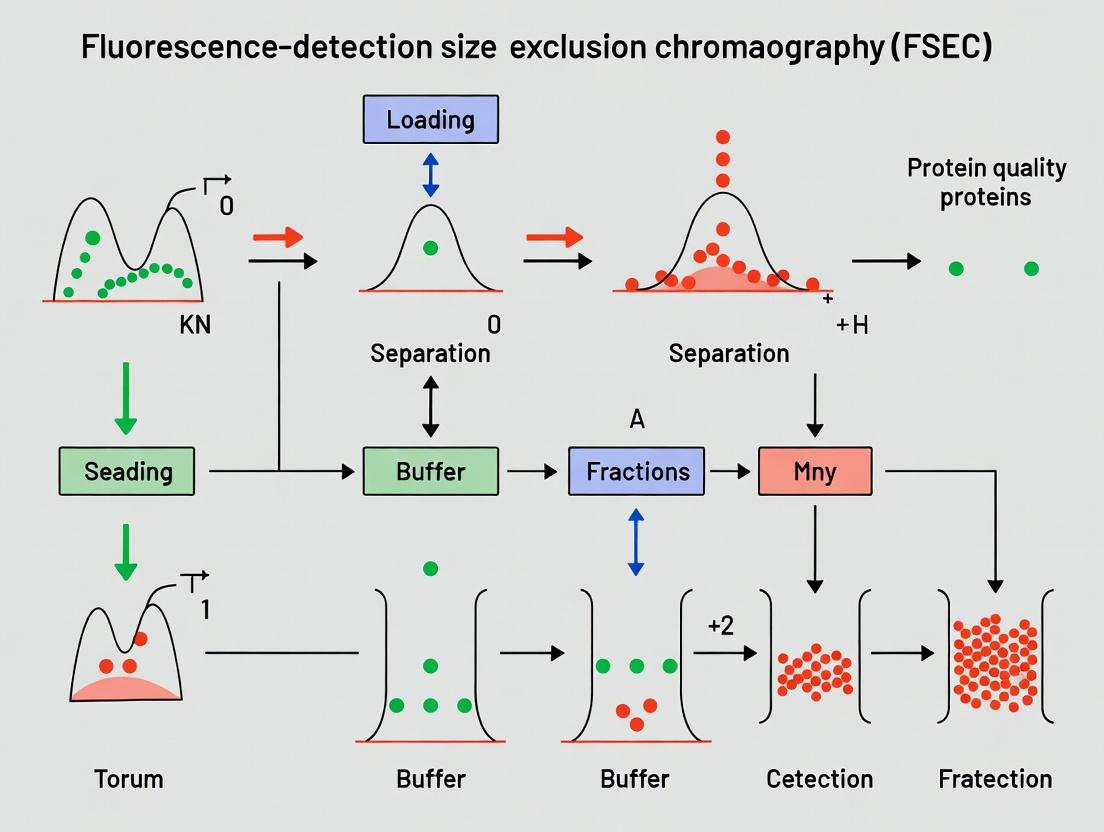
This comprehensive guide details the Fluorescence-Detection Size Exclusion Chromatography (FSEC) protocol, a critical pre-crystallization screening tool for membrane protein researchers.
FSEC Protocol: A Complete Guide to Fluorescence-Detection Size Exclusion Chromatography for Membrane Protein Analysis
Abstract
This comprehensive guide details the Fluorescence-Detection Size Exclusion Chromatography (FSEC) protocol, a critical pre-crystallization screening tool for membrane protein researchers. We explore the foundational principles of FSEC, providing a step-by-step methodological walkthrough for expressing, purifying, and analyzing GFP-tagged proteins. The article addresses common troubleshooting scenarios and optimization strategies to improve monodispersity and stability. Finally, we validate FSEC's role by comparing it with other biophysical techniques and discussing its indispensable position in the structure-based drug discovery pipeline for GPCRs, ion channels, and transporters.
What is FSEC? Understanding the Core Principles and Role in Membrane Protein Research
Abstract: Fluorescence-detection size exclusion chromatography (FSEC) is a powerful, high-sensitivity analytical technique that couples the size-based separation of macromolecules with the specific detection of intrinsic protein fluorescence. Primarily utilizing the fluorescence of tryptophan residues, FSEC enables the characterization of protein oligomeric state, stability, and conformational changes without the need for covalent labeling. This application note details protocols and best practices for FSEC within the broader research thesis on optimizing FSEC for membrane protein and biotherapeutic development.
FSEC separates protein complexes or monomers based on their hydrodynamic radius using a size exclusion chromatography (SEC) column. The column effluent is then passed through a fluorescence detector, typically with excitation at 280 nm and emission at 350 nm, to selectively detect proteins containing tryptophan (or tyrosine) residues. This marriage provides two key advantages: (1) Specificity: Fluorescence detection ignores non-fluorescent contaminants like lipids, detergents, or nucleic acids, which often plague protein samples. (2) Sensitivity: It requires only microgram to nanogram quantities of protein, crucial for scarce samples like membrane proteins.
Table 1: Common SEC Column Specifications for FSEC
| Column Type | Stationary Phase | Pore Size (Å) | Separation Range (kDa) | Typical Dimensions | Best For |
|---|---|---|---|---|---|
| Analytical | Silica or polymer-based | 100-300 | 5-600 | 7.8 x 300 mm | High-resolution profiling, oligomer analysis |
| Guard | Same as analytical | N/A | N/A | 4.6 x 30 mm | Column protection, pre-filtration |
| Small-Scale | Rigid polymer | 125-200 | 5-150 | 4.6 x 150 mm | Rapid screening, low-sample volume |
| Specialized | Enhanced silica | 200-500 | 10-1500 | 7.8 x 300 mm | Large complexes, membrane proteins in detergents |
Table 2: Standard FSEC Detector Parameters and Sample Requirements
| Parameter | Typical Setting | Purpose/Rationale |
|---|---|---|
| Excitation Wavelength | 280 nm | Primarily excites Trp, also Tyr/Phe |
| Emission Wavelength | 330-350 nm | Maximizes Trp emission, minimizes buffer Raman scatter |
| Sample Volume | 10-100 µL | Balances resolution with sensitivity |
| Protein Mass Load | 1-50 µg | Maintains column integrity & linear detector response |
| Flow Rate | 0.25-1.0 mL/min | Optimizes separation efficiency vs. run time |
| Mobile Phase | SEC buffer + 150-500 mM NaCl | Minimizes non-size interactions with column matrix |
Core FSEC Protocol
Protocol 1: Pre-Screening of Recombinant Protein Expression and Stability
Purpose: To rapidly assess expression levels, solubility, and monodispersity of protein constructs (e.g., GFP-fusions or intrinsic fluorescence) from small-scale cultures.
Materials:
- Cell pellet from 1-5 mL induced culture.
- Lysis Buffer (e.g., 50 mM Tris-HCl pH 8.0, 300 mM NaCl, 1 mg/mL Lysozyme, protease inhibitors).
- Non-ionic detergent (e.g., 1% DDM for membrane proteins, optional).
- Benzonase nuclease.
- FSEC Running Buffer (e.g., 20 mM HEPES pH 7.5, 150 mM NaCl, 0.5 mM TCEP). For membrane proteins, add critical micelle concentration (CMC) of detergent.
Method:
- Lysis: Resuspend cell pellet in 500 µL Lysis Buffer. Incubate on ice for 30 min.
- Clarification: Lysate is sonicated or mechanically disrupted, then centrifuged at 40,000 x g for 30 min at 4°C.
- Filtration: Pass the supernatant through a 0.22 µm centrifugal filter.
- Chromatography: Equilibrate the FSEC system and column with ≥2 column volumes (CV) of Running Buffer.
- Injection: Inject 50 µL of filtered supernatant.
- Detection: Monitor fluorescence (Ex: 280/Em: 350 for Trp; Ex: 488/Em: 510 for GFP).
- Analysis: Identify peak elution volume (Ve). Compare to void volume (V0) and total volume (Vt) markers. A sharp, symmetric peak indicates monodisperse sample.
Protocol 2: High-Resolution Oligomeric State Analysis of Purified Protein
Purpose: To determine the precise oligomeric state and conformational homogeneity of a purified protein sample.
Materials:
- Purified protein sample (>95% purity, 0.1-1 mg/mL concentration).
- FSEC Running Buffer (matched to storage buffer, but filter and degas).
- SEC molecular weight standard kit (e.g., thyroglobulin, BSA, ovalbumin, ribonuclease A).
Method:
- System Equilibration: Equilibrate the analytical SEC column with at least 2 CV of Running Buffer at the desired flow rate (e.g., 0.5 mL/min). Ensure stable baseline.
- Calibration: Inject standards individually or as a mix. Record Ve for each. Plot log(MW) vs. Ve/V0 to create a calibration curve.
- Sample Preparation: Centrifuge purified protein at 20,000 x g for 10 min at 4°C. Transfer supernatant to an injection vial.
- Sample Injection: Inject 10-50 µL (containing 5-25 µg protein).
- FSEC Run: Perform isocratic elution with Running Buffer. Monitor UV absorbance (280 nm) and fluorescence (Ex: 280, Em: 350).
- Data Analysis: Determine the Ve of the main protein peak. Use the calibration curve to estimate apparent molecular weight. Compare to theoretical monomer weight.
Protocol 3: Thermostability Assessment via FSEC-TS
Purpose: To determine the apparent melting temperature (Tm) of a protein by monitoring the loss of soluble, properly folded species after heat denaturation.
Materials:
- Purified protein in a suitable, non-phosphate buffer (e.g., 20 mM HEPES, 150 mM NaCl).
- PCR strips or thin-walled tubes.
- Thermal cycler.
- Ice bath.
- 0.22 µm spin filters (optional).
Method:
- Aliquot: Dispense identical volumes (e.g., 50 µL) of protein sample into PCR tubes.
- Heat Challenge: Place tubes in a thermal cycler. Incubate each tube at a different temperature (e.g., 4°C to 80°C in 2-5°C increments) for 10-15 minutes.
- Quench: Immediately transfer all tubes to an ice bath for 5 minutes.
- Clarification: Centrifuge all tubes at 4°C, 20,000 x g for 15 min to pellet aggregates.
- Analysis: Inject supernatant from each temperature point onto the FSEC system under standard conditions.
- Quantification: Integrate the area of the native, monomeric peak at each temperature.
- Plot & Calculation: Plot peak area (or % of peak area at 4°C) vs. temperature. Fit data with a sigmoidal curve to determine the Tm (inflection point).
Visual Workflows and Pathways
FSEC Core Workflow
FSEC-Thermal Shift Assay Protocol
The Scientist's Toolkit: Essential Research Reagents & Materials
Table 3: Key FSEC Reagent Solutions
| Item | Function / Purpose | Example / Notes |
|---|---|---|
| FSEC Running Buffer | Mobile phase for SEC separation. Must match sample buffer to avoid artifactual peaks. | 20 mM HEPES pH 7.5, 150 mM NaCl, 0.5 mM TCEP. Always filter (0.22 µm) and degas. |
| Detergent (for MP) | Maintains solubility of membrane proteins during separation. | DDM, LMNG, OG. Use at 1-2x CMC in running buffer. |
| Lysis Buffer | Efficient cell disruption and protein extraction. | Includes salts, buffering agent, lysozyme, DNase/RNase, protease inhibitors. |
| Reducing Agent | Prevents oxidation and disulfide-mediated aggregation. | TCEP or DTT. TCEP is more stable and effective at neutral pH. |
| Molecular Weight Standards | Calibrates column for apparent molecular weight determination. | Commercially available kits (e.g., Bio-Rad #1511901). Run regularly. |
| Fluorescence-Compatible Vials/Plates | Sample container for autosampler. Must not leach fluorescent compounds. | Use low-adsorption, polypropylene vials or plates. |
| 0.22 µm Filters | Removes particulate matter that can clog SEC column frits. | Spin filters or syringe filters. Critical pre-injection step. |
Fluorescence-detection size exclusion chromatography (FSEC) is a pivotal pre-screening technique in structural biology. Developed primarily to address the high attrition rates in membrane protein purification and crystallization, FSEC integrates size-based separation with sensitive fluorescence detection. Within the context of FSEC protocol research, its revolutionary impact lies in enabling rapid, microliter-scale assessment of membrane protein expression, stability, and monodispersity before committing to large-scale purification, thereby saving months of labor and resources.
Quantitative Impact of FSEC Adoption
Table 1: Comparison of Membrane Protein Workflow Efficiency Pre- and Post-FSEC Implementation
| Metric | Traditional Workflow (Pre-FSEC) | FSEC-Guided Workflow | Improvement Factor |
|---|---|---|---|
| Time to Assess Expression & Stability | 2-3 weeks (large-scale culture & purification) | 1-2 days (mini-prep & analysis) | ~10-15x faster |
| Sample Required for Initial Assessment | 1-10 L culture | 1-10 mL culture | ~1000x less material |
| Construct Screening Throughput | 5-10 constructs per month | 50-100 constructs per month | ~10x higher |
| Success Rate for Crystallization Trials | <5% (of proteins taken to scale) | ~20-30% (of pre-screened targets) | 4-6x increase |
| Typical Protein Consumption per Analysis | 1-10 mg | 1-10 µg | ~1000x less |
Detailed Application Notes & Protocols
Application Note 1: FSEC Pre-screening for Expression & Solubility
Purpose: To identify well-expressing, soluble membrane protein constructs from a library of candidates (e.g., truncations, fusion tags, point mutants) directly from small-scale cell cultures.
Detailed Protocol:
- Construct Design & Expression:
- Clone target membrane protein with a C-terminal GFP-His₈ tag (or other fluorescent protein) into expression vector.
- Transform into appropriate host (e.g., E. coli C41(DE3), insect, or mammalian cells).
- Inoculate 2 mL deep-well plate cultures per construct. Induce expression at optimal conditions.
Micro-scale Membrane Preparation (for E. coli):
- Harvest cells by centrifugation (4,000 x g, 15 min).
- Resuspend pellet in 200 µL Lysis Buffer (50 mM Tris-HCl pH 7.5, 300 mM NaCl, 1 mg/mL lysozyme, benzonase, protease inhibitors).
- Lyse by shaking (30 min, 4°C) or sonication (on ice, 5 x 10 sec pulses).
- Centrifuge (16,000 x g, 20 min, 4°C) to pellet insoluble debris. Retain supernatant (soluble fraction).
- For membrane fraction, ultracentrifuge supernatant (100,000 x g, 45 min, 4°C). Solubilize pellet in 200 µL Solubilization Buffer (20 mM Tris-HCl pH 7.5, 300 mM NaCl, 1-2% (w/v) detergent e.g., DDM, LMNG).
FSEC Analysis:
- Clarify solubilized sample by centrifugation (16,000 x g, 20 min, 4°C).
- Load 20-50 µL of supernatant onto a pre-equilibrated SEC column (e.g., Agilent AdvanceBio SEC 300Å, 2.7 µm, 4.6 x 300 mm) coupled to an HPLC system with fluorescence detector. Mobile Phase: 20 mM Tris-HCl pH 7.5, 300 mM NaCl, 0.03-0.05% DDM (or relevant detergent CMC). Flow Rate: 0.2-0.35 mL/min. Detection: Fluorescence (Ex/Em: 488/510 nm for GFP). Monitor UV 280 nm simultaneously.
- A sharp, symmetrical GFP-fluorescence peak at an elution volume corresponding to the expected oligomeric state indicates a promising construct.
Application Note 2: FSEC-Thermal Stability Assay (FSEC-TS)
Purpose: To determine the apparent thermal stability of a detergent-solubilized membrane protein and identify optimal stabilizing conditions (ligands, lipids, buffers, detergents).
Detailed Protocol:
- Sample Preparation:
- Prepare purified, GFP-tagged membrane protein in desired buffer/detergent at ~0.1-0.5 mg/mL.
- Aliquot 50 µL into PCR tubes or a 96-well plate.
Heat Denaturation:
- Using a thermal cycler, incubate aliquots at a gradient of temperatures (e.g., 4°C, 20°C, 30°C, 40°C, 50°C, 60°C) for 10-15 minutes.
- Immediately place samples on ice for 5 minutes.
- Centrifuge (16,000 x g, 15 min, 4°C) to pellet aggregated material.
FSEC Analysis & Data Processing:
- Analyze 20 µL of each supernatant via FSEC as described in Protocol 1.
- Integrate the area of the monomeric GFP-fluorescence peak for each temperature.
- Plot peak area (or % of peak area at 4°C) versus temperature.
- Fit data to a sigmoidal curve to determine the apparent melting temperature (Tm), the temperature at which 50% of the protein is aggregated.
Table 2: Example FSEC-TS Results for a GPCR with Different Ligands
| Condition | Apparent Tm (°C) | Peak Symmetry at 4°C | Interpretation |
|---|---|---|---|
| Apo (No Ligand) | 38.2 ± 0.5 | Moderate fronting | Less stable, polydisperse |
| Antagonist Bound | 45.7 ± 0.3 | Sharp | Stabilized, monodisperse |
| Agonist Bound | 41.1 ± 0.6 | Sharp | Moderately stabilized |
| With Cholesterol Hemisuccinate | 47.5 ± 0.4 | Very Sharp | Greatly stabilized |
Visualization: FSEC Workflow & Impact
FSEC Pre-Screening Decision Workflow
FSEC as a Gatekeeper in Protein Workflow
The Scientist's Toolkit: Key Research Reagent Solutions
Table 3: Essential Materials for FSEC Protocols
| Reagent/Material | Function & Rationale | Example Product/Catalog |
|---|---|---|
| GFP/His₈ Tandem Tag Vector | Enables C-terminal fusion for fluorescence detection and subsequent IMAC purification. | pEG BacMam (for mammalian); pET with GFP-His₈ |
| Mild Detergents | Solubilizes membrane proteins while maintaining stability and monodispersity for SEC. | n-Dodecyl-β-D-Maltoside (DDM), Lauryl Maltose Neopentyl Glycol (LMNG) |
| HPLC-grade SEC Column | Provides high-resolution separation of protein oligomeric states in detergent solution. | Agilent AdvanceBio SEC 300Å, 2.7µm (4.6 x 300 mm) |
| FSEC Mobile Phase Buffer | Standardized buffer containing detergent above its CMC to maintain protein solubility during analysis. | 20 mM HEPES/Tris pH 7.5, 300 mM NaCl, 0.03% DDM |
| Fluorescence-Enabled HPLC System | Core instrument for sensitive, specific detection of GFP-tagged proteins at low concentrations. | Shimadzu Prominence/ Nexera with RF-20Axs FLD |
| 96-Deep Well Plates & Seals | Facilitates high-throughput parallel culture expression for construct/condition screening. | 2.2 mL square well plates (Axygen) |
| Thermal Cycler with 96-well block | Allows precise, parallel incubation of samples for FSEC-Thermal Stability (FSEC-TS) assays. | Bio-Rad T100, Applied Biosystems Veriti |
Introduction Within the framework of advancing Fluorescence-detection Size Exclusion Chromatography (FSEC) protocol research, this document outlines detailed application notes and experimental protocols that leverage three core advantages of the technique: rapid screening, minimal sample requirements, and stability profiling. These attributes make FSEC an indispensable tool for researchers and drug development professionals working on membrane proteins, protein complexes, and biotherapeutic candidates.
1. Rapid Screening: High-Throughput Construct and Condition Evaluation Rapid FSEC screening enables the parallel assessment of multiple protein constructs (e.g., truncations, mutations) or buffer conditions to identify optimal expression and purification parameters.
Protocol 1.1: High-Throughput FSEC Screening of Membrane Protein Constructs
- Objective: To identify well-expressing and monodisperse membrane protein constructs from a library.
- Materials: Cell lysates (e.g., from E. coli, insect, or mammalian cells) expressing C-terminally GFP-tagged protein variants.
- Method:
- Lysate Preparation: Harvest cells from small-scale (1-2 mL) expressions. Lyse using detergent-compatible buffers (e.g., 1% DDM, 20 mM Tris pH 7.5, 150 mM NaCl). Clarify by centrifugation at 20,000 x g for 20 min at 4°C.
- FSEC Analysis: Inject 10-20 µL of clarified supernatant onto a pre-equilibrated SEC column (e.g., Agilent AdvanceBio SEC 300Å, 2.7µm, 4.6 x 300mm or similar).
- Mobile Phase: Use a buffer matching the lysis buffer (including detergent) at a flow rate of 0.2-0.35 mL/min.
- Detection: Monitor fluorescence (Ex/Em: 488/509 nm for GFP) and UV absorbance at 280 nm.
- Data Analysis: Compare elution profiles. A single, symmetric fluorescence peak indicates a monodisperse construct. Early-eluting aggregates or late-eluting free GFP are clear indicators of poor behavior.
Data Output (Representative): Table 1: FSEC Screening Results for GPCR Constructs (n=3)
| Construct ID | Peak Retention Time (min) | Peak Symmetry (Asymmetry Factor) | Apparent Aggregation (% Area) | Conclusion |
|---|---|---|---|---|
| GPCR-TruncA | 15.2 ± 0.1 | 1.1 ± 0.1 | <5% | Monodisperse, proceed |
| GPCR-TruncB | 14.8 ± 0.2 | 1.9 ± 0.3 | ~45% | Aggregated, discard |
| GPCR-Full | 15.0 ± 0.1 | 1.5 ± 0.2 | ~20% | Partially aggregated, optimize |
2. Low Sample Consumption: Pre-purification Analysis of Precious Samples FSEC requires only microgram quantities of protein, allowing for critical quality control checks before committing to large-scale purification.
Protocol 2.1: FSEC Quality Control of Purified Protein Preps
- Objective: Assess the oligomeric state and homogeneity of a purified protein sample prior to crystallization or functional assays.
- Materials: Purified protein sample (>95% purity by SDS-PAGE), concentration > 0.5 mg/mL.
- Method:
- Sample Preparation: Dilute 5 µg of purified protein to 20 µL with the final storage or assay buffer.
- Column Equilibration: Equilibrate the SEC column (e.g., Superdex 200 Increase 3.2/300) with at least 2 column volumes of the matching buffer.
- Injection and Run: Inject the entire 20 µL sample. Run isocratically at 0.075 mL/min for up to 30 minutes.
- Detection: Use inline fluorescence (if tagged) and UV (280 nm). A refractive index (RI) detector can be added for absolute quantification.
- Analysis: Integrate peaks. A single dominant peak confirms sample homogeneity. Compare retention time to standards for approximate molecular weight.
Data Output (Representative): Table 2: Sample Consumption and Data Quality in FSEC vs. Traditional SEC-UV
| Parameter | FSEC (GFP-tagged) | Traditional Analytical SEC-UV |
|---|---|---|
| Minimum Sample Required | 2 - 10 µg | 20 - 50 µg |
| Signal-to-Noise Ratio | > 100:1 | ~10:1 (for 0.5 mg/mL sample) |
| Buffer Compatibility | High (detergent, lipids) | Can be limited by UV absorbance |
| Run Time | 15-20 min | 20-30 min |
3. Stability Profiling: Assessing Protein Integrity Under Stress FSEC stability profiling tracks changes in oligomeric state and aggregation over time or under varying biochemical conditions.
Protocol 3.1: Thermal Stability Profiling via FSEC-TS
- Objective: Determine the apparent melting temperature (Tm) of a membrane protein by monitoring aggregation onset.
- Materials: Purified, GFP-tagged protein in SEC buffer.
- Method:
- Aliquot Heating: Dispense 50 µL aliquots of protein (0.2 mg/mL) into PCR tubes. Heat each aliquot for 10 minutes at a defined temperature gradient (e.g., 4°C to 70°C in 2-5°C increments) using a thermal cycler.
- Cooling: Immediately place samples on ice for 5 minutes.
- Centrifugation: Pellet aggregates by centrifuging at 20,000 x g for 15 min at 4°C.
- FSEC Analysis: Inject supernatant from each temperature point as per Protocol 2.1.
- Data Processing: Integrate the area of the soluble, monodisperse peak. Plot normalized peak area versus temperature. The Tm is defined as the temperature at which 50% of the protein is aggregated/lost from the soluble peak.
Data Output (Representative): Table 3: FSEC-TS Stability Data for a Protein with/without Ligand
| Condition | Apparent Tm (°C) | Onset of Aggregation (°C) | R-squared (Sigmoidal Fit) |
|---|---|---|---|
| Apo Protein | 42.3 ± 0.5 | 35.1 ± 1.2 | 0.993 |
| Protein + Ligand | 51.7 ± 0.3 | 44.8 ± 0.7 | 0.998 |
| Protein + Detergent B | 38.9 ± 0.8 | 32.5 ± 1.5 | 0.987 |
The Scientist's Toolkit: Key Research Reagent Solutions
| Item & Example Product | Primary Function in FSEC Protocols |
|---|---|
| Fluorescent Tags (e.g., GFP-His8 tag) | Enables highly sensitive, specific detection against background. His-tag facilitates purification for follow-up. |
| SEC Columns (e.g., Agilent AdvanceBio SEC, Cytiva Superdex Increase) | High-resolution size-based separation. Small format (e.g., 4.6 x 300mm, 3.2/300) minimizes sample dilution and use. |
| Compatible Detergents (e.g., DDM, LMNG, OG) | Solubilizes membrane proteins while maintaining native state and preventing aggregation during chromatography. |
| SEC Calibration Kits (e.g., Bio-Rad Gel Filtration Standards) | Provides standard curve for estimating apparent molecular weight and Stokes radius of the target protein. |
| HPLC System with FLD (e.g., Agilent 1260 Infinity II with FLD) | Automated, reproducible solvent delivery and sensitive fluorescence detection (down to pM concentrations for GFP). |
Visualization: FSEC Experimental Workflow and Data Interpretation
Diagram 1: Core FSEC experimental workflow from sample to analysis.
Diagram 2: Logical guide for interpreting FSEC chromatogram outcomes.
Within the framework of developing and optimizing Fluorescence-detection Size Exclusion Chromatography (FSEC) protocols, the synergistic integration of three core components—the Size Exclusion Chromatography (SEC) column, the fluorescence detector, and the GFP fusion strategy—enables high-sensitivity, pre-purification analysis of membrane protein stability, oligomeric state, and monodispersity. This application note details their function, quantitative selection criteria, and experimental protocols for effective implementation in biophysical characterization and drug discovery pipelines.
Core Components: Function and Selection Criteria
The SEC Column
The SEC column separates protein complexes based on hydrodynamic radius. For FSEC, selection focuses on resolution in the 10-700 kDa range, compatibility with detergents, and minimal non-specific adsorption.
Table 1: Common SEC Columns for FSEC Analysis
| Column Name/Model | Resin Material | Pore Size (Å) | Separation Range (Proteins, kDa) | Key Application in FSEC | Recommended Mobile Phase |
|---|---|---|---|---|---|
| Superdex 200 Increase 5/150 GL | Agarose-dextran composite | ~90 Å (for S200) | 10-600 | High-resolution analysis of oligomeric states; ideal for screening. | 20 mM HEPES, 150 mM NaCl, 0.1-0.5% DDM (or relevant detergent), pH 7.5. |
| Superose 6 Increase 5/150 GL | Agarose | ~200 Å (for S6) | 5-5000 | Very large complexes/viral proteins. | Similar to above, often with higher salt (e.g., 300 mM NaCl). |
| Enrich SEC 650 5/150 | Polyhydroxymethyl acrylate | ~150 Å | 10-600 | Cost-effective, high-recovery screening. | Compatible with a wide range of detergents and buffers. |
| TSKgel SuperSW mAb HTP | Silica-based | ~250 Å | 100-10000 | Designed for mAbs but useful for very large membrane protein assemblies. | 100 mM NaPhosphate, 150 mM NaCl, 0.05% NaN3, pH 6.8. |
The Fluorescence Detector
FSEC employs fluorescence detection for exquisite sensitivity, enabling analysis from microliter-scale lysates. Key parameters are sensitivity (signal-to-noise), excitation/emission wavelength selection, and flow cell design.
Table 2: Fluorescence Detector Specifications for FSEC
| Parameter | Typical FSEC Requirement | Rationale |
|---|---|---|
| Excitation Wavelength | 488 nm (± 5 nm) | Matches absorption peak of GFP and derivatives (e.g., GFP, YFP). |
| Emission Wavelength | 510-530 nm (bandpass filter) | Captures GFP emission while excluding scattered light and buffer fluorescence. |
| Flow Cell Volume | ≤ 10 µL (preferably 2-5 µL) | Minimizes band broadening for high-resolution micro-bore SEC. |
| Light Source | Xenon lamp or LED | Stable, long-lasting source; LEDs offer longer life and less heat. |
| Signal-to-Noise Ratio | > 500:1 (for water Raman peak) | Critical for detecting low-abundance proteins in crude samples. |
| Data Acquisition Rate | ≥ 2 Hz | Provides sufficient data points across narrow (5-10 min) SEC peaks. |
The GFP Fusion Strategy
A C-terminal GFP (or its variants) fusion serves as a universal, sensitive tag for detection. It also acts as a reporter for proper folding and solubility, as GFP fluorescence requires correct chromophore formation.
Table 3: Common GFP Variants for FSEC Tagging
| GFP Variant | Ex/Em Max (nm) | Relative Brightness | Key Property for FSEC | Common Use Case |
|---|---|---|---|---|
| Enhanced GFP (eGFP) | 488/507 | 1.0 (reference) | High photostability, well-expressed. | Standard for most prokaryotic & eukaryotic expression. |
| Superfolder GFP (sfGFP) | 485/510 | ~1.2 | Folds efficiently under destabilizing conditions. | Fused to difficult-to-express membrane proteins. |
| Yellow FP (YFP, e.g., Venus) | 515/528 | ~1.5 | Brighter, but more sensitive to pH and Cl-. | When higher signal is needed; pH-stabilized versions available. |
| Green FP (GFPuv) | 395/509 | ~0.3 | Excited by UV; useful to avoid background fluorescence. | If sample media has compounds fluorescent at 488 nm. |
Detailed FSEC Experimental Protocol
Protocol 1: FSEC-based Thermostability Assessment (Melting Point, Tm)
Objective: To determine the apparent thermal stability of a GFP-tagged membrane protein by measuring the loss of soluble, monodisperse protein after heat challenge.
Materials:
- Cell lysate expressing target-GFP fusion.
- FSEC Buffer: 20 mM HEPES, pH 7.5, 150 mM NaCl, 0.03% DDM (or optimal detergent).
- Heat block or PCR thermocycler with gradient function.
- Tabletop centrifuge for 1.5 mL tubes.
- 0.22 µm spin filter (cellulose acetate or PVDF).
- FSEC system: HPLC with autosampler, SEC column (e.g., Superdex 200 Increase 5/150), 488nm-ex/510-530nm-em fluorescence detector.
Procedure:
- Lysate Preparation: Harvest cells expressing the target-GFP construct. Lyse via sonication or homogenization in FSEC buffer. Clarify by centrifugation at 40,000 x g for 30 min at 4°C. Filter supernatant through a 0.22 µm spin filter.
- Aliquot and Heat Challenge: Aliquot 50 µL of filtered lysate into thin-wall PCR tubes. Place tubes in a thermocycler. Incubate duplicate aliquots for 10 minutes at a gradient of temperatures (e.g., 4°C, 20°C, 30°C, 40°C, 50°C, 60°C, 70°C).
- Post-Heat Processing: Immediately after heating, place all samples on ice for 5 min. Centrifuge at 21,000 x g for 15 min at 4°C to pellet aggregated protein.
- FSEC Injection: Carefully inject 20-40 µL of the supernatant from each temperature point into the FSEC system. Use isocratic elution with FSEC buffer at 0.2-0.35 mL/min.
- Data Analysis: Integrate the area of the monodisperse peak corresponding to the target protein (identified by its characteristic elution volume). Plot the relative peak area (normalized to the 4°C sample) vs. temperature. Fit a sigmoidal curve to determine the apparent Tm (temperature at which 50% of the protein is aggregated/lost from the soluble peak).
Protocol 2: Ligand- or Drug-Induced Stabilization Screen
Objective: To identify ligands or drug candidates that stabilize the target protein by observing a positive shift in the FSEC Tm or an increase in monodisperse peak area.
Materials:
- As in Protocol 1.
- Compound library (e.g., small molecules, substrates, inhibitors) dissolved in DMSO or FSEC buffer.
Procedure:
- Ligand Incubation: Incplicate clarified, filtered lysate (from Protocol 1, Step 1) with test compound at desired final concentration (e.g., 100 µM) or an equal volume of vehicle control (e.g., 1% DMSO) for 30 minutes on ice.
- Heat Challenge: Perform a limited heat challenge based on the protein's known Tm (e.g., incubate at Tm from Protocol 1). Include a no-heat control.
- FSEC Analysis: Process and analyze samples as in Protocol 1, Steps 3-4.
- Hit Identification: A compound that significantly increases the monodisperse peak area at the challenge temperature compared to the vehicle control is a putative stabilizer. Confirm by performing a full temperature melt in the presence of the hit compound to calculate a new, higher Tm.
Visualizing FSEC Workflows and Relationships
Diagram 1: Core FSEC Experimental Workflow (98 chars)
Diagram 2: Component Synergy in FSEC (92 chars)
The Scientist's Toolkit: Essential Research Reagent Solutions
Table 4: Key Reagents and Materials for FSEC Experiments
| Item | Function in FSEC | Example Product/Catalog | Critical Notes |
|---|---|---|---|
| Detergents (for MP solubilization) | Solubilize membrane proteins, maintain native state during SEC. | n-Dodecyl-β-D-maltoside (DDM), Lauryl Maltose Neopentyl Glycol (LMNG). | Critical to screen detergents; LMNG often offers superior stability. |
| Protease Inhibitor Cocktail | Prevents proteolytic degradation of target and GFP tag during lysis. | EDTA-free cocktails (e.g., Roche cOmplete). | EDTA can interfere with some metal-dependent proteins. |
| Phospholipids/Cholesterol | Additives to mimic native membrane environment, enhance stability. | POPC, POPG, Cholesterol hemisuccinate. | Often added at critical micelle concentration with detergent. |
| SEC Molecular Weight Standards | Calibrate column to estimate apparent molecular weight of target complex. | Thyroglobulin, BSA, Ovalbumin, Ribonuclease A. | Run in same buffer + detergent as samples for accurate calibration. |
| Low-Protein Binding Tubes/Filters | Minimize sample loss due to adsorption. | Polypropylene tubes, 0.22 µm PVDF spin filters. | Essential for working with low-abundance proteins. |
| HPLC-Grade Buffers & Salts | Ensure consistent retention times and detector baseline stability. | Ultrapure HEPES, Tris, NaCl. | Filter all buffers through 0.22 µm before use. |
| Ligand/Compound Library | For screening stabilizers or conformational binders. | Custom collection or commercial fragment libraries. | Use DMSO-tolerant SEC columns if screening from DMSO stocks. |
Application Notes
Within the broader thesis on advancing Fluorescence-detection Size Exclusion Chromatography (FSEC) protocols for membrane protein structural biology, two primary applications are critical: Pre-crystallization Screening and Detergent Optimization. These applications leverage FSEC's unique ability to assess protein homogeneity, monodispersity, and stability in a native-like, solution state with high sensitivity and minimal sample consumption.
Pre-crystallization Screening via FSEC: A major bottleneck in membrane protein crystallography is the identification of constructs and conditions that yield monodisperse, stable protein. Traditional methods require large-scale purification. FSEC overcomes this by enabling the rapid screening of unpurified, fluorescently-tagged protein from small-scale expressions (e.g., 1-2 mL cultures). The FSEC profile—specifically the symmetry, elution volume (related to oligomeric state), and absence of significant aggregation shoulders—serves as a predictive indicator of crystallizability. This allows researchers to prioritize the most promising constructs (e.g., truncation variants, fusion partners) and buffer conditions (pH, salts) for large-scale expression and purification, dramatically accelerating the pipeline.
Detergent Optimization via FSEC: The choice of detergent is paramount for extracting, solubilizing, and maintaining the structural integrity of membrane proteins. FSEC is the definitive tool for comparative detergent screening. By solubilizing and analyzing identical membrane preparations in different detergents, researchers can quantitatively compare key parameters:
- Monodispersity: A sharp, symmetric peak indicates a homogeneous protein-detergent complex.
- Stability: Sequential FSEC runs over time (stability assays) reveal degradation or aggregation.
- Oligomeric State: Shifts in apparent molecular weight (elution volume) can indicate detergent-induced dissociation or association.
This data is crucial for identifying the optimal detergent that preserves the native fold and functional oligomeric state, a prerequisite for successful crystallization and downstream biophysical analysis.
Table 1: Comparative FSEC Analysis of a GPCR Construct in Different Detergents Data simulated from current literature on β2-Adrenergic Receptor stabilization.
| Detergent | Aggregation Peak (% of Total) | Monomeric Peak Retention Time (min) | Peak Symmetry (Asymmetry Factor) | Relative Fluorescence Yield (A.U.) | Stability (Time to 50% Aggregation) |
|---|---|---|---|---|---|
| DDM | 15% | 8.5 | 1.2 | 1.00 | > 72 hrs |
| LMNG | 5% | 8.7 | 1.1 | 1.30 | > 96 hrs |
| OG | 45% | 9.1 | 1.8 | 0.65 | ~ 12 hrs |
| CHS-supplemented DDM | 8% | 8.4 | 1.0 | 1.25 | > 96 hrs |
Table 2: FSEC Pre-screening Results for Membrane Protein Kinase Truncation Variants Data simulated from current research on receptor tyrosine kinase crystallization.
| Construct (Tag Location) | Expression Level (RFU) | % Monomeric Peak | Apparent MW (kDa) | Selected for Scale-up |
|---|---|---|---|---|
| Full-length (C-term) | 1050 | 40% | 158 | No |
| ΔN-15 (C-term) | 980 | 65% | 145 | Yes |
| ΔC-10 (C-term) | 1100 | 30% | 150 | No |
| ΔN-15/ΔC-10 (C-term) | 750 | 90% | 132 | Yes |
| ΔN-15 (N-term) | 820 | 85% | 138 | Yes |
Experimental Protocols
Protocol 1: FSEC-Based Pre-crystallization Construct Screening
Objective: To identify optimal fluorescently-tagged membrane protein constructs for crystallography using small-scale expression and FSEC.
Materials: See "The Scientist's Toolkit" below.
Methodology:
- Construct Design: Clone target membrane protein variants (e.g., truncations, solubility tags) into an appropriate expression vector, ensuring an in-frame fusion with a C-terminal (or N-terminal) fluorescent protein (e.g., eGFP) and a cleavable purification tag.
- Small-scale Expression: Transform constructs into expression host (e.g., E. coli C41(DE3), insect cells). Inoculate 2 mL cultures in duplicate. Induce protein expression under optimized conditions.
- Micro-scale Membrane Preparation:
- Harvest cells by centrifugation (4,000 x g, 20 min).
- Resuspend pellet in 200 µL of Lysis Buffer (50 mM Tris pH 8.0, 150 mM NaCl, protease inhibitors).
- Lyse cells by sonication (3 x 10 sec bursts) or enzymatic lysis.
- Clarify lysate by centrifugation at 10,000 x g for 10 min to remove unbroken cells.
- Isolate membranes by ultracentrifugation of the supernatant at 150,000 x g for 30 min at 4°C.
- Solubilize the membrane pellet in 100 µL of Solubilization Buffer (50 mM HEPES pH 7.5, 300 mM NaCl, 10% glycerol, 1% DDM/CHS (10:1), 1 mM ligand if applicable) for 2 hours at 4°C with gentle agitation.
- Clarify solubilized material by centrifugation at 25,000 x g for 30 min. Retain the supernatant.
- FSEC Analysis:
- Equilibrate an SEC column (e.g., Enrich 650, Superdex 200 Increase 5/150) with FSEC Running Buffer (20 mM HEPES pH 7.5, 150 mM NaCl, 0.03% DDM).
- Load 50 µL of the clarified supernatant. Run isocratic elution at 0.2-0.4 mL/min.
- Monitor fluorescence (Ex/Em: 488/510 nm for GFP) and UV absorbance at 280 nm.
- Data Analysis: Align chromatograms. Prioritize constructs showing a single, symmetric fluorescent peak with an elution volume consistent with the expected oligomeric state and minimal fluorescence in the void volume (aggregates).
Protocol 2: Systematic Detergent Optimization Using FSEC-TS
Objective: To evaluate the stability and monodispersity of a purified membrane protein in different detergents using FSEC Thermostability (FSEC-TS) assays.
Materials: Purified, fluorescently-tagged membrane protein; detergents for screening (e.g., DDM, LMNG, OG, GDN); FSEC-TS buffer.
Methodology:
- Sample Preparation: Dilute purified protein into a series of buffers containing 1x CMC of different test detergents. Incubate on ice for 1 hour to allow for detergent exchange.
- Baseline FSEC: Analyze each detergent condition immediately (t=0) via FSEC as in Protocol 1, step 4. This establishes the initial state.
- Thermal Stability Challenge: Aliquot each sample into PCR strips. Subject strips to a gradient of temperatures (e.g., 4°C, 20°C, 37°C, 45°C) for a fixed time (e.g., 15 minutes) in a thermal cycler.
- Post-challenge Analysis: Immediately place samples on ice, then centrifuge at 25,000 x g for 10 min to pellet aggregates. Analyze the supernatant via FSEC under identical conditions.
- Quantification: For each temperature, integrate the area of the monomeric peak. Plot the relative peak area (normalized to the 4°C control) versus temperature. The Tm is defined as the temperature at which 50% of the protein remains in the monodisperse, soluble state.
- Selection: The optimal detergent yields the highest initial monodisperse peak and the highest Tm, indicating superior stability.
Visualizations
FSEC Construct Screening Workflow
Detergent Optimization Logic Pathway
The Scientist's Toolkit
Table 3: Key Research Reagent Solutions for FSEC Applications
| Item | Function in FSEC Protocols |
|---|---|
| Fluorescent Protein Tag (eGFP, YFP, mCherry) | Enables highly sensitive, specific detection of the target protein during SEC, independent of co-purifying contaminants. Essential for screening unpurified samples. |
| Mild Detergents (DDM, LMNG, GDN) | Amphipathic agents used to solubilize membrane proteins from lipid bilayers, forming protein-detergent micelles for analysis in aqueous solution. |
| Cholesteryl Hemisuccinate (CHS) | A cholesterol analog often used as a stabilizing supplement with detergents for solubilizing and stabilizing eukaryotic membrane proteins like GPCRs. |
| FSEC Running Buffer (with low CMC detergent) | The isocratic mobile phase for SEC. Contains a buffering agent, salt, and a detergent concentration above its CMC to maintain protein solubility but below the solubilizing detergent's concentration to prevent peak broadening. |
| HPLC/SEC Column (e.g., Superdex 200 Increase 5/150) | High-resolution size exclusion column optimized for rapid separation of macromolecular complexes in the 10-600 kDa range. The 5/150 format is ideal for micro-volume samples. |
| Fluorescence HPLC Detector | Detector equipped with appropriate excitation and emission filters/wavelength selectors (e.g., for GFP: Ex 488 nm / Em 510 nm) to track the fluorescently-tagged protein with high sensitivity. |
| Stability Ligands (Agonists/Antagonists) | Small molecule ligands that bind and stabilize specific conformational states of the target protein, often improving thermostability and monodispersity in FSEC-TS assays. |
Step-by-Step FSEC Protocol: From Construct Design to Data Interpretation
In a comprehensive thesis focused on optimizing Fluorescence-detection Size Exclusion Chromatography (FSEC) protocols, the initial construct design is the most critical determinant of success. FSEC is a powerful, pre-purification technique used to rapidly assess the expression, stability, and monodispersity of membrane proteins and challenging soluble targets. The selection of an appropriate fluorescent fusion tag (typically GFP or its variants) and the linker that connects it to the protein of interest (POI) directly dictates the reliability of FSEC as a diagnostic tool. A poorly designed construct can lead to false negatives (e.g., loss of fluorescence due to misfolding), aggregation masking, or interference with the POI's function and expression, compromising all downstream thesis research stages.
Choosing the Right GFP Variant
The primary function of the GFP tag in FSEC is to provide a sensitive, intrinsic fluorescent signal for detection directly from crude lysates, eliminating the need for purification or specific antibodies. The choice of variant balances brightness, folding efficiency, and stability.
Table 1: Common GFP Variants for FSEC Construct Design
| Variant | Excitation/Emission (nm) | Key Properties | Best Use Case in FSEC |
|---|---|---|---|
| sfGFP | 485/510 | Superior folding efficiency, high stability, fast maturation. | Default choice for most proteins, especially those prone to misfolding or expressed at lower temperatures. |
| EGFP | 484/507 | Bright, widely used. Good general performance. | Standard soluble proteins expressed in mammalian systems. |
| Superfolder GFP (original) | 485/510 | Extremely robust folding, tolerates misfolded fusion partners. | Challenging targets, membrane proteins, or unstable POIs. |
| GFPUV | 395/509 | Excited by UV light; less bright. | When minimal bleed-through from other fluorescent compounds is needed. |
| mNeonGreen | 506/517 | Brighter than sfGFP, excellent photostability. | When maximum signal intensity from low-expressing constructs is required. |
| mCherry | 587/610 | Red fluorescent protein. | For multi-color FSEC or when green channel has background interference. |
The Critical Role of Linker Design
The linker is not merely a passive tether; it influences fusion protein expression, solubility, and functionality. An optimal linker prevents steric interference between the POI and GFP, maintains independent folding of both domains, and minimizes proteolytic cleavage.
Key Linker Design Principles:
- Length: Typically 15-25 amino acids. Too short may cause misfolding; too long may increase flexibility excessively or susceptibility to proteolysis.
- Composition: Flexible linkers rich in Glycine (G) and Serine (S) (e.g., (GGGGS)n) are standard. Incorporation of polar residues (e.g., Thr, Glu, Lys) can enhance solubility.
- Rigidity: For specific spatial separation, rigid linkers (e.g., (EAAAK)n) can be used but are less common in standard FSEC screening.
- Protease Cleavage Sites: Inclusion of a site for proteases like TEV or HRV 3C between the POI and GFP is essential for tag removal in later purification stages, but the uncleaved construct is used for FSEC screening.
Table 2: Common Linker Sequences for FSEC Constructs
| Linker Name | Sequence (N to C) | Characteristics | Application Note |
|---|---|---|---|
| Standard G-S Linker | (GGGGS)₃ | Highly flexible, standard workhorse. | Suitable for most fusions. Start with n=3. |
| Long G-S Linker | (GGGGS)₄ | Increased length and flexibility. | For large POI domains or suspected steric clash. |
| TEV Site Linker | ENLYFQG(GGGGS)₂ | Incorporates a TEV protease site. | Standard for constructs where tag cleavage is planned post-FSEC. |
| Solubility-Enhanced | (GGGGS)₃KESGS | Adds a short, soluble peptide tail. | For POIs with low predicted solubility. |
Detailed Experimental Protocol: Cloning an FSEC Construct (Golden Gate Assembly)
Objective: To clone the POI gene, connected via a chosen linker sequence, N- or C-terminally to sfGFP into a mammalian expression vector (e.g., pEG BacMam) for subsequent FSEC analysis.
Materials & Reagents (The Scientist's Toolkit):
| Reagent/Material | Function/Explanation |
|---|---|
| pEG BacMam-sfGFP Vector | Baculovirus-mediated mammalian expression vector with sfGFP tag; enables high-yield transient expression. |
| POI Gene Fragment | Codon-optimized gene for your target protein, synthesized as a gBlock or in a donor plasmid. |
| Type IIS Restriction Enzymes (BsaI-HFv2) | Enzymes that cut outside their recognition site, enabling seamless, scarless assembly of multiple fragments. |
| T4 DNA Ligase | Ligates the compatible overhangs created by BsaI digestion. |
| Golden Gate Assembly Master Mix | Commercial pre-mix of BsaI, ligase, and ATP for streamlined assembly. |
| Competent E. coli (DH5α) | High-efficiency cloning strain for plasmid transformation. |
| LB-Agar Plates (Ampicillin) | For selection of successfully transformed colonies. |
| PCR Purification & Gel Extraction Kits | For purification of DNA fragments and assembled products. |
| Sequencing Primers (CMV Forward, SV40 Reverse) | To verify the correct sequence of the cloned insert. |
Protocol:
- Design Oligos/Insert: Design PCR primers to amplify your POI gene, adding the desired linker sequence (from Table 2) and appropriate BsaI recognition sites (
GGTCTCfor 5',GAGACCfor 3') with 4-base overhangs compatible with the destination vector's sfGFP position. - Generate Insert: PCR amplify the POI+linker fragment and purify it using a PCR purification kit.
- Prepare Vector: Digest 1 µg of the pEG BacMam-sfGFP acceptor vector with BsaI-HFv2 for 1 hour at 37°C. Run the digest on an agarose gel and purify the linearized backbone using a gel extraction kit.
- Golden Gate Assembly: Set up a 20 µL reaction:
- 50 ng Linearized backbone
- POI insert (3:1 molar ratio to backbone)
- 10 µL 2x Golden Gate Assembly Mix
- Nuclease-free water to 20 µL.
- Cycling Program: 25 cycles of (37°C for 2 min, 16°C for 5 min), then 60°C for 5 min, 80°C for 5 min.
- Transformation: Transform 5 µL of the assembly reaction into 50 µL of chemically competent DH5α cells. Plate onto LB-Ampicillin plates and incubate overnight at 37°C.
- Screening: Pick 4-6 colonies for colony PCR. Inoculate positive clones in liquid culture for plasmid miniprep.
- Sequence Verification: Submit miniprepped DNA for Sanger sequencing using vector-specific primers to confirm the integrity of the POI-linker-sfGFP sequence.
- Prepare for Transfection: Maxiprep the verified plasmid for transfection into mammalian cells (e.g., HEK293S GnTI-) for FSEC analysis, as detailed in the next stage of the thesis protocol.
Construct Design and Cloning Workflow Diagram
Title: FSEC Construct Design and Cloning Workflow
FSEC Diagnostic Logic Pathway Diagram
Title: FSEC Result Interpretation and Construct Redesign Logic
This protocol details the second stage of a comprehensive FSEC-based workflow for membrane protein structural biology. Following construct design and cloning (Stage 1), this stage focuses on small-scale expression testing in suitable host systems and the subsequent solubilization of target membrane proteins using optimal detergents. The primary goal is to identify expression and detergent conditions that yield stable, monodisperse protein for large-scale purification, leveraging FSEC as the critical analytical tool.
Key applications include:
- Rapid Screening: Evaluating multiple constructs (e.g., truncations, fusion tags, point mutations) for expression level and monodispersity post-solubilization.
- Detergent Optimization: Systematically testing a panel of detergents to identify the best agent for extracting the target protein from the membrane while maintaining its stability and oligomeric state.
- Condition Scouting: Preliminary assessment of buffer additives (salts, lipids, ligands) that enhance protein stability during solubilization.
Table 1: Common Detergents for Membrane Protein Solubilization Screening
| Detergent Class | Example (Full Name) | Abbreviation | Typical CMC (mM) | Aggregation Number | Key Properties & Common Use |
|---|---|---|---|---|---|
| Alkyl Maltosides | n-Dodecyl-β-D-Maltopyranoside | DDM | 0.17 | 78-140 | Mild, gold-standard for stability; often used first. |
| Alkyl Maltosides | Decyl-β-D-Maltopyranoside | DM | 1.8 | 69-98 | Stronger than DDM, useful for stubborn proteins. |
| Glucosides | n-Octyl-β-D-Glucopyranoside | OG | 18-23 | 27-100 | High CMC, easy to remove; can be denaturing. |
| Phosphocholines | Fos-Choline-12 | FC-12 | 1.6 | ~55 | Phospholipid-mimetic, often gentle. |
| Polyoxyethylenes | Lauryl Maltose Neopentyl Glycol | LMNG | 0.006 | ~1 (Dimer) | Bolaamphiphile, very low CMC, high stability. |
| Polyoxyethylenes | Glycol-diosgenin | GDN | ~0.03 | N/A | Plant-derived, excellent for complex proteins. |
Table 2: Typical Small-Scale Expression & Solubilization Yields
| Host System | Culture Volume | Expected Membrane Yield (Wet Weight) | Typical Lysis & Solubilization Buffer Volume | Target Protein Recovery (Estimate)* |
|---|---|---|---|---|
| E. coli (C41/DE3) | 50 mL | 0.5 - 1.0 g | 5 - 10 mL | 10 - 500 µg |
| P. pastoris | 50 mL | 1.0 - 2.0 g | 5 - 10 mL | 50 - 1000 µg |
| HEK293S (Mammalian) | 10 mL (Transient) | N/A (Whole cells) | 1 - 2 mL | 1 - 50 µg |
*Recovery is highly protein-dependent. These values are for a moderately expressed, well-behaved protein.
Experimental Protocols
Protocol 3.1: Small-Scale Expression inE. coli
Objective: Produce membrane fraction containing the target protein for solubilization screening.
- Inoculation: Pick a single colony from a fresh transformation into 5 mL of LB with appropriate antibiotics. Grow overnight (~16 hrs) at 37°C, 220 rpm.
- Expression Culture: Dilute the overnight culture 1:100 into 50 mL of fresh, pre-warmed LB+antibiotics in a 250 mL flask. Grow at 37°C, 220 rpm until OD600 reaches 0.6-0.8.
- Induction: Add inducer (e.g., 0.4 mM IPTG for T7 systems). Reduce temperature (e.g., 18°C) and incubate for 16-20 hours.
- Harvesting: Pellet cells at 4,000 x g for 20 min at 4°C. Discard supernatant. Cell pellets can be stored at -80°C.
Protocol 3.2: Membrane Preparation and Detergent Solubilization
Objective: Isolate membranes and solubilize the target protein in a selected detergent.
- Lysis: Resuspend cell pellet (~1 g) in 10 mL of Lysis Buffer (50 mM Tris pH 8.0, 150 mM NaCl, 1 mM EDTA, protease inhibitors). Lyse via sonication (3 x 1 min pulses, 50% duty) or homogenization. Keep samples on ice.
- Debris Removal: Centrifuge lysate at 12,000 x g for 15 min at 4°C to remove unbroken cells and inclusion bodies.
- Membrane Harvest: Transfer supernatant to ultracentrifuge tubes. Pellet membranes at 150,000 x g for 45 min at 4°C.
- Solubilization: Resuspend the membrane pellet (often a dense, colored layer) in 1 mL of Solubilization Buffer (50 mM HEPES pH 7.5, 150 mM NaCl, 10% glycerol, protease inhibitors) containing 1-2% (w/v) of the test detergent (e.g., DDM, LMNG).
- Extraction: Rotate or gently agitate the suspension for 2-3 hours at 4°C.
- Clarification: Centrifuge the solubilized mixture at 150,000 x g for 30 min at 4°C. Carefully collect the supernatant, which contains the solubilized membrane proteins.
Protocol 3.3: FSEC Sample Preparation and Analysis
Objective: Analyze the solubilized extract for target protein monodispersity and approximate size.
- Fluorescent Tagging: If the construct carries a C-terminal GFP-His tag, proceed directly. Otherwise, the protein may need labeling.
- Dilution: Dilute 50 µL of the clarified supernatant with 450 µL of FSEC Running Buffer (20 mM HEPES pH 7.5, 150 mM NaCl, 0.03% DDM or matching detergent at ~5-10x its CMC). Mix gently.
- Clarification: Filter the diluted sample through a 0.22 µm spin filter by centrifuging at 14,000 x g for 5 min.
- Chromatography: Load the filtrate onto a pre-equilibrated SEC column (e.g., Superose 6 Increase 5/150 GL) attached to an HPLC/FPLC system with in-line fluorescence detector (Ex: 488 nm, Em: 510 nm for GFP).
- Analysis: A single, symmetrical fluorescence peak indicates a monodisperse protein suitable for scale-up. Multiple or broad peaks suggest aggregation or instability.
Visualization: Experimental Workflow
Small-Scale Expression & Solubilization FSEC Workflow
The Scientist's Toolkit: Research Reagent Solutions
Table 3: Essential Materials for Small-Scale Expression & Solubilization
| Item | Function & Rationale |
|---|---|
| C41(DE3) or Lemo21(DE3) E. coli Cells | Specialized strains for membrane protein expression that reduce toxicity and improve folding. |
| Detergent Screening Kit | A commercial kit containing small aliquots of 10-20 different detergents (DDM, LMNG, OG, FC-12, etc.) for systematic testing. |
| Halt Protease Inhibitor Cocktail | A broad-spectrum, EDTA-free inhibitor cocktail to prevent proteolytic degradation during lysis and solubilization. |
| Phosphatase Inhibitors (e.g., NaF, β-glycerophosphate) | Crucial for phosphorylated proteins or to maintain specific phosphorylation states. |
| DNase I | Added during lysis to reduce viscosity caused by released genomic DNA. |
| Glycerol | Common stabilizer (5-10%) added to solubilization and FSEC running buffers to enhance protein stability. |
| GFP-His Tag Vector (e.g., pEG BacMam) | Enables fluorescent tagging for FSEC-based tracking without the need for protein-specific antibodies. |
| Superose 6 Increase 5/150 GL Column | Ideal SEC column for rapid (15 min) analysis of membrane protein monodispersity in detergent. |
| 0.22 µm PVDF Spin Filters | For clarifying FSEC samples, preventing column clogging. PVDF is compatible with most detergents. |
Within a comprehensive thesis on Fluorescence-detection Size Exclusion Chromatography (FSEC) protocol research, the preparation of the SEC system is a critical determinant of success. This stage involves the judicious selection of an appropriate size exclusion column and its precise equilibration with the running buffer. Proper execution ensures optimal resolution of target protein complexes or aggregates, minimizes non-specific interactions, and provides reproducible retention times essential for comparative analysis in drug development.
Column Selection Criteria
Selecting the correct SEC column is paramount. The choice depends on the molecular weight (MW) or hydrodynamic radius of the protein of interest and its potential oligomeric states or aggregates. The following table summarizes key parameters for commercially available columns commonly used in FSEC-based research.
Table 1: Common SEC Columns for FSEC Analysis of Proteins
| Column Name/Series | Resin Material | Pore Size (Å) | MW Separation Range (Globular Proteins) | Typical Dimensions (mm) | Key Application in FSEC |
|---|---|---|---|---|---|
| Superdex 75 Increase | Agarose-dextran composite | ~50 | 3,000 – 70,000 | 10/300 GL (10x300) | High-resolution separation of small to medium proteins, oligomerization studies. |
| Superdex 200 Increase | Agarose-dextran composite | ~130 | 10,000 – 600,000 | 10/300 GL (10x300) | Analysis of large complexes, aggregates, and medium-to-large proteins. |
| Enrich SEC 650 | Agarose | ~150 | 10,000 – 5,000,000 | 10 x 300 | Broad-range analysis, including large aggregates. |
| TSKgel SWxl | Silica-based | 125 | 5,000 – 1,000,000 | 7.8 x 300 | Stable at higher pressures; good for detergent-solubilized membrane proteins. |
| Zenix SEC-300 | Silica-based | 300 | 10,000 – 700,000 | 7.8 x 300 | Alternative for membrane proteins in mild detergent. |
Protocol 1.1: Column Selection Decision Workflow
- Determine Sample Characteristics: Estimate the molecular weight of your target protein and potential contaminants (e.g., aggregates, degradation products). For membrane proteins, consider the detergent micelle's added size.
- Define Resolution Needs: For analyzing subtle oligomerization (e.g., dimer vs. tetramer), select a column with high resolution in the target MW range (e.g., Superdex 75 Increase for a 50 kDa protein).
- Consult Manufacturer Data: Review the column's selectivity curve to ensure your target MW falls within the linear portion of the separation range for optimal resolution.
- Consider System Compatibility: Ensure the column's maximum pressure limit is compatible with your HPLC or FPLC system, especially for silica-based columns.
Buffer Preparation and Equilibration
The running buffer must maintain protein stability, prevent non-specific column interactions, and be compatible with fluorescence detection. A typical FSEC running buffer consists of:
- Buffer: 20-50 mM HEPES or Tris-HCl, pH 7.4-8.0.
- Salt: 150-300 mM NaCl to minimize ionic interactions with the column matrix.
- Additives: 0.5-1 mM TCEP or DTT to keep cysteine-containing proteins reduced; optional 5-10% glycerol for stability.
- Detergent: For membrane proteins, include critical micelle concentration (CMC) of a compatible detergent (e.g., 0.03% DDM, 0.1% LMNG).
Table 2: Common FSEC Running Buffer Compositions
| Component | Typical Concentration | Function | Notes for Equilibration |
|---|---|---|---|
| HEPES, pH 7.5 | 20 mM | Maintains physiological pH | Filter through 0.22 µm membrane and degas. |
| NaCl | 150 mM | Shields ionic interactions | Ensures protein elutes based on size, not charge. |
| TCEP | 0.5-1.0 mM | Reducing agent | More stable than DTT; prepare fresh or from frozen aliquots. |
| Glycerol | 5% (v/v) | Stabilizes protein | Increases buffer viscosity; may slightly increase backpressure. |
| DDM | 0.03% (w/v) | Maintains membrane protein solubility | Use high-purity grade; ensure above CMC. |
Protocol 1.2: Detailed Column Equilibration Procedure Objective: To thoroughly equilibrate the selected SEC column with the final running buffer, ensuring stable baseline and reproducible elution volumes.
Materials:
- FPLC or HPLC system with fluorescence detector.
- Selected SEC column.
- At least 500 mL of filtered (0.22 µm) and degassed running buffer.
- In-line 0.22 µm filter (optional, post-pump).
- Buffer reservoirs.
Method:
- System Preparation: Flush the entire liquid path (excluding the column) with at least 50 mL of deionized water, followed by 50 mL of the final running buffer. Prime pumps and check for leaks.
- Column Installation: Connect the column according to the manufacturer's instructions, noting flow direction. Place a waste line from the column outlet.
- Initial Equilibration: At a low flow rate (e.g., 0.2 mL/min for a 10/300 column), begin pumping running buffer through the column. Monitor system pressure.
- Flow Rate Ramp: Gradually increase the flow rate to the intended operational flow rate (typically 0.5 mL/min for a 10/300 column) over 10-15 minutes.
- Volume Equilibration: Continue pumping running buffer. The column is considered fully equilibrated after at least 5 column volumes (CV) have passed through. For a 10/300 column (CV ~24 mL), this equates to ≥120 mL of buffer.
- Critical Check: Monitor the UV 280 nm and fluorescence (if applicable) baselines. A stable, flat baseline indicates sufficient equilibration. For fluorescence detection, also monitor the specific excitation/emission channels to be used (e.g., 488/530 nm for GFP-fusion FSEC).
- System Suitability Test (Optional but Recommended): Inject a small volume (e.g., 10-50 µL) of a known protein standard mix in the running buffer. Verify that the elution profile is sharp, peaks are symmetric, and retention times are consistent with column specifications.
The Scientist's Toolkit: Key Research Reagent Solutions
Table 3: Essential Materials for SEC System Preparation
| Item | Function in FSEC Preparation |
|---|---|
| SEC Column (e.g., Superdex 200 Increase 10/300 GL) | The stationary phase that separates molecules based on hydrodynamic volume. |
| HEPES or Tris Buffer Stock (1M, pH-adjusted) | Provides the buffering capacity to maintain stable pH throughout the run. |
| High-Purity NaCl | Used to prepare the ionic strength of the running buffer to minimize non-size exclusion interactions. |
| TCEP-HCl (Tris(2-carboxyethyl)phosphine) | A stable reducing agent to prevent disulfide bond formation or scrambling. |
| Ultra-Pure Detergent (e.g., DDM, LMNG) | Essential for solubilizing and maintaining the native state of membrane proteins during SEC. |
| 0.22 µm PES Membrane Filters | For sterilizing and degassing all buffers to prevent column blockage and air bubbles. |
| Fluorescent Protein Standard (e.g., GFP, mCherry) | Used for system suitability testing and verifying detector response and column performance. |
| Gel Filtration Standard (e.g., BSA, thyroglobulin) | A set of proteins of known MW to calibrate the column and confirm resolution. |
Visualizing the FSEC Column Equilibration Workflow
Diagram Title: FSEC Column Equilibration Protocol Steps
Meticulous execution of Stage 3 is non-negotiable for robust FSEC data. The interrelated choices of column matrix and running buffer composition directly define the resolution achievable for the target protein species. Following the standardized equilibration protocol ensures system reproducibility, a cornerstone for comparative FSEC screening in structural biology and biopharmaceutical development, as detailed in the broader thesis context.
Within the context of a broader thesis on FSEC protocol research, Stage 4 represents the critical execution phase where purified protein samples are analyzed. This stage directly tests the efficacy of prior steps—expression, solubilization, and purification—by evaluating the oligomeric state, monodispersity, and stability of the target membrane protein or complex. The data generated here is pivotal for informing downstream structural and functional studies, such as crystallization or cryo-EM. This application note details the optimized protocols for injection, chromatographic separation, and fluorescence detection, based on current methodologies and instrument capabilities.
Experimental Protocols
Protocol 1: Sample Preparation and Injection
Objective: To prepare the FSEC sample and perform an optimal injection onto the size-exclusion chromatography (SEC) column. Detailed Methodology:
- Sample: Use purified protein (typically from Stage 3: Affinity Purification) at a recommended concentration of 0.5-5 mg/mL. The protein must be fused to a fluorescent tag (e.g., GFP, YFP, mCherry) or labeled with a fluorescent dye.
- Buffer: Ensure the sample is in a buffer compatible with the SEC mobile phase (e.g., 20 mM Tris-HCl, 150 mM NaCl, 0.03% DDM, pH 7.5) to prevent baseline shifts. Centrifuge at 20,000 x g for 10 minutes at 4°C to remove any aggregates or particulates.
- Injection: Use a high-performance liquid chromatography (HPLC) or FPLC system equipped with an autosampler or manual injection valve.
- Flush the sample loop thoroughly with mobile phase.
- Load a precise volume of sample (typically 25-100 µL) into the injection loop.
- Switch the injection valve from "Load" to "Inject" position to introduce the sample onto the column. The system's flow is momentarily directed through the loop, carrying the sample onto the column head.
Protocol 2: Chromatographic Separation
Objective: To separate protein species based on their hydrodynamic radius. Detailed Methodology:
- Column: Use a high-resolution SEC column (e.g., Bio-Rad ENrich SEC 650 10 x 300 mm, or Cytiva Superdex 200 Increase 10/300 GL). Equilibrate the column with at least 2 column volumes (CV) of degassed, filtered mobile phase at the desired run temperature (typically 4°C or room temperature).
- Mobile Phase: Use an appropriate buffer (e.g., PBS or Tris-based) containing necessary detergents and additives for membrane protein stability. Filter through a 0.22 µm filter and degas thoroughly.
- Run Parameters:
- Flow Rate: 0.5 - 1.0 mL/min (optimize for column specifications).
- Run Time: 25-50 minutes, sufficient for elution of all species and column re-equilibration.
- Isocratic elution: Maintain constant buffer composition throughout the run.
- Monitor system backpressure to ensure column integrity.
Protocol 3: Fluorescence Detection
Objective: To specifically detect the target fluorescently-labeled protein with high sensitivity. Detailed Methodology:
- Detector Setup: Use a fluorescence flow cell detector integrated into the HPLC/FPLC system.
- Wavelength Selection: Set excitation (Ex) and emission (Em) wavelengths appropriate for the fluorophore.
- For GFP: Ex = 488 nm, Em = 510 nm.
- For mCherry: Ex = 587 nm, Em = 610 nm.
- Use bandpass filters or monochromators to minimize background.
- Signal Acquisition:
- Set a data collection rate of 1-2 Hz.
- Adjust photomultiplier tube (PMT) gain or sensitivity to keep the major peak on-scale, maximizing signal-to-noise without saturation.
- Simultaneous multi-wavelength detection can be used for proteins with multiple tags.
Data Presentation
Table 1: Typical FSEC Run Parameters and Output Metrics
| Parameter | Typical Value / Range | Purpose/Interpretation |
|---|---|---|
| Injection Volume | 25 - 100 µL | Balances detection sensitivity with potential column overloading. |
| Protein Load Mass | 5 - 50 µg | Sufficient for fluorescence detection without causing concentration-dependent aggregation. |
| Flow Rate | 0.5 - 1.0 mL/min | Optimizes resolution; slower flow generally improves separation. |
| Run Time | 25 - 50 min | Ensures complete elution of monomer, oligomers, and aggregates. |
| Peak Retention Time (Vₒ) | ~8.5 mL (for void volume) | Marker for large aggregates or voided material. |
| Peak Retention Time (Monomer) | Column-dependent (e.g., 12-16 mL) | Primary metric for monodisperse, properly folded protein. |
| Peak Width at Half Height | < 0.8 mL (for main peak) | Indicator of sample homogeneity; narrower peaks suggest higher monodispersity. |
| Fluorescence Signal-to-Noise Ratio | > 50:1 | Indicates quality of labeling and detector optimization. |
| Aggregate Percentage | < 10% (desirable) | Calculated from integrated peak areas (Aggregate / Total Area). |
The Scientist's Toolkit
Table 2: Key Research Reagent Solutions for FSEC
| Item | Function in FSEC |
|---|---|
| High-Resolution SEC Column (e.g., Superose, Superdex Increase) | Provides separation of protein complexes based on size. Increase series offer improved resolution and shorter run times. |
| Fluorophore-Specific Mobile Phase Additives (e.g., 0.5 mM L-Arginine, 0.5 mM L-Glutamate) | Can improve peak shape and reduce non-specific interaction with column matrix for sensitive fluorescent proteins. |
| Degassed SEC Buffer (with required detergent) | Prevents bubble formation in pumps, detector flow cell, and column, which cause baseline noise and artifacts. |
| Fluorescent Protein Standards (e.g., GFP, mCherry monomers) | Used for system calibration, verifying detector response, and approximate size estimation. |
| Column Storage Buffer (20% Ethanol in H₂O) | Preserves column integrity during long-term storage to prevent microbial growth and maintain performance. |
Visualizations
FSEC Stage 4 Core Workflow
FSEC Detection & Analysis Logic
Within the broader thesis investigating optimized Fluorescence-detection Size Exclusion Chromatography (FSEC) protocols for membrane protein characterization, a critical analytical stage is the interpretation of chromatographic traces. This Application Note details the principles and practical protocols for distinguishing monodisperse, functional protein peaks from aggregates or degradation products, a key determinant for downstream structural and functional studies.
Key Principles of Peak Interpretation
Characteristics of Monodisperse vs. Aggregated Species
A monodisperse sample consists of a homogeneous population of a single oligomeric state. Aggregation refers to the non-specific association of proteins into higher-order, polydisperse complexes.
Table 1: Distinguishing Features in FSEC Traces
| Feature | Monodisperse Peak | Aggregated Species |
|---|---|---|
| Peak Shape | Symmetric, Gaussian-like. | Asymmetric, often broad with tailing. |
| Elution Volume | Consistent, predictable based on calibrated column. | Earlier than expected (larger hydrodynamic radius). |
| Peak Width | Narrow (theoretical plates >5000). | Broad, often smeared. |
| Signal Response | Linear with concentration in loading. | Non-linear; may increase disproportionately. |
| Secondary Peaks | Single major peak; minor peaks <5% total area. | Multiple peaks, or a large leading shoulder. |
Table 2: Quantitative Benchmarks for Assessment
| Parameter | Target for Monodispersity | Indicative of Aggregation |
|---|---|---|
| Polydispersity Index (PDI) from MALS* | PDI < 0.15 | PDI > 0.2 |
| Peak Asymmetry (As) | 0.8 < As < 1.2 | As > 1.5 |
| % Main Peak Area | > 90% of total fluorescent area | < 80% of total fluorescent area |
| Retention Volume Shift | < 0.2 mL from run-to-run standard. | > 0.5 mL earlier than monomer standard. |
*When FSEC is coupled inline with Multi-Angle Light Scattering (SEC-MALS).
Experimental Protocols
Protocol 1: Standard FSEC Run for Assessment
Objective: To obtain a baseline FSEC trace for initial assessment of sample monodispersity.
Materials:
- Purified, fluorescently-tagged protein sample.
- FSEC buffer: 20 mM HEPES, pH 7.5, 150 mM NaCl, 0.03% DDM (or relevant detergent).
- Size-exclusion chromatography column (e.g., Enrich SEC 650 10/300, Superdex 200 Increase 5/150).
- HPLC or FPLC system with fluorescence detector.
Method:
- Column Equilibration: Equilibrate the SEC column with at least 2 column volumes (CV) of filtered, degassed FSEC buffer at the recommended flow rate (e.g., 0.5 mL/min).
- Sample Preparation: Centrifuge the protein sample at >16,000 x g for 10 minutes at 4°C to remove any large aggregates or precipitate.
- Sample Injection: Inject 50 µL of the supernatant carefully via the sample loop.
- Chromatography: Run isocratically with FSEC buffer for 1.5 CV, monitoring fluorescence (e.g., Ex/Em 488/528 nm for GFP-tags).
- Data Collection: Record the fluorescence trace. Integrate peak areas and note retention volumes.
Protocol 2: Load-Dependence Experiment
Objective: To determine if the oligomeric state is concentration-dependent, indicating reversible aggregation.
Method:
- Prepare a concentrated stock of the target protein.
- Serially dilute the stock in the FSEC running buffer to create samples at, for example, 5 µM, 2.5 µM, 1 µM, and 0.5 µM concentrations.
- Run each sample using Protocol 1, keeping all chromatographic conditions identical.
- Overlay the fluorescence traces. A shift in the major peak to a later elution volume (smaller hydrodynamic radius) with decreasing concentration is diagnostic of reversible, concentration-dependent aggregation.
Protocol 3: FSEC-SEC-MALS for Absolute Size Determination
Objective: To obtain absolute molecular weight and polydispersity data inline with FSEC.
Materials:
- FSEC-SEC system coupled to a MALS detector and differential refractometer.
- Protein sample at A280 ~ 0.5-1.0.
Method:
- Calibrate the MALS detector according to manufacturer instructions using a monodisperse standard (e.g., Bovine Serum Albumin).
- Equilibrate the SEC column in line with the MALS and RI detectors.
- Inject 50-100 µL of the centrifuged protein sample.
- Collect data for UV (280 nm), fluorescence, light scattering at multiple angles, and refractive index.
- Use the manufacturer's software (e.g., ASTRA) to calculate the absolute molecular weight and PDI across the eluting peak. A monodisperse peak will show a flat molecular weight distribution across the peak apex.
The Scientist's Toolkit: Key Research Reagent Solutions
Table 3: Essential Materials for FSEC Monodispersity Assessment
| Item | Function & Importance |
|---|---|
| High-Resolution SEC Column (e.g., Superdex 200 Increase) | Provides superior separation resolution for closely sized species (e.g., monomer vs. dimer). |
| Fluorescence-Compatible Detergent (e.g., DDM, LMNG) | Maintains protein solubility without interfering with fluorescence detection. |
| Fluorescent Protein Tag (e.g., GFP, mVenus, His-tag with fluorescent dye conjugate) | Enables highly sensitive, specific detection of the target protein in complex mixtures. |
| SEC Molecular Weight Standards (e.g., Thyroglobulin, BSA, Ovalbumin) | Essential for column calibration and estimating Stokes radius of unknown peaks. |
| Inline Degasser & Column Heater/Chiller | Maintains consistent buffer conditions and temperature, critical for reproducible retention times. |
| Multi-Angle Light Scattering (MALS) Detector | Provides absolute molecular weight measurement, distinguishing aggregates from stable oligomers. |
Visualizing the FSEC Analysis Workflow
Diagram 1: FSEC Monodispersity Assessment Workflow
Decision Logic for Peak Identification
Diagram 2: Decision Logic for FSEC Peak Identification
Solving Common FSEC Problems: A Troubleshooting Guide for Poor Resolution and Aggregation
Within the broader thesis on Fluorescence-detection Size Exclusion Chromatography (FSEC) protocol research, managing high aggregation of membrane protein targets is a critical bottleneck. High aggregation, observed as a large void-volume peak or severe smearing in FSEC profiles, directly impedes structural and functional studies. This application note provides a systematic framework for optimizing detergent-based solubilization and stabilization to mitigate aggregation, detailing protocols and quantitative benchmarks for researchers and drug development professionals.
Key Parameters for Optimization
The optimization strategy is a multi-variable problem focusing on detergent class, concentration, and key stabilizing additives.
Table 1: Common Detergent Classes for Membrane Protein Solubilization
| Detergent Class | Examples (Brand/Common) | Typical CMC (mM) | Aggregation Reduction Mechanism | Best For |
|---|---|---|---|---|
| Non-ionic (Maltosides) | n-Dodecyl-β-D-maltopyranoside (DDM), Lauryl Maltose Neopentyl Glycol (LMNG) | 0.17 (DDM), ~0.02 (LMNG) | Mild disruption, preserves native protein-lipid interactions | GPCRs, transporters, long-term stability |
| Zwitterionic | Fos-Choline-12 (FC-12), Dodecylphosphocholine (DPC) | 1.5-2.0 | Effective solubilization with moderate denaturation | Bacterial membrane proteins, initial extraction |
| Bile Salts | Sodium Cholate, CHAPS | 4-14 (Cholate) | Chaotropic, disrupts protein-protein interactions | Tough aggregates, mitochondrial complexes |
| Neopentyl Glycol (MNG) / Steroid-Based | LMNG, Glyco-diosgenin (GDN) | Very low (~0.01) | High stability, "belt" formation around transmembrane domain | Challenging targets for cryo-EM/crystallization |
Table 2: Additive Screening for Aggregation Suppression
| Additive Category | Specific Examples | Typical Working Concentration | Proposed Mechanism |
|---|---|---|---|
| Lipids/Amphipols | POPC, POPG, A8-35 | 0.01-0.1 % (w/v) | Provides a stabilizing lipid bilayer-like environment |
| Cholesterol Analogues | CHS, Hemisuccinate | 0.01-0.1 % (w/v) | Modulates membrane fluidity and protein conformational stability |
| Osmolytes/Stabilizers | Glycerol, Betaine, L-Arginine | 5-20% (v/v), 0.1-0.5 M | Preferential exclusion, stabilizing native fold |
| Reducing Agents | DTT, TCEP | 0.5-5 mM | Prevents inter-chain disulfide-mediated aggregation |
| Histidine Tags | Imidazole | 1-10 mM | Shields exposed polyhistidine tags from non-specific interactions |
Experimental Protocols
Protocol 1: High-Throughput Detergent & Additive Screening via FSEC
Objective: Identify conditions that minimize aggregation peaks in FSEC. Materials:
- Purified membrane protein in crude solubilizate or after initial IMAC.
- 96-well plate (deep well).
- Detergent stock solutions (10x CMC in assay buffer).
- Additive stock solutions.
- FSEC buffer: 20 mM HEPES, pH 7.5, 150 mM NaCl, 0.02% (w/v) DDM (or screening detergent).
- HPLC system with FSEC setup (size exclusion column, fluorescence detector).
Procedure:
- Sample Preparation: Aliquot 50 µL of protein solution per well.
- Conditioning: Add 5 µL of each detergent stock and/or additive stock to achieve desired final concentration. Include a no-additive control.
- Incubation: Incubate plate at 4°C for 1 hour with gentle shaking.
- Centrifugation: Centrifuge plate at 3,500 x g for 15 min at 4°C to pellet insoluble aggregates.
- FSEC Analysis: Transfer 45 µL of supernatant to a fresh plate. Inject 10-20 µL onto the FSEC system equilibrated in a standard buffer (e.g., with 0.02% DDM).
- Data Analysis: Quantify the percentage of monomeric peak area relative to the total peak area (excluding void volume). Void volume aggregates will elute earlier than the monomeric peak.
Protocol 2: Critical Micelle Concentration (CMC) Verification for Optimized Conditions
Objective: Ensure detergent concentration is above its CMC during purification steps. Materials: Pyrene fluorescence assay kit or ANS (8-anilino-1-naphthalenesulfonic acid). Procedure (ANS assay):
- Prepare a series of detergent solutions in assay buffer across a logarithmic range (e.g., 0.001% to 0.1%).
- Add ANS to a final concentration of 10 µM to each.
- Measure fluorescence intensity (excitation 370 nm, emission 480 nm).
- Plot fluorescence intensity vs. detergent concentration. The inflection point indicates the CMC. Maintain working concentration at 1.5-2x CMC.
The Scientist's Toolkit
Table 3: Essential Research Reagent Solutions
| Item | Function in Aggregation Reduction |
|---|---|
| LMNG (Lauryl Maltose Neopentyl Glycol) | Low-CMC, high-stability detergent for stabilizing difficult targets. |
| CHS (Cholesteryl Hemisuccinate) | Cholesterol mimic that stabilizes conformational dynamics of eukaryotic membrane proteins. |
| TCEP-HCl (Tris(2-carboxyethyl)phosphine) | Reducing agent; more stable than DTT, prevents disulfide scrambling. |
| HEPES, pH 7.5 Buffer | Standard buffer for FSEC; minimizes pH fluctuation during runs. |
| Superdex 200 Increase 5/150 GL Column | High-resolution SEC column for analytical FSEC screening. |
| Fluorescence-Compatible Microplate Reader | For high-throughput stability and CMC assays prior to FSEC. |
| Amicon Ultra Centrifugal Filters (100 kDa MWCO) | For buffer exchange and concentrating protein post-optimization. |
Diagrams
Title: FSEC Aggregation Optimization Workflow
Title: Detergent Action and Aggregation Outcomes
Within fluorescence-detection size exclusion chromatography (FSEC) protocol research, poor peak shape and erratic retention times are critical symptoms indicating underlying issues in column health or sample integrity. These anomalies directly compromise the accurate hydrodynamic radius assessment of membrane proteins and complexes, a cornerstone of structural biology and biopharmaceutical development. This application note details systematic diagnostic and remedial protocols to resolve these prevalent challenges.
FSEC is a pivotal technique for screening membrane protein construct stability and monodispersity. Deviations from expected elution profiles—including peak broadening, splitting, fronting, tailing, or shifted retention volumes—introduce significant uncertainty. In the context of a broader FSEC optimization thesis, these symptoms are primary indicators for method troubleshooting, affecting data reproducibility and the selection of candidates for large-scale purification and crystallization.
Quantitative Diagnostics: Identifying the Root Cause
The first step is a quantitative assessment of the chromatographic system. Performance should be evaluated using a well-characterized standard mixture under consistent conditions.
Table 1: Diagnostic Parameters for FSEC Column Performance
| Parameter | Ideal Value (for a well-maintained column) | Symptom of Issue | Acceptable Range (for most analytical SEC columns) |
|---|---|---|---|
| Theoretical Plates (N) | >10,000 per column | Low values indicate column degradation or poor system plumbing. | >8,000 |
| Asymmetry Factor (As, Tailing Factor) | 0.9 - 1.2 | >1.2: Tailing (sample/column interaction). <0.9: Fronting (overloading, channeling). | 0.8 - 1.5 |
| Resolution (Rs) between adjacent standards | >1.5 | Poor resolution indicates loss of column efficiency or incorrect flow rate. | >1.0 |
| Retention Time (Rt) Reproducibility | <0.5% RSD | Shifting Rt indicates column or system instability, temperature fluctuations. | <1.0% RSD |
| Pressure | Steady at baseline for mobile phase | Rising pressure: Column clogging. Fluctuating pressure: Air bubbles or pump issues. | Baseline + <10% increase |
Experimental Protocols
Protocol 3.1: Systematic Column Cleaning and Storage
Objective: Restore column performance by removing accumulated contaminants. Materials: FSEC column, HPLC/FPLC system, filtering apparatus, 0.22 µm filters. Reagents:
- Buffer A: Standard SEC running buffer (e.g., 20 mM Tris, 150 mM NaCl, pH 7.5).
- Buffer B: 0.1 M NaOH (for non-silica-based columns). Verify column compatibility.
- Buffer C: 30% Isopropanol in water.
- Water (HPLC grade).
Procedure:
- Disconnect the column from the detector to avoid contamination.
- Flush with 5 column volumes (CV) of HPLC-grade water at 50% of the normal flow rate.
- Wash with 10 CV of 0.1 M NaOH (if compatible) at 25% normal flow rate.
- Re-equilibrate with 10 CV of water.
- Wash with 10 CV of 30% isopropanol.
- For Storage: Keep the column in 20% ethanol (for aqueous columns) or the manufacturer's recommended storage solution. Seal tightly.
Protocol 3.2: Optimized FSEC Sample Preparation
Objective: Generate a monodisperse, aggregate-free sample compatible with SEC. Materials: Cell lysate or purified protein, detergent (e.g., DDM, LMNG), benchtop centrifuge, 0.22 µm centrifugal filters (ULTRAFREE-MC, Millipore), fluorescence-compatible microplate. Reagents:
- Lysis/Binding Buffer: e.g., 50 mM HEPES pH 7.5, 300 mM NaCl, 10% glycerol, 1% detergent.
- Protease inhibitor cocktail.
- Affinity elution buffer: Lysis buffer with 300 mM imidazole or 5 mM ligand.
- FSEC Running Buffer: 20 mM HEPES pH 7.5, 150 mM NaCl, 0.03% DDM (or CMC of chosen detergent).
Procedure:
- Solubilization: Incubate membrane pellet with Lysis Buffer for 1-2 hours at 4°C with gentle agitation.
- Clarification: Centrifuge at 40,000 x g for 30 minutes at 4°C to remove insoluble material.
- Affinity Purification (if applicable): Pass supernatant over appropriate resin, wash, and elute.
- Critical Filtration: Immediately prior to injection, centrifuge the eluted sample in a 0.22 µm ultrafiltration centrifugal device (do not use standard syringe filters for low-volume, precious samples) at 14,000 x g for 10 minutes at 4°C.
- Injection: Load clarified supernatant onto the pre-equilibrated FSEC column. Recommended injection volume is ≤0.5% of the total column volume for optimal peak shape.
Visualization: FSEC Troubleshooting Workflow
Title: FSEC Peak Problem Diagnostic Workflow
The Scientist's Toolkit: Essential Research Reagent Solutions
Table 2: Key Reagents and Materials for Robust FSEC
| Item | Function & Rationale | Example Product/Brand |
|---|---|---|
| SEC Column, 4-12% Agarose or 300Å Silica | High-resolution matrix for separating protein complexes (50-700 kDa). | Superdex 200 Increase, TSKgel SuperSW mAb. |
| Mild Detergents | Solubilize membrane proteins while maintaining stability and monodispersity. | n-Dodecyl-β-D-maltoside (DDM), Lauryl Maltose Neopentyl Glycol (LMNG). |
| 0.22 µm Ultrafiltration Centrifugal Devices | Remove aggregates and particulate matter immediately before injection; minimal sample loss. | Amicon Ultra, Ultrafree-MC. |
| Fluorescent Probe/Label | Enables sensitive, specific detection in complex mixtures. | GFP-fusion protein, Fluorescein maleimide. |
| SEC Calibration Standard Kits | Quantify column performance and estimate sample hydrodynamic radius. | Gel Filtration Markers Kit for Protein M.W. 12,000-200,000. |
| HPLC-Grade Water & Buffers | Minimize background fluorescence and system contamination. | Any high-purity, 0.22 µm filtered source. |
| Column Cleaning Solution | Removes lipid/protein aggregates from column matrix. | 0.1 M NaOH (for compatible columns). |
Application Note: Integrating FSEC into Membrane Protein Characterization
Within the broader thesis on Fluorescence-detection Size Exclusion Chromatography (FSEC) protocol research, low fluorescence signal represents a critical bottleneck. This symptom typically manifests during the primary FSEC screening of membrane protein constructs, yielding flat or noisy chromatograms that hinder initial characterization. The issue is multifactorial, often rooted in upstream processes of expression, solubilization, or fluorescent protein (FP) tag folding. Successful FSEC relies on the cumulative integrity of the target protein and its fused FP reporter; a failure at any stage compromises detection. This note provides a systematic framework to diagnose and remediate low signal, thereby advancing the core thesis aim of establishing robust, predictive FSEC workflows for drug discovery pipelines.
Table 1: Common Culprits and Diagnostic Metrics for Low FSEC Signal
| Factor | Typical Symptom | Quantitative Diagnostic | Target Range/Outcome |
|---|---|---|---|
| Expression Level | Low whole-cell fluorescence | Fluorescence per OD600 (RFU/OD) | >20% increase over background |
| Solubilization Efficiency | High fluorescence in insoluble fraction | % Supernatant Fluorescence post-centrifugation | >70% in soluble fraction |
| Detergent Efficacy | Aggregated protein in void volume | Monomeric Peak Area (mAU*sec) | >80% of total chromatogram area |
| FP Tag Maturation | Signal in flow-through on IMAC | A389/A488 ratio for GFP | ~0.8 for mature GFP |
| Chromatography Dilution | Broad, low peaks | Injection Concentration (µM) | >5 µM for reliable detection |
Table 2: Optimization Outcomes for Key Parameters
| Parameter Tested | Condition Varied | Resulting Signal Increase | Recommended Protocol |
|---|---|---|---|
| Expression Temperature | 37°C vs. 18°C | 2.5 to 5-fold | 18°C, 16-20h induction |
| Detergent Screen | DDM vs. LMNG | 1.8 to 3-fold (LMNG) | 1% LMNG, 2h solubilization |
| Lipid Supplement | None vs. CHS 0.1% | 1.5-fold | Add CHS during solubilization |
| L-Arginine in Buffer | 0 mM vs. 400 mM | 2-fold (solubility) | Include 400 mM L-Arg, pH 7.4 |
| Protease Inhibition | None vs. cocktail | Prevents degradation | Add pre-solubilization |
Experimental Protocols
Protocol 1: Pre-FSEC Expression and Solubility Check
Objective: Determine if low signal originates from poor expression or insolubility.
- Small-scale Expression: Express GFP-tagged construct in 5 mL culture. Induce at low OD600 (0.6-0.8) for 16-20h at 18°C.
- Harvest & Lysis: Pellet cells. Resuspend in 500 µL Lysis Buffer (50 mM Tris pH 7.4, 300 mM NaCl, 1 mg/mL lysozyme). Incubate 30 min on ice, then sonicate (3x 10 sec pulses).
- Centrifugation: Split lysate. Centrifuge one half at 15,000xg, 30 min, 4°C (soluble fraction). Keep the other as total lysate.
- Fluorescence Measurement: In a black-walled plate, measure fluorescence (ex/em ~488/509 nm for GFP) of total and soluble fractions. Normalize to cell density (OD600). A soluble fluorescence <30% of total suggests insolubility.
Protocol 2: Detergent Screen for Optimal Solubilization
Objective: Identify the detergent yielding the highest monodisperse, fluorescent protein.
- Prepare Membranes: From 50 mL expression culture, pellet cells. Lyse via homogenization or sonication in low-salt buffer (20 mM Tris pH 7.5, 50 mM NaCl). Centrifuge at 40,000xg, 30 min to pellet membranes. Resuspend membrane pellet in 1.5 mL.
- Solubilization Test: Aliquot 200 µL membrane suspension into 8 tubes. Add different detergents (e.g., DDM, LMNG, OG, CHAPS) to 1% (w/v or CMC-based). Incubate with gentle agitation for 2h at 4°C.
- Clarify: Centrifuge at 100,000xg, 30 min.
- FSEC Analysis: Inject 50 µL of each supernatant directly onto SEC column (e.g., Superose 6 Increase) equilibrated in SEC Buffer (20 mM Tris pH 7.5, 150 mM NaCl, 0.03% DDM). Monitor fluorescence. Compare peak height and aggregation state.
Protocol 3: Assessing Fluorescent Protein Tag Folding/Maturation
Objective: Verify the FP chromophore is properly formed.
- Spectroscopic Scan: Purify a small amount of protein via batch IMAC. Perform absorbance scan from 350 to 500 nm.
- Ratio Analysis: For GFP variants, calculate the ratio of absorbance at ~400 nm (immature chromophore) to ~480 nm (mature chromophore). A ratio (A400/A480) >1 suggests poor maturation.
- Remediation: If maturation is poor, extend post-induction time at low temperature, ensure adequate oxygen, or consider alternative FP tags (e.g., superfolder GFP, YFP).
Visualization of Troubleshooting Workflow
FSEC Low Signal Troubleshooting Decision Tree
The Scientist's Toolkit
Table 3: Essential Research Reagent Solutions for FSEC Troubleshooting
| Item | Function & Rationale |
|---|---|
| Superfolder GFP (sfGFP) Tag | Enhanced folding efficiency and fluorescence in harsh environments (e.g., ER, low temp). Reduces false negatives from misfolded reporter. |
| LMNG (Lauryl Maltose Neopentyl Glycol) | Mild, high-stability detergent often superior to DDM for solubilizing monodisperse membrane proteins, improving FSEC peak height. |
| Cholesterol Hemisuccinate (CHS) | Lipid additive that stabilizes many eukaryotic membrane proteins during solubilization, enhancing stability and fluorescence. |
| L-Arginine / L-Glutamate | Chaotropic agents used at high concentration (400-500 mM) in buffers to suppress protein aggregation post-solubilization, increasing soluble yield. |
| Protease Inhibitor Cocktail (e.g., PMSF, Pepstatin, Leupeptin) | Prevents degradation of target and FP tag during cell lysis and solubilization, preserving full-length fluorescent protein. |
| SEC Column: Superose 6 Increase 3.2/300 | Provides high-resolution separation of monomeric protein from aggregates in a micro-bore format, ideal for low-volume, concentrated FSEC samples. |
| Fluorescence-Compatible Detergents (e.g., DDM, OG) | Detergents with low critical micelle concentration (CMC) and minimal auto-fluorescence that do not interfere with GFP/YFP detection. |
| Nickel Sepharose High Performance (IMAC) | For rapid, small-scale purification of His-tagged constructs to concentrate sample and assess tag accessibility/folding before FSEC. |
This Application Note details methods for optimizing buffer conditions to stabilize membrane protein targets for Fluorescence-detection Size Exclusion Chromatography (FSEC) analysis. The protocols are framed within a broader thesis research context aimed at developing robust, high-throughput FSEC screening workflows for identifying well-behaved constructs and buffer formulations during drug discovery.
Rationale for Buffer Optimization in FSEC
FSEC is a critical pre-crystallization screening tool where a target membrane protein, fused to a fluorescent tag (e.g., GFP), is subjected to size exclusion chromatography. The resulting chromatogram's peak shape and elution volume directly reflect the protein's monodispersity and stability. Suboptimal buffer conditions lead to aggregation, poor peak resolution, and failed experiments. This document outlines systematic optimization of four key parameters: pH, salt concentration, lipid/bicelle composition, and stabilizing ligands.
Key Research Reagent Solutions
| Reagent / Material | Function in FSEC Buffer Optimization |
|---|---|
| HEPES, Tris, MES, Citrate Buffers | Provide buffering capacity across a range of pH (6.0-8.5) to maintain protein protonation state and stability. |
| NaCl, KCl, (NH4)2SO4 | Modulate ionic strength to screen for optimal electrostatic interactions and shield non-specific charge interactions. |
| n-Dodecyl-β-D-maltoside (DDM) | Common detergent for solubilizing and stabilizing membrane proteins in micelles. |
| Cholesterol Hemisuccinate (CHS) | Often added to DDM to mimic lipid environment and enhance stability of certain protein classes (e.g., GPCRs). |
| Lipids (e.g., DOPC, POPG) & Bicelles (e.g., DMPC/CHAPSO) | Provide a more native lipid bilayer environment than micelles, often crucial for stability. |
| Glycoligands (e.g., LMNG) | Mild detergents like "GNGs" often offer superior stability over traditional maltosides. |
| Stabilizing Ligands (Agonists/Antagonists) | High-affinity small molecules or substrates that lock the protein into a specific, often more stable, conformational state. |
| Glycerol or Sucrose | Osmolytes that can stabilize proteins by preferential exclusion from the protein surface. |
| Fluorescent Fusion Tag (e.g., GFP, YFP) | Enables sensitive, direct detection of the target protein during SEC without extensive purification. |
Detailed Protocols for Systematic Optimization
Protocol 3.1: High-Throughput pH and Salt Screening
Objective: Identify the optimal pH and salt concentration for target protein monodispersity. Materials: 96-well deep-well plate, 1M stock buffers (pH 5.5-8.5 in 0.5 increments), 4M NaCl stock, purified protein in initial buffer, FSEC-compatible plate. Method:
- Buffer Preparation: In a 96-well plate, prepare 200 µL of buffer combinations spanning pH (e.g., MES 6.0, HEPES 7.0, Tris 8.0) and NaCl concentration (e.g., 0 mM, 150 mM, 300 mM, 500 mM).
- Protein Incubation: Add 10 µL of purified, fluorescent-tagged membrane protein (in initial detergent) to each buffer condition. Final protein concentration should be consistent (e.g., 2 µM).
- Equilibration: Incubate plate at 4°C for 1 hour with gentle shaking.
- FSEC Analysis: Centrifuge plate at 3,000 x g for 10 min to pellet aggregates. Load clarified supernatant from each well onto a calibrated SEC column (e.g., Superose 6 Increase) via an autosampler.
- Data Analysis: Monitor fluorescence (Ex/Em for GFP). Compare chromatograms for peak symmetry, elution volume (indicative of oligomeric state), and absence of high-molecular-weight aggregates.
Quantitative Output Table:
| Condition ID | pH | [NaCl] (mM) | Peak Elution Vol. (mL) | Peak Width at 50% Height (mL) | Aggregation Index* | Stability Score (1-5) |
|---|---|---|---|---|---|---|
| A1 | 6.0 | 0 | 14.2 | 1.8 | 0.35 | 2 |
| A2 | 6.0 | 150 | 14.5 | 1.5 | 0.15 | 4 |
| B1 | 7.5 | 0 | 14.4 | 1.2 | 0.08 | 5 |
| B2 | 7.5 | 150 | 14.5 | 1.3 | 0.10 | 4 |
| C1 | 8.0 | 300 | 13.9 | 2.1 | 0.45 | 1 |
*Aggregation Index = (Area of high-MW shoulder) / (Area of main peak)
Protocol 3.2: Lipid and Stabilizing Ligand Addition
Objective: Assess the stabilizing effects of lipids/bicelles and high-affinity ligands. Materials: Stock solutions of CHS (in DDM), lipids (in chloroform), bicelle mixtures, ligand stocks (in DMSO or buffer). Method:
- Lipid/Detergent Supplementation: To the optimal buffer from Protocol 3.1, supplement with:
- CHS: Add from a stock to achieve a DDM:CHS ratio of 10:1 (w/w).
- Bicelles: Mix lipid (e.g., DMPC) and detergent (e.g., CHAPSO) at q = 0.25-0.5. Add to buffer to final concentration of 2-4% (w/v). Perform temperature cycling to ensure proper formation.
- Ligand Addition: Add stabilizing ligand to the protein-buffer mix at a concentration 10x its known Kd. Include a control with equivalent volume of ligand vehicle (e.g., DMSO).
- Incubation and Analysis: Incubate samples for 30-60 min on ice. Centrifuge to pellet aggregates. Analyze by FSEC as in Protocol 3.1.
- Thermal Stability Assay (Optional): Use FSEC-TS by incubating samples at increasing temperatures (e.g., 4°C, 20°C, 40°C) for 10 min before analysis. The temperature at which aggregation increases marks the apparent melting temperature (Tm).
Quantitative Output Table:
| Condition | Additive | Ligand | Main Peak Elution Vol. (mL) | Apparent Tm (°C) | ΔTm vs. Control (°C) |
|---|---|---|---|---|---|
| Optimal Buffer | None | None | 14.5 | 42 | - |
| Optimal Buffer | 0.1% DDM/0.01% CHS | None | 14.8 | 48 | +6 |
| Optimal Buffer | 2% DMPC/CHAPSO (q=0.3) | None | 15.1* | 52 | +10 |
| Optimal Buffer | None | Antagonist A (10 µM) | 14.5 | 50 | +8 |
| Optimal Buffer | 0.1% DDM/0.01% CHS | Antagonist A (10 µM) | 14.8 | 58 | +16 |
*Indicates larger hydrodynamic radius in bicelles vs. micelles.
Visualizing the FSEC Optimization Workflow and Impact
Diagram Title: FSEC Buffer Optimization Screening Workflow
Diagram Title: Impact of Buffer Conditions on Protein State and FSEC Output
Application Notes
Fluorescence-detection size exclusion chromatography (FSEC) is a critical tool for membrane protein research within structural biology and drug discovery pipelines. Recent advancements integrate stability screening (Thermofluor FSEC) and high-throughput (HT) automation to address bottlenecks in obtaining stable, monodisperse protein samples for crystallization and cryo-EM. These strategies are central to a thesis focused on evolving the FSEC protocol from a simple purity check to a comprehensive, information-rich screening platform.
Thermofluor FSEC (Thermal Stability Assay by FSEC): This method couples the separation power of size exclusion chromatography with a thermal denaturation endpoint. Instead of monitoring intrinsic tryptophan fluorescence in a plate reader, the protein sample is heated to a series of incremental temperatures, cooled, and then analyzed by FSEC. The key metric is the loss of the peak corresponding to the monodisperse, properly folded species, which yields the protein's apparent melting temperature (Tm,app). This Tm,app is a quantitative measure of thermostability, useful for comparing different protein constructs (e.g., truncations), ligands, buffers, or stabilizing mutations. A shift to a higher Tm,app indicates stabilization, a primary goal in formulation.
High-Throughput FSEC Screening: This approach automates and miniaturizes FSEC to enable the parallel analysis of hundreds of conditions. It is typically applied to initial solubilization screens for membrane proteins or rapid screening of purification buffers. By using an automated liquid handler and a UPLC-SEC system with autosampler and fluorescence detection, researchers can process dozens of micro-expressions or buffer conditions per day. The output chromatograms are automatically analyzed for peak characteristics (retention volume, intensity, shape) to identify conditions yielding the highest quantity and quality of monodisperse protein.
Integrated Workflow: The most powerful application combines both strategies. HT-FSEC first identifies promising constructs or solubilization conditions from a vast matrix. Subsequently, Thermofluor FSEC is applied to the lead candidates to rank them by thermodynamic stability and identify optimal buffers and ligands for downstream structural studies.
Table 1: Representative Thermofluor FSEC Data for a GPCR in Different Detergents
| Detergent Condition | Tm,app (°C) | Peak Area Loss at Tm (%) | Aggregation Onset Temp (°C) |
|---|---|---|---|
| DDM | 42.1 ± 0.5 | 95 | 44 |
| LMNG | 51.7 ± 0.3 | 97 | 54 |
| GDN | 58.9 ± 0.7 | 98 | 62 |
Table 2: High-Throughput FSEC Primary Screen Results (96-Condition Screen)
| Condition Type | # Conditions Tested | # Hits (Monodisperse Peak) | Hit Rate (%) | Avg. Peak Height (RFU) of Hits |
|---|---|---|---|---|
| Detergents | 48 | 12 | 25 | 125,400 ± 18,200 |
| Buffer Additives | 32 | 8 | 25 | 98,500 ± 22,100 |
| Lipids/CHS | 16 | 6 | 37.5 | 156,800 ± 24,700 |
Experimental Protocols
Protocol 1: Thermofluor FSEC
Objective: To determine the apparent melting temperature (Tm,app) of a membrane protein sample.
Materials:
- Purified, fluorescently tagged protein (e.g., GFP-fusion) in SEC buffer.
- Thermal cycler with heated lid.
- FSEC system: HPLC/UPLC with autosampler, size exclusion column (e.g., ENrich SEC 650 10x300), and fluorescence detector (ex: 488 nm, em: 512 nm for GFP).
- Thin-wall PCR tubes or 96-well PCR plates.
Procedure:
- Sample Preparation: Dilute the purified protein to a final concentration of 0.1-0.5 mg/mL in the desired screening buffer. Distribute 20 µL aliquots into PCR tubes or a 96-well plate.
- Thermal Ramp: Using a thermal cycler, incubate identical aliquots at a gradient of temperatures (e.g., 4°C, 20°C, 30°C, 40°C, 50°C, 60°C, 70°C, 80°C) for 10 minutes. Include a non-heated control (4°C).
- Cooling: Immediately transfer all samples to 4°C for 5 minutes to cool.
- Centrifugation: Spin samples at 4,000 x g for 10 minutes at 4°C to pellet any precipitated aggregates.
- Chromatography: Carefully inject the supernatant from each temperature point onto the equilibrated SEC column. Run isocratic elution with standard SEC buffer at 0.5 mL/min.
- Data Analysis: Integrate the peak area of the monodisperse protein peak in each chromatogram. Plot the normalized peak area (relative to the 4°C control) versus temperature. Fit the data with a sigmoidal curve. The Tm,app is defined as the temperature at which 50% of the monodisperse peak area is lost.
Protocol 2: High-Throughput FSEC Screening
Objective: To screen 96 different solubilization or buffer conditions for a membrane protein expressed in insect or mammalian cells.
Materials:
- Deep-well block with 96 cultures expressing the target protein (e.g., via baculovirus infection).
- Automated liquid handling station.
- Lysis buffer (e.g., 50 mM HEPES pH 7.5, 500 mM NaCl, protease inhibitors).
- 96 different detergent/buffer cocktails in a 96-well "solubilization plate."
- 96-well filter plates (0.45 µm).
- HT-FSEC system: UPLC with 96-well plate autosampler, SEC column (e.g., BEH200 1.7µm, 4.6x150mm), and fluorescence detector.
Procedure:
- Cell Harvest & Lysis: Pellet cells from the 96 deep-well blocks. Resuspend each pellet in 100 µL of lysis buffer. Perform lysis by agitation or sonication.
- Solubilization: Using the liquid handler, transfer 50 µL of each lysate to the corresponding well of the solubilization plate containing 50 µL of 2x detergent/buffer cocktail. Final detergent concentration should be 1-2%. Incuce solubilization for 2 hours at 4°C with gentle shaking.
- Clarification: Transfer the solubilization mixtures to a 96-well filter plate placed on a collection plate. Centrifuge at 4,000 x g for 20 minutes at 4°C to collect clarified lysate.
- Automated Injection: Seal the collection plate and place it in the UPLC autosampler maintained at 4°C. Program the autosampler to inject 5-10 µL from each well sequentially onto the SEC column.
- Rapid Chromatography: Use a fast, isocratic SEC method (e.g., 0.4 mL/min for 5 minutes).
- Automated Analysis: Use chromatography software to automatically detect peaks, integrate area/height, and determine retention volume. Conditions are ranked based on the height and symmetry of the monodisperse peak.
Visualization
Thermofluor FSEC Experimental Workflow
High-Throughput FSEC Screening Workflow
The Scientist's Toolkit
Table 3: Essential Research Reagent Solutions for FSEC Screening
| Item | Function in FSEC Protocols |
|---|---|
| Fluorescent Fusion Tag (e.g., GFP, YFP, mCherry) | Enables highly sensitive, specific fluorescence detection of the target protein against background lipids/detergents. Essential for crude lysate screening. |
| Mild Detergents (DDM, LMNG, GDN, OG) | Solubilize membrane proteins while maintaining native fold. Primary variable in HT screens for identifying optimal protein-lipid-detergent complexes (PLDCs). |
| SEC Buffer Additives (e.g., CHS, Lipids, Glycerol) | Cholesterol hemisuccinate (CHS) stabilizes many GPCRs. Specific lipids can enhance stability. Glycerol reduces aggregation. Tested in Thermofluor FSEC. |
| HEPES or Tris SEC Buffers | Standard chromatography buffers at physiological pH, often with 100-300 mM NaCl, to maintain protein stability and column integrity during runs. |
| Size Exclusion Columns (Analytical, e.g., ENrich SEC 650, BEH200) | Separates monodisperse protein from aggregates and detergent micelles. BEH200 columns enable rapid (3-5 min) runs for HT screens. |
| Fluorescence HPLC/UPLC Detector | Provides the "F" in FSEC; filters out non-fluorescent contaminants, offering superior sensitivity and selectivity over UV absorbance for screening. |
| Automated Liquid Handling System | Enables reproducible, rapid setup of 96/384-well solubilization and purification plates, critical for HT-FSEC throughput and reproducibility. |
| Thermal Cycler with Gradient Function | Precisely controls the temperature incubation step for Thermofluor FSEC, allowing many temperature points to be tested in parallel. |
FSEC Validation and Comparison: Correlating Results with Other Biophysical Methods
Within the broader context of developing robust Fluorescence-detection Size Exclusion Chromatography (FSEC) protocols for membrane protein analysis, validating the oligomeric state and solution behavior of purified targets is paramount. FSEC, while powerful for screening expression and monodispersity, provides relative size information based on retention time calibrated with standards. To confirm these findings, orthogonal biophysical techniques are required. This application note details the methodology for correlating FSEC data with Analytical Size Exclusion Chromatography (SEC), Dynamic Light Scattering (DLS), and SEC with Multi-Angle Light Scattering (SEC-MALS) to establish a comprehensive validation workflow.
Core Techniques and Correlation Rationale
FSEC serves as the primary, high-sensitivity screening tool, utilizing a fluorescent tag (e.g., GFP-fusion) to monitor protein behavior in crude lysates or during purification. Analytical SEC provides a direct, label-free confirmation of the elution profile and oligomeric state under native conditions. DLS measures the hydrodynamic radius (Rh) in solution, offering a rapid assessment of monodispersity and particle size. SEC-MALS delivers absolute molecular weight independently of column calibration or shape assumptions, serving as the gold standard for validation.
Correlation between these techniques confirms that the observed FSEC peak corresponds to the intended, properly folded oligomer and is not an artifact of the fluorescent tag or buffer conditions.
Experimental Protocols
Protocol 3.1: FSEC Primary Screening
Objective: To rapidly assess expression and apparent size of target protein.
- Sample Prep: Express target as a C-terminal GFP-His8 fusion. Harvest cells, lyse via sonication in appropriate buffer (e.g., 50 mM HEPES, 300 mM NaCl, pH 7.5).
- Clarification: Centrifuge lysate at 40,000 x g for 30 min at 4°C. Retain supernatant.
- Chromatography: Inject 100 µL of supernatant onto a Superdex 200 Increase 5/150 GL column pre-equilibrated with SEC buffer.
- Detection: Use an HPLC system with fluorescence detection (Excitation: 488 nm, Emission: 510 nm).
- Analysis: Record retention time (tR). Compare to calibration curve of known standards.
Protocol 3.2: Analytical SEC for Validation
Objective: To characterize the purified, untagged protein.
- Purification: Purify target protein (untagged or cleaved tag) via immobilized metal affinity chromatography (IMAC).
- Concentration: Concentrate protein to 2-5 mg/mL using a centrifugal concentrator.
- Chromatography: Inject 50 µL onto a Superdex 200 Increase 10/300 GL column at 0.5 mL/min.
- Detection: Monitor absorbance at 280 nm.
- Analysis: Compare elution volume (Ve) and profile to FSEC trace.
Protocol 3.3: Dynamic Light Scattering (DLS)
Objective: To assess sample monodispersity and measure hydrodynamic radius.
- Sample Prep: Use the same sample as for Analytical SEC (≥0.5 mg/mL). Centrifuge at 14,000 x g for 10 min to remove dust.
- Loading: Pipette 12 µL of supernatant into a low-volume quartz cuvette.
- Measurement: Perform measurement at 20°C with appropriate laser wavelength and detector angle.
- Analysis: Use cumulants analysis to determine Z-average hydrodynamic diameter (dH) and polydispersity index (PDI). A PDI < 0.2 indicates a monodisperse sample.
Protocol 3.4: SEC-MALS for Absolute Molecular Weight
Objective: To determine the absolute molecular weight of the eluting species.
- System Setup: Connect the Analytical SEC system (Protocol 3.2) in-line with a multi-angle light scattering detector and a refractive index (RI) detector.
- Calibration: Normalize MALS detector angles using a monodisperse protein standard (e.g., BSA).
- Measurement: Inject 50-100 µL of purified protein (1-3 mg/mL). Ensure stable baselines for UV, light scattering, and RI signals.
- Analysis: Use the MALS and RI data with the specific refractive index increment (dn/dc) for proteins (typically 0.185 mL/g) to calculate absolute molecular weight across the elution peak.
Data Presentation & Correlation
Table 1: Comparative Data from Orthogonal Techniques for a Model Membrane Protein (e.g., a Trimeric Ion Channel)
| Technique | Key Parameter | Result | Interpretation |
|---|---|---|---|
| FSEC (GFP-fusion) | Apparent Molecular Weight* | 185 kDa | Suggests oligomer larger than monomer (∼75 kDa). |
| Analytical SEC (Untagged) | Elution Volume (Ve) | 14.2 mL | Corresponds to same Kav as FSEC peak, confirming size is tag-independent. |
| DLS | Hydrodynamic Diameter (dH) / PDI | 8.6 nm / 0.08 | Confirms monodisperse population. Rh consistent with trimeric globular protein. |
| SEC-MALS | Absolute Molecular Weight | 225 ± 5 kDa | Definitive validation of trimeric state (3 x 75 kDa = 225 kDa). |
*Calculated from column calibration curve.
The Scientist's Toolkit: Key Research Reagent Solutions
Table 2: Essential Materials for FSEC Validation Workflow
| Item | Function | Example Product/Catalog |
|---|---|---|
| FSEC-Compatible Vector | Enables C-terminal fusion of fluorescent protein (GFP, YFP) for sensitive detection. | pEG BacMam (Addgene), pFastBac HT-GFP |
| Size Exclusion Columns | High-resolution separation of macromolecules by hydrodynamic volume. | Cytiva Superdex 200 Increase 5/150 GL & 10/300 GL |
| SEC Calibration Kit | Creates standard curve for apparent molecular weight estimation. | Cytiva Gel Filtration HMW & LMW Calibration Kits |
| MALS Detector | Measures absolute molecular weight without shape assumptions. | Wyatt miniDAWN TREOS, OMNISEC Reveal |
| Refractive Index Detector | Measures solute concentration for MALS calculations. | Wyatt Optilab T-rEX, Agilent 1260 Infinity II RI |
| DLS Instrument | Measures hydrodynamic radius and assesses sample polydispersity. | Malvern Zetasizer Ultra, Wyatt DynaPro NanoStar |
| Detergent/Amphipol | Maintains solubility and native state of membrane proteins in solution. | n-Dodecyl-β-D-maltoside (DDM), Amphipol A8-35 |
| SEC Buffer Additives | Stabilizes protein and prevents non-specific interactions. | 100-300 mM NaCl, 0.5 mM TCEP, 0.01% LMNG |
Visualized Workflows
Diagram 1: FSEC Validation Workflow Logic (87 characters)
Diagram 2: Data Correlation for Validation (72 characters)
Fluorescence-detection size exclusion chromatography (FSEC) has emerged as a transformative analytical technique for membrane protein biochemistry, particularly in structural biology and drug development pipelines. Within the context of a broader thesis on FSEC protocol research, this application note details its methodological superiority over traditional techniques like Blue Native Polyacrylamide Gel Electrophoresis (BN-PAGE) and sucrose gradient ultracentrifugation.
Comparative Analysis of Key Metrics
Table 1: Quantitative Comparison of FSEC, BN-PAGE, and Sucrose Gradients
| Feature | FSEC | BN-PAGE | Sucrose Gradient Centrifugation |
|---|---|---|---|
| Typical Assay Time | 10-30 minutes | 4-8 hours (inc. staining/destaining) | 12-18 hours (run time only) |
| Sample Consumption | Very Low (1-10 µL injection) | Moderate (20-50 µL) | High (200-500 µL) |
| Quantitative Capability | High (Direct fluorescence intensity) | Low/Semi-Quantitative (Dye binding variance) | Moderate (Fraction collection & assay) |
| Resolution (MW-based) | High (Rₛ-based separation) | Moderate | Low to Moderate |
| Compatibility with Detergents | Excellent (Online detection) | Poor (Interferes with Coomassie) | Good (No interference) |
| Throughput (Samples/day) | High (50-100) | Low (10-20) | Very Low (4-8) |
| Automation Potential | Excellent (HPLC autosampler) | Low | Very Low |
Advantages of FSEC
FSEC provides critical advantages for screening membrane protein constructs, stability, and purification conditions:
- Pre-Solubilization Labeling: A genetically-encoded fluorescent protein tag (e.g., GFP) enables specific detection of the target protein within complex mixtures like whole cell lysates, eliminating the need for pure protein.
- Real-Time, Quantitative Data: The in-line fluorometer provides immediate, quantitative oligomeric state and aggregation profile data, unlike end-point, staining-dependent BN-PAGE.
- Detergent and Solution Flexibility: The technique is compatible with virtually any detergent or buffer condition necessary for membrane protein stability, which often disrupts BN-PAGE.
- High-Throughput Screening: Coupled with an autosampler, FSEC enables unattended, rapid screening of hundreds of expression constructs, point mutations, or ligand-binding effects to identify optimal candidates for large-scale purification.
Detailed FSEC Primary Screening Protocol
This protocol is for initial screening of GFP-tagged membrane protein constructs expressed in insect or mammalian cells.
Materials & Reagent Solutions
- Lysis Buffer: 50 mM HEPES pH 7.5, 300 mM NaCl, 10% Glycerol, 1 mM PMSF, supplemented with protease inhibitor cocktail.
- Solubilization Buffer: Lysis Buffer + 1-2% (w/v) detergent (e.g., DDM, LMNG). Critical research reagent for extracting membrane proteins.
- FSEC Running Buffer: 20 mM HEPES pH 7.5, 150 mM NaCl, 0.03% DDM (or matched detergent at ~2x CMC). Must be filtered (0.22 µm) and degassed.
- Size Exclusion Column: Bio-Sec-3 or Superdex Increase 5/150 GL (for analytical scale).
- Fluorescence Detector: Configured for λex/~488 nm, λem/~510 nm (GFP).
Methodology
- Cell Lysis: Pellet cells from 1 mL of expression culture. Resuspend in 200 µL Lysis Buffer. Lyse via sonication (3x 10 sec bursts) or homogenization.
- Membrane Solubilization: Centrifuge lysate at 40,000 x g for 20 min at 4°C to pellet insoluble debris and membranes. Discard supernatant.
- Solubilization: Resuspend the membrane pellet in 100 µL Solubilization Buffer. Gently rotate for 2 hours at 4°C.
- Clarification: Centrifuge the solubilized mixture at 40,000 x g for 20 min at 4°C to remove insoluble material. Carefully transfer the supernatant (solubilized protein extract) to a fresh tube.
- FSEC Analysis: Load 5-10 µL of the clarified supernatant onto the SEC column equilibrated in FSEC Running Buffer. Run isocratically at 0.2-0.35 mL/min. Monitor elution via in-line fluorescence.
Expected Outcomes: A monodisperse, stable protein will show a single, sharp symmetric fluorescence peak. Aggregated protein elutes in the void volume, while degraded/free GFP elutes later (~14 mL on a 24 mL column). Multiple peaks may indicate oligomeric mixtures.
The Scientist's Toolkit: Key Research Reagents
Table 2: Essential Materials for FSEC-based Membrane Protein Research
| Reagent/Solution | Function & Importance |
|---|---|
| Mild Detergents (DDM, LMNG) | Solubilize membrane proteins while maintaining native structure and preventing aggregation. Choice is critical for stability. |
| GFP-His₈ Tandem Tag | Enables fluorescence detection for FSEC and affinity purification for subsequent structural studies. |
| Protease Inhibitor Cocktail | Prevents proteolytic degradation of often-sensitive membrane protein targets during extraction. |
| High-Purity Buffers & Salts | Essential for reproducible SEC profiles and eliminating background fluorescence or scattering noise. |
| Analytical SEC Column | High-resolution column (e.g., 5/150 format) provides accurate hydrodynamic radius (Rₛ) estimation and aggregate detection. |
| Fluorescence-Compatible Plates & Seals | For high-throughput expression and solubilization tests prior to FSEC injection. |
FSEC Experimental Workflow Diagram
Title: FSEC High-Throughput Construct Screening Workflow
Pathway to Structural Studies
Title: From FSEC Screen to High-Resolution Structure
For researchers driving thesis work in membrane protein characterization, FSEC is not merely an alternative but a fundamental upgrade over BN-PAGE and sucrose gradients. It provides a rapid, quantitative, and information-rich primary screening platform that dramatically accelerates the feedback loop between construct design, expression testing, and the identification of samples with high potential for successful structural determination or drug discovery.
Fluorescence-detection size exclusion chromatography (FSEC) is a critical analytical technique within the structural biology pipeline, particularly for membrane protein and challenging soluble target research. By coupling size-based separation with intrinsic (tryptophan) or engineered (GFP-fusion) fluorescence detection, FSEC provides a rapid, sensitive, and low-consumption assessment of protein monodispersity, stability, and oligomeric state prior to embarking on large-scale purification. This directly informs downstream processes, significantly de-risking resource-intensive steps such as multi-milligram purification and cryo-electron microscopy (cryo-EM) grid preparation. FSEC enables the screening of constructs, ligands, buffers, and detergents in a high-throughput manner, ensuring that only the most promising, well-behaved samples progress, thereby optimizing the entire structural determination workflow.
Detailed Experimental Protocols
Protocol 2.1: Standard FSEC Analysis for Construct Screening
Objective: To evaluate the expression and monodispersity of different protein constructs from small-scale cultures.
Materials:
- Cell pellet from 1-2 mL of induced E. coli, insect, or mammalian cell culture.
- Appropriate lysis buffer (e.g., 50 mM HEPES pH 7.5, 300 mM NaCl, protease inhibitors).
- Detergent (if working with membrane proteins; e.g., 1% (w/v) n-Dodecyl-β-D-maltopyranoside (DDM)).
- Benzonase nuclease.
- Table-top centrifuge and ultracentrifuge (optional).
- 0.22 µm spin filter.
- HPLC or FPLC system equipped with a fluorescence detector.
- Size-exclusion column (e.g., Bio-Rad ENrich SEC 650 2.5/150, or comparable).
Method:
- Lysis: Resuspend cell pellet in 0.5-1 mL lysis buffer. Lyse cells by sonication (3 x 30 sec pulses on ice) or using a homogenizer.
- Membrane Solubilization (for membrane proteins): Add detergent to the lysate. Rotate at 4°C for 1-2 hours.
- Clarification: Centrifuge the lysate at >20,000 x g for 20-30 minutes at 4°C to remove insoluble debris. For membrane samples after solubilization, ultracentrifugation at 100,000 x g for 30 min is recommended.
- Filtration: Pass the supernatant through a 0.22 µm spin filter.
- FSEC Injection: Equilibrate the SEC column with running buffer (e.g., 20 mM HEPES pH 7.5, 150 mM NaCl, 0.02-0.1% detergent if needed) at 0.2-0.4 mL/min. Inject 50-100 µL of filtered supernatant.
- Detection: Monitor fluorescence with excitation/emission wavelengths set for the fluorophore (e.g., 280 nm/340 nm for tryptophan; 488 nm/510 nm for GFP). Record the chromatogram.
- Analysis: Identify the peak corresponding to the monodisperse target protein (symmetric, early-eluting). Aggregates elute in the void volume, while degraded protein or free GFP elutes later.
Protocol 2.2: FSEC-Based Thermostability Assay (FSEC-TS)
Objective: To determine the apparent melting temperature (Tm) of the protein and identify stabilizing ligands or buffer conditions.
Materials:
- Partially purified protein sample in a defined buffer.
- Fluorescent dye (e.g., SYPRO Orange for intrinsic fluorescence, or rely on GFP fluorescence).
- Real-time PCR instrument or thermal block with fluorescence reading capability.
- PCR strips or plates.
Method:
- Sample Preparation: Mix protein sample (final concentration ~0.5-1 mg/mL) with appropriate buffer. For non-GFP fusions, add SYPRO Orange dye (final 5X).
- Thermal Ramp: Aliquot samples into a PCR plate. Seal the plate.
- Measurement: Place plate in real-time PCR machine. Program a thermal ramp from 10°C to 90°C with a slow increment (e.g., 0.5-1°C per minute), measuring fluorescence continuously (ROX or FAM channel for SYPRO Orange; FITC for GFP).
- Data Analysis: Plot fluorescence intensity (or its derivative) versus temperature. The inflection point or peak of the first derivative is the apparent Tm. Compare Tm across different conditions (e.g., +/- ligand, different detergents).
Protocol 2.3: Informing Large-Scale Purification and Cryo-EM Grid Preparation
Objective: To transition from FSEC-validated conditions to preparative-scale purification and vitrification.
Materials:
- FSEC-validated construct and expression protocol.
- Large-scale culture materials (e.g., 2-4 L fermenter).
- Chromatography system (ÄKTA pure or similar) with appropriate columns (affinity, ion-exchange, SEC).
- Concentrator (e.g., 100 kDa molecular weight cut-off centrifugal concentrator).
- Cryo-EM grids (e.g., Quantifoil R1.2/1.3 Au 300 mesh).
- Vitrification robot (e.g., Vitrobot Mark IV or CP3).
- Cryo-EM buffer optimization kit (various detergents, amphiphiles, salts).
Method:
- Scale-Up: Perform large-scale expression using the construct and conditions that yielded the best FSEC profile (sharp, monodisperse peak).
- Purification: Purify the protein using the detergent/buffer condition identified as optimal from FSEC-TS. Perform a final polishing step using preparative-scale SEC.
- FSEC Quality Check: Run an analytical FSEC trace on the final purified, concentrated sample immediately before grid freezing. This confirms the sample has remained monodisperse through concentration.
- Grid Preparation: Using the vitrification robot, apply 3-4 µL of sample to a freshly glow-discharged grid. Blot (3-6 seconds, blot force -5 to +5) and plunge freeze in liquid ethane.
- Grid Screening: Initially screen grids on a cryo-EM microscope to assess ice thickness, particle distribution, and vitreous ice quality. Correlate poor grid outcomes (e.g., aggregation, preferential orientation) back to the FSEC profile.
Table 1: Impact of FSEC Pre-Screening on Downstream Success Rates
| Experimental Stage | Success Rate Without FSEC Screening (%) | Success Rate With FSEC Screening (%) | Key Metric Improved |
|---|---|---|---|
| Large-Scale Purification Yield | 35-45 | 75-85 | Milligram yield of monodisperse protein |
| Cryo-EM Grid Quality (Initial) | 20-30 | 60-70 | Percentage of grids with even particle distribution |
| Data Collection Efficiency | 25-35 | 70-80 | Percentage of datasets leading to high-resolution reconstruction |
| Overall Project Timeline (Weeks) | 24-36 | 14-20 | Time from construct to deposited map |
Table 2: Typical FSEC-TS Results for a Membrane Protein in Different Conditions
| Condition | Apparent Tm (°C) | Peak Symmetry (USP Tailing Factor) | Inference for Downstream Steps |
|---|---|---|---|
| Detergent: DDM, No Ligand | 42.5 ± 1.2 | 1.8 | Marginal stability; proceed with caution. |
| Detergent: DDM, +Agonist Ligand | 56.1 ± 0.8 | 1.2 | Stabilized; high priority for scale-up. |
| Detergent: LMNG, No Ligand | 48.3 ± 1.0 | 1.4 | Improved over DDM; suitable for scale-up. |
| Detergent: GDN, No Ligand | 39.0 ± 1.5 | 2.5 | Destabilizing; avoid for this target. |
Diagrams of Workflows and Relationships
FSEC Pipeline Overview
FSEC Instrumental Setup
The Scientist's Toolkit: Key Research Reagent Solutions
Table 3: Essential Materials for FSEC-Guided Structural Biology Pipelines
| Item | Function & Role in the Pipeline | Example Product/Brand |
|---|---|---|
| GFP Fusion Tag (e.g., GFP-10xHis) | Enables sensitive, target-specific fluorescence detection in FSEC independent of tryptophan content. | GFP-His10 in pEG BacMam vector |
| Mild Detergents | Solubilize and stabilize membrane proteins for FSEC analysis and subsequent purification. | n-Dodecyl-β-D-maltopyranoside (DDM), Lauryl Maltose Neopentyl Glycol (LMNG) |
| Cryo-EM Friendly Amphiphiles | Alternative membrane mimetics that often improve stability and particle behavior on grids. | Glyco-diosgenin (GDN), CHAPSO |
| SEC Columns (Analytical) | High-resolution size-based separation for FSEC. Small format conserves precious sample. | Bio-Rad ENrich SEC 650, Cytiva Superdex 200 Increase 3.2/300 |
| FSEC-TS Dye | Reports on protein unfolding during thermal challenge, enabling Tm determination. | SYPRO Orange protein gel stain |
| Cryo-EM Grids | Support film for vitrified sample. Hole size and material affect data quality. | Quantifoil Au R1.2/1.3, 300 mesh |
| Vitrification Robot | Standardizes and optimizes the process of plunge freezing for reproducible grid preparation. | Thermo Fisher Vitrobot Mark IV |
| Stability Screen Kits | Pre-formulated buffers, salts, and ligands for high-throughput stability screening via FSEC-TS. | Hampton Research Additive Screen, Molecular Dimensions MemGold2 |
Within a broader thesis on FSEC protocol research, this case study examines the pivotal role of fluorescence-detection size exclusion chromatography (FSEC) in enabling the high-resolution structural determination of G protein-coupled receptors (GPCRs). GPCRs represent a major class of drug targets, but their membrane-bound nature and inherent instability when extracted from the lipid bilayer pose significant challenges for purification and crystallization. FSEC provides a rapid, sensitive, and low-sample-consumption analytical method to screen for optimal constructs, detergents, and stability conditions, guiding researchers toward samples amenable to structural studies.
Application Notes
FSEC is employed as a primary screening tool at multiple stages of the GPCR structure determination pipeline:
- Construct Design and Selection: Screening dozens of GPCR constructs (e.g., truncations, fusion proteins like T4 lysozyme, thermostabilizing mutations) to identify variants with enhanced monodispersity and stability.
- Detergent and Lipid Screening: Evaluating a wide array of detergents and lipid additives to identify the optimal solubilization and stabilization buffer for the target GPCR.
- Stability Assessment: Monitoring the thermostability of the GPCR-detergent complex over time or at elevated temperatures to identify the most stable purification condition.
- Purification Quality Control: Assessing the monodispersity and oligomeric state of the purified GPCR prior to concentration and crystallization trials.
The core principle involves expressing the GPCR fused to a fluorescent protein (e.g., GFP). A small amount of solubilized membrane material is injected onto a size-exclusion column, and the fluorescence signal is monitored. A single, symmetric peak indicates a monodisperse, homogeneous sample, while multiple or broad peaks suggest aggregation or instability.
Key Quantitative Data from FSEC Screening
Table 1: FSEC Analysis of GPCR Construct Thermostability
| Construct Variant | Primary Peak Retention Time (min) | Aggregation Peak Area (%) | Melting Temperature (Tm, °C) from FSEC-TS* |
|---|---|---|---|
| Wild-Type (Full length) | 8.5 | 45 | 38.2 |
| ΔICL3 Truncation | 9.1 | 25 | 44.7 |
| ΔICL3 + BRIL Fusion | 8.2 | 8 | 52.3 |
| Thermostabilizing Mutant (m23) | 8.8 | 12 | 58.1 |
*FSEC-Thermal Stability (FSEC-TS) involves incubating samples at increasing temperatures prior to analysis.
Table 2: Impact of Detergent on GPCR Monodispersity (FSEC Peak Symmetry)
| Detergent | CMC (mM) | Peak Symmetry (Asymmetry Factor) | Estimated Oligomeric State |
|---|---|---|---|
| DDM | 0.17 | 1.8 | Dimer/Monomer mix |
| LMNG | 0.0002 | 1.2 | Monomeric |
| OGNG | 0.3 | 2.5 | Aggregated |
| CHS Supplemented DDM | 0.17 | 1.3 | Monomeric |
Experimental Protocols
Protocol 1: FSEC Screening for GPCR Constructs
Objective: To identify well-behaved, monodisperse GPCR constructs from a library of variants.
Materials: See "The Scientist's Toolkit" below. Procedure:
- Expression: Express GPCR-GFP fusion constructs in HEK293 or insect cells. For a typical screen, use 5-10 mL of cell culture per construct.
- Harvest and Membrane Preparation: Pellet cells via centrifugation (5,000 x g, 10 min). Resuspend in hypotonic lysis buffer (e.g., 10 mM HEPES pH 7.5, protease inhibitors). Homogenize and centrifuge at high-speed (100,000 x g, 45 min) to pellet membranes.
- Solubilization: Resuspend membrane pellet in solubilization buffer (e.g., 50 mM HEPES pH 7.5, 300 mM NaCl, 1% DDM/0.2% CHS, protease inhibitors) to a final volume of 500 µL. Rotate at 4°C for 2 hours.
- Clarification: Centrifuge the solubilized mixture at 30,000 x g for 30 min at 4°C to remove insoluble material.
- FSEC Analysis:
- Equilibrate an SEC column (e.g., Superdex 200 Increase 5/150 GL) with FSEC running buffer (e.g., 20 mM HEPES pH 7.5, 150 mM NaCl, 0.05% DDM).
- Load 50 µL of the clarified supernatant onto the column.
- Run isocratically at a flow rate of 0.3 mL/min. Monitor fluorescence (Ex: 488 nm, Em: 510 nm for GFP) and UV absorbance at 280 nm.
Protocol 2: FSEC-Thermal Stability (FSEC-TS) Assay
Objective: To determine the apparent melting temperature (Tm) of a GPCR construct under different buffer/detergent conditions.
Procedure:
- Prepare the solubilized and clarified GPCR-GFP sample as in Protocol 1, steps 1-4.
- Aliquot 50 µL of the sample into thin-wall PCR tubes.
- Using a thermal cycler, incubate each aliquot at a defined temperature gradient (e.g., 4°C to 70°C in 2-4°C increments) for 10 minutes.
- Immediately cool the samples on ice for 5 minutes, then centrifuge at 30,000 x g for 15 min to pellet aggregated material.
- Analyze the supernatant for each temperature point via FSEC (as in Protocol 1, Step 5).
- Data Analysis: Plot the integrated area of the soluble, monodisperse GPCR peak (from the fluorescence chromatogram) against temperature. Fit the data to a sigmoidal curve. The Tm is defined as the temperature at which 50% of the protein is aggregated.
Visualizations
FSEC-Driven GPCR Structure Determination Workflow
Simplified GPCR Signaling Pathway
The Scientist's Toolkit
Table 3: Essential Research Reagents for FSEC-Guided GPCR Studies
| Item | Function in Experiment | Example/Notes |
|---|---|---|
| GPCR-GFP Construct | Enables specific, sensitive fluorescence detection of the target receptor during SEC, independent of contaminants. | pEGFP-N1 or BacMam vector with GFP fused to receptor C-terminus. |
| Detergents | Solubilize GPCRs from the lipid bilayer, forming protein-detergent micelles for solution analysis. | DDM, LMNG, CHAPSO, often supplemented with cholesterol hemisuccinate (CHS). |
| FSEC SEC Column | Separates protein complexes based on hydrodynamic radius. | Superdex 200 Increase 5/150 GL or Superose 6 Increase 5/150 GL (for larger complexes). |
| Fluorescence HPLC | System to run the SEC column and detect the fluorescent signal of the eluting GPCR-GFP. | Standard HPLC or FPLC with fluorescence detector; excitation 488 nm, emission 510 nm. |
| Stability Additives | Enhance GPCR stability post-solubilization to improve monodispersity. | Ligands (agonists/antagonists), ions (e.g., Zn²⁺ for certain receptors), lipids. |
| Thermal Cycler | For performing FSEC-TS assays to quantify construct thermostability. | Standard PCR block cycler capable of holding 10-minute incubations. |
| HEK293 or Insect Cells | Eukaryotic expression systems providing proper GPCR folding and post-translational modifications. | HEK293S GnTI⁻ for uniform glycosylation; Sf9 or Hi5 insect cells for baculoviral expression. |
Limitations of FSEC and Complementary Techniques (e.g., Mass Photometry, NanoDSF).
Fluorescence-detection Size Exclusion Chromatography (FSEC) is a pre-crystallization screening technique integral to structural biology, particularly for membrane proteins. It assesses the monodispersity, stability, and oligomeric state of fluorescently tagged proteins in solution. Within the broader thesis on FSEC protocol optimization, it is critical to acknowledge its inherent limitations and the necessity of orthogonal biophysical methods for comprehensive protein characterization.
Key Limitations of Standard FSEC
- Low Sensitivity: Requires microgram quantities of protein, challenging for low-yield targets.
- Tag Dependency: Relies on fusion tags (e.g., GFP), which can influence protein behavior and stability.
- Low Resolution: SEC columns separate by hydrodynamic radius, not absolute mass, complicating precise oligomer distinction.
- Non-Native Conditions: Analyzes proteins in detergent micelles or amphiphiles, not a native lipid bilayer.
- Limited Stability Data: Provides a stability snapshot but poor temporal resolution for thermal/chemical stress.
- Aggregation Artifacts: Interactions with column matrix can induce non-specific aggregation.
Complementary Techniques: Principles and Applications
To address FSEC gaps, techniques like Mass Photometry (MP) and nano-Differential Scanning Fluorimetry (nanoDSF) are employed.
Mass Photometry (MP): Measures the mass of individual molecules in solution by light scattering, providing a label-free, absolute mass distribution histogram. nano-Differential Scanning Fluorimetry (nanoDSF): Monitors intrinsic protein fluorescence (tryptophan/tyrosine) during a controlled temperature ramp, determining protein melting temperature ((T_m)) as a stability metric without dyes.
Quantitative Comparison of Techniques
Table 1: Comparative Analysis of FSEC, Mass Photometry, and nanoDSF
| Parameter | FSEC | Mass Photometry | nanoDSF |
|---|---|---|---|
| Sample Consumption | ~10-50 µg | <100 ng | ~10 µg |
| Throughput | Medium (mins/sample) | High (mins/sample) | Medium-High (mins/sample) |
| Mass Accuracy | Low (Relative Size) | High (≥80 kDa, ±5-10%) | Not Applicable |
| Key Output | Elution profile (monodispersity) | Mass histogram (oligomeric state) | (Tm), (\Delta Tm) (thermostability) |
| Label Required? | Yes (Fluorescent tag) | No | No |
| Buffer Compatibility | Detergent/amphiphile essential | Broad (exc. high glycerol) | Broad (exc. high absorbance) |
| Primary Application | Pre-crystallization screening | Oligomerization & complex assembly | Ligand binding & buffer optimization |
Table 2: Representative Data from a Hypothetical GPCR Characterization Study
| Sample Condition | FSEC: Peak Ratio (Monomer:Aggregate) | Mass Photometry: Measured Mass (kDa) | nanoDSF: Apparent (T_m) (°C) |
|---|---|---|---|
| GPCR + Detergent A | 65:35 | 78 ± 4 (Monomer), 155 ± 8 (Dimer) | 48.2 ± 0.3 |
| GPCR + Detergent B | 90:10 | 76 ± 3 (Monomer) | 52.7 ± 0.2 |
| GPCR + Ligand X in Det. B | 95:5 | 76 ± 3 (Monomer), 152 ± 7 (Dimer) | 56.1 ± 0.4 |
| Interpretation | Detergent B improves monodispersity. | Both detergents yield monomer; ligand may induce dimer. | Detergent B & ligand X significantly stabilize the protein. |
Experimental Protocols
Protocol 1: FSEC for Membrane Protein Screening Objective: Assess the monodispersity and approximate size of a GFP-tagged membrane protein.
- Expression & Extraction: Express target protein with C-terminal GFP-His8 tag in HEK293 or insect cells. Harvest cells and solubilize membrane fraction in 1% (w/v) DDM/CHS mixture for 2 hours at 4°C.
- Clarification: Centrifuge lysate at 40,000 x g for 45 min to remove insoluble material.
- Chromatography: Inject clarified supernatant onto a pre-equilibrated SEC column (e.g., Enrich 650 4.6/300) using an HPLC or FPLC system. Equilibration/Running Buffer: 20 mM HEPES pH 7.5, 150 mM NaCl, 0.1% (w/v) DDM.
- Detection: Monitor fluorescence (Ex: 488 nm, Em: 507 nm for GFP) and UV absorbance at 280 nm.
- Analysis: Identify primary peak elution volume. A symmetric, sharp peak indicates monodispersity.
Protocol 2: Mass Photometry for Oligomeric State Analysis Objective: Determine the absolute mass and oligomeric distribution of a purified protein sample.
- Instrument Calibration: Use a known protein standard (e.g., β-amylase, 223 kDa) to calibrate the mass photometer according to manufacturer instructions.
- Sample Preparation: Dilute purified protein in assay buffer (e.g., SEC running buffer) to a final concentration of ~10-50 nM. Critical: Centrifuge sample at 17,000 x g for 10 min at 4°C immediately before measurement to remove aggregates.
- Measurement: Place a clean microscope slide and gasket on the stage. Pipette 18 µL of buffer into the well, focus, and add 2 µL of prepared sample. Mix gently by pipetting.
- Data Acquisition: Record movies for 60 seconds. Perform minimum of 3 technical replicates.
- Analysis: Use vendor software to generate mass histograms. Fit Gaussian distributions to identify mass species present.
Protocol 3: nanoDSF for Thermostability Profiling Objective: Determine the thermal unfolding profile and (T_m) of a protein under different conditions.
- Sample Preparation: Purify target protein (label-free) in desired buffer. Perform buffer exchange into a low-UV absorbance buffer (e.g., 20 mM HEPES, 150 mM NaCl). Adjust protein concentration to 0.2-1 mg/mL (A280 > 0.05). Include ligand conditions as needed.
- Loading: Load ~10 µL of sample into premium nanoDSF capillaries. Include a buffer-only reference.
- Method Setup: Using a Prometheus or similar instrument, set temperature ramp from 20°C to 95°C at a rate of 1°C/min.
- Data Acquisition: Monitor intrinsic fluorescence at 330 nm and 350 nm continuously throughout the ramp.
- Analysis: Plot the 350 nm/330 nm ratio vs. temperature. The first derivative peak or inflection point of the sigmoidal unfolding curve is the apparent (Tm). Compare (Tm) shifts ((\Delta T_m)) between conditions.
Visualized Workflows and Relationships
Title: FSEC Limitations Drive Use of Complementary Techniques
Title: Mass Photometry Experimental Workflow
The Scientist's Toolkit: Essential Research Reagents & Materials
Table 3: Key Reagent Solutions for Integrated Biophysical Characterization
| Item | Function in Experiments | Example Product/Buffer |
|---|---|---|
| Fluorescent Fusion Tag | Enables detection in FSEC. | GFP-His8, mVenus, SNAP-tag |
| Detergent / Amphiphile | Solubilizes membrane proteins for FSEC/MP. | DDM, LMNG, CHS additive |
| SEC Buffer Kit | Provides optimized, consistent running buffers. | Commercial SEC buffer packs or prepared 20 mM HEPES, 150 mM NaCl, 0.1% DDM |
| Mass Photometry Standards | Calibrates the instrument for accurate mass measurement. | NativeMark Unstained Protein Standard |
| nanoDSF Capillaries | High-quality, sample-holding capillaries for label-free detection. | Prometheus NT.48 Premium Capillaries |
| Low-Absorbance Buffer | Minimizes background for nanoDSF intrinsic fluorescence. | PBS or HEPES without additives like DTT or high imidazole |
| Ligands/Stabilizers | Used in all protocols to probe effects on state/stability. | Small molecules, peptides, lipids, antibodies |
Conclusion
FSEC has firmly established itself as an indispensable, high-information-content tool in the membrane protein biochemist's arsenal. By integrating foundational understanding, robust methodology, systematic troubleshooting, and validation against orthogonal techniques, researchers can reliably use FSEC to identify stable, monodisperse protein constructs—the critical bottleneck before structural and functional studies. The future of FSEC lies in its integration with automation and high-throughput screening platforms, further accelerating the discovery of therapeutics targeting challenging membrane protein drug targets. As cryo-EM continues to expand the structural biology landscape, the role of FSEC in ensuring sample quality prior to grid freezing becomes even more vital for success.