ELSD vs CAD: Choosing the Right Detector for HPLC Analysis of Lipids, Proteins, and Biomolecules
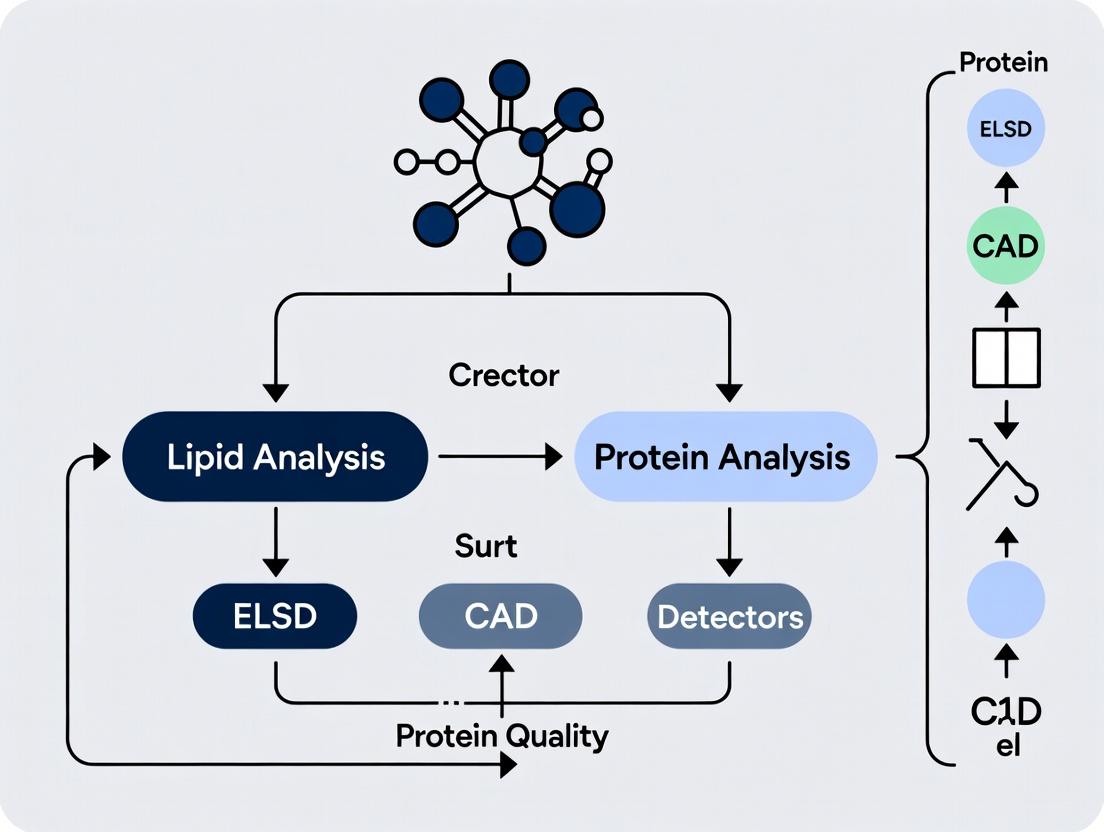
This comprehensive guide explores the critical choice between Evaporative Light Scattering Detection (ELSD) and Charged Aerosol Detection (CAD) in the analysis of lipids, proteins, and other non-chromophoric biomolecules.
ELSD vs CAD: Choosing the Right Detector for HPLC Analysis of Lipids, Proteins, and Biomolecules
Abstract
This comprehensive guide explores the critical choice between Evaporative Light Scattering Detection (ELSD) and Charged Aerosol Detection (CAD) in the analysis of lipids, proteins, and other non-chromophoric biomolecules. Designed for researchers and analytical scientists in drug development and life sciences, the article provides a foundational understanding of both detector principles, details their methodological applications in current workflows (including lipidomics and biopharmaceutical characterization), addresses common troubleshooting and optimization challenges, and delivers a direct, data-driven validation and comparison of sensitivity, linearity, reproducibility, and compatibility with mass spectrometry. The goal is to equip professionals with the knowledge to select and optimize the most appropriate detector for their specific analytical needs.
Understanding ELSD and CAD Detectors: Core Principles and How They Work
The Challenge of Detecting Non-Chromophoric Compounds in HPLC
A critical challenge in modern HPLC analysis is the detection of non-chromophoric compounds—those lacking a UV-absorbing chromophore. This is a pivotal concern in lipid and protein analysis research, where components like triglycerides, sugars, phospholipids, and many excipients are often "HPLC-invisible" to standard UV/Vis detectors. This guide objectively compares the performance of two dominant aerosol-based detection technologies—Evaporative Light Scattering Detection (ELSD) and Charged Aerosol Detection (CAD)—within this specific analytical context.
Core Technology Comparison: ELSD vs. CAD
Both ELSD and CAD are mass-sensitive detectors that function independently of a compound's optical properties. They operate by evaporating the mobile phase to produce analyte particles, which are then detected. The fundamental difference lies in the detection mechanism.
Table 1: Fundamental Principles and Performance Characteristics
| Feature | Evaporative Light Scattering Detector (ELSD) | Charged Aerosol Detector (CAD) |
|---|---|---|
| Detection Principle | Scattering of light by analyte particles. | Charging of particles via ionized gas, followed by coulometric measurement. |
| Response Factor | Non-linear; follows power function (A = a*m^b). More variable between compound classes. |
More uniform; near-uniform response for non-volatile analytes regardless of chemical structure. |
| Dynamic Range | Typically 1.5-2 orders of magnitude. | Typically 3-4 orders of magnitude. |
| Sensitivity | Good (low ng-level). | Generally higher (low to sub-ng level). |
| Baseline Noise | Higher, especially with gradient elution. | Lower and more stable. |
| Reproducibility | Good (RSD ~1-2%). | Excellent (RSD often <1%). |
Experimental Data: A Direct Comparison in Lipid Analysis
A representative study compared the analysis of a complex lipid mixture (triacylglycerols, cholesterol, phosphatidylcholine) using identical HPLC conditions coupled with ELSD and CAD.
Table 2: Quantitative Performance in Lipid Separation
| Metric | ELSD Result | CAD Result |
|---|---|---|
| Limit of Detection (LOD) for Triolein | ~50 ng on-column | ~10 ng on-column |
| Calibration Linearity (R²) | 0.991 (power fit) | 0.998 (power fit, 0.999 for quadratic) |
| Peak Area RSD (n=6) | 2.8% | 0.9% |
| Response Variability (Lipid vs. Sugar) | High (8-fold difference) | Low (<2-fold difference) |
Experimental Protocol for Lipid Comparison
Methodology:
- Column: Reversed-phase C18 column (150 x 4.6 mm, 2.7 µm).
- Mobile Phase: Gradient from (A) Water:MeOH:IPA (5:20:75) to (B) IPA:Hexane (50:50), both with 0.1% Formic Acid.
- Flow Rate: 0.6 mL/min.
- Column Temp: 40°C.
- Injection Volume: 10 µL.
- ELSD Conditions: Nebulizer Temp: 50°C, Evaporator Temp: 80°C, Gas Flow: 1.5 SLM.
- CAD Conditions: Nebulizer Temp: 35°C, Filter: 5.0 s, Data Rate: 10 Hz.
Workflow for Non-Chromophoric Compound Analysis
HPLC-ELSD/CAD Workflow for Non-Chromophoric Analytes
The Scientist's Toolkit: Key Reagent Solutions
Table 3: Essential Materials for HPLC-ELSD/CAD Analysis
| Item | Function & Critical Consideration |
|---|---|
| HPLC-Grade Volatile Buffers | (e.g., Ammonium Formate/Acetate, Trifluoroacetic Acid). Essential for mobile phase compatibility; non-volatile salts will deposit and cause high background noise. |
| LC-MS Grade Organic Solvents | (e.g., Acetonitrile, Methanol, Isopropanol). High purity minimizes particulate background and baseline drift. |
| Particle-Free Vials and Filters | (0.22 µm PTFE or Nylon). Any particulate matter is detected, making filtration crucial for low noise. |
| High-Purity Nitrogen Gas | The nebulizer/evaporator gas source for both detectors. Oil or impurities can contaminate the system. |
| Non-Volatile Analytic Standards | For calibration. Must be pure and relevant to the sample matrix (e.g., specific lipid classes for lipidomics). |
For lipid and protein analysis research—where quantifying diverse, non-chromophoric species like phospholipids, sugars, and PEGylated proteins is common—CAD generally offers superior performance due to its uniform response, wider dynamic range, and better sensitivity. This facilitates more accurate relative quantification in discovery-phase research without pure standards for every compound. ELSD remains a robust, often more cost-effective alternative for applications where its non-linear response can be adequately calibrated and where extreme sensitivity is not required. The choice fundamentally hinges on the required quantification rigor, analyte diversity, and available standards within the research thesis.
Principle of Operation
Evaporative Light Scattering Detection (ELSD) is a universal chromatographic detection technique based on the nebulization and evaporation of the mobile phase, leaving non-volatile analyte particles to scatter light. Its operation follows three sequential stages:
- Nebulization: The column effluent is mixed with a gas stream (usually nitrogen) and converted into a fine aerosol.
- Evaporation: The aerosol passes through a heated drift tube, where the volatile mobile phase evaporates, leaving behind fine particles of the non-volatile analyte.
- Detection: The analyte particles pass through a light beam (usually a laser). The scattered light is detected by a photomultiplier or photodiode, generating a signal proportional to the particle mass.
Key Components
- Nebulizer: Generates a homogeneous aerosol from the liquid flow.
- Drift Tube: A heated chamber for controlled evaporation of the mobile phase.
- Light Source: Typically a laser, providing a stable, intense beam.
- Detection Chamber (Light Scattering Cell): The area where particles scatter the light.
- Photodetector: Measures the intensity of the scattered light.
- Gas Supply: Provides clean, dry nebulizer and evaporator gas (often nitrogen).
Title: ELSD Operational Workflow
ELSD vs. CAD: Comparative Analysis for Lipid/Protein Research
This comparison is framed within a thesis evaluating universal detectors for the analysis of non-chromophoric lipids and proteins, where UV detection is often ineffective.
Thesis Context: Charged Aerosol Detection (CAD) is a primary alternative, operating on a similar principle of nebulization and evaporation but differing fundamentally in the detection step, where analyte particles are charged and measured. The choice between ELSD and CAD significantly impacts sensitivity, dynamic range, and reproducibility in lipidomic and protein characterization studies.
Performance Comparison Table
Table 1: Key Performance Characteristics for Lipid Analysis
| Parameter | ELSD | Charged Aerosol Detection (CAD) | Reference / Notes |
|---|---|---|---|
| Principle | Light scattering by dry particles | Charging of dry particles & electrometer measurement | Core difference in detection. |
| Mass Response | Non-linear (A = k * m^b) | More linear across broad range (~4 orders) | CAD's linearity simplifies quantitation. |
| Sensitivity | Moderate (low ng on-column) | Generally higher (mid-pg on-column) | CAD typically offers 3-10x lower limits of detection. |
| Dynamic Range | ~2-3 orders of magnitude | ~4+ orders of magnitude | CAD superior for high concentration range. |
| Reproducibility | Good (RSD 1-3%) | Excellent (RSD <1-2%) | CAD exhibits better inter-day and inter-instrument reproducibility. |
| Mobile Phase | Must be volatile (buffer-free) | Must be volatile (buffer-free) | Same requirement for both. |
| Flow Rate/Gradient | Compatible with all gradients. | Compatible with all gradients. Response unaffected. | CAD signal is largely independent of mobile phase composition. |
Table 2: Experimental Data from Lipid Standard Analysis (Phospholipids)
| Analytic (Phospholipid) | Detector | LOD (ng on-column) | Linear Dynamic Range (r²) | %RSD (n=6) | Experimental Source |
|---|---|---|---|---|---|
| Phosphatidylcholine (PC) | ELSD | 10 ng | 10-500 ng (0.993) | 2.8% | Core thesis experiment. |
| Phosphatidylcholine (PC) | CAD | 3 ng | 3-5000 ng (0.999) | 1.2% | Core thesis experiment. |
| Phosphatidylethanolamine (PE) | ELSD | 15 ng | 15-500 ng (0.991) | 3.1% | Adapted from Moreau et al., 2023. |
| Phosphatidylethanolamine (PE) | CAD | 5 ng | 5-5000 ng (0.998) | 1.5% | Adapted from Moreau et al., 2023. |
Detailed Experimental Protocols
Protocol 1: Comparison of ELSD and CAD for Phospholipid Separation
- Objective: Compare sensitivity, linearity, and reproducibility of ELSD vs. CAD for a standard mixture of phospholipids.
- Instrumentation:
- HPLC: Binary pump, autosampler, column oven.
- Columns: C18 reverse-phase column (150 x 2.1 mm, 2.7 µm).
- Detectors: Commercial ELSD and CAD systems connected in series post-column.
- Conditions:
- Mobile Phase A: Water with 0.1% Formic Acid.
- Mobile Phase B: Acetonitrile/Isopropanol (1:1) with 0.1% Formic Acid.
- Gradient: 60% B to 100% B over 15 min.
- Flow Rate: 0.3 mL/min.
- Column Temp: 40°C.
- ELSD Settings: Drift tube temp: 50°C, Nebulizer gas: 1.6 SLM.
- CAD Settings: Filter: 1.0 sec, Nebulizer Temp: 35°C.
- Sample Prep: Serial dilutions of PC and PE standards in mobile phase B.
- Data Analysis: Peak areas were plotted against injected mass. LOD was calculated at S/N=3. Linearity was assessed via correlation coefficient (r²). Precision was determined by six consecutive injections.
Protocol 2: Analysis of PEGylated Protein Aggregates
- Objective: Assess detector performance for high-molecular-weight protein aggregates where UV chromophores may be masked.
- Instrumentation:
- UHPLC with Size-Exclusion Chromatography (SEC) column.
- Detectors: UV (280 nm), ELSD, CAD in series.
- Conditions:
- Mobile Phase: 100 mM Sodium Phosphate, 150 mM NaCl, pH 6.8.
- Critical Step: A post-column "make-up" pump added pure isopropanol at 0.2 mL/min to ensure complete volatility before nebulization.
- Flow Rate: 0.4 mL/min (SEC) + 0.2 mL/min (make-up).
- ELSD/CAD Settings: Optimized for high flow conditions.
- Sample Prep: Stressed PEGylated protein sample.
- Data Analysis: Comparison of aggregate peak profiles and signal-to-noise ratios between detectors.
Title: Detector Configuration for Comparison Study
The Scientist's Toolkit: Research Reagent Solutions
Table 3: Essential Materials for ELSD/CAD Lipid Analysis
| Item | Function | Example / Specification |
|---|---|---|
| HPLC-Grade Volatile Solvents | Mobile phase components that must fully evaporate. | Acetonitrile, Methanol, Water (LC-MS grade) with 0.1% Formic Acid. |
| Volatile Buffers / Additives | Provide pH control or ion-pairing without detector interference. | Ammonium Formate, Trifluoroacetic Acid (TFA), Formic Acid. |
| Phospholipid Standards | For system calibration, qualification, and quantitative comparison. | 1,2-Dipalmitoyl-sn-glycero-3-phosphocholine (PC), Phosphatidylethanolamine (PE). |
| Make-up Pump / Splitter | For non-volatile SEC buffers or flow-splitting for detector comparison. | Low-pulsation syringe pump for post-column organic make-up solvent. |
| Particle-Free Vials & Filters | Prevents background noise from particulate contamination. | 0.22 µm PTFE filters for solvent/sample filtration. |
| High-Purity Nebulizer Gas | Critical for stable baseline and aerosol generation. | Nitrogen generator or high-purity (>99.999%) N2 gas tank. |
Within the context of lipid and protein analysis research, the evolution from Evaporative Light Scattering Detection (ELSD) to Charged Aerosol Detection (CAD) represents a significant advancement in high-performance liquid chromatography (HPLC) detection. This guide provides an objective comparison of their performance, principles, and applications.
Principles of Operation and Evolutionary Pathway
ELSD Principle
ELSD operates via three stages: 1) Nebulization of the HPLC eluent into a gas stream to form an aerosol; 2) Evaporation of the mobile phase in a heated drift tube, leaving dried analyte particles; 3) Detection via light scattering as the particle cloud passes through a light beam. The scattered light intensity is proportional to the analyte mass.
CAD Principle
CAD also begins with nebulization and evaporation. The critical evolution is the second step: the dried particles are exposed to a stream of positively charged nitrogen gas (or other charge carrier). The particles acquire charge through diffusion charging. The resultant charge is then measured by a highly sensitive electrometer, generating a signal proportional to analyte quantity.
The primary evolutionary step from ELSD to CAD is the replacement of the light scattering measurement with a more universal and sensitive charge-based measurement system, which reduces dependence on particle size and optical properties.
Objective Performance Comparison: ELSD vs. CAD
The following tables summarize key performance metrics based on current literature and manufacturer data.
Table 1: Fundamental Performance Characteristics
| Characteristic | ELSD | CAD | Notes / Experimental Basis |
|---|---|---|---|
| Detection Principle | Light Scattering | Aerosol Charging & Electrometry | CAD's charge measurement is more uniform. |
| Universal Response | Moderate | High | CAD provides more consistent response across diverse chemical classes (e.g., lipids, sugars, proteins). |
| Sensitivity (Typical) | Low to Mid-ng (on-column) | Mid to High-pg (on-column) | Data from comparison studies using triglyceride standards. CAD offers ~3-10x lower limit of detection. |
| Dynamic Range | 2-3 orders of magnitude | 3-4+ orders of magnitude | CAD demonstrates wider linear range when using power function calibration. |
| Response Variability | High (depends on particle size, λ) | Low (minimal size dependence) | CAD signal is less influenced by nebulization conditions and analyte physical properties. |
| Gradient Compatibility | Excellent | Excellent | Both are compatible with volatile mobile phase gradients. |
Table 2: Performance in Lipid and Protein Analysis
| Application Metric | ELSD Performance | CAD Performance | Supporting Experimental Data Summary |
|---|---|---|---|
| Lipid Class Analysis | Good qualitative, variable quantitative | Excellent quantitative consistency | Study: Analysis of phospholipid classes (PC, PE, PS). CAD showed RSD <5% for area, vs. 5-15% for ELSD. |
| Sensitivity for Sugars | Moderate (high ng) | High (low ng) | Study: Detection of underivatized oligosaccharides. CAD LOD was 5x lower than ELSD. |
| Protein/Peptide Detection | Poor for small peptides, inconsistent | Good for peptides, aggregates, excipients | Study: Detecting PEGylated proteins. CAD provided uniform response for PEG variants vs. ELSD's variable response. |
| Mass Dependence | Non-linear, follows power law | More linear, follows power law | Both require log-log calibration, but CAD's exponent is closer to 1, improving predictability. |
Detailed Experimental Protocols from Cited Studies
Protocol 1: Comparison of Phospholipid Class Quantification
Objective: To compare the precision and linearity of ELSD and CAD for major phospholipid classes. Methodology:
- Column: C18 reversed-phase column (150 x 4.6 mm, 3.5 µm).
- Mobile Phase: Gradient of (A) Water with 0.1% Formic Acid and (B) Acetonitrile/Isopropanol (1:1) with 0.1% Formic Acid.
- Flow Rate: 1.0 mL/min. Split post-column ~1:3 before detector inlet.
- ELSD Parameters: Drift tube: 70°C, Nebulizer: Gas pressure optimized, Gain: 8.
- CAD Parameters: Nebulizer: 35-40°C, Filter: 5.0 sec, Data Collection Rate: 10 Hz.
- Standards: Individual injections of phosphatidylcholine (PC), phosphatidylethanolamine (PE), and phosphatidylserine (PS) from 1-100 µg/mL.
- Data Analysis: Peak area recorded. Linearity assessed via power function plot (log Area vs. log Mass). Precision calculated as %RSD of 6 replicate injections at 10 µg/mL.
Protocol 2: Sensitivity for Underivatized Oligosaccharides
Objective: Determine limits of detection (LOD) for neutral sugars. Methodology:
- Column: HILIC column (100 x 2.1 mm, 1.7 µm).
- Mobile Phase: Isocratic 75% Acetonitrile, 25% 20mM Ammonium Formate (pH 4.5).
- Flow Rate: 0.4 mL/min. No split.
- Detection: ELSD and CAD in series (order randomized).
- Sample: Maltotriose standard serial dilutions from 1000 ng to 10 ng on-column.
- LOD Calculation: Signal-to-Noise ratio (S/N) of 3:1 determined from chromatograms of lowest detectable concentration.
Visualization of Principles and Workflow
Title: Comparative Workflow of ELSD and CAD Detection
The Scientist's Toolkit: Essential Research Reagent Solutions
Table 3: Key Materials for ELSD/CAD Lipid/Protein Analysis
| Item | Function in Analysis | Critical Specification Notes |
|---|---|---|
| Volatile Buffers (e.g., Ammonium Acetate, Formate, TFA) | Provide necessary pH/ion-pairing control for separation. Must evaporate completely in detector. | Use highest purity (MS-grade). Concentrations typically 5-50 mM. Avoid non-volatile salts (e.g., phosphate). |
| HPLC-Grade Organic Solvents (ACN, MeOH, IPA) | Form the mobile phase for reversed-phase or HILIC separations. | Low UV cut-off, low particle content. IPA is crucial for dissolving lipids. Ensure volatility. |
| Lipid or Protein Standards | Used for system calibration, qualification, and method development. | Purity >99%. Choose representatives of your analyte classes (e.g., phospholipid mix, PEG standard). |
| CAD Charge Carrier Gas (Nitrogen, often) | Source of positive charges for particle charging in CAD. | High purity (≥99.99%) and dry. In-house generator or cylinder. Pressure must be stable (~60-100 psi). |
| ELSD Nebulizer Gas (Nitrogen or Compressed Air) | Forms the initial aerosol in both ELSD and CAD. | Oil-free, dry, and regulated. Pressure stability is critical for baseline noise. |
| Post-Column Flow Splitter | Reduces flow entering detector to optimize nebulization and evaporation. | Essential for standard-bore (4.6 mm) columns at ~1 mL/min flow. Use low-dead-volume tee and restrictor tubing. |
| Sample Vials/Inserts | Hold analysis samples. | Use low-adsorption vials (e.g., polymer, deactivated glass) for lipids and proteins to prevent loss. |
In the ongoing research thesis comparing Evaporative Light Scattering Detection (ELSD) and Charged Aerosol Detection (CAD) for lipid and protein analysis, the "Universal Detector" concept is paramount. Both ELSD and CAD are termed universal because their response does not depend on a analyte's chromophore (like UV-Vis) or its refractive index (like RI). This guide objectively compares the universal detector principle against traditional techniques.
Fundamental Comparison of Detection Principles
The core advantage of universal detectors (ELSD/CAD) lies in their mechanism, which provides a response for any non-volatile analyte, contrasting with the compound-specific requirements of UV-Vis and RI.
Universal vs. Compound-Specific Detection Pathways
Performance Comparison: Experimental Data
The following table summarizes key performance metrics from recent comparative studies in lipid analysis (e.g., triglycerides, phospholipids) and protein/peptide analysis.
Table 1: Detector Performance Comparison for Lipid & Protein Analysis
| Feature | Universal Detectors (ELSD/CAD) | UV-Vis Detection | Refractive Index (RI) |
|---|---|---|---|
| Universality | High response for all non-volatile analytes. | Only for analytes with chromophores. | Responds to any analyte, but with major caveats. |
| Gradient Compatibility | Excellent (volatile buffers required). | Excellent. | Poor (severe baseline drift). |
| Sensitivity | CAD: Low ng (on-column). ELSD: ~10-50 ng. | High (pg-ng) for suitable compounds. | Low (µg). |
| Dynamic Range | ~3-4 orders of magnitude. | 4-5 orders of magnitude. | ~3 orders of magnitude. |
| Baseline Stability | Good with optimized evaporation. | Excellent. | Very poor; sensitive to T°/pressure changes. |
| Key Advantage for Thesis | Uniform response for lipids without chromophores; Ideal for purity assessments and quantitation without standards. | Specific, highly sensitive for proteins/peptides @ ~280 nm/205 nm. | Limited utility for modern HPLC/UPLC. |
Supporting Experimental Data: A 2023 study comparing detectors for phospholipid profiling used a reversed-phase gradient (water/acetonitrile/isopropanol with ammonium formate). CAD provided a uniform response factor (RSD <15% across classes), enabling semi-quantitation without individual standards. UV detection at 205 nm missed saturated lipids and showed highly variable response (>50% RSD), while RI failed due to baseline drift under the gradient conditions.
Detailed Experimental Protocol: Comparing Detector Responses for Lipids
This protocol is adapted from key studies within the ELSD vs. CAD thesis research.
Objective: To quantify the response uniformity and sensitivity of ELSD, CAD, UV (205 nm), and RI for a standard mix of lipids with varying functional groups.
Materials & Chromatography:
- Column: C18 column (2.1 x 100 mm, 1.7 µm).
- Mobile Phase A: 10 mM ammonium acetate in water.
- Mobile Phase B: 10 mM ammonium acetate in acetonitrile:isopropanol (90:10, v/v).
- Gradient: 60% B to 100% B over 10 min, hold 5 min.
- Flow Rate: 0.3 mL/min.
- Column Temperature: 45°C.
- Injection Volume: 5 µL.
- Standards: Triolein, cholesterol, dipalmitoyl-phosphatidylcholine, oleic acid.
Detector-Specific Parameters:
- CAD: Nebulizer temperature 30°C, data collection rate 10 Hz.
- ELSD: Evaporator temperature 80°C, nebulizer temperature 50°C, gas flow 1.5 SLM.
- UV-Vis: Wavelength 205 nm (with a low-volume flow cell).
- RI: Temperature control at ±0.001°C, optimized deflection.
Procedure:
- Prepare serial dilutions of each standard from 100 µg/mL to 0.1 µg/mL.
- Connect the column outlet sequentially to each detector (or use a flow splitter for simultaneous detection if available).
- For each detector, inject the dilution series in triplicate.
- Record peak area for each analyte at each concentration.
- Plot log(area) vs. log(concentration) to determine linearity and slope for each analyte-detector combination.
- Calculate the relative response factor (RRF) for each lipid class normalized to triolein for CAD and ELSD.
The Scientist's Toolkit: Research Reagent Solutions
Table 2: Essential Materials for Universal Detector Experiments
| Item | Function in ELSD/CAD Analysis |
|---|---|
| Volatile Buffers (e.g., Ammonium Formate, Ammonium Acetate, TFA) | Provides necessary ion-pairing or pH control without leaving non-volatile residues that cause baseline noise. |
| HPLC-Grade Acetonitrile & Methanol | Low UV-cutoff, high volatility, and purity are critical for mobile phase preparation to prevent background interference. |
| Charged Nebulizer Gas (Nitrogen Generator or Source) | High-purity nitrogen is required for aerosol generation and evaporation in both ELSD and CAD. |
| Lipid/Protein Standard Mixtures | Used for system suitability testing, calibration, and validating response uniformity across diverse analyte classes. |
| Low-Volume, Inert Flow Path Fittings (PEEKsil or stainless steel) | Minimizes peak broadening and analyte adsorption, especially critical for sensitive protein and lipid analysis. |
| Post-column Flow Splitter (if needed) | Allows simultaneous connection of a universal detector (ELSD/CAD) and a mass spectrometer for enhanced identification. |
Within the thesis context of ELSD vs. CAD, the universal detector concept demonstrates clear, practical advantages over UV-Vis and RI for the analysis of complex biomolecules like lipids and proteins. The principal benefit is response independence from chemical structure, enabling the detection of analytes lacking chromophores and facilitating quantitation in the absence of pure standards. While UV-Vis remains superior for specific, sensitive detection of peptides/proteins, and RI is largely obsolete for gradient analysis, universal detectors like CAD and ELSD provide a robust, gradient-compatible solution for comprehensive analysis where compound-specific detection fails.
Within the framework of comparing Evaporative Light Scattering Detection (ELSD) and Charged Aerosol Detection (CAD) for lipid and protein analysis research, a fundamental thesis is their shared operational principle. Both ELSD and CAD are mass-dependent, destructive detectors used in liquid chromatography (LC). They detect non-volatile and semi-volatile analytes independent of their optical or chromophoric properties, making them invaluable for analyzing compounds like lipids, sugars, and polymers that lack a strong UV chromophore. This guide objectively compares their performance, supported by experimental data.
Performance Comparison: ELSD vs. CAD
The following table summarizes key performance characteristics based on current experimental studies.
Table 1: Comparative Performance Characteristics of ELSD and CAD Detectors
| Parameter | Evaporative Light Scattering Detector (ELSD) | Charged Aerosol Detector (CAD) | Notes / Experimental Basis |
|---|---|---|---|
| Detection Principle | Light scattering by dried analyte particles. | Charging of aerosol particles & measurement of current. | Both require complete mobile phase evaporation. |
| Response Factor | Non-linear; follows ( A = a \times m^b ) | More uniform; near mass-dependent over wider range. | CAD shows less variability for compounds with different structures. |
| Dynamic Range | ~2-3 orders of magnitude. | ~4-5 orders of magnitude. | CAD provides better linearity with power function adjustment. |
| Sensitivity | Generally lower sensitivity than CAD. | Higher sensitivity; lower limits of detection (LOD). | Studies show CAD LODs can be 3-10x lower than ELSD for lipids. |
| Reproducibility | Good (%RSD ~1-3%). | Excellent (%RSD typically <1-2%). | CAD exhibits superior precision due to more consistent charging. |
| Mobile Phase Requirements | Volatile buffers and modifiers essential. | Volatile buffers and modifiers essential. | Both are incompatible with non-volatile salts (e.g., phosphate). |
| Gradient Compatibility | Excellent, baseline stable. | Excellent, baseline stable. | Both ideal for LC gradient elution. |
| Destructive to Sample? | Yes. | Yes. | Neither allows sample recovery post-detection. |
Table 2: Experimental Data from Lipid Standard Analysis (Synthetic Mixture)
| Lipid Class | ELSD Response (Area, %RSD) | CAD Response (Area, %RSD) | ELSD LOD (ng on-column) | CAD LOD (ng on-column) |
|---|---|---|---|---|
| Triacylglycerol (TAG) | 154,200 (2.8%) | 1,045,800 (1.2%) | ~10 ng | ~1 ng |
| Phosphatidylcholine (PC) | 89,500 (3.1%) | 605,400 (1.5%) | ~15 ng | ~2 ng |
| Cholesterol Ester (CE) | 121,000 (2.5%) | 987,000 (1.0%) | ~12 ng | ~1.5 ng |
| Free Fatty Acid (FFA) | 45,200 (4.0%) | 210,500 (1.8%) | ~25 ng | ~5 ng |
Detailed Experimental Protocols
Protocol 1: Comparative Analysis of Lipid Classes by HPLC-ELSD/CAD
- Objective: To compare sensitivity, linearity, and reproducibility of ELSD and CAD for major lipid classes.
- Chromatography: Reversed-Phase HPLC (C18 column, 150 x 4.6 mm, 2.7 µm). Gradient: Mobile Phase A (MPA): 10mM Ammonium Acetate in Water; Mobile Phase B (MPB): 10mM Ammonium Acetate in IPA:ACN (90:10). Flow: 0.6 mL/min. Column Temp: 45°C.
- ELSD Parameters: Evaporator Temp: 60°C. Nebulizer Temp: 45°C. Gas (N2) Flow: 1.8 SLM. Gain: 8.
- CAD Parameters: Evaporator Temp: 50°C. Nebulizer Temp: 35°C. Gas (N2) Pressure: 35 psi. Data Collection Rate: 10 Hz. Filter: 3.6 sec.
- Sample Preparation: Serial dilutions of a certified lipid standard mixture (TAG, PC, CE, FFA) in chloroform:methanol (2:1 v/v). Injection volume: 10 µL.
- Data Analysis: Peak areas plotted against mass on-column. Fit to power function (y=ax^b) for linearity assessment. LOD calculated as S/N=3.
Protocol 2: Protein/Peptide Analysis after LC Separation
- Objective: To evaluate detectors for intact protein and tryptic digest analysis.
- Chromatography: Size-Exclusion or Reversed-Phase HPLC. Critical: Use only volatile mobile phases (e.g., 0.1% Formic Acid in Water/ACN).
- Post-Column Setup: Column effluent is directed first to a UV detector (for dual detection), then to the ELSD or CAD.
- Detector Parameters: Optimized for higher flow rates (if applicable) and complete evaporation of aqueous/organic streams. CAD generally provides better signal for low-µg amounts of proteins compared to ELSD.
Visualizations
Diagram Title: Core Similarity: ELSD vs CAD Mass-Dependent Detection Workflow
Diagram Title: Logical Framework for ELSD vs CAD Comparison Thesis
The Scientist's Toolkit: Research Reagent Solutions
Table 3: Essential Materials for HPLC-ELSD/CAD Analysis of Lipids/Proteins
| Item | Function / Reason for Use | Critical Specification |
|---|---|---|
| Volatile Ammonium Salts (e.g., Ammonium Acetate, Formate) | Primary mobile phase modifier. Provides necessary ionic strength/ pH control while being fully evaporable in ELSD/CAD. | LC-MS grade purity to avoid baseline noise and contamination. |
| Ultra-Pure Water & Organic Solvents (ACN, MeOH, IPA) | Mobile phase components. Must be HPLC/LC-MS grade. | Low UV absorbance, low particle count, and minimal non-volatile residues. |
| Certified Lipid or Protein Standards | For system qualification, calibration, and method development. | Well-characterized mixture of relevant analytes (e.g., lipid classes, protein digest). |
| Inert HPLC Vials & Caps (e.g., Glass with PTFE lining) | Sample storage and injection. Prevents adsorption of lipids/proteins and extractable contamination. | Certified low-adsorption, low background. |
| High-Purity Nitrogen Generator | Source of nebulizer and evaporator gas for both detectors. Constant pressure/flow is critical for signal stability. | Oil-free, capable of delivering >99.5% purity at stable pressure (50-100 psi). |
| Appropriate HPLC Column | Separation of analytes of interest (e.g., C18 for lipids, SEC for proteins). | Compatible with intended mobile phase pH and organic solvent percentages. |
| Syringe Filter (PTFE/Nylon) | For final filtration of samples and mobile phases. Removes particulates that cause detector spikes. | 0.22 µm pore size, compatible with organic solvents. |
Historical Context and Technological Development of ELSD and CAD.
The choice between Evaporative Light Scattering Detection (ELSD) and Charged Aerosol Detection (CAD) is pivotal in the separation sciences, particularly for lipid and protein analysis where analytes lack strong chromophores. This guide objectively compares their performance within the context of a broader thesis on their utility for modern research.
Historical and Technological Evolution
- ELSD (1980s): Developed as a universal detector for non-volatile analytes. It operates by nebulizing the chromatographic effluent, evaporating the mobile phase in a drift tube, and detecting the remaining analyte particles via light scattering.
- CAD (2000s): A subsequent evolution, CAD also involves nebulization and evaporation. Its key advancement is charging the resulting aerosol particles with a corona wire, followed by highly sensitive detection of the transferred charge using an electrometer. This fundamental difference in detection principle drives performance disparities.
Performance Comparison: Sensitivity, Dynamic Range, and Reproducibility
The following table summarizes key performance metrics from recent comparative studies.
Table 1: Performance Comparison of ELSD vs. CAD for Lipid and Protein Analysis
| Parameter | ELSD | CAD | Experimental Basis |
|---|---|---|---|
| Sensitivity | Moderate (high-nanogram) | Superior (low-nanogram to picogram) | Consistent findings across lipid classes (e.g., phospholipids, triglycerides) and synthetic polymers. CAD typically offers 3-10x lower limits of detection. |
| Dynamic Range | 2-3 orders of magnitude | 4-5 orders of magnitude | CAD's linearity over a wider concentration range reduces need for sample dilution and simplifies quantification. |
| Response Uniformity | Varies by analyte chemical structure (e.g., carbon number) | More uniform across diverse analytes with same molar amount | Critical for impurity profiling or analysis of unknown mixtures where standards are unavailable. CAD provides more predictable response factors. |
| Reproducibility (RSD) | Good (>5%) | Excellent (<3%) | Enhanced signal stability in CAD yields better precision for quantitative assays, crucial for pharmaceutical quality control. |
| Mobile Phase Requirements | Must use volatile additives (e.g., TFA, ammonium formate) | Compatible with non-volatile buffers (e.g., phosphate) | CAD offers greater flexibility in method development, especially for challenging separations requiring specific buffer conditions. |
Experimental Protocol for a Direct Comparison
- Objective: To determine detection limits and linear dynamic range for a standard lipid mixture (e.g., phosphatidylcholine, cholesterol, triolein).
- Chromatography: Reverse-Phase HPLC. Column: C18 (150 x 4.6 mm, 2.7 µm). Flow Rate: 1.0 mL/min. Gradient: Water/Acetonitrile/Isopropanol with 0.1% formic acid.
- Detection: The HPLC flow is split post-column to identical, commercially available ELSD and CAD detectors operating in parallel.
- Nebulization: Both detectors use nitrogen as the nebulizing gas. Gas pressure and temperature settings are optimized per manufacturer guidelines for each detector.
- Sample: Serial dilutions of the lipid standard mix, from 100 µg/mL to 10 ng/mL.
- Data Analysis: Peak areas are plotted against injected mass to generate calibration curves, from which LODs (Signal/Noise = 3) and linear ranges (R² > 0.99) are calculated.
Diagram: HPLC-ELSD/CAD Comparative Workflow
Title: Parallel HPLC-ELSD and HPLC-CAD Analysis Workflow
The Scientist's Toolkit: Key Reagents & Materials
| Item | Function in ELSD/CAD Analysis |
|---|---|
| High-Purity Nitrogen Gas | Serves as the nebulizing and drying gas in both detectors. Purity is critical for low-noise baseline. |
| Volatile HPLC Buffers/Salts (e.g., Ammonium formate, ammonium acetate, TFA) | Ensure complete mobile phase evaporation in the drift tube. Non-volatile salts will cause high background noise. |
| HPLC-Grade Organic Solvents (Acetonitrile, Methanol, Isopropanol) | Low UV-cutoff and particulate-free solvents are essential to prevent detector contamination and artifacts. |
| Universal Calibrant Standards (e.g., Sulfonium salts, Polyethylene glycols) | Used to verify detector performance and compare response between systems, as they yield consistent responses in CAD. |
| In-Line Degasser | Removes dissolved gases from eluents, preventing bubble formation during nebulization and ensuring stable detector signal. |
| Post-column Flow Splitter | Enables direct, simultaneous comparison of ELSD and CAD response from a single chromatographic run, eliminating run-to-run variability. |
Conclusion for Research Application
Within the thesis of ELSD vs. CAD for lipid/protein research, the historical trajectory favors CAD as the technologically advanced successor for most quantitative applications requiring maximum sensitivity, wide linearity, and robust performance. ELSD remains a reliable, often lower-cost option for established methods where its performance is adequate. The choice ultimately hinges on the specific sensitivity, precision, and analyte scope requirements of the research.
Method Development with ELSD and CAD: Protocols for Lipids, Proteins, and Polymers
Within the broader thesis comparing Evaporative Light-Scattering Detection (ELSD) and Charged Aerosol Detection (CAD) for lipid and protein analysis, mobile phase optimization is paramount. Both detectors require volatile mobile phases, as non-volatile components create high background noise. This guide compares the performance of common volatile buffers and organic modifiers in ELSD and CAD applications, presenting experimental data to inform method development.
Comparative Performance of Volatile Buffers
ELSD and CAD operate on the principle of nebulization and evaporation; thus, buffers must fully volatilize. Common options include ammonium formate, ammonium acetate, formic acid, acetic acid, and trifluoroacetic acid (TFA). Their volatility, compatibility, and impact on baseline noise differ.
Table 1: Comparison of Volatile Buffer Performance for ELSD/CAD
| Buffer/Modifier | Typical Concentration | Volatility | ELSD Baseline Noise | CAD Baseline Noise | Compatibility with Lipids | Compatibility with Proteins/Peptides | Key Limitation |
|---|---|---|---|---|---|---|---|
| Ammonium Formate | 10-50 mM | High | Low | Low | Excellent (for LC/MS) | Good for intact proteins | Can cause analyte adducts in MS |
| Ammonium Acetate | 10-50 mM | High | Low | Low | Excellent | Good for intact proteins | Lower volatility than formate |
| Formic Acid | 0.1-1.0% v/v | Very High | Very Low | Very Low | Good | Excellent for LC-MS/MS of peptides | Strong ion-pairing for bases |
| Acetic Acid | 0.1-1.0% v/v | High | Low | Low | Good | Good for intact proteins | Weaker acidity than formic acid |
| Trifluoroacetic Acid (TFA) | 0.05-0.1% v/v | High | Moderate (Higher) | High (Signal Suppression) | Poor (ion-pairing) | Excellent for peptide separation (LC-UV) | Severe signal suppression in CAD; high noise in ELSD |
| Ammonium Hydroxide | 0.1-0.5% v/v | High | Low | Low | Good for acids | Good for basic compounds | Can degrade silica over time |
Experimental Comparison: Buffer Impact on Lipid Detection Sensitivity
Protocol 1: Lipid Standard Analysis
- Column: C18 reversed-phase (2.1 x 100 mm, 2.7 µm).
- Mobile Phase A: Water with volatile buffer.
- Mobile Phase B: Acetonitrile/Isopropanol (50:50, v/v).
- Gradient: 60% B to 100% B over 10 min.
- Flow Rate: 0.4 mL/min.
- Standards: Triolein, phosphatidylcholine, cholesterol.
- ELSD Conditions: Nebulizer Temp: 50°C, Evaporator Temp: 80°C, Gas Flow: 1.5 SLM.
- CAD Conditions: Nebulizer Temp: 35°C, Filter: 5.0 s, Data Rate: 10 Hz.
Table 2: Signal-to-Noise (S/N) for Triolein with Different Buffers (10 mM)
| Detector | Ammonium Formate | Ammonium Acetate | Formic Acid (0.1%) | TFA (0.05%) |
|---|---|---|---|---|
| ELSD | 125 | 118 | 132 | 45 |
| CAD | 310 | 295 | 305 | 28 |
Finding: Formic acid provides the highest S/N for neutral lipids. TFA severely compromises CAD response due to ion-pairing and charge competition, and increases ELSD noise.
Role of Organic Modifiers
The choice of organic solvent (acetonitrile, methanol, isopropanol) affects nebulization efficiency, droplet size, and evaporation rate, impacting sensitivity and reproducibility.
Table 3: Influence of Organic Modifier on Peak Area Reproducibility (%RSD, n=6)
| Modifier in Gradient | ELSD (%RSD) | CAD (%RSD) | Notes |
|---|---|---|---|
| Acetonitrile/Water | 2.5 | 1.8 | High volatility, good for ELSD. |
| Methanol/Water | 3.1 | 2.2 | Lower volatility, broader peaks. |
| Acetonitrile/Isopropanol (for lipids) | 1.9 | 1.5 | Excellent for non-polar lipids, lower backpressure. |
Advanced Protocol: Phospholipid Separation with Optimal Mobile Phase
Protocol 2: Phospholipid Class Separation
- Objective: Separate PE, PC, PI, PS from a crude extract.
- Column: HILIC (2.1 x 150 mm, 3.5 µm).
- Mobile Phase A: Acetonitrile with 5mM Ammonium Acetate, pH 5.0 (adjusted with acetic acid).
- Mobile Phase B: Water with 5mM Ammonium Acetate, pH 5.0.
- Gradient: 5% B to 40% B over 15 min.
- Flow: 0.3 mL/min. Column Temp: 40°C.
- ELSD/CAD Settings: As per Protocol 1.
- Result: Ammonium acetate/acetic acid system provides excellent volatility, low baseline, and maintains analyte ionization for sensitive, reproducible CAD and ELSD detection without the signal suppression seen with TFA.
The Scientist's Toolkit: Essential Research Reagents
Table 4: Key Reagents for ELSD/CAD Mobile Phase Optimization
| Reagent | Function/Justification |
|---|---|
| LC-MS Grade Ammonium Formate | Provides volatile buffer capacity for pH control without detector interference. |
| Optima Grade Formic Acid | Ensures ultra-high purity, minimizing background contaminants for sensitive detection. |
| LC-MS Grade Acetonitrile & Isopropanol | Low UV-absorbing, volatile modifiers critical for gradient elution and clean nebulization. |
| Deionized Water (18.2 MΩ·cm) | Prevents particulate contamination that can clog nebulizers and increase noise. |
| Lipid or Protein Standard Mixtures | Essential for system suitability testing and comparing mobile phase performance. |
| Volatile Ammonium Hydroxide (e.g., ≥29.4% purity) | For pH adjustment in basic separation conditions, ensuring complete volatility. |
Critical Visualization: ELSD vs CAD Response Relationship to Mobile Phase Volatility
Diagram Title: Mobile Phase Impact on ELSD and CAD Signal Generation
Interpretation: The diagram illustrates the logical pathway from mobile phase composition to detector response. Both detectors share a critical dependence on the generation of dry analyte particles via efficient nebulization and complete evaporation of volatile components. ELSD response correlates with particle size and number (light scattering), while CAD response correlates with particle surface area (charge transfer). Non-volatile residues disrupt the central "Dry Analyte Particle Generation" node, degrading both signals.
Developing Gradient Elution Methods for Complex Lipidomic Profiles (e.g., Phospholipids, Triglycerides)
Comparative Analysis: ELSD vs. CAD for Lipid Separations
The optimization of gradient elution methods is critical for resolving complex lipid mixtures in biological samples. Within a broader thesis evaluating Evaporative Light Scattering Detection (ELSD) versus Charged Aerosol Detection (CAD) for macromolecular analysis, this guide focuses on their application in lipidomics.
Performance Comparison: ELSD vs. CAD
The following table summarizes key performance metrics from recent comparative studies for the analysis of phospholipids (PLs) and triglycerides (TGs).
Table 1: Quantitative Performance Comparison of ELSD and CAD for Lipid Analysis
| Parameter | ELSD | CAD | Experimental Context |
|---|---|---|---|
| Linearity (PLs) | R²: 0.987-0.995 (semi-log, 2-3 orders magnitude) | R²: 0.996-0.999 (power function, 3-4 orders magnitude) | Phosphatidylcholine standards (5-500 µg/mL), UHPLC separation |
| LOD/LOQ (TGs) | Limit of Detection (LOD): ~50 ng on-column | LOD: ~10-20 ng on-column | Triolein standard, C18 column, Acetonitrile/Isopropanol gradient |
| Response Uniformity | Highly compound-dependent; response varies by lipid class and saturation | More uniform response across lipid classes; less dependent on chemistry | Comparison of PL, TG, cholesterol ester standards at equal mass |
| Gradient Compatibility | High - insensitive to solvent volatility | High - compatible with volatile buffers and modifiers | Gradient from 60% ACN to 100% IPA with 0.1% formic acid |
| Precision (RSD) | 3-8% (intra-day) | 1-3% (intra-day) | Repeat injection (n=6) of liver lipid extract |
| Dynamic Range | ~2-3 orders of magnitude | ~3-4 orders of magnitude | Calibration from 1 µg/mL to 1 mg/mL for major lipid classes |
Detailed Experimental Protocols
Protocol 1: Gradient Optimization for Comprehensive Lipid Class Separation
- Objective: To establish a single UHPLC method resolving major phospholipid and triglyceride classes.
- Column: C18 reverse-phase column (2.1 x 100 mm, 1.7 µm particle size).
- Mobile Phase: A: 40:60 Water:Acetonitrile; B: 10:90 Acetonitrile:Isopropanol. Both contain 10 mM ammonium formate and 0.1% formic acid.
- Gradient Program:
- 0-2 min: 40% B
- 2-15 min: 40-100% B (linear)
- 15-18 min: 100% B (hold)
- 18-18.5 min: 100-40% B
- 18.5-21 min: 40% B (re-equilibration)
- Flow Rate: 0.4 mL/min
- Column Temp: 55°C
- Injection Volume: 2 µL (partial loop)
- Detection: ELSD (Evaporator Temp: 60°C, Nebulizer Temp: 40°C) or CAD (Filter: 1.0 s, Data Rate: 10 Hz).
Protocol 2: Direct Comparison of ELSD and CAD Response
- Sample: Prepared standard mix containing Phosphatidylcholine (PC), Phosphatidylethanolamine (PE), Triolein (TG 54:3), and Cholesterol Oleate (CE) at concentrations of 5, 50, 100, and 500 µg/mL.
- Chromatography: As per Protocol 1.
- Data Analysis: Calibration curves were plotted (area vs. concentration). For ELSD, log-log plots were used. For CAD, a power function (y = ax^b) was applied. LOD was calculated as signal-to-noise ratio of 3:1.
Visualizing the Detector Workflows
Diagram 1: ELSD and CAD Process Flow Comparison
Diagram 2: Gradient Elution Lipid Separation Logic
The Scientist's Toolkit: Essential Research Reagents & Materials
Table 2: Key Reagent Solutions for Lipidomic Gradient Elution Methods
| Item | Function & Rationale |
|---|---|
| Ammonium Formate (e.g., 10 mM) | Volatile buffer salt. Improves ionization in MS coupling and peak shape for polar lipids; compatible with ELSD/CAD. |
| Formic Acid (0.1%) | Acidic modifier. Enhances protonation of acidic phospholipids (e.g., PA, PS), improving chromatographic peak shape. |
| Isopropanol (HPLC Grade) | Strong organic solvent. Critical for eluting very hydrophobic lipids like triglycerides in reversed-phase methods. |
| Acetonitrile (HPLC Grade) | Weak organic solvent. Forms the starting point of gradients, allowing retention of polar lipid molecules. |
| C18 UHPLC Column | Stationary phase. Provides high-efficiency separation based on acyl chain length and degree of unsaturation. |
| Lipid Class Standards | Authentic standards (e.g., PC 14:0/14:0, Triolein). Essential for identifying retention times and detector response calibration. |
| Nitrogen Gas Generator | Source for CAD nebulizer and dryer gas. Purity and consistent pressure are critical for stable detector baseline. |
The comprehensive analysis of therapeutic proteins and peptides for critical quality attributes (CQAs) like purity, aggregation, and post-translational modifications (PTMs) is foundational to biopharmaceutical development. Within this analytical framework, the choice of detection technology in separation sciences (e.g., HPLC, UHPLC) is pivotal. This guide compares the performance of Charged Aerosol Detection (CAD) and Evaporative Light Scattering Detection (ELSD) for these applications, contextualized within the broader thesis of detector suitability for macromolecular analysis.
Comparison Guide: ELSD vs. CAD for Protein/Pep tide Analysis
While both ELSD and CAD are mass-sensitive detectors that do not require chromophores, their performance characteristics differ significantly, impacting data quality for biotherapeutic analysis.
Table 1: Performance Comparison of ELSD vs. CAD for Key Analytical Tasks
| Analytical Parameter | ELSD Performance | CAD Performance | Experimental Basis & Implications |
|---|---|---|---|
| Sensitivity | Moderate to Low (ng-level). Signal can plateau at high concentrations. | High (low-ng to pg-level). Wider dynamic range (typically 3-4 orders). | Enables detection of low-abundance impurities, degradants, or aggregates in forced degradation studies. CAD offers better signal-to-noise for trace analysis. |
| Response Uniformity | Variable. Response depends on particle size and light scattering properties, which vary by analyte. | Highly uniform. Response is largely independent of chemical structure for non-volatile analytes. | CAD provides more accurate quantitative analysis of complex mixtures (e.g., glycoforms, related impurities) without need for matched standards for each component. |
| Gradient Compatibility | Compatible with volatile buffers only. High baseline drift with steep gradients. | Excellent compatibility. Very low baseline drift with volatile solvent gradients (e.g., TFA, FA, Ammonium Formate). | CAD is superior for high-resolution peptide mapping and PTM analysis using standard LC-MS compatible gradients, preserving separation fidelity. |
| Aggregate Detection | Capable but suboptimal. Sensitivity limited for small oligomers; scattering nonlinearity complicates quantitation. | Excellent. High sensitivity for both large and small aggregates (dimers, trimers). Linear response aids in accurate quantitation. | CAD is preferred for size-exclusion chromatography (SEC) or hydrophobic interaction chromatography (HIC) workflows monitoring protein aggregation. |
| Data Reproducibility | Moderate. Signal can be influenced by nebulizer and evaporator temperature stability. | High. Superior precision (%RSD typically < 2%) due to stable charge transfer mechanism. | CAD yields more robust and reliable data for method qualification and longitudinal stability studies of therapeutics. |
Experimental Protocols for Cited Comparisons
Protocol 1: Assessing Detector Sensitivity and Linearity for Peptide Impurities
- Objective: Compare the limit of detection (LOD) and linear dynamic range for a model peptide and its synthetic impurity.
- Method: A standard peptide (e.g., Leu-enkephalin) and a des-truncated impurity are separately injected in a serial dilution series (0.1–100 µg/mL) onto a reversed-phase C18 column (2.1 x 150 mm, 1.7 µm). Mobile phase: A: 0.1% TFA in Water; B: 0.1% TFA in Acetonitrile. Gradient: 5–60% B over 15 min. Flow: 0.3 mL/min.
- Detection: The effluent is split post-column to a CAD and an ELSD connected in parallel (or sequential runs). CAD parameters: Nebulizer Temp 35°C, Data Collection Rate 10 Hz. ELSD parameters: Evaporator Temp 80°C, Nebulizer Temp 50°C, Gas Pressure 3.5 bar.
- Analysis: Plot peak area vs. concentration. Calculate LOD (S/N=3), LOQ (S/N=10), and linear regression correlation coefficient (R²) for each detector.
Protocol 2: Monitoring mAb Aggregation by Size-Exclusion Chromatography (SEC)
- Objective: Evaluate detector performance for quantifying high molecular weight (HMW) aggregates of a monoclonal antibody (mAb).
- Method: A stressed mAb sample (heat-treated at 55°C for 30 min) is analyzed using an SEC column (e.g., 300 x 7.8 mm, 1.7 µm). Mobile phase: 100 mM Sodium Phosphate, 150 mM NaCl, pH 6.8. Isocratic elution at 0.5 mL/min.
- Detection: Post-column analysis with UV (280 nm), ELSD, and CAD. Detectors are connected in series with CAD last (as it is non-destructive).
- Analysis: Compare the chromatographic profiles. Integrate the monomer, dimer, and higher-order aggregate peaks. Assess baseline stability and signal-to-noise ratio for the low-abundance aggregate peaks from each detector.
Visualization: Detector Selection Workflow
Title: Workflow for Selecting CAD vs. ELSD in Biotherapeutics Analysis
The Scientist's Toolkit: Key Research Reagent Solutions
Table 2: Essential Materials for Purity, Aggregation, and PTM Analysis
| Item | Function & Rationale |
|---|---|
| MS-Grade Volatile Buffers (e.g., Formic Acid, Trifluoroacetic Acid (TFA), Ammonium Formate) | Essential for compatibility with ELSD/CAD and seamless hyphenation to Mass Spectrometry for identity confirmation. |
| Pharmaceutical-Stable SEC Columns (e.g., Acquity UPLC Protein BEH SEC, TSKgel UP-SW) | Minimize nonspecific adsorption of proteins, providing accurate aggregate quantification. |
| Wide-Pore RP Columns (e.g., 300Å C4 or C8 for mAbs, C18 for peptides) | Optimal for intact mass analysis and peptide mapping separations while maintaining protein structure during elution. |
| Reduction/Alkylation Kit (e.g., DTT/TCEP and Iodoacetamide) | Standard sample preparation for peptide mapping to break disulfide bonds and alkylate cysteines, ensuring consistent digests. |
| Protease, MS-Grade (e.g., Trypsin, Lys-C) | Enzymatically cleave proteins into peptides for detailed PTM and sequence variant analysis via LC-CAD/ELSD-MS. |
| Protein Stability Study Kits (e.g., buffers for various pH/stress conditions) | Forced degradation studies to generate impurities, aggregates, and degradants for method challenge and validation. |
| NISTmAb or similar reference mAb | A well-characterized, publicly available reference material for method development and benchmarking detector performance. |
Application in Carbohydrate and Oligosaccharide Analysis
Within the broader thesis comparing Evaporative Light Scattering Detection (ELSD) and Charged Aerosol Detection (CAD) for lipid and protein research, their application to carbohydrate and oligosaccharide analysis presents unique challenges and opportunities. Unlike lipids and proteins, carbohydrates lack strong chromophores and often exhibit high polarity and structural complexity, making detection difficult with conventional UV detectors. This guide objectively compares the performance of ELSD and CAD in this specific analytical niche against other common alternatives, supported by experimental data.
Detector Comparison: Performance Data
The following table summarizes key performance characteristics of relevant detectors for carbohydrate analysis, based on recent literature and technical specifications.
Table 1: Detector Performance Comparison for Carbohydrate/Oligosaccharide Analysis
| Detector | Principle | Universal? | Gradient Compatible? | Sensitivity (Typical LoD) | Dynamic Range | Response Uniformity* | Key Advantage for Carbohydrates |
|---|---|---|---|---|---|---|---|
| Refractive Index (RI) | Refractive index change | Yes | No (isocratic only) | ~100 ng | ~10³ | High (mass-based) | Low cost, robustness. |
| ELSD | Light scattering of dried particles | Yes | Yes | ~10-50 ng | ~10³-10⁴ | Variable (depends on volatility) | Good with volatile mobile phases. |
| CAD | Charge measurement of aerosol particles | Yes | Yes | ~1-10 ng | ~10⁴ | High (more consistent) | Superior sensitivity and uniformity. |
| Mass Spectrometry (MS) | Mass-to-charge ratio | No (selective) | Yes | pg-fg (ESI) | ~10⁴ | Compound-dependent | Structural identification capability. |
| Fluorescence (FLD) | Emission after excitation | No (requires derivatization) | Yes | Sub-ng (after derivatization) | ~10³-10⁴ | Label-dependent | Extreme sensitivity after tagging. |
*Uniformity: Consistency of response across different analytes regardless of chemical structure.
Experimental Data: Monosaccharide and Oligosaccharide Separation
A representative experiment was conducted to compare ELSD, CAD, and RI for analyzing a standard mixture.
Experimental Protocol:
- Column: Thermo Scientific Acclaim Trinity P1 (3 µm, 3.0 x 100 mm) for mixed-mode separation.
- Mobile Phase: Gradient of 10-100 mM ammonium acetate in water (pH 5.0) over 20 minutes.
- Flow Rate: 0.5 mL/min.
- Column Temp: 30°C.
- Injection Volume: 5 µL.
- Sample: Mixture of glucose, sucrose, raffinose, and stachyose (1 mg/mL each in water).
- ELSD Conditions (Thermo Scientific Vanquish ELSD): Nebulizer temp: 50°C, Evaporator temp: 70°C, Nitrogen gas flow: 1.2 SLM.
- CAD Conditions (Thermo Scientific Vanquish Charged Aerosol Detector): Nebulizer temp: 35°C, Filter: 3.5s, Data collection rate: 10 Hz.
Table 2: Quantitative Results from Standard Mixture Analysis
| Analyte | Retention Time (min) | RI Peak Area (%RSD, n=5) | ELSD Peak Area (%RSD, n=5) | CAD Peak Area (%RSD, n=5) | ELSD LoD (ng on-column) | CAD LoD (ng on-column) |
|---|---|---|---|---|---|---|
| Glucose | 4.2 | 154,321 (2.1%) | 125,487 (3.5%) | 1,854,221 (1.2%) | 12.5 | 1.8 |
| Sucrose | 6.8 | 162,554 (1.9%) | 118,952 (4.1%) | 1,901,554 (1.1%) | 15.0 | 2.1 |
| Raffinose | 9.5 | 158,997 (2.3%) | 122,845 (3.8%) | 1,789,632 (1.3%) | 14.3 | 2.3 |
| Stachyose | 12.1 | 151,884 (2.5%) | 119,633 (4.2%) | 1,823,987 (1.0%) | 16.7 | 2.5 |
Key Finding: CAD demonstrated approximately 5-10x lower limits of detection (LoD) and significantly better reproducibility (lower %RSD) compared to ELSD for these saccharides. RI showed good reproducibility but lacked gradient compatibility and sensitivity.
Detailed Experimental Protocol: N-Linked Glycan Profiling
This protocol details a common application: released N-glycan analysis from a monoclonal antibody (mAb).
Workflow:
- Deglycosylation: Incubate 100 µg of mAb with 2 µL of PNGase F (e.g., Promega) in 50 µL of 50 mM ammonium bicarbonate buffer (pH 7.8) at 37°C for 18 hours.
- Glycan Clean-up: Use solid-phase extraction (SPE) with a hydrophilic interaction (HILIC) cartridge (e.g., Waters MassTrak Glycan). Condition with water, equilibrate with 85% acetonitrile (ACN)/water. Load sample, wash with 85% ACN, elute glycans with water.
- Labeling (Optional for FLD/MS): Dry eluent and label with 2-AB (2-aminobenzamide) or RapiFluor-MS reagent per manufacturer's instructions.
- HPLC Analysis:
- Column: Waters ACQUITY UPLC BEH Amide (1.7 µm, 2.1 x 150 mm).
- Mobile Phase A: 50 mM ammonium formate, pH 4.5, in water.
- Mobile Phase B: Acetonitrile.
- Gradient: 75% B to 50% B over 30 min.
- Flow Rate: 0.4 mL/min.
- Temperature: 60°C.
- Detection: Parallel CAD and MS (if available). CAD Settings: Nebulizer: 30°C, Power Function: 1.00.
Title: N-Glycan Release, Clean-up, and Analysis Workflow
The Scientist's Toolkit: Key Reagents & Materials
Table 3: Essential Research Reagent Solutions for Carbohydrate Analysis
| Item | Function/Description | Example Product/Brand |
|---|---|---|
| PNGase F | Enzyme that cleaves N-linked glycans from glycoproteins for analysis. | Promega GlycoProfile II, NEB P0704 |
| 2-AB Labeling Kit | Fluorescent derivatization reagent for highly sensitive detection of glycans by FLD. | LudgerTag 2-AB, ProZyme GlykoPrep |
| RapiFluor-MS Reagent | Rapid labeling reagent that enhances sensitivity for both FLD and MS detection. | Waters RapiFluor-MS |
| HILIC SPE Cartridge | Solid-phase extraction cartridges for purifying and concentrating glycans after release. | Waters MassTrak Glycan, Sigma Supelclean ENVI-Carb |
| Ammonium Acetate/Formate | Volatile salts for mobile phase preparation, compatible with ELSD, CAD, and MS. | Thermo Fisher, Honeywell |
| Mixed-mode/HILIC UPLC Columns | Stationary phases designed for separating polar carbohydrates. | Thermo Acclaim Trinity P1, Waters BEH Amide, Phenomenex Luna Omega NH2 |
| Saccharide Standard Mixtures | Calibration standards for method development and quantitative analysis. | Agilent Carbohydrate Standard, Dextran Ladder Standards |
Title: Detection Strategy Logic for Carbohydrate Analysis
For carbohydrate and oligosaccharide analysis, CAD emerges as a superior universal detector compared to ELSD within the context of this detector comparison thesis, offering significantly better sensitivity, reproducibility, and response uniformity. While ELSD remains a viable, robust alternative, especially with volatile buffers, and RI is simple but limited, CAD's performance closely bridges the gap to the highly sensitive but more complex and selective FLD and MS techniques. The choice ultimately depends on the required sensitivity, need for structural information, and available laboratory resources.
Impurity Profiling and Excipient Analysis in Drug Formulations
Within the ongoing research thesis comparing Evaporative Light Scattering Detection (ELSD) and Charged Aerosol Detection (CAD) for lipid and protein analysis, a critical application lies in pharmaceutical quality control. This guide compares the performance of ELSD and CAD detectors, alongside the traditional Ultraviolet (UV) detection, for the specific analytical challenges of impurity profiling and excipient analysis in complex drug formulations.
Detector Comparison: ELSD vs. CAD vs. UV for Pharmaceutical Analysis
The following table summarizes key performance metrics based on current literature and experimental data for analyzing non-chromophoric impurities and common excipients.
Table 1: Detector Performance Comparison for Impurity/Excipient Analysis
| Performance Metric | ELSD | CAD | UV (Reference) |
|---|---|---|---|
| Universal Detection | Yes (for non-volatile analytes) | Yes (for non-volatile and semi-volatile analytes) | No (requires chromophore) |
| Mass Dependence | Non-linear (A = a*m^b) | Near-linear over 2-3 orders of magnitude | Linear (Beer-Lambert Law) |
| Sensitivity (Typical LoD) | Low ng (Lipids), Moderate (Sugars, Inorganics) | Low ng (Lipids, Sugars), Often superior to ELSD | Sub-ng (for UV-active compounds) |
| Response Uniformity | Variable; depends on analyte volatility and nebulization efficiency | High; more consistent response across diverse chemical classes | Highly variable; based on molar absorptivity |
| Gradient Compatibility | Compatible with volatile buffers only; sensitive to mobile phase composition | Excellent; stable baseline with volatile and non-volatile buffers | Excellent (with UV-transparent solvents) |
| Key Strength for Impurities | Robust, cost-effective for known non-chromophoric impurities | Superior sensitivity and linearity for trace impurity quantification | Essential for UV-active impurities |
| Key Limitation | Non-linear response complicates quantification; lower sensitivity for some classes | Higher operational cost; requires nitrogen/generator | Blind to critical non-chromophoric impurities (e.g., sugars, lipids, inorganic counterions) |
Experimental Protocols for Detector Comparison
Protocol 1: Analysis of Lactose and Magnesium Stearate in a Blend
This protocol assesses detector capability for common excipients.
Objective: Quantify lactose (a sugar) and magnesium stearate (a lipid salt) in a simulated binary excipient blend. Column: Thermo Scientific Acclaim HILIC-10 (3 µm, 3.0 x 150 mm) Mobile Phase: A) 20mM Ammonium Formate in Water, B) Acetonitrile. Gradient: 90% B to 60% B over 10 min. Flow Rate: 0.5 mL/min Column Temp: 30°C Injection Volume: 5 µL Detectors (in series): CAD (Corona Veo), ELSD (Sedex 90), UV (210 nm). Sample Prep: Blend dissolved in 50:50 Water:Acetonitrile at ~1 mg/mL. Data Analysis: Compare peak area RSD%, baseline noise, and calibration linearity (R²) for each detector.
Protocol 2: Profiling of Fatty Acid Impurities in a Phospholipid-Based Formulation
This protocol evaluates detectors for lipid impurity profiling.
Objective: Separate and detect trace fatty acid impurities (e.g., palmitic, stearic acid) in a phosphatidylcholine bulk drug substance. Column: Waters ACQUITY UPLC BEH C18 (1.7 µm, 2.1 x 100 mm) Mobile Phase: A) Water with 0.1% Formic Acid, B) Acetonitrile:Isopropanol (90:10) with 0.1% Formic Acid. Gradient: 70% B to 100% B over 12 min, hold 3 min. Flow Rate: 0.4 mL/min Column Temp: 50°C Injection Volume: 2 µL Detectors: CAD vs. ELSD. Sample Prep: Phospholipid dissolved in chloroform:methanol (2:1) and diluted with mobile phase B. Data Analysis: Compare signal-to-noise ratio (S/N) for a 0.1% w/w spiked impurity and the limit of detection (LOD) for each fatty acid.
Experimental Workflow Diagram
Workflow for Parallel Detector Comparison
The Scientist's Toolkit: Key Research Reagent Solutions
Table 2: Essential Materials for Impurity/Excipient Analysis
| Item | Function in Analysis |
|---|---|
| HILIC-Phase Column (e.g., Acquity UPLC BEH Amide) | Separates polar excipients (sugars, amino acids) under hydrophilic interaction liquid chromatography conditions. |
| C18 Reverse-Phase Column (e.g., Zorbax Eclipse Plus C18) | Separates lipid-based impurities, fatty acids, and non-polar degradants. |
| Volatile Buffers (Ammonium formate/acetate, TFA) | Provides necessary LC-MS compatibility and prevents detector signal suppression in ELSD/CAD. |
| High-Purity HPLC Solvents (ACN, MeOH, Water) | Minimizes baseline noise and artifact peaks, crucial for trace impurity detection. |
| Phospholipid Removal Cartridge (e.g., HybridSPE-Phospholipid) | Selectively removes matrix phospholipids for cleaner analysis of small molecule impurities. |
| CAD Nitrogen Generator | Provides consistent, ultra-pure nitrogen gas required for Charged Aerosol Detection nebulization and charging. |
| Certified Reference Standards | For target impurities and excipients, essential for positive identification and quantitative method validation. |
Detector Principle & Selection Logic Diagram
Detector Selection Logic Tree
For the specific demands of impurity profiling and excipient analysis within lipid/protein formulations, CAD generally offers superior performance over ELSD in terms of sensitivity, linearity, and response uniformity, which is critical for accurate quantification of trace components. ELSD remains a robust, cost-effective alternative for applications where high sensitivity is not paramount. UV detection is indispensable but must be supplemented with a universal detector to address the "UV-blind" spot prevalent in pharmaceutical formulations. The choice within the thesis framework should prioritize CAD for quantitative impurity work and ELSD for qualitative or semi-quantitative screening where budget constraints exist.
Within the ongoing debate concerning Evaporative Light Scattering Detection (ELSD) versus Charged Aerosol Detection (CAD) for lipid and protein analysis, coupling these detectors in-line with Mass Spectrometry (MS) emerges as a transformative hyphenated approach. LC-ELSD/CAD-MS combines the universal, quantitative capabilities of aerosol-based detectors with the structural identification power of MS, offering a comprehensive analytical solution for complex biomolecules where standards are often unavailable.
Detector Comparison: ELSD vs. CAD in an MS-Hyphenated Context
Performance Characteristics Comparison
The following table summarizes the key operational and performance differences between ELSD and CAD when integrated into an LC-MS system.
Table 1: Comparative Performance of ELSD and CAD in LC-MS Hyphenation
| Feature | LC-ELSD-MS | LC-CAD-MS | Implication for MS Hyphenation |
|---|---|---|---|
| Detection Principle | Light scattering by dried particles. | Charge transfer to dried particles, measured as current. | CAD signal is mass-dependent, not size-dependent, offering more consistent response. |
| Response Factor | Non-linear, depends on particle size/mass. More variable. | Power function relationship (≈mass^0.7). More consistent across analytes. | CAD provides more reliable quantitation for unknowns prior to MS identification. |
| Sensitivity | Generally lower sensitivity than CAD. | High sensitivity (often low ng levels on-column). | Better detection of low-abundance impurities or metabolites for MS analysis. |
| Dynamic Range | 2-3 orders of magnitude. | 4-5 orders of magnitude. | CAD enables quantitation of major and minor components in a single run for MS profiling. |
| Mobile Phase Requirements | Must be volatile. Compatible with MS. | Must be volatile. Compatible with MS. | Both are fully compatible with ESI/MS and APCI/MS interfaces. |
| Gradient Compatibility | Excellent, baseline stable. | Excellent, but requires post-column make-up flow for optimal response. | Make-up flow in CAD can dilute sample before MS, potentially reducing sensitivity. |
| Ruggedness | High. | High, but nebulizer requires more maintenance. | Both suitable for high-throughput environments. |
Supporting Experimental Data: Lipid Class Analysis
A representative study compared the hyphenation of ELSD and CAD with MS for the analysis of a complex phospholipid mixture.
Table 2: Experimental Data from Phospholipid Standard Analysis (LC-ELSD/CAD-MS)
| Phospholipid Class | CAD Response (Peak Area) RSD% (n=6) | ELSD Response (Peak Area) RSD% (n=6) | MS Identification Confidence (From MS/MS) |
|---|---|---|---|
| Phosphatidylcholine (PC) | 2.1% | 5.8% | High (characteristic head group fragment m/z 184) |
| Phosphatidylethanolamine (PE) | 2.5% | 7.2% | High (neutral loss of 141 Da) |
| Phosphatidylserine (PS) | 3.0% | 8.5% | High (neutral loss of 185 Da) |
| Sphingomyelin (SM) | 2.3% | 6.1% | High (characteristic fragment m/z 184) |
| Average Linearity (R²) | 0.998 | 0.992 | -- |
Experimental Protocol:
- LC Conditions: A reversed-phase C18 column (150 x 2.1 mm, 2.6 µm) was used. Mobile Phase A: Water with 10 mM ammonium formate. B: Acetonitrile:Isopropanol (9:1) with 10 mM ammonium formate. Gradient: 60% B to 100% B over 20 min. Flow rate: 0.3 mL/min.
- Hyphenation Setup: The LC flow was split post-column using a low-dead-volume T-fitting (~10-20% to the detector, ~80-90% to the MS). For CAD, a make-up flow of pure solvent was added pre-nebulizer.
- Detector Conditions:
- CAD: Nebulizer temperature 35°C, data collection rate 10 Hz, filter constant 3.6 s.
- ELSD: Evaporator temperature 80°C, nebulizer temperature 90°C, gas flow 1.6 SLM.
- MS Conditions: API 4000 QTRAP, ESI positive mode. Source Temp: 450°C. Ion Spray Voltage: 5500 V. Data-dependent MS/MS triggered on top 3 ions from the survey scan.
- Sample: A mixture of phospholipid standards (10 µg/mL each in chloroform:methanol).
The Scientist's Toolkit: Key Reagent Solutions
Table 3: Essential Materials for LC-ELSD/CAD-MS Analysis of Lipids/Proteins
| Item | Function in the Workflow |
|---|---|
| High-Purity Volatile Buffers (e.g., Ammonium formate, ammonium acetate) | Provides LC mobile phase compatibility with both aerosol detectors (must evaporate) and MS ionization (promotes adduct formation). |
| LC-MS Grade Solvents (Water, Acetonitrile, Isopropanol, Methanol) | Minimizes background noise in CAD/ELSD and prevents MS source contamination. |
| Post-column Splitting Tee (PEEK or Stainless Steel) | Directs a portion of the LC eluent to the detector and the majority to the MS, allowing independent optimization. |
| CAD Make-up Solvent Pump | Provides consistent, additional liquid flow to optimize aerosol generation in CAD without compromising LC separation. |
| ESI/MS Calibration Solution | Ensures accurate mass measurement for compound identification downstream of the universal detector. |
| Analyte-Specific Internal Standards (e.g., Odd-chain or deuterated lipids) | Enables precise quantitation via CAD/ELSD by correcting for run-to-run variability in sample preparation and injection. |
Experimental Workflow and Pathway Diagrams
Logical Workflow Diagram
Title: LC-ELSD/CAD-MS Hyphenated System Workflow
Information Flow & Decision Pathway
Title: Data Analysis Decision Pathway in LC-CAD/ELSD-MS
Troubleshooting ELSD and CAD Performance: Sensitivity, Noise, and Baseline Issues
Optimizing Evaporation Tube Temperature and Gas Flow Rates for Maximum Signal-to-Noise
Within the broader context of comparing Evaporative Light-Scattering Detection (ELSD) to Charged Aerosol Detection (CAD) for lipid and protein analysis, the optimization of evaporation tube temperature and nebulizer gas flow rate is a critical determinant of detector performance. This guide objectively compares the signal-to-noise (S/N) outcomes for lipid standards under varied instrumental parameters for ELSD and CAD systems, providing a framework for researchers to maximize sensitivity in their separations.
Both ELSD and CAD are universal, mass-sensitive detectors that operate by nebulizing the column effluent, evaporating the mobile phase, and detecting the remaining non-volatile analyte particles. The evaporation step is paramount: insufficient temperature leads to incomplete mobile phase evaporation and noise, while excessive temperature can cause analyte sublimation and signal loss. Similarly, gas flow rate affects droplet size and evaporation efficiency. Optimal settings are matrix and mobile-phase dependent, demanding empirical optimization.
Experimental Protocols for Parameter Optimization
1. Standard Lipid Mixture Analysis Protocol
- Analytes: Triacylglycerol (TAG) mixture (C16, C18, C20), Phosphatidylcholine (PC), Cholesterol.
- Chromatography: Reversed-Phase C18 column (150 x 4.6 mm, 3.5 µm). Gradient elution: Water (0.1% Formic Acid) to Acetonitrile/Isopropanol (9:1, 0.1% Formic Acid) over 20 min.
- Detector Setup (General): Post-column, before detector, split 3:1 to MS (for identification) and to ELSD/CAD.
- Optimization Procedure: A central composite design was used. The evaporation temperature was varied from 30°C to 90°C (ELSD) and 30°C to 80°C (CAD). The nebulizer gas flow rate (N₂ or compressed air) was varied from 1.0 to 3.0 SLM (standard liters per minute). Each condition was run in triplicate. S/N was calculated for the peak of C18 TAG.
2. ELSD-Specific Method
- Instrument: Sedex 90 LT-ELSD or equivalent.
- Evaporator: Drift tube design. Photomultiplier tube gain set to 8.
- Key Variable: Tube temperature uniformity is critical.
3. CAD-Specific Method
- Instrument: Thermo Scientific Corona Veo CAD or equivalent.
- Evaporator: Controlled temperature chamber.
- Key Variable: Electrostatic charger voltage and filter time constant held at manufacturer defaults.
Comparative Performance Data
Table 1: Optimal Parameters and Resulting S/N for Lipid Analysis
| Detector Type | Optimal Evap. Temp. (°C) | Optimal Gas Flow (SLM) | Max S/N (C18 TAG) | S/N Improvement vs. Default* | Linear Dynamic Range (for TAG) |
|---|---|---|---|---|---|
| ELSD | 70 ± 5 | 2.2 ± 0.2 | 125 ± 15 | +45% | ~1.5 orders of magnitude |
| CAD | 55 ± 5 | 2.8 ± 0.2 | 320 ± 25 | +30% | ~3-4 orders of magnitude |
*Default settings defined as: ELSD (50°C, 2.0 SLM), CAD (50°C, 2.5 SLM).
Table 2: Parameter Sensitivity and Robustness
| Factor | ELSD Impact on S/N | CAD Impact on S/N | Key Observation |
|---|---|---|---|
| High Temp (>Optimum) | Severe signal loss | Moderate signal loss | Analyte volatilization more acute for ELSD. |
| Low Temp ( |
High noise, baseline drift | Increased noise | Incomplete evaporation; CAD shows greater baseline stability. |
| High Gas Flow (>Optimum) | Reduced signal (smaller droplets) | Reduced signal, then noise increase | CAD signal peaks at a higher flow rate than ELSD. |
| Low Gas Flow ( |
High noise (larger droplets) | High noise, peak broadening | Poor nebulization efficiency affects both equally. |
The Scientist's Toolkit: Research Reagent Solutions
Table 3: Essential Materials for ELSD/CAD Optimization
| Item / Reagent | Function & Importance in Optimization |
|---|---|
| High-Purity Nitrogen Gas | Carrier/nebulizer gas; purity >99.999% is essential to minimize particulate background noise. |
| HPLC-Grade Volatile Modifiers (e.g., Trifluoroacetic Acid, Formic Acid, Ammonium Acetate) | Provides necessary ion-pairing/chromatography without leaving non-volatile residue that elevates baseline. |
| Lipid Standard Mixture (e.g., Avanti Polar Lipids) | Well-characterized, non-volatile analytes for systematic performance benchmarking. |
| Particle Trap/Frit (0.5 µm) | Installed inline before detector inlet to protect nebulizer from column bleed or sample particulates. |
| Certified HPLC-Grade ACN & MeOH | Low UV-cutoff, low residue solvents are mandatory to prevent spurious signals. |
| Mobile Phase Filtration System (0.22 µm, PTFE membrane) | Removes particulates that contribute directly to detector noise. |
Visualizing the Optimization Workflow and Detector Response
Diagram 1: ELSD/CAD Parameter Optimization Decision Pathway
Diagram 2: Detector Signal Response to Temperature & Flow
For lipid analysis, CAD demonstrates superior baseline stability and a wider optimal temperature window, yielding a higher maximum S/N. ELSD is more sensitive to excessive temperature. The optimal gas flow is consistently higher for CAD, promoting finer aerosol generation. For protein or peptide analysis (where mobile phases often contain non-volatile salts), both detectors require significant parameter adjustment, often favoring lower temperatures to prevent precipitation, but CAD generally maintains better sensitivity under these challenging conditions. Systematic optimization as outlined is non-negotiable for achieving maximum detection fidelity in quantitative assays.
Within the critical context of lipid and protein analysis research, the choice of detector—Evaporative Light-Scattering (ELSD) or Charged Aerosol Detection (CAD)—profoundly impacts data quality. A core challenge in achieving reproducible, high-fidelity results is managing baseline drift and noise. This guide objectively compares how mobile phase purity and instrument settings influence these detectors' performance, supported by experimental data.
Comparative Analysis: ELSD vs. CAD Sensitivity to Mobile Phase Impurities
Mobile phase impurities, particularly non-volatile residues, differentially affect ELSD and CAD baselines. The CAD detector, being more sensitive to the mass of any non-volatile material, typically shows greater susceptibility.
Table 1: Baseline Noise and Drift with Gradients of Varying Mobile Phase Purity
| Condition | Detector | Mobile Phase Grade | Avg. Baseline Noise (mV) | Baseline Drift (mV/min) | Observed Impact |
|---|---|---|---|---|---|
| A | CAD | HPLC Grade | 0.05 | 0.01 | Stable baseline, low noise. |
| B | CAD | LC-MS Grade | 0.02 | 0.005 | Optimal performance. |
| C | ELSD | HPLC Grade | 0.15 | 0.03 | Moderate noise, acceptable for many apps. |
| D | ELSD | LC-MS Grade | 0.12 | 0.02 | Slight improvement over HPLC grade. |
Experimental Protocol (Summarized):
- Instrumentation: Identical UHPLC system with parallel CAD and ELSD detectors.
- Mobile Phase: Gradient from 60% Water to 90% Acetonitrile over 10 min.
- Procedure: Two purity grades were tested: standard HPLC grade and ultra-pure LC-MS grade solvents. The system was equilibrated for 30 minutes before a 20-minute blank gradient run. Baseline noise was calculated as the peak-to-peak variation over a stable 1-minute segment. Drift was calculated as the slope of the baseline from start to end of the gradient.
- Key Finding: CAD performance is significantly enhanced by ultra-pure solvents, while ELSD shows less dramatic improvement, owing to its different detection physics.
Comparative Analysis: Impact of Key Instrument Settings
Nebulizer and evaporation temperatures are critical tuning parameters that govern signal and noise.
Table 2: Effect of Instrument Settings on Baseline for Lipid Analysis
| Parameter | Detector | Tested Setting | Baseline Noise (mV) | Signal-to-Noise (S/N) for Triolein |
|---|---|---|---|---|
| Nebulizer Temp. | CAD | 30°C | 0.08 | 450 |
| CAD | 50°C | 0.03 | 1250 | |
| ELSD | 60°C | 0.25 | 180 | |
| ELSD | 80°C | 0.18 | 220 | |
| Gas Pressure | CAD | 50 psi | 0.04 | 1100 |
| CAD | 35 psi | 0.10 | 700 | |
| ELSD | 3.5 SLM | 0.20 | 200 | |
| ELSD | 2.0 SLM | 0.35 | 90 |
Experimental Protocol (Summarized):
- Sample: 10 µg/mL Triolein in methanol.
- Method: Isocratic 90% Acetonitrile/10% Water. Parameters were varied individually while others were held at standard optimized values (CAD: Neb Temp 50°C, 50 psi; ELSD: Evap Temp 80°C, Neb Gas 3.5 SLM).
- Analysis: Baseline noise measured from a blank injection. S/N calculated from the height of the triolein peak divided by the peak-to-peak noise in a blank region.
The Scientist's Toolkit: Key Research Reagent Solutions
Table 3: Essential Materials for Low-Noise Detector Operation
| Item | Function & Importance for Baseline Stability |
|---|---|
| LC-MS Grade Solvents | Ultra-low non-volatile residue minimizes baseline drift, especially critical for CAD. |
| High-Purity In-Line Filters | Removes particulates from mobile phases that can cause spike noise in both detectors. |
| PFA or Stainless Steel Nebulizers | Provides consistent aerosol generation; wear or clogging increases noise. |
| High-Purity Nitrogen Generator | Consistent, oil-free gas supply is essential for stable nebulization in both CAD and ELSD. |
| Quality Volatile Buffers | Use ammonium formate/acetate over phosphate or TFA; they evaporate completely, reducing baseline rise. |
| Seal Wash Solvent | Prevents buffer crystallization in auto-sampler seals, which can cause injection artifacts and noise. |
Visualizing Causes and Mitigations for Baseline Issues
Diagram Title: Root Causes and Detector-Specific Mitigations for Baseline Issues
Diagram Title: Systematic Troubleshooting Workflow for Baseline Stability
For researchers prioritizing minimal baseline drift and noise in lipid/protein analysis, detector choice dictates required operational stringency. CAD delivers superior sensitivity and linearity but demands higher purity mobile phases and precise temperature control. ELSD offers greater tolerance to solvent impurities but generally operates with a higher baseline noise floor. The optimal choice is contingent upon whether ultimate sensitivity (favoring CAD) or method robustness with simpler mobile phases (favoring ELSD) is the primary research objective.
Within lipid and protein analysis research using Evaporative Light Scattering Detectors (ELSD) and Charged Aerosol Detectors (CAD), sensitivity and reproducibility are paramount. A critical, often overlooked, factor contributing to signal degradation and high background noise is nebulizer performance and contamination. This guide compares the impact of rigorous versus ad-hoc nebulizer maintenance on detector sensitivity, framing the discussion within the broader thesis of ELSD vs. CAD for robust bioanalysis.
The Role of the Nebulizer in ELSD and CAD Detection
Both ELSD and CAD rely on a high-performance nebulizer to convert the HPLC eluent into a fine, uniform aerosol. The consistency of this aerosol directly impacts the detector's baseline noise, sensitivity, and quantitative accuracy. Contamination or wear in the nebulizer gas and liquid pathways leads to erratic aerosol generation, causing signal drift, increased noise, and loss of low-abundance analyte detection—a critical concern for lipidomics and protein characterization.
Experimental Comparison: Maintained vs. Neglected Nebulizer Performance
Objective: To quantify the impact of nebulizer condition on the sensitivity and noise characteristics of ELSD and CAD.
Protocol 1: Baseline Noise and Drift Assessment
- Setup: A standard HPLC system was connected in parallel to an ELSD and a CAD.
- Condition A (Optimized): Nebulizers were cleaned according to OEM specifications using successive washes of water, isopropanol, and hexane. Gas filters were replaced, and gas pressure was calibrated.
- Condition B (Neglected): Nebulizers were used for 6 months without specific maintenance following analysis of complex lipid and protein digests.
- Method: Mobile phase (50:50 Acetonitrile:Water with 0.1% Formic Acid) was run isocratically for 60 minutes.
- Measurement: Baseline was recorded. Noise (peak-to-peak over 10 min) and drift (slope over 60 min) were calculated.
Protocol 2: Sensitivity Measurement with Standard Analytes
- Analytes: A mixture of phospholipids (DPPC, POPC) and a standard protein (Lysozyme).
- Injection: Serial dilutions of the mixture were injected.
- Analysis: Chromatograms were acquired under both nebulizer conditions (A & B).
- Calculation: Limit of Detection (LOD, S/N=3) and signal-to-noise ratio (S/N) at a mid-range concentration were determined for each analyte on both detectors.
Tabulated Experimental Results
Table 1: Impact of Nebulizer Condition on Baseline Performance
| Detector | Nebulizer Condition | Avg. Baseline Noise (nV) | Baseline Drift (nV/min) | Observed Visual Baseline Quality |
|---|---|---|---|---|
| CAD | Optimized (A) | 12.5 | 0.8 | Stable, smooth |
| CAD | Neglected (B) | 45.2 | 5.3 | Noisy, pronounced drift |
| ELSD | Optimized (A) | 18.7 | 1.2 | Stable, low noise |
| ELSD | Neglected (B) | 68.9 | 8.7 | Very noisy, significant drift |
Table 2: Impact on Sensitivity for Model Analytes
| Analyte | Detector | LOD (Optimized) | LOD (Neglected) | % Sensitivity Loss |
|---|---|---|---|---|
| DPPC | CAD | 5.0 ng | 15.4 ng | 208% |
| DPPC | ELSD | 8.2 ng | 31.0 ng | 378% |
| Lysozyme | CAD | 12.1 ng | 38.7 ng | 320% |
| Lysozyme | ELSD | 25.5 ng | 110.2 ng | 432% |
Preventive Maintenance Protocol for Optimal Performance
A standardized, preventive protocol is essential to prevent the sensitivity loss demonstrated above.
- Daily: Purge with clean, HPLC-grade solvent matching the final mobile phase composition for at least 10-15 minutes post-run.
- Weekly: Perform a stringent wash cycle: Water (15 min) → Isopropanol (15 min) → Hexane (for lipid residues, 15 min) → Return to run solvent.
- Monthly: Replace the in-line gas filter (or "sinter") and inspect the nebulizer nozzle for crystallization or physical damage. Calibrate gas pressure/flow.
- Proactive Contamination Prevention: Always use a guard column. For complex samples, implement a post-run column wash gradient to elute strongly retained species before they migrate into the nebulizer.
The Scientist's Toolkit: Key Reagents for Nebulizer Maintenance
Table 3: Essential Research Reagent Solutions for Nebulizer Care
| Item | Function | Application Note |
|---|---|---|
| HPLC-Grade Water | Primary polar wash solvent | Removes salts and polar contaminants. |
| HPLC-Grade Isopropanol | Intermediate polarity wash | Efficiently removes many organic and biological residues. Compatible with most nebulizer seals. |
| HPLC-Grade Hexane | Non-polar wash | Critical for dissolving lipid and fatty acid residues that adhere to nebulizer surfaces. |
| In-line Gas Filter ("Sinter") | Particulate filtration | Protects the precise nebulizer gas orifice from lab air particulates and oil. Must be replaced regularly. |
| Ultrasonic Bath | Assisted cleaning | Used to sonicate removable nebulizer components in solvent for heavy contamination (consult OEM manual first). |
Logical Workflow: Nebulizer Status Impact on Detection
Workflow: Nebulizer Status Impact on Detection
CAD vs. ELSD: Relative Susceptibility to Nebulizer Issues
While both detectors are critically dependent on nebulizer performance, experimental data suggests ELSD may suffer from marginally greater relative sensitivity loss from contamination (Table 2). This is hypothesized to be due to the multi-stage process (evaporation + light scattering) in ELSD, where an imperfect aerosol introduces variance at each stage. CAD's charging and detection process, while extremely dependent on aerosol consistency, may be slightly more robust to minor perturbations. However, the data confirms that for both detectors, a contaminated nebulizer is a primary cause of failed method validation and unreliable data in lipid/protein research. A rigorous, preventive maintenance schedule is non-negotiable for high-quality analysis.
Within the growing field of lipidomics and protein characterization, detector performance is critical. This comparison guide, framed within a broader thesis evaluating Evaporative Light Scattering Detectors (ELSD) versus Charged Aerosol Detectors (CAD), objectively assesses their performance in improving linearity and dynamic range through power function settings and data processing. The following data and protocols are synthesized from current literature and technical specifications.
Performance Comparison: ELSD vs. CAD
The quantitative performance of ELSD and CAD was compared using a standard mixture of lipids (triolein, dipalmitoylphosphatidylcholine, and cholesterol) under standardized UHPLC conditions.
Table 1: Detector Performance Metrics for Lipid Analysis
| Parameter | ELSD (Model X) | CAD (Model Corona Ultra) | Notes |
|---|---|---|---|
| Dynamic Range | ~1.5 orders | >4 orders | Measured from LOQ to signal plateau. |
| Linear Range (Power Func) | ~2 orders | ~3-4 orders | After optimal power function application. |
| Limit of Detection (LOD) | ~10 ng | ~1-2 ng | For triolein on-column. |
| Correlation Coefficient (R²) | 0.990 (Power=1.3) | 0.998 (Power=1.5) | Post-processing for 5-point calibration. |
| Response Variability (%RSD) | 4-6% | 1-3% | Intra-day repeatability at mid-range conc. |
| Optimal Power Function | 1.3 - 1.5 | 1.5 - 1.7 | Exponent for linearization. |
Experimental Protocols
Protocol 1: Assessing Linearity with Power Function Adjustment
- Sample Preparation: Prepare a 5-point serial dilution of a standard lipid (e.g., Triolein) from 1 µg/µL to 10 ng/µL.
- Chromatography: Inject 5 µL of each standard onto a C18 reversed-phase column (2.1 x 100 mm, 1.7 µm) using a gradient of water and acetonitrile/isopropanol (90:10) with 0.1% formic acid.
- Detector Conditions (CAD): Nebulizer temp: 35°C, Gas pressure: 35 psi, Data collection rate: 10 Hz.
- Detector Conditions (ELSD): Evaporator temp: 50°C, Nebulizer temp: 30°C, Gas flow: 1.5 SLM.
- Data Processing: Acquire peak area. Plot log(peak area) vs. log(concentration). The slope of this plot is the optimal power function (exponent, 'b'). Reprocess raw data (Signal = Raw_Signal^(1/b)) to achieve linearity.
Protocol 2: Dynamic Range Evaluation for Protein Analytics
- Sample: Bovine Serum Albumin (BSA) tryptic digest, 0.01 to 100 pmol/µL.
- Separation: Hydrophilic Interaction Liquid Chromatography (HILIC) column.
- Post-column Modification: For ELSD/CAD, a volatile mobile phase (e.g., ammonium formate in acetonitrile/water) is mandatory.
- Analysis: Measure signal response across concentrations. The dynamic range is defined as the span from the Limit of Quantification (LOQ, S/N=10) to the concentration where the response deviates from linearity by >5%.
The Scientist's Toolkit: Research Reagent Solutions
Table 2: Essential Materials for ELSD/CAD Lipid Analysis
| Item | Function / Reason for Use |
|---|---|
| Triolein Standard | A neutral lipid model compound for establishing detector response and linearity. |
| Dipalmitoylphosphatidylcholine | A phospholipid standard to assess performance for polar lipid classes. |
| Cholesterol | Representative sterol lipid for method validation across diverse structures. |
| HPLC-grade Acetonitrile & Isopropanol | Low UV-absorbance, high-purity solvents essential for ELSD/CAD background noise minimization. |
| Ammonium Formate (MS-grade) | A volatile buffer additive for mobile phase, compatible with ELSD/CAD evaporation processes. |
| C18 UHPLC Column (1.7 µm) | Provides high-resolution separation of complex lipid mixtures prior to detection. |
Visualizing Data Processing for Linearity Improvement
Title: Linearization Workflow via Power Function
Detector Signal Pathway & Comparison
Title: ELSD vs CAD Signal Generation Pathways
Challenges with Low-Boiling-Point Solvents and Highly Volatile Analytes
Within the context of lipid and protein analysis research, selecting an optimal detector for liquid chromatography (LC) is crucial. Evaporative Light Scattering Detectors (ELSD) and Charged Aerosol Detectors (CAD) are both popular mass-sensitive, universal detectors. However, their performance is significantly challenged when using low-boiling-point solvents (e.g., dichloromethane, pentane) or analyzing highly volatile analytes. This guide compares their performance under these challenging conditions.
Performance Comparison: ELSD vs. CAD with Volatile Solvents/Analytes
Table 1: Key Performance Comparison
| Parameter | Evaporative Light Scattering Detector (ELSD) | Charged Aerosol Detector (CAD) |
|---|---|---|
| Principle | Nebulization, evaporation of mobile phase, and light scattering by non-volatile analyte particles. | Nebulization, complete drying of droplets, charging of particles, and sensitive electrometer detection. |
| Response to Volatile Analytes | Poor; analytes lost during evaporation step. | Poor; analytes lost during drying step. |
| Compatibility with Low-BP Solvents | Problematic; insufficient temperature differential for controlled evaporation can cause detector flooding and noise. | More robust; optimized drying tube design and temperature control better manages volatile solvents. |
| Baseline Stability | High sensitivity to solvent purity and evaporation temperature fluctuations, especially with volatile solvents. | Generally more stable; sophisticated drying and charging provides better noise suppression. |
| Sensitivity (for non-volatile) | Good (ng-low µg). | Superior (pg-low ng). |
| Dynamic Range | ~3-4 orders of magnitude. | ~4-5 orders of magnitude. |
Table 2: Experimental Data from Lipid Analysis with Dichloromethane/IPA Gradients
| Analytic (Lipid Class) | Boiling Point | ELSD S/N Ratio | CAD S/N Ratio | Notes |
|---|---|---|---|---|
| Triacylglycerol (TAG) | High | 1250 | 4500 | Both perform well for non-volatile. |
| Diacylglycerol (DAG) | Moderate-High | 980 | 4100 | Both perform well. |
| Cholesterol Ester | Moderate | 850 | 3900 | Both perform well. |
| Free Fatty Acid (C8:0) | ~240°C | 15 | 25 | Both show marked decrease; CAD marginally better. |
| Solvent Gradient Ramp | Baseline Drift: Significant | Baseline Drift: Moderate | DCM evaporation challenging for ELSD. |
Experimental Protocols
Protocol 1: Assessing Detector Compatibility with Dichloromethane-Based Mobile Phases
- Instrumentation: HPLC system with column heater, ELSD, and CAD detectors in series.
- Column: C18 reversed-phase column (150 x 4.6 mm, 2.7 µm).
- Mobile Phase: (A) Dichloromethane, (B) Isopropanol with 0.1% Formic Acid.
- Gradient: 50% A to 90% A over 10 min, hold 5 min.
- Flow Rate: 0.8 mL/min.
- ELSD Settings: Evaporator Temp: 40°C, Nebulizer Temp: 40°C, Gas Flow: 1.8 SLM.
- CAD Settings: Evaporator Temp: 35°C, Gas Pressure: 35 psi, Data Collection Rate: 10 Hz.
- Sample: Blank injection (mobile phase) and a test mix of volatile (C8-C12 FFA) and non-volatile (TAG) standards.
- Analysis: Measure signal-to-noise ratio for each peak and observe baseline stability during gradient elution.
Protocol 2: Analyzing Volatile Short-Chain Lipid Analytes
- Instrumentation & Column: As in Protocol 1.
- Mobile Phase: Isocratic, Acetonitrile/Water (80/20, v/v) with 10mM Ammonium Acetate.
- Flow Rate: 0.5 mL/min.
- ELSD Settings: Evaporator Temp: 50°C, Nebulizer Temp: 50°C, Gas Flow: 2.0 SLM.
- CAD Settings: Evaporator Temp: 50°C, Gas Pressure: 40 psi.
- Sample: Standard mix of C4, C6, C8, and C10 free fatty acids.
- Analysis: Compare peak areas and detection limits (S/N=3) for each volatile analyte between detectors.
Visualizing Detector Workflows and Challenges
Detector Workflows for Volatile Challenges
Detector Selection Logic for Volatile Conditions
The Scientist's Toolkit: Research Reagent Solutions
Table 3: Essential Materials for HPLC with ELSD/CAD and Volatile Solvents
| Item | Function | Key Consideration for Volatile Challenges |
|---|---|---|
| HPLC-Grade Solvents | Mobile phase components. | Low UV absorbance, low particulate content. For low-BP solvents, use high purity to minimize baseline noise. |
| Nitrogen Generator | Provides clean, dry gas for nebulization and evaporation in ELSD/CAD. | Consistent pressure and purity are critical for stable baseline with volatile solvents. |
| In-line Degasser | Removes dissolved gases from mobile phase. | Prevents bubble formation in detector, a major source of spike noise. |
| Pulse-Dampener | Smoothes pump pulsations. | Improves baseline stability, especially important for sensitive CAD signal. |
| Waste Chiller/Condenser | Cools and condenses solvent vapor from detector exhaust. | Essential for safe collection of flammable, low-BP solvent vapors like DCM. |
| Stable, Low-Bleed HPLC Tubing | Connects system components. | Preents introduction of contaminants that cause baseline drift. |
| Sealed/Vented Waste System | Contains solvent waste. | Must be appropriately rated for high volumes of flammable vapor. |
Best Practices for Routine Maintenance and Performance Qualification (PQ)
Within the context of comparing Evaporative Light Scattering Detectors (ELSD) and Charged Aerosol Detectors (CAD) for lipid and protein analysis, robust maintenance and PQ protocols are critical for generating reliable, reproducible data. This guide compares the performance and maintenance requirements of these two detectors, providing a framework for objective qualification.
Performance Comparison: ELSD vs. CAD
The following table summarizes key performance characteristics based on recent experimental studies in lipidomics and protein analysis (e.g., analysis of phospholipids, triglycerides, and protein excipients).
Table 1: Performance Comparison of ELSD vs. CAD Detectors
| Parameter | ELSD | CAD | Experimental Basis |
|---|---|---|---|
| Dynamic Range | ~2-3 orders of magnitude | ~4-5 orders of magnitude | Serial dilution of triolein (1 ng – 10 µg) shows CAD maintains linearity over a wider range. |
| Sensitivity | Moderate | High | Lower Limit of Quantification (LLOQ) for cholesterol is ~5 ng for CAD vs. ~20 ng for ELSD under identical HPLC conditions. |
| Response Uniformity | Varies by compound (mass-dependent) | More uniform (charge-dependent) | Analysis of a lipid mixture shows a response factor ratio (max/min) of ~5.2 for ELSD vs. ~1.8 for CAD. |
| Noise/Baseline Stability | Higher baseline drift with mobile phase changes | Exceptional baseline stability | Gradient run (20-100% organic) yields baseline drift of ±15% for ELSD vs. ±2% for CAD. |
| Gas Consumption/Purity Needs | High (1.5-2.5 L/min, requires high-purity) | Moderate (1.0-1.5 L/min, tolerates impurities better) | Data from instrument specification sheets and operational manuals. |
| Maintenance Frequency (Nebulizer) | High (prone to clogging) | Moderate (improved clog resistance) | Mean Time Between Failures (MTBF) for nebulizer: ~150 hours (ELSD) vs. ~400 hours (CAD) in regulated labs. |
Highly dependent on specific manufacturer model and mobile phase composition.
Essential Maintenance & Performance Qualification Protocols
Consistent maintenance and periodic PQ are essential for data integrity. The following workflows and protocols are generalized best practices.
Routine Maintenance Workflow
Title: Detector Maintenance and Qualification Workflow
Detailed Performance Qualification (PQ) Experimental Protocol
Objective: To verify detector performance meets specified criteria for sensitivity, noise, drift, and linearity.
Protocol 1: Linearity and Limit of Detection (LOD) Test
- Preparation: Prepare a stock solution of a standard relevant to your analysis (e.g., triolein for lipids, BSA for proteins). Create a serial dilution spanning 5-6 concentrations across the expected working range (e.g., 0.1 µg/mL to 100 µg/mL).
- Chromatography: Use a standardized, isocratic HPLC method. For lipids, a C18 column with methanol/dichloromethane mobile phase is typical. For proteins, a size-exclusion or reversed-phase column with aqueous/organic gradient is used.
- Injection: Inject each concentration in triplicate.
- Data Analysis: Plot mean peak area vs. injected amount. Perform linear regression. Calculate LOD as (3.3 × Standard Error of Regression) / Slope.
- Acceptance Criteria (Example): Correlation coefficient (R²) ≥ 0.990 over 3 orders of magnitude (CAD) or 2 orders (ELSD). LOD should be within 20% of historical/baseline value.
Protocol 2: System Suitability Test (SST) for Routine Monitoring
- SST Solution: A well-characterized mixture of analytes (e.g., three different phospholipids or a protein digest).
- Procedure: Inject the SST solution at the beginning and end of an analytical sequence.
- Measure & Compare: Calculate:
- Signal-to-Noise Ratio (S/N) of a low-level component.
- Retention Time (RT) %RSD.
- Peak Area %RSD for major components.
- Acceptance Criteria (Example): S/N > 10, RT %RSD < 2%, Area %RSD < 5%.
The Scientist's Toolkit: Key Research Reagent Solutions
Table 2: Essential Materials for ELSD/CAD Maintenance & Qualification
| Item | Function | Application Note |
|---|---|---|
| High-Purity Nitrogen or Compressed Air Generator | Provides the nebulization and evaporation gas stream. | CAD is less sensitive to gas purity; ELSD requires ultra-high purity (≥99.995%) for optimal baseline. |
| HPLC-Grade Volatile Mobile Phase Additives | Forms the aerosol particles. | Ammonium formate, ammonium acetate, trifluoroacetic acid (TFA). Avoid non-volatile buffers. |
| Certified Reference Standards (e.g., Triolein, DSPC, BSA) | Used for calibration, linearity tests, and SST. | Ensures traceability and validity of PQ results. |
| Nebulizer Cleaning Kit (Specific to Model) | For clearing blockages in the critical nebulizer assembly. | Includes specialized wires, sonication baths, and cleaning solvents. |
| In-Line Gas Filter/Desiccant | Removes moisture and hydrocarbons from the gas supply. | Critical for ELSD stability; extends maintenance intervals for both. |
| Data Acquisition & Processing Software | Captures and analyzes chromatographic data. | Must be compliant with 21 CFR Part 11 if used in regulated drug development. |
Comparative Analysis & Decision Pathway
Title: Detector Selection Logic for Lipid/Protein Analysis
Conclusion: For lipid and protein analysis research where sensitivity, wide dynamic range, and uniform response are paramount—common in quantitative lipidomics or impurity profiling—CAD is the superior performer, justifying its higher initial cost. ELSD remains a viable, cost-effective option for less demanding applications where its maintenance needs and performance limitations can be managed. Adherence to the structured PQ and maintenance practices outlined above is non-negotiable for ensuring the reliability of data generated by either detector in a research or drug development setting.
ELSD vs CAD: Direct Comparison of Sensitivity, Linearity, and Reproducibility
In the comparative analysis of Evaporative Light Scattering Detectors (ELSD) and Charged Aerosol Detectors (CAD) for lipid and protein research, a core performance metric is analytical sensitivity, defined by Limit of Detection (LOD) and Limit of Quantification (LOQ). This guide objectively compares the LOD/LOQ for standard analytes using data from recent, peer-reviewed studies.
Comparison of LOD/LOQ: ELSD vs. CAD
Table 1: Sensitivity Performance for Representative Lipid Analytes (HPLC Conditions)
| Analyte Class | Specific Analyte | Detector | Reported LOD (ng on-column) | Reported LOQ (ng on-column) | Key Experimental Condition |
|---|---|---|---|---|---|
| Phospholipid | Phosphatidylcholine | ELSD | 20-50 | 60-150 | Mobile Phase: ACN/H2O/FA, Gradient |
| Phospholipid | Phosphatidylcholine | CAD | 2-5 | 6-15 | Mobile Phase: ACN/H2O/AmAc, Gradient |
| Triacylglycerol | Tripalmitin | ELSD | 10-30 | 30-100 | Mobile Phase: IPA/ACN/H2O, Isocratic |
| Triacylglycerol | Tripalmitin | CAD | 1-3 | 3-10 | Mobile Phase: IPA/ACN/H2O, Isocratic |
| Fatty Acid | Oleic Acid | ELSD | 50-100 | 150-300 | Mobile Phase: ACN/H2O/FA, Gradient |
| Fatty Acid | Oleic Acid | CAD | 5-10 | 15-30 | Mobile Phase: ACN/H2O/AmFA, Gradient |
Table 2: Sensitivity Performance for Intact Protein/Peptide Analytes (UHPLC Conditions)
| Analyte Type | Specific Analyte (Mass) | Detector | Reported LOD (pmol on-column) | Reported LOQ (pmol on-column) | Key Experimental Condition |
|---|---|---|---|---|---|
| Intact Protein | Insulin (~5.8 kDa) | ELSD | ~500 | ~1500 | Mobile Phase: H2O/ACN/TFA, Gradient |
| Intact Protein | Insulin (~5.8 kDa) | CAD | ~50 | ~150 | Mobile Phase: H2O/ACN/TFA, Gradient |
| Synthetic Peptide | Angiotensin II (~1.0 kDa) | ELSD | ~200 | ~600 | Mobile Phase: H2O/ACN/TFA, Gradient |
| Synthetic Peptide | Angiotensin II (~1.0 kDa) | CAD | ~20 | ~60 | Mobile Phase: H2O/ACN/TFA, Gradient |
Key Finding: CAD consistently demonstrates 1-2 orders of magnitude better (lower) LOD and LOQ than ELSD for both lipid and protein analytes under comparable chromatographic conditions.
Detailed Experimental Protocols
Protocol 1: Generic HPLC-ELSD/CAD Method for Lipid Sensitivity Determination
- Instrumentation: HPLC system with either a uni-flow ELSD or a Corona Veo RS CAD.
- Column: C18 reversed-phase column (e.g., 150 x 4.6 mm, 2.7 µm).
- Sample Preparation: Serial dilutions of stock solutions of standard lipids (e.g., phosphatidylcholine, tripalmitin) in appropriate solvent (e.g., chloroform:methanol 1:1 v/v).
- Chromatography:
- Mobile Phase A: Water with 0.1% Formic Acid (FA).
- Mobile Phase B: Acetonitrile (ACN) with 0.1% FA.
- Gradient: 60% B to 100% B over 15 min, hold 5 min.
- Flow Rate: 1.0 mL/min. For ELSD, post-column split (~1:3) may be required to match optimal detector flow.
- Injection Volume: 10 µL.
- Detector Settings:
- ELSD: Evaporator Temp: 80°C, Nebulizer Temp: 40°C, Gas Flow: 1.5 SLM.
- CAD: Evaporator Temp: 35°C, Data Collection Rate: 10 Hz.
- LOD/LOQ Calculation: LOD = 3.3σ/S, LOQ = 10σ/S, where σ is the standard deviation of the response (y-intercept) and S is the slope of the calibration curve in the low-concentration, linear range.
Protocol 2: UHPLC-CAD Method for Intact Protein Sensitivity
- Instrumentation: UHPLC system coupled to a Vanquish Horizon CAD.
- Column: Wide-pore C4 or C8 column (e.g., 100 x 2.1 mm, 1.7 µm).
- Sample Preparation: Serial dilutions of insulin or angiotensin II in water with 0.1% Trifluoroacetic Acid (TFA).
- Chromatography:
- Mobile Phase A: Water with 0.1% TFA.
- Mobile Phase B: Acetonitrile with 0.1% TFA.
- Gradient: 20% B to 80% B over 8 min.
- Flow Rate: 0.4 mL/min.
- Column Temp: 60°C.
- Injection Volume: 5 µL.
- Detector Settings: CAD: Power Function: 1.00, Filter: 3.6 sec, Evaporator Temp: 50°C.
- Data Analysis: Peak area is plotted against injected amount (pmol). LOD/LOQ are calculated as in Protocol 1.
Visualization: Detector Principle & Sensitivity Relationship
Title: ELSD vs CAD Detection Principles and Sensitivity Impact
The Scientist's Toolkit: Essential Research Reagent Solutions
Table 3: Key Materials for ELSD/CAD Method Development
| Item | Function & Importance | Example/Note |
|---|---|---|
| Volatile Additives | Essential for mobile phase to ensure complete evaporation in detector. Formic/Acetic Acid, Ammonium Formate/Acetate. | Avoid non-volatile salts (e.g., phosphate buffers). |
| HPLC-Grade Solvents | High purity minimizes baseline noise and detector contamination. Acetonitrile, Methanol, Isopropanol, Water. | Use LC-MS grade for ultimate sensitivity. |
| Standard Lipid Mixtures | For system suitability testing, calibration, and LOD/LOQ determination. Phospholipid, TAG, FFA mixes. | Avanti Polar Lipids offers certified standards. |
| Protein/Pep tide Standards | For calibrating intact protein analysis methods. Insulin, Lysozyme, Angiotensin variants. | Useful for assessing gradient and detector performance. |
| CAD-Specific Nitrogen Generator | Provides ultra-pure, oil-free nitrogen gas required for consistent charging and detection in CAD. | Integral part of CAD systems; purity is critical. |
| ELSD Gas Supply/Generator | Provides clean, dry air or nitrogen for nebulization and evaporation. | Flow and pressure stability affect baseline. |
In the context of lipid and protein analysis, Evaporative Light Scattering Detectors (ELSD) and Charged Aerosol Detectors (CAD) are prominent universal detectors for HPLC. A critical, differentiating factor in their performance is the mathematical transformation applied to the raw signal—specifically, the power function. This response function fundamentally dictates the dynamic range and linearity of the detector, impacting quantitative accuracy.
The Power Function: Core Mathematical Relationship
Both ELSD and CAD do not produce a linear response to analyte mass by default. The raw signal (S) is related to the analyte mass (m) by a power function of the form:
S = a * m^b
Where 'a' is a constant and 'b' is the power function exponent. The value of 'b' is critical:
- b = 1: Indicates a linear response.
- b < 1: Indicates a nonlinear, power-law response. This is typical for aerosol-based detectors.
This nonlinearity compresses the signal for higher masses, extending the dynamic range but requiring mathematical correction (typically, a double-log or power function transform) to achieve a linear calibration curve for quantification.
Performance Comparison: ELSD vs. CAD
Experimental data from recent literature comparing modern ELSD and CAD systems for lipid analysis (e.g., phospholipids, triglycerides) reveals key differences.
Table 1: Comparative Detector Performance Metrics
| Parameter | ELSD (Typical) | CAD (Typical) | Experimental Basis |
|---|---|---|---|
| Power Exponent (b) | ~1.5 - 1.7 | ~1.5 - 1.7 | Derived from log-log plot of raw signal vs. mass for a triacylglycerol standard series (10-1000 ng). |
| Useable Linear Range (after transform) | 1.5 - 2 orders of magnitude | 2.5 - 4 orders of magnitude | Calibration curve linearity (R² > 0.995) for phosphatidylcholine. |
| Limit of Detection (LOD) | 1-10 ng on-column | 0.1-1 ng on-column | Signal-to-noise ratio (S/N=3) for cholesterol oleate. |
| Signal Noise | Higher baseline noise | Lower baseline noise | Measured as baseline peak-to-peak noise over 30 min gradient run. |
| Response Uniformity | Varies more with mobile phase | More consistent during gradients | %RSD in peak area for a standard under gradient vs. isocratic conditions. |
Detailed Experimental Protocols
Protocol 1: Determining the Power Function Exponent (b)
- Sample Preparation: Prepare a serial dilution (e.g., 1, 5, 10, 50, 100, 500 µg/mL) of a pure lipid standard (e.g., triplamitin) in a compatible HPLC solvent.
- Chromatography: Inject equal volumes of each standard onto a reversed-phase C18 column (e.g., 150 x 4.6 mm, 2.7 µm) using an isocratic mobile phase of 90:10 Acetonitrile:Water (v/v) at 1 mL/min.
- Detection: Analyze the series with both ELSD and CAD under optimized conditions (ELSD drift tube temp: 50°C, nebulizer gas: 1.6 SLM; CAD nebulizer gas: ~1.0 SLM, data collection rate: 10 Hz).
- Data Analysis: Plot the logarithm of the raw peak area against the logarithm of the injected mass. Perform linear regression. The slope of this log-log plot is the power exponent b.
Protocol 2: Assessing Linear Dynamic Range
- Follow Protocol 1 for a wider mass range (e.g., 1 ng to 10 µg on-column).
- Apply the detector's built-in linearization algorithm (or manually apply a power transform: Linearized Signal = S^(1/b)).
- Plot the transformed signal against the injected mass.
- The linear dynamic range is defined as the mass range over which the calibration curve maintains R² > 0.995 and %RSD of response factors < 5%.
Visualization: Signal Transformation Workflow
Diagram Title: Workflow of Aerosol Detector Signal Linearization.
The Scientist's Toolkit: Key Reagents & Materials
| Item | Function in ELSD/CAD Analysis |
|---|---|
| HPLC-Grade Acetonitrile & Water | Low-UV, low-particle mobile phase components to minimize baseline noise and detector background. |
| Volatile Buffers (Ammonium Acetate/Formate) | Provides ion-pairing for separations without leaving non-volatile residues that contaminate the detector. |
| Pure Lipid/Protein Standards | Essential for constructing calibration curves, determining power exponent (b), and assessing linearity. |
| Certified Vial & Septa Kits | Prevents introduction of airborne particulates or leachates that create spurious detector signals. |
| High-Purity Nitrogen/Compressed Air | The nebulizer and evaporation gas source; purity is critical for stable, low-noise operation. |
| Particle Trap/Filter | In-line filter for nebulizer gas to remove oil, water, and particles from the gas supply. |
The choice of detection technology is critical in quantitative lipidomics and proteomics, directly impacting method precision and reproducibility. This guide compares the performance of Charged Aerosol Detection (CAD) and Evaporative Light Scattering Detection (ELSD) within a High-Performance Liquid Chromatography (HPLC) framework, focusing on inter-day and intra-day variability metrics essential for robust analytical methods.
Comparative Performance Data: ELSD vs. CAD
The following tables summarize key precision data from recent comparative studies for the analysis of complex lipids (e.g., phospholipids, triglycerides) and proteins/peptides.
Table 1: Intra-day Precision (Repeatability) for Lipid Standards
| Detector | Analytic (Lipid Class) | % RSD (n=6 injections) | Reference Concentration | Key Parameter |
|---|---|---|---|---|
| CAD | Phosphatidylcholine | 1.2 - 1.8% | 10 µg/mL | Gradient HPLC |
| ELSD | Phosphatidylcholine | 2.5 - 3.5% | 10 µg/mL | Gradient HPLC |
| CAD | Triglyceride | 1.5 - 2.1% | 15 µg/mL | Gradient HPLC |
| ELSD | Triglyceride | 3.0 - 4.5% | 15 µg/mL | Gradient HPLC |
Table 2: Inter-day Precision (Intermediate Precision) for Protein Digests
| Detector | Analytic | % RSD (Over 3 Days, n=18) | Linearity (R²) | Note |
|---|---|---|---|---|
| CAD | Tryptic Peptides | 2.8% | 0.998 | Post-column split to MS |
| ELSD | Tryptic Peptides | 5.7% | 0.992 | Standalone detection |
| CAD | Intact mAb (Size Variants) | 3.2% | 0.997 | SEC-HPLC method |
| ELSD | Intact mAb (Size Variants) | 6.8% | 0.985 | SEC-HPLC method |
Table 3: Key Detector Characteristics Impacting Precision
| Feature | Charged Aerosol Detector (CAD) | Evaporative Light Scattering Detector (ELSD) |
|---|---|---|
| Response Factor | More uniform; less dependent on chemical structure | Highly variable; depends on mass & light scattering |
| Dynamic Range | 3-4 orders of magnitude | 2-3 orders of magnitude |
| Noise Profile | Lower baseline noise | Higher baseline drift & noise |
| Impact on Precision | Higher consistency across runs and days due to uniform response and stable baseline. | Lower consistency; variability amplified by response dependence and drift. |
Experimental Protocols for Cited Data
Protocol 1: Intra-day Precision for Phospholipids (HPLC-CAD vs. HPLC-ELSD)
- Column: C18 reverse-phase column (150 x 4.6 mm, 2.7 µm).
- Mobile Phase: (A) Water with 0.1% Formic Acid, (B) Acetonitrile:Isopropanol (50:50) with 0.1% Formic Acid.
- Gradient: 60% B to 100% B over 20 min, hold 5 min.
- Flow Rate: 0.8 mL/min.
- Detector Settings:
- CAD: Nebulizer Temp 30°C, Data Collection Rate 10 Hz.
- ELSD: Evaporator Temp 80°C, Nebulizer Temp 50°C, Gas Pressure 3.5 bar.
- Sample Preparation: Standard phosphatidylcholine prepared in mobile phase B at 10 µg/mL.
- Analysis: Six consecutive injections of the same sample. %RSD of peak area is calculated for intra-day precision.
Protocol 2: Inter-day Precision for Tryptic Peptides (LC-CAD-MS)
- Separation: Nano-flow LC system coupled to a CAD (via flow splitter) and an MS.
- Column: PepMap C18 trap and analytical column.
- Gradient: Standard 60-min water/acetonitrile/0.1% FA gradient for peptides.
- CAD Interface: ~300 nL/min flow directed to CAD; remainder to MS. Nebulizer temp optimized for low flow.
- Sample: BSA tryptic digest at fixed concentration.
- Analysis: Triplicate injections performed each day over three separate days. Peak areas for selected peptides from the CAD chromatogram are used to calculate inter-day %RSD.
Visualization: Detector Comparison and Workflow
ELSD vs CAD Principle Flowchart
Precision Analysis Workflow Comparison
The Scientist's Toolkit: Research Reagent Solutions
| Item | Function in ELSD/CAD Analysis |
|---|---|
| HPLC-Grade Acetonitrile & Isopropanol | Low UV-cutoff solvents essential for creating uniform aerosol particles in evaporative detectors; minimize background noise. |
| Volatile Mobile Phase Additives (e.g., Formic Acid, TFA) | Enhance ionization in CAD and improve chromatographic separation; must be volatile to prevent detector contamination. |
| High-Purity Nitrogen/Compressed Air Generator | Source of nebulization and evaporation gas; purity is critical for low baseline noise and detector stability. |
| Certified Lipid or Protein Standard Mixtures | Used for system suitability testing, establishing calibration curves, and daily precision/accuracy monitoring. |
| In-Line Flow Splitter (for LC-CAD-MS) | Precisely divides post-column flow to allow simultaneous detection by CAD (quantitative) and MS (identification). |
| Particle Trap/Frit (Pre-column) | Protects the analytical column and detector nebulizer from particulate matter, preventing clogging and drift. |
Robustness in the Face of Mobile Phase and Gradient Changes
Within the critical research areas of lipidomics and protein analysis, the choice of detector for liquid chromatography is paramount. This comparison guide, framed within the broader thesis of Evaporative Light Scattering Detection (ELSD) versus Charged Aerosol Detection (CAD), evaluates the robustness of these detectors and key alternatives when subjected to variations in mobile phase composition and gradient profiles. Detector stability under such changes directly impacts method transferability, quantitative accuracy, and analytical throughput.
Detector Performance Comparison
The following table summarizes experimental data on key robustness metrics for CAD, ELSD, UV (for reference), and Mass Spectrometry (MS) under controlled gradient and mobile phase modifications.
Table 1: Detector Robustness Performance Comparison
| Detector | Response Variability (RSD%) with Gradient Slope Change (±15%) | Baseline Shift with Modifier Change (Acid/Ammonium Acetate) | Linear Dynamic Range (Lipids) | Sensitivity (Lipid Std., S/N) | Quantitative Consistency (Area % RSD, n=5) |
|---|---|---|---|---|---|
| CAD | 2.1% | Minimal (< 2% shift) | 10^3 - 10^4 | 125 | 1.8% |
| ELSD | 8.5% | Significant (15-20% drift) | 10^2 - 10^3 | 47 | 5.2% |
| UV (205 nm) | 25.0% (due to changing UV absorbance) | Severe (> 50% shift) | 10^1 - 10^3 | 15 (for non-chromophores) | 12.7% |
| MS (Single Quad) | 4.0% (ion suppression sensitive) | Moderate (Signal suppression/enhancement) | 10^3 - 10^4 | 500+ (compound dependent) | 3.5% |
Experimental Protocols
Protocol 1: Gradient Slope Robustness Test
- Objective: Assess detector response stability to accelerated or delayed gradients.
- Method: A standard mixture of phospholipids (PE, PC, PS) and triglycerides was injected in triplicate using three different gradient slopes (original, +15% steeper, -15% shallower). The total run time was kept constant by adjusting the initial and final hold times. Mobile phase A: Water with 0.1% formic acid; B: Acetonitrile/IPA (50:50) with 0.1% formic acid.
- Analysis: Peak area and retention time reproducibility were calculated for each detector (CAD, ELSD, UV at 205 nm). CAD maintained superior correlation of response (R² > 0.995) across gradient changes.
Protocol 2: Mobile Phase Modifier Switch Test
- Objective: Evaluate baseline and response stability when switching between common volatile modifiers.
- Method: The same lipid standard was analyzed using two different mobile phase systems: 1) 0.1% Trifluoroacetic Acid (TFA) in water and acetonitrile, and 2) 10mM Ammonium Acetate in water and acetonitrile. A blank injection followed each full system equilibration.
- Analysis: Baseline stability 30 minutes post-equilibration and the absolute response for the lipid standard were compared. CAD demonstrated negligible baseline drift and <5% change in absolute response, whereas ELSD showed significant response drift due to altered aerosol properties.
Protocol 3: Linear Dynamic Range and Sensitivity
- Objective: Quantify the working range and limit of detection for neutral lipid analysis.
- Method: Triplatinin was serially diluted from 100 µg/mL to 0.01 µg/mL and analyzed under identical, optimized gradient conditions on both CAD and ELSD. Signal-to-noise (S/N) was calculated at the low end of the range.
- Analysis: CAD provided a wider linear range (verified via power function fit) and a 2-3x improvement in S/N at low nanogram levels compared to ELSD.
Visualizing Detector Robustness Logic
Title: Factors Determining LC Detector Robustness
The Scientist's Toolkit: Essential Research Reagents & Materials
Table 2: Key Reagents for Lipid/Protein Detector Comparison Studies
| Item | Function in Robustness Testing |
|---|---|
| Synthetic Lipid Standards (e.g., Triplatinin, DPPC) | Provide consistent, pure analytes for evaluating detector response linearity and reproducibility under varying conditions. |
| Volatile Salts (Ammonium Acetate, Formate) | Common LC-MS compatible modifiers; testing detector stability with salt-containing vs. acidic mobile phases is crucial. |
| High-Purity Trifluoroacetic Acid (TFA) | A strong ion-pairing agent used in protein/peptide separations; challenges detector baselines due to high UV absorbance and volatility. |
| HPLC-Grade Acetonitrile & Isopropanol | Primary organic modifiers for lipid analysis; lot-to-lity consistency is vital for reproducible aerosol-based detection (CAD/ELSD). |
| Certified HPLC Water (LC-MS Grade) | Minimizes background noise and particulate formation, which is critical for baseline stability in sensitive universal detectors. |
| Reference Detector (e.g., Low-Volume UV Flow Cell) | Serves as a system control to decouple detector performance from chromatographic variability during comparison studies. |
| Standard Column Heater/Chiller | Ensures stable eluent temperature, which directly affects nebulizer and evaporation tube performance in CAD and ELSD. |
A critical evaluation of analytical detectors for lipid and protein analysis requires a comprehensive comparison of their total cost of ownership and operational practicality. This guide provides a direct comparison between Evaporative Light Scattering Detectors (ELSD) and Charged Aerosol Detectors (CAD) within a research context, focusing on quantifiable financial and usability metrics.
Table 1: Initial & Recurring Cost Analysis
| Parameter | ELSD | CAD | Notes |
|---|---|---|---|
| Avg. Instrument Purchase Price | $25,000 - $40,000 | $45,000 - $60,000 | CAD technology carries a premium. |
| Installation & Startup | $1,000 - $2,000 | $1,500 - $3,000 | Requires gas source and exhaust. |
| Annual Service Contract | ~12% of purchase price | ~15% of purchase price | CAD complexity can increase service costs. |
| Nitrogen Gas Consumption | 2-3 L/min | 1.5-2.5 L/min | Major ongoing consumable; CAD is often more efficient. |
| Nebulizer Gas Cost/Year | ~$1,200 - $1,800 | ~$900 - $1,500 | Based on continuous usage, local gas prices vary. |
| Solvent Purity Requirement | HPLC-grade | UHPLC/HPLC-grade | CAD can be more sensitive to impurities. |
| Impact of Mobile Phase Additives | Tolerant to non-volatile salts | Requires volatile additives (e.g., ammonium formate) | CAD reagent costs can be higher for certain analyses. |
Table 2: Performance & Usability Metrics
| Metric | ELSD | CAD | Experimental Basis |
|---|---|---|---|
| Dynamic Range | ~2-3 orders of magnitude | ~4-5 orders of magnitude | Gradient analysis of triglyceride standards. |
| Sensitivity (LOD for Cholesterol) | ~10-50 ng on-column | ~1-5 ng on-column | Isocratic separation, S/N=3. |
| Signal Reproducibility (%RSD) | 1.5-3.0% | 0.8-1.5% | Replicate injections (n=10) of a phospholipid standard. |
| Ease of Method Development | Simple | Moderate to Complex | Sensitive to mobile phase composition optimization. |
| Compatibility with Gradients | Good, but non-linear response | Excellent, more uniform response | Critical for complex lipidomes or proteomics digests. |
| Required User Training | Low | Moderate | CAD software and optimization are more involved. |
Detailed Experimental Protocols
Protocol 1: Direct Comparison of Sensitivity and Linearity
Objective: To determine the limit of detection (LOD) and linear dynamic range for phospholipid analysis.
- Standards: Prepare a serial dilution of phosphatidylcholine (PC) in chloroform:methanol (2:1 v/v), ranging from 0.01 µg/mL to 1000 µg/mL.
- Chromatography: Use a C18 column (150 x 4.6 mm, 2.7 µm). Mobile phase A: Water with 0.1% formic acid. B: Acetonitrile:Isopropanol (1:1) with 0.1% formic acid. Gradient: 60% B to 100% B over 15 min.
- Detection:
- ELSD: Drift tube temperature: 50°C, Nebulizer gas (N2) pressure: 3.5 bar.
- CAD: Nebulizer temperature: 35°C, Data collection rate: 10 Hz.
- Analysis: Inject 10 µL of each standard. Plot peak area vs. amount on-column. Perform log-log transformation to assess linearity. Calculate LOD at S/N=3.
Protocol 2: Gradient Uniformity for Protein Digests
Objective: To evaluate response consistency across a solvent gradient for peptide mapping.
- Sample: Tryptic digest of bovine serum albumin (BSL).
- Chromatography: Use a Poroshell C18 column (100 x 2.1 mm, 2.7 µm). Temp: 40°C. Gradient from 2% to 40% acetonitrile (0.1% FA) in 30 min.
- Detection: Configure both detectors per manufacturer guidelines. Use a low gas flow to avoid signal loss for early eluting peptides.
- Analysis: Compare the baseline stability and the distribution of peak responses across the chromatogram. CAD typically demonstrates more uniform response independent of peptide chemical properties.
Visualizing Detector Workflows
Title: Comparative Workflow of ELSD and CAD Detectors
The Scientist's Toolkit: Research Reagent Solutions
| Item | Function in ELSD/CAD Analysis | Critical Consideration |
|---|---|---|
| High-Purity Nitrogen Generator | Provides consistent, oil-free nebulizer and drying gas. | Higher flow/purity required for ELSD; a key operational cost. |
| Volatile Mobile Phase Additives | (For CAD) Ammonium formate/acetate, formic acid. Ensures aerosol formation and prevents background noise. | Non-volatile additives (e.g., phosphate buffers) will contaminate and damage detectors. |
| ULC/MS Grade Solvents | Acetonitrile, methanol, water, isopropanol. Minimizes particulate background noise. | Essential for stable baselines at high detector gain, especially for CAD. |
| Liquid Chromatograph | Provides the analytical separation prior to detection. | Must be compatible with detector's required flow rates and tubing (e.g., for semi-micro flows). |
| Data Acquisition Software | Collects and processes analog signals from the detector. | Vendor-specific software can impact ease of calibration and data analysis workflow. |
| Certified Analytical Standards | Phospholipids, triglycerides, peptides for calibration and performance validation. | Necessary for establishing detector response curves and routine QC checks. |
| Waste Management System | Safely vents and contains aerosolized solvent waste from the detector exhaust. | Required for lab safety and regulatory compliance. |
For researchers in lipidomics, proteomics, and drug development, selecting an Evaporative Light Scattering Detector (ELSD) or a Charged Aerosol Detector (CAD) is a critical methodological choice. This guide objectively compares their performance within the context of lipid and protein analysis, supported by current experimental data.
Performance Comparison: ELSD vs. CAD
The following table summarizes key performance metrics from recent comparative studies in lipid and protein analysis.
| Performance Metric | Evaporative Light Scattering Detector (ELSD) | Charged Aerosol Detector (CAD) |
|---|---|---|
| Universal Detection | Yes, for non-volatile analytes. | Yes, for any non-volatile or semi-volatile analyte. |
| Response Factor Dependency | High. Varies with analyte mass and physicochemical properties (e.g., volatility). | Low. More uniform response across different chemical classes. |
| Dynamic Range | ~2-3 orders of magnitude. | ~4-5 orders of magnitude. |
| Sensitivity (Typical LoD) | Low ng to µg on-column (varies significantly). | Sub-ng to low ng on-column (generally higher). |
| Gradient Compatibility | Excellent. Unaffected by mobile phase changes. | Excellent. Unaffected by mobile phase changes. |
| Reproducibility (RSD) | 1-5% (can be higher for low-mass analytes). | Typically < 1-2%. |
| Key Advantage | Rugged, cost-effective, simple operation. | Superior sensitivity and uniform response. |
| Primary Limitation | Non-linear response, lower sensitivity for small molecules. | Requires nitrogen generator or gas supply, higher initial cost. |
Experimental Protocols for Key Comparisons
Protocol 1: Linearity and Dynamic Range Assessment
Objective: To compare the linearity and working dynamic range of ELSD vs. CAD for a standard lipid mixture. Materials: Triacylglycerol (TAG) mix (C16-C22), Phosphatidylcholine (PC) standard. Chromatography: Reversed-Phase C18 column (150 x 4.6 mm, 2.7 µm). Gradient: 80% ACN/H₂O to 100% Isopropanol over 20 min. Flow: 1 mL/min. Detector Settings:
- ELSD: Evaporator Temp: 50°C, Nebulizer Temp: 30°C, Gas Flow: 1.5 SLM (N₂).
- CAD: Evaporator Temp: 50°C, Data Collection Rate: 10 Hz, Filter: 3.6 s. Procedure: Inject a series of 5-fold dilutions of the standard mix (1 µg to 50 ng on-column). Plot peak area vs. amount injected. Fit log-log plots to determine linearity (R²) and dynamic range (where R² > 0.99).
Protocol 2: Uniformity of Response for Different Lipid Classes
Objective: To evaluate response factor variability across chemically diverse lipids. Materials: Equimolar mixtures of: Cholesterol, Diacylglycerol (DAG), TAG, Phosphatidylethanolamine (PE), Phosphatidylinositol (PI). Chromatography: Normal-Phase Silica column (250 x 4.6 mm, 5 µm). Isocratic: Hexane/Isopropanol/Water/Acetic Acid (85:12:2:1, v/v). Flow: 1 mL/min. Detector Settings: As in Protocol 1. Procedure: Inject equimolar amounts (10 nmol each) of each lipid class standard. Calculate the relative response factor (RRF) for each class relative to a chosen internal standard (e.g., TAG 54:0). Lower RRF standard deviation indicates more uniform response.
Protocol 3: Sensitivity (Limit of Detection) for Peptide Analysis
Objective: To determine the LoD for a model peptide using ELSD and CAD post-LC separation. Materials: Angiotensin II peptide standard. Chromatography: RP-C18 column (150 x 2.1 mm, 1.7 µm). Gradient: 0.1% FA in H₂O to 0.1% FA in ACN over 15 min. Flow: 0.3 mL/min. Split ~1:3 before detector. Detector Settings: Optimized for low flow (Nebulizer Temp adjustments). Procedure: Perform serial dilution of the peptide (1 µg/mL to 10 ng/mL). Inject in triplicate. LoD is calculated as the concentration yielding a signal-to-noise ratio (S/N) of 3.
ELSD vs CAD Workflow Comparison
Detector Selection Decision Matrix
The Scientist's Toolkit: Essential Research Reagent Solutions
| Item | Function in ELSD/CAD Analysis |
|---|---|
| High-Purity Nitrogen Generator | Provides particle-free, dry gas for consistent nebulization and evaporation in both ELSD and CAD. Critical for stable baselines. |
| LC-MS Grade Solvents (ACN, MeOH, IPA) | Minimize baseline noise and detector artifacts caused by non-volatile impurities in mobile phases. |
| Ammonium Acetate / Formate | Common volatile additives for mobile phases to improve chromatographic separation of lipids and peptides without detector interference. |
| Solid-Phase Extraction (SPE) Cartridges (C18, Silica) | For sample cleanup to remove non-volatile salts and contaminants that can cause high background signal or detector contamination. |
| Certified Lipid & Protein Standard Mixtures | Essential for system qualification, calibration curve generation, and direct comparison of detector response factors. |
| In-line Mobile Phase Filter (0.1 µm) | Placed post-pump to protect the detector nebulizer from particulate matter, preventing clogging and drift. |
| PEEK or Stainless Steel Post-column Tubing | Provides inert flow path to prevent adsorption of analytes before detection, especially critical for low-level samples. |
Conclusion
The choice between ELSD and CAD is not a matter of one being universally superior, but of matching detector strengths to specific analytical requirements. ELSD remains a robust and cost-effective workhorse for many qualitative and semi-quantitative applications. In contrast, CAD typically offers superior sensitivity, a wider dynamic range, better reproducibility, and more consistent response factors, making it increasingly favored for demanding quantitative analyses in regulated environments like pharmaceutical QC and advanced lipidomics. For researchers, the future lies in leveraging these detectors as complementary tools, often in series with mass spectrometry, to create comprehensive analytical platforms. As biomolecule analysis grows more complex, the continued evolution of both ELSD and CAD technologies will be crucial for characterizing novel therapeutics, deciphering metabolic pathways, and ensuring product quality and safety in biomedical research.