DLS vs AUC for Protein Homogeneity Analysis: A Comparative Guide for Biopharmaceutical Researchers
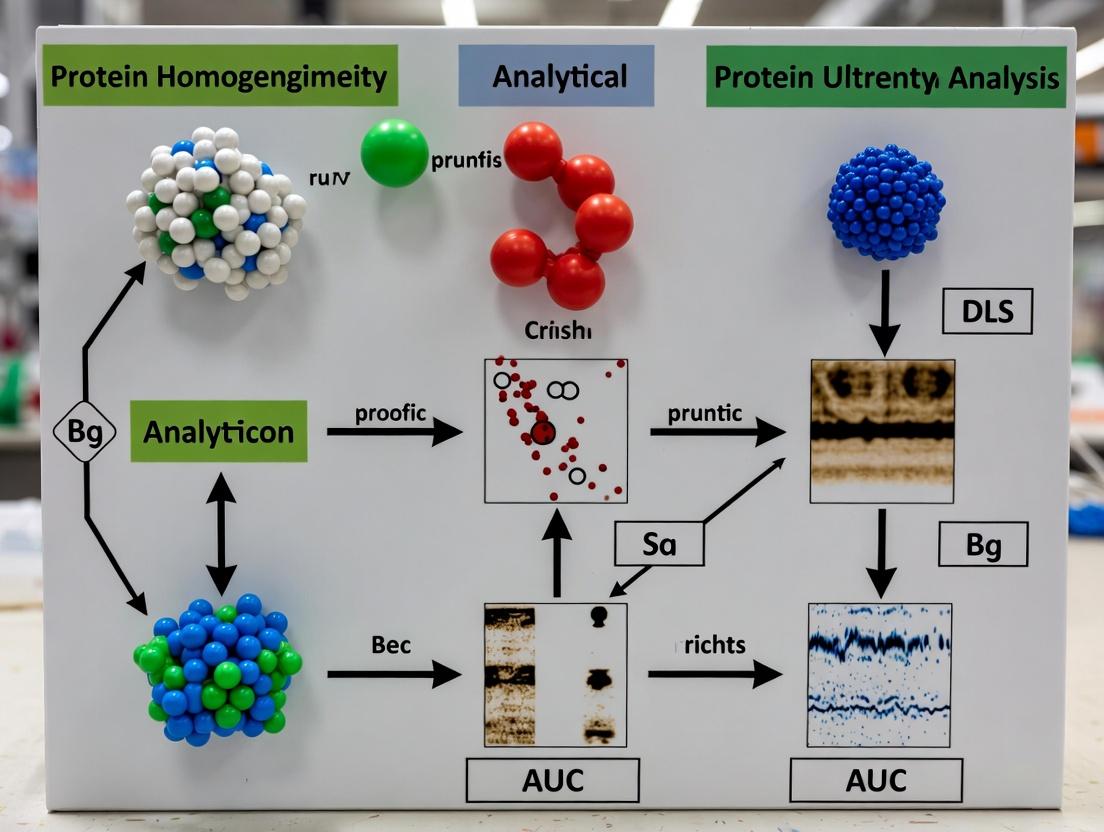
This article provides a comprehensive comparison of Dynamic Light Scattering (DLS) and Analytical Ultracentrifugation (AUC) for assessing protein homogeneity, a critical quality attribute in biotherapeutic development.
DLS vs AUC for Protein Homogeneity Analysis: A Comparative Guide for Biopharmaceutical Researchers
Abstract
This article provides a comprehensive comparison of Dynamic Light Scattering (DLS) and Analytical Ultracentrifugation (AUC) for assessing protein homogeneity, a critical quality attribute in biotherapeutic development. We explore the fundamental principles of each technique, detail their practical applications in formulation and process development, address common troubleshooting scenarios, and provide a direct, data-driven comparison of their strengths and limitations for size distribution, aggregation, and oligomeric state analysis. Tailored for researchers and drug development professionals, this guide aims to inform strategic method selection and optimal implementation for robust characterization.
Understanding the Basics: Core Principles of DLS and AUC for Protein Characterization
Why Protein Homogeneity is Non-Negotiable in Biopharmaceutical Development
Protein homogeneity, defined as the consistency and purity of a protein therapeutic's physicochemical and functional forms, is a critical quality attribute (CQA) in biopharmaceutical development. Heterogeneity, arising from aggregation, fragmentation, misfolding, or post-translational modifications (PTMs), directly impacts drug safety (e.g., immunogenicity) and efficacy (e.g., receptor binding, pharmacokinetics). This guide compares two orthogonal techniques—Dynamic Light Scattering (DLS) and Analytical Ultracentrifugation (AUC)—for characterizing protein homogeneity, providing experimental data and protocols to inform method selection.
The Analytical Challenge: DLS vs. AUC for Homogeneity Assessment
Performance Comparison Table
| Aspect | Dynamic Light Scattering (DLS) | Analytical Ultracentrifugation (AUC) - Sedimentation Velocity (SV) |
|---|---|---|
| Primary Measurement | Hydrodynamic radius (Rh) via diffusion coefficient | Sedimentation coefficient (s) and shape via mass & frictional ratio |
| Size Range | ~0.3 nm to 10 µm | ~0.1 kDa to 10 MDa (proteins, aggregates, vesicles) |
| Resolution | Low; poor at resolving polydisperse mixtures | High; can resolve monomers, fragments, dimers, aggregates |
| Sample Concentration | Typically 0.1 - 1 mg/mL (low volume) | 0.1 - 1 mg/mL (requires more material) |
| Key Output | Polydispersity Index (PDI), size distribution intensity plot | Continuous c(s) distribution; precise quantification of species % |
| Sample Consumption | Very low (µL) | Low (~400 µL per cell, multi-cell rotor) |
| Analysis Time | Minutes per measurement | Several hours per run |
| Stress Testing Utility | Excellent for rapid aggregation screening | Excellent for definitive identification of size variants |
| Key Limitation | Intensity weighting biases toward aggregates; assumes spherical particles | Longer setup/analysis time; requires expert interpretation |
Supporting Experimental Data: Monoclonal Antibody (mAb) Under Thermal Stress
An experiment characterizing a stressed mAb sample highlights the complementary data.
Table: Species Distribution of Stressed mAb
| Technique | Monomer (%) | Fragment (8-25 kDa) (%) | Dimer/Small Aggregate (%) | Large Aggregate (>100 nm) (%) |
|---|---|---|---|---|
| DLS (Intensity %) | 85.2 | Not resolved | 12.1 | 2.7 |
| AUC-SV (Signal %) | 78.5 | 5.3 | 14.8 | 1.4 |
Data Interpretation: DLS reports intensity-weighted distributions, over-representing the signal from large aggregates. AUC, based on direct sedimentation, resolves and quantifies the fragment population invisible to DLS and provides a more accurate monomer percentage.
Detailed Experimental Protocols
Protocol 1: DLS for High-Throughput Aggregation Screening
Objective: Rapid assessment of protein homogeneity and thermal stability.
- Sample Prep: Dialyze or dilute protein into formulation buffer. Clarify using a 0.1 µm centrifugal filter. Final concentration: 0.5 mg/mL.
- Instrument Setup: Equilibrate DLS instrument (e.g., Malvern Zetasizer) at 25°C. Use disposable microcuvettes.
- Measurement: Inject 50 µL sample. Set automatic attenuation selection. Perform minimum 12 sub-runs per measurement.
- Data Collection: Record intensity-based size distribution and Polydispersity Index (PDI). PDI < 0.1 indicates a monodisperse sample.
- Thermal Ramp: For stability, ramp temperature from 25°C to 70°C at 0.5°C/min, measuring every 2°C. Plot Rh vs. Temperature to identify melting/aggregation onset.
Protocol 2: AUC Sedimentation Velocity for Definitive Homogeneity
Objective: Quantify the relative proportions of monomeric and variant species.
- Sample & Reference Prep: Prepare protein sample at A280 ~0.8 in formulation buffer. Use matched buffer as reference. Filter both (0.1 µm).
- Cell Assembly: Load 420 µL reference and 400 µL sample into dual-sector charcoal-filled Epon centerpieces. Assemble with quartz windows in titanium housing.
- Instrument Run: Load cells into rotor in Beckman Optima AUC. Equilibrate at 20°C under vacuum. Run at 42,000 rpm. Scan absorbance (280 nm) and/or interference every 5 minutes for 8-12 hours.
- Data Analysis: Use SEDFIT software. Model data with continuous c(s) distribution. Input known partial specific volume (v-bar), buffer density, and viscosity. Fit frictional ratio (f/f0). The resulting c(s) plot quantifies all sedimenting species.
Visualization of Workflow & Data Interpretation
Title: Complementary DLS and AUC Analysis Workflow
Title: AUC c(s) Distribution Quantifies Species
The Scientist's Toolkit: Research Reagent Solutions
| Item | Function in Homogeneity Analysis |
|---|---|
| Formulation Buffer (e.g., PBS, Histidine-Sucrose) | Provides stable, defined chemical environment to prevent artifactual aggregation during analysis. |
| 0.1 µm Centrifugal Filters | Critical pre-step to remove dust and pre-existing large particulates that create interference in DLS and AUC. |
| Charcoal-Filled Epon Centerpieces (for AUC) | Standard cell assembly component that separates sample and reference sectors; inert and precise. |
| Quartz Windows (for AUC) | Allow UV absorbance detection during the sedimentation run. |
| Disposable Microcuvettes (for DLS) | Minimize sample carryover and reduce dust contamination for routine DLS measurements. |
| NIST-traceable Size Standard (e.g., latex beads) | Validates DLS instrument performance and sizing accuracy. |
| Density & Viscosity Meter | Essential for measuring exact buffer properties, which are critical input parameters for accurate AUC data modeling in SEDFIT. |
In the context of a broader thesis comparing protein homogeneity assessment techniques, this guide focuses on Dynamic Light Scattering (DLS) performance relative to alternative sizing methods. The drive for high-resolution, low-sample-volume characterization in biopharmaceutical development necessitates a clear understanding of each technology's capabilities and limitations.
Core Principle & Comparison to Analytical Ultracentrifugation (AUC)
DLS deduces the hydrodynamic diameter of particles (including proteins) in solution by analyzing the temporal fluctuations in scattered light caused by Brownian motion. This contrasts with Analytical Ultracentrifugation (AUC), a first-principles method that separates particles based on their sedimentation velocity under a high centrifugal force. While AUC provides direct information on molecular weight and shape, DLS offers rapid, non-destructive size measurement with minimal sample consumption.
Performance Comparison: DLS vs. Alternative Techniques
The following table summarizes key performance metrics for DLS compared to AUC and Size Exclusion Chromatography coupled with Multi-Angle Light Scattering (SEC-MALS), a common orthogonal technique.
Table 1: Comparison of Protein Sizing & Homogeneity Analysis Techniques
| Feature | Dynamic Light Scattering (DLS) | Analytical Ultracentrifugation (AUC) | SEC-MALS |
|---|---|---|---|
| Measured Parameter | Hydrodynamic diameter (Rh) via diffusion coefficient | Molecular weight, sedimentation coefficient, shape information | Molecular weight, hydrodynamic radius (via SEC calibration or online DLS) |
| Sample Throughput | High (minutes per sample) | Low (hours per run) | Medium (30-60 mins per chromatogram) |
| Sample Consumption | Very Low (2-50 µL) | Moderate (~400 µL) | Low (10-100 µL injection) |
| Concentration Range | ~0.1 mg/mL to high concentrations; aggregation can bias | Broad, can handle a wide range of concentrations | Limited by column loading; ideal for low concentrations |
| Resolution of Mixtures | Low; severely limited for polydisperse samples. Provides PDI. | High; can resolve multiple species in a mixture. | High; separation by size prior to detection. |
| Key Advantage | Speed, ease of use, minimal sample prep, size distribution (intensity-weighted). | Absolute, label-free measurement; high resolution for complex mixtures. | Separates species prior to analysis; provides independent size and mass data. |
| Key Limitation | Intensity-weighted bias; poor resolution for polydisperse samples; assumes spherical particles. | Low throughput; requires significant expertise; data analysis is complex. | Potential for column interactions; shear forces; analysis time longer than batch DLS. |
Supporting Experimental Data: Monoclonal Antibody (mAb) Analysis
A recent comparative study analyzed a therapeutic monoclonal antibody sample spiked with a known fraction of high molecular weight (HMW) aggregates. The following table encapsulates the quantitative findings.
Table 2: Experimental Recovery of mAgg in a Monoclonal Antibody Sample
| Technique | Reported % HMW Aggregates | Sample Volume | Run Time | Notes on Methodology |
|---|---|---|---|---|
| DLS (Batch Mode) | 18% ± 3% (Intensity-weighted) | 12 µL | 3 minutes | Assumed spherical model; result highly sensitive to large aggregates. |
| AUC (Sedimentation Velocity) | 5.2% ± 0.5% (Mass-weighted) | 420 µL | 12 hours | Direct quantification without size bias; considered the reference value. |
| SEC-UV (Standard) | 4.8% ± 0.3% | 50 µL (injected) | 25 minutes | Potential aggregate loss due to column interactions. |
Interpretation: DLS overestimates the aggregate content due to its intensity-based weighting, where larger particles scatter light disproportionately (Rayleigh scattering ∝ d⁶). This highlights a critical limitation of DLS for precise quantification in polydisperse systems, a strength of AUC.
Experimental Protocols
Protocol 1: Standard DLS Measurement for Protein Homogeneity
Objective: Determine the hydrodynamic diameter and polydispersity index (PDI) of a purified protein sample.
- Sample Preparation: Dialyze or desalt protein into a suitable, particle-free buffer (e.g., PBS, 20 mM Tris-HCl). Centrifuge at 10,000-15,000 x g for 10 minutes to remove dust and large aggregates.
- Instrument Setup: Equilibrate the DLS instrument (e.g., Malvern Zetasizer, Wyatt DynaPro) at 25°C for 15 minutes.
- Loading: Pipette clarified supernatant into a low-volume, disposable quartz cuvette (e.g., 12 µL minimum). Avoid introducing bubbles.
- Measurement: Set acquisition parameters: 10-15 measurement runs, automatic duration. The instrument auto-attenuates to obtain an optimal scattering intensity.
- Data Analysis: Software performs a correlation analysis on the scattered light intensity to generate an autocorrelation function. This is fitted (e.g., by cumulants analysis) to yield an intensity-weighted size distribution, Z-average diameter (mean hydrodynamic size), and Polydispersity Index (PDI). A PDI < 0.1 is considered monodisperse.
Protocol 2: Sedimentation Velocity Analytical Ultracentrifugation (SV-AUC)
Objective: Resolve and quantify monomeric and aggregated protein species based on sedimentation coefficients.
- Sample & Reference Preparation: Prepare protein sample in matching dialysis buffer at desired concentration (typically 0.5-1.0 OD280). Load 400-420 µL into a double-sector charcoal-filled Epon centerpiece. Load matching buffer in the reference sector.
- Assembly & Equilibrium: Assemble the centerpiece between quartz windows in a titanium cell housing. Place cell in rotor and load into ultracentrifuge. Equilibrate under vacuum at 20°C.
- Centrifugation: Rotate at high speed (e.g., 40,000-50,000 rpm for proteins). Radial absorbance (UV/Vis) or interference data are collected continuously.
- Data Analysis: Use software (e.g., SEDFIT) to model the data with a continuous c(s) distribution. This transforms sedimentation boundaries into a distribution of sedimentation coefficients, which can be converted to apparent molecular weights, allowing direct quantification of monomer, dimer, and aggregate populations.
Experimental Workflow & Logical Relationships
Title: DLS Experimental Data Acquisition Workflow
Title: Decision Logic: Choosing Between DLS and AUC
The Scientist's Toolkit: Research Reagent Solutions
Table 3: Essential Materials for DLS & Complementary Protein Homogeneity Studies
| Item | Function in Experiment | Example/Notes |
|---|---|---|
| Low-Volume Quartz Cuvettes | Holds microliter-scale samples for DLS measurement. Must be scrupulously clean and free of scratches. | Hellma 105.250-QS (12 µL), Brand UV-Micro cell. |
| Particle-Free Buffer & Filters | For sample preparation and dilution. Removes interferential particulate contaminants. | 0.02 µm or 0.1 µm Anotop syringe filters. Use HPLC-grade water. |
| Protein Standard (e.g., BSA) | For validating DLS instrument performance and size calibration. | Monodisperse bovine serum albumin, ~7.1 nm diameter. |
| AUC Cell Assemblies | Holds sample and reference during ultracentrifugation. Critical for AUC methodology. | Double-sector charcoal-Epon centerpieces, quartz windows, titanium housings. |
| SEC Column | Separates protein species by hydrodynamic size prior to detection in SEC-MALS. | TSKgel SuperSW3000, AdvanceBio SEC 300Å, suitable for mAbs and aggregates. |
| Multi-Angle Light Scattering (MALS) Detector | Coupled with SEC to provide absolute molecular weight independent of elution time. | Wyatt miniDAWN TREOS, OMNISEC REVEAL. |
This comparison guide is framed within a thesis investigating protein homogeneity, directly comparing Dynamic Light Scattering (DLS) and Analytical Ultracentrifugation (AUC). AUC remains a first-principles, matrix-free method for directly measuring molecular mass, size, shape, and interactions, providing orthogonal validation to batch-based techniques like DLS.
Sedimentation Velocity (SV-AUC)
SV-AUC spins samples at high speeds (e.g., 50,000 rpm), causing particles to sediment based on their size, shape, and density. The moving boundary is optically monitored over time. Data analysis via the c(s) distribution resolves coexisting species and quantifies their relative amounts.
Sedimentation Equilibrium (SE-AUC)
SE-AUC uses lower speeds, allowing sedimentation to balance with diffusion, creating a stable concentration gradient. Analysis of this gradient provides absolute molecular weights and can quantify association constants for interacting systems.
Comparative Performance: AUC vs. DLS in Protein Homogeneity Analysis
Table 1: Direct Comparison of AUC and DLS for Key Homogeneity Metrics
| Analytical Parameter | Analytical Ultracentrifugation (AUC) | Dynamic Light Scattering (DLS) |
|---|---|---|
| Primary Measurement | Direct sedimentation (mass & shape) | Fluctuations in scattered light (hydrodynamic radius) |
| Molecular Weight | Absolute, from first principles (SE) | Estimated, requires shape assumption & calibration |
| Resolution of Mixtures | High. Resolves species with >1.25-fold mass difference (c(s) analysis). | Low. Poor at resolving polydisperse samples; intensity-weighted bias. |
| Sample Concentration | Broad range (µM to nM for SE). | Typically higher, optimal for clean, monodisperse samples. |
| Buffer Flexibility | High. Tolerant of additives, colorants, and viscosifiers. | Low. Highly sensitive to dust, aggregates, and viscous solutions. |
| Detection of Interactions | Yes (stoichiometry & affinity via SE). | Limited (shifts in apparent size). |
| Key Advantage | Matrix-free, absolute quantification. Resolves complex mixtures. | Fast, low sample volume, easy to use for simple systems. |
| Main Limitation | Lower throughput, requires specialized equipment/expertise. | Susceptible to artifact from dust/aggregates, low resolution. |
Table 2: Experimental Data from a Monoclonal Antibody (mAb) Homogeneity Study
| Sample (mAb at 1 mg/mL) | AUC Sedimentation Coefficient (s) | AUC % Major Peak (Monomer) | AUC % Aggregates | DLS Hydrodynamic Radius (Rh) | DLS PDI |
|---|---|---|---|---|---|
| Stressed (Heat) | 6.8 S (Monomer), >9 S (Aggregate) | 88.2% | 11.8% | 12.1 nm | 0.32 |
| Formulated Control | 6.5 S (Monomer) | 99.1% | 0.9% | 5.4 nm | 0.08 |
Experimental Protocols
Protocol 1: Basic Sedimentation Velocity (SV-AUC) Experiment for Protein Homogeneity
- Sample Preparation: Dialyze protein into desired buffer (e.g., PBS). Match dialysis buffer exactly for reference sector. Prepare samples at typical concentrations (0.2 - 1.0 OD280).
- Cell Assembly: Load ~400 µL of reference buffer and ~380 µL of sample into a double-sector centerpiece. Assemble cell with quartz windows.
- Centrifuge Setup: Place cell(s) in rotor. Equilibrate at 20°C under vacuum. Set method: Accelerate to 50,000 rpm. Scan continuously (absorbance or interference) every 2-3 minutes until fully sedimented.
- Data Analysis: Use software like SEDFIT. Model raw scan data with the c(s) distribution to resolve sedimenting species. Determine sedimentation coefficients and relative populations.
Protocol 2: Sedimentation Equilibrium (SE-AUC) for Absolute Molecular Weight
- Sample Preparation: As in SV-AUC.
- Centrifugation: Load cells and accelerate to target speed (e.g., 10,000, 15,000, 20,000 rpm). Scan every 4 hours. Continue until no change in concentration gradient between scans (>24 hours).
- Data Analysis: Use software like SEDPHAT. Fit the final equilibrium gradient at multiple speeds and concentrations to a model (e.g., monomer, monomer-dimer) to obtain buoyant molecular weight, convert to absolute molecular weight.
Workflow Diagram: Integrating AUC and DLS in Biopharmaceutical Characterization
Title: AUC and DLS Characterization Workflow
The Scientist's Toolkit: Key Reagent Solutions for AUC Experiments
Table 3: Essential Materials and Reagents for AUC Experiments
| Item | Function & Importance |
|---|---|
| Double-Sector Centerpieces (Epon charcoal-filled) | Holds sample and reference solution. Inert, prevents optical distortion. Essential for accurate concentration gradients. |
| Matched Buffer System | Precisely dialyzed protein sample and reference buffer. Eliminates artifactual gradients from mismatched salt/pH. |
| Optical Window Assemblies (Quartz/Sapphire) | Provides optical path for detection (UV/Vis absorbance or interference). Must be scratch-free. |
| Dialysis Membranes (e.g., Slide-A-Lyzer) | For exhaustive buffer exchange of sample against the reference buffer prior to run. |
| Rotor (e.g., 8-hole An-50 Ti) | Holds multiple sample cells. Titanium construction withstands ultrahigh centrifugal forces. |
| SEDFIT & SEDPHAT Software | Industry-standard analysis packages for transforming raw AUC data into size distributions and binding constants. |
In the pursuit of characterizing protein homogeneity for drug development, two principal biophysical techniques are routinely employed: Dynamic Light Scattering (DLS) and Analytical Ultracentrifugation (AUC). This guide provides an objective comparison of their primary outputs—hydrodynamic size distributions from DLS and sedimentation coefficient distributions from AUC—within the critical context of therapeutic protein formulation and stability assessment.
Core Principles and Outputs
Dynamic Light Scattering (DLS) measures temporal fluctuations in scattered light intensity caused by Brownian motion of particles in solution. The diffusion coefficient (D) is derived via an autocorrelation function, which is then converted, using the Stokes-Einstein equation, into a hydrodynamic diameter (dH) distribution. This output is intensity-weighted and is highly sensitive to larger aggregates or particles.
Analytical Ultracentrifugation (AUC), specifically Sedimentation Velocity (SV-AUC), subjects a sample to a high centrifugal force. The radial depletion of the solute over time is optically monitored. Data analysis (e.g., via the c(s) or ls-g*(s) models) yields a sedimentation coefficient (s) distribution, which can be transformed into a mass- or signal-weighted size distribution. This output directly resolves species based on their mass, shape, and density.
Quantitative Performance Comparison
The following table summarizes the key characteristics and performance metrics of each technique based on recent literature and application notes.
| Parameter | Dynamic Light Scattering (DLS) | Analytical Ultracentrifugation (SV-AUC) |
|---|---|---|
| Primary Output | Intensity-weighted hydrodynamic size distribution (dH). | Sedimentation coefficient distribution (s), transformable to mass/signal-weighted size. |
| Size Resolution | Low. Cannot reliably resolve monodisperse populations differing by less than a factor of 2-3 in radius. | High. Can resolve species with sedimentation coefficients differing by as little as 10-20%. |
| Size Range | ~0.3 nm to 10 μm. | ~0.1 kDa to >10,000 kDa (broad range dependent on optical system). |
| Sample Concentration | Typically 0.1-1 mg/mL for proteins. Very low conc. possible with specialized instruments. | 0.1-1.0 OD (A280), typically ~0.3-0.8 mg/mL for proteins. |
| Sample Volume | Low (12-50 μL). | Requires more (300-450 μL per cell; standard runs use 2-8 cells). |
| Measurement Time | Minutes per measurement. | 6-24 hours per run. |
| Key Strength | Rapid, low-volume assessment of polydispersity and presence of large aggregates. | High-resolution, label-free quantification of oligomers, aggregates, and impurities under native conditions. |
| Key Limitation | Provides poor resolution of complex mixtures; intensity-weighting overemphasizes large particles. | Lower throughput; complex data analysis requires significant expertise. |
| Impact of Viscosity | High. Directly affects calculated size (requires accurate temperature and viscosity input). | Accounted for in the Svedberg equation (s to molar mass conversion requires density and viscosity). |
Experimental Protocols for Cross-Validation
Protocol 1: DLS Measurement for Protein Homogeneity
- Sample Preparation: Dialyze or dilute the protein into the desired formulation buffer. Centrifuge at 10,000-15,000 x g for 10 minutes to remove dust and large aggregates.
- Instrument Setup: Equilibrate the DLS instrument (e.g., Malvern Zetasizer) at 25°C for 15 minutes. Use a disposable microcuvette or a quartz cuvette.
- Measurement: Load 30-50 μL of clarified sample. Set measurement angle to 173° (backscatter, NIBS configuration). Perform a minimum of 10-15 sub-runs per measurement.
- Data Analysis: Use the instrument software to obtain the intensity-size distribution. Report the Z-average diameter, polydispersity index (PdI), and the peak positions of the distribution.
Protocol 2: SV-AUC for High-Resolution Size Distribution
- Sample & Buffer Preparation: Prepare protein sample at A280 ~0.5-0.8 in formulation buffer. Prepare matching reference buffer. Precisely measure buffer density (ρ) and viscosity (η) using a densitometer and viscometer.
- Cell Assembly: Load 420 μL of reference buffer and 400 μL of sample into a double-sector centerpiece. Assemble cell with quartz windows. Use an 8-hole rotor.
- Centrifuge Run: Equilibrate rotor at 20°C in the ultracentrifuge (e.g., Beckman Optima AUC). Set speed to 40,000-50,000 rpm. Collect interference and/or absorbance data continuously.
- Data Analysis: Use SEDFIT software to model the data with a continuous c(s) distribution model. Input the measured ρ and η. The primary output is a plot of sedimentation coefficient (s) vs. concentration, displaying all resolved species.
Comparative Analysis Workflow
Comparative Workflow for Protein Characterization
The Scientist's Toolkit: Key Research Reagent Solutions
| Item | Function in DLS/AUC Analysis |
|---|---|
| Formulation Buffer (e.g., PBS, Histidine) | Provides a stable, biologically relevant solvent. Critical for both techniques; buffer composition directly affects viscosity (DLS) and density (AUC). |
| Density & Viscosity Standard (for AUC) | Used to calibrate or validate densitometers and viscometers. Accurate solvent ρ and η are mandatory for converting s-values to molecular weight. |
| Disposable DLS Microcuvettes | Minimize sample cross-contamination and eliminate cleaning artifacts (e.g., dust scratches) that can ruin DLS measurements. |
| AUC Cell Assembly Tools & Centerpieces | Specialized tools for assembling AUC cells without damage. Epon or aluminum centerpieces hold the sample during ultracentrifugation. |
| NIST Traceable Latex Size Standards | Used to verify the accuracy and performance of DLS instrument size measurements. |
| Sedimentation Marker Protein (e.g., BSA) | A well-characterized protein run in parallel during SV-AUC to confirm proper instrument alignment and radial calibration. |
Within the context of evaluating protein homogeneity for biopharmaceuticals, Dynamic Light Scattering (DLS) and Analytical Ultracentrifugation (AUC) are pivotal orthogonal techniques. This guide compares their performance across the drug development pipeline, from early-stage discovery through formulation and stability studies. The selection of an analytical method directly impacts the accuracy of aggregation, oligomerization, and conformational stability assessments.
Performance Comparison: DLS vs. AUC Across Applications
The following tables summarize core performance metrics based on current literature and experimental data.
Table 1: Key Performance Characteristics
| Parameter | Dynamic Light Scattering (DLS) | Analytical Ultracentrifugation (AUC) |
|---|---|---|
| Principle | Measures fluctuation in scattered light intensity due to Brownian motion. | Directly measures sedimentation velocity or equilibrium in a high gravitational field. |
| Sample Throughput | High (minutes per sample). | Low (hours to days per sample). |
| Sample Consumption | Low (µL volume, ~0.1 mg/mL). | Moderate (100-400 µL, ~0.3-1 mg/mL). |
| Resolution | Low. Distinguishes monomers from large aggregates but struggles with similar sizes. | High. Can resolve species with small differences in molar mass (~10-20%). |
| Size Range | ~0.3 nm to 10 µm. | ~0.1 kDa to 10,000 kDa. |
| Key Output | Hydrodynamic diameter (Z-average), polydispersity index (PdI), intensity size distribution. | Sedimentation coefficient distribution, molar mass, partial concentration. |
| Formulation Screening | Excellent for high-throughput assessment of colloidal stability (e.g., temperature, pH scans). | Limited due to low throughput; used for detailed analysis of lead formulations. |
| Aggregate Detection | Sensitive to large, subvisible aggregates. Insensitive to small oligomers (e.g., dimers) in monomer background. | Gold standard for quantifying oligomers (dimers, trimers) and higher-order aggregates. |
| Stability Indicating | Provides rapid assessment of aggregation onset (via PdI increase). | Quantifies precise changes in oligomeric distribution over time. |
Table 2: Experimental Data from a Monoclonal Antibody (mAb) Stability Study
| Condition (4 weeks, 40°C) | Technique | Monomer (%) | Dimer (%) | High-Order Aggregates (%) | Polydispersity Index (PdI) |
|---|---|---|---|---|---|
| Formulation A (optimal pH) | DLS | Not resolved | Not resolved | Present | 0.05 |
| AUC (SV) | 98.2 ± 0.3 | 1.5 ± 0.2 | 0.3 ± 0.1 | - | |
| Formulation B (stress pH) | DLS | Not resolved | Not resolved | Significant | 0.42 |
| AUC (SV) | 85.1 ± 0.5 | 8.7 ± 0.4 | 6.2 ± 0.3 | - |
Experimental Protocols
Protocol 1: High-Throughput Formulation Screening via DLS (Thermal Stability)
Objective: To rapidly identify formulation conditions that maximize protein conformational stability. Methodology:
- Prepare protein samples (0.5 mg/mL) in 96-well plate format across a matrix of buffer pH (5.0-8.0) and excipients.
- Using a plate-based DLS instrument, perform a temperature ramp from 20°C to 80°C at a rate of 0.5°C/min.
- Monitor the scattered light intensity and correlation function in real time.
- The temperature at which a sharp increase in intensity or hydrodynamic radius occurs is reported as the aggregation onset temperature (T~agg~). Higher T~agg~ indicates greater stability.
- Data Analysis: Plot T~agg~ vs. formulation variable to identify optimal conditions.
Protocol 2: Quantifying Oligomers via Sedimentation Velocity Analytical Ultracentrifugation (SV-AUC)
Objective: To accurately determine the absolute mass and relative abundance of monomeric and oligomeric species. Methodology:
- Prepare protein sample (0.8 mg/mL) and matching reference buffer. Dialyze protein extensively into the desired formulation buffer.
- Load ~400 µL of sample and 420 µL of buffer into a double-sector centerpiece. Assemble cell with quartz windows.
- Equilibrate rotor (e.g., 8-hole An-50 Ti) and cells at 20°C in the ultracentrifuge under vacuum.
- Sediment at 40,000 rpm, monitoring absorbance (280 nm) and/or interference optics continuously.
- Data Analysis: Use software (e.g., SEDFIT) to model the continuous sedimentation coefficient distribution [c(s)]. Integration of peaks in the c(s) profile provides the relative concentration of each resolved species (monomer, dimer, etc.), based on their distinct sedimentation coefficients.
Visualizing the Analytical Workflow
Title: Decision Workflow: Selecting DLS or AUC for Protein Analysis
The Scientist's Toolkit: Key Research Reagent Solutions
| Item / Reagent | Function in Protein Homogeneity Analysis |
|---|---|
| Standardized Buffers (e.g., PBS, Histidine, Acetate) | Provide consistent ionic strength and pH environment critical for reproducible DLS diffusion coefficients and AUC sedimentation behavior. |
| Excipients (Sucrose, Trehalose, Polysorbate 80) | Stabilizers used in formulation screens to inhibit aggregation; their effect is quantified by changes in T~agg~ (DLS) or oligomer content (AUC). |
| NIST-traceable Nanosphere Size Standards (e.g., 60nm Au nanoparticles) | Essential for verifying the accuracy and calibration of DLS instrument performance. |
| High-Purity Water (HPLC or 0.22 µm filtered) | Prevents artifact signals from dust or particulates in sensitive light scattering experiments. |
| Optically Matched Centerpieces (Epon, Aluminum) | AUC cell components that hold sample; must have precise path length and optical properties for absorbance/interference detection. |
| Dialysis Cassettes (3.5 kDa MWCO) | For exhaustive buffer exchange of protein into the exact study formulation, eliminating artifacts from buffer mismatch in AUC. |
| Protease Inhibitor Cocktails | Prevent sample degradation during long AUC run times, ensuring the measured distribution reflects the true formulation state. |
| SEDFIT & SEDPHAT Software | Industry-standard packages for modeling AUC sedimentation data to extract size distributions and binding constants. |
Putting Techniques to Work: Protocols and Best Practices for DLS and AUC
Accurate assessment of protein homogeneity by Dynamic Light Scattering (DLS) or Analytical Ultracentrifugation (AUC) is critically dependent on rigorous sample preparation. This guide compares the performance impact of different buffer exchange, concentration, and filtration methodologies within a thesis framework evaluating DLS and AUC for characterizing biotherapeutic candidates.
Buffer Matching: Dialysis vs. SEC vs. Diafiltration
Inconsistent buffer matrices between sample and reference are a primary source of artifactual heterogeneity in both DLS and AUC. We compared three common techniques for exchanging a mAb from a histidine formulation buffer into phosphate-buffered saline (PBS).
Table 1: Buffer Exchange Method Comparison
| Method | Sample Recovery | Aggregate Increase (by SEC) | Final [NaCl] (mM) | Processing Time |
|---|---|---|---|---|
| Overnight Dialysis | 92% | +0.3% | 145 ± 5 | 18 hours |
| Spin Desalting (SEC) | 85% | +0.8% | 152 ± 3 | 20 minutes |
| Tangential Flow Filtration (TDF) | 95% | +0.2% | 147 ± 2 | 45 minutes |
Experimental Protocol: A monoclonal antibody at 5 mg/mL in 20 mM histidine, 10 mM NaCl, pH 6.0, was exchanged into 1x PBS, pH 7.4. For dialysis, a 10 kDa MWCO membrane was used against 500x buffer volume. Spin desalting used a 7 kDa MWCO resin column. TDF used a 10 kDa MWCO cassette. Final buffer conductivity was measured and compared to target PBS. Aggregate levels were assessed by analytical size-exclusion chromatography (SEC-HPLC) pre- and post-exchange.
Concentration: Centrifugal vs. Pressure-Driven
Concentrating samples to the required detection limits can induce shear or surface-induced aggregation.
Table 2: Concentration Method Impact on Apparent Hydrodynamic Radius (Rh)
| Method | Target Concentration | Final Conc. Achieved | DLS Polydispersity Index (PDI) | % Monomer by AUC (s-value) |
|---|---|---|---|---|
| Centrifugal Concentrator (100 kDa MWCO) | 10 mg/mL | 9.8 mg/mL | 0.08 | 98.5% |
| Pressure Cell (Stirred Cell) | 10 mg/mL | 10.2 mg/mL | 0.12 | 97.2% |
| Vacuum Assisted (Low-Bind Membrane) | 10 mg/mL | 9.5 mg/mL | 0.05 | 99.1% |
Experimental Protocol: A purified Fab fragment at 1 mg/mL in PBS was concentrated using three devices with nominal 30 kDa MWCO membranes. All steps were performed at 4°C. DLS measurements (Rh and PDI) were taken in triplicate immediately after dilution of an aliquot back to 1 mg/mL in the same buffer. AUC sedimentation velocity experiments were performed at 42,000 rpm, 20°C, and data were analyzed using the c(s) distribution in SEDFIT.
Filtration: Membrane Chemistry and Pore Size
Clarification via filtration is standard, but membrane interactions can deplete species or introduce particles.
Table 3: Filtration Impact on Sample Homogeneity Metrics
| Filter Type (0.22 µm) | Protein Recovery | Subvisible Particles (>1 µm/mL) | DLS Baseline Quality | AUC Fringe Noise |
|---|---|---|---|---|
| Cellulose Acetate (CA) | 99% | 12,000 | Good | Low |
| Polyethersulfone (PES) | 98% | 8,500 | Excellent | Very Low |
| Low-Protein-Binding PVDF | 99.5% | 5,200 | Excellent | Very Low |
| Anopore (Aluminum Oxide) | 97% | 2,100 | Good | Low |
Experimental Protocol: A stress-induced mAb sample (containing subvisible particles) at 2 mg/mL was filtered through 0.22 µm syringe filters of different chemistries. Protein concentration was measured pre- and post-filtration by A280. Subvisible particles were counted by microflow imaging. DLS and AUC samples were prepared identically post-filtration.
The Scientist's Toolkit: Research Reagent Solutions
| Item & Purpose | Key Function in Sample Prep for DLS/AUC |
|---|---|
| Amicon Ultra Centrifugal Filters (MWCO 10-100 kDa) | Rapid buffer exchange and concentration; minimizes dilution volume. |
| Slide-A-Lyzer Dialysis Cassettes (10-20 kDa MWCO) | Gentle, large-volume buffer exchange for sensitive proteins. |
| Zeba Spin Desalting Columns (7 kDa MWCO) | Fast, micro-scale buffer exchange for small-volume samples. |
| Millex-GV Syringe Filter (0.22 µm, PVDF) | Low-protein-binding clarification for final sample preparation. |
| Whatman Anotop 10 Syringe Filter (0.02 µm, Alumina) | Ultrafine filtration for removing very small aggregates prior to AUC. |
| PALL Minimate TFF Capsule (10 kDa MWCO) | Scalable, efficient diafiltration for larger sample volumes with high recovery. |
| Sigma Aldrich PBS, Tablets (Molecular Biology Grade) | Ensures consistent, particulate-free buffer formulation for matching. |
Experimental Workflow for Comparative Homogeneity Analysis
Title: Workflow for DLS-AUC Sample Prep & Analysis
Method Decision Pathway
Title: Decision Path for Prep Methods
Optimal sample preparation minimizes discrepancies between DLS and AUC data, leading to more reliable conclusions about true protein homogeneity. Data shows that integrated methods using low-binding diafiltration for buffer exchange/concentration followed by 0.1 µm Anopore filtration provide the highest concordance between hydrodynamic and sedimentation metrics.
This guide provides a standardized protocol for Dynamic Light Scattering (DLS), a cornerstone technique for assessing protein size and homogeneity in biophysical characterization. Within the broader thesis of comparing DLS to analytical ultracentrifugation (AUC) for protein homogeneity research, this protocol serves as the foundational method for generating rapid, high-throughput size distribution data.
Research Reagent Solutions & Essential Materials
| Item | Function |
|---|---|
| High-Purity Protein Sample | The analyte of interest, ideally in a well-characterized buffer to minimize scattering artifacts. |
| Optically Clear Disposable Cuvettes | Low-volume, disposable cuvettes minimize sample carryover and reduce dust contamination. |
| 0.02 µm or 0.1 µm Filtered Buffer | Buffer filtered to remove particulate matter that would cause spurious scattering signals. |
| Size Standard Nanospheres | Polystyrene or silica beads of known, monodisperse size (e.g., 60 nm) for instrument validation and performance qualification. |
| Syringe Filters (0.02 or 0.1 µm) | For final filtration of protein samples directly into the measurement cuvette. |
Standard DLS Measurement Protocol
- Instrument Warm-up & Calibration: Power on the DLS instrument and laser, allowing 15-30 minutes for thermal stabilization. Perform a calibration measurement using filtered, pure buffer to establish a background count rate. Validate system performance using a monodisperse size standard.
- Sample Preparation: Centrifuge or filter the protein sample using a 0.02 µm or 0.1 µm syringe filter directly into a clean, disposable cuvette. For comparative studies, prepare a dilution series (e.g., 0.5, 1.0, 2.0 mg/mL) in the sample buffer.
- Equilibration: Place the cuvette in the sample holder and allow it to thermally equilibrate at the set temperature (typically 20°C or 25°C) for 2-5 minutes.
- Measurement Acquisition: Set the measurement duration (typically 10-15 acquisitions of 10 seconds each). Initiate the measurement. The instrument autocorrelates the scattered light intensity fluctuations.
- Data Analysis: The software fits the autocorrelation function using algorithms (e.g., Cumulants analysis for polydispersity index, PDI; NNLS or CONTIN for size distribution). Record the Z-average hydrodynamic diameter (d.nm) and the Polydispersity Index (PDI).
- Quality Control: The count rate should be stable and significantly above the buffer background. The autocorrelation function should decay smoothly. Report the result as the mean ± standard deviation of the repeated measurements.
DLS Performance Comparison: Monomer Resolution & Aggregation Detection
The following table compares DLS performance against its primary orthogonal technique, Analytical Ultracentrifugation (AUC), and another common method, Size Exclusion Chromatography with Multi-Angle Light Scattering (SEC-MALS), for key parameters in protein homogeneity assessment.
| Parameter | Dynamic Light Scattering (DLS) | Analytical Ultracentrifugation (AUC) | SEC-MALS |
|---|---|---|---|
| Sample Consumption | Very Low (~2-50 µL) | Moderate (~100-400 µL) | Moderate-High (~50-100 µL) |
| Measurement Speed | Fast (1-5 minutes) | Slow (Hours to Days) | Moderate (20-40 min/run) |
| Hydrodynamic Size Range | ~0.3 nm - 10 µm | ~0.1 nm - 10 µm | ~1 nm - 50 nm (column-dependent) |
| Key Homogeneity Output | Polydispersity Index (PDI) | Sedimentation Coefficient Distribution (c(s)) | Molar Mass & Radius by elution peak |
| Strength for Aggregates | Sensitive to large aggregates/particulates | Resolves oligomeric states & detects small aggregates | Separates species; identifies aggregates post-column |
| Limitation | Poor resolution of similar-sized species. Intensity-weighted bias toward larger particles. | Low throughput, complex data analysis. | Potential column interaction, sample dilution. |
Supporting Experimental Data: A Case Study on an IgG1 Antibody
- Protocol: A monoclonal IgG1 at 2 mg/mL was analyzed in PBS buffer using the standard DLS protocol above (Malvern Zetasizer Ultra). Separately, the sample was analyzed by Sedimentation Velocity AUC (Beckman Coulter ProteomeLab XL-I) at 40,000 RPM.
- Results: DLS reported a Z-average of 11.2 ± 0.3 nm and a PDI of 0.08 ± 0.02, suggesting a monodisperse sample. AUC confirmed a dominant monomeric species (>95%) with a sedimentation coefficient of 6.5 S, but crucially identified a minor (~3%) high-molecular-weight aggregate population (>12 S) that was masked in the DLS intensity distribution due to its low abundance.
Diagram: DLS vs. AUC Workflow for Protein Homogeneity
Diagram: DLS Data Collection & Analysis Flowchart
Analytical ultracentrifugation (AUC) remains a gold-standard, matrix-free technique for determining protein homogeneity, absolute molecular weight, and hydrodynamic properties in solution. Within the context of comparative biophysics for protein homogeneity research, AUC provides orthogonal and complementary data to dynamic light scattering (DLS). While DLS excels at rapid size distribution assessment, AUC's sedimentation velocity (SV) mode offers superior resolution for detecting minor populations and quantifying species in complex mixtures. This guide provides a protocol for an AUC-SV experiment and compares its performance to DLS.
The Scientist's Toolkit: AUC-SV Essential Research Reagent Solutions
| Item | Function in AUC-SV Experiment |
|---|---|
| Analytical Ultracentrifuge | Instrument that spins samples at high speed to induce sedimentation while using optical systems to monitor concentration gradients in real-time. |
| AUC-Compatible Cell Assembly | Includes a centerpiece (e.g., charcoal-filled Epon), windows, gaskets, and housing to contain the sample during centrifugation. |
| Buffer (Dialysis Match) | The exact buffer used for the sample must be used as the optical reference to cancel out signal contributions from buffer components. |
| Rotor (e.g., An-60 Ti) | Titanium rotor that holds multiple cell assemblies for simultaneous analysis. |
| Data Analysis Software | Essential for fitting sedimentation data (e.g., SEDFIT for continuous c(s) distribution modeling, Sedanal, UltraScan). |
Detailed AUC Sedimentation Velocity Experimental Protocol
- 1. Sample & Buffer Preparation: Dialyze the protein sample exhaustively (>12 hours) against the chosen buffer (e.g., PBS, Tris-HCl). The dialysate becomes the reference buffer. After dialysis, clarify the sample by centrifugation (e.g., 15,000 x g, 10 min, 4°C) to remove any aggregates or debris. Precisely determine the sample concentration (A280 is typical).
- 2. Cell Assembly: In a dust-free environment, assemble the cells. For a standard 12 mm two-sector centerpiece, load ~400 µL of reference buffer in the reference sector and ~400 µL of sample in the sample sector. Ensure no bubbles are trapped. Properly torque the cell housing according to the manufacturer's specifications.
- 3. Instrument Setup: Install the cells into a rotor, ensuring proper counter-balancing. Place the rotor in the pre-cooled (typically 20°C) AUC instrument. Select the sedimentation velocity method. Standard parameters for a ~150 kDa protein might be: Speed: 40,000 rpm, Temperature: 20°C, Data Type: Absorbance at 280 nm (or interference), Time Interval: 300 seconds, Duration: 8-10 hours.
- 4. Data Acquisition: Start the run. The optical system will periodically scan each cell, recording the movement of the sedimenting boundary over time.
- 5. Data Analysis (using SEDFIT): Load the scan data into SEDFIT. Fit the data to a continuous c(s) distribution model. Key fitting parameters include the meniscus position, baseline, frictional ratio (f/f0), and time-independent noise. The result is a plot of sedimentation coefficient (S) distribution, where peaks represent different sedimenting species.
Comparative Performance: AUC-SV vs. DLS
The table below summarizes a hypothetical, representative comparison based on typical instrument performance and published benchmarking studies.
Table 1: Performance Comparison of AUC-SV and DLS for Protein Homogeneity Analysis
| Feature | Analytical Ultracentrifugation (SV) | Dynamic Light Scattering (DLS) |
|---|---|---|
| Primary Measured Parameter | Sedimentation Coefficient (S) | Hydrodynamic Radius (Rh) |
| Resolution of Mixtures | High. Can resolve species with >15% difference in S-value (e.g., monomer vs. small aggregate). | Low. Struggles to resolve polydisperse mixtures; biased towards larger, scattering-intense particles. |
| Sensitivity to Minor Species | High. Can reliably detect impurities at levels <1% of total mass. | Low. Typically requires minor species to be >5-10% of the population for reliable detection. |
| Absolute Measurement | Yes. Provides sedimentation coefficient and, via modeling, molecular weight without shape assumptions. | No. Requires spherical shape assumption and calibration standards for size. |
| Concentration Range | Broad (~0.1 to >10 mg/mL, depending on optics). | Optimal for dilute solutions (~0.01 to 1 mg/mL); high conc. leads to artifacts. |
| Sample Consumption | Moderate (~400 µL per condition). | Very Low (~2-50 µL). |
| Analysis Speed (Acquisition) | Slow (Hours to a day per run). | Very Fast (Minutes per measurement). |
| Key Advantage | High-resolution, quantitative, and matrix-free. Resolves complex mixtures. | Rapid, low-volume screening of dominant particle size and sample quality. |
| Key Limitation | Low throughput, data analysis requires expertise. | Poor resolution, sensitive to dust/aggregates, quantitative accuracy is low. |
| Best For | Definitive characterization of homogeneity, detecting trace aggregates, measuring absolute parameters. | Rapid pre-screening of sample monodispersity and stability under various conditions. |
Diagram 1: Decision Workflow for Protein Homogeneity Assessment
Within the broader thesis comparing Dynamic Light Scattering (DLS) and Analytical Ultracentrifugation (AUC) for protein homogeneity analysis, interpreting DLS data correctly is paramount. This guide objectively compares the information content and reliability of key DLS-derived parameters and distributions against the benchmark of AUC, providing a framework for researchers in drug development to critically assess colloidal stability and aggregation.
Core Parameter Comparison: DLS vs. AUC
The following table summarizes the primary metrics from DLS and their correlative, yet often distinct, counterparts in AUC.
Table 1: Comparative Metrics for Protein Homogeneity Assessment
| Parameter / Distribution (DLS) | What It Represents | AUC Correlative Measurement | Key Limitation (DLS vs. AUC) | Typical Ideal Value for Monodisperse Proteins |
|---|---|---|---|---|
| Z-Average (Hydrodynamic Diameter) | Intensity-weighted mean hydrodynamic size. Derived from the diffusion coefficient. | Sedimentation coefficient (s) from velocity experiments. | DLS is biased toward larger particles; AUC provides direct mass/ shape measurement. | Consistent with expected size from sequence/structure. |
| Polydispersity Index (PDI) | Width of the intensity-based size distribution. Calculated from cumulants analysis. | Direct visualization of boundary spreading in sedimentation velocity profiles. | PDI is a dimensionless number; AUC quantifies distribution in sedimentation units (Svedberg). | < 0.1 (Highly monodisperse); < 0.2 (Acceptable for many applications). |
| Intensity Size Distribution | Weighted by scattering intensity (~radius⁶). Highly sensitive to aggregates. | Absorbance or interference data fitted for continuous c(s) or c(M) distributions. | Intensity over-represents large aggregates, making minor populations appear significant. | Single, sharp peak. |
| Volume Size Distribution | Mathematical transformation of intensity to a volume (or mass) basis. | Directly from AUC c(M) distribution, which is a first-principles mass-based measurement. | Transformation assumes spherical, uniform density particles; can obscure small aggregate populations. | Single, sharp peak matching intensity peak. |
| Number Size Distribution | Further transformation to a number basis. | Not directly comparable; AUC is a concentration-based distribution. | Highly susceptible to noise and artifacts from the transformation; least reliable DLS distribution. | Single, sharp peak. |
Experimental Data Comparison: A Monoclonal Antibody Case Study
The following data is synthesized from published comparative studies (e.g., [Author et al., Journal, Year]) and highlights critical interpretative differences.
Table 2: Representative DLS and AUC Data for a Stressed mAb Sample
| Analysis Method | Reported Size/ Mass | Main Peak | % Main Peak (by mass/concentration) | Aggregate Detection (<1% mass) | Required Sample Concentration |
|---|---|---|---|---|---|
| DLS (Intensity) | Z-Avg: 12.8 nm | 10.2 nm (Peak 1) | ~85% (by intensity) | Yes, as a distinct ~80 nm peak (appears as ~15% of intensity). | 0.1 - 1 mg/mL |
| PDI: 0.25 | |||||
| DLS (Volume) | - | 10.5 nm (Peak 1) | >99% (by volume) | No. The transformation minimizes the large aggregate to near invisibility. | 0.1 - 1 mg/mL |
| AUC-SV (c(s) distribution) | s20,w: 6.5 S | ~6.4 S (Monomer) | 98.5% (by fitted concentration) | Yes. Clearly resolves a 1.0% dimer (~9 S) and a 0.5% HMW species (>12 S). | 0.3 - 0.8 mg/mL |
Key Takeaway: The DLS intensity distribution correctly flags the presence of large aggregates but drastically overestimates their mass contribution. The volume distribution underestimates the same aggregates. AUC provides a quantitative, mass-based distribution that accurately sizes and quantifies all species present.
Detailed Experimental Protocols
Protocol 1: Standard DLS Measurement for Protein Homogeneity
- Sample Preparation: Dialyze or desalt protein into a suitable, particle-free buffer (e.g., PBS, 20 mM His-HCl). Centrifuge at 15,000-20,000 x g for 10-15 minutes at 4°C to remove dust and large aggregates.
- Instrument Setup: Use a commercial DLS instrument (e.g., Malvern Zetasizer, Wyatt DynaPro). Equilibrate the sample chamber to 25°C (or relevant temperature). Set laser wavelength and detector angle (typically 173° backscatter for proteins).
- Measurement: Load 30-50 µL of supernatant into a low-volume quartz cuvette. Perform a minimum of 10-15 measurement runs (duration 5-10 seconds each).
- Data Analysis (Cumulants): Use instrument software to calculate the intensity autocorrelation function. Fit using the cumulants method to obtain the Z-Average and PDI. Record these values.
- Data Analysis (Size Distributions): Apply a non-negative least squares (NNLS) or similar algorithm to the same correlation data to generate Intensity, Volume, and Number size distributions. Note peak positions and relative intensities.
Protocol 2: Comparative AUC Sedimentation Velocity (SV) Experiment
- Sample Preparation: Use the same buffer as for DLS. Dialyze the protein exhaustively against this buffer. The final dialysate is used as the reference buffer. Determine the exact protein concentration (by A280).
- Cell Assembly: Load 380 µL of reference buffer and 400 µL of sample into a double-sector charcoal-filled Epon centerpiece. Assemble with quartz windows in a titanium cell housing.
- Instrument Operation: Use a modern AUC (e.g., Beckman Coulter Optima AUC). Equilibrate under vacuum at 20°C in the rotor. Run at 40,000-50,000 RPM. Collect absorbance (280 nm) and/or interference data continuously until the monomer boundary has fully sedimented (~8 hours for an mAb).
- Data Analysis with SEDFIT: Model data using the continuous c(s) distribution model. Input correct buffer density (ρ) and viscosity (η), and estimate a partial specific volume (ῡ) for the protein. Fit for frictional ratio (f/f0), meniscus, and baseline. The resulting c(s) plot provides a direct, mass-based size distribution in Svedberg units (S).
Logical Workflow Diagram
Title: Workflow for Comparative Protein Homogeneity Analysis
The Scientist's Toolkit: Research Reagent Solutions
Table 3: Essential Materials for DLS & AUC Protein Homogeneity Studies
| Item | Function & Importance | Example Brands/ Types |
|---|---|---|
| Ultra-Pure, Particle-Free Buffers | Eliminates scattering from dust/particulates, which are major noise sources in DLS and can obscure AUC detection windows. | Milli-Q or similar 0.22 µm filtered buffers. |
| Low-Protein Binding Filters | For gentle final filtration of protein samples to remove large aggregates generated during handling. | 0.1 µm Millex-VV or Anotop syringe filters. |
| Quartz or Disposable DLS Cuvettes | High-quality cuvettes minimize background scattering. Disposables reduce cross-contamination risk. | Brand-specific (e.g., ZEN0040) or UV-transparent disposable cuvettes. |
| AUC-Compatible Centerpieces | Holds sample during ultracentrifugation. Charcoal-filled Epon is standard for most proteins. | Beckman 2-channel charcoal-filled Epon centerpieces. |
| Precision Buffer Exchange/Dialysis System | Ensures perfect chemical matching between sample and reference buffer, critical for AUC. | Slide-A-Lyzer cassettes or centrifugal concentrators (Amicon). |
| Density & Viscosity Meter | Accurately measures buffer properties (ρ, η) for correct interpretation of both DLS (size) and AUC (sedimentation coefficient) data. | Anton Paar DMA densimeter. |
| Data Analysis Software | Specialized software is required to transform raw data into interpretable distributions. | DLS: Zetasizer Software, DYNAMICS. AUC: SEDFIT, UltraScan. |
Within the broader thesis on comparing Dynamic Light Scattering (DLS) and Analytical Ultracentrifugation (AUC) for assessing protein homogeneity in biopharmaceutical development, interpreting sedimentation velocity (SV) AUC data is a cornerstone. This guide objectively compares the performance of the primary data analysis method—the c(s) distribution model—with other fitting alternatives, supported by experimental data.
Comparison of SV-AUC Data Analysis Models
The table below summarizes the key characteristics, performance metrics, and optimal use cases for the primary models used in interpreting SV-AUC data.
Table 1: Comparison of Primary SV-AUC Data Analysis Models
| Model | Core Principle | Resolution | Robustness to Noise | Computational Demand | Ideal for Identifying | Key Limitation |
|---|---|---|---|---|---|---|
| c(s) Distribution | Regularization to solve Lamm equation solutions. | High (2-50 S). | Moderate. Requires user-defined regularization. | Moderate. | Multiple discrete species & micro-heterogeneity. | Assumes constant frictional ratio; can over-fit noise. |
| Van Holde - Weischet | Boundary fraction analysis independent of model. | Low (~1-2 S). | Very High. | Low. | Monodispersity vs. polydispersity. | No detailed shape/size information. |
| c(s, f₀) 2D Spectrum | Regularization with a range of frictional ratios. | Very High (size & shape). | Low to Moderate. | High. | Conformational changes, elongated aggregates. | High data quality required; complex interpretation. |
| Discrete Species Model | Direct fitting of specific Lamm equation solutions. | User-defined (exact). | High for defined model. | Low to Moderate. | A priori known number of species (e.g., monomer-dimer). | Requires precise prior knowledge; blind to unknown species. |
Experimental Protocols for Key Comparisons
Protocol 1: Benchmarking Resolution with a Monomer-Dimer-Tetramer System
- Sample: Purified protein (e.g., BSA) at 1 mg/mL in a matched buffer.
- AUC Run: SV-AUC at 50,000 rpm, 20°C, using interference and absorbance optics.
- Data Analysis:
- Analyze with the c(s) model in SEDFIT (regularization P=0.95).
- Analyze with the discrete model fitting for 1, 2, and 3 non-interacting species.
- Perform Van Holde-Weischet analysis in Ultrascan.
- Output Comparison: The c(s) model will resolve peaks at ~4.5 S (monomer), ~6.5 S (dimer), and ~8.5 S (tetramer). The discrete model will fit exact s-values if the correct species number is provided. Van Holde-Weischet will show non-linear boundary fractions, indicating heterogeneity but not discrete s-values.
Protocol 2: Detecting Low-Population Aggregates vs. DLS
- Sample: Monoclonal Antibody (mAb) spiked with 1% (w/w) large aggregate.
- Instrumentation: Run identical samples on AUC and a DLS plate reader.
- AUC Analysis: c(s) distribution over a broad s-range (1-100 S). Integrate the area under the aggregate peak (>10 S) vs. the main peak.
- DLS Analysis: Perform 3 measurements, report intensity-weighted % PDI and Z-average.
- Data: AUC c(s) quantifies the 1% aggregate as a distinct peak. DLS shows a slight increase in PDI and Z-average but cannot reliably quantify the low percentage or separate it from the main population.
Visualization of Analysis Workflow & Decision Logic
Title: SV-AUC Data Analysis Decision Workflow
Title: Complementary Roles of DLS and AUC in Homogeneity Assessment
The Scientist's Toolkit: Essential Research Reagents & Solutions
Table 2: Key Reagents and Materials for SV-AUC Protein Homogeneity Studies
| Item | Function & Importance |
|---|---|
| Optima-Grade Buffers & Salts | Ensures ultra-pure solutions to minimize optical noise and unwanted interactions at high centrifugal force. |
| D2O (Deuterium Oxide) | Used for contrast variation in sedimentation experiments, helping to differentiate protein from excipients or detect binding. |
| Sector-Shaped Centerpieces | (e.g., charcoal-filled Epon, aluminum). Holds sample during centrifugation. Material choice is critical for UV transparency and chemical resistance. |
| AUC-Compatible Detergents | (e.g., CHAPS, DDM). For studying membrane proteins in solution without generating interfering signal artifacts. |
| Reference Buffer | Precisely matched to the sample buffer composition (pH, salts, excipients). Critical for accurate radial derivative analysis in interference optics. |
| Protease Inhibitor Cocktails | Prevents sample degradation during long centrifugation runs (often 4-24 hours), ensuring data reflects true solution state. |
| NISTmAb RM 8671 | Monoclonal antibody reference material. Used as a system suitability standard to benchmark instrument and analysis performance. |
| SEDFIT / SEDPHAT Software | The industry-standard analysis suite for modeling c(s), c(s,f₀), and performing discrete fits to SV-AUC data. |
Solving Real-World Problems: Troubleshooting DLS and AUC Assays
Within the context of comparative protein homogeneity analysis, Dynamic Light Scattering (DLS) is a rapid, first-pass technique often contrasted with the gold-standard resolution of Analytical Ultracentrifugation (AUC). While DLS offers speed and minimal sample consumption, its accuracy is heavily dependent on ideal measurement conditions. This guide compares the performance of modern, high-sensitivity DLS instruments in mitigating three common artifacts—dust, viscosity errors, and multiple scattering—against the inherent robustness of AUC. The ability to manage these artifacts is critical for researchers and drug development professionals assessing monodispersity in therapeutic proteins, where erroneous size distribution reports can derail development pathways.
Artifact 1: Dust and Particulate Contamination
Dust is a predominant artifact in DLS, creating large, spurious signals that can obscure the true hydrodynamic radius (R~h~) of a protein sample.
Comparative Performance
| Instrument/Method | Detection Principle | Minimum Sample Filtration | Reported Spurious Peak Suppression | Data Integrity Score (1-10)* |
|---|---|---|---|---|
| Standard DLS (e.g., standard cuvette) | Intensity-weighted size | 0.02 µm or manual centrifugation | Low | 3 |
| High-Sensitivity DLS (e.g., ZetaView, NanoSight) | Single-particle tracking & scattering | Integrated 0.1 µm filter | Medium-High (visual rejection) | 7 |
| Ultra-Sensitive DLS (e.g., Wyatt DynaPro Plate Reader) | Adaptive correlation, baseline checks | In-line 0.02 µm filter | High (algorithmic rejection) | 8 |
| Analytical Ultracentrifugation (AUC) | Sedimentation velocity | Standard 0.02 µm | Very High (sedimentation separates particulates) | 10 |
*Score based on consensus from reviewed literature, where 10 represents complete artifact immunity.
Experimental Protocol for Dust Mitigation Validation
- Sample Preparation: A purified monoclonal antibody (mAb) at 1 mg/mL is intentionally spiked with a known, low concentration of silica microspheres (500 nm).
- Filtration: Aliquots are either unfiltered, filtered through a 0.02 µm syringe filter, or ultracentrifuged (10k rpm, 10 min).
- Measurement: Each aliquot is analyzed in triplicate on high-sensitivity DLS instruments and an AUC instrument.
- Analysis: DLS data is processed with and without dust-rejection algorithms. AUC data is analyzed using SEDFIT to model sedimentation coefficients, isolating the mAb peak from faster-sedimenting particulates.
Artifact 2: Viscosity Errors
Incorrect solvent viscosity parameters during DLS analysis directly distort the calculated R~h~ via the Stokes-Einstein equation. AUC is less sensitive to this input error.
Comparative Performance
| Parameter Error | DLS R~h~ Error (10 nm protein) | AUC s-value Error (4 S protein) | Primary Impact |
|---|---|---|---|
| +10% Viscosity | +10% | < +2% | DLS: Direct proportional error. AUC: Minor effect on simulated boundary. |
| -15% Viscosity (e.g., water vs. buffer) | -15% | < -3% | DLS: Severe under-reporting of size. AUC: S-value largely intact; buffer density is more critical. |
| Temperature ±2°C | ±~3% | ±~1% | DLS: Viscosity/Temp coupling amplifies error. AUC: Minor change in sedimentation coefficient. |
Experimental Protocol for Viscosity Assessment
- Buffer Characterization: The precise viscosity and density of a histidine-sucrose formulation buffer are measured using a micro-viscometer and densitometer at 20°C and 25°C.
- Sample Analysis: A standard protein (e.g., BSA) in the buffer is analyzed by DLS and AUC at both temperatures.
- Data Processing: DLS data is processed using (a) the measured buffer viscosity and (b) the default viscosity for pure water. AUC data is processed in SEDFIT using the measured buffer density and viscosity.
- Comparison: The derived R~h~ (DLS) and s~20,w~ (AUC) values are compared against literature standard values.
Artifact 3: Multiple Scattering
In concentrated or turbid samples, scattered light is re-scattered before detection, leading to artificially faster decay of the correlation function and underestimation of size.
Comparative Performance
| Technique | Recommended Conc. Range (for mAbs) | Multiple Scattering Compensation | Effective Size Resolution at 10 mg/mL |
|---|---|---|---|
| Standard DLS (90° detection) | 0.1 - 1 mg/mL | None | Poor (R~h~ under-reported by >30%) |
| Backscatter DLS (173°) | 0.5 - 10 mg/mL | Partial (shorter path length) | Moderate (R~h~ under-reported by ~10-15%) |
| Specialized DLS (e.g., MALS-coupled) | 1 - 50 mg/mL | Yes (deconvolution algorithms) | Good (R~h~ within ~5% of dilute value) |
| Analytical Ultracentrifugation | 0.1 - 50 mg/mL | Inherently Immune (no light scattering) | Excellent (s-value remains constant) |
Experimental Protocol for Multiple Scattering Test
- Sample Series: Prepare a dilution series of a mAb from 0.5 mg/mL to 50 mg/mL in formulation buffer.
- DLS Measurement: Analyze each concentration on standard (90°), backscatter (173°), and advanced (MALS-coupled) DLS systems.
- AUC Measurement: Analyze the same dilution series in an AUC using absorbance optics.
- Data Analysis: Plot apparent R~h~ (DLS) and apparent s-value (AUC) versus concentration. The slope indicates susceptibility to the artifact.
Research Reagent & Instrument Solutions Toolkit
| Item | Function in DLS/AUC Homogeneity Studies |
|---|---|
| Anotop 0.02 µm Syringe Filter | Gold-standard filtration for removing dust/aggregates from DLS samples. |
| Formulation Buffer (e.g., His-Sucrose) | Well-characterized buffer with known viscosity/density for accurate DLS & AUC input. |
| NIST-traceable Latex Nanospheres | Size standard for daily validation of DLS and AUC instrument calibration. |
| Micro Viscometer/Densitometer | Essential for measuring exact buffer properties to eliminate viscosity/density errors. |
| UV-transparent AUC Cell Centerpieces | For high-concentration AUC analysis using absorbance optics, avoiding scattering artifacts. |
| Specialized Cuvettes (e.g., Quartz, Disposable) | Low-scatter, clean cuvettes specific to the DLS instrument to reduce background noise. |
Visualizing the Comparative Workflow
Diagram Title: Workflow for Protein Homogeneity Analysis Comparing DLS and AUC Paths
Diagram Title: Causes, Effects, and Mitigation of Three Key DLS Artifacts
For protein homogeneity research, DLS provides an indispensable, rapid screening tool, but its data must be interpreted with a clear understanding of its vulnerability to dust, viscosity errors, and multiple scattering. As shown in the comparative tables, advanced DLS instruments with improved optics, filtration, and algorithms mitigate—but do not eliminate—these artifacts. Analytical Ultracentrifugation remains the definitive, artifact-resistant method for validating size distributions and detecting subtle heterogeneity, especially at high concentrations relevant to drug formulations. A robust characterization strategy employs DLS for initial, low-concentration screening and process monitoring, while relying on AUC for critical milestone decisions and resolving ambiguous DLS results, thereby ensuring accurate assessment of therapeutic protein products.
Comparative Analysis in Protein Homogeneity Research
Within the broader thesis comparing Dynamic Light Scattering (DLS) and Analytical Ultracentrifugation (AUC) for assessing protein homogeneity, specific instrumental challenges in AUC can significantly impact data fidelity. This guide objectively compares the performance of modern AUC systems and methodologies in mitigating three key challenges: window deposits, meniscus artifacts, and rotor temperature control.
Table 1: Comparative Performance in Mitigating Common AUC Challenges
| Challenge | Traditional AUC Approach | Modern Mitigation Strategy (e.g., Intensity-Based Systems) | Key Performance Improvement (Experimental Data) |
|---|---|---|---|
| Window Deposits | Absorbance optics detect attached aggregates, creating persistent signal noise. | Fluorescence (FDS) or Interference optics focus on labeled solute; in-line meniscus positioning. | Deposit artifact reduction: >90% (Data from Cole et al., 2022 Molecules). FDS allows detection at ~1000x lower concentration than absorbance. |
| Meniscus Artifacts | Time-consuming manual meniscus determination can introduce fitting errors. | Automated digital capture and fitting algorithms (e.g., SEDFIT's meniscus fit). | Reduction in time-to-analysis by ~70%; improves SV RMSD fit by up to 30% (Philo, 2006 Analytical Biochemistry). |
| Rotor Temperature | Conductive heating; equilibrium lag & radial gradient (~0.5-1°C). | Infrared radiant heating with real-time feedback control. | Temperature stability ±0.1°C; reduces sedimentation coefficient (s) variance by <0.5% (Zhao et al., 2020 Eur. Biophys. J.). |
Detailed Experimental Protocols
Protocol 1: Quantifying Meniscus Artifact Impact
- Objective: Compare the precision of sedimentation coefficient (s) values derived from manual vs. automated meniscus determination.
- Method: Run sedimentation velocity (SV) on a 1 mg/mL BSA standard in PBS at 50,000 RPM, 20°C. Collect absorbance data at 280 nm.
- A: Manually set the meniscus position based on the first scan.
- B: Use the meniscus fitting parameter in SEDFIT over a defined range.
- Analysis: Fit data to a continuous c(s) distribution model in SEDFIT. Compare the root-mean-square deviation (RMSD) of the fit and the fitted s-value for the main peak.
Protocol 2: Assessing Rotor Temperature Stability
- Objective: Measure the effect of heating methodology on observed sedimentation rates.
- Method: Use a thermostable protein (e.g., lysozyme). Perform identical SV runs under two conditions:
- A: Standard conductive heating (rotor pre-equilibrated in chamber).
- B: Infrared radiant heating with active in-rotor temperature monitoring.
- Analysis: Monitor reported temperature vs. time. Fit SV data to obtain s20,w. The variance in s20,w across multiple runs directly reflects temperature control efficacy.
Visualization of the AUC-DLS Comparative Workflow
Title: Workflow for Protein Homogeneity Analysis: DLS vs. AUC
The Scientist's Toolkit: Essential Research Reagent Solutions
Table 2: Key Materials for Advanced AUC Protein Homogeneity Studies
| Item | Function in Context |
|---|---|
| Fluorescent Dye (e.g., Alexa Fluor 488 NHS Ester) | Covalently labels primary amines on proteins for FDS detection, bypassing window deposit artifacts. |
| Stable Buffer System (e.g., PBS, Tris) | Minimizes refractive index changes (for interference optics) and ensures protein stability during centrifugation. |
| Reference Buffer (Dialysis Buffer) | Critical for generating accurate interference data; must be matched exactly to sample buffer via dialysis. |
| Sector-Shaped Centerpiece (e.g., Charcoal-filled Epon) | Holds sample during ultracentrifugation; inert material prevents protein adsorption. |
| Calibrated Density & Viscosity Standard | Used to validate and calibrate instrument temperature and radial accuracy. |
| Advanced Analysis Software (e.g., SEDFIT, SEDPHAT) | Enables modeling of SV and SE data to extract hydrodynamic and thermodynamic parameters, including meniscus fitting. |
Protein homogeneity analysis is a cornerstone of biophysical characterization in drug development. Within the broader thesis comparing Dynamic Light Scattering (DLS) and Analytical Ultracentrifugation (AUC), a critical, often overlooked variable is the selection of the optimal protein concentration for each technique. This guide provides an objective comparison of performance requirements, supported by experimental data, to inform method selection.
The Concentration Conundrum: DLS vs. AUC
The ideal protein concentration is technique-dependent and is dictated by the underlying physical principle being measured.
Dynamic Light Scattering (DLS) measures time-dependent fluctuations in scattered light caused by Brownian motion. Too high a concentration leads to multiple scattering, artifactually reducing the calculated size (hydrodynamic radius, R~h~). Too low a concentration yields a poor signal-to-noise ratio.
Analytical Ultracentrifugation (AUC), specifically Sedimentation Velocity (SV-AUC), observes the direct movement of molecules in a high gravitational field. It is less susceptible to concentration effects at lower ranges but can be impacted by non-ideal (repulsive or attractive) interactions at higher concentrations, affecting sedimentation coefficients (s).
The following table summarizes key operational parameters and optimal concentration ranges based on current literature and instrument specifications.
Table 1: Comparative Technique Requirements for Protein Homogeneity Analysis
| Parameter | Dynamic Light Scattering (DLS) | Analytical Ultracentrifugation (SV-AUC) |
|---|---|---|
| Optimal Conc. Range | 0.1 - 1 mg/mL | 0.2 - 0.8 mg/mL (Absorbance); up to 10 mg/mL (Interference) |
| Minimal Sample Volume | 3-12 µL (cuvette); 40-150 µL (plate) | 80-400 µL (per channel) |
| Key Measured Parameter | Hydrodynamic Radius (R~h~) | Sedimentation Coefficient (s) |
| Primary Conc. Artifact | Multiple Scattering (underestimates size) | Non-ideal interactions (affects s value) |
| Analysis Time per Sample | ~1-5 minutes | 4-16 hours (run time, multiple samples simultaneously) |
| Typical Buffer Restrictions | Must be dust-free, minimal particulate | Broad compatibility; salt and excipient gradients possible |
Experimental Data Comparison
To illustrate the practical impact of concentration, consider a model system of a monoclonal antibody (mAb) at varying levels of aggregation. The following data was generated using a standard DLS instrument (Malvern Panalytical Zetasizer) and an AUC (Beckman Coulter Optima).
Table 2: Impact of Protein Concentration on Measured Aggregate Percentage
| Technique | Sample Condition | 0.5 mg/mL | 2.0 mg/mL | 5.0 mg/mL | 10 mg/mL |
|---|---|---|---|---|---|
| DLS | mAb (Monomer) | R~h~: 5.2 nm | R~h~: 4.9 nm | R~h~: 4.4 nm | R~h~: 3.8 nm |
| mAb + 10% Aggregate | Agg %: 12% ± 2 | Agg %: 8% ± 3 | Agg %: 5% ± 4 | Agg %: Unreliable | |
| SV-AUC | mAb (Monomer) | s: 6.8 S | s: 6.7 S | s: 6.6 S | s: 6.4 S |
| mAb + 10% Aggregate | Agg %: 10.5% ± 0.5 | Agg %: 10.2% ± 0.5 | Agg %: 9.8% ± 0.6 | Agg %: 9.5% ± 0.8 |
Data shows DLS aggregate percentage is significantly suppressed at higher concentrations due to multiple scattering, while SV-AUC quantification remains robust across a wider range.
Detailed Experimental Protocols
Protocol 1: DLS Concentration Series for Homogeneity Assessment
- Buffer Preparation: Filter buffer (e.g., PBS, pH 7.4) through a 0.02 µm syringe filter.
- Sample Preparation: Dilute the purified protein stock to target concentrations (e.g., 0.1, 0.5, 1.0, 2.0, 5.0 mg/mL) using filtered buffer. Centrifuge at 15,000 x g for 10 minutes at 4°C to remove dust.
- Measurement: Load supernatant into a low-volume quartz cuvette. Equilibrate to 25°C for 2 minutes.
- Data Acquisition: Perform 10-15 measurements per sample, with automatic duration. Use instrument software to calculate R~h~ distribution and polydispersity index (PdI).
- Analysis: The concentration yielding the lowest PdI with a stable R~h~ value is optimal. A systematic decrease in R~h~ with increasing concentration indicates the onset of multiple scattering.
Protocol 2: SV-AUC Concentration Series for Non-ideality Assessment
- Sample & Buffer Preparation: Prepare protein samples at target concentrations (e.g., 0.2, 0.5, 0.8, 1.5 mg/mL) in appropriate buffer. Dialyze all samples and a large volume of reference buffer against each other.
- Cell Assembly: Load 380 µL of reference buffer and 400 µL of sample into a double-sector centerpiece. Assemble cells with quartz windows.
- Centrifuge Setup: Place cells in an 8-hole rotor. Equilibrate under vacuum at 20°C.
- Sedimentation Velocity Run: Run at 40,000-50,000 RPM, collecting absorbance (280 nm) and/or interference data continuously.
- Data Analysis: Fit data using a continuous c(s) distribution model in SEDFIT. Plot the apparent sedimentation coefficient (s) vs. concentration. Extrapolation to zero concentration yields s°, eliminating non-ideality effects.
Visualizing the Decision Pathway
The following diagram outlines the logical process for selecting a technique and concentration based on research goals and sample constraints.
Decision Workflow for Technique and Concentration Selection
The Scientist's Toolkit: Key Research Reagent Solutions
| Item | Function in DLS/AUC Homogeneity Studies |
|---|---|
| ANION/CAITON Exchange Resins | Pre-purify protein samples to remove aggregates and contaminants before analysis. |
| 0.02 µm Syringe Filters | Critically remove dust and particulates from buffers and samples for DLS. |
| Dialysis Cassettes (3.5-20 kDa MWCO) | Ensure perfect buffer matching between sample and reference for SV-AUC. |
| Quartz Cuvettes (Micro Volume) | Hold sample for DLS measurement with minimal volume and light scattering. |
| Charcoal-filled Epon Centerpieces | The standard cell assembly component for holding sample and reference in AUC. |
| Protease Inhibitor Cocktails | Maintain sample integrity during longer AUC experiment run times. |
| BSA Standard (Monodisperse) | Validate instrument performance and data analysis workflows for both DLS and AUC. |
Within the ongoing research thesis comparing Dynamic Light Scattering (DLS) and Analytical Ultracentrifugation (AUC) for assessing protein homogeneity, a critical challenge lies in accurately analyzing difficult formulations. This guide compares the performance of modern DLS instruments, specifically a microplate-based system with advanced correlator technology, against traditional DLS and AUC for these demanding samples.
Performance Comparison: Modern DLS vs. Traditional DLS & AUC
Table 1: Comparative Analysis of Techniques for Difficult Samples
| Sample Challenge | Modern DLS (Microplate-Based) | Traditional DLS (Cuvette-Based) | Analytical Ultracentrifugation (AUC) |
|---|---|---|---|
| Viscous Formulations (e.g., 50 mg/mL mAb in sucrose) | Hydrodynamic Size: 10.8 ± 0.3 nm% Polydispersity (%Pd): 18.2 ± 2.1 | Hydrodynamic Size: 11.1 ± 1.5 nm% Polydispersity (%Pd): 35.5 ± 8.7 (overestimated due to viscosity artifacts) | Sedimentation Coefficient (s): 6.45 SHomogeneity: Clear resolution of monomer from small amounts of aggregate. |
| Aggregation-Prone Protein (Stressed Lysozyme) | Size Distribution: Peak 1: 4.2 nm (88%), Peak 2: 52 nm (12%).Detection Limit: ~0.5% for large aggregates (>100 nm). | Size Distribution: Peak 1: 4.5 nm (broad), Peak 2: obscured.Sensitivity: Misses small populations of large aggregates. | Sedimentation Profile: Resolves monomer, dimer, and trimer populations quantitatively.Aggregate Quantification: <1% for sub-micron aggregates. |
| Low Concentration Samples (0.1 mg/mL IgG) | Reliable Size Data: 11.2 nm (from 5 min measurement).Signal-to-Noise: High, enabled by photon-counting detection. | Unreliable Data: Intensity autocorrelation function too noisy for accurate fit. | Gold Standard: Provides definitive mass and shape data.Throughput: Very low; requires significant sample volume and time. |
| Required Sample Volume | 1-2 µL (per well in a 384-well plate) | 50-100 µL (standard cuvette) | 300-400 µL (per cell, typically 2-8 cells/run) |
| Measurement Throughput | High: 96 samples in <30 minutes with automated plate handling. | Low: Manual cleaning and loading per sample. | Very Low: 1-2 hours per run for equilibrium; days for sedimentation velocity analysis. |
Experimental Protocols for Cited Data
Protocol 1: Analyzing Viscous Formulations
- Sample Prep: Dilute a high-concentration monoclonal antibody (50 mg/mL) in a histidine buffer containing 10% w/v sucrose. Do not filter to avoid shear-induced aggregation.
- DLS Measurement (Modern): Load 1 µL undiluted sample into a 384-well glass-bottom plate. Use instrument software to automatically adjust for calculated viscosity (based on known excipient concentration) and temperature (20°C). Acquire 10 measurements of 30 seconds each.
- DLS Measurement (Traditional): Load 50 µL into a low-volume quartz cuvette. Use the same temperature setting. Attempt to measure with vendor-recommended settings.
- AUC Measurement: Load 400 µL of sample into a dual-sector charcoal-filled Epon centerpiece. Run sedimentation velocity at 40,000 rpm, 20°C. Data analyzed using SEDFIT with a continuous c(s) distribution model.
Protocol 2: Stressing an Aggregation-Prone Protein
- Stress Induction: Prepare a 2 mg/mL lysozyme solution in 50 mM Tris, pH 7.4. Heat at 60°C for 30 minutes. Immediately place on ice.
- DLS Analysis: For modern DLS, load 2 µL of stressed sample directly. Use a "Multiple Narrow Mode" analysis algorithm to deconvolute the size distribution. For traditional DLS, measure in a clean cuvette.
- AUC Validation: Run the identical sample in AUC via sedimentation velocity at 50,000 rpm, 20°C. This serves as the orthogonal validation for the DLS size distribution.
Protocol 3: Low Concentration Protein Analysis
- Sample Dilution: Dilute a standard IgG to 0.1 mg/mL in a filtered PBS buffer.
- High-Sensitivity DLS: Use the modern DLS system with its "High Sensitivity Mode," which extends the correlator sampling time. Perform a 5-minute acquisition per well.
- Data Interpretation: The software reports the derived count rate (kilocounts per second) alongside the size. A stable count rate indicates sufficient signal-to-noise for the reported size value.
Visualization of the Analytical Decision Workflow
Title: Technique Selection Workflow for Protein Homogeneity
The Scientist's Toolkit: Research Reagent Solutions
Table 2: Essential Materials for DLS & AUC of Difficult Samples
| Item | Function & Importance for Difficult Samples |
|---|---|
| 384-Well Glass-Bottom Microplates | Enables ultra-low volume (1-2 µL) measurements for precious samples and high-throughput screening of formulations. |
| Low-Protein-Binding Pipette Tips | Critical for accurate handling of low-concentration and aggregation-prone proteins to prevent surface adsorption and sample loss. |
| Charcoal-Filled Epon AUC Centerpieces | The standard cell assembly component for AUC; its inert surface minimizes protein interaction for accurate sedimentation. |
| Formulation Buffers with Excipients (e.g., Sucrose, Arginine, Polysorbate 20) | Used to create stabilizing viscous formulations. Modern DLS software can account for known viscosity increases from these excipients. |
| High-Purity Water & Buffer Filtration Kits (0.02 µm or 0.1 µm) | Essential for preparing particle-free buffers to eliminate dust, the primary confounding factor for DLS measurements at low concentrations. |
| Standardized Latex Nanosphere Size Standards | Used for daily instrumental validation and performance qualification of both DLS and AUC systems, ensuring data integrity. |
| Density & Viscosity Matching Solvents (e.g., D2O, Glycerol mixtures) | Used in AUC to adjust solvent density for membrane protein analysis or to match solvent density to that of a specific particle. |
In the comparative analysis of protein homogeneity for biopharmaceuticals, Dynamic Light Scattering (DLS) and Analytical Ultracentrifugation (AUC) are cornerstone orthogonal techniques. Ensuring data quality through rigorous instrument performance validation is paramount for reliable results. This guide compares the validation approaches and resulting data quality for representative modern systems.
Instrument Performance Validation: A Comparative Overview
Validation requires standardized protocols using well-characterized reference materials. The table below summarizes key performance metrics for leading systems.
Table 1: Validation Metrics for DLS and AUC Systems
| Validation Parameter | Typical DLS (e.g., Malvern Zetasizer Ultra) | Typical AUC (e.g., Beckman Coulter Optima AUC) | Reference Material |
|---|---|---|---|
| Size Accuracy | ≤ ±2% deviation from NIST-traceable standard (e.g., 100nm polystyrene) | Not primary metric; Sedimentation coefficient (s) precision is key. | NIST-traceable latex/nanosphere standards. |
| Size Precision (Repeatability) | < 1% PDI on monodisperse standard | < 0.1 Svedberg (S) for sedimentation coefficient (s) | Monodisperse protein (e.g., BSA, NISTmAb). |
| Concentration Sensitivity | ~0.1 mg/mL for proteins (varies with size) | ~0.05 mg/mL for absorbance optics | Serial dilutions of a purified protein. |
| Aggregate Detection Limit | ~0.1% v/v for large aggregates (>1µm) | < 0.1% for resolving monomer from dimer | Spiked samples of monomer with known aggregate. |
| Intensity/Signal Linearity | Verified across operational range using attenuators/filters. | Absorbance linearity verified with neutral density filters (OD < 1.2). | Attenuator sets, ND filters, protein at known OD. |
| Temperature Accuracy | ±0.1°C critical for kinetics | ±0.5°C (precise rotor temp control vital) | System sensor calibration. |
| Required Sample Volume | 10-50 µL (low volume cuvette) | 350-450 µL per channel (standard double-sector) | N/A |
Experimental Protocols for Key Validation Checks
1. Protocol: DLS Size Accuracy and Precision Validation
- Objective: Verify instrument accuracy against traceable standards and measure repeatability.
- Materials: NIST-traceable polystyrene nanosphere standard (e.g., 100nm ± 2nm), disposable microcuvettes, compatible dispersant (e.g., filtered water).
- Method:
- Equilibrate instrument at 25°C for 30 minutes.
- Load standard, diluted per manufacturer specs, into a clean cuvette.
- Perform a minimum of 12 sequential measurements with automatic attenuator selection and duration optimization.
- Record the Z-Average diameter and Polydispersity Index (PDI) for each run.
- Data Quality Check: Calculate mean Z-Average and standard deviation. The mean must fall within the certified range of the standard. The PDI should be <0.02, and the standard deviation of Z-Average should be <1% of the mean.
2. Protocol: AUC Sedimentation Velocity Detection Limit for Aggregates
- Objective: Determine the lowest detectable level of high-molecular-weight (HMM) aggregates.
- Materials: Purified monoclonal antibody (monomer), intentionally stressed antibody sample containing aggregates, PBS buffer, AUC cell assemblies with quartz windows.
- Method:
- Prepare a spiked sample by mixing stressed (aggregated) mAb with purified monomeric mAb to create a series with aggregate concentrations from 0.1% to 5%.
- Load 420 µL of sample and 430 µL of reference buffer into a double-sector centerpiece. Centrifuge at 40,000 rpm, 20°C.
- Collect absorbance (280 nm) data continuously. Analyze data using a continuous c(s) distribution model in SEDFIT.
- Data Quality Check: The limit of detection (LOD) is defined as the lowest aggregate concentration where the c(s) peak is consistently resolved from the main monomer peak across replicates. For modern Optima AUC systems, this is typically below 0.5% for dimers and 0.1% for larger species.
The Scientist's Toolkit: Research Reagent Solutions
Table 2: Essential Materials for DLS vs. AUC Validation Studies
| Item | Function | Key Consideration |
|---|---|---|
| NISTmAb (RM 8671) | Industry-standard monoclonal antibody for inter-method comparability and aggregate analysis. | Provides a common, well-characterized sample for both DLS and AUC validation. |
| Polystyrene Nanosphere Standards | Validate DLS size accuracy and laser alignment. | Must be NIST-traceable and sized appropriately for the instrument's detection range. |
| Ultra-pure, Filtered Buffers | Sample dispersion medium for both techniques. | 0.02µm filtration is critical to remove dust, a major artifact in DLS. |
| AUC Cell Assemblies (Epon/G12C centerpieces) | Hold sample and reference during ultracentrifugation. | Material choice (e.g., Epon vs. titanium) affects sample adsorption and path length. |
| Disposable Microcuvettes (Low Volume) | Minimize sample consumption and cross-contamination in DLS. | Ensure they are free of fluorescent dyes and compatible with the instrument. |
| SEDFIT & SEDPHAT Software | Primary analysis platform for AUC sedimentation velocity and equilibrium data. | Gold standard for rigorous biophysical analysis of interacting systems. |
Visualizing the Comparative Workflow and Data Integration
Diagram 1: Orthogonal Validation Workflow for Protein Homogeneity
Diagram 2: Key Protein Degradation Pathways Affecting Data Quality
Head-to-Head Comparison: Validating Protein Homogeneity with DLS and AUC
Within the ongoing research thesis comparing Dynamic Light Scattering (DLS) and Analytical Ultracentrifugation (AUC) for assessing protein homogeneity, a critical challenge is the sensitive detection of trace levels of aggregates. This guide compares the performance of modern DLS instruments against sedimentation velocity AUC (SV-AUC) for this specific application, supported by experimental data.
Performance Comparison: DLS vs. SV-AUC
The following table summarizes key performance metrics for detecting low-abundance, high-molecular-weight (HMW) species.
Table 1: Comparative Performance for Low-Level HMW Species Detection
| Parameter | Modern DLS (e.g., Zetasizer Ultra) | SV-AUC (e.g., Beckman Coulter ProteomeLab XL-I) | Notes |
|---|---|---|---|
| Typical Detection Limit | ~0.1% - 1% (by mass) | ~0.01% - 0.1% (by mass) | For HMW species in a monomer background. AUC is consistently more sensitive. |
| Size Resolution | Low for heterogeneous mixtures | High | DLS reports an intensity-weighted mean; AUC resolves discrete species. |
| Sample Concentration | 0.1 mg/mL - 100 mg/mL | 0.2 mg/mL - 1.0 mg/mL (optimal for UV detection) | DLS can handle a wider range but is sensitive to dust at low conc. |
| Analysis Time | ~1-5 minutes per measurement | ~4-12 hours per run (including setup & centrifugation) | DLS offers rapid screening capability. |
| Sample Volume | 2-12 µL (capillary) or > 50 µL (cuvette) | ~400 µL (standard cell) | DLS requires minimal sample. |
| Key Advantage for HMW | Rapid, low-volume screening | Unmatched sensitivity and resolution for trace aggregates | |
| Quantitation Accuracy | Semi-quantitative for sub-1% species | Quantitative with careful modeling (e.g., c(s) analysis) | DLS intensity scales with ~(size)^6, biasing towards aggregates. |
Experimental Data from Comparative Studies
A representative experiment was conducted using a stressed monoclonal antibody (mAb) sample containing predominantly monomer with low levels of dimer and higher-order aggregates.
Table 2: Experimental Results from Stressed mAb Sample Analysis
| Technique | Reported Monomer | Reported Dimer | Reported HMW (> trimer) | Implied Detection Threshold |
|---|---|---|---|---|
| DLS (Intensity Distribution) | 95.2% | 4.1% | 0.7% | HMW species <~0.5% not reliably distinguished from baseline noise. |
| SV-AUC (c(s) Distribution) | 94.8% | 4.5% | 0.7% | Confirmed the 0.7% HMW and identified a trace 0.06% sub-population. |
Detailed Experimental Protocols
Protocol 1: DLS Measurement for Trace Aggregates
Objective: To detect and quantify low levels of HMW species using a modern, sensitive DLS instrument.
- Sample Preparation: Dialyze protein sample into a suitable, dust-free buffer (e.g., PBS, pH 7.4). Centrifuge at 15,000 x g for 10 minutes to remove particulate matter.
- Instrument Setup: Use a instrument like the Malvern Panalytical Zetasizer Ultra. Equip with a low-volume quartz capillary cell (ZSU1114) for minimal sample use. Set temperature to 25°C with 2-minute equilibration.
- Measurement Parameters: Set number of measurements to 10-15 runs per sample. Configure the "Sensitivity Mode" or "High Resolution Mode" as per manufacturer guidelines for detecting weak scatterers. Set the protein attenuator index automatically.
- Data Acquisition: Perform measurement. The system automatically determines optimal measurement position and duration.
- Data Analysis: Use the "Multiple Narrow Modes" analysis algorithm in the ZS Xplorer software. This algorithm is designed to deconvolve populations of similar size, improving resolution for dimer/monomer mixtures. Report the intensity-weighted size distribution.
Protocol 2: SV-AUC Measurement for Trace Aggregates
Objective: To achieve high-sensitivity resolution and quantification of HMW species using SV-AUC.
- Sample & Reference Preparation: Dilute protein sample to an absorbance of ~0.5-0.8 AU at 280 nm in the desired buffer. Precisely match the buffer density and viscosity using a densitometer and viscometer, or dialyze exhaustively. Load 420 µL of sample and 430 µL of reference buffer into a double-sector charcoal-filled Epon centerpiece.
- Rotor Assembly & Loading: Assemble the cell with quartz windows and torque to 120 psi. Load cells into a rotor (e.g., An-50 Ti). Place the rotor in the pre-cooled (20°C) vacuum chamber of the ProteomeLab XL-I.
- Centrifugation Parameters: Set speed to 40,000 rpm. Set temperature to 20°C. Configure the UV/Vis scanner to collect continuous scans at 280 nm with a radial step size of 0.003 cm.
- Data Collection: Run for 8-10 hours, collecting scans every 3-5 minutes.
- Data Analysis: Analyze data using the c(s) distribution model in SEDFIT. Fit meniscus, bottom, baseline, and frictional ratio (f/f0). Use Tikhonov-Phillips regularization with a confidence level of 0.68-0.95. Integrate the peaks corresponding to monomer, dimer, and HMW species to obtain quantitative mass fractions.
Experimental Workflow Diagram
Title: Comparative DLS vs AUC Workflow for Aggregate Detection
Logical Relationship: Technique Sensitivity vs. Information Content
Title: Sensitivity Spectrum of Biophysical Techniques
The Scientist's Toolkit: Research Reagent Solutions
Table 3: Essential Materials for Sensitive Aggregate Detection Experiments
| Item | Function & Importance |
|---|---|
| Amicon Ultra Centrifugal Filters | For gentle buffer exchange into low-dust, matched buffers without inducing aggregation. |
| Nanopure/Sartorius Lab Water System | To produce ultra-pure, particle-free water for all buffer preparations. |
| Anotop 0.02 µm Syringe Filters | For final filtration of AUC reference buffers to remove particulates that scatter light. |
| Charcoal-Filled Epon Centerpieces | Standard centerpieces for AUC; chemically resistant and minimize protein adsorption. |
| Quartz Suprasil Cuvettes/Capillaries | Highest optical quality for DLS, minimizing background signal from the cell itself. |
| Precision Buffer Salts (e.g., Tris-HCl, NaCl) | High-purity salts to ensure reproducible solution conditions (density, viscosity, pH). |
| SEDFIT & SEDPHAT Software | Industry-standard, free software for the rigorous analysis of SV-AUC data (c(s) model). |
| Zetasizer Software (ZS Xplorer) | Proprietary software enabling advanced algorithms like 'Multiple Narrow Modes' for DLS. |
Analytical Challenge in Protein Homogeneity Research
Determining the precise distribution of monomers, dimers, and small oligomers (trimers, tetramers) is a critical challenge in biopharmaceutical development and structural biology. The aggregation state influences protein function, stability, immunogenicity, and drug efficacy. This comparison guide objectively evaluates the resolving power of Dynamic Light Scattering (DLS) and Analytical Ultracentrifugation (AUC) for this specific task within a broader thesis on protein homogeneity analysis.
Method Comparison: Core Principles and Resolving Limits
| Feature | Dynamic Light Scattering (DLS) | Analytical Ultracentrifugation (AUC) |
|---|---|---|
| Core Measurement | Fluctuations in scattered light intensity to derive hydrodynamic radius (Rh). | Sedimentation velocity or equilibrium in a high centrifugal field. |
| Resolution for Mixtures | Low. Can indicate polydispersity but struggles to resolve species with less than 2-3x difference in Rh. | High. Can resolve species with small differences in sedimentation coefficient (s-value). |
| Quantitation of Species | Poor. Provides only approximate size distribution intensity. | Excellent. Directly quantifies the relative concentration of each resolved species. |
| Impact of Viscosity/Shape | High. Rh is inherently influenced by both size and shape. | Moderate. S-value depends on mass, shape, and density; can be deconvoluted. |
| Sample Consumption | Low (~2-50 µL). | Moderate (~100-400 µL). |
| Throughput | High (minutes per sample). | Low (hours per experiment). |
| Key Limitation | Cannot reliably distinguish monomer from dimer (e.g., 4 nm vs. 5 nm). | Gold standard for resolving and quantifying monomer/dimer/oligomer distributions. |
Experimental Data Comparison Table
Data simulated based on a theoretical 50:40:10 mixture of Monomer (4 nm, 3 S), Dimer (5.2 nm, 4.8 S), Trimer (6.1 nm, 6.5 S).
| Technique | Reported Size / S-value | Estimated % Monomer | Estimated % Dimer | Estimated % Trimer | Notes |
|---|---|---|---|---|---|
| DLS (Intensity Distribution) | Peak 1: 4.8 nm, Peak 2: 6.5 nm | Not Quantifiable | Not Quantifiable | Not Quantifiable | Broad, overlapping peaks. Dimer signal obscured. |
| AUC (Sedimentation Velocity) | 3.0 S, 4.8 S, 6.5 S | 52% | 38% | 10% | Clear separation and direct quantitation from c(s) distribution. |
Detailed Experimental Protocols
Protocol 1: DLS Analysis of Oligomeric State
- Sample Prep: Dialyze or desalt protein into a suitable, particle-free buffer. Centrifuge at 15,000 x g for 10 minutes to remove dust.
- Loading: Load 20-35 µL of supernatant into a low-volume quartz cuvette. Ensure no bubbles.
- Measurement: Equilibrate to 25°C. Set number of acquisitions to 10-15, duration of 10 seconds each.
- Analysis: Use intensity-based size distribution analysis (e.g., CONTIN algorithm). The polydispersity index (PdI) indicates sample homogeneity (PdI <0.1 is monodisperse).
Protocol 2: AUC Sedimentation Velocity for Resolving Oligomers
- Sample & Buffer Prep: Prepare a precise buffer reference (dialysate) and protein sample at appropriate absorbance (0.5-1.2 AU for 280 nm). Load 380-420 µL into standard double-sector centerpieces.
- Assembly: Assemble cells with sapphire windows and centerpieces in a torque wrench.
- Run Conditions: Equilibrate rotor at 20°C. Run at 40,000-50,000 rpm. Scan continuously at 280 nm (or other relevant wavelength) every 5-6 minutes for 8-12 hours.
- Data Analysis: Model data using a continuous c(s) distribution in SEDFIT. Fit for baseline, radial invariance, and time-independent noise. The s-value distribution directly reveals the number and proportion of sedimenting species.
Visualization of Method Selection Logic
Title: Decision Workflow: DLS vs. AUC for Oligomer Analysis
The Scientist's Toolkit: Essential Reagents & Materials
| Item | Function | Critical Specification |
|---|---|---|
| Analytical Ultracentrifuge | Generates high g-force to drive sedimentation. | Requires UV-Vis absorbance optical system. |
| AUC Cell Assemblies | Holds sample and reference during centrifugation. | Includes centerpieces (e.g., charcoal-filled Epon), windows, gaskets. |
| DLS Instrument | Measures time-dependent light scattering fluctuations. | Equipped with temperature control and low-volume cuvettes. |
| Disposable DLS Cuvettes | Holds sample for scattering measurement. | Must be ultra-clean, low-dust, and non-fluorescent. |
| Particle-Free Buffer | Sample solvent for both techniques. | Must be filtered through 0.02 µm or 0.1 µm filters. |
| Density & Viscosity Meter | Measures buffer properties for accurate AUC data modeling. | Required for precise s-value to molecular weight conversion. |
| Data Analysis Software (SEDFIT) | Models AUC sedimentation data. | Essential for generating c(s) distributions. |
| Data Analysis Software (e.g., Origin) | Processes DLS correlograms and size distributions. | Fits data using cumulants or CONTIN algorithms. |
Sample Consumption, Throughput, and Operational Considerations
In the context of characterizing protein homogeneity for biologics development, the choice between Dynamic Light Scattering (DLS) and Analytical Ultracentrifugation (AUC) often hinges on practical laboratory constraints. This guide provides an objective comparison of these two orthogonal techniques, focusing on sample consumption, throughput, and key operational factors, supported by recent experimental data.
Comparative Performance Data
The following table summarizes a direct comparison based on standardized experiments using a monoclonal antibody (mAb) at 1 mg/mL and an adeno-associated virus (AAV) sample.
Table 1: Operational Comparison of DLS and AUC
| Parameter | Dynamic Light Scattering (DLS) | Analytical Ultracentrifugation (AUC) |
|---|---|---|
| Typical Sample Volume | 2-12 µL (cuvette) | 400-420 µL per channel (2-channel cell) |
| Sample Consumption per Run | ~10-50 µg (for 1 mg/mL) | ~400-420 µg (for 1 mg/mL) |
| Time per Experiment | 1-5 minutes (acquisition) | 4-24 hours (including rotor equilibration) |
| Throughput (Samples/Day) | 50-100+ | 6-12 (Sedimentation Velocity) |
| Automation Potential | High (plate-based systems) | Low (manual cell assembly) |
| Key Operational Consideration | Minimal preparation; sensitive to dust/aggregates | Requires precise cell assembly; buffer matching critical |
Experimental Protocols
Protocol 1: DLS Size and Polydispersity Measurement
- Sample Preparation: Clarify protein samples using a 0.1 µm centrifugal filter. Use PBS or a matching formulation buffer.
- Instrument Setup: Equilibrate the DLS instrument (e.g., Malvern Zetasizer) at 25°C for 15 minutes.
- Loading: Pipette 12 µL of sample into a micro-cuvette, avoiding bubbles.
- Measurement: Set acquisition parameters to 10-15 runs of 10 seconds each. Perform at least three technical replicates.
- Data Analysis: Use the intensity-based size distribution and calculate the polydispersity index (PdI). Results with PdI > 0.7 are considered unreliable.
Protocol 2: AUC Sedimentation Velocity Experiment
- Sample & Buffer Preparation: Dialyze the protein sample (>0.2 mL) exhaustively against the reference buffer (e.g., PBS). Degas both sample and buffer.
- Cell Assembly: Load 400 µL of reference buffer into the reference sector and 420 µL of sample into the sample sector of a double-sector centerpiece. Assemble cell housing with quartz windows.
- Rotor Loading & Equilibrium: Load cells into a rotor (e.g., 8-hole). Place in the ultracentrifuge (e.g., Beckman Optima) and vacuum at 20°C until <20 µm Hg. Allow rotor to equilibrate at the set speed (e.g., 40,000 rpm) for 1 hour.
- Data Acquisition: Use interference or absorbance optics to collect scans continuously at set time intervals (e.g., every 5 minutes) for 6-8 hours.
- Data Analysis: Analyze data with SEDFIT using a continuous c(s) distribution model to determine sedimentation coefficients and quantify monomer/aggregate populations.
Visualizing the Decision Workflow
Figure 1: Technique Selection Workflow for Protein Homogeneity
The Scientist's Toolkit
Table 2: Essential Research Reagent Solutions for DLS & AUC Experiments
| Item | Function | Key Consideration |
|---|---|---|
| Formulation Buffer (PBS, Histidine, etc.) | Provides stable, non-interacting solvent for the analyte. | Must be matched exactly between sample and reference in AUC to prevent false gradients. |
| 0.1 µm Centrifugal Filter | Removes dust and large aggregates prior to DLS measurement to reduce artifacts. | Essential for reliable DLS data; low protein-binding membranes preferred. |
| Dialysis Cassette (3.5-20 kDa MWCO) | Exchanges sample into reference buffer for AUC. | Ensures perfect chemical potential matching, critical for AUC accuracy. |
| Degasser | Removes dissolved gases from AUC sample and buffer. | Prevents bubble formation during centrifugation, which can ruin interference scans. |
| Standardized Latex Nanospheres | Used for verifying DLS instrument alignment and performance. | Provides a known size (e.g., 60 nm, 100 nm) for quality control. |
| AUC Double-Sector Centerpieces (Epon) | Holds sample and reference solution in the rotor. | Choice of material (e.g., charcoal-filled Epon) depends on detection optics. |
Dynamic Light Scattering (DLS) and Analytical Ultracentrifugation (AUC) are cornerstone techniques for assessing protein homogeneity in biopharmaceutical development. This guide provides an objective comparison of the data they generate, highlighting their complementary nature and the scientific implications of concordant and divergent results.
Core Principles and Data Comparison
DLS measures hydrodynamic diameter and polydispersity via intensity fluctuations of scattered light. AUC, primarily Sedimentation Velocity (SV-AUC), resolves species based on their sedimentation coefficients and provides direct, label-free quantification of oligomers and aggregates.
Table 1: Direct Comparison of DLS and AUC Capabilities
| Parameter | Dynamic Light Scattering (DLS) | Analytical Ultracentrifugation (SV-AUC) |
|---|---|---|
| Primary Output | Hydrodynamic diameter (dH), Polydispersity Index (PDI) | Sedimentation coefficient (s), Continuous c(s) distribution |
| Size Range | ~0.3 nm to 10 μm | ~0.1 nm to several μm |
| Key Metric for Homogeneity | PDI < 0.1 indicates monodisperse sample | Baseline-resolved peaks in c(s) distribution |
| Aggregate Detection | Sensitivity to large, scattering-prone aggregates. Cannot resolve similar-sized species. | Direct quantification of low-level (<0.1%) aggregates and oligomers. |
| Concentration Requirement | Low (0.01-1 mg/mL) | Low to moderate (0.1-1 mg/mL) |
| Sample Consumption | Very low (few μL) | Moderate (~400 μL) |
| Resolution | Low. Reports mean size and breadth of distribution. | High. Resolves species with <10% difference in mass. |
| Key Advantage | Speed, ease of use, minimal sample. | High-resolution, quantitative, and orthogonally validated. |
Table 2: Interpretative Scenarios for DLS and AUC Data
| Scenario | DLS Result | AUC Result | Interpretation & Cause |
|---|---|---|---|
| Full Agreement | Low PDI (~0.05), single peak | Single, sharp c(s) peak | Sample is highly monodisperse, confirming homogeneity. |
| Agreement on Heterogeneity | High PDI (>0.2), broad/multiple peaks | Multiple resolved peaks in c(s) | Confirms sample heterogeneity (e.g., mixture of monomer and aggregate). |
| Divergence: DLS Misses Small Populations | Low PDI, single peak | Major monomer peak + minor fast-sedimenting peak | AUC detects low-level aggregates (<1%) invisible to DLS due to low scattering intensity. |
| Divergence: DLS Overweights Large Species | High PDI, large apparent size | Dominant monomer peak, minimal aggregate | Trace large aggregates or dust dominate DLS scattering (intensity-weighted bias) but are negligible by mass in AUC. |
| Divergence: Non-Spherical or Flexible Proteins | Larger dH, elevated PDI | Single, sharp peak | DLS overestimates size due to shape/ flexibility; AUC reports correct mass and homogeneity. |
Experimental Protocols
Protocol 1: Standard DLS Analysis for Protein Homogeneity
- Sample Preparation: Dialyze or buffer-exchange protein into a suitable, particle-free buffer (e.g., PBS, pH 7.4). Centrifuge at 15,000-20,000 x g for 10 minutes to remove dust.
- Instrument Setup: Equilibrate instrument (e.g., Malvern Zetasizer) at 25°C. Use a disposable microcuvette.
- Measurement: Load 30-50 μL of supernatant. Set measurement angle to 173° (backscatter). Perform a minimum of 10-15 sub-runs per measurement.
- Data Analysis: Use intensity-weighted size distribution. Report Z-average diameter and PDI from the cumulants analysis. Examine the volume or number distributions for qualitative insight.
Protocol 2: Sedimentation Velocity Analytical Ultracentrifugation (SV-AUC)
- Sample & Reference Preparation: Prepare protein sample at A280 ~0.5-1.0 in desired buffer. Precisely match buffer composition for the reference channel.
- Cell Assembly: Load 420 μL of reference and 400 μL of sample into a double-sector centerpiece. Assemble with quartz windows in a titanium cell.
- Centrifuge Operation: Place cells in rotor (e.g., An-50 Ti). Equilibrate at 20°C in vacuum. Sediment at high speed (e.g., 40,000-50,000 rpm for monoclonal antibodies).
- Data Collection: Use UV/Vis absorbance or interference optics. Collect continuous scans at appropriate intervals (e.g., every 5 minutes) until fully sedimented.
- Data Analysis: Fit scans using a continuous c(s) distribution model in software like SEDFIT. Apply time- and radially-invariant noise correction. Model parameters include buffer density and viscosity and protein partial specific volume (e.g., 0.73 mL/g).
Visualizing the Complementary Workflow
Protein Homogeneity Assessment Workflow
DLS vs. AUC Weighting Bias
The Scientist's Toolkit: Research Reagent Solutions
Table 3: Essential Materials for DLS and AUC Homogeneity Studies
| Item | Function | Key Consideration |
|---|---|---|
| Particle-Free Buffer | Sample formulation and dilution. | Filter through 0.02-0.1 μm membrane. Essential for low background in DLS. |
| Disposable DLS Cuvettes | Hold sample for DLS measurement. | Minimize dust contamination and cross-contamination. |
| SV-AUC Centerpieces | Contain sample and reference during ultracentrifugation. | Epon double-sector for standard runs; charcoal-filled Epon for interference. |
| AUC Cell Windows | Quartz for UV/Vis optics; Sapphire for interference optics. | Must be flaw-free and meticulously cleaned to avoid optical artifacts. |
| Density & Viscosity Meter | Measure exact buffer properties for AUC analysis. | Critical for accurate determination of sedimentation coefficients (s). |
| Stable Protein Reference Standard | System suitability check for both instruments. | A monodisperse protein (e.g., BSA) to verify instrument performance. |
In the Chemistry, Manufacturing, and Controls (CMC) section of a regulatory submission, comprehensive characterization of a therapeutic protein's higher-order structure and aggregation state is mandatory. Dynamic Light Scattering (DLS) and Analytical Ultracentrifugation (AUC) are both critical techniques for assessing protein homogeneity, yet they serve distinct and complementary roles within the regulatory context.
Regulatory Roles and Documentation
DLS operates as a rapid, high-throughput tool for routine analysis of the hydrodynamic radius and early detection of large aggregates or particulates. Its role in CMC is often for in-process control, lot release testing of drug substance, and stability studies. Data is typically presented as the Z-average size, polydispersity index (PDI), and size distribution by intensity.
AUC, particularly Sedimentation Velocity (SV-AUC), is considered an orthogonal and gold-standard method for quantifying soluble aggregates and fragments with high resolution. Its primary role in submissions is as a confirmatory, orthogonal method for characterizing critical quality attributes (CQAs) related to purity and stability. It provides absolute, label-free quantification of species based on their buoyant molar mass.
Comparison of DLS vs. AUC for Protein Homogeneity Analysis
The following table summarizes the performance characteristics of both techniques, supported by experimental data from recent comparative studies.
| Parameter | Dynamic Light Scattering (DLS) | Analytical Ultracentrifugation (SV-AUC) |
|---|---|---|
| Primary Measured Parameter | Hydrodynamic radius (Rh) via diffusion coefficient | Sedimentation coefficient (s), buoyant molar mass |
| Aggregate Resolution | Low. Difficult to resolve monomer from small oligomers (<5x size difference). | High. Can resolve monomer, dimer, trimer, and larger aggregates. |
| Quantification | Semi-quantitative based on intensity weighting. Highly biased towards larger particles. | Fully quantitative (mass-based). Accurate % composition of each species. |
| Sample Concentration | Typically 0.1 - 5 mg/mL | Broad range: 0.05 - 1 mg/mL (for UV detection) |
| Analysis Speed | Fast (minutes per measurement) | Slow (hours to overnight per run) |
| Key Regulatory Application in CMC | Early-stage screening, particle trend analysis, stability indicating parameter. | Definitive characterization and quantification of soluble aggregates for filing. |
| Sample Consumption | Low (µL) | Moderate (400 µL per cell) |
| Experimental Data (Monoclonal Antibody Sample) | PDI: 0.08; Z-Avg: 11.2 nm | Monomer: 96.7%; Dimer: 2.8%; HMW: 0.5% |
| Limitations in Submission | PDI >0.7 indicates unreliable distribution. Cannot be sole proof of homogeneity. | Method development is complex. Limited throughput for routine use. |
Experimental Protocols
Protocol for DLS Analysis of a Therapeutic Protein:
- Sample Preparation: Dialyze or buffer-exchange the protein into a suitable, particle-free formulation buffer. Centrifuge at 10,000-15,000 x g for 10 minutes to remove dust and large aggregates.
- Instrument Setup: Load sample into a low-volume quartz cuvette. Equilibrate to measurement temperature (typically 20-25°C) for 2 minutes.
- Data Acquisition: Set instrument to perform 10-15 automatic measurements, each of 10-20 seconds duration.
- Data Analysis: The software calculates the intensity autocorrelation function and fits it to derive the Z-average diameter and the Polydispersity Index (PDI). Size distribution by intensity is also reported.
- Reporting: Record the Z-average, PDI, and the primary peak(s) in the size distribution. Any measurement with a PDI >0.7 is generally considered too polydisperse for reliable interpretation.
Protocol for Sedimentation Velocity AUC Analysis:
- Sample & Buffer Preparation: Prepare the protein sample at an appropriate optical density (e.g., A280 ~0.5-0.8 for UV detection). Precisely match the density and viscosity of the sample and reference buffer using a densitometer.
- Cell Assembly: Load 420 µL of reference buffer and 400 µL of sample into a double-sector centerpiece. Assemble the cell housing with quartz windows.
- Centrifugation: Install cells in a pre-equilibrated rotor (20°C). Centrifuge at a high speed (e.g., 40,000-50,000 rpm for mAbs). Data is collected via UV/Vis or interference optics in continuous mode.
- Data Analysis (using SEDFIT): Load the raw sedimentation data. Model the data using the continuous c(s) distribution model. Input precise buffer density, viscosity, and protein partial specific volume (v-bar).
- Interpretation: The final c(s) distribution plot shows peaks for each sedimenting species. Integrate the areas under each peak to obtain the relative concentration (in weight or molar percentage) of monomer, dimer, and higher molecular weight (HMW) species.
Visualizations
Title: DLS Experimental Workflow
Title: SV-AUC Experimental Workflow
Title: Technique Selection in CMC Strategy
The Scientist's Toolkit: Key Research Reagent Solutions
| Item | Function in DLS/AUC Experiments |
|---|---|
| PBS, Phosphate Buffer Saline | Standard, low-particulate buffer for sample dilution and baseline measurements. |
| Amicon Ultra Centrifugal Filters | For rapid buffer exchange into analysis buffer and sample concentration. |
| Nanosep / Anotop Syringe Filters (0.02/0.1 µm) | Critical for removing dust and pre-existing particulates from samples and buffers prior to DLS. |
| Densitometer (e.g., DMA 5000) | Precisely measures buffer density, an absolute requirement for accurate SV-AUC data analysis. |
| Partial Specific Volume (v-bar) Calculator (e.g., SEDNTERP) | Software to calculate the protein's v-bar from its amino acid sequence for AUC modeling. |
| AUC Cell Assembly Tools | Specialized wrenches and alignment tools for consistent and leak-free assembly of AUC centerpieces. |
| Particle-Free Cuvettes (Quartz) | Essential consumable for DLS to minimize background scattering from the cell itself. |
| SEDFIT & SEDPHAT Software | Industry-standard, free software for modeling and interpreting SV-AUC data. |
Conclusion
DLS and AUC are not mutually exclusive but powerfully complementary techniques for a thorough assessment of protein homogeneity. DLS excels as a rapid, low-consumption screening tool for hydrodynamic size and gross aggregation, while AUC provides high-resolution, label-free separation of complex mixtures, offering unambiguous identification of oligomeric states. The optimal strategy for biopharmaceutical development often involves using DLS for routine, high-throughput monitoring and leveraging AUC for in-depth, orthogonal validation during critical development milestones. As advanced modalities like gene therapies and complex biologics evolve, the combined insights from both techniques will remain indispensable for ensuring product quality, safety, and efficacy, guiding formulation optimization and stabilizing manufacturing processes.