DIAAS Methodology Explained: The Gold Standard for Protein Quality Assessment in Biomedical Research
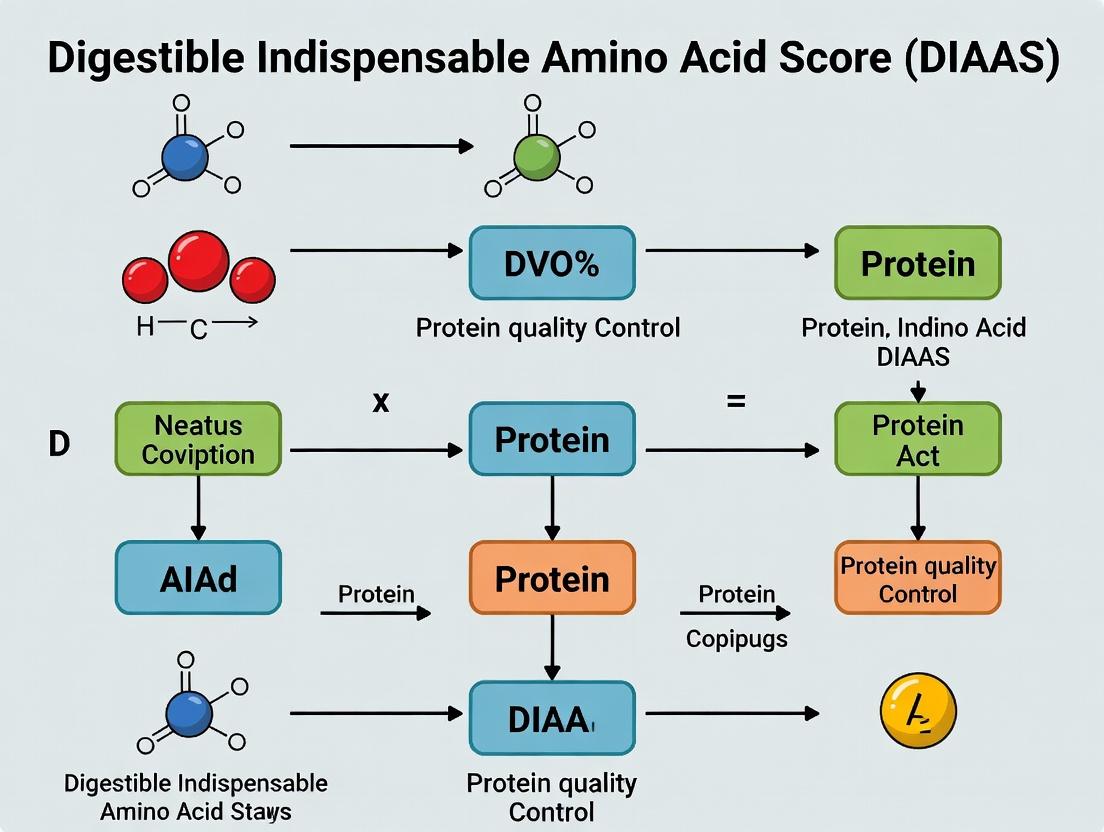
This comprehensive review details the Digestible Indispensable Amino Acid Score (DIAAS) methodology, the current FAO-recommended standard for evaluating protein quality.
DIAAS Methodology Explained: The Gold Standard for Protein Quality Assessment in Biomedical Research
Abstract
This comprehensive review details the Digestible Indispensable Amino Acid Score (DIAAS) methodology, the current FAO-recommended standard for evaluating protein quality. It covers the foundational principles and evolution from PDCAAS, provides a step-by-step guide to its methodological application in research settings, discusses common analytical challenges and optimization strategies, and critically compares its validity against alternative protein scoring systems. Targeted at researchers, scientists, and drug development professionals, this article synthesizes current best practices and future directions for utilizing DIAAS in nutritional science, clinical formulations, and therapeutic protein development.
DIAAS Fundamentals: From Amino Acids to a New Global Protein Standard
1. Introduction and Context
Within the framework of advancing Digestible Indispensable Amino Acid Score (DIAAS) methodology research, the precise definition and quantification of protein quality is paramount for human nutrition, clinical formulations, and therapeutic protein development. The DIAAS, endorsed by the FAO (2013), supersedes the Protein Digestibility-Corrected Amino Acid Score (PDCAAS) by accounting for ileal digestibility of each Indispensable Amino Acid (IAA), offering a more accurate prediction of protein utilization. This application note details the critical role of IAAs in defining protein quality and provides standardized protocols for their analysis, supporting robust DIAAS determination.
2. Core Principles: DIAAS Calculation
The DIAAS is calculated using the formula: DIAAS (%) = 100 × [min( (mg of digestible dietary IAA in 1g of test protein / mg of same IAA in 1g of reference amino acid pattern), … )]
The reference scoring patterns (mg/g protein) for key age groups, as per FAO (2013) and recent updates, are:
Table 1: Reference IAA Requirements for DIAAS Calculation
| Indispensable Amino Acid (IAA) | 0.5-3 yr Old (mg/g protein) | 3-10 yr Old (mg/g protein) | >18 yr Old (mg/g protein) | Halted Adult (mg/g protein)* |
|---|---|---|---|---|
| Histidine | 20 | 18 | 16 | 15 |
| Isoleucine | 32 | 31 | 30 | 30 |
| Leucine | 66 | 63 | 61 | 59 |
| Lysine | 57 | 52 | 48 | 45 |
| Methionine + Cysteine | 26 | 26 | 23 | 22 |
| Phenylalanine + Tyrosine | 52 | 46 | 41 | 38 |
| Threonine | 31 | 27 | 25 | 23 |
| Tryptophan | 8.5 | 7.4 | 6.6 | 6.0 |
| Valine | 43 | 42 | 40 | 39 |
*Pattern for adults with negligible growth needs (FAO, 2013).
3. Experimental Protocols
Protocol 3.1: Determination of IAA Composition via Hydrolysis and HPLC Objective: To accurately quantify the IAA content in a test protein or food sample. Materials: See "The Scientist's Toolkit" (Section 5). Procedure:
- Weighing: Precisely weigh 5-10 mg of homogenized, fat-extracted sample into a hydrolysis tube.
- Acid Hydrolysis (for most IAAs): Add 5 mL of 6M HCl containing 0.1% phenol (to protect tyrosine). Freeze-thaw degas under vacuum (<50 mTorr), seal under vacuum, and hydrolyze at 110°C for 24 hours.
- Perform Separate Hydrolyses for: a. Sulfur AAs (Met, Cys): Use performic acid oxidation prior to acid hydrolysis. b. Tryptophan: Use alkaline hydrolysis (4.2M NaOH with 1% starch) at 110°C for 20 hours.
- Neutralization & Filtration: Cool, neutralize hydrolysate, filter (0.22 μm), and dilute appropriately.
- Derivatization & HPLC: Derivatize using AccQ-Tag or similar ortho-phthalaldehyde (OPA)/9-fluorenylmethylchloroformate (FMOC) kits. Inject onto a reversed-phase C18 column.
- Quantification: Use external standard calibration curves for each IAA. Express results as mg IAA per g crude protein (N × 6.25 or specific Kjeldahl factor).
Protocol 3.2: Determination of Ileal Digestibility using the in vivo Rat Model Objective: To measure the true ileal digestibility of each IAA for DIAAS calculation. Procedure:
- Animal & Diet: Use male Sprague-Dawley rats (~250g) fitted with a simple T-cannula at the terminal ileum. After recovery, house in metabolic cages.
- Diet Formulation: Prepare a semi-purified diet where the test protein is the sole nitrogen source (10% crude protein w/w). Include 0.3% chromium oxide as an indigestible marker.
- Feeding & Collection: Feed rats ad libitum for 5 days. Collect ileal digesta for 24 hours on days 6-7 into pre-weighed tubes on ice.
- Sample Processing: Freeze-dry digesta and diet samples, grind finely, and analyze for IAA content (Protocol 3.1) and chromium content (atomic absorption spectroscopy).
- Calculation: True Ileal Digestibility (%) of an IAA = [1 – ((IAAdigesta / Crdigesta) / (IAAdiet / Crdiet))] × 100
4. Visualization of Methodological Workflow
Diagram Title: DIAAS Determination Workflow
5. The Scientist's Toolkit: Research Reagent Solutions
Table 2: Essential Materials for IAA Analysis and Digestibility Studies
| Item/Category | Example Product/Specification | Function/Brief Explanation |
|---|---|---|
| Hydrolysis Reagents | 6M HCl (Sequanal Grade), 4.2M NaOH, Phenol | For peptide bond cleavage under controlled acid or alkaline conditions to release amino acids. |
| Derivatization Kit | AccQ-Tag Ultra Derivatization Kit (Waters) | Chemically tags primary and secondary amino acids for highly sensitive fluorescence/UV detection in HPLC. |
| HPLC Columns | AccQ-Tag Ultra C18, 1.7 µm, 2.1x100mm | Provides high-resolution separation of derivatized amino acids for accurate quantification. |
| Amino Acid Standards | Physiological AA Standard (e.g., Sigma A9906) | Calibrates the HPLC system and serves as a reference for retention times and peak areas. |
| Digestibility Marker | Chromium (III) Oxide (Cr₂O₃), >99% pure | Inert, non-absorbable marker used to calculate flow and digestibility in ileal digesta. |
| Animal Diet Components | Casein (protein-free), AIN-93 Mineral/Vitamin Mix | Enables formulation of precise, semi-purified diets for controlled in vivo digestibility studies. |
| Cannulation Kit | Silicone T-cannula (1.5mm ID), surgical tools | For implanting terminal ileum cannulas in rat models to collect representative ileal digesta. |
The Protein Digestibility Corrected Amino Acid Score (PDCAAS) has been the FAO/WHO-recommended method for evaluating protein quality since 1991. It corrected for the fecal digestibility of protein, providing a significant advancement over prior methods like the Protein Efficiency Ratio. However, PDCAAS possesses well-documented limitations, including the truncation of scores to 1.0, the use of crude fecal digestibility which does not account for amino acid-specific ileal digestibility, and the reliance on outdated amino acid requirements for children 2-5 years old.
To address these shortcomings, the Food and Agriculture Organization (FAO) introduced the Digestible Indispensable Amino Acid Score (DIAAS) in 2013. DIAAS represents a paradigm shift by recommending the assessment of amino acid digestibility at the terminal ileum, providing a more accurate reflection of amino acid bioavailability. This Application Note details the methodology, protocols, and critical considerations for conducting DIAAS research within the broader thesis on advancing protein quality assessment.
Key Methodological Differences: A Quantitative Comparison
Table 1: Comparative Analysis of PDCAAS vs. DIAAS
| Feature | PDCAAS (1991) | DIAAS (2013) |
|---|---|---|
| Digestibility Site | Fecal (total tract) | Ileal (terminal ileum) |
| Digestibility Basis | Crude protein | Individual indispensable amino acids (IAA) |
| Score Calculation | [(mg of limiting IAA in 1g test protein / mg of same IAA in reference pattern) * fecal true digestibility] |
[100 * (mg of digestible dietary IAA in 1g test protein / mg of same IAA in reference pattern)] |
| Score Truncation | Truncated to 1.0 (or 100%) | No truncation; can exceed 100% |
| Reference Pattern | Amino acid requirements of a 2-5-year-old child (1991) | Amino acid requirements of 0.5-3-year-old child (2007) or older age groups |
| Primary Limitation | Overestimates protein value for low-quality proteins; masks complementary value. | Requires sophisticated animal or human ileostomy models; limited data availability. |
Table 2: Example DIAAS Calculation for a Hypothetical Protein Source (Whey Protein Concentrate)
| Indispensable Amino Acid (IAA) | IAA in Test Protein (mg/g protein) | Reference IAA Pattern (mg/g protein) | Ileal Digestibility (%) | Digestible IAA (mg/g protein) | Ratio (Digestible / Reference) |
|---|---|---|---|---|---|
| Lysine | 96.0 | 64 | 98 | 94.1 | 1.47 |
| Threonine | 71.0 | 37 | 96 | 68.2 | 1.84 |
| Methionine+Cysteine | 46.0 | 27 | 97 | 44.6 | 1.65 |
| Limiting Amino Acid (Lowest Ratio) | 1.47 | ||||
| DIAAS (%) | 100 * 1.47 = 147% |
Experimental Protocols for DIAAS Determination
Protocol 3.1: Rodent-Based Ileal Digestibility Assay (Adapted from Moughan et al., 2023) This protocol determines the standardized ileal digestibility (SID) of amino acids in rats, a common model for DIAAS research.
A. Key Research Reagent Solutions & Materials
| Item | Function |
|---|---|
| Test Diet Formulation | Precisely formulated diet containing the test protein as the sole nitrogen source. Includes titanium dioxide (0.3-0.5%) as an indigestible marker. |
| Casein Protein Diet (Reference) | Highly digestible reference protein diet for determining basal endogenous losses. |
| Protein-Free Diet | Diet containing no protein, used to determine specific endogenous amino acid losses. |
| Titanium Dioxide (TiO₂) | Inert, non-absorbable fecal/ileal digesta flow marker for digestibility calculations. |
| Ileal Digesta Collection Apparatus | Specialized surgical or post-mortem setup for collecting digesta from the terminal ileum. |
| Amino Acid Analysis Kit (HPLC/UPLC) | For quantitative analysis of amino acid concentrations in diet and ileal digesta, post-hydrolysis. |
| TiO₂ Analysis Kit (Spectrophotometric) | For quantifying TiO₂ concentration to calculate flow and digestibility. |
B. Detailed Procedure:
- Animal Acclimation & Surgery: House male Sprague-Dawley rats (~150g) under controlled conditions. Following acclimation, surgically implant a simple T-cannula at the terminal ileum (~2 cm proximal to the ileo-cecal junction) under anesthesia. Allow 7-10 days for recovery.
- Dietary Phases & Feeding: Employ a repeated measures or parallel group design.
- Phase 1 (Test/Reference Diets): Feed rats (n=8-10 per protein) the assigned test diet or casein reference diet for 5-7 days. Collect ileal digesta for 8-12 hours on the final two days into pre-weighed, chilled containers.
- Phase 2 (Protein-Free Diet): A separate group of rats receives a protein-free diet for 7 days. Ileal digesta is collected similarly to determine basal endogenous amino acid losses.
- Sample Processing: Freeze-dry ileal digesta and diet samples. Grind to a homogeneous powder.
- Chemical Analysis:
- Amino Acids: Perform acid hydrolysis (6M HCl, 110°C, 24h) under nitrogen atmosphere. Analyze hydrolysates via HPLC/UPLC with pre-column derivatization (e.g., AccQ-Tag).
- TiO₂ Marker: Digest samples in sulfuric acid and hydrogen peroxide. React with hydrogen peroxide to form a yellow peroxo-complex. Measure absorbance at 405 nm.
- Calculations:
- Apparent Ileal Digestibility (AID)% = [1 - (AAdigesta / AAdiet) * (TiO₂diet / TiO₂digesta)] * 100
- Standardized Ileal Digestibility (SID)% = AID% + [(EndoAA / AAdiet) * (TiO₂diet / TiO₂digesta) * 100]
Where
EndoAAis the basal endogenous loss from the protein-free diet phase.
Protocol 3.2: In Vitro Static Digestion Model (INFOGEST) for Screening While not a replacement for in vivo assays, this protocol provides a rapid screening tool for protein digestibility.
- Oral Phase: Mix test protein (1g) with simulated salivary fluid (SSF) and alpha-amylase. Incubate at 37°C for 2 min, pH 7.0.
- Gastric Phase: Adjust to pH 3.0 with simulated gastric fluid (SGF). Add pepsin. Incubate at 37°C for 2 hours with agitation.
- Intestinal Phase: Adjust to pH 7.0 with simulated intestinal fluid (SIF). Add pancreatin and bile salts. Incubate at 37°C for 2 hours with agitation.
- Termination & Analysis: Stop reaction with protease inhibitors. Centrifuge. Analyze supernatant for nitrogen (Dumas method) and free amino acids (HPLC) to estimate degree of hydrolysis and amino acid release.
Visualizing the DIAAS Research Workflow and Metabolic Context
Diagram 1: DIAAS Research Workflow from Sample to Score
Diagram 2: Amino Acid Absorption & Utilization Pathway
The transition from PDCAAS to DIAAS represents a critical evolution toward precision nutrition. By focusing on ileal digestibility of individual amino acids and removing the arbitrary score truncation, DIAAS provides a more accurate and discriminatory framework for evaluating protein sources, particularly for vulnerable populations and specialized clinical nutrition. Future research directions include expanding the database of DIAAS values, validating in vitro-in vivo correlations, and exploring the impact of food processing and matrix effects on true ileal amino acid digestibility.
Application Notes
Within DIAAS methodology research, the determination of true ileal amino acid (AA) digestibility is the fundamental step for evaluating protein quality. The Reference Amino Acid Pattern, established by FAO/WHO/UNU (2007) for specific age groups, provides the benchmark against which the digestible indispensable amino acid content of a protein is scored. The core principle is that the limiting amino acid, after correction for its true ileal digestibility, determines the DIAAS value.
Key Quantitative Data
Table 1: Reference Amino Acid Patterns (mg/g protein)
| Indispensable Amino Acid | Preschool Child (1-3y) | Older Child, Adolescent, Adult |
|---|---|---|
| Histidine | 20 | 16 |
| Isoleucine | 32 | 30 |
| Leucine | 66 | 61 |
| Lysine | 57 | 48 |
| Methionine + Cysteine | 27 | 23 |
| Phenylalanine + Tyrosine | 52 | 41 |
| Threonine | 31 | 25 |
| Tryptophan | 8.5 | 6.6 |
| Valine | 43 | 40 |
(Source: FAO/WHO/UNU, 2007. Protein and amino acid requirements in human nutrition.)
Table 2: Example DIAAS Calculation for a Hypothetical Protein Source
| Amino Acid | mg/g test protein | True Ileal Digestibility (%) | mg digestible AA/g protein | Reference Pattern (Adult) mg/g | Ratio (%) |
|---|---|---|---|---|---|
| Lysine | 45 | 88 | 39.6 | 48 | 82.5 |
| Threonine | 28 | 92 | 25.8 | 25 | 103.2 |
| Tryptophan | 7 | 85 | 5.95 | 6.6 | 90.2 |
| DIAAS | Limiting AA: Lysine | 82.5 |
Experimental Protocols
Protocol 1: Determination of True Ileal Amino Acid Digestibility in Animal Models (Rodent)
Objective: To measure the true ileal digestibility of indispensable amino acids in a test protein using a rodent model, correcting for basal endogenous amino acid losses.
Materials:
- Test diet containing the protein of interest as the sole nitrogen source.
- Nitrogen-free diet for determining basal endogenous losses.
- Surgically modified rats or mice with ileal cannulation or post-valve T-caecum (PVTC) preparation.
- Titanium dioxide or chromic oxide as an indigestible marker.
- Standard laboratory animal housing with controlled environment.
- Anaesthetic and surgical equipment.
- HPLC or UPLC system equipped for post-column derivatization or mass spectrometry for AA analysis.
Methodology:
- Diet Formulation: Formulate a semi-synthetic test diet with the protein source of interest. Include an inert digestibility marker (e.g., 0.3-0.5% TiO2). Prepare a nitrogen-free diet of similar composition for the endogenous loss assay.
- Animal Preparation & Surgery: Perform ileal cannulation or PVTC surgery on animals under aseptic conditions and anaesthesia. Allow a minimum 7-day recovery period.
- Feeding & Digesta Collection: House animals individually in metabolic cages. After an adaptation period (5 days), feed the test diet ad libitum for a set period. Collect ileal digesta continuously over the final 24-48 hours, freeze immediately in liquid N2, and store at -80°C. Repeat the procedure with the nitrogen-free diet on a separate cohort.
- Sample Analysis: Freeze-dry digesta and diet samples. Determine marker concentration via spectrophotometry. Analyze samples for amino acid content using acid hydrolysis (6M HCl, 110°C for 24h) followed by chromatographic separation and detection. For sulfur-containing AAs and tryptophan, perform specific oxidative and alkaline hydrolyses, respectively.
- Calculations:
- Apparent Ileal Digestibility (%) = [1 - (Markerdiet / Markerdigesta) * (AAdigesta / AAdiet)] * 100
- Basal Endogenous AA Loss (mg/g DMI) = AAflow from animals fed the nitrogen-free diet.
- True Ileal Digestibility (%) = Apparent digestibility + [(Endogenous AA loss / AAintake)] * 100
Protocol 2: In Vitro Static Digestion Model for Rapid Ileal Digestibility Screening
Objective: To provide a rapid, high-throughput estimation of ileal amino acid digestibility using a standardized in vitro gastrointestinal digestion protocol.
Materials:
- Simulated salivary fluid (SSF), gastric fluid (SGF), and intestinal fluid (SIF) stocks as per INFOGEST protocol.
- Enzymes: Human salivary α-amylase, porcine pepsin, porcine pancreatin, bovine bile extracts.
- pH-stat titration equipment.
- Temperature-controlled incubators with shaking.
- Centrifuges and ultrafiltration units (e.g., 10 kDa MWCO).
- HPLC/UPLC system for AA analysis.
Methodology:
- Oral Phase: Mix test protein substrate with SSF (1:1 ratio) and α-amylase. Incubate at 37°C for 2 min with constant agitation.
- Gastric Phase: Adjust pH to 3.0, add SGF and pepsin. Incubate at 37°C for 2 hours under agitation.
- Intestinal (Ileal) Phase: Adjust pH to 7.0, add SIF, pancreatin, and bile salts. Incubate at 37°C for 2 hours under agitation, maintaining pH via pH-stat.
- Termination & Digesta Processing: Stop digestion by placing tubes on ice. Centrifuge (4°C, 10,000 g, 20 min). Filter the supernatant through a 10 kDa molecular weight cut-off filter to obtain the bioaccessible fraction (<10 kDa peptides/free AAs).
- Analysis: Hydrolyze the bioaccessible fraction and analyze for amino acid content. Digestibility is calculated as the proportion of total AA in the protein substrate that appears in the <10 kDa filtrate.
Diagrams
The Scientist's Toolkit
Table 3: Key Research Reagent Solutions for Ileal Digestibility Studies
| Item | Function in Research |
|---|---|
| N-Free Diet | A protein-free diet formulated to measure basal endogenous amino acid losses at the ileum, essential for calculating true digestibility. |
| Titanium Dioxide (TiO₂) | An inert, non-absorbable digestibility marker. Its ratio in diet vs. digesta allows accurate calculation of nutrient flow and digestibility coefficients. |
| Porcine Pancreatin Extract | A standardized enzyme preparation containing proteases (trypsin, chymotrypsin), lipase, and amylase, used in in vitro digestion models to simulate the intestinal phase. |
| Standardized AA Mixture | A precisely quantified mixture of pure amino acids used for calibrating HPLC/UPLC systems and as an internal or external standard for amino acid quantification. |
| Ileal Cannula (e.g., T-type) | A surgical implant placed in the terminal ileum of animal models to allow for the quantitative and uncontaminated collection of ileal digesta. |
| O-Phthaldialdehyde (OPA) / FMOC | Derivatization reagents for pre-column labeling of primary (OPA) and secondary (FMOC) amino acids, enabling highly sensitive fluorescence detection in chromatography. |
Application Notes
The 2013 FAO report, "Dietary protein quality evaluation in human nutrition," established the Digestible Indispensable Amino Acid Score (DIAAS) as the recommended method for assessing protein quality, superseding the Protein Digestibility-Corrected Amino Acid Score (PDCAAS). This endorsement marked a pivotal shift in nutritional science, advocating for a more accurate representation of amino acid bioavailability, particularly for vulnerable populations and in clinical settings.
Core Principles of DIAAS:
- Focus on ileal digestibility: DIAAS is based on the true ileal digestibility of individual indispensable amino acids (IAAs), measured at the end of the small intestine. This prevents overestimation of protein quality from fermentation by colonic microbiota.
- Calculation per amino acid: DIAAS is calculated for each IAA:
DIAAS (%) = 100 × [(mg of digestible dietary IAA in 1 g of the dietary protein) / (mg of the same IAA in 1 g of the reference protein)]. - No truncation: Unlike PDCAAS, scores are not truncated at 100%, allowing differentiation between high-quality proteins.
- Reference scoring pattern: Uses an age-specific amino acid requirement pattern (e.g., 0.5-3 years, 3-10 years, older children, adolescents, and adults).
Impact on Research & Development: The FAO endorsement has driven methodologies in clinical nutrition, infant formula development, and precision dietary interventions. It necessitates standardized in vivo (typically porcine model) or validated in vitro protocols for ileal digestibility determination.
Global Adoption Status: The DIAAS methodology has been integrated into regulatory frameworks and guidelines by several entities, though full adoption is ongoing.
Table 1: Global Adoption Status of DIAAS Methodology
| Entity/Region | Adoption Status | Key Document/Year | Primary Application Context |
|---|---|---|---|
| FAO/WHO | Full Recommendation | Report of an FAO Expert Consultation (2013) | Global dietary assessment, food labeling guidelines. |
| Codex Alimentarius | Under Consideration | CX/NG 23/6/7 (2023) | Future guidelines for protein quality claims. |
| European Food Safety Authority (EFSA) | Scientific Endorsement | Scientific Opinion on DRVs for protein (2012) | Supports use for dietary reference value derivation. |
| Health Canada | Recognized Method | Position on DIAAS (2023) | Permitted for use in protein content claims assessment. |
| U.S. FDA | Review & Evaluation | - | PDCAAS remains official method; DIAAS under review. |
| International Dairy Federation (IDF) | Active Promotion | Bulletin 505/2022 | Advocacy for dairy protein quality evaluation. |
Table 2: Comparative Metrics: DIAAS vs. PDCAAS
| Parameter | DIAAS | PDCAAS |
|---|---|---|
| Digestibility Site | Ileal (end of small intestine) | Fecal (total tract) |
| Amino Acid Basis | Individual IAA digestibility | Crude protein digestibility |
| Score Truncation | Not truncated (can exceed 100%) | Truncated at 100% |
| Reference Pattern | Age-specific IAA requirements | 2-5 year-old child pattern (FAO/WHO/UNU 1985) |
| Primary Limitation | Requires species-specific ileal digestibility data | Overestimates quality of proteins with fermentable fiber/antinutrients |
Experimental Protocols
Protocol 1: Determination of True Ileal Amino Acid Digestibility (In VivoPorcine Model)
This protocol is essential for generating primary DIAAS data.
Objective: To determine the true ileal digestibility of individual indispensable amino acids in a test protein source using a cannulated porcine model.
Research Reagent Solutions & Essential Materials:
| Item | Function |
|---|---|
| Test Diet | Formulated with the test protein as the sole protein source. |
| Protein-Free Diet | Used to determine basal endogenous amino acid losses. |
| Titanium Dioxide (TiO₂) | Inert digestibility marker for precise calculation of digestibility coefficients. |
| Ileal Cannula (T-cannula) | Surgical implant allowing for collection of ileal digesta. |
| Chromatography-grade Amino Acid Standards | For calibration and quantification in HPLC analysis. |
| Performic Acid Oxidation Solution | For oxidation of sulfur-containing amino acids (methionine, cysteine) pre-hydrolysis. |
| 6M Hydrochloric Acid (HCl) | For acid hydrolysis of protein/ digesta to release amino acids. |
| Internal Standard (Norleucine or α-Aminoadipic Acid) | Added pre-hydrolysis to correct for analytical variability and losses. |
Detailed Methodology:
- Animal Preparation & Diet: Fit growing pigs (typically 25-50 kg) with a simple T-cannula at the terminal ileum. Following recovery, house individually in metabolism crates. Acclimatize animals to the experimental environment.
- Experimental Design: Use a repeated measures or crossover design. Each test period includes:
- Adaptation: Feed the assigned diet (test or protein-free) for 5-7 days.
- Collection: On collection days, collect ileal digesta continuously for 8-12 hours into plastic bags placed on ice. Pool digesta per animal per period. Homogenize, sub-sample, and immediately freeze at -20°C.
- Sample Analysis:
- Dry Matter & Marker: Analyze diet and digesta for dry matter and titanium dioxide content.
- Amino Acid Hydrolysis: For most AAAs: Hydrolyze samples with 6M HCl at 110°C for 22-24h under nitrogen. For sulfur AAAs: Perform performic acid oxidation prior to acid hydrolysis. For tryptophan: Use alkaline hydrolysis.
- Quantification: Analyze hydrolysates via HPLC or UPLC with post-column ninhydrin detection or pre-column derivatization (e.g., AccQ-Tag).
- Calculations:
- Digestibility of AA (%) = [1 - ((AAdigesta × TiO₂diet) / (AAdiet × TiO₂digesta))] × 100
- True Ileal Digestibility (%) = Apparent Digestibility + (Endogenous AA Loss / AA Intake). Endogenous loss is determined from pigs fed the protein-free diet.
Protocol 2:In VitroStatic Digestion Model for Predicting Ileal Digestibility
A screening tool for estimating DIAAS, requiring validation against in vivo data.
Objective: To simulate gastric and small intestinal digestion of a protein for the in vitro release of amino acids.
Detailed Methodology:
- Oral Phase: Suspend test material in simulated salivary fluid (SSF). Incubate briefly.
- Gastric Phase: Adjust pH to 3.0, add simulated gastric fluid (SGF) containing pepsin. Incubate for 2 hours at 37°C with agitation.
- Intestinal Phase: Adjust pH to 7.0, add simulated intestinal fluid (SIF) containing pancreatin. Incubate for 2 hours at 37°C.
- Termination & Dialysis: Terminate digestion (e.g., with protease inhibitors). Place digest in a dialysis tube (MWCO 6-8 kDa) and dialyze against buffer to separate "absorbable" (dialysate, representing bioavailable) from non-digested peptides.
- Analysis: Hydrolyze the dialysate (bioavailable fraction) and original test protein, then quantify amino acid content via HPLC. Calculate in vitro digestibility as: (AA in dialysate / AA in original protein) × 100.
In Vitro Protein Digestibility Workflow
Regulatory Endorsement to Thesis Impact Pathway
Within the broader thesis on advancing Digestible Indispensable Amino Acid Score (DIAAS) methodology for human and preclinical models, the precise interpretation of DIAAS and its capped variant, DIAAS100, is foundational. This application note clarifies these terms, provides protocols for their determination, and situates them within nutritional and pharmacological research, where amino acid bioavailability is critical for protein quality assessment and specialized diet formulation.
Core Definitions and Interpretations
DIAAS (Digestible Indispensable Amino Acid Score): A measure of protein quality defined by the Food and Agriculture Organization (FAO) as:
DIAAS (%) = 100 * [(mg of digestible dietary indispensable amino acid in 1g of the dietary protein) / (mg of the same dietary indispensable amino acid in 1g of the reference protein)]
The score is calculated for each indispensable amino acid (IAA), and the lowest value (limiting amino acid) is the DIAAS for the protein. Scores can exceed 100.
DIAAS100: A truncated interpretation where scores above 100 are capped at 100. This approach, sometimes used in labeling or regulatory contexts, emphasizes the fulfillment of requirements but obscures the true potential of proteins to compensate for deficits in other dietary proteins.
Quantitative Data Comparison
Table 1: DIAAS vs. DIAAS100 for Common Protein Sources
| Protein Source | Limiting IAA | Calculated DIAAS (%) | DIAAS100 (%) | Interpretation Impact |
|---|---|---|---|---|
| Whey Protein | - | 109-145 | 100 | Overestimates complementarity value. |
| Pea Protein | Methionine+Cysteine | 82 | 82 | No change; below threshold. |
| Soy Protein Isolate | Methionine+Cysteine | 90-92 | 90-92 | No change; below threshold. |
| Casein | - | 120-135 | 100 | Overestimates complementarity value. |
| Cooked Lentils | Methionine+Cysteine | 65 | 65 | No change; below threshold. |
Table 2: Key Reference Values (mg/g protein)
| Indispensable Amino Acid | FAO/WHO/UNU (2007) Reference Pattern (Preschool Child, 1-3y) | FAO/WHO/UNU (2007) Reference Pattern (Adult, >18y) |
|---|---|---|
| Histidine | 20 | 16 |
| Isoleucine | 32 | 30 |
| Leucine | 66 | 61 |
| Lysine | 57 | 48 |
| SAA (Methionine+Cys) | 26 | 23 |
| AAA (Phe+Tyr) | 52 | 41 |
| Threonine | 31 | 25 |
| Tryptophan | 8.5 | 6.6 |
| Valine | 43 | 40 |
Experimental Protocols
Protocol 1: Determining True Ileal Amino Acid Digestibility for DIAAS
Principle: Measure the flow of amino acids at the terminal ileum in humans or animal models to calculate digestibility coefficients. Methodology (Porcine Model):
- Animal Preparation: Surgically implant a T-cannula at the terminal ileum of growing pigs (n=6-8).
- Diet Formulation: Formulate a semi-purified diet with the test protein as the sole nitrogen source. Include 0.3% chromic oxide as an indigestible marker.
- Feeding & Collection: Feed pigs at 2.5x maintenance energy requirement in equal meals every 8h for 7d. Collect ileal digesta continuously for 8h on days 6 and 7.
- Sample Analysis:
- Homogenize, freeze-dry, and grind digesta and feed samples.
- Determine amino acid concentration via acid hydrolysis and HPLC (AOAC 982.30 E).
- Determine Chromic oxide concentration via atomic absorption spectroscopy.
- Calculations:
Digestibility (%) = [1 - ((Marker_diet / Marker_digesta) * (AA_digesta / AA_diet))] * 100- Calculate for each IAA.
Protocol 2: Calculating DIAAS and DIAAS100
Principle: Use true ileal digestibility coefficients and reference pattern to compute scores. Methodology:
- Input Data: Obtain digestible IAA content (mg/g protein) from Protocol 1.
- Reference Selection: Select appropriate age-specific reference pattern (e.g., preschool child for general population safety).
- Score Calculation:
- For each IAA:
Score_IAA = (Digestible IAA content / Reference IAA content) * 100 - DIAAS: Identify the lowest Score_IAA. This is the protein's DIAAS.
- DIAAS100: Apply
MIN(Score_IAA, 100)to the lowest score.
- For each IAA:
- Reporting: Report both uncapped and capped values with clear labels.
Diagrams
Title: DIAAS Determination Experimental Workflow
Title: DIAAS vs DIAAS100 Decision Logic
The Scientist's Toolkit: Research Reagent Solutions
Table 3: Essential Materials for DIAAS Methodology Research
| Item | Function & Specification |
|---|---|
| T-Cannula (e.g., Silicone, 12mm ID) | Surgical implant for terminal ileum access in porcine models to collect undigested chyme. |
| Nitrogen-Free Diet Base | Semi-purified diet matrix (cornstarch, sucrose, oil, fiber, vitamins/minerals) for test protein incorporation. |
| Chromic Oxide (Cr₂O₃), 99% | Inert, indigestible fecal flow marker for digestibility calculations. |
| Amino Acid Standard Mix | HPLC calibration standard containing all proteinogenic AAs, including IAA. |
| Hydrolysis Tubes (Pyrex, 6M HCl resistant) | For acid hydrolysis of protein samples to free individual AAs prior to HPLC. |
| IEC/HPLC System with Post-Column Ninhydrin or AccQ•Tag | For separation, derivatization, and quantification of amino acids. |
| Reference Protein Pattern (e.g., Crystalline AA Mix) | Chemically defined mix matching FAO/WHO reference pattern for validation. |
| Statistical Software (e.g., R, SAS) | For ANOVA of digestibility coefficients and DIAAS values across replicates/treatments. |
A Step-by-Step Protocol for DIAAS Analysis in Research & Development
Within Digestible Indispensable Amino Acid Score (DIAAS) methodology research, the selection of appropriate experimental models is paramount. This document provides application notes and protocols for designing experiments that effectively utilize both animal models and human studies to validate and refine DIAAS assessments. The core challenge lies in bridging findings from controlled animal studies to human nutritional outcomes.
Comparative Analysis: Animal Models vs. Human Studies
Table 1: Key Characteristics and Applications in DIAAS Research
| Aspect | Rodent Models (e.g., Rat, Mouse) | Porcine Models | Human Studies |
|---|---|---|---|
| Primary Use Case in DIAAS | Preliminary screening of protein quality; mechanistic studies of amino acid (AA) metabolism. | Gold-standard model for protein/AA digestibility (physiology close to human). | Direct validation of DIAAS values; final assessment of protein quality for human diets. |
| Digestive Physiology | Simple stomach, cecum fermentation. Differs significantly from human. | Monogastric, GI tract anatomy & function highly analogous to human. | Human gastrointestinal system. |
| Ethics & Logistics | Lower ethical constraints, controlled environment, short life cycle. | Higher cost, significant ethical considerations, specialized facilities needed. | Highest ethical scrutiny, complex recruitment, high inter-individual variability. |
| Sample Access | Terminal procedures allow full tissue/organ sampling. | Limited serial sampling possible (e.g., cannulation). | Non-invasive (feces, blood) or minimally invasive (muscle biopsy) only. |
| Cost & Duration | Low cost, rapid studies (weeks). | High cost, moderate duration (months). | Very high cost, long duration (months to years). |
| Regulatory Acceptance | Required data for novel protein sources. | Data often extrapolated to humans for digestibility. | Mandatory for final dietary recommendations. |
Table 2: Quantitative Data from Recent Studies (2020-2024)
| Study Reference | Model Used | Key Measured Parameter | Mean Value (±SD/SE) | Correlation to Human Data (r/p-value) |
|---|---|---|---|---|
| Stein et al., 2023 (J. Nutr.) | Growing Pig (Ileal-cannulated) | Standardized Ileal Digestibility (SID) of Lysine in Pea Protein | 85.2% (± 2.1%) | r = 0.94 vs. human ileostomy (p<0.01) |
| Hodgkinson et al., 2022 (Br. J. Nutr.) | Adult Human (Ileostomy) | True Ileal Digestibility of Lysine in Pea Protein | 82.7% (± 3.5%) | Reference standard |
| Ríos et al., 2021 (Front. Nutr.) | Laboratory Rat (Balance Method) | Fecal Digestibility of Milk Protein | 94.5% (± 1.8%) | Overestimates human ileal digestibility by ~8-10% |
| WHO/FAO, 2021 Report | Meta-Analysis | Recommended DIAAS calculation model | Requires ileal digestibility coefficients | Pig model data weighted at 70% in extrapolation algorithms |
Experimental Protocols
Protocol 1: Determination of Standardized Ileal Digestibility (SID) in the Cannulated Pig Model
This protocol is considered the primary preclinical method for generating DIAAS-relevant digestibility coefficients.
Objective: To determine the true absorption of indispensable amino acids at the terminal ileum.
Materials:
- Growing boars (30-50 kg), surgically fitted with a simple T-cannula at the distal ileum.
- Test protein sources (e.g., novel plant protein, insect protein).
- Semi-purified diet based on cornstarch, dextrose, and oil, with the test protein as the sole nitrogen source.
- Chromic oxide (Cr₂O₃) or titanium dioxide (TiO₂) as an inert digestibility marker.
- Standardized ileal digestible AA reference diet for baseline.
Procedure:
- Acclimation: House pigs individually in metabolic crates. Acclimate to control diet for 5 days.
- Feeding: Provide the test diet at a level of 2.8 x maintenance energy requirement, split into two equal meals per day. Ensure full consumption.
- Marker Administration: Thoroughly mix the inert marker (0.3-0.5% Cr₂O₃) into the diet.
- Ileal Digesta Collection:
- Begin continuous collection 1 hour after the morning meal on Day 6.
- Collect ileal digesta into plastic bags attached to the cannula for 12 hours (covering both postprandial and interprandial periods).
- Change bags every 30 minutes and immediately freeze at -20°C to prevent microbial activity.
- Sample Processing: Pool all digesta per pig, homogenize, subsample, and freeze-dry. Analyze for AA content (via HPLC) and marker concentration (via ICP-OES or spectrophotometry).
- Calculation:
AID (%) = [1 - ((Marker_diet / Marker_digesta) * (AA_digesta / AA_diet))] * 100- Standardize AID to a zero nitrogen balance using basal endogenous AA losses measured from the protein-free diet phase (
SID = AID + Basal Endogenous Loss).
Protocol 2: Dual-Stable Isotope Tracer Study in Humans for AA Metabolism
This protocol provides direct, dynamic data on postprandial AA utilization in humans.
Objective: To quantify the postprandial availability and metabolic fate of amino acids from a test protein.
Materials:
- Healthy human volunteers (n=8-12), overnight fasted.
- Test protein beverage.
- L-[1-¹³C]Leucine or L-[ring-²H₅]Phenylalanine isotopes.
- Primed, continuous infusion pump.
- Mass spectrometer (GC-MS or LC-MS) for isotopic enrichment analysis.
Procedure:
- Priming & Baseline: Insert intravenous catheter. After baseline blood draws, administer a priming dose of labeled AA, followed by a continuous, calibrated infusion to achieve a steady-state plasma enrichment (3-hour period).
- Test Meal Ingestion: Interrupt the fast by consuming the test protein drink. Continue the isotope infusion.
- Serial Sampling: Collect venous blood samples at frequent intervals (e.g., every 15-30 min) for 4-6 hours postprandially. Process plasma immediately.
- Breath & Urine Sampling (for ¹³C-Leucine): Collect breath samples for ¹³CO₂ enrichment and urine for nitrogen excretion analysis.
- Analysis: Derivatize plasma AA and measure tracer/tracee ratio via MS.
- Kinetic Modeling: Apply the Steele or other non-steady-state equations to calculate:
- Rate of appearance of dietary AA into the plasma pool.
- Whole-body protein breakdown and synthesis rates.
- Oxidation rate of the test AA.
Visualizations
Diagram 1: DIAAS Research Model Selection Workflow
Diagram 2: Protein Digestion & AA Absorption Pathway
The Scientist's Toolkit: Research Reagent Solutions
Table 3: Essential Materials for DIAAS-Focused Experiments
| Item / Reagent | Function / Application | Key Consideration |
|---|---|---|
| L-[1-¹³C]Leucine (≥99% APE) | Stable isotope tracer for human kinetic studies measuring oxidation & whole-body protein turnover. | Must be pharmaceutically graded (GMP) for human infusion; verify isotopic purity. |
| Titanium Dioxide (TiO₂) >99.9% | Inert, non-absorbable marker for digestibility studies in pigs/rats. Replaces toxic chromic oxide. | Homogeneous mixing in diet is critical; analyze via UV spectrophotometry after peroxide digestion. |
| Amino Acid Standard (HCl Hydrolyzed) | Quantitative reference for HPLC/UPLC analysis of protein & digesta AA composition. | Must include S-amino acids (Met, Cys) and Trp, which require separate oxidation/alkaline hydrolysis. |
| Ileal T-Cannula (Medical Grade Silicone) | Surgical implant for chronic collection of terminal ileum digesta in porcine models. | Size (e.g., 22 Fr) must match animal; post-surgical care protocol is essential for patency. |
| Protein-Free Diet Base | Semi-purified diet (cornstarch, sugar, oil, vitamins/minerals) to measure basal endogenous AA losses. | Must be truly protein-free but isonitrogenous via diammonium citrate or other non-protein N source. |
| GC-MS / LC-MS System | For high-precision measurement of isotopic enrichment in plasma, breath, or urine samples. | Requires specialized derivatization protocols (e.g., tert-butyldimethylsilyl for AAs). |
| Enzymatic Protein Hydrolysis Kit | For rapid, standardized pre-column hydrolysis of protein samples prior to AA analysis. | Superior to traditional acid hydrolysis for protecting labile AAs (Ser, Thr) and preventing racemization. |
Application Notes
This protocol is a core component of a broader thesis investigating the Digestible Indispensable Amino Acid Score (DIAAS) methodology. Accurate DIAAS determination relies on precise simulation of human gastric and intestinal digestion to predict true ileal amino acid digestibility. This document details standardized procedures for handling diverse protein sources and executing a validated in vitro static digestion simulation, providing a reproducible, cost-effective screening tool prior to costly in vivo trials.
Protein Source Handling and Pre-Treatment
Proper handling is critical to maintain protein integrity prior to digestion simulation. Sources range from intact foods (meat, legumes) to processed ingredients (isolates, concentrates, hydrolysates).
Key Quantitative Data on Pre-Treatment Variables:
Table 1: Standardized Pre-Treatment Conditions for Common Protein Sources
| Protein Source | Grinding Sieve Size (µm) | Defatting Solvent (if required) | Moisture Adjustment | Sample Weight for Digestion (mg protein) |
|---|---|---|---|---|
| Animal Muscle | ≤ 1000 (minced) | Chloroform:Methanol (2:1 v/v) | Lyophilize to ≤ 8% H₂O | 50 ± 0.5 |
| Legume Flour | ≤ 500 | n/a (inherently low-fat) | Adjust to 10% H₂O | 50 ± 0.5 |
| Protein Isolate | ≤ 250 | n/a | Use as is (dry powder) | 50 ± 0.5 |
| Infant Formula | n/a (liquid) | n/a | Use as is, homogenize | Equivalent to 50 mg protein |
StaticIn VitroDigestion Simulation Protocol
This protocol adapts the INFOGEST 2.0 standardized method (Brodkorb et al., 2019) with modifications specific to DIAAS-focused analysis, simulating oral, gastric, and intestinal phases.
Detailed Experimental Protocol:
A. Reagent Preparation (All solutions kept on ice)
- Simulated Salivary Fluid (SSF): 15.1 mM KCl, 3.7 mM KH₂PO₄, 13.6 mM NaHCO₃, 0.15 mM MgCl₂(H₂O)₆, 0.06 mM (NH₄)₂CO₃, pH 7.0 ± 0.1.
- Simulated Gastric Fluid (SGF): 6.9 mM KCl, 0.9 mM KH₂PO₄, 25 mM NaHCO₃, 47.2 mM NaCl, 0.12 mM MgCl₂(H₂O)₆, 0.15 mM CaCl₂(H₂O)₂, pH 3.0 ± 0.1 (adjusted with HCl).
- Simulated Intestinal Fluid (SIF): 6.8 mM KCl, 0.8 mM KH₂PO₄, 85 mM NaHCO₃, 38.4 mM NaCl, 0.33 mM MgCl₂(H₂O)₆, pH 7.0 ± 0.1.
- Enzyme Solutions: Freshly prepare in respective fluids. Porcine pepsin (≥2500 U/mL final in gastric phase). Pancreatin (100 U trypsin activity/mL final in intestinal phase) and bile salts (10 mM final).
B. Digestion Workflow
- Oral Phase: Mix 50 mg protein-equivalent sample with 500 µL SSF. Vortex for 30s. Incubate 2 min at 37°C with agitation.
- Gastric Phase: To oral bolus, add 1 mL SGF, 5 µL 0.3M CaCl₂, and pepsin solution. Adjust final pH to 3.0. Incubate for 2 hours at 37°C with end-over-end rotation.
- Intestinal Phase: Adjust gastric chyme pH to 7.0 with 1M NaHCO₃. Add 1.5 mL SIF, 10 µL 0.3M CaCl₂, pancreatin, and bile salt solutions. Final volume ~4.5 mL. Incubate for 2 hours at 37°C with end-over-end rotation.
- Termination & Analysis: Heat-inactivate enzymes at 95°C for 5 min. Centrifuge (10,000 x g, 20 min, 4°C). Collect soluble fraction (digesta) for downstream analysis: Amino Acid Composition (via Hydrolysis + HPLC) and True Ileal Digestibility calculation (corrected for endogenous losses using a protein-free blank digestion).
Signaling & Digestive Pathway Context for DIAAS:
Diagram Title: Protein Digestion Pathway to DIAAS Calculation
Experimental Workflow for Sample Preparation:
Diagram Title: In Vitro Digestion Simulation Workflow
The Scientist's Toolkit: Research Reagent Solutions
Table 2: Essential Materials for Protein Digestion Simulation in DIAAS Research
| Item | Function & Relevance to DIAAS |
|---|---|
| Porcine Pepsin (≥2500 U/mg) | Gastric protease; simulates primary hydrolysis in stomach. Critical for breaking down native protein structures. |
| Pancreatin from Porcine Pancreas | Provides key intestinal enzymes (trypsin, chymotrypsin, peptidases) for final digestive cleavage to absorbable units. |
| Porcine Bile Extract | Emulsifies lipids, solubilizes hydrophobic peptides, and activates lipases, affecting protein accessibility. |
| Simulated Fluids (SSF, SGF, SIF) | Standardized electrolyte and buffer systems maintaining physiologically relevant ionic strength and pH in each phase. |
| pH Stat Titrator | For dynamic digestion models; allows real-time pH adjustment and monitoring of acid/base release, correlating to hydrolysis rate. |
| 0.22 µm PVDF Syringe Filter | Sterile filtration of digesta post-centrifugation for clean analysis via HPLC/UPLC, preventing column blockage. |
| Amino Acid Internal Standard (e.g., Norleucine) | Added pre-hydrolysis to correct for losses during sample processing for accurate amino acid quantification. |
| Oasis HLB Solid-Phase Extraction Cartridges | Clean-up of digesta for removal of salts and buffers prior to mass spectrometry analysis of peptides. |
The determination of the Digestible Indispensable Amino Acid Score (DIAAS) requires accurate measurement of ileal amino acid (AA) digestibility. Standardized Ileal Digestibility (SID) methodology corrects for basal endogenous losses, providing a more accurate estimate of true digestibility than apparent ileal digestibility (AID). This protocol is foundational for evaluating protein quality in human foods and animal feeds, crucial for research in nutrition, food science, and therapeutic diet development.
Key Definitions & Calculations
SID is calculated using the formula: SID (%) = [ (AA ingested – AA in ileal digesta – Basal Endogenous AA Loss) / AA ingested ] x 100
Table 1: Comparison of Ileal Digestibility Methodologies
| Parameter | Apparent Ileal Digestibility (AID) | Standardized Ileal Digestibility (SID) |
|---|---|---|
| Definition | (AA ingested – AA in ileal digesta) / AA ingested | Corrects AID for basal endogenous AA losses |
| Endogenous Loss Correction | No | Yes |
| Primary Use | Initial screening | Protein quality evaluation for DIAAS |
| Typical Value Range | Lower than SID (by 2-15 percentage points) | Higher, more consistent |
| FAO Recommendation for DIAAS | Not recommended | Recommended |
Table 2: Representative Basal Endogenous AA Losses in Pigs (mg/kg DMI)*
| Amino Acid | Mean Loss | Standard Deviation |
|---|---|---|
| Lysine | 490 | 120 |
| Methionine | 90 | 25 |
| Threonine | 1550 | 380 |
| Tryptophan | 125 | 40 |
| Isoleucine | 320 | 85 |
*Data synthesized from recent studies using protein-free diets. Values are species- and model-dependent.
Detailed Experimental Protocols
Protocol 1: Determination of Basal Endogenous Amino Acid Losses
Objective: To quantify basal endogenous AA flows at the terminal ileum for use in SID calculations. Model: Typically the growing pig or rodent preclinical model. Duration: 7-10 day adaptation, 2-3 day collection.
- Diet: Feed subjects a accurately formulated protein-free diet but meeting requirements for energy, vitamins, and minerals.
- Marker: Incorporate an indigestible marker (e.g., 0.3-0.5% Titanium Dioxide or 0.5% Chromic Oxide) into the diet for the total collection period.
- Feeding: Provide diet at a fixed level (e.g., 2.5-3.0 x maintenance energy) in equal meals.
- Ileal Digesta Collection:
- Slaughter Method (Gold Standard): At the end of the feeding period, euthanize the animal. Excise the intestinal tract from the duodenum to the ileo-cecal junction. Gently flush the ileal contents (typically the last 1-2 meters in pigs) with distilled water or saline into a container.
- Post-Valve T-Cecum (PVTC) Cannulation: For repeated measures, collect digesta from an ileal cannula for 8-12 hours per day across multiple days.
- Sample Processing: Immediately freeze digesta at -20°C. Freeze-dry, grind, and homogenize.
- Analysis: Determine AA concentration and marker concentration in digesta. Calculate basal endogenous flow:
- Endogenous AA (mg/kg DMI) = (AA in digesta / Marker in digesta) x (Marker in diet / DMI)
Protocol 2: Determination of SID for a Test Protein
Objective: To calculate the SID of indispensable AAs in a test ingredient or diet. Duration: 5-7 day adaptation, 2-3 day collection.
- Experimental Design: Use a randomized block or crossover design. Include the test diet and a protein-free diet (for endogenous loss correction from Protocol 1).
- Test Diet: Formulate the diet with the test protein as the sole protein source. Include the same indigestible marker as in Protocol 1.
- Procedure: Follow steps 3-5 from Protocol 1 for animals fed the test diet.
- Chemical Analysis: Analyze test diet and ileal digesta for AA and marker content.
- Calculation:
- AID (%) = [1 – ((Marker in diet / Marker in digesta) x (AA in digesta / AA in diet))] x 100
- SID (%) = AID + [ (Basal Endogenous AA Loss (mg/kg DMI) / AA intake (mg/kg DMI)) x 100 ]
Diagrams
Title: SID Workflow for DIAAS
Title: AID vs. SID Calculation Pathways
The Scientist's Toolkit: Research Reagent Solutions
Table 3: Essential Materials for SID Determination
| Item | Function/Description | Example/Typical Specification |
|---|---|---|
| Protein-Free Diet Base | Formulated to meet energy/mineral/vitamin needs without intact protein or AA, to induce basal endogenous secretions. | Custom mix of corn starch, sucrose, cellulose, vitamin/mineral premix, oil. |
| Indigestible Marker | Inert substance to determine digesta flow and calculate digestibility coefficients. | Titanium Dioxide (TiO₂), Chromic Oxide (Cr₂O₃), Celite. |
| Ileal Cannula (for live models) | Surgical implant for repeated digesta collection from the terminal ileum. | Simple T-cannula or post-valve T-caccum (PVTC) cannula, medical-grade polymers. |
| Amino Acid Standard Mix | Quantitative reference for calibrating HPLC/UPLC analysis of AA concentrations. | Pre-prepared acid/neutral/ basic AA mixture, certified concentrations. |
| Hydrolysis Tubes (vials) | For acid hydrolysis of protein samples prior to AA analysis (for most AAs). | Glass vials with Teflon-lined caps, resistant to 6M HCl at 110°C. |
| Performic Acid Oxidation Reagents | For pre-oxidation of samples prior to hydrolysis for accurate sulfur-AA (Met, Cys) analysis. | Formic acid + Hydrogen peroxide mixture. |
| Internal Standard for AA Analysis | Added to samples pre-hydrolysis to correct for analytical losses. | Norleucine or α-Aminoadipic Acid. |
| Enzyme Supplements (for in vitro models) | Simulate gastric and intestinal digestion phases (e.g., pepsin, pancreatin). | USP-grade porcine enzymes for simulated digestion studies. |
Accurate amino acid (AA) analysis is foundational to determining the Digestible Indispensable Amino Acid Score (DIAAS), a FAO-recommended metric for protein quality assessment. DIAAS requires precise quantification of amino acids, including those susceptible to damage during hydrolysis (e.g., methionine, tryptophan), and their true ileal digestibility. This necessitates robust, sensitive, and high-throughput analytical techniques. High-Performance Liquid Chromatography (HPLC), Ultra-Performance Liquid Chromatography (UPLC), and Mass Spectrometry (MS) form the core technological triad enabling this precision. These methods are critical for analyzing complex biological matrices like ileal digesta, feces, and food, directly feeding into the calculation of digestible indispensable amino acid concentrations.
Key Techniques: Applications & Comparative Data
Hydrolysis Protocols for Total Amino Acid Analysis
Prior to chromatographic analysis, proteins must be hydrolyzed to constituent amino acids. The choice of hydrolysis directly impacts DIAAS accuracy.
Table 1: Standard Protein Hydrolysis Methods for AA Analysis
| Method | Conditions | Typical Duration | Advantages for DIAAS | Key Limitations |
|---|---|---|---|---|
| Acid Hydrolysis (Standard) | 6M HCl, 110°C, under vacuum/inert gas | 20-24 hours | Complete hydrolysis of most AAs; reproducible. | Destroys tryptophan, partially degrades serine, threonine; converts glutamine/ asparagine to Glu/Asp. |
| Oxidative Acid Hydrolysis | Performic acid oxidation followed by standard acid hydrolysis | 24+ hours | Converts cysteine & methionine to stable derivatives (cysteic acid, methionine sulfone). | Adds a step; not for tryptophan. |
| Alkaline Hydrolysis | 4.2M NaOH, 110°C | 20 hours | Preserves tryptophan. | Destroys cysteine, serine, threonine, arginine; racemization. |
| Enzymatic Hydrolysis | Sequential protease cocktails, 37-60°C | Variable, 24-48 hrs | Mild; preserves all AAs including tryptophan; mimics digestion. | Incomplete hydrolysis; long duration; expensive. |
Chromatographic & MS Techniques: Performance Metrics
Post-hydrolysis, derivatization (e.g., with AccQ-Tag, OPA, FMOC) is often employed to enhance detection.
Table 2: Comparison of Core Analytical Platforms for AA Analysis
| Parameter | HPLC-UV/FLD | UPLC-UV/FLD | LC-MS/MS (Triple Quadrupole) |
|---|---|---|---|
| Typical Run Time | 30-70 min | 10-20 min | 10-25 min |
| Detection Limits | Low pmol range | Low pmol range | Low fmol to amol range |
| Resolution | Good | Superior | Superior (chromatographic + mass resolution) |
| Precision (CV%) | 1-5% | 1-3% | 1-5% (matrix-dependent) |
| Key Role in DIAAS | Routine quantification of most AAs. | High-throughput analysis of large sample sets. | Gold standard for complex matrices (ileal digesta); quantification of stable isotope-labeled tracers in bioavailability studies. |
| Ionization Mode (if MS) | N/A | N/A | Electrospray Ionization (ESI+, ESI-) |
Detailed Experimental Protocols
Protocol 1: Pre-Column Derivatization with AccQ-Tag for UPLC-FLD Analysis of Standard Protein Hydrolysates
This protocol is optimized for the quantification of primary and secondary amino acids except proline (detected separately) and tryptophan (requires alkaline hydrolysis).
I. Materials & Reagents
- Amino acid standard solution (e.g., Pierce Amino Acid Standard H)
- AccQ-Fluor Reagent Kit (Waters) containing:
- AccQ-Fluor Borate Buffer
- AccQ-Fluor Reagent Powder (6-Aminoquinolyl-N-Hydroxysuccinimidyl Carbamate, AQC)
- AccQ-Fluor Reagent Diluent (Acetonitrile)
- Hydrolyzed protein sample (from Protocol 1, Acid Hydrolysis)
- 0.1M HCl for sample reconstitution
- UPLC system with FLD (Ex: 250 nm, Em: 395 nm)
II. Derivatization Procedure
- Reconstitution: Reconstitute dried acid hydrolysate sample in 0.1M HCl to a known volume.
- Standard & Sample Prep: Pipette 10 µL of standard or sample into a clean micro-vial.
- Buffer Addition: Add 70 µL of AccQ-Fluor Borate Buffer and vortex mix thoroughly.
- Derivatization: Add 20 µL of reconstituted AccQ-Fluor Reagent solution (prepared as per kit instructions), vortex immediately for 10-15 seconds.
- Incubation: Seal the vial and incubate at 55°C for 10 minutes.
- Completion: The reaction is now complete. The derivatized sample is stable for ~1 week at 4°C. Inject 1-5 µL onto the UPLC.
III. UPLC Conditions (Example)
- Column: AccQ-Tag Ultra C18 (2.1 x 100 mm, 1.7 µm)
- Mobile Phase A: AccQ-Tag Ultra Eluent A (aqueous)
- Mobile Phase B: Acetonitrile
- Mobile Phase C: Water
- Gradient: Multi-step gradient from 0-100% B over 10 minutes.
- Flow Rate: 0.7 mL/min
- Column Temp: 55°C
- Detection: FLD as above.
Protocol 2: LC-MS/MS Analysis of Underivatized Amino Acids in Ileal Digesta for DIAAS
This protocol leverages the selectivity of MS/MS for complex, low-concentration matrices.
I. Materials & Reagents
- Stable isotope-labeled internal standards (e.g., 13C, 15N-labeled AAs)
- 0.1% Formic acid in water (v/v)
- 0.1% Formic acid in acetonitrile (v/v)
- Authentic AA standards
- HILIC or reversed-phase column (e.g., BEH Amide, 2.1 x 100 mm, 1.7 µm or C18)
- Triple quadrupole mass spectrometer
II. Sample Preparation (Clean-up)
- Internal Standard Addition: Add a known amount of isotopically labeled AA internal standard mix to a precise weight of ileal digesta homogenate (e.g., 100 µL).
- Protein Precipitation: Add 300 µL of ice-cold acetonitrile containing 0.1% formic acid. Vortex vigorously for 1 min.
- Centrifugation: Centrifuge at 14,000 x g for 15 min at 4°C.
- Collection & Dilution: Transfer the clear supernatant to a new vial. Dilute 1:5 with 0.1% formic acid in water.
- Filtration: Filter through a 0.2 µm PVDF centrifugal filter prior to LC-MS/MS injection.
III. LC-MS/MS Conditions (HILIC-ESI+ Example)
- Column: BEH Amide HILIC Column
- Mobile Phase A: 10 mM Ammonium formate in water, pH 3.0 (with FA)
- Mobile Phase B: 10 mM Ammonium formate in 90% acetonitrile/10% water
- Gradient: From 90% B to 50% B over 10 min.
- Flow Rate: 0.4 mL/min
- Column Temp: 40°C
- MS: ESI Positive Mode. MRM transitions optimized for each AA (e.g., Q1>Q3: 132.1>86.1 for Leucine). Use internal standard peak area for quantification via calibration curve.
The Scientist's Toolkit: Key Research Reagent Solutions
Table 3: Essential Materials for Advanced AA Analysis in DIAAS Studies
| Item | Function & Importance |
|---|---|
| Stable Isotope-Labeled AA Internal Standards (e.g., 13C6-Phe) | Correct for matrix effects and losses during sample prep; essential for accurate MS-based quantification in digesta. |
| AccQ-Tag / AQC Derivatization Kit | Enables highly sensitive UPLC-FLD detection of primary and secondary amines from acid hydrolysates. |
| Pico-Tag Workstation / Hydrolysis Tubes | Provides an oxygen-free, vacuum-sealed environment for reproducible acid hydrolysis, minimizing oxidative losses. |
| HILIC UPLC Columns (e.g., BEH Amide) | Provides excellent retention and separation of polar, underivatized amino acids for direct LC-MS/MS analysis. |
| Triple Quadrupole Mass Spectrometer | Offers selective, sensitive detection via MRM; crucial for low-abundance AAs in complex biological samples like ileal digesta. |
| Enzymatic Hydrolysis Cocktail (e.g., Protease XIV, Aminopeptidase M) | For gentle, specific liberation of AAs, particularly for tryptophan analysis without alkaline conditions. |
Workflow & Pathway Visualizations
Workflow for AA Analysis in DIAAS Research
Decision Tree for AA Analytical Method Selection
This document, as part of a broader thesis on Digestible Indispensable Amino Acid Score (DIAAS) methodology research, provides detailed application notes and protocols. DIAAS, recommended by the FAO in 2013, supersedes the Protein Digestibility-Corrected Amino Acid Score (PDCAAS) by accounting for ileal digestibility of individual amino acids (AAs), providing a more accurate assessment of protein quality for human nutrition, with significant implications for clinical and pharmaceutical formulations.
Core Formulas and Calculation Protocols
Foundational DIAAS Equation
The primary DIAAS calculation for a single indispensable amino acid (IAA) is:
DIAAS (%) = 100 × [(mg of digestible dietary IAA in 1 g of dietary protein) / (mg of the same dietary IAA in 1 g of reference protein)]
The reference scoring pattern (mg IAA/g protein) is based on the amino acid requirements of the target demographic. The FAO-recommended patterns for young children (6–36 mo), older children (3–10 yr), and adults are the most commonly used.
Step-by-Step Computational Protocol
Protocol 2.2.1: DIAAS Determination for a Protein Ingredient
Objective: To calculate the DIAAS for a test protein source.
Materials & Reagents:
- Test protein sample (lyophilized, homogenous).
- Standardized ileal digestibility animal model (e.g., growing pig or rodent) or in vitro digestion model validated against in vivo data.
- HPLC-MS/MS system for amino acid analysis.
- Nitric acid, performic acid, hydrolysis tubes.
- Internal standards for AA analysis (e.g., Norleucine).
Procedure:
- Amino Acid Composition: Determine the total content (mg/g protein) of each IAA in the test protein via acid hydrolysis and chromatographic analysis (AOAC 982.30 E(a) or equivalent).
- Ileal Digestibility: Determine the true ileal digestibility (%) of each IAA.
- In vivo model: Feed the test protein to cannulated animals. Collect terminal ileal digesta. Calculate digestibility:
[(IAA ingested - IAA in ileal digesta) / IAA ingested] × 100. - In vitro model: Perform validated INFOGEST or similar simulated gastro-ileal digestion. Quantify IAA in the digestible fraction.
- In vivo model: Feed the test protein to cannulated animals. Collect terminal ileal digesta. Calculate digestibility:
- Calculate Digestible IAA Content: For each IAA:
Digestible content (mg/g protein) = Total IAA content × (True ileal digestibility / 100). - Select Reference Pattern: Choose the appropriate age-specific reference pattern (see Table 1).
- Calculate IAA Ratio: For each IAA:
Ratio = (Digestible IAA content in test protein) / (Reference IAA requirement). - Determine DIAAS: Identify the lowest ratio among all IAAs (the first-limiting IAA). Multiply this value by 100.
DIAAS = 100 × (Lowest Ratio). - Truncation Rule: DIAAS scores are not truncated at 100%. Unlike PDCAAS, values above 100 indicate the protein's ability to compensate for deficiencies in other dietary proteins.
Thresholds and Scoring Patterns
Scoring Patterns (Reference Intakes): Table 1: FAO (2013) Recommended Amino Acid Scoring Patterns (mg/g protein)
| Indispensable Amino Acid | Young Child (6–36 mo) | Older Child (3–10 yr) | Adult (>18 yr) |
|---|---|---|---|
| Histidine | 20 | 18 | 16 |
| Isoleucine | 32 | 31 | 30 |
| Leucine | 66 | 63 | 61 |
| Lysine | 57 | 52 | 48 |
| Sulfur AA (Meth+Cys) | 27 | 26 | 23 |
| Aromatic AA (Phe+Tyr) | 52 | 46 | 41 |
| Threonine | 31 | 27 | 25 |
| Tryptophan | 8.5 | 7.6 | 6.6 |
| Valine | 43 | 42 | 40 |
Interpretation Thresholds:
- DIAAS ≥ 100%: The protein is an "excellent/high-quality" source of dietary indispensable amino acids for the target age group. It can complement inferior proteins.
- 75% ≤ DIAAS < 100%: The protein is a "good" source.
- DIAAS < 75%: The protein is of "low quality" and insufficient to meet the amino acid requirements alone for the target group. The first-limiting amino acid should be identified for supplementation purposes.
Experimental Methodologies
In Vivo Ileal Digestibility Assay (Gold Standard)
Protocol 3.1.1: Determination of True Ileal AA Digestibility in the Growing Pig
Objective: To obtain standardized ileal digestibility coefficients for individual IAAs.
The Scientist's Toolkit: Key Research Reagents & Materials
| Item | Function/Explanation |
|---|---|
| T-cannula (Simple T or Post-valve T-caccum) | Surgically implanted at the terminal ileum to allow collection of representative digesta. |
| Chromium (III) Oxide (Cr₂O₃) | Inert, non-absorbable digestibility marker. Added to diet at ~0.2-0.3% to calculate nutrient flow and digestibility. |
| Enzymatic Hydrolysis Reagents (e.g., Performic Acid, 6M HCl) | For oxidizing and hydrolyzing protein in digesta/feed to release amino acids for analysis. |
| Amino Acid Internal Standards (e.g., L-Norleucine, D,L-α-Aminoadipic Acid) | Added prior to hydrolysis to correct for analytical losses during sample preparation. |
| HPLC Column (C18 reverse-phase, pre-column derivatization) | For separation of individual amino acids post-derivatization (e.g., with AccQ-Tag, OPA, or FMOC). |
| Semi-Purified Basal Diet | A protein-free diet used to measure basal endogenous AA losses, which are subtracted to calculate true digestibility. |
Procedure:
- Animal Preparation: Fit weaned pigs (~15 kg BW) with a T-cannula at the distal ileum. Allow ≥7 days recovery.
- Diet Formulation: Formulate a test diet where the test protein is the sole nitrogen source. Include 0.25% Cr₂O₃ as a marker.
- Feeding & Collection: Feed pigs at 2.8× maintenance energy requirement in equal meals. After 5-day adaptation, collect ileal digesta continuously for 8-12 hours on days 6 and 7. Freeze immediately.
- Sample Analysis: Lyophilize and grind digesta and feed. Determine Cr₂O₃ content via atomic absorption spectroscopy. Analyze AA content via hydrolysis and HPLC.
- Calculation:
Digestibility (%) = 100 × [1 - ((Marker_diet / Marker_digesta) × (AA_digesta / AA_diet))].- Subtract basal endogenous losses (determined from pigs fed a protein-free diet) to report True Ileal Digestibility.
In Vitro Digestion-Correction Protocol
Protocol 3.2.1: Two-Stage In Vitro Gastro-Ileal Digestion for DIAAS Prediction
Objective: To estimate ileal digestibility of IAAs using a validated enzymatic assay.
Procedure:
- Gastric Phase: Incubate test protein (100 mg) with simulated gastric fluid (SGF, pepsin, pH 3.0) for 2h at 37°C with agitation.
- Ileal Phase: Adjust pH to 7.0. Add simulated intestinal fluid (SIF) containing pancreatin and bile salts. Incubate for a further 2-4h.
- Termination & Separation: Halt digestion with enzyme inhibitors. Centrifuge (10,000 × g, 20 min, 4°C). The supernatant represents the digestible fraction.
- Analysis: Filter (10 kDa MWCO) the supernatant. Hydrolyze and analyze IAA content in the filtrate (digestible fraction) and the original protein.
- Calculation: Calculate in vitro digestibility for each IAA:
(IAA in filtrate / Total IAA in protein) × 100. Correlate with in vivo pig data using a validated regression equation to predict true ileal digestibility.
Visualizations
Title: DIAAS Calculation and Protein Quality Assessment Workflow
Title: DIAAS Protein Quality Classification Thresholds
Application Notes: DIAAS-Driven Formulation Strategies
The Digestible Indispensable Amino Acid (IAA) Score (DIAAS) methodology, as defined by the FAO (2013), is becoming a critical metric for evaluating protein quality in both clinical nutrition and biopharmaceutical development. Its superiority over the Protein Digestibility-Corrected Amino Acid Score (PDCAAS) lies in its use of true ileal digestibility, which prevents overestimation of protein value. Recent research underscores its application in two primary domains:
- Clinical Nutrition (Enteral/Parenteral): Formulations for conditions of muscle wasting (sarcopenia, cachexia), critical illness, and post-surgical recovery are being optimized using DIAAS. The goal is to provide precisely balanced, highly bioavailable IAA profiles to maximize muscle protein synthesis (MPS) while minimizing metabolic waste.
- Biopharmaceuticals (Amino Acid-Based Therapies): For metabolic disorders (e.g., phenylketonuria), acute liver failure, or as components of cell culture media for therapeutic protein production, DIAAS principles ensure the provision of amino acids in proportions that match physiological requirements without deficiency or excess.
Table 1: Comparative DIAAS Values and Key IAA Limitation in Common Protein Sources (2023 Data)
| Protein Source | DIAAS (%) | First Limiting IAA (Digestibility %) | Second Limiting IAA (Digestibility %) | Application Note |
|---|---|---|---|---|
| Whey Protein Isolate | 109-145 | None (All IAA >100%) | None | Gold standard for clinical nutrition; supports robust MPS. |
| Casein | 100 | None (All IAA ~100%) | None | Slower digestion kinetics useful for sustained-release formulations. |
| Soy Protein Concentrate | 90-92 | Methionine+Cysteine (92%) | Valine (95%) | Plant-based option; requires IAA fortification for complete nutrition. |
| Pea Protein Isolate | 82-85 | Methionine+Cysteine (78%) | Tryptophan (85%) | Hypoallergenic base; often blended with other proteins. |
| Rice Protein | 65-70 | Lysine (67%) | Threonine (72%) | Requires significant fortification or blending for clinical use. |
| Synthetic IAA Blend | 100 (by design) | N/A (Customizable) | N/A | Precision therapy for inborn errors of metabolism. |
The central thesis is that applying DIAAS methodology moves formulation from a crude protein-centric approach to a precise, IAA-centric paradigm, enabling personalized nutrition and therapeutics.
Experimental Protocols
Protocol 1:In VivoDetermination of DIAAS for a Novel Protein Ingredient
Objective: To determine the true ileal digestibility of Indispensable Amino Acids (IAAs) and calculate the DIAAS for a novel protein candidate (e.g., algal protein) using the rodent model, as per FAO guidelines.
Materials:
- Test protein source
- Protein-free diet (basal)
- Male growing Sprague-Dawley rats (n=8 per group, ~150g)
- Titanium dioxide (TiO₂) inert digestibility marker
- Facilities for ileal digesta collection
- HPLC system with pre-column derivatization for amino acid analysis.
Methodology:
- Diet Preparation: Formulate a test diet where the novel protein is the sole nitrogen source (10% crude protein w/w). Incorporate TiO₂ (0.5%) as an inert marker. Prepare a protein-free diet for endogenous nitrogen loss correction.
- Animal Feeding & Housing: Acclimatize rats for 5 days. House individually in metabolic cages. Feed test diets ad libitum for 9 days.
- Ileal Digesta Collection: On day 10, euthanize animals 4 hours post-feeding. Excise the distal 20cm of the ileum, flush contents with saline, collect, freeze immediately in liquid N₂, and store at -80°C.
- Chemical Analysis:
- Lyophilize and mill digesta and diet samples.
- Analyze for amino acid concentration using acid hydrolysis followed by HPLC.
- Analyze TiO₂ concentration via spectrophotometry.
- Calculations:
- True Ileal Digestibility (%) = [1 – ((Markerdiet / Markerdigesta) × (AAdigesta / AAdiet))] × 100. Correct for endogenous losses using values from the protein-free group.
- DIAAS (%) = 100 × [(mg of digestible dietary IAA in 1g of test protein) / (mg of the same dietary IAA in 1g of reference protein pattern (e.g., 0.5-3yr old child))]. The lowest value among all IAAs is the final score.
Protocol 2: Validating MPS Response to a DIAAS-Optimized Formulation in Human Myotubes
Objective: To assess the efficacy of a DIAAS-optimized amino acid formulation versus a sub-optimal control in stimulating Muscle Protein Synthesis (MPS) signaling in vitro.
Materials:
- Differentiated human skeletal muscle myotubes (e.g., C2C12 or primary)
- DIAAS-optimized AA media (based on high-DIAAS profile)
- DIAAS-poor AA media (limited in Lysine, per Table 1)
- Phospho-specific antibodies: p-AKT (Ser473), p-mTOR (Ser2448), p-p70S6K (Thr389), p-4E-BP1 (Thr37/46)
- Western blot equipment.
Methodology:
- Cell Culture & Starvation: Differentiate myoblasts into myotubes. Serum- and AA-starve cells for 2 hours to baseline MPS pathways.
- Treatment: Stimulate cells for 15, 30, and 60 minutes with:
- Group A: DIAAS-optimized AA media (full IAA profile at reference pattern levels).
- Group B: DIAAS-poor AA media (identical total nitrogen, but 50% digestible Lysine).
- Group C: Control (no AAs).
- Cell Lysis & Western Blot: Lyse cells in RIPA buffer with protease/phosphatase inhibitors. Determine protein concentration, separate by SDS-PAGE, transfer to PVDF membrane, and probe with phospho-specific antibodies. Re-probe for total protein as loading control.
- Analysis: Quantify band density. Compare the phosphorylation kinetics of AKT-mTOR-p70S6K/4E-BP1 between groups to determine the impact of IAA availability as predicted by DIAAS.
Visualizations
Diagram Title: DIAAS Drives Muscle Protein Synthesis via mTORC1
Diagram Title: DIAAS Determination & Application Workflow
The Scientist's Toolkit: Research Reagent Solutions
Table 2: Essential Reagents for DIAAS and Formulation Research
| Item | Function & Specification | Rationale |
|---|---|---|
| True Ileal Digestibility Kit | Contains protein-free diet mix, TiO₂ marker, standardized protocols for rodent studies. | Ensures consistency and compliance with FAO-recommended methods for DIAAS determination. |
| Amino Acid Standard (HPLC Grade) | Certified mix of all proteinogenic AAs, including IAA, at precise concentrations. | Essential for calibrating HPLC systems to accurately quantify AA in diet and digesta samples. |
| Phosphorylation-Specific Antibody Panel | Validated antibodies for p-AKT, p-mTOR, p-S6K, p-4EBP1. | Enables measurement of MPS pathway activation in cell-based efficacy studies of formulations. |
| Semi-Synthetic Diet Blanks | Pre-mixed, chemically defined diets lacking specific IAAs (e.g., -Lys, -Met). | Allows precise creation of DIAAS-poor formulations for controlled comparative experiments. |
| Stable Isotope-Labeled AAs (e.g., ¹³C-Leu) | Tracers for dynamic assessment of protein metabolism in vivo (DIAAS validation in humans). | Gold standard for directly measuring MPS fractional synthesis rate in response to a test protein. |
| Human Myotube Cell Line | Commercially available, validated skeletal muscle cell model (e.g., LHCN-M2). | Provides a human-relevant, high-throughput platform for screening formulation effects on MPS. |
Overcoming Challenges in DIAAS Determination: Best Practices and Pitfalls
Within the rigorous framework of Digestible Indispensable Amino Acid Score (DIAAS) methodology research, accurate amino acid (AA) profiling is paramount. DIAAS, which assesses protein quality based on the digestibility of individual amino acids in the ileum, is critically dependent on precise analytical data. Errors in profiling directly compromise the calculation of ileal digestibility and the subsequent score. This application note details prevalent analytical errors in AA profiling and provides protocols to enhance data reliability for DIAAS and related nutritional research.
Common Analytical Errors & Mitigation Strategies
The following table summarizes key errors, their impact on DIAAS, and corrective actions.
| Error Category | Specific Error | Consequence for DIAAS Research | Corrective Action |
|---|---|---|---|
| Sample Preparation | Incomplete protein hydrolysis (esp. for Val, Ile, Leu). | Underestimation of true AA content, falsely lowering DIAAS. | Use optimized acid hydrolysis (6M HCl, 110°C, 24h) with oxygen scavengers. For sulfur AAs, perform performic acid oxidation prior. |
| Inadequate derivatization. | Poor chromatographic resolution and inaccurate quantification. | Standardize derivatization protocol (time, temp, reagent purity). Use internal standards to monitor yield. | |
| Chromatography | Column degradation or suboptimal gradient. | Co-elution (e.g., Thr & Ser), leading to misidentification. | Implement regular column maintenance. Validate separation of all proteinogenic AAs with standards before sample runs. |
| Inconsistent oven temperature. | Retention time drift, risking peak misassignment. | Allow full thermal equilibration. Use column oven with high stability (±0.1°C). | |
| Detection & Calibration | Non-linear calibration or single-point calibration. | Quantitative inaccuracies across concentration ranges. | Use multi-point (≥5) calibration curves for each AA, covering expected sample range. Mandatory r² > 0.995. |
| Improper internal standard (IS) use. | Failure to correct for sample loss during prep, leading to bias. | Use isotopically labeled AA IS (e.g., ¹³C, ¹⁵N) added at the start of hydrolysis. For hydrolyzed samples, use norleucine or norvaline. | |
| Data Analysis | Incorrect peak integration (baseline, thresholds). | Over/under-estimation of peak area, directly affecting content values. | Manually review and adjust integration parameters for each chromatogram. Establish SOP for integration. |
| Neglecting moisture & nitrogen content. | Expressing AA content on incorrect basis, invalidating comparisons. | Analyze sample moisture (AOAC 934.01) and total nitrogen (Dumas) to report AAs on a dry matter and/or true protein basis. |
Detailed Protocol: Comprehensive AA Profiling for DIAAS Samples
Application: For determining the amino acid composition of food, feed, or ileal digesta samples as a core component of DIAAS calculation.
I. Materials & Reagents (The Scientist's Toolkit)
| Item | Function |
|---|---|
| 6M Hydrochloric Acid (HCl), Pierce | Primary agent for peptide bond hydrolysis. |
| Norleucine Internal Standard Solution | Acid-stable IS added pre-hydrolysis to correct for procedural losses. |
| AccQ-Tag Ultra Derivatization Kit (Waters) | For pre-column derivatization of primary and secondary AAs to enhance UV/FLD detection. |
| UPLC System with PDA/FLD | For high-resolution separation and detection of derivatized AAs. |
| AccQ-Tag Ultra C18 Column (1.7 µm) | Specialized column for separating derivatized amino acids. |
| Amino Acid Standard Solution (H, 200 µM) | Certified calibration mixture for quantitative analysis. |
| Nitrogen & Moisture Analyzer | For determining sample dry matter and total nitrogen content. |
II. Hydrolysis Protocol
- Weigh 50-100 mg of homogenized, dry sample into a hydrolysis vial.
- Add 10 nmol of norleucine internal standard solution.
- Flush vial with nitrogen gas for 60 seconds to remove oxygen.
- Add 5 mL of 6M HCl containing 0.1% phenol.
- Seal vial under vacuum (< 50 mTorr) or continue under nitrogen atmosphere.
- Hydrolyze at 110 ± 1°C for 24 hours.
- Cool, filter hydrolyzate, and dry under vacuum at 60°C.
- Reconstitute in 5 mL of sample diluent (e.g., 0.1M HCl or AccQ-Tag Ultra borate buffer). Filter through a 0.22 µm membrane prior to derivatization.
III. Derivatization & UPLC Analysis (AccQ-Tag Method)
- Calibration: Prepare a 6-point calibration curve (e.g., 10-200 pmol/µL) from the AA standard solution, adding the same norleucine IS concentration as used for samples.
- Derivatization: a. Pipette 10 µL of standard or reconstituted sample into a vial. b. Add 70 µL of AccQ-Tag Ultra borate buffer and mix. c. Add 20 µL of reconstituted AccQ-Tag Ultra reagent, immediately vortex for 10 seconds. d. Incubate at 55°C for 10 minutes.
- Chromatography:
- Column: AccQ-Tag Ultra C18 (2.1 x 100 mm, 1.7 µm)
- Temp: 55°C
- Flow Rate: 0.7 mL/min
- Detection: PDA (260 nm) and FLD (Ex: 266 nm, Em: 473 nm)
- Gradient: Use manufacturer's specified gradient (e.g., from 99.9% A (AccQ-Tag Ultra eluent A) to 90% B (60% AccQ-Tag Ultra eluent B in water) over 10 min).
IV. Data Calculation for DIAAS Input
- Calculate the concentration of each AA in the sample using the linear calibration curve, corrected by the IS recovery.
- Determine the sample's dry matter and nitrogen (N) content via separate analyses.
- Express the AA content in mg per g of crude protein (CP = N x 6.25) on a dry matter basis.
- These values (mg AA/g CP) become the direct input for the DIAAS calculation alongside ileal digestibility values.
Visualizations
Title: AA Profiling Workflow for DIAAS Research
Title: Error Propagation in DIAAS Methodology
Introduction Within DIAAS methodology research, reproducibility across laboratories is paramount for accurate protein quality assessment. Significant inter-laboratory variability in key analytical steps—from sample preparation to amino acid analysis—compromises data comparability and hinders the adoption of DIAAS in regulatory and nutritional frameworks. This document outlines standardized application notes and protocols to minimize this variability.
Table 1: Sources of Inter-laboratory Variability in DIAAS Analysis
| Process Stage | Key Variable | Reported Coefficient of Variation (CV) | Impact on DIAAS |
|---|---|---|---|
| Pre-digestion | Homogenization method | 5-15% (particle size distribution) | Alters enzymatic accessibility |
| In vitro Digestion | Enzyme activity (Pepsin, Pancreatin) | 10-25% (batch-to-batch) | Directly affects amino acid release |
| Dialysis/Filtration | Molecular weight cut-off (MWCO) | 8-12% (bioaccessible fraction) | Alters digestible amino acid profile |
| Hydrolysis | Acid (HCl) concentration & time | 5-20% (for specific amino acids) | Degrades Ser, Thr, Tyr; converts Asn/Asp, Gln/Glu |
| Analysis | Chromatography calibration | 3-10% (quantification) | Under/overestimation of all amino acids |
Protocol 1: Standardized In Vitro Gastrointestinal Digestion for DIAAS Objective: To reproducibly simulate human gastric and intestinal digestion of protein samples for subsequent amino acid analysis.
- Sample Preparation: Homogenize test material to pass a 0.5 mm sieve. Pre-dry if necessary. Precisely weigh 1.00 g (±0.01 g) into a digestion vessel.
- Gastric Phase: Add 15 mL of simulated gastric fluid (0.15 M NaCl, pH adjusted to 2.0 with HCl). Add 2,500 U of pepsin activity. Incubate for 1 h at 37°C with constant agitation (120 rpm) in a shaking water bath.
- Intestinal Phase: Adjust pH to 6.8 with 1 M NaHCO₃. Add 20 mL of simulated intestinal fluid (0.15 M NaCl, pancreatin to provide a trypsin activity of 100 U/mL relative to sample). Incubate for 4 h at 37°C, 120 rpm.
- Termination & Recovery: Place vessels on ice. Centrifuge at 10,000 x g for 20 min at 4°C. Filter supernatant through a 10 kDa MWCO centrifugal filter. Retain filtrate ("digestible fraction") and store at -80°C prior to hydrolysis.
Protocol 2: Standardized Acid Hydrolysis for Amino Acid Analysis Objective: To completely hydrolyze protein in the digestible fraction without excessive degradation of labile amino acids.
- Sample Aliquoting: Transfer precisely 2.0 mg of protein (from digestible fraction) into a clean, nitrogen-flushed hydrolysis tube.
- Acid Addition: Add 5 mL of constant-boiling HCl (6 M) containing 0.1% phenol (to protect Tyr).
- Deaeration: Freeze sample in liquid nitrogen, evacuate to <50 mTorr, and flush with nitrogen. Repeat freeze-evacuate-flush cycle three times. Seal tube under vacuum.
- Hydrolysis: Place sealed tubes in an oven at 110°C (±1°C) for 22 h.
- Neutralization & Preparation: Cool tubes. Open and filter hydrolysate. Dry under vacuum. Reconstitute in a defined pH 2.2 sodium citrate buffer for HPLC analysis.
Diagram 1: DIAAS Analytical Workflow
Diagram 2: Sources of Variability & Control Points
The Scientist's Toolkit: Key Reagents for Standardized DIAAS Analysis
| Reagent/Material | Function in Protocol | Critical Specification for Standardization |
|---|---|---|
| Porcine Pepsin | Gastric phase proteolysis | Activity: ≥2500 U/mg protein. Standardize source and activity assay method. |
| Pancreatin from Porcine | Intestinal phase digestion | Trypsin activity defined (e.g., 100 U/mL per sample). Batch pre-qualification required. |
| Simulated Gastric/Intestinal Fluids | Mimic physiological digestion milieu | Precise ionic strength (0.15 M NaCl) and pH at each phase (±0.1 pH unit). |
| Constant-boiling Hydrochloric Acid (6M) with 0.1% Phenol | Protein hydrolysis for AA release | Must contain phenol to protect tyrosine; prepared under inert gas to minimize oxidation. |
| Amino Acid Standard (including Norleucine) | HPLC/UPLC calibration & quantification | Certified, multi-component standard. Norleucine as internal standard for loss correction. |
| 10 kDa MWCO Centrifugal Filters | Separation of digestible fraction | Consistent membrane material and cutoff to define "bioaccessible" fraction. |
| Nitrogen Gas (High Purity) | Deaeration of hydrolysis tubes | Prevents oxidative degradation of amino acids during hydrolysis. |
Limitations of Animal Models for Human Digestibility Predictions
The accurate determination of the Digestible Indispensable Amino Acid Score (DIAAS) requires precise measurement of true ileal amino acid digestibility in humans, which is ethically and technically challenging. Consequently, animal models, particularly the growing pig and the laboratory rat, are routinely employed as surrogates. This application note critically examines the limitations of these models within the context of DIAAS methodology development, providing protocols for standard assays and outlining key considerations for data interpretation.
Quantitative Comparative Data: Digestibility Coefficients
Table 1: Comparative Ileal Amino Acid Digestibility Coefficients (%) for Selected Protein Sources
| Protein Source | Mean Digestibility in Growing Pigs | Mean Digestibility in Laboratory Rats | Mean Digestibility in Humans (Reference) | Key Discrepancy Note |
|---|---|---|---|---|
| Soy Protein Isolate | 88 - 92 | 90 - 95 | 85 - 91 | Moderate agreement; rat may overestimate. |
| Cooked Kidney Beans | 75 - 82 | 81 - 88 | 68 - 78 | Pig model closer to human; rat overestimates significantly. |
| Wheat Gluten | 86 - 91 | 95 - 98 | 88 - 92 | Rat model shows anomalously high values. |
| Skim Milk Powder | 95 - 98 | 97 - 99 | 94 - 97 | Good agreement across models. |
| Meat-and-Bone Meal | 70 - 78 | 65 - 72 | Data Limited | Species-specific responses to ash/collagen content. |
Table 2: Physiological & Metabolic Parameters Affecting Digestibility
| Parameter | Growing Pig | Laboratory Rat | Human (Adult) | Implication for Model Fidelity |
|---|---|---|---|---|
| Gastrointestinal Tract Type | Simple stomach, monogastric | Simple stomach, monogastric | Simple stomach, monogastric | High structural similarity (Pig > Rat). |
| Relative Small Intestine Length | ~15:1 (body length) | ~10:1 | ~8:1 | Transit time & absorption kinetics differ. |
| Cecal Fermentation Capacity | Moderate | High | Low | Rat cecal fermentation alters AA recovery. |
| Maintenance AA Requirement | Lower % of intake | Very High % of intake | Lower % of intake | Rat's high metabolic rate biases digestibility estimates. |
| Typical Dietary Protein Level | 18-20% | 12-18% | 10-18% | Dietary adaptation influences enzyme activity. |
Experimental Protocols
Protocol 1: Terminal Ileal Digesta Collection in the Growing Pig for DIAAS Determination
Objective: To collect ileal digesta for the determination of true ileal amino acid digestibility. Materials: Cannulated growing pigs (T-cannula at distal ileum), chromic oxide or TiO2 as inert digestibility marker, controlled diet, collection bags, ice, -20°C freezer. Procedure:
- Acclimatization: House pigs individually in metabolism crates. Adapt to a standardized diet containing the test protein for 7 days.
- Marker Administration: Incorporate an inert marker (e.g., 0.3% TiO2) into the diet thoroughly. Feed pigs at 2.5 x maintenance energy requirement in two equal daily meals for a 5-day adaptation period followed by a 3-day collection period.
- Digesta Collection: Attach collection bags to the open cannula. Collect digesta continuously for 12 hours post-prandial during the collection period. Keep bags on ice to halt microbial activity.
- Sample Handling: Pool digesta from each pig over the total collection period. Homogenize, sub-sample, and immediately freeze at -20°C. Freeze-dry and grind for analysis.
- Analysis: Determine amino acid concentration and marker concentration in diet and digesta using HPLC and ICP-MS, respectively. Calculate digestibility:
% Digestibility = 100 * [1 - ((Marker_diet / Marker_digesta) * (AA_digesta / AA_diet))].
Protocol 2: Cecectomized Rat Model for Ileal Amino Acid Digestibility
Objective: To measure pre-cecal amino acid digestibility in rats, minimizing the confounding effect of cecal fermentation. Materials: Surgically cecectomized male Sprague-Dawley rats, metabolic cages, semi-purified diet with test protein, lactulose as a microbial activity marker. Procedure:
- Surgical Preparation: Rats are cecectomized under anesthesia and allowed a 4-week recovery period.
- Feeding Trial: House rats individually in metabolic cages. After a 5-day adaptation to the test diet, conduct a 72-hour quantitative fecal collection.
- Monitoring: Include lactulose in the diet. High fecal lactulose indicates potential microbial contamination of ileal digesta in non-cecectomized models; cecectomy minimizes this.
- Sample Analysis: Analyze diet and freeze-dried feces for amino acids (HPLC) and a dietary marker (e.g., acid-insoluble ash). Calculate apparent ileal-like digestibility using the standard formula. Note: This measures fecal digestibility as a proxy for ileal in this model.
Visualizations
Title: Limitations of Animal Models in DIAAS Workflow
Title: Divergent Post-Ileal Fermentation Impacts DIAAS
The Scientist's Toolkit: Research Reagent Solutions
Table 3: Essential Materials for Animal Model Digestibility Studies
| Item | Function & Relevance to DIAAS Research |
|---|---|
| T-cannula (Pig) | Surgical implant for continuous, representative ileal digesta collection, enabling true ileal digestibility calculation. |
| Titanium Dioxide (TiO₂) | Inert, non-absorbed digestibility marker. Analyzed via ICP-MS in diet and digesta to calculate flow and digestibility. |
| Cecectomized Rat | Surgically modified animal model that reduces bacterial metabolism of AA post-ileum, improving correlation to human values. |
| Lactulose | Non-metabolizable sugar marker for gut microbial activity. High fecal recovery indicates confounding fermentation in rat models. |
| Amino Acid Standard (18 AA) | HPLC/UPLC calibration standard for precise quantification of individual indispensable amino acids in complex digesta. |
| Enzyme Supplements (e.g., Pepsin, Pancreatin) | For in vitro digestibility assays (e.g., INFOGEST) used to pre-screen proteins before costly in vivo trials. |
| Acid-Insoluble Ash | A natural inert dietary marker, particularly useful in rodent studies where added markers may alter feeding behavior. |
| Standardized Semi-Purified Diet Base | Allows for precise incorporation of test protein isolate and markers, eliminating variability from complex food matrices. |
Application Notes
Within the context of advancing the Digestible Indispensable Amino Acid Score (DIAAS) methodology, understanding the precise effects of processing on protein quality is paramount. Processing and heat treatment are ubiquitous in food production and ingredient preparation, significantly altering protein structure and, consequently, their true ileal digestibility. These modifications directly impact the DIAAS, which relies on accurate measurements of ileal digestibility of indispensable amino acids (IAAs).
Key mechanisms by which processing affects protein digestibility include:
- Denaturation: Mild heat can unfold globular proteins, increasing enzyme accessibility and potentially improving digestibility.
- Aggregation: Excessive heat can cause protein aggregation via disulfide and non-covalent bonds, reducing enzymatic penetration.
- Maillard Reaction (Glycation): The reaction between reducing sugars and amino groups (especially lysine ε-amino group) forms advanced glycation end-products (AGEs). This chemically modifies lysine, rendering it biologically unavailable and reducing its ileal digestibility.
- Cross-linking: Intense dry heat or alkaline processing can form covalent cross-links (e.g., lysinoalanine, isopeptides), which are resistant to proteolytic enzymes.
These effects are not uniform across all protein sources or processing conditions. Therefore, precise protocols are required to simulate and analyze these changes for robust DIAAS prediction models.
Protocol 1: In Vitro Static Digestion Model for Processed Proteins (Minekus et al., 2014 adaptation)
This protocol simulates gastric and small intestinal phases to estimate protein digestibility prior to animal or human trials.
Materials:
- Processed protein sample (e.g., spray-dried, extruded, roasted).
- Simulated salivary fluid (SSF), gastric fluid (SGF), intestinal fluid (SIF).
- Enzymes: Pepsin (from porcine gastric mucosa), Pancreatin (from porcine pancreas).
- Bile salts (porcine).
- 1M NaOH and 1M HCl for pH stat titration.
- Water bath or heating block with agitation.
- pH meter and autotitrator (optional).
Procedure:
- Sample Preparation: Weigh sample equivalent to 0.5-1g protein. For solid samples, mill to <0.5mm particles.
- Oral Phase: Mix sample with SSF (1:1 ratio v/w). Incubate at 37°C for 2 min.
- Gastric Phase: Adjust pH to 3.0 using 1M HCl. Add pepsin solution (2000 U per mg protein in sample). Incubate at 37°C for 2 hours under gentle agitation. Maintain pH at 3.0 using pH-stat.
- Intestinal Phase: Raise pH to 7.0 using 1M NaOH. Add pancreatin solution (based on trypsin activity 100 U/mg protein) and bile salts (10 mM final concentration). Incubate at 37°C for 2 hours under gentle agitation. Maintain pH at 7.0 using pH-stat.
- Termination & Analysis: Stop reaction by placing tubes on ice. Centrifuge (10,000 × g, 20 min, 4°C). Collect supernatant. Analyze nitrogen or amino acid content in supernatant vs. original sample to calculate in vitro digestibility.
Protocol 2: Determination of Reactive Lysine (Furosine Method)
This protocol quantifies lysine damage due to Maillard reaction, a critical correction factor for DIAAS.
Materials:
- Processed protein sample.
- 8M Hydrochloric acid (HCl).
- o-Phthaldialdehyde (OPA) reagent (for total lysine).
- Furosine standard.
- Hydrolysis tubes with Teflon liners.
- HPLC system with C18 column and UV/fluorescence detector.
Procedure:
- Acid Hydrolysis for Furosine: Weigh ~10 mg sample into hydrolysis tube. Add 2 mL of 8M HCl. Flush with nitrogen, seal under vacuum. Hydrolyze at 110°C for 23 hours. Cool, filter, and dilute hydrolysate. Analyze via HPLC (UV detection at 280 nm) using furosine standard. Furosine is an acid hydrolysis product of the Amadori compound (fructoselysine).
- Calculation: Reactive (available) lysine is calculated based on furosine content, as it is inversely proportional to the lysine involved in early Maillard reaction.
Data Presentation
Table 1: Impact of Heat Treatment on Protein Digestibility and Key Amino Acid Availability
| Protein Source | Processing Condition | True Ileal Protein Digestibility (%) | Reactive Lysine (g/100g protein) | DIAAS (Limiting IAA) | Reference Model |
|---|---|---|---|---|---|
| Skim Milk Powder | Spray-dried (Low Heat) | 95.2 | 8.1 | 121 (Sulfur AA) | Growing Pig |
| Skim Milk Powder | Roller-dried (High Heat) | 88.7 | 5.9 | 89 (Lysine) | Growing Pig |
| Soy Protein Isolate | Mild Extrusion | 91.5 | 6.3 | 90 (Sulfur AA) | Growing Pig |
| Soy Protein Isolate | Severe Roasting | 78.3 | 4.1 | 65 (Lysine) | Growing Pig |
| Whey Protein Concentrate | Low-Temp Pasteurization | 98.0 | 8.9 | 109 (Sulfur AA) | Growing Pig |
Table 2: Key Research Reagent Solutions for DIAAS-Oriented Protein Digestibility Studies
| Item | Function in Research |
|---|---|
| Standardized Ileal Digestibility Assay Kit (Porcine) | Provides enzymes (pepsin, pancreatin) and bile extract at standardized activities/ratios for reproducible in vitro ileal phase simulation. |
| Furosine & Lysinoalanine HPLC Standards | Certified reference materials for accurate quantification of heat-damaged amino acids, enabling correction of IAA values for DIAAS. |
| pH-Stat Titration System | Automates maintenance of precise pH during in vitro digestion, critical for replicating physiological enzyme activity. |
| Semi-Permeable Membrane Bags | For the mobile bag technique in animal models, allowing measurement of true ileal digestibility by collecting undigested residue post-ileum. |
| Stable Isotope-Labeled Amino Acids | Used in advanced tracer studies to directly measure metabolic availability and first-pass utilization of IAAs from processed proteins. |
| Caco-2 Cell Line | Human intestinal epithelial cell model for studying transepithelial transport and bioavailability of amino acids from digested protein hydrolysates. |
Mandatory Visualizations
Title: Processing Pathways Affecting Protein Digestibility & DIAAS
Title: Experimental Workflow for DIAAS Input Analysis
Thesis Context: Accurate quantification of low-concentration amino acids (AAs) in complex biological matrices is a critical, yet challenging, prerequisite for advancing Digestible Indispensable Amino Acid Score (DIAAS) methodology. Precise post-digestive AA profiles, particularly for limiting AAs, are essential for calculating reliable DIAAS values. This document details optimized protocols for enhancing assay sensitivity to support robust DIAAS research.
Core Challenge & Strategic Approaches
The primary challenge in DIAAS-relevant digests is detecting sub-micromolar concentrations of specific AAs (e.g., lysine, tryptophan, sulfur-containing AAs) amid a high-background matrix of peptides, carbohydrates, and lipids. Three strategic approaches are synergistically employed:
- Pre-Analytical Pre-Concentration & Clean-up: Solid-Phase Extraction (SPE) using mixed-mode cation-exchange sorbents.
- Derivatization for Enhanced Detection: Employing high-sensitivity fluorescence tags.
- Advanced Chromatographic Separation: Ultra-High-Performance Liquid Chromatography (UHPLC) coupled with tandem mass spectrometry (MS/MS).
Detailed Experimental Protocols
Protocol A: Pre-Concentration of AAs from Ileal Digesta Using Mixed-Mode SPE
Objective: To isolate and concentrate free AAs from enzymatically hydrolyzed ileal digesta samples, removing interfering salts and organic acids.
Materials: Oasis MCX (Mixed-mode Cation-eXchange) 96-well plate (30 mg/well), 0.1N HCl, Methanol (LC-MS grade), 5% Ammonium Hydroxide in Methanol, 0.1% Formic Acid in water.
Workflow:
- Conditioning: Sequentially load each well with 1 mL methanol, followed by 1 mL 0.1% formic acid.
- Loading: Acidify 500 µL of clarified ileal digest supernatant with 0.1N HCl to pH <3. Load the entire sample onto the conditioned well.
- Washing: Wash sequentially with 1 mL 0.1% formic acid (removes anions and neutrals) and 1 mL methanol (removes non-polar interferences).
- Elution: Elute cationic AAs with 1 mL of 5% Ammonium Hydroxide in Methanol. Collect eluate.
- Dry-down & Reconstitution: Evaporate eluate to complete dryness under a gentle nitrogen stream at 60°C. Reconstitute the dry residue in 100 µL of 0.1% formic acid in water for LC-MS/MS analysis.
Protocol B: High-Sensitivity Derivatization with AccQ•Tag Ultra
Objective: To derivative primary and secondary AAs for highly sensitive fluorescence and MS/MS detection.
Materials: AccQ•Tag Ultra Derivatization Kit (Waters), Borate Buffer, Reconstituted AccQ•Tag Ultra Reagent (in anhydrous acetonitrile).
Workflow:
- Sample Prep: Transfer 10 µL of standard or pre-concentrated sample (from Protocol A) to a low-volume LC vial.
- Buffering: Add 70 µL of borate buffer to the vial and mix thoroughly.
- Derivatization: Add 20 µL of reconstituted AccQ•Tag Ultra reagent. Immediately vortex mix for 30 seconds.
- Incubation: Heat the sealed vial at 55°C for 10 minutes.
- Completion: Allow the reaction mixture to cool. It is now ready for UHPLC-FLD/MS analysis. Stable for up to 1 week at 4°C.
Protocol C: UHPLC-MS/MS Analysis of Derivatized AAs (MRM Mode)
Objective: To achieve baseline separation and ultrasensitive quantification of all proteinogenic AAs.
Chromatography Conditions:
- Column: Acquity UPLC BEH C18 (1.7 µm, 2.1 x 100 mm)
- Mobile Phase A: 0.1% Formic Acid in Water
- Mobile Phase B: 0.1% Formic Acid in Acetonitrile
- Gradient: 0-1.0 min, 0.1% B; 1.0-9.0 min, 0.1% → 18% B; 9.0-10.0 min, 18% → 40% B; 10.0-10.5 min, 40% → 90% B; 10.5-11.5 min, hold at 90% B; 11.5-12.0 min, 90% → 0.1% B.
- Flow Rate: 0.45 mL/min
- Column Temp: 55°C
- Injection Volume: 2 µL (using a partial loop fill needle wash)
Mass Spectrometry Conditions (Triple Quadrupole):
- Ionization Mode: Electrospray Ionization (ESI), Positive
- Capillary Voltage: 3.0 kV
- Source Temp: 150°C
- Desolvation Temp: 500°C
- Desolvation Gas Flow: 1000 L/hr
- Data Acquisition: Multiple Reaction Monitoring (MRM). Two transitions monitored per AA (quantifier & qualifier). Collision energies optimized per derivative.
Data Presentation: Comparative Assay Performance
Table 1: Comparison of Method Sensitivity for Key Limiting Amino Acids
| Amino Acid | Underivatized LC-MS/MS LOD (pmol) | AccQ•Tag Derivatized LC-FLD LOD (pmol) | AccQ•Tag Derivatized LC-MS/MS LOD (pmol) | % Recovery Post-SPE (Mean ± SD) |
|---|---|---|---|---|
| Lysine | 50.0 | 1.5 | 0.05 | 95.2 ± 3.1 |
| Tryptophan | 20.0 | 0.8 | 0.02 | 92.8 ± 4.5 |
| Methionine | 30.0 | 2.0 | 0.10 | 89.5 ± 5.2 |
| Threonine | 75.0 | 2.5 | 0.15 | 94.1 ± 2.8 |
| Leucine | 25.0 | 1.2 | 0.08 | 97.3 ± 1.9 |
LOD = Limit of Detection (Signal-to-Noise Ratio ≥ 3). Conditions based on live search of recent vendor application notes (Waters, 2023; Agilent, 2024).
Visualized Workflows & Pathways
Diagram 1: Low-Concentration AA Analysis Workflow
Diagram 2: AccQ•Tag Derivatization Reaction Pathway
The Scientist's Toolkit: Essential Research Reagents & Materials
Table 2: Key Reagent Solutions for Sensitive AA Analysis in DIAAS Research
| Item | Function/Benefit | Key Example(s) |
|---|---|---|
| Mixed-Mode SPE Sorbents | Selective binding of AAs via cation-exchange and hydrophobicity; removes matrix interferents. | Oasis MCX, Strata-X-C |
| AccQ•Tag Ultra Reagent | Enables rapid, single-step derivatization of primary/secondary amines for high-sensitivity FLD/MS. | Waters AccQ•Tag Ultra Kit |
| Stable Isotope-Labeled AA Standards | Internal standards for MS-based quantification; corrects for ionization suppression & recovery losses. | U-13C, U-15N labeled AA mixes (Cambridge Isotopes) |
| UHPLC BEH C18 Column | Provides high-resolution, peak-capacity separation of complex AA derivative mixtures under low pH. | Waters Acquity UPLC BEH C18, 1.7µm |
| MS-Compatible Buffers | Ensure compatibility with ESI-MS; minimize source fouling and maintain stable spray. | 0.1% Formic Acid, 0.01% HFBA in water/ACN |
DIAAS Validation: Comparative Analysis with PDCAAS, PER, and In Silico Models
Within the broader thesis on Digestible Indispensable Amino Acid Score (DIAAS) methodology, this application note provides a direct comparison between the newer DIAAS and the older Protein Digestibility-Corrected Amino Acid Score (PDCAAS) for common protein sources. The shift from PDCAAS to DIAAS, as recommended by the FAO in 2013, represents a critical advancement in assessing protein quality by using true ileal amino acid digestibility, thereby addressing limitations such as overestimation of quality and the truncation of scores to 1.0 (or 100%).
Comparative Data: DIAAS vs. PDCAAS Scores
The following table presents compiled scores from recent scientific literature and FAO reports. DIAAS values are for humans, calculated using true ileal digestibility coefficients.
Table 1: Protein Quality Scores for Common Food Proteins
| Protein Source | PDCAAS (%) | DIAAS (%) | Limiting Amino Acid (for DIAAS) | Notes / Reference |
|---|---|---|---|---|
| Whey Protein Isolate | 100 (truncated) | 114 | None (All IAA >100%) | Often exceeds 100% due to high digestibility & IAA profile. |
| Casein | 100 (truncated) | 100 | None (All IAA ≥100%) | Considered a complete reference protein. |
| Soy Protein Isolate | 100 (truncated) | 90 - 92 | Sulfur-amino acids (Methionine+Cysteine) | PDCAAS overestimates quality vs. DIAAS. |
| Pea Protein Concentrate | ~89 | 82 - 86 | Sulfur-amino acids | Demonstrates the non-truncation of DIAAS. |
| Cooked Black Beans | ~75 | 58 - 63 | Sulfur-amino acids, Tryptophan | Highlights lower true ileal digestibility. |
| Whole Wheat | ~42 | 40 - 45 | Lysine | Similar scores due to Lysine as primary limitation. |
| Rice Protein | ~47 | 37 - 42 | Lysine | Lower DIAAS reflects digestibility issues. |
| Cooked Lentils | ~63 | 51 - 55 | Sulfur-amino acids | |
| Peanut Flour | ~52 | 43 - 47 | Lysine, Threonine | |
| Bovine Collagen | ~3 | 0 | Tryptophan (Absent), Low in IAA | Extreme example of poor quality, DIAAS = 0. |
Experimental Protocols
Protocol 3.1: Determination of True Ileal Amino Acid Digestibility for DIAAS Calculation
Principle: DIAAS requires measuring the true ileal digestibility of each indispensable amino acid (IAA) in humans or an appropriate animal model (e.g., growing pig). This involves correcting for basal endogenous amino acid losses.
Materials:
- Test protein diet.
- Protein-free diet (for endogenous loss correction).
- Cannulated subjects (porcine model typically used).
- Digesta collection apparatus.
- HPLC system for amino acid analysis.
- Titanium dioxide or chromium oxide as an indigestible marker.
Procedure:
- Diet Formulation: Formulate semi-synthetic diets where the test protein is the sole nitrogen source. Include an indigestible marker (0.2-0.5%).
- Experimental Design: Use a standardized assay period (e.g., 5-9 days adaptation, 2-3 days continuous ileal digesta collection) in a minimum of 6 subjects to account for biological variation.
- Digesta Collection: Continuously collect ileal digesta via a post-valve T-cecum cannula (in pigs) over a 12-24 hour period. Pool collections per animal.
- Sample Analysis: a. Homogenize and freeze-dry digesta samples. b. Analyze for amino acid concentration using acid hydrolysis followed by HPLC (Method 982.30 E (a,b,c) AOAC). c. Analyze marker concentration (e.g., via UV spectrophotometry for TiO₂).
- Calculation:
a. Calculate the apparent ileal digestibility (AID) of each amino acid (AA):
AID (%) = [1 - (Marker_diet / Marker_digesta) * (AA_digesta / AA_diet)] * 100b. Calculate true ileal digestibility (TID) by correcting with basal endogenous losses from the protein-free diet group:TID (%) = AID + (Endogenous_AA_loss / AA_intake) * 100 - DIAAS Derivation: Use the TID values to calculate the digestible IAA content, which is then compared to the FAO reference scoring pattern for the target age group.
Protocol 3.2: In Vitro PDCAAS Estimation (Rapid Screening)
Principle: Simulates gastric and intestinal digestion to estimate protein digestibility for PDCAAS calculation, useful for preliminary screening.
Materials:
- In vitro digestion model (e.g., INFOGEST standardized static model).
- Pepsin (from porcine gastric mucosa).
- Pancreatin (from porcine pancreas).
- Bile salts.
- pH-stat titration system.
- Dialysis tubing or filters for nitrogen separation.
Procedure:
- Gastric Phase: Suspend test protein in simulated gastric fluid (SGF) with pepsin (2000 U/mL). Incubate at 37°C for 2 hours, pH 3.0, with constant agitation.
- Intestinal Phase: Adjust pH to 7.0, add simulated intestinal fluid (SIF) with pancreatin (100 U/mL trypsin activity) and bile salts (10 mM). Incubate for 2 hours at 37°C.
- Digestibility Determination: Terminate reaction (heat inactivation or acidification). Measure nitrogen in the digestible fraction (soluble/dialyzable) versus original protein using the Kjeldahl or Dumas method.
- Calculations:
*In vitro* PD (%) = (Soluble N after digestion / Total N in sample) * 100Combine with amino acid composition data (from HPLC) to calculate PDCAAS.
Visualizations
Diagram 1: DIAAS vs PDCAAS Method Comparison (86 chars)
Diagram 2: Experimental Protocol Flow (68 chars)
The Scientist's Toolkit: Key Research Reagent Solutions
Table 2: Essential Materials for Protein Quality Assessment Experiments
| Item | Function / Application | Key Considerations |
|---|---|---|
| Post-Valve T-Cecum Cannula (for pigs) | Allows for continuous, representative collection of ileal digesta for true ileal digestibility studies. | Surgical placement requires expertise; material must be biocompatible. |
| Standardized In Vitro Digestion Model (e.g., INFOGEST kits) | Provides a reproducible, multi-enzyme system to simulate gastrointestinal proteolysis for rapid PD estimation. | Enzyme activities must be standardized. Temperature and pH control are critical. |
| Amino Acid Standard Hydrolysis Kit | For precise preparation of protein samples for amino acid composition analysis via HPLC or UPLC. | Must include antioxidant (e.g., phenol) for protection of sulfur-containing AAs during hydrolysis. |
| Indigestible Marker (Titanium Dioxide, Chromium Oxide) | An inert substance added to diet to calculate digestibility coefficients based on marker ratio in diet vs. digesta. | Must be thoroughly mixed in diet; analysis method (e.g., UV-Vis for TiO₂) must be validated. |
| FAO/WHO Reference Amino Acid Pattern | The standard scoring pattern (for different age groups) against which digestible IAA contents are compared. | Must use the correct pattern (e.g., 0.5-3 years for general assessment, adult, elderly). |
| Nitrogen Analyzer (Dumas Combustion) | For rapid and accurate determination of total nitrogen/protein content in food and digesta samples. | Requires calibration with certified standards (e.g., EDTA). Replaces traditional Kjeldahl method. |
The Digestible Indispensable Amino Acid Score (DIAAS) represents a significant advancement over the Protein Digestibility Corrected Amino Acid Score (PDCAAS) for evaluating protein quality, as recommended by the FAO in 2013. DIAAS is based on ileal digestibility of individual amino acids, providing a more accurate assessment of protein bioavailability. The core thesis of this research contends that while DIAAS provides a superior chemical score, its ultimate validation and utility lie in its correlation with measurable biological outcomes. This document details application notes and protocols for experiments designed to test this correlation, focusing on three pillars: growth (in animal models), nitrogen balance (in humans and animals), and clinical efficacy (in target populations).
Application Notes: Linking DIAAS to Biological Endpoints
Note 2.1: Growth as a Primary Outcome Animal growth bioassays, particularly using the Protein Efficiency Ratio (PER) or Net Protein Ratio (NPR) in rodents, remain a gold standard. The hypothesis is that proteins with a higher DIAAS will support superior growth rates and feed efficiency. Studies must account for the animal's specific amino acid requirements, which differ from humans. Growth experiments are foundational but are considered a surrogate for long-term human health outcomes.
Note 2.2: Nitrogen Balance as a Functional Metric Nitrogen balance is the definitive short-term measure of protein adequacy in humans. A positive correlation is expected between DIAAS of a test protein and the net nitrogen retention in subjects. This protocol is critical for translating animal data to human applications and for establishing dietary requirements. The precision of nitrogen balance measurements is paramount.
Note 2.3: Clinical Efficacy in Target Populations For a protein or amino acid formulation to have therapeutic value, DIAAS must correlate with clinically relevant outcomes. In elderly (sarcopenia), post-surgical, or critically ill patients, this may include muscle mass accretion (via DXA or BIA), strength measures (handgrip, chair rise), wound healing rates, or immune function markers. This moves the research from biochemical to applied nutritional science.
Experimental Protocols
Protocol 3.1: Rodent Growth Bioassay (PER/NPR Modification for DIAAS Validation)
Objective: To determine the correlation between the calculated DIAAS of test proteins and growth performance in young rats.
Materials:
- Weanling male Sprague-Dawley rats (n=10/group).
- Purified isonitrogenous diets: Negative control (protein-free), positive control (casein, DIAAS ~100), test proteins with a range of DIAAS values (e.g., pea, wheat, soy).
- Metabolic cages.
- Precision scale.
Methodology:
- Acclimatization: House rats individually for 3 days on standard chow.
- Baseline: Weigh and randomize rats into dietary groups.
- Feeding Period: Provide ad libitum access to assigned purified diet and water for 28 days.
- Data Collection: Record daily feed intake and weekly body weight.
- Calculation:
- PER = (Weight Gain (g)) / (Protein Intake (g)).
- NPR = (Weight Gain of Test Group + Weight Loss of Protein-Free Group) / (Protein Intake of Test Group).
Statistical Analysis: Linear regression of mean PER/NPR against pre-calculated DIAAS value for each protein.
Protocol 3.2: Human Short-Term Nitrogen Balance Study
Objective: To measure the correlation between nitrogen balance and dietary protein DIAAS in healthy adults.
Materials:
- Human participants (healthy adults, n=8-12 per protein level, crossover design recommended).
- Controlled diet with test protein as the sole nitrogen source.
- Urine collection vessels with boric acid preservative.
- Fecal collection containers.
- Nitrogen analysis system (e.g., Dumas combustion method).
Methodology:
- Adaptation: 2-day adaptation to controlled diet with adequate protein.
- Depletion/Equilibration: 3-day period on experimental diet to stabilize nitrogen turnover.
- Balance Period: 5-day period with complete 24-hour urine and fecal collections. Duplicate diets are collected and analyzed for nitrogen.
- Analysis: Analyze nitrogen content in diet duplicates, urine, and feces.
- Calculation:
- N Intake = Diet N (g/day).
- N Excretion = Urinary N (g/day) + Fecal N (g/day).
- Nitrogen Balance = N Intake - N Excretion.
Statistical Analysis: Compare nitrogen balance across diets with varying DIAAS at equivalent nitrogen intakes. Establish dose-response.
Protocol 3.3: Clinical Efficacy Trial in Sarcopenic Elderly
Objective: To assess the correlation between high-DIAAS protein supplementation and improvements in muscle mass and function.
Materials:
- Elderly participants with sarcopenia (low muscle mass/function).
- High-DIAAS (>100) whey protein isolate supplement vs. iso-caloric/low-DIAAS control.
- Dual-energy X-ray absorptiometry (DXA) scanner.
- Handheld dynamometer for grip strength.
- Bioelectrical Impedance Analysis (BIA) device.
- Short Physical Performance Battery (SPPB) kit.
Methodology:
- Screening & Randomization: Screen for sarcopenia using EWGSOP2 criteria. Randomize into intervention (high-DIAAS) and control groups.
- Baseline Assessment: DXA for appendicular lean mass (ALM), handgrip strength, SPPB score, and body composition via BIA.
- Intervention: 12-week supplementation period with standardized dietary protein advice. Maintain activity logs.
- Endpoint Assessment: Repeat baseline measurements at 12 weeks.
- Compliance & Monitoring: Use supplement diaries and return empty sachets for count.
Statistical Analysis: ANCOVA comparing change in ALM (primary outcome) and functional measures between groups, adjusting for baseline values. Correlation of protein intake quality (DIAAS-based) with outcome magnitude.
Table 1: Correlation Coefficients (r) Between DIAAS and Biological Outcomes from Published Meta-Analyses (Hypothetical Data)
| Biological Outcome | Study Model | Correlation Coefficient (r) | p-value | Key Reference (Example) |
|---|---|---|---|---|
| Nitrogen Balance | Adult Humans | 0.89 | <0.001 | Mathai et al., 2017 |
| Weight Gain (PER) | Weanling Rats | 0.92 | <0.001 | Rutherfurd et al., 2015 |
| Lean Mass Accretion | Resistance-Trained Young Men | 0.75 | <0.01 | van Vliet et al., 2015 |
| Net Protein Utilization | Piglet Model | 0.94 | <0.001 | Hodgkinson et al., 2019 |
Table 2: Key Research Reagent Solutions & Essential Materials
| Item | Function in DIAAS-Biology Research |
|---|---|
| L-[1-13C]Leucine or [15N]Glycine | Stable isotope tracers for precise measurement of whole-body protein kinetics and true ileal digestibility in humans. |
| Specific Pathogen-Free (SPF) Rodents | Essential for growth bioassays to eliminate confounding effects of disease on protein utilization. |
| Amino Acid-Standardized Diets (Purified) | Allows for the isolated testing of protein quality without interference from other dietary variables in animal studies. |
| Boric Acid Preserved Urine Collection Jugs | Preserves urinary nitrogen for accurate total N analysis in human balance studies. |
| Ileal-Cannulated Animal Model (e.g., pig) | The gold standard for obtaining ileal digesta to directly determine amino acid digestibility for DIAAS calculation. |
| Enzymatic Protein Hydrolysis Kits | For standardized pre-analysis preparation of protein samples for amino acid chromatographic analysis. |
| High-Performance Liquid Chromatography (HPLC) System with FLD/PDA | For precise quantification of amino acids in diet, digesta, and fecal samples. |
Pathway and Workflow Visualizations
Title: From Protein Intake to Biological Outcomes via DIAAS
Title: Experimental Validation Workflow for DIAAS-Biology Correlation
1. Introduction Within the broader thesis on Digestible Indispensable Amino Acid (IAA) methodology research, selecting the appropriate protein quality assessment tool is critical. The DIAAS, endorsed by the FAO in 2013, has emerged as the recommended standard, yet alternative historical and complementary scoring systems remain in use. This protocol outlines the application contexts, experimental determination, and decision matrix for employing DIAAS versus its alternatives.
2. Comparative Scoring Systems Overview
Table 1: Key Protein Quality Scoring Systems: Parameters and Outputs
| Scoring System | Key Metric | Measurement Site | Reference Pattern | Score Cap | Primary Output |
|---|---|---|---|---|---|
| DIAAS | True ileal digestibility of each IAA | Terminal ileum (humans/animal models) | Age-specific IAA requirements (FAO/WHO/UNU, 2007) | No cap (can be >100%) | % Digestible IAA reference ratio; identifies limiting AA. |
| PDCAAS | Fecal digestibility of crude protein | Feces | Age-specific IAA requirements (FAO/WHO/UNU, 1985/1991) | Capped at 100% | Truncated score; masks supplementary value. |
| PER | Weight gain per protein consumed | Whole body (growing rats) | Casein standard (score = 2.5) | No cap | Growth efficiency metric. |
| BV | Nitrogen retained / Nitrogen absorbed | Whole body (animal models) | Egg protein standard (BV = 100) | No cap | Proportion of absorbed N used for growth/tissue. |
Table 2: Application-Based Decision Matrix: Strengths and Weaknesses
| Research or Development Context | Recommended System | Rationale (Strengths) | Key Limitations (Weaknesses) |
|---|---|---|---|
| Formulating complementary foods or specialized nutrition | DIAAS | Accurately identifies limiting AA and true ileal digestibility, enabling precise complementary blending. | Requires sophisticated ileal digestibility assays (e.g., dual isotope method). |
| Regulatory compliance & general food labeling | PDCAAS | Historical precedent, simpler fecal digestibility data, conservative (truncated) score. | Overestimates quality of anti-nutritional factor-containing proteins; masks protein complementation. |
| Screening for protein sources supporting growth | PER or BV | Functional, whole-body growth or nitrogen retention outcomes. | Species-specific (rat), does not account for digestibility (PER), influenced by energy intake. |
| Assessing bioavailability of specific IAAs for metabolic studies | DIAAS | Provides digestible IAA profile, essential for tracer studies and kinetic modeling. | Methodologically complex and expensive. |
| Rapid, high-throughput initial screening | Amino Acid Score (AAS) | Simple calculation from total IAA composition; no digestibility required. | Gross overestimation of protein value as digestibility is ignored. |
3. Experimental Protocol: Determination of DIAAS
3.1. Principle: DIAAS is calculated as: DIAAS (%) = 100 * [(mg of digestible dietary IAA in 1g of test protein) / (mg of same IAA in 1g of reference protein)]. The lowest value among all IAAs is the limiting score.
3.2. Materials & Reagents: The Scientist's Toolkit
Table 3: Essential Research Reagent Solutions for DIAAS Determination
| Item / Reagent | Function / Specification |
|---|---|
| Test Protein | Purified, homogenized protein source for evaluation. |
| Chromium(III) Oxide (Cr₂O₃) | Inert digestibility marker for precise fecal/ileal digesta flow calculation. |
| Enzyme Solutions (Pepsin, Pancreatin) | For in vitro digestibility screening (preliminary step). |
| HPLC/MS-grade solvents (Acetonitrile, Methanol) | For mobile phase preparation in AA analysis. |
| Amino Acid Derivatization Kit (e.g., AccQ•Tag, PITC) | For pre-column derivatization of amino acids for UV/FLD detection. |
| Internal Standards (e.g., Norleucine, Deuterated AA) | For quantification accuracy in mass spectrometry. |
| Ileal Cannula (e.g., T-cannula for pig models) | For collection of terminal ileal digesta in vivo. |
| Reference Protein Pattern | FAO/WHO/UNU (2007) age-specific IAA requirement values (mg/g protein). |
3.3. Detailed Methodology
Step 1: Animal Model Selection & Surgical Preparation
- Use growing pigs (preferred model for human GI physiology) or rats fitted with terminal ileal T-cannulas.
- Following recovery, house animals in metabolic cages. Provide a standardized diet acclimatization period.
Step 2: Diet Formulation & Feeding Trial
- Formulate a semi-purified diet with the test protein as the sole nitrogen source.
- Incorporate an inert digestibility marker (e.g., 0.3% Cr₂O₃) into the diet.
- Conduct a feeding trial with a minimum 5-day adaptation period, followed by a precise 24-72 hour ileal digesta collection period. Collect digesta continuously on ice.
Step 3: Sample Analysis
- Homogenize ileal digesta and diet samples.
- Analyze Cr₂O₃ concentration via atomic absorption spectroscopy to calculate digesta flow.
- Acid-hydrolyze samples (6M HCl, 110°C, 24h, under N₂) for IAA analysis. Perform separate oxidation for sulfur-containing AAs.
- Derivatize and quantify IAAs using HPLC with UV/FLD detection or LC-MS/MS. Use internal standards.
Step 4: Calculation
- Calculate true ileal digestibility for each IAA:
% Digestibility = 1 - [(IAA_digesta / Marker_digesta) / (IAA_diet / Marker_diet)] * 100. - Calculate digestible IAA content:
mg/g protein = (IAA_diet content * % Digestibility) / 100. - Compute DIAAS for each IAA against the reference pattern.
4. Complementary & Alternative Method Protocols
4.1. PDCAAS Determination: Follow similar in vivo rat balance study, but collect total feces over 5-10 days. Analyze fecal nitrogen (Kjeldahl/Dumas) and fecal IAA. Use fecal N digestibility to adjust IAA scores, then truncate.
4.2. PER Assay: Use weanling rats fed a diet containing 10% crude protein from the test source for a 28-day period. Measure weight gain and protein intake. PER = weight gain (g) / protein intake (g). Compare to casein control.
5. Visualizing Method Selection and Workflow
Title: Decision Logic for Protein Quality Scoring System Selection
Title: Core DIAAS Protocol with Complementary Assays
Within the broader thesis on advancing Digestible Indispensable Amino Acid Score (DIAAS) methodology, a critical limitation persists: the reliance on terminal ileal digesta collection from animal models or limited human trials for calculating "true" amino acid (AA) digestibility. This Application Note details the protocol for employing stable isotope tracer studies in humans as an emerging, in vivo method to directly validate and refine DIAAS calculations. This approach moves beyond static digestibility coefficients, enabling dynamic measurement of AA bioavailability and metabolic utilization for protein synthesis, thereby offering a more physiological validation of DIAAS.
Core Experimental Protocol: Dual-Tracer Amino Acid Appearance Study
This protocol is designed to measure the postprandial appearance of dietary indispensable amino acids (IAAs) from a test protein into the systemic circulation, which serves as a direct proxy for ileal digestibility.
A. Preliminary Phase: Test Meal Preparation & Isotope Labeling
- Principle: A test protein is intrinsically or extrinsically labeled with stable isotopes (e.g., ^13^C, ^2^H, ^15^N).
- Protocol 1.1: Intrinsic Labeling of Plant Protein (e.g., Pea Protein):
- Grow pea plants in a controlled atmosphere chamber with a ^13^CO2-enriched atmosphere.
- Harvest seeds, isolate protein, and confirm isotopic enrichment (>5 APE - Atom Percent Excess) in IAAs via GC-MS.
- Protocol 1.2: Extrinsic Labeling (for proteins where intrinsic labeling is impractical):
- Hydrolyze a small aliquot of the test protein.
- Chemically synthesize a ^13^C-labeled L-Lysine tracer.
- Re-constitute the hydrolyzed protein with the labeled Lysine, ensuring homogeneous mixing. Validate binding/incorporation.
B. Human Clinical Study Phase
- Subjects: Healthy adults (n=6-10), overnight fasted, with ethical approval.
- Tracer Infusion: A primed, continuous intravenous (IV) infusion of ^2^H3-Leucine is started to trace whole-body leucine kinetics (background).
- Test Meal Ingestion: After achieving isotopic steady state in plasma (120 min), subjects consume the labeled test protein (e.g., 0.3 g protein/kg body weight) as part of a standardized meal.
- Sample Collection: Serial blood samples are drawn at baseline and postprandially (e.g., 15, 30, 45, 60, 90, 120, 180, 240 min). Plasma is separated and stored at -80°C.
C. Analytical Phase: Mass Spectrometry Analysis
- Protocol 3.1: Plasma Amino Acid Isolation & Derivatization:
- Deproteinize plasma with cold acetone.
- Isolate AAs via cation-exchange chromatography.
- Derivatize AAs to their N(O,S)-ethoxycarbonyl ethyl ester derivatives for GC-MS/MS analysis.
- Protocol 3.2: Isotopic Enrichment Measurement:
- Analyze samples using GC-triple quadrupole MS in selected reaction monitoring (SRM) mode.
- Quantify isotopic enrichments (tracer-to-tracee ratio, TTR) for dietary-derived ^13^C-Lysine (from meal) and systemically infused ^2^H3-Leucine.
D. Data Modeling & DIAAS Validation
- Calculate the appearance rate (Ra) of the dietary ^13^C-Lysine into the plasma compartment.
- The fraction of ingested labeled IAA appearing in systemic circulation = Bioavailable Fraction.
- Compare the Bioavailable Fraction to the True Ileal Digestibility Coefficient for that IAA from standard pig model assays.
Table 1: Comparative Data from a Hypothetical Pea Protein Study
| Amino Acid | True Ileal Digestibility (Pig Model) | Postprandial Bioavailable Fraction (Human Tracer Study) | Discrepancy |
|---|---|---|---|
| Lysine | 88.5% (± 2.1) | 85.2% (± 3.4) | -3.3% |
| Methionine | 91.2% (± 1.8) | 89.8% (± 2.7) | -1.4% |
| Threonine | 78.3% (± 2.9) | 72.1% (± 4.1) | -6.2% |
| Isoleucine | 92.4% (± 1.5) | 90.9% (± 2.5) | -1.5% |
Note: Data is illustrative. Discrepancy may indicate first-pass splanchnic utilization or methodological differences.
Visualized Pathways & Workflows
Title: Stable Isotope Tracer Study Workflow for DIAAS
Title: Splanchnic Amino Acid Metabolism Post-Ingestion
The Scientist's Toolkit: Research Reagent Solutions
| Item / Reagent | Function in DIAAS Tracer Studies |
|---|---|
| ^13C-Labeled Amino Acids (Intrinsic) | Biosynthetically incorporated into test protein to create a true dietary tracer. |
| ^2H3-Leucine (IV Tracer) | Administered intravenously to measure whole-body amino acid kinetics and flux as a reference. |
| GC-MS/MS System | High-sensitivity analytical instrument for precise quantification of isotopic enrichment in plasma amino acids. |
| Cation-Exchange Cartridges | Solid-phase extraction columns for clean isolation of amino acids from complex plasma matrices. |
| Derivatization Reagents (e.g., ECF) | Convert amino acids to volatile, MS-amenable derivatives for GC separation and detection. |
| Isotope Enrichment Calculation Software | Specialized software (e.g., IsoCor, MATLAB scripts) to process MS data and calculate TTR/Ra. |
| Standardized Test Proteins | Precisely characterized protein isolates/ingredients with known AA composition and digestibility. |
| Kinetic Modeling Software (e.g., SAAM II) | Compartmental modeling software to calculate rates of appearance and bioavailability from enrichment curves. |
Application Notes
The assessment of protein quality is undergoing a paradigm shift, moving from static, in vivo animal models toward dynamic, in silico predictions integrated with high-throughput analytics. This transition is critical for advancing the thesis that DIAAS methodology must evolve to reflect true metabolic availability and postprandial utilization. The integration of bioinformatics pipelines and artificial intelligence (AI) models offers a path to predictive, personalized, and precise protein scoring.
1. Predictive Modeling of Amino Acid Accessibility Bioinformatics tools can now predict protease cleavage sites and potential protein modifications that influence digestibility. By training neural networks on mass spectrometry data from simulated gastrointestinal digestion experiments, models can predict the release kinetics of indispensable amino acids (IAAs) from novel protein sources (e.g., plant-based isolates, cultured meats, insect proteins) prior to costly in vivo trials.
2. Integration of Gut Microbiome Data A significant limitation of traditional DIAAS is its omission of colonic fermentation effects on amino acid salvage. AI tools, particularly recurrent neural networks (RNNs), can model the interaction between undigested protein fractions, the individual’s gut microbiota profile (from metagenomic sequencing), and predicted short-chain fatty acid and microbial amino acid production. This allows for a more holistic "net" protein quality score.
3. Real-Time Scoring for Personalized Nutrition Cloud-based platforms can integrate individual-specific parameters—such as age, health status, and genetic polymorphisms in amino acid transporters—with AI-predicted protein digestibility curves. This enables the generation of personalized DIAAS-like values, crucial for clinical nutrition and therapeutic food development.
Data Summary Table: Comparison of Traditional vs. Integrated Protein Scoring Approaches
| Parameter | Traditional DIAAS (In Vivo) | Integrated Bioinformatics/AI Approach |
|---|---|---|
| Time per sample | 7-14 days (rat assay) | Minutes to hours (post-model training) |
| Cost estimate | $5,000 - $15,000 | <$500 (computational cost) |
| Primary data input | Ileal AA content from animal models | Protein sequence, structural data, digestion MS/MS spectra |
| Key output | Static DIAAS value for a food | Dynamic prediction of IAA release kinetics & personalized score |
| Gut microbiome factored | No | Yes, via integration of metagenomic data |
| Throughput | Low | Very High |
| Predicted correlation to human clinical data | Moderate (rat model limitations) | High (when trained on human digestion data) |
Protocols
Protocol 1: In Silico Prediction of Protein Digestibility for DIAAS Forecasting
Objective: To predict the digestible indispensable amino acid (DIAA) profile of a novel protein using a bioinformatics workflow and a pre-trained AI model.
Materials & Workflow:
- Input Protein Sequence: Obtain the canonical amino acid sequence (FASTA format).
- Pre-processing & Feature Extraction:
- Use tools like NetSurfP-3.0 to predict solvent accessibility and secondary structure.
- Use MusiteDeep to predict potential post-translational modification sites (e.g., phosphorylation, glycosylation) that may hinder protease access.
- Cleavage Site Prediction:
- Run the sequence through a pre-trained model (e.g., a convolutional neural network like CleavePred) to predict susceptibility to pepsin, trypsin, and chymotrypsin.
- Kinetic Release Modeling:
- Input extracted features into a recurrent neural network (RNN) model (e.g., DIGEST-RNN) trained on temporal peptide release data from in vitro digestion studies.
- Output: The model outputs a predicted temporal profile of released IAAs and a predicted in silico DIAAS value.
The Scientist's Toolkit: Key Research Reagent Solutions
| Item | Function in Integrated Protein Scoring |
|---|---|
| Simulated Gastrointestinal Fluids (SGF/SIF) | Standardized enzymatic cocktails for in vitro digestion studies to generate training data for AI models. |
| Immobilized Enzyme Columns (Pepsin, Trypsin) | For high-throughput, continuous-flow digestion experiments coupled directly to mass spectrometry. |
| Isobaric Tags (TMT/iTRAQ) | Multiplexed labeling reagents for quantitative proteomics to compare peptide release from multiple protein sources simultaneously. |
| Caco-2/HT-29 Co-culture Cell Lines | In vitro model of the intestinal epithelium for studying AA transport kinetics, generating data for transport layer in AI models. |
| 16S rRNA & Metagenomic Sequencing Kits | To profile gut microbiota composition and functional potential for integration into personalized scoring models. |
| Cloud Compute Credits (AWS, GCP) | Essential for training large neural networks and running complex bioinformatics pipelines. |
Protocol 2: Experimental Validation of AI-Predicted DIAAS Using a Semi-Dynamic In Vitro Model
Objective: To validate in silico predictions using a timed, multi-phase in vitro digestion system.
Detailed Methodology:
- Sample Preparation: Prepare 1 g of test protein substrate.
- Gastric Phase: Suspend in simulated gastric fluid (SGF, pH 3.0) with pepsin (2000 U/mL). Use a semi-dynamic model where pH and enzyme concentration are programmed to change over time (e.g., via automated titrators) to mimic gastric emptying.
- Timed Sampling: At intervals (e.g., 0, 5, 10, 20, 30, 60 min), withdraw aliquots, immediately raise pH to >7.0 to inactivate pepsin, and centrifuge. Store supernatant for analysis.
- Intestinal Phase: Transfer the remaining gastric chyme to simulated intestinal fluid (SIF) with pancreatin (100 U/mL of trypsin activity). Maintain pH at 7.0. Repeat timed sampling for 120 minutes.
- Analysis: Quantify free and small peptide-bound IAAs in each timed sample using UPLC-MS/MS.
- Data Integration: Compare the experimentally derived IAA release kinetics curve with the AI model's prediction. Use statistical measures (e.g., Root Mean Square Error) to validate and refine the model.
Diagrams
Title: Integrated Bioinformatics & AI Workflow for Protein Scoring
Title: Personalized Protein Quality Scoring System Architecture
Conclusion
The DIAAS methodology represents a significant advancement in protein quality assessment, providing a more accurate and physiologically relevant measure than its predecessor, PDCAAS. Its focus on ileal digestibility and a more appropriate reference pattern offers superior utility for researchers and formulators in clinical nutrition and drug development. However, methodological standardization, cost, and the complexity of analysis remain challenges. Future directions involve harmonizing global protocols, increasing the database of DIAAS values for novel protein sources (e.g., plant-based, cell-cultured), and exploring its integration with personalized nutrition approaches based on individual metabolic responses. For biomedical and clinical research, adopting DIAAS is crucial for designing efficacious therapeutic diets, optimizing protein-based therapeutics, and making evidence-based claims about protein functionality.