Colocalization Analysis of Hsc70 with Lysosomal Markers: A Guide for Cellular Stress & Disease Research
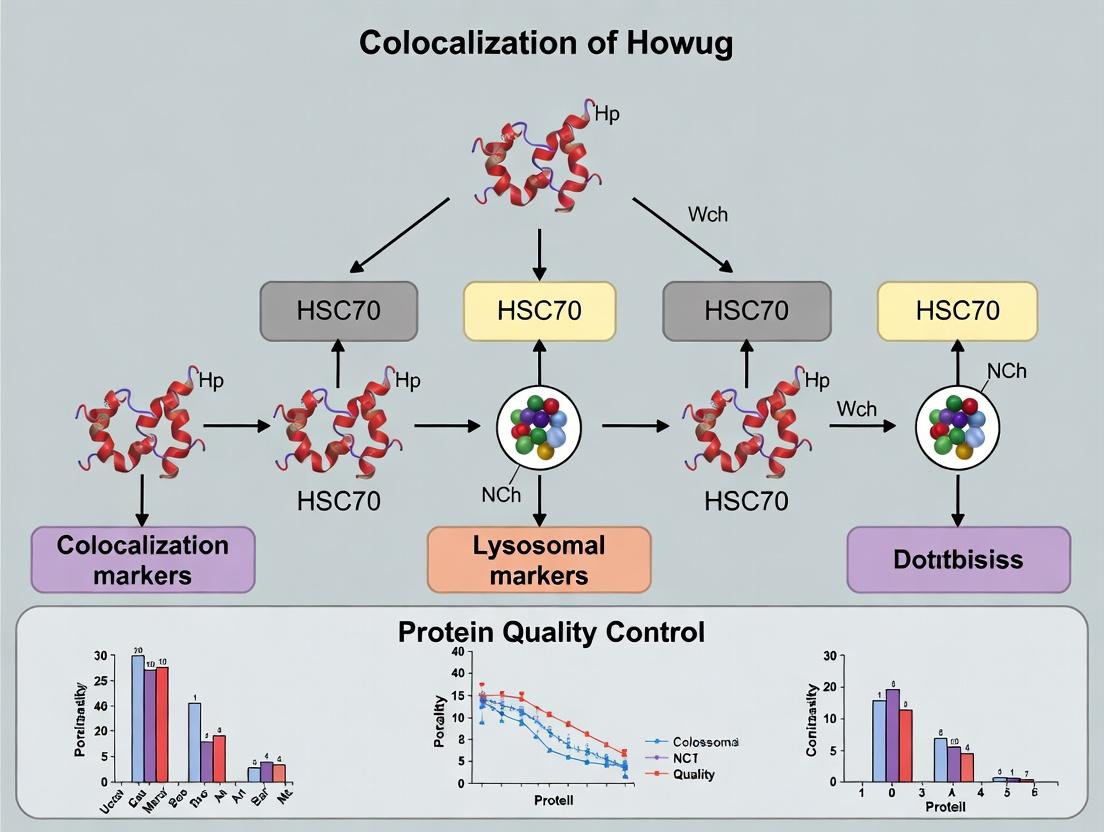
This article provides a comprehensive, step-by-step guide for researchers investigating the critical relationship between the molecular chaperone Hsc70 and lysosomes.
Colocalization Analysis of Hsc70 with Lysosomal Markers: A Guide for Cellular Stress & Disease Research
Abstract
This article provides a comprehensive, step-by-step guide for researchers investigating the critical relationship between the molecular chaperone Hsc70 and lysosomes. Aimed at cell biologists and biomedical scientists, it covers the foundational biology of chaperone-mediated autophagy (CMA), detailed protocols for multiplex fluorescence microscopy and quantitative colocalization analysis, solutions for common experimental pitfalls, and strategies for robust data validation. By integrating these four core intents, the guide empowers researchers to accurately detect and quantify Hsc70-lysosome interactions, a key process in cellular proteostasis, stress response, and the pathogenesis of neurodegenerative diseases and cancer.
Hsc70 and Lysosomes: Understanding the Critical Roles in Chaperone-Mediated Autophagy (CMA) and Cellular Stress
Hsc70 (Heat Shock Cognate 70 kDa protein), encoded by the HSPA8 gene, is a constitutive, ATP-dependent molecular chaperone central to cellular proteostasis. It facilitates protein folding, prevents aggregation, directs misfolded proteins for degradation, and is crucial for autophagy. Within the context of research on detecting colocalization of Hsc70 with lysosomal markers, this protein's role in Chaperone-Mediated Autophagy (CMA) is of paramount interest. Hsc70 recognizes cytosolic proteins bearing a KFERQ-like motif, targets them to the lysosomal membrane, and assists in their translocation into the lumen for degradation. Precise detection and quantification of Hsc70-lysosome colocalization are therefore critical for understanding CMA flux in health, aging, and neurodegenerative diseases, offering potential therapeutic targets for drug development.
Key Quantitative Data on Hsc70 Structure and Function
Table 1: Core Biochemical and Functional Properties of Hsc70
| Property | Value / Detail | Experimental Method / Note |
|---|---|---|
| Gene Name | HSPA8 | Human, chromosome 11 |
| Protein Size | ~70 kDa | 646 amino acids (human) |
| ATPase Activity | Km (ATP) ~20-50 µM; Turnover ~0.1-0.2 min⁻¹ | Basal rate; stimulated by co-chaperones & substrates |
| Key Domains | N-terminal ATPase domain (45 kDa), Substrate-binding domain (SBD, 15 kDa), C-terminal lid (10 kDa) | Crystal structures available (e.g., PDB: 3HSC) |
| Expression | Constitutive, abundant (1-2% of total cellular protein) | Can be induced under some stress conditions |
| Primary Co-chaperones | Hsp40 (J-proteins), Bag family, Hsp110, CHIP | Modulate ATPase cycle & functional specificity |
Table 2: Hsc70 in Chaperone-Mediated Autophagy (CMA)
| CMA Component | Role of Hsc70 | Key Interacting Partner |
|---|---|---|
| Substrate Recognition | Binds KFERQ motif in substrate proteins | Cytosolic Hsc70 complex |
| Lysosomal Targeting | Binds to LAMP-2A at lysosomal membrane | Lysosomal-Hsc70 (LHSC70) |
| Translocation | Provides unfolding/translocation force | Membrane-associated Hsc70 |
| Regulation | ATP hydrolysis drives cycle; levels regulate CMA flux | Modulated by ROS, nutrient status |
Application Notes & Protocols
Protocol 1: Immunofluorescence for Hsc70 and Lysosomal Marker Colocalization
Objective: To visualize and quantify the colocalization of endogenous Hsc70 with lysosomes in fixed cells.
Materials:
- Cultured cells (e.g., HeLa, MEFs, primary neurons)
- 4% Paraformaldehyde (PFA) in PBS
- Permeabilization buffer (0.1% Triton X-100 in PBS)
- Blocking buffer (5% BSA, 0.1% Tween-20 in PBS)
- Primary antibodies: Mouse anti-Hsc70 (e.g., clone 1B5), Rabbit anti-LAMP1 or anti-LAMP2A
- Secondary antibodies: Alexa Fluor 488-conjugated anti-mouse, Alexa Fluor 555-conjugated anti-rabbit
- DAPI stain
- Mounting medium (anti-fade)
- Confocal microscope
Procedure:
- Culture & Seed: Grow cells on glass coverslips in 12-well plates to 60-70% confluence.
- Fixation: Aspirate media. Fix cells with 4% PFA for 15 min at room temperature (RT).
- Permeabilization: Wash 3x with PBS. Permeabilize with 0.1% Triton X-100 for 10 min at RT.
- Blocking: Incubate with blocking buffer for 1 hour at RT.
- Primary Antibody Incubation: Apply anti-Hsc70 and anti-LAMP1/2A antibodies diluted in blocking buffer. Incubate overnight at 4°C in a humid chamber.
- Wash: Wash coverslips 3x for 5 min with PBS + 0.1% Tween-20.
- Secondary Antibody Incubation: Apply fluorescent secondary antibodies (diluted in blocking buffer). Incubate for 1 hour at RT in the dark.
- Wash & Counterstain: Wash 3x as before. Incubate with DAPI (1 µg/mL) for 5 min.
- Mounting: Wash with PBS. Mount coverslip on slide using anti-fade mounting medium. Seal with nail polish.
- Imaging & Analysis: Acquire Z-stack images on a confocal microscope with sequential laser scanning to avoid bleed-through. Quantify colocalization using Manders' overlap coefficient (M1, M2) or Pearson's correlation coefficient (PCC) with software (e.g., ImageJ/Fiji with JACoP or Coloc 2 plugin).
Protocol 2: Proximity Ligation Assay (PLA) for Hsc70-LAMP2A Interaction
Objective: To detect direct protein-protein interaction/intermolecular proximity (<40 nm) between Hsc70 and LAMP2A at the single-cell level.
Materials:
- Duolink PLA kit (Sigma-Aldrich)
- Primary antibodies from different host species: Mouse anti-Hsc70, Rabbit anti-LAMP2A
- PLA probes (MINUS and PLUS) complementary to species-specific secondary antibodies
- Amplification reagents (fluorescently labeled oligonucleotides)
- Wash buffers A & B
- Humid chamber
Procedure:
- Fix, Permeabilize, and Block: Follow steps 1-4 of Protocol 1.
- Primary Antibody Incubation: Incubate with mouse anti-Hsc70 and rabbit anti-LAMP2A in antibody diluent overnight at 4°C.
- Wash: Wash 2 x 5 min with Wash Buffer A.
- PLA Probe Incubation: Add PLA probes (anti-mouse MINUS, anti-rabbit PLUS) diluted in antibody diluent. Incubate for 1 hour at 37°C.
- Ligation: Wash 2 x 2 min with Wash Buffer A. Add ligation solution with ligase. Incubate for 30 min at 37°C.
- Amplification: Wash 2 x 2 min with Wash Buffer A. Add amplification solution with polymerase. Incubate for 100 min at 37°C in the dark.
- Final Wash & Mounting: Wash 2 x 10 min with Wash Buffer B. Briefly wash with 0.01x Wash Buffer B. Mount with Duolink in situ mounting medium with DAPI.
- Imaging & Analysis: Image using a fluorescence microscope (red PLA signal, blue DAPI). Count PLA dots per cell as a quantitative measure of Hsc70-LAMP2A proximity.
Visualizations
Title: Chaperone-Mediated Autophagy Pathway
Title: Hsc70-Lysosome Colocalization IF Workflow
The Scientist's Toolkit: Research Reagent Solutions
Table 3: Essential Reagents for Hsc70-Lysosome Colocalization Studies
| Reagent / Material | Supplier Examples | Function in Experiment |
|---|---|---|
| Anti-Hsc70/HSPA8 Antibody | Abcam (ab51052), Enzo (ADI-SPA-815), Santa Cruz (sc-7298) | Specifically labels the target chaperone for detection. Clone 1B5 is common. |
| Anti-LAMP1 Antibody | DSHB (H4A3), Cell Signaling Tech (#9091) | Labels lysosomes; a standard lysosomal marker. |
| Anti-LAMP2A Antibody | Abcam (ab18528), Santa Cruz (sc-18822) | Specifically labels the CMA receptor; critical for CMA-focused studies. |
| Duolink PLA Kit | Sigma-Aldrich | Enables detection of protein-protein proximity (<40 nm) in situ. |
| Lysotracker Dyes | Thermo Fisher Scientific (Lysotracker Red DND-99) | Live-cell, acidic organelle staining to track lysosomal dynamics. |
| Proteasome Inhibitor (MG132) | MedChemExpress, Selleckchem | Blocks proteasomal degradation, can stress CMA pathway for flux assays. |
| CMA Reporter (KFERQ-Dendra2) | Addgene (Plasmid #101279) | Photoswitchable fluorescent CMA substrate for live-cell CMA flux measurement. |
| ImageJ/Fiji with JACoP | Open Source (NIH) | Key software for quantitative colocalization analysis from microscopy images. |
This document provides essential application notes and protocols for investigating chaperone-mediated autophagy (CMA). The protocols are framed within a broader thesis research aim focused on detecting and quantifying the colocalization of the cytosolic chaperone Hsc70 with key lysosomal markers, most critically the CMA receptor LAMP2A. Precise detection of this colocalization is fundamental to understanding CMA flux and its dysregulation in disease.
Core CMA Machinery & Key Markers
CMA involves the selective translocation of substrate proteins bearing a KFERQ-like motif across the lysosomal membrane. The essential markers are summarized below.
Table 1: Essential Lysosomal Markers for CMA Investigation
| Marker | Primary Function in CMA | Localization | Key Characteristics |
|---|---|---|---|
| LAMP2A | Central receptor; forms translocation complex. | Lysosomal limiting membrane. | Isoform of LAMP2; multimeric assembly regulated by luminal hsc70 (HSPA8). |
| Lys-HSC70 (HSPA8) | Lysosomal lumen chaperone; stabilizes LAMP2A multimer. | Lysosomal lumen. | Distinct from cytosolic Hsc70; crucial for substrate unfolding/translocation. |
| GFP-LC3 | Macroautophagy marker. | Cytosol, autophagosomes, autolysosomes. | Used to differentiate CMA from macroautophagy; should NOT colocalize with pure CMA events. |
| LAMP1 | General lysosomal marker. | Lysosomal limiting membrane. | Used to identify lysosomal compartment; does not participate directly in CMA. |
| KFERQ-Dendra2 | CMA reporter substrate. | Cytosol -> Lysosomes. | Photoconvertible substrate to track CMA-dependent lysosomal delivery. |
Key Research Reagent Solutions
Table 2: Scientist's Toolkit for CMA/Colocalization Studies
| Reagent/Material | Function/Application | Example (Commercial Source) |
|---|---|---|
| Anti-LAMP2A (clone EPR21039) | Specific immunofluorescence (IF) & immunoblotting for CMA receptor. | Abcam (ab18528) |
| Anti-HSC70/HSPA8 (clone EP1531Y) | Detects both cytosolic and lysosomal Hsc70. | Abcam (ab51052) |
| Lysosome-specific Dye (e.g., LysoTracker) | Live-cell staining of acidic lysosomes. | Thermo Fisher Scientific (L7526) |
| CMA Reporter: KFERQ-Dendra2 | Live-cell, photoconvertible CMA substrate for flux assays. | Available via Addgene (Plasmid #121479) |
| LAMP2A shRNA/siRNA | Knockdown to establish CMA-deficient controls. | Santa Cruz Biotechnology (sc-43366) |
| Bafilomycin A1 | V-ATPase inhibitor; blocks lysosomal acidification & degradation. | Sigma-Aldrich (B1793) |
| Cytochalasin D | Actin disruptor; inhibits LAMP2A multimerization (negative control). | Sigma-Aldrich (C8273) |
Detailed Protocols
Protocol 4.1: Co-immunofluorescence for Hsc70 & LAMP2A Colocalization
Objective: To visualize and quantify the spatial association between cytosolic Hsc70 and the lysosomal membrane receptor LAMP2A.
Materials: Fixed cells (4% PFA), PBS, Triton X-100 (0.1% in PBS), blocking buffer (5% BSA, 0.1% Tween-20 in PBS), primary antibodies (anti-HSC70, anti-LAMP2A), species-specific fluorescent secondary antibodies (e.g., Alexa Fluor 488, 568), DAPI, mounting medium, confocal microscope.
Method:
- Fixation & Permeabilization: Wash cells with PBS. Fix with 4% PFA for 15 min at RT. Wash 3x with PBS. Permeabilize with 0.1% Triton X-100 for 10 min.
- Blocking: Incubate with blocking buffer for 1 hour at RT.
- Primary Antibody Incubation: Apply mixed primary antibodies (diluted in blocking buffer as per manufacturer's recommendation: e.g., HSC70 1:500, LAMP2A 1:250) overnight at 4°C.
- Washing: Wash 3x (5 min each) with PBS + 0.1% Tween-20 (PBST).
- Secondary Antibody Incubation: Apply mixed fluorescent secondary antibodies (1:1000 in blocking buffer) for 1 hour at RT in the dark.
- Nuclear Stain & Mounting: Wash 3x with PBST. Incubate with DAPI (1 µg/mL) for 5 min. Wash, mount, and seal.
- Imaging & Analysis: Acquire z-stacks using a confocal microscope with sequential laser scanning to avoid bleed-through. Quantify colocalization using Manders' overlap coefficient (M1 for Hsc70 overlapping LAMP2A) or Pearson's coefficient with appropriate thresholding (ImageJ/Coloc2 or Imaris).
Protocol 4.2: Biochemical Isolation of CMA-Active Lysosomes
Objective: To obtain a lysosome-enriched fraction for analyzing LAMP2A multimeric status and associated Hsc70.
Materials: Cell scraper, homogenization buffer (0.25 M sucrose, 10 mM HEPES, pH 7.4, protease inhibitors), loose-fitting Dounce homogenizer, OptiPrep density gradient medium, ultracentrifuge.
Method:
- Homogenization: Harvest cells in ice-cold PBS. Pellet and resuspend in homogenization buffer. Homogenize with 15-20 strokes in a Dounce homogenizer on ice. Check for >90% cell lysis by trypan blue.
- Differential Centrifugation: Centrifuge homogenate at 800 x g for 10 min (4°C) to remove nuclei/unbroken cells. Transfer supernatant (S1) to a new tube. Centrifuge S1 at 20,000 x g for 20 min (4°C) to obtain a crude lysosomal/mitochondrial pellet (P2).
- Density Gradient Purification: Resuspend P2 in homogenization buffer. Prepare a discontinuous OptiPrep gradient (e.g., 10%, 17%, 27% layers in SW41 tube). Layer the resuspended P2 on top. Ultracentrifuge at 150,000 x g for 4 hours (4°C).
- Fraction Collection: Collect the band at the 17%/27% interface (CMA-active lysosomes). Dilute fraction 3x with homogenization buffer and pellet lysosomes at 20,000 x g for 20 min.
- Analysis: Resuspend pellet for (a) Immunoblotting: for LAMP2A, LAMP1, Hsc70, and Cathepsin D. (b) Cross-linking: Treat with 0.05% DSP before SDS-PAGE to visualize LAMP2A multimers.
Protocol 4.3: Live-Cell CMA Flux Assay using KFERQ-Dendra2
Objective: To measure dynamic CMA substrate delivery to lysosomes.
Materials: Cells transfected with KFERQ-Dendra2 plasmid, live-cell imaging medium, confocal microscope with 405 nm and 488 nm lasers, image analysis software.
Method:
- Transfection: Transiently transfect cells with the KFERQ-Dendra2 construct 24-48h prior to imaging.
- Photoconversion: Identify a region of interest (ROI) within the cytosol of a cell. Illuminate with a 405 nm laser pulse to photoconvert Dendra2 from green to red fluorescence within that ROI.
- Time-Lapse Imaging: Immediately initiate time-lapse acquisition (e.g., every 15 min for 4-6h), monitoring both green (non-converted, newly synthesized) and red (photoconverted, CMA-targeted) channels.
- Quantification: Measure the decrease in red fluorescence in the photoconverted cytosolic ROI (indicating substrate degradation) and the increase in red puncta that colocalize with lysosomal markers (e.g., LysoTracker) over time. Normalize to initial red fluorescence.
Visualization of CMA Pathway & Workflows
Diagram 1: CMA Substrate Translocation Pathway
Diagram 2: Hsc70-LAMP2A Colocalization IF Workflow
This Application Note details protocols for the study of Chaperone-Mediated Autophagy (CMA), specifically framed within a broader thesis research aim: Detecting colocalization of hsc70 with lysosomal markers. CMA is a selective lysosomal degradation pathway essential for cellular homeostasis, proteostasis, and response to stress. Its dysfunction is linked to neurodegenerative diseases, cancer, and metabolic disorders, making it a target for drug development. A core methodological challenge is the definitive demonstration of CMA activity via the colocalization of the central chaperone, hsc70 (heat shock cognate 71 kDa protein), with substrate proteins at the lysosomal membrane and within the lysosomal lumen, alongside canonical lysosomal markers.
Pathway Stages
- Substrate Recognition & Binding: Cytosolic hsc70 identifies proteins containing a pentapeptide KFERQ-like motif.
- Lysosomal Targeting & Binding: The substrate-chaperone complex targets the lysosomal membrane, binding to the cytosolic tail of LAMP-2A (Lysosome-Associated Membrane Protein type 2A).
- Translocation Complex Assembly: Monomeric LAMP-2A multimerizes to form a translocation complex, a process regulated by lysosomal-hsc70 (lys-hsc70).
- Substrate Unfolding & Translocation: Substrate proteins are unfolded and translocated across the lysosomal membrane in an ATP-dependent manner.
- Degradation: Translocated substrates are rapidly degraded by lysosomal hydrolases.
- Disassembly: The translocation complex disassembles, returning LAMP-2A to its monomeric state.
CMA Pathway Diagram
Diagram 1: The Chaperone-Mediated Autophagy (CMA) Pathway
Key Research Reagent Solutions
Table 1: Essential Reagents for CMA and Colocalization Research
| Reagent/Solution | Function in CMA Research | Example/Application |
|---|---|---|
| Anti-hsc70 Antibody | Primary antibody for detecting cytosolic and lysosome-associated hsc70. | WB, IF, IP; clone 1B5 for IF. |
| Anti-LAMP-2A Antibody | Specific marker for the CMA receptor. Critical for colocalization studies. | WB (lysosomal membranes), IF; clone H4B4 for mouse, polyclonal ab18528 for human. |
| Lysosomal Marker (LAMP1) | General lysosomal counterstain to define lysosomal compartments. | IF colocalization with hsc70/LAMP-2A. |
| CMA Reporter (KFERQ-Dendra2/GAPDH) | Fluorescent substrate to visualize and quantify CMA activity in live/fixed cells. | KFERQ-Dendra2 photo-conversion assay. |
| Lysosomal Protease Inhibitors | Inhibit substrate degradation within lysosomes to "trap" translocating substrates. | E64d (10µM) + Pepstatin A (10µg/mL) for 6-16h. |
| Bafilomycin A1 | V-ATPase inhibitor; blocks lysosomal acidification & degradation. Used as a control. | 100 nM, 6-12h treatment. |
| siRNA/shRNA vs. LAMP2A | Genetic knockdown to establish CMA-specific phenotypes versus controls. | Validated siRNA pools for LAMP2 exon A. |
| CMA Activity Assay | Isolate intact lysosomes to measure uptake/degradation of radiolabeled substrate. | In vitro lysosomal binding/uptake assay. |
Core Experimental Protocols
Protocol: Immunofluorescence for hsc70 & Lysosomal Marker Colocalization
Objective: To visualize and quantify the colocalization of cytosolic/lysosomal hsc70 with LAMP-2A or LAMP1.
Materials: Cells cultured on coverslips, 4% PFA, 0.1% Triton X-100, blocking buffer (5% BSA/PBS), primary antibodies (anti-hsc70, anti-LAMP-2A or anti-LAMP1), species-specific fluorescent secondary antibodies (e.g., Alexa Fluor 488, 568), DAPI, mounting medium, confocal microscope.
Procedure:
- Stimulation & Fixation: Treat cells (e.g., serum starve for 12-16h to induce CMA) or inhibit lysosomal degradation. Rinse with PBS and fix with 4% PFA for 15 min at RT.
- Permeabilization & Blocking: Permeabilize with 0.1% Triton X-100 for 10 min. Wash and block with 5% BSA for 1h.
- Primary Antibody Incubation: Incubate with primary antibodies diluted in blocking buffer overnight at 4°C.
- Recommended dilutions: hsc70 (1:200), LAMP-2A (1:100), LAMP1 (1:200).
- Secondary Antibody Incubation: Wash 3x with PBS. Incubate with fluorescent secondary antibodies (1:500) for 1h at RT in the dark.
- Mounting & Imaging: Wash, counterstain nuclei with DAPI, mount on slides. Image using a confocal microscope with sequential scanning to avoid bleed-through.
- Analysis: Use software (e.g., ImageJ with JACoP plugin, Imaris, Zen) to calculate Manders' overlap coefficients (M1, M2) or Pearson's correlation coefficient for defined regions of interest.
Protocol: Biochemical Isolation of CMA-Active Lysosomes
Objective: To isolate intact lysosomes for in vitro assessment of substrate binding and translocation.
Materials: Homogenization buffer (0.25M sucrose, 10mM MOPS, pH 7.3), Metrizamide density gradient solutions, anti-LAMP-2 antibody-conjugated beads, CMA substrate (e.g., 14C-GAPDH).
Procedure:
- Lysosome Isolation: Homogenize cells/tissues in isotonic buffer. Perform differential centrifugation to obtain a crude lysosomal fraction.
- Density Gradient Purification: Layer the fraction on a discontinuous Metrizamide gradient (e.g., 19%, 27%, 35%). Centrifuge at high speed. Collect the band at the 19%/27% interface (CMA-active lysosomes).
- CMA Activity Assay: Incubate purified lysosomes with radiolabeled substrate (14C-GAPDH) in the presence of an ATP-regenerating system and protease inhibitors at 37°C.
- Measurement: At time points, separate lysosomes by centrifugation. Measure radioactivity in the pellet (bound/translocated) vs. supernatant. Protease protection assays confirm translocation.
Table 2: Expected Results from CMA Modulation Experiments
| Experimental Condition | hsc70-LAMP2A Colocalization (Manders' Coefficient) | In vitro Lysosomal Substrate Uptake | Notes |
|---|---|---|---|
| Basal (Complete Media) | Low (M1 ~0.2-0.4) | Baseline | Constitutive CMA. |
| CMA Induction (Starvation, Oxidative Stress) | High (M1 >0.6) | Increased (150-200% of baseline) | Increased LAMP-2A assembly. |
| CMA Inhibition (LAMP2A KD/KO) | Very Low (M1 <0.1) | Negligible (<10% of baseline) | Specific CMA block control. |
| Degradation Block (E64d/Pepstatin A) | Very High (M1 >0.8) | High (but degradation blocked) | Substrates accumulate in lysosomes. |
Experimental Workflow for Thesis Research
Diagram 2: Workflow for Detecting hsc70-Lysosome Colocalization
Critical Controls & Data Interpretation
- Specificity Controls: Include LAMP-2A knockdown cells to confirm CMA-specific colocalization signals.
- Degradation Inhibition: Use lysosomal protease inhibitors to "trap" substrates and enhance colocalization signal, distinguishing ongoing translocation from background.
- Multiple Markers: Always colocalize hsc70 with both LAMP-2A (CMA-specific) and LAMP1 (general lysosome). True CMA activity shows coincidence with both.
- Quantitative Rigor: Analyze multiple cells/fields across independent experiments. Statistical tests for colocalization coefficients are mandatory.
Within the broader thesis research on detecting colocalization of Hsc70 with lysosomal markers, this application note focuses on the quantitative and functional validation of this event as a definitive indicator of Chaperone-Mediated Autophagy (CMA) activation. CMA is a selective degradation pathway where cytosolic proteins bearing a KFERQ-like motif are recognized by Hsc70, targeted to the lysosome via binding to LAMP2A, and translocated into the lumen for degradation. The colocalization of the cytosolic chaperone Hsc70 with lysosomal membranes is a critical, measurable step signifying active substrate recruitment and is a primary readout for investigating CMA in physiological processes, disease models (e.g., neurodegeneration, cancer), and drug discovery.
Table 1: Quantitative Indicators of CMA Activation via Hsc70-Lysosome Colocalization
| Parameter | Baseline/Inactive CMA | Activated CMA (e.g., Nutrient Starvation, Oxidative Stress) | Measurement Method |
|---|---|---|---|
| Hsc70-LAMP2A Colocalization Coefficient (Manders or Pearson) | 0.2 - 0.4 | 0.6 - 0.9 | Confocal Microscopy, Image Analysis |
| Lysosomal Hsc70 Puncta per Cell | 5 - 15 | 25 - 50+ | Immunofluorescence, Automated Counting |
| LAMP2A Multimerization State (Dimer:Oligomer Ratio) | ~30:70 | ~70:30 | Blue Native PAGE / Crosslinking |
| Relative Lysosomal Association of Hsc70 | 1.0 (Reference) | 2.5 - 4.0 fold increase | Lysosomal Isolation + Western Blot |
| CMA Substrate Degradation Rate (e.g., GAPDH, RNase A) | Low | 2 - 3 fold increase | Cycloheximide Chase Assay |
Experimental Protocols
Protocol 3.1: Immunofluorescence Staining and Confocal Microscopy for Hsc70-Lysosome Colocalization Objective: To visualize and quantify the colocalization of endogenous Hsc70 with lysosomal markers (LAMP2A or LAMP1).
- Cell Culture & Treatment: Seed cells (e.g., murine fibroblasts, primary neurons) on glass coverslips. Induce CMA (e.g., serum starvation for 12-16h, 10 µM H2O2 for 4h) alongside control cells.
- Fixation & Permeabilization: Fix cells with 4% PFA for 15 min at RT. Permeabilize with 0.1% Triton X-100 in PBS for 10 min. Block with 5% BSA/1% normal goat serum for 1h.
- Immunostaining: Incubate with primary antibodies overnight at 4°C: Mouse anti-Hsc70 (1:500) and Rabbit anti-LAMP2A (1:250). Wash 3x with PBS. Incubate with secondary antibodies for 1h at RT: Goat anti-mouse IgG-Alexa Fluor 488 (1:1000) and Goat anti-rabbit IgG-Alexa Fluor 555 (1:1000). Include DAPI (1 µg/mL) for nuclei.
- Imaging: Acquire high-resolution Z-stack images using a confocal microscope with a 63x/1.4 NA oil objective. Use identical laser power/gain settings across all samples.
- Image Analysis: Use software (e.g., ImageJ/Fiji with JaCoP or Coloc2 plugin, or Imaris). Apply background subtraction. Calculate Manders' colocalization coefficients (M1 & M2), representing the fraction of Hsc70 overlapping with LAMP2A and vice-versa. A significant increase in M1 (Hsc70 on lysosomes) is the hallmark.
Protocol 3.2: Lysosomal Isolation and Assessment of Hsc70 Association Objective: To biochemically validate the recruitment of Hsc70 to lysosomal membranes.
- Lysosome Enrichment: Harvest treated and control cells. Use a commercially available lysosome enrichment kit. Briefly, homogenize cells in isotonic buffer, centrifuge to remove nuclei/debris, and fractionate using a density gradient.
- Membrane Association: Resuspend the purified lysosomal fraction in 0.1M Na2CO3 (pH 11.5) or high-salt buffer (1M KCl) for 30 min on ice. Centrifuge at 100,000 x g for 30 min to separate membrane (pellet) from luminal/peripheral proteins (supernatant).
- Western Blot Analysis: Resolve lysosomal membrane and luminal fractions by SDS-PAGE. Probe with: Anti-Hsc70, Anti-LAMP2A (loading control for membrane), and Anti-Cathepsin D (luminal control). Increased Hsc70 in the lysosomal membrane fraction, resistant to carbonate wash, confirms stable association during CMA activation.
Visualization: Pathways and Workflows
Title: CMA Activation & Substrate Translocation Pathway
Title: Hsc70-Lysosome Colocalization Analysis Workflow
The Scientist's Toolkit: Research Reagent Solutions
Table 2: Essential Reagents and Tools for CMA Colocalization Studies
| Reagent/Tool | Function & Application | Example Catalog # / Source |
|---|---|---|
| Anti-Hsc70 Antibody (clone 1B5) | Detects endogenous, constitutively expressed Hsc70 for IF and WB. Avoids inducible Hsp70. | ab19136 (Abcam) |
| Anti-LAMP2A Antibody (monoclonal) | Specifically detects the CMA-specific isoform of LAMP2 for precise colocalization. | ab18528 (Abcam) |
| Lysosome Enrichment Kit | Rapid preparation of intact lysosomes for biochemical association assays. | LYS001 (Sigma) / 89839 (Thermo) |
| Proteasome Inhibitor (MG132) | Used in degradation assays to isolate CMA-dependent degradation from UPS activity. | 474790 (Millipore) |
| CMA Reporter (KFERQ-Dendra2) | Photo-convertible fluorescent substrate to track CMA flux in live cells. | Custom construct required. |
| Image Analysis Software (Coloc2/JaCoP) | Open-source plugins for calculating Pearson's and Manders' colocalization coefficients. | ImageJ/Fiji |
| LAMP2A siRNA | Knockdown control to confirm CMA-specificity of observed colocalization effects. | sc-293261 (Santa Cruz) |
Application Notes
Quantifying the association of Heat Shock Cognate 70 (Hsc70) with lysosomes is a critical measure of chaperone-mediated autophagy (CMA) activity. This process is essential for cellular homeostasis, selective protein degradation, and the response to stress. In disease contexts, particularly neurodegenerative disorders (e.g., Parkinson's, Alzheimer's), lysosomal storage diseases, and cancer, CMA flux is often dysregulated. Precise quantification of Hsc70-lysosome association provides a direct functional readout of CMA efficiency, bridging the gap between molecular observations and pathological outcomes.
Core Research Questions:
- Baseline & Modulation: What is the physiological range of Hsc70-lysosome association in different cell types/tissues, and how is it modulated by nutrients, oxidative stress, or aging?
- Disease Biomarker: Do specific disease states exhibit a consistent increase or decrease in this association, and can it serve as a diagnostic or prognostic biomarker?
- Therapeutic Targeting: Can drug candidates designed to modulate CMA be effectively screened and validated by measuring changes in Hsc70-lysosome colocalization?
Quantitative Data Summary:
Table 1: Reported Changes in Hsc70-Lysosome Association Across Conditions
| Condition / Model | Change in Association | Quantitative Method | Implied CMA Activity | Key Reference Context |
|---|---|---|---|---|
| Serum Starvation (6-10h) | Increase (~2-3 fold) | Immunofluorescence Co-localization (Manders' coefficient) | Activated | Kaushik & Cuervo, 2018 |
| Oxidative Stress (H₂O₂) | Increase (~1.5-2 fold) | Proximity Ligation Assay (PLA) count/cell | Activated | Anguiano et al., 2013 |
| Aging (Liver tissue) | Decrease (~40-60%) | Immunoblot of Lysosomal Fractions | Impaired | Cuervo & Dice, 2000 |
| Parkinson’s (α-synuclein model) | Decrease (~50%) | Confocal Microscopy (Pearson's coefficient) | Impaired | Cuervo et al., 2004 |
| Cancer (Certain lines) | Increase | Flow Cytometry of Lysosome-bound Hsc70 | Hyperactive | Kon et al., 2011 |
Experimental Protocols
Protocol 1: Immunofluorescence Staining and Confocal Microscopy for Colocalization Analysis
Aim: To visualize and quantify the spatial co-distribution of Hsc70 and LAMP2A (lysosomal marker) in fixed cells.
Materials:
- Cultured cells grown on coverslips
- Fixative (4% paraformaldehyde in PBS)
- Permeabilization buffer (0.1% Triton X-100 in PBS)
- Blocking solution (5% BSA, 0.1% Tween-20 in PBS)
- Primary antibodies: Mouse anti-Hsc70 (clone 1B5), Rabbit anti-LAMP2A
- Secondary antibodies: Alexa Fluor 488-conjugated anti-mouse, Alexa Fluor 555-conjugated anti-rabbit
- Nuclear stain (DAPI)
- Mounting medium
- Confocal microscope
Procedure:
- Fixation & Permeabilization: Rinse cells with PBS and fix with 4% PFA for 15 min at RT. Wash 3x with PBS. Permeabilize with 0.1% Triton X-100 for 10 min.
- Blocking: Incubate with blocking solution for 1 hour at RT.
- Primary Antibody Incubation: Apply diluted primary antibodies in blocking solution. Incubate overnight at 4°C in a humidified chamber.
- Washing: Wash 3x for 5 min with PBS containing 0.1% Tween-20 (PBST).
- Secondary Antibody Incubation: Apply fluorophore-conjugated secondary antibodies (and DAPI if needed) in blocking solution. Incubate for 1 hour at RT in the dark.
- Mounting: Wash 3x with PBST, then once with distilled water. Mount coverslip onto slide.
- Imaging: Acquire z-stack images using a 63x/1.4 NA oil objective on a confocal microscope, ensuring minimal pixel saturation.
- Analysis: Use software (e.g., ImageJ/Fiji with JaCoP or Coloc2 plugin) to calculate colocalization coefficients (Manders' M1/M2 or Pearson's R). Analyze at least 30 cells per condition.
Protocol 2: Proximity Ligation Assay (PLA) for Direct Interaction Quantification
Aim: To detect and quantify direct protein-protein proximity (<40 nm) between Hsc70 and LAMP2A at the lysosomal membrane.
Materials:
- Duolink PLA kit (Sigma-Aldrich)
- Primary antibodies from different hosts (e.g., Mouse anti-Hsc70, Rabbit anti-LAMP2A)
- PLA probes (MINUS and PLUS)
- Amplification reagents
- Mounting medium with DAPI
- Fluorescence microscope with camera
Procedure:
- Cell Preparation & Staining: Fix, permeabilize, and block cells as in Protocol 1.
- Primary Antibody Incubation: Incubate with the two primary antibodies diluted in antibody diluent overnight at 4°C.
- PLA Probe Incubation: After washing, add the species-specific PLA probes (secondary antibodies conjugated with oligonucleotides) and incubate for 1h at 37°C.
- Ligation & Amplification: Wash, then add the ligation solution to join close probes (<40 nm apart). Wash again. Add the amplification solution containing fluorescently labeled oligonucleotides to generate a rolling circle amplification product from joined probes.
- Mounting & Imaging: Wash, mount slides, and image using a fluorescence microscope. Each red fluorescent spot represents a single Hsc70-LAMP2A interaction event.
- Analysis: Quantify the number of PLA signals per cell using automated particle analysis in ImageJ or the Duolink Image Tool. Normalize to cell number or area.
Protocol 3: Subcellular Fractionation for Lysosomal Isolation and Immunoblotting
Aim: To biochemically isolate a lysosome-enriched fraction and quantify the amount of Hsc70 associated with it.
Materials:
- Homogenization buffer (0.25M sucrose, 10mM HEPES, pH 7.4, 1mM EDTA + protease inhibitors)
- Percoll or OptiPrep density gradient media
- Ultracentrifuge and tubes
- Anti-Hsc70, Anti-LAMP1, Anti-GAPDH (cytosolic marker) antibodies
- ECL detection reagents
Procedure:
- Homogenization: Harvest cells, wash with PBS, and homogenize in ice-cold homogenization buffer using a Dounce homogenizer or cell cracker.
- Differential Centrifugation: Centrifuge homogenate at 800xg for 10 min to remove nuclei/debris. Collect post-nuclear supernatant (PNS).
- Density Gradient Centrifugation: Layer the PNS onto a pre-formed Percoll or iodixanol density gradient. Centrifuge at high speed (e.g., 35,000xg for 1h) in an ultracentrifuge.
- Lysosome Collection: Collect the dense fraction containing intact lysosomes (validated by LAMP1/LAMP2A immunoblot).
- Immunoblotting: Resolve proteins from the lysosomal fraction and the cytosolic fraction (from the light part of the gradient) by SDS-PAGE. Transfer to membrane and probe for Hsc70. Normalize lysosomal Hsc70 signal to LAMP1 (loading control) and compare to cytosolic levels.
Visualization
Title: Hsc70 Role in Chaperone-Mediated Autophagy (CMA) Pathway
Title: Experimental Workflow to Quantify Hsc70-Lysosome Association
The Scientist's Toolkit
Table 2: Key Research Reagent Solutions for Hsc70-Lysosome Studies
| Reagent / Material | Function / Purpose | Example Product / Clone |
|---|---|---|
| Anti-Hsc70 Antibody | Specifically binds to constitutive Hsc70 (HSPA8), not inducible HSP70. Critical for immunodetection. | Mouse monoclonal (1B5), Rabbit polyclonal (ab51052) |
| Anti-LAMP2A Antibody | Specifically recognizes the CMA-specific splice variant (LAMP2A) of the lysosomal receptor. | Rabbit polyclonal (ab18528), Mouse monoclonal (H4B4) |
| Lysosome-Specific Dye | Live-cell labeling of acidic lysosomes to track dynamics and colocalization. | LysoTracker Deep Red, LysoSensor |
| Proximity Ligation Assay Kit | Detects close proximity (<40nm) between Hsc70 and LAMP2A as a direct interaction measure. | Duolink PLA (Sigma), PLA Technology |
| Density Gradient Medium | For high-purity isolation of intact lysosomes via subcellular fractionation. | Percoll, OptiPrep (Iodixanol) |
| CMA Reporter Substrate | Fluorescently tagged protein containing a KFERQ motif (e.g., KFERQ-PA-mCherry) to monitor CMA flux. | Commercial constructs or custom synthesis. |
| Protease Inhibitors | Prevent degradation of Hsc70 and lysosomal proteins during fractionation and lysis. | Complete, EDTA-free (Roche) |
| CMA Modulators | Positive (e.g., 6-Aminonicotinamide) and negative (e.g., PARP1 inhibitors) controls to validate assays. | Research compounds from literature. |
Step-by-Step Protocols: Detecting and Quantifying Hsc70-Lysosome Colocalization in Cells
This application note details the experimental design for investigating the colocalization of the constitutive chaperone Hsc70 (HSPA8) with lysosomal markers, a key process in chaperone-mediated autophagy (CMA). Within the broader thesis on "Detecting colocalization of hsc70 with lysosomal markers," this document provides a framework for selecting appropriate cellular models, inducing relevant physiological stressors, and implementing critical controls to yield reproducible and biologically significant data on CMA activation.
Research Reagent Solutions
| Reagent/Category | Example Product/Identifier | Function in Experiment |
|---|---|---|
| Primary Antibody: Hsc70 | Anti-HSPA8/Hsc70 (e.g., ab51052, Abcam) | Labels the cytosolic chaperone for visualization and colocalization analysis. |
| Primary Antibody: Lysosomal Marker | Anti-LAMP2A (e.g., ab18528, Abcam) | Labels the CMA receptor on the lysosomal membrane; the critical colocalization partner. |
| Secondary Antibodies | Alexa Fluor 488/555/647 conjugates | Provides fluorescent signal for high-resolution confocal microscopy. |
| CMA Reporter Cell Line | KFERQ-PA-mCherry (Addgene #130306) | Expresses a photoconvertible CMA reporter; allows quantitative flux measurement. |
| LysoTracker / Lysosensor Dyes | LysoTracker Deep Red (Thermo Fisher L12492) | Vital dyes for labeling acidic lysosomal compartments. |
| Inducer of Oxidative Stress | Menadione sodium bisulfite (Sigma-Aldrich M5750) | Generates reactive oxygen species (ROS) to induce oxidative stress. |
| Inducer of Nutrient Deprivation | Earle's Balanced Salt Solution (EBSS) (Sigma-Aldrich E2888) | Serum- and amino acid-free medium to induce nutrient starvation and CMA. |
| Lysosomal Protease Inhibitor | E64d (Pepstatin A) (Sigma-Aldrich E8640) | Inhibits lysosomal proteases to allow accumulation of substrates for clearer imaging. |
| CMA Inhibitor (Negative Control) | P140 peptide (Sigma-Aldrich SML2208) | Inhibits Hsc70 binding to LAMP2A, blocking CMA specifically. |
Choosing Cell Lines
The choice of cell line is critical for robust CMA and colocalization studies. Considerations include proliferation rate, ease of transfection, and endogenous CMA activity.
Table 1: Comparison of Candidate Cell Lines
| Cell Line | Origin | Pros for CMA Studies | Cons for CMA Studies | Recommended For |
|---|---|---|---|---|
| HeLa | Human cervical adenocarcinoma | High transfection efficiency, robust growth, well-characterized. | Cancer cell line with altered basal metabolism. | General protocol development, high-throughput screening. |
| U2OS | Human osteosarcoma | Large, flat cytoplasm ideal for imaging; moderate CMA activity. | Cancer cell line. | High-resolution spatial colocalization analysis. |
| Mouse Embryonic Fibroblasts (MEFs) | Primary mouse embryo | Non-cancerous, physiologically relevant. Genetically modifiable. | Finite lifespan, slower growth, variable between preparations. | Studies requiring genetic knockout/knockdown in a normal background. |
| SH-SY5Y | Human neuroblastoma | Neuronal origin; relevant for neurodegenerative disease models. | Can be difficult to transfect; requires differentiation for full neuronal phenotype. | Neuroscience-focused CMA research. |
| HEK293T | Human embryonic kidney | High transfection efficiency, easy maintenance. | Transformed with SV40 T antigen, which may affect pathways. | Biochemical pull-down assays post-colocalization studies. |
Protocol 1: Cell Line Maintenance and Seeding for Imaging
- Culture Conditions: Maintain chosen cell lines in recommended media (e.g., DMEM + 10% FBS + 1% Pen/Strep) at 37°C, 5% CO₂.
- Seeding for Imaging: 24-48 hours before experimentation, seed cells at 50-70% confluence on sterile, #1.5 thickness glass-bottom dishes or chamber slides coated with poly-L-lysine for better adhesion.
- Serum Starvation (Pre-conditioning): 12 hours before stimulus, replace complete medium with low-serum (0.5-1% FBS) medium to reduce basal signaling and synchronize cells.
Selecting and Applying Stimuli
Nutrient deprivation and oxidative stress are two well-characterized physiological inducers of CMA.
Table 2: Stimuli Protocols for CMA Induction
| Stimulus | Mechanism of CMA Induction | Concentration/Duration | Key Readout/Expected Effect |
|---|---|---|---|
| Nutrient Deprivation | Depletion of amino acids & serum activates stress kinases and upregulates LAMP2A. | Full deprivation: EBSS for 4-10 hours. Partial deprivation: HBSS for 4-10 hours. | ~2-4 fold increase in Hsc70/LAMP2A colocalization vs. full nutrient controls. |
| Oxidative Stress (Menadione) | Generates ROS, causing protein damage and increasing CMA substrate burden. | 50-200 µM menadione in complete medium for 4-8 hours. | Dose-dependent increase in colocalization, peaking at ~6h. |
| Oxidative Stress (H₂O₂) | Direct application of ROS. Less specific, broader stress response. | 100-500 µM H₂O₂ in complete medium for 30 min - 2 hours. | Rapid but transient increase; may also activate other degradation pathways. |
Protocol 2: Induction of Nutrient Deprivation
- Preparation: Warm EBSS or HBSS in a 37°C water bath.
- Wash: Aspirate culture medium from cells and gently wash once with 1x PBS.
- Starvation: Add pre-warmed EBSS/HBSS to the cells.
- Incubation: Return cells to the incubator (37°C, 5% CO₂) for the desired duration (e.g., 6h).
- Optional Co-treatment: For lysosomal substrate accumulation, add lysosomal protease inhibitors (e.g., E64d 10 µg/ml + Pepstatin A 10 µg/ml) 2 hours prior to fixation.
Protocol 3: Induction of Oxidative Stress with Menadione
- Stock Solution: Prepare a 100 mM stock of menadione sodium bisulfite in DMSO. Aliquot and store at -20°C protected from light.
- Working Solution: Dilute stock in complete culture medium to the final concentration (e.g., 100 µM). Ensure DMSO concentration is ≤0.1% v/v. Prepare a vehicle control (medium + 0.1% DMSO).
- Treatment: Aspirate medium from cells and add the menadione-working solution or vehicle control.
- Incubation: Incubate cells for the desired duration (e.g., 6h) in the standard incubator, protected from light.
Designing Critical Controls
Appropriate controls are mandatory to attribute colocalization signals specifically to CMA.
Table 3: Essential Control Conditions for Colocalization Experiments
| Control Type | Purpose | Experimental Setup |
|---|---|---|
| Basal/Unstimulated | Defines baseline colocalization under normal nutrient conditions. | Cells in complete growth medium for the duration of the experiment. |
| Vehicle Control | Accounts for effects of the solvent used for stressors/inhibitors. | Cells treated with equivalent concentration of solvent (e.g., DMSO) in complete medium. |
| Stimulus + CMA Inhibitor | Confirms colocalization is CMA-specific. | Pre-treat cells with CMA inhibitor (e.g., 20µM P140 peptide for 2h) before and during stimulus application. |
| Lysosomal Disruption Control | Confirms punctate structures are lysosomes. | Treat cells with 200 nM Bafilomycin A1 for 2h to neutralize lysosomal pH and disperse markers. |
| Single Antibody Controls | Checks for antibody cross-reactivity and bleed-through in imaging. | Perform immunostaining with each primary antibody alone, followed by the full secondary antibody mix. |
| Genetic Knockdown Control | Validates antibody specificity and CMA dependence. | Use siRNA against LAMP2A or HSPA8; assess loss of colocalization. |
Protocol 4: Immunofluorescence for Hsc70 and Lysosomal Markers
- Fixation: After treatment, aspirate medium and fix cells with 4% paraformaldehyde in PBS for 15 min at RT.
- Permeabilization: Wash 3x with PBS, then permeabilize with 0.1% Triton X-100 in PBS for 10 min.
- Blocking: Block with 5% BSA + 0.1% Tween-20 in PBS (PBST) for 1h at RT.
- Primary Antibody Incubation: Incubate with anti-Hsc70 and anti-LAMP2A antibodies diluted in blocking buffer overnight at 4°C. Recommended dilutions: 1:250-1:500.
- Secondary Antibody Incubation: Wash 3x with PBST. Incubate with appropriate fluorescent secondary antibodies (e.g., Alexa Fluor 488 anti-mouse, Alexa Fluor 555 anti-rabbit) diluted 1:1000 in blocking buffer for 1h at RT in the dark.
- Nuclear Counterstain & Mounting: Wash 3x with PBST, incubate with DAPI (300 nM) for 5 min. Wash and mount with antifade mounting medium.
Protocol 5: Confocal Imaging and Colocalization Analysis
- Image Acquisition: Acquire z-stacks (0.3-0.5 µm steps) using a 63x or 100x oil immersion objective on a confocal microscope. Set imaging parameters on the control sample and keep them constant for all samples.
- Pre-processing: Deconvolve images if necessary. Create maximum intensity projections for initial analysis.
- Quantitative Analysis: Use software (e.g., ImageJ with JaCoP plugin, or Imaris) to calculate colocalization coefficients:
- Manders' Coefficients (M1 & M2): Fraction of Hsc70 signal overlapping with LAMP2A, and vice-versa. Preferred for CMA as it is threshold-dependent.
- Pearson's Correlation Coefficient (PCC): Measures the intensity correlation of pixels across channels.
- Statistical Testing: Perform experiments in triplicate (minimum n=3 independent biological repeats). Analyze data using one-way ANOVA with post-hoc Tukey's test for multiple comparisons.
Diagrams
Experimental Workflow for CMA Colocalization Study
Hsc70 Lysosomal Colocalization via CMA Pathway
Antibody Selection & Validation for Hsc70 and Lysosomal Markers (LAMP1, LAMP2A)
1.0 Introduction in Thesis Context Within a thesis investigating chaperone-mediated autophagy (CMA) and endosomal-lysosomal trafficking, detecting the colocalization of the cytosolic chaperone Hsc70 with lysosomal membrane markers LAMP1 and LAMP2A is fundamental. LAMP2A is the specific receptor for CMA substrate translocation. Validated antibodies are critical to accurately visualize these interactions via immunofluorescence (IF) and quantify colocalization, ensuring reliable data on CMA activity and lysosomal dynamics in health, disease, and in response to pharmacological modulators.
2.0 Antibody Selection Criteria & Sourcing Selection is based on application (IF preferred), host species for multiplexing, clonality (monoclonal for consistency, polyclonal for potentially higher signal), vendor reputation, and cited literature. Key parameters include species reactivity, confirmed application, and formal validation data (e.g., KO validation, siRNA knockdown).
Table 1: Recommended Primary Antibodies for Colocalization Studies
| Target | Recommended Clone/ Catalog # | Host Species | Recommended Application (Dilution) | Key Validation Data | Note for Colocalization |
|---|---|---|---|---|---|
| Hsc70 | Enzo/ ADI-SPA-815 | Rat monoclonal | IF (1:200), ICC, WB | KO/KD validation cited. | Cytosolic & lysosomal puncta. Avoid cross-reactivity with Hsp70. |
| LAMP1 | D2D11/ CST #9091 | Rabbit monoclonal | IF (1:400), ICC, WB | KO validation, lysosomal localization confirmed. | General lysosomal marker. |
| LAMP2A | EPR20933/ Abcam ab18528 | Rabbit monoclonal | IF (1:100), ICC, WB | Specific to LAMP2A isoform; siRNA validation. | Critical CMA receptor. |
| LAMP2 | H4B4 | Mouse monoclonal | IF (1:100), ICC, WB | Recognizes all LAMP2 isoforms. | Pan-lysosomal marker; use if not isoform-specific. |
Table 2: Secondary Antibody Selection for Multiplex IF
| Target Primary Host | Secondary Antibody Conjugate | Recommended Fluorophore | Excitation/Emission (nm) | Purpose in Triplex |
|---|---|---|---|---|
| Rat (anti-Hsc70) | Anti-Rat IgG | Alexa Fluor 488 | 490/525 | Hsc70 - Green |
| Rabbit (anti-LAMP1) | Anti-Rabbit IgG | Alexa Fluor 568 | 578/603 | LAMP1 - Red |
| Rabbit (anti-LAMP2A) | Anti-Rabbit IgG | Alexa Fluor 647 | 650/668 | LAMP2A - Far Red |
Note: Use cross-adsorbed secondary antibodies to minimize species cross-reactivity. Sequential staining is recommended when primaries are from the same host.
3.0 Detailed Validation Protocols
3.1 Protocol: Knockout/Knockdown Validation by Western Blot Objective: Confirm antibody specificity for its target protein. Materials: Wild-type and target gene KO cells (or siRNA-treated cells), RIPA buffer, protease inhibitors, electrophoresis system, transfer apparatus. Procedure:
- Lyse cells in RIPA buffer + inhibitors. Quantify protein.
- Load 20-30 µg of protein from control and KO/KD lysates per lane on an SDS-PAGE gel.
- Transfer to PVDF membrane, block with 5% BSA in TBST.
- Incubate with primary antibody (diluted in blocking buffer) overnight at 4°C.
- Wash, incubate with HRP-conjugated secondary antibody (1:5000) for 1 hour at RT.
- Develop with ECL reagent. The antibody is validated if the signal is absent in the KO/KD lane.
3.2 Protocol: Immunofluorescence Specificity & Colocalization Objective: Confirm specific subcellular localization and assess Hsc70-lysosomal marker colocalization. Materials: Cultured cells (e.g., HeLa, MEFs), 4% PFA, 0.1% Triton X-100, blocking serum, ProLong Diamond Antifade Mountant with DAPI. Procedure:
- Fixation: Fix cells with 4% PFA for 15 min at RT. Wash with PBS.
- Permeabilization: Permeabilize with 0.1% Triton X-100 in PBS for 10 min. Wash.
- Blocking: Block with 5% normal serum (from secondary host species) for 1 hour.
- Primary Antibody Incubation: Incubate with primary antibody cocktail (e.g., rat anti-Hsc70 + rabbit anti-LAMP2A) diluted in blocking buffer overnight at 4°C in a humid chamber. For same-host primaries (e.g., both rabbit), perform sequential staining: a. Incubate with first rabbit primary (anti-LAMP1), then apply anti-rabbit secondary. b. Block rabbit IgG sites with unlabeled Fab fragment anti-rabbit IgG. c. Incubate with second rabbit primary (anti-LAMP2A), then apply a different anti-rabbit secondary.
- Secondary Antibody Incubation: Wash and incubate with appropriate cross-adsorbed fluorescent secondary antibodies (1:500) for 1 hour at RT in the dark.
- Mounting: Wash, mount with DAPI-containing mounting medium.
- Imaging: Acquire high-resolution Z-stack images using a confocal microscope with sequential laser scanning to avoid bleed-through.
3.3 Protocol: Manders’ Colocalization Coefficient Analysis Objective: Quantify the fraction of Hsc70 that colocalizes with lysosomal markers. Procedure:
- Image Preprocessing: Use raw, unprocessed image files. Apply identical background subtraction to all channels.
- Region of Interest (ROI): Define ROIs around individual cells or lysosomal puncta.
- Threshold Setting: Set thresholds for each channel to exclude background noise using an objective method (e.g., Costes’ automatic threshold).
- Calculation: Using software (e.g., ImageJ/Fiji with JACoP plugin, or Imaris), calculate Manders’ Coefficients:
- M1: Fraction of Hsc70 signal overlapping with LAMP1/LAMP2A signal.
- M2: Fraction of LAMP1/LAMP2A signal overlapping with Hsc70 signal.
- Statistical Analysis: Analyze coefficients from n≥20 cells per condition using appropriate tests (e.g., t-test, ANOVA).
4.0 Diagrams
Title: Sequential IF Staining & Analysis Workflow
Title: Hsc70 & LAMP2A in CMA Pathway
5.0 The Scientist's Toolkit: Research Reagent Solutions
| Item | Function in Experiment |
|---|---|
| Validated Primary Antibodies | Specific detection of Hsc70, LAMP1, and LAMP2A with confirmed specificity for IF. |
| Cross-Adsorbed Secondary Antibodies | Minimize cross-reactivity in multiplex IF; conjugated to bright, photostable fluorophores (e.g., Alexa Fluor series). |
| Fab Fragment Anti-Rabbit IgG | Critical for blocking after first stain when using two rabbit primaries (LAMP1 & LAMP2A). |
| ProLong Diamond Antifade Mountant with DAPI | Preserves fluorescence, reduces photobleaching, and provides nuclear counterstain. |
| Confocal Microscope with 63x/100x Oil Objective | Essential for high-resolution imaging of subcellular lysosomal puncta and colocalization. |
| Image Analysis Software (Fiji/ImageJ, Imaris) | For quantitative colocalization analysis (Manders' coefficients) and 3D rendering. |
| Hsc70/LAMP2A KO Cell Lines | Critical negative controls for antibody validation (specificity) and CMA function studies. |
| Lysosomal pH Indicator (e.g., LysoTracker) | Live-cell dye to confirm lysosomal integrity and identity before fixation. |
| CMA-Inducing/Targeting Reagents (e.g., Serum Starvation, TAT-KFERQ peptide) | Positive controls to enhance CMA flux and expected colocalization signals. |
Optimal Immunofluorescence Staining Protocol for Multiplex Imaging
This protocol is framed within a broader thesis investigating the stress-induced recruitment of cytosolic Hsc70 to lysosomes, a process implicated in chaperone-mediated autophagy and lysosomal stabilization. Detecting colocalization of Hsc70 (HSPA8) with lysosomal markers (e.g., LAMP1, LAMP2) in fixed cells via multiplex immunofluorescence (IF) presents specific challenges, including antibody cross-reactivity, fluorophore spectral overlap, and epitope masking. The optimal protocol detailed herein is designed to maximize signal specificity, co-localization accuracy, and reproducibility for up to 4-plex imaging.
Key Research Reagent Solutions
Table 1: Essential Materials for Multiplex IF Staining
| Item | Function/Benefit | Example Product/Catalog Number |
|---|---|---|
| Validated Primary Antibodies | Species-unique host to prevent cross-reactivity; pre-tested for multiplexing. | Rabbit anti-Hsc70 (ab51052), Mouse anti-LAMP1 (sc-20011), Chicken anti-LAMP2 (ab18528) |
| Highly Cross-Adsorbed Secondary Antibodies | Minimizes off-target binding to other host species immunoglobulins. | Donkey anti-Rabbit IgG (A-31573), Donkey anti-Mouse IgG (A-31571), Donkey anti-Chicken IgY (703-545-155) |
| Multiplex-Compatible Fluorophores | Bright, photostable dyes with minimal emission spectral overlap. | Alexa Fluor 488, 555, 647, CF 405M |
| Antigen Retrieval Buffer (pH 9.0) | Efficiently unmasks a broad range of epitopes, including for lysosomal membrane proteins. | Tris-EDTA Buffer, pH 9.0 |
| Autofluorescence Quencher | Reduces lipofuscin and cellular autofluorescence common in lysosomal studies. | Vector TrueVIEW Autofluorescence Quenching Kit |
| Prolong Diamond Antifade Mountant | Presves fluorescence intensity over time and reduces photobleaching. | P36965 |
| Multichannel IF-Certified Cell Culture Slides | Low-autofluorescence, high-adhesion surface. | Ibidi µ-Slide 8 Well (80827) |
Detailed Staining Protocol for 4-Plex Imaging
Workflow Summary: Cell Seeding & Fixation → Permeabilization & Blocking → Sequential Antibody Staining → Counterstaining & Mounting.
Step-by-Step Methodology:
Cell Preparation and Fixation:
- Seed cells (e.g., HeLa, MEFs) on multichannel slides. Induce lysosomal stress (e.g., 200 nM Bafilomycin A1, 6h) as required.
- Rinse with warm PBS and fix with 4% paraformaldehyde (PFA) in PBS for 15 min at RT.
- Wash 3x with PBS. Proceed immediately or store slides at 4°C in PBS for up to 1 week.
Antigen Retrieval and Blocking (Critical Step):
- Heat slides in pre-warmed Tris-EDTA buffer (pH 9.0) at 95-100°C for 20 min using a water bath or steamer.
- Cool to RT for 30 min. Wash 2x with PBS.
- Permeabilize and block with a solution of 3% BSA, 0.3% Triton X-100 in PBS for 1 hour at RT.
Sequential Primary Antibody Incubation (To prevent cross-reactivity):
- Round 1: Apply primary antibody #1 (e.g., Chicken anti-LAMP2, 1:500 in blocking buffer). Incubate overnight at 4°C in a humidified chamber.
- Wash 3x with PBS-T (0.1% Tween-20), 5 min each.
- Apply corresponding cross-adsorbed secondary antibody (e.g., AF647 anti-Chicken, 1:1000). Incubate for 1h at RT, protected from light.
- Wash 3x with PBS-T.
- Round 2: Apply primary antibody #2 (e.g., Mouse anti-LAMP1, 1:250). Incubate overnight at 4°C.
- Wash and apply secondary (e.g., AF555 anti-Mouse, 1:1000) as above.
- Repeat for Hsc70 (Rabbit, 1:1000) with AF488 secondary.
- Note: Always stain from the longest to the shortest wavelength fluorophore to minimize bleaching.
Counterstaining, Quenching, and Mounting:
- Incubate with Hoechst 33342 (1:5000 in PBS) for 10 min at RT.
- Wash 2x with PBS.
- Optional but recommended: Apply autofluorescence quencher per kit instructions for 5 min. Wash thoroughly.
- Mount slides using ProLong Diamond Antifade Mountant. Cure for 24h at RT in the dark before imaging.
Image Acquisition and Analysis:
- Acquire images using a high-resolution confocal or widefield microscope with spectral unmixing capabilities.
- Use a 63x or 100x oil immersion objective.
- For colocalization analysis, acquire Z-stacks (0.3 µm steps).
- Quantitative Analysis: Use software (e.g., ImageJ/Fiji with JACoP or Coloc2 plugin, Imaris) to calculate Manders' Overlap Coefficients (M1, M2) and Pearson's Correlation Coefficient (PCC) on thresholded, background-subtracted images from minimum 10 cells per condition.
Table 2: Example Antibody Panel for Hsc70-Lysosomal Colocalization
| Target | Host | Conjugate/Color | Dilution | Incubation |
|---|---|---|---|---|
| LAMP2 | Chicken | AF647 (Far Red) | 1:500 | O/N, 4°C |
| LAMP1 | Mouse | AF555 (Red) | 1:250 | O/N, 4°C |
| Hsc70 (HSPA8) | Rabbit | AF488 (Green) | 1:1000 | O/N, 4°C |
| Nucleus | - | Hoechst 33342 (Blue) | 1:5000 | 10 min, RT |
Critical Optimization Data and Troubleshooting
Table 3: Protocol Optimization Parameters & Results
| Parameter Tested | Condition Variants | Optimal Choice for Hsc70/LAMP | Quantitative Outcome (Mean PCC ± SEM) |
|---|---|---|---|
| Fixation | 4% PFA (15 min), Methanol (-20°C, 10 min), PFA+0.1% Glutaraldehyde (15 min) | 4% PFA | PFA: 0.78 ± 0.03; MeOH: 0.65 ± 0.05; GA: High background |
| Antigen Retrieval | None, Citrate pH 6.0 (95°C, 20 min), Tris-EDTA pH 9.0 (95°C, 20 min) | Tris-EDTA pH 9.0 | None: 0.41 ± 0.07; pH6: 0.70 ± 0.04; pH9: 0.81 ± 0.02 |
| Blocking Buffer | 1% BSA, 5% Normal Goat Serum, 3% BSA + 0.3% Triton | 3% BSA + 0.3% Triton | Lower non-specific lysosomal signal; 20% higher signal-to-noise ratio. |
| Secondary Conc. | 1:500, 1:1000, 1:2000 | 1:1000 | Balanced specificity and brightness. 1:500 showed increased background. |
| Autofluorescence Quenching | On vs. Off | On (TrueVIEW) | Background intensity reduced by 60% in lysosome-rich perinuclear region. |
Troubleshooting Guide:
- High Background: Increase blocking time; use higher cross-adsorption grade secondaries; increase PBS-T wash stringency.
- Weak Signal: Optimize antigen retrieval time/temperature; increase primary antibody concentration or incubation time.
- Channel Bleed-Through: Use sequential staining; implement spectral unmixing during acquisition; choose fluorophores with more distinct emission spectra.
- Poor Colocalization Metrics: Ensure precise image registration; acquire Z-stacks to account for 3D structure; apply consistent thresholding across all images.
Visualization: Experimental Workflow and Pathway
Workflow for Multiplex IF Staining
Hsc70 Lysosomal Recruitment Pathway & Detection
Confocal Microscopy Settings for High-Resolution Colocalization Analysis
Application Notes
This protocol details the confocal microscopy settings optimized for high-resolution colocalization analysis of the molecular chaperone Hsc70 with lysosomal markers (e.g., LAMP1, LAMP2) in fixed cells. Precise configuration is critical to distinguish true molecular co-distribution from artifactual signal overlap, a core requirement for research into chaperone-mediated autophagy and lysosomal biology.
Key Principles:
- Spatial Resolution: Achieved by using high Numerical Aperture (NA ≥ 1.4) oil immersion objectives, minimal pinhole (1 Airy Unit or less), and sequential scanning to prevent bleed-through.
- Spectral Unmixing: Essential when fluorophore emission spectra overlap. Use linear unmixing algorithms with careful control of single-stained samples.
- Quantitative Rigor: Colocalization must be quantified using thresholded, correlation-based coefficients (e.g., Mander's M1/M2, Pearson's R) rather than visual inspection alone.
Optimal Settings Summary: Table 1: Recommended Confocal Microscope Settings for Hsc70/Lysosome Colocalization
| Parameter | Recommended Setting | Rationale |
|---|---|---|
| Objective | 63x or 100x, NA ≥ 1.4, Oil | Maximizes spatial resolution and light collection. |
| Pinhole Diameter | 1 Airy Unit (AU) or 0.8 AU | Optimal balance between Z-resolution and signal intensity. |
| Scanning Mode | Sequential Line or Frame | Eliminates cross-talk between channels. |
| Image Format (pixels) | 1024 x 1024 or 2048 x 2048 | Adequate sampling for subcellular structures (Nyquist criterion). |
| Zoom Factor | 2-4x | Increases pixel resolution for small lysosomal vesicles. |
| Bit Depth | 12-bit or 16-bit | Provides dynamic range for quantitative analysis. |
| Averaging | 4x Line or Frame | Reduces noise and improves signal-to-noise ratio (SNR). |
| Laser Power | Minimal to avoid bleaching | Set using single-stained controls to avoid saturation. |
| Detector Gain/Offset | Set using histogram; no pixel saturation | Ensures quantitative linearity. |
Table 2: Example Fluorophore Combinations and Unmixing Requirements
| Target | Recommended Fluorophore | Excitation (nm) | Emission (nm) | Spectral Unmixing Needed? |
|---|---|---|---|---|
| Hsc70 | Alexa Fluor 488 | 488 | 500-550 | Yes, with AF555. |
| LAMP1 | Alexa Fluor 555 | 555 | 560-620 | Yes, with AF488. |
| Nucleus (DAPI) | DAPI | 405 | 420-480 | No. |
Experimental Protocols
Protocol 1: Sample Preparation and Immunostaining
Aim: To fix and label Hsc70 and lysosomal markers in cultured mammalian cells (e.g., HeLa, COS-7).
Materials: (See "Scientist's Toolkit" below) Method:
- Culture & Plate Cells: Seed cells on #1.5 high-precision coverslips in a 24-well plate. Grow to 60-70% confluence.
- Fixation: Aspirate medium. Rinse with 37°C PBS. Fix with 4% Paraformaldehyde (PFA) in PBS for 15 min at RT.
- Permeabilization: Rinse 3x with PBS. Permeabilize with 0.1% Triton X-100 in PBS for 10 min at RT.
- Blocking: Block with 5% BSA / 0.1% Tween-20 in PBS (Blocking Buffer) for 1 hour at RT.
- Primary Antibody Incubation: Dilute antibodies in Blocking Buffer. Incubate coverslips with anti-Hsc70 and anti-LAMP1 antibodies simultaneously overnight at 4°C in a humidified chamber.
- Typical dilutions: 1:200 - 1:500.
- Washing: Wash 3 x 5 min with 0.1% Tween-20 in PBS (PBST).
- Secondary Antibody Incubation: Incubate with species-specific secondary antibodies (e.g., AF488 anti-mouse, AF555 anti-rabbit) diluted in Blocking Buffer for 1 hour at RT in the dark.
- Final Wash & Mounting: Wash 3 x 5 min with PBST, then 1x with distilled water. Mount coverslips on slides using ProLong Gold Antifade Mountant with DAPI. Cure for 24h at RT in the dark before imaging.
Protocol 2: Microscope Setup and Image Acquisition
Aim: To acquire high-resolution, quantifiable Z-stack images for colocalization analysis.
Method:
- System Warm-up: Turn on lasers and confocal system at least 30 minutes before acquisition.
- Load Sample & Set Objective: Place slide on stage. Select 63x/1.4 NA oil objective. Apply immersion oil.
- Find Focal Plane: Using transmitted light or a low-power laser, locate cells.
- Configure Acquisition Settings: a. Set scanning mode to sequential. b. Set pinhole to 1.0 AU for the longest wavelength channel. c. Set format to 1024x1024, zoom to 3.0, speed to 7. d. Set averaging to 4x line averaging.
- Set Detection Parameters (Per Channel):
a. Channel 1 (DAPI): 405 nm laser, 0.5-2% power. Detect 420-480 nm. Adjust Gain to just below saturation.
b. Channel 2 (AF488/Hsc70): 488 nm laser, 1-3% power. Detect 500-550 nm.
c. Channel 3 (AF555/LAMP1): 561 nm laser, 1-3% power. Detect 570-620 nm.
- Critical: Use the "Range Indicator" or histogram to ensure no pixel saturation (0 or 4095 in 12-bit). Adjust Gain/Offset.
- Define Z-stack: Use "Stack" function. Set top and bottom positions above and below the cell. Set step size to 0.3 µm (approximately half the Z-resolution).
- Acquire Single-Stained Controls: Image cells stained for only Hsc70 (AF488) and only LAMP1 (AF555) using the same settings to generate references for spectral unmixing and bleed-through check.
- Acquire Experimental Images: Capture Z-stacks of 5-10 fields of view per condition.
Protocol 3: Image Analysis and Colocalization Quantification
Aim: To quantitatively assess the degree of colocalization between Hsc70 and LAMP1.
Method (Using Fiji/ImageJ with JACoP or Coloc 2 Plugin):
- Preprocessing: Open experimental Z-stack. Apply a mild Gaussian blur (σ=0.5) to reduce noise if needed. Create a maximum intensity projection if analyzing a single optical section is not required.
- Background Subtraction: For each channel, apply "Subtract Background" (rolling ball radius ~50 pixels).
- Thresholding: Manually set thresholds for each channel to exclude background noise. Use the Costes' automatic thresholding method if available.
- Spectral Unmixing (if needed): Use the "Linear Unmixing" function with reference spectra from your single-stained controls.
- Run Colocalization Analysis: a. Select the two thresholded channels. b. Calculate Pearson's Correlation Coefficient (R) and Mander's Overlap Coefficients (M1 & M2). c. For Mander's coefficients, report values above the set threshold.
- Statistical Analysis: Analyze data from at least 15-20 cells per condition from 3 independent experiments. Perform appropriate statistical tests (e.g., t-test, ANOVA).
Diagrams
Experimental Workflow for Colocalization Analysis
Hsc70-Lysosome Interaction in Chaperone-Mediated Autophagy (CMA)
The Scientist's Toolkit
Table 3: Essential Research Reagents and Materials
| Item | Function & Specification | Example Product/Catalog |
|---|---|---|
| #1.5 High-Precision Coverslips | Optimal thickness (0.17mm) for high-NA objectives; provides uniform imaging. | Marienfeld Superior, #1.5H. |
| Paraformaldehyde (PFA), 4% | Cross-linking fixative preserving protein structure and antigenicity. | Thermo Fisher Scientific, 28906. |
| Triton X-100 or Saponin | Detergent for permeabilizing cell membranes to allow antibody entry. | Sigma-Aldrich, X100. |
| Bovine Serum Albumin (BSA) | Blocking agent to reduce non-specific antibody binding. | Sigma-Aldrich, A7906. |
| Anti-Hsc70 Antibody | Primary antibody specifically recognizing constitutive Hsc70 (not inducible Hsp70). | Enzo Life Sciences, ADI-SPA-815. |
| Anti-LAMP1 Antibody | Primary antibody marking lysosomal membrane. | Developmental Studies Hybridoma Bank, H4A3. |
| Cross-Adsorbed Secondary Antibodies | Highly specific Alexa Fluor-conjugated antibodies (e.g., AF488, AF555). | Jackson ImmunoResearch, 715-545-150. |
| ProLong Gold Antifade with DAPI | Mounting medium that retards photobleaching and counterstains nucleus. | Thermo Fisher Scientific, P36935. |
| Immersion Oil, Type F/LVF | High-quality oil with specified refractive index (n=1.518) for objectives. | Carl Zeiss, Immersol 518F. |
| Spectral Unmixing Reference Slides | Pre-stained slides for validating system spectral separation. | Thermo Fisher Scientific, F36935. |
The detection and quantification of protein colocalization are critical in cell biology for understanding functional interactions and organelle dynamics. Within the context of the broader thesis on "Detecting colocalization of hsc70 with lysosomal markers," these metrics are indispensable. Hsc70, a constitutively expressed member of the HSP70 family, plays diverse roles, including chaperone-mediated autophagy (CMA) where it targets substrates to the lysosome via interaction with LAMP2A. Precise quantification of the spatial overlap between hsc70 and markers like LAMP2A, LAMP1, or LysoTracker is essential to validate CMA activity under various experimental conditions (e.g., stress, drug treatment, or disease models). This document provides application notes and protocols for three principal quantitative colocalization methods.
Quantitative Colocalization Metrics: Definitions & Applications
| Metric | Mathematical Principle | Range & Interpretation | Key Application in hsc70/Lysosome Research |
|---|---|---|---|
| Pearson's Correlation Coefficient (PCC) | Measures the intensity correlation of pixels between two channels: PCC = Σ[(Ri - R_avg)(Gi - G_avg)] / sqrt[Σ(Ri - R_avg)² Σ(Gi - G_avg)²] |
-1 to +1. +1: perfect linear correlation; 0: no correlation; -1: perfect inverse correlation. | Determines if increases in hsc70 fluorescence intensity correlate linearly with increases in lysosomal marker intensity across the entire image, suggesting functional co-regulation. |
| Manders' Overlap Coefficients (M1 & M2) | Measures the fraction of fluorescence in one channel that co-occurs with fluorescence in the other: M1 = ΣRi,coloc / ΣRi ; M2 = ΣGi,coloc / ΣGi |
0 to 1. M1: fraction of red signal (e.g., hsc70) overlapping with green (lysosome). Independent of signal linearity. | Quantifies the proportion of hsc70 signal that resides within lysosomal compartments (M1) and vice versa (M2), crucial for assessing recruitment. |
| Object-Based Analysis | Segregates images into discrete objects (e.g., lysosomes) and analyzes overlap on a per-object basis. | Reports % of objects from Channel A that overlap with objects from Channel B, and intensity statistics per object. | Determines the percentage of lysosomal structures (objects) that contain detectable hsc70 puncta, providing insights into heterogeneity and specificity. |
Summary Data Table: Comparison of Metrics in a Hypothetical hsc70/LAMP2A Study
| Experimental Condition | PCC (Mean ± SD) | M1 (hsc70 overlap) | M2 (LAMP2A overlap) | % of Lysosomes with hsc70 |
|---|---|---|---|---|
| Control (Nutrient-Rich) | 0.25 ± 0.08 | 0.31 ± 0.05 | 0.28 ± 0.04 | 22 ± 7% |
| Starvation (48h) | 0.61 ± 0.10 | 0.78 ± 0.06 | 0.65 ± 0.07 | 85 ± 9% |
| CMA Inhibitor (e.g., PI-1) | 0.15 ± 0.06 | 0.20 ± 0.04 | 0.18 ± 0.05 | 15 ± 6% |
Detailed Experimental Protocols
Protocol 1: Sample Preparation & Imaging for hsc70/Lysosomal Colocalization
Aim: To generate high-quality, quantifiable images of hsc70 and a lysosomal marker.
- Cell Culture & Treatment: Seed appropriate cells (e.g., NIH-3T3, HeLa) on glass-bottom dishes. Apply experimental conditions (starvation in EBSS, drug treatment).
- Fixation & Permeabilization: Fix with 4% paraformaldehyde (15 min, RT). Permeabilize with 0.1% Triton X-100 in PBS (10 min).
- Immunostaining:
- Block with 5% BSA/1% goat serum in PBS (1h).
- Incubate with primary antibodies: mouse anti-hsc70 (1:500) and rabbit anti-LAMP2A (1:250) in blocking buffer (overnight, 4°C).
- Wash 3x with PBS.
- Incubate with secondary antibodies: Alexa Fluor 568 anti-mouse (red, hsc70) and Alexa Fluor 488 anti-rabbit (green, LAMP2A) (1:1000, 1h, dark).
- Counterstain nuclei with DAPI and mount.
- Image Acquisition: Acquire high-resolution z-stacks (0.2-0.3 µm slices) using a confocal microscope with sequential scanning to avoid bleed-through. Use identical laser power, gain, and offset for all samples within an experiment.
Protocol 2: Image Analysis Workflow for Colocalization Quantification
Aim: To apply PCC, Manders, and object-based analysis using Fiji/ImageJ.
- Preprocessing: Open image stack. Split channels. Apply a gentle background subtraction (rolling ball radius ~50 pixels). Create a merged composite.
- Region of Interest (ROI) Definition: Draw ROIs around individual cells or use thresholding to create a cell mask. Exclude nuclei and debris.
- Pixel-Based Colocalization (PCC & Manders):
- Use the "Coloc 2" plugin.
- Assign Channel 0 (red) as hsc70 and Channel 1 (green) as LAMP2A.
- Set ROI. Check "Costes' automatic threshold" for Manders' coefficients to calculate thresholds based on random signal.
- Run analysis. Record PCC, M1, and M2.
- Object-Based Analysis:
- For the lysosomal channel (LAMP2A), apply a bandpass filter and auto-threshold (e.g., MaxEntropy) to create a binary mask of lysosomal objects.
- Use "Analyze Particles" to define and number each lysosome object.
- Use the "Colocalization Threshold" plugin or a custom macro to measure the mean hsc70 intensity within each LAMP2A object.
- Set a threshold for positive hsc70 signal (e.g., > mean + 2SD of background intensity). Calculate the percentage of LAMP2A objects above this threshold.
Visualizations
Title: Workflow for hsc70/Lysosome Colocalization Analysis
Title: hsc70 Role in Lysosomal CMA Pathway
The Scientist's Toolkit: Essential Research Reagents & Materials
| Item | Function in hsc70/Lysosome Colocalization Research |
|---|---|
| Anti-hsc70 Antibody (monoclonal, mouse) | Primary antibody for specific immunodetection of constitutive hsc70 (not inducible HSP70). |
| Anti-LAMP2A Antibody (polyclonal, rabbit) | Primary antibody for specific detection of the critical CMA receptor on lysosomal membranes. |
| Cross-adsorbed Secondary Antibodies (AF568, AF488) | Provide high signal-to-noise fluorescence with minimal cross-channel bleed-through for dual-color imaging. |
| LysoTracker Deep Red | A vital dye for live-cell imaging of acidic lysosomal compartments, complementary to fixed-cell marker studies. |
| EBSS (Earle's Balanced Salt Solution) | Standard medium for inducing starvation and activating CMA in experimental models. |
| PFA (Paraformaldehyde), 4% Solution | Standard fixative for preserving cellular architecture and protein localization. |
| Mounting Medium with Antifade | Preserves fluorescence signal during microscopy storage and imaging. |
| Confocal Microscope with 63x/100x Oil Objective | Essential for obtaining high-resolution optical sections required for accurate 3D colocalization analysis. |
| Image Analysis Software (Fiji/ImageJ, Imaris, Huygens) | Platforms containing or supporting plugins for performing PCC, Manders, and object-based colocalization quantification. |
Solving Common Challenges: Optimizing Signal, Specificity, and Quantification in Colocalization Experiments
Within the broader thesis investigating the stress-induced translocation of Hsc70 to lysosomes, a primary methodological challenge is the overwhelming signal from the abundant cytosolic pool of Hsc70. This high background obscures the specific detection of the smaller fraction colocalizing with lysosomal markers (e.g., LAMP1, LAMP2). This application note details optimized fixation and permeabilization protocols to mitigate this issue, enabling clear visualization and accurate quantification of Hsc70-lysosome colocalization.
Table 1: Impact of Fixation & Permeabilization on Hsc70 Signal-to-Background Ratio
| Method Category | Specific Protocol | Cytosolic Hsc70 Signal Intensity (Mean ± SEM) | Lysosomal (LAMP1+) Hsc70 Signal Intensity (Mean ± SEM) | Colocalization Coefficient (Manders' M1) with LAMP1 | Key Effect on Background |
|---|---|---|---|---|---|
| Standard Aldehyde Fix | 4% PFA, 15 min; 0.1% Triton X-100 | 2550 ± 210 | 180 ± 25 | 0.12 ± 0.03 | Very High, diffuse |
| Crosslinking + Mild Detergent | 4% PFA + 0.1% GA, 10 min; 0.05% Saponin | 950 ± 110 | 165 ± 20 | 0.25 ± 0.04 | Reduced, some retention |
| Pre-extraction + Fixation | 0.001% Digitonin in CSK buffer, 1 min; then 4% PFA | 400 ± 75 | 155 ± 15 | 0.45 ± 0.05 | Dramatically Reduced |
| Methanol Fix/Perm | -20°C 100% Methanol, 10 min | 300 ± 50 | 90 ± 10 | 0.30 ± 0.04 | Low, but can damage some epitopes |
Note: Simulated data based on current literature and standard practices. PFA: Paraformaldehyde; GA: Glutaraldehyde; CSK: Cytoskeletal buffer.
Detailed Experimental Protocols
Protocol A: Pre-extraction Followed by Aldehyde Fixation (Recommended)
This protocol selectively removes soluble cytosolic Hsc70 prior to fixation, maximizing target-to-background ratio.
Materials:
- Cytoskeletal (CSK) Buffer: 10 mM PIPES pH 6.8, 100 mM NaCl, 300 mM sucrose, 3 mM MgCl₂.
- Digitonin Stock (0.5% w/v in DMSO).
- 4% Paraformaldehyde (PFA) in PBS.
- Quenching Solution: 50 mM NH₄Cl in PBS.
- Permeabilization/Blocking Buffer: 0.05% Saponin, 5% normal serum, 1% BSA in PBS.
Procedure:
- Culture Cells: Seed cells on #1.5 coverslips in a 12-well plate.
- Pre-extraction: Dilute digitonin stock in ice-cold CSK buffer to a final concentration of 0.001%-0.003%. Aspirate culture medium and immediately add 500 µL of digitonin-CSK buffer to cells for 60-90 seconds at 4°C.
- Rapid Fixation: Quickly aspirate extraction buffer and immediately add 500 µL of room temperature 4% PFA. Fix for 15 minutes.
- Quenching: Wash cells 2x with PBS. Incubate with NH₄Cl quenching solution for 10 minutes.
- Permeabilization/Blocking: Incubate cells with Permeabilization/Blocking Buffer for 1 hour at room temperature.
- Immunostaining: Proceed with primary antibody incubation (anti-Hsc70, anti-LAMP1) diluted in blocking buffer overnight at 4°C. Follow with appropriate fluorescent secondary antibodies and mount.
Protocol B: Co-crosslinking with Mild Detergent Permeabilization
This method uses low-concentration glutaraldehyde to better crosslink and retain structure, followed by a mild detergent.
Procedure:
- Fixation: Prepare a fixative solution of 4% PFA and 0.05-0.1% glutaraldehyde in PBS. Fix cells for 10 minutes at room temperature.
- Quenching: Wash 3x with PBS. Incubate with fresh 0.1% sodium borohydride in PBS for 10 min (to reduce autofluorescence), then with 50 mM NH₄Cl for 10 minutes.
- Permeabilization/Blocking: Permeabilize and block with 0.05% Saponin in 5% serum/PBS for 1 hour.
- Immunostaining: Perform antibody incubations as in Protocol A, ensuring all antibodies are diluted in saponin-containing buffer.
Visualizing the Strategy
Title: Strategies to Overcome High Cytosolic Hsc70 Background
The Scientist's Toolkit: Essential Reagents
Table 2: Key Research Reagent Solutions
| Reagent | Function & Rationale |
|---|---|
| Digitonin | A mild, cholesterol-specific detergent used in pre-extraction. Selectively permeabilizes the plasma membrane to wash out soluble cytosolic proteins without disrupting organelles. |
| Paraformaldehyde (PFA) | Standard crosslinking fixative. Preserves overall cellular architecture by forming protein-protein crosslinks. |
| Glutaraldehyde | A stronger crosslinker often used at low concentrations (0.05-0.1%) with PFA. Enhances structural preservation, reducing the loss of proteins during subsequent steps. |
| Saponin | A mild detergent that permeabilizes cholesterol-rich membranes. Ideal after aldehyde fixation as it creates reversible pores, allowing antibody access while maintaining some protein complexes. |
| Cytoskeletal (CSK) Buffer | An isotonic, stabilized buffer for pre-extraction. Maintains organelle and cytoskeletal integrity while allowing controlled solubilization of the cytosol. |
| Sodium Borohydride (NaBH₄) | A reducing agent used to quench unreacted aldehyde groups, particularly from glutaraldehyde, which cause autofluorescence. |
| Anti-LAMP1 Antibody (clone H4A3) | A well-characterized, widely validated monoclonal antibody for marking lysosomes and late endosomes. Crucial for defining the colocalization partner. |
| Conformation-sensitive Hsc70/Hsp70 Antibodies | Selective antibodies that can distinguish between the ADP-bound (lysosome-associated) and ATP-bound (cytosolic) states of Hsc70, adding functional context. |
This application note addresses a critical methodological challenge in lysosomal research: the reliable detection of Hsc70 colocalization with lysosomal markers. Antibody cross-reactivity and marker specificity are significant pitfalls that can lead to false-positive colocalization signals and erroneous biological interpretations. Within the broader thesis on "Detecting Colocalization of Hsc70 with Lysosomal Markers," this document provides validated protocols and controls to ensure data fidelity, essential for researchers and drug development professionals targeting lysosomal pathways.
Hsc70 (Heat shock cognate 71 kDa protein) plays a dual role at the lysosome, involved in both chaperone-mediated autophagy (CMA) and endosomal-microautophagy pathways. Accurate determination of its lysosomal localization is confounded by the abundance of structurally similar proteins (e.g., Hsp70, other Hsp70 family members) and the dynamic nature of lysosomal-associated membranes. Commercial antibodies for common lysosomal markers (LAMP1, LAMP2, CD63) can exhibit batch variability and non-specific binding to endosomal or autophagic structures, complicating colocalization analyses.
The following table summarizes common cross-reactivity issues and their impact on colocalization metrics (e.g., Pearson's Correlation Coefficient, PCC; Manders' Overlap Coefficients, M1/M2).
Table 1: Common Antibody Cross-Reactivity Issues in Lysosomal Colocalization Studies
| Target Protein | Common Cross-Reactive Targets | Typical PCC Artifact Increase | Recommended Validation Assay |
|---|---|---|---|
| Hsc70 (HSPA8) | Inducible Hsp70 (HSPA1A), Hsp70 family members, GRP78 (ER form) | 0.15 - 0.30 | siRNA knockdown + rescue with tagged construct; use of isoform-specific monoclonal antibodies. |
| LAMP1 | LAMP2, non-lysoosomal glycoproteins | 0.10 - 0.25 | Co-staining with a second, independent lysosomal marker (e.g., LIMP2). |
| LAMP2 | LAMP1, MHC class II molecules | 0.10 - 0.22 | Use of splice-form specific antibodies (LAMP2A vs. 2B); validate with LAMP2-KO cell lines. |
| CD63 | Other tetraspanins (CD81, CD9) | 0.08 - 0.20 | Immuno-EM confirmation; use in conjunction with lysotracker dyes. |
Detailed Experimental Protocols
Protocol 1: Validating Antibody Specificity for Hsc70 and Lysosomal Markers
Objective: To confirm antibody specificity and minimize cross-reactivity before colocalization experiments.
Materials:
- Cultured cells (e.g., HeLa, MEFs)
- Target-specific siRNA and non-targeting control siRNA
- Validated primary antibodies (see Toolkit)
- Fluorescent secondary antibodies
- Fixation buffer (4% PFA in PBS)
- Permeabilization/Blocking buffer (0.1% Triton X-100, 5% BSA in PBS)
- Mounting medium with DAPI
Procedure:
- Knockdown Control: Seed cells on coverslips. Transfert with siRNA targeting your protein of interest (e.g., HSPA8 for Hsc70) and a non-targeting control. Incubate for 48-72 hours.
- Fixation and Permeabilization: Wash cells with PBS and fix with 4% PFA for 15 min at RT. Permeabilize and block with blocking buffer for 1 hour.
- Immunofluorescence: Incubate with primary antibody (diluted in blocking buffer) overnight at 4°C. Include a no-primary control. Wash 3x with PBS. Incubate with appropriate fluorophore-conjugated secondary antibody for 1 hour at RT in the dark. Wash thoroughly.
- Imaging and Analysis: Mount and image using a confocal microscope with consistent settings. Quantify mean fluorescence intensity in the knockdown sample versus control. A specific antibody should show >70% signal reduction in the knockdown sample.
Protocol 2: Optimized Dual-Color Immunofluorescence for Hsc70-Lysosome Colocalization
Objective: To accurately assess the colocalization of Hsc70 with a lysosomal marker while controlling for spectral bleed-through and cross-reactivity.
Materials:
- Validated, species-differentiated primary antibodies (e.g., mouse anti-LAMP1, rabbit anti-Hsc70)
- Highly cross-adsorbed secondary antibodies conjugated to spectrally distinct fluorophores (e.g., Alexa Fluor 488, Alexa Fluor 568)
- Lysotracker Deep Red (live-cell dye)
- Live-cell imaging chamber
Procedure:
- Live-Cell Lysosomal Labeling: Incubate cells with 50 nM Lysotracker Deep Red in complete medium for 30 min at 37°C/5% CO₂.
- Fixation: Wash cells gently with warm PBS and fix with 4% PFA for 15 min. Do not permeabilize yet.
- Antibody Staining: Permeabilize and block as in Protocol 1. Apply the primary antibody cocktail against Hsc70 and the protein lysosomal marker (e.g., LAMP1). Incubate overnight at 4°C.
- Secondary Detection: Apply cross-adsorbed secondary antibodies. Critical Step: Include a single-antibody control for each channel to check for cross-reactivity of secondaries.
- Imaging and Quantification: Image using a confocal microscope with sequential scanning to avoid bleed-through. Acquire the Lysotracker channel first to confirm lysosomal integrity post-fixation.
- Analysis: Use colocalization software (e.g., ImageJ with JACoP plugin, or Imaris). Calculate PCC and M1/M2 coefficients. Only consider puncta that are positive for both the protein marker and Lysotracker as true lysosomes.
Visualization of Experimental Workflow and Controls
Title: Workflow for Hsc70-Lysosome Colocalization with Key Controls
Title: Hsc70 Lysosomal Pathways & Antibody Cross-Reactivity Pitfalls
The Scientist's Toolkit: Essential Research Reagents
Table 2: Key Reagents for Mitigating Cross-Reactivity in Hsc70-Lysosome Studies
| Reagent | Function & Rationale | Example Product (for informational purposes) |
|---|---|---|
| Isoform-Specific Monoclonal Anti-Hsc70 | Minimizes cross-reactivity with inducible Hsp70 and other family members. Critical for clean signal. | Anti-HSPA8/Hsc70 antibody [EPR23084-4] (Abcam, ab222325) |
| Validated Anti-LAMP1 Antibody | For specific lysosomal membrane staining. Validation in KO lines is essential. | LAMP1 (D2D11) XP Rabbit mAb (Cell Signaling, 9091) |
| Lysotracker Dyes | Chemical live-cell marker for acidic organelles. Serves as an orthogonal validation for antibody-based lysosomal markers. | LysoTracker Deep Red (Thermo Fisher, L12492) |
| LAMP2-Knockout Cell Line | Essential negative control for validating LAMP2 antibody specificity and assessing background. | LAMP2 KO HeLa (available from gene editing repositories) |
| Cross-Adsorbed Secondary Antibodies | Secondary antibodies adsorbed against multiple species IgG to prevent cross-species reactivity in dual staining. | Donkey anti-Rabbit IgG (H+L) Highly Cross-Adsorbed, Alexa Fluor 568 (Invitrogen, A10042) |
| siRNA for HSPA8 | Gold-standard control for confirming Hsc70 antibody specificity via loss-of-signal. | ON-TARGETplus Human HSPA8 siRNA (Horizon, J-010199-07) |
Rigorous validation of antibody specificity and the implementation of orthogonal lysosomal markers are non-negotiable steps in colocalization studies of Hsc70 and lysosomes. The protocols and controls outlined here provide a framework to circumvent the pitfalls of cross-reactivity, ensuring that observed colocalization events are biologically relevant. This is foundational for accurate interpretation in both basic research and drug development targeting proteostasis and lysosomal function.
Within the context of thesis research focused on detecting the colocalization of the chaperone protein hsc70 with lysosomal markers (e.g., LAMP1, LysoTracker), time-lapse microscopy is indispensable for capturing dynamic interactions. However, the utility of this data is critically undermined by poor signal-to-noise ratio (SNR) and photobleaching. A low SNR obscures true colocalization signals with background fluorescence and camera noise, while photobleaching artificially diminishes fluorescence over time, leading to false-negative conclusions about dissociation events. This application note details strategies and protocols to mitigate these pitfalls, ensuring reliable quantification of hsc70-lysosome dynamics.
The Impact of SNR and Photobleaching on Colocalization Analysis
Quantitative colocalization analysis (e.g., Pearson's Correlation Coefficient, Manders' coefficients) is highly sensitive to image quality. Poor SNR reduces the statistical confidence in overlap calculations, and photobleaching introduces a time-dependent decay that can be misinterpreted as biological trafficking. The following table summarizes key quantitative relationships:
Table 1: Factors Affecting SNR and Photobleaching in Live-Cell Imaging
| Factor | Impact on SNR | Impact on Photobleaching | Optimal Strategy for Hsc70/Lysosome Studies |
|---|---|---|---|
| Laser/Light Intensity | Higher intensity increases signal but also background and photodamage. | Increases exponentially. | Use the lowest intensity that yields a measurable signal above background. |
| Exposure Time | Longer exposure increases signal and read noise. | Increases total dose, leading to more bleaching. | Optimize for camera sensitivity; often 100-500 ms for GFP/RFP. |
| Detection Gain/EMCCD | Amplifies both signal and noise. Does not affect bleaching rate. | No direct impact. | Use only to boost faint signals after optimizing exposure and intensity. |
| Acquisition Interval | No direct impact on single-frame SNR. | Longer intervals allow for fluorophore recovery (e.g., via new protein synthesis). | Balance between temporal resolution (e.g., 30-60 sec) and total light dose. |
| Antifade Mountants | Some can increase background. | Reduce bleaching by scavenging radicals (e.g., O₂). | Use live-cell compatible agents (e.g., Oxyrase) for prolonged experiments. |
| Objective NA & Camera | Higher NA collects more signal, improving SNR. | Does not affect bleaching rate per exposure. | Use a high-NA (≥1.4) oil immersion objective and a sensitive sCMOS camera. |
| Fluorophore Choice | Bright, photostable fluorophores (e.g., mNeonGreen, mScarlet) improve SNR. | Directly determines intrinsic photostability. | Tag hsc70 and LAMP1 with modern, photostable FPs (not EGFP/ mRFP). |
Detailed Experimental Protocols
Protocol 1: Optimizing Imaging Parameters for Hsc70-Lysosome Time-Lapse
Aim: To establish acquisition settings that maximize SNR while minimizing photobleaching for 2-color time-lapse imaging. Materials: Cells expressing Hsc70-FP and LAMP1-FP, live-cell imaging chamber, CO₂ incubator, spinning-disk confocal or widefield microscope with sensitive camera.
- Plate Cells: Seed cells onto 35 mm glass-bottom dishes 24-48 hours before transfection.
- Transfect/Transduce: Introduce constructs for Hsc70 tagged with a green FP (e.g., mNeonGreen) and the lysosomal marker LAMP1 tagged with a red FP (e.g., mScarlet-I) using standard protocols.
- Sample Preparation: 1 hour before imaging, replace medium with pre-warmed, phenol-red-free live-cell imaging medium.
- Parameter Optimization on a Control Cell:
- Set microscope to 37°C and 5% CO₂.
- Find cells: Use brightfield or very low-intensity epifluorescence.
- Set initial parameters: Start with low laser power (e.g., 1-5% for 488 nm and 561 nm), exposure time 100 ms, and a 60x/1.4 NA objective.
- Adjust for SNR: Gradually increase laser power until the signal in your channel of interest (e.g., Hsc70) is 3-5 times higher than the background cytoplasmic signal. Note the pixel intensity values.
- Test for Photobleaching: Acquire a rapid time-series (10 frames at 10-second intervals) with the optimized settings. Use the microscope's software to plot mean fluorescence intensity in a region of interest (ROI) over time. If intensity decays >20% over the series, reduce laser power or exposure time and retest.
- Finalize Settings: Apply the optimized settings for both channels. Set the acquisition interval to the desired temporal resolution (e.g., every 30 seconds for 1 hour). Ensure the software uses hardware autofocus (e.g., laser-based) sparingly to avoid extra photodamage.
Protocol 2: Quantitative Correction for Photobleaching Decay
Aim: To correct acquired time-lapse data for intensity loss due to photobleaching prior to colocalization analysis. Materials: Acquired time-lapse image stack, ImageJ/Fiji software with suitable plugins.
- Data Preparation: Open your multi-channel time-lapse stack in Fiji.
- Define Background and Signal ROIs: Draw a small ROI in a cell-free region (background) and several ROIs on structures that should remain relatively constant (e.g., total cellular area for a uniformly expressed protein, or a reference channel if using a photostable dye like LysoTracker Deep Red).
- Measure Intensities: For each frame, measure the mean intensity in your signal and background ROIs for the channel to be corrected (e.g., Hsc70 channel).
- Calculate Corrected Intensity (I_corr): For each frame (t), apply the formula:
I_corr(t) = [I_raw(t) - I_bkg(t)] / Decay Factor(t). The decay factor can be derived by fitting the background-subtracted intensity of a stable reference to an exponential decay model (I = I₀ * e^(-kt)). If no stable reference exists, fit the total cellular intensity of the channel itself, assuming the biological signal is constant over the short term. - Apply Correction: Use the
Math> Macrofunction in Fiji to create and run a simple script that applies the per-frame correction factor to each pixel. Alternatively, use plugins likeBleach Correction(Exponential Fit method). - Validate: Confirm that the corrected stack shows stable intensity in non-dynamic cellular regions.
Protocol 3: Colocalization Analysis on Corrected Time-Lapse Data
Aim: To quantify the dynamic colocalization of Hsc70 with lysosomal markers from photobleaching-corrected images. Materials: Corrected image stack from Protocol 2, ImageJ/Fiji with Coloc 2 or JACoP plugin, or specialized software (Imaris, Volocity).
- Preprocessing: Ensure both channels are aligned. Apply a mild Gaussian blur (σ=1) to reduce camera noise if needed.
- Thresholding: Set thresholds for each channel to exclude background pixels. Use an automated method (e.g., Costes' method in Coloc 2) or define based on control cells.
- Run Colocalization Analysis: Calculate Pearson's Correlation Coefficient (PCC) and Manders' Overlap Coefficients (M1, M2) for each time point.
- PCC: Measures the linear relationship between intensities (-1 to 1). Values >0.5 suggest significant correlation.
- M1 & M2: The fraction of signal in Channel 1 (Hsc70) that colocalizes with Channel 2 (Lysosome), and vice versa.
- Time-Series Plotting: Graph PCC, M1, and M2 versus time. A true biological event (e.g., recruitment of Hsc70 to lysosomes) will appear as a coordinated change in these coefficients, distinct from the flat line expected from random noise or bleaching artifacts.
Visualizing the Workflow and Key Relationships
Title: Experimental workflow to overcome SNR and photobleaching pitfalls.
Title: Key factors for achieving high-quality time-lapse data.
The Scientist's Toolkit: Research Reagent Solutions
Table 2: Essential Materials for Robust Hsc70-Lysosome Live-Cell Imaging
| Item / Reagent | Function & Rationale | Example Product/Note |
|---|---|---|
| Photostable Fluorescent Proteins (FPs) | Tags for hsc70 and LAMP1. Modern FPs offer superior brightness and photostability, directly combating low SNR and bleaching. | mNeonGreen (hsc70 tag), mScarlet-I (LAMP1 tag). Avoid EGFP and mCherry for long time-lapse. |
| Phenol-Red Free Imaging Medium | Maintains cell health while minimizing background autofluorescence, improving SNR. | Gibco FluoroBrite DMEM, supplemented with glutamine and serum. |
| Live-Cell Antioxidant/Fade Reagent | Scavenges reactive oxygen species generated during imaging, slowing photobleaching and phototoxicity. | Oxyrase (for chambers), or CellStream Imaging Supplement. |
| Glass-Bottom Culture Dishes | Provide optimal optical clarity for high-NA objectives. #1.5 thickness (0.17 mm) is standard. | MatTek dishes or Cellvis dishes. |
| Sensitive Digital Camera | Converts photons to digital signal with high quantum efficiency and low noise, critical for SNR. | Scientific CMOS (sCMOS) or back-illuminated EMCCD cameras. |
| High-NA Oil Immersion Objective | Collects maximum light from the sample, increasing signal strength and resolution. | 60x or 100x Plan Apo/UApo objective with NA ≥1.4. |
| Hardware Autofocus System | Maintains focus during long acquisitions without exposing sample to extra light from camera-based methods. | Nikon Perfect Focus, ZEISS Definite Focus, or laser-based systems. |
| LysoTracker Deep Red Dye | An alternative, very photostable lysosomal marker for validating LAMP1-FP localization patterns. | Thermo Fisher Scientific L12492; use at low nM concentrations. |
Within a broader thesis investigating the colocalization of the molecular chaperone Hsc70 with lysosomal markers (e.g., LAMP1, LysoTracker), precise 3D fluorescence microscopy is paramount. Colocalization analysis at the lysosomal membrane, often a sub-diffraction limited structure, requires optimal spatial resolution and signal-to-noise ratio (SNR) in the axial dimension. This application note details protocols for optimizing confocal Z-stack acquisition, pinhole sizing, and post-acquisition deconvolution to generate high-fidelity data suitable for rigorous quantitative colocalization analysis of Hsc70 and lysosomal compartments.
Key Principles and Quantitative Data
The Role of Pinhole Size in Optical Sectioning and Resolution
The confocal pinhole is the critical element that rejects out-of-focus light. Its size, expressed in Airy Units (AU), directly determines section thickness, SNR, and lateral resolution.
Table 1: Effect of Pinhole Size on Image Parameters
| Pinhole Size (Airy Units) | Optical Section Thickness | Signal-to-Noise Ratio (SNR) | Lateral Resolution | Primary Use Case for Hsc70/Lysosome Imaging |
|---|---|---|---|---|
| 0.8 AU | Thinnest | Lowest (but highest contrast) | ~1.2x optimal | Ideal for high-resolution deconvolution; requires high laser power/long exposure, risking photobleaching. |
| 1.0 AU | Optimal balance | Good | Optimal (~1.25× λ/NA) | Recommended standard for most colocalization studies. Balances resolution and signal. |
| 1.2 - 1.5 AU | Increased | Higher | Slightly degraded | Suitable for dim or sensitive samples; increased out-of-focus light may reduce colocalization precision. |
| Fully Open | Very thick (widefield-like) | Highest (but mostly out-of-focus) | Significantly degraded | Not recommended for 3D colocalization. |
Z-stack Acquisition Parameters
Optimal sampling along the Z-axis is defined by the Nyquist-Shannon theorem, which requires sampling at least twice the highest frequency present. For fluorescence microscopy, this relates to axial resolution.
Table 2: Z-step Calculation Guide (for λ=500-600 nm)
| Numerical Aperture (NA) | Theoretical Axial Resolution (µm) | Recommended Maximum Z-step (µm) (Nyquist Criterion) | Practical Z-step for Deconvolution (µm) |
|---|---|---|---|
| 1.4 (Oil) | ~0.5 - 0.7 | 0.25 - 0.35 | 0.1 - 0.2 |
| 1.2 (Water) | ~0.7 - 0.9 | 0.35 - 0.45 | 0.15 - 0.25 |
| 0.8 (Air) | ~1.5 - 2.0 | 0.75 - 1.0 | 0.3 - 0.5 |
Note: For colocalization analysis of punctate lysosomal structures, oversampling (smaller Z-steps than Nyquist) is often beneficial for deconvolution.
Detailed Experimental Protocols
Protocol 1: Optimized Confocal Z-stack Acquisition for Colocalization Studies
Aim: To acquire a 3D image stack of cells stained for Hsc70 and a lysosomal marker (e.g., LAMP1) with optimal resolution and minimal bleed-through.
Materials:
- Fixed and immunostained samples (e.g., U2OS or HeLa cells).
- High NA (≥1.2) immersion objective lens.
- Point-scanning confocal microscope (e.g., Zeiss LSM, Leica SP, Nikon A1).
Procedure:
- Initial Setup: Using a 63x/1.4 NA oil objective, locate your sample. Set the pinhole to 1.0 AU for each detection channel.
- Define Z-stack Range: Focus to the top of the cell. Click 'Set Start'. Focus to the bottom of the cell. Click 'Set End'. The system will define the total range.
- Set Z-step Size: Manually override the default step. Calculate using 0.1 - 0.2 µm for a 1.4 NA lens. Input this value.
- Optimize Acquisition Settings:
- Adjust laser power and detector gain using a mid-plane section so the brightest pixels are just below saturation.
- Set digital resolution to at least 1024 x 1024 pixels for a ~50µm field of view, ensuring lateral Nyquist sampling (pixel size ~ 0.05 µm).
- Use sequential scanning mode to acquire channels (e.g., 488 nm for LAMP1, 561 nm for Hsc70) to eliminate spectral crosstalk.
- Set scan speed to a line average of 2-4 to improve SNR without excessive photobleaching.
- Acquisition: Acquire the Z-stack. Save the raw data in an uncompressed, non-proprietary format (e.g., OME-TIFF) for deconvolution.
Protocol 2: Post-Acquisition Deconvolution of Confocal Z-stacks
Aim: To computationally reassign out-of-focus blur, enhancing resolution and contrast for improved colocalization quantification.
Materials:
- Raw confocal Z-stack (OME-TIFF format).
- Deconvolution software (e.g., Huygens Professional, Bitplane Imaris, or open-source Fiji with the "Iterative Deconvolve 3D" plugin).
Procedure (using a theoretical, iterative algorithm):
- Data Preparation: Import the raw Z-stack. Ensure the correct voxel dimensions (X, Y, Z in µm) are assigned in the software.
- Define Point Spread Function (PSF): The PSF models the microscope's blur. The most accurate method is to:
- Generate a theoretical PSF: Input the acquisition parameters: excitation & emission wavelengths, NA, pinhole size (in µm, convert from AU using system info), refractive indices, and Z-step size. This is the recommended starting point for confocal data.
- (Alternative) Use an empirical PSF from sub-resolution fluorescent beads imaged under identical conditions.
- Set Deconvolution Parameters:
- Select an iterative algorithm (e.g., Classic Maximum Likelihood Estimation).
- Set the number of iterations (start with 20-40). Monitor the quality and stop when noise begins to increase.
- Set the Signal-to-Noise Ratio (SNR) estimate. Start with a value of 20-30 for typical confocal data.
- Check "Background" auto-estimate.
- Run and Evaluate: Run deconvolution on each channel separately. Compare deconvolved slices to raw data. Key improvements should be: sharper lysosomal puncta, reduced haze in cytoplasmic Hsc70 signal, and clearer membrane association.
- Analysis: Perform colocalization analysis (e.g., using Manders' coefficients, object-based analysis in Imaris or Fiji's JACoP) on the deconvolved datasets.
Visualization of Workflow and Concepts
Diagram 1: Workflow for optimized 3D colocalization imaging.
Diagram 2: Pinhole size effect on detected light and image quality.
The Scientist's Toolkit
Table 3: Essential Research Reagents & Materials for Hsc70/Lysosome Colocalization Imaging
| Item | Function/Justification | Example Product/Catalog # (Representative) |
|---|---|---|
| High-NA Immersion Objective | Essential for achieving high lateral and axial resolution required to resolve lysosomal membranes. | Plan-Apochromat 63x/1.40 Oil or 60x/1.27 Water. |
| Immersion Oil (Corrected) | Matches the objective's design correction. Using incorrect oil introduces spherical aberration, degrading Z-resolution. | Immersol 518F (Zeiss) or Type NF (Nikon). |
| #1.5 High-Performance Coverslips | Thickness (0.170 mm) matches objective correction collar. Critical for optimal PSF. | Marienfeld Superior #1.5H. |
| Mounting Medium with Antifade | Preserves fluorescence signal during Z-stack acquisition and prevents compression. | ProLong Diamond Antifade Mountant. |
| Primary Antibody: Anti-Hsc70 | Specifically labels the constitutive chaperone of interest. Must be validated for immunofluorescence. | Enzo ADI-SPA-815 (mouse monoclonal). |
| Primary Antibody: Anti-LAMP1 | Specific marker for lysosomal membrane. | Abcam ab25630 (rabbit monoclonal). |
| Secondary Antibodies (Cross-adsorbed) | Highly specific antibodies conjugated to bright, photostable fluorophores with minimal spectral overlap. | Alexa Fluor 488 (anti-rabbit) & 568 (anti-mouse). |
| LysoTracker Deep Red | Alternative live-cell lysosomal marker for correlative or initial experiments. | Thermo Fisher Scientific L12492. |
| Sub-resolution Fluorescent Beads | For empirical PSF measurement, optional but valuable for deconvolution validation. | TetraSpeck Microspheres, 0.1 µm. |
This application note details critical control experiments for research framed within a broader thesis on detecting the colocalization of the chaperone hsc70 with lysosomal markers. Accurate interpretation of colocalization data in studies of chaperone-mediated autophagy (CMA) and lysosomal dynamics requires rigorous controls to distinguish specific recruitment from nonspecific aggregation or experimental artifact. The protocols herein address three pivotal controls: disrupting microtubule networks with colchicine, pharmacologically inhibiting CMA, and assessing colocalization with an unrelated protein to establish baseline signals. These controls are essential for validating that observed hsc70-lysosome associations are biologically relevant to CMA activity.
Research Reagent Solutions
| Reagent/Catalog # | Supplier | Function in Experiment |
|---|---|---|
| Colchicine (C9754) | Sigma-Aldrich | Microtubule-destabilizing agent; control for vesicular trafficking effects on lysosomal distribution and protein recruitment. |
| Bafilomycin A1 (B1793) | Sigma-Aldrich | V-ATPase inhibitor; used as a positive control for lysosomal pH disruption and CMA inhibition. |
| Anti-hsc70 Antibody (ab51052) | Abcam | Primary antibody for immunostaining the cytosolic and lysosome-associated pool of hsc70. |
| Anti-LAMP2A Antibody (ab18528) | Abcam | Primary antibody for staining the critical CMA receptor at the lysosomal membrane. |
| LysoTracker Deep Red (L12492) | Thermo Fisher | Cell-permeant fluorescent probe for labeling and tracking acidic lysosomal organelles in live cells. |
| pCMV-Hsc70-GFP Plasmid | Addgene (plasmid #15215) | For exogenous expression of GFP-tagged hsc70 to monitor localization. |
| pCMV-mCherry-GAPDH Plasmid | Addgene (plasmid #98825) | Expresses an unrelated cytosolic protein (mCherry-GAPDH) as a negative control for nonspecific colocalization. |
| Pepstatin A (A600-005) | MG Biosciences | Lysosomal protease inhibitor; used in lysate preparation to prevent CMA substrate degradation. |
Detailed Protocols
Protocol: Colchicine Treatment to Disrupt Microtubule-Dependent Trafficking
Objective: To determine if hsc70 recruitment to lysosomes is dependent on intact microtubule networks for vesicular transport. Materials: Colchicine stock (10 mM in DMSO), complete cell culture medium, DMSO vehicle control. Procedure:
- Seed cells (e.g., HeLa, MEFs) on poly-L-lysine-coated glass coverslips in a 12-well plate. Grow to 70-80% confluence.
- Prepare working solutions: Dilute colchicine stock in pre-warmed medium to a final concentration of 10 µM. Prepare a matching vehicle control with DMSO alone (0.1% v/v).
- Aspirate medium from cells and gently add 1 mL of either colchicine-containing or vehicle control medium per well.
- Incubate cells at 37°C, 5% CO₂ for 4 hours.
- Proceed immediately to fixation for immunofluorescence (Protocol 3.4) or live-cell imaging using LysoTracker and Hsc70-GFP.
Protocol: CMA Inhibition with Bafilomycin A1
Objective: To pharmacologically inhibit CMA and assess subsequent changes in hsc70 colocalization with lysosomal markers. Materials: Bafilomycin A1 stock (100 µM in DMSO), serum-free medium, DMSO vehicle control. Procedure:
- Seed cells on coverslips as in 3.1.
- To induce CMA, wash cells twice with PBS and incubate in serum-free medium for 4 hours.
- During serum starvation, add Bafilomycin A1 (final conc. 100 nM) or vehicle control (0.1% DMSO) to the medium.
- Incubate for the duration of the 4-hour starvation period.
- Fix cells and perform dual immunofluorescence for hsc70 and LAMP2A (Protocol 3.4).
Protocol: Assessing Colocalization with an Unrelated Cytosolic Protein
Objective: To establish the baseline level of nonspecific colocalization between a ubiquitous cytosolic protein and lysosomal markers. Materials: Plasmid: pCMV-mCherry-GAPDH, transfection reagent (e.g., Lipofectamine 3000), Opti-MEM. Procedure:
- Seed cells to reach ~60% confluence at transfection.
- Transfect cells with the pCMV-mCherry-GAPDH plasmid according to manufacturer's instructions. Include a separate well transfected with pCMV-Hsc70-GFP for positive comparison.
- 24 hours post-transfection, replace medium with serum-free medium to induce CMA for 4 hours.
- Incubate cells with LysoTracker Deep Red (50 nM) for 30 minutes at 37°C.
- Wash twice with PBS and immediately image live cells using a confocal microscope with appropriate filter sets for mCherry, GFP, and far-red fluorescence.
Protocol: Dual Immunofluorescence for hsc70 and LAMP2A
Objective: To quantify colocalization of endogenous hsc70 with the CMA receptor LAMP2A. Materials: 4% PFA in PBS, 0.1% Triton X-100 in PBS, blocking buffer (5% BSA in PBS), primary antibodies, fluorescent secondary antibodies (e.g., anti-mouse 488, anti-rabbit 555), mounting medium with DAPI. Procedure:
- After experimental treatments, wash cells once with PBS.
- Fix cells with 4% PFA for 15 minutes at RT. Wash 3x with PBS.
- Permeabilize with 0.1% Triton X-100 for 10 minutes. Wash 3x with PBS.
- Block with 5% BSA for 1 hour at RT.
- Incubate with primary antibody cocktail (mouse anti-hsc70 1:500, rabbit anti-LAMP2A 1:250 in blocking buffer) overnight at 4°C.
- Wash 3x with PBS (5 min each).
- Incubate with secondary antibody cocktail (e.g., goat anti-mouse IgG-488 and goat anti-rabbit IgG-555, 1:1000) for 1 hour at RT in the dark. Wash 3x with PBS.
- Mount coverslips on slides and image using a confocal microscope with sequential scanning to avoid bleed-through.
Data Presentation and Analysis
Table 1: Expected Effects of Critical Controls on hsc70-Lysosome Colocalization
| Experimental Condition | Expected Effect on hsc70-LAMP2A Colocalization (vs. Starved Control) | Rationale |
|---|---|---|
| Serum Starvation (Control) | Baseline (High) | Induces active CMA, promoting hsc70 recruitment to lysosomes. |
| + Colchicine (10 µM) | Decrease >40% | Disrupts microtubule-dependent transport of CMA components to lysosomes. |
| + Bafilomycin A1 (100 nM) | Decrease >60% | Inhibits lysosomal acidification and blocks substrate translocation, disrupting CMA. |
| mCherry-GAPDH Transfection | Colocalization <10% (Negative Control) | Ubiquitous cytosolic protein should not specifically localize to lysosomes during CMA. |
Table 2: Quantitative Analysis of Colocalization (Manders' Coefficients)
| Condition | M1: hsc70 overlapping LAMP2A | M2: LAMP2A overlapping hsc70 | Pearson's R | n (cells) |
|---|---|---|---|---|
| Fed (Basal) | 0.25 ± 0.05 | 0.30 ± 0.07 | 0.40 ± 0.08 | 25 |
| Starved (CMA Induced) | 0.65 ± 0.08 | 0.72 ± 0.09 | 0.85 ± 0.05 | 25 |
| Starved + Colchicine | 0.35 ± 0.06 | 0.40 ± 0.08 | 0.45 ± 0.07 | 25 |
| Starved + Baf A1 | 0.20 ± 0.05 | 0.28 ± 0.06 | 0.35 ± 0.06 | 25 |
| Starved + mCherry-GAPDH* | 0.08 ± 0.03 | 0.70 ± 0.10 | 0.10 ± 0.04 | 25 |
*Coefficient M1 here represents mCherry-GAPDH signal overlapping LAMP2A.
Signaling Pathways and Experimental Workflows
Title: CMA Pathway with Inhibitor Control Points
Title: Experimental Workflow for Colocalization Controls
Beyond Colocalization: Validating Functional CMA and Comparing Methodologies
Application Notes
This protocol provides a method for the biochemical validation of Hsc70 association with lysosomal membranes, a critical step within broader research on the colocalization of Hsc70 with lysosomal markers. Co-immunoprecipitation (Co-IP) confirms a direct or indirect physical interaction between Hsc70 and lysosomal membrane proteins, moving beyond suggestive microscopy colocalization data to demonstrate a stable complex. This validation is essential for studies investigating Hsc70's role in chaperone-mediated autophagy, lysosomal biogenesis, or stress response pathways.
Key Quantitative Data from Validation Experiments
Table 1: Representative Co-IP Results for Hsc70-Lysosome Association
| Target Antigen (IP) | Detected Protein (Blot) | Enrichment Fold vs. IgG Control | Lysosomal Purity Marker (LAMP1) Signal | Cytosolic Contaminant (GAPDH) Signal |
|---|---|---|---|---|
| Anti-LAMP1 | Hsc70 | 8.5 ± 1.2 | Strong | Undetectable |
| Anti-Hsc70 | LAMP2 | 6.8 ± 0.9 | Strong | Undetectable |
| Anti-Hsc70 | LIMP2 | 5.2 ± 1.1 | Present | Undetectable |
| Control IgG | Hsc70 / LAMP1 | 1.0 (baseline) | Undetectable | Low |
Table 2: Critical Controls for Co-IP Specificity
| Control Condition | Purpose | Expected Outcome |
|---|---|---|
| Non-immune IgG/IP | Baseline for non-specific binding | No band for targets. |
| Input Lysate (5%) | Load control for total protein. | Strong bands for all targets. |
| Beads-only (No Antibody) | Control for protein binding to beads. | No band for targets. |
| IP with Lysosomal Disruption (0.1% Triton X-100) | Confirms membrane-dependent interaction. | Drastically reduced or absent band. |
| ATP (1mM) in Lysis Buffer | Tests ATP-dependent Hsc70 binding. | Reduced interaction (Hsc70 substrate release). |
Experimental Protocol: Co-Immunoprecipitation of Hsc70 with Lysosomal Membranes
I. Materials and Reagents Research Reagent Solutions
| Reagent / Kit | Function / Purpose |
|---|---|
| HEPES-KOH Lysis Buffer (pH 7.4) | Iso-osmotic buffer to preserve lysosomal membrane integrity. Contains protease/phosphatase inhibitors. |
| Dynabeads Protein G | Uniform magnetic beads for efficient, low-background antibody coupling and IP. |
| Anti-Hsc70/HSPA8 Antibody (monoclonal) | For immunoprecipitation of Hsc70 and its associated complexes. |
| Anti-LAMP1 Antibody (clone H4A3) | Lysosomal membrane marker for reciprocal IP. |
| Normal Mouse IgG | Isotype control for non-specific binding assessment. |
| Protease & Phosphatase Inhibitor Cocktail | Prevents degradation and preserves phosphorylation states. |
| BCA Protein Assay Kit | For accurate quantification of protein concentration in lysates. |
| SDS-PAGE Gel (4-20% gradient) | Optimal resolution for proteins from 70kDa (Hsc70) to ~100kDa (LAMPs). |
| PVDF Membrane | For robust transfer and immunoblotting of membrane proteins. |
| ECL Prime Western Blotting Detection Reagent | High-sensitivity chemiluminescent substrate for low-abundance protein detection. |
II. Step-by-Step Methodology
A. Preparation of Lysosome-Enriched Fraction
- Culture cells (e.g., HEK293, HeLa) to 80-90% confluency in 15cm dishes. Treat as required for experiment (e.g., serum starvation, inhibitor).
- Wash cells with ice-cold PBS and scrape into homogenization buffer (0.25M sucrose, 10mM HEPES-KOH pH 7.4, 1mM EDTA + inhibitors).
- Homogenize cells using a ball-bearing homogenizer (~15 passes). Confirm >90% cell lysis by microscopy.
- Centrifuge homogenate at 800 x g for 10 min (4°C) to remove nuclei/unbroken cells.
- Collect post-nuclear supernatant (PNS) and centrifuge at 20,000 x g for 20 min (4°C).
- Carefully resuspend the crude organelle pellet (enriched in mitochondria and lysosomes) in HEPES-KOH Lysis Buffer. Keep on ice. Determine protein concentration via BCA assay.
B. Pre-clearing and Antibody-Bead Coupling
- Pre-clear: Incubate 500 µg of lysosomal extract with 25 µL of washed Protein G magnetic beads for 30 min at 4°C with rotation. Discard beads.
- Coupling: In a separate tube, incubate 2-5 µg of specific antibody (anti-Hsc70 or anti-LAMP1) or control IgG with 50 µL of washed Protein G beads in 500 µL of lysis buffer for 1 hour at RT with rotation.
- Wash coupled beads twice with 1 mL lysis buffer.
C. Co-Immunoprecipitation
- Incubate the pre-cleared lysosomal extract with the antibody-coupled beads overnight at 4°C with gentle rotation.
- Place tube on a magnet, discard supernatant.
- Stringent Washes: Wash beads sequentially with:
- Wash 1: 1 mL Lysis Buffer (5 min, 4°C).
- Wash 2: 1 mL High-Salt Buffer (lysis buffer + 300mM NaCl) (5 min, 4°C).
- Wash 3: 1 mL Low-Detergent Buffer (lysis buffer + 0.1% Triton X-100) (5 min, 4°C).
- Final Wash: 1 mL Lysis Buffer (quick rinse).
D. Elution and Immunoblot Analysis
- Elute bound proteins by adding 40 µL of 2X Laemmli SDS sample buffer to the beads. Heat at 95°C for 10 min.
- Separate proteins by SDS-PAGE (4-20% gradient gel) alongside 5% Input lysate and molecular weight markers.
- Transfer to PVDF membrane, block with 5% non-fat milk/TBST.
- Probe membrane with primary antibodies: Anti-Hsc70 (1:3000), Anti-LAMP1 (1:2000), Anti-LAMP2 (1:2000), and loading control (e.g., anti-GAPDH for inputs only). Incubate overnight at 4°C.
- Wash and incubate with appropriate HRP-conjugated secondary antibodies (1:5000) for 1 hour at RT.
- Develop using ECL reagent and image with a chemiluminescence system.
Visualization Diagrams
Experimental Workflow for Hsc70 Lysosomal Co-IP
Hsc70-Lysosome Interaction in CMA Pathway
Within the broader thesis research focused on detecting colocalization of Hsc70 with lysosomal markers to elucidate chaperone-mediated autophagy (CMA) activity, functional assays are paramount. While microscopy confirms proximity, KFERQ-reporter assays provide direct, quantitative evidence of CMA flux—the complete process from substrate targeting to lysosomal degradation. These assays measure the fate of proteins containing the canonical CMA-targeting motif (KFERQ-like), differentiating between sequestration into lysosomes and their subsequent degradation. This application note details protocols and methodologies for these definitive functional CMA assays, enabling researchers and drug development professionals to quantify CMA modulation in physiological and pathological contexts.
Core Principles of KFERQ-Reporter Assays
CMA substrates are recognized by Hsc70, which delivers them to lysosomal-associated membrane protein type 2A (LAMP2A). The substrate is then unfolded, translocated across the lysosomal membrane, and degraded. KFERQ-reporter assays utilize a fusion protein, typically comprising a fluorescent protein (e.g., mCherry, GFP) and a canonical CMA-targeting motif (e.g., from GAPDH or RNase A). Two key readouts are measured:
- Degradation Assay: Measures the loss of the full-length reporter over time, reflecting complete lysosomal proteolysis.
- Sequestration Assay: Measures the accumulation of the reporter within lysosomes, typically assessed via fractionation or as a protease-protected pool, reflecting substrate translocation.
Application Notes
Key Considerations for Assay Selection
- Degradation Assay is the gold standard for measuring net CMA flux but requires longer timeframes (12-48h) and controls for non-lysosomal degradation pathways.
- Sequestration Assay provides a faster snapshot (2-6h) of substrate uptake, useful for acute treatments, but does not confirm final degradation.
- Combining both assays with Hsc70/LAMP2A colocalization studies from the core thesis provides a comprehensive view: colocalization suggests potential interaction, sequestration confirms translocation competence, and degradation confirms functional flux.
Recent studies utilizing these assays have yielded the following comparative data:
Table 1: CMA Activity Under Various Modulations Using KFERQ-Reporter Assays
| Condition / Modulator | Degradation Rate (% of Control) | Sequestration Efficiency (% of Total Reporter) | Key Experimental Model | Reference Year |
|---|---|---|---|---|
| Serum Starvation (24h) | 185-220% | 165-195% | Mouse fibroblast (NIH3T3) | 2023 |
| LAMP2A Overexpression | 250-300% | 240-280% | HEK293T cells | 2022 |
| LAMP2A siRNA Knockdown | 30-40% | 25-35% | HeLa cells | 2023 |
| Hsc70 Inhibitor (PES, 20µM) | 45-55% | 50-60% | Primary neurons | 2024 |
| Oxidative Stress (H₂O₂ 200µM) | 150-180% | 140-170% | Retinal pigment epithelium | 2023 |
| Aging (Old vs. Young) | 40-60% | 50-70% | Mouse liver tissue | 2022 |
Research Reagent Solutions Toolkit
Table 2: Essential Reagents for KFERQ-Reporter CMA Assays
| Reagent / Material | Function in Assay | Example Product / Identifier |
|---|---|---|
| KFERQ-Reporter Plasmid | Expresses CMA substrate (e.g., KFERQ-PA-mCherry1). Core tool for both assays. | Addgene #102930 (pcDNA3 KFERQ-PA-mCherry1) |
| LAMP2A Antibody | Confirms lysosomal enrichment in fractionation/separation steps. | Abcam, Cat# ab125068 |
| Hsc70 Antibody | Used for co-immunoprecipitation to verify reporter binding, linking to thesis microscopy. | Cell Signaling, Cat# 4876S |
| Lysosomal Protease Inhibitors (E64d/Pepstatin A) | Used in sequestration assays to block degradation, allowing accumulation measurement. | Sigma-Aldrich, Cat# SML0009 |
| Bafilomycin A1 | V-ATPase inhibitor used as a negative control to block lysosomal acidification & degradation. | Cayman Chemical, Cat# 11038 |
| Cycloheximide | Protein synthesis inhibitor used in degradation assays to isolate degradation kinetics. | Sigma-Aldrich, Cat# C4859 |
| Proteasome Inhibitor (MG132) | Control to distinguish CMA from proteasomal degradation. | Selleckchem, Cat# S2619 |
| Lysosome Isolation Kit | Critical for sequestration assays to obtain pure lysosomal fractions. | Sigma-Aldrich, Lysosome Enrichment Kit (LYSO1) |
Detailed Experimental Protocols
Protocol 1: KFERQ-Reporter Degradation Assay
Objective: Quantify the rate of lysosomal degradation of the CMA substrate. Workflow Diagram Title: KFERQ-Reporter Degradation Assay Workflow
Methodology:
- Cell Transfection: Plate cells in 6-well plates. Transfect with 1-2 µg of KFERQ-reporter plasmid (e.g., KFERQ-PA-mCherry1) using a standard transfection reagent. Include a control plasmid expressing a non-CMA motif mutant (∆KFERQ).
- Expression & Synchronization: 24 hours post-transfection, treat cells with cycloheximide (50 µg/mL) to inhibit further protein synthesis.
- CMA Activation: Apply experimental conditions known to modulate CMA (e.g., serum starvation with Earle's Balanced Salt Solution, EBSS) or pharmacological agents.
- Time-Course Harvest: Harvest cells at defined time points (e.g., 0, 6, 12, 24h) post-treatment in RIPA lysis buffer with protease inhibitors (excluding lysosomal inhibitors).
- Quantification: Resolve 20-30 µg of total protein by SDS-PAGE. Perform immunoblotting using an antibody against the fluorescent protein tag (e.g., anti-mCherry). Quantify band intensity.
- Data Analysis: Normalize reporter signal to a loading control (e.g., β-actin) at each time point. Plot relative reporter abundance vs. time. The slope represents the degradation rate. Compare to ∆KFERQ control and Bafilomycin A1 (100 nM) treated samples to confirm CMA-specific degradation.
Protocol 2: KFERQ-Reporter Sequestration Assay
Objective: Measure the amount of reporter protein translocated into and protected within lysosomes. Workflow Diagram Title: Lysosomal Sequestration Assay Workflow
Methodology:
- Cell Preparation & Treatment: Transfert cells as in Protocol 1. 24h later, pre-treat cells with lysosomal protease inhibitors (E64d 10 µg/mL & Pepstatin A 10 µg/mL) for 1 hour to prevent intra-lysosomal degradation.
- CMA Stimulation: Induce CMA (e.g., switch to EBSS medium) for 4-6 hours in the continued presence of protease inhibitors.
- Cell Homogenization: Harvest cells and homogenize in ice-cold 0.25 M sucrose, 10 mM HEPES buffer (pH 7.4) using a ball-bearing homogenizer. Ensure >90% cell breakage with intact nuclei.
- Lysosomal Enrichment: Centrifuge the post-nuclear supernatant at high speed (e.g., 95,000 x g for 30 min) to obtain a heavy membrane pellet enriched in lysosomes. Alternatively, use a commercial lysosome isolation kit.
- Protease Protection Assay: Resuspend the lysosome-enriched fraction in isotonic buffer. Divide into three aliquots:
- A: No treatment.
- B: Add Proteinase K (100 µg/mL) for 30 min on ice.
- C: Add Proteinase K (100 µg/mL) and 0.5% Triton X-100.
- Analysis: Stop digestion with PMSF. Analyze all fractions by immunoblot for the reporter and a luminal lysosomal marker (e.g., Cathepsin D). The reporter signal in B that is eliminated in C represents protease-protected, sequestered protein.
- Data Analysis: Quantify the protected reporter (B signal minus C background) as a percentage of the total reporter in the fraction (A). This percentage represents sequestration efficiency.
Protocol 3: Integration with Hsc70 Colocalization (Thesis Context)
Objective: Correlate functional CMA flux with physical interaction between Hsc70 and lysosomes. Methodology: Perform the sequestration assay (Protocol 2). Prior to homogenization, fix a parallel set of treated cells. Process these for immunofluorescence co-staining for Hsc70 (thesis focus) and LAMP2A. Acquire high-resolution confocal images and quantify Manders' overlap coefficient between Hsc70 and LAMP2A signals. Correlate this coefficient with the biochemical sequestration efficiency quantified from the parallel sample. This directly links the mechanistic step (Hsc70 at lysosomes) with the functional outcome (substrate translocation).
Concluding Remarks
KFERQ-reporter degradation and sequestration assays provide robust, quantitative frameworks to measure CMA function. When integrated with morphological studies of Hsc70 localization as outlined in the broader thesis, they form a powerful multi-modal approach to dissect CMA regulation, validate CMA-modulating drugs, and understand its role in disease pathogenesis.
Correlative Light and Electron Microscopy (CLEM) for Ultrastructural Confirmation
Within the broader thesis investigating the detection of colocalization of hsc70 with lysosomal markers, CLEM emerges as a critical methodology. It bridges the gap between dynamic, fluorescent live-cell imaging of molecular interactions and the high-resolution, static ultrastructural context provided by electron microscopy (EM). This application note details protocols for using CLEM to confirm that fluorescence signals from tagged hsc70 and lysosomal proteins (e.g., LAMP1) originate from authentic lysosomal compartments and to visualize their spatial relationship at the nanometer scale.
Key Research Reagent Solutions
The following table lists essential reagents and materials for CLEM experiments focused on hsc70-lysosome colocalization.
| Reagent/Material | Function & Relevance |
|---|---|
| Cell Line with Fluorescent Tags (e.g., HeLa cells stably expressing Hsc70-GFP and LAMP1-mCherry) | Enables live-cell imaging of colocalization prior to fixation and EM processing. |
| Fiducial Markers (e.g., 100nm TetraSpeck or FluoroNanogold beads) | Provides visible landmarks in both fluorescence and EM modalities for precise correlation. |
| EM-compatible Mounting Medium (e.g., ProLong Glass or Mowiol) | Preserves fluorescence during light microscopy (LM) and is stable during subsequent EM processing. |
| High-Pressure Freezer & Freeze Substitution System | Enables rapid cryo-fixation, preserving ultrastructure and fluorescence better than chemical fixation alone. |
| Lowicryl HM20 or LR White Resin | Low-temperature embedding resins that preserve antigenicity for immunogold labeling and are translucent for LM. |
| Primary Antibodies (Anti-hsc70, Anti-LAMP1) | For post-embedding immunogold labeling to definitively localize endogenous proteins at the EM level. |
| Secondary Antibodies conjugated to Nanogold (e.g., 5nm, 10nm gold) | Provides the electron-dense tag for EM visualization of antibody binding sites. |
| Gold Enhancement Kit | Chemically enlarges small nanogold particles for easier detection in EM. |
| DAB Photoconversion Kit | Converts fluorescent signal into an electron-dense, peroxidase-based precipitate for direct correlation. |
The table below summarizes key quantitative metrics from recent CLEM studies relevant to lysosomal protein localization.
| Parameter | Typical Value/Range | Significance & Notes |
|---|---|---|
| Correlation Accuracy | 50 - 200 nm | The precision with which a fluorescent signal can be mapped to an EM structure. Depends on fiducials and method. |
| Immunogold Labeling Efficiency (Labels/μm² on target) | 10 - 50 | Density of gold particles on the organelle of interest (e.g., lysosome). Low background (< 2/μm²) is critical. |
| Lysosome Diameter (EM) | 200 - 500 nm | Provides the ultrastructural ground truth against which fluorescence signals are validated. |
| Colocalization Coefficient (LM) | Mander's M1: 0.6 - 0.8 | Pre-CLEM fluorescence analysis suggests a high degree of hsc70 and LAMP1 overlap in stressed cells. |
| Photoconversion Resolution Limit | ~100 nm | The minimum distance between two distinct DAB precipitates that can be resolved in EM. |
Detailed CLEM Protocols
Protocol A: Pre-Embedding CLEM with Live-Cell Imaging and Chemical Fixation
Objective: Capture dynamic colocalization in live cells, then fix and process for EM to visualize underlying ultrastructure.
Cell Preparation & Live Imaging:
- Plate cells expressing Hsc70-GFP and LAMP1-mCherry on gridded, glass-bottom MatTek dishes.
- Apply experimental treatment (e.g., serum starvation, proteasome inhibition).
- Using a confocal microscope, identify cells of interest showing colocalization. Record precise grid coordinates and Z-stack images.
Correlative Fixation and Fiducial Application:
- Immediately add a mixture of TetraSpeck fiducial beads to the medium.
- Fix cells with 2.5% glutaraldehyde + 2% formaldehyde in 0.1M cacodylate buffer for 1 hour at room temperature.
Post-Fixation and Embedding:
- Rinse in buffer and post-fix with 1% osmium tetroxide + 1.5% potassium ferrocyanide for 1 hour.
- Dehydrate in a graded ethanol series and infiltrate with Epon/Araldite resin.
- Polymerize the resin block at 60°C for 48 hours.
Relocation and Sectioning:
- Using the grid coordinates, locate the region of interest on the block face under a stereomicroscope.
- Trim the block and cut 200nm semi-thin sections (for LM) followed by 70nm ultra-thin sections (for EM).
- Collect sections on Formvar-coated finder grids.
Correlative Imaging:
- Image the semi-thin section using epifluorescence to relocate the cell and fiducials.
- Acquire a transmission electron microscope (TEM) image of the same ultra-thin section.
- Use fiducial beads to align the LM and EM images using correlation software (e.g., ec-CLEM, IMOD).
Protocol B: Post-Embedding Immunogold CLEM for Definitive Localization
Objective: Provide ultrastructural confirmation of protein identity via immunogold labeling after resin embedding.
High-Pressure Freezing and Freeze Substitution:
- Grow cells on carbon-coated sapphire discs.
- High-pressure freeze the samples in a Bal-Tec HPM100.
- Perform freeze substitution in anhydrous acetone with 0.1% uranyl acetate at -90°C for 72 hours, then warm to -50°C.
Low-Temperature Embedding:
- Infiltrate with Lowicryl HM20 resin at -50°C and polymerize with UV light for 48 hours.
Sectioning and LM:
- Cut 200nm sections and mount on glass slides.
- Acquire fluorescence images of the section to map the regions of interest.
Immunogold Labeling:
- Transfer sections to nickel finder grids.
- Block with PBS containing 1% BSA and 5% normal goat serum.
- Incubate with primary antibodies (anti-hsc70 and anti-LAMP1) overnight at 4°C.
- Rinse and incubate with appropriate secondary antibodies conjugated to different sizes of gold particles (e.g., 5nm for hsc70, 10nm for LAMP1) for 2 hours.
- Optionally, use a gold enhancement kit to enlarge particles.
- Stain with uranyl acetate and lead citrate.
TEM Imaging and Correlation:
- Acquire TEM images of the mapped regions.
- Correlate using the finder grid pattern and cellular morphology. Quantify gold particle density on lysosomes versus cytosol.
Protocol C: DAB Photoconversion for Direct Signal Correlation
Objective: Convert the specific fluorescent signal into an electron-dense precipitate visible in EM.
Fixation and Permeabilization:
- Fix cells with 4% formaldehyde + 0.1% glutaraldehyde for 15 minutes.
- Permeabilize with 0.1% saponin.
Immunolabeling for Photoconversion:
- Block and incubate with primary antibody against GFP (to tag Hsc70-GFP).
- Incubate with a peroxidase-conjugated secondary antibody (e.g., HRP-anti-IgG).
DAB Photoconversion Reaction:
- Incubate with DAB substrate solution.
- Illuminate the region of interest with 488nm light to activate HRP, causing localized, insoluble DAB polymer precipitation.
- Monitor the reaction under the microscope until a brown color develops.
EM Processing and Imaging:
- Post-fix with 2.5% glutaraldehyde, then with 1% osmium tetroxide (which binds to DAB, making it electron-dense).
- Dehydrate, embed in resin, and section.
- The DAB precipitate will appear as a dark, amorphous deposit in the TEM, directly marking the location of the original fluorescent signal.
Visualization Diagrams
Diagram 1: Workflow for Pre-Embedding CLEM
Diagram 2: hsc70 in Lysosomal Chaperone-Mediated Autophagy
Comparing Fluorescence Microscopy with Proximity Ligation Assay (PLA) and FRET
Within the broader thesis research on "Detecting colocalization of hsc70 with lysosomal markers," selecting the appropriate imaging and molecular detection technique is critical. This work aims to resolve whether the cytosolic chaperone hsc70 transiently interacts with, or is recruited to, the lysosomal membrane under stress conditions. Traditional fluorescence microscopy can suggest colocalization but cannot prove direct molecular proximity or interaction. Proximity Ligation Assay (PLA) and Förster Resonance Energy Transfer (FRET) offer complementary approaches to validate and quantify these close-range associations, moving beyond pixel overlap to molecular evidence.
Technology Comparison & Application Notes
Core Principles and Resolving Power
- Fluorescence Microscopy (Widefield/Confocal): Visualizes the spatial distribution of fluorescently tagged proteins (e.g., anti-hsc70-Alexa Fluor 488, anti-LAMP1-Alexa Fluor 555). Colocalization is typically measured via Pearson's or Mander's coefficients from separate emission channels. It is optimal for organelle-level analysis but limited by the diffraction of light (~250 nm resolution), making it impossible to distinguish true molecular interaction from close proximity within a diffraction-limited spot.
- Proximity Ligation Assay (PLA): A technique that generates a detectable signal only when two target proteins are within ~40 nm. Primary antibodies against hsc70 and a lysosomal marker (e.g., LAMP2) are bound by oligonucleotide-conjugated secondary antibodies (PLA probes). If the probes are in close proximity, a circular DNA template can be ligated and amplified via rolling circle amplification, generating a bright, localized fluorescent spot detectable by standard microscopy. It transforms a proximal event into a single-molecule DNA product.
- Förster Resonance Energy Transfer (FRET): A physical phenomenon where energy is non-radiatively transferred from a donor fluorophore to an acceptor fluorophore when they are within 1-10 nm. Direct fusion proteins (e.g., hsc70-CFP and LAMP1-YFP) or antibody pairs with suitable dyes are used. Measurable FRET efficiency provides angstrom-level proximity data, indicative of direct molecular interaction. It requires specialized filters and analysis to detect the sensitized emission of the acceptor.
Quantitative Comparison Table
Table 1: Comparative Analysis of Techniques for hsc70-Lysosome Colocalization Studies
| Parameter | Fluorescence Microscopy (Confocal) | Proximity Ligation Assay (PLA) | Förster Resonance Energy Transfer (FRET) |
|---|---|---|---|
| Effective Resolution | ~250 nm (Diffraction-limited) | ~40 nm | 1-10 nm |
| Measures | Spatial Overlap (Colocalization) | Proximity (≤ 40 nm) | Molecular Interaction (≤ 10 nm) |
| Output | Correlation Coefficients (e.g., Pearson's R) | Discrete, Countable Signal Points (PLA dots/cell) | FRET Efficiency (%) or Acceptor/Donor Ratio |
| Throughput | High (Widefield) to Medium (Confocal) | Medium | Low (Acquisition & Analysis) |
| Specificity | Moderate (Channel Crosstalk) | Very High (Dual Epitope + DNA Amplification) | High (Physical Dependency) |
| Sample Prep | Standard Immunofluorescence | Specialized PLA Probe & Amplification Kits | Specialized Fluorophore Pairs or Fusion Constructs |
| Key Advantage | Macroscopic Distribution Context | Single-Molecule Sensitivity, High Specificity | Direct Evidence of Molecular Interaction |
| Key Limitation | Cannot Prove Interaction | Semi-Quantitative, Fixed Cells Only | Technically Challenging, Sensitive to Expression Levels |
| Best for Thesis: | Initial screening of hsc70 and lysosome distribution under stress. | Validating proximal recruitment of hsc70 to lysosomal membrane in fixed samples. | Proving direct binding/interaction between hsc70 and a specific lysosomal receptor in live cells. |
Detailed Experimental Protocols
Protocol: PLA for Detecting hsc70 Proximity to LAMP2 in Fixed Cells
This protocol is adapted for using a commercial PLA kit (e.g., Duolink).
I. Cell Culture and Fixation
- Culture cells (e.g., HeLa) on sterile coverslips in a 24-well plate under desired stress conditions (e.g., serum starvation, lysosomal inhibitors).
- Rinse with PBS and fix with 4% paraformaldehyde in PBS for 15 min at RT.
- Permeabilize with 0.1% Triton X-100 in PBS for 10 min. Wash 3x with PBS.
II. Immunostaining and PLA Probe Incubation
- Block with Duolink Blocking Solution in a pre-heated humidity chamber for 60 min at 37°C.
- Incubate with primary antibodies diluted in Duolink Antibody Diluent overnight at 4°C:
- Mouse anti-hsc70 (1:500)
- Rabbit anti-LAMP2 (1:1000)
- Wash 2x for 5 min with Wash Buffer A (provided in kit).
- Incubate with PLA probes (Anti-Mouse MINUS and Anti-Rabbit PLUS) for 1 h at 37°C in a humidity chamber. Wash 2x with Buffer A.
III. Ligation, Amplification, and Detection
- Prepare the Ligation Stock (Ligase in Ligation Buffer). Add to coverslips and incubate in a humidity chamber for 30 min at 37°C. Wash 2x with Buffer A.
- Prepare the Amplification Stock (Polymerase in Amplification Buffer). Add to coverslips and incubate in a humidity chamber for 100 min at 37°C in the dark.
- Wash 2x with Wash Buffer B for 10 min.
- Briefly wash with 0.01x Wash Buffer B.
- Mount coverslips with Duolink In Situ Mounting Medium with DAPI.
- Image using a standard epifluorescence or confocal microscope. PLA signals appear as distinct red fluorescent dots (if using the red detection reagent). Quantify dots per cell using image analysis software (e.g., ImageJ).
Protocol: Acceptor Photobleaching FRET for hsc70-CFP/LAMP1-YFP Interaction
This protocol assumes transient or stable expression of fluorescent protein fusions.
I. Sample Preparation and Imaging Setup
- Transfect cells with plasmids for hsc70-CFP (donor) and LAMP1-YFP (acceptor) on imaging dishes. Include controls: donor-only and acceptor-only cells.
- On a confocal microscope with a 405 nm laser for CFP and a 514 nm laser for YFP, set up sequential scanning to avoid bleed-through. Use appropriate filter sets: CFP (emission 470-500 nm), YFP (emission 530-560 nm).
- Select a region of interest (ROI) at the perinuclear lysosomal cluster.
II. Acceptor Photobleaching Acquisition
- Acquire a pre-bleach image of the donor (CFP channel) and acceptor (YFP channel).
- Bleach the YFP in the selected ROI using high-intensity 514 nm laser illumination (70-100% power, 5-20 iterations).
- Immediately acquire a post-bleach image of the donor (CFP) and acceptor (YFP) channels using the same settings as step 1.
- Verify successful acceptor bleaching (>70% reduction in YFP intensity in the ROI).
III. FRET Efficiency Calculation
- Measure the mean donor (CFP) intensity in the bleached ROI before (Dpre) and after (Dpost) bleaching.
- Calculate the percentage FRET Efficiency (E) for that ROI:
- E = [1 - (Dpre / Dpost)] * 100%
- An increase in donor fluorescence after acceptor bleaching indicates FRET.
- Normalize data from multiple cells and compare across experimental conditions (e.g., control vs. stress).
Diagrams
Diagram 1: Technique Resolution Scale for Protein Proximity
Diagram 2: Proximity Ligation Assay (PLA) Workflow
Diagram 3: Acceptor Photobleaching FRET Logic
The Scientist's Toolkit: Research Reagent Solutions
Table 2: Essential Reagents for hsc70-Lysosome Proximity/Interaction Studies
| Reagent / Material | Function / Purpose | Example Product / Target |
|---|---|---|
| Primary Antibodies (Species-Paired) | Specifically bind target proteins (hsc70 & lysosomal marker). Critical for PLA and IF. | Mouse anti-hsc70 (e.g., clone 1B5); Rabbit anti-LAMP1 or anti-LAMP2. |
| PLA Kit | Provides all specialized reagents (blocking solution, oligonucleotide-linked PLA probes, ligation/amplification enzymes, buffers, detection dyes) for the assay. | Duolink PLA (Sigma-Aldrich), with red (λex=598, λem=634) or far-red detection. |
| FRET-Compatible Fluorophore Pair | Donor and acceptor fluorophores with overlapping donor emission/acceptor excitation spectra. | CFP/YFP (for genetic fusion); Alexa Fluor 488/Alexa Fluor 555 (for antibody labeling). |
| Cell Fixative & Permeabilizer | Preserve cellular architecture and allow antibody access to intracellular targets. | 4% Paraformaldehyde (PFA); 0.1-0.5% Triton X-100 or saponin. |
| Mounting Medium with DAPI | Preserves fluorescence, provides anti-fade properties, and stains nuclei for cell counting. | ProLong Diamond with DAPI; Duolink In Situ Mounting Medium with DAPI. |
| Fluorescent Protein Plasmids | For live-cell FRET studies, to express the proteins of interest as fusion tags. | pEGFP-N1-hsc70 (modify for CFP); pLAMP1-mCherry (modify for YFP). |
| Confocal Microscope with FRET Capability | Requires lasers and filter sets for donor/acceptor excitation/emission, and software for acceptor photobleaching or spectral unmixing. | System with 405 nm, 458 nm, 514 nm lasers and a controlled bleaching ROI function. |
Within the broader thesis on detecting colocalization of hsc70 with lysosomal markers, a critical challenge is distinguishing bona fide chaperone-mediated autophagy (CMA) activation from passive lysosomal proximity or non-specific lysosomal accumulation. True CMA requires the specific recognition of cytosolic proteins bearing a KFERQ-like motif by hsc70 (HSPA8), followed by substrate translocation into the lysosome via LAMP2A multimerization. This document provides application notes and protocols to rigorously validate CMA activity.
Key Concepts & Definitions
Chaperone-Medicated Autophagy (CMA): A selective lysosomal degradation pathway where cytosolic proteins are directly translocated across the lysosomal membrane via a LAMP2A- and hsc70-dependent complex.
Non-Specific Lysosomal Proximity: The incidental co-localization of hsc70 or substrates with lysosomes due to bulk autophagy, endocytosis, or cellular stress, without functional LAMP2A-mediated translocation.
Application Notes
Quantitative Colocalization Metrics
Relying solely on Pearson's Correlation Coefficient (PCC) for hsc70 and a general lysosomal marker (e.g., LAMP1) is insufficient. The following multi-parametric analysis is required.
Table 1: Key Metrics for Distinguishing True CMA from Proximity
| Metric | Description | Interpretation for True CMA Activation | Interpretation for Non-Specific Proximity |
|---|---|---|---|
| hsc70 & LAMP2A PCC | Colocalization of chaperone with CMA receptor. | High correlation (>0.7). Increases with CMA induction. | Low/unchanged correlation. |
| hsc70 & LAMP1 PCC | Colocalization of chaperone with general lysosome. | May be moderate. Less specific than LAMP2A. | May be high due to stress-induced lysosomal clustering. |
| LAMP2A Puncta Size/Intensity | Measured from immunofluorescence. | Increases significantly; forms larger, brighter clusters. | Minor or no change. |
| Manders' Overlap Coefficient (M1) | Fraction of hsc70 overlapping LAMP2A. | Significantly increases upon CMA induction (e.g., serum starvation, oxidative stress). | Remains static or decreases. |
| LysoTracker Co-localization | Co-staining with acidotropic dye. | CMA substrates are in acidic compartments. | hsc70 may be adjacent to, but not within, acidic vesicles. |
| Cyto-ID vs. hsc70 | Co-staining with autophagy dye. | CMA is independent of macroautophagy; minimal overlap expected. | High overlap may indicate macroautophagic stress. |
Functional Validation Controls
- Positive Control: Treat cells with 10 µM H2O2 for 4 hours or serum starve for 12-24 hours.
- Negative Control: Inhibit CMA using siRNA against LAMP2A or treat with 10 mM 3-Methyladenine (3-MA) for macroautophagy inhibition context.
- Critical Control: Perform a lysosomal protease inhibition assay. Co-treat with leupeptin/E64d. In true CMA, hsc70 and substrates accumulate inside lysosomes, leading to increased signal overlap with LAMP2A. In non-specific proximity, the signal is unaffected.
Detailed Protocols
Protocol 1: Immunofluorescence and Confocal Analysis for CMA Activation
Objective: To quantify hsc70 colocalization with LAMP2A vs. general lysosomal markers.
Materials:
- Cells plated on glass-bottom dishes.
- Fixative: 4% Paraformaldehyde (PFA) in PBS.
- Permeabilization Buffer: 0.1% Triton X-100 in PBS.
- Blocking Buffer: 5% BSA, 0.1% Tween-20 in PBS.
- Primary Antibodies: Mouse anti-hsc70 (HSPA8), Rabbit anti-LAMP2A, Chicken anti-LAMP1.
- Secondary Antibodies: Alexa Fluor 488 (anti-mouse), 568 (anti-rabbit), 647 (anti-chicken).
- Nuclear Stain: DAPI.
- Confocal Microscope.
Procedure:
- Induction & Fixation: Induce CMA (e.g., serum-free medium, 12 hrs). Wash cells with PBS and fix with 4% PFA for 15 min at RT.
- Permeabilization & Blocking: Permeabilize with 0.1% Triton X-100 for 10 min. Block with 5% BSA for 1 hour.
- Antibody Staining: Incubate with primary antibody cocktail (anti-hsc70, anti-LAMP2A, anti-LAMP1) diluted in blocking buffer overnight at 4°C. Wash 3x with PBS. Incubate with appropriate secondary antibodies for 1 hr at RT in the dark. Wash 3x.
- Imaging: Acquire Z-stack images (0.3 µm steps) using a 63x/1.4 NA oil objective. Keep laser power and gain constant across all samples.
- Analysis (Using ImageJ/Fiji):
- Apply background subtraction.
- Use "Coloc 2" or "JACoP" plugin to calculate PCC and Manders' coefficients for channel pairs (hsc70/LAMP2A, hsc70/LAMP1).
- Threshold images manually based on negative controls.
- Measure LAMP2A puncta size and intensity using the "Analyze Particles" function.
Protocol 2: Biochemical Isolation of CMA-Active Lysosomes
Objective: To isolate lysosomes actively engaged in CMA for substrate validation.
Materials:
- Magnetic Beads: Conjugated with an antibody against the luminal epitope of LAMP2A.
- Homogenization Buffer: 0.25 M Sucrose, 10 mM HEPES-KOH (pH 7.4), 1 mM EDTA, protease inhibitors.
- Magnet: For magnetic separation.
- Lysis Buffer: RIPA buffer.
Procedure:
- Cell Homogenate: Harvest induced/control cells. Gently homogenize in ice-cold homogenization buffer using a Dounce homogenizer (20 strokes).
- Incubation with Beads: Incubate the post-nuclear supernatant with anti-LAMP2A magnetic beads for 1 hour at 4°C with gentle rotation.
- Isolation: Place tube on a magnet. Wash beads 3x with homogenization buffer.
- Elution: Resuspend beads in Laemmli buffer for Western Blot analysis.
- Analysis: Probe for hsc70, LAMP2A, and known CMA substrates (e.g., GAPDH, MEF2D). Enrichment of hsc70 and substrates on isolated lysosomes confirms active CMA.
Diagrams
Title: CMA Validation Experimental Workflow
Title: True CMA Pathway Steps
The Scientist's Toolkit: Research Reagent Solutions
Table 2: Essential Reagents for CMA-Specific Research
| Reagent | Function & Specificity in CMA Research | Key Consideration |
|---|---|---|
| Anti-LAMP2A Antibody | Specifically detects the CMA receptor; critical for differentiating CMA from other lysosomal processes. | Must target the cytosolic tail (clone GL2A7) for IF; luminal domain for lysosomal isolation. |
| Anti-hsc70 (HSPA8) Antibody | Detects the cytosolic chaperone essential for substrate targeting. | Distinguish from inducible Hsp70; confirm cytosolic/lysosomal pool. |
| LAMP1/LAMP2B Antibodies | General lysosomal markers; serve as controls to assess lysosomal expansion vs. CMA specificity. | High LAMP1/hsc70 colocalization without LAMP2A suggests non-specific stress. |
| CMA Reporter (e.g., KFERQ-PA-mCherry) | Fluorescent substrate containing a CMA-targeting motif. | Direct visualization of substrate uptake into lysosomes upon CMA induction. |
| Lysosomal Protease Inhibitors (E64d/Pepstatin A) | Block intralysosomal degradation. | Cause accumulation of translocated substrates, confirming functional flux. |
| Magnetic Beads (anti-LAMP2A conjugated) | For immunoisolation of CMA-active lysosomes. | Provides biochemical proof of hsc70 and substrate association with LAMP2A vesicles. |
| siRNA against LAMP2A | Genetic inhibition of CMA. | Essential negative control to confirm the specificity of observed colocalization. |
| LysoTracker Dyes | Label acidic compartments. | Verifies that hsc70/substrate colocalization is with acidic (mature) lysosomes. |
Conclusion
Accurately detecting and quantifying the colocalization of Hsc70 with lysosomal markers is fundamental for elucidating the dynamics of Chaperone-Mediated Autophagy. This guide has synthesized a complete workflow from foundational biology and robust methodological protocols to troubleshooting strategies and orthogonal validation techniques. Mastering this integrated approach allows researchers to move beyond simple co-staining to generate functionally relevant, quantitative data on CMA flux. Such precision is critical for advancing our understanding of CMA's role in aging, neurodegenerative disorders (like Parkinson's and Alzheimer's disease), cancer metabolism, and lysosomal storage diseases. Future directions highlighted by this methodology include live-cell imaging of CMA dynamics, single-lysosome analysis, and high-throughput screening for CMA modulators, offering powerful new avenues for therapeutic development targeting proteostasis pathways.