CMA vs Macroautophagy: Molecular Mechanisms, Detection Methods & Therapeutic Targeting for Protein Degradation
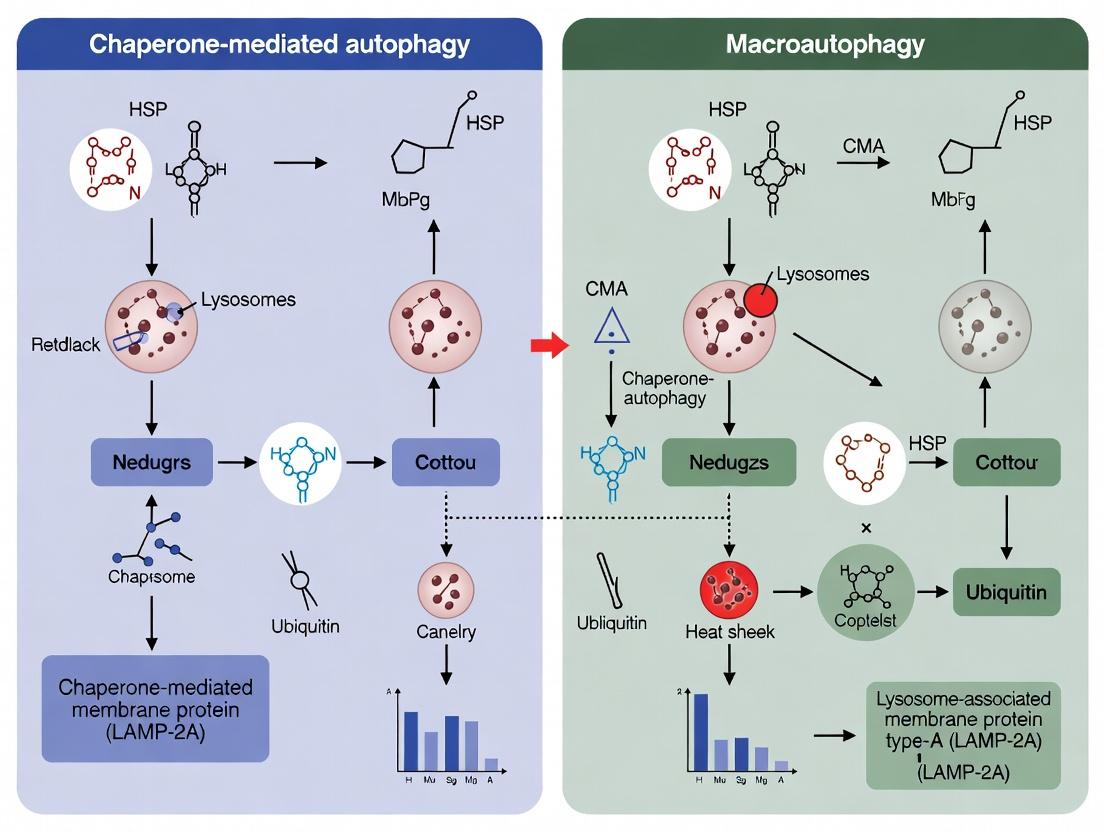
This article provides a comprehensive comparative analysis of Chaperone-Mediated Autophagy (CMA) and macroautophagy, two critical pathways for selective and bulk protein degradation in eukaryotic cells.
CMA vs Macroautophagy: Molecular Mechanisms, Detection Methods & Therapeutic Targeting for Protein Degradation
Abstract
This article provides a comprehensive comparative analysis of Chaperone-Mediated Autophagy (CMA) and macroautophagy, two critical pathways for selective and bulk protein degradation in eukaryotic cells. Targeting researchers, scientists, and drug development professionals, we explore their distinct molecular mechanisms, regulatory networks, and physiological roles. We detail state-of-the-art methodologies for monitoring each pathway, discuss common challenges and optimization strategies in experimental design, and offer a framework for validating and interpreting comparative data. By synthesizing recent advances, this review aims to guide the selection of appropriate models and techniques for studying proteostasis and highlights emerging therapeutic opportunities for modulating these pathways in neurodegenerative diseases, cancer, and aging.
Decoding the Molecular Machines: Core Mechanisms and Biological Roles of CMA and Macroautophagy
Within the cellular proteostasis network, autophagy serves as a critical degradation and recycling system. This guide provides a comparative analysis of two principal pathways: Chaperone-Mediated Autophagy (CMA) and bulk macroautophagy. While macroautophagy non-specifically engulfs cytoplasmic cargo via double-membrane autophagosomes, CMA selectively targets individual soluble proteins bearing a specific pentapeptide motif (KFERQ-like) for lysosomal degradation. Understanding their distinct mechanisms, regulation, and functional outputs is essential for research and therapeutic targeting in neurodegeneration, cancer, and aging.
Core Mechanisms: A Side-by-Side Comparison
| Feature | Chaperone-Mediated Autophagy (CMA) | Bulk Macroautophagy |
|---|---|---|
| Selectivity | High. Targets specific cytosolic proteins with KFERQ motif. | Low (bulk). Non-selective engulfment of cytoplasm. Can be selective via adaptors (e.g., mitophagy). |
| Cargo Recognition | Hsc70 chaperone complex binds KFERQ motif. | Initiation complex (ULK1, etc.) responds to signals; cargo receptors (p62, NBR1) link cargo to autophagosome. |
| Membrane Dynamics | Direct translocation across lysosomal membrane via LAMP-2A. | De novo formation of double-membrane phagophore that expands to form autophagosome. |
| Key Lysosomal Receptor | LAMP-2A (lysosome-associated membrane protein type 2A). | No direct equivalent; autophagosome fuses with lysosome. |
| Degradation Process | Cargo unfolded and translocated linearly into lysosomal lumen. | Entire autophagosome vesicle fuses with lysosome; inner membrane and cargo degraded. |
| Primary Physiological Triggers | Nutrient deprivation, oxidative stress, prolonged starvation (>10h). | Early starvation (0-4h), hypoxia, metabolic stress, mTORC1 inhibition. |
| Dynamics | Constitutive (basal), inducible. | Constitutive (basal), highly inducible. |
| Key Regulatory Complex | Not applicable in same sense. Regulated by LAMP-2A assembly stability, GFAP, EF1α. | mTORC1 (inhibitor), ULK1/2 initiation complex, VPS34 lipid kinase complex. |
Table 1: Comparative Metrics from Representative Studies
| Parameter | CMA | Macroautophagy | Experimental Notes |
|---|---|---|---|
| Activation Onset | ~10-12 hours of serum starvation | ~0.5-2 hours of serum starvation | Measured in mouse fibroblasts; CMA activation requires prolonged stress. |
| Degradation Rate | ~1.5-3% of total cellular protein/hour during peak activation | Up to 1-2% of cytoplasmic volume/minute upon induction | CMA rates assessed via radio-labeled KFERQ-protein assays; macroautophagy via LC3-II flux or long-lived protein degradation. |
| LAMP-2A Multimerization | ~700 kDa complex (functional translocon) | N/A | Isolated lysosomes; crosslinking + blue native PAGE. |
| Autophagic Flux (Basal) | Varies by tissue; high in liver, kidney | Ubiquitous; high in brain, liver | Measured in transgenic reporter mice (KFERQ-Dendra for CMA; LC3-RFP-GFP for macroautophagy). |
| Response to ROS | Activated by mild oxidative stress (H2O2, 100-200 µM) | Inhibited by severe ROS; selective mitophagy activated | CMA degrades oxidized proteins; bulk macroautophagy machinery is ROS-sensitive. |
Key Experimental Protocols
Assessing CMA Activity: Lysosomal Binding and Uptake Assay
Purpose: To separately quantify binding of substrate proteins to LAMP-2A and their translocation into the lysosomal lumen. Methodology:
- Isolation of Lysosomes: Prepare a crude lysosomal fraction from rodent liver or cultured cells via differential centrifugation and Percoll gradient purification.
- Substrate Preparation: Isolate radiolabeled ([14C]- or [3H]-leucine) GAPDH (a canonical CMA substrate) or use recombinant proteins containing the KFERQ motif.
- Binding vs. Uptake: Incubate intact lysosomes with substrate under two conditions:
- Binding Only: At 4°C in a modified uptake buffer. Proteins bind to LAMP-2A but do not translocate.
- Binding + Translocation: At 37°C with an ATP-regenerating system and 5-10 µg/ml of chaperones (Hsc70, Hsp90) to support full uptake.
- Separation and Quantification: After incubation, treat samples with Proteinase K to degrade externally bound (non-translocated) proteins. Subsequently, solubilize lysosomes with Triton X-100 to release protected (translocated) proteins. Measure radioactivity in both fractions. Specificity is confirmed using lysosomes from cells where LAMP-2A is knocked down or with inhibitors like P140 peptide.
Measuring Bulk Macroautophagic Flux: LC3-II Turnover Assay
Purpose: To measure the rate of autophagosome formation and lysosomal degradation (flux). Methodology:
- Treatment: Treat cells with and without lysosomal protease inhibitors (e.g., 20 nM Bafilomycin A1 or 100 µM Chloroquine) for 2-4 hours to block degradation of autophagosomes.
- Cell Lysis: Harvest cells in RIPA buffer supplemented with protease inhibitors.
- Western Blot: Resolve equal protein amounts on SDS-PAGE gels (use 15% gels for better LC3 separation). Immunoblot for LC3.
- Quantification:
- LC3-II levels: The lipidated form (LC3-II) migrates faster (~14-16 kDa). Compare LC3-II levels in untreated vs. inhibitor-treated cells.
- Flux Calculation: The increase in LC3-II in the presence of the inhibitor represents the amount of LC3 delivered to lysosomes during the treatment period, i.e., autophagic flux. Normalize to a loading control (e.g., Actin, Tubulin). Parallel imaging of GFP-LC3 puncta formation (in the presence/absence of inhibitor) provides complementary spatial data.
Pathway and Workflow Visualizations
Diagram 1: Chaperone-Mediated Autophagy (CMA) Pathway
Diagram 2: Bulk Macroautophagy Initiation & Progression
Diagram 3: Experimental Workflow for Comparative Analysis
The Scientist's Toolkit: Key Research Reagent Solutions
| Reagent/Tool | Primary Function | Application in CMA vs. Macroautophagy |
|---|---|---|
| Bafilomycin A1 | V-ATPase inhibitor; blocks lysosomal acidification and autophagosome-lysosome fusion. | Used in macroautophagy flux assays (LC3-II turnover). Also inhibits CMA by disrupting lysosomal pH required for translocation. |
| Chloroquine / Hydroxychloroquine | Lysosomotropic agent; raises lysosomal pH and inhibits degradation. | Common in vivo and in vitro inhibitor for macroautophagy. Less specific for CMA but will also inhibit final degradation step. |
| P140 Peptide | Phosphopeptide mimicking an LAMP-2A sequence; disrupts Hsc70 binding. | Selective CMA inhibitor. Used to dissect CMA-specific contributions in models of neurodegeneration and immune dysfunction. |
| CMA Reporter (KFERQ-Dendra2, PA-GFP-KFERQ) | Photo-switchable/convertible fluorescent protein fused to a CMA targeting motif. | Direct visualization and quantification of CMA activity in single living cells via lysosomal fluorescence accumulation. |
| LC3-GFP/RFP Tandem Reporter (e.g., mRFP-GFP-LC3) | pH-sensitive fluorescent tag on LC3. GFP quenched in acidic lysosome, RFP stable. | Discriminates autophagosomes (yellow puncta) from autolysosomes (red puncta) to measure macroautophagic flux via imaging. |
| Anti-LAMP-2A (clone EPR12055) | Monoclonal antibody specific to the CMA-specific splice variant LAMP-2A. | Critical for measuring LAMP-2A levels (Western blot, immunofluorescence) and assessing its multimeric state (Blue Native PAGE). |
| Anti-SQSTM1/p62 Antibody | Antibody against the selective macroautophagy cargo receptor. | Monitoring macroautophagic flux; accumulation indicates blockade, while decrease under inducing conditions indicates active degradation. |
| Recombinant Hsc70 Protein | Purified chaperone protein. | Required in in vitro CMA uptake assays to support substrate translocation across the lysosomal membrane. |
This comparison guide, framed within the broader thesis of comparing Chaperone-Mediated Autophagy (CMA) and macroautophagy in protein degradation research, objectively evaluates the core molecular machinery of each pathway. Understanding these distinct mechanisms is critical for researchers and drug development professionals targeting proteostasis in diseases like neurodegeneration and cancer.
Core Machinery Comparison
The following table summarizes the key molecular components and their functions in each pathway.
Table 1: Core Molecular Players in CMA vs. Macroautophagy
| Aspect | Chaperone-Mediated Autophagy (CMA) | Macroautophagy |
|---|---|---|
| Key Initiator | Cellular stress (e.g., oxidative, hypoxic); KFERQ motif on substrate. | Cellular stress (nutrient starvation, mTORC1 inhibition); phagophore nucleation. |
| Recognition | HSC70 chaperone recognizes KFERQ motif on substrate protein. | Selective autophagy uses receptors (e.g., p62/SQSTM1, NBR1) that bind ubiquitinated cargo and LC3. |
| Translocation Complex | LAMP2A multimerizes at lysosomal membrane to form a translocation channel. | Not applicable; cargo is engulfed whole. |
| Lysosomal Receptor | Lysosome-associated membrane protein type 2A (LAMP2A). | Not applicable; outer autophagosome membrane fuses with lysosome. |
| Required Chaperones | HSC70 (cytosolic), Lys-HSC70 (lysosomal lumen). | Molecular chaperones (e.g., HSP90) are involved in specific selective types (e.g., chaperone-assisted selective autophagy). |
| Membrane Dynamics | No vesicle formation; direct translocation across lysosomal membrane. | Phagophore formation, elongation, and closure to form a double-membrane autophagosome. |
| Core Regulatory Proteins | GFAP, EF1α, HSPB8 modulate LAMP2A assembly/stability. | ATG proteins (e.g., ULK1 complex, ATG9, ATG12–ATG5-ATG16L1, LC3/ATG8). |
| Degradation Process | Substrate unfolded and translocated linearly into lysosome lumen via LAMP2A. | Bulk cytoplasm or specific cargo degraded after autophagosome-lysosome fusion (autolysosome formation). |
| Primary Function | Selective degradation of specific soluble proteins with KFERQ motif. | Degradation of large cargo: protein aggregates, organelles, pathogens. |
Quantitative Performance Data
Experimental data highlights the distinct operational profiles of each pathway.
Table 2: Experimental Kinetic and Capacity Data
| Parameter | CMA | Macroautophagy | Experimental Basis |
|---|---|---|---|
| Degradation Rate | ~1.5-3 minutes per protein* | Minutes to hours for entire structures | *In vitro translocation assays using radiolabeled substrates. |
| Substrate Specificity | High (KFERQ-containing proteins, e.g., GAPDH, MEF2D). | Broad (non-selective) or High (via receptors). | Proteomic analysis of degraded components under pathway-specific activation. |
| Max Cargo Size | Individual, unfolded polypeptide chains. | Large organelles (e.g., mitochondria, peroxisomes). | Microscopy (EM) analysis of engulfed cargo. |
| Response Time to Stress | Sustained activation (hours after stress onset). | Rapid onset (minutes after mTOR inhibition). | Immunoblotting for LAMP2A levels vs. LC3-II lipidation. |
| Basal Activity | Constitutive in most mammalian cells. | Generally low, highly inducible. | Measurement of long-lived protein degradation in presence/absence of inhibitors. |
Experimental Protocols for Key Assays
Protocol 1: Assessing CMA Activity
Method: Photoactivatable Fluorescent Reporter Assay for CMA.
- Construct: Transfect cells with a plasmid expressing KFERQ-PA-mCherry1-GFP (a photoactivatable CMA reporter).
- Photoactivation: Use a 405 nm laser to activate mCherry in a region of interest.
- CMA Induction: Treat cells with serum starvation or oxidative stress (e.g., H₂O₂).
- Lysosomal Inhibition: As a control, treat parallel samples with Bafilomycin A1 (blocks lysosomal acidification) or knock down LAMP2A.
- Imaging & Quantification: Monitor loss of photoactivated red fluorescence (lysosomal degradation) over 4-6 hours using live-cell microscopy. CMA activity is calculated as the rate of fluorescence loss in experimental vs. control conditions.
Protocol 2: Assessing Macroautophagy Flux
Method: LC3-II Turnover Assay via Immunoblotting.
- Treatment: Subject cells to autophagy inducers (e.g., EBSS nutrient starvation, Torin1) for 2-4 hours.
- Lysosomal Inhibition: Include parallel samples treated with lysosomal inhibitors (e.g., Bafilomycin A1, 100 nM, or Chloroquine, 50 μM) for the final 2-4 hours.
- Cell Lysis: Harvest and lyse cells in RIPA buffer containing protease inhibitors.
- Immunoblotting: Resolve proteins by SDS-PAGE, transfer to membrane, and probe with anti-LC3 antibody.
- Quantification: Measure LC3-II band intensity. Autophagic flux = (LC3-II in induced + inhibitor sample) - (LC3-II in induced sample). Normalize to a loading control (e.g., β-actin).
Visualizing the Pathways
Diagram 1: CMA Pathway Workflow
Diagram 2: Macroautophagy Core ATG Workflow
The Scientist's Toolkit
Table 3: Key Research Reagent Solutions
| Reagent | Function in Research | Primary Application |
|---|---|---|
| Anti-LAMP2A (H4B4) Antibody | Specifically detects the CMA-specific isoform LAMP2A. | Immunoblotting, immunofluorescence to monitor LAMP2A levels and lysosomal localization. |
| Anti-LC3 Antibody | Detects both cytosolic (LC3-I) and lipidated, autophagosome-associated (LC3-II) forms. | Gold-standard immunoblotting and microscopy to monitor autophagosome number and macroautophagy flux. |
| Bafilomycin A1 | V-ATPase inhibitor that blocks lysosomal acidification and degradation. | Used in both CMA and macroautophagy flux assays to distinguish delivery from degradation. |
| KFERQ-PA-mCherry1 Reporter | Photoactivatable fluorescent protein containing a CMA-targeting motif. | Live-cell imaging to quantitatively monitor CMA activity and kinetics. |
| Torin1 | Potent and selective ATP-competitive mTOR kinase inhibitor. | Robust induction of macroautophagy by blocking mTORC1 signaling. |
| Recombinant HSC70 Protein | The key cytosolic chaperone for CMA substrate recognition. | In vitro binding and translocation assays to study CMA substrate-chaperone interactions. |
| pCMV5-hLAMP2A Plasmid | Expression vector for human LAMP2A. | Gain-of-function studies to directly investigate the role of LAMP2A in CMA regulation. |
| Chloroquine | Lysosomotropic agent that raises lysosomal pH, inhibiting degradation. | An alternative to Bafilomycin A1 for blocking autolysosomal/lysosomal degradation in flux assays. |
Autophagy, the primary catabolic pathway for cytoplasmic components, occurs via distinct mechanisms, primarily chaperone-mediated autophagy (CMA) and macroautophagy. Understanding how cellular signals integrate to regulate these pathways is crucial for targeted therapeutic intervention. This guide compares their regulation by nutrient status, stress, and other cues, providing a framework for researchers selecting a model system in protein degradation studies.
Comparative Regulation of CMA vs. Macroautophagy
Table 1: Signal Integration and Pathway Response
| Regulatory Cue | CMA Response & Key Mediators | Macroautophagy Response & Key Mediators | Experimental Readout |
|---|---|---|---|
| Nutrient Status (Starvation) | Activated post-prolonged starvation (>10h in mammals). LAMP2A stabilization at lysosomal membrane. | Rapidly activated (30 min-2h). Inhibition of mTORC1, ULK1/Atg1 complex activation. | CMA: Immunoblot for LAMP2A levels; Co-localization of KFERQ-targeted reporters with lysosomal markers.Macroautophagy: LC3-I to LC3-II conversion; p62/SQSTM1 degradation assay. |
| Oxidative Stress | Strongly activated. KFERQ motifs exposed on oxidized proteins. NFkB can upregulate LAMP2A. | Activated. Keap1-Nrf2-p62 axis; mitochondrial ROS can trigger mitophagy. | CMA: Flow cytometry of cells expressing KFERQ-PA-mCherry1-GFP.Macroautophagy: Imaging of mitochondrial (e.g., COX8-GFP-mCherry) or general autophagy reporters. |
| Hypoxia | Inhibited. HIF-1α suppresses LAMP2A transcription. | Activated. HIF-1α induces BNIP3, disrupting Bcl-2/Beclin-1 interaction. | CMA: qPCR for LAMP2A mRNA.Macroautophagy: Immunoblot for BNIP3, LC3-II. |
| Genotoxic Stress | Activated. p53 promotes LAMP2A expression. | Context-dependent. p53 can induce DRAM to promote autophagy; cytoplasmic p53 inhibits it. | CMA: Luciferase reporter assay for LAMP2A promoter activity.Macroautophagy: GFP-LC3 puncta quantification after DNA-damaging agents. |
| Growth Factor Signaling | Inhibited by sustained AKT/mTORC1 activity. | Inhibited by PI3K-AKT-mTORC1 signaling. Insulin is a potent inhibitor. | Both: Phospho-specific antibodies for AKT (S473), S6K (T389); Lysosomal flux assays in presence of growth factors. |
| Protein Aggregation | Selective degradation of soluble KFERQ-containing proteins. Cannot handle large aggregates. | Bulk degradation via autophagosomes; selective via aggrephagy (e.g., via NBR1, OPTN). | CMA: Soluble fraction analysis of KFERQ-client proteins (e.g., GAPDH).Macroautophagy: Microscopy of aggregate clearance (e.g., Huntington's disease model polyQ reporters). |
| Lysosomal Function | Absolute Requirement. Functional HSC70 and LAMP2A at lysosome. | Can initiate independently, but requires fusion with functional lysosomes. | Both: Use of lysosomal inhibitors (Bafilomycin A1, Chloroquine) to block degradation; LysoTracker staining for pH. |
Detailed Experimental Protocols
Protocol 1: Quantifying CMA Activity Using the KFERQ Reporter Assay
Objective: Measure CMA flux in live cells. Method:
- Transfection: Seed cells in imaging dishes. Transfect with a plasmid encoding the photoconvertible CMA reporter KFERQ-PA-mCherry1 (PA: Photoactivatable).
- Starvation/Stimulation: Subject cells to experimental conditions (e.g., serum starvation for 12h vs. control).
- Photoconversion & Chase: At time zero, use a 405nm laser to photoconvert the mCherry1 signal in a defined region of interest (ROI) from green to red. This creates a pool of red fluorescent, CMA-targeted protein.
- Lysosomal Inhibition: Immediately add Bafilomycin A1 (100 nM) to half of the samples to block lysosomal degradation. The other half receives vehicle.
- Time-lapse Imaging: Monitor red fluorescence in the photoconverted ROI over 4-6 hours using live-cell confocal microscopy.
- Analysis: CMA flux is calculated as the difference in the decay rate of red fluorescence between Bafilomycin A1-treated and untreated samples. Faster decay in untreated cells indicates CMA activity.
Protocol 2: Comparative Analysis of Autophagic Flux via LC3 and p62 Turnover
Objective: Simultaneously assess macroautophagic flux and differentiate from CMA contribution. Method:
- Treatment: Set up four conditions for each experimental cue: (i) Control, (ii) Control + Lysosomal Inhibitor (Baf A1 100nM, 4h), (iii) Stimulated, (iv) Stimulated + Baf A1.
- Cell Lysis: Harvest cells in RIPA buffer with protease inhibitors.
- Immunoblotting: Resolve 30μg protein on 4-20% SDS-PAGE gels.
- Primary Antibodies: Probe with anti-LC3 (to detect LC3-I and lipidated LC3-II), anti-p62/SQSTM1, and anti-GAPDH (loading control) antibodies.
- Quantification: Macroautophagic flux is calculated as the difference in LC3-II or p62 levels between samples with and without Baf A1 within the same treatment. An increase in LC3-II with Baf A1 indicates active flux. Concurrent monitoring of LAMP2A levels (which should increase with CMA activation) helps distinguish the pathway primarily engaged.
Pathway Diagrams
Diagram Title: Core Signal Integration Network for Autophagy Pathways
Diagram Title: Generic Autophagic Flux Assay Workflow
The Scientist's Toolkit
Table 2: Key Research Reagents for Comparative Autophagy Studies
| Reagent / Material | Primary Function | Application Notes |
|---|---|---|
| Bafilomycin A1 | V-ATPase inhibitor. Blocks lysosomal acidification and degradation, trapping autophagic substrates. | Gold standard for flux assays. Used in both CMA (KFERQ reporter decay) and macroautophagy (LC3-II/p62 accumulation) assays. |
| Chloroquine | Lysosomotropic agent that raises lysosomal pH, inhibiting degradation. | Lower-cost alternative to Baf A1 for in vivo and some cell-based flux studies. |
| Anti-LC3B Antibody | Detects both cytosolic (LC3-I) and lipidated, autophagosome-associated (LC3-II) forms. | Essential for macroautophagy immunoblotting. LC3-II levels correlate with autophagosome number. |
| Anti-p62/SQSTM1 Antibody | Detects the selective autophagy adapter degraded alongside cargo. | Decreasing p62 levels indicate active autophagic flux. Stable/increasing levels suggest inhibition. |
| Anti-LAMP2A Antibody | Specific antibody against the CMA-specific lysosomal receptor isoform. | Monitoring LAMP2A protein levels (lysosomal fraction) or mRNA is a primary indicator of CMA activity. |
| KFERQ-PA-mCherry1 Plasmid | Live-cell, photoconvertible CMA reporter. Contains a canonical CMA-targeting motif. | Enables direct, quantitative measurement of CMA flux in real-time, as described in Protocol 1. |
| GFP-LC3 Plasmid | Macroautophagy reporter. GFP puncta indicate autophagosome formation. | Simple, visual assessment of autophagosome number. Must be combined with flux inhibitors to infer activity. |
| Cyto-ID Autophagy Kit | Dye-based kit for staining autophagic compartments in live cells. | Allows flow cytometry-based screening for autophagy modulators, though less specific than protein-based markers. |
| Leupeptin/Pepstatin A/E64d | Cocktail of protease inhibitors that block lysosomal proteolysis but not acidification. | Alternative to Baf A1 for flux assays; useful for specific experimental conditions where pH must be preserved. |
Within eukaryotic cells, the selective degradation of proteins is crucial for maintaining proteostasis, which underpins cellular metabolism, quality control, and adaptation. Two primary lysosomal degradation pathways, Chaperone-Mediated Autophagy (CMA) and macroautophagy, play distinct yet sometimes complementary roles. This comparison guide objectively evaluates their performance across physiological and pathological contexts, framed within the broader thesis of understanding their differential contributions to protein degradation research. Data is synthesized from current literature to aid researchers and drug development professionals in selecting appropriate models and interpreting experimental outcomes.
Comparative Analysis of CMA and Macroautophagy
Table 1: Core Characteristics and Physiological Roles
| Feature | Chaperone-Mediated Autophagy (CMA) | Macroautophagy |
|---|---|---|
| Selectivity | Highly selective for proteins with a KFERQ-like motif. | Non-selective (bulk) or selective (via receptors like p62/SQSTM1). |
| Mechanism | Direct translocation of unfolded substrate across lysosomal membrane via LAMP2A. | Engulfment of cargo within double-membraned autophagosomes that fuse with lysosomes. |
| Key Components | HSC70, LAMP2A, Lys-HSC70. | ULK1 complex, ATG proteins (LC3, etc.), cargo receptors, fusion machinery. |
| Metabolic Role | Precise regulation of metabolic enzymes (e.g., GAPDH, PKM2). Sustains energy during acute starvation. | Bulk nutrient recycling during prolonged starvation; organelle turnover (mitophagy, lipophagy). |
| Quality Control | Degrades soluble, damaged proteins. Critical for preventing proteotoxicity. | Removes protein aggregates, damaged organelles, and intracellular pathogens. |
| Aging | Activity declines with age due to reduced LAMP2A stability. | Basal activity generally declines; inducible activity can be impaired. |
| Disease Link | Impaired in neurodegenerative diseases (PD, AD), metabolic disorders. Dysregulated in cancer. | Impaired in neurodegeneration, cancer, infectious diseases, and aging-related disorders. |
Table 2: Experimental Performance Data in Key Contexts
| Context / Metric | CMA Activity / Outcome | Macroautophagy Activity / Outcome | Supporting Experimental Data |
|---|---|---|---|
| Acute Starvation (6-12h) | ~300% increase in lysosomal binding/uptake of CMA substrates. | ~200% increase in autophagosome formation (LC3-II levels). | Kaushik & Cuervo, 2018: Rodent liver; Immunoblot for LAMP2A oligomerization and LC3-II flux. |
| Oxidative Stress (H2O2) | ~250% increase in CMA substrate degradation. | Variable; can induce mitophagy. | Kiffin et al., 2004: Fibroblasts; Degradation assays of radiolabeled CMA substrate (GAPDH). |
| Aging (Old vs. Young) | ~70% decrease in CMA efficiency. LAMP2A levels reduced. | ~40-60% decrease in inducible autophagic flux. | Cuervo & Dice, 2000: Aged rodent liver; Lysosomal uptake assays and LAMP2A immunoblot. |
| Neurodegeneration (PD models) | Impaired. Accumulation of α-synuclein (CMA substrate). | Often impaired in mitophagy, leading to damaged mitochondria. | Alvarez-Erviti et al., 2010: Cell models; Co-localization studies of α-synuclein with LAMP2A vs. LC3. |
| Cancer | Often upregulated to support tumor cell survival and metabolism. | Context-dependent: Can be tumor-suppressive or promotive. | Kon et al., 2011: Tumor cell lines; CMA inhibition reduced tumor growth in xenografts by >50%. |
Key Experimental Protocols
Protocol: Measuring CMA Activity (Lysosomal Binding and Uptake Assay)
This method quantifies the critical steps of substrate binding to the lysosomal membrane and its internalization. Methodology:
- Isolation of Lysosomes: Prepare a light mitochondrial-lysosomal (LML) fraction from liver or cultured cells via differential centrifugation in 0.25 M sucrose.
- CMA Substrate Preparation: Isolate radiolabeled ([14C]-labeled) or biotinylated RNase A (a canonical CMA substrate) from induced bacteria.
- Binding Reaction: Incubate intact lysosomes (25-50 µg protein) with the substrate (2-5 µg) in 0.25 M sucrose, 10 mM MOPS (pH 7.3) for 20 min at 4°C (binding only).
- Uptake Reaction: For uptake, perform incubation at 37°C for 20-40 min in an ATP-regenerating system (2 mM ATP, 10 mM creatine phosphate, 10 µg/ml creatine kinase).
- Protease Protection: After uptake, treat with proteinase K (0.1 mg/ml, 10 min on ice) to degrade non-internalized substrate. Inhibit with PMSF.
- Analysis: Re-isolate lysosomes, lyse, and analyze substrate levels via scintillation counting or immunoblot. Normalize to lysosomal marker (e.g., LAMP1).
Protocol: Measuring Macroautophagic Flux (LC3 Turnover Assay)
This gold-standard assay measures the rate of autophagosome synthesis and degradation. Methodology:
- Cell Treatment: Treat cells (e.g., MEFs, HeLa) under experimental conditions. Always include parallel samples treated with lysosomal inhibitors (e.g., Bafilomycin A1, 100 nM; or Chloroquine, 50 µM) for 4-6 hours to block autophagosome degradation.
- Protein Extraction: Harvest cells in RIPA buffer with protease inhibitors.
- Immunoblotting: Resolve proteins (20-50 µg) by SDS-PAGE and transfer to PVDF membrane.
- Detection: Probe with anti-LC3 antibody. Note the ratio of lipidated (LC3-II, ~14-16 kDa) to non-lipidated (LC3-I, ~18 kDa) forms.
- Quantification:
- LC3-II levels (Baf+ vs Baf-): The increase in LC3-II levels in inhibitor-treated samples versus untreated controls represents the autophagic flux.
- Normalization: Normalize LC3-II band intensity to a loading control (e.g., GAPDH, Actin).
- Flux Calculation: Flux = (LC3-II level with Baf) - (LC3-II level without Baf).
Visualizations
Diagram 1: CMA vs Macroautophagy Pathways
Diagram 2: Experimental Workflow for CMA Activity Assay
The Scientist's Toolkit: Research Reagent Solutions
Table 3: Essential Reagents for Comparative Autophagy Research
| Reagent / Material | Primary Function | Application Notes |
|---|---|---|
| Anti-LAMP2A Antibody | Specifically detects the CMA-specific lysosomal receptor. Used for immunoblot, immunofluorescence, and monitoring LAMP2A levels/assembly. | Critical for distinguishing CMA from other lysosomal pathways. Monoclonal antibodies (e.g., clone EPR11330) are preferred. |
| Anti-LC3 Antibody | Detects both cytosolic (LC3-I) and lipidated, autophagosome-associated (LC3-II) forms. Standard for macroautophagy flux assays. | Use in conjunction with lysosomal inhibitors to measure flux. |
| Recombinant RNase A or GAPDH | Canonical, well-characterized CMA substrates. Can be labeled (biotin, fluorescence, radio) for binding/uptake assays. | Purified proteins are used in in vitro CMA activity assays with isolated lysosomes. |
| Lysosomal Protease Inhibitors (Bafilomycin A1, Chloroquine) | Inhibit lysosomal acidification and degradation, causing accumulation of autophagosomes (LC3-II) or CMA substrates. | Essential for flux measurements. Bafilomycin A1 is more specific. |
| HSC70/HSPA8 siRNA or Inhibitor | Knocks down or inhibits the cytosolic chaperone essential for CMA substrate targeting. Used to probe CMA-specific functions. | Important for loss-of-function studies. Requires careful controls due to HSC70's other cellular roles. |
| p62/SQSTM1 Knockout Cell Lines | Cells lacking this key selective macroautophagy receptor. Used to isolate p62-dependent macroautophagy from CMA or other degradation routes. | Useful for dissecting contributions to aggregate clearance. |
| CMA Reporter (e.g., KFERQ-Dendra2) | A photoconvertible fluorescent protein tagged with a CMA targeting motif. Allows direct visualization and quantification of CMA in living cells. | Enables real-time, single-cell analysis of CMA dynamics. |
From Theory to Bench: Essential Techniques for Monitoring CMA and Macroautophagy Activity
Introduction Within the broader thesis of comparing chaperone-mediated autophagy (CMA) and macroautophagy in protein degradation research, accurate assessment of CMA activity is paramount. Unlike the vesicular engulfment of macroautophagy, CMA involves the direct translocation of substrate proteins across the lysosomal membrane via the LAMP2A receptor. This guide compares the performance, applications, and experimental data for three principal methodologies used to assess CMA function.
1. LAMP2A Turnover Analysis This method evaluates the dynamics of the CMA receptor itself, based on the principle that CMA activation increases LAMP2A multimerization and stability at the lysosomal membrane.
- Protocol: Lysosomes are isolated from treated/control cells or tissues via differential centrifugation and percoll gradients. Lysosomal membranes are solubilized, and proteins are separated by BN-PAGE (Blue Native-PAGE) to preserve multimeric complexes, followed by immunoblotting for LAMP2A. Densitometry quantifies monomeric vs. multimeric LAMP2A bands.
- Comparison: This method directly measures the functional state of the CMA machinery but requires significant starting material and skilled subcellular fractionation. It reflects lysosomal CMA capacity but not real-time substrate flux.
2. KFERQ-Substrate Translocation Assays These assays measure the direct binding and uptake of radiolabeled CMA substrate proteins into isolated lysosomes.
- Protocol: A canonical CMA substrate (e.g., GAPDH or RNase A) is radiolabeled (e.g., with ¹⁴C). Isolated intact lysosomes are incubated with the substrate in the presence of ATP and a regenerating system. Protease protection assays confirm translocation: after incubation, proteinase K degrades externally bound protein, leaving translocated protein protected. Radioactivity in the lysosome pellet is measured by scintillation counting.
- Comparison: This is the gold-standard in vitro functional assay, providing a direct, quantitative measure of translocation activity. However, it is low-throughput, requires radioactive handling, and depends on the quality of isolated lysosomes.
*3. Reporter Models (e.g., KFERQ-Dendra, CMA Reporter) * These are live-cell, fluorescent protein-based systems that monitor the lysosomal delivery of a CMA-targeted substrate in real time.
- Protocol: Cells are transfected with a construct expressing a photoconvertible fluorescent protein (e.g., Dendra2 or PA-mCherry1) fused to a canonical KFERQ motif. The reporter is photoconverted in the cytosol (e.g., from green to red). CMA-dependent lysosomal delivery is tracked by the appearance of photoconverted signal in lysosomes (co-localization with LAMP1/LAMP2) and its subsequent loss due to degradation. Flow cytometry or live microscopy quantifies the rate of signal decrease.
- Comparison: This method allows dynamic, longitudinal tracking of CMA in single living cells with high spatial resolution. It is superior for kinetic studies and high-throughput screening but is an indirect measure reliant on overexpression and may not reflect endogenous substrate dynamics.
Performance Comparison & Experimental Data Summary
Table 1: Comparative Analysis of Primary CMA Activity Assays
| Assay Parameter | LAMP2A Turnover (BN-PAGE) | KFERQ-Substrate Translocation | Reporter Models (e.g., KFERQ-Dendra) |
|---|---|---|---|
| What it Measures | Stability of LAMP2A multimers at lysosome | Direct uptake of radiolabeled substrate | Lysosomal delivery & degradation of fluorescent reporter |
| Key Metric Output | Ratio multimeric:monomeric LAMP2A | % of substrate protected/translocated | Rate of photoconverted signal decay (t½) |
| Throughput | Low-Medium | Low | High (for microscopy/flow cytometry) |
| Temporal Resolution | End-point | End-point | Real-time, kinetic |
| Spatial Resolution | No (lysosomal extract) | No (isolated lysosomes) | Yes (live-cell imaging) |
| Technical Difficulty | High (fractionation, BN-PAGE) | High (fractionation, radioactivity) | Medium (requires transfection/imaging) |
| Sample Requirement | High (mg of tissue) | High (for lysosome isolation) | Low (cells in culture) |
| Representative Data (CMA Activation vs. Control) | Multimer:Monomer ratio ↑ from 1.5 to 3.2 | Translocation ↑ from 15% to 38% of input substrate | Reporter t½ decreased from 12 hrs to 6 hrs |
Visualization of Methodologies
Title: Three Primary Methodological Paths for CMA Assessment
Title: In Vitro CMA Assay Workflow from Lysosome Isolation
Title: Live-Cell CMA Reporter Model Workflow
The Scientist's Toolkit: Key Research Reagents & Materials
Table 2: Essential Reagents for Featured CMA Assays
| Reagent/Material | Primary Function | Typical Assay(s) |
|---|---|---|
| Anti-LAMP2A (4H4) | Immunodetection of CMA receptor; critical for Western Blot & BN-PAGE. | LAMP2A Turnover |
| DIGIT Lysis Buffer | Gentle digitonin-based buffer for lysosomal membrane protein solubilization. | LAMP2A Turnover |
| ¹⁴C-Glyceraldehyde-3-phosphate Dehydrogenase (GAPDH) | Radiolabeled, canonical CMA substrate for in vitro translocation assays. | KFERQ-Substrate Translocation |
| Percoll Gradient | Density medium for high-purity isolation of intact lysosomes by centrifugation. | Translocation, LAMP2A Turnover |
| KFERQ-Dendra2/pHalo-KFERQ Plasmids | Genetically encoded live-cell reporters for CMA substrate delivery. | Reporter Models |
| Cycloheximide | Protein synthesis inhibitor; used in reporter assays to block new synthesis, isolating degradation kinetics. | Reporter Models |
| Anti-HSC70 Antibody | Detects the cytosolic chaperone essential for substrate targeting; used in co-immunoprecipitation validation. | Multiple (validation) |
| Lysosomal Protease Inhibitors (E64d/Pepstatin A) | Inhibit intralysosomal degradation; used to "trap" translocated substrates for analysis. | Translocation, Reporter Models |
Conclusion The choice of assay for assessing CMA activity is contingent on the research question. LAMP2A turnover provides insight into CMA capacity, the in vitro translocation assay offers direct functional quantification, and reporter models enable dynamic, high-throughput analysis in living systems. For a comprehensive thesis comparing CMA and macroautophagy, employing a combination of these methods—complemented by macroautophagy flux assays (e.g., LC3-II turnover, p62 degradation)—is essential to delineate the unique contributions and regulation of each degradative pathway.
Within the broader thesis comparing Chaperone-Mediated Autophagy (CMA) and macroautophagy, accurate flux measurement is paramount. Macroautophagy, the bulk degradation of cytoplasmic components via autophagosome-lysosome fusion, requires dynamic assays to distinguish increased autophagosome formation from impaired degradation. This guide compares three principal methodologies for measuring macroautophagy flux in mammalian cells.
Method Comparison & Experimental Data
The following table summarizes the core characteristics, outputs, and comparative performance of the three key assays.
Table 1: Core Method Comparison for Macroautophagy Flux Measurement
| Method | Key Readout | Pros | Cons | Typical Experimental Control | Quantitative Data (Example) |
|---|---|---|---|---|---|
| LC3-II Immunoblotting | LC3-II protein level (lipidated form). | Standard, widely accepted; can be combined with lysosomal inhibitors (e.g., Bafilomycin A1) to measure flux. | Snap-shot; requires careful normalization; does not distinguish autophagosomes from autolysosomes alone. | +/- Bafilomycin A1 (or chloroquine). | Flux = (LC3-II with BafA1) - (LC3-II without BafA1). Example: Basal: 1.0 AU; +BafA1: 3.5 AU; Flux = 2.5 AU. |
| p62/SQSTM1 Degradation | Steady-state level of p62 protein. | Simple; p62 is degraded specifically by autophagy; inverse correlation with flux. | Can be transcriptionally regulated; subject to proteasomal degradation; less dynamic range. | Compare basal vs. autophagy-induced or -inhibited conditions. | Autophagy induction should decrease p62. Example: Control: 1.0 AU; Starved: 0.3 AU (70% degradation). |
| Tandem Fluorescence (mRFP-GFP-LC3) | Red (mRFP) and green (GFP) puncta count. | Direct visualization of autophagic progression in live/fixed cells; distinguishes autophagosomes (yellow) from autolysosomes (red-only). | Requires transfection/transduction; sensitive to pH; qualitative/semi-quantitative via imaging. | Use lysosomal inhibitors to arrest flux (all puncta become yellow). | Autolysosome/Total Vesicle Ratio. Example: Control: Red-only/(Red-only+Yellow) = 0.6; +Inhibitor: Ratio ~0. |
Table 2: Suitability for Research Scenarios
| Research Question | Recommended Primary Assay | Supporting Assay(s) | Rationale |
|---|---|---|---|
| Initial screening for autophagy modulation. | LC3-II Immunoblotting +/- inhibitor. | p62 Immunoblotting. | Provides robust, biochemical flux measurement. |
| Time-course or live-cell dynamics. | Tandem Fluorescence Microscopy. | LC3-II immunoblot on parallel samples. | Visualizes progression in real-time or at multiple timepoints. |
| Distinguishing blockade in fusion/degradation. | Tandem Fluorescence. | LC3-II accumulation with/without inhibitor. | Yellow puncta accumulation is hallmark of lysosomal dysfunction. |
| Validating CMA vs. Macroautophagy specificity. | p62 Degradation + CMA substrate (e.g., KFERQ-Dendra). | LC3-II immunoblot. | p62 is selective for macroautophagy; CMA substrates are independent. |
Detailed Experimental Protocols
Protocol 1: LC3-II Flux Assay by Immunoblotting
Objective: Quantify autophagic flux by comparing LC3-II levels in the presence and absence of lysosomal inhibitors.
- Cell Treatment: Seed cells in 6-well plates. Establish four conditions: i) Control, ii) Control + Bafilomycin A1 (100 nM, 4-6h), iii) Treatment (e.g., starvation, rapamycin), iv) Treatment + Bafilomycin A1.
- Sample Preparation: Wash cells with PBS, lyse directly in 150-200 µL of 1X Laemmli buffer + protease inhibitors. Sonicate briefly, boil for 10 minutes.
- Immunoblotting: Load equal protein volumes (e.g., 15-20 µL). Perform SDS-PAGE (15% gel for LC3). Transfer to PVDF membrane. Block with 5% BSA in TBST.
- Antibody Incubation: Incubate with primary anti-LC3 antibody (1:1000) and anti-β-actin (loading control) overnight at 4°C. Wash, incubate with HRP-conjugated secondary antibodies (1:5000) for 1h.
- Detection & Analysis: Use chemiluminescence. Quantify band intensity. Calculate flux: (LC3-II level in BafA1-treated) - (LC3-II level in corresponding untreated condition).
Protocol 2: p62/SQSTM1 Degradation Assay
Objective: Assess autophagic degradation activity via steady-state p62 levels.
- Cell Treatment: Treat cells as required (e.g., EBSS starvation for 2-4h, or autophagy inhibitor like 3-MA).
- Lysis: Harvest cells in RIPA buffer + protease/phosphatase inhibitors. Centrifuge at 12,000g for 15 min at 4°C.
- Immunoblotting: Determine protein concentration. Load 20-30 µg per lane on 4-12% Bis-Tris gel. Transfer to membrane.
- Antibody Incubation: Probe with anti-p62 antibody (1:2000) and anti-GAPDH (1:10000). Follow standard immunoblot protocol.
- Analysis: Normalize p62 signal to loading control. A decrease in p62 indicates increased autophagic degradation; an increase suggests inhibited flux.
Protocol 3: Tandem Fluorescence (mRFP-GFP-LC3) Assay
Objective: Quantify autophagic progression via fluorescence microscopy.
- Cell Preparation: Seed cells on glass coverslips in 24-well plate. Transduce/transfect with mRFP-GFP-LC3 tandem construct (e.g., ptfLC3).
- Treatment: Apply experimental treatments. Include a positive control with Bafilomycin A1 (100 nM, 4-6h) to quench lysosomal acidity (all puncta appear yellow).
- Fixation: Fix cells with 4% PFA for 15 min at room temperature. Mount with antifade mounting medium.
- Imaging: Acquire images using a confocal microscope with sequential scanning for GFP (ex 488 nm) and mRFP (ex 561 nm) to avoid bleed-through.
- Analysis: Count puncta per cell using image analysis software (e.g., ImageJ). Calculate: Autophagosomes (yellow puncta, GFP+/RFP+), Autolysosomes (red-only puncta, GFP-/RFP+). Flux is indicated by a high red-only to total puncta ratio.
Visualization of Pathways and Workflows
Title: Macroautophagy Pathway and Assay Measurement Points
Title: Comparative Workflows for Three Key Flux Assays
The Scientist's Toolkit: Key Reagent Solutions
Table 3: Essential Research Reagents for Macroautophagy Flux Assays
| Reagent / Material | Primary Function | Example Use Case |
|---|---|---|
| Anti-LC3B Antibody | Detects both LC3-I (cytosolic) and LC3-II (lipidated, autophagosome-bound) forms by immunoblot. | Core reagent for LC3 immunoblotting flux assays. |
| Anti-p62/SQSTM1 Antibody | Detects the selective autophagy substrate/cargo receptor. | Monitoring p62 degradation as a proxy for autophagic degradation activity. |
| Bafilomycin A1 | V-ATPase inhibitor that blocks autophagosome-lysosome fusion and lysosomal acidification. | Used in LC3-II and tandem assays to arrest degradation and measure accumulated flux. |
| Chloroquine | Lysosomotropic agent that raises lysosomal pH, inhibiting degradation. | Alternative to BafA1 for flux blockade in cell culture. |
| mRFP-GFP-LC3 Tandem Plasmid | Expresses a fusion protein used to track autophagic progression via fluorescence microscopy. | Transfection/transduction for the tandem fluorescence assay. |
| Rapamycin | mTORC1 inhibitor that induces autophagy. | Positive control for autophagy induction in all assays. |
| EBSS (Earle's Balanced Salt Solution) | Amino acid- and serum-free cell culture medium. | Standard method for inducing autophagy via nutrient starvation. |
| Protease/Phosphatase Inhibitor Cocktail | Preserves protein phosphorylation states and prevents degradation during lysis. | Essential additive to lysis buffers for accurate immunoblotting. |
Within the context of comparing chaperone-mediated autophagy (CMA) and macroautophagy in protein degradation research, the selective manipulation of each pathway is paramount. This guide provides an objective comparison of key pharmacological and genetic tools, detailing their performance, specificity, and supporting experimental data to enable precise pathway interrogation.
Comparison of Key Inhibitors for CMA vs. Macroautophagy
Table 1: Performance Comparison of Primary Autophagy Pathway Inhibitors
| Tool Name (Target Pathway) | Mechanism of Action | Selectivity for Intended Pathway (CMA vs. Macro) | Key Experimental Readout | Common Off-Target Effects |
|---|---|---|---|---|
| CA-77e (CMA Inhibitor) | Blocks LAMP2A multimerization at lysosomal membrane. | High specificity for CMA. Does not inhibit macroautophagy flux. | Accumulation of CMA substrate proteins (e.g., GAPDH, RNASE A); No change in LC3-II levels. | Potential interference with other LAMP2 isoforms at very high concentrations. |
| Chloroquine/Hydroxychloroquine (Macroautophagy Inhibitor) | Raises lysosomal pH, inhibiting autophagosome-lysosome fusion & degradation. | Primarily macroautophagy. Also blocks CMA and other lysosomal degradation. | Accumulation of LC3-II and p62/SQSTM1; Reduced degradation of long-lived proteins. | Broad lysosomal dysfunction; Alters antigen presentation. |
| 3-Methyladenine (3-MA) (Macroautophagy Inhibitor) | Class III PI3K inhibitor, blocks autophagosome formation. | Primarily macroautophagy (early stage). | Decreased LC3-II lipidation; Reduced autophagosome count via microscopy. | Also inhibits Class I PI3K, affecting signaling pathways like Akt. |
| Bafilomycin A1 (Macroautophagy Inhibitor) | V-ATPase inhibitor, prevents lysosomal acidification. | Broad lysosomal inhibitor. Blocks degradation in both macroautophagy and CMA. | Accumulation of LC3-II and p62; Blocks degradation of CMA reporters. | Complete lysosomal dysfunction; cytotoxic. |
| siRNA against HSC70 (CMA Inhibitor) | Genetic knockdown of the CMA cytosolic chaperone. | High specificity for CMA. | Reduced binding and uptake of CMA substrates by isolated lysosomes; No effect on LC3 flux. | HSC70 has other cellular functions; can induce proteostatic stress. |
Table 2: Comparison of Primary Inducers for CMA vs. Macroautophagy
| Tool Name (Target Pathway) | Mechanism of Action | Selectivity for Intended Pathway | Key Experimental Readout | Notes on Cross-Talk |
|---|---|---|---|---|
| AR7 derivative 6a (CMA Inducer) | Stabilizes LAMP2A at lysosomal membrane, increasing CMA activity. | Selective CMA activation. | Increased degradation of CMA reporter proteins (e.g., KFERQ-Dendra); Increased lysosomal levels of LAMP2A. | Does not increase LC3-II levels or autophagosome number. |
| Rapamycin (Macroautophagy Inducer) | mTORC1 inhibitor, de-represses ULK1 complex, inducing autophagosome formation. | Primarily macroautophagy. | Increased LC3-II lipidation; Decreased p62 levels; Increased autophagic flux assays. | Chronic inhibition can indirectly modulate CMA via transcriptional changes. |
| Torin 1 (Macroautophagy Inducer) | Potent ATP-competitive mTOR inhibitor. | Strong macroautophagy induction. | Robust increase in LC3-II and autophagic flux. | More complete mTOR inhibition than rapamycin; may have broader transcriptional effects. |
| Nutrient Deprivation (e.g., Serum Starvation) | Physiological stressor. | Activates both pathways. CMA activation is often more rapid (~2-4 hrs). | CMA: Increased LAMP2A lysosomal association. Macro: Increased LC3 puncta. | Requires parallel monitoring to dissect relative contributions. |
| TAT-Beclin 1 peptide (Macroautophagy Inducer) | Peptide derived from Beclin 1, activates Vps34 complex. | Selective for macroautophagy induction. | Increased autophagosome formation independent of mTOR. | Minimal direct effect on CMA machinery. |
Experimental Protocols for Key Validation Assays
Protocol 1: Validating CMA Specificity of an Inhibitor/Inducer
Aim: To assess if a tool selectively affects CMA without altering macroautophagy flux. Methodology:
- Cell Culture: Use mouse fibroblasts (e.g., MEFs) stably expressing the CMA reporter KFERQ-PA-mCherry-1 (a photoconvertible CMA substrate).
- Treatment: Treat cells with the test compound (e.g., CA-77e or AR7 6a) vs. vehicle control for designated time.
- Photoconversion: Use 405 nm laser to photoconvert mCherry to a non-fluorescent state in a region of interest.
- Live-Cell Imaging: Monitor the loss of the photoconverted red signal over 4-8 hours via time-lapse microscopy. Loss indicates CMA-dependent lysosomal degradation.
- Parallel Macroautophagy Assay: In parallel-treated cells, perform a standard autophagic flux assay (e.g., LC3-II immunoblot in presence/absence of bafilomycin A1).
- Data Analysis: Quantify the half-life of the photoconverted CMA reporter. A tool specific for CMA will alter this half-life without changing LC3-II flux.
Protocol 2: Isolated Lysosomal CMA Activity Assay
Aim: To directly measure CMA substrate uptake by lysosomes. Methodology:
- Lysosome Isolation: From treated/untreated rodent liver or cultured cells, purify lysosomes by centrifugation on a discontinuous metrizamide density gradient.
- CMA Substrate Preparation: Purify radiolabeled (³⁵S) GAPDH, a canonical CMA substrate.
- Uptake Reaction: Incubate intact lysosomes with ³⁵S-GAPDH and an ATP-regenerating system at 37°C for 20 min.
- Protease Protection: Treat samples with proteinase K to degrade non-internalized substrates.
- Analysis: Resolve proteins by SDS-PAGE, visualize by autoradiography, and quantify protease-protected ³⁵S-GAPDH. Compare uptake in lysosomes from cells treated with CMA-specific vs. broad inhibitors/inducers.
Visualization of Pathway Manipulation and Experimental Logic
Title: CMA vs. Macroautophagy Tool Targets and Readouts
Title: Validation Workflow for Pathway-Selective Tools
The Scientist's Toolkit: Key Research Reagent Solutions
Table 3: Essential Materials for Pathway-Specific Manipulation Studies
| Reagent/Material | Function in Research | Example Product/Source |
|---|---|---|
| CMA Reporter Construct (KFERQ-Dendra2/KFERQ-PA-mCherry-1) | Live-cell, photoconvertible sensor for real-time quantification of CMA flux. | Addgene plasmid #102911 (KFERQ-Dendra2). |
| LC3B Antibody (for Immunoblot/Immunofluorescence) | Gold-standard marker for monitoring macroautophagosome number and flux. | Cell Signaling Technology #3868 (rabbit mAb). |
| p62/SQSTM1 Antibody | Marker for autophagic degradation; levels inversely correlate with macroautophagy flux. | Abcam ab109012 (mouse mAb). |
| LAMP2A-Specific Antibody | Critical for distinguishing the CMA-specific LAMP2 isoform from others (LAMP2B/C). | Abcam ab18528 (clone EPR17799). |
| HSC70/HSPA8 Antibody | Detects the cytosolic chaperone essential for CMA substrate targeting. | Cell Signaling Technology #8444. |
| Lysosome Isolation Kit | Enables purification of intact lysosomes for in vitro CMA uptake assays. | Sigma-Aldrich LYSISO1. |
| Bafilomycin A1 | Positive control inhibitor for blocking lysosomal degradation in flux assays. | Cayman Chemical #11038. |
| Selective CMA Modulator (e.g., CA-77e, AR7 6a) | Pharmacological tools for specific inhibition or induction of CMA. | CA-77e: Tocris Bioscience (Cat. #6606); AR7 derivatives require custom synthesis per published protocols. |
| mTOR Inhibitors (Rapamycin, Torin1) | Positive control inducers for macroautophagy. | Tocris Bioscience (#1292, #4247). |
Within the thesis on comparing Chaperone-Mediated Autophagy (CMA) and macroautophagy in protein degradation research, the selection of an appropriate biological model is critical. Each model system offers distinct advantages and limitations for dissecting these specific autophagic pathways. This guide provides an objective comparison of cell lines, primary cells, and animal models, supported by experimental data, to inform researchers and drug development professionals.
Comparative Analysis of Model Systems
Table 1: Characteristics and Applicability for Autophagy Studies
| Feature / Parameter | Immortalized Cell Lines (e.g., HEK293, HeLa, MEFs) | Primary Cells (e.g., hepatocytes, neurons) | Animal Models (e.g., mice, D. melanogaster, C. elegans) |
|---|---|---|---|
| Physiological Relevance | Low to Moderate. Often transformed; may have altered metabolism & pathway regulation. | High. Directly isolated from tissue; maintain native physiology & signaling. | Highest. Intact systemic context, tissue heterogeneity, and organismal homeostasis. |
| Genetic Manipulability | High. Amenable to stable knockdown/knockout (CRISPR) and overexpression. | Low to Moderate. Difficult to transfect; limited proliferative capacity. | High (in mice/genetic organisms). Enables tissue-specific & inducible genetic models (e.g., LAMP-2A KO for CMA). |
| Experimental Throughput | High. Scalable, suitable for high-content screening of autophagy modulators. | Low. Limited cell numbers, donor variability, finite lifespan. | Low. Costly, time-consuming, lower n-numbers, ethical constraints. |
| Cost & Accessibility | Low. Commercially available, easy to culture and maintain. | Moderate to High. Subject to donor availability, require specialized media. | High. Requires specialized housing, approvals, and significant resources. |
| Key Readouts for CMA vs. Macroautophagy | - Degradation of radiolabeled CMA substrate (e.g., GAPDH).- LC3-II turnover (immunoblot).- LAMP-2A levels & lysosomal association. | - Pathway activity in native cell state.- Cell-type specific flux measurements.- Response to physiological stressors (nutrient deprivation). | - Tissue-specific pathway activity in vivo.- Analysis of aggregate-prone proteins.- Lifespan & phenotypic consequences of pathway disruption. |
| Major Limitation | May not reflect tissue-specific or in vivo pathway dynamics. | Donor-to-donor variability, limited expansion for longitudinal studies. | Complexity of dissecting cell-autonomous vs. systemic effects. |
Table 2: Representative Experimental Data from Recent Studies
| Study Focus | Model Used | Key Quantitative Finding (CMA vs. Macroautophagy) | Reference/Year |
|---|---|---|---|
| CMA in neurodegeneration | Primary murine cortical neurons | CMA contributes ~70% of total lysosomal degradation of α-synuclein under basal conditions, while macroautophagy handles bulkier aggregates. | Bourdenx et al., 2021 |
| Aging and autophagic flux | Aged mouse liver tissue (vs. young) | Hepatic CMA activity decreased by ~65% with age, while macroautophagy flux showed a more variable decline of 30-50%. | Cuervo & Dice, 2000 (seminal) / follow-up studies confirm trend |
| Drug-induced modulation | HeLa cell line + CMA reporter | Compound X increased CMA activity 2.5-fold (measured by KFERQ-GFP flux) but only increased macroautophagy (LC3-II flux) by 1.4-fold. | Anguiano et al., 2013 (concept) |
| Cancer metabolism | Patient-derived primary glioblastoma cells | CMA (LAMP-2A-dependent) was responsible for degrading ~40% of key glycolytic enzymes, a role not compensated by macroautophagy inhibition. | Recent search data |
Experimental Protocols for Pathway-Specific Analysis
Protocol 1: Measuring CMA Activity in Cultured Cells (Cell Lines or Primary Cells)
Objective: Quantify lysosomal uptake and degradation of a canonical CMA substrate. Method:
- Transfection: Introduce a plasmid expressing a CMA reporter (e.g., KFERQ-PA-mCherry-EGFP or KFERQ-Dendra).
- Starvation/Induction: Subject cells to serum starvation (6-24h) or oxidative stress (e.g., 200 µM H₂O₂, 4h) to activate CMA.
- Inhibition Controls: Treat parallel cultures with lysosomal inhibitors (e.g., 20 mM NH₄Cl + 100 µM Leupeptin for 6h) to block degradation and quantify accumulated substrate.
- Imaging & Quantification: Use confocal microscopy. Co-localization of the reporter with lysosomal markers (e.g., LAMP1) indicates translocation. Degradation is calculated as the loss of mCherry signal (lysosome-quenched) relative to the stable EGFP signal or via immunoblotting of substrate levels.
- Validation: Co-knockdown of LAMP-2A should specifically abolish CMA-dependent degradation of the reporter.
Protocol 2: Comparing Macroautophagy FluxIn Vivo(Animal Models)
Objective: Assess tissue-specific macroautophagy flux in mice, crucial for distinguishing from CMA. Method:
- In Vivo Inhibition: Administer leupeptin (40 mg/kg, i.p.) or chloroquine (50 mg/kg, i.p.) to mice 6-8 hours before sacrifice to block lysosomal degradation and cause LC3-II accumulation.
- Tissue Collection: Harvest tissues of interest (liver, brain, muscle) and homogenize in lysis buffer containing protease inhibitors.
- Immunoblotting: Resolve proteins via SDS-PAGE. Probe for LC3-I/II and p62/SQSTM1. Use β-actin as loading control.
- Flux Calculation: Macroautophagy Flux = (LC3-II level with inhibitor) - (LC3-II level in saline control). p62 Turnover = (p62 level with inhibitor) / (p62 level in control). A ratio >1 indicates active autophagic degradation.
- CMA Parallel Measure: Immunoblot for levels of LAMP-2A and specific CMA substrates (e.g., GAPDH, RNASE A) in the lysosomal-enriched fraction.
Visualizing Pathway Selection and Experimental Workflow
Diagram 1: Model Selection Logic for Autophagy Studies
Diagram 2: Key CMA vs. Macroautophagy Pathways
The Scientist's Toolkit: Research Reagent Solutions
Table 3: Essential Reagents for Comparative Autophagy Studies
| Reagent / Material | Primary Function | Example Use Case & Note |
|---|---|---|
| CMA Reporter Constructs (e.g., KFERQ-PA-mCherry-EGFP) | Visualize and quantify CMA flux in live cells. | Transfect into cells; the ratio of mCherry to EGFP signal loss indicates lysosomal degradation. |
| LAMP-2A Antibodies (monoclonal, specific) | Detect LAMP-2A protein levels by immunoblot or immunofluorescence. | Critical for confirming CMA functionality; knockdown/knockout is a key negative control. |
| Anti-LC3 Antibodies | Detect LC3-I (cytosolic) and LC3-II (lipidated, autophagosome-associated) forms. | Gold-standard for monitoring macroautophagosome formation and flux (with vs. without inhibitors). |
| p62/SQSTM1 Antibodies | Detect p62, a selective autophagy substrate degraded along with cargo. | Accumulation indicates blocked autophagic flux; turnover is a complementary flux measure. |
| Lysosomal Inhibitors (Bafilomycin A1, Chloroquine, NH₄Cl/Leupeptin) | Inhibit lysosomal acidification or protease activity to block degradation. | Essential for measuring autophagic flux (difference with/without inhibitor), not just marker levels. |
| HSC70/HSPA8 Antibodies | Detect the cytosolic chaperone essential for CMA substrate targeting. | Co-immunoprecipitation with putative substrates can validate KFERQ-like motif binding. |
| Serum-Free / Low-Nutrient Media (EBSS, HBSS) | Induce autophagy (both CMA and macroautophagy) via nutrient deprivation. | Standardized stressor for comparative pathway activation studies across models. |
| LAMP-2A Knockout Mice/Cells | Genetically ablate CMA for definitive functional assignment. | In vivo and in vitro gold-standard controls to attribute phenotypes specifically to CMA loss. |
Navigating Experimental Pitfalls: Overcoming Challenges in CMA and Macroautophagy Research
Understanding selective versus non-selective protein degradation is critical in autophagy research. Within the context of comparing Chaperone-Mediated Autophagy (CMA) and macroautophagy, distinguishing their specific degradation signals from artifacts caused by general proteolysis is a fundamental experimental challenge. This guide compares methodologies and their efficacy in isolating genuine selective degradation.
Key Methodological Comparison
A core challenge is designing experiments that can uncouple selective autophagy from non-specific lysosomal degradation induced by cellular stress or experimental manipulation.
Table 1: Comparison of Experimental Approaches for Specificity Control
| Method & Purpose | Experimental Readout for Specificity | Advantage | Limitation | Key Distinguishing Data (CMA vs. Macroautophagy) |
|---|---|---|---|---|
| Transcriptional/Genetic Inhibition | Measure substrate flux upon targetted knockdown (e.g., LAMP2A for CMA, ATG5/7 for macroautophagy) vs. non-selective lysosomal inhibition. | High target specificity; defines genetic requirement. | Compensatory crosstalk; chronic adaptation. | CMA substrates accumulate only with LAMP2A/KHSC70 inhibition; macroautophagy substrates require ATG gene knockdown. |
| Pharmacological Blockade | Use selective inhibitors (e.g., BECN1 peptide for macroautophagy initiation) alongside lysosomal protease inhibitors (E64d/Pepstatin A). | Acute, reversible modulation. | Off-target effects; variable potency. | CMA substrates remain stable with 3-MA or Wortmannin; macroautophagy substrates are blocked. |
| Pulse-Chase Analysis with Metabolic Labeling | Track degradation kinetics of specific immunoprecipitated proteins in the presence/absence of selective vs. broad inhibitors. | Quantitative, direct measurement of half-life. | Technically demanding; requires antibody specificity. | Half-life (t½) Change: Genuine CMA substrate t½ increases >3-fold with LAMP2A KO vs. <1.5-fold with macroautophagy inhibition. |
| Compartmental Isolation & Analysis | Isolate lysosomes (e.g., via magnetic immunopurification of LAMP2A+ lysosomes for CMA) and quantify associated substrates. | Direct physical evidence of substrate targeting. | Yield and purity challenges. | CMA-specific substrates are enriched in LAMP2A+ lysosomes under starvation; not in general lysosomal fractions. |
| Fluorescence-Based Reporters | Use tandem fluorescent-tagged substrates (e.g., KFERQ-PA-mCherry-GFP) to track lysosomal delivery. | Single-cell resolution; kinetic tracking. | Reporter overexpression artifacts. | Lysosomal Flux Rate: True CMA reporters show increased red-only puncta upon serum starvation, blocked by LAMP2A knockdown, not by 3-MA. |
Detailed Experimental Protocols
Protocol 1: Validating CMA-Specific Degradation Using siRNA and Cycloheximide Chase Objective: To isolate CMA-dependent turnover from general proteolysis.
- Seed Hela or MEF cells in 6-well plates.
- Transfect with siRNA targeting LAMP2A (CMA-specific) or ATG5 (macroautophagy-specific) using appropriate transfection reagent. Include non-targeting siRNA control.
- 48 hours post-transfection, treat cells with cycloheximide (100 µg/mL) to halt new protein synthesis.
- Harvest cells at time points (e.g., 0, 4, 8, 12h) post-cycloheximide addition.
- Prepare lysates and perform immunoblotting for protein of interest (POI) and loading control (e.g., Actin).
- Quantify band intensity, normalize to loading control and time zero. Plot residual POI (%) over time. Genuine CMA substrates show degradation curve flattening only with LAMP2A siRNA.
Protocol 2: Isolation of CMA-Active Lysosomes for Substrate Validation Objective: To physically demonstrate substrate translocation into CMA-active lysosomes.
- Induce CMA by subjecting cells to serum starvation (Earle's Balanced Salt Solution) for 10-16h.
- Harvest and homogenize cells in ice-cold 0.25 M sucrose buffer with protease inhibitors.
- Perform differential centrifugation to obtain a heavy membrane fraction (pellet at 95,000 x g).
- Resuspend pellet and incubate with magnetic beads conjugated to anti-LAMP2A antibody (clone H4B4) for 2h at 4°C.
- Isolate bead-bound CMA-active lysosomes using a magnetic stand. Wash thoroughly.
- Elute proteins from beads and run immunoblots for POI, LAMP2A (positive control), and a marker for non-CMA lysosomes (e.g., Cathepsin D).
Visualizations
Diagram 1: Experimental Decision Tree for Degradation Specificity
Diagram 2: Validation Workflow for siRNA & Chase Experiment
The Scientist's Toolkit: Research Reagent Solutions
Table 2: Essential Reagents for Degradation Specificity Studies
| Reagent | Category | Primary Function in Specificity Testing |
|---|---|---|
| siRNA pools (LAMP2A, ATG5, ATG7) | Genetic Tool | To genetically disrupt specific degradation pathways without broad lysosomal inhibition. |
| 3-Methyladenine (3-MA) | Pharmacological Inhibitor | Class III PI3K inhibitor; blocks early stages of macroautophagy. Used to rule out macroautophagy contribution. |
| Chloroquine / Bafilomycin A1 | Lysosomal Disruptor | Raises lysosomal pH, inhibiting acid hydrolases. Controls for total lysosomal degradation. |
| Cycloheximide / Emetine | Protein Synthesis Inhibitor | Used in chase experiments to monitor degradation of existing proteins without new synthesis. |
| E64d & Pepstatin A | Protease Inhibitor Cocktail | Inhibits lysosomal cysteine and aspartic proteases; confirms lysosomal proteolysis. |
| Anti-LAMP2A (H4B4) Antibody | Immunoprecipitation/Isolation | For isolation of CMA-active lysosomes via immunopurification. |
| Tandem Fluorescent Reporter (KFERQ-mCherry-GFP) | Live-Cell Imaging Probe | KFERQ motif targets CMA; mCherry-GFP tandem reveals lysosomal delivery (GFP quenched in lysosome). |
| Antibody for target substrate | Detection | Must be validated for immunoblot/immunoprecipitation in chosen model system. |
Within the thesis framework of comparing chaperone-mediated autophagy (CMA) and macroautophagy in protein degradation research, optimizing assay conditions is paramount. This guide compares methodologies and reagent solutions for dissecting these pathways, focusing on time-course, dose-response, and inhibitor use. Accurate quantification and specific inhibition are critical for distinguishing CMA from macroautophagy contributions to protein clearance.
Comparison of Key Assay Performance
Table 1: Comparison of Lysosomal Inhibition Assays for CMA vs. Macroautophagy
| Parameter | CMA-Specific Inhibition (e.g., LAMP-2A knockdown) | Macroautophagy Inhibition (e.g., 3-MA, ATG5 knockout) | Dual Lysosomal Inhibition (e.g., Bafilomycin A1, Chloroquine) |
|---|---|---|---|
| Primary Target | LAMP-2A receptor complex | Class III PI3K/ATG proteins | V-ATPase (lysosomal acidification) |
| Effect on CMA | Blocks substrate translocation | No direct effect | Blocks degradation of CMA substrates |
| Effect on Macroautophagy | Minimal to none | Blocks autophagosome formation | Blocks autophagosome-lysosome fusion/degradation |
| Typical Dose Range | siRNA/shRNA; 20-100 nM transfection | 3-MA: 5-10 mM | Bafilomycin A1: 50-200 nM |
| Time-Course for Max Effect | 48-72 hrs (protein knockdown) | 3-MA: 2-4 hr pre-treatment | Bafilomycin A1: 2-6 hr treatment |
| Key Readout | Accumulation of KFERQ-motif proteins (e.g., GAPDH) in cytosol | LC3-II accumulation, p62/SQSTM1 increase | Accumulation of both LC3-II and CMA substrates |
Table 2: Time-Course Analysis of Degradation Markers
| Time Point (hrs) | Expected CMA Activity (LAMP-2A levels) | Expected Macroautophagy Flux (LC3-II turnover) | Recommended Assay for Simultaneous Measurement |
|---|---|---|---|
| 0-2 | Basal | Rapid induction possible | Immunoblot for phospho-ULK1, LC3-I to II conversion |
| 4-8 | Early induction (e.g., oxidative stress) | Peak autophagosome formation | Pulse-chase with CMA reporter (e.g., KFERQ-PA-mCherry) & LC3 tracking |
| 12-24 | Sustained elevation | Possible attenuation or stabilization | qPCR for LAMP2A mRNA & ELISA for p62 degradation |
| >24 | Possible adaptive downregulation | Chronic activation possible | Long-lived protein degradation assay (Radioactive Leucine) |
Experimental Protocols
Protocol 1: Simultaneous Flux Analysis for CMA and Macroautophagy
Objective: Quantify concurrent activity of both pathways under nutrient starvation.
- Cell Treatment: Seed NIH/3T3 or HeLa cells in 6-well plates. Subject to EBSS (starvation medium) for 0, 2, 4, 8, and 12 hours. Include parallel wells with 100 nM Bafilomycin A1 for the final 4 hours to block lysosomal degradation.
- Lysate Preparation: Harvest cells in RIPA buffer with protease inhibitors. Centrifuge at 12,000 x g for 15 min at 4°C.
- Immunoblotting: Resolve 30 µg protein on 12% SDS-PAGE. Transfer to PVDF membrane.
- Probing:
- CMA Markers: Anti-LAMP-2A (clone EPR19552), anti-HSC70 (clone EP1535Y). CMA flux inferred by comparing LAMP-2A levels and HSC70 association in +/- Bafilomycin conditions.
- Macroautophagy Markers: Anti-LC3B (clone D11), anti-p62/SQSTM1. Calculate LC3-II turnover (difference in LC3-II +/- Bafilomycin).
- Quantification: Normalize band intensity to β-actin. Plot relative protein levels vs. time.
Protocol 2: Dose-Response for Lysosomal Inhibitors
Objective: Determine optimal inhibitory concentration for pathway distinction.
- Dose Setup: Treat cells with Bafilomycin A1 (0, 10, 50, 100, 200 nM) or Chloroquine (0, 10, 50, 100 µM) for 6 hours under serum starvation.
- Cyto-ID Staining: For macroautophagy, use a Cyto-ID Autophagy Detection Kit. Analyze via flow cytometry for autophagosome accumulation.
- CMA Reporter Assay: Transfect cells with a KFERQ-Dendra2 reporter. Induce photoconversion and track lysosomal delivery (loss of red signal in puncta) via live-cell imaging across inhibitor doses.
- Cell Viability: Perform parallel MTT assay to ensure inhibition is not due to toxicity.
- Data Analysis: Fit dose-response curves (4-parameter logistic) to calculate IC50 for inhibition of each pathway's degradative flux.
The Scientist's Toolkit: Research Reagent Solutions
Table 3: Essential Reagents for Comparative Autophagy Research
| Reagent | Function in Assays | Example Product/Catalog # | Key Consideration |
|---|---|---|---|
| Bafilomycin A1 | V-ATPase inhibitor; blocks lysosomal acidification. Stops final degradation in both pathways. | Sigma-Aldrich, B1793 | Use low nM range (50-200 nM) for 2-6h to avoid pleiotropic effects. |
| Chloroquine Diposphate | Lysosomotropic agent; inhibits autophagosome-lysosome fusion and degradation. | Cayman Chemical, 14194 | Higher doses (50-100 µM) may be needed; can alter cellular pH broadly. |
| 3-Methyladenine (3-MA) | Class III PI3K inhibitor; suppresses autophagosome nucleation (macroautophagy-specific). | Sigma-Aldrich, M9281 | Use at 5-10 mM; pre-treat 2-4h. Note: Can promote autophagy at prolonged treatments. |
| LAMP-2A siRNA | Knocks down key CMA transmembrane receptor to specifically inhibit CMA. | Santa Cruz Biotech, sc-43390 | Controls require scrambled siRNA; efficacy check via LAMP-2A immunoblot at 72h. |
| LC3B Antibody | Detects LC3-I (cytosolic) and LC3-II (lipidated, autophagosome-associated) forms. | Cell Signaling, #3868 (D11) | Essential for immunoblot flux assays. Always report LC3-II/Actin ratio +/- lysosomal inhibitor. |
| KFERQ-Conjugated Reporter (e.g., PA-mCherry) | Photoconvertible CMA-specific substrate. Allows direct visualization of lysosomal translocation. | Addgene, #133098 (KFERQ-PA-mCherry) | Requires photoconversion optimization and careful control of imaging conditions. |
| Cyto-ID Autophagy Detection Kit | Dye-based detection of autophagic vesicles via flow cytometry or fluorescence microscopy. | Enzo Life Sciences, ENZ-51031 | More specific for macroautophagy than acridine orange; use with CMA inhibitor controls. |
Visualizations
Title: Pathway Comparison and Inhibitor Targets for CMA vs. Macroautophagy
Title: Workflow for Simultaneous CMA and Macroautophagy Flux Measurement
The study of intracellular protein degradation is a cornerstone of cell biology, with profound implications for understanding disease and developing therapeutics. Within this field, two principal lysosomal degradation pathways—macroautophagy and Chaperone-Mediated Autophagy (CMA)—have been extensively characterized. While macroautophagy involves the sequestration of cytosolic cargo within double-membraned autophagosomes for lysosomal delivery, CMA directly translocates specific substrate proteins across the lysosomal membrane via a receptor, LAMP2A. A critical challenge in modern research is the interconnected nature of these pathways; inhibition or upregulation of one often impacts the other, leading to compensatory mechanisms and confounding experimental results. This guide compares methodologies and tools designed to achieve specificity when studying CMA versus macroautophagy, providing a framework for precise pathway interrogation.
Comparison of Pathway-Specific Modulation Strategies
Achieving specificity requires a multi-pronged approach combining genetic, pharmacological, and reporter-based tools. The table below compares core strategies for isolating CMA activity in experimental settings.
Table 1: Strategies for Isolating CMA Activity from Macroautophagy
| Strategy | CMA-Specific Approach | Macroautophagy Control/Exclusion | Key Advantage | Primary Limitation |
|---|---|---|---|---|
| Genetic Knockdown | siRNA/shRNA against LAMP2A (gene: LAMP2). | Use of siRNA against core ATG genes (e.g., ATG5, ATG7). | Highly specific loss-of-function. | Compensatory upregulation of macroautophagy possible. |
| Pharmacological Inhibition | No direct, highly specific CMA inhibitor exists. | Use of late-stage inhibitors like Bafilomycin A1 (inhibits both). | Experimental utility in flux assays. | Lack of specificity; most lysosomal inhibitors affect all pathways. |
| Activity Reporter | KFERQ-Dendra2 or KFERQ-PA-mCherry1 fluorescent reporters. | LC3-II lipidation or GFP-LC3 puncta assay. | Direct visualization of CMA substrate delivery/ degradation. | Requires transfection/transduction; substrate competition possible. |
| Functional Assay | Measurement of LAMP2A oligomerization at lysosomal membrane. | Measurement of autophagosome number (electron microscopy). | Assesses active CMA complex formation. | Technically challenging; requires subcellular fractionation. |
| Substrate Tracking | Monitor degradation of validated CMA substrates (e.g., GAPDH, RNase A). | Monitor degradation of selective macroautophagy substrates (e.g., p62). | Physiological relevance. | Many substrates can be degraded by both pathways under stress. |
Experimental Protocol: Isolating CMA Flux Using a Dual Reporter System
A robust method to specifically quantify CMA activity involves using a photoconvertible CMA reporter.
Protocol: CMA Flux Assay with KFERQ-Dendra2
- Cell Preparation & Transfection: Seed cells in appropriate culture dishes. Transfect with a plasmid expressing the CMA reporter protein Dendra2 tagged with a canonical CMA-targeting motif (KFERQ).
- Photoconversion: At the desired experimental time point, expose a region of interest (e.g., one cell population) to 405 nm light. This converts the Dendra2 signal from green to red within that region.
- CMA Activation & Chase: Subject cells to CMA-activating conditions (e.g., serum starvation, oxidative stress). Include controls: untreated cells and cells treated with a lysosomal protease inhibitor (e.g., E64d/Pepstatin A).
- Imaging & Quantification: At regular chase intervals (0h, 4h, 8h, 12h), image cells using confocal microscopy. The red (photoconverted) signal is stable, while the green signal can regenerate if new reporter is synthesized. CMA flux is quantified as the loss of red fluorescence in the cytosol over time, normalized to the inhibitor control. The loss indicates lysosomal degradation of the photoconverted reporter.
- Specificity Controls: Co-treat with macroautophagy inhibitors (e.g., 3-MA for early stage) to confirm the red signal loss is not due to non-specific autophagic delivery. Perform parallel experiments in LAMP2A-KD cells to establish baseline.
Diagram 1: KFERQ-Dendra2 CMA Flux Assay Workflow
Comparative Performance Data: Degradation of a Shared Substrate
The following table summarizes data from a key experiment comparing the degradation kinetics of GAPDH, a protein degraded by both pathways, under selective inhibition.
Table 2: GAPDH Degradation Half-life Under Pathway-Specific Inhibition
| Experimental Condition | Reported GAPDH Half-life (hrs) | CMA Contribution | Macroautophagy Contribution | Key Insight |
|---|---|---|---|---|
| Basal (No Inhibition) | ~60 | Moderate | Moderate | Balanced degradation under homeostasis. |
| Macroautophagy Inhibition (e.g., ATG5 KO) | ~85 | Increased (compensatory) | Abolished | CMA activity can partially compensate. |
| CMA Inhibition (LAMP2A KD) | ~78 | Abolished | Increased (compensatory) | Macroautophagy activity can partially compensate. |
| Dual Pathway Inhibition | >120 | Abolished | Abolished | Confirms redundant role in proteostasis. |
| CMA Activation (e.g., Oxidative Stress) | ~40 | Sharply Increased | Variable | CMA is preferentially activated. |
Diagram 2: CMA and Macroautophagy Crosstalk & Compensation
The Scientist's Toolkit: Essential Reagents for Disentangling Pathways
Table 3: Key Research Reagent Solutions
| Reagent/Tool | Primary Function | Use in Specificity Assurance |
|---|---|---|
| LAMP2A Antibodies | Detect LAMP2A protein levels via Western Blot/IF. | Confirm KD/KO efficiency; monitor LAMP2A oligomerization states. |
| Anti-LC3B Antibodies | Detect lipidated LC3-II (macroautophagy marker). | Rule out concurrent macroautophagy induction during CMA studies. |
| Bafilomycin A1 | V-ATPase inhibitor that blocks lysosomal acidification. | Used in "flux" assays to block degradation, measuring cargo accumulation. Affects all lysosomal pathways. |
| Chloroquine/Hydroxychloroquine | Lysosomotropic agents that raise lysosomal pH. | Similar use to BafA1 but with different pharmacokinetics. |
| 3-Methyladenine (3-MA) | Class III PI3K inhibitor. | Inhibits early stages of macroautophagosome formation. Used to suppress macroautophagy. |
| KFERQ-Conjugated Reporters | Fluorescent/photo-convertible CMA substrate reporters. | Direct, specific measurement of CMA substrate targeting and lysosomal degradation. |
| p62/SQSTM1 Knockdown Tools | Deplete this selective macroautophagy receptor/adaptor. | Reduce selective macroautophagy, simplifying CMA substrate analysis. |
| LAMP2A-Targeting siRNAs | Sequence-specific knockdown of LAMP2A mRNA. | Gold standard for genetic inhibition of CMA function. |
Within the study of protein degradation, accurately comparing Chaperone-Mediated Autophagy (CMA) and macroautophagy is critical. Misinterpretation of flux measurements and substrate analysis can lead to erroneous conclusions in research and drug development. This guide provides a comparative framework, experimental protocols, and data to ensure robust interpretation.
Comparative Performance: Methodologies and Key Reagents
Table 1: Comparison of Degradation Flux Measurement Techniques
| Parameter | CMA-Specific Flux Assay | Macroautophagy Flux Assay (LC3-II Turnover) | Common Pitfalls & Misinterpretation |
|---|---|---|---|
| Core Readout | LAMP-2A levels & KFERQ-substrate degradation. | LC3-II accumulation with/without lysosomal inhibitors. | Conflating substrate accumulation with increased flux. |
| Key Inhibitor | LAMP-2A knockdown/blockade. | Bafilomycin A1, Chloroquine. | Off-target effects of inhibitors affecting other pathways. |
| Time Scale | Hours (often 6-24h). | Minutes to hours (1-6h). | Incorrect timepoints missing peak activity. |
| Validation | Co-localization with LAMP-2A; dependence on HSC70. | Co-localization with lysosomes; p62/SQSTM1 degradation. | Assuming substrate specificity for one pathway only. |
| Quantitative Data | ~30-40% reduction of specific CMA substrates (e.g., GAPDH) upon CMA inhibition. | LC3-II ratio (+Inhibitor/-Inhibitor) of 2-4 indicates functional flux. | Using only one assay; lack of complementary measurements. |
Table 2: Substrate Analysis and Specificity
| Aspect | CMA Substrates | Macroautophagy Substrates | Cross-Analysis Warning |
|---|---|---|---|
| Recognition Motif | KFERQ-like pentapeptide. | Ubiquitin tag, NIX, NBR1, etc. | Some proteins contain both motifs. |
| Selectivity Assay | In vitro translocation into isolated lysosomes. | Immunoblot/imaging of cargo receptors. | Isolated organelle purity is critical. |
| Degradation Half-Life | Can be rapid (<4h) under stress. | Variable, often bulk. | Half-life changes alone cannot assign pathway. |
| Experimental Data | >100 confirmed CMA substrates (RNASeq/BioID). | Thousands of potential targets via proteomics. | Proteasome inhibition can activate both, confounding results. |
Detailed Experimental Protocols
Protocol 1: Assessing CMA Flux
- Cell Treatment: Treat cells (e.g., mouse fibroblasts) with serum starvation (10-12h) or oxidative stress (H2O2) to induce CMA.
- Inhibition Control: Use siRNA against LAMP2A or a CMA-inhibitory peptide for 24-48h prior to induction.
- Cycloheximide Chase: Add cycloheximide (50µg/mL) to halt new protein synthesis.
- Lysosomal Isolation: At timepoints (0, 4, 8, 12h), harvest cells and isolate lysosomes via density gradient centrifugation.
- Immunoblot Analysis: Probe for CMA substrates (e.g., GAPDH, PKM2) in lysosomal fractions. Calculate degradation rate relative to LAMP-2A levels.
Protocol 2: Assessing Macroautophagy Flux
- Cell Treatment: Induce autophagy (e.g., nutrient starvation in EBSS, 2-4h).
- Lysosomal Inhibition: Include parallel sets treated with Bafilomycin A1 (100nM) for the final 2-4 hours to block autophagosome-lysosome fusion/degradation.
- Cell Lysis: Lyse cells in RIPA buffer with protease inhibitors.
- Immunoblot: Analyze LC3-I and LC3-II levels. Calculate flux as the difference in LC3-II levels with and without Bafilomycin A1. Concurrently monitor p62 degradation.
Protocol 3: Validating Substrate Specificity
- Co-localization Imaging: For CMA: immunofluorescence for substrate and LAMP-2A. For macroautophagy: substrate and LC3/LAMP1. Use confocal microscopy and quantify Manders' overlap coefficient.
- In vitro Translocation Assay (CMA-specific): Isolate lysosomes from rat liver or cultured cells. Incubate with radiolabeled substrate protein (containing KFERQ motif) and an ATP-regenerating system. Measure substrate association/uptake into lysosomes by membrane protection assay.
The Scientist's Toolkit: Key Research Reagent Solutions
| Reagent/Material | Function in Degradation Research | Example Product/Catalog # |
|---|---|---|
| Bafilomycin A1 | V-ATPase inhibitor; blocks lysosomal acidification and autophagic flux. | Sigma-Aldrich, B1793 |
| Chloroquine Diphosphate | Lysosomotropic agent; inhibits autophagosome degradation. | Cayman Chemical, 14194 |
| Anti-LC3B Antibody | Detects LC3-I and lipidated LC3-II on immunoblots; marker for autophagosomes. | Cell Signaling, 3868S |
| Anti-LAMP-2A Antibody | Specifically detects CMA-specific LAMP-2 isoform; essential for CMA validation. | Abcam, ab18528 |
| Anti-p62/SQSTM1 Antibody | Monitors selective autophagy receptor degradation; flux marker. | MBL International, PM045 |
| CMA Inhibitory Peptide | Blocks substrate binding to HSC70; specific CMA inhibitor. | Custom synthesis (sequence: CTMRLRN) |
| Cycloheximide | Protein synthesis inhibitor; used in chase experiments to monitor degradation. | Sigma-Aldrich, C7698 |
| Proteasome Inhibitor (MG132) | Distinguishes proteasomal from autophagic degradation. | Sigma-Aldrich, C2211 |
Visualizing Pathways and Workflows
Title: CMA Substrate Degradation Pathway
Title: Parallel Flux Assay Design for CMA vs Macroautophagy
Title: Logic Tree for Degradation Pathway Assignment
Side-by-Side Analysis: A Framework for Validating and Comparing CMA and Macroautophagy Function
This comparison guide, framed within the thesis of contrasting chaperone-mediated autophagy (CMA) and macroautophagy in protein degradation research, objectively evaluates their performance based on substrate specificity, degradation kinetics, and energy demands.
Substrate Specificity
CMA and macroautophagy employ distinct mechanisms for substrate recognition and delivery, resulting in fundamentally different specificities.
Table 1: Substrate Specificity Comparison
| Feature | Chaperone-Mediated Autophagy (CMA) | Macroautophagy |
|---|---|---|
| Recognition Motif | KFERQ-like pentapeptide sequence | Diverse (e.g., LIR motifs for selective autophagy, non-specific for bulk) |
| Selectivity | High. Strictly cytosolic proteins with the targeting motif. | Ranges from non-selectve (bulk cytoplasm) to highly selective (aggrephagy, mitophagy). |
| Cargo Delivery | Direct translocation via LAMP2A. | Sequestration within double-membraned autophagosomes. |
| Key Regulator | Hsc70 (cytosolic chaperone). | Autophagy-related (ATG) proteins, adaptors (p62, NBR1). |
| Substrate Example | GAPDH, MEF2D, α-synuclein. | Damaged organelles, protein aggregates, intracellular pathogens. |
Experimental Protocol for Assessing CMA Specificity:
- Lysosome Isolation: Purify lysosomes from rat liver or cultured cells via density-gradient centrifugation.
- Substrate Preparation: Generate radiolabeled (e.g., ¹⁴C) or fluorescently tagged candidate proteins via in vitro transcription/translation.
- Binding & Uptake Assay: Incubate isolated lysosomes with candidate substrates in the presence of ATP and an ATP-regenerating system at 37°C.
- Analysis: Treat samples with protease to remove externally bound proteins. Resolve proteins by SDS-PAGE and quantify lysosome-associated (protease-protected) substrate.
- Validation: Disrupt the KFERQ motif via site-directed mutagenesis; this should abolish lysosomal binding and uptake.
Diagram: CMA Substrate Recognition Pathway
Degradation Kinetics
The temporal profiles of degradation differ significantly due to the direct versus vesicular delivery mechanisms.
Table 2: Degradation Kinetics Comparison
| Feature | Chaperone-Mediated Autophagy (CMA) | Macroautophagy |
|---|---|---|
| Activation Lag | Relatively rapid (hours). | Can be rapid (bulk) or delayed, depending on stimulus and cargo. |
| Cargo Throughput | Serial, single-protein translocation. Limited by LAMP2A complex availability. | Massive, parallel cargo engulfment. Higher total degradative capacity. |
| Degradation Half-life | Faster for individual soluble substrates once at lysosome. | Slower due to requirement for vesicle formation, fusion, then degradation. |
| Regulation of Rate | Transcriptional/translation control of LAMP2A; assembly/disassembly of LAMP2A multimer. | ATG protein activity; autophagosome-lysosome fusion efficiency. |
| Experimental Measurement | Chase assays with radiolabeled substrates; monitoring LAMP2A levels and lysosomal association. | LC3-II turnover via immunoblot; flux assays with lysosomal inhibitors (e.g., bafilomycin A1). |
Experimental Protocol for Degradation Kinetics (Pulse-Chase):
- Pulse: Incubate cells with ³⁵S-labeled methionine/cysteine for a short period to label newly synthesized proteins.
- Chase: Replace medium with excess unlabeled methionine/cysteine to halt incorporation of radioactivity.
- Inhibition: For macroautophagy-specific measurement, include CMA inhibitors (e.g., siRNA against LAMP2A). For CMA measurement, include macroautophagy inhibitors (e.g., 3-Methyladenine or siRNA against ATG5/7).
- Time Points: Harvest cells at sequential chase time points (e.g., 0, 2, 4, 8, 12 hours).
- Analysis: Immunoprecipitate the protein of interest and quantify remaining radioactivity via scintillation counting. Plot decay curves to determine half-lives under each condition.
Diagram: Kinetic Analysis Experimental Workflow
Energy Requirements
The biochemical steps involved dictate differing dependencies on cellular energy.
Table 3: Energy Requirements Comparison
| Feature | Chaperone-Mediated Autophagy (CMA) | Macroautophagy |
|---|---|---|
| Primary ATP/GTP Use | Moderate. Required for: 1) Hsc70 substrate binding/unfolding, 2) LAMP2A multimer stabilization. | High. Required for: 1) Initiation complex (ULK1) activation, 2) Vesicle nucleation (VPS34), 3) LC3 lipidation, 4) Vesicle trafficking/fusion. |
| Major Energy-Consuming Steps | Substrate unfolding; translocation complex assembly. | Autophagosome formation and elongation; fusion with lysosome. |
| Sensitivity to Metabolic Stress | Activated during prolonged stress but requires basal ATP. Severely inhibited under acute energy depletion. | Highly sensitive to AMP/ATP ratio via AMPK/MTORC1; acutely inhibited by energy depletion. |
Experimental Protocol for Energy Depletion Studies:
- Cell Treatment: Treat cells with a combination of 2-deoxy-D-glucose (2-DG, a glycolytic inhibitor) and oligomycin (an ATP synthase inhibitor) for defined periods to deplete cellular ATP.
- ATP Measurement: Use a luciferase-based ATP assay kit to confirm and quantify ATP depletion in parallel samples.
- Degradation Assay: Induce CMA (e.g., serum starvation) or macroautophagy (e.g., amino acid starvation) in control and ATP-depleted cells.
- Pathway-Specific Readout:
- CMA: Isolate lysosomes and measure uptake of a known CMA substrate (e.g., GAPDH).
- Macroautophagy: Perform immunoblot for LC3-II accumulation in the presence/absence of lysosomal protease inhibitors.
- Analysis: Quantify the percentage inhibition of degradation activity relative to ATP-replete controls.
The Scientist's Toolkit
Table 4: Key Research Reagent Solutions
| Reagent/Material | Function in CMA/Macroautophagy Research |
|---|---|
| Bafilomycin A1 | V-ATPase inhibitor that blocks lysosomal acidification and autophagosome-lysosome fusion, used to measure autophagic flux. |
| Chloroquine | Lysosomotropic agent that neutralizes lysosomal pH, inhibiting degradation within autolysosomes. |
| 3-Methyladenine (3-MA) | Class III PI3K inhibitor that blocks autophagosome formation (note: can have off-target effects). |
| LAMP2A siRNA/shRNA | Knocks down LAMP2A expression, specifically inhibiting CMA activity for functional studies. |
| ATG5 or ATG7 siRNA/shRNA | Knocks down core autophagy genes, effectively blocking macroautophagosome formation. |
| Cycloheximide | Protein synthesis inhibitor used in chase experiments to monitor degradation of existing proteins without new synthesis. |
| Recombinant KFERQ-containing Protein (e.g., GAPDH) | Positive control substrate for in vitro or cellular CMA uptake assays. |
| p62/SQSTM1 Antibody | Immunoblotting for p62 levels; its accumulation indicates reduced autophagic degradation. |
| LC3B Antibody | Key marker for macroautophagy. Shift from LC3-I to lipidated LC3-II indicates autophagosome formation. |
| Density-gradient Media (e.g., Metrizamide, Percoll) | Essential for the purification of intact lysosomes from tissues or cells for in vitro CMA assays. |
Within the field of protein degradation research, a critical thesis examines the comparative roles of Chaperone-Mediated Autophagy (CMA) and macroautophagy. While macroautophagy engulfs large cargo in double-membraned vesicles for lysosomal delivery, CMA directly translocates specific cytosolic proteins across the lysosomal membrane. Understanding their functional redundancy and compensatory mechanisms when one is impaired is vital for developing targeted therapies.
Comparative Performance: CMA vs. Macroautophagy
The following tables synthesize key experimental data comparing the two pathways under basal and stressed conditions, and upon impairment of one system.
Table 1: Core Characteristics and Basal Activity
| Feature | Chaperone-Mediated Autophagy (CMA) | Macroautophagy |
|---|---|---|
| Selectivity | High (KFERQ motif-containing proteins) | Low (bulk cytoplasm) or high (via receptors like p62) |
| Cargo | Soluble, individual proteins (e.g., MEF2D, GAPDH, α-synuclein) | Protein aggregates, organelles, pathogens, bulk cytosol |
| Membrane | Lysosomal single membrane (LAMP2A pore) | Double-membraned autophagosome |
| Key Regulator | LAMP2A, HSPA8 (Hsc70) | ATG proteins, ULK1 complex, mTORC1 |
| Basal Flux Rate (in liver) | ~1.5-2% of total proteolysis | ~1-1.5% of total proteolysis |
Table 2: Response to Pathway Impairment (Experimental Data)
| Experimental Condition | Impact on Impaired Pathway | Compensatory Response in Other Pathway | Quantitative Outcome |
|---|---|---|---|
| CMA Inhibition (LAMP2A knockdown in mouse liver) | CMA activity reduced by ~70-80% | Macroautophagy flux increases by ~30-40% | Total protein degradation maintained at ~95% of control. |
| Macroautophagy Inhibition (ATG7 knockout in hepatocytes) | Autophagic flux abolished | CMA activity upregulated by ~2.5-fold | Increased LAMP2A levels; sustained degradation of CMA substrates. |
| Oxidative Stress (H2O2 treatment in fibroblasts) | CMA initially activated, then saturates | Macroautophagy induction provides bulk protection | Combined inhibition of both leads to >60% cell death vs. <20% with either functional. |
| Proteotoxic Stress (Proteasome inhibition) | CMA selectively degrades misfolded soluble proteins | Macroautophagy targets insoluble aggregates (via p62) | Dual-pathway blockade accelerates aggregate formation by 3-fold. |
Experimental Protocols for Key Findings
Protocol 1: Measuring Compensatory Flux Upon CMA Impairment
- Objective: Quantify macroautophagy flux after acute CMA inhibition.
- Method:
- Treat primary mouse hepatocytes with CMA-inhibiting antisense oligonucleotides against Lamp2a for 48h.
- Measure CMA activity via radio-labeled GAPDH (a CMA substrate) translocation into isolated lysosomes.
- Measure macroautophagy flux using tandem fluorescent LC3 (mRFP-GFP-LC3) assay via confocal microscopy or immunoblot for LC3-II in the presence/absence of lysosomal inhibitors (Bafilomycin A1).
- Compare LC3 turnover rates between CMA-deficient and control cells.
Protocol 2: Assessing CMA Upregulation in Macroautophagy-Deficient Models
- Objective: Determine molecular changes in CMA upon genetic ablation of macroautophagy.
- Method:
- Utilize liver tissue from Atg7^(flox/flox); Alb-Cre (hepatocyte-specific KO) mice and control littermates.
- Isolate lysosomes via density gradient centrifugation.
- Analyze CMA components: Immunoblot for LAMP2A and HSPA8 levels in lysosomal membranes; perform in vitro CMA translocation assay with purified cytosolic fractions.
- Monitor known CMA substrate (e.g., MEF2D, PKM2) degradation kinetics via cycloheximide chase and immunoblot.
Pathway and Experimental Workflow Diagrams
Diagram 1: Complementary Lysosomal Degradation Pathways
Diagram 2: Experimental Workflow to Detect Compensation
The Scientist's Toolkit: Research Reagent Solutions
Table 3: Essential Reagents for Comparative CMA/Macroautophagy Studies
| Reagent/Solution | Function in Research | Key Application |
|---|---|---|
| LAMP2A-specific siRNA/shRNA | Knocks down the essential CMA receptor. | Experimentally inducing selective CMA impairment. |
| Tandem mRFP-GFP-LC3 Reporter | Distinguishes autophagosomes (yellow) from autolysosomes (red). | Quantifying macroautophagy flux via fluorescence microscopy. |
| Recombinant KFERQ-substrate protein (e.g., GAPDH) | Radiolabeled or fluorescently tagged CMA cargo. | In vitro CMA translocation assays with isolated lysosomes. |
| Bafilomycin A1 / Chloroquine | Lysosomal V-ATPase inhibitor that blocks autophagic degradation. | Essential control for measuring autophagic flux (LC3-II accumulation). |
| p62/SQSTM1 Antibody | Detects levels of this selective autophagy receptor. | Indicator of autophagic clearance; accumulates when macroautophagy is inhibited. |
| ATG7 or ATG5 Knockout Cell Lines | Genetically ablates core macroautophagy machinery. | Models for studying constitutive macroautophagy deficiency and compensatory CMA. |
| CMA Activators (e.g., AR7 derivatives) | Enhances CMA activity by stabilizing LAMP2A complex. | Testing sufficiency of CMA upregulation to rescue proteostasis defects. |
Publish Comparison Guides
Guide 1: Comparative Performance in CMA vs. Macroautophagy Substrate Degradation
This guide compares the efficiency and specificity of Chaperone-Mediated Autophagy (CMA) and macroautophagy in degrading known protein substrates, based on recent integrative omics studies.
Supporting Experimental Data: A 2024 study by Cell Reports employed synchronized lysosomal isolation and pulse-chase SILAC labeling to track the degradation of established substrates (e.g., GAPDH for CMA, p62 for macroautophagy) under nutrient stress. Proteomic quantification of lysosomal contents and transcriptomic analysis of autophagy-related genes were integrated.
Table 1: Degradation Metrics for Canonical Substrates
| Parameter | CMA (GAPDH) | Macroautophagy (p62) | Measurement Technique |
|---|---|---|---|
| Half-life (Starvation) | 3.2 ± 0.4 h | 1.8 ± 0.3 h | Lysosomal flux proteomics |
| Substrate Specificity Index | 0.92 | 0.76 | RNAi-based substrate screening |
| Lysosomal Association Rate | 0.15 min⁻¹ | N/A | Isolated lysosome assay |
| Transcriptional Activation Lag | ~4 h | ~1 h | RNA-seq time course |
Experimental Protocol (Key Cited Experiment):
- Cell Culture & Treatment: HEK293 cells stably expressing LAMP2A-GFP or ATG5-GFP were cultured in SILAC "heavy" medium. Cells were switched to starvation media (EBSS) for 0, 2, 4, and 8 hours.
- Lysosomal Isolation: Lysosomes were isolated via magnetic immunopurification using anti-LAMP1 beads at each time point.
- Proteomic Analysis: Isolated lysosomal proteins were digested with trypsin and analyzed by LC-MS/MS. Substrate enrichment was calculated relative to total lysosomal protein.
- Transcriptomic Analysis: Parallel cell aliquots were subjected to total RNA extraction, poly-A selection, and paired-end RNA sequencing (Illumina NextSeq).
- Data Integration: CMA activity signature was defined by upregulation of LAMP2A, HSPA8, and downregulation of SQSTM1. Macroautophagy signature was defined by upregulation of MAP1LC3B, SQSTM1, ATG5.
Guide 2: Platform Comparison for Autophagy Flux Quantification
This guide objectively compares widely used experimental platforms for measuring autophagic flux, a critical parameter in degradation research.
Table 2: Platform Comparison for Flux Analysis
| Platform/Method | Primary Readout | Throughput | CMA-Compatible | Macroautophagy-Compatible | Key Limitation |
|---|---|---|---|---|---|
| LC3-II Immunoblot +/- Inhibitors | Protein band intensity | Low | No | Yes | Semi-quantitative, poor dynamic range |
| Degradation of Radiolabeled Proteins | Radioactivity in TCA-soluble fraction | Low | Yes (KFERQ motifs) | Yes (non-specific) | Hazardous, complex protocol |
| mCherry-GFP-LC3 Tandem Sensor | Fluorescence puncta (color shift) | Medium | No | Yes | pH-sensitive, confocal required |
| Lysosomal Proteomics (SILAC) | Heavy/light peptide ratios | Medium | Yes | Yes | Expensive, requires specialized expertise |
| CMA Reporter (KFERQ-Dendra2) | Photoconversion fluorescence loss | Low | Yes | No | Requires live-cell imaging setup |
Experimental Protocol for SILAC-based Flux (Key Cited Experiment):
- SILAC Labeling: Cells are grown for >6 generations in medium containing "heavy" (13C6,15N2) Lysine and Arginine.
- Pulse-Chase: Cells are switched to "light" medium and treated (e.g., with serum starvation or Torin1). Bafilomycin A1 is added to a control group to block lysosomal degradation.
- Sample Preparation: Cells are harvested at multiple time points. Proteins are extracted, digested, and desalted.
- LC-MS/MS Analysis: Peptides are separated by nano-UPLC and analyzed on a Q-Exactive HF mass spectrometer.
- Data Processing: Heavy/light ratios for autophagic substrates (e.g., SQSTM1, GAPDH) are calculated using MaxQuant. Flux is derived from the difference in substrate degradation between control and Bafilomycin-treated samples.
Visualizations
The Scientist's Toolkit: Research Reagent Solutions
Table 3: Essential Reagents for Comparative Autophagy Research
| Reagent/Material | Function in Research | Example Application |
|---|---|---|
| Bafilomycin A1 | V-ATPase inhibitor that blocks lysosomal acidification and degradation. | Used as a control in flux experiments to measure substrate accumulation upon lysosomal inhibition. |
| Chloroquine | Lysosomotropic agent that raises lysosomal pH, inhibiting degradation. | In vivo or long-term in vitro studies of autophagy inhibition. |
| Torin 1 | Potent and selective mTORC1/2 inhibitor that induces autophagy. | Positive control for robust macroautophagy induction. |
| LAMP2A Antibody (Monoclonal) | For immunoblotting, immunoprecipitation, or immunofluorescence of CMA components. | Quantifying LAMP2A protein levels, critical for CMA activity assessment. |
| LC3B Antibody | Detects both cytosolic (LC3-I) and lipidated, autophagosome-associated (LC3-II) forms. | Gold-standard for monitoring macroautophagosome formation via immunoblot or imaging. |
| KFERQ-Dendra2 Reporter Plasmid | A photoswitchable fluorescent CMA substrate. Allows direct visualization of CMA-dependent lysosomal degradation. | Live-cell imaging and quantification of CMA flux via fluorescence loss after photoconversion. |
| SILAC Kits (Heavy Amino Acids) | Enable metabolic labeling of proteins for accurate, quantitative mass spectrometry. | Pulse-chase experiments to measure protein degradation rates and autophagic flux. |
| Lysosome Isolation Kit (Magnetic) | For rapid purification of intact lysosomes from cell culture. | Direct analysis of lysosomal contents (substrates, proteases) via proteomics. |
| SQSTM1/p62 Knockdown siRNA | Reduces levels of the selective autophagy adapter protein p62. | Discerning p62-mediated selective autophagy from other degradation pathways. |
Comparison Guide: CMA vs. Macroautophagy in Translational Disease Research
This guide compares the performance of Chaperone-Mediated Autophagy (CMA) and macroautophagy as protein degradation systems across three major disease contexts. The comparative analysis is framed within the thesis that while these pathways converge on lysosomal degradation, their selectivity, regulatory mechanisms, and functional outcomes are distinct, leading to divergent and sometimes opposing roles in human pathology.
Table 1: Quantitative Comparison of CMA and Macroautophagy Activity Across Disease Models
| Disease Context | Model System | CMA Activity/Markers (Change vs. Control) | Macroautophagy Activity/Markers (Change vs. Control) | Key Functional Outcome & Reference (Search Date: 2026) |
|---|---|---|---|---|
| Neurodegeneration (Parkinson's) | α-synuclein A53T transgenic mouse; human iPSC-derived dopaminergic neurons. | ↓ LAMP2A levels (40-60%), ↓ KFEROT substrate flux. | ↑ LC3-II/I ratio (2-3 fold), ↑ p62 accumulation. | Impaired CMA exacerbates α-synuclein toxicity. Compensatory macroautophagy induction is insufficient, leading to neuronal death. |
| Cancer (Pancreatic Adenocarcinoma) | PDAC cell lines (e.g., MIA PaCa-2); KrasG12D; p53−/− mouse model. | ↑ LAMP2A levels (3-5 fold), high CMA substrate degradation. | ↓ Autophagic flux, variable LC3-II turnover. | Hyperactive CMA promotes tumor survival by degrading p53 and glycolytic enzymes, supporting metabolic reprogramming. Macroautophagy may be contextually suppressed. |
| Metabolic Disorder (NAFLD/NASH) | High-fat diet mouse liver; human liver biopsies. | ↓ Hepatic LAMP2A (50-70% in advanced NASH). | ↑ Initially, then impaired flux with p62 aggregation in steatohepatitis. | Loss of CMA leads to proteotoxicity and defective lipid metabolism. Dysfunctional macroautophagy contributes to inflammasome activation and fibrosis. |
Detailed Experimental Protocols for Key Cited Comparisons
1. Protocol: Measuring CMA Activity via KFEROT Reporter Assay
- Objective: Quantify CMA-specific lysosomal translocation and degradation.
- Methodology:
- Reporter Construct: Transfert cells with a plasmid expressing a photoswitchable CMA reporter (e.g., KFEROT-mCherry-PA-GFP).
- CMA Induction: Starve cells in serum-free medium for 4-8 hours to induce CMA.
- Photoactivation: Use a 405nm laser to photoactivate GFP in a defined cytosolic region.
- Live-Cell Imaging: Track the loss of GFP signal (lysosomal degradation) and the co-localization of mCherry signal with LAMP1/LAMP2A-positive lysosomes over 2-4 hours using confocal microscopy.
- Quantification: Calculate CMA flux as the rate of GFP signal decay in lysosomal compartments, normalized to control conditions.
2. Protocol: Assessing Macroautophagic Flux via LC3 Turnover & p62 Degradation
- Objective: Differentiate between autophagosome accumulation and complete autophagic flux.
- Methodology:
- Treatment: Treat cells or isolate tissues under study conditions. Include parallel samples with lysosomal inhibitors (e.g., Bafilomycin A1, 100 nM for 4-6 hours).
- Immunoblotting: Perform Western blot for LC3 and p62/SQSTM1.
- LC3 Analysis: Compare LC3-II levels in the presence vs. absence of inhibitor. An increase in LC3-II with inhibitor indicates active flux.
- p62 Analysis: p62 levels should decrease with active autophagy. Concurrent use of inhibitors should block this degradation, causing p62 accumulation.
- Quantification: Flux is calculated as the difference in LC3-II or p62 levels between inhibited and uninhibited samples.
Visualizations
Diagram 1: CMA vs Macroautophagy Pathways
Diagram 2: Differential Roles in Disease Pathways
The Scientist's Toolkit: Key Research Reagent Solutions
| Reagent/Material | Primary Function in CMA/Macroautophagy Research |
|---|---|
| Anti-LAMP2A (Clone EPR14730) | Specific antibody for detecting the CMA receptor via Western blot or immunofluorescence; crucial for assessing CMA capacity. |
| pTfR-KFEROT-ssPAGFP Reporter | Photoswitchable CMA-specific reporter construct. Allows quantitative, real-time measurement of CMA flux in live cells. |
| Bafilomycin A1 | V-ATPase inhibitor that blocks lysosomal acidification and degradation. Essential for differentiating autophagosome accumulation from complete autophagic flux in macroautophagy assays. |
| LC3B (D11) XP Rabbit mAb | Widely validated antibody for detecting both LC3-I and lipidated LC3-II forms by immunoblotting, the standard marker for autophagosomes. |
| p62/SQSTM1 (D5L7G) Antibody | Marker for autophagic cargo and flux. Accumulation indicates autophagy inhibition, while degradation suggests active flux. |
| HSC70 (C-term) Antibody | Detects the cytosolic chaperone essential for CMA substrate recognition. Used to monitor CMA machinery expression. |
| Lysotracker Red DND-99 | Cell-permeant fluorescent dye that accumulates in acidic organelles (lysosomes). Used to visualize lysosomal mass and integrity in both pathways. |
| Chloroquine Diphosphate | Lysosomotropic agent that inhibits autophagic degradation by increasing lysosomal pH. An alternative to Bafilomycin A1 for in vivo studies. |
Conclusion
CMA and macroautophagy are not redundant but complementary proteolytic systems, each with unique molecular logic, regulatory nodes, and pathophysiological significance. Methodological rigor is paramount, as accurate measurement requires careful distinction between the pathways and awareness of their dynamic cross-talk. The choice to study one or both hinges on the specific biological question, with CMA offering precision for targeted protein removal and macroautophagy managing bulk cytoplasmic components. Future research must leverage advanced tools—such as in vivo biosensors and single-cell omics—to map the spatiotemporal coordination of these pathways in health and disease. For therapeutic development, the emerging paradigm is pathway-selective modulation: enhancing CMA to clear toxic aggregates in neurodegenerative diseases or inhibiting tumor-promoting aspects of macroautophagy in oncology. A nuanced, comparative understanding of CMA and macroautophagy will be crucial for designing the next generation of autophagy-targeting therapeutics.