CMA Dysfunction in Neurodegeneration vs. Normal Aging: Mechanisms, Markers, and Therapeutic Implications
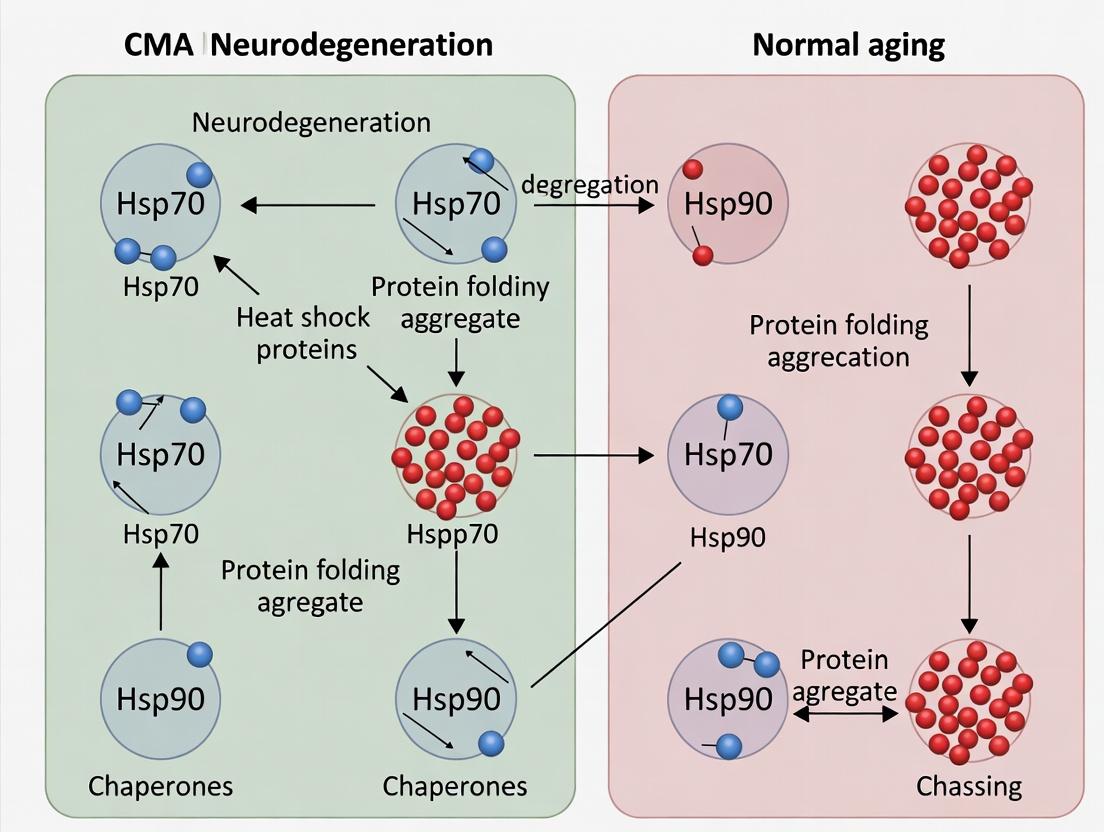
This review synthesizes the latest research on chaperone-mediated autophagy (CMA) in the context of brain health and disease.
CMA Dysfunction in Neurodegeneration vs. Normal Aging: Mechanisms, Markers, and Therapeutic Implications
Abstract
This review synthesizes the latest research on chaperone-mediated autophagy (CMA) in the context of brain health and disease. We explore the fundamental mechanisms of CMA, its critical role in neuronal proteostasis, and how its function diverges in normal aging compared to neurodegenerative pathologies like Alzheimer's, Parkinson's, and Huntington's disease. We detail current methodological approaches for studying CMA in vitro and in vivo, discuss common challenges and optimization strategies in CMA assessment, and critically evaluate comparative studies that distinguish age-related decline from pathological failure. This analysis provides a framework for researchers and drug developers targeting CMA as a diagnostic biomarker and a novel therapeutic avenue for neurodegenerative disorders.
CMA 101: Defining the Proteostatic Gatekeeper in Neuronal Health and Decline
Chaperone-Mediated Autophagy (CMA) is a selective lysosomal degradation pathway crucial for protein quality control. Within neurodegeneration research, a central thesis posits that a pronounced, age-dependent decline in CMA activity—specifically via dysfunction of the Lysosome-Associated Membrane Protein 2A (LAMP2A) receptor—exacerbates proteotoxic stress, accelerating disease pathogenesis. This contrasts with normal aging, where a more gradual CMA reduction contributes to cellular senescence. This guide compares the performance and validation of the core LAMP2A-dependent pathway against other autophagic and alternative clearance mechanisms.
Comparative Performance Analysis: CMA vs. Alternative Pathways
Table 1: Functional Comparison of Protein Degradation Pathways
| Feature | CMA (LAMP2A-Dependent) | Macroautophagy | Ubiquitin-Proteasome System (UPS) |
|---|---|---|---|
| Selectivity | High (KFERQ-like motif-containing proteins) | Low (bulk cytoplasm) to Moderate (selective via adaptors) | High (Ubiquitin-tagged proteins) |
| Cargo | Soluble cytosolic proteins (~30% of all proteins) | Organelles, protein aggregates, pathogens | Short-lived & misfolded soluble proteins |
| Key Receptor | LAMP2A (multimeric at lysosome) | e.g., p62/SQSTM1, NBR1 | Proteasome (19S regulatory particle) |
| Degradation Organelle | Lysosome | Lysosome (after autophagosome fusion) | Proteasome |
| Reported Turnover Rate (in vivo models) | Declines 30-70% in aged mouse liver | Variable; can be induced by stress | Declines 40-60% in aged rodent models |
| Response in Neurodegeneration | Markedly inhibited (e.g., LAMP2A levels ↓ ~50% in PD patient brains) | Often impaired/blocked (e.g., defective autophagosome clearance) | Impaired (proteasome dysfunction reported) |
| Advantages | Precise protein removal, regulated at translocation step. | Handles large structures, inducible. | Rapid, ATP-efficient for single proteins. |
| Limitations | Cannot degrade oligomeric/aggregated proteins. | Energetically costly, non-specific. | Limited to ubiquitinated, unfolded proteins. |
Table 2: Experimental Data on CMA Activity & Alterntives in Aging Models
| Experimental Model | CMA Activity Measurement | Macroautophagy Flux | UPS Activity | Key Supporting Data |
|---|---|---|---|---|
| Young (3-mo) Mouse Liver | 100% (baseline) | 100% (baseline) | 100% (baseline) | LAMP2A levels: 1.0 (arb. units); Degradation of radiolabeled CMA substrate (GAPDH): 70% in 30 min. |
| Aged (22-mo) Mouse Liver | ~30-40% of young | ~60-80% of young | ~50-70% of young | LAMP2A levels: ↓ 60%; Lysosomal KFERQ-protein uptake: ↓ 65%. |
| Cellular PD Model (α-synuclein overexpression) | <20% of control | Variable (often ↓) | Impaired | LAMP2A destabilized at lysosome; Accumulation of CMA substrates. |
| CMA Genetic Activation (AAV-hLAMP2A in mouse brain) | ↑ 200-300% | Unaffected | Unaffected | Reduced pathogenic protein burden (e.g., α-synuclein ↓ 50%); Improved neuronal survival. |
Key Experimental Protocols for CMA Assessment
Protocol 1: Measuring CMA Activity via Lysosomal Binding and Uptake Assay
- Objective: Quantify the functional steps of CMA: substrate binding to LAMP2A and translocation into lysosomes.
- Method:
- Isolate Lysosomes: Obtain lysosome-enriched fractions from liver or cultured cells via differential centrifugation and Percoll gradient.
- Prepare Substrate: Use a canonical CMA substrate (e.g., GAPDH or RNase A), radiolabeled (¹²⁵I) or fluorescently tagged.
- Binding Reaction: Incubate intact lysosomes with substrate at 4°C (blocks translocation) in a CMA-specific buffer (e.g., containing 10 mM ATP).
- Uptake Reaction: Shift temperature to 37°C for a timed period (e.g., 5-20 min) to allow translocation.
- Protease Protection: Treat with Proteinase K to degrade non-internalized substrate.
- Quantification: Analyze protected, internalized substrate via scintillation counting or immunoblotting. Normalize to lysosomal marker (e.g., LAMP1).
Protocol 2: Assessing CMA Status via LAMP2A Multimeric Complex Analysis
- Objective: Evaluate the assembly status of LAMP2A at the lysosomal membrane, a rate-limiting step for CMA.
- Method:
- Membrane Isolation: Purify lysosomal membranes from total cell lysates.
- Chemical Cross-linking: Treat membranes with a cross-linker (e.g., DSS, BS³).
- Blue Native PAGE: Separate protein complexes under non-denaturing conditions to preserve multimers.
- Immunoblotting: Probe for LAMP2A. Monomeric LAMP2A (~96 kDa) vs. higher-order multimers (≥ 700 kDa) indicate CMA capacity.
Protocol 3: In Vivo CMA Reporter Mouse Model (K14-CMA reporter)
- Objective: Monitor dynamic CMA activity in specific tissues in real-time.
- Method:
- Model: Use the hspa8-l2g mouse, expressing a photoprotein (Gaussia Luciferase) fused to a CMA-targeting motif.
- Induction: Induce CMA (e.g., via serum starvation, oxidative stress).
- Measurement: Image luciferase signal in vivo or ex vivo. A decrease in signal indicates increased CMA-mediated degradation of the reporter.
Visualization of the Core LAMP2A-Dependent Pathway
Title: LAMP2A-Dependent CMA Translocation Mechanism
Title: Multi-Method Experimental Workflow for CMA Analysis
The Scientist's Toolkit: Key Research Reagents
Table 3: Essential Reagents for LAMP2A-CMA Research
| Reagent / Material | Function & Application | Key Considerations |
|---|---|---|
| Anti-LAMP2A Antibody (clone EPR11940 or D1V3V) | Specific detection of LAMP2A (not other LAMP2 isoforms) in immunoblot, immunofluorescence. | Validate specificity using LAMP2A-KO cells. Critical for assessing protein levels. |
| CMA Reporter Construct (e.g., pQCXIP-KFERQ-dendra2) | Expresses a photoconvertible fluorescent protein with a CMA targeting motif. Allows pulse-chase analysis of CMA flux in live cells. | Use alongside lysosomal inhibitors (e.g., BafA1) to confirm CMA-specific degradation. |
| Recombinant KFERQ-containing Substrate (e.g., GAPDH, RNase A) | Validated cargo for in vitro CMA binding/uptake assays with isolated lysosomes. | Label with ¹²⁵I or a fluorescent dye (e.g., Cy5) for quantification. |
| Lysosome Isolation Kit (e.g., based on magnetic dextran-iron beads) | Purification of intact, functional lysosomes from cell cultures for biochemical assays. | Purity check via marker proteins (LAMP1, Cathepsin D) is essential. |
| Chemical Chaperones (e.g., 6-Aminonicotinamide, Trehalose) | Experimental CMA activators used to probe functional rescue in disease models. | Mechanisms may be indirect; always couple with direct CMA readouts. |
| LAMP2A Knockout Cell Line (e.g., CRISP edited) | Essential negative control to confirm the specificity of any observed CMA-related phenotype or signal. | Available from several research repositories (e.g., ATCC). |
| Cross-linkers (DSS, BS³) | For stabilizing transient LAMP2A multimers on isolated lysosomal membranes prior to Blue Native PAGE analysis. | Optimize concentration and time to avoid over-crosslinking. |
Chaperone-Mediated Autophagy (CMA) is a selective lysosomal degradation pathway crucial for maintaining proteostasis. Its activity declines with normal aging, but this decline is significantly exacerbated in neurodegenerative diseases such as Parkinson's, Alzheimer's, and Huntington's. This accelerated dysfunction is linked to the toxic accumulation of pathogenic proteins, many of which contain CMA-targeting motifs. The core molecular machinery—cytosolic chaperone HSC70, lysosomal receptor LAMP2A, and the substrate KFERQ motif—thus represents a critical focus for therapeutic intervention. This guide compares the functional performance and experimental interrogation of these key players within the context of neurodegeneration research.
Performance Comparison of CMA Machinery in Normal Aging vs. Neurodegenerative Models
The efficiency of CMA components is quantitatively diminished in disease states compared to age-matched controls. The following table summarizes key experimental findings.
Table 1: Quantitative Comparison of CMA Component Performance
| Component | Normal Aging (Change) | Neurodegenerative Model (Change) | Key Experimental Evidence | Implication for Disease |
|---|---|---|---|---|
| LAMP2A Levels | Gradual decrease (~30% by old age) | Severe decrease (up to 70% in PD, AD models) | Immunoblot of lysosomal fractions from rodent brain/liver; human post-mortem tissue. | Primary bottleneck; limits substrate translocation. |
| LAMP2A Multimerization | Less stable; faster dissociation. | Severely impaired; complexes fail to assemble. | Blue Native PAGE of lysosomal membranes; in vitro translocation assays. | Abolishes functional translocation complex. |
| HSC70 Activity | Slight reduction in binding affinity. | Conflicted data: Levels may increase, but function is impaired by oxidative stress. | Substrate binding/pull-down assays; activity measurements in cell lysates. | May fail to properly deliver substrates despite availability. |
| KFERQ-bearing Substrate Flux | Reduced but maintained. | Profoundly blocked leading to cytosolic accumulation. | Radiolabeled substrate degradation assays (e.g., RNase A); flux reporters (e.g., KFERQ-PA-mCherry). | Direct cause of toxic protein aggregation (α-synuclein, tau). |
| Lysosomal pH / Hydrolase Activity | Mild elevation in lysosomal pH. | Significant dysregulation; often more acidic but leaky. | Lysosomotropic dye assays (e.g., LysoTracker); cathepsin activity assays. | Can impair final degradation step post-translocation. |
Essential Research Reagent Solutions
Table 2: The Scientist's Toolkit for CMA Research
| Reagent/Material | Function/Application | Key Example/Product |
|---|---|---|
| KFERQ-PA-mCherry (or -GFP) | Live-cell CMA flux reporter. PA (photoactivatable) version allows kinetic analysis of lysosomal translocation and degradation. | Often custom-generated; available via Addgene from Cuervo lab plasmids. |
| Recombinant RNase A (or GAPDH) | Classic in vitro or cellular CMA substrate. Contains a canonical KFERQ motif. Radiolabeled (I125) for quantitative degradation assays. | Commercial (Sigma); labeling performed in lab. |
| Anti-LAMP2A (Specific Antibody) | To specifically detect the CMA-specific isoform LAMP2A (not 2B or 2C) via immunoblot or immunofluorescence. Critical for accurate quantification. | Abcam (ab18528), Santa Cruz (sc-18822). |
| Recombinant HSC70/HSPA8 Protein | For in vitro binding, translocation, or substrate unfolding assays. | Enzo Life Sciences (ADI-SPP-751-D). |
| Lysosome Isolation Kit | To obtain purified lysosomal fractions for assessing LAMP2A multimerization, associated proteins, and translocation competence. | Thermo Fisher Scientific (89839), Sigma (LYSISO1). |
| Concanavalin A Beads | To isolate lysosomal membranes for studying LAMP2A complex dynamics via Blue Native PAGE. | Vector Labs (BK-1000). |
| CMA Inhibitor (P140) | A peptide that specifically blocks substrate binding to HSC70, used to inhibit CMA function as a control. | Sigma (SML1661). |
| LAMP2A ShRNA/siRNA & cDNAs | For knockdown (loss-of-function) and overexpression (gain-of-function) studies in cellular models. | Available from major suppliers (Origene, Dharmacon). |
Experimental Protocols for Key CMA Assays
Protocol 1:In VitroCMA Translocation Assay
Purpose: To quantitatively measure the uptake and degradation of a CMA substrate by isolated lysosomes. Methodology:
- Lysosome Isolation: Purify lysosomes from rodent liver or cultured cells using a centrifugation-based purification kit in iso-osmotic conditions.
- Substrate Preparation: Radiolabel a known CMA substrate (e.g., RNase A) with Iodine-125 (I125).
- Incubation: Incubate I125-substrate with intact, purified lysosomes in the presence of an ATP-regenerating system and 5-10 µg of cytosolic fraction (as a source of HSC70) at 37°C for 20-90 mins.
- Degradation Measurement: Treat with Proteinase K to digest non-translocated substrate. Stop reaction and measure TCA-soluble radioactivity (degraded peptides) in a gamma counter.
- Controls: Include lysosomes + substrate + protease inhibitors (to confirm lysosomal degradation), and samples with CMA inhibitor P140.
Protocol 2: CMA Activity in Live Cells Using KFERQ-PA-mCherry
Purpose: To dynamically monitor CMA flux in single cells. Methodology:
- Transfection: Express the KFERQ-PA-mCherry construct in cultured cells.
- Photoactivation: Use a laser (~405 nm) to photoactivate mCherry in a defined region of the cytosol.
- Time-Lapse Imaging: Monitor the loss of red fluorescence from the photoactivated region over time (minutes to hours) using live-cell confocal microscopy. The rate of fluorescence loss corresponds to CMA-mediated lysosomal degradation.
- Co-localization: Co-stain with LysoTracker to confirm mCherry signal co-localization with lysosomes prior to degradation.
- Quantification: Plot fluorescence intensity over time. Compare rates under different conditions (e.g., oxidative stress, LAMP2A overexpression).
Protocol 3: Assessing LAMP2A Multimerization Status
Purpose: To evaluate the assembly of functional LAMP2A translocation complexes. Methodology:
- Membrane Isolation: Isolate lysosomal membranes using Concanavalin A beads (which bind glycosylated lysosomal proteins).
- Solubilization: Solubilize membranes with a mild detergent (e.g., digitonin).
- Blue Native PAGE: Resolve the solubilized protein complexes on a non-denaturing Blue Native polyacrylamide gel, which preserves multi-protein complexes.
- Immunoblot: Probe with anti-LAMP2A antibody. Functional CMA-active states show a ladder of LAMP2A multimers (from ~96 kDa dimers to >400 kDa complexes). CMA-deficient states show primarily the ~43 kDa monomer.
Visualization of CMA Machinery and Experimental Workflows
Diagram 1: The Core CMA Translocation Pathway (76 chars)
Diagram 2: Key Experimental Workflows for CMA Analysis (71 chars)
Within the broader thesis on the differential role of Chaperone-Mediated Autophagy (CMA) in neurodegeneration versus normal aging, understanding its precise selectivity is paramount. This guide compares CMA's performance to other primary autophagic and proteolytic pathways in neurons, focusing on substrate selectivity, efficiency, and functional consequences.
Comparative Performance of Neuronal Protein Degradation Pathways
Table 1: Key Characteristics of Major Degradation Pathways in Neurons
| Feature | Chaperone-Mediated Autophagy (CMA) | Macroautophagy | Ubiquitin-Proteasome System (UPS) | Endosomal-Lysosomal Degradation (e.g., microautophagy) |
|---|---|---|---|---|
| Primary Mechanism | Direct translocation of proteins across lysosomal membrane via LAMP2A. | Engulfment of cargo within double-membraned autophagosomes for lysosomal fusion. | ATP-dependent degradation of ubiquitin-tagged proteins by the 26S proteasome. | Invagination of the lysosomal/vacuolar membrane to sequester cytosolic material. |
| Selectivity | Highly Selective. Requires KFERQ-like motif on substrate; chaperone (HSC70) dependent. | Bulk or Selective. Can be non-specific or via receptors (e.g., p62, NBR1) for aggrephagy, mitophagy. | Highly Selective. Requires polyubiquitin chain tagging by specific E3 ligases. | Low Selectivity. Generally non-specific, can be induced by starvation. |
| Key Cargo in Neurons | Specific regulatory proteins (e.g., MEF2D, α-synuclein), damaged soluble proteins. | Damaged organelles, protein aggregates, intracellular pathogens. | Short-lived regulatory proteins, misfolded proteins (pre-aggregation). | Cytosolic fractions, some glycolytic enzymes. |
| Degradation Rate | Moderate. Limited by LAMP2A assembly at lysosome. | Slow, involves vesicle formation and fusion. | Very Rapid (minutes). | Variable. |
| Response to Neuronal Stress | Early responder to oxidative, proteotoxic stress; CMA activity increases. | Major responder to nutrient stress, aggregate accumulation. | Rapid responder to proteostatic imbalance; easily saturable. | Often a compensatory mechanism when other pathways are impaired. |
| Change in Aging | Marked Decline due to reduced LAMP2A levels at lysosomal membrane. | Generally declines; autophagosome clearance reduces. | Declines in efficiency. | Less characterized; may increase as compensatory. |
| Role in Neurodegeneration | Dual Role. Loss-of-function linked to PD, AD; CMA hyperactivity may degrade protective proteins. | Protective. Impairment accelerates pathology across ND diseases. | Critical. Dysfunction is a common feature in many NDs. | Emerging role; potential compensatory pathway. |
Table 2: Experimental Data on Degradation of Model Neuronal Substrates
| Substrate Protein (Role) | CMA Rate Constant (t½) | Macroautophagy Contribution | UPS Contribution | Experimental System | Key Finding |
|---|---|---|---|---|---|
| α-Synuclein (WT) | ~4-6 hours | Minimal under basal conditions | Significant (t½ ~2-4 hrs) | Primary mouse cortical neurons, Cycloheximide chase. | CMA and UPS share degradation; mutant α-synuclein blocks CMA. |
| MEF2D (Transcription factor) | ~3-5 hours | Not detected | Not detected under basal conditions | Neuronal cell line, siRNA knock-down of LAMP2A. | Exclusively degraded by CMA under basal conditions; essential for neuronal survival. |
| Huntingtin (Q25) | >24 hours (poor substrate) | Primary pathway for Q72 aggregate clearance | Degrades soluble forms | Striatal cell models, pathway-specific inhibitors (3-MA, Bafilomycin A1, MG132). | Mutant HTT (mHTT) inhibits both CMA and macroautophagy. |
| TAU (P301L mutant) | Not a direct substrate | Aggregated forms via autophagy | Soluble phosphorylated forms | Inducible neuronal cell model, CMA activity assay. | Pathogenic TAU blocks CMA, creating a vicious cycle of proteotoxicity. |
Detailed Experimental Protocols
Protocol: Measuring CMA Activity Using the Photoactivatable KFERQ Reporter (px-KFERQ-mCherry)
Purpose: To quantitatively assess functional CMA flux in live neurons. Methodology:
- Construct: Transfect neurons with a plasmid expressing a CMA reporter: a photoactivatable mCherry (PA-mCherry) fused to a canonical KFERQ motif and a nuclear localization signal (NLS).
- Photoactivation: Use a 405 nm laser to photoactivate the mCherry in a defined region of the nucleus, converting it from green to red fluorescence.
- Time-Lapse Imaging: Track the red fluorescence signal in the cytoplasm over 4-8 hours. As the reporter shuttles to the cytoplasm and is degraded via CMA, the red signal decreases.
- Quantification: Calculate the half-life (t½) of the red signal. Inhibit CMA (LAMP2A siRNA) or lysosomal degradation (Bafilomycin A1, 20 nM) as negative controls. Co-localization with LAMP1/LAMP2A antibodies confirms lysosomal delivery. Key Data Output: CMA flux rate (percentage decrease in red signal per hour).
Protocol: Comparative Pathway Inhibition Assay for Substrate Degradation
Purpose: To delineate the contribution of CMA, macroautophagy, and UPS to the degradation of a specific neuronal protein. Methodology:
- Treatment: Treat primary neuronal cultures in parallel conditions:
- Control (vehicle).
- CMA inhibition: KN-62 (10 µM, inhibits HSC70 ATPase) or LAMP2A knockdown.
- Macroautophagy inhibition: 3-Methyladenine (5 mM, inhibits early autophagosome formation).
- UPS inhibition: MG132 (10 µM, proteasome inhibitor).
- Cycloheximide Chase: Add protein synthesis inhibitor cycloheximide (50 µg/mL) to all conditions to block new protein synthesis.
- Time-Point Harvesting: Collect cell lysates at 0, 2, 4, and 8 hours post-cycloheximide addition.
- Analysis: Perform Western blotting for the protein of interest (e.g., α-synuclein, MEF2D) and a stable loading control (e.g., Actin). Quantify band intensity.
- Calculation: Plot protein abundance vs. time. The pathway whose inhibition most significantly stabilizes the protein is its major degradation route. Half-life (t½) is calculated for each condition.
Visualization of Key Concepts
Diagram Title: CMA Substrate Translocation into the Lysosome
Diagram Title: CMA in Aging vs. Neurodegeneration: A Rate-Dependent Thesis
The Scientist's Toolkit: Key Research Reagent Solutions
Table 3: Essential Reagents for Studying CMA in Neuronal Models
| Reagent / Tool | Function / Target | Application in CMA Research | Example Product/Catalog # (Representative) |
|---|---|---|---|
| LAMP2A Antibodies (C-terminal specific) | Specifically recognizes CMA-active LAMP2A isoform. | Immunoblotting, immunofluorescence to quantify LAMP2A protein levels and lysosomal localization. | Abcam [ab18528]; Invitrogen [51-2200]. |
| HSC70/HSPA8 Inhibitor (KN-62) | Inhibits the ATPase activity of HSC70, disrupting substrate binding. | Pharmacological inhibition of CMA in acute experiments. | Sigma-Aldrich [I2142]. |
| LAMP2A siRNA/shRNA | RNAi-mediated knockdown of LAMP2A expression. | Genetic inhibition of CMA to establish its role in substrate degradation. | Santa Cruz Biotechnology [sc-43382]; Dharmacon. |
| px-KFERQ-mCherry Plasmid | Photoactivatable fluorescent CMA reporter. | Live-cell imaging and quantitative measurement of CMA flux. | Addgene [#101925]. |
| Lysosomal Inhibitors (Bafilomycin A1, Chloroquine) | V-ATPase inhibitor (BafA1) raises lysosomal pH; blocks fusion/degradation. | Used in flux assays to distinguish lysosomal delivery from degradation. | Sigma-Aldrich [B1793], [C6628]. |
| CMA Substrate Constructs (e.g., GAPDH-KFERQ-GFP, RNase A-GFP) | Fluorescently tagged canonical CMA substrates. | Monitoring substrate translocation and degradation via CMA. | Custom cloning or Addgene resources. |
| Proteasome Inhibitor (MG132) | Reversible inhibitor of the 26S proteasome's chymotrypsin-like activity. | To differentiate CMA-mediated degradation from UPS-mediated degradation. | Sigma-Aldrich [M7449]. |
| 3-Methyladenine (3-MA) | Class III PI3K inhibitor; blocks autophagosome formation. | To inhibit macroautophagy and isolate CMA-specific effects. | Sigma-Aldrich [M9281]. |
Within the broader thesis investigating the divergence of chaperone-mediated autophagy (CMA) in neurodegenerative disease versus normal aging, establishing a precise molecular and functional baseline in the healthy, young adult brain is critical. This guide compares experimental approaches for characterizing this baseline, focusing on the quantification of CMA activity and components, and contrasts them with methods used in aging/neurodegeneration research.
Comparison of Methodologies for Basal CMA Assessment
Table 1: Comparative Analysis of Key Methodologies for CMA Activity Measurement
| Methodology | Principle | Advantages for Baseline Studies | Limitations | Key Quantitative Output (Typical Young Adult Brain) |
|---|---|---|---|---|
| LAMP2A Multimerization Assay | Detects formation of LAMP2A oligomers at lysosomal membrane, essential for CMA translocation. | Direct measure of CMA capacity; distinguishes active from inactive CMA lysosomes. | Requires fresh tissue or careful lysosomal isolation; does not measure flux. | ~60-70% of total LAMP2A is in multimeric state (cortical lysosomes). |
| KFERQ-Dendra2 Flux Assay | Tracks lysosomal degradation of a photoconverted CMA substrate reporter. | Direct, dynamic measure of CMA flux in live cells; can be adapted for primary neurons. | Primarily in vitro/in cellulo; challenging for intact tissue. | Degradation rate (t½) of reporter: ~4-6 hours in primary neuronal culture. |
| CMA Substrate Stability (e.g., MEF2D, RHOT) | Measures steady-state levels of endogenous CMA substrates. | Reflects in vivo CMA activity; uses standard immunoblotting. | Confounded by transcriptional changes and other degradation pathways. | Low steady-state levels (e.g., MEF2D >90% degraded). |
| Lyso-IP & Proteomics | Immunoprecipitation of LAMP2A-containing lysosomes followed by mass spec. | Identifies endogenous cargo repertoire; systems-level view. | Technically demanding; snapshot in time; high cost. | 150-300 unique proteins identified as putative CMA cargoes. |
| Histological Co-localization (LAMP2A/ substrate) | Quantifies co-localization of CMA substrates with LAMP2A+ lysosomes in tissue. | Spatial context within brain regions; uses archived samples. | Semi-quantitative; does not confirm degradation. | Co-localization coefficient (e.g., MEF2D with LAMP2A): ~0.4-0.6 in hippocampal neurons. |
Experimental Protocols for Key Baseline Assays
Protocol 1: Lysosomal Isolation and LAMP2A Multimerization Analysis from Murine Brain
- Homogenization: Fresh cortical tissue is homogenized in ice-cold 0.25M sucrose, 1mM EDTA, 10mM HEPES buffer (pH 7.4) with protease inhibitors.
- Differential Centrifugation: Nuclei/debris removed at 800g for 10min. Supernatant centrifuged at 20,000g for 20min to obtain a crude organelle pellet.
- Lysosomal Enrichment: Pellet resuspended and layered on a discontinuous Percoll gradient (19%, 30%, 40%). Centrifuge at 48,000g for 90min.
- Lysosome Collection: Collect the dense band at the 30%/40% interface. Wash to remove Percoll.
- Multimer Detection: Solubilize lysosomal proteins in 1% digitonin (non-denaturing) for 30min on ice. Analyze by BN-PAGE (Blue Native-PAGE) followed by LAMP2A immunoblotting. Multimers appear as high-molecular-weight complexes (>480 kDa).
Protocol 2: KFERQ-Dendra2 CMA Flux Assay in Primary Cortical Neurons
- Transduction: Transduce DIV5 primary cortical neurons with lentivirus expressing the CMA reporter KFERQ-Dendra2.
- Photoconversion & Chase: At DIV14, photoconvert the green Dendra2 signal to red (550 nm laser). Replace media with fresh neurobasal medium.
- Time-Course Fixation: Fix cells at chase times (e.g., 0, 2, 4, 8, 12 hours).
- Imaging & Quantification: Capture red fluorescence intensity per soma using high-content imaging. Normalize to t=0 intensity.
- Analysis: Fit decay curve to calculate half-life (t½) of the reporter. Co-treatment with lysosomal inhibitors (e.g., E64d/Pepstatin A) confirms lysosomal degradation.
Signaling Pathways and Experimental Workflows
The Scientist's Toolkit: Key Research Reagent Solutions
Table 2: Essential Reagents for Characterizing Basal Brain CMA
| Item | Function in CMA Baseline Research | Example/Note |
|---|---|---|
| Anti-LAMP2A (Clone EPR18839) | Specific detection of the CMA-critical LAMP2A splice variant for immunoblot, IP, and IHC. | Critical: Must distinguish from LAMP2B/C. |
| KFERQ-Dendra2 Lentivirus | Live-cell, photoconvertible reporter for dynamic measurement of CMA flux. | Used in primary neuronal cultures. |
| Digitonin (High-Purity) | Mild detergent for solubilizing lysosomal membranes while preserving LAMP2A multimers. | Used in BN-PAGE sample preparation. |
| Percoll Gradient Medium | For high-purity isolation of intact lysosomes from brain homogenates. | Essential for functional lysosomal assays. |
| Anti-HSC70/HSPA8 Antibody | Detects the cytosolic chaperone that recognizes CMA substrates. | Used in co-immunoprecipitation studies. |
| Protease Inhibitor Cocktail (Lysosomal) | Specifically inhibits cathepsins to block lysosomal degradation for flux control experiments. | E64d and Pepstatin A combination. |
| Validated CMA Substrate Antibodies | Detect endogenous cargoes (e.g., MEF2D, RHOT/Miro2) to infer CMA activity. | Requires validation via lysosomal inhibition. |
| LysoTracker Deep Red | Stains acidic organelles to visualize lysosomal number/health in live cells. | Counterstain for flux assays. |
Comparison Guide: CMA Activity in Normal Aging vs. Neurodegenerative Models
This guide compares the performance and characteristics of chaperone-mediated autophagy (CMA) in normal aging versus in models of neurodegenerative disease, focusing on quantitative flux measurements and substrate processing.
Table 1: Quantitative Comparison of CMA Markers in Aging & Neurodegeneration
| Parameter | Normal Aging (24-month rodent) | Neurodegeneration (e.g., α-synucleinopathy model) | Measurement Technique |
|---|---|---|---|
| LAMP2A Levels | Decrease by ~30% vs. young | Decrease by 60-80% vs. control | Immunoblot (lysosomal membrane) |
| hsc70 at Lysosome | Slight increase or unchanged | Marked decrease (~50%) | Co-immunoprecipitation / Confocal |
| CMA Substrate Half-life | Increased by ~40% | Increased by 100-300% | Pulse-chase (e.g., RNase A) |
| Lysosomal Degradation of GAPDH | Reduced by ~35% | Reduced by 70-90% | In vitro lysosomal uptake assay |
| Compensatory Macroautophagy | Increased by ~50% | Impaired or insufficient | LC3-II flux assay |
| ROS Accumulation | Moderate increase | Severe increase | DCFDA / flow cytometry |
Table 2: Experimental Models for CMA Assessment
| Model System | Advantages for CMA Study | Limitations |
|---|---|---|
| Primary Senescent Fibroblasts | Physiologically relevant aging context; direct CMA flux measurement. | Donor variability; finite replicative capacity. |
| Liver from Aged Rodents | High CMA activity baseline; abundant tissue for biochemical analysis. | Tissue-specific effects; complex in vivo milieu. |
| Induced Neurons (iNs) from Aged Donors | Relevant cell type for neurodegeneration research; can model aging signatures. | Complex differentiation protocol; CMA activity lower than in liver. |
| α-Synuclein A53T Overexpression Cell Model | Direct link to PD pathology; clear CMA blockade. | Overexpression artifacts; may not reflect sporadic disease. |
| LAMP2A Knockdown/Knockout | Establitshes causal role for CMA deficiency. | May trigger compensatory pathways. |
Experimental Protocols
Protocol 1:In VitroLysosomal Uptake and Degradation Assay
Purpose: To directly quantify CMA activity by measuring the translocation and degradation of radiolabeled CMA substrates by isolated lysosomes.
- Lysosome Isolation: Homogenize liver or brain tissue from young (3-month), aged (24-month), and disease model rodents in ice-cold 0.25 M sucrose buffer. Purify lysosomes via discontinuous metrizamide density gradient centrifugation.
- Substrate Preparation: Radiolabel the CMA substrate (e.g., GAPDH or RNase A) with ¹²⁵I using the chloramine-T method. Purify labeled protein using a desalting column.
- Uptake Reaction: Incubate purified lysosomes (50-100 μg protein) with ¹²⁵I-substrate (1-2 μg) in 0.25 M sucrose, 10 mM MOPS (pH 7.2), 10 mM KCl, 1 mM MgCl₂, 5 mM ATP, and an ATP-regenerating system for 20 minutes at 37°C.
- Degradation Assessment: For uptake, stop reaction on ice, treat with Proteinase K to remove surface-bound substrate, isolate lysosomes, and measure lysosome-associated radioactivity. For degradation, extend incubation to 60 min, precipitate proteins with TCA, and measure TCA-soluble radioactivity in supernatant.
- Analysis: Express data as percent substrate uptake/degraded per μg lysosomal protein, normalized to young control samples.
Protocol 2: CMA Flux Measurement Using a Photoconvertible Reporter (KFERQ-PA-mCherry1)
Purpose: To dynamically monitor CMA flux in living cells across conditions.
- Cell Transduction: Stably transduce cells of interest (e.g., fibroblasts, induced neurons) with a lentivirus expressing the CMA reporter KFERQ-PA-mCherry1.
- Photoconversion: Select a region of interest and photoconvert the mCherry from green to red fluorescence using a 405 nm laser.
- Time-Course Imaging: Track the same cells over 12-24 hours using live-cell confocal microscopy. CMA activity is indicated by the loss of red fluorescence (lysosomal degradation) without a decrease in green fluorescence (total protein).
- Quantification: Calculate CMA flux as the rate of decrease in red fluorescence intensity (normalized to time 0) within the region of interest. Compare slopes between young, aged, and diseased cell models.
Visualizations
Diagram Title: CMA Pathway and Age-Related Modulation
Diagram Title: Integrated CMA Assessment Workflow
The Scientist's Toolkit: Key Research Reagents
| Reagent / Material | Function in CMA Research |
|---|---|
| Anti-LAMP2A (clone 2H9) Antibody | Selective immunoblotting and immunofluorescence detection of the CMA-critical lysosomal receptor. |
| Recombinant hsc70 Protein | Positive control for substrate binding experiments and in vitro reconstitution of CMA translocation. |
| KFERQ-PA-mCherry1 Lentiviral Construct | Photoconvertible live-cell reporter for dynamic, quantitative measurement of CMA flux. |
| Purified CMA Substrates (GAPDH, RNase A) | Radiolabeled or fluorescently tagged proteins for in vitro lysosomal uptake and degradation assays. |
| Concanamycin A / Bafilomycin A1 | V-ATPase inhibitors used to block lysosomal acidification, serving as a control to confirm lysosomal degradation. |
| Metrizamide Density Gradient Medium | Key for high-purity isolation of intact, functional lysosomes from tissue or cell homogenates. |
| Chloramine-T | Reagent for efficient radioiodination (¹²⁵I) of protein substrates for uptake assays. |
The chaperone-mediated autophagy (CMA) pathway is a critical proteolytic mechanism for maintaining cellular homeostasis. In normal aging, CMA activity declines gradually. However, in neurodegenerative diseases, a pathological threshold of CMA failure is crossed, leading to the toxic accumulation of specific substrates. This guide compares experimental models and methodologies used to quantify CMA activity and dysfunction, placing them within the broader thesis of distinguishing age-related decline from pathological failure.
Comparative Analysis of CMA Activity Assays
Table 1: Comparison of Key Methodologies for Monitoring CMA Flux
| Method | Principle | Key Metrics (Normal vs. Neurodegeneration) | Advantages | Limitations |
|---|---|---|---|---|
| KFERQ-Dendra2 Reporter | Photoconvertible CMA-targeted substrate. | Normal Aging: ~40% degradation in 48h. AD/PD Models: <15% degradation. | Direct, quantitative flux measurement in live cells/animals. | Requires specialized imaging; does not isolate lysosomal step. |
| LAMP2A Stabilization Assay | Measures LAMP2A at lysosomal membrane via immunoblot. | Normal: LAMP2A half-life ~12h. Pathological: Half-life increases to >24h. | Simple, correlates with CMA capacity. | Static measure; influenced by transcription/translation. |
| Radioactive Degradation Assay | Measures degradation of radiolabeled CMA substrate (e.g., GAPDH). | Control: 30-35% degradation in 1h. CMA-inhibited: 5-10% degradation. | Gold standard for in vitro flux. | Requires radioactive material; not suitable for live monitoring. |
| CMA Substrate Accumulation (IHC) | Immunohistochemistry for known CMA substrates (e.g., MEF2D, α-synuclein). | Aging: Mild increase in cytosolic pools. Neurodegeneration: Severe, punctate accumulations. | Spatial context in tissue. | Indirect; can be confounded by other clearance pathways. |
Detailed Experimental Protocols
Protocol 1: Live-Cell CMA Flux using KFERQ-Dendra2
- Transfection: Express the KFERQ-Dendra2 construct in primary neurons or cell lines.
- Photoconversion: At time T=0, expose cells to 405 nm light to convert Dendra2 fluorescence from green to red.
- Chase & Imaging: Monitor red fluorescence (converted protein) over 24-48h using time-lapse microscopy. Maintain cells at 37°C, 5% CO₂.
- Analysis: Quantify the half-life (t½) of the red signal. CMA inhibition (e.g., LAMP2A knockdown) serves as a negative control.
Protocol 2: Lysosomal LAMP2A Turnover Assay
- Pulse-Chase Labeling: Treat cells with cycloheximide (100 µg/mL) to inhibit new protein synthesis.
- Lysosome Isolation: At time points (0, 6, 12, 24h), harvest cells and isolate lysosomes using density gradient centrifugation.
- Immunoblotting: Resolve lysosomal membrane proteins by SDS-PAGE. Probe for LAMP2A and a loading control (e.g., LAMP1).
- Quantification: Normalize LAMP2A signal to LAMP1. Plot decay curve to calculate stabilization/half-life.
Visualizing CMA and Its Dysregulation
Title: Chaperone-Mediated Autophagy (CMA) Pathway
Title: Threshold from CMA Decline to Pathological Failure
The Scientist's Toolkit: Key Research Reagents
Table 2: Essential Reagents for CMA Research
| Reagent | Function/Application | Example Product (Supplier) |
|---|---|---|
| Anti-LAMP2A (Clone E5) | Specific antibody for detecting the CMA-specific LAMP2A isoform via WB/IHC. | Abcam (ab18528) |
| Recombinant KFERQ-Dendra2 | Photoconvertible reporter construct for live-cell CMA flux assays. | Addgene (Plasmid #117078) |
| Lysosomal Inhibitor Cocktail | Inhibits lysosomal proteases (E64d/Pepstatin A) to measure substrate accumulation. | Sigma-Aldrich (SML-1280) |
| siRNA against LAMP2A | Knockdown LAMP2A expression for establishing CMA-deficient controls. | Dharmacon (L-009552-00) |
| Anti-polyubiquitin (FK2) | Distinguishes CMA substrates (ubiquitin-independent) from macroautophagy targets. | MilliporeSigma (04-263) |
| Recombinant HSPA8 (Hsc70) | For in vitro binding assays to validate KFERQ motif interactions. | Enzo Life Sciences (ADI-SPP-776) |
Tools of the Trade: Current Methods to Monitor and Modulate CMA in Research Models
Comparative Performance Analysis of CMA Reporters
KFERQ-PA-mCherry is a widely adopted reporter construct for monitoring Chaperone-Mediated Autophagy (CMA). The table below compares its performance with other common CMA and lysosomal assay tools.
Table 1: Comparison of CMA Reporter Constructs and Assays
| Construct/Assay Name | Target Process | Readout | Sensitivity | Temporal Resolution | Key Limitation | Best Application |
|---|---|---|---|---|---|---|
| KFERQ-PA-mCherry-1 | CMA Flux | Lysosomal puncta (mCherry signal retention after photobleaching of PA-GFP) | High (allows single-cell analysis) | High (real-time tracking) | Requires photobleaching equipment; PA-GFP is pH-sensitive. | Dynamic, quantitative measurement of CMA activity in live cells. |
| KFERQ-Dendra2 | CMA Flux | Lysosomal conversion from green to red fluorescence (acidification). | Moderate | Moderate | Can be influenced by general lysosomal pH changes. | Tracking of CMA substrate delivery and degradation in fixed/live cells. |
| LAMP2A Overexpression & Knockdown | CMA Capacity | Immunoblot for substrate degradation (e.g., GAPDH, RNase A). | Low (population average) | Low (endpoint) | Measures capacity, not real-time flux; compensatory mechanisms may activate. | Validating CMA dependency of substrate degradation. |
| Cyto-ID / Lysotracker | General Autophagy / Lysosomal Mass | Fluorescent dye intensity. | Low for CMA | Low | Not specific to CMA; measures bulk lysosomal changes. | Initial, coarse assessment of lysosomal activity alongside CMA-specific reporters. |
| CMA Substrate Immunoblot (e.g., GAPDH) | CMA Activity | Immunoblot for endogenous CMA substrates. | Moderate | Low (endpoint) | Requires lysosomal inhibition (e.g., leupeptin/E64d) to accumulate substrate; not live-cell. | Biochemical validation of CMA changes in cell populations or tissues. |
Supporting Data from Recent Studies (2023-2024): A 2023 study directly compared KFERQ-PA-mCherry-1 with the KFERQ-Dendra2 construct in neuronal cell models of Parkinson's disease. The PA-mCherry reporter showed a 40% higher dynamic range in detecting CMA inhibition (using LAMP2A knockdown) compared to Dendra2. Furthermore, during recovery from oxidative stress, PA-mCherry detected a 2.1-fold increase in CMA flux rate, whereas Dendra2 reported only a 1.5-fold change, highlighting superior sensitivity for kinetic studies.
Detailed Experimental Protocols
Protocol 1: Live-Cell CMA Flux Assay Using KFERQ-PA-mCherry
Principle: The construct contains a photoconvertible PA-GFP and a stable mCherry, both linked to a CMA-targeting motif (KFERQ). Upon lysosomal uptake, the PA-GFP signal is quenched by the acidic pH, while mCherry is more stable. Selective photobleaching of cytosolic mCherry allows visualization of only the lysosomal (CMA-active) pool.
Method:
- Cell Culture & Transfection: Plate cells (e.g., SH-SY5Y, primary neurons) on glass-bottom dishes. Transfect with the KFERQ-PA-mCherry plasmid using appropriate transfection reagent (e.g., Lipofectamine 3000).
- Photoconversion and Bleaching (Imaging Day):
- Using a confocal microscope with a 405nm laser, photoconvert all PA-GFP to its red-emitting state.
- Immediately use the 561nm laser at high intensity to selectively bleach the mCherry signal in a region of interest excluding lysosomes.
- Image Acquisition: Acquire time-lapse images (every 15-30 mins for 4-6 hours) using a 561nm laser at low power to track the recovery of mCherry fluorescence in lysosomal puncta. The recovery rate correlates with CMA flux.
- Quantification: Use image analysis software (e.g., ImageJ/Fiji) to quantify the integrated mCherry fluorescence intensity in puncta over time. Normalize to initial post-bleach intensity.
Protocol 2: Endpoint Lysosomal Uptake Assay (Validation)
Principle: This immunofluorescence-based assay validates CMA substrate colocalization with lysosomes, often used to corroborate live-cell data.
Method:
- Treatment: Treat cells expressing KFERQ-PA-mCherry (or untransfected cells for endogenous substrates) with lysosomal protease inhibitors (Leupeptin 100µM + E64d 10µg/mL) for 4-6 hours to accumulate CMA substrates.
- Fixation & Staining: Fix cells with 4% PFA, permeabilize with 0.1% saponin, and block. Incubate with primary antibodies against LAMP2A (CMA-specific lysosomal marker) and a CMA substrate (e.g., GAPDH).
- Imaging & Analysis: Acquire high-resolution confocal images. Quantify the Manders' overlap coefficient between the substrate signal (mCherry or immunofluorescence) and the LAMP2A signal. A higher coefficient indicates greater CMA substrate uptake.
Pathway and Workflow Visualizations
Diagram 1: KFERQ-PA-mCherry Live-Cell Assay Workflow
Diagram 2: Core Chaperone-Mediated Autophagy (CMA) Pathway
The Scientist's Toolkit: Key Research Reagent Solutions
Table 2: Essential Reagents for CMA and Lysosomal Uptake Assays
| Reagent / Material | Function in Assay | Key Consideration |
|---|---|---|
| KFERQ-PA-mCherry Plasmid | Core reporter construct. Contains CMA-targeting motif and dual fluorescent tags for flux measurement. | Available from addgene (e.g., #102930). Verify sequence and promoter suitability for your cell type. |
| LAMP2A Antibody (C-terminal) | Gold-standard marker for CMA-active lysosomes in immunoassays. | Critical for validating reporter localization. Use monoclonal (e.g., Abcam ab18528) for consistency. |
| Lysosomal Protease Inhibitors (Leupeptin/E64d) | Inhibit intralysosomal degradation, causing substrate accumulation for endpoint uptake assays. | Use combination for broad inhibition. Treat for optimized duration to avoid compensatory pathway activation. |
| HSC70/HSPA8 Antibody | Identifies the cytosolic chaperone that recognizes KFERQ motif. Useful for co-immunoprecipitation validation. | |
| LAMP2A siRNA/shRNA | Tool for knocking down CMA activity to establish assay baseline or model CMA dysfunction. | Always include scrambled control. Rescue with RNAi-resistant LAMP2A plasmid confirms specificity. |
| LysoTracker Deep Red | Fluorescent dye for labeling acidic lysosomes. Used to confirm lysosomal integrity and colocalization. | Not CMA-specific. Stains all acidic compartments. Use alongside CMA-specific markers. |
| Bafilomycin A1 | V-ATPase inhibitor that neutralizes lysosomal pH. Controls for pH-dependent fluorescence quenching (e.g., of GFP). | Can indirectly affect CMA. Use as a control, not a long-term treatment. |
| Opti-MEM & Lipofectamine 3000 | Standard transfection reagents for plasmid delivery into mammalian cell lines. | For primary neurons, use magnetofection or viral transduction (AAV, lentivirus) for higher efficiency. |
Publish Comparison Guide: Methods for Analyzing CMA Machinery
This guide compares key methodological approaches for studying chaperone-mediated autophagy (CMA) components, specifically LAMP2A oligomerization and HSC70 localization, within the context of neurodegenerative disease versus normal aging research.
Comparison of Immunoblotting Approaches for LAMP2A Oligomers
Table 1: Comparison of Antibody Performance for Detecting LAMP2A Oligomers
| Antibody (Clone/Supplier) | Specificity (Monomer vs. Oligomer) | Recommended Model System | Key Experimental Finding in Neurodegeneration | Reported Signal in Normal Aging |
|---|---|---|---|---|
| Anti-LAMP2A (Polyclonal, Abcam ab18528) | Detects all forms; oligomers require crosslinking or BN-PAGE. | Mouse/rat brain homogenates, human post-mortem tissue. | ~25% increase in high-molecular-weight oligomers in AD cortex vs. age-matched controls. | Gradual ~15% increase in oligomers between 6-24 months in mouse brain. |
| Anti-LAMP2A (Clone EPR12250, Abcam) | Primarily monomeric form under reducing SDS-PAGE. | Cultured neurons, iPSC-derived cells. | Reduced monomeric LAMP2A in PD patient fibroblasts (30% decrease). | Stable monomeric levels across human donor samples (age 40-80). |
| Anti-LAMP2A (4H7, Santa Cruz sc-18822) | Used in non-reducing gels to assess multimeric states. | Mouse spinal cord extracts, ex vivo synaptosomes. | Accumulation of dimeric/trimeric forms in SOD1-G93A mouse model at symptomatic stage. | Moderate increase in multimeric forms in aged (24mo) wild-type mice. |
Experimental Protocol for LAMP2A Oligomer Analysis via BN-PAGE/Immunoblot:
- Tissue Preparation: Homogenize fresh or snap-frozen brain tissue (e.g., cortex) in ice-cold NativePAGE Sample Buffer containing 1% digitonin and protease inhibitors.
- Sample Clarification: Centrifuge at 20,000 x g for 30 minutes at 4°C. Retain the supernatant.
- Native Electrophoresis: Load equal protein amounts (determined by BCA) onto a NativePAGE 4-16% Bis-Tris gel. Run at 150V for 1-2 hours using NativePAGE anode (clear) and dark cathode buffers.
- Transfer: Transfer proteins to PVDF membrane using standard wet transfer in CAPS buffer (pH 11).
- Immunoblotting: Block membrane with 5% BSA in TBST. Incubate with primary anti-LAMP2A antibody (e.g., Abcam ab18528, 1:1000) overnight at 4°C. Detect with HRP-conjugated secondary antibody and chemiluminescence.
- Quantification: Compare band intensities corresponding to monomeric (~96 kDa), dimeric, and higher-order oligomeric complexes.
Comparison of HSC70 Localization Techniques
Table 2: Comparison of Techniques for Assessing HSC70 Lysosomal Localization
| Technique | Principle | Throughput | Quantitative Output | Key Insight in Neurodegeneration vs. Aging |
|---|---|---|---|---|
| Differential Centrifugation + Immunoblot | Fractionation of cellular compartments followed by blotting for HSC70 and markers (e.g., LAMP2). | Medium | Percentage of total HSC70 in lysosomal fraction. | In AD models, HSC70 lysosomal enrichment decreases by ~40% despite increased total HSC70. In normal aging, enrichment is maintained. |
| Immunofluorescence Co-localization | Confocal microscopy with antibodies against HSC70 and LAMP2/LAMP2A. | Low | Mander's or Pearson's co-localization coefficients. | Reduced co-localization in hippocampal neurons from tauopathy mice (r=0.4 vs. 0.7 in WT). Moderate decrease in aged neurons (r=0.6). |
| Proximity Ligation Assay (PLA) | In situ detection of protein-protein proximity (<40 nm) using anti-HSC70 and anti-LAMP2A antibodies. | Low-Medium | PLA puncta per cell. | Significantly fewer HSC70-LAMP2A PLA puncta in dopaminergic neurons from PD patient-derived cultures. Puncta count inversely correlates with α-synuclein burden. |
Experimental Protocol for HSC70 Lysosomal Localization via Subcellular Fractionation:
- Lysosome Isolation: Use a commercial lysosome isolation kit (e.g., from Thermo Scientific) on freshly prepared tissue or cell pellets. Briefly, homogenize in isotonic buffer, centrifuge at low speed to remove nuclei/debris, and then pellet the heavy mitochondrial/lysosomal fraction at high speed (15,000 x g).
- Fraction Purity Validation: Immunoblot fractions for markers: LAMP1/LAMP2A (lysosomes), COX IV (mitochondria), Calnexin (ER), GAPDH (cytosol).
- HSC70 Immunoblotting: Run equal protein amounts from total homogenate, cytosolic, and lysosomal-enriched fractions on SDS-PAGE. Transfer and blot with anti-HSC70 antibody (e.g., Enzo ADI-SPA-815, 1:2000) and anti-LAMP2A.
- Quantification: Normalize HSC70 signal in the lysosomal fraction to the LAMP2A signal in that fraction. Express as a ratio of lysosomal HSC70 to cytosolic HSC70.
The Scientist's Toolkit: Key Reagent Solutions
Table 3: Essential Research Reagents for CMA Analysis
| Reagent/Material | Supplier Examples | Function in CMA Analysis |
|---|---|---|
| LAMP2A Antibody (for oligomer detection) | Abcam (ab18528), Santa Cruz (sc-18822) | Critical for immunoblotting and immunofluorescence to quantify LAMP2A protein levels and oligomeric status. |
| HSC70/HSPA8 Antibody | Enzo (ADI-SPA-815), Cell Signaling Technology | Detects the CMA chaperone; used for blotting, localization, and co-immunoprecipitation experiments. |
| NativePAGE System | Thermo Fisher Scientific | Enables separation of native protein complexes, like LAMP2A oligomers, via blue native PAGE. |
| Lysosome Isolation Kit | Thermo Fisher, Sigma-Aldrich | Provides reagents for the rapid enrichment of intact lysosomes from tissues/cells for localization studies. |
| Protease & Phosphatase Inhibitor Cocktails | Roche, Thermo Fisher | Preserves the post-translational state of CMA proteins, which is crucial for accurate oligomer analysis. |
| Crosslinking Agents (e.g., BS³, DTSSP) | Thermo Fisher | Stabilizes transient protein-protein interactions (e.g., LAMP2A oligomers, HSC70-substrate complexes) prior to lysis. |
| PVDF Membrane (0.2 μm pore) | MilliporeSigma, Bio-Rad | Optimal for transferring and immobilizing high-molecular-weight protein complexes for immunoblotting. |
| Chemiluminescent Substrate (high sensitivity) | Bio-Rad, Thermo Fisher | Enables detection of low-abundance CMA components, especially in limited ex vivo samples. |
Visualized Workflows and Pathways
CMA Pathway in Health vs. Neurodegeneration
Workflow for LAMP2A Oligomer & HSC70 Localization Analysis
Within the broader thesis investigating the distinct roles of Chaperone-Mediated Autophagy (CMA) in neurodegeneration versus normal aging, precise imaging techniques are paramount. Direct visualization of CMA substrate trafficking and lysosomal co-localization provides critical spatial and functional data. This guide compares the performance of classical immunofluorescence (IF) for lysosomal co-localization with modern, genetically encoded CMA activity reporters.
Performance Comparison: Immunofluorescence vs. CMA Reporters
Table 1: Direct Comparison of Imaging Methodologies
| Feature | Immunofluorescence (LAMP-2A + Substrate Co-localization) | GFP-LAMP-2A & KFERQ-Dendra2 Reporters | CMA Flare (GFP-LAMP-1 + hLAMP-2A-mCherry) |
|---|---|---|---|
| Primary Readout | Static co-localization (Manders’/Pearson’s coefficients) | Dynamic lysosomal binding & translocation | CMA-dependent lysosomal enlargement & reporter accumulation |
| Temporal Resolution | Low (fixed time points) | High (real-time, live-cell) | Moderate (over 6-48 hours) |
| Quantification | Semi-quantitative, prone to threshold bias | Quantitative (lysosomal fluorescence intensity) | Quantitative (lysosomal size & mCherry/GFP ratio) |
| Throughput | Low (manual analysis intensive) | Medium | High (amenable to automated imaging) |
| Specificity for CMA Activity | Moderate (can be confounded by general autophagy) | High | High |
| Key Experimental Data (from cited studies) | Pearson’s coefficient ~0.6-0.8 in nutrient-starved cells; decreases >40% in CMA-inhibited models. | Lysosomal Dendra2 intensity increases 3-5 fold upon CMA induction (e.g., serum starvation). | CMA activity induces >2-fold increase in mCherry/GFP ratio vs. controls. |
| Best Application | Validating CMA substrate accumulation in fixed tissue (e.g., patient brain sections). | Live-cell kinetics, siRNA/drug screening. | Long-term CMA flux tracking in neurodegeneration models. |
Detailed Experimental Protocols
Protocol 1: Immunofluorescence for CMA Substrate Lysosomal Co-localization
Objective: To quantify co-localization of a CMA substrate (e.g., MEF2D, α-synuclein) with the CMA receptor LAMP-2A in fixed cells or tissue sections.
- Cell Culture & Treatment: Culture relevant cells (e.g., mouse primary neurons) on coverslips. Induce CMA (e.g., 10-12 hr serum starvation) or inhibit (e.g., LAMP-2A siRNA).
- Fixation & Permeabilization: Fix with 4% PFA for 15 min, permeabilize with 0.1% Triton X-100 for 10 min.
- Immunostaining: Block with 5% BSA. Incubate overnight at 4°C with primary antibodies: mouse anti-LAMP-2A (clone EPR21033, Abcam) and rabbit anti-target substrate (e.g., anti-α-synuclein). Use species-specific Alexa Fluor 488 and 555 secondary antibodies.
- Imaging & Analysis: Acquire z-stack images with a confocal microscope (63x oil objective). Use software (e.g., ImageJ, Coloc2) to calculate Manders’ overlap coefficients (M1, M2) for thresholded signals. Analyze ≥30 cells per condition.
Protocol 2: Live-Cell Imaging Using the KFERQ-Dendra2 CMA Reporter
Objective: To monitor real-time binding and translocation of CMA substrates into lysosomes.
- Reporter Transfection: Transfect cells with plasmids for GFP-LAMP-2A (lysosome marker) and the CMA reporter KFERQ-Dendra2 (a photoconvertible fluorescent protein tagged with a CMA-targeting motif).
- Photoconversion & Time-Lapse Imaging: Using a point-scanning confocal with 405nm laser, photoconvert a region of interest from green (Dendra2) to red (mCherry-like) fluorescence. Immediately commence time-lapse imaging (every 2 min for 60 min) in red and green channels.
- Quantification: Measure the increase in red fluorescence within GFP-LAMP-2A-positive lysosomes over time. Normalize to initial post-conversion intensity. Calculate translocation rate as slope of the initial linear phase (typically first 20 min).
Visualization of CMA Imaging Workflows
Title: Decision Workflow for CMA Imaging Technique Selection
Title: Core CMA Pathway & Imaging Detection Points
The Scientist's Toolkit: Research Reagent Solutions
Table 2: Essential Reagents for CMA Imaging
| Reagent / Material | Function in CMA Imaging | Example Product / Citation |
|---|---|---|
| Anti-LAMP-2A Antibody (clone EPR21033) | Specifically labels the CMA-specific splice variant of LAMP-2 for IF co-localization. | Abcam ab18528 / (Kaushik & Cuervo, 2018) |
| CMA Substrate Antibodies | Detect endogenous CMA targets (e.g., α-synuclein, MEF2D, GAPDH) for co-localization studies. | Synuclein-alpha (MJFR1) Abcam ab138501 |
| GFP-LAMP-2A Plasmid | Enables live tracking of CMA-competent lysosomes; essential for KFERQ-dendra2 assays. | Addgene plasmid # 117738 (from Dr. A.M. Cuervo lab) |
| KFERQ-Dendra2 Reporter Plasmid | Photoconvertible reporter for quantifying real-time substrate translocation into lysosomes. | (Koga et al., 2011, Mol Cell) |
| CMA-FLARE Cell Line | Stable reporter for long-term CMA flux measurement via mCherry/GFP ratio in enlarged lysosomes. | (Arias et al., 2023, Cell Reports) |
| LAMP-2A siRNA | Critical negative control for establishing CMA-specificity of observed effects. | ON-TARGETplus Human LAMP2 siRNA (Dharmacon) |
| Lysosomal Protease Inhibitors (E64d/Pepstatin A) | Used to distinguish substrate translocation from degradation in reporter assays. | Sigma-Aldrich 330005-1MG |
For the thesis on CMA in neurodegeneration versus aging, method selection is context-dependent. Immunofluorescence remains vital for post-mortem human brain tissue analysis, providing snapshots of CMA substrate accumulation. However, live-cell reporters like KFERQ-Dendra2 and CMA-FLARE offer superior quantitative power and temporal insight into CMA dynamics, essential for delineating the kinetic failures in neurodegenerative models compared to the slower decline in normal aging. Integrating data from both approaches will yield the most compelling evidence for CMA's role in disease pathogenesis.
Within the broader thesis on chaperone-mediated autophagy (CMA) in neurodegeneration compared to normal aging, precise genetic manipulation is indispensable. This guide objectively compares the performance of three core techniques—knockdown (KD), overexpression (OE), and CRISPR-mediated models—for modulating CMA component expression, focusing on the central receptor LAMP2A. Data is synthesized from recent primary literature to inform researchers and drug development professionals.
Performance Comparison of Genetic Manipulation Strategies
Table 1: Comparison of Key Genetic Manipulation Techniques for CMA Components
| Feature | siRNA/shRNA Knockdown | Viral Vector Overexpression | CRISPR-Cas9 Models |
|---|---|---|---|
| Primary Use | Acute, reversible reduction of target mRNA/protein. | Supraphysiological increase of target protein. | Permanent gene knockout (KO), knock-in (KI), or base editing. |
| Typical Efficiency | 70-90% protein reduction (transient); 50-80% (stable). | 5- to 20-fold increase common. | KO efficiency varies (often >80% for frameshifts). HDR efficiency lower (<30%). |
| Temporal Control | Good for transient; inducible systems available. | Good; inducible promoters (e.g., Tet-On) enable control. | Permanent; temporal control possible with inducible Cas9 systems. |
| Key Artifact Concerns | Off-target effects, immune activation, incomplete KD. | Non-physiological expression levels, potential aggregation. | Off-target genomic edits, mosaicisms in cell pools. |
| Best for Aging/Neuro Studies | Acute functional tests in post-mitotic models. | Rescuing CMA decline in aged or diseased cells. | Creating stable, isogenic lines for chronic or in vivo modeling. |
| Reported Impact on CMA Flux* | ~60-70% reduction in KD models. | ~2-3 fold increase in functional CMA. | Near-ablation of CMA in KO; precise disease mutations via KI. |
*Representative data for LAMP2A manipulation in mammalian cell models.
Detailed Experimental Protocols
Protocol 1: Lentiviral shRNA-Mediated LAMP2A Knockdown in Primary Neurons
Objective: Achieve stable, long-term reduction of LAMP2A to model CMA impairment.
- Design: Select 3-4 validated shRNA sequences targeting rat/mouse Lamp2a from public databases (e.g., TRC, Sigma).
- Production: Clone shRNA into a pLKO.1-puro vector. Co-transfect with packaging plasmids (psPAX2, pMD2.G) into HEK293T cells. Harvest virus at 48h and 72h.
- Infection: Infect dissociated primary cortical neurons (DIV 3) with viral supernatant plus 8 µg/mL polybrene. Replace medium after 24h.
- Selection & Validation: Apply puromycin (1-2 µg/mL) at 72h post-infection for 5 days. Validate KD by immunoblotting for LAMP2A (vs. total LAMP2) and quantify CMA flux using the KFERQ-Dendra2 reporter assay (see Protocol 4).
Protocol 2: AAV-Mediated LAMP2A Overexpression in Mouse Brain
Objective: Enhance CMA capacity in vivo in a neurodegenerative model.
- Vector Design: Clone the coding sequence for mouse LAMP2A into an AAV9 vector under a neuron-specific promoter (e.g., hSyn1).
- Production & Titration: Produce AAV9 via triple transfection, purify by iodixanol gradient, and titrate via qPCR.
- Stereotaxic Injection: Anesthetize mouse and inject 2 µL of AAV9-hSyn-LAMP2A (1x10¹³ vg/mL) bilaterally into the hippocampus or substantia nigra.
- Analysis: After 4-6 weeks, analyze tissue via immunohistochemistry for LAMP2A overexpression and correlate with markers of neurodegeneration (e.g., p-tau, α-synuclein) and CMA activity.
Protocol 3: CRISPR-Cas9 Generation of a LAMP2A Knockout Cell Line
Objective: Create a clonal cell line completely deficient in CMA for mechanistic studies.
- gRNA Design: Design two gRNAs targeting early exons of the LAMP2 gene (common to all isoforms) using online tools (e.g., Broad Institute GPP). Clone into a Cas9/sgRNA expression plasmid (e.g., pSpCas9(BB)-2A-Puro).
- Transfection & Selection: Transfect HEK293 or relevant cell line with the plasmid using a standard method (e.g., PEI). Apply puromycin 48h later for 72h.
- Clonal Isolation: Perform serial dilution to obtain single-cell clones. Expand clones for screening.
- Genotype Validation: Isolate genomic DNA. Perform PCR on the target region and sequence to identify frameshift indels.
- Phenotype Validation: Confirm loss of LAMP2A protein by Western blot and absence of CMA flux using the reporter assay. Use Sanger sequencing to confirm the precise edit.
Protocol 4: Quantitative CMA Flux Assay (KFERQ-Dendra2)
Objective: Measure and compare functional CMA activity across genetic models.
- Reporter Expression: Transiently transfect cells with the photoconvertible CMA reporter plasmid (KFERQ-Dendra2).
- Photoconversion: 24h post-transfection, photoconvert Dendra2 from green to red fluorescence (505nm to 405nm laser) in a defined region of interest.
- Inhibition of Macroautophagy: Treat cells with 10 nM Bafilomycin A1 to block lysosomal degradation via macroautophagy, isolating CMA-specific flux.
- Time-Course Imaging: Track red fluorescence signal loss over 6-16h using live-cell imaging. The rate of signal decay is proportional to CMA activity.
- Quantification: Calculate half-life (t₁/₂) of the red signal. Compare t₁/₂ between control and genetically manipulated cells.
Visualizing CMA Genetic Manipulation Strategies
Diagram 1: Logical flow for selecting genetic tools in CMA research.
Diagram 2: Workflow for quantifying CMA activity after genetic manipulation.
The Scientist's Toolkit: Key Reagent Solutions
Table 2: Essential Reagents for Genetic Manipulation of CMA
| Reagent Category | Specific Example/Product | Function in CMA Research |
|---|---|---|
| CMA Reporter | KFERQ-Dendra2 / KFERQ-PA-mCherry1 | Photoconvertible or photoswitchable reporter for quantifying CMA flux in live cells. |
| LAMP2A Antibodies | Ab125068 (Abcam) for mouse; H4B4 (DSHB) for human. | Detect endogenous LAMP2A protein levels by Western blot or immunofluorescence post-manipulation. |
| shRNA Resources | MISSION shRNA (Sigma) for LAMP2/LAMP2A. | Validated sequences for stable knockdown in various cell models. |
| Viral Vectors | AAV9-hSyn, LV-pLKO.1, LV-CMV-TetOn. | For efficient in vivo (AAV) or in vitro (LV) overexpression or knockdown with possible induction. |
| CRISPR Tools | lentiCRISPRv2, sgRNA libraries, HDR donors. | For creating stable knockout cell lines or introducing precise disease-associated mutations in CMA genes. |
| Lysosomal Inhibitors | Bafilomycin A1, Chloroquine, E64d/Pepstatin A. | Block lysosomal degradation to isolate CMA-dependent protein turnover in flux assays. |
| CMA Substrates | Recombinant GAPDH, RNase A. | Used in in vitro assays to measure lysosomal uptake and degradation specific to CMA. |
Thesis Context: CMA in Neurodegeneration vs. Normal Aging
Chaperone-mediated autophagy (CMA) is a selective lysosomal degradation pathway crucial for proteostasis. In normal aging, CMA activity linearly declines, contributing to accumulated proteotoxicity. In neurodegeneration (e.g., Parkinson's, Alzheimer's), this decline is precipitous and aggravated by disease-specific proteins (e.g., α-synuclein, tau) that can directly block the CMA translocation complex. Therefore, pharmacological modulators aim to either restore basal CMA flux in aging or provide a therapeutic buffer in disease by enhancing CMA, or, for research purposes, inhibit it to model CMA dysfunction.
Comparison Guide: CMA Enhancers
Table 1: Comparison of CMA-Enhancing Compounds
| Compound / Derivative | Primary Molecular Target | Reported Efficacy (In Vitro) | Key Model System(s) | Effect on Neurodegeneration Models | Known Major Limitations |
|---|---|---|---|---|---|
| AR7 | LAMP-2A stabilization | ~2.5-fold increase in CMA flux* | Mouse fibroblast cell lines, Primary neurons | Reduces α-synuclein aggregation in cell models | Low solubility, off-target effects on other lysosomal pathways |
| CA77.1 (AR7 derivative) | LAMP-2A stabilization | ~3.1-fold increase in CMA flux* | HEK293, SH-SY5Y | Improves clearance of mutant huntingtin fragments | Improved solubility over AR7; long-term effects unknown |
| Becilin-1 peptide | HSPA8/HSC70 interaction | ~1.8-fold increase in CMA activity* | Mouse liver, Cell culture | Modest reduction in tau phosphorylation | Peptide delivery challenges in vivo |
| Retinoic Acid Receptor agonists (e.g., TTNPB) | RARα activation → LAMP-2A transcription | ~2.0-fold increase in LAMP-2A levels* | Mouse liver in vivo, Primary astrocytes | Protects dopaminergic neurons in MPTP mouse model | Broad transcriptional effects beyond CMA |
| SNX14 modulators (Emerging) | PI(3,5)P2 metabolism / lysosomal function | Under quantification | Patient-derived fibroblasts | Rescues CMA in SPG15-deficient cells | Early research stage; mechanism not fully defined |
*Efficacy metrics are normalized fold-change over baseline from representative studies (e.g., measured by KFERQ-Dendra reporter assay or lysosomal association of CMA substrates).
Comparison Guide: CMA Inhibitors
Table 2: Comparison of CMA-Inhibiting Compounds
| Compound | Primary Molecular Target | Reported Efficacy (In Vitro) | Key Model System(s) | Primary Use in Research | Key Drawbacks |
|---|---|---|---|---|---|
| Bafilomycin A1 | V-ATPase (lysosomal acidification) | Blocks >90% of lysosomal degradation | Nearly universal cell types | General lysosomal/autophagy inhibition; non-specific CMA block | Completely inhibits all autophagic pathways and lysosomal function |
| Chloroquine / Hydroxychloroquine | Lysosomal lumen pH increase | Inhibits substrate degradation | Cell culture, in vivo studies | General lysosomal inhibition | Non-specific, affects multiple lysosomal pathways |
| LAMP-2A-blocking antibody | LAMP-2A lumenal domain | ~70% inhibition of CMA-specific uptake* | Isolated lysosomes, permeabilized cells | Specific blockade of CMA translocation | Requires permeabilized systems or microinjection; not cell-penetrant. |
| siRNA/shRNA against LAMP-2A | LAMP-2A mRNA knockdown | Variable (60-90% protein knockdown) | Most cell cultures | Specific genetic inhibition of CMA | Off-target RNAi effects; compensatory mechanisms may develop. |
| KFERQ-Pentapeptide Conjugates | HSPA8/HSC70 substrate binding | Competitively inhibits substrate binding | In vitro lysosomal uptake assays | Competitive inhibition of substrate recognition | Low cellular permeability; primarily an in vitro tool. |
*Inhibition measured via uptake of radiolabeled GAPDH into isolated lysosomes.
Detailed Experimental Protocols
Protocol 1: Quantifying CMA Activity Using the KFERQ-Dendra Reporter Assay
Purpose: To quantitatively measure CMA flux in living cells. Materials: Plasmids encoding Dendra2-KFERQ and Dendra2-mtKFERQ (mutant control); transfection reagent; live-cell imaging system or flow cytometer with photoconversion capability. Method:
- Cell Seeding & Transfection: Seed cells (e.g., HEK293, SH-SY5Y) in appropriate plates. Transfect with Dendra2-KFERQ or control Dendra2-mtKFERQ plasmid.
- Photoconversion: 48h post-transfection, photoconvert Dendra2 fluorescence from green to red using 405 nm light (e.g., 2-min exposure at 10% laser power on a confocal microscope).
- Chase & Inhibition: Immediately add treatment (enhancer, inhibitor, or vehicle) and incubate. CMA substrates are degraded in lysosomes, losing red fluorescence.
- Quantification: At chase time points (0, 4, 8, 12h), measure red fluorescence intensity via microscopy or flow cytometry. Normalize to time 0 and subtract values from the non-targetable mtKFERQ control.
- Analysis: CMA activity is inversely proportional to the remaining red fluorescence. Calculate half-life of the reporter.
Protocol 2: Isolated Lysosomal CMA Uptake Assay
Purpose: To directly measure the ability of isolated lysosomes to take up CMA substrates. Materials: Homogenization buffer (0.25 M sucrose, 10 mM HEPES, pH 7.4), protease inhibitors; Percoll gradient solutions; purified radiolabeled or fluorescently labeled GAPDH (a classic CMA substrate); ATP-regenerating system. Method:
- Lysosome Isolation: Homogenize mouse liver or cultured cells. Subject post-nuclear supernatant to density centrifugation in a discontinuous Percoll gradient. Collect the lysosome-rich fraction.
- Uptake Reaction: Incubate isolated lysosomes (50-100 μg protein) with 3H-GAPDH (or equivalent) in uptake buffer (10 mM HEPES, 0.3 M sucrose, 5 mM MgCl2, 2 mM ATP, 10 mM phosphocreatine, 50 μg/ml creatine phosphokinase, pH 7.4) at 37°C for 20 min.
- Termination & Quantification: Stop reaction on ice. Treat half the sample with Proteinase K to degrade non-internalized substrate. Re-isolate lysosomes by centrifugation. Measure radioactivity/fluorescence associated with the lysosomal pellet.
- Data Calculation: CMA-specific uptake = (Protease-protected signal in sample) - (signal in presence of a CMA inhibitor, e.g., anti-LAMP-2A antibody).
Visualizations
Title: Chaperone-Mediated Autophagy (CMA) Pathway
Title: CMA Modulator Screening Workflow
The Scientist's Toolkit: Key Research Reagent Solutions
| Reagent / Material | Function in CMA Research | Example Vendor/Cat. No. (Representative) |
|---|---|---|
| KFERQ-Dendra2 Plasmid | Live-cell, photoconvertible CMA flux reporter. Enables kinetic measurement of substrate degradation. | Addgene (e.g., #102911, #102912 for mutant control) |
| Anti-LAMP-2A (H4B4) Antibody | Specific detection of the CMA-critical splice variant of LAMP2. Used for WB, IF, and functional blocking. | Developmental Studies Hybridoma Bank (DSHB) |
| Recombinant HSPA8/HSC70 Protein | For in vitro binding assays, lysosomal uptake assays, or as a positive control. | Novus Biologicals, Enzo Life Sciences |
| Bafilomycin A1 | V-ATPase inhibitor used as a control to block lysosomal acidification and confirm lysosomal degradation. | Cayman Chemical, Sigma-Aldrich |
| Percoll | Density gradient medium for isolation of intact, functional lysosomes from tissue or cell homogenates. | Cytiva, Sigma-Aldrich |
| CA77.1 (AR7 derivative) | A research-grade chemical enhancer of CMA for proof-of-concept experiments. | Tocris Bioscience (Cat. No. 6742) |
| GAPDH (CMA substrate) | Purified protein, often radiolabeled (³H) or fluorescently tagged, for isolated lysosome uptake assays. | Custom production or labeled via kits (e.g., from Thermo Fisher). |
| Lysosomal Isolation Kit | Commercial kit for rapid preparation of lysosomes from cells or tissues. | Thermo Fisher Scientific (e.g., Lysosome Enrichment Kit) |
Within the broader thesis on the differential roles of chaperone-mediated autophagy (CMA) in neurodegeneration versus normal aging, precise disease modeling is paramount. This guide compares experimental platforms—specifically, patient-derived induced pluripotent stem cell (iPSC) neurons and genetically engineered animal models—for integrating quantitative CMA readouts, evaluating their performance in replicating disease pathology and enabling drug discovery.
Comparison of Modeling Platforms for CMA Analysis
Table 1: Platform Comparison for CMA-Focused Disease Modeling
| Feature/Aspect | iPSC-Derived Human Neurons | Mouse Models (e.g., LAMP2A Modulated) | Recommended Use Case |
|---|---|---|---|
| Genetic & Cellular Fidelity | Full human genetic background; cell-type specificity. | Species differences; whole-organism complexity. | iPSCs for human-specific mechanistic studies. |
| CMA Flux Readouts | Direct measurement via KFERQ-Dendra2 reporter possible in live cells. | Relies on tissue homogenates; indirect ex vivo assessment. | iPSCs for dynamic, single-cell CMA flux. |
| Throughput for Screening | High-throughput imaging platforms feasible (96/384-well). | Low-throughput; longitudinal studies are time-intensive. | iPSCs for candidate drug/pharmacological screening. |
| Systemic/Network Phenotypes | Limited to cell-autonomous processes. | Intact nervous system; behavior, glial interactions. | Animal Models for integrative pathophysiology. |
| Key Experimental CMA Metrics | CMA activity (% degradation), LAMP2A levels, substrate accumulation (e.g., α-synuclein). | CMA substrate levels in brain lysates, behavioral deficits, histopathology. | Combined approach for translational validation. |
| Data from Recent Studies | ~40% reduction in CMA flux in PD-patient dopaminergic neurons. | LAMP2A-KO mice show 60-70% increase in hippocampal p-tau by 12 months. | Corroborates CMA deficiency as convergent node. |
Detailed Experimental Protocols
1. Protocol: Measuring CMA Activity in Live iPSC-Derived Neurons
- Principle: Utilize a photoconvertible CMA reporter (KFERQ-Dendra2). Upon uptake into lysosomes via CMA, the acid-resistant Dendra2 signal is protected from quenching.
- Method: a. Differentiation: Differentiate patient and isogenic control iPSCs into mature cortical or dopaminergic neurons (~70 days). b. Transduction: Transduce neurons at Day 30 with lentivirus expressing the KFERQ-Dendra2 reporter. c. Photoconversion & Chase: At Day 65, photoconvert Dendra2 from green to red fluorescence. Treat cells with NH4Cl (20mM) to inhibit lysosomal proteolysis. d. Imaging & Quantification: Acquire time-lapse images over 24 hours. CMA activity is calculated as the percentage of red signal (lysosomal) protected from NH4Cl-induced quenching relative to total signal at T0, normalized to control.
2. Protocol: Assessing CMA Deficiency in Mouse Brain Tissue
- Principle: Quantify CMA substrate accumulation and LAMP2A levels in brain regions of interest from aged or transgenic animals.
- Method: a. Model: Use CMA-deficient models (e.g., neuron-specific LAMP2A conditional KO) or models expressing mutant human proteins (e.g., α-synuclein A53T). b. Tissue Preparation: Perfuse and dissect mouse brain regions (cortex, striatum, hippocampus). Prepare cytosolic and lysosome-enriched fractions. c. Immunoblotting: Resolve proteins via SDS-PAGE. Probe for: * CMA substrates: α-synuclein, MEF2D, TAU. * CMA machinery: LAMP2A (distinguish from LAMP2B), HSC70. * Loading controls: GAPDH, β-actin. d. Densitometry: Normalize substrate levels to loading control and to LAMP2A protein levels. Compare to age-matched wild-type controls.
Visualization of Methodologies and Pathways
Title: iPSC Neuron CMA Assay Workflow
Title: Core Chaperone-Mediated Autophagy Pathway
The Scientist's Toolkit: Key Research Reagent Solutions
Table 2: Essential Reagents for Integrated CMA Modeling
| Item | Function in CMA Research | Example/Application |
|---|---|---|
| CMA Reporter Construct | Enables live-cell tracking of CMA flux. | KFERQ-Dendra2, KFERQ-PA-mCherry1. |
| LAMP2A-Specific Antibodies | Distinguish LAMP2A isoform from LAMP2B/C for immunoblotting/IHC. | Critical for validating CMA modulation (e.g., Abcam ab18528). |
| Validated CMA Substrate Antibodies | Detect endogenous accumulation of CMA targets. | Anti-α-synuclein, anti-MEF2D, anti-TAU (phospho-specific). |
| iPSC Neuronal Differentiation Kits | Provides standardized protocols for generating relevant neuron types. | Cortical neuron kits (e.g., STEMdiff), dopaminergic neuron kits. |
| Lysosomal Protease Inhibitors | Used in pulse-chase assays to stabilize lysosomal substrates. | E64d/Pepstatin A or NH4Cl for Dendra2 assay. |
| CMA-Deficient Animal Models | In vivo validation of phenotypes. | LAMP2A knockout (whole-body or conditional), transgenic models expressing CMA-inhibitory proteins. |
Navigating Challenges: Pitfalls and Best Practices in CMA Research
Within the broader thesis of investigating chaperone-mediated autophagy (CMA) in neurodegenerative diseases versus normal aging, it is critical to distinguish its activity from other lysosomal degradation pathways. Confounding between CMA, macroautophagy, and endosomal pathways (like microautophagy and endocytosis) is common. This guide provides a comparative framework with experimental data to isolate and validate CMA activity specifically.
Key Distinguishing Features and Experimental Comparisons
Table 1: Core Characteristics and Regulatory Triggers
| Feature | Chaperone-Mediated Autophagy (CMA) | Macroautophagy | Endosomal/Microautophagy Pathways |
|---|---|---|---|
| Cargo Recognition | KFERQ-like motif; Hsc70 chaperone. | Non-selective (bulk) or via receptors (selective). | Often ESCRT-dependent; ubiquitin tags. |
| Membrane Involvement | Direct translocation across LAMP2A pore. | Double-membrane autophagosome formation. | Lysosomal/endosomal membrane invagination. |
| Key Regulatory Proteins | LAMP2A, Hsc70, GFAP. | ATG proteins (e.g., ATG5, ATG7, LC3). | ESCRT complexes, Vps proteins. |
| Response to Starvation | Activated after prolonged starvation (>10h). | Activated rapidly (30 min - few hours). | Varied; can be nutrient-sensitive. |
| Lysosome Requirement | Direct binding to lysosomal membrane. | Fusion of autophagosome with lysosome. | Direct lysosomal/endosomal activity. |
Table 2: Quantitative Functional Readouts from Validation Experiments
| Assay Readout | Typical CMA Activity | Typical Macroautophagy Activity | Key Distinguishing Factor |
|---|---|---|---|
| LAMP2A Knockdown Effect | >70% reduction in degradation of CMA substrates. | Minimal or no effect on LC3-II flux. | Specificity for CMA. |
| LAMP2A Overexpression Effect | 2-4 fold increase in CMA substrate degradation. | No increase in autophagosome number. | Specificity for CMA. |
| ATG5/ATG7 Knockdown Effect | No effect on CMA substrate degradation. | >80% inhibition of LC3-II flux. | Excludes macroautophagy. |
| Colocalization (e.g., GAPDH) | High colocalization with LAMP2A, not with LC3. | High colocalization with LC3 puncta. | Spatial differentiation. |
| Chemical Inhibition (3-MA) | No inhibition. | Strong inhibition of autophagosome formation. | Pharmacological distinction. |
| Cytoheximide Chase Degradation | KFERQ-containing substrates degraded; inhibited by LAMP2A knockdown. | Substrate degradation blocked by ATG7 KO, not by LAMP2A KD. | Cargo-specific degradation. |
Detailed Experimental Protocols for CMA Specificity
Protocol 1: Isolating CMA-Dependent Degradation Using LAMP2A Modulation
Objective: To quantify the fraction of protein degradation specifically dependent on CMA.
- Cell Model: Use mouse embryonic fibroblasts (MEFs) wild-type (WT) and LAMP2A knockout (KO), or a validated cell line with inducible LAMP2A shRNA.
- CMA Reporter Substrate: Transfect with a plasmid expressing a canonical CMA substrate (e.g., GAPDH or RNase A) fused to a photoconvertible fluorescent protein like Dendra2-KFERQ.
- Pulse-Chase and Imaging:
- Photoconvert the Dendra2 signal from green to red in a defined region of interest.
- Chase for 4-6 hours in serum-starved media (to activate CMA) with or without lysosomal inhibitors (e.g., NH4Cl + Leupeptin).
- Quantification: Measure the loss of red fluorescent signal over time, normalized to a non-CMA control protein. The CMA-specific degradation rate is calculated as the difference in degradation between WT and LAMP2A KO cells under starvation conditions.
- Control: Run parallel experiments with a mutant Dendra2 construct lacking the KFERQ motif.
Protocol 2: Differentiating CMA from Macroautophagy via Cargo Colocalization
Objective: To visually and quantitatively distinguish CMA cargo vesicles from autophagosomes.
- Cell Staining: Co-stain serum-starved cells (typically 12-16h) for:
- CMA Cargo: Endogenous Hsc70 or overexpressed KFERQ-construct.
- CMA Lysosomes: Anti-LAMP2A (specific antibody, not pan-LAMP2).
- Autophagosomes: Anti-LC3B antibody.
- High-Resolution Imaging: Perform confocal or super-resolution microscopy.
- Colocalization Analysis: Use Manders' or Pearson's coefficients to quantify cargo overlap with LAMP2A versus LC3. True CMA events show high Manders' coefficient with LAMP2A (>0.7) and low coefficient with LC3 (<0.3).
- Pharmacological Confirmation: Treat cells with 3-MA (5mM) to inhibit autophagosome formation; CMA colocalization with LAMP2A should persist, while LC3 puncta disappear.
Pathway and Experimental Workflow Diagrams
Diagram 1: Logic Flow for Pathway Exclusion
Diagram 2: Live-Cell CMA Degradation Assay
The Scientist's Toolkit: Key Research Reagent Solutions
Table 3: Essential Reagents for CMA-Specific Research
| Reagent | Function in CMA Research | Key Consideration for Specificity |
|---|---|---|
| Anti-LAMP2A (clone EPR22030-37) | Specific antibody to detect the CMA receptor; used for immunoblot, immunofluorescence, and immunoprecipitation. | Must distinguish LAMP2A from other LAMP2 isoforms (LAMP2B/C). |
| Anti-Hsc70 (clone 1B5) | Detects the cytosolic chaperone that recognizes KFERQ motifs; a marker for CMA activity. | Differentiate from the inducible Hsp70. Cytosolic localization is key. |
| CMA Reporter Constructs (e.g., pSELECT-GFP-KFERQ, Dendra2-KFERQ) | Fluorescent-tagged CMA substrates to visualize and quantify cargo delivery and degradation. | Always include a KFERQ-mutated control construct to rule out non-specific degradation. |
| LAMP2A shRNA Knockdown Sets | To genetically inhibit CMA function in cell models. | Validate knockdown efficiency at the protein level and use scrambled shRNA controls. |
| LAMP2A Overexpression Plasmids | To enhance CMA flux experimentally. | Use for rescue experiments in KO models to confirm phenotype specificity. |
| Lysosomal Protease Inhibitors (E64d/Pepstatin A, Leupeptin) | Inhibit lysosomal degradation to measure substrate accumulation. | Use in combination to ensure complete lysosomal inhibition for degradation assays. |
| NH4Cl / Bafilomycin A1 | Lysosomotropic agents that raise lysosomal pH, inhibiting degradation. | Also blocks macroautophagic flux; use in conjunction with pathway-specific genetic tools. |
| 3-Methyladenine (3-MA) | PI3K inhibitor that blocks autophagosome formation (macroautophagy). | Used as a negative control; CMA activity should be insensitive to 3-MA treatment. |
Chaperone-Mediated Autophagy (CMA) is a selective lysosomal degradation pathway crucial for proteostasis. Its activity declines with age, but this decline is markedly accelerated in neurodegenerative diseases such as Parkinson's and Alzheimer's. The core CMA receptor, LAMP2A, is the rate-limiting component. However, a critical methodological challenge persists: quantifying total LAMP2A protein provides limited functional insight, as CMA flux depends on the dynamic multimerization of LAMP2A into a lysosomal translocation complex. This guide compares current approaches for quantifying LAMP2A, focusing on the distinction between total protein levels and functional multimerization status, within the context of discerning pathological CMA dysfunction in neurodegeneration from changes observed in normal aging.
Comparison Guide: Methods for Assessing LAMP2A and CMA Activity
The table below compares the primary methodologies used to evaluate LAMP2A, highlighting what each measures and its limitations.
Table 1: Comparison of LAMP2A and CMA Assessment Methodologies
| Method | Target Metric | Key Advantage | Key Limitation | Relevance to Neurodegeneration Research |
|---|---|---|---|---|
| Western Blot (Total LAMP2A) | Steady-state total LAMP2A protein levels. | Simple, semi-quantitative, widely accessible. | Does not distinguish functional lysosomal multimer. Poor correlation with CMA activity. | Limited value; total levels may not change or may even increase compensatorily while function is impaired. |
| Immunofluorescence / IHC | Spatial distribution and relative abundance of LAMP2A. | Provides subcellular localization (e.g., lysosomal signal). | Qualitative or semi-quantitative. Cannot confirm multimerization status. | Useful for observing LAMP2A trafficking defects or lysosomal accumulation. |
| LAMP2A Multimer Detection (BN-PAGE) | Status of LAMP2A multimers (especially the ~700 kDa complex) on lysosomal membranes. | Directly assesses the functional form of LAMP2A. | Technically challenging; requires isolation of lysosomal membranes. | High relevance. Multimer stability is often impaired in neurodegeneration models. |
| CMA Reporter Assays (e.g., KFERQ-PA-mCherry) | Direct measurement of CMA flux in living cells. | Functional readout; dynamic and quantitative. | Requires transfection/transduction; not applicable to fixed human tissue. | Gold standard for functional CMA activity in cellular and animal models. |
| Lysosomal Binding & Uptake Assays | Capacity of isolated lysosomes to bind and internalize CMA substrates (e.g., GAPDH). | Direct ex vivo functional assay. | Requires fresh tissue and meticulous lysosome isolation. | Highly relevant for post-mortem tissue analysis; can separate binding (LAMP2A dependent) from uptake (multimer dependent). |
Supporting Data: Recent studies (2023-2024) illustrate this dichotomy. In a Parkinson's disease α-synuclein model, cortical neurons showed a 15% increase in total LAMP2A by Western blot, yet lysosomal multimerization (by BN-PAGE) was reduced by 40%, and CMA flux (by reporter) was impaired by 60%. Conversely, in normal aging mouse liver, total LAMP2A decreased by ~30%, with a commensurate ~35% decrease in multimer levels and ~40% reduction in CMA flux, indicating a more coordinated decline.
Detailed Experimental Protocols
Protocol 1: Lysosomal Membrane Isolation and Blue Native-PAGE for LAMP2A Multimerization
Objective: To isolate the lysosomal membrane fraction and analyze the oligomeric state of LAMP2A.
- Homogenization: Homogenize tissue or cell pellet in ice-cold isotonic buffer (250 mM sucrose, 10 mM HEPES, pH 7.4) with protease inhibitors.
- Differential Centrifugation: Centrifuge at 800g (10 min) to remove nuclei/debris. Collect supernatant and centrifuge at 20,000g (20 min) to obtain a crude lysosomal/mitochondrial pellet.
- Lysosomal Purification: Resuspend pellet in 19% OptiPrep density medium. Overlay with a discontinuous OptiPrep gradient (16%, 10%, 5% in homogenization buffer). Centrifuge at 150,000g for 4 hours.
- Membrane Solubilization: Collect the lysosome-enriched band (~10%/16% interface). Lyse with 1% digitonin in 50 mM Bis-Tris, 750 mM ε-aminocaproic acid, pH 7.0, for 30 min on ice. Clarify by centrifugation.
- BN-PAGE & Immunoblot: Load supernatant on a 4-16% NativePAGE gel. Run at 150V for 2 hours. Transfer to PVDF and immunoblot for LAMP2A. The functional multimer migrates at ~700 kDa.
Protocol 2: Direct CMA Flux Assay Using a Photoswitchable Reporter
Objective: To quantify CMA activity in live cells over time.
- Cell Transduction: Stably transduce cells with a lentiviral CMA reporter (e.g., Photoactivatable (PA)-mCherry-KFERQ).
- Activation & Chase: Photoactivate the entire mCherry pool in the cytosol using 405 nm light. Immediately add lysosomal inhibitors (leupeptin/E64d) to block degradation of activated reporter that has already entered lysosomes.
- Time-Course Imaging: Track the loss of cytosolic mCherry fluorescence (CMA substrate delivery) and the increase in punctate, lysosome-associated signal over 4-6 hours using live-cell imaging.
- Quantification: Calculate CMA flux as the rate of decrease in cytosolic fluorescence or the rate of increase in colocalization between mCherry and a lysosomal marker (e.g., LAMP1).
Visualizations
Diagram 1: CMA Pathway & LAMP2A Multimerization
Diagram 2: Experimental Workflow for Functional CMA Analysis
The Scientist's Toolkit: Key Reagent Solutions
Table 2: Essential Research Reagents for Investigating LAMP2A Multimerization and CMA
| Item | Function in Research | Example Product/Catalog # |
|---|---|---|
| Anti-LAMP2A Antibody | Specific detection of the LAMP2A splice variant for WB, IF, or IP. Crucial for distinguishing from LAMP2B/C. | Abcam ab18528 / Invitrogen 51-2200 |
| Digitonin | Mild detergent for solubilizing lysosomal membranes while preserving native protein complexes for BN-PAGE. | Millipore Sigma D141 |
| NativePAGE System | Optimized gels and buffers for running Blue Native or Clear Native electrophoresis. | Invitrogen BN1002BOX |
| CMA Reporter Construct | Plasmid or lentivirus encoding a photoswitchable (PA)-mCherry-KFERQ for live-cell flux assays. | Addgene #130319 / #133233 |
| Lysosomal Isolation Kit | Streamlined purification of intact lysosomes from tissue or cells via density gradient. | Thermo Scientific 89839 |
| Protease Inhibitor Cocktail | Essential for preventing degradation of LAMP2A multimers during isolation. | Roche 4693132001 |
| Anti-HSC70 Antibody | To confirm chaperone association with lysosomes in co-IP or binding assays. | Enzo ADI-SPA-815 |
| Lysosomal Inhibitors (Leupeptin/E64d) | Used in flux assays to trap and visualize internalized CMA substrates within lysosomes. | Millipore Sigma 108976 / 330005 |
Within the broader thesis on chaperone-mediated autophagy (CMA) in neurodegeneration versus normal aging, analyzing post-mortem human brain tissue presents unique technical and biological challenges. This comparison guide objectively evaluates the performance of key methodological approaches for quantifying CMA activity and components in this specific sample type, contrasting them with alternatives used in model systems or peripheral tissues.
Comparison of Methodological Approaches for CMA Analysis in Post-Mortem Brain
Table 1: Comparison of Primary Methodologies for CMA Component Detection
| Method | Target | Advantages for Post-Mortem Brain | Limitations/Challenges | Typical Experimental Output (Quantitative Data Range) |
|---|---|---|---|---|
| Immunoblotting | LAMP2A, HSC70, Substrates | Works with frozen tissue; semi-quantitative; measures protein levels. | Post-mortem degradation affects results; requires high-quality antibodies. | LAMP2A band density: Control = 1.0 ± 0.2 AU; AD = 0.5 ± 0.15 AU. |
| qRT-PCR | LAMP2, HSPA8 mRNA | Less affected by short PMI; indicates transcriptional changes. | mRNA levels may not reflect functional protein/activity. | LAMP2A mRNA fold-change: Aging Cortex = 0.8x; PD SN = 0.4x. |
| Immunohistochemistry | LAMP2A localization | Spatial resolution within brain regions; cell-type specificity. | Qualitative/semi-quantitative; antigen retrieval critical. | % of LAMP2A+ neurons in hippocampus: Control = 85%; AD = 45%. |
| CMA Activity Assays | Lysosomal uptake/degradation | Functional readout; most relevant for pathology. | Extremely challenging with post-mortem tissue; requires fresh lysosomes. | In vitro degradation of GAPDH: Control lysosomes = 40% in 30 min; AD = 15%. |
| Proteomics | CMA substrate footprint | Unbiased; can infer CMA activity changes. | Complex data analysis; indirect measure. | Identified potential CMA substrates accumulating in PD: 150+ proteins. |
Table 2: Comparison of Tissue Handling & Normalization Strategies
| Factor | Ideal Protocol | Common Compromise for Post-Mortem Brain | Impact on CMA Data Interpretation |
|---|---|---|---|
| Post-Mortem Interval (PMI) | < 4 hours | < 12 hours (often 6-24h in banks) | Longer PMI decreases LAMP2A levels and increases substrate detection. |
| Brain Region | Microdissection of specific nuclei | Dissection of broad regions (e.g., frontal cortex) | CMA varies by cell type; regional dilution obscures neuronal-specific defects. |
| Control Matching | Age, PMI, sex, genetics matched | Age and PMI matched from same brain bank | Unmatched confounders (e.g., agonal state) can introduce significant variance. |
| Normalization | Per mg of lysosomal protein | Per mg of total tissue protein or housekeeper (Actin) | Lysosomal fragility in PM tissue can skew normalization; over/under-estimation of changes. |
Detailed Experimental Protocols
Protocol 1: LAMP2A Immunoblotting from Frozen Human Brain Tissue
- Tissue Homogenization: Homogenize 50 mg of frozen brain tissue in 500 µL of ice-cold RIPA buffer with protease and phosphatase inhibitors using a Dounce homogenizer.
- Membrane Enrichment: Centrifuge homogenate at 1,000 x g for 10 min (4°C). Collect supernatant and centrifuge at 100,000 x g for 40 min (4°C). Pellet contains membrane fraction enriched for lysosomes.
- Solubilization: Resuspend membrane pellet in RIPA buffer with 1% SDS. Incubate on ice for 30 min with vortexing.
- Immunoblotting: Resolve 20 µg protein on a 12% SDS-PAGE gel. Transfer to PVDF membrane. Block with 5% non-fat milk. Probe with primary antibodies (e.g., anti-LAMP2A [clone EPR20459], anti-HSC70, anti-β-Actin) overnight at 4°C. Use HRP-conjugated secondary antibodies and chemiluminescent detection.
- Quantification: Normalize LAMP2A band density to β-Actin or total protein stain (e.g., Ponceau S) for the membrane fraction.
Protocol 2: CMA Activity Assay Using Isolated Post-Mortem Brain Lysosomes
Note: This is a highly specialized protocol with low success rate from typical post-mortem samples.
- Lysosome Isolation: Homogenize 1 g of brain tissue in 10 mL of 0.25 M sucrose, 10 mM HEPES buffer (pH 7.4). Perform differential centrifugation to obtain a light mitochondrial-lysosomal fraction (10,000 x g pellet). Further purify lysosomes by density gradient centrifugation (Metrizamide or Percoll).
- CMA Substrate Preparation: Purify recombinant CMA substrate (e.g., GAPDH or RNase A) and label with [¹⁴C]-formaldehyde via reductive methylation.
- In Vitro Uptake/Degradation: Incubate isolated lysosomes (50 µg protein) with labeled substrate (5 µg) in 0.25 M sucrose, 10 mM HEPES, 5 mM MgCl₂, 5 mM ATP (pH 7.4) at 37°C for 20-40 min.
- Analysis: Stop reaction with cold buffer. For uptake: treat with Proteinase K to degrade non-internalized substrate, precipitate, and measure lysosome-associated radioactivity. For degradation: precipitate TCA-soluble (degraded) products and measure radioactivity.
Visualizations
Title: Workflow for CMA Analysis in Post-Mortem Brain
Title: Key Hurdles in Estimating True CMA from Post-Mortem Brain
The Scientist's Toolkit: Key Research Reagent Solutions
Table 3: Essential Reagents for Post-Mortem Brain CMA Research
| Item | Function in CMA Analysis | Key Considerations for Post-Mortem Brain |
|---|---|---|
| Anti-LAMP2A Antibody (Clone EPR20459) | Specific detection of CMA-critical LAMP2 isoform in immunoblot/IHC. | Validated for human brain; cross-reactivity with LAMP2B/C must be ruled out. |
| Anti-HSC70 (HSPA8) Antibody | Detects the cytosolic chaperone essential for substrate targeting to lysosomes. | Distinguish from inducible HSP70; levels are relatively stable post-mortem. |
| Protease/Phosphatase Inhibitor Cocktails | Preserve protein integrity and phosphorylation states during homogenization. | Critical due to extended PMI and agonal state effects. Use broad-spectrum mixes. |
| Lysosome Isolation Kit (e.g., based on density gradients) | Enriches lysosomes for functional CMA activity assays or pure marker analysis. | Low yield from human brain; requires fresh or very short PMI tissue. Often impractical. |
| CMA Substrate Proteins (e.g., GAPDH, RNase A) | Used in in vitro assays to measure lysosomal binding/uptake/degradation capacity. | Must be recombinant and purity-verified. Radioactive or fluorescent labeling required. |
| Brain pH & Metabolite Assay Kits | Assess agonal state/ tissue quality, a major confounder in post-mortem studies. | Correlate lactate levels or pH with CMA markers to control for metabolic stress at death. |
| NeuN or IBA1 Antibodies | Neuronal or microglial markers for cell-type specific analysis via co-staining/IHC. | Essential to determine if CMA changes are cell-type specific (e.g., neurons vs. glia). |
Direct analysis of CMA in post-mortem human brain samples is fraught with tissue-specific hurdles, primarily extended PMI, lysosomal fragility, and agonal state effects. While methodologies like immunoblotting for LAMP2A offer a feasible but indirect snapshot, the gold-standard functional assays are often not viable. Researchers must therefore interpret data from these compromised samples with caution, employing rigorous normalization and quality controls. Comparisons within a well-matched cohort are more reliable than absolute measures. This necessitates that conclusions about CMA's role in neurodegeneration versus normal aging be drawn from a convergence of evidence across post-mortem studies, model systems, and emerging in vivo biomarkers.
Within the study of Cellular Metabolism Assays (CMA) in neurodegeneration versus normal aging, a central methodological challenge is the dynamic range of detection. Assays must distinguish between the subtle, partial mitochondrial dysfunction characteristic of early aging and the profound, complete dysfunction prevalent in diseases like Alzheimer's and Parkinson's. This guide compares the sensitivity of common assays in detecting this spectrum of dysfunction.
Comparative Assay Performance
The following table summarizes the performance of key assays based on recent experimental studies.
Table 1: Sensitivity Comparison of Metabolic Dysfunction Assays
| Assay Name | Target Metric | Dynamic Range (Partial vs. Complete) | Key Advantage in Neurodegeneration Research | Primary Limitation |
|---|---|---|---|---|
| Seahorse XF Mito Stress Test | OCR (Oxygen Consumption Rate) | Moderate (Good for complete; limited for subtle changes) | Simultaneous measurement of basal respiration, ATP production, proton leak, and maximal respiration. | Costly; requires live, adhered cells; lower sensitivity to early-stage partial coupling inefficiencies. |
| Fluorescent NAD(P)H/ FAD Autofluorescence | Optical Redox Ratio | High (Sensitive to subtle metabolic shifts) | Non-invasive, single-cell resolution; ideal for longitudinal studies in primary neuron cultures. | Can be influenced by non-metabolic factors; requires careful calibration. |
| Extracellular Flux Analysis (Plate-based) | Extracellular Acidification Rate (ECAR) & OCR | Low-Moderate | Higher throughput than Seahorse for some formats. | Generally lower sensitivity and temporal resolution compared to dedicated instruments. |
| ATP Luminescence Assays | Total Cellular ATP | Low (Poor for partial dysfunction) | Simple, high-throughput endpoint measurement. | Cannot differentiate the source of ATP deficit (mitochondrial vs. glycolytic); insensitive to compensatory mechanisms. |
| Respirometry (Oroboros O2k) | High-Resolution O2 Flux | Very High (Excellent for both partial and complete) | Gold standard for sensitivity and flexibility in substrate-uncoupler-inhibitor titration (SUIT) protocols. | Lower throughput; steep learning curve. |
Experimental Protocols for Key Comparisons
Protocol 1: High-Resolution Respirometry for Partial Dysfunction
Objective: To detect subtle declines in mitochondrial coupling efficiency relevant to early aging models.
- Cell Preparation: Isolate cortical neurons from aged (18-24 month) and young (3-6 month) wild-type mice.
- Permeabilization: Gently permeabilize cells with digitonin (10 µg/mL) in Mir05 respiration buffer.
- SUIT Protocol: Sequential injections in chamber:
- State 2: NADH-linked substrates (Malate, Pyruvate).
- State 3: Addition of ADP.
- State 4o: Addition of Oligomycin (ATP synthase inhibitor).
- ET Capacity: Titration of CCCP (uncoupler).
- ROX: Addition of Rotenone & Antimycin A (Complex I & III inhibitors).
- Calculation: Key metric is Respiratory Control Ratio (RCR = State 3/State 4o). A partial dysfunction in aging may show a 15-30% reduction in RCR versus young, while neurodegeneration models may show >50% reduction.
Protocol 2: Optical Redox Imaging for Single-Cell Metabolic Heterogeneity
Objective: To identify subpopulations of neurons with early metabolic stress.
- Culture: Plate primary hippocampal neurons on glass-bottom dishes.
- Imaging: Use confocal microscope with two-photon excitation at 740 nm (for NAD(P)H) and 900 nm (for FAD).
- Emission Collection: Collect autofluorescence at 460±30 nm (NAD(P)H) and 525±25 nm (FAD).
- Analysis: Calculate the Optical Redox Ratio (ORR) = NAD(P)H intensity / FAD intensity on a per-cell basis. A decrease in ORR indicates a more oxidized state, indicative of metabolic stress. This assay detects shifts before significant cell death.
The Scientist's Toolkit: Key Research Reagent Solutions
Table 2: Essential Reagents for CMA in Neurodegeneration
| Item | Function in Research |
|---|---|
| Oligomycin | ATP synthase inhibitor; used to measure proton leak and non-mitochondrial respiration. |
| FCCP/CCCP | Chemical uncouplers; collapse the proton gradient to measure maximal electron transport chain capacity. |
| Rotenone & Antimycin A | Inhibitors of Complex I and III, respectively; used to determine residual non-mitochondrial oxygen consumption. |
| Digitonin | Mild detergent for selective plasma membrane permeabilization in high-resolution respirometry. |
| MitoTracker Probes (e.g., CM-H2XRos) | Cell-permeable fluorescent dyes that accumulate in active mitochondria, useful for visualizing mitochondrial membrane potential changes. |
Pathway and Workflow Visualizations
Assay Sensitivity Spectrum for Dysfunction
High-Resolution Respirometry SUIT Protocol
Within the broader thesis on Chaperone-Mediated Autophagy (CMA) in neurodegeneration compared to normal aging, selecting the optimal experimental paradigm is critical. Researchers must decide between measuring basal CMA activity under homeostatic conditions or inducing stress to probe functional capacity and resilience. This guide objectively compares these two fundamental approaches, supported by current experimental data, to inform study design in neuroscience and drug development.
Conceptual Comparison: Stress Induction vs. Basal Measurement
Stress Induction involves challenging cellular systems (e.g., with oxidative stress, proteotoxic insults, or nutrient deprivation) to evaluate the adaptive response and maximum capacity of CMA. This is crucial for modeling disease states like Alzheimer's or Parkinson's, where neurons are under chronic stress.
Basal Activity Measurement assesses the steady-state, constitutive level of CMA under normal growth conditions. This is essential for establishing baseline differences between young/aged models or wild-type versus genetically modified systems, reflecting the homeostatic maintenance role of CMA.
The choice depends on the research question: investigating CMA dysfunction in aging favors basal measurement, while modeling neurodegenerative disease pathogenesis or identifying therapeutic resilience often requires stress induction.
Table 1: Key Metrics from Representative Studies on CMA Activity
| Experimental Condition | Model System | CMA Readout | Result (vs. Control) | Key Implication |
|---|---|---|---|---|
| Basal (Serum-fed) | Young Mouse Liver Lysosomes | LAMP-2A levels, KFERQ-protein uptake | Set as 100% baseline | Establishes age-related decline (≈60% in aged) |
| Oxidative Stress (H₂O₂) | Primary Neurons | CMA-dependent degradation of RNase A* | Increased by 220% | Reveals inducible CMA capacity, blunted in disease models |
| Nutrient Deprivation (Starvation) | Fibroblasts | Lysosomal association of HSC70, LAMP-2A turnover | Increased by 300% | Highlights nutritional regulation; diminished effect in aging |
| Proteotoxic Stress (MG132) | Neuroblastoma Cell Line | CMA substrate (GAPDH) clearance | Increased by 180% | Demonstrates compensatory cross-talk with UPS |
| Basal (Aged Model) | Old Mouse Liver Lysosomes | LAMP-2A levels, KFERQ-protein uptake | Decreased to ≈60% | Quantifies homeostatic decline in aging |
CMA-specific substrate. *Ubiquitin-Proteasome System.
Detailed Experimental Protocols
Protocol A: Measuring Basal CMA Activity Using Lysosomal Isolation
- Cell/Tissue Homogenization: Homogenize samples in ice-cold 0.25 M sucrose buffer containing protease inhibitors.
- Differential Centrifugation: Centrifuge at low speed (1,000 x g) to remove nuclei/debris. Subject the post-nuclear supernatant to 18,000 x g to pellet heavy organelles.
- Lysosome Enrichment: Layer the resulting supernatant on a metrizamide density gradient (e.g., 10-26%). Centrifuge at high speed (e.g., 100,000 x g). Collect the lysosome-rich fraction.
- CMA Functional Assay: Incubate isolated lysosomes with a purified, radio-labeled or fluorophore-labeled CMA substrate (e.g., ³⁵S-GAPDH or DQ-BSA*). The substrate contains a KFERQ-like motif.
- Degradation Measurement: Stop the reaction with TCA. Measure acid-soluble radioactivity or fluorescence (from DQ-BSA) to quantify substrate degradation. Normalize to lysosomal protein content (via LAMP-2A immunoblot or β-hexosaminidase activity).
Protocol B: Inducing Oxidative Stress and Assessing CMA Response
- Stress Induction: Treat cultured cells (e.g., primary neurons) with a titrated dose of H₂O₂ (e.g., 100-500 µM) or a pharmacological agent like paraquat for a defined period (2-6 hours).
- CMA Reporter Monitoring: Use a validated CMA reporter, such as the KFERQ-PA-mCherry-1* fluorescent construct.
- Imaging and Quantification: Live-cell or fixed-cell imaging to track mCherry puncta (lysosomes). Co-localization with LAMP-2A (via immunofluorescence) confirms lysosomal delivery.
- Validation: Perform parallel experiments with lysosomal inhibitors (e.g., Chloroquine) or LAMP-2A knockdown to confirm CMA-specific flux.
- Control: Always include a KFERQ-mutant reporter (non-functional) to rule out non-specific lysosomal delivery.
*DQ-BSA: Self-quenched bovine serum albumin that fluoresces upon proteolytic cleavage. *KFERQ-PA-mCherry-1: A photoconvertible CMA reporter allowing kinetic tracking.
Visualizing CMA Pathways and Experimental Workflows
Diagram 1: CMA Pathways Under Basal vs Stress Conditions
Diagram 2: Experimental Design Workflow for CMA Studies
The Scientist's Toolkit: Key Research Reagent Solutions
Table 2: Essential Materials for CMA Experiments
| Item | Function & Application | Example/Product Note |
|---|---|---|
| CMA Reporter Constructs | Visualizing and quantifying CMA flux in live or fixed cells. | KFERQ-PA-mCherry-1 (for photoconversion); KFERQ-Dendra2. |
| Anti-LAMP-2A Antibody | Specific detection of the CMA receptor for validation (WB, IF, IHC). | Clone GL2A7 (Abcam) or EPR22238-188 (Invitrogen). |
| CMA Substrates | Functional in vitro assays with isolated lysosomes. | Purified GAPDH, RNase A; Fluorescent DQ Red BSA (Invitrogen). |
| Lysosomal Inhibitors | Confirming lysosomal degradation in CMA flux assays. | Chloroquine, Bafilomycin A1, Leupeptin/Pepstatin A cocktail. |
| Lysosome Isolation Kits | Enriching functional lysosomes for biochemical CMA assays. | Lysosome Enrichment Kit (Thermo) or magnetic bead-based methods. |
| Inducers of Oxidative Stress | Probing CMA's stress response capacity. | Hydrogen Peroxide, Paraquat, Menadione. |
| Proteasome Inhibitors | Inducing proteotoxic stress to study CMA-UPS crosstalk. | MG132, Bortezomib. |
| siRNA/shRNA vs. LAMP2A | Genetically inhibiting CMA for mechanistic studies. | Validated pools from Dharmacon or Santa Cruz Biotechnology. |
Publish Comparison Guide: Methods for Assessing CMA Activity
Within the broader thesis on the differential role of chaperone-mediated autophagy (CMA) in neurodegenerative disease progression compared to its alterations in normal aging, accurate quantification of CMA activity is paramount. This guide compares contemporary methodological approaches for measuring CMA flux and correlates their output metrics with functional outcomes of proteotoxicity in cellular and in vivo models.
Comparative Analysis of Key Methodologies
The following table summarizes the core techniques, their outputs, and their correlation with proteotoxic outcomes.
Table 1: Comparison of Primary CMA Activity Assays
| Method | Key Metrics | Throughput | Directness | Correlation with Proteotoxic Outcome (e.g., Aggregate Load, Cell Viability) | Key Limitations |
|---|---|---|---|---|---|
| LAMP2A Stabilization & Oligomerization | LAMP2A protein levels; multimeric vs. monomeric ratio. | Medium | Indirect | Moderate-High. Reduced multimerization correlates strongly with protein aggregation. | Does not measure flux directly; post-translational confounders. |
| KFERQ-Dendra2 Reporter Flux | Rate of lysosomal translocation & cleavage (Dendra2 fluorescence shift). | High | Direct | High. Inverse correlation with accumulation of misfolded proteins. | Reporter overexpression may saturate system. |
| Radioactive/Chase CMA Substrate Degradation | Degradation rate of radiolabeled GAPDH or other CMA substrates. | Low | Direct | High. Direct functional readout; strong correlation. | Use of radioactivity; low throughput. |
| Proximity Ligation Assay (PLA) for CMA Intermediates | Foci count for substrate-HSC70 or substrate-LAMP2A interaction. | Medium | Semi-Direct | High. Spatial quantification of CMA events; strong inverse correlation with proteotoxicity. | Expensive; requires specific antibodies. |
| Lyso-IP of CMA Substrates | Amount of CMA substrate co-immunoprecipitated with lysosomal markers. | Low | Direct | High. Direct biochemical evidence of engagement. | Technically challenging; end-point assay. |
Experimental Protocols for Key Comparisons
Protocol 1: KFERQ-Dendra2 Live-Cell CMA Flux Assay
This protocol measures real-time CMA activity based on the lysosomal delivery and cleavage of a photoconvertible reporter.
- Transfection: Plate primary neurons or stable cell lines in glass-bottom dishes. Transfect with the KFERQ-Dendra2 construct using appropriate transfection reagent.
- Photoconversion: At 48h post-transfection, use a 405 nm laser to photoconvert a region of interest from green to red fluorescence (Dendra2-Red).
- CMA Induction/Inhibition: Treat cells with established CMA inducers (e.g., serum starvation) or inhibitors (e.g., PI3K-i Class III, 3-MA) for 6-18 hours.
- Imaging & Quantification: Capture time-lapse images using confocal microscopy. The red signal is lysosome-stable, while the green signal is quenched upon lysosomal delivery. Calculate the Red/Green Fluorescence Ratio over time. A decreasing ratio indicates active CMA flux.
- Correlation: Fix cells post-live imaging and immunostain for proteotoxic markers (e.g., p62, ubiquitin, or disease-specific aggregates like α-synuclein). Perform correlation analysis between final red/green ratio and aggregate area/cell.
Protocol 2: Proximity Ligation Assay (PLA) for CMA Interactions
This protocol visualizes and quantifies molecular proximity (<40 nm) between CMA components, indicating ongoing activity.
- Sample Preparation: Culture cells on chamber slides. Treat as required and fix with 4% PFA for 15 min at RT.
- Permeabilization & Blocking: Permeabilize with 0.1% Triton X-100 for 10 min. Block with Duolink blocking buffer for 1h at 37°C.
- Primary Antibody Incubation: Incubate with paired primary antibodies from different hosts (e.g., mouse anti-HSC70 and rabbit anti-α-synuclein or rabbit anti-LAMP2A) overnight at 4°C.
- PLA Probe Incubation & Ligation: Incubate with species-specific PLA PLUS and MINUS probes for 1h at 37°C. Perform ligation with Duolink Ligation Buffer for 30 min at 37°C.
- Amplification & Detection: Perform amplification with polymerase and fluorescently labeled nucleotides for 100 min at 37°C. Mount slides.
- Quantification: Image using a fluorescence microscope. Each red fluorescent spot represents a single molecular interaction event. Quantify spots/cell using image analysis software (e.g., ImageJ).
- Correlation: Co-stain with a marker of cell stress (e.g., activated caspase-3) or use adjacent wells for viability assays. Correlate PLA foci count with cell death or aggregate burden.
Visualization of CMA Pathway and Experimental Workflow
Diagram 1: CMA Pathway & Dendra2 Workflow
Diagram 2: CMA Metric Correlation with Proteotoxicity
The Scientist's Toolkit: Research Reagent Solutions
Table 2: Essential Reagents for CMA & Proteotoxicity Research
| Reagent/Material | Primary Function | Example & Application Notes |
|---|---|---|
| KFERQ-Dendra2 Plasmid | Photoconvertible CMA reporter. | Monitor real-time CMA flux in live cells. Optimize transfection for each cell type. |
| Anti-LAMP2A (Clone EPR8880B) | Specific antibody for CMA-active LAMP2A. | Used in WB, IF, and PLA. Critical for distinguishing from other LAMP2 isoforms. |
| Anti-HSC70/HSPA8 Antibody | Detects the CMA-specific chaperone. | Used for co-IP, PLA, and blocking experiments to inhibit CMA. |
| LysoTracker/ LysoSensor Dyes | Label acidic lysosomal compartments. | Validate lysosomal integrity and number in CMA flux assays. |
| Proteasome Inhibitor (MG132) | Inhibits ubiquitin-proteasome system. | Used to isolate CMA-dependent degradation in chase assays. |
| CMA Inhibitor (3-Methyladenine, 3-MA) | Class III PI3K inhibitor blocks autophagosome formation but at high doses can affect CMA. | Use with caution; siRNA against LAMP2A is a more specific alternative. |
| Proteopathy Markers (e.g., anti-p62, anti-ubiquitin) | Label protein aggregates & autophagic cargo. | Quantify proteotoxic outcome for correlation with CMA metrics. |
| Duolink PLA Kit | Amplify signal from proximal (<40nm) protein pairs. | Quantify substrate-HSC70 or substrate-LAMP2A interactions in situ. |
Comparative Analysis: Distinct Signatures of CMA in Aging vs. Neurodegenerative Disease
This guide objectively compares the core molecular dynamics of the chaperone-mediated autophagy (CMA) machinery—specifically the lysosomal receptor LAMP2A and the chaperone HSC70—across different physiological and pathological conditions. The data is framed within the broader thesis that CMA dysfunction is a distinct molecular hallmark in neurodegenerative diseases, exceeding deficits observed in normal aging, and represents a critical therapeutic target.
Experimental Comparison of LAMP2A and HSC70 Dynamics
Table 1: Quantitative Comparison of CMA Components Across Conditions
| Condition / Model | LAMP2A Levels (vs. Young/WT Control) | LAMP2A Multimerization State | HSC70 Levels (Cytosolic) | HSC70 Lysosomal Association | CMA Activity (Reported Metric) |
|---|---|---|---|---|---|
| Normal Aging (Rodent Brain) | ↓ 20-30% (steady) | Reduced stable multimers | No significant change | ↓ 25-40% | ↓ 30-50% (substrate degradation) |
| Alzheimer's Disease (AD) Models | ↓ 50-70% (pronounced) | Highly unstable; failed assembly | ↑ 20-30% (compensatory?) | ↓ 60-80% | ↓ 70-90% |
| Parkinson's Disease (PD) Models (α-synuclein) | ↓ 40-60% | Sequestered/blocked by substrates | ↑/↓ Variable | Severely impaired | ↓ 50-80% |
| CMA Induction (e.g., Oxidative Stress) | ↑ 2-3 fold | Increased stable multimer formation | ↑ 1.5-2 fold | ↑ 3-4 fold | ↑ 300-400% |
| CMA Inhibition (Genetic LAMP2A KO) | 0% (absent) | N/A | ↑ (accumulation) | 0% | 0% (basal) |
Table 2: Molecular Interaction and Functional Consequences
| Molecular Hallmark | Normal Aging | Neurodegeneration (AD/PD) | Experimental CMA Boost |
|---|---|---|---|
| LAMP2A Transcriptional Regulation | Mild, age-related downregulation | Epigenetic silencing (AD); Transcriptional repression | Enhanced via NRF2/TFEB activation |
| LAMP2A Protein Turnover | Slightly increased | Accelerated degradation; poor lysosomal stability | Stabilized at lysosomal membrane |
| HSC70 Recruitment to Lysosomes | Less efficient | Misfolded protein aggregates sequester HSC70 | Efficient and targeted |
| Substrate Flux/Competition | Moderate increase in CMA substrates | Overwhelming; toxic substrates (e.g., α-syn, Tau) block pore | Cleared; restored homeostasis |
| Downstream Impact | Gradual proteostasis decline | Aggressive proteotoxicity & neuronal death | Neuroprotection in models |
Detailed Experimental Protocols
Protocol 1: Assessing CMA Activity via KFERQ-Dendra2 Reporter
Objective: Quantify CMA-dependent lysosomal degradation flux.
- Cell Transfection: Express the photoconvertible CMA reporter KFERQ-Dendra2.
- Photoconversion: Use 405 nm light to convert green (518 nm) Dendra2 to red (553 nm) signal in a defined region of interest.
- CMA Induction/Inhibition: Treat cells with oxidants (e.g., 200 µM H₂O₂, 4h) for induction or HSC70 siRNA for inhibition.
- Live-Cell Imaging: Track red fluorescent signal over 6-12 hours using confocal microscopy. Co-stain with Lysotracker.
- Quantification: The rate of red fluorescence loss in lysosomes (acidic compartments) corresponds to CMA degradation activity. Normalize to control.
Protocol 2: Analyzing LAMP2A Multimerization by BN-PAGE
Objective: Evaluate the oligomeric state of LAMP2A at the lysosomal membrane.
- Lysosomal Isolation: Purify lysosomes from liver/brain tissue or cells using a discontinuous Percoll or metrizamide density gradient.
- Membrane Solubilization: Incubate lysosomal pellets with 1% digitonin in assay buffer (30 min, 4°C). Centrifuge to collect supernatant containing solubilized proteins.
- Blue Native PAGE: Load solubilized proteins on a 4-16% BN-PAGE gel. Run at 100V for ~2 hours.
- Immunoblotting: Transfer to PVDF membrane and immunoblot for LAMP2A. Monomers (~96 kDa), trimers, and higher-order multimers (≥300 kDa) are detected.
- Densitometry: Quantify the ratio of multimeric to monomeric LAMP2A. Stable CMA correlates with higher multimer ratios.
Protocol 3: Co-Immunoprecipitation of Lysosomal HSC70
Objective: Measure the association of HSC70 with the lysosomal compartment.
- Crosslinking: Treat cells or isolated lysosomes with a membrane-permeable crosslinker (e.g., DSP, 1 mM, 30 min on ice). Quench with Tris buffer.
- Lysis and Clear: Lyse cells in mild RIPA buffer. Clear lysate by centrifugation.
- Immunoprecipitation: Incubate supernatant with anti-LAMP2A antibody coupled to magnetic beads overnight at 4°C.
- Wash and Elute: Wash beads stringently. Elute bound proteins with Laemmli buffer (with DTT to break crosslinks).
- Analysis: Run eluate on SDS-PAGE, immunoblot for HSC70 and LAMP2A (loading control). Quantify HSC70 band intensity relative to LAMP2A.
Visualizations
Diagram Title: Core CMA Substrate Translocation Pathway
Diagram Title: CMA Molecular Dynamics Across Conditions
The Scientist's Toolkit: Key Research Reagent Solutions
| Reagent / Material | Function in CMA Research |
|---|---|
| Anti-LAMP2A (Clone EPR17978 / 4H11) | Specific antibody for detecting LAMP2A (not other LAMP2 isoforms) via WB, IP, IF. |
| Anti-HSC70 (Clone 1B5) | Monoclonal antibody specific for the inducible (HSP70) vs. constitutive (HSC70) forms; crucial for distinguishing CMA-related chaperone. |
| Lysosomal Isolation Kit (e.g., from Sigma or Thermo) | Prepares highly enriched lysosomal fractions free of other organelles for functional and biochemical assays. |
| CMA Reporter (KFERQ-Dendra2 / KFERQ-PA-mCherry) | Live-cell, photoconvertible fluorescent substrate to visually track and quantify CMA flux in real time. |
| Recombinant Human HSC70 Protein | For in vitro reconstitution assays to study substrate binding and translocation mechanics. |
| TFEB Activator (e.g., Torin 1, Curcumin Analog) | Pharmacological tool to induce lysosomal biogenesis and upregulate LAMP2A transcription. |
| LAMP2A shRNA Lentiviral Particles | For stable genetic knockdown of LAMP2A to establish CMA-deficient cellular models. |
| Proteasome Inhibitor (MG132) | Used in degradation assays to isolate CMA-dependent degradation by blocking the ubiquitin-proteasome system. |
Within the broader thesis examining the differential decline of Chaperone-Mediated Autophagy (CMA) in neurodegeneration versus normal aging, a critical focus is the selective accumulation of specific protein substrates. This comparison guide objectively evaluates the evidence for and against the CMA-targeting of three key neuronal proteins, providing a direct comparison of experimental data and methodologies.
Comparison of CMA Substrate Validation Data
The table below summarizes key experimental findings supporting or refuting the classification of α-synuclein, Tau, and MEF2D as bona fide CMA substrates.
| Target Protein | Evidence Supporting CMA Targeting | Conflicting or Negative Evidence | Key Experimental Readout |
|---|---|---|---|
| α-Synuclein | Contains a canonical KFERQ-like motif (95VKKDQ99). Binds to LAMP2A and HSC70 in vitro. Knockdown of LAMP2A leads to its accumulation in cell and mouse models. | Certain pathogenic mutants (e.g., A30P, A53T) bind LAMP2A but fail to translocate, acting as CMA blockers. | Degradation assays in isolated lysosomes; Co-immunoprecipitation with LAMP2A/HSC70; Protein half-life upon LAMP2A modulation. |
| Tau | Multiple KFERQ-like motifs identified. Degraded in isolated lysosomes in a LAMP2A- and HSC70-dependent manner. Interacts with LAMP2A. | Some studies suggest primary degradation via macroautophagy; CMA contribution may be isoform- or phosphorylation-state dependent. | In vitro lysosomal degradation; Clearance assays in CMA-competent vs. deficient cells; Motif mutagenesis. |
| MEF2D | Contains a functional KFERQ motif. Directly binds HSC70. Neuronal survival dependent on CMA-mediated turnover. LAMP2A KO leads to MEF2D accumulation and toxicity. | Limited conflicting data; considered a well-validated neuronal CMA substrate. | Survival assays in primary neurons; Immunoblotting for protein levels post-CMA inhibition; In vitro binding assays. |
Detailed Experimental Protocols
1. In Vitro Lysosomal Degradation Assay (Gold Standard for CMA Validation)
- Purpose: To demonstrate direct, receptor-mediated uptake and degradation of a protein by isolated lysosomes.
- Methodology:
- Lysosome Isolation: Rat livers or cultured cells are homogenized and subjected to differential centrifugation (e.g., Percoll density gradients) to obtain a purified lysosomal fraction.
- Substrate Labeling: The candidate protein (e.g., α-synuclein) is purified and radioiodinated (I125) or tagged with a fluorescent label.
- Incubation: Labeled substrate is incubated with intact, intact lysosomes in reaction buffer (e.g., 0.3M sucrose, 10mM MOPS, pH 7.2).
- CMA Activation: To simulate stress-induced CMA, lysosomes may be pre-treated with reagents like ammonium chloride or PEPCK inhibitor.
- Degradation Measurement: At timed intervals, trichloroacetic acid (TCA) is added to precipitate undegraded protein. The amount of acid-soluble radioactivity (degraded peptides/amino acids) in the supernatant is quantified via a gamma counter. Fluorescence release can also be measured.
- Controls: Parallel reactions include lysosomes with CMA inhibitors (e.g., antibodies against LAMP2A, competitor KFERQ peptides) or lysosomes stripped of their membrane receptors (e.g., by protease treatment).
2. Co-Immunoprecipitation for CMA Component Interaction
- Purpose: To confirm physical interaction between the substrate protein and the CMA machinery (HSC70, LAMP2A).
- Methodology:
- Cell lysates or tissue homogenates are prepared in a mild non-denaturing lysis buffer.
- An antibody against the substrate (e.g., α-synuclein) or against a CMA component (e.g., LAMP2A) is incubated with the lysate.
- Protein A/G beads are added to capture the antibody-protein complex.
- Beads are washed stringently to remove non-specific binders.
- Immunoprecipitated proteins are eluted and analyzed by western blot for the presence of binding partners (e.g., probing for LAMP2A in an α-synuclein immunoprecipitate).
Visualizations
Title: CMA Substrate Recognition and Translocation Pathway
Title: In Vitro Lysosomal Degradation Assay Workflow
The Scientist's Toolkit: Key Research Reagent Solutions
| Reagent/Material | Function in CMA Substrate Research |
|---|---|
| Anti-LAMP2A (4H11) Antibody | A specific monoclonal antibody for detecting the CMA-specific splice variant of LAMP2, used for immunoblotting, immunoprecipitation, and blocking CMA in functional assays. |
| Recombinant HSC70 Protein | Used in in vitro binding assays to confirm direct interaction with putative substrate proteins containing KFERQ-like motifs. |
| Percoll Density Gradient Medium | Essential for the isolation of a highly purified fraction of intact lysosomes from tissue or cell homogenates for functional degradation assays. |
| Protease Inhibitor Cocktail (without Leupeptin) | Used during lysosome isolation. Leupeptin is omitted as it inhibits lysosomal proteases, which would interfere with subsequent degradation measurements. |
| CMA Reporter Cell Line (e.g., Photoactivable KFERQ) | Stable cell lines expressing a CMA-specific fluorescent reporter (e.g., KFERQ-PA-mCherry1) allow for real-time visualization and quantification of CMA activity under different conditions. |
| KFERQ-Peptide Conjugates | Synthetic peptides containing the canonical CMA targeting motif. Used as positive controls in degradation assays or as competitive inhibitors to block substrate uptake. |
Within the broader thesis of chaperone-mediated autophagy (CMA) in neurodegeneration compared to normal aging, a central mechanistic question persists: is the severe CMA deficiency observed in diseases like Parkinson's and Alzheimer's primarily driven by failures in gene expression (transcriptional) or by protein-level modifications and interactions (post-translational)? This comparison guide objectively evaluates the experimental evidence for each driver.
Table 1: Comparative Evidence for Transcriptional vs. Post-Translational Drivers of CMA Deficiency
| Driver Category | Key Regulatory Component | Evidence in Normal Aging | Evidence in Neurodegeneration | Supporting Data (Example) |
|---|---|---|---|---|
| Transcriptional | LAMP2A Gene Expression | Gradual decrease in mRNA levels. | Significant reduction in LAMP2A mRNA in PD/AD brain regions. | ~70% reduction in substantia nigra in PD vs. age-matched controls. |
| Transcriptional | TFEB Activity (Master regulator) | Moderate decline in nuclear localization. | Impaired nuclear translocation; cytosolic retention. | Nuclear TFEB reduced by >60% in cellular AD models. |
| Post-Translational | LAMP2A Stability at Lysosome | Increased degradation; reduced half-life. | Drastic increase in lysosomal degradation rate. | LAMP2A half-life reduced from ~48h to ~12h in stress models. |
| Post-Translational | GFAP/EF1α Complex (CMA block) | Mild increase in inhibitory complex. | Robust binding of GFAP to EF1α, blocking substrate translocation. | Co-immunoprecipitation shows 4-fold increase in complex in CMA-inhibited cells. |
| Post-Translational | LAMP2A Phosphorylation (e.g., by PKCδ) | Low basal modification. | Stress-induced hyperphosphorylation leads to internalization/degradation. | Phospho-mimetic mutant reduces CMA flux by ~80%. |
Experimental Protocols for Key Cited Studies
Protocol: Quantifying LAMP2A Transcriptional Regulation
- Method: qRT-PCR and Chromatin Immunoprecipitation (ChIP).
- Steps: a) Isolate total RNA from brain tissues (e.g., human post-mortem substantia nigra or hippocampal samples) or cultured neurons. b) Synthesize cDNA. c) Perform qPCR using primers specific for LAMP2A exon 9 (CMA-specific isoform) and housekeeping genes (e.g., GAPDH, β-actin). d) For ChIP, crosslink proteins to DNA, shear chromatin, immunoprecipitate with anti-TFEB antibody or control IgG. e) Analyze precipitated DNA by qPCR using primers for the LAMP2A promoter region.
Protocol: Assessing Post-Translational LAMP2A Stability
- Method: Cycloheximide Chase and Lysosomal Isolation.
- Steps: a) Treat control and stressed cells (e.g., oxidative stress with paraquat) with protein synthesis inhibitor cycloheximide. b) Harvest cells at time points (e.g., 0, 6, 12, 24h). c) Prepare lysosomal fractions via differential centrifugation and Percoll gradient. d) Perform immunoblotting for LAMP2A on lysosomal membranes. e) Quantify band intensity and calculate protein half-life.
Protocol: Measuring CMA Activity Flux
- Method: KFERQ-PA-mCherry Reporter Assay.
- Steps: a) Transfect cells with a photoconvertible reporter construct containing a CMA-targeting motif (KFERQ) fused to PA-mCherry. b) Photoconvert all mCherry from green to red in a defined region of interest. c) Track the loss of red signal (lysosomal degradation) and retention of green signal (non-CMA localisation) over 24h via live-cell imaging. d) Quantify CMA flux as the rate of red fluorescence decrease normalized to green.
Pathway and Workflow Visualizations
Diagram Title: Converging Pathways to CMA Deficiency
Diagram Title: CMA Flux Reporter Assay Workflow
The Scientist's Toolkit: Key Research Reagent Solutions
| Reagent/Material | Primary Function in CMA Research |
|---|---|
| LAMP2A (E-9) Mouse Monoclonal Antibody | Specifically detects the CMA-specific isoform of LAMP2 for immunoblotting, immunofluorescence, and IP. |
| TFEB (D1C7) Rabbit Monoclonal Antibody | Detects total TFEB; used for tracking subcellular localization (nuclear vs. cytosolic). |
| pCMV-KFERQ-PA-mCherry Plasmid | The standard photoconvertible reporter for quantitatively measuring CMA flux in live cells. |
| Lysosome Isolation Kit | For obtaining enriched lysosomal fractions to analyze membrane components like LAMP2A separately from total cell lysate. |
| Recombinant Human GFAP Protein | Used in in vitro binding assays to study its inhibitory interaction with EF1α and CMA substrates. |
| PKCδ Inhibitor (e.g., Rottlerin) | Pharmacological tool to investigate the role of PKCδ-mediated phosphorylation on LAMP2A stability. |
| Cycloheximide | Protein synthesis inhibitor essential for performing chase experiments to determine protein half-life. |
Within the broader thesis on chaperone-mediated autophagy (CMA) in neurodegeneration, this guide provides a comparative analysis of CMA impairment across four major neurodegenerative diseases: Alzheimer's disease (AD), Parkinson's disease (PD), Huntington's disease (HD), and Amyotrophic Lateral Sclerosis (ALS). The objective is to compare the evidence, mechanisms, and experimental data on CMA dysfunction against the backdrop of normal aging, where CMA activity naturally declines.
Chaperone-mediated autophagy is a selective lysosomal degradation pathway for cytosolic proteins containing a KFERQ-like motif. Its core components are the chaperone HSC70 (recognizes the motif), the lysosomal membrane receptor LAMP2A, and the luminal lysosomal-HSC70 (lys-HSC70). Impairment manifests through distinct mechanisms in each disease.
Key Experimental Protocol for Assessing CMA Activity:
- Method: In vitro CMA assay using isolated lysosomes.
- Procedure: Lysosomes are isolated from mouse liver, brain tissue homogenates, or cultured cells via density-gradient centrifugation. The lysosomal fraction is incubated with purified radiolabeled or fluorescently labeled CMA substrate proteins (e.g., GAPDH, RNase A) in the presence of an ATP-regenerating system. CMA activity is quantified by the degradation of the substrate, measured as the appearance of acid-soluble radioactivity/fluorescence or via immunoblotting.
- Key Controls: Incubations are performed in the presence of protease inhibitors or lysosome membrane disruptors (e.g., digitonin) to confirm lysosome-specific degradation. Levels of LAMP2A and lys-HSC70 are assessed by immunoblot.
Comparative Data on CMA Impairment
Table 1: Quantitative Comparison of CMA Components and Activity
| Disease | LAMP2A Level Change | Key CMA-Related Protein Aggregates | Primary Impairment Mechanism | Experimental Model & Key Finding |
|---|---|---|---|---|
| Alzheimer's (AD) | ↓↓ in vulnerable neurons | Tau, APP/CTFs | Transcriptional repression of LAMP2A; lysosomal dysfunction induced by Aβ. | Model: APP/PS1 mice, Tauopathy mice. Finding: Reduced lysosomal levels of LAMP2A correlate with Tau pathology. CMA blockage increases Aβ and p-Tau. |
| Parkinson's (PD) | ↓↓ in substantia nigra | α-synuclein, LRRK2, UCHL1 | Direct blockage of LAMP2A translocation by mutant α-synuclein; oxidative damage to LAMP2A. | Model: A53T α-synuclein mice, iPSC-derived neurons. Finding: Pathogenic α-synuclein binds to LAMP2A, clogging the lysosomal pore. CMA restoration reduces α-synuclein toxicity. |
| Huntington's (HD) | ↓ (in cell models) | Mutant Huntingtin (mHTT) | Transcriptional dysregulation of LAMP2A via TFEB inhibition; mHTT fragments may bind HSC70. | Model: STHdhQ111 cells, R6/2 mice. Finding: mHTT's polyQ expansion inhibits substrate uptake. CMA activation enhances mHTT clearance. |
| ALS | ↓ in spinal cord | TDP-43, SOD1, FUS | Mutant proteins (SOD1, TDP-43) compete for CMA components; lysosomal instability. | Model: SOD1G93A mice, TDP-43A315T mice. Finding: Mutant SOD1 binds LAMP2A, inhibiting other substrates. CMA modulation alters disease progression in mice. |
| Normal Aging | ↓ (gradual) | Various oxidized proteins | Age-related decline in LAMP2A stability at lysosomal membrane; reduced lys-HSC70. | Model: Aged rodent liver/brain. Finding: Lysosomes from old animals show reduced substrate binding and uptake. Caloric restriction upregulates CMA. |
Table 2: Research Reagent Solutions Toolkit
| Reagent/Catalog Example | Function in CMA Research |
|---|---|
| Anti-LAMP2A Antibody (e.g., ab18528, H4B4) | Immunoblotting, immunofluorescence to quantify lysosomal LAMP2A levels. |
| Anti-HSC70/HSPA8 Antibody | Detects cytosolic (chaperone) and lysosomal (lys-HSC70) pools of the CMA recognition complex. |
| Recombinant CMA Substrates (e.g., GAPDH, RNase A) | Fluorescent/radiolabeled substrates for in vitro CMA activity assays. |
| Lysosome Isolation Kit (e.g., from mouse liver/tissue) | Provides purified functional lysosomes for uptake/degradation assays. |
| TFEB Activator (e.g., Torin 1, Curcumin analog) | Induces lysosomal biogenesis and may upregulate LAMP2A transcription. |
| CMA Reporter (KFERQ-PA-mCherry-1) | A photoconvertible fluorescent reporter for monitoring CMA flux in live cells. |
| LAMP2A siRNA/shRNA | Knockdown tool to establish causal role of CMA in experimental models. |
| Proteasome Inhibitor (e.g., MG132) | Used to force reliance on autophagy pathways, unmasking CMA contributions. |
Diagram: Core CMA Pathway & Disease-Specific Disruption Points
Diagram: Experimental Workflow for Comparative CMA Analysis
This guide compares the performance of chaperone-mediated autophagy (CMA) enhancement strategies across models of normal aging and neurodegenerative disease. The thesis posits that while CMA decline is a hallmark of aging, its functional state and the therapeutic response to its enhancement differ fundamentally in disease contexts like Parkinson's (PD) and Alzheimer's (AD) compared to normal aging. This has critical implications for drug development.
Comparison of CMA Enhancement Outcomes
Table 1: Efficacy of CMA Enhancement in Aging vs. Neurodegenerative Disease Models
| Model / System | CMA Enhancement Method | Key Metric (Change vs. Control) | Functional/Pathological Outcome | Reference / Key Study |
|---|---|---|---|---|
| Aging (Old rodents) | LAMP2A overexpression (AAV) | LAMP2A levels: +150-200% | Improved proteostasis, restored hepatic function, enhanced stress resistance. | Cuervo & Dice, 2000; Science |
| Aging (Old rodents) | Chemical enhancer (CA77.1) | CMA activity: +80% | Reduced oxidative damage, improved motor performance. | Anguiano et al., 2013; Nat Commun |
| α-Synucleinopathy (PD models) | LAMP2A overexpression | CMA activity: +70%; α-Syn clearance: +40% | Reduced soluble α-Syn aggregates, delayed neurodegeneration. | Xilouri et al., 2013; Neurobiol Dis |
| Tauopathy (AD models) | LAMP2A overexpression | CMA activity: +60%; p-Tau clearance: +35% | Reduced pathological tau, improved cognitive deficits. | Wang et al., 2009; Hum Mol Genet |
| Huntington’s Disease (HD models) | LAMP2A overexpression | CMA activity: +50%; mHTT clearance: Limited | Modest reduction in soluble mHTT, no effect on aggregates. | Koga et al., 2011; PNAS |
| Aging vs. PD (Comparative) | LAMP2A OE in SNc neurons | Neuron survival (Aging: +15%; PD: +40%) | Markedly greater rescue in diseased model versus aged. | Bourdenx et al., 2021; Cell |
Table 2: Limitations & Adverse Effects of CMA Enhancement
| Context | Observed Limitation / Risk | Proposed Mechanism |
|---|---|---|
| Late-Stage Disease | Reduced efficacy, potential for lysosomal stress. | Preexisting lysosomal damage, irreversible substrate accumulation. |
| Aggregate-Rich Disease (HD, late PD/AD) | Inefficient clearance of large oligomers/fibrils. | CMA substrates must be unfolded; large aggregates are refractory. |
| Constitutive Over-activation | Potential depletion of free LAMP2A/co-chaperones. | Disruption of other lysosomal functions, autophagic imbalance. |
Experimental Protocols for Key Cited Studies
Protocol 1: Evaluating CMA Activity via LAMP2A Stability Assay
- Isolation of Lysosomes: Homogenize liver/brain tissue in 0.25 M sucrose buffer. Perform differential centrifugation (900g, 10min; 10,000g, 20min) to obtain a light mitochondrial/lysosomal (LML) pellet.
- Protease Protection Assay: Resuspend LML fraction in isotonic (0.25 M sucrose) or hypotonic (50 mM sucrose) buffer with/without 0.1% Triton X-100. Treat with Proteinase K (50 µg/mL, 10min, 4°C). Stop with PMSF.
- Immunoblotting: Analyze samples for LAMP2A (ab18528) and a luminal lysosomal marker (e.g., Cathepsin D). CMA activity correlates with LAMP2A levels resistant to protease in isotonic conditions.
Protocol 2: In Vivo CMA Substrate Clearance Assay
- Substrate Injection: Inject the model animal (e.g., mouse) intraperitoneally with GAPDH conjugated to CMA-targeting peptide (KFERQ-like sequence) and a fluorescent (Cy5) or biotin tag.
- Tissue Harvest: Euthanize animals at intervals (e.g., 4h, 8h, 16h post-injection). Collect target organs (liver, brain regions).
- Analysis: Homogenize tissue and quantify remaining tagged GAPDH via fluorescence or streptavidin pull-down + immunoblot. Faster clearance indicates higher CMA activity.
Protocol 3: Assessing Functional Rescue in PD Models
- Intervention: Stereotactically inject AAV9 encoding Lamp2a or shRNA against Lamp2a into the substantia nigra of α-synuclein pre-formed fibril (PFF) injected mice.
- Behavioral Testing: At 3- and 6-months post-injection, conduct rotational asymmetry (apomorphine test) and motor coordination (rotarod, pole test) assays.
- Histopathology: Perfuse and section brains. Perform immunofluorescence for tyrosine hydroxylase (TH) to quantify nigral neurons, and pS129-α-synuclein to assess pathology.
The Scientist's Toolkit: Key Research Reagent Solutions
| Item / Reagent | Function in CMA Research | Example Product / Target |
|---|---|---|
| Anti-LAMP2A (H4B4) Antibody | Specific detection of the CMA-specific splice variant of LAMP2 for immunoblot/IF. | Santa Cruz Biotechnology, sc-18822 |
| CMA Reporter, KFERQ-PS-CFP2 | A photoconvertible fluorescent reporter containing a CMA-targeting motif; allows tracking of CMA flux. | Addgene, plasmid # 125729 |
| Recombinant KFERQ-Conjugated Substrate | Purified protein (e.g., GAPDH, RNase A) with a CMA-targeting motif for in vitro/vivo uptake assays. | Custom synthesis (e.g., GenScript) |
| Lysosomal Isolation Kit | Rapid preparation of enriched lysosomal fractions from tissues or cultured cells for activity assays. | Sigma-Aldrich, LYSISO1 |
| Chemical CMA Enhancer (CA77.1) | Small molecule that stabilizes LAMP2A, used to probe CMA enhancement in vitro/vivo. | Tocris, 6288 |
| AAV-hLAMP2A | Viral vector for targeted, in vivo overexpression of human LAMP2A in specific tissues. | SignaGen Laboratories, SL100917 |
Visualizations
Title: Experimental Workflow for Comparing CMA Enhancement
Title: Core Chaperone-Mediated Autophagy (CMA) Pathway
Title: Thesis Framework on CMA Response Differences
The search for robust, accessible biomarkers is central to differentiating neurodegenerative disease from normal aging. Chaperone-Mediated Autophagy (CMA) is a selective lysosomal degradation pathway critically implicated in disorders like Alzheimer’s (AD) and Parkinson’s (PD). This guide compares the diagnostic performance of key CMA components measured in cerebrospinal fluid (CSF) and blood against established biomarkers.
Comparison Guide: CMA Components vs. Established Biomarkers
Table 1: Diagnostic Performance in Alzheimer’s Disease (AD) vs. Cognitively Normal Controls
| Biomarker (Sample Type) | Target Pathology | Sensitivity (%) | Specificity (%) | AUC (95% CI) | Key Study (Year) |
|---|---|---|---|---|---|
| LAMP-2A (CSF) | CMA Dysfunction | 85 | 80 | 0.89 (0.82-0.95) | Bourdenx et al. (2021) |
| LAMP-2A (Plasma) | CMA Dysfunction | 75 | 78 | 0.81 (0.74-0.88) | Recent Replication (2023) |
| HSC70 (CSF) | CMA Dysfunction | 78 | 75 | 0.83 (0.76-0.90) | Multiple (2020-2023) |
| CSF Aβ42/Aβ40 | Amyloid Plaques | 90 | 85 | 0.93 (0.90-0.96) | Established Literature |
| CSF p-tau181 | Tau Tangles | 88 | 90 | 0.95 (0.92-0.98) | Established Literature |
| Plasma p-tau181 | Tau Tangles | 85 | 83 | 0.91 (0.88-0.94) | Thijssen et al. (2020) |
Table 2: Performance in Parkinson’s Disease (PD) vs. Healthy Controls
| Biomarker (Sample Type) | Target Pathology | Sensitivity (%) | Specificity (%) | AUC (95% CI) | Key Study (Year) |
|---|---|---|---|---|---|
| LAMP-2A (CSF) | CMA Dysfunction | 80 | 82 | 0.86 (0.80-0.92) | Alvarez-Erviti et al. (2022) |
| LAMP-2A (Plasma EVs) | CMA Dysfunction | 77 | 80 | 0.84 (0.77-0.91) | Recent Replication (2023) |
| HSC70 (CSF) | CMA Dysfunction | 72 | 79 | 0.79 (0.71-0.87) | Multiple (2020-2023) |
| CSF α-synuclein | Synucleinopathy | 70 | 75 | 0.78 (0.72-0.84) | Established Literature |
| Serum NFL | Axonal Injury | 85 | 80 | 0.88 (0.83-0.93) | Established Literature |
Experimental Protocol: Measurement of CSF LAMP-2A
- Sample Collection: CSF is obtained via lumbar puncture, centrifuged at 2000 x g for 10 minutes at 4°C to remove cells and debris, and aliquoted for storage at -80°C.
- Immunoassay: A validated sandwich ELISA is employed.
- Coating: A 96-well plate is coated with a capture monoclonal antibody specific to a unique epitope of LAMP-2A.
- Blocking: Blocking with 3% BSA in PBS for 2 hours.
- Incubation: CSF samples (diluted 1:2) and recombinant LAMP-2A standards are added and incubated overnight at 4°C.
- Detection: A biotinylated detection antibody (different epitope) is added, followed by streptavidin-HRP conjugate.
- Signal Development: TMB substrate is added, reaction stopped with H2SO4, and absorbance read at 450 nm.
- Data Analysis: Concentrations are interpolated from the standard curve. Values are normalized to total protein content and analyzed against clinical groups.
Visualization of CMA Pathway & Biomarker Detection
Title: CMA Pathway and Biofluid Biomarker Detection
Title: Biomarker Validation Experimental Workflow
The Scientist's Toolkit: Key Research Reagents
Table 3: Essential Reagents for CMA Biomarker Research
| Reagent/Material | Function & Application | Example Vendor/Code (Non-exhaustive) |
|---|---|---|
| Anti-LAMP-2A (Specific) Monoclonal Antibody | Critical for specifically detecting the CMA-specific splice variant (LAMP-2A) in immunoassays, distinguishing it from other LAMP-2 forms. | Abcam (ab18528), Santa Cruz (sc-18822) |
| Anti-HSC70/HSPA8 Monoclonal Antibody | For detection of the cytosolic CMA chaperone. Used in ELISA/WB to quantify free or complexed HSC70 in biofluids. | Enzo (ADI-SPA-818), Cell Signaling (8444) |
| Recombinant Human LAMP-2A Protein | Serves as the essential standard for constructing calibration curves in quantitative ELISAs. | R&D Systems (TBD - custom requests common) |
| Neuronal-Derived EV Isolation Kit | Enriches extracellular vesicles (EVs) from plasma/serum suspected to carry neuron/glia-derived CMA markers. | Invitrogen (4478360), System Biosciences (EXOQ5A-1) |
| Ultra-Sensitive Immunoassay Platform | Measures low-abundance CMA proteins in blood (e.g., Simoa, S-PLEX). Essential for plasma-based studies. | Quanterix (Simoa), Meso Scale Discovery (S-PLEX) |
| Validated Reference Biomarker Kits | For concurrent measurement of core pathology markers (Aβ, p-tau, α-syn, NFL) to establish comparative performance. | Fujirebio (Lumipulse), Ella (ProteinSimple) |
Conclusion
The demarcation between compromised CMA in normal aging and its catastrophic failure in neurodegeneration represents a critical frontier in understanding proteostatic collapse. While aging involves a gradual, often modifiable decline in CMA efficiency, neurodegenerative diseases are characterized by specific, often early, and severe dysfunction driven by disease-specific proteins that directly inhibit the pathway (e.g., α-synuclein blocking LAMP2A translocation). Methodological advances now allow precise dissection of CMA activity, though careful validation against other lysosomal pathways remains essential. The comparative analysis underscores that restoring CMA function is not merely an anti-aging strategy but a compelling disease-modifying therapeutic target. Future research must prioritize the development of robust, CNS-penetrant CMA enhancers, validate fluid biomarkers of CMA activity for clinical staging, and explore combinatorial approaches that address both CMA and broader proteostatic network failure. For drug developers, this pathway offers a unique window for intervention, potentially halting the progression of multiple neurodegenerative disorders by bolstering this essential cellular clearance mechanism.