Chaperone-Mediated Autophagy (CMA): Molecular Mechanisms, Therapeutic Targeting, and Role in Age-Related Diseases
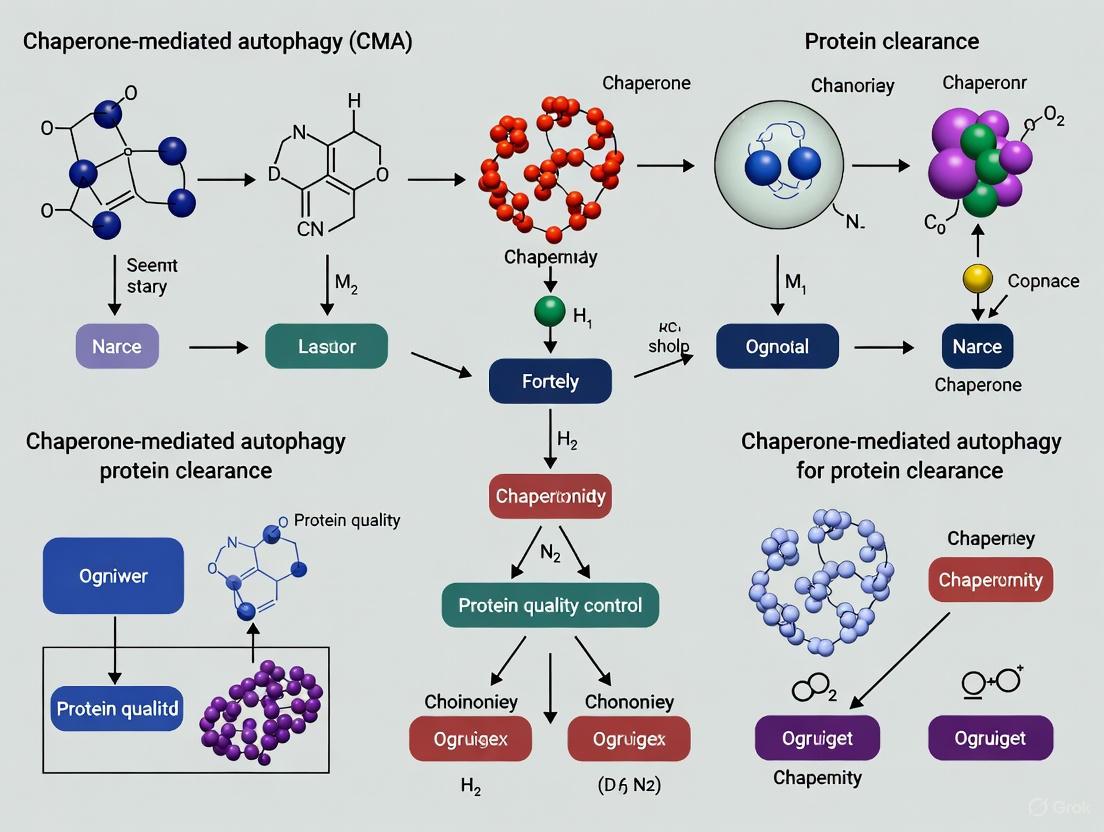
Chaperone-mediated autophagy (CMA) is a selective lysosomal degradation pathway crucial for cellular homeostasis, targeting specific proteins bearing a KFERQ-like motif.
Chaperone-Mediated Autophagy (CMA): Molecular Mechanisms, Therapeutic Targeting, and Role in Age-Related Diseases
Abstract
Chaperone-mediated autophagy (CMA) is a selective lysosomal degradation pathway crucial for cellular homeostasis, targeting specific proteins bearing a KFERQ-like motif. This article provides a comprehensive overview of CMA, from its core molecular machinery—Hsc70 and LAMP2A—to its complex roles in health, aging, and disease. We explore the decline of CMA activity with age and its pathogenic contribution to neurodegenerative disorders and other age-related conditions. The review also covers cutting-edge methodological advances, including novel CMA activators and the emerging field of CMA-based targeted protein degraders. Furthermore, we discuss the intricate crosstalk between CMA and other proteolytic systems, and validate its therapeutic potential through recent in vivo studies. This resource is tailored for researchers, scientists, and drug development professionals seeking to understand and manipulate CMA for therapeutic intervention.
The Core Machinery and Physiological Functions of CMA
Chaperone-mediated autophagy (CMA) represents a uniquely selective form of lysosomal proteolysis that directly translocates individual cytosolic proteins across the lysosomal membrane for degradation. Distinguished from other autophagic pathways by its high selectivity and receptor-mediated mechanism, CMA depends on the recognition of a specific pentapeptide motif (KFERQ-like) in substrate proteins by heat shock cognate protein 70 (Hsc70) and translocation via lysosome-associated membrane protein type 2A (LAMP-2A). This in-depth technical guide examines CMA's molecular machinery, regulatory networks, physiological functions, and experimental methodologies, contextualizing its role within protein clearance research. With implications spanning neurodegenerative diseases, cancer, metabolic disorders, and aging, CMA presents compelling therapeutic opportunities for drug development professionals seeking to modulate proteostasis pathways.
Chaperone-mediated autophagy (CMA) is a selective lysosomal pathway dedicated to the degradation of specific cytosolic proteins, distinguished from other forms of autophagy by its singular substrate translocation mechanism and absence of vesicle formation [1] [2]. First identified through observations of differential protein degradation rates during nutritional stress, CMA has emerged as a critical component of the cellular proteostasis network, particularly in vertebrate systems [3] [4]. Unlike macroautophagy, which engulfs cytoplasmic components in bulk through autophagosomes, and microautophagy, which involves lysosomal membrane invagination, CMA facilitates the direct import of substrate proteins one-by-one across the lysosomal membrane [1] [2].
The defining characteristic of CMA is its exceptional selectivity, which enables cells to target specific proteins for degradation while sparing others with similar functions or structures [1]. This precision makes CMA uniquely suited for regulatory roles in cellular metabolism, stress response, and quality control. CMA activity is constitutively active in most mammalian cell types but demonstrates inducible activation under various stress conditions, including prolonged starvation, oxidative stress, and exposure to toxic compounds [1] [3]. The pathway's functionality declines with age, and its dysregulation has been implicated in numerous age-related pathologies, positioning CMA as a significant focus for therapeutic development [5] [6].
Molecular Machinery of CMA
The molecular apparatus of CMA consists of recognition elements, chaperone complexes, and a specialized translocation system that collectively enable selective protein targeting and uptake.
Substrate Recognition: The KFERQ Motif
CMA substrate selection is determined by the presence of a pentapeptide targeting motif biochemically related to KFERQ (Lys-Phe-Glu-Arg-Gln) in the amino acid sequence of substrate proteins [1] [3]. This motif is not a rigid sequence but rather follows specific biochemical rules: it must contain one basic residue (K or R), one acidic residue (D or E), one hydrophobic residue (F, I, L, or V), and a fourth residue that can be either basic or hydrophobic, with the entire sequence flanked on one side by glutamine (Q) (which can be replaced by asparagine (N) in certain contexts) [1] [6]. Bioinformatics analyses estimate that approximately 30-40% of cytosolic proteins contain a recognizable KFERQ-like motif, though post-translational modifications such as phosphorylation or acetylation can generate or complete additional motifs, potentially increasing the pool of CMA substrates [7] [6].
Table 1: KFERQ Motif Composition Rules
| Component | Requirement | Amino Acid Examples |
|---|---|---|
| Basic Residue | One required | Lysine (K), Arginine (R) |
| Acidic Residue | One required | Glutamic acid (E), Aspartic acid (D) |
| Hydrophobic Residue | One required | Phenylalanine (F), Isoleucine (I), Leucine (L), Valine (V) |
| Fourth Residue | Basic or hydrophobic | K, R, F, I, L, V |
| Flanking Residue | Glutamine (Q) or Asparagine (N) | Q or N at first or fifth position |
Cytosolic and Lysosomal Chaperones
The cytosolic chaperone Hsc70 (heat shock cognate protein of 70 kDa) serves as the primary recognition protein for KFERQ motifs [1] [2]. Hsc70, along with co-chaperones including HSP90, HSP40, HOP, HIP, and BAG-1, forms a complex that binds substrate proteins and targets them to the lysosomal membrane [7]. Beyond recognition, Hsc70 likely facilitates partial unfolding of substrates, a prerequisite for translocation [1]. A distinctive feature of CMA-active lysosomes is the presence of lysosomal Hsc70 (lys-hsc70) within the lumen, where it participates in substrate translocation, possibly by pulling substrates into the lysosome or preventing their retrograde movement [1].
The Lysosomal Translocation Complex
The limiting step in CMA is the binding of substrate-chaperone complexes to the lysosomal receptor LAMP-2A (lysosome-associated membrane protein type 2A) [1] [2]. LAMP-2A is one of three splice variants of the lamp2 gene, differing from LAMP-2B and LAMP-2C in its transmembrane and cytoplasmic domains [7] [2]. Upon substrate binding, LAMP-2A monomers multimerize to form a homotrimeric translocation complex that facilitates substrate passage across the membrane [7] [2]. The assembly and disassembly of this complex are regulated by distinct molecular chaperones: HSP90 stabilizes the multimeric complex, while lysosomal Hsc70 promotes disassembly after translocation completion [2].
The dynamics of the CMA translocation complex are influenced by the lipid composition of the lysosomal membrane. LAMP-2A stability is regulated through its localization in cholesterol-rich lipid microdomains, where it can be cleaved by proteases such as cathepsin A and an unidentified metalloprotease [2]. Exclusion from these microdomains protects LAMP-2A from degradation and facilitates its participation in active translocation complexes [7].
Figure 1: CMA Molecular Mechanism. This diagram illustrates the sequential process of CMA, from substrate recognition to degradation.
Regulatory Networks Controlling CMA Activity
CMA activity is tightly regulated through multiple signaling pathways that modulate the expression and stability of LAMP-2A, the limiting component of the pathway.
Transcriptional and Post-translational Regulation
The retinoic acid receptor alpha (RARα) pathway serves as a key negative regulator of CMA by suppressing LAMP2 transcription [7]. Pharmacological inhibition of RARα with compounds such as AR7, GR2, QX77, CA77.1, and CA39 increases LAMP-2A expression and enhances CMA activity, demonstrating therapeutic potential [7]. Under oxidative stress conditions, the Nrf2-Keap1-ARE signaling pathway is activated and promotes LAMP2A transcription, thereby upregulating CMA as part of the antioxidant response [7].
At the post-translational level, the mTORC2-AKT1-PHLPP1 axis exerts dual control over CMA through phosphorylation events [7]. mTORC2-mediated phosphorylation of AKT1 leads to phosphorylation of GFAP, which stabilizes GFAP and prevents its binding to the LAMP-2A-Hsc70 complex, thereby inhibiting CMA [7]. Conversely, the phosphatase PHLPP1 dephosphorylates AKT1, promoting GFAP dephosphorylation and enhancing the dynamics of the CMA translocation complex [7].
Metabolic and Stress-Mediated Regulation
Cellular energy status influences CMA through multiple mechanisms. During prolonged starvation, CMA activation occurs through increased LAMP-2A transcription and reduced degradation of LAMP-2A within lysosomal compartments [5]. In T cells, reactive oxygen species generated during activation promote nuclear translocation of NFAT1, which directly binds the LAMP2 promoter region and enhances expression [7]. Additionally, hypoxia, genotoxic stress, and lipotoxicity have all been shown to modulate CMA activity through various mechanisms, highlighting the pathway's responsiveness to diverse cellular stressors [7] [8].
Table 2: CMA Regulatory Pathways and Their Effects
| Regulatory Pathway | Mechanism of Action | Effect on CMA |
|---|---|---|
| RARα Signaling | Transcriptional repression of LAMP2 | Decreased CMA activity |
| Nrf2-Keap1-ARE | Transcriptional activation of LAMP2A | Increased CMA activity |
| mTORC2-AKT1 | Phosphorylation of GFAP | Decreased CMA activity |
| PHLPP1 | Dephosphorylation of AKT1/GFAP | Increased CMA activity |
| NFAT1 | Transcriptional activation of LAMP2A | Increased CMA activity in T cells |
| Starvation | Increased LAMP-2A stability and transcription | Increased CMA activity |
Physiological Functions of CMA
CMA serves diverse cellular functions beyond routine protein turnover, impacting metabolism, stress response, and cellular differentiation.
Protein Quality Control and Cellular Homeostasis
As a selective protein quality control mechanism, CMA contributes to proteome maintenance by degrading damaged, misfolded, or non-functional proteins [1] [7]. This function becomes particularly crucial under stress conditions that cause protein damage, as CMA can selectively remove altered proteins without affecting properly functioning counterparts [1]. The circadian regulation of CMA activity further enables proteome remodeling according to daily cycles, maintaining optimal protein composition and localization [7].
When CMA is impaired, particularly in non-dividing cells such as neurons, accumulated damaged proteins can form toxic aggregates that characterize several neurodegenerative diseases, including Parkinson's disease and Alzheimer's disease [7] [5]. In some cell types, CMA deficiency can be partially compensated by increased macroautophagy or proteasomal activity, but this compensation is often incomplete, leading to eventual proteotoxicity [7].
Metabolic Regulation
CMA plays a significant role in cellular energetics and metabolism by selectively degrading metabolic enzymes and regulators. During starvation, CMA targets glycolytic enzymes and their inactive forms to modulate glucose metabolism according to nutritional status [7] [2]. CMA also regulates lipid metabolism by degrading lipogenic enzymes, lipid droplet coat proteins (perilipin 2 and 3), and regulators of fatty acid mobilization, thereby preventing excessive lipid accumulation [7] [2]. Specific ablation of CMA in mouse liver results in hepatic steatosis, altered glucose homeostasis, and disrupted energy balance, underscoring its metabolic importance [2].
Specialized Cellular Functions
CMA participates in various cell-type-specific functions, including:
- T cell activation: CMA degrades negative regulators of T cell activation (Itch, RCAN1), and its specific depletion in T cells causes immune response deficiencies [7] [2].
- Stem cell function: CMA activity increases during embryonic stem cell differentiation and contributes to hematopoietic stem cell activation through degradation of specific metabolic enzymes [2].
- DNA repair: CMA participates in the cellular response to genotoxic stress by removing cell cycle regulators like Chk1, with CMA impairment leading to defective DNA repair and genomic instability [2].
Experimental Analysis of CMA
Methodologies for Monitoring CMA Activity
Several established experimental approaches enable researchers to quantitatively assess CMA activity in cellular and animal models.
Lysosomal Isolation and Binding/Uptake Assays
A primary method for evaluating CMA involves isolating lysosomes from tissues or cultured cells and measuring their ability to bind and internalize known CMA substrates [1] [5]. In a standard assay, lysosomes are incubated with substrate proteins (such as GAPDH or RNase A), and after protease treatment to remove non-internalized proteins, the translocated substrates are detected by immunoblotting [5]. This approach allows independent assessment of the binding and translocation steps and can identify at which step CMA defects occur.
Photoactivatable CMA Reporters
Recent advances include the development of photoactivatable CMA reporters that enable dynamic monitoring of CMA flux in living cells [9]. These typically consist of proteins containing CMA targeting motifs fused to fluorescent proteins, which can be selectively activated and tracked as they undergo lysosomal translocation. This methodology provides temporal resolution of CMA activity and allows investigation in real-time under various physiological conditions.
LAMP-2A Turnover and Localization
Immunoblot analysis of LAMP-2A protein levels provides a correlative measure of CMA capacity, as LAMP-2A abundance strongly correlates with CMA activity [5]. Additionally, immunohistochemical staining for LAMP-2A in tissues reveals changes in its expression patterns under different physiological and pathological conditions [8] [5]. Monitoring the degradation rate of LAMP-2A offers insights into the stability of the CMA receptor at the lysosomal membrane, a key regulatory point [2].
Experimental CMA Modulation
Genetic Manipulation
- CMA Inhibition: Specific knockdown of LAMP-2A using shRNA or siRNA represents the most targeted approach to inhibit CMA, as LAMP-2A is the limiting component [8]. Complete LAMP-2A knockout models demonstrate the physiological consequences of CMA deficiency [8] [2].
- CMA Activation: Transgenic overexpression of LAMP-2A enhances CMA activity and has been shown to mitigate age-related cellular decline in mouse models [5]. Maintaining LAMP-2A expression throughout life results in improved cellular homeostasis and stress response in aged animals [5].
Pharmacological Modulators
- CMA Activators: Derivatives of all-trans retinoic acid such as AR7 function as RARα antagonists that increase LAMP-2A expression and boost CMA activity [7] [8].
- CMA Inhibitors: 6-Aminonicotinamide (6-AN) and certain tricyclic antidepressants can reduce CMA activity, though with varying specificity [5].
Figure 2: Experimental Workflow for CMA Analysis. This diagram outlines key methodological approaches for investigating CMA activity.
Research Reagent Solutions
Table 3: Essential Research Reagents for CMA Investigation
| Reagent/Category | Specific Examples | Function/Application |
|---|---|---|
| CMA Modulators | AR7, GR2, QX77 (activators); 6-AN (inhibitor) | Pharmacological manipulation of CMA activity |
| Genetic Tools | LAMP2A shRNA/siRNA; LAMP2A overexpression vectors | Genetic manipulation of CMA capacity |
| CMA Reporters | KFERQ-photoactivatable fluorescent proteins | Monitoring CMA flux in live cells |
| Antibodies | Anti-LAMP-2A; Anti-Hsc70; Anti-GAPDH | Detection of CMA components and substrates |
| Lysosomal Isolation Kits | Commercial lysosome enrichment kits | Preparation of lysosomes for binding/uptake assays |
| CMA Substrates | GAPDH, RNase A, α-synuclein | In vitro and in vivo CMA activity assays |
CMA in Pathology and Therapeutic Implications
CMA dysfunction contributes to various human diseases, making it an attractive target for therapeutic intervention.
Neurodegenerative Disorders
In Parkinson's disease, pathogenic proteins such as α-synuclein and UCHL1 bind to LAMP-2A with abnormally high affinity, creating a "clogging effect" that impairs CMA function and promotes protein aggregation [2] [5]. Similarly, in Alzheimer's disease and related tauopathies, mutant tau proteins can inhibit CMA, contributing to their accumulation and toxicity [2] [5]. The regional deficiency of CMA components in specific neuronal populations may explain selective vulnerability in these disorders [5].
Cancer
CMA demonstrates context-dependent roles in oncology, with upregulated activity observed in many cancer types, where it supports tumor cell survival and growth [2] [9]. In established experimental tumors, interference with LAMP-2A expression leads to tumor regression, suggesting CMA inhibition as a potential anticancer strategy [2]. However, the therapeutic window for such approaches requires careful evaluation, as systemic CMA inhibition may accelerate other age-related pathologies.
Aging
A progressive decline in CMA activity occurs in most tissues with advancing age, primarily due to decreased stability of LAMP-2A at the lysosomal membrane [5] [6]. This age-dependent reduction contributes to the accumulation of damaged proteins and compromised cellular stress responses characteristic of aging [5]. Two explanatory models have been proposed regarding CMA's relationship with aging: the "Longevity Model" suggests that enhanced CMA in early life slows aging by degrading negative regulators of lifespan, while the "Aging Model" posits that age-related CMA failure contributes to proteostasis collapse and age-related diseases [6]. These models are not mutually exclusive and likely represent complementary aspects of CMA's role in aging.
Emerging Therapeutic Strategies
Novel approaches targeting CMA include:
- CMA enhancers: Small molecules that increase LAMP-2A expression or stability to boost CMA activity in neurodegenerative and metabolic diseases [7] [5].
- CMA-based protein degraders: Engineered proteins containing KFERQ-like motifs designed to target specific pathogenic proteins for lysosomal degradation, representing a promising strategy for eliminating disease-causing proteins [9].
Chaperone-mediated autophagy represents a sophisticated intracellular degradation system that combines selectivity with precise regulatory control. Its unique mechanism of direct protein translocation across the lysosomal membrane sets it apart from other proteolytic pathways and enables specific regulatory functions in metabolism, quality control, and cellular adaptation. The central role of CMA in numerous pathological conditions, coupled with emerging technologies for its experimental manipulation and therapeutic targeting, positions this pathway as a critical focus for ongoing research. As our understanding of CMA's molecular intricacies continues to expand, so too will opportunities to harness this knowledge for developing innovative therapies for protein aggregation disorders, cancer, and age-related diseases.
Chaperone-mediated autophagy (CMA) is a uniquely selective lysosomal degradation pathway responsible for the turnover of specific cytosolic proteins in mammalian cells. In contrast to the non-specific, bulk degradation characteristic of other autophagic pathways, CMA ensures precise cellular management by targeting individual proteins bearing a specific targeting motif, the KFERQ-like pentapeptide [10]. This selectivity is crucial for fine-tuning diverse cellular processes, from the metabolic adaptation during prolonged starvation to the removal of damaged proteins under oxidative stress [10] [11]. The core molecular machinery that confers this specificity consists of three essential elements: the heat shock cognate protein of 70 kDa (Hsc70) for substrate recognition, the KFERQ-like motif within the substrate, and the lysosome-associated membrane protein type 2A (LAMP2A) acting as the lysosomal receptor [10] [12]. The coordinated function of these components is vital for cellular homeostasis, and its dysregulation is increasingly implicated in major human diseases, including neurodegenerative disorders like Parkinson's disease, cancer, and diabetes [12] [11] [13]. This guide provides an in-depth technical examination of these core molecular components, framing them within the critical context of protein clearance research.
Core Molecular Machinery
The operation of CMA depends on a precise interaction between a cytosolic chaperone complex and a lysosomal membrane receptor, which together facilitate the identification and translocation of substrate proteins.
The Targeting Signal: KFERQ-like Motif
The KFERQ-like motif is the definitive signature that marks a cytosolic protein for degradation via CMA. The name originates from the pentapeptide sequence (Lys-Phe-Glu-Arg-Gln) first identified in ribonuclease A [14] [15]. However, it is the biophysical properties of the amino acids, rather than their exact identity, that define the motif.
- Consensus Rules: A canonical KFERQ-like motif is a pentapeptide that must contain [15]:
- One or two positively charged residues: Lysine (K) or Arginine (R).
- One or two hydrophobic residues: Isoleucine (I), Leucine (L), Valine (V), or Phenylalanine (F).
- One negatively charged residue: Aspartic acid (D) or Glutamic acid (E).
- One Glutamine (Q) which can be located on either side of the other residues.
- Prevalence and Modulation: It is estimated that approximately 30% of the cytosolic proteome contains at least one KFERQ-like motif, vastly expanding the potential regulatory scope of CMA [10] [15] [13]. Furthermore, post-translational modifications (PTMs) such as phosphorylation and acetylation can generate "potential" motifs from latent sequences, adding a dynamic layer of regulation that allows CMA activity to respond to cellular signaling events [14] [15]. For instance, phosphorylation of a serine residue can provide the necessary negative charge to satisfy the motif's requirements [15].
Table 1: Proteome-Wide Analysis of KFERQ-like Motifs in the Human Proteome
| Motif Category | Defining Feature | Approximate Percentage of Human Proteome |
|---|---|---|
| Canonical | The motif is present in the native amino acid sequence. | ~25% |
| Phosphorylation-generated | Requires a phosphorylation event to complete the motif. | ~5% |
| Acetylation-generated | Requires an acetylation event to complete the motif. | ~2% |
| Proteins with any KFERQ-like motif | Contains at least one canonical or modifiable motif. | ~30-40% |
Data derived from a comprehensive in silico analysis of the reviewed human proteome [15].
The Cytosolic Chaperone: Hsc70 (HSPA8)
Hsc70 is the constitutive member of the Hsp70 family of molecular chaperones and serves as the primary recognition module for CMA substrates. Its function is governed by an ATP-dependent cycle that regulates its affinity for substrate proteins.
- Role in Substrate Recognition: Hsc70 directly binds to and recognizes the KFERQ-like motif in substrate proteins [16]. Recent site-specific photo-crosslinking studies have conclusively demonstrated that this interaction is direct and does not require intermediary proteins [16].
- ATPase Activity: The ATPase activity of Hsc70 is critical for its function. Binding and hydrolysis of ATP induce conformational changes that allow Hsc70 to engage and release its substrates. Impairment of this ATPase activity (e.g., via a D10N mutation) significantly reduces the efficiency of Hsc70 binding to the KFERQ motif [16].
- The Chaperone Complex: While Hsc70 is the central component, it can function in conjunction with co-chaperones. For example, Hsp90 is also found at the lysosomal membrane and is essential for stabilizing LAMP2A, thereby indirectly supporting the CMA process [17].
The Lysosomal Receptor: LAMP2A
LAMP2A is a single-pass transmembrane protein and the rate-limiting receptor for CMA. Its levels at the lysosomal membrane directly correlate with CMA activity [10] [12].
- Structure and Isoforms: LAMP2A is one of three splice variants (A, B, and C) of the lamp2 gene. It is uniquely defined by a short 12-amino acid cytosolic tail that contains positively charged residues essential for its specific function in CMA, distinguishing it from the other isoforms involved in macroautophagy and lysosomal biogenesis [17] [11].
- Dynamic Complex Formation: The translocation of substrates is dependent on the dynamic multimerization of LAMP2A at the lysosomal membrane [17]. The current model involves:
- Substrate Binding: Unfolded substrate proteins bind to a monomeric form of LAMP2A.
- Complex Assembly: Substrate binding initiates the assembly of LAMP2A into a higher-molecular-weight translocation complex, essential for substrate uptake.
- Disassembly: Following translocation, the complex is disassembled in a process that requires Hsc70, recycling LAMP2A monomers for further rounds of CMA [17].
- Regulation: The stability and dynamics of these LAMP2A complexes are regulated by other proteins, including Hsp90 (stabilization) and GFAP (complex stabilization in a GTP-dependent manner) [17] [11].
Experimental Analysis of CMA Components
For researchers investigating CMA, a suite of well-established methodologies is available to measure activity, monitor component dynamics, and identify novel substrates.
Key Experimental Protocols
1. Isolation of CMA-Active Lysosomes
- Source: Typically performed from rodent liver or cultured cells [10] [17].
- Procedure: Tissues or cells are homogenized, and a light mitochondrial-lysosomal fraction is isolated via differential centrifugation. This fraction is then purified through a discontinuous metrizamide density gradient [10]. To enrich for CMA-active lysosomes, animals are often starved for 24-48 hours prior to isolation, which upregulates the pathway.
- Critical Validation: The integrity of the isolated lysosomal membrane must be confirmed (e.g., >95% intact) using assays for β-hexosaminidase latency before use in downstream assays [17].
2. Tracking Substrate Translocation (Protease Protection Assay) This is the most unequivocal method for directly measuring CMA activity [10].
- Principle: Radiolabeled or immunodetectable CMA substrates (e.g., GAPDH) are incubated with intact, isolated lysosomes.
- Methodology:
- The assay is conducted in a proteolysis buffer with an ATP-regenerating system at 37°C to permit binding and translocation.
- Samples are treated with Proteinase K to degrade any substrate bound to the lysosomal surface but not yet internalized.
- A protease inhibitor like AEBSF is added to stop the reaction.
- The lysosomes are re-isolated, and the protein is analyzed by SDS-PAGE and immunoblotting (or radioactivity measurement). The protease-protected protein represents the successfully translocated fraction [10].
3. Isolating LAMP2A Multimeric Complexes To study the dynamics of the CMA receptor, the multimeric states of LAMP2A can be analyzed.
- Sample Preparation: Lysosomal membranes are solubilized using a mild detergent (e.g., 0.5% NP-40) [17].
- Separation Techniques:
- Blue Native Electrophoresis (BNE): Separates protein complexes under non-denaturing conditions.
- Sucrose Gradient Centrifugation: Separates complexes based on their molecular weight in a continuous (10-60%) sucrose gradient, followed by fraction collection and immunoblotting for LAMP2A [17].
4. Identifying CMA Substrates
- In Silico Screening: Web-based tools like the "KFERQ finder" allow researchers to scan any protein sequence for the presence of canonical and potential KFERQ-like motifs, facilitating proteome-wide predictions [18] [15].
- Experimental Validation: Predictions require functional validation using assays such as the protease protection assay with isolated lysosomes or monitoring changes in protein half-life after modulating CMA activity (e.g., via LAMP2A knockdown or overexpression) [13].
The Scientist's Toolkit: Essential Research Reagents
Table 2: Key Reagents for CMA Research
| Reagent / Tool | Function in CMA Research | Example Application |
|---|---|---|
| Anti-LAMP2A Antibody | Specific detection of the LAMP2A isoform (targets C-terminal tail). | Western blotting, immunofluorescence, immunoprecipitation to monitor receptor levels and localization [17] [12]. |
| Anti-HSC70 Antibody | Detection of both cytosolic and lysosomal Hsc70. | Studying chaperone-substrate interactions and levels [17] [12]. |
| CMA Reporter Cell Lines | Express a fluorescent protein (e.g., KFERQ-PA-mCherry) whose cleavage is CMA-dependent. | Real-time monitoring of CMA activity in live cells [15]. |
| LAMP2A shRNA/siRNA | Knocks down the expression of the limiting CMA receptor. | Functional validation of CMA involvement in a specific process [12] [13]. |
| LAMP2A Overexpression Plasmid | Increases levels of the CMA receptor. | Stimulating CMA activity to test for enhanced substrate degradation [13]. |
| Protease Inhibitors (e.g., AEBSF) | Inhibits serine proteases. | Halting protease activity in translocation assays [10]. |
| ATP-regenerating System | Provides energy (ATP) for the translocation step. | Essential component in in vitro CMA activity assays with isolated lysosomes [10]. |
CMA in Protein Clearance Research: Disease Context
The critical role of CMA in maintaining proteostasis is highlighted by its involvement in several major disease contexts, making it a focal point for therapeutic development.
- Neurodegeneration: In Parkinson's disease, CMA is directly compromised. Wild-type α-synuclein is a CMA substrate, but pathogenic mutants (e.g., A30P) bind to LAMP2A and block translocation, leading to their own accumulation and that of other CMA substrates, creating a toxic cycle [10] [19]. Furthermore, Tau protein, central to Alzheimer's disease pathology, contains KFERQ-like motifs and can be degraded via CMA. Recent research shows that LAMP2A and Hsp70 also mediate the incorporation of Tau into exosomes, providing a mechanism for its intercellular propagation [14].
- Cancer: Many cancer types exhibit upregulated CMA, evidenced by markedly increased LAMP2A levels. This heightened activity promotes tumor cell survival by mitigating metabolic and proteotoxic stresses. In pulmonary squamous cell carcinoma, high levels of LAMP2A and HSC70 are independent adverse prognostic factors, linking robust CMA to worse patient outcomes [12]. Consequently, CMA inhibition is being explored as a therapeutic strategy to impair tumor survival [12].
- Aging and Metabolism: CMA activity declines with age, primarily due to a reduction in LAMP2A levels at the lysosomal membrane, contributing to the accumulation of damaged proteins and increased cellular vulnerability [10] [11]. Conversely, CMA is a key regulator of energy metabolism. A 2025 study demonstrated that CMA directly targets and degrades PGC1α, a master regulator of mitochondrial biogenesis, in brown adipose tissue under thermal stress, governing whole-body energy expenditure [13].
The molecular triad of Hsc70, LAMP2A, and the KFERQ motif forms the foundation of the highly specific chaperone-mediated autophagy pathway. The precise mechanism—from Hsc70-mediated motif recognition to LAMP2A-regulated translocation—allows cells to selectively manage their proteome in response to diverse stimuli. The availability of robust experimental techniques, such as lysosomal isolation and protease protection assays, empowers researchers to dissect CMA function and regulation. As evidence solidifies its central role in diseases ranging from neurodegeneration to cancer, understanding these core components is no longer just a basic science pursuit but a critical step toward developing novel therapeutic interventions aimed at modulating this vital protein clearance pathway.
Chaperone-mediated autophagy (CMA) is a selective lysosomal degradation pathway for cytosolic proteins. Distinct from macroautophagy and microautophagy, CMA does not involve vesicle formation for cargo sequestration. Instead, substrate proteins are recognized individually by a chaperone complex and directly translocated across the lysosomal membrane for degradation [20] [2]. This unique mechanism allows for precise regulation of specific protein levels, enabling cells to rapidly adjust their proteome in response to changing conditions.
CMA was first described over three decades ago and has since been recognized as a crucial component of cellular proteostasis. The selectivity of CMA stems from its requirement for substrate proteins to contain a specific pentapeptide motif, which ensures only targeted proteins are degraded [1]. This pathway is constitutively active in most mammalian cells but is maximally activated in response to various stressors, including nutrient deprivation, oxidative stress, and hypoxia [20]. CMA activity declines with age in most tissues, and defects in CMA have been implicated in various age-related diseases, including neurodegenerative disorders, cancer, and metabolic diseases [20] [2].
Molecular Mechanisms of CMA
Core Components and Sequential Process
The CMA pathway relies on a precise sequence of molecular interactions involving specific cytosolic and lysosomal components. The table below outlines the key molecular players and their functions in the CMA process:
| Component | Location | Function |
|---|---|---|
| KFERQ motif | Substrate protein | Targeting signal for CMA recognition [1] |
| HSC70 | Cytosol | Recognizes KFERQ motif; delivers substrate to lysosome [20] |
| Cochaperones | Cytosol | Assist HSC70 in substrate binding and delivery [20] |
| LAMP-2A | Lysosomal membrane | Receptor for CMA substrates; forms translocation complex [20] |
| Lysosomal HSC70 | Lysosomal lumen | Pulls substrate into lysosome; prevents back-sliding [1] |
| HSP90 | Lysosomal membrane | Stabilizes LAMP-2A during multimerization [21] |
| Cathepsins | Lysosomal lumen | Degrade translocated substrates [21] |
The CMA process occurs through these defined steps:
Substrate Recognition: Cytosolic HSC70 recognizes proteins bearing a KFERQ-like motif (or related sequences) and forms a chaperone-substrate complex [20] [1]. This motif must contain one basic, one acidic, and one hydrophobic amino acid, with a fourth residue that can be either basic or hydrophobic, all flanked by a glutamine [1]. Approximately 30% of cytosolic proteins contain this motif, making them potential CMA substrates [1].
Lysosomal Binding: The HSC70-substrate complex binds to the cytosolic tail of LAMP-2A at the lysosomal membrane [20] [2]. This binding is the rate-limiting step in CMA and determines overall CMA activity.
Translocation Complex Assembly: Substrate binding induces LAMP-2A to multimerize, forming a active translocation complex [2]. HSP90 stabilizes LAMP-2A during this process, while other cochaperones including HSP40, HIP, HOP, and BAG-1 assist at various stages [20].
Substrate Unfolding and Translocation: The substrate protein unfolds, facilitated by membrane-associated chaperones, and is translocated into the lysosomal lumen in an ATP-dependent process [2]. Lysosomal HSC70 binds the substrate and facilitates its complete entry into the lysosome.
Degradation and Complex Disassembly: Inside the lysosome, the substrate is rapidly degraded by cathepsins and other lysosomal hydrolases. The translocation complex disassembles, and LAMP-2A monomers are recycled for further rounds of CMA [20] [21].
Regulatory Mechanisms
CMA activity is primarily regulated at the level of LAMP-2A. The stability of LAMP-2A at the lysosomal membrane, its multimerization into the active translocation complex, and its degradation in discrete lipid microdomains all contribute to modulating CMA activity [2]. Recent studies have identified additional regulatory pathways, including:
- NRF2 and p38-TFEB signaling as positive and negative regulatory pathways, respectively [20]
- Retinoic acid receptor α signaling as an endogenous inhibitor of CMA [21]
- Calcineurin/NFAT signaling in T-cells in a ROS-dependent manner [21]
These regulatory mechanisms allow cells to fine-tune CMA activity in response to various physiological and pathological conditions.
Quantitative Data on CMA Components
The efficiency of CMA is influenced by the abundance and dynamics of its core components. The following table summarizes key quantitative aspects:
| Parameter | Value/Range | Context/Measurement |
|---|---|---|
| Substrate proteins with KFERQ-like motif | ~30% of cytosolic proteins [1] | Estimated through sequence analysis and affinity isolation |
| Maximal CMA activation during starvation | Plateau at ~36 hours [2] | After initial macroautophagy activation (4-8 hours) |
| LAMP-2A turnover in lipid microdomains | Regulated by Cathepsin A and metalloprotease [2] | Determines receptor stability at lysosomal membrane |
| CMA activity decline with age | Progressive decrease in most tissues [2] | Correlates with reduced LAMP-2A stability |
Experimental Methods for Studying CMA
Researchers have developed specialized methodologies to investigate various aspects of CMA. The table below outlines key experimental approaches:
| Method | Application | Key Reagents/Components |
|---|---|---|
| CMA reporter cell lines | Monitor real-time CMA activity in living cells | KFERQ-conjugated photoactivatable fluorescent proteins [21] |
| Lysosomal isolation and binding assays | Measure substrate binding to LAMP-2A | Purified lysosomes; CMA substrates; protease inhibitors [21] |
| Immunoblot analysis of LAMP-2A | Assess CMA capacity at steady state | LAMP-2A-specific antibodies; lysosomal membrane preparations [21] |
| Pulse-chase assays | Track degradation of specific CMA substrates | Radiolabeled amino acids; specific substrate antibodies [21] |
Detailed Experimental Protocol: Lysosomal Binding and Uptake Assay
This protocol assesses the binding and translocation of CMA substrates to isolated lysosomes, providing a direct measurement of CMA activity [21].
Materials Required:
- Purified lysosomes from tissues or cultured cells
- Candidate substrate protein (radiolabeled or fluorescently tagged)
- ATP-regenerating system
- Protease inhibitors (e.g., leupeptin, pepstatin A)
- HEPES-KOH buffer
- Water bath or thermal mixer
Procedure:
Lysosome Isolation: Isolate lysosomes from liver tissues or cultured cells using discontinuous Percoll or Metrizamide density gradients. Confirm purity by measuring lysosomal enzyme activity.
Binding Reaction: Incubate lysosomes (50-100 μg protein) with the substrate protein in binding buffer (10 mM HEPES-KOH, pH 7.4, 0.3 M sucrose, 5 mM MgCl₂) for 20 minutes at 4°C. This temperature allows binding but prevents translocation.
Uptake Reaction: Shift temperature to 37°C and add an ATP-regenerating system (1 mM ATP, 10 mM phosphocreatine, 10 μg/mL creatine phosphokinase) to initiate translocation. Incubate for 10-60 minutes.
Protease Protection: Treat samples with proteinase K (50 μg/mL) for 10 minutes on ice to degrade non-translocated substrates. Add phenylmethylsulfonyl fluoride (PMSF) to stop proteolysis.
Analysis: Separate lysosomes by centrifugation and analyze substrate degradation by immunoblotting or radioactivity measurement.
Interpretation: Substrates protected from protease digestion have been successfully translocated into lysosomes. Compare samples with and without ATP to distinguish binding from complete translocation.
Research Reagent Solutions
The following table provides essential research tools for studying CMA:
| Reagent/Category | Specific Examples | Research Application |
|---|---|---|
| CMA Modulators | AR7 (activator) [8]; ATRA (inhibitor) [8] | Experimental manipulation of CMA activity |
| LAMP-2A Tools | LAMP-2A antibodies [21]; LAMP-2A knockout/overexpression constructs [8] | Assess CMA capacity and receptor function |
| CMA Reporters | KFERQ-conjugated photoactivatable fluorescent proteins [21] | Monitor CMA activity in live cells |
| Lysosomal Isolation Kits | Commercial kits based on density gradient centrifugation [21] | Isolate functional lysosomes for CMA assays |
| HSC70 Inhibitors | Pifithrin-μ [20] | Disrupt chaperone function in CMA |
Visualization of the CMA Process
The following diagram illustrates the sequential steps and key molecular components of chaperone-mediated autophagy:
CMA Mechanism: Substrate Recognition to Lysosomal Degradation
CMA in Protein Clearance Research
CMA represents a sophisticated mechanism for selective protein clearance that complements the ubiquitin-proteasome system and other autophagic pathways. Its role in maintaining proteostasis becomes particularly significant in the context of age-related diseases, where CMA activity typically declines [20] [2].
The selectivity of CMA for specific protein substrates containing the KFERQ motif makes it an attractive target for therapeutic intervention. In neurodegenerative diseases such as Parkinson's disease and Alzheimer's disease, impaired CMA contributes to the accumulation of pathogenic proteins like α-synuclein and tau [20] [2]. Conversely, CMA is upregulated in many cancer types, where it supports tumor cell survival and growth [20].
Current research focuses on developing strategies to modulate CMA activity therapeutically. Small molecule CMA activators like AR7 show promise in experimental models for preventing cellular senescence and age-related tissue dysfunction [8]. As our understanding of CMA regulation and function continues to expand, so too does the potential for targeting this pathway to treat human diseases characterized by proteostatic dysfunction.
Chaperone-mediated autophagy (CMA) is a unique, selective lysosomal degradation pathway responsible for the turnover of specific cytosolic proteins. Distinct from the vesicle-based mechanisms of macroautophagy and microautophagy, CMA facilitates the direct translocation of substrate proteins across the lysosomal membrane [20]. This process is integral to maintaining cellular proteostasis and, as research has advanced, has been found to play a critical role in regulating diverse physiological processes, including metabolism, immunity, and the cell cycle [20]. The selectivity of CMA makes it a key player in cellular quality control, allowing for the precise removal of damaged or unnecessary proteins without disturbing nearby functional proteins [22]. This in-depth technical guide will explore the molecular mechanics, physiological functions, and experimental analysis of CMA, framed within the broader context of its essential role in protein clearance research.
Molecular Mechanism of CMA
The CMA pathway is characterized by a highly orchestrated series of steps involving specific molecular players. Its defining feature is its selectivity, which is governed by a recognizable targeting motif present in substrate proteins.
Key Molecular Players
- HSC70 (Heat-shock cognate 70): A constitutive cytosolic chaperone that identifies and binds to the KFERQ motif on substrate proteins, forming a chaperone-substrate complex [20] [22] [23].
- KFERQ Motif: A pentapeptide sequence (or a biochemically related variant) found in approximately 30% of cytosolic proteins, which serves as the recognition signal for CMA degradation [20] [22] [11].
- LAMP-2A (Lysosome-associated membrane protein type 2A): The single-span membrane protein that acts as the receptor for the CMA complex at the lysosomal membrane and serves as the core component of the translocation machinery [20] [24] [11]. Its levels at the lysosomal membrane are a primary determinant of CMA activity [22] [24].
- Lys-HSC70: A lysosomal lumen-resident form of HSC70 that is proposed to complete the substrate translocation, potentially via a ratchet-like mechanism, and prevent its return to the cytosol [22].
The Stepwise Process of CMA
The mechanism of CMA can be broken down into four key stages, as illustrated in the diagram below:
- Recognition and Binding: Cytosolic HSC70 recognizes and binds to the KFERQ-like targeting motif on the substrate protein [20] [23].
- Receptor Docking: The HSC70-substrate complex is transported to the lysosome and binds to the cytosolic tail of LAMP-2A [20] [24].
- Complex Assembly and Translocation: Substrate binding induces the multimerization of LAMP-2A monomers into a translocation complex. The substrate protein unfolds and is translocated across the lysosomal membrane in a process assisted by a luminal form of HSC70 (lys-HSC70) [20] [22] [11].
- Degradation and Recycling: The translocated substrate is rapidly degraded by lysosomal hydrolases, and the resulting amino acids are released back into the cytosol for reuse. The LAMP-2A multimer disassembles into monomers, ready for another cycle of translocation [20] [22].
Regulatory Signaling Pathways
CMA activity is finely tuned by several signaling pathways that respond to cellular conditions. The table below summarizes key regulatory pathways and their effects.
Table 1: Key Signaling Pathways Regulating CMA Activity
| Signaling Pathway/Component | Role in CMA Regulation | Experimental/Therapeutic Notes |
|---|---|---|
| NRF2 Pathway [20] | Positive regulator; activates CMA. | A potential target for CMA enhancement. |
| p38–TFEB Signaling [20] | Negative regulator; suppresses CMA. | Inhibition could potentially upregulate CMA. |
| mTORC2/Akt/PHLPP1 Axis [24] [11] | mTORC2/Akt: Phosphorylates Akt, inhibiting CMA.PHLPP1: Recruited to lysosome in a Rac1-dependent manner; dephosphorylates Akt, activating CMA. | PHLPP1 recruitment is a key activation step. A validated target using CA and CI approaches. |
| Retinoic Acid Receptor α (RARα) [24] | Endogenous inhibitor of CMA. | Targeted by the CMA inhibitor ATRA. |
| Calcineurin-NFAT Pathway [24] | Positive regulator; activates CMA. | First identified CMA-activating signaling pathway. |
The intricate interplay of these pathways, particularly at the lysosomal membrane, is crucial for CMA function. The following diagram details the regulatory network centered on the mTORC2/Akt/PHLPP1 axis, a key switch controlling CMA activity.
Physiological Roles of CMA
Protein Quality Control and Cellular Defense
CMA is a fundamental component of the cellular proteostasis network. It is constitutively active at a basal level in most cells to manage routine protein turnover and is robustly upregulated in response to various stressors, including oxidative stress, hypoxia, and genotoxicity [20] [22]. By selectively degrading damaged, misfolded, or oxidatively modified proteins, CMA acts as a critical defense mechanism against proteotoxicity. This function is especially vital in non-dividing cells, such as neurons, which cannot dilute accumulated damage through cell division [22] [25]. The inability to clear such proteins is a key factor in the pathogenesis of several neurodegenerative diseases.
Metabolic Regulation
CMA's role extends beyond general housekeeping to the direct regulation of cellular metabolism. During prolonged starvation (typically beyond 10 hours), CMA is maximally activated to provide an internal source of amino acids for energy production and protein synthesis [24]. Furthermore, CMA directly targets key metabolic enzymes for degradation, thereby functioning as a metabolic rheostat.
Table 2: Key Metabolic Enzymes Regulated by CMA
| CMA Substrate | Metabolic Pathway | Functional Consequence of Degradation |
|---|---|---|
| Glyceraldehyde 3-phosphate dehydrogenase (GAPDH) [20] [24] | Glycolysis | Modulates glycolytic flux. |
| Aldolase [24] | Glycolysis | Modulates glycolytic flux. |
| Glycerol-3-phosphate dehydrogenase 2 [20] | Lipid Metabolism | Regulates lipid utilization. |
| Acyl-coenzyme A dehydrogenase long chain [20] | Lipid Metabolism | Regulates lipid utilization. |
| Pyruvate Kinase M2 (PKM2) [25] | Glycolysis | Influences tumor cell growth. |
Studies using hepatocyte-specific LAMP-2A knockout mice have demonstrated that CMA deficiency leads to profound metabolic disturbances, including elevated glycolysis, depleted glycogen stores, and altered systemic glucose tolerance, underscoring the non-redundant role of CMA in metabolic homeostasis [24].
CMA in Human Disease and Therapeutic Potential
CMA dysfunction is implicated in a range of human diseases, while its targeted modulation presents a promising therapeutic strategy.
Neurodegenerative Disorders
In conditions like Alzheimer's disease (AD), Parkinson's disease (PD), and Huntington's disease (HD), pathogenic proteins (e.g., α-synuclein, Tau, huntingtin) often contain KFERQ-like motifs [20] [22] [25]. While CMA can degrade these proteins, a age-related decline in CMA activity or mutations that impair the interaction with CMA components can lead to their accumulation and aggregation, contributing to disease pathology [20] [25]. Therefore, CMA enhancement is viewed as a promising therapeutic strategy for neurodegenerative proteinopathies.
Cancer
CMA plays a complex, context-dependent role in cancer. It can act as a tumor suppressor in early stages by degrading oncogenic proteins and mitigating cellular damage. However, in established tumors, CMA is often upregulated and supports cancer cell survival by promoting metabolic reprogramming (e.g., via degradation of PKM2), providing amino acids during nutrient scarcity, and conferring resistance to hypoxia and oxidative stress [20] [23] [25]. This dual role makes CMA a challenging but intriguing target for cancer therapy.
Age-Related Disorders
CMA activity demonstrably declines with age, partly due to decreased stability of LAMP-2A at the lysosomal membrane [8] [23]. This decline is linked to a wider range of age-related conditions, including intervertebral disc degeneration (IDD), atherosclerosis, and metabolic syndrome [20] [8]. In IDD, for example, impaired CMA in nucleus pulposus cells drives premature senescence; reactivation of CMA has been shown to alleviate degeneration in animal models, highlighting its therapeutic potential [8].
Experimental Analysis of CMA
For researchers investigating CMA, a combination of well-established methodologies is required to accurately monitor activity and functional consequences.
Core Methodologies
- CMA Activity Assay: The gold standard involves isolating lysosomes and measuring the uptake and degradation of radiolabeled substrates (e.g., GAPDH) that contain a KFERQ motif [22].
- LAMP-2A Level Analysis: Quantifying LAMP-2A protein levels at the lysosomal membrane via immunoblotting of purified lysosomal fractions is crucial, as this is a primary rate-limiting component [22] [24].
- Experimental Models: CMA is not present in yeast or C. elegans, so mammalian cell lines and mouse models are essential. Transgenic models with conditional knockout of LAMP2A or overexpression of LAMP-2A are widely used to study loss- and gain-of-function, respectively [20] [24] [8].
The Scientist's Toolkit: Key Research Reagents
The following table catalogs essential reagents for probing CMA function in experimental settings.
Table 3: Essential Research Reagents for CMA Investigation
| Reagent / Tool | Function / Target | Application in CMA Research |
|---|---|---|
| AR7 [8] | CMA Activator | Used to experimentally enhance CMA flux in vitro and in vivo (e.g., in IDD models). |
| All-Trans Retinoic Acid (ATRA) [24] [8] | RARα Agonist / CMA Inhibitor | Used to pharmacologically inhibit CMA activity. |
| siRNA/shRNA/sgRNA vs. LAMP2A [8] | LAMP-2A Knockdown | Generates CMA-deficient cells for functional studies. |
| LAMP-2A Overexpression Lentivirus [8] | LAMP-2A Overexpression | Used to enhance CMA activity in specific cell types. |
| Anti-LAMP-2A Antibody [22] [8] | Detects LAMP-2A Protein | Critical for immunoblotting and immunofluorescence to assess receptor levels and localization. |
| HSC70 (HSPA8) Antibody [22] [11] | Detects HSC70 Chaperone | Used to monitor the cytosolic and lysosomal-associated chaperone. |
| KFERQ-Specific Antibody [22] | Immunoprecipitates CMA Substrates | Allows for the isolation and identification of putative CMA substrates from cell lysates. |
The logical flow of a comprehensive experimental workflow to dissect CMA, from initial perturbation to functional readout, is outlined below.
Chaperone-mediated autophagy stands as a pillar of cellular quality control, orchestrating the selective degradation of a specific subset of the proteome to maintain homeostasis. Its intricate regulation and profound impact on pathways central to protein integrity, metabolism, and cell survival underscore its significance in both health and disease. For researchers and drug development professionals, continued efforts to unravel the complexities of CMA signaling, to identify novel substrates, and to develop specific and potent modulators are paramount. Harnessing the protective functions of CMA while inhibiting its pro-survival roles in pathologies like cancer represents a frontier with immense therapeutic potential for a wide spectrum of human diseases.
Chaperone-mediated autophagy (CMA) has been historically characterized as a highly selective lysosomal degradation pathway, essential for maintaining cellular proteostasis by targeting individual proteins bearing a KFERQ-like motif [20]. However, emerging research has dramatically expanded this conventional view, revealing that CMA's biological influence extends far beyond its housekeeping role in protein clearance. CMA is now recognized as a key modulator of diverse physiological and pathological processes, including cellular metabolism, immune response, and DNA repair [6] [20]. This paradigm shift positions CMA not merely as a waste-disposal system, but as a dynamic regulatory mechanism that finely controls the abundance of critical proteins involved in vital cellular pathways. This whitepaper synthesizes current scientific understanding to provide an in-depth technical guide on these emerging non-canonical functions of CMA, framing them within the broader context of CMA research for a scientific audience engaged in fundamental and therapeutic discovery.
Molecular Mechanism of CMA: A Primer
A precise understanding of CMA's canonical mechanism is foundational to appreciating its non-canonical roles. CMA facilitates the degradation of soluble, cytosolic proteins in a distinct, selective process that does not involve vesicle formation or membrane invagination [20].
The core mechanism can be broken down into several key stages [6] [20] [26]:
- Substrate Recognition: Cytosolic heat shock cognate protein 70 (HSC70, also known as HSPA8) and its co-chaperones (e.g., HSP40, HOP, HIP) recognize and bind to a pentapeptide motif (biochemically related to KFERQ) in the target protein [20].
- Lysosomal Binding: The chaperone-substrate complex traffics to the lysosome and binds to the cytosolic tail of the lysosomal-associated membrane protein type 2A (LAMP2A) [6] [20].
- Translocation Complex Assembly: Substrate binding induces the monomeric LAMP2A to multimerize, forming a translocation complex essential for moving the substrate across the membrane. This complex is stabilized by a lysosomal form of HSP90 [20] [26].
- Unfolding and Translocation: The substrate protein is unfolded and translocated across the lysosomal membrane in an HSC70-dependent process (involving a luminal HSC70) [20].
- Degradation and Complex Disassembly: The successfully translocated protein is rapidly degraded by lysosomal hydrolases. The LAMP2A multimer disassembles, allowing the receptor to recycle for subsequent rounds of CMA [20].
LAMP2A abundance is the rate-limiting step for CMA activity, and its levels are tightly regulated [20] [26]. The following diagram illustrates this multi-step process and its key regulatory nodes.
Emerging Non-Canonical Functions of CMA
Moving beyond protein quality control, CMA is now known to directly regulate core cellular processes by selectively targeting key regulatory factors for degradation.
Metabolic Regulation
CMA serves as a critical negative regulator of anabolism by controlling the stability of central metabolic enzymes [6]. This function positions CMA as a node integrating energy status with biosynthetic pathways.
- Glycolysis: CMA targets glycolytic enzymes like GAPDH (glyceraldehyde-3-phosphate dehydrogenase) and AMFK (AMP-activated protein kinase), linking CMA activity directly to glucose flux and energy sensing [6] [20].
- Lipogenesis: Enzymes crucial for de novo lipid synthesis, including ACLY (ATP-citrate lyase) and ACSS2 (acyl-CoA synthetase short-chain family member 2), are validated CMA substrates. Their degradation by CMA downregulates fatty acid synthesis [6].
- Translation: CMA modulates global protein synthesis by degrading specific cytoplasmic ribosomal proteins, thereby inhibiting ribosome assembly and function [6].
Regulation of Innate and Adaptive Immunity
CMA plays a multifaceted role in fine-tuning immune responses, with documented functions in both innate and adaptive immunity.
- Innate Immunity: The inflammasome sensor NLRP3 is a CMA substrate. CMA-mediated degradation of NLRP3 inhibits inflammasome activation, thereby suppressing pro-inflammatory cytokine production (e.g., IL-1β). This degradation can be regulated by the palmitoylation status of NLRP3 [20].
- Adaptive Immunity: In T cells, CMA degrades negative regulators of T cell activation, such as Itch (an E3 ubiquitin ligase) and Rcan-1 (an inhibitor of calcineurin), thereby promoting T cell activation and immune response [20].
Genotoxic Stress and DNA Repair
CMA activation in response to genotoxic stress represents a non-canonical function that extends its role into genome maintenance. CMA can degrade checkpoint kinase 1 (Chk1), a central mediator of the DNA damage response, thereby influencing cell cycle arrest and DNA repair processes [20].
Cellular Differentiation and Aging
CMA activity is a determinant of cell fate and the aging process, as highlighted by two interconnected mechanistic models [6].
- The "Longevity Model": Lifespan-extending interventions (e.g., dietary restriction) that reduce insulin/IGF-1 signaling can enhance CMA activity. Upregulated CMA then degrades pro-aging proteins like MYC, NLRP3, ACLY, and ACSS2, hypothetically slowing the aging process.
- The "Aging Model": With advancing age, LAMP2A stability decreases, leading to a decline in CMA activity. This failure contributes to the accumulation of damaged proteins and the loss of proteostasis, which is a hallmark of aging and age-related diseases.
The table below summarizes key non-canonical CMA substrates and their functional impact.
Table 1: Key Protein Substrates of Non-Canonical CMA Pathways
| Substrate Protein | Biological Process | Functional Consequence of CMA Degradation | Experimental Context |
|---|---|---|---|
| ACLY [6] | Lipid Metabolism | Downregulation of de novo lipogenesis | Studied in models of aging and longevity |
| ACSS2 [6] | Lipid Metabolism | Downregulation of fatty acid synthesis | Studied in models of aging and longevity |
| NLRP3 [6] [20] | Innate Immunity | Suppression of inflammasome activation & IL-1β production | Macrophages; regulation linked to palmitoylation status |
| Itch [20] | Adaptive Immunity | Promotion of T cell activation | T lymphocytes |
| Rcan-1 [20] | Adaptive Immunity | Promotion of T cell activation via calcineurin | T lymphocytes |
| Chk1 [20] | DNA Damage Response | Modulation of cell cycle arrest & DNA repair | Genotoxic stress conditions |
| GAPDH [20] | Glycolysis | Downregulation of glycolysis | Metabolic stress, starvation |
| Ribosomal Proteins [6] | Translation | Inhibition of ribosome assembly & protein synthesis | Nutrient deprivation |
The following pathway diagram synthesizes how CMA integrates these diverse non-canonical functions within the cellular context.
Experimental Methodologies for Investigating CMA
Studying non-canonical CMA functions requires robust, specific assays to monitor its activity and identify novel substrates. The following section details key protocols and tools.
Core Assays for CMA Activity
Researchers employ several validated techniques to quantitatively assess CMA function in experimental systems [20].
Protocol: Lysosomal Isolation and LAMP2A Quantification
- Objective: Isolate intact lysosomes and quantify the abundance of LAMP2A, the limiting CMA component.
- Procedure:
- Cell Lysis: Homogenize cells or tissues in isotonic buffer (e.g., 0.25 M sucrose) using a Dounce homogenizer.
- Differential Centrifugation: Perform a low-speed spin (e.g., 2,000 x g) to remove nuclei and unbroken cells. Recover the supernatant.
- Lysosomal Enrichment: Centrifuge the supernatant at high speed (e.g., 15,000 - 20,000 x g) to pellet a crude lysosomal/mitochondrial fraction.
- Purity Assessment: Assess lysosomal enrichment by immunoblotting for markers like LAMP2A (lysosomes) and prohibitin or COX IV (mitochondria, for cross-contamination check).
- LAMP2A Measurement: Perform quantitative immunoblotting on the lysosomal fraction to determine LAMP2A protein levels. Normalize to a lysosomal loading control (e.g., total protein stain or a non-regulatory lysosomal protein).
Protocol: Photoactivatable Fluorescent Reporter Assay (KFERQ-PA-mCherry)
- Objective: Directly visualize and quantify CMA-dependent protein translocation into lysosomes in live cells.
- Procedure:
- Transfection: Transfect cells with a plasmid encoding a photoconvertible fluorescent protein (e.g., KFERQ-PA-mCherry) where the CMA-targeting motif (KFERQ) is fused to a protein that changes fluorescence upon UV light exposure.
- Photoactivation: Use a brief pulse of UV light to photoactivate the reporter protein in a defined region of the cytoplasm, converting its fluorescence from green to red.
- Tracking and Imaging: Track the red fluorescence signal over time (e.g., 4-8 hours). Co-localization of the red signal with lysosomal markers (e.g., LAMP1-GFP) indicates active translocation of the reporter via CMA.
- Quantification: Calculate the percentage of cells showing lysosomal co-localization or measure the fluorescence intensity within lysosomes over time using image analysis software.
Identifying and Validating Novel CMA Substrates
Confirming a protein as a bona fide CMA substrate requires a combination of experimental approaches.
Protocol: Co-Immunoprecipitation of CMA Substrate Complexes
- Objective: Confirm the physical interaction between a putative CMA substrate and the chaperone complex or LAMP2A.
- Procedure:
- Cell Lysis: Lyse cells in a mild, non-denaturing lysis buffer to preserve protein-protein interactions.
- Immunoprecipitation: Incubate the lysate with an antibody against the protein of interest (substrate), HSC70, or LAMP2A. Use a species-matched non-specific IgG as a negative control.
- Pull-Down: Use protein A/G beads to isolate the antibody-protein complex.
- Wash and Elute: Wash beads stringently to remove non-specifically bound proteins and elute the bound complexes.
- Immunoblotting: Probe the eluates by Western blot to detect the presence of HSC70 or LAMP2A (if you immunoprecipitated the substrate) or the substrate (if you immunoprecipitated HSC70/LAMP2A).
Protocol: Functional Validation via LAMP2A Knockdown/Overexpression
- Objective: Determine if the stability and degradation rate of a putative substrate is dependent on LAMP2A and, by extension, CMA activity.
- Procedure:
- Genetic Manipulation: Create stable cell lines or use transient transfection to either knock down (siRNA/shRNA) or overexpress LAMP2A.
- Cycloheximide Chase Assay: Treat control and modified cells with cycloheximide to inhibit new protein synthesis.
- Time-Course Sampling: Harvest cells at various time points after cycloheximide addition (e.g., 0, 4, 8, 12 hours).
- Immunoblotting: Analyze protein lysates from each time point by Western blot to monitor the degradation kinetics of the putative substrate.
- Interpretation: A slowed degradation rate upon LAMP2A knockdown, or an accelerated rate upon LAMP2A overexpression, provides strong functional evidence that the protein is a CMA substrate.
Table 2: Essential Research Reagents for CMA Investigation
| Reagent / Tool | Type | Primary Function in CMA Research | Key Application Examples |
|---|---|---|---|
| LAMP2A-specific Antibodies | Antibody | Detect and quantify LAMP2A protein levels; immunoprecipitation | Measuring CMA capacity; validating LAMP2A KD/OE [6] [20] |
| HSC70 (HSPA8) Antibodies | Antibody | Identify chaperone-substrate complexes; monitor HSC70 localization | Co-immunoprecipitation assays [20] [26] |
| LAMP2A siRNA/shRNA | Genetic Tool | Knock down LAMP2A expression to inhibit CMA | Functional validation of CMA substrates [20] |
| LAMP2A Overexpression Plasmid | Genetic Tool | Enhance CMA activity by increasing limiting receptor | Functional validation of CMA substrates [20] [26] |
| KFERQ-PA-mCherry Reporter | Live-cell Reporter | Visualize and quantify CMA translocation in real-time | Direct measurement of CMA activity in live cells [20] |
| Lysosomal Inhibitors (e.g., Bafilomycin A1, Chloroquine) | Pharmacological Inhibitor | Block lysosomal degradation and acidification | Confirming lysosomal degradation pathway [20] |
Therapeutic Implications and Concluding Perspectives
The recognition of CMA's non-canonical functions opens compelling new avenues for therapeutic intervention. In cancer, where CMA can be upregulated and support tumor growth by degrading negative regulators, developing specific CMA inhibitors holds promise [20]. Conversely, in neurodegenerative diseases like Parkinson's and Alzheimer's, where CMA activity declines with age leading to the accumulation of toxic proteins (e.g., α-synuclein, Tau), strategies to enhance CMA could be neuroprotective [27] [20]. The development of small molecules that stabilize LAMP2A or otherwise boost CMA flux is an active area of research.
In conclusion, CMA is a multifaceted proteolytic system with strategically important roles that extend far beyond bulk degradation. Its ability to precisely control the levels of critical regulators of metabolism, immunity, and genomic integrity positions it as a central node in cellular homeostasis and a promising target for a new class of therapeutics aimed at treating cancer, neurodegenerative disorders, and other age-associated diseases. Future research will undoubtedly uncover further non-canonical roles and refine our understanding of its complex regulatory networks.
Investigating and Harnessing CMA: From Tools to Therapeutics
Chaperone-mediated autophagy (CMA) is a selective lysosomal degradation pathway responsible for the turnover of specific cytosolic proteins bearing a KFERQ-like pentapeptide motif [20] [28]. Unlike other forms of autophagy, CMA does not involve vesicle formation; instead, substrate proteins are recognized by the chaperone heat shock cognate protein 70 (HSC70), transported to the lysosomal membrane, and directly translocated across the membrane via a receptor complex formed by lysosome-associated membrane protein type 2A (LAMP-2A) [20] [29]. The selectivity of CMA and its involvement in critical cellular processes—including metabolism, aging, immune response, and the cell cycle—make it a focal point in protein clearance research [20]. Furthermore, CMA dysfunction is implicated in major human diseases such as neurodegenerative disorders, cancer, and atherosclerosis, highlighting the need for robust assays to monitor its activity [20] [8].
Accurate assessment of CMA activity is therefore paramount for both basic research and drug development. This technical guide provides an in-depth framework for assaying CMA activity, focusing on two cornerstone methodologies: the measurement of CMA flux (the dynamic process of substrate degradation) and the analysis of LAMP2A turnover (the stability and multimerization of the central CMA receptor). The protocols and principles outlined herein are designed to equip researchers with the tools to quantify CMA functionality reliably in various experimental and therapeutic contexts.
The Molecular Mechanism of CMA
A thorough understanding of the CMA mechanism is essential for developing and interpreting functional assays. The process is highly specific and can be broken down into several distinct steps, as illustrated in the diagram below.
A fundamental characteristic of CMA is its high selectivity. This selectivity is conferred by the KFERQ-motif (or a biochemically related pentapeptide), found in an estimated 45% of the cytosolic proteome, which is recognized by a complex containing HSC70 and its co-chaperones [20] [28]. Upon binding, the chaperone-substrate complex is targeted to the lysosome, where it interacts with the cytosolic tail of LAMP-2A [29]. A critical, rate-limiting step in CMA is the assembly of LAMP-2A monomers into a stable homotrimeric translocation complex [29]. This complex facilitates the unfolding and translocation of the substrate protein into the lysosomal lumen, where it is rapidly degraded by hydrolases into amino acids for recycling [20]. The LAMP-2A complex is subsequently disassembled, returning the receptor to its monomeric state for further cycles [20].
Methodologies for Measuring CMA Flux
CMA flux refers to the complete process from substrate recognition to degradation. Accurately measuring this flux is crucial for determining whether CMA is activated or inhibited under specific physiological or experimental conditions.
Live-Cell Fluorescence-Based CMA Reporters
Fluorescent reporters provide a direct, dynamic, and quantifiable method to monitor CMA activity in live cells. A commonly used strategy involves a fusion protein containing a canonical KFERQ motif and a fluorescent protein. The principle is that under basal conditions, the reporter is efficiently degraded via CMA, resulting in low fluorescence. When CMA is induced, the increased degradation keeps fluorescence low; however, when CMA is inhibited, the reporter accumulates, leading to a measurable increase in fluorescent signal or puncta formation [30] [31].
Experimental Protocol:
- Reporter Construct: Transfect cells with a plasmid encoding a CMA reporter, such as KFERQ-Dendra2 or KFERQ-split Venus [30] [31].
- Experimental Treatment: Expose cells to the conditions of interest (e.g., oxidative stress with H₂O₂, serum starvation, or pharmacological CMA modulators).
- Image Acquisition: After an appropriate incubation period (e.g., 8-16 hours), capture high-resolution fluorescence images using a confocal microscope.
- Quantitative Analysis:
- Total Fluorescence Intensity: Measure the overall fluorescence per cell. An increase suggests CMA inhibition and reporter accumulation.
- Puncta Formation: Count the number of discrete fluorescent puncta per cell, which can indicate successful targeting of the reporter to lysosomes, especially in specialized reporters like the split Venus system [31].
- Validation: Co-localize the fluorescent puncta with lysosomal markers (e.g., LAMP1, LAMP2) or late endosome markers (e.g., RAB7) using immunostaining to confirm lysosomal localization [31]. A high Pearson's correlation coefficient (e.g., >0.9) confirms successful targeting.
Lysosomal Uptake and Degradation Assays
This biochemical approach directly measures the capacity of isolated lysosomes to bind and internalize known CMA substrates, providing a snapshot of CMA competency.
Experimental Protocol:
- Lysosome Isolation: Isclude intact lysosomes from liver or cultured cells using discontinuous metrizamide or Percoll density gradients [20] [30].
- Substrate Preparation: Purify a well-characterized CMA substrate (e.g., Glyceraldehyde 3-phosphate dehydrogenase, GAPDH) and radiolabel it (e.g., ¹⁴C) or tag it for detection.
- Incubation: Incubate the purified substrate with the isolated lysosomes in a degradation buffer (containing ATP and an ATP-regenerating system) at 37°C.
- Quantification:
- Binding: After a brief incubation on ice, separate lysosomes from the reaction mix by centrifugation. Measure the amount of substrate associated with the lysosomal pellet (bound fraction).
- Translocation/Degradation: After incubation at 37°C, quantify the degradation products (e.g., trichloroacetic acid-soluble radioactivity) or the amount of substrate remaining intact. Protease protection assays can distinguish translocated (protease-resistant) from merely bound (protease-sensitive) substrate.
Table 1: Comparison of Key CMA Flux Assays
| Assay Type | Measured Parameter | Key Reagents | Advantages | Limitations |
|---|---|---|---|---|
| Live-Cell Reporter | Accumulation & localization of KFERQ-reporter [30] [31] | KFERQ-Dendra2, KFERQ-split Venus plasmids | Dynamic, single-cell resolution, suitable for high-throughput | Potential overlap with eMI pathway [31] |
| Lysosomal Uptake | Degradation rate by isolated lysosomes [20] | Isolated lysosomes, radiolabeled GAPDH | Direct functional measurement, bypasses other pathways | Technically challenging, requires large cell numbers |
| Immunoblotting | Stabilization of endogenous CMA substrates | Antibodies against GAPDH, MEF2D, etc. | Utilizes endogenous proteins, accessible | Indirect, subject to compensatory mechanisms |
Methodologies for Analyzing LAMP2A Turnover
As the limiting receptor for CMA, the abundance, stability, and multimerization status of LAMP2A are critical indicators of CMA activity. Its analysis provides complementary data to flux measurements.
Quantifying LAMP2A Protein and mRNA Levels
Experimental Protocol:
- Sample Preparation: Prepare whole-cell or tissue lysates using RIPA buffer containing protease and phosphatase inhibitors.
- Immunoblotting:
- Separate proteins via SDS-PAGE and transfer to a PVDF membrane.
- Probe the membrane with a validated anti-LAMP2A specific antibody (which does not cross-react with LAMP2B or LAMP2C isoforms).
- Use antibodies against housekeeping proteins (e.g., GAPDH, Actin) for normalization.
- Quantify band intensity to determine relative LAMP2A protein levels.
- Quantitative PCR (qPCR):
- Extract total RNA and synthesize cDNA.
- Perform qPCR using primers specific for the LAMP2 exon 8a sequence, which is unique to the LAMP2A splice variant.
- Normalize expression levels to a stable reference gene (e.g., GAPDH, ACTB).
Interpretation: A reduction in LAMP2A protein levels, without a corresponding decrease in its mRNA, often points to post-translational mechanisms regulating LAMP2A stability, which is commonly observed in aging and disease models [20] [8]. It is crucial to correlate LAMP2A levels with functional flux data, as some studies in genetically heterogeneous models have shown that LAMP2A levels may not always decline with age, highlighting the complexity of its regulation [30].
Assessing LAMP2A Multimerization and Stability
The functional form of LAMP2A at the lysosomal membrane is a multimeric complex. Analyzing its oligomeric state is therefore a more functional readout than measuring total protein levels.
Experimental Protocol:
- Lysosome Isolation & Solubilization: Isclude lysosomes as described in section 3.2. Solubilize lysosomal membranes using a mild detergent (e.g., CHAPS).
- Cross-linking: Treat the lysosomal extract with a membrane-permeable cross-linker (e.g., DSP - Dithiobis(succinimidyl propionate)) at varying concentrations.
- Immunoblotting under Non-Reducing Conditions: Analyze the cross-linked samples by SDS-PAGE without β-mercaptoethanol. Use an anti-LAMP2 antibody for detection.
- Analysis: The appearance of high-molecular-weight bands (corresponding to dimers, trimers, and higher-order oligomers) indicates the formation of the translocation complex. The ratio of multimeric to monomeric LAMP2A provides an index of CMA activation.
The workflow for a comprehensive CMA activity analysis, integrating both flux and LAMP2A analysis, is summarized below.
Table 2: Key Research Reagents for CMA Analysis
| Reagent Category | Specific Example | Function in Assay | Technical Notes |
|---|---|---|---|
| CMA Reporters | KFERQ-Dendra2 [30] | Live-cell tracking of CMA substrate flux | Accumulation indicates blocked degradation. |
| KFERQ-split Venus [31] | Visualizing substrate targeting to lysosomes/endosomes | Fluorescent puncta indicate vesicular capture. | |
| Antibodies | Anti-LAMP2A (isoform-specific) | Quantifying receptor protein levels | Crucial to distinguish from LAMP2B/C. |
| Anti-GAPDH [20] | Detecting a common endogenous CMA substrate | Stabilization suggests reduced CMA flux. | |
| Anti-HSC70/HSPA8 [20] [28] | Detecting the core chaperone | Levels are usually stable. | |
| Chemical Modulators | AR7 [8] | CMA activator for positive controls | Can have off-target effects. |
| ATRA (All-trans retinoic acid) [8] | CMA inhibitor for negative controls | Not entirely specific to CMA. |
Interpreting CMA activity requires a holistic view that integrates data from both flux and LAMP2A analyses. For instance, decreased degradation of a CMA reporter (low flux) coupled with reduced LAMP2A protein levels and impaired multimerization provides strong, convergent evidence for CMA impairment. Conversely, if LAMP2A levels and multimerization are normal but flux is still low, the defect might lie in other parts of the pathway, such as HSC70 function or substrate modification.
Researchers must also be aware of the interplay between CMA and other degradation pathways, particularly endosomal microautophagy (eMI), which also utilizes HSC70 for KFERQ-motif recognition but targets substrates to multivesicular bodies via the ESCRT machinery [31]. The use of specific inhibitors, genetic knockdown of key components (e.g., LAMP2A for CMA; TSG101 for eMI), and careful experimental design are necessary to dissect the specific contribution of CMA.
In conclusion, assaying CMA activity is a multi-faceted endeavor. A robust analysis should combine dynamic flux measurements with a detailed biochemical investigation of the LAMP2A receptor. The methodologies outlined in this guide provide a solid foundation for researchers to accurately quantify CMA in health, disease, and in response to potential therapeutic modulators, thereby advancing our understanding of this critical protein clearance pathway.
The study of protein homeostasis is a cornerstone of cellular biology, and chaperone-mediated autophagy (CMA) represents one of the most selective mechanisms for lysosomal protein degradation. CMA is distinguished from other forms of autophagy by its selectivity for substrates containing a KFERQ-like motif and its reliance on the lysosomal membrane protein LAMP-2A for translocation [20]. Genetic manipulation techniques, particularly knockout and overexpression models, have become indispensable tools for deconstructing the precise molecular mechanisms of CMA and its role in health and disease. These approaches enable researchers to move beyond correlation to establish causality, providing insights that are transforming our understanding of protein clearance mechanisms in neurodegenerative disorders, cancer, and age-related pathologies [20] [8].
The functional specificity of CMA makes it particularly amenable to investigation through genetic approaches. Unlike macroautophagy, which involves bulk degradation through autophagosome formation, CMA requires specific recognition of substrate proteins by heat-shock cognate protein 70 (HSC70), followed by binding to LAMP-2A and translocation into the lysosomal lumen [20]. This intricate process, with its defined molecular components, creates ideal targets for genetic interrogation. As research in this field accelerates, knockout and overexpression models have revealed CMA's surprising complexity—from its role in metabolic regulation and immune response to its recently discovered functions in preventing cellular senescence and maintaining tissue homeostasis [8].
Core Principles of Knockout and Overexpression Models
Fundamental Concepts and Mechanisms
Knockout and knock-in technologies represent two complementary approaches for probing gene function. Knockout models involve the targeted inactivation or deletion of specific genes to study the resulting phenotypic consequences, thereby revealing the normal physiological function of the disrupted gene [32]. This approach is particularly valuable for CMA research, where knocking out core components such as LAMP2 (specifically the LAMP-2A isoform) can reveal the pathway's essential functions across different biological contexts. The historic development of knockout mice, recognized by the 2007 Nobel Prize in Physiology or Medicine to Capecchi, Smithies, and Evans, revolutionized biomedical research by enabling precise genetic manipulations in mammals [32].
Knock-in methodologies utilize similar genetic engineering strategies but instead insert specific DNA sequences—including disease-related mutations, reporter genes, or humanized sequences—into precise genomic locations [32]. For CMA studies, this might involve introducing specific mutations in the KFERQ-like motif of known CMA substrates to prevent their recognition and degradation, or creating fluorescently tagged LAMP-2A variants to visualize CMA dynamics in live cells. The development of conditional knockout and knock-in systems, such as Cre/loxP and FLP recombination technologies, has further enhanced these approaches by enabling spatial and temporal control over gene manipulation, thereby overcoming the limitations of embryonic lethality when targeting essential genes [32].
Technological Evolution: From ES Cells to CRISPR
The implementation of knockout and knock-in models has evolved significantly since their inception. Early approaches relied on homologous recombination in mouse embryonic stem (ES) cells, a technique that enabled the first targeted gene modifications in mammals [32]. While powerful, this method was characterized by relatively low targeting efficiency and required specialized expertise, often taking many months to generate a single knockout model.
The advent of CRISPR-Cas technologies has dramatically accelerated and democratized genetic manipulation. CRISPR systems use guide RNAs (gRNAs) to direct Cas nucleases to specific DNA sequences, where they create double-strand breaks that can be repaired through non-homologous end joining (NHEJ) to generate knockouts, or through homology-directed repair (HDR) to create precise knock-ins [33]. The simplicity, efficiency, and versatility of CRISPR have made it the preferred technology for functional genomics, enabling high-throughput mutagenesis screens and the rapid generation of complex animal models [33].
Recent advancements in genome editing have further expanded the toolkit available to CMA researchers. Base editors enable precise single-nucleotide changes without requiring double-strand breaks, while prime editors offer even greater precision for targeted insertions and deletions [33]. These technologies are particularly valuable for modeling specific human disease-associated variants that might affect CMA activity or substrate recognition.
Table 1: Comparison of Genetic Manipulation Technologies
| Technology | Mechanism | Key Applications in CMA Research | Advantages | Limitations |
|---|---|---|---|---|
| Homologous Recombination | Gene targeting via homologous sequences in ES cells | Generation of constitutive knockout models (e.g., LAMP2A⁻/⁻) | High precision; well-established history | Low efficiency; time-consuming; technically demanding |
| CRISPR-Cas9 | RNA-guided nuclease creates double-strand breaks | Rapid knockout of CMA components; high-throughput screening | High efficiency; versatility; rapid implementation | Potential off-target effects; variable HDR efficiency |
| Base Editing | Direct chemical conversion of DNA bases without cleavage | Introducing specific point mutations in CMA substrates | No double-strand breaks; high precision | Limited to specific base changes; smaller editing window |
| Prime Editing | Search-and-replace editing with reverse transcriptase | Precise insertion or deletion mutations in regulatory regions | Versatility; high precision; minimal off-targets | Complex system; lower efficiency than CRISPR-Cas9 |
| Conditional Systems (Cre/loxP) | Tissue-specific or inducible recombination | Spatiotemporal control of CMA gene manipulation | Avoids embryonic lethality; cell-type specific analysis | Requires generation of complex mouse lines |
Application to Chaperone-Mediated Autophagy Research
Investigating CMA Function Through Genetic Manipulation
Knockout and overexpression models have been instrumental in elucidating CMA's multifaceted roles in cellular physiology. LAMP2 knockout models, particularly those targeting the LAMP-2A isoform, have revealed the essential functions of CMA in protein quality control, metabolism, and stress response [20]. In neuronal cells, which are particularly vulnerable to protein misfolding due to their post-mitotic nature, CMA deficiency leads to the accumulation of damaged proteins and increased susceptibility to proteotoxicity [20]. This has profound implications for neurodegenerative diseases, where impaired CMA may contribute to the pathogenesis of conditions like Alzheimer's and Parkinson's disease.
Overexpression models, particularly those involving LAMP-2A, have demonstrated the protective effects of enhanced CMA activity. In the context of intervertebral disc degeneration, reactivation of CMA through LAMP-2A overexpression attenuated cellular senescence and tissue degeneration, suggesting therapeutic potential for age-related disorders [8]. Similarly, CMA activation has been shown to protect against oxidative stress by modulating the Keap1-Nrf2 pathway, highlighting CMA's role in cellular defense mechanisms [20] [8].
Insights into Disease Mechanisms
Genetic approaches have revealed how CMA dysfunction contributes to human diseases. In cancer, CMA activity appears to be context-dependent, with both tumor-suppressive and tumor-promoting effects observed in different models [20]. Knockout studies have identified specific CMA substrates that may drive tumor progression or suppression, suggesting potential avenues for therapeutic intervention. In age-related disorders, CMA deficiency creates a permissive environment for the accumulation of damaged proteins, exacerbating cellular dysfunction and promoting senescence [8].
Recent research utilizing knockout models has identified DYRK1A as a novel mediator linking CMA impairment to cellular senescence [8]. Through LAMP2 knockout in nucleus pulposus cells, researchers observed significant upregulation of DYRK1A, a core mediator of premature senescence in Down syndrome, establishing it as a critical driver of premature senescence in CMA-deficient cells [8]. This finding demonstrates how genetic models can uncover previously unrecognized connections between CMA and disease pathways.
Table 2: Key CMA Components and Genetic Manipulation Applications
| CMA Component | Genetic Manipulation Approach | Key Findings | Disease Relevance |
|---|---|---|---|
| LAMP-2A | Constitutive and conditional knockout | Essential for CMA substrate translocation; age-related decline | Neurodegenerative disorders; intervertebral disc degeneration; cancer |
| HSC70/HSPA8 | Knockdown/knockout; overexpression | Identifies as central recognition chaperone for KFERQ motif | Protein aggregation diseases; cellular stress response |
| KFERQ-containing substrates | Knock-in of mutant motifs; overexpression | Validates substrate specificity and degradation kinetics | Disease-specific protein accumulation (e.g., α-synuclein in Parkinson's) |
| DYRK1A | Identification via knockout screens | Links CMA impairment to premature senescence | Intervertebral disc degeneration; aging-related pathologies |
| GLUL | Knockdown; degradation studies | Connects CMA to glutamine metabolic regulation in senescence | Metabolic adaptation in senescent cells |
Experimental Protocols and Methodologies
CRISPR-Cas9-Mediated Knockout of CMA Components
The following protocol outlines a standardized approach for generating CMA gene knockouts using CRISPR-Cas9, adaptable to both in vitro and in vivo models:
Design and Synthesis of Guide RNAs (gRNAs):
- Identify target sequences within exons of your gene of interest (e.g., LAMP2 exon targeting the LAMP-2A specific region) using established design tools (e.g., CRISPOR, ChopChop).
- Select 2-3 gRNAs with high on-target and low off-target scores to maximize editing efficiency.
- Synthesize gRNAs as single-guide RNAs (sgRNAs) through in vitro transcription or purchase as synthetic oligonucleotides.
Delivery of CRISPR Components:
- For in vitro models: Transfect cultured cells (e.g., primary fibroblasts, cell lines) with plasmids expressing Cas9 and sgRNAs or deliver as ribonucleoprotein (RNP) complexes via electroporation.
- For in vivo models: Microinject Cas9 mRNA and sgRNAs into fertilized zygotes to generate germline modifications [33].
Validation of Knockout Efficiency:
- Extract genomic DNA 48-72 hours post-transfection and assess editing efficiency using T7 endonuclease I assay or tracking of indels by decomposition (TIDE) analysis.
- Isolate single-cell clones by limiting dilution and validate biallelic knockout by DNA sequencing of the target region.
- Confirm loss of target protein expression by western blotting (e.g., LAMP-2A specific antibodies) and functional assays measuring CMA activity [8].
LAMP-2A Overexpression for CMA Enhancement
This protocol describes methods to enhance CMA activity through LAMP-2A overexpression:
Vector Construction:
- Clone the full-length human LAMP2A cDNA into an appropriate expression vector under a strong constitutive (e.g., CMV) or inducible (e.g., tetracycline-responsive) promoter.
- Include C-terminal tags (e.g., FLAG, HA) for detection and purification, ensuring they do not interfere with protein function or localization.
- For in vivo applications, utilize lentiviral or adeno-associated viral (AAV) vectors for efficient gene delivery and sustained expression.
Cell Transduction and Selection:
- Transduce target cells with viral vectors at appropriate multiplicity of infection (MOI) to achieve high transduction efficiency without cytotoxicity.
- Select stably transduced cells using antibiotic resistance (e.g., puromycin, neomycin) for 1-2 weeks.
- Validate overexpression by quantitative PCR for LAMP2A mRNA and western blotting for LAMP-2A protein.
Functional Validation of CMA Enhancement:
- Assess CMA activity using the KFERQ-PA-mCherry reporter assay, which shows redistribution from diffuse cytoplasmic localization to punctate lysosomal structures upon CMA activation.
- Evaluate degradation of established CMA substrates (e.g., GAPDH, RNASE A) by cycloheximide chase assays.
- In animal models, validate functional effects through assessment of relevant phenotypes (e.g., reduced senescence markers, improved tissue function) [8].
Visualization of Experimental Workflows
CRISPR-Cas9 Knockout Workflow for CMA Genes
CMA Substrate Recognition and Degradation Pathway
The Scientist's Toolkit: Essential Research Reagents
Table 3: Key Research Reagents for CMA Studies Using Genetic Models
| Reagent/Category | Specific Examples | Function/Application | Considerations for CMA Research |
|---|---|---|---|
| CMA Reporter Systems | KFERQ-PA-mCherry; CMA reporter cell lines | Monitor CMA activity in live cells; quantify substrate degradation | Validate with CMA inhibitors (e.g., P140, AR7) and activators |
| LAMP-2A Antibodies | Anti-LAMP-2A (specific isoform); validated clones | Detect LAMP-2A protein expression; monitor lysosomal localization | Confirm isoform specificity; avoid cross-reactivity with LAMP-2B/C |
| CRISPR Tools | Cas9 expression vectors; sgRNA libraries; base editors | Generate knockout/knock-in models; high-throughput screening | Optimize delivery methods; include multiple gRNAs per target |
| CMA Modulators | AR7 (activator); ATRA (inhibitor); P140 peptide | Pharmacologically manipulate CMA for validation studies | Use appropriate controls and concentrations to avoid off-target effects |
| Senescence Assays | SA-β-gal staining; p16/p21 detection; SASP analysis | Characterize senescence phenotypes in CMA models | Combine multiple markers for definitive senescence identification |
| Lysosomal Isolation Kits | Commercial lysosome enrichment kits; density gradients | Isolate lysosomes for CMA substrate analysis | Maintain lysosomal integrity during isolation; validate purity |
| Animal Models | LAMP2 knockout mice; tissue-specific conditional models | Study CMA in physiological and disease contexts | Account for potential compensatory mechanisms |
Genetic manipulation through knockout and overexpression models has fundamentally advanced our understanding of chaperone-mediated autophagy, revealing its critical functions in protein quality control, metabolism, and cellular homeostasis. These approaches have evolved from labor-intensive techniques requiring specialized expertise to accessible, high-throughput methods enabled by CRISPR technologies. The continued refinement of genetic tools, including base editing, prime editing, and conditional systems, promises to further illuminate the intricate regulation of CMA and its connections to human disease. As these technologies mature, they offer exciting opportunities for developing CMA-targeted therapies for neurodegenerative disorders, cancer, and age-related conditions, ultimately bridging the gap between fundamental protein clearance mechanisms and clinical applications.
Chaperone-mediated autophagy (CMA) is a selective lysosomal degradation pathway crucial for cellular quality control and the maintenance of proteostasis. As a target for therapeutic intervention, the pharmacological modulation of CMA activity has gained significant traction in recent years, particularly for age-related diseases and neurodegenerative disorders. This technical guide provides an in-depth analysis of established CMA modulators, focusing on the activator AR7 and the inhibitor all-trans retinoic acid (ATRA), with detailed experimental methodologies, quantitative data summaries, and essential research tools for scientists and drug development professionals working in protein clearance research.
Chaperone-mediated autophagy is a selective lysosomal degradation process distinct from other autophagic pathways due to its specificity for individual proteins containing a KFERQ-like pentapeptide motif [34] [35]. The CMA process involves: (1) substrate recognition by the cytosolic chaperone heat shock cognate 70 (HSC70) via the KFERQ motif; (2) complex delivery to the lysosomal membrane and binding to the lysosome-associated membrane protein type 2A (LAMP-2A); and (3) substrate unfolding and translocation into the lysosomal lumen for degradation [34] [35]. The expression level of LAMP-2A is a critical rate-limiting factor for CMA activity, and its age-dependent decline is implicated in various pathological states, including neurodegenerative diseases and cellular senescence [8] [34] [36].
Comprehensive Analysis of Pharmacological CMA Modulators
CMA Activators
AR7 (Retinoid Analog) AR7 is a synthetically derived retinoid known for its CMA-activating properties. Unlike natural retinoids that typically inhibit CMA through retinoic acid receptor alpha (RARα) signaling, AR7 is designed to circumvent this inhibitory effect [37] [8].
- Mechanism of Action: AR7 functions as a selective RARα antagonist or partial agonist, neutralizing the inhibitory signaling of RARα on CMA. This leads to increased LAMP-2A levels and enhanced assembly of the LAMP-2A multimeric complex at the lysosomal membrane, thereby facilitating substrate translocation [37] [8].
- Experimental Evidence: In vivo studies using rat models of intervertebral disc degeneration (IDD) demonstrated that local injection of AR7 (dose: 10 µM, twice weekly for 8 weeks) significantly alleviated disc degeneration. Magnetic resonance imaging (MRI) and histological analyses revealed restored disc height index (DHI), decreased Pfirrmann scores, and reduced histological scores compared to vehicle-treated controls [8]. Furthermore, AR7 treatment reduced the expression of senescence markers (p53, p21, p16) in nucleus pulposus cells, indicating a reversal of stress-induced premature senescence [8].
CA77.1 and other Novel Retinoid Derivatives Based on structure-activity relationship studies of all-trans retinoic acid, novel derivatives like CA77.1 have been developed to specifically enhance CMA without triggering RARα-mediated transcriptional programs [37].
- Mechanism of Action: These compounds are engineered to maintain the core structure required for lysosomal uptake but lack the components necessary for RARα activation. They act by competitively inhibiting the natural ligands of RARα or by promoting LAMP-2A stabilization [37].
- Functional Outcomes: Treatment with these CMA enhancers (e.g., 1-10 µM for 24 hours) in mouse fibroblasts conferred resistance to oxidative stress (e.g., hydrogen peroxide) and proteotoxicity, as measured by reduced accumulation of ubiquitinated proteins and decreased cell death [37].
CMA Inhibitors
All-trans Retinoic Acid (ATRA) ATRA is a potent natural activator of RARα and a well-characterized chemical inhibitor of CMA.
- Mechanism of Action: ATRA binds to and activates RARα. This activation initiates a signaling cascade that transcriptionally represses components of the CMA machinery, particularly leading to reduced LAMP-2A availability at the lysosomal membrane [37] [8].
- Experimental Evidence: In mouse fibroblasts, ATRA supplementation (typical dose: 1 µM for 16-24 hours) significantly reduced the activation of CMA normally induced by serum removal. This was quantified using a photoactivatable CMA reporter (KFERQ-PA-mCherry), where ATRA treatment led to a significant decrease in the number of fluorescent puncta (lysosomes) per cell [37]. In studies on nucleus pulposus cells, treatment with ATRA successfully inhibited CMA, resulting in an increased expression of senescence-related proteins p53, p21, and p16, and promotion of cell cycle arrest [8].
Table 1: Summary of Key Pharmacological CMA Modulators
| Compound | Type | Primary Molecular Target | Effect on CMA | Key Experimental Readouts |
|---|---|---|---|---|
| AR7 | Activator | RARα antagonist | ↑ Activation | ↑ LAMP2A protein levels; ↓ Senescence markers (p53, p21, p16); Improved disc histology & MRI scores in IDD models [8] |
| CA77.1 | Activator | RARα pathway modulator | ↑ Activation | Enhanced degradation of KFERQ-reporters; Protection from oxidative stress & proteotoxicity [37] |
| All-trans Retinoic Acid (ATRA) | Inhibitor | RARα agonist | ↓ Inhibition | Reduced lysosomal translocation of KFERQ-reporters; ↑ Senescence markers; Cell cycle arrest [37] [8] |
Detailed Experimental Protocols for CMA Modulation
Protocol for Evaluating CMA Activators/Inhibitors in Vitro
Objective: To assess the efficacy of AR7, ATRA, or other compounds on CMA activity in cultured cells. Materials:
- Cell line: Mouse fibroblasts (e.g., NIH-3T3), primary nucleus pulposus cells, or other relevant cell types.
- Test compounds: AR7 (e.g., 10 mM stock in DMSO), ATRA (e.g., 10 mM stock in DMSO).
- Controls: Vehicle control (DMSO, typically <0.1% final concentration).
- CMA reporter: Plasmid encoding KFERQ-PA-mCherry [37].
- Serum-free medium (e.g., EBSS) to induce CMA.
- Immunoblotting reagents: Antibodies against LAMP-2A, HSC70, p21, p53.
Methodology:
- Cell Seeding and Transfection: Seed cells in appropriate culture plates. Transfect with the KFERQ-PA-mCherry plasmid using a standard protocol (e.g., lipofection) and allow 24-48 hours for expression.
- Compound Treatment: Pre-treat cells with the test compound (e.g., 10 µM AR7, 1 µM ATRA) or vehicle control for 4-6 hours.
- CMA Induction: Replace the medium with serum-free medium containing the respective compounds to activate CMA. Continue incubation for 4-16 hours.
- Sample Collection and Analysis:
- Microscopy: For the CMA reporter, activate the photoactivatable mCherry and quantify the number of red fluorescent puncta (lysosomes) per cell using fluorescence microscopy. CMA activation is indicated by an increase in puncta [37].
- Immunoblotting: Harvest cell lysates. Perform SDS-PAGE and immunoblotting for LAMP-2A to monitor changes in the key CMA receptor. Analyze senescence markers (p21, p53) if investigating senescence.
- Protein Degradation Assay: Measure the degradation of long-lived proteins by pulsing cells with radiolabeled amino acids (e.g., ³H-phenylalanine), chasing in the presence of compounds and serum-free conditions, and quantifying the acid-soluble radioactivity released into the medium [37].
Protocol for In Vivo Evaluation of CMA Modulators in a Disease Model
Objective: To determine the therapeutic effect of AR7 in a rat model of intervertebral disc degeneration (IDD). Materials:
- Animals: Adult Sprague-Dawley rats.
- Test compound: AR7 (e.g., 10 µM in saline with minimal DMSO).
- Control: Vehicle solution.
- IDD induction agent: IL-1β or annulus fibrosus needle puncture.
- MRI scanner, histological staining equipment.
Methodology:
- Disease Induction: Induce IDD in rats via local injection of IL-1β (e.g., 10 ng/disc) or through a controlled needle puncture of the caudal disc [8].
- Treatment Regimen: One week post-induction, begin local intradiscal injections of AR7 (10 µM) or vehicle. Administer treatments twice per week for 8 weeks.
- Outcome Assessment:
- MRI Analysis: At the endpoint, perform T2-weighted MRI of the spinal segments. Grade disc degeneration using the Pfirrmann scoring system by blinded assessors.
- Disc Height Index (DHI): Calculate DHI from radiographic images to quantify disc space narrowing.
- Histology and Immunofluorescence: Process disc tissues for H&E and Safranin O/Fast Green staining. Score histopathological changes. Perform immunofluorescence staining for LAMP-2A, p16, p21, and p53 to assess CMA activity and cellular senescence [8].
Signaling Pathways and Logical Workflows
The following diagram illustrates the core mechanism of CMA and the points of intervention for pharmacological modulators like AR7 and ATRA.
CMA Pharmacological Modulation Pathway
The Scientist's Toolkit: Key Research Reagents
Table 2: Essential Research Reagents for CMA Studies
| Reagent / Tool | Type | Primary Function in CMA Research | Example Application |
|---|---|---|---|
| KFERQ-PA-mCherry | Fluorescent Reporter | Visualizing and quantifying CMA flux in live cells. | Quantifying puncta formation after drug treatment [37]. |
| Anti-LAMP-2A Antibody | Antibody | Detecting LAMP-2A protein levels via immunoblotting/IF. | Confirming up/downregulation of key CMA receptor [8] [38]. |
| Anti-HSC70 Antibody | Antibody | Detecting the cytosolic chaperone for substrate recognition. | Verifying CMA complex formation; loading control. |
| AR7 | Small Molecule Activator | Chemically enhancing CMA activity in vitro and in vivo. | Testing therapeutic effects in disease models like IDD [8]. |
| All-trans Retinoic Acid (ATRA) | Small Molecule Inhibitor | Chemically inhibiting CMA for mechanistic studies. | Establishing CMA-deficient conditions [37] [8]. |
| shRNA/sgRNA vs LAMP2A | Genetic Tool | Genetically knocking down/out LAMP2A to inhibit CMA. | Creating stable CMA-deficient cell lines or animal models [8] [38]. |
| LAMP2A Overexpression Lentivirus | Genetic Tool | Genetically enhancing CMA capacity. | Validating phenotypes observed with pharmacological activators [8]. |
The strategic pharmacological modulation of CMA presents a powerful approach for investigating proteostasis and developing therapies for age-related diseases. The CMA activator AR7 and the inhibitor ATRA serve as critical tools for probing CMA function and validating its therapeutic potential. As research progresses, the development of more specific and potent modulators, guided by an increasingly detailed understanding of the CMA pathway, will be essential for translating these findings into clinical applications, particularly in neurodegenerative disorders and conditions characterized by aberrant proteostasis.
Chaperone-mediated autophagy (CMA) is a selective lysosomal degradation pathway distinguished from other autophagic processes by its unique mechanism of directly translocating individual substrate proteins across the lysosomal membrane. As a component of the cellular proteostasis network, CMA contributes to daily cyclic proteome remodeling, stress response, and the regulation of specific cellular processes by degrading soluble cytosolic proteins bearing a specific targeting motif [39]. The emergence of targeted protein degradation (TPD) as a therapeutic strategy has highlighted CMA's potential for achieving selective elimination of disease-causing proteins that have traditionally been considered "undruggable" [40] [41].
Unlike traditional occupancy-driven inhibitors that require binding to active sites, targeted degradation technologies leverage endogenous cellular machinery to remove pathological proteins entirely [40]. While proteolysis-targeting chimeras (PROTACs) that utilize the ubiquitin-proteasome system have advanced significantly, they face limitations in degrading non-cytosolic targets, protein aggregates, and organelles [40] [41]. CMA-based degraders represent a promising alternative that harnesses the broad substrate capabilities of the autophagy-lysosomal pathway, enabling degradation of not only individual proteins but also protein aggregates, damaged organelles, and invading pathogens [40]. This review provides a comprehensive technical guide to designing KFERQ-modified therapeutics that exploit the CMA pathway, with detailed methodologies and resource information for researchers developing these novel therapeutic agents.
Molecular Mechanisms of Chaperone-Mediated Autophagy
The CMA Machinery: Key Components and Functions
The CMA pathway employs a dedicated molecular machinery that orchestrates substrate recognition, translocation, and degradation through a sequence of tightly regulated steps. Central to this process are specific chaperones, receptor complexes, and lysosomal components that collectively facilitate selective protein degradation [1] [39].
Substrate Recognition via KFERQ-like Motifs: CMA substrate proteins contain a pentapeptide targeting motif biochemically related to KFERQ (Lys-Phe-Glu-Arg-Gln) [1] [42]. This motif adheres to specific biochemical characteristics: one basic amino acid (K/R), one acidic (D/E), one hydrophobic (F/I/L/V), and one additional basic or hydrophobic residue, flanked on one side by glutamine (Q) or occasionally asparagine (N) [1] [42]. Bioinformatics analyses estimate that approximately 30-40% of cytosolic proteins contain canonical KFERQ-like motifs, substantially expanding the potential substrate range for CMA-based therapeutics [39] [43] [44]. Post-translational modifications such as phosphorylation or acetylation can also generate functional KFERQ-like motifs in proteins that lack canonical sequences [43].
Chaperone-Mediated Targeting: The heat shock cognate protein of 70 kDa (HSC70, also known as HSPA8) serves as the primary cytosolic chaperone responsible for recognizing KFERQ-containing substrates [1] [44]. HSC70 forms a complex with co-chaperones including Hsp40, Hip, Hop, and Bag-1, which collectively enhance its substrate-binding specificity and ATPase activity [44]. This chaperone-substrate complex is then trafficked to the lysosomal membrane through interactions between HSC70 and the cytosolic tail of the lysosomal receptor [44].
Lysosomal Translocation Complex: Lysosome-associated membrane protein type 2A (LAMP2A) functions as the essential CMA receptor at the lysosomal membrane, with its expression levels serving as the rate-limiting factor for CMA activity [1] [43] [44]. Upon substrate binding, LAMP2A monomers multimerize to form a translocation complex of 6-8 units that facilitates substrate protein unfolding and transport across the lysosomal membrane [44]. This process is stabilized by lysosomal HSC70 (lys-HSC70) and the glial fibrillary acidic protein (GFAP), which prevents disassembly of the translocation complex during substrate translocation [44].
Table 1: Key Molecular Components of the Chaperone-Mediated Autophagy Pathway
| Component | Function | Characteristics |
|---|---|---|
| KFERQ-like motif | Substrate targeting signal | Pentapeptide sequence with specific biochemical properties; found in ~30-40% of cytosolic proteins |
| HSC70 (HSPA8) | Substrate recognition and targeting | Cytosolic chaperone that identifies KFERQ motifs; forms complex with co-chaperones |
| LAMP2A | Lysosomal receptor and translocation channel | Rate-limiting CMA component; multimerizes to form protein-conducting channel |
| Lysosomal HSC70 | Substrate translocation | Intra-lysosomal chaperone that pulls substrates into lysosomal lumen |
| GFAP | Complex stabilization | Stabilizes LAMP2A multimer during translocation |
Visualizing the CMA Mechanism
The following diagram illustrates the sequential mechanism of chaperone-mediated autophagy, from substrate recognition to degradation:
Diagram 1: Molecular mechanism of chaperone-mediated autophagy showing the sequential process from substrate recognition to lysosomal degradation.
Designing KFERQ-Modified Therapeutics
KFERQ Motif Engineering and Validation
The design of effective CMA-based degraders begins with strategic engineering of KFERQ-like motifs into target proteins. This requires both computational prediction and experimental validation to ensure optimal motif functionality and accessibility.
Computational Identification and Design: The KFERQ finder algorithm represents the primary bioinformatics tool for identifying canonical KFERQ-like motifs in protein sequences [13] [39]. This tool scans protein sequences for pentapeptides matching the KFERQ consensus pattern, where the motif must contain one each of basic (K/R), acidic (D/E), and hydrophobic (F/I/L/V) amino acids, plus an additional basic or hydrophobic residue, with Q or N at either end [1] [42]. For proteins lacking intrinsic KFERQ motifs, engineering approaches focus on surface-exposed regions where motif insertion is least likely to disrupt protein folding or function. Strategic point mutations can also convert existing surface residues into functional KFERQ motifs, while phosphorylation or acetylation sites can be introduced to create inducible CMA targeting signals [43].
Experimental Validation of Motif Functionality: Once potential KFERQ motifs are identified or engineered, their functionality requires rigorous experimental validation. Site-directed mutagenesis of critical KFERQ residues serves as the fundamental approach for confirming motif necessity, as demonstrated in studies of PGC1α degradation where mutation of three KFERQ motifs significantly stabilized the protein [13]. Co-immunoprecipitation assays validate physical interactions between substrate proteins and HSC70, while lysosomal binding assays measure the ability of substrate-HSC70 complexes to bind isolated lysosomes or purified LAMP2A [1] [44].
Table 2: Experimental Approaches for Validating CMA Substrate Potential
| Method | Application | Key Readouts |
|---|---|---|
| Site-directed mutagenesis | Determine KFERQ motif necessity | Protein stability; degradation rate; CMA activity |
| Co-immunoprecipitation | Confirm HSC70-substrate interaction | HSC70 binding to wild-type vs. KFERQ-mutant proteins |
| Lysosomal binding assays | Measure substrate-lysosome association | Radiolabeled substrate binding to isolated lysosomes |
| CMA activity reporters | Monitor real-time CMA flux | Fluorescent protein reporters with KFERQ motifs |
| Pulse-chase experiments | Quantify substrate degradation kinetics | Protein half-life with vs. without CMA inhibition |
CMA-Based Degrader Platforms and Applications
Multiple strategic platforms have emerged for developing CMA-based therapeutics, each with distinct mechanisms and applications for targeted protein degradation.
CMA-Targeting Chimeras: Although less established than PROTACs, conceptual CMA-targeting chimeras represent a promising approach that would consist of bifunctional molecules containing both a target-binding domain and a CMA-targeting domain. These molecules could theoretically bridge target proteins to the CMA machinery, though the technical challenges of mimicking natural KFERQ recognition remain significant.
Natural Substrate Enhancement: Therapeutic strategies can enhance the natural CMA-mediated degradation of pathological proteins by increasing their intrinsic KFERQ motif accessibility or efficiency. This approach includes using small molecules that induce conformational changes to expose buried KFERQ motifs, or compounds that promote post-translational modifications that generate functional KFERQ-like sequences [43].
CMA Pathway Potentiation: Broad enhancement of CMA activity represents another therapeutic strategy, particularly for conditions involving protein aggregation. Compounds such as QX77 have been identified as CMA enhancers that increase LAMP2A stability or expression, thereby boosting global CMA capacity [13]. This approach shows promise for neurodegenerative diseases where reduced CMA activity contributes to pathogenesis [39].
Gene Therapy Approaches: Viral vectors encoding CMA components offer potential for long-term enhancement of CMA capacity, particularly in tissues affected by age-related CMA decline. Adeno-associated virus (AAV) delivery of LAMP2A has demonstrated therapeutic potential in metabolic regulation, as evidenced by improved energy metabolism in mouse models following BAT-specific LAMP2A modulation [13].
Experimental Protocols for CMA Research
Core Methodologies for CMA Activity Assessment
Robust experimental protocols are essential for evaluating CMA activity and validating the efficacy of CMA-based degraders. The following methodologies represent fundamental approaches in CMA research.
CMA Activity Reporter Assay: A widely employed method utilizes fluorescent protein reporters (e.g., KFERQ-PA-mCherry-GFP) that contain CMA targeting motifs. In this system, mCherry signal persists in lysosomes while GFP is quenched by the acidic environment, allowing quantification of CMA-dependent lysosomal delivery through fluorescence microscopy or flow cytometry [39]. The assay is performed by transfecting cells with CMA reporter constructs, treating with experimental compounds, and quantifying lysosomal fluorescence. Key controls include reporters with mutated KFERQ motifs to establish CMA-specific delivery.
Lysosomal Isolation and Binding assays: This protocol isolates functional lysosomes from tissues or cultured cells to directly measure CMA substrate binding capacity. Liver or cultured cells are homogenized in isotonic buffer, and lysosomes are purified through differential and density gradient centrifugation [1] [44]. The binding assay incubates isolated lysosomes with radiolabeled or epitope-tagged CMA substrates (e.g., GAPDH or RNase A) with and without competitor KFERQ peptides. Specific binding is calculated as the difference between total binding and binding in the presence of excess competitor.
LAMP2A Stabilization and Turnover Analysis: As LAMP2A is the rate-limiting CMA component, assessing its levels and stability provides indirect measurement of CMA capacity. Immunoblotting of lysosomal fractions with LAMP2A-specific antibodies quantifies protein levels, while cycloheximide chase experiments measure LAMP2A half-life [39] [44]. Cells are treated with cycloheximide to inhibit new protein synthesis, and LAMP2A levels are monitored by immunoblotting at timepoints up to 24 hours. Longer half-life indicates improved LAMP2A stability and potentially enhanced CMA capacity.
In Vivo CMA Monitoring: Genetically engineered mouse models with inducible expression of CMA reporters allow assessment of CMA activity in specific tissues under physiological and pathological conditions [13] [43]. The KFERQ-Dendra2 reporter model enables photoconversion-based tracking of CMA substrates in different tissues, providing spatial and temporal information about CMA activity in live animals.
The Scientist's Toolkit: Essential Research Reagents
Table 3: Key Research Reagents for CMA Investigation
| Reagent/Category | Specific Examples | Research Application |
|---|---|---|
| CMA Modulators | QX77 (enhancer); Vorinostat (inhibitor) | Pharmacological manipulation of CMA activity |
| CMA Reporters | KFERQ-PA-mCherry-GFP; KFERQ-Dendra2 | Monitoring CMA flux in cells and tissues |
| Antibodies | Anti-LAMP2A (specific); Anti-HSC70; Anti-p62 | Detection of CMA components; autophagy status |
| Cell Models | LAMP2A knockdown/overexpression; CMA reporter lines | Genetic manipulation of CMA pathway |
| Animal Models | LAMP2A knockout; tissue-specific LAMP2A models | In vivo CMA function; therapeutic testing |
| Lysosomal Isolation Kits | Commercial lysosome enrichment kits | Preparation of lysosomes for binding assays |
CMA in Cellular Physiology and Disease Context
Regulatory Networks Controlling CMA Activity
CMA activity is integrated into broader cellular signaling networks through multiple regulatory mechanisms that respond to environmental and intracellular cues. Understanding these networks is essential for developing context-specific CMA-based therapeutics.
Transcriptional and Post-translational Regulation: Multiple signaling pathways converge to regulate LAMP2A expression and stability. The transcription factor NFE2L2/NRF2 directly activates LAMP2A transcription under oxidative stress conditions, while the p38-TFEB-NLRP3 axis connects stress signaling to lysosomal biogenesis [45]. At the post-translational level, phosphorylation of LAMP2A by p38 MAPK enhances CMA activation during endoplasmic reticulum stress, while mTORC2 signaling through PHLPP1 and Akt modulates CMA activity in response to nutrient status [39].
Metabolic Regulation: Cellular energy status directly influences CMA through AMPK signaling, which activates CMA during energy deprivation [45]. Calcium signaling through the NFAT pathway provides another regulatory input, particularly in immune cells where CMA modulates T cell activation [45]. Retinoic acid receptor (RAR) α signaling has been identified as a negative regulator of CMA, providing a potential pharmacological target for CMA enhancement [45].
Cross-talk with Degradation Pathways: Compensation and cross-talk between CMA and other degradation pathways represent critical considerations for therapeutic development. When CMA is impaired, macroautophagy and proteasomal degradation are often upregulated to maintain proteostasis, as observed in CMA-deficient osteoblasts [43]. Conversely, CMA activation can compensate for defects in other pathways, highlighting the interconnected nature of cellular degradation systems.
CMA Dysregulation in Disease and Therapeutic Opportunities
CMA dysfunction contributes to numerous pathological conditions, while CMA enhancement offers promising therapeutic opportunities across disease contexts.
Neurodegenerative Disorders: Reduced CMA activity with aging contributes to the pathogenesis of Parkinson's and Alzheimer's diseases through accumulation of aggregate-prone proteins like α-synuclein and tau [39]. CMA enhancement strategies represent a promising approach for these conditions by promoting clearance of pathological protein aggregates.
Cancer and Hematological Malignancies: CMA plays context-dependent roles in tumorigenesis, exhibiting tumor-suppressive functions in some cancers while supporting tumor survival in others [44]. In hematopoietic malignancies, CMA contributes to the regulation of stem cell function and tumor cell survival, suggesting potential for CMA-modulating therapies [44].
Metabolic Diseases: CMA regulates key metabolic processes through degradation of enzymes and transcription factors involved in glucose and lipid metabolism [13] [39]. Impaired CMA in liver contributes to metabolic dysregulation, while in brown adipose tissue, CMA modulates thermogenic capacity through degradation of PGC1α [13].
Bone Disorders: CMA deficiency is associated with low vertebral cancellous bone mass, as demonstrated in LAMP2A knockout mice that exhibit increased osteoclastogenesis and reduced bone formation [43]. These findings suggest CMA-based approaches may have applications in osteoporosis and other skeletal disorders.
CMA-based targeted protein degraders represent a promising frontier in therapeutically harnessing intracellular degradation pathways. The unique selectivity of CMA for proteins bearing KFERQ motifs, combined with its capacity to degrade diverse substrate types, positions this pathway as a valuable complement to existing targeted degradation technologies. As research continues to elucidate the complex regulation of CMA and its integration with cellular signaling networks, opportunities will expand for developing precision therapeutics that modulate specific aspects of CMA function.
Significant challenges remain in designing effective KFERQ-modified therapeutics, including optimizing motif accessibility, achieving tissue-specific delivery, and managing compensatory responses from other degradation pathways. However, continued advances in understanding CMA mechanisms, coupled with emerging technologies in protein engineering and delivery systems, promise to overcome these hurdles. The development of robust experimental methodologies and research reagents, as outlined in this review, provides a foundation for accelerating progress in this rapidly evolving field. As CMA-based degraders advance toward clinical application, they hold particular promise for addressing pathological conditions involving protein aggregation, metabolic dysregulation, and age-related proteostasis decline.
Chaperone-mediated autophagy (CMA) is a selective lysosomal degradation pathway responsible for the turnover of specific intracellular proteins bearing a KFERQ-like pentapeptide motif [46]. This proteolytic process is distinct from other forms of autophagy in its selectivity and direct translocation mechanism, requiring no vesicle formation for cargo delivery [47]. The molecular machinery of CMA centers on the recognition of KFERQ-containing proteins by the cytosolic chaperone heat shock cognate 71 kDa protein (HSC70), which targets these substrates to the lysosomal membrane where they interact with lysosome-associated membrane protein type 2A (LAMP2A) [47] [6]. LAMP2A multimerizes to form a translocation complex through which unfolded substrates are transported into the lysosomal lumen for degradation with assistance from luminal HSC70 [46] [47].
CMA function undergoes age-dependent decline across multiple tissues, contributing to the pathogenesis of various age-associated diseases [46] [6]. In neurological disorders, CMA impairment facilitates the accumulation of misfolded and aggregated proteins, a pathological hallmark of many neurodegenerative conditions [48] [46]. Conversely, in cancer biology, CMA exhibits complex context-dependent roles, with evidence supporting both tumor-promoting and tumor-suppressive functions across different malignancies and stages of tumor development [46] [9]. This duality positions CMA as a compelling therapeutic target for pharmacological intervention, with CMA activation strategies showing promise for neurodegenerative disorders and CMA inhibition emerging as a potential approach for certain cancers [48] [46] [9].
The following sections provide a comprehensive analysis of preclinical research advances in CMA modulation, with particular emphasis on therapeutic applications for neurodegeneration and cancer. We detail experimental methodologies for assessing CMA activity, summarize key quantitative findings from recent studies, visualize critical signaling pathways, and catalog essential research reagents to facilitate further investigation in this rapidly evolving field.
CMA in Neurodegenerative Diseases: Mechanisms and Therapeutic Approaches
Pathophysiological Mechanisms
In neurodegenerative diseases, CMA dysfunction primarily contributes to proteinopathy through impaired clearance of aggregation-prone proteins. The selectivity of CMA for specific protein substrates positions this pathway as a critical regulator of proteostasis in neuronal cells [48] [46]. Research indicates that several pathogenic proteins associated with neurodegeneration, including α-synuclein in Parkinson's disease and tau in Alzheimer's disease, contain KFERQ-like motifs that theoretically render them CMA substrates [46] [47]. However, CMA activity significantly declines with age in neurological tissue, creating a permissive environment for the accumulation of these disease-driving proteins [47] [6]. This age-related reduction in CMA function stems primarily from decreased LAMP2A expression at the lysosomal membrane, though contributing factors also include alterations in lysosomal pH, reduced stability of the LAMP2A translocation complex, and diminished expression of other CMA components [46] [47].
Beyond its role in direct protein clearance, CMA influences neuroinflammation through its modulation of immune regulatory proteins. Recent research has revealed that CMA participates in the degradation of proteins involved in inflammatory signaling pathways, particularly in glial cells [48]. For instance, CMA helps regulate the stability of inflammasome components, with impairment leading to excessive production of pro-inflammatory cytokines that contribute to neuronal damage [8] [48]. This intersection between proteostasis and immune regulation underscores CMA's multifactorial role in maintaining brain health and its potential as a therapeutic target for modifying disease progression across multiple neurodegenerative conditions.
Preclinical Evidence and Therapeutic Strategies
Experimental models of CMA deficiency have provided compelling evidence for its pathogenic role in neurodegeneration. Genetic approaches reducing LAMP2A expression in neuronal cells recapitulate key aspects of proteinopathic diseases, including intracellular protein aggregation and increased susceptibility to proteotoxic stress [46] [47]. Conversely, CMA enhancement through LAMP2A overexpression or pharmacological activation has demonstrated therapeutic potential in multiple preclinical models [48] [9].
Recent advances in CMA-targeted therapeutics have focused on developing specific activators that enhance the degradation of pathogenic proteins. Several compounds identified through high-throughput screening approaches have shown efficacy in cellular and animal models of neurodegeneration [48] [9]. These CMA activators function through diverse mechanisms, including stabilization of the LAMP2A translocation complex, enhancement of LAMP2A transcription, and modulation of regulatory signaling pathways such as the AKT/PHLPP1 axis that controls CMA activity [46] [47]. The table below summarizes quantitative findings from key preclinical studies investigating CMA modulation in neurodegenerative models.
Table 1: Quantitative Findings from Preclinical Studies of CMA in Neurodegeneration
| Disease Model | CMA Intervention | Key Quantitative Outcomes | Reference |
|---|---|---|---|
| Parkinson's cellular model | LAMP2A overexpression | 40-50% reduction in α-synuclein aggregation; 30% improvement in cell viability | [46] |
| Alzheimer's mouse model | CMA activator AR7 | 35% decrease in phosphorylated tau; 25% improvement in cognitive performance | [48] |
| Aged rat brain | LAMP2A lentiviral delivery | 60% increase in CMA activity; 2-fold enhancement in proteostasis | [47] |
| Neuroinflammation model | Genetic CMA enhancement | 45% reduction in IL-1β release; 50% decrease in NLRP3 inflammasome activity | [8] [48] |
CMA in Cancer Biology: Context-Dependent Roles and Therapeutic Targeting
Dual Functions in Tumor Development and Progression
The role of CMA in cancer biology exhibits striking context dependence, with evidence supporting both tumor-suppressive and tumor-promoting functions. During early tumor development, CMA functions primarily as a tumor suppressor through its degradation of oncoproteins such as MYC, HIF1α, and several regulators of cell cycle progression [46] [9] [6]. This tumor-suppressive activity aligns with observations that CMA activity typically declines with age, coinciding with increased cancer incidence [46] [6]. However, established tumors frequently reactivate or enhance CMA to support their survival in challenging microenvironments, utilizing this pathway for metabolic adaptation, resistance to therapeutic agents, and maintenance of proteostasis under hypoxic or nutrient-deficient conditions [46] [9].
In specific cancer types, CMA contributes to therapy resistance mechanisms. Recent research has identified that CMA enables metabolic reprogramming in cancer cells, particularly through regulation of glutamine metabolism [8]. In intervertebral disc degeneration models with relevance to cancer metabolism, CMA-impaired cells demonstrated enhanced glutamine metabolic flux, supporting survival fitness of senescent cells [8]. Conversely, CMA reactivation reduced glutamine flux through degradation of GLUL (glutamine synthetase), promoting transition from senescence to apoptosis [8]. This metabolic dimension adds complexity to the therapeutic targeting of CMA in oncology, necessitating careful consideration of tumor stage, type, and metabolic dependencies.
Preclinical Evidence and Therapeutic Strategies
Preclinical investigations of CMA modulation in cancer models have yielded promising but complex results. Studies evaluating CMA inhibition in established tumors have demonstrated reduced tumor growth and enhanced sensitivity to conventional chemotherapeutic agents [46] [9]. For instance, in glioblastoma models, CMA inhibition attenuated tumor progression and improved response to temozolomide, the standard chemotherapeutic agent for this malignancy [47]. Conversely, in specific contexts such as the early stages of tumor development or in certain cancer types, CMA activation has demonstrated antitumor effects by enhancing the degradation of oncoproteins [46] [9].
Emerging approaches in CMA-based cancer therapeutics include the development of targeted protein degraders that exploit the CMA machinery. These engineered compounds typically consist of target-binding domains conjugated to KFERQ-like motifs, effectively recruiting specific oncoproteins to the CMA pathway for degradation [9]. This innovative strategy represents a convergence of targeted therapy and protein degradation platforms, offering potential advantages over conventional inhibition for "undruggable" targets. The table below summarizes key findings from preclinical studies investigating CMA modulation in cancer models.
Table 2: Quantitative Findings from Preclinical Studies of CMA in Cancer
| Cancer Model | CMA Intervention | Key Quantitative Outcomes | Reference |
|---|---|---|---|
| Glioblastoma model | CMA inhibition | 40% reduction in tumor growth; 2.5-fold increase in apoptosis | [47] |
| Colorectal cancer model | CMA-based degraders | 70% degradation of target oncoproteins; 60% inhibition of proliferation | [9] |
| Breast cancer model | CMA activation | 50% reduction in MYC protein levels; 35% decrease in tumor volume | [46] [6] |
| Senescent cancer cells | CMA reactivation | 3-fold increase in apoptosis; 45% reduction in glutamine flux | [8] |
Experimental Approaches for CMA Investigation
Methodologies for Assessing CMA Activity
Robust assessment of CMA activity is essential for preclinical investigation and therapeutic development. The gold standard approach for monitoring CMA flux involves tracking the degradation of known CMA substrates, typically through pulse-chase experiments or the use of photoconvertible CMA reporter proteins [46] [47]. These reporters incorporate a CMA-targeting motif (KFERQ sequence) fused to fluorescent proteins, enabling direct visualization and quantification of lysosomal translocation and degradation. For example, the KFERQ-PS-CFP2 reporter allows photoconversion of the CFP2 protein from green to red fluorescence, with subsequent lysosomal degradation measurable through fluorescence loss in the red channel [47].
Additional methodological approaches include:
- LAMP2A quantification: Western blot analysis of LAMP2A protein levels in lysosome-enriched fractions provides a reliable proxy for CMA capacity, though this static measurement does not directly assess flux [46] [47].
- CMA activity assays: In vitro reconstitution assays using isolated lysosomes incubated with CMA substrates enable direct measurement of binding, uptake, and degradation phases of CMA [46].
- Immunohistochemical analysis: Tissue staining for LAMP2A and colocalization with lysosomal markers offers spatial information about CMA activity in different cell types within complex tissues [8] [47].
Recent technical advances include the development of "KFERQ finder," a bioinformatic tool that identifies potential KFERQ-like motifs in protein sequences, facilitating the prediction of CMA substrates [47]. Additionally, CRISPR-based approaches for specific LAMP2A knockout without affecting other LAMP2 isoforms enable highly selective CMA inhibition in experimental models [8] [6].
Research Reagent Solutions
Table 3: Essential Research Reagents for CMA Investigation
| Reagent/Category | Specific Examples | Function/Application | Experimental Notes |
|---|---|---|---|
| CMA Reporters | KFERQ-PS-CFP2, KFERQ-dendra | Monitor CMA flux in live cells | Photoconvertible reporters allow temporal resolution of degradation [47] |
| CMA Modulators | AR7 (activator), ATRA (inhibitor) | Pharmacological CMA manipulation | Dose-response validation required due to off-target effects [8] [46] |
| Genetic Modulators | LAMP2A overexpression constructs, shLAMP2A | Genetic manipulation of CMA | CRISPR approaches now enable isoform-specific LAMP2A targeting [8] [6] |
| Lysosomal Isolation Kits | Commercial lysosome enrichment kits | Obtain lysosome-rich fractions | Purity assessment critical for reliable LAMP2A quantification [46] |
| CMA Substrates | GAPDH, RNase A | In vitro CMA activity assays | Native substrates with confirmed KFERQ motifs [46] [47] |
| Antibodies | Anti-LAMP2A (specific), Anti-HSC70 | Detection of CMA components | Specificity validation essential for LAMP2A isoform discrimination [46] [47] |
Signaling Pathways and Molecular Regulation of CMA
The regulation of CMA involves multiple interconnected signaling pathways that respond to diverse cellular cues. Key regulatory mechanisms include the mTORC2/AKT/PHLPP1 axis, which exerts antagonistic control over basal and inducible CMA activity [46]. Under stress conditions, the association of AKT with the lysosomal membrane is modulated by the GTPase Rac1, counterbalancing the inhibitory effect of lysosomal mTORC2/AKT on CMA [46]. Additionally, the GFAP/EF1α complex regulates the assembly and disassembly of the LAMP2A translocation complex, with phosphorylated GFAP displaying reduced affinity for LAMP2A and promoting complex disassembly after substrate translocation [46].
Transcriptional regulation of LAMP2A represents another critical control mechanism. The NFAT1 transcription factor activates LAMP2 expression in response to reactive oxygen species through calcium-calcineurin signaling [47]. Similarly, NRF2 transcription factor binds to the LAMP2 promoter, linking CMA regulation to oxidative stress response pathways [47]. These regulatory mechanisms position CMA as an integrated component of the cellular stress response network, modulated by various signaling inputs to maintain proteostasis and metabolic balance.
The following diagram illustrates the core CMA process and its key regulatory mechanisms:
Diagram 1: The Chaperone-Mediated Autophagy (CMA) Process and Key Regulatory Mechanisms. This diagram illustrates the sequential steps of CMA, from substrate recognition to lysosomal degradation, along with major regulatory inputs that modulate CMA activity.
The following diagram illustrates the dual role of CMA in cancer and neurodegeneration, highlighting key therapeutic strategies:
Diagram 2: Therapeutic Targeting of CMA in Neurodegeneration and Cancer. This diagram compares the pathological roles of CMA dysfunction in neurodegeneration and cancer, along with corresponding therapeutic strategies. Note the context-dependent approach required for cancer, where CMA activation may be beneficial in early stages but inhibition is often required in advanced disease.
The expanding landscape of CMA research continues to reveal this selective autophagy pathway's profound implications for human health and disease. In neurodegeneration, CMA enhancement represents a promising therapeutic strategy to counter age-related proteostasis decline and proteinopathic accumulation. In cancer, the dual nature of CMA's function necessitates context-dependent therapeutic approaches, with activation potentially beneficial in early tumor stages and inhibition showing promise for advanced malignancies. The ongoing development of CMA-specific modulators, including emerging technologies such as CMA-based targeted protein degraders, holds significant potential for therapeutic innovation across these disease domains. As our understanding of CMA's molecular regulation and physiological functions continues to advance, so too will opportunities for targeted therapeutic intervention in neurodegeneration, cancer, and other age-associated conditions where protein homeostasis is compromised.
Navigating CMA Dysfunction and System Crosstalk
Chaperone-mediated autophagy (CMA) is a selective lysosomal degradation pathway essential for maintaining cellular proteostasis (protein homeostasis) [1] [3]. As a critical component of the proteostasis network, CMA ensures the continuous turnover of specific cytosolic proteins, thereby contributing to cellular quality control, adaptation to stress, and the regulation of multiple metabolic processes [39] [3]. Unlike other autophagic pathways, CMA is unique in its high selectivity—it targets individual proteins bearing a specific pentapeptide motif—and its mechanism of translocation, which involves direct shuttling of substrate proteins across the lysosomal membrane [1] [28]. A well-documented feature of CMA is its functional decline with advancing age across many tissues and cell types [1] [49] [6]. This age-related reduction in CMA activity is a significant contributor to the pathogenesis of several age-related diseases, as it disrupts cellular homeostasis and allows for the accumulation of damaged proteins [49] [39]. This whitepaper provides an in-depth analysis of the molecular mechanisms underpinning the age-related decline of CMA, its consequent physiological and pathogenic effects, and the experimental methodologies central to its investigation.
Molecular Mechanisms of CMA
The CMA pathway is a multi-step process that ensures the selective degradation of a specific subset of cytosolic proteins. Its molecular mechanism can be dissected into four key stages, as illustrated in the diagram below.
Diagram 1: The Molecular Steps of Chaperone-Mediated Autophagy (CMA). This figure illustrates the four key stages of the CMA pathway, from substrate recognition to lysosomal degradation.
Substrate Recognition and Targeting
The selectivity of CMA is conferred by the presence of a specific pentapeptide motif, biochemically related to KFERQ (Lys-Phe-Glu-Arg-Gln), in the amino acid sequence of all its substrate proteins [1] [28]. This motif is recognized by a complex of cytosolic chaperones, with the heat shock cognate protein of 70 kDa (Hsc70/HSPA8) playing the central role [1] [6]. Hsc70, along with its co-chaperones, binds to the targeting motif and delivers the substrate protein to the lysosomal membrane [1] [28].
Lysosomal Binding and Translocon Assembly
Upon reaching the lysosomal membrane, the substrate-chaperone complex binds to the cytosolic tail of a single-span membrane protein called lysosome-associated membrane protein type 2A (LAMP2A) [49] [28]. The binding to LAMP2A triggers a critical step: the assembly of LAMP2A monomers into a multimeric protein complex that is essential for substrate translocation [28]. This multimerization event forms the active translocation channel [39].
Substrate Unfolding and Translocation
The substrate protein must then be unfolded before it can be translocated across the membrane [1]. The cytosolic Hsc70, and potentially other chaperones, facilitate this unfolding process. The unfolded polypeptide is then translocated into the lysosomal lumen in a process that is also assisted by a distinct, lumenally-localized form of Hsc70 (lys-hsc70) [1]. Once inside the lysosome, the substrate is rapidly degraded by proteolytic enzymes.
Mechanisms of Age-Related CMA Decline
The primary driver of CMA decline with age is a reduction in the functional capacity of its core molecular machinery at the lysosomal membrane. The central mechanism, supported by extensive research in rodent models, is the age-dependent decrease in the abundance and stability of LAMP2A [1] [49]. While the mRNA levels of LAMP2A do not change significantly with age, the stability of the LAMP2A protein at the lysosomal membrane is markedly reduced [50]. This instability is attributed to age-associated changes in the lipid composition of the lysosomal membrane, specifically a decrease in a lipid microdomain that normally stabilizes LAMP2A [1] [49]. Consequently, LAMP2A is more rapidly degraded, leading to fewer functional translocation complexes and diminished CMA capacity [1]. Although less frequently reported, a reduction in the levels of the chaperone HSPA8 in certain tissues, such as skeletal muscle, has also been observed and may contribute to the overall decline [50].
Table 1: Molecular Mechanisms of Age-Related CMA Decline
| Affected Component | Nature of Age-Related Change | Functional Consequence |
|---|---|---|
| LAMP2A Protein | Decreased stability and increased degradation; reduced protein levels [1] [49]. | Fewer functional translocation complexes; rate-limiting for CMA activity. |
| Lysosomal Membrane | Altered lipid composition, specifically reduced lipid microdomains [1]. | Destabilizes LAMP2A, accelerating its degradation. |
| HSPA8 (Hsc70) | Levels may decrease in specific tissues (e.g., skeletal muscle) [50]. | Potential impairment in substrate recognition, unfolding, and translocation. |
It is important to note that recent evidence from studies on genetically heterogeneous UM-HET3 mice suggests that the age-related decline in CMA may not be universal across all model systems. One study found no evidence of declining LAMP2A levels or CMA substrate uptake with age in the livers of these mice, indicating potential strain-, sex-, or tissue-specific differences in how CMA is regulated during aging [50].
Pathogenic Consequences of Compromised CMA
The functional decline of CMA disrupts cellular proteostasis and metabolic regulation, creating a permissive environment for the development and progression of several severe human pathologies. The consequences are two-fold: CMA deficiency leads to the accumulation of toxic proteins, and it disrupts vital cellular regulatory circuits.
Neurodegenerative Diseases
CMA is a key clearance pathway for many neuronal proteins implicated in major neurodegenerative disorders. A functional decline in CMA with age contributes directly to pathogenesis by allowing for the accumulation of aggregation-prone proteins. Key examples include:
- α-synuclein (SNCA): A primary component of Lewy bodies in Parkinson's disease. Mutant or modified forms of α-synuclein can act as CMA blockers, leading to their own accumulation and that of other substrates [49] [39].
- Tau protein (MAPT): Hyperphosphorylated Tau, which forms neurofibrillary tangles in Alzheimer's disease, is a CMA substrate. Reduced CMA contributes to its pathological accumulation [50].
- Huntingtin (HTT), LRRK2, and TARDBP (TDP-43) are also established CMA substrates, linking CMA dysfunction to Huntington's disease and Amyotrophic Lateral Sclerosis (ALS) [49] [50].
Experimentally, rodents with genetically compromised CMA in the brain exhibit progressive loss of dopaminergic neurons and motor deficits reminiscent of Parkinson's disease [50].
Cancer
CMA activity is frequently upregulated in many cancer types, which is believed to support tumor survival and growth by providing amino acids and by fine-tuning metabolic and regulatory pathways [9] [28]. However, the relationship between CMA and cancer is complex. The age-related decline in CMA can also be pro-tumorigenic by enabling the accumulation of damaged proteins and oncogenic proteins, and by promoting a senescence-associated secretory phenotype (SASP) [49] [8]. For instance, CMA degrades CIP2A, a positive regulator of the oncoprotein MYC; thus, reduced CMA can lead to increased MYC activity and drive tumor growth [6] [50].
Other Age-Related Conditions
- Metabolic Dysregulation: CMA degrades key enzymes involved in glycolysis and lipid synthesis (e.g., ACLY and ACSS2). Impaired CMA can disrupt cellular energetics and contribute to conditions like fatty liver disease and metabolic syndrome [39] [6].
- Cellular Senescence and Inflammation: Recent research shows that CMA inhibition in nucleus pulposus cells of the intervertebral disc promotes stress-induced premature senescence, a key driver of disc degeneration [8]. Furthermore, CMA deficiency can lead to the stabilization of innate immune regulators like IKBα and NLRP3, potentiating chronic inflammation, a hallmark of aging [1] [6].
Table 2: Pathogenic Consequences of Age-Related CMA Decline
| Disease Context | Key CMA Substrates Affected | Pathogenic Outcome |
|---|---|---|
| Neurodegeneration | α-Synuclein, Tau, Huntingtin [49] [50] | Protein aggregation, proteotoxicity, neuronal death. |
| Cancer | CIP2A, HIF-1α, M2-PK [49] [6] | Genomic instability, sustained oncogene signaling, metabolic reprogramming. |
| Metabolic Disease | ACLY, ACSS2, Glycolytic enzymes [39] [6] | Disrupted glucose/fat metabolism, lipid accumulation. |
| Aging & Senescence | DYRK1A, Cell cycle inhibitors [8] | Impaired stress response, sustained SASP, tissue degeneration. |
Experimental Analysis of CMA
Accurate assessment of CMA activity is crucial for research and requires a combination of well-established methodologies. The flowchart below outlines a standard experimental workflow for monitoring CMA.
Diagram 2: Experimental Workflow for Monitoring CMA Activity. This chart outlines the primary methodological pathways for assessing CMA function, both in vitro using isolated lysosomes and in vivo using cellular or animal models.
Key Methodologies and Reagents
The following table details the essential research tools and reagents used to study CMA, particularly in the context of aging.
Table 3: The Scientist's Toolkit: Key Reagents for CMA Research
| Research Tool / Reagent | Function / Application | Experimental Context |
|---|---|---|
| Anti-LAMP2A Antibodies | Specific detection of the CMA-critical LAMP2A isoform (not LAMP2B/C) for immunoblotting and immunofluorescence [49] [50]. | Quantifying LAMP2A protein levels in tissues/cells from young vs. aged models. |
| CMA Reporter (KFERQ-Dendra2) | A photoconvertible fluorescent protein harboring a CMA-targeting motif. CMA activity is quantified by tracking the formation of fluorescent puncta after lysosomal delivery [50]. | Monitoring dynamic changes in CMA flux in live cells or in vivo (e.g., in hematopoietic stem cells). |
| Isolated Lysosomes | Lysosomes purified from tissues (e.g., liver) via differential centrifugation [1] [50]. | In vitro CMA assays to measure substrate uptake and degradation capacity directly. |
| Radiolabeled CMA Substrates | Purified proteins like GAPDH or RNase A (containing KFERQ motif) labeled with ¹⁴C or ³²P [1] [50]. | Incubated with isolated lysosomes to quantitatively measure substrate binding, uptake, and degradation. |
| CMA Modulators | - CA77 (activator) [8]- AR77 (activator) [8]- ATRA (inhibitor) [8] | Used to chemically manipulate CMA activity in cellular and animal models to establish causal relationships. |
| Genetic Models (LAMP2A KO/KO) | - LAMP2A Knockout/Knockdown (global or tissue-specific) [8] [6].- LAMP2A Overexpression [49]. | Used to definitively link CMA function to specific physiological or pathological phenotypes. |
Detailed Experimental Protocol: In Vitro CMA Assay with Isolated Lysosomes
This protocol is a cornerstone for quantitatively assessing CMA activity and is widely used to compare young versus aged systems [1] [50].
- Lysosome Isolation: Homogenize fresh tissue (e.g., liver, from young and aged rodents) in ice-cold buffered sucrose solution. Purify lysosomes using differential centrifugation (e.g., 10,000-20,000 x g pellets through a discontinuous density gradient) [1].
- Substrate Preparation: Isate and purify a known CMA substrate (e.g., glyceraldehyde-3-phosphate dehydrogenase, GAPDH) and radiolabel it (e.g., with ¹⁴C-iodoacetate).
- Uptake Reaction: Incubate the isolated lysosomes (20-100 μg of protein) with the radiolabeled substrate (1-5 μg) in an ATP-regenerating system at 37°C for 5-20 minutes. Include a control reaction kept on ice to measure non-specific binding.
- Proteinase K Protection: After the incubation, treat the lysosomes with proteinase K to degrade any substrate that is bound to the lysosomal surface but not yet translocated.
- Measurement and Quantification: Re-isolate the lysosomes by centrifugation. Measure the radioactivity associated with the lysosomal pellet, which corresponds to the translocated, proteinase K-protected substrate. CMA activity is expressed as the percentage of the added substrate that is taken up and protected per mg of lysosomal protein over time.
The age-related decline of CMA is a well-established phenomenon driven primarily by the destabilization of the LAMP2A receptor at the lysosomal membrane. This decline is a significant contributor to the breakdown of proteostasis, which is a hallmark of aging. The pathogenic consequences are severe, as compromised CMA function is causally linked to the accumulation of toxic proteins in neurodegenerative diseases, dysregulated metabolism, and the propagation of cellular senescence in conditions like disc degeneration. While most evidence points to a universal decline in CMA with age, emerging research in specific model systems suggests this process may be more complex and subject to genetic and tissue-specific influences. A deep understanding of CMA's molecular mechanisms and the development of robust experimental tools, as detailed in this whitepaper, are paramount for the ongoing development of therapeutic strategies aimed at modulating CMA to combat age-related diseases.
Chaperone-mediated autophagy (CMA) represents a sophisticated, selective lysosomal degradation pathway essential for maintaining cellular proteostasis. Unlike other forms of autophagy, CMA directly targets individual proteins containing specific pentapeptide motifs for lysosomal translocation and degradation without requiring vesicle formation [51] [11]. This pathway plays a crucial role in protein quality control, metabolic regulation, and cellular stress response across various tissues and organ systems. The selectivity of CMA makes it a critical component in the precise regulation of intracellular processes, with its dysfunction now recognized as a significant contributor to the pathogenesis of numerous age-related diseases, including neurodegenerative disorders and metabolic conditions [24] [9] [11].
The molecular machinery of CMA exhibits sophisticated regulation, with its activity coordinated with other proteolytic systems like macroautophagy and the ubiquitin-proteasome system to maintain cellular homeostasis under varying physiological conditions [24]. The broad implications of CMA in human health and disease have positioned it as a promising therapeutic target, with ongoing research focusing on developing strategies to modulate its activity for therapeutic benefit in complex disorders [9] [52].
Molecular Mechanisms of CMA
Core CMA Machinery
The CMA pathway operates through a precisely coordinated sequence of molecular interactions involving specific recognition, binding, translocation, and degradation components:
Substrate Recognition: CMA targets proteins containing a pentapeptide motif biochemically related to KFERQ (Lys-Phe-Glu-Arg-Gln) [51] [11]. This motif can be present in the native amino acid sequence or exposed through post-translational modifications such as acetylation or phosphorylation [6]. In silico analyses indicate that approximately 47-78% of the mouse proteome contains at least one KFERQ-like motif, highlighting the potential breadth of CMA substrates [6].
Chaperone Binding: The heat shock cognate protein of 70 kDa (HSC70, also known as HSPA8) recognizes and binds to the KFERQ motif in substrate proteins [53] [11]. This cytosolic chaperone, along with its co-chaperones, facilitates the delivery of substrate proteins to the lysosomal membrane and assists in their unfolding prior to translocation [51].
Lysosomal Docking and Translocation: The HSC70-substrate complex docks at the lysosomal membrane through interaction with the lysosome-associated membrane protein type 2A (LAMP-2A) [51] [53]. LAMP-2A serves as the central receptor and translocation channel for CMA substrates. Upon substrate binding, LAMP-2A multimerizes to form a functional translocation complex [53] [11].
Protein Degradation: The substrate protein is translocated across the lysosomal membrane in an unfolded state with assistance from a lysosomal resident form of HSC70 (lys-Hsc70) [51] [53]. Once inside the lysosomal lumen, the substrate is rapidly degraded by cathepsins and other lysosomal hydrolases, with the resulting amino acids recycled back to the cytosol [53].
Regulatory Mechanisms
CMA activity is tightly regulated through multiple mechanisms that primarily affect LAMP-2A dynamics:
Translocation Complex Assembly: The stability of the LAMP-2A multimeric complex is regulated by glial fibrillary acidic protein (GFAP) and elongation factor 1α (EF1α) in a GTP-dependent manner [53] [11]. GFAP stabilizes the translocation complex, while GTP-bound EF1α promotes its disassembly [11].
Signaling Pathways: The mTOR complex 2 (mTORC2)-Akt-PHLPP1 axis serves as a key regulatory pathway for CMA [24] [11]. mTORC2 and Akt exert inhibitory effects on CMA by phosphorylating GFAP, which destabilizes the LAMP-2A complex. Conversely, the phosphatase PHLPP1 activates CMA by dephosphorylating Akt, thereby promoting translocation complex stability [11].
Cross-talk with Other Degradation Systems: Cells maintain proteostasis through compensatory mechanisms among different degradation pathways. Inhibition of CMA leads to upregulation of macroautophagy and the ubiquitin-proteasome system, and vice versa [24]. This cross-talk ensures continuous protein quality control despite fluctuations in individual pathway activities.
Table 1: Core Components of the CMA Machinery
| Component | Function | Characteristics |
|---|---|---|
| KFERQ motif | Targeting signal | Pentapeptide sequence recognized by HSC70; found in ~47-78% of mouse proteome |
| HSC70 (HSPA8) | Substrate recognition and unfolding | Cytosolic chaperone; recognizes KFERQ motif; assists in substrate unfolding |
| LAMP-2A | Receptor and translocation channel | Lysosomal membrane protein; multimerizes to form active translocation complex |
| Lys-HSC70 | Substrate translocation | Lysosomal resident chaperone; facilitates substrate pulling into lumen |
| GFAP/EF1α | Complex stabilization | Regulates LAMP-2A multimer stability in GTP-dependent manner |
CMA in Neurodegenerative Diseases
Parkinson's Disease
The connection between CMA dysfunction and Parkinson's disease (PD) represents one of the most extensively characterized relationships in CMA pathology. Multiple lines of evidence demonstrate bidirectional interactions between CMA and key pathogenic factors in PD:
Alpha-Synuclein Degradation: Wild-type alpha-synuclein is a canonical CMA substrate, with its degradation mediated through direct interaction with LAMP-2A [51]. However, pathogenic mutations (A30P and A53T) found in familial PD cases impair this degradation by causing abnormally tight binding to LAMP-2A, effectively blocking the translocation complex and inhibiting overall CMA activity [51]. This creates a vicious cycle where impaired CMA leads to further alpha-synuclein accumulation.
PD-Associated Protein Interactions: Several proteins linked to familial PD directly impact CMA function. Mutant UCHL1 (I93M) abnormally interacts with LAMP-2A, causing alpha-synuclein accumulation [51]. Mutant LRRK2 interferes with LAMP-2A multimerization, preventing substrate translocation [51]. Additionally, mutant GBA may increase wild-type alpha-synuclein levels, potentially overwhelming CMA capacity [51].
Post-Translationally Modified Alpha-Synuclein: Various modified forms of alpha-synuclein, including dopamine-modified, oxidized, phosphorylated, and nitrated species, inhibit CMA-mediated degradation not only of themselves but also of other substrates [51]. This broader inhibitory effect contributes to widespread proteostatic dysfunction in PD.
MEF2D Dysregulation: CMA regulates the neuronal survival transcription factor MEF2D, with disrupted CMA leading to MEF2D mislocalization and inactivation [51]. Reduced MEF2D levels have been observed in PD brains and animal models, suggesting compromised neuronal survival mechanisms [51].
Experimental Evidence: Post-mortem studies of PD patients consistently show reduced CMA markers in affected brain regions [51] [52]. In vitro and in vivo models demonstrate that CMA enhancement facilitates alpha-synuclein clearance and ameliorates pathological features, supporting the therapeutic potential of CMA upregulation [54] [52].
Alzheimer's Disease
While the connection between CMA and Alzheimer's disease (AD) is less extensively characterized than for PD, emerging evidence indicates significant involvement:
Metabolic Dysregulation: Recent clinical trials have investigated combined metabolic activators (CMA) in AD patients, demonstrating that enhancement of mitochondrial function and reduction of oxidative stress can improve cognitive functions [55]. This suggests that broader metabolic interventions may indirectly influence CMA activity.
Cognitive Improvement: A randomized, double-blinded, placebo-controlled phase-II trial showed significant improvement in cognitive function (29% improvement in ADAS-Cog score) after 84 days of treatment with combined metabolic activators, supporting the potential of metabolic pathways as therapeutic targets in AD [55].
Multi-Omics Correlations: Improved cognitive functions in AD patients following metabolic activator treatment were associated with relevant alterations in hippocampal volumes and cortical thickness based on imaging analysis, along with significant improvements in plasma levels of proteins and metabolites associated with NAD+ and glutathione metabolism [55].
The relationship between CMA and AD pathogenesis likely involves complex interactions with various pathogenic proteins and cellular stress pathways, though the precise mechanisms require further elucidation.
Table 2: CMA Dysfunction in Neurodegenerative Diseases
| Disease | CMA-Related Pathogenic Mechanisms | Experimental Evidence |
|---|---|---|
| Parkinson's Disease | - Impaired alpha-synuclein degradation- Mutant protein interactions (UCHL1, LRRK2)- MEF2D dysregulation- Post-translational modifications blocking CMA | - Reduced CMA markers in post-mortem brain samples- Mutant alpha-synuclein blocks LAMP-2A in models |
| Alzheimer's Disease | - Metabolic dysregulation- Oxidative stress- Protein aggregation | - Combined metabolic activators improve cognitive function in clinical trial [55]- Altered hippocampal volumes and cortical thickness with treatment |
CMA in Metabolic Disorders
CMA plays a crucial role in the regulation of cellular metabolism, with its dysfunction contributing to various metabolic disorders:
Glucose Metabolism
CMA serves as an important regulator of glucose metabolism through selective degradation of metabolic enzymes:
Glycolytic Regulation: Key glycolytic enzymes, including glyceraldehyde 3-phosphate dehydrogenase and aldolase, are established CMA substrates [24]. Under normal conditions, CMA contributes to homeostatic regulation of glycolytic flux, while during starvation, increased CMA activity helps shut down glycolysis to conserve resources [24].
Hepatic Glucose Metabolism: Liver-specific LAMP-2A knockout mice demonstrate pronounced metabolic phenotypes, including reduced adiposity, negative energy balance, and preferential carbohydrate utilization [24]. These animals exhibit unusually low glycogen stores due to reduced neoglucogenesis and persistently high glycolysis rates even during starvation, when glycolysis is normally suppressed [24].
Metabolic Inflexibility: CMA deficiency leads to inability to properly transition between metabolic states in response to nutritional cues. The failure to degrade glycolytic enzymes during starvation results in continued glucose utilization when the liver should switch to alternative energy sources [24].
Lipid Metabolism
CMA participates in lipid homeostasis through multiple mechanisms:
Lipogenic Enzyme Regulation: CMA degrades several enzymes involved in lipid synthesis, including ACLY and ACSS2, thereby modulating lipogenic flux [6]. This regulatory function positions CMA as a negative regulator of anabolism.
Hepatic Steatosis: CMA dysfunction contributes to fatty liver disease through disrupted lipid metabolism. The inability to properly regulate lipogenic enzymes leads to aberrant lipid accumulation in hepatocytes [24] [6].
Energy Sensing: CMA activity responds to cellular energy status, with maximal activation during prolonged starvation [24]. This nutritional response connects CMA to overall energy homeostasis and metabolic adaptation.
Cross-talk Between Metabolic and Neurodegenerative Disorders
CMA provides a molecular link between metabolic disorders and neurodegenerative conditions:
Aging Connection: Both CMA activity and metabolic efficiency decline with age, creating a permissive environment for neurodegenerative pathology [11] [6]. Age-related reductions in LAMP-2A contribute to proteostatic collapse and accumulation of pathogenic proteins [6].
Nutritional Influence: Inadequate nutritional habits, such as high-fat or high-carbohydrate diets, impair CMA function and may exacerbate neurodegenerative processes [11]. This suggests that dietary interventions may help maintain CMA activity and protect against neurodegeneration.
Common Pathogenic Mechanisms: Oxidative stress, inflammation, and mitochondrial dysfunction represent common pathways through which CMA dysfunction contributes to both metabolic and neurodegenerative disorders [11] [52].
Experimental Analysis of CMA
Methodological Approaches
Accurate assessment of CMA activity requires specialized methodologies that track substrate targeting and translocation:
Lysosomal Isolation: Liver lysosomes are typically isolated from starved rats (24-48 hours) to reduce glycogen content and enrich for CMA-active lysosomes [53]. The isolation process involves homogenization in sucrose solution followed by centrifugation through metrizamide density gradients.
Binding and Uptake Assays: Isolated lysosomes are incubated with substrate proteins under specific conditions to assess: (1) substrate binding to LAMP-2A at 4°C, and (2) complete substrate translocation and degradation at 37°C [53]. These assays typically use radiolabeled or fluorescently tagged CMA substrates.
CMA Reporter Systems: Photoswitchable CMA reporters enable monitoring of CMA activity in intact cells [53]. These systems typically consist of CMA substrate motifs fused to fluorescent proteins that change localization or fluorescence properties upon lysosomal delivery.
Lysosomal Purity and Integrity Assessment: Isolated lysosomes are evaluated for purity through marker enzyme assays (e.g., β-hexosaminidase) and for integrity through latency measurements [53]. These quality controls ensure accurate interpretation of CMA activity measurements.
Key Research Reagents
Table 3: Essential Research Reagents for CMA Investigation
| Reagent/Category | Specific Examples | Function/Application |
|---|---|---|
| CMA Modulators | AR7 (CMA activator) [8], Retinoic acid derivatives [52] | Experimental modulation of CMA activity for functional studies |
| CMA Reporters | KFERQ-photoswitchable fusions [53], Radiolabeled CMA substrates (GAPDH, RNase A) [53] | Monitoring CMA flux and substrate degradation in experimental systems |
| Genetic Tools | LAMP-2A knockout models [8] [24], LAMP-2A overexpression systems [8], siRNA/shRNA for LAMP-2A knockdown [8] | Selective manipulation of CMA components to establish causal relationships |
| Lysosomal Isolation Materials | Metrizamide density gradients [53], Sucrose homogenization solutions [53], SW41 rotors [53] | Isolation of CMA-active lysosomes for biochemical assays |
| Detection Reagents | LAMP-2A antibodies [53], HSC70 antibodies [51], β-hexosaminidase substrate [53] | Assessment of CMA component expression and lysosomal integrity |
CMA as a Therapeutic Target
CMA Modulation Strategies
The strategic manipulation of CMA activity represents a promising therapeutic approach for multiple diseases:
Direct CMA Enhancement: Small molecule activators such as AR7 have demonstrated efficacy in experimental models, protecting against intervertebral disc degeneration by reactivating CMA in senescent cells [8]. Retinoic acid derivatives also show potential for direct CMA upregulation [52].
Transcriptional Regulation: LAMP-2A overexpression via lentiviral vectors ameliorates pathology in animal models of intervertebral disc degeneration, supporting the feasibility of genetic approaches to enhance CMA [8].
Combined Metabolic Activators: Clinical studies in Alzheimer's disease patients utilize combinations of L-serine, nicotinamide riboside, N-acetyl-L-cysteine, and L-carnitine tartrate to improve metabolic parameters and cognitive function [55]. This approach indirectly supports CMA function through enhanced cellular metabolism.
Indirect Pathway Modulation: Targeting upstream regulators of CMA, such as the mTORC2-Akt-PHLPP1 axis, represents an alternative strategy for modulating CMA activity [11]. This approach may allow for more nuanced control of CMA function.
CMA-Based Protein Degraders: Emerging technologies engineer KFERQ-like motifs into non-canonical substrates to direct pathogenic proteins for CMA degradation [9]. This targeted protein degradation approach expands the therapeutic potential of CMA manipulation.
Clinical Implications and Challenges
The translation of CMA-modulating strategies faces several important considerations:
Disease-Stage Specificity: The therapeutic window for CMA enhancement may vary depending on disease stage. While early CMA activation may prevent pathology, later intervention might require combination approaches [6] [52].
Tissue-Specific Delivery: Effective CMA modulation requires consideration of tissue-specific expression patterns and potential off-target effects. Development of targeted delivery systems will be crucial for clinical application [9].
Balanced Proteostasis: Excessive CMA activation might disrupt normal cellular function through inappropriate degradation of essential proteins. Optimal therapeutic approaches will likely require fine-tuning rather than maximal CMA induction [6].
Visualizing CMA Pathways and Experimental Workflows
CMA Molecular Mechanism and Regulation
CMA Experimental Workflow
Chaperone-mediated autophagy represents a critical component of the cellular proteostasis network with far-reaching implications for human health and disease. The selective nature of CMA positions it as a key regulator not only of protein quality control but also of fundamental metabolic processes and stress response pathways. The demonstrated involvement of CMA dysfunction in neurodegenerative diseases like Parkinson's and Alzheimer's, coupled with its emerging role in metabolic disorders, highlights its significance as both a pathogenic mechanism and therapeutic target.
Current research continues to elucidate the complex regulatory networks controlling CMA activity and its interactions with other cellular systems. The development of increasingly sophisticated experimental approaches and therapeutic strategies aimed at modulating CMA function holds promise for novel interventions in a range of age-related diseases. As our understanding of CMA biology deepens, the potential for translating this knowledge into clinical applications continues to grow, offering hope for addressing some of the most challenging disorders of protein homeostasis and metabolism.
Cellular protein homeostasis, or proteostasis, is maintained by two major degradation pathways: the ubiquitin-proteasome system (UPS) and the autophagy-lysosome system [56] [57]. The UPS is primarily responsible for the rapid degradation of short-lived proteins and soluble misfolded proteins, while autophagy eliminates long-lived proteins, insoluble protein aggregates, and damaged organelles [57]. For years, these systems were considered independent; however, emerging research reveals they form a single proteolytic network characterized by functional compensation and sophisticated crosstalk [56]. This interplay becomes particularly critical under cellular stress when one system becomes overwhelmed or impaired, leading to compensatory upregulation of the other. Understanding these compensatory mechanisms is essential for developing therapeutic strategies for various diseases, including cancer, neurodegenerative disorders, and age-related pathologies [58] [59].
Molecular Mechanisms of the Major Degradation Pathways
The Ubiquitin-Proteasome System (UPS)
The UPS mediates targeted degradation of proteins through a highly specific enzymatic cascade [57]:
- Ubiquitin Activation: An E1 ubiquitin-activating enzyme activates ubiquitin in an ATP-dependent manner.
- Ubiquitin Conjugation: The ubiquitin is transferred to an E2 ubiquitin-conjugating enzyme.
- Ubiquitin Ligation: An E3 ubiquitin ligase recognizes the specific substrate and facilitates ubiquitin transfer from E2 to the target protein.
The 26S proteasome is the executive component of the UPS, consisting of a 20S core particle (CP) with proteolytic activity and a 19S regulatory particle (RP) that recognizes, unfolds, and translocates ubiquitinated substrates [57] [58]. The RP contains ubiquitin-binding subunits (Rpn10 and Rpn13) that recognize various ubiquitin chain types [57].
Table 1: Major Ubiquitin Chain Linkages and Their Functions in Protein Degradation
| Ubiquitin Linkage Type | Primary Degradation Pathway | Key Functions and Characteristics |
|---|---|---|
| Lys48-linked chains | UPS | Main proteasomal degradation signal; degrades ~5,000 short-lived proteins |
| Lys11-linked chains | UPS | Facilitates proteasomal degradation; often found in mixed chains |
| Lys29-linked chains | UPS | Less frequent proteasomal signal; implicated in ubiquitin fusion degradation pathway |
| Lys63-linked chains | Autophagy | Primary autophagic degron for proteins and organelles |
| Lys6-linked chains | Autophagy | Implicated in autophagic degradation |
| Mixed/Branched chains | Both UPS and Autophagy | Multiple degradation signals; enhances degradation efficiency |
Autophagy Pathways
Macroautophagy
Macroautophagy involves the formation of double-membrane vesicles called autophagosomes that engulf cytoplasmic cargo, which subsequently fuse with lysosomes for degradation [1] [57]. This process is regulated by:
- mTORC1 signaling: The primary negative regulator of autophagy; inhibited under nutrient starvation [57].
- ULK1/2 complex: Initiates autophagosome formation when activated [57].
- ATG proteins: Mediate autophagosome elongation through two ubiquitin-like conjugation systems (ATG12-ATG5 and LC3-PE) [57].
Macroautophagy can degrade large structures, including protein aggregates and entire organelles, through selective autophagy receptors (p62/SQSTM1, NBR1, OPTN) that simultaneously bind ubiquitin on cargo and LC3 on autophagosomal membranes [56] [58].
Chaperone-Mediated Autophagy (CMA)
CMA is a selective lysosomal pathway that directly translocates individual proteins across the lysosomal membrane without vesicle formation [1] [2]. Its unique characteristics include:
- KFERQ motif: A pentapeptide targeting motif (containing basic, acidic, and hydrophobic residues flanked by glutamine) present in approximately 30% of cytosolic proteins [1] [2].
- HSC70 recognition: The cytosolic chaperone that identifies and binds the KFERQ motif [2].
- LAMP-2A receptor: The lysosomal membrane receptor that binds the substrate-chaperone complex; its levels determine CMA activity [2].
- Lysosomal HSC70: The luminal chaperone that completes substrate translocation into the lysosomal matrix [1].
CMA activation occurs during prolonged starvation (beyond 10 hours) and various cellular stresses, enabling selective degradation of specific proteins to maintain essential cellular functions [1] [2].
Endosomal Microautophagy (eMI)
eMI is a recently discovered pathway that shares similarities with CMA, including KFERQ motif recognition by HSC70, but targets substrates to late endosomes/multivesicular bodies (MVB) through interactions with the ESCRT machinery [31]. eMI is activated by specific cellular stresses, including oxidative stress, high-glucose conditions, DNA damage, and nutrient deprivation [31].
Compensatory Crosstalk Mechanisms
Ubiquitin as a Common Degradation Signal
Ubiquitin modifications serve as a universal language recognized by both UPS and autophagy [56]. While specific ubiquitin chain types were initially associated with particular pathways (K48 for UPS, K63 for autophagy), recent evidence reveals considerable overlap:
- Multiple ubiquitination sites render substrates more prone to proteasomal turnover [56].
- Mixed ubiquitin linkages can simultaneously engage both degradation systems [56].
- Ubiquitin-binding adaptors like p62/SQSTM1 and HDAC6 can reroute ubiquitinated proteins from proteasomes to autophagosomes when proteasome capacity is exceeded [56].
Functional Compensation Between Pathways
When one degradation system is impaired, the others compensate to maintain proteostasis:
Table 2: Documented Compensatory Responses Between Degradation Pathways
| Inhibited Pathway | Compensatory Response | Experimental Evidence |
|---|---|---|
| Proteasome | CMA upregulation | Proteasome inhibition increases LAMP-2A levels and CMA activity [59] |
| Proteasome | Macroautophagy induction | Proteasome inhibition activates autophagosome formation and enhances autophagic flux [57] [59] |
| Macroautophagy | CMA activation | Macroautophagy inhibition increases LAMP-2A levels and CMA activity [59] |
| CMA | eMI upregulation | LAMP-2A knockdown increases ESCRT component TSG101, enhancing eMI capacity [31] |
| CMA | Proteasomal activity modulation | CMA impairment alters E2 ligase expression, potentially adjusting UPS capacity [59] |
Molecular Bridges Connecting the Systems
Several key molecules facilitate crosstalk between degradation pathways:
- p62/SQSTM1: Binds both ubiquitinated proteins (through UBD) and LC3 (through LIR domain), directing proteasomal substrates to autophagosomes when proteasomes are overwhelmed [56] [58].
- HDAC6: Recognizes ubiquitinated aggregates and transports them along microtubules to aggresomes, facilitating their autophagic clearance [56].
- EI24: An autophagy-associated transmembrane protein that regulates the degradation of several RING-domain E3 ligases, directly connecting autophagy to UPS component turnover [60].
Experimental Analysis of Compensatory Crosstalk
Methodologies for Studying Pathway Interdependence
Pathway Inhibition and Activation Studies
Experimental protocol for crosstalk analysis [59]:
- Pathway Inhibition: Treat PC12 cells or other model systems with specific inhibitors:
- Proteasome inhibition: Epoxomicin (0.5-1 μM for 24 hours)
- Macroautophagy inhibition: 3-Methyladenine (3-MA; 5-10 mM for 24 hours)
- CMA inhibition: ATRA (10 μM for 24 hours) or LAMP-2A knockdown/knockout
- Pathway Activation:
- Macroautophagy activation: Rapamycin (100-200 nM for 24 hours)
- CMA activation: AR7 (10 μM for 24 hours) or LAMP-2A overexpression
- Outcome Assessment:
- Measure protein levels of target substrates (e.g., α-synuclein) via Western blot
- Assess cell viability using MTT assay
- Evaluate pathway activity:
- CMA: LAMP-2A levels and lysosomal association of KFERQ-containing proteins
- Proteasome: Chymotrypsin-like activity using fluorogenic substrates
- Macroautophagy: LC3-I to LC3-II conversion and p62 degradation
- Analyze compensatory changes in non-targeted pathways
CMA Activity Monitoring
- KFERQ-Fluorescent Protein Constructs: Express proteins containing CMA-targeting motifs (e.g., KFERQ-RNase A, KFERQ-split Venus) in target cells.
- CMA Blockade: Use LAMP-2A knockdown or competing KFERQ peptides to establish CMA-specific signal.
- Stimulation: Apply CMA-inducing conditions (serum starvation for >10 hours, oxidative stress with 25-100 μM H₂O₂).
- Quantification: Monitor lysosomal localization of reporters via immunofluorescence and co-localization with LAMP-2A or lysosomal markers.
The Scientist's Toolkit: Essential Research Reagents
Table 3: Key Reagents for Studying Degradation Pathway Crosstalk
| Reagent/Category | Specific Examples | Function and Application |
|---|---|---|
| Proteasome Inhibitors | Epoxomicin, MG132, Bortezomib | Block proteasomal activity to induce compensatory autophagy |
| Autophagy Inhibitors | 3-Methyladenine (3-MA), Chloroquine | Inhibit autophagosome formation or lysosomal function |
| CMA Modulators | ATRA (CMA inhibitor), AR7 (CMA activator) | Specifically modulate CMA activity for functional studies |
| KFERQ Reporters | KFERQ-RNase A, KFERQ-split Venus | Track CMA and eMI activity in live cells |
| Pathway Markers | Anti-LAMP-2A, Anti-LC3, Anti-Ubiquitin | Detect pathway components and activity states |
| eMI Components | Anti-TSG101, Anti-VPS4, Anti-ALIX | Monitor endosomal microautophagy machinery |
| Activity Assays | Fluorogenic proteasome substrates, Lysosomal protease assays | Quantitatively measure pathway activities |
Pathophysiological Implications and Therapeutic Opportunities
Neurodegenerative Diseases
In Parkinson's disease, pathogenic proteins like α-synuclein can be degraded by both UPS and autophagy, with compensatory crosstalk between these systems [59]:
- Proteasomal impairment increases LAMP-2A levels and CMA activity [59].
- Macroautophagy inducers like rapamycin reduce α-synuclein accumulation and ameliorate toxicity [59].
- Mutant α-synuclein proteins that resist CMA degradation can clog the LAMP-2A translocation complex, impairing overall CMA function [2].
Cancer and Proteostasis
Cancer cells exploit proteostasis networks to manage proteotoxic stress from rapid proliferation and mutated proteins [58]:
- CMA is upregulated in many cancers, promoting tumor growth and survival [2].
- CMA inhibition in cancer cells reduces proliferation and tumorigenicity [2].
- Simultaneous targeting of multiple degradation pathways may overcome treatment resistance [58].
Aging and Metabolic Regulation
Aging-associated decline in proteostasis involves disproportionate reduction in different pathways:
- CMA activity decreases with age due to reduced LAMP-2A stability [2] [8].
- Maintaining CMA activity in animal models improves stress response and healthspan [2].
- CMA regulates metabolism by degrading glycolytic enzymes and lipid droplet proteins [2].
The compensatory crosstalk between macroautophagy, the UPS, and CMA represents a sophisticated proteostatic network that ensures cellular survival under diverse stress conditions. Understanding these interactions at molecular levels provides crucial insights for developing targeted therapeutic interventions for cancer, neurodegenerative diseases, and age-related pathologies. Future research should focus on identifying additional molecular bridges between these pathways and exploring tissue-specific differences in their compensatory relationships.
Chaperone-mediated autophagy (CMA) is a selective lysosomal degradation pathway essential for cellular homeostasis, responsible for the targeted clearance of specific soluble proteins bearing a KFERQ-like pentapeptide motif [9] [61]. Its fundamental role in protein quality control, metabolic regulation, and cellular signaling places CMA at the forefront of research into neurodegenerative diseases, cancer, and age-related pathologies [9] [8] [61]. However, the precise investigation of CMA is fraught with significant technical challenges. Researchers must navigate issues of specificity in distinguishing CMA from other autophagic pathways, ensure rigorous assay validation to accurately quantify CMA activity and flux, and select appropriate model systems that faithfully recapitulate its physiological and pathological contexts. This whitepaper provides an in-depth technical guide to overcoming these hurdles, offering detailed methodologies and tools to advance the rigor and reproducibility of CMA research.
Ensuring Specificity in CMA Research
A primary obstacle in CMA investigation is the unambiguous isolation of its activity from other degradation pathways, particularly macroautophagy and the ubiquitin-proteasome system. Achieving specificity requires a multi-pronged approach targeting its unique molecular machinery.
The KFERQ Motif: Recognition and Validation
The cornerstone of CMA specificity is the KFERQ-like motif, a pentapeptide sequence present in all CMA substrates. The motif is composed of a glutamine (Q), one or two positively charged residues (K/R), one or two hydrophobic residues (F/L/I/V), and a negatively charged residue (D/E) [61]. Validating that a protein is a bona fide CMA substrate involves:
- In Silico Prediction: Tools to scan protein sequences for KFERQ-like motifs provide an initial screening.
- Functional Validation: Co-immunoprecipitation assays demonstrating direct interaction between the substrate protein and the CMA chaperone HSPA8 (Hsc70) are essential [8].
- Lysosomal Association: Immunofluorescence or subcellular fractionation experiments must show the substrate's translocation to lysosomes in an LAMP2A-dependent manner [8].
Targeting the Core CMA Machinery
Specific modulation of the CMA pathway is achieved by targeting its unique components, primarily the lysosomal receptor LAMP2A and the chaperone HSPA8.
Table 1: Strategies for Specific CMA Modulation
| Target | Activation Strategies | Inhibition Strategies |
|---|---|---|
| LAMP2A | - Overexpression via lentiviral transduction [8]- Pharmacological activation (e.g., AR7) [8] | - Knockout/Knockdown (CRISPR/Cas9, shRNA) [8]- Pharmacological inhibition (e.g., ATRA) [8] |
| HSPA8 | - Overexpression | - Dominant-negative constructs- RNA interference |
| CMA Substrates | - N/A | - Engineering mutants lacking KFERQ motifs [9] |
The following diagram illustrates the core CMA machinery and the specific points for experimental intervention, highlighting the components that confer specificity.
Diagram 1: Specific CMA Machinery. This workflow shows the specific, stepwise process of CMA, from substrate recognition via the KFERQ motif and HSPA8 to lysosomal translocation through the LAMP2A receptor.
Validated Assays for CMA Activity and Flux
Accurate assessment of CMA requires assays that differentiate between basal CMA component levels and dynamic functional flux. The following protocols represent the gold standard in the field.
Protocol: LAMP2A Immunoblotting and Stability Assay
This assay measures the abundance and multimeric status of LAMP2A at the lysosomal membrane, a critical determinant of CMA activity.
Detailed Methodology:
- Lysosomal Isolation: Purify lysosomes from cultured cells or tissues using a discontinuous Percoll or metrizamide density gradient centrifugation.
- Protein Extraction and Cross-linking: Treat lysosomal membranes with a reversible cross-linker (e.g., DSP). Include a non-cross-linked control.
- Immunoblotting:
- Separate proteins by SDS-PAGE under reducing (breaks cross-links) and non-reducing conditions.
- Probe with anti-LAMP2A antibodies. The non-reducing blot will reveal LAMP2A multimers (the active translocation complex), while the reducing blot shows the total LAMP2A monomer pool.
- Quantification: The ratio of multimeric to monomeric LAMP2A provides a functional index of CMA capacity [8].
Protocol: Photoactivatable Fluorescent Reporter (PA-FP) CMA Assay
This live-cell assay is the most reliable method for quantifying dynamic CMA flux.
Detailed Methodology:
- Reporter Construct: Transfect cells with a plasmid encoding a photoactivatable fluorescent protein (e.g., PA-mCherry1) fused to a canonical CMA targeting motif (e.g., KFERQ).
- Photoactivation: Use a confocal microscope to photoactivate the reporter in a defined region of the cytoplasm, turning it from green to red fluorescence.
- Time-Lapse Imaging: Monitor the red fluorescence signal over time (e.g., 4-16 hours).
- Lysosomal Inhibition Control: Repeat the experiment in the presence of lysosomal inhibitors (e.g., E64d/Pepstatin A or Bafilomycin A1). The difference in signal loss between inhibited and uninhibited conditions represents CMA-specific degradation [9].
- Quantification: Calculate the half-life of the photoactivated reporter or the percentage of fluorescence lost per hour to determine CMA flux.
Advanced Model Systems for CMA Investigation
Choosing a physiologically relevant model is paramount for translating CMA findings into therapeutic insights.
In Vitro Systems
- Primary Cells: Primary nucleus pulposus cells (NPCs) have been instrumental in elucidating CMA's role in intervertebral disc degeneration, showing that CMA activation with AR7 can alleviate senescence [8].
- CMA Reporter Cell Lines: Stable cell lines expressing the PA-FP CMA reporter allow for high-throughput screening of CMA modulators.
- Neuronal Cultures: Primary cortical or dopaminergic neurons are critical for modeling CMA's role in neurodegenerative diseases like Parkinson's, where it degrades pathogenic proteins such as alpha-synuclein [61].
In Vivo Systems
- Transgenic Mouse Models:
- Inducible LAMP2A Knockout: Allows for tissue-specific and temporal ablation of CMA.
- CMA Reporter Mice: Express the KFERQ-PA-mCherry1 system ubiquitously or in specific cell types, enabling in vivo flux measurement.
- Disease Models:
- Neurodegeneration: Models of Alzheimer's (e.g., APP/PS1) or Parkinson's (e.g., alpha-synuclein overexpression) can be crossed with CMA reporter mice to study dysfunction [61].
- Aging Studies: Aged rodents (>22 months) naturally exhibit a decline in LAMP2A levels and are a key model for studying CMA in age-related pathologies [8] [61].
The following experimental workflow integrates these models and assays into a coherent strategy for CMA research.
Diagram 2: Integrated CMA Research Workflow. A logical map for designing a robust CMA study, from model selection and pathway modulation to multi-assay validation.
The Scientist's Toolkit: Essential Research Reagents
A selection of key reagents is fundamental for conducting rigorous CMA research. The following table details critical tools and their applications.
Table 2: Key Research Reagents for CMA Investigation
| Reagent / Tool | Function / Specificity | Key Application in CMA Research |
|---|---|---|
| Anti-LAMP2A Antibody | Specifically detects the LAMP2A splice variant (not LAMP2B/C) | Immunoblotting, immunofluorescence to assess CMA capacity [8]. |
| Anti-HSPA8 Antibody | Detects the cytosolic chaperone recognizing KFERQ motifs | Co-immunoprecipitation to validate substrate binding [8]. |
| CMA Reporter (PA-mCherry1-KFERQ) | Photoactivatable fluorescent CMA substrate | Live-cell imaging to measure dynamic CMA flux [9]. |
| AR7 (CMA Activator) | Small molecule that enhances LAMP2A levels and stability | Investigating the effects of boosted CMA activity in disease models [8]. |
| ATRA (All-trans Retinoic Acid) | Inhibits CMA by interfering with LAMP2A multimerization | Used as a negative control to establish CMA-specific effects [8]. |
| Lysosomal Inhibitors (E64d/Pepstatin A) | Inhibit lysosomal proteases | Essential control in flux assays to confirm lysosomal degradation [9]. |
| shRNA/sgRNA for LAMP2A | Knocks down/knocks out the LAMP2 gene (A variant) | Generating CMA-deficient cells and in vivo models [8]. |
Navigating the technical challenges of specificity, assay validation, and model selection is non-negotiable for advancing the field of chaperone-mediated autophagy. By employing a combination of specific modulators, validated functional assays like the PA-FP flux assay, and physiologically relevant models, researchers can dissect CMA's role with unprecedented precision. The continued development and rigorous application of these tools, as outlined in this guide, will be instrumental in translating our understanding of CMA into novel therapeutic strategies for a range of age-related and neurodegenerative diseases.
Chaperone-mediated autophagy (CMA) is a selective lysosomal degradation pathway essential for maintaining cellular proteostasis and metabolic balance. As a key component of the protein clearance network, CMA activity declines with age, contributing to the pathogenesis of numerous age-related diseases. This technical review examines the molecular machinery of CMA, details experimentally validated strategies for its reactivation, and presents quantitative frameworks for assessing efficacy. We synthesize current research demonstrating that targeted CMA enhancement represents a promising therapeutic avenue for cellular rejuvenation and the treatment of neurodegenerative disorders, cancer, and other conditions linked to proteostatic collapse.
Chaperone-mediated autophagy (CMA) is a unique autophagic pathway characterized by the selective degradation of cytosolic proteins containing a specific pentapeptide motif, biochemically related to KFERQ [3] [20]. In contrast to the non-selective bulk degradation of macroautophagy or the vesicular engulfment of microautophagy, CMA involves the direct translocation of substrate proteins across the lysosomal membrane. This process is orchestrated by a dedicated set of molecular players, with the heat shock cognate protein 70 (HSC70 or HSPA8) serving as the recognition chaperone and the lysosome-associated membrane protein type 2A (LAMP2A) acting as the central receptor and translocation pore [20] [39]. The selectivity of CMA for specific protein substrates positions it as a critical regulator of diverse cellular processes, including metabolism, the cell cycle, and the DNA damage response [20] [39].
The significance of CMA in cellular rejuvenation stems from its dual role in cellular quality control and regulatory proteolysis. Firstly, CMA degrades damaged, misfolded, or oxidized proteins, thus maintaining proteome integrity, a function particularly vital in long-lived post-mitotic cells like neurons [62] [63]. Secondly, CMA regulates the abundance of key metabolic enzymes and signaling molecules, such as glyceraldehyde 3-phosphate dehydrogenase (GAPDH) and hypoxia-inducible factor 1-alpha (HIF-1α), thereby fine-tuning cellular energetics and adaptive responses [20] [6]. A decline in CMA activity is a hallmark of aging, primarily due to age-related decreases in LAMP2A stability at the lysosomal membrane [6] [39]. This decline is mechanistically linked to the accumulation of toxic protein aggregates observed in neurodegenerative diseases like Alzheimer's and Parkinson's, as well as to metabolic dysregulation in conditions such as cancer and atherosclerosis [64] [6] [39]. Consequently, strategic reactivation of CMA presents a compelling approach for restoring proteostasis and promoting cellular rejuvenation.
Molecular Machinery and Regulatory Networks
The execution of CMA relies on a precise sequence of molecular events, each mediated by specific protein components and subject to multi-layered regulation.
The Core CMA Machinery
The CMA process can be dissected into four distinct steps:
- Substrate Recognition: Cytosolic HSC70, often with the assistance of co-chaperones, identifies and binds to the KFERQ-like targeting motif on substrate proteins [20] [39]. This motif is not a rigid sequence but a consensus defined by charge and composition, and its exposure can be regulated by post-translational modifications, thereby expanding the CMA-targetable proteome [6] [63].
- Lysosomal Binding: The HSC70-substrate complex is trafficked to the lysosome, where it binds to the cytosolic tail of LAMP2A [20].
- Translocation Complex Assembly: Substrate binding induces the monomeric LAMP2A to multimerize into a stable 700 kDa protein complex essential for translocation. This step is regulated by a complex involving glial fibrillary acidic protein (GFAP) and elongation factor 1α (EF1α), which stabilizes the multimer [39] [63].
- Unfolding and Translocation: The substrate protein is unfolded and translocated into the lysosomal lumen in an HSC70-dependent manner. A lysosomal isoform of HSC70 (lys-HSC70) is critical for pulling the substrate into the lumen, where it is rapidly degraded by proteases [20] [63].
Table 1: Core Molecular Components of the CMA Machinery
| Component | Function | Regulatory Interactions |
|---|---|---|
| HSC70 (HSPA8) | Cytosolic chaperone; recognizes KFERQ motif and delivers substrates to lysosome. | Co-chaperones (HSP40, HIP, HOP); post-translational modifications. |
| LAMP2A | Lysosomal receptor; forms substrate translocation complex. | Rate-limiting; regulated by transcription, degradation, and membrane stability. |
| Lys-HSC70 | Lysosomal chaperone; aids substrate translocation across the membrane. | Levels increase under stress (e.g., oxidative stress, starvation). |
| GFAP/EF1α | Stabilizes the LAMP2A multimeric translocation complex. | Disruption impairs CMA flux. |
Signaling Pathways Regulating CMA
CMA activity is integrated into the cell's broader signaling network, allowing it to respond to metabolic and stress signals.
- mTORC1 and Nutrient Sensing: The mechanistic target of rapamycin complex 1 (mTORC1) is a key negative regulator of CMA. Under nutrient-rich conditions, active mTORC1 at the lysosomal surface suppresses CMA. During prolonged starvation, mTORC1 inactivation releases this inhibition, contributing to CMA activation [3] [62].
- NRF2 and p38-TFEB Axis: The transcription factor NRF2 positively regulates CMA by promoting the expression of LAMP2A. Conversely, the p38 MAPK pathway can negatively regulate CMA by phosphorylating the transcription factor TFEB, influencing lysosomal biogenesis and function [20].
- Insulin/IGF-1 Signaling (IIS): Reduced signaling through the insulin/IGF-1 axis, a hallmark of many lifespan-extending interventions, is associated with increased CMA activity. This enhanced CMA degrades negative regulators of longevity, such as MYC and NLRP3, positioning CMA as a downstream effector of pro-longevity signaling [6].
- Circadian Regulation: CMA activity displays circadian rhythmicity, with the degradation of core clock machinery proteins helping to maintain the oscillation of the transcriptional clock network [39].
The following diagram illustrates the primary signaling pathways that regulate CMA activity.
Quantitative Assessment of CMA Activity
Accurate measurement of CMA is paramount for evaluating the efficacy of any reactivation strategy. The following table summarizes key experimental metrics and their interpretations.
Table 2: Quantitative Methods for Assessing CMA Activity and Flux
| Method / Assay | Measured Parameter | Technical Protocol | Interpretation of Results |
|---|---|---|---|
| LAMP2A Protein Levels | Abundance of the limiting CMA receptor. | Immunoblotting of lysosome-enriched fractions from tissues or cultured cells. | Increased LAMP2A correlates with higher CMA capacity. A hallmark of aging is decreased LAMP2A. |
| KFERQ-Reporters (e.g., Photo-switchable CMA reporter) | Translocation of CMA substrates into lysosomes. | Live-cell imaging or flow cytometry to track lysosomal delivery and degradation of a fluorescent KFERQ-tagged protein. | Increased lysosomal fluorescence indicates higher CMA activity. Allows dynamic tracking of CMA flux. |
| Co-localization Analysis (HSC70/LAMP2A with Lysotracker) | Spatial association of CMA components with lysosomes. | Immunofluorescence staining followed by high-resolution confocal microscopy and calculation of Pearson's Correlation Coefficient. | A higher PCC (e.g., >0.9) indicates strong co-occurrence, reflecting active CMA complex formation [31]. |
| LC3-II/LC3-I Ratio & p62 Levels | Macroautophagy activity (compensatory mechanism). | Immunoblotting for LC3 and p62. Often used in conjunction with lysosomal inhibitors (e.g., Bafilomycin A1) to assess flux. | CMA inhibition often leads to a compensatory increase in macroautophagy (increased LC3-II/I, decreased p62). Successful CMA reactivation may normalize this. |
| Electron Microscopy (IEM) | Ultrastructural localization of CMA components. | Immunogold labeling of CMA reporters or substrates in lysosomes/MVBs, followed by TEM imaging. | Direct visual evidence of substrate presence within lysosomes or related organelles [31]. |
Experimental Strategies for CMA Reactivation
Multiple pharmacological and genetic approaches have been validated to enhance CMA activity, both in vitro and in vivo.
Pharmacological Modulators
- AR7: A retinoic acid receptor alpha (RARα) antagonist identified as a potent CMA inducer. AR7 treatment increases the levels of LAMP2A and other CMA components, leading to enhanced degradation of CMA substrates like α-synuclein. It is particularly effective in neuronal models and has been used in nanovesicle-based delivery systems for Alzheimer's disease therapy [64].
- Rapamycin: While primarily known as an mTOR inhibitor and macroautophagy inducer, rapamycin can indirectly influence CMA by disrupting the inhibitory interaction of mTORC1 with the CMA machinery at the lysosomal membrane, especially under conditions of prolonged stress [3] [64].
- CA77.1: A more recent small-molecule activator that binds to the cytosolic tail of LAMP2A, stabilizing it and promoting its multimerization, thereby directly facilitating the translocation step of CMA [39].
Genetic and Nutritional Interventions
- LAMP2A Overexpression: Ectopic expression of LAMP2A is a direct and potent method to boost CMA capacity, successfully employed in transgenic mouse models to ameliorate pathologies associated with CMA dysfunction, such as atherosclerosis and Parkinson's disease [6] [39].
- Caloric Restriction (CR) and Mimetics: Dietary restriction and compounds that mimic its effects (e.g., those reducing acetyl-CoA levels) are robust physiological activators of CMA. These interventions are linked to lifespan extension and are thought to work, in part, by reducing inhibitory IIS signaling [6] [39].
- Genetic Inhibition of RARα: siRNA-mediated knockdown of RARα recapitulates the effect of AR7, confirming this receptor as a viable target for CMA enhancement [64].
The workflow for a typical experiment investigating combined autophagy activation, from drug delivery to phenotypic outcome analysis, is summarized below.
The Scientist's Toolkit: Research Reagent Solutions
Table 3: Essential Research Reagents for CMA Investigation
| Reagent / Tool | Specific Function | Example Application |
|---|---|---|
| KFERQ-Fluorescent Reporters | Track lysosomal translocation of CMA substrates. | A photo-switchable construct (KFP) allows pulse-chase analysis of CMA flux in live cells. |
| LAMP2A-Specific Antibodies | Detect and quantify the core CMA receptor. | Differentiate LAMP2A from other LAMP2 isoforms via its unique C-terminal tail in immunoblot/IF. |
| siRNA/shRNA vs. LAMP2A | Genetically inhibit CMA for loss-of-function studies. | Validating substrate specificity and probing compensatory activation of other proteolytic pathways. |
| CMA-Inducing Compounds (AR7, CA77.1) | Pharmacologically enhance CMA activity. | Testing therapeutic potential in disease models (e.g., neurodegeneration, cancer). |
| HSC70 (HSPA8) Antibodies | Identify the chaperone for substrate binding and delivery. | Co-immunoprecipitation to identify novel CMA substrate interactions. |
| Lysosomal Isolation Kits | Purify lysosomes for compartment-specific analysis. | Measuring LAMP2A levels and substrate degradation directly in the relevant organelle. |
The strategic reactivation of CMA presents a powerful and precise approach for cellular rejuvenation by directly targeting the root cause of proteostatic decline. The experimental strategies outlined here—from pharmacological induction with molecules like AR7 and CA77.1 to genetic approaches such as LAMP2A overexpression—provide a robust toolkit for researchers to modulate this pathway. The convergence of evidence suggests that combining CMA enhancement with other longevity-promoting interventions, such as caloric restriction mimetics, may yield synergistic benefits. Future efforts must focus on developing more specific and potent CMA activators with favorable pharmacokinetic profiles, and on refining targeted delivery systems, such as the biomimetic nanovesicles described, to translate these promising strategies into viable therapies for age-related diseases. As our understanding of CMA's regulatory networks deepens, so too will our ability to harness its rejuvenating potential for therapeutic intervention.
Validating CMA in Models and Comparing Proteostatic Pathways
Chaperone-mediated autophagy (CMA) is a selective lysosomal degradation pathway crucial for maintaining cellular proteostasis. Distinct from macroautophagy and microautophagy, CMA facilitates the targeted degradation of individual soluble proteins, thereby playing a key role in metabolic regulation, response to cellular stress, and the removal of damaged proteins [20] [49]. Its dysfunction is critically implicated in severe human disorders, including neurodegenerative diseases and cancer [20] [49] [65]. The foundational role of CMA in cellular quality control and its connection to disease pathogenesis make it a compelling target for therapeutic intervention. Research using in vivo rodent models is indispensable for bridging the gap between basic molecular understanding and clinical application, allowing for the validation of CMA manipulations within the complexity of a whole organism. This guide provides a comprehensive technical framework for designing, executing, and interpreting experiments focused on CMA manipulation in rodent disease models.
Molecular Mechanisms and Regulatory Pathways of CMA
The Core CMA Machinery
The CMA process is characterized by its selectivity and direct translocation of substrates across the lysosomal membrane. The key molecular steps are as follows [20] [65]:
- Substrate Recognition: Cytosolic proteins containing a specific pentapeptide motif (biochemically related to KFERQ) are recognized by a complex containing the chaperone heat-shock cognate protein 70 (HSC70) and its co-chaperones [20] [65].
- Lysosomal Binding: The chaperone-substrate complex binds to the cytosolic tail of the lysosome-associated membrane protein type 2A (LAMP-2A), which acts as the CMA receptor [20] [65].
- Translocation and Degradation: The substrate protein unfolds and is translocated across the lysosomal membrane into the lumen with the assistance of a lysosomal form of HSC70. Once inside, the protein is rapidly degraded by proteases [20] [65].
A critical regulatory point for CMA activity is the abundance and dynamics of LAMP-2A at the lysosomal membrane. Levels of LAMP-2A are regulated transcriptionally under certain stress conditions and, more commonly, through changes in its degradation rate, multimerization status, and distribution between the lysosomal membrane and lumen [65].
Signaling Pathways Regulating CMA
Recent research has enriched our understanding of the upstream signals that modulate CMA pathway activity. The diagram below summarizes the key regulatory signaling pathways.
Experimental Validation of CMA in Rodent Models
Key Functional Assays for CMA Activity
Validating changes in CMA activity in vivo requires a multi-faceted approach, measuring key proteins and functional states. The following table summarizes the critical assays and their interpretations.
Table 1: Key Assays for Monitoring CMA Activity and Status in Vivo
| Target/Assay | Methodology | Key Interpretation | Technical Notes |
|---|---|---|---|
| LAMP-2A Levels | Western blotting, immunohistochemistry of lysosomal fractions or tissue sections. | ↑ Protein = Often indicates CMA activation; ↓ Protein = Suggests CMA impairment [64] [65]. | Critical to analyze lysosomal-enriched fractions. Total tissue lysates can be misleading. |
| LAMP-2A Multimerization | Blue Native PAGE of lysosomal membranes. | Increased multimer formation indicates active substrate translocation [65]. | Technically challenging; required for functional assessment beyond abundance. |
| Lyso-CMA Activity | In vitro lysosomal binding/uptake assay using isolated lysosomes and purified CMA substrates [65]. | Direct measure of the functional capacity of lysosomes to perform CMA. | Gold-standard functional assay. Requires fresh tissue for lysosome isolation. |
| p62/SQSTM1 Levels | Western blotting of tissue lysates. | Accumulation suggests impaired macroautophagy; can be used to contrast with CMA-specific changes. | Not a specific CMA marker; used to differentiate autophagy pathways. |
Assessing Functional Outcomes in Disease Models
The ultimate validation of a CMA manipulation's efficacy is its impact on disease-relevant phenotypes. In neurodegenerative models, this involves quantifying the clearance of pathogenic proteins and assessing functional recovery.
Table 2: Phenotypic Outcome Measures for CMA Manipulation in Neurodegenerative Models
| Phenotypic Category | Specific Readout | Example Methodology | Relevance to Disease |
|---|---|---|---|
| Pathological Protein Clearance | Aβ plaque load; phosphorylated Tau levels; α-synuclein aggregation. | Immunohistochemistry, ELISA, Western blot of brain homogenates. | Direct measure of CMA's efficacy in clearing key pathogenic substrates [64] [66]. |
| Neuroprotection | Neuron survival; synaptic integrity; neuroinflammation. | Stereological cell counts; immunohistochemistry for synaptic markers (e.g., synaptophysin); glial activation markers (Iba1, GFAP). | Links CMA activity to neuronal health and circuit preservation. |
| Cognitive & Behavioral Rescue | Learning and memory; motor coordination; anxiety-like behavior. | Morris water maze; novel object recognition; rotarod; open field test [67]. | Functional correlate of pathological improvement; critical for translational relevance. |
A Workflow for In Vivo CMA Validation
The process of validating CMA manipulation in a rodent model involves a logical sequence from model generation to molecular and phenotypic analysis. The workflow below outlines the key stages.
Advanced Model Systems and Therapeutic Strategies
Innovative Rodent Models for Complex Genetics
Cancer, like many complex diseases, is driven by combinations of genetic alterations. Newer model systems are being developed to better mimic this heterogeneity. The RUBIX (Random Unique Barcode Integration Combinatorics) system is one such advance, using hydrodynamic-tail-vein injection of pooled, barcoded plasmids to stably integrate higher-order combinations of genetic alterations in hepatocytes [68]. This creates a mosaic of genetically diverse tumour clones in a single animal, allowing for the study of complex genotype-phenotype relationships in an autochthonous setting. When coupled with spatial transcriptomics, this approach can map perturbations and their phenotypic consequences across the tissue landscape [68].
A Cutting-Edge Therapeutic Case Study: Synchronized Autophagy Activation
A 2025 study demonstrated a sophisticated approach to CMA manipulation for Alzheimer's disease (AD) therapy, addressing both molecular dysfunction and the challenge of blood-brain barrier (BBB) delivery [64]. The strategy and its key components are outlined below.
- Therapeutic Rationale: Both CMA and macroautophagy are impaired in AD mouse models, preceding significant Aβ accumulation. Restoring both pathways simultaneously (synchronized activation) is more effective than targeting either alone [64].
- Delivery Platform (MiLi-FE): The Microglia-Liposome Fusion Extrusion platform was developed to engineer microglia-derived nanovesicles (AR@ENV). This platform overcomes the BBB and enables targeted delivery to diseased brain areas [64].
- Mechanism of Action: AR@ENV is co-loaded with two drugs:
- Outcome: This combination enhanced clearance of Aβ and tau, restored proteostasis, reduced neuroinflammation, and rescued cognitive deficits in AD mouse models, showcasing a highly validated in vivo success for CMA-targeted therapy [64].
The Scientist's Toolkit: Essential Research Reagents
Table 3: Key Reagents for CMA Research in Rodent Models
| Reagent / Tool | Function / Target | Example Use In Vivo |
|---|---|---|
| AR7 | Potent and selective antagonist of RARα; induces CMA [64]. | Co-delivered via nanovesicles (e.g., AR@ENV) to activate CMA in AD models. |
| LAMP-2A Knockout Models | Genetically ablate the essential CMA receptor. | Used to establish the non-redundant role of CMA in specific diseases and to validate probe specificity. |
| Adeno-associated viruses (AAVs) for LAMP-2A or HSC70 overexpression. | Genetically enhance CMA capacity. | Injected intracranially or systemically to test if boosting CMA is therapeutic in neurodegenerative models. |
| CMA Reporter Substrates | Fluorescent or bioluminescent proteins engineered to contain a KFERQ motif. | Transgenically expressed or delivered via AAV to monitor CMA flux in real-time in live animals. |
| shRNA Lentiviral Vectors | Knock down expression of specific CMA components or substrates. | Used in mosaic models (e.g., RUBIX) to study loss-of-function phenotypes in combination with other perturbations [68]. |
Autophagy, a fundamental process for maintaining cellular homeostasis, encompasses several distinct pathways for the degradation and recycling of intracellular components. Among these, macroautophagy, microautophagy, and chaperone-mediated autophagy (CMA) represent the three primary forms of autophagy, each with unique mechanisms, regulatory networks, and biological functions [69]. This comparative analysis provides an in-depth technical examination of these pathways, with particular emphasis on CMA's specialized role in selective protein clearance—a field of growing importance for understanding human pathophysiology and developing novel therapeutic interventions. While all three pathways culminate in lysosomal degradation, their approaches to cargo recognition, translocation, and degradation reflect remarkable evolutionary adaptations to different cellular needs. The frame of this whitepaper is situated within the expanding research context of CMA's unique contribution to proteostasis and its potential as a therapeutic target in conditions ranging from neurodegenerative diseases to cancer [20] [49].
Table 1: Core Characteristics of Major Autophagy Pathways
| Feature | Chaperone-Mediated Autophagy (CMA) | Macroautophagy | Microautophagy |
|---|---|---|---|
| Mechanism | Direct translocation across lysosomal membrane | Double-membrane autophagosome formation | Lysosomal/vacuolar membrane invagination [70] |
| Selectivity | Highly selective (KFERQ motif) [20] | Selective or non-selective [69] | Selective or non-selective [69] |
| Membrane Reorganization | None | Extensive (phagophore to autophagosome) | Moderate (membrane invagination/protrusion) [70] |
| Key Machinery | HSC70, LAMP-2A, lysosomal HSC70 [20] | ATG proteins, LC3, Beclin-1 [71] | ESCRT machinery, Atg proteins [70] |
| Cargo Type | Soluble proteins with KFERQ motif [2] | Proteins, organelles, pathogens [71] | Cytosolic components, organelles [69] |
| Conservation | Mammals and birds only [20] | All eukaryotes [71] | All eukaryotes [69] |
| Response to Starvation | Activated after prolonged starvation (>10 hours) [2] | Rapid activation (30 min - 8 hours) [2] | Not well characterized |
Molecular Mechanisms and Key Signaling Pathways
Chaperone-Mediated Autophagy: A Model of Selective Protein Targeting
CMA exemplifies biochemical specificity in intracellular degradation through a series of highly coordinated molecular events. The process initiates with substrate recognition by the cytosolic chaperone heat shock cognate protein 70 (HSC70), which identifies proteins containing a pentapeptide motif biochemically related to KFERQ [20] [2]. This recognition motif is present in approximately 30% of cytosolic proteins, enabling precise targeting of specific substrates under varying physiological conditions [2].
Following recognition, the HSC70-substrate complex traffics to the lysosomal membrane where it interacts with the lysosome-associated membrane protein type 2A (LAMP-2A), which serves as the CMA receptor [20] [2]. This binding triggers the multimerization of LAMP-2A monomers into a protein translocation complex [2]. The substrate protein then undergoes unfolding, a process facilitated by membrane-associated chaperones including HSC70 and its co-chaperones, and is translocated across the lysosomal membrane in a process that requires a variant of HSC70 within the lysosomal lumen (lys-HSC70) [20] [2]. The limiting step in CMA is the binding of substrate proteins to LAMP-2A, making the regulation of LAMP-2A levels at the lysosomal membrane the primary determinant of CMA activity [2].
Macroautophagy: Bulk Cargo Sequestration via Autophagosome Formation
Macroautophagy represents a more generalized approach to cellular clearance, characterized by the de novo formation of double-membrane vesicles that capture bulk cytoplasm, specific organelles, or protein aggregates [71]. The process initiates with the formation of an isolation membrane (phagophore), which expands to engulf cytoplasmic material and seals to form the autophagosome [69] [71]. This mature autophagosome then traffics to and fuses with the lysosome to form an autolysosome, where the encapsulated cargo and the inner autophagosomal membrane are degraded by lysosomal hydrolases [72] [71].
The molecular regulation of macroautophagy involves a conserved set of autophagy-related (Atg) proteins that coordinate the membrane dynamics necessary for autophagosome formation [71]. Key regulatory complexes include the ULK1 complex (ULK1, Atg13, Atg101, FIP200) that initiates autophagy, the class III PI3K complex (Beclin 1, Vps34, p150, Atg14) involved in phagophore nucleation, and two ubiquitin-like conjugation systems (Atg12-Atg5-Atg16L and LC3-PE) that mediate phagophore expansion and closure [72] [71]. The serine/threonine kinase mTOR serves as the primary negative regulator of macroautophagy, integrating nutrient and energy status signals to control the initiation of the process [72].
Microautophagy: Direct Lysosomal Membrane Engulfment
Microautophagy represents a third mechanism characterized by the direct engulfment of cytoplasmic cargo by the lysosomal or vacuolar membrane through membrane invagination or protrusion [69] [70]. Unlike CMA and macroautophagy, microautophagy involves the direct internalization of cargo without the requirement for additional vesicle formation or specific translocation complexes [70].
Recent analyses have proposed the classification of microautophagy into three distinct types based on the site and morphology of membrane deformation [70]:
- Type 1 (Lysosomal Protrusion): Characterized by membrane protrusions that sequester cytoplasmic material, involving proteins such as Atg5 in plants and Vac8 and Atg18 in yeast [70].
- Type 2 (Lysosomal Invagination): Involves invagination of the lysosomal/vacuolar membrane to form intraluminal vesicles, best studied in Saccharomyces cerevisiae [70].
- Type 3 (Endosomal Microautophagy): Occurs in late endosomes/multivesicular bodies (MVBs) and involves the invagination of the endosomal membrane, utilizing the ESCRT machinery for membrane deformation and cargo sequestration [70].
The ESCRT (Endosomal Sorting Complexes Required for Transport) machinery plays a central role in certain types of microautophagy, particularly type 3, facilitating the membrane bending and scission events necessary for cargo internalization [70].
Table 2: Key Molecular Components and Regulatory Elements
| Component Category | Chaperone-Mediated Autophagy | Macroautophagy | Microautophagy |
|---|---|---|---|
| Recognition Machinery | HSC70, KFERQ motif [20] | Selective autophagy receptors (e.g., p62, NBR1) | HSC70 (in eMI), non-selective bulk uptake [70] |
| Membrane Receptors | LAMP-2A [2] | LC3-family proteins [71] | Not well characterized |
| Translocation Machinery | LAMP-2A multimer, lys-HSC70 [20] | ATG conjugation systems [71] | ESCRT complexes [70] |
| Regulatory Complexes | HSC70 co-chaperones (HSP90, HIP, HOP, BAG-1) [20] | ULK1 complex, PI3K complex [71] | ESCRT-0, -I, -II, -III [70] |
| Key Regulators | LAMP-2A stability, NRF2, p38-TFEB [20] | mTOR, AMPK, Beclin-1 [71] | Vps proteins, Atg proteins [70] |
Methodological Approaches for Autophagy Research
Experimental Protocols for CMA Analysis
CMA Activity Assay:
- Isolate intact lysosomes from tissues or cultured cells using discontinuous Percoll or Nycodenz density gradients [2].
- Incubate lysosomes with a validated CMA substrate (e.g., GAPDH or radiolabeled peptide containing KFERQ motif) in degradation buffer.
- Measure degradation products via TCA precipitation or antibody-based detection of substrate disappearance.
- Normalize activity to lysosomal protein content and LAMP-2A levels determined by immunoblotting.
LAMP-2A Stability and Multimerization Assay:
- Isolate lysosomal membranes and solubilize in mild detergent.
- Separate proteins by Blue Native PAGE to preserve protein complexes.
- Immunoblot for LAMP-2A to detect monomeric versus multimeric forms.
- Quantify band intensity to determine the assembly state of the translocation complex.
CMA Reporter Cell Lines:
- Stable expression of KFERQ-tagged fluorescent proteins (e.g., KFERQ-PA-mCherry1).
- Monitor fluorescence localization via live-cell imaging under CMA-activating conditions (serum starvation, oxidative stress).
- Colocalization with LAMP-1 confirms lysosomal delivery of the CMA reporter.
Research Reagent Solutions
Table 3: Essential Research Tools for Autophagy Studies
| Reagent/Category | Specific Examples | Research Application | Key Autophagy Pathway |
|---|---|---|---|
| Chemical Modulators | AR7 (CMA activator) [8], ATRA (CMA inhibitor) [8], Rapamycin (macroautophagy inducer) | Pathway-specific manipulation | CMA, Macroautophagy |
| Genetic Tools | LAMP-2A knockout/knockdown [73] [8], LAMP-2A overexpression [8], ATG5/ATG7 knockout | Loss-of-function and gain-of-function studies | CMA, Macroautophagy |
| Detection Antibodies | Anti-LAMP-2A [8], Anti-LC3 [71], Anti-HSC70 [20] | Protein level and localization analysis | All pathways |
| Reporters | KFERQ-PA-mCherry1 [2], GFP-LC3 [71], RFP-GFP-LC3 (autophagic flux) | Live imaging and flux measurements | CMA, Macroautophagy |
| Activity Assays | Lysosomal isolation kits, Protease inhibitors, CMA activity assay [2] | Functional pathway assessment | Primarily CMA |
Functional Specialization and Cross-Talk Between Autophagy Pathways
The three autophagy pathways play complementary yet distinct roles in cellular homeostasis. CMA is distinguished by its high selectivity and critical function in metabolic regulation, degrading specific enzymes including GAPDH in glycolysis and lipid droplet-associated proteins like perilipin 2 and 3 [20] [2]. CMA also participates in specialized functions such as T-cell activation through degradation of negative regulators Itch and Rcan-1, and in the DNA damage response by regulating checkpoint kinase 1 (Chk1) [20] [2].
In contrast, macroautophagy serves as a bulk degradation system that can eliminate large structures such as damaged mitochondria, peroxisomes, and invasive microorganisms, in addition to protein aggregates [71]. This pathway is particularly important during nutrient stress when cells require rapid generation of metabolic precursors. Microautophagy contributes to organelle turnover and cytoplasmic renewal, with specific forms dedicated to the degradation of peroxisomes (micropexophagy), mitochondria (micromitophagy), and portions of the nucleus [70].
Despite their mechanistic differences, these pathways exhibit significant functional cross-talk and compensation. When CMA is impaired or overwhelmed, macroautophagy can be upregulated to compensate for the degradation of CMA substrates, and vice versa [72]. This compensatory relationship is particularly evident in neurodegenerative diseases where inhibition of one pathway often leads to activation of the other [72]. The pathways also share molecular components, such as HSC70, which participates in both CMA and endosomal microautophagy [70].
Pathophysiological Relevance and Therapeutic Implications
CMA in Disease Pathogenesis
CMA dysfunction has been implicated in multiple pathological conditions, with particularly significant roles in neurodegenerative diseases and cancer. In Parkinson's disease, pathogenic proteins such as α-synuclein and UCHL1 bind to LAMP-2A with abnormally high affinity, creating a "clogging effect" that impairs the degradation of other CMA substrates [2]. Similarly, in certain tauopathies, mutant tau protein inhibits CMA function [2]. The age-related decline in CMA activity, primarily due to decreased stability of LAMP-2A at the lysosomal membrane, contributes to the accumulation of damaged proteins and compromised cellular stress responses in aging [49] [2].
In cancer, CMA demonstrates a context-dependent dual role. Many cancer cells exhibit upregulated CMA, which supports tumor growth by degrading tumor suppressors and cell cycle inhibitors [20] [2]. Blocking CMA in these cancer models reduces proliferative and metastatic capacity [2]. However, recent research has revealed that CMA in tumor-associated macrophages plays a protective role; deficient CMA in macrophages exacerbates colitis and colitis-associated tumorigenesis by stabilizing HIF-1α and enhancing secretion of pro-angiogenic factors VEGFA and IL-1β [73].
Comparative Roles in Human Disorders
While all three autophagy pathways contribute to cellular quality control, their specific roles in disease pathogenesis reflect their mechanistic differences:
Neurodegenerative Diseases:
- CMA: Directly implicated in Parkinson's disease and tauopathies through interaction with disease-specific proteins [2].
- Macroautophagy: Critical for clearance of protein aggregates in Alzheimer's, Huntington's, and Parkinson's diseases [72] [71].
- Microautophagy: Less characterized, but likely contributes to general protein quality control.
Cancer:
- CMA: Context-dependent roles in both tumor promotion and suppression [20] [73] [2].
- Macroautophagy: Generally tumor-suppressive early in carcinogenesis but can support established tumors under metabolic stress [71].
- Microautophagy: Limited direct evidence, but ESCRT dysfunction implicated in cancer.
Metabolic Disorders:
- CMA: Regulates glycolysis and lipid metabolism through enzyme degradation; defective CMA linked to hepatic steatosis and altered glucose homeostasis [2].
- Macroautophagy: Maintains energy homeostasis during nutrient deprivation.
- Microautophagy: Contributes to lipid metabolism through lipid droplet degradation.
Inflammatory Conditions:
- CMA: Regulates inflammasome activity and T-cell function; macrophage CMA protects against colitis [73].
- Macroautophagy: Controls inflammation through regulation of inflammasome and immune cell function.
- Microautophagy: Limited information on specific immunoregulatory roles.
Concluding Perspectives and Future Research Directions
The comparative analysis of CMA, macroautophagy, and microautophagy reveals a sophisticated network of complementary degradation systems that collectively maintain proteostasis and cellular function. CMA stands apart as a highly selective, mammalian-specific pathway with specialized roles in metabolic regulation, DNA damage response, and immune function [20] [2]. Its unique mechanism of substrate recognition via KFERQ motifs and translocation through LAMP-2A multimers represents an evolutionary innovation for precise protein quality control.
Future research directions should focus on elucidating the fine regulatory mechanisms that coordinate these pathways, particularly the signaling networks that dictate pathway preference under different physiological conditions. The development of more specific chemical modulators and advanced imaging techniques will enable researchers to dissect the real-time dynamics of each pathway in living cells and organisms. Additionally, understanding the tissue-specific variations in autophagy pathway utilization may reveal novel therapeutic opportunities for manipulating these systems in disease contexts.
From a therapeutic perspective, CMA represents a particularly promising target due to its specificity and inducibility. Strategies to enhance CMA activity show potential for treating neurodegenerative diseases and age-related conditions, while targeted inhibition of CMA in specific cell types may provide benefits in cancer therapy [20] [8] [2]. The recent discovery that CMA activation can shift senescent cells from a senescence to an apoptotic state highlights the potential of pathway-specific autophagy modulation for therapeutic intervention [8].
As research continues to unravel the complexities of these autophagy pathways, their interconnectedness and specialized functions will undoubtedly reveal new insights into cellular homeostasis and provide innovative approaches for treating human disease.
Chaperone-mediated autophagy (CMA) is a selective lysosomal degradation pathway essential for maintaining cellular proteostasis. Unlike other forms of autophagy, CMA specifically targets individual proteins containing a KFERQ-like motif for translocation across the lysosomal membrane via the lysosome-associated membrane protein type 2A (LAMP-2A) receptor [38] [9]. The significance of CMA extends far beyond basic protein clearance, as emerging research establishes its critical role in modulating fundamental cellular processes including cellular senescence and viability. In neuronal cells, CMA deficiency leads to profound disruption of proteostasis, resulting in accumulation of ubiquitinated proteins, lipofuscin deposits, and protein aggregates reminiscent of aged brains [38]. Similarly, in breast cancer models, CMA activity directly influences cellular responsiveness to chemotherapeutic agents, establishing its role in determining cell survival fate [74]. This technical guide provides researchers with comprehensive methodologies for quantitatively assessing CMA functionality and its functional consequences on senescence and viability, enabling standardized evaluation across experimental systems.
Quantitative Biomarkers of Cellular Senescence and CMA Activity
Senescence-Associated Secretory Phenotype (SASP) Profiling
Cellular senescence is characterized by the secretion of numerous inflammatory cytokines, growth factors, and proteases collectively known as the SASP. Large-scale cohort studies have established that circulating concentrations of SASP components serve as robust biomarkers for age-related conditions and mortality risk. The Health ABC study, which analyzed 35 senescence biomarkers in 1,678 participants aged 70-79, demonstrated that elevated levels of most SASP factors predicted increased risk of all-cause mortality, mobility limitation, and heart failure [75]. GDF15 and IL6 emerged as particularly strong predictors, significantly improving risk prediction models beyond traditional factors [75].
Table 1: Key Senescence Biomarkers and Their Association with Clinical Outcomes
| Biomarker Category | Specific Markers | Associated Functional Outcomes | Strength of Evidence |
|---|---|---|---|
| Inflammatory Cytokines | IL6, IL8, TNFα | All-cause mortality, mobility limitation, heart failure | Multivariable adjusted HR ~1.5-2.5 per quartile increase [75] |
| Growth Factors | GDF15, VEGF | Coronary heart disease, stroke, dementia | Strong independent predictor for multiple outcomes [75] |
| Metabolic Regulators | Activin A | Mobility limitation, cognitive decline | Associated with physical function decline [75] |
| Proteases | MMP9, MMP7 | Cardiovascular events, frailty | Matrix remodeling associated with tissue dysfunction [75] |
Direct CMA Activity Assessment
CMA functionality can be quantitatively assessed through multiple experimental approaches measuring core pathway components:
LAMP-2A Quantification: As the rate-limiting receptor for CMA, LAMP-2A protein levels directly correlate with CMA activity. Immunoblot analysis of LAMP-2A demonstrates subtype-specific expression patterns across breast cancer subtypes, with lowest levels in triple-negative cells [74]. In neuronal studies, LAMP-2A knockout models show 60-70% reduction in CMA activity, resulting in K63-linked ubiquitinated protein accumulation and proteostasis collapse [38].
CMA Reporter Assays: Experimental systems utilizing KFERQ-containing fluorescent proteins enable direct visualization and quantification of CMA flux. These reporters demonstrate activity-dependent lysosomal exocytosis in neuronal dendrites, connecting CMA to synaptic function and protein disposal mechanisms [76].
Substrate Degradation Kinetics: Quantitative assessment of native CMA substrates (e.g., HIF-1α, MDR1) provides functional readouts of pathway activity. In breast cancer models, correlation between LAMP-2A levels and substrate degradation rates predicts chemoresistance profiles and survival outcomes [74].
Table 2: CMA-Specific Biomarkers and Their Relationship to Cellular Viability
| CMA Component | Measurement Technique | Relationship to Viability/Senescence | Experimental Models |
|---|---|---|---|
| LAMP-2A | Immunoblot, immunohistochemistry, qPCR | Inverse correlation with chemoresistance; prognostic for survival | Breast cancer patient tissues, neuronal-specific knockout mice [74] [38] |
| HSC70 | Co-immunoprecipitation, protein interaction assays | Increased binding to KFERQ motifs under proteotoxic stress | Multiple cell lines, aging rodent models [9] |
| KFERQ-containing proteins | Flux assays, pulldown experiments | Accumulation in CMA deficiency promotes senescence | Primary neurons, cancer cell lines [38] [9] |
| Lysosomal uptake | CMA reporter constructs, isolation of CMA+ lysosomes | Activity declines with aging and in neurodegeneration | Hippocampal neurons, dendritic compartments [76] |
Experimental Protocols for CMA and Senescence Analysis
Protocol 1: LAMP-2A Immunoblotting in Tissue Samples
This protocol enables quantitative assessment of the key CMA receptor from mammalian tissues, particularly useful for evaluating CMA capacity across experimental conditions [74] [38].
Reagents and Solutions:
- RIPA lysis buffer with protease and phosphatase inhibitors
- Primary antibody: Rabbit anti-LAMP-2A (specific to C-terminal epitope)
- Secondary antibody: HRP-conjugated anti-rabbit
- Enhanced chemiluminescence substrate
- 4-12% Bis-Tris gradient gels for protein separation
Procedure:
- Homogenize 20-30 mg tissue samples in 300 μL ice-cold RIPA buffer using a Dounce homogenizer (15-20 strokes)
- Centrifuge lysates at 16,000 × g for 20 minutes at 4°C to remove insoluble material
- Determine protein concentration using BCA assay and prepare 30 μg aliquots for electrophoresis
- Resolve proteins on 4-12% Bis-Tris gels at 120V for 90 minutes, then transfer to PVDF membranes
- Block membranes with 5% non-fat milk in TBST for 1 hour at room temperature
- Incubate with anti-LAMP-2A (1:1000) in blocking buffer overnight at 4°C with gentle agitation
- Wash membranes 3× with TBST (10 minutes each), then incubate with HRP-conjugated secondary antibody (1:5000) for 1 hour
- Develop using enhanced chemiluminescence and quantify band intensity using image analysis software
- Normalize LAMP-2A signals to GAPDH or β-actin loading controls
Technical Notes: For neuronal tissues, include 1% CHAPS in lysis buffer to improve solubility of membrane proteins. Always include positive control (liver lysate) and negative control (LAMP-2A knockout tissue) when available [38].
Protocol 2: CMA Activity Assay Using Fluorescent Reporters
This live-cell imaging protocol enables real-time quantification of CMA flux, allowing dynamic assessment of pathway activity in response to experimental manipulations [38] [76].
Reagents and Solutions:
- CMA reporter construct (KFERQ-Dendra or KFERQ-PA-GFP)
- Lysotracker Red for lysosomal identification
- Live-cell imaging medium (phenol red-free)
- Bafilomycin A1 (100 nM) as negative control
Procedure:
- Plate cells on glass-bottom dishes at 50-60% confluence 24 hours before transfection
- Transfect with CMA reporter construct using appropriate method (lipofection, electroporation)
- 48 hours post-transfection, replace medium with live-cell imaging medium
- For photoactivation experiments, activate reporter in defined region of interest using 405 nm laser
- Acquire time-lapse images every 15 minutes for 6-8 hours using confocal microscopy
- Co-stain with Lysotracker Red (50 nM) for final time point to identify lysosomal localization
- Quantify fluorescence intensity in lysosomal compartments using image analysis software (e.g., ImageJ, Volocity)
- Calculate CMA activity as the rate of fluorescence decrease in activated regions with lysosomal co-localization
Technical Notes: Include control reporter with mutated KFERQ motif to confirm CMA specificity. Maintain cells at 37°C with 5% CO2 throughout imaging. Normalize fluorescence values to initial time point for relative quantification [76].
Protocol 3: Senescence-Associated β-Galactosidase Staining Combined with LAMP-2A Detection
This dual-parameter assay enables direct correlation of CMA status with senescent state at single-cell resolution, particularly valuable for heterogeneous cell populations [74].
Reagents and Solutions:
- Senescence β-Galactosidase Staining Kit (commercially available)
- Fixation solution: 2% formaldehyde/0.2% glutaraldehyde in PBS
- Staining solution: 1 mg/mL X-gal, 5 mM potassium ferrocyanide, 5 mM potassium ferricyanide, 150 mM NaCl, 2 mM MgCl2 in 40 mM citric acid/sodium phosphate buffer, pH 6.0
- Primary antibody: Mouse anti-LAMP-2A
- Secondary antibody: Alexa Fluor 594-conjugated anti-mouse
Procedure:
- Culture cells on chambered slides until desired confluence (70-80%)
- Wash cells twice with PBS and fix with fixation solution for 5 minutes at room temperature
- Wash cells 3× with PBS, then incubate with staining solution overnight at 37°C in dry incubator (no CO2)
- After staining, wash cells 3× with PBS and permeabilize with 0.1% Triton X-100 for 10 minutes
- Block with 3% BSA in PBS for 1 hour, then incubate with anti-LAMP-2A (1:500) in blocking buffer for 2 hours
- Wash 3× with PBS, then incubate with Alexa Fluor 594 secondary antibody (1:1000) for 1 hour
- Counterstain nuclei with DAPI (1 μg/mL) for 5 minutes, then mount with anti-fade mounting medium
- Image using brightfield microscopy for SA-β-gal and fluorescence for LAMP-2A/DAPI
Technical Notes: Include positive control (etoposide-treated or replicatively senescent cells) and negative control (young, proliferating cells). The low pH of the staining solution is critical for specific SA-β-gal detection [74].
CMA Signaling Pathways in Senescence and Viability Regulation
CMA Regulation of Senescence and Viability Pathways
The diagram illustrates CMA's dual role in regulating cellular senescence and viability through multiple interconnected mechanisms. CMA supports proteostasis maintenance by clearing damaged proteins, reducing proteotoxic stress that triggers senescence [38]. Through degradation of transcription factors like HIF-1α, CMA indirectly suppresses SASP expression, modulating the senescence-associated inflammatory secretome [74]. In cancer contexts, CMA influences viability via regulation of drug resistance pathways, including MDR1 expression, creating cell-type-specific outcomes where CMA inhibition may either promote or suppress viability depending on context [74].
Experimental Workflow for Integrated CMA and Senescence Analysis
Integrated CMA and Senescence Analysis Workflow
This workflow outlines a comprehensive approach for investigating connections between CMA activity, cellular senescence, and viability outcomes. The parallel assessment of CMA and senescence parameters enables robust correlation analysis, while functional viability assays establish phenotypic consequences. Integration of these datasets provides systems-level understanding of CMA's role in cellular aging and survival decisions, with particular relevance for therapeutic development targeting age-related diseases [74] [38] [9].
The Scientist's Toolkit: Essential Research Reagents
Table 3: Key Research Reagents for CMA and Senescence Studies
| Reagent/Category | Specific Examples | Function/Application | Technical Notes |
|---|---|---|---|
| CMA Modulators | CA77.1 (CMA activator) | Pharmacological enhancement of CMA flux | Used in AD mouse models (5 mg/kg, i.p.) showing reduced pathology [38] |
| LAMP-2A siRNA/shRNA | Genetic inhibition of CMA | Neuronal knockdown shows proteostasis collapse [38] | |
| CMA Detection | Anti-LAMP-2A antibodies | Quantifying CMA receptor levels | Select antibodies specific to LAMP-2A isoform [74] [38] |
| KFERQ-fluorescence reporters | Live-cell CMA activity monitoring | Dendra2, PA-GFP variants; mutation in KFERQ motif as control [76] | |
| Senescence Detection | SA-β-Gal staining kit | Histochemical senescent cell identification | pH 6.0 critical for specificity; combine with immunofluorescence [74] |
| SASP protein arrays | Multiplex SASP factor quantification | Luminex-based platforms for 35+ biomarkers [75] | |
| Viability Assays | MTT/Cell Titer Glo | Metabolic activity measurement | Correlate with CMA status in treatment models [74] |
| Annexin V/PI apoptosis kit | Distinguish apoptosis vs necrosis | Flow cytometry analysis in CMA-deficient cells [74] | |
| Model Systems | Neuronal LAMP-2A KO mice | CNS-specific CMA dysfunction | Shows accelerated brain aging phenotype [38] |
| Breast cancer subtype panels | CMA variation across contexts | Luminal A, HER2+, TNBC cell lines with differential LAMP-2A [74] |
The precise functional relationship between CMA and cellular senescence represents a critical frontier in understanding age-related pathology and developing targeted interventions. Quantitative assessment of CMA activity, coupled with comprehensive senescence markers and viability measurements, provides a powerful framework for evaluating cellular health across experimental and potentially clinical contexts. The development of CMA-enhancing compounds like CA77.1, which ameliorates pathology in Alzheimer's disease mouse models, demonstrates the therapeutic potential of targeting this pathway [38]. As drug development increasingly focuses on fundamental aging mechanisms, standardized methodologies for assessing CMA's impact on functional outcomes will prove essential for validating target engagement and treatment efficacy. The integrated approaches outlined in this technical guide provide a foundation for rigorous investigation of CMA modulation across diverse research and therapeutic applications.
Within the intricate network of cellular protein clearance pathways, chaperone-mediated autophagy (CMA) stands out for its high selectivity and central role in proteostasis. This whitepaper delineates the molecular machinery of CMA, its functional overlap with parallel degradation systems, and its unique biological functions. We present a quantitative analysis of shared substrates and pathway-specific components, supported by experimental methodologies for probing CMA activity and its crosstalk with other pathways. The findings underscore CMA's pivotal, non-redundant role in cellular homeostasis and its emerging potential as a therapeutic target in human disease.
Chaperone-mediated autophagy (CMA) is a selective lysosomal degradation pathway responsible for the turnover of a specific pool of soluble cytosolic proteins [3]. In contrast to the bulk degradation characteristics of macroautophagy and microautophagy, CMA ensures precise proteome remodeling through substrate recognition via a conserved pentapeptide motif [77]. This pathway is integral to cellular homeostasis, participating in quality control, bioenergetics under nutrient stress, and the degradation of specific regulatory proteins to govern processes like cell cycle and metabolism [8] [11]. The specificity and saturability of CMA distinguish it from other autophagic pathways, and its dysfunction is increasingly implicated in severe human pathologies, including neurodegenerative diseases, cancer, and metabolic disorders [3] [8] [11]. This review dissects the overlap and specificity of CMA with related pathways, focusing on shared substrates, unique roles, and the experimental frameworks for its study.
Molecular Machinery and Cross-Pathway Recognition Motifs
The basis of CMA's selectivity is a targeting motif present in all its substrate proteins. This pentapeptide, biochemically related to KFERQ (Lys-Phe-Glu-Arg-Gln), is recognized by a cytosolic chaperone complex [3] [77] [11].
- Motif Specificity: The motif is structurally relaxed, characterized by a mandatory glutamine (Q) residue flanked by a combination of basic (K, R), acidic (D, E), and hydrophobic (F, I, L, V) amino acids [3] [11]. This sequence is present in approximately 30% to 40% of the cytosolic proteome, though not all such proteins are necessarily CMA substrates [11].
- Chaperone Recognition: The constitutive heat shock cognate protein of 70 kDa (HSC70/HSPA8) is the primary chaperone that identifies and binds the KFERQ-like motif [77] [11]. This binding can be assisted by co-chaperones, such as Hsp40, Hip, and Hsp90, forming a complex that delivers the substrate to the lysosomal membrane [77].
- Lysosomal Translocation: The CMA substrate-chaperone complex binds to the cytosolic tail of the single-span membrane protein lysosome-associated membrane protein type 2A (LAMP2A) [77] [11]. This interaction triggers the multimerization of LAMP2A into a translocation complex essential for substrate unfolding and transport into the lysosomal lumen, where it is rapidly degraded [3] [11].
Intriguingly, the KFERQ-like motif is also the point of convergence with another degradation pathway, endosomal microautophagy (eMI). eMI also utilizes HSC70 for the recognition of KFERQ-containing proteins, but instead targets them for incorporation into intraluminal vesicles of multivesicular bodies (MVBs) via the ESCRT machinery [31]. This shared recognition system establishes a foundational overlap between CMA and eMI.
Table 1: Core Components of the CMA Machinery
| Component | Role in CMA | Key Features |
|---|---|---|
| HSC70 (HSPA8) | Cytosolic chaperone; recognizes KFERQ motif. | ATP-dependent; requires co-chaperones for full activity. |
| LAMP2A | Lysosomal receptor & translocation channel. | Rate-limiting; multimerization regulates activity. |
| KFERQ Motif | Substrate targeting signal. | Pentapeptide; present in ~30-40% of cytosolic proteins. |
| Lys-HSC70 | Luminal chaperone; aids in substrate pulling. | Prevents substrate regurgitation. |
| GFAP | Stabilizes the LAMP2A translocation complex. | Regulation by GTP and phosphorylation. |
Quantitative Overlap and Specificity in Pathway Substrates
The functional relationship between CMA and other degradation pathways can be quantified by their shared substrates and the distinct fates they impose upon them.
Shared Substrate Pool between CMA and eMI
Research has confirmed that a significant portion of the proteome is susceptible to degradation by both CMA and eMI due to the shared HSC70-KFERQ recognition system. Studies suggest the KFERQ-like motif is present in up to 75-80% of the total proteome from yeast to mammals, highlighting a vast potential substrate pool [31]. Key proteins involved in transcription, cell cycle control, and cellular energetics bear this motif, placing these critical regulatory nodes under the combined control of both pathways [31]. For instance, the protein TAU, associated with neurodegeneration, has been shown to be degraded through both CMA and eMI [31]. During CMA impairment, acetylated TAU is rerouted to eMI, demonstrating compensatory capacity between these pathways [31].
Temporal and Stress-Induced Pathway Coordination
Beyond substrate sharing, pathways are coordinated temporally and in response to specific stimuli. A classic example is the sequential activation of macroautophagy and CMA during prolonged nutrient deprivation.
- Starvation Response: Macroautophagy is activated within the first 4-6 hours of starvation, followed by a decline as CMA activity progressively increases, reaching a peak around 12 hours and remaining active [3]. This switch from non-selective to selective degradation may allow the cell to more precisely control which proteins are sacrificed for energy and biosynthesis during extended fasting [3].
- Stimulus-Specific Induction: eMI exhibits a different induction profile. In trout hepatocytes, eMI was triggered by oxidative stress, high-glucose, DNA damage, and nutrient deprivation, but not by serum deprivation alone [31]. This indicates that the activation of these pathways is not redundant but is fine-tuned by distinct signaling events in response to specific cellular stresses.
Table 2: Comparative Analysis of Autophagic Pathways
| Feature | Chaperone-Mediated Autophagy (CMA) | Endosomal Microautophagy (eMI) | Macroautophagy |
|---|---|---|---|
| Selectivity | High (KFERQ motif) | High (KFERQ motif) | Low (soluble cytosol); High (organelles) |
| Cargo | Soluble cytosolic proteins | Soluble cytosolic proteins | Proteins, organelles, pathogens |
| Delivery Mechanism | Direct translocation via LAMP2A | ESCRT-mediated inward budding | Double-membrane autophagosome |
| Key Machinery | HSC70, LAMP2A | HSC70, ESCRT (Tsg101, Alix, Vps4) | Atg proteins, LC3 |
| Response to Starvation | Late activation (peaks at ~12h) | Activated (in nutrient deprivation) | Early activation (peaks at 4-6h) |
The following diagram illustrates the sequential and compensatory relationships between these major degradation pathways.
Methodologies for Delineating Pathway Roles
Disentangling the individual contributions of CMA, eMI, and macroautophagy requires targeted experimental approaches.
CMA Activity and Interference Assays
- CMA Activity Reporter: A classic method involves monitoring the degradation of known CMA substrates (e.g., GAPDH, RNase A) under conditions where lysosomal proteolysis is inhibited, allowing for the accumulation of translocated but undegraded substrates [77].
- LAMP2A Knockdown/Knockout: Using siRNA, shRNA, or CRISPR-Cas9 to deplete LAMP2A, the limiting CMA receptor, is a highly specific strategy to inhibit CMA function. Phenotypic consequences can then be studied in vitro and in vivo [8].
- LAMP2A Overexpression: Conversely, ectopic expression of LAMP2A is used to enhance CMA flux and study the effects of its activation [8] [77].
- Chemical Modulators: All-trans retinoic acid (ATRA) is a known functional inhibitor of CMA, while small-molecule activators like AR7 have been identified and used to probe CMA function in disease models like intervertebral disc degeneration [8].
Distinguishing CMA from eMI Experimentally
- Differential Localization: The subcellular destination of cargo is a key differentiator. Co-localization studies with markers for lysosomes (LAMP1) and late endosomes/MVBs (RAB7) can distinguish CMA (lysosomal) from eMI (endosomal) cargo delivery [31].
- Genetic Targeting of Distinct Machinery: The specificity of eMI for the ESCRT system allows for its selective disruption. Knocking down components like TSG101 or Vps4 inhibits eMI without directly affecting CMA, which is dependent on LAMP2A [31].
- eMI-Specific Reporter: A split-Venus fluorescent reporter containing a KFERQ motif has been developed. The Venus protein only fluoresces when the N- and C-terminal parts are reconstituted in close proximity within the MVB during eMI, providing a direct readout of eMI activity independent of CMA [31].
The Scientist's Toolkit: Essential Reagents for CMA Research
Table 3: Key Research Reagents for CMA and eMI Investigation
| Reagent / Tool | Function/Application | Key Characteristics |
|---|---|---|
| Anti-LAMP2A Antibody | Detect LAMP2A protein levels & localization. | Isoform-specific; used in WB, IF, IEM. |
| CMA Reporter Substrate | e.g., KFERQ-GAPDH or RNase A; measure CMA flux. | Radiolabeled or tagged; accumulates upon lysosomal inhibition. |
| eMI Split-Venus Reporter | Visualize and quantify eMI activity in live cells. | Fluorescence upon reconstitution inside MVBs. |
| LAMP2A shRNA/siRNA | Knock down LAMP2A to inhibit CMA. | Validated sequences for specific gene silencing. |
| LAMP2A OE Lentivirus | Overexpress LAMP2A to enhance CMA activity. | Stable gene delivery; used in vitro and in vivo. |
| HSC70/HSPA8 Antibody | Detect cytosolic and lysosomal chaperone. | For immunoprecipitation and localization studies. |
| Anti-RAB7 Antibody | Marker for late endosomes; distinguishes eMI from CMA. | Co-localization studies with CMA/eMI cargo. |
| CMA Modulators (e.g., AR7, ATRA) | Pharmacologically activate or inhibit CMA flux. | Small molecules for acute pathway manipulation. |
Biological Implications of Pathway Crosstalk
The interplay between CMA and other pathways has profound consequences for cellular and organismal health.
- Aging and Neurodegeneration: CMA activity declines with age, and its impairment is linked to the pathogenesis of Parkinson's disease (PD), Alzheimer's disease (AD), and Frontotemporal Dementia (FTD) [3] [78] [11]. The inability to degrade key neurotoxic proteins like TAU and DYRK1A (a driver of premature senescence) via CMA can exacerbate disease, while compensatory eMI activation may temporarily mitigate pathology [31] [8].
- Cellular Senescence and Cancer: CMA plays a dual role in senescence and cancer. It can delay stress-induced premature senescence (SIPS) by degrading cell-cycle inhibitors and mediating metabolic reprogramming [8]. Conversely, in established senescent cells or certain tumor microenvironments, CMA can be co-opted to promote survival and resistance to therapy, highlighting its context-dependent function [8] [79].
- Metabolic Regulation: CMA is integral to carbohydrate and lipid metabolism. It is activated during starvation and contributes to energy production through amino acid recycling. Dysregulation of CMA is implicated in metabolic disorders, creating a link between cellular metabolism and protein clearance defects seen in neurodegeneration [11].
Chaperone-mediated autophagy is not an isolated pathway but an integral node in a network of protein clearance systems. Its specificity, derived from the KFERQ-HSC70-LAMP2A axis, allows for precise proteome remodeling, while its overlap with eMI provides a layer of robustness to cellular quality control. The functional outcome of this interplay—ranging from compensatory degradation to coordinated stress response—is critical in health, aging, and disease. Future research, leveraging the sophisticated tools and methodologies outlined herein, will continue to unravel the complexities of this network, paving the way for novel therapeutic strategies that modulate CMA activity to treat cancer, neurodegenerative diseases, and other age-related pathologies.
Chaperone-mediated autophagy (CMA) is a selective lysosomal degradation pathway essential for maintaining cellular proteostasis. Its role in protein quality control, metabolic regulation, and cellular signaling has positioned CMA as a critical mechanism in health and disease [80]. The selectivity of CMA is mediated by the recognition of a KFERQ-like pentapeptide motif in substrate proteins by heat shock cognate protein 70 (Hsc70), which directs targets to the lysosomal membrane protein type 2A (LAMP-2A) for translocation and degradation [8] [80]. As the limiting component of the CMA pathway, LAMP-2A levels and function serve as primary markers for CMA activity [80]. This technical guide synthesizes current human tissue evidence correlating CMA markers with disease progression, providing researchers and drug development professionals with methodologies and analytical frameworks for investigating CMA in pathological contexts. The compelling association between CMA decline and age-related diseases, established through growing human tissue evidence, makes CMA markers promising therapeutic targets and diagnostic tools.
Quantitative CMA Alterations in Human Tissues and Disease Correlations
Direct assessment of CMA activity in human tissues provides crucial evidence for its role in disease pathogenesis. Measuring changes in core CMA components, particularly LAMP-2A, across different disease stages offers quantitative insights into disease progression and potential diagnostic markers.
Table 1: CMA Marker Alterations in Human Tissues and Disease Associations
| Disease Context | CMA Marker Change | Tissue/Cell Type | Correlation with Disease Progression | Reference |
|---|---|---|---|---|
| Intervertebral Disc Degeneration (IDD) | ↓ LAMP2A protein and mRNA | Human nucleus pulposus cells | Decreased levels correlate with increasing IDD severity | [8] |
| Brain Aging | ↓ CMA activity | Multiple neuron types (hippocampus, cortex) | Greater decline in males; associated with proteostasis collapse | [81] |
| General Aging | ↓ LAMP2A protein stability | Human fibroblasts | Associated with reduced proteostasis and increased senescence | [81] |
| Neurodegenerative Diseases | ↓ CMA activity | Neurons | Accumulation of pathogenic proteins (α-synuclein, tau) | [80] |
Analysis of human intervertebral disc specimens reveals a striking correlation between LAMP-2A reduction and disc degeneration severity. Both protein and mRNA levels of LAMP-2A decrease progressively with advancing degeneration, establishing CMA deficiency as a hallmark of IDD pathology [8]. In the aging brain, single-cell transcriptomic analyses demonstrate widespread CMA decline across most cell types, with males exhibiting more pronounced reduction—a finding that may underlie sex-specific vulnerabilities in neurodegenerative conditions [81]. This decline manifests as both reduced LAMP-2A transcription and decreased lysosomal compartments competent for CMA, ultimately contributing to the accumulation of damaged proteins and cellular dysfunction [81].
Experimental Protocols for CMA Assessment in Human Tissues
Human Tissue Collection and Processing
For degenerative conditions like IDD, obtain human tissue samples (e.g., nucleus pulposus) through surgical dissection or post-mortem collection with appropriate ethical approval. Grade specimens according to established pathological grading systems (e.g., Pfirrmann scores for disc degeneration) [8]. Immediately divide samples for: (1) protein extraction using RIPA buffer with protease inhibitors, (2) RNA stabilization in RNAlater, and (3) fixation in 4% paraformaldehyde for histological analysis [8]. For cellular studies, establish primary cell cultures from tissues using collagenase digestion and maintain in DMEM/F12 medium supplemented with 10% FBS under standard conditions [8].
Measuring CMA Activity and LAMP-2A Expression
Western Blot Analysis: Resolve 20-30 μg of tissue protein extracts on 4-12% Bis-Tris gels and transfer to PVDF membranes. Probe with primary antibodies against LAMP-2A (ab18528), followed by species-appropriate HRP-conjugated secondary antibodies. Use β-actin as a loading control. Quantify band intensity using densitometry software [8].
Quantitative PCR: Extract total RNA using TRIzol reagent and synthesize cDNA with reverse transcriptase. Perform qPCR reactions using SYBR Green Master Mix and primers specific for LAMP2A. Normalize expression to GAPDH using the 2^(-ΔΔCt) method [8].
Immunofluorescence Staining: Deparaffinize 5-μm tissue sections and perform antigen retrieval. Incubate with primary antibodies against LAMP-2A and cell-type-specific markers (e.g., NeuN for neurons). After washing, apply fluorescent secondary antibodies and counterstain with DAPI. Capture images using confocal microscopy and quantify fluorescence intensity with ImageJ software [8] [81].
CMA Activity Reporter Assay: For experimental models, utilize the KFERQ-Dendra2 reporter system. Quantify CMA activity by measuring the number of Dendra2-positive puncta per cell that co-localize with lysosomal markers (LAMP1) [81]. Calculate the percentage of CMA-competent lysosomes as (KFERQ-Dendra2+/LAMP1+ puncta)/(total LAMP1+ puncta) × 100 [81].
Senescence and Functional Assays
SA-β-Gal Staining: Detect senescent cells in tissue sections using the Senescence β-Galactosidase Staining Kit according to manufacturer's protocol. Counterstain with nuclear fast red and quantify positive cells across multiple high-power fields [8].
Proteomic Analysis: For identifying novel CMA substrates and effectors, perform LC-MS/MS on immunoprecipitated LAMP-2A complexes or whole tissue lysates from CMA-deficient versus control samples. Validate potential targets through immunoblotting [8].
CMA Signaling Pathways in Disease Progression
The molecular mechanisms through which CMA dysfunction contributes to disease progression involve multiple interconnected signaling pathways. The following diagrams illustrate key regulatory networks and their disruption in pathological conditions.
Core CMA Mechanism and Regulatory Pathways
Figure 1: Core CMA mechanism showing substrate recognition, translocation, and key regulatory pathways. Note the opposing effects of RARα/mTORC2 (inhibitory) versus TFEB/PHLPP1/Nrf2 (activating) on LAMP-2A [80].
CMA-Driven Senescence Pathway in Disc Degeneration
Figure 2: CMA impairment drives cellular senescence through DYRK1A-FOXC1 signaling while promoting senescent cell survival via metabolic adaptation, creating a senescence amplification loop [8].
Research Reagent Solutions for CMA Investigation
Table 2: Essential Research Reagents for CMA Studies
| Reagent/Category | Specific Examples | Research Application | Function/Mechanism |
|---|---|---|---|
| CMA Modulators | AR7, GR2, QX77, CA77.1 | CMA activation in vitro and in vivo | RARα antagonists that increase LAMP-2A transcription [80] |
| CMA Reporters | KFERQ-Dendra2 | Monitoring CMA activity in live cells and tissues | CMA substrate fluorescent reporter for puncta quantification [81] |
| LAMP-2A Tools | Anti-LAMP2A antibodies, shRNA/Lentivirus | Detection and manipulation of LAMP-2A | Knockdown/overexpression to study CMA functional roles [8] |
| Senescence Assays | SA-β-Gal staining kit, p16/p21 antibodies | Senescence detection in tissues | Identification and quantification of senescent cells [8] |
| CMA Substrates | GLUL, DYRK1A, Rcan-1, Itch | Pathway mechanism studies | Endogenous CMA substrates for degradation monitoring [8] [80] |
The KFERQ-Dendra2 reporter mouse model represents a particularly advanced tool for monitoring CMA activity across different tissues and cell types in physiological and pathological contexts [81]. This system enables quantitative assessment of CMA competence at single-cell resolution, revealing cell-type-specific and sex-specific differences in CMA activity during aging and disease progression [81]. For pharmacological CMA modulation, AR7 and related compounds function as RARα antagonists that relieve transcriptional repression of LAMP-2A, thereby enhancing CMA flux—a promising therapeutic approach for neurodegenerative conditions [80].
Discussion and Research Implications
The accumulating human tissue evidence firmly establishes CMA dysfunction as a significant contributor to disease pathogenesis across multiple organ systems. The consistent observation of declining LAMP-2A levels and CMA activity in aging and degenerative conditions underscores the pathway's essential role in maintaining cellular homeostasis. The sex-specific differences in CMA decline identified in recent studies highlight the importance of considering biological sex as a variable in both basic research and therapeutic development [81].
From a therapeutic perspective, the successful use of CMA activators like AR7 to ameliorate disease phenotypes in experimental models provides proof-of-concept for targeting this pathway [8] [80]. The dual role of CMA in both preventing senescence induction and promoting elimination of senescent cells presents a unique therapeutic opportunity—enhancing CMA could simultaneously prevent premature aging and clear accumulated senescent cells [8]. Furthermore, the development of CMA-based protein degraders that exploit the KFERQ motif recognition system to target pathological proteins for lysosomal degradation represents an innovative therapeutic platform for conditions like cancer and neurodegenerative diseases [9].
Future research directions should include comprehensive mapping of CMA activity across human tissues in diverse demographic populations, identification of tissue-specific CMA substrates, and development of more specific CMA modulators with improved pharmacokinetic properties. The integration of CMA biomarkers into clinical practice could enable earlier diagnosis and monitoring of progression in age-related diseases, ultimately facilitating personalized therapeutic approaches based on individual CMA profiles.
Conclusion
Chaperone-mediated autophagy emerges as a critical integrator of cellular health, with its dysfunction being a hallmark of aging and a contributor to numerous age-related pathologies. The evidence validates CMA not as a passive degradative route but as a dynamic, regulatable pathway whose targeted modulation holds significant therapeutic promise. Future research must focus on developing more specific and potent CMA modulators, understanding the precise molecular triggers of its age-related decline, and advancing CMA-based degraders into clinical candidates. Successfully harnessing CMA offers a transformative avenue for treating neurodegenerative diseases, cancer, and other conditions driven by proteostatic collapse, ultimately aiming to extend cellular healthspan.
References
- 1. Chaperone-mediated autophagy: Molecular mechanisms ... [https://pmc.ncbi.nlm.nih.gov/articles/PMC2914824/]
- 2. Chaperone-mediated autophagy [https://en.wikipedia.org/wiki/Chaperone-mediated_autophagy]
- 3. Chaperone-Mediated Autophagy - PMC - PubMed Central - NIH [https://pmc.ncbi.nlm.nih.gov/articles/PMC3137147/]
- 4. Implications for cellular homeostasis and disease (Review) [https://www.spandidos-publications.com/10.3892/mmr.2024.13378]
- 5. Chaperone mediated autophagy in aging: Starve to prosper [https://www.sciencedirect.com/science/article/abs/pii/S1568163716301416]
- 6. Chaperone-mediated autophagy as a modulator of aging ... [https://www.frontiersin.org/journals/aging/articles/10.3389/fragi.2024.1509400/full]
- 7. The Role of Chaperone-Mediated Autophagy in Tissue ... [https://pmc.ncbi.nlm.nih.gov/articles/PMC10887052/]
- 8. Chaperone-mediated autophagy directs a dual mechanism ... [https://www.nature.com/articles/s41413-025-00441-0]
- 9. Research Advances in Chaperone-Mediated Autophagy ... [https://pubmed.ncbi.nlm.nih.gov/39818775/]
- 10. Chaperone-Mediated Autophagy - PMC [https://pmc.ncbi.nlm.nih.gov/articles/PMC2658709/]
- 11. Chaperone Mediated Autophagy in the Crosstalk of ... [https://www.frontiersin.org/journals/endocrinology/articles/10.3389/fendo.2018.00778/full]
- 12. Chaperone-Mediated Autophagy Markers LAMP2A and ... [https://pmc.ncbi.nlm.nih.gov/articles/PMC7527932/]
- 13. Chaperone-mediated autophagy manipulates PGC1α ... [https://www.nature.com/articles/s41467-025-59618-0]
- 14. Mechanism of Tau protein incorporation into exosomes via ... [https://www.sciencedirect.com/science/article/abs/pii/S019701862500049X]
- 15. Proteome-wide analysis of chaperone-mediated autophagy ... [https://journals.plos.org/plosbiology/article?id=10.1371/journal.pbio.3000301]
- 16. Site-specific photo-crosslinking of Hsc70 with the KFERQ ... [https://www.sciencedirect.com/science/article/pii/S0006291X24010519]
- 17. The Chaperone-Mediated Autophagy Receptor Organizes ... [https://pmc.ncbi.nlm.nih.gov/articles/PMC2546938/]
- 18. Proteome-wide analysis of chaperone-mediated autophagy ... [https://pubmed.ncbi.nlm.nih.gov/31150375/]
- 19. The lysosomal membrane protein LAMP2A promotes ... [https://pmc.ncbi.nlm.nih.gov/articles/PMC6152503/]
- 20. Chaperone‐mediated autophagy: Molecular mechanisms ... [https://pmc.ncbi.nlm.nih.gov/articles/PMC10466100/]
- 21. Methods to study chaperone-mediated autophagy [https://www.sciencedirect.com/science/article/abs/pii/S1046202315000079]
- 22. Chaperone-mediated Autophagy in Protein Quality Control [https://pmc.ncbi.nlm.nih.gov/articles/PMC3078170/]
- 23. Chaperone Mediated Autophagy (CMA) does it all! [https://www.bio-techne.com/resources/blogs/chaperone-mediated-autophagy-cma-does-it-all]
- 24. Role of chaperone-mediated autophagy in metabolism - PMC [https://pmc.ncbi.nlm.nih.gov/articles/PMC4935551/]
- 25. Chaperone-mediated autophagy and disease [https://www.sciencedirect.com/science/article/abs/pii/S0098299721000856]
- 26. The different roles of selective autophagic protein degradation ... [https://pmc.ncbi.nlm.nih.gov/articles/PMC4741918/]
- 27. Canonical and noncanonical autophagy: involvement in ... [https://www.frontiersin.org/journals/cell-and-developmental-biology/articles/10.3389/fcell.2025.1518991/full]
- 28. Modulating Chaperone-Mediated Autophagy and Its ... [https://www.mdpi.com/2073-4409/11/16/2562]
- 29. Structure of Transmembrane Domain of Lysosome ... [https://www.sciencedirect.com/science/article/pii/S0021925819560501]
- 30. LAMP2A, and other chaperone-mediated autophagy ... [https://pmc.ncbi.nlm.nih.gov/articles/PMC10292871/]
- 31. Endosomal microautophagy is activated by specific cellular ... [https://www.nature.com/articles/s41598-025-23022-x]
- 32. The Impact of Knockout and Knock-in Mouse Models ... [https://www.genetargeting.com/exclusive-newsletter-content/the-impact-of-knockout-and-knock-in-mouse-models-on-biomedical-research]
- 33. CRISPR-based functional genomics tools in vertebrate models [https://pmc.ncbi.nlm.nih.gov/articles/PMC12322193/]
- 34. Modulating Chaperone-Mediated Autophagy and Its Clinical ... [https://pmc.ncbi.nlm.nih.gov/articles/PMC9406970/]
- 35. Chaperone-Mediated Autophagy in Neurodegenerative ... [https://www.mdpi.com/2073-4409/11/14/2250]
- 36. Connecting chaperone-mediated autophagy dysfunction to ... [https://www.sciencedirect.com/science/article/abs/pii/S1568163717302350]
- 37. Chemical modulation of chaperone-mediated autophagy ... [https://pmc.ncbi.nlm.nih.gov/articles/PMC3661710/]
- 38. Chaperone-mediated autophagy prevents collapse of the ... [https://pmc.ncbi.nlm.nih.gov/articles/PMC8152331/]
- 39. Chaperone-mediated autophagy: mechanisms and ... [https://www.sciencedirect.com/science/article/abs/pii/S2468867322001158]
- 40. Targeted Degradation Technologies Utilizing Autophagy - PMC [https://pmc.ncbi.nlm.nih.gov/articles/PMC12295361/]
- 41. Beyond canonical PROTAC: biological targeted protein ... degradation [https://biomaterialsres.biomedcentral.com/articles/10.1186/s40824-023-00385-8]
- 42. Chaperone-Mediated Autophagy - NCBI - NIH [https://www.ncbi.nlm.nih.gov/books/NBK6036/]
- 43. Loss of chaperone-mediated autophagy is associated with ... [https://www.nature.com/articles/s41598-022-07157-9]
- 44. Chaperone-Mediated Autophagy and Its Emerging Role in ... [https://pmc.ncbi.nlm.nih.gov/articles/PMC6830112/]
- 45. Selective protein through chaperone‑mediated... degradation [https://www.spandidos-publications.com/10.3892/mmr.2024.13378?]
- 46. Chaperone-mediated autophagy and disease - PMC - NIH [https://pmc.ncbi.nlm.nih.gov/articles/PMC8711233/]
- 47. Impact of Chaperone-Mediated Autophagy in Brain Aging [https://www.frontiersin.org/journals/aging-neuroscience/articles/10.3389/fnagi.2020.630743/full]
- 48. Targeting chaperone-mediated autophagy in ... [https://pubmed.ncbi.nlm.nih.gov/39548290/]
- 49. Chaperone-mediated autophagy: roles in disease and aging [https://www.nature.com/articles/cr2013153]
- 50. LAMP2A, and other chaperone-mediated autophagy ... [https://www.aging-us.com/article/204796/text]
- 51. Role of Chaperone-Mediated Autophagy Dysfunctions in ... [https://www.frontiersin.org/journals/molecular-neuroscience/articles/10.3389/fnmol.2016.00157/full]
- 52. Chaperone-mediated autophagy as a therapeutic target for ... [https://pubmed.ncbi.nlm.nih.gov/30185079/]
- 53. Analysis of Chaperone-Mediated Autophagy - PMC [https://pmc.ncbi.nlm.nih.gov/articles/PMC7017676/]
- 54. Prolyl oligopeptidase acts as a link between chaperone ... [https://www.sciencedirect.com/science/article/pii/S0006295221005256]
- 55. Combined metabolic activators improve cognitive functions ... [https://pubmed.ncbi.nlm.nih.gov/36703196/]
- 56. Crosstalk and Interplay between the Ubiquitin-Proteasome ... [https://pmc.ncbi.nlm.nih.gov/articles/PMC5547213/]
- 57. Crosstalk Between Mammalian Autophagy and the Ubiquitin ... [https://pmc.ncbi.nlm.nih.gov/articles/PMC6175981/]
- 58. Targeting proteostasis for cancer therapy: current advances ... [https://molecular-cancer.biomedcentral.com/articles/10.1186/s12943-025-02472-x]
- 59. Crosstalk between the proteasome system and autophagy ... [https://www.nature.com/articles/aps201329]
- 60. Emerging Paradigm of Crosstalk between Autophagy and ... [https://www.sciencedirect.com/science/article/pii/S1016847823006817]
- 61. Activating autophagy to eliminate toxic protein aggregates ... [https://www.sciencedirect.com/science/article/abs/pii/S0031699725074617]
- 62. The role of protein clearance mechanisms in organismal ... [https://www.nature.com/articles/ncomms6659]
- 63. Chaperone-mediated autophagy: roles in neurodegeneration [https://translationalneurodegeneration.biomedcentral.com/articles/10.1186/2047-9158-3-20]
- 64. Microglia-derived nanovesicles synchronize ... [https://www.nature.com/articles/s41392-025-02453-y]
- 65. Chaperone-mediated autophagy dysfunction in the ... [https://pmc.ncbi.nlm.nih.gov/articles/PMC2998583/]
- 66. Clearance Pathways for α‐Synuclein in Parkinson's Disease [https://pmc.ncbi.nlm.nih.gov/articles/PMC12163304/]
- 67. Assessing Complex Movement Behaviors in Rodent Models of ... [https://pmc.ncbi.nlm.nih.gov/articles/PMC6103896/]
- 68. Integrated in vivo combinatorial functional genomics and ... [https://www.nature.com/articles/s41551-025-01437-1]
- 69. Molecular Mechanisms of Macroautophagy ... [https://pubmed.ncbi.nlm.nih.gov/37271546/]
- 70. Classification of Three Distinct Types of Microautophagy [https://www.advancedsciencenews.com/disassembly-at-the-micro-scale-classification-of-three-distinct-types-of-microautophagy/]
- 71. The machinery of macroautophagy | Cell Research [https://www.nature.com/articles/cr2013168]
- 72. Crosstalk Between Macroautophagy and Chaperone ... [https://pmc.ncbi.nlm.nih.gov/articles/PMC4586010/]
- 73. Deficient chaperone-mediated autophagy in macrophages ... [https://pubmed.ncbi.nlm.nih.gov/41237921/]
- 74. CMA mediates resistance in breast cancer models - PMC [https://pmc.ncbi.nlm.nih.gov/articles/PMC10324152/]
- 75. Biomarkers of cellular senescence and major health outcomes ... [https://pmc.ncbi.nlm.nih.gov/articles/PMC12181601/]
- 76. Chaperone-mediated autophagy in neuronal dendrites ... [https://www.sciencedirect.com/science/article/pii/S2211124723010094]
- 77. Chaperone-mediated autophagy: machinery, regulation and ... [https://pmc.ncbi.nlm.nih.gov/articles/PMC11114861/]
- 78. Shared and disease-specific pathways in frontotemporal ... [https://www.nature.com/articles/s41591-025-03833-1]
- 79. The dual role of chaperone-mediated autophagy in ... [https://www.sciencedirect.com/science/article/pii/S1040842825000885]
- 80. The Role of Chaperone-Mediated Autophagy in Tissue ... [https://www.mdpi.com/2227-9059/12/2/257]
- 81. Sex-specific and cell-type-specific changes in chaperone ... [https://www.nature.com/articles/s43587-024-00799-6]