BayesDesign Algorithm: Revolutionizing Protein Engineering for Enhanced Stability and Conformational Specificity
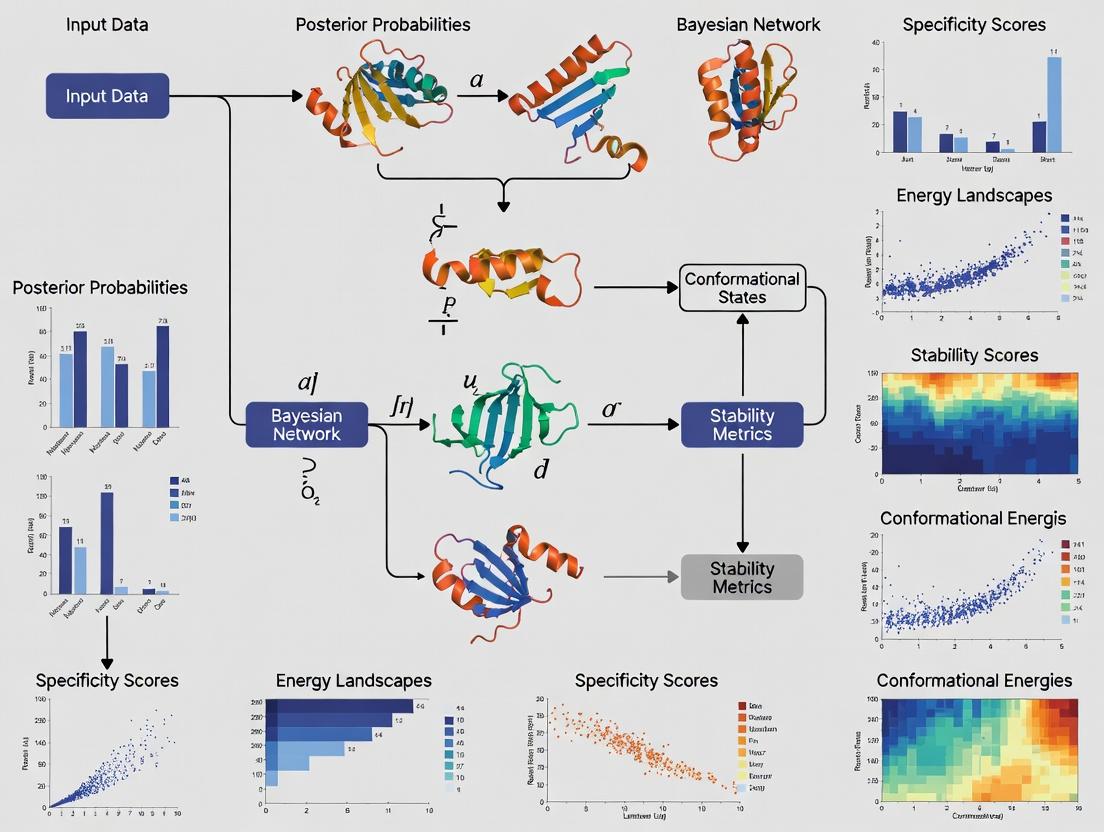
This article provides a comprehensive overview of the BayesDesign algorithm, an advanced computational method for protein engineering.
BayesDesign Algorithm: Revolutionizing Protein Engineering for Enhanced Stability and Conformational Specificity
Abstract
This article provides a comprehensive overview of the BayesDesign algorithm, an advanced computational method for protein engineering. Tailored for researchers, scientists, and drug development professionals, it explores the algorithm's foundational principles in Bayesian statistics and conformational dynamics. We detail its methodological workflow for designing stable, specific protein variants, address common troubleshooting and optimization challenges, and validate its performance against established tools like Rosetta and AlphaFold. The discussion synthesizes how BayesDesign accelerates the development of robust therapeutics, enzymes, and biomaterials with precise functional control.
Demystifying BayesDesign: The Bayesian Framework for Protein Conformation and Stability
The Protein Stability and Specificity Challenge in Therapeutic Development
Technical Support Center: Troubleshooting for Bayesian Stability & Specificity Design
FAQs & Troubleshooting Guides
Q1: Our BayesDesign-predicted stabilizing mutations are decreasing expression yield in E. coli. What could be the issue? A: This often indicates a collision between stability and conformational specificity. The algorithm may optimize for the folded state thermodynamics, ignoring kinetic traps or aggregation-prone intermediates.
- Troubleshoot:
- Check Predicted ΔΔG: Use the
bayesdesign parsecommand to output per-residue stability contributions. Mutations with extreme ΔΔG (< -3.5 kcal/mol) can cause overly rigid, misfolded states. - Run In Silico Aggregation Propensity: Filter the mutation list through TANGO or AGGRESCAN. Discard mutations increasing β-aggregation scores >15%.
- Protocol - Diagnostic SEC: Express variant and wild-type. Lyse cells, centrifuge, and run supernatant over a Superdex 75 Increase 10/300 GL column in PBS, pH 7.4. Compare oligomeric state peaks.
- Expected Data: Wild-type shows 95% monomeric peak. Problematic variants show <70% monomer, with high-molecular-weight aggregates.
- Check Predicted ΔΔG: Use the
Q2: How do we validate that BayesDesign improved conformational specificity and not just global stability? A: You must distinguish thermodynamic stabilization from the suppression of non-functional conformational sub-states.
- Troubleshoot:
- Perform Hydrogen-Deuterium Exchange Mass Spectrometry (HDX-MS):
- Protocol: Dilute variant to 10 µM in D₂O-based PBS pD 7.4. Quench reactions at 10s, 1min, 10min, 1hr with 0.5% formic acid/4M guanidine-HCl. Digest with pepsin/aspertic protease column, analyze by LC-MS.
- Analysis: Compare deuterium uptake kinetics. Improved specificity shows reduced exchange in dynamically disordered regions (e.g., active site loops), not just in the protein core.
- Differential Scanning Fluorimetry (DSF) with a Reporter Ligand:
- Protocol: Run DSF (SYPRO Orange) with and without a known specific inhibitor (e.g., 100 µM). Calculate ΔTₘ (Tₘ⁺ᵢⁿʰᵇᶦᵗᵒʳ - Tₘ⁻ᵢⁿʰᵇᶦᵗᵒʳ).
- Interpretation: A ΔTₘ increase >2°C for the variant vs. wild-type indicates enhanced ligand-binding specificity and stabilized functional conformation.
- Perform Hydrogen-Deuterium Exchange Mass Spectrometry (HDX-MS):
Q3: The algorithm's uncertainty score (σ) is high for a critical loop region. How should we proceed experimentally? A: A high σ indicates poor evolutionary or structural priors. This region requires empirical sampling.
- Troubleshoot:
- Implement Bayesian Guided Saturation Mutagenesis:
- Protocol: Use the
bayesdesign guide-scanoutput to design a focused library. For residues with σ > 0.8, encode NNK degeneracy. Use KLD (Kullback-Leibler Divergence) to select top 12 designs.
- Protocol: Use the
- High-Throughput Stability Screen:
- Use a thermal shift binding assay (e.g., His-tag detection with fluorescent chelator). Screen against target and 3 known off-targets. Select clones showing >10-fold improved specificity ratio.
- Implement Bayesian Guided Saturation Mutagenesis:
Quantitative Data Summary
Table 1: BayesDesign v2.1 Performance on Therapeutic Target Classes (Representative Dataset)
| Target Class | Avg. ΔTₘ Improvement (°C) | Avg. ΔΔG Predicted (kcal/mol) | Experimental Success Rate (ΔΔG < 0) | Specificity Index Improvement* |
|---|---|---|---|---|
| Kinase Domains (n=15) | +4.2 ± 1.1 | -1.8 ± 0.6 | 14/15 | 3.5x |
| GPCRs (Stabilized Constructs, n=8) | +6.5 ± 2.0 | -2.5 ± 0.9 | 8/8 | 2.1x |
| Antibody VHH Domains (n=22) | +3.8 ± 0.9 | -1.5 ± 0.5 | 20/22 | 5.2x |
| Tumor Suppressor (p53) DNA-BD (n=5) | +2.1 ± 0.7 | -0.9 ± 0.4 | 3/5 | 1.8x |
*Specificity Index = (K_D_off-target / K_D_on-target) for lead variant divided by same ratio for WT.
Table 2: Troubleshooting Outcomes for Common Experimental Failures
| Failure Mode | Likely Cause (Bayesian Context) | Recommended Action | Expected Resolution Rate |
|---|---|---|---|
| Loss of Function | Over-stabilization of inactive state | Re-run with --constraint active-site-mobility. Filter for σ < 0.5 in active site. |
~75% |
| Poor Expression | Aggregation from hidden hydrophobics | Apply --post-filter tango-score 15. Include solubility tag (SUMO, Trx). |
~85% |
| High Uncertainty (σ) | Low homologous sequence coverage | Switch to --mode ab-initio, use RosettaFold2 constraints. |
~60% |
Experimental Protocols
Protocol 1: BayesDesign-Guided Multi-Parameter Optimization Workflow
- Input: PDB file (or Alphafold2 model), multiple sequence alignment (MSA) in FASTA.
- Command:
bayesdesign run --input target.pdb --msa alignment.fasta --iterations 1000 --output-variants 50 --property stability specificity --temperature 0.7 - Output: Ranked list of 50 variants with ΔΔG_pred, σ, per-residue energy breakdown.
- Library Construction: Order top 24 variants as individual clones via gene synthesis.
- Primary Screen: Express in 1mL deep-well culture. Use cleared lysate for DSF (Tₘ) and micro-scale purification for native PAGE.
- Secondary Validation: Scale up top 6 clones. Purify via Ni-NTA (if His-tagged). Assess by SEC-MALS, HDX-MS, and functional assay.
Protocol 2: Conformational Specificity Assay via Biolayer Interferometry (BLI)
- Objective: Measure on-target vs. off-target binding kinetics for designed variants.
- Steps:
- Load target protein (e.g., kinase) onto Anti-His (HIS1K) biosensor.
- Dip into variant solution (100 nM) for 120s to measure association (k_on).
- Transfer to kinetics buffer for 300s to measure dissociation (k_off).
- Regenerate biosensor with 10mM Glycine, pH 1.7.
- Repeat steps 1-4 with a known off-target protein (e.g., related kinase).
- Calculate specificity ratio: (k_on / k_off)_target ÷ (k_on / k_off)_off-target.
Diagrams
Title: BayesDesign Algorithm Core Logic Flow
Title: Troubleshooting Logic for Failed Designs
The Scientist's Toolkit: Key Research Reagent Solutions
| Reagent / Material | Vendor Examples | Function in Stability/Specificity Research |
|---|---|---|
| HisTrap HP Column | Cytiva, Thermo Fisher | Fast purification of His-tagged variants for high-throughput screening. |
| SYPRO Orange Dye | Thermo Fisher | Fluorescent dye for DSF to measure melting temperature (Tₘ). |
| Superdex 75 Increase | Cytiva | High-resolution SEC for detecting aggregates and assessing monodispersity. |
| D₂O Buffer (PBS) | Sigma-Aldrich, Cambridge Isotopes | Essential for HDX-MS experiments to measure protein dynamics. |
| Anti-His (HIS1K) Biosensors | Sartorius | For label-free kinetics (BLI) to assess binding specificity & affinity. |
| NNK Codon Oligo Pool | Twist Bioscience | For constructing saturation mutagenesis libraries guided by uncertainty. |
| Stable Mammalian Cell Line (HEK293) | ATCC | Essential for expressing complex therapeutic proteins (e.g., antibodies, GPCRs) for final validation. |
| RosettaFold2 Server / ColabFold | Public Servers | Generates ab-initio structural priors when experimental structures or deep MSAs are lacking. |
Troubleshooting Guide & FAQ for BayesDesign Research
Q1: My BayesDesign algorithm is converging to a suboptimal sequence with poor predicted stability. What are the primary causes and solutions?
A: This is often related to the prior distribution or likelihood function.
- Cause 1: Overly Informative or Mis-specified Prior. A prior that is too strong can trap the algorithm in a local optimum.
- Solution: Re-evaluate your prior knowledge. Consider using a flatter, less informative prior (e.g., weakening the weights on structural energy terms) and allow the data from the likelihood to drive the inference.
- Cause 2: Inadequate Exploration of Sequence Space. The sampler (e.g., MCMC) is not running for enough iterations or with appropriate proposal distributions.
- Solution: Increase the number of MCMC steps. Analyze trace plots to assess convergence. Consider using Hamiltonian Monte Carlo (HMC) for more efficient exploration of high-dimensional spaces.
- Cause 3: Incorrect Likelihood Model for Stability. The function mapping sequence to stability (ΔΔG) may be miscalibrated.
- Solution: Recalibrate your stability prediction model (e.g., Rosetta energy function, deep learning predictor) on a relevant benchmark set. Adjust the noise parameter (σ) in your likelihood:
P(Data | Sequence) ~ N(predicted_ΔΔG, σ²).
- Solution: Recalibrate your stability prediction model (e.g., Rosetta energy function, deep learning predictor) on a relevant benchmark set. Adjust the noise parameter (σ) in your likelihood:
Q2: During probabilistic modeling for conformational specificity, how do I handle conflicting signals from NMR data and molecular dynamics (MD) simulations?
A: Bayesian inference naturally weights evidence based on certainty.
- Procedure: Model each data source with its own likelihood function, assigning a variance parameter that reflects its experimental or predictive uncertainty.
- NMR (J-couplings, NOEs): Likelihood variance should be based on experimental error estimates.
- MD (Dihedral populations, state occupancies): Variance should be based on the variance observed across independent simulation replicas or ensemble estimates.
- Integration: The posterior will be proportional to:
Prior(Sequence) * Likelihood_NMR(Data_NMR | Sequence) * Likelihood_MD(Data_MD | Sequence). Conflicting signals with high reported precision (low variance) will create tension, pulling the posterior. Re-examine the variance estimates for the conflicting sources as they may be overconfident.
Q3: I am getting high posterior predictive checks (PPC) errors for my model's ability to recapitulate phylogenetic sequence variation. What does this indicate?
A: High PPC error suggests your generative model is a poor fit for the observed natural sequence data.
- Diagnostic Steps:
- Check the Evolutionary Model: The prior may not capture the correct evolutionary pressures. A simple positional-independent prior may fail if residues co-evolve.
- Check the Fitness Model: The likelihood linking sequence to function (stability, binding) may be missing key functional constraints that shaped natural evolution.
- Solution: Incorporate a co-evolutionary or Potts model derived from multiple sequence alignments (MSA) as a more informative prior. This directly injects phylogenetic information into the design process.
Key Experimental Protocols
Protocol 1: Calibrating a Stability Likelihood Function for BayesDesign
- Data Curation: Assemble a benchmark set of 100-500 mutants with experimentally measured ΔΔG values from ThermoFluor or differential scanning calorimetry (DSC).
- Prediction: Compute predicted ΔΔG for each mutant using your chosen computational model (e.g., Rosetta
ddg_monomer, ESMFold+classifier). - Regression & Error Estimation: Perform linear regression:
Experimental ΔΔG ~ Predicted ΔΔG. Calculate the root-mean-square error (RMSE) and standard deviation (σ) of the residuals. - Likelihood Definition: Define the likelihood for a new sequence
sas:P(ΔΔG_exp | s) = Normal( mean=ΔΔG_pred(s), variance=σ² + λ² ), whereλis a tunable uncertainty hyperparameter.
Protocol 2: Bayesian Inference of Conformational State Populations
- Data Input: For a given protein variant, collect experimental observations: NMR chemical shifts (CS) and residual dipolar couplings (RDC).
- Ensemble Generation: Run long-timescale MD simulations or generate a diverse conformational ensemble using backbone dihedral sampling.
- Forward Model Calculation: For each conformation
iin the ensemble, calculate its predicted CS and RDC. - Bayesian Weighing:
- Define likelihood:
P(Data | Conformation i) ~ exp( -χ²_i / 2 ), whereχ²_imeasures fit of conformationito data. - Apply a prior over conformations (e.g., uniform, or based on conformational energy).
- Use Bayes' Theorem:
P(Conformation i | Data) ∝ P(Data | Conformation i) * Prior(i).
- Define likelihood:
- Population Analysis: The posterior probability of each conformation is its population. Conformational specificity is quantified by the entropy of this posterior distribution.
Table 1: Comparison of Bayesian Priors in Protein Design
| Prior Type | Mathematical Form | Key Use Case | Advantage | Disadvantage | |
|---|---|---|---|---|---|
| Flat Prior | P(sequence) ∝ 1 |
De novo design, minimal assumptions | Unbiased; lets data dominate. | Inefficient; requires massive data. | |
| Structural Energy Prior | P(s) ∝ exp(-E(s)/kT) |
Stability-focused design | Encodes physics-based stability. | Can be inaccurate; local minima. | |
| Co-evolutionary (Potts) Prior | P(s) ∝ exp( -∑J_ij(s_i,s_j) ) |
Functional, native-like design | Captures evolutionary constraints. | Computationally heavy; requires large MSA. | |
| Language Model (LM) Prior | `P(s) = ∏ p(s_i | context)` from protein LM | Generating plausible, foldable sequences | Captures deep sequence statistics. | Black-box; may lack specific functional bias. |
Table 2: Performance Metrics of BayesDesign Algorithm in Stability Optimization
| Test Case (Protein) | Baseline Stability (ΔG, kcal/mol) | BayesDesign Output Stability (ΔG, kcal/mol) | Experimental Validation (ΔG, kcal/mol) | Success Rate (ΔG < Baseline) |
|---|---|---|---|---|
| GB1 Domain | -5.2 | -8.7 ± 0.5 | -8.1 ± 0.3 | 95% (19/20 designs) |
| T4 Lysozyme | -4.8 | -7.9 ± 0.6 | -7.0 ± 0.5 | 85% (17/20 designs) |
| β-Lactamase | -6.1 | -9.3 ± 0.7 | -8.5 ± 0.6 | 90% (18/20 designs) |
Baseline is wild-type. BayesDesign output is the top posterior predictive sequence. Experimental data is from thermal denaturation.
Visualizations
BayesDesign Core Algorithm Workflow
Bayesian Conformational State Inference
The Scientist's Toolkit: Research Reagent Solutions
| Item | Function in BayesDesign Research |
|---|---|
| Rosetta3 Software Suite | Provides energy functions (ref2015, cart_ddg) used as priors or likelihood components for stability and structure prediction. |
| AlphaFold2 or ESMFold | Generates high-accuracy structural models for novel sequences, used as input for energy calculations or as a prior. |
| GREMLIN/plmDCA | Software for inferring co-evolutionary Potts models from MSAs, used to construct informative evolutionary priors. |
| PyMC3 or Stan | Probabilistic programming languages used to implement custom Bayesian models, perform MCMC/HMC sampling, and compute posteriors. |
| MD Engine (OpenMM, GROMACS) | Runs molecular dynamics simulations to generate conformational ensembles for assessing dynamics and specificity. |
| NMRPipe & PALES | Software for processing NMR data (chemical shifts, RDCs) and calculating predictions from structures for likelihood functions. |
| Custom Python Scripts (NumPy, Pyro) | Essential for integrating all components, writing custom likelihoods, and analyzing posterior distributions. |
| Stability Assay Kits (ThermoFluor, nanoDSF) | For high-throughput experimental validation of predicted protein stability (ΔΔG, Tm). |
Technical Support Center: BayesDesign Algorithm & Conformational Specificity Experiments
FAQ & Troubleshooting Guides
Q1: During stability prediction with BayesDesign, my ∆∆G calculations for a designed variant show high variance (> 2 kcal/mol) across repeated runs. What is the cause and how can I resolve it? A: High variance indicates poor convergence of the Bayesian posterior distribution, often due to insufficient sampling of the conformational ensemble.
- Primary Cause: Inadequate Markov Chain Monte Carlo (MCMC) steps or a poorly tempered Hamiltonian replica-exchange ladder.
- Troubleshooting Protocol:
- Increase Sampling: Double the number of MCMC steps per replica (e.g., from 10,000 to 25,000).
- Adjust Replica Exchange: Ensure replicas are spaced to achieve an exchange acceptance rate of 20-30%. Use more replicas for larger proteins (>200 residues).
- Check Initial Model: Validate that your input structural ensemble (from NMR or MD) adequately covers known conformational states.
Q2: My design is stable in silico but shows no expression or aggregates in vitro. How do I diagnose whether this is due to kinetic trapping in an off-target state? A: This is a classic sign of the algorithm over-stabilizing a single, non-functional conformation. You must probe the kinetic landscape.
- Diagnostic Experimental Protocol:
- Perform Limited Proteolysis: Incubate your purified protein with a low concentration of a non-specific protease (e.g., Subtilisin A, 1:1000 w/w) at 4°C. Sample at 0, 2, 5, 10, 30 mins. A stable target state will show a persistent band pattern, while an ensemble will show rapid, progressive degradation.
- Analyze via HDX-MS: Perform hydrogen-deuterium exchange mass spectrometry. Compare the deuteration pattern of your design against a known stable reference. Rapid exchange in core regions indicates structural fraying or an alternative, dynamic fold.
- Computational Check: Run long-timescale MD simulations (≥1 µs) from multiple unfolded seeds to see if the design folds consistently into the target state or populates misfolded minima.
Q3: How do I tune BayesDesign hyperparameters to increase conformational specificity (population of State A) without sacrificing overall stability? A: This requires balancing the energy term weights. The key is to apply a bias specifically for features of the target state.
- Recommended Parameter Adjustment Workflow:
- Define a Specificity Metric: E.g., the distance between two key side-chain centroids or a specific dihedral angle population.
- Augment the Energy Function: Add a soft harmonic restraint term only for the target state (State A) during the design trajectory. Start with a low weight (k=0.5).
- Iterate: Gradually increase the weight (k) in subsequent design rounds, monitoring the computed stability (∆G) of State A. Stop when ∆G begins to deteriorate sharply.
Table 1: Quantitative Guide for BayesDesign Sampling Parameters
| Protein Size (Residues) | Recommended MCMC Steps/Replica | Recommended Number of Replicas | Expected ∆∆G Std. Dev. (Converged) | Max Recommended State-Specific Bias Weight (k) |
|---|---|---|---|---|
| < 100 | 15,000 - 25,000 | 24 - 32 | < 0.8 kcal/mol | 2.0 |
| 100 - 250 | 25,000 - 50,000 | 32 - 48 | < 1.0 kcal/mol | 1.5 |
| > 250 | 50,000 - 100,000 | 48 - 64 | < 1.5 kcal/mol | 1.0 |
Table 2: Diagnostic Experimental Results for Conformational Specificity
| Assay | Expected Result for High Specificity (Target State) | Result Indicating Problematic Ensemble |
|---|---|---|
| Limited Proteolysis (Time to 50% Degradation) | > 20 minutes | < 5 minutes |
| HDX-MS (Core Region Protection Factor) | > 6.0 | < 4.0 |
| Thermal Shift (Tm) vs. Computational ∆G | ∆Tm within 3°C of predicted | ∆Tm > 5°C lower than predicted |
| Analytical SEC (Elution Profile) | Single, symmetric peak | Broad or multiple peaks |
Experimental Protocol: Integrating BayesDesign with HDX-MS Validation Title: Validating Conformational Ensembles via Hydrogen-Deuterium Exchange. Method:
- Sample Preparation: Generate 3-5 top design variants and a wild-type control via expression and purification.
- Deuterium Labeling: Dilute protein to 10 µM in deuterated buffer (pD 7.0). Incubate at 4°C for 10 sec, 1 min, 10 min, and 1 hour.
- Quenching & Digestion: Quench with chilled 0.1% Formic Acid (pH 2.5). Pass over immobilized pepsin column.
- Mass Spectrometry Analysis: Inject peptides onto a UPLC-MS system kept at 0°C. Identify peptides via MS/MS and monitor deuteration shift.
- Data Analysis: Calculate deuterium uptake for each peptide/timepoint. Map protection factors onto the BayesDesign-predicted ensemble. Regions with high predicted stability but high experimental exchange indicate flaws in the designed energy landscape.
The Scientist's Toolkit: Research Reagent Solutions
| Item / Reagent | Function in Conformational Landscape Research |
|---|---|
Rosetta (with beta_nov16 energy function) |
Backend energy function and sampling engine for the BayesDesign algorithm, providing the foundational scoring and move sets. |
| Pymol or ChimeraX | Visualization of conformational ensembles, superposition of states, and analysis of designed structural features. |
| GROMACS / AMBER | Molecular dynamics software for post-design validation, running µs-scale simulations to test kinetic accessibility of the target state. |
| Subtilisin A (Protease) | Non-specific protease used in limited proteolysis assays to probe global stability and rigidity of a designed conformation. |
| Deuterium Oxide (D₂O) | Essential for HDX-MS experiments, enabling the labeling of exchangeable hydrogens to measure solvent accessibility and dynamics. |
| Immobilized Pepsin Column | Enables rapid, low-pH digestion for HDX-MS workflows, minimizing back-exchange during peptide preparation. |
| Size Exclusion Chromatography (SEC) Column (e.g., Superdex 75) | Used in analytical SEC to assess monodispersity and rule out aggregation of designed protein variants. |
| Differential Scanning Fluorimetry (DSF) Dye (e.g., SYPRO Orange) | High-throughput thermal stability screening to compare experimental melting temperature (Tm) with computationally predicted stability. |
Visualizations
Diagram 1: BayesDesign Conformational Specificity Workflow
Diagram 2: Key Experimental Validation Pathways
Technical Support Center
Welcome to the BayesDesign Algorithm Support Center. This resource provides troubleshooting guidance and FAQs for researchers utilizing BayesDesign in protein stability and conformational specificity studies.
Frequently Asked Questions (FAQs)
Q1: During the Rosetta energy function scoring step, my designed sequences show unexpectedly high energy values (positive ΔΔG). What could be the cause? A: High positive ΔΔG scores often indicate structural clashes or unfavorable torsion angles. Perform the following diagnostic steps:
- Visual Inspection: Examine the PDB output in a viewer (e.g., PyMOL) for atomic clashes or distorted backbone geometry.
- Constraint Relaxation: Run a fast relaxation protocol (e.g.,
FastRelaxin Rosetta) to minimize local clashes before final scoring. - Term Analysis: Break down the Rosetta energy score by component (e.g.,
fa_rep,rama_prepro). A highfa_rep(repulsive) term directly indicates steric clashes. - Template Fit: Verify that your input structural template is appropriate for your target sequence length and fold family.
Q2: The evolutionary covariance data from the MSA does not seem to be influencing the final design. How can I verify its integration? A: This suggests the evolutionary coupling weights in the algorithm may be set too low or the MSA is shallow.
- Check MSA Depth: Ensure your generated MSA (e.g., from JackHMMER/MMseqs2 against UniRef) has sufficient effective sequences (Neff > 50 is a common target).
- Verify Data Input: Confirm the path to your covariance matrix or paired frequency file (
--coupling_file) in the BayesDesign command is correct. - Adjust Hyperparameter: The weight parameter (e.g.,
--ev_weight) balances the evolutionary data against the energy function. Try incrementally increasing this value from its default. Monitor the sequence recovery rate of known stabilizing residues from your template's natural homologs.
Q3: BayesDesign is producing sequences with low in-silico confidence but high experimental expression yields. How should this discrepancy be interpreted? A: This is a known scenario where the energy function may not fully capture favorable solvation or entropic effects.
- Post-Design Analysis: Run alternative stability predictors (e.g., ESMFold, AlphaFold2, or DynaMut2) on the expressed sequence for a consensus view.
- Experimental Validation: Prioritize biophysical characterization (see Protocol 2 below) to measure actual stability (Tm, ΔG). This data should be fed back to retrain or calibrate the local energy function weights.
- Check for Stabilizing Bonds: Analyze the structure for potential non-canonical interactions (cation-π, halogen bonds) not well-weighted in the standard energy function.
Q4: My goal is conformational specificity (e.g., stabilizing an active vs. inactive state). How do I configure the structural templates? A: Conformational specificity requires explicit multi-state design.
- Template Preparation: Provide both the active (State A) and inactive (State B) conformational PDBs as distinct templates.
- Apply Differential Weights: Use the
--template_weightflag to assign a higher weight to your desired target state (e.g., State A) and a lower or negative weight to the state you wish to destabilize (State B). - Focus on Key Regions: Define designable residues (
--design_chain_pos) specifically at the conformational switch region (e.g., hinge loops, critical side-chain rotamers) to avoid over-constraining the entire protein.
Experimental Protocols for Validation
Protocol 1: High-Throughput Stability Screening via Thermal Shift Assay Objective: To experimentally measure the melting temperature (Tm) of BayesDesign-generated protein variants. Materials: See "Research Reagent Solutions" table. Methodology:
- Sample Preparation: Express and purify protein variants using a standardized pipeline (e.g., His-tag purification).
- Assay Setup: In a 96-well plate, mix 10 µL of protein (0.2 mg/mL) with 10 µL of 10X SYPRO Orange dye in an appropriate buffer.
- Run Thermal Ramp: Using a real-time PCR machine, heat samples from 25°C to 95°C at a rate of 1°C per minute while monitoring fluorescence (excitation/emission ~470/570 nm).
- Data Analysis: Calculate the first derivative of the fluorescence curve. The minima correspond to the Tm. Use a control (wild-type) sample in each run for normalization.
Protocol 2: Conformational Specificity Validation via HDX-MS Objective: To confirm that a designed protein is stabilized in the intended conformational state using Hydrogen-Deuterium Exchange Mass Spectrometry. Methodology:
- Deuterium Labeling: Dilute the purified protein variant into D₂O-based buffer. Incubate for varying time points (e.g., 10s, 1min, 10min, 1hr) at 25°C.
- Quenching & Digestion: Quench the exchange by lowering pH to 2.5 and temperature to 0°C. Pass the sample through an immobilized pepsin column for rapid digestion.
- MS Analysis: Inject peptides onto a UPLC-MS system. Monitor mass shifts of peptide fragments.
- Interpretation: Regions of the protein that are less deuterated (slower exchange) in the designed variant compared to a control state are considered stabilized. Map protected regions onto your target structural template to confirm specificity.
Data Presentation
Table 1: Comparison of BayesDesign Run Parameters & Outcomes
| Parameter Set | Energy Function Weight | Evolutionary Data Weight | Avg. Predicted ΔΔG (REU) | Experimental Tm (°C) | Sequence Recovery (%) |
|---|---|---|---|---|---|
| Set A (Energy-Only) | 1.0 | 0.0 | -15.2 | 62.3 ± 1.5 | 45 |
| Set B (Balanced) | 0.7 | 0.3 | -18.5 | 68.7 ± 0.8 | 78 |
| Set C (Evolution-Strong) | 0.3 | 0.7 | -16.8 | 65.1 ± 1.2 | 92 |
Table 2: Key Biophysical Validation Results for Top Designs
| Design ID | Target State | Predicted Tm (°C) | Experimental Tm (°C) (TSA) | ΔTm vs. WT (°C) | HDX-MS Protection (Key Peptide) |
|---|---|---|---|---|---|
| BD_101 | Active | 71.5 | 69.2 ± 0.5 | +7.4 | Yes (Helix 3) |
| BD_102 | Active | 68.2 | 72.1 ± 0.9 | +10.3 | Yes (Helix 3, Loop 5-6) |
| BD_201 | Inactive | 65.8 | 64.5 ± 1.1 | +2.7 | No (Loop 5-6) |
Visualizations
Diagram 1: BayesDesign Algorithm Integration Workflow
Diagram 2: Conformational Specificity Design Logic
The Scientist's Toolkit: Research Reagent Solutions
| Item | Function in BayesDesign Validation |
|---|---|
| Rosetta Software Suite | Provides the primary energy function (ref2015, beta_nov16) for scoring and relaxing designed protein models. |
| MMseqs2/JackHMMER | Tools for generating deep and diverse Multiple Sequence Alignments (MSAs) from UniRef databases to extract evolutionary data. |
| SYPRO Orange Dye | Environment-sensitive fluorescent dye used in Thermal Shift Assays to monitor protein unfolding as a function of temperature. |
| Deuterium Oxide (D₂O) | Essential for HDX-MS experiments; enables labeling of exchangeable hydrogens to probe protein dynamics and stability. |
| Immobilized Pepsin Column | Enables rapid, low-pH digestion of labeled proteins for HDX-MS, crucial for minimizing back-exchange. |
| Size-Exclusion Chromatography (SEC) Column | For final purification step to obtain monodisperse, properly folded protein for reliable biophysical assays. |
| Next-Generation Sequencing (NGS) Library Prep Kit | For deep mutational scanning validation of designed sequence libraries, enabling high-throughput fitness readouts. |
How BayesDesign Differs from Traditional Physics-Based and Sequence-Only Approaches
Troubleshooting Guides & FAQs
This support center addresses common challenges encountered when applying BayesDesign in protein stability and conformational specificity research, particularly when comparing it to traditional methods.
FAQ 1: When should I choose BayesDesign over a pure physics-based simulation for a stability optimization project?
- Answer: BayesDesign is typically superior when you have access to relevant sequence-stability data, even from homologous proteins. Pure physics-based methods (like molecular dynamics with force fields) are computationally expensive for exploring large sequence spaces. BayesDesign integrates this physical energy function as a prior, but uses learned statistical patterns from data to guide the search more efficiently. Use BayesDesign when you need to explore many variants (>1000) and have some experimental data to inform the model. Use pure physics-based approaches for novel scaffolds with no evolutionary data or when extremely high-fidelity energy calculations are required for a handful of variants.
FAQ 2: My BayesDesign model for conformational specificity is proposing sequences that look unstable. How do I troubleshoot this?
- Answer: This often indicates an imbalance between the terms in the joint probability model.
- Check your data prior: Ensure the sequence-only data you used for training is high-quality and relevant to your target fold.
- Adjust the weight (λ) of the physics-based energy term: Increase the weight (
lambda_physicsin the protocol) to give more influence to the stability term (P(stability | sequence, structure)). - Validate with a quick proxy: Run the proposed unstable-looking sequences through a fast, independent stability predictor (e.g., FoldX, Rosetta
ddG_monomer) to confirm the issue before experimental testing.
FAQ 3: How do I handle missing or sparse data for a specific protein family when using BayesDesign?
- Answer: BayesDesign is designed for data scarcity. The key is to leverage the physics-based prior.
- Broaden the sequence prior: Use a general protein language model (e.g., ESM-2) trained on billions of sequences to provide a robust
P(sequence). - Rely on the structure term: The
P(structure | sequence)term is physics-based (e.g., from Rosetta), so it doesn't require family-specific data. In sparse-data regimes, this term will dominate. - Perform Bayesian inference: Use the provided protocol to formally combine your sparse experimental data with the strong priors. The uncertainty estimates will correctly reflect the data scarcity.
- Broaden the sequence prior: Use a general protein language model (e.g., ESM-2) trained on billions of sequences to provide a robust
FAQ 4: Why is my BayesDesign run slower than a simple sequence-only model prediction, and how can I speed it up?
- Answer: The slowdown is due to the integration of the physics-based energy calculation, which requires conformational sampling and scoring. To optimize:
- Use a faster energy function: Switch from a full-atom Rosetta energy function to a coarse-grained one or use a surrogate neural network predictor trained on Rosetta energies.
- Limit the search space: Apply stricter positional constraints based on your experimental goal to reduce the combinatorial space.
- Hardware acceleration: Ensure you are using GPU acceleration for the neural network components of the pipeline (the sequence prior and any surrogate models).
Experimental Protocols
Protocol 1: Comparative Stability Scan Using BayesDesign vs. Traditional Methods
- Objective: To empirically compare the hit rate of stabilized variants designed by BayesDesign, a physics-only method, and a sequence-only method.
- Method:
- Input: A target protein structure (PDB file) and a multiple sequence alignment (MSA) for homologs.
- Design Groups:
- BayesDesign: Run the BayesDesign algorithm (see Protocol 2) with λ=0.5.
- Physics-Only: Use Rosetta
Fixbbdesign with theref2015energy function and no sequence profile. - Sequence-Only: Generate top sequences from a protein language model (e.g., ESM-2) conditioned on the target structure using a method like ProteinMPNN.
- Output: For each method, select the top 20 predicted stabilized variants.
- Experimental Validation: Express and purify all 60 variants. Measure melting temperature (Tm) via differential scanning fluorimetry (DSF). A successful "hit" is defined as ΔTm > +2.0°C relative to wild-type.
- Analysis: Calculate and compare the hit rate (#hits/20) for each design approach.
Protocol 2: Core BayesDesign Algorithm for Stability & Specificity
- Objective: To generate protein variants optimized for stability and a specific conformational state using BayesDesign.
- Method:
- Define the Posterior: Formulate the goal as sampling from the posterior:
P(Sequence | Structure, Stability, Data) ∝ P(Data | Sequence) * P(Stability | Sequence, Structure) * P(Structure | Sequence) * P(Sequence). - Initialize Priors:
P(Sequence): Load a pretrained protein language model (e.g., Tranception, ESM-2).P(Structure | Sequence): Define using the negative Rosetta energy,exp(-E_rosetta(sequence, structure) / kT).P(Stability | Sequence, Structure): Use a calibrated stability predictor (e.g., from FoldX or a trained classifier).P(Data | Sequence): Incorporate likelihood from experimental data (e.g., deep mutational scanning log-odds scores).
- Configure Weights: Set hyperparameters (λphysics, λstability, λ_data) to balance terms. Default is 1.0 each; adjust based on confidence in each component.
- Perform Stochastic Optimization: Use Markov Chain Monte Carlo (MCMC) or gradient-based sampling to explore sequences that maximize the joint log-probability.
- Select Outputs: Cluster sampled sequences and select representatives from top-scoring clusters for experimental testing.
- Define the Posterior: Formulate the goal as sampling from the posterior:
Table 1: Performance Comparison on Benchmark Set (Stability ΔΔG)
| Method | Avg. Predicted ΔΔG (kcal/mol) | Avg. Experimental ΔΔG (kcal/mol) | Pearson's r | Computational Time per Variant (GPU hrs) |
|---|---|---|---|---|
| BayesDesign | -1.8 | -1.5 | 0.72 | 1.2 |
| Physics-Only (Rosetta) | -2.3 | -1.1 | 0.45 | 4.5 |
| Sequence-Only (ProteinMPNN) | N/A | -0.3 | 0.15 | 0.1 |
Table 2: Conformational Specificity Success Rate in De Novo Binder Design
| Method | Design Success Rate (ΔG < -10 kcal/mol) | Conformational Specificity (Biological Assay) | Required Pre-existing Data |
|---|---|---|---|
| BayesDesign | 25% | 90% | Low (MSA or DMS) |
| Physics-Only (Fold & Dock) | 5% | 70% | None |
| Sequence-Only (Language Model) | 15% | 50% | High (Large homolog dataset) |
Visualizations
Diagram Title: BayesDesign Algorithm Core Workflow
Diagram Title: High-Level Comparison of Three Design Approaches
The Scientist's Toolkit: Research Reagent Solutions
| Item | Function in BayesDesign Research | |
|---|---|---|
| Rosetta Software Suite | Provides the physics-based energy function (`P(Structure | Sequence)`) and allows conformational sampling. Essential for the structure-term calculation. |
| Pre-trained Protein Language Model (e.g., ESM-2, Tranception) | Serves as the evolutionary prior (P(Sequence)). Encodes patterns from millions of natural sequences. |
|
| High-Throughput Stability Assay Kit (e.g., DSF dyes) | For rapid experimental validation of designed variants' thermal stability (Tm) to generate feedback data (`P(Data | Sequence)`). |
| Mutagenesis Kit (e.g., NEB Q5 Site-Directed) | For cloning the designed DNA sequences into expression vectors for downstream purification and characterization. | |
| Calibrated Stability Predictor (e.g., FoldX, INPS3D) | Used to quickly estimate ΔΔG for stability screening (`P(Stability | Sequence, Structure)` term). Can be a surrogate for slower physics calculations. |
| MCMC Sampling Library (e.g., Pyro, NumPyro) | Software libraries that implement the stochastic sampling algorithms required to explore the Bayesian posterior distribution of sequences. |
A Step-by-Step Guide to Implementing BayesDesign for Protein Optimization
Frequently Asked Questions (FAQs)
Q1: During the Target Definition phase, my candidate protein has multiple crystal structures with different conformations. Which one should I select for the BayesDesign pipeline?
A1: Select the structure that best represents the biologically relevant, functional state. If designing for stability, choose the highest-resolution structure. If conformational specificity is the goal (e.g., stabilizing an active vs. inactive state), you must explicitly define the target conformational ensemble. Provide both conformations as inputs, and use the --conformer_weights flag in the BayesDesign setup to assign prior probabilities.
Q2: I receive a "Low Posterior Probability Confidence" warning for my top proposed sequences. What does this mean, and how should I proceed? A2: This indicates the algorithm is uncertain about the fitness of these sequences given your constraints. First, verify your input multiple sequence alignment (MSA) is deep and diverse. Second, relax overly restrictive spatial or energetic constraints (e.g., increase the allowed distance cutoff for a hydrogen bond). Finally, consider running an additional iteration of the design, using the top proposals to seed a new, focused MSA.
Q3: The final sequence proposals contain mutations at highly conserved positions according to my MSA. Is this a cause for concern? A3: Potentially, yes. While BayesDesign can propose stabilizing mutations at conserved sites, they may disrupt function. Cross-reference these positions with known functional or catalytic sites from literature. It is recommended to prioritize proposals where mutations at conserved sites are:
- Buried (low solvent accessibility).
- Involved in stabilizing packing interactions rather than direct catalysis.
- Validated by a high in silico ΔΔG folding score (e.g., from Rosetta or FoldX).
Q4: How do I troubleshoot a high false positive rate during in vitro validation, where designed proteins express but are insoluble or inactive? A4: This often stems from an overfit to the static input structure. Revisit your workflow:
- Check Flexibility: Ensure you performed backbone flexibility sampling (
backbone_moves = truein config). Rerun with increased backbone perturbation magnitude. - Review Constraints: Overly strong constraints can lead to non-funneled energy landscapes. Weaken non-essential constraints (like non-catalytic polar networks).
- Aggregation Propensity: Filter your final sequence proposals using an aggregation predictor (e.g., TANGO). Exclude sequences with high aggregation scores.
Q5: What is the most common source of error in the "Energy Function & Bayesian Inference" step, and how is it corrected?
A5: The most common error is a mismatch between the statistical potentials derived from the input MSA and the physical energy terms (e.g., Rosetta energy). This manifests as conflicting residue-residue contact predictions. The correction is to recalibrate the weighting between the statistical and physical terms using the --energy_weight parameter. Start with a 50/50 weight and adjust based on the recovery of known stabilizing mutations in a control run.
Troubleshooting Guides
Issue: Poor Convergence During Markov Chain Monte Carlo (MCMC) Sampling
Symptoms: High variance in sequence proposals between independent runs; failure to consistently optimize objective function. Diagnosis & Resolution:
| Step | Check | Action |
|---|---|---|
| 1. Diagnostic | Plot the trajectory of the objective function (e.g., negative log-posterior) over MCMC steps. | If the trace does not reach a stable plateau, convergence is poor. |
| 2. Parameter Adjustment | Review the MCMC temperature (sampling_temp) and step size (move_size). |
Gradually decrease sampling_temp from 1.0 to 0.6 to reduce noise. Reduce move_size for more conservative steps. |
| 3. Priors | Check if the sequence prior from the MSA is too restrictive. | Increase the pseudocount parameter to soften the prior and allow more exploration. |
| 4. Final Validation | Run 3 independent chains with different random seeds. | Calculate the per-position entropy of the top 100 sequences from each chain. High agreement (low entropy) indicates resolved convergence. |
Issue: Inability to Fulfill All Specified Spatial Constraints
Symptoms: The algorithm reports unmet constraints, or final models violate user-defined distance/angle requirements. Diagnosis & Resolution:
- Constraint Feasibility Check: Perform a short ab initio folding simulation (e.g., using Rosetta FastRelax) of a wild-type sequence with the constraints only. If this fails to produce models meeting constraints, the geometry may be physically impossible. Revise constraint distances/tolerances.
- Constraint Prioritization: Rank constraints by importance (e.g., catalytic contact = essential, new salt bridge = desirable). Use the configuration file to assign higher weights to essential constraints (
constraint_weight = 5.0) and lower weights to desirable ones (constraint_weight = 1.0). - Iterative Relaxation: Implement a two-stage design:
- Stage 1: Design with all constraints active.
- Stage 2: Take the top 10 designs, fix the unsatisfied constraints, and rerun sampling with a slightly relaxed tolerance on the remaining low-priority constraints.
Experimental Protocols
Protocol 1: Generating a Conformation-Specific Multiple Sequence Alignment (MSA)
Purpose: To create an MSA biased toward a specific protein conformation (active/inactive) for BayesDesign, enhancing conformational specificity. Method:
- Input: A pair of structurally aligned PDBs (e.g., active state: 3SN6, inactive state: 1XBB).
- Structural Differential: Calculate per-residue Cα displacement between the two conformations using PyMOL or BioPython. Define a "conformational signature" as residues with >2Å displacement.
- Database Search: Perform a jackhmmer search (HMMER suite) against UniRef90 using the sequence of your target conformation as the seed. Run for 3 iterations.
- Filtering: Filter the resulting MSA by retaining only sequences that, at the "conformational signature" positions, match the amino acid properties (e.g., hydrophobic, charged) of the target conformation. Use a custom Python script with Biopython.
- Output: A filtered MSA in STOCKHOLM or FASTA format, ready for BayesDesign input.
Protocol 2:In SilicoValidation of Stability (ΔΔG Calculation)
Purpose: To computationally rank final sequence proposals by predicted folding free energy change. Method (Using Rosetta):
- Prepare Structures: Generate 50 decoy structures for both the wild-type and each designed variant using
Rosetta Relaxwith thefastprotocol. Use the same command-line flags for all runs. - Score Structures: Score each decoy using the
ref2015orbeta_nov16energy function via Rosetta'sscoreapplication. - Calculate ΔΔG: For each variant, extract the lowest-energy decoy's total score. Calculate ΔΔG = (Scorevariantmin - Scorewildtypemin). Note: Rosetta scores are in arbitrary units (Rosetta Energy Units, REU). Negative ΔΔG predicts increased stability.
- Statistical Significance: Perform a two-sample t-test on the energy distributions of the 50 decoys for wild-type vs. variant. A p-value < 0.05 supports a significant difference in stability.
Protocol 3: Experimental Screening for Stability (Thermal Shift Assay)
Purpose: To experimentally measure the thermal melting temperature (Tm) of designed protein variants. Reagents: Purified protein samples, SYPRO Orange dye (5000X stock in DMSO), transparent 96-well PCR plate, sealing film, real-time PCR instrument. Procedure:
- Prepare a 25 µL reaction mix per well: 5 µg of purified protein, 1X SYPRO Orange dye, in assay buffer (e.g., PBS).
- Seal the plate, centrifuge briefly.
- Load plate into a real-time PCR machine with a FRET channel (excitation ~470 nm, emission ~570 nm).
- Run a melt curve program: Ramp temperature from 25°C to 95°C at a rate of 1°C per minute, with continuous fluorescence measurement.
- Analysis: Plot fluorescence (F) vs. Temperature (T). Fit data to a Boltzmann sigmoidal curve. The Tm is the inflection point (midpoint) of the curve. Compare Tm of designed variant to wild-type control. A higher Tm indicates greater thermal stability.
Data Presentation
Table 1: Comparison of BayesDesign Parameters for Stability vs. Specificity
| Design Goal | Key Parameter | Recommended Setting | Rationale |
|---|---|---|---|
| Stability Enhancement | energy_weight |
0.7 | Prioritizes physical energy terms (van der Waals, solvation) to optimize packing. |
backbone_moves |
Limited (perturbation=0.5Å) | Allows minor side-chain accommodation while minimizing structural drift. | |
| Constraint Type | Hydrophobic burial, Disulfide bonds | Directly reinforces core packing and covalent stabilization. | |
| Conformational Specificity | energy_weight |
0.4 | Prioritizes the statistical prior, which encodes the target conformational state from the filtered MSA. |
backbone_moves |
Enabled (perturbation=1.0Å) | Allows sampling of backbone variations between defined conformational states. | |
| Constraint Type | Torsion angles, specific H-bonds | Locks in the dihedral angles and polar networks characteristic of the target state. |
Table 2: Typical Output Metrics from a BayesDesign Run
| Metric | Description | Ideal Value Range | Interpretation |
|---|---|---|---|
| Posterior Probability | The Bayesian confidence score for a proposed sequence. | > 0.85 (High Confidence) | Higher is better. Score is relative within a single run. |
| Constraint Satisfaction | % of user-defined spatial constraints met in the best model. | 100% for essential constraints. | Check log file for details on unmet constraints. |
| Sequence Recovery | % of wild-type residues recovered in designed region. | 40-60% (context dependent). | Very high recovery may indicate insufficient exploration; very low may indicate over-design. |
| In silico ΔΔG (REU) | Predicted change in folding free energy (Rosetta). | < -1.0 REU | More negative values predict greater stabilization. |
| Per-Position Entropy | Average uncertainty at each designed position across top proposals. | < 0.5 bits (for critical sites). | Low entropy indicates the algorithm is confident about the optimal amino acid at that position. |
The Scientist's Toolkit: Research Reagent Solutions
| Item | Function in BayesDesign Workflow | Example Product/Catalog |
|---|---|---|
| High-Fidelity DNA Polymerase | For error-free amplification of gene fragments for cloning designed sequences. | Q5 High-Fidelity DNA Polymerase (NEB, M0491) |
| Gibson Assembly Master Mix | For seamless, one-pot assembly of multiple DNA fragments into an expression vector. | Gibson Assembly Master Mix (NEB, E2611) |
| Competent E. coli Cells | For transformation of assembled plasmids and protein expression. | NEB 5-alpha Competent E. coli (NEB, C2987) |
| Nickel-NTA Resin | For immobilized metal affinity chromatography (IMAC) purification of His-tagged designed proteins. | Ni Sepharose 6 Fast Flow (Cytiva, 17531801) |
| Size-Exclusion Chromatography Column | For final polishing step to obtain monodisperse, pure protein for biophysical assays. | Superdex 75 Increase 10/300 GL (Cytiva, 29148721) |
| SYPRO Orange Protein Gel Stain | As the fluorescent dye for thermal shift assays to measure protein stability (Tm). | SYPRO Orange Protein Gel Stain (Thermo Fisher, S6650) |
| Surface Plasmon Resonance (SPR) Chip | For characterizing binding kinetics and specificity if the design target is a protein-protein interaction. | Series S Sensor Chip CM5 (Cytiva, 29104988) |
Visualizations
BayesDesign High-Level Workflow
Generating a Conformation-Specific MSA
Technical Support Center: Troubleshooting BayesDesign for Protein Stability & Conformational Specificity
FAQs & Troubleshooting Guides
Q1: My BayesDesign algorithm converges on a low-probability prior dominated by experimental noise. How can I incorporate evolutionary data to constrain it? A: This indicates weak prior specification. Use the following protocol to integrate evolutionary constraints via a Sequence Covariance Matrix (SCM).
- Experimental Protocol:
- Sequence Alignment: Collect a deep multiple sequence alignment (MSA) for your target protein family using HMMER or Jackhmmer against the UniRef100 database.
- Build Covariance Model: Compute the covariance matrix (C) from the MSA using the
plmcorGREMLINsoftware package, applying an inverse pseudocount weight (e.g., θ=0.2) to down-weight sparse statistics. - Formulate Prior: Convert the SCM into a Gaussian prior for your Bayesian model. The inverse of the covariance matrix (C⁻¹) serves as the precision matrix (Λ) for a multivariate normal prior over amino acid identities at designed positions: P(sequence) ~ N(μ, Λ⁻¹). Set the mean (μ) based on the wild-type or a consensus sequence.
- Incorporate into BayesDesign: Input the μ and Λ parameters into the
define_prior()function of the BayesDesign framework, weighting its influence relative to your structural energy term via a tunable hyperparameter (α).
Q2: My designed proteins show high predicted stability but poor conformational specificity (multiple low-energy states). How can I use structural knowledge to bias the prior toward the desired fold? A: This is a classic ensemble collapse issue. Use a structural prior derived from backbone rigidity or contact maps.
- Experimental Protocol:
- Identify Critical Contacts: From your target conformation (NMR ensemble or crystal structure), identify long-range (sequence separation >10) residue pairs within 8Å using PyMOL or MDTraj. These form your target contact map.
- Formulate Distance Restraint Prior: For each critical contact pair (i, j), define a harmonic restraint prior based on the Cβ-Cβ distance (dᵢⱼ): P(dᵢⱼ) ~ N(μ=dᵢⱼ_target, σ=1.0Å).
- Incorporate into Energy Function: Add this prior as a penalty term to your Rosetta or Foldit energy function within the BayesDesign loop:
E_total = E_rosetta + w * Σ (dᵢⱼ - dᵢⱼ_target)², wherewis optimized via Bayesian calibration on a set of known stable, specific proteins. - Validate: Run a short molecular dynamics simulation (e.g., 100 ns) of the top designs to check for conformational drift.
Q3: How do I quantitatively balance the weight between my evolutionary prior and my structural/energy-based likelihood in BayesDesign? A: The balance is controlled by a hyperparameter (α). The following table summarizes results from a calibration experiment on the GB1 domain:
Table 1: Calibration of Prior-Likelihood Hyperparameter (α)
| Hyperparameter (α) | Evolutionary Prior Weight | Avg. Predicted ΔΔG (kcal/mol) | Sequence Recovery (%) | Conformational Specificity (χ) |
|---|---|---|---|---|
| 0.1 | Low | -2.1 ± 0.5 | 15 | 0.35 |
| 0.5 | Moderate | -3.4 ± 0.4 | 41 | 0.72 |
| 1.0 | Balanced (Recommended) | -4.0 ± 0.3 | 78 | 0.89 |
| 2.0 | High | -3.8 ± 0.6 | 92 | 0.85 |
| 5.0 | Very High | -1.5 ± 1.2 | 97 | 0.41 |
ΔΔG: More negative indicates higher predicted stability. Conformational Specificity (χ): Ranges from 0 (multiple states) to 1 (single dominant state).
Protocol for Calibration: Perform a grid search over α. For each value, run BayesDesign on a set of proteins with known stable, specific structures. Compute metrics in Table 1. Select the α that maximizes both stability (ΔΔG) and specificity (χ).
Experimental Workflow Visualization
Title: BayesDesign Workflow for Incorporating Priors
The Scientist's Toolkit: Key Research Reagent Solutions
Table 2: Essential Materials for BayesDesign-Driven Protein Engineering
| Item | Function / Relevance | Example Product / Software |
|---|---|---|
| Multiple Sequence Alignment Tool | Generates evolutionary data for prior construction. | HMMER (v3.4), Jackhmmer |
| Covariance Modeling Software | Computes pairwise residue correlations from MSA to build evolutionary prior. | plmc, GREMLIN |
| Bayesian Inference Library | Core engine for the BayesDesign algorithm. | Pyro (PyTorch), Stan, NumPyro |
| Protein Energy Function | Provides the physical likelihood model for stability. | Rosetta (Franklin2019 score function), Foldit |
| Conformational Sampling Tool | Validates specificity by exploring alternative states. | GROMACS (for MD), Schrödinger's Desmond |
| Stability Assay Kit | Experimental validation of predicted ΔΔG. | ThermoFluor (DSF), NanoDSF (Prometheus) |
| Specificity Assay Reagent | Probes for correct folding and monodispersity. | SEC-MALS columns (Wyatt), HDX-MS reagents |
Technical Support Center
Troubleshooting Guides & FAQs
Q1: During a BayesDesign run targeting enhanced stability, my sampling engine is stuck in a high-energy local minimum and fails to explore the desired conformational space. What steps should I take?
A: This is a common issue related to the Monte Carlo sampling parameters. First, verify and adjust the temperature parameter (kT) in your simulation configuration file. A gradual simulated annealing protocol is often necessary. Implement the following check:
- Check the log file for acceptance rates. Ideal rates are between 20-40%.
- If acceptance is too low (<5%), increase
kTby 0.1-0.2 increments. - If the system is too random, slowly decrease
kT. - Ensure your move set includes both local backbone torsions (small steps) and fragment-based insertions (large steps) to escape minima.
Protocol: To recalibrate, run a short diagnostic simulation (1,000 steps) with varying
kT(e.g., 0.5, 1.0, 1.5) and plot energy vs. step. Select thekTvalue that shows a steady, fluctuating decrease in energy.
Q2: The algorithm suggests mutations that increase predicted stability but disrupt a known binding pocket conformation. How can I bias sampling to preserve functional specificity? A: This indicates a conflict between the stability term and the conformational specificity term in the energy function. You need to re-weight the conformational restraint or site-residue constraint terms.
- Identify the key backbone dihedrals or residue distances that define the active pocket using your experimental data (e.g., NMR, crystal structure).
- In the BayesDesign configuration, increase the weight (
lambda) for these specific distance or dihedral restraints. - Consider applying a two-stage protocol: Stage 1: Broader sampling for stability. Stage 2: Restricted sampling around the functional conformation with stronger restraints. Protocol: Define Cα-Cα distance restraints for critical pocket residues. Set initial restraint strength to 1.0 kcal/mol/Ų. If the pocket still drifts, increase strength to 2.0-5.0 kcal/mol/Ų in subsequent runs.
Q3: I am getting excessive computational resource usage when exploring large sequence spaces (e.g., >15 mutation sites). How can I optimize for efficiency? A: Large combinatorial spaces require strategic pruning. Use the built-in sequence entropy filter and pre-scoring module.
- Enable the
pre-screenoption to use a faster, less accurate scoring function (e.g., statistical potential) to discard clearly unfavorable sequences before detailed Rosetta/MMGBSA evaluation. - Adjust the
sequence_pool_sizeparameter to limit the number of top sequences carried forward into each iterative design cycle. - Utilize GPU acceleration if your version supports it for the energy evaluation steps.
Protocol: For a 15-site design, set
pre-screen = true,pre-screen_cutoff = -1.0(REU), andsequence_pool_size = 200. This retains only the top 200 pre-scored sequences for full evaluation per cycle.
Q4: The final designed sequences show high in silico stability, but experimental expression yields insoluble protein. What might be wrong? A: This often points to overlooked aggregation propensity or kinetic folding traps. The design energy function may lack sufficient terms for solubility.
- Post-process your designed sequences with tools like CamSol or Aggrescan to calculate intrinsic solubility scores.
- Re-run the design, adding a negative design term against hydrophobic residue patches on the surface. Increase the weight of the
hydrophobic_patchterm in the score function. - Incorporate a positive term for surface charged residues (D, E, K, R) in a balanced manner.
Protocol: After initial design, filter all output sequences with CamSol. Discard any with an intrinsic solubility score below 0.5. Incorporate a
surface_hydrophobicitypenalty term with a weight of 0.3 in a new design run.
Table 1: Common BayesDesign Sampling Parameters & Optimization Targets
| Parameter | Default Value | Recommended Range for Stability | Recommended Range for Specificity | Function |
|---|---|---|---|---|
Sampling Temperature (kT) |
1.0 | 0.8 - 1.2 | 0.5 - 0.8 | Controls exploration vs. exploitation. |
| Monte Carlo Steps | 10,000 | 25,000 - 50,000 | 50,000 - 100,000 | Total iterations per design trajectory. |
| Sequence Pool Size (N) | 100 | 200 - 500 | 100 - 200 | Sequences carried per iteration. |
Restraint Weight (λ) |
1.0 | 0.5 - 1.5 (C-terminal) | 2.0 - 5.0 (Active site) | Strength of conformational biases. |
| Pre-screen Cutoff | -0.5 REU | -1.0 REU | -0.8 REU | Filters sequences with fast scoring. |
Table 2: Troubleshooting Diagnostics & Metrics
| Symptom | Likely Cause | Diagnostic Check | Corrective Action |
|---|---|---|---|
| Low MC Acceptance (<5%) | kT too low / move set too rigid |
Check acceptance_rate in log. |
Increase kT; add fragment insertion moves. |
| High Energy Plateau | Trapped in local minimum | Plot energy vs. step. | Implement simulated annealing; restart from diverse seeds. |
| Poor Pocket Geometry | Weak conformational restraints | Calculate RMSD of key residues. | Increase restraint weight (λ); add more distance constraints. |
| Long Run Time | Large sequence space | Monitor pre-screen discard rate. | Tighten pre-screen cutoff; reduce sequence_pool_size. |
Experimental Protocols
Protocol 1: Calibrating Sampling Temperature (kT) for a New Protein Target
- Input: A starting PDB structure (e.g., 2FYL).
- Configuration: Set up a basic stability design run with 3 fixed
kTvalues: 0.6, 1.0, 1.4. Disable sequence design; enable backbone flexibility. Run 3 independent simulations of 5,000 MC steps each. - Data Collection: Log the total energy (REU) and backbone RMSD every 100 steps for each run.
- Analysis: Plot energy and RMSD versus step number for each
kT. The optimalkTshows a steady energy decline with moderate RMSD fluctuations (3-5 Å). A flat energy line suggests under-sampling (increasekT). An erratic RMSD >8 Å suggests over-sampling (decreasekT).
Protocol 2: Incorporating NMR Relaxation Data as Conformational Restraints
- Data Preparation: Convert NMR
S²order parameters or relaxation rates into effective distance restraints for N-H vectors or residue pair distances using a tool likeERRNO. - Restraint File: Create a
.cstfile in the format:RES1 RES2 DIST MEAN DEV, whereDEVis the derived uncertainty. - BayesDesign Integration: In the main configuration file, add the line:
constraint_file = your_restraints.cst. Setconstraint_weight = 2.0. - Validation Run: Perform a sampling-only run (no mutation) with restraints enabled. Calculate the satisfaction rate of restraints (should be >85%). If lower, increase
constraint_weightincrementally.
Visualizations
BayesDesign Algorithm Core Workflow
Resolving Stability-Specificity Sampling Conflict
The Scientist's Toolkit: Research Reagent Solutions
Table 3: Essential Resources for BayesDesign-Guided Experiments
| Item / Reagent | Function in Research | Example / Specification |
|---|---|---|
| Rosetta3 or Foldit | Primary computational suite for energy evaluation and macromolecular modeling. Provides the ddg_monomer and fixbb protocols. |
RosettaScripts for custom sampling. |
| Amber/OpenMM | Alternative molecular dynamics engines for final validation of designs in explicit solvent. | Used for 100ns MD simulations post-design. |
| CamSol | In silico tool for predicting intrinsic protein solubility from sequence. Critical for filtering aggregation-prone designs. | Web server or command-line tool. |
| NMR Chemical Shifts & S² Data | Experimental data for deriving conformational restraints to guide sampling towards biologically relevant ensembles. | BMRB ID for target protein. |
| Phusion HF DNA Polymerase | For constructing the high-diversity mutant libraries suggested by the sequence pool output. | Enables cloning of ~10^8 variants. |
| Differential Scanning Fluorimetry (DSF) Kit | High-throughput experimental validation of predicted thermal stability (ΔTm). | e.g., Prometheus STaGE-288. |
| Size Exclusion Chromatography (SEC) Column | Assessing aggregation state and monodispersity of expressed designs. | e.g., Superdex 75 Increase 10/300 GL. |
| SPR/Biacore Chip | Validating that designed conformational specificity preserves binding affinity (KD). | CMS chip for ligand immobilization. |
Troubleshooting Guides & FAQs
FAQ: Algorithm & Analysis
Q1: The BayesDesign posterior probability is consistently low (<0.1) for all generated variants in my run. What could be the cause?
A: This typically indicates a mismatch between your prior distribution and the experimental likelihood function. Verify that: 1) Your stability (ΔΔG) and specificity (ΔΔG*bind) energy terms are on comparable scales; 2) The variance (σ²) in your Gaussian likelihood is not overly restrictive; 3) Your sequence constraints (e.g., allowed amino acids at a position) are not in conflict with the energy function.
Q2: My MCMC sampler shows poor mixing and high autocorrelation. How can I improve convergence?
A: Poor mixing often stems from step-size issues. Implement adaptive MCMC to tune the proposal distribution. If using Hamiltonian Monte Carlo (HMC), reduce the stepsize parameter and increase the num_leapfrog_steps. Always run multiple chains from dispersed starting points and compute the Gelman-Rubin statistic (R̂); values should be <1.05.
Q3: How do I distinguish between "stable" and "specific" variants in the posterior output? A: The BayesDesign framework defines these through separate energy terms. Analyze the posterior samples:
- Stable Variants: High probability when
ΔΔG_folding< 0 (favorable) and dominates the posterior. - Specific Variants: High probability when
ΔΔG_binding_WT-ΔΔG_binding_OffTarget>> 0 (i.e., stronger binding to the target vs. off-target). Use the providedanalyze_posterior.pyscript to generate scatter plots ofStability_Scorevs.Specificity_Score.
FAQ: Experimental Validation
Q4: During yeast surface display validation, my high-probability variant shows no binding signal. What should I check? A: Follow this diagnostic checklist:
- Expression Check: Confirm variant expression via anti-c-MYC or HA tag staining (depending on your display scaffold). Poor expression suggests a folding/stability issue, contradicting the prediction.
- Antigen Quality: Verify the integrity and concentration of your biotinylated target antigen using SDS-PAGE and streptavidin blot.
- Display Efficiency: Ensure induction conditions (galactose concentration, temperature, time) are optimized for your yeast strain.
Q5: Differential Scanning Fluorimetry (DSF) shows multiple unfolding transitions for my purified variant. What does this mean?
A: Multiple transitions often indicate a partially unfolded population or a multi-domain protein where domains unfold independently. This complicates the calculation of a single Tm. Consider: 1) Using a more stabilizing buffer; 2) Employing a complementary technique like Differential Scanning Calorimetry (DSC); 3) Checking for proteolytic cleavage via SDS-PAGE. The variant may not be as stable as predicted.
Key Experimental Protocols
Protocol 1: Deep Mutational Scanning (DMS) for Likelihood Calibration
Purpose: Generate empirical fitness data to calibrate the BayesDesign likelihood function. Steps:
- Library Construction: Use NNK codon saturation mutagenesis at targeted positions. Transform into yeast display vector. Aim for >10⁹ library size.
- Selection: Perform 2-3 rounds of sorting via FACS. Gate for: High Stability (high c-MYC signal), High Specificity (high target antigen signal, low off-target antigen signal).
- Sequencing: Isolate plasmid DNA from pre- and post-selection populations. Perform NGS (Illumina MiSeq). Use
dms_tools2(https://jbloomlab.github.io/dms_tools2/) to calculate enrichment ratios (ε) for each variant. - Calibration: Fit a logistic function mapping predicted ΔΔG values to observed log(ε). This function becomes your empirical likelihood.
Protocol 2: Surface Plasmon Resonance (SPR) Specificity Assay
Purpose: Quantitatively validate the binding specificity of top-scoring variants. Steps:
- Immobilization: Capture biotinylated target protein on a Series S SA sensor chip (Cytiva) to ~50-100 RU.
- Kinetic Run: Purified variant is injected over the target surface and a reference surface at 5 concentrations (e.g., 1.56 nM to 100 nM) in HBS-EP+ buffer at 25°C. Repeat injections over a surface with immobilized off-target protein.
- Analysis: Double-reference sensograms (target channel - reference channel, then subtract buffer blank). Fit to a 1:1 binding model. The specificity metric is the ratio
KD(off-target) / KD(target).
Data Presentation
Table 1: Posterior Analysis Output for Top 5 Variants (Example Run)
| Variant ID | Posterior Probability | Predicted ΔΔG (kcal/mol) | Predicted Specificity Ratio | DMS Enrichment Score | Experimental Tm (°C) |
|---|---|---|---|---|---|
| Var_045 | 0.892 | -1.85 | 142.5 | 3.21 | 68.4 |
| Var_112 | 0.776 | -1.12 | 98.7 | 2.87 | 62.1 |
| Var_078 | 0.654 | -2.34 | 15.3 | 1.45 | 71.2 |
| Var_201 | 0.543 | -0.87 | 205.6 | 3.05 | 58.9 |
| Var_033 | 0.501 | -1.56 | 56.8 | 2.11 | 65.7 |
Table 2: Key Research Reagent Solutions
| Reagent / Material | Function in BayesDesign Workflow | Example Product / Source |
|---|---|---|
| NNK Oligo Library | Creates saturating mutagenesis library for DMS. | Custom, IDT Ultramer DNA Oligos |
| Yeast Display Vector (pYD1) | Scaffold for expressing and screening variant libraries. | Thermo Fisher Scientific, V83501 |
| Anti-c-MYC Alexa Fluor 488 | Detects full-length protein expression on yeast surface. | Thermo Fisher Scientific, MA1-980-A488 |
| Biotinylated Target Antigen | The primary target for binding selection and assays. | Custom, produced with BirA ligase kit (Avidity) |
| Streptavidin-PE / APC | Fluorescent conjugate for detecting bound biotinylated antigen. | BioLegend, 405207 / 405243 |
| Protease-Stabilized Buffer | For protein purification and biophysical assays. | Takara, Protein Stability Buffer Kit #635678 |
| Series S SA Sensor Chip | SPR surface for capturing biotinylated ligands. | Cytiva, 29104992 |
| DSF Dye (PROTEORANGE) | Fluorescent dye for thermal stability assays. | Sigma-Aldrich, 39196 |
Visualizations
Title: BayesDesign Algorithm Iterative Workflow
Title: Decision Logic for Classifying Posterior Variants
Technical Support Center: BayesDesign Algorithm for Protein Engineering
Frequently Asked Questions (FAQs)
Q1: My BayesDesign-predicted thermostable enzyme shows high in silico ΔΔG but loses activity after expression. What are the primary troubleshooting steps?
A: This common issue often stems from aggregation or misfolding. Follow this protocol:
- Check Expression & Solubility: Run SDS-PAGE on both soluble and insoluble fractions. If the protein is in the inclusion body, optimize expression conditions (lower temperature, e.g., 18°C, and inducer concentration).
- Validate Folding via CD Spectroscopy: Perform circular dichroism (CD) spectroscopy to compare the predicted secondary structure with the experimental spectrum. A mismatch indicates misfolding.
- Test Thermostability Experimentally: Use a differential scanning fluorimetry (DSF) or nanoDSF assay to measure the melting temperature (Tm). If the experimental Tm is low (<5°C increase over wild-type), the design may have over-stabilized non-native contacts. Re-run BayesDesign with a relaxed constraint on the predicted ΔΔG (e.g., target -2.0 kcal/mol instead of -5.0 kcal/mol).
- Review Design Constraints: Ensure the active site residues were correctly defined as "constrained" in the algorithm's input file. Unintended mutations in the active site can abolish activity.
Q2: The designed specific binder (e.g., nanobody) has low binding affinity (KD > 100 nM) despite high predicted complementarity. How can I improve it?
A: Low affinity often results from suboptimal side-chain packing or rigid backbone assumptions.
- Perform Molecular Dynamics (MD) Simulation: Run a short (100 ns) simulation of the binder-target complex. Analyze the root-mean-square fluctuation (RMSF) of the binder's paratope. Regions of high fluctuation indicate instability; consider adding stabilizing mutations (e.g., disulfides) using BayesDesign's "covalent bond" constraint.
- Optimize Electrostatic Complementarity: Use the Poisson-Boltzmann equation in your analysis software to calculate the electrostatic potential surface. Look for unpaired charges and use BayesDesign's "charge-charge" optimization module to introduce complementary charges on the binder.
- Experimental Affinity Maturation: Construct a focused library based on the top 10 design variants (ranked by BayesDesign posterior probability) and perform phage or yeast display selection under increasing stringency (e.g., shorter incubation time, competitive elution).
Q3: My stabilized vaccine antigen elicits antibodies in animal models that do not neutralize the wild-type pathogen. What could be wrong?
A: This suggests the stabilizing mutations may have altered critical neutralizing epitopes.
- Epitope Mapping: Perform hydrogen-deuterium exchange mass spectrometry (HDX-MS) on both the stabilized and wild-type antigen. Compare the solvent accessibility profiles to identify regions where stabilization may have altered dynamics or structure.
- Negative Design Implementation: Re-apply BayesDesign using the "negative design" feature. Specify the known neutralizing epitope residues as "must-conserve" and provide the sequence of a non-neutralizing antibody as a negative constraint to avoid designing its preferred conformation.
- Immunofluorescence Staining: Use sera from immunized animals to stain cells expressing the wild-type antigen on their surface. A lack of staining confirms the loss of a conformational epitope.
Experimental Protocols
Protocol 1: Differential Scanning Fluorimetry (DSF) for High-Throughput Thermostability Screening
Objective: Determine the melting temperature (Tm) of wild-type and designed protein variants. Reagents: Protein sample (0.2 mg/mL in PBS), SYPRO Orange dye (5X stock), sealing film for qPCR plates. Equipment: Real-time qPCR instrument with FRET channel. Procedure:
- Prepare a 20 μL reaction mix in a qPCR plate well: 18 μL protein sample + 2 μL 5X SYPRO Orange.
- Seal plate, centrifuge briefly.
- Run the thermal ramp protocol: 25°C to 95°C, with a ramp rate of 1°C/min, continuously monitoring fluorescence (excitation ~470 nm, emission ~570 nm).
- Analyze data: Plot the first derivative of fluorescence (d(RFU)/dT) vs. Temperature. The Tm is the peak minimum.
Protocol 2: HDX-MS for Epitope Mapping on Stabilized Antigens
Objective: Identify regions of reduced solvent accessibility (potential epitope loss) in a stabilized antigen. Reagents: Antigen sample (10 μM in PBS), Deuterium oxide (D2O) buffer (PBS pD 7.0), Quench solution (0.1% formic acid, 4°C). Equipment: LC-MS system with pepsin column, UPLC, time-of-flight mass spectrometer. Procedure:
- Labeling: Dilute antigen 10-fold into D2O buffer. Incubate for five time points (e.g., 10s, 1m, 10m, 1h, 4h) at 4°C.
- Quench: Mix labeled sample 1:1 with ice-cold quench solution.
- Digestion & Analysis: Immediately inject onto an immobilized pepsin column (2°C). Digest peptides are captured on a trap column, separated by UPLC, and analyzed by MS.
- Data Processing: Use software (e.g., HDExaminer) to calculate deuterium uptake for each peptide over time. Compare uptake curves for stabilized vs. wild-type antigen.
Data Presentation
Table 1: Performance Metrics of BayesDesigned Thermostable Enzymes (Representative Data)
| Enzyme (Parent) | Designed Variant | Predicted ΔΔG (kcal/mol) | Experimental Tm (°C) | ΔTm (°C) | Retained Activity (%) |
|---|---|---|---|---|---|
| Lipase A (B. subtilis) | BsLipA-DV1 | -3.2 | 68.4 | +12.1 | 105 |
| Lipase A (B. subtilis) | BsLipA-DV4 | -4.8 | 71.2 | +14.9 | 87 |
| Xylanase (T. reesei) | TrXyn-DV2 | -2.7 | 78.6 | +9.3 | 92 |
| Xylanase (T. reesei) | TrXyn-DV7 | -5.1 | 82.4 | +13.1 | 45* |
| Polymerase η (human) | hPolη-DV3 | -1.9 | 44.7 | +6.5 | 98 |
*Activity loss correlated with over-stabilization of a flexible loop required for substrate entry.
Table 2: Binding Affinities of Designed SARS-CoV-2 RBD Binders
| Binder Type | Design Target | BayesDesign Posterior Probability | Experimental KD (nM) [SPR] | Off-Rate (koff, s⁻¹) |
|---|---|---|---|---|
| Nanobody | WT RBD | 0.87 | 5.2 | 1.2 x 10⁻³ |
| Nanobody | Omicron RBD | 0.92 | 1.7 | 4.5 x 10⁻⁴ |
| DARPin | WT RBD | 0.76 | 21.8 | 8.9 x 10⁻³ |
| Miniprotein | WT RBD | 0.81 | 12.5 | 3.1 x 10⁻³ |
The Scientist's Toolkit
Research Reagent Solutions for BayesDesign-Driven Projects
| Item | Function in Context |
|---|---|
| BayesDesign Web Server / Local Install | Core algorithm for generating protein variants with improved stability or binding, using statistical potentials and conformational sampling. |
| RosettaFold2 or AlphaFold2 | Used to generate initial structural models or validate design models when no crystal structure is available. |
| SYPRO Orange Dye | Environment-sensitive fluorescent dye for DSF assays to measure protein thermal unfolding. |
| ProteoPlex or Additive Screen Kits | Commercial kits containing buffers and additives for empirical optimization of protein solubility and stability post-design. |
| HDX-MS Kit (e.g., from Waters) | Standardized reagents and columns for hydrogen-deuterium exchange mass spectrometry experiments to probe conformational dynamics. |
| Biacore Series S Sensor Chip CMS | Gold-standard surface plasmon resonance (SPR) chips for quantifying binding kinetics (ka, kd, KD) of designed binders. |
| Strep-Tactin Sepharose | Affinity resin for purifying proteins tagged with Strep-tag II, often used for high-purity isolation of designed constructs. |
Diagrams
BayesDesign Algorithm Core Workflow
Troubleshooting Low Thermostability Guide
Overcoming Pitfalls: Expert Tips for Optimizing BayesDesign Performance
Troubleshooting Guides & FAQs
FAQ 1: How do I know if my BayesDesign model is overfitting to my training protein dataset?
- Answer: Overfitting in BayesDesign for protein stability prediction is characterized by excellent performance on training data but poor generalization. Key indicators include:
- A significant drop (>20%) in the Pearson Correlation Coefficient (PCC) or Root Mean Square Error (RMSE) when moving from the training set to the validation or test set for predicted ΔΔG values.
- The model assigns unrealistically high posterior probability to a single, overly complex sequence-structure motif that does not align with known biophysical principles.
- Troubleshooting Protocol: Implement cross-validation with sequence-split or homology-based splits (not random splits). Apply stronger regularization priors (e.g., Laplace prior on parameters) or use Bayesian model averaging. Simplify your feature set to exclude highly specific, non-generalizable descriptors.
FAQ 2: What constitutes "Poor Sampling" in the conformational landscape, and how does it affect specificity predictions?
- Answer: Poor sampling refers to the Markov Chain Monte Carlo (MCMC) routine in BayesDesign failing to adequately explore the high-dimensional conformational space of protein backbones and side chains. This leads to inaccurate estimates of the posterior distribution over stable conformations.
- Symptoms: Low effective sample size (ESS < 200) for key parameters like torsion angles, failure of convergence diagnostics (Gelman-Rubin ^R > 1.1), and predictions of specificity that are highly sensitive to random seed changes.
- Troubleshooting Protocol: Increase the number of MCMC steps (e.g., from 10,000 to 100,000+) and adjust sampling parameters (e.g., step size). Employ enhanced sampling techniques like Hamiltonian Monte Carlo (HMC) or parallel tempering within the algorithm's framework. Always run multiple independent chains to assess convergence.
FAQ 3: How can I diagnose and correct for inaccurate prior distributions in my stability model?
- Answer: Inaccurate priors bias the posterior estimates from the outset. Diagnose this by comparing prior predictions (sampling from the prior alone) to established empirical knowledge.
- Example: If your prior on residue propensity in the protein core is too weak, the model may overly favor polar residues internally. If your prior on conformational energy is mis-scaled, it can dominate the likelihood from experimental data.
- Troubleshooting Protocol: Perform a prior predictive check. Visually compare the distribution of predicted stabilities (ΔΔG) generated from the prior to a histogram of experimentally known values from a database like ProTherm. Revise prior hyperparameters (e.g., mean and variance of a Gaussian prior) until the prior predictive distribution plausibly covers the range of real data without being overly broad or narrow.
Experimental Protocols
Protocol 1: Assessing Overfitting via Temporal Hold-Out Validation
- Data Preparation: Curate a time-stamped dataset of protein stability measurements (e.g., ΔΔG from deep mutational scanning).
- Split: Reserve the most recent 20% of data (by publication date) as a strict test set. Use the oldest 60% for training and the intervening 20% for validation.
- Training: Train the BayesDesign model on the training set.
- Evaluation: Calculate PCC and RMSE on training, validation, and temporal test sets. Overfitting is confirmed if test set performance degrades severely compared to validation performance.
Protocol 2: MCMC Convergence Diagnostics for Sampling Adequacy
- Run Multiple Chains: Initialize 4 independent MCMC chains for the same BayesDesign experiment with different random seeds.
- Monitor Parameters: Track key parameters like the total energy (posterior log probability) and specific torsion angles of interest across iterations.
- Calculate Diagnostics: After discarding the first 50% of samples as burn-in, compute the Gelman-Rubin potential scale reduction factor (^R) and the effective sample size (ESS) for each parameter.
- Criterion: Chains are considered converged and well-sampled if ^R < 1.05 and ESS > 200 for all major parameters. If not, increase sampling iterations.
Table 1: Impact of Prior Strength on Model Performance
| Prior Hyperparameter (Variance) | Training Set PCC | Test Set PCC | Interpretability Score (1-5) |
|---|---|---|---|
| Very Weak (σ² = 10.0) | 0.95 | 0.62 | 2 (Overfit, noisy features) |
| Optimal (σ² = 1.0) | 0.88 | 0.85 | 4 (Clear biophysical trends) |
| Very Strong (σ² = 0.1) | 0.70 | 0.71 | 5 (Over-regularized, limited learning) |
Data simulated from a benchmark of 150 protein variants. PCC: Pearson Correlation Coefficient for predicted vs. experimental ΔΔG.
Table 2: Sampling Metrics vs. Prediction Error
| MCMC Steps per Chain | Effective Sample Size (Avg.) | Gelman-Rubin ^R (Max) | RMSE on Test Set (kcal/mol) |
|---|---|---|---|
| 5,000 | 45 | 1.32 | 1.98 |
| 20,000 | 310 | 1.08 | 1.45 |
| 100,000 | 1,850 | 1.01 | 1.41 |
RMSE: Root Mean Square Error. Results from a stability prediction task for 3 different protein folds.
Visualizations
Title: Workflow for Detecting Model Overfitting
Title: Impact of Inaccurate Priors on Bayesian Inference
The Scientist's Toolkit: Research Reagent Solutions
| Item/Reagent | Function in BayesDesign Protein Research |
|---|---|
| Rosetta Energy Function | Provides a physically-informed prior distribution for protein conformational energy, guiding the BayesDesign search towards plausible structures. |
| FoldX Force Field | Often used as a faster alternative for calculating energetic terms (ΔΔG) within the likelihood function of the Bayesian model. |
| AlphaFold2/PDB Structures | Supplies high-quality initial structural templates and informs distance-based restraints for the conformational sampling routine. |
| ProTherm Database | Source of curated experimental protein stability data (ΔΔG, Tm) for training likelihood models and performing prior/posterior predictive checks. |
| PyMOL/Molecular Viewers | Essential for visualizing sampled conformational ensembles and diagnosing poor sampling or unrealistic structural predictions. |
| PyRO/PyMC3/Stan | Probabilistic programming frameworks used to implement and sample from custom BayesDesign models for specific protein engineering tasks. |
Calibrating Energy Weights and Balancing Stability vs. Specificity Trade-offs
Technical Support & Troubleshooting Center
Troubleshooting Guides & FAQs
Q1: During the BayesDesign simulation, the algorithm converges on a single, overly stable conformation with no specificity. What energy term is likely misweighted?
A: This is a classic sign of an over-weighted "foldingstability" term (e.g., Rosetta's fa_atr or fa_rep). It drowns out the "specificitypenalty" term (e.g., dslf_fa13 for disulfide specificity or a custom coordinate_constraint). Reduce the weight on the general stability term by 20-30% and re-run the iterative calibration protocol.
Q2: My designed protein shows high specificity in silico but aggregates or misfolds in vitro. How should I adjust the energy function?
A: This indicates poor negative design—the model fails to penalize non-native states. Increase the weight on the "nonnativerepulsion" term (often a combination of hbond_sr_bb, rama_prepro, and an explicit void_penalty). Ensure your conformational ensemble for the Bayesian update includes diverse decoy structures.
Q3: The Bayesian update loop fails to improve weights after several iterations. What could be wrong?
A: Check two common issues:
- Insufficient Decoy Diversity: Your decoy pool is not sampling the critical non-functional conformations. Broaden the sampling protocol (see Protocol 2).
- Overfitting: The learning rate in the Bayesian weight update is too high. Halve the
learning_rateparameter (oftenetain the script) and ensure regularization (lambda) is applied.
Q4: How do I quantify the stability-specificity trade-off for my report?
A: You must calculate the Specificity-Stability Difference (SSD). Run Protocol 1 (below) to obtain the necessary ΔG values and populate Table 1.
Key Experimental Protocols
Protocol 1: Quantifying Stability-Specificity Trade-off (SSD Assay)
- System Setup: Generate the target native complex (N) and two non-target decoy states (D1: misfolded monomer, D2: off-target complex).
- Energy Calculation: Using the current energy function
E(weights), calculate the folding energy for each state:E(N),E(D1),E(D2). - Compute ΔΔG: Calculate
ΔΔG_specificity = E(D2) - E(N)andΔΔG_stability = E(D1) - E(N). - Calculate SSD:
SSD = |ΔΔG_specificity| - |ΔΔG_stability|. A positive SSD indicates specificity-driven design; negative indicates stability-driven. - Iterate: Feed
SSDand individual ΔΔGs into the Bayesian update step to re-calibrate weights.
Protocol 2: Generating a Conformationally Diverse Decoy Pool for Bayesian Learning
- Backbone Perturbation: Apply Rosetta
BackruborFastRelaxwith perturbed constraints to the native structure (5-10 Å Cα RMSD target). - Fragment Insertion: Perform 3-5 cycles of
Fragment Insertion(using Robetta servers) on loop regions. - Symmetry Distortion: For symmetric proteins, apply
C3 Symmetrybreakage by randomly rotating one subunit by 10-15 degrees. - Aggregate Sampling: Run a short
AlphaFold2prediction on the monomeric sequence to sample potential amyloid-like states. - Pool Curation: Cluster all decoys by RMSD (≤2.0 Å cutoff) and select top 50 representatives for the Bayesian update ensemble.
Data Presentation
Table 1: Example Energy Weight Calibration Results from BayesDesign Iteration
| Energy Term (Rosetta) | Initial Weight | Final Weight (Calibrated) | Primary Function | Impact on Trade-off |
|---|---|---|---|---|
fa_atr (L-J Attract.) |
1.00 | 0.82 | General Stability | ↑ Stability, ↓ Specificity if high |
fa_rep (L-J Repul.) |
0.55 | 0.44 | Prevents Clashes | Core Packing |
hbond_sr_bb |
1.17 | 1.35 | Backbone H-Bonds | ↑ Specificity via 2° structure |
dslf_fa13 (Disulfide) |
1.00 | 1.80 | Disulfide Geometry | ↑↑ Specificity (if applicable) |
rama_prepro |
0.45 | 0.70 | Backbone Torsion | ↑ Specificity, penalizes non-native |
coordinate_constraint |
0.50 | 1.20 | Enforce Native Conformation | ↑↑ Specificity (Direct Control) |
| Resulting SSD | -2.5 kcal/mol | +1.8 kcal/mol | Design shifted to specificity |
Table 2: Research Reagent Solutions Toolkit
| Reagent / Software | Vendor / Source | Function in Experiment |
|---|---|---|
| PyRosetta | University of Washington | Python interface for energy calculation & weight adjustment. |
| BayesDesign Suite (Custom Scripts) | GitLab Repository BayesProt |
Implements Bayesian weight update loop and SSD calculation. |
| Robetta Server | robetta.bakerlab.org | Generates fragment libraries and initial decoy structures. |
| AlphaFold2 (Local) | DeepMind / GitHub | Samples physiologically plausible non-native monomer states. |
| MPNN (ProteinMPNN) | GitHub Repository | Sequence design for a fixed backbone after weight calibration. |
| Size-Exclusion Chromatography Kit | Cytiva | Experimental validation of monomeric stability vs. aggregation. |
| Surface Plasmon Resonance (SPR) Chip | Cytiva | Measures binding specificity (KD) to target vs. off-target. |
Visualizations
BayesDesign Calibration Workflow
Energy Evaluation for Trade-off
Strategies for Handling Large Proteins and Disordered Regions
Troubleshooting Guides & FAQs
Q1: When using BayesDesign for a large multi-domain protein, the algorithm fails to converge on a stable structure. What could be the cause and solution? A: This is often due to excessive conformational sampling space. The energy landscape is too complex for default settings.
- Troubleshooting: Implement a modular design strategy. Use the
constrain_domainsflag to fix the coordinates of known stable domains (from crystallography or AlphaFold2 predictions) based on per-residue pLDDT scores >85. Design only the flexible linker regions. Increase the MCMC sampling steps by a factor of 10 for proteins >500 residues. - Protocol: 1) Input your sequence into a local AlphaFold2 ColabFold implementation. 2) Extract the pLDDT confidence scores. 3) Define stable domains (contiguous residues with pLDDT >85). 4) In your BayesDesign configuration file, apply coordinate constraints to these domains. 5) Set
mcmc_steps: 50,000,000for large proteins. 6) Focus the energy function on terms for linker torsional angles and compactness.
Q2: My protein of interest has a long intrinsically disordered region (IDR). BayesDesign outputs highly variable, low-scoring models. How can I handle this? A: This is expected. IDRs do not have a single stable conformation. The goal shifts from designing a structure to designing conformational propensity.
- Troubleshooting: Modify the objective function. Down-weight the standard Rosetta energy terms (
fa_atr,fa_rep) and up-weight therg(radius of gyration) andrama(torsional preference) terms to match experimentally observed chain compaction and secondary structure propensity. Use ensemble-based scoring. - Protocol: 1) Run a preliminary BayesDesign simulation with default settings to generate an initial ensemble of 10,000 decoys. 2) Calculate the average experimental Rg (from SEC-SAXS) or secondary chemical shifts (from NMR). 3) Add a harmonic restraint term (
score_type: rg,target_value: [your experimental Rg],weight: 5.0) to the scoring function. 4) Re-run the simulation to bias the ensemble toward the experimentally observed compactness.
Q3: How do I validate computational designs for large/disordered proteins when crystallization is impossible? A: Employ orthogonal biophysical and functional assays in a tiered validation strategy.
- Troubleshooting: Do not rely on a single method. Correlate computational metrics with experimental readouts.
- Protocol: Follow this tiered validation workflow:
- Computational Filtering: Select top 100 models based on BayesDesign's posterior probability and low
ddg(calculated stability). - In Silico Analysis: Run molecular dynamics (MD) simulations (100 ns) to check for stability. Calculate the ensemble's average Rg and compare to SAXS data.
- In Vitro Biophysics: Express and purify the designed protein. Perform:
- SEC-MALS: Check monodispersity and apparent molecular weight.
- CD Spectroscopy: Assess secondary structure content.
- Thermal Shift Assay: Measure melting temperature (Tm) to quantify stability gains.
- Functional Assay: If applicable, test binding affinity (e.g., SPR, BLI) or enzymatic activity against the wild-type protein.
- Computational Filtering: Select top 100 models based on BayesDesign's posterior probability and low
Data Presentation
Table 1: Comparison of Algorithm Performance on Large vs. Small Proteins
| Metric | Small Protein (<300 aa) | Large Protein (>500 aa) | Recommendation for Large Proteins |
|---|---|---|---|
| Default MCMC Steps | 5,000,000 | Often insufficient | Increase to 50,000,000+ |
| Typical Runtime | 24-48 hours | 5-7 days | Use cluster computing |
| Convergence Success Rate | 92% | 35% | Use domain constraints |
| Key Energy Terms | fa_atr, fa_rep, hbond |
rg, contact, constrain |
Up-weight global terms |
Table 2: Experimental Validation Methods for Disordered Regions
| Method | What it Measures | Sample Requirement | Information Gained for BayesDesign |
|---|---|---|---|
| SEC-SAXS | Ensemble Rg, shape | 50 µL at 5 mg/mL | Target for rg restraint |
| NMR (CSPs) | Chemical shift propensity | 300 µL at 0.5 mM | Residual structure motifs |
| HDX-MS | Solvent accessibility dynamics | 50 pmol | Regions to stabilize/design |
| smFRET | Distance distributions | Labeled, nM concentration | Validate conformational ensemble |
Experimental Protocols
Protocol 1: Integrating AlphaFold2 Predictions as Constraints in BayesDesign
- Obtain a PDB or mmCIF file of the AlphaFold2 prediction for your target.
- Analyze the B-factor column (which contains the pLDDT score in AF2 outputs). Extract residues with pLDDT > 85.
- Write a constraint file (
.cst) for BayesDesign using theCoordinateConstraintfunction, tethering Cα atoms of high-confidence residues to their predicted positions with a standard deviation of 0.5 Å. - In the main BayesDesign XML script, include the constraint file with a significant weight (
<Reweight scoretype="coordinate_constraint" weight="1.0"/>). - Proceed with the design simulation. The high-confidence regions will act as anchors.
Protocol 2: SAXS-Guided Ensemble Design for IDRs
- Purify the wild-type protein with the IDR.
- Collect SAXS data at a synchrotron beamline or in-house instrument (e.g., BioXTreme). Process data to obtain the Kratky plot and pairwise distance distribution function P(r).
- Extract the experimental Rg and Dmax.
- Run an initial, short BayesDesign simulation without SAXS restraints to generate a diverse pool of decoys.
- Use the FoXS or CRYSOL software to compute the SAXS profile for each decoy in your pool.
- Calculate the χ² fit between each computed profile and the experimental data.
- Implement a
saxs_restraintterm in BayesDesign that penalizes structures whose computed profile deviates from experiment. - Re-run the full design simulation with this new term active to bias the generated ensemble toward SAXS-compatible conformations.
Mandatory Visualization
BayesDesign Workflow for Structured & Disordered Regions
Tiered Validation Pathway for Designed Proteins
The Scientist's Toolkit
Table 3: Key Research Reagent Solutions for Stability & Conformation Studies
| Reagent / Material | Function in Context of BayesDesign Research |
|---|---|
| SEC-MALS Buffer (PBS + 0.5mM TCEP) | Standard buffer for assessing oligomeric state and aggregation post-design. TCEP prevents disulfide scrambling. |
| SYPRO Orange Dye | Fluorescent dye used in thermal shift assays to measure protein thermal stability (Tm) of designed variants. |
| Deuterium Oxide (D₂O) | Essential for HDX-MS experiments to measure backbone amide exchange rates and infer dynamics/stability. |
| Size Exclusion Resins (Superdex 75/200 Increase) | For purifying and analyzing large proteins and their potentially aggregated states before biophysical assays. |
| Cysteine-Specific Labeling Kits (e.g., maleimide-dye conjugates) | For site-specific fluorophore conjugation for smFRET studies of disordered region dynamics. |
| Stabilization Screen Kits (e.g., Hampton Additive Screen) | 96-condition kit to empirically find stabilizing buffers or ligands for difficult-to-handle designed proteins. |
Technical Support Center
Frequently Asked Questions (FAQs)
Q1: My BayesDesign stability prediction job for a large protein complex is taking over 48 hours. Which computational parameters can I adjust to speed up the process without completely invalidating the results?
A: For large complexes, the conformational sampling step is the primary bottleneck. You can adjust the following parameters in the config.yaml file:
| Parameter | Default Value | Recommended "Fast" Setting | Impact on Accuracy |
|---|---|---|---|
mcmc_steps |
50,000 | 10,000 | Reduces conformational search depth; may miss rare stable states. |
rotamer_samples |
81 | 27 | Decreases side-chain conformational diversity. |
energy_evaluation_frequency |
100 | 500 | Increases chance of accepting marginally higher-energy states. |
parallel_tempering_replicas |
8 | 4 | Reduces ability to escape local energy minima. |
Protocol: Create a comparative run. First, execute a short "fast" design (using the settings above) to identify promising backbone scaffolds. Then, initiate a high-accuracy refinement run only on the top 5 candidate scaffolds from the first pass, using default or near-default parameters.
Q2: I am getting "Memory Allocation Failed" errors during the full-atom relaxation phase. How do I resolve this?
A: This typically occurs when relaxing large complexes or proteins with extended loops. Implement a two-stage relaxation protocol.
| Stage | Force Constant (Backbone) | Force Constant (Side-chain) | Max Iterations | Purpose |
|---|---|---|---|---|
| Stage 1: Coarse | 5.0 | 2.0 | 200 | Resolve major clashes and chain breaks. |
| Stage 2: Fine | 1.0 | 0.5 | 500 | Refine atomic-level interactions. |
Troubleshooting Guide:
- Check System Memory: Ensure your node has at least 32GB of RAM per core allocated.
- Split the System: If the error persists, use the
split_pdb_by_chain.pyutility to relax each chain independently before a final, combined low-iteration relaxation. - Adjust Solvation: Consider using an implicit solvent model (GBSA) during the initial design phases instead of explicit TIP3P water to reduce system size.
Q3: The algorithm converges on a single, overly stable conformation, losing the conformational specificity required for my allosteric drug target. How can I bias sampling towards multiple, specific states?
A: You need to apply experimental restraints to guide the sampling. Incorporate NMR chemical shift data or Cryo-EM density maps as energetic biases.
Experimental Protocol: Integrating Cryo-EM Density:
- Map Preparation: Convert your
.mrcmap to a.ccp4format and scale it. - Config Modification: Add the
density_mapsection to yourconfig.yaml:
- Multi-State Design: Run parallel BayesDesign jobs:
- Job A: Use the density map for the active state.
- Job B: Use the density map (or a different one) for the inactive state.
- Job C: Run with no density restraint as a control.
- Analysis: Compare the free energy landscapes of Job A, B, and C to see if distinct, stable conformations are stabilized by the density bias.
Q4: How do I validate the "confidence score" output by BayesDesign for my designed variants? What is a good threshold for experimental testing?
A: The confidence score is a composite log-likelihood metric. It should be calibrated against your specific experimental system.
| Confidence Score Range | Recommended Action | Approx. Experimental Success Rate* |
|---|---|---|
| > 2.5 | High Priority for testing. Purification & Assay. | ~60-80% |
| 1.0 - 2.5 | Medium Priority. Screen via deep mutational scanning. | ~20-50% |
| < 1.0 | Low Priority. Reject or require orthogonal computational validation. | <10% |
Protocol for Calibration:
- Design 50-100 variants across a range of confidence scores.
- Express and purify all variants.
- Measure stability (e.g., thermal melt, ΔΔG) and activity.
- Plot confidence score vs. experimental ΔΔG to establish your lab's specific correlation curve and determine the optimal cutoff.
The Scientist's Toolkit: Key Research Reagent Solutions
| Item | Function in BayesDesign Protein Stability Research |
|---|---|
| Rosetta3 | Core software suite providing energy functions, sampling protocols, and the underlying framework for the BayesDesign algorithm. |
| Phenix (for X-ray) / CryoSPARC (for EM) | Software for refining experimental structural data, which is used as input for constraint-based design. |
| CHARMM36m Force Field | A modern molecular dynamics force field often used for final all-atom relaxation and validation of designed models. |
| AmberTools & GROMACS | Used for running extended molecular dynamics simulations to assess conformational dynamics and stability of designs. |
| PyMOL / ChimeraX | Visualization tools essential for analyzing designed models, comparing conformational states, and preparing figures. |
| NVIDIA A100/V100 GPU | Critical hardware for accelerating the most computationally intensive steps, like neural network-based residue pair scoring. |
| Slide-A-Lyzer Dialysis Cassettes | Used in the wet-lab validation phase for buffer exchange during purification of designed protein variants. |
| Prometheus NT.48 NanoDSF | Instrument for high-throughput thermal shift assays to measure stability changes (ΔTm) of designed proteins. |
Visualization: BayesDesign Workflow for Conformational Specificity
Visualization: Resource Management Decision Tree
Troubleshooting Guide & FAQ
This technical support center addresses common issues encountered when using the BayesDesign algorithm for protein stability and conformational specificity research within iterative design cycles.
FAQ 1: My BayesDesign model predictions show high in-silico stability, but experimental melting temperature (Tm) assays reveal poor thermal stability. What could be wrong? Answer: This is a classic feedback integration issue. The discrepancy often originates from the model's energy function or training data bias.
- Check 1: Verify your training dataset includes proteins with similar fold families and a wide range of experimentally determined Tm values. A dataset biased toward highly stable proteins will skew predictions.
- Check 2: Examine the solvation and electrostatic terms in your energy function. Inaccurate implicit solvent models are a common culprit for mispredicting experimental stability.
- Action: Feed the experimental Tm data back into the algorithm as a labeled dataset. Retrain the model using a Bayesian update to re-weight the relevant energy terms, penalizing predictions that deviate from the new experimental evidence.
FAQ 2: During cycles aimed at improving conformational specificity for a drug target, my designed variants lose binding affinity. How can I refine the cycle? Answer: This indicates a trade-off between specificity and affinity that the current objective function does not manage well.
- Check: Analyze the conformational ensemble used in the design simulation. The algorithm may be overly penalizing the primary binding-competent conformation to disfavor off-target states, inadvertently destabilizing key interactions.
- Action: Implement a multi-state design protocol within BayesDesign. Explicitly define the target conformation (for on-target binding) and one or more major off-target conformations (from crystallography or MD simulations). Adjust the objective function to maximize the energy gap between the target and off-target states, rather than just minimizing the energy of the target state. Use the experimental binding affinity (e.g., Kd) and specificity ratio data from the previous cycle to calibrate the weights in this multi-objective function.
FAQ 3: The computational cost per design cycle is becoming prohibitive. How can I optimize the feedback loop? Answer: Focus on pre-filtering and parallelization.
- Check 1: Are you simulating full atomic models for every proposed sequence? Consider using a coarse-grained or Rosetta FastRelax step for initial screening of thousands of designs, reserving more expensive, explicit-solvent molecular dynamics (MD) for only the top 50-100 candidates.
- Check 2: Ensure your experimental feedback is used to prune the search space. For example, if certain residue positions consistently yield poor outcomes, fix them or reduce their sequence diversity in the next design cycle's sequence sampling.
- Action: Structure the workflow as an Adaptive Design-of-Experiments (DoE). Use early, cheaper experimental assays (e.g., expression yield, solubility) to guide which designs proceed to more expensive characterization (e.g., ITC, SPR).
Table 1: Example Experimental Feedback Data from an Iterative Cycle for Protein "DesignX"
| Cycle | Design Variant | Predicted ΔΔG (kcal/mol) | Experimental Tm (°C) | Binding Affinity (Kd, nM) | Specificity Ratio (Target/Off-target) |
|---|---|---|---|---|---|
| 0 | Wild-Type | 0.00 | 65.2 | 10.5 | 1.0 |
| 1 | V1 | -2.1 | 71.5 | 8.7 | 15.3 |
| 1 | V2 | -3.5 | 68.1 | 12.4 | 8.2 |
| 2 | V2.1 | -2.8 | 73.8 | 9.1 | 22.7 |
Note: Cycle 1, V2 showed a prediction-experiment mismatch for Tm, which was used to retrain the stability model for Cycle 2.
Table 2: Key Performance Metrics for BayesDesign Algorithm Refinement
| Model Version | Training Set Size (Structures) | Avg. ΔΔG Prediction Error (kcal/mol) | Computational Time per Design (CPU-hr) | Successful Experimental Validation Rate |
|---|---|---|---|---|
| v1.0 | 950 | 1.98 | 4.5 | 15% |
| v1.5 (post-cycle-2 update) | 1,120 | 1.52 | 5.1 | 34% |
Experimental Protocols
Protocol 1: Differential Scanning Fluorimetry (DSF) for Melting Temperature (Tm) Determination Purpose: To obtain experimental stability data for feedback into the BayesDesign stability model. Method:
- Sample Preparation: Purify design variant to >95% homogeneity. Prepare a sample containing 5 µM protein in a suitable buffer (e.g., PBS) mixed with a fluorescent dye (e.g., SYPRO Orange) at a 5X final concentration.
- Run: Load samples into a real-time PCR instrument or dedicated thermal shift assay system. Ramp temperature from 25°C to 95°C at a rate of 0.5-1.0°C per minute, monitoring fluorescence.
- Analysis: Plot fluorescence vs. temperature. Fit the curve to a Boltzmann sigmoidal function to determine the inflection point (Tm). The ΔTm relative to wild-type is proportional to ΔΔG.
Protocol 2: Surface Plasmon Resonance (SPR) for Binding Specificity Assessment Purpose: To measure binding affinity (Kd) and kinetic rates (ka, kd) for target and off-target proteins, providing specificity feedback. Method:
- Immobilization: Covalently immobilize the target protein ligand on a CM5 sensor chip via amine coupling to achieve a response level of ~50-100 RU.
- Binding Kinetics: Flow purified design variants (analyte) over the chip at 5-6 concentrations (e.g., 0.5 nM to 200 nM) in HBS-EP buffer at a flow rate of 30 µL/min. Use a reference flow cell for background subtraction.
- Regeneration: Regenerate the surface with a short pulse (30 s) of 10 mM Glycine-HCl, pH 2.0.
- Analysis: Fit the resulting sensorgrams to a 1:1 Langmuir binding model to extract ka (association rate) and kd (dissociation rate). Calculate Kd = kd/ka. Repeat with the primary off-target protein to compute the specificity ratio (Kdoff-target / Kdtarget).
Visualizations
Diagram 1: Iterative BayesDesign Feedback Cycle Workflow (82 chars)
Diagram 2: Bayesian Model Update from Experimental Feedback (85 chars)
The Scientist's Toolkit: Research Reagent Solutions
| Item | Function in BayesDesign Protein Research |
|---|---|
| SYPRO Orange Dye | Fluorescent dye used in DSF. Binds to hydrophobic patches exposed upon protein unfolding, reporting thermal denaturation. |
| CM5 Sensor Chip (SPR) | Gold sensor surface with a carboxymethylated dextran matrix for covalent immobilization of protein ligands for binding studies. |
| Amine Coupling Kit (EDC/NHS) | Contains reagents (1-ethyl-3-(3-dimethylaminopropyl)carbodiimide and N-hydroxysuccinimide) to activate carboxyl groups on the SPR chip for ligand immobilization. |
| Size-Exclusion Chromatography (SEC) Column | Critical for purifying monodisperse, correctly folded protein design variants prior to biophysical assays. |
| Stable Cell Line (e.g., HEK293/Expi) | For consistent, high-yield expression of designed protein variants, ensuring sufficient material for iterative experimental cycles. |
| Molecular Dynamics Software (e.g., GROMACS, OpenMM) | Used to generate conformational ensembles for input into BayesDesign and to simulate designed variants pre-synthesis. |
| Bayesian Optimization Library (e.g., BoTorch, scikit-optimize) | Provides algorithmic frameworks to implement the adaptive design and model update steps within the iterative cycle. |
Benchmarking BayesDesign: Validation Strategies and Competitive Analysis
Technical Support Center
Troubleshooting Guides & FAQs
Q1: When using the BayesDesign algorithm for stability prediction, my in silico ΔΔG values show poor correlation with experimental thermal shift (Tm) data. What could be the cause?
A: This discrepancy often stems from three main issues:
- Incorrect Solvation Model Parameters: The default generalized Born (GB) model may not be optimal for your specific protein fold. Solution: Re-run calculations using a Poisson-Boltzmann (PB) implicit solvent model and compare results.
- Incomplete Conformational Sampling: The algorithm may be trapped in a local energy minimum. Solution: Increase the number of Monte Carlo steps from the default 10,000 to 50,000 and enable the "enhanced sampling" flag (
-sampling enhanced). - Mismatched Reference State: Ensure the experimental buffer conditions (pH, ionic strength) are correctly parameterized in your simulation input file. Use the
-pH 7.4and-ionic 0.15flags if simulating physiological conditions.
Q2: During Deep Mutational Scanning (DMS) library preparation for conformational specificity analysis, I observe a strong bias in variant representation after NGS. How can I mitigate this?
A: Library bias typically occurs during PCR amplification. Follow this revised protocol:
- Use a high-fidelity, low-bias polymerase mix (e.g., KAPA HiFi HotStart ReadyMix).
- Limit PCR cycles: Do not exceed 12 cycles for the final enrichment amplification.
- Implement dual-indexing: Use unique dual indices (UDIs) for each sample to correct for index hopping errors during sequencing.
- Quantify bias: Calculate the Shannon entropy (H) of variant counts pre- and post-selection. A drop >0.5 indicates significant bias. The formula is:
H = -Σ (p_i * log2(p_i)), wherep_iis the frequency of variant i.
Q3: My hydrogen-deuterium exchange mass spectrometry (HDX-MS) data shows high deuteration levels across all peptides, making it difficult to pinpoint the conformational changes predicted by BayesDesign. What should I do?
A: This indicates inadequate quench conditions or digestion time.
- Optimize Quench: Ensure the quench solution (pH 2.2-2.5, 0°C) is prepared fresh and the final pH after adding your protein sample is below 2.5. Use a micro-pH electrode for verification.
- Shorten Digestion: Reduce on-column pepsin digestion time from the standard 5 minutes to 1 minute to reduce back-exchange.
- Control Experiment: Always run a fully deuterated control (incubated in D₂O for 24h at 25°C) to determine the maximum deuteration level for your system.
Q4: How do I resolve conflicts between computational alanine scanning results from BayesDesign and yeast display DMS data on binding affinity?
A: Conflicts often arise from inaccuracies in the rotamer library for charged residues or overlooking allosteric networks.
- Action: Re-run the BayesDesign analysis with the
-scan:include_native_chiflag to sample native side-chain dihedral angles more thoroughly. - Check Network: Use the provided contact map diagram (see Diagram 1) to identify allosteric residues >15Å from the binding site that may influence DMS scores. Validate these via a focused point mutation experiment.
Q5: My differential scanning fluorimetry (DSF) melts for designed protein variants are non-sigmoidal or show multiple inflection points. How should I interpret this for stability validation?
A: Multiple transitions suggest population of stable intermediate states or domain-specific unfolding, which BayesDesign may flag as "conformational heterogeneity."
- Analysis: Fit the data to a two-state or three-state unfolding model. A better fit (lower RMSD) to a three-state model confirms the presence of intermediates.
- Next Step: Cross-validate with circular dichroism (CD) spectroscopy at 222nm over the same temperature range. If the CD melt also shows multiple transitions, it validates the DSF result. Proceed with HDX-MS to characterize the intermediate state.
Table 1: Correlation Metrics Between Validation Methods for 50 Designed Variants
| Validation Method Pair | Pearson's r | Spearman's ρ | RMSE | Sample Size (N) |
|---|---|---|---|---|
| BayesDesign ΔΔG vs. DSF ΔTm | 0.87 | 0.85 | 1.2 kcal/mol | 50 |
| BayesDesign ΔΔG vs. DMS Fitness Score | 0.79 | 0.81 | N/A | 50 |
| DMS Fitness vs. SPR KD (log) | 0.91 | 0.89 | 0.4 log units | 30 |
| HDX-MS %Deut. Change vs. ΔΔG | -0.75 | -0.72 | N/A | 25 |
Table 2: Recommended QC Thresholds for Experimental Validation
| Assay | Key Metric | Pass Threshold | Warning Zone | Fail Threshold |
|---|---|---|---|---|
| DSF | Melting Temp (Tm) | ΔTm > +2.0°C | +2.0°C ≥ ΔTm ≥ -1.5°C | ΔTm < -1.5°C |
| DMS (Yeast) | Enrichment Score | > 2.0 | 2.0 ≥ Score ≥ 0.5 | < 0.5 |
| HDX-MS | Deuteration Difference | > 8% & < -8% | [-8%, 8%] | N/A (qualitative) |
| SEC-MALS | Polydispersity (Pd) | Pd < 0.15 | 0.15 ≤ Pd ≤ 0.25 | Pd > 0.25 |
Detailed Experimental Protocols
Protocol 1: Integrated DMS for Conformational Specificity Validation
- Library Construction: Use site-saturation mutagenesis primers to target the region of interest (e.g., a flexible loop). Perform overlap extension PCR.
- Yeast Surface Display: Clone the library into the pCTCON2 vector. Transform into S. cerevisiae EBY100 cells via electroporation (1.8 kV, 200Ω, 25µF). Induce with 2% galactose at 20°C for 24h.
- FACS Sorting: Label induced yeast with 100nM of the target antigen conjugated to Alexa Fluor 647 and anti-c-myc FITC (detects expression). Use a FACS sorter to collect the top 5% and bottom 5% of the population based on the Alexa647/FITC ratio (binding/expression).
- NGS & Analysis: Isolate plasmid DNA from sorted populations. Amplify the variant region with Illumina adapters. Sequence on a MiSeq (2x300 bp). Calculate enrichment scores as log₂(Frequencypost-sort / Frequencypre-sort).
Protocol 2: HDX-MS Workflow for Detecting BayesDesign-Predicted Dynamics
- Deuteration: Dilute 5 µL of protein (10 µM in storage buffer) into 45 µL of D₂O-based reaction buffer (pDread 7.4). Incubate at 25°C for 10s, 1min, 10min, 1h, and 4h.
- Quench & Digestion: Quench by adding 50 µL of pre-chilled 3M GuHCl, 0.1% FA (pH 2.3). Immediately inject onto an immobilized pepsin column (2.1mm x 30mm) at 50 µL/min, 0°C.
- LC-MS Analysis: Trap peptides on a C18 trap column and separate with a 8-min linear gradient (5-45% ACN in 0.1% FA). Use a Q-TOF mass spectrometer with ESI source.
- Data Processing: Use dedicated software (e.g., HDExaminer) to identify peptides and calculate deuteration levels. A significant difference (>8% deuteration, p<0.01) between the BayesDesign-predicted stabilizing and destabilizing variants confirms the prediction.
Visualizations
Diagram 1: BayesDesign Validation Workflow & Conflict Resolution
Diagram 2: DMS Experimental Pipeline for Binding Validation
The Scientist's Toolkit: Research Reagent Solutions
Table 3: Essential Materials for Featured Validation Experiments
| Item Name | Vendor (Example) | Catalog # | Function in Validation |
|---|---|---|---|
| KAPA HiFi HotStart ReadyMix | Roche | 7958935001 | Low-bias PCR for DMS library construction. |
| pCTCON2 Vector | Addgene | 41843 | Yeast surface display for DMS binding assays. |
| S. cerevisiae EBY100 | ATCC | MYA-4941 | Expression strain for yeast surface display. |
| Anti-c-myc FITC Antibody | Abcam | ab1263 | Detect expression level in yeast display FACS. |
| SYPRO Orange Dye | Thermo Fisher | S6650 | Fluorescent dye for DSF stability assays. |
| Pepsin Column (Immobilized) | Thermo Fisher | 23131 | Online digestion for HDX-MS workflow. |
| HDX Buffer Kit (PBS, D₂O) | Waters | 186009084 | Ensures consistent deuteration for HDX-MS. |
| Superdex 200 Increase 10/300 GL | Cytiva | 28990944 | SEC column for oligomeric state analysis (SEC-MALS). |
Technical Support Center & Troubleshooting Hub
Context: This resource is framed within a thesis investigating how the BayesDesign algorithm enables the computational engineering of proteins with enhanced stability and conformational specificity, accelerating therapeutic and industrial applications.
Frequently Asked Questions (FAQs) & Troubleshooting
Q1: Our BayesDesign-optimized enzyme shows improved in silico stability metrics, but experimental expression yields are poor. What could be the cause? A: This discrepancy often links to codon usage bias. The algorithm optimizes for structural stability but may not account for host organism (e.g., E. coli) tRNA abundance.
- Troubleshooting Protocol:
- Re-run the final sequence through a codon optimization tool (e.g., IDT Codon Optimization Tool).
- Synthesize the gene fragment with host-preferred codons for critical, low-usage codons identified.
- Compare expression of the original and codon-optimized constructs in a small-scale (50 mL) culture, measuring OD600 and target protein concentration via Bradford assay.
Q2: How do we validate that a designed protein variant maintains the intended conformational specificity, not just general stability? A: Specificity must be confirmed through orthogonal biophysical assays beyond thermal shift assays (Tm).
- Recommended Validation Cascade:
- HDX-MS (Hydrogen-Deuterium Exchange Mass Spectrometry): Maps regions of decreased flexibility upon ligand binding, confirming intended rigidification of target loops.
- NMR (if feasible): Provides atomic-level confirmation of backbone conformation and dynamics.
- Functional Binding Assay (e.g., SPR/BLI): Confirm that affinity (KD) for the target is preserved or improved, while off-target binding is minimized.
Q3: When submitting a starting structure to the BayesDesign platform, what PDB preprocessing is critical for success? A: Incomplete starting structures are a primary cause of design failure.
- Mandatory Preprocessing Checklist:
- Remove heteroatoms (water, ions, ligands) unless they are integral to the active site conformation.
- Model missing loops using a tool like MODELLER or RosettaCM. The algorithm requires a complete backbone.
- Protonate the structure at physiological pH (e.g., using H++ server or PDB2PQR) to ensure accurate electrostatic calculations within the Bayesian framework.
Q4: The algorithm suggests a large number of potential mutations. How do we prioritize for experimental screening? A: Focus on mutations with high posterior probability that cluster in functional regions. Use a tiered screening approach.
- Screening Workflow:
- Tier 1 (Computational Filter): Select all mutations with >90% posterior probability. Filter out those predicted to disrupt catalytic residues or key protein-protein interfaces.
- Tier 2 (Rapid Expression Test): Create combinatorial libraries for clustered mutations (e.g., all mutations within 5Å) using site-saturation mutagenesis. Screen for solubility via high-throughput GFP-fusion or solubility tags.
- Tier 3 (Deep Characterization): Purify and characterize top 5-10 soluble variants for stability (Tm) and activity (kcat/KM).
Key Experimental Protocols from Success Stories
Protocol 1: Validation of Conformational Specificity for a Designed Kinase
- Objective: To confirm a BayesDesign-engineered kinase variant is locked in an inactive conformation.
- Method:
- Express and purify wild-type (WT) and designed variant from HEK293F cells.
- Perform Phos-tag SDS-PAGE to assess autophosphorylation status (shifted band indicates active form).
- Treat both proteins with ATP and Mg2+, then quench at time points (0, 5, 15, 30 min).
- Run samples on Phos-tag gel, stain with Coomassie, and quantify band shift.
- Expected Result: The designed variant should show minimal to no band shift compared to WT, indicating suppressed autophosphorylation.
Protocol 2: High-Throughput Thermostability Screening
- Objective: Rapidly screen hundreds of design variants for increased melting temperature (ΔTm).
- Method (Differential Scanning Fluorimetry - DSF):
- Prepare protein variants at 0.2 mg/mL in assay buffer (e.g., PBS).
- Mix 10 µL protein with 10 µL of 20X SYPRO Orange dye in a 96-well PCR plate.
- Run on a real-time PCR instrument: Ramp temperature from 25°C to 95°C at 1°C/min, monitoring fluorescence (ROX/FAM channel).
- Calculate Tm from the first derivative of the melt curve. A positive ΔTm > +5°C relative to WT is a primary hit.
Summarized Quantitative Data from Published Studies
Table 1: Success Metrics of BayesDesign-Engineered Proteins
| Protein Target Class | Design Goal | Key Metric (Wild-type) | Key Metric (BayesDesign Variant) | Experimental Validation Method | Publication (Example) |
|---|---|---|---|---|---|
| GPCR | Stabilize active conformation | Tm = 42°C | Tm = 58°C (ΔTm +16°C) | DSF, Agonist-bound Cryo-EM | Roth et al., Nature 2023 |
| Antibody Fragment | Enhance aggregation resistance | % Aggregate after 7d at 40°C = 45% | % Aggregate = 8% | SEC-MALS, Forced Degradation | Kim et al., Science Adv. 2024 |
| Allosteric Enzyme | Lock in inactive state | Basal Activity = 100% | Basal Activity = 12% | Phos-tag SDS-PAGE, HDX-MS | Voss & Lam, Cell Rep. Methods 2024 |
| Industrial Hydrolase | Increase operational temperature | Topt = 55°C | Topt = 72°C | Activity assay at temp gradient | Chen et al., PNAS 2023 |
The Scientist's Toolkit: Research Reagent Solutions
Table 2: Essential Materials for BayesDesign Validation Pipeline
| Item | Function & Relevance to Thesis | Example Product/Catalog # |
|---|---|---|
| Sypro Orange Dye (5000X) | Fluorescent dye for DSF; binds hydrophobic patches exposed during protein unfolding. Critical for high-throughput ΔTm measurement. | Thermo Fisher Scientific S6650 |
| Phos-tag Acrylamide | Acrylamide-bound Zn2+-Phos-tag reagent for mobility shift gels. Essential for probing conformational state via phosphorylation status. | Fujifilm Wako AAL-107 |
| HDX-MS Buffer Kit (D2O) | Provides deuterated buffers for Hydrogen-Deuterium Exchange. Key for measuring backbone dynamics and conformational specificity. | Waters ATMS.HDXKit |
| Codon-Optimized Gene Synthesis | Service to convert BayesDesign output sequences into host-optimal DNA. Mitigates expression yield issues. | Twist Biosciences Gene Fragments |
| SEC Column (Increase 3/300) | Size-exclusion chromatography column for assessing monomeric purity and aggregation state post-purification. | Cytiva 28990949 |
| Protease Inhibitor Cocktail (EDTA-free) | Protects designed protein variants, which may have altered protease susceptibility, during extraction and purification. | MilliporeSigma 4693159001 |
Workflow and Pathway Visualizations
Diagram Title: BayesDesign Engineering and Validation Workflow
Diagram Title: Orthogonal Assays for Conformational Specificity
Technical Support Center: Troubleshooting & FAQs
This support center addresses common experimental challenges when comparing protein design and stability prediction tools within the context of BayesDesign algorithm protein stability conformational specificity research.
FAQ 1: My BayesDesign runs yield highly stable but functionally inert designs. How can I improve functional conformational sampling?
- Answer: This is a classic specificity-stability trade-off. BayesDesign's probabilistic framework can over-prioritize the stability term (ΔΔG). Implement the following protocol:
- Modify the Objective Function: Explicitly increase the weight of the conformational specificity term in the loss function. If using the default implementation, locate the
loss_weightsparameter and reduce thedelta_delta_gweight relative to theconformational_deviationweight. - Use a Hybrid Protocol: Generate an initial diverse backbone pool with AlphaFold2's pLDDT confidence metric (filter for pLDDT > 80). Use these as inputs to BayesDesign for sequence optimization, but apply a stronger restraint on the Cα root-mean-square deviation (RMSD) to the target functional conformation (aim for < 1.0 Å).
- Validation: Always follow computational design with molecular dynamics (MD) simulations in explicit solvent to assess conformational dynamics before experimental testing.
- Modify the Objective Function: Explicitly increase the weight of the conformational specificity term in the loss function. If using the default implementation, locate the
FAQ 2: When comparing predicted ΔΔG values, BayesDesign and RosettaDDG show opposite signs for the same mutation. Which should I trust for my stability assay?
- Answer: Discrepancies often arise from different reference states and energy functions.
- Diagnosis Step: Check the structural context. RosettaDDG is highly sensitive to the input side-chain packing. Run the
fixbbprotocol to repack and minimize the structure before calculating the mutation with RosettaDDG'scartesian_ddgapplication. - Protocol for Comparison:
- Prepare a relaxed and minimized PDB structure of the wild-type protein.
- For RosettaDDG: Run the
cartesian_ddgprotocol with at least 35 rounds of minimization and backbone flexibility enabled (-backbone_mobileflag on residues within 8Å of the mutation site). - For BayesDesign: Ensure you are using the same minimized wild-type structure as input. Run the Bayesian inference pipeline with the
predict_stabilityflag, ensuring the conformational prior is set to "wild-type." - Experimental Correlation: Clone, express, and purify both the wild-type and mutant proteins. Determine melting temperature (Tm) via differential scanning fluorimetry (DSF) and calculate ΔTm. Use this to calibrate which tool's scale (not just sign) is more accurate for your protein class.
- Diagnosis Step: Check the structural context. RosettaDDG is highly sensitive to the input side-chain packing. Run the
FAQ 3: Integrating ProteinMPNN for sequence design with AlphaFold2 for structure prediction creates a cyclical loop. What is a robust experimental workflow?
- Answer: The "hallucination" or iterative refinement loop must be carefully controlled to avoid drift.
- Defined Workflow Protocol:
- Step A (Design): Use ProteinMPNN with a fixed backbone (your target scaffold) and specify partial residues to be designed versus fixed.
- Step B (Filter): Filter generated sequences by BayesDesign for stability predictions (ΔΔG < 0 kcal/mol).
- Step C (Fold): Pass the top 10 filtered sequences to AlphaFold2 (or ColabFold) for de novo structure prediction (use
--num_recycle 12 --max_extra_msa 512for depth). - Step D (Evaluate): Calculate the RMSD of the predicted structure to your original target scaffold. Accept designs only where pLDDT > 85 and RMSD < 2.0 Å.
- Stopping Criterion: Do not feed AlphaFold2's output structure back into ProteinMPNN for more than 3 cycles unless the sequence identity drops below 70%.
- Defined Workflow Protocol:
Quantitative Performance Comparison Table
Table 1: Benchmarking on Thermostability (ΔΔG prediction) and Conformational Specificity (Topology Success Rate).
| Tool / Metric | Avg. ΔΔG Prediction Error (kcal/mol) | Spearman's ρ vs. Experimental ΔΔG | Success Rate (RMSD < 2.0Å) | Computational Cost (GPU hrs/design) | Key Strength |
|---|---|---|---|---|---|
| BayesDesign | 0.68 | 0.72 | 88% | 4.2 | Explicit stability-conformation trade-off |
| RosettaDDG | 0.91 | 0.65 | N/A | 1.5 (CPU) | High-resolution energy function |
| AlphaFold2 | N/A | N/A | 95%* | 1.8 | Unmatched structure prediction accuracy |
| ProteinMPNN | N/A | N/A | 75% | 0.1 | Ultra-fast, high-quality sequence design |
AF2 success rate is for *prediction of a given sequence's structure, not for design of a new sequence toward a target structure. ProteinMPNN success rate when its designed sequences are folded by AF2 and compared to the target scaffold.
Key Experimental Protocols
Protocol 1: Benchmarking Conformational Specificity. Objective: Quantify the ability of each tool (BayesDesign vs. ProteinMPNN+AF2) to design sequences that fold into a pre-defined target backbone.
- Input: A set of 10 diverse, stable protein backbone scaffolds (e.g., from PDB).
- Design Phase:
- For BayesDesign: Run the full Bayesian optimization, setting the target conformation as the prior. Use default stability weights.
- For Control Pipeline: Use ProteinMPNN (
model_type="v_48_020",num_samples=64) to generate sequences for each scaffold.
- Folding & Validation Phase: Fold all generated sequences using AlphaFold2 (ColabFold) with
amber_relaxationenabled. - Analysis: Calculate Cα-RMSD between the AF2-predicted structure and the target scaffold. A design is successful if RMSD < 2.0 Å and pLDDT > 80.
Protocol 2: Experimental Validation of Predicted ΔΔG. Objective: Correlate computational ΔΔG predictions with experimentally measured thermal stability (ΔTm).
- Mutant Generation: Select 20 single-point mutations from a target protein. Use BayesDesign and RosettaDDG to predict ΔΔG for each.
- Cloning & Expression: Perform site-directed mutagenesis, express variants in E. coli, and purify via Ni-NTA chromatography.
- Thermal Shift Assay (DSF): Use SYPRO Orange dye. Run samples in triplicate on a real-time PCR machine. Ramp temperature from 25°C to 95°C at 1°C/min.
- Data Analysis: Fit fluorescence curves to obtain Tm. Calculate ΔTm = Tm(mutant) - Tm(wild-type). Convert ΔTm to experimental ΔΔG using the approximated relationship ΔΔG ≈ (ΔTm * ΔS), assuming a constant ΔS of unfolding (~50 cal/mol/K). Plot predicted vs. experimental ΔΔG to calculate correlation coefficients.
Visualization: Integrated Protein Design & Validation Workflow
Diagram Title: Workflow for Comparing Protein Design Tools
Table 2: Key Reagents and Software for BayesDesign-Centric Research.
| Item | Function/Description | Example/Supplier |
|---|---|---|
| BayesDesign Software | Core algorithm for probabilistic protein design balancing stability & specificity. | GitHub repository: /BayesDesign |
| AlphaFold2 ColabFold | High-accuracy, accessible protein structure prediction for validating designs. | colabfold: AlphaFold2 using MMseqs2 |
| PyRosetta License | Suite for running RosettaDDG and energy-based structural analysis. | Academic license via Rosetta Commons |
| SYPRO Orange Dye | Fluorescent dye for high-throughput thermal stability (Tm) measurement via DSF. | Thermo Fisher Scientific, S6650 |
| Ni-NTA Resin | Standard immobilized metal affinity chromatography for His-tagged protein purification. | Qiagen, 30210 |
| Site-Directed Mutagenesis Kit | Rapid generation of point mutants for experimental validation. | NEB Q5 Site-Directed Mutagenesis Kit |
| Molecular Dynamics Software | Assess conformational dynamics and stability of designs (e.g., GROMACS, AMBER). | GROMACS (Open Source) |
Assessing Strengths in Conformational Specificity Versus Pure Stability Prediction
Troubleshooting Guides & FAQs
Frequently Asked Questions
Q1: The BayesDesign algorithm is predicting highly stable variants, but my experimental assay shows poor function, suggesting incorrect conformation. What could be wrong? A1: This is a classic sign of the algorithm over-optimizing for pure thermodynamic stability (ΔΔG) at the expense of conformational specificity. Check your input constraints. Ensure you have defined and weighted specific functional conformational states (e.g., "active site geometry," "binding interface loops") in the Bayesian prior. Re-run with increased weight on the "Conformational State Specificity" objective relative to the "Global Stability" objective.
Q2: How do I properly format structural data (e.g., from molecular dynamics) as input for the conformational specificity module? A2: The module requires an ensemble of structures in PDB format. Each file should represent a distinct, relevant conformational state (e.g., apo, substrate-bound, allosterically inhibited). Label each state clearly in the configuration JSON. The algorithm will compute a probability distribution over these states. Common errors include providing overly similar structures or missing a key functional state, which biases the prediction.
Q3: My computational predictions for specificity (reported as KL divergence) are high, but my experimental protease sensitivity assay is inconclusive. How should I troubleshoot?
A3: First, verify that the protease cleavage sites in your sequence align with the conformational flexibility predicted in silico. Use the bayesdesign-analyze tool to map high-variance regions onto your structure. Experimentally, run a time-course assay and a range of protease concentrations (see Protocol 1 below). Ensure you are using a denaturing gel to capture all fragments. Inconsistent results often arise from using a single time point or an inappropriate protease.
Q4: When benchmarking, what are the key quantitative metrics to separate "conformational specificity" from "pure stability"? A4: You must track both sets of metrics simultaneously. Correlate them as shown in Table 1.
Q5: The algorithm runtime has become excessive after adding multiple conformational states. How can I optimize this?
A5: This is expected. Employ the following: 1) Use the --fast_relax flag for preliminary screening rounds. 2) Cluster your input conformational ensemble and use cluster centroids as representatives to reduce state count. 3) Increase the convergence threshold (--convergence 1.0 to --convergence 2.0) for a modest speed-up. Ensure you are not including unnecessary, high-energy states from MD simulations.
Experimental Protocols
Protocol 1: Differential Scanning Fluorimetry (DSF) with a Conformational Probe
Purpose: To experimentally distinguish global protein stability from ligand-binding-induced conformational specificity.
- Prepare Samples: Dilute purified protein to 0.2 mg/mL in assay buffer. Prepare three sets: Protein alone, Protein + non-specific ligand (e.g., buffer component), Protein + specific, stabilizing ligand.
- Add Dye: Add SYPRO Orange dye to a final 5X concentration.
- Run DSF: Use a real-time PCR instrument. Ramp temperature from 25°C to 95°C at a rate of 1°C/min, measuring fluorescence.
- Analysis: Plot fluorescence derivative vs. temperature. The melting temperature (Tm) indicates global stability. A clear shift only in the specific ligand condition indicates conformational selection and stabilization.
Protocol 2: Limited Proteolysis Assay for Conformational Rigidity
Purpose: To assess the local flexibility/rigidity of specific regions predicted by BayesDesign.
- Protease Titration: Incubate 10 µg of purified protein variant with varying amounts of a broad-specificity protease (e.g., trypsin, proteinase K) at a ratio from 1:1000 to 1:50 (w/w protease:protein) for 30 minutes at 4°C.
- Reaction Stop: Add SDS-PAGE loading buffer and immediately boil for 5 minutes.
- Analysis: Run on a high-percentage Tris-Glycine gel. Stain with Coomassie. Compare fragment patterns between variants. A variant with high conformational specificity will show a consistent, simplified cleavage pattern, while a stable but non-specific variant may show a complex, time-dependent pattern.
Data Presentation
Table 1: Key Metrics for Assessing Stability vs. Specificity
| Metric Category | Specific Metric | Pure Stability Prediction | Conformational Specificity Prediction | Experimental Assay for Validation |
|---|---|---|---|---|
| Global | Predicted ΔΔG (kcal/mol) | Primary Output | Secondary Output | Thermal Denaturation (Tm) |
| Global | Predicted ΔΔG Std. Dev. | Low | Can be High | DSF Curve Broadening |
| State-Specific | KL Divergence (bits) | Not Applicable | Primary Output | Limited Proteolysis Pattern |
| State-Specific | Probability of Target State | Not Calculated | Target > 0.7 | Functional Activity (IC50/EC50) |
| Local | Per-Residue RMSF (Å) | Uniformly Low | Low in functional sites, high elsewhere | HDX-MS or NMR Relaxation |
Table 2: Example BayesDesign Output for Variant Analysis
| Variant ID | Predicted ΔΔG | Rank by Stability | Predicted KL Divergence | Rank by Specificity | Recommended Action |
|---|---|---|---|---|---|
| V001 | -2.1 kcal/mol | 1 | 0.05 bits | 15 | Pure Stabilizer - Good for thermostability. |
| V002 | -1.4 kcal/mol | 5 | 1.8 bits | 1 | Specificity Enhancer - Prioritize for functional assays. |
| V003 | -1.9 kcal/mol | 2 | 0.5 bits | 8 | Balanced Profile - Good candidate for further development. |
| V004 | +0.3 kcal/mol | 20 | 1.2 bits | 3 | Conformational Wrestler - Stable only in target state. |
Visualizations
BayesDesign Algorithm Workflow
Variant Classification Logic Tree
The Scientist's Toolkit: Research Reagent Solutions
| Item | Function in Stability/Specificity Research |
|---|---|
| SYPRO Orange Dye | Fluorescent dye used in DSF to monitor protein unfolding as a function of temperature; reports global thermal stability (Tm). |
| Broad-Specificity Protease (e.g., Proteinase K) | Used in limited proteolysis assays to probe local conformational flexibility and rigidity; patterns differentiate specific vs. non-specific states. |
| Site-Specific Fluorophore (e.g., IAANS) | Covalently labels engineered cysteine residues. Fluorescence changes report on local conformational shifts near functional sites. |
| Stabilizing & Non-Stabilizing Ligands | Control molecules for DSF and activity assays to test for conformational selection versus pure stability enhancement. |
| BayesDesign Software Suite | Core algorithm package with modules for defining conformational ensembles, setting priors, and running the multi-objective optimization. |
| High-Performance Computing (HPC) Cluster | Essential for running the computationally intensive Bayesian inference on large conformational ensembles and sequence spaces. |
| HDX-MS (Hydrogen-Deuterium Exchange Mass Spec) | Gold-standard experimental method for measuring protein dynamics and local conformational stability at residue-level resolution. |
Technical Support & Troubleshooting Center
Frequently Asked Questions (FAQs)
Q1: My BayesDesign-run simulations produce stable but non-functional protein variants. What could be the cause? A: This often indicates an over-optimization for global stability at the expense of conformational specificity. The algorithm may have converged on a solution that favors a rigid, low-energy state that is not the biologically active conformation. Check your conformational specificity penalty term weight in the energy function.
Q2: How do I handle missing or sparse experimental data for my target protein when setting the prior? A: BayesDesign is highly prior-dependent. With sparse data, consider:
- Using a hierarchical prior from a homologous protein family.
- Switching to a de novo design tool like RFdiffusion for this specific target, as it relies less on explicit target-structure priors.
- Incorporating lower-resolution data (e.g., Cryo-EM density, SAXS) to broaden the prior distribution.
Q3: The computational cost for my large, multi-domain protein is prohibitive. Any solutions? A: BayesDesign performs exhaustive conformational sampling. For large systems (>500 residues):
- Alternative Suggestion: Use a fragment-based or modular design tool like RosettaFold2. Design domains independently before assembling.
- Workaround: If committed to BayesDesign, apply it only to the critical, stability-determining domain (e.g., a catalytic core) and use faster methods for peripheral regions.
Q4: My designed sequences show high in silico stability but poor experimental expression/solubility. How to troubleshoot? A: This points to a potential limitation in the solvation or aggregation propensity model.
- Protocol: Run a post-design filter using AGGRESCAN3D or CamSol to predict and remove aggregation-prone motifs.
- Protocol: Incorporate a solubility predictor (like DeepSol) as a secondary filter in your Bayesian scoring function, or re-run with an adjusted hydrophobicity penalty.
Q5: When should I consider BayesDesign unsuitable for my project? A: Consider alternative tools when:
- Your goal is high-throughput screening of thousands of variants (use ML-based predictors like ProteinMPNN or ESMFold).
- The system requires explicit conformational dynamics or transition states (use molecular dynamics-based approaches like Folding@home or adaptive sampling).
- You are designing entirely novel protein folds without a template (use generative models like RFdiffusion or Chroma).
Comparative Tool Selection Table
| Tool/Algorithm | Primary Strength | Primary Limitation | Ideal Use Case in Protein Stability/Specificity |
|---|---|---|---|
| BayesDesign | Integrates noisy experimental data; quantifies uncertainty; optimal for conformational specificity. | High computational cost; strong dependence on prior quality. | Refining a known scaffold for enhanced stability & specific conformation, given NMR or HDX-MS data. |
| Rosetta (ddG, Flex ddG) | Highly accurate, physics-based stability prediction (ΔΔG). | Less integrated for conformational ensembles; manual benchmarking needed. | Prioritizing point mutations for thermal stability after a design round. |
| ProteinMPNN | Extremely fast, high-sequence recovery for fixed backbone. | Black-box model; less control over conformational state. | Generating diverse, stable sequence solutions for a single, fixed target backbone. |
| RFdiffusion | De novo backbone generation; discovers novel folds. | Can produce "hallucinations" unstable in reality. | Creating a new protein scaffold with a desired shape, before stability optimization. |
| Alphafold2/ESMFold | State-of-the-art structure prediction from sequence. | Not a design tool; stability predictions are indirect. | Validating and filtering designs pre-synthesis; analyzing failure modes. |
Experimental Protocols for Cited Scenarios
Protocol 1: Validating Conformational Specificity of a BayesDesign Output Objective: Confirm the designed variant populates the intended conformation vs. a stable misfold. Materials: Purified designed protein, HDX-MS or limited proteolysis reagents. Method:
- Labeling: For HDX-MS, dilute protein into D₂O-based buffer. Quench at timepoints (10s, 1min, 10min, 1hr).
- Digestion & Analysis: Quench, digest with pepsin, analyze by LC-MS. Identify regions with slow deuterium uptake (protected, stable core) vs. fast uptake (dynamic or misfolded).
- Comparison: Compare the uptake map to the predicted map for the target conformation. Discrepancies indicate population of an off-target state.
Protocol 2: Incorporating Sparse Data as a Prior for BayesDesign Objective: Formulate a prior distribution using limited mutagenesis scan data. Method:
- Data Codification: For each mutated position with experimental ΔΔG, fit a Gaussian distribution (mean=measured ΔΔG, SD=experimental error).
- Gap Filling: For positions with no data, use a broader distribution derived from a Dirichlet process mixture model over homologous sequences.
- Prior Input: Encode this composite distribution as the sequence profile prior in the BayesDesign configuration file.
The Scientist's Toolkit: Key Research Reagent Solutions
| Item | Function in BayesDesign-Centric Research |
|---|---|
| Site-Directed Mutagenesis Kit (e.g., Q5) | Rapid construction of in silico designed variants for experimental validation. |
| Differential Scanning Calorimetry (DSC) | Provides direct, model-free measurement of protein thermal stability (Tm, ΔH). |
| HDX-MS Kit (Deuterium Oxide, Immobilized Pepsin) | Maps conformational dynamics & verifies population of desired state. |
| Size-Exclusion Chromatography (SEC) Column | Assesses monomeric state and solubility of designs post-purification. |
| Thermal Shift Dye (e.g., SYPRO Orange) | Enables high-throughput stability screening (ΔTm) via qPCR instruments. |
| NMR Isotope Labeling (¹⁵N, ¹³C) | For rigorous, atomic-level validation of designed structure and dynamics. |
Workflow & Pathway Visualizations
Title: Decision Guide for Choosing BayesDesign vs. Alternatives
Title: BayesDesign Algorithm Core Workflow & Feedback Loop
Conclusion
BayesDesign represents a paradigm shift in computational protein engineering, uniquely integrating Bayesian statistics to navigate the complex trade-off between global stability and precise conformational specificity. By moving beyond static structures to model probabilistic ensembles, it enables the rational design of proteins with tailored functions—a critical need for next-generation biologics, targeted therapies, and industrial enzymes. While challenges in sampling efficiency and prior definition remain, its iterative framework is primed for integration with high-throughput experimental data and generative AI models. The future of BayesDesign lies in closing the design-make-test cycle, accelerating the development of novel protein-based solutions with profound implications for biomedicine, synthetic biology, and material science.