Proteasome Impairment Optimization: The BAG1 to BAG3 Molecular Switch in Cellular Stress and Disease
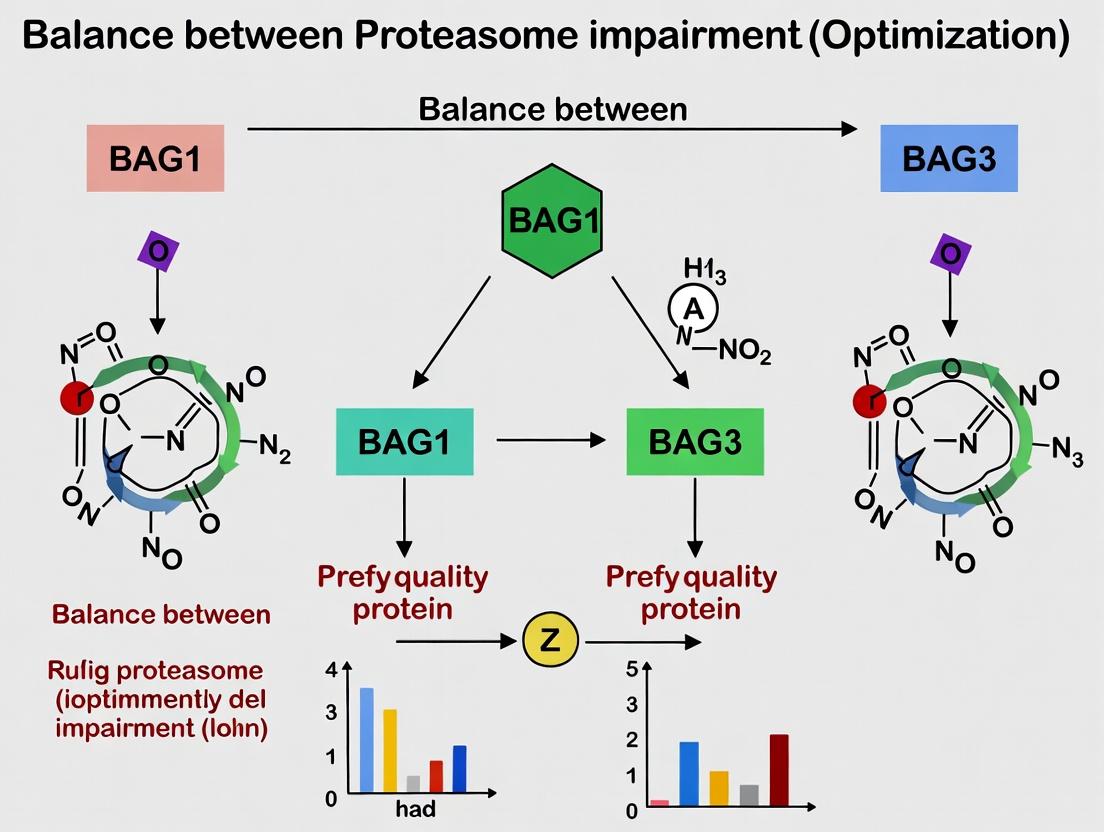
This article provides a comprehensive analysis of the dynamic molecular switch from BAG1 to BAG3 during proteasome impairment, a critical adaptive cellular response to proteotoxic stress.
Proteasome Impairment Optimization: The BAG1 to BAG3 Molecular Switch in Cellular Stress and Disease
Abstract
This article provides a comprehensive analysis of the dynamic molecular switch from BAG1 to BAG3 during proteasome impairment, a critical adaptive cellular response to proteotoxic stress. Aimed at researchers, scientists, and drug development professionals, it covers the foundational biology of BAG co-chaperones and proteostasis. It details methodological approaches for inducing and quantifying this switch, outlines troubleshooting strategies for experimental optimization, and validates findings through comparative analysis with other stress pathways. The review synthesizes current research to highlight this switch as a key target for therapeutic intervention in neurodegenerative diseases, cancer, and aging.
Understanding the BAG1-BAG3 Switch: Core Biology and Proteostasis Signaling
Technical Support Center: Troubleshooting BAG1/BAG3 Switch Experiments
This support center is designed for researchers investigating the BAG1-to-BAG3 molecular switch during proteasome impairment. Find solutions to common experimental challenges below.
Troubleshooting Guides & FAQs
Q1: Our immunoblot shows inconsistent BAG1 downregulation upon proteasome inhibition (e.g., with MG-132 or Bortezomib). What could be the issue?
- A: This is often a timing or dosing issue. BAG1 downregulation is a late event in the switch. Ensure you are using a sufficient inhibitor concentration (see Table 1) and extending treatment time beyond 12 hours (often 18-24h). Confirm proteasome inhibition efficacy by monitoring accumulation of a known proteasome substrate (e.g., ubiquitinated proteins, p53, or Nrf1). Also, check antibody specificity; some anti-BAG1 antibodies may cross-react with other BAG family members.
Q2: BAG3 induction is weaker than expected in our cell line after proteasome stress. How can we enhance the response?
- A: BAG3 induction is highly dependent on the HSF1-mediated heat shock response. First, verify that your proteasome inhibitor treatment is effectively activating HSF1 (check for HSF1 localization to the nucleus or phosphorylation). Consider co-treatment with a mild hyperthermic shock (42°C for 1 hour) to potentiate the HSF1 pathway. Also, screen multiple cell lines; some cancer lines have constitutively high BAG3, while others require stronger induction.
Q3: In our co-immunoprecipitation (Co-IP) experiment, the BAG3-HSC70/HSP70 interaction is not detectable under proteasome impairment.
- A: This interaction is ATP-sensitive. Modify your lysis and wash buffers to include 5 mM MgCl₂ and 1 mM ATP (or ATP-γ-S for a non-hydrolyzable analogue) to stabilize the complex. Avoid harsh detergents; use 1% CHAPS or digitonin. Perform the IP at 4°C and include protease inhibitors. A positive control (e.g., heat-shocked cell lysate) is recommended.
Q4: What is the best method to functionally validate the "switch" from BAG1 to BAG3 in regulating protein aggregation?
- A: Employ a sequential knockdown/rescue approach. (1) Knock down BAG1 and observe if it predisposes cells to aggregation upon proteasome impairment. (2) In a BAG1-deficient background, knock down BAG3 – this should exacerbate aggregation. (3) Rescue by expressing siRNA-resistant BAG3 wild-type, but not a mutant lacking the HSC70/HSP70-binding domain (IPV motif). Monitor aggregates using filters for insoluble proteins or immunofluorescence for p62/SQSTM1-positive puncta.
Table 1: Key Expression & Functional Profiles of BAG1 and BAG3
| Parameter | BAG1 | BAG3 |
|---|---|---|
| Major Isoforms | BAG1S (p36), BAG1M (p46), BAG1L (p50) | BAG3 (no major cytosolic isoforms) |
| Primary Domain | Ubiquitin-like (UBL) domain at C-terminus | WW domain, PxxP motifs |
| Key Binding Partner | Proteasome 19S cap, HSC70/HSP70 (N-terminus) | HSC70/HSP70 (IPV motif at C-terminus), 14-3-3γ, Filamin |
| Basal Expression | Widely expressed, high in many cancers | Low in most tissues, high in muscle, some cancers |
| Induction Trigger | Constitutive; often downregulated by proteasome inhibition | Robustly induced by proteasome inhibition, heat shock, oxidative stress |
| Primary Function | Proteasomal Delivery: Targets HSC70/HSP70-bound clients to the proteasome for degradation. | Aggregate Management: Promotes macroautophagy, sequesters clients into aggressomes, provides cytoprotection. |
| Response to 10µM MG-132* | ↓ Downregulation (by ~60-80% at 24h) | ↑ Induction (10-50 fold increase at 24h) |
| Core Pathway | Protein Refolding / Degradation Triage | Aggresome / Autophagy Pathway |
*Representative quantitative data from HeLa or HEK293 cell studies.
Experimental Protocols
Protocol 1: Monitoring the BAG1/BAG3 Switch via Immunoblotting
- Cell Treatment: Plate cells to reach 70% confluency. Treat with DMSO (vehicle) or proteasome inhibitor (e.g., 10 µM MG-132, 100 nM Bortezomib) for 6, 12, 18, and 24 hours.
- Lysis: Harvest cells in RIPA buffer supplemented with protease and phosphatase inhibitors. Briefly sonicate on ice. Centrifuge at 16,000 x g for 15 min at 4°C. Collect supernatant as soluble fraction.
- Insoluble Fraction (Optional): Wash the pellet from step 2 with RIPA buffer, then solubilize in 1x Laemmli buffer with 8M urea by sonication and heating (95°C, 10 min).
- Immunoblot: Load 20-30 µg of soluble protein per lane. Probe with primary antibodies: Anti-BAG1 (1:1000), Anti-BAG3 (1:1000), Anti-HSF1 (p-Ser326, 1:1000), Anti-Ubiquitin (FK2, 1:1000), and a loading control (e.g., GAPDH, 1:5000).
- Analysis: Quantify band intensities. The switch is indicated by decreasing BAG1 and increasing BAG3 signals over time.
Protocol 2: Co-Immunoprecipitation of BAG3 Complexes under Stress
- Preparation: Treat cells (e.g., HEK293) with 10 µM MG-132 for 18 hours.
- Lysis: Lyse cells in ATP-stabilizing IP buffer (50 mM HEPES pH 7.4, 150 mM NaCl, 1% CHAPS, 5 mM MgCl₂, 1 mM ATP, protease inhibitors).
- Pre-Clear: Incubate lysate with Protein A/G beads for 30 min at 4°C. Remove beads.
- Immunoprecipitation: Incubate 500 µg of pre-cleared lysate with 2 µg of anti-BAG3 antibody or IgG control overnight at 4°C with gentle rotation. Add Protein A/G beads for 2 hours.
- Wash & Elute: Wash beads 4x with IP buffer. Elute proteins in 2x Laemmli buffer at 95°C for 5 min.
- Analysis: Perform immunoblotting for BAG3, HSP70/HSC70, and 14-3-3γ.
Pathway and Workflow Visualizations
Diagram Title: BAG1 to BAG3 Switch Pathway During Proteasome Impairment
Diagram Title: Core Workflow for Studying the BAG1/BAG3 Switch
The Scientist's Toolkit: Key Research Reagent Solutions
Table 2: Essential Reagents for BAG1/BAG3 Switch Research
| Reagent | Supplier Examples (Catalog #) | Function in Experiment |
|---|---|---|
| Proteasome Inhibitors | MG-132 (Selleckchem S2619), Bortezomib (Sigma 5043140001) | Induce proteotoxic stress to trigger the BAG1/BAG3 expression switch. |
| BAG1 Antibody | Cell Signaling #7064 (Rabbit mAb), Santa Cruz sc-33703 (Mouse mAb) | Detect BAG1 isoforms (p36/p46/p50) by immunoblot or immunofluorescence. |
| BAG3 Antibody | Proteintech 10599-1-AP, Novus Biologicals NBP1-49423 | Detect induced BAG3 expression; some antibodies useful for IP. |
| Phospho-HSF1 (Ser326) Ab | Cell Signaling #4356 | Marker for activated HSF1, confirming stress response initiation. |
| HSP70/HSC70 Antibody | Enzo ADI-SPA-820 (HSC70), Cell Signaling #4872 (HSP70) | Detect key binding partners for both BAG1 and BAG3 in Co-IP/blots. |
| p62/SQSTM1 Antibody | Abcam ab109012, MBL PM045 | Marker for protein aggregates and autophagic structures in IF. |
| siRNA Pools (BAG1, BAG3) | Dharmacon (L-004632, L-020077), Santa Cruz (sc-29837, sc-60767) | Knockdown genes to establish functional necessity in the switch. |
| ATP, MgCl₂ Solution | Sigma A2383, M1028 | Critical additives to lysis buffers for stabilizing BAG3-HSP70 complexes in Co-IP. |
| Digitonin or CHAPS | Sigma D141, C3023) | Mild detergents for native complex co-immunoprecipitation experiments. |
Technical Support Center
Troubleshooting Guide: UPS & BAG Protein Research
Issue 1: Inconsistent BAG1 to BAG3 Switch Observation
- Symptom: Variable BAG3 upregulation during proteasome inhibition experiments.
- Root Cause: Inconsistent level or duration of proteasome impairment.
- Solution: Standardize proteasome inhibitor concentration and treatment time. Verify inhibition efficiency using a proteasome activity assay (see Protocol 1). Ensure consistent cellular stress levels by monitoring HSF1 activation or HSP70 upregulation as a control.
Issue 2: High Background in Ubiquitinated Protein Detection
- Symptom: Smear or high signal in control lanes during western blot for poly-ubiquitinated proteins.
- Root Cause: Inadequate deubiquitinase (DUB) inhibition during lysis or non-specific antibody binding.
- Solution: Include potent DUB inhibitors (e.g., 5-10 mM N-Ethylmaleimide) in the lysis buffer. Use a heated denaturing lysis buffer (with 1% SDS). Optimize antibody dilution and increase wash stringency (see Protocol 2).
Issue 3: Poor Viability in Chronic Proteasome Impairment Models
- Symptom: Excessive cell death before BAG protein switch can be analyzed.
- Root Cause: Overwhelming proteotoxic stress or lack of adaptive autophagy induction.
- Solution: Titrate proteasome inhibitor to a sub-lethal dose. Consider using low-dose, prolonged treatment (e.g., 48-72 hours). Co-monitor autophagy markers (LC3-II conversion) to ensure adaptive pathway activation.
Frequently Asked Questions (FAQs)
Q1: What are the definitive markers to confirm successful proteasome impairment in my cell model? A: A combination of functional and biochemical markers is recommended:
- Functional: Use a fluorogenic substrate (e.g., Suc-LLVY-AMC) to measure chymotrypsin-like activity. >70% inhibition is a strong indicator.
- Biochemical: Accumulation of well-characterized proteasome substrates (e.g., p53, IκBα, Nrf1) and a general increase in high-molecular-weight poly-ubiquitin conjugates.
Q2: How do I distinguish between a general stress response and a specific BAG1-to-BAG3 program switch? A: The switch is characterized by:
- Downregulation of BAG1 (particularly the nuclear isoform BAG1L).
- Concurrent upregulation of BAG3 mRNA and protein.
- Re-localization of client proteins and chaperones (like Hsp70) from BAG1 to BAG3 complexes. This is specific compared to general heat-shock response, which upregulates both BAG1 and BAG3. Use siRNA against BAG3 as a negative control; it should block the adaptive aggregation and autophagy response.
Q3: Which techniques are best for monitoring the functional outcome of the BAG switch? A:
- Aggresome Formation: Visualize via immunostaining for vimentin and ubiquitinated proteins (see Protocol 3).
- Autophagic Flux: Monitor LC3-I to LC3-II conversion in the presence/absence of lysosomal inhibitors (e.g., bafilomycin A1).
- Cell Survival: Use long-term clonogenic assays, as short-term viability assays may not reflect the adaptive benefit.
Experimental Protocols
Protocol 1: Measuring Proteasome Activity in Cultured Cells
- Treat cells with your chosen proteasome inhibitor (e.g., MG132, Bortezomib) for the desired time.
- Wash cells with PBS and lyse in hypotonic buffer (25 mM Tris-HCl pH 7.5, 5 mM MgCl2, 1 mM ATP, 1 mM DTT, 0.05% NP-40).
- Clarify lysate by centrifugation at 15,000 g for 15 min at 4°C.
- Incubate 50 µg of lysate with 100 µM fluorogenic substrate Suc-LLVY-AMC in assay buffer (50 mM Tris-HCl pH 7.5) in a black 96-well plate.
- Measure fluorescence (Ex/Em: 350/440 nm) kinetically over 60-90 minutes at 37°C using a plate reader.
- Calculate activity from the linear slope and normalize to protein concentration.
Protocol 2: Detecting Poly-Ubiquitinated Proteins by Western Blot
- Lysate Preparation: Lyse cells in pre-heated (95°C) 1x Laemmli buffer containing 5 mM N-Ethylmaleimide. Immediately boil samples for 10 minutes.
- Gel Electrophoresis: Load 20-50 µg protein on a 4-12% gradient SDS-PAGE gel. Use a low-voltage, long-run (e.g., 90V for 3 hours) for optimal separation of high-MW species.
- Transfer: Perform wet transfer to PVDF membrane at 4°C for 2-3 hours.
- Blocking & Probing: Block with 5% BSA in TBST. Incubate with primary antibody against poly-ubiquitin (e.g., FK2 clone) or K48-linkage specific Ub, diluted in blocking buffer overnight at 4°C.
- Detection: Use a highly sensitive chemiluminescent substrate and avoid overexposure.
Protocol 3: Staining for Aggresomes After Proteasome Impairment
- Culture cells on glass coverslips and treat with proteasome inhibitor.
- Fix with 4% paraformaldehyde for 15 min, permeabilize with 0.2% Triton X-100 for 10 min.
- Block with 5% normal goat serum for 1 hour.
- Co-stain with primary antibodies against Ubiquitin (1:200) and Vimentin (1:500) overnight at 4°C.
- Incubate with fluorescent secondary antibodies (e.g., Alexa Fluor 488 and 555) for 1 hour. Include DAPI for nuclei.
- Image using a confocal microscope. Aggresomes appear as a single, perinuclear inclusion co-staining for ubiquitin and vimentin.
Data Presentation
Table 1: Common Proteasome Inhibitors and Experimental Use
| Inhibitor Name | Target Specificity | Typical Working Concentration (Cell Culture) | Key Considerations for BAG Switch Studies |
|---|---|---|---|
| MG132 | Chymotrypsin-like, Trypsin-like | 5 - 20 µM | Reversible; short-term treatments (4-12h); can induce ER stress. |
| Bortezomib | Chymotrypsin-like | 10 - 100 nM | Clinically relevant; irreversible; used for longer-term impairment models. |
| Epoxomicin | Chymotrypsin-like, Caspase-like | 100 nM - 1 µM | Highly specific and irreversible; minimal off-target effects. |
| Carfilzomib | Chymotrypsin-like | 5 - 50 nM | Second-generation, irreversible; high selectivity. |
| Lactacystin | All three catalytic sites | 5 - 20 µM | Irreversibly modifies active sites; slower cell penetration. |
Table 2: Quantitative Markers of UPS Impairment and Adaptive Response
| Assay | Control Value (Typical) | Impaired UPS Value (Typical) | Measurement Method |
|---|---|---|---|
| Proteasome Activity | 100% | 10-30% | Fluorogenic substrate (Suc-LLVY-AMC) hydrolysis |
| Poly-Ubiquitin Conjugates | 1x (Baseline) | 3-10x increase | Densitometry of Western blot high-MW smear |
| BAG1 Protein Level | 1x | 0.2-0.5x decrease | Quantitative Western blot, normalized to Actin |
| BAG3 Protein Level | 1x | 3-8x increase | Quantitative Western blot, normalized to Actin |
| Aggresome-Positive Cells | <5% | 40-70% | Immunofluorescence microscopy count |
Visualizations
Diagram Title: BAG1-to-BAG3 Switch Signaling Pathway During UPS Impairment
Diagram Title: Key Experimental Workflow for Studying BAG Switch
The Scientist's Toolkit: Research Reagent Solutions
| Reagent / Material | Function in UPS/BAG Research | Key Consideration |
|---|---|---|
| MG132 (Z-Leu-Leu-Leu-al) | Reversible proteasome inhibitor. Induces rapid UPS impairment for acute studies. | Prepare fresh stock in DMSO. Controls should contain equivalent DMSO. |
| Bafilomycin A1 | V-ATPase inhibitor that blocks autophagosome-lysosome fusion. Essential for measuring autophagic flux. | Use at 50-100 nM for 4-6 hours. Toxic with prolonged treatment. |
| Anti-K48-linkage Ubiquitin Antibody | Specifically detects K48-linked poly-Ub chains, the primary signal for proteasomal degradation. | Critical for distinguishing degradative ubiquitination from other types. |
| Anti-BAG3 (clone E-9) Antibody | Mouse monoclonal for reliable detection of human BAG3 protein in Western blot and IP. | Also useful for immunofluorescence to show BAG3 puncta formation. |
| siRNA against BAG3 | Validated pools for knocking down BAG3 expression to establish its necessity in the adaptive response. | Include non-targeting and viability-positive controls. Transfect before inhibitor treatment. |
| Proteasome Activity Assay Kit | Fluorogenic kit (e.g., Suc-LLVY-AMC based) for quantifying chymotrypsin-like activity in cell lysates. | Normalize activity to total protein. Run alongside a positive control inhibitor well. |
| Aggresome Detection Kit | Commercial kit containing fluorescently-labeled Proteostat dye and reference stains. | Quick alternative to antibody staining. Validates protein aggregate formation. |
| Poly-D-Lysine Coated Coverslips | Provides strong adhesion for cells undergoing severe stress, preventing detachment during processing. | Essential for immunofluorescence experiments following proteasome inhibition. |
Technical Support Center: Troubleshooting Proteasome Impairment Assays
Frequently Asked Questions (FAQs)
Q1: My proteasome activity assay (using a fluorogenic substrate like Suc-LLVY-AMC) shows high background fluorescence or inconsistent readings. What could be the cause? A1: High background can result from substrate auto-hydrolysis, contamination, or cell lysate proteases. Ensure substrates are freshly prepared in anhydrous DMSO and stored at -20°C. Include a control with a specific proteasome inhibitor (e.g., MG-132, Bortezomib) to confirm signal specificity. Perform assays on ice and read plates immediately. Check for microbial contamination in buffers.
Q2: When inducing proteasome impairment with MG-132, my cells detach and die rapidly, making subsequent protein analysis difficult. How can I optimize treatment? A2: MG-132 is highly toxic. Titrate the concentration (common range 1-10 µM) and duration (2-8 hours). Use a lower serum concentration (e.g., 0.5-2% FBS) during treatment to reduce metabolic activity and slow degradation. Consider using a reversible inhibitor like MG-132 over lactacystin for shorter pulses. Pre-treat cells with a pan-caspase inhibitor (e.g., Z-VAD-FMK) if apoptosis is the primary confounding factor.
Q3: I am investigating the BAG1 to BAG3 switch. My western blots for BAG3 are inconsistent, showing smears or no signal. What should I check? A3: BAG3 can form aggregates and is regulated transcriptionally. Ensure you use a fresh, high-quality reducing agent in your Laemmli buffer (e.g., DTT or β-mercaptoethanol). Increase gel percentage (e.g., 12-15% SDS-PAGE) for better resolution. Since BAG3 induction is time-dependent post-proteasome inhibition, perform a time course (e.g., 4, 8, 12, 24h). Use a positive control, such as lysate from HEK293 cells treated with 5µM MG-132 for 12 hours.
Q4: My immunofluorescence for ubiquitin or p62/SQSTM1 shows diffuse staining instead of the expected punctate aggregates upon proteasome inhibition. What went wrong? A4: This often indicates inadequate fixation or permeabilization. For ubiquitin/p62 aggregates, use paraformaldehyde fixation (4% for 15 min) followed by permeabilization with 0.2-0.5% Triton X-100 for 10 min. Avoid methanol fixation for these targets. Confirm proteasome impairment is successful by checking for nuclear NRF1/NFE2L1 accumulation, an early marker of proteotoxic stress.
Q5: I need to quantify autophagic flux in the context of the BAG switch, but the LC3-II turnover assay with bafilomycin A1 is not showing a clear difference. Any suggestions? A5: The BAG1/BAG3 switch primarily regulates chaperone-mediated autophagy and macroautophagy. For LC3-II flux, ensure you are using a sufficient concentration of bafilomycin A1 (e.g., 100 nM) for an appropriate duration (4-6 hours). Normalize LC3-II levels to a stable loading control (e.g., GAPDH, not tubulin, which is autophagy-sensitive). Consider complementary assays like a tandem mRFP-GFP-LC3 reporter to distinguish autophagosomes from lysosomes.
Table 1: Common Proteasome Inhibitors and Their Experimental Use
| Inhibitor Name | Target | Typical Working Concentration | Incubation Time | Key Considerations |
|---|---|---|---|---|
| MG-132 | Reversible, targets chymotrypsin-like site | 1 - 10 µM | 2 - 8 hours | Highly toxic, promotes rapid aggregation. |
| Bortezomib | Reversible, chymotrypsin-like site | 10 - 100 nM | 4 - 24 hours | Clinical relevance, can be used in vivo. |
| Carfilzomib | Irreversible, chymotrypsin-like site | 5 - 50 nM | 2 - 24 hours | More specific than bortezomib, less off-target. |
| Epoxomicin | Irreversible, all catalytic sites | 1 - 5 µM | 4 - 12 hours | Potent and specific, good for biochemical assays. |
| Lactacystin | Irreversible, primarily chymotrypsin-like | 5 - 20 µM | 4 - 12 hours | Converts to active form in cells, less toxic than MG-132. |
Table 2: Markers for Monitoring Proteotoxic Stress & the BAG Switch
| Marker | Technique | Expected Change During Proteasome Impairment | Notes for BAG1/BAG3 Context |
|---|---|---|---|
| Poly-Ubiquitinated Proteins | Western Blot (FK2 antibody) | Sharp Increase | BAG3 co-localizes with ubiquitinated aggregates. |
| p62/SQSTM1 | IF / Western Blot | Accumulation & Aggregation | BAG3 facilitates p62-dependent aggrephagy. |
| BAG1 | Western Blot / qPCR | Decrease (Protein & Transcript) | BAG1 promotes proteasomal degradation. |
| BAG3 | Western Blot / qPCR | Sharp Increase (Protein & Transcript) | BAG3 is stress-induced, promotes autophagy. |
| HSF1 Phosphorylation | Phos-tag Gel / Western Blot | Increase (S326) | Upstream regulator of BAG3 transcription. |
| LC3-II | Western Blot | Increase | Assess flux with bafilomycin A1 to confirm BAG3's autophagic role. |
| NRF1 (cleaved form) | Western Blot | Nuclear Accumulation | Early marker of proteasome impairment. |
Experimental Protocols
Protocol 1: Inducing and Validating Acute Proteasome Impairment for BAG Switch Studies
Title: Acute Proteasome Inhibition and Lysate Preparation Objective: To induce proteotoxic stress and prepare cell lysates for analyzing the BAG1 to BAG3 transition.
Materials:
- HeLa, HEK293, or relevant cell line.
- DMSO (vehicle control)
- MG-132 stock (10 mM in DMSO)
- Lysis Buffer: RIPA buffer supplemented with 1x protease inhibitor cocktail, 1x phosphatase inhibitor, 10 mM N-ethylmaleimide (NEM) to inhibit deubiquitinases.
- BCA Protein Assay Kit
Method:
- Seed cells in 6-well plates to reach 70-80% confluency at the time of treatment.
- Treat cells: Prepare medium containing 5 µM MG-132 or an equal volume of DMSO. Replace medium on cells and incubate for 6 hours at 37°C, 5% CO2.
- Harvest lysates:
- Place plates on ice. Aspirate medium and wash cells twice with cold PBS.
- Add 150 µL of cold lysis buffer per well. Scrape cells and transfer the suspension to a microcentrifuge tube.
- Incubate on ice for 15 minutes with brief vortexing every 5 minutes.
- Centrifuge at 16,000 x g for 15 minutes at 4°C.
- Transfer the supernatant (cleared lysate) to a new tube.
- Determine protein concentration using the BCA assay.
- Validate Impairment: By western blot, probe 20-30 µg of lysate for poly-ubiquitinated proteins (high molecular weight smear) and loss of BAG1. Successful impairment is confirmed by a clear increase in ubiquitin signal and the emergence of BAG3 signal compared to DMSO control.
Protocol 2: Co-immunoprecipitation to Examine BAG3 Complex Formation
Title: BAG3 Complex Immunoprecipitation Post-Stress Objective: To isolate protein complexes containing BAG3 after proteasome impairment.
Materials:
- Cell lysates from Protocol 1 (MG-132 treated).
- Protein A/G Magnetic Beads
- Anti-BAG3 antibody (precipitating) and matched species control IgG.
- IP Wash Buffer: 50 mM Tris-HCl pH 7.5, 150 mM NaCl, 1 mM EDTA, 0.5% NP-40.
- Elution Buffer: 1X Laemmli sample buffer.
Method:
- Pre-clear lysate: Incubate 500 µg of lysate with 20 µL of magnetic beads for 30 min at 4°C. Pellet beads and collect supernatant.
- Antibody binding: Incubate the pre-cleared lysate with 2 µg of anti-BAG3 antibody or control IgG overnight at 4°C with gentle rotation.
- Capture complexes: Add 30 µL of magnetic beads and incubate for 2 hours at 4°C.
- Wash: Pellet beads magnetically. Wash 4 times with 500 µL of cold IP Wash Buffer.
- Elute: Resuspend beads in 40 µL of 1X Laemmli buffer. Heat at 95°C for 5 minutes. Pellet beads and load supernatant on an SDS-PAGE gel.
- Analysis: Probe western blot for expected interactors such as HSP70, HSPB8, CHIP (STUB1), and p62 to confirm BAG3's engagement in the chaperone/aggrephagy system.
The Scientist's Toolkit: Research Reagent Solutions
Table 3: Essential Reagents for BAG1/BAG3 Switch Research
| Reagent | Function & Role in Research | Example Product / Cat. No. (Representative) |
|---|---|---|
| Proteasome Inhibitor (MG-132) | Induces reversible proteasome impairment, triggering the core proteotoxic stress. | MG-132 (Selleckchem, S2619) |
| Proteasome Activity Assay Kit | Measures chymotrypsin-like (or other) proteasome activity to quantify impairment. | Proteasome-Glo Assay (Promega, G8630) |
| Anti-BAG1 Antibody | Detects baseline levels of BAG1, which should decrease upon stress. | Cell Signaling Tech, #3251 |
| Anti-BAG3 Antibody | Critical for detecting stress-induced upregulation of BAG3 protein. | Proteintech, 10599-1-AP |
| Anti-Ubiquitin (FK2) Antibody | Detects K48-/K63-linked poly-ubiquitin chains accumulating upon impairment. | Millipore, ST1200 |
| Anti-p62/SQSTM1 Antibody | Marks protein aggregates and reports on autophagic status. | Abcam, ab56416 |
| Tandem mRFP-GFP-LC3 Reporter | Quantifies autophagic flux (GFP quenched in lysosomes, RFP stable). | Addgene, #21074 |
| HSF1 Inhibitor (KRIBB11) | Tool to inhibit HSF1-mediated transcription, used to confirm BAG3 regulation. | Tocris, #4496 |
| Bafilomycin A1 | V-ATPase inhibitor that blocks autophagosome-lysosome fusion, used in flux assays. | Sigma, B1793 |
Pathway & Workflow Visualizations
Title: Proteotoxic Stress Triggers, Signaling, and the BAG Switch
Title: Experimental Workflow for Studying the BAG Switch
Technical Support Center
Troubleshooting Guides & FAQs
FAQ 1: I am investigating the BAG1 to BAG3 switch during proteasome inhibition. My co-immunoprecipitation (Co-IP) for BAG1 is consistently showing weak or no signal. What could be the issue?
- Answer: This is a common issue. BAG1 is a short-lived protein under proteasomal control. Consider these troubleshooting steps:
- Optimize Proteasome Inhibition: Ensure your proteasome inhibitor (e.g., MG132, Bortezomib) is active. Prepare fresh stock solution in DMSO, confirm working concentration (typically 10-20 µM for MG132), and treat cells for an optimal duration (4-8 hours). Longer treatments may induce apoptosis, confounding results.
- Lysis Buffer: Use a strong RIPA buffer supplemented with fresh protease inhibitors and 5-10 mM N-Ethylmaleimide (NEM) to inhibit deubiquitinases that might prematurely remove ubiquitin chains from BAG1.
- Antibody Validation: Verify your BAG1 antibody's specificity via siRNA knockdown. The apparent loss of signal might actually be the biological switch occurring; simultaneously probe for BAG3 upregulation as a positive control for stress response activation.
FAQ 2: In my fluorescence microscopy experiment, I expect to see BAG3 granules forming upon stress, but I observe a diffuse signal. How can I improve granule visualization?
- Answer: BAG3-positive granules (e.g., stress granules, aggressomes) require specific conditions.
- Stressor Timing & Strength: Proteasome impairment alone may be insufficient. Consider combining a low dose of MG132 (5 µM) with a mild thermal stress (41°C) for 1-2 hours to robustly induce compartmentalization.
- Fixation & Permeabilization: Use pre-warmed (37°C) paraformaldehyde (4%) for fixation to preserve granule architecture. For permeabilization, use 0.1% Triton X-100 for 5 minutes on ice.
- Inclusion of a Granule Marker: Co-stain with a known marker like G3BP1 (for stress granules) or HDAC6 (for aggressomes) to confirm the identity of the structures and optimize imaging settings.
FAQ 3: When measuring protein turnover via cycloheximide chase, the half-life data for my client proteins is highly variable. What are key protocol controls?
- Answer: Variability often stems from inconsistent stressor application.
- Pre-equilibration: Ensure cells are under sustained proteasome impairment before adding cycloheximide. Pre-treat with MG132 for 1 hour, then add cycloheximide (100 µg/mL) in the continued presence of MG132.
- BAG3 Dependency Control: Include a BAG3 knockdown condition. If the stabilized client protein in stress conditions reverts to rapid turnover upon BAG3 knockdown, it confirms the specific role of the BAG switch.
- Harvest Timing: Use precise, rapid lysis at each time point (e.g., 0, 15, 30, 60, 120 mins post-CHX). Keep plates on ice and lyse immediately.
Table 1: Characteristic Properties of BAG1 vs. BAG3
| Property | BAG1 | BAG3 |
|---|---|---|
| Primary Domains | Ubiquitin-like, BAG, PXXP | WW, IPV, BAG, PXXP |
| HSP70 Interaction | Binds via BAG domain (proteasome pathway) | Binds via BAG domain (autophagic pathway) |
| Half-life (Basal) | ~30-60 minutes | >4 hours |
| Response to Proteasome Inhibition | Rapidly depleted (ubiquitin/proteasome target) | Strongly induced (transcriptionally via HSF1) |
| Primary Degradation Pathway | Proteasomal | Autophagic (via interaction with p62/SQSTM1) |
| Cellular Localization (Stress) | Cytosolic/Nuclear, diffuse | Perinuclear Aggresomes, Stress Granules |
Table 2: Experimental Outcomes of BAG1/BAG3 Modulation on Client Protein (e.g., Tau) Clearance
| Experimental Condition | Client Protein Half-life (t½) | Aggresome Formation | Pathway Activity |
|---|---|---|---|
| Basal (No Stress) | ~45 min | No | Proteasomal (BAG1-assisted) |
| Proteasome Inhibited (MG132) | >4 hours | Yes | Stalled |
| Proteasome Inhibited + BAG3 siRNA | ~90 min | Reduced | Partial Proteasomal Rescue |
| Proteasome Inhibited + BAG1 Overexpression | >4 hours | Yes | No Rescue (BAG1 itself degraded) |
Experimental Protocols
Protocol 1: Validating the BAG1/BAG3 Switch via Immunoblotting
- Objective: To detect the depletion of BAG1 and induction of BAG3 upon proteasome impairment.
- Methodology:
- Cell Treatment: Seed HEK293 or HeLa cells in 6-well plates. At 80% confluency, treat with 10 µM MG132 or DMSO vehicle control for 0, 2, 4, 6, and 8 hours.
- Lysis: Aspirate medium, wash with ice-cold PBS. Lyse cells in 150 µL RIPA buffer (+ protease inhibitors, 5mM NEM) on ice for 15 min. Centrifuge at 16,000 x g for 15 min at 4°C.
- Immunoblot: Load 20-30 µg protein on a 4-12% Bis-Tris gel. Transfer to PVDF membrane. Block with 5% BSA. Probe with primary antibodies: Anti-BAG1 (1:1000), Anti-BAG3 (1:1000), Anti-HSF1 (1:2000), and loading control (e.g., GAPDH, 1:5000). Use appropriate HRP-conjugated secondary antibodies and develop with ECL.
Protocol 2: Co-immunoprecipitation of BAG3 Complexes under Stress
- Objective: To isolate BAG3 complexes with HSP70 and client proteins during proteotoxic stress.
- Methodology:
- Induction & Crosslinking: Treat cells with 10 µM MG132 for 6 hours. For strong interactions, use a cell-permeable crosslinker (e.g., DSP, 1 mM) for 30 min at room temperature before lysis. Quench with 20mM Tris pH 7.5.
- Immunoprecipitation: Lyse cells in mild NP-40 lysis buffer. Pre-clear lysate with Protein A/G beads for 1 hour. Incubate 500 µg lysate with 2 µg of BAG3 antibody or IgG control overnight at 4°C with gentle rotation.
- Pull-down & Elution: Add 30 µL Protein A/G bead slurry for 2 hours. Wash beads 4x with lysis buffer. Elute bound proteins by boiling in 2X Laemmli buffer for 5 min. Analyze by immunoblotting for BAG3, HSP70, and your client protein of interest.
Pathway & Workflow Diagrams
Diagram Title: BAG1 to BAG3 Switch in Proteotoxic Stress
Diagram Title: Core Experimental Workflow for BAG Switch
The Scientist's Toolkit: Key Research Reagent Solutions
| Reagent | Function & Rationale |
|---|---|
| MG-132 (Proteasome Inhibitor) | Reversible inhibitor of the 26S proteasome's chymotrypsin-like activity. Induces proteotoxic stress, triggering the canonical experimental condition for the BAG switch. |
| Bortezomib (Clinical Grade PI) | Dipeptidyl boronic acid inhibitor used to validate findings with a clinically relevant therapeutic agent. |
| Cycloheximide | Protein synthesis inhibitor. Used in chase experiments to measure the half-life of client proteins dependent on BAG1 vs. BAG3 pathways. |
| N-Ethylmaleimide (NEM) | Alkylating agent that inhibits deubiquitinating enzymes (DUBs). Preserves ubiquitination status of BAG1 and other substrates during lysis. |
| DSP (Dithiobis[succinimidyl propionate]) | Thiol-cleavable, membrane-permeable crosslinker. Stabilizes transient protein-protein interactions (e.g., BAG3-HSP70-client) for co-immunoprecipitation. |
| HSF1 siRNA Pool | Targeted knockdown of Heat Shock Factor 1. Essential negative control to demonstrate that BAG3 induction under stress is HSF1-dependent. |
| BAG3 Fluorescent Fusion Tag (e.g., BAG3-mCherry) | Enables live-cell imaging of BAG3 granule dynamics and co-localization studies with autophagic markers (e.g., LC3). |
| p62/SQSTM1 Antibody | Marker for protein aggregates and autophagic cargo. Co-staining confirms BAG3's role in directing clients to selective autophagy. |
Connecting the Switch to Aggresome Formation and Selective Autophagy
Technical Support Center
Troubleshooting Guides & FAQs
Q1: We are studying the BAG1 to BAG3 switch upon proteasome inhibition. Our western blot for BAG3 is inconsistent, showing high background. What could be the issue? A1: High background in BAG3 western blots is a common issue. This is often due to antibody non-specificity or suboptimal blocking.
- Solution:
- Titrate your primary antibody. A typical starting range for anti-BAG3 (e.g., Proteintech 10599-1-AP) is 1:500 to 1:2000.
- Optimize blocking buffer. Use 5% non-fat dry milk in TBST for 1 hour at room temperature. If background persists, switch to 3-5% BSA.
- Increase wash stringency. Perform three 10-minute washes with TBST containing 0.1% Tween-20 after primary and secondary antibody incubation.
- Protocol: Optimized Western Blot for BAG3
- Lyse cells in RIPA buffer with protease inhibitors.
- Load 20-40 µg of protein per lane on a 4-12% Bis-Tris gel.
- Transfer to PVDF membrane at 100V for 70 minutes at 4°C.
- Block with 5% BSA in TBST for 1 hour.
- Incubate with anti-BAG3 primary antibody (1:1000 in blocking buffer) overnight at 4°C.
- Wash 3x10 min with TBST.
- Incubate with HRP-conjugated secondary antibody (1:5000) for 1 hour at RT.
- Wash 3x10 min with TBST.
- Develop with enhanced chemiluminescence substrate.
Q2: When inducing proteasome impairment with MG-132, we do not observe robust aggresome formation via fluorescence microscopy. What parameters should we check? A2: Failed aggresome formation can result from incorrect drug dosage, timing, or cell confluency.
- Solution:
- Verify MG-132 concentration and viability. Perform a dose-response (0.5 µM to 10 µM) and time-course (6h to 24h) experiment. Use CellTiter-Glo to measure cytotoxicity. Optimal conditions are often 5 µM for 12-16 hours, but this varies by cell line.
- Check cell density. Plate cells to reach 50-60% confluency at the time of treatment. Over-confluent cells may not form clear aggresomes.
- Include a positive control. Co-stain for vimentin or HDAC6, which are key aggresome scaffold components. Use Proteostat Aggresome Detection Kit (Enzo Life Sciences) as a reliable marker.
- Protocol: Immunofluorescence for Aggresome Detection
- Plate cells on poly-L-lysine coated coverslips.
- Treat with 5 µM MG-132 for 16 hours.
- Fix with 4% paraformaldehyde for 15 minutes.
- Permeabilize with 0.1% Triton X-100 for 10 minutes.
- Block with 5% goat serum for 1 hour.
- Incubate with primary antibodies (e.g., anti-p62/SQSTM1 1:500, anti-vimentin 1:1000) overnight at 4°C.
- Incubate with fluorescent secondary antibodies (1:1000) for 1 hour at RT in the dark.
- Stain with DAPI (1 µg/mL) for 5 minutes.
- Mount and image using a confocal microscope with a 63x oil objective.
Q3: How do we specifically monitor the "switch" from BAG1 to BAG3 expression quantitatively? A3: The switch is best quantified using qRT-PCR for mRNA and western blot densitometry for protein, normalized to housekeeping genes.
- Solution: Design specific primers for BAG1 and BAG3 isoforms. Run samples from a time-course of proteasome inhibition (e.g., 0, 2, 4, 8, 12, 24h post-MG-132).
- Protocol: qRT-PCR for BAG1/BAG3 mRNA Switch
- Extract total RNA using TRIzol.
- Synthesize cDNA using a high-capacity reverse transcription kit.
- Prepare qPCR reactions with SYBR Green master mix.
- Use the following cycling conditions: 95°C for 10 min; 40 cycles of 95°C for 15 sec, 60°C for 1 min.
- Analyze using the 2^(-ΔΔCt) method. Normalize BAG1 and BAG3 Ct values to GAPDH or β-actin.
- Express data as fold-change relative to untreated control (time 0).
Q4: We suspect impaired selective autophagy is affecting our model. How can we functionally assay autophagic flux in the context of aggresome clearance? A4: Monitor the turnover of autophagy substrates like p62 and LC3-II in the presence and absence of lysosomal inhibitors.
- Solution: Treat cells with MG-132 to form aggresomes, then wash out and chase in the presence or absence of bafilomycin A1 (100 nM) or chloroquine (50 µM). Harvest cells at intervals (0, 2, 4, 8h) and analyze by western blot.
- Key Indicators: Increased p62 and LC3-II levels in the presence of lysosomal inhibitors compared to chase alone indicate functional autophagic flux.
Table 1: Optimized Conditions for Proteasome Impairment & Aggresome Formation
| Cell Line | Proteasome Inhibitor | Optimal Concentration | Treatment Duration | Key Readout (Aggresome % Positive Cells) | Citation (Year) |
|---|---|---|---|---|---|
| HeLa | MG-132 | 5 µM | 16 h | ~75% (p62-positive foci) | Gamerdinger et al. (2009) |
| SH-SY5Y | Bortezomib | 100 nM | 24 h | ~65% (Ubiquitin-positive foci) | Zheng et al. (2016) |
| HEK293 | Epoxomicin | 1 µM | 12 h | ~80% (Proteostat-positive) | Myeku et al. (2016) |
| U2OS | Lactacystin | 10 µM | 18 h | ~70% (HDAC6-colocalized) | Johnston et al. (2018) |
Table 2: Quantitative Changes in BAG1/BAG3 Expression Post-Proteasome Inhibition
| Time Post-MG-132 (5µM) Treatment | BAG1 mRNA (Fold Change) | BAG3 mRNA (Fold Change) | BAG1 Protein (Relative Densitometry) | BAG3 Protein (Relative Densitometry) | Autophagic Flux (LC3-II Turnover Ratio) |
|---|---|---|---|---|---|
| 0 h | 1.0 ± 0.2 | 1.0 ± 0.1 | 1.0 ± 0.15 | 1.0 ± 0.12 | 1.0 |
| 4 h | 0.8 ± 0.15 | 2.5 ± 0.3 | 0.9 ± 0.1 | 1.8 ± 0.2 | 1.2 |
| 8 h | 0.6 ± 0.1 | 4.8 ± 0.5 | 0.7 ± 0.08 | 3.5 ± 0.4 | 2.1 |
| 16 h | 0.5 ± 0.08 | 6.2 ± 0.7 | 0.5 ± 0.05 | 5.2 ± 0.6 | 3.5 |
| 24 h | 0.3 ± 0.05 | 5.5 ± 0.6 | 0.3 ± 0.03 | 6.0 ± 0.7 | 2.8* |
*Potential decline due to lysosomal saturation or cell stress.
The Scientist's Toolkit: Research Reagent Solutions
| Reagent/Catalog Number | Vendor | Primary Function in BAG1/BAG3-Aggresome Research |
|---|---|---|
| MG-132 (Z-Leu-Leu-Leu-al) / 474790 | MilliporeSigma | Reversible proteasome inhibitor; induces proteotoxic stress and the BAG switch. |
| Bafilomycin A1 (B1793) | MilliporeSigma | V-ATPase inhibitor; blocks lysosomal acidification to measure autophagic flux. |
| Proteostat Aggresome Detection Kit (ENZ-51035) | Enzo Life Sciences | Fluorescent dye for specific detection and quantification of aggresomes. |
| Anti-BAG3 antibody (10599-1-AP) | Proteintech | Rabbit polyclonal antibody for detecting BAG3 protein by WB/IF. |
| Anti-BAG1 antibody (ab32104) | Abcam | Rabbit monoclonal antibody for detecting BAG1 protein. |
| p62/SQSTM1 Antibody (5114S) | Cell Signaling Tech | Marker for protein aggregates and autophagic cargo. |
| HDAC6 Antibody (7558S) | Cell Signaling Tech | Marker for the aggresome scaffolding machinery. |
| Lipofectamine 3000 (L3000001) | Thermo Fisher | For siRNA transfection to knock down BAG3, HDAC6, or autophagy genes. |
| CellTiter-Glo Luminescent Viability Assay (G7570) | Promega | Measures ATP levels to assess cell viability during proteasome impairment. |
Experimental Diagrams
Diagram 1: BAG1 to BAG3 Switch and Aggresome Pathway
Diagram 2: Experimental Workflow for Monitoring the Switch
Inducing and Measuring the Switch: Experimental Protocols and Model Systems
Technical Support Center: Troubleshooting & FAQs
This support center is designed to assist researchers in the context of studies investigating the BAG1 to BAG3 molecular switch during proteasome impairment optimization.
Frequently Asked Questions
Q1: My cell viability after MG132 treatment is higher than expected, and I see no evidence of the BAG1 to BAG3 switch. What could be wrong? A: This often indicates insufficient proteasome inhibition. First, verify your MG132 stock concentration and storage. MG132 should be stored at -20°C in DMSO, protected from light, and used within 3 months. Ensure your working concentration is appropriate (typically 5-20 µM for 4-16 hours). Check proteasome activity directly using a fluorogenic substrate (e.g., Suc-LLVY-AMC) to confirm impairment. The BAG1 to BAG3 switch is a stress response; insufficient stress will not trigger it.
Q2: Bortezomib induces rapid cell death in my model, precluding analysis of the adaptive BAG switch. How can I modulate this? A: Bortezomib is a potent, clinically used drug. Consider a pulse-treatment protocol. Treat cells with a lower dose (e.g., 10-50 nM) for 2-4 hours, then wash out and replace with fresh medium. Monitor the BAG1/BAG3 protein levels by western blot over a 24-48 hour recovery period. This can capture the dynamic switch without immediate cytotoxicity. Titration is critical—perform a full dose-response curve.
Q3: Epoxomicin is insoluble in my aqueous cell culture medium. What is the correct preparation method? A: Epoxomicin has very low aqueous solubility. It must first be dissolved in high-quality, anhydrous DMSO to create a concentrated stock (e.g., 1-10 mM). This stock should then be diluted directly into pre-warmed complete cell culture medium with vigorous vortexing or pipette mixing. The final DMSO concentration should not exceed 0.1% (v/v). Do not attempt to prepare an aqueous stock solution.
Q4: In my co-immunoprecipitation experiment, I cannot detect an increased BAG3 interaction with HSP70 after proteasome impairment, as hypothesized. What should I check? A: Focus on lysis conditions. Use a mild, non-denaturing lysis buffer (e.g., with 1% NP-40 or CHAPS) to preserve protein complexes. Include protease inhibitors BUT omit EDTA if possible, as Mg2+ is required for HSP70 ATPase activity and client binding. Perform the lysis and IP steps at 4°C. Consider using a crosslinker like DSP if interactions are transient. Confirm that impairment is successful by monitoring ubiquitinated protein accumulation.
Q5: My quantitative PCR data for BAG3 mRNA upregulation is inconsistent across replicates with MG132 treatment. What are key controls? A: Ensure treatment timing is precise, as BAG3 induction is time-sensitive. Include a robust positive control (e.g., heat shock at 42°C for 1 hour). Verify that your RNA isolation is performed on ice with inhibitors to halt transcription changes during harvest. Use at least two validated reference genes (e.g., GAPDH, HPRT1, B2M) that are unaffected by proteasome stress for normalization.
Key Experimental Protocols
Protocol 1: Validating Proteasome Impairment via Fluorogenic Assay
- Principle: Cleavage of a fluorogenic peptide substrate (Suc-LLVY-AMC) by the chymotrypsin-like activity of the proteasome.
- Steps:
- Harvest treated cells and lyse in hypotonic buffer (50 mM HEPES, pH 7.5, 5 mM EDTA, 150 mM NaCl, 1% Triton X-100).
- Clarify lysate by centrifugation (16,000 x g, 15 min, 4°C).
- In a black 96-well plate, mix 50 µg of lysate with assay buffer (50 mM HEPES, pH 7.5, 5 mM EDTA) and 50 µM Suc-LLVY-AMC substrate. Final volume: 100 µL.
- Immediately measure fluorescence (Ex 380 nm/Em 460 nm) every 5 minutes for 1-2 hours at 37°C using a plate reader.
- Calculate velocity (RFU/min). Activity in treated samples is expressed as a percentage of vehicle control.
Protocol 2: Monitoring the BAG1 to BAG3 Switch by Western Blot
- Principle: Time-course analysis of BAG1 (anti-BAG1, ~50 kDa) and BAG3 (anti-BAG3, ~74 kDa) protein levels post-treatment.
- Steps:
- Seed cells in 6-well plates. Treat with inducer (MG132: 10 µM; Bortezomib: 50 nM; Epoxomicin: 1 µM) for 2, 4, 8, 12, and 24 hours. Include DMSO vehicle controls.
- Lyse cells directly in 1X Laemmli buffer. Boil samples at 95°C for 10 minutes.
- Load equal protein amounts (20-30 µg) on a 4-20% gradient SDS-PAGE gel. Transfer to PVDF membrane.
- Block for 1 hour in 5% non-fat milk in TBST.
- Probe with primary antibodies: anti-BAG1 (1:1000), anti-BAG3 (1:1000), and a loading control (e.g., anti-GAPDH, 1:5000) overnight at 4°C.
- Use HRP-conjugated secondary antibodies and chemiluminescent detection. Quantify band intensities.
Data Presentation: Comparative Profile of Pharmacological Inducers
Table 1: Key Parameters of Pharmacological Proteasome Inhibitors
| Parameter | MG132 (Z-LLL-CHO) | Bortezomib (Velcade) | Epoxomicin |
|---|---|---|---|
| Primary Target | Chymotrypsin-like (β5) site | Chymotrypsin-like (β5) site (high affinity) | Chymotrypsin-like (β5) site |
| Reversibility | Reversible (aldehyde) | Slowly reversible (boronate) | Irreversible (epoxide) |
| Typical Working Conc. | 5 - 20 µM | 10 - 100 nM | 0.1 - 1 µM |
| Incubation Time | 4 - 16 hours | 4 - 24 hours (pulse often used) | 2 - 8 hours |
| Key Advantage | Cost-effective, widely used | Clinical relevance, high potency | Exquisite specificity, irreversible |
| Key Limitation | Less specific, affects other proteases | Can induce aggressive stress response | Poor aqueous solubility |
| Utility for BAG Switch Studies | Good for initial time-course studies | Ideal for modeling clinical proteasome stress | Best for sustained, specific impairment |
The Scientist's Toolkit: Research Reagent Solutions
Table 2: Essential Reagents for BAG Switch Studies Under Proteasome Impairment
| Item | Function/Benefit | Example/Note |
|---|---|---|
| Fluorogenic Proteasome Substrate (Suc-LLVY-AMC) | Directly quantifies chymotrypsin-like activity to confirm impairment before molecular analysis. | Cell-based or lysate-based assays available. |
| BAG1 & BAG3 Specific Antibodies | Distinguish isoforms for western blot, immunofluorescence, or IP. Critical for monitoring the switch. | Rabbit monoclonal antibodies recommended for quantitative blots. |
| HSP70/HSC70 Antibody | For co-immunoprecipitation to study the shifting chaperone complex from BAG1-HSC70 to BAG3-HSP70. | Ensure antibody recognizes both constitutive (HSC70) and inducible (HSP70) forms. |
| Live-Cell Viability Assay (Real-time) | Distinguish cytostasis from death during long-term time-courses to pinpoint the switch window. | Use impedance-based (e.g., xCELLigence) or fluorescent dye assays. |
| CHX (Cycloheximide) | Protein synthesis inhibitor. Used in chase experiments to measure protein half-life changes of BAG1/BAG3 during impairment. | Use at low dose (e.g., 10 µg/mL) to block new synthesis. |
| Proteasome Activity-Based Probes | Visualize active proteasome subunits in-gel or in-cells via fluorescence or biotin. | Confirm inhibitor engagement and specificity. |
Visualizations
Diagram 1: BAG1 to BAG3 Switch Mechanism Under Proteasome Impairment
Diagram 2: Experimental Workflow for Optimizing Impairment to Study the Switch
Troubleshooting & FAQs: Technical Support Center
Q1: In my siRNA knockdown experiment targeting PSMB5, I observe high cytotoxicity before achieving sufficient proteasome impairment. What could be the cause and how can I mitigate this? A1: Off-target effects are common. Use a pool of 3-4 validated siRNAs at lower concentrations (e.g., 10-20 nM) and include a non-targeting siRNA control. Perform a time-course analysis (24h, 48h, 72h) to find the optimal window where knockdown is maximal (>70% by qPCR/WB) before secondary cytotoxicity dominates. Always correlate knockdown with a functional assay (e.g., fluorogenic proteasome activity assay).
Q2: When comparing the BAG1 to BAG3 switch, chemical inhibition with MG-132 shows a robust switch, but PSMD1 knockdown does not. Why this discrepancy? A2: Chemical inhibitors like MG-132 affect all proteasomal activities (chymotrypsin, trypsin, caspase-like) simultaneously and immediately. Subunit knockdown, especially of a regulatory particle like PSMD1, leads to a slower, partial impairment and may activate distinct compensatory pathways (e.g., enhanced PA28 expression). Check for upregulation of other subunits and measure impairment kinetics. The BAG switch is threshold- and stressor-specific.
Q3: My proteasome activity assay shows conflicting results between genetic and chemical models. Fluorogenic substrate signal is low with bortezomib but unexpectedly high with PSMB6 knockdown. Is my assay failing? A3: Likely not. This is a known pitfall. Chemical inhibition directly blocks the active site, reducing substrate cleavage. Subunit knockdown can lead to incomplete assembly of proteasomes, resulting in an increase of free, catalytically active precursor subunits that can still cleave small fluorogenic substrates. Use native PAGE gels followed by in-gel activity assays or monitor ubiquitin conjugate accumulation by WB for a more accurate functional readout.
Q4: How do I choose between a genetic (siRNA) and chemical (e.g., MG-132, Bortezomib) model for studying the BAG switch in my cell line? A4: The choice depends on your research question. Use chemical inhibition for acute, potent, and complete impairment to study immediate early stress responses and protein stabilization. Use siRNA knockdown for modeling chronic, partial impairment that more closely mimics adaptive long-term responses and compensatory gene expression changes, which is critical for studying the BAG1 (proteasome-associated) to BAG3 (macroautophagy-linked) chaperone switch.
Q5: Cell viability assays post-proteasome inhibition show high variability in the siRNA group compared to the chemical inhibition group. How can I improve consistency? A5: For siRNA experiments, ensure uniform transfection efficiency using a fluorescent control siRNA. Use reverse transfection protocols and optimize seeding density. For chemical inhibitors, use DMSO controls matched for dilution and pre-treat cells for a shorter duration (4-24h). For both, normalize viability readings to the accumulation of a specific proteasome substrate (e.g., GFPu) to correlate effect strength with response.
Table 1: Comparison of Proteasome Impairment Models in HeLa Cells
| Parameter | Chemical Inhibition (MG-132, 10µM, 8h) | siRNA Knockdown (PSMB5, 72h) |
|---|---|---|
| Proteasome Activity (% of Control) | 15-25% | 30-50% |
| Ubiquitin Conjugate Accumulation (Fold Change) | 8-12x | 3-5x |
| BAG1 Protein Level (Fold Change) | 0.3x | 0.7x |
| BAG3 Protein Level (Fold Change) | 6-8x | 2-4x |
| Time to Maximal Effect | 2-8 hours | 48-72 hours |
| Primary Cell Death Onset | 12-16 hours | 96+ hours |
Table 2: Recommended Reagents for BAG Switch Studies
| Reagent | Target/Function | Key Application in Model Comparison |
|---|---|---|
| MG-132 | Reversible proteasome inhibitor | Acute impairment model; induces rapid BAG3 upregulation. |
| Bortezomib | Specific 20S β5 subunit inhibitor | Clinical relevance; used to validate findings from genetic models. |
| siRNA Pool (PSMB5, PSMB6, PSMC1) | Knockdown of core/regulatory subunits | Modeling chronic, adaptive proteasome insufficiency. |
| Anti-Ubiquitin (FK2) Antibody | Detects polyubiquitinated proteins | Gold-standard functional readout of proteasome impairment. |
| Fluorogenic Substrate (Suc-LLVY-AMC) | Chymotrypsin-like activity assay | Quick activity check; interpret with caution in knockdown models. |
Experimental Protocols
Protocol 1: Parallel Model Setup for BAG Switch Analysis
- Cell Seeding: Seed HeLa or relevant cell line in 12-well plates for protein/WB and 96-well plates for viability/activity assays.
- Genetic Model (Day 0): Transfert cells with 20 nM ON-TARGETplus siRNA pool against target subunit (e.g., PSMB5) or Non-targeting Control using DharmaFECT 1.
- Chemical Model (Day 2): Treat separate wells with DMSO (control), 10 µM MG-132, or 100 nM Bortezomib.
- Harvest (Day 3): Harvest siRNA-treated cells at 72h post-transfection. Harvest chemically treated cells after 8h (for signaling) or 24h (for viability).
- Analysis: Lyse cells. Perform WB for BAG1, BAG3, Ubiquitin conjugates, target subunit, and loading control (GAPDH/Actin). Run proteasome activity assay and cell viability assay (MTT/CTG).
Protocol 2: Native PAGE for Proteasome Assembly Analysis
- Prepare lysates in mild lysis buffer (50 mM Tris, 5 mM MgCl2, 1 mM ATP, 10% glycerol).
- Clear lysates by centrifugation (16,000g, 15min, 4°C).
- Load 30 µg protein on a 3-12% Native PAGE gel. Run at 150V for 2h at 4°C in Tris-Glycine buffer.
- For in-gel activity: Overlay gel with 100 µM Suc-LLVY-AMC in assay buffer, incubate 30min at 37°C, visualize under UV.
- For WB: Transfer proteins to PVDF, immunoblot for proteasome subunits.
Visualizations
Diagram 1: BAG Switch Signaling Pathways During Proteasome Impairment
Diagram 2: Experimental Workflow for Model Comparison
The Scientist's Toolkit: Research Reagent Solutions
Table 3: Essential Reagents for Genetic vs. Chemical Model Studies
| Item | Function & Rationale | Specific Product Example (Vendor) |
|---|---|---|
| Validated siRNA Libraries | To ensure specific, efficient knockdown of proteasome subunits with minimal off-target effects. Crucial for clean genetic models. | ON-TARGETplus Human Proteasome siRNA SMARTpool (Horizon Discovery) |
| Reversible Proteasome Inhibitor | Allows for acute, titratable impairment. Used to mimic rapid proteotoxic stress and study immediate early responses like the BAG switch. | MG-132 (MedChemExpress) |
| Clinical-grade Proteasome Inhibitor | Provides translational relevance. Used to validate findings from genetic models in a therapeutically pertinent context. | Bortezomib (Selleckchem) |
| Fluorogenic Proteasome Substrate | Enables quick, quantitative measurement of chymotrypsin-like activity to confirm functional impairment in both models. | Suc-LLVY-AMC (Boston Biochem) |
| Native Gel Electrophoresis System | Critical for distinguishing between intact proteasome complexes and free subunits, especially important when interpreting knockdown phenotypes. | NativePAGE Novex Bis-Tris Gel System (Invitrogen) |
| BAG1 & BAG3 Specific Antibodies | Key readouts for the chaperone switch. Must be validated for immunoblotting in your specific cell model. | Anti-BAG1 (CST #8682), Anti-BAG3 (CST #8556) |
| Cell Viability Assay, Caspase-based | To dissect cell death mechanisms triggered by different impairment models (apoptosis vs. adaptive survival). | Caspase-Glo 3/7 Assay (Promega) |
Technical Support Center: Troubleshooting & FAQs
This support center addresses common issues encountered when quantifying the BAG1 to BAG3 molecular switch during proteasome impairment studies.
Western Blot Troubleshooting
Q1: My western blot for BAG1/BAG3 shows high background or nonspecific bands. How can I improve specificity? A: High background often stems from antibody concentration or blocking issues.
- Primary Antibody: Titrate your anti-BAG1 and anti-BAG3 antibodies. For a starting point in proteasome impairment lysates (e.g., MG-132 treated), try 1:1000 dilution in 5% BSA/TBST, incubate at 4°C overnight.
- Blocking: Use 5% non-fat dry milk or BSA in TBST for 1 hour at room temperature. BSA is often preferred for phospho-antibodies but works well here.
- Washing: Increase post-primary and post-secondary antibody wash stringency: 3 x 10 minutes with TBST (0.1% Tween-20).
Q2: How do I ensure my western blot data is quantitative for comparing BAG1 and BAG3 levels? A: Quantitation requires careful normalization and linear signal detection.
- Load a Valid Loading Control: Use antibodies against GAPDH, β-actin, or total protein stain (e.g., REVERT) on the same membrane.
- Ensure Linearity: Do not saturate your signal. Use CCD-based imagers, not film. Perform serial dilutions of a positive control (e.g., lysate from MG-132 treated cells) to confirm your detection is in the linear range.
- Normalized Ratio Calculation: (BAG3 Band Intensity / Loading Control Intensity) / (BAG1 Band Intensity / Loading Control Intensity). This ratio indicates the "switch."
qRT-PCR Troubleshooting
Q3: My qRT-PCR results for BAG3 mRNA show high variability between replicates after proteasome inhibition. A: This typically relates to RNA quality or normalization.
- RNA Integrity: Use an Agilent Bioanalyzer or similar. RNA Integrity Number (RIN) must be >8.5. Proteasome impairment can induce stress responses; homogenize samples immediately in strong denaturants (e.g., QIAzol).
- Choice of Reference Gene: Common genes (GAPDH, β-actin) may vary during cellular stress. Validate stable reference genes for your proteasome impairment model. HPRT1 or 18S rRNA are often more stable, but you must verify.
- Use Triplicates: Always run technical triplicates for each biological sample.
Q4: What is the best method to calculate the relative upregulation of BAG3 over BAG1 via qRT-PCR? A: Use the ΔΔCt method with a validated reference gene.
- Calculate ΔCt: ΔCt(BAG1) = Ct(BAG1) - Ct(Reference Gene). ΔCt(BAG3) = Ct(BAG3) - Ct(Reference Gene).
- Calculate ΔΔCt for the Switch: ΔΔCt = ΔCt(BAG3) - ΔCt(BAG1). This value represents the relative difference between BAG3 and BAG1 mRNA in one sample.
- Fold Change: Fold Change (BAG3 over BAG1) = 2^(-ΔΔCt). A value >1 indicates BAG3 mRNA > BAG1 mRNA.
Immunofluorescence (IF) Troubleshooting
Q5: In my IF experiments, the BAG3 signal appears punctate and co-localizes with stress granules, but the image is blurry. A: Blurriness suggests poor fixation or antibody penetration.
- Fixation: For BAG proteins, use 4% PFA for 15 min at RT for good morphology, followed by permeabilization with 0.1-0.5% Triton X-100 for 10 min.
- Antibody Incubation: Use antibodies diluted in blocking buffer (e.g., 3% BSA + 0.1% Tween-20 in PBS). Incubate primary antibody (e.g., anti-BAG3) overnight at 4°C in a humidified chamber.
- Confocal Settings: Use a confocal microscope. Set pinhole to 1 Airy unit for optimal resolution. Acquire Z-stacks and perform a maximum intensity projection.
Q6: How can I quantitatively assess the BAG1 to BAG3 switch at the single-cell level using IF? A: Use integrated fluorescence density from confocal images.
- Image Acquisition: Keep laser power, gain, and offset identical for all samples in an experiment.
- Segmentation & Measurement: Use software (e.g., ImageJ, CellProfiler) to:
- Segment nuclei (DAPI channel).
- Define a cytoplasmic region (e.g., ring expansion from nucleus).
- Measure the integrated fluorescence density (IntDen) for BAG1 and BAG3 in the cytoplasmic region.
- Calculate the BAG3/BAG1 IntDen ratio per cell.
Table 1: Expected Molecular Changes During Proteasome Impairment (MG-132 Treatment)
| Molecule | Expected Change (Protein) | Expected Change (mRNA) | Timeframe (Post-Treatment) |
|---|---|---|---|
| BAG1 | Decrease (Ubiquitination & Degradation) | Slight Decrease or No Change | 6-24 hours |
| BAG3 | Significant Increase (Stabilization) | Significant Increase (Transcriptional) | 6-24 hours |
| Ubiquitinated Proteins | Marked Increase | Not Applicable | 2-24 hours |
| HSF1 | Nuclear Translocation (Activation) | - | 1-4 hours |
| HSP70 | Increase | Increase | 8-24 hours |
Table 2: Recommended Antibody and Assay Parameters for Quantification
| Assay | Target | Recommended Product (Example) | Key Parameter | Optimal Sample for BAG Switch |
|---|---|---|---|---|
| Western Blot | BAG1 | Rabbit mAb #8686 (CST) | 1:1000, 4°C O/N | Whole cell lysate, RIPA buffer |
| Western Blot | BAG3 | Mouse mAb sc-136377 (Santa Cruz) | 1:500, 4°C O/N | Whole cell lysate, RIPA buffer |
| qRT-PCR | BAG1 (Human) | Hs00967394_g1 (Thermo Fisher TaqMan) | 50-100ng cDNA/reaction | High-quality RNA (RIN>8.5) |
| qRT-PCR | BAG3 (Human) | Hs00969446_g1 (Thermo Fisher TaqMan) | 50-100ng cDNA/reaction | High-quality RNA (RIN>8.5) |
| Immunofluorescence | BAG3 | Rabbit pAb ab47124 (Abcam) | 1:200, 4°C O/N | Cells fixed in 4% PFA |
Experimental Protocols
Protocol 1: Quantifying BAG1/BAG3 Protein Switch via Western Blot
1. Sample Preparation: Treat cells (e.g., HeLa, MEFs) with 10µM MG-132 or DMSO control for 12h. Lyse in RIPA buffer with protease inhibitors. Quantify protein via BCA assay. 2. Gel Electrophoresis: Load 20-30µg protein per lane on a 4-12% Bis-Tris gel. Run at 150V for ~1 hour. 3. Transfer: Transfer to PVDF membrane using standard wet transfer (100V, 60 min on ice). 4. Blocking & Staining: Block with 5% BSA/TBST for 1h. Incubate with primary antibodies (BAG1 & BAG3, or one target + loading control) diluted in blocking buffer overnight at 4°C. Wash (3x10 min TBST). Incubate with appropriate HRP-conjugated secondary antibodies (1:5000) for 1h at RT. 5. Detection & Analysis: Develop with ECL reagent. Capture images on a digital chemiluminescence imager. Measure band intensity. Calculate the BAG3/BAG1 normalized ratio as described in FAQ A2.
Protocol 2: Quantifying BAG1/BAG3 mRNA Switch via qRT-PCR
1. RNA Extraction: Extract total RNA from treated cells using a column-based kit with on-column DNase I treatment. 2. cDNA Synthesis: Use 500ng-1µg of total RNA with a high-capacity reverse transcription kit (e.g., Applied Biosystems) using random hexamers. 3. qPCR Setup: Prepare reactions in triplicate with 1X TaqMan Gene Expression Master Mix, 1X TaqMan Assay (FAM-labeled), and 20ng cDNA equivalent per 20µL reaction. 4. Run Program: 95°C for 10 min, followed by 40 cycles of 95°C for 15 sec and 60°C for 1 min on a real-time PCR system. 5. Data Analysis: Use the ΔΔCt method as outlined in FAQ A4 to calculate the fold-change of BAG3 relative to BAG1.
Visualization: Signaling Pathways & Workflows
Diagram Title: BAG1 to BAG3 Switch Pathway During Proteasome Impairment
Diagram Title: Multi-Method Workflow to Quantify BAG Switch
The Scientist's Toolkit: Research Reagent Solutions
| Item | Function & Relevance to BAG Switch Research |
|---|---|
| MG-132 (Proteasome Inhibitor) | Induces proteotoxic stress, triggering the BAG1 to BAG3 switch. Essential for creating the experimental model. |
| RIPA Lysis Buffer | Efficiently extracts both nuclear (BAG1) and cytoplasmic/cytoskeletal (BAG3) proteins for western blot analysis. |
| Protease & Phosphatase Inhibitor Cocktail | Added to lysis buffer to preserve post-translational modifications critical for BAG protein regulation. |
| BSA (Fraction V), Molecular Biology Grade | Used for blocking and antibody dilution to reduce nonspecific background in western blot and IF. |
| TaqMan Gene Expression Assays | Provide highly specific, pre-validated primers/probes for accurate qRT-PCR quantification of BAG1 and BAG3 mRNA. |
| PFA (Paraformaldehyde), 4% Solution | Optimal fixative for preserving cellular architecture and BAG3-positive aggregates for immunofluorescence. |
| Triton X-100 | Detergent used for permeabilizing fixed cells, allowing antibodies to access intracellular BAG proteins. |
| Mounting Medium with DAPI | Preserves fluorescence samples and provides nuclear counterstain for cell segmentation in IF image analysis. |
| Chemiluminescent HRP Substrate (ECL) | Sensitive detection reagent for western blots, enabling quantification of BAG protein levels. |
Technical Support Center
Frequently Asked Questions (FAQs) & Troubleshooting Guides
Q1: During time-course analysis for the BAG1 to BAG3 switch, my western blots show inconsistent protein degradation trends between replicates. What could be the cause? A: Inconsistent degradation trends often stem from variable proteasome impairment. Ensure your proteasome inhibitor (e.g., MG-132, Bortezomib) is prepared fresh in DMSO, aliquoted, and protected from light. Inconsistent cell confluency at treatment time also leads to variable responses. Standardize seeding density and confirm impairment level using a ubiquitinated protein control blot. See Protocol 1.1 below.
Q2: My dose-response curve for BAG3 induction is shallow or non-sigmoidal, making EC₅₀ determination difficult. How can I improve it? A: A shallow curve suggests an insufficient range of proteasome impairment or saturation of the detection system. Perform a preliminary wide-range dose experiment (e.g., 0.01-10 µM MG-132) for 12 hours. Ensure your antibody for BAG3 is in the linear range of detection. Consider using a luciferase reporter assay under the BAG3 promoter for a more dynamic quantitative readout alongside immunoblotting.
Q4: How do I differentiate between increased BAG3 transcription versus protein stabilization in my kinetics? A: You must perform parallel experiments. For transcription, use qRT-PCR on samples from the same time-course. For protein stabilization, combine proteasome impairment with a protein synthesis inhibitor (CHX) in a separate time-course and compare BAG3 decay rates to untreated+CHX controls. See Protocol 1.2 and Table 1.
Q5: In co-immunoprecipitation experiments, I cannot capture the transient BAG1-BAG3 interaction during the switch. Any tips? A: This interaction is likely highly transient. Use a crosslinker (e.g., DSP) prior to lysis to capture fleeting complexes. Optimize crosslinker concentration and quenching. Perform the co-IP at the time point where BAG1 levels begin to decline and BAG3 begins to rise, as predicted by your kinetic analysis.
Experimental Protocols
Protocol 1.1: Standardized Kinetic Analysis of the BAG Switch Objective: To reliably measure BAG1 decay and BAG3 induction kinetics post-proteasome impairment.
- Cell Seeding: Seed HEK293 or relevant cell line at 70% confluency in 6-well plates. Allow attachment for 18h.
- Treatment: Prepare 10mM MG-132 stock in DMSO. Add to media for final concentrations (e.g., 0, 0.1, 0.5, 1, 5 µM). For time-course at optimal dose (e.g., 1 µM), treat cells and harvest at t = 0, 15, 30min, 1, 2, 4, 8, 12, 18, 24h.
- Harvesting: Lyse cells directly in 1x Laemmli buffer, sonicate briefly, boil for 10min.
- Analysis: Perform SDS-PAGE and western blot for BAG1, BAG3, K48-linked polyubiquitin, and loading control (e.g., GAPDH). Use chemiluminescent detection with linear-range imaging.
Protocol 1.2: Differentiating Transcriptional vs. Stabilization Contributions Objective: To partition BAG3 accumulation into new synthesis versus protein stabilization. Part A - Transcriptional Kinetics:
- Follow Protocol 1.1 for time-course.
- At each time point, isolate RNA and perform qRT-PCR for BAG3 mRNA, normalized to ACTB. Part B - Protein Stabilization Assay:
- Pre-treat cells with DMSO or 1 µM MG-132 for 2h.
- Add 100 µg/mL Cycloheximide (CHX) to inhibit new protein synthesis.
- Harvest cells at t = 0, 30, 60, 90, 120min post-CHX addition.
- Analyze by western blot for BAG3. Fit decay curves to calculate protein half-life with/without proteasome impairment.
Data Presentation
Table 1: Kinetic Parameters from a Model BAG1-to-BAG3 Switch Experiment (Hypothetical Data)
| Parameter | BAG1 Protein | BAG3 mRNA | BAG3 Protein | PolyUb Load |
|---|---|---|---|---|
| Basal Level | 100% (Ref) | 1.0 (Fold) | 100% (Ref) | Low |
| Lag Phase | None | ~30 min | ~45 min | ~15 min |
| t₁/₂ (Decay/Induction) | ~4.5 h | ~1.2 h | ~3.0 h | ~1.0 h |
| EC₅₀ (MG-132) | N/A (Decrease) | 0.8 µM | 0.6 µM | 0.3 µM |
| Max Response (24h) | 15% of basal | 12.5-fold | 450% of basal | High |
Table 2: Research Reagent Solutions Toolkit
| Reagent | Function/Application in BAG Switch Research |
|---|---|
| MG-132 (Proteasome Inhibitor) | Reversible inhibitor to induce proteotoxic stress and trigger the switch. |
| Bortezomib | Clinical, specific proteasome inhibitor for validation studies. |
| Cycloheximide (CHX) | Protein synthesis inhibitor to measure protein half-life/stabilization. |
| DSP Crosslinker | Cell-permeable, cleavable crosslinker to capture transient protein complexes. |
| Anti-K48-Ubiquitin Antibody | Monitor accumulation of proteasome-targeted polyubiquitinated proteins. |
| BAG1 & BAG3 siRNA/shRNA | Knockdown tools to validate functional roles in the switch kinetics. |
| BAG3 Promoter Luciferase Reporter | Quantitative, dynamic readout of BAG3 transcriptional activity. |
| Proteasome Activity Assay Kit | Fluorogenic substrate-based kit to confirm and quantify impairment level. |
Mandatory Visualizations
Title: Signaling Pathway Driving the BAG1 to BAG3 Switch
Title: Experimental Workflow for Kinetic Parameter Establishment
Technical Support & Troubleshooting Center
FAQs & Troubleshooting Guides
Q1: In my neuronal differentiation experiment modeling proteotoxicity, I observe inconsistent BAG3 upregulation upon proteasome inhibition. What could be the cause? A: Inconsistent BAG3 induction can stem from several factors. First, verify the health and passage number of your starting neuronal progenitor cells; high passage numbers can dampen stress responses. Second, optimize the concentration and duration of the proteasome inhibitor (e.g., MG-132, Bortezomib). A titration experiment is critical, as excessive cytotoxicity can preclude adaptive response measurement. Third, ensure your qPCR primers or antibodies for BAG3 are specific and validated. Confirming concomitant decrease in BAG1 mRNA/protein can serve as a useful internal control for the switch.
Q2: When modeling cardiotoxicity in iPSC-derived cardiomyocytes, my positive control for proteasome impairment (MG-132) causes rapid, widespread cell death, preventing BAG1/BAG3 analysis. How can I adjust the protocol? A: Cardiomyocytes are highly metabolically active and sensitive to proteotoxic stress. To capture the BAG switch, you must use a significantly lower dose of MG-132 (e.g., 100-500 nM vs. 10-20 µM used in cancer lines) and a shorter exposure time (4-8 hours). Pre-treat cells with a cardioprotective medium supplement (e.g., N-acetylcysteine) to mitigate acute oxidative stress. Monitor cell viability in real-time using an impedance-based system (like xCELLigence) to identify the optimal window for harvesting cells before overt death occurs.
Q3: My cancer cell line (e.g., MCF-7, HeLa) shows a strong BAG3 response but no significant BAG1 downregulation upon proteasome impairment, contrary to the thesis. What should I check? A: This discrepancy is common and may indicate cell-type specific regulatory mechanisms. First, confirm the efficacy of proteasome inhibition using a ubiquitinated protein western blot control. Second, analyze BAG1 isoform expression separately (e.g., p36 vs. p50 isoforms); sometimes one isoform is regulated while others are stable. Third, investigate alternative degradation pathways (e.g., autophagy activation via LC3-II western blot), which may compensate and stabilize BAG1. This result is scientifically valuable and should be noted as a potential deviation from the core thesis model.
Q4: I am establishing a co-culture model of neurons and glioblastoma cells to study intercellular proteostasis. What is the best method to separately analyze BAG1/BAG3 expression in each cell type post-proteasome impairment? A: You will need a method for cell-type-specific isolation or tagging. The most robust approaches are:
- Fluorescent-Activated Cell Sorting (FACS): Pre-label each cell type with a distinct, stable fluorescent marker (e.g., GFP/RFP lentivirus) before co-culture. After treatment, dissociate and sort populations for separate analysis.
- Cell Type-Specific Lysis: Use immunopanning or magnetic bead-based separation kits with cell-surface antigen antibodies (e.g., NCAM for neurons).
- In situ Hybridization/Immunofluorescence: Use cell-type-specific markers (e.g., TUJ1 for neurons, GFAP for glioma cells) in combination with BAG1/BAG3 probes/antibodies for spatially resolved analysis.
Summarized Quantitative Data
Table 1: Typical BAG1 to BAG3 Switch Dynamics Across Cell Models Under Proteasome Impairment
| Cell Model | Proteasome Inhibitor | Typical Effective Concentration | Time to BAG3 Peak (hrs) | BAG1 Reduction (%) | Key Assay Readout |
|---|---|---|---|---|---|
| iPSC-Derived Neurons | MG-132 | 5 µM | 12-24 | 40-60% | qPCR, Western Blot, Immunocytochemistry |
| iPSC-Derived Cardiomyocytes | Bortezomib | 100 nM | 8-12 | 20-40% | qPCR, Western Blot, Viability Assay |
| HeLa (Cervical Cancer) | MG-132 | 10 µM | 6-8 | 50-70% | Western Blot, Flow Cytometry |
| MCF-7 (Breast Cancer) | Carfilzomib | 50 nM | 4-6 | 30-50% | RNA-seq, Western Blot |
| U87 (Glioblastoma) | Bortezomib | 20 nM | 12 | 60-80% | qPCR, Western Blot, Proteomics |
Table 2: Common Troubleshooting Metrics and Targets
| Problem | Potential Cause | Diagnostic Test | Suggested Adjustment |
|---|---|---|---|
| No BAG3 Induction | Ineffective inhibition | Ubiquitin-protein Western blot | Increase inhibitor concentration (within cytotoxicity limits) |
| High Background Cell Death | Inhibitor too toxic | LDH / Caspase-3 assay at 4h | Reduce concentration by 10-fold; shorten exposure |
| Variable Response Between Replicates | Inconsistent cell state | Check confluence, passage number, mycoplasma | Standardize seeding density; use low-passage cells |
| Poor Western Blot Signal | Antibody specificity | Test with siRNA knockdown positive control | Optimize antibody dilution; try different lysis buffer (RIPA vs. CHAPS) |
Experimental Protocols
Protocol 1: Monitoring BAG1/BAG3 Protein Switch via Western Blot in Neuronal Cells
- Cell Seeding: Plate human iPSC-derived neuronal precursors in poly-L-ornithine/laminin-coated 6-well plates at 200,000 cells/well in complete neuronal medium. Differentiate for 10-14 days.
- Treatment: Prepare a 10 mM stock of MG-132 in DMSO. Dilute in warm medium to final concentrations (e.g., 1, 5, 10 µM). Treat cells for 6, 12, and 24 hours. Include DMSO-only vehicle controls.
- Lysis: Aspirate medium. Wash cells once with ice-cold PBS. Add 150 µl of RIPA lysis buffer (with 1x protease and proteasome inhibitor cocktail) per well. Scrape and incubate on ice for 15 min. Centrifuge at 14,000g for 15 min at 4°C.
- Western Blot: Load 20 µg of protein per lane on a 4-20% gradient SDS-PAGE gel. Transfer to PVDF membrane. Block with 5% BSA for 1h. Incubate overnight at 4°C with primary antibodies: anti-BAG3 (1:1000), anti-BAG1 (1:800), anti-β-Actin (1:5000). Use HRP-conjugated secondary antibodies (1:5000) and chemiluminescent detection. Quantify band intensity using ImageJ.
Protocol 2: Quantifying BAG1/BAG3 mRNA Dynamics via qRT-PCR in Cardiomyocytes
- Treatment of Cardiomyocytes: Plate iPSC-derived cardiomyocytes in 12-well plates. At >90% beating confluence, treat with 100 nM Bortezomib or vehicle for 4, 8, 12 hours.
- RNA Extraction: Use a column-based RNA extraction kit. Include an on-column DNase I digestion step to remove genomic DNA.
- cDNA Synthesis: Use 1 µg of total RNA with a reverse transcription kit using random hexamers.
- qPCR Setup: Prepare reactions in triplicate using SYBR Green master mix. Use the following cycling conditions: 95°C for 3 min, then 40 cycles of 95°C for 10 sec and 60°C for 30 sec. Use primers:
- BAG3-F: 5'-AGCACCTCAAGTCCTTCCTG-3', BAG3-R: 5'-CCTTGTCGTAGCTGCCTTTG-3'
- BAG1-F: 5'-GAAGACCTACCGCAACAAGC-3', BAG1-R: 5'-TTCTCCACCTTGGTCTTCCT-3'
- GAPDH-F: 5'-GTCTCCTCTGACTTCAACAGCG-3', GAPDH-R: 5'-ACCACCCTGTTGCTGTAGCCAA-3'
- Analysis: Calculate ΔΔCt values relative to GAPDH and the vehicle control at time zero.
Signaling Pathway & Experimental Workflow Diagrams
Diagram 1: BAG1-BAG3 Switch Pathway Under Proteasome Impairment
Diagram 2: Experimental Workflow for BAG Switch Analysis
The Scientist's Toolkit: Key Research Reagent Solutions
Table 3: Essential Reagents for BAG1/BAG3 Switch Experiments
| Reagent/Material | Function & Role in Experiment | Example Product/Catalog # |
|---|---|---|
| Proteasome Inhibitors (MG-132, Bortezomib, Carfilzomib) | Induce proteotoxic stress to trigger the BAG1 to BAG3 switch. Different inhibitors have varying potencies and off-target effects across cell types. | MG-132 (Selleckchem, S2619) |
| iPSC-Derived Neuronal Progenitor Cells | Disease-relevant model for studying proteostasis in neurodegenerative contexts. Provide a consistent, human genetic background. | Gibco Human iPSC-Derived Motor Neurons (N7800100) |
| iPSC-Derived Cardiomyocytes | Model for cardiotoxicity studies and cardiac proteostasis. Sensitive to low-dose proteasome inhibition. | Cellular Dynamics iCell Cardiomyocytes2 (01434) |
| BAG3 & BAG1 Validated Antibodies | Critical for detecting protein level changes via Western Blot or IF. Must distinguish between isoforms. | BAG3 Antibody (Cell Signaling, 10599S); BAG1 Antibody (Abcam, ab32104) |
| TriZol or Column-Based RNA Kit | High-quality RNA extraction for sensitive qRT-PCR analysis of BAG1/BAG3 mRNA dynamics. | Invitrogen PureLink RNA Mini Kit (12183018A) |
| Chemiluminescent Western Blot Substrate | For sensitive detection of protein levels, especially important for low-abundance BAG1 post-treatment. | SuperSignal West Pico PLUS (Thermo, 34580) |
| Real-Time Viability Analyzer (e.g., xCELLigence) | Monitors cell health in real-time to optimize inhibitor treatment windows and avoid complete cytotoxicity. | Agilent xCELLigence RTCA DP |
| Ubiquitinated Protein Detection Kit | Positive control to confirm effective proteasome inhibition in your cell model. | FK2 Anti-Ubiquitinated Proteins ELISA Kit (STJ506023) |
Optimizing BAG1-BAG3 Switch Assays: Common Pitfalls and Solutions
Technical Support Center: Troubleshooting Proteasome Inhibition Experiments
FAQs & Troubleshooting Guides
Q1: My viability assay shows excessive cell death at standard proteasome inhibitor (e.g., MG-132, Bortezomib) concentrations. Is this due to off-target effects? A: This is a common issue. Proteasome inhibitors can induce rapid apoptosis via off-target mechanisms, confounding studies on the BAG1-BAG3 switch. First, confirm proteasome inhibition specificity.
- Troubleshooting Steps:
- Measure Proteasome Activity Directly: Use a fluorogenic substrate (e.g., Suc-LLVY-AMC) to confirm ≥80% chymotrypsin-like activity inhibition at your dose. Excessive death at low inhibition suggests off-target effects.
- Titrate the Inhibitor: Use the lowest effective dose. See Table 1 for typical working ranges.
- Employ a Positive Control siRNA: Knockdown a proteasome subunit (e.g., PSMB5) as a genetic inhibition control. Concordant results with pharmacological inhibition strengthen specificity.
- Check for Caspase-8 Activation: Rapid, pronounced caspase-8 activation can indicate death receptor-mediated off-target apoptosis.
Q2: How do I distinguish the BAG1 to BAG3 switch from a general stress response in my model? A: The switch is a specific adaptive program to prototoxic stress. You must isolate it from integrated stress response (ISR) activation.
- Troubleshooting Steps:
- Monitor Specific Markers in Parallel: Quantify BAG1 (down) and BAG3 (up) at mRNA and protein levels. Use qPCR and immunoblotting. A reciprocal switch is key.
- Use an ATF4 siRNA/Inhibitor: Co-treat with an ISR inhibitor (e.g., ISRIB) or ATF4 siRNA. The BAG1-BAG3 switch should persist despite attenuated ATF4 targets like CHOP, confirming its distinction from general ISR.
- Time-Course Experiment: The BAG3 induction often precedes maximal ISR activation. Early time points (4-8h) can help differentiate.
Q3: What are the best controls for confirming that observed phenotypes are due to proteasome impairment and not other inhibitor effects? A: A multi-pronged control strategy is mandatory.
- Recommended Control Scheme:
- Vehicle Control: DMSO (for most inhibitors).
- Inactive Analog Control: Use an inactive epimer (e.g., MG-132's inactive form) if available.
- Genetic Proteasome Impairment: siRNA against PSMA/B subunits or overexpression of a dominant-negative ubiquitin mutant.
- Rescue with Proteasome Activator: Co-incubation with a low dose of proteasome activator (e.g., IU1) can partially reverse phenotypes, confirming on-target effect.
- Inhibitor-Class Cross-Check: Use inhibitors from different structural classes (peptide boronate, β-lactone, epoxyketone) and compare phenotypes. Concordant results argue against compound-specific artifacts.
Q4: My immunoblots for BAG proteins are inconsistent. What are optimal protocols? A: BAG1 has multiple isoforms, and BAG3 can form aggregates. Special handling is needed.
- Protocol for BAG1/BAG3 Protein Extraction and Detection:
- Lysis: Use a modified RIPA buffer supplemented with 1% SDS and benzonase nuclease to disrupt aggregates. Perform lysis at 95°C for 5 minutes for BAG3.
- Gel Electrophoresis: Use 4-12% Bis-Tris gradient gels. For BAG1 isoforms, a 10% gel provides better separation of p36, p46, and p50 forms.
- Transfer: Use a wet transfer system at 100V for 90 minutes to ensure efficient transfer of higher molecular weight BAG3 (~74 kDa).
- Antibody Validation: Ensure antibodies do not cross-react. See "Research Reagent Solutions" below.
Table 1: Common Proteasome Inhibitors: Working Concentrations & Off-Target Risks
| Inhibitor | Primary Target | Typical Working Concentration (Cell Culture) | Common Off-Target Effects | Control Recommendation |
|---|---|---|---|---|
| MG-132 | Chymotrypsin-like site | 5 - 20 µM | Calpain inhibition; Cathepsin B inhibition | Use with Calpain inhibitor II (ALLM) as control |
| Bortezomib | Chymotrypsin-like site | 10 - 100 nM | Mitochondrial disruption; HtrA2/Omi inhibition | Compare to Marizomib (different scaffold) |
| Carfilzomib | Chymotrypsin-like site | 5 - 50 nM | Minimal; some lysosomal stress | Use prolonged low-dose treatment |
| Lactacystin | All catalytic sites | 5 - 20 µM | Affects some serine proteases | Use β-lactone form for greater specificity |
| Epoxomicin | Chymotrypsin-like site | 1 - 10 µM | High specificity, low off-target | Ideal as a confirmatory inhibitor |
Table 2: Key Metrics for Monitoring BAG1-BAG3 Switch in U2OS Cells (Example Data)
| Time Post MG-132 (10µM) | Proteasome Activity (% of Control) | BAG1 mRNA (Fold Change) | BAG3 mRNA (Fold Change) | BAG3 Protein (Fold Change) | Viability (% of Control) |
|---|---|---|---|---|---|
| 4 h | 25% | 0.8 | 3.5 | 2.1 | 95% |
| 8 h | 15% | 0.5 | 6.2 | 4.8 | 85% |
| 16 h | 10% | 0.3 | 8.1 | 7.5 | 65% |
| 24 h | 5% | 0.2 | 9.5 | 10.2 | 40% |
Detailed Experimental Protocols
Protocol 1: Validating Proteasome Inhibitor Specificity Title: Direct Measurement of Chymotrypsin-Like Proteasome Activity.
- Cell Lysis: Harvest cells. Lyse in cold 50 mM Tris-HCl (pH 7.5), 250 mM sucrose, 5 mM MgCl2, 1 mM DTT, 0.5% NP-40, 2 mM ATP. Centrifuge at 16,000 x g for 15 min at 4°C.
- Assay Setup: In a black 96-well plate, mix 50 µg of supernatant with 100 µM fluorogenic substrate Suc-LLVY-AMC in assay buffer (50 mM HEPES, pH 7.5, 5 mM EDTA, 0.5% NP-40, 1 mM ATP).
- Measurement: Incubate at 37°C. Monitor fluorescence (Ex 350 nm/Em 440 nm) kinetically for 60 min in a plate reader.
- Analysis: Calculate initial velocity (RFU/min). Normalize to vehicle control. Specific inhibition should show >80% activity loss.
Protocol 2: Monitoring the BAG1 to BAG3 Switch Title: Concurrent mRNA and Protein Analysis of BAG Family Proteins.
- Sample Preparation: Split treated cells for parallel RNA and protein extraction.
- qPCR Analysis:
- RNA Extraction: Use TRIzol, DNase treat.
- cDNA Synthesis: Use 1 µg RNA with oligo(dT) primers.
- Primers: Use validated primers (e.g., BAG3 F:5'-GACAAGACCTTCGACACCA-3', R:5'-CTCCTTGTTGTCGTAGTTGTC-3'; BAG1 F:5'-CAGAGGACCTGGACAACT-3', R:5'-GTTCTCCACTTCTTCTTCCTC-3'; GAPDH reference).
- Run: Use SYBR Green chemistry, calculate ∆∆Ct.
- Immunoblot Analysis:
- Protein Extraction: Use hot SDS lysis buffer (95°C).
- Detection: Primary antibodies: Anti-BAG3 (1:1000), Anti-BAG1 (1:1000), Anti-β-Actin (1:5000). Use HRP-conjugated secondaries.
- Quantification: Normalize BAG signal to β-Actin; calculate fold-change vs. vehicle.
Pathway & Workflow Diagrams
Title: Proteasome Inhibition Triggers BAG1-BAG3 Switch
Title: Troubleshooting Workflow for Inhibitor Specificity
The Scientist's Toolkit: Research Reagent Solutions
| Reagent | Supplier Examples (Catalog #) | Function in BAG Switch Research |
|---|---|---|
| MG-132 | Selleckchem (S2619), MilliporeSigma (474790) | Reversible proteasome inhibitor; standard for initial studies. |
| Bortezomib | Selleckchem (S1013), APExBIO (A2614) | Clinically relevant, specific inhibitor. |
| Suc-LLVY-AMC | Enzo Life Sciences (BML-P802-0005) | Fluorogenic substrate to directly quantify chymotrypsin-like activity. |
| ISRIB | Tocris (4510), MilliporeSigma (SML0843) | Integrated Stress Response inhibitor; distinguishes proteotoxic from general stress. |
| Anti-BAG3 Antibody | Proteintech (10599-1-AP), Cell Signaling (8550) | Detects induced BAG3 protein; validate for immunoblot. |
| Anti-BAG1 Antibody | Santa Cruz (sc-33704), Cell Signaling (3256) | Detects declining BAG1 isoforms; check for isoform specificity. |
| PSMB5 siRNA | Dharmacon (L-004386-00), Santa Cruz (sc-44406) | Genetic control for proteasome impairment. |
| ATF4 siRNA | Dharmacon (L-005125-00) | Controls for general Integrated Stress Response contribution. |
| Z-VAD-FMK | Selleckchem (S7023) | Pan-caspase inhibitor; checks if death is apoptotic. |
Troubleshooting Guides & FAQs
Q1: In our cycloheximide chase assays, BAG3 protein half-life appears prolonged under proteasome inhibition, but how do we rule out that this isn't also due to continued new protein synthesis from upregulated transcription? A1: Perform the cycloheximide chase in combination with transcriptional inhibition. Use Actinomycin D (e.g., 5 µg/mL) or DRB (5,6-dichloro-1-β-D-ribofuranosylbenzimidazole, 100 µM) 1 hour prior to and during the chase. A persistent increase in half-life under transcriptional blockade confirms genuine protein stabilization independent of new mRNA production.
Q2: When quantifying BAG3 mRNA via qRT-PCR during the BAG1-to-BAG3 switch, what are the most stable reference genes for normalization under proteotoxic stress? A2: Standard housekeeping genes (e.g., GAPDH, β-actin) can be regulated under stress. Validate potential reference genes. Commonly stable candidates under proteasome inhibition include RPLP0, HPRT1, and TBP. Use at least two validated reference genes for normalization. A significant increase (e.g., >2-fold) in BAG3 mRNA normalized to these stable genes indicates transcriptional upregulation.
Q3: Our Western blots for BAG3 show high background and non-specific bands. What specific controls and conditions are critical? A3: BAG3 migrates at ~74 kDa. High background is common. Ensure:
- Use of TBST (Tris-Buffered Saline with 0.1% Tween-20) for all washes and antibody dilutions.
- Blocking with 5% non-fat dry milk or 3% BSA in TBST for 1 hour at room temperature.
- Validate antibody specificity using a BAG3-knockdown or knockout lysate as a negative control.
- Optimize primary antibody concentration (common range 1:500 - 1:2000). Incubate at 4°C overnight.
- Use HRP-conjugated secondary antibodies and high-sensitivity chemiluminescent substrate.
Q4: What is the definitive experiment to prove that observed BAG3 accumulation is primarily due to protein stabilization versus transcription? A4: A combined pharmacological approach followed by orthogonal validation is definitive. Protocol:
- Treat cells with proteasome inhibitor (e.g., MG132, 10 µM) for 0, 4, 8, 12 hours.
- For parallel samples, pre-treat with Actinomycin D (5 µg/mL, 1 hr) before and during MG132 exposure.
- Harvest cells for both Western blot (protein) and qRT-PCR (mRNA).
- Interpretation: If BAG3 protein increases significantly in Actinomycin D + MG132 samples, but mRNA does not, stabilization is the dominant mechanism. If mRNA rises concurrently with protein, transcription is a major driver.
Key Experimental Protocols
Protocol 1: Cycloheximide Chase Assay to Measure BAG3 Protein Half-life
Objective: Determine the degradation rate of BAG3 protein under proteasome impairment.
- Cell Culture: Seed cells in 6-well plates to reach 80-90% confluence at assay time.
- Pre-treatment (Optional): Treat cells with DMSO (vehicle) or proteasome inhibitor (e.g., MG132, 10 µM) for 2-3 hours prior to chase.
- Translation Inhibition: Add cycloheximide (CHX) to a final concentration of 100 µg/mL to all wells. Record this as time = 0.
- Harvest: Lyse cells in RIPA buffer at designated time points post-CHX addition (e.g., 0, 1, 2, 4, 6, 8 hours).
- Analysis: Perform Western blot for BAG3 and a stable loading control (e.g., Vinculin). Quantify band intensity, normalize to loading control, and plot log(% remaining) vs. time to calculate half-life.
Protocol 2: qRT-PCR for BAG3 Transcriptional Analysis
Objective: Quantify BAG3 mRNA levels.
- RNA Extraction: Use TRIzol reagent or silica-membrane columns. Treat samples with DNase I.
- Reverse Transcription: Use 1 µg total RNA with a high-capacity cDNA reverse transcription kit using random primers.
- Quantitative PCR:
- Primers: Use validated primers (e.g., Human BAG3 F: 5'-AGCACCTACAGCAACGAGAA-3', R: 5'-GCTGGTACAGGTGCTGAATG-3').
- Reaction Mix: 10 µL SYBR Green Master Mix, 1 µL cDNA, 0.5 µL each primer (10 µM), 8 µL nuclease-free water.
- Cycling Conditions: 95°C for 10 min; 40 cycles of 95°C for 15 sec, 60°C for 1 min; followed by melt curve analysis.
- Analysis: Calculate ΔΔCt values using validated stable reference genes.
Table 1: Example Data from Combined Stabilization/Transcription Analysis
| Condition (12h Treatment) | BAG3 Protein Level (Fold Change) | BAG3 mRNA Level (Fold Change) | Interpretation |
|---|---|---|---|
| DMSO (Control) | 1.0 ± 0.2 | 1.0 ± 0.1 | Baseline |
| MG132 only | 4.5 ± 0.6 | 1.8 ± 0.3 | Combined effect |
| Actinomycin D only | 0.8 ± 0.1 | 0.2 ± 0.1 | Transcription inhibited |
| MG132 + Actinomycin D | 3.9 ± 0.5 | 0.3 ± 0.1 | Dominant Stabilization |
Table 2: BAG3 Protein Half-life Under Different Conditions
| Cell Condition | Calculated Half-life (hours) | 95% Confidence Interval | Key Conclusion |
|---|---|---|---|
| Normal (DMSO) | 2.5 | 2.1 - 2.9 | Baseline turnover |
| Proteasome Impaired (MG132) | 8.7 | 7.5 - 9.9 | Stabilization occurs |
| Transcription Inhibited (Act D) | 2.3 | 1.9 - 2.7 | Transcription not affecting baseline stability |
| MG132 + Act D | 8.1 | 7.0 - 9.3 | Stabilization is transcription-independent |
Visualizations
Title: Mechanisms of BAG3 Accumulation Under Proteasome Inhibition
Title: Cycloheximide Chase Assay Workflow
The Scientist's Toolkit: Key Research Reagent Solutions
| Reagent | Function in Experiment | Key Consideration |
|---|---|---|
| MG132 (or Bortezomib) | Proteasome Inhibitor. Induces proteotoxic stress, triggering the BAG1-to-BAG3 switch and stabilizing client proteins. | Use optimal concentration (e.g., 10-20 µM for MG132). Monitor cell viability. |
| Cycloheximide (CHX) | Protein Synthesis Inhibitor. Used in chase assays to halt new protein synthesis, allowing measurement of existing protein degradation rate. | Use high purity >95%. Critical to optimize concentration (50-100 µg/mL) to fully inhibit translation without immediate toxicity. |
| Actinomycin D (or DRB) | Transcriptional Inhibitor. Blocks RNA polymerase, used to distinguish transcriptional effects from post-translational stabilization. | Highly toxic. Use minimal effective dose (e.g., 5 µg/mL). Pre-treat for 1 hour. |
| BAG3 Antibody (for WB) | Primary Detection. Monitors BAG3 protein levels. Critical for half-life and accumulation studies. | Validate specificity with KO/KD controls. Polyclonal often gives stronger signal but higher background. |
| Validated qPCR Primers for BAG3 | mRNA Quantification. Measures transcriptional upregulation. Must span an exon-exon junction. | Always run a melt curve and gel to confirm a single amplicon. Check efficiency (90-110%). |
| RIPA Lysis Buffer (with Protease Inhibitors) | Cell Lysis. Extracts total protein for Western blot analysis. | Must include broad-spectrum protease inhibitors (and phosphatase inhibitors if studying phosphorylation). Keep samples cold. |
Troubleshooting Guide & FAQs
Q1: My BAG1 western blot shows no signal, even with proteasome inhibition. What are the primary causes? A: The primary causes are:
- Low Abundance: BAG1 is constitutively degraded. Even with impairment (e.g., MG132), its levels may be near detection limits.
- Antibody Specificity: The antibody may not recognize the specific BAG1 isoform (p36, p46, p50) or may cross-react with BAG3.
- Sample Preparation: Degradation of BAG1 during lysis if proteasome inhibitors are not added fresh.
- Inefficient Proteasome Impairment: The inhibitor concentration or duration is insufficient.
Q2: How can I validate my anti-BAG1 antibody for specificity in the context of a BAG1-to-BAG3 switch experiment? A: A multi-pronged validation strategy is required:
- Knockdown/Knockout Control: Use siRNA/shRNA against BAG1 or a BAG1 KO cell line. The target band should disappear.
- Overexpression Control: Transfer a BAG1 expression plasmid. A strong band at the correct molecular weight should appear.
- Isoform Specificity: Use lysates from cells known to express specific isoforms (e.g., p36 is ubiquitous).
- Cross-reactivity Check: Probe the same membrane for BAG3. The BAG1 antibody should not detect BAG3, and vice-versa.
Q3: What are the optimal sample preparation protocols to stabilize low-abundance BAG1? A: Use this stringent protocol:
- Harvesting: Treat cells with 10µM MG132 (or 5µM Bortezomib) for 6 hours. Include DMSO vehicle control.
- Lysis: Lyse cells directly in hot (95°C) 1X Laemmli buffer (with 2.5% β-mercaptoethanol) to instantly denature proteases.
- Alternative Lysis: For non-denatured samples, use RIPA buffer supplemented with:
- Fresh 1X protease inhibitor cocktail.
- 10µM MG132 (in addition to standard inhibitors).
- 1mM PMSF.
- Keep samples on ice, sonicate briefly, and centrifuge at 4°C.
- Load immediately or store at -80°C.
Q4: What advanced techniques can enhance BAG1 detection when standard western blotting fails? A: Implement signal amplification or pre-concentration methods:
- Immunoprecipitation-Western Blot (IP-WB): Concentrate BAG1 from 1-2 mg of total lysate using a validated antibody, then detect with a different clone.
- Tyramide Signal Amplification (TSA): Use a peroxidase-catalyzed deposition of tyramide dyes to dramatically amplify the signal.
- Proximity Ligation Assay (PLA): For fixed cells, allows in situ detection of BAG1 and its interactors with high specificity.
Table 1: Common Proteasome Inhibitors for BAG1 Stabilization
| Inhibitor Name | Typical Working Concentration | Incubation Time | Primary Target | Key Consideration for BAG1 |
|---|---|---|---|---|
| MG132 | 5 - 20 µM | 4 - 8 hours | Chymotrypsin-like | Reversible; use fresh in DMSO. |
| Bortezomib (PS-341) | 5 - 10 µM | 4 - 8 hours | Chymotrypsin-like | Clinical relevance; cell type-specific toxicity. |
| Carfilzomib | 5 - 10 nM | 6 - 12 hours | Chymotrypsin-like | Irreversible; highly potent. |
| Lactacystin | 10 - 20 µM | 6 - 12 hours | All catalytic subunits | Less specific, also inhibits some proteases. |
Table 2: Comparison of Detection Methods for Low-Abundance BAG1
| Method | Sensitivity | Specificity Verification Requirement | Sample Throughput | Approximate Hands-on Time |
|---|---|---|---|---|
| Standard Western Blot | Low-Medium | High (KO control essential) | High | 2 days |
| IP-Western Blot | High | High (validate both antibodies) | Low | 3 days |
| TSA-Based Detection | Very High | Critical (high background risk) | Medium | 2-3 days |
| In-Cell PLA | Medium-High | High (dual Ab validation) | Low-Medium | 2 days |
Experimental Protocols
Protocol 1: Co-immunoprecipitation to Study BAG1-Hsc70/Hsp70 Interaction during Proteasome Impairment
- Treat HEK293 or relevant cell line with 10µM MG132 or DMSO for 6h.
- Lyse in non-denaturing IP lysis buffer (e.g., 25mM Tris pH7.4, 150mM NaCl, 1% NP-40, 5% glycerol, plus fresh inhibitors).
- Pre-clear 500µg lysate with 20µl Protein A/G beads for 30 min at 4°C.
- Incubate supernatant with 2µg of anti-BAG1 antibody (or IgG control) overnight at 4°C.
- Capture complexes with 30µl Protein A/G beads for 2h at 4°C.
- Wash beads 3x with cold lysis buffer.
- Elute by boiling in 2X Laemmli buffer for 5 min.
- Analyze by Western blot for BAG1 (to confirm IP) and Hsc70/Hsp70.
Protocol 2: siRNA-Mediated Knockdown for BAG1 Antibody Validation
- Seed HeLa cells in 12-well plates.
- Transfert at 50-60% confluency with 50nM BAG1-targeting siRNA or non-targeting control using a standard transfection reagent.
- Incubate for 48-72 hours.
- Treat with MG132 (optional, to visualize residual protein) for the final 6h.
- Harvest cells in hot Laemmli buffer.
- Run Western blot with anti-BAG1 antibody. Successful knockdown is confirmed by >70% reduction in signal compared to control.
Signaling Pathway & Workflow Diagrams
The Scientist's Toolkit: Research Reagent Solutions
| Item | Function in BAG1/BAG3 Research | Example/Note |
|---|---|---|
| MG132 (Z-Leu-Leu-Leu-al) | Reversible proteasome inhibitor. Stabilizes BAG1 and induces BAG3 expression. | Aliquot in DMSO, store at -80°C, use fresh. |
| Bortezomib (Velcade) | Clinically relevant, specific proteasome inhibitor. Positive control for stress response. | Handle as cytotoxic. |
| Anti-BAG1 Antibody (C-terminal) | Detects all major isoforms (p36, p46, p50). Crucial for validation via KO. | Clone Y-11; rabbit polyclonal common. |
| Anti-BAG3 Antibody | Monitors the compensatory "switch" during proteasome impairment. | Must not cross-react with BAG1. |
| Hsp70/Hsc70 Antibody | Confirms BAG1 co-chaperone function and IP success. | Distinguish inducible (Hsp70) vs constitutive (Hsc70). |
| BAG1 siRNA Pool | Essential negative control for antibody validation and functional studies. | Use non-targeting siRNA as control. |
| BAG1 Expression Plasmid | Essential positive control for antibody validation. | FLAG- or GFP-tagged for differentiation from endogenous. |
| Protease Inhibitor Cocktail | Prevents general proteolysis during sample prep. | Use EDTA-free if studying metal-dependent processes. |
| Protein A/G Magnetic Beads | For efficient, clean immunoprecipitation of BAG1 complexes. | Reduce background vs. agarose beads. |
| Tyramide Signal Amplification Kit | Amplifies weak Western blot or IHC signals for low-abundance BAG1. | Requires careful optimization to avoid high background. |
Technical Support Center: Troubleshooting & FAQs
Q1: During BAG1 to BAG3 switch experiments under proteasome inhibition, we see high variability in BAG3 induction between replicates. What confluence should we use at treatment start? A: Consistent confluence is critical. Seed cells to achieve 60-70% confluence at the time of proteasome inhibitor addition. Variability often arises from seeding density differences. Cells at lower confluence (<50%) may prioritize proliferation over stress response, while higher confluence (>90%) can induce nutrient depletion and contact inhibition, confounding the BAG1/BAG3 switch readout.
Q2: Our cell culture media turns acidic (yellow) rapidly after adding MG-132 or Bortezomib, complicating results. How should we adjust media conditions? A: Proteasome inhibitors increase metabolic stress. Use fresh, pre-warmed media supplemented with 25 mM HEPES buffer (pH 7.4) at the time of inhibitor treatment. Do not exceed 6 hours of treatment in standard media without HEPES. For longer treatments (12-24h), consider a partial (50%) media refresh with inhibitor at the 6-hour mark to maintain pH and nutrient levels.
Q3: What is the optimal serum concentration in media for studying the BAG1/BAG3 switch? A: Serum concentration significantly impacts chaperone expression. For robust and reproducible switching, reduce serum to 2% (for most immortalized lines) at the time of proteasome inhibitor treatment. This mild serum starvation synergizes with proteotoxic stress to enhance the BAG3 response. Maintain control cells in standard serum (e.g., 10%) for accurate comparison.
Q4: We observe cell detachment after proteasome inhibition, skewing our protein analysis. How can we minimize this? A: Detachment indicates excessive stress or suboptimal confluence. Follow this protocol:
- Ensure cells are at 60-70% confluence.
- Use a lower inhibitor concentration (e.g., 10 µM MG-132 instead of 20 µM) for a longer duration (12h vs. 6h).
- Crucially, collect both attached cells (by trypsinization) and floating cells (by centrifugation of the media) and combine them for total protein analysis.
Key Experimental Protocol: Quantifying BAG1/BAG3 Switch
Title: Protocol for BAG1/BAG3 Protein Level Analysis Under Proteasome Impairment Materials: See "Research Reagent Solutions" table. Method:
- Day 1: Seed Cells. Seed cells in 6-well plates in complete growth medium to achieve 60-70% confluence in 24 hours.
- Day 2: Treatment.
- Aspirate media.
- Replace with pre-warmed, low-serum (2%) treatment medium containing the proteasome inhibitor (e.g., 10 µM MG-132) or DMSO vehicle control. Include HEPES buffer.
- Incubate for desired period (e.g., 12h).
- Harvest.
- Collect culture media into a centrifuge tube.
- Trypsinize adherent cells and add to the corresponding tube.
- Centrifuge at 500 x g for 5 min. Discard supernatant.
- Lysis & Analysis.
- Lyse cell pellet in RIPA buffer with protease inhibitors.
- Perform SDS-PAGE and Western blotting for BAG1, BAG3, and loading control (β-Actin/GAPDH).
- Quantify band intensity via densitometry.
Table 1: Impact of Confluence on BAG3 Induction (12h MG-132 Treatment)
| Starting Confluence | BAG3 Protein Fold Change (vs. Control) | Variability (CV%) | Notes |
|---|---|---|---|
| 40% | 1.5 | 35% | Weak, inconsistent response |
| 60-70% | 4.2 | 10% | Optimal, robust response |
| 90% | 3.0 | 25% | High background stress |
Table 2: Effect of Media Conditions on Experimental Outcome
| Condition | BAG3 Induction | Media pH at 12h | Cell Viability |
|---|---|---|---|
| Standard Media (10% FBS) | 3.5x | 6.8 | 75% |
| Low Serum (2% FBS) | 4.5x | 7.2 | 70% |
| + 25mM HEPES Buffer | 4.2x | 7.4 | 78% |
Diagrams
Title: Signaling in BAG1/BAG3 Switch & Key Variables
Title: BAG1/BAG3 Switch Experiment Workflow
Research Reagent Solutions
| Item | Function in Experiment | Example/Recommendation |
|---|---|---|
| Proteasome Inhibitor (MG-132) | Induces proteotoxic stress to trigger the BAG1 to BAG3 molecular switch. | Prepare a 10mM stock in DMSO, aliquot, store at -80°C. Use at 5-20 µM final. |
| HEPES Buffer (1M stock) | Maintains physiological pH in media during extended treatments, preventing acidosis from metabolic stress. | Add to treatment media for a final concentration of 25 mM. |
| Low-Serum Media | Enhances cellular stress response by reducing growth/survival signals, making BAG3 induction more robust. | Dilute standard growth medium to 2% FBS for treatment. |
| RIPA Lysis Buffer | Efficiently extracts both soluble and aggregated proteins for complete analysis of BAG1/BAG3 levels. | Must include protease inhibitors (e.g., PMSF, cocktail) to prevent degradation. |
| BAG3 & BAG1 Antibodies | Specific detection of the key proteins in the switch mechanism via Western blot. | Validate for your cell line; rabbit monoclonal antibodies are often preferred. |
| Proteasome Activity Assay Kit | Confirm proteasome inhibition efficiency in your experimental setup as a positive control. | Use a fluorogenic substrate (e.g., Suc-LLVY-AMC) to measure chymotrypsin-like activity. |
Technical Support Center
Troubleshooting Guide: BAG1 to BAG3 Switch Analysis
FAQ 1: I cannot detect the BAG1 to BAG3 protein switch in my immunoblotting. What are the potential causes?
- Answer: Common issues include:
- Insufficient Proteasome Impairment: The switch is triggered by sustained, not acute, proteotoxic stress. Verify impairment by checking for ubiquitinated protein accumulation (see Table 1). Consider titrating your proteasome inhibitor (e.g., MG-132, Bortezomib) concentration and duration (typically 6-24 hours).
- Antibody Specificity: BAG1 and BAG3 share functional domains. Ensure antibodies are validated for specificity in your model system. Use knockout cell lysates as controls if available.
- Sample Preparation: Both proteins can be proteolyzed. Always include fresh protease inhibitors and perform rapid lysis on ice.
- Timing: The switch is dynamic. Perform a time-course experiment (e.g., 0, 3, 6, 12, 24h post-inhibition) to capture the transition.
FAQ 2: How do I reliably quantify ubiquitin accumulation as a marker of proteotoxic stress?
- Answer: Use a combination of methods:
- Immunoblotting: Use anti-polyubiquitin (FK2 or K48-linkage specific) antibodies on whole-cell lysates. Load equal protein amounts and use Ponceau S staining for total protein loading control. See Table 1 for expected outcomes.
- Immunofluorescence: Can visualize focal ubiquitin aggregates. Use a high-resolution confocal microscope and quantify aggregate number/cell or integrated fluorescence intensity.
- Protocol - Ubiquitin Pulldown: Use tandem ubiquitin-binding entities (TUBEs) to enrich polyubiquitinated proteins from lysates, followed by immunoblotting for proteins of interest or total ubiquitin.
FAQ 3: My HSF1 activation data (phosphorylation, nuclear translocation) does not correlate with the BAG switch. Why?
- Answer: HSF1 activation is rapid and transient, while the BAG switch is a sustained adaptive response.
- Check Timing: HSF1 phosphorylation (Ser326) peaks early (30-120 min post-stress) and may decline as BAG3 increases. Stagger your time points.
- Check Stress Threshold: Mild stress may activate HSF1 without triggering the full BAG switch. Increase stressor severity/duration.
- Protocol - HSF1 Nuclear Translocation:
- Culture cells on coverslips and induce stress.
- Fix with 4% PFA, permeabilize with 0.1% Triton X-100.
- Block with 5% BSA, incubate with anti-HSF1 antibody overnight at 4°C.
- Use fluorescent secondary antibody and DAPI counterstain.
- Image and score cells for predominant nuclear (>70%) vs. cytoplasmic HSF1 localization (n=100+ cells per condition).
Quantitative Data Summary
Table 1: Expected Correlative Data Under Proteasome Impairment
| Hallmark / Assay | Baseline (No Stress) | Early Stress (2-6h) | Sustained Stress (12-24h) |
|---|---|---|---|
| Proteasome Activity (Fluorogenic substrate, e.g., Suc-LLVY-AMC) | 100% | 20-40% | <10% |
| Ubiquitin Conjugates (Immunoblot densitometry) | 1.0 (normalized) | 3.0 - 5.0 | 8.0 - 15.0 |
| HSF1 Target Gene mRNA (HSP70A1B, qPCR) | 1.0 (fold change) | 10.0 - 25.0 | 5.0 - 15.0 |
| BAG1 Protein Level (Immunoblot) | 1.0 (normalized) | 0.8 - 1.0 | 0.2 - 0.5 |
| BAG3 Protein Level (Immunoblot) | 1.0 (normalized) | 1.5 - 2.5 | 4.0 - 8.0 |
| Aggresome Formation (% cells with perinuclear aggregates) | <5% | 10-30% | 60-90% |
Signaling Pathway & Experimental Workflow
The Scientist's Toolkit: Research Reagent Solutions
Table 2: Essential Reagents for BAG Switch & Proteotoxic Stress Research
| Reagent / Material | Function / Application | Example (Vendor Examples) |
|---|---|---|
| Proteasome Inhibitors | Induce proteotoxic stress to trigger the BAG1 to BAG3 switch. | MG-132 (reversible), Bortezomib (clinical grade), Carfilzomib (irreversible). |
| Anti-Polyubiquitin Antibody | Detect accumulation of ubiquitin conjugates via immunoblot or immunofluorescence. | Clone FK2 (pan-linkage), K48-linkage specific antibody. |
| Anti-BAG1 & Anti-BAG3 Antibodies | Quantify protein level switch. Critical to validate for specificity in your model. | Available from multiple vendors (e.g., Cell Signaling, Abcam, Santa Cruz). |
| Phospho-HSF1 (Ser326) Antibody | Monitor the activation status of the master stress transcription factor HSF1. | Commonly used for immunoblotting. |
| Tandem Ubiquitin Binding Entities (TUBEs) | Affinity matrices to enrich polyubiquitinated proteins from cell lysates for downstream analysis. | Agarose or magnetic bead conjugates. |
| Fluorogenic Proteasome Substrate | Directly measure chymotrypsin-like proteasome activity in lysates or live cells. | Suc-LLVY-AMC for the 20S core particle. |
| HSP70/HSP40 qPCR Primer Sets | Quantify transcriptional output of the HSF1 pathway as a functional readout. | Validated primer pairs for human/mouse models. |
| Autophagy Inhibitor (Late Stage) | To dissect BAG3's role in aggresome clearance via selective autophagy. | Bafilomycin A1 (inhibits lysosomal acidification). |
Validating the Switch: Cross-Pathway Analysis and Therapeutic Implications
Welcome to the Technical Support Center for your research on the BAG1/BAG3 switch in proteostasis. This guide provides troubleshooting and methodological support for experiments within this niche.
FAQs & Troubleshooting
Q1: In my proteasome inhibition model (e.g., MG132 treatment), I expect to see a clear BAG1 downregulation and BAG3 upregulation, but the shift is inconsistent or weak. What could be wrong? A: This core switch is highly context-dependent.
- Check Stressor Specificity & Timing: The BAG1-to-BAG3 switch is most robust under sustained, severe proteotoxic stress. Confirm your proteasome inhibitor is active (use a proteasome activity assay). Perform a full time-course (e.g., 0, 4, 8, 12, 24h post-treatment) and dose-response (e.g., MG132 from 0.5 to 10 µM) to capture the dynamic switch.
- Concurrent Stress Interference: Uncontrolled oxidative or ER stress can modulate the switch. Ensure your culture conditions are optimal (pH, temperature, no mycoplasma). Consider measuring baseline ROS (e.g., with H2DCFDA dye) to rule out confounding oxidative stress.
- Cell Line Variability: Some cell lines have constitutively high BAG3. Validate your model by co-monitoring a known BAG3 target, like HSPB8, whose induction corroborates functional BAG3 upregulation.
Q2: When I induce ER stress (with tunicamycin or thapsigargin), how do I distinguish its specific effect on BAG1/BAG3 from a general unfolded protein response (UPR) or secondary oxidative stress? A: Disentangling these requires specific inhibitors and readouts.
- Inhibit Secondary ROS: Co-treat with an antioxidant like N-acetylcysteine (NAC, 1-5 mM). If BAG3 induction is blunted, secondary oxidative stress is a key driver.
- Monitor UPR Branches: Use specific markers for each UPR arm (see Table 1). Correlate BAG1/BAG3 protein levels (by immunoblot) with ATF4, XBP1s, and CHOP mRNA. ER stress often initially suppresses BAG1 via PERK/ATF4, while BAG3 may be later induced by the IRE1 or ATF6 pathways.
- Quantitative Data: Key observations from recent studies are summarized below.
Q3: My oxidative stress inducer (e.g., H2O2, paraquat) causes rapid cell death before I can observe reliable BAG3 protein accumulation. How can I optimize this? A: BAG3 induction requires time for transcriptional changes. You need sub-lethal, chronic oxidative stress.
- Reduce Dose and Extend Time: Use low-dose H2O2 (e.g., 50-200 µM) and assay at 12-24 hours. Confirm stress with a viability assay (MTT/CTB) and oxidative stress marker (e.g., increased Nrf2 or heme oxygenase-1).
- Alternative Inducers: Consider using menadione (vitamin K3, 5-20 µM) or a glutathione synthesis inhibitor (buthionine sulfoximine, BSO, 0.1-1 mM) for sustained, milder oxidative stress.
- Check Translation: BAG3 accumulation requires protein synthesis. Use cycloheximide (CHX) chase experiments to confirm de novo synthesis. If BAG3 mRNA is high but protein is low, check for translational inhibition.
Q4: What are the critical controls to include when studying the BAG1/BAG3 switch? A:
- Positive Control for Proteasome Impairment: Show accumulation of polyubiquitinated proteins.
- Stress Pathway Controls: Include markers for ER stress (e.g., BiP/GRP78) and oxidative stress (e.g., Nrf2).
- Loading Controls: Use total protein stains or stable housekeeping proteins (e.g., Vinculin, HSP90) validated for your stress condition, as some (like GAPDH) can change.
- Genetic Manipulation Controls: If using siRNA/shRNA, include a non-targeting control and confirm knockdown efficiency at the protein level.
Experimental Protocols
Protocol 1: Time-Course Analysis of BAG1/BAG3 Switch During Co-Induced ER and Oxidative Stress Purpose: To dissect the interplay between ER stress and oxidative stress in modulating the BAG switch. Procedure:
- Cell Seeding: Seed cells in 6-well plates to reach 70% confluency at treatment.
- Treatment Groups:
- Group 1: Vehicle control (e.g., DMSO).
- Group 2: Tunicamycin (Tm, 2 µg/mL) alone.
- Group 3: H2O2 (150 µM) alone.
- Group 4: Tm + H2O2.
- Group 5: Tm + H2O2 + NAC (5 mM).
- Harvesting: Lyse cells at 0, 4, 8, 16, and 24h post-treatment in RIPA buffer with protease/phosphatase inhibitors.
- Analysis: Perform immunoblotting for BAG1, BAG3, polyubiquitin, BiP, CHOP, Nrf2, and a loading control.
Protocol 2: Quantitative PCR Array for BAG Cochaperone Network Purpose: To comprehensively profile transcriptional changes in the BAG family and associated partners. Procedure:
- Stress Induction: Treat cells with your optimized condition (e.g., 5 µM MG132 for 12h).
- RNA Extraction: Use a column-based kit with on-column DNase I digestion. Check RNA integrity (RIN > 8.5).
- cDNA Synthesis: Use 1 µg total RNA with a high-fidelity reverse transcriptase.
- qPCR: Use a custom primer set or commercial array plate for: BAG1, BAG2, BAG3, BAG4, BAG5, BAG6, HSPA8, HSPB8, STUB1, UBC, along with reference genes (PPIA, RPLP0).
- Data Analysis: Calculate ΔΔCt values relative to vehicle-treated control and present as fold-change.
Data Presentation
Table 1: Comparative Modulation of BAG1 & BAG3 by Different Stressors Data are representative findings from recent literature; exact magnitudes are cell line and context dependent.
| Stressor Type | Example Agent | Typical Concentration | Effect on BAG1 (Protein) | Effect on BAG3 (Protein) | Key Mediating Pathway | Primary Readout for Confirmation |
|---|---|---|---|---|---|---|
| Proteasomal Inhibition | MG132 | 5 - 10 µM, 12-24h | ↓ Downregulation | ↑↑ Strong Upregulation | p62/KEAP1-Nrf2, HSF1 | Polyubiquitin accumulation |
| ER Stress | Tunicamycin (Tm) | 1 - 5 µg/mL, 12-24h | ↓ (via PERK/ATF4) | ↑ (Delayed, via IRE1/ATF6) | Unfolded Protein Response (UPR) | BiP/GRP78 induction, XBP1 splicing |
| Oxidative Stress | Hydrogen Peroxide (H₂O₂) | 100 - 500 µM, 6-12h | ↓ or | ↑↑ (Dose-dependent) | KEAP1-Nrf2, p38 MAPK | Nrf2 nuclear translocation |
| Combined Stress | Tm + H₂O₂ | Tm 2 µg/mL + H₂O₂ 150 µM | ↓↓↓ Synergistic decrease | ↑↑↑ Synergistic increase | Integrated UPR & Oxidative Response | CHOP induction, ROS assay |
Mandatory Visualizations
Title: Signaling Pathways in BAG1/BAG3 Stress Response Modulation
Title: Experimental Workflow for Analyzing the BAG1/BAG3 Switch
The Scientist's Toolkit: Research Reagent Solutions
| Reagent/Category | Example Product/Assay | Primary Function in BAG1/BAG3 Research |
|---|---|---|
| Proteasome Inhibitors | MG132 ( reversible), Bortezomib (reversible), Carfilzomib (irreversible) | Induce proteotoxic stress to trigger the canonical BAG1-to-BAG3 switch. |
| ER Stress Inducers | Tunicamycin (N-glycosylation blocker), Thapsigargin (SERCA inhibitor) | Activate UPR pathways to study ER stress-specific modulation of BAG cochaperones. |
| ROS Inducers & Scavengers | H2O2, Menadione, Paraquat; N-Acetylcysteine (NAC) | Induce or scavenge oxidative stress to dissect its role in BAG3 transcriptional upregulation. |
| Key Antibodies | Anti-BAG1 (monoclonal, C-terminal), Anti-BAG3 (validated for IHC/WB), Anti-K48-Ubiquitin, Anti-BiP/GRP78, Anti-Nrf2, Anti-CHOP | Detect target proteins and validate stress pathway activation. |
| Activity Assays | Proteasome 20S Activity Assay (Fluorogenic), ROS Detection Kit (Cell-permeable dyes like H2DCFDA), ATP Assay Kit | Quantify functional stress levels, not just marker expression. |
| siRNA/shRNA Libraries | ON-TARGETplus Human BAG1, BAG3, ATF4, NRF2 SMARTpools | Genetically validate the functional role of specific nodes in the regulatory network. |
| qPCR Arrays | Custom PrimePCR Plates for UPR, Oxidative Stress, Autophagy | Simultaneously profile expression changes across related pathways. |
Troubleshooting Guides & FAQs
Q1: Our western blot for LC3-II shows inconsistent or faint bands. What are the common causes and solutions? A: Inconsistent LC3-II detection is frequently due to protein degradation or improper sample preparation.
- Cause: Incomplete inhibition of lysosomal proteases during lysis. LC3-II is rapidly degraded.
- Solution: Include protease inhibitors (E64d, Pepstatin A) directly in the lysis buffer. Process samples on ice and freeze immediately at -80°C.
- Cause: Over-transfection when using LC3-GFP constructs, leading to artifacts.
- Solution: Titrate transfection reagents and DNA amounts. Use a control like Bafilomycin A1 (100 nM, 4-6h) to block autophagic flux and confirm band shift.
Q2: p62 levels do not decrease despite observing increased LC3-II and other signs of autophagy activation. Why? A: This paradox is central to research on the BAG1 to BAG3 switch during proteasome impairment.
- Cause: Transcriptional upregulation of SQSTM1 (p62 gene) via pathways like Nrf2, which can be activated by oxidative stress from proteasome inhibition. This masks autophagic degradation.
- Solution: Perform a pulse-chase experiment or combine p62 immunoblotting with mRNA analysis (qRT-PCR). Always include a positive control (e.g., mTOR inhibition with Torin1) to confirm the assay is working.
Q3: How do we specifically validate that the BAG1 to BAG3 switch is responsible for increased autophagic flux, not just induction? A: This requires a functional flux assay with genetic perturbation.
- Method: Knockdown or knockout of BAG3 (using siRNA or CRISPR-Cas9) in your model of proteasome impairment (e.g., MG132 treatment).
- Expected Outcome: If BAG3 is necessary, its loss should abolish the increase in LC3-II flux (difference in LC3-II levels with/without Bafilomycin A1) and prevent p62 degradation, even if LC3-II levels are still induced.
Q4: What is the best quantitative method to compare autophagic flux across multiple conditions? A: Densitometric analysis of western blots normalized to loading controls, presented as a flux value.
- Protocol: For each condition, run samples with and without Bafilomycin A1 (or a similar lysosome inhibitor). Calculate: Flux = (LC3-II level with BafA1) - (LC3-II level without BafA1). Normalize each LC3-II value to a housekeeping protein (e.g., Actin, GAPDH). Present final flux values as a fold-change relative to control.
Data Presentation
Table 1: Example Quantitative Data from a BAG3-Dependent Flux Experiment (Hypothetical data based on common experimental outcomes)
| Condition (Proteasome Inhibitor: MG132) | LC3-II/Actin (-BafA1) | LC3-II/Actin (+BafA1) | Calculated Flux (ΔLC3-II) | p62/Actin (-BafA1) | p62 mRNA (Fold Change) |
|---|---|---|---|---|---|
| Control (DMSO) | 1.0 ± 0.2 | 2.5 ± 0.3 | 1.5 ± 0.4 | 1.0 ± 0.1 | 1.0 ± 0.2 |
| 10μM MG132, 12h | 2.8 ± 0.4 | 5.9 ± 0.5 | 3.1 ± 0.6 | 1.8 ± 0.3 | 3.5 ± 0.4 |
| MG132 + siControl | 2.7 ± 0.3 | 6.0 ± 0.6 | 3.3 ± 0.7 | 1.7 ± 0.2 | 3.4 ± 0.3 |
| MG132 + siBAG3 | 1.9 ± 0.2 | 2.8 ± 0.3 | 0.9 ± 0.4 | 2.5 ± 0.4 | 3.6 ± 0.5 |
Experimental Protocols
Key Protocol 1: Standard Autophagic Flux Assay by Western Blot
- Cell Treatment: Plate cells and apply experimental conditions (e.g., DMSO, MG132). Include a parallel set treated with 100 nM Bafilomycin A1 for the final 4-6 hours.
- Cell Lysis: Wash cells with ice-cold PBS. Lyse directly in plates using RIPA buffer supplemented with 1x protease inhibitors and 10 μM E64d/Pepstatin A. Scrape, transfer, and centrifuge at 12,000g for 15 min at 4°C.
- Immunoblotting: Determine protein concentration. Load 20-30 μg of protein per lane on a 12-15% gel for optimal LC3 separation. Transfer to PVDF membrane. Block with 5% BSA.
- Antibody Incubation: Incubate with primary antibodies: anti-LC3B (1:1000) and anti-p62 (1:2000) overnight at 4°C. Use anti-β-Actin (1:5000) as loading control. Use appropriate HRP-conjugated secondary antibodies.
- Analysis: Develop with ECL reagent. Perform densitometry. Calculate flux as ΔLC3-II (with BafA1 - without BafA1).
Key Protocol 2: Validating the BAG3 Dependency of Flux
- Genetic Manipulation: Transfect cells with BAG3-specific siRNA or non-targeting control siRNA 48-72 hours prior to experimentation.
- Flux Assay: Treat siRNA-transfected cells with proteasome inhibitor (e.g., 10μM MG132 for 12h) with/without Bafilomycin A1 as in Protocol 1.
- Verification: Confirm BAG3 knockdown efficiency by western blot (anti-BAG3 antibody) in a parallel sample.
- Interpretation: Compare the calculated ΔLC3-II flux between BAG3 KD and control KD cells under proteasome impairment.
The Scientist's Toolkit
Table 2: Research Reagent Solutions
| Reagent | Function/Application in Assay |
|---|---|
| Bafilomycin A1 | V-ATPase inhibitor. Blocks autophagosome-lysosome fusion, enabling measurement of LC3-II turnover (flux). |
| Chloroquine | Lysosomotropic agent. Raises lysosomal pH to inhibit degradation; alternative to BafA1 for flux assays. |
| MG132 / PS-341 (Bortezomib) | Proteasome inhibitors. Used to induce proteotoxic stress and trigger the BAG1-to-BAG3 switch. |
| E64d & Pepstatin A | Lysosomal protease inhibitors. Prevent degradation of LC3-II during cell lysis, critical for accurate measurement. |
| LC3B Antibody (CST #3868) | Detects both cytosolic LC3-I and lipidated, autophagosome-associated LC3-II by western blot. |
| p62/SQSTM1 Antibody | Detects p62 protein. Steady-state levels decrease with functional autophagic degradation. |
| BAG3 siRNA | Tool for genetic knockdown to establish causal role in mediating autophagic flux under stress. |
| GFP-LC3 Plasmid | Reporter for visualizing autophagosome formation by fluorescence microscopy. |
Diagrams
Title: BAG3-Mediated Autophagy Pathway During Proteasome Stress
Title: Experimental Workflow for LC3 Flux Assay
Technical Support Center
Troubleshooting Guides & FAQs
Q1: Our BAG3 siRNA knockdown is inefficient (<70% reduction at mRNA/protein level), compromising the rescue experiment's validity. What are the primary causes and solutions?
A: Inefficient knockdown is commonly due to suboptimal siRNA transfection or poor siRNA design.
- Solution 1: Transfection Optimization. Titrate the siRNA concentration (e.g., 10-50 nM range) and the transfection reagent volume. Always include a fluorescently-labeled non-targeting siRNA control to visualize and optimize transfection efficiency (>80% cells fluorescent). For difficult-to-transfect primary cells, consider using a different transfection system (e.g., nucleofection).
- Solution 2: siRNA Validation. Use a pool of 3-4 distinct siRNA duplexes targeting different BAG3 exons to mitigate off-target effects and ensure robust knockdown. Always confirm knockdown at both the mRNA (qRT-PCR) and protein (Western blot) levels 48-72 hours post-transfection.
- Solution 3: Timing. For proteasome impairment experiments, ensure the knockdown is established before adding the insult (e.g., MG132, Bortezomib). Perform knockdown 48-72h prior to impairment.
Q2: The rescue construct (BAG3-WT) is not expressing at detectable levels in our stable cell line, or expression is highly heterogeneous. How can we fix this?
A: This indicates issues with plasmid transfection/transduction or selection.
- Solution 1: Plasmid and Transfection. Verify plasmid integrity by restriction digest. Use a strong, constitutive promoter (e.g., CMV, EF1α). For transient rescue, titrate the rescue plasmid amount. For stable lines, use a selectable marker (e.g., puromycin, blasticidin) and apply selection pressure for at least 7-14 days. Clonal selection by limiting dilution is superior to pooled populations for uniform expression.
- Solution 2: Tag Selection. If using an epitope tag (FLAG, HA, GFP), confirm detection with validated antibodies. Consider using a different tag. Ensure the tag does not interfere with BAG3's chaperone or protein interaction functions—ideally place it at the N- or C-terminus.
- Solution 3: Rescue Construct Design. The rescue construct must be resistant to the siRNA used for knockdown. This is achieved by introducing silent mutations in the siRNA target sequence without altering the amino acid sequence.
Q3: During proteasome impairment (e.g., with MG132), our control cells (non-targeting siRNA) show the expected increase in ubiquitinated proteins and apoptosis, but the BAG3 knockdown + rescue group shows inconsistent viability results. What controls are critical?
A: Inconsistent rescue points to inadequate controls or assay timing.
- Essential Control Groups Table:
| Group Name | Treatment | Purpose | Expected Outcome (Viability) |
|---|---|---|---|
| 1. Untreated | No siRNA, no impairment | Baseline | High |
| 2. Impairment Control | Non-targeting siRNA + Impairment | Toxicity baseline | Low |
| 3. Knockdown Only | BAG3 siRNA + Impairment | Phenotype demonstration | Very Low (Key for necessity) |
| 4. Rescue Only | Rescue plasmid only + Impairment | Checks for overexpression artifacts | Variable (Moderate-High) |
| 5. Knockdown + Rescue | BAG3 siRNA + Rescue plasmid + Impairment | Test for specificity | Restored to ~Group 2 levels |
- Solution: Include all 5 groups. Measure viability/cytotoxicity at multiple time points (e.g., 12, 24, 48h post-impairment) using two complementary assays (e.g., ATP-based viability + Annexin V/PI flow cytometry).
Q4: How do we conclusively prove that the observed phenotype is due to BAG3 loss specifically and not an off-target siRNA effect or general stress response?
A: This is the core of a valid knockdown/rescue experiment.
- Solution 1: Multiple siRNA Duplexes. Phenotype must be reproducible with at least two independent siRNA sequences targeting BAG3.
- Solution 2: Rescue with siRNA-Resistant Wild-Type BAG3. This is the gold standard for proving specificity. Restoration of the phenotype (e.g., survival) confirms the effect is due to BAG3 loss.
- Solution 3: Rescue with Functional Mutant. To dissect mechanism within the thesis context, rescue with a BAG3 mutant that cannot bind HSP70 (e.g., ΔBAG domain) or cannot undergo phosphorylation (e.g., S/S mutants) should fail to restore survival, linking BAG3's specific functions to the phenotype.
Detailed Experimental Protocols
Protocol 1: siRNA-Mediated Knockdown of BAG3 with Proteasome Impairment
- Day 0: Seed cells in 6-well or 96-well plates at 30-50% confluence in antibiotic-free media.
- Day 1: Transfect with 20-30 nM of ON-TARGETplus Human BAG3 siRNA pool or a validated single duplex. Use a non-targeting siRNA pool as control. Use DharmaFECT or Lipofectamine RNAiMAX per manufacturer's protocol.
- Day 2 (48h post-transfection): Harvest one well for knockdown validation via Western blot (probe for BAG3, β-actin loading control).
- Day 3 (72h post-transfection): Induce proteasome impairment by adding MG132 (10 µM) or Bortezomib (100 nM) to the media. Incubate for 12-24h.
- Assay: Harvest cells for viability (CellTiter-Glo), apoptosis (Caspase-3/7 assay, Annexin V staining), or analysis of autophagic flux (LC3B-II Western blot with/without lysosomal inhibitors).
Protocol 2: Stable Rescue Cell Line Generation
- Construct Design: Clone human BAG3 cDNA into a mammalian expression vector (e.g., pcDNA3.1, pLVX). Introduce 3-6 silent point mutations in the region targeted by the siRNA using site-directed mutagenesis.
- Transfection/Transduction: Transfect the construct into your target cell line using standard methods (e.g., PEI, Lipofectamine 3000). For difficult cells, use lentiviral transduction.
- Selection: Begin antibiotic selection (e.g., 2 µg/mL puromycin) 48h post-transfection. Maintain selection for 10-14 days to establish a polyclonal stable pool.
- Validation: Isolate single clones by limiting dilution. Screen clones for uniform, moderate expression of the rescue construct (via anti-BAG3 or anti-tag Western blot) before use in knockdown/rescue experiments.
Signaling Pathway & Experimental Workflow Diagrams
Diagram Title: BAG1 to BAG3 Switch Under Proteotoxic Stress
Diagram Title: Key Steps in Knockdown/Rescue Experiment
The Scientist's Toolkit: Research Reagent Solutions
| Reagent/Material | Function & Application in BAG3 K/D Rescue |
|---|---|
| ON-TARGETplus siRNA pools (Dharmacon) | Pre-designed, validated siRNA pools minimize off-target effects, ensuring specific BAG3 knockdown. Critical for clean phenotype. |
| Lipofectamine RNAiMAX (Thermo Fisher) | High-efficiency, low-toxicity transfection reagent for siRNA delivery into a wide range of mammalian cell lines. |
| Proteasome Inhibitors (MG132, Bortezomib) | Induce proteotoxic stress, triggering the BAG1-to-BAG3 switch. Used at optimized concentrations (e.g., 10µM MG132, 100nM Bortezomib). |
| siRNA-Resistant BAG3 Expression Plasmid | Core rescue component. Must contain silent mutations in siRNA target site and use a strong promoter (e.g., CMV) for robust expression. |
| Lentiviral BAG3 Expression System | For generating stable rescue cell lines in hard-to-transfect or primary cells. Ensures consistent, long-term expression. |
| Cell Viability Assay (CellTiter-Glo 3D, Promega) | Luminescent ATP-based assay to quantify cell survival post-impairment. Compatible with 96/384-well formats for screening. |
| Apoptosis Detection Kit (Annexin V/7-AAD, BioLegend) | Flow cytometry-based assay to distinguish early/late apoptosis and necrosis, confirming cell death mechanisms. |
| LC3B & p62/SQSTM1 Antibodies | Key markers for monitoring autophagic flux, the primary pathway BAG3 engages during proteasome impairment. |
| HSP70 Co-Immunoprecipitation Kit | Validates functional interaction of BAG3 with its key partner, HSP70, confirming rescue construct functionality. |
Technical Support Center: BAG1-BAG3 Switch & Proteasome Impairment Studies
This support center addresses common experimental challenges in studying the BAG1 to BAG3 molecular switch under proteasome impairment, a critical node differentiating cellular stress responses in neurodegeneration (chronic proteostasis failure) and oncology (acute survival adaptation).
FAQs & Troubleshooting Guides
Q1: In our model of mild proteasome inhibition, we expect to see a BAG1-to-BAG3 switch, but our western blots show inconsistent BAG3 upregulation. What could be the issue? A: This is often related to the timing and severity of the insult. BAG3 induction is highly sensitive to proteasome inhibition thresholds.
- Troubleshooting Steps:
- Quantify Impairment: Confirm your inhibition level. Use a reporter like UbG76V-GFP and measure fluorescence accumulation. Aim for 40-60% impairment for a switch; >80% may trigger apoptosis, confounding results.
- Optimize Time Course: BAG3 induction peaks 24-48h post-inhibition in many cell lines. Perform a detailed time course (e.g., 6, 12, 24, 48h).
- Check Cell Context: The switch is more pronounced in immortalized cell lines (e.g., HeLa, HEK293) versus some primary neurons, which may default to cell death pathways.
Q2: We are investigating BAG3-dependent selective autophagy. How can we differentiate aggregated proteins cleared via BAG3-mediated autophagy versus those degraded by the proteasome when it is recovering? A: This requires a sequential pharmacological blockade and careful marker analysis.
- Troubleshooting Protocol:
- Treat cells with proteasome inhibitor (e.g., MG132, 5µM, 12h).
- Wash out MG132 and add an autophagy inhibitor (e.g., Bafilomycin A1, 100 nM, or Chloroquine, 50µM) for the "recovery phase" (e.g., 6h).
- Monitor Key Markers: Immunostain for ubiquitin (Ub) and p62/SQSTM1. Co-localized puncta that increase in size/number with autophagy inhibition indicate BAG3-client cargo. Clearance of K48-linked Ub chains indicates proteasome recovery, while K63-linked Ub/p62 aggregates suggest autophagy.
Q3: Our co-immunoprecipitation (co-IP) of BAG3 under stress conditions yields high background noise. How can we improve specificity? A: BAG3 interacts with many partners (HSP70, HSPB8, 14-3-3γ) in large complexes. Use stringent buffers.
- Optimized Co-IP Buffer: 40 mM HEPES (pH 7.4), 120 mM NaCl, 2 mM EDTA, 0.3% CHAPS (or 1% Digitoxin), 1 mM DTT, plus protease/phosphatase inhibitors. Critical: Include 2 mM ATP in the lysis buffer to promote dynamic chaperone-client binding release.
- Pre-clear: Pre-clear lysate with protein A/G beads for 30 min at 4°C before adding the antibody-bound beads.
Q4: When modeling the neurodegenerative vs. cancer context, what are the key differences in experimental design for studying this switch? A: The core difference lies in the duration of stress and the endpoint measurements.
| Experimental Parameter | Neurodegeneration Context (e.g., iPSC-derived neurons) | Oncology Context (e.g., Glioblastoma cell line) |
|---|---|---|
| Proteasome Impairment | Chronic, mild (e.g., low-dose Lactacystin, 0.5µM for 72h) or genetic models. | Acute, moderate-to-severe (e.g., Bortezomib, 10-100nM for 24h). |
| Primary Readout | Cell viability (long-term), insoluble protein aggregates (e.g., Tau, α-synuclein), neuronal dysfunction. | Clonogenic survival, short-term apoptosis, pro-survival signaling (e.g., NF-κB activation). |
| Key Control | Isogenic control line (if using genetic models). | Paired normal cell line or vehicle control. |
| BAG1/BAG3 Dynamics | Expected: Impaired switch may lead to BAG1 persistence, failed aggregate clearance. | Expected: Robust switch; BAG3 upregulation is cytoprotective, target for sensitization. |
Detailed Experimental Protocols
Protocol 1: Quantifying the BAG1/BAG3 Protein Ratio Shift Objective: To quantitatively measure the switch in BAG co-chaperone expression following proteasome impairment. Method:
- Cell Treatment: Seed cells in 6-well plates. At 70% confluence, treat with DMSO (vehicle) or proteasome inhibitor (e.g., MG132 at 5µM, Bortezomib at 50nM).
- Lysis: At 24h post-treatment, lyse cells in 200µl RIPA buffer with inhibitors. Centrifuge at 16,000g for 15 min at 4°C.
- Western Blot: Load 20µg protein per lane on a 4-12% Bis-Tris gel. Transfer to PVDF membrane.
- Immunoblotting: Probe simultaneously with mouse anti-BAG1 (1:1000) and rabbit anti-BAG3 (1:1500). Use β-Actin (1:5000) as loading control. Use species-specific IRDye secondary antibodies (e.g., 800CW anti-mouse, 680RD anti-rabbit).
- Quantification: Use an Odyssey CLx or similar imaging system. Quantify band intensity. Calculate the BAG3/BAG1 Ratio for each condition. A significant increase indicates a successful switch.
Protocol 2: Validating Functional Consequence via BAG3 Knockdown in a Clonogenic Survival Assay Objective: To confirm that the BAG3 upregulation is functionally responsible for survival post-proteasome impairment. Method:
- Knockdown: Transfect cells with siRNA targeting BAG3 or non-targeting control (siNT) using lipid-based reagent. Incubate for 48h.
- Treatment: Treat siRNA-transfected cells with DMSO or Bortezomib (context-dependent dose) for 24h.
- Re-plating for Clonogenicity: Trypsinize, count, and re-seed a known number of cells (e.g., 500-1000) into 6-well plates in drug-free medium.
- Colony Formation: Allow colonies to grow for 7-14 days. Fix with methanol, stain with 0.5% crystal violet.
- Analysis: Count colonies (>50 cells). Normalize colony counts of Bortezomib-treated cells to their respective DMSO controls (siNT or siBAG3). The sensitization index is calculated as: (Colony CountsiBAG3+BZ / Colony CountsiBAG3+DMSO) / (Colony CountsiNT+BZ / Colony CountsiNT+DMSO). An index <1 confirms BAG3's pro-survival role.
Signaling Pathway & Experimental Workflow Diagrams
Title: BAG1-BAG3 Switch Pathway Under Proteasome Stress
Title: Core Workflow for BAG1-BAG3 Switch Experiments
The Scientist's Toolkit: Key Research Reagent Solutions
| Reagent/Material | Function in BAG1-BAG3 Switch Research | Example Catalog # / Note |
|---|---|---|
| Proteasome Inhibitors | Induce proteotoxic stress to trigger the switch. | MG132 (reversible), Bortezomib (clinical), Lactacystin (irreversible). Use cell-type specific optimized doses. |
| UbG76V-GFP Reporter | Fluorescent reporter for ubiquitin-proteasome system (UPS) functionality. Measures impairment level. | Available as plasmid or stable cell line. GFP accumulation inversely correlates with UPS activity. |
| siRNA/shRNA for BAG1 & BAG3 | To knock down respective genes and study loss-of-function phenotypes. | Use validated pools. Controls: Non-targeting siRNA and rescue with OE of siRNA-resistant cDNA. |
| Antibodies: BAG1 & BAG3 | Critical for detection and quantification via WB, IF, IP. | Mouse anti-BAG1 (CST#8686), Rabbit anti-BAG3 (CST#8554). Validate for specific isoforms. |
| Autophagy Inhibitors | To block the BAG3-mediated clearance pathway (e.g., Bafilomycin A1). | Distinguish proteasomal vs. autophagic degradation of substrates. |
| p62/SQSTM1 Antibody | Marks protein aggregates targeted for selective autophagy; interacts with BAG3. | Key for immunofluorescence co-localization studies with Ub or BAG3. |
| K48- & K63-linkage Specific Ub Antibodies | Differentiate between proteasomal (K48) vs. autophagic (K63) polyubiquitination signals. | Essential for mechanistic understanding of substrate fate. |
Technical Support Center: Troubleshooting & FAQs for BAG1-to-BAG3 Switch Research
This support center addresses common experimental challenges in studies focused on the BAG1-to-BAG3 molecular switch during proteasome impairment, a critical axis for potential therapeutic pharmacological mimicry.
Frequently Asked Questions (FAQs)
Q1: In our cell model of proteasome inhibition (e.g., with MG132), we observe inconsistent upregulation of BAG3. What are the primary variables to optimize? A: Inconsistent BAG3 induction is often due to suboptimal or variable proteasome impairment. Key variables to check include:
- Inhibitor Concentration & Duration: Perform a full dose-response (e.g., MG132 from 0.1 µM to 10 µM) and time-course (2h to 24h) to identify the threshold and peak of BAG3 response for your specific cell type.
- Cell Confluence: Maintain consistent seeding density and harvest at the same confluence (recommended 70-80%). High confluence can stress cells and confound results.
- Serum Starvation: Avoid serum starvation during treatment, as it can synergize with proteasome stress, leading to exaggerated or cytotoxic responses.
- Validation: Always confirm proteasome impairment in parallel by monitoring accumulation of a known proteasome substrate (e.g., ubiquitinated proteins, GFPu reporter, or a specific protein like p53).
Q2: When attempting to "pharmacologically mimic" the BAG1-to-BAG3 switch, our candidate compound induces BAG3 but causes excessive cytotoxicity. How can we dissociate the therapeutic effect from cell death? A: This is a central challenge. The troubleshooting path should differentiate between on-target BAG3 program activation and off-target toxicity.
- Dose De-escalation: Test a much lower concentration range (e.g., nM instead of µM). The "mimicry" may require only subtle modulation, not maximal induction.
- Genetic Validation: Use siRNA against BAG3 (or HSF1, its main transcriptional regulator). If cytotoxicity is reduced upon BAG3 knockdown, the toxicity is likely mediated through the intended pathway and requires finer dosage control. If cytotoxicity remains, it is an off-target effect.
- Comparative Analysis: Compare the transcriptional profile (via qPCR array) of your compound versus a classical proteasome inhibitor. A true mimetic should upregulate a similar chaperone/autophagy signature (BAG3, HSPB8, STUB1) without strongly activating the full unfolded protein response (BiP, CHOP) or apoptosis markers.
Q3: Our co-immunoprecipitation experiments to show the interaction switch from BAG1-HSC70/HSP70 to BAG3-HSC70/HSP70 are yielding high background or inconclusive results. What protocol adjustments are critical? A: Successful Co-IP of these complexes requires attention to lysis conditions and complex stability.
- Lysis Buffer: Use a mild, non-denaturing lysis buffer (e.g., 1% NP-40 or Triton X-100, 150 mM NaCl, 50 mM Tris pH 7.5) supplemented with ATP (1-2 mM). ATP is crucial for stabilizing BAG-protein interactions with HSC70/HSP70.
- Protease Inhibition: Use a broad-spectrum protease inhibitor cocktail, but avoid harsh detergents like SDS in the lysis step.
- Crosslinking (Optional): Consider a gentle, reversible crosslinker like DSP (Dithiobis(succinimidyl propionate)) prior to lysis to capture transient or weak interactions.
- Control: Include a "no-antibody" bead control and an IgG isotype control to identify non-specific binding to beads or the antibody.
Q4: What is the most robust functional assay to validate that pharmacological mimicry of the switch confers cytoprotection against proteotoxic stress? A: A tandem fluorescent protein reporter assay (e.g., mCherry-GFP-LC3) is recommended to quantitatively assess autophagy flux, which is the key cytoprotective outcome of BAG3 upregulation.
- Transfert cells with the mCherry-GFP-LC3 reporter.
- Treat with your proteotoxic insult (e.g., proteasome inhibitor, aggregating protein expression) with or without your pharmacological mimic.
- Image via confocal microscopy. Yellow puncta (mCherry+GFP+) represent autophagosomes. Red-only puncta (mCherry+GFP-) represent autolysosomes where GFP is quenched.
- A successful mimetic will increase the ratio of red-only to yellow puncta, indicating enhanced autophagy flux and clearance.
Experimental Protocols
Protocol 1: Validating Proteasome Impairment and BAG1/BAG3 Protein Level Switch
- Method: Immunoblotting
- Steps:
- Seed cells in 6-well plates.
- At 70% confluence, treat with optimized dose of proteasome inhibitor (e.g., 5 µM MG132) or vehicle (DMSO) for 6h.
- Lyse cells in RIPA buffer, quantify protein.
- Load 20-30 µg of protein per lane on a 4-12% Bis-Tris gel.
- Transfer to PVDF membrane.
- Block for 1h in 5% BSA/TBST.
- Probe simultaneously or sequentially with primary antibodies: anti-BAG1, anti-BAG3, anti-polyubiquitin (FK2), anti-β-Actin (loading control). Dilutions per manufacturer.
- Develop using chemiluminescence and quantify band intensity.
Protocol 2: Assessing Functional Outcome via Autophagy Flux Assay
- Method: Tandem Fluorescent LC3 (mCherry-GFP-LC3) Microscopy
- Steps:
- Plate cells on glass-bottom culture dishes.
- Transfert with mCherry-GFP-LC3 plasmid using a standard transfection reagent.
- 24h post-transfection, treat with: a) DMSO, b) Proteasome inhibitor (MG132, 5µM), c) Pharmacological Mimetic, d) Mimetic + MG132.
- Incubate for 12-16h.
- Prior to imaging, add Hoechst 33342 (1 µg/mL) for 15 min to stain nuclei.
- Image live or fixed cells using a confocal microscope with 405nm, 488nm, and 561nm laser lines.
- Count at least 20 cells per condition. Calculate autophagy flux as (Number of Red-only puncta) / (Number of Red-only + Yellow puncta).
Table 1: Representative BAG1/BAG3 Protein Expression Under Proteasome Impairment (Immunoblot Densitometry)
| Condition (6h Treatment) | BAG1 Level (Normalized to Ctrl) | BAG3 Level (Normalized to Ctrl) | Ubiquitinated Protein Load |
|---|---|---|---|
| Control (0.1% DMSO) | 1.00 ± 0.15 | 1.00 ± 0.20 | 1.00 ± 0.12 |
| MG132 (5 µM) | 0.45 ± 0.10* | 4.80 ± 0.75* | 8.50 ± 1.20* |
| Bortezomib (100 nM) | 0.60 ± 0.12* | 3.90 ± 0.60* | 7.90 ± 1.05* |
| Mimetic Compound X (1 µM) | 0.85 ± 0.18 | 3.20 ± 0.55* | 1.30 ± 0.25 |
- p < 0.01 vs. Control. Data are hypothetical means ± SD from n=3 experiments.
Table 2: Autophagy Flux Analysis via Tandem LC3 Reporter
| Condition (16h Treatment) | Avg. Yellow Puncta/Cell | Avg. Red-only Puncta/Cell | Autophagy Flux (Red/[Red+Yellow]) |
|---|---|---|---|
| Control | 5.2 ± 1.5 | 8.1 ± 2.1 | 0.61 ± 0.08 |
| MG132 (5 µM) | 22.5 ± 4.8* | 15.3 ± 3.5* | 0.41 ± 0.06* |
| MG132 + Mimetic X (1 µM) | 18.8 ± 3.9 | 35.6 ± 6.2† | 0.66 ± 0.07† |
| Mimetic X (1 µM) alone | 6.8 ± 2.0 | 12.4 ± 2.9 | 0.65 ± 0.05 |
- p < 0.01 vs. Control; p < 0.05 vs. Control; † p < 0.01 vs. MG132 alone. Data are hypothetical means ± SD from n=20 cells.
Pathway & Workflow Diagrams
Diagram Title: BAG1-to-BAG3 Switch Pathway & Pharmacological Mimicry Target
Diagram Title: Core Experimental Workflow for Therapeutic Validation
The Scientist's Toolkit: Research Reagent Solutions
| Reagent/Material | Function in BAG1/BAG3 Switch Research |
|---|---|
| MG132 (Z-Leu-Leu-Leu-al) | Reversible proteasome inhibitor. Standard tool to induce the BAG1-to-BAG3 switch and create proteotoxic stress. |
| Bortezomib (Velcade) | Clinical proteasome inhibitor. Used for translational validation of findings in cancer cell models. |
| Tandem mCherry-GFP-LC3 Plasmid | Critical reporter to quantify autophagy flux, the primary cytoprotective mechanism activated by BAG3. |
| HSF1 siRNA | Genetic tool to confirm the transcriptional regulation of BAG3 via HSF1, distinguishing on-target effects. |
| BAG3 Monoclonal Antibody | For detection of upregulated BAG3 protein via immunoblot and immunofluorescence; also for Co-IP of BAG3 complexes. |
| ATP (Adenosine Triphosphate) | Essential supplement in lysis buffers for co-immunoprecipitation experiments to stabilize BAG-co-chaperone complexes. |
| DSP Crosslinker | Cell-permeable, reversible crosslinker. Used to stabilize transient protein interactions (e.g., BAG3 with HSC70) prior to lysis for Co-IP. |
| Proteostat or Aggresome Stain | Dye-based detection kit for imaging protein aggregates, a key phenotypic readout of proteotoxicity and clearance. |
Conclusion
The BAG1 to BAG3 switch represents a fundamental, evolutionarily conserved mechanism for cellular adaptation to proteasome dysfunction, shifting protein clearance from the UPS to autophagy. This detailed exploration confirms its role as a critical node in proteostasis, with validation across multiple stress and disease models. For biomedical research, mastering the induction and measurement of this switch is essential for modeling proteotoxic diseases. The most significant future implication lies in therapeutic development: either by potentiating this adaptive switch in neurodegenerative contexts to clear aggregates, or by inhibiting it in cancers reliant on BAG3-mediated survival, to sensitize them to proteasome inhibitor therapy. Further research into the precise regulatory elements controlling this switch will unlock novel, targeted interventions for a range of proteinopathies.